Popular Main Line bakery The Buttery is officially opening its doors in Bryn Mawr this weekend, marking the third location in a growing collection of cafésowned by husband-and-wife duo John and Silenia Rhoads.
Known for its sourdough breads, homemade pastries, and seasonal dishes, The Buttery describes itself as “part village bakery, part coffee shop, and part scratch kitchen.”
The Rhoadses opened the first Buttery location in Malvern in 2015 and have since expanded into the Ardmore Farmers Market and now Bryn Mawr, at 836 W. Lancaster Ave. The Buttery previously had a satellite location at the Malvern train station, which closed in December.
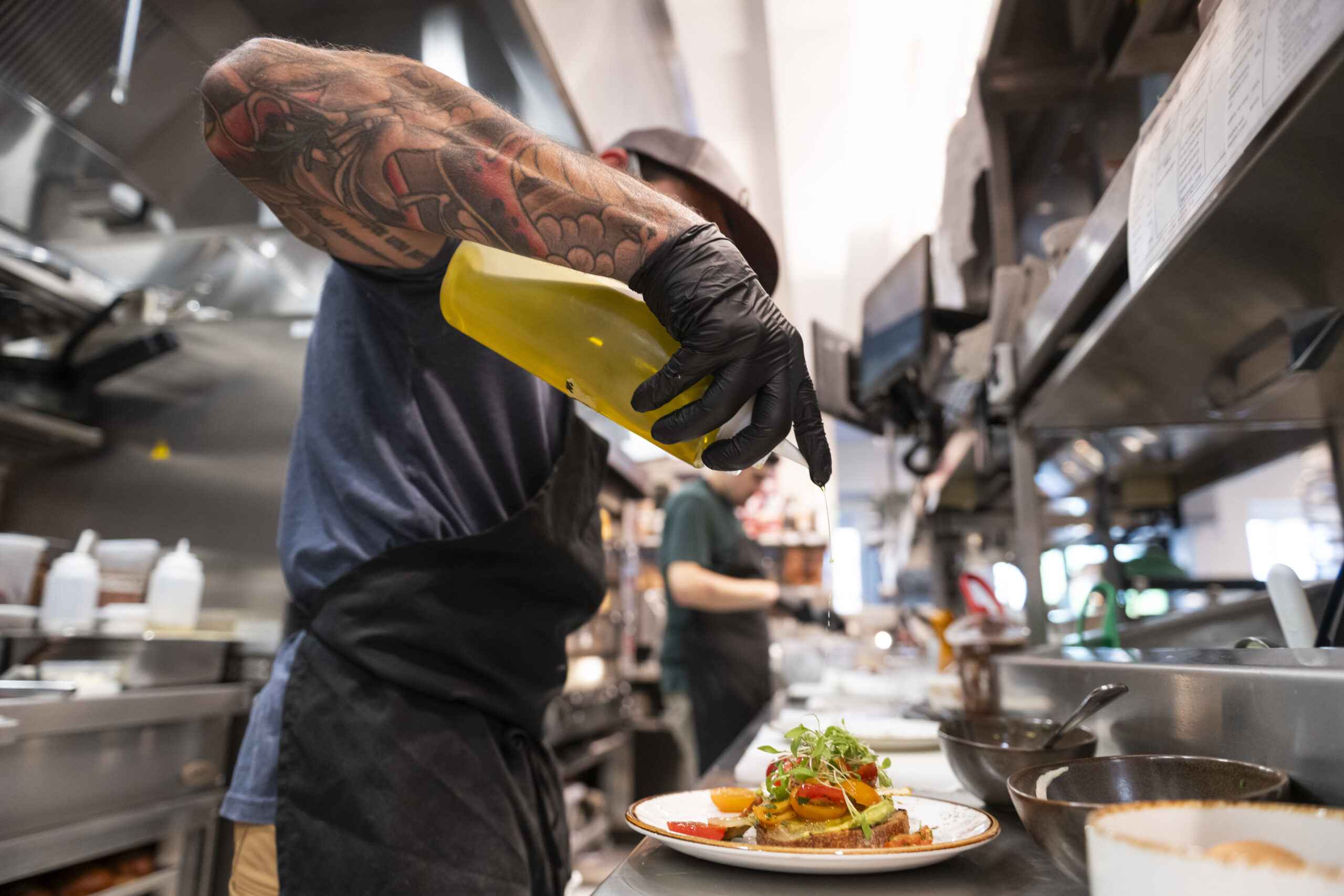
Vinny Petraglia, culinary operations director, drizzles olive oil on the avocado toast at The Buttery in Bryn Mawr.
Joli Ridenour, The Buttery’s community manager, said customers have been asking the bakery to expand for years. When they opened in Ardmore in October, patrons were over the moon about not needing to drive to Malvern to get their beloved kouign-amann and sourdough.
John Rhoads grew up in Devon, and he, Silenia, and their three teenagers now live in Paoli, so finding another outpost on the Main Line just felt right.
Bryn Mawr felt like “a good center point on the Main Line,” John Rhoads said.
“We’re so excited to be in this town. There’s such a hustle and bustle,” Silenia Rhoads said, adding that she’s already seen a “sense of community.”
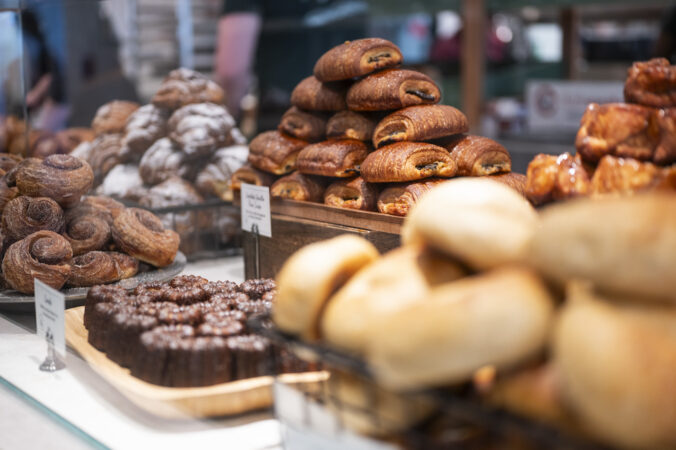
At the bakery’s soft opening on Wednesday, loaves of sourdough and baguettes peeked out from behind long glass cases stuff with butter croissants, lemon currant scones, and fresh bagels. Packaged cookies, branded T-shirts, and bags of homemade granola lined the walls, and customers stopped to chat with the Rhoadses.
The 82-seat café is spacious, laid out with long communal tables, corner booths, and scattered two- and four-tops. The Buttery team wanted multiple kinds of seating options to allow for different dining experiences, from neighbors grabbing a quick coffee to families coming in for a long lunch.
Silenia (left) and John Rhoads, owners of The Buttery, at their new location in Bryn Mawr. Said Joli Ridenour, The Buttery’s community manager, “We want people to feel really at home and welcome and like they’re walking into an old friend’s house.”
“We want people to feel really at home and welcome and like they’re walking into an old friend’s house,” Ridenour said.
The Buttery’s Bryn Mawr location is serving its full breakfast and lunch menu, which includes bagels, quiches, sandwiches, open-face tartines, salads, and speciality Passenger coffee and tea drinks. The Rhoadses said they are hoping to expand to dinner service, as they have in Malvern, in the fall or winter.
Ridenour said the bakery always tries to source locally, milling flour out of local grain and purchasing eggs from Highspire Hills Farm in Glenmoore. Almost everything is made in-house, including roasting their own meat for roast beef sandwiches.
What to order? The Buttery’s staff says you can’t go wrong. The sablé cookie, a buttery French shortbread cookie, is a signature dish. Silenia Rhoads recommends the seasonal panzanella salad, made with fresh smashed cucumber, asparagus, homemade croutons, and a potpourri of herbs. The breakfast sandwich, serviced with harissa aioli on an everything brioche bun, is also a fan favorite.
Turkish eggs with homemade naan at The Buttery in Bryn Mawr.
The Buttery has been able to expand in large part due to a bakehouse the Rhoadses opened in Norristown a year ago. With more space and a centralized food preparation location, the bakehouse has “enabled us to set our sights on more,” John Rhoads said.
The couple said a Northern Liberties location will open later this year, and further growth is on the horizon for 2027.
The Buttery’s Bryn Mawr grand opening will kick off on Saturday. The bakery will debut a special Bryn Mawr-only pastry, a lemon poppy kouign amann baked with house-made creamy poppy seed spread and lemon sugar. The first 50 customers will get a branded tote bag and the first 100 will get a sablé cookie, on both Saturday and Sunday.
The Buttery will be open daily from 7 a.m. to 5 p.m., with kitchen service until 3 p.m.
This suburban content is produced with support from the Leslie Miller and Richard Worley Foundation and The Lenfest Institute for Journalism. Editorial content is created independently of the project donors. Gifts to support The Inquirer’s high-impact journalism can be made at inquirer.com/donate. A list of Lenfest Institute donors can be found at lenfestinstitute.org/supporters.
Vineland’s public school teachers are having an easier timewith the question of what to wear to work — at least for the final days of the school year.
In a move to boost morale in the South Jersey school system and make teachers’ lives easier this spring during a hectic testing period, the district eased its dress policy to allow denim jeans until the end of the school year on June 25.
Teachers love it and hope it will continue in September.
“It’s one small way to make the world of work a little friendlier,” said Vineland Education Association president Louis Russo, a social studies teacher. “It’s one small thing off of their shoulders.”
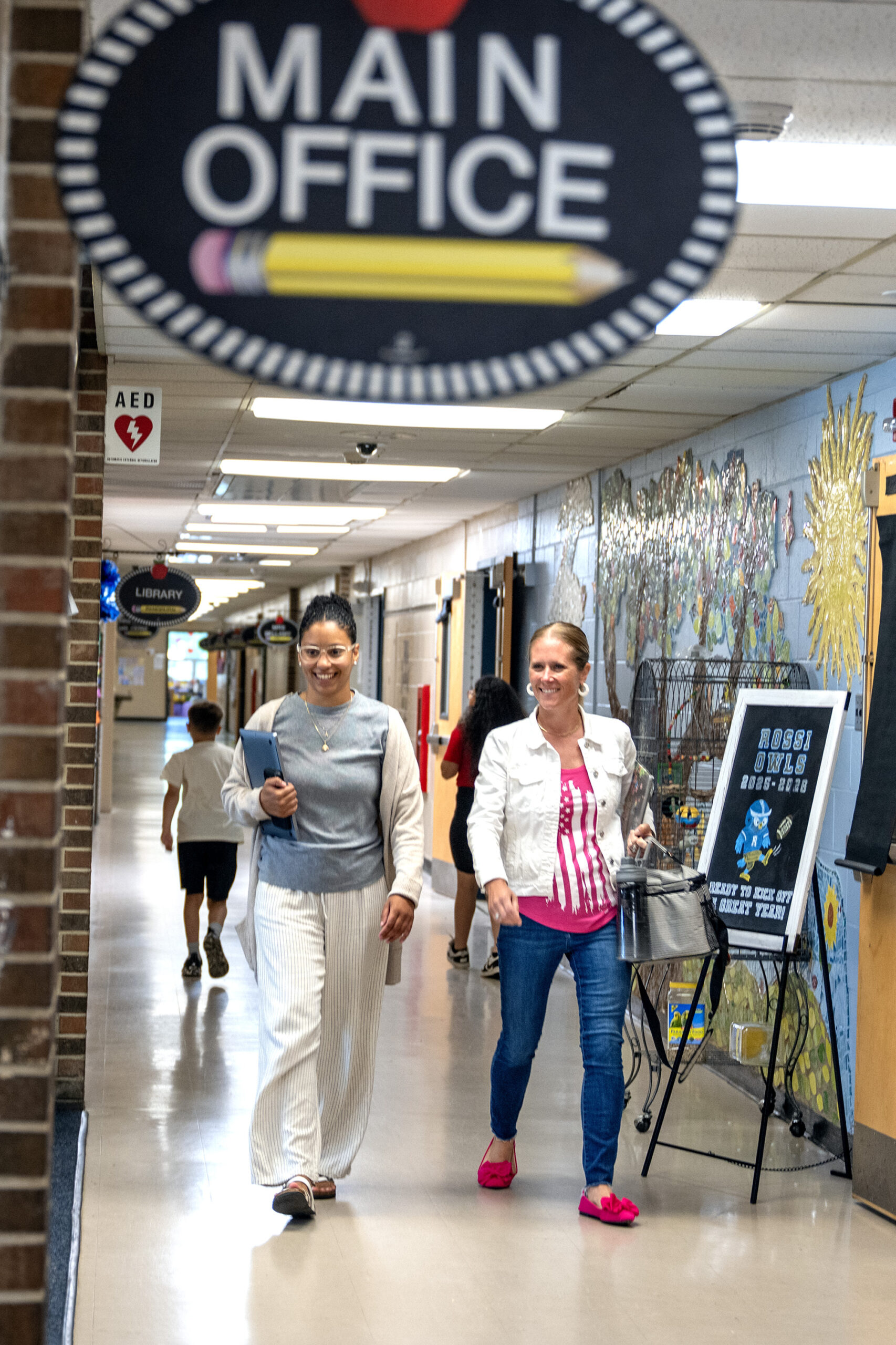
Teachers Andrea Ruiz (left) and Elaine Petrini (right) at Rossi Elementary in Vineland on June 9. The teachers are allowed to wear jeans until the end of the school year.
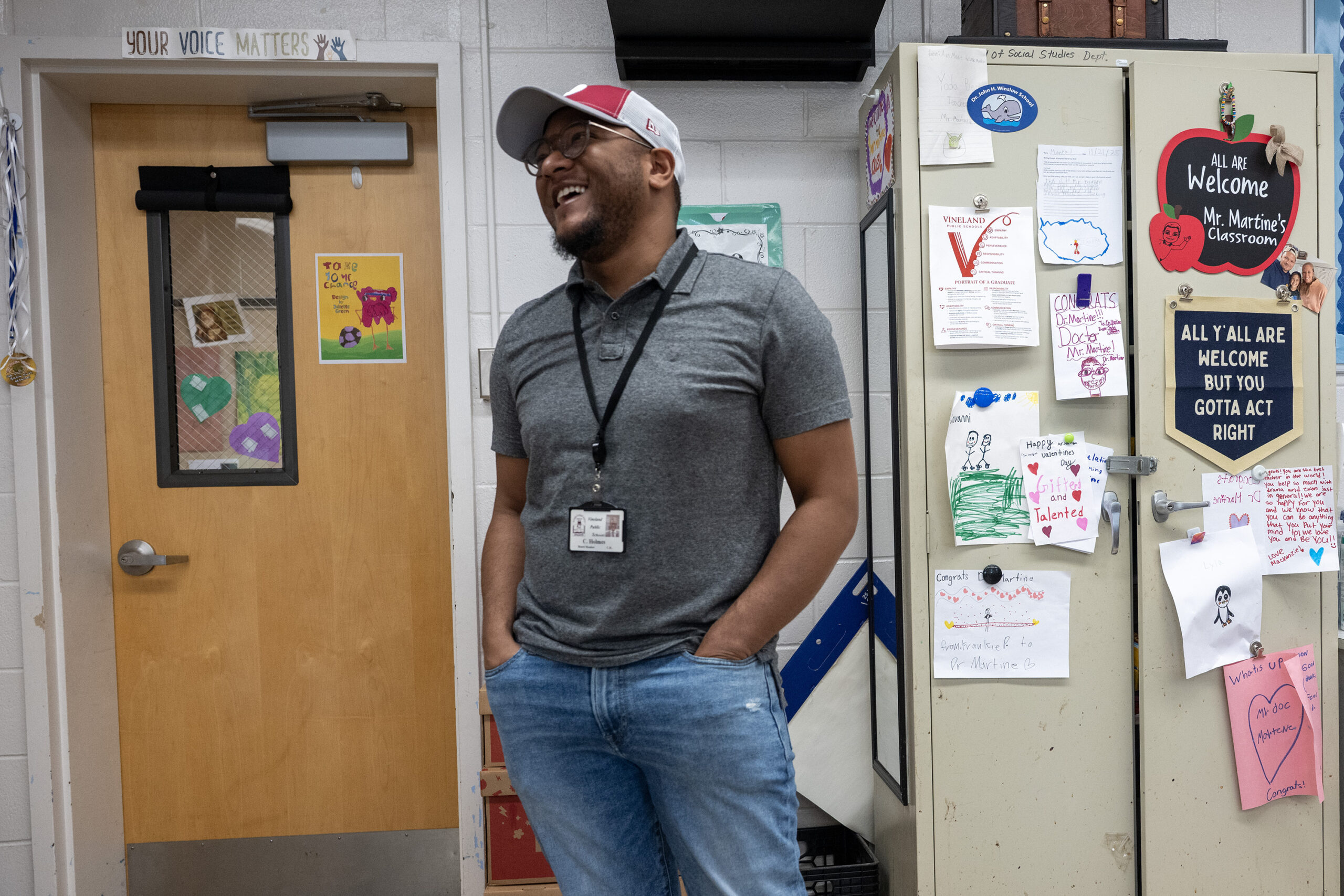
School board president Cedric Holmes said the Cumberland County district notified employees when they returned from spring break in April that they could wear jeans any day of the week under a pilot program.
Holmes said there had been rumblings among staff because the district — the largest in Cumberland County, with 11,000 students — had to extend the school year to make up snow days. Vineland‘s June 25 last day of school isamong the latest in the region.
The months following spring break are among the toughest with students undergoing standardized state testing, Holmes said. There are also end-of-the year field trips and outings when it makes sense to allow more relaxed clothing, he said.
“It was important to the board that staff felt that we saw the stress of all of that of this as a practical way to give a morale boost for the end of the year,” Holmes said.
Teachers typically dress a bit more formally for school.According to Vineland’s policy, female teachers must wear skirts, slacks, skorts, or dresses with blouses or sweaters, or school uniform. The skirt, skort, or dress should not exceed three inches above the knee.
Male staffers can wear suits or slacks with jackets and ties, sweaters, school uniform, or sports or dress shirts. Deemed unacceptable for both are sneakers, flip-flops, bedroom slippers, combat boots, and work boots. There are exceptions for teachers attending field trips or who work in specialized areas such as health and physical education or arts.
The district also has a uniform policy for students, but Holmes said that has been relaxed and the board also plans to reexamine that policy.
New Jersey’s 600 school districts set their own policies for staff and students.
Steve Baker, a spokesperson for the New Jersey Education Association, which represents 200,000 teachers and support staff, said the union supports the efforts in Vineland “to develop policies that help create a positive learning and working environment for students and staff.“
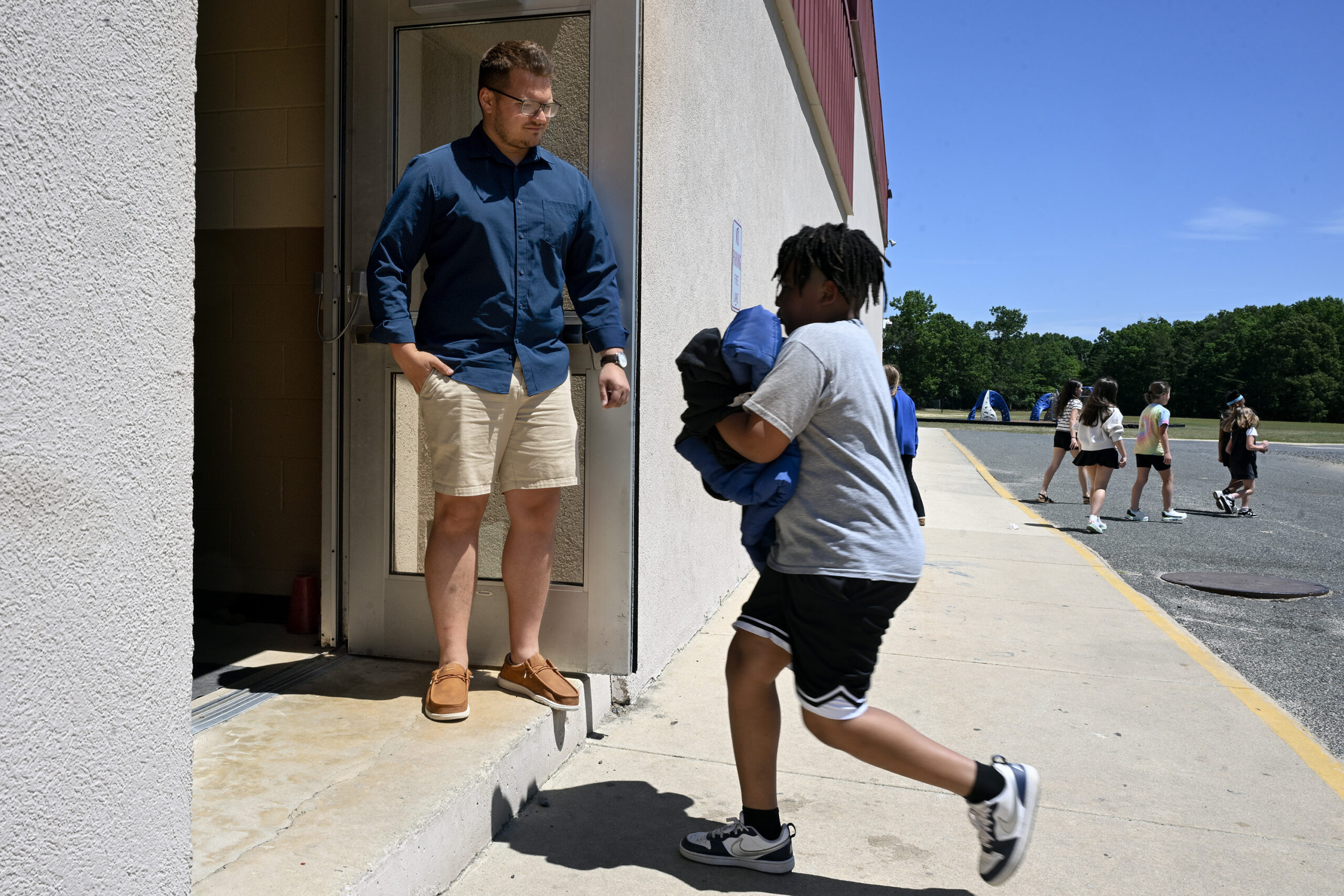
On a busy morning last week at Anthony Rossi Elementary in Vineland, third-grade teacher Jeffrey Martine stood in front of the class dressed in khaki shorts, a button-down blue dress shirt, and slip-on loafers. As an added bonus, it was a dress-down day, which allowed teachers to wear casual attire beyond jeans.
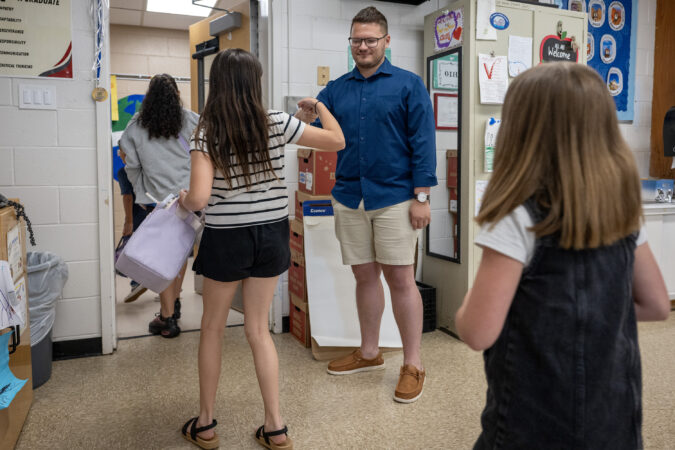
Jeffrey Martine, a teacher at Rossi Elementary in Vineland, greets a student at the school last week.
“If you do your job well, you have to be able to move,” Martine said. “I’m all about comfort.”
Students in Martine’s gifted and talented class were spread around the room working on a project in small groups. Some sat at desks making posters, while others were stretched out on the floor.
“I don’t think professionalism and comfort are mutually exclusive,” Martine said. “Teachers should be judged more on how they interact with their students than the pants they select.”
Holmes acknowledged the dress code was outdated and revisions are needed. The board plans to review the changes implemented this spring and may allow teachers to wear jeans during the new school year, he said.
“It was time for a change,” said Kaitlynn Rossi, a long-term substitute teacher. “People don’t dress like that.”
Teacher dress codes have evolved nationally over the years, especially during the pandemic, when more casual attire was the norm.
Based on responses from teachers around the world, the website We are Teachers in 2024 compiled a list of “16 Ridiculous Dress Code Rules for Teachers You Won’t Believe Are Real.” The list included prohibiting hats, capri pants, pants with pockets, UGGs, hoodies, or dark underwear.
In Philadelphia, where classes ended last week, there is no system-wide dress code for staff. Arthur Steinberg, president of the Philadelphia Federation of Teachers, which represents about 14,000 teachers, counselors, nurses, secretaries, and other workers, said employee dress typically does not come up as an issue.
School board president Cedric Holmes at Rossi Elementary in Vineland last week. Holmes said the teacher dress code policy was relaxed in an effort to improve morale at the end of the school year.
Holmes said teachers have responded well to the changes in Vineland and there have been few infractions, like torn or ripped jeans.
Before Vineland implemented the pilot dress code, teachers were allowed to wear jeans only for special days. The schools sponsor fundraisers that allow teachers to pay $2 to wear jeans. Students are allowed to wear jeans on dress-down days determined by their school principal, and they do not have to pay.
Fourth-grade teacher Andrea Ruiz said dressing more casually helps her students see her differently. A sign in her classroom says: “Be the best version of you.” She enjoys sitting with students on the carpet in her classroom or playing kickball on the playground.
“We’re meeting them where they are,” said Ruiz, who was wearing a gray T-shirt and striped pants. “It’s definitely something different for us.”
Teacher Kaitlynn Rossi with students at Rossi Elementary in Vineland last week.
Timothy Purnell, executive director of the New Jersey School Boards Association, said a decision as simple as allowing jeans can have an impact on the learning environment.
“If jeans support a positive environment during testing, that’s a local call we respect,” Purnell said.
Russo believes a less-stringent dress code will help attract and retain younger teachers amid a national teacher shortage. He wants them to still dress in a manner that gets respect from students.
“We just have to find the right balance,” Russo said.
Staff writer Kristen A. Graham contributed to this article.
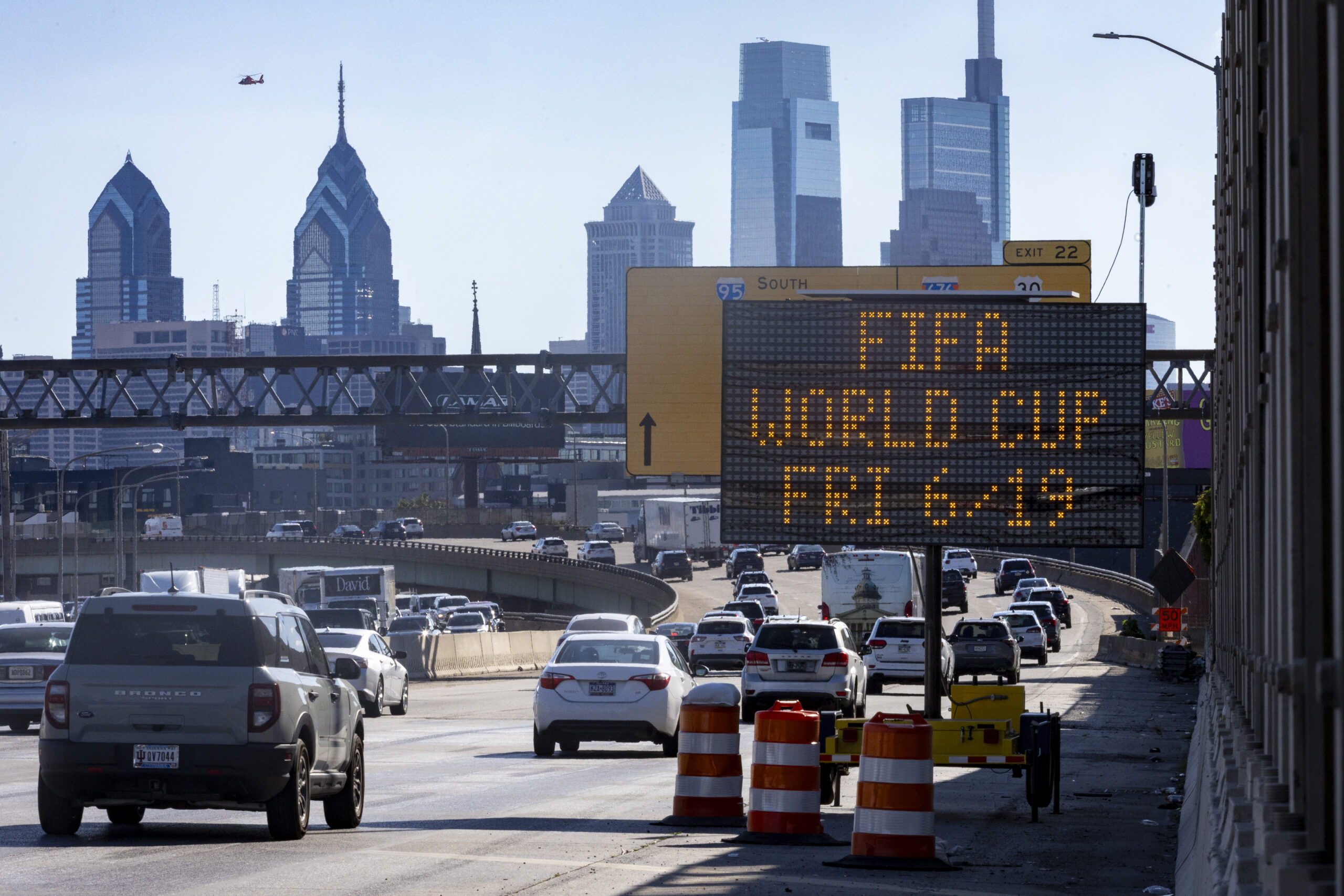
Haiti’s June 19 World Cup match against soccer’s most decorated nation, Brazil, held at Philadelphia’s Lincoln Financial Field, encapsulates the contradictions at the heart of FIFA’s flagship event this summer.
A traffic sign on I-95 informs drivers of expected traffic delays to occur because of the World Cup match — Brazil is set to face Haiti — on Friday at Lincoln Financial Field in Philadelphia.
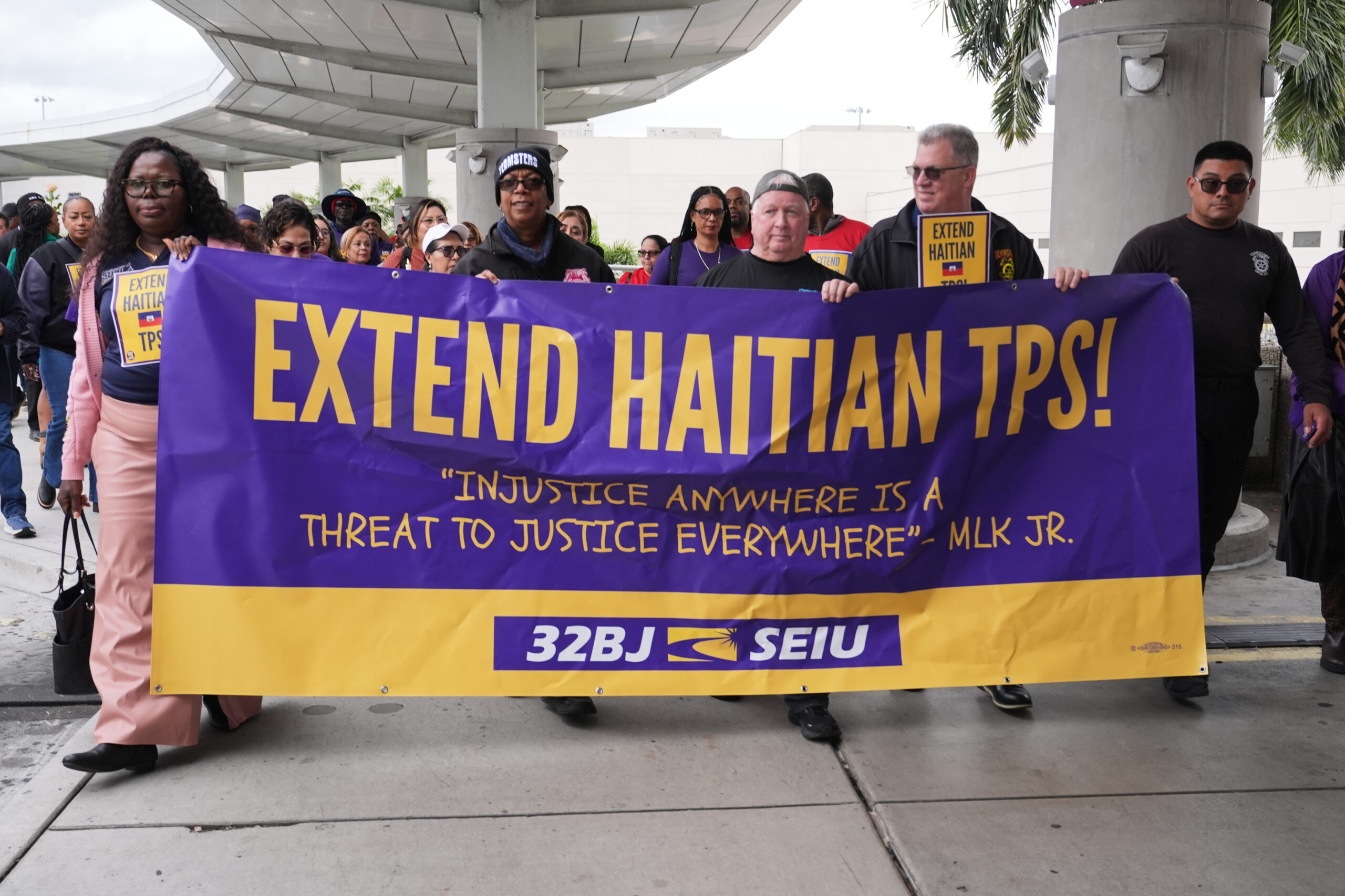
The World Cup — and Haiti’s first appearance in it since 1974 — is a welcome distraction from the humanitarian and security crisis at home. For many Haitians, however, the Trump administration’s cruel immigration policies, including its effort to terminate this Caribbean country’s temporary protected status (TPS) — a form of protection against deportation to dangerous situations — casts a shadow over the tournament.
Since a catastrophic 2010 earthquake, Haitians have dealt with one disaster after another, including a cholera epidemic, devastating hurricanes, increasing violence, and chronic political instability.
The current crisis, during which criminal groups have consolidated control over most of the capital, Port-au-Prince, and expanded to at least four more of Haiti’s 10 regions, has killed thousands, displaced more than 1.5 million people, and led to widespread sexual violence.
Even before the World Cup began, the odds were stacked against Haiti’s “Grenadiers” — a nickname that pays homage to the revolutionary soldiers who fought for Haiti’s independence in 1804. The squad managed to top their regional qualifying group for the tournament despite not being able to play a single game on home soil; their national stadium is in an area controlled by criminal groups. It was a remarkable feat — one that ended Haiti’s 52-year wait to participate in another World Cup, and became a source of immense pride for Haitian soccer fans around the world.
Haiti fans cheer during the World Cup Group C soccer match between Haiti and Scotland in Foxborough, Mass., near Boston, on June 13.
For the coming weeks, Haitians will be celebrated on the world stage and their players welcomed with open arms, but their fans may find their paths to the stadiums — or to the United States itself — inaccessible.
In Philadelphia, many by now will have already seen proud Haitian fans sporting their team’s blue and red jerseys. But while the World Cup inspires hope and pride for Haitians living in the U.S., the Trump administration’s immigration policies, including the possibility of U.S. Immigration and Customs Enforcement presence at or near World Cup venues, may elicit anxiety, fear, and exclusion.
Haiti is one of 39 countries affected by U.S. government travel restrictions that prevent fans from supporting their countries in person this summer. Although the ban includes an exception for athletes, Woodensky Pierre, the only Haitian player based in the country, missed a vital pre-tournament match after his U.S. visa wasn’t approved in time. He landed at Miami airport shortly after the game began and was later embraced by his teammates on the pitch at the final whistle.
It is the attempts to terminate Haitians’ temporary protected status, however, that pose the most serious human rights concerns for Haitians who are already in Philadelphia and other cities.
Under U.S. law, the Department of Homeland Security can designate a country for this status when conflict, environmental disasters, or other circumstances temporarily prevent its nationals from returning safely, or when the country cannot adequately handle their return.
TPS protects beneficiaries from removal, allows them to apply for work and travel authorization, and prevents Homeland Security officials from detaining them solely based on their immigration status.
Haiti first received this designation after the 2010 earthquake. Since then, and because conditions in Haiti itself have not improved, hundreds of thousands of Haitians in the U.S. have built lives, raised families, and become essential contributors to local communities, including in Philadelphia. Approximately 330,000 Haitians now have TPS in the United States.
Haitian TPS holders in the U.S. need stability, protection, and a durable path forward, writes Robbie Newton.
The Trump administration is now trying to strip Haitians of this protection.
Despite clear evidence that the human rights crisis in Haiti is worsening, the Department of Homeland Security insists that “country conditions have improved to the point where Haitians can return home safely.” A Supreme Court decision on the legality of ending this protection is expected this summer.
Residents flee their homes to escape clashes between armed gangs in Port-au-Prince, Haiti, in May.
Terminating the protection would have devastating consequences, exposing hundreds of thousands of Haitians to detention and possible return to the “cataclysmic” situation unfolding at home, where they would face serious risks of kidnapping, extortion, and other abuses by criminal groups.
For the 15,000 Haitians protected by TPS in the state of Pennsylvania, making it to the World Cup and cheering on their team represents a powerful symbol of hope and unity at a precarious time for the community.
Other soccer fans who root for the underdog will very likely cheer on Haiti as it makes its way through all of its Group C matches (and, hopefully, into the knockout stage). But support for Haiti should extend beyond the World Cup. The U.S. government should renew temporary protected status for Haitians.
Haiti’s Grenadiers deserve their place at the World Cup. For Haitian TPS holders in the U.S., the stakes go far beyond the tournament.
Robbie Newton is a senior coordinator and in the sport and human rights team at HumanRights Watch.
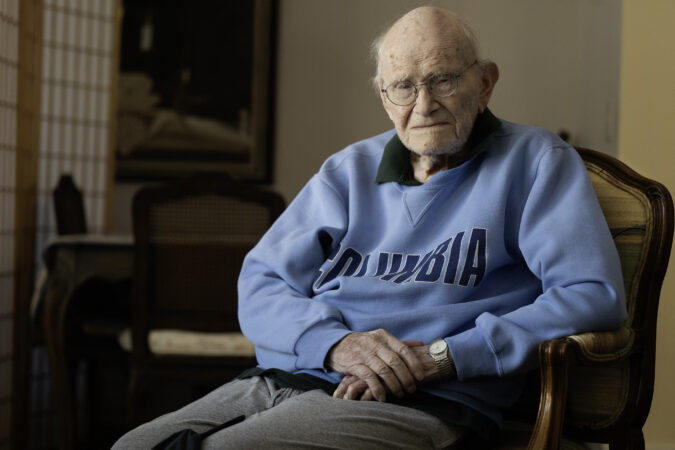
At 102, Cyrus Bloom does not pretend that old age is pleasant.
“It’s hard,” he said during a recent interview at his Center City apartment. He can barely walk, even with a walker, and he lives with the constant fear of falling. His short-term memory is shot, too. Walking into a room to get something, only to forget what he went there for, is an everyday occurrence. “It’s terrible,” he said matter-of-factly.
But his long-term memory? That’s a different story.
Bloom can still recall names, places, and details from more than 80 years ago, when he was one of the 16.4 million Americans who served in World War II. He can rattle off the details of his first assignment as a meteorologist with the Army Air Corps and the names of the bomber bases that dotted the coast of England where he was stationed. He remembers everything about “the very big war,” as he called it, even though he spent most of his life not talking about it.
Bloom, who was born in Newark, N.J., was a sophomore at Columbia University when he enlisted with the Army Air Corps and began training as a meteorologist. It was March 1943. He received his commission as a second lieutenant on June 6, 1944, the same day the Allied forces landed on the beaches of Normandy.
The invasion, Bloom noted, had originally been scheduled for June 5. But bad weather over the English Channel prompted Gen. Dwight D. Eisenhower to postpone it for a day. Bloom had no role in that decision; he had only just completed his training. But the delay demonstrated how heavily the Allied war effort depended on accurate weather forecasts.
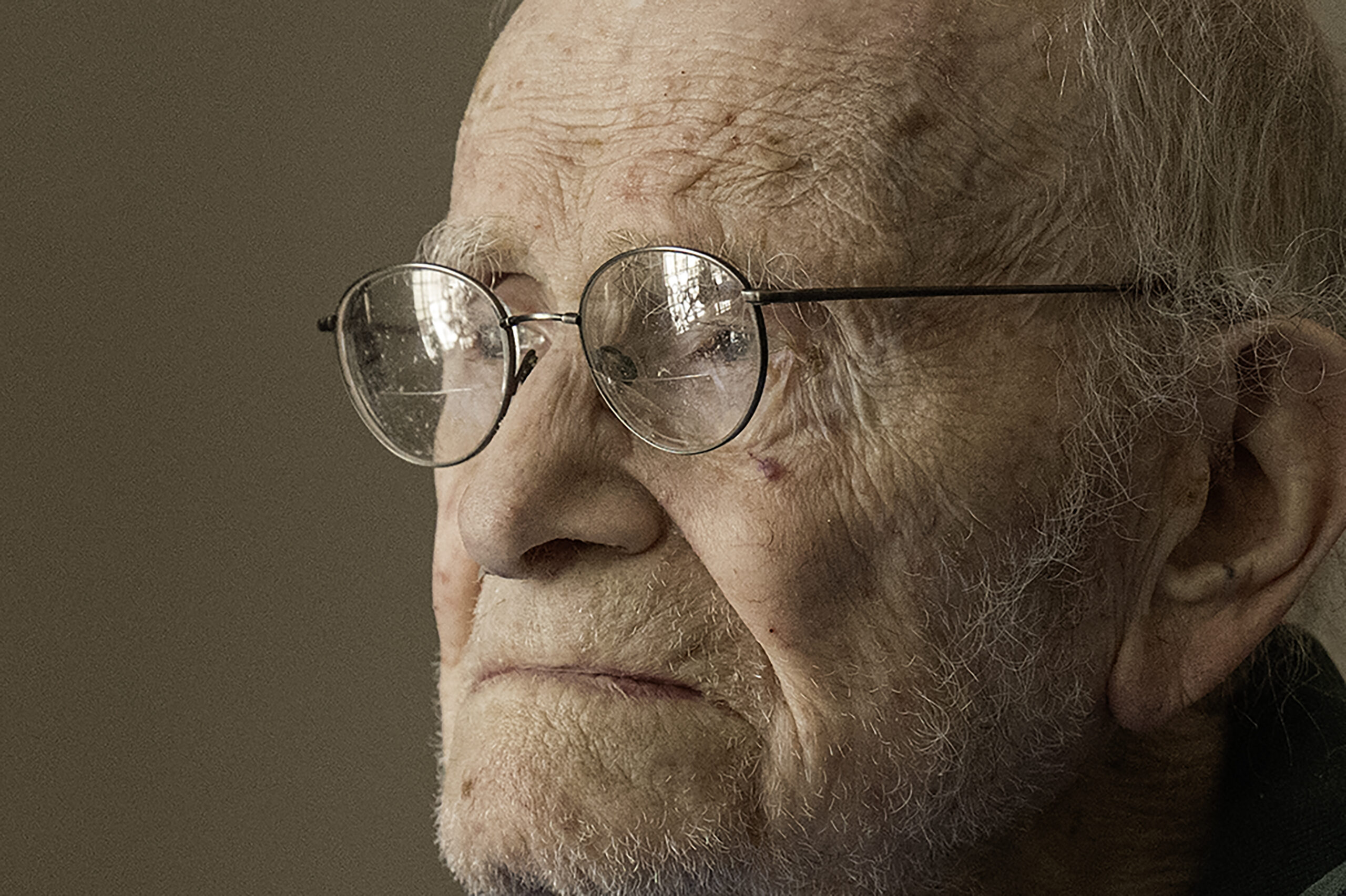
Cyrus Bloom, 102, is photographed at his home in Philadelphia on Tuesday, June 9, 2026. Bloom worked as a meteorologist during World War II.
Bloom’s first assignment took him to Bergstrom Air Force Base in Austin, Texas. There, he and the other meteorologists gathered reports on temperature, wind, and air pressure from weather stations across the country. They plotted the information on maps and drew isobars — lines connecting places with the same air pressure — by hand. Those lines revealed high- and low-pressure systems and helped meteorologists predict how the weather would move.
In September 1944, the Army sent Bloom overseas. Like so many young soldiers, he had never been abroad before. Today, he remembers every step of the journey. He left Washington on a military transport plane bound for Europe. The first stop was Goose Bay, Labrador, in northeastern Canada, where the plane refueled.
“It was just wilderness,” Bloom recalled, “very rugged country.”
From there, he flew across the Atlantic to Prestwick, Scotland, then continued south to London. The Army later sent him to the Cotswolds for additional training in British forecasting procedures. He remembers the region for its thatched-roof houses.
His final assignment took him to East Anglia, on England’s eastern coast. The countryside was crowded with airfields used by the U.S. Eighth Air Force, which carried out bombing missions over Germany. Bloom was stationed at Bovingdon, code-named Earl’s Court. His job was to brief bomber crews on the weather they could expect en route to Germany. His briefings were based on forecasts prepared at Eighth Air Force headquarters, which was called Pinetree.
“Everything had a code name,” Bloom said.
That world of code names, weather maps, and high-stakes forecasts is the subject of Pressure, a new film about the meteorologists who advised Eisenhower in the tense days before D-Day. In the film, a meteorologist stands at the center of a decision that could determine the fate of the war. But Bloom describes his own wartime work in much plainer terms. Asked whether it felt consequential, he said he did not think about it that way.
“I was simply doing what I was supposed to do,” he said.
After the war, Bloom returned to college and then attended Columbia Law School. His college roommate was also a veteran. So was almost everyone in his law school class. But none of them talked about the war. Bloom and his roommate didn’t even know what the other one did in the war.
“Everybody knew that they had served,” Bloom said, “but nobody knew how they served.”
The silence continued as Bloom built a life after the war. He became a litigator and, in 1962, married Nanette, who is 13 years younger. They raised two sons in South Orange, N.J. But Bloom rarely spoke to his family about his service. His son Josh said they didn’t hear much about it until Bloom was around 90, and they interviewed him about it.
“It’s funny,” Bloom said of the veterans he knew. “They had the biggest experiences of their lives having been at war, but nobody talked about it.”
For most of his own life, neither did he. And yet, when asked to name the biggest experience of his century-long life, a period that included the moon landing and the collapse of the Soviet Union, Bloom didn’t hesitate.
I remember the four-month-old boy, unmoving in his hospital bed, who had suffered severe brain damage from a sleep accident. This four-month-old boy had slept on the couch with a parent. When morning came, he was lying between couch cushions and not breathing.
Paramedics revived the baby and took him to a hospital. The baby survived, but his brain went so long without oxygen that he would likely never grow up to walk or talk. He was the first of too many babies that I have seen who sustained severe injuries, or have died, from suffocation or Sudden Infant Death Syndrome (SIDS).
Parents visiting in pediatrician’s offices in the last 30 years have probably heard us talk about “safe sleep.” We see a lot of misinformation and confusion about sleep practices these days, with social media rife with images of sleeping babies in hazardous conditions. Serene captions misleadingly encourage improper positioning and unsafe environments.
Many people who get their health information online are unaware of what “safe sleep” means.
The American Academy of Pediatrics (AAP) defines safe sleep as having babies sleep solo on their backs on a firm, flat mattress. Loose blankets, pillows, toys, or other soft objects should be kept out of the sleep space. In pediatric clinics, we call these recommendations the “ABCs” of safe sleep: Alone, on their Back, in a Crib.
We know this advice saves lives. After the AAP recommended that babies be placed on their backs to sleep in 1992 rates of SIDS plummeted by over 50% in 10 years. Yet this progress has plateaued. SIDS remains the leading cause of death in children under 1.
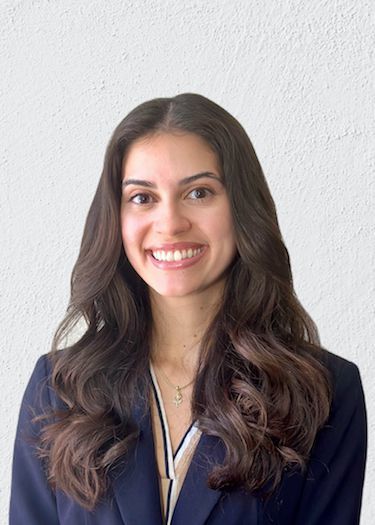
Frances Avila-Soto is a physician in her second year of residency training at the Children’s Hospital of Philadelphia.
As pediatricians, we still have work to do to prevent SIDS deaths. For starters, we must address persistent racial and ethnic disparities.
Black and American Indian/Alaska Native infants throughout the 2010s were more than double or triple as likely to die of SIDS, compared with white infants. The reasons are complex. Low socio-economic status, unemployment, and housing instability are associated with higher risk for SIDS. These issues often stem from systemic racism.
We can’t trace how many SIDS deaths result from online misinformation. That makes me all the more committed to talking about the importance of safe sleep practices.
At my primary care clinic in South Philadelphia, I see patients from a wide range of cultural and ethnic backgrounds. I often hear questions about babies sleeping from families flooded with conflicting information from social media or their peers.
Here are some common concerns, and what I share to educate families:
“I’m worried that if they’re not next to me, I won’t notice if something is wrong.”
Avoiding bedsharing doesn’t mean your baby can’t be near you. The AAP recommends sleeping in the same room as your baby for at least the first six months. This means you can keep an eye on them and comfort them easily, but they still have their own space where they can sleep safely.
“Our babies have always slept in bed with us. It’s part of our culture.”
It is true that cultures have different sleep practices. But the sleep environment can also be different in many countries — including bedding/mattresses, the house, environmental exposures, and other factors. Here in the U.S., we know from decades of research that following the ABCs is what’s safest for your baby.
“My baby will only sleep in my arms. They won’t sleep when I put them in the crib.”
Babies are constantly learning new skills, such as rolling, eating, and babbling. They can learn to sleep on a new surface. It’s all about establishing a routine. You can still comfort and hold your baby until they fall asleep, then move them to their own sleep surface. If you must share a bed with your baby — or worry that you may fall asleep while your baby is in your bed — make sure to remove any pillows, sheets, blankets, or any objects that could cover your baby’s face.
Your pediatrician is not judging you by asking how your baby is sleeping. We know how challenging sleep is with infants. We want your baby to be safe and to minimize harm from confusing or misleading advice.
Discuss questions about safe sleep with your pediatrician. You can also visit CHOP’s Pediatric Health Chat for more information on safe sleep and children’s health.
The views expressed in this article are those of the authors and not necessarily those of CHOP. This information is not intended to provide medical advice, diagnosis, or treatment. Always consult a qualified healthcare professional regarding any health or medical concerns.
Frances Avila-Soto is a physician in her second year of residency training at the Children’s Hospital of Philadelphia, with a focus on leadership development in issues involving equity, advocacy, and policy.
Shriners Children’s Philadelphia was not cited by the Pennsylvania Department of Health for any safety violations between April 2025 and March of this year.
The specialty children’s hospital is part of Shriners Hospitals for Children, a Florida-based nonprofit that operates health facilities across the country.
Here’s a look at the publicly available details:
July 15, 2025: Inspectors came to investigate a complaint but found the hospital was in compliance. Complaint details are not made public when inspectors determine it was unfounded.
Brian and Robyn Emmons can’t sell their 12-year-old, $900,000 rowhouse in Northern Liberties in its current state.
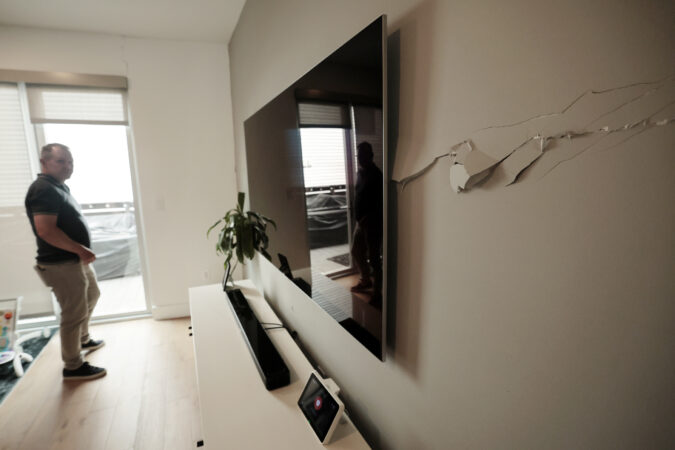
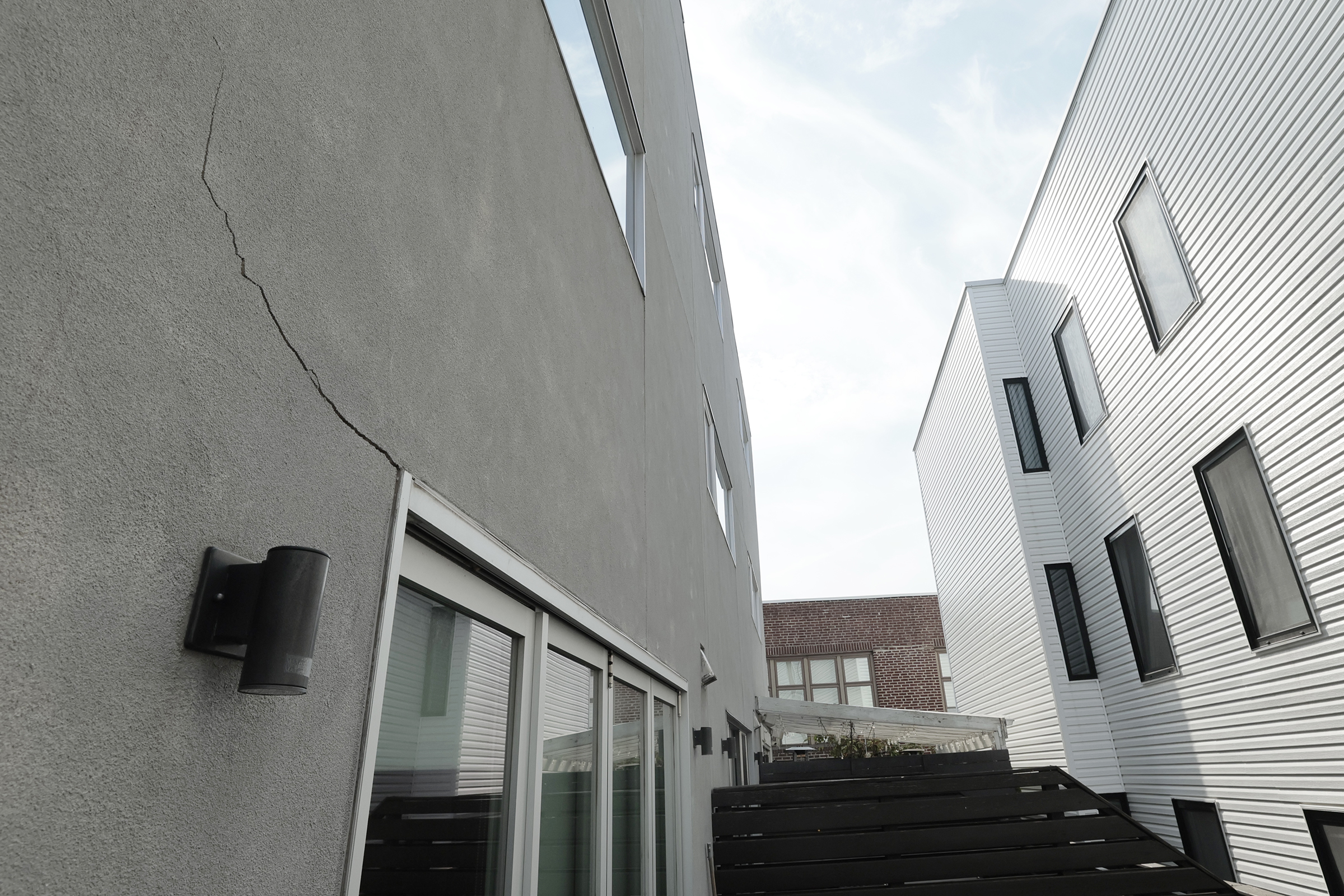
Fissures have spread across some of the walls in their home — which was built in 2014 — and cracks radiate from many doors and windows.
Three of their neighbors on Brown Street face similar issues. They say their homes were damaged by an apartment building constructed in 2023 that’s so close to the rear of their house they can almost touch it.
One family moved out after the city Department of Licenses and Inspections declared their home unsafe in 2024.
The Emmonses want to move to South Jersey, closer to family. Instead, as they wait for their second child to be born, they feel trapped.
“The fact that my neighbor was issued an order not to occupy the house, and it’s attached to our house, it’s just really scary,” said Brian Emmons, who has been a real estate developer in Philadelphia for almost 20 years. “We are stuck.”
Along with two neighbors, the Emmonses are suing the developer of the apartment building: Brian Zoubek, president and CEO of Zoubek Properties, who has built 250 houses in Philadelphia over his roughly decade-long career.
Since graduating from Duke University in 2010, where he played basketball for the Blue Devils, including on the national champion team that year, Zoubek tried his hand at a few occupations before settling on development. He has expanded his business to the Jersey Shore, recently debuting 10 almost million-dollar townhouses at a news conference with New Jersey Gov. Mikie Sherrill.
“I’m extremely proud of what we’ve built in Philadelphia,” Zoubek said in an email. “I put my own name on my work because I stand behind every project we build.”
Zoubek faces lawsuits from the owners of three properties, all alleging that he damaged their Brown Street homes. An Inquirer review of court records found that Zoubek’s companies were similarly taken to court over allegations of sloppy construction practices by their contractors in at least three prior development projects.
The eastern end of Brown Street with rowhouses (gray), the new apartment building Zoubek built next door (white), and the former school he transformed into apartments (red brick).
The Northern Liberties rowhouses
Emmons and his neighbors sued last year alleging that the damage to their homes is the direct result of Zoubek’s redevelopment of the Mifflin School, built in 1825, just to the north of their homes.
In mid-2021, Zoubek purchased the property — the oldest surviving public school building in Philadelphia — and carved it into 15 apartments with 14 more wedged into a four-story addition on a small lot between the Brown Street homes and the historic structure.
The recent lawsuits contend that the developer dug too deep while excavating the basement of the new building and damaged their adjacent foundations. Within the three homes — which The Inquirer toured with Emmons — cracks grow in walls, floors slant, the shared garage leaks, and residents have struggled to open some windows and doorways.
The other two homeowners declined to speak on the record, citing the ongoing lawsuits. The residents of a fourth house have resolved their case against Zoubek.
“We are aware of the pending litigation and are actively defending these claims,” Zoubek said in an email. “Given the involvement of multiple parties, we are engaged in ongoing discovery and investigation and are confident the process will bear out the facts.”
Zoubek was named in two earlier lawsuits that accused his construction crews of slapdash work that damaged neighboring properties. A third suit alleged that his company’s work triggered a floor collapse that injured two deliverymen.
Zoubek said in a statement that all prior suits have been resolved.
For Emmons, the experience on Brown Street has an irony to it. Ten years ago, he was the face of development in Philadelphia as president of the Building Industry Association (BIA) — a real estate advocacy group — and vice president of a development firm Toll Brothers runs in the city.
Usually in the position of advocating for new development, Emmons counseled his neighbors when the project was announced that it was allowed by the property’s zoning and not worth resisting. But he did ask his fellow developer about his plans for the new apartment addition to the Mifflin School.
A gaping crack in a first-floor wall in a home at 301B Brown St. in Philadelphia.
“He clearly was doing things the wrong way,” Emmons said. “And I know that because I’m in the construction industry.”
Zoubek contests Emmons’ assertion. He argues that many of his 30 building projects in Philadelphia involve basement excavation next to existing properties and that the Mifflin School project was fully permitted and supervised by skilled professionals.
“That experience, combined with the engineering oversight on this project, reflects how seriously we take this work,” Zoubek said in an email. “After concerns were raised, the project was reviewed by L&I, which did not issue violations or take enforcement action.”
A trail of lawsuits
Zoubek has been building in the Philadelphia area for more than 10 years, mostly developing small apartment buildings or a handful of rowhouses in the city’s booming river ward neighborhoods.
Zoubek, at 7-foot-1-inch, was a basketball star at Haddonfield Memorial High School and got into real estate after a stint running a cream puffery and, later, as a real estate agent for Cushman Wakefield.
He started his own firm, Zoubek Properties, in 2014 and a related construction management company called Z Builds. He also cofounded another company, Catalyst City Development, with childhood friend Tyler McNeil.
As his construction business grew, his enterprises were drawn into complex litigation alleging property damage or injury caused during construction.
Brian Zoubek in his now defunct cream puff shop Dream Puffz, a pre-development venture, in 2012.
According to one lawsuit, Catalyst, the company Zoubek cofounded, and Manayunk-based Grit Construction worked together on a small development on Hope Street in Northern Liberties in 2019. During construction, Grit ruptured a lateral pipe connecting a sewer main to a strip of nearby businessesfacing an adjacent block of Front Street.
Exhibits from that lawsuit show Zoubek proactively contacted the neighboring property owner, reassuring him that his crews had quickly rerouted the noxious flow by splicing in PVC piping until a more permanent fix could be made.
“Broke some sort of line,” Zoubek texted to the adjacent property owner, along with a photo of the messy scene. “So we put in a temp one.”
But a week later, business owners next door were complaining about chronic plumbing issues. The temporary line had become clogged with rubble and other debris from the ongoing construction.
According to the suit, in June, the toilets and sinks at a packing business on Front Street erupted as sewage backed up and flooded into the commercial unit. The next day, a barbershop next door was inundated with filth.
A plumber came out to snake out the line but discovered that Zoubek’s crews had capped the severed line. Eventually, tenants fled.
“Our tenants cannot continue with sewage backed up into their space,” a property manager for the commercial units next door wrote to Zoubek, in a 2020 email.
Zoubek said that the case had settled but offered few other details: “The matter was ultimately resolved between the parties.”
Zoubek Properties had also hired Grit and contractor All-State Services to demolish a building under the El in Fishtown in 2019 and build several new apartments.
In 2021, the owner of a neighboring apartment complex sued, saying that during teardown crews punched holes in the side of the adjacent building, damaging its roof, framing, and supports.
According to that complaint, tenants told a property manager about “a big noise and shaking in the building” during the demolition process.
After arriving on the scene a short time later, the manager “observed All-State Services employees drinking alcohol while on the job and stumbling down off of heavy equipment,” the complaint said.
Zoubek said that his contractor eventually repaired the wall and that a claim for further damages was handled by the two insurance carriers.
“The matter is fully resolved,” he said.
The new luxury townhouses on Kentucky Avenue known as the Residences at Orange Loop in Atlantic City, which Zoubek revealed with New Jersey politicians earlier this year.
As that suit unfolded, Zoubek had another project underway in Old City, again for a small apartment complex on the 100 block of North Third Street.
In 2021, two deliverymen bringing in elevator counterweights for the construction project were told to use a rear entrance to deposit their cargo, according to a personal injury lawsuit filed the next year.
The suit contends that both the delivery company and the workers quizzed Zoubek’s crews about whether the rear entrance of the partially constructed building was structurally sound enough to handle the extreme weight of their load. They were assured that it had been inspected and was safe.
Instead, the floor collapsed, sending the men and their equipment crashing into the basement, injuring both delivery workers.
The suit was later settled for $6.5 million default judgment against the subcontractor.
“That matter was resolved through the appropriate legal and insurance processes,” Zoubek said.
Construction damages 50 rowhouses a year
Lawsuits and claims of construction damage are endemic to the real estate industry. And building in the tight confines of Philadelphia’s dense rowhouse neighborhoods can be especially contentious.
In the case of Brown Street, a spokesperson for Zoubek pointed The Inquirer to the website of Fortis Construction & Design, which built the five rowhouses there in 2014 and is now suspended by the city for “unpermitted, potentially dangerous underpinning and excavation.”
Cracks on the exterior of a home at 303A Brown St. in Philadelphia (left) on June 9.
Emmons, however, argues that the fault lies with Zoubek: The extensive damage to the Brown Street homes appeared only after the basement was dug out for the expansion of the Mifflin in 2023.
“He can point the finger all he wants, but I hope he lies awake at night praying nobody gets injured or killed,” Emmons said in an email.
Philadelphians are known to be superstitious — especially when it comes to sports.
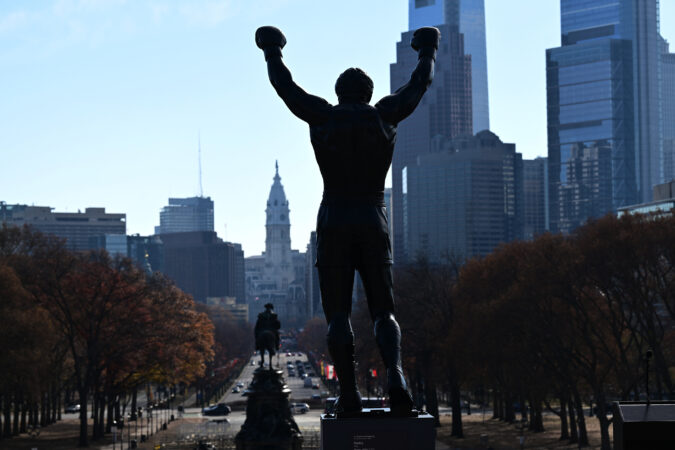
And now, international soccer fans are feeling those effects. After Ecuadorian supporters fitted the Rocky statue with a yellow La Tri kit, they saw their team fall to the Ivory Coast, 1-0, in its FIFA World Cup group-stage opener on Sunday.
Yup, that’s the “Rocky curse.”
However, Brazilian fans didn’t plan on making the same mistake ahead of Brazil’s World Cup clash with Haiti at Philadelphia Stadium (also known as the Linc). Instead, they went to great lengths to make sure supporters did not put a Brazilian shirt on the iconic statue during a fan rally Thursday.
Brazil enters Friday night as favorites, but underdogs have a habit of rising to the occasion in Philly. Before that game, all eyes will be on the United States men’s national team, which will play Australia at 3 p.m. (Fox29, Telemundo 62). Check out how our writers predict this one to shake out.
And in Seattle, Team USA will be welcomed by an all-time World Cup home field advantage, and we should expect the atmosphere to be pretty rowdy.
The Phillies made a seven-year, $200 million offer to Bo Bichette, but he chose the Mets’ three-year, $126 million deal that includes opt-outs after the first two years.
The Phillies may say they were on the verge of signing Bo Bichette as a free agent, but Bichette has a slightly different recollection.
The Mets jumped on José Alvarado in seventh inning of Phillies’ 6-4 loss in Thursday’s series opener. Alvarado allowed three runs in the inning.
And Andrew Painter was understanding when told that he was being sent down to triple A. The pitcher knew that the Phillies couldn’t keep him in the starting rotation. Not with a 1-8 record and 7.06 ERA.
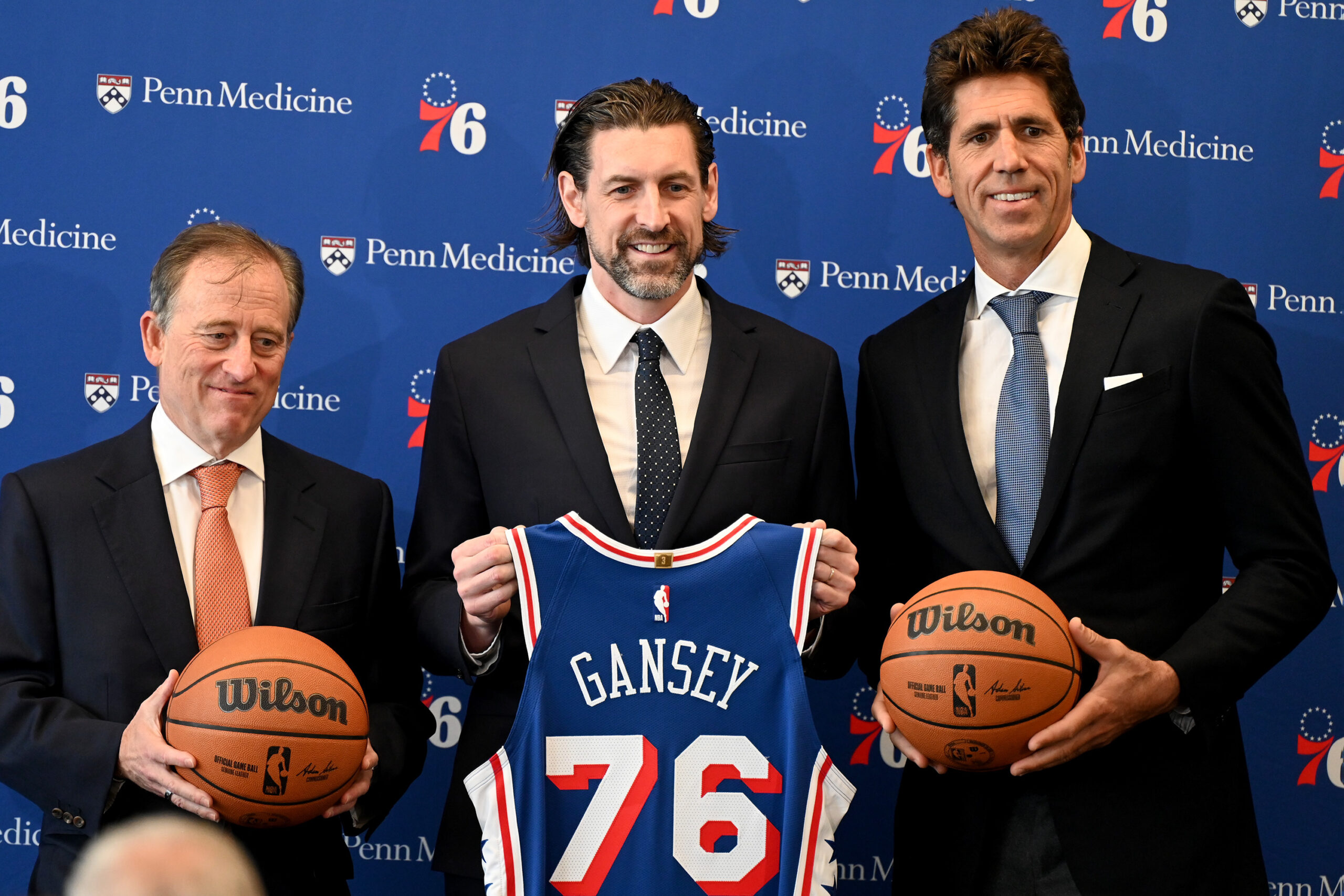
New Sixers president of basketball operations Mike Gansey (center) will come into focus with the NBA draft and free agency happening over the next two weeks.
The 76ers’ offseason is about to ramp up, with the NBA draft next week and free agency beginning at 6 p.m. on June 30. These will mark the first opportunities for new president of basketball operations Mike Gansey to make roster decisions.
There is a lot to ponder and discuss — from biggest draft needs to Joel Embiid’s future — which means it’s the perfect time to answer reader questions.
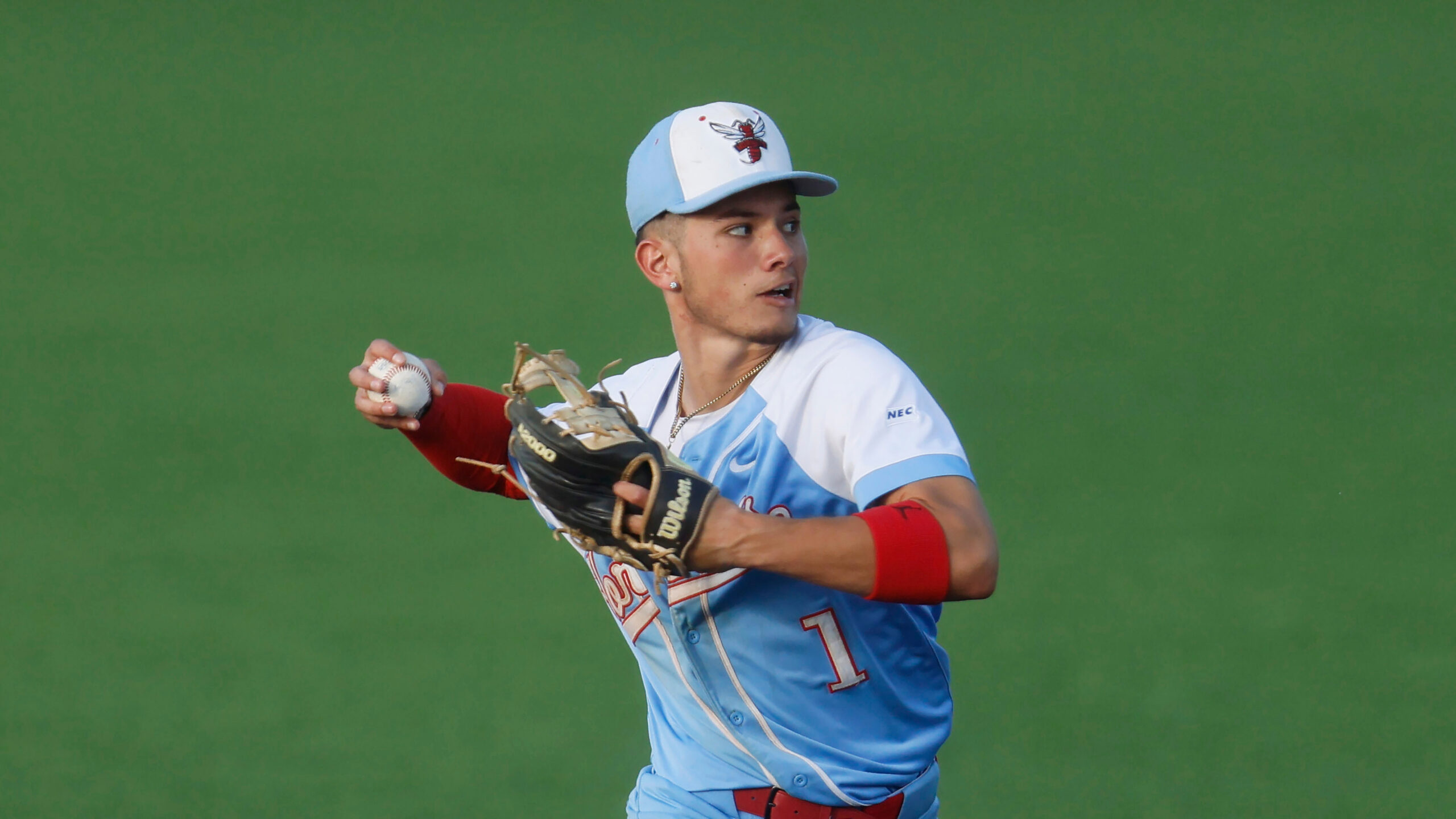
Delaware State shortstop Santino Harwood, who went to Roman Catholic, will play in the HBCU Swingman Classic on July 10 at Citizens Bank Park as part of All-Star week.
Santino Harwood wanted to play baseball at a Division I school but his chances were dimming when he started his senior year at Roman Catholic without a college scholarship offer.
Since the shortstop was 5-foot-11, he was overlooked by most college coaches. That was until he met an assistant at Delaware State, who offered Harwood a spot as a walk on.
Now, he’ll represent Delaware State at Citizens Bank Park days before the All-Star Game when he plays in the HBCU Swingman Classic on July 10.
Join Inquirer reporter Jonathan Tannenwald and host Lisa Carlin for Soccer Extra on Gameday Central.
Join Inquirer writer Jonathan Tannenwald and host Lisa Carlin, analyst for CBS Sports Golazo, as they dissect the matches, the moments, and more as Philly has its moment in soccer’s brightest spotlight. Watch our latest episode right here.
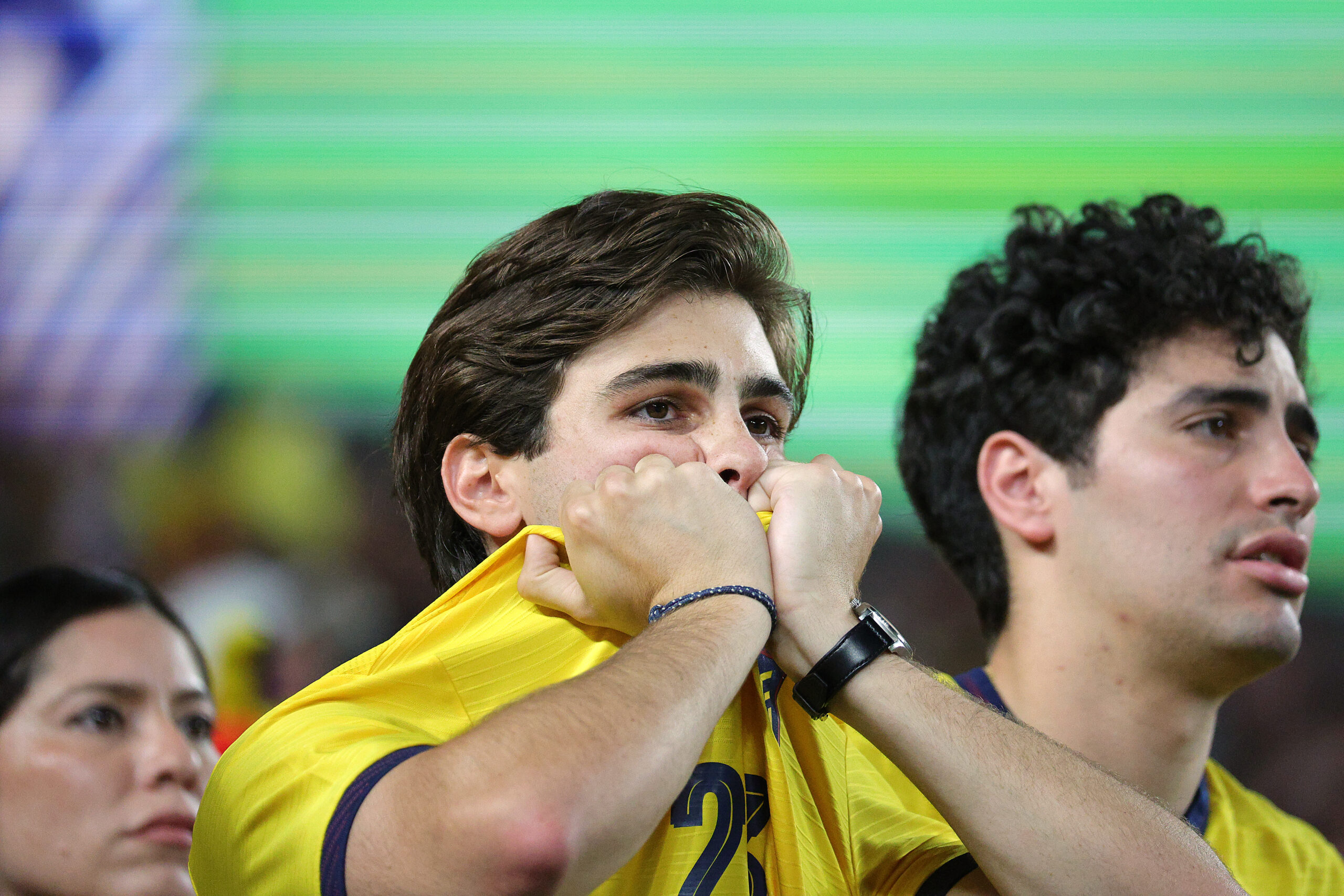
Ecuador fans react as time runs out against Ivory Coast during the World Cup Group E soccer match in Philadelphia on Sunday, June 14, 2026. Ivory Coast wins 1-0.
Each Friday, Inquirer photo editors pick the best sports images from the last seven days. From World Cup celebrations — and agony — to Garrett Stubbs on the mound, here are the best Philly sports photos of the week.
One of golf’s biggest hitters, Bryson DeChambeau, shown here at the Ryder Cup, doesn’t want the golf ball to fly any shorter.
Golf’s governing bodies declared Wednesday at the U.S. Open that the rollback of hyper-engineered golf balls would be rolled back itself. Any adjustment now will go into effect in 2030 instead of 2028.
The rollback is dead. It would take players months to adjust to a new ball, which is the most important piece of the myriad pieces of equipment they use. They will never agree to that, writes Marcus Hayes.
What you’re saying about MLB trade deadline
We asked: If you were Dave Dombrowski, what moves, if any, would you make and why?Among your responses:
Right now the Phillies do not look like they can be a serious threat to the Dodgers and other top NL teams. The team is aging and Dumbrowski needs to start rebuilding. Phillies having just sent Painter down really don’t have a whole lot to deal with, but I would start by trading Nola to a contender for a couple young promising pitchers. The team really has just about one more year after this one where Schwarber, Harper, and Realmuto will be productive. — Everett S.
Dombrowski has wasted the last few years and is still left needing most of an outfield, including a significant right-handed hitter, and now, a starting pitcher after allowing Suarez to go last year. One could argue that he also needs a middle infield that can hit. I like both Turner and Stott, but neither has lived up to his skills. Has Turner ever been worth what the Phillies paid for him? — Wayne H.
Phillies need an outfielder badly. Marsh is pretty good right now but I doubt that can last. Probably under. 280 at season end. Also a decent backup catcher who can hit over. 125 as age is catching up to JT a little. Pitching will be fine eventually. — Bob M.
I believe it is time to bring Mike Trout home.I don’t know if the Angels would even consider a trade but we absolutely should try.— Richard F.
We compiled today’s newsletter using reporting from Marcus Hayes, Kerith Gabriel, Matt Breen, Jonathan Tannenwald, Rob Tornoe, Gina Mizell, Ariel Simpson, Mia Messina, Ryan Novozinsky, Isabella DiAmore, Lochlahn March, Scott Lauber, Owen Hewitt, and The Inquirer’s photography staff.
By submitting your written, visual, and/or audio contributions, you agree to The Inquirer’s Terms of Use, including the grant of rights in Section 10.
Thanks for wrapping up the week with me. Enjoy the weekend and happy Father’s Day to all the dads out there. — Bella
Santino Harwood was set on playing baseball at a Division I school but his chances were dimming when he started his senior year at Roman Catholic without a college offer. He had chances to play at Division II and Division III schools but the infielder from Mayfair always dreamed of Division I.
“Kids these days want to hear that they’re a D-I player and going to a D-I institution,” said his father, Edgar. “I said, ‘That really does not matter.’ You need to go where you fit in and where you like the program. They feel like they’re disfigured if they’re D-II or D-III and they don’t have that status symbol next to them.”
Santino played like a Division I player in high school, but he was just 5-foot-11, causing college coaches to overlook the shortstop. Finally, an assistant at Delaware State noticed. They didn’t have a scholarship for him but told him he could walk on. Deal, he said. And then the coach made sure Harwood knew that the school was a historically Black college and university.
“He said, ‘You have to understand that you’re going to be a minority’,” said Edgar, as his son is white.
Santino didn’t mind. He just wanted a chance. He was in. The shortstop hit .296 this season, played crisp defense, and stole bases with ease for Delaware State, which reports its student body as 76% Black. Harwood grew up playing baseball with kids of various races — “Being from Philly, my friend group is mostly Black,” he said — so being a white kid at an HBCU was nothing new.
“It’s a great environment to be around,” Santino said of Delaware State. “It’s a great energy. They make you feel comfortable … I feel like baseball has the most diverse community. We have a lot of Hispanic, Black kids, white kids. Everyone comes together and is here for the same reason. That’s why we all get along.”
And next month, he will represent Delaware State at Citizens Bank Park days before the All-Star Game when he plays in the HBCU Swingman Classic on July 10.
The event was developed by Hall of Famer Ken Griffey Jr. to give players from HBCU schools — overlooked guys like Harwood — a chance to showcase their skills. Jimmy Rollins will manage a team, Griffey will be there, and Harwood will get his chance to star in a big-league park.
“Our president Dr. [Tony] Allen, his goal is to create the most diverse HBCU at Delaware State University,” baseball coach Pedro Swann said. “If you walk around campus, you’ll see all types of shade. There’s a mixture of everything. Plus, Santino has a little drip and a little swag to him. So he fits right in and has no problem blending in with the HBCU culture. That’s what I love about him. He’s friends with everyone.”
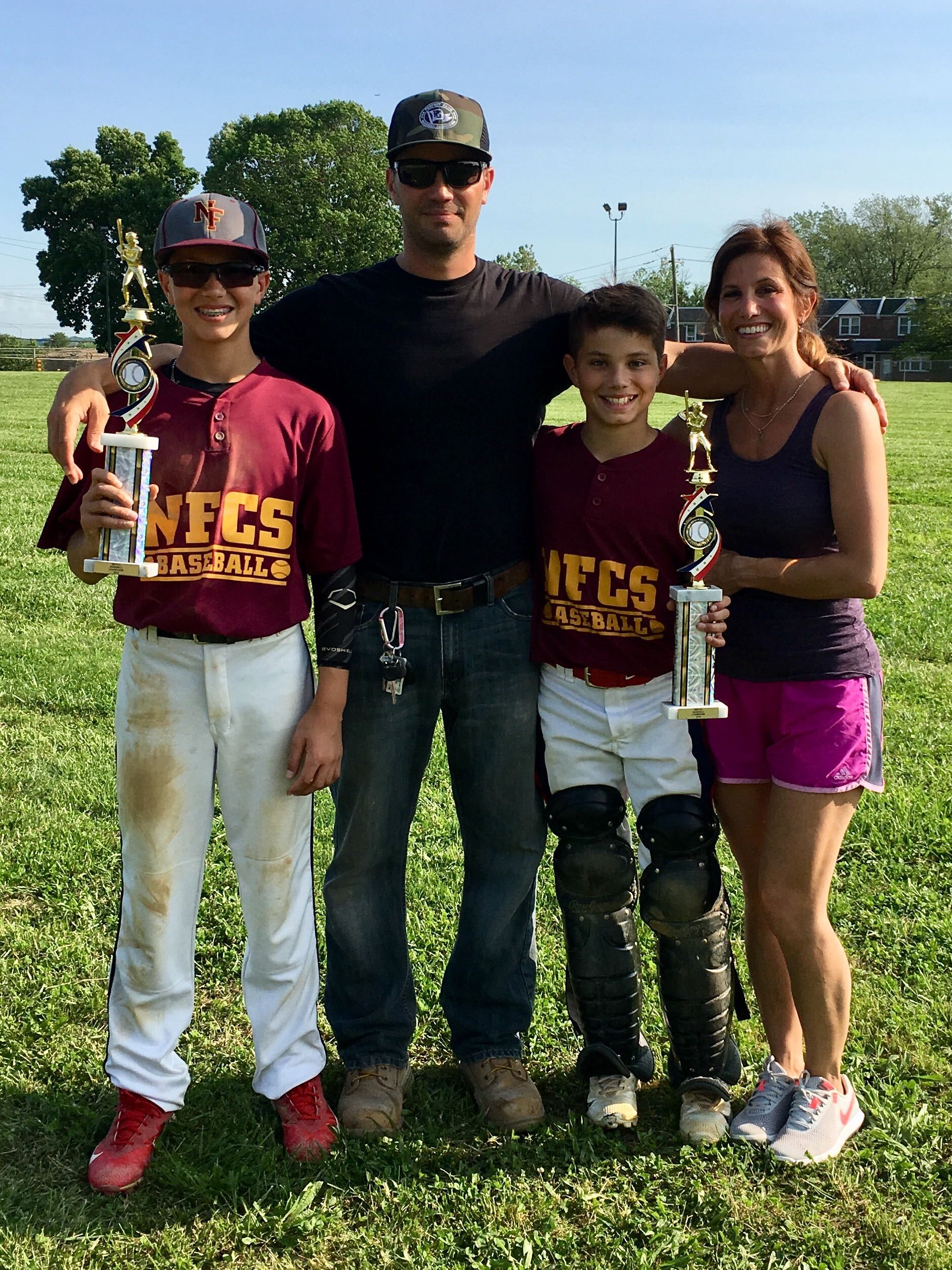
Santino Harwood (second from right) and his brother, Edgar; father, Edgar, and mom, Michelle after a game at New Foundations Charter School.
The Santino Rule
The 8- and 9-year-olds from Holy Terrors were called to the stage at the end-of-season banquet years ago when a table in the catering hall started to boo. Edgar looked around and saw it was another team from Northeast Philly that played in the age group above his son’s team. Fine, he thought. We’ll play up in age and beat them.
Holy Terrors — a youth organization at Brous and Princeton Avenues — won the Department of Recreation title against 11- and 12-year-olds despite 8-year-old Santino batting leadoff. Opposing teams were livid.
“I said, ‘Why are you mad? He’s 8 years old,’” Edgar said. “‘He’s my leadoff hitter. Just strike him out if you can. But that’s probably not going to happen.’”
A year later, Edgar said the league instituted a new rule that banned players from playing up in age.
“The Santino Rule,” Edgar said. “The pamphlet came out, and, boy, they put that sucker in boldface lettering. It was really weird. For me, playing up is a bonus if you can do it and you can hold your water.”
Edgar soon started a travel team called Falcons Baseball that practiced for three to four hours at fields in the Northeast. Even that wasn’t enough for his son, as the coach often would cap practice by driving his car up to the cage and turning on the headlights so Santino could get more swings after dark.
“There was always that want and desire,” Edgar said.
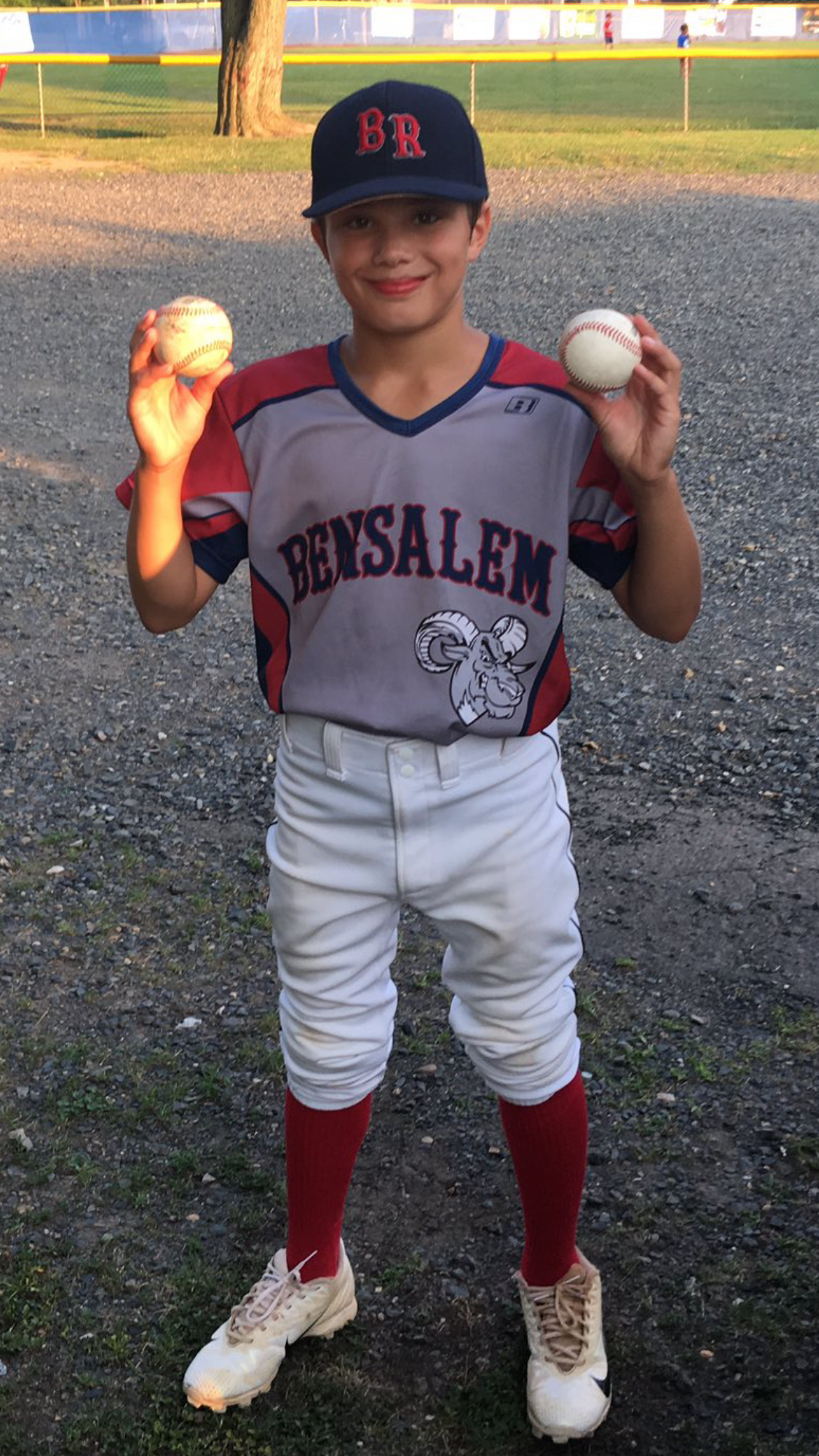
Santino Harwood after a game with the Bensalem Ramblers.
Those Falcons teams were diverse — “Black, white, Hispanic,” Edgar said — and the players became more than teammates. They hung out at the Harwoods’ home, barbecued, and bonded like “brothers” over their love of baseball.
“You have a melting pot of identities in the United States now,” Edgar said. “You have to get an understanding and learn to love one another and understand each other. Just like brothers, you’re going to bump heads. Everyone bumps heads whether you’re at work or on the baseball field or with your neighbor.
“But you have to learn these things now that you have to understand each other. You have to have a respect for different attitudes, different thought processes, different identities, cultural or national.”
Santino Harwood went to Delaware State without a scholarship.
Earning his way
The Delaware State baseball team is full of players like Santino, who were overlooked by other programs before finding their way to the Hornets. The roster is racially diverse, just like that Falcons team.
“Last season, we had a guy from Idaho,” Swann said. “You pair him with someone from like Teaneck, N.J., and it’s polar opposites. But the guys got along. When you get out on that field, it’s not about what color you are. It’s about how you catch and throw the ball.”
Santino went to Delaware State without a scholarship, but his dad told him not to worry.
“You need to be prepared for the opportunities that can get you to that scholarship,” Edgar said. “Whether or not you think someone in front of you doesn’t deserve it, that’s irrelevant. When you have your opportunities, can you showcase to the point where you get that same bonus or package?”
He hit .296 as a freshman in 2025, and his coach called him into the office after the season. He was no longer a walk-on. Harwood called home and told his parents. They were thrilled.
He stole 15 bases last season as a sophomore with a .413 on-base percentage in 44 games. Swann told him early in the season that he was building a case to be picked in the Swingman game.
“I said, ‘Man, that would be cool. You’d get to play in your hometown. That would be awesome,’” Swann said. “Then he ended up getting selected. He took the lead role in the infield this season and was our quarterback out there. He never backed down from any battle. He’s a Philly kid, so he has that fighting spirit and chip on his shoulder. I love the way he plays the game.”
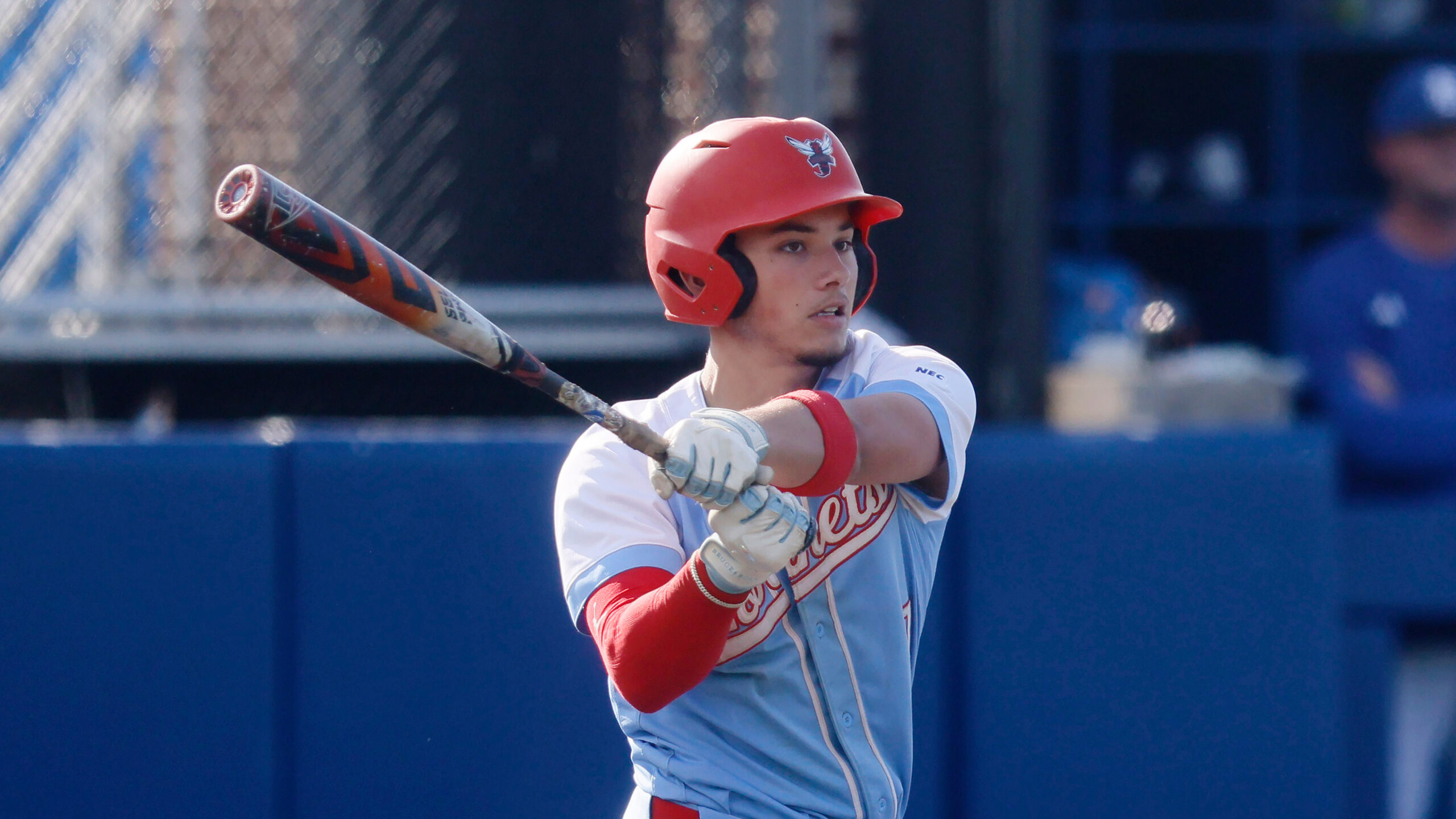
Delaware State shortstop Santino Harwood had a .409 on-base percentage and 15 stolen bases in 45 games last season.
Santino grew up an Atlanta Braves fan — his dad is from Georgia — but still is honored to play at Citizens Bank Park.
“This is a once-in-a-lifetime experience,” he said. “It’s a privilege to play there. I feel like that’s every kid’s dream. For me to get a taste of it in the Swingman is nothing more than a blessing.”
Santino dreamed of playing Division I baseball but had to wait for his opportunity. Even then, he had to earn a scholarship. First, his coach had to make sure he would be comfortable. Santino didn’t think twice about it. The HBCU, he said, has felt like home. And he’ll represent it next month on a big stage.
“I’m so happy to see him get an opportunity that he’s really worked so hard for,” Edgar said. “No one knows the hours and the days that we’ve been out there trying to get him better at this sport. And it doesn’t really matter if anyone knows or not, right? It’s an opportunity that me and his mom are going to enjoy.”
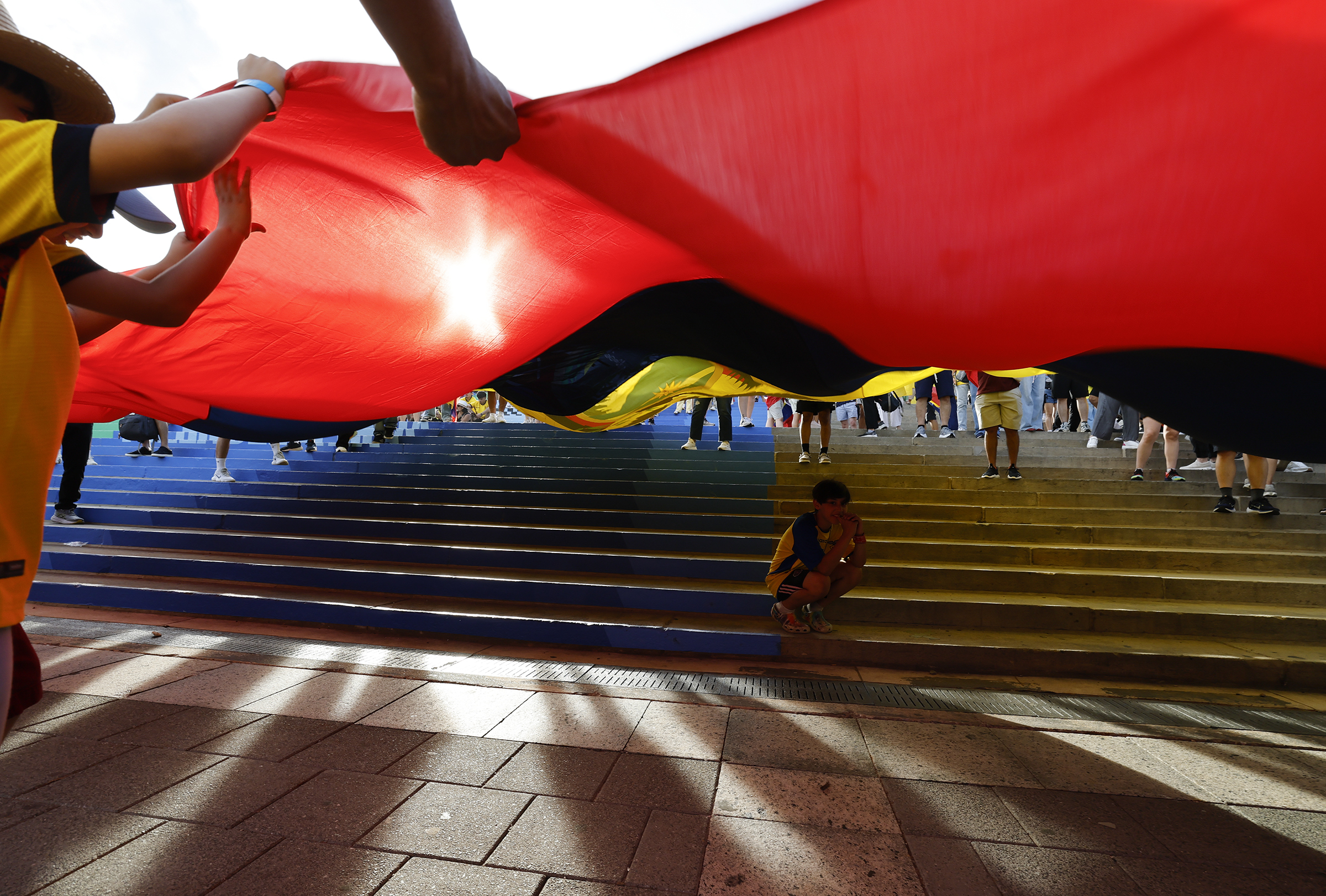
Each Friday, Inquirer photo editors pick the best sports images from the last seven days. This week, it should come as no surprise that you’ll find lots of World Cup photos — especially after Ecuadorian fans rallied on the steps of the Art Museum, and fell victim to the Rocky curse the next night against Ivory Coast. Brazil fans, whose team plays Friday night in South Philly, took precautions to avoid that fate.
Elsewhere, the Phillies took the field against some divisional foes, a state champion returned to the track, and dodgeball got serious. Here’s a look back at some of our favorite photos from the week:
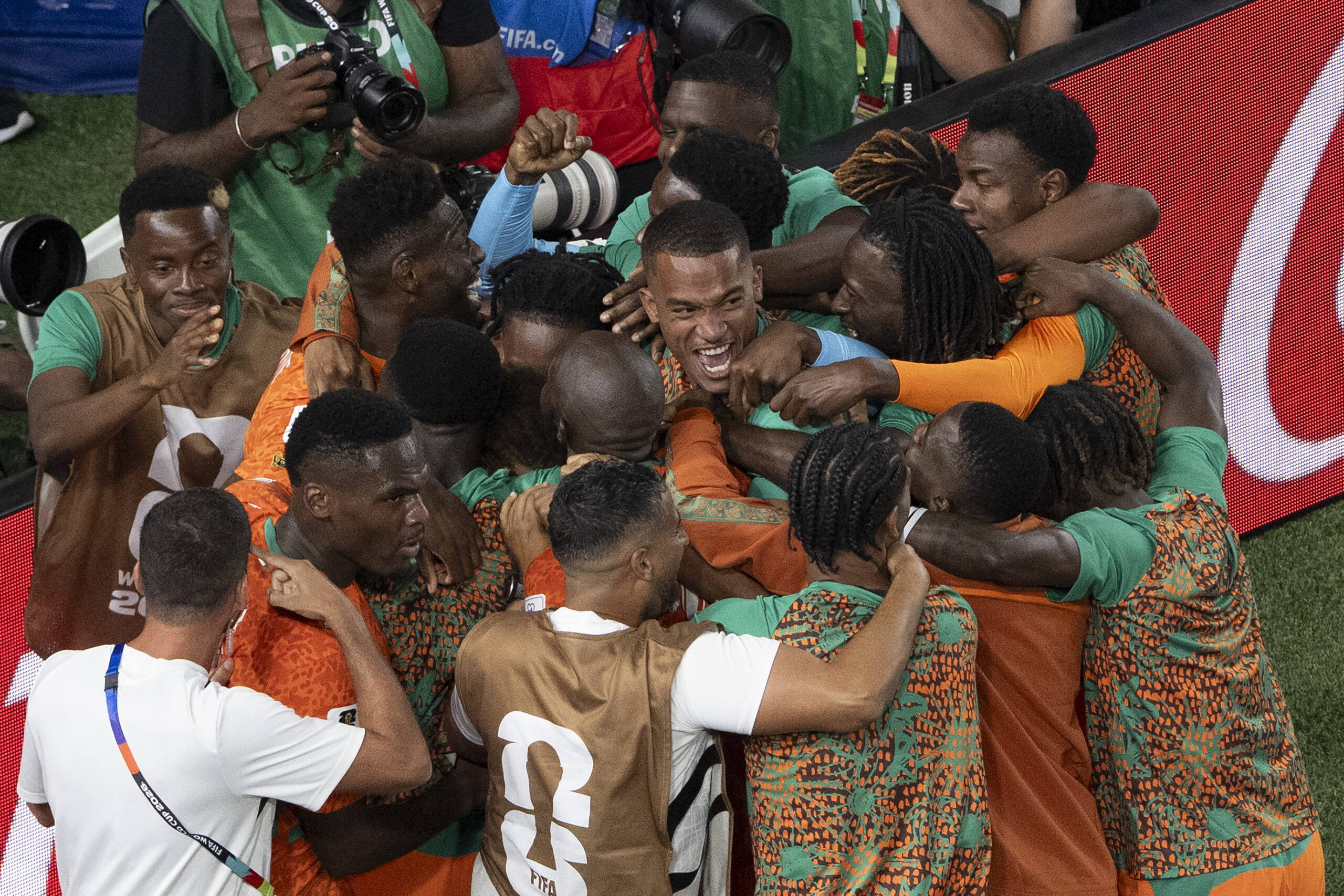
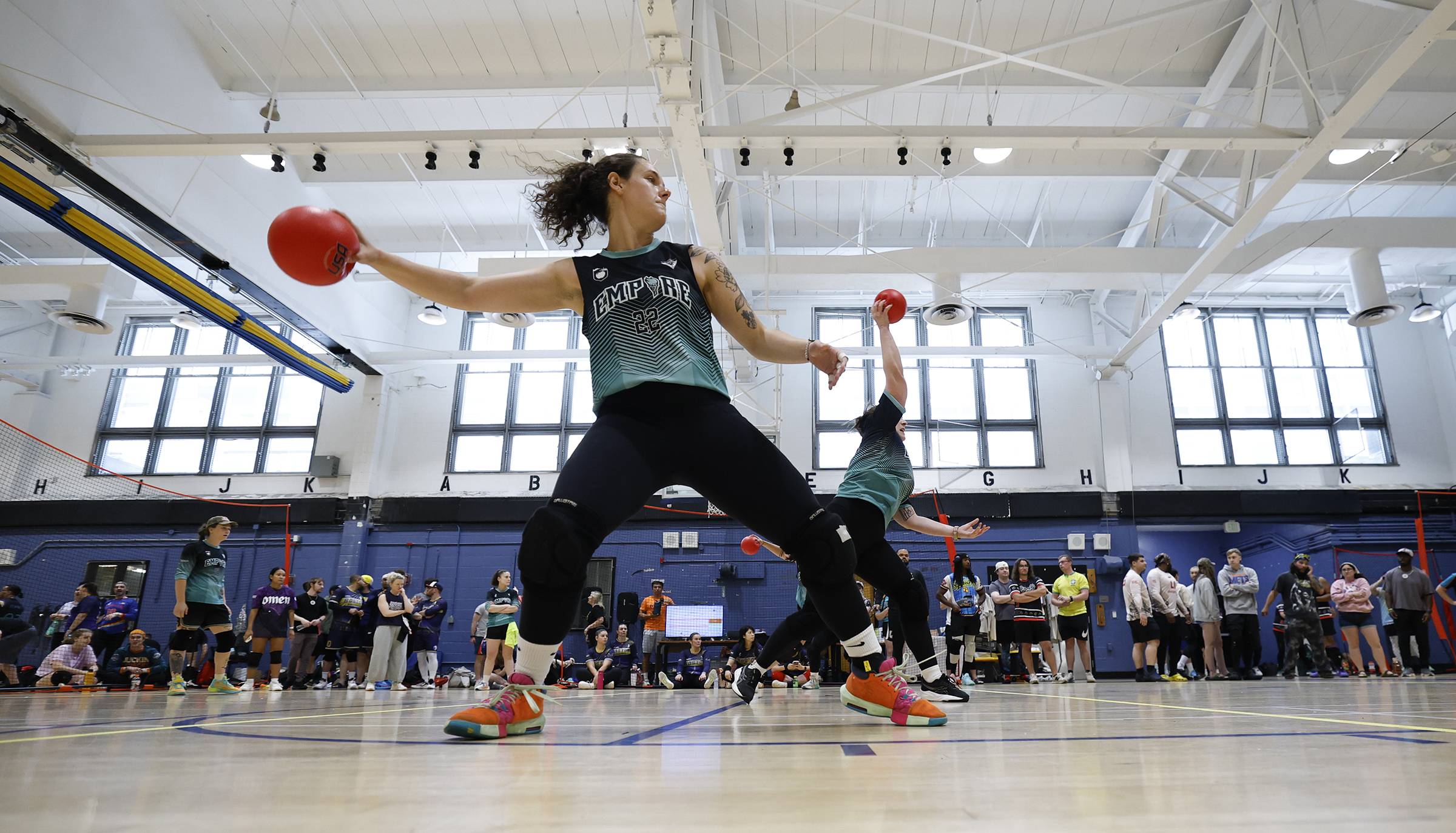
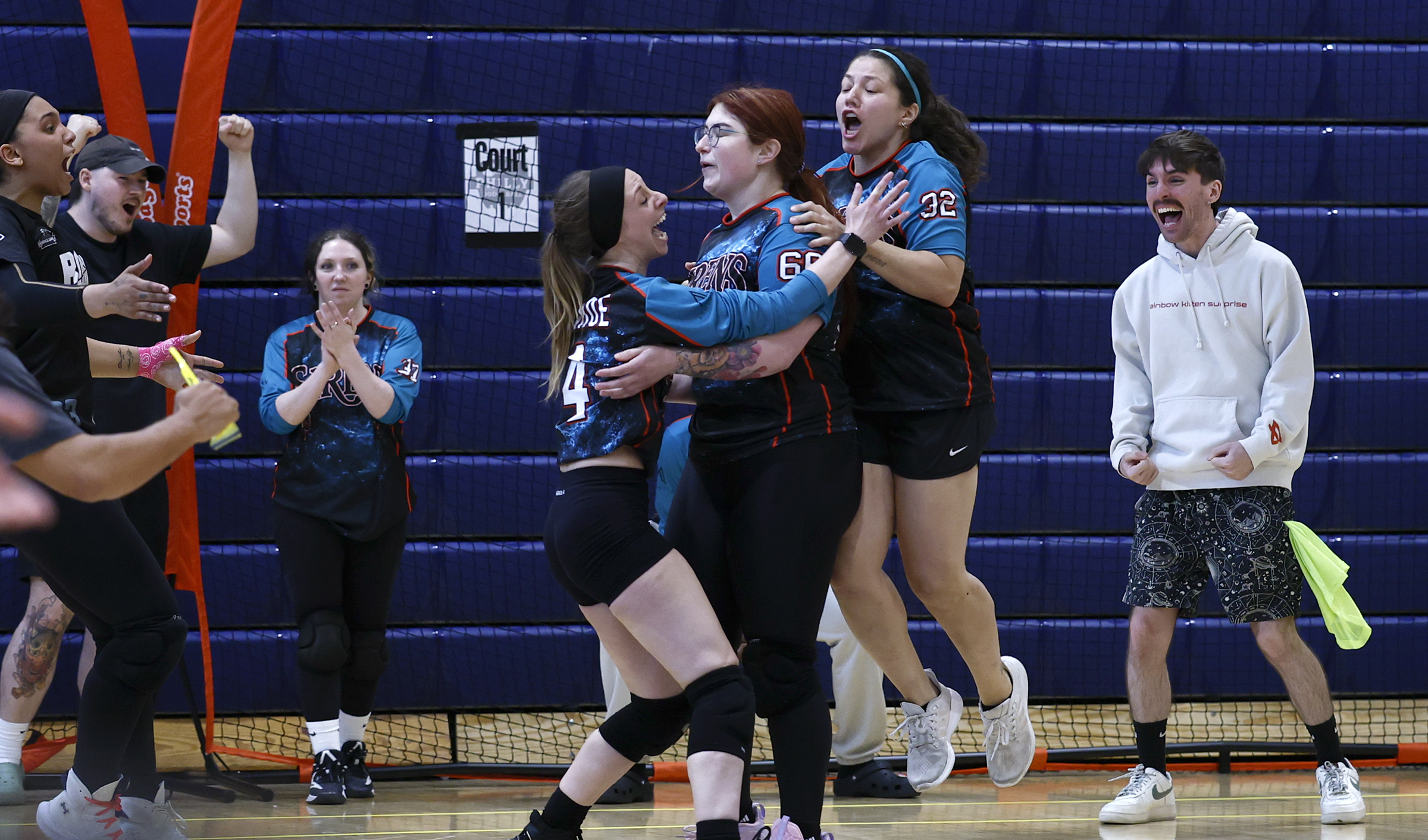
The Phillies used eight pitchers — technically seven and cathcer Garrett Stubbs — in Wednesday’s loss to the Marlins.Phillies second baseman Bryson Stott looks to the dugout after hitting a triple in the first inning of Tuesday’s 8-2 win over the Marlins.Winslow Township High School sophomore Jasmine Jackson recently won a state championship in the 100-meter hurdles and earned an invite to the Brooks PR Invitational.Ecuador goalkeeper Hernán Galíndez allowed the game-deciding goal by Ivory Coast’s Amad Diallo in the 90th minute of their World Cup Group E match on Sunday.Ecuador fans were shocked by their team’s World Cup loss to Ivory Coast on Sunday in Philadelphia.Ivory Coast’s Amad Diallo (center) is surrounded by his teammates after scoring the lone goal in a 1-0 victory over Ecuador in the World Cup on Sunday in Philadelphia.Ecuador forward Enner Valencia (center) and Ivory Coast defender Emmanuel Agbadou (right) battle for the ball during their World Cup match on Sunday in Philadelphia.Ecuadorian fans cheer during their World Cup match against Ivory Coast in Philadelphia.Ivory Coast’s soccer team practice as the sprinklers began operating last Friday at Subaru Park in Chester. They faced Ecuador in Philadelphia that Sunday.Members of the Empire, a women, trans, and nonbinary dodgeball team, prepare to throw while taking on team Sirens during the “Beast Coast” championship Saturday at Ben Franklin High School.Members of the Sirens celebrate after beating Empire in a WTNB dodgeball quarterfinal.A young Ecuadorian soccer fan sits under the Ecuadorian flag during a flag-waving event on Saturday at the Philadelphia Museum of Art steps, before the team faced Ivory Coast in the World Cup.