Tag: topic-link-auto

  • Mauricio Pochettino keeps Christian Pulisic’s status a mystery ahead of USMNT-Australia

    Mauricio Pochettino keeps Christian Pulisic’s status a mystery ahead of USMNT-Australia

    SEATTLE — There was no surprise news about Christian Pulisic from U.S. men’s soccer team manager Mauricio Pochettino in his news conference before Friday’s game against Australia (3 p.m., Fox29, Telemundo 62). Pochettino did not rule the star playmaker in or out, and that was not surprising.

    “As you know, he was training in an individual way the whole week,” Pochettino said. “But like always, I think tonight, the day before the game, we have a meeting with our medical area, and we will assess the whole group, the players, and tomorrow we will communicate all the things that we can agree tonight.”

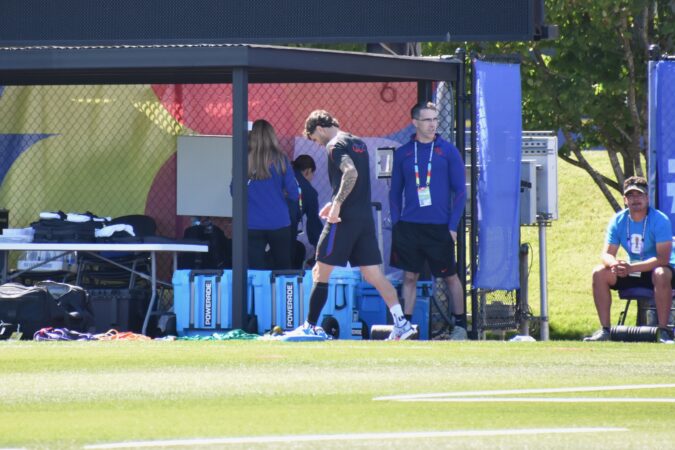
    Pulisic was seen briefly at the start of Thursday’s practice, then headed off to work on his own. When he arrived, he wasn’t wearing the sleeve over his injured left calf that he sported on Wednesday. But after a few minutes, he sat down on a bench by the sideline and put it on.

    “He is evolving, he is much better from [last] Friday,” Pochettino said. “I think at the moment we’ll see. … He’s doing a massive effort trying to be ready.”
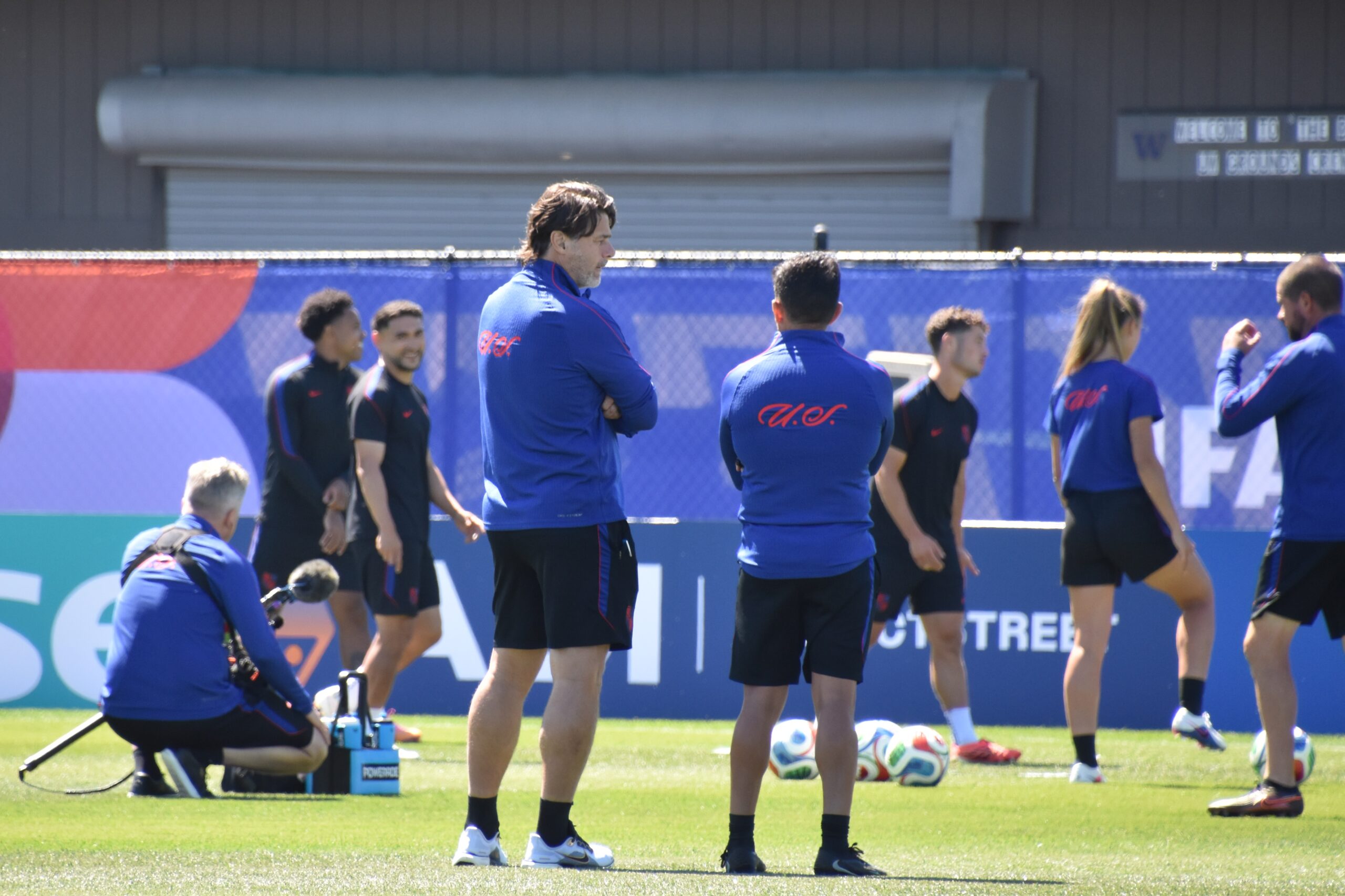
    Mauricio Pochettino (left) and his top assistant Jesús Pérez at Thursday’s practice.

    The manager also praised Pulisic for being “strong and with a great mentality” as the Hershey native works to be ready for kickoff.

    Asked who might play if Pulisic can’t go, Pochettino didn’t answer. This was no surprise either.

    “I will tell tomorrow if that is the situation,” he said. “At the moment, we are evaluating all the possibilities just in case, and then we will decide when we have the confirmation in one or another direction tonight.”

    What is no secret is that when these teams met in a friendly in suburban Denver in October, it was far from friendly on the field. Australia played a physical game, with a focus on Pulisic that forced him off the field injured in the 31st minute.
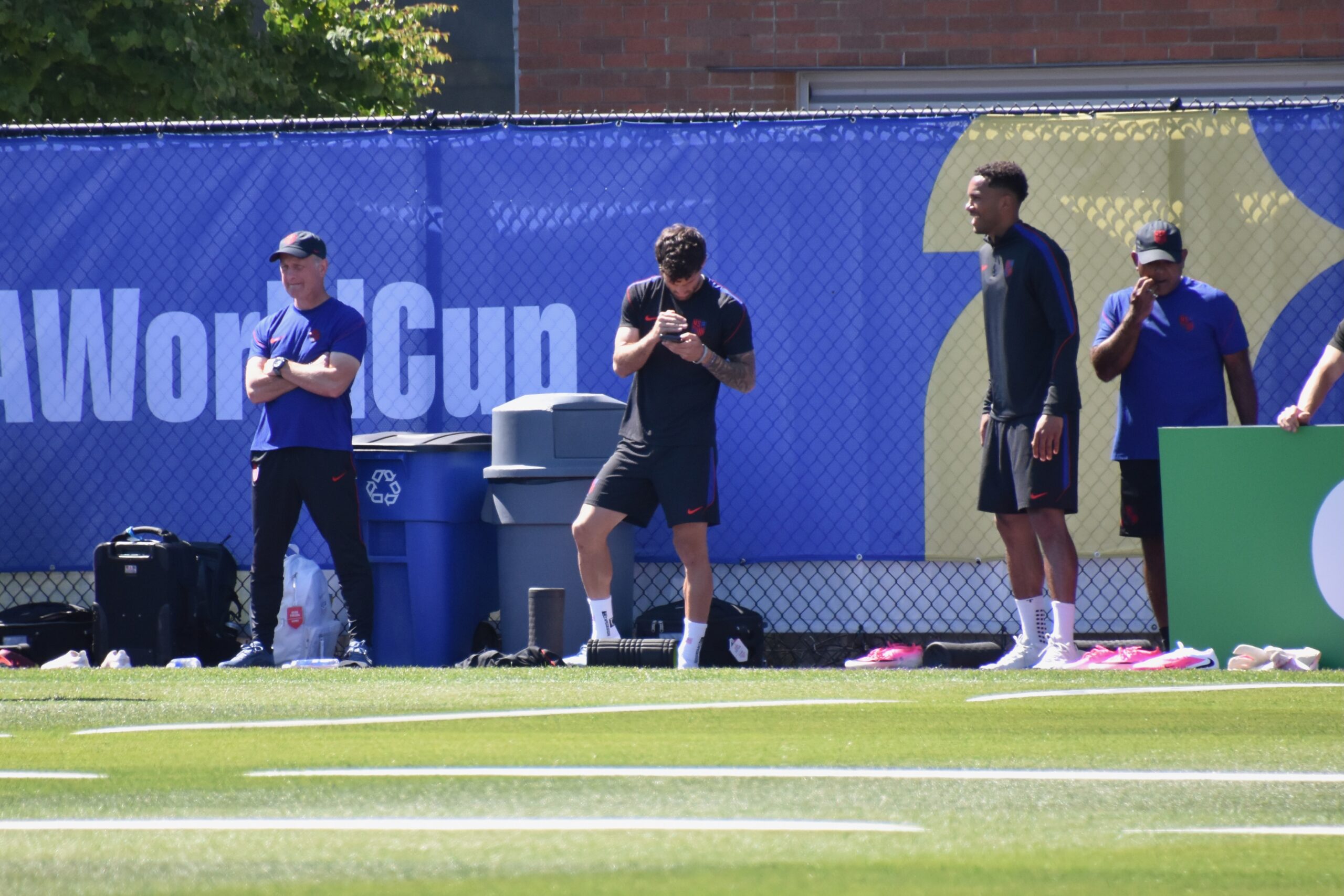
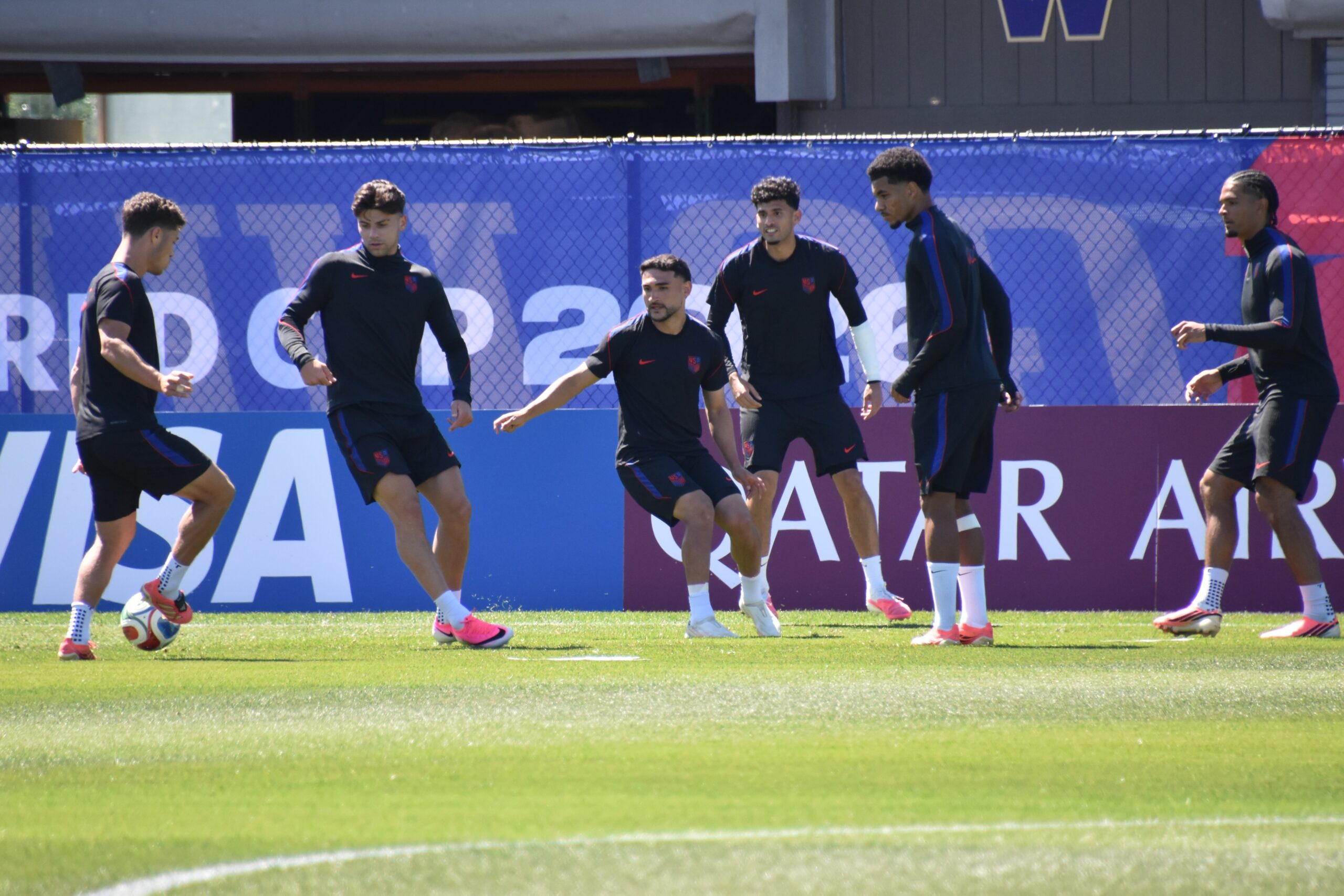
    When Christian Pulisic (center) first appeared Thursday, he wasn’t wearing the sleeve over his injured calf that he wore Wednesday. He put it on later.

    All of the U.S. players are ready for round two, and so is the manager.

    “I think we need to play on the edge of the line, not crossing the lines of the rules,” Pochettino said. “I think we are going to try, all, to be very close to this thin line. That allows us to take some advantage [with] the rules.”

    Later in the day, Australia manager Tony Popovic was asked if he expects this game to be similar to the last. He didn’t answer directly.

    “Since then we feel we’ve improved,” he said. “We’re a better team now than what we were in October and I’m sure the U.S. is as well.”

    Popovic also was asked if he expects Pulisic to play.

    “I’m sure he’ll play if he’s fit — he’s one of their best players, an outstanding footballer,” Popovic said. “We expect Christian to definitely play if he’s available, and if he’s not, we’ve looked at some of the players that have played when he hasn’t been there.”

    A soft spot for Argentina and Messi

    Pochettino grew up in Argentina, played 20 times for his country (including at the 2002 World Cup), and like many Argentines is fiercely proud of his roots. So of course he was thrilled to see the Albiceleste start its World Cup campaign by routing Algeria, 3-0, with a hat trick from Lionel Messi — whom Pochettino coached at Paris Saint-Germain in the 2021-22 season.

    “I am Argentino, and I really enjoyed the performance,” Pochettino said, quickly adding “but I’m going to give my life for the USA.”

    He didn’t have to worry about offending anyone this time.

    “I think it’s difficult to describe Messi,” Pochettino said. “Six World Cups, all that he achieved in his career in different clubs [in] collective and individual ways — woof. Is he the best? For sure, yes.”

    (Not that he was ever going to answer with Brazil’s Pelé, Argentina’s foil for decades; or Portugal’s Cristiano Ronaldo, Messi’s modern foil.)

    “Argentina is an amazing team,” Pochettino said of the reigning champions, noting his friendship with their manager Lionel Scaloni and some of his staff. “Lionel is, for me, the best coach today in this World Cup. … The fans — amazing.”
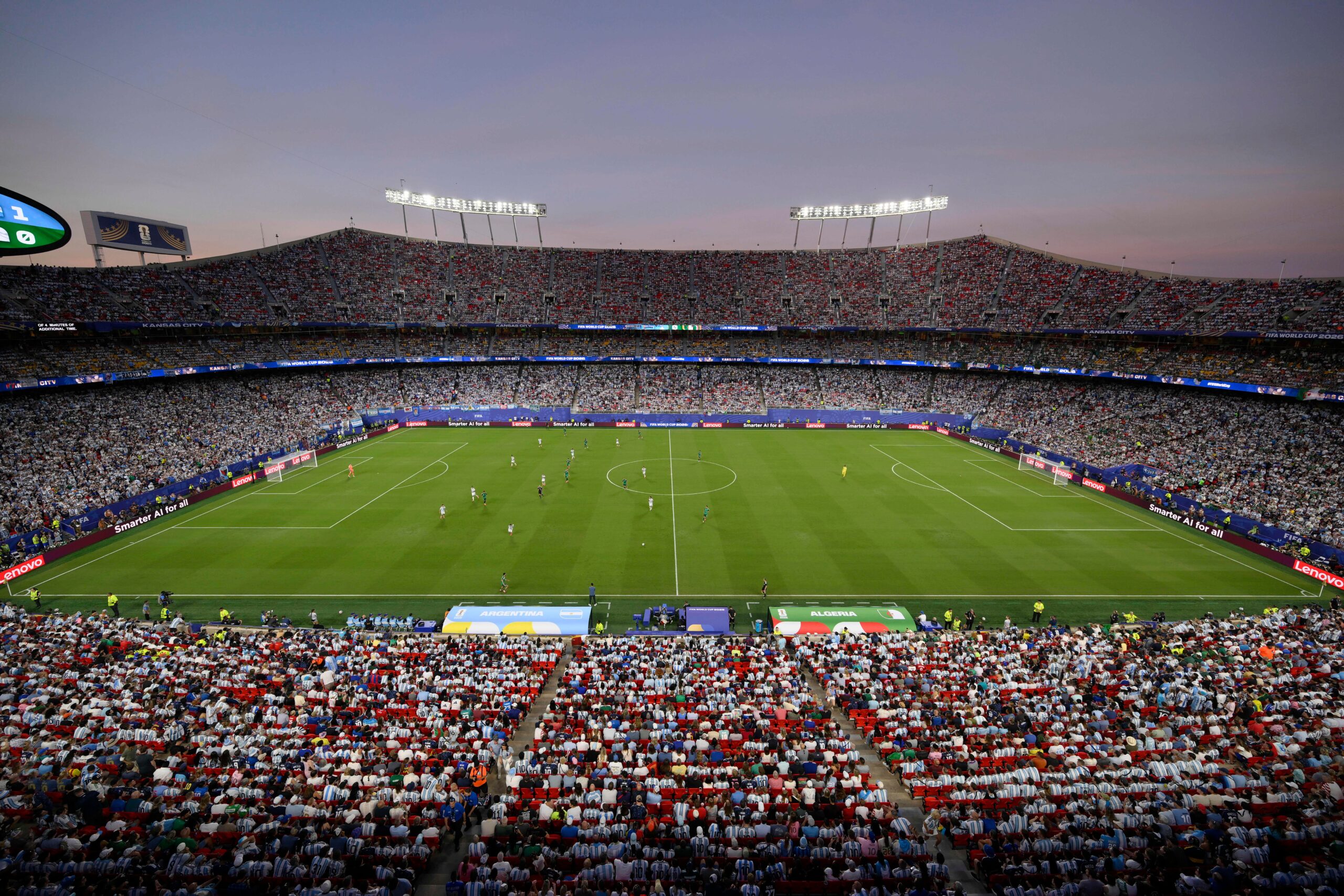
    The packed crowd of Argentina fans in Kansas City on Tuesday.

    He paused there to make a gesture showing the importance of Argentina’s legendary fan base, that has filled stadiums to the brim for decades. Kansas City’s Arrowhead Stadium was the latest to see the show, as a full house roared into the night.

    “And then the cherry [on top]? Messi,” Pochettino concluded.

    Big man on campus

    This isn’t Pochettino’s first trip to Seattle. In 2014, his first game with England’s Tottenham Hotspur was a friendly against the Sounders at the same stadium he’ll work Friday.

    “I saw the ambience and the atmosphere and the people, and I hear that they are very passionate people here,” he said. “I’m looking forward [to] tomorrow, to share all together a great night, I hope with a good result and good performance.”

    The vibrant scene in Seattle as Fox’s studio show goes on air:

    #USMNT

    [image or embed]

    — Jonathan Tannenwald (@jtannenwald.bsky.social) June 18, 2026 at 2:23 PM

    At one point during Thursday’s practice, Pochettino walked to the end of the field, then up a hill behind the net, took out his phone, and recorded a little video. What was that about?

    He joked in the news conference that it was “to see how everything looks without me,” mocking Argentines’ reputations for big egos. He also joked that he was watching for spies, though that line fell a little flat in a sport where spying actually happens.

    As it turned out, he was just taking a video for himself, with a view in front of him of Lake Washington and the facilities on a classically big-time American college campus. Though the U.S. team was only there for a short time, Pochettino appreciated the setting.

    “It was amazing, beautiful facilities,” he said. “We know that they were working for months, only for us to spend maybe an hour and a half, two hours. … Thank you to the people that made it possible to have, in perfect condition, the field and all the facilities.”
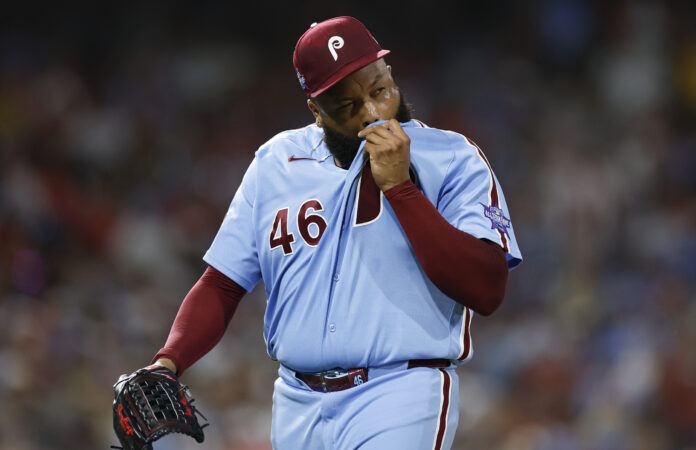

  • Mets jump on José Alvarado in seventh inning of Phillies’ 6-4 loss

    Mets jump on José Alvarado in seventh inning of Phillies’ 6-4 loss

    José Alvarado thought the inning was over.

    The Mets had already scored one run against the Phillies reliever to break the 3-3 tie in the seventh, and threatened for more with two runners on. But Marcus Semien fouled a cutter back into J.T. Realmuto’s glove for what Alvarado thought was an inning-ending strikeout, and he started to walk off the mound.

    Home plate umpire Brian Walsh checked the ball and found a dirt mark on it, proving that it had touched the ground before entering Realmuto’s glove. It gave the Mets second baseman a new life. And Semien made the most of it, sending Alvarado’s next pitch to the center field wall, above a jumping Justin Crawford.

    “It ends up being the right call,” interim manager Don Mattingly said. “Not a call I like, but the right call.”

    What was nearly an inning-ending strikeout instead became a bases-clearing triple, putting the Mets ahead to beat the Phillies, 6-4, in Thursday’s series opener. Alvarado, whose season ERA has risen to 6.58, was charged with the loss.

    Alvarado was nearly out of the inning even before that. He had allowed a leadoff single to start the seventh inning, but battled back to induce a line out and pop out, respectively, from Bo Bichette and Juan Soto, who had been the Mets’ most dangerous hitter all night. He then brought pinch-hitting Mark Vientos to a 1-2 count.

    But Alvarado lost his command, throwing three straight cutters in the dirt to walk Vientos. He allowed another pinch-hitter to reach when Eric Wagaman singled, bringing up Semien.

    “Hitters feel confident that they can hit against me right now,” Alvarado said through team interpreter Diego D’Aniello. “It seems like 100 mph is something they see a lot at this level. It’s not surprising anymore. They’re just hitting well against me right now.”

    All three hits Alvarado gave up on Thursday came on his sinker. Hitters are batting .333 against the pitch this year, and .268 on his cutter.

    After the Phillies optioned fellow lefty Tanner Banks earlier on Thursday, it is more crucial that Alvarado turns his season around. Alvarado and Tim Mayza are the Phillies’ only left-handed options on the roster, though Kyle Backhus (left elbow inflammation) is progressing on his rehab assignment and is nearing a return.

    “We’re a nick away from catching strike three, just touches the ground. So we just keep paying attention to him,” Mattingly said of Alvarado. “But, I mean, the ball’s coming out, it’s not like he’s down in velo or anything like that. Just got to get the ball to the right spots.”

    It didn’t help that the Phillies’ bats went cold after the fourth inning. After the Mets jumped out to an early lead against starter Aaron Nola, courtesy of a pair of solo homers from Soto and an RBI double A.J. Ewing hit over Brandon Marsh’s head in right field, the Phillies chipped away to tie it in the fourth.

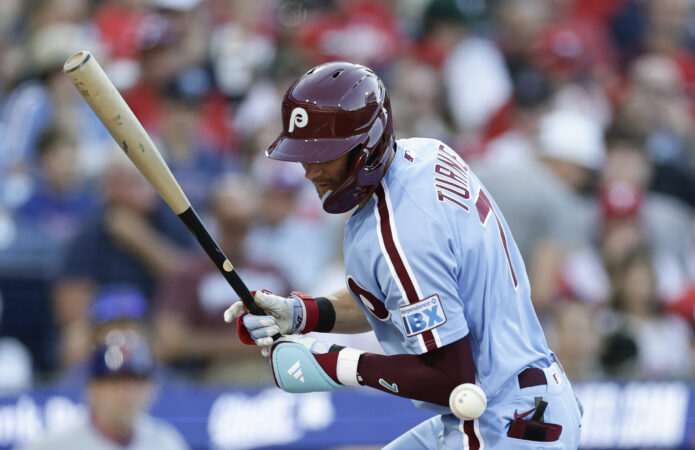
    Trea Turner was hit by a sweeper in the leg in the bottom of the first, and he scored on a single from Alec Bohm. Turner was later taken out of the game with a bruised right calf.

    “He said he had trouble on defense, felt like he was a liability on defense, so he couldn’t really move,” Mattingly said, adding that he hoped the day off Friday would help Turner be ready for Saturday night’s game.

    Bohm delivered another RBI in the third, doubling to drive in Kyle Schwarber and cut the Mets’ lead to 3-2. The Phillies’ designated hitter had reached first on a dropped third strike from Mets catcher Francisco Alvarez, and advanced to second when Alvarez botched the throw to first.

    In the fourth, Derek Hill tied the game at 3, singling up the middle to drive in Bryson Stott. But that proved to be the Phillies’ final hit until the ninth inning, as the bats fell mostly silent against the Mets bullpen.

    Phillies pitcher Aaron Nola allowed seven hits, but he limited the Mets to three runs to keep his team within striking distance.

    Nola allowed seven hits, but he limited the Mets to three runs to keep his team within striking distance. Seth Johnson and Bryse Wilson, who both had been recalled earlier on Thursday, each appeared in relief. Johnson retired the side in order in the sixth with a pair of strikeouts on his 99-mph fastball, while Wilson pitched a scoreless eighth and ninth after the Mets took the lead against Alvarado.

    “Seth was good tonight,” Mattingly said. “He’s been throwing the ball good in triple A, one of the best relievers in triple-A baseball. So stuff was good, threw in the strike zone, attacked, so it was good.”

    Down to their final out in the ninth, the offense showed a little life. Gabriel Rincones Jr., pinch-hitting for Hill, delivered the Phillies’ first hit since the fourth on an infield single to Bichette. Crawford followed it up with an RBI single to bring up Schwarber, representing the winning run with two on base.

    Schwarber worked a 2-2 count against Devin Williams, and hit a sharp liner, 104.6 mph off the bat, but it was straight at right fielder Brett Baty for the final out.

  • Phillies’ Trea Turner exits game vs. Mets after being hit by pitch

    Phillies’ Trea Turner exits game vs. Mets after being hit by pitch

    For the second time this week, Trea Turner left a game early after being hit by a pitch.

    The Phillies shortstop departed Thursday’s 6-4 loss to the Mets with a bruised right calf after taking a 79.2 mph sweeper off the leg from Sean Manaea in the first inning. Turner remained in the game initially as a baserunner, scoring a run, but was replaced at shortstop by Edmundo Sosa in the third inning.

    Sosa switched from left field, where he had started the game. Justin Crawford entered the game in center, sliding Derek Hill to right field and Brandon Marsh to left.

    “Got hit in a tough spot, right above the bottom of the calf towards the bottom, where he starts getting into the Achilles,” interim manager Don Mattingly said. “He was having trouble putting pressure, pushing off. … He said he was having trouble on defense, felt like he was a liability on defense, so he couldn’t really move. Day off [Friday], hopefully it’ll be good by the night game [Saturday]. We’ll see.”

    Turner exited Monday’s game against the Marlins with a bruised right wrist after getting drilled with a fastball, and sat out on Tuesday as it was still inflamed.

    In his return to the lineup Wednesday, Turner finished with three hits, and said he felt like he was “on a good track” at the plate.

  • The Philly school board voted to nonrenew a charter run by a veteran administrator

    The Philly school board voted to nonrenew a charter run by a veteran administrator

    The Philadelphia School Board voted Thursday to nonrenew a charter school run by a veteran former district administrator, pointing to poor test scores and operational problems.

    The board voted 8-0 to nonrenew Global Leadership Academy Southwest at Huey, a charter run by Naomi Johnson-Booker, who operates another GLA charter in West Philadelphia. Board member Whitney Jones abstained, citing personal reasons.

    Charter schools are publicly funded but independently managed. In Philadelphia, about one-third of public school students attend brick-and-mortar charters.

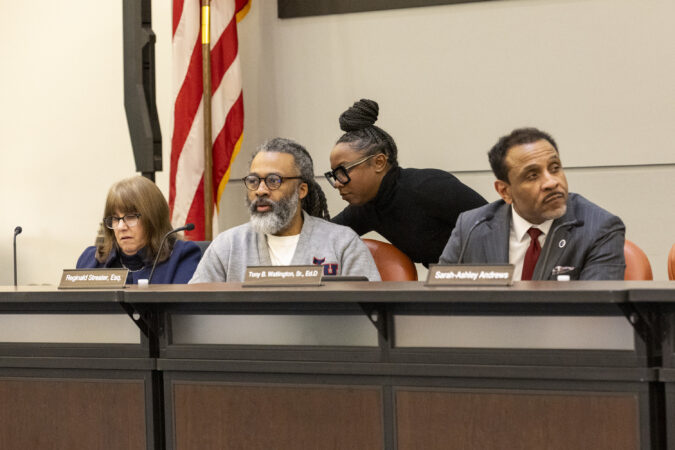
    “We have a responsibility that is clear … to protect every child’s right, civil right, to a high-quality public education,” said the board’s president, Reginald Streater. He noted that GLA Southwest, a K-8 enrolling close to 600 students at 52nd and Pine Streets, has posted poor academic performance, with only 7% of students scoring proficient or advanced in math on the Pennsylvania System of School Assessments in 2025.

    The school also has poor student attendance, and has not met district governance and financial standards, with conflicts of interest in counsel representation, insufficient cash on hand, and “questionable financial payment plans,” Streater said.

    Noting GLA Southwest’s status as a Renaissance school — a former district school handed over to charter management a decade ago as part of an initiative to turn around failing schools — Streater said it was the board’s obligation “to do everything we can to create seats or incentivize seats that truly support student achievement, and as a Renaissance school, to complete the turnaround.”

    The board’s vice president, Sarah-Ashley Andrews, said the fact that the charter didn’t meet academic, operational, or fiscal standards on the district’s evaluation was “a clear red flag.”

    The vote doesn’t mean GLA Southwest will close, but triggers public hearings on the school’s performance.

    Supporters of the charter said the school’s test scores weren’t a full reflection of its value to students and the community.

    Zenobia Story, the school’s principal, said students had been improving, with proficiency on the state’s English language arts tests growing from 9.6% in 2022 to 22.4% in preliminary 2026 results.

    The results tell “a story of progress, not stagnation,” and “a school community moving in the right direction,” Story said. “The response should not automatically be closure.”

    Nutina Martin, the school’s director of climate and culture, said the school had inherited “significant climate and safety challenges.” But she said it had transformed since it became a charter in 2016, when there were 147 out-of-school suspensions in a single school year, Martin said. Now, she said, there were fewer than 30.

    Streater said the charter’s nonrenewal hearings would give the school “an opportunity under oath with evidence” to support statements made by staff Thursday.

    The board pulled a planned vote to nonrenew Philadelphia Montessori Charter School, in light of a Common Pleas judge’s order Wednesday to delay the vote following a lawsuit brought by the charter.

    Philadelphia Montessori’s executive director, Amanda Wilson, said the board had “created needless uncertainty” for the school’s families and staff.

    Streater said the board was “simply trying to do our duty, in being responsible charter school authorizers” and fiscal stewards.

    Spending on SEPTA

    In other business, the school board agreed to spend up to $34 million on SEPTA fare cards for students in the 2026-27 school year. Officials estimate 62,000 district, charter, and parochial school students are eligible for free fare cards — but that money is reimbursed through a state transportation subsidy.

    SEPTA, with district cooperation, is warning students that they have to use those cards. It’s launching a crackdown on student fare evasion in the coming school year.

    Transit system officials, who said they’re losing an estimated $11 million annually on students not swiping their fare cards.

    Under the new fare diversion system, any student caught not swiping their card — technically a theft of service offense — will begin receiving formal warnings that will also be sent to transportation liaisons at their schools.

    After a student’s third warning, they would receive a theft of service citation and court referral.

    Money for technology and to fix a closing school

    The board also voted to spend $4.1 million on technology — an advanced Google system officials said was “foundational to the district’s educational and operational objectives” and GoGuardian, an internet-filtering service.

    The contract for both services lasts through 2029.

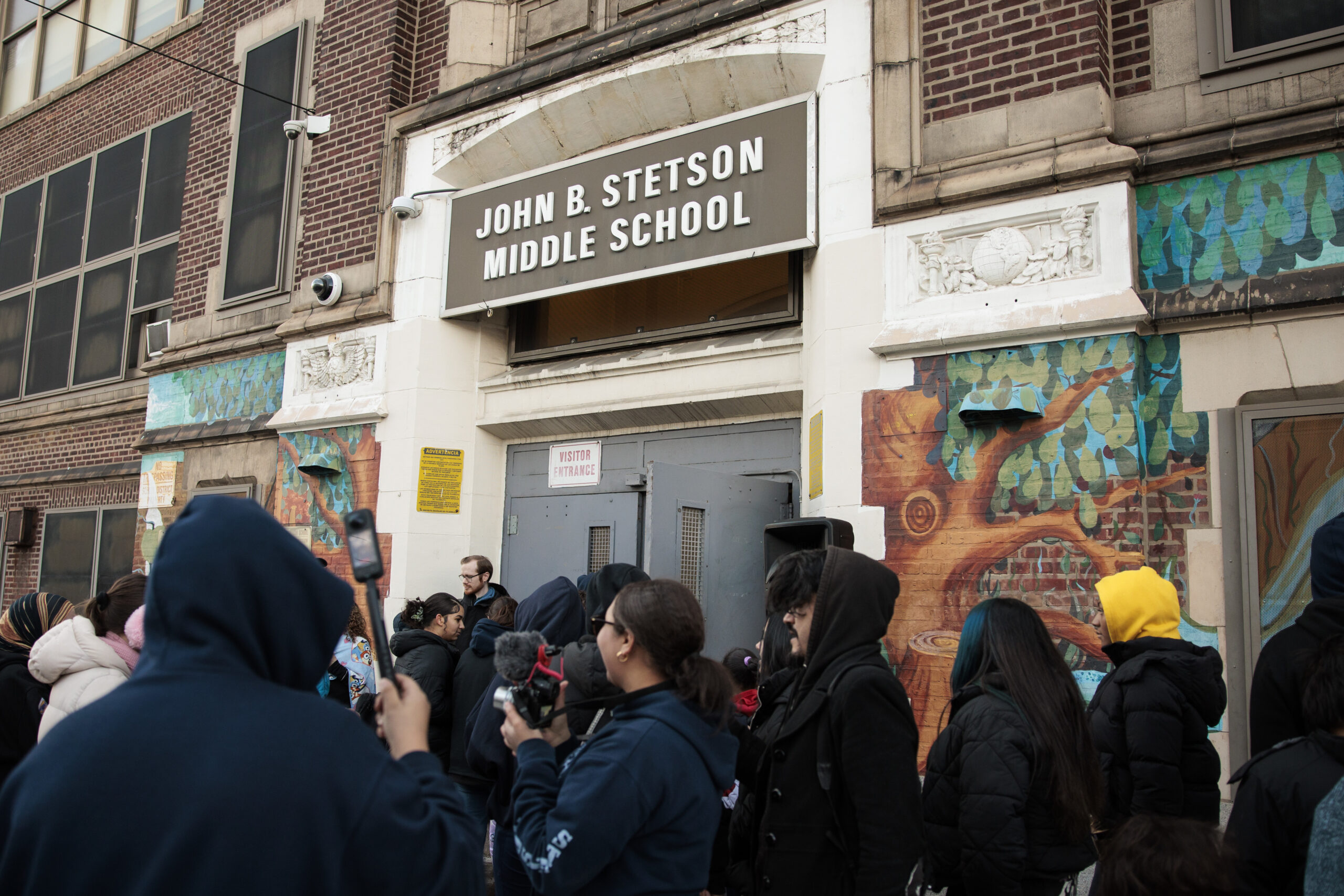
    Also approved was $3.4 million worth of repairs to John B. Stetson Middle School in Kensington, one of the 17 schools the board voted earlier this year to close.

    Students, teachers and supporters rally before a community meeting at John B. Stetson Middle School on Thursday, Feb. 12, 2026 in Philadelphia. Stetson is one of 20 Philly public schools facing closure.

    Stetson is getting a new roof and masonry repairs, work that’s necessary, according to board documents, “to preserve and protect the building’s structural integrity and long-term functionality.”

    According to the facilities plan the board adopted in April, the school will begin phasing out grades, eventually closing in the 2029-30 school year. Stetson will remain in district hands, used as “swing space” — a place to house district students or programs that need a temporary spot to learn.

    Members of the Stetson community fought to keep their school open, objecting to the district’s years of neglect of their building.

    Some schools closed by the board are mostly empty; Stetson is about 60% full, but its building was judged to be in “unsatisfactory” condition.

    Memphis Street back to the district

    The board also moved to formally return a Port Richmond charter school back into its fold.

    Memphis Street Academy at J.P. Jones, a former district school run by the nonprofit American Paradigm since 2012, was ordered by a judge last year to surrender its charter after a long legal battle.

    The board first moved to close Memphis Street in 2022 after the school missed the mark on meeting conditions it had previously agreed to.

    To make the reabsorption of the school official, the board had to vote to report “Memphis Street Middle School” to the Pennsylvania Department of Education as a new district school opening in the fall. The school will serve students in grades 6 through 8; the current Memphis Street Academy also educates fifth graders.

    In its first go-round as a district school, the building was known as John Paul Jones Middle School.

  • Trump administration sues Philadelphia over ‘ICE Out’ face mask ban for law enforcement

    Trump administration sues Philadelphia over ‘ICE Out’ face mask ban for law enforcement

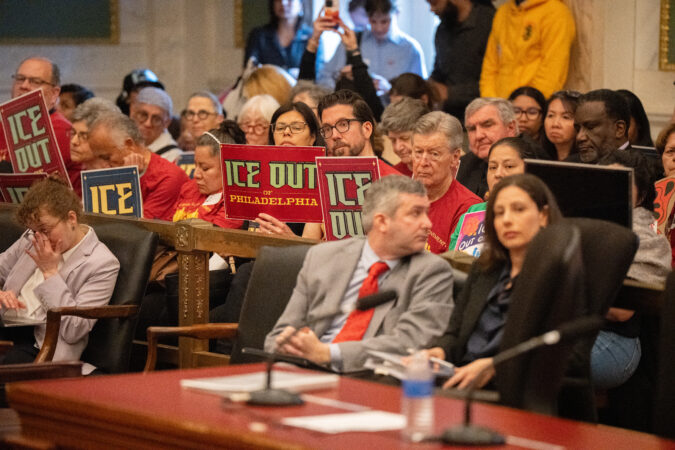
    President Donald Trump’s administration sued Philadelphia and some of its top officials Thursday over a new ordinance that bars law enforcement officers from concealing their identities and effectively bans federal immigration agents from wearing masks.

    The law, part of City Council’s recently adopted “ICE Out” package of legislation imposing some of the nation’s toughest local restrictions on immigration agents, is “blatantly unconstitutional,” the lawsuit said.

    “Such an ordinance also undermines the principles of federalism that underlie our entire constitutional order by seeking to prevent effective federal law enforcement within Philadelphia,” according to the complaint.

    The ordinance makes it a crime for any law enforcement officer, including Immigration and Customs Enforcement agents, to wear face coverings or conceal personal identifiers like badges and nameplates while carrying out their official duties in the city, and it requires officers to identify themselves. It also prohibits the use of unmarked vehicles.

    The bill includes exceptions allowing officers to wear masks in certain circumstances, such as medical emergencies or SWAT operations.

    An officer who violates the ordinance could be prosecuted, and risks up to 90 days in jail plus a fine.

    The suit, filed in the Eastern District of Pennsylvania, names as defendants the city, Mayor Cherelle L. Parker, District Attorney Larry Krasner, and City Solicitor Renee Garcia. It asks a federal judge to find the bills unconstitutional, warning that federal agents could suffer irreparable harm if the policy remains in place.

    “Protecting officers’ personal identities is particularly important during high-risk enforcement operations involving individuals with violent criminal history, gang affiliations, transnational criminal organizations, and known or suspected terrorists,” the suit says.

    The lawsuit marks the Trump administration’s most significant action targeting Philadelphia’s immigrant-friendly policies to date.

    “Today we regrettably had to sue the birthplace of this great Nation,” Associate Attorney General Stanley Woodward said in a statement. “But we will not sit by while Philadelphia flagrantly violates our Constitution, seeking to criminally punish our Nation’s law enforcement heroes merely for doing their job.”

    Philadelphia has long been known as a sanctuary city primarily because it does not comply with ICE-issued detainers, in which federal agents ask local jails to facilitate the arrest of undocumented immigrants in their custody.

    But Parker has largely avoided direct confrontation with the White House over the issue, a reversal from the combative stance of her predecessor, former Mayor Jim Kenney.

    Parker’s supporters credit her with careful, crafty management of the city’s relationship with Trump, noting Philadelphia has been spared from the surges of federal agents the president has sent to other cities. But immigration advocates say Parker has backed away from a fight at a time when strong action is most needed.

    The tension surfaced when Parker decided to let the mask bill became law without her signature, after Garcia warned the mayor that the provisions might not be legally enforceable.

    Council members, however, wanted to take a more proactive stance against Trump’s nationwide deportation campaign. And they seem to have gotten his attention.

    Councilmember Kendra Brooks, who coauthored the “ICE Out” package, said she “will not back down from this fight.”

    “Philadelphia doesn’t like bullies. And we certainly don’t like masked PPD officers or ICE agents terrorizing our neighbors,” Brooks said in a statement. “The people of this city expected our leaders to fight back against Trump’s invasion. That’s what we did when we passed ICE Out.”

    Brooks noted that the lawsuit cites the Parker administration’s publicly aired concerns about the bill, and said other jurisdictions targeted by Trump after they passed legislation restraining ICE have not had to deal with that dynamic.

    “Other lawsuits aren’t dealing with the City’s own words about the laws being used against them,” Brooks said.

    The Parker administration declined to comment.

    The Pennsylvania Immigration Coalition condemned the lawsuit as a political effort to undermine local policies that keep families safe, strengthen public trust, and ensure city resources serve Philadelphians.

    “Once again the Trump administration is using the courts to wage a political campaign against immigrant communities, instead of addressing the real needs of our country,” coalition executive director Jasmine Rivera said in a statement. “Pennsylvanians have been clear, they do not want more immigration enforcement and detention centers, they want affordable education, healthcare, and housing.”

    Councilmember Rue Landau, the legislation’s other coauthor, criticized Trump for “targeting Philadelphia because our city dared to stand up and say that masked federal agents should not be able to operate in our communities and target our vulnerable neighbors without accountability.”

    ‘We will arrest you’

    In addition to banning officers from concealing their identities, the “ICE Out” package, which in April passed Council with a veto-proof supermajority, prohibits federal immigration agencies from staging raids on city-owned property, bans discrimination on the basis of citizenship status, and prohibits the city from engaging in most forms of information-sharing with ICE.

    The legislation also codified some of Philadelphia’s long-standing sanctuary city policies that had been established only through executive order — most notably a ban on city jails honoring ICE detainers not accompanied by judicial warrants.

    Parker signed six of the seven bills in May, and allowed the ban on agents hiding their identities to become law without her signature.

    Parker did not sign the bill after Garcia expressed concern about the ban’s “significant legal and operational challenges,” the suit notes. The mayor’s signature would signal the Parker administration’s intent to enforce the requirement, the solicitor said, and would send an inaccurate signal that the prohibition was enforceable.

    While Parker might have attempted to distance herself from the requirement by not signing the bill, the lawsuit quotes Krasner threatening federal agents with prosecution.

    “We will arrest you. We will put handcuffs on you. We will close those cuffs. We will put you in a cell,” Krasner said in January. “We will do everything in our power to convict you and we will make sure you serve your entire sentence because Donald Trump has no power whatsoever to pardon you.”

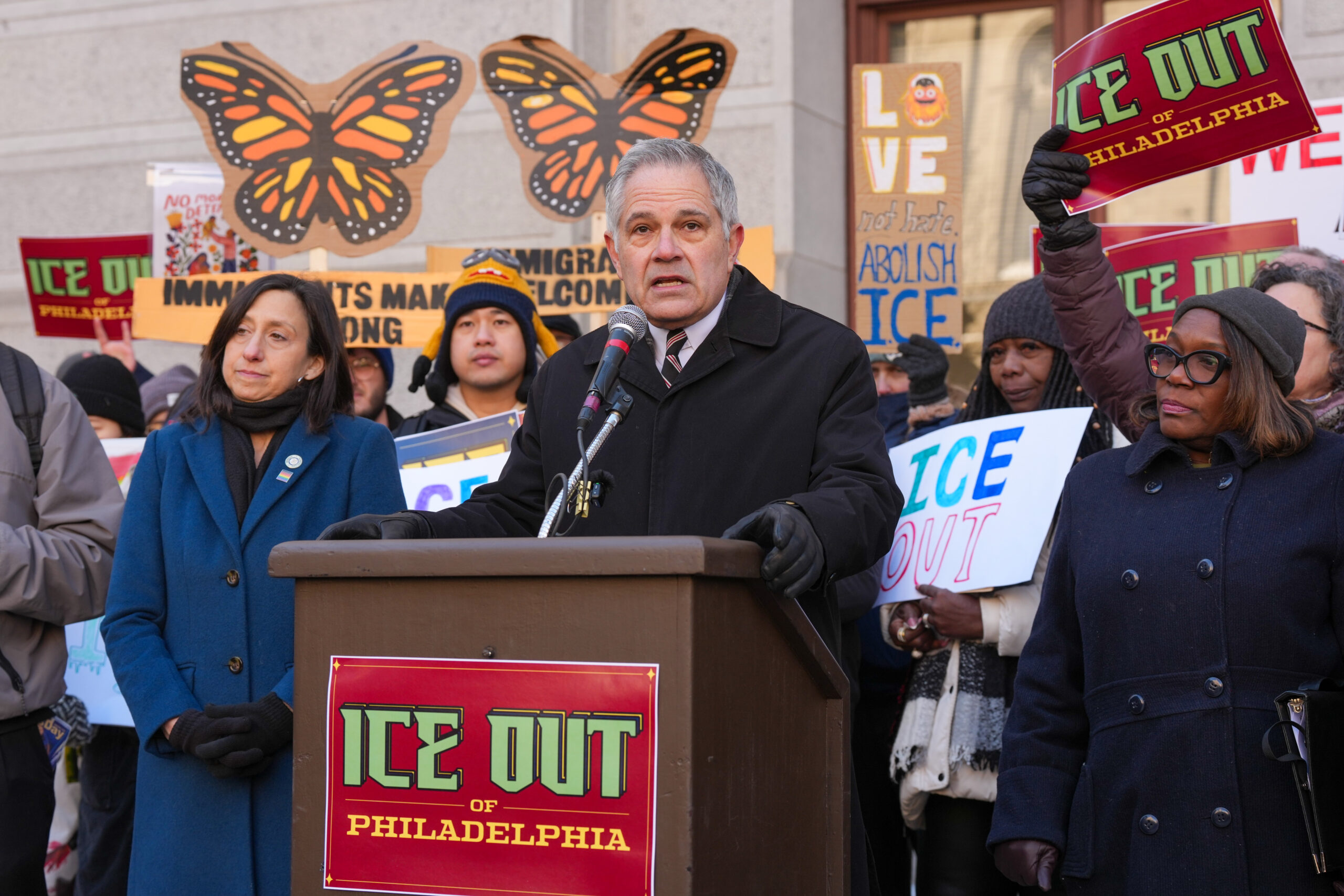
    Larry Krasner shown here during a press conference at City Hall to announce a package of bills aimed at pushing back against ICE enforcement in Philadelphia, January 27, 2026.

    Philly case could have national stakes

    The complaint makes clear that by bringing this lawsuit, the Department of Justice is not closing the door on challenges to other ICE Out ordinances.

    Around the country, more and more Democratic-led communities are attempting to regulate what ICE can and cannot do within their jurisdictions. And doing so with the support of immigrant communities.

    “In all the ways that ICE agents terrorize and violate the rights of our community, masked kidnappings are ones we consistently see and hear about,” said Erika Guadalupe Núñez, executive director of Juntos, the South- Philadelphia-based immigrant advocacy organization.

    She said, however, that “we’re part of a strong local movement organized to fight back, and we all embody the spirit of this city, we will not back down easily.”

    In March, the Montgomery County Board of Commissioners passed a resolution that restricted the agency from using county property or resources for civil investigations.

    Issues around masks and identification have been particularly contentious.

    Activists in Philadelphia and elsewhere say ICE arrests often look like kidnappings or muggings, where men in ordinary clothes, with no visible identification, suddenly descend on their target. The people being arrested may think they are being attacked by criminals.

    Several states, including New Jersey and New York, have passed laws to ban law enforcement officers, including ICE, from wearing facial coverings while on duty.

    In April, the U.S. Court of Appeals for the Ninth Circuit upheld a lower court’s injunction on a California law that required federal agents to “visibly display identification.” The unanimous three-judge panel ruled that the requirement violated the Constitution’s supremacy clause, which bars the states from regulating federal government activities.

    New Jersey Gov. Mikie Sherrill signed bills in March that essentially banned ICE agents and police from wearing masks on the job, drawing pushback from Republican lawmakers. The Trump administration sued New Jersey in federal court in April, and the New Jersey Monitor and others reported that ICE agents continued to cover their faces during recent clashes with demonstrators outside the Delaney Hall immigrant detention center in Newark.

    The Trump administration says federal immigration officers wear face coverings to protect themselves and their families from anti-ICE activists who may seek to identify and harm them. Assaults and death threats are on the rise, the administration said.

  • An all-time World Cup home field advantage awaits the USMNT in soccer-crazed Seattle

    An all-time World Cup home field advantage awaits the USMNT in soccer-crazed Seattle

    SEATTLE — Like any sport, soccer is a game of players, tactics, skills, and decisions. But when it comes to emotions, no sport is like the world’s most famous one.

    Not for nothing did soccer resist the long march of analytics far longer than increasingly-global basketball, baseball, ice hockey, gridiron football, and others. (Americans might not know cricket, for example, but that bat-and-ball game has its own volume of statistics.)

    So, yes, we can talk about player matchups in Friday’s U.S.-Australia showdown for first place in Group D (3 p.m., Fox29, Telemundo 62). We can talk about the Socceroos’ impressive striker Nestory Irankunda and 6-foot-6 centerback Harry Souttar. And we can certainly talk about whether Christian Pulisic will shake off his calf strain in time.

    But it’s impossible to avoid this moment’s romantic side. The Emerald City is rich with a half-century of soccer history, from the NASL’s Sounders to the MLS version, always drawing big and passionate crowds. In recent years, the NWSL’s Reign have joined them, with their own robust fan base watching stars of the women’s game.

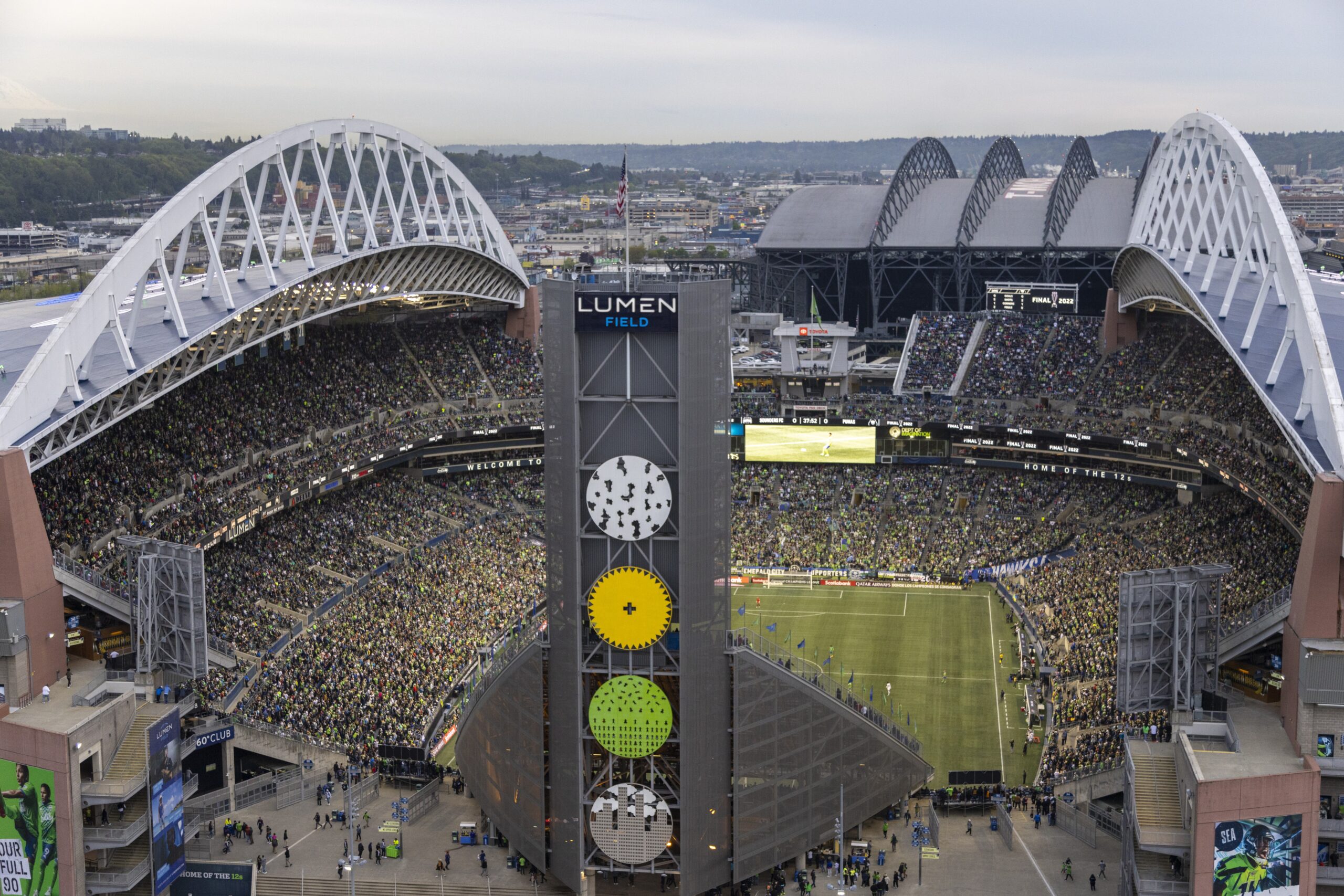
    Seattle fans show up in big numbers for soccer games at Lumen Field, the home of MLS’s Sounders and the NWSL’s Reign.

    For all that time — from hosting Pelé at the Kingdome to hosting Lionel Messi at Lumen Field, from Bobby Moore to Clint Dempsey, from Michelle Akers to Megan Rapinoe — Seattle’s soccer tapestry has missed one piece.

    Until this year, it had never hosted a World Cup.

    Now, at last, that hole is filled, and with style. Since the day in early 2024 when FIFA announced the U.S. would play a group game here, Seattle has been counting down to this moment, and so have fans across the country.

    A game in this city, with its stage towering over the south side of downtown, is a joy any time. But a World Cup game here is on American soccer’s bucket list. So it’s natural that U.S. and Sounders midfielder Cristian Roldan, in his 12th season with the only club of his career, has led the welcome committee for the squad.

    Cristian Roldan (center) at work on his old college field during Thursday’s practice.

    “I’ve told them that the city is ready, that the city is energized,” he said before Thursday’s practice at the University of Washington, his alma mater — with its own famed sports theaters in football’s Husky Stadium and basketball’s Palestra-like Hec Edmundson Pavilion.

    “We haven’t had a game here in a long time, and we’ve been desperate to host a World Cup game, a U.S. men’s national team game,” Roldan added. “So they’re going to feel the crowd, feel the energy, and it’s about feeding off it.”

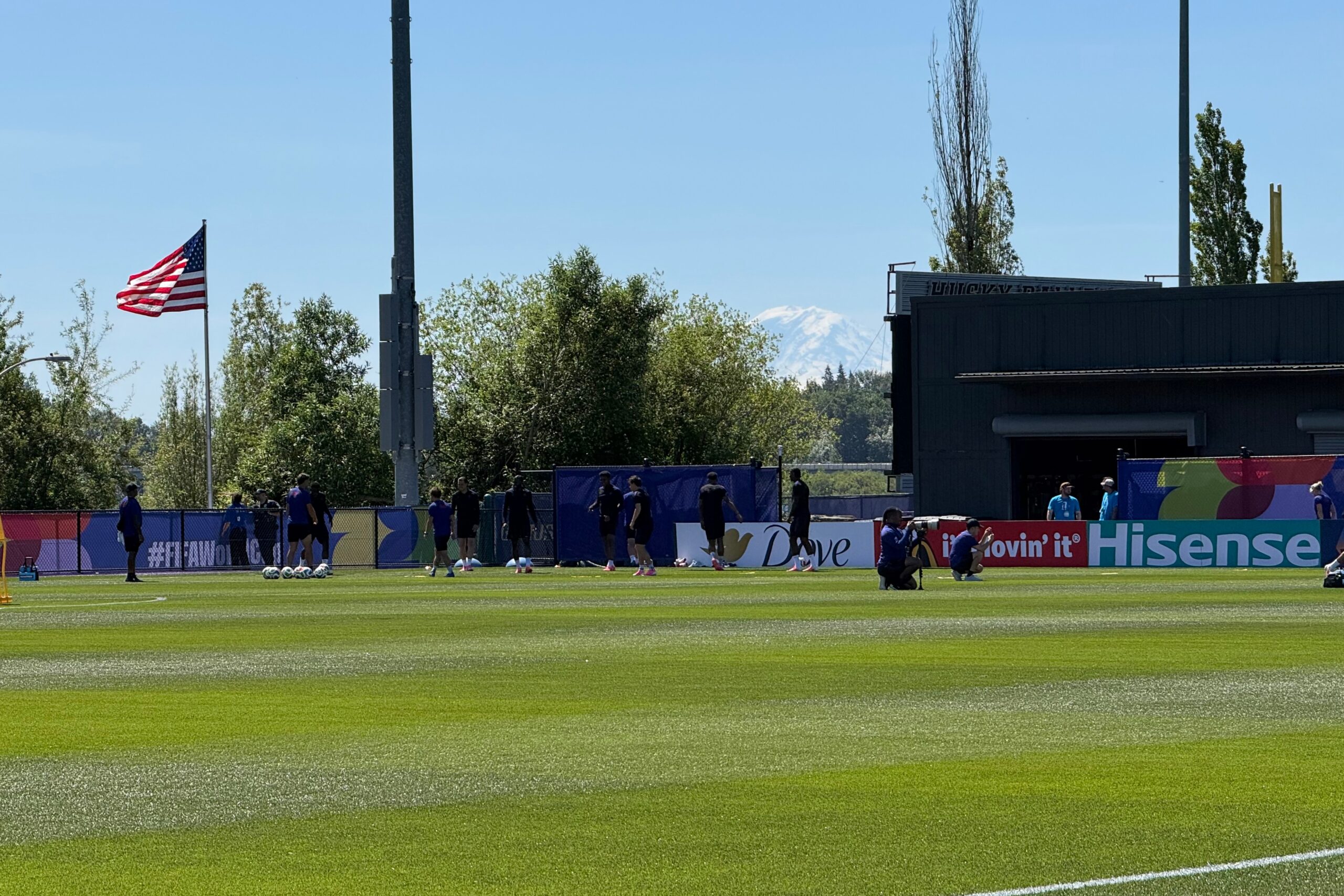
    He felt it even more as he set foot on his old college field, with glittering Lake Washington a stone’s throw away and Mount Rainier towering beyond. On the same day that Penn product Duke Lacroix returned to his alma mater in Philadelphia ahead of Haiti’s clash with Brazil on Friday, a similar scene unfolded thousands of miles west.

    “I’m thankful to have this full circle moment,” Roldan said. “I don’t think people realize how special it is for me to be here and enjoying this experience with the men’s national team.”

    Mount Rainier looming in the background over the scene at the U.S. team’s practice.

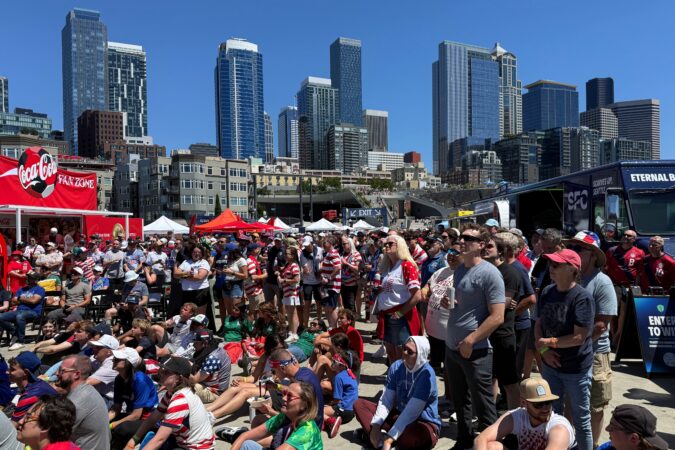
    Come lunchtime, a walk through downtown showed what awaits. Fans in U.S. jerseys were all over, from Pike Place Market (Seattle’s version of Reading Terminal) to the glistening waterfront.

    Fox’s studio show set up shop on one of the piers, with the ferries crossing Puget Sound as one backdrop and a boisterous crowd as another.

    It’s a different vibe from sprawling Los Angeles, and they’ll tell you that here as much as a visitor from out east naturally senses it.

    Everything will come together at noon local time on Friday, when a capacity crowd of just under 67,000 will roar the U.S. team onto the field.

    The vibrant scene in Seattle as Fox’s studio show goes on air:

    #USMNT

    [image or embed]

    — Jonathan Tannenwald (@jtannenwald.bsky.social) June 18, 2026 at 2:23 PM

    The players are excited to experience it, especially those who haven’t before. Because the stadium usually has artificial turf, the U.S. men haven’t been here since the 2016 Copa América Centenario, when grass was installed like it has been this summer. (The World Cup’s grass also helped bring the women’s team here in April, ending a nine-year drought.)

    “I’ve obviously spoken to ‘Roldy’ and other people who’ve said how much of a soccer culture Seattle has, and I’m really looking forward to experiencing that firsthand,” defender Antonee Robinson said. “The first game that was played in that stadium looked amazing. So I’m looking forward to being a part of it, too.”

    Roldan isn’t expected to start, and he knows it. But if he gets on the field as a substitute, the roar that rises will no doubt be as great as a U.S. goal.

    “I’m getting goosebumps just thinking about it,” he said. “This is a place that I call home, and I’ve called home for a while. … I’ve given my heart and soul to this club. To be able to see the field would be a dream come true, and I think it would be special not only for me, but I think for the city of Seattle as well.”

  • Trump administration can install its own slavery exhibits at President’s House, Third Circuit rules

    Trump administration can install its own slavery exhibits at President’s House, Third Circuit rules

    President Donald Trump’s administration can replace the slavery exhibits it removed in January from George Washington’s Philadelphia residence, a federal appeals court ruled Thursday.

    A three-judge panel of the U.S. Court of Appeals for the Third Circuit unanimously agreed to toss out an injunction issued by a Philadelphia district court judge in February that ordered the National Park Service to restore interpretive panels telling the history of the nine individuals who were enslaved by Washington at the President’s House Site.

    The city does not have a right to dictate the content of the panels, the court found.

    The judges further found that the federal government’s proposed replacement panels, which historians say whitewash Washington’s role in slavery, “are full of historical context.”

    The proposed panels “highlight the momentous events that took place in the President’s House and the other sites at Independence National Historical Park,” Judge Thomas M. Hardiman, a President George W. Bush appointee, wrote in the opinion. “They acknowledge the evil of slavery, including its injustices and hypocrisies, and, by telling the story of the nine slaves that Washington kept in the President’s House, remind us of their essential humanity.”

    Judges Luis F. Restrepo, appointed by President Barack Obama, and Peter J. Phipps, appointed by Trump, joined the opinion.

    It was not immediately clear what would happen next at the site. The federal government did not immediately outline its next steps, and there are conflicting court rulings over the Trump administration’s push to remove displays from national parks that “inappropriately disparage Americans past or living.”

    But the ruling does bring to a close a chapter in the President’s House litigation, the first courtroom clash between Trump and Mayor Cherelle L. Parker’s administration. Any further review of the injunction is at the discretion of the three judges, the full Third Circuit, or the Supreme Court and is not guaranteed.

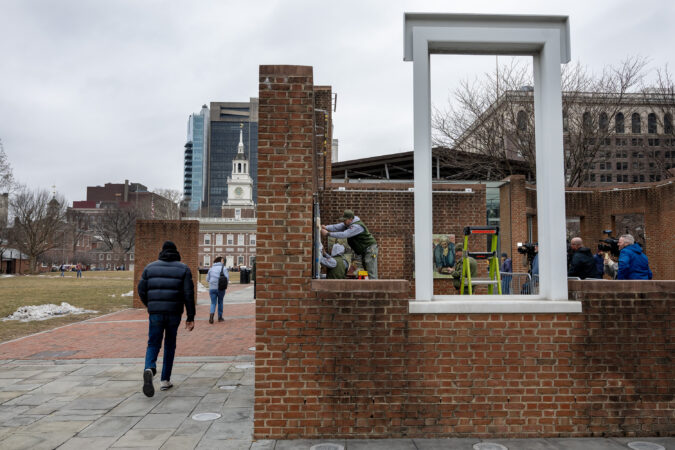
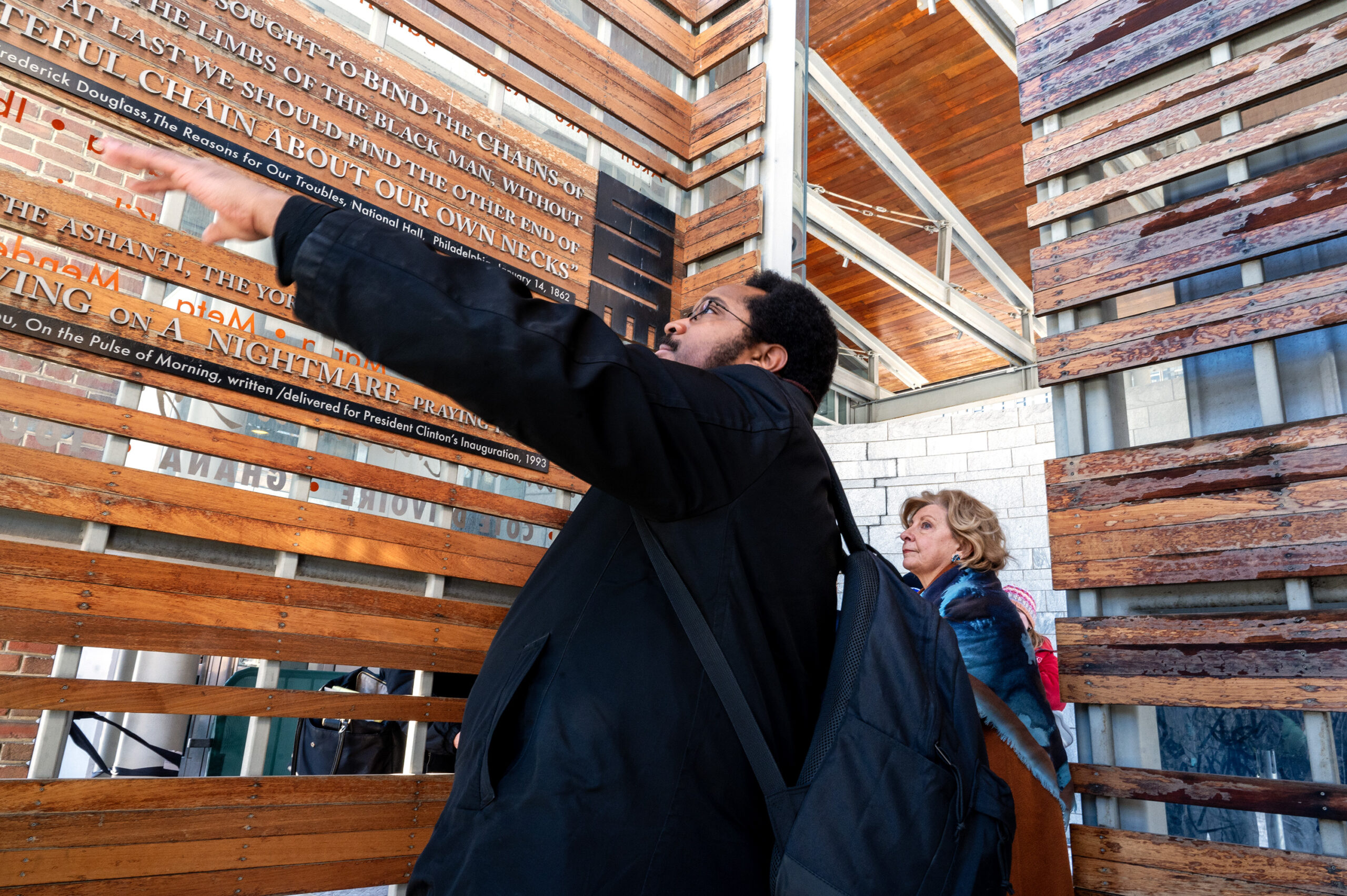
    Mijuel Johnson, a guide with The Black Journey: African-American Walking Tour of Philadelphia, leads District Court Judge Cynthia Rufe (right) as she visits the President’s House in Independence National Historical Park in February.

    The city was unable to convince the Third Circuit panel it has joint decision-making power with the federal government over the entirety of Independence National Historical Park because of the local ownership of Independence Hall.

    Philadelphia has standing to argue in court that the federal government violated the contract signed when the city donated the President’s House to the National Park Service, Hardiman wrote. The agreement included a guarantee the federal agency would maintain the site.

    But the city had to prove it could win based on that argument to keep the injunction alive, and the judges disagreed.

    “The duty to ‘maintain’ is better understood as a general management obligation that accompanies ownership, not a promise that the exhibits will forever remain in place regardless of the owner’s wishes,” the opinion said.

    The city’s claim that the removal was “arbitrary and capricious” under the Administrative Procedure Act also did not find purchase. The federal law allows challenges only to “final” agency actions, but the newly proposed panels show the January removal was not the Trump administration’s “last word on the matter,” the opinion said.

    The ruling vacates U.S. District Judge Cynthia M. Rufe’s injunction from February that ordered the full restoration of the site to its state before exhibits were removed. The National Park Service restored some exhibits, but some metal interpretive panels could not be reinstalled because they required fixes.

    Avenging the Ancestors Coalition, one of the advocacy groups leading efforts to protect the President’s House, said in a statement that the group was disappointed by the decision but would persevere. The coalition was consulting its legal team to consider potential next steps.

    “This is definitely not the end of this fight, nor does it diminish the importance of ensuring that the full truth of our nation’s history is preserved and presented accurately,” the organization said.

    In a video statement Thursday, Parker said, “I will pursue every legal action possible in efforts to reverse this decision.”

    A spokesperson for the U.S. Department of the Interior simply said: “Trust in Trump.”

    Debate over history

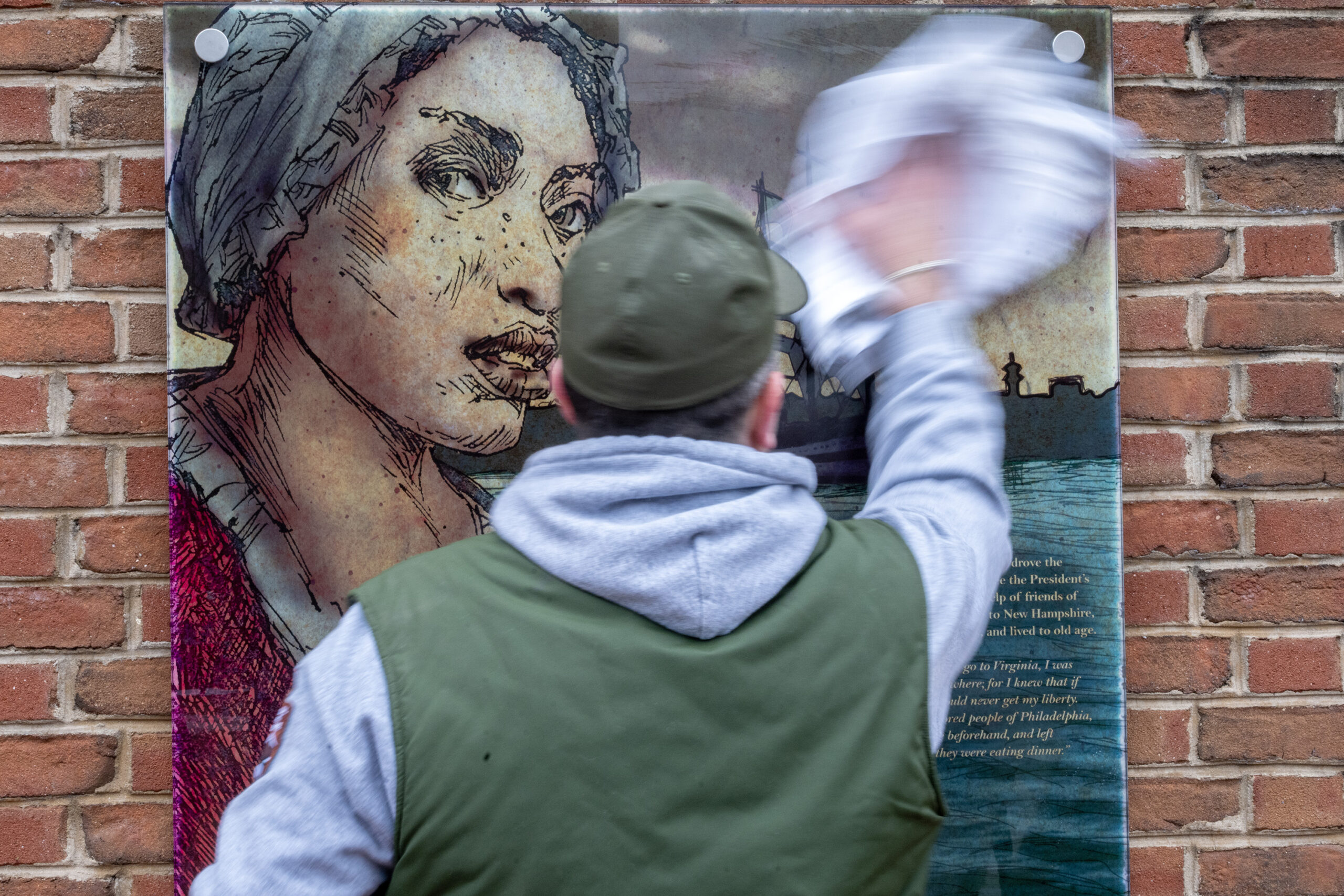
    A worker cleans the glass on the panel for Oney Judge after re-hanging it at the President’s House in Independence National Historical Park in February.

    The ruling is an inflection point in the tumultuous legal saga over whether the federal government has power to determine which version of U.S. history is displayed for public viewing — an issue even more salient ahead of the country’s 250th birthday on July Fourth.

    The Trump administration ordered the removal of the President’s House exhibits in January after almost a year of scrutiny of the site. Months later, the government offered its own vision for how those panels would be replaced, quietly uploading them to the National Park Service website in April.

    An Inquirer review of the panels found that the federal government had softened Washington’s role as an enslaver.

    For instance, one proposed panel argues the people who were enslaved at the President’s House “experienced a greater modicum of autonomy than elsewhere in the South such as to explore the city and sometimes even attend the theater, with Washington buying the tickets.”

    Historians argued the original panels were accurate, well-researched, and site-specific. The development of the site in the early 2000s was the product of collaboration across various disciplines including historians, artists, architects, and advocates.

    But Thursday’s ruling says the Trump administration’s proposed displays offer a nuanced view on Washington’s and John Adams’ roles in or opinions on slavery, adequately highlight the stories of the nine people enslaved at the President’s House, thoroughly acknowledge the horrors and brutality of slavery, and uplift key figures in Black history.

    “One panel … explains that Washington ‘often expressed discomfort with the institution and a desire to see it abolished,’ but, ‘as a Virginia plantation owner, his wealth and livelihood were deeply tied to it,’“ Hardiman wrote. ”Other panels provide an even broader overview of slavery and the struggle to extirpate it.”

    The ruling landed just less than three weeks before the 250th anniversary celebrations, and one day before Juneteenth. Attorneys for the federal government said the new panels had been manufactured and were ready to be installed.

    U.S. Rep. Brendan Boyle (D., Philadelphia), whose district includes Independence Park, said in a statement that Thursday’s ruling highlighted the urgency of passing his Protecting American History Act, which would shield historical displays at the park from government censorship.

    “Just a block away from where our nation was founded, Donald Trump is choosing the path of tyrants who rewrite history instead of learning from it,” Boyle said. “As we approach America’s 250th anniversary, we must tell the full truth of our nation’s history — the good and the bad.”

    Another legal case

    Last week, U.S. District Judge Angel Kelley in Massachusetts ordered the Trump administration to restore all exhibits it had removed as part of its “restoring truth and sanity to American history” push. Following the Third Circuit ruling, the appointee of President Joe Biden rejected a Justice Department request for a stay on the order, saying other circuits’ rulings were not binding on her.

    The administration has appealed to the U.S. Court of Appeals for the First Circuit.

    There is not a prescriptive way to resolve such conflicting rulings, which is why some legal scholars argue against so-called universal injunctions, in which one district judge’s ruling affects the entire country. The Supreme Court signaled its discomfort with those types of orders last year.

    Conflicting rulings have become more prevalent during Trump’s tenure, as his administration has issued drastic measures that take immediate effect, said Michael Foreman, a professor at Penn State Dickinson Law.

    Which order ends up prevailing will depend on whether the Massachusetts ruling is stayed, or if the issue escalates to the Supreme Court.

  • Rocky curse? Brazil supporters aren’t taking any chances ahead of World Cup clash with Haiti.

    Rocky curse? Brazil supporters aren’t taking any chances ahead of World Cup clash with Haiti.

    International soccer supporters, be warned — clothe the Rocky statue at your own risk.

    The fans of the Ecuadorian national team learned Sunday what many NFL fans already know about draping their colors over the statue of Rocky on the steps of the Philadelphia Art Museum.

    Ecuadorian supporters fitted Rocky with a yellow La Tri kit, then saw their team concede a 90th-minute winner in its FIFA World Cup group-stage opener against Ivory Coast on Sunday at Lincoln Financial Field (aka Philadelphia Stadium).

    The effects of the “Rocky curse” are well-documented when it comes to football, but it was relatively untested on the beautiful game. Ecuador lost, 1-0, to the Ivorian side, which entered the tournament ranked 10 spots behind La Tri in the FIFA World Ranking.

    With Brazil coming to Philly for a Group C match against Haiti on Friday (8:30 p.m., Fox29), Movimento Verde Amarelo, Brazil’s main supporters’ group, went to great lengths to ensure the yellow and green of the Canarinho stayed off the Rocky statue.

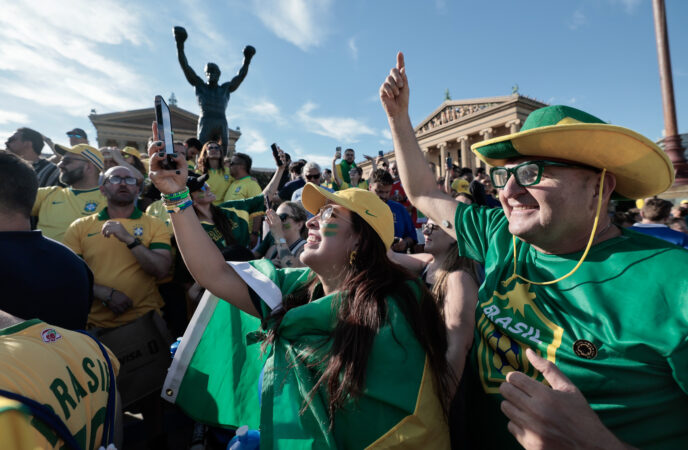
    The Rocky statue was roped off with a four-post retractable nylon stanchion, with four members of MVA, sunglasses on and earpiece in, standing at attention at each corner as Brazilian fans gathered for a rally in front of the Art Museum.

    The bodyguards discouraged fans from draping any Brazilian garb on the statue, holding signs that read:

    “Operation Rocky Protectors — Attention: it is forbidden to put Brazilian colors on the statue.”

    Matheus Henrique, 30, was one of the MVA members protecting the statue. Henrique, a native of Belém, Brazil, moved to Los Angeles a decade ago for college.

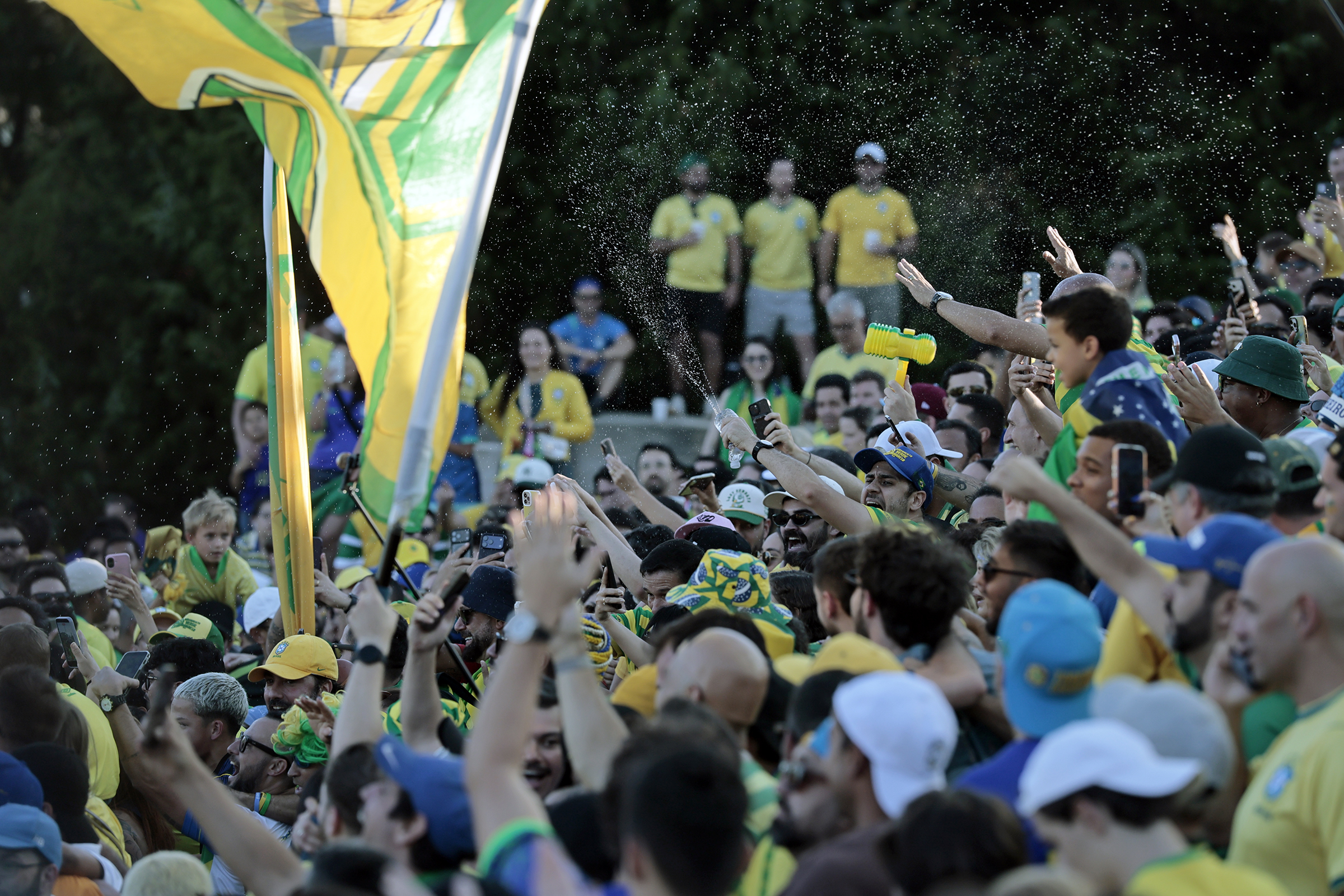
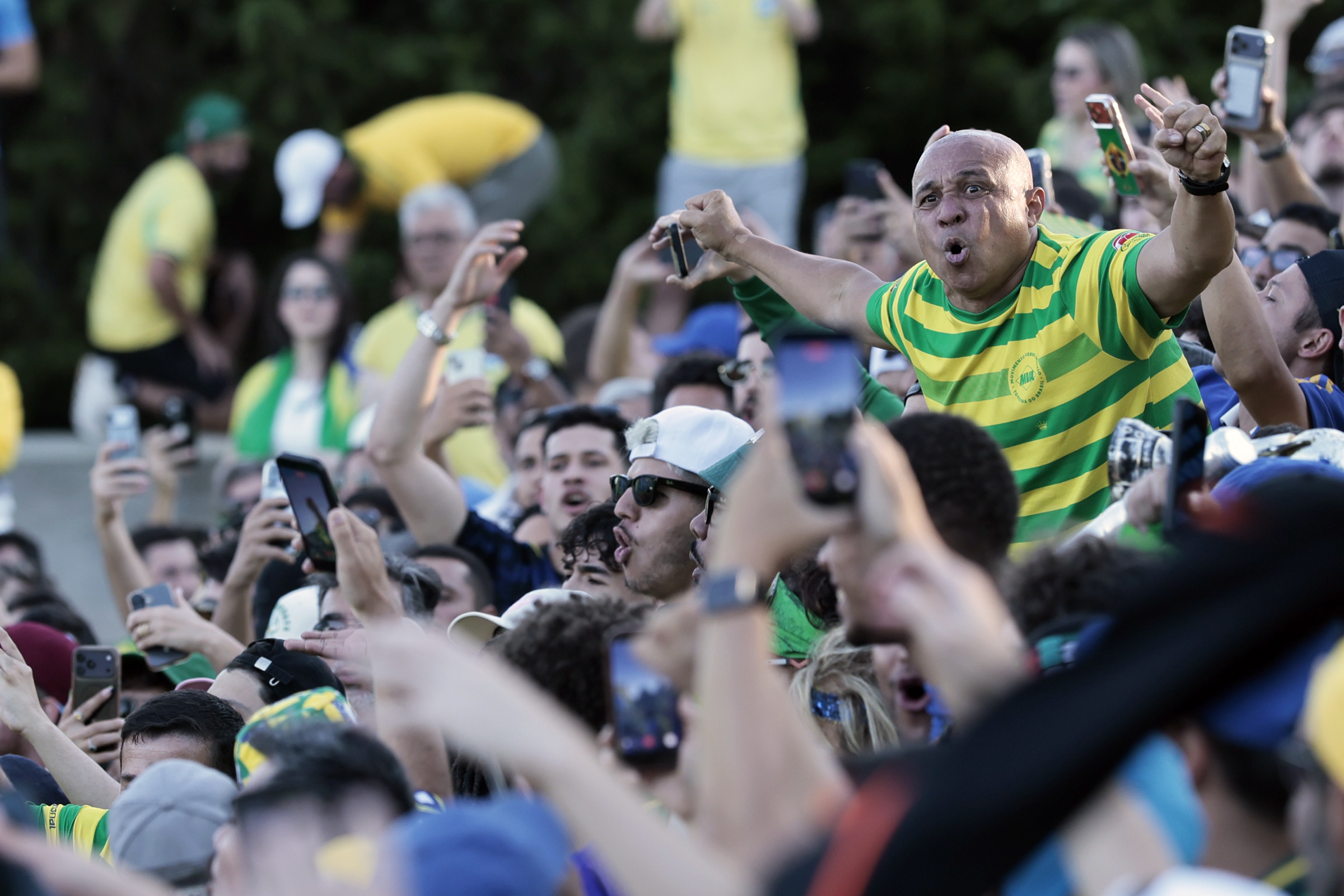
    On the eve of Friday’s FIFA World Cup Group C match between Brazil and Haiti, Brazil fans rally for their team on the Art Museum steps in Philadelphia on Thursday, June 18, 2026.

    Henrique is friends with the person who helped organize Brazil’s takeover of the steps and responded when a call went out for volunteers to guard the statue.

    “It’s a superstition, we heard,” Henrique said. “We’re enjoying the event as well.”

    There was plenty of enjoyment to go around for Brazilian supporters as they scaled the steps in front of the Rocky statue on Thursday evening. Fans danced, sang, set off smoke flares and drummed for hours, making The Oval feel more like Rio de Janeiro than Fairmount.

    And, thanks to the statue guards and forewarnings from MVA and Visit PA, Rocky remained shirtless throughout the evening.

    The MVA Instagram account posted a warning to its members to abstain from clothing the Rocky statue before Brazilian fans gathered at the steps on Thursday.

    “Attention Brazil Fans,” a translated version of the group’s post reads. “It is totally forbidden to put a Brazilian shirt on the Rocky Statue in Philly!!!!!”

    Meanwhile, Visit PA warned international fans about the Rocky curse.

    “Countless football teams (as in American Football, not Fútbol — same curse, different sport) have all dressed the Rocky Statue in their colors and gone on to lose,” its Instagram post read. “Ecuador dressed Rocky last weekend. Coincidence? Sadly, history says no.”

    Henrique was confident about Brazil’s match with Haiti, but he said the team needs all the luck it can get after starting the World Cup with a 1-1 draw against Morocco. Henrique said he had to chide a few people getting too close to the statue.

    “Some people don’t know,” Henrique said. “I didn’t know about the superstition until today. Let’s not play with luck. We need luck.”

    Henrique plans to watch Friday night’s match from the FIFA Fan Festival in Lemon Hill, but he feels as if he’s already done his part to help the Brazilians avoid an upset.

    Gonna Fly Now

    After successfully avoiding Rocky’s wrath, Brazil will enter Friday night’s match as favorites over Haiti, which dropped to No. 85 in the FIFA World Ranking after losing its opener to Scotland.

    Brazil, ranked No. 5 in the FIFA World Ranking, will be without national legend Neymar for the match. The 34-year-old winger, nursing a calf injury, was not among the group of players that arrived at the Sofitel in Center City on Thursday afternoon.

    On the eve of Friday’s World Cup match between Brazil and Haiti, Brazil fans rally for their team on the Art Museum steps in Philadelphia.

    Brazilian supporters welcomed players to the team’s hotel, creating a festive but crowded scene at 17th and Sansom around 4 p.m.

    Brazil’s team bus arrived to the hotel at 5:10 p.m., and a few Brazilian players, including Gabriel and Raphinha, greeted fans as they walked from the bus to the hotel.

    The Seleção will look to secure all three points against the Haitians at Philadelphia Stadium on Friday night. The team and its supporters can rest easy knowing it will not be the next victim of the Rocky curse.

  • Three people were shot at Uno Pizzeria & Grill near Widener University, Chester police say

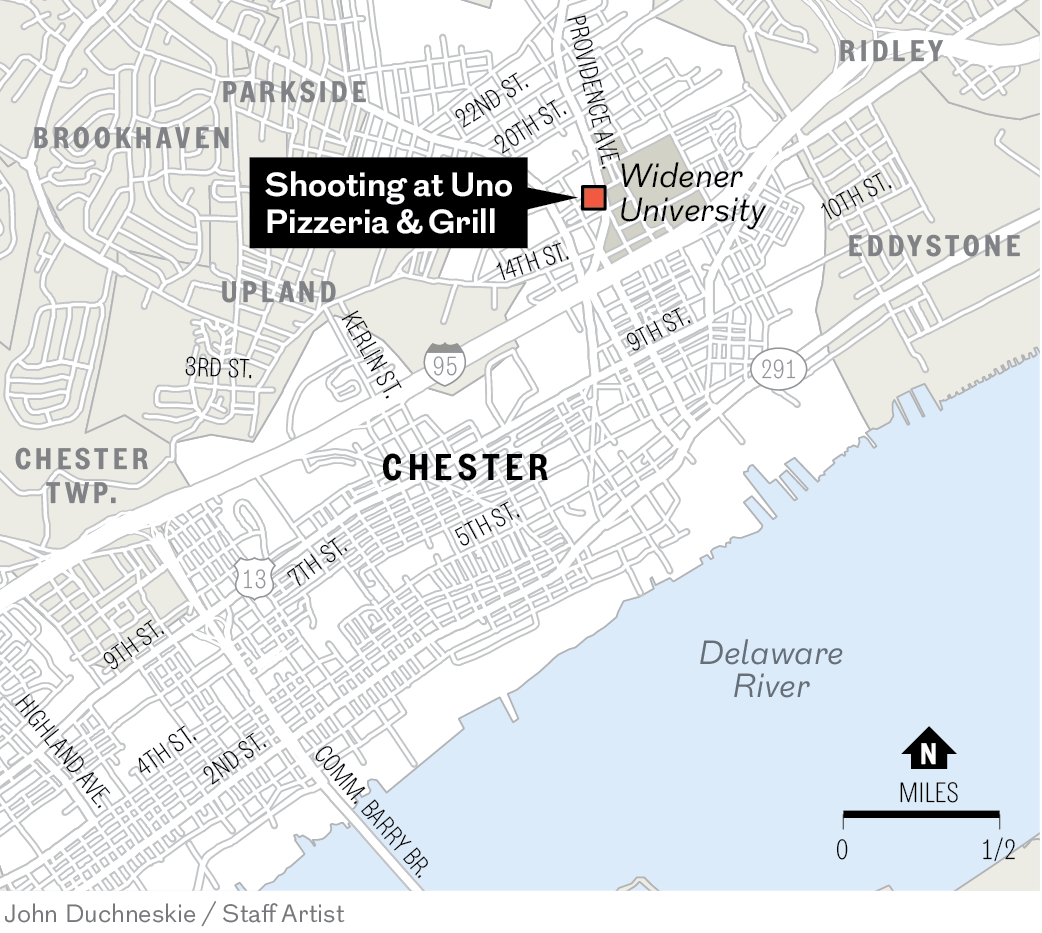
    Three people were shot outside a pizzeria near Widener University in Chester on Wednesday night, police said.

    The incident happened outside the Uno Pizzeria & Grill on Providence Avenue, a Widener University spokesperson said.

    Chester police and criminal investigators with the Delaware County District Attorney’s Office are investigating the shooting, police said in a statement provided by city spokesperson Adriene Irving. No arrests have been made.

    Map of the Pizzeria Uno on Providence Avenue in Chester where a shooting occurred on Wednesday night.

    Police arrived around 10:45 p.m. Wednesday night and found a man, a woman, and a boy with gunshot wounds, police said. Emergency responders took them to area hospitals, police said.

    “While we are relieved that none of the victims suffered life-threatening injuries, this senseless violence is unacceptable and has no place in our community,” Chester Mayor Stefan Roots said in a news release.

    Roots said police are reviewing security cameras from nearby businesses to determine who was involved.

    “Because of the density of cameras in the area, we are confident that these assets will significantly aid the investigation, and we expect to identify and apprehend the suspect or suspects quickly,” Roots said.

    The university was in its summer session. A Widener spokesperson said the school is cooperating with law enforcement in the investigation.

    Chester is in the middle of its annual “Safe Summer” program, which provides children and teens with summer camps and other programs that keep them “active, engaged, and on a positive path,” according to a city website. The program has been credited with helping lower crime in the city: In 2025, Chester had no fatal shootings in the summer and saw a decline in overall shootings.

    The city will continue that and other efforts “to help curb gun violence and keep our neighborhoods safe,” Roots said.

  • Pennsylvania and N.J. Turnpikes choose a design for a new $1.6 billion Delaware River bridge

    Pennsylvania and N.J. Turnpikes choose a design for a new $1.6 billion Delaware River bridge

    Officials of the Pennsylvania and New Jersey Turnpikes have chosen a design to replace the 70-year-old bridge over the Delaware River linking the toll roads: a six-lane span that would be built about 195 feet north of the existing one.

    Called a ”tied-arch” bridge, the $1.6 billion replacement would be cheaper than other styles considered and can be built fastest, said John Boyer, senior engineer for the Pennsylvania Turnpike Commission.

    “Shorter time frames mean less disruption to local businesses and daily life for the communities in this area,” said Boyer, the manager of the joint project.

    Because the new bridge would be farther from the existing Delaware River Bridge than alternatives, traffic can keep flowing as it’s built, he said.

    Planners for years have known that the region would need a new turnpike bridge because of exponential growth in traffic volume, especially trucks.

    Freight volumes nationally are projected to grow by 73% by 2050, with warehouses on both sides of the river relying on crossing.

    Before the nearby I-95/Pennsylvania Turnpike interchange opened in 2018, an average of 42,000 vehicles a day crossed the four-lane Delaware River Bridge. Now, that’s up to around 70,000. By 2050, projections say an average 93,000 vehicles will need to traverse the replacement.

    The surface of a tied-arch bridge provides tension to resist the horizontal forces pressing on either end of the arch, like the taut string that connects a bow. It requires less sturdy foundations than a bridge supported by cables.

    “You can be build those river piers while you’re building the arch structure off-site,” Boyer said. When the piers are ready, the arch can be brought in by barge and “you can essentially jack it and elevate it up into place,” he said.

    Federal authorities approved a new span in 2003, but the project was put on hold because of problems paying for it.

    In 2017, a crack was discovered in a truss supporting the existing bridge’s roadway, and it was closed for about two months.

    As congestion increased on the repaired bridge, more traffic capacity became imperative, officials said.

    Because the earlier federal approval was so old, officials had to start again with a new environmental impact statement and design studies. Last year, turnpike officials settled on two options.

    Now, they’re finishing up the environmental impact statement, with formal public hearings scheduled for the winter.

    Turnpike officials expect the Federal Highway Administration to make a decision on the project around April 2028.

    In March, Pennsylvania’s U.S. senators announced a $600 million federal grant for construction of the new bridge connecting Bristol, Pa., and Florence, N.J. New Jersey’s congressional delegation also worked on getting the grant.

    The two states’ turnpike agencies will finance the balance. Borrowing would be backed by toll revenue, but both say the bridge project won’t increase tolls for drivers.