With the NFL draft about a month away, the Eagles will escalate the process of scouting prospects either at pro days or by bringing them to visit their Philadelphia facilities in the lead-up to the April 23-25 event.
The Birds, along with the other 31 teams in the NFL, are allotted 30 private meetings with draft prospects, but players who are local to the NFL teams don’t count toward those meetings.
Free agent acquisition Arnold Ebiketie, who started his collegiate career at Temple before transferring to Penn State, visited the Eagles during the 2022 draft process before getting selected by the Atlanta Falcons in the second round.
Here’s a look at the first of the reported top-30 visits for the Eagles.
Omar Cooper Jr., WR, Indiana
Top Indiana wideout Omar Cooper Jr. is visiting the Eagles facilities on Wednesday, according to Houston TV station KPRC 2. Cooper was the top wideout for the national champion Hoosiers, connecting with Heisman winner and likely No. 1 draft pick Fernando Mendoza. Cooper finished the season with 69 catches for 937 yards and 13 touchdowns.
The Eagles seem to be doing their homework on the wide receiver class. Star wideout A.J. Brown’s status has been one of the biggest questions of the NFL offseason. Cooper’s visit comes just a day after the team added slot receiver Marquise “Hollywood” Brown on a one-year deal.
Indiana WR Omar Cooper Jr. is a guy I'm likely going to be higher on than most. Hard to find too many holes in his game. Speed, suddenness, hands, toughness, and RAC. Total package.
Cooper, who has the speed to run by a secondary and is hard to bring down in the open field, primarily operated as a slot receiver in Indiana’s offense. The receiver also has strong hands at the catch point, terrific body control in contested catch situations, and can create after the catch — according to Pro Football Focus, he forced 27 missed tackles last season.
He didn’t have a diverse route tree in college and doesn’t command many, if any outside receiver targets, but he’s a receiver that will thrive on vertical throws and winning one-on-one matchups in the slot against nickels and safeties.
DENVER — As the 76ers prepared for Tuesday’s shootaround at Ball Arena, Joel Embiid slipped on a jersey.
The same yellow scout-team “pinnie” that the player-development coaches wear during those sessions, that is.
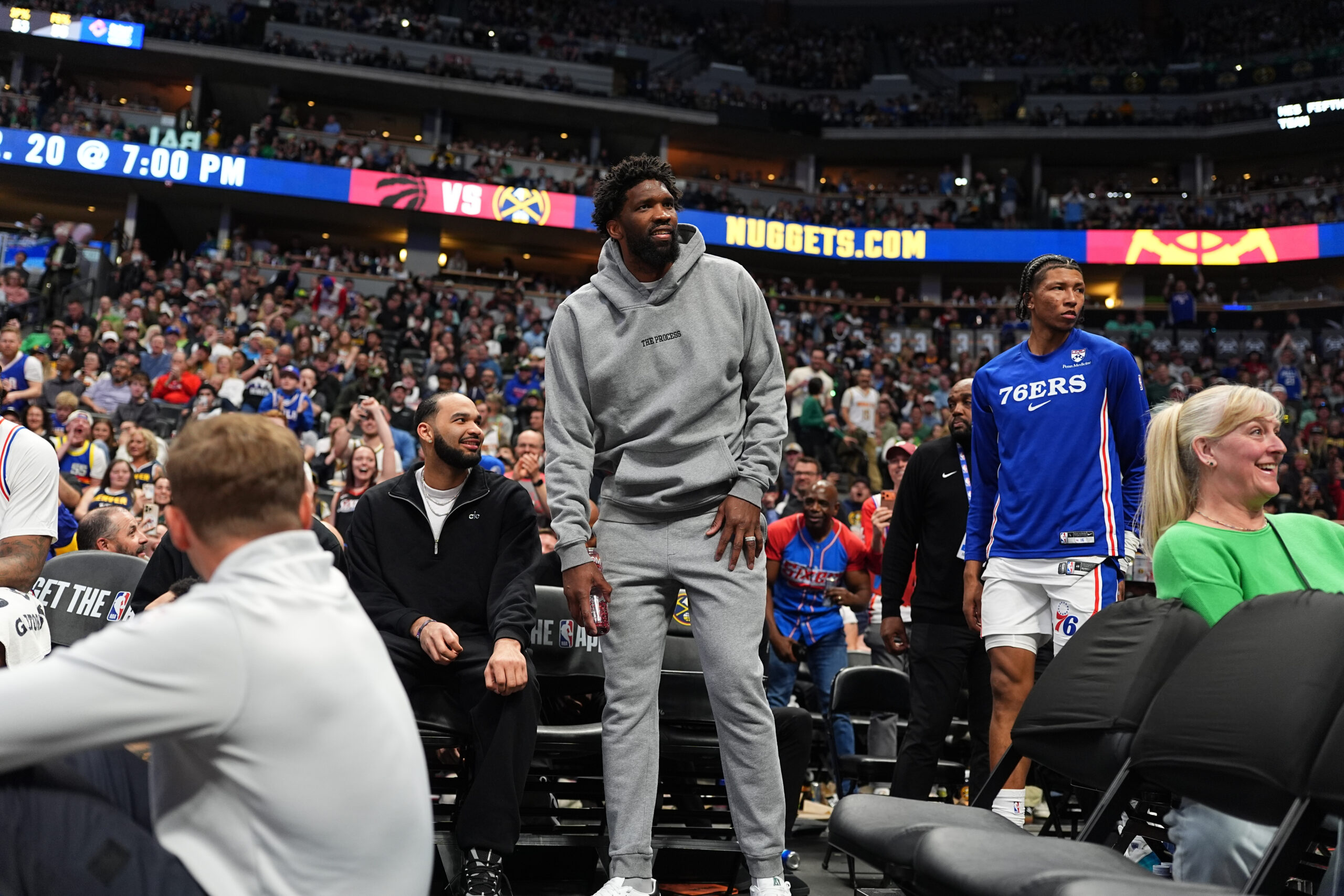
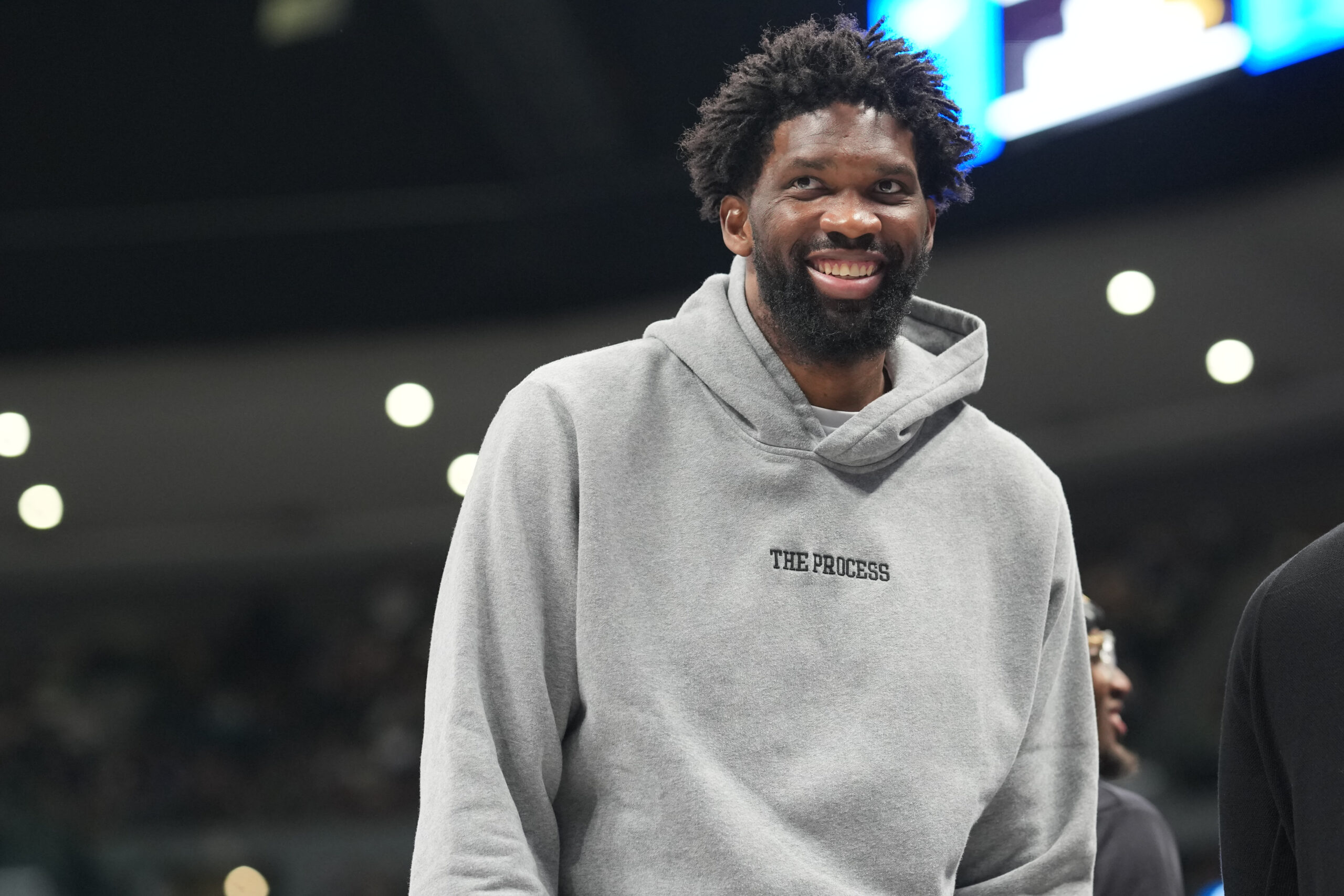
Embiid had already been ruled out for that night’s game against the Nuggets with an oblique strain that has sidelined the big man for all of March. And hours later, when Embiid emerged from the tunnel wearing a gray “The Process” sweatsuit early in the second half, the home fans instantly (and predictably) booed.
Embiid raised his arm, encouraging them to continue, then mostly watched stoically from the bench as the Nuggets finished off a 124-96 demolition of a Sixers team missing four starters.
The narrative that Embiid deliberately “ducks” games in Denver — aka matchups against three-time MVP Nikola Jokic on his home floor — is ludicrous. But the reality is that Embiid has not played in that building since 2019, making the Mile High City a surprising epicenter of his injury-plagued career while also robbing basketball lovers of several individual showdowns between two generational big men.
The latest health news surrounding Embiid, however, appears to be trending upward. Sixers coach Nick Nurse said before Tuesday’s game that Embiid was “active” during part of that morning’s shootaround. He also went through an individual workout — which included scrimmaging — after the team session. The Sixers (37-32), who enter Wednesday in ninth place in the Eastern Conference, next play at the Sacramento Kings on Thursday and Utah Jazz on Saturday.
“Everything so far has been pretty positive,” said Nurse, adding Embiid also had an individual workout on Monday.
Sixers center Joel Embiid goes to sit on the bench as Nuggets fans boo him in the second half of a loss on Tuesday in Denver.
Still, Embiid had not recovered enough to renew his on-court competition against Jokic.
They once battled for MVP awards while redefining what is possible for centers, by combining their imposing 7-foot frames with slick skills and versatility to generate eye-popping stat lines. Jokic racked up triple-doubles and became the best passing big man of all time. Embiid created mid-post scoring opportunities off the dribble and protected the rim as a defensive anchor.
Jokic, though, has been an available workhorse throughout the vast majority of his career. That was a factor in him beating out a second-place Embiid for the MVP award in 2021 and 2022. Embiid won the award for the first time in 2023, before Jokic’s Nuggets won the NBA championship. Jokic reclaimed it again in 2024.
That the Sixers only make one visit to Denver per season only magnifies each Embiid no-show. But those have occurred while Embiid was already in the middle of a multigame absence due to injury (or, in 2021, COVID-19 health and safety protocols).
The ire directed at Embiid was at its most vicious in January of 2024.
Embiid, then the reigning MVP, was basking in the afterglow of his 70-point game against the San Antonio Spurs and averaging more points than minutes played. He also had totaled 41 points and 10 assists in a victory over the Nuggets in Philly earlier that month. That all set up a massive, nationally televised rematch in Denver.
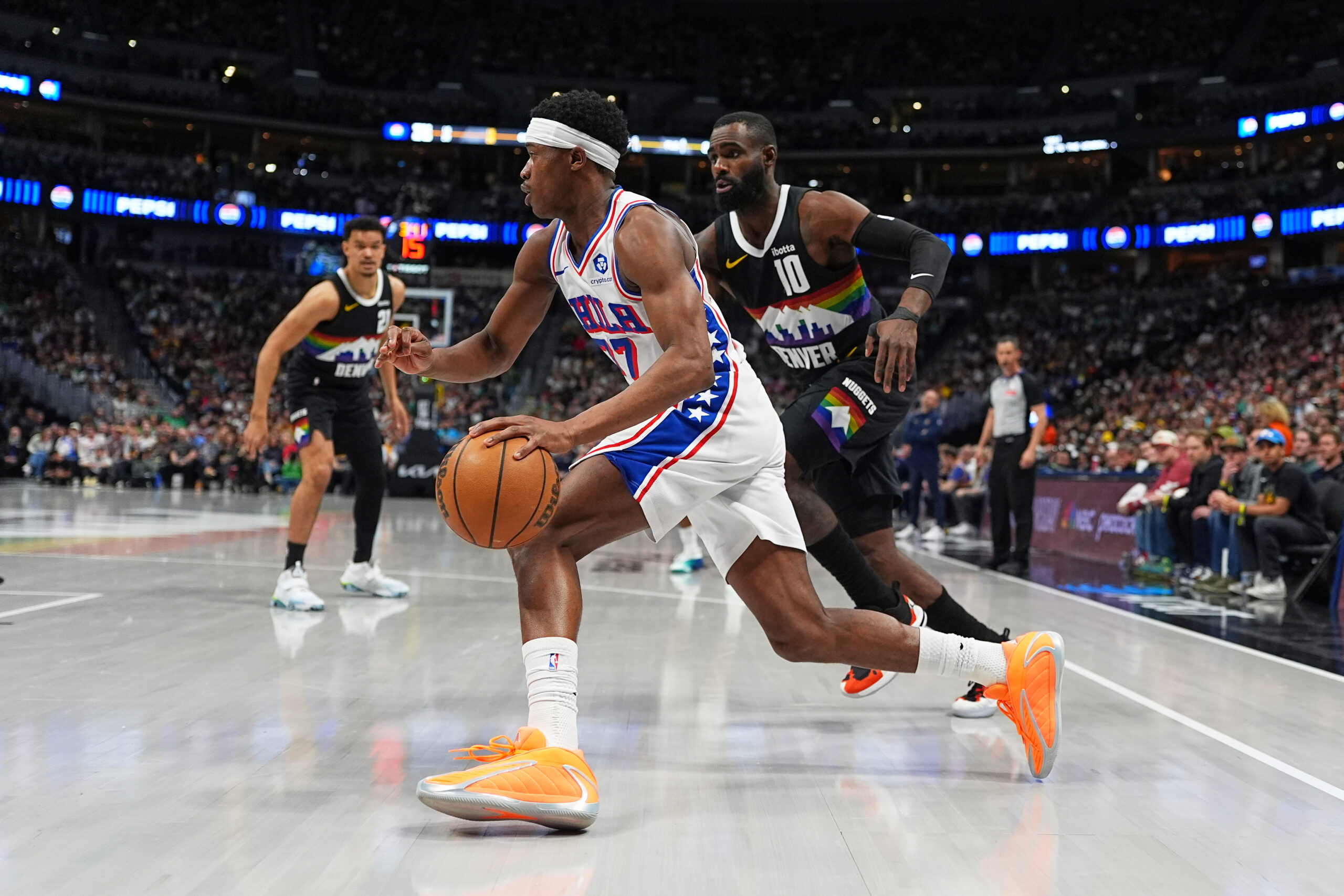
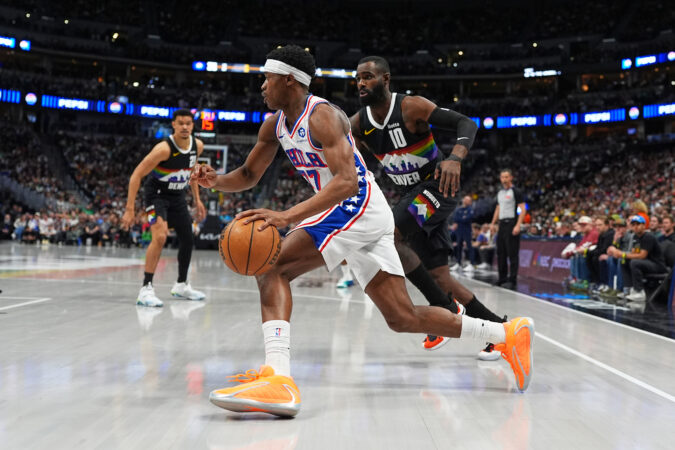
Sixers guard VJ Edgecombe scored nine points on 3-of-12 shooting in a loss to the Nuggets on Tuesday in Denver.
Embiid tweaked his left knee during the Sixers’ game at the Indiana Pacers just before traveling to Denver, yet was not listed on the injury report entering that marquee matchup. But after the medical staff did not like how Embiid was moving during his pregame warmup, he was ruled out minutes before tipoff.
The home crowd chanted “Where’s Embiid at?” early in the game. A Denver-based reporter asked Nurse if missing a string of matchups in Denver was a “reflection, at all, on his character,” which the coach dismissed. The Sixers were fined $75,000 for violating the NBA’s injury reporting rules.
After the backlash, Embiid missed one more game at the Portland Trail Blazers before returning against the Golden State Warriors. He visibly labored through that outing, before the Warriors’ Jonathan Kuminga inadvertently fell on Embiid’s knee.
That moment altered Embiid’s career. The injury required surgery, sidelining him for more than two months before returning in time for the Sixers’ first-round playoff exit. Then, Embiid only played in 19 games in 2024-25, eventually needing another surgery.
Earlier this season, it looked as if Embiid had regained his dominance. For a 20-game stretch from late December until early February, he averaged 30 points on 52.7% shooting, eight rebounds, and 4.5 assists. Yet issues in his right knee required management. Then came a stress reaction in his right shin. And this oblique strain, sustained during a Feb. 26 win against the Miami Heat, has kept him out for the past 10 games.
Jokic, meanwhile, was off to another MVP-caliber start this season before sustaining his own knee injury that sidelined him for the Sixers-Nuggets matchup in Philly in January. Tuesday night, his brilliant playmaking was on full display by totaling 14 assists (eight in the first quarter) along with eight points and seven rebounds in 25 minutes before sitting out the final period.
Joel Embiid was on the bench again Tuesday in his only visit of the season to Denver.
After the final buzzer, Embiid walked across the court to greet Jokic during his postgame television interview. He signed jerseys for Sixers fans sitting behind his team’s bench. He lingered inside the visitors’ locker room, watching soccer on a laptop computer.
It was a quiet end to a day that began with Embiid in a scout-team jersey on the Ball Arena court, before the latest round of boos from the home crowd.
That’s life for Embiid in Denver, a place that now symbolizes his injury-plagued career.
International photojournalist and foreign service officer Griff Davis died in 1993. Since then, his daughter, Dorothy M. Davis, has been on a fierce mission to keep his memory from fading.
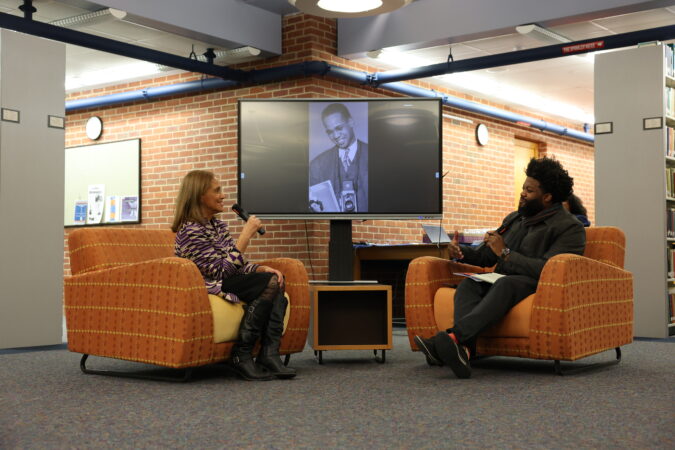
Davis left behind a legacy of 55,000 historic black-and-white images documenting some of the most significant people of the U.S. civil rights and African independence movements. His daughter has spent the past three decades archiving the photographs and curating exhibitions of his work, including “Lincoln University: Through the Lens of Griff Davis,” which is open through May 3 at the university’s main campus in Chester County.
The exhibitshowcases Davis’ photographs of and correspondence with four of Lincoln University’s most well-known alumni: Langston Hughes, Thurgood Marshall, Nnamdi Azikiwe, and Kwame Nkrumah. Lincoln, the nation’s first degree-granting Historically Black College and University (HBCU), was started in 1854.
Prime Minister Kwame Nkrumah raising his fist the moment Ghana became independent from Great Britain, March 6, 1957.
‘History provides a sense of purpose’
Davis captured behind-the-scenes photos of Hughes, a leading voice of the Harlem Renaissance, and a young Marshall, who was the first Black U.S. Supreme Court justice. His international subjects included Nkrumah, the first president of Ghana, and Azikiwe, the first president of Nigeria.
“These men were in touch with each other and supporting each other,” Dorothy Davis said. “My dad knew them as people. Through his photographs and letters, he supported them.”
“I was inspired as a student of Lincoln to know I had matriculated at a place where Langston Hughes, Thurgood Marshall, Kwame Nkrumah, and Nnamdi Azikiwe matriculated,” said Gordon Linton, a 1970 Lincoln University graduate and former state representative from Philadelphia who was a catalyst for bringing the exhibit to the school.
“That sense of history provides a sense of purpose that the university holds for its students,” he said.
Davis was a campus photographer at Morehouse College in Atlanta as a student. A military stint during World War II interrupted his education, but he returned to Morehouse upon discharge. In 1947, during his final semester, he took a creative writing course with Hughes, who was teaching at nearby Atlanta University.
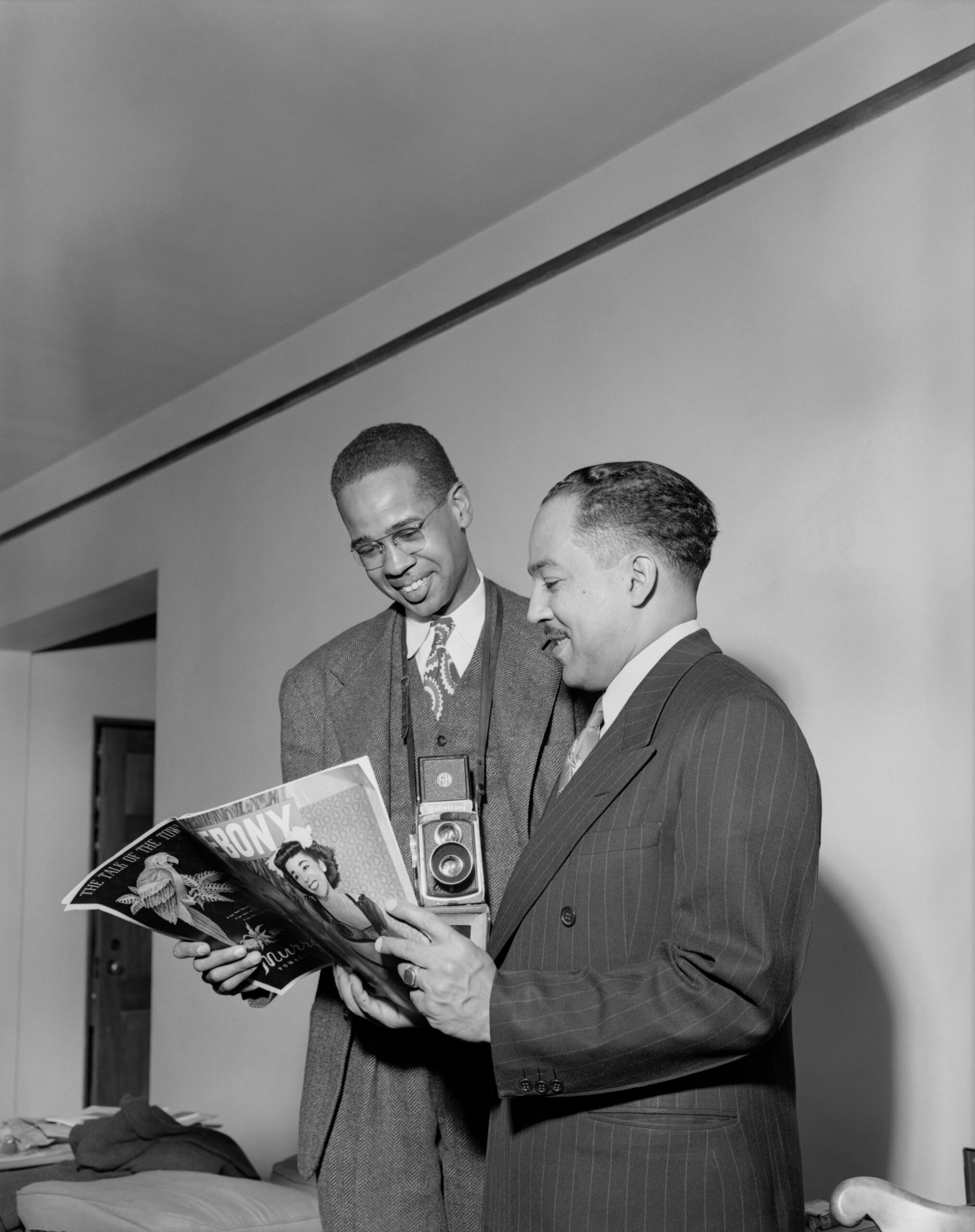
That launched a 20-year friendship that lasted until Hughes’ death in 1967. After Davis’ graduation, Hughes helped him obtain his first photography job as Ebony magazine’s inaugural roving editor and encouraged him to attend Columbia University’s Graduate School of Journalism. There, Daviswas the only Black American student in the class of 1949.
Griff Davis and Langston Hughes read Ebony Magazine, 1947.
From photojournalism to foreign service
After his graduation from Columbia, Davis worked as an international photojournalist for the newly formed Black Star Publishing Company, the country’s first privately owned picture agency, founded by three Jewish émigrés who fled Nazi Germany. Davis, their first Black photographer, was often hailed for bringing dignity to his subjects.
“I think my father would say he saw himself as a photographer first and a journalist/writer was close second,” Dorothy Davis said. “He could communicate more accurately with his photos.”
Her father switched hats and joined the U.S. Foreign Service in 1952. His first assignment took him and his new bride to Liberia as the first information officer and audio/visual adviser for the U.S. embassy. Davis worked in many capacities in the Foreign Service for USAID and retired in 1985.Throughout it all, he continued documenting stories with his camera.
Dorothy Davis was born in Liberia, unaware of what it meant to be American or Black. It was a deliberate move by her parents, who wanted to shield her from the virulent racism of the U.S. and provide her with a multicultural perspective.
“He was in the present but always aware of the future,” she recalled. “I saw him always turning a moment into a teaching about something.”
“Lincoln University: Through the Lens of Griff Davis” is open from 8 a.m. to 4:30 p.m. Monday-Friday through May 3 in the Special Collections and Archives department of the Langston Hughes Memorial Library on Lincoln University’s main campus, 1570 Baltimore Pike.
If you made the typical income in your community, could you afford to buy the typical home for sale there?
Across the Mid-Atlantic, “the answer is a resounding no in most places,” said Lisa Sturtevant, chief economist at the multiple listing service Bright MLS.
But in a region where buying a home can be challenging, Delaware County stands out.
It was the only county in the Philadelphia region where a household making the median income could afford to buy a median-priced home for sale at the end of last year, according to an analysis by Bright MLS. In Delaware County, the median asking price of homes in the last quarter of 2025 was $289,450, and the median household income was about $89,500.
Bright MLS calculated affordability based on a homebuyer’s ability to qualify to purchase a median-priced home, assuming a 10% down payment with the average interest rate for a 30-year, fixed-rate mortgage and average payments for property taxes and insurance.
Of the roughly 90 counties in the company’s service area across Pennsylvania, New Jersey, Delaware, Maryland, Virginia, West Virginia, and the nation’s capital, Delaware County was one of only five counties where the median-priced home was affordable for a household making the median income in the last quarter of 2025. The city of Baltimore also made the affordable list.
Sturtevant said everyone knows housing affordability is a challenge, but “when you see the data so starkly like this, it really brings the point home.”
window.addEventListener(“message”,function(a){if(void 0!==a.data[“datawrapper-height”]){var e=document.querySelectorAll(“iframe”);for(var t in a.data[“datawrapper-height”])for(var r,i=0;r=e[i];i++)if(r.contentWindow===a.source){var d=a.data[“datawrapper-height”][t]+”px”;r.style.height=d}}});
Across the Mid-Atlantic, median home prices are up 35% since 2020. The five counties that are most affordable are generally places with lower costs of living where the housing stock is older, she said.
Michael Maerten, a real estate agent on the board of directors for Tri-County Suburban Realtors, which represents members in Chester, Delaware, and Montgomery Counties, said Delaware County’s dense housing and smaller homes also help keep costs down.
He’s seen homebuyers in Chester and Montgomery Counties have a harder time affording homes. He said he’s working with a homebuyer who was originally focused on the area around Abington Township in Montgomery County and is now looking in the Haverford Township area of Delaware County where they can get what they want with the money they have.
“The running joke about Delaware County is people don’t leave,” he said.
But Delaware County’s spot on Bright MLS’ affordable list doesn’t mean households aren’t struggling to afford homes. It’s still challenging for many people, Sturtevant said.
First-time homebuyers in particular have it rough. Bright MLS found that across the about 90 counties it tracks, renters are effectively priced out of becoming homeowners. There is no county where a renter who makes the median income could afford to buy a starter home.
“That’s crazy to me,” Sturtevant said.
window.addEventListener(“message”,function(a){if(void 0!==a.data[“datawrapper-height”]){var e=document.querySelectorAll(“iframe”);for(var t in a.data[“datawrapper-height”])for(var r,i=0;r=e[i];i++)if(r.contentWindow===a.source){var d=a.data[“datawrapper-height”][t]+”px”;r.style.height=d}}});
Bright MLS defines starter homes as those priced at the 35th percentile, meaning 35% of homes are priced below that level and 65% are priced above.
Sturtevant said high construction costs have made building starter homes more difficult. At the same time, homeowners are holding onto smaller, more affordable homes instead of selling for a larger home because of elevated mortgage interest rates and uncertainty in the economy. So first-time buyers have fewer options and more competition.
Still, Maerten said a “good percentage” of his buyers are purchasing for the first time.
“They’re going through their struggles of making offers and competing in the suburbs,” he said.
Maerten said that in his experience, homebuyers know exactly where they want to purchase and are more likely to save money until they can buy where they want rather than buying in an area just because it’s more affordable.
The Montgomery County Intermediate Unit’s mission is to support schools in the county with early childhood intervention, professional development, and bulk-purchasing programs that save taxpayers’ money.
In recent years, however, the Norristown-based intermediate unit has also served as an international travel agency of sorts — for its own leaders.
Expense reports obtained by The Inquirer through a Right-to-Know request show that, since 2023, the Montco IU’s executive director, Regina Speaker, and its assistant executive director, Sandra Edling, have used public funds to book about $40,000worth of professional-development travel to three continents.
That includes a 14-day African safari that cost about $18,000.
“Travel from towering Mount Kenya to the wild expanses of the Serengeti to witness the drama of the bush unfolding around you,” reads the online brochure for the trip Speaker and Edling took to Kenya and Tanzania in the summer of 2023.
The expense reports show that Speaker subsequently used her IU credit card to fly to South Korea and Singapore for 11 days last spring. Edling used hers to purchase a trip to Central Europe in the fall, before the intermediate unit canceled it amid funding concerns.
Some of the credit card charges lacked receipts or didn’t state a destination, or provide any indication that they involved overseas travel. Yet, they were approved by two presidents of the Montco IU board and a now-retired assistant executive director. The 21-person board is composed of members from each school district board in the county.
The trips raise questions about how forthcoming the IU’s executive staff has been with the board about its spending, as well as the level of oversight provided by the board.
In a recent interview, Speaker defended the trips as legitimate professional-development outings. She said she followed the proper procedure for spending money the board had already budgeted for that purpose.
“Everything was signed off on by the board president and clearly communicated,” she said. “There was nothing underhanded about it.”
Jennifer Wilson, who served on the intermediate unit’s board from 2017 to last November, first learned of the trips from an Inquirer reporter last month. She said some looked more like “vacations” that shouldn’t have been covered by the publicly-funded IU.
“We never got notice [Speaker] was going on these trips at all,” said Wilson, who still serves as vice president of the Hatboro-Horsham School Board. “In my home school district, the superintendent tells us if he’s going out of town for the weekend.”
Public finance experts also questioned whether taxpayers should pay for professional-development trips that include extensive leisure time, such as giraffe feeding and guided tours through the Great Rift Valley.
Marguerite Roza, director of the Edunomics Lab at Georgetown University, said those types of expenses could leave taxpayers feeling cynical about how their money is being spent.
“We use examples like this to warn people that these are public funds,” Roza said. “You need to make sure your expenditures make sense and are justified, but also, contemplate the optics.”
The Montco IU, one of 29 state-mandated agencies in Pennsylvania, has a $198 million budget and 848 employees. It receives a mix of local, state, and federal funding, and provides support services to more than 200 public and private schools.
Speaker, who was named executive director in 2020, has been thinking on a larger scale.
“Our big mission is to be part of the global community,” Speaker, a former Great Valley School District superintendent, said in explaining her travel bills.
The trip to Kenya and Tanzania, Speaker said, culminated a yearlong academy for education leaders run by the the School Superintendents Association, or AASA.
“Everything was through the lens of leadership,” she said of the trip. “It was about that process of survival of the fittest, and how are you a leader, and what do you prioritize.”
The itinerary included six sightseeing tours and eight wildlife drives in search of zebras, monkeys, lions, baboons, cheetahs, hippos, elephants, wildebeests and “the exceedingly rare black rhino,” as well as 11 nights in “handpicked hotels.”
Speaker noted that the trip featured a visit to a tribal school.
Expense reports show that in March 2025 Edling used her procurement card for about $7,000 related to what is described on the purchasing log as a “conference.” The documents don’t name a location or offer specifics.
In response to questions from The Inquirer, Speaker said that Edling’s expenditure, which was approved by another assistant executive director in the office, was for a 10-day trip to Germany, Switzerland, and Austria in October 2025 sponsored by AASA, the superintendents group that put together the African safari.
“The whole idea was to bring her up to speed on the leadership component,” Speaker said of Edling, who previously served as the IU’s chief financial officer.
That trip, according to the online brochure, was to include a tour of Munich, quick-tempo Viennese waltz lessons, an underground train ride into Austria’s ancient Hallein salt mine, a “journey to crazy King Ludwig’s fairy tale castle of Neuschwanstein,” and an alpine hut dinner.
“Ascend into the Alps for an evening of true Swiss hospitality,” reads the itinerary. “As you feast on beautiful views from your hosts’ mountain chalet, enjoy traditional food, entertainment and fun Swiss games and activities.”
School visits were planned on day five and day nine, according to the itinerary.
Speaker said that she subsequently froze all travel last year because Pennsylvania’s four-month budget impasse held up a large portion of the intermediate unit’s funding. The IU didn’t know if it would be able to pay its staff. The cancellation also came after The Inquirer had requested the records. Speaker said the IU was able to get a refund for that trip.
Edling said that while she didn’t get to go on that trip, meeting with education leaders abroad is a justifiable public expense.
“We believe we need to grow the global partnership concept. Other intermediate units are also working on that,” she said. “As an educational service agency, we have to be at the forefront of what’s next, what’s new.”
Lara Wade, AASA’s director of communications, said in an email that her group is involved in planning the trips, but does not track whether participants bill taxpayers or pay their own way.
“From AASA’s perspective, these international delegations are designed as professional learning experiences for senior education leaders,” Wade said. “They include school visits and meetings with education leaders, but they’re not intended to mirror classroom-style professional development or be evaluated solely by the number of hours spent inside schools.”
A recurring theme
Justin Marlowe, director of the Center for Municipal Finance at the University of Chicago, said questionable spending is a recurring theme at intermediate units and other regional educational agencies around the country.
They received a lot of public money and are often given wide latitude in how to spend it.
“The presumption is that everything is going to be on the up and up,” Marlowe said.
At the same time, these organizations operate largely outside of public view and are overseen by board members who aren’t always as engaged as they are in their home school districts. Intermediate unit board meetings are open to the public but rarely draw much interest.
“They don’t get the same level of scrutiny from taxpayers,” Marlowe said. “The stuff they do is not on people’s radar in the same way.”
Still, he said, “I don’t know if I’ve seen African safaris.”
Roza, the education finance expert at Georgetown, said board members have to be able to trust the judgment of executive directors and superintendents because they can’t review every expense. She said the safari, in her opinion, is a “misuse of public funds.”
“If I was a board member and my superintendent was taking trips like this, I’d be like, ‘I think I just lost confidence in you,’” Roza said, after reviewing the itineraries for the African and Central European trips.
A 2020 drone photograph of the annual migration of wildebeest in Serengeti National Park in Tanzania. Montco IU officials visited three years later on a professional-development trip.
Roza compared the trips to those that made news in Clark County, Nevada in 2024. School district officials there spent more than $150,000 to attend job fairs and conventions around the country, including in Hawaii, with little to show for it.
“Just because it’s legal doesn’t mean it’s advisable or a good use of public funds,” Roza said.
Juliane Ramić, the former Montco IU board president who in 2023 approved Speaker’s credit card charges for the Africa trip, said this month that she could not recall if she was aware at the time what the charges were for.
The records The Inquirer obtained show that some of the expenses Speaker submitted for that trip lack supporting documentation, even though she included receipts for routine business expenses.
For instance, Speaker in May 2023 included a receipt for a $54.47 lunch at Redstone American Grill. But the $9,342 in purchases related to the safari only included what appears to be a screen grab from her phone showing the amount of money charged to the card.
The only mention of Africa in the records came months later when she purchased a Tanzanian eVisa for $139.
Ramić did not sign off on the expenses until August and September 2023, after Speaker and Edling had returned from Nairobi.
Ramić, who now serves as the Montco IU board’s treasurer, said board members are focused more on big-picture issues, such as whether the unit’s programs are working correctly.
“There is no onboarding or training for serving on an intermediate unit board,” said Ramić. “There is no guidance. There are gaps there.”
In April 2025, with a new board president in place, Speaker traveled to South Korea and Singapore, as part of a leadership academy run by the Association of Educational Service Agencies. The registration cost $13,000, paid in two installments with Speaker’s IU credit card.
Records show that one of the payments, in December 2024, apparently was not approved. That month’s expenses were not signed or dated by either Speaker or Janet Flisak, then the board president.
Both lines are blank. Flisak, who has since left the board, could not be reached for comment.
Ramić said she does not believe Speaker or Edling did anything wrong, but the board has requested more information from her office about travel expenses going forward. She said she intended to follow up with the board to see if new policies are needed to better monitor IU operational expenses.
‘It’s a personal trip’
Not everyone who flew to Nairobi in 2023 billed their employer.
Lee Ann Wentzel, who retired last year as superintendent of the Ridley School District, also went on the African safari, as well as an earlier trip to Israel that AASA sponsored. She paid for both trips herself.
“Some people look at it as a vacation, others work related,” Wentzel said. “I think both things can be true.”
Wentzel said she did not use Ridley school-district funds because her trips were too last-minute to include in her long-term professional development budget. But, she said, other superintendents are justified in using public funds.
“Speaking to locals, learning about their personal education journeys and how different the government schools are versus the religious and private schools, and what services are offered, that’s something you’re not going to see unless you go to international settings,” Wentzel said.
Janet Fike, superintendent of the Morris-Union Jointure Commission, a state-established educational service agency in New Jersey, also went on the Africa trip. In a detailed account written for the New JerseyAssociation of School Administrators’ website, she described it as a “bucket list” trip that she’d dreamed about for decades and explained how “a safari Jeep became our home on the road.”
“The majestic Amboseli National Park, in the backdrop of Mt. Kilimanjaro, or ‘Kili’ as it is called in Africa, beckoned,” Fike wrote. “On this game drive, we saw the elusive cougars, cheetahs, plentiful wildebeests, elephants, and more giraffes, my favorite! Each species was more spectacular than the other.”
Fike said recently that she paid for the trip out of pocket, instead of charging it as a business expense to the Morris-Union Jointure Commission.
“I paid for my own trip because it’s a personal trip,” Fike said. “And I took vacation days.”
Inquirer staff writer Kristen Graham contributed to this article.
At times, Ala Stanford feels like she doesn’t quite fit in.
She’s a pediatric surgeon — albeit very well-known — who is running for political office for the first time, trying to win a seat in Congress that for decades has been held by a seasoned Philadelphia politician.
At campaign events, when the top Democrats in the congressional race are chit-chatting among themselves, Stanford has found herself on the margins. Often, she feels more comfortable talking medical procedures with Dave Oxman, the other physician in the race, than whatever the sitting state representatives have going on in Harrisburg.
The trail may get lonelier. Oxman is planning to drop out Wednesday and endorse Stanford, making her the hands-down most prominent outsider in a race that is stacked with political veterans.
To amass support ahead of the crowded May 19 primary election — the likely deciding contest in one of the nation’s bluest congressional districts — Stanford will have to chart a path that beats both the Democratic establishment and the progressive left, which have chosen other candidates in the wide-open race.
Stanford, 55, knows her lack of political experience makes her stand out, and she’s accentuating it on the campaign trail. She is highlighting her career as a physician, and she says she’ll fix a healthcare system her opponents failed to address in their years as public officials. Her candidacy comes as an increasing number of medical professionals are running for office across the country, and as thousands of Pennsylvanians have dropped their healthcare coverage due to rising costs.
She has kept pace with three sitting lawmakers who are also running for the seat, in part by lending her campaign $250,000 of her own money.
Candidates (from left) State Rep. Morgan Cephas; physician David Oxman; State Rep. Chris Rabb; physician Ala Stanford and State Sen. Sharif Street appear at a forum hosted by the 9th Ward Democratic Committee in Mt. Airy Thursday, Dec. 4, 2025.
Stanford alsohas a cadre of healthcare workers uplifting her. She has won endorsements from prominent doctors, as well as a national super PAC, 314 Action, which backs candidates with backgrounds in science and has poured $1.5 million into a pro-Stanford campaign.
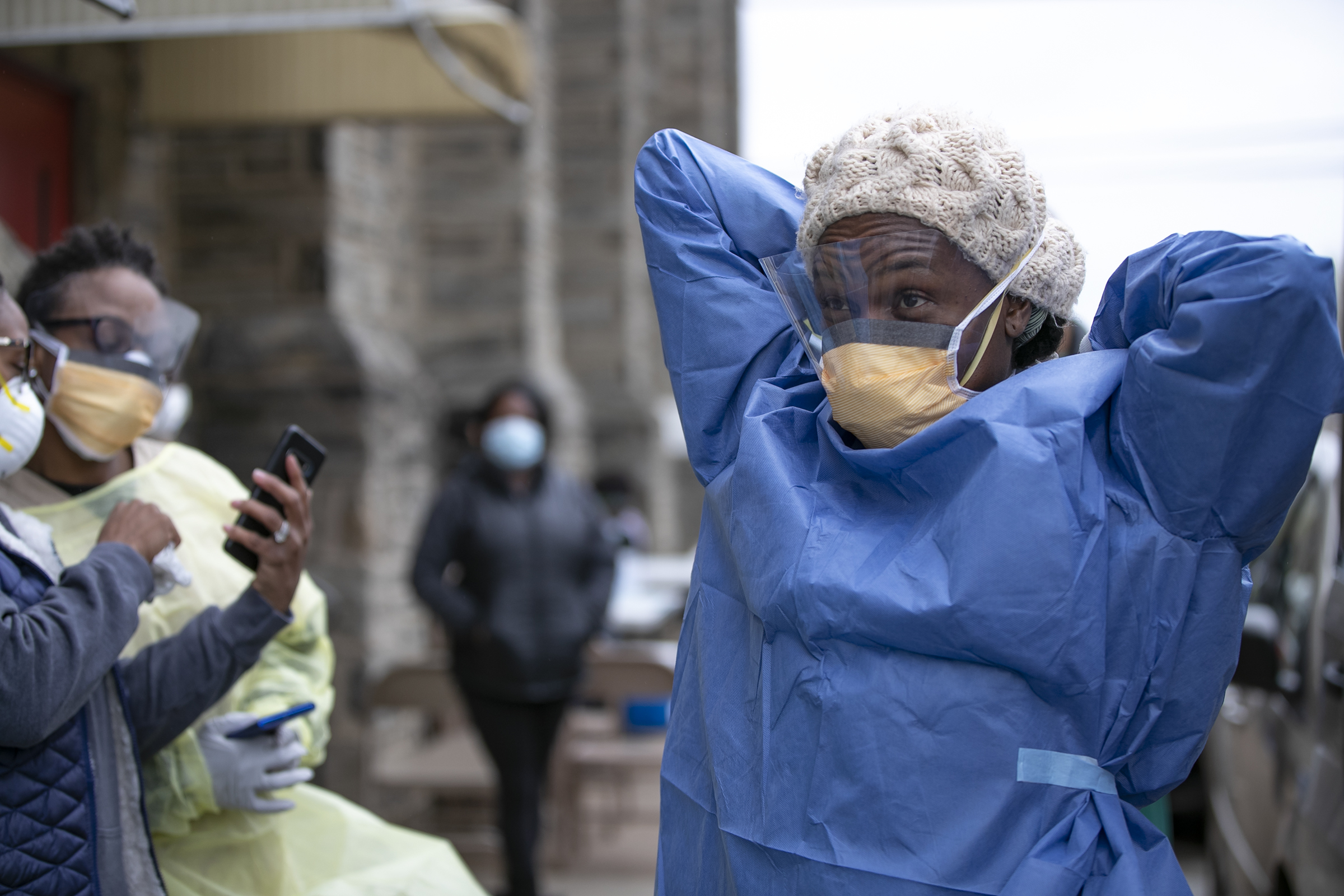
The group so far funded five weeks of television commercials reminding voters that Stanford founded the Black Doctors COVID-19 Consortium. In the throes of the pandemic, she set up mobile testing sites in majority-Black communities and ran vaccination clinics to inoculate thousands of Philadelphians, a grassroots effort to fill gaps left by government-funded programs.
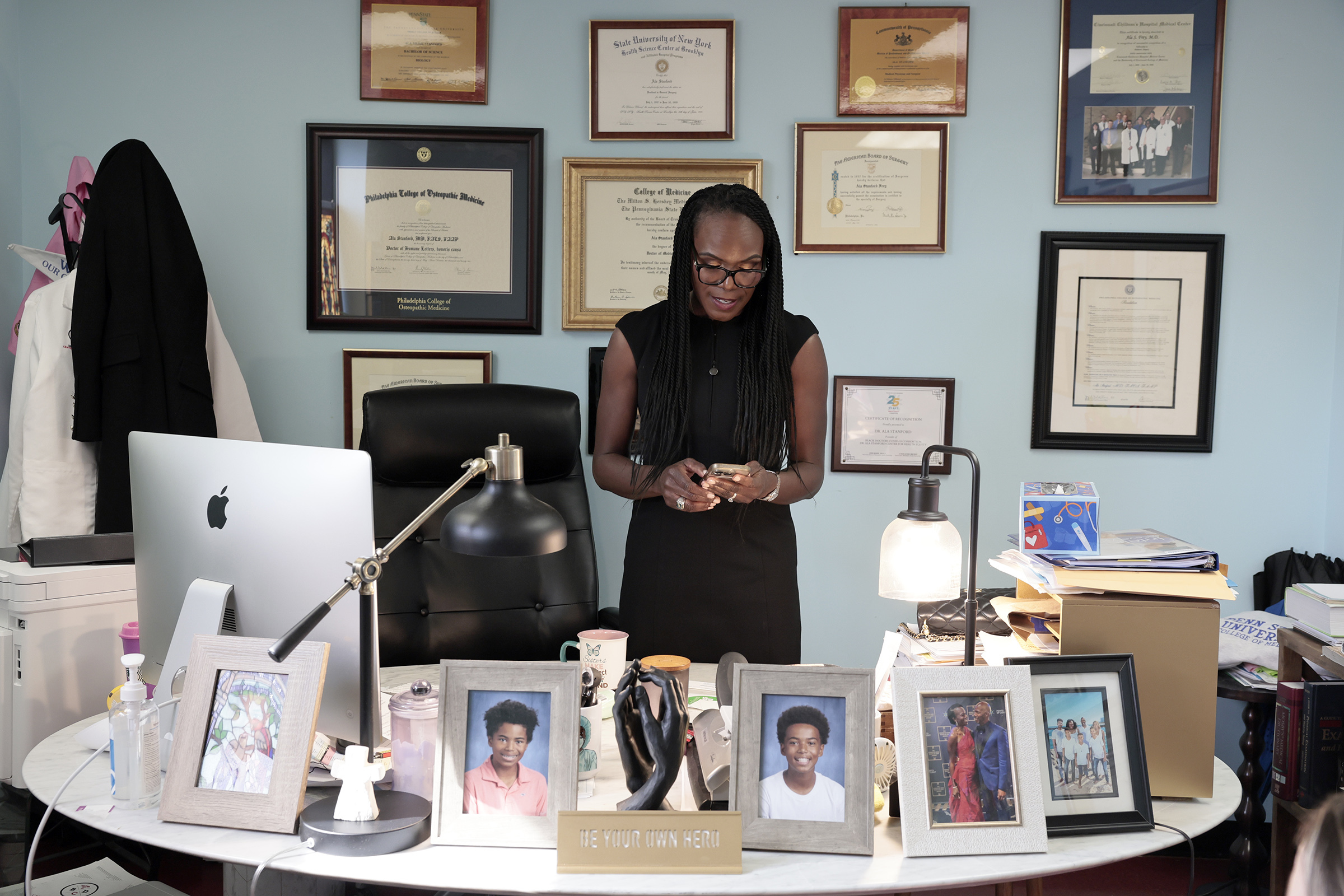
Ala Stanford texts her son while in her office at the Dr. Ala Stanford Center for Health Equity, 2001 W Lehigh Ave. in Philadelphia on Friday, March 13, 2026
It is a compelling story that has been told many times — across national media, on podcasts, and in Stanford’s own memoir.
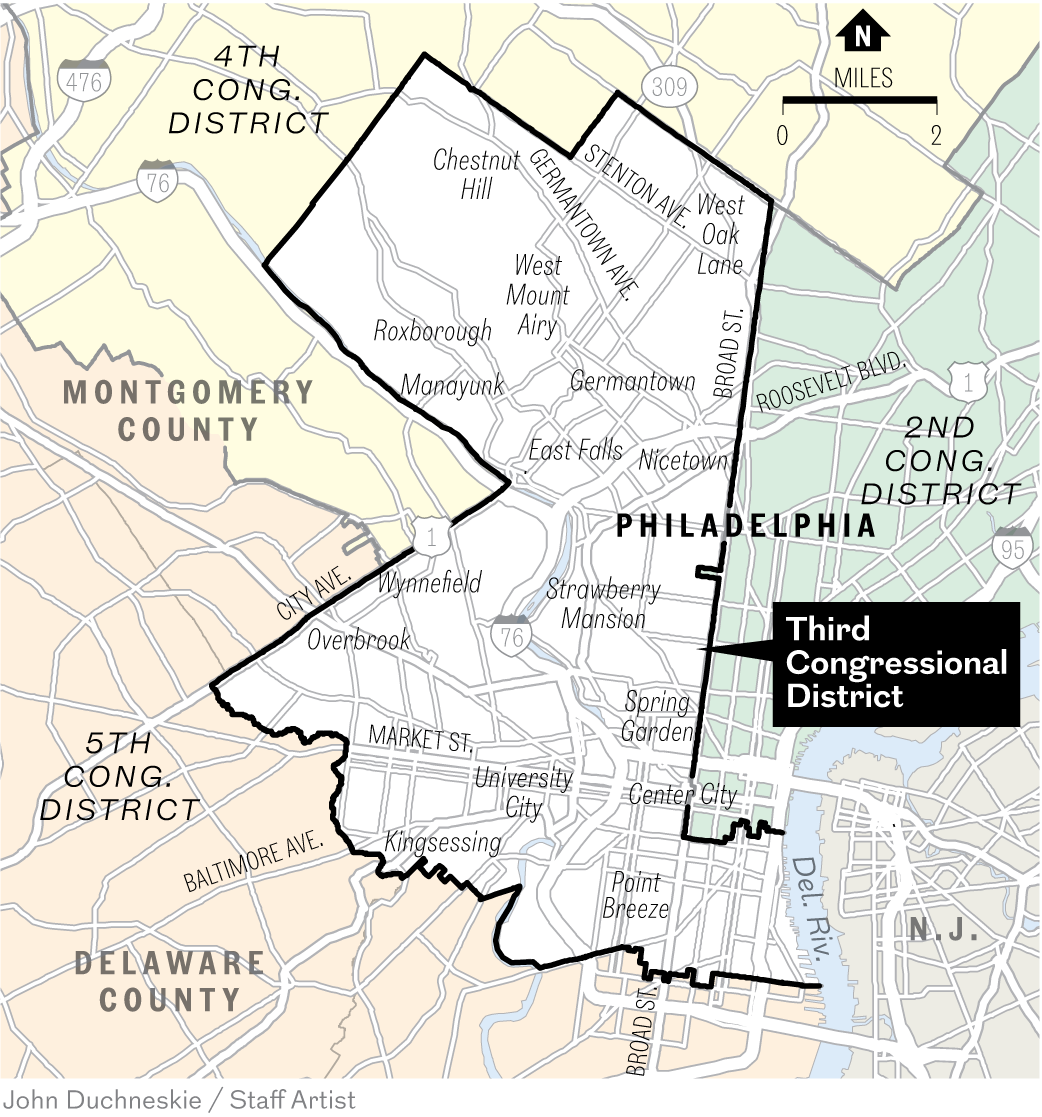
What hasn’t been told is why it means she should represent the 3rd Congressional District, which covers much of Philadelphia, over her opponents who have spent years in politics.
“People get so comfortable doing things the same way, the same way, the same way,” she said in a recent interview at her health clinic. “And no one likes change. But the city needs this. The city needs some change.”
Other candidates say Stanford doesn’t have a monopoly on talking about healthcare. State Sen. Sharif Street, another front-runner in the race, has touted that he and other government officials helped secure funding for Stanford’s pandemic operation.
“During COVID, he was very proud of his work,” Street spokesperson Anthony Campisi said, “to ensure that Doctor Stanford’s vaccination efforts received the support they needed so that we could get vaccines into arms quickly.”
Stanford’s opponents also clearly know that her status as a physician may be an asset.
She submitted paperwork to appear on the ballot as “Dr. Ala Stanford.” But on Tuesday, a member of the Democratic City Committee — which endorsed Street — filed a petition in state court, saying Stanford’s name should appear without the “Dr.” in front of it.
In the coming days, a judge will decide.
Leaning on healthcare as a core issue
Stanford does not fit neatly onto the ideological spectrum.
Of course, she is not conservative. She doesn’t call President Donald Trump by his name — he’s “47″ — and she uses words like “tyranny” and “running amok” to describe the current White House.
But unlike some of her opponents, she is not of the Philadelphia Democratic establishment. She said she feels like the city’s long-entrenched party apparatus had always planned to endorse Street, the former head of the state party and the son of a Philadelphia mayor.
Stanford is also not of the populist left. She believes Palestinians “deserve to have safety and freedom,” but thinks it’s inflammatory when her progressive opponent, State Rep. Chris Rabb, calls Israel’s war in Gaza a “genocide.”
“I know when you use the G-word how hurtful it is to a group of people,” she said. “It’s like someone saying the N-word around me. I don’t want to hear that. And every time you shout that from the rooftops, how many people are you hurting?”
What she does believe is that government systems have failed underserved communities, and that most domestic issues can be traced back to inequities in healthcare — points she has consistently emphasized in her campaign.
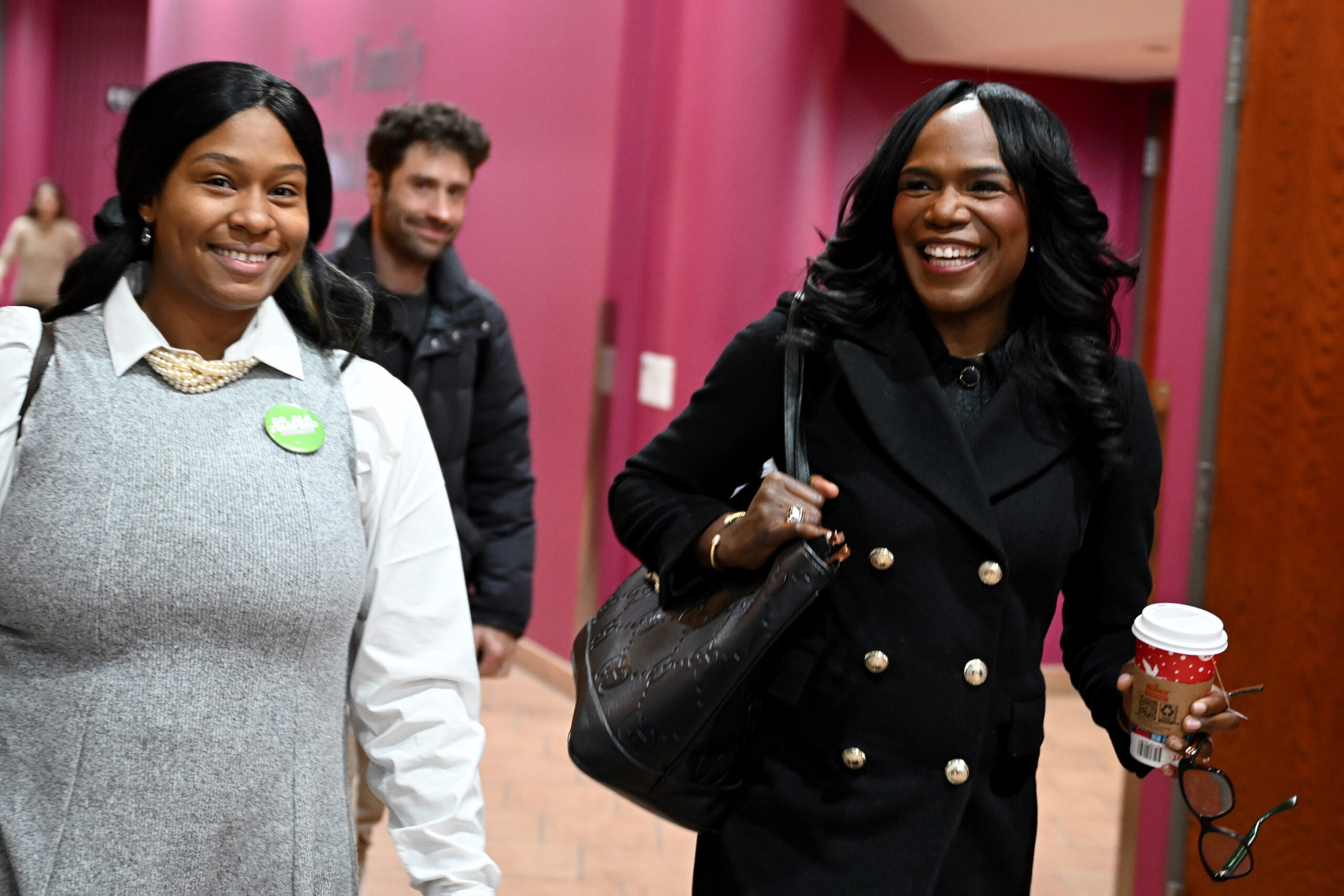
Physician Ala Stanford (right) arrives at a forum hosted by the 9th Ward Democratic Committee Dec. 4, 2025. She is a Democratic candidate running to represent Philadelphia’s 3rd Congressional District.
She has hammered Republicans for not extending pandemic-era subsidies that ensured people on Affordable Care Act health plans did not pay more than 8.5% of their income for care. She has advocated for universal healthcare. And she has harshly criticized Health and Human Services Secretary Robert F. Kennedy Jr., who has long been skeptical of vaccines.
“In this country, wealth is linked to homeownership, home ownership is linked to education, education is linked to health outcomes, and health outcomes are all exacerbated by racial injustice,” Stanford said during a recent candidates forum. “So when you talk about one, you talk about all.”
Stanford is careful to say that her focus on healthcare doesn’t mean she can’t discuss housing, immigration, or the war in Iran.
But it is clear that she feels most comfortable talking about what she knows best. Her supporters say that’s an asset in the 3rd Congressional District, which has a disproportionately high number of people who rely on public healthcare systems.
More than a third of the district’s residents, or more than 284,000 people, were on Medicaid as of December, according to the state Department of Human Services. Among Pennsylvania congressional districts, that’s the second-highest proportion of residents on Medicaid. (The first highest is the 2nd Congressional District, which also includes parts of Philadelphia.)
There were also more than 80,000 people in the district who last yearhad health coverage under the Affordable Care Act, either through expanded Medicaid eligibility or a plan they purchased through the marketplace.
That number is also likely lower now since ACA subsidies expired this year and premiums rose. Statewide, one in five people who bought plans last year from Pennsylvania’s marketplace, Pennie, opted out for 2026.
Ala Stanford speaks at the Black Doctors Consortium Dr. Ala Stanford Center for Health Equity in Philadelphia, Pa., on October 27, 2021. The center was opened with the goal of making healthcare accessible for those in communities who might struggle to get proper healthcare treatment.
Stanford’s supporters think Philadelphia voters will trust a doctor to ensure affordable healthcare access. They point to a survey released this month by the Annenberg Policy Center at the University of Pennsylvania that found 86% of respondents said their primary healthcare provider is trustworthy.
Erik Polyak, the executive director of 314 Action, said Stanford’s background differentiates her in a Democratic primary in which most candidates align on key issues.
“Voters want healthcare decisions made by people who understand patients and the science,” he said, “and not politicians chasing headlines.”
Oxman, Stanford’s now-former opponent, said physicians running for office can help rebuild a Democratic Party that has “lost the trust of so many people.”
“So many people see us as not centered on their needs, particularly their economic needs,” he said. “If the Democrats are going to build a party that has a chance of winning in Center City Philadelphia and in central Pennsylvania, it’s got to regain the trust of the voters.”
New to politics, but not government
It was the spring of 2020, and the bills were piling up.
Stanford, who was born in Germantown, had given up her well-paying day job as a surgeon to work full-time with the Black Doctors Consortium. She ran COVID-19 testing clinics in Philly parking lots and churches, and amassed some $200,000 in bills, saying she couldn’t “let one person lose their life for a test that costs $100.”
That was the beginning of her pandemic experience with government.
A lot of it was begging. As Stanford tells it, she peppered government officials with emails, telling them how many people she and her volunteers had tested that day, and asking for help securing funding.
In this April 2020 file photo, Ala Stanford puts on her mask before running a coronavirus (COVID-19) testing site at the Miller Memorial Baptist Church in Philadelphia.
U.S. Rep. Dwight Evans was immediately responsive. He connected Stanford with the White House, other members of Congress, and top insurance companies. And he publicly called on former Gov. Tom Wolf and then-Mayor Jim Kenney to allocate funding to Stanford’s organization, citing the group’s outreach to predominately Black communities and its work to address distrust of medical institutions.
The money came in several months later. It was finally enough for Stanford to pay for testing, compensate her staff, and prepare to vaccinate thousands of Philadelphians.
Fast-forward five years, and Evans has endorsed Stanford to replace him in Congress as he retires after decades of public service. His backing has been invaluable to Stanford, and it surprised some political observers who figured he might endorse one of the politicians whom he’d served alongside.
Stanford said Evans’ support has not convinced some Democratic voters. Some tell her they plan to vote for Street, citing his family name, or they say that “it’s his turn now.”
“What about if he is not what’s best for the people?” Stanford said. “Doesn’t that factor in?”
She tells voters that despite being new to the campaign trail, she isn’t new to government. She worked as a regional director for the Department of Health and Human Services under former President Joe Biden, who appointed her to the role. And she leads medical services at the Riverview Wellness Village, the city-owned drug recovery center opened last year by Mayor Cherelle L. Parker’s administration.
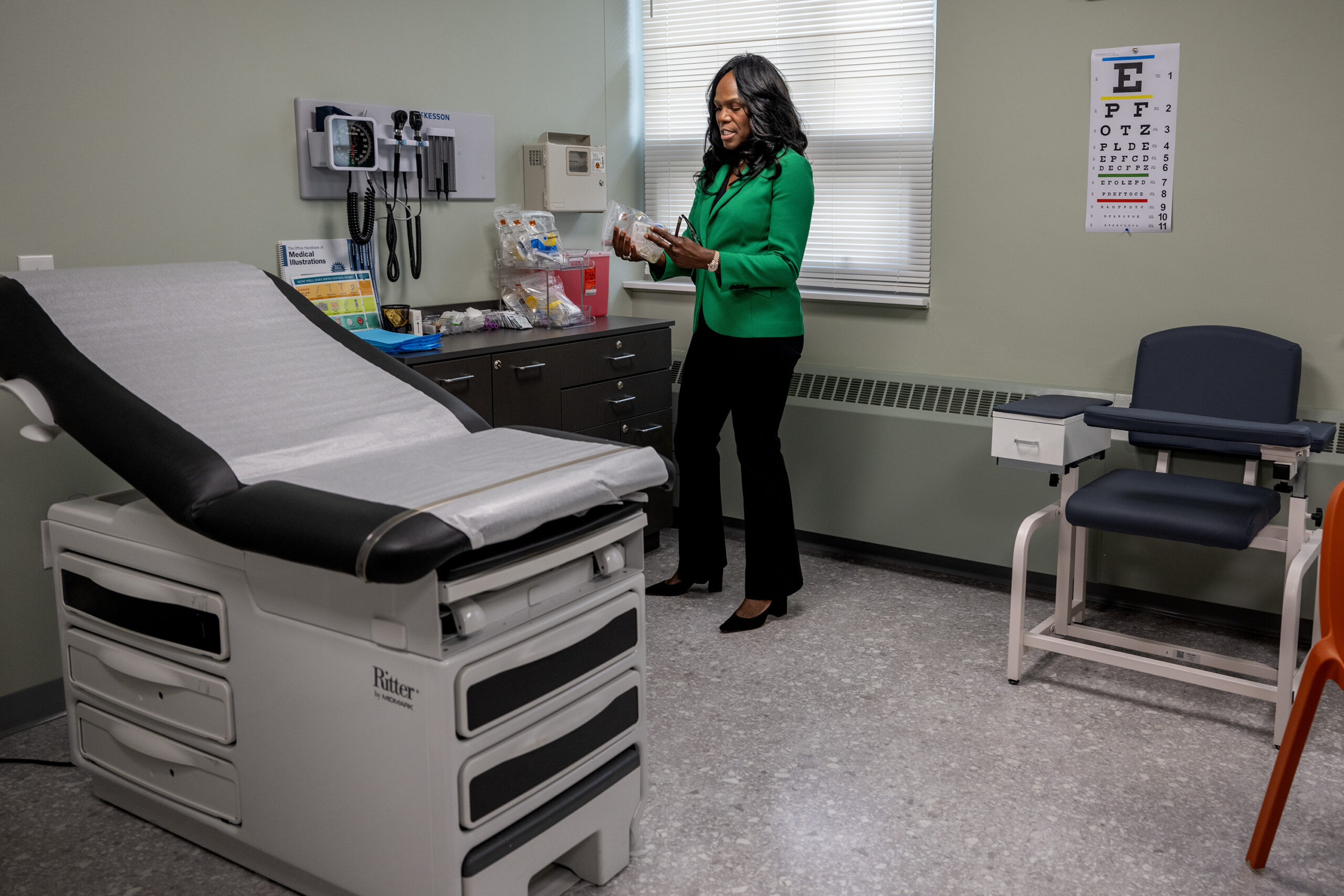
Physician Ala Stanford in an examination room at the primary medical care center run by her Black Doctors Consortium at Riverview Wellness Village, a city-owned drug recovery home in Northeast Philadelphia Tuesday, Nov. 25, 2025.
Still, Stanford very much sees herself as a doctor.
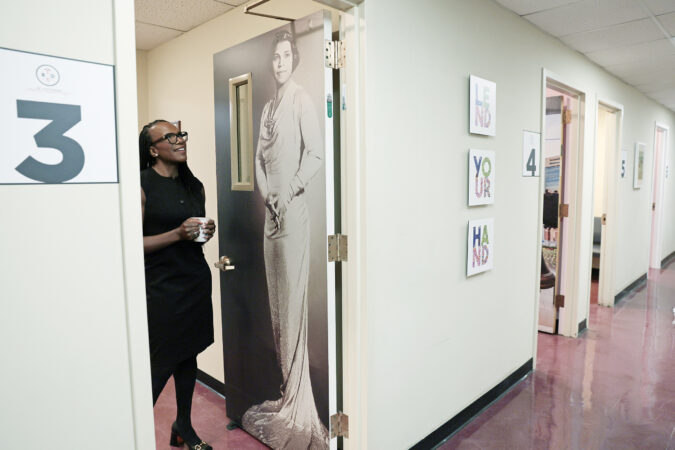
She often works out of a corner office in the North Philadelphia health center, and she still is alerted when the temperature of the vaccine refrigerator dips a degree too low. She has, on more than one occasion, tended to someone experiencing a medical emergency while she was campaigning.
She knows that overseeing day-to-day operations at the health clinic won’t be possible if she’s in Congress. There’s a succession plan in place.
“It’s just about, how can I have more significance at a larger scale? Congress is definitely a way to do it, but it might be somewhere else,” Stanford said. “That is, if I don’t win. But I want to win. I should win.”
In her poem, “To the Chimeras of South Jersey,” Jia-Rui Cook writes of teenage heartache, ’80s movies, and the gulf between her American childhood and the world of her parents, immigrants from China by way of Taiwan and Singapore.
“… Acing / honors English but flunking Saturday / Chinese School: double cherries that ripen / when summer sun runs hot. This world / will feel less than whole for many years.”
The Cherry Hill-bred and Los Angeles-based writer isset to release her debut poetry collection, Soft Beasts, next year. The book explores Cook’s upbringing in South Jersey, her coming of age in Los Angeles, and the various bodies we inhibit in our ever-changing world. Cook is the 2025 winner of the Philip Levine Prize for Poetry, a national prize out of Fresno State University that awards one writer $2,000 and the publication and distribution of a book.
As she prepares for the release of Soft Beasts next year, Cook reflected on her formative years in Cherry Hill, which shaped her career as a writer and figure prominently in her poetry. Cherry Hill “was kind of an amazing incubator” for young writers like herself, Cook said.
Jia-Rui Cook (right) and her father standing in front of her childhood home in Cherry Hill, N.J. around 1995, the year she graduated from Cherry Hill High School East.
Cook’s parents settled in Cherry Hill when she was a toddler and sent her to James H. Johnson Elementary School, Henry C. Beck Middle School, and Cherry Hill High School East. At East, Cook played lacrosse, worked on the yearbook, participated in the all-South Jersey band, and wrote for the student newspaper. Cook took an early interest in playing with words (her parents had an Inquirer subscription, and Cook was a habitual reader of the crosswords and comics page). A 1995 Inquirer story profiled Cook (whose maiden name was Chong) and her classmate Gina Kang, both star lacrosse players who were headed to Harvard University.
In Cook’s high school yearbook, she wrote that it was her goal “to write good poetry.”
Cook studied American history and literature at Harvard, joining the poetry board and studying under writers Seamus Heaney and Helen Vendler. She wrote a thesis on “Moby Dick.”
Cook always wanted to be a writer, but didn’t know if she could make a living out of poetry. After college, she ventured into another form of storytelling — journalism. Cook spent six years at the Los Angeles Times, covering everything from medical research to Asian-American life in the city. She left journalism in 2009, and has worked in science and health communications since, including a stint at NASA’s Jet Propulsion Laboratory.
Reporting and science writing are grounded in third-person observation and objectivity, Cook said, and as she was writing about rocket launches and research breakthroughs, she missed the creativity that drew her to writing in the first place.
She wrote a few poems in the mid-2010s, and won the Zócalo Public Square Poetry Prize in 2013, but life quickly became busy with parenthood and work (Cook and her husband, Bryan, who is from the Main Line, have two daughters). It wasn’t until 2021 that Cook felt like she could pick up the pen again.
“You get on this roller coaster of going, going, going, and then when you suddenly stop, you think, ‘Wow, actually, maybe I’ve learned some things. I have some things to share,’” she said, recalling how it felt to return to poetry five years ago.
Jia-Rui Cook’s (then Chong) photo in her Cherry Hill High School East yearbook. Cook graduated from East in 1995.
So Cook began to write again — about people, animals, her childhood in Cherry Hill, the subtleties of the Chinese-American experience she came to understand while living in and writing about Los Angeles.
“I had to really step away and experience the world for a bit,” she said. “I had to go out and experience the world and to see it, and maybe try to tell other people’s stories for a while before I really understood, ‘What story did I want to tell about my own life?’”
Anagrams (words or phrases made by rearranging the letters of a different word) figure prominently in her work.
In her poem “Anagram No. 2,” Cook anagrams “Cherry Hill, New Jersey,” rearranging the letters to make sentences that resemble English, but don’t precisely follow its conventions. English was not Cook’s parents’ first language, and “there was always this kind of slipperiness with the language” in her house, she said.
“Anagram No. 2” is “playing around with the English language” in a way that echos the experience of learning it.
In January, Cook became a fellow with the Periplus collective, a mentorship program for writers-of-color. In February, she won the Levine Prize. Jake Skeets, the Levine Prize’s final judge, called Cook’s poetry “both wonder and wander,” holding “stark, living images of place” and teachings on how “to be alive in the present moment.”
For Cook, publishing poetry has been an opportunity to “create something meaningful” in a world that “feels under siege.” The immigration crackdown that overtook Los Angeles last summer weighed heavily on her as the child of immigrants.
“It just was really wonderful and incredibly meaningful to feel like I’ve been creating these little, tiny bits of beauty where I can in the world,” she said.
Winning Fresno State’s Levine Prize is poignant for Cook. Fresno State was the first place Cook’s mother landed when she arrived in the U.S. and was where she learned English. Decades later, the university is helping to publish Cook’s first book.
“It felt like a full-circle moment,” Cook said.
Though California has been her residence for decades (and Cook says she has decidedly fallen in love with Los Angeles), she still considers South Jersey home. It’s the place where she became a writer and where her journey of self-understanding began.
“It has to start somewhere,” she said of her book. “So it really does start in Cherry Hill.”
This suburban content is produced with support from the Leslie Miller and Richard Worley Foundation and The Lenfest Institute for Journalism. Editorial content is created independently of the project donors. Gifts to support The Inquirer’s high-impact journalism can be made at inquirer.com/donate. A list of Lenfest Institute donors can be found at lenfestinstitute.org/supporters.
In the midst of a four-game losing streak, the Union have several problems to address. Bradley Carnell does not count Mexico City’s altitude among them.
The Union arrived to Mexico City late Monday night for the second leg of their Concacaf Champions Cup round of 16 series with Liga MX’s Club América. The Union trail by a goal in the series’ aggregate score line after dropping the opening leg, 1-0, at Subaru Park last week.
The Union will have a chance to upset América when the teams take the field at Estadio Ciudad de los Deportes on Wednesday (9 p.m., FS1).
An América win or draw would send Mexico’s largest club into the Cup’s quarterfinal round, but a 1-0 Union win would take the series to extra time. Any result where the Union score more than one goal and win would send them to the quarterfinals.
Wednesday’s game will not be hosted in América’s usual stadium. Estadio Azteca is closed for renovations before it hosts Mexico City’s FIFA World Cup games this summer. Estadio Ciudad de los Deportes is roughly 50,000 seats smaller than the 87,523-seat Azteca, which should dull América’s typical home-field advantage.
Mexico City has an elevation of 7,349 feet, a vast difference from the Union’s home on the Delaware River banks. But Carnell is familiar with how elevation impacts an athlete’s body after competing in his native Johannesburg, South Africa, which is 5,751 feet above sea level. He said in a Tuesday night news conference that he doesn’t “make much of the altitude.”
The Union’s Frankie Westfield (center) reacts after a missed scoring opportunity in the second half of the Concacaf Champions Cup round of 16 match against Club América last week.
“I grew up in altitude,” Carnell said. “I think in terms of the science, the later you get in, the less time your body has to adapt, which is a good thing. If you want to really adapt, you have to be here for many, many days.”
Fitness could be an important factor for the Union on Wednesday, as the team plays its fourth game in 12 days. The Union are coming off a 3-1 loss at the Atlanta United on Saturday.
“We just [got] in here [Monday] night,” Carnell said. “We arrived just before midnight, got the guys a good night of rest and then were able to just relax this morning and go through the treatment and everything. We’re still just recovering from the match in Atlanta. Every hour is vital.”
Chasing América
After their loss to América last Wednesday, Carnell repeated in his postgame news conference that the Union were close. At that point, the Union had played three straight games without scoring a goal from open play.
Agustín Anello broke that spell after finding the back of the net in the 87th minute of the team’s loss to Atlanta. The goal didn’t alter the result, but the team hopes the late goal is a sign that more are coming.
The Union took more shots and out-possessed América in their first matchup, but did not score.
“I thought [in] the game that we played last week, the boys did an excellent job,” Carnell said. “We kept the score line very narrow, and I thought we had the better of the second half. We created lots of chances. This gives us hope and positivity to go up against a really big, big talented squad. We’re going to be brave, and we’re going to be committed to what we do.”
The Union’s shaky start justifies their place as the underdog Wednesday night, but América has not looked the part of an invincible favorite. América is 3-3-0 in its last six Liga MX matches and 3-3-0 at home in league play since January, a fact Carnell pointed out.
“We always try and punch above our weight,” Carnell said. “We’re a club that stands for development. We stand for commitment to what we do in the game model and the philosophy, and we’ve really enjoyed this role. But there’s by no means to say that the giant can also fall sometimes and stumble.”
The Union’s Geiner Martínez (left) puts a shot on goal during last Wednesday’s match against Club América.
América will also be without it’s top goalkeeper, Luis Malagón, on Wednesday. Malagón, who was Mexico’s starting keeper for the 2025 Concacaf Gold Cup and a likely inclusion in El Tri‘s World Cup squad, ruptured his Achilles tendon in América’s trip to Subaru Park.
The winner of the series between the Union and América will face the winner of Lionel Messi’s Inter Miami and Nashville SC.
“We have to have a positive mindset,” Carnell said. “We kept the [first] game really tight, and I think we have a very possible chance here … It’s a game where we can be excited. This is the game, for us, where we have nothing to lose and everything to gain.”
If you’re getting burned by high heating bills this winter, you’re in good, and equally stressed, company.
U.S. households are expected to pay more than $1,000 on average to heat their homes this winter, according to the National Energy Assistance Directors Association’s projections, which were updated last month. That’s about $100 more than households paid last year, according to the association, which advocates for federal funding for low-income ratepayers.
And customers usually pay more in freezing temperatures, when more energy is required to keep their homes comfortable.
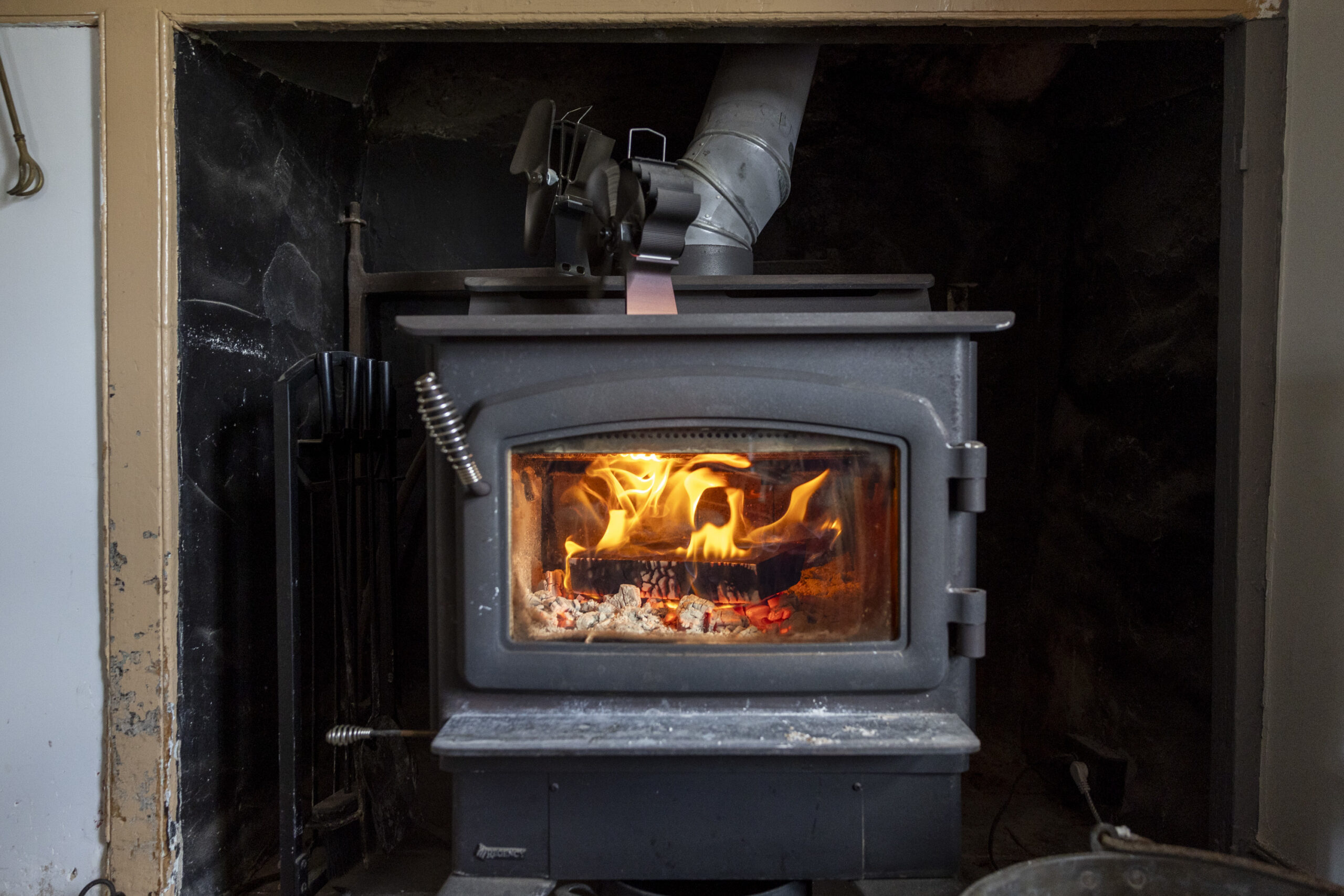
A wood stove provides heat in the old stone farmhouse of Patrick Melcher’s near Downingtown.
Philly-area residents were hit with a double whammy: They experienced one of the coldest, snowiest winters in recent memory as rate increases took effect for major utilities, including Peco and PGW.
Spokespeople for Peco and PGW, which provide electric and gas service to millions across southeastern Pennsylvania, said many of their customers saw increased usage this winter due to the cold. They noted that individual bills can also be impacted by thermostat settings, efficiency of appliances, and weatherization of windows, doors, and other parts of the home, as well as whether customers have opted for a third-party energy supplier.
“Energy affordability remains a priority, and rising supply costs — set by competitive markets and not controlled or profited from by Peco — continue to be a major driver of customer bills,” spokesperson Candice Womer said in a statement, noting a nearly 20% year-over-year supply cost increase for electric customers and a nearly 10% increase for gas.
The Inquirer spoke with five people who live across the region, have different types of homes, and use varying fuel sources and heating systems. Here’s how much they’ve paid to keep warm this winter.
Quotes have been edited for clarity and brevity.
Melcher, a 48-year-old who owns a custom woodworking business, said he usually needs to fill his 250-gallon oil tank twice a year. In early January, he paid $800 for a 230-gallon top-off, or about $3.45 per gallon, which he thought was fair. He had paid around the same for an oil fill-up in October. This winter, Melcher said he’s also spent about $900 on firewood for his wood-burning stove, plus a couple hundred dollars a month to fuel the electric heaters in his workshop.
“I don’t have a ton of money. I have a small business. But what else can you do? In the wintertime, it hurts. You hope for a mild winter. It’s one of those things you can’t control.”
An oil tank heater is shown in the basement of Patrick Melcher’s home near Downingtown.
Simonsen, a 69-year-old retired public relations professional, said her electric bills are usually around $50. This winter, however, her last three bills have been $78, $84, and, most recently, $312 for the period of mid-January through mid-February. She keeps her heat around 65 during the day, she said, and 60 at night. She’s billed through her condo complex, and said her neighbors have noted similar increases.
“I know we had very cold days but we were just boggled. I’m looking at everything around the apartment now. What can I turn off? Have I been careless about leaving things on? I don’t think so, but I am much more cognizant of that. I’m wondering if this is the new reality.”
A phone charger plugged in a Center City apartment. In Fairmount, Janice Simonsen said she is making sure she unplugs everything after receiving a more than $300 electric bill for a 750-square-foot unit.
Capriotti, a 55-year-old research scientist, said her family switched from oil heat to natural gas over the past decade. They were fed up with paying hundreds of dollars every time they needed to fill their oil tank. Still, she said, their home is drafty and they need to upgrade doors and insulation. Their most recent Peco bill, which includes electric and gas, was $721, and the gas portion was $570.
“It’s better than oil heat for sure, but this past year has been very rough. $720 for heating and energy is a bit much. I don’t want to say I can’t pay it, but it’s definitely a struggle.”
Carol Capriotti paid more than $700 in February for gas and electric service for her Willow Grove home, which she heats with a gas-powered boiler.
Fritz, a 41-year-old full-time hospice aide who works part-time at a distillery, said she had her upstairs and downstairs heat pumps serviced in December. In recent years, she insulated windows and the basement ceiling, and she said she keeps the temperature around 65. Fritz is billed directly through the borough electric department, and can’t ever remember receiving a bill this high since moving into her home 13 years ago. Before the most recent charge, her last three monthly electric bills totaled $256 in December, $424 in January, and $505 in February.
“I’m a single parent. I work full-time and part-time. My child has behavioral issues. So I am struggling. It is more than the [$704] mortgage payment. I know in the winter months it goes up, but to go up that high, it’s frankly ridiculous.”
Seidell, a 52-year-old who works in technology, said his bills this winter are on par with previous years’. He has gas-powered forced-air heating, he said, but electricity powers the blower fans that circulate the air. Seidell got solar panels installed in 2020, and he said they offset his electric cost throughout the year, though less so in the winter than in the summer.
As for his heating bills, “it’s been reasonable. My house was built 125 years ago. I don’t really do anything to keep it energy efficient besides the programmable thermostat and the solar panels.”
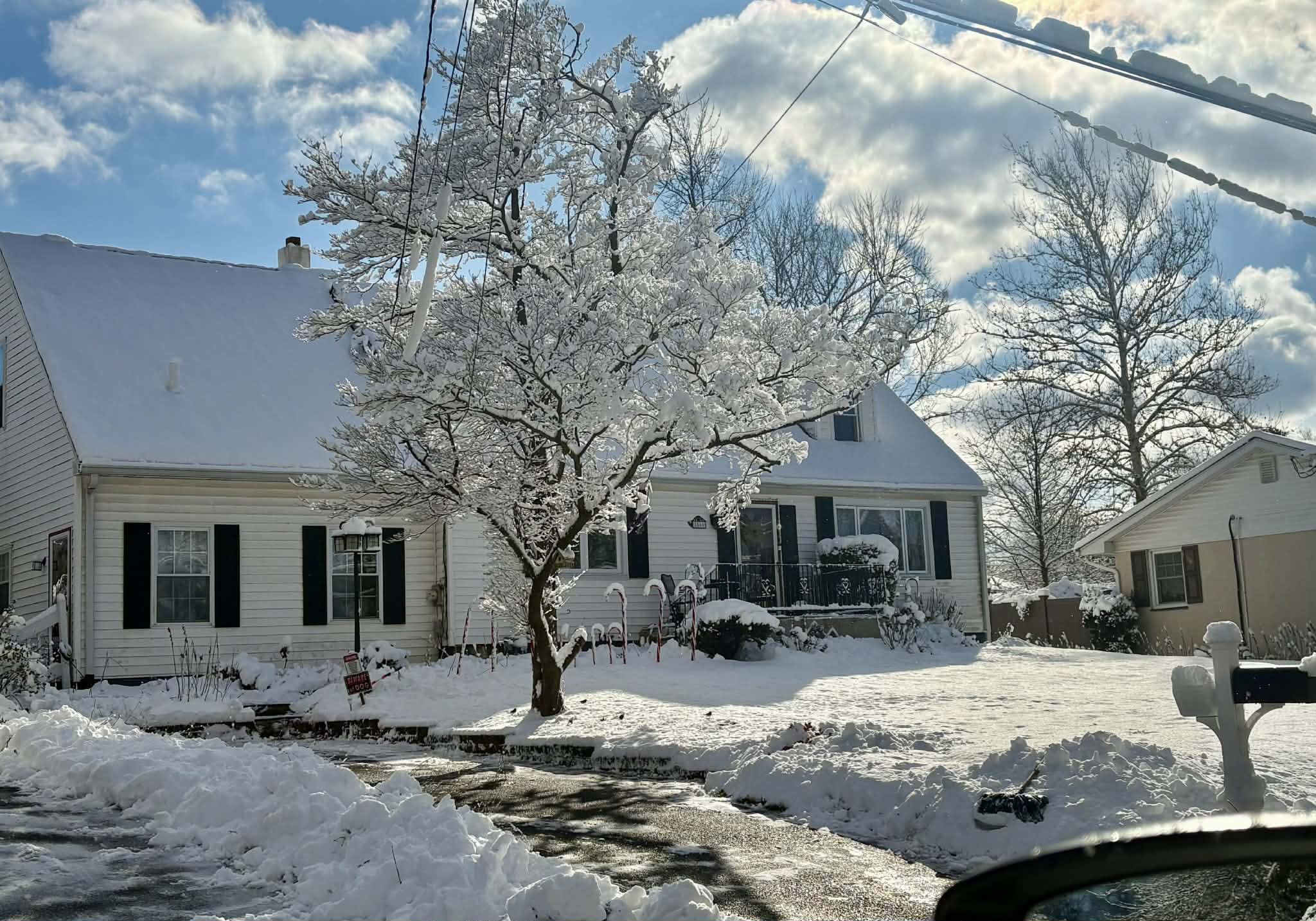
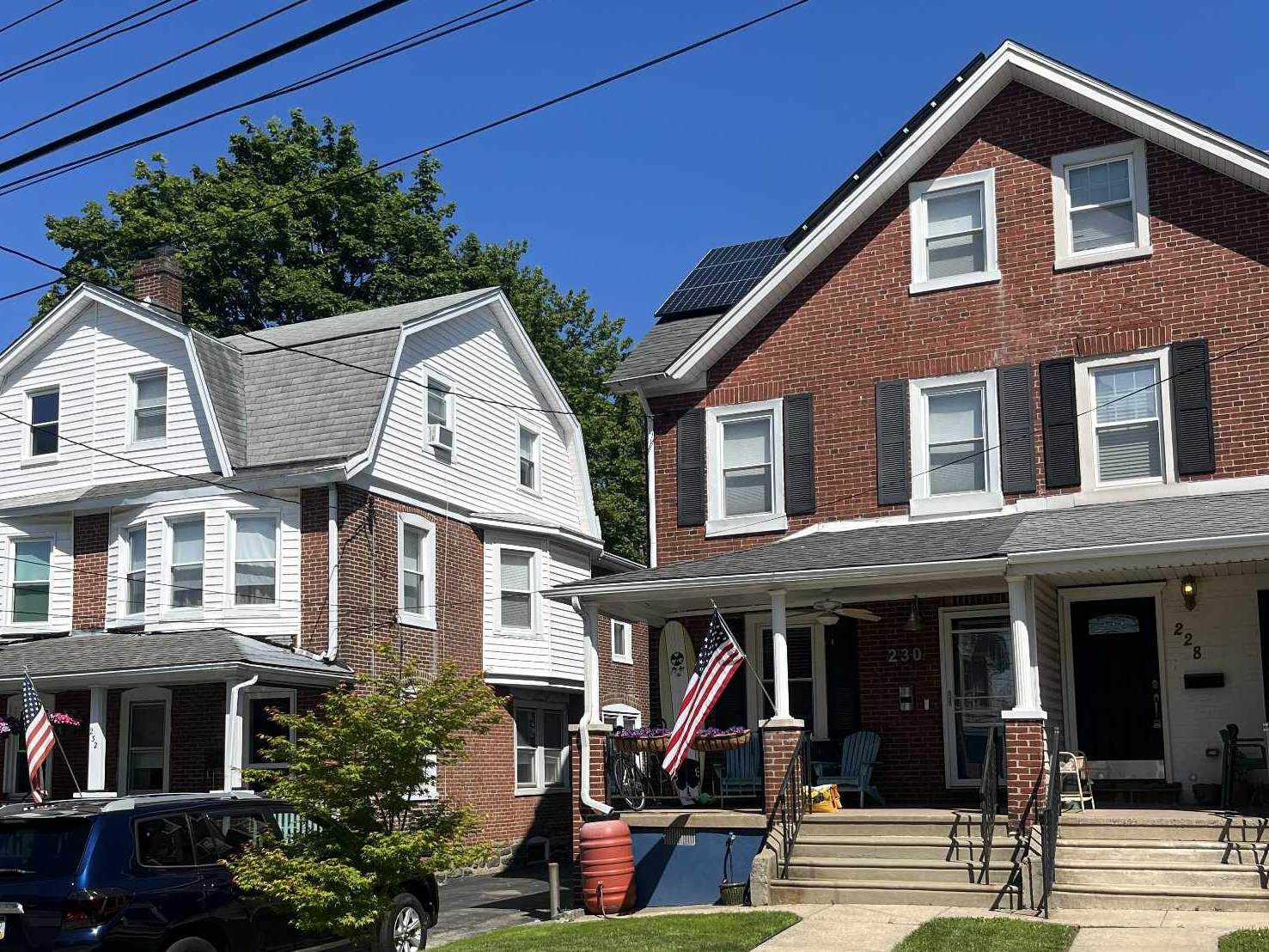
In Ardmore, Sean Seidell’s 1,800-square-foot twin home, which has solar panels, has cost about $200 to $250 a month to heat this winter.
Looking at the three games on this road trip, Denver was easily the most challenging with the players the Sixers had missing. With games against the tanking Sacramento Kings and Utah Jazz coming up on Thursday and Saturday, respectively, the Sixers can still go a respectable 2-1 on the trip and tread water in the playoff race.
Stealing a win over the Portland Trail Blazers on Sunday, a borderline playoff team, might have given the Sixers a bit of hope that they could stay semi-competitive during this stretch. But on Tuesday, Denver dominated from wire-to-wire, just like the Pistons did when the Sixers made the trip to Detroit last week.
Joel Embiid has not played for the Sixers since Feb. 26.
It’s possible that Joel Embiid could play on the road trip, coach Nick Nurse said prior to Saturday’s game against the Brooklyn Nets. He said Tuesday that Embiid was “active” during part of shootaround and went through an individual workout. Kelly Oubre Jr. will be re-evaluated at the end of the week and Tyrese Maxey a week after that. Paul George will be full-go immediately after his suspension ends next week.
Heading into Tuesday’s game, the Sixers were still just one game back of the No. 6 seed, which would allow them to bypass the play-in rounds. But the zombie Sixers still have one more tough game before George’s return: Monday’s home showdown with the Oklahoma City Thunder, which makes the next two games of the road-trip near must-wins.
Increased three-point attempts
The Sixers took 25 threes in each game of their back-to-back on Saturday and Sunday. On Tuesday, they attempted 24 threes in the first half alone. But the Sixers shot just 9-for-41 overall from beyond the arc.
In a league dominated by three-point shooting, the Sixers have struggled to replace Maxey’s three-point production, often relying on the mid-range game to score. The Nuggets, though, made 16-for-33 from three.
Down four starters, the Sixers haven’t defended well enough to stop their tougher matchups from making threes and haven’t scored enough to keep up with them. George’s 38.2% three-point percentage is the second-highest on the Sixers behind Maxey, so his expected return to the lineup against the Chicago Bulls on March 25 will help.
Sixers forward Justin Edwards (right) scored 11 points against Denver and is making a strong case to be a regular rotation player.
Who’s going to be in the healthy rotation?
The idea of the Sixers actually having a healthy rotation might seem far-fetched. There’s always something, but this stretch has given players on the Sixers’ bench an opportunity to show off their skills and make a case to regularly contribute.
There might not be a player who’s made a better case for himself over the last week than Justin Edwards, who scored 11 points in 25 minutes against Denver.
MarJon Beauchamp, still on a two-way deal, was the best Sixer on the floor Tuesday, scoring a team-high 16 points on 54.5% shooting, including four three-pointers.