What others are saying: “Highs: Compliant ride, upscale furnishings, impressive list of standard tech and safety features. Lows: A bit pokey for the segment, F Sport deserves to be sportier,” says Car and Driver.
What Lexus is saying: “The stylish Lexus luxury crossover.”
Reality: Not just stylish, but quick, fun, and supple. But don’t change songs or set the cruise.
What’s new: The midsize SUV from Lexus now features all-wheel-drive standard. It was last redesigned in 2022.
Up to speed: The F Sport adds a lot of oomph to the NX package. The 2.4-liter four-cylinder engine is turbocharged and creates 275 horsepower.
It roars to 60 mph in 6.6 seconds, according to Car and Driver. That’s actually a little slower than competitors, but it still feels quick. When left to its own devices, the NX 350 F Sport just seems to aim for 70 to 75 mph.
Shifty: The 8-speed automatic does its thing well, so you don’t have to. You can, though; the Prius shifter pattern (up-left for Reverse, down-left for Drive) adds a straight-down pull for Manual mode, and then the paddles take over. Toggle to your heart’s content.
On the road: All-wheel drive and the adaptive suspension combine to make the curves even more fun; the test model rolled through turns and even around corners like a much smaller vehicle. Sport and Sport+ modes are ideal; it can feel a little sluggish in the other modes.
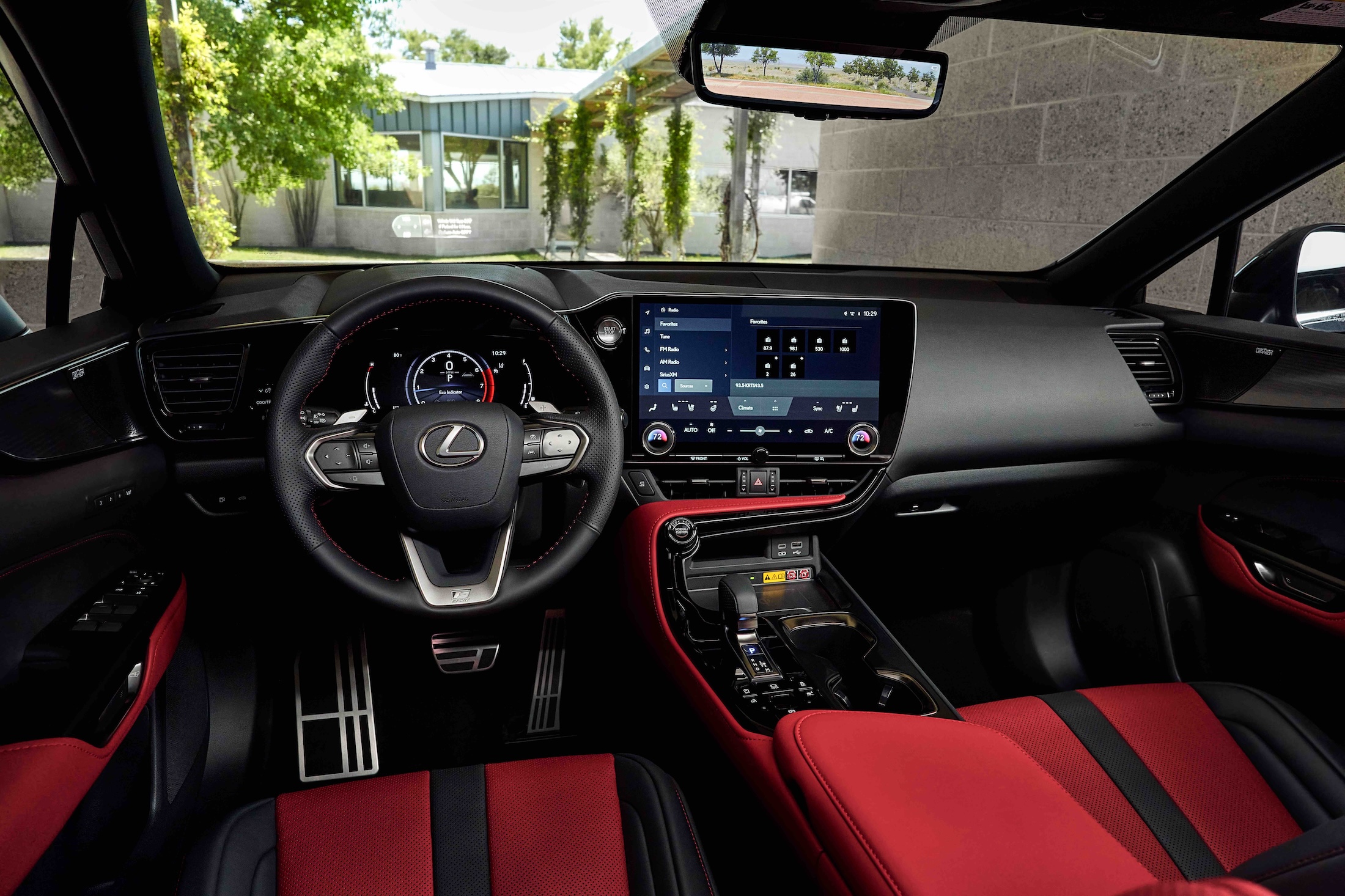
The interior of the 2026 Lexus NX 350 F Sport definitely grabs your attention, and won’t let go.
Driver’s Seat: The NuLuxe seats are delightful, agree Mr. Driver’s Seat and the lovely Mrs. Passenger Seat. They hug, they cuddle, they make you happy like a good Lexus should. (The seats, not the happy couple. Or at least we don’t cuddle you.)
A favorites button on the infotainment screen should help get where you want to go.
If only all the controls were this simple. Read on.
Friends and stuff: People in the corners will be moderately happy, with comfortable seats and plenty of room to stretch out. The center seat is perched and the floor has a hump, so you need the person with the most balance sitting there. But only bring along forgiving friends because they’re going to get mad if they feel the front seats at some point.
Cargo space is 22.7 cubic feet in the back and 46.9 with the seat folded.
In and out: It’s not too big a leg lift to get into the NX.
Play some tunes: Oh, for crying out loud, there has to be someone at Lexus who gets as annoyed at the steering wheel buttons as I do. Every time I want to skip a song or replay a song, I’m left to wonder, “Will it take two stabs? One stab? Several stabs?” It always a mystery, while the hover function waits to recognize my thumbs hovering as intended. Do you really want this? Do other drivers on the road want you to have this?
And that’s not to mention when I want to move several songs forward or back. We’d been having such a good time up till now, but it’s ruined. Just when that dastardly touch pad is gone, too. (Yes, I know it’s been seven years, but it left a mark.)
Sound from the Mark Levinson Premium Audio ($1,020) system is good, probably an A-. Not super clear but pretty close. A volume knob is too small and fussy to be helpful. The touchscreen is large at 14 inches (part of a $2,865 F Sport package) and easy to operate. But those darn steering wheel buttons.
Steady speed: On the other side of the steering wheel, the cruise-control buttons add to the sadness. More confusion, and in this instance it would be impossible to pull over to set it.
Keeping warm and cool: Weird tire-shaped Lexus dials control the temperature, and then the ebony touch pad allows you to heat and cool the seats and adjust the fan or source. But there are all sorts of automatic control adjustments that get way too intricate for someone driving it around for a week, or, more important, trying to adjust things while driving.
Fuel economy: The test vehicle averaged 21.2 miles per gallon and didn’t budge at all while testing.
Where it’s built: Cambridge, Ontario.
How it’s built:Consumer Reports predicts the NX reliability to be a 4 out of 5.
In the end: The NX is a nice vehicle, if you can live with the controls. I don’t think I could.
Among competitors, if I wanted to throw caution to the wind, I’d go for the Stelvio — it’s just so much fun to drive. The GV70 is also nice, especially in full EV form.
Cailin Williams was always interested in hockey. Like most middle-school athletes, she just wanted to make friends and compete. It didn’t matter that she could barely skate — Williams just wanted to play.
But there was one issue: There was no league for her to play in.
In 2021, Comcast Spectator and the Flyers Training Center changed that. Together, they launched The Philadelphia Liberties, a youth hockey program for girls.
The girls train and practice out of the Flyers Training Center and often have a front-row view of Flyers practice. This past month, Flyers forward Trevor Zegras dropped in after a Liberties game to take pictures and meet some of the girls.
“I think it’s just something really cool to experience,” Williams, 16, said. “To be able to have this opportunity, knowing that I get to play when some people aren’t lucky enough to, and then I also get to share the same ice as professional players is really great.”
But it wasn’t necessarily a smooth start.
“We didn’t win one game [that first season],” said Flyers Training Center director of development Jeremy Hall. “Actually, I don’t know if we even scored a singular goal. But that first season was just something to get them started.”
Since then, the Liberties have only continued to expand. The organization started with just one team, but it now has three teams running across various age groups — 10U, 14U, and 19U — for a total of 53 girls in the program.
“We actually won a handful of games [the second season] and just really got some momentum going,” Hall said. “From that point forward, the growth in the last three to four years is honestly quite incredible to see where we’re at today, compared to where we were when we started. I’ve been in the rink here for 17 years, and I haven’t seen another program grow as fast and have had as much success as this one.”
Thank you to all of our staff, volunteers, and teams that make the Liberties Invitational an event we look forward to every year.
Four years ago the Invitational began with 7 teams. Since then this tournament has exceeded our wildest expectations pic.twitter.com/hR96VG6rrf
But the program’s goal wasn’t just getting more girls involved in hockey — it was about visibility for girls’ hockey in general.
In 2023, the program hosted the first Philadelphia Liberties Invitational, which featured seven teams. Three years later, the tournament hosted 45 teams ranging from 8U to 19U. And the visibility that has come from this expansion is setting up the players for a childhood full of opportunities.
These opportunities aren’t just limited to on the ice, though. Through the Flyers and Comcast, the girls have done ceremonial puck drops at Flyers games, have been invited to the White House to skate at the rink, and some players even met Jessica Campbell, an assistant coach for the Seattle Kraken and the first female coach in the NHL.
“Some of those opportunities come from [the Flyers’ Training Center] being our home,” Hall said. “That’s something that the girls definitely don’t downplay. They recognize that it’s a privilege.”
Philadelphia Liberties U16 player Emily Esposito does the ceremonial puck drop at a Flyers game against the Vegas Golden Knights on March 8, 2022, to celebrate International Women’s Day.
As the Liberties have expanded, girls’ hockey in general is on the same path.
“In the last two to three years, [girls’ hockey has] exponentially grown,” Flyers Training Center general manager Jay Freeman said. “Not only for us, but just in general, for the country.”
And that’s the goal of the Liberties: growth. In every possible way.
“I always tell my team that hockey is the most beautiful game in the world,” 19U coach Linda Rehmann said. “And any day you get to play it, you’re a lucky person. But the game is about more than what happens on the ice. Our organization is about growing good people, teaching life lessons that they’re going to take with them, adversity, teamwork, resilience, all kinds of things that I think when you’re in that intense, competitive sport environment, it just accelerates your learning process.”
Rehmann started her hockey journey in Canada when she was just 5 years old. She played with boys for the first seven years before making the transition to girls’ hockey.
Her journey led her to Cornell, where she won an Ivy League title as a sophomore and was cocaptain her senior year.
“Hockey played a huge role the first 22 years [of my life],” Rehmann said. “My whole life was basically centered around my hockey schedule, and I loved it. I really felt like it shaped who I became. I’m an engineer. Professionally, I feel very comfortable in rooms full of men, and I believe that competitive sport makes girls strong.”
Rehmann has been with the Liberties for the past three years, and that message of empowering girls and women has carried over to her athletes.
Congratulations to the New York Islanders and New Jersey Colonials!
After four days of non-stop action, the 4th annual Liberties Invitational has officially come to a close. pic.twitter.com/dS7ru89W9A
“Coach Linda, she’s been amazing,” Williams said. “I started out not really being able to skate very well, and now I can move, I’m doing good. I think a big part of it is having a really supportive group of coaches who are always there and want us to get better.”
Said Rehmann: “I’m getting a little bit teary just thinking about [how Liberties has changed these girls’ lives]. What we offer is a place where they can be themselves. They can be honest with each other; they can make mistakes.
“[They have social pressures in their lives], but at the rink, they can relax, they feel at home, they feel safe. I think that’s really what [this] is. [The Liberties] gives them a tremendous growth opportunity as an athlete. It shows that they’re willing to put [themselves] out there, try new things, and open [themselves] up to something else that [they] might otherwise not be willing to do.”
If you’ve never heard the parable of the “Prodigal Son,” you can watch it unfold in real time over the next few months on the PGA Tour.
LIV defector Brooks Koepka is back.
It’s the biggest moment in golf since Phil Mickelson announced he was joining the renegade league on June 6, 2022. Koepka, a five-time major championship winner, an all-American success story, is the first LIV player to kneel and beg forgiveness of the men that he betrayed.
This is biblical, if you will, in its importance to the golf world.
Briefly: Jesus, in Luke 15: 13-31, tells a tale in which the younger son of a rich man asks to have his inheritance immediately, so he can seek his fortune in the world. The son soon squanders the money, the economy collapses, and he hits rock bottom feeding pigs (sorry, LIV fans). The son then crawls back home, hoping his father will hire him as a servant. Instead, the father rejoices at his son’s return and calls for a feast, featuring a fatted calf.
In this analogy, Koepka is the son. New PGA Tour CEO Brian Rolapp is the father — or, perhaps the stepfather, considering Jay Monahan ran the Tour when Koepka followed dozens of other LIV defectors, all of whom Monahan banned, and who remain banned by Rolapp.
The feast of the fatted calf? That would be the Farmers Insurance Open, Koepka’s first tournament during his season of mild penance. It begins Thursday at Torrey Pines in San Diego. Harris English is the defending champion. Two-time major winner Xander Schauffele, ranked sixth, and U.S. Open champion J.J. Spaun, ranked seventh, lead a 147-player field that includes 25 of the top 50 players in the world.
But make no mistake: This is Brooks Koepka’s party.
But he’s bringing guests.
About 24 hours before Koepka’s marquee comeback tee time, golf’s biggest brat, LIV dud Patrick Reed, announced that he will return to the PGA Tour, too. Reed, who won just once on LIV, on Wednesday said in a statement that he will leave LIV and compete on the DP World Tour until Aug. 25, when he will be eligible to play in PGA Tour events. His DP performances have him ranked 29th in the world, which, along with his lifetime exemption as a Masters champion, virtually assures him entry to all four majors this year.
After careful thought and consideration, my family and I have decided that I will no longer compete on the LIV Golf Tour.
I am excited to announce that I am returning to the PGA TOUR as a past champion member for the 2027 season and am eligible to begin competing in PGA TOUR… pic.twitter.com/LFq61njCrh
The parameters of Reed’s imminent return are murky, and he has applied to return to the PGA Tour in 2027 as a past champion (he has nine wins), but he is not subject to the hastily constructed Returning Player Program (RPP) that Koepka’s interest spurred and targets only the biggest names on LIV.
One of the facets of the program produced a 147-player field at the Farmers. It would have been a 144-player field, but according to Rolapp’s RPP, the Tour couldn’t kick out an actual qualifier to add Koepka. However, adding Koepka made it necessary to add two other players to balance out the three-player groups. That meant alternates Lanto Griffin and Jackson Suber got spots.
The eventual return of Reed indicates that Rolapp is eager to build his business and to siphon talent from LIV, no matter how bad the optics or how minor the love. Reed, who won the Dubai Desert Classic last week on the DP World Tour, is a far less formidable presence than Koepka. Further, he has a reputation as a longtime cheater with a bad temper, a potty mouth, and little time for fellow competitors.
Patrick Reed, who won just once on LIV, is returning to the PGA Tour.
Rolapp might not kill the fatted calf for Reed, but, as Rolapp knows from his NFL days dealing with Bill Belichick and Tom Brady, every sport needs villains.
With a 12:32 p.m. EST tee time Thursday and a 1:38 p.m. tee time Friday, Koepka will be part of the featured group with Ludvig Åberg, an inoffensive rising Eurostar, and Max Homa, the PGA Tour’s social media genius.
The program is open to any LIV player who won a major from 2022-25 and has been away from the PGA Tour for at least two years, a group that includes only Koepka, Jon Rahm, Bryson DeChambeau, and Cameron Smith, all of whom have, so far, decided to stay with LIV. They have until Monday to change their minds, and then the application window closes.
So, for the foreseeable future, it’s the Brooks Koepka Returning Player Program.
As a punitive measure, the program restricts Koepka earning power from ancillary means, such as FedEx Cup bonus money and the Player Equity Program, for varied periods of time; makes sure that Koepka doesn’t bump anyone from any field; requires that he plays in at least 15 events this season; and demands a $5 million donation to charity.
None of this is especially “punitive” for the likes of Koepka, who reportedly made $165 million in signing bonus and winnings on LIV, added to his $43 million he made on the Tour.
Because it is the first real, tangible, important step into reconciling the best LIV players with the best players in the world, which is what fans deserve.
The Tour suffered from the absences of superb players in their primes such as Koepka, Rahm, DeChambeau, young Chilean star Joaquin Niemann, who has been the cream of the LIV Tour, and even Mickelson, whose game is garbage but whose name still would sell tickets on both the PGA and Champions tours.
The careers and games of all of the LIV players suffered, playing benign, inferior courses in 54-hole tournaments against laughable competition.
The game also lost personalities to LIV obscurity: Koepka’s surliness, Rahm’s earnestness, Dustin Johnson’s goofiness, Mickelson’s buttery condescension, and DeChambeau’s energetic petulance which, thanks to YouTube, has somehow transformed into energetic affability.
None of the LIV stars has sworn to never return to the PGA Tour, but no one is better suited to begin reconciliation than Koepka.
Brooks Koepka celebrates after a LIV win in 2024 with his wife, Jena Sims, and son Crew.
When he joined LIV in 2022, in contrast to most players who were clearly interested in only the sportswashing money offered by the Saudi-backed rival tour, Koepka was cast as a reluctant defector — a massive talent who feared that the injuries he’d been dealing with for months might derail the career of the most promising player since Rory McIlroy.
Koepka, mellowed by years of insignificance and decline, seemed repentant when he addressed his return at a Farmers news conference Tuesday. He was less like the Koepka who belligerently denied cheating at the 2023 Masters, when his caddie told Koepka’s playing partner which club Koepka had used, and more like the Koepka who, in 2018 at Shinnecock, won a second consecutive U.S. Open: reflective, appreciative, mature.
There are reasons for that.
Since winning the 2023 PGA Championship, which keeps him qualified for all majors, Koepka has finished inside the top 25 of his last eight majors just once. In 2025, he finished tied for 30th in the LIV rankings among just 52 regular players, many of them the definitions of “washed” and “obscure.” Koepka’s game is poor, and, at 35, time is running out.
His family life has changed, too. His wife, Jena Sims, suffered a miscarriage last fall.
Jena Sims has posted on Instagram that her and Brooks Koepka lost a pregnancy at 16 weeks earlier this year.
This is awful news and we’d just like to wish Jena, Brooks and Crew all the best 🙏 pic.twitter.com/NVsarKBVdD
Koepka, who has a 2½-year old son named Crew, enjoys fatherhood, and the international nature of the LIV Tour, combined with playing DP World Tour events in Europe to accumulate world golf ranking points, made a normal family life more difficult than he’d imagined.
“Just having my family around’s really important. I’ve grown up a lot over the last few years, and especially the last few months,” he said.
The timeline of his decision seems dubious on its face, both from him and the PGA Tour.
Koepka said Tuesday that he negotiated his release from LIV, finalized on Dec. 23, before contacting any PGA Tour entities regarding reinstatement. He said only then did he contact Tiger Woods, the chairman of the PGA Tour’s competition committee, and, voilá, just 19 days later, over the busiest holiday season of the calendar year, the PGA Tour had devised a comprehensive Return to Play protocol for the Koepka crowd.
It took five years for these guys to agree on how to limit golf ball flight. So, yeah.
The machinations that led to Koepka’s return are far less important than the reality of Koepka’s return. In many ways, Koepka was the PGA Tour’s biggest loss to LIV.
Rahm was more dynamic, DeChambeau was more interesting, Koepka was the best player, was the best athlete, was American, and was a major championship-winning machine.
Does McIlroy win eight times in Koepka’s absence? Does he complete the career Grand Slam last April if Koepka’s in good form?
More significantly, does Scottie Scheffler win 17 times, including three majors, if Koepka’s not honing his skills against Pat Perez on a burned-out course in Indiana? (Notably, Perez, Kevin Na, and Hudson Swafford also have been reinstated, sort of, pending unspecified penalties. Perez plans to join the Champions Tour when he turns 50 in March, pending penalties and fines.)
Maybe Koepka delays Scottie’s ascension, and maybe he slows Rory’s roll. Maybe not.
He isn’t likely to make much noise any time soon, especially at Torrey, where he’s missed four of five cuts at the Farmers.
At any rate, the game will be better for the presence of Koepka’s talent. His penalties aren’t nearly harsh enough, considering the hundreds of millions of dollars players like Sheffler, McIlroy, Rickie Fowler, Jordan Spieth, and Justin Thomas left on the table by declining LIV offers, but that isn’t Rolapp’s main objective.
Rolapp, the NFL’s former chief media and business officer, oversaw much of the growth of the most lucrative league in the history of the planet. Don’t expect Monday to be the last chance for the biggest LIV stars to return. Rolapp clearly will do anything he needs to do to accommodate the return of any player who can help the PGA Tour heal.
Just after noon on Thursday, Koepka, the prodigal son, begins that healing.
For Cheryl and Jesse Jacobs, the three-bedroom, 2½-bathroom twin in Mount Airy had it all: friendly neighbors, good schools, nearby parks, and a short walk to the Sedgwick SEPTA Regional Rail station.
And for Jesse, a finished basement he called “my man cave,” where he played with the couple’s son.
The house had been in their family a long time. Cheryl grew up there. When her father died in 2013, they decided to make major renovations.
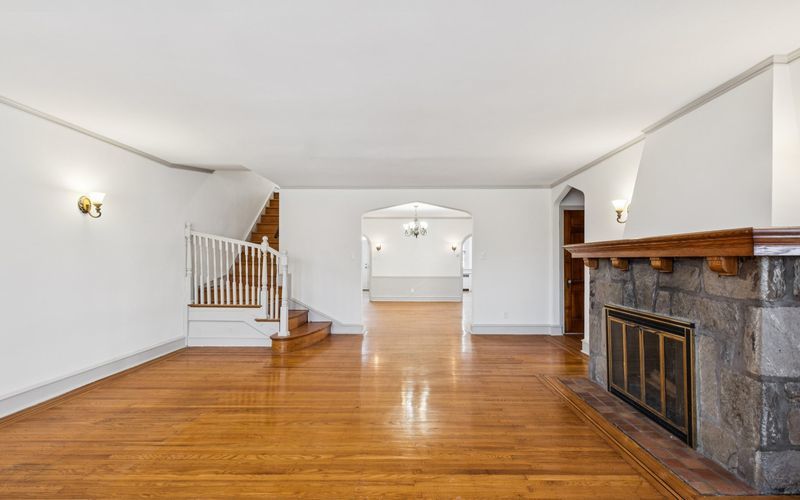
The home’s living room. There are working wood-burning fireplaces on the first level and in the basement.
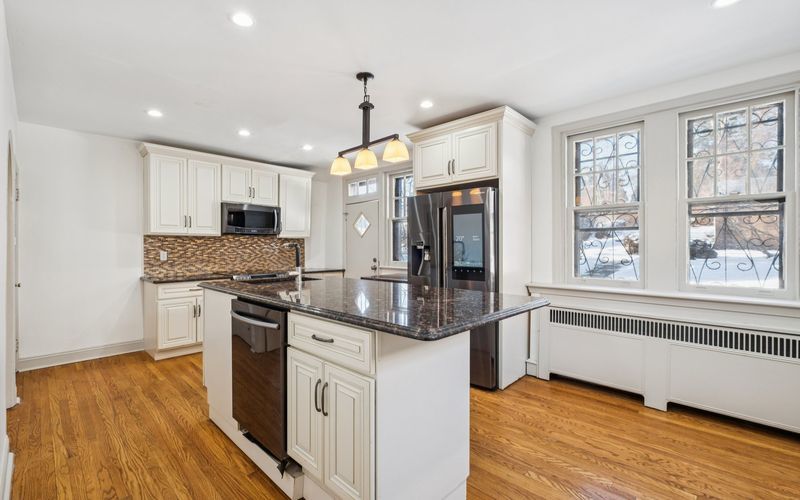
They opened up the kitchen on the lower floor, reworked the primary bathroom to enlarge the shower, installed recessed lighting, and replaced the water heater and home heating system.
Now the Jacobs family — he’s a retired facilities manager for large corporations; she’s a semi-retired HR consultant — are downsizing to a home in South Jersey and planning to winter in Florida with their son.
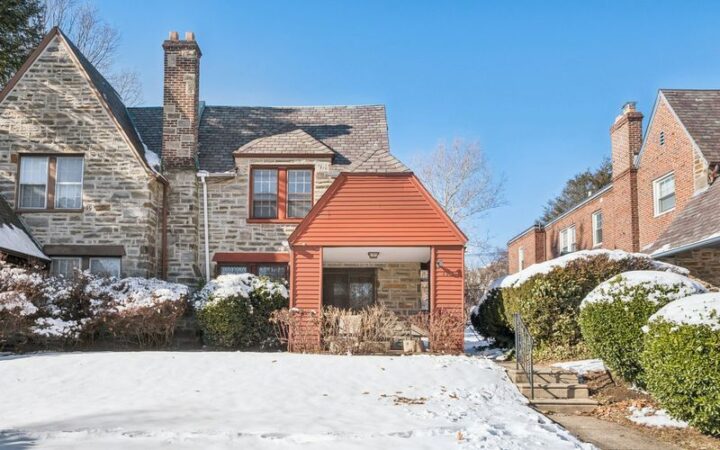
The Mount Airy house, built in the 1920s, is 2,062 square feet and has a brick-and-stone facade.
The kitchen.
The main level has a large living room with hardwood floors, and the dining room has the original plaster detailing. Arched French doors lead into the kitchen, which has stained glass windows.
There are working wood-burning fireplaces on the first level and in the basement.
The three bedrooms are on the second level.
The basement could serve as a home office, media room, or in-law suite.
One of the home’s bathrooms.
The house has a covered front porch, a two-car garage with extra storage space, two green outdoor areas, and a rear patio.
Mount Airy Playground, Pleasant Playground, and Benjamin L. Johnston Memorial Stadium are all easily accessible.
The house is in the Henry H. Houston School catchment area.
It is listed by Cherise Wynne of Compass Realty for $600,000.
In college, he played the Division II national championship game with a broken hand — and went 4-for-4. He also has a habit of getting hit by pitches, 26 total last year, including four in a single game in triple A to set a Lehigh Valley record.
But even so, Kemp is hoping for a healthier 2026 with the Phillies. He underwent two procedures this winter to address injuries he’d been grinding through last year: a bone fragment removed from his left knee and what he described as a “shoulder cleanup.”
Kemp had been playing with the bone fragment since June, but only missed a single game.
“He’s just so tough. He really is,” said manager Rob Thomson. “He’s just one of those guys that can put all that pain and little dings behind them, and forget about it, and go out and play. Some guys are like that, and he’s one of them. He’s a phenomenal kid.”
Kemp expects to be fully ready for spring training. The Phillies’ first full-squad workout is set for Feb. 16 in Clearwater, Fla.
And it figures to be a big spring training for the 26-year-old. Over the offseason, Thomson and president of baseball operations Dave Dombrowski both emphasized the importance of injecting youth into the Phillies roster in 2026. The Phillies had the second-oldest lineup in baseball last year, with an average age of 30.3 years old.
Otto Kemp (right) worked with coach Paco Figueroa to get acclimated to left field last season.
One name that keeps cropping up? Kemp.
“We like a lot of things about him,” Dombrowski said. “He’s a good hitter, and the ball jumps off his bat. He’s a threat when he comes to the plate. … He’s a tough son of a gun. He’s a championship-type player. I mean, what he played through last year, injury-wise, I don’t think that there’s many people that would have done that.”
Kemp will likely have an opportunity in left field as a right-handed platoon partner for Brandon Marsh. He came up through the Phillies’ system as an infielder but played 63 major league innings last season in left field, logging significant time working with coach Paco Figueroa. Kemp recorded plus-1 defensive runs saved in the outfield in 2025.
But he also acknowledged that he still has a lot to learn about the position.
“Every place that you play at, the dimensions are different, the environment is different,” Kemp said. “So just learning how to play through the elements, and learning what I need to take away from any ballpark that we’re at, and how the ball bounces off the wall, what the dimensions are like. Learning overall feel in the outfield, I think, is just going to be the biggest part moving forward.”
The Phillies are most excited about Kemp’s bat, especially when he’s fully healthy. He had a .234 batting average and .709 OPS in 62 major league games last season, but the potential for more power is there. He hit 16 home runs in 74 triple-A games.
With a big spring on the horizon, Kemp is looking forward to the opportunity to be one of the young players potentially impacting the lineup and clubhouse.
Otto Kemp had a .709 OPS in 62 games with the Phillies last season.
“It’s awesome to be recognized for the work that we’ve been putting in,” Kemp said. “… Really just try and lean into that, and just be gamers, and play the game hard and do things the right way. Just seeing all of that kind of take shape and start to form something has been really cool.”
Kemp could share the outfield with another young player in Justin Crawford, who is the Phillies’ presumptive opening day center fielder. Kemp has teamed up with the 22-year-old at several minor league stops.
“He’s a gamer. He’s a game changer,” Kemp said. “He’s got speed. He’s just raw athletic. He’s just a grindy guy. He’s going to get the job done, and I’m excited to see what he can do at the big league level, because just playing with him over the last three years has been really special.
“Fun to see him in the leadoff spot, just setting the tone, swiping bags, taking extra 90s [bases]. I think it’s all stuff that plays a big factor in winning baseball games, so it’s going to be fun to see him do that on the biggest stage.”
After Kemp’s whirlwind rookie year ended and he started to address the injuries he’d been playing through, he took some time with his wife to reflect on the journey. When he made his major league debut in June, he accomplished something that few other Division II college players and undrafted free agents have.
But he doesn’t want the story to end there.
“You get a lot of ups and downs in this game,” Kemp said. “And there’s people that don’t stick. And hopefully I’m trying to prove to be one of those guys that can get established up here.”
On Jan. 8, Andre Golsorkhi, founder and CEO of design firm Haldon House, presented plans for a revitalized town center, complete with historic architecture, green spaces, and businesses that “fit the character” of the area. Golsorkhi told a packed school auditorium that Haldon House plans to bring in boutique shops, open an upscale-yet-approachable restaurant, and create spaces for communal gathering.
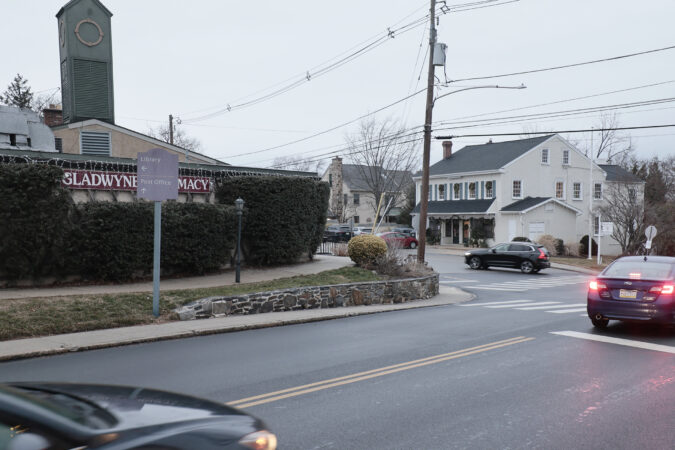
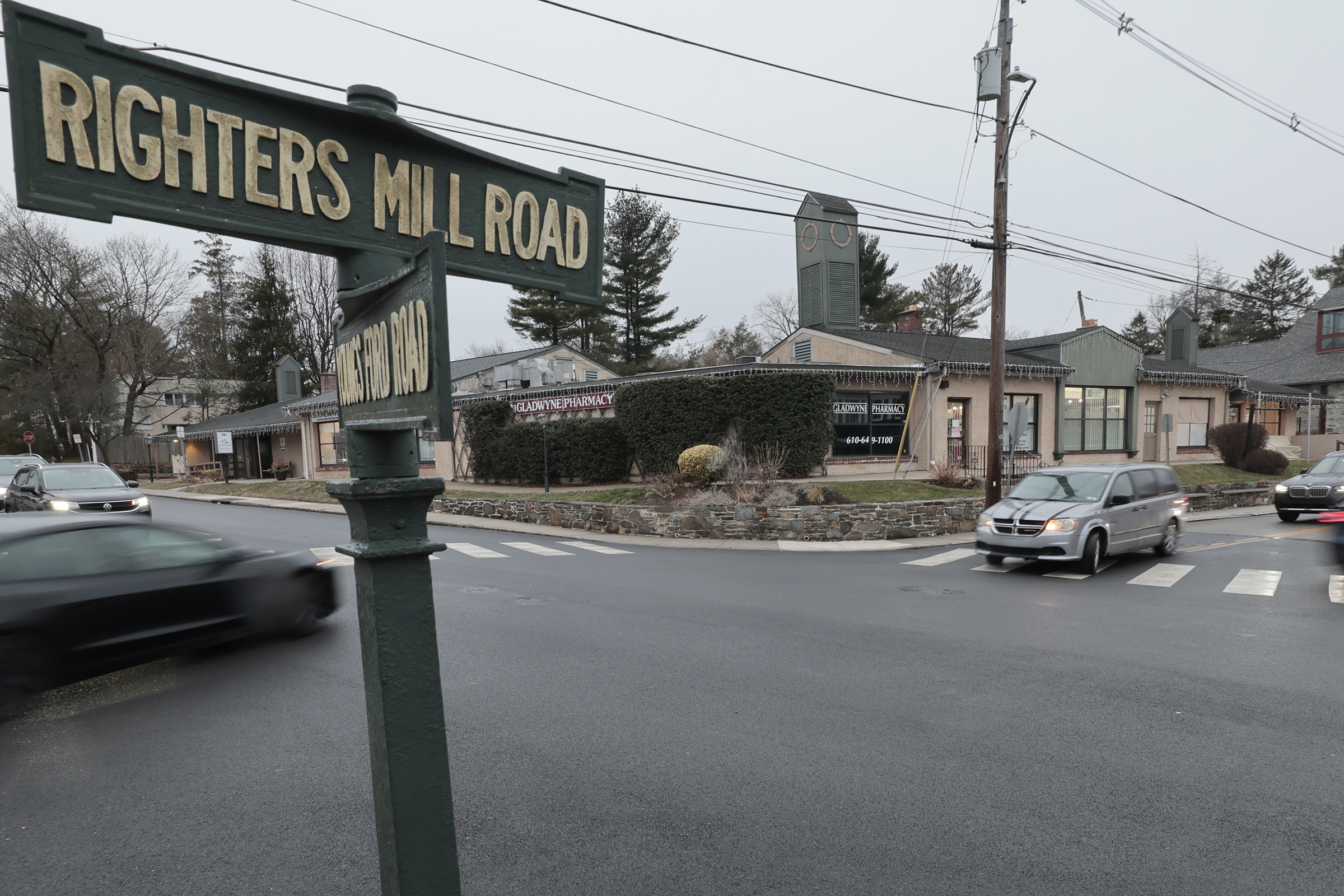
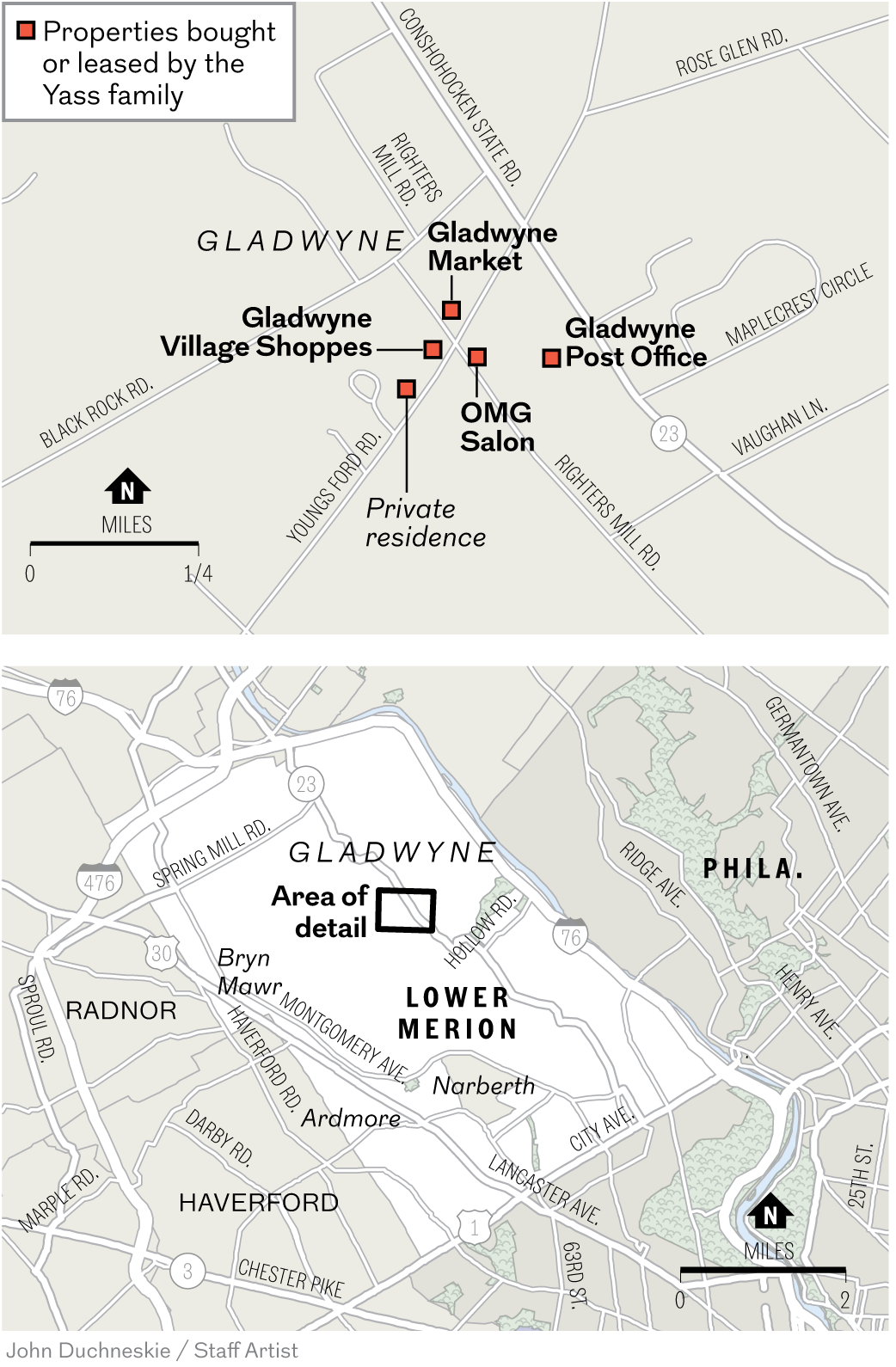
At the meeting, Golsorkhi also revealed that the project was backed by Jeff Yass, Pennsylvania’s richest man, and his wife, Janine. Golsorkhi said the Yasses want to revitalize Gladwyne as part of a local “community impact project.” Haldon House and the Yasses, who live near Gladwyne, have spent over $15 million acquiring multiple properties at the intersection of Youngs Ford and Righters Mill Roads.
Renderings of a proposed revitalization project in Gladwyne, Pa. Design firm Haldon House is working with billionaire Jeff Yass to redevelop the Main Line village while preserving its historic architecture, developers told Gladwyne residents at a Jan. 8 meeting.
What is, and isn’t, allowable?
For some residents, one question has lingered: Is one family allowed to redevelop an entire village?
A petition calling on Lower Merion Township to hold a public hearing and pass protections preventing private owners from consolidating control of town centers had gathered nearly four dozen signatures as of Friday.
Around 4,100 people live in the 19035 zip code, which encompasses much of Gladwyne, according to data from the 2020 U.S. Census.
“Residents deserve a say before their town is transformed.No one family, no matter how wealthy, should unilaterally control the civic and commercial core of a historic Pennsylvania community,” the petition reads.
Yet much of Haldon House’s plan is allowable under township zoning code, said Chris Leswing, Lower Merion’s director for building and planning.
Plans to refurbish buildings, clean up landscaping, and bring in new businesses are generally permitted by right, meaning the developers will not need approval from the township to move forward. Gladwyne’s downtown is zoned as “neighborhood center,” a zoning designation put on the books in 2023 that allows for small-scale commercial buildings and local retail and services. The zoning code, which is currently in use in Gladwyne and Penn Wynne, ensures commercial buildings can be no taller than two stories.
The developers’ plans to open a new restaurant in the former Gladwyne Market and renovate buildings with a late-1800s aesthetic, including wraparound porches and greenery, are generally within the bounds of what is allowed, once they obtain a building permit.
The Village Shoppes, including the Gladwyne Pharmacy, at the intersection of Youngs Ford and Righters Mill Roads in Gladwyne on Friday, Jan. 9, 2026.
More ambitious plans, however, like converting a residential home into a parking lot or burying the power lines that hang over the village, would require extra levels of approval, Leswing said.
The developers hope to convert a residential property on the 900 block of Youngs Ford Road into a parking lot. Lower Merion generally encourages parking lots to be tucked behind buildings and does not allow street-facing parking, a measure designed to avoid a strip mall feel, Leswing said. In order to turn the lot into parking, the developers would need an amendment to the zoning code, which would have to be approved by the board of commissioners.
Various approvals would also be needed to put Gladwyne’s power lines underground, an ambitious goal set by the Haldon House and Yass team.
Leswing clarified that no official plans have been submitted, making it hard to say how long the process will take. It will be a matter of months, at least, before the ball really gets rolling.
Leswing added the developers have been “so good about being locked into the community” and open to constructive feedback.
Golsorkhi said it will be some time before his team can provide a meaningful update on the development, but expressed gratitude to the hundreds of residents who have reached out with questions, support, and concerns.
Map of properties in Gladwyne bought or leased by the Yass family.
From ‘110% in favor’ to ‘a tough pill to swallow’
Fred Abrams, 65, a real estate developer who has lived in Gladwyne for seven years, said he and his wife are “110% in favor” of the redevelopment, calling it an “absolute no-brainer.”
Many Gladwyne residents live in single-family homes that keep them in their own, sometimes isolating, worlds, his wife, Kassie Monaghan Abrams, 57, said.
“Here’s an opportunity for being outside and meeting your neighbors and, to me, getting back to spending time with people,” she said of the proposal to create communal gathering areas.
“I think it’s a very thoughtful, beautiful design,” Monaghan Abrams added.
Some social media commenters called the proposal “charming” and “a fantastic revitalization.”
Others were more skeptical.
Ryan Werner, 40, moved to Gladwyne in 2012 with his wife, who grew up in the town.
“One of the things I’ve kind of fallen in love with about Gladwyne is the sense of community,” said Werner, who has a background in e-commerce sales and is transitioning to work in the mental health space.
“I’m less opposed to just the commercial side of it and more grossed out by the involvement of certain people in it,” Werner said.
Gladwyne is a Democratic-leaning community that voted overwhelmingly for former Vice President Kamala Harris in the 2024 election.
On social media, some griped about the changes.
“The Village will be just like Ardmore and Bryn Mawr. Can’t undo it once they build it,” one commenter wrote in a Gladwyne Facebook group.
Golsorkhi said in an email that the “enthusiasm, excitement and support” from the community have been “overwhelming.”
This suburban content is produced with support from the Leslie Miller and Richard Worley Foundation and The Lenfest Institute for Journalism. Editorial content is created independently of the project donors. Gifts to support The Inquirer’s high-impact journalism can be made at inquirer.com/donate. A list of Lenfest Institute donors can be found at lenfestinstitute.org/supporters.
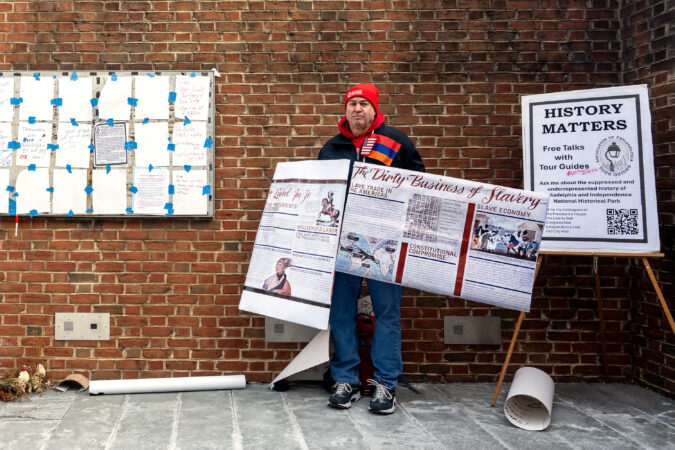
Despite widespread pushback, the Trump administration and the National Park Service removed exhibits on slavery from the President’s House, a recreation of the executive residence that once housed George Washington and John Adams.
The exhibits detailed facts about slavery in early America, including how Washington engaged in a human shell game with enslaved members of his own household. After the passage of Pennsylvania’s Gradual Emancipation Act in 1780, enslaved people were shuttled between Philadelphia and Mount Vernon every six months to obey the letter, if not the spirit, of the law.
The exhibits, part of Independence National Historical Park, also memorialized the nine people first brought into bondage to the city with our nation’s first president. It is important to note their names and their stories.
Austin was a waiter who died while traveling on one of those trips back to Virginia. Paris was a young stable hand whose tenure in the city was short. Hercules was a celebrated chef who eventually escaped from Mount Vernon. Christopher Sheels served as Washington’s valet. Richmond was the son of Hercules and worked various roles despite being just 11 years old. Giles drove Washington’s carriage. Oney Judge, a maid, famously fled bondage in Philadelphia, attracting the president’s ire. There was also Moll, a nanny, and Joe, a footman. Joe had to leave his wife and children behind in Virginia during his time working at the President’s House.
Evidence shows that the people whom Washington enslaved were well aware of the hypocrisy surrounding their situation. In a nation formed on the premise that “all men are created equal,” they found themselves bound by birth to a life of servitude, working in the household of the new republic’s first leader. Their stories once adorned the President’s House. Now, blank spaces stand in their place.
The Trump administration has cited a desire to avoid any historical marker that “inappropriately disparages Americans past or living.” Washington is one of the most admired men in U.S. history. His military leadership and willingness to cede executive power are worthy of our esteem. But Washington, like Thomas Jefferson and many other founders, fell short when it came to slavery. Removing panels cannot change that fact.
A National Park Service worker removes panels at the President’s House site in Independence National Historical Park on Jan. 22. More than a dozen educational displays and illustrations about slavery were removed from the site.
What the desecration of the President’s House does is disparage not just the enslaved members of Washington’s household, but the millions of Americans who, in the words of Mayor Cherelle L. Parker, “endured a great deal of pain so that America could realize its promise.” It also insults the efforts of the Philadelphians who fought to build the exhibit and have a vital part of America’s history recognized.
Thankfully, there is a strong local effort to fight the removal.
Parker cited a 2006 agreement between the city and the National Park Service, which her administration says requires consultation before any alterations are made. The city has filed a lawsuit to restore the panels and is hosting a public hearing on Friday. Perhaps while the court fight plays out, a temporary alternative can be installed at City Hall, by the Constitution Center, or in Fairmount Park.
Parker’s outrage is also a welcome change. While the mayor has mostly refrained from picking fights with the White House, she chastised President Donald Trump and park service officials, saying: “You cannot erase our history. You will not erase our history!”
Gov. Josh Shapiro has joined the city’s lawsuit. An amicus brief filed by his administration said: “There is no virtue in refusing to acknowledge certain aspects of our history because it is painful to do so. The removal of the slavery exhibit from the President’s House undermines this commitment and denies Pennsylvanians and others the opportunity to learn more about a part of our history that cannot be ignored.”
This sentiment is the right way forward.
As the United States celebrates its 250th anniversary, Americans will undoubtedly hear much about this country’s triumphs. That includes those who fought and died — including many who had been enslaved themselves — to keep our country united and begin to address our nation’s greatest mistake.
Generations after the Civil War, Americans were a pivotal part of the coalition that defeated the forces of fascism in Europe. The United States has put people on the moon, helped vanquish diseases like polio, exported its diverse and vibrant culture, and inspired democratic reformers across the world.
Failing to acknowledge our failures can only undermine that legacy.
Michael Chain Jr.oncehad to exit the Pennsylvania Turnpike at Downingtown and drive a zigzag pattern on State Routes 100, 113, 401, and 29 to reach his hotel.
So did his customers.
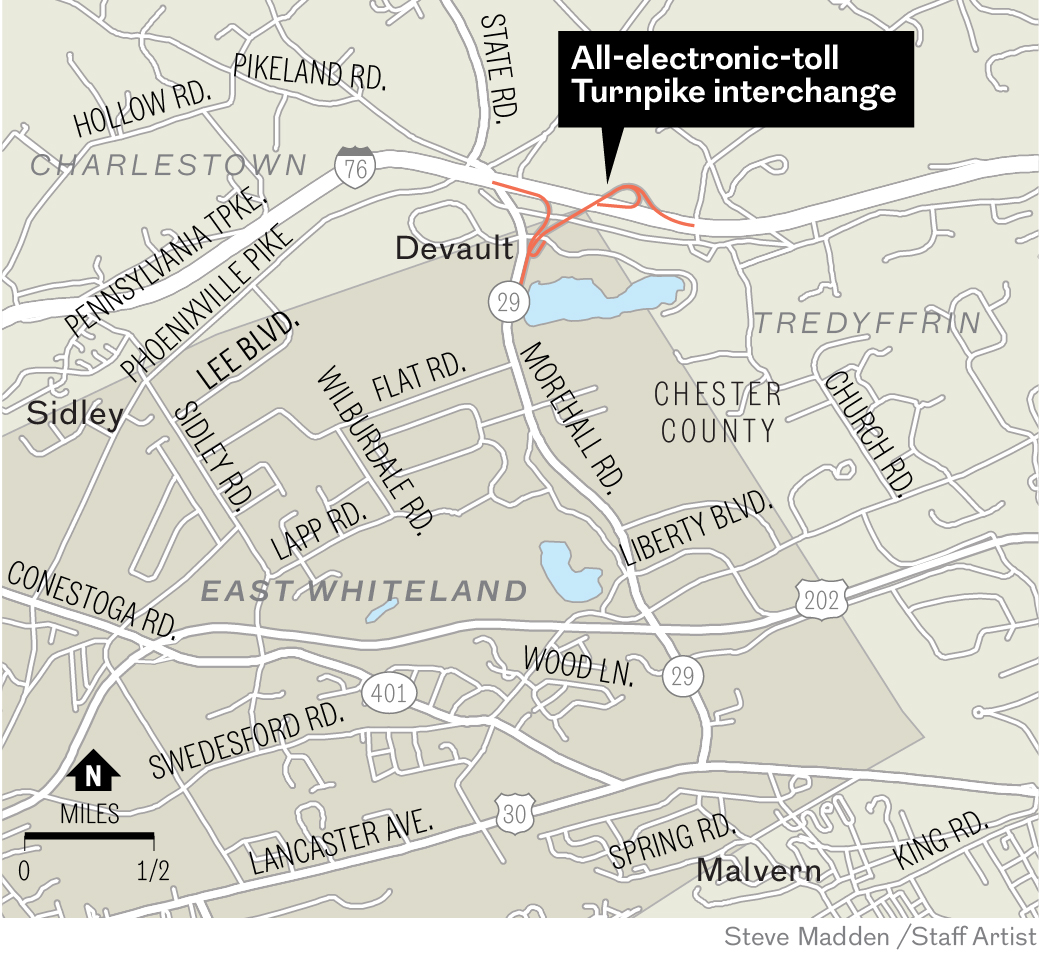
But thenthe turnpike built Exit 320, an all E-ZPass interchange thatconnects to Route 29 and brings traffic right to the family-owned Hotel Desmond Malvern, a DoubleTree by Hilton.
“It would easily take 20 minutes,” said Chain, general manager of the property. “Now you cut that in half, if not more.”
When it opened in December 2012, the interchange helped spur billions in new commercial and residential development in Chester County’s Great Valley.
Michael Chain, general manager at a hotel in Great Valley, says the Route 29 ramp has transformed his business.
Corporate office parks expanded and new ones sprouted. Vanguard relentlessly expanded its campus for its 12,000 workers. Pharmaceutical and biotech companies moved there. Pfizer, Johnson & Johnson, Teva, and other pharmaceutical companies planted offices and research laboratories there.
Thousands of people moved in to take advantage of the new jobs or a suddenly more convenient commute to Philadelphia and its inner-ring suburbs, Berks County, Lancaster, or even Harrisburg.
More than 10 years later, the effects of the turnpike’s project are evident, but the real estate market is evolving to meet a lower post-pandemic demand for traditional office space and a higher demand for more housing.
Through American history, transportation and development have been yoked. Towns and cities have grown around navigable rivers, post roads, national highways, railroads, interstates, turnpikes, and public transit.
“This new interchange was explosive in terms of the economic impact in that particular region in a way I’m not even sure we had anticipated,” said Craig R. Shuey, chief operating officer of the Pennsylvania Turnpike.
The key to success
Experts caution it would be a mistake to attribute too much of the growth in the Great Valley solely to the turnpike exit.
The area’s transition from agricultural and industrial to commercial mixed-use was already well underway when it opened. Real estate developersRouse & Associates acquired land in 1974 and began building the Great Valley Corporate Center, a 700-acre business park.
As the Pennsylvania 29 interchange was under construction, the U.S. 202 widening project occurred, helping ease the flow of traffic, although it stillgets congested at peak hours.
The Route 29 electronic toll interchange.
The exit “plays well with an improved Route 202,” said Tim Phelps, executive director of the Transportation Management Association of Chester County.
It’s also served by SEPTA Regional Rail Service and Amtrak, and there’s a connection to the 18.6-mile Chester Valley trail for biking, running, and walking.
“The key isall the multimodal access to the area from different points,” Phelps said. “You move goods and freight along corridors and people to jobs; transportation is economic development.”
New rise in residences
Growth hasn’t been linear.
”Since COVID the office market has been struggling everywhere, and a couple of years ago the funding for biotech became harder to get,“ said John McGee, a commercial real estate broker and developer. ”Both of these events had a negative impact on demand for [office] space in Great Valley.”
Other signs of a softer market in commercial space:
Malvern Green, a 111-acre office park owned by Oracle, is up for sale, marketed as a redevelopment opportunity. It has 759,000 square feet in four buildings on Valley Stream Parkway, off Route 29.
A 10.3-acre office property on Swedesford Road is slated to be demolished and turned into a mixed-use campus, with 250 apartments and about 6,700 square feet of retail and dining.
With the pandemic rewriting the rules of work beginning five years ago, residential development has picked up, driven by housing scarcity and lack of affordability.
Deb Abel, president of Abel Brothers Towing & Automotive, has seen the area evolve from her position as chair of the East Whiteland Planning Commission and as a member of the Chamber of Business & Industry.
Deb Abel, chair of the East Whitefield Planning Commission, says workforce development is key to the area’s growth.
“We talk all the time about workforce development,” Abel said. “People don’t want to come to work where they can’t afford to live.”
More — and more affordable — housing is key both for current and future staffing needs. Workers shouldn’t have to commute from other areas with more housing options, Abel said.
‘A tangible asset’
To Chain, the hotelier, travel time saved by the interchange is a tangible asset.
“It improves the quality of life on a personal level, and [in business] I’m a beneficiary of people staying on the turnpike,” he said.
As corporate travel budgets waxed and waned in the Great Recession and pandemic years, the Hotel Desmond beefed up other lines of business. An events space at the resort-like hotel now provides about half the revenues, Chain said.
The interchange has helped him draw conference business from statewide associations, most of them in Harrisburg.
And in recent years, youth sports travel teams from New York and New Jersey attending weekend tournaments in the region have filled rooms while using the interchange for easy access. Hockey teams are big.
‘A natural progression’
A new multifamily project for Greystar Real Estate Partners is rising next to Route 29 on undeveloped land.
IMC Construction is building a five-story, 267-unit apartment building featuring a rooftop lounge, fitness center, coworking space, pool courtyard, grilling stations, and more.
IMC Construction signs and traffic markers along North Morehall Road in Malvern.
A 133-unit “active adult” apartment building for people who are 55 and older is also under construction.
Project manager Bob Liberato grew up in the area when Route 29 was a country road with one traffic light between Phoenixville and Route 30.
It seems ironic now, but he remembers a petition circulating among fellow students at Great Valley High School to oppose the turnpike’s interchange proposal. Pretty much everybody signed.
“We wanted to stop the turnpike because we liked our life,” Liberato said. “It was open, mostly fields and trees. Being able to go outside, have parties in the woods — all of that was great.”
So what he’s doing now is, in a way, part of the circle of life.
“We’re seeing a shift toward more residential projects, and there is a runway for more in the Great Valley,” said Liberato. With a scarcity of new development, ”it’s a natural progression in a lot of Philly suburbs.”
The Girl Scouts, founded in Savannah, Ga., in 1912 by philanthropist Juliette Gordon Low, held its first bake sale in 1917 to raise money for troop activities.
The booming direct cookie sales business, however, was born in Philadelphia on Nov. 12, 1932, at the Philadelphia Gas Co., then located at the intersection of Broad and Arch Streets.
That inaugural public Girl Scout cookie sale will be remembered Saturday at Center City’s PECO building, part of the Philadelphia Historic District’s weekly celebration of America’s 250th birthday. The historic district pays homage to events that happened in Philadelphia before anywhere else in America — and often the world — with a weekly day party called a Firstival.
Artist Carol Cannon-Nesco, a top Girl Scout cookie seller as a child, celebrates the legacy of the Girl Scouts with pictures of the individual cookies.
“It was the first time the Girl Scouts sold their cookies to people outside of their immediate community,” said Amanda Harrity, director of product programs for the Girl Scouts of Eastern Pennsylvania.
In 1932, a Philadelphia Girl Scout told her parents that her troop needed a place to bake cookies in order to raise money for nurseries, Depression-era organizations that cared for children of working parents. The little girl’s parents, who worked at the Philadelphia Gas Co., got permission for the Scouts to bake cookies on the shiny new gas ranges in the gas company’s street-level windows.
On the afternoon of Nov. 12, the Girl Scouts baked batch upon batch of their shamrock-shaped signature shortbread cookie, the Trefoil. The sweet, buttery aroma wafted through Center City streets and passersby asked if they could buy the cookies, hot out of the test kitchen’s ovens.
The Girl Scouts agreed.
Trefoils (shortbread) and peanut butter sandwiches, also known as Do-si-dos. (Dreamstime/TNS)
“I don’t remember how many cookies we baked that day,” then 80-year-old Girl Scout Midge Mason told The Inquirer in 2001 when the state erected a historic marker at Broad and Arch, marking the sale. “I do know we baked a lot of cookies.”
The next year, the Girl Scouts were back at the Philadelphia Gas Company to raise the money needed to pay off the mortgage of its facility at Camp Indian Run in Glenmoore, Chester County. (That facility closed in the early 2000s.)
In 1934, the Philadelphia Girl Scouts hired Keebler — now Little Brownie Bakers — to bake Trefoils, selling them at 23 cents a box, making them the first Girl Scouts to sell commercially baked cookies.
Two years later, Girl Scouts all around the country began using commercial bakeries to bake cookies for their yearly fundraiser.
Today, more than 200 million boxes of cookies are sold in America at an average price of $6 a box; 3.5 million of those boxes are sold in Eastern Pennsylvania, Harrity said.
Exploremores are the new flavor of Girl Scout cookie for the 2026 sales campaign.
Seventy-five cents of every dollar from Girl Scout cookie sales are reinvested back into girl scouting, Harrity explained. In Eastern Pennsylvania, that includes maintaining 1,500 acres of property and underwriting Scouts’ camp experiences.
This week’s Firstival is Saturday, Jan. 31, 11 a.m. — 1 p.m., at the PECO Building at 2300 Market Street. The Inquirer will highlight a “first” from Philadelphia Historic District’s 52 Weeks of Firsts program every week.
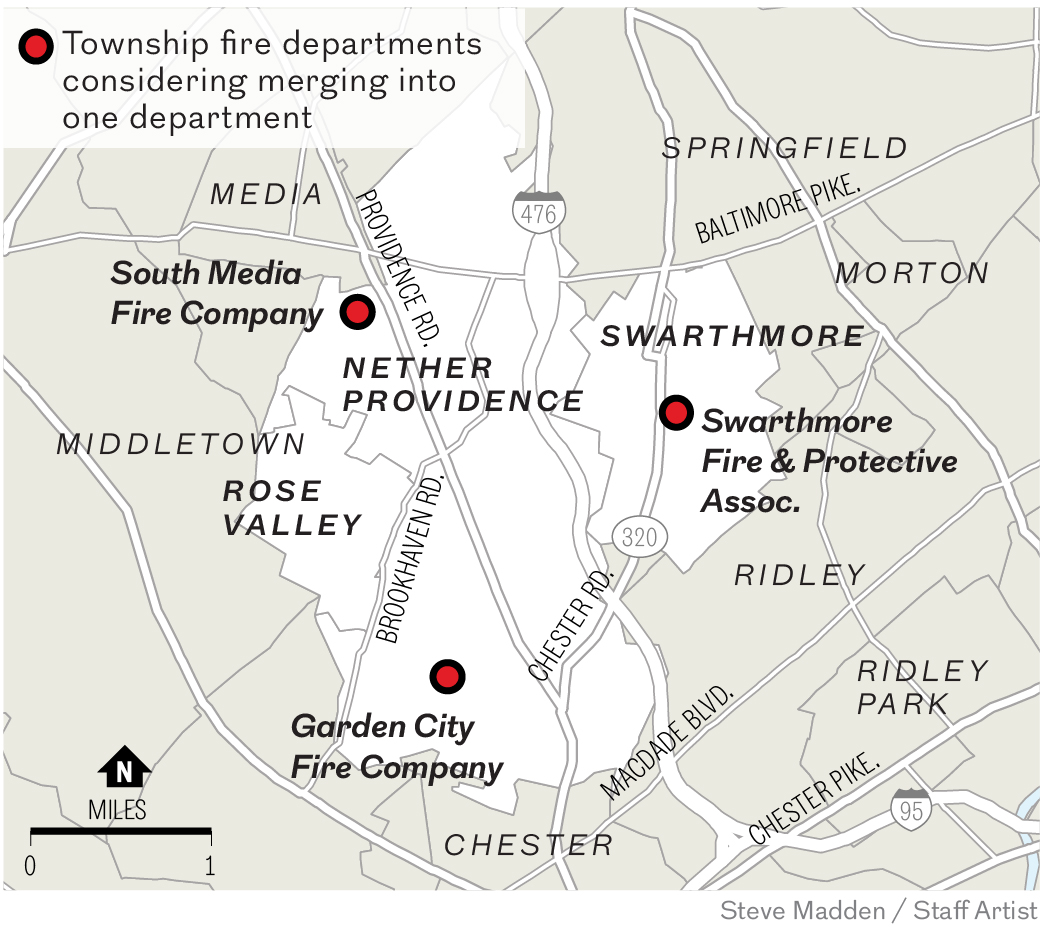
Swarthmore and Nether Providence commissioned Longwood Fire Chief A.J. McCarthy to study the challenges facing the three fire departments. He presented his report to both municipalities in early December.
The report recommended creating one regional fire department to cover the two municipalities plus Rose Valley.
McCarthy’s report highlighted a “critical” lack of volunteer firefighters and financial limitations.
“Just because you haven’t had a disastrous fire doesn’t mean it’s not going to happen,” McCarthy said during a presentation of his report to Swarthmore Borough Council on Dec. 1. “I can tell you right now you’re not prepared for it.”
Three Delaware Co. Township fire companies may merge into one.
Swarthmore Mayor and Fire Chief Conlen Booth called the report “a vital first step” toward a merger.
“The departments are going to need to sit down and look at these recommendations and then digest them,” Booth said. “And then identify ultimately what are ones that make sense for us.”
A complete merger, forming one regional fire department, could take a year and a half to three years, he said, while something less formal could be completed more quickly.
“I think there’s a very good chance that we would follow [the report’s recommendation] with maybe some nuances,” Booth said. “But there is no guarantee that happens and we could have other types of mergers, or we could start with other mergers and then evolve into that full merger.”
Booth has a history of working in emergency services. He joined Swarthmore’s fire company in 2000, eventually working his way up to department chief.
A single regional fire department would need new bylaws, a new charter, joint operation guidelines, and more. A complete merger would also require the departments to dissolve their existing nonprofit organizations and relief associations and create new ones.
“A lot of these pieces are not difficult, it’s the sheer number of pieces that can be felt to be overwhelming,” Booth said.
Nether Providence passed a resolution in support of the merger effort, but Township Manager Maureen Feyas declined to comment on the matter.
The Swarthmore Fire & Protective Association firehouse.
Lack of volunteers
The biggest challenge for the fire departments is a drop in volunteers. In a 2023 report, Pennsylvania Fire Commissioner Thomas Cook said there were about 30,000 volunteers in the state at that time, down from 300,000 in the 1970s.
South Media and Garden City operate solely with volunteers, while Swarthmore has some paid personnel.
The report, however, says the full-time staff gives the department a “false confidence,” because they respond to both fire and medical emergencies. If two employees leave in the ambulance, that leaves only one behind with little volunteer support during daytime hours.
The report also says South Media was “unable to produce a reliable and constant response” due to lack of volunteers.
Garden City has had more success with volunteers. During a meeting in which McCarthy presented his report to Swarthmore Borough Council, he praised Garden City Chief Pat O’Rourke.
“He’s doing an excellent job and is increasing volunteer numbers year-over-year, which is almost unheard of right now,” McCarthy said.
Part of the reason these fire departments struggle to find volunteers is because they are located in affluent areas, McCarthy said, something he can attest to in his experience leading Longwood Fire Company in Chester County.
“The area I protect has a very high cost of living, so I don’t have residents looking to do one of the most dangerous jobs in the world for free,” McCarthy said in the council meeting. “I have a lot of CFOs and CEOs. They’re busy in hospitals and law firms.”
In 2024, Swarthmore had a median income of $146,992 and Nether Providence’s median income was $145,254, well above the national median of $83,730.
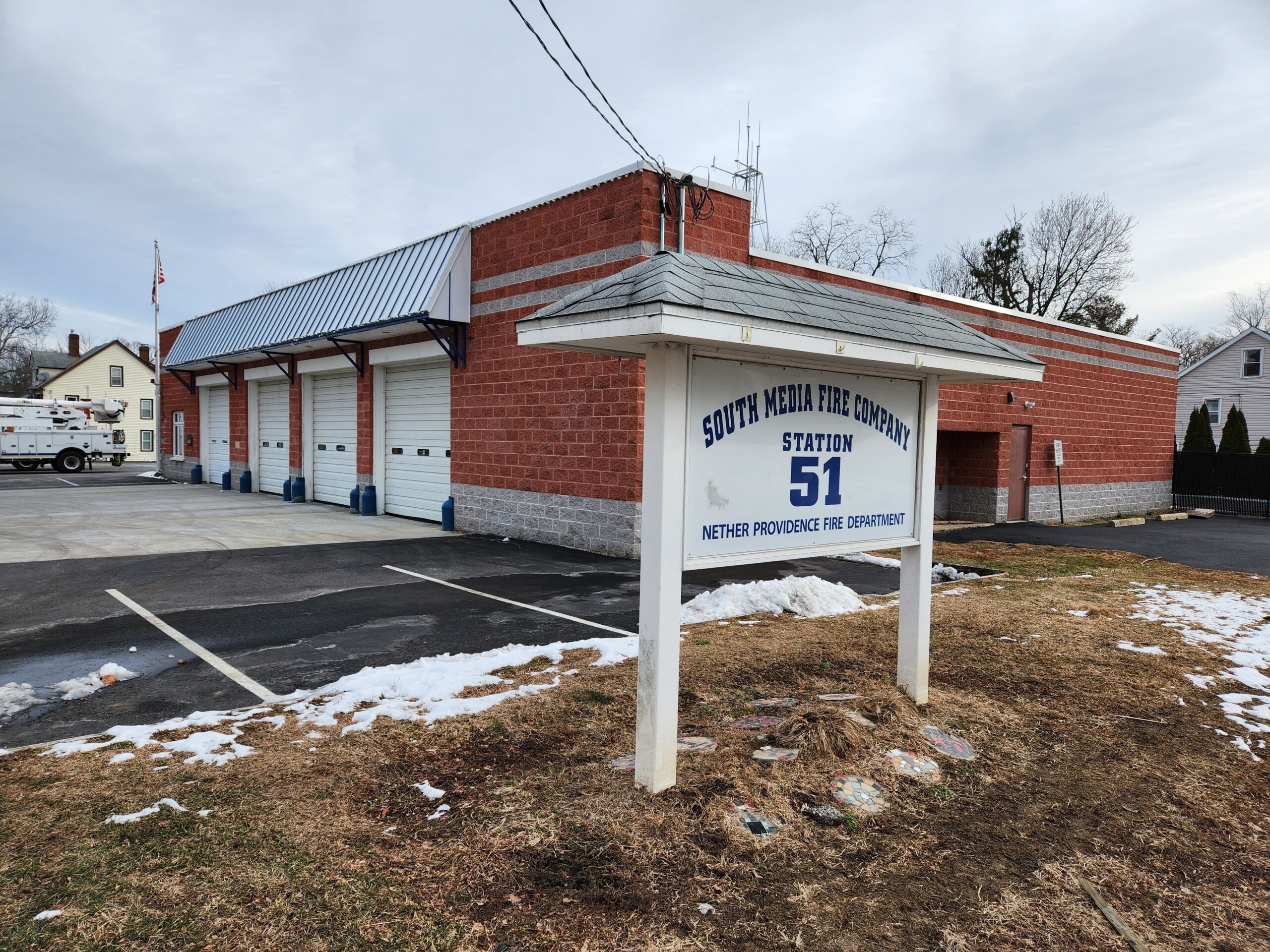
The South Media Fire Company in Nether Providence.
Equipment cost and maintenance
A capital apparatus plan is also needed for upgrading and maintaining expensive fire trucks, ambulances, and other lifesaving equipment, the report states.
Trucks have doubled in price over the last three years and take about five years to deliver, he said at the Swarthmore Borough Council meeting.
“These things have to be planned out,” McCarthy said. “You can’t spend $2.5 million to replace a ladder truck and only start talking about it four months before you order it.”
One of Swarthmore’s trucks costs more to maintain than to use, he said.
Crozer’s closing
The closing of Crozer-Chester Medical Center also put a burden on the area, with more medical emergencies to cover.
Swarthmore stood up an ambulance service that can provide advanced life support in response to the closure, and it nearly doubled the number of calls the department responds to in a month, Booth said.
The loss of Crozer’s ambulance service also means departments are being pulled further away to cover medical emergencies, causing a chain reaction where other departments are called to cover for them.
This suburban content is produced with support from the Leslie Miller and Richard Worley Foundation and The Lenfest Institute for Journalism. Editorial content is created independently of the project donors. Gifts to support The Inquirer’s high-impact journalism can be made at inquirer.com/donate. A list of Lenfest Institute donors can be found at lenfestinstitute.org/supporters.