Tag: topic-link-auto

  • How Philadelphia merchants can get help paying for improvements, equipment, and security| Expert Opinion

    How Philadelphia merchants can get help paying for improvements, equipment, and security| Expert Opinion

    Running a retail or restaurant business in Philadelphia isn’t easy.

    But some local programs can provide much-needed cash for specific purposes like equipment purchases, store improvements, and security.

    Here are four to consider.

    The Storefront Development Program

    Operated by the Philadelphia Department of Commerce, the Storefront Development Program provides as much as $15,000 in matching funds to upgrade and beautify your storefront, including masonry and brick pointing, exterior painting, new windows or doors, facade lighting, signage and awnings, see-through security grills, cornices, and similar enhancements. Only businesses in certain commercial corridors are eligible and projects must be planned and approved in advance.

    Justin Coleman, owner of Bake’n Bacon in South Philadelphia, used the program to replace deteriorating windows, update doors, and repaint his storefront’s exterior.

    “The program helped us cover half the expenses for our 11-foot windows, which was a tremendous assistance,” he said. ”The new paint made a significant difference, and the upgrades to the exterior of my business improved visibility and curb appeal.”

    InStore Forgivable Loan Program

    Also administered by the city’s Department of Commerce, the InStore Forgivable Loan Program offers forgivable loans of up to $100,000, which are interest-free for the first five years. They can be used for interior build-outs, equipment purchases, and other improvements.

    Forgiveness is given if the business is open and operating at the same location for the full five-year term. Like the Storefront Development Program, only businesses located in certain areas of the city are eligible.

    Business Security Camera Program

    The city’s Department of Commerce also provides up to $3,000 in matching funds for businesses and property owners that install exterior security cameras through the Business Security Camera Program.

    Companies that participate must register their cameras with the Philadelphia Police Department’s SafeCam system, so police can request access to footage when needed. Participants must either own the property or have permission from the landlord and can only use contractors approved by the city. The application process also requires photos and cost estimates.

    “I wanted to have as many exterior security cameras around my storefront, as there can be a lot going on out there,” said James Singleton, owner of men’s clothing store Smooth Like That in Olney. “These cameras are good for the commercial area, making everyone feel safer.”

    Stabilization grants

    The Merchants Fund was founded in 1854 in Philadelphia to initially support retired merchants with pensions. But today the fund aids active small businesses with financial needs.

    The fund offers stabilization grants, which are intended to help stabilize a business when it can identify a specific issue or challenge that it doesn’t have the financial means to address, said Jill Fink, the fund’s executive director.

    “Often these are capital expenses — equipment, repairs, or improvements — that have a real shelf life, and small businesses simply don’t have the thousands of dollars needed to replace them,” she said. “Our goal is to make an investment that actually fixes something so that the business can keep operating, serve its neighborhood, and in some cases create a new revenue stream.”

    The fund provides one-time grants of up to $10,000 to eligible Philadelphia-based small businesses. They must be independently owned; have a physical storefront, food truck, or kiosk; have been in business for at least two years; and demonstrate financial need, with annual revenue between $50,000 and $750,000. Professional services firms, nonprofits, and real estate, childcare, and eldercare businesses are not eligible.

    At the Link Studios in Old City, which sells hair and beauty products and services, the fund helped owner Carla Clarkson turn an unused space into something functional. She used the grant to buy shelving, storage, air purifiers, heating and air, and paint. She was also able to access coaching and mentorship from other business owners.

    “The networking alone was incredibly valuable,” Clarkson said. “I met other entrepreneurs and nonprofit leaders, and that directly led to new opportunities for my business.”

    Fink, a former business owner, stresses the additional resources that her fund provides beyond just grants.

    “We work to try and find ways to connect businesses with each other because being a small-business owner can be a very lonely place,” she said. “There’s lots of times in their business they might have friends or family that don’t necessarily understand the stress and pressure that a small business is under.”

    When machines at the NV Optical store in West Philadelphia went down, owner Tiffany Easley said, the business couldn’t afford the necessary repairs, and the Merchants Fund was an enormous help.

    “It was less than 30 days from application to repair. The timing lined up perfectly and made a huge difference for our business,” she said. “They don’t just give you money. They understand small business struggles and connect you to resources that are vital to long-term growth.”

    The Merchant Fund’s next enrollment period opens March 15.

    Whether you’re pursuing a City of Philadelphia program or a stabilization grant from the Merchants Fund, your business is expected to be licensed, registered, and have all necessary permits from the city and state. And it must be current on both federal and local taxes or enrolled in an approved payment program.


  • VJ Edgecombe’s athleticism is electric. But his basketball IQ is driving the Sixers rookie’s early success.

    VJ Edgecombe’s athleticism is electric. But his basketball IQ is driving the Sixers rookie’s early success.

    As John Buck watched the final seconds of the Dec. 4 matchup between the 76ers and Golden State Warriors, he was unsurprised by how VJ Edgecombe reacted to teammate Tyrese Maxey’s deep fadeaway jumper with 2.5 seconds remaining.

    Edgecombe instantly sensed where the ball might be if the shot fell short, Buck said, then “slithered” into that space, elevated, and grabbed the partially blocked attempt to convert a game-winning putback.

    “How many guards just stand there and watch the ball get shot and hope it goes in?” said Buck, who coached Edgecombe at Long Island Lutheran High School in Brookville, N.Y. “VJ was moving into the spot where it may have missed.”

    Yes, Edgecombe’s athleticism is electric. Yes, the rookie’s three-point shooting has been a pleasant surprise. But perhaps what Sixers coach Nick Nurse and teammates have raved most about Edgecombe so far is his beyond-his-years basketball IQ.

    That natural feel helped put Edgecombe in position to be one of the NBA’s top rookies — on Monday night he was named to the Rising Stars roster for All-Star Weekend — along with an immediate starter for a Sixers team in the thick of the Eastern Conference playoff picture, and a player already with a knack for clutch fourth-quarter moments on both ends of the floor. When asked recently about this aspect of his game, Edgecombe agreed it has “played a lot” into his early NBA success.

    “If you watch the game,” Edgecombe told The Inquirer at his locker last week, “you understand the game, understand the flow of the game, the importance of possessions, I rely on my IQ a lot. That’s the most [important part] of the game, the mental part.

    “I just try to make sure I’m locked in mentally, to make certain plays and be decisive.”

    So what are the origins of such a trait? Matter-of-factly, Edgecombe says, “I watch so much basketball.”

    As a child in Bimini, the Bahamas, he initially spent the bulk of his free time playing the sport on dirt courts and makeshift hoops outside. But once his mother bought him a tablet as a middle schooler, YouTube became an endless supply of player highlights and archived games. He could utilize his already “really good memory” while transitioning from watching for entertainment to studying. He even discovered some of Maxey’s film from his time playing for South Garland High School in the Dallas suburbs.

    “He didn’t believe me,” Edgecombe said, explaining how he told Maxey after they became Sixers teammates. “And I had to literally tell him my basketball knowledge.”

    When Edgecombe moved to the United States and eventually joined Long Island Lutheran’s nationally ranked program, he received access to online scouting reports with full games or clips from opponents. While Buck said he needed to “beg” some players to spend time reviewing that film while walking down the aisle during bus rides to games, Edgecombe’s commitment to that preparation was “elite.”

    That gave Edgecombe the confidence to make suggestions about defensive coverages or individual assignments during timeouts, Buck said. And to better leverage his supreme physical gifts.

    Buck witnessed it on blocks, when Edgecombe could pin the ball on the glass because he beat the shooter to the spot. Or in his timing on offensive rebounds. Or whenever he got into a shooting rhythm because he picked the correct moments to fire away, later prompting Buck to chuckle when NBA scouts called to ask about his three-point potential as a professional. The early returns vindicate that reaction, with Edgecombe entering Monday 12-of-22 on “clutch” NBA three-pointers, including an overtime game-winner at Memphis in late December.

    “There are players who are extremely athletic,” Buck told The Inquirer by phone earlier this month, “but you don’t see it in the flow of a game, or you see it rarely. … With [Edgecombe], it would show up in so many ways.”

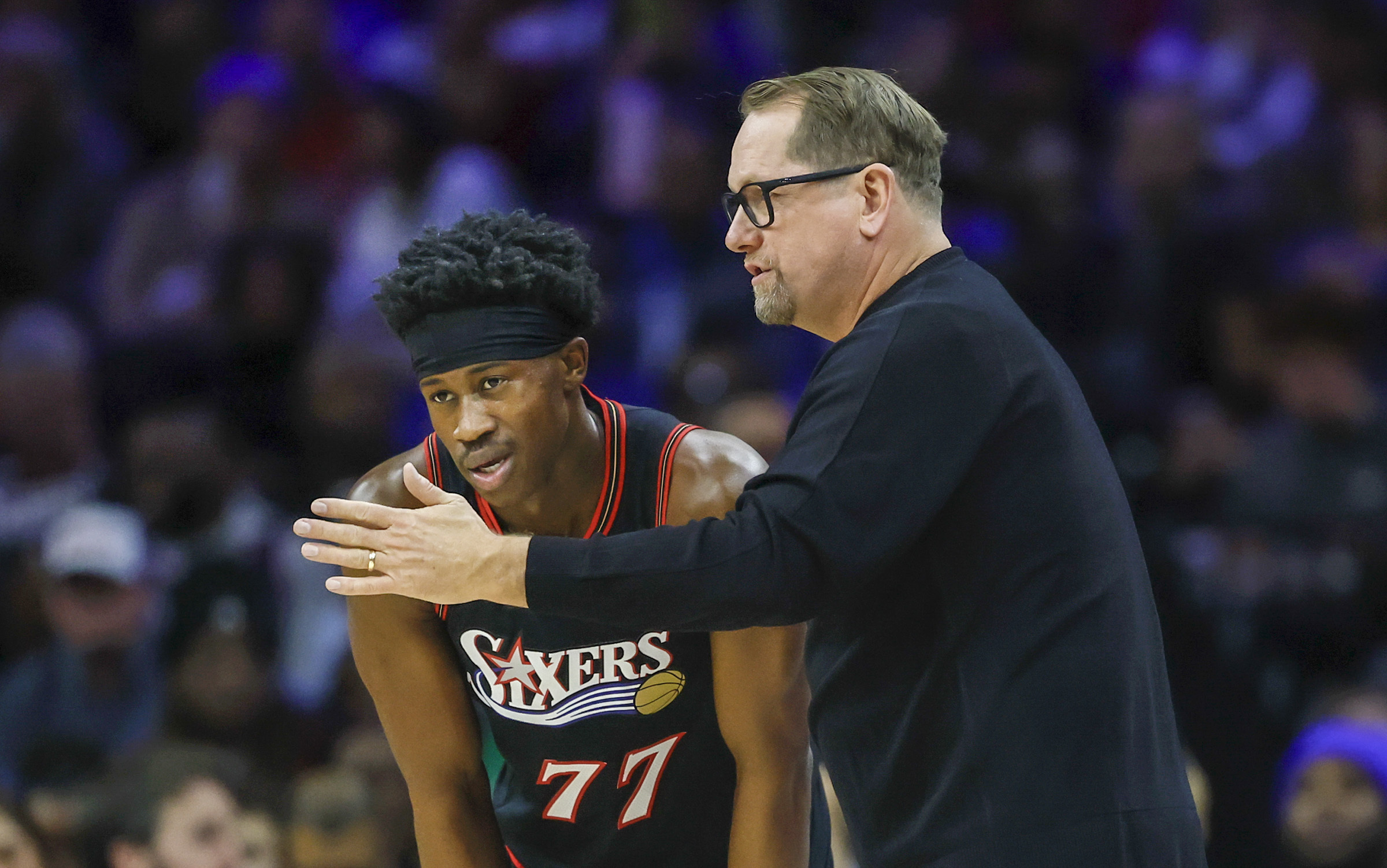
    Guard VJ Edgecombe spent one season with Baylor before becoming the No. 3 pick in the 2025 NBA draft.

    Another coach who valued Edgecombe’s IQ: Baylor’s Scott Drew.

    During Edgecombe’s lone college season, Drew recognized his “boldness” to speak up during practices, “wisdom” to be accurate with his question or suggestion, and “heart” to keep it centered on the team. Most freshmen in his program, Drew added, only learn one position that first season. Edgecombe could play every spot but center, offering the Bears flexibility to use him as a lead ballhandler or as a power forward in four-guard lineups.

    “It allows a coach to have an opportunity to steal a couple baskets by putting in new plays [and] doing things that are harder to guard,” Drew said last week. “And in one-, two-, three-possession games, if you have enough of those plays, you win a lot of those games.”

    When Edgecombe first arrived in Philly, Nurse also asked himself, “How did he get like this?”

    Nurse quickly recognized Edgecombe had already “absorbed a lot of basketball — and, probably, a little bit obsessively” because of his interest in the game’s history. That is not as common as an outsider might think for a player born in 2005, but was apparent to Nurse when Edgecombe marveled while walking into Chicago’s United Center for the first time.

    Edgecombe’s inquisitive nature during practices also has continued at the NBA level. While still building out schemes throughout the first half of the season, Nurse said, Edgecombe could already identify future wrinkles. Edgecombe said he typically first goes to a teammate to clarify if such additions are possible, then to coaches to get their point of view.

    “I just want to make sure my team is in the best possible [situation],” said Edgecombe, who entered Monday averaging 15.6 points, 5.3 rebounds, 4.2 assists, and 1.5 steals.

    Added Nurse: “I answer them a lot with, ‘We’re getting to that.’ … Then you kind of quickly explain, ‘Yeah, we can do that, and here’s what happens. That’ll be coming when we need it — and when we see it and when we can polish and can put it in.’”

    On the court, that IQ has translated to Edgecombe immediately taking on some ballhandling responsibilities — and committing only two combined turnovers when Maxey missed two games with an illness. Veteran forward Paul George has been most impressed with Edgecombe’s defensive savvy, recognizing when to make sharp rotations or well-timed playmaking risks. Edgecombe’s feel also shows up in how he spaces the floor on offense, clocks when a teammate has not gotten a shot recently, and balances when to be aggressive with the ball in his hands or facilitate.

    “He could be a guy that just takes off,” Nurse added, “and jumps in the air and figures it out three or four seconds later. But he doesn’t do that. He makes pretty good basketball plays.”

    Sixers coach Nick Nurse has been impressed by guard VJ Edgecombe’s ability to absorb information.

    That is why Nurse has reiterated that he still wants more out of Edgecombe, even as the Sixers’ roster has returned to full strength. Following a Jan. 16 loss to the Cleveland Cavaliers, Maxey told Edgecombe in the locker room that taking only five shots “is not going to cut it for us.” Nurse also has shown Edgecombe film examples of more opportunities to attack the rim or create space for a pull-up jumper.

    “He’s just a little too unselfish for me,” Nurse said. “I know that sounds funny, but we need him to use those gifts a little bit more. … I’m like, ‘That was a great move. You only did it once last night. I need like eight of those.’”

    Edgecombe acknowledged last week that he is “still learning” but does feel the game slowing down. And he flashed that knack during Saturday’s loss to the New York Knicks. In less than five seconds of the game’s final minute, he buried a three-pointer, forced a jump ball on a tie-up with Jalen Brunson, made two free throws after being fouled to cut the Sixers’ deficit to three points — and nearly drew an off-ball foul on Brunson before the ensuing inbounds pass, but that call was overturned on a coach’s challenge.

    Buck is not exactly shocked that such high-IQ play is fueling Edgecombe’s rookie season. He saw it in that heads-up putback against Golden State. And in a game-winning three-pointer in Memphis.

    And, behind the scenes, when Edgecombe paid an impromptu visit to a Long Island Lutheran practice just before his rookie season began.

    “We’re running a set, and he kind of waves me over,” Buck recalled. “And he’s like, ‘Hey, Coach. I think the spacing for this guy right here should be a little bit different to maximize the play.’ That’s just not normal for a 19-, 20-year-old guy to be coming to practice, not just kind of chilling or being there to be there. But kind of saying, ‘Hey, let me look at this. I think there’s a way to improve that.’”

    Now, Edgecombe is applying that as an NBA rookie, to a degree drawing raves from his coach and teammates.

    “He’s not out there looking lost or forcing anything,” George said. “He kind of just lets the game come to him. And that right there makes the greats, greats. …

    “The game just evolves around them, and that’s kind of what he has.”

  • New University of Delaware president runs with staff and students and wants better relationships with state and local governments

    New University of Delaware president runs with staff and students and wants better relationships with state and local governments

    On Thursdays at 7 a.m., Laura Carlson is by the iconic granite and bronze sculpture of an open book on University of Delaware’s Mentor’s Circle.

    As the new university president, she invites faculty, staff, students and community members to join her there and run a five-kilometer loop through campus. Typically 10 to 20 people show.

    “Rain or shine, we run down to the track on South Campus, loop the track and come back,” said Carlson, 60, who began the treks as interim president last summer and is continuing them in her permanent role, which started earlier this month.

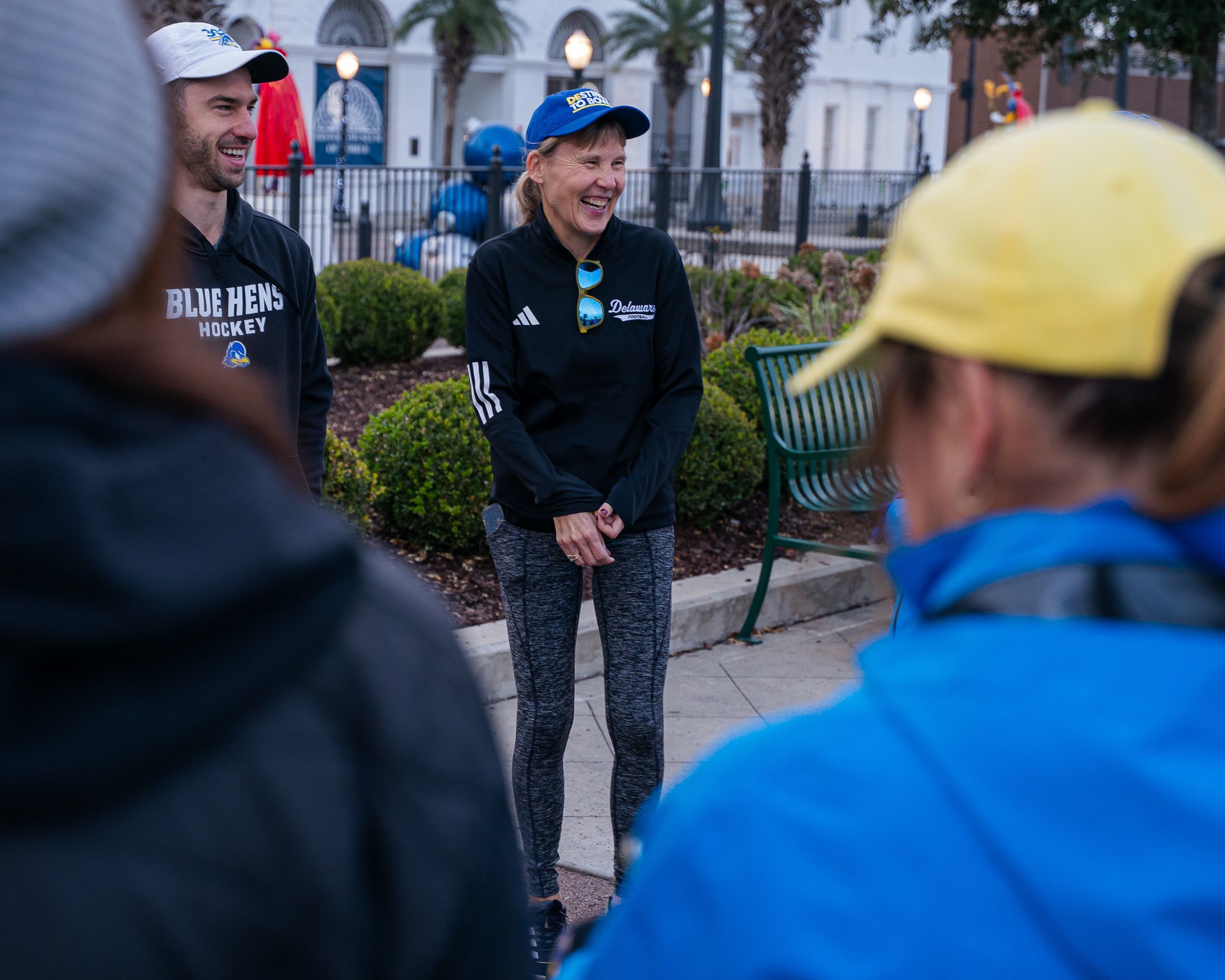
    University of Delaware president Laura Carlson (right) goes on one of her Prez Runs in Mobile, Ala., where the Blue Hens won a bowl game, defeating Louisiana-Lafayette 20-13 on Dec. 17, 2025.

    The “Prez Run” is just one way the psychology scholar — who plans to run her 15th Boston Marathon in April — is building relationships on campus, with alumni and with the community and state. She also runs with alumni, employees, and students during events in other cities.

    “I’ve heard that the alumni association is going to put it on their bucket list of 10 things to do before you graduate,” she said.

    Carlson, a Dartmouth alumna who got her doctorate in cognitive psychology from the University of Illinois Urbana-Champaign, is focused on strengthening relationships with state and local governments and internally with faculty. Finding new revenue streams to plug holes from terminated federal grants and recruiting students in new national markets also are on her list.

    The Massachusetts native previously served as provost for three years, having come to Delaware after 28 years as a faculty member and administrator at the University of Notre Dame in Indiana. She’s the first internal candidate to get the presidential appointment in about 50 years.

    She follows Dennis Assanis, who resigned in June and is now chancellor of the University of California at Santa Barbara.

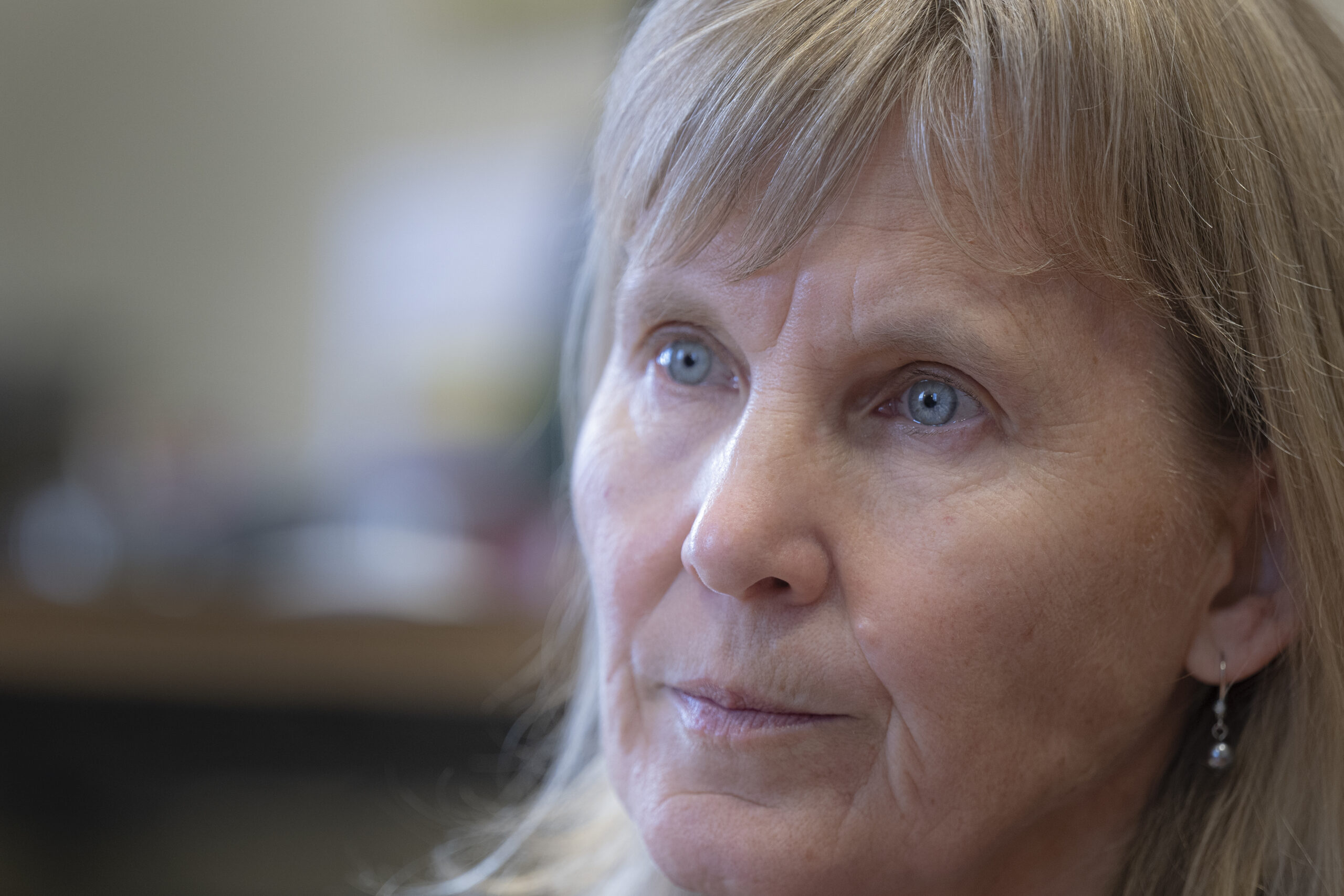
    Laura Carlson, president of the University of Delaware

    Carlson is visiting classes each semester, including elementary organic chemistry and mechanical engineering.

    “I want to make sure I don’t feel distant from the rhythm of the academic year,” she said. “Anything we value, we should put attention on it.”

    When building a team, she asks participants to pick their top 10 values, such as family, world peace, humor, and authenticity, and rank them. Her top value is always purpose.

    University of Delaware president Laura Carlson talks to fellow runners during one of her Prez Runs in Mobile, Ala., where the football team won a bowl game.

    “I want to live a life of purpose,” she said.

    Partnering with state and local government

    She’s attempting to change the way the partnership with the state is viewed.

    “We lead with what does the state need from us, as opposed to what do we need from the state,” she said.

    Southern Delaware, where the university has a campus in Lewes and Georgetown, has housing, healthcare, education and workforce development needs, and the university can help, Carlson said.

    She said she can envision a public-private partnership for new housing in Lewes, she said, or a classroom building with event space for the community.

    Laura Carlson, president of the University of Delaware, discusses her priorities.

    “If we are a university for the whole state, we need to show up in the whole state, and we need to be responsive to the needs across the state,” she said.

    She’s also looking at the possibility of more residential space for the main campus in Newark — possibly a “sophomore village” — through a public-private partnership. The university has about 7,100 residential beds in Newark.

    “That would take some of the pressure off the city,” she said, noting the tight rental market, and adding that parents and students may prefer on-campus housing options.

    She also wants to help Delaware Gov. Matt Meyer with his plan to bring medical education to the state. Delaware remains one of few states without a medical school. The idea is not to build one from scratch but to partner with an existing medical university, she said.

    “We’ve been in conversations with Thomas Jefferson” in Philadelphia, which has a nonexclusive memorandum of understanding with the state to explore a partnership, she said. “What we offer is the classrooms, the lab space, and so on to do kind of the first part of that medical school type of training.”

    Federal government

    Dealing with the federal government could be more challenging. The university has lost 41 grants worth $33.9 million since President Donald Trump took office last year. Those span engineering, biological sciences, arts, and sustainability, she said, and impact 117 graduate students and 27 postdoctoral students.

    In total, $1.1 million in salaries and $2.1 million in stipends have been lost, though the university has been working to find other funding through foundations and industry, she said. No one has lost their job, she said.

    “I’ve been really working hard on … kind of strengthening those relationships with our business community,” she said.

    The school also has experienced a 19% decline in international graduate students following Trump’s pause on student visas and other policies, and the school lowered its doctoral admissions by 19.5% last year amid concerns over federal funding. What will happen with doctoral admissions this year is unclear.

    “Each college is sort of looking strategically program by program and trying to figure out what is the right size for their doctoral programs,” she said. “If they’re compressing their number of students coming in, it’s because they’re trying to prioritize funding for their existing students.”

    The school’s overall enrollment of more than 24,000 rose last fall and applications are up 10%, she said. But as another drop in high school graduates begins this year, the university has found success in new recruiting areas such as Colorado and Wake Forest, N.C., where the football team played as part of the school’s entry into Conference USA, she said.

    “We’ve been very strategic about putting marketing in there, convening alumni and really using that as a way to establish ourselves more nationally,” she said.

    Biden Institute — and a conservative counterpart

    She said the university is on course to build Biden Hall, an academic building named for former President Joe Biden, a Delaware native. It will house the school’s Biden School of Public Policy and Administration and the Biden Institute on government theory and practice. The design phase likely will begin this spring.

    Fundraising is also continuing for Siegfried Hall, which will include the Institute for Free Leadership and Enterprise. The donors, Robert L. Siegfried Jr., a certified public accountant and his wife, Kathleen Marie (Horgan) Siegfried, have said they wanted to bring a “conservative” vision and offer a balance to the Biden Institute.

    Carlson said she doesn’t view the halls as conservative and liberal, but rather places where ideas can be vetted. She noted the Biden Institute is nonpartisan.

    “Siegfried is a think tank on conservative economics, but part of that building will be also to sort of question the limits of those policies,” she said. “That’s what we do in any discipline.”

    Personal life

    Here are a few fun facts about Carlson, whose husband, Robert West, is a professor of psychological and brain sciences at the university.

    Last book read: Chris Whitaker’s All the Colors of the Dark.

    Favorite band or musical group: Bruce Springsteen.

    Favorite food: Indian. Greek.

    Favorite vacation spot: “I spend so little time at my house. Some of my best days on break are if you don’t even get out of your pajamas.”

  • Fourth base or football? The story behind the viral naughty bears outside a Southwest Philly strip club.

    Fourth base or football? The story behind the viral naughty bears outside a Southwest Philly strip club.

    “Am I being pranked?”

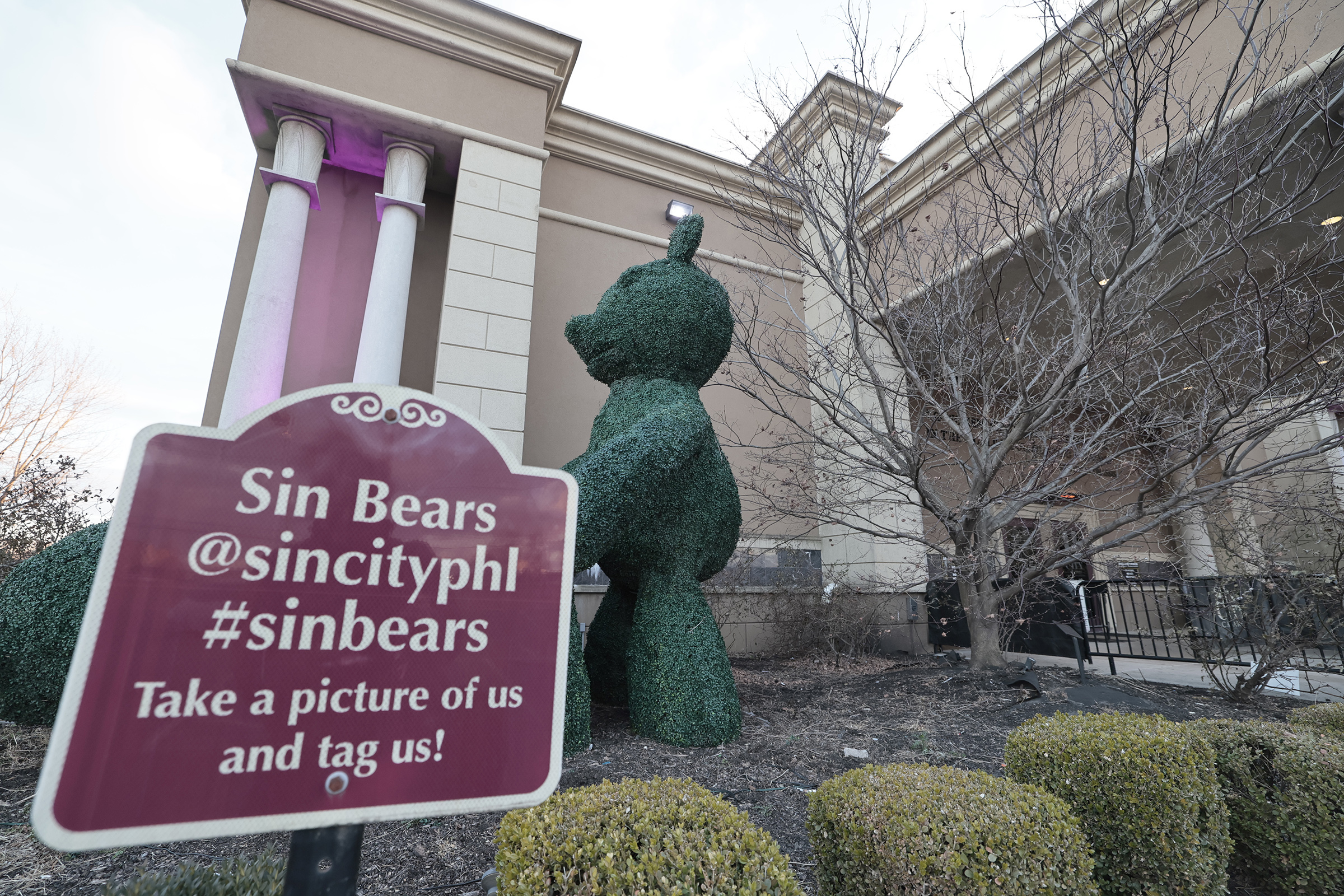
    That’s what Gloucester County resident Gabby Weiland recalled thinking after she made a wrong turn while Doordashing in Southwest Philly earlier this month. Instead of finding a customer waiting on the curb for her lunch, Weiland found herself outside of Sin City Cabaret Nightclub at 6130 Passyunk Avenue. One 8-foot-tall topiary Care Bear bending over another greeted her.

    “Got lost in Philly and pulled over to see where I was … looked up and —,” Weiland captioned a TikTok that pans from the fourth-base bears back to her face, which appears equal parts mortified and confused. The 12-second clip has racked up more than 1.4 million views — and its fair share of jokes.

    @healinwithgab

    What

    ♬ original sound – Life with Gab🌜🪬

    “What in the bear necessities?” commented one TikTok user. “They…they’re…playing leapfrog…RIGHT???” wrote another. Others assured Weiland not to worry because the bears are clearly in a committed situationship.

    Many, however, knew where the bears were. “Oh, you found Sin City,” read a comment that’s been liked more than 8,600 times. According to strip club owner Gus Drakopoulos, that means the topiaries are working.

    “If someone does a double take and posts a video or selfie, then the art did it’s job,” said Drakopoulos, 49, who had the topiaries installed in 2021. “I want images of those bears to be synonymous with the brand Sin City.”

    Drakopoulos opened the original Sin City in the Mott Haven section of the Bronx in 2002 at age of 25 after a securities fraud conviction sidelined his career as a stockbroker. Almost immediately, the club earned a star-studded reputation: Rapper Cardi B was discovered while performing there, and celebs ranging from Mike Tyson to Philly’s own Meek Mill were regulars.

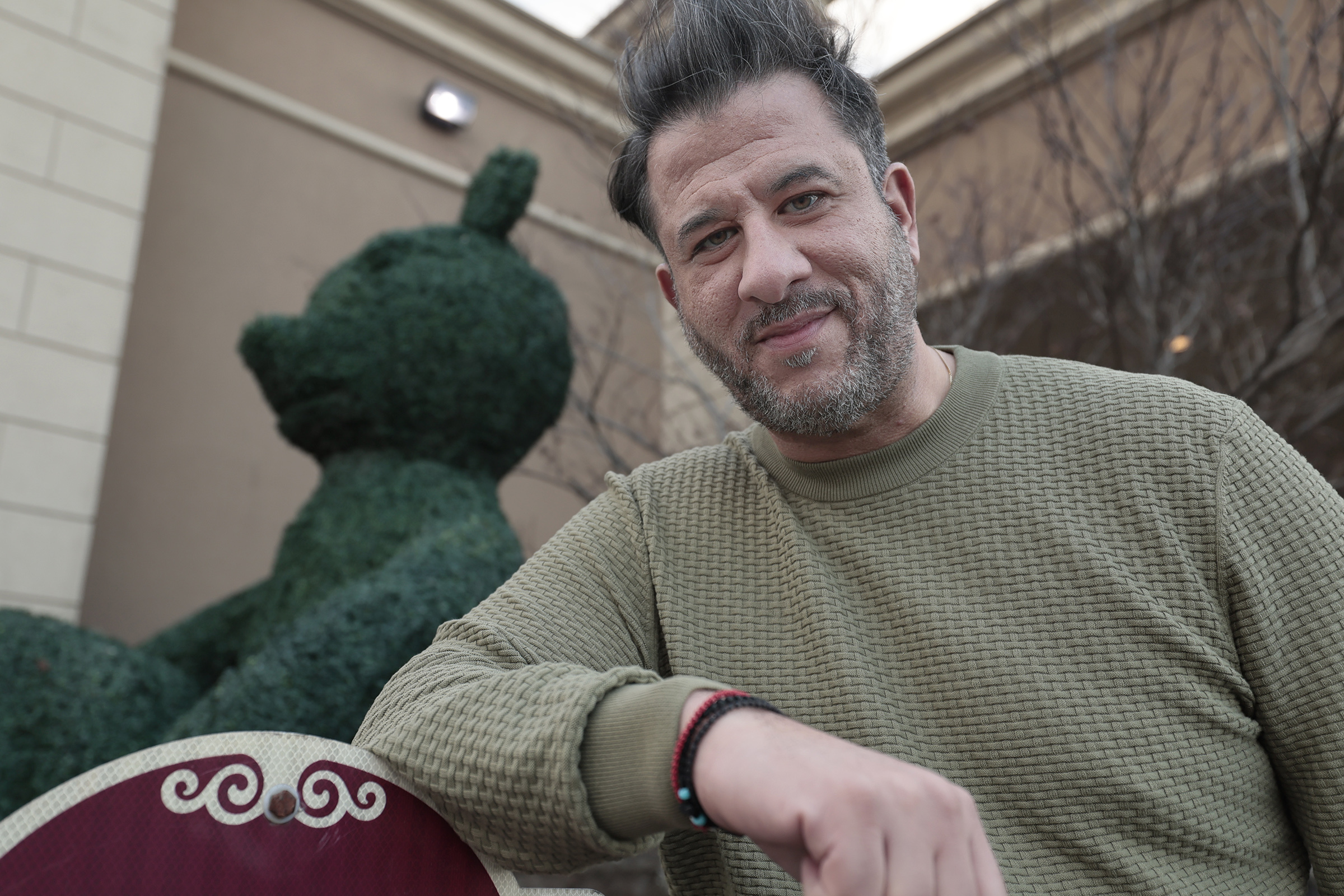
    Sin City owner Gus Drakopoulos poses in front of the 8-foot-tall bear topiaries that sit in front of his nightclub. The bears cost $18,000, Drakopoulos said.

    Drakopoulos was forced to close the OG Sin City for good in 2018 after the club lost its liquor license. He relocated it to Philly in 2020 just before the COVID-19 pandemic. The bears came a year later in November 2021, Drakopoulos said, as a way to signal to patrons that Sin City is a more artful, avant-garde gentleman’s club experience.

    “The bears are playful and open for interpretation,” he said. “You can say they’re playing football. Go Birds.”

    For some good-time bears, pay $18,000

    Sin City’s bear bushes are, surprisingly, not the only ones in existence. They’re inspired by a series of topiaries that line the Moxy Hotel’s rooftop bar in New York City, where patrons can ogle bears in a variety of X-rated positions, few of which could be confused for football.

    “I fell in love with the idea,” Drakopoulos said. “The bears look so innocent and at the same time, depending on the eye of the beholder, so not.”

    Both sets of bears are designed by celebrity topiary artist Joe Kyte, whose 2-acre topiary garden in Tellico Plains, Tenn., has churned out larger-than-life dragons, Formula 1 cars, and semi-realistic bottles of booze for clients ranging from Legoland and Ferrari to Absolut Vodka since 1992.

    Kyte got his start working as a subcontractor for Disney parks in the 1980s, he previously told The Wall Street Journal, fashioning hippos and various versions of Mickey Mouse out of materials ranging from ivy to moss. He told The Inquirer that his clients have only gotten raunchier. In 2020, Kyte was commissioned by a Dutch adult magazine to create a photorealistic vagina out of hydrangeas, rosemary, and mullein leaf for a launch party in Holland.

    Drakopoulos, Kyte said, was the first strip club owner to ever contact him. It was an immediate yes, he said.

    “This is the first time a strip club has paid me. Normally it’s the other way around,” Kyte, 67, joked over the phone.

    Drakopoulos paid $18,000 for two bears, which Kyte took two weeks to construct by arranging weather-resistant artificial boxwood atop custom-made metal frames. To finish the job, Kyte and an employee had to drive to 687 miles to Philly to install the bears, at one point getting stuck for hours in standstill traffic on I-81 in Virginia. Bored drivers, Kyte recalled, couldn’t stop taking photos.

    “It’s wonderful that the bears are standing the test of time … Wouldn’t you be proud of them?” said Kyte, who is planning another trip to Philly to do maintenance on the Sin City bears later this winter. The sun’s UV rays have bleached parts of the deep-green topiaries.

    Another angle of the bear topiaries outside of Sin City Cabaret Nightclub on Passyunk Avenue. “The bears are playful, and open for interpretation,” owner Gus Drakopoulos said.

    It’s unclear if the bears have lead to more business for the club, Drakopoulos said, which has a roster of roughly 500 dancers. In 2022, rapper and Super Bowl LIX halftime performer Bad Bunny dropped $50K at Sin City hours before his Made in America performance. It’s not uncommon for some of the Eagles roster to come through, Drakopoulos said, though he declined to name specific players out of respect for their privacy.

    Weiland, whose video went viral, was unaware initially that the bears belonged to a strip club. She’s never been to one, though Sin City may wind up being her first.

    “Apparently, they have good food,” Weiland said. “And it looked like a very well taken care of place.”

  • Job titles are out and skills are in, Wharton expert says. Here’s what employers want to see.

    Job titles are out and skills are in, Wharton expert says. Here’s what employers want to see.

    Job hunters beware: Some of the hard-earned skills listed on your resume are going unnoticed by potential employers.

    Workers’ profiles on job posting websites often feature general abilities, like leadership, communication, teamwork, and problem-solving, a recent report from the Wharton School says. But they’re not highlighting the “specialized, execution-oriented skills,” employers are seeking. That’s created a “skills mismatch economy.”

    “People are not representing their skills in a way that’s necessarily resonating with the skills that employers want,” said Eric Bradlow, the vice dean of artificial intelligence and analytics at the Wharton School, who co-authored the report.

    Meanwhile, AI has been speeding the shift from a “role-based labor market to a skills-based economy,” the report outlines, making it all the more poignant to know what skills employers actually want.

    Bradlow says generative AI has been “a positively destructive bomb on roles and titles,” by making workers able to carry out tasks that they didn’t know how to do in the past. So “having a specific job title is becoming less relevant.”

    The Wharton School worked in partnership with Accenture, a professional services firm, to analyze millions of job postings and worker profiles for the report. The study used data from Lightcast, a labor market data provider, and the U.S. Bureau of Labor Statistics. Bradlow spoke with The Inquirer about their findings.

    This conversation has been edited for length and clarity.

    What are some skills included on resumes that don’t make much difference to employers, because everyone seems to have them?

    Do we think it’s important to communicate? Well, yeah, of course, it is. Do we think it’s important to have leadership skills and manage teams well? Yeah, of course. Last time I checked, those were really important parts of the job — but everybody puts that down.

    We’re not saying in the report that those skills aren’t important. What we’re saying is there’s an over supply of people stating those skills, as opposed to companies saying these skills are what’s going to get you the job.

    Companies are realizing that depth of skill is what’s going to be really important.

    Do people lack the specialized skills employers are looking for? Or are they just failing to highlight them on their resumes?

    That’s something, trust me, I wish I could answer.

    If we had people’s transcript data, or if we knew what courses someone had taken, then we could try to get an understanding of what skills people actually have.

    I think two things are going to happen, based on this Wharton-Accenture Skills Index gap report. Number one is, you will see a migration where people [will say,] “I need to acquire those skills, if I don’t have them, if I want a job.” Second, you’ll see [organizations] — whether it’s an academic institution or a for-profit institution — saying, “Wait a second, here, we need more people with this skill. We’ll create a certification program.”

    You found that some skills are actually tied to higher-paying jobs. Was that surprising?

    I’m not sure I had hypotheses about which skills would be paid higher or lower.

    I think maybe the part that surprised me a little bit was that there wasn’t massive swings and variation like “if you have this skill, your salary doubles.” That’s not what we found in the data.

    What advice would you give someone crafting their resume?

    One is talk about the specific skills you have. Every resume I read says “I’m an effective communicator, experienced leader.” That’s fine, but that’s not what’s going to stick out and become differentiated, because everyone’s going to say that. To the degree that you have specific expertise and depth or skills, those are the kinds of things to put on the resume.

    The second thing I would say is that … we should be in the skills acquisition business, be a lifelong learner. Skills will always be valued. Jobs in a particular workflow can go away. People with skills will be hired.

    Take, for instance, a customer-support agent in a customer-satisfaction group. If you’re someone with exceptional problem-solving skills, you’re hearing your customer, and you’re able to tie it to some remedy; that skill is not going to go away even if the job you’re currently in happens to go away.

    What skills are needed more or needed less because of the adoption of AI recently?

    I don’t view it as AI replacing humans. I view AI as that decision-support tool you should use for every decision.

    If I were an employer today, I wouldn’t even consider hiring someone that didn’t recognize the power of artificial intelligence as a decision-support aid. I don’t know what business decision — pricing decision, product launch decision, product design decision, possibly even hiring decision — [for which] I wouldn’t use artificial intelligence as a decision-support tool.

    I would also say, equally, I’m very concerned about the agentic use of AI — in some sense totally handing over high-stakes decisions.

    From where you stand, is AI coming for people’s jobs, as we often hear, or is it coming for their skills? What’s the difference?

    Go through the history of mankind.

    The train engine came. So you mean we don’t need as many horses? Electricity came. You mean we don’t need as much coal? Green energy came, and so now we don’t need as much nuclear fusion?

    Doesn’t technology always come and translate one set of jobs to another set of jobs? It’s not AI is coming for your job. What companies are realizing about AI is there are certain roles and functions that AI can do extraordinarily well, with high accuracy, and in some cases better than humans can do. These tend to be functions, by the way, that many humans don’t like doing anyway.

    I don’t see AI coming for your job any more so than any set of technology. This is an extraordinarily disruptive technology, but we’ve lived through periods of extraordinarily disruptive technology.

  • PHA says former Germantown Settlement properties will be reopened by 2029 — at great cost

    PHA says former Germantown Settlement properties will be reopened by 2029 — at great cost

    For over 15 years, dozens of properties once owned by disgraced nonprofit Germantown Settlement have sat derelict and mostly empty.

    In 2024, the properties were given to the Philadelphia Housing Authority (PHA). This month the agency finally announced its plans: $84 million will be spent to gut and rehabilitate 113 units and build 40 apartments for seniors.

    Most of the properties will be earmarked as rentals for very low-income Philadelphians at 30% of area median income, or roughly $32,000 for a family of three. The former Settlement buildings are a mix of rowhouses, duplexes, and small apartment buildings.

    “I was shocked and dismayed by the conditions,” said Kelvin Jeremiah, CEO of PHA. “It’s going to cost a lot of money to get it back to habitable use.”

    Some critics of the plans say the amount PHA plans to spend beggars belief. Spilt 153 ways, $84 million is almost $550,000 a property.

    Longtime Northwest Philadelphia developer Ken Weinstein says his company could build new units at $284,000 a unit, and small developers who are active in the neighborhood can rehab houses for $152,000 apiece.

    “We have limited government resources, and we have so many people that need subsidies to put a roof over their heads,” Weinstein said. “I don’t know why we wouldn’t stretch our dollars as far as possible.”

    (function() {
    var l2 = function() {
    new pym.Parent(‘GERMANTOWN.html’,
    ‘https://media.inquirer.com/storage/inquirer/projects/innovation/arcgis_iframe/GERMANTOWN.html’);
    };
    if (typeof(pym) === ‘undefined’) {
    var h = document.getElementsByTagName(‘head’)[0],
    s = document.createElement(‘script’);
    s.type = ‘text/javascript’;
    s.src = ‘https://pym.nprapps.org/pym.v1.min.js’;
    s.onload = l2;
    h.appendChild(s);
    } else {
    l2();
    }
    })();

    Weinstein emphasized that he thinks Jeremiah has been a transformative and innovative leader for PHA, but he doesn’t understand why the agency isn’t trying to get the properties back into productive use in a more cost-effective way.

    He noted that PHA has sold scattered site single-family units it owns in the area to small developers for low-cost revitalization, with deed restrictions in place to keep them affordable in the long term.

    Weinstein also points to PHA’s campaign to obtain struggling new apartment buildings as an example of its capacity for flexibility and cost sensitivity. Jeremiah has said the purchases are being made because they cut the agency’s costs in half in contrast to building new.

    “I thought it was brilliant that PHA set out to buy existing apartment buildings at $200,000 a unit. That is a much better way to address the affordability issue in housing,” Weinstein said. “I don’t know why PHA would go out of their way to spend 2½-times that to rehab and newly construct in Germantown.”

    The transfer of the former Germantown Settlement properties from the Redevelopment Authority to PHA was controversial in 2024. Some residents felt a community engagement campaign had been ignored. Many attendees had expressed a desire for more homeownership opportunities.

    Jeremiah says that after a community meeting earlier this month, he is open to using 16 of the properties for affordable homeownership.

    “We heard that they would like to see a more balanced community, and so we’re going to work through what that means,” Jeremiah said. “We are revisiting some of the suggestions that we heard from the community, and we are going to revise our plans.”

    But Jeremiah says that sales to small developers for homeownership units, even with deed restrictions, would not help the poorest Philadelphians.

    When PHA does sell scattered site homes for private redevelopment, the rebuilt houses primarily go to those making 60% of area median income or $64,000 for a family of three.

    A former Germantown Settlement property, courtesy of Kelvin Jeremiah.

    The lowest-income residents, who make half that, are the overwhelming majority of PHA’s tenants. They are not in a position to buy a home — even a subsidized and permanently affordable one.

    “A mom and pop [developer] would be hard-pressed to maintain permanent affordability,” Jeremiah said.

    Keeping the former Germantown Settlement properties as PHA-run rentals will guarantee a repository of affordable units no matter how this corner of Northwest Philadelphia evolves, he said.

    “Some of our assets are in communities that are rapidly becoming unaffordable,” Jeremiah said. “Our assets in those communities ensure we are maintaining some level of affordability.”

    Jeremiah himself has often criticized how much it costs PHA to build or gut rehabilitate projects, but he notes that the agency is restricted by a variety of federal regulations.

    “The construction costs are untenable for us, but it’s driven by the regulatory requirements that we must adhere to,” he said. “I have no flexibility.”

    Jeremiah estimates that the rehabilitation work will begin in 2027, after PHA hopefully secures Low Income Housing Tax Credits this year. Once begun, he expects the project to take 15 months, so at earliest the homes will be ready for habitation again in 2028.

    Many of the former Germantown Settlement properties have fallen into ruin over the last 10 years, with copper wiring stripped out and mold or insect infestations harrowing their interiors.

    The city demolished the Blakemore Apartments because of their poor condition. Its site is where PHA will build a new 40-unit building for seniors. (PHA received 121 of 140 of the expired nonprofit’s units, with the rest going to smaller developers.)

    The former Germantown Settlement properties are heavily concentrated in two sections of East Germantown, creating pockets of dense vacancy near the intersection of Church Lane and Lena Street and on the 40th blocks of Wister and Garfield Streets.

    For Councilmember Cindy Bass, who represents the neighborhood, PHA is the right entity to redevelop these long troubled buildings.

    “It’s very important to preserve affordable housing, and that’s what we’re doing here,” Bass said. “This is not for profit. This is for people.”

  • Why this big water-and-sewer merger doesn’t impress investors, so far

    Why this big water-and-sewer merger doesn’t impress investors, so far

    As shareholders of American Water of Camden and Bryn Mawr-based Essential Utilities prepare to vote Feb. 10 on a merger to create a combined $40 billion private water and sewer company, regulators in New Jersey and Pennsylvania are weighing the company’s latest rate increase requests.

    American Water’s New Jersey affiliate filed for an average 10% water and 8% sewer rate hike on Jan. 16 for 2.9 million customers in that state, which it said would fund improvements to aging water and sewer systems, if approved by the Board of Public Utilities. Customers would pay an average of $18 more a month.

    Pennsylvania’s Public Utility Commission said last month that it would consider the company’s request to boost water and sewer rates on 2.4 million customers by an average 15%, or $20 a month.

    Investors are showing no great interest in the deal between American Water and Essential. American Water shares fetched over $140 for most of last year but closed Friday at $130.74 and have been trading at close to that discount since CEO John C. Griffith announced the deal in October.

    Essential, which operates the Aqua America water utilities and Pittsburgh’s natural gas utility, has so far shown none of the premium that typically enriches shareholders of a healthy company as it is to be acquired. It closed Monday at $39.32, flat from its preannouncement price.

    The merger “would be highly favorable” for American Water in many ways but not so good for shareholders of Essential, which negotiated only with American Water and didn’t look for a better offer from other potential buyers such as France’s Veolia or Florida-based NextEra, according to Ryan Connors, a Bucks County-based utilities analyst who’s been following both companies for 20 years.

    American Water says planning for the merger is advancing as the vote approaches. Vice president Jimmy Sheridan and past Essential chief operating officer Rick Fox head an integration planning team, and they hired consultant McKinsey & Co. to help.

    Inside recent rate-hike hearings

    Though they’ve been competing for more than a century, both companies, like the handful of other private water operators active in the U.S., have faced grassroots opposition to privatizing water distribution.

    The Pennsylvania Supreme Court on Jan. 21 crushed American Water’s yearslong campaign to take over the Chester Water Authority, which serves 40, mostly affluent, suburbs in Chester and Delaware Counties and a Lancaster County township. The court ruled the counties, which oppose a sale, can block the deal, which cash-strapped Chester City’s state-appointed financial administration favored.

    Analyst Connors, who sat through recent American Water rate hearings in Harrisburg, Scranton, and in Exeter Township, Berks County, says that company has been making a more effective case recently for the Pennsylvania rate hikes it will need to keep updating and eventually acquiring more municipal systems.

    In Exeter, it was American Water staff and vendors who packed seats for a state regulatory hearing on the company’s latest rate increase. Vocal opponents who dominated the last such hearing two years ago stayed home. Connors said their leaders told him they felt “defeated” that rates still went up despite the 2024 protests, though not as much as the utility wanted.

    Another “parade of vendors,” recruited openly by American Water, dominated a recent Harrisburg city rate hearing and testified in the company’s favor, Connors told clients of Northcoast Research in a Jan. 21 report.

    In the latest round of rate-hike hearings, only in Scranton did state, county, and city officials show up to complain about repeated increases by American Water’s Pennsylvania-American Water Co. affiliate. “The recurring theme could not have been more clear, with nearly every politician stressing the rapid-fire rate increase requests in recent years,” Connors said.

    How much is Essential worth?

    Buying Essential’s Aqua-Pennsylvania water companies would add Aqua’s customers in some of Pennsylvania’s richest towns to American Water’s rate base. American Water has been “socializing” its rates to subsidize poor towns, Connors noted.

    But Connors is still urging Essential shareholders to vote against the merger, defying chief executive Christopher Franklin and the company’s board.

    American Water’s offer “undervalues” Essential shares and creates “fundamental risks,” including pressure on American Water to avoid rate increases to prevent political opposition in Pennsylvania, Connors said.

    He cites estimates of Essential’s real value from the statement sent to shareholders urging them to approve the deal. Bank of America, the buyer’s adviser, said Essential is worth as much as $63 a share, considering its assets and cash flows.

    Essential’s adviser, Moelis & Co., says its cash flows imply the company is worth as much as $52 a share, a roughly 25% premium over its current price.

  • How to prepare your taxes for free and avoid identity theft

    How to prepare your taxes for free and avoid identity theft

    Each year, Americans spend an average of $240 to prepare and file their tax returns, according to the IRS Taxpayer Advocate Service. And the process is so complicated that about a million taxpayers who could get money back don’t file returns, allowing the U.S. Treasury to keep more than $1 billion of their money.

    Many taxpayers can get free assistance preparing and filing their returns. Below is a rundown of available services, who is eligible, and how to avoid scams.

    All these prep-and-filing options require you to track down documents and then enter or verify data. Fortunately, most websites are easy to navigate. Instead of filling out complicated forms and instructions, you answer simple questions, such as “Do you have children living with you?” and “Did you have interest income from a bank, savings, or investment account?”

    Warning: Don’t search the internet using terms such as “file my taxes for free” — you could end up on the website of a scammer, or even a well-known tax-prep brand that will charge you hefty fees. Instead, use the links provided in this article, or go to irs.gov.

    Free services from tax-prep companies

    Several tax-prep companies provide free online resources for those with low- or moderate-low incomes.

    “Free File” is a partnership between the IRS and eight companies (the IRS calls them “trusted partners”) to provide free tax preparation and filing services for individuals and families with adjusted gross incomes of $89,000 or less.

    This year, the participating companies are: 1040.com, 1040NOW.net, ezTaxReturn.com, FileYourTaxes.com, FreeTaxUSA.com, OLT.com, TaxAct.com, and TaxSlayer.com.

    In addition to the income threshold requirement, each company sets its own eligibility rules based on age, state residency, and other factors. Some companies charge fees to prepare and/or file state income tax returns. Click here for a list of participating companies and links to their eligibility requirements.

    Although H&R Block and TurboTax, the most popular tax-prep software companies, do not participate in the IRS’s Free File program, they do offer free online prep-and-filing services to those with relatively simple tax returns. In general, you can use these two companies’ free options if you had wages reported on a W-2, had only one job, take the standard deduction, and are entitled to the most common credits, such as the child tax credit or earned income credit. H&R Block says 55% of taxpayers can use its free option; TurboTax estimates 37% can use its free online software.

    Free tax-prep help for low-income taxpayers

    The Volunteer Income Tax Assistance (VITA) program helps community organizations offer free basic tax preparation help, using IRS-certified volunteers, generally to households with adjusted gross incomes of $67,000 or less or to those with disabilities. Some programs specialize in assisting those who speak limited English. Selected help centers also have workstations where taxpayers can input info and electronically file their own tax returns with or without the assistance of an IRS-certified volunteer. Click here for a searchable database of VITA in-person-help sites.

    VITA also operates GetYourRefund.org, a website offering free tax-prep software. It was built by Code for America, a nonprofit organization, with help from the IRS. To qualify, you must meet income requirements (in general, it’s limited to individuals and families with adjusted gross incomes under $89,000 per year).

    Instead of meeting in person with a tax-prep volunteer, with GetYourRefund.org you upload your tax documents to its website and provide basic information. A VITA volunteer completes your return and then a second volunteer reviews it; you likely will be contacted several times with questions. It usually takes two or three weeks to complete the process.

    If you don’t need any help, you can also use the website to file your return for free.

    Free tax-prep help for older taxpayers

    Similar to VITA, the Tax Counseling for the Elderly (TCE) program helps community nonprofits provide free tax help to older adults. In general, you must be 60 or older, but some sites will help those in their 50s with low-to-moderate incomes. The AARP Foundation’s Tax Aide program staffs most sites, and many advisers specialize in pension and retirement issues unique to seniors. Between now and April 15, use the AARP’s “Tax-Aide Site Locator” webpage to find nearby help.

    At some TCE locations, you can prepare and file your own return on-site for free using tax-prep software and with help from a volunteer. This option is available only at locations that list “Self-Prep” in the AARP online site finder tool.

    Free tax-prep help for military and recent veterans

    MilTax is a free resource backed by the Department of Defense for service members, eligible family members, survivors, and recent veterans (up to 365 days from their separation or retirement date).

    It includes tax preparation and electronic filing software, as well as personalized support from military tax experts. MilTax assists with issues involving deployments, combat and training pay, housing, and multistate filings. Eligible service members (and some veterans) can use MilTax to electronically file a federal tax return and up to three state returns for free. Get free one-on-one tax help from MilTax experts over the phone by calling 800-342-9647, use the live chat feature, or visit a VITA location for in-person help.

    Protect against fraud

    There are several steps you can take to protect yourself against tax-related identity theft.

    First, don’t answer phone calls or respond to texts or emails that say they’re from the IRS. Its agents send all notices via mail; they won’t ever call you out of the blue.

    Also, be on the lookout for warning signs of fraud. Monitor your mail. Most victims don’t realize they’ve been targeted until they send in their tax return and receive a warning letter from the IRS that more than one return was filed with their Social Security number, or that they didn’t declare all their income from a company they didn’t work for. Other IRS notifications that could indicate a problem: an online account that you didn’t open was created in your name, or you were assigned an employee identification number that you didn’t request.

    A simple but effective way to prevent tax identity theft is to request an identity protection PIN (IP PIN) from the IRS. This unique six-digit number prevents anyone else from using your Social Security Number or individual taxpayer identification number (ITIN) to file a return in your name. It’s like freezing your credit files to lock out the bad guys. (Note: The IP PIN is different from the five-digit PIN you may use to sign your return electronically.)

    It takes only minutes to create an IP PIN. You will first need to have or create an online IRS account or visit an IRS Tax Assistance Center. And you’ll need to obtain a new number each year.

    Hundreds of thousands of Americans become victims of tax-related identity theft each year. Committing the crime has become easier because so much personal information has been exposed through massive data breaches. The average time to resolve tax-return-theft claims is nearly two years.

    Delaware Valley Consumers’ Checkbook magazine and Checkbook.org is a nonprofit organization with a mission to help consumers get the best service and lowest prices. It is supported by consumers and takes no money from the service providers it evaluates. Until March 5, Inquirer readers can access Checkbook’s ratings and advice free at Checkbook.org/Inquirer/taxes.

  • Letters to the Editor | Jan. 27, 2026

    Letters to the Editor | Jan. 27, 2026

    The death of Alex Pretti

    The killing of Alex Jeffrey Pretti should alarm every American, regardless of political affiliation.

    Pretti was a 37-year-old intensive care nurse, a U.S. citizen, a homeowner, and a lawful gun owner with a legal carry permit. He was present at a protest, recording federal agents, an act that is legal under the Constitution. Video evidence and eyewitness statements indicate he was not holding, let alone firing, a weapon, was not charging officers, and was not posing an imminent threat at the moment deadly force was used.

    Yet, almost immediately, official statements sought to portray him as a violent aggressor, despite visible contradictions between those claims and the footage that has circulated publicly. This rush to shape the narrative before a transparent investigation has taken place is deeply troubling.

    The issue here is not whether law enforcement ever faces danger. Sometimes they do. The issue is whether the government is allowed to kill a citizen and then tell the public to ignore what it can plainly see. When lethal force is used, especially against an American citizen, the burden of proof must be exceptionally high, and accountability must be real, not performative.

    If recording federal agents, standing nearby, or legally possessing a firearm can result in death without clear evidence of an imminent threat, then the rights Americans are told they possess exist only at the discretion of those with weapons and authority. That should concern all of us.

    Pretti deserved due process. His family deserves the truth. And the public deserves a full, independent investigation before any conclusions are drawn. Silence, spin, and reflexive defense of power are the erosion of justice.

    Gil Marder, Philadelphia

    . . .

    It is with deepest respect and gratitude that I wish to thank the people of Minnesota, who are protecting our Constitution and helping to rescue and save people who are being treated as though this is not a democracy.

    The death of Alex Pretti at the hands of a federal agent underscores the very real risks that they are taking.

    It is heartening to see and hear that there are brave patriots in Minnesota who are protesting the horrendous behavior of U.S. Immigration and Customs Enforcement toward people whose civil rights are being violated. I am speaking about dragging children and adults from their homes, churches, schools, and cars for no legal grounds.

    These patriots give me the courage to act as bravely as they do when confronted with these terrible situations. They give me the courage to stand up and defend our democracy — and to confront those who want to tear us down.

    People ask, “Why protest elsewhere?” The answer is because if they come for us there, they will invade us anywhere.

    Eileen Borenstein, Bucks County

    Join the conversation: Send letters to letters@inquirer.com. Limit length to 150 words and include home address and day and evening phone number. Letters run in The Inquirer six days a week on the editorial pages and online.

  • Horoscopes: Tuesday, Jan. 27, 2026

    ARIES (March 21-April 19). You’re not trying to make a memory, but you’ll make one anyway. In fact, you can assume others will remember today for years to come. So, what experience would you like to create? You’ll steer it well.

    TAURUS (April 20-May 20). The “curiosity gap” describes when someone sees enough to know there’s more, and their attention and motivation increase. Cliffhangers, teasers, unfinished stories and gradual self-disclosure all work on this principle, and you will, too, as you let conversations slowly unfold.

    GEMINI (May 21-June 21). Unruly emotions bubble to the surface. Instead of trying to squash them down, find a way to express them, whether with games, exercise or art. When you get it out, someone will meet you with insight you couldn’t get on your own.

    CANCER (June 22-July 22). Motivation is like skin care — a ritual that needs daily repetition. How can you keep yourself motivated? Add a muse, a deadline, a pep talk, a reward system — anything to keep it compelling to return to and easy to repeat.

    LEO (July 23-Aug. 22). When you want something so much, you’re always going for it, even without realizing it. Things come together in an exciting way now, the result of moves you’ve been making toward your goal over the course of many months.

    VIRGO (Aug. 23-Sept. 22). Sticking with only the people you know is boring for everyone. You keep the social swirl lively by extending invitations widely, including new energy and creating an atmosphere of openness and kindness.

    LIBRA (Sept. 23-Oct. 23). Keep marching forward. Don’t inch, don’t tiptoe, don’t run. March. The steady, measured, determined gait will not only get you there, it will make it easy for others to follow. People rarely march alone. You will be joined.

    SCORPIO (Oct. 24-Nov. 21). You’re on a roll. Stay focused on what’s going great in your life and the great happenings will just keep coming. This momentum will continue to build until it’s interrupted. The trick is to guard against interruption.

    SAGITTARIUS (Nov. 22-Dec. 21). It feels like you’re either using every moment or the moments are using you. Whichever way it goes, the result is the same; life is action-packed. You’ll have tangible products to show for your effort.

    CAPRICORN (Dec. 22-Jan. 19). Your belief in fundamental human equality and strong aversion to arrogance will come into play. Humility is strength, not weakness. The low stance is the high road. Once again, being grounded will lead to a better outcome than dominance or superiority.

    AQUARIUS (Jan. 20-Feb. 18). Improvements happen all around you, which is no coincidence, since you’re the one improving things. You feel most like yourself when helping solve a problem. And when there’s no problem? That’s when you take what’s fine and make it sublime.

    PISCES (Feb. 19-March 20). You are skilled at the art of making people look good, introducing them in a flattering way and saying the things that make people feel seen and respected. You’ll use this talent well today.

    TODAY’S BIRTHDAY (Jan. 27). It’s your Year of the Bon Vivant, and you’ll revel in good living. Your wit, style, stories and way of seeing the world put you on the best lists. Invites and opportunities abound. You’ll hit an effortless run of good luck. More highlights: Family bonds heal, strengthen and extend to new people. Professional life fits better, and new habits enhance your health. Sagittarius and Scorpio adore you. Your lucky numbers are: 6, 20, 14, 37 and 28.