Tag: topic-link-auto

  • City Council seeks new license system for loosely regulated smoke shops

    City Council seeks new license system for loosely regulated smoke shops

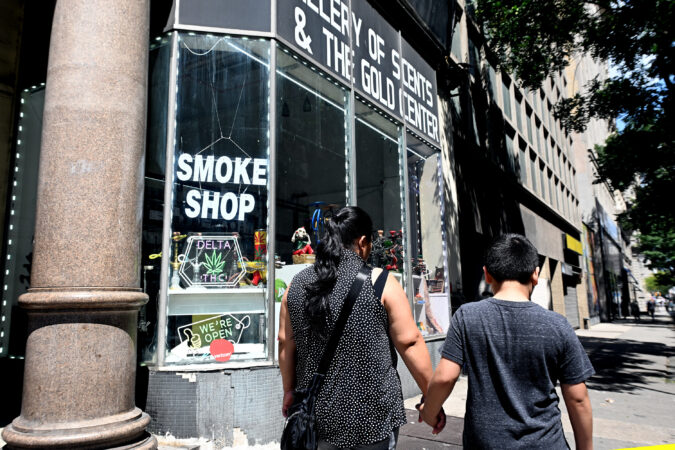
    From Bryn Mawr to Bensalem, Abington to Kensington, and West Chester to West Philly, smoke shops are everywhere. So much so that authorities who’ve grown concerned about the booming business model have struggled to track them all.

    In Philadelphia, City Councilmember Katherine Gilmore Richardson on Thursday introduced legislation that would establish a permit process, allowing the city to more closely monitor shops that sell unregulated drugs and crack down on those that flout the oft-hazy laws governing them.

    The bill would establish a new license requirement for selling “intoxicating substances,” while implementing a series of restrictions around the sale of products like hemp-based THC and kratom. It would also update the city code to define intoxicating products and establish a 21-plus age restriction for purchases.

    Gilmore Richardson proposed a second bill that would authorize the city to penalize landlords who rent space to stores selling tobacco products without a license.

    “Nine times out of ten these products are being marketed to our children,” Gilmore Richardson said. “We have to do all we can to add a new section in our code.”

    The new legislation would further require shops to have their products tested by a licensed lab in Pennsylvania and prove that the products are free from heavy metals, pesticides, solvents, mycotoxins, microbials, and other contaminants.

    An Inquirer investigation last year found that hemp products sold at smoke shops throughout the region are often rife with harmful contaminants, and many contain substances that are blatantly illegal. Some of the products The Inquirer tested were, in fact, black-market weed that was labeled as legal hemp.

    Shop owners defended the sales with lab results from the manufacturers indicating the products are both legal and toxin-free. Yet The Inquirer found that at least some of the reports were fraudulent or doctored to conceal the truth.
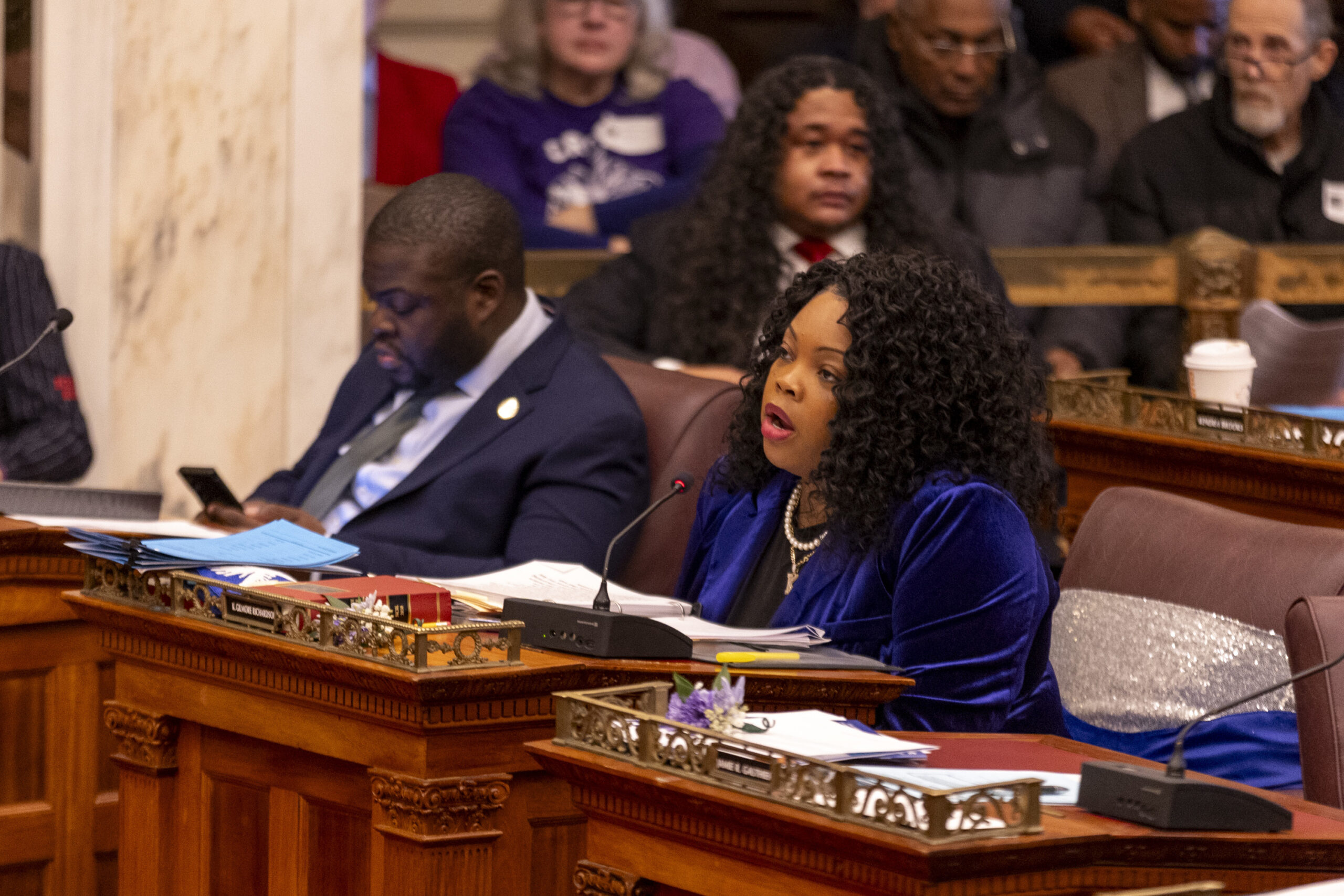
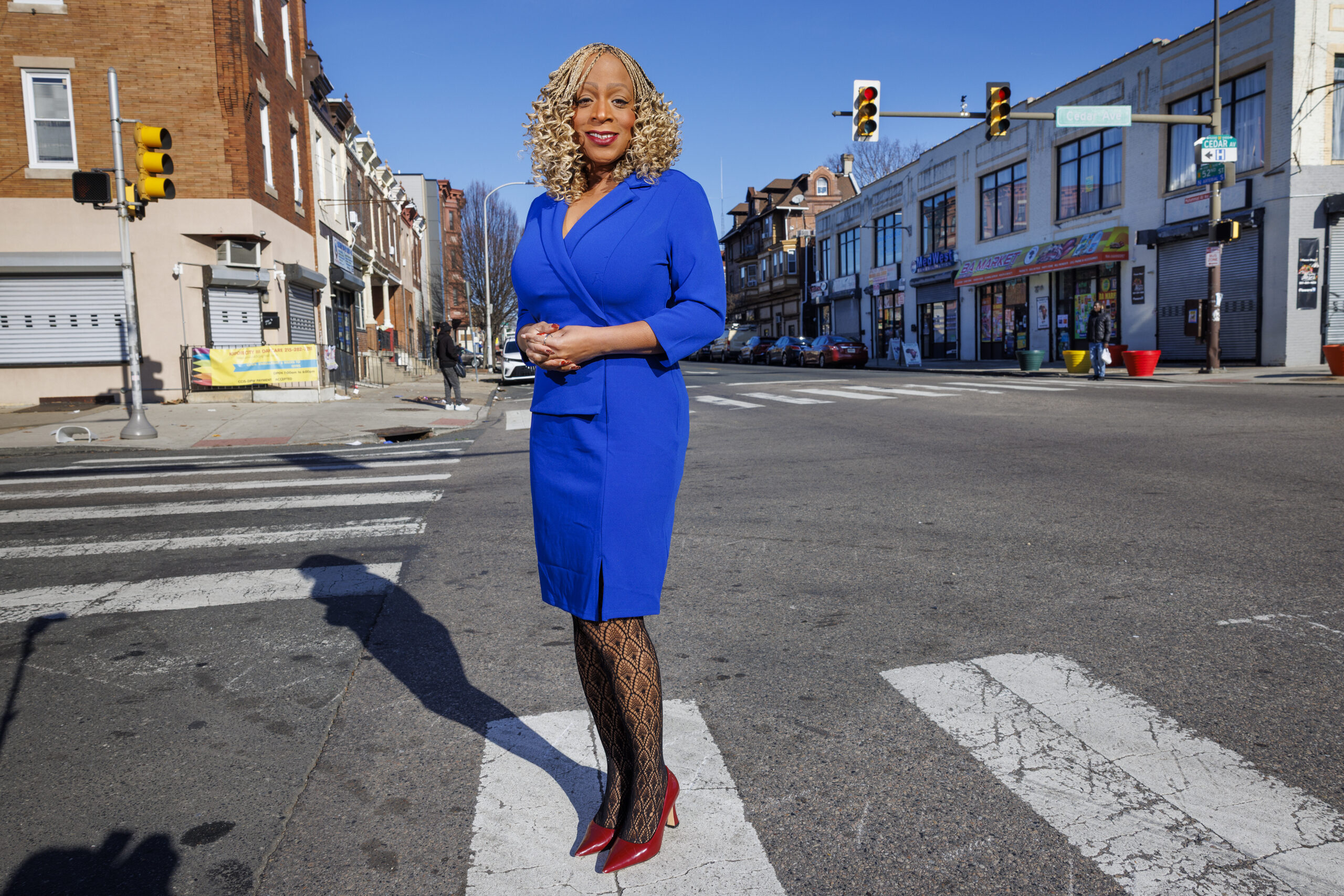
    Council member at-large Katherine Gilmore Richardson speaking at the City Council’s first session of the year in Philadelphia, Pa., on Thursday, Jan. 22, 2026.

    The bills are the latest proposals from Gilmore Richardson to rein in shops selling these products — many of which the city has labelled as nuisance businesses. Such shops have flourished since a 2018 change in federal law allowed for the over-the-counter sale of certain hemp products that are often indistinguishable from traditional marijuana.

    How the proposed new regulations would be enforced remains unclear. As written, the license system and testing requirements would only apply to products that the U.S. Food and Drug Administration has deemed “safe.” Some smoke shop products products are marketed as nutritional supplements, which the FDA does not regulate.

    Region-wide, the crackdown on smoke shops has been haphazard, with law enforcement officials often saying they are constrained by nebulous federal drug laws.

    “You discover a gray area or a loophole that folks try to exploit, and you have to do another bill to deal with that,” Gilmore Richardson said.

    A federal ban on hemp-based THC products could take effect within the next year. Meanwhile, state lawmakers in Harrisburg have done little more than explore the idea of regulating the hemp-based THC market. Other states, including neighboring New Jersey, have for years had a regulated and taxed system of recreational marijuana.

    State-issued tobacco permits are needed to sell nicotine products, but there is currently no permit required to sell hemp, kratom or similar smoke shop products in Pennsylvania. A grand jury report unsealed in Montgomery County last fall had to rely on Yelp to estimate that there are likely more than 240 smoke shops in Montco alone. That report called on Harrisburg to establish a permit system and an age restriction on hemp products containing THC.

    In Philadelphia, many shops operate under convenience store permits, even if they aren’t selling many groceries. The city’s crackdown efforts have been largely limited to citing shops for fraudulently operating under this permit.

    Gilmore Richardson said the intoxicating substances permit is a long overdue solution. The bills head to committee for review.

    The second bill introduced Thursday would grant the city power to fine landlords who “knowingly lease” commercial property to a business that sells tobacco products without a permit. Currently, only the business owners face penalties for selling cigarettes without the proper permit.

    Gilmore Richardson said she would consider expanding that legislation down the road to include the intoxicating substance permit — should it become law.

    “You can’t manage what you don’t measure,” the lawmaker said. “We need to understand where these businesses are located.”

    This article was supported by the Fund for Investigative Journalism.
  • Texas primary exposed GOP scheme to rig the 2026 midterms

    Texas primary exposed GOP scheme to rig the 2026 midterms

    A man named Juston Marine had arguably the toughest job in America on Tuesday: “election navigator” in Dallas County, Texas, where a confusing, Republican-engineered change in voting rules for 2026 left many voters dazed, confused, and miles from the place where they were supposed to be casting ballots.

    “There are a lot of infuriated voters,” Marine told a reporter for the Votebeat website as he struggled to do his job outside the Anita Martinez Recreation Center in West Dallas, where he encountered voters as they arrived at the large polling center. It seems this election worker heard a lot of words that aren’t found in the Bible, as he told every second or third voter that they were supposed to be somewhere else.

    “I walked up here because I want to vote so, so bad,” Veronica Anderson told a reporter after traveling two and a half miles on foot to Dallas’ Martin Luther King Jr. Community Center, only to be told she could only cast a ballot at some other location she’d never heard of. She added that the rejection felt like “your self-esteem and everything is torn down.”

    That level of despair is exactly what Donald Trump’s Republican Party is going for, as America this week kicked off an eight-month mad dash to a November midterm election that will be pivotal for the nation’s barely breathing democracy.

    We’ll never know exactly how many intended votes weren’t cast on Tuesday at the site named for the civil rights legend credited for the 1965 Voting Rights Act, or other Dallas County polling places where scores of voters — primarily Democrats — were turned away from highly competitive primaries for a U.S. Senate seat and other key races.

    It may have looked like chaos, but in many ways it all went down according to a Republican plan that will likely inspire further scheming from Trump and his MAGA minions as the general election draws closer.

    With polls showing that an election held today — with the two-term president’s unpopularity at an all-time low — would result in a Democratic takeover of the U.S. House and possibly the Senate, perhaps in a landslide, Team Trump has spent months looking for any and every way to put its finger on the scale of democracy.

    No one, other than some online Chicken Littles, believes Trump would go full banana republic and send in troops to cancel the 2026 midterms. But his attempted coup on Jan. 6, 2021, aiming to undo his 2020 loss, is an indication of how far this autocrat will go to retain power.

    The Trump-led Republican scheme to make the 2026 elections less free and less fair started with a push for red states to do extreme gerrymandering, ripping up the maps drawn after the 2020 Census to make new districts crafted to maximize GOP power. (Texas was Ground Zero for this effort — more on this later.)

    As the calendar flips toward the midterms and Republican popularity wanes, the push is likely to get more extreme. A legislative push for the so-called SAVE America Act, which would make voting harder with harsh ID requirements, has stalled, so Trump is now weighing an executive order to get the same results — which would surely trigger a legal fight — and possibly try to curb mail-in ballots, as well.

    What just happened in Texas’ second-most populous county proved a case study in today’s brand of Republican voter suppression, so let’s unpack it.

    Like much of what happens in a political party that still clings to the Big Lie of nonexistent voter fraud in that 2020 election that Trump lost, the problems in Dallas County all began with a conspiracy theory.

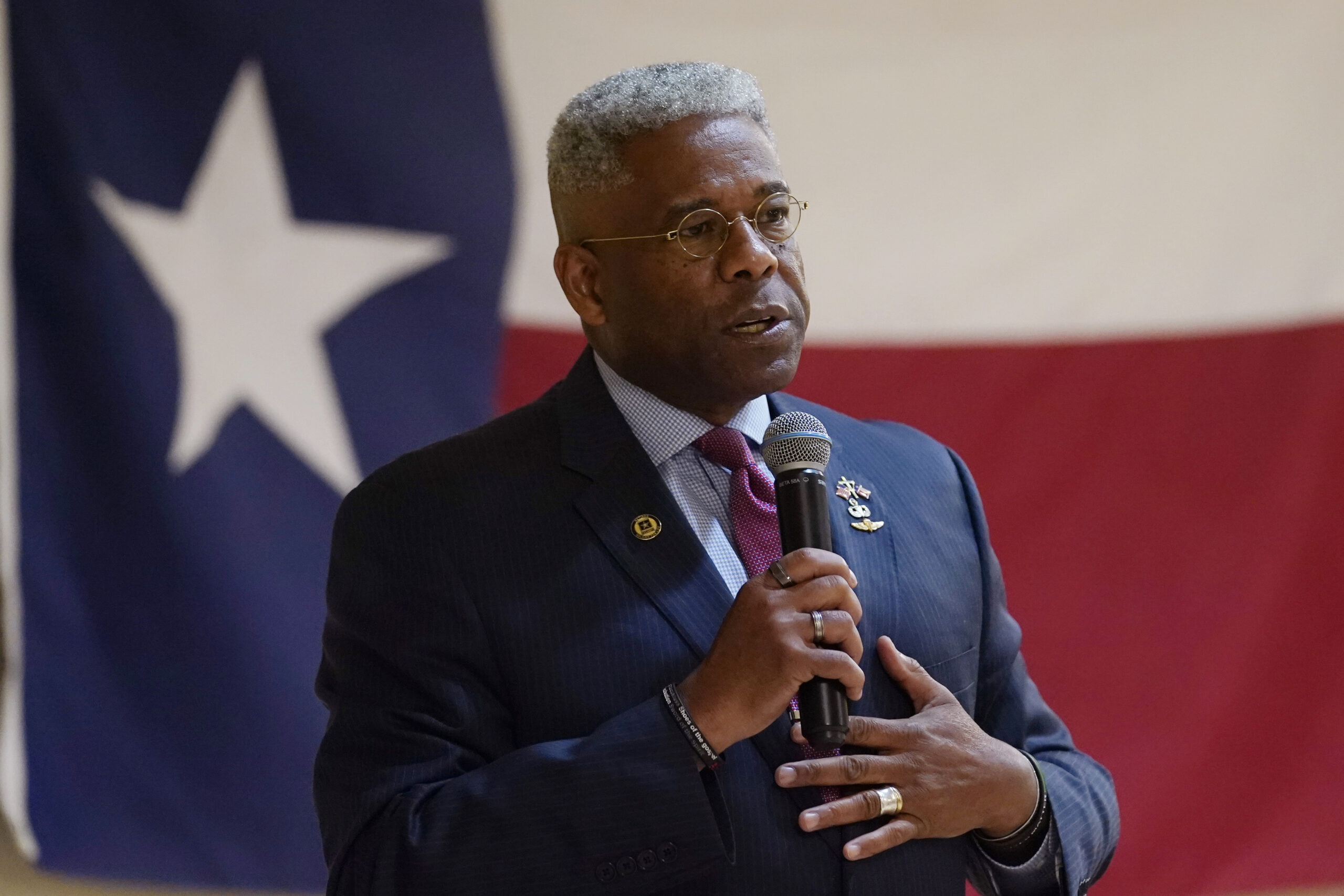
    In this September 2021 file photo, Texas gubernatorial hopeful Allen West speaks at the Cameron County Conservatives anniversary celebration in Harlingen, Texas.

    The county GOP leader in Dallas is a well-known conspiracy theorist, Allen West, an ex-congressman from Florida who moved to Texas and, for a time, ran the state Republican Party, where he adopted a slogan and a style from QAnon and seemed to favor secession, among other extreme views.

    In 2024, West became chair of the Dallas County GOP and made election and voting machine conspiracy theories his prime focus, in a state where parties have a lot of say over how primaries are conducted.

    What the local GOP pushed was for the county to count all of its paper ballots by hand — a laborious process that would also require abandoning the large countywide voting centers and a return to smaller neighborhood precincts. Ultimately, the ballot-counting idea proved not practical, but the switch back to local precinct voting stuck and was in effect Tuesday for both parties — even as Democrats struggled to inform their voters. (A similar change occurred in smaller Williamson County.)

    Election experts note that the GOP generally opposes large centers where anyone in a jurisdiction can vote — much as it opposes early voting, mail-in ballots, or anything else that makes voting easier instead of harder, in an increasingly fragile democracy.

    Voter suppression that unravels the gains from the 1965 Voting Rights Act — weakened and perhaps about to be gutted further by a right-wing U.S. Supreme Court — has been a Republican strategy for decades, but the Dallas debacle was a new low.

    “The confusion is the point,” a Democratic Texas state lawmaker, Ana-María Rodríguez Ramos, posted on social media, noting further, “This is the GOP voter suppression that Dems must come together to overcome in November.”

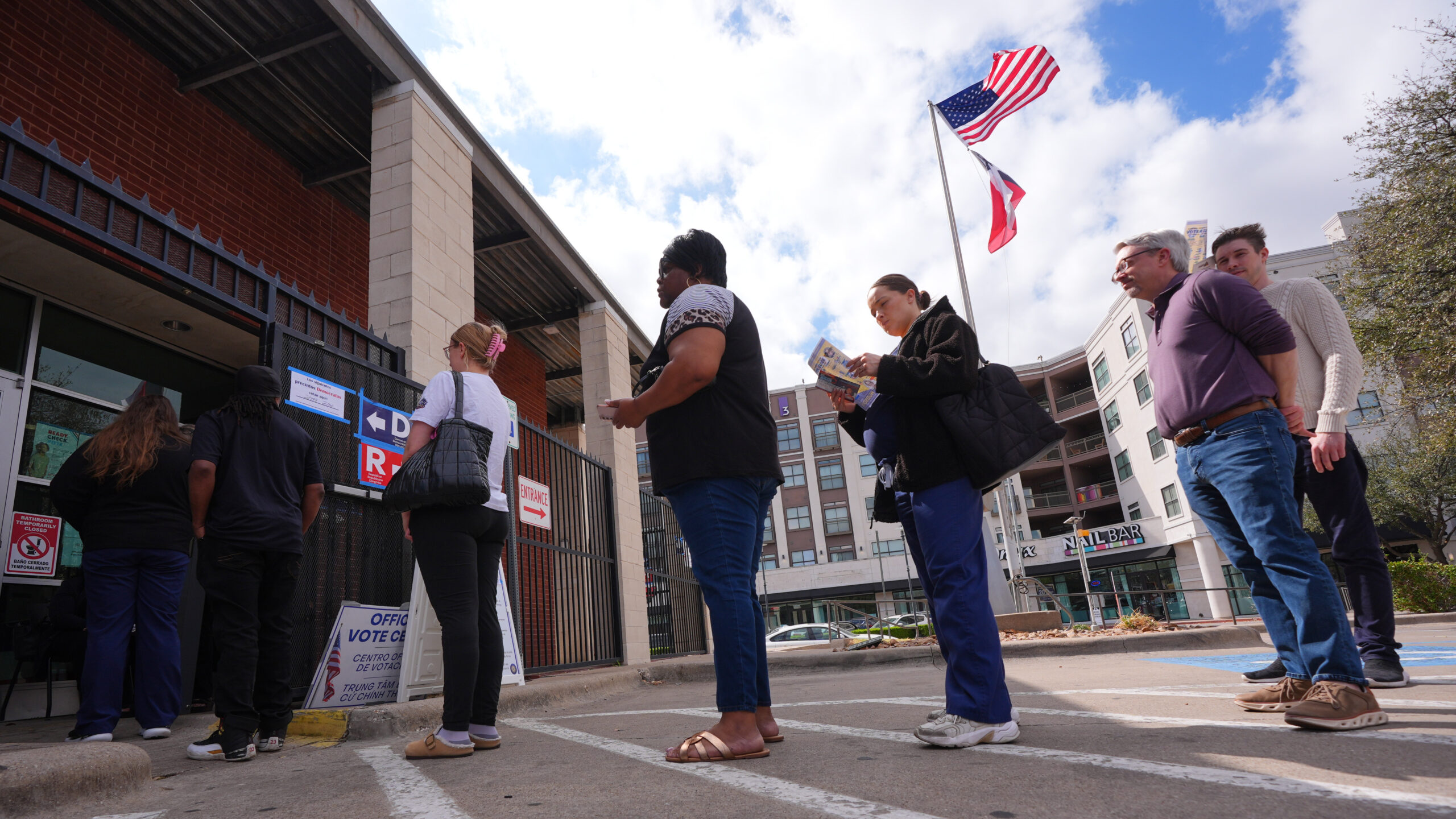
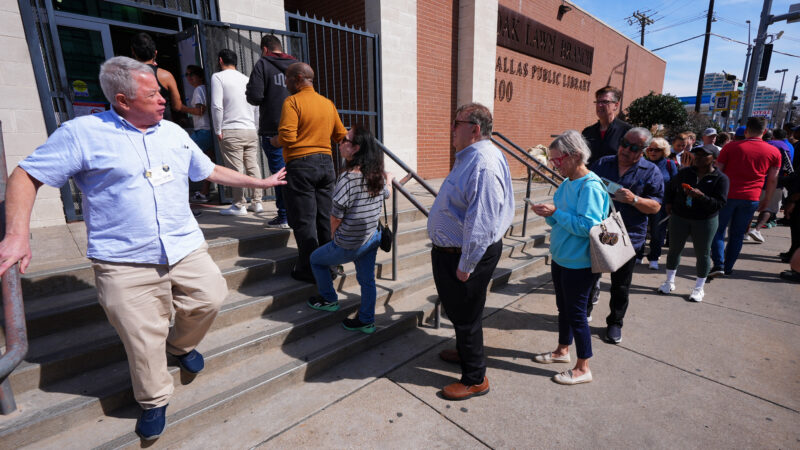
    Primary voters line up to cast ballots at a voting center in Dallas on Tuesday, March 3.

    Ramos also noted one other wrinkle that happened Tuesday. Democrats and fair-voting advocates in both Dallas and Williamson Counties went to court during the day, seeking an emergency order to extend voting hours. That push initially succeeded, and in Dallas County, a judge ordered the polls open for two additional hours.

    But Texas’ right-wing extremist Attorney General Ken Paxton — also a leading candidate in Tuesday’s GOP Senate primary — appealed the ruling and got the state’s conservative Supreme Court to rule in his favor. Votes that were cast after the original 7 p.m. closing time were segregated and may or may not ultimately be counted.

    Not surprisingly, West actually bragged about what looked to many folks like a voting fiasco, blaming the Democrats for not being informed about the confusing rules change. “It’s apparent that Democrats struggled with grasping basic civics and their usual attempt at lawfare backfired,” the GOP leader said in a statement.

    It’s clear that what we saw in Dallas — balloting drenched in conspiracy theories from start to finish, new rules with the sole purpose of making it harder to vote, and an increasingly conservative judiciary making the final call — was clearly a test case for the national election in November.

    It’s not hard to imagine a scenario in which Republicans will manufacture conspiratorial doubt about some of the ballots cast in the fall — as just happened with those post-7 p.m. votes in Dallas — as a pretext for some grander and potentially cataclysmic effort to nullify Democratic victories in Congress.

    But Texas also provided a window into how this MAGA scheme might not work.

    Remember that extreme gerrymander the Lone Star State enacted last year, which aimed to create five additional Republican seats in Congress? Much of the plan aimed to capitalize on a dramatic shift toward the GOP among Texas’ large Latino population during Trump’s last two runs in 2020 and 2024.

    But polls and now early voting have shown the Hispanic vote swinging back toward Democrats since Trump returned to office, thanks to the sluggish economy and the brutal manner of his immigration raids. On Tuesday, Democratic turnout in Texas soared to levels not seen since the high-profile 2008 battle between Barack Obama and Hillary Clinton, in what was a very good year for their party. Voter suppression can be swamped by voter enthusiasm.

    But it shouldn’t have to be that way. The right to vote is the fundamental building block of the American Experiment in democracy, and folks shouldn’t have to walk clear across town or stay up all night to exercise it. Dallas was a warning shot for every citizen: Do not let this nightmare go national in November.

  • Gisele Fetterman’s X and Instagram profiles are now inactive weeks after she spoke against ICE

    Gisele Fetterman’s X and Instagram profiles are now inactive weeks after she spoke against ICE

    Gisele Barreto Fetterman‘s social media accounts have been taken down after she spoke out about ICE earlier this year. Her X and Instagram accounts were both inactive as of Thursday morning.

    It was unclear on what date the two accounts were removed from the platforms, but she did use her X account to criticize the Trump administration a little more than a month ago. Her Facebook account has not been deactivated, though her last public post was in June.

    Barreto Fetterman, who had lived undocumented in the U.S. for more than a decade after emigrating from Brazil, posted about the emotional toll caused by President Donald Trump’s immigration crackdown in Minneapolis and other cities.

    “Every day carried the same uncertainty and fear lived in my body — a tight chest, shallow breaths, racing heart,” she said in a post on X in late January, the day after a Border Patrol agent fatally shot civilian Alex Pretti. In the same month, an ICE agent fatally shot civilian Renee Good and the agency detained 5-year-old Liam Conejo Ramos.

    “What I thought was my private, chronic dread has now become a shared national wound,” she added. “This now-daily violence is not ‘law and order.’ It is terror inflicted on people who contribute, love, and build their lives here. It’s devastatingly cruel and unAmerican.”

    Barreto Fetterman’s post preceded a statement from her husband, Sen. John Fetterman (D., Pa.), calling for DHS Secretary Kristi Noem to be fired in the wake of Pretti’s killing. Trump fired Noem on Thursday.

    That same week Fetterman joined fellow Democrats in blocking DHS funding in an effort to force reforms to immigration enforcement, but he has since spoken out against a proposal to prohibit Immigration and Customs Enforcement agents from masking while they perform their duties.

    The senator’s office did not comment Thursday about his wife’s social media hiatus.

    Fetterman has faced pushback online for aligning with Trump and being at odds with his party on certain issues.

    After Fetterman stood out among Democrats for shaking Trump’s hand at the State of the Union last week, U.S. Rep. Brendan Boyle (D., Pa.) derided him as “Trump’s favorite Democrat” in a post on X. The senator in turn criticized his fellow Democrats for not standing to applaud at various moments through Trump’s marathon speech that he believed should have had bipartisan support.

    Fetterman has been vocal about the negative effects social media has had on him and has advocated for mental health warnings on social media platforms.

    This week, Fetterman was the only Democrat in the Senate to vote against advancing a war powers resolution that would have barred Trump from ordering further strikes on Iran without congressional approval.

    The Pennsylvanian has contended that military action is necessary to prevent Iran from developing nuclear weapons and had previously urged Israel and the U.S. to bomb the country.

    While Fetterman has touted his ability to work across the aisle, a recent Quinnipiac University poll found that 62% of Democratic voters in Pennsylvania disapprove of how Fetterman is handling his job (eight points higher than the percentage of Democrats who disapprove of Republican Sen. Dave McCormick).

    Barreto Fetterman has temporarily deactivated her online accounts before.

    She said in January 2024 that she had recently taken her social media down because she was “bored with it” and it “wasn’t adding anything to my life.” She had been subjected to negative comments on social media over her husband’s views, Newsweek reported.

    She previously posted in November 2023 that she was “3 weeks into a social media break that may last another month or forever,” according to news reports.

    She also said at the time that “treating someone as simply someone’s spouse is insulting and minimizing … did you know male spouses don’t get treated this way?”

    At that point, the senator had been facing pushback for his comments about the war in Gaza and his staunch support of Israel following the country’s response to Hamas’ Oct. 7, 2023, attack.

    Barreto Fetterman published a book last year called Radical Tenderness: The Value of Vulnerability in an Often Unkind World. She said in a July interview about the book on WHYY that she considers herself a “softie.”

    Barreto Fetterman is also a firefighter and runs a “free store” in Braddock, the Allegheny County town where her husband previously served as mayor. She said in the WHYY interview “every single day is a heartbreak” under Trump’s immigration crackdown.

  • Three schools later, TJ Power came to Penn with armor. He’s feeling ‘indestructible.’

    Three schools later, TJ Power came to Penn with armor. He’s feeling ‘indestructible.’

    TJ Power has only been looked at as a basketball player.

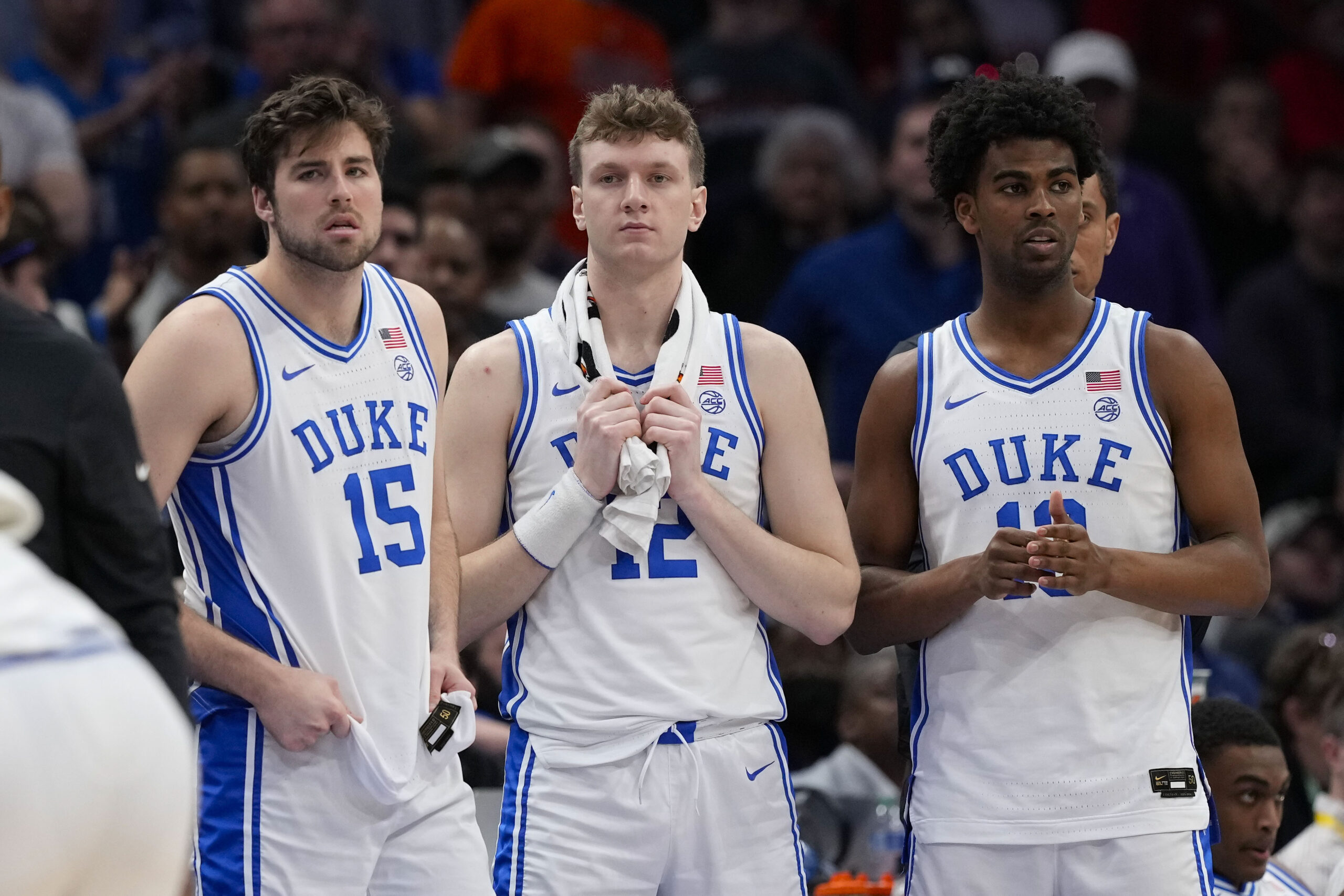
    A five-star recruit coming out of Worcester Academy in Massachusetts, his talents landed him at Duke, then his need for opportunity took him to Virginia, but a search for himself brought him to Penn.

    Three years at three schools? Power wouldn’t have it any other way.

    “That suffering tested my faith and my fortitude,” Power said of his collegiate career before Penn. “And like everyone says, that’s how you get stronger. But that’s real, like as a holistic human, I’m so much more mature and better off right now because I had to leave Duke. I had to make that decision. I had to leave Virginia. I had to go through those moments. And now I’m here, and I have armor. I feel like it’s indestructible.”

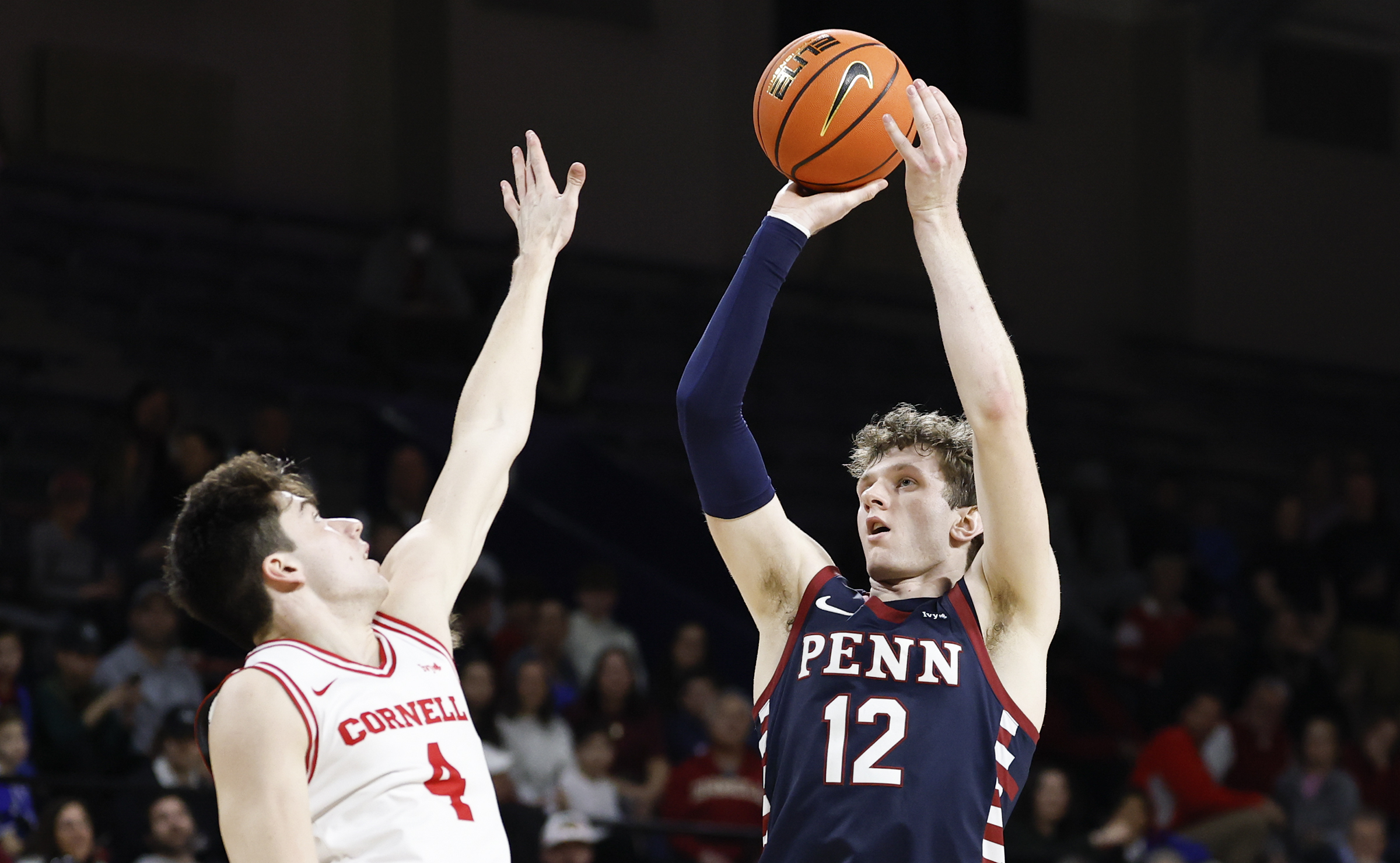
    After struggling for playing time at Duke and Virginia, Power, a 6-foot-9 forward, has soared under first-year Penn coach Fran McCaffery. Power is leading the Ivy League in minutes (34.7 per game), while averaging 15.7 points and a team-best 7.5 rebounds.

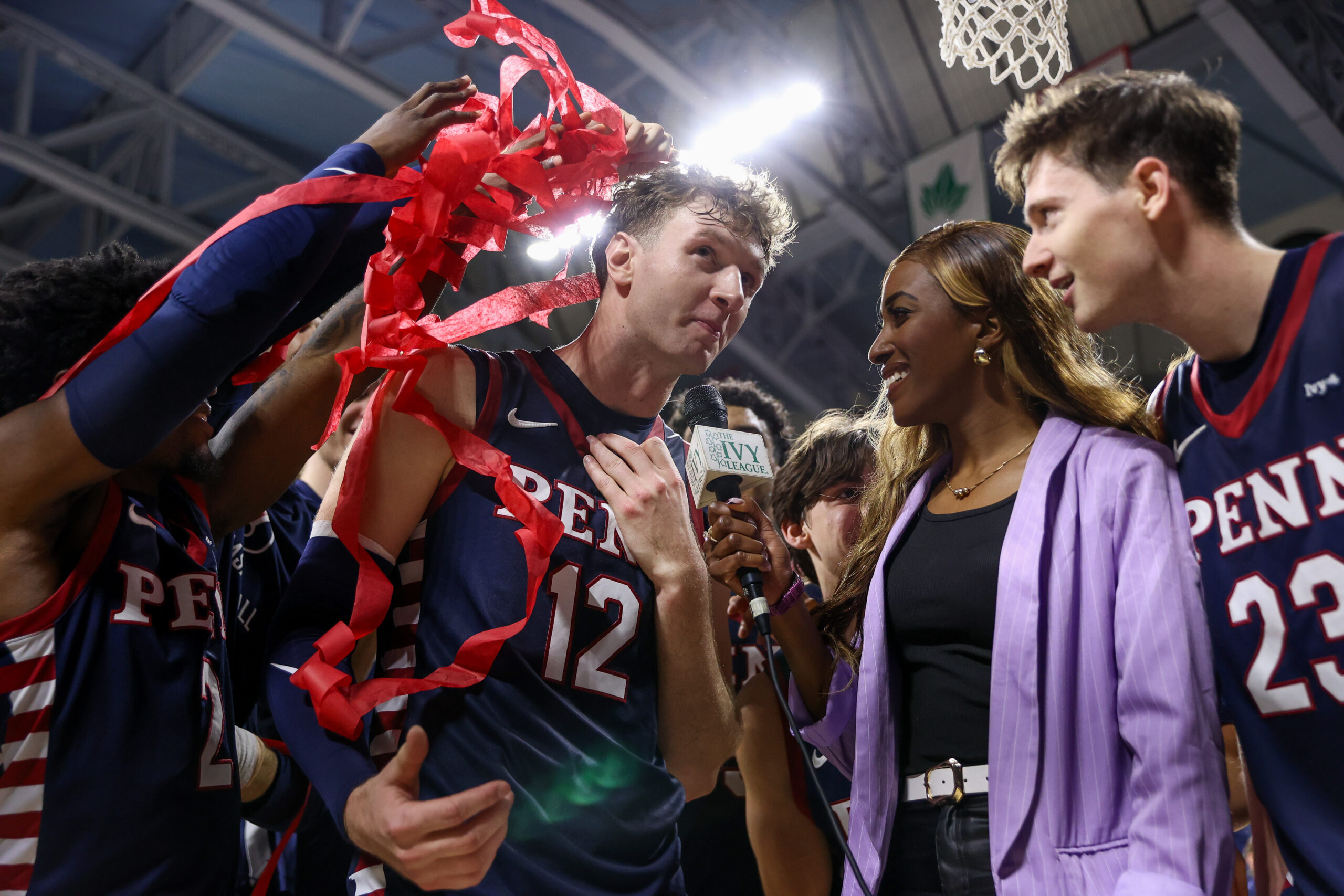
    Last weekend, Power posted his best performance of his collegiate career, scoring 38 points against Dartmouth on Friday and then helping Penn gain its first Ivy League Tournament berth in three years with a victory over Harvard on Saturday.

    “I’ve been playing better,” Power said before this weekend. “I think [McCaffery] knows this. I have another level that I can tap into here. I’m trying to get to it week by week. It’s different. I probably had the biggest minutes jump in college basketball history.”

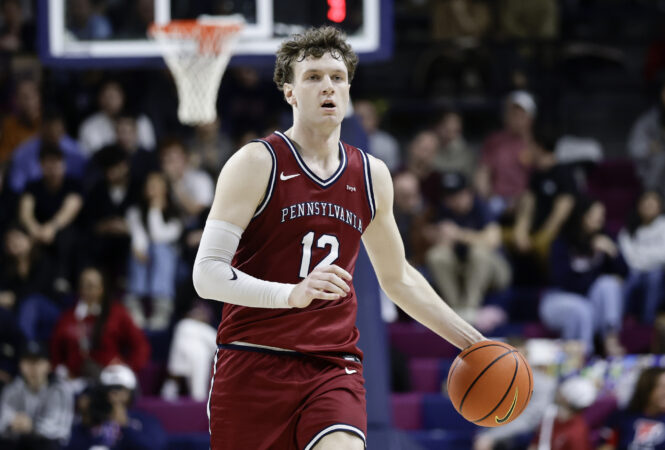
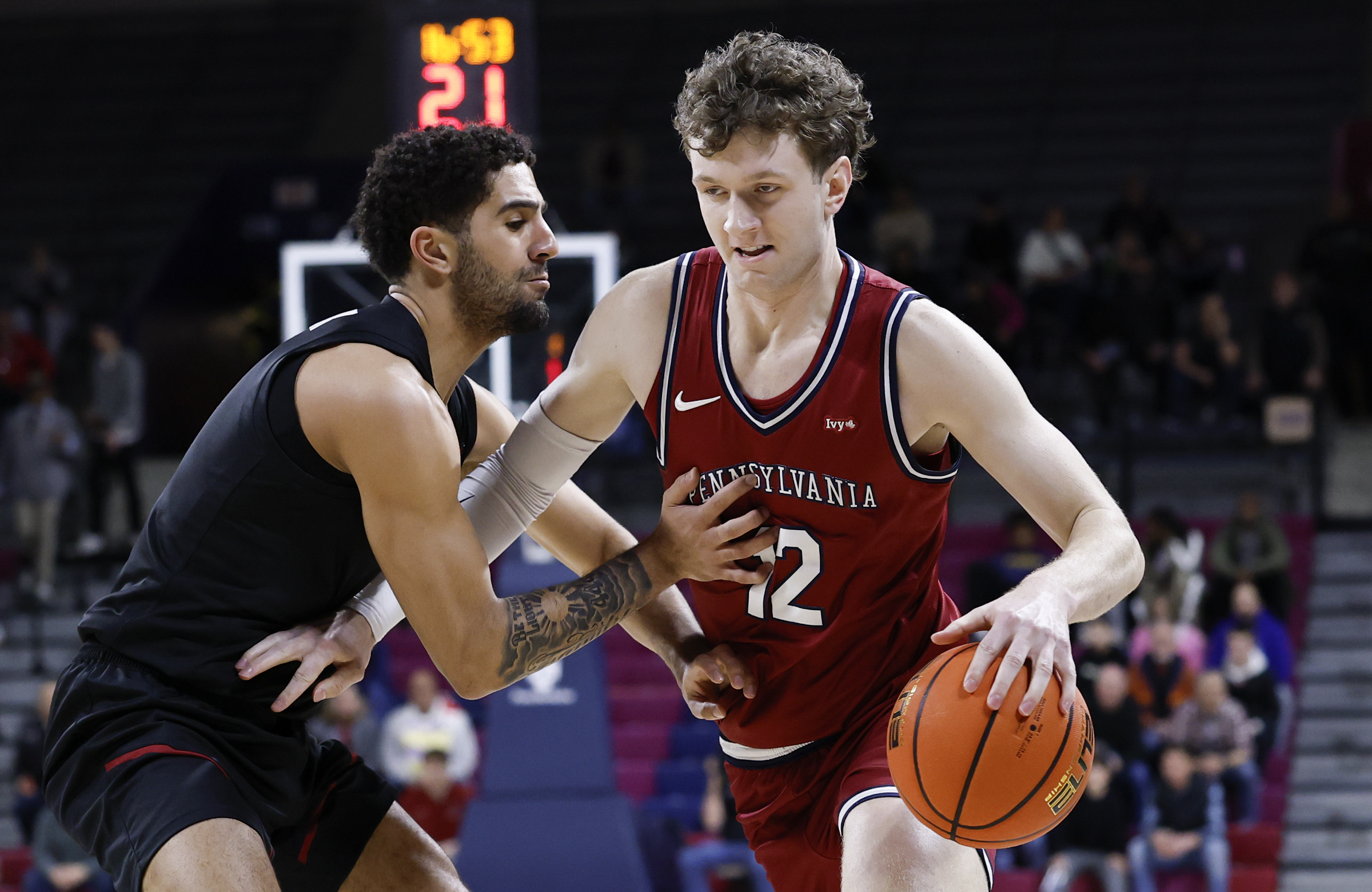
    Penn forward TJ Power leads the Ivy League with 34.7 minutes per game.

    Penn will visit Brown on Friday (7 p.m.) for its final game of the regular season as winners of six of its past seven games, thanks to Power’s resurgence. Penn will then face Harvard in the first round of the conference tournament on March 14 in Ithaca, N.Y., with Yale playing Cornell in the other semifinal.

    ‘Took a chance’

    Power, who grew up in Shrewsbury, Mass., said his father would drive him around the neighborhood as a kid to find local churches and recreation centers to play in games. The pair usually ended their trips at Worcester Academy’s gymnasium.

    By his sophomore year, college coaches were rushing to see Power on the court, including McCaffery, then the head coach at Iowa.

    McCaffery attended Power’s AAU games, and his presence was quickly felt.

    “I had three offensive fouls in the first half,” Power said. “It was terrible, and you know how Fran is with refs. He wasn’t even my coach at the time. Obviously, he’s there to recruit me, and he’s yelling at the ref as I’m playing in an AAU game.”

    TJ Power averaged 6.7 minutes in 26 games as a freshman at Duke.

    As a senior, Power was named the Massachusetts Gatorade Player of the Year after winning a state prep school Class AA championship. He accepted an offer to Duke, but he and his family stayed close to McCaffery.

    Power averaged 6.7 minutes in 26 games as a freshman during the 2023-24 season, but that didn’t stop him from enjoying his experience as a Blue Devil.

    “Duke was one of the best years of my life,” Power said. “Honestly, people from the outside might not think that just because you know basketball and playing time and stuff, but that experience is once in a lifetime.”

    Power planned on staying for his sophomore year, but an “uphill battle” for minutes and competition from the incoming class, which included future NBA lottery picks Cooper Flagg and Kon Knueppel, made Power consider other options.

    Leaving Duke meant saying goodbye to his “best friends for life” Sean Stewart, Caleb Foster, and former 76ers guard Jared McCain, but the decision was best for his career.

    “Knowing this could go bad,” Power said, “where I’m not playing, the hardest decision I ever made was to leave there. I was really emotional about that because people look at transfers and they’re like, ‘Oh, they’re running from stuff.’ I never pictured myself as that, because I took a chance going to Duke.”

    Breaking point

    Before the 2024-25 season, Power entered the transfer portal and committed to Virginia, his second choice coming out of high school. Coach Tony Bennett and Power had grown close during the recruiting process.

    “I felt rejuvenated,” Power said. “I was going to go there and learn from him. We were really close. That whole summer, I played really well, we looked good, and he had said to me in the recruiting process, because they had struggled the year before, he was talking about how he wants to play faster and change the offense.”

    When it finally seemed as though Power found the right fit, Bennett announced his retirement before the start of the season.

    “One day in the fall,” Power said. “He comes back, and we’re going into the film room, like we always do, and he just sits down, starts crying, and tells us he’s going to retire.

    “I remember it was a feeling I’ve never had before, where my whole body started overheating, and the world was shifting. I was in the front row, sitting right in front of him. That was a hard moment. And I don’t know if I have fully moved on from that.”

    Ron Sanchez was named interim head coach, and despite his promise to stick with the offense Bennett wanted to implement, it was never the same for Power. He was injured to begin the season and started just five games, averaging 9.3 minutes in 24 games.

    Virginia finished 15-17, Sanchez was fired, and “everyone entered the portal.” According to Power, the new coaching staff didn’t want him.

    “​​You want to talk about emotional,” Power said. “My time at Virginia [was] some of the darkest moments of my life.”

    Power had not played consistent basketball in almost two years. He decided to visit Penn at the request of an old friend.

    After starting in only five games at Virginia, TJ Power transferred to Penn.

    McCaffery, whowas fired by Iowa, was rumored to be heading back to his alma mater.

    “I eventually got this job,” said McCaffery, who was hired by Penn in March last year. . “It was an easy discussion because he knew that I believed in him, and he knew that our style of play was perfect for him. He came down to campus on his own. I wasn’t even here.”

    Power added: “Penn is a great place, and I’ve come to learn that even more, but in the recruiting process, I was like, wherever Fran goes — I’m going. I’m playing for that dude. If Fran wasn’t here, I wouldn’t be here.”

    ‘I’m coming here’

    Power called his parents, bought a couple of train tickets and a hotel room, drove back to Virginia, and left that night on a train to 30th Street Station.

    Power had struggled with his connection to the game and his identity around it. Coming off the train at 1 a.m., Power reflected back on a moment when he enjoyed basketball and had a familiar request for his dad .

    “I want to see the gym,” Power said.

    Power and his parents pulled up to the Palestra.

    “My dad gets out, and just like our drive around Worcester, shakes on doors,” Power said. “We go to the Palestra front door. He shakes it three times. It opens, and I walk in, and for some reason, the lights are on. I’m standing right there, 1:30 in the morning. It’s just my dad and me. We’re looking at the Palestra. I’m coming here. I got to come here.”

    TJ Power came to Penn to play under coach Fran McCaffery. “If Fran wasn’t here, I wouldn’t be here.”

    Fran was committed to helping Power get back on track, which showed in their first few practices together.

    “If I struggled, he knows what’s on the other side of that wall once I climb it,” Power said. “So that was a huge factor in my decision. I wanted someone I could trust again, and someone who has my back when I inevitably struggle.

    “The first thing Fran said when he called me was, ‘We’re going to have fun playing basketball again.’ No other coach said that.”

    Power has returned to the form that made him a five-star recruit in high school. And he has found a home — on and off the court.

    After years of chasing the best opportunity to help him go pro or get the most playing time, Power chose Penn for another reason: to find who he is outside of the sport.

    “Basketball used to be my identity,” Power said. “People ask me, ‘Who am I?’ I play basketball, I’m a basketball player. When I switched that to my relationship with God coming first, and then my identity is built through that relationship with God. …

    “That path is so much more rewarding. My identity comes first, and … my mission is to play well, and I think that’s going to give me what I want.”

  • Human skull and other remains found in South Jersey

    Human skull and other remains found in South Jersey

    A human skull and other skeletal remains were found this week in a wooded area of Whitesboro, Middle Township.

    The remains were found by a resident walking in the area on Tuesday, police said.

    The Middle Township Police Department was called to the scene and began a search, finding the skeletal remains that police believe belong to an adult.

    So far, it is unknown who the remains belong to. The Cape May County Prosecutor’s Office continues to investigate, with Prosecutor Jeffrey Sutherland writing on Facebook that “there is no threat to the public at this time.”

    Anyone with information can submit an anonymous tip through the prosecutor’s office website at cmcpo.tips or call the Cape May County Prosecutor’s Office at 609-465-1135.

  • Mayor Parker backs legislation to boost housing development around SEPTA stations

    Mayor Parker backs legislation to boost housing development around SEPTA stations

    Mayor Cherelle L. Parker’s administration sent City Council a bill on Thursday to encourage more apartment construction around SEPTA stations, in hopes of boosting ridership.

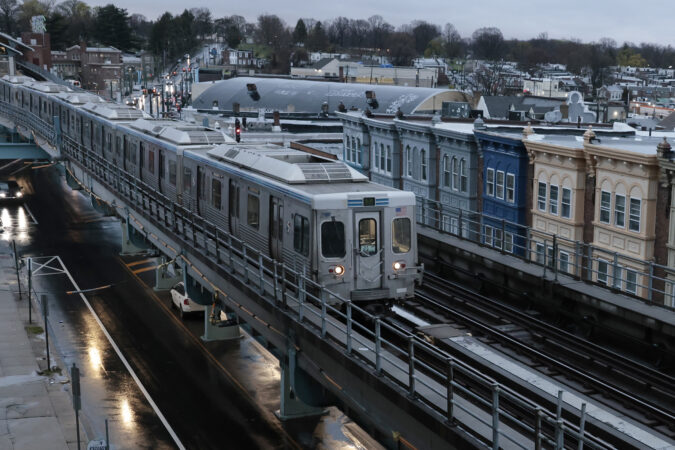
    The proposal expands an existing law. Currently, if a SEPTA station is made a “transit-oriented development” district — a designation City Council must adopt — then most properties within a 500-foot radius receive a variety of benefits that allows developers to build more housing with less parking than otherwise allowed.

    The legislation sent to Council by the Parker administration would expand that radius to 1,320 feet, or a quarter of a mile.

    The bill is part of a package of zoning legislation meant to boost Parker’s effort to build or repair 30,000 homes in the coming years.

    “Zoning is how we turn housing ambition into housing reality,” said Angela D. Brooks, chief housing and urban development officer. “These bills help us put more homes where our infrastructure can support them, near transit, near jobs, and near opportunity, while respecting the character of the neighborhoods Philadelphians already love.”

    The hope is that SEPTA will benefit from a ridership boost if more housing is built close to transit, and more people will be able to afford to live near public transportation — which, in some areas, is in more expensive and sought-after neighborhoods.

    The zoning overlay grants different types of development benefits depending on the existing zoning around transit stations.

    In a bid to avoid controversies that have undermined similar laws in other cities, land zoned for single-family housing would not be given any development advantage under the law.

    But properties already zoned for dense housing would be allowed to build many more units, with additional benefits given if they provide affordable housing or environmentally friendly design.

    “This package will also increase ridership, reduce costly trips to the [zoning board], and allow more investment in transit stations,” Brooks said. “Zoning may sound technical to some, but investments in transit are something residents can see, touch, and feel every day.”

    Projects that have benefited from the existing transit-oriented development overlay include The Noble, with 360 units, near the Spring Garden stop on the Market-Frankford Line, and a proposal for a 134-unit mixed-income development at the Frankford Transportation Center.

    Land zoned for more modest density would be allowed to build 50% more units. That means if developers could build four units under normal conditions, in a transit-oriented development district, they could build six.

    The overlay requires that the ground floor of commercially zoned buildings have active uses. Curb cuts, parking garages, and one-story buildings are not allowed.

    Parker’s bill further eases some parking requirements, although the requirement for developers building in such areas is already less than under normal zoning rules.

    The bill was circulated to City Council on Wednesday. Members wanted more time to review it before it was formally introduced.

    “In general, I’ve been a proponent of the basic concept of increasing density around our transit stops,” said Councilmember Jamie Gauthier, who chairs City Council’s housing committee.

    “It makes our neighborhoods more lively, more livable,” Gauthier said. “We have a great transit system, and we should be trying to help it be as successful as possible.”

    Because City Council must pass legislation to include transit stations in the zoning overlay, district Council members are given effective control over how many stations will be included in the law’s benefits.

    Both the Broad Street and Market-Frankford Lines run between Council districts, which means half of many stations are under one Council member’s purview while the other half are in another’s control.

    Transit advocates have long hoped for legislation that would automatically apply to all major transit stations, but that idea could prove difficult to get through City Council.

    Gauthier is one of the few Council members who have embraced transit-oriented development. All of the Market-Frankford Line stations in her district are covered by the overlay.

    No stations on the Broad Street Line are included so far.

    “I don’t want to speak about areas of the city that are not mine,” Gauthier said. But in her transit-rich West Philadelphia district, “I do think we can consider expanding that radius more. We know that less people are driving nowadays.”

    City Councilmember Jamie Gauthier is one of the most enthusiastic proponents of transit-oriented development on City Council.

    The urbanist advocacy group 5th Square says that Parker’s bill should be broader.

    The group called for the elimination of parking minimums near transit, an even larger coverage radius, and for multifamily housing to be allowed on land zoned for single-family homes near stations.

    “These bills are a welcome step toward more housing near transit, but their scope doesn’t quite address our massive housing shortage,” said Fae Ehsan, board member with 5th Square Advocacy.

    The other housing-related bill Parker sent to Council includes legislation that would make it easier to build more apartments above commercial buildings on the ends of some rowhouse blocks, which are currently allowed to have only one unit above ground-floor retail.

    The bill would allow owners to convert the ground floor to residential uses if they cannot fill the storefront. The administration believes 7,000 to 12,000 more housing units could be allowed under the change.

  • Jabari Walker stepped up for the Sixers, filling in the gaps and securing a win over the Utah Jazz

    Jabari Walker stepped up for the Sixers, filling in the gaps and securing a win over the Utah Jazz

    Perhaps the lone bright spot in the 76ers’ blowout loss Tuesday to the San Antonio Spurs was Jabari Walker, who entered the game in garbage time and scored 20 points in 19 minutes, 29 seconds on 7-for-10 shooting.

    Walker later told reporters that he’d “rather not sleep and just get back out there right now.” Walker woke up feeling good Wednesday morning, and he even picked up a new car after spending most of February Ubering around Philly.

    That blissful state was threatened for a brief moment.

    “I scratched it,” Walker said. “I talked to somebody coming in, I told them the story, they’re like, ‘It’s going to get better for you today.’ I was like, ‘All right, OK, I’m in my zone right now. I’m in basketball world. Whatever happened before stays out.’ So when I saw the first two [shots] go in, I was like, ‘OK. All right. This is a whole new world. I’ve got a chance to redeem myself.’”

    Redeem himself he did. Walker scored 22 points on 7-of-12 shooting and grabbed 10 rebounds in the Sixers’ 106-102 win over the Utah Jazz. Walker’s final two free throws secured the game for the Sixers in the dying seconds of the fourth quarter.

    Walker, who started the season on a two-way contract, exhausted his 50 games of eligibility just before the All-Star break, which kept him out of four games before the team converted his contract to a two-year standard deal on Feb. 16.

    He’s been in and out of the lineup and seen his minutes fluctuate as the Sixers vacillate between levels of health. VJ Edgecombe was added to the injury report Wednesday with a back bruise, leaving the Sixers down four starters. Nick Nurse said pregame that they were going to need more from guys further down the bench.

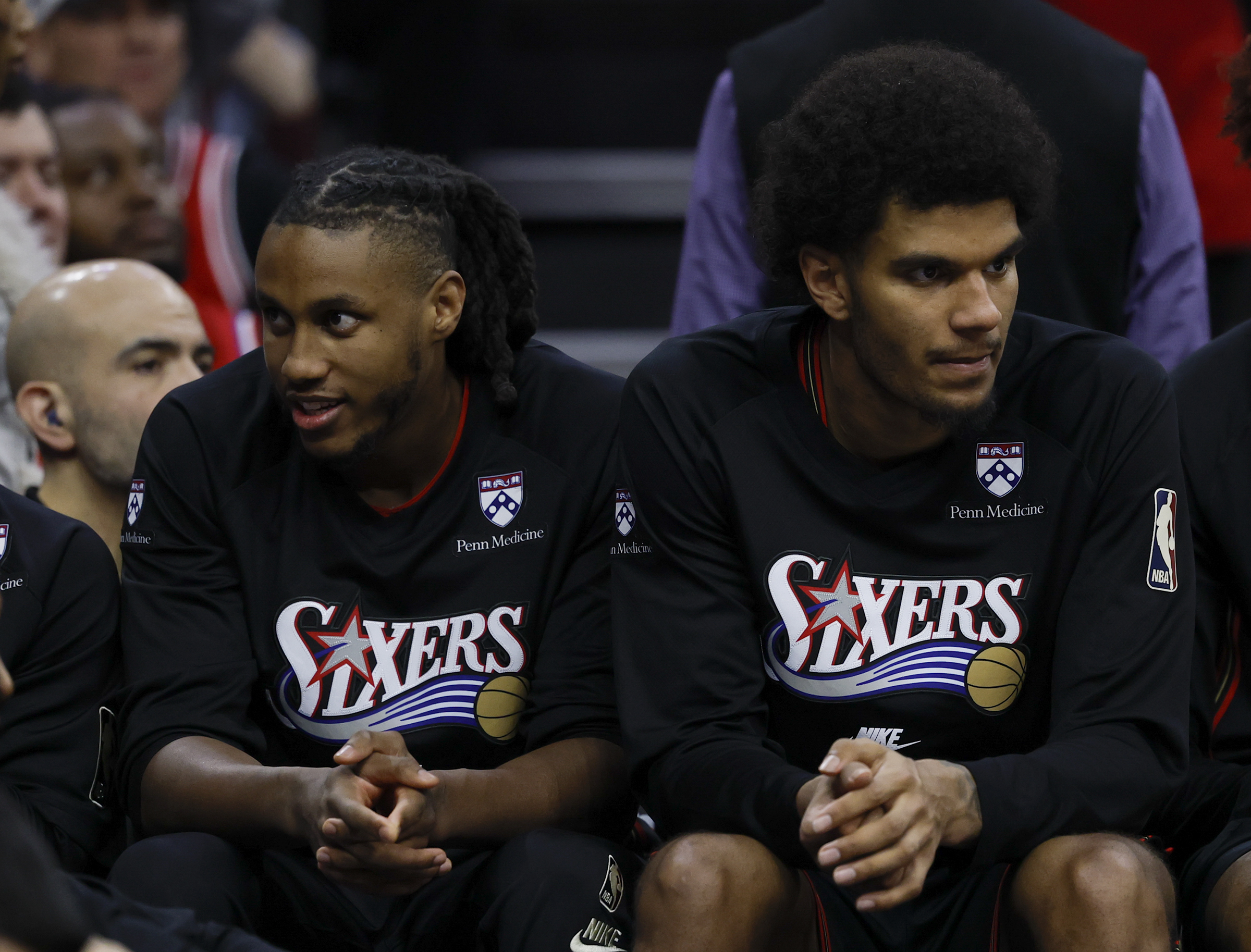
    Sixers forwards Jabari Walker and Dominick Barlow have both had their two-way contracts converted to standard deals.

    Walker made his first six shots from the floor, starting with two quick threes in the first quarter, providing critical energy off the bench in addition to his usual effectiveness on the boards.

    “People that really know me, I’m actually kind of crazy,” Walker said. “I talk a lot, and something’s really wrong with me, but I get a chance to let it out on the court.”

    Nurse said that in practices and shootarounds, the coaching staff has been working to give Walker as much positive feedback as possible to try and get him to be more aggressive with his shot.

    “We’ve been trying to get him to play like that because he’s a really good shooter,” Nurse said. “You just have to get used to the NBA feel and having enough [confidence] to pull the trigger on them. Noticeably better in his last few games. He’s just running the floor, ball comes to him and he’s open, and he just, not much hesitation on him.”

    That support from Nurse has been there since Day 1, even before Walker felt like he’d earned it. “Him being vocal like that makes nights like this happen,” Walker said.

    The injury status of Edgecombe and Joel Embiid is uncertain, and Paul George doesn’t return from a 25-game suspension for banned substances until the end of the month. With so much in flux, the Sixers don’t quite know what the best version of their lineup is or what their rotation will look like during a potential playoff run.

    In the interim, games like Wednesday’s win provide critical opportunities for bench players like Walker to show what they can do in an expanded role. Walker said he thought his scoring likely masked some improvements he needed to make defensively, but he believes there’s a role on this team for him, even when the team is healthy.

    “If my minutes have to go down, I’ll take it,” Walker said. “That’s what I signed up for. That’s the role I knew I was getting into. We have great, great players, we’ve got Hall of Famers that have to come back, so somebody has to take those minutes, and these are guys that get paid to do so. My job is to fill in and do exactly what I’m doing while they’re out.”

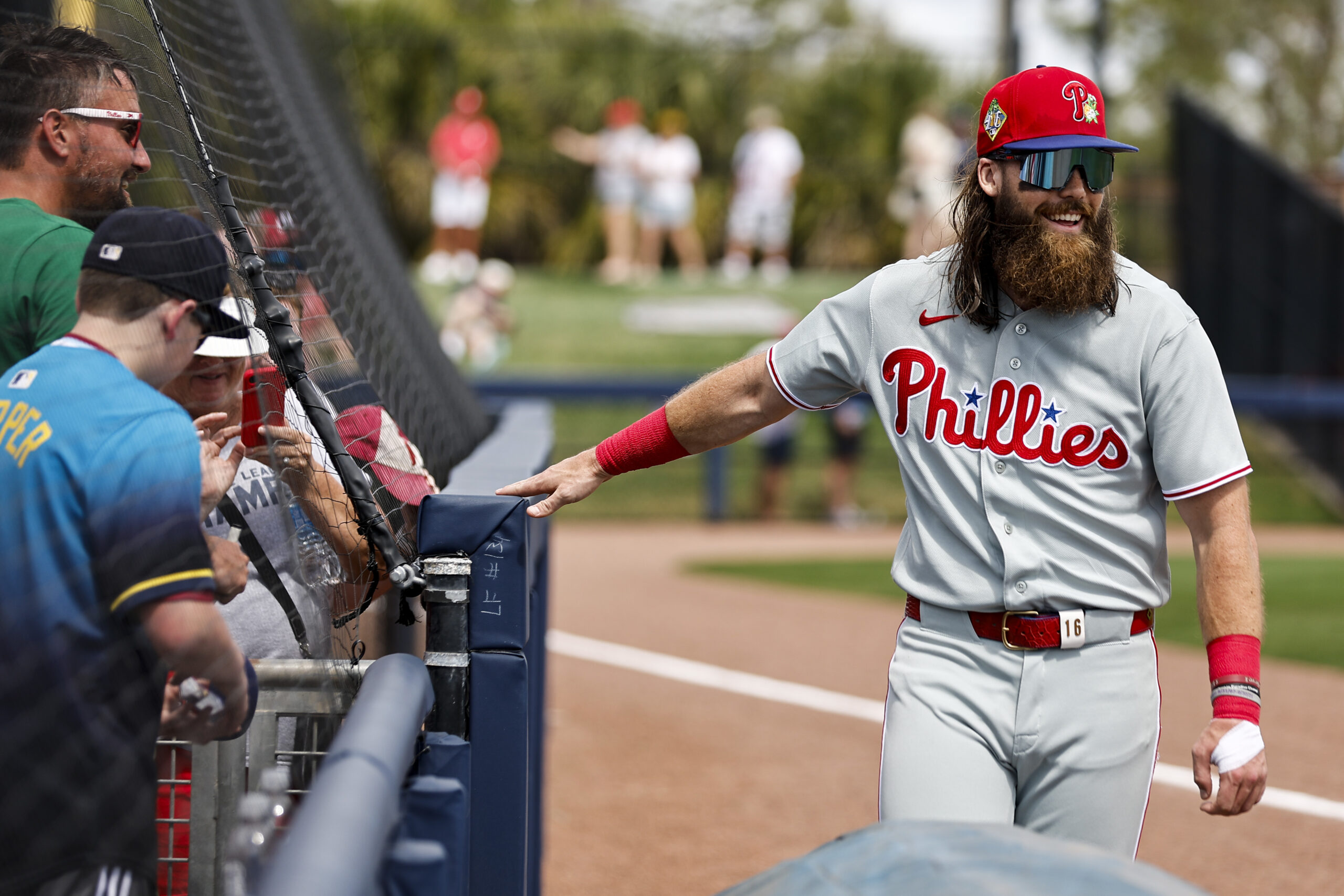
  • How Brandon Marsh is helping Phillies rookie Justin Crawford, from gifting suit jackets to road game carpools

    How Brandon Marsh is helping Phillies rookie Justin Crawford, from gifting suit jackets to road game carpools

    CLEARWATER, Fla. — A few days ago, a custom clothing vendor, Lindsey Tamblyn, came to BayCare Ballpark. Brandon Marsh was familiar with her work. When he was in the midst of his first spring training with the Phillies in 2024, J.T. Realmuto bought him one of Tamblyn’s suits.

    It made Marsh feel like part of the group. So much so that he “jumped on” Realmuto and hugged him afterward.

    When he heard Tamblyn was returning last week, Marsh decided to pay it forward. He walked up to 22-year-old prospect Justin Crawford.

    Marsh told him to pay a visit to Tamblyn, give her his measurements, and pick out any suit he wanted.

    “I said, ‘Go, get you a suit, bro,’” Marsh recalled, “‘because God willing we’re going to be in the playoffs again this year. And you’ve gotta look nice.’”

    Crawford, who describes his fashion sense as “basic,” picked out a sleek black jacket.

    “I told him he didn’t have to,” Crawford said, “but he insisted.”

    Crawford appreciated it. This is a big season for him. He is expected to be the Phillies’ opening day center fielder, a position that has been a persistent black hole for the last few years.

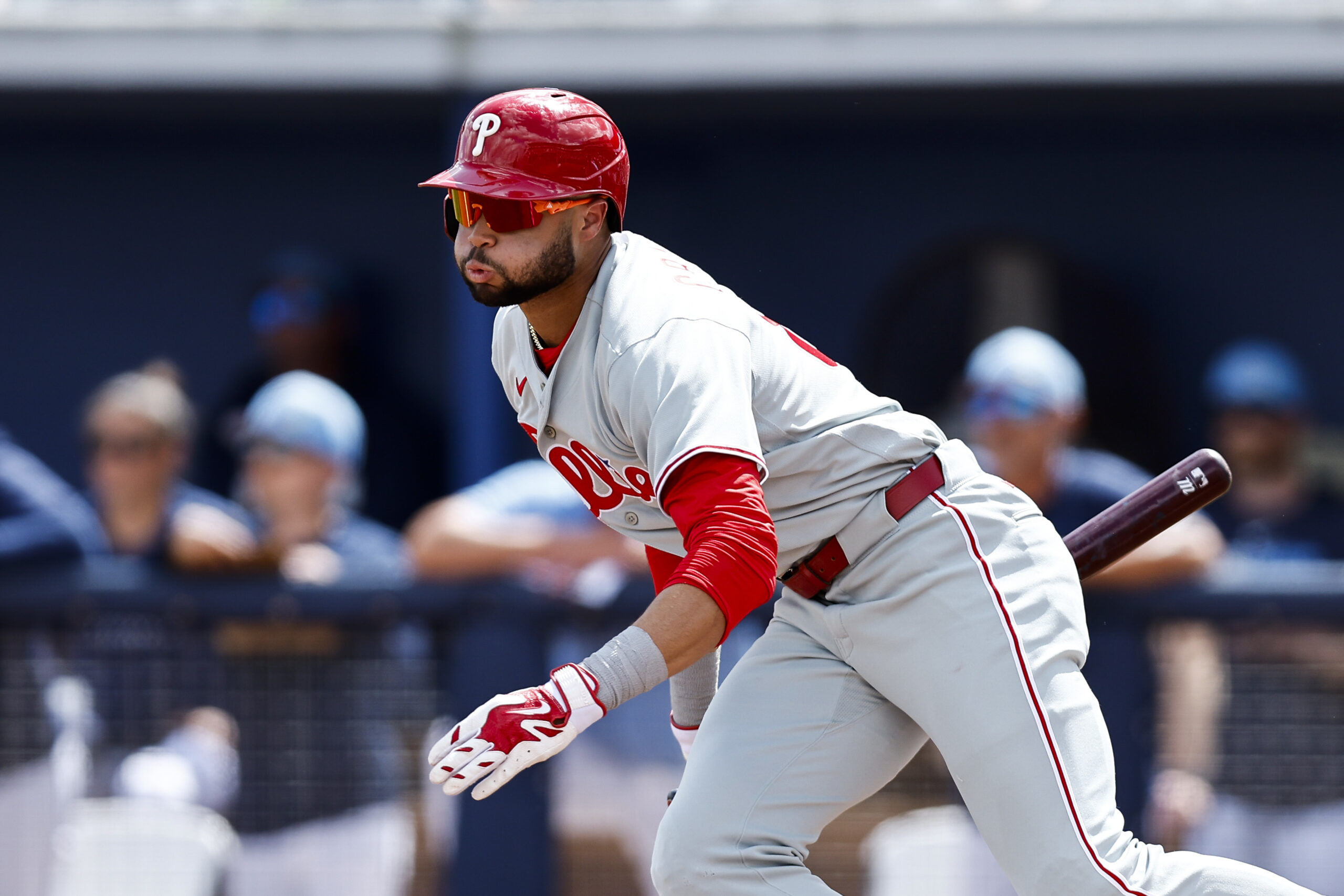
    Phillies center fielder Justin Crawford is slashing .316/.350/.474 through 19 at-bats this spring.

    If all goes according to plan, he would be the first 22-year-old everyday position player for the Phillies since Jimmy Rollins. It is a lot of pressure for someone who just a year ago got the right to legally drink.

    As a player, Crawford is polarizing. Much has been made of his ground-ball rate, which has steadily lowered as he’s climbed up the minor league ranks, but is still relatively high. In 2023, it reached 69.7% across single A and high A.

    Crawford dropped it to a career-low 59.4% at triple-A Lehigh Valley in 2025. He brings elite speed, and above-average contact skills. He hits the ball hard. But fans and pundits alike have questioned whether that matters if he can’t consistently lift it in the air.

    The prospect tries to avoid this chatter. He’s off social media, and has a good support system, full of former major league players: his father, Carl Crawford, his godfather, Junior Spivey, and his hitting coach, Mike Easler.

    “When you’re around people who know what they’re talking about, and have done it for a long time, [they] can keep you on that track,” Crawford said. “To be like, ‘No, forget what those people are saying. Just play your game. Be you.’ That’s probably the best advice I’ve received from anybody.”

    The Phillies have provided some support, too. Crawford said manager Rob Thomson called him this past winter. His message was for the prospect to “be himself” and get ready to compete for a starting role in camp.

    Thomson followed up after the Phillies signed Adolis García to play right field.

    “I called him again,” he recalled, “and said, ‘Look, this signing doesn’t mean anything for you. You’re still grinding for that center-field job.’”

    All of these gestures have made Crawford feel more confident this spring, in which he’s hitting .316/.350/.474 through 19 at-bats.

    But he’s developed a special kinship with the 28-year-old bearded outfielder.

    “Marshy’s a great guy,” Crawford said. “He really took me under his wing, honestly, since Day 1. So that’s someone I’m really fortunate to be around, and play next to, hopefully this year. He’s the best.”

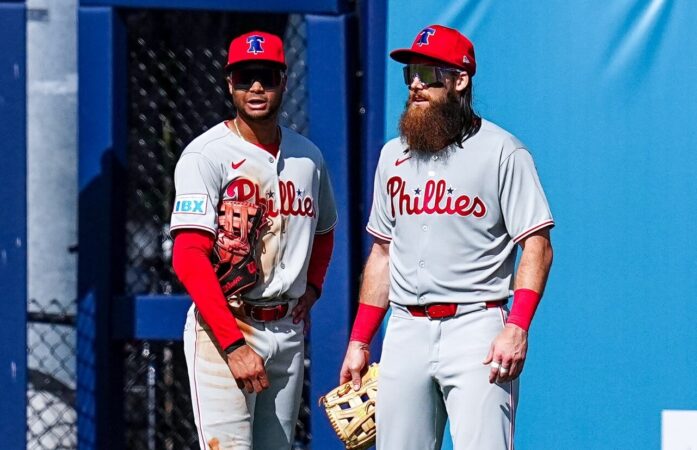
    Brandon Marsh “is the best,” says Justin Crawford, who has appreciated how his left fielder has looked out for him this spring.

    ‘I’ve got the aux’

    When Marsh was a 23-year-old rookie with the Angels in 2021, he had an abundance of veteran mentors to lean on. There was three-time MVP Mike Trout, Justin Upton, Dexter Fowler, and Jon Jay.

    All of these players helped him, in myriad ways, but with the same overarching message.

    “I was trying to be Super Man,” Marsh said. “They helped ease the game for me. And I’m just trying to do the same thing for J Craw.”

    With that in mind, Marsh made a point of introducing himself to Crawford early last spring. He went out of his way to make things easier for Crawford, like offering to drive him when the team traveled to different ballparks across the state of Florida.

    Thomson doesn’t allow players with less than three years of service time to drive themselves to road games. Crawford didn’t have any service time, so he assumed he’d have to take the bus.

    But Marsh presented another option. They’ve continued to stay carpool buddies this spring, and it’s allowed them more time to get to know each other.

    Of course, there were rules attached. Marsh would be in charge of the music, which in previous years might have meant a lot of Lil Uzi Vert. Now, not so much.

    “I still love Lil Uzi,” Marsh said. “But I’ve been on a huge Larry June and Freddie Gibbs kick. So, more of a smooth rap instead of … like, you know, bang your head off the front windshield.

    “But yeah, learning to find moments that are calm and stuff like that. I’ve got the aux.”

    Like the Angels veterans did with Marsh, he has encouraged Crawford to not put pressure on himself. To stay true to his game — regardless of what others think.

    He’s provided another support system for the young outfielder, within the clubhouse.

    To some, buying a suit jacket, or giving a pep talk, or making the two-hour drive to Port Charlotte, Fla., may not mean much. But to Crawford, it does. And he doesn’t take it for granted.

    “He’s just super genuine and super welcoming,” Crawford said of Marsh. “Those are the type of guys you want to be around.”

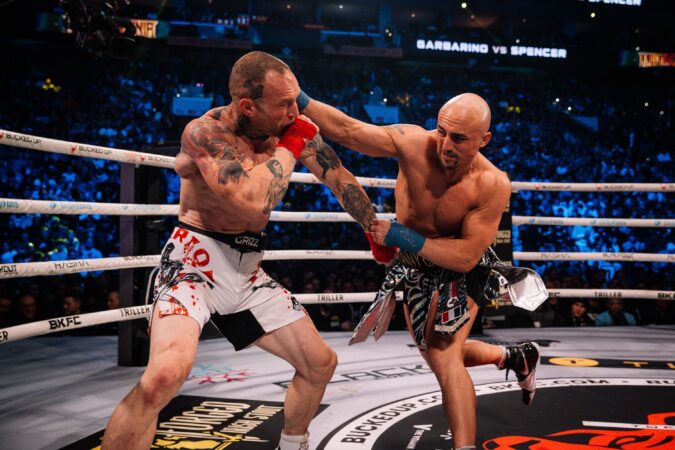
  • Flyers fight coach and bare-knuckle brawler Johnny ‘Cannoli’ Garbarino sparked a melee outside Barstool Sansom. It was caught on video.

    Flyers fight coach and bare-knuckle brawler Johnny ‘Cannoli’ Garbarino sparked a melee outside Barstool Sansom. It was caught on video.

    Last offseason, the Flyers brought in John Garbarino to help younger players hold their own during fights on the ice. He had an ideal resume for the job: The South Philly native is an undefeated middleweight in the Bare Knuckle Fighting Championship.

    But early Sunday morning, the fight venue was a narrow street in Center City, where the closing-time bar crowd watched Garbarino pummel the plexiglass vestibule of Barstool Sansom Street and scream obscenities at people inside.

    Garbarino, aka “Johnny Cannoli,” then destroyed an onlooker’s cell phone, sparking a seven-person fracas in the middle of the street.

    Part of the incident was captured in a two-minute video obtained by The Inquirer on Wednesday.

    The video shows that there were at least two uniformed officers at the scene, but they did not make any arrests. Instead, according to one eyewitness, an officer gave Garbarino a fist bump after the altercation.

    A police spokesperson said the incident is under investigation.

    Reached by phone Tuesday, before video of the incident surfaced, Garbarino denied hitting anyone and said that he was not the aggressor.

    “If anything, I broke it up,” he said.

    Although the police fist bump is not seen on video, Garbarino confirmed that it occurred and that the officer is a friend of his.

    Garbarino, 30, did not immediately return messages left Thursday morning about the video footage.

    After this story was published online, a Flyers spokesperson said Garbarino was retained for a one-time training last summer and was never paid by the team. “There is no ongoing relationship,” the spokesperson said.

    On Tuesday, Garbarino said that he had been a “special guest” at Barstool on Saturday night, and that he left for an hour before deciding to return “for another reason.” He declined to elaborate.

    According to a Barstool employee working that night, Garbarino and a group of associates were asked to leave the establishment at 2 a.m. because they had become unruly and it was closing time. Barstool management did not respond to a request for comment.

    The Barstool employee said once the group was outside, Garbarino and an unknown associate began violently pounding on the door to get back in — which is where video shot from across the street picks up. Garbarino can be seen unsuccessfully trying to force the door open.

    Marques Reed, who was working at a nearby bar, said people on the street started to film the two men thrashing at Barstool’s winter vestibule, causing the whole structure to shake.

    The video shows Garbarino — a former sous-chef at Del Frisco’s who later worked at Michelin-rated Alinea in Chicago — unloading on the vestibule with a half dozen punches and elbow strikes while yelling at Barstool staffers or bar patrons watching from behind wobbling plexiglass.

    After failing to break into Barstool, Garbarino stalks over to a group of onlookers.

    “Garbarino comes across the street and says, ‘I’ll knock you the f— out,’” Reed said.

    Garbarino then grabs an onlooker’s phone and spikes it onto Sansom Street, obliterating the device. That man goes after Garbarino as he is walking away, but a Garbarino associate grabs the man by the shirt collar. The man responds by throwing a punch at Garbarino’s associate.

    A third member of Garbarino’s group then punches the man whose phone was destroyed, and he falls down. He punches him again when he attempts to get up, sending him reeling backward and out of frame.

    Garbarino then appears to show restraint as he is face-to-face with a man he had shoved, and he seems to be trying to de-escalate the situation before walking away.

    Moments later, though, someone yells an obscenity at Garbarino, who reengages with the man with the broken cell phone. That man pushes Garbarino and takes a swing at him, missing. Garbarino tackles him to the ground.

    “John, don’t hurt him!” one of the men with Garbarino yells. Then, a woman with Garbarino kicks the man while he’s down.

    After they get up, Garbarino shoves another man in the face, then sucker punches the man he had tackled while he appears to be arguing with the woman.

    Garbarino on Tuesday vehemently denied throwing any punches and disputed a since-deleted Reddit post on the incident that described him as the aggressor. He said he was trying to defuse a situation he characterized as a “little scuffle.”

    “I can’t control the world,” he said. “I’m not a referee.”

    He did confirm one aspect of the Reddit post.

    “The only thing that was accurate was the fist bump from a cop,” Garbarino said. “He was a friend of mine.”

    Reed said he was troubled by the attack and the lack of action by police.

    “Why is this sanctioned bare-knuckle boxer wildin’ out at a bar, beating on a door, then beating people up? Didn’t he just have a fight not that long ago?” Reed asked.

    (He did, in fact: KnuckleMania VI, last month at the Xfinity Mobile Arena. Garbarino is now 4-0, having defeated Kaine Tomlinson Jr. by TKO in the fifth round.)

    “This dude was a maniac. He was going crazy,” one witness said of Garbarino. He asked not to be named because it could adversely affect his employment.

    The witness said he was shocked that police laughed it off and walked away.

    “Everybody was like, ‘You’re just letting him go?’” the man recalled bystanders asking police. “The cops kind of thought it was funny. That’s a very old-school Philly thing that I didn’t think was a thing anymore.”

    Eric Gripp, a police spokesperson, said that a complainant reported being assaulted shortly after 2 a.m. Sunday, and that the case is being investigated by Central Detectives. He declined to provide any additional details about the complainant or the alleged perpetrator, or comment on the police response at the scene.

    Garbarino, who grew up playing hockey, said given his “position with the Flyers” and his recent success in the Philadelphia-based Bare Knuckle Fighting Championship, he is trying to do “damage control” this week over the allegations in the Reddit post. He dismissed the claim that he knocked someone out as “a joke.”

    A representative for the Bare Knuckle Fighting Championship did not immediately respond to a request for comment.

    Garbarino said he would like to put the situation “to bed” as he pursues a world title.

    “I’m obviously a popular guy in Philly,” he said. “I know violence pretty well. Nobody got beaten severely.”

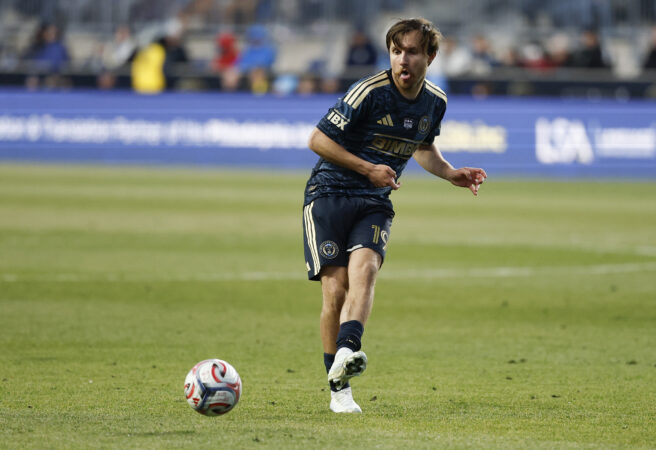
  • Indiana Vassilev has remained the engine driving the Union attack: ‘He’s been really important’

    Indiana Vassilev has remained the engine driving the Union attack: ‘He’s been really important’

    Indiana Vassilev is usually heard before he is seen.

    Whether it’s walking onto the Union’s training pitch, sitting inside the locker room, or on this particular day, bellowing a teammate’s name in song as loud as he could down a quiet, empty corridor — his is an energy everyone within the club seems to accept.

    Perhaps it’s in large part that all of that infectious, boisterous — and, in some cases, obnoxious — energy usually gets exorcised onto the pitch, where, since joining the team last season, he’s been the spark plug the Union have needed. People may forget that Vassilev arrived to the Union on a one-year guaranteed contract, with an option to extend into this season, and that certain performance metrics would play a huge part in the decision to retain him at the end of last season.

    He came as a bit of a controversial choice, too, coming in essentially to do the work of former midfielder Daniel Gazdag. Gazdag, who departed as the team’s all-time leading goal scorer, was sent to Columbus last April, just a month and a half after Vassilev’s arrival.

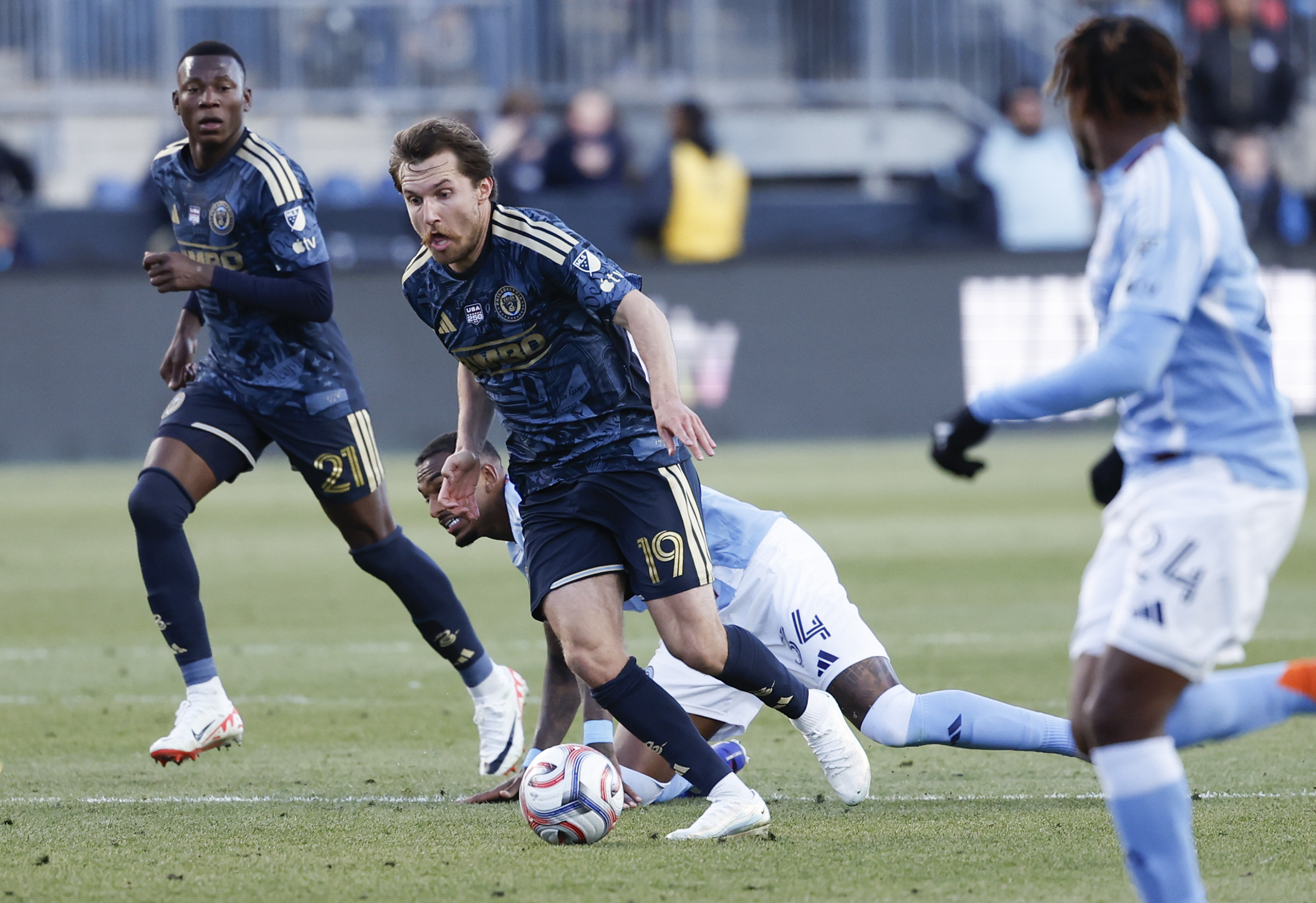
    Union midfielder Indiana Vassilev runs with the soccer ball past New York City FC defender Raul Gustavo during the team’s match at Subaru Park on Sunday.

    And while Vassilev hasn’t had the consummate goal scoring production Gazdag did, his unyielding work rate speaks for itself.

    “I mean, I would love to say that I’m a goal scorer and I get a lot of assists, [but] that’s just not really what I do,” said Vassilev. “I’m just trying to get in dangerous areas and progress the play. We have guys who are very, very good at it, guys like [midfielder] Quinn [Sullivan], who score absolute bangers, and put it away. That’s not my role, and I’m OK with that.”

    A pretty accurate representation of Vassilev’s role came in the team’s Major League Soccer home opener against New York City FC, in which he stepped up to score an 89th-minute penalty kick past goalkeeper and Wayne native Matt Freese. It underscored his immense work rate in that match. According to Opta statistics, over the last two matches, Vassilev’s passing in the final third has been nearly 82% effective, and in the open field, nearly 85% effective.

    A true box-to-box midfielder, Vassilev is one of a few players on manager Bradley Carnell’s roster that has the freedom to roam, where man-marking isn’t as important as breaking up attacks and then pushing forward Union attacks.

    “He’s a silent leader. OK, well, he’s not silent, trust me; he’s actually quite loud,” joked Carnell. “He jokes, but he goes about his business in the most distinguished way. He adds an immense amount of value on both sides of the ball. And I think he’s a good role model to have on the team … and he commits to everything we do. So, yeah, I think it’s safe to say he’s been really important.”

    Important could also be construed as “fits” the ultra-pressing attack-the-ball minded system Carnell has employed since his arrival last year. It’s a style Carnell knew Vassilev would fit from his time as head coach of St. Louis City SC, in which he led to a record start as a Western Conference expansion team in its first MLS season.

    It’s why it didn’t take Vassilev, who played under Carnell in St. Louis from 2023-24, long to retrofit himself into the Union. If you ask Vassilev, it was Carnell that brought him here, but the team comradery has fueled his intentions to remain in Chester.

    “I’m a big locker room guy, I’m big about culture,” Vassilev said. “It was really easy for me to transition to, you know, this locker room and to feel comfortable and, I feel like once you feel more comfortable, you get to be your true self. And that happened quite quick for me because of how good the guys were in here.”

    Union midfielder Indiana Vassilev (center) celebrates his second half penalty shot goal with teammates defender Nathan Harriel (left) and forward Sal Olivas against New York City FC on Sunday.

    His transition period is over and Vassilev has remained a consistent part of the team’s lineup. Vassilev, a native of Savannah, Ga., has grown an affinity for Philadelphia.

    “​​I love Savannah, Georgia, that’s where I was born and raised,” said Vassilev. “I love the South but Philly’s not too bad of a city. I actually really enjoy it. It’s firmly second in the places I’ve lived. I’m a Savannah guy, but Philly is cool and our fans are incredible.”

    It’s still early to tell what the Union will amount to this season. The team bid farewell to several core players that were instrumental in bringing the club its second Supporters’ Shield last season and are trying to get new faces to jell into its system. But Vassilev said all of that comes in training, where according to him, those sessions can be even tougher than some matches.

    “Our training environment is super, super intense,” he said. “Sometimes, you know, we fight, we argue, we kick each other. But of course, that’s what makes us so good. Our internal competition is so high. I think that’s, you know a big part of our success.”

    Indiana Vassilev (right) in action for the Union against FC Nordsjælland in a preseason soccer game at the Marbella Football Complex in Marbella, Spain.

    That internal competition will need to intensify as the Union look to shake off an 0-2 start to its MLS campaign. Next up, San Jose visits Subaru Park on Saturday (7:30 p.m., Apple TV), before the second round of the Concacaf Champions Cup action resumes against Liga MX giant Club America on March 10 (7 p.m., FS2).

    “He’s one of our 10s and I think all of our 10s play a special role in the system,” said Carnell, referring to the responsibilities of a playmaking midfielder. “Our 9s (forwards) and our 10s, I think they have to give so much more, and sometimes they don’t receive all the output that they’re giving, right?

    “But I think we saw last season that over the course of the season, you’ve seen what benefits the whole team and what gets us, you know, some silverware and hopefully a deep run in the playoffs. His skills and leadership is a big part of that and some one that we believe has the tools to help us get there.”