Tag: topic-link-auto

  • Johan Rojas back in Phillies lineup amid reported appeal to 80-game suspension for failed drug test

    Johan Rojas back in Phillies lineup amid reported appeal to 80-game suspension for failed drug test

    CLEARWATER, Fla. — Johan Rojas walked to his locker in the Phillies clubhouse just before 11:30 a.m., with his duffel bag slumped over his shoulder.

    On a normal day, this would not be notable, but Wednesday was hardly a normal day. Less than 24 hours earlier, news broke that Rojas had reportedly tested positive for a performance-enhancing drug.

    A source told The Inquirer that the center fielder would appeal the 80-game suspension, which would explain why he was back with his team the following morning. No ruling has been made on Rojas’s suspension.

    Until there is one, he will continue to work out at the Phillies’ spring training complex and play in Grapefruit League games. The team didn’t waste any time in getting him back in the lineup.

    Rojas batted seventh in Wednesday’s exhibition game against Team Canada. When asked pregame if he had a comment on his reported appeal or potential suspension, Rojas said he had to get ready for the game.

    When asked if he’d comment after the game, he declined.

    The ball found him on the first pitch. In the top of the first inning, Canada DH Edouard Julien drove an Aaron Nola fastball to deep right center field.

    Rojas got a good jump, sprinting toward the wall and diving on the dirt to make the first out of the game. He finished his day going 1-for-2 with an RBI after knocking a hard-hit double to center field in the fourth.

    After the game, manager Rob Thomson reiterated that the only information he has about Rojas’ status is what he’s read through reports.

    “I don’t know anything about the appeal,” he said. “We know nothing about … I said yesterday, we read the reports, but nobody from Major League Baseball has told us anything.”

    It’s unclear how long the appeal process will take. The ruling will be decided by a neutral arbitrator, per the Major League Basic Agreement.

  • Major historical documents start journey across U.S. as part of nation’s 250th anniversary celebration

    Major historical documents start journey across U.S. as part of nation’s 250th anniversary celebration

    Some of the United States’ most important historical documents are embarking on a first-of-its kind journey as part of the country’s 250th anniversary commemoration.

    Typically housed in highly controlled vaults under the watch of preservation experts at the National Archives, documents such as the 1783 Treaty of Paris that formally ended the Revolutionary War and the 1774 Articles of Association that urged colonists to boycott British goods are rarely moved.

    But those documents, signed by George Washington, John Adams, Benjamin Franklin, and other American revolutionary leaders, will be making their way across the country and put on display for free at local museums.

    “It’s tangible history, and tangible history inspires,” said Jim Byron, senior adviser to the acting archivist of the United States. “These documents have not traveled, and they’ve certainly not traveled collectively, ever. They are here in vaults.”

    The Boeing 737 “Freedom Plane” transporting the documents is just one of many events and activities planned across the country to mark America’s forthcoming 250th anniversary celebrating the signing of the Declaration of Independence on July 4, 1776, in Philadelphia. A congressionally chartered commission, America 250, and a separate White House-led initiative, called Freedom 250, are both coordinating events, an overlap that has faced some criticism in Washington.

    Among the planned activities are a fleet of mobile museums driving across the country, a story collection initiative, and a Great American State Fair on the National Mall in Washington. President Donald Trump has even announced plans for a “Patriot Games” sporting event featuring high school athletes and a UFC mixed-martial arts fight at the White House.

    The “Freedom Plane” departed Ronald Reagan Washington National Airport on Monday en route to its first stop in Kansas City, Mo., where the documents are being transferred to the National WWI Museum and Memorial. The records include a rare original engraving of the Declaration of Independence printed in 1823 from a copperplate of the original; the Oaths of Allegiance, signed in 1778 by George Washington, Alexander Hamilton, and other officers of the Continental Army; and a rare draft copy of the U.S. Constitution that includes handwritten notes by the delegates.

    Other planned stops will be in Atlanta, Los Angeles, Houston, Denver, Miami, the Detroit suburb of Dearborn, and Seattle.

    “The reality that these documents are leaving D.C. and coming to the heartland is fantastic,” said Matt Naylor, president and CEO of the National World War I Museum and Memorial, where they will be on display for a little over two weeks starting Friday. “There’s a lot of excitement about that and a lot of talk in and around the city about what that means.”

    Naylor said the early response has been overwhelming. Local schools have already booked visits for more than 5,000 schoolchildren.

    “That’s indicating that there’s a lot of enthusiasm for this,” he said.

    The “Freedom Plane” tour was inspired in part by the “American Freedom Train” that toured 48 states in 1975 and 1976 as part of the country’s Bicentennial celebration. It carried various pieces of American history, including the original Louisiana Purchase documents, Judy Garland’s dress from The Wizard of Oz, and Jesse Owens’ gold medals from the 1936 Olympic Games.

  • Rep. Gonzales faces ethics investigation over allegations of affair with aide

    Rep. Gonzales faces ethics investigation over allegations of affair with aide

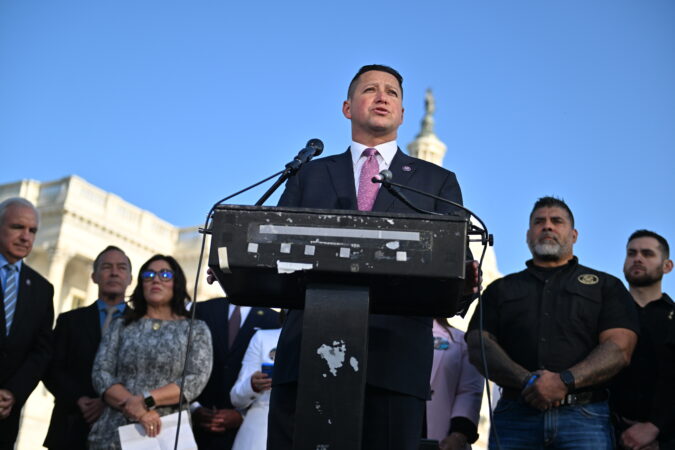
    The House Ethics Committee will investigate allegations that Rep. Tony Gonzales (R., Texas) had an affair with a former staff member who later died after setting herself on fire, the committee said Wednesday, ensuring that the scandal that has dogged Gonzales through his bitter primary race will continue to factor heavily as he heads into a runoff.

    An investigative subcommittee will look into allegations Gonzales “engaged in sexual misconduct towards an individual employed in his congressional office” and “discriminated unfairly by dispensing special favors or privileges,” Rep. Michael Guest (R., Miss.), chair of the Ethics Committee, wrote in a letter Wednesday.

    Under House rules, lawmakers are not permitted to engage in sexual relationships with staff.

    Gonzales, a married father of six, has been accused of having an improper relationship with a then-aide, Regina Ann Santos-Aviles, who died in September after lighting herself on fire in her backyard. Her death was ruled a suicide.

    Since then, the former aide’s estranged husband has shared text messages that showed Gonzales pressing Santos-Aviles for a “sexy pic” and asking her about her favorite sex position. Santos-Aviles pushed back against the lawmaker, writing, “This is going too far boss,” at one point in the May 2024 conversation.

    Gonzales recently declined to say whether the messages are authentic.

    Gonzales has denied any wrongdoing or improper relationship with Santos-Aviles, and he adamantly refused calls to resign from Congress or to end his reelection bid — several of which came from his Republican colleagues.

    Representatives for Gonzales’ office did not immediately respond to requests for comment Wednesday.

    House Speaker Mike Johnson (R., La.), who is holding onto a razor-thin majority in the House, has called the accusations against Gonzales “very serious” but not called on Gonzales to step aside, saying the issue would “play out” in his reelection bid.

    Gonzales on Tuesday fell short of the majority vote required to avoid a runoff. Now he will face off against the other top finisher in the GOP primary, Brandon Herrera, a YouTuber with a gun business who calls himself “the AK Guy.” Herrera maintained a narrow lead Wednesday morning with most of the votes counted.

    The Office of Congressional Conduct, a nonpartisan office governed by a board of private citizens, had begun looking into allegations against Gonzales in November, according to the San Antonio Express-News, and it was required to refer the matter to the House Ethics Committee by Wednesday for either further review or dismissal.

    Under House rules, the Ethics Committee has up to 90 days to release the OCC’s report — unless it creates an investigative subcommittee, as it has this time, in which case it still must release the OCC’s findings within a year. Members of the investigative subcommittee have not been selected yet, Guest said Wednesday, suggesting findings of the investigation will not be made public very soon. There is no timeline for Ethics Committee investigations, which can take months.

    Rep. Nancy Mace (R., S.C.), one of the GOP lawmakers who has called on Gonzales to resign, introduced a resolution last week that would compel the Ethics Committee to release, within 60 days of adoption, all reports related to sexual harassment violations involving lawmakers, their staff members, or lobbyists.

    “I mean, literally, [Santos-Aviles] killed herself in the most heinous way,” Mace told Fox News on Tuesday, referring to the Gonzales allegations that she said had motivated her to introduce the bill. “She literally lit herself on fire and died, and we’re just going to sit here and say, ‘Let the process play out’? No.”

    Voters do not always punish scandals, and this was apparent Tuesday night in other Texas primary races. Rep. Henry Cuellar (D., Texas) handily defeated a primary challenger, despite being charged in 2024 with bribery, money laundering, and conspiracy and being pardoned by President Donald Trump last year.

    Texas State Attorney General Ken Paxton, who faced a lengthy impeachment trial and a very public divorce in which his wife accused him of adultery, nevertheless will head into a runoff against Sen. John Cornyn (R., Texas) for his seat after neither captured a majority of the vote Tuesday.

  • Top defense officials push back on concerns about U.S. munitions shortage

    Top defense officials push back on concerns about U.S. munitions shortage

    The Pentagon is rapidly burning through its stocks of precision weapons less than a week into the massive campaign of airstrikes against Iran, while also expending sophisticated air defense missiles at a rate that puts the U.S. military potentially “days away” from having to prioritize which targets to intercept, according to three people familiar with the matter.

    The scope of “Operation Epic Fury,” which U.S. Central Command’s Adm. Brad Cooper says has hit more than 2,000 targets so far, is forcing U.S. military commanders to make difficult calculations about how quickly their Iranian adversaries will burn through their own munitions — even as President Donald Trump says the war may last four to five weeks.

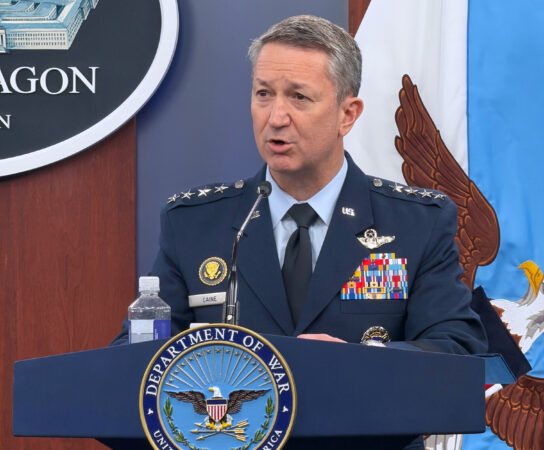
    Top Pentagon leaders dedicated considerable time at a news briefing Wednesday morning to addressing worries the military is reaching too deeply into its inventory at the cost of readiness. “We have sufficient precision munitions for the task at hand, both on the offense and defense,” said Gen. Dan Caine, chairman of the Joint Chiefs of Staff, without offering specifics or numbers.

    The United States will rely on its larger stores of less-sophisticated weapons as Iranian defenses are degraded in the coming days, allowing American forces to get closer for their attacks, he said.

    “The hardest hits are yet to come from the U.S. military,” Secretary of State Marco Rubio told reporters Monday before a classified briefing with select lawmakers.

    In retaliation, Iran has launched thousands of one-way attack drones and hundreds of missiles at an array of U.S. military installations and civilian targets across the region, including in Bahrain, Kuwait, Iraq, Israel, and the United Arab Emirates. At least six U.S. troops were killed in a drone attack in Kuwait, and U.S. Embassies in Riyadh, Saudi Arabia, and Kuwait City have come under Iranian fire.

    So far, the U.S. military has expended hundreds of its most sophisticated munitions, including Patriot and Terminal High Altitude Area Defense (THAAD) interceptors — considered the world’s premier missile defense systems — and Tomahawk cruise missiles aimed at Iranian leaders and ballistic missile sites, four people familiar with Pentagon assessments said, speaking on the condition of anonymity to discuss the highly sensitive numbers.

    Late Monday night, Trump posted on social media that the U.S. inventories of “medium and upper medium grade” munitions are “virtually unlimited” and could sustain the pace of attacks in Iran indefinitely. He also wrote that weapons at “the highest end” are in “good supply, but are not where we want to be.”

    A spokesperson with U.S. Central Command, which oversees operations in the Middle East, referred questions to the Pentagon.

    A Pentagon spokesperson, Sean Parnell, said in a statement Tuesday that the military “has everything it needs to execute any mission at any time and place of the President’s choosing and on any timeline.” Trump and Defense Secretary Pete Hegseth, Parnell added, “have made restoring American military dominance their top priority from day one, and American dominance has been proved again and again following every major military operation under this administration.”

    Behnam Ben Taleblu, who tracks Tehran’s weapons programs at the Foundation for Defense of Democracies, a think tank, said Iran had more than 2,000 ballistic missiles before the conflict began and “many more-fold” drones.

    “It is very apparent it has learned lessons from the 12-day war” in June and is trying to use its weaponry more efficiently, Taleblu said.

    Iran, he said, is targeting the United States’ Persian Gulf allies with low-cost drones to terrorize and exhaust limited air defenses, while focusing its ballistic missile attacks on Israel.

    “Iran is firing smaller volleys of missiles, signaling an interest in preserving their stocks while still testing and attriting Israel’s air and missile defenses,” Taleblu said. “The goal over time is to make Israel focus its dwindling interceptor stocks on defending smaller patches of terrain.”

    “Iran is conscious of missile math, perhaps more so than ever before,” he said.

    For the U.S., the trends underscore the urgency of an “effective defanging operation” that aggressively destroys Iran’s missile caches and infrastructure, he added.

    The rate at which the U.S. military is expending its most sophisticated munitions has slowed since the first day of the conflict, in which Iran fired many of its highest-end weapons, a U.S. official said, noting that the pace has not fallen “dramatically.”

    In the days since, the U.S. and Israel have established air superiority, allowing fighter jets to soon fly closer to targets and use less expensive munitions such as precision-guided glide bombs, the official said, speaking on the condition of anonymity to describe ongoing operations.

    Hegseth said Wednesday that the Pentagon would increasingly rely on massive GPS-guided gravity bombs, “of which we have a nearly unlimited stockpile,” and that the military would “no longer need” to dip into its inventory of more sophisticated weapons.

    “Iran cannot outlast us,” Hegseth said.

    U.S. munitions stocks have been depleted by years of trade-offs in the defense budget, aid to countries such as Ukraine, and more recently the Trump administration’s vast use of the military to carry out its foreign policy. After little more than a year in office, Trump has launched attacks in seven countries — Iraq, Iran, Nigeria, Somalia, Syria, Venezuela, and Yemen — and fired dozens of missiles in more than 40 strikes on alleged drug traffickers at sea around Latin America.

    “When you combine the amount of munitions that we have spent over the last year attacking the Houthis, the amount of munitions that are spent on … the seven different military conflicts the president has put America into, our munitions are low,” Sen. Mark Warner of Virginia, the ranking Democrat on the Senate Intelligence Committee, said after attending the briefing with Rubio and other top Trump officials Monday.

    The Washington Post previously reported that Caine warned Trump ahead of the operation that an extended campaign posed acute risks for the U.S. military, including a drain on its limited stores of precision weapons, according to multiple people familiar with the discussions.

    Following classified briefings before each chamber of Congress on Tuesday, Sen. Andy Kim (D., N.J.) said he asked Caine about the number of munitions the U.S. has depleted compared with Iran. The general, Kim said, did not provide specifics but was not “raising alarms himself” while speaking with lawmakers.

    Still, the scarcity could intensify a long-term problem for America’s ability to deter a conflict with China, particularly around the self-governing island of Taiwan, where Beijing has hosted increasingly complex and aggressive military drills in recent years.

    Two of the people familiar with the U.S. inventories said that an extended conflict in the Middle East could require drawing down munitions stocks in the Indo-Pacific region. A separate U.S. official, speaking on the condition of anonymity to describe the sensitive state of munitions, said that inventories were so thin that a lengthy campaign against Iran would not leave enough munitions for other threats, especially China.

    The first U.S. official said that senior U.S. military leaders around the world are making decisions now about where to reallocate munitions, based on assessments of how far they can dip into stockpiles.

    Warner and House Speaker Mike Johnson (R., La.) said that the operation will almost certainly require Congress to pass supplemental money for the Defense Department to replace stocks spent during the attack, though the specific dollar figure would depend on the length of the ongoing campaign in Iran.

    Sen. Chris Coons of Delaware, the top Democrat on the Senate Appropriations defense subcommittee, has asked the administration to provide the cost of munitions expended in the war, and said he expects the supplemental funding request to be “in the billions” of dollars.

  • Andre Drummond always wanted a signature shoe. Instead, he got an entire brand.

    Andre Drummond always wanted a signature shoe. Instead, he got an entire brand.

    Andre Drummond was in the 76ers’ locker room after shootaround on Tuesday when a couple of his younger teammates approached the center about his recent shoe deal news.

    “All the young guys are already asking me for shoes like, ‘Yo, you signing guys?’” Drummond said with a laugh during a video call with The Inquirer. “I said, ‘Listen, man, I just announced it yesterday. Let me get my things in the works.’”

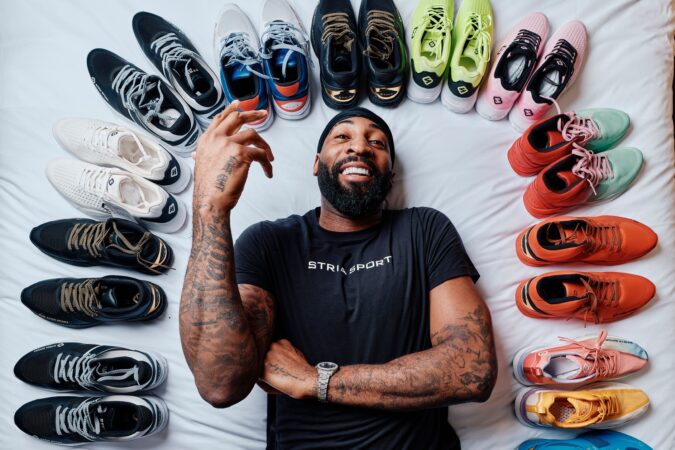
    Drummond’s teammates were referring the Sixers center’s big news, which was announced a day earlier. The 14-year NBA veteran joined Stria Sport, a Chicago-based apparel and shoe company, as the company’s creative director and investor. Stria Sport, founded by Eric Porter in 2021, is described as an “athlete led performance, footwear, and apparel brand,” and has its roots in basketball, but has also released walking and pickleball shoes.

    When his deal with the Jordan Brand was set to end two and a half years ago, Drummond, a two-time All-Star, began searching for his next move and had one goal in mind for his next sports apparel deal.

    “I always had this dream in my mind of getting my signature shoe and I’m like, ‘Damn, how do I get to this goal?’ And it’s not going to get it through Nike, obviously, they have a ton of guys already. Jordan already has a ton of signature athletes already. I was with Adidas already,” Drummond explained. “I don’t think people in general understand how difficult it is to have your own signature shoe. And not only just one, having your own signature, but two, getting it to sell.”

    As Drummond scrolled social media, he noticed that his stepbrother, Xavier Rathan-Mayes, who plays professional basketball overseas, was a Stria Sport athlete and thought his shoes “were kind of cool.” He quickly sent out a message to Porter, but Drummond says the timing wasn’t yet right for a partnership.

    A few months ago, Porter reconnected with Drummond to offer the Sixers’ center an opportunity to have a signature shoe and an equity stake in Stria Sport, which is also the official performance shoe for the Harlem Globetrotters’ 100th season. Drummond called the proposal “a home run.”

    Eric Porter (left) and Andre Drummond will work together closely on Porter’s brand Stria Sport.

    “We’ve been very patient on who we want to partner with,” Porter said. “We spent the last couple years really laying out our foundation of where we really want to take this thing and what is our niche. To me, we’re partnering with Andre Drummond the creative, more than just the basketball player. … Very few people make [it to] the NBA, and he’s worn all these brands. And who else would you rather get information from than someone who’s been doing this their entire life? And so it’s exciting that he gets to bring his experience with my experience, and we’re teaming up.

    “This isn’t just a shoe endorsement deal or he has equity. It’s, he’s going to be overseeing everything, and that’s what he had asked. He was like, ‘I don’t want to just do my own shoe, and that’s it. He wants to be a part of it all.’”

    For Drummond, who is averaging 6.8 points and 8.6 rebounds across 46 games for the Sixers, the opportunity to be hands-on in the process of creating a signature shoes and building up the brand was a key part of joining Stria Sport. He’ll be a key decision maker for not only the brand’s basketball division, but will work directly with its pickleball players, including Gabe Tardio, the No. 1 ranked men’s doubles pickleball player in the world.

    Beyond having a signature shoe, Drummond says he wants “to fully immerse myself and truly show the brand that I believe in it.”

    “This is something I want to pass down to [my kids]. It’d be cool for them they play basketball to have their own shoe. Who can say that?” Drummond said. “That’s when people can go to school and say, ‘Damn, I got my own shoe. Like, my dad owns a shoe company.’ Like, that’s not normal. So for me, that’s how I envision it. I’m thinking about the later in life.

    “It’s about building a community, building something that’s way bigger than the Andre Drummond brand … I’m not doing it to get fans. I’m not doing it for people to just buy my shoe. I want to build a real, organic community of people who genuinely care about what this brand is about.”

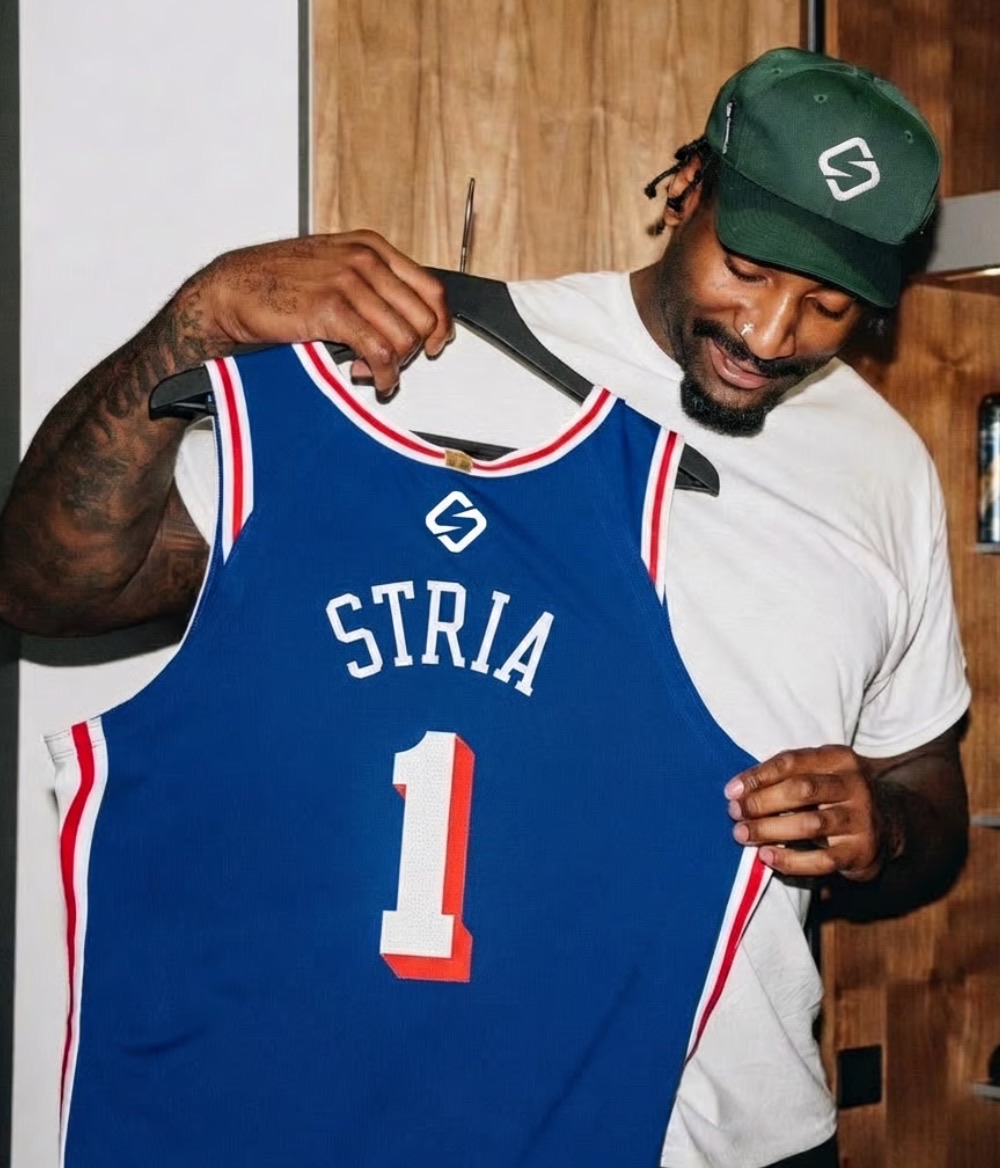
    Andre Drummond signed on with Stria Sport on Monday as the company’s creative director.

    The next step for Drummond and Porter is creating a signature shoe for the 6-foot-11 center, which they say is already in “the design and development stage now.” Drummond, who will be an unrestricted free agent this year, hopes to unveil the shoe by the beginning of the next NBA season, with plans to tease the shoe throughout the summer and training camp.

    There are also plans for Drummond and Porter to expand and bring on more athletes down the line, too.

    “People want to be different, and not everyone wants to wear what everyone else is wearing. And that’s where we’ve had our success,” Porter said. “The notion of being different, and having the confidence to wear something that no one else is wearing, or because we’re a smaller brand giving us a chance. We’re confident in what we’re making, I think what we have in the works right now over the next 12 months, is really exciting.

    “We are going to look to grow, whether it’s bringing on more athletes, signing teams, groups. All of that is in the works.”

  • Rob Mac’s Wrexham AFC will play at Subaru Park this summer

    Rob Mac’s Wrexham AFC will play at Subaru Park this summer

    Wrexham AFC, the Welsh soccer team owned by Philadelphia native Rob Mac (the former Rob McElhenney), is coming back to town this summer.

    And this visit will be its highest-profile one yet.

    Subaru Park will host a friendly between Wrexham and Sunderland of the English Premier League at 7 p.m. on Aug. 2. And the Red Dragons also could be a Premier League team by then. They’re currently sixth in England’s second-tier Championship with 11 games to go. If they hold on, they’d go into the playoffs for promotion to the top flight.

    Wrexham will play three games in the U.S. this summer, all on the East Coast, with the final match here. It also will face Leeds United on July 25 at Tampa’s NFL stadium and Liverpool on July 29 at New York’s Yankee Stadium.

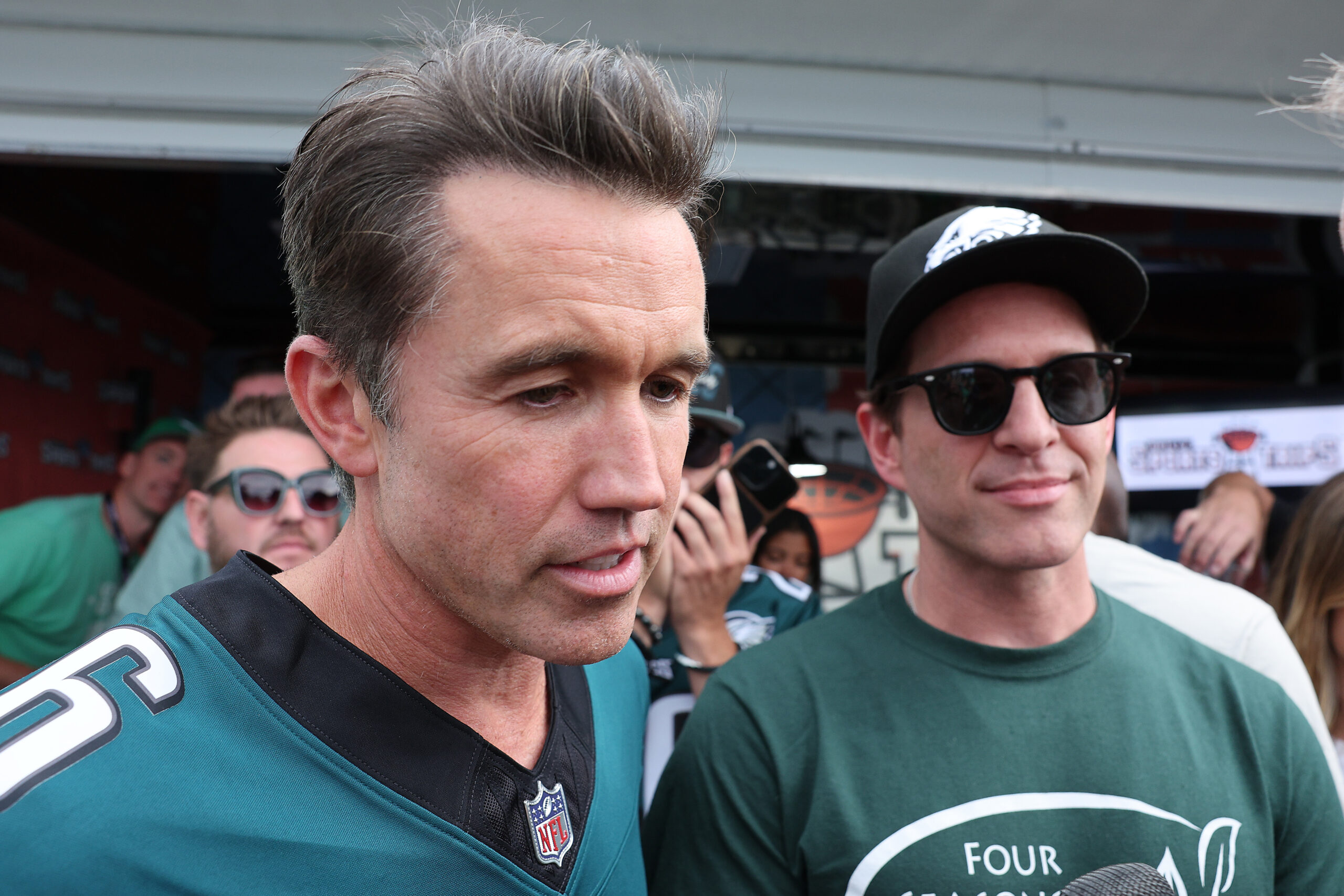
    Rob Mac (left) at a tailgate event for his beloved Eagles last fall.

    Wrexham last came to Subaru Park in the summer of 2023. At the time, the club had just been promoted from England’s fifth tier to its fourth, League Two, so it played the Union’s reserve team instead of a higher-level squad. But the game still drew around 15,000 fans, with the vast majority wearing red. Mac called it “a dream come true.”

    Liverpool’s visits to the United States always draw big crowds, with Philadelphia among the examples. Two years ago, the Reds’ friendly against Arsenal drew 69,879 fans to Lincoln Financial Field, the largest soccer crowd in the stadium’s history. That record likely will stand for a while, since see some seats will removed near the field for security and logistics reasons because of the World Cup.

    Leeds coming over also will be of interest. It’s the first time the historic English club has come to the United States since its return to Premier League prominence in 2020. (In fact, it will be Leeds’ first visit to the U.S. in 29 years.)

    It could also be the first time Medford native Brenden Aaronson plays in the U.S. with Leeds, if he stays at the club through the summer and depending on his summer schedule post-World Cup.

    Medford’s Brenden Aaronson (left) playing for Leeds United against Manchester United in January.

    After facing Wrexham, Leeds will play Sunderland in Harrison, N.J., on July 30, just 11 days after the World Cup final in nearby East Rutherford. They’ll then head to Chicago to play Liverpool at Soldier Field on Aug. 2.

    The Union are off on July 30, which would make it easier for fans around here who want to see Aaronson play in person.

    Kickoff times and broadcast details aren’t set yet.

    All of the games are being run by TEG Sport, the promoter that brought Arsenal-Liverpool here. The company will open up presale tickets on March 10, and fans can register here. Sales to the general public will start March 12.

    Wrexham’s friendly against the Union’s reserve squad in 2023 drew over 15,000 fans to Subaru Park, the vast majority rooting for the Welsh club.

    The full schedule of games in the tour is below.

    Saturday, July 25: Wrexham vs. Leeds United at Raymond James Stadium, Tampa, Fla.; Liverpool vs. Sunderland at GEODIS Park, Nashville

    Wednesday, July 29: Liverpool vs Wrexham at Yankee Stadium, New York

    Thursday July 30: Leeds United vs. Sunderland at Sports Illustrated Stadium, Harrison, N.J.

    Sunday, Aug. 2: Sunderland vs. Wrexham at Subaru Park; Leeds United vs Liverpool at Soldier Field, Chicago.

  • Bettors wagered $54 million on Khamenei’s death. Now they’re not getting paid.

    Bettors wagered $54 million on Khamenei’s death. Now they’re not getting paid.

    When he learned last weekend about the killing of Iran’s Ayatollah Ali Khamenei, the Israeli American business executive in New York was excited to cash in.

    On the prediction-market site Kalshi, the executive — who spoke on the condition of anonymity due to concern over what his friends would think — had placed two bets, totaling $3,460, that Khamenei would be “out as Supreme Leader” by March or April 1. His Kalshi app placed green check marks next to his bets, indicating he had won payouts worth more than $63,000.

    Minutes later, however, Kalshi froze the $54 million trade for everyone who bet on that scenario, saying the site does not allow transactions “directly tied to death.” The change triggered an online uproar, as Kalshi users flooded social media to argue the site had unfairly robbed them of winning bets.

    “I was booking my trip to Courchevel,” the French Alps ski resort, he said jokingly to the Washington Post. “Then they changed the rules … and everybody got screwed.”

    The outrage has intensified scrutiny into the explosive rise of prediction markets, which run like traditional sportsbooks but allow people to gamble on elections, international affairs, and real-world events.

    Supporters of Kalshi and its biggest competitor, Polymarket, have defended the sites as game-like platforms for following and perhaps profiting off the news. But critics like Sen. Chris Murphy (D., Conn.) have said they are creating a more “dystopian world” by helping people gamble on life-and-death crises and military assaults in a way that could incentivize political violence.

    “This is American commercial immorality on steroids,” Murphy said in an interview. “Once events that involve good and evil simply become a financial product, I don’t know how right and wrong matters any longer. … People shouldn’t be rooting for people to die because they placed a bet.”

    Kalshi heavily promoted the trade to bettors on its home page and app and in push notifications before Khamenei’s death was publicized. Kalshi also tweeted the morning of the strike that the odds “Khamenei is out as Supreme Leader have surged to 68%,” along with a disclaimer that Kalshi did not broker trades that “settle on death.” In a follow-up, the company said the post was “grammatically ambiguous” and offered to reimburse traders’ lost value.

    Murphy said in an interview he is drafting legislation that would broadly ban prediction-market trades related to government actions, saying they could corrupt public decision-making by allowing military or government officials to profit off secret information.

    Polymarket said in August that the president’s eldest son, Donald Trump Jr., had joined its advisory board, and a handful of recent bets on the administration’s moves have sparked public accusations of insider trading.

    The analytics firm Bubblemaps said it found six “suspected insiders” on Polymarket that had made $1.2 million by betting that the U.S. would hit Iran by Feb. 28, the date that Operation Epic Fury began. All of the accounts were made last month and bet exclusively on Iran-strike timing; some of the bets were made within hours of the first explosions in Tehran. One account bet $60,000 and won $560,000.

    Murphy said in an online post that the trades indicated “people around Trump are profiting off war and death.” Davis Ingle, a White House spokesperson, said on Monday that “the only special interest guiding the Trump administration’s decision-making is the best interest of the American people.”

    Polymarket did not respond to questions about whether it knew or would help investigate whether the account holders had internal knowledge of the military campaign. Donald Trump Jr. did not respond to requests for comment.

    A similar debate played out in January when an anonymous Polymarket trader won roughly $400,000 after successfully predicting, within a few hours, the timing of Venezuelan President Nicolás Maduro’s capture. The Defense Department said then that it prohibited personnel from using classified information for personal gain.

    In the case of Khamenei, Kalshi has argued that the trade, known as an “event contract,” was not specifically a bet on his demise. The company’s chief executive, Tarek Mansour, said on X that long-standing rules ban people “from profiting from death” but that he believed the trade was still “important because leadership changes in Iran have major impact on the world order,” including on oil prices and geopolitical relations.

    “It’s always possible for a ruler to step down or transition power without death, even in autocracies. It just happened in Venezuela,” Mansour said.

    Furious Kalshi bettors have since flooded social media to argue that the site’s rules were muddled and that they believed they would be paid out upon his death. In one video, the cryptocurrency-content creator Gabriel Haines mocked Kalshi by saying, “We meant a peaceful transition or riding off on a unicorn to kiss [Israeli Prime Minister Benjamin] Netanyahu on a cheek.”

    Some users have vowed to close their Kalshi accounts and take their money elsewhere, with one posting, “You owe me $2,500+ & you owe many innocent, casual traders millions more.”

    Amanda Fischer, a former chief of staff at the Securities and Exchange Commission who now works as a policy director at the financial advocacy group Better Markets, said the trade offered a “really good mini-model of just how problematic this business is.”

    “How is an 86-year-old theocratic leader supposed to lose his power other than through death?” Fischer said. “All of the Kalshi users who placed bets on this believed they were voting on a death market, and many are very angry at how Kalshi broke the trades.”

    Lawmakers have worried that allowing death-related trades could offer fatal incentives; an assassin, for instance, could plan and then profit off the date of a victim’s death. “There’s a reason we don’t let people take fire insurance policies out on [other people’s homes] — because it would incent arson,” Fischer said.

    The Commodity Futures Trading Commission, which regulates prediction markets, bans any bets that involve or reference terrorism, assassination, or war, and six Democratic senators sent a letter last month voicing concern about any bet that “resolves upon or closely correlates to an individual’s death.”

    Dustin Gouker, a gaming-industry consultant and the publisher of Event Horizon, a newsletter about prediction markets, said Kalshi could have a financial incentive to keep the rules vague. It could have specified that the bet would pay out only in the case of a peaceful regime change, but that might have reduced bettors’ interest — and the ensuing fees Kalshi earns from every transaction.

    “They could have easily made the title ‘by way other than death,’ but that’s obviously not as exciting to trade, and that’s why they didn’t do it,” Gouker said.

    Kalshi has sought to quiet the firestorm by reimbursing any bets, fees, or losses from the trade, which Mansour said led the company to incur “a substantial loss to make users whole.” A person familiar with Kalshi discussions, who spoke on the condition of anonymity to detail internal deliberations, said the payments have cost the company roughly $2.2 million.

    Mansour said that the company did not change the trade rules after the incident but that a disclaimer on the listing noting the company’s “death carveout” exception has been overly confusing and will be revised for future bets. Some bettors have pointed out that, after former President Jimmy Carter died, the company paid users who had bet that Carter would not attend President Donald Trump’s inauguration.

    For some in the industry, the episode has triggered a moment of self-reflection. Aaron Courtney, the cofounder of market-tracking firm Kalshinomics, said in an online essay that war-related trades are “simultaneously one of the most important and most uncomfortable things prediction markets have produced” and have raised big questions. “Is it morally acceptable to profit from correctly predicting that bombs will fall on people?” he asked.

    Polymarket, however, has trumpeted its war-related bets, saying in a note that prediction markets’ ability to create forecasts for world affairs is “particularly invaluable in gut-wrenching times like today” and can give people “the answers they needed in ways TV news and X could not.”

    While Kalshi is regulated in the United States, Polymarket operates under different trade rules overseas, and its users have bet more than $500 million on trades related to the timing of American strikes against Iran, according to platform data. Unlike Kalshi, Polymarket has not frozen trades for bettors wagering that Khamenei would be “out as Supreme Leader” by the end of this month; its trading volume now stands at more than $61 million.

    On the first morning of the assault, Polymarket posted a meme image of a man with five screens laying out bets about Khamenei’s ouster and the caption, “Can’t right now babe, I’m monitoring the situation.”

    But Polymarket now faces its own questions around potential insider trading. Murphy said in an interview on Monday that he was horrified by the “corrupt and immoral” trades, adding, “It doesn’t smell right to people that these markets are rigged and people inside know the answers … making thousands off whether we send their kids to war.”

    Emily Austin, a conservative influencer and sports podcaster who has promoted Polymarket online, said she had friends and siblings who were upset about lost winnings on Kalshi’s Khamenei bet. Despite the scandal, however, she said her love of prediction-market betting remains as strong as ever. She said she sees the bets as a “social community” and a way to keep in touch with friends.

    “I’ve been a huge sports bettor since I was allowed to legally bet, but I never thought you’d be able to bet on world leaders being out,” she said. “And if I’m being totally honest, I find it so fun.”


  • Beware the similarities between the wars in Iraq and Trump’s Iran war

    Beware the similarities between the wars in Iraq and Trump’s Iran war

    President Donald Trump and his administration insist their war of choice in Iran bears zero similarity to the bitter Iraq War the U.S. plunged into 23 years ago.

    I disagree.

    Both wars were based on lies about imminent threats from nuclear weapons to justify wars of choice.

    In 2003, the intelligence on Saddam Hussein’s nuclear program was cherry-picked and false. In 2026, Trump told Americans in June that Iran’s nuclear program had been “obliterated” by U.S. and Israeli airstrikes. There is no evidence Tehran will be able to reconstitute the program in the foreseeable, or even the long term — so there was no “imminent threat” from Iran.

    Today, as in 2003, the U.S. president has trouble clarifying the strategic goals of this war, or any plans for “the day after” the war stops. Trump’s aides say the aim is to destroy Iran’s military capacity with airstrikes, without sending in ground troops or conducting “regime change.”

    Yet, POTUS is nurturing fantasies of regime change on the cheap. One day, he urges Iranian civilians to rise up and overthrow the regime, although they are likely to get slaughtered. The next, he demands the right to personally choose Iran’s next leader.

    Such self-delusion propelled Americans to disaster in Iraq. As Trump directs policy solo, based on whim and ill-informed whispers from Jared Kushner and Steve Witkoff, it’s hard to see a happy ending in Iran.

    Few Iranians will mourn the demise of the cruel and murderous Ayatollah Ali Khamenei or his cohorts, and a large segment of Iranians wants the corrupt religious regime gone. But Trump’s treacly protestations of sympathy with brave Iranian civilian protesters ring hollow.

    All signs point to his willingness to abandon them if he needs a quick exit from his war as the U.S. supply of missile and drone interceptors runs short in the next few weeks.

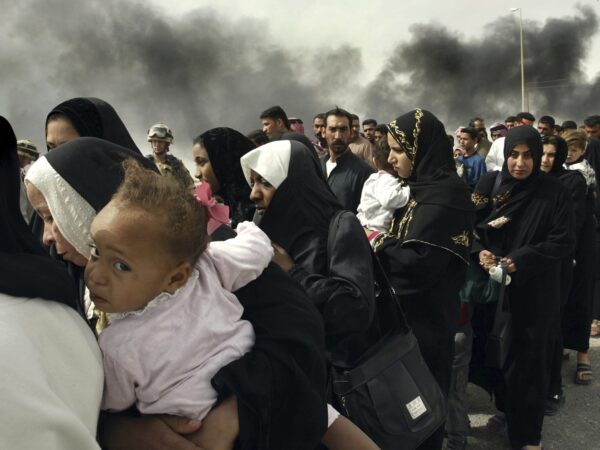
    This potential betrayal of Iranian hopes hits my gut hard because I watched similar scenarios play out when I covered the 1991 and 2003 wars in Iraq.

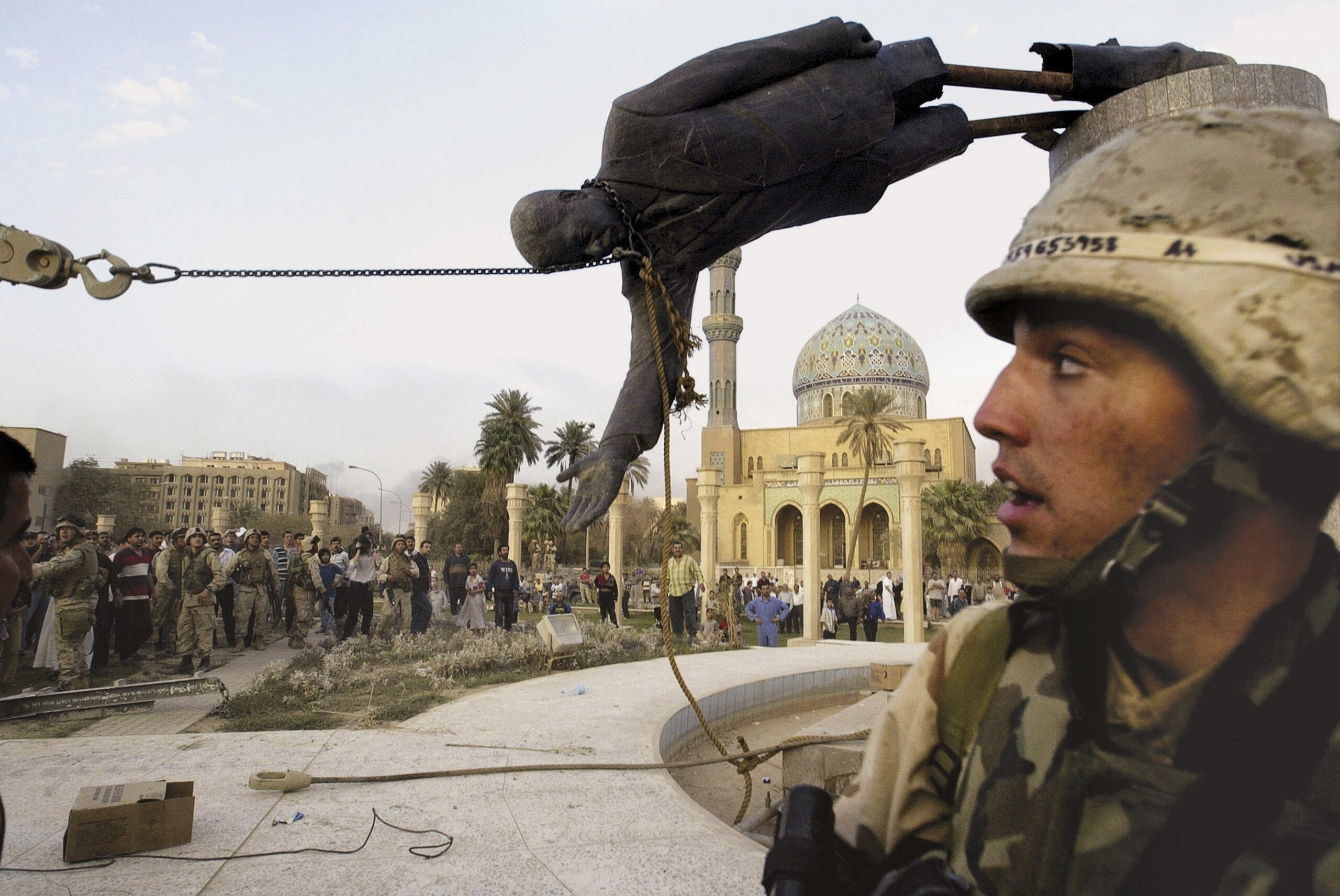
    Iraqi civilians and U.S. soldiers pull down a statue of Saddam Hussein in downtown Baghdad, April 9, 2003.

    In 1991, President George H.W. Bush called for Iraqi Kurds and Shiites to revolt against Hussein (whose mainly Sunni followers controlled Iraq). As the United States pushed into southern Iraq from liberated Kuwait, those Iraqis followed his call.

    But Bush 41 chose not to continue on to Baghdad and depose the Iraqi regime; his advisers (rightly) warned this would spark an Iraqi civil war in which the U.S. would become entangled. When U.S. forces left, Hussein’s army slaughtered around 10,000 Shiites; several hundred thousand Kurds in Iraq’s north fled into the freezing mountains in winter, until the U.S. Air Force established a no-fly zone over Iraqi Kurdistan, and they could return home.

    In February 2003, I crossed from Iran into Iraqi Kurdistan to await the invasion of Iraq by Bush 43, who claimed he had to destroy the (no-longer-existent) Iraqi nuclear program — and bring democracy to the country.

    It was hard not to get swept up in the enthusiasm of Iraqi Kurds for the regime change the Americans were finally promising.

    America’s regional allies, especially Israel, urged Bush to decapitate the Baghdad regime. White House hawks insisted “regime change” would quickly bring peace and democracy to the entire Mideast. So did exiled members of multiple Iraqi opposition groups, with whom I had been in contact since covering the 1991 Gulf War.

    Bush 43 disbanded Iraq’s military and fired much of its government. But the White House had no grasp of the complex ethnic and religious politics of Iraq, which engulfed U.S. forces and ignited an internal Iraqi civil war between Shiite and Sunni Muslims. U.S. troops were caught in the middle, as Bush 41 had feared.

    President George W. Bush speaks aboard the aircraft carrier USS Abraham Lincoln off the California coast on May 1, 2003.

    Fast-forward to Trump. He says he won’t put U.S. boots on the ground but also says he’s not ruling them out “if they were necessary.” (“I don’t have the yips with respect to boots on the ground,” he said Monday. Figure that one out.)

    However, the president has made clear, for now, that he won’t send U.S. troops to help unarmed Iranians retake their country, even as he keeps urging them to overthrow their leaders.

    That may prevent the 2003-style quagmire Bush 43 blundered into. Yet, POTUS appears even blinder than Bush in Iraq about his ability to bend Iran’s future to his will.

    Even though Iran’s 86-year-old supreme leader, Ayatollah Khamenei, was killed by an Israeli airstrike, along with dozens of other Iranian leaders, that’s not likely to end the regime.

    The president has shown little interest — and advanced no concrete plans — for the future of Iran after the U.S. and Israel stop bombing. Trump has upturned the famous doctrine that the late Secretary of State Colin Powell applied to 2003 Iraq, namely, “If you break it, you own it.” The Trump Doctrine posits: “We break it, you own it. Goodbye and good luck.”

    POTUS has stressed it is up to Iran’s people to rise and take over their country, even though civilians are bereft of leaders, organization, guns, or even internet connections (and Reza Pahlavi, the exiled son of the last shah, who hasn’t set foot in Iran for decades, has no armed forces of his own).

    Squeezed by the MAGA faithful and partial to quick hits, Trump insists there will be no long-term U.S. involvement. This may avoid U.S. military casualties, but will probably leave Iran in chaos, ruled by regime holdouts who still retain the guns.

    Indeed, the strongest remaining military force in Iran is the hard-line Islamic Revolutionary Guard Corps (IRGC), which is deeply rooted throughout the country. Behind them are hundreds of thousands of Basij militiamen, who have already killed thousands of unarmed regime opponents.

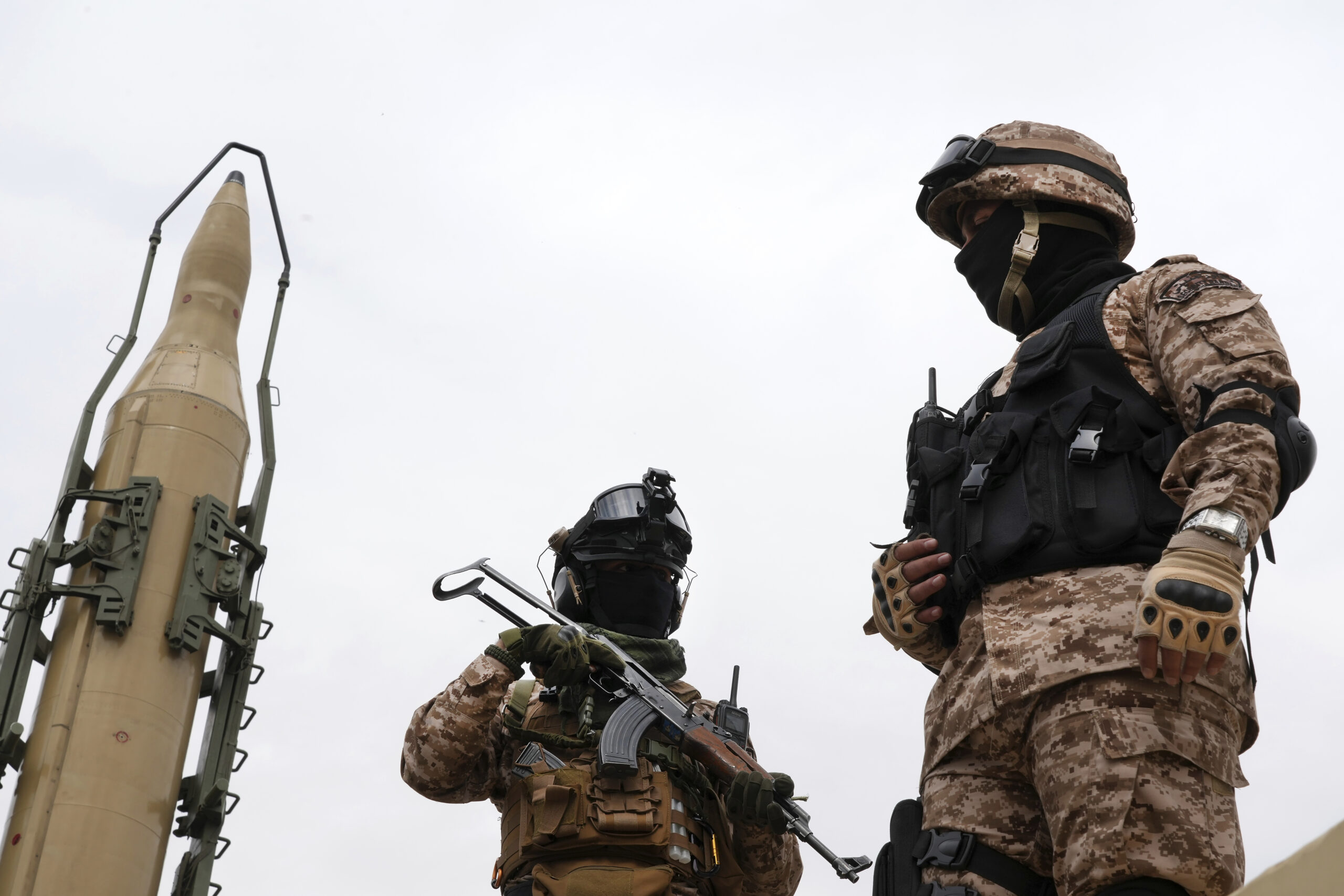
    Iran’s Revolutionary Guard members stand in front of a Shahab-3 missile, which is displayed during the annual pro-Palestinian Al-Quds, or Jerusalem, Day rally in Tehran, Iran, April 29, 2022.

    Perhaps Trump has devised a magical formula to profit from any such bleak denouement for the Iranian people: Iran will become Venezuela.

    Trump has told journalists he wants to model his Iran venture on the U.S. intervention in Caracas, where the top leader, Nicolás Maduro, was kidnapped, and U.S. officials then made a deal with his vice president. Trump eliminated a dictator he disliked, but left in place the previous regime, which, in turn, handed him control over Venezuelan oil.

    Sorry, even the most ill-informed observer can grasp that Iran bears no resemblance to Venezuela: The Islamic regime retains deep roots, many hard-line generals, hundreds of thousands of ideological purists, and many religious followers; it isn’t a one-man show.

    Yet, POTUS insisted again Thursday that “what we did in Venezuela is the perfect scenario.” In an Axios interview, he said that he, personally, had “to be involved in the appointment [of Khamenei’s replacement] like with Delcy [Rodríguez] in Venezuela.”

    In a godlike pronouncement, Trump expects Iran’s hard-line Shiite religious clerics to pick a new supreme leader who pleases him. Or what? He’ll send them to heaven as martyrs?

    The president has already noted that “most people” he had considered for Iran’s top job “are dead” from the recent U.S.- Israel bombing. He speculated that Iran’s future leader could be “as bad” as the last.

    More likely, Trump will try to cook a deal with a senior Iranian official, perhaps an IRGC general, to eliminate the remnants of Iran’s nuclear weapons program and its missile production. Perhaps he dreams of U.S. control of Iranian oil revenue as arranged with Venezuela’s new leader. Perhaps visions of “great U.S. deals” for Iranian oil dance like dollar signs in his head.

    However, hard-line IRGC generals are more likely to fight to the end to hold power at home, even as Iran’s proxy militias in surrounding Arab countries are crushed. IRGC generals who were willing to gun down tens of thousands of Iranian civilians during recent Iranian protests would surely do so again to survive.

    I worry that Trump’s continued call for a civilian uprising holds out the prospect that Iranian civilians will once again be mowed down — even as the president declares victory and sends the U.S. fleet home when his MAGA followers grow antsy. Israel may continue bombing, but that won’t help Iranian protesters topple the regime.

    In a further sign of how the administration may use and abuse Iranians, news reports claim the CIA is arming Iranian Kurds to spark a wider uprising. This is cynicism to the max! Encouraging Iran’s ethnic minorities — Kurds, Azeris, Baluch, and Sunni Arabs — to fight will foment internal civil wars without changing the central regime or delivering a better one. Only a unified Iranian opposition can ultimately achieve that.

    For POTUS, the Iran war is an exhibition of Trumpian power designed to bolster his strongman image, as the GOP faces dicey midterms and the Jeffrey Epstein hangover at home. For Iran’s people, Trump’s reality show is a life-threatening matter. His “we break it, you fix it” doctrine could consign many of them to death as he celebrates U.S. bomb strikes back home.

  • Letters to the Editor | March 4, 2026

    Letters to the Editor | March 4, 2026

    Separation of powers

    Doesn’t our Constitution state that the power of declaring or starting a war is in the hands of the legislative branch of our government? How can an attack ordered by only the president be allowed to bring our nation into a war against Iran? Congress is the only branch of government with the power to send our troops to war. And the act of bombing another country is essentially a declaration of war. Please, Congress, do your job — the president does not have the legal authority to do this. Stand up for yourselves — and stand up for all of us.

    Mary A. McKenna, Philadelphia

    . . .

    As diplomacy gave way to war, as U.S. and Israeli forces attacked Iran, how much concern was given to those on military bases in the region? With the current administration saying it wants to avoid “boots on the ground,” what does it classify the roughly 40,000 to 50,000 service members currently stationed across at least 19 sites in the Middle East? Due to impulsive decision-making (the Trump administration never made its case before Congress or the American people before entering the conflict), these forces are currently operating amid heightened tensions and threats, putting their lives at risk from Iranian-aligned forces. Service members, along with innocent civilians, have been placed in the middle of an unwise war; a war without a strategy, a war with deadly consequences.

    On Saturday morning, I ran across a post on social media from Kathy Fulmer of Saylorsburg, Pa. It read: “I just received a message from my son who is deployed over there. Currently he’s OK, this is not what I wanted to wake up to. For all the other parents with children over there, my heart is with you! May our children all come home safe and uninjured.”

    Peter Tobia, Philadelphia

    The writer is a former photojournalist at The Inquirer.

    . . .

    In 2003, George W. Bush — with the approval of Congress — took us to war based on faulty (some would say contrived) intelligence. The information that Iraq had weapons of mass destruction, which was the state’s reason for our attack, was eventually proven to be false. Colin Powell, who was then secretary of state, later apologized for making the case for war using bad information.

    Donald Trump is repeating that scenario, but for different reasons. As the Jeffrey Epstein noose tightens around his neck, he is in desperate need of a big distraction. What could be more distracting than a war? Add that to his desire to “declare an emergency” so he can take over elections. Does he think we are blind? His statement that he wants to free Iran from an evil dictator is hypocritical, as he strives to be a dictator himself. Trump has betrayed the American people and, most of all, his supporters. His promises to reduce the cost of living and stay out of foreign wars are outright lies. He is not putting the needs of Americans first because he does not care about the American people or the Iranian people. He cares about himself, his family, and his billionaire friends who will profit from a war.

    It’s long past time for Congress to do the right thing and remove him from office before he causes any further damage to us and the rest of the world.

    Kathleen Clements, Philadelphia

    Join the conversation: Send letters to letters@inquirer.com. Limit length to 150 words and include home address and day and evening phone number. Letters run in The Inquirer six days a week on the editorial pages and online.

  • 2026 Kia Sportage Hybrid: A nice ride but a fuelish choice

    2026 Kia Sportage Hybrid: A nice ride but a fuelish choice

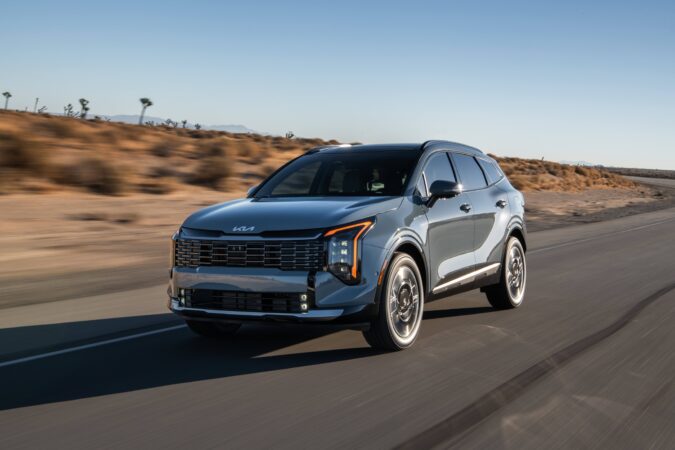
    2026 Honda CR-V Hybrid AWD Sport Touring vs. Kia Sportage Hybrid SX-Prestige AWD: A challenger for the hybrid crown?

    This week: Kia Sportage Hybrid

    Price: $41,985 as tested

    What others are saying: “Highs: Better acceleration than nonhybrid variant, well-mannered ride, plenty of space for people and cargo inside. Lows: Fuel economy isn’t as frugal as expected, not particularly entertaining to drive, exterior design isn’t for everyone,” says Car and Driver.

    What Kia is saying: “Show up, show off.”

    Reality: A hybrid challenger? There was much that was challenging about the Sportage Hybrid.

    What’s new: The Sportage gets a new look, and some interior features. It comes in gasoline, hybrid, and plug-in models.

    Competition: In addition to the CR-V Hybrid, competitors include the Hyundai Tucson Hybrid, Mazda CX-50 Hybrid, Mitsubishi Outlander Hybrid, Subaru Forester Hybrid, and Toyota RAV4 Hybrid.

    Up to speed: The Sportage Hybrid was a mostly pleasant companion to move about in. There were some hesitant moments as I pulled out and adjusted to hills over the first couple days, but those were on me. A last day trip to University City from West Chester was all smoothness and ease, both on the highways and in stop-and-go traffic. Eco mode was about the best all around, although I did pick Sport mode when I was really worried about cutting into traffic.

    It takes 7.4 seconds for the 232-horsepower Sportage Hybrid to get to 60 mph, according to Car and Driver. That’s not stellar from the 1.6-liter turbocharged hybridized powertrain, but not too poky, and it’s faster than the 187-horsepower gasoline-powered 2.5-liter four-cylinder model.

    A last-day pullout from 0-40 startled me with its quickness, so overall I’d say this midsize SUV is a peppy companion.

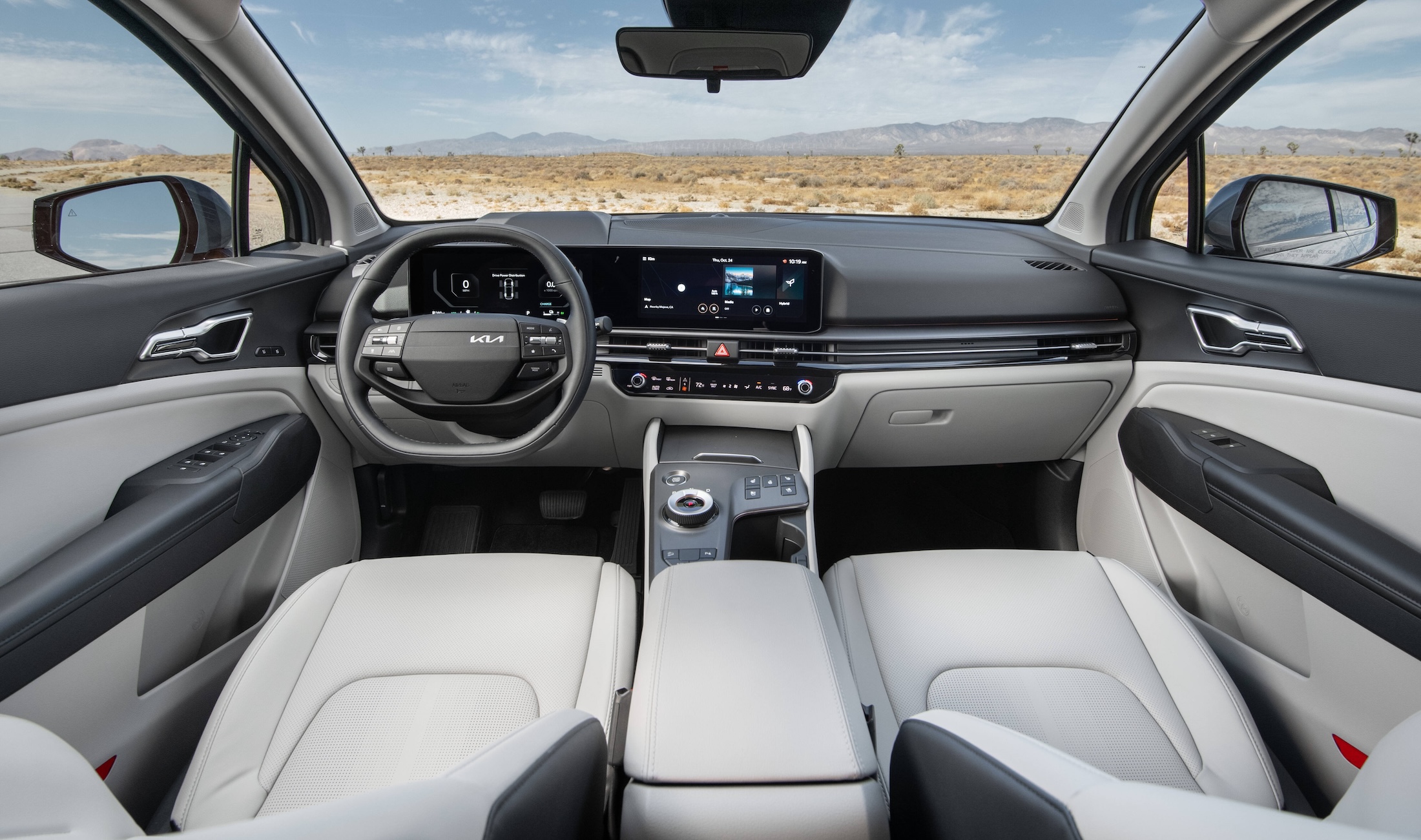
    Shifty: The dial shifter works nicely, counterclockwise for Reverse and clockwise for Drive. Paddle shifters shift the 6-speed automatic transmission directly.

    The transmission selection is what killed Sport mode for me. Many vehicles hold lower gears for a while in this mode, but the Sportage Hybrid always felt like it was stuck in 2nd when I’d be looking for 4th or 5th. Definitely less than ideal.

    On the road: The handling in the Sportage Hybrid was not quite as enjoyable as the acceleration. Eco, Sport, or My Drive mode, nothing brought out the goose bumps as nicely as the S selection in the CR-V Hybrid.

    The interior of the 2026 Kia Sportage Hybrid is comfortable and the controls mostly easy to follow, except for the infotainment-HVAC button switch.

    Driver’s Seat: Mr. Driver’s Seat put a lot of miles on the vehicle, and he never felt tired or sore.

    The dashboard is standard issue Kia, which is clear and easy to set to your favorite info.

    Friends and stuff: The rear seat in the Sportage Hybrid offers a comfortable place for passengers to ride. It’s fixed in place, but there’s plenty of legroom and foot room provided. The headroom is about the same as the CR-V, where my head is an inch away from the ceiling.

    The Kia also offers several recline positions, as did the Honda.

    Cargo space is 39.5 cubic feet in the rear and 73.7 with the rear seat folded, right in between the CR-V’s numbers.

    In and out: The height of the Sportage matches the CR-V; it’s great for people who like to ride up high but not for people facing sore knees.

    Play some tunes: The Harman Kardon stereo is an also-ran, like Kia audio systems tend to be. The clarity was fine for some songs and off for others, but the sound itself seemed just off throughout. Too much rattling bass and everything seemed to be in a minor key or something. B+.

    The 12.3-inch touchscreen handles most of the controls well. You can use the dials, but you have to hit the switch to change them from HVAC controls. Kia thinks it’s clever or something with this system, because you can just take your eyes off the road to switch, right? What’s wrong with this picture?

    The switch itself is very small and part of a touch pad, so it’s hard to pinpoint and unresponsive. So you make what you think are your adjustments, and then the stereo remains too loud, but you start feeling colder.

    Keeping warm and cool: At least Kia has decided to let the controls default to HVAC. I’ve had other models where it stayed in the most recent selected, and I was always hitting the wrong thing. Owners may have their own perspective on this.

    Dials control temperature, and the ebony touch pad handles everything else. Really, though, only the toggle between stereo and HVAC seemed to be the weak link.

    Fuel economy: Speaking of weak links, the Sportage Hybrid fuel economy disappoints. Over the course of 400+ miles that include another driver — one who’s no doubt less inclined to race at stoplights — I could barely get this over 30 mpg. It’s disappointing, period. But it’s also no match for the CR-V Hybrid’s 35-plus. I’d averaged 35 in a 2023 Sportage Hybrid, so the upgrades are thirsty.

    Where it’s built: Gwangju, South Korea. Ninety percent of parts come from South Korea, and less than 1% are from the U.S. or Canada.

    How it’s built: The Sportage Hybrid gets a reliability rating of 3 out of 5 from Consumer Reports.

    In the end: If you’re buying a hybrid to, you know, save fuel, then it’s CR-V Hybrid all the way. Consumer Reports claims to have gotten mid-30s, but Car and Driver and Mr. Driver’s Seat not so much.