Tag: topic-link-auto

  • Yo, Philly! There’s no need to move the Rocky statue

    Yo, Philly! There’s no need to move the Rocky statue

    To hear the Parker administration officials tell it, moving the Rocky statue from the bottom of the Philadelphia Art Museum steps to the top is a victory for the underdog.

    The new location, which received a green light from the Art Commission on Jan. 14, will certainly create a dramatic, Instagrammable moment for tourists, and further elevate the Rocky brand (and value).

    But it’s no victory for Philadelphia residents, who remain the true underdog in this saga. Allowing the old movie prop to dominate the Parkway’s iconic vista is simply the latest in a series of decisions that have privatized the Art Museum’s gorgeous, landscaped grounds.

    If you walk to the back of the museum, you’ll find the most egregious example of Philadelphia’s zeal for monetizing public space: the sprawling Cescaphe banquet operation at the Fairmount Water Works.

    While the main Engine House had been used as a restaurant in the past, the city allowed Cescaphe to take over the entire complex in 2021. Today, the Water Works is surrounded with a cordon of server stations, portable restrooms, and covered walkways.

    Since 2021, the historic Fairmount Water Works has been surrounded by a cordon of server stations and covered walkways. A glass party room prevents the public from enjoying the Mill House Deck, a pier overlooking the Schuylkill.

    Cescaphe’s presence has drastically limited the public’s access to this historic landmark, a scenic spot where generations have come to stroll and take in views of the Schuylkill. Although visitors are permitted to wander though the Water Works’ classically inspired temples and colonnades when no events are going on, who would know that, given the messaging conveyed by Cescaphe’s formidable barricades?

    Preparations for evening events often start in the afternoon, further limiting access. Every spring, Cescaphe installs an enormous glass party room on the pier known as the Mill House Deck. It remains in place until late fall, which means the public gets to use the overlook only during the coldest months of the year.

    Rocky already has a good spot

    Moving the Rocky statue to the top of the steps might seem like a modest imposition by comparison, but the new location will interfere considerably with the public’s enjoyment of the space.

    Since people with mobility limitations will have trouble climbing the 72 steps to the top of the museum’s grand staircase, they’ll need transportation. The Philadelphia Visitor Center — the initial advocate for the new location — has offered to run a shuttle bus around the museum apron every 15 minutes. Better watch out when you’re taking that selfie!

    During the recent Art Commission hearings, the city’s two top cultural officials, Valerie V. Gay and Marguerite Anglin, argued that the Rocky statue deserves a higher profile perch because it’s a unique tourist attraction. They noted that the statue has been the subject of books and podcasts and will soon be the focus of a major Art Museum exhibition, “Rising Up: Rocky and the Making of Monuments,” curated by Monument Lab’s Paul Farber.

    Yet, given the added complications, it’s hard to understand what the city gains by changing the statue’s location.

    Rocky’s current home — a shady grove at the bottom of the steps — has been a huge success. The statue was installed there in 2006, after years of shuttling around Philadelphia, from the museum to the sports complex and back. In a typical year, 4 million people make the pilgrimage to see Rocky, the same number who visit the Statue of Liberty annually.

    The Rocky statue, currently at the base of the Art Museum steps, is easily accessible to visitors and tour groups.

    Because the grove is so close to the street, there are no accessibility issues. Tour buses and cars can pull up to the curb, allowing people to jump out for a quick selfie. Sometimes there’s a line for photos, but the mood is always festive, with visitors and locals mingling along the sidewalk. Anyone who wants to reenact the fictional boxer’s run up the museum stairs can do that, too.

    Yes, this site occupies a piece of the museum’s grounds. But the intrusion is relatively discreet. Considering how well this location works, why change it? It’s not like there was a huge public clamor to give Rocky more prominence. When Inquirer columnist Stephanie Farr polled readers in September, most respondents said they were happy to keep the statue in its current location — or get rid of it entirely.

    Only a single person testified at the Art Commission’s Jan. 14 hearing — and he argued against the move. Several civic organizations, including the Design Advocacy Group (DAG), sent written statements urging the city to reject the proposal.

    “All we’re doing is glorifying Sylvester Stallone, who sells merchandise at bottom of the steps,” complained David Brownlee, a member of the DAG board and a renowned University of Pennsylvania art historian who has written a history of the Art Museum.

    Those Stallone-licensed souvenirs are sold in the “Rocky Shop,” a metal shipping container that was allowed to encroach on the plaza at the base of the museum steps in 2023. Although the metal structure doesn’t take up as much public land as Cescaphe’s banquet operation, it clunks up the approach to the museum’s elegant stone staircase.

    The Parkway Visitor Center & Rocky Shop at the base of the Philadelphia Art Museum steps Jan. 20, 2026. In 2023, the city allowed Sylvestor Stallone to set up the metal shipping container at the base of the Philadelphia Art Museum steps.

    Initial reports said the Visitor Center, which pushed for the shop, would get a cut of the sales. Yet when I asked how much money that partnership had yielded, a spokesperson for the independent tourism agency declined to answer. The Visitor Center is now run by Kathryn Ott Lovell, who was parks commissioner when the department signed off on Cescaphe’s 2021 expansion at the Water Works.

    The exorbitant cost of moving

    What jumped out at me during the Art Commission hearing was the cost of moving the bronze sculpture and setting it up on a new base.

    Creative Philadelphia, the city department overseeing the move, originally estimated the job would run about $150,000. Now it says the price could rise to $250,000. Those figures don’t include the cost of operating the shuttle, which will be borne by the Visitor Center.

    To put those numbers in context, consider the base payment the city receives from Cescaphe annually for operating a banquet hall at the Water Works: $290,000.

    When Cescaphe was given permission to occupy the Water Works complex in 2021, the city said the arrangement was necessary because the parks department could no longer afford to adequately maintain the property. In addition to rent, the agreement generated about $187,000 annually in concession fees between 2015 and 2022 for the city.

    That income isn’t peanuts, but is it really worth severely limiting public access to such an iconic Philadelphia landmark? What’s the point of monetizing our parks if the businesses prevent us from enjoying them?
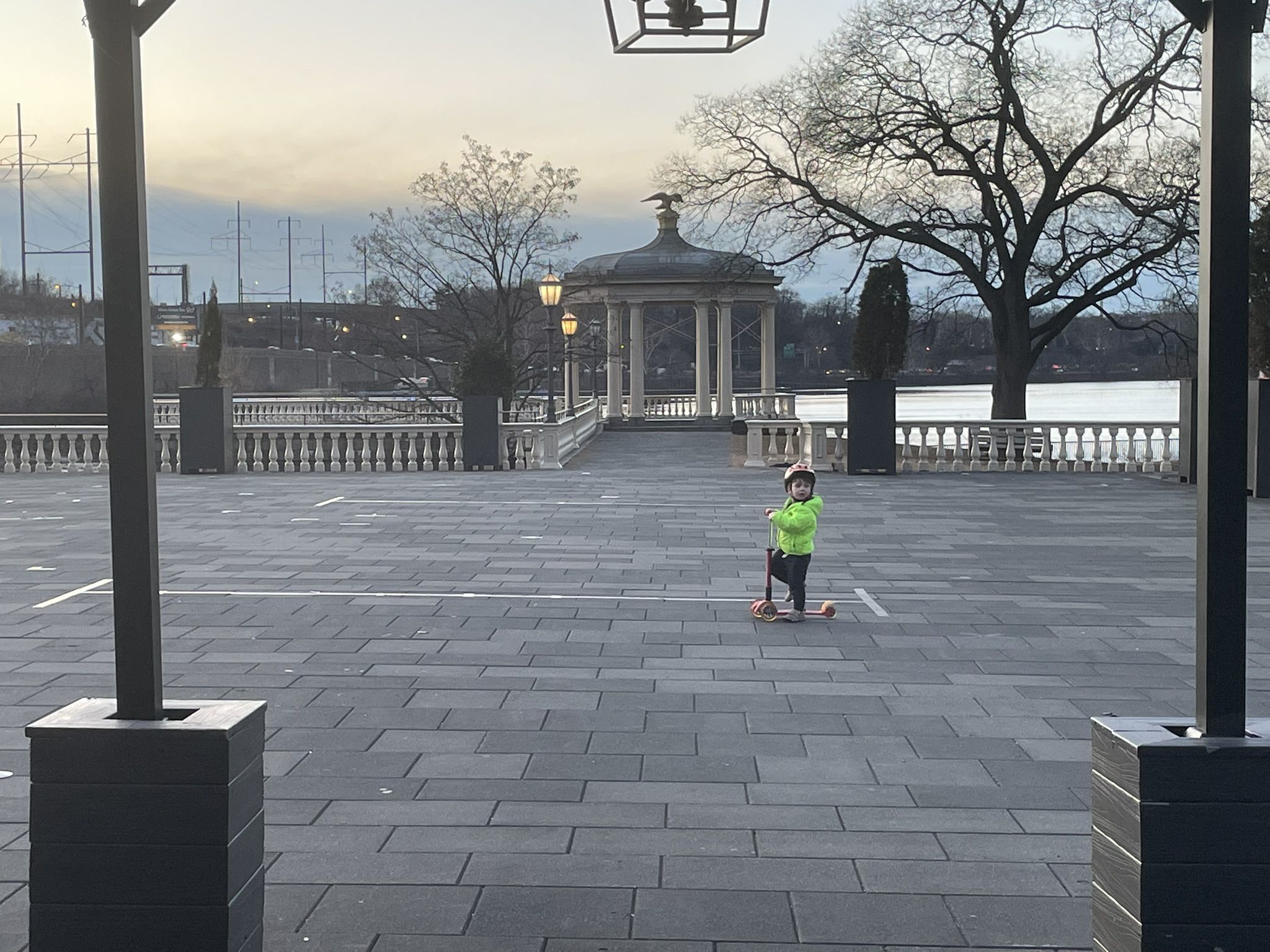
    Except for a few months during the winter, the Mill House Deck pier at the Fairmount Water Works is covered with Cescaphe’s glass party room, making it impossible for Philadelphians to enjoy the space.

    The privatization of such beloved sites is the direct result of city government’s unwillingness to properly fund its parks. For years, Philadelphia has spent far less than peer cities on green space. Maintenance declined to the point where some parks became unusable.

    Rather than devote more money to this basic public amenity, the city has increasingly outsourced its parks to private managers. Enormously popular destinations, such as Dilworth Park and Franklin Square, are run by independent groups.
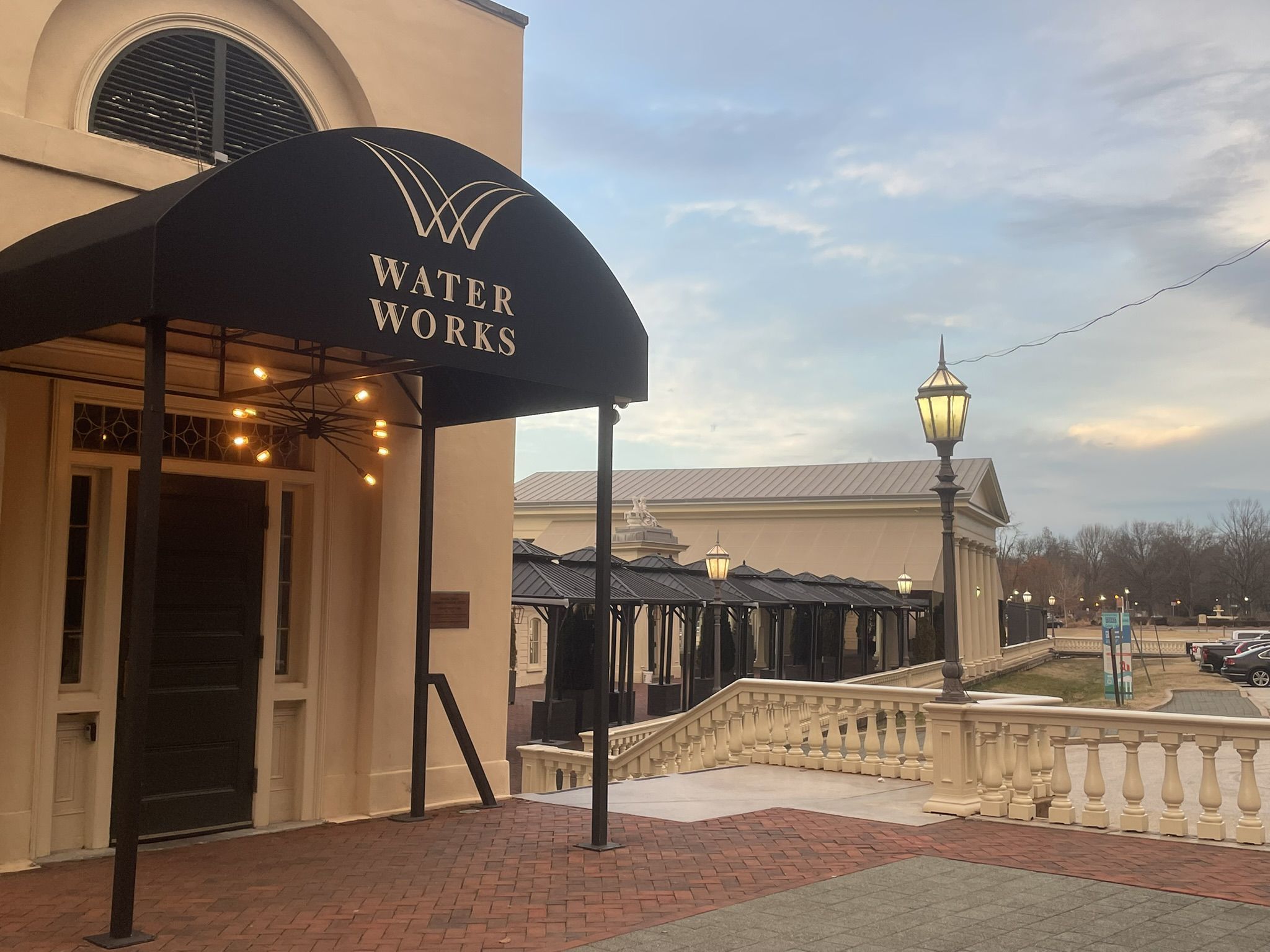
    Cescaphe, a banquet company, has surrounded the Fairmount Water Works with a cordon of arcades, server stations and portable restrooms since it began holding events there in 2021.

    But there’s a crucial difference between those private managers and the likes of Cescaphe. First, they’re nonprofits, not businesses. They exist to serve the public. While it’s frustrating when they close their parks for private fundraising events, all the money they raise goes back into improving the parks for the public’s use.

    With the Cescaphe deal, the city has crossed a line. Cescaphe is a money-making business that runs the Water Works for its own benefit. In theory, the rent and concession fees are supposed to be invested in the maintenance of the complex, which was considered one of the wonders of the world when it opened in 1815. But it’s Cescaphe, not the public, that benefits from the improvements.

    It’s not even clear that Cescaphe is doing the promised maintenance. The Engine House suffered a serious fire in November, and the company still has several outstanding building code violations.

    When asked about the citations, a spokesperson for Parks & Recreation described the infractions as minor. “Cescaphe has been a great partner,” Commissioner Sue Slawson said in a statement.

    To be clear, there is a big difference between leasing a public building to a restaurant concession and privatizing public space for the sole use of a single business. Restaurants are open to everyone. They also provide services, such as restrooms, that the public can use. It’s a win-win: The city makes a little money on the deal, and the public gets a nice amenity.

    The city had the right idea when it leased the Water Works’ Engine House to a restaurateur in the early 2000s. But instead of finding a replacement when that restaurant shut down in 2015, the city turned the complex over to Cescaphe. This April the banquet company’s lease will come up for renewal. It’s time to go back to the original model.

    Wouldn’t it be great to grab a sandwich at a Water Works cafe after a long walk or bike ride along the Schuylkill River Trail? The trail, which just completed a spectacular extension, does not have a single cafe between its new Grays Ferry terminus and the museum, apart from a small snack bar at Lloyd Hall. Philadelphia has plenty of great restaurateurs who would jump at the chance to operate in a prime spot like the Water Works.

    People have framed the Rocky discussion as a clash between elites, who object to the glorification of a movie prop as art, and the mass of fans who believe the statue embodies their aspirations.

    The reality is, there’s nothing less democratic than turning over the public’s land to private companies driven by their own gain.

    An earlier version of this column listed FDR Park as one of several city parks that are run by private managers. The Philadelphia Department of Parks & Recreation operates the park and provides workers to staff it.

    This story has been updated to remove the Schuylkill River Trail from a list of private managers because the Schuylkill River Development Corp. has a different type of contractual agreement with Philadelphia’s Department of Parks & Recreation and does not lease the land it oversees.
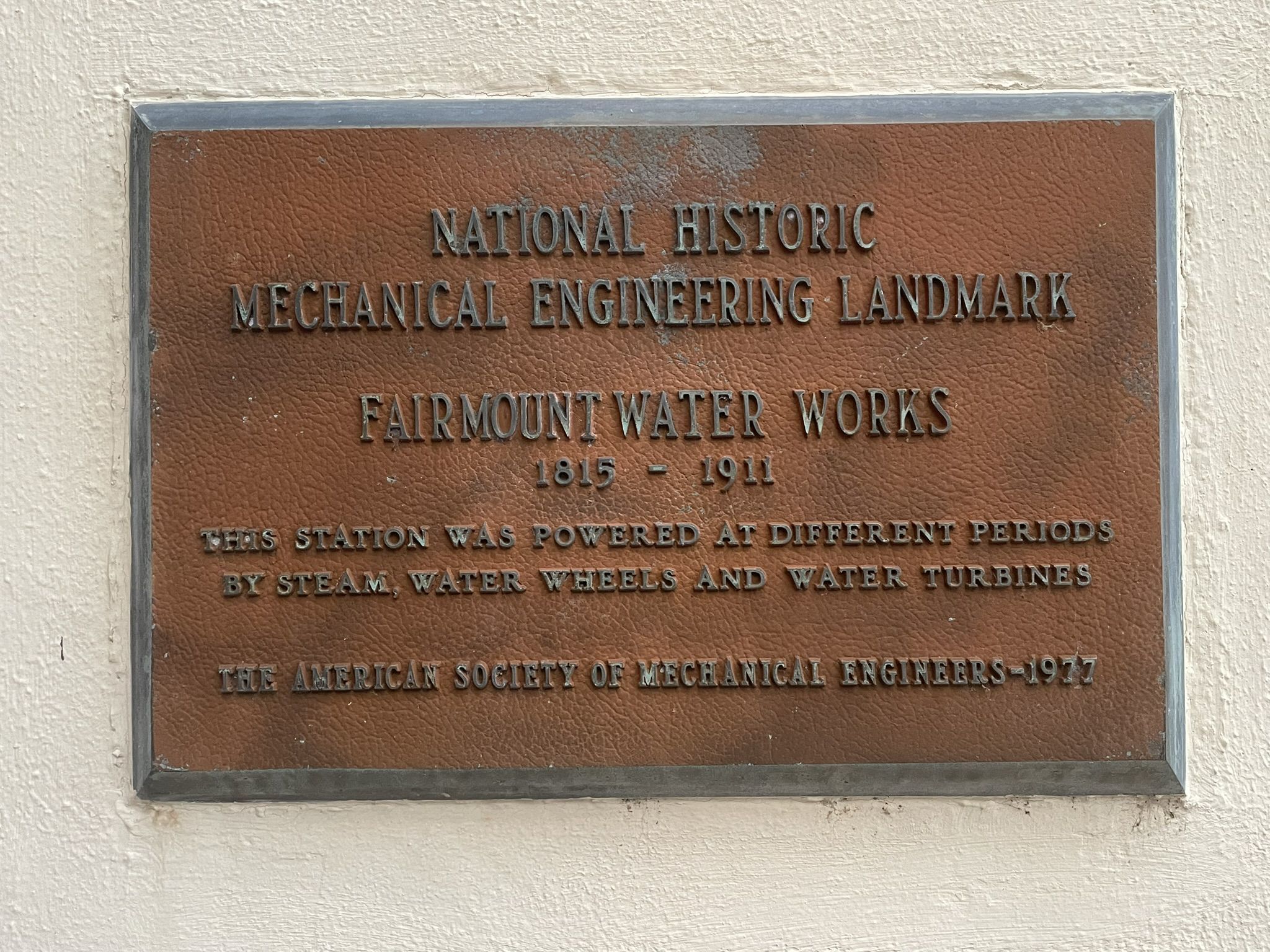
    When it opened in 1815 to provide the growing city with a reliable supply of drinking water, the Fairmount Water Works was a major engineering advance and was considered one of the wonders of the world.
  • ICE, housing, and ‘resign to run’: What’s on Philadelphia City Council’s 2026 agenda

    ICE, housing, and ‘resign to run’: What’s on Philadelphia City Council’s 2026 agenda

    Philadelphia City Council’s first meeting of 2026 on Thursday comes as tensions rise over President Donald Trump’s immigration crackdown and as Mayor Cherelle L. Parker continues to sidestep that conversation while focusing on advancing her signature housing initiative.

    During the first half of the year, city lawmakers are expected to have a hand both in shaping the city’s response to Trump and in advancing Parker’s Housing Opportunities Made Easy, or H.O.M.E., initiative.

    They will also tackle the city’s waste-disposal practices, a long-standing law requiring Council members to resign before campaigning for higher office, and the city budget.

    Meanwhile, events largely outside Council’s control, including potential school closings and Philly’s role in the nation’s 250th birthday, are also expected to prompt responses from lawmakers.

    Here’s what you need to know about Council’s 2026 agenda.

    ‘Stop Trashing Our Air’ bill up for vote

    The first meeting of a new Council session rarely features high-profile votes, but this year could be different.

    Council on Thursday is expected to take up a bill by Councilmember Jamie Gauthier that would ban Philadelphia from incinerating its trash.

    Currently, the city government sends about a third of the trash it collects to the Reworld trash incinerator in Chester, with the rest going to landfills. Those waste-disposal contracts expire June 30, and Gauthier is hoping to take incineration off the table when new deals are reached.

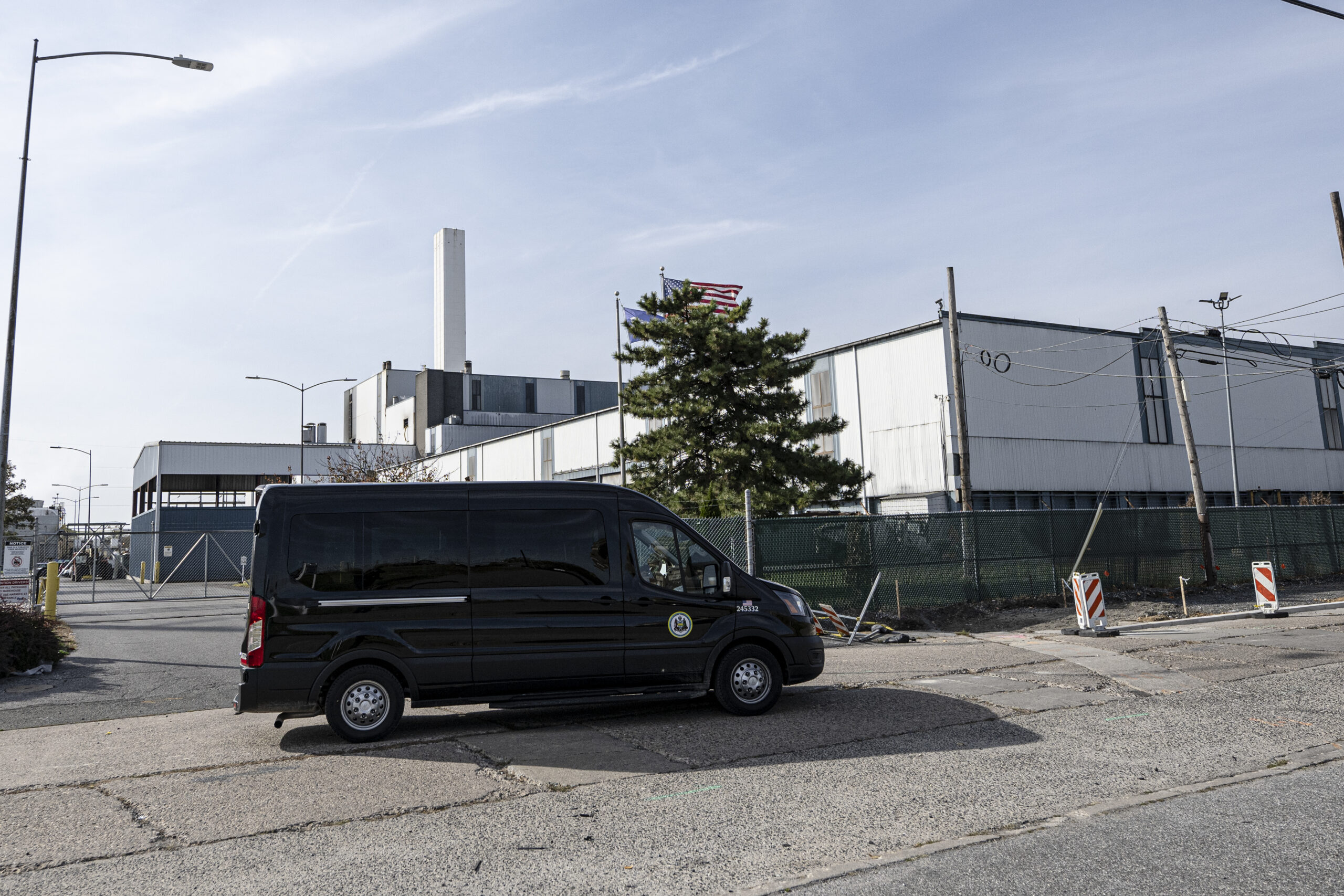
    The Reworld incinerator in Chester, Pa., on Friday, Nov. 7, 2025.

    “Burning Philadelphia’s trash is making Chester, Philadelphia, and other communities around our region sick,” Gauthier has said, pointing to elevated rates of asthma and other ailments and a legacy of “environmental racism” in Chester. The low-income and majority-Black city downriver from Philly has been home to numerous heavy industrial facilities.
    Reworld has said its waste-to-energy facility, which produces some electricity from burning trash, is a “more sustainable alternative to landfilling.”

    At a hearing last year, Parker administration officials said the city is including language in its request for proposals for the next contracts that will allow the city to consider environmental impacts. But they asked lawmakers not to vote for a blanket ban on incineration to allow the city to study the issue further.
    Parker waiting for Council to reapprove $800 million in bonds for her H.O.M.E. plan

    The biggest agenda item left hanging last month when lawmakers adjourned for the winter break was a bill to authorize the Parker administration to issue $800 million in city bonds to fund her H.O.M.E. initiative.

    Parker had hoped to sell the bonds last fall, and Council in June initially authorized the administration to take out new debt. But lawmakers made significant changes to the initiative’s first-year budget, especially by lowering income thresholds for some programs funded by the H.O.M.E. bonds to prioritize the lowest-income residents.

    Mayor Cherelle L. Parker speaks to the crowd at The Church of Christian Compassion in the Cobbs Creek neighborhood of West Philadelphia on Sunday, Dec. 7, 2025. Parker visited 10 churches in Philadelphia on Sunday to share details about her H.O.M.E. housing plan.

    That move, which Parker opposed and which sparked Council’s most significant clash with her administration to date, required a redo of the bond authorization. Lawmakers ran out of time to approve a new version of the measure in December, but Council President Kenyatta Johnson said it could come up for a final vote Thursday.

    “Council members have always been supportive of the H.O.M.E. initiative,” Johnson said. “H.O.M.E. advances City Council’s goals to expand access to affordable homeownership for Philadelphians … and to ensure that city housing investments deliver long-term benefits for families and neighborhoods alike.”

    Council aims to limit ‘resign to run’ … again

    Council is also expected to vote this spring on legislation that would change Philadelphia’s 74-year-old “resign to run” law and allow city officeholders to keep their jobs while campaigning for other offices.

    Currently, Council members and other city employees are required to quit their jobs to run for higher office. Lawmakers have tried several times over the last 20 years to repeal the law, but they have been unsuccessful. Changing the rule requires amending the city’s Home Rule Charter, which a majority of voters would have to approve through a ballot question.

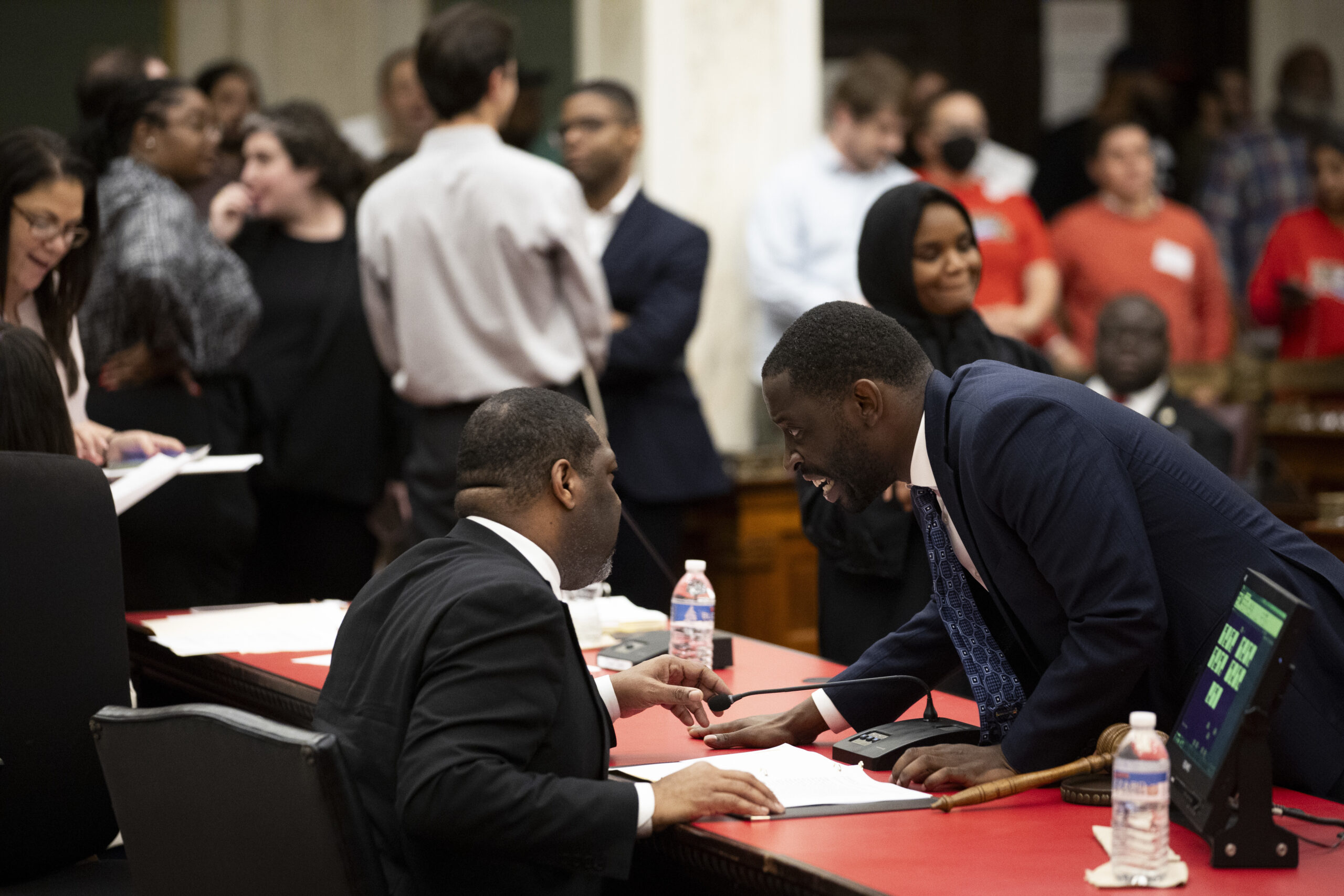
    Council President Kenyatta Johnson talks with Councilmember Isaiah Thomas at City Hall on Wednesday, Dec. 11, 2024 in Philadelphia.

    The latest attempt, spearheaded by Councilmember Isaiah Thomas, would not entirely repeal the resign-to-run law, but instead would narrow it to allow elected officials to keep their seats only if they are seeking state or federal office, such as in Congress or the state General Assembly. Council members who want to run for mayor would still have to resign.

    Thomas, a Democrat who represents the city at-large and is rumored to have ambitions of running for higher office, plans to make minor amendments to the legislation this spring, a spokesperson said, before calling it up for a final vote. The goal, Thomas has said, is to pass the legislation in time for a question to appear on the May primary election ballot.

    Incoming clash over immigration?

    Parker has spent the last year avoiding direct confrontation with the Trump administration, a strategy that supporters say has helped keep Philadelphia out of the president’s crosshairs.

    The mayor, however, cannot control what other local elected officials say about national politics, and Trump’s immigration crackdown appears to be stirring stronger local reaction heading into his second year in office.

    After an Immigration and Customs Enforcement agent fatally shot Renee Good in Minneapolis this month, Sheriff Rochelle Bilal went viral for saying federal agents “will not be able to hide” in Philly. (Bilal, however, does not control the Philadelphia Police Department, which is under Parker’s purview.)

    Meanwhile, progressive Councilmembers Rue Landau and Kendra Brooks this year are expected to introduce legislation aimed at constricting ICE operations in Philadelphia.

    Demonstrators from No ICE Philly gathered to protests outside the U.S. Immigration and Customs Enforcement, office at 8th and Cherry Street, Philadelphia, Tuesday, Jan. 20, 2026.

    It is not yet clear what the lawmakers will propose. But Brooks, who has called on Parker to take a firmer stand against Trump, recently criticized the Philadelphia courts for allowing agents to seize suspects leaving the Criminal Justice Center. She said officials who in her view have failed to stand up to ICE are engaged in “complicity disguised as strategic silence,” and she vowed to force those who “cooperate with ICE in any way” to testify in Council.

    “Cities across the country are stepping up and looking at every available option they have to get ICE out,” Brooks said at a news conference earlier this month. “In the coming days, you will hear about what my office is doing about city policy. These demands must be met or face the consequences in Council.”

    Landau added Philly cannot allow “some masked, unnamed hooligans from out of town [to] come in here and attack Philadelphians.”

    “We are saying, ‘ICE out of Philadelphia,’” she said.

    Parker has said her administration has made no changes to the city’s immigrant-friendly policies, but she continues to be tight-lipped about the issue.

    The Pennsylvania Office of Open Records last week ruled in favor of an Inquirer appeal seeking to force Parker’s administration to disclose a September letter it sent the U.S. Department of Justice regarding local policies related to immigration.

    The administration still has not released the document. It has three more weeks to respond or appeal the decision in court.

    South Philly arena proposal still in the works

    After the 76ers abandoned their plan to build a new arena in Center City a year ago, the team announced it would partner with Comcast Spectacor, which owns the Flyers, to build a new home for both teams in the South Philadelphia stadium complex.

    The teams announced last fall they have selected an architect for the new arena, which is scheduled to replace the Spectacor-owned Xfinity Mobile Arena, formerly the Wells Fargo Center, in 2031.

    If the teams are still planning to open the new arena on their previously announced timeline, legislation to green-light the project could surface as soon as this spring. But so far, there has been no sign of movement on that front.

    “There is currently no timeline for introducing legislation to build a new Sixers arena in South Philadelphia,” said Johnson, whose 2nd District includes the stadium complex. “At the appropriate time, my legislative team and I will actively collaborate with Mayor Cherelle L. Parker’s administration on drafting any legislation related to the Sixers arena before it is introduced in City Council.”

    School closings and 2026 celebrations also on the horizon

    In addition to its legislative agenda, Council this year will likely be drawn into discussions over school closings and the high-profile gatherings expected to bring international attention to Philly this summer.

    The Philadelphia School District is soon expected to release its much-anticipated facilities plan, including which school buildings are proposed for closure, consolidation, or disposition. The always-controversial process is sure to generate buzz in Council.

    “We will do our due diligence on the District’s Facilities Plan,” Johnson said in a statement.

    Additionally, the city is preparing for the nation’s Semiquincentennial, FIFA World Cup games, and the MLB All-Star Game. While the administration is largely responsible for managing those events, some Council members have said ensuring the city is prepared for them is a major priority.

    Johnson said his agenda includes “making sure Philadelphia has a very successful celebration of America’s 250th Birthday that results in short and long-term benefits for Philadelphia.”

    Staff writers Jake Blumgart, Jeff Gammage, and Kristen A. Graham contributed to this article.

  • Meet Conlen Booth, Swarthmore’s fire chief who just stepped into the mayor’s office

    Meet Conlen Booth, Swarthmore’s fire chief who just stepped into the mayor’s office

    Conlen Booth doesn’t typically like to be in the spotlight.

    Booth considers himself a “behind-the-scenes” guy who typically shies away from the limelight. Yet on Jan. 6, surrounded by friends, family, and colleagues, Booth was sworn in as Swarthmore’s mayor.

    Booth, 42, brings more than two decades of emergency management experience to the job, including overseeing emergency services for major hospitals and governments. He’s also spent the past 25 years with Swarthmore’s fire department, most recently as chief. Booth is Delco-bred — a Nether Providence kid, a graduate of Strath Haven High School, and a cheerleader for his home borough of Swarthmore.

    As the borough contends with the fallout of last year’s shuttering of Crozer-Chester Medical Center and Taylor Hospital, budget shortfalls, and potential fire department consolidation, Booth believes his background in emergency services and deep ties to Swarthmore make him the right guy for the job.

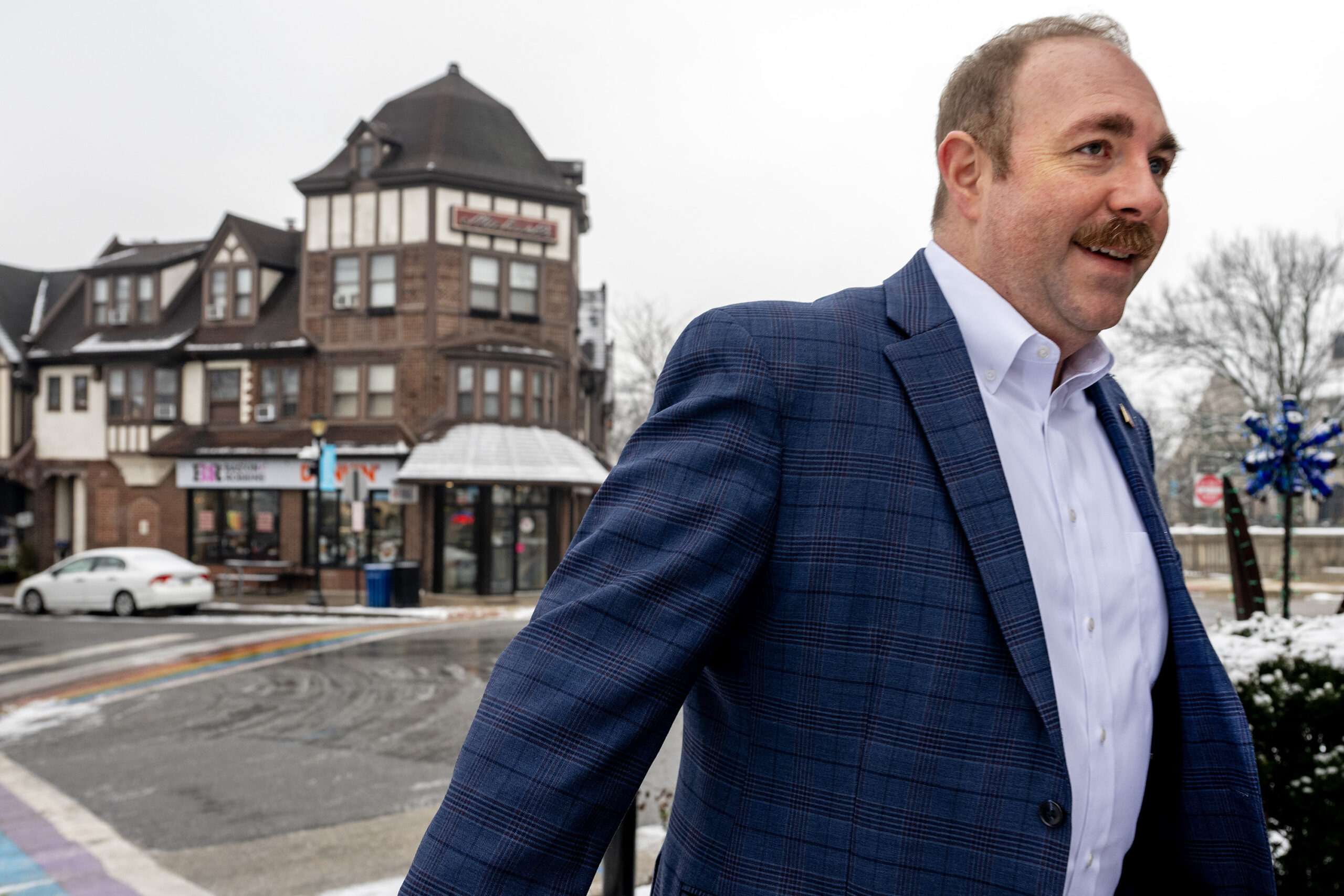
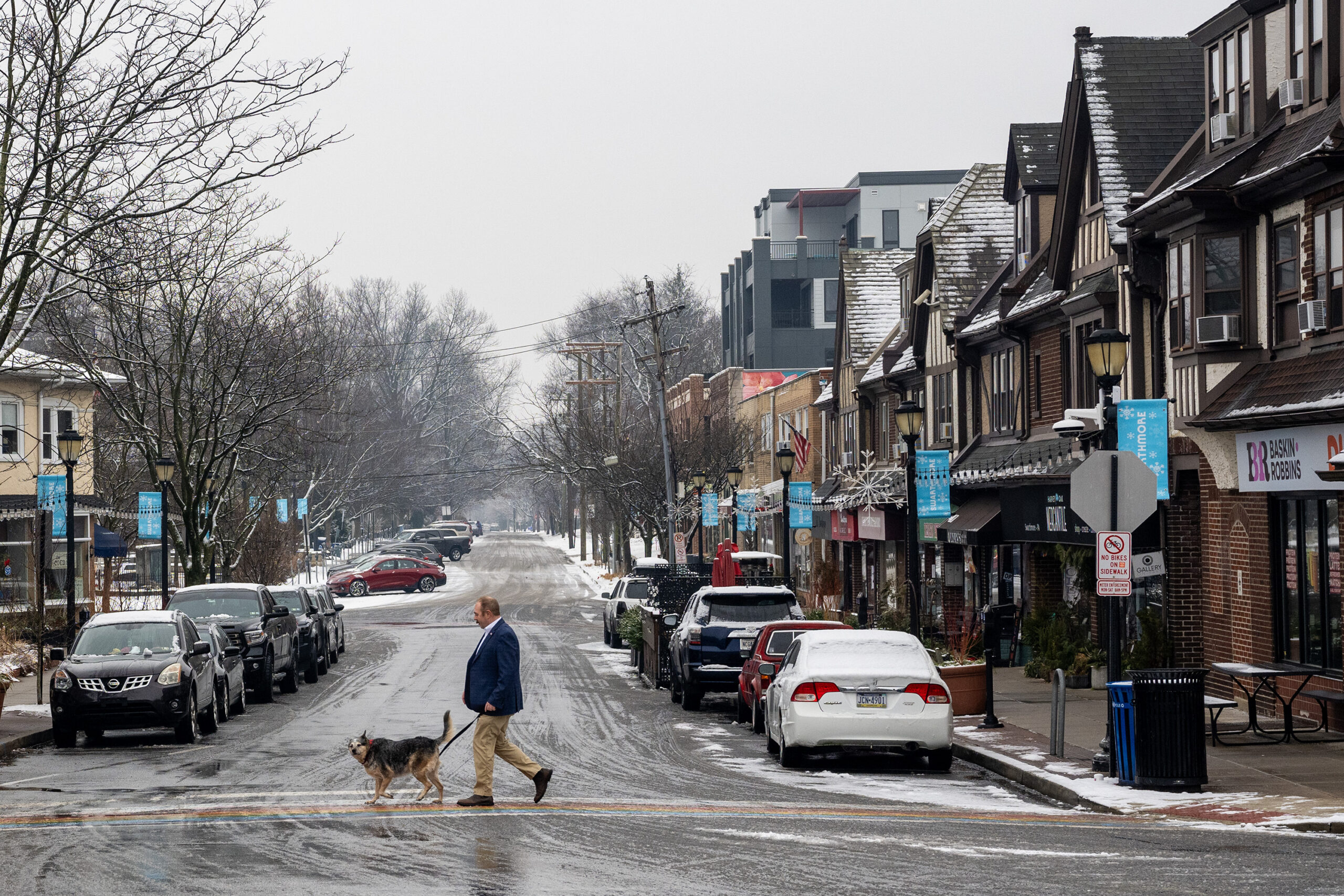
    Mayor Conlen Booth in downtown Swarthmore on Sunday, Jan. 18, 2026.

    ‘If not me, then who?’

    Booth got into local politics the way many do — reluctantly.

    It took nudging from friends and family to step into the mayoral race. But the COVID-19 pandemic revealed a need for municipal leaders who understand emergency management and can govern in a crisis, Booth says.

    An age-old phrase kept circulating in his mind: “If not me, then who?”

    Booth competed against borough council members Kristen Seymore and David Boonin in the Democratic primary. Boonin dropped out of the race in January 2025. In February, the borough’s Democratic committee voted to endorse Booth’s candidacy 15-4, and Seymore dropped out.

    The committee’s endorsement is powerful in Swarthmore. Democratic candidates who do not receive an endorsement are discouraged from running, and in the liberal-leaning town, there are seldom competitive general elections. Booth replaced Marty Spiegel, who had led the borough since 2019.

    Who is Mayor Booth?

    Booth was born in Harrisburg and moved to Delaware County at age 2. He grew up down the street from Nether Providence Elementary School and spent summers down the Shore with his close-knit extended family and collection of family dogs.

    His maternal grandfather, Joseph Labrum, was a longtime judge and attorney in Media. Booth remembers visiting him in his chambers and watching him in the courtroom.

    “I think seeing him in his role as a judge was always something that fascinated me,” he said.

    Booth and his partner, Tracy, met working in healthcare and have been together for around 15 years. They live with Huckleberry, their Australian cattle dog.

    Booth became interested in emergency services in high school. He set his sights on becoming a doctor and spent his teenage years working on an ambulance.

    Four days before he moved into his freshman dorm at the University of Pittsburgh, he watched a good friend die in front of him. The goal changed from enrolling in medical school to just making it through college.

    “It just sort of rattled things,” he said.

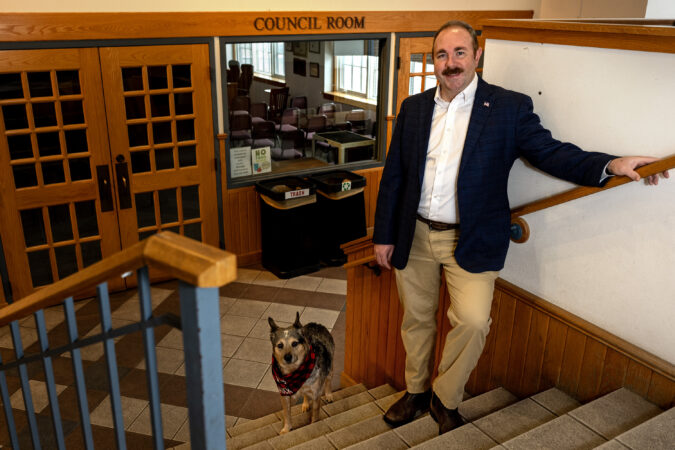
    Mayor Conlen Booth with his dog, Huckleberry, in downtown Swarthmore on Sunday, Jan. 18, 2026.

    Booth graduated from Pitt in 2005 with a bachelor’s degree in emergency medicine, an emerging field at the time. He earned his paramedic certification and learned the business-side of managing emergency medical teams.

    He returned home and took a job with the now-shuttered Delaware County Memorial Hospital, his first role in what would become a long career in emergency medicine. In 2019, he was an emergency response shift supervisor at the Philadelphia Energy Solutions refinery during the massive explosion that left five people hurt and ended up shuttering the facility (Booth describes it as a “pretty insane period” in his life). Booth later spent four years as the senior director of emergency preparedness and emergency medical services at Crozer. He most recently worked as a consultant helping get supplies and meals to recently arrived refugees and asylum-seekers in New York City.

    In tandem with his career in emergency management, Booth has served as a volunteer in Swarthmore’s fire department since 2000, working his way up from rookie firefighter to chief. Last year, he helped develop the Advanced Life Support ambulance partnership with neighboring communities that has filled gaps for residents after the Crozer closures.

    Pat Francher, a longtime Swarthmore resident and community organizer, said Booth has the “awareness and perspective” that comes from a “real in-depth involvement in community welfare.”

    “I’m terrible about saying no to people when they ask me to do something,” Booth joked.

    This summer, Booth suffered a serious, non-work-related injury. He’s been in recovery since, and has come a long way.

    “It could have been so much worse,” Booth said. “I have a lot to be thankful for.”

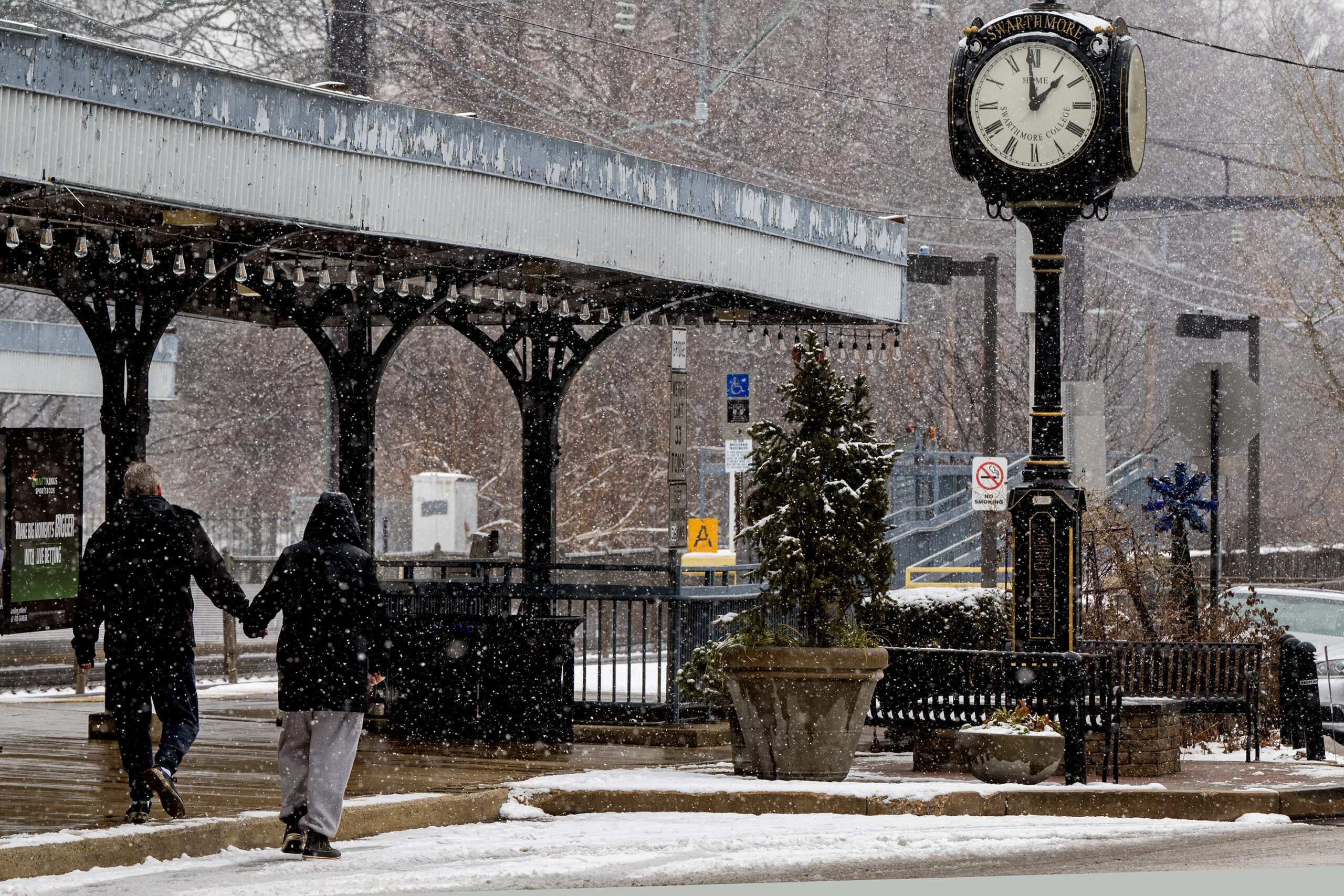
    The SEPTA Regional Rail station in Swarthmore on Sunday, Jan. 18, 2026, during the second snowfall of the weekend. The station is between downtown Swarthmore and Swarthmore College and serves the Media/Wawa Line.

    What’s next for Swarthmore?

    Booth sees educating borough council about the community’s emergency medical needs as a large part of his job as mayor.

    Jill Gaeski, borough council president, called Booth “the perfect guy” to help the 6,200-person borough navigate the challenges that lie ahead.

    The shuttering of Crozer’s hospitals continues to impact access to medical care. At the same time, the Garden City (Nether Providence and Rose Valley), South Media, and Swarthmore fire companies are in discussions about a possible merger.

    “[Booth] can really help us understand the pain points and where the sweet spots are,” Gaeski said.

    Booth says he wants to be a cheerleader for the borough, bringing in tourism and economic growth in a way that maintains Swarthmore’s small-town feel.

    He also hopes to reengage Swarthmore College’s student body, which he says has become less civically involved as the years have passed.

    “I already feel sentimental about this town,” Booth said, citing the people, restaurants, traditions, and community events that make his hometown special.

    “How do we bolster all of these things and how do we engage more people?”

    This suburban content is produced with support from the Leslie Miller and Richard Worley Foundation and The Lenfest Institute for Journalism. Editorial content is created independently of the project donors. Gifts to support The Inquirer’s high-impact journalism can be made at inquirer.com/donate. A list of Lenfest Institute donors can be found at lenfestinstitute.org/supporters.

  • PETA says Punxsutawney Phil should be a hologram. Gov. Shapiro says, ‘Don’t tread on me.’

    PETA says Punxsutawney Phil should be a hologram. Gov. Shapiro says, ‘Don’t tread on me.’

    As certainly as Bill Murray’s character in Groundhog Day awakes to “I Got You Babe” every morning at 6 a.m., every year around this time, PETA calls for Punxsutawney Phil to be retired to a sanctuary and replaced by some perennially preposterous proxy.

    Past Phil-ins suggested by PETA include: an animatronic groundhog, a giant gold coin, a vegan weather-reveal cake, persimmon seeds, and a 36-year-old woman named Amber Canavan from Portland, Ore., who volunteered herself as tribute to take Phil’s place, “livestream her monotonous life all year long, and give an equally unscientific weather forecast.”

    This year the animal-rights organization has offered to replace Phil with “a giant, state-of-the-art, 3D projection hologram of a groundhog” like he was Tupac Shakur.

    The best part of this proposal is that this year, PETA included an artistic rendering of its idea, which shows that if hologram Phil predicts six more weeks of winter, he will be blue and surrounded by snowflakes, and if he predicts an early spring, he will be pink and surrounded by flowers.

    Either way, this would be one mammoth marmot. Hologram Phil’s paws appear to be about the size of a human head, which, if you’ve ever encountered a groundhog in real life, is both an adorable and terrifying prospect.

    PETA even says the hologram would come “complete with vocal weather predictions,” which I also shudder to think about. Groundhogs sound like squeaky dog toys, which is perhaps not the best sound to rally a drunken crowd in a small Pennsylvania town at the crack of dawn.

    In response to the proposal, Gov. Josh Shapiro — a noted fan of Phil who’s hosted the wondrous whistle-pig at the governor’s residence and has attended Groundhog Day celebrations in Punxsutawney — posted a photo of Phil on X this week with the words “DONT TREAD ON ME.”

    I reached out to the Governor’s Office to see if Pennsylvania’s boss hog was serious about his support of the state’s famous groundhog.

    “He is indeed very serious about his defense of Phil,” Alex Peterson, a spokesperson for the Governor’s Office, told me.

    Prince or a pawn?

    PETA’s position, as stated in a letter from founder Ingrid Newkirk to Tom Dunkel, president of the Punxsutawney Groundhog Club’s Inner Circle, is that groundhogs are timid prey animals who want to avoid humans at all costs.

    “They dislike human smells, fear loud noises, abhor gatherings, and prefer to stay in their burrows,” Newkirk wrote. “Yet every year, this terrified little animal is subjected to loud announcers and noisy crowds and held up and waved around without any regard for his feelings, welfare, or instincts.”

    I see their point — Phil never particularly looks happy to predict the weather. Mostly he just seems confused at why he’s being asked to do so and what this life is all about.

    Punxsutawney Phil looks bewildered as he’s asked to predict the weather at Groundhog’s Day.

    Plus, there are plenty of other Groundhog Day traditions that happen in Pennsylvania and across the country without a real animal. At the John Heinz Wildlife Refuge in Southwest Philly, a puppet named Tinicum Tim pops out of the ground to predict the weather. In Reading, a bucktooth groundhog mascot with a fancy pink bow gives her prognostication atop the Reading Pagoda. And in Quarryville, a mounted taxidermy groundhog gives predictions from the top of a manure spreader called the “Pinnacle of Prognostication.”

    Michael Venos, who runs the website Countdown to Groundhog Day and has been to many of the alternative celebrations, said he considers the events “just as fun” and the “predictions just as valid.”

    Tinicum Tim, a groundhog puppet, predicts the weather during Groundhog Day festivities at the John Heinz Wildlife Refuge in 2024.

    Venos said he shares PETA’s concerns for Phil and all prognosticating animals.

    “While I’m sure in the past, the animals’ welfare was not the primary concern for the people who organize these events, I believe, and am trusting, that nowadays, the utmost care is being taken to make sure that the animals are safe and well cared for,” he said. “Punxsutawney Phil in particular seems to live a very cushy life and appears to be well taken care of.”

    The perks

    Phil lives one of the bougiest lives of any Pennsylvania resident, and who’s to say he woodchuck it all away, if given the choice?

    According to the Punxsutawney Groundhog Club, there’s only ever been one Phil. He drinks a special “elixir of life” every summer, which has kept him young for going on 140 years. He does not, however, share that elixir with his wife or two kids, a burrowed secret that’s shadier than seeing your shadow on a cloudy day.

    When not predicting the weather, Phil lives with his family in a climate-controlled burrow in the town library, which is connected by underground tunnels to a brand-new home the Inner Circle had built for them last year at Gobbler’s Knob.

    Two homes and a secret underground tunnel network — in this economy?!? Lucky.

    Punxsutawney Phil is greeted by his adoring fans.

    Phil also finds time to travel and has his own party bus. As I mentioned before, he visited Shapiro at the governor’s residence in 2023, and this year, he attended the Pennsylvania Farm Show as a celebrity guest.

    I see both sides of the argument here, but given that our second-most famous groundhog in Pennsylvania is already computer-generated and heavily into gambling, I say we keep the real Phil around for now.

  • Trump’s strong support in the Lehigh Valley and Northeast Pa. is splintering: ‘He left nothing for the working man’

    Trump’s strong support in the Lehigh Valley and Northeast Pa. is splintering: ‘He left nothing for the working man’

    Scowling under a wool cap and a hood, Robert DeJesus stood in the bitter wind outside the Sunrise Diner in Allentown last week and confessed his “big mistake”: voting for President Donald Trump in 2024.

    “The guy makes ‘cookie promises,’” said DeJesus, 57, a retired construction worker and independent voter from Allentown in Lehigh County. “They’re easy made and easy broken.”

    Trump’s biggest gains in the state in 2024 were concentrated in the Lehigh Valley and in Northeastern Pennsylvania. But a year into his second presidency, there are signs that his winning coalition is splintering. In interviews across five counties in the region, some voters shared their disappointment with rising grocery prices and what they see as Trump’s failure to keep his commitments.

    Even while hailing some of Trump’s policies, several Republicans interviewed said they were put off by his manner as well as his stance on key issues. That disillusionment could spell trouble for Pennsylvania Republicans as they look to hold onto two key swing congressional seats in this region in November.

    Robert DeJesus of Allentown voted for President Donald Trump in 2024, but he now regrets that decision.

    Explaining his problems with Trump, DeJesus said the president pledged “but didn’t deliver” lower grocery prices. And at the same time DeJesus and his family are contending with “insane” supermarket costs, he said, Trump cut taxes for billionaires with the sweeping domestic policy package he signed last year. It has made DeJesus feel overlooked and overwhelmed.

    “He left nothing for the working man,” DeJesus said. “People say it’s good the price of gas went down under Trump. But how we have to live, with high food and high rent, makes no sense.”

    Diana Kird, 58, a Republican who also pulled the lever for Trump, is experiencing buyer’s remorse much like DeJesus.

    “I don’t know what we’re doing in Venezuela,” said the nurse from Lehighton in Carbon County as she stood outside a Giant supermarket in town.

    “We need to stop getting into foreign wars,” a promise Trump made and “ignored,” Kird added.

    Kird said she has not seen Trump come through on his commitments. “He’s wash-rinse-repeat for me,” she said, “saying the same things over again,” such as promising cheaper groceries, “yet doing nothing.”

    Trump’s “refusal to release all the Epstein files” after saying he would was another disappointment that makes her wish she had not supported the president, she added.

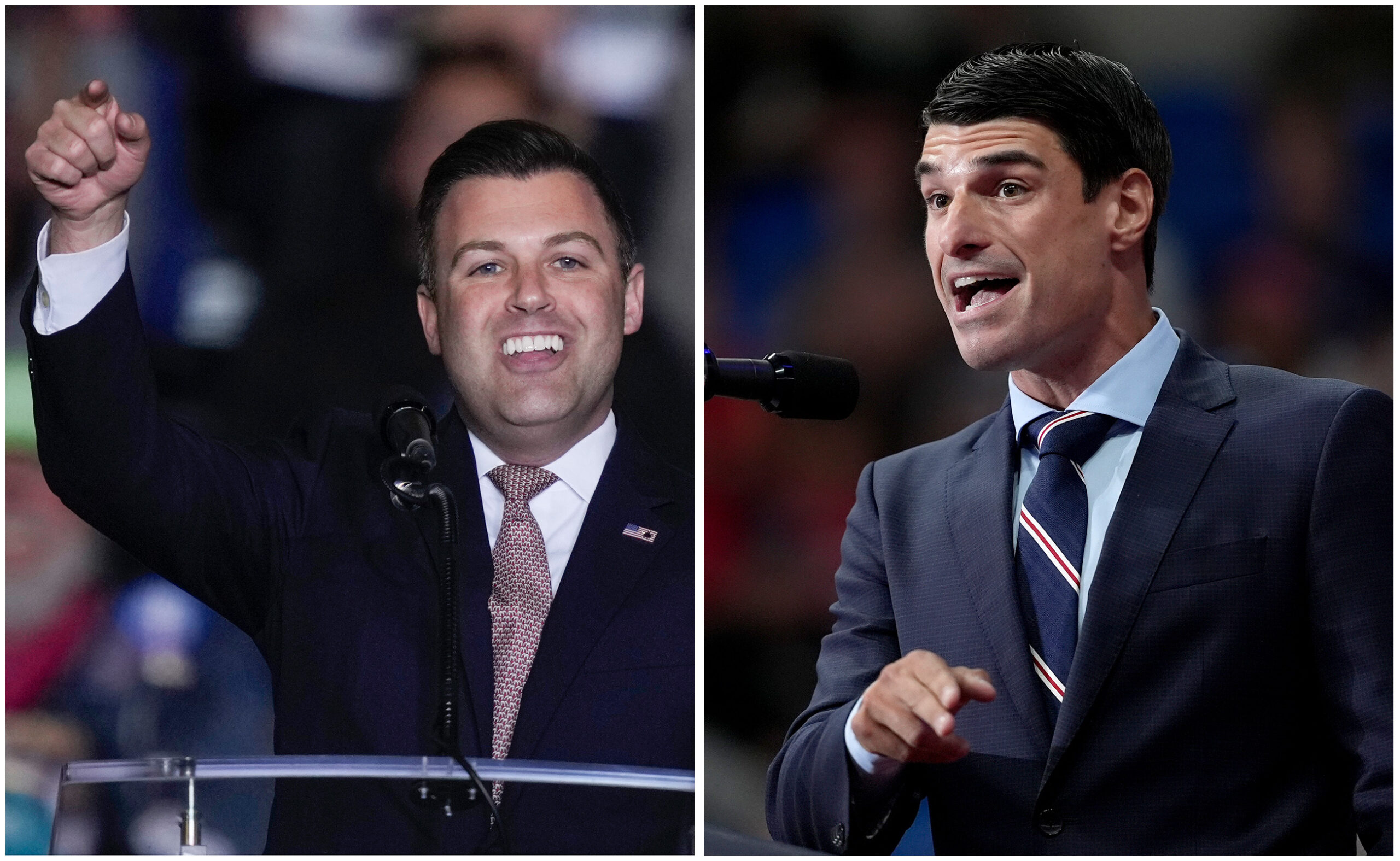
    Republican U.S. Reps. Ryan Mackenzie (left) and Rob Bresnahan (right)

    Trump won’t be on the ballot this year, but Kird plans to take her frustration out on U.S. Rep. Ryan Mackenzie, the freshman Republican who won the Lehigh Valley seat by a single percentage point.

    Mackenzie and fellow freshman U.S. Rep. Rob Bresnahan, a Republican who won his neighboring Northeastern Pennsylvania district by less than a point, are among the top targets for Democrats in November as the party hopes it can win back the House with a focus on affordability.

    In a statement Wednesday, Mackenzie blamed the Biden administration for high prices and described Trump as “a vital partner” in efforts to improve the cost of living.

    “We have made real progress,” he said, “reducing gas prices to their lowest level since COVID, keeping inflation below 3%, and delivering real tax relief for every American.”

    Bresnahan’s office did not respond to a request for comment.

    Both Trump and Vice President JD Vance barnstormed through the region last month, seeking to counteract Democrats’ affordability message, which Trump has bemoaned as a “hoax.”

    But recent moves by Mackenzie and Bresnahan show the two Republicans are giving the issue more weight and seeking to distance themselves from Trump on the high cost of living ahead of tough contests in November.

    Both were among the 17 Republicans who crossed the aisle this month to support a Democratic bill to restore recently expired healthcare subsidies in the wake of a national spike in insurance premiums.

    “The break with the president on healthcare wasn’t surprising. Both men are feeling the heat from constituents,” said Chris Borick, director of the Muhlenberg College Institute of Public Opinion.

    Borick noted that Trump’s 2024 win in the state was due in large part to his gains with voters of color, younger voters, and independents. Those same voters could be crucial to determining how Pennsylvania votes in the next election.

    “But now they’re disappointed.”

    Trump is ‘fearless’ and ‘honest’

    There were warm feelings for Trump at the Coop, a popular diner in Coopersburg, a town just outside Allentown in Lehigh County.

    “Trump’s a confident and honest man who knows business, and made a lot of money. I so admire him. And we need him,” said Tiffany Osmun, 27, who works as a host at the restaurant.

    “He’s fearless, and not afraid of what he has to do,” Osmun said.

    She plans to vote for Mackenzie in November, she said, adding, “I won’t be voting for any Democrat in the midterms.”

    And if Trump ever popped up in another election, Osmun said, “I’d vote for him again.” In his Pennsylvania speech last month, Trump referenced running for a third term, despite constitutional barriers.

    (function() {
    var l2 = function() {
    new pym.Parent(‘TRUMP_NE_PA.html’,
    ‘https://media.inquirer.com/storage/inquirer/projects/innovation/arcgis_iframe/TRUMP_NE_PA.html’);
    };
    if (typeof(pym) === ‘undefined’) {
    var h = document.getElementsByTagName(‘head’)[0],
    s = document.createElement(‘script’);
    s.type = ‘text/javascript’;
    s.src = ‘https://pym.nprapps.org/pym.v1.min.js’;
    s.onload = l2;
    h.appendChild(s);
    } else {
    l2();
    }
    })();

    Other Trump voters, however, acknowledged frustrations with the first year of his second presidency — even if they are pleased with most of Trump’s policies.

    “I don’t like his personality,” said Bud Hackett, 72, a semiretired construction business owner who lives in Bethlehem.

    Hackett praised Trump’s moves to curtail immigration and shrink the size of the federal workforce, but he bristled at other actions.

    “I’d say over the last year, he’s done maybe 100 things, 70 of which will result in people’s lives being better off. The other 30 have to do with stuff like building a huge ballroom [after tearing down the East Wing of the White House] for his giant, weird ego that I can’t buy into.”

    Trump may have generated a few problems on the home front, conceded soft-drink merchandiser Bobby Remer, a 31-year-old resident of Palmerton in Carbon County. But the president more than compensates by reminding the world just how powerful the United States can be, he said.

    Remer supports the president’s attacks on boats allegedly carrying drugs from Venezuela, as well as Trump’s capture of Venezuelan President Nicolás Maduro and his wife.

    “He’s done great militarily, throwing our swag around,” Remer said. “It’ll show China, which floods America with fentanyl to wipe out our military-aged men with addiction, that we have a hammer that we’ll use against any nation trying to destroy us.”

    But pocketbook issues could matter more in November to other voters — especially after Trump made attacking Democrats on inflation a major theme of his 2024 campaign.

    An October poll from Franklin and Marshall College asked voters in the Lehigh Valley and Northeastern Pennsylvania how they would compare their financial status with a year ago. Around 29% of Republicans said they were better off, while 34% said they were worse off, with 37% saying they were in the same position.

    Among voters listed as independents “or something else” (such as a third party), 14% said they were better off, 32% said they were worse off, and 55% said they remained the same. Nearly half of Democrats said they were worse off, with 9% saying things were better and 43% saying they were the same.

    “Things definitely got bad under Trump. He’s heading us toward dictatorship,” said Malinda Brodt, 65, a Democrat who lives in Saylorsburg in Monroe County, which had the biggest shift to Trump in the state in 2024.

    Several Trump voters who were interviewed heaped praise on the president for lowering prices — despite mixed results — and a few quoted Trump’s speech in Mount Pocono that referred to affordability as a hoax.

    “He’s gotten down the cost of living, that’s for sure,” said Carol Solt, 80, retired from working in a bait-and-tackle shop in Lehighton. “He keeps his promises.”

    While gas and egg prices have decreased in the last year, the cost of food overall rose 3.1% last month compared with December 2024. Increased prices for beef (1%), coffee (1.9%), and fruits and vegetables (0.5%) led the way, according to consumer price index data released earlier this month.

    Ultimately, Kird, the Lehighton voter, concluded before she entered her Giant supermarket that the good times the president assured Americans they would see have yet to materialize.

    “Life is just more expensive under Trump,” she said.

  • A Bucks County toddler will advocate for less toxic treatments as an ambassador for a national cancer charity

    A Bucks County toddler will advocate for less toxic treatments as an ambassador for a national cancer charity

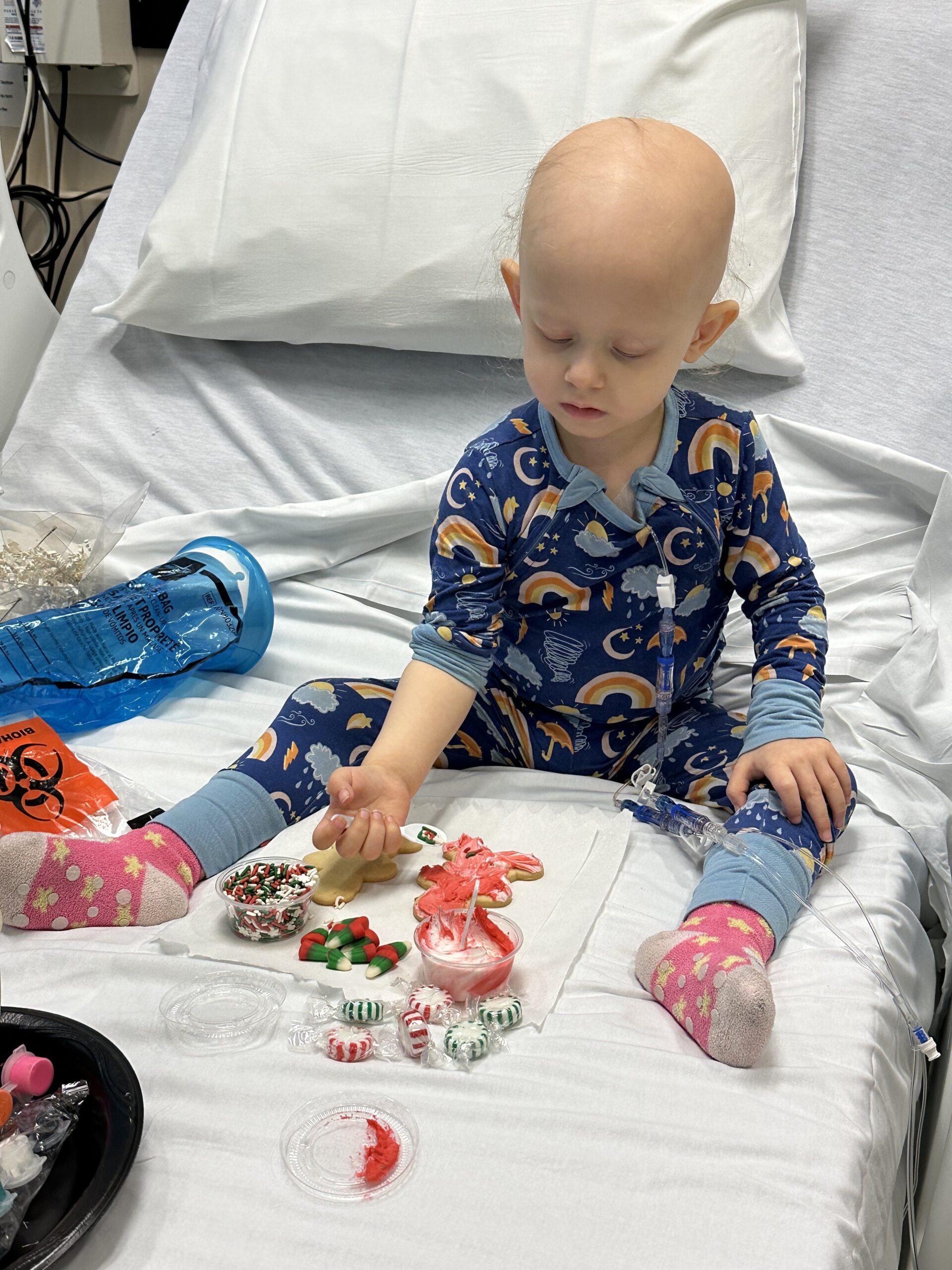
    Adalyn Hetzel had just celebrated her second birthday in the spring of 2024 when doctors at Children’s Hospital of Philadelphia diagnosed her with an aggressive soft tissue cancer.

    She endured 40 weeks of aggressive chemotherapy and a month of daily proton radiation therapy on her road to remission.

    Now, the Bucks County toddler will spend the next year sharing her story as one of five ambassadors for the St. Baldrick’s Foundation, one of the nation’s largest childhood cancer charities.

    The California-based organization has awarded more than $369 million in research grants since 2005, with $18 million going to Philadelphia-based institutions.

    The selected children and their families will attend advocacy days in D.C., to appeal to lawmakers, share their stories with the public, and spread awareness on social media.

    Kristopher Hetzel, Adalyn’s father, said their goal will be to advocate for research into more effective, less toxic treatments.

    While more than 80% of kids diagnosed with cancer in the United States now survive the disease, many sustain long-term side effects due to the harsh therapies. One study found that by age 45, 95% of survivors had at least one chronic health condition, and 80% had one that was disabling or life-threatening.

    Adalyn will likely have severe dental issues, limited jawbone growth, and an increased risk of developing secondary cancers due to the treatment later in life.

    The threat of recurrence also still looms.

    “It can’t be like that for these kids. We got to come up with better treatment,” Hetzel said.

    Diagnosis to treatment

    Hetzel first noticed a small nodule on Adalyn’s tongue in April 2024.

    After appointments with her pediatrician, dentist, and two oral surgeons left the family without a diagnosis, they went to CHOP, where a biopsy confirmed she had a highly aggressive form of soft tissue cancer called rhabdomyosarcoma.

    “All of a sudden your world becomes so small and it’s just your kid. Nothing else matters,” Hetzel said.

    Adalyn and her parents, Kristopher Hetzel and Allison Verdi.

    Doctors started Adalyn immediately on an intense chemotherapy regimen combining three drugs. She also received a month’s worth of daily proton beam radiation, requiring general anesthesia each session due to her age.

    By the end of the 40 weeks of chemotherapy, Adalyn dropped down to the 0.4th percentile of weight. She was so immunocompromised due to the treatment that when she contracted the flu, a critical response team at CHOP had to rush in.

    Doctors withheld her final chemotherapy session for fear it could be life-threatening.

    Adalyn Hetzel, a 3-year-old from Southampton, Pa., received 40 weeks of chemotherapy to treat her rhabdomyosarcoma.

    Being an ambassador

    In April, nearly a year after her diagnosis, Adalyn was declared to be in remission. She still receives scans every three months due to the potential for recurrence.

    “[Adalyn] turned back into this playful, happy, joyful toddler who finally has the energy to be herself,” Hetzel said.

    Her family decided to get involved with St. Baldrick’s after benefiting from their services firsthand. Right after Adalyn’s diagnosis, Hetzel recalled being given a binder with their logo on the front that laid out a “game plan of what our life was going to look like.”

    That resource, called the Children’s Oncology Group Family Handbook, is funded by St. Baldrick’s and is given to newly diagnosed families around the country.

    The St. Baldrick’s Foundation funds the Children’s Oncology Group Family Handbook.

    Given her age, her father said he is cautious of not crossing the line in their advocacy and making her uncomfortable, and hopes that when she is older, she will understand the importance of sharing what she went through.

    Jane Hoppen, director of family relations at St. Baldrick’s, said the family always has veto power. The foundation focuses on highlighting each child’s unique personality and interests to “serve as the face and voice of the foundation.”

    For example, Adalyn, who loves chocolate-dipped croissants, will be featured on its social media for National Croissant Day.

    “What we want for every kid who’s diagnosed is the ability to just go back and enjoy being a kid again,” Hoppen said.

    Adalyn Hetzel, a 3-year-old from Southampton, loves croissants.
  • Five Penn State hockey players made history  — and gained fans — at Switzerland’s Spengler Cup

    Five Penn State hockey players made history — and gained fans — at Switzerland’s Spengler Cup

    STATE COLLEGE, Pa. — Imagine filling a roster with 25 of the best Division I hockey players. It almost sounds daunting.

    That was the task assigned to Penn State head coach Guy Gadowsky, who assumed the same position for the United States Collegiate Selects during their inaugural campaign at the 2025 Spengler Cup.

    The Spengler Cup, which began in 1923 and is considered the world’s oldest invitational ice hockey tournament, features six club and national teams from around the world. It was played this year from Dec. 26-31 in Davos, Switzerland, and is annually hosted by local pro team HC Davos.

    “The entire experience was tremendous,” Gadowsky said. “Everybody was curious about how we were going to do. Most [people] thought that we weren’t going to win a game. And the way the team played, the locals in Switzerland really got behind them, and you started to hear ‘USA’ chants when we walked down the street, went to a restaurant, walked into the arena.”

    The coach wasn’t exaggerating. As the lone collegiate squad among four professional teams and a fifth composed of Canadian pros, the U.S. Selects were massive underdogs, expected to participate and nothing more.

    After an opening-game 3-2 loss to Canada and Flyers farmhand Anthony Richard, those lowly expectations remained. That is, until the U.S. Selects stunned host HC Davos, 5-3, on Dec. 27 in a result that showcased college hockey’s growing talent. HC Davos, which leads Switzerland’s top league, featured several former NHLers, including Filip Zadina, Rasmus Asplund, and former Flyer Brendan Lemieux.

    “What we learned is that college hockey is really good,” Gadowsky said. “You’re playing some of the best professional teams in Europe, with 1,000-plus NHL games on their roster. And our guys played with them tooth-and-nail.”

    The coach wasn’t the only Penn Stater in Davos. Five Nittany Lions skaters — Aiden Fink, Charlie Cerrato, JJ Wiebusch, Matt DiMarsico, and Guy’s son, Mac Gadowsky — joined their coach at the Spengler Cup. The roster also had a local flair with Flyers prospect Cole Knuble (Notre Dame), Sewell’s Chris Pelosi (Quinipiac), and Philadelphia’s Vinny Borgesi (Northeastern) all making the team.

    Fink and Mac Gadowsky received automatic invitations because they earned All-American honors last season. Guy Gadowsky said he selected the other three, labeled the “behind-the-back boys” for their skilled passing while playing on the same line at Penn State, because when rosters were due in November, they were three of the top six goal scorers in Division I.

    Penn State coach Guy Gadowsky led the U.S. Collegiate Selects to two wins over European pro teams last month in Switzerland.

    Fink, a Nashville Predators draft pick who recently became the fastest Nittany Lion to reach 100 career points, led the U.S. Selects with four goals in Switzerland. His eight points led the entire tournament and earned him recognition on the 97th Spengler Cup All-Star team.

    “The experience I had [in Davos] was unforgettable,” said Fink, who tallied two points in the U.S. Selects’ victory over HC Davos. “It was my first experience [in Europe], and it was beautiful. The hockey was great.”

    After dropping their first contest, the U.S. Selects rattled off consecutive wins over professional squads. Their second victory was a 5-3 win in the semifinals over HC Sparta Prague, a team in seventh place in the Czech Republic’s top professional league.

    The underdogs had conquered two giants. And the Davos locals noticed and rallied behind the 25 college kids as they earned a spot in the tournament’s championship game.

    “You’d be walking down the street, and every person would stop you to try to get pictures,” Fink said. “All our merchandise was sold out. [The Davos locals] were super nice to us. It was pretty cool seeing that.”

    Knuble, who faced off against Fink last weekend when Notre Dame visited State College for a Big Ten series, skated alongside the Predators prospect with the U.S. Selects.

    The 5-foot-10 forward lauded the local support and labeled the event “a hockey party,” one he said he will remember for the rest of his life.

    Flyers prospect Cole Knuble, the son of former Flyer Mike Knuble, is someone the organization is very high on.

    “The excitement in the town for the tournament was insane,” Knuble said. “I don’t think [the locals] knew anything about college hockey and expected us to not be competitive. But everywhere we went, we were stopped, and people were really curious about where we were from and how we were enjoying our time.”

    The Flyers selected Knuble in the fourth round of the 2023 NHL draft. He is the son of former Flyers winger Mike Knuble, who spent five productive seasons with the organization.

    Knuble tallied his lone Spengler Cup point in the championship game — a net-front feed to Cornell’s Ryan Walsh to knot the score at 1. But the U.S. Selects lost that game, 6-3, after a third-period surge from HC Davos and fell just short of their ultimate goal.

    While they didn’t return with a trophy, they had earned the respect of the hockey world. A team of inexperienced college kids had marched into Switzerland and proved it could hang with some of Europe’s best.

    And for that, it was mission accomplished.

    “We definitely felt a responsibility as the first college select team [to play in the Spengler Cup],” Knuble said. “Before the tournament, we talked about how we are making an impression on people about what college hockey is, and [we] wanted to prove that this team should be back.”

    Penn State’s Aiden Fink led the U.S. Collegiate Selects with four goals and the entire tournament with eight points.
  • Second-half surge helps Villanova roll past Georgetown to set up a Saturday showdown with No. 2 UConn

    Second-half surge helps Villanova roll past Georgetown to set up a Saturday showdown with No. 2 UConn

    The difference isn’t in the adjustments as much as it is the inherent advantage of the location of each team’s bench during the first half, according to Villanova coach Kevin Willard.

    Villanova runs its offense in the first half in front of Ed Cooley and Georgetown’s bench, and the Hoyas run their offense in front of Willard and his bench.

    “I get to yell their plays out,“ Willard said after Villanova’s 66-51 victory over Georgetown on Wednesday. ”The coaches all know the plays. I’ve watched Georgetown play nine times now. You know when the center is out in the corner, they’re going to run a boomerang. You know when [Malik] Mack’s on the block, it’s going to be an iso.”

    Villanova used a 16-1 surge in the first four minutes to blow open just a three-point halftime lead, and there has to be more to it than the orientation of the court. Save for a few games, Saturday’s loss to St. John’s being one of the outliers, Villanova has been a solid second-half team. It entered Wednesday night with a plus-4.1 margin over its opponents in the second half. That ranked 62nd nationally and fourth in the Big East. It is not amazing, but considering there are 365 Division I teams, it’s not nothing.

    There is, of course, more to it than Willard’s initial explanation.

    Villanova watches a lot of film at halftime. Willard watches the offense to figure out what he wants to call in the second half, but the rest of the staff and team focus on the defensive end. There was a lot to like on that end from the first 20 minutes. It was an ugly opening frame that ended with the teams combining to shoot 15-for-54 (27.8%). Villanova’s offense looked clunky, but the Wildcats forced nine first-half turnovers from a Georgetown team that entered Wednesday on a five-game losing skid but was 15th nationally in turnover percentage.

    There was less tactical messaging during the break, too.

    “It’s just getting a very young team to understand, it’s all I talked about at halftime, this is Big East play,” Willard said. “They’re a really good, physical defensive team. It’s not going to be easy. We have to rebound and get out. That’s usually all the message is and just cleaning up what we’re struggling with defensively.”

    Villanova allowed a 20-4 St. John’s start to the second half Saturday at Xfinity Mobile Arena, but Wednesday, against a lesser opponent that dropped to 1-7 in conference play, was a much different story. Georgetown turned it over four times in the first four minutes of the second half and Villanova finally got out in transition and found cleaner shots.

    “That first stretch won us the game,” said Tyler Perkins, who led Villanova with 16 points.

    The 16-1 spurt stretched to 29-8 midway through the second half to give Villanova its largest lead, 55-31. The defense that kept Villanova in the game during the first half carried over. The Wildcats held Mack, who averages 13.8 points, to five points on 1-for-14 shooting. The 51 points the Hoyas scored were the fewest by a Villanova opponent this season.

    “I think we all knew we’d be better on offense in the second half,” said freshman point guard Acaden Lewis, who had 15 points and a season-high seven rebounds. “That’s kind of what happened. We stayed solid defensively, and the offense came around late.”

    Bryce Lindsay, who hit a three-pointer from the edge of the midcourt logo in the second half, and Duke Brennan joined Perkins and Lewis in double figures with 11 and 10 points, respectively. It was far from the cleanest offensive night from the Wildcats, who got just nine assists on their 24 makes, far below their season-long assist percentage of 53.7. But it was more than enough against a Georgetown team that Cooley said was “emotionally and physically frustrated” by Villanova in the second half.

    “Villanova does what they do,” Cooley said. “They use a ball screen 118 times a game, and they took advantage of that and made some shots.

    “This game is all about discipline. It’s all about connection. It’s all about emotional and mental toughness.”

    One team had it Wednesday, the other didn’t. One team’s season is spiraling, the other’s continues Saturday afternoon in Hartford, Conn., where it gets another opportunity for a signature win.

    Georgetown’s Caleb Williams is sandwiched between Villanova players on Wednesday.

    The good part about this time of year, Willard said, is that he’s seen about all of his conference opponents on film. No. 2 UConn, he said, has a lot of veteran talent and he loves watching freshman Braylon Mullins, who attempts nearly six three-pointers per game in 26 minutes and is “always hunting.”

    Villanova entered Thursday rated 24th at KenPom and 34th at Torvik, two of the primary college basketball metrics sites, and was 33rd in the NCAA’s NET rankings. The Wildcats are on a path to snapping their NCAA Tournament drought of three seasons. But what they don’t have yet is a marquee victory, due respect to Wisconsin and Seton Hall. Each major step up in competition has been met with much resistance.

    “Every league game is important,” Lewis said when asked about Saturday. “It’s the same approach, same things we always do.”

    If that’s not working early on, there’s always halftime.

  • Camden’s incoming school superintendent says it’s too soon to know if more budget cuts will be needed

    Camden’s incoming school superintendent says it’s too soon to know if more budget cuts will be needed

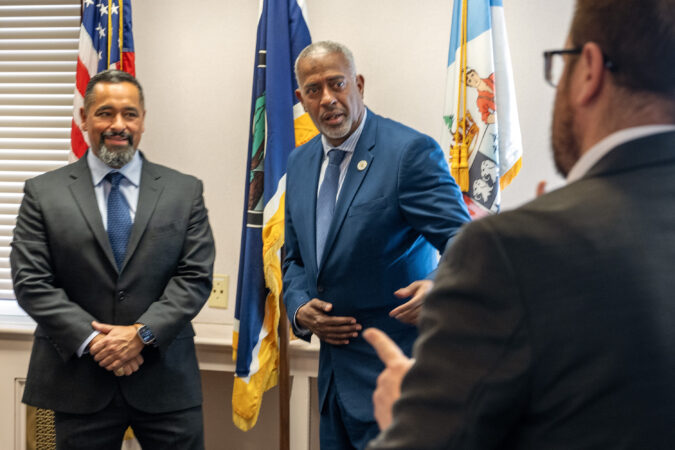
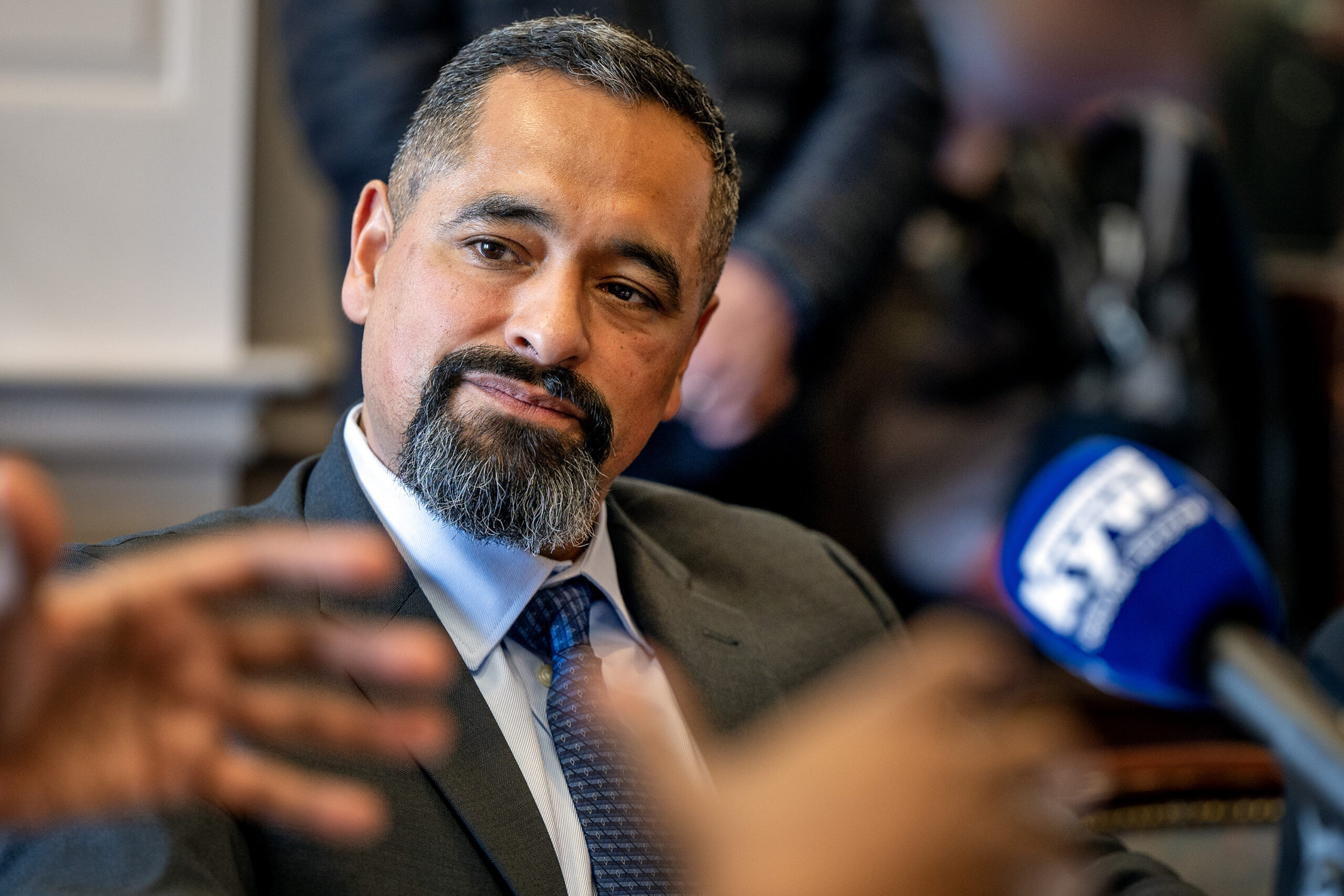
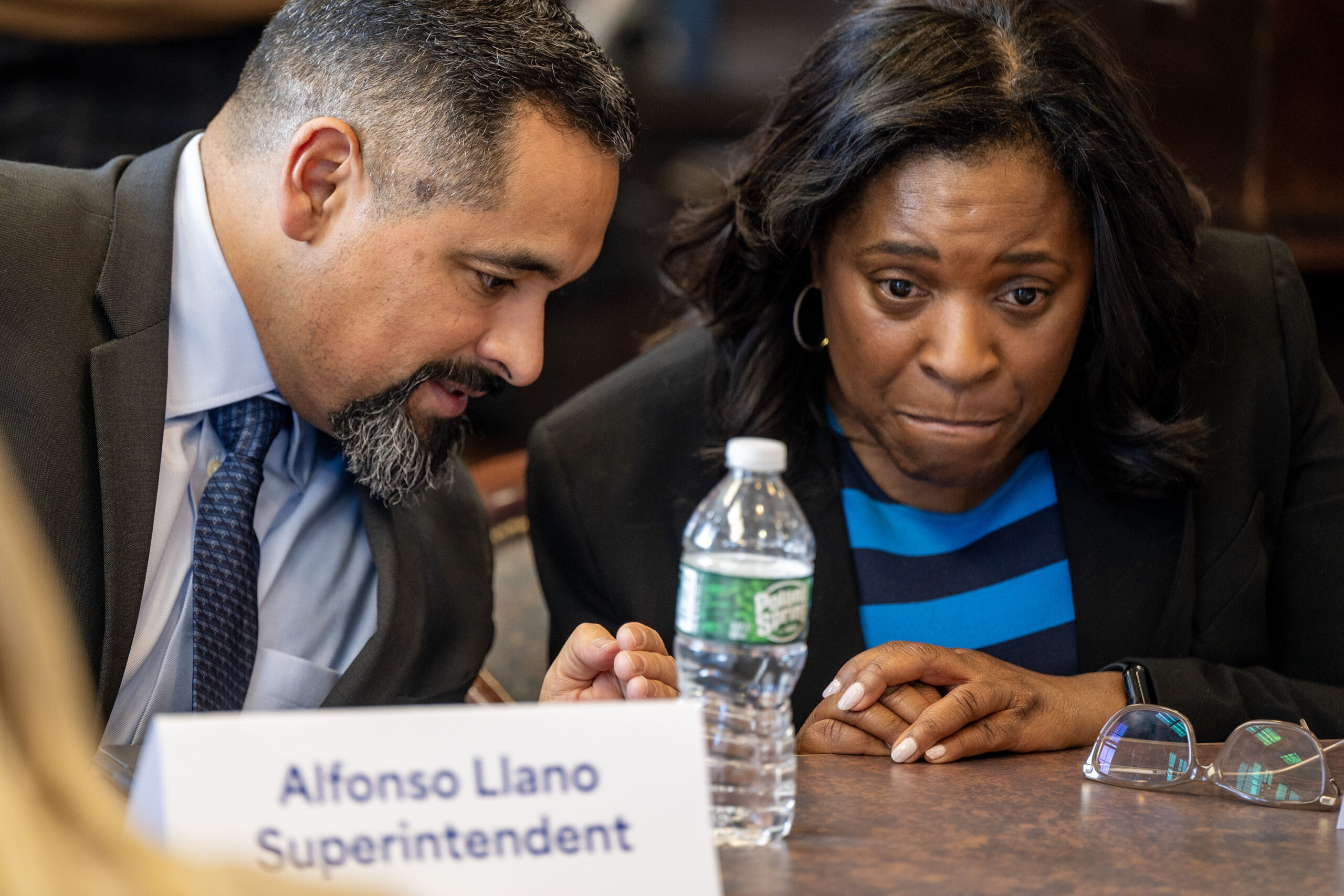
    Incoming state-appointed Camden school superintendent Alfonso Q. Llano Jr. got a head start Wednesday on his new position running the troubled school system.

    Llano met with Camden Mayor Victor Carstarphen and other key stakeholders at City Hall for a congenial discussion ahead of taking over the district March 1. .

    During a round-table discussion, Llano said his immediate priority will be to provide stability to the district. Camden has been without a permanent superintendent since June 30.

    Llano,currently the school superintendent in the Vineland district, inherits a district of about 5,532 students plagued with declining enrollment, law test scores, chronic absenteeism and a high dropout rate.There have been modest gains since the state seized control of the district in 2013.

    The incoming district leader said it was too early to comment on the district’s budget outlook for the 2026-2027 school year. Last year, the district had a $91 million budget deficit and made cuts affecting nearly 300 positions.

    Llano said he was made aware of recent rumors about possible school closures. He said he had not received data about it and declined further comment.

    In response to another question, he said he would support immigrant families who have grown increasingly afraid to send their children to school because they fear they may be targeted by ICE. About 56% of Camden’s traditional public school students are Hispanic.

    “Schools are a safe place and we want to maintain them as a safe place,” Llano said.

    He delicately side-stepped a question about the changing educational landscape in Camden. Thousands of students have left the city’s traditional public schools for Renaissance and charter schools, which are publicly funded but privately run.

    Enrollment in the Renaissance and charter schools exceeds the traditional public schools. The district has said payments to those schools have increased from $54.9 million in 2013 to $198 million.

    “School choice is important to families. Camden is unique” Llano said. “We want to make sure the public school system is stabilized and innovative in a way that families feel comfortable keeping their children in the public school system.”

    Camden’s new state-appointed school Superintendent Alfonso Q. Llano Jr. listens as Mayor Victor Carstarphen speaks while Llano makes his rounds Wednesday, Jan. 21, 2026 at City Hall, meeting with other city, county and state officials. Currently the Vineland schools chief, he doesn’t officially begin in Camden until March.

    Llano said he would focus on listening and learning from educators and the community as his introduction to Camden.

    “What does the reality look like? What is every day in the classroom?” he said.

    Llano has been making his rounds in Camden. He was in the city Monday and joined Martin Luther King Jr. Day of Service activities.

    Llano said he was proud to become the first Hispanic tapped to lead the district. He is among only a handful of outsiders to become the city’s schools chief.

    Camden’s new state-appointed school Superintendent Alfonso Q. Llano Jr. (left) talks with Davida Coe-Brockington, current acting state superintendent, as he makes his rounds Wednesday, Jan. 21, 2026 at City Hall, meeting with city, county and state officials. Llano, currently the Vineland schools chief, doesn’t officially begin in Camden until March.

    Llano will receive an annual salary of $260,000 under a three-year contract, making him among the highest paid superintendents in Burlington, Camden and Gloucester Counties.

    He succeeds Davida Coe-Brockington, a longtime Camden educator who has served as the interim superintendent during a national search. She was not a candidate for the job.

    Coe-Brockington, who will continue as interim chief until Llano arrives, said she was “honored to hold it down” until a permanent superintendent was named. She thanked Llano “for saying yes to Camden.”

    Carstarphen and a group of city leaders cleared the path for the state to appoint a new superintendent. Katrina McComb’s contract was not renewed last year after The group said Camden schools needed “a new vision for leadership.”

    Llano has been superintendent of the Vineland district in Cumberland County since 2021. He previously worked in the Trenton, Readington Township and Howell Township school districts.

  • Frank Seravalli’s late cousin played hockey at Germantown Academy. Now the NHL insider is coaching the Patriots in his honor.

    Frank Seravalli’s late cousin played hockey at Germantown Academy. Now the NHL insider is coaching the Patriots in his honor.

    Frank Seravalli was standing behind the players’ bench at Bucks County Ice Sports Center when his phone buzzed. He didn’t reach for it — which is not his usual instinct.

    Seravalli, a former Daily News reporter, is one of only a handful of NHL insiders. His job is to talk to athletes and decision makers around the league. Missing a call or a text can mean missing a story, and in a competitive media environment, in which quick, accurate information comes at a premium, being “late” isn’t ideal.

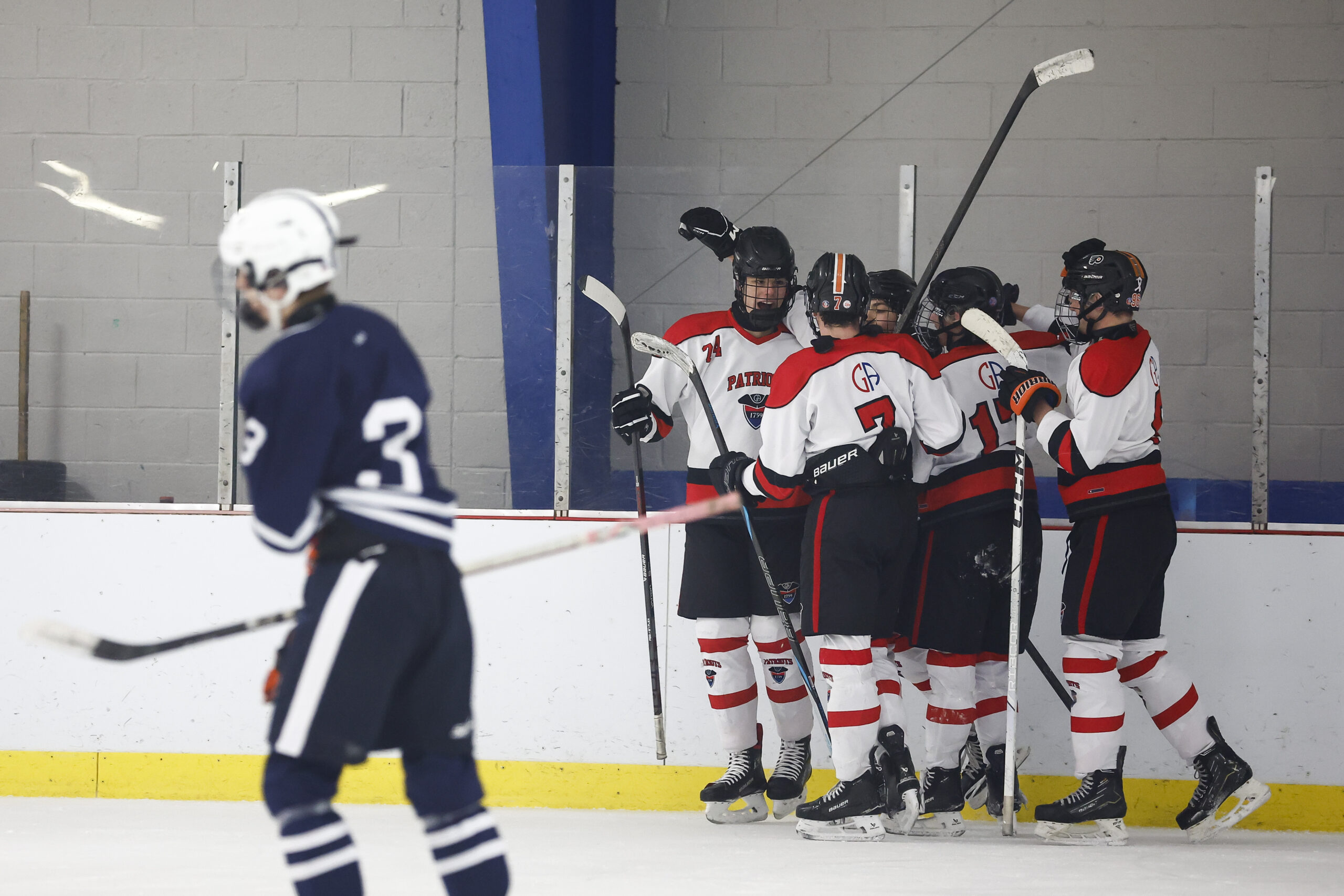
    But on Jan. 12, in the midafternoon, Seravalli was busy. He was coaching Germantown Academy’s varsity hockey team. It was the third period and the Patriots were up, 6-2, in a rematch against Episcopal (5-2 on the aging scoreboard, which was missing a number).

    Despite their lead, Seravalli’s players didn’t relent. With 35.6 seconds remaining, sophomore Mick Tronoski fired another shot into the net. A smattering of fans cheered.

    After the two groups shook hands, Seravalli walked off the ice. He pulled his phone from his pocket, and read that the Columbus Blue Jackets had fired their head coach, Dean Evason.

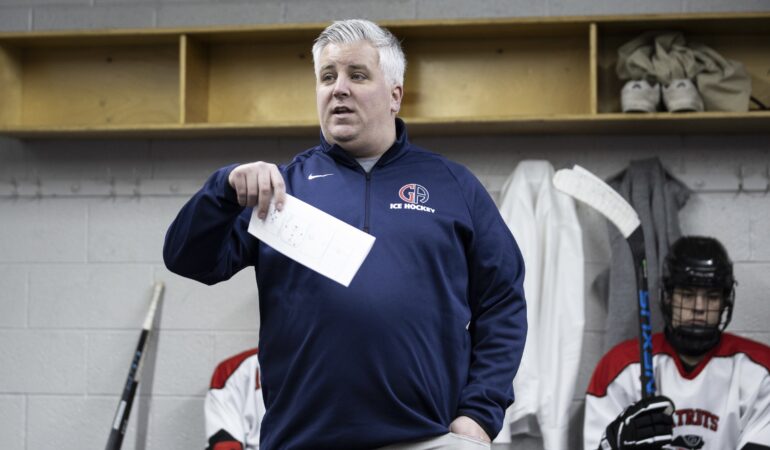
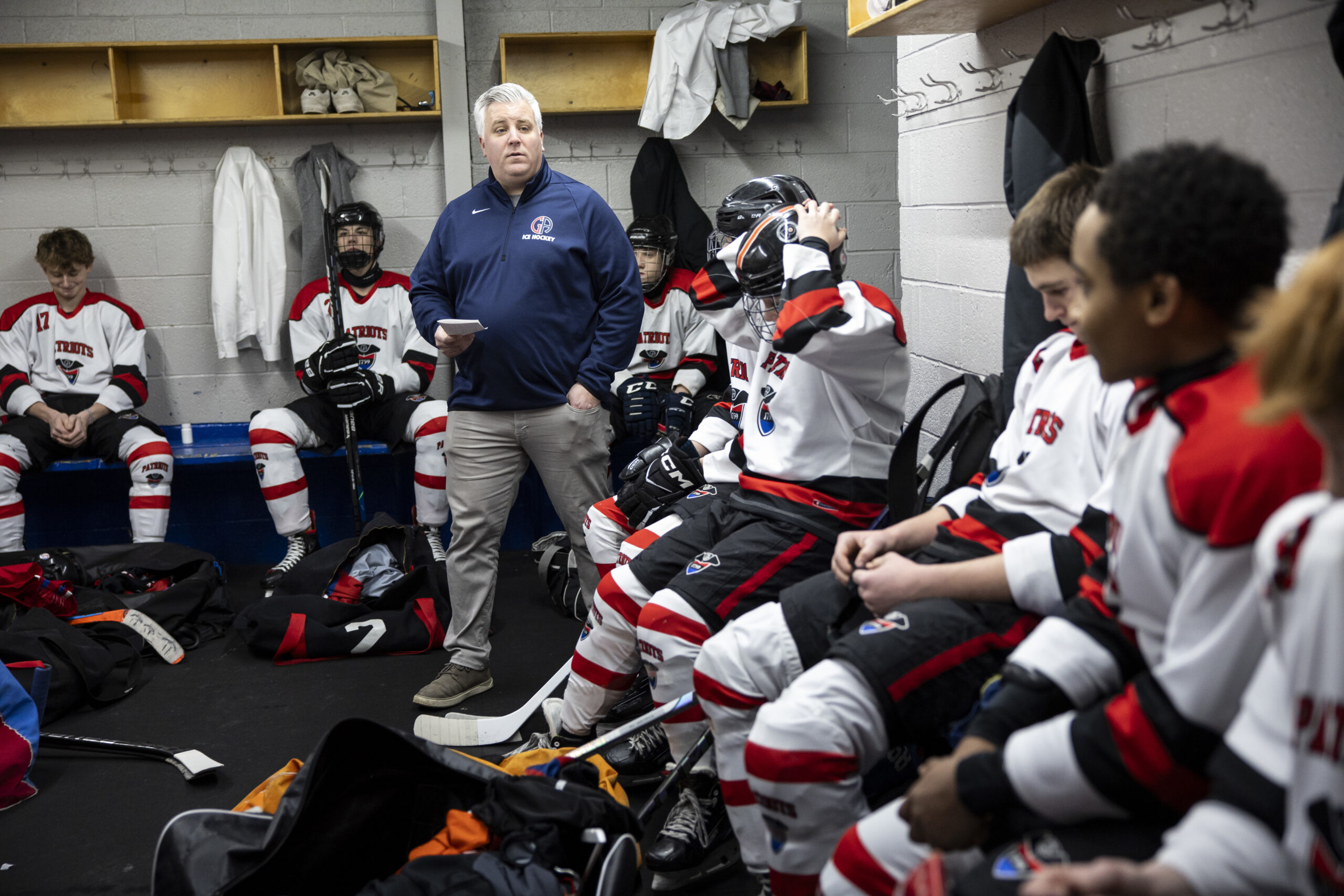
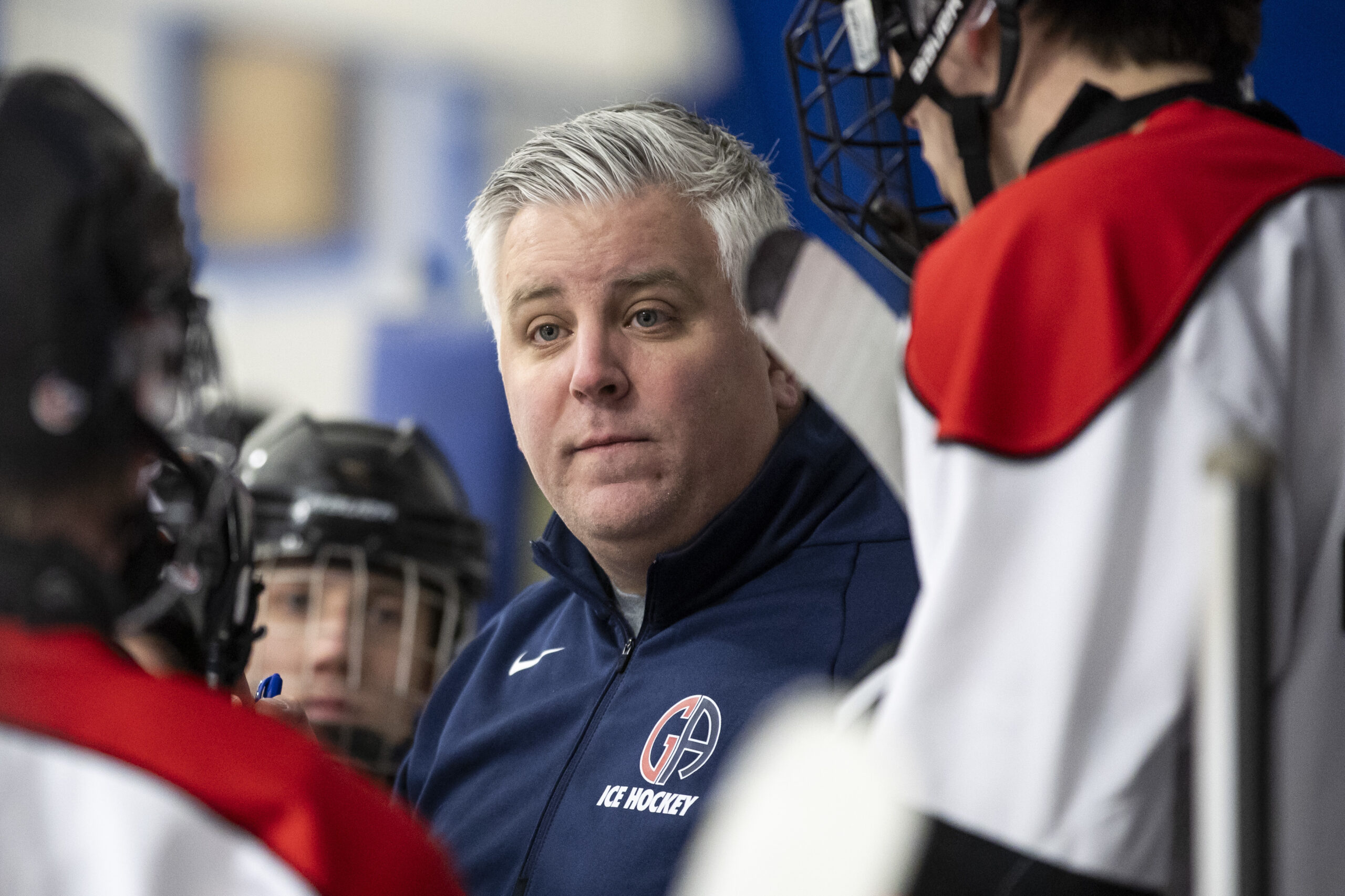
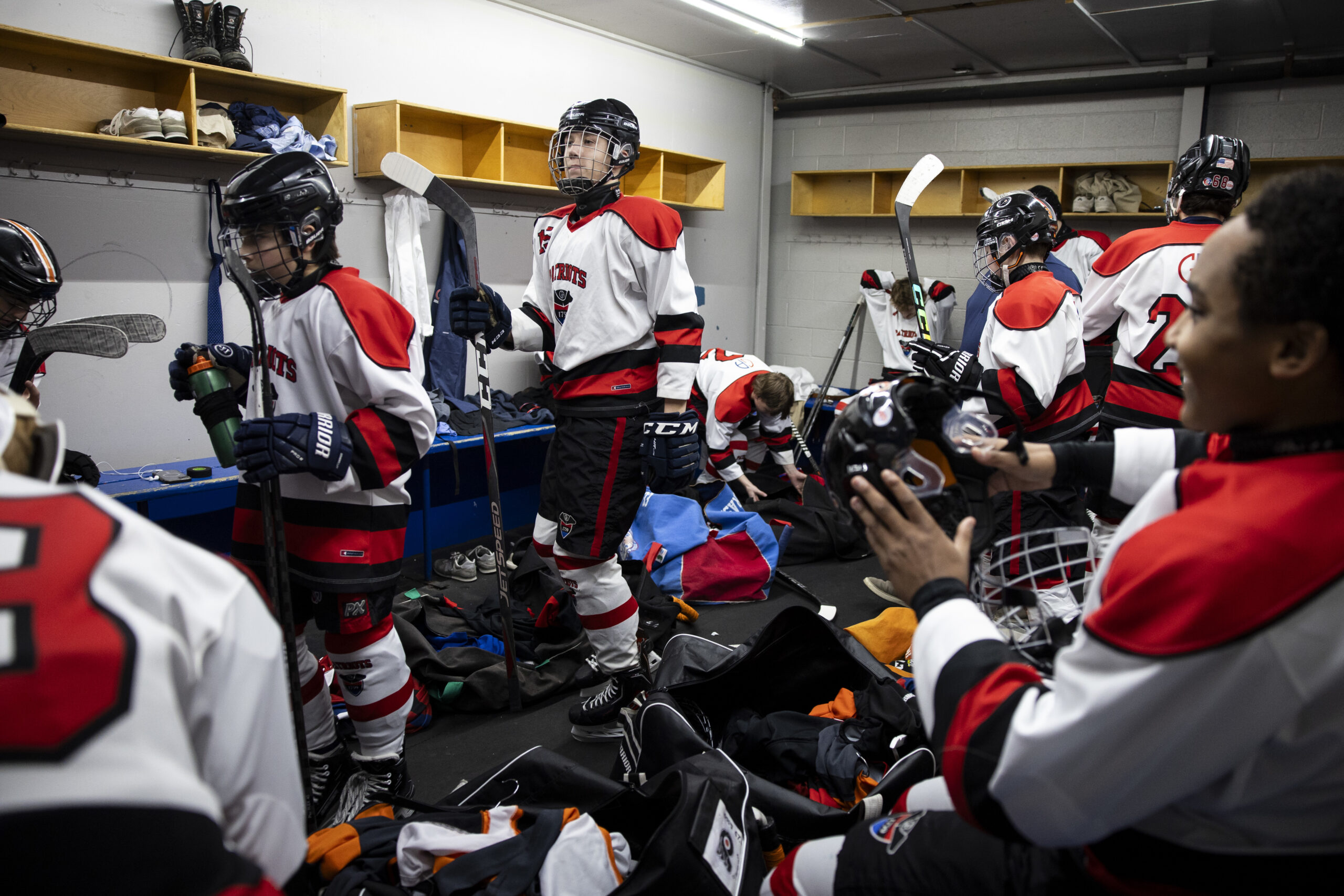
    Coach Frank Seravalli talks with his Germantown Academy team in the locker room at the Bucks County Ice Sports Center on Jan. 12.

    He retweeted a team statement, 27 minutes late. The NHL insider shrugged.

    “I mean, it’s just life, right?” he said. “What are you going to do?”

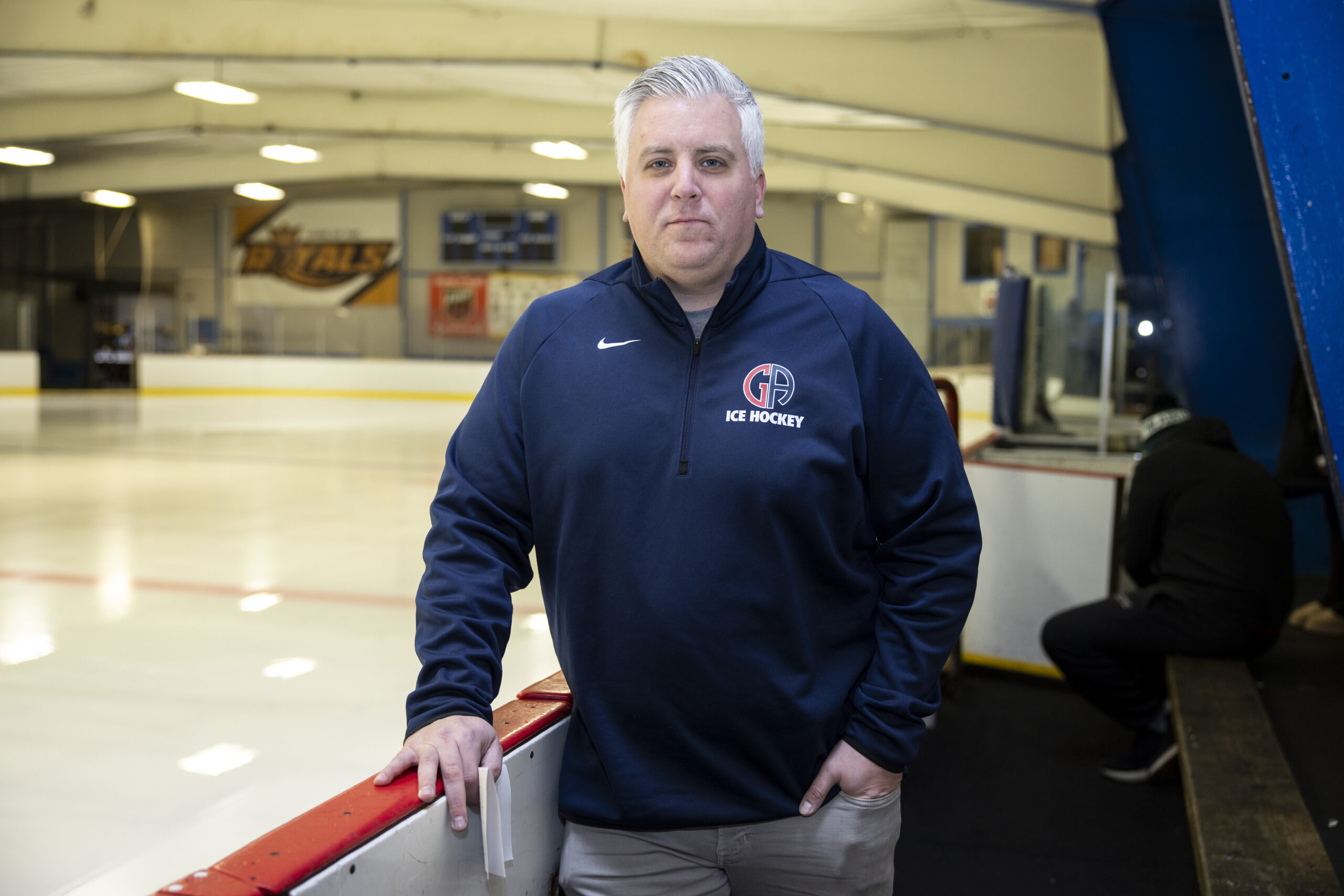
    Since July, Seravalli, 37, has served as GA’s head hockey coach. It is a daily commitment, one that he takes as seriously as his podcast and TV hits for various outlets. Five times a week, Seravalli oversees hourlong practices, and coaches hour-and-a-half games, with some 7 a.m. morning lifts mixed in.

    He is not above doing the grunt work, either, like ordering gear, setting the schedule, and keeping the team’s stats. He reviews film, plans workouts, and runs the middle school program, all while keeping an eye on promising players in the area.

    NHL insiders do not have an abundance of free time, so when Seravalli first told his family that he’d be coaching high school hockey, they thought the idea was absurd. And maybe it is a little absurd. Seravalli is not an alumnus of Germantown Academy. He is not doing this for the small stipend he gets halfway through the year.

    But he is doing it for a reason. Just over two years ago, Seravalli’s cousin, Anthony Seravalli, died unexpectedly. He was 41 and left behind a wife and three sons.

    Frank always looked up to him. Anthony was mature for his age, even as a teenager. He was a team captain and a star defenseman at Germantown Academy in the late-1990s, back when the school was winning Flyers Cups and producing NHL-caliber talent.

    GA hockey’s stature has diminished since then. New York Rangers goalie great Mike Richter once played for the Patriots, but for years, the program was essentially dormant. Local recruiting wasn’t a priority. It was unclear whether there would be enough players to field a team in 2025-26.

    Until Seravalli arrived. He has told the school he’s willing to make a five-to-10-year commitment to restore the program to what it was. In his mind, this is the best way to honor his late cousin.

    “I thought of him, and how big high school hockey was 25 to 30 years ago, and how I could help make that big again,” Seravalli said. “And I was like, ‘Maybe, this was supposed to happen.’”

    A ‘fixture’ of GA hockey

    Germantown Academy was an unlikely hockey powerhouse in the 1980s, ’90s, and 2000s. The coed school had an enrollment of only 1,200 students, from kindergarten through 12th grade. These numbers allowed the Patriots to fill only one varsity team most years.

    It paled in comparison to some of the bigger programs in the area, like La Salle College High School, which was able to fill four teams (one varsity and three junior varsity).

    Nevertheless, GA found success. Players took pride in its underdog identity, especially while playing local behemoths like Council Rock and Malvern Prep. Germantown Academy won two Flyers Cups — the hockey championship for eastern Pennsylvania high schools — in 1982 and again in 1983, and a state championship later that year.

    The team won three more Flyers Cups in 1991, 1994, and 1995, and went 100-0-6 in regular-season league play for over five seasons in the mid- to late-1990s.

    Anthony Seravalli was a key part of GA’s team. He joined the varsity as a freshman in 1996, and quickly established himself as a leader. Dan McDonald, a defenseman who was two years older, would drive him to school every morning.

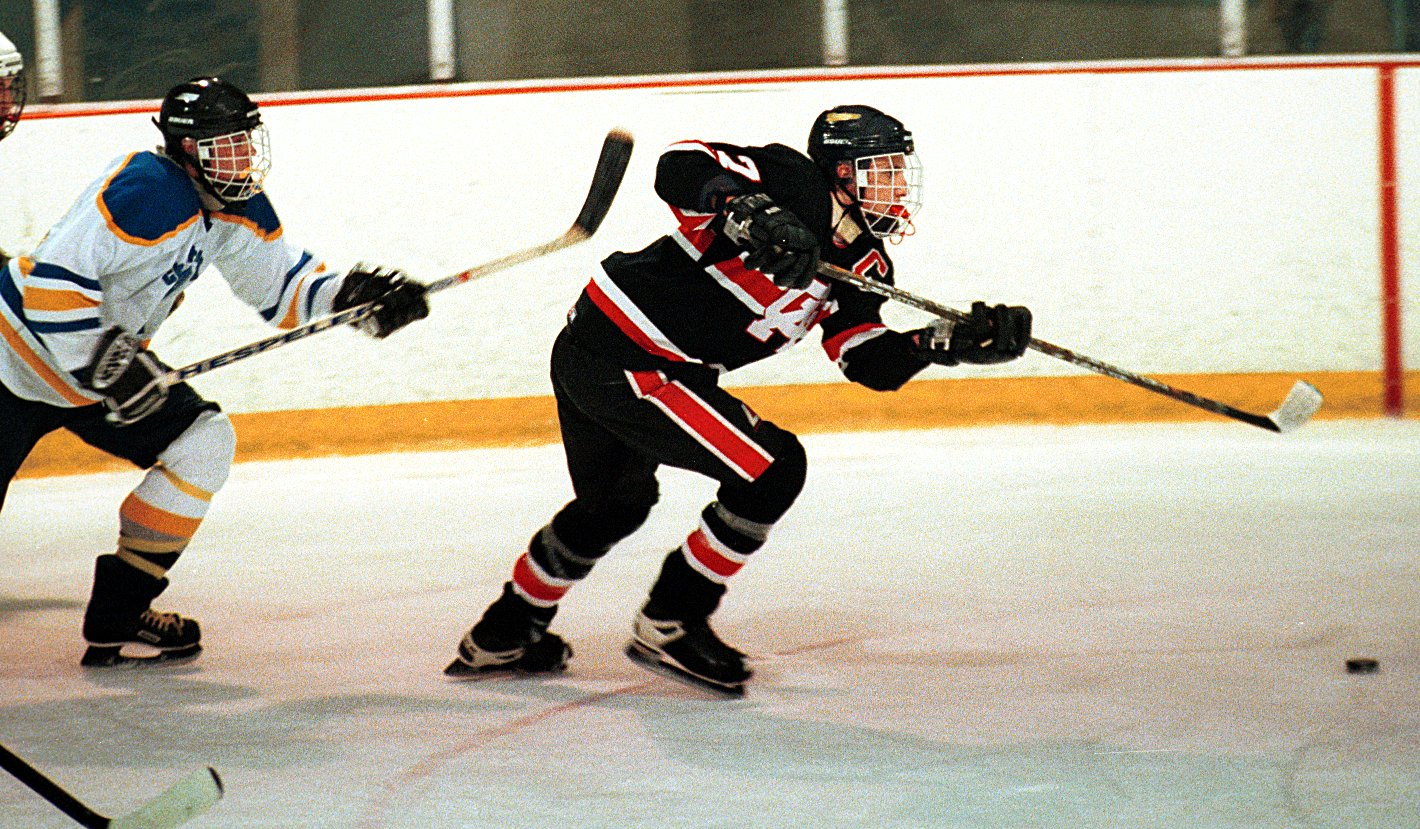
    Anthony Seravalli (right) was a critical part of GA’s program in the late 1990s.

    The underclassman would rarely — if ever — call out sick with an injury or illness. His teammates estimated that he’d be on the ice for about 70% of Germantown Academy’s games (a hefty workload for a young player). Seravalli was a physical presence, standing at 6-foot-2, with a big windup slap shot that was hard to miss.

    He carried no ego, despite his abilities. Anthony was inclusive with all of his teammates, including those who spent more time on the bench. In 1999, a few players got injured, and Seth Gershenson, a self-described “bench guy,” was asked to play some shifts.

    Before Gershenson took the ice, Seravalli pulled him aside to give a few words of encouragement.

    “He respected my effort and willingness to go out there and get beat up a little bit,” Gershenson said.

    Many local players also participated in club hockey. They saw it as a way to get noticed in eastern Pennsylvania, which was not exactly a hotbed for the sport. As a result, club teams often took precedence over high school teams.

    But this was not the case for Seravalli. GA always came first. Gershenson referred to him as a “fixture.”

    “He took being a captain really, really seriously,” Gershenson said, “and he took the success of GA really seriously. He took pride in our success much more than whatever his club team was doing.”

    Frank Seravalli grew up in Richboro, Bucks County, just a few minutes from the Face Off Circle, where Germantown Academy played at the time. By age 6, he was attending games and practices to watch Anthony and another cousin, Jason Jobba.

    The elementary school student would stand in the same spot, behind the net, with a fizzy Coke in hand, and his face pressed up close to the glass.

    “Watching your cousins who are a bit older, those are your heroes,” Seravalli said. “And for me, that’s part of where my love for the game came from.”

    The Seravallis were a big, tight-knit group. Almost everyone played hockey, and almost everyone went to work at the family construction business. This was the path Anthony took, but he also found time to give back to his alma mater.

    Frank Seravalli fondly remembers watching his older cousins play hockey when he was a child.

    In 2004, while Frank was playing at Holy Ghost Prep, Anthony returned to GA as an assistant coach. He had a knack for connecting with the players, most of whom were familiar with his high school career.

    One example was Brian O’Neill, a GA alum and former U.S. Olympian who is now playing pro hockey in Sweden.

    O’Neill was a talented skater, but he lacked defensive fundamentals. This was one of Anthony’s strengths, and when O’Neill was moved to defense in his sophomore year, he began to work with the assistant coach.

    Seravalli constantly reminded him to keep “stick on puck.” It was a message that O’Neill had heard for years but never fully understood. That changed when the coach stepped in.

    “It was easy for him to sell me on what he was trying to teach, because I had a lot of respect for him as a player and a person,” O’Neill said. “He didn’t really have to earn my trust. That was already there.”

    The goal was to put pressure on his opponent, in a way that didn’t involve hitting or cross-checking. The coach ran drills in which O’Neill would hold a puck in his right hand, and the stick in his left, to focus on keeping the stick down.

    “It’s amazing,” O’Neill said. “You would think, ‘OK, I can’t grip the stick with my other hand, so I pretty much am playing with one hand,’ and all you can do with that is pretty much stick on puck.

    “You would think you would be way worse at defending, but it’s actually the opposite, because all you’re focused on is stick on puck. And you’re not focused on hitting.”

    The concept finally clicked. O’Neill, who went on to play in the NHL, still uses it to this day.

    “[Anthony] was the guy that gave me the most advice on defense,” he said, “and that definitely made a huge impact on my career.”

    Germantown Academy players celebrate after a goal against Episcopal Academy at Bucks County Ice Sports Center.

    ‘Please help save our program’

    When he was young, Frank Seravalli would visit his family’s construction business in Northeast Philadelphia. He’d often notice workers perusing thick copies of the Daily News over lunch, and dreamed about having a byline someday.

    In 2009, that dream became a reality, when the paper hired Seravalli out of Columbia University’s journalism school to cover the Flyers. He stayed for six years, before leaving for the Canadian television network TSN, where he worked as a senior writer and NHL insider.

    In 2021, Seravalli started his own business, the Daily Faceoff, which was sold to a media group in Denmark in 2024. He’s now building a hockey network at the streaming service Victory+.

    A typical day includes a radio interview in the morning, a podcast taping at noon, and more radio and television hits at night. Interspersed are hours spent texting and calling sources throughout the league.

    It is a frenetic lifestyle, one that requires Seravalli to be glued to his phone. Finding time to coach a high school hockey program seemed impractical, if not impossible. But Seravalli was drawn to the idea. So, when he saw the job opening last year, he decided to apply.

    The school’s athletic director, Tim Ginter, could only laugh when he read the insider’s resumé. Among his references were two NHL general managers, an executive with the league, and a former NHL head coach.

    “He’s like, ‘Call [former Anaheim Ducks head coach] Dallas Eakins,’” said Ginter. “And I’m like, ‘You’ve got to be kidding me.’”

    Seravalli interviewed for the position in the spring. He talked to two of the team’s captains, J.P. McGill and Joey Lonergan, who explained that their program was in jeopardy.

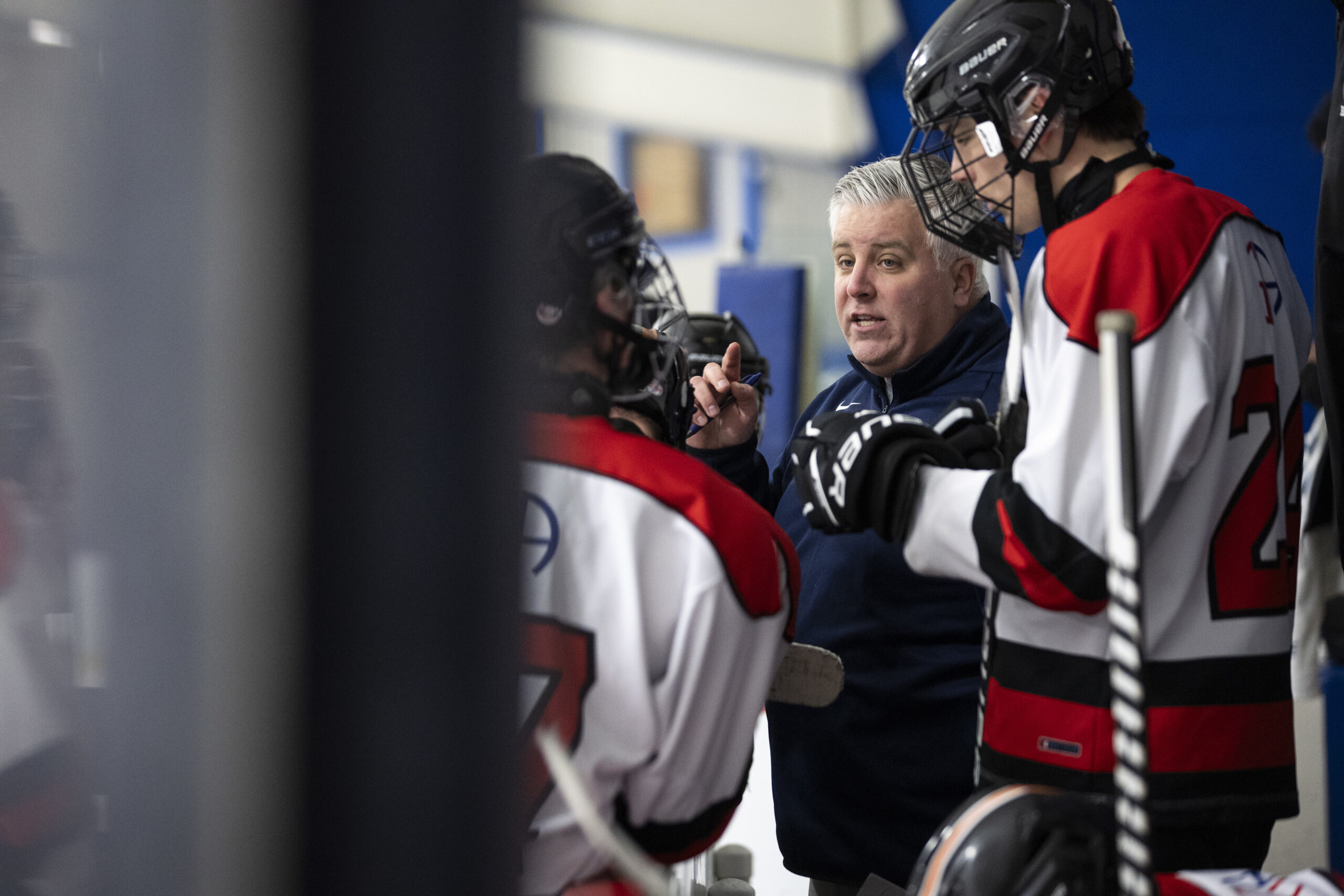
    Coach Frank Seravalli talks with his team during the game against Episcopal Academy.

    GA had lost five players in 2025. School officials didn’t know how they were going to fill those spots. McGill and Lonergan had heard stories about the 1990s and 2000s teams, but returning to that level seemed like a long shot.

    The Patriots hadn’t played in a Flyers Cup since 2009. After years of shrinking rosters and coaching changes, the team was moved for 2009-10 from the Suburban High School Hockey League to the lesser Independence Hockey League, which isn’t eligible for Flyers Cup entry.

    “Essentially their plea was, ‘Please, help save our program,’” Seravalli said. “‘We’re not even sure we’re going to have a team next year.’

    “I couldn’t say no at that point. I knew I was hooked.”

    Seravalli met with Ginter shortly after. He made a succinct but powerful pitch.

    “If you don’t have interest in changing your program, and really tearing it down and rebuilding it, I’m not your guy,” the insider told him. “But if you are interested, I’m willing to make a five-to-10-year commitment to build this the right way.”

    He was hired in July. Seravalli rarely mentioned his full-time job, but it didn’t take long for the teenagers to figure it out. One day, while McGill was “doomscrolling” on the internet, he spotted his high school coach on Bleacher Report Open Ice.

    His reaction: “Oh [expletive].”

    “I texted some of my teammates,” McGill said. “I’m like, ‘He’s the Adam Schefter of the NHL!’”

    Germantown Academy’s players were not aware at first that their new coach was an NHL insider.

    Added junior defenseman Jack Stone: “He’s a reporter, so obviously he knows what he’s talking about.”

    The insider started to use his connections behind the scenes. He’d ask current and former NHL head coaches for advice, among them Eakins, who now works for Adler Mannheim in Germany.

    Eakins encouraged Seravalli to model the behavior he wanted to see in his team. He emphasized how important it was to show not only that he cared about the program, but about the players as people.

    He also shared some mistakes he’d made in his own coaching career, with the hope that Seravalli could learn from them.

    “Sometimes people [will] say, ‘OK, I’m a coach, now I have to take on a different persona,’” Eakins said. “And I told him, don’t do that. Don’t go in there and pretend to be [Florida Panthers head coach] Paul Maurice.

    “You’ve got to go in there and be Frank Seravalli. Because as soon as you step outside of that, you’re cooked. You can only pretend to take on this other persona for so long.”

    The tenor of the program changed almost immediately. Before Seravalli’s arrival, on-ice practices and team lifts were optional. Sometimes, as few as two or three players would show up. Now, they were mandatory, and everyone was expected to arrive on time.

    The teenagers learned this the hard way. In October, during preseason workouts, Seravalli organized morning weightlifting. Two players — who will remain anonymous — slowly waltzed into the gym, 15 minutes late.

    Coach Frank Seravalli brought a disciplined approach to the Germantown Academy hockey team.

    Seravalli didn’t say anything in the moment. But after the workout, he brought the team down to the field house to run sprints. The two late arrivals were put on the sideline, so they could watch their peers suffer on their behalf.

    “And I just said, ‘Look, we have a standard here,’” said Seravalli. “‘You have to make the commitment that everyone else is to show up on time and be ready.’

    “And I’ll tell you what: Since then, no one’s been late.”

    The players have embraced the newfound discipline. Stone said it’s something that they didn’t realize they needed, but they’re grateful to have. McGill agreed.

    “He’s way more intense than what we’ve had in the past,” McGill said. “Which, to some people, can be intimidating. But if you want to play at a high level, that can’t be intimidating.

    “There’s no getting away with anything around here anymore. Frank has done a great job of holding us accountable to what the new standard needs to be.”

    A different type of connection

    Not long after he was hired, Seravalli moved the team from the Hatfield Ice Arena to the Bucks County Ice Sports Center (formerly known as the Face Off Circle). The building looks just like it did when Anthony was in high school.

    The white-and-blue paint is faded, but intact, and so is the thermostat, set to the coldest possible temperature. Five days a week, Seravalli walks past the spot where he stood as a child, watching his cousins with wide eyes, as they swept across the ice.

    Anthony’s death was a shock to the entire family. He no longer roams the halls of the construction firm. He is no longer behind the bench at the Face Off Circle.

    But when Frank is skating around that rink, with GA students spinning past him, he feels connected to his late cousin.

    “I can’t really explain how or why I ended up here,” he said. “I just know that it’s for a reason.”