Johnson & Johnson plans to spend more than $1 billion to build a cell therapy manufacturing facility in Montgomery County near Spring House, the New Jersey pharmaceutical and medical supplies giant said Wednesday.
The Lower Gwynedd Township plant, part of an effort by the company to invest $55 million in the U.S. by early 2029, is expected to employ 500 people when fully operational in 2031, J&J said.
The facility at 1201 Sumneytown Pike will add to J&J’s capacity to make cell therapy treatments for cancer, with a focus on multiple myeloma. That’s a type of cancer that attacks white blood cells in the bone marrow. Cell therapy is the use of engineered immune cells to treat disease.
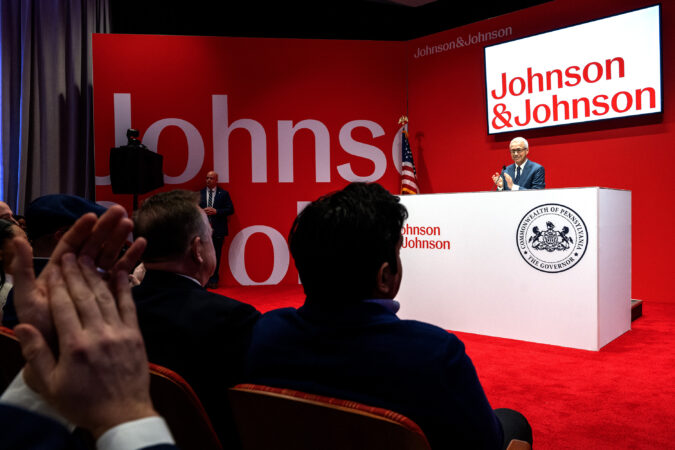
“Pennsylvania’s proud manufacturing legacy, from steel to today’s medicines and medical technologies and Johnson & Johnson’s roots here for seven decades, are part of why we are investing here.” Joaquin Duato, J&J’s chairman and CEO, said.
Duato spoke during an event at the company’s Spring House research and development campus, where 2,500 scientists work in 70 laboratories. The Montgomery County site is J&J’s largest R&D center and it’s “where most of our discovery efforts start,” Duato said.
The company based in New Brunswick, N.J., employs 5,885 people at 10 Pennsylvania facilities, according to the office of Gov. Josh Shapiro. The Shapiro administration has offered $41.5 million in state support for the J&J project.
“With this investment, we are further cementing our place as a leader in life sciences,” Shapiro said. He said his administration’s efforts to cut red tape are among the reasons companies like J&J “are choosing to double down on their investments” in Pennsylvania.
Eli Lilly & Co. last month announced plans to build a $3.5 billion pharmaceutical plant in the Lehigh Valley to expand manufacturing capacity for next-generation injectable weight-loss medicines.
GSK said in September that it will build a biologics factory in Upper Merion Township, but did not specify how much it would spend there. That project is part of GSK’s plan to spend $1.2 billion on advanced manufacturing facilities.
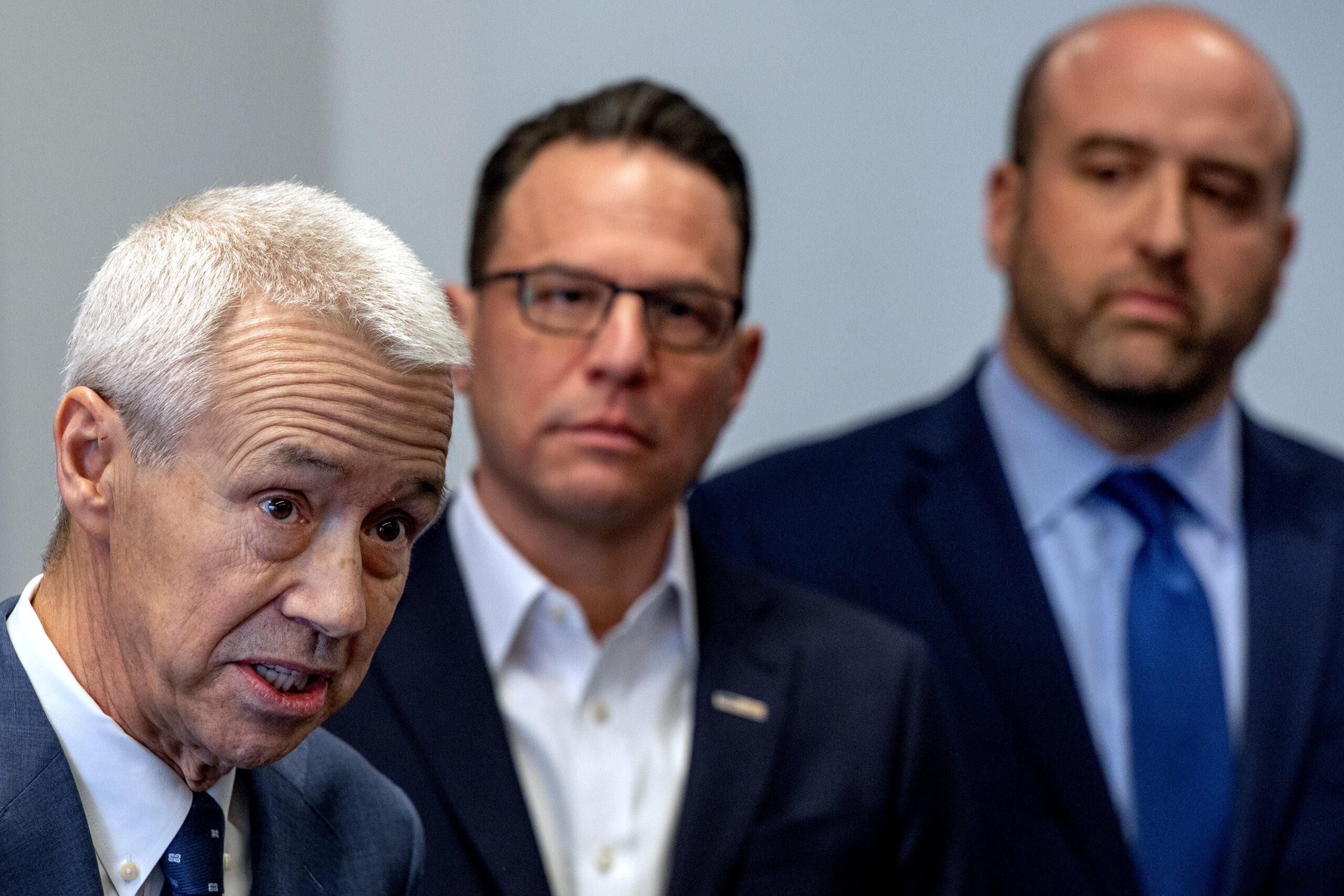
Johnson & Johnson chairman and CEO Joaquin Duato (left), was joined by Gov. Josh Shapiro and Pa. Dept. of Community and Economic Development Secretary Rick Siger (right) on Wednesday when J&J announced it will spend $1 billion on a cell therapy plant on its campus in Lower Gwynedd Township.
Merck, another New Jersey-based drug giant, last year announced plans for a $1 billion factory and lab near Wilmington. Merck also has major operations in Montgomery County, which is among the top-ranked counties nationally for pharmaceutical manufacturing jobs.
J&J has a long legacy in the Philadelphia region. Among its major acquisitions here was the 1959 purchase of McNeil Laboratories, which later developed Tylenol. The pain reliever is still made at a plant in Fort Washington.
Other major Philadelphia-area J&J deals include the 1999 purchase of Centocor, one of the country’s first biotech companies, and the 2012 deal for Synthes Inc., a Swiss medical device maker with its North American headquarters and major operations here.
Separately from the new cell therapy manufacturing facility, J&J has two expansion projects planned for the Spring House R&D site.
One is a new cell engineering and analytical sciences facility. The other is focused on CAR-T testing and manufacturing during research and development, with the goal of creating personalized therapies more quickly and efficiently. The company did not disclose the cost of those projects.
A 260-apartment development, largely composed of one-bedroom units, is the latest residential project slated for 4401 Ridge Ave. in East Falls.
The almost two-acre site has been long vacant and is now covered in trees. It is owned by the Philadelphia Housing Authority, which operated a dozen rental homes there until the late 1990s. The property is under an agreement of sale, according to the agency.
Plans for the project were posted on the Philadelphia Planning Commission’s website Tuesday, showing a six-story building from Stokes Architecture & Design.
The zoning paperwork in city records is signed by Eric Marshall, who is the principal with MGMT Residential. The company, based in Northwest Philadelphia, owns and manages hundreds of units in neighborhoods including Roxborough and Manayunk.
MGMT itself is not the developer and will not own the property, according to the project’s zoning lawyer, Richard DeMarco, although the company will manage it once construction is completed.
The development team declined to comment in advance of a neighborhood meeting Wednesday night.
The plans show that the apartment building proposed for 4401 Ridge Ave. will offer 217 parking spaces. It will also host at least 8,000 square feet of commercial space, according to the East Falls Community Council, which has been negotiating with the developers.
The neighborhood group’s zoning chair, Hilary Langer, reports progress at the discussions.
He says that many neighbor concerns center on traffic, parking, and the preponderance of smaller units — a concern he does not personally share.
“The … fact is that one-bedroom apartments are in demand and their vacancy rate is [almost] 10%, which is really the same as annual natural turnover,” Langer said in an email.
Langer said that by his calculations, 115 two-bedroom apartments have been built in his neighborhood since 2021, and a quarter of them are still vacant. But 399 one-bedroom or studios have been constructed in that time frame, and only 12.5% of them are empty.
An aerial rendering of the 260-unit apartment building proposed for 4401 Ridge Ave.
The project needs approvals from the city’s Zoning Board of Adjustment to move forward, with a hearing set for March 25. It will appear before the advisory-only Civic Design Review committee on March 3.
The last proposal for the site came in 2021 from Baltimore-based Atapco Properties. That project included 189 parking spaces for 185 apartments.
Thatformer proposal’s frontage was pushed back from Ridge Avenue, which the East Falls Community Council feared would make an already pedestrian unfriendly environment even worse.
The newer development has the apartment building fronting on the sidewalk.
“You’re not going to get walkability if you just put in plazas and parking lots,” Langer said. “This building, at the very least, it provides the chance of walkability.”
The Minneapolis-based artist can’t unsee the impact ICE and directives from President Donald Trump’s administration’s have had on her hometown in recent months.
“I don’t really know anyone whose life hasn’t been affected by the occupation in a tangible way,” she said. “Many people I know are volunteering to deliver meals, patrol schools, drive folks to work, and serve as peaceful observers — which is what both Renee Good and Alex Pretti were doing when they lost their lives at the hands of ICE agents.”
The independent graphic designer thought about ways she could get involved when it hit her. She’s joining a larger tradition of subversive font design.
Haddican, whose work focuses on typography, branding, and packaging, thought back to Moontype, a font created by designer Olli Meier that autocorrects “bad words,” like hate, into “good words,” like love.
Then she thought about language and its use today.
“It’s become impossible to ignore how blatantly the Trump administration is misusing language in order to control and distort the narrative,” she said. It clicked.
“Wouldn’t it be cool if you could change someone else’s words?” Haddican said. “I decided that the best practical use of this font feature would be a practical joke.”
This month, she launched Times New Resistance, a parody of the commonly used Times New Roman font, which autocorrects a slew of specific words as they’re typed. Notably, Times New Roman is the new (and old) official font of the State Department.
Using Times New Resistance, the term ICE autocorrects to “the Goon Squad.” Trump autocorrects to “Donald Trump is a felon.” Gay becomes “gay rights are human rights.” Illegal alien becomes “human being.”
Kingsley Spencer, a creative director and designer based in Jacksonville, Fla., says using the State Department’s own font is part of what makes Haddican’s font so powerful.
“Using technology as a form of commentary against a political regime that decided to weaponize Times New Roman as a form of culture shaping is sharp for a designer,” he said. “I love how direct and comical it is.”
The font is free, “just like America used to be,” Haddican‘s website says. She said Monday that it has been downloaded about 600 times so far. She describes it as a “social commentary meant to autocorrect the autocrats.”
The hope is that some users might secretly install the font onto the computers of “an ICE apologist,” or “morally bankrupt American” as a way of unleashing mischief.
To the untrained eye, the typeface looks like Times New Roman in the font menu — there’s just a sneaky extra space between the words Times and New. But it’s likely many downloads are by like-minded supporters who want to enjoy the font for themselves.
The technology behind the font is simple.
Haddican modified an existing open-source typeface that resembles Times New Roman and programmed the substitutions. She said the hardest part was deciding which autocorrections to make.
“I know I’ve done an imperfect job. The corrections are a mixture of serious stuff (for example, the word ‘good’ autocorrects to ‘Renee Good was murdered by ICE’) and things that I find funny, like changing ‘Stephen Miller’ to ‘Nosferatu,’” she said.
“The first draft was significantly more profane, but I toned it down. I wanted to offend people by speaking truth to power, not for swearing like a sailor.”
Spencer said the font uses something in the typography world called ligatures, which replaces a set of recognized characters with a single character phrase. An example of this is when you type a fraction or date in a document and it’s automatically formatted.
Haddican joins a group of other typography artists who have made jokes, social commentary, or both through text.
Times Newer Roman is a typeface created by the Brooklyn-based art collective MSCHF (pronounced mischief) in 2018 that looks identical to Times New Roman, except each character is 5% to 10% longer, making essays appear slightly longer without changing formatting rules.
It was billed as a font that could help students cheat on term papers. The font takes jabs at academic productivity culture, using typographic invisibility that’s undetected by the untrained eye.
Sang Mun, a designer and former National Security Agency contractor, created a subversive “surveillance proof” font called ZXX in 2013. The fonts were created to be legible to the human eye, but difficult for surveillance software used by Google and other companies to scan text to read.
More mainstream examples include Shepard Fairey, the artist behind OBEY and President Barack Obama’s iconic HOPE graphic, who is known for his use of single phrases and high-contrast graphics to make political propaganda-style art. In the 2024 presidential election, Fairey made a Kamala Harris poster that said FORWARD in the same style as his Obama art.
On social media, reception for Haddican’s font has been strong, garnering over 6,000 likes on Instagram and hat tips from fellow designers.
“I think just about anything can be a form of resistance, and I believe that humor and playfulness are powerful tools for pushing back against oppression and authoritarianism,” Haddican said. “The trickster (e.g. Bugs Bunny) always beats the martyr (e.g. Elmer Fudd) in the end.”
Last year, Zaahir Muhammad-Gray suffered a torn ACL in Imhotep Charter’s third game of the season and could not play during the Panthers’ run to a fifth-consecutive Public League boys’ basketball title.
This season the 6-foot-7 junior forward helped lift the Panthers to their sixth consecutive Public League championship appearance with a 73-41 drubbing to Constitution High School at La Salle’s John Glaser Arena on Tuesday evening.
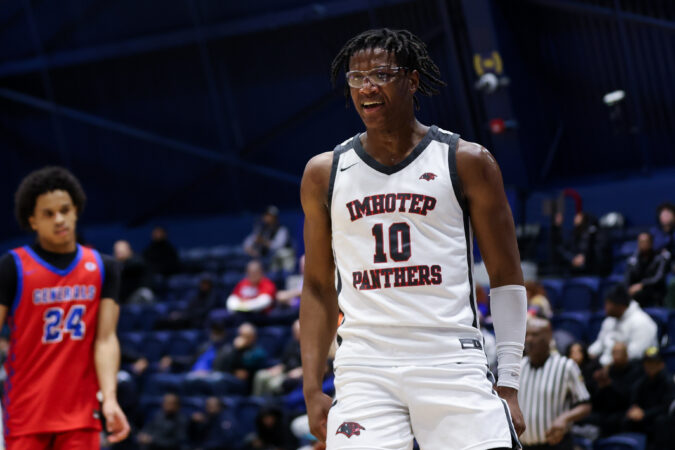
Latief Lorenzano-White finished with a game-high 22 points for the Panthers, while Muhammad-Gray added 17, 11 of which came in the second half.
Imhotep’s Latief Lorenzano-White finished with a game-high 22 points against Constitution on Tuesday.
Muhammad-Gray has yet to be on a team who misses the Public League title game. But the forward says being sidelined in last year’s postseason makes this one sweeter.
“I’ve been here before,” Muhammad-Gray said. “I’ve been here every year, so I’m kind of getting used to it now. Just sitting out the last year made me miss it even more.”
Muhammad-Gray reclassified from the class of 2026 to the class of 2027 after tearing his ACL. He has scholarship offers from Temple, La Salle, Penn State, and Georgia Tech, among others. He’s considered the second-best junior prospect in the state.
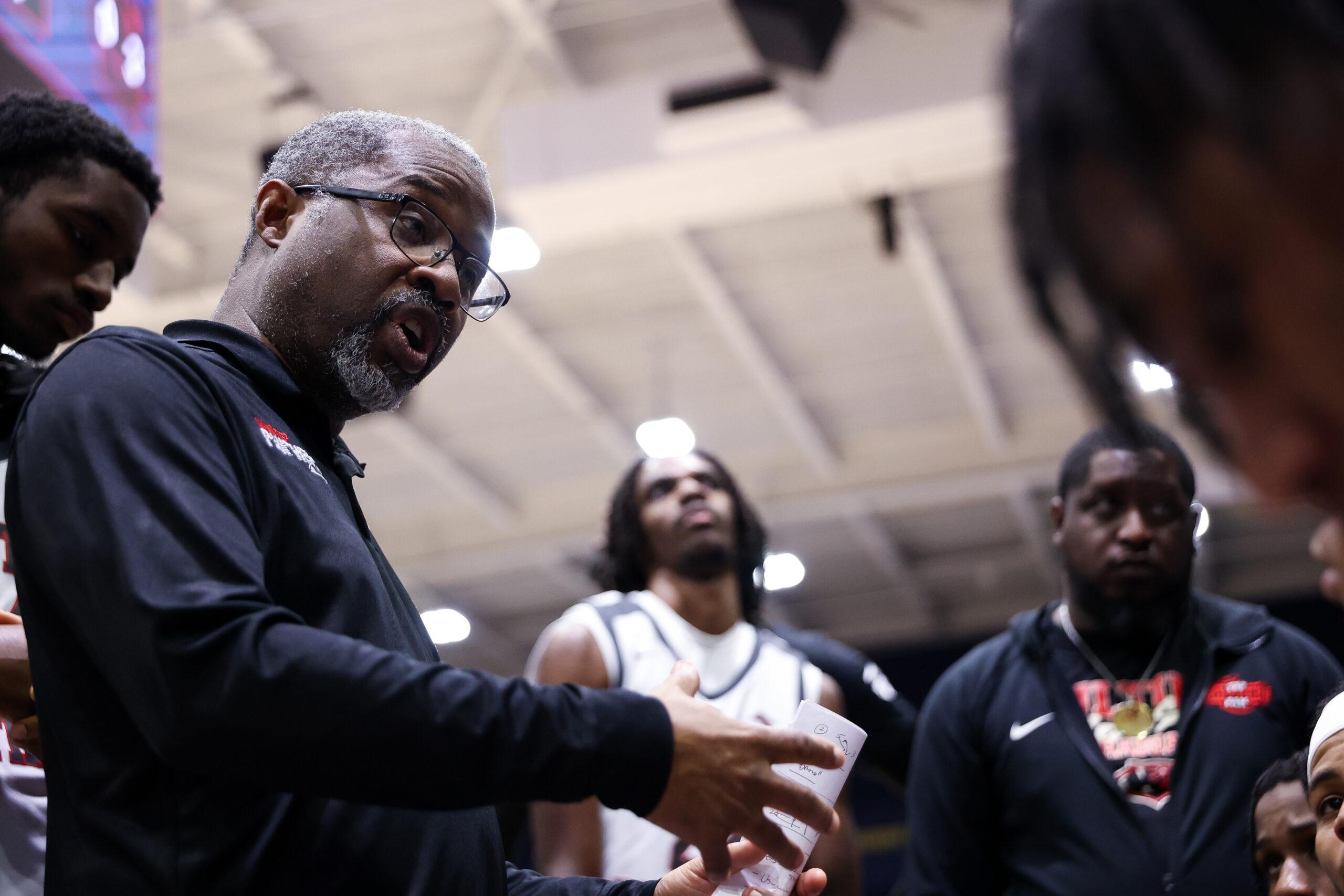
“[Muhammad-Gray is] a Division I basketball player,” said Imhotep coach Andre Noble. “He’s one of our team captains. That’s what we expected.”
Imhotep’s other captain, Lorenzano-White, scored 16 of his 22 in the first half as Imhotep bowled over an outmatched Constitution team. The 6-foot-4 senior guard is committed to play at Drexel next season.
“Today, I just was seeing the rim,” Lorenzano-White said. “We’ve been preaching it for the last couple of practices and games, to get to the rim and not settling for jump shots.”
The Panthers led, 38-14, at halftime. Their lead ballooned to 35 with 3 minutes, 5 seconds to play in the fourth before Noble pulled his starters.
The Panthers will face West Philadelphia in the Public League title game at 2:30 p.m. Sunday at Glaser Arena.
Imhotep coach Andre Noble has the chance to make Public League history as the first coach to earn six consecutive Pub titles.
Imhotep, seeking its sixth straight Public League title, will have a chance to make Public League history on Sunday.
“No team’s ever done it,” Muhammad-Gray said of winning six straight Pub titles. “I would love to be the first team.”
‘Unfortunate for all parties’
While Constitution lost to Imhotep in Tuesday’s semifinal, the game was accompanied by controversy that began last week during Constitution’s quarterfinal game against Carver Engineering and Science.
Constitution trailed E&S, 61-49, with 1 minute, 11 seconds to play last Thursday when an altercation started. Spectators flooded the court, leading officials to suspend the game with 71 seconds remaining.
The Public League disqualified E&S from the game because its entire bench came onto the floor during the skirmish, which is a violation of the league’s unsportsmanlike conduct policy and results in a full-team suspension of the following game.
The quarterfinal was ruled a forfeit by E&S, allowing Constitution to advance to the semifinals to face Imhotep. However, an official’s report noted that a Constitution player instigated the altercation, and spectators from the Constitution bleachers came onto the floor.
Rob Moore, Constitution’s head coach and athletic director, called the events at the quarterfinal an “unfortunate situation.”
“It’s just unfortunate for all parties involved,” Moore said. “Trying to get my guys ready to play and missing guys, obviously, against a team that every year is the cream of the league, cream of the state. … I’m proud of my guys for coming out and, through everything, coming out here and playing basketball.”
Moore also disputed the referee report that suggested the spectators who came onto the floor were affiliated with Constitution. Moore said accessing the electronic ticketing system E&S uses for its home games revealed that only one male Constitution student bought a ticket for the quarterfinal.
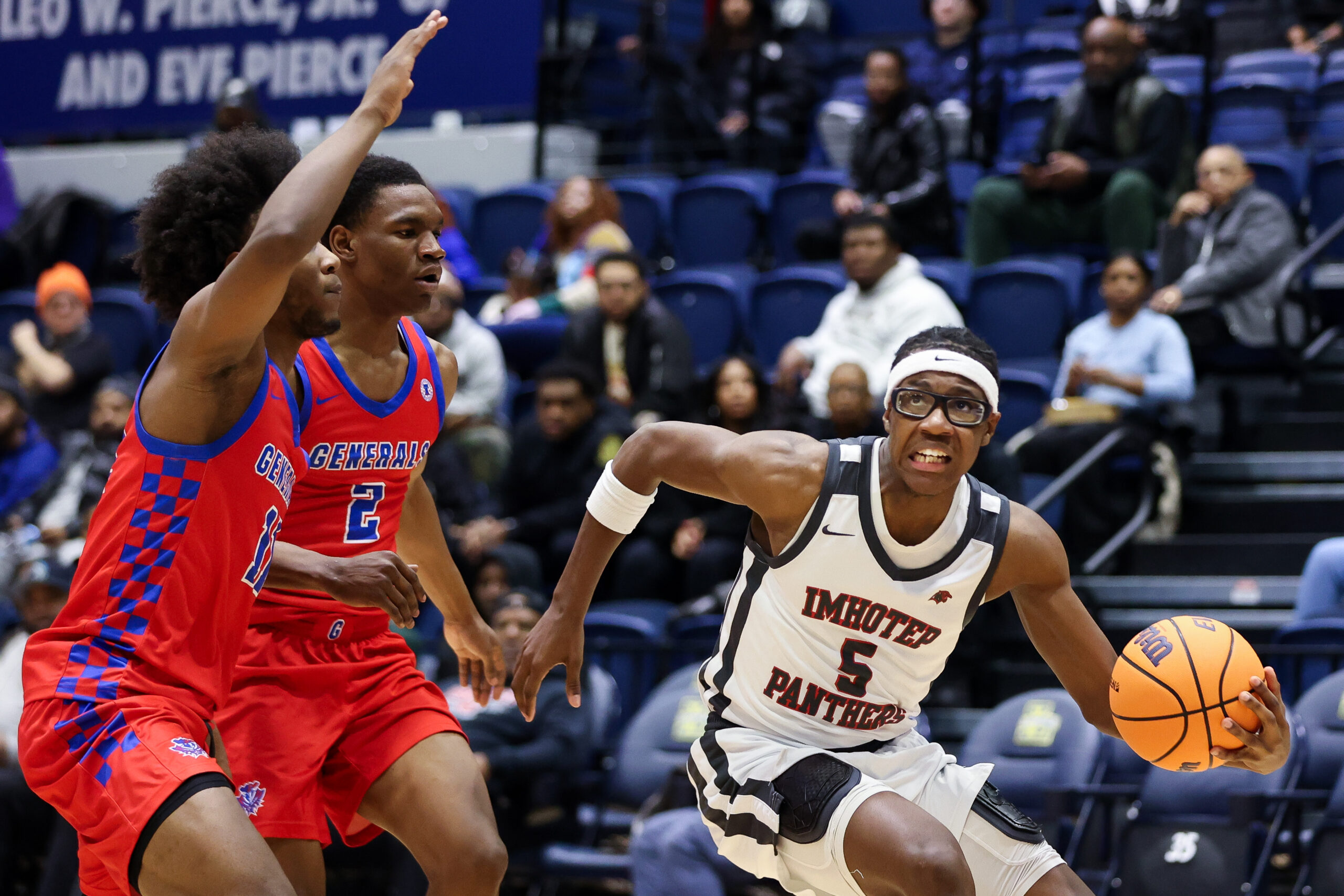
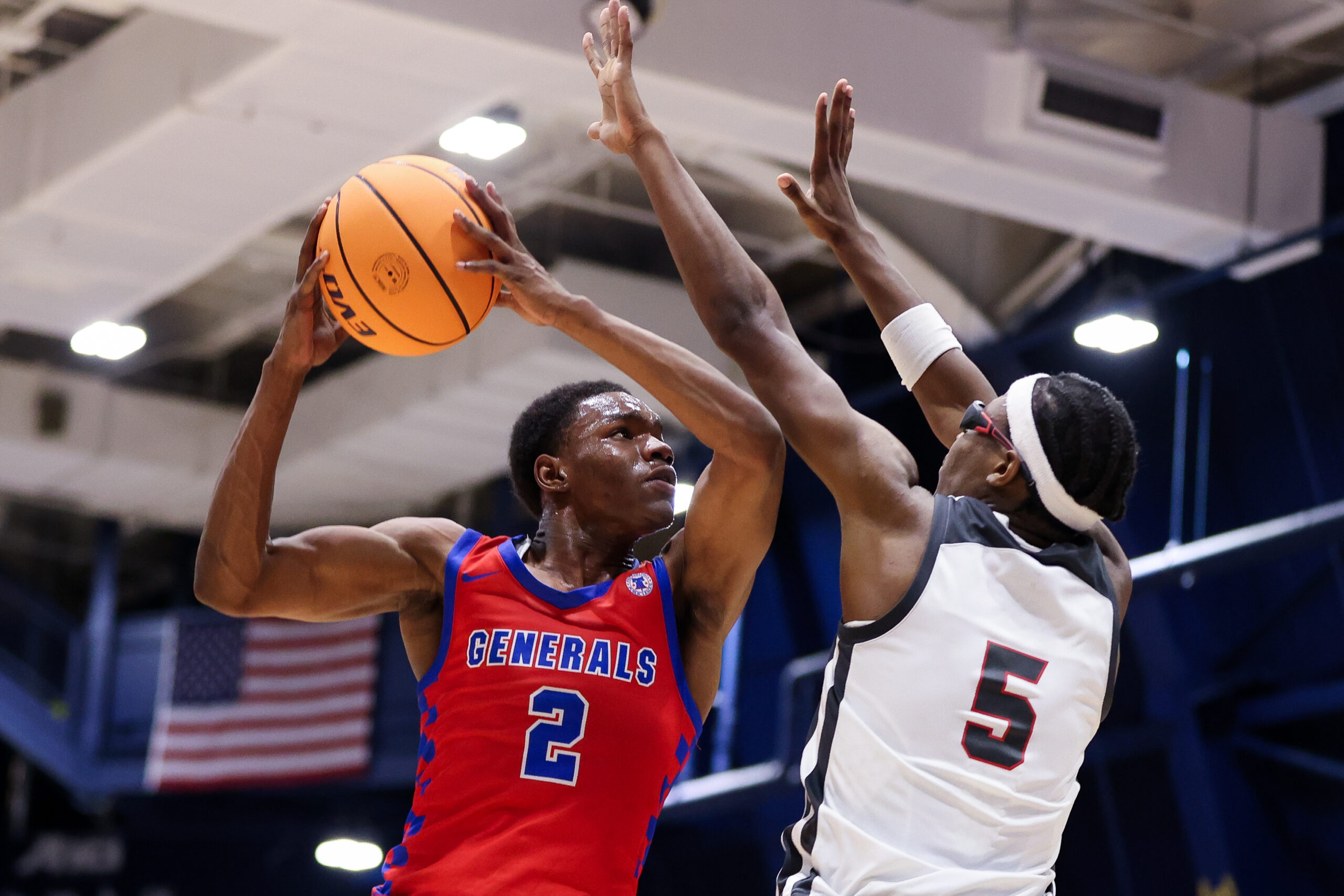
Constitution’s Jacob Mitchell drives for a lay up against Imhotep’s Latief Lorenzano-White on Tuesday.
“We felt like we’ve been, basically, scapegoated as, we were just in the wrong with everything that happened,” Moore said. “In actuality, with all the facts that the district had to deal with, that just wasn’t the case.”
The Generals played with 10 players available against Imhotep. Three Constitution players were suspended and were not in jerseys for the game.
E&S attempted an emergency injunction from a Common Pleas Court judge on Tuesday in an effort to overturn its disqualification, but the team’s request was dismissed and the semifinal was played as scheduled.
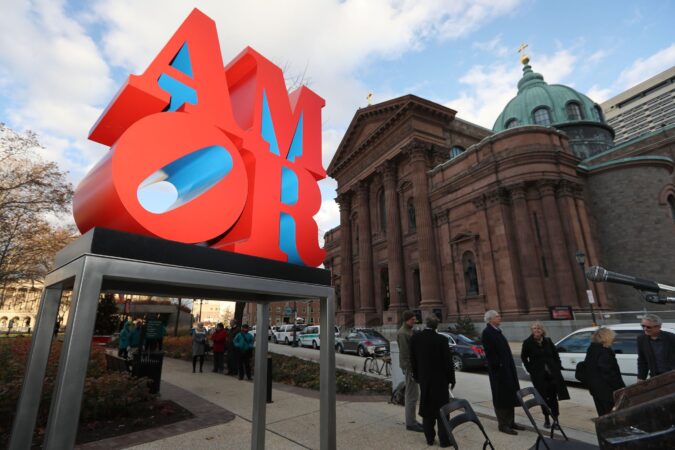
Those around Logan Circle might notice something missing today: Robert Indiana’s bright red AMOR sculpture.
On Wednesday morning, Philadelphia officials removed the artwork — a companion piece to Indiana’s iconic LOVE sculpture at nearby John F. Kennedy Plaza — from its perch at Sister Cities Park on 18th Street and Benjamin Franklin Parkway for conservation and restoration.
Creative Philadelphia, the city’s arts office, said AMOR is scheduled to return on May 1.
“Over the years, the paint on AMOR has naturally faded due to exposure to UV rays and weather,” said Marguerite Anglin, Creative Philadelphia’s public art director. “We are excited to give the sculpture a full restoration treatment, and look forward to its return back to Sister Cities Park in time for the city’s largest celebrations of America’s 250th.”
The removal was overseen by Philadelphia Parks and Recreation and Heritage Conservation Collective. The sculpture was transported to Fine Finishes Painting Studio in Peekskill, N.Y., where conservators approved by the Robert Indiana Foundation will strip and repaint it.
Indiana created AMOR in 1998 “in response to the changing demographics of the U.S. and his desire to speak to his fellow citizens,” according to the Association for Public Art.
AMOR, meaning love in Spanish and Latin, came to Philadelphia in 2015 to mark Pope Francis’ visit, thanks to the aPA and the Philadelphia Museum of Art. On loan from the New York-based Morgan Art Foundation, it was displayed at the top of the museum steps, where it overlooked the papal Mass held on the Parkway.
In 2016, it was permanently installed at Sister Cities Park with funding and support from the city, PMA, aPA, the Morgan Art Foundation, and Edith R. Dixon.
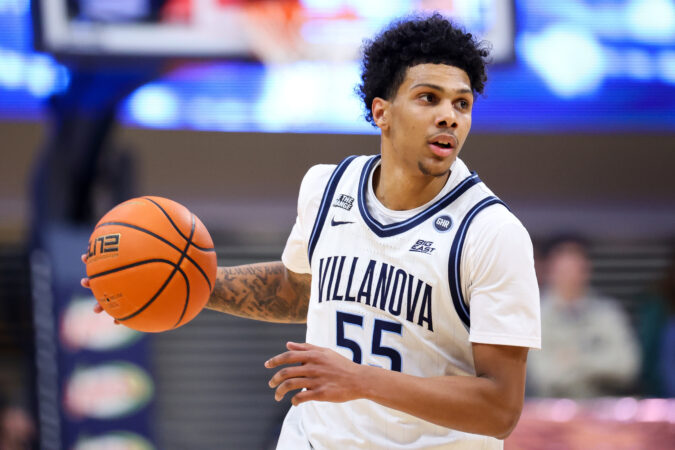
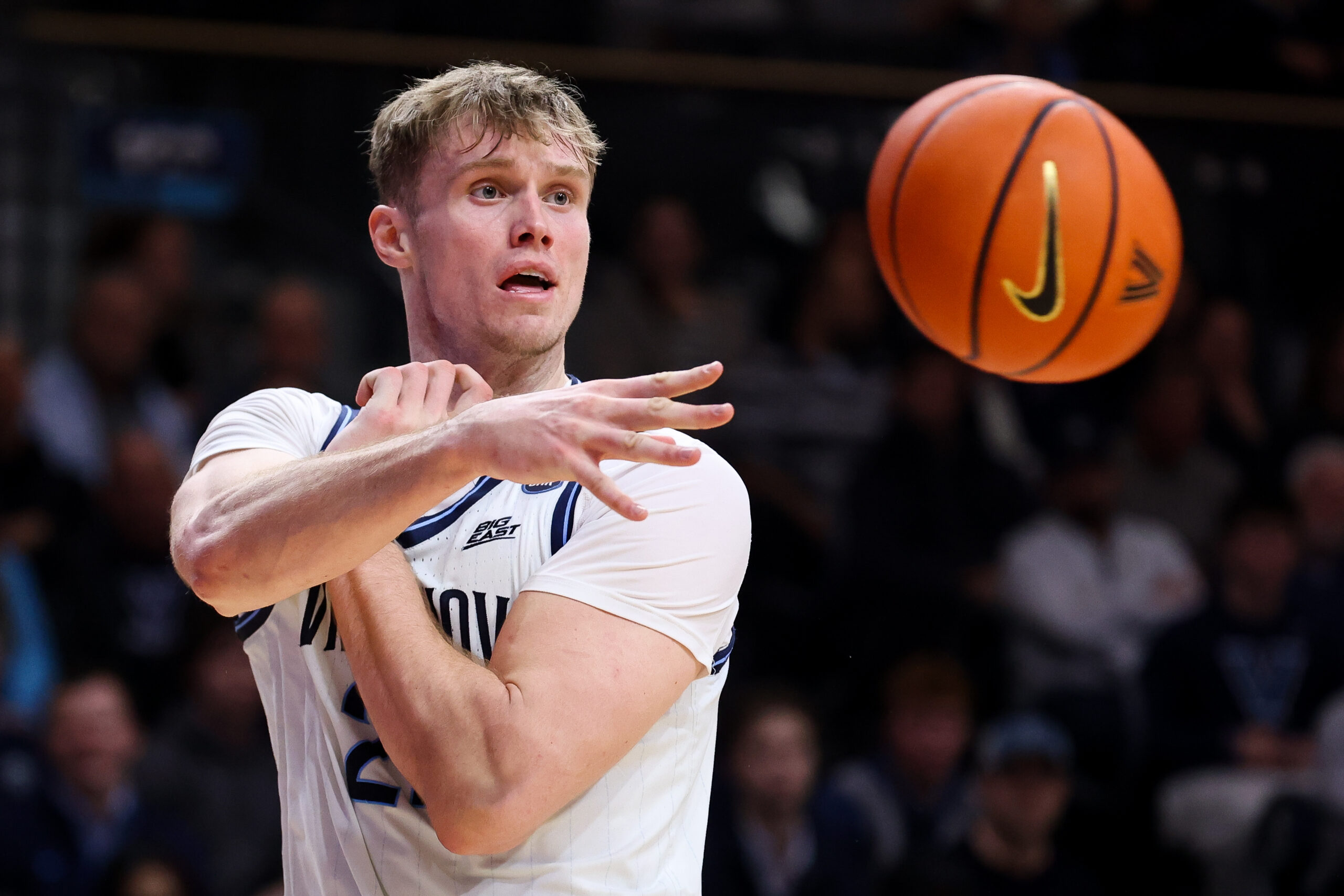
Acaden Lewis did a little bit of everything to lift Villanova to a 92-89 overtime victory over Xavier in Cincinnati on Tuesday.
Lewis had 21 points, seven rebounds, seven assists, and four steals, including one that sealed the win in the final seconds of the game. Villanova (21-5, 12-3 Big East) improved to 7-1 on the road in the Big East.
“I think we’re just built for [overtime],” Lewis told reporters. “We’ve been on the road. We’ve had seven road wins after this game. So I think we’ve been through the fire. We’ve been in some far games. We played the first game of the year [against] BYU in Las Vegas. It was with no other games around. So, we’re used to it at this point. We’re growing up in front of everybody’s eyes. And I think we’re getting really good on the road for that reason.”
Lewis is averaging 12.7 points and leads the Wildcats in assists (5.3).
Duke Brennan had 10 points and 13 rebounds for his 12th double-double of the season. He is two double-doubles shy of tying Michael Bradley’s single-season program record.
In overtime, Villanova outscored Xavier, 11-8, and outrebounded the Musketeers, 5-4. Lewis and Bryce Lindsay had nine of the 11 points.
Bench lifts Villanova
Xavier (13-12, 5-9) opened the game on an 11-2 run that forced Villanova coach Kevin Willard to call a timeout. Willard took out Matt Hodge, Brennan, and Lindsay. He replaced them with Devin Askew, Malachi Palmer, and Braden Pierce.
Villanova quickly spun off a 17-7 run over the next six minutes to take a lead. It spun into a 28-13 run.
Askew scored back-to-back three-pointers during the run.
“Coming into the game, we didn’t get any stops,” Lewis told reporters. “Starting five was out there, kind of, lackadaisical. They were running the speed of the game kind of got to us. And we didn’t really respond. Chris [Jeffrey] came in, Dev [Askew] came in, a bunch of guys came in and just changed the whole game. Got more stops, got us in the rhythm. And then going back in and help guys that start to get into a rhythm as well. And I think [the starters] just kept that same pressure.”
Duke Brennan, shown during a game on Feb. 10, had his 12th double-double of the season against Xavier on Tuesday.
Lindsay shows improvement
After scoring double digits in 13 of his first 14 games of the season, Lindsay has struggled. He went from averaging 16.9 points over the first 14 games to just 6.4 over the last 10.
Against Xavier, Lindsay finished with 15 points, shooting 5-for-11 from the field and 4-for-8 from beyond the arc. It was his fourth double-digit performance in the last 11 games.
“There’s a reason he started,” Willard told reporters. “I have tremendous confidence in Bryce, and he’s been putting the work in. He’s just been in a little bit of a slump, and it’s good to see him get out of it.”
Lewis echoed Willard’s thoughts on Lindsay’s performance.
“That’s great to see,” Lewis told reporters. “I’m proud of [Lindsay]. It’s not easy to go through big slumps like this when you’re playing on national TV. And everyone expects so much out of you. So for him to just keep his head down, stick to it, and keep working … I mean, that’s what happened.”
Villanova returns home after two road games to face No. 5 UConn at the Xfinity Mobile Arena on Saturday (5:30 p.m., TruTV/TNT). UConn won 75-67 in overtime on Jan. 24 in Storrs, Conn.
The last time Villanova hosted UConn, it upset the No. 9 Huskies, 68-66, on Jan. 8, 2025.
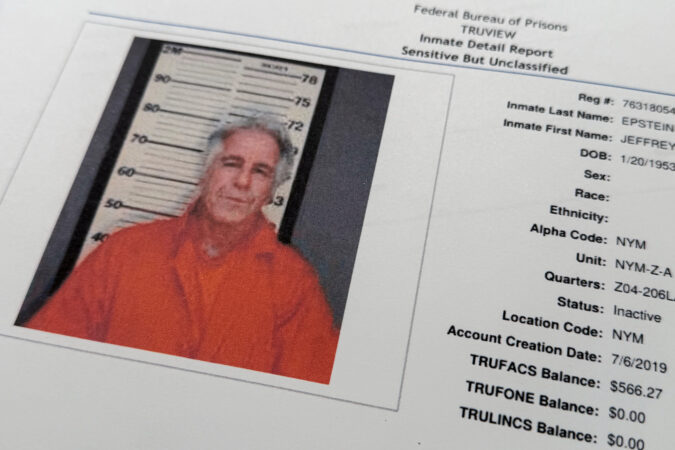
A millionaire’s private island filled with luxury goods, gourmet food, and fine wine seems like a reality a million miles from yours, so what can Philadelphia-area parents learn from the Epstein files?
Plenty.
There are people like Jeffrey Epstein everywhere. He just had a bigger field.
Epstein started small. In her memoir Nobody’s Girl, the late Virginia Roberts Giuffre, abused and trafficked by Epstein starting at age 16, describes how Epstein told her that as a teacher, he traded sex for grades. Alumni of New York’s elite Dalton School have described inappropriate conduct toward girls. Yet he was dismissed from the school simply for “poor performance.”
Back in the 1970s, when Epstein taught, sex abuse prevention programs were primarily directed at kids. Teaching kids to recognize “good touch/bad touch” would have done nothing for teenage girls, likely targeted for their insecurity, for whom attention from a cute, popular new teacher felt like affection and status. Today, the most effective school-based sex abuse prevention programs involve the entire school helping faculty and staff recognize and respond to inappropriate behavior. Policies explicitly identify acceptable and unacceptable behaviors around issues from touching to communicating with students outside of school. Ongoing prevention programs empower everyone to act if they see a breach. Parents are included as partners to reinforce healthy messages at home. One great example is Safety STARS — Enough Abuse.
What are the lessons for parents? I can count at least four:
1. Learn what sexual abuse prevention program is offered in your school or district and participate in the parent component. Confirm that it follows best practices, such as requiring a code of conduct for faculty, staff, and students, and commitment from administration to continuous monitoring of adherence to the policies.
Almost 20 years ago, Epstein was convicted of trafficking children for sex but escaped serious punishment in a now widely criticized plea deal. Defense attorneys at the time used the phrase “underage women” to soften how his acts against children sounded. I urge parents and all adults to more accurately call his crimes “child rape.” This helps challenge the social norm that it is somehow acceptable to have sex with minors who may be dressed up to appear older than they truly are.
2. For decades, social scientists have distinguished a pedophile — someone primarily attracted to prepubescent children — from ephebophiles, people attracted to older adolescents and teens. Either way, acting on such attractions is a crime against children.
Adults who target older youth may be more subtle in how they approach their targets, and that’s why parents should monitor all their teens’ relationships with adults, both virtual and in real life. A 17-year-old may look grown, and may balk at this supervision. But their brain still has nearly a decade before it can consistently make mature decisions.
Adolescence is a time of deep insecurity, when teens are highly sensitive to others’ opinions. As Giuffre noted in her memoir, people like Epstein are adept at “reading a room.” They can intuit what a vulnerable teen needs, and offer it, exacting their price later.
3. Even as maturing teens pull away, parents must work harder to stay connected and know what is happening in their teens’ lives. Set special times — driving to school can be ideal — to ask questions that require more than a yes-no answer. Take the time to learn the names of their friends, teachers, and coaches, so they know you’re really interested. Leave a surprise note on their bed telling them you’re proud of something they did. Teens need steady validation of their worth — not only for achievements, but simply for who they are. Keeping their self-esteem “cup” as full as possible is an important protective factor.
Predators are master manipulators. They can patiently work their way into an adolescent’s confidence, shoring up fragile self-esteem. That’s why it’s so critical for parents to be their children’s consistent support. Predators don’t just live on private islands and roam the world in private jets; they can run the social hierarchy as the “alpha” in a high school, or orchestrate hazing in a college fraternity or sorority.
4. Use the Epstein news as a moment to remind kids what a bully really is: someone who repeatedly uses their power to hurt, scare, or control a more vulnerable person. It is also a crucial chance to talk about sexual health and safety. Explain how youth of any age can be vulnerable to exploitation, and be explicit that sex should never be traded for anything.
A colleague raising teens put it starkly when I asked how she was handling the Epstein stories: “Kids are watching how we handle this as adults, and they are not impressed.” The children of this attorney are likely not the only ones who wonder why Epstein went so lightly punished, or why our culture seems to condone sexualized images of teens.
Ask your children what they’ve read and heard, what they think it means, and listen. Then share your thoughts and values. All adults can show the young people in our lives that we can do better — by talking openly about abuse, bullying, harmful media messages and whatever else is troubling our children. We can show them that we stand behind them and will advocate for safer policies in schools and communities.
Janet Rosenzweig MS, PhD, MPA is author of the book “The Sex-Wise Parent,” a senior policy analyst at The Institute for Human Services, and a member of the board of directors of The National Coalition to Prevent Child Sexual Abuse and Exploitation.
Republicans think patients should be shopping for better healthcare prices. The party has long pushed to give patients money and let consumers do the work of reducing costs. After some GOP lawmakers closed out 2025 advocating to fund health savings accounts, President Donald Trump introduced his Great Healthcare Plan, which calls for, among other policies, requiring providers and insurers to post their prices “in their place of business.”
The idea echoes a policy implemented during his first term, when Trump suggested that requiring hospitals to post their charges online could ease one of the most common gripes about the healthcare system — the lack of upfront prices. To anyone who’s gotten a bill three months after treatment only to find mysterious charges, the idea seemed intuitive.
“You’re able to go online and compare all of the hospitals and the doctors and the prices,” Trump said in 2019 at an event unveiling the price transparency policy.
But amid low compliance and other struggles in implementing the policy since it took effect in 2021, the available price data is sparse and often confusing. And instead of patients shopping for medical services, it’s mostly health systems and insurers using the little data there is, turning it into fodder for negotiations that determine what medical professionals and facilities get paid for what services.
“We use the transparency data,” said Eric Hoag, an executive at Blue Cross Blue Shield of Minnesota, noting that the insurer wants to make sure providers aren’t being paid substantially different rates. It’s “to make sure that we are competitive, or, you know, more than competitive against other health plans.”
Not all hospitals have fallen in line with the price transparency rules, and many were slow to do so. A study conducted in the policy’s first 10 months found only about a third of facilities had complied with the regulations. The federal Centers for Medicare & Medicaid Services notified 27 hospitals from June 2022 to May 2025 that they would be fined for lack of compliance with the rules.
The struggles to make healthcare prices available have prompted more federal action since Trump’s first effort. President Joe Biden took his own thwack at the dilemma, by requiring increased data standardization and toughening compliance criteria. And in early 2025, working to fulfill his promises to lower health costs, Trump tried again, signing a new executive order urging his administration to fine hospitals and doctors for failing to post their prices. CMS followed up with a regulation intended to up the fines and increase the level of detail required within the pricing data.
So far, “there’s no evidence that patients use this information,” said Zack Cooper, a health economist at Yale University.
In 2021, Cooper co-authored a paper based on data from a large commercial insurer. The researchers found that, on average, patients who need an MRI pass six lower-priced imaging providers on the way from their homes to an appointment for a scan. That’s because they follow their physician’s advice about where to receive care, the study showed.
Executives and researchers interviewed by KFF Health News also didn’t think opening the data would change prices in a big way. Research shows that transparency policies can have mixed effects on prices, with one 2024 study of a New York initiative finding a marginal increase in billed charges.
The policy results thus far seem to put a damper on long-held hopes, particularly from the GOP, that providing more price transparency would incentivize patients to find the best deal on their imaging or knee replacements.
These aspirations have been unfulfilled for a few reasons, researchers and industry insiders say. Some patients simply don’t compare services. But unlike with apples — a Honeycrisp and a Red Delicious are easy to line up side by side — medical services are hard to compare.
For one thing, it’s not as simple as one price for one medical stay. Two babies might be delivered by the same obstetrician, for example, but the mothers could be charged very different amounts. One patient might be given medications to speed up contractions; another might not. Or one might need an emergency cesarean section — one of many cases in medicine in which obtaining the service simply isn’t a choice.
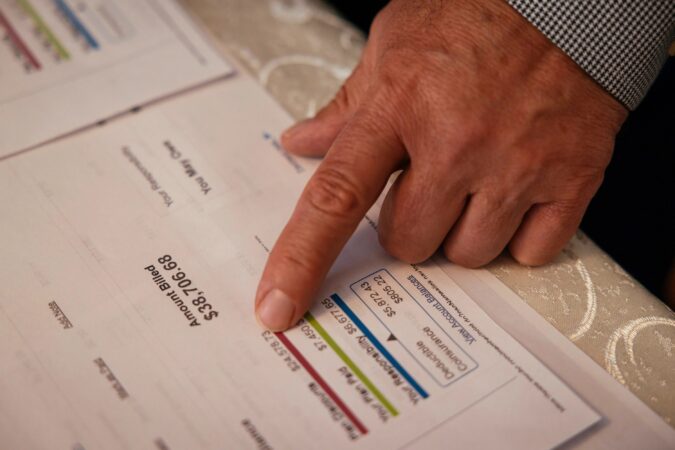
And the data often is presented in a way that’s not useful for patients, sometimes buried in spreadsheets and requiring a deep knowledge of billing codes. In computing these costs, hospitals make “detailed assumptions about how to apply complex contracting terms and assess historic data to create a reasonable value for an expected allowed amount,” the American Hospital Association told the Trump administration in July 2025 amid efforts to boost transparency.
Costs vary because hospitals’ contracts with insurers vary, said Jamie Cleverley, president of Cleverley and Associates, which works with healthcare providers to help them understand the financial impacts of changing contract terms. The cost for a patient with one health plan may be very different than the cost for the next patient with another plan.
The fact that hospital prices might be confusing for patients is a consequence of the lack of standardization in contracts and presentation, Cleverley said. “They’re not being nefarious.”
“Until we kind of align as an industry, there’s going to continue to be this variation in terms of how people look at the data and the utility of it,” he said.
Instead of aiding shoppers, the federally mandated data has become the foundation for negotiations — or sometimes lawsuits — over the proper level of compensation.
The top use for the pricing data for healthcare providers and payers, such as insurers, is “to use that in their contract negotiations,” said Marcus Dorstel, an executive at price transparency startup Turquoise Health.
Turquoise Health assembles price data by grouping codes for services together using machine learning, a type of artificial intelligence. It is just one example in a cottage industry of startups offering insights into prices. And, online, the startups’ advertisements hawking their wares often focus on hospitals and their periodic jousts with insurers. Turquoise has payers and providers as clients, Dorstel said.
“I think nine times out of 10 you will hear them say that the price transparency data is a vital piece of the contract negotiation now,” he said.
Of course, prices aren’t the only variable that negotiations hinge on. Hoag said Blue Cross Blue Shield of Minnesota also considers quality of care, rates of unnecessary treatments, and other factors. And sometimes negotiators feel as if they have to keep up with their peers — claiming a need for more revenue to match competitors’ salaries, for example.
Hoag said doctors and other providers often look at the data from comparable health systems and say, “‘I need to be paid more.’”
KFF Health News is a national newsroom that produces in-depth journalism about health issues and is one of the core operating programs at KFF — the independent source for health policy research, polling, and journalism.
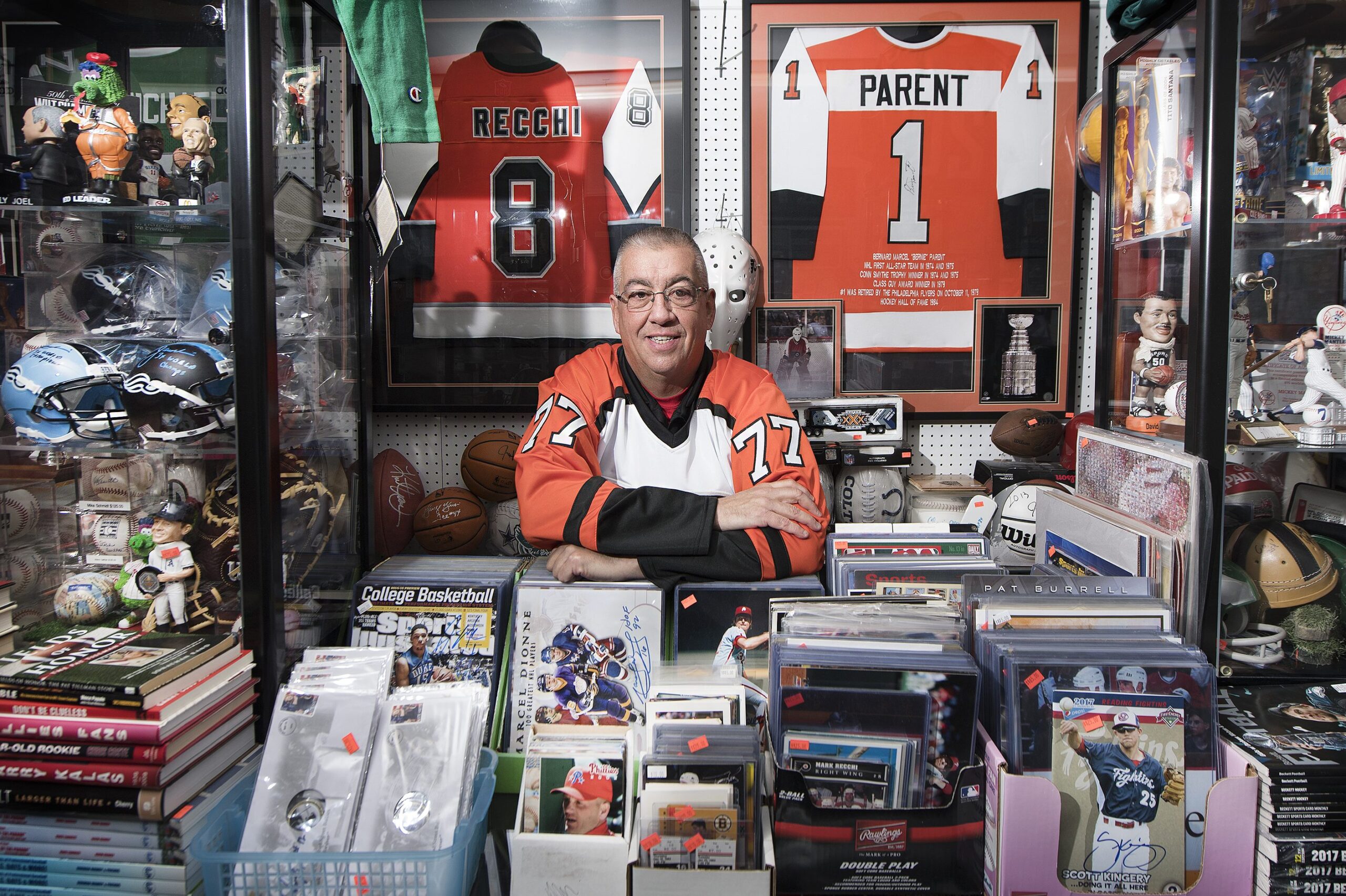
The sports memorabilia world can be transactional, but Carl Henderson navigated it with warmth and integrity.
Henderson opened Carl’s Cards in 1995, and it has since become a staple in the Havertown community. He was a lifelong fan of the area’s sports teams, and that passion showed in his work.
Carl’s Cards has something for everyone — and his daughter, Lauren Henderson-Pignetti, is determined to keep it that way.
On the morning of Jan. 31, Carl Henderson died unexpectedly in his sleep. He was 69 when he passed. He was a beloved figure at his shop and beyond.
About 400 people gathered together during a memorial service last week in Bryn Mawr. Former Phillies pitcher Dickie Noles read a passage from the Old Testament. Members of the Broad Street Bullies sat among the crowd.
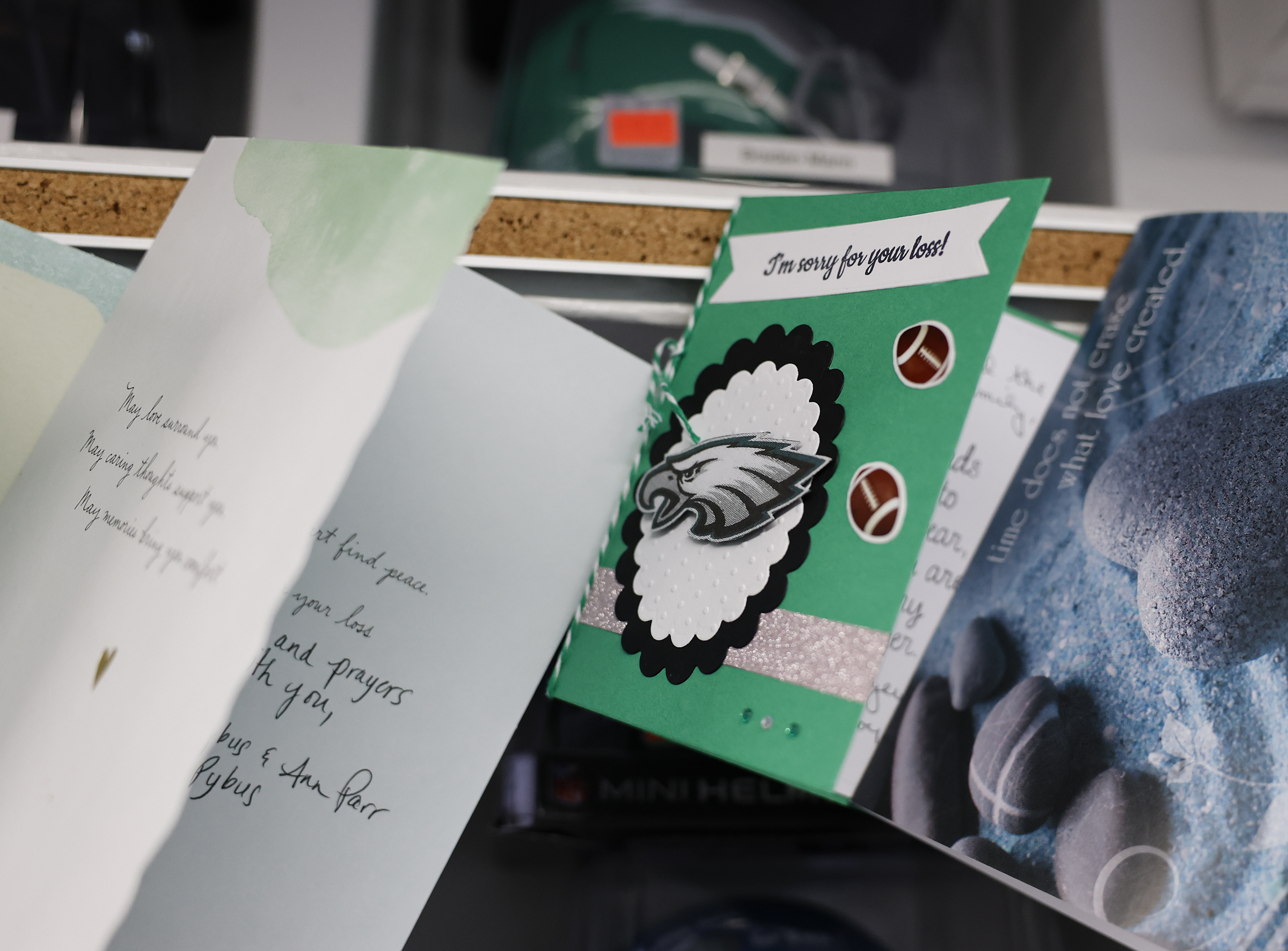
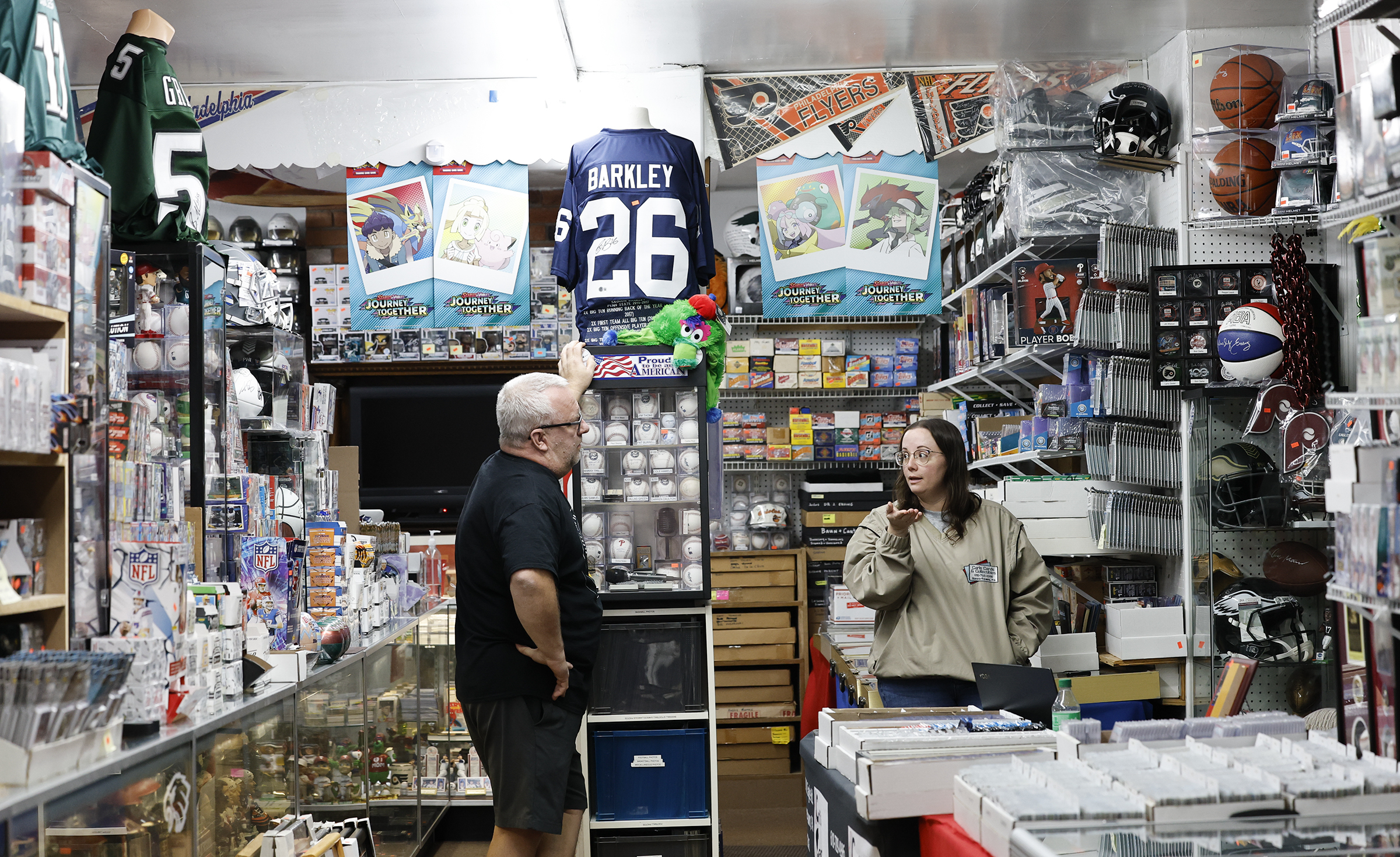
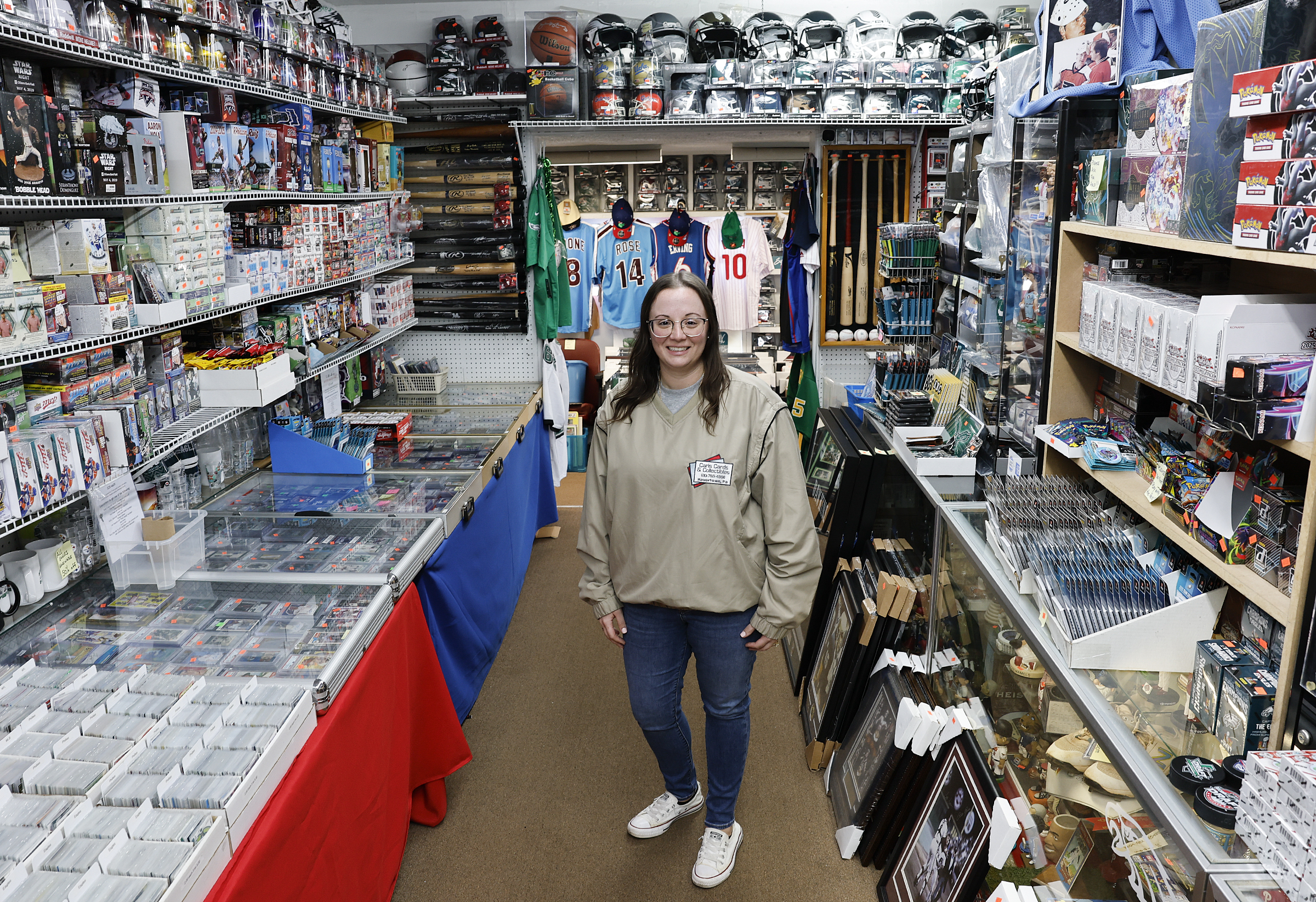
His shop looks a little different now. There’s sympathy cards pinned along the walls and a sign sits in the front window to commemorate the longtime owner. But the character remains the same.
Henderson-Pignetti sees Carl’s Cards as a way to honor her late father, because, “He spent 31 years building this place. He would have wanted everything to stay the way it was.”
Phillies third baseman Alec Bohm is eligible for free agency after the season.
Rob Thomson hasn’t settled on the order but wants Trea Turner, Kyle Schwarber, and Bryce Harper to bat in the first inning.
Alec Bohm was the Phillies’ most frequent cleanup hitter over the last two seasons and is the leading candidate to reprise the role in his last year before free agency. He said that his game was “down last year,” but is confident that his ability to “put the ball in play” will be an asset in the cleanup spot.
And José Alvarado is starting to ramp up after an 80-game suspension and a forearm injury limited him to 28 appearances last season.
What we’re …
🤼 Preparing: Major League Wrestling will return to Philadelphia to host two nights of action at the 2300 Arena this summer.
The NFL world will descend on Indianapolis again next week for the NFL Scouting Combine.
Next week, 319 college football prospects will descend on Indianapolis for the annual NFL scouting combine. The Eagles’ needs are well-known, but how do they match up with the available talent in this draft?
Here is how we’re ranking the combine position groups from strongest to weakest — and how they could help the Eagles address some roster needs.
Red-hot Travis Konecny has made it clear that the Flyers still believe they can push and make the playoffs with 26 games remaining.
After 11 days, the Flyers were back on the ice Tuesday in Voorhees. The common theme: the playoffs are still within reach.
With 26 games left on the schedule, and just five until the trade deadline, time is ticking on the season. Will the Flyers be buyers, sellers, or somewhere in between? A lot will be determined by their first five games.
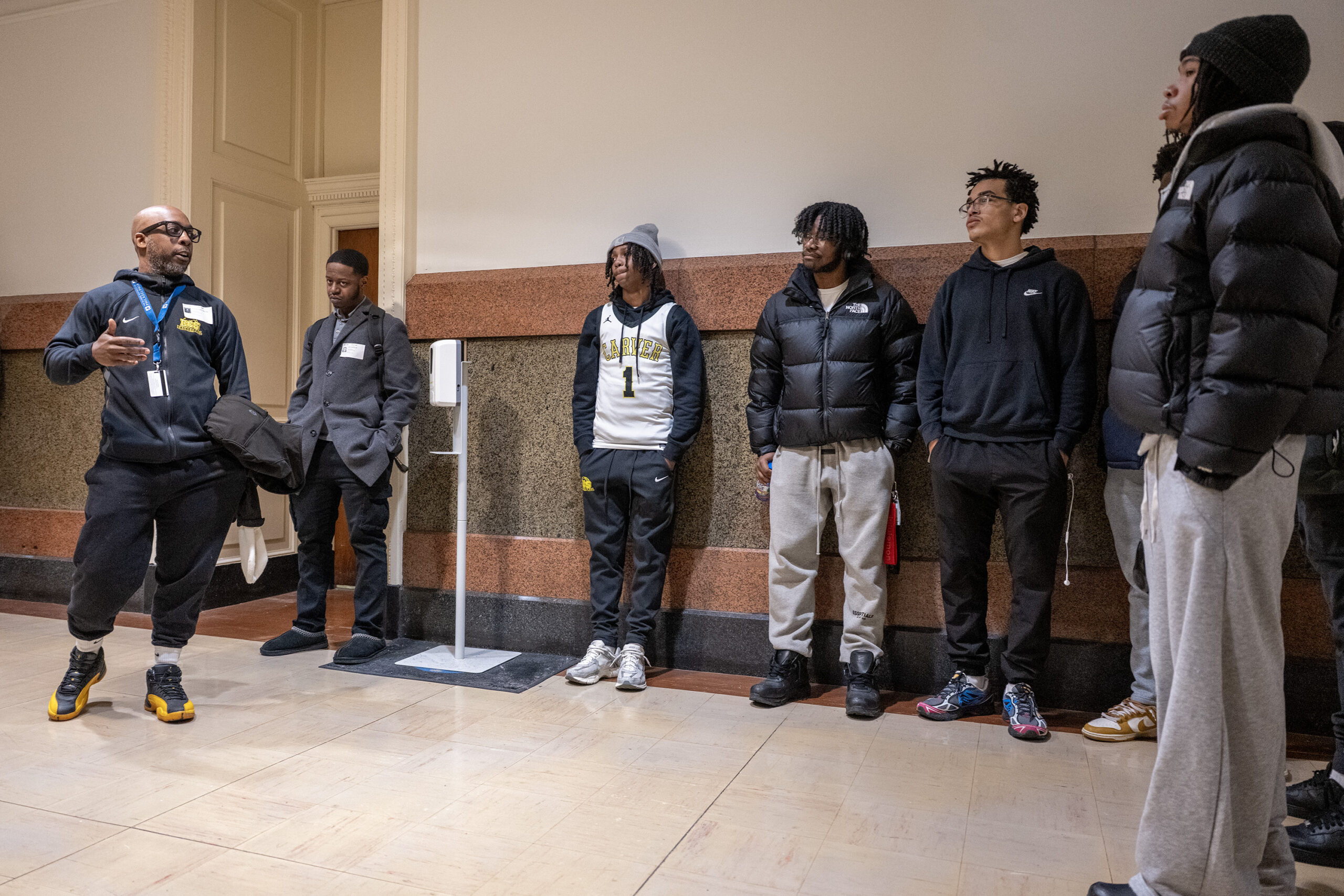
Carver Engineering and Science head boys’ basketball coach Dustin Hardy-Moore (left) talks with his players outside courtroom 275 on Tuesday.
Carver Engineering & Science’s buzzer-beating attempt to overturn a ban from the Public League boys’ basketball playoffs was swatted away on Tuesday.
A judge denied the team’s plea for an emergency injunction to stop Tuesday night’s semifinal game between Constitution High School and Imhotep Charter. This comes after the Engineers were disqualified from the Public League playoffs following a skirmish in the quarterfinals with Constitution. The student athletes of E&S are “disappointed” in the decision.
Sports snapshot
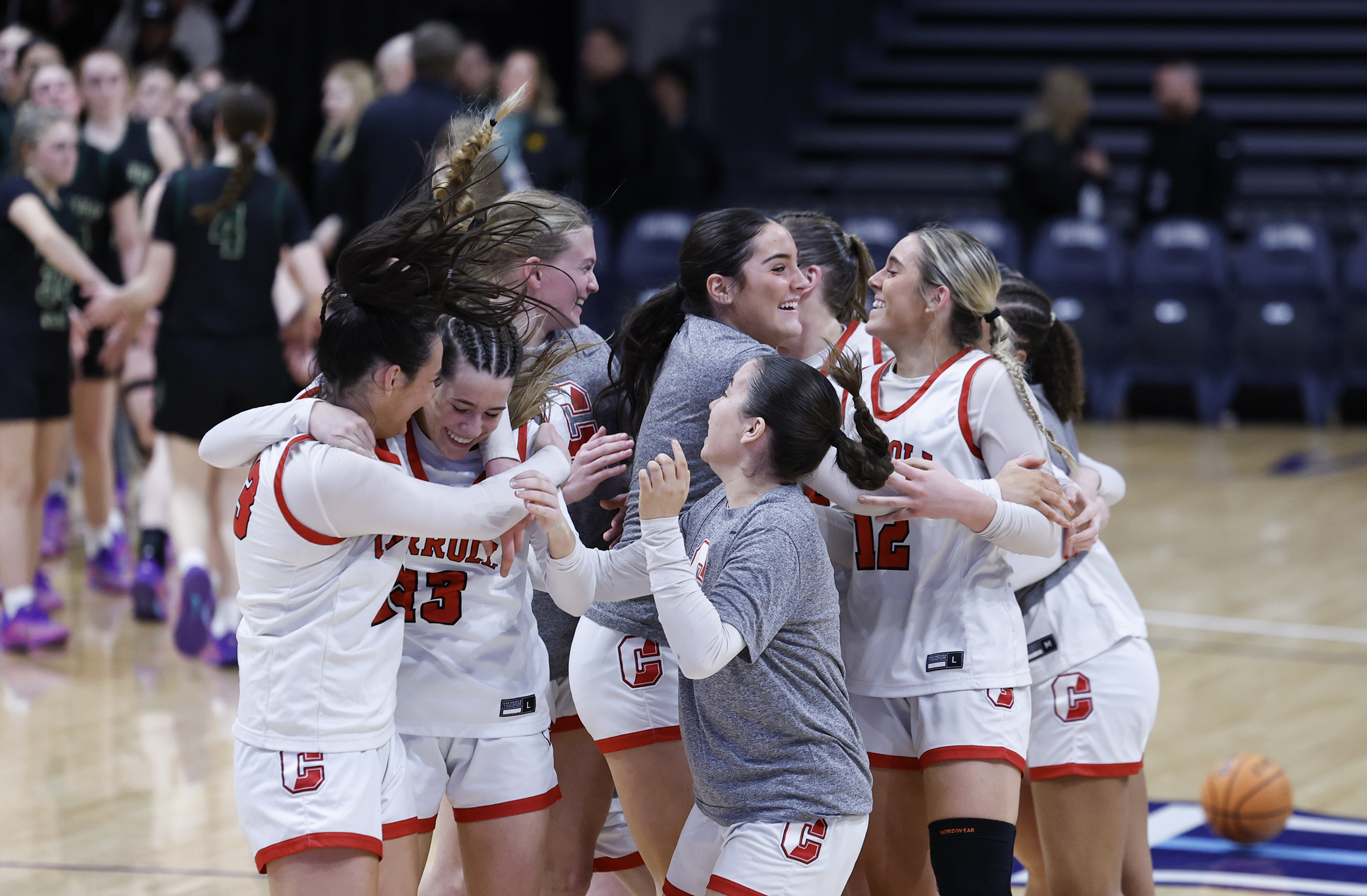
Members of Archbishop Carroll celebrate after beating Archbishop Wood in the Catholic League girls’ basketball semifinals at Villanova on Monday.
Sister duo: Alexis and Kayla Eberz combined for 36 points and guided Archbishop Carroll back to the Palestra for their third straight Catholic League appearance.
Sweet redemption: The Patriots will face Cardinal O’Hara in the PCL final, after the Lions beat Neumann Goretti, behind Megan Rullo’s 22 points.
Ready to battle: Villanova women are riding a six-game winning streak into its showdown against top-ranked UConn. How have the Wildcats been preparing?
🧠 Trivia time answer
Who was the last Sixer to win the MVP award in the NBA All-Star Game?
A) Allen Iverson in 2005.
What you’re saying about Phillies’ outfield
We asked: How will the Phillies’ outfield stack up to last year’s version? Among your responses:
Let’s see now! The Phillies just let the best centerfielder they’ve had since the Flyin’ Hawaiian just walk away. To top that off they also let one of best pitchers in baseball just walk away. Just to prove they’ve totally lost their mind, why not just cut the right fielder and give him a $19,250,000 bonus? The Mets got better. The Braves got better. The Marlins got better. The Nationals got better and our fightins got worse. — Ronald R.
Why the Phillies would risk a World Series run with such a questionable outfield is beyond amazing to me. I like Marsh alot but he has proven that he seriously struggles against lefties. I love giving young players a chance but with this team’s roster and playoff expectations this seems to be a tremendous amount of pressure to put on Crawford. And Garcia … I’m sorry but I just can’t get excited about a .227 batting average. Letting Bader go is baffling considering the expectations for this team. I believe there will be an outfield shakeup early in the season unless Phillies Management is quietly trying to rebuild the team and is willing to miss the playoffs. Letting Ranger Suarez go as well as Bader makes me suspicious this is the case. — Bob A.
Three question marks! Marsh did rebound in 2025 but was platooned. Crawford is a rookie and Garcia is a low risk, high potential project. Otto Kemp (one of the best names in baseball!), if healthy, could provide much needed punch to the offense – but can he field?? — Bob C.
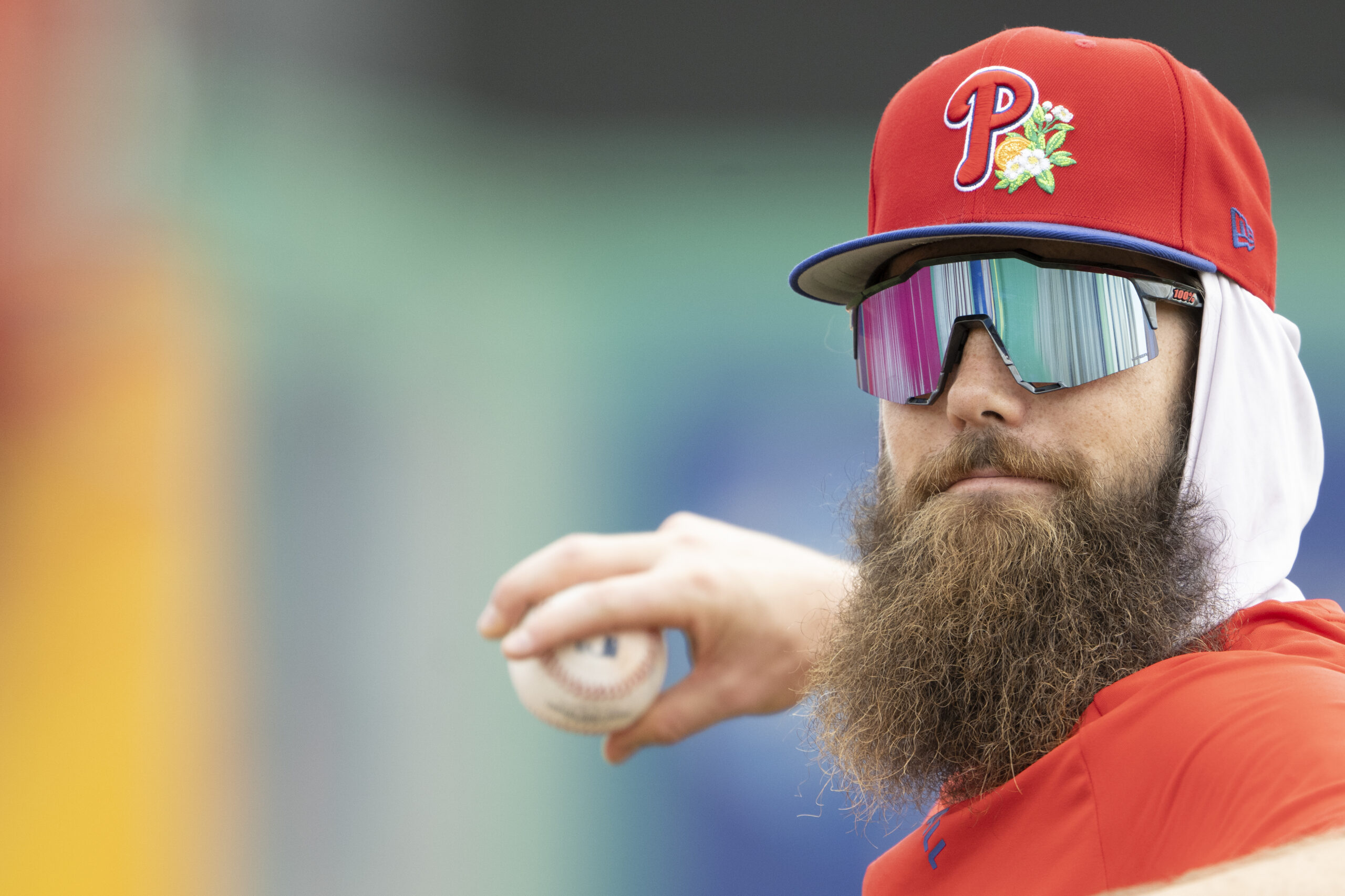
Brandon Marsh warms-up during spring training workouts on Feb. 12.
Lots of questions re the outfield. Can Ott handle the role of right handed hitting left fielder? Can Crawford hit MLB pitching and cover CF as well as Bader who never should have been let go. And although Garcia will be an improvement over Nick, will he be good enough to carry this group. We will certainly not be seeing Delahanty, Thompson, & Hamilton out there, nor Burrell, Victorino, and Werth, but let’s hope for the best. Guarded optimism at best. — Everett S.
Adolis Garcia is a career .237 hitter, averaging 30 HRs and 97 RBIs for his 7-year career.That is not substantially different than who he replaces, Castellanos, except for his superior defense.Crawford has more upside than Bader and Rojas in center field.Combined, they offer more offensive and defensive potential than last year’s outfield.With that upgrade, and an improved bullpen, the Phillies should be a stronger contender in 2026. — John W.
We compiled today’s newsletter using reporting from Alex Coffey, Scott Lauber, Lochlahn March, Devin Jackson, Matt Breen, Jackie Spiegel, Ariel Simpson, Gabriela Carroll, Ellen Dunkel, Brooke Ackerman, and Katie Lewis.
By submitting your written, visual, and/or audio contributions, you agree to The Inquirer’s Terms of Use, including the grant of rights in Section 10.
As always, thanks for reading. Hope you have a wonderful Wednesday. Kerith will catch back up with you in Thursday’s newsletter. — Bella
On the morning of Jan. 31, a few hours after Carl Henderson died unexpectedly in his sleep, his daughter, Lauren Henderson-Pignetti, drove to her late father’s sports cards and collectibles shop.
She opened it up like she would any other Saturday. Sometimes, kids stopped in with their parents on the back end of trips to the grocery store. Or while they were driving home from basketball practice or piano lessons.
Being there — just like her father had for 31 years — seemed like the right thing to do. So, the younger Henderson stayed at Carl’s Cards in Havertown from 11 a.m. to 7 p.m., until the last customer left.
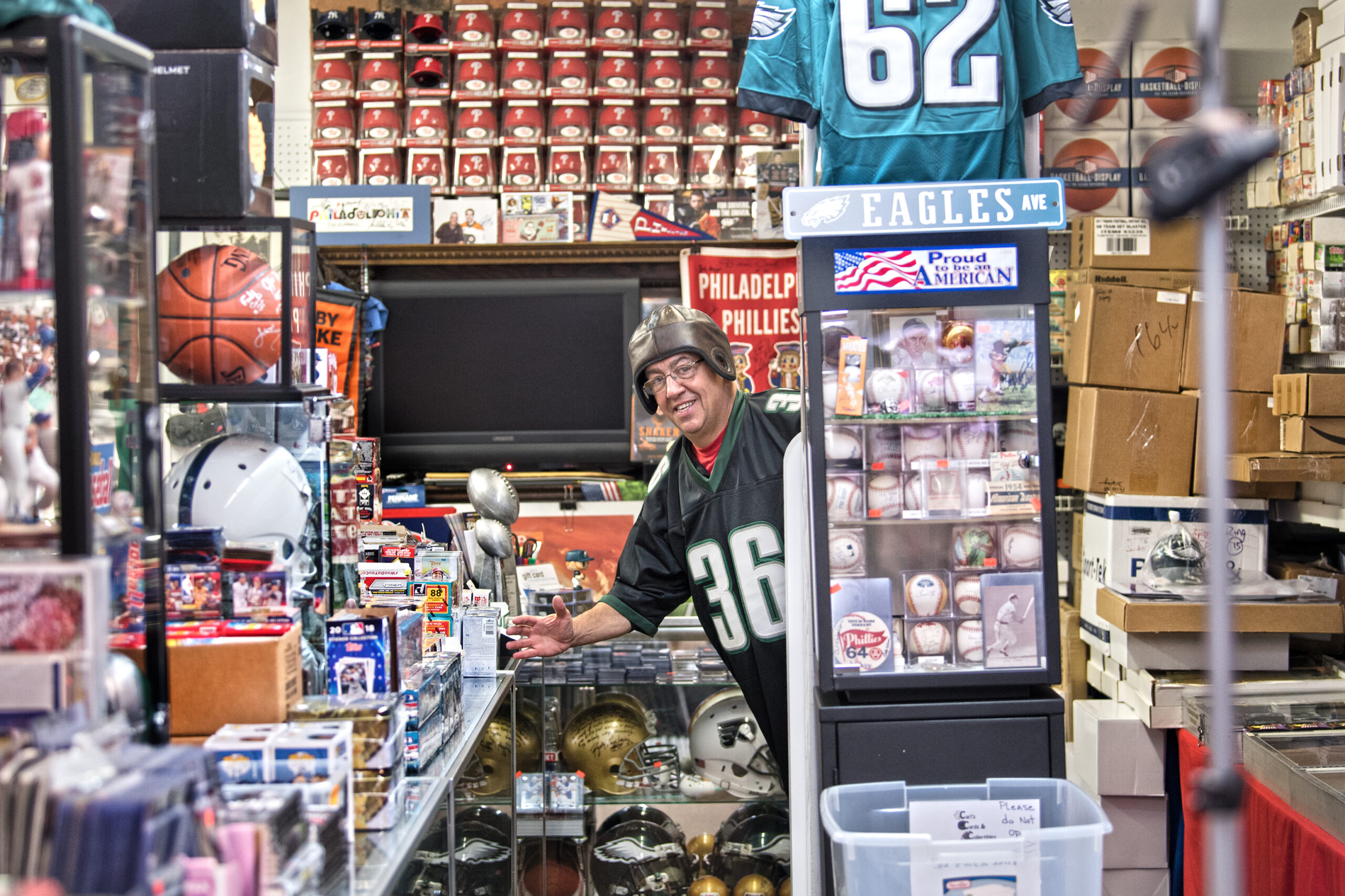
Carl Henderson at his Havertown store in 2018.
The shop owner was 69 when he passed. His family announced the news on Sunday, and received an overwhelming response; thousands of messages from children and adults and even a few local pro athletes.
By Monday morning, bouquets of flowers were wedged between the doors. Customers started sending sympathy cards. Some showed up in person to express their support.
A memorial service held last week, in Bryn Mawr, drew about 400 people. Former Phillies pitcher Dickie Noles read a passage from the Old Testament. Members of the Broad Street Bullies sat among the crowd.
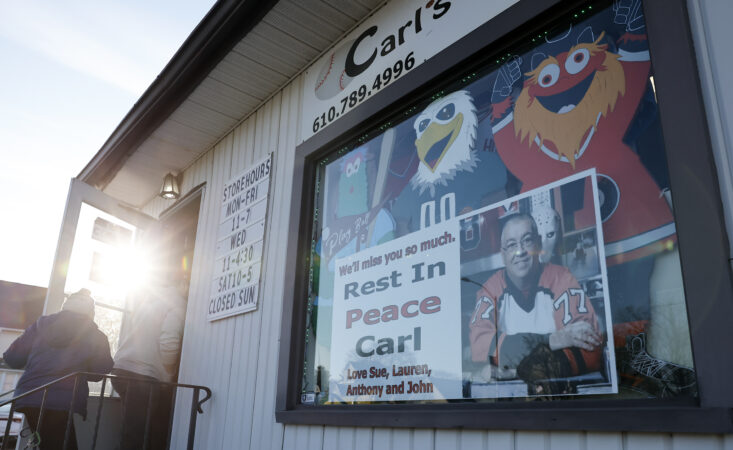
His shop looks a little different now. Those sympathy cards are pinned along the walls. A sign commemorating the longtime owner sits in its front window.
Condolences and tributes have poured into Carl’s Cards, including some from area sports figures.
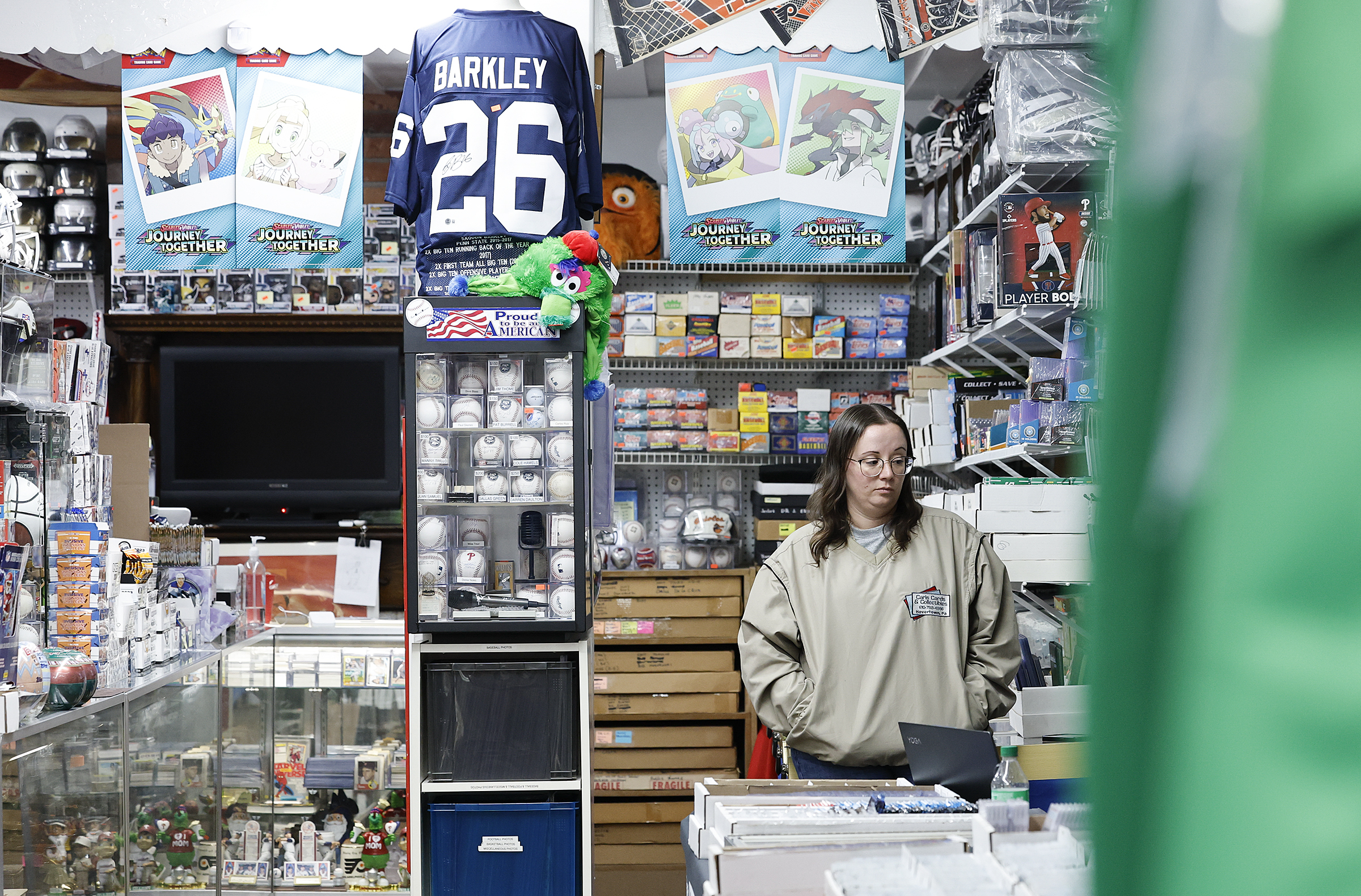
But the character remains the same — and Henderson-Pignetti is determined to keep it that way. Carl’s Cards has something for everyone. Kids can fish through the dollar bin for unexpected treasures. Right above it, collectors can purchase a limited edition Bryce Harper-signed bat more than 1,000 times that price.
There are more run-of-the-mill items, like signed helmets and jerseys, but also packs of Pope Leo XIV trading cards, and a rectangular piece of wood cut from the old Spectrum court.
The sports memorabilia world can be transactional, if not cold, but Henderson navigated it with warmth and integrity. He frequently donated money and autographed items to charity.
He liked to say he knew his clientele — and they weren’t always big spenders.
The shop owner cared just as much about the 10- or 11-year-old student with only a few dollars in their pocket. Or those who had no money to spend at all, but just wanted to vent about Philadelphia sports.
“He didn’t care if you were buying something,” said Henderson-Pignetti. “It was almost like a version of a bar where you stop in and talk to a bartender.
“You can buy something, [but] you don’t have to. You can just stop in and talk. It wasn’t always about the dollar.”
Lauren Henderson-Pignetti has taken on the responsibility of maintaining her father’s life’s work.
The store has been open since Henderson passed. For now, it’ll stay on its previous schedule.
Henderson-Pignetti sees this as a way of honoring her late father, who would’ve wanted Carl’s Cards to stay alive, no matter what.
“We made the decision to keep everything rolling the way he would have,” she said. “He spent 31 years building this place. He would have wanted everything to stay the way it was.”
A family atmosphere
When Henderson opened Carl’s Cards in 1995, his family thought he was out of his mind. He’d left a stable, corporate job working for Ryerson Steel, and had a wife and young daughter to support.
But Henderson loved collecting, and was ready for a change. So, he signed a three-year lease for a small property on Darby Road.
By 1998, he’d outgrown it, moving to a bigger location across the street from The Haverford Skatium. In 2010, he outgrew his budding collection yet again, moving Carl’s Cards to its current home on West Eagle Road.
These shops were where Henderson-Pignetti spent her childhood. She watched as her father welcomed world-class athletes for autograph signings, and put them at ease in a way bigger card shops couldn’t.
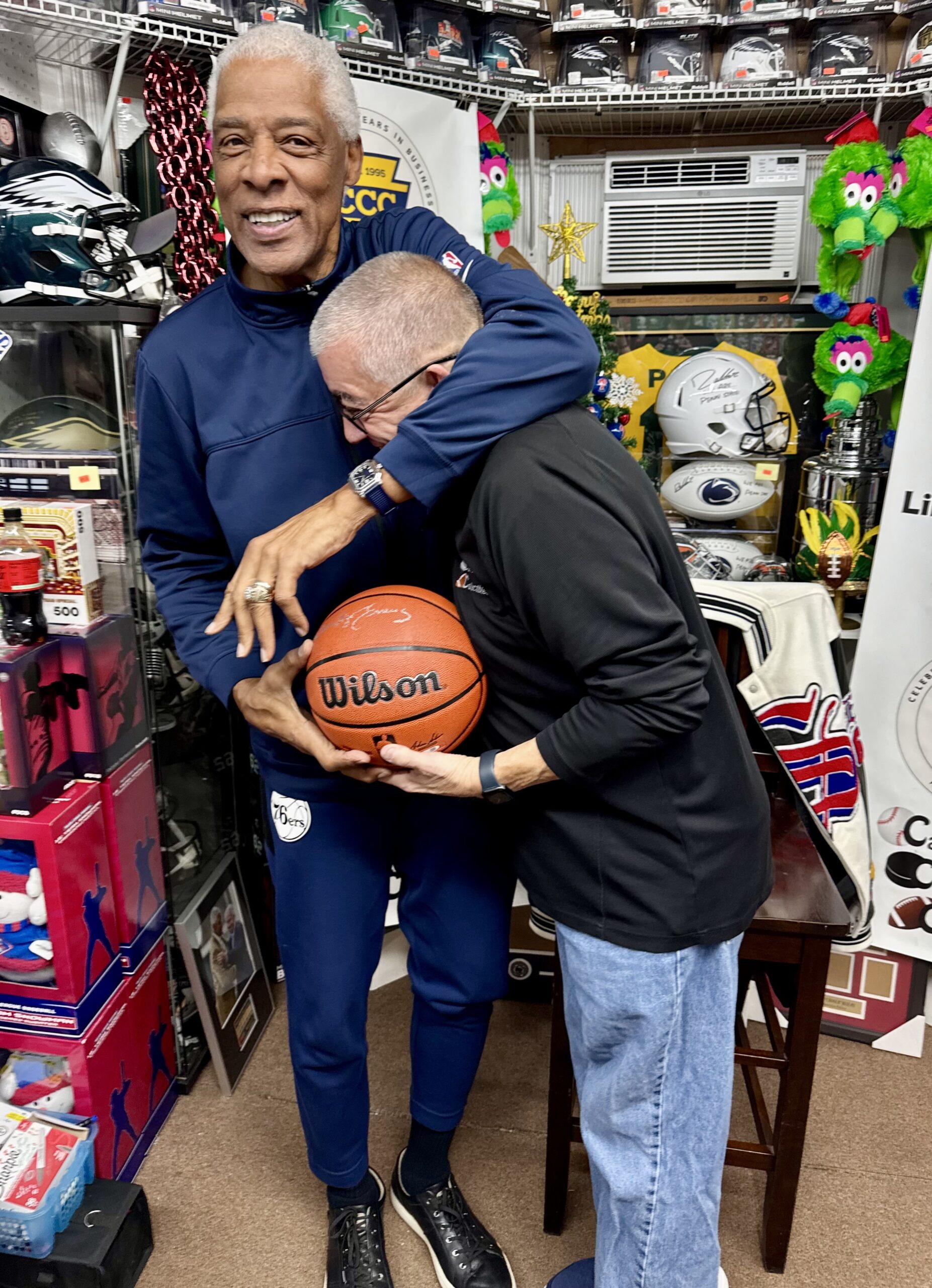
Julius Erving was among the local sports dignitaries who were made to felt comfortable by Carl Henderson (right).
There were no strangers at Carl’s Cards. He was always running the show, with his wife, Sue, selling tickets. As Lauren got older, she began to help out too, mainly with social media and website management.
“It’s not like one of those big card shows where you’re sort of forced in and forced back out again,” Henderson-Pignetti said. “It’s very much a family atmosphere. So, I think a lot of players really enjoyed that.”
Henderson’s theory was that when athletes were more relaxed, they were able to show their authentic selves. This proved true time and time again. Carl’s Cards hosted everyone from Allen Iverson to Jimmy Rollins to A.J. Brown.
Many of these athletes returned for more signings. Some, like Eagles offensive tackle Fred Johnson, even reached out after Henderson’s passing. Others, like Julius Erving, treated the store owner like an age-old friend.
An appearance by Erving had long been on Carl’s bucket list. Like many kids growing up in Philadelphia in the 1970s, Henderson idolized Dr. J. He owned Converse sneakers — just like the Sixers forward — and played varsity basketball at John Bartram High School.
Not much enthralled Henderson, but the idea of sharing a room with one of the best athletes of his generation did. They booked the signing for Dec. 21. After it was done, Erving hung around and talked to the store owner.
At one point, he heard some employees poking fun. He joined in.
“Dr. J was like, ‘Man, they even talk to the boss like that!’” Henderson-Pignetti recalled. “And my dad was like, ‘Do you hear that, guys? I’m the boss here.’
“It was just a really fun, sort of banter conversation. It was just nice.”
While autograph signings were part of the job, they were not the whole job. Henderson wanted his shop to be just as accessible for young kids.
Carl Henderson was a lifelong fan of the area’s sports teams, and that passion showed in his work.
In addition to the dollar bin, he made sure to stock the shelves with affordable card packs. He brought in a gumball machine and added $25 mystery memorabilia boxes.
But above all, he was an uplifting presence in their lives, in a way that Henderson-Pignetti wasn’t even aware. After her father died, she heard from all sorts of kids.
One of them, 12-year-old Owen Papson, crafted a handmade letter.
“I just heard the news,” he wrote. “I am so sorry. We will miss Carl so much. Your store will always be my favorite.”
Inside, he taped a signed Harold Carmichael Topps card with an inscription above: “Hopefully this will help.”
More stories came pouring in on Facebook. One, in particular, stuck with her. It was from a longtime customer who used to frequent Carl’s Cards in the early 2000s.
Lauren Henderson-Pignetti (right, with John O’ Brien) has been touched by the outpouring over her father’s death.
He explained that at the time, his parents were going through a divorce. Henderson was a stable presence when he needed one. He’d ride his bike to the store and was greeted with a smile every time.
“I had no idea,” said Henderson-Pignetti. “To think that something so simple as my dad just being in his place of business … for this kid [it] meant more to him than I think he probably even realized.”
‘A gift from God’
Last September, Henderson-Pignetti quit her role as director of development at the Humane Society in Reading. She loved working there, but was ready for something different, similar to her father when he left Ryerson Steel.
In the moment, her decision was based on a gut feeling, but now she can see the bigger picture. Last fall, Henderson-Pignetti started working full-time at Carl’s Cards.
On Thursdays, her father would give her run of the shop; how to properly open and close, how to track sales, how website orders are mailed out, and other intricacies of the job.
“It was a gift from God, basically, because it allowed me to just absorb even more information from him,” she said. “I kind of look back on that as a weird sort of intuition type of thing. If I hadn’t left my job, that wouldn’t have happened.”
Lauren Henderson Pignetti says her goal is to keep Carl’s Cards & Collectibles up and running after her father’s passing.
The goal, for now, is to keep the shop open. Some days are easier than others. Sue is sick and unable to work. Coworkers, and even customers, have helped pick up shifts when Henderson-Pignetti needs some space.
It can be emotionally exhausting at times. But she’s going to see it through.
“The plan is to not have anything change,” she said. “He would want me to step right into this role. I have no doubt about that. So that’s what I’m going to do, for as long as I possibly can.”