Tag: topic-link-auto

  • There’s no room in the union for Trump’s chaotic imperial presidency | Editorial

    There’s no room in the union for Trump’s chaotic imperial presidency | Editorial

    As America prepares to celebrate its 250th anniversary, the state of the union is in turmoil.

    In little more than a year in office, President Donald Trump has assailed the country’s institutions, upset the constitutional system of checks and balances, flouted the law, undermined democracy at home and abroad, and ignored the rising cost of living for ordinary people while lining his family’s pockets.

    Under Trump — at the whims of his unelected billionaire buddy, Elon Musk — senseless funding cuts have gutted U.S. medical research, led to thousands of federal employees losing their jobs, and more than 800,000 lives lost due to discontinued foreign aid.

    The president’s chaotic mass deportation efforts have a body count — including two citizens — as the nation’s streets are overrun by heavily armed, masked federal agents who routinely use excessive force with little accountability. Meanwhile, the government continues to protect the rich and powerful listed in the Jeffrey Epstein files, perhaps hoping to redact away their sins.

    Much to Trump’s displeasure, the American people are paying attention.

    When the president addresses Congress on Tuesday at the annual State of the Union address, he will do so with a 60% disapproval rating, according to a Washington Post-ABC News-Ipsos poll. Those abysmal numbers echo those seen after the Jan. 6, 2021, assault on the U.S. Capitol by Trump followers.

    The reproach has been hard-earned by the president, who has squandered away the goodwill of voters after his undeniable 2024 election victory.

    Rather than focusing on the kitchen-table issues that won him a return trip to the White House, Trump has ramped up the cruelty of his anti-immigrant policies and ignored the economic pressures many people face.

    Instead of presiding over cooling inflation, the president’s obsession with tariffs cost American families an extra $1,000 last year. In place of policies that would make owning a home more affordable and bring down the cost of rent, Trump said he wants to keep housing prices high. Contrary to what the administration wants people to believe, mass deportations don’t create jobs; they stunt economic growth.

    The tax cuts promised in Trump’s signature piece of legislation, the One Big Beautiful Bill Act, mostly benefited the very wealthy. The law allots billions to hire U.S. Immigration and Customs Enforcement agents and build vast detention facilities on the back of steep cuts to Medicaid and food assistance.

    That people are roundly pushing back against the president’s upside-down priorities and abuses of power seems to have restored some conservative leaders’ resolve.

    The same U.S. Supreme Court that, in 2024, gave the president absolute immunity ruled last week that Trump’s tariffs exceeded the power of the presidency. In December, the justices also blocked Trump’s deployment of the National Guard to Chicago, and have been skeptical in arguments regarding the president’s authority to fire a member of the Federal Reserve Board.

    In Congress, a handful of Republicans have also rejected Trump’s wishes, denouncing his administration’s refusal to release the Epstein files and the president’s ill-conceived tariffs on Canada. GOP lawmakers have so successfully abandoned their authority to Trump that even these limited developments are heartening.

    When it comes to the president, perhaps the legislative branch should pay heed to the judicial.

    In the same court decision that denied Trump his tariff authority, Justice Neil Gorsuch, who is part of the conservative majority, laid it out clearly.

    “Yes, legislating can be hard and take time. And, yes, it can be tempting to bypass Congress when some pressing problem arises,” the Trump appointee wrote in his concurrence. “But the deliberative nature of the legislative process was the whole point of its design. Through that process, the Nation can tap the combined wisdom of the people’s elected representatives, not just that of one faction or man.”

    The American people and the courts are speaking. If the state of the union is to ever recover, Congress must listen.

  • Philly school officials want to close Lankenau High and give it to the city. A 1970s legal agreement may snarl that deal.

    Philly school officials want to close Lankenau High and give it to the city. A 1970s legal agreement may snarl that deal.

    Could a 1973 legal agreement help save Lankenau High?

    The Schuylkill Center for Environmental Education hopes so.

    The Philadelphia School District has proposed closing Lankenau, the city’s environmental science magnet school, and giving it to the city to help further Mayor Cherelle L. Parker’s affordable-housing goals, or for job creation.

    But the Schuylkill Center, Lankenau’s neighbor, believes it’s prohibited from doing so, and just notified Superintendent Tony B. Watlington Sr.

    The Schuylkill Center “holds a right to repurchase the property in the event that it is transferred or conveyed or used for any purpose other than school purposes, pursuant to a restriction in the October 4, 1973 deed by which [the Schuylkill Center] conveyed the property to the Lankenau School,” a lawyer for the environmental center wrote in a letter sent to the district Monday.

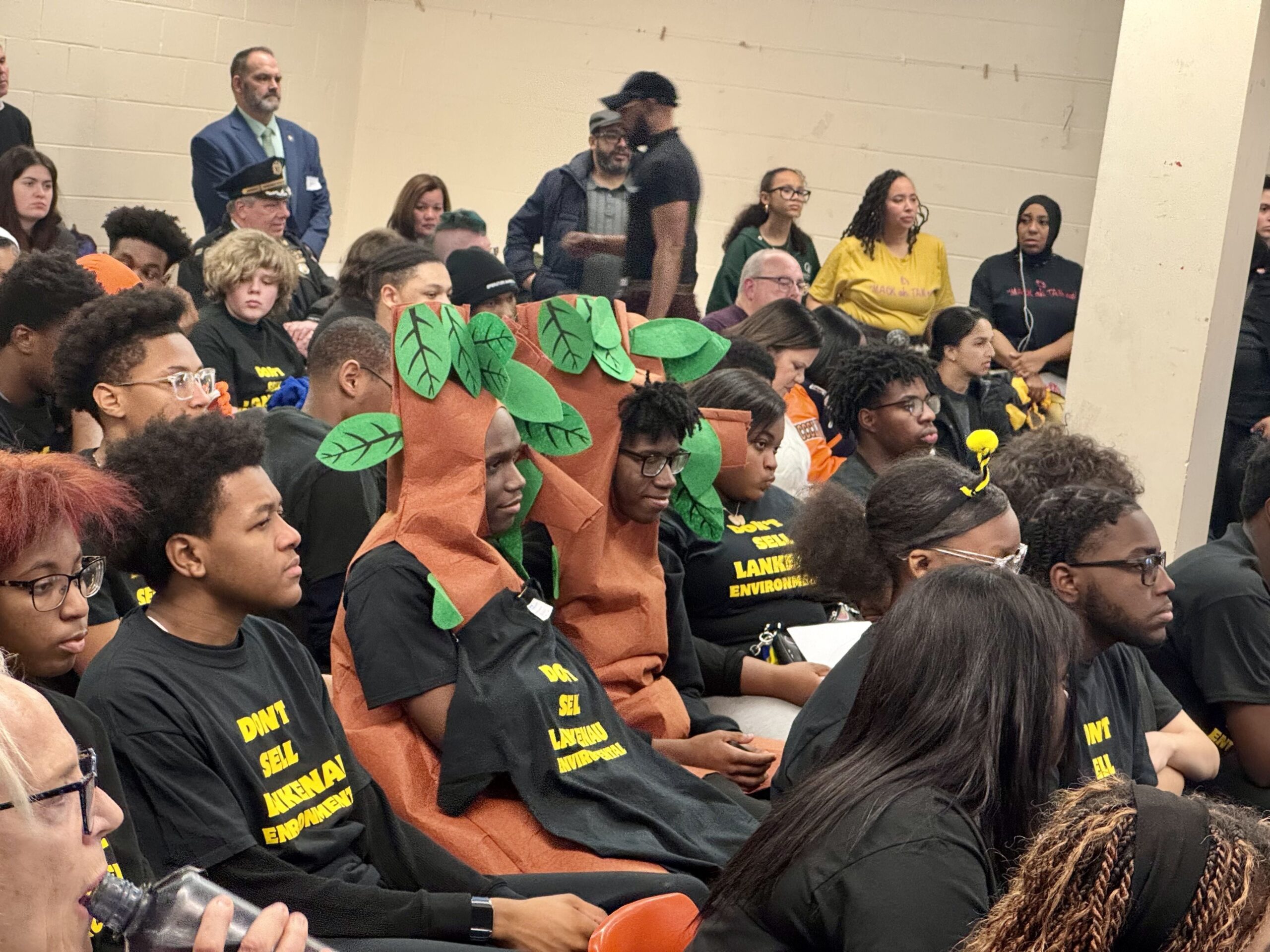
    Students, staff, and community members who support Lankenau High School – including some dressed as trees – packed a recent community meeting at the school about its proposed closure.

    If the district is “considering a sale of the property or using the property for any purposes other than continued use as a school, this letter serves as written notice of [the Schuylkill Center’s] right to repurchase,” lawyer Sean T. O’Neill wrote to Watlington, “The school district must provide [the Schuylkill Center] with reasonable advance notice of any potential conveyance or change in use and allow [the Schuylkill Center] the opportunity to exercise its right to repurchase.”

    The center, which touts itself as “one of the first urban environmental education centers in the country,” was founded in 1965. It has trails and a visitors’ center and runs educational programs and a wildlife clinic.

    District officials had no immediate comment.

    Lankenau’s history

    Lankenau sits amid 400 wooded acres adjacent to the Schuylkill Center. The 17-acre parcel Lankenau High now sits on was originally the site of the private Lankenau School for Girls; after that school closed, the Philadelphia School District purchased the land.

    What is now Lankenau High was first a program of Saul High and then Germantown High, but in 2005, it became a standalone school as part of then-CEO Paul Vallas’ small schools initiative.

    Since then, Lankenau has soared as a diverse, hands-on magnet with a 100% graduation rate in a location like no other.

    News that Lankenau landed on the district’s closure list infuriated students, parents, community members, and elected officials, who have mounted a robust campaign to fight plans to shut the school and relocate it as an honors program inside Roxborough High.

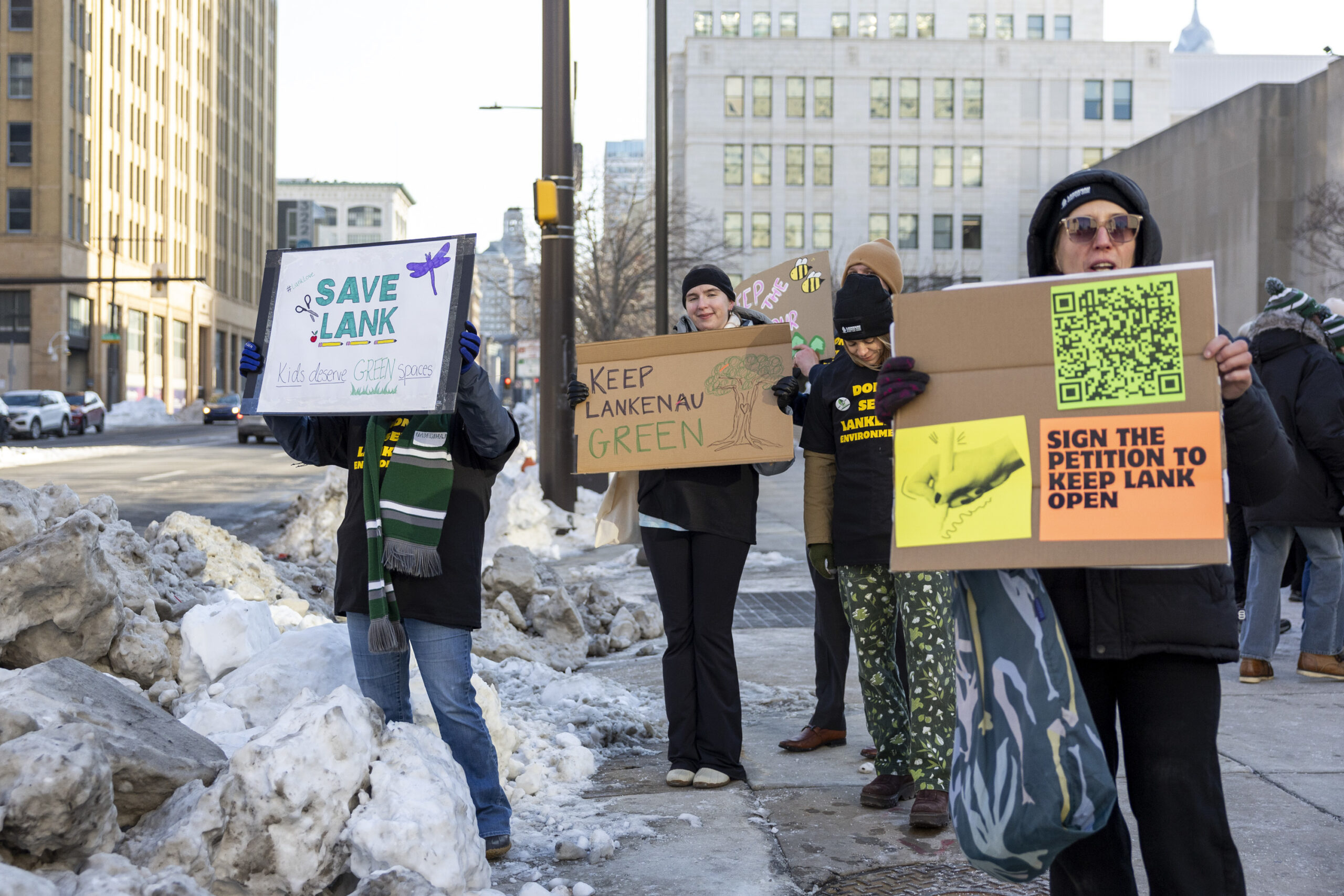
    Teachers, students, and community members from Lankenau High School rally outside a Philadelphia school board meeting in January.

    They’re particularly alarmed that Lankenau’s small size, used to justify its closing, came as enrollment shrank after the school system ordered changes to its special-admissions policy.

    The Schuylkill Center’s first priority is for Lankenau to remain as it is, said Erin Mooney, executive director of the 60-year-old organization, which now partners closely with Lankenau.

    “We are in opposition to Lankenau’s closing,” said Mooney, “but should something change with Lankenau, we want to ensure that the site continues to be used to teach people about nature.”

    Mooney, who has been public in the Schuylkill Center’s support for the school, discovered the language giving the Schuylkill Center right of first refusal if the property ever ceases being a school in the 1973 agreement.

    Watlington is scheduled to present his sweeping facilities plan — which as of January included 20 closures, six co-locations and 159 modernizations — at a school board meeting Thursday.

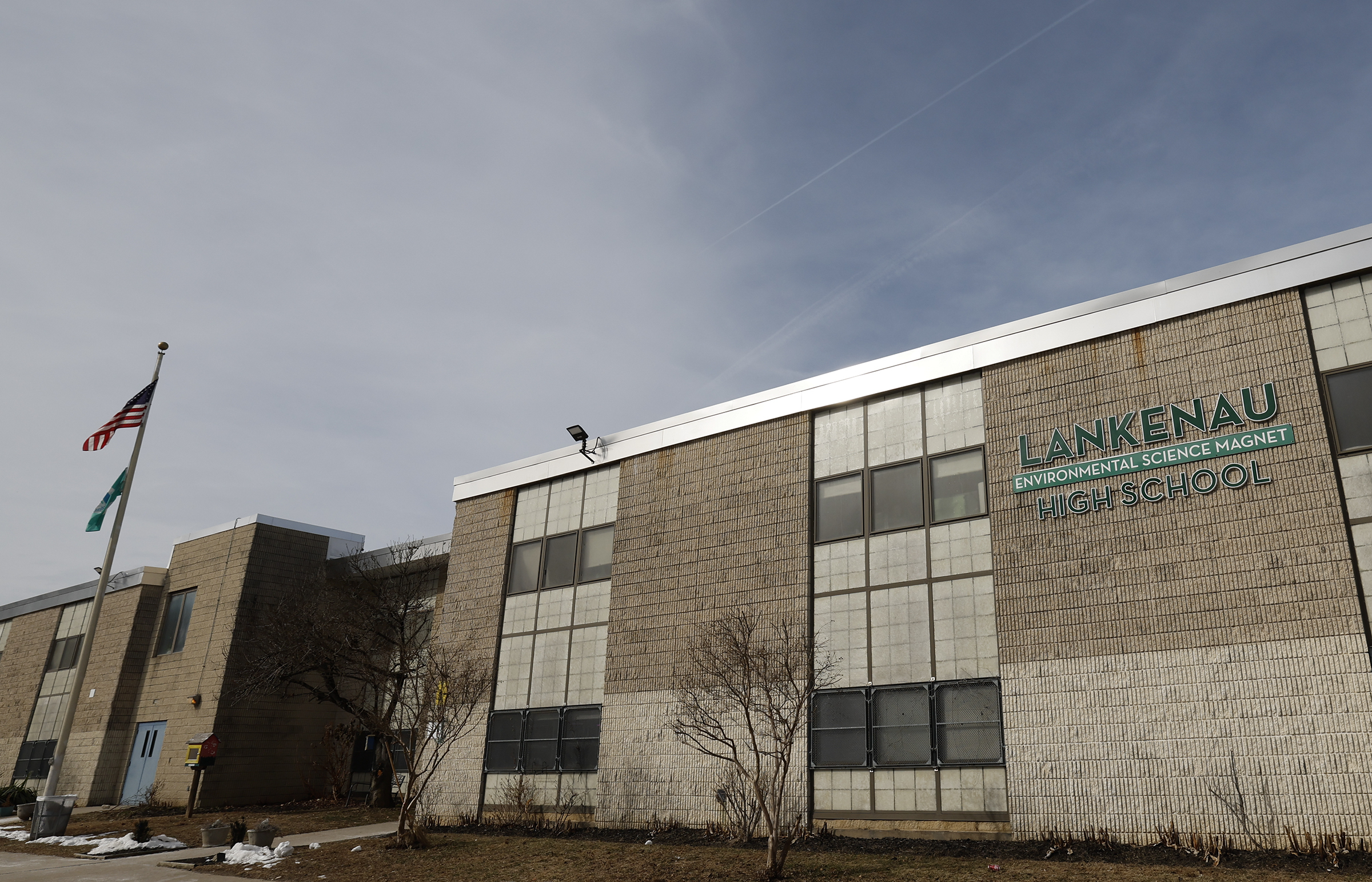
    The Lankenau Environmental Science Magnet High School in Roxborough on Saturday, January 24, 2026.

    But the superintendent has said what he presents to the board may include some tweaks to his initial recommendations.

    Mooney hopes the information the Schuylkill’s lawyers sent Monday helps Lankenau come off the closing list.

    “We want Lankenau to stay,” she said, “and I wanted the school board to have this information as part of its decision-making.”

    Watlington’s recommendations are just that; the school board has ultimate say. It has not given a date for the final vote on school closings, but said no vote will happen Thursday.

  • The Flower Show must go on: Crews start setting up for Philly Flower Show despite snow and years of weather curses

    The Flower Show must go on: Crews start setting up for Philly Flower Show despite snow and years of weather curses

    Inside a large exhibition room at the Pennsylvania Convention Center on Monday morning, where workers are setting up next week’s Philadelphia Flower Show, one could be fooled into believing that spring has somehow arrived early in Philly.

    The scent of mulch permeates every corner, tendrils of pink and red flowers are delicately laid over massive tree trunks, a mobile hanging from the ceiling dangles dozens of iridescent butterfly cutouts over the floor, and bright green shrubbery dots the halls.

    It seems as if Punxsutawney Phil maybe got it wrong this time.

    But one thing gives it away: the gaping open loading dock door ushering in a channel of 35-degree air that slices through the center of the exhibition hall. Clusters of snowflakes billow in toward a mint-colored wooden fence and a tree house.

    For the organizers of the Philadelphia Flower Show, an annual week and a half-long event that features dozens of horticultural exhibits, the 14-inch snow dump over the weekend was less than ideal, said Seth Pearsoll, the show’s creative director and vice president with the Pennsylvania Horticultural Society. But it wasn’t a surprise.

    “We have been watching the weather for weeks on end,” Pearsoll said. “You just got to stay on top of it.”

    The show, which opens to the general public on Saturday —the Horticultural Society members preview is Friday — and ends March 8, is typically held in the late winter/early spring. That’s led to some historically dicey weather.

    A 1993 blizzard forced the show to close early. Meteorologists predicted huge snowfalls in 2001 and 2013 as well. And, in 2018, a nor’easter hit the city on the opening night of the show. When the show was held outside during the years of the COVID-19 pandemic, it was shuttered or postponed for short stretches because of inclement weather.

    Despite the weather challenges the show, which has been running for nearly 200 years, is typically held at this time of year partly due to tradition. The show dates to an era long before the internet when the event was designed to present the season’s products to florists, landscapers, farmers, and others in the horticultural industry so they could place their orders in time for spring planting.

    “After that it was just part of the DNA of the show,” Pearsoll said.

    The show brings in a quarter million visitors each year, he said, and requires meticulous planning and constant pivoting.

    The original schedule for Monday included a 7 a.m. load-in time, he said, but his team later pushed that to noon to ensure that all the trucks could get to the facility safely. Many of the plant deliveries for Monday were moved to Tuesday or Wednesday, by which time the team hopes roads will be clearer.

    Trucks won’t just be contending with the weather in Philly but across the country as the event is getting shipments in from Minnesota, Florida, and New York, among other states.

    Most of the plants themselves are protected in climate-controlled trucks.

    “I think, for me, having been a part of outdoor shows, having worked a million flower shows, weather is always a thing,” Pearsoll said. “So I’ve really come to see it as just another one of those planning variables in the event industry.”

    The way he views it, the snowy, slushy, frigid weather outside enhances the magic of walking through rows of plants that have, through “sorcery,” as he calls it, been manipulated into blooming out of season.

    “It’s this crazy thing, right?” he said. “It mean it’s science. It’s art.”

    The Philadelphia Flower show is scheduled for Saturday through March 8 (with a Horticultural Society members preview on Friday) at the Pennsylvania Convention Center, 11th and Arch Streets. Hours: 10 a.m. to 8 p.m., except until 6 p.m. on March 8. Admission varies depending on person’s age and day and time of entrance. Information: phsonline.org or 215-988-8800.

  • Philadelphia is one of the most popular destinations for apartment hunters so far this year

    Philadelphia is one of the most popular destinations for apartment hunters so far this year

    Philadelphia is one of the most popular major cities among renters searching for apartments ahead of this year’s peak rental season.

    The city ranks in the top 10 most popular out of the 150 largest U.S. cities, according to an analysis of millions of apartment searches by the nationwide apartment search platform RentCafe.

    To rank cities at the start of the year, the platform measured page views for apartment listings, saved searches, listings that were marked as favorites, and the availability of units.

    Rental activity is typically more dormant in the winter months before it heats up with the weather and peaks in the summer. “Looking out your window today, you can see a major reason why,” said Doug Ressler, manager of business intelligence at Yardi Matrix, a sister division of RentCafe.

    Philadelphia came in at No. 8 in RentCafe’s ranking of in-demand rental markets in early 2026. The city often ranks high for popularity among renters because of its size, access to job hubs, and affordability compared to New York and other major East Coast cities.

    RentCafe found that a majority of the interest in Philadelphia apartments comes from people already living in the city.

    But out-of-town renters also want to move here. The majority of these apartment hunters searched from New York, followed by Boston and Washington. Renters in Atlanta, Los Angeles, and Houston also were interested in Philadelphia rentals.

    Philadelphia fell three spots from last year in RentCafe’s ranking, because the number of saved apartment searches dropped, Ressler said. That’s partly because an apartment construction boom in the city has created many available units. So apartment hunters can more easily find homes and don’t need to save as many searches.

    window.addEventListener(“message”,function(a){if(void 0!==a.data[“datawrapper-height”]){var e=document.querySelectorAll(“iframe”);for(var t in a.data[“datawrapper-height”])for(var r,i=0;r=e[i];i++)if(r.contentWindow===a.source){var d=a.data[“datawrapper-height”][t]+”px”;r.style.height=d}}});

    Beyond Philadelphia

    Midwestern and Southern cities dominated RentCafe’s rankings, with 11 of the 30 most in-demand cities located in the Midwest. Cincinnati took the No. 1 spot, followed by Atlanta and Minneapolis.

    Washington and Baltimore rounded out the top-five list.

    In top-ranked Cincinnati, RentCafe said renter interest was driven by people wanting to move from expensive areas along the coast to a midsized city that still offers a strong job market and positions in healthcare, manufacturing, and finance. Cincinnati also has become more appealing because of recent revitalization of downtown neighborhoods and the riverfront along the Ohio River.

    Renter interest in El Paso, Texas, has grown the most out of the 150 large cities that RentCafe analyzed. The city climbed 115 spots to rank No. 28 this year.

  • Stacy Garrity will be a guest at Trump’s SOTU address. Here’s who else from Pa. will (and won’t) be there.

    Stacy Garrity will be a guest at Trump’s SOTU address. Here’s who else from Pa. will (and won’t) be there.

    Pennsylvania Republican gubernatorial candidate and state Treasurer Stacy Garrity is to be among the guests filling the U.S. House’s gallery Tuesday night when President Donald Trump delivers the first State of the Union address of his second term.

    Her presence at the primetime speech underlines her alignment with Trump on the national stage as she pursues her challenge against popular Democratic incumbent Gov. Josh Shapiro, widely seen as a potential contender for the White House in 2028.

    A campaign spokesperson said Garrity will attend the address in her official capacity as state treasurer rather than as a candidate, but the Republican lawmaker bringing her to the event specifically cited her campaign for governor when he announced her as his guest.

    “I am pleased to announce that the next governor of Pennsylvania Stacy Garrity will be my guest at the coming State of the Union,” U.S. Rep. Glenn ‘GT’ Thompson, who represents the 15th District, said earlier this month at a gathering of Pennsylvania Republicans in Harrisburg.

    Steven Chizmar, a spokesperson for the Pennsylvania Treasury Department, said that Garrity was in Washington for the National Association of State Treasurers through Tuesday and that her attendance at the speech will come as part of this previously scheduled trip.

    “This opportunity will allow her to gain valuable insights into national issues that could impact Pennsylvanians and the services provided by the Pennsylvania Treasury Department,” Chizmar said. “Attending the State of the Union is an honor rooted in more than two centuries of American tradition and Stacy Garrity is proud to be able to attend the president’s address.”

    Garrity’s trip to Washington comes just days after Shapiro was among the Democratic governors to meet with Trump at the White House for the National Governors Association’s annual conference — though he skipped the black-tie dinner after Trump’s attacks on colleagues.

    Garrity is a longtime Trump supporter who has voiced support for Pennsylvanians to cooperate with ICE agents and previously claimed that Trump won the 2020 election.

    Trump endorsed Garrity at the end of January, saying, “Stacy is a true America First patriot who has been with me from the beginning.”

    Garrity was reelected as treasurer during the 2024 red wave in Pennsylvania when all state row offices were won by Republicans, as Trump carried Pennsylvania with more votes than any statewide Republican candidate in history .

    But now a little over a year into his second term, Trump’s approval rating is sinking. According to a new Washington Post-ABC-Ipsos poll, 60% of Americans said they disapprove of how Trump is handling the presidency. This is a potential liability for Garrity and other Pennsylvania Republicans on the ballot this year.

    The Pennsylvania Democratic Party seized on Garrity’s planned appearance at the State of the Union. Party chair Eugene DePasquale said during a news briefing Monday that Garrity will be “cheerleading” Trump’s “damaging” policies and specifically tied Garrity to rising healthcare costs.

    Democrats boycott or bring guests to send a message

    Healthcare costs will likely be a key point of Democratic messaging against Trump on Tuesday night, following a national spike in insurance premiums when enhanced tax credits for the Affordable Care Act expired at the start of the year.

    U.S. Rep. Madeleine Dean, who represents the 4th District, which is primarily Montgomery County, is to bring Lisa Boone Bogacki, a physical therapist and affordable healthcare advocate from Berks County.

    Bogacki‘s husband, Gary, died from a sudden cardiac event in 2009 and Bogacki’s family came to rely on the Affordable Care Act and Social Security survivor benefits.

    “Prior to the ACA, I paid over $20,000 annually for insurance coverage, and this was where the majority of the kids’ survivor’s benefits was spent,” Bogacki said in a news release from Dean’s office. “The ACA finally made insurance premiums affordable for us. This year, my premiums have drastically increased, following the new cuts made to the program.”

    U.S. Rep. Chris Deluzio, who represents the 17h District in Western Pennsylania, also focused on health care messaging with his announced guest, Jonathan Akanowicz, an independent pharmacist from Hampton Township.

    Akanowicz has been working to lower prescription drug costs and save community pharmacies by campaigning against pharmacy benefit managers.

    Addressing another contentious issue, Trump’s immigration agenda, U.S. Sen. Lisa Blunt Rochester of Delaware plans to bring Maria Mesias-Tatnall, director of outreach and immigration assistance at the Delaware Department of Justice.

    Some Democrats are choosing to express their disapproval in other ways.

    U.S. Rep. Summer Lee, of the 12th District in Pittsburgh and surrounding area, plans to attend the progressive-led “People’s State of the Union” in Washington instead of Trump’s speech, her office said.

    She is to deliver the Working Families Party’s response to Trump, according to the progressive organization.

    U.S. Rep. Mary Gay Scanlon of the 5th District mostly in Delaware County, is also scheduled to attend the “People’s State of the Union” event, organized by progressive groups MeidasTouch and MoveOn, her office confirmed.

    After he boycotted Trump’s joint address to Congress last year, U.S. Rep. Dwight Evans of the 3rd District in Philadelphia will not attend Trump’s address Tuesday night. In his place, Evans — who is retiring — has designated Carolyn Hill, a Philadelphia grandmother who is impacted by Trump’s cuts to SNAP, an honorary guest.

    Republican lawmakers from the region

    U.S. Sen. Dave McCormick of Pennsylvania will be hosting hosted Jason Zugai, vice president of United Steelworkers Local 2227, as his guest after Japanese company Nippon Steel finalized a buyout of U.S. Steel in June. McCormick played a key role in persuading Trump to back the deal after his initial public opposition.

    U.S. Rep. Ryan Mackenzie of the 7th District, which is north of Philadelphia will to bring Sarah Arndt, the lead teacher at PathStone Carbon County Head Start, where she has worked for the past 13 years. Funding for her program was in jeopardy last fall amid the lengthy government shutdown and state budget impasse.

    And Sheryl Klein, a senior at Council Rock High School South in Bucks County, will to be the guest of U.S. Rep. Brian Fitzpatrick of the 1st District. Klein founded and leads the high school’s Women’s Empowerment Club.

    “That is the kind of civic engagement we should be encouraging across this country at every level: unifying, positive, and rooted in service to something greater than ourselves,” Fitzpatrick said.

    Fitzpatrick and Mackenzie represent key swing districts, which both parties are targeting in the fall.

  • Snowstorms in Philly may not be consistent, but these Philly snowstorm traditions are

    Snowstorms in Philly may not be consistent, but these Philly snowstorm traditions are

    Snow isn’t a constant in Philadelphia but after two big storms dumped on us just weeks apart this year, it’s clear some things remain predictably consistent during a snowstorm in Philly, no matter the year.

    While all hail hasn’t broken loose yet, we have fallen right back into our classic winter storm habits, some of which aren’t snow great. So put on your parka, pull up your boots, and come traipsing through our winter tropes with me, because if there’s one thing that certainly isn’t predictable during a snowstorm it’s SEPTA.

    Acting like the Philadelphia Museum of Art is Vail

    A snow boarder goes down the steps of the Philadelphia Museum of Art.

    I love that people sled and snowboard down the steps of the Philadelphia Museum of Art after a snowstorm like it was a ski resort. It’s one of those traditions that gives Philly such a wonderful, joyous sense of place, but, like many of our beloved traditions, it is also a highly dangerous activity.

    There is no ground beneath the snow here, just pointy stone steps that could leave your face looking like a Picasso painting if you hit them the wrong way. Even if you manage to stay upright the entire way down, it’s a bumpier ride than Philly’s pothole-plagued streets (which are certainly going to get worse after this storm).

    A sledder wipes out while sledding down the Philadelphia Museum of Art steps.

    The substance

    Throughout a snowstorm and for five minutes immediately following one, Philadelphia looks absolutely stunning. But after those five minutes are up, things get real gross, real quick. The snow turns into lakes of slush and large, gray mountains of immovable ice, making the city look like a dumpster site on Hoth for the next five weeks.

    It reminds me of that movie The Substance with Demi Moore, except the substance for Philly is snow. It makes the city beautiful for a short time, but in the end, it just turns it into a bigger mess than it was to begin with.

    A pedestrian walks past a large pile of snow and ice along the Benjamin Franklin Parkway this year.

    Doggone dirty

    Among the many reasons the snow gets so gross so quickly here is because some dog owners are under the impression that the laws of polite society freeze when the temperature does. Just because your dog left its pile on a pile of snow does not mean you don’t have to pick it up.

    Trash spotted in the snow in Philadelphia. Photographed, but not pictured (as a courtesy to you), was also a pile of dog poo.

    Then there are the really terrible, lazy owners who kick snow over their dog’s piles in an attempt to cover it up, thus leaving a nasty surprise for unsuspecting pedestrians. While all dogs may go to heaven, there’s a special circle of hell for those folks.

    Snowstalgia

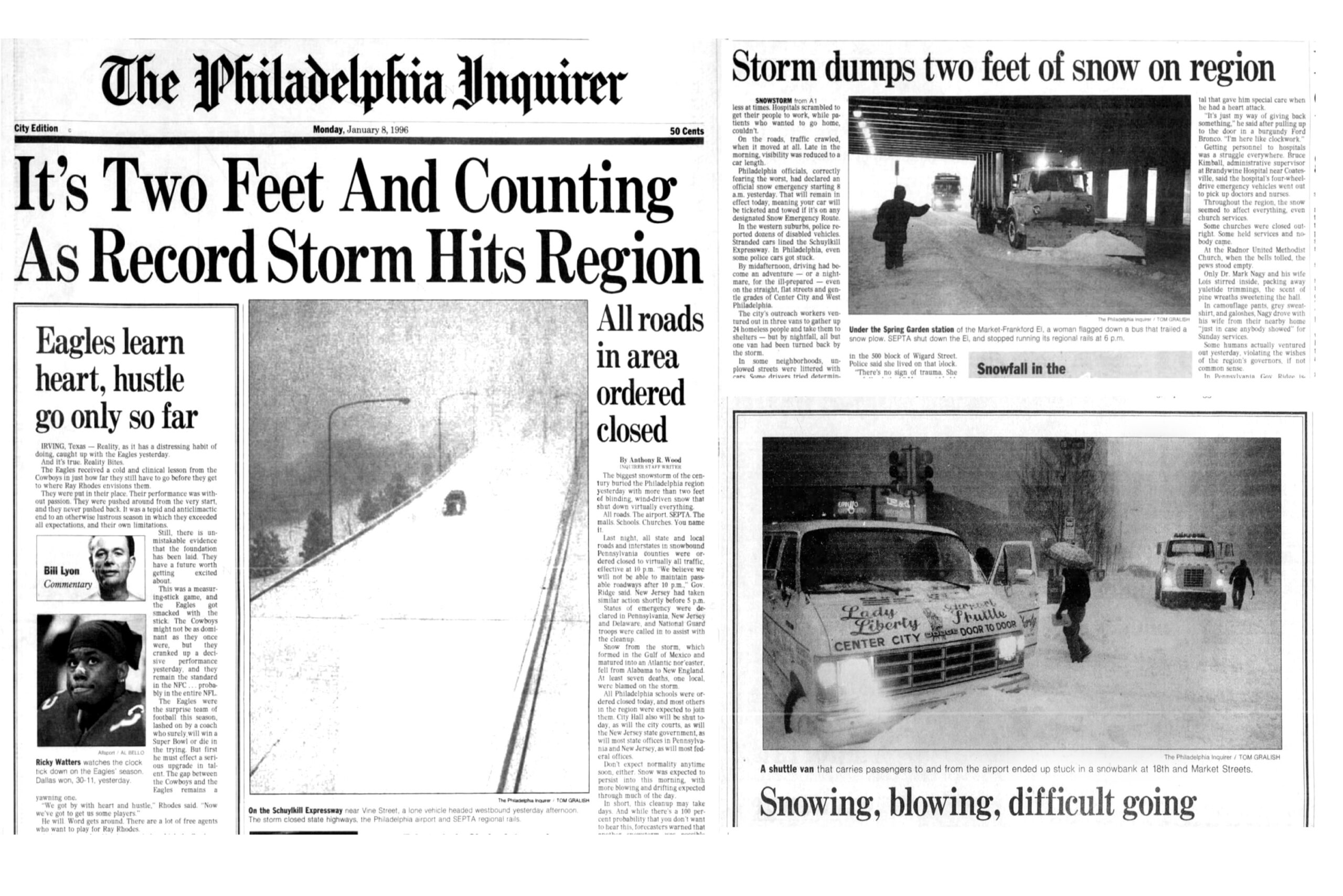
    No matter how much snow is predicted or falls during a storm, it will inevitably be compared to the Blizzard of ‘96 by at least three people you speak you to, or three times by at least one person you speak to.

    The Blizzard of ‘96 is pretty much our Beetlejuice, you have to say it three times or it doesn’t snow around here.

    Front page and inside photos from The Philadelphia Inquirer. January 8, 1996. The Blizzard of 1996, or “Storm of the Century,” a severe nor’easter that was Philadelphia’s largest-ever snowfall of 30.7 inches Jan. 6-8, 1996.

    Work or Wawa

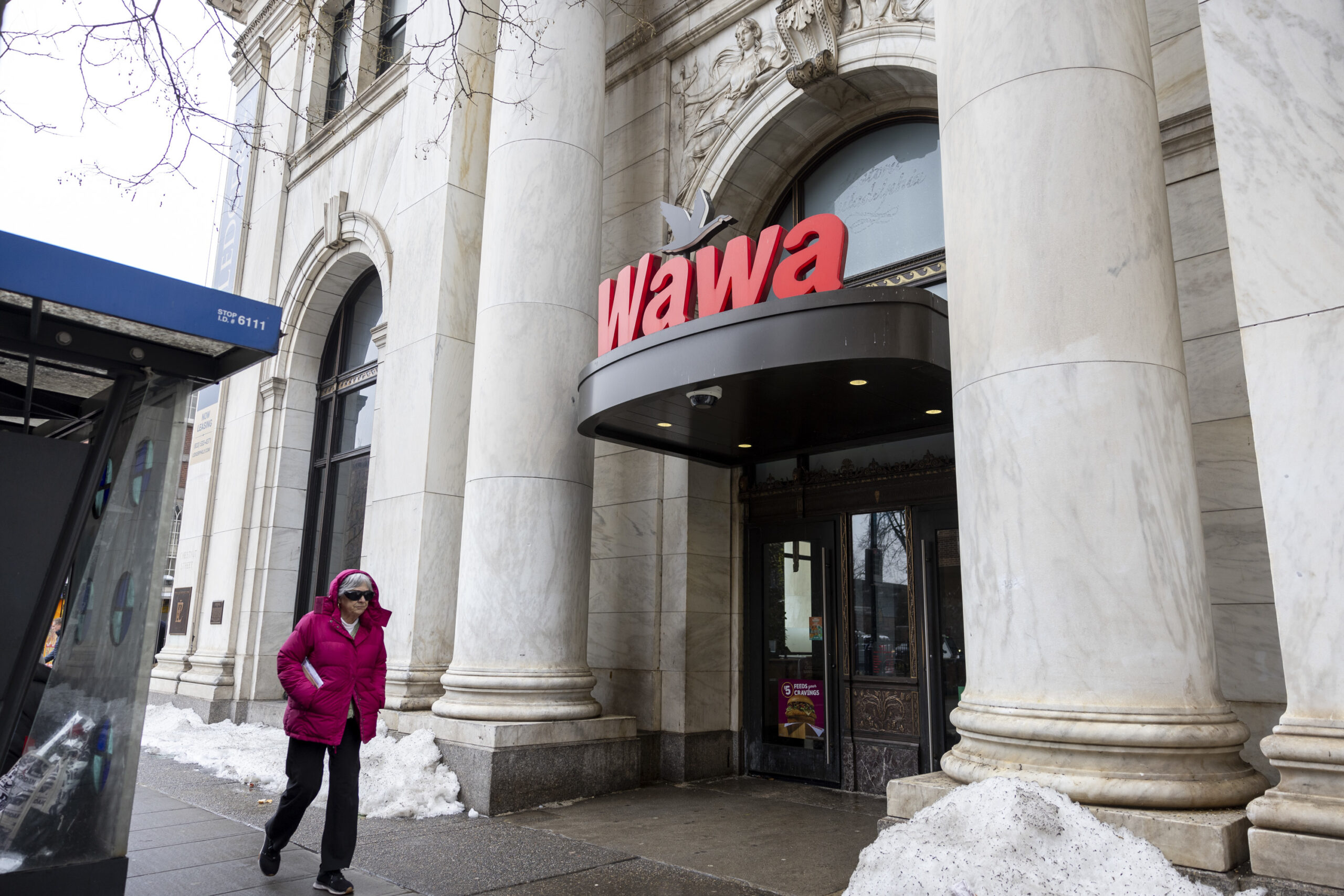
    There are two types of people who travel out in Philly during a storm: those who are going to work and those who are going to Wawa.

    There’s absolutely no rational reason someone has to go on a Wawa run during a snowstorm — especially since everyone waited an hour in line at the Acme for milk and bread two days before it hit — yet there they always are, sometimes in flip-flops, just picking up a cup of coffee like it’s something they can’t get at home.

    The flagship Wawa store near Independence Hall.

    I’m sure some folks go just in the hopes of being interviewed by the 6ABC reporter who’s doing live shots from the Wawa parking lot, and some do it just to get out of the house while their kids are at home. Whatever the reason, if you’re one of those people, be nice to the Wawa workers who risked their lives to go to work so you had somewhere to go.

    Savesies

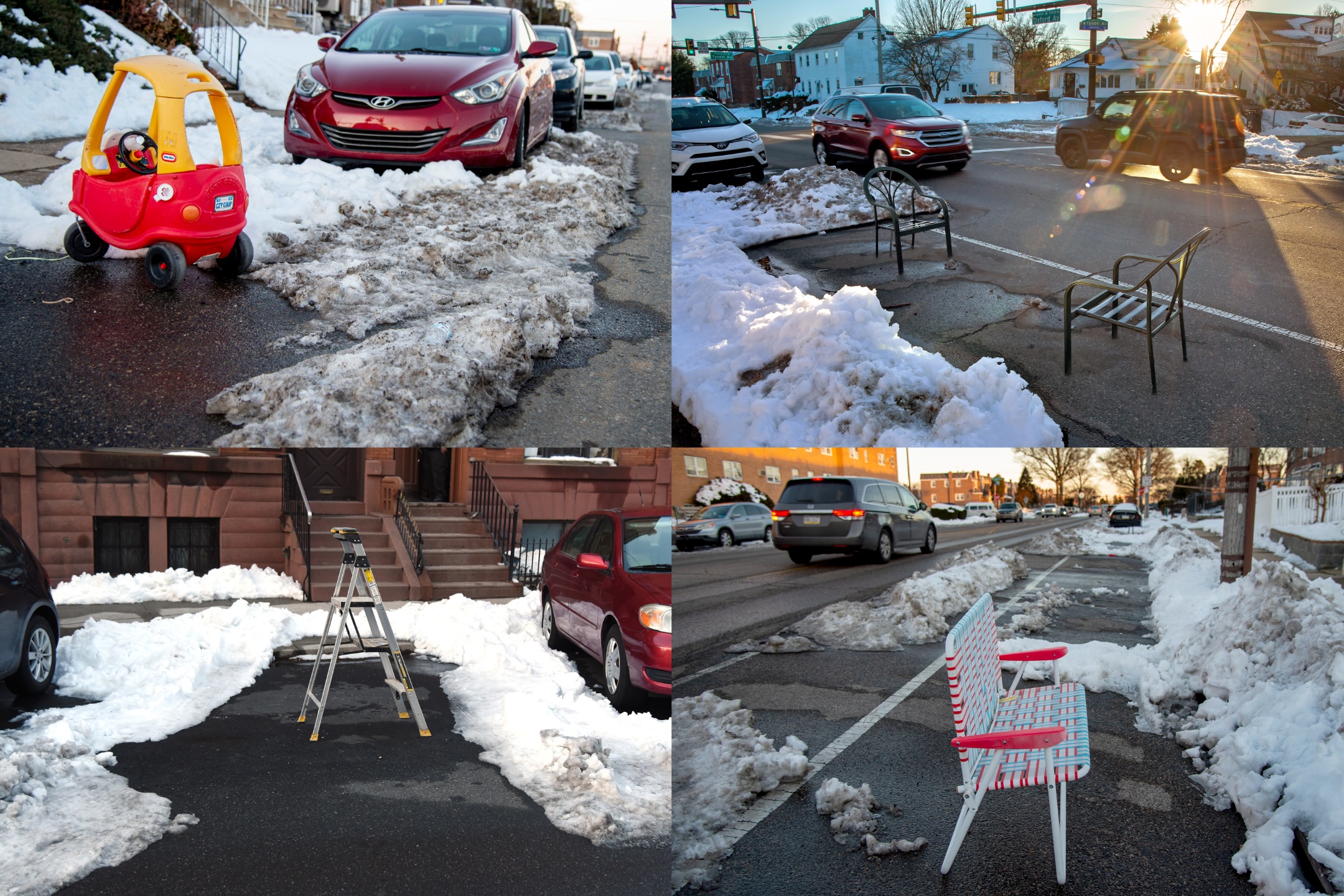
    Few things will pit neighbor-against-neighbor in this city quite like savesies, the longstanding Philly practice of using an orange cone, folding chair, or any other inanimate object to save a parking space you’ve shoveled out.

    Collage of savesies, a long-held parking tradition across Philadelphia.

    Folks are either firmly for or against the tradition, but no matter which camp they land in, few are bold enough to mess around and find out by parking in a saved space, lest they become the recipient of a strongly-worded letter on their windshield, a knock at their door, or whatever curse has plagued the Flyers since 1976.

    Shorts shovelers

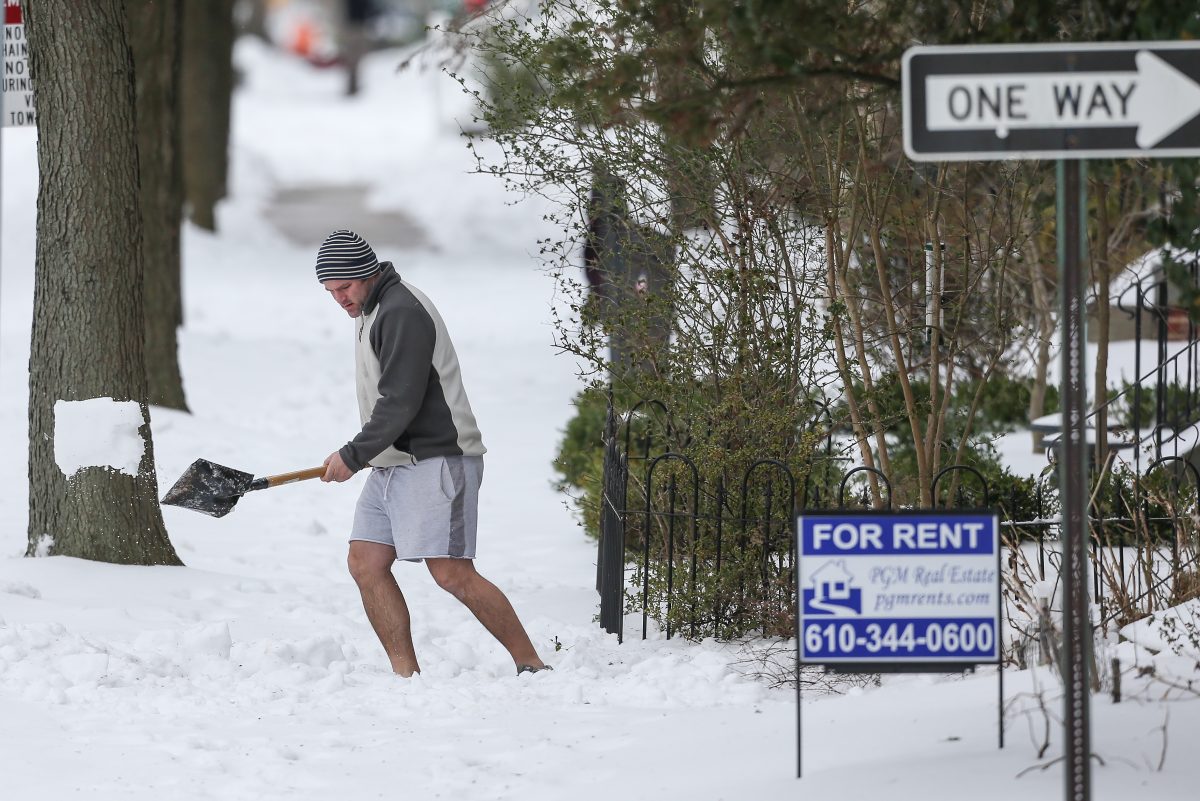
    Shoveling in shorts is a long-standing tradition practiced by men in the Philadelphia region.

    It could be 3 degrees out with a windshear of negative 10 and eight inches of snow on the ground and you will still see some dude out shoveling in shorts and an Eagles hoodie. In Delco, you will see several.

    Do these men get hot flashes in their legs? Is their calf hair luxuriously thick? Did someone cut off the bottom half of all their pants? Inquirer minds (mainly mine) want to know!

    Greetings from sunny Florida

    During a snowstorm, someone you know will inevitable post a picture of themselves in Florida, where they snowbird in the winter or are visiting for Phillies spring training. The caption will say something like “Sorry to miss out on the storm!” or “Sending my friends in Philly sunny vibes from Florida!”

    Philadelphia Phillies Trea Turner and Bryce Harper enter the field during the first full-squad workout of spring training Feb. 16, 2026, at BayCare Ballpark in Clearwater, Fla.

    These are bold-faced lies. They are not sorry and they are not sending you anything but a hard time. Just rest assured in the knowledge that no matter what, you are in the greatest city in the world and they are still in Florida.

  • Small businesses, don’t expect tariff relief anytime soon | Expert Opinion

    Small businesses, don’t expect tariff relief anytime soon | Expert Opinion

    The U.S. Supreme Court dealt a blow to President Donald Trump’s tariff plan last week. But if you’re a small-business owner who’s been affected by tariffs, don’t get too excited.

    This fight is far from over. And so is the uncertainty. Even when courts push back, presidents retain enormous tariff authority — and small businesses should assume continued volatility.

    The president had imposed tariffs on a number of countries under the International Emergency Economic Powers Act (IEEPA), which authorizes him to “declare a national emergency and regulate or block commercial and financial transactions with foreign nations deemed an unusual, extraordinary threat to U.S. national security, foreign policy, or the economy.”

    The Supreme Court upheld previous lower court rulings that said he exceeded his authority to do so. But President Trump has vowed to continue the fight. He’s far from finished.

    For starters, he’s able to raise tariffs under the 1930 Smoot-Hawley Act. This law allows the U.S. to impose tariffs (up to 50%) on imports from countries that “discriminate” against U.S. goods through unfair duties, taxes, or regulations. It requires an investigation and a time-limit but it pretty much leaves the entire decision up to the president.

    The problem for President Trump is that imposing tariffs under Smoot-Hawley requires Congressional approval which is far from guaranteed, even though his party holds slim majorities in both the House and Senate, given the pushback he’s received from other Republicans on his past tariff actions.

    The president can also take advantage of Section 122 of the Trade Act of 1974. This legislation gives “balance-of-payments” authority to the executive office and allows him to impose a 15% tariff on countries as he chooses. He used this authority last week to raise the global tariff the U.S. charges to other countries from 10% to the maximum 15%. Unfortunately for him, there’s a 150-day limit to this tariff, unless Congress approves an extension which is, as mentioned previously, far from assured.

    Finally, the president can invoke Section 232 of the Trade Expansion Act of 1962, along with Section 301 of the Trade Act of 1974. Both allow the president to impose tariffs on selected sectors and industries. These laws were behind the tariff increases enacted by the Biden Administration in 2024 on steel, aluminum, semiconductors, electric vehicles, critical minerals, and solar cells. To play this card, investigations are required along with public comment, but once those rules are satisfied the executive office has a lot of flexibility.

    All of these are strategies that the president could use. And — as he’s proven — he’ll fight anyone in court who challenges him, a process that could easily extend beyond his current administration.

    It’s why Secretary Treasury Scott Bessent told CNBC in December that the Trump administration would be able to replicate tariffs even if it loses at the Supreme Court. As recently as Friday, Bessent said, “The overall tariffs, at the end of the day, will be unchanged.”

    So what do to? The smartest small businesses aren’t waiting for Washington. They’re restructuring supply chains now. You can do the same.

    Investigate bonded warehouses and free trade zones where you can bring your goods tariff-free and defer their impact until you ship product out of the warehouse, hopefully at a future time when rates are lower or there’s more clarity.

    Use organizations like the World Trade Center Association and tools like the Make Onshoring Great Again portal to find alternate suppliers and products, both domestic and foreign.

    Selectively pass down price increases based on individual customer profitability analysis, rather than broadly.

    Lean into technology in an effort to increase the productivity of your workers in order to better control or even reduce overheads.

    Try to do more assembly and manufacturing here in the U.S. All of these moves are what my smartest clients are doing in order to mitigate the uncertainty.

    Can you expect a refund? Don’t hold your breath. Refunds need to come from the importer/exporter of record, which is generally the company that handled the transaction at the port. Most of these companies I know are not structured to apply for refunds on such a scale, even if there was a process in place (which there isn’t).

    The Supreme Court has “remanded this back down to the lower courts to decide if refunds will be issued and without knowing for certain, many believe that the refunds will not be issued retroactively,” Lori Mullins of Rogers & Brown, a customs brokerage firm in Charleston, told CNBC on Friday. “For importers hoping for refunds the answer is yes, we have a ruling but we do not have a ruling on if any refunds will be granted. That will be handled by a lower court at a future date/time.”

    The Trump administration is wiping their hands clean of orchestrating a tariff refund, saying, effectively that it’s not up to them, it’s up to the lower court. In his dissent, Justice Brett Kavanaugh noted the ruling lacked any refund guidance, and he stated that the refund process may be a “mess.”

    Lawsuits already filed by larger corporations will take years to sort out. Smaller companies — lacking resources — will have a much bigger hill to climb, if that hill even exists. If you’re expecting a retroactive refund, you’re planning on a hope strategy — not a business strategy.

    Whether you agree with the president’s tariff strategy or not is beside the point. What matters is this: Tariff policy has become a tool of both trade and politics.

    That means volatility is now structural, not temporary. Which means the impact of tariffs on your small business isn’t going to change anytime soon.

    Uncertainty? That much is certain.

  • Use tariffs on enemies, not friends, manufacturers’ leader urges Trump at Philly business meeting

    Use tariffs on enemies, not friends, manufacturers’ leader urges Trump at Philly business meeting

    As the U.S. Supreme Court was announcing its 6-3 decision that President Donald Trump exceeded his powers by imposing “emergency” tariffs, the nation’s top manufacturing lobbyist was in Philadelphia rallying support for a pro-factory agenda.

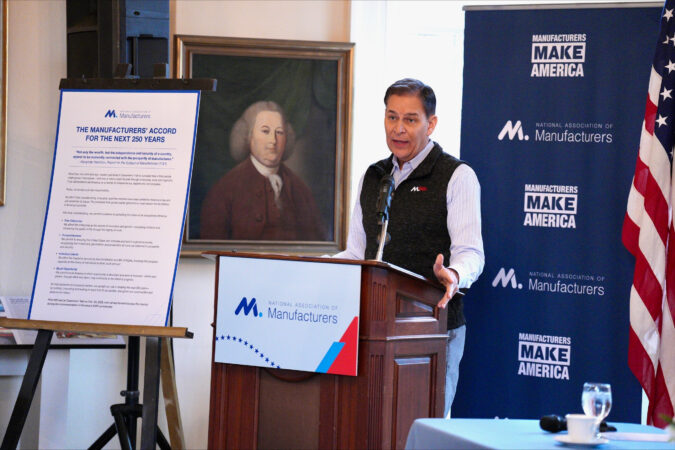
    Jay Timmons, president of the National Association of Manufacturers, says the factory revival Trump and his recent predecessors have championed has been aided by Trump’s business tax cuts and pro-fossil fuel agenda. But, he said, mass worker deportations or rapidly-changing import taxes are not helping.

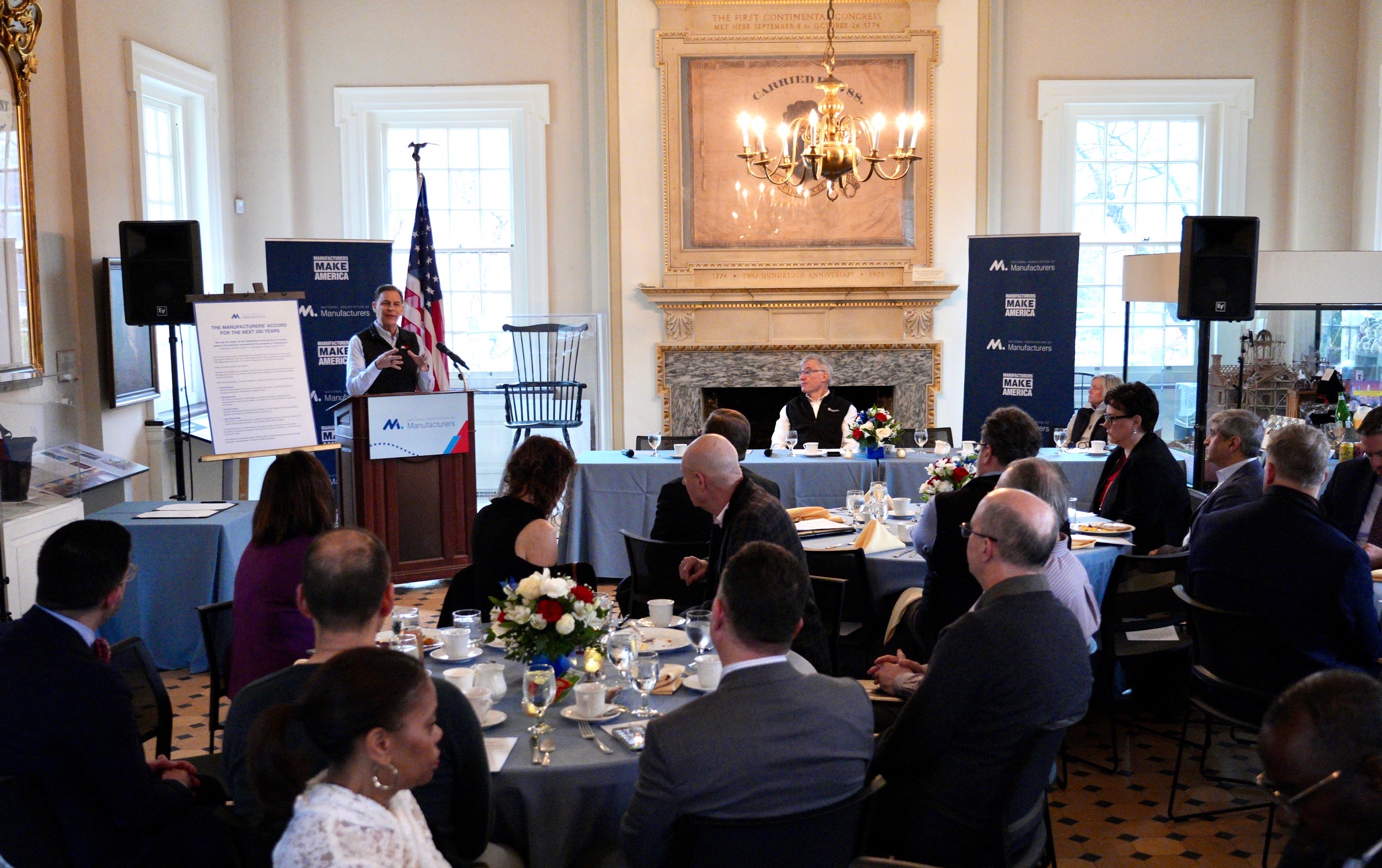
    Timmons appealed to leaders of Philadelphia’s port, shipbuilders, regional Chamber of Commerce, and other industry group leaders to embrace his group’s pro-factory agenda at Carpenters Hall. He made a similar appeal at Cleveland’s Rock & Roll Hall of Fame earlier in the week, and heads to the Carolinas next week.

    Jay Timmons, president of the National Association of Manufacturers, was at Carpenters’ Hall in Philadelphia with area business leaders on the day the U.S. Supreme Court announced its tariffs decision.

    After the Supreme Court ruled against Trump, Timmons said in a statement that industry shares Trump’s goal of strengthening U.S. manufacturing, and wants to work with Congress and Trump on more “durable” ways to do that. While Trump had boosted tariffs on U.S. neighbors and longtime allies, Timmons said, NAM’s position is that “if tariffs are utilized as a tool, they should be targeted to countries engaged in specific unfair trading practices,” especially countries where government controls production, which would include China and Russia.

    He agreed to take questions from The Inquirer.

    The conversation has been edited for clarity and length.

    U.S. Sen. Joe Grundy, the Bristol mill owner who founded the Pennsylvania Manufacturers’ Association, led the pro-tariff movement long before President Trump. Has your group always backed high tariffs?

    No, ours was founded as a free-trade organization. Thomas Dolan, our first president, was a woolen manufacturer from Philadelphia. We wanted to open markets and sell our stuff in other countries.

    The president is obviously a fan of tariffs; that is a tool he has chosen to use.

    Can American manufacturing become a larger sector of the economy again, as President Trump promised?

    We’re on the launch pad, we are ready to go. We’re seeing success in terms of lowering the costs of doing business, in our tax code, in regulatory modernization, in energy development.

    This year we are focused on other issues we would like to see addressed, hopefully in a bipartisan way. We want to see legal reform of the permitting process, so we are not constantly in court trying to reach a final decision on whether an industrial project can move forward.

    Do you want the federal government to override state and local building limits on industry?

    State and local need to have a say, but the process needs to be streamlined.

    I served in Gov. George Allen’s administration in Virginia. His focus was on working together to attract jobs, communicating in a simultaneous manner. We attracted record investment and job creation [without damaging] air and water quality.

    We need to [fix] the regulatory morass in Washington. Right now, several agencies have a say on a project. An agency reviews it, that takes months. Then another agency, and another.

    Won’t you need more federal workers to do reviews all at once?

    Whatever it takes. We aren’t saying we want a compromise on health and safety. We’re saying do it in an expeditious manner.

    Virginia is one of the big states for data centers. Are there too many?

    I don’t share this [concern], but there are folks concerned about the rising costs of electricity and putting that blame on AI data centers.

    Demand will increase. You’ll have issues of local concern. But we have to supply more power, which means states have to step up and work with the utilities to improve transmission, the power grid; and the federal government should have a role.

    What recent U.S. energy developments are you applauding?

    Pennsylvania has led the way, with natural gas clearly helping the U.S., in terms of energy dominance and exports. Oil, also. Even nuclear is getting a kick start.

    Southern Co. led the way with that, restarting a [uranium power] plant in Georgia. That is hard, it takes a long time. Also the small reactors, we don’t have a clue yet [if those will be deployed in large numbers] but it could be helpful.

    What are your priorities to make manufacturing grow more rapidly?

    First, to help us expedite investing in the U.S., which tax [cuts] have done.

    Second is hiring and workforce development. We have 433,000 open jobs in the sector. Our goal is obviously to train more potential manufacturing workers. Apprenticeship programs — we have our own — need to expand dramatically.

    And third, we want to see a reliable and consistent immigration policy that focuses on the needs of our country. We’ve endorsed the Dignity Act.

    The Dignity Act, from Reps. Maria Elvira Salazar (R., Fla.) and Veronica Escobar (D., Texas), would let immigrant workers, who pay a fine and taxes, buy work permits; and mandate employers E-Verify job applicants. Is that like the Reagan reforms?

    Reagan, directionally, was correct on immigration.

    We are a nation of immigrants. We are a melting pot and that is what has made us successful.

    Things are different today with public opinion. You have to focus on very narrow objectives that are directly related to the economic life of this country, because that’s what the president and Congress want to do.

    What’s your goal for trade and tariffs?

    To see certainty and predictability. The administration has been very focused on finding access to markets overseas, which is also one of NAM’s founding principles.

    The U.S.-Mexico-Canada Agreement is up for renewal. [Negotiators] are dealing with transshipments from China through Canada and Mexico, which obviously was not our intent for the agreement. Getting another agreement is going to be really important for manufacturers who have used provisions to move manufacturing from China into the U.S.

    When do you expect signs of increased factory investment and hiring in this second Trump term?

    Rewind to 2017, we got tax cuts, regulatory modernization, and [faster] energy production. You saw three or four years later the highest employment growth in 21 years, the highest wage growth in 15 years. If you get the policies right it gives you an advantage. That’s our goal.

    We have the rocket, but it needs fuel, and a clear sky. We need [to resolve] immigration, workforce development, and trade certainty.

  • Chinatown Stitch, which would cap the Vine Street Expressway, is in limbo after Trump yanked funds. Can it be saved?

    Chinatown Stitch, which would cap the Vine Street Expressway, is in limbo after Trump yanked funds. Can it be saved?

    Wrangling a big transportation project takes deft timing: scheduling the planning and construction stages in proper order, obtaining environmental approvals, and lining up financing from local, state, and federal sources.

    At least Philadelphia’s Chinatown Stitch, an effort to cap the Vine Street Expressway and reconnect the north and south sides of the neighborhood, had the money up front — until it didn’t.

    Now officials are trying to figure out how best to keep the project moving while replacing the lost $159 million federal grant.

    “This is a pretty unprecedented situation,” said Jesse Buerk, associate director of capital programs and project development for the Delaware Valley Regional Planning Commission (DVRPC).

    “I’ve never seen it before, where a project is funded and it’s moving along through the process, and then the funds are completely rescinded,” he said, speaking at the recent committee meeting.

    ‘A significant gamble’

    Congressional Republicans pushed through a massive domestic policy and spending bill last July that killed most of the Neighborhood Access and Equity grant program in the Department of Transportation.

    It wasn’t just Philadelphia or the Chinatown Stitch project that got nixed. That legislation rescinded $3.2 billion that had been awarded but not yet spent through the Biden-era program, 55 projects across the nation aimed at mitigating the impact of highway projects on marginalized communities.

    President Donald Trump’s administration targeted equity and access transportation projects as wasteful “DEI”-style spending.

    The city proposed using a different source of federal funding controlled by PennDot to finance the final design of the Stitch project, which would be needed before it could be considered “shovel ready.” That way, the project could progress while city officials look for construction money.

    But at a meeting earlier this month, the DVRPC’s Regional Technical Committee voted to table the city’s request to study it further.

    Several suburban residents on the technical committee, composed of experts from the eight counties in the region and the state governments of Pennsylvania and New Jersey, had raised concerns about spending up to $12.5 million on the design work without having construction money locked up.

    “This request is a significant gamble if you’re not able to recoup those reconnecting communities [funds],” said Brian E. Styche, a transportation planner for Chester County. “We would just like more time to discuss what the plan B is.”

    DVRPC’s board of directors is scheduled to discuss the city proposal on Thursday.

    Christopher Puchalsky, policy director for the city’s Office of Transportation and Infrastructure Systems, said he understood the concerns: “I don’t think there’s any arguing with the fact there’s some amount of risk.”

    Alternative construction funding

    The city was able to complete planning and engineering work with $8.4 million of the grant. It needs to secure final design funding before federal environmental review and approval, Puchalsky said.

    Not being able to move forward would add additional delay to the project, he said.

    The city is exploring alternatives for construction money, including the possibility of tax-increment financing for at least some of the funds, Puchalsky said.

    That form of financing uses property tax revenue for development in a specific local district.

    “There’s just enormous community support and political support for this project that a lot of the folks have been waiting 40 years for,” he said.

    What is the Stitch?

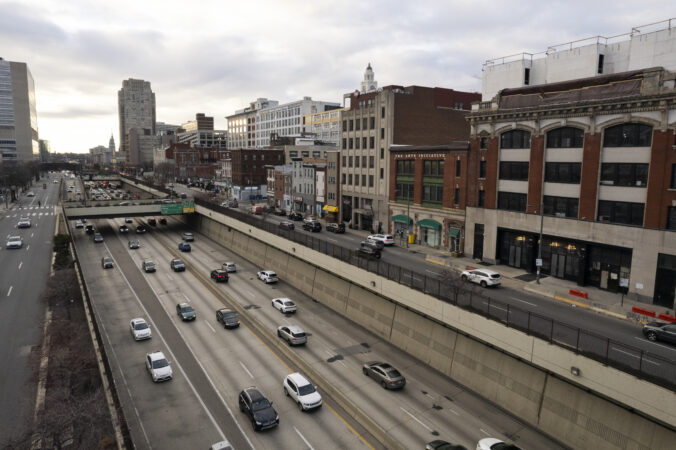
    The Chinatown Stitch project involves building a cap over I-676 from just east of 10th Street to 13th Street, allowing for a park as well as more developable land. It would reconnect the north and south sides of the neighborhood, which are split by the interstate.

  • The Dow is over 50,000, but healthcare is underwater

    The Dow is over 50,000, but healthcare is underwater

    “The Dow right now is over 50,000.”

    Those were the words Attorney General Pam Bondi used during a recent congressional hearing to justify and/or deflect from any wrongdoing by the Trump administration.

    The implication is clear. The United States economy is doing well, so nothing else matters. However, although an elevated Dow helps those with retirement accounts, what does it mean for the 40% of Americans who do not have a 401(k) or any other retirement savings account? How does that translate into affordability for basic items like food, clothing, shelter, and, perhaps most importantly, healthcare?

    The latter is a huge problem, especially with the Medicaid and Medicare cuts in July, and the expiration of the Affordable Care Act (ACA) subsidies last month. The combination is expected to affect 15 million Americans by 2034. Consider also that 3.14 million Pennsylvanians, which translates to 24.1% of everyone in the commonwealth, were covered by Medicaid in 2024.

    Frankly, the cost of healthcare tops the list of the public’s economic anxieties. As people with deep backgrounds in health policy, this also concerns us greatly.

    The facts are that health insurance has become increasingly unaffordable for most Americans, and that has a downstream effect. When health insurance premiums are prohibitive, people are more likely to go without insurance or opt for a plan that offers a lower premium but a much higher deductible. Those people are more likely to skip important preventive care, placing them at increased risk for adverse health consequences. This also applies to those whose Medicaid benefits were cut.

    Under Health and Human Services Secretary Robert F. Kennedy Jr., the number of measles cases in the U.S. has skyrocketed.

    President Donald Trump has promised to decrease the price of prescription drugs through the Trump Rx program, but in actuality, the differences will be much smaller than promised.

    To his credit, his administration has tried to address the price of drugs by reining in pharmacy benefit managers, the middlemen whose practices serve to increase the cost of drugs. However, the success in that area pales in comparison with the overall detrimental effects of this administration on healthcare.

    The most recent problem is the expiration of the federal subsidies under the ACA. Consider the case of Pennsylvania residents Tom and Carol Shaw, who saw their health insurance premiums jump from $1,090 a month to $3,505 a month, largely due to the loss of the ACA subsidies. That’s a 221% increase!

    To put that in perspective, the average monthly mortgage payment in York County, where they live, is about $1,300, according to the U.S. Census. The Shaws can afford the increase, but what about those who can’t? The result is that about 85,000 Pennsylvanians have dropped their health insurance in 2026. That amounts to one in five enrollees terminating coverage, which is truly a stunning statistic.

    On top of the financial effects, the dismantling of our vaccine infrastructure poses a significant risk to the health of the nation. The science of vaccines has not changed, but the politics have, such that Health and Human Services Secretary Robert F. Kennedy Jr. has been able to spew misinformation and take numerous actions designed to destroy trust in science and physicians without any accountability, no matter how much he mangles the facts and the science. As a result, in 2025, we saw 1,277 measles cases — the highest number since 1992.

    Meanwhile, Kennedy continues to insult physicians by stating that the only reason physicians recommend vaccines is to make money. It is difficult enough to take proper care of patients in the limited time allotted without having to dispel the numerous lies coming from this administration.

    It is not clear exactly what President Trump will say in his upcoming State of the Union address. We suspect he will address the affordability of healthcare. If he does, we are quite confident he will dismiss it as a nonissue, given his comments in December that the affordability crisis is a hoax.

    We are convinced he will cite the Dow while ignoring the fact that 59% of Americans disapprove of his handling of their cost of living. We fully expect a speech that will be tone deaf to the financial plight of many Americans, including his own supporters.

    There must be accountability for this administration. The midterm elections are approaching, and healthcare, yours and that of your neighbors, will be guided by your vote.

    If we do not address this issue appropriately, we will pay the price, as will our children and loved ones. In fact, we already have.

    Mark Lopatin is a physician and the author of “Rheum for Improvement,” a member of Ask Nurses and Doctors, and a coeditor for Doctors for America, a nonprofit that focuses on putting patients over politics. Jeffrey Lerner holds a doctorate in health policy and is the Pennsylvania coordinator of Ask Nurses and Doctors, a bipartisan organization whose mission is to help elect government officials who prioritize U.S. healthcare problems.