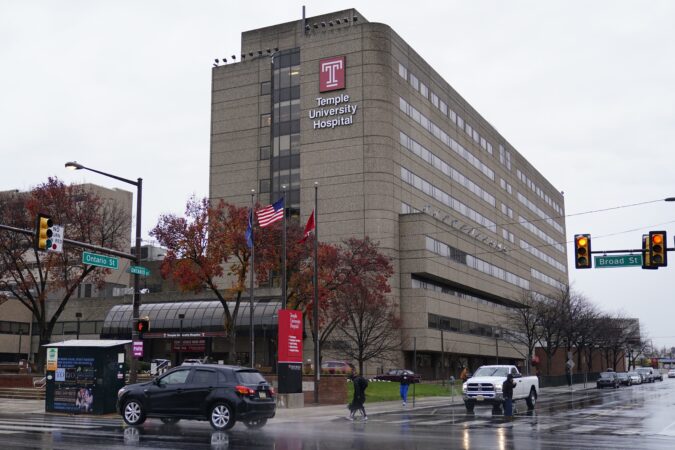
Temple University Health System had a $50.5 million operating loss in the six months that ended Dec. 31, the Philadelphia nonprofit told bond investors Monday. In the same period the year before, Temple reported a $13.5 million operating gain.
Here are some details on Temple results:
Revenue: Total revenue reached $1.64 billion, up 7.3% from the year before. Patient revenue rose 8% due mostly to increased outpatient revenue from Temple’s pharmacy business, infusions, and same-day surgeries. Two hits to revenue were a $14.3 million decrease in state funding and decline in the number of transplants, which bring in large amounts of revenue. Temple said it expects both of them to rebound in the remainer of fiscal 2026.
Expenses: Temple attributed some of its loss in the first six months of fiscal 2026 to $20 million in extra expenses associated with the opening of its new Woman & Families Hospital, a $7.2 million increase in medical liability expenses, and a $6.4 million increase in losses under its Medicaid contract with Health Partners Plans.
Notable: Despite its operating loss, even on a cash basis, Temple financial reserves increased to more than $1 billion as of Dec. 31. Most of the gain came from investments. The reserves equal the amount of money needed to keep the health system operating for 119 days if no more revenue came in. At the end of 2024, that figure was 113 days.
The Tush Push was thetopic of discussion last offseason. Will the Eagles’ signature play get banned or will it live to see another season?
The play seemed destined to be outlawed — of course, we know how that ended, thanks at least in part to an impassioned speech from Jason Kelce at the NFL owners meetings. But the drama continued into the regular season, as referees officiated the play differently, sparking new controversies that had little to do with the “player safety” concerns that almost eliminated the Birds’ quarterback sneak from the game.
But now, for a variety of reasons, the discourse around the play has seemingly died down. And nobody is attempting to ban the play — at least not yet.
Over the last several years, the Tush Push faced criticism from other teams around the league, but last year was the first time a formal proposal was made to ban the play. That proposal came from the Green Bay Packers, who mentioned player safety and pace of play as their reasons behind the attempted rule change.
The proposal needed at least 24 votes from the 32 owners to ban the play, but it fell two votes short. Despite how close the vote came last season, NFL competition committee co-chairman Rich McKay said he’s not anticipating another team to pick up where Green Bay left off.
“There’s no team proposal that I’ve seen from it,” McKay told ESPN. “So, I wouldn’t envision it. But you never know.”
The Eagles ran the Tush Push half a dozen times against the Chiefs in their 20-17 win in Kansas City.
Of course, there’s still time to file a proposal ahead of this year’s annual league meeting, which will take place at the end of March. But as of now, there has been no movement surrounding the play.
“The reason no one’s talking about it is because the play wasn’t as successful this year,” Jason McCourty said Monday on ESPN’s Get Up. “Defenses caught up. They figured out ways to stop it. We watched Jalen Hurts lose a fumble on the Tush Push. So now going forward, there’s multiple teams that do it now, but defenses and teams, they aren’t as passionate about it because they’re like, ‘You know what? We’ve gone back, we’ve watched the film, and we’ve figured out different avenues to stop this play.’
“So it no longer is all the nonsense that we’ve seen over the last few years where the Eagles were absolutely dominant at scoring with.”
While the Eagles mastered the Tush Push for its first three years, making it look nearly unstoppable, they took a major step back in 2025.
In 2022, with opposing defenses never having seen the play before, the Tush Push debuted to a 92.3% success rate. The following season, teams started to adjust, and the play’s success dipped to 83.3% as the Eagles rode it to a Super Bowl berth. That conversion rate stayed relatively consistent the following year, even without Kelce under center, with the play remaining successful 79.6% of the time, according to tushpush.fyi, a Tush Push tracking site run by an Eagles fan.
However, the Eagles struggled with the Tush Push last season, converting 21 of their 33 attempts for a 63.6% success rate. That was well below the league average of 73.8%. And while the Eagles attempted the play more than any other team — they accounted for nearly 25% of all attempts last season — they converted at a lower rate than each of the other four teams that ran the Tush Push at least 10 times, all of which had voted to ban the play.
* — Ran the play with a tight end, not a quarterback
One of the reasons the Eagles converted at a lower rate in 2025 was that league officials raised their level of scrutiny on the play, calling more penalties against the Birds after slow-motion clips of the play appeared to show the Eagles offensive line moving before the ball was snapped.
With the Eagles’ Tush Push no longer as dominant as it once was, and after years of offseason debate, it looks like the discussion surrounding the play is finally dead — for now.
A Philadelphia man was charged with first-degree murder and related crimes after he shot and killed his wife in Rockledge, Montgomery County, on Saturday evening, officials said Monday.
Jose Antonio Luna, 59, was arrested shortly after the shooting, the Montgomery County District Attorney’s Office said.
Prosecutors say Luna shot his wife, 48-year-old Alisett Schubert, multiple times, killing her, near the intersection of Huntington Pike and Filmore Street that night.
The incident began when the couple started arguing as they drove home from a partyin a silver Nissan, according to the affidavit of probable cause for in Luna’s arrest.
Schubert was behind the wheel. After she told Luna to get out of the car and walk home, the two began to wrestle over Schubert’s purse, where she kept a .38 caliber revolver that was registered in her name, the affidavit said.
Luna grabbed the weapon and shot his wife once, the document said. After Schubert yelled “Oh my God” and tried to flee the vehicle, the affidavit said, Luna shot her four more times.
Luna later told investigators that Schubert had “disrespected him in front of others” at a banquet hall that afternoon, according to the document. He also told investigators he left one round in the gun’s chamber with the intent to later kill himself, the affidavit said.
A SEPTA bus driver reported the shooting to police, according to the document.
Around 10 p.m., authorities said, the driver came across the Nissan stalled in the road, and heard two to three gunshots before watching Luna exit the vehicle’s passenger side and pull open the driver’s side door.
Schubert’s body “slouched” out of the car, the affidavit said.
The driver watched as Luna fled the scene. Later, when Philadelphia police located him about a mile away near 1200 Rhawn Street, Luna put Schubert’s gun to his head and pulled the trigger, according to the affidavit.
But the gun was out of ammunition and did not fire. Police arrested Luna without incident.
Investigators later learned Luna had called Schubert’s mother after the shooting to tell her that her daughter had died, but he did not say how the death occurred, and he told the woman he wanted to kill himself.
Meanwhile, Schubert was taken to Abington Hospital suffering from multiple gunshot wounds and was pronounced dead.
Schubert had previously told a close friend that Luna was physically and mentally abusing her, the affidavit said. The friend told investigators that she had once seen Luna punch Schubert in the face.
Prosecutors said Luna had an extensive criminal history and had been arrested “numerous” times for illegal entry into the United States and for reentry after deportation.
In addition to first-degree murder, Luna was charged with third-degree murder and possessing an instrument of a crime.
He is being held without bail at the Montgomery County Correctional Facility and is expected to appear in court for a preliminary hearing on March 5.
Cochranville is moving toward getting its first public water line, after West Fallowfield Township secured a grant to fund the project earlier this month.
Installing public water in the 300-year-old village situated within the largely agricultural township in western Chester County has been more than a decade in the making, said Duane Hershey, the chairman of the board of supervisors.
Residents told officials water was a concern in a survey a few years ago, and the township has a desire to bolster the commercial landscape of Cochranville, Hershey said. But leadership wants to accumulate as much funding as possible to limit the blow to residents.
The $1 million federal grant is the springboard for the municipality to gather more funds for the project, which Hershey estimates could cost $5 million to $6 million. The township is still years out from breaking ground.
West Fallowfield covers a relatively large geographic area, but a majority is composed of agricultural properties. Its town center — the village of Cochranville — boasts a population of roughly 500, with a small number of residences and businesses sitting around the major intersection of state Routes 41 and 10. The lots are relatively small, and have on-site well water and septic.
“It’s difficult for anybody to drill a well, and it’s really difficult to put any kind of a septic system in, other than a tank that has to be pumped and hauled,” Hershey said.
That can be challenging for new businesses to come in without existing public utilities, said Michael Crotty, the township’s solicitor.
“We are hoping it strengthens our particular commercial core right there, at the main intersection, by giving them a much easier base to build and develop,” he said.
But, Hershey cautioned, it’s not because they want to vastly expand Cochranville. Rather, it’s to improve quality of life for people already there, and to bring in businesses to expand the tax base. The community has high nitrates due to its water setup, he said, which can be dangerous, particularly for babies. Consuming too much nitrate can lead to negative long-term health for adults, too.
“We’re not doing this because we want to develop Cochranville and build a whole bunch more houses,” Hershey said. “The reason we want to do it is just to improve the infrastructure that’s already there, that is struggling because of our water issues.”
The township plans to connect a water line to Cedar Knoll Homes at Honeycroft Village, a 55-and older-community about a half mile away, which has public water through the Chester Water Authority, Hershey said. It’s cheaper than if the township were to build its own water system.
They’ll connect most-needed areas first, and possibly expand in the future. Officials couldn’t say exactly how many households would be connected to the line. The project is in early development stages, Hershey said.
It’s not unusual for new water lines to be installed; that’s pretty much what happens whenever a new development is being constructed. But it’s a bit more unusual for the houses to come before the water line. The homes in Cochranville that will connect to the line are “long existing,” Crotty said.
“The way this might be handled elsewhere would be a big, huge residential development comes in, and that would bring public water, and maybe that only brings it for itself, or maybe it brings it part of the way, but that could often be at the expense of the agricultural land that we’re all seeking to preserve,” Crotty said.
An Arizona State University vice provost and dean, who has degrees in mathematics and geography and has studied urban planning, will become Temple University’s next senior vice president and provost.
Elizabeth “Libby” A. Wentz, 62, an Ohio native with a doctorate from Pennsylvania State University, will step into her new role at Temple July 1, subject to approval by the board of trustees, the school announced Monday.
“My background in urban planning has kind of shaped who I am and shaped my thinking, and I just think that there’s so many great opportunities for recruiting students, for creating internships for students, for creating research experiences for students in an urban environment that the university’s rural counterparts don’t have in the same way,” Wentz said in an interview.
Wentz has overseen Arizona State’s Graduate College since 2020 and previously was dean of social sciences, which included geography and urban planning. She will replace David Boardman, who has been Temple’s interim provost since July when Gregory Mandel left the job. Boardman was not a candidate for the job and will continue his role as dean of the college of media and communication.
As Temple’s provost — essentially the university’s number two leader — she will oversee 17 schools and colleges, multiple campuses, and the school’s undergraduate, graduate, and professional programs.
She is the first provost in at least more than a decade to come from outside the university and was selected through a national search, chaired by a faculty member and a dean.
“Libby sort of stuck out for me after the hour I spent with her as being literally right on the same page relative to her ability to articulate the mission and the purpose of Temple and why that was so important,” Temple president John Fry said in an interview.
He was struck by her commitment to student success, he said. “She obviously had time to interact with students and, I think took like really special care and interest in our students,” he said.
And, Arizona State has grown tremendously in part because of its commitment to online programs, he said, which are a priority in Temple’s strategic plan. Temple has lost about a quarter of its enrollment over the last decade.
“We don’t have the kind of online enrollment that you would expect a place like Temple to have,” Fry said. “One of the things Libby and I did speak about was her familiarity with the ASU online infrastructure. She’s taught in it. She obviously has led parts of it.”
Temple remains amid searches for several other key positions, including chief operating officer and law and engineering school deans.
Wentz said she was attracted to Temple because she wanted to remain at an urban university and has long admired the work of Fry, who has had a longstanding relationship with Arizona State president Michael M. Crow. Temple a year ago became part of the University Innovation Alliance, a small nonprofit sponsored through Arizona State that is aimed at finding innovations to improve learning and increase college attendance, retention, and graduation rates ― especially for low-income students ― then scaling those innovations.
“They built a really strong rapport and have a very similar philosophy around higher education which also very much aligns with kind of my own interest and my own philosophy,” Wentz said.
Both Temple and Arizona State, which has its main campus in Tempe, are major research institutions; Arizona is much bigger with over 194,000 students, compared to Temple with more than 33,000, including its international campuses.
“Honestly the biggest difference [between the two] is the weather right now,” Wentz joked, noting that it was 81 and sunny in Tempe on Sunday as Philadelphia prepared for blizzard conditions.
Arizona State does not have a faculty union, so learning to work with Temple’s faculty union will be new.
“That’s going to be an exciting area for me to learn about,” she said.
Urban planning background
Fry has a reputation as an urban planner and in his prior leadership jobs at the University of Pennsylvania, Drexel, and Franklin and Marshall focused on development and improving the campuses and their neighborhoods. He has aspirations for Temple, too, including building an “innovation corridor” stretching from Temple’s recently acquired Terra Hall at Broad and Walnut Streets in Center City to the health campus, a little more than a mile north of main campus on Broad Street.
Wentz said she and Fry had not talked about urban planning, but that she looks forward to working on the university’s new strategic plan, which includes more green spaces, a new 1,000-bed residence hall, a STEM complex, and an emphasis on more attractive and defined entrances to its North Philadelphia main campus. The three pillars of the plan are student success, research in action, and place-based impact.
“Those are going to be some really exciting conversations that I look forward to having with John, as well as with the Temple planners to think about how do we make it a safe space for students and a great learning environment.” she said.
During a 2022 talk at Arizona State, Wentz discussed how urban planning figured into her work.
“Most of the work that I do applies to the urban environment and urban analytics, so trying to understand how it is that cities work and trying to make the physical urban environment a better place for people to live,” Wentz said during that talk.
Building trust and collaboration
In her new role at Temple, she said, early on she will focus on getting to know the community and the university’s financial model and make clear her commitment to shared governance and data-informed decision making.
Wentz, who grew up near Cleveland and got her bachelor’s in mathematics and master’s in geography at Ohio State University, spent the last 30 years at Arizona State. She became a professor there in 1997.
She helped the university launch its medical school and has grown graduate enrollment and graduate student funding.
Wentz said she prides herself on building a culture of trust and collaboration and has worked with the local community. She said she’s looking forward to doing the same at Temple.
She plans to come to Philadelphia in a couple weeks and look for a place to live, she said.
“I’m going to come after the snowstorm, I think, instead of before,” she said Sunday.
Pennsylvania State University’s THON dance marathon raised a record $18.8 million to fight pediatric cancer, organizers announced Sunday at the conclusion of the annual event.
The 46-hour dance marathon, which has been going on for more than 50 years at the state’s flagship university, began 6 p.m. Friday inside Penn State’s Bryce Jordan Center on the main University Park campus and finished 4 p.m. Sunday. More than 700 dancers competed.
The money raised goes toward Four Diamonds charity, which supports research for a cure and families whose children get treatment at Penn State Health Children’s Hospital.
“While we are incredibly proud of this record-breaking total, the true success of THON is found in the thousands of Penn State students who came together with a singular purpose,” Benjamin Roitman, THON executive director, said in a statement “This milestone is a direct reflection of the tireless effort and collective spirit of our community who, embodied the ‘Love Leads Forward’ theme, proved that there is no limit to what we can achieve when we stand together for the common cause of conquering childhood cancer.”
More than 16,500 student volunteers participated in THON, which along with Four Diamonds has helped more than 4,800 children through the years, the organization said.
UPPER BERN, Pa. — Not enough clean water. Hundreds of thousands of gallons of sewage dumped into systems designed to handle much less. More calls for already overwhelmed EMS departments.
Pennsylvania leaders, municipal officials, and first responders say communities will be overwhelmed by the federal government’s plans to turn vacant warehouses in Berks and Schuylkill Counties into massive ICE detention centers and processing facilities.
A recently released memo from the Department of Homeland Security (DHS) says it selected sites based on engineering reviews and found a warehouse-to-detention center conversion would have “no detrimental effect.”
But state officials and Upper Bern Township leaders — who were blindsided by the Feb. 2 purchase and are still largely operating in the dark — are pointing to facts about capacity and raising serious concerns about how these plans would play out.
Commonwealth leaders in emergency management, environmental protection, health, and labor cosigned a Feb. 12 letter to Homeland Security Secretary Kristi Noem asking that the department not “impose such intolerable burdens on residents of Schuylkill and Berks counties.”
“If reporting about DHS’s plans is accurate, the facilities will violate the legal requirements applicable to public drinking water, sewage, and water pollution,” the state officials wrote.
They continued: “The stress each facility will place on local infrastructure will, among other things, jeopardize Pennsylvanians’ access to safe water, deplete resources and infrastructure needed for emergencies, and overextend already strained emergency response personnel.”
The federal government has provided few specifics on the impacts Immigration and Customs Enforcement’s plans could have on these rural communities. A meeting among federal, state, and local officials has yet to materialize.
Upper Bern Township’s Board of Supervisors, who have spoken publicly through solicitor Andrew Hoffman, said in a prepared statement on Feb. 12 that ICE’s plans at the vacant warehouse would “more than double” Upper Bern’s population.
Its wastewater treatment plant could be overwhelmed by a 1,500-bed facility, and supervisors wonder what extracting “potable water from wells for those 1,500 or more people” could do to the water supply.
Here’s what we know about the potential impact on the community:
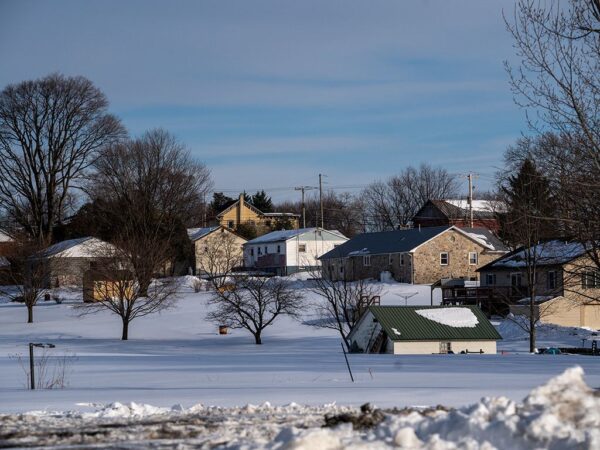
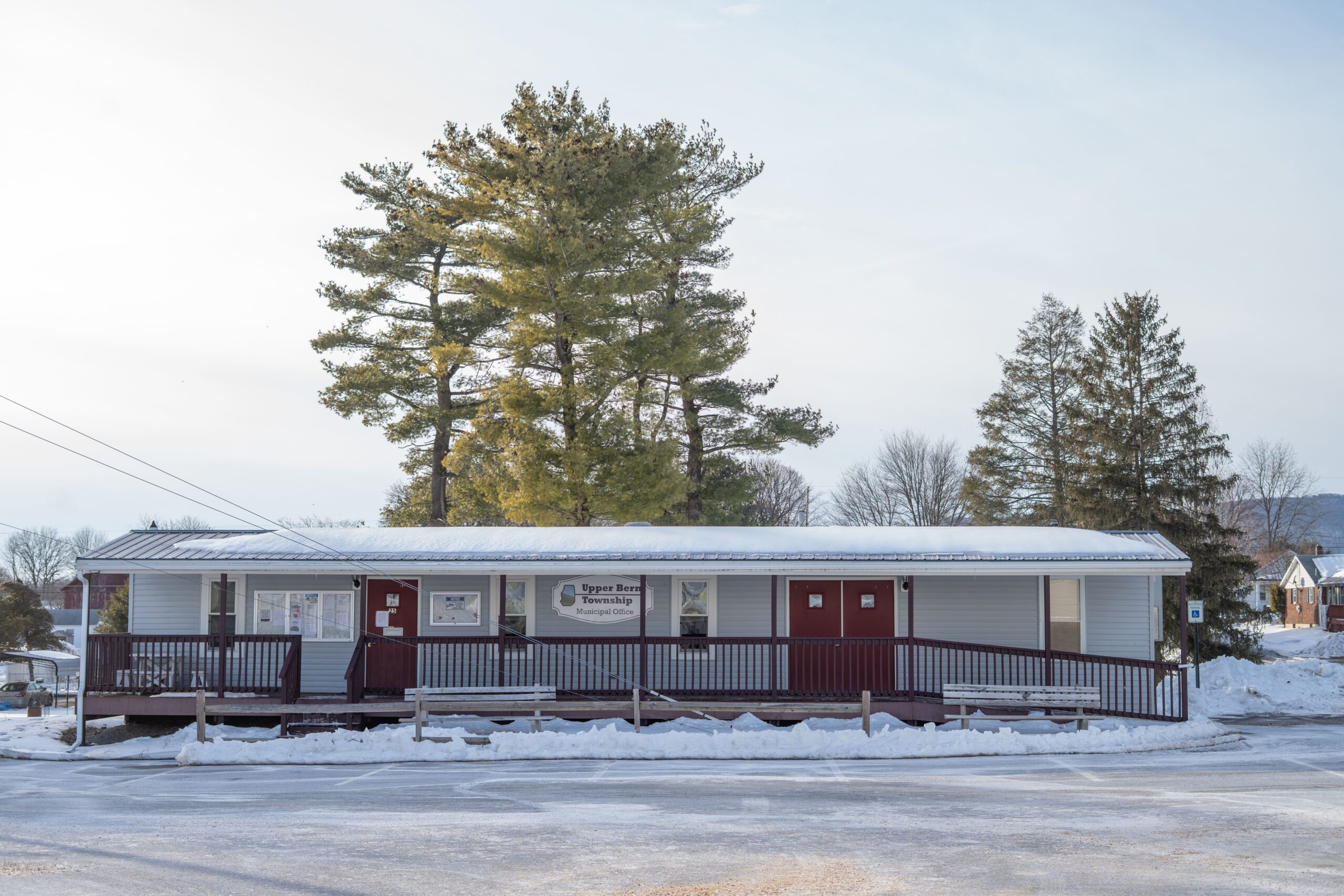
A view from the Upper Bern Township building near Shartlesville, Pa., on Feb. 9.
Sewage
When the Department of Environmental Protection (DEP) signed off on the plan to build the Hamburg Logistics Center several years ago, documents show the agency approved the warehouse to produce 8,000 gallons of sewage daily.
If it’s used as an ICE processing center and holds up to 1,500 people, that number would skyrocket to more than 100,00 gallons per day, officials said in their letter to Noem.
Upper Bern’s “maximum monthly flow from serving its current customers is 131,000 gallons per day,” they continued. And its treatment plant is designed to only treat up to 155,000 gallons daily.
Upper Bern renewed its wastewater permit with DEP in January 2024, indicating that the township was not modifying or adding onto the system. The average monthly flow reported during that renewal was 78,000 gallons per day.
Township sewer engineer John Roche said no one has submitted a formal request to change the use or increase sewer capacity at the warehouse.
“If the use changes, we’d have to look at that on an individual basis,” Roche told Spotlight PA after a supervisors’ meeting on Feb. 12. “We haven’t had any new requests yet.”
Neither Roche nor Upper Bern’s solicitor was available for comment for this story.
The former Big Lots warehouse in Schuylkill County, which ICE wants to turn into a detention center for 7,500 people, has a system approved to discharge even less than the one in Upper Bern — no more than 6,000 gallons per day, according to the letter. The system is also connected to the treatment facility by a 2-inch diameter pipe, which state officials told Noem isn’t suitable for a detention center.
Drinking water
Neither warehouse was designed to provide the amount of potable water that would be needed to run these detention centers, state officials warn, and finding alternatives would be all but impossible.
Upper Bern officials said the township has no public water system. Homes and businesses rely on wells for potable water.
In the letter to Noem, state officials wrote that the vacant warehouse is designed to draw water from an on-site water well. The Department of Environmental Protection (DEP) previously approved the construction of such a system, “because it could provide treated water for use by a limited number of employees engaged in warehouse activities based on three anticipated separate shifts in a 24-hour period.”
However, the agency hasn’t approved the operation of the system. What’s more, it’s not designed to provide drinking water 24 hours a day for some 1,500 people, they wrote.
During an April 2025 inspection, DEP officials also found several deficiencies that suggest the drinking water system “was not constructed in accordance with the approved designs.”
The Tremont Township warehouse is even more strained, the letter said. While it is serviced by the Schuylkill County Municipal Authority’s public water system, that system already struggles to provide adequate services to the community.
State officials estimate a 7,500-bed facility would need up to 800,000 gallons of safe water per day, which is nearly all of the available 1 million gallons stored for the Tremont area. The plant is permitted to only treat 330,000 gallons daily by the Susquehanna River Basin Commission.
That not only threatens access to safe drinking water, but could also “lead to calamity in the event of an emergency,” state department heads warned. For example, the same water supply is used for fighting fires, and the current systems may not have the supply or the water pressure needed to extinguish a blaze.
Emergency services
Communities across Pennsylvania are already experiencing an EMS crisis. Adding high-density facilities to the rural communities of Upper Bern and Tremont Townships — populations 1,600 and 300, respectively — will exacerbate those problems, local first responders told Spotlight PA.
Hamburg EMS has served Upper Bern Township for years, Chief Leslie Herring told Spotlight PA. While there are still many unknowns, she said first responders worry about how the ICE processing facility would impact their call volumes and response times.
“We’re just concerned because it’s not only going to affect us, it’s going to affect every other neighboring squad in the county,” Herring said. “We’re worried about what it’s going to do to all the surrounding municipalities and boroughs.”
Berks County officials declined to discuss the impact on emergency services. Emergency Services Director Brian Gottschall referred a Spotlight PA reporter to county spokesperson Jonathan Heintzman. Heintzman later declined to comment after consulting with the county commissioners and solicitor.
Scott Krater, director of Schuylkill County’s 911 center, is responsible for dispatching EMS, police, and fire personnel throughout the county, and noted the challenges these sectors already have. He said attracting 911 call operators is difficult.
Schuylkill County already has three prisons — run by the county, state, and federal governments — but none house the number of people anticipated for the empty warehouse. The county prison typically incarcerates fewer than 300 people, and both the federal and state prisons have about 1,200 inmates each.
“Those normal challenges that we have here would obviously be the same, or maybe more taxing on the telecommunicators that are working currently with the increase in call volume,” Krater told Spotlight PA.
Western Berks Ambulance Association provides mutual aid for Upper Bern Township and is the second in line to respond to emergencies, CEO Anthony Tucci said.
Tucci reached out to other EMS companies and DHS to learn more and better prepare, but said he hasn’t heard back. He estimates an ICE facility could add an additional 60 to 70 EMS calls a month.
“I think it’s going to be a huge impact on our community,” Tucci said.
Fire departments operate on a similar system of mutual aid and could also experience an increase in emergency calls, state leaders wrote in their letter to Noem.
While Tremont is serviced by five fire departments, Upper Bern is protected by just one: Shartlesville Fire Company, which is staffed by volunteers. It’s unclear how many calls the department averages monthly. Calls and emails to the fire company were not returned.
DHS has also failed to engage with area hospitals that would serve the ICE facilities, the Pennsylvania agency leaders said in their letter, which they called disconcerting. Hospitals need to plan for disasters, such as a fire at these buildings, that would cause an influx in patients.
“Area hospitals may not have the capacity to prepare for these emergency events without support and the lack of communication from federal officials raises serious concerns,” the state leaders wrote.
Reading Hospital and Penn State Health St. Joseph in Berks County did not immediately respond to Spotlight PA’s questions, nor did St. Luke’s Hospital or Lehigh Valley Hospital in Schuylkill County.
The Hospital and Healthsystem Association of Pennsylvania, which represents more than 235 providers across the state, was unable to say whether DHS has contacted local hospitals.
“Hospitals continuously update their plans — especially when there is a major change in the community — to ensure they are prepared to respond to emergencies and address their communities’ needs,” the association said in an emailed response to Spotlight PA questions. “Strong collaboration with local leaders, state and federal agencies, and other stakeholders is an important part of this process.”
Public safety
Neighbors have questioned how the proposed processing center would affect public safety.
Chelsey and Zach Kramer, who live in a mobile home community across the road from the warehouse, came to Upper Bern Township’s Board of Supervisors meeting on Feb. 12 to oppose ICE’s purchase of the warehouse.
They said they are worried about guns and security presence at the site, road closures, and not being able to access their home.
“Are we going to have to be showing ID to get home? Are they going to be blocking off our roads?” Chelsey Kramer told Spotlight PA.
The Kramers said they also worry about how a detention facility could impact recreational and family-friendly spaces near their home.
“When they were looking at these facilities, who at DHS looked at the campground and the mobile home community and the game lands and public trails and everything, and the community park right here, and said: ‘Let’s put one right there,’” Zach Kramer said. “The campground is going to go under for one, because who’s going to want to go vacationing near a detention facility? I know most of my neighbors are upset about this.”
The Berks County township doesn’t have its own police department, and State Police are responsible for coverage. Cars already back up at the major thoroughfares near Mountain Road during shift changes at nearby warehouses, local first responders told Spotlight PA.
Some speakers during the Feb. 12 meeting said they are worried about protesters and “agitators” coming to the area, and ensuring that people can exercise their rights to protest.
State Police “remain committed to providing the best law enforcement coverage with the utmost professionalism,” agency spokesperson Ethan Brownback told Spotlight PA in a statement, adding that their dedication to the area “remains unchanged.”
Property taxes
The $87.4 million sale of the Upper Bern warehouse to the federal government takes the sprawling property — located near the Appalachian Trail — off the tax rolls.
Since the warehouse was built and placed on the market, the property has remained vacant while generating about $199,620 annually in county property taxes, $31,229 in township taxes, and $597,110 for the Hamburg Area School District.
The township did not respond to Spotlight PA’s questions about how that revenue loss would affect the community’s annual budget.
“They’re losing $600,000 a year on school property taxes, and that’s important,” county Commissioner Dante Santoni Jr. said during a Feb. 11 town hall. “The most important thing is what it does to our communities, and we’ve seen what it’s done around this country. It tears us apart, it pits people against each other, and creates chaos.”
Spotlight PA’s Gabriela Martínez contributed to this article.
BEFORE YOU GO … If you learned something from this article, pay it forward and contribute to Spotlight PA at spotlightpa.org/donate. Spotlight PA is funded by foundations and readers like you who are committed to accountability journalism that gets results.
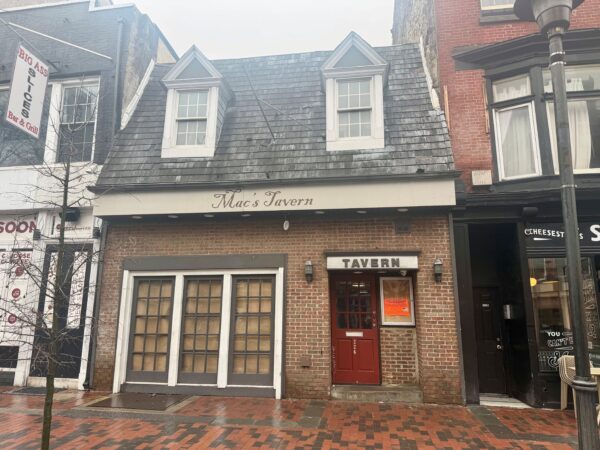
The Monto is the name of the new Celtic bar coming in April from veteran publicans including Fergus Carey and Jim McNamara, who are taking over the former Mac’s Tavern at 226 Market St.
Carey said the kitchen will be overseen by N.A. Poe, the proprietor of Poe’s Sandwich Joint (at the Human Robot in Kensington and Poison Heart in Poplar) and Poe’s Side Piece (at Human Robot in Brewerytown). Poe plans to blend his South Philadelphia sensibility with Irish pub fare — a mashup he calls the “Poe-gues” menu.
Sandwich specialist N.A. Poe (right) with Monto co-owner Fergus Carey.
Poe said his existing lineup of cutlet sandwiches, cheesesteaks, and burgers would form the backbone of the Monto’s menu. He said he would twin those offerings with Irish breakfast, sausage rolls, shepherd’s pie, and fish and chips served on Sarcone’s bread with house-made tartar, along with a corned beef cheesesteak and a pub burger that includes blue cheese and crispy prosciutto.
“I’m not trying to be overly precious about it,” Poe said. “At this point, I know what works. Irish food isn’t fine dining. It’s approachable. The goal is to take those classics and put a solid spin on them.”
The partners of Monto (from left): Johnjoe Devlin, Jim McNamara, Gary “Swing” McDonald, and Fergus Carey,
Carey and McNamara — whose holdings include Fergie’s Pub in Washington Square West, the Jim in South Philadelphia, and the Goat Rittenhouse — have brought in as partners two well-known figures from Philadelphia’s Irish-bar circuit: Johnjoe Devlin, a Glasgow native and a 17-year bartending veteran at Plough & the Stars; and Gary “Swing” McDonald, from South Armagh, Northern Ireland, who has worked for 25 years at such pubs as the Bards, Tir na Nóg, Brownies, Ten Stone, and Murph’s.
The name “Monto” comes from the bawdy Dubliners mid-1960s song about Dublin’s historic red-light district. “I’ve been singing it for 40-plus years,” Carey said.
Designer John Fetsko, whose recent work includes the Mulberry and projects with Royal Restaurant Group, is handling the build-out.
The Market Street address carries its own legacy. Mac’s Tavern, which closed last summer after 15 years, counted South Philadelphia-raised actor Rob McElhenney — now known professionally as Rob Mac — and Kaitlin Olson of It’s Always Sunny in Philadelphia among its owners.
For Carey, the opening marks both a return to Old City and another chapter in a decades-long run shaping Philadelphia’s bar culture. The Dubliner arrived in Philadelphia in 1987 and landed behind the bar at McGlinchey’s before he and his late business partner, Wajih Abed, opened Fergie’s Pub. He also helped launch such beer destinations as Monk’s Café, the Belgian Café, and Grace Tavern.
Dave Allen knows how to cultivate a winning culture.
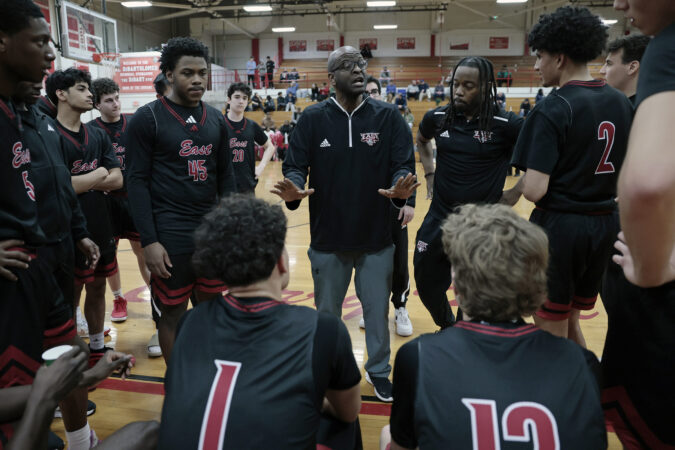
With stops at Eastern and Cherry Hill West, Allen, now in his 13th season as the Cherry Hill East boys’ basketball coach, has amassed 400 career wins at the helm, earning 28 playoff victories and two Group IV championships in the process.
This year’s Cougars look like a direct extension of Allen’s winning ways.
East ended the regular season 21-3, winning seven of its eight Olympic Conference matchups. The Cougars are slated to host Toms River North (9-17, 3-7 Shore) in the first round of the NJSIAA South Jersey Group IV Tournament on Thursday at 4 p.m.
The Cougars are looking to build off last season’s playoff run, in which they fell to Lenape, 48-47, in the Group IV championship — just a point away from raising their third championship banner in program history.
Allen, however, would be the first to say that this year’s team is different.
“Traditionally, we’ve always been a three-point shooting team,” Allen said. “We push in transition but also play some control-tempo basketball, but this year, we’ve been more of a pressing team, more of a team trying to play transition more so than we had in the past. At some points in the year, we were averaging over 70 points a game.”
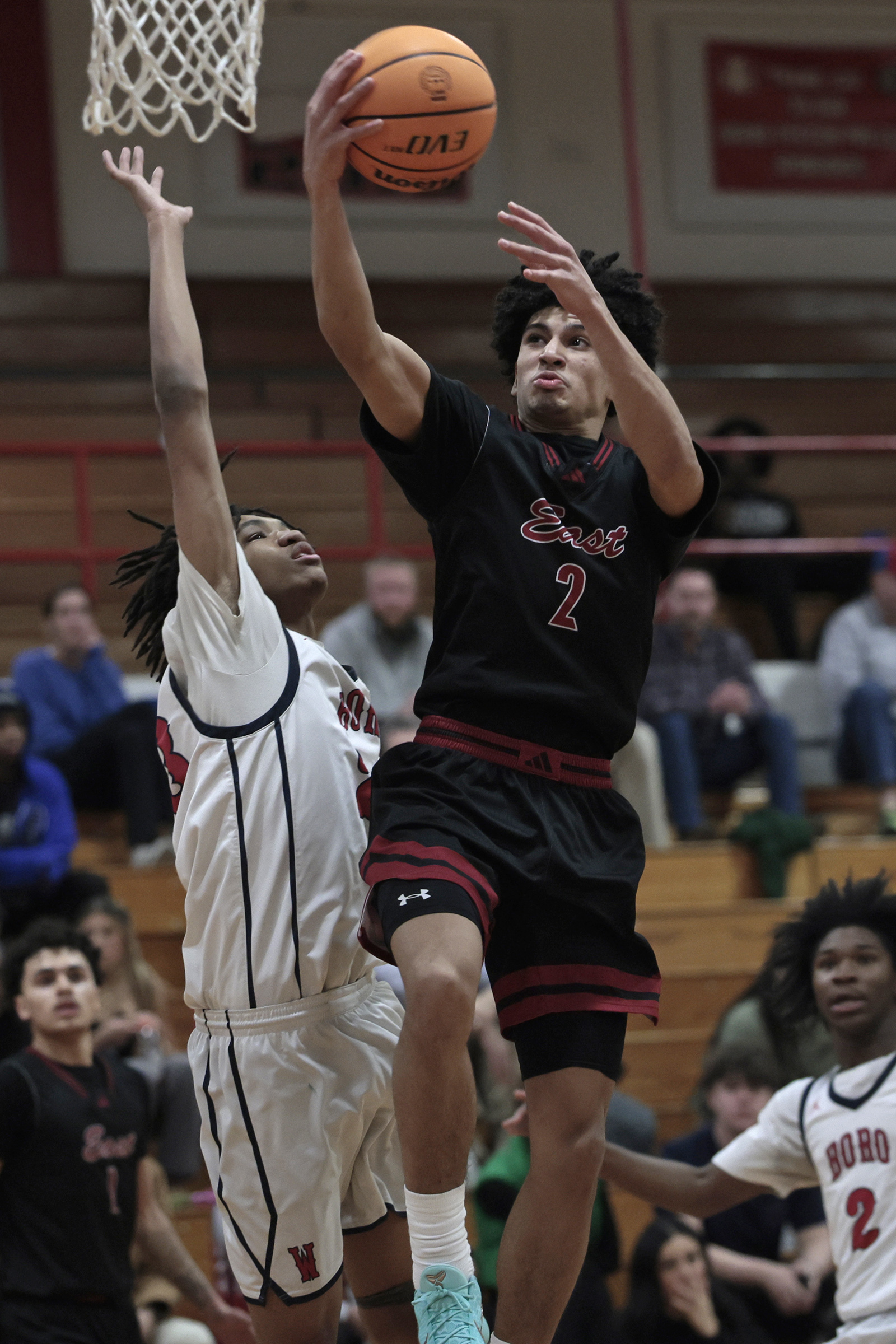
Cherry Hill East junior Chris Abreu is averaging 16.8 points, 6.3 assists, and 6.1 rebounds this season.
The catalyst for this change, Allen says, has been the team’s “really good guard play.”
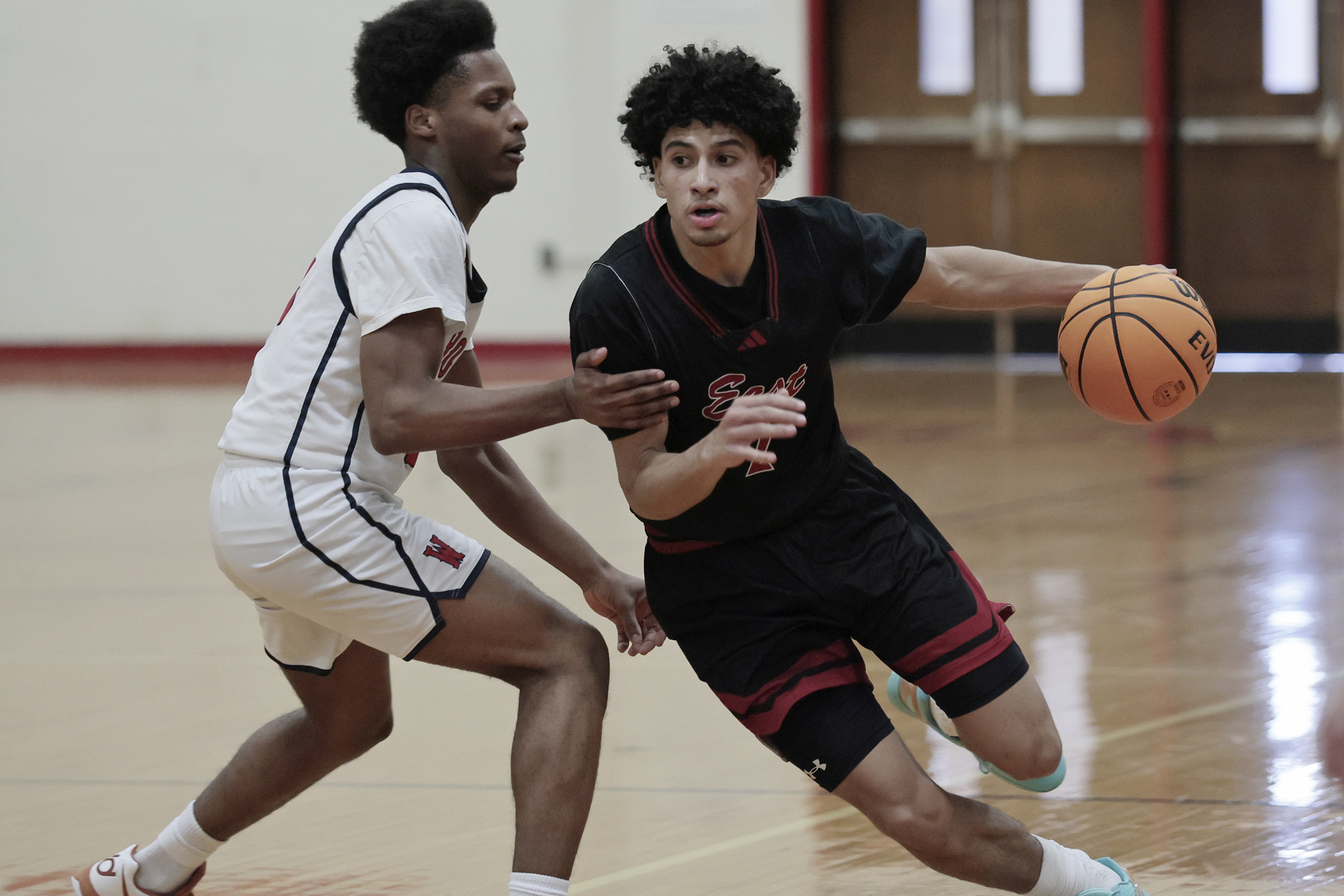
This backcourt effort is led by junior Chris Abreu. The 6-foot-1 guard transferred to East after his freshman season at Paul VI and has been a constant triple-double threat. He’s averaging 16.8 points, 6.3 assists, and 6.1 rebounds this season.
“We’re a fast-paced team,” Abreu said. “Push the ball a lot and push it in transition.
“I’m really excited for the playoffs, actually.”
Thursday will mark the second meeting between East and Toms River North this season. On Dec. 20, the Cougars trounced the Mariners, 91-38, behind Abreu’s triple-double (14 points, 11 assists, and 10 rebounds.)
Allen indicated that his team will look to key in on the Mariners’ Jake Greenberg. The sophomore guard is averaging 13.5 points and is known to get hot from deep.
“[Greenfield is] solid,” Allen added. “He was solid against us the first time, and he’s having a good year for them, so we’re going to have to try to keep up what we’re doing defensively.”
‘Reshift some things’
To start the season, Abreu had a running mate in sophomore Jamieson Young. Against the Mariners, Young totaled 23 points. The combo guard was the Cougars’ leading scorer, averaging 21.8 points through the team’s first 12 games.
However, on Jan. 17 against St. Rose, Jameson went to save the ball from going out of bounds, landing awkwardly on his right ankle, which he had previously tweaked in the summer. This time, it required surgery. He was ruled out for the remainder of the season.
“[Young] gave us a lot in terms of his ability on the floor,” Allen said “He was our secondary ball handler and also our leading scorer. … We had to then kind of reshift some things to make up for those 22 points [per game].”
Chris Abreu says East is a “fast-paced team” this season.
First, Allen’s eyes turned to Abreu, challenging the junior to take over the scoring load and “make people better” around him. He did just that, as East won five straight following Young’s injury.
“[The message was] to just stay focused, stay disciplined,” Abreu said. “It’s hard with injuries and us being hurt, but you’ve obviously just got to push through it.”
Allen also turned to senior guard Chris Delgado. The four-year starter scored a career-high 28 points in the Cougars’ first game without Young, while surpassing 1,000 career points in the process.
“The best thing I can say about [Delgado] is that he’s a kid we want our younger players to emulate. That’s it,” Allen said. “He’s a kid who is a program kid who sacrifices. All he wants to do is win.”
This year, Delgado is averaging 11.5 points, 1.5 assists, and 2.25 rebounds, while being tasked to guard the other team’s best player. The senior has seen two deep playoff runs with the Cougars: a Group IV semifinal loss in his freshman year and last year’s final loss.
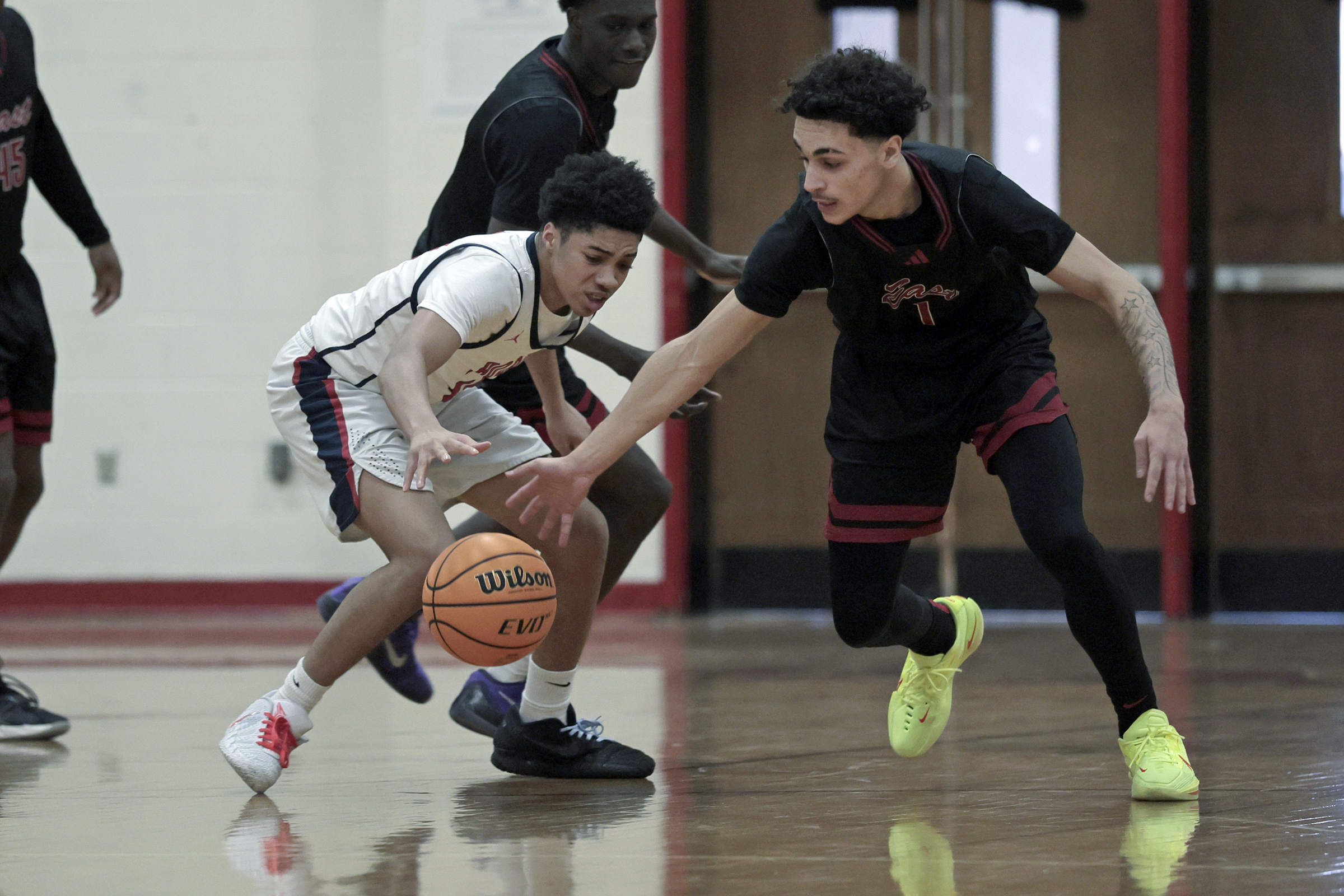
Cherry Hill East senior Chris Delgado is averaging 11.5 points, 1.5 assists, and 2.25 rebounds this season.
This will be the senior captain’s final chance to earn a championship. Consistent messaging is important for Allen, but winning is not the only thing the coach wants his players to focus on.
“Win or lose, the process is what’s going to be lasting for players,” Allen said. “Even when you win, that’s not what’s lasting. … What happens is, when you win, you change the goalpost — you start thinking about competing again.”
MINNEAPOLIS — While sitting next to Quentin Grimes on the bench during the 76ers’ Feb. 7 win at the Phoenix Suns, Tyrese Maxey delivered this message:
“Bro, go out there and just do you,” Maxey told Grimes. “Go hoop.”
Grimes’ off-the-bench spark reappeared Sunday night in the Sixers’ impressive 135-108 bounce-back win against the Timberwolves at the Target Center. The 25-year-old guard totaled 19 points and seven assists, complementing terrific offensive nights from backcourt mates Maxey (39 points and eight assists) and VJ Edgecombe (24 points and seven rebounds).
Such production provides a crucial lift in the games the Sixers (31-26) play without the injured Joel Embiid and/or suspended Paul George. Yet Grimes’ goal for the rest of the season is to consistently stay in “attack mode,” no matter who is on the floor with him. It would be a stretch-run boon for the Sixers’ second unit, which enters Monday ranked 28th in the NBA in bench scoring (30.6 points per game).
“If I kind of just stick to my game, stick to who I am,” Grimes said Sunday at his locker, “ … good things happen.”
Grimes went 5-of-8 from three-point range, including makes on his first attempt from the top of the key and on a fourth-quarter launch that gave the Sixers a 102-82 advantage and prompted a Timberwolves timeout. Grimes also was a successful playmaker, with dump-off passes to center Adem Bona for inside finishes and a highlight alley-oop lob to Edgecombe in transition.
Coach Nick Nurse also appreciates Grimes’ ability to play long stretches, shifting to different positions while the coach “subbed around him.” For example, Grimes closed the first half as part of a small-ball lineup with three guards and Dominick Barlow at center.
“It looks like he’s settling back into the role we had him in earlier,” Nurse said after the game.
Grimes had flashed that such a resurgence could be percolating in the Sixers’ first two games coming out of the All-Star break. In Thursday’s loss to the Atlanta Hawks, he scored 10 of his 14 points in the first half. He totaled another nine in the first quarter Saturday in a brutal defeat at the New Orleans Pelicans, but he could not carry it through the game amid the Sixers’ horrendous second-half shooting.
That aligned with Grimes’ inconsistent results throughout the bulk of his first full season in Philly, following a messy, prolonged restricted free agency that resulted in him signing his one-year qualifying offer after the start of training camp.
Early on, Grimes looked like an NBA Sixth Man of the Year contender as part of a loaded group of young and athletic guards. But he also has dipped into multiple shooting slumps — or low-attempt outings — while also mixing in the occasional reckless defensive close-out that gets whistled as a foul. He is averaging 12.8 points on 44.3% shooting, along with 3.6 rebounds, 3.6 assists, and 0.9 steals in 51 games.
The fifth-year guard certainly was never going to hold the same role this season as when he was initially acquired at the 2025 trade deadline, when he became the Sixers’ top offensive option and lead ballhandler while Maxey, Embiid, and George were all shut down with injuries. Grimes acknowledges it has been challenging at times to carve out his opportunities whenever those three standouts are all available — and because Edgecombe has surpassed him on the depth chart by becoming an immediate starter as a rookie.
Still, Nurse said last week that he still wants to deliberately target a number of shots for Grimes to fire each game, instead of those attempts regularly emerging in the Sixers’ “random” offense.
Tyrese Maxey, defended by the Timberwolves’ Donte DiVincenzo, had 39 points and eight assists in the Sixers’ win over Minnesota on Sunday.
Maxey wants six or seven three-pointers out of Grimes, believing he too often pump-fakes and drives when open on the perimeter. When Grimes studies film with player development coach TJ DiLeo in the locker room about an hour before each game, a portion of their focus is on the gaps in the defense that Grimes can exploit to sharply vault up for a shot. Nurse added that Grimes is quite good at creating his own space from a defender, and launching over an outstretched arm trying to contest.
“He can get them off anytime he wants,” Nurse said of Grimes. “ … [We are working on] getting him situations where, ‘Hey, we’re going to get you the ball, and we need you to shake your guy down and shoot the ball here.’
Grimes also got a jolt of rejuvenation from the All-Star break, which he spent in Cabo San Lucas getting a tan, eating delicious meals, and spending time with his family.
The refresh helped him recommit to that on-court attack mode in the Sixers’ first two games out of the break. But Sunday was the full spark that the Sixers will need from Grimes while Embiid and George remain sidelined and when his team returns to full strength.
“I’ve got to just figure out my spots,” Grimes said. “ … When guys come back, there can’t be no drop-off.”