Tag: topic-link-auto

  • Temple, Villanova, and Penn State are among local schools beginning to pay athletes. Here’s how it’s going so far.

    Temple, Villanova, and Penn State are among local schools beginning to pay athletes. Here’s how it’s going so far.

    At local colleges with major sports programs, some student athletes are now getting paychecks — from their athletic departments.

    Pennsylvania State University, Temple, Villanova, St. Joseph’s, Drexel, and La Salle are among the Pennsylvania schools that have begun to directly pay athletes following a settlement last year in federal class-action lawsuits over student athlete compensation.

    The move arguably ends college athletes’ status as amateurs and begins to address long-standing concerns that players haven’t fairly profited from the lucrative business of some college sports.

    It also raises questions about how schools will fund the athletes’ pay and whether equity complaints will arise if all athletes are not comparably awarded. Some also question how it will impact sports that are not big revenue makers.

    Locally, most colleges have been mum on how much they are paying athletes, and some have also declined to say which teams’ athletes are getting money through revenue sharing, citing competitive and student privacy concerns. Villanova, a basketball powerhouse that has 623 athletes across 24 sports, said it will provide money primarily to its men’s and women’s basketball teams.
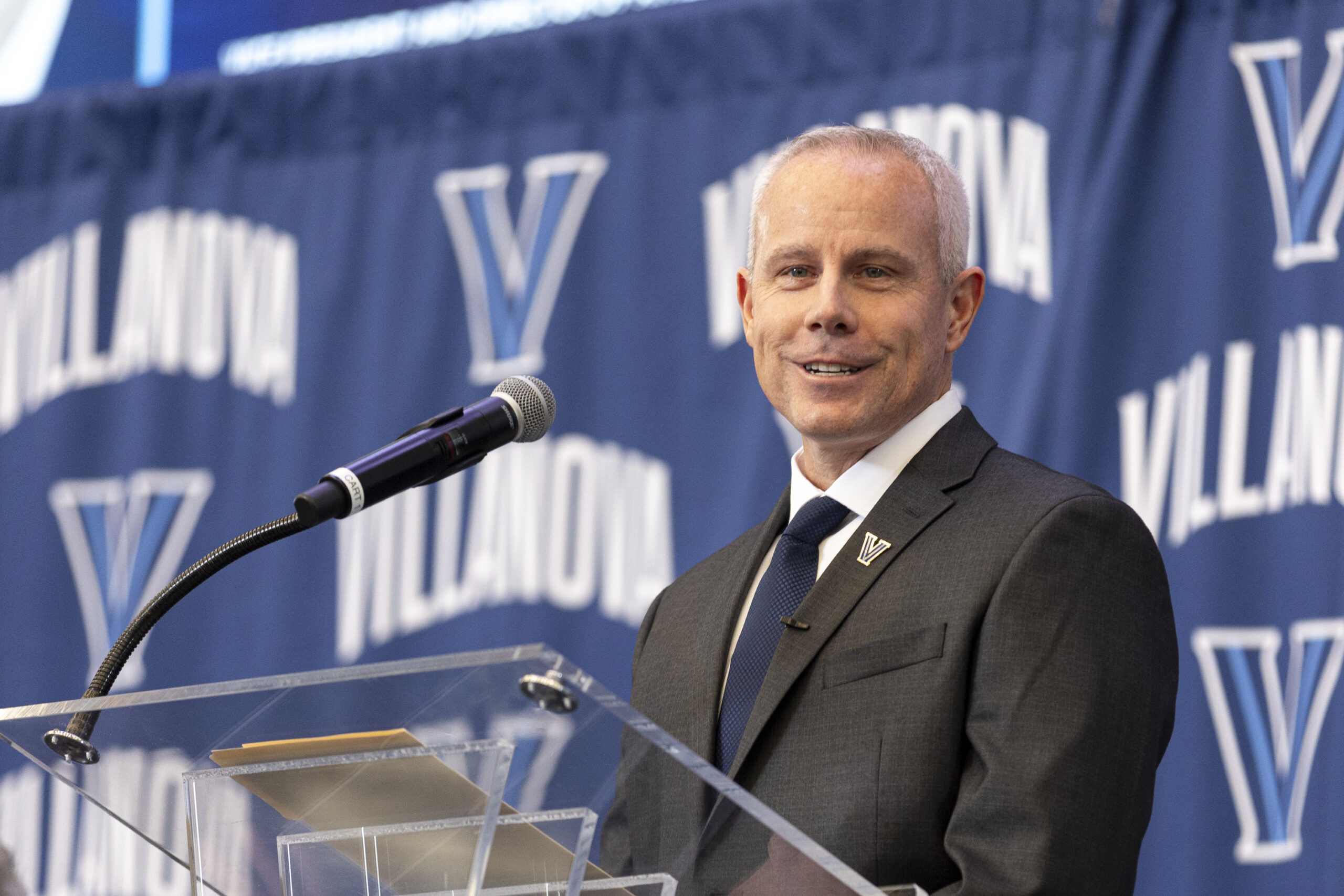
    Erica Roedl, Villanova’s vice president and athletic director, speaks during a news conference at the school’s Finneran Pavilion in 2024.

    “Our objective is to share revenue at levels which will keep our basketball rosters funded among the top schools in the Big East [Conference] and nationally,” Eric Roedl, Villanova’s vice president and director of athletics, said in a June message after the court settlement.

    St. Joe’s, another basketball standout, said its arrangement is also with men’s and women’s basketball athletes, like its peers in the Atlantic 10 Conference.

    Temple University established Competitive Excellence Funds that allow all of its 19 teams to raise money for revenue sharing, but declined to say which teams are currently distributing money to athletes.

    “Donors could, if they wanted to, make sure their money went to a certain sport,” said Arthur Johnson, Temple’s vice president and director of athletics. “They have that ability.”

    Other local colleges, including St. Joseph’s and Villanova, also launched funds to help raise money for revenue sharing. And all three schools also plan to use athletic revenue.

    Under the revenue-sharing framework established by the court settlement, each college can pay its athletes up to a total of $20.5 million this academic year. Football powerhouse Penn State, which has about 800 athletes, has said it intends to reach the cap, according to a June 7 statement from athletic director Pat Kraft.

    “This is a rapidly evolving environment that we are monitoring closely to ensure our approach remains consistent with applicable rules, while supporting the well-being and academic success of our student-athletes,” said Leah Beasley, Penn State’s deputy athletic director for strategic engagement and brand advancement.
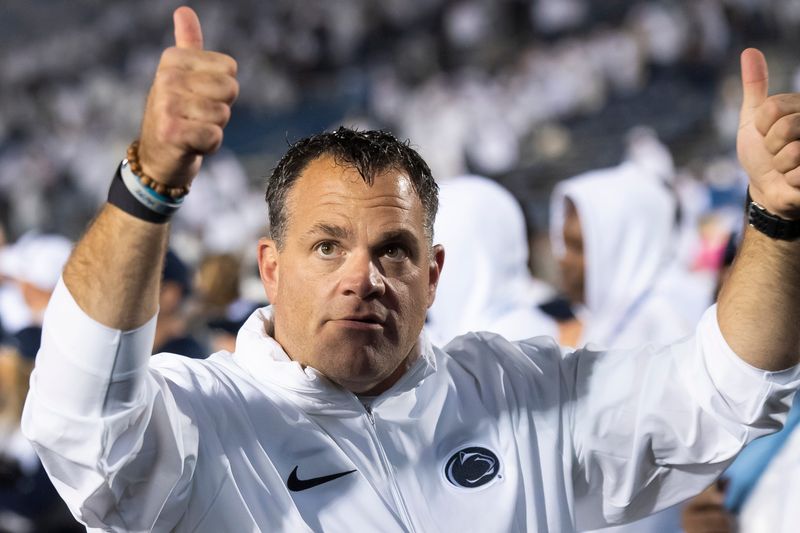
    Penn State athletic director Pat Kraft gives two thumbs up to the student section following a 31-0 win in a football game against Iowa in 2023.

    ‘It’s a job’

    To athletes, revenue sharing seems only fair, given many are so busy practicing and playing through summers and other breaks that they don’t have time to work.

    “It is a job at the end of the day,” said former Villanova University basketball player Eric Dixon, who holds the Wildcats’ record as all-time leading scorer. “You put a lot of time into it every single day, every single week.”

    Players get hurt and can see their sports careers harmed or halted, said Dixon, who grew up in Abington and played at Villanova from 2020 to 2025. College may be their only time to earn money for their sports prowess.
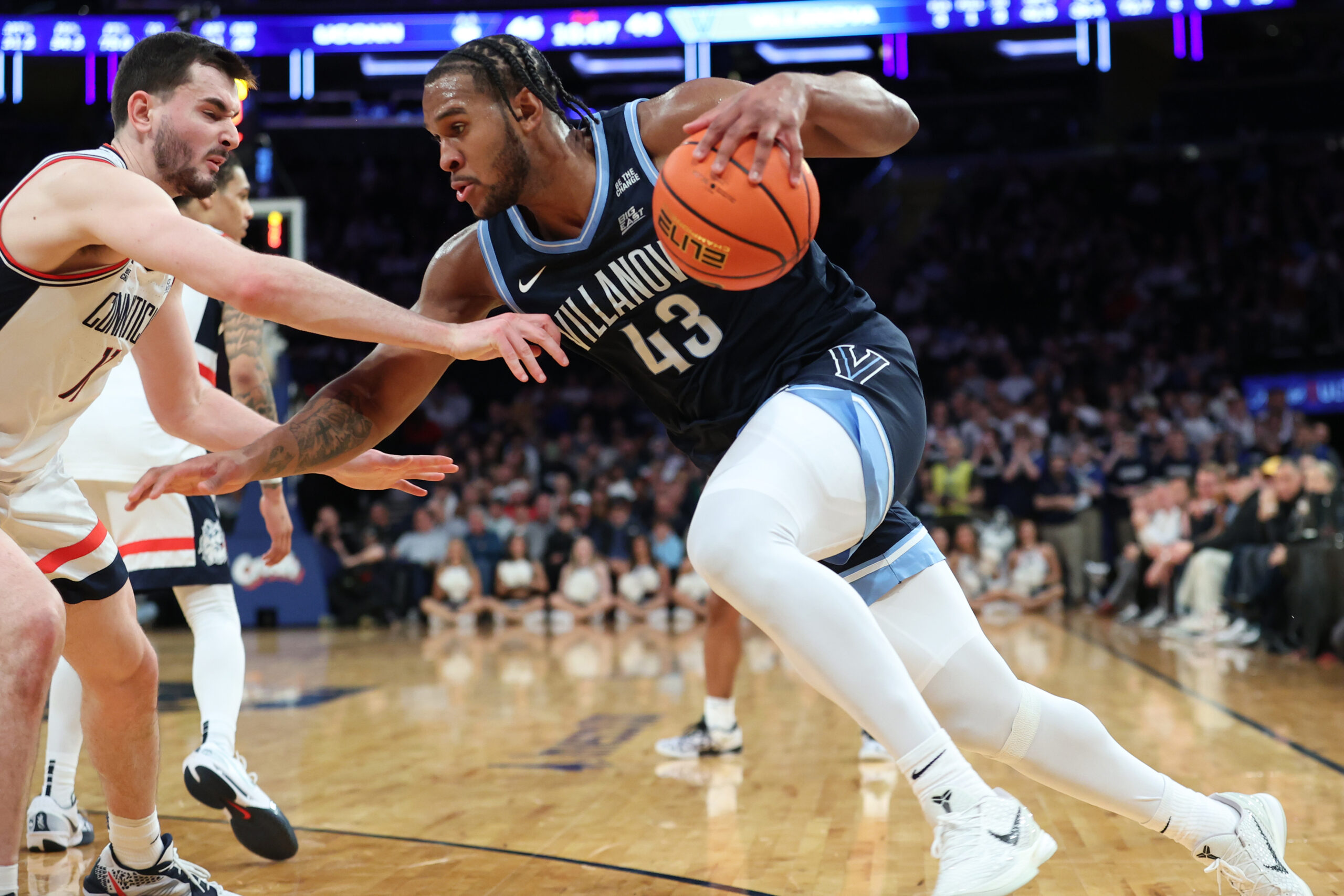
    Villanova’s Eric Dixon drives against Alex Karaban of UConn during the 2025 Big East Tournament at Madison Square Garden in New York.

    Dixon didn’t benefit from revenue sharing. But he got money through external name, image, and likeness (NIL) endorsements and sponsorships that the NCAA began allowing in 2021. Dixon declined to specify how much he received, but said it was “seven figures” over four years and allowed him to help his family.

    Like some other schools, Villanova, he said, provided players with financial guidance so they could make wise decisions on how to use their money.

    External NIL arrangements, though, he said, were a little “like the Wild West.” (NIL compensation is allowed to continue under the lawsuit settlement, but deals of more than $600 have to be reported.) Revenue sharing from colleges will offer athletes more predictable income, said Dixon, who now plays for the Charlotte Hornets’ affiliated team in the G League.

    Tyler Perkins, a Villanova junior from Virginia, currently plays for the Wildcats, who won national championships in 1985, 2016, and 2018. While he declined to say how much he is receiving, he said revenue sharing is helping him prepare for his future and “set up for the rest of my life.”

    Maddy Siegrist, also a former Villanova basketball player who now plays for the Dallas Wings in the WNBA, is pleased universities are able to share revenue directly with athletes.

    “It will be interesting to see how it all plays out,” said Siegrist, the Big East’s all-time leading scorer in women’s basketball and Villanova’s overall highest scorer, of men’s and women’s basketball.
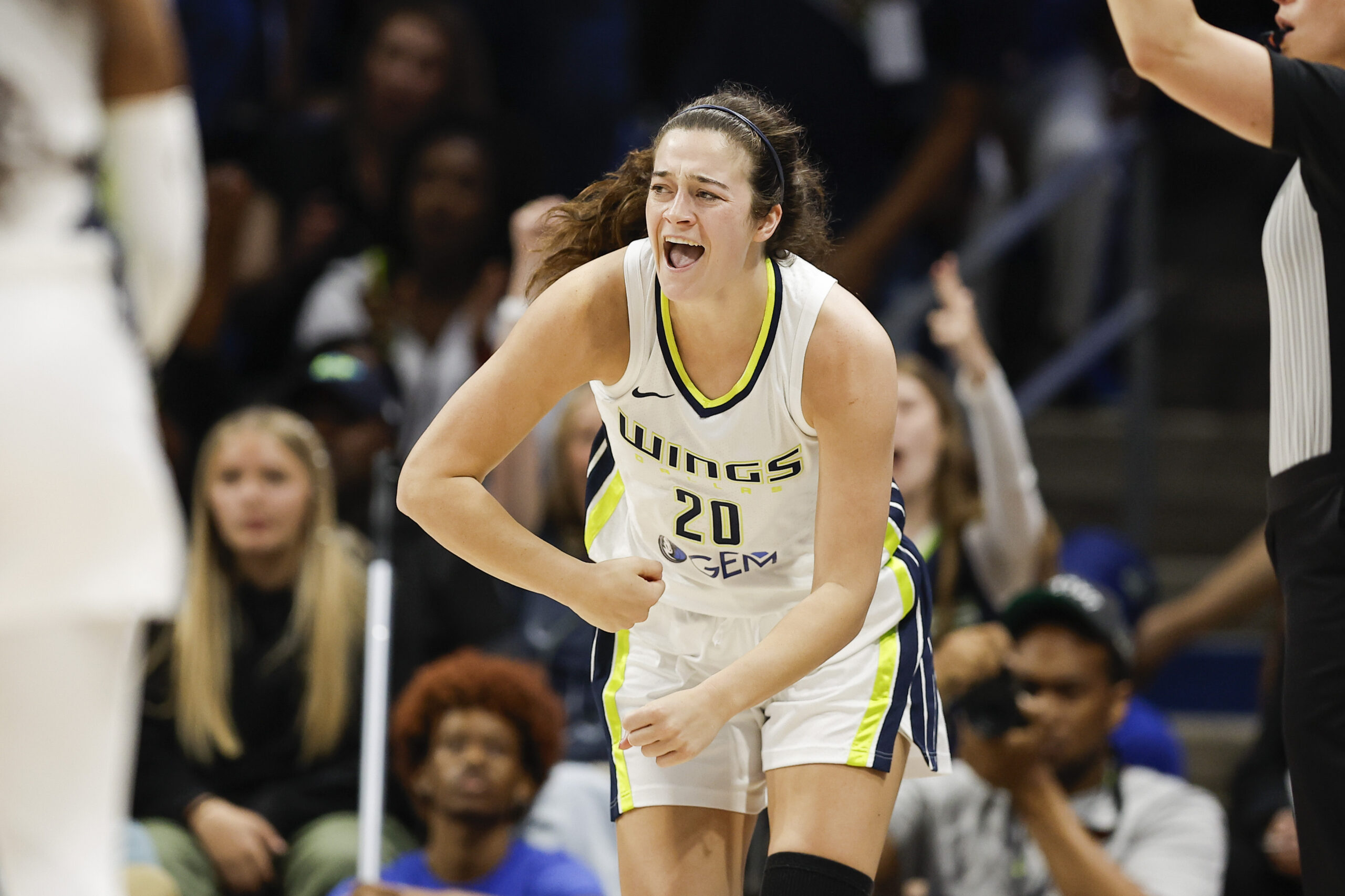
    Dallas Wings forward Maddy Siegrist celebrates a three-point shot during a WNBA basketball game against the Chicago Sky in 2024 in Arlington, Texas.

    While the big revenue sports are likely to see the money first, she said, “I would hope there will be a trickle-down effect where almost every sport is able to benefit.“

    A lawsuit spurs changes

    For years, there have been growing concerns that athletes were not getting their fair share of the profits from college sports, which make money on broadcast rights, ticket sales, and sponsorships. Meanwhile, coaches can be among the highest paid in a university’s budget.

    In 2020, former Arizona State swimmer Grant House became the lead plaintiff in House vs. NCAA, a class-action antitrust lawsuit that argued athletes should be able to profit from the use of their name, likeness, and image and schools should not be barred from paying them directly.

    The settlement approved in June of that suit and two others against the NCAA requires the NCAA and its major conferences to pay $2.8 billion in damages to current and former Division 1 athletes. Another provision gave rise to the revenue sharing.

    It initially applied to the major sports conferences: the Big Ten, Atlantic Coast Conference, Southeastern Conference, and the Big 12. Penn State belongs to the Big Ten and the University of Pittsburgh to the Atlantic Coast.

    But other athletic conferences, along with many of their members, decided to opt in to the agreement to remain competitive in select sports. St. Joseph’s, La Salle, Villanova, Drexel, and Temple all are part of conferences participating in revenue sharing with athletes this year.

    “We support student-athletes’ ability to pursue value among their peers and to leverage commercial opportunities that may benefit them or the institution,” said Maisha Kelly, Drexel’s vice president and director of athletics and recreation.

    Temple belongs to the American Athletic Conference, which said its members must agree to pay at least $10 million over three years to its athletes. Johnson, Temple’s athletic director, noted that total also includes new scholarships, not just pay.

    No tuition, state dollars to be used

    Pitt alumnus J. Byron Fleck has called on the Pennsylvania State Board of Higher Education to advise three state-related colleges — Penn State, Temple, and Pitt — not to use tuition dollars, student fees, or state appropriations to fund athlete payments. He also asked lawmakers to take action.

    “It doesn’t relate to any educational or academic purpose,” said Fleck, a 1976 Pitt alumnus and lawyer in California.

    Fleck said he was especially concerned about how Pitt could afford it. Pitt had a $45 million deficit in its athletics department budget in 2023-24, according to Pittsburgh’s Public Source.

    Karen Weaver, an expert on college athletics, higher education leadership, and public policy, said the same concerns about public funds being used to pay athletes have risen in other states, including Michigan and Washington.

    But Penn State, Temple, and Pitt all said in statements that they would not use tuition, student fees, or state appropriations to fund revenue sharing with athletes.

    “Penn State Intercollegiate Athletics is a self-sustaining unit of the university,” said Beasley, Penn State’s deputy athletic director.

    Pitt said it would use athletic revenues.

    In addition to donations, Temple, too, is using athletic department revenues, such as ticket sales, but it is also looking at other “nontraditional ways” to raise money, Johnson said.

    “We’re turning over every stone,” he said.

    Weaver, an adjunct professor at the University of Pennsylvania, said she worries that as the caps on revenue sharing get higher and costs grow, schools, especially those tight for cash, may start raising recreation and other student fees. The University of Tennessee added a 10% student talent fee for season ticket renewals, according to the Associated Press, while Clemson is charging a $150 per semester student athletic fee, according to ESPN.

    Roedl, the Villanova athletic director, said in a statement that it had launched the Villanova Athletics Strategic Excellence (VASE) Fund to raise money for the payments.

    “Additionally, we are looking for other ways to maximize revenue through ticketing, sponsorships, and events, and identifying cost efficiencies throughout our department,” he said.

    St. Joe’s, which has about 450 student athletes, said that it started a Basketball Excellence Fund to raise revenue and that payments also are funded by the basketball program. Athletes that receive funds “serve as brand ambassadors for the university,” the school said in a statement. “… These efforts have included community engagement — particularly with youth in the community — and marketing initiatives that directly support the Saint Joseph’s University brand.”

    La Salle declined to say how much student athletes receive or in what proportion.

    “We can share that any funds provided to students come from external sources and not tuition dollars,” said Greg Nayor, vice president for enrollment management and marketing.

    Weaver, author of a forthcoming book, Understanding College Athletics: What Campus Leaders Need to Know About College Sports, said plans that call for the bulk of revenue sharing to go to football and basketball players would lead to legal action, charging that female athletes are not being treated equally.

    “Any day now I expect we’ll see a huge Title IX lawsuit,” she said.
  • Braden Mann would love to stay in Philly. The Eagles have a decision to make on the free agent punter

    Braden Mann would love to stay in Philly. The Eagles have a decision to make on the free agent punter

    A punter is like someone’s breath — you likely only notice it if it stinks.

    The Eagles have taken whiffs of poor punters in the past. Just a few years ago, one of the team’s biggest concerns entering the offseason was Arryn Siposs, who struggled in Super Bowl LVII with his botched punt in the fourth quarter that contributed to the Eagles’ loss.

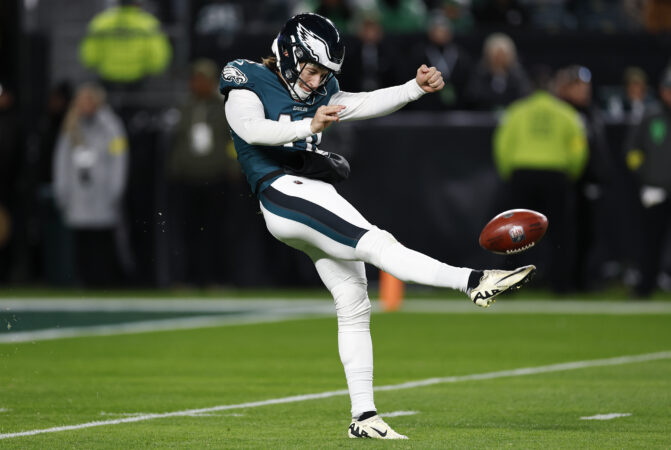
    The Eagles don’t have to have that concern anymore. Siposs’ successor, Braden Mann, is fresh off his third season with the Eagles, from which he emerged as the most consistent of the team’s specialists. Mann registered a franchise-best 49.9 yards per punt in 2025 and has averaged 49.5 yards in his Eagles career, the best mark in team history.

    Will he have a chance to continue that dominance? Mann, 28, is one of the team’s 19 pending unrestricted free agents. On Monday, even with the season’s demise still fresh, he wasn’t hiding his hopes for the future.

    “I’ve loved my time in Philly, and hopefully that continues,” Mann said. “It’s just been a blast for me, personally, just kind of working my craft and seeing what happens. Excited to see any opportunities here or anything that comes.”

    A Houston native, Mann said he has spent the last few offseasons living in Dallas, the hometown of his wife, Kylie. He prefers training in Dallas in the spring because of the windy conditions, which are standard in the Northeast during the football season.

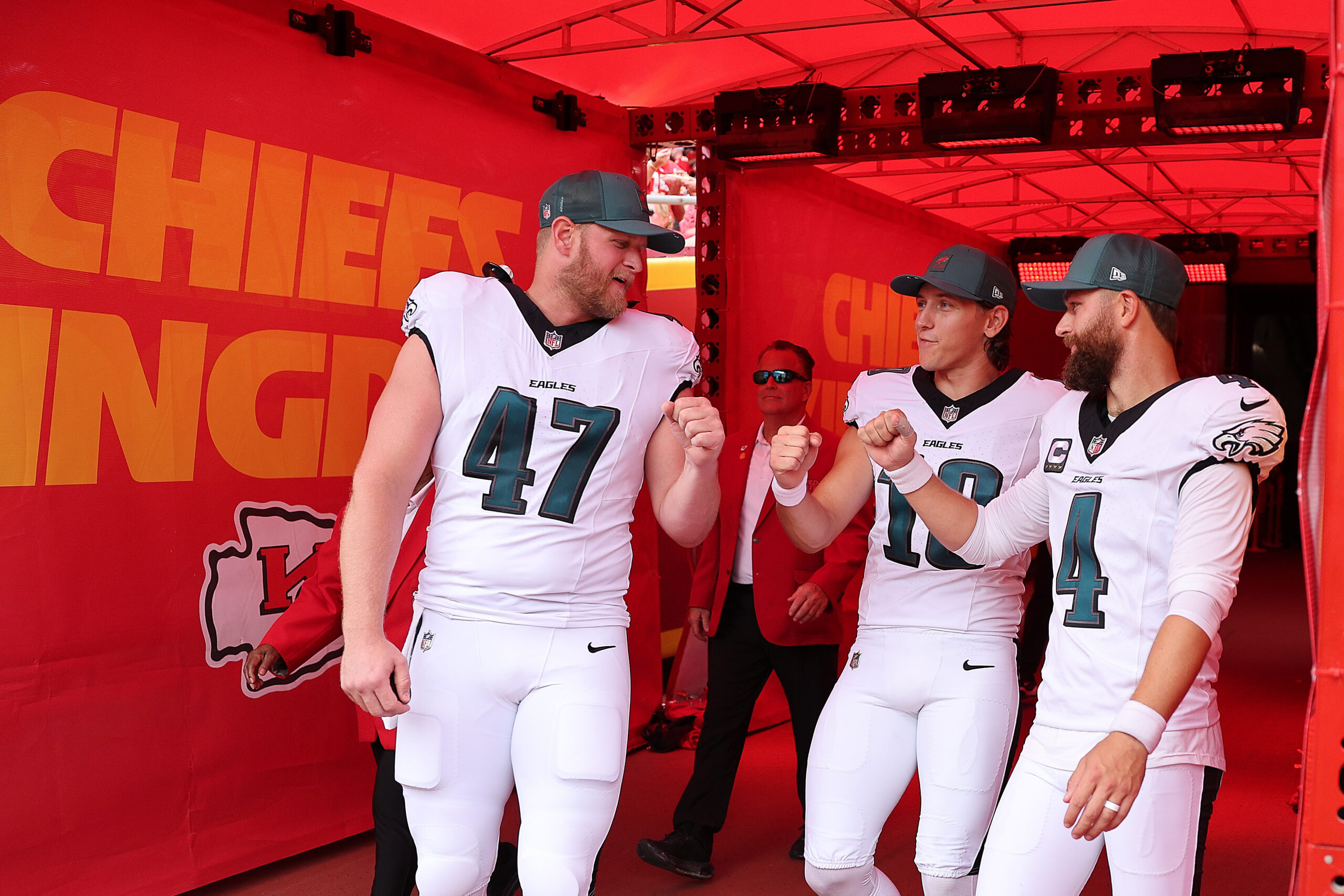
    Braden Mann (center) said this year’s Eagles, including long snapper Charley Hughlett (left) and kicker Jake Elliott (right), were close-knit despite the way things ended.

    The veteran punter noted that purposely practicing on bad-weather days in the offseason translated to better punts during the season, especially in Philly and on the road vs. Buffalo. Mann had to punt through it all — rain, wind, and snow.

    “I worked really hard to try and improve on punting in less-than-ideal conditions, which obviously we had a lot of this year,” Mann said. “I used to go out on good-weather days, and now I purposely go out in the offseason on days where it’s raining or cold or windy. I think it’s really helped me, just being able to control the ball a bit better.”

    Mann ranked sixth in the league this season in yards per punt, with his longest attempt hitting 70 yards in Week 2 against the Kansas City Chiefs. But just 27.8% of his punts were downed inside the opponent’s 20-yard line, below the league average of 39.3%.

    That’s not all on Mann, but he noted that he wants to get better at some of those deeper punts this offseason.

    “Going forward, just trying to improve on maybe some of the weird punts,” Mann said. “Like the ones where you get really close to the end zone or trying to get aggressive with pinning the other team deep and not getting too aggressive, I guess, is the best way of putting it.”

    Mann has a special perspective, joining the Eagles during a trying 2023 season and reaching the pinnacle with a Super Bowl last year. After another early playoff exit, the punter acknowledged the team has the potential to rebound once more. He called the 2025 team “one of the closest groups I’ve been with” in his six-year NFL career, which began with the New York Jets.

    “I think it’s just the time we spent,” Mann said. “I think everybody’s wanting to reach toward the end goal, but you’ve got to enjoy the days on the way there. Even last year, we went so long and it wasn’t so much the actual Super Bowl. It was the daily stuff to get there that made us so tight. So it was kind of similar this year. I think it’s a culture thing, which has been really good here.”

    Once the dust settles on the season, Howie Roseman will determine whether Mann will continue to be a part of that culture for years to come.

  • Mac Mart shrinks from a storefront to a kiosk, but expands its food offerings

    Mac Mart shrinks from a storefront to a kiosk, but expands its food offerings

    Mac Mart, the mac-and-cheese cafe, has left its Rittenhouse storefront location of nearly a decade in favor of a kiosk three blocks away.

    Mini Mac Mart — as sisters Marti Lieberman and Pam Lorden call their Center City stand — soft-opened Thursday at 18th and Arch Streets, outside the Comcast Technology Center and down the block from Biederman’s caviar kiosk.

    Marti Lieberman (left) and Pam Lorden outside the Mini Mac Mart kiosk on Arch Street near 18th.

    Although they’re working in a smaller space, Lieberman and Lorden have expanded their product line beyond their various mac-and-cheese bowls to include snacks and foods from local businesses, such as cinnamon milk buns from Huda, cupcakes and sweets from Sweet Box, fresh fruit lemonades from Dillonades, hoagies and wraps from Marinucci’s Deli, and salads from Big Bite Salad Co. (the sisters’ in-house brand). The lineup will vary depending on availability.

    Lieberman, 36, launched Mac Mart in January 2013 as a food truck on the Drexel University campus, and Lorden, 39, joined her soon after. The store opened in May 2016 in a former shoe-repair shop on 18th Street near Chestnut; it closed last month.

    Assorted refrigerated items are available at the Mini Mac Mart kiosk.

    Lieberman said challenges on 18th Street forced them to rethink the storefront. Since the pandemic, she said, foot traffic and catering orders from offices had dropped. With fewer people on the street at night, she said, the business’ front door and window became a frequent target of vandals.

    Besides, Lieberman acknowledged, “we’re very niche. People have to really want a one-pound bowl of mac and cheese, and that narrowed our audience.”

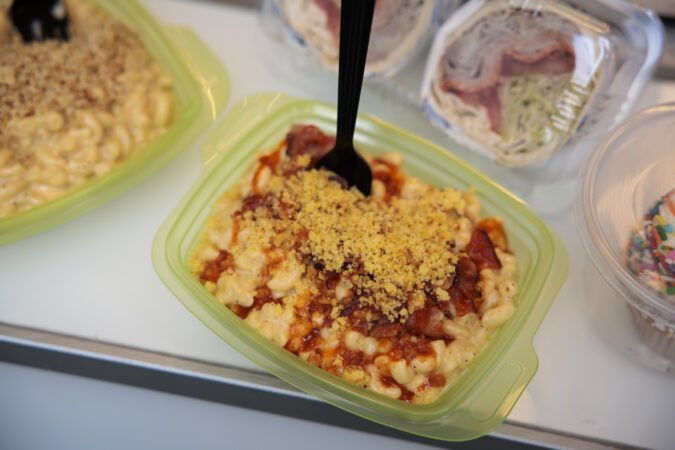
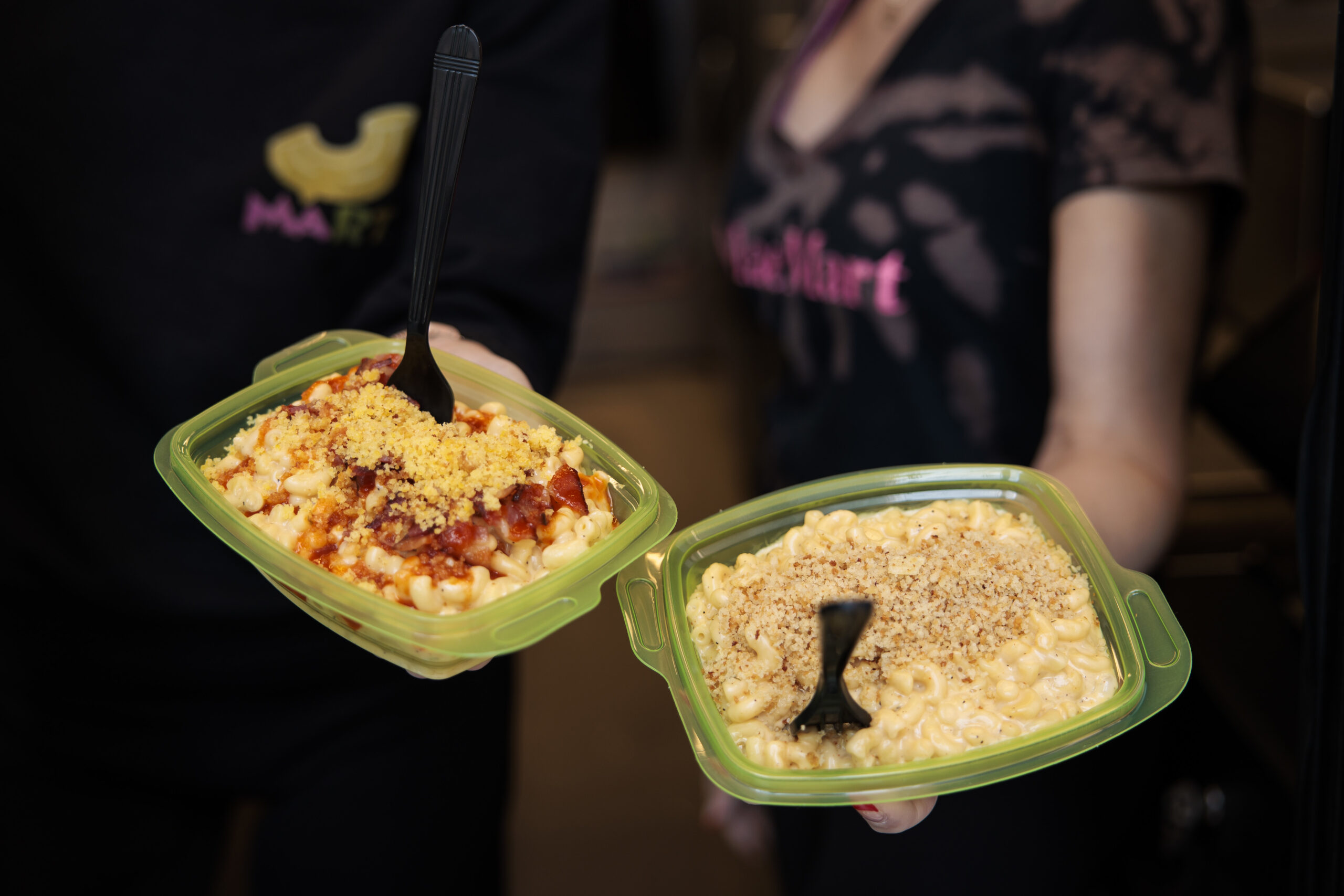
    A BBQ Bacon Bowl and Mart’s Mac (plain) at the Mini Mac Mart kiosk.

    In response, Lieberman and Lorden launched Munch Machines, a vending-machine operation that stocks with food from local small businesses.

    The machines are located at Evo at Cira Centre South, an apartment complex near 29th and Chestnut Streets, and at Motto by Hilton in Rittenhouse.

    “That model has continued to grow for us over the past 4½ years,” Lieberman said. “So when it came time to close Mac Mart, rebrand it, or pivot, we leaned into what we knew worked.”

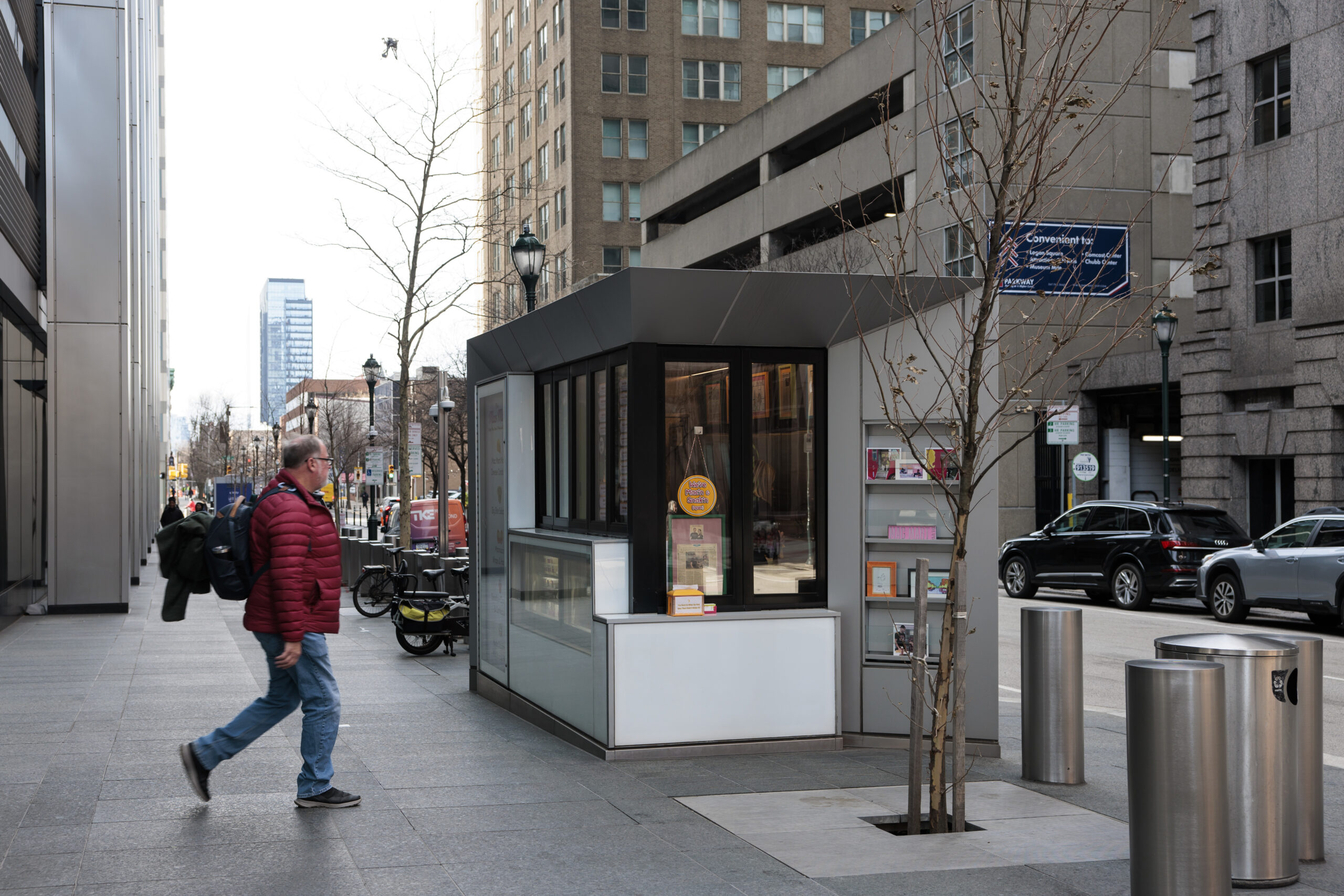
    Mini Mac Mart draws directly from that vending-machine approach, combining Mac Mart’s core product with a broader mix of ready-to-eat food in a kiosk that can be buttoned up tightly after hours. Customers can see items through the front window and order off the side window.

    Mini Mac Mart kiosk near 18th and Arch Streets, as seen on Jan. 12, 2026.

    Over the next year, Lieberman and Lorden plan to focus on refining the kiosk model while continuing catering, market pop-ups, and Munch Machines.

    “If this small model works, which we’re confident it will, we could bring it into other small spaces — airports, amusement parks, college campuses,” Lieberman said. “This time, we know we don’t need 400 square feet or more. We can operate efficiently in a very small footprint and still serve a quality product.”

    Mini Mac Mart, 18th and Arch Streets. Hours: 10 a.m. to 7 p.m. Monday to Friday.

  • ‘Heated Rivalry’ is introducing hockey to a new, gayer audience — and it was the talk of Flyers’ Pride Night

    ‘Heated Rivalry’ is introducing hockey to a new, gayer audience — and it was the talk of Flyers’ Pride Night

    The biggest crowd pop at Xfinity Mobile Arena during Monday’s Pride Night was for Christian Dvorak’s breakaway goal, the Flyers’ only goal of the game.

    But the second-biggest was for “All the Things She Said,” a song that, only two months ago, was just another early 2000s club hit — until Heated Rivalry turned it into a phenomenon.

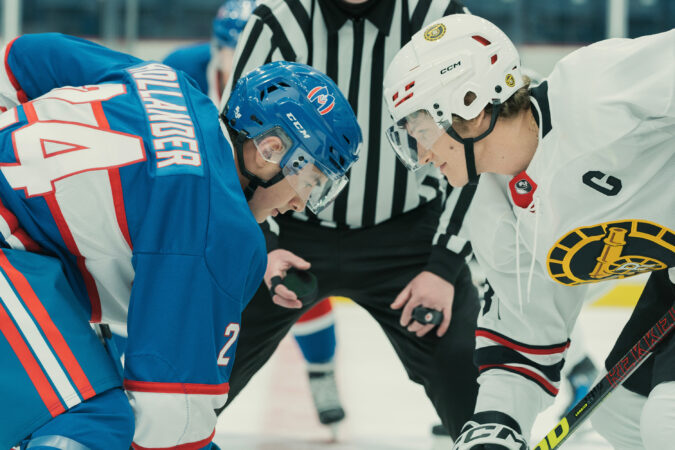
    Heated Rivalry, the hit Crave original series that quickly became an international sensation during its six-episode run on HBO Max, is an adaptation of a novel by the same name, written by Rachel Reid. It’s the love story of two fictional hockey superstars, Canadian Shane Hollander and Russian Ilya Rozanov, who were the top two picks in the same draft.

    The show has become one of HBO Max’s top series in the two months since its first episode aired, jumping from 30 million streaming minutes in its opening week to 324 million streaming minutes by its sixth. Casey Bloys, HBO Max’s CEO, described the show as a “word-of-mouth sensation” to the New York Times.

    “There are so many ways to get hooked on hockey and, in the NHL’s 108-year history, this might be the most unique driver for creating new fans. See you all at the rink,” an NHL spokesperson said in a statement to the Hollywood Reporter.

    A small cottage industry of hockey podcasts analyzing the show has emerged, with What Chaos! and Empty Netters earning hundreds of thousands of views on episodes about the show, including interviews with the cast and creators.

    But has the show — which wouldn’t exactly win awards for an accurate on-ice depiction of the game — led to real growth in hockey fandom?

    According to StubHub, it has. The ticketing site said last week that it saw a 40% increase in interest in hockey tickets during the show’s run and there’s no shortage of fans online who claim they found the game through Heated Rivalry, which has already been renewed for a second season.

    The LGBTQ+ community has had a challenging relationship with the NHL over the last several years, following former Flyer Ivan Provorov’s decision to opt out of wearing a specialty jersey on Flyers’ Pride Night in 2023, which led to a brief ban on optional Pride tape and a ban on wearing any specialty jerseys on the ice.

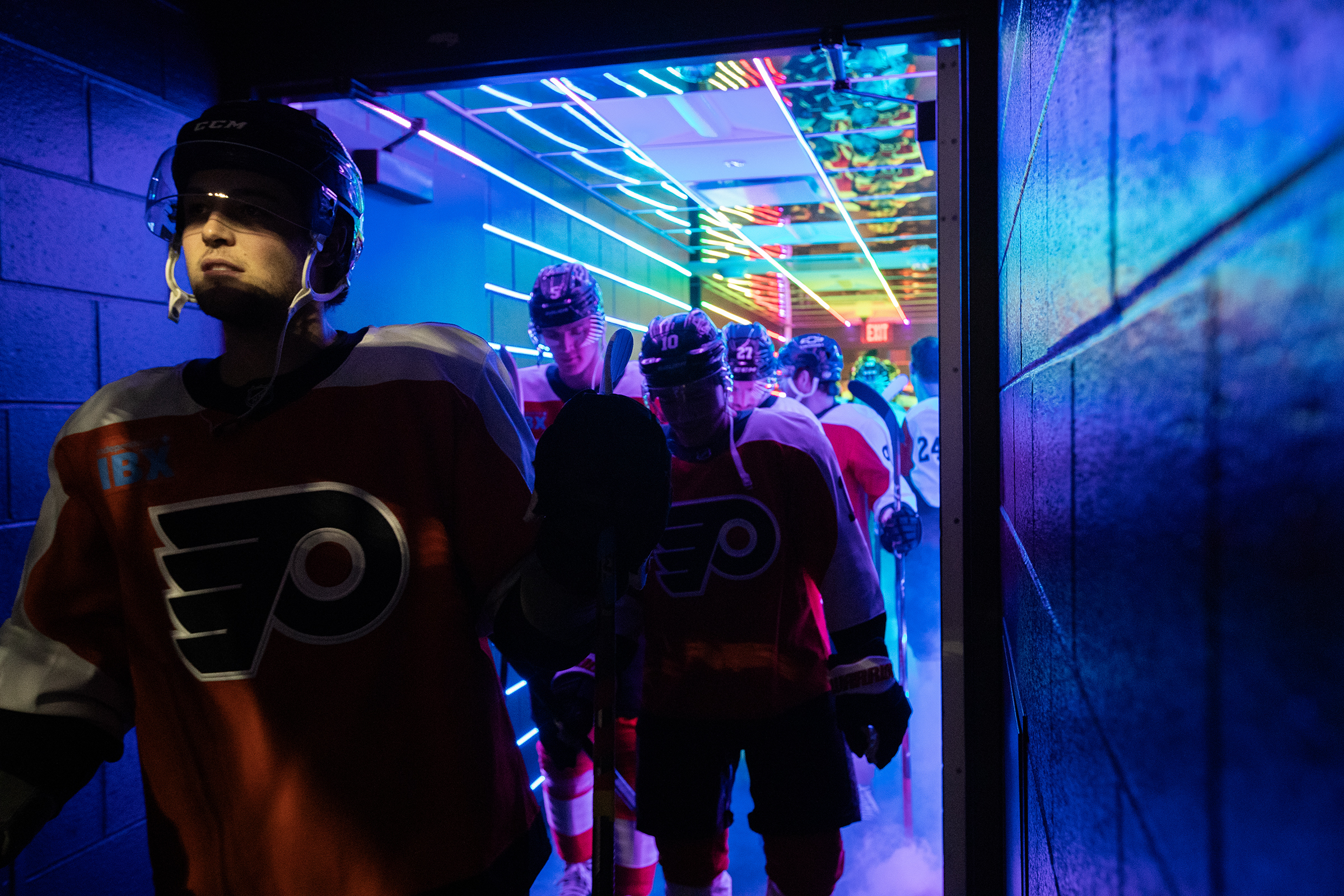
    The Flyers hosted their annual Pride Night on Monday.

    But other former Flyers, like Scott Laughton, were extremely involved in Pride initiatives, something Philly natives Trish Grow and Autumn McCloskey, both lifelong Flyers fans, said helped them feel like the Flyers community was inclusive. The explosion of the show helped draw in more of their friends.

    “I have people who would never come near a hockey rink texting me like, ‘You’ve watched this, right?’” Grow said. “I’m like, ‘Oh, honey, do you want to come to a game? You can see them do the stretches, but you’ve got to learn the rules.’”

    One of their friends took them up on their offer, and, after reading the book and watching the show, attended his first-ever hockey game for Pride Night.

    He wasn’t the only one. Dale Lyster, who is from Coatesville and came to the game wearing a Rozanov jersey, said he’d attended a few games over the years, but after hearing friends talk about Heated Rivalry on social media, he decided to tune in and quickly fell in love with the show — and then with hockey.

    “I’ve always liked it, but I’ve never really been into it,” Lyster said. “Now, seeing more representation in the hockey world, it opened my eyes more.”

    Newlyweds Kary and Kate Van Collins of Fairmount feel similarly. Their last hockey game was Flyers Pride Night a year ago, and Heated Rivalry renewed their interest in the sport. Kary made them custom Hollander and Rozanov sweatshirts to wear to the game.

    “I am a queer, neurodivergent, half-Asian person, so I really saw myself in the character of Shane Hollander,” Kary said. “I think it’s just very needed right now, especially in the political climate, to have these positive stories surrounding queer love.”

    Added Kate: “It’s also reassuring that queer people belong in sports. I think a lot of people in the community maybe don’t feel welcome in the sports scene, so maybe it’s a door that’s open so people feel more welcome.”

    The show’s viral success has even caught its stars off guard. Connor Storrie, who plays Rozanov, said Tuesday on Late Night with Seth Meyers that one of the biggest surprises was the show’s reach, and how it hasn’t just been gay men who have enjoyed it.

    “You think of male romance, you think it’s for gay men,” he told Meyers. “But there’s been all walks of life, predominantly women, who enjoy it.”

    Groups are even popping up to help bring fans together. Shannon Herbst of Mount Laurel has loved hockey and been a Flyers season ticket-holder for years, so she knew Heated Rivalry would be right up her alley.

    “There’s actually a group of us through Threads that got together that are from Philly and South Jersey, and there’s so many people on there that really want to get into hockey, specifically the Flyers, and really want to learn more about the game from the show,” Herbst said.

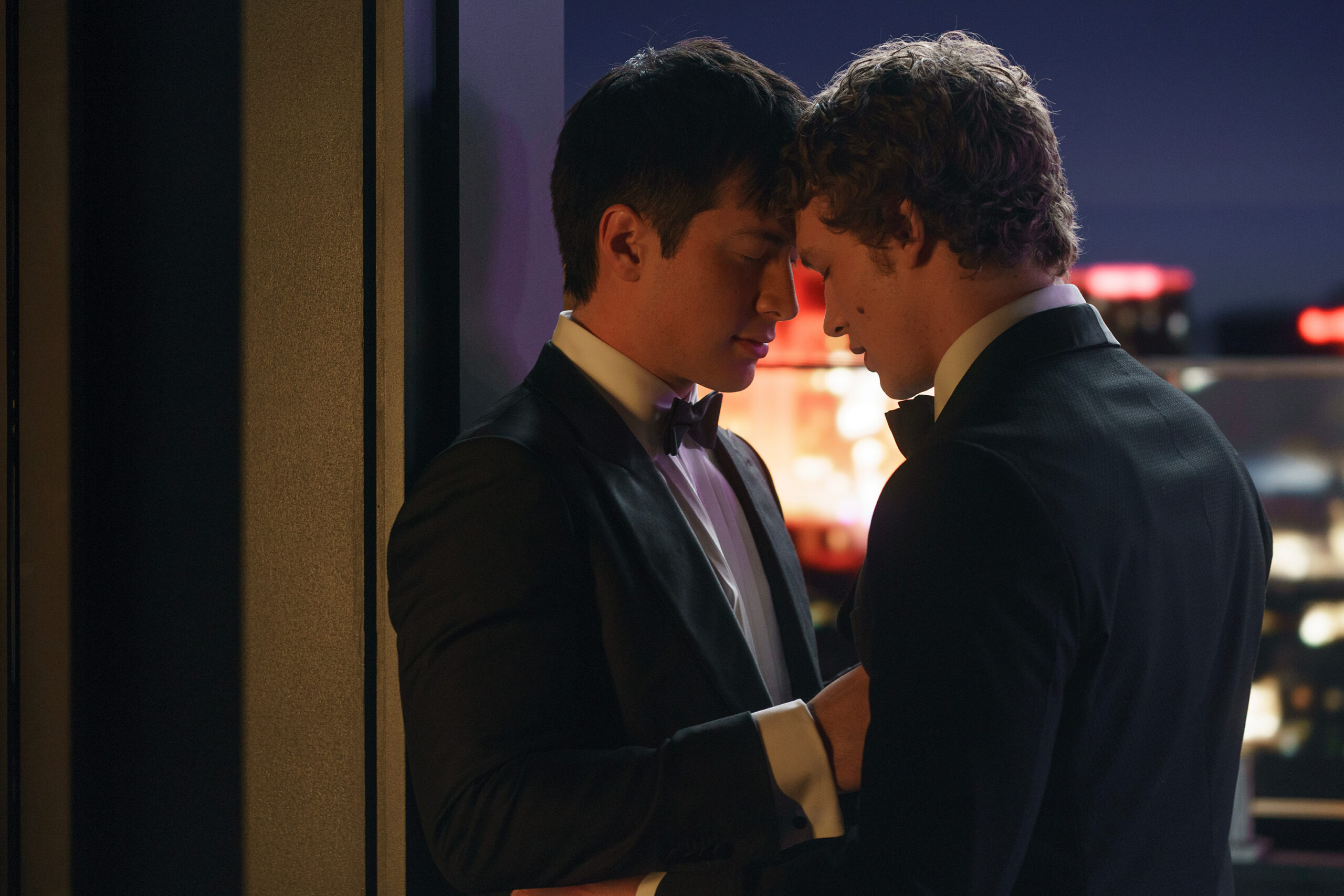
    Hudson Williams (left) and Connor Storrie star as hockey players who fall in love in “Heated Rivalry.”

    Heated Rivalry also has reached the world of professional athletes. Hudson Williams, who plays Hollander, told Andy Cohen on his radio show that multiple closeted athletes have reached out to him and to Reid since the show’s premiere to share how the show has impacted them. No NHL player has ever come out as gay, although NHL draft pick Luke Prokop, who came out in 2021, currently is playing in the American Hockey League with the Edmonton Oilers’ organization.

    That might not change any time soon, but fans felt that the success of Heated Rivalry was a first step for improving inclusion in the sport for players and for fans.

    “It’s definitely opened the door,” Herbst said. “Obviously, there’s still more work that needs to be done, but I think it really planted that seed and made more people comfortable with having that conversation within the NHL and the sport itself.”

  • Can QB whisperers Josh McCown or Cam Turner salvage Jalen Hurts as the Eagles’ new OC?

    Can QB whisperers Josh McCown or Cam Turner salvage Jalen Hurts as the Eagles’ new OC?

    The Eagles don’t just need an offensive coordinator. They need a quarterback whisperer.

    They need Josh McCown. Or maybe Cam Turner.

    Kevin Patullo wasn’t ready for the OC job in Philly, but then, Bill Walsh and Sid Gillman wouldn’t have won a Super Bowl the way Jalen Hurts played in 2025.

    Hurts’ development has stalled. He might even be broken. He’s largely the same quarterback at the end of the 2025 season as he was at the end of 2022. Defenses know that, and they exploit it. As the offensive line deteriorated, and as Saquon Barkley and A.J. Brown started to show their age, more was asked of Hurts, who delivered ever less.

    The Eagles don’t just need a play-caller.

    They need an offensive coordinator who can invigorate a veteran quarterback whose career is idling. Both McCown, a former Eagles backup quarterback, and Turner, who has the bluest of NFL bloodlines, have done just that.

    Fire starters

    The most compelling story of the 2024 season involved Sam Darnold, the No. 3 overall pick in the 2018 NFL Draft and a bust with the New York Jets, Carolina Panthers, and San Francisco 49ers, who made the Pro Bowl in his seventh season and led the Minnesota Vikings to a 14-3 record.

    McCown was Darnold’s quarterbacks coach.

    The most compelling story early in the 2025 season involved not only Darnold’s continued ascendance, now in Seattle, but also Daniel Jones. He was the No. 6 overall pick in 2019 but turned out to be such a bust with the New York Giants in his first six seasons that they released him.

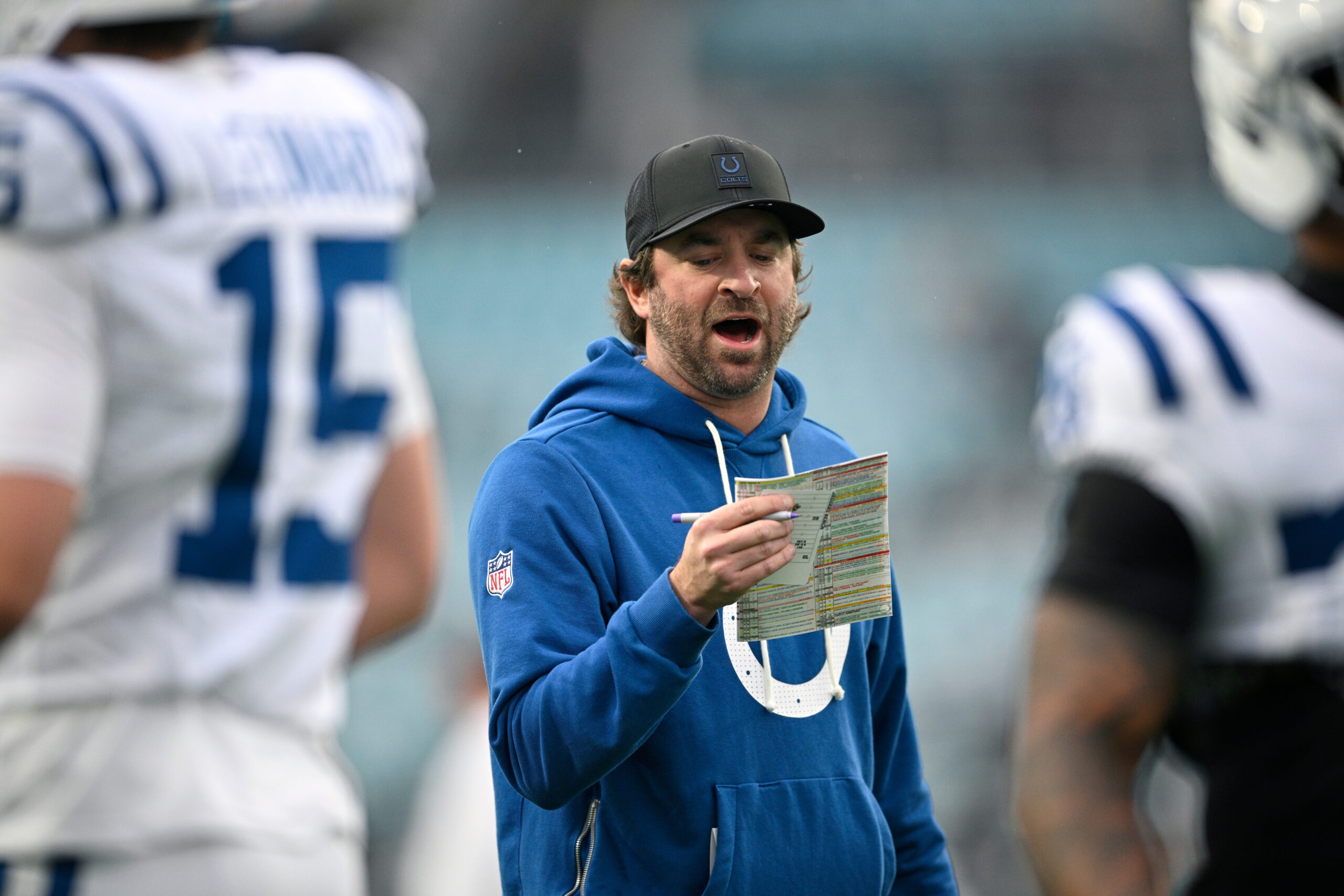
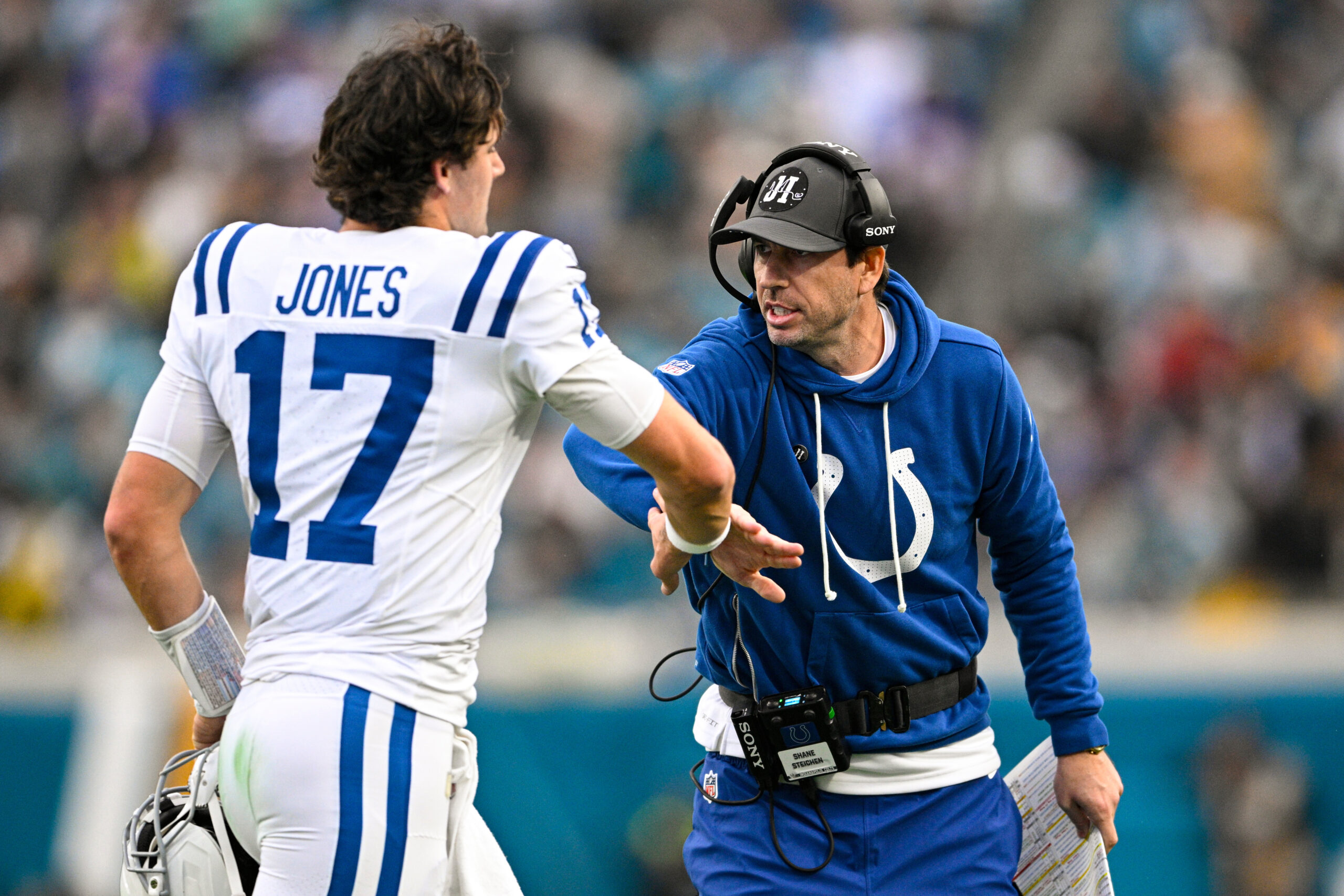
    Jones signed with Indianapolis, where Turner, as quarterbacks coach, had been developing Anthony Richardson, the No. 4 overall pick in 2023, while helping veterans Joe Flacco and Gardner Minshew squeeze out a few more NFL starts. When given an established talent like Jones, though, Turner made hay. Turner convinced head coach Shane Steichen to bench Richardson in favor of Jones, and Turner was right. The Colts were 8-2 and Jones was a dark-horse MVP candidate with a career-high 101.6 passer rating when he broke his leg in Game 11. Jones suffered a torn Achilles tendon two games later.

    Colts quarterbacks coach Cam Turner played a big role in Daniel Jones’ resurgence before the quarterback suffered a season-ending injury.

    So, amid all the flashy possible candidates — fired Miami Dolphins head coach Mike McDaniel, fired Giants head coach Brian Daboll, fired Washington Commanders coordinator Kliff Kingsbury, figurehead 49ers OC Klay Kubiak — you have, in McCown and Turner, two position coaches who played the position, who possess credible pedigrees, and, within the past two years, have salvaged the careers of quarterbacks who were in even worse shape than Hurts.

    Granted, they wouldn’t be acting as Hurts’ position coach. However, if head coach Nick Sirianni — also never a QB, and only briefly a QB coach — will assume more of a role in scheme construction and game-planning, which he’s going to help with anyway, McCown or Turner could spend more time with Hurts than would a normal OC.

    Granted, they haven’t called plays. But then, neither had Ben Johnson when he became offensive coordinator in Detroit in 2022. He’d never even coached quarterbacks. He still turned out to be excellent at running an offense, both with the Lions through 2024, as well as in 2025, his first season as head coach with the Chicago Bears, who are two wins from making the Super Bowl.

    The team desperately needs some QB IQ in the building after the caliber of coaching Hurts received this season. And no, we’re not referring to Patullo.

    Scot who?

    There was a lot of head-scratching last winter when Sirianni hired career college coach Scot Loeffler as quarterbacks coach. Loeffler’s only season in the NFL was as quarterbacks coach for the Lions in 2008, when Daunte Culpepper, Jon Kitna, and current ESPN analyst Dan Orlovsky combined for an 0-16 record. Loeffler coached on the first 0-16 team in NFL history, a season best remembered for Orlovsky, while facing modest pressure, unwittingly scrambling out of the back of the end zone (the Lions lost by two points).

    Unlike Loeffler, McCown and Turner bring significant NFL bona fides.

    McCown played for 10 NFL teams over a 16-year career. He only approached being a full-time starter four times, but at his last eight stops, he was credited with making the other quarterbacks better as a sort of extra coach. In 2006, with the Lions, he actually played wide receiver, and caught both passes thrown to him. In 2019, he came out of retirement and served as Carson Wentz’s backup and mentor. Not coincidentally, Wentz’s career cratered after 2020.

    Even if he doesn’t get the OC job, McCown always will have a home in Philly. Eagles owner Jeffrey Lurie loves him. He offered McCown a coaching job after the 2019 season, which McCown, then 40, declined, hoping to take one more shot as a player. Lurie then signed McCown to the practice squad in 2020 but still let McCown live at home in Texas until the Houston Texans signed McCown onto their active roster in November.

    Other than recently redeeming failed quarterbacks, McCown and Turner share little else in their backgrounds.

    Depending on how you view things, either Turner is one of the NFL‘s most egregious proliferate examples of nepotism, or he has impeccable NFL coaching DNA.

    His uncle, Norv Turner, won two Super Bowls in the early 1990s as Jimmy Johnson’s offensive coordinator in Dallas. His cousin and Norv’s son, Scott Turner, has spent 14 seasons coaching in the NFL, and he’s the Jets’ passing game coordinator now, but that shouldn’t count against Cam.

    Independent of his connections, Cam has proved himself worthy of his appointments. He was the assistant QB coach in Arizona in 2020, when Kyler Murray went to his first Pro Bowl, and was the head QB coach in 2021, when Murray went to his second.

    Turner also has the benefit of working with Steichen in Indy. Steichen, of course, was the OC when the Eagles made it to the Super Bowl after the 2022 season.

    Colts coach Shane Steichen, the former Eagles offensive coordinator, started the 2025 season 8-2 with Daniel Jones as his starter and Cam Turner coaching quarterbacks.

    Turner also worked in Arizona under Kingsbury, one of the retread candidates everyone has been sniffing around since Black Monday began claiming victims last week.

    “Sniffing around.”

    Sounds about right.

    The names

    With a $128 million offense like the Eagles’, why risk a season on lesser-known candidates like McCown and Turner?

    Because being lesser-known doesn’t necessarily equate to lesser ability.

    McDaniel is a big name, but the awkward departure of Vic Fangio as his defensive coordinator after their 2023 season together would cause instant friction if McDaniel joined a franchise and moved to a city where Fangio is worshipped. Anyway, McDaniel seems certain to get another head coaching gig during this hiring cycle. If he doesn’t, he’d be foolish to turn down the Lions OC job if offered, since, in this moment, Jared Goff is a better quarterback than Hurts.

    Daboll was hired by the Ginats to develop Jones. He did the opposite. Also, his combustible personality is likely to clash with Sirianni’s.

    There isn’t a universe in which Ravens offensive coordinator Todd Monken doesn’t accompany John Harbaugh to Harbaugh’s next stop, since Harbaugh’s refusal to fire Monken apparently influenced his firing in Baltimore.

    and got fired by the Cowboys as QB coach after 2022, failed as Kellen Moore’s QB coach with the Chargers in 2023, and was the QB coach in Philly during Hurts’ mediocre 2024 season. Not exactly a sterling resumé.

    Frank Reich, the OC in 2016-17 under Doug Pederson, is Lurie’s favorite employee ever, and, at 64, he’s unlikely to be poached by any other team if the Eagles thrive with him as coordinator. But Reich was less responsible for Wentz’s development than hard-nosed quarterbacks coach John DeFilippo. As for “Flip” himself, team sources have said in the past that DeFilippo long ago burned any bridge that might ever bring him back to Philadelphia, and there have been plenty of opportunities to do so.

    Rams passing game coordinator Nate Scheelhaase has never coached NFL quarterbacks, has one year as a college offensive coordinator, and with all due respect, seems to be this year’s long-shot assistant who gets the Duce Staley Treatment — that is, token interviews for head-coaching jobs with NFL teams trying to fulfill Rooney Rule requirements.

    Still, Scheelhaase seems far more qualified than Klay Kubiak. He spent seven of his first eight years out of college coaching high school, and only three of those as a head coach. He joined the Niners in 2021, and he has been offensive coordinator for just one year, but he doesn’t even call plays. Kyle Shanahan does.

    Maybe it won’t matter who they hire. Considering how so many podcast pundits and online experts spend their Monday mornings eviscerating folks like Kevin Patullo, game planning, sequencing, adjusting, and play-calling can’t be all that hard. Can it?

  • Kobe Bryant turned Chester-Lower Merion into a decades-long basketball rivalry: ‘The history will never fade’

    Kobe Bryant turned Chester-Lower Merion into a decades-long basketball rivalry: ‘The history will never fade’

    John Linehan and Kobe Bryant used to talk. A lot. This would not have been unusual for other AAU teammates, but these two were fierce high school rivals.

    Linehan was a scrappy point guard for Chester. Bryant was a relentless shooting guard for Lower Merion. Both were competitive, almost to a fault, and in the days leading up to big games, they’d get chippy.

    The week before the 1996 PIAA Class AAAA District 1 title game, for example, the players talked every day on bulky landline phones, with Bryant often calling Linehan at his home in Chester.

    “I just said, ‘You know, John, I haven’t won a championship yet, and you have,’” Bryant told The Inquirer in 1996.

    Linehan knew what his friend was doing. The future NBA star did the same thing a few weeks later, on March 19, a day before the teams met again in the state semifinal.

    “He was trying to get me to trash talk,” Linehan said. “I think he needed a little edge. I didn’t want to give him too much. I was like, ‘Man, you crazy.’”

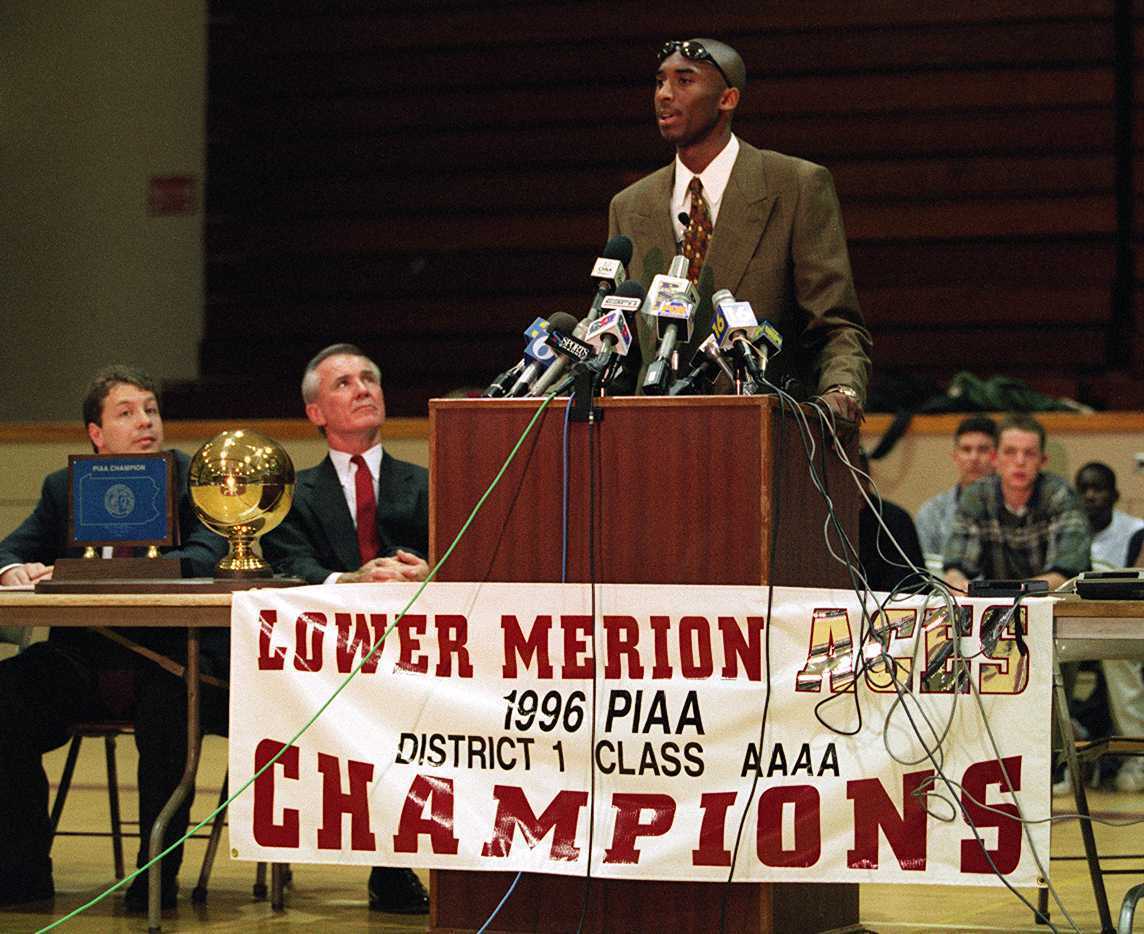
    The late Kobe Bryant, a former Lower Merion basketball star, announcing he will go directly into the NBA draft out of high school.

    Lower Merion wasn’t a basketball school when Bryant arrived in the fall of 1992. It paled in comparison to the local powerhouses like Simon Gratz, Coatesville, and Chester.

    But Bryant changed that. Even in his freshman year, a season in which the Aces went 4-20, he brought a new standard, working out before class and introducing a level of toughness that was foreign to his teammates.

    By the mid-1990s, Lower Merion was among the best high school teams in the Philadelphia area. Its players were more confident, celebrating after big shots, and talking loud on the court.

    The Aces didn’t play as many games against Coatesville, a rising power led by Rip Hamilton. They couldn’t consistently measure themselves against Gratz, which didn’t participate in the PIAA playoffs until the 2004-05 season.

    But they could against Chester. And so, a decades-long rivalry was born.

    From 1996 through the mid-2010s, Chester and Lower Merion put on some of the greatest high school basketball games in the area. They’d often sell out venues like the Palestra and Villanova’s Pavilion. Some fans would even scalp tickets.

    Their communities were almost diametrically opposed. Chester was predominantly Black; Lower Merion was predominantly white. Chester was plagued by poverty; Lower Merion was considered affluent.

    Chester, with its Biddy League, had a legacy of basketball greatness, and a steady pipeline of talent. Lower Merion had nothing comparable. But these differences melted away on the court.

    And while the rivalry is not what it once was, it lives on today.

    “The pride and the intensity and the history will never fade,” said Lower Merion coach Gregg Downer. “I mean, if we played them tomorrow night, that would be an intense game.”

    The Bryant-Linehan era

    When Downer was named head coach in 1990, he already was well-aware of Chester’s tradition. He’d played youth basketball growing up in Media and had heard about the stars who’d come out of the Biddy League.

    It was obvious that his team would have to go through the Clippers to win any sort of accolade. But it wasn’t until Bryant’s arrival that Downer’s aspirations became a real possibility.

    The shooting guard, who was the son of former 76er Joe “Jelly Bean” Bryant, was mature for his age. He’d demand more, mentally and physically, of older teammates. Doug Young, a former Lower Merion forward, remembered seeing Bryant leaving the locker room at 7 o’clock one September morning in 1993.

    He’d been at the high school gym since 5 a.m., working out by himself. To the Lower Merion basketball team, this was a “crazy” concept, so Young and his cohorts decided to join him.

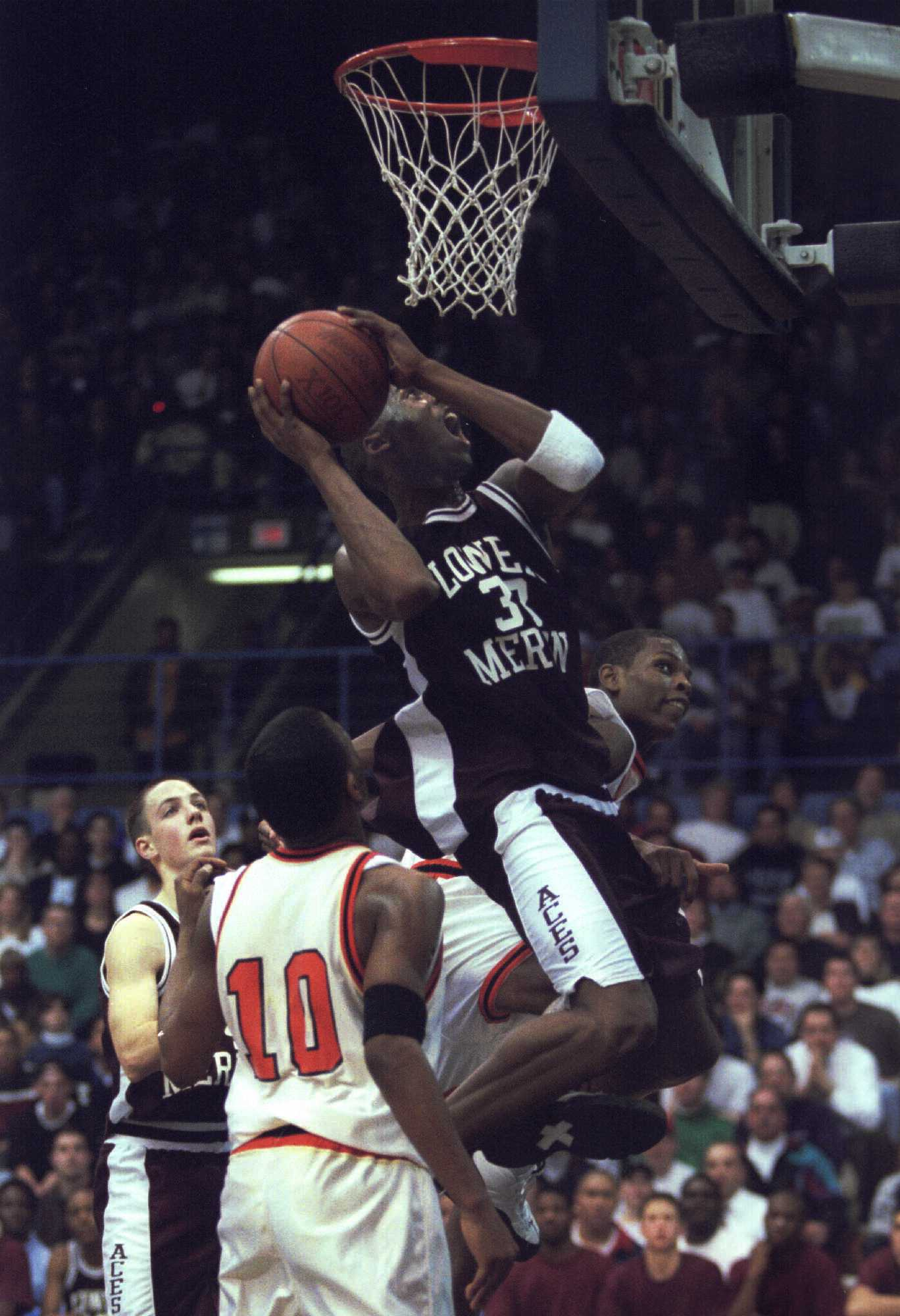
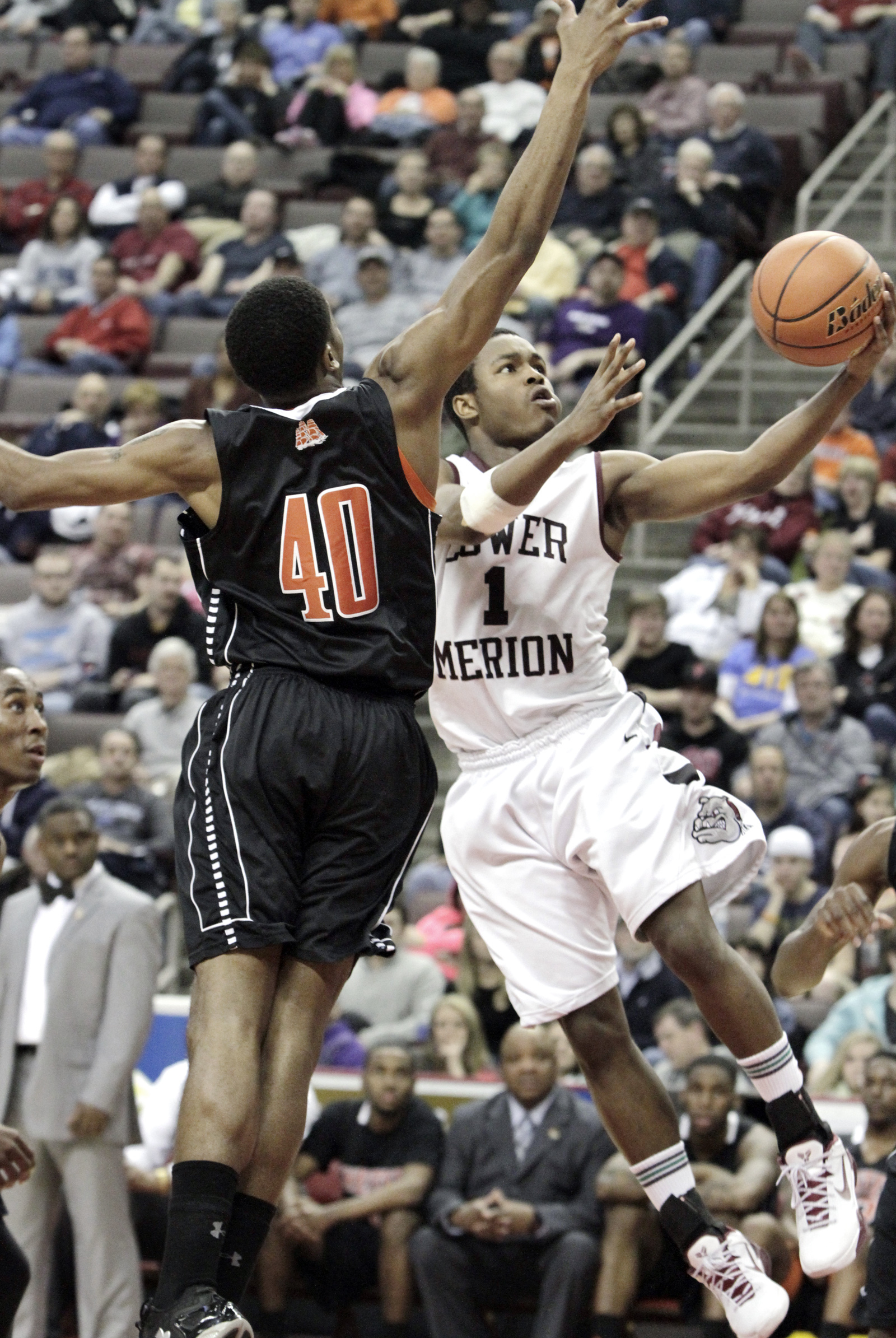
    In the District 1 championship game against Chester, Kobe Bryant goes to the hoop over the Clippers’ John Linehan.

    They arrived the next day at 5:06 a.m. The players knocked on the door. Bryant didn’t answer.

    “He wouldn’t open it,” said Young, who graduated in 1995. “You’re either there or you’re not. We were six minutes late.”

    His teammates waited outside until 6:30 a.m., when the school opened. They made sure to show up before 5 a.m. from that day on.

    Downer was wired the same way. The coach — and his NBA-bound pupil — would push the team in practice. Losses were particularly tough. The players would go through endless sprints and rebounding drills that sent them running to the trash can.

    It wasn’t fun. But over time, the method created a newfound tenacity.

    “No one walked into high school saying, ‘Oh, yeah, I want to win a state championship,’” Young said. “But [Kobe] knew what that was. He was like, ‘I don’t know any other way. If we’re not going to win a championship, what the heck are we playing for?’”

    Chester was always going to be an obstacle, so Downer tried to play into the battle. He’d use analogies for the tough, hard-nosed team, comparing it to an animal stalking its prey.

    The coach began to screen movies to underscore this point. Together, in a Lower Merion classroom, Downer’s players watched Jaws and other tales of survival, like The Edge, a 1997 thriller about a plane that crashes in the Alaskan wilderness.

    “This bear is stalking them, and the couple is saying, ’What are we going to do about this bear?’” Downer said. “And one of them says, ‘The only thing we can do is kill the bear.’

    “And I remember being like, ‘We can do this.’ But the only solution is to — not to be overly graphic — but to kill them.”

    (The bear in this analogy was Chester.)

    He added: “We tried everything humanly possible to get through to this team.”

    The first few games were ugly. In 1995, Lower Merion met the Clippers in the District 1 championship, only to lose by 27 points. But they came back with a renewed focus the following year, in 1995-96, going 25-3 in the regular season to earn a district final rematch against Chester.

    The Aces showed up at the arena with “27″ printed on their warmup shirts. Bryant, armed with fresh bulletin board material from Linehan, dropped 34 points against the Clippers en route to a 60-53 Aces win.

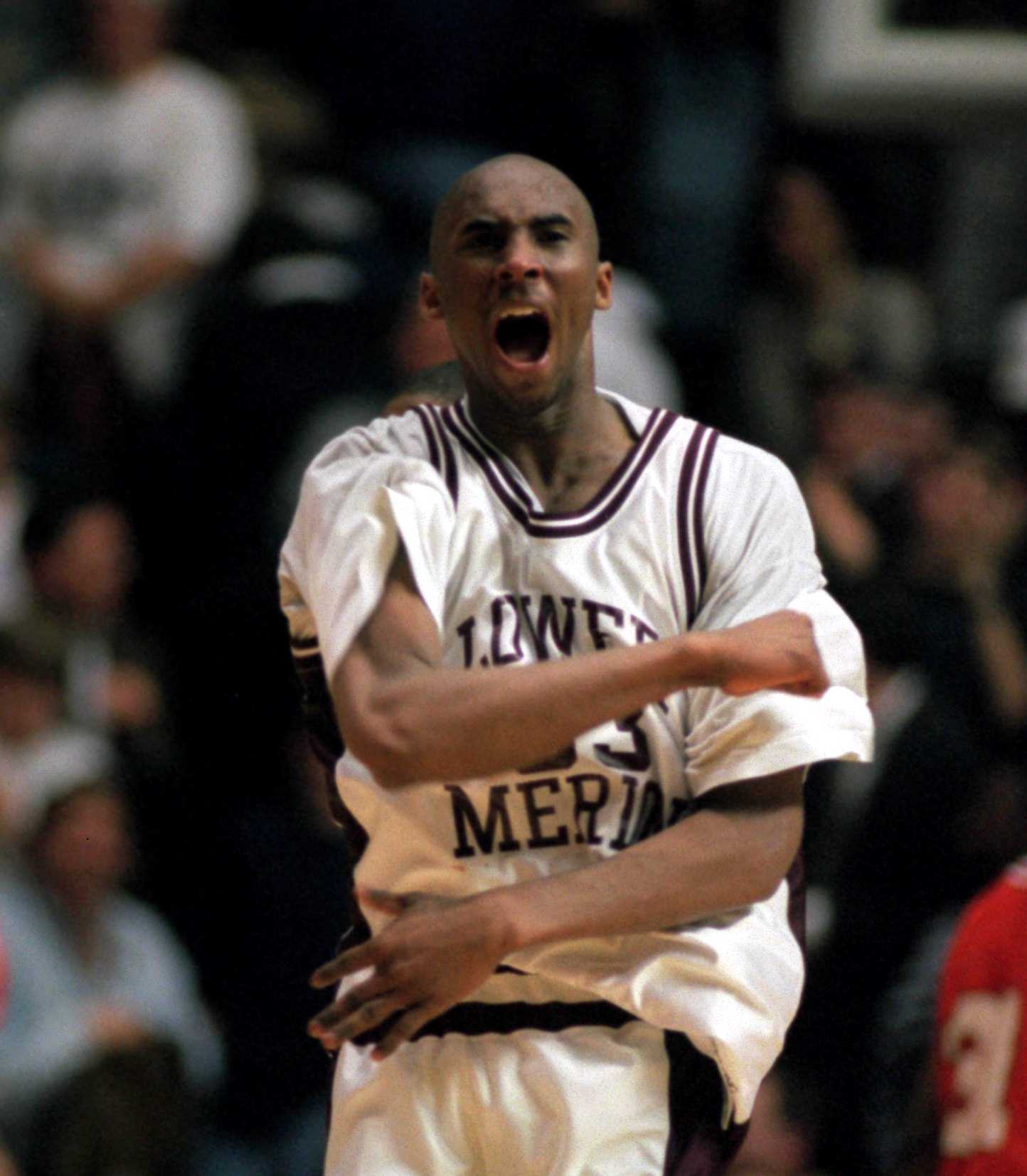
    The shooting guard scored 39 points later that month — with a broken nose — in a 77-69 state semifinal win over Chester. Lower Merion went on to beat Erie Cathedral Prep, 48-43, to win its first state championship since 1943.

    Kobe Bryant celebrates after defeating Chester at the Palestra in 1996 to advance to the state final.

    To Linehan, the difference Bryant made was obvious. He joked that he’d “never heard of Lower Merion” before his friend arrived. But once he did, Chester realized it would have to go to great lengths to prepare for the phenom.

    Ahead of a big game against Lower Merion in the mid-1990s, the coaching staff reached out to Clippers alumnus Zain Shaw. He played at West Virginia and in Europe and possessed some of the same characteristics as Bryant — a tall frame and an athletic build with strong ballhandling skills.

    The Clippers invited Shaw to practice, where he played the role of Bryant (to the best of his ability).

    “Kobe was so special, we had to bring in a pro to help us prepare,” said Linehan, who later starred at Providence.

    But there was another impact the future Lakers star had, one that had nothing to do with his own prowess. Linehan noticed that Bryant’s Lower Merion teammates started to take on some of his qualities. Suddenly, they were playing brash, confident basketball.

    “We didn’t have reason to believe, until Kobe got there, that we belonged on the court with Chester,” Young said. “The fear was real. Teams were afraid of Chester because they’d run you out of the building.

    “The idea of Lower Merion being on the court in a meaningful game against [them] was such a crazy thought. But then, you started to believe.”

    The buzzer-beater heard ’round Chester

    Bryant never got over the rivalry, even after he embarked on his Hall of Fame NBA career in 1996. Sometimes, he’d call the coaching staff before big games against Chester, leaving expletive-laden voicemails to use as motivation.

    The Lakers shooting guard also created an incentive structure for his former team.

    “You couldn’t get a pair of Nike sneakers unless you qualified for the playoffs,” Young said. “If you don’t earn it, you don’t get it.”

    He became especially involved in 2005-06. After a lull in the early 2000s, Chester and Lower Merion found themselves neck-and-neck again. The Aces were led by the duo of Ryan Brooks and Garrett Williamson, and the Clippers boasted a deep roster, headlined by Darrin Govens. All of them eventually played in the Big 5.

    (Chester was so stacked that it brought a 1,000-point scorer off the bench in Noel Wilmore.)

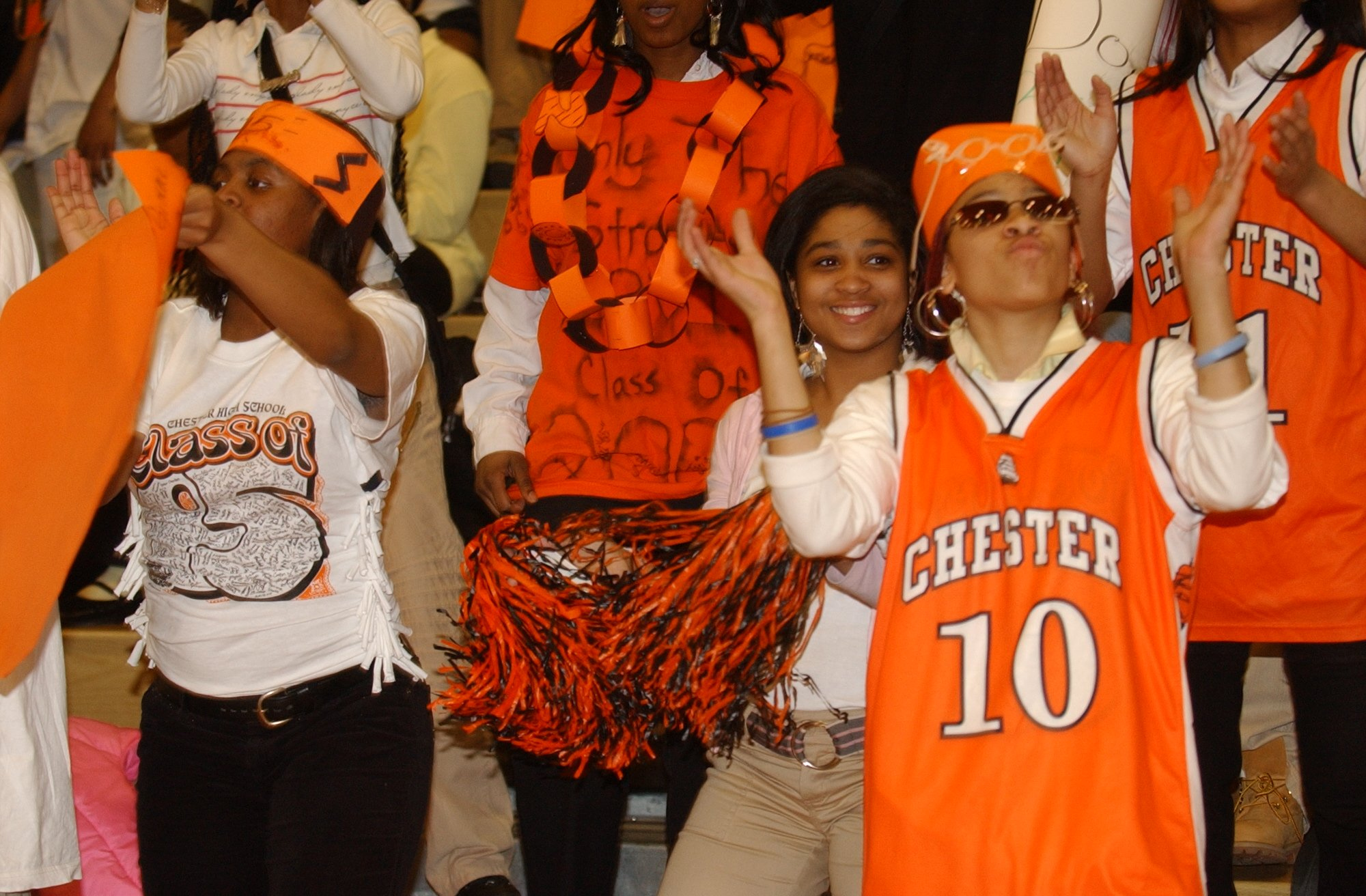
    Students from the class of 2005 show their support as Chester and Lower Merion play in the state final.

    The rivals met in the state championship on March 19, 2005. Despite strong performances from Williamson and Brooks, the Clippers pulled away in the second half thanks to a dominant third quarter from Govens. Chester won, 74-61.

    The teams reconvened the following season with their competitive spark fully reignited. They faced each other three times that year. Chester took Round 1, a one-point regular-season victory on Dec. 27.

    Round 2 was in the district final on March 3. Before the game, in front of a packed crowd at the Pavilion, Chester sophomore Karon Burton walked up to the layup line.

    Lower Merion’s student section caught his ear with a chant about coach Fred Pickett’s stout stature.

    “Hey Karon,” said one group.

    “Hey Karon,” responded the other.

    “Fred’s gonna eat you! Fred’s gonna eat you! Fred’s gonna eat you!”

    The dig didn’t intimidate Burton. If anything, it fueled him. He grew up playing street ball in Chester and always loved trash talk.

    Instead of cowering, like the crowd hoped, the sophomore delivered an unforgettable outing. The game went into overtime, and was tied at 80 with only a few seconds remaining. During a timeout, assistant coach Keith Taylor pulled Burton aside.

    “He was like, ‘Hey, listen,’” Burton said. “They’re going to double Darrin. If you get that ball, do your thing.’”

    Taylor’s words proved prescient. As Lower Merion’s defenders swarmed Govens, the Clippers inbounded the ball to Burton.

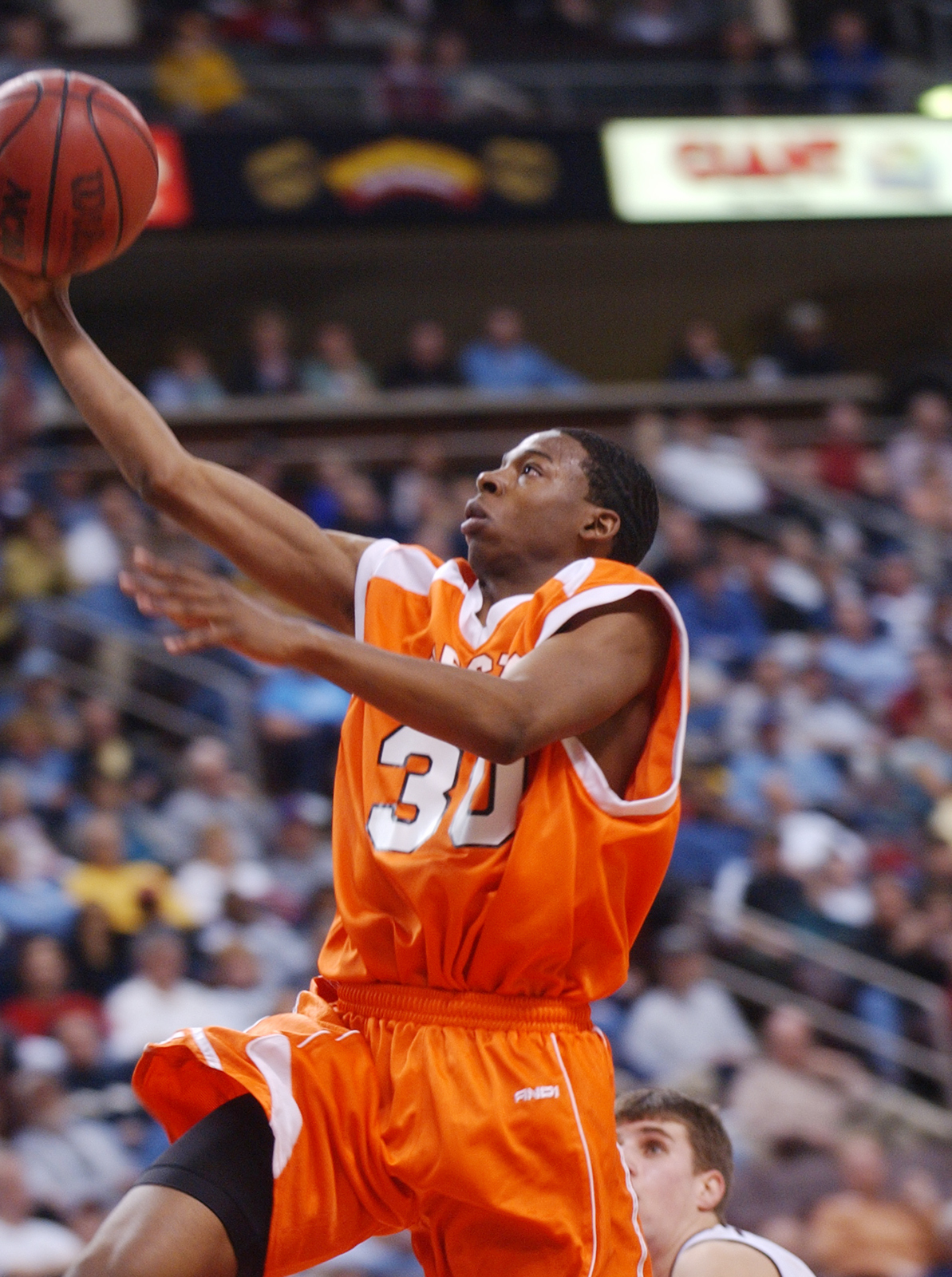
    He took a pull-up jumper from beyond the arc and drilled it for an 83-80 win. The Chester fans stormed the court. Burton, who later joined Wilmore in the 1,000-point club, said he felt like a celebrity in his hometown.

    “It was like watching a buzzer-beater in the NBA,” he said. “I just ran to my teammates, they picked me up. It was a crazy feeling.

    “I’m a big Kobe fan, too. Kobe’s my favorite player ever. So when I came and I hit the game-winner on that team …”

    Round 3 took place a few weeks later, in a state semifinal rematch at the Palestra on March 22. Bryant called Lower Merion’s coaches before the game.

    “I don’t remember specifically what he said, but I’m sure there were a lot of [expletives] dropped,” said Young. “Like, ‘Don’t call me back if you don’t beat those [expletives].’ That was a line we heard from him a couple times.”

    This one didn’t go Chester’s way. After trailing the Clippers, 47-37, at the end of the third quarter, the Aces came roaring back in the fourth and put up 33 points to eke out a 70-65 win.

    The celebration in the locker room was cathartic. Water sprayed into the air. Players sat atop each other’s shoulders and turned the showers into a slip ‘n slide. Bryant called in, again, as other members of the 1996 team filtered through.

    Darrin Govens scored his 1,000th point for Chester against Lower Merion in the state championship in 2005.

    This was not how Govens wanted to end his high school career. And a few months later, when he arrived at St. Joseph’s on a basketball scholarship, he saw a familiar foe.

    It was Williamson, his new Hawks teammate.

    “We were sitting on the opposite side of the bench,” Govens said. “I didn’t want to sit next to him; he didn’t want to sit next to me. We’d kind of avoid each other and just head nod.

    “Even in running drills, it was a competition. He looked to the left. I looked to the right. We tried to beat each other in sprints. But then we realized, ‘All right bro, we’re teammates now.’”

    ‘Hero status’

    Chester had always rallied around its high school basketball team. Linehan said it was akin to playing for the Sixers. The teenagers were treated like professional athletes — especially those who had been a part of big wins.

    The Clippers’ public address announcer, James Howard, called this “hero status.”

    “All of a sudden, your money’s no good,” he said. “Barbers take care of you, make sure your hair looks nice before games. Free food. Little kids look up to you and ask for your autograph. That’s how it is.”

    In Chester, there were plenty of heroes to draw from. There was Linehan, but also Jameer Nelson, who met a young Burton in the late 1990s. Nelson, a friend of Burton’s cousin, gave the aspiring basketball player a gift before he left for St. Joe’s: his MVP medal from the Chester summer league.

    “He was one of the biggest guys in our city,” Burton said, “so it’s definitely something that I’ll always remember.”

    By the early 2010s, when the rivalry was reignited for a third time, Lower Merion had built more of a basketball tradition. Aces guard Justin McFadden said he’d get stopped in Wawa before big games against the Clippers.

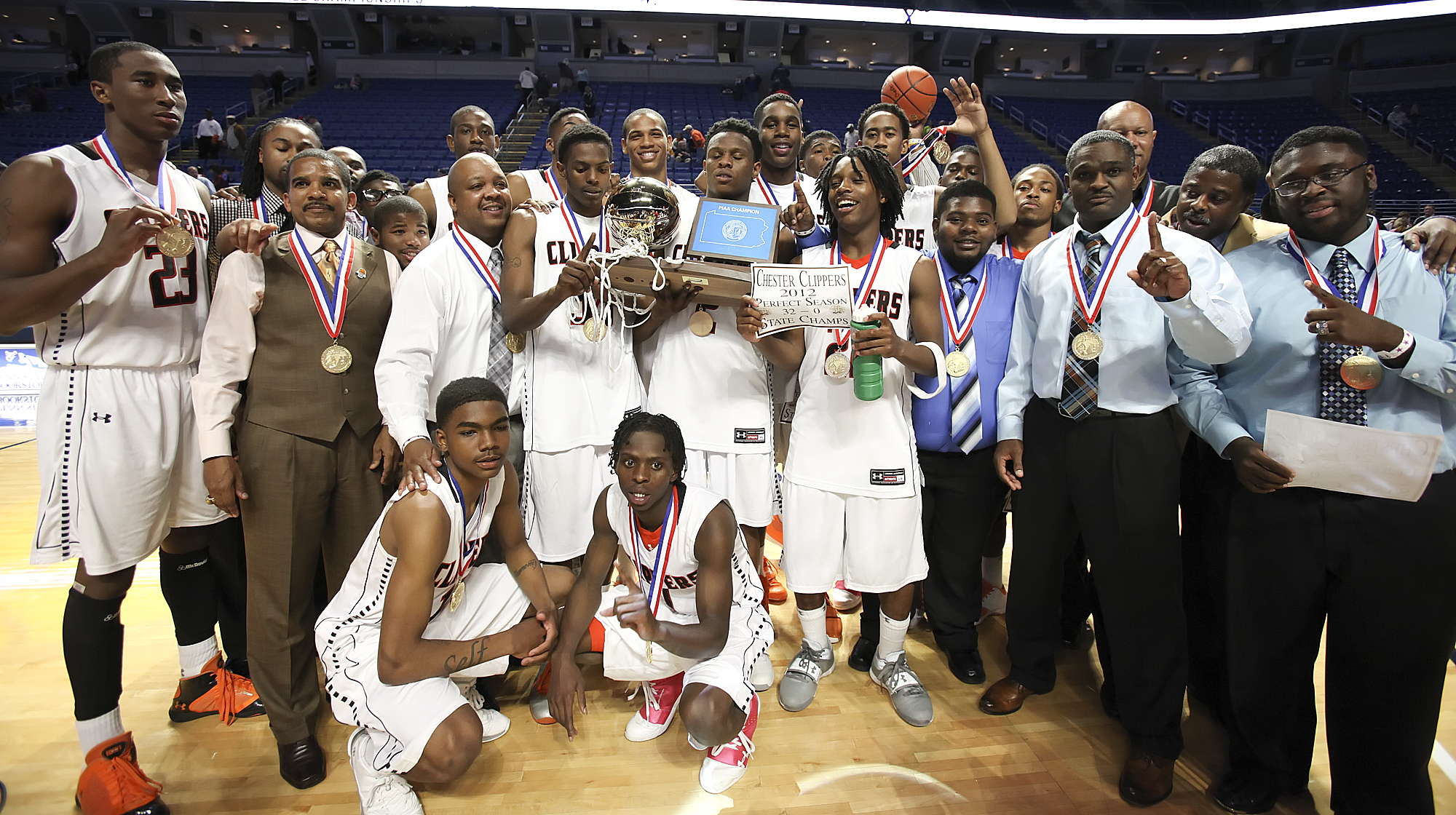
    Chester celebrates its win over Lower Merion for the state championship in 2012.

    “It became a community thing,” he said. “People would be asking, ‘What do you guys think about Chester? Do you think we can get it done?’”

    In 2012, the schools met in the state championship for the first time since 2005. Junior forward and future NBA starter Rondae Hollis-Jefferson put up a double-double to lead the Clippers to a resounding 59-33 win over the Aces. It was their second straight title and their 58th straight victory.

    A year later, after going 17-0 in the Central League, the Aces met the Clippers in the state final again. Chester had won 78 straight games against in-state opponents. Snapping that streak would be daunting, but Downer had a plethora of motivational tactics at his disposal.

    Just as they had in the 1990s, The Aces again spent pockets of the season watching Jaws, The Edge, as well as an addition: Al Pacino’s “Inch by Inch” speech in Any Given Sunday.

    “He would have that fired up on YouTube, ready to go,” McFadden said. “Looking back, [your reaction] is a chuckle, but in the moment, it worked. We knew that this was the hill that needed to be climbed.

    “And every time they played that speech, we got goose bumps. We were ready to fire.”

    Chester got out to an early lead, but Lower Merion rallied behind a 22-point, 11-rebound performance from B.J. Johnson, who later starred at La Salle. The Aces snapped the streak and won their seventh state title with a 63-47 victory.

    Lower Merion’s Jaquan Johnson goes to the net as Diamonte Reason guards him in the Chester-Lower Merion state championship game in 2013.

    The Clippers then were coached by Larry Yarbray. Pickett, who was diagnosed with cancer in 2010, was in declining health. Just before he died in 2014, Downer decided to say goodbye.

    He and his former assistant coach Jeremy Treatman drove out to Pickett’s home in Chester. They went to his bedside.

    “And we talked,” Downer said. “And we held hands. It was a really touching moment for me. This is a man that carried Chester on his back. That tried to carry Lower Merion on his back. And I knew it was the last time I was going to see Fred.

    “We walked out the door, and we told each other that we loved each other. And I never thought he would say that to me, or vice versa. But it was just kind of like, ‘You know what? We’ve had some amazing battles, and there’s a lot of respect there.’”

    Keeping the tradition alive

    In recent years, the Chester-Lower Merion rivalry has diminished.

    There was a brief period when the teams were in different classifications. Both programs have lost players to private schools that can recruit, and the addition of the Philadelphia Catholic League to the PIAA has made the state playoffs more competitive.

    One place the Aces and Clippers could meet is in the district tournament, where they reunited in 2024. But they haven’t played each other since. And Howard says the contests don’t have the same feel.

    “Both teams have lost D-I talent,” he said. “It’s not as high-flying, above the rim, as it was in the past. But still a great game. Sold out at Lower Merion, and at Chester, same thing.”

    The history will always be there, though, and Burton is doing his best to keep it alive. His 8-year-old son, Karon Burton Jr., is playing in the Biddy League. His father is his coach.

    Sometimes, they go on YouTube and watch old Clippers games. Junior’s favorite, of course, is the 2006 district final.

    Burton believes that his son has a promising future, but isn’t sure of where he’ll go to high school yet. He doesn’t want Karon Jr. to feel obligated to follow his father’s path.

    But if it worked out that way, what a story that would be.

    “I’d love to be the first father and son to have 1,000 points,” Burton said. “With the same name? That would be crazy.”

  • In the lottery of life, I got lucky

    In the lottery of life, I got lucky

    Many years ago, when I was a college student, a philosophy professor told me that life was a great cosmic lottery. None of us chooses the parents we have. Instead, they choose to have us.

    I’ve been thinking about his comment because my mother died last week, after a long and fruitful life. Of course, it’s always sad to lose a loved one. But since she passed, I’ve felt more serendipity than sorrow.

    In the great cosmic lottery, I got lucky.

    I got lucky because Mom taught me that men and women are — or should be — equal, in all the ways that matter. She never sat me down and said that, but she didn’t have to. It permeated everything she did.

    Mom devoted her career to international family planning and maternal health. She fought for women to have access to contraceptive information and services, no matter where they lived. She thought they should be able to make their own choices about reproduction and everything else.

    So “Women’s Lib” wasn’t just a saying where I grew up, in the 1960s and 1970s. It was a fundamental truth. I never questioned whether women should enjoy the same rights as men.

    Margot Lurie Zimmerman taught her son to raise his voice when he had something to say.

    That’s been an enormous boon to me, as a spouse and a parent and a teacher. My wife and I have two daughters, and, because I teach about education, most of my students have been female. I would be much worse at what I do if I believed they were lesser, in any sense. And they would be worse for it, too.

    I also got lucky because Mom taught me to raise my voice when I had something to say. As an educator, I am constantly trying to get students to do the same. Sadly, some of them don’t believe they have anything to say that would be worth hearing. And others are simply afraid to say what they think.

    I never was. That’s because of Mom, too. If you want to write for newspapers, you need a thick skin. And she gave me one.

    The third way I got lucky was by watching Mom work. And I mean work. Hard. To succeed at anything, she taught me, you need effort. It’s not about your inherent abilities. It’s about what you do with them.

    Psychologists call that a “growth mindset.” I didn’t know the term when I was younger, but again, I didn’t need to. It was drilled into me, over and over again. If you want something, work for it. And if you don’t get it right away, keep at it. Keep going.

    That’s been a hugely useful lesson in my life. Of course, you can take it too far. Mom insisted that you could achieve anything if you tried hard enough.

    And that’s not true. We are all finite beings, in what we can imagine and create and accomplish. It’s good to keep trying, but you also have to accept your own limitations. (I keep trying to do that.)

    Last, I got lucky by being exposed to the inestimable value of friendship in everything we do. My parents spent their lives traveling the world, and they collected friends at every stop. Those are the people who will nurture and replenish you until your own journey comes to an end.

    When Mom died, I was overwhelmed by the expressions of love from her friends. And it came on the heels of the death of my dear friend Mark, who lived in Oregon. I went to be with Mark’s family when he died, and I was on my way home when Mom passed on.

    The novelist Wallace Stegner described friendship as something you needed to create and recreate, over and over again. It is “a relationship that has no formal shape, there are no rules or obligations or bonds as in marriage or the family,” Stegner wrote. “It is held together neither by law nor property nor blood, there is no glue in it but mutual liking. It is therefore rare.”

    Jonathan Zimmerman writes that his mother taught him about the inestimable value of friendship.

    But where I grew up, it was as common as sunshine. As a kid, I don’t think I appreciated what my Mom did to sustain her friendships. Now I do. And I am lucky — again, for her example.

    Mom was not perfect by any means. She could be prickly, judgmental, and blunt. She didn’t know how to read a room, and she also didn’t feel like she needed to. Whatever she thought, she said. And sometimes — actually, lots of times — you didn’t want to hear it.

    But in the great cosmic lottery, I got a pretty darned good ticket. Thanks, Mom, for the mark you left on me. I was lucky to be your son.

    Jonathan Zimmerman teaches education and history at the University of Pennsylvania. He is the author of “Whose America?: Culture Wars in the Public Schools” (University of Chicago Press).

  • Hahnemann redevelopment may be another victim of councilmanic prerogative | Editorial

    Hahnemann redevelopment may be another victim of councilmanic prerogative | Editorial

    Since his 2023 election, 5th District Councilmember Jeffery “Jay” Young has earned a reputation as City Council’s quarrelsome contrarian. His penchant for swooping in and obstructing projects at the last minute has upset everyone from progressive community activists to affected developers.

    Young is a single vote on Philadelphia’s 17-member legislative body, but thanks to the tradition of councilmanic prerogative — where the rest of Council yields to district representatives regarding land-use decisions — he wields absolute power over an area that includes Rittenhouse Square and City Hall to the south, Strawberry Mansion to the west, part of Northern Liberties and Fishtown to the east, and Hunting Park to the north.

    Projects impacted by his objections include a long-standing proposal to build senior housing in Strawberry Mansion, a plan to protect students with speed cameras in school zones, and the renovation of the Cecil B. Moore Library.

    Young’s latest disruptive gambit — ill-conceived and misguided — is a bill that targets the proposed redevelopment of the former Hahnemann University Hospital patient towers in Center City into hundreds of apartments.

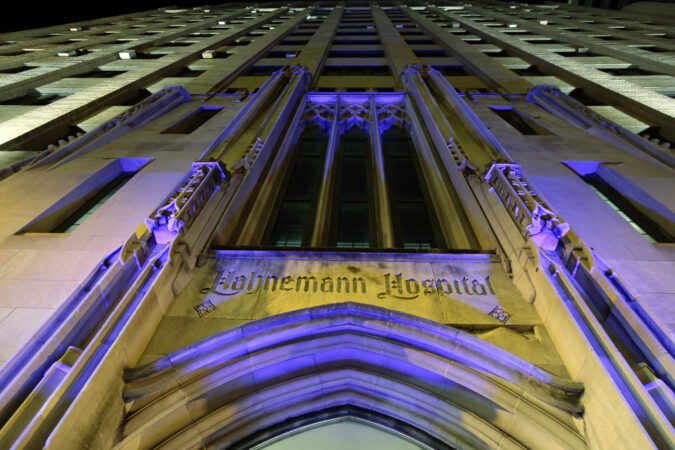
    Established in 1885, the hospital healed generations of Philadelphians, and its south tower was the first skyscraper teaching hospital in America. Beyond the loss of medical services, when Hahnemann closed six years ago, it left a gaping hole in the heart of the city.

    Located along a stretch of North Broad Street that is heavily underutilized, the vacant buildings are begging for a new lease. Dwight City Group has proposed refilling the campus with housing. The plan would add hundreds of new residents right next to Center City and the Broad Street Line, and within walking distance of Suburban Station.

    To most housing, development, and planning experts, the idea is perfectly sound. Philadelphia would add workforce housing (around 1% of Mayor Cherelle L. Parker’s goal) in a location that already has the infrastructure and amenities residents require, and the city would not have to spend any taxpayer money to make it happen.

    And yet, Young is opposed.

    Jeffery “Jay” Young represents Philadelphia’s 5th District.

    In a statement to the Editorial Board last year, Young defended the move as being motivated by a desire to grow jobs in the city by limiting development in the area to commercial use. That’s an admirable goal. But who is going to buy the goods and services these hypothetical new businesses would offer? The redevelopment of Hahnemann into an apartment building would only increase local entrepreneurial opportunities.

    Thankfully, in this case, it looks like Young’s obstructive desires may be a moot point — at least when it comes to his proposed legislation.

    Because Council adjourned for its winter break without voting Young’s bill out of committee, the developer was able to secure zoning permits to build 361 apartments, with space for commercial use in the building’s ground floor.

    While the Dwight City Group did not want to comment, CEO Judah Angster earlier told Inquirer reporter Jake Blumgart they remain in negotiations with Young. Given the fact that the developer may have to deal with the councilmember in the future, there is a chance the Hahnemann project may be curtailed to avoid Young’s ire elsewhere.

    Were that to happen, it would mark another missed opportunity for positive growth in the city, thanks to councilmanic prerogative.

    For decades, Philadelphia has trailed peer cities in job growth and economic activity. While high business taxes, deep poverty, and other factors play a role, prerogative stands out as an impediment that is entirely self-inflicted.

    The practice — no matter how strongly it is defended by Young and his colleagues — is a constant detriment to the city. While there is merit in giving district representatives a strong voice to protect their constituents from unwanted development, councilmanic prerogative too often allows the whims of a single person to override the will of the people.

    The only thing Philadelphia would lose by eliminating councilmanic prerogative is the opportunity for Council members to grandstand and feed their egos.

  • Founding Father Ben Franklin also founded America’s first volunteer fire department

    Founding Father Ben Franklin also founded America’s first volunteer fire department

    Colonial Philadelphia — a community of wooden dwellings and businesses along the Delaware River back in the 1700s — was under constant threat of burning to the ground. Fires could and did start from the haphazard fling of a cigarette, or burning the soot out of chimneys, or sometimes the accidental drop of a lantern.

    By 1730, the city had just one fire engine — a steam-powered box car — and dozens of buckets for carrying water to extinguish flames. When a fire that year on Fishbourne Wharf nearly destroyed the city, causing 5,000 pounds in property damage, Ben Franklin took notice.

    The incident prompted him to advocate for fire prevention in his newspaper, The Pennsylvania Gazette, coining the still-used fire safety mantra, “An ounce of prevention is worth a pound of cure.”

    On Dec. 7, 1736, Franklin and 24 other prominent Philadelphians established the Union Fire Company.

    The formation of the Union Fire Company will be remembered Saturday at the Firstival to be held at Fireman’s Hall Museum. Firstivals are the Philadelphia Historic District’s weekly day parties celebrating historic events that happened in Philadelphia before anywhere else in America, and often the world. They are part of a yearlong celebration of America’s 250th birthday.

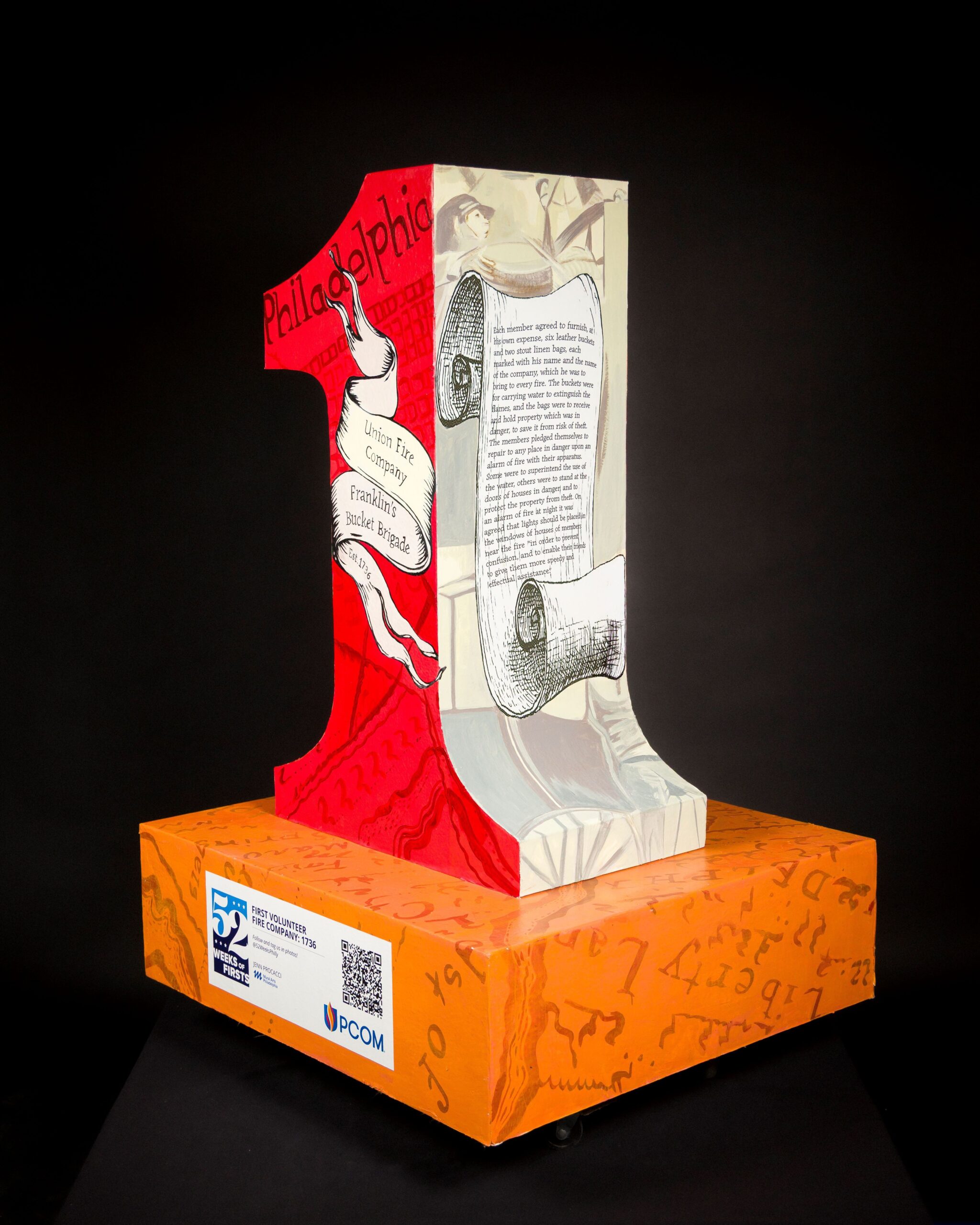
    Artist Jenn Procacci’s sculpture incorporates maps of 1700s Philadelphia highlighting routes volunteer firefighters would take to extinguish blazes.

    The Union Fire Company, also called the Bucket Brigade, was modeled after mutual aid firefighting organizations in Boston. In its early years, the company only helped its members put out fires in their homes or properties.

    In 1742, the members voted to help any Philadelphian whose home or property was ablaze. The fact that they helped all Philadelphians, not just members, made the company America’s first volunteer fire department.

    Within the decade, Philadelphia had eight volunteer fire companies.

    These early volunteer fire companies were elite organizations that capped their memberships at about 30, explained Carol Smith, curator and archivist at Fireman’s Hall Museum. Members provided their own equipment: buckets for carrying water to put out fires and bags to salvage items from being destroyed. Companies had several meetings a year and members were fined for absence or tardiness.

    As the home of the country’s first volunteer firefighting outfit, Philadelphia was progressive when it came to fighting fires — they were among the first companies in the country to experiment with innovative hoses. The city also was unique in establishing ways to support Philadelphia residents impacted by fire.

    In 1752, Franklin started the nation’s first property insurance company, the Philadelphia Contributionship for the Insurance of Houses from Loss by Fire, still operating today.

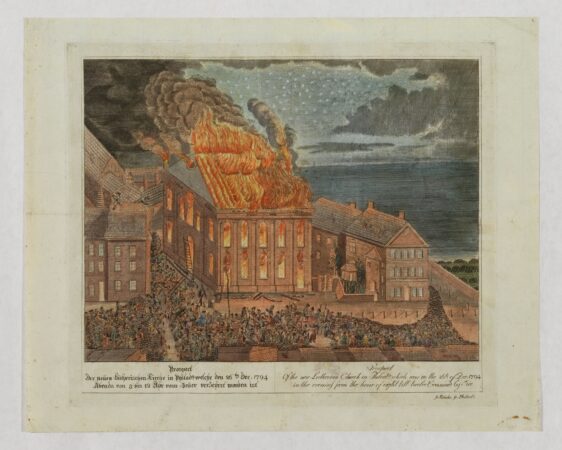
    Philadelphia’s early network of volunteer firefighters stopped major fires, like the 1794 burning of Zion Lutheran Church, and prevented extensive fire damage to the city.

    “A lot of it was because of the advances in firefighting technology like updated hoses,” Smith said. “Our volunteer fire departments were very proactive.”

    Today’s fire houses are descendants of Ben Franklin’s Union Fire Company.

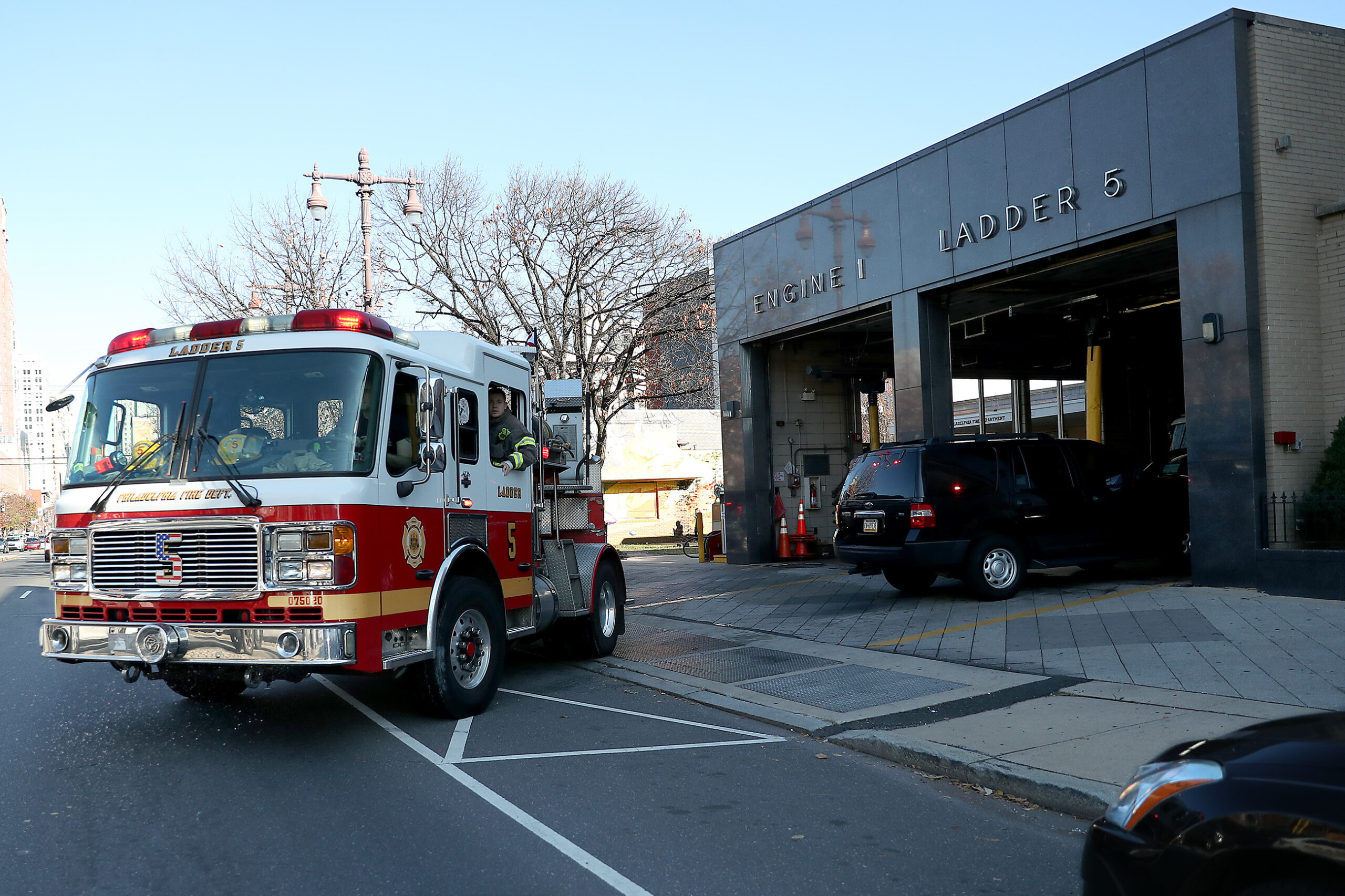
    The Union Fire Company housed its equipment on Old City’s Grindstone Alley and was active through the early 1800s, disbanding in 1843. Its remaining members joined the Vigilant Engine Company, that, in 1871 became Engine 8, one of the city’s first municipal fire stations.

    It remains open.

    This week’s Firstival is Saturday, Jan. 17, 11 a.m. — 1 p.m., Fireman’s Hall Museum, 147 N. Second St. The Inquirer will highlight a “first” from Philadelphia Historic District’s 52 Weeks of Firsts program every week.

  • 2026 Nissan Murano: I’ll probably forget I drove it this time, too

    2026 Nissan Murano: I’ll probably forget I drove it this time, too

    2026 Nissan Murano Platinum AWD vs. Volkswagen Atlas SEL Premium R-Line: Midsize SUV comparison.

    This week: Nissan Murano

    Price: $53,950 as tested

    What others are saying: “Highs: Comfortable front seats; short stopping distances. Lows: Rough-shifting transmission, uneven power delivery, stiff ride, unintuitive controls,” says Consumer Reports.

    What Nissan is saying: “Energetic elegance.”

    Reality: I promise I checked Consumer Reports after I wrote the column.

    What’s new: I was excited to have a Murano in my lineup because after all these years of columnizing, I would finally get to review one.

    (Googles “Scott Sturgis” “Inquirer” “Murano.”) Well, huh. I drove 2015 and 2018 models.

    Memorable, evidently.

    This is not the same Murano, naturally. A redesign for 2025 gives the awkward old two-row, midsize SUV an awkward new look, along with a new engine and transmission.

    Competition: In addition to the Volkswagen Atlas, there are the Chevrolet Blazer, Honda Passport, Jeep Grand Cherokee, Mazda CX-70, Subaru Outback, and Toyota Crown Signia.

    Shifty: Hooray! A Nissan without a CVT! The Murano came with a 9-speed automatic, so I should be this delighted. But read on.

    Up to speed: Gone is the V-6 that powered the old model. The 2.0-liter turbocharged engine creates 241 horses, which is not a ton for this size of vehicle. It gets the vehicle to 60 mph in 7.2 seconds, according to Car and Driver.

    But the acceleration story has many more chapters. When I first pulled out of my neighborhood, the Murano seemed to alternate between lag and lurch. “OK, it’s cold,” I thought, offering the benefit of the doubt even while it was probably 85 degrees outside. “I’ll give it some time.”

    But the unsteadiness continued. Sometimes SUVs and minivans can have an awkward accelerator-foot interface, so I looked into that. But, no, it felt comfortable.

    “Aha! Here’s a drive mode selector,” I cried. “I’ll try that.” When I shifted to sport mode, it got sporty all right — in the way that your eighth-grade gym teacher forced you to run laps around the gym at 8 a.m. until you felt like throwing up. It was even rougher than before, although the roughness came at you faster.

    “All right, I never do this,” I sighed and shifted into eco. Surprisingly, the power didn’t completely die out. The Murano felt smooth. Sure, it took a lot of foot stomping to get the Murano on highways and such, but the SUV delivered power much better.

    On the road: Mode, schmode, driving the Murano was never more than OK. Country roads are blah; highways are a faster blah. There are just so many more enjoyable competitors to get around in.

    The lane-keeping system drove me nuts for a few days, and the menus to adjust it are inscrutable. Press one of two little dotted lines on the steering wheel to change them. The screen says “OK Menu,” and there’s a tiny OK button next to a microphone/button, and that seemed to function at somewhat regular intervals. I’d need practice to do it again.

    The interior of the 2026 Nissan Murano is elegant, as are many of Nissan’s offerings. Unfortunately its user-friendliness is lacking.

    Driver’s Seat: The seat itself is on the plush side, roomy and wide. Nissan has long offered classy interiors even down to the Sentra (sorry, Versa, not you). Silver buttons and trim with nice colored material add to the upscale feel.

    But here’s a better place to complain about the transmission controls. Why did some designer think a row of buttons at the front of the console would be a great idea? My phone and other items forever covered them. Also, they’re just not intuitive, so when you’re in a tight spot and have to maneuver forward and back to get out, it requires far more concentration than it should.

    Friends and stuff: The rear seat is roomy, comfortable, nicely appointed, and well positioned. Heads, legs, and feet have no shortage of space, even in the middle seat.

    Cargo space is 32.9 cubic feet in the back, and 63.5 with the rear seat folded.

    In and out: The Murano rides at a height perfect for entry and exit without leg stretches.

    Play some tunes: A single large volume knob is available outside the touchscreen. The 12.3-inch screen sounds like a good size, but it’s very short and wide, and a row of icons along the side and HVAC display along the bottom eat into the space.

    Sound from the Bose Premium system is OK, about a B+ or so, and leaves me wondering what the not-premium system sounds like.

    Keeping warm and cool: Going one better (or worse) than the popular ebony touch pads, which Mr. Driver’s Seat doesn’t love, the Murano offers a cheap-looking black plastic controller pad with temperature, fan speed, and source, and it requires a forceful push to engage your choices.

    While you’re fighting with that, a teeny tiny display at the bottom of the touchscreen shows the changes. Let’s all say it in unison: “Eyes on the road!”

    Fuel economy: I couldn’t get the trip display to do more than show me how each individual trip went, and the car said the best fuel economy was 22.8 mpg. So, the rest were worse. Let’s call it 20.

    Where it’s built: Smyrna, Tenn. Half the parts come from the U.S. and Canada, including the transmission. The engine hails from Japan.

    How it’s built: The Murano gets a predicted reliability of 3 out of 5 from Consumer Reports.

    In the end: Nissan has a comfortable, roomy, attractive (on the inside) SUV here. If they can tweak the engine and suspension and start over with infotainment and HVAC controls, this could be a winner.

    Next week: 2026 Volkswagen Atlas