Tag: topic-link-auto

  • The most memorable things Craig LaBan tasted in Japan

    The most memorable things Craig LaBan tasted in Japan

    The prospect of following one of America’s best sushi chefs on a food journey across Japan is tantalizing enough. But as I’d learn firsthand, Japanese food culture is about so much more than raw fish. As we traveled with Royal Izakaya & Sushi chef Jesse Ito and his father, chef Matt “Masaharu” Ito, through Tokyo, Osaka, and to the Ito ancestral home on Kyushu island, I found true delight at every level, from rarified tasting menus to the snack aisles of 7-Eleven.
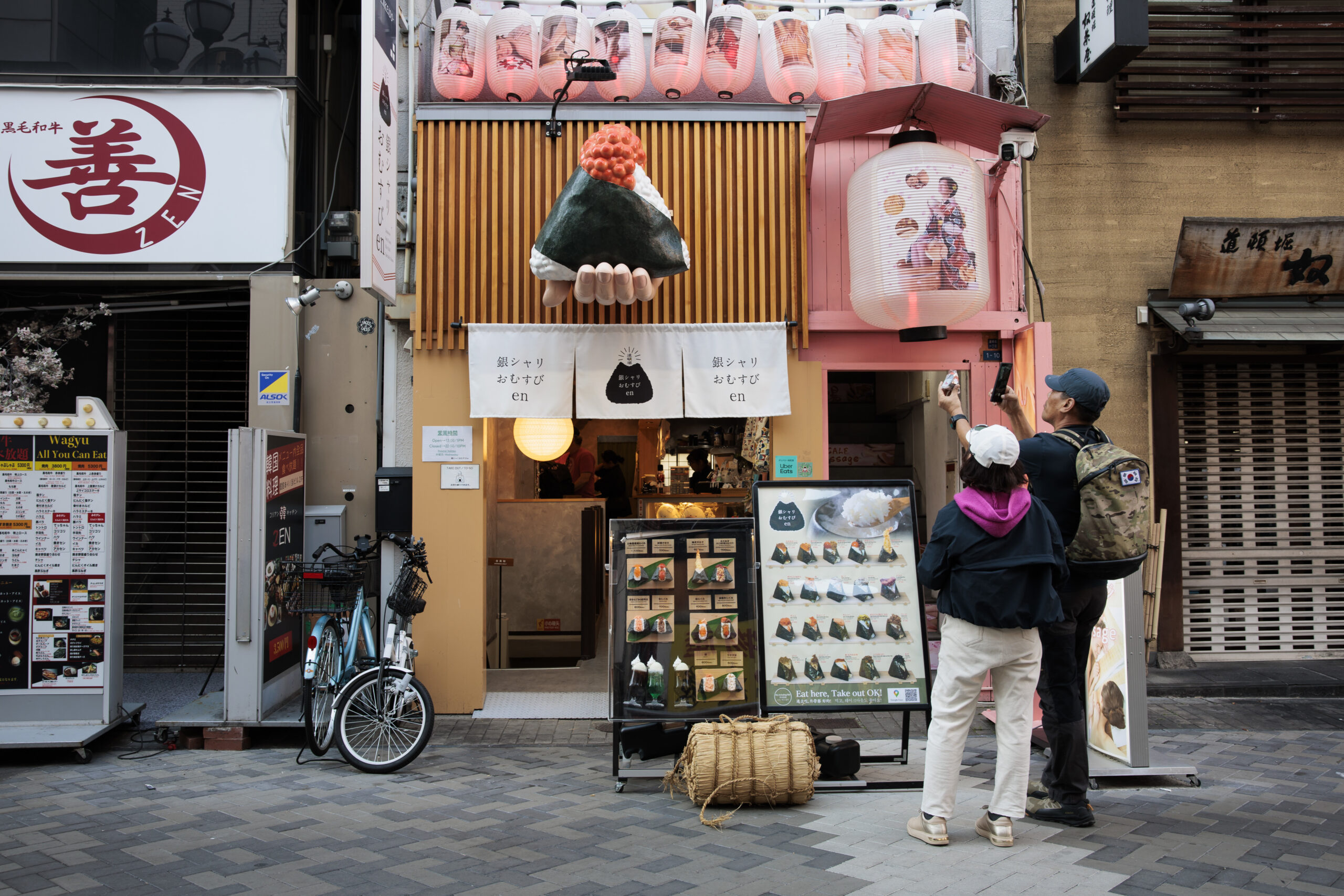
    Brightly decorated, colorful shops line the street in Dotombori in Osaka.

    Considering there are an estimated 160,000 restaurants in Tokyo alone, this is hardly a “best of” list. I’ve written about an incredible ramen crawl across Tokyo with the owners of Neighborhood Ramen and a visit to Nihonbashi Philly, a Tokyo bar/shrine to Philly culture making its own cheesesteaks and soft pretzels, in separate stories. But there were so many other great flavors along the trip. This is an account of several more highlights from a nine-day journey I’ll never forget.
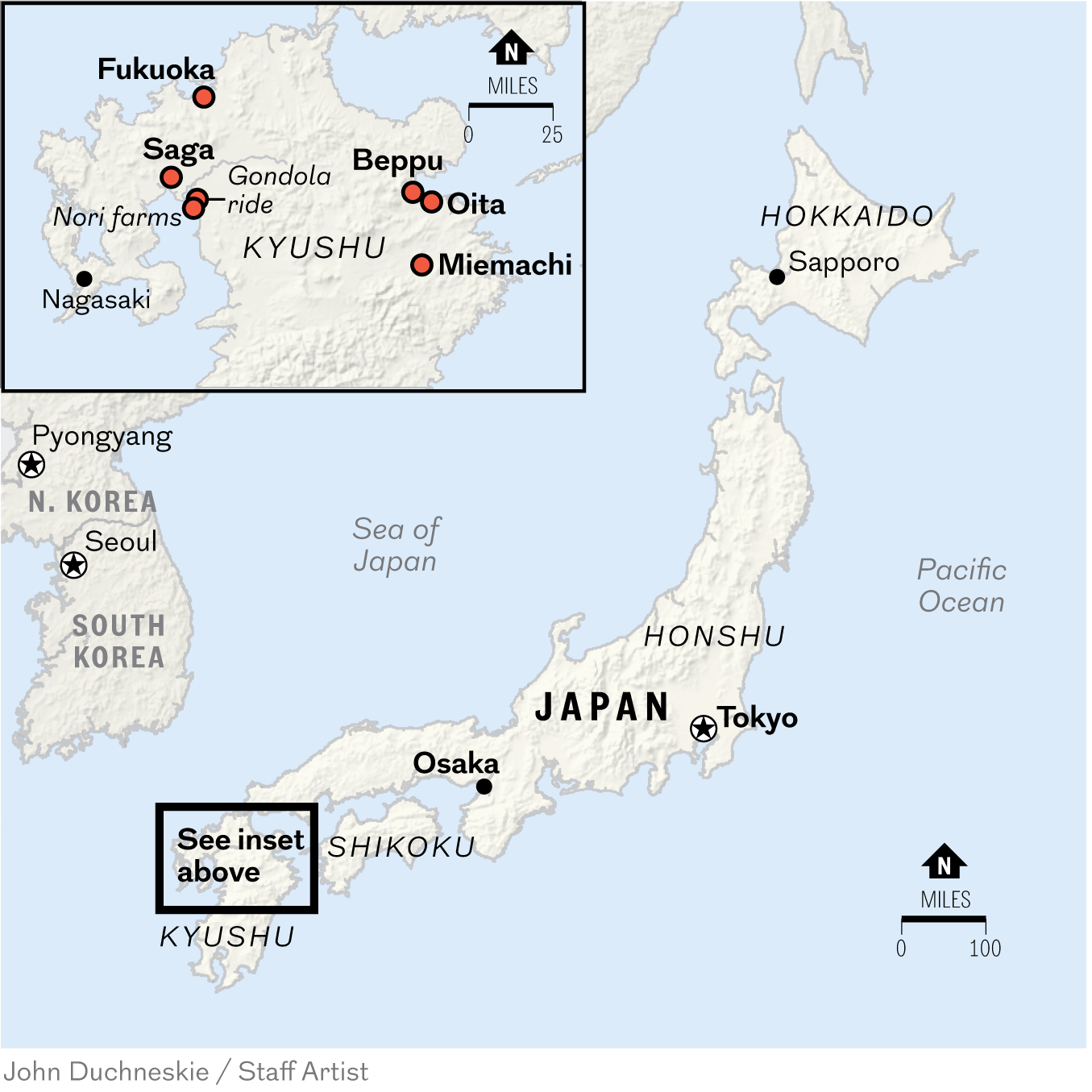
    Map of Craig LaBan’s travels in Japan with Philadelphia chef Jesse Ito and his father, Matt.

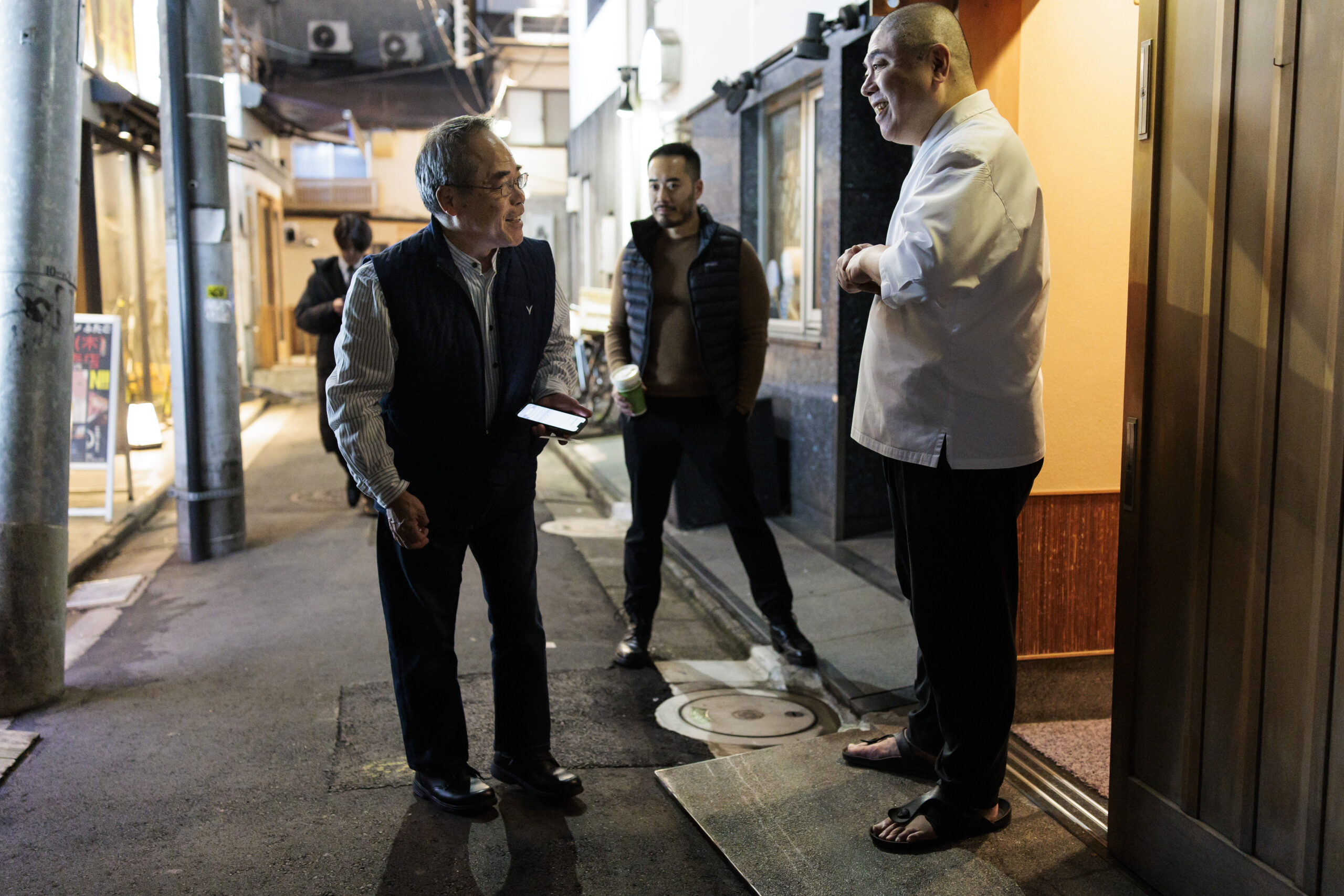
    Matt Ito and Jesse Ito talk with Chef Kunihiro Shimizu outside of his restaurant, Shimbashi Shimizu, on Sunday, Nov. 2, 2025 in Tokyo, Japan. No photos or video are allowed during the omakase at Shimbashi Shimizu, and international visitors are only permitted when accompanied by someone who understands Japanese.

    Edomae-style sushi at Shimbashi Shimizu in Tokyo

    We’d just touched down at Tokyo’s Haneda airport and it was 5 a.m. Philly time. Jet lag be damned! I was ready for my first omakase in Japan at this eight-seat hideaway off an alley near Shimbashi station. No pictures are allowed. No English is spoken. The only way for a foreigner to get a seat is on the recommendation of a regular. Chef Kunihiro Shimizu is revered as a master of the classic Edomae-style sushi, which means, among other things, the rice is seasoned with a startlingly assertive vinegar tang. Nearly 20 hearty pieces of nigiri and sashimi landed in waves directly on the wooden counter: velvety saltwater eel; red-tipped akagai (blood clam) cut into a pompom that crunched like sweet and briny ocean threads; a silky chawanmushi custard with hairy crab. This was also my first “wow” moment with the winter delicacy of shirako, the crinkly white pouches of cod milt that came doused in warm dashi with grated daikon. Each creamy bite melted away like a cloud.

    Onigiri at 7-Eleven (everywhere)

    The Japanese version of this iconic convenience store is legendary for a reason. They’re ubiquitous and stocked with fresh-made egg salad sandos, warming cases of fluffy pork buns, multicolored mochi doughnuts, and a dizzying array of onigiri rice balls that make easy snacks, including my first few breakfasts in Japan. Onigiri laced with pickled plum and seaweed and the tuna with mayo were my go-to moves.
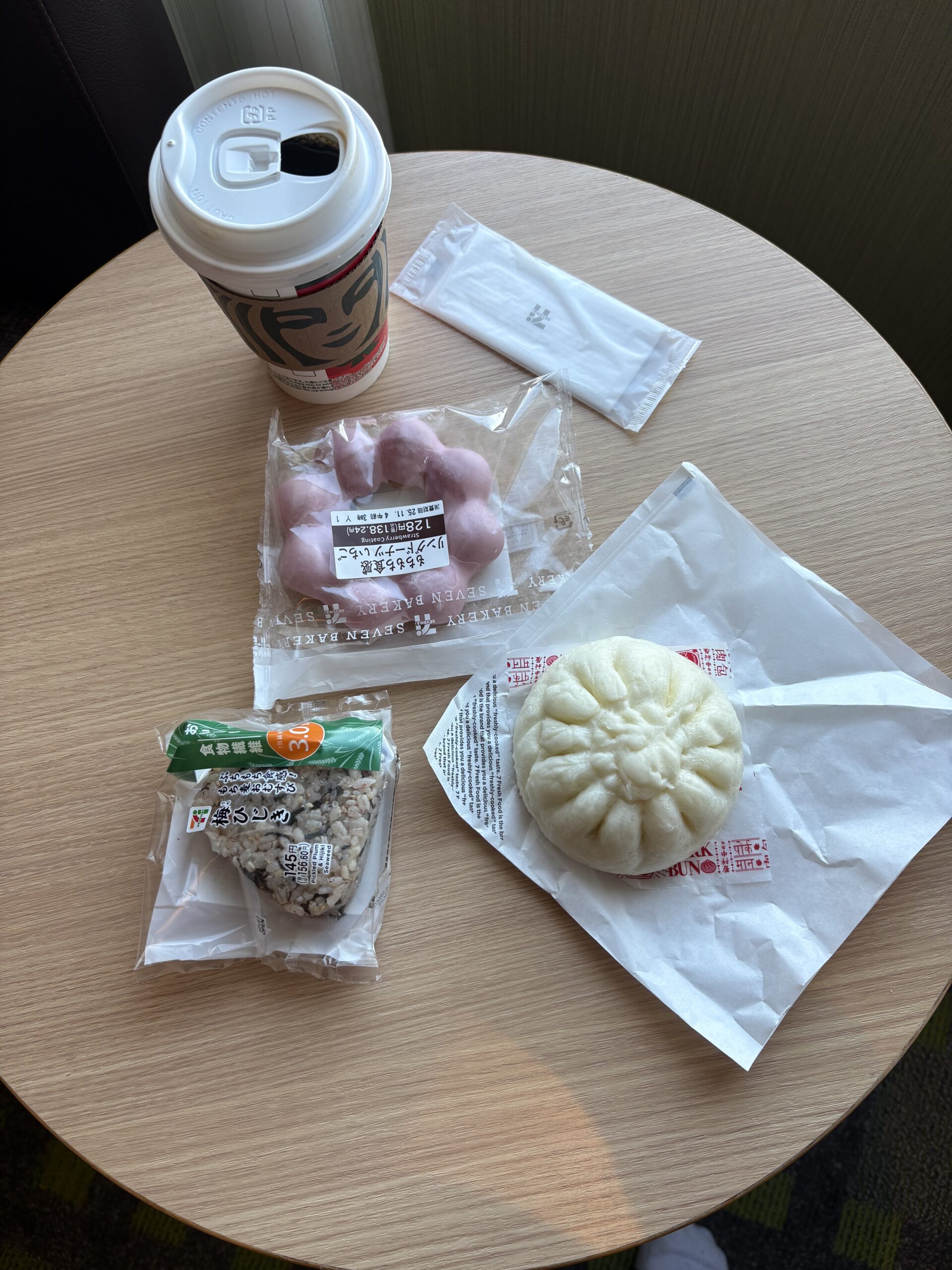
    Breakfast in Japan may come from chains that are familiar to Americans, like Starbucks or 7-Eleven, but might consist of an onigiri rice ball, a steamed pork bun and a mochi doughnut dipped in pink icing.

    King crab legs at Tsukiji Outer Market in Tokyo

    The legendary wholesale fish market at Tsukiji moved to Toyosu in 2018, but the site remains an essential retail destination for tourists to graze the many food stalls. I ate some of richest pink toro of our visit for breakfast here, as well as skewered cubes of buttery grilled A5 Wagyu. The real star was a bucket of steamed king crab legs so sweet and tender, it was pure luxury to swab the moist plumes of white meat through garlic butter sauce laced with spiced pollock roe.
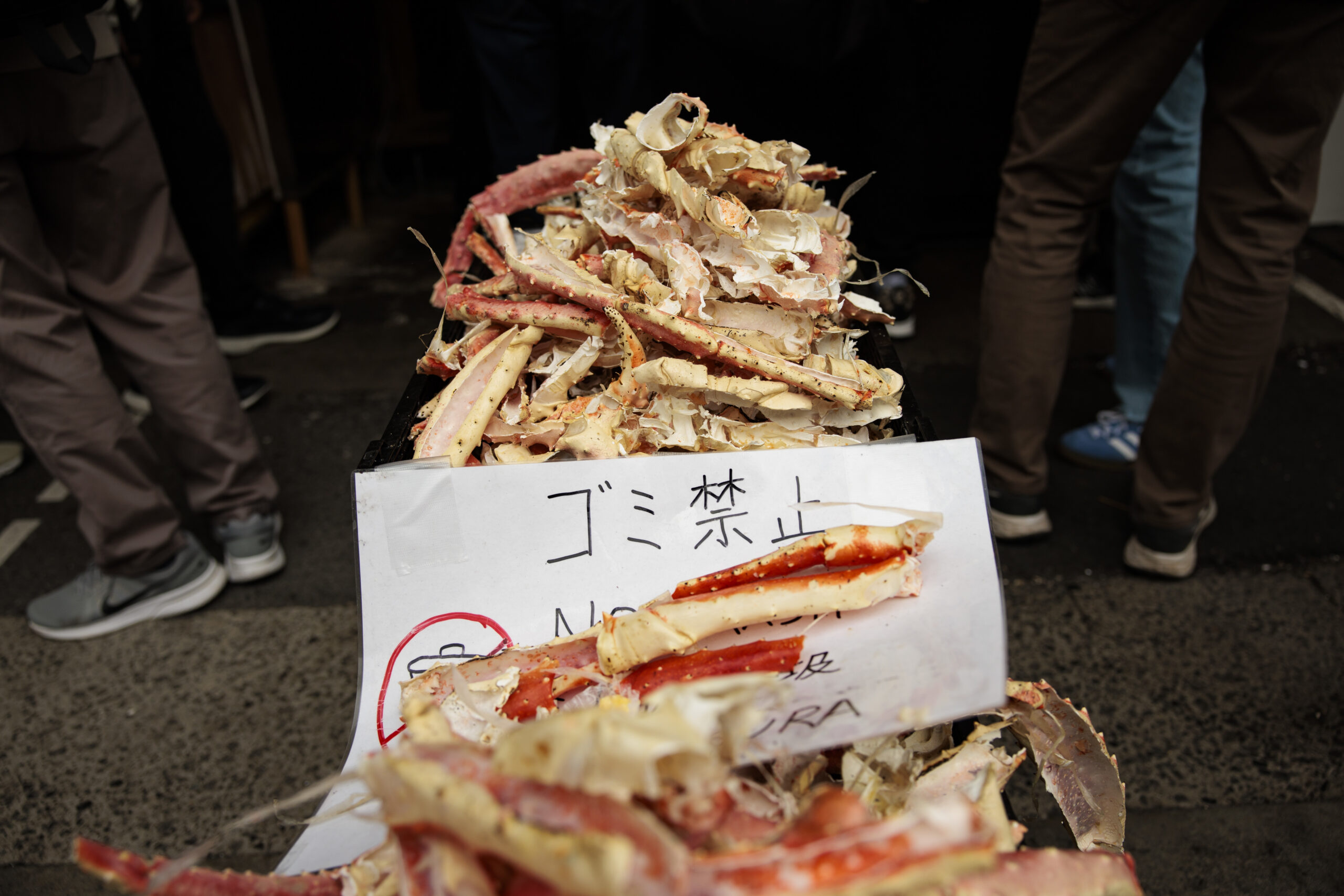
    King crab shells in the trash at the Tsukiji Outer Market on Monday, Nov. 3, 2025 in Tokyo, Japan.

    Whiskey and hand-carved ice at Abbot’s Choice in Tokyo

    I wandered spontaneously into this corner bar in Shibuya’s entertainment district, looked at the impressive collection of well-priced Japanese whiskeys, and promptly took a seat. My snifter of Nikka single-malt Miyagikyo was outstanding. But the real show was watching the bartender cradle huge blocks of ice in one hand and deftly whack them into tumbler-sized cubes with a swordlike blade.
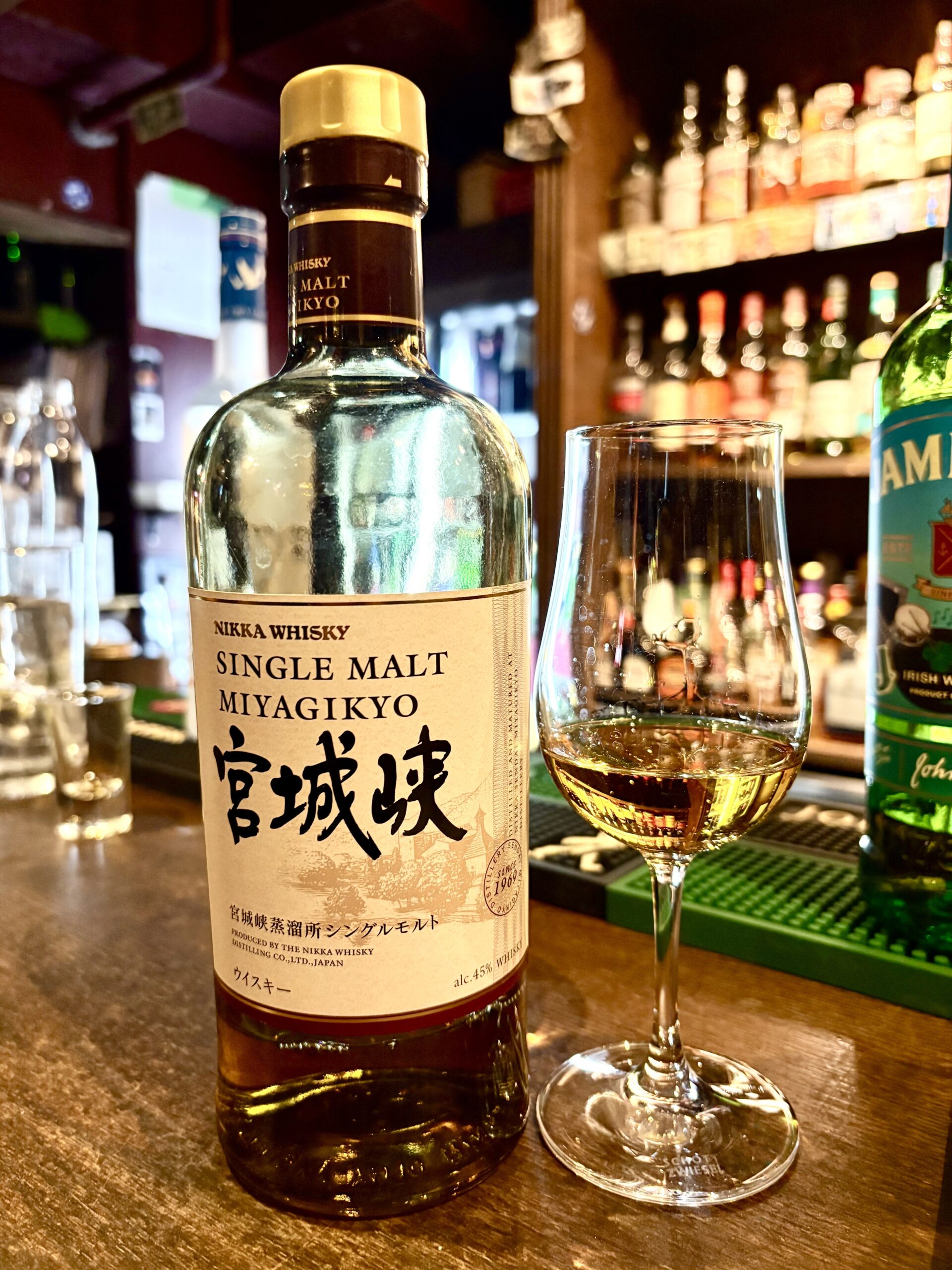
    A pour of Nikka single-malt Miyagikyo is one of the many highlights from the extensive list of well-priced Japanese whiskeys at Abbot’s Choice bar in the Shibuya neighborhood of Tokyo.
    The salad course at Den on Monday, Nov. 3, 2025 in Tokyo, Japan. Den is Chef Zaiyu Hasegawa’s restaurant.

    Happy salad at Den in Tokyo

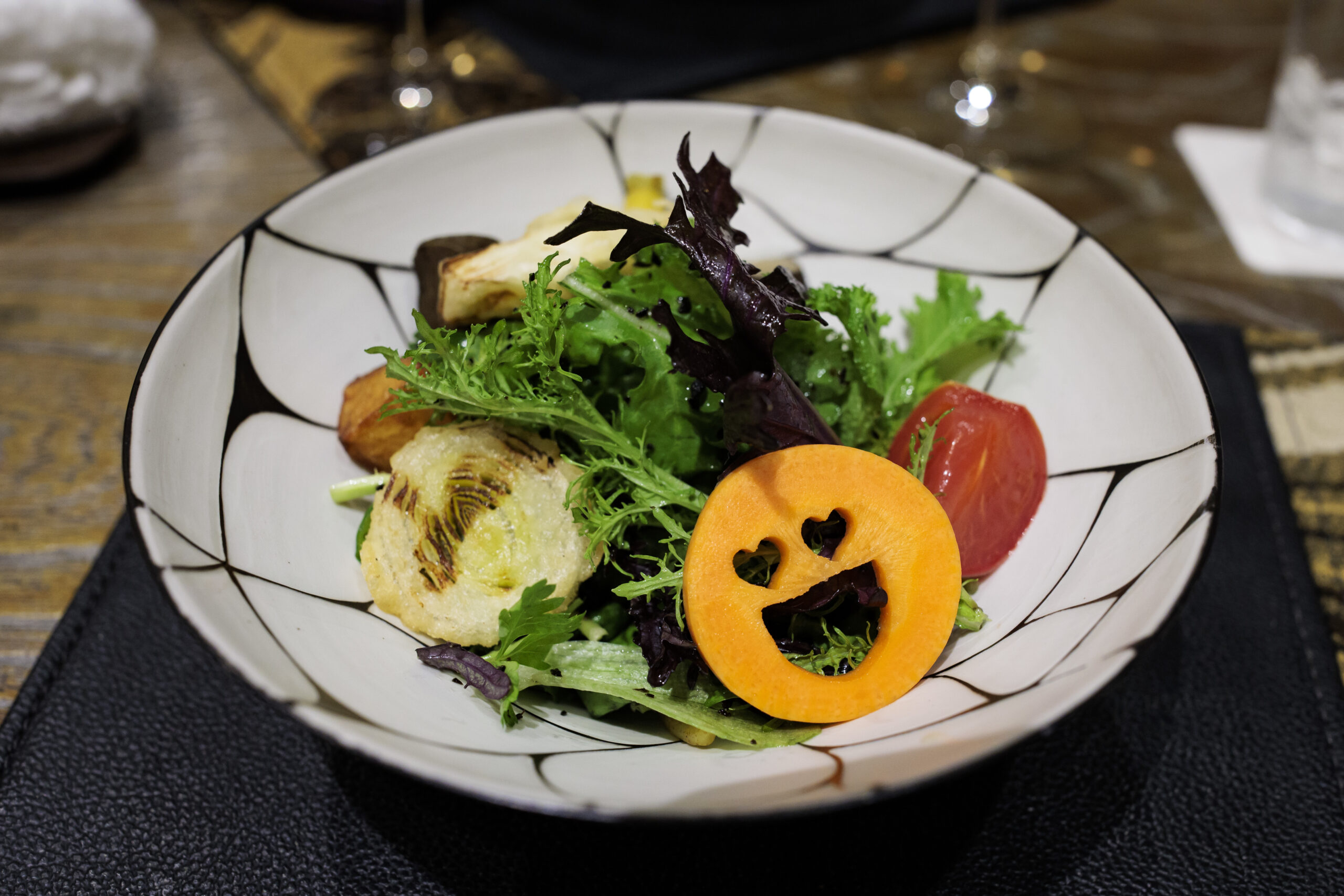
    Chef Zaiyu Hasegawa’s modern take on the seasonal kaiseki at Den is one of Jesse Ito’s favorite meals for a reason: It marries total mastery of techniques and traditional dishes with an inventive sense of humor and a relaxed atmosphere. That whimsy threaded throughout our meal, from the monaka rice cracker sandwich stuffed with miso-marinated foie gras and fig jam to the “Den-tucky” fried chicken wing stuffed with gingko nuts and sticky rice in a takeout box emblazoned with Hasegawa’s grinning face. We marveled at a bouncy cube of cashew milk fried like agedashi tofu (inspired by the chef’s trip to the Amazon), while two classics, a duck-and-turnip soup in bonito broth and a crispy-rice donabe bowl topped with warm ikura, radiated understated beauty.
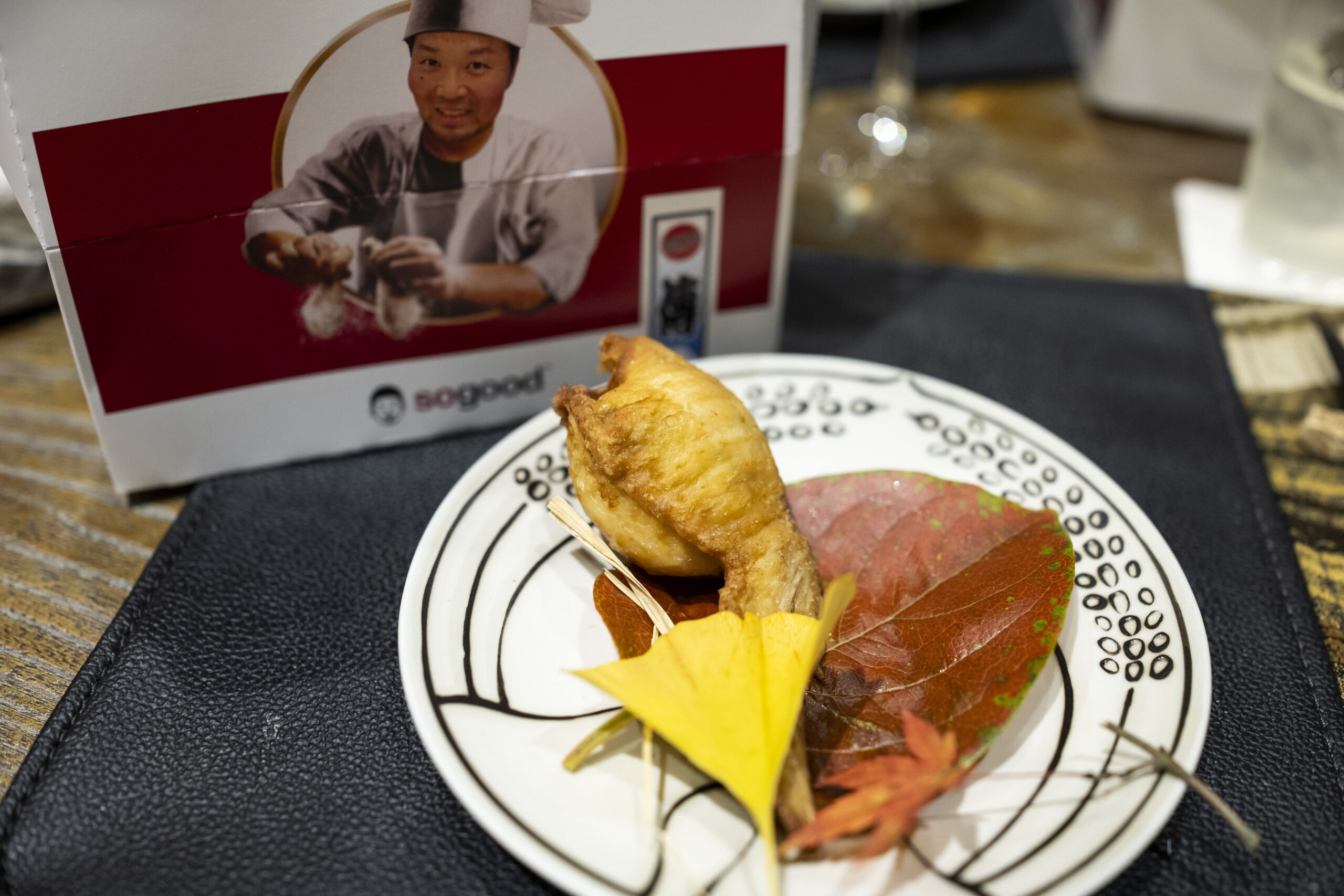
    The “Den-tucky” fried chicken at Den on Monday, Nov. 3, 2025 in Tokyo, Japan.

    But Den’s masterpiece is an intricate salad with 15 ever-changing ingredients, each cooked by a different technique (steamed, fried, dashi-poached, raw) — essentially a seasonal kaiseki within the larger kaiseki. It always comes topped with pickled carrot coins carved like grinning emojis that could not help but make us smile, too.

    Sushi for breakfast at Iwasa, Toyosu Market in Tokyo

    The fish doesn’t get fresher than what’s on display at Iwasa, which has maintained deep connections to market sources since moving to Toyosu from its original location at Tsukiji. Our omakase was meticulously crafted in small batches on still-warm rice seasoned with neutral white vinegar to showcase the fish, and it was especially strong with fatty in-season horse mackerel — whose silver skin was slit and stuffed with grated ginger — as well as sardines, black-speckled whelk, silky squid, and buttery sweet ama ebi (shrimp) that are rarely available live in the U.S. This was also my first taste of sushi abalone, whose tender, cup-shaped flesh cradled a puddle of sweet and savory soy glaze.
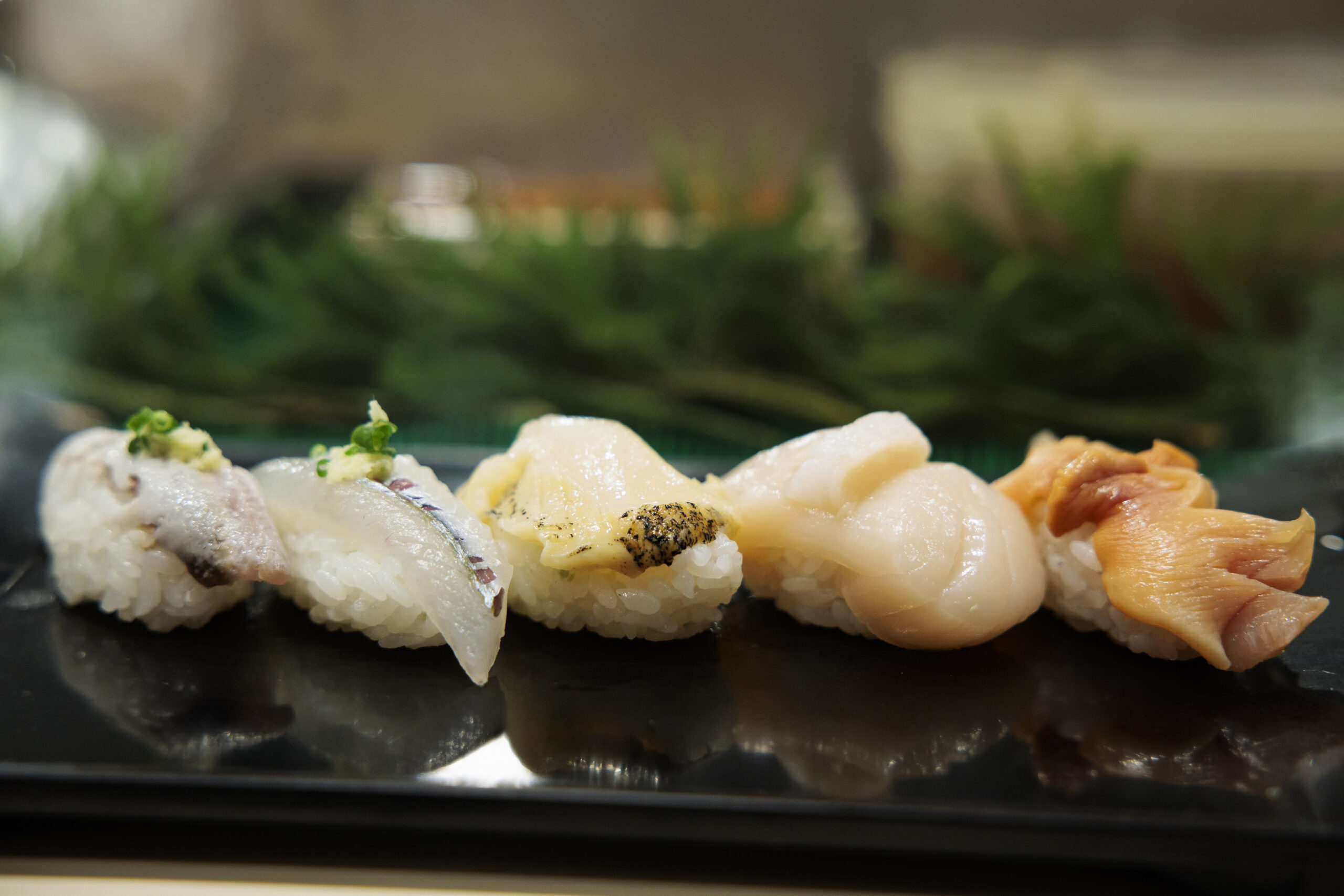
    Sushi for breakfast at Iwasa at Toyosu Market on Tuesday, Nov. 4, 2025 in Tokyo, Japan.

    Tokyo Bananas at Haneda airport

    When flying in Japan, there’s no shortage of good things to eat at airport concessions. But the Tokyo Bananas are essential. These are not actual bananas. They are banana-shaped sponge cakes filled with banana-flavored custard (among other variations) that are, essentially, the greatest Twinkie ever made — and shelf-stable souvenirs. My first box, however, never made it to the airport gate.
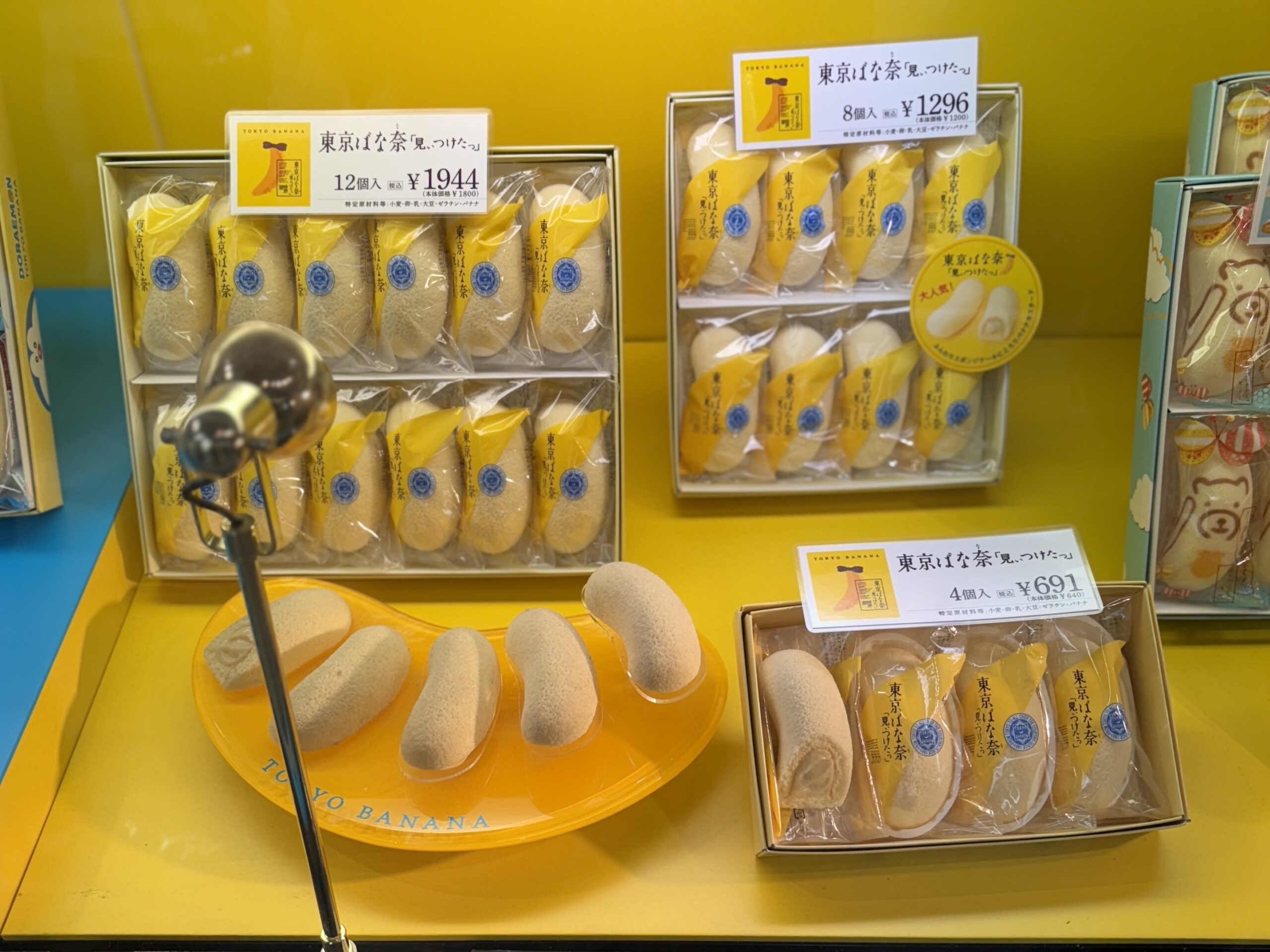
    Tokyo Bananas are popular tourist treats that are banana-shaped sponge cakes filled with rich banana-flavored pastry cream.

    Takoyaki at Gindaco in Beppu

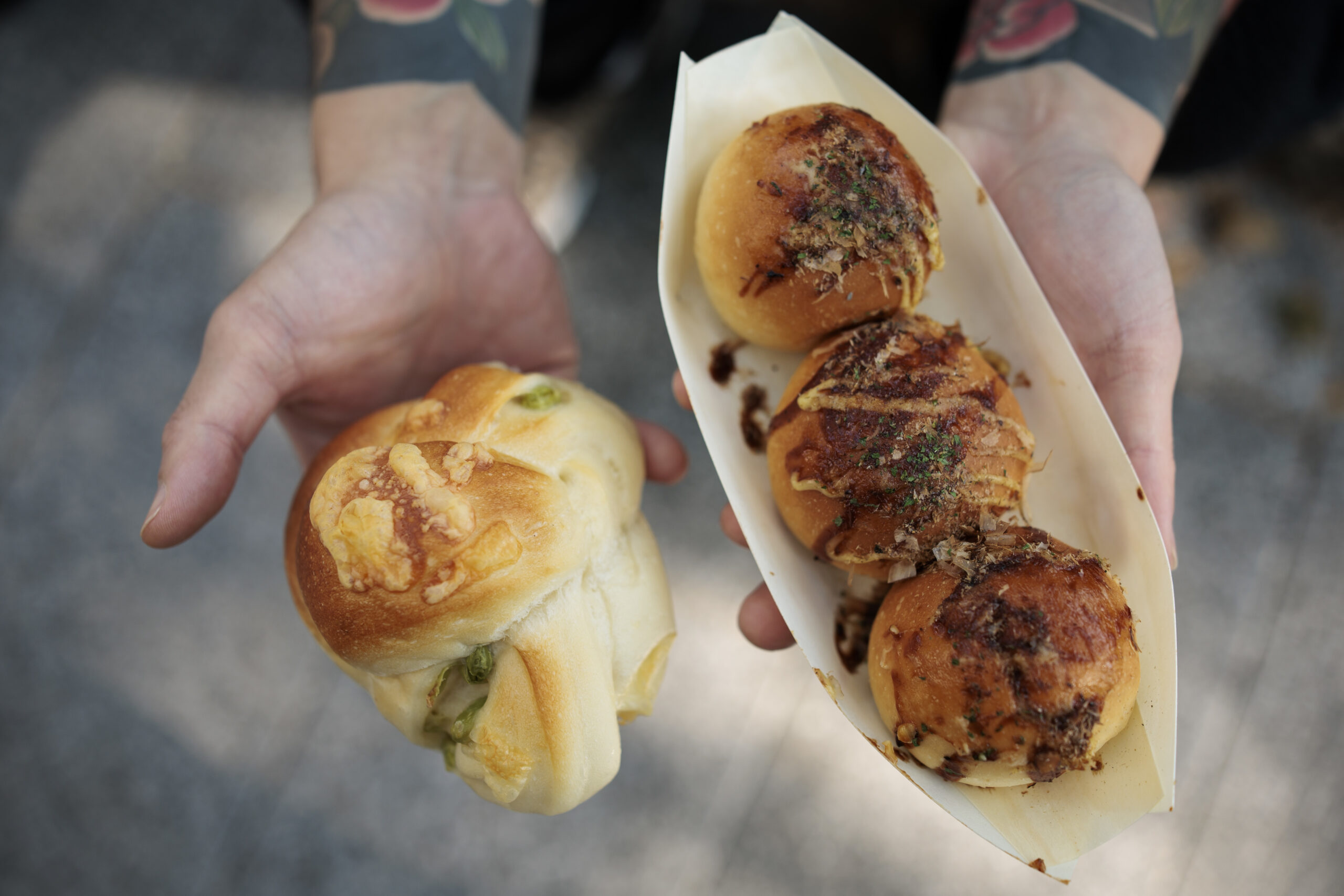
    This iconic street food of orb-shaped fritters stuffed with octopus have their origins in Osaka but are ubiquitous across Japan. The best I ate were at a food court stand of the popular Gindaco chain in Beppu on Kyushu island. Every batch was griddled fresh to order so each ball was crisp on the outside, with a red ginger-flecked batter inside that was still molten and gooey. Shower it with all the fixings — Japanese mayo, dark sweet katsu sauce, seaweed powder, wavy bonito flakes, and tempura crunchies — then good luck not finishing an entire snackboat on the spot.
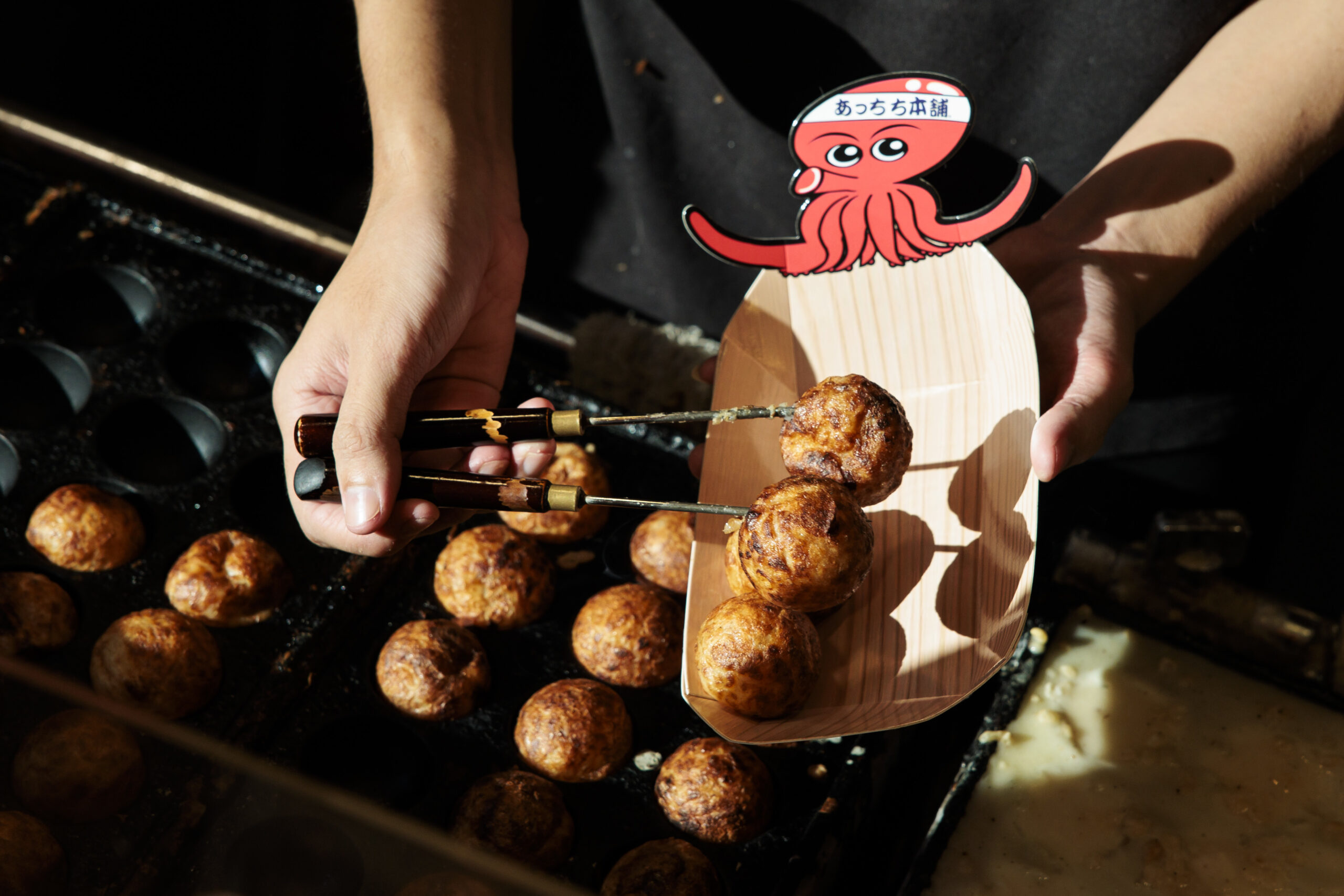
    Takoyaki in Dotombori in Osaka.
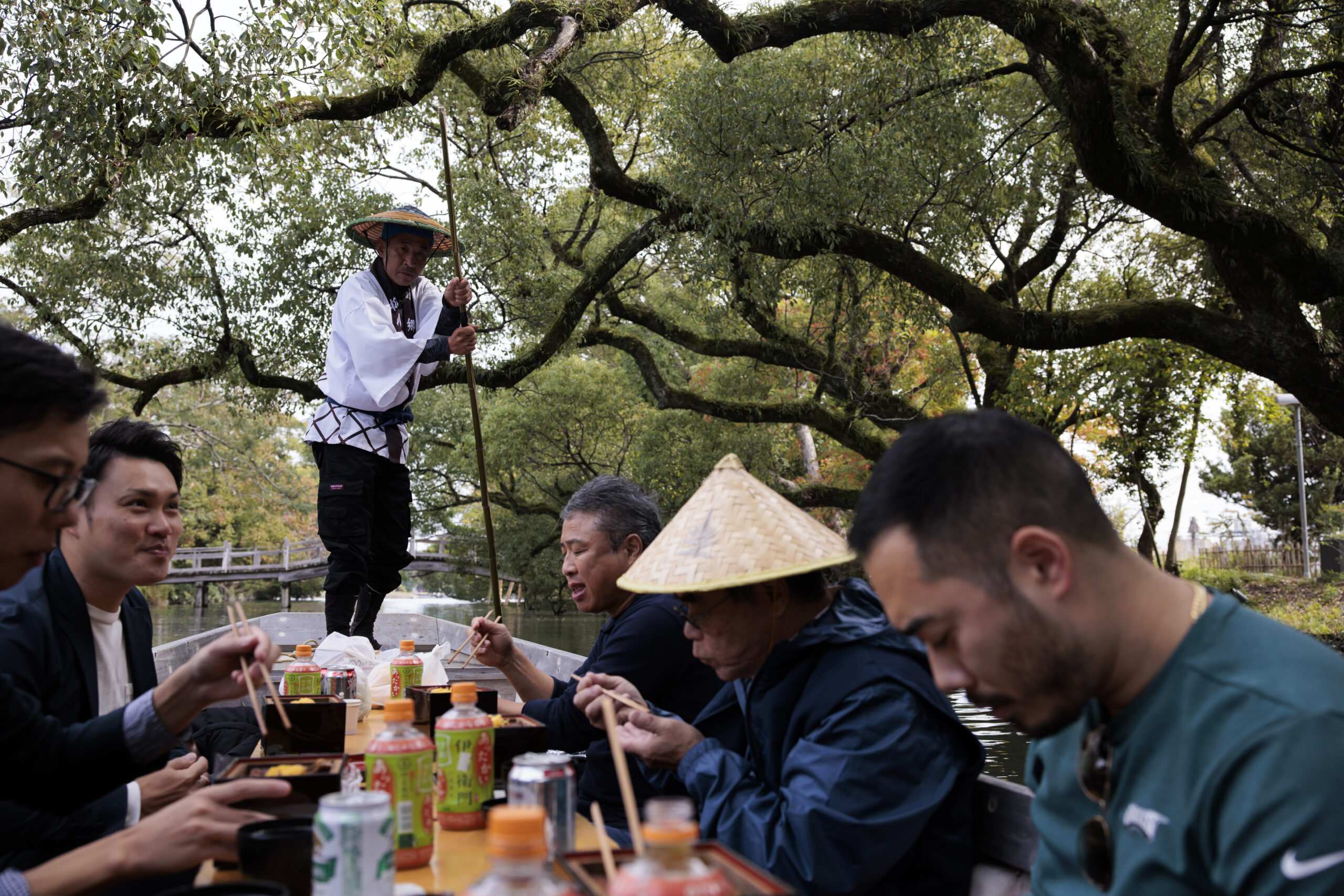
    Matt Ito, center, and Jesse Ito, right, eat lunch during a boat ride through the canals of Yanagawa on Wednesday, Nov. 5, 2025 in Yanagawa City, Japan. The boat is called a donko-bune.

    Eel box gondola in Yanagawa

    One moment we’re viewing a seaweed farm and the factory of one of Japan’s leading nori producers; the next, our hosts at Maruho have shepherded us onto a donko-bune long boat in the coastal town of Yanagawa, where we glided through canals lined with cherry trees with a gondolier who serenaded us with folk songs by poet Hakushū Kitahara. A box lunch of warm eel over rice and cups of cold sake suddenly appeared from out of nowhere. After candied chips of crispy eel spine for dessert, more serenades, and multiple bridges so low we had to lie flat to slide past, we were thoroughly charmed.
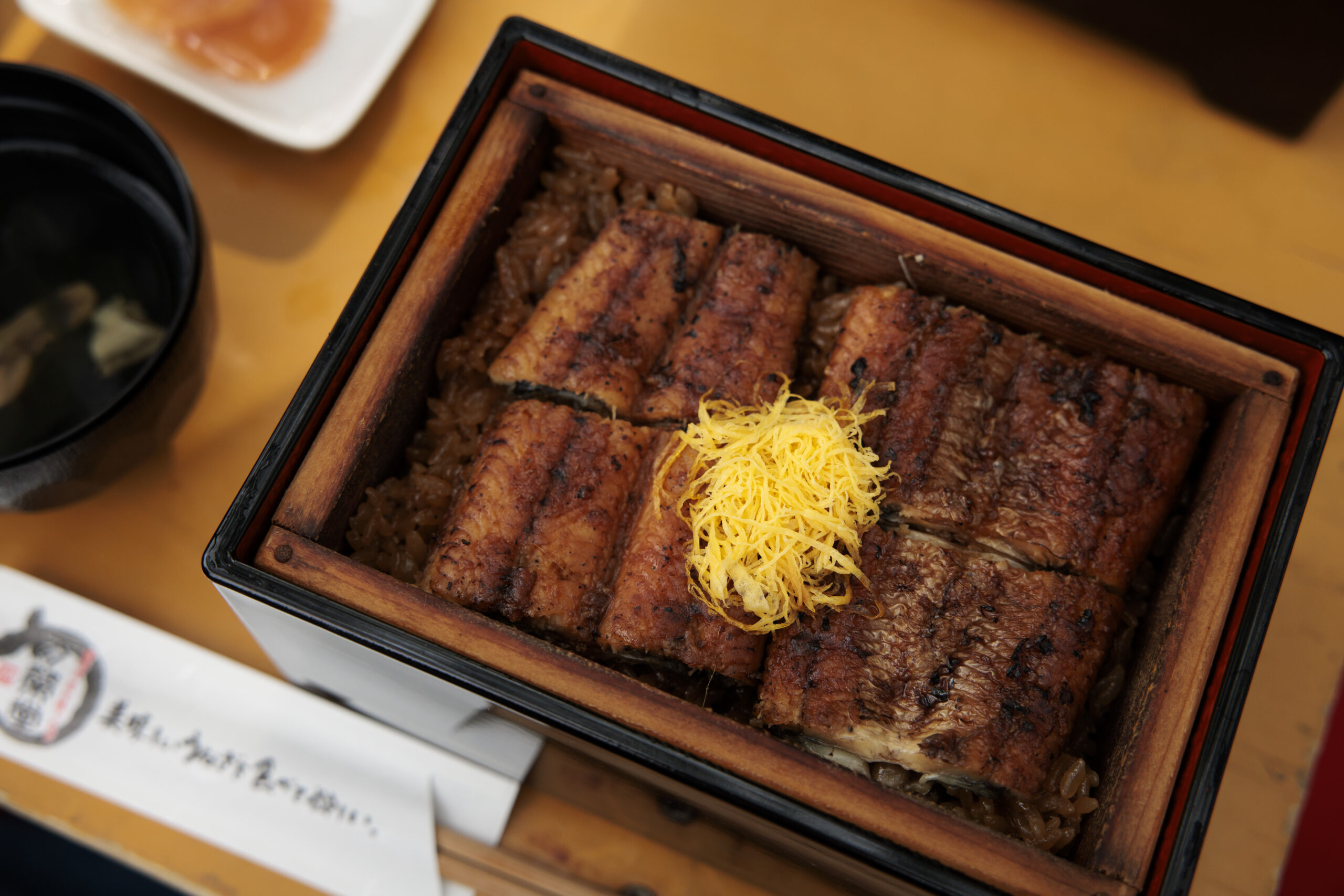
    Grilled eel with rice on a gondola ride though the canals of Yanagawa in Yanagawa City.

    Vinegar tasting at Ukonsu in Saga

    High-quality vinegar is a sushi chef’s secret weapon because of the character it can lend rice when paired with raw fish. Whereas neutral white rice vinegar is most commonly used in American sushi bars, high-end sushi bars in both Japan and the U.S. increasingly prize akazu, a flavorful red vinegar from sake lees that can lend rice a brownish tint, due to its deep umami and mellow acidity. We tasted exceptional, traditionally made examples at Ukonsu in the city of Saga on Kyushu. At this nearly 200-year-old producer, prayers are offered to the vinegar gods before each batch is aged in massive wooden vats covered in straw mats that can be heard softly bubbling away as wild yeasts work their magic for up to half a year. Aside from the exceptional red rice varieties, Ukonsu steeps vinegars with fruits and vegetables — tomato, persimmon, plum, and especially roasted onion — that were a revelation.
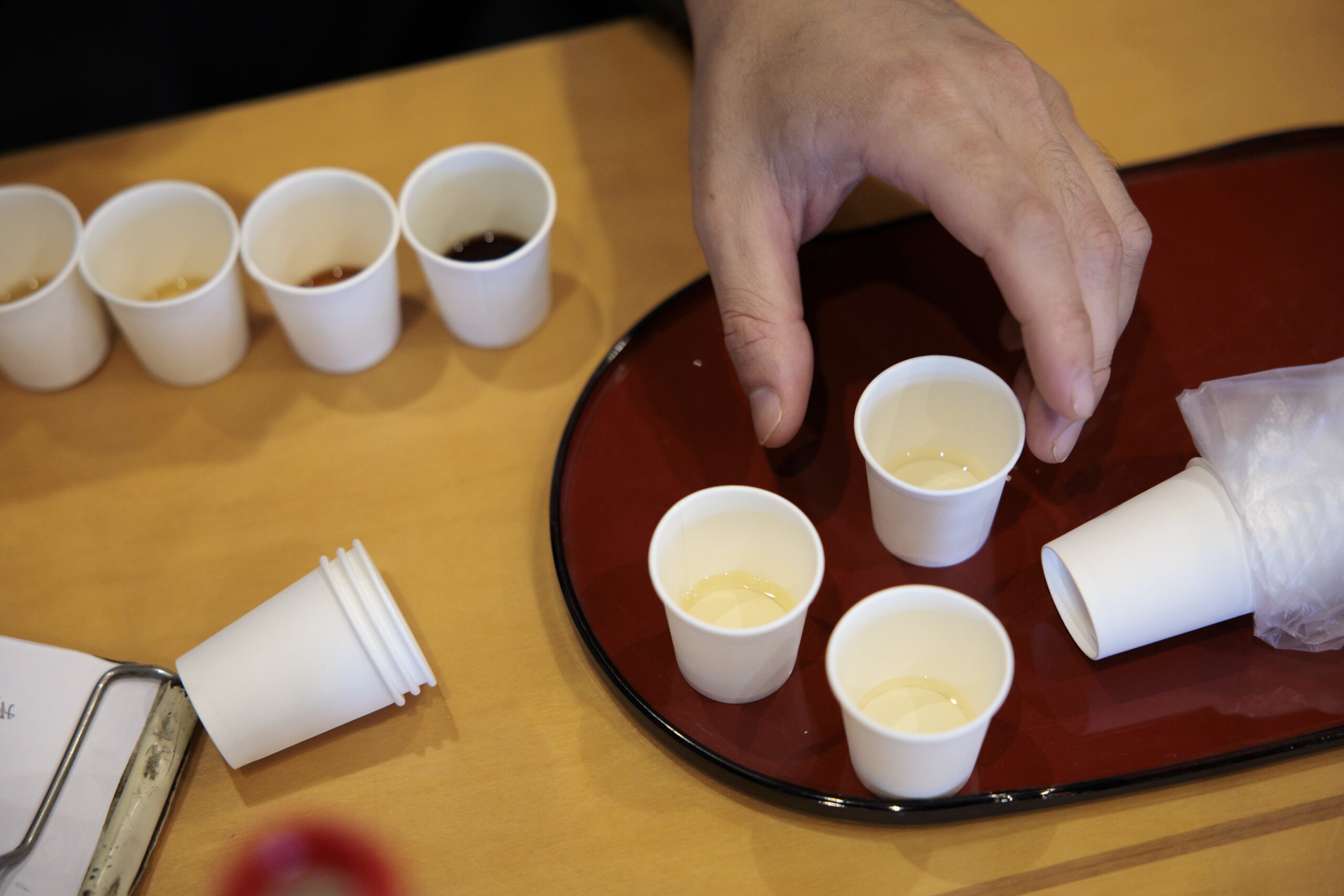
    Jesse Ito tastes a variety of vinegars at Ukonsu in Saga on Wednesday, Nov. 5, 2025.

    Mentaiko bonanza at Ganso Hakata Mentaiju in Fukuoka

    Prior to this trip, I’d mostly had the spicy pollock roe called mentaiko in small dabs as a zesty fish egg garnish for onigiri or creamy pastas. It is a regional specialty in Fukuoka on Kyushu, though, and at Ganso Hakata Mentaiju, it is the main event. Served inside a white box, the tiny, bead-shaped eggs infused with chile, sake, and yuzu citrus came still encased in their snappy membrane, rolled inside a kombu wrapper. Eaten over warm rice covered in ripped nori, it was one of the most intensely marine-flavored combinations I’ve tasted. The full combo set brought a bonus of tsukemen ramen for dipping into a smoky bonito broth soup enriched with, yes, more mentaiko.
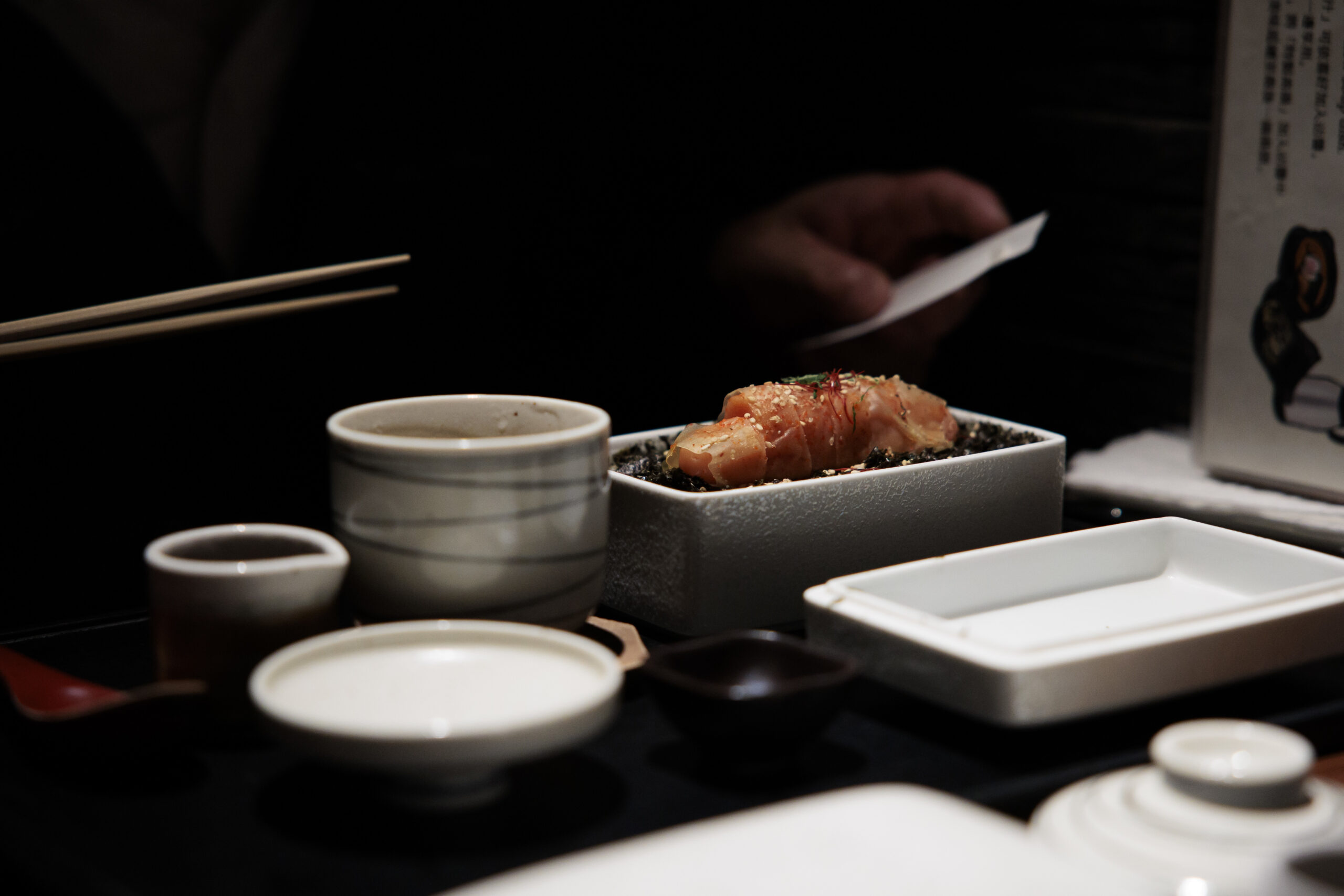
    The mentaiko at Ganso Hakata Mentaiju on Wednesday, Nov. 5, 2025 in Fukuoka, Japan.

    Shochu night in Fukuoka

    The island of Kyushu is known as the “Shochu Kingdom.” The clear spirit has been distilled there since the 15th century thanks to its agricultural riches in barley, rice, and sweet potatoes, as well as a warm climate that favored distilled alcohol over fermented sake before the advent of refrigeration. There are now 500 distilleries producing 5,000 varieties on Kyushu alone. So I was grateful to have one of the world’s preeminent experts, James Beard-nominated author Stephen Lyman, give me a thirsty crash course and a brief tour of some favorite shochu haunts in Fukuoka, where he currently lives.
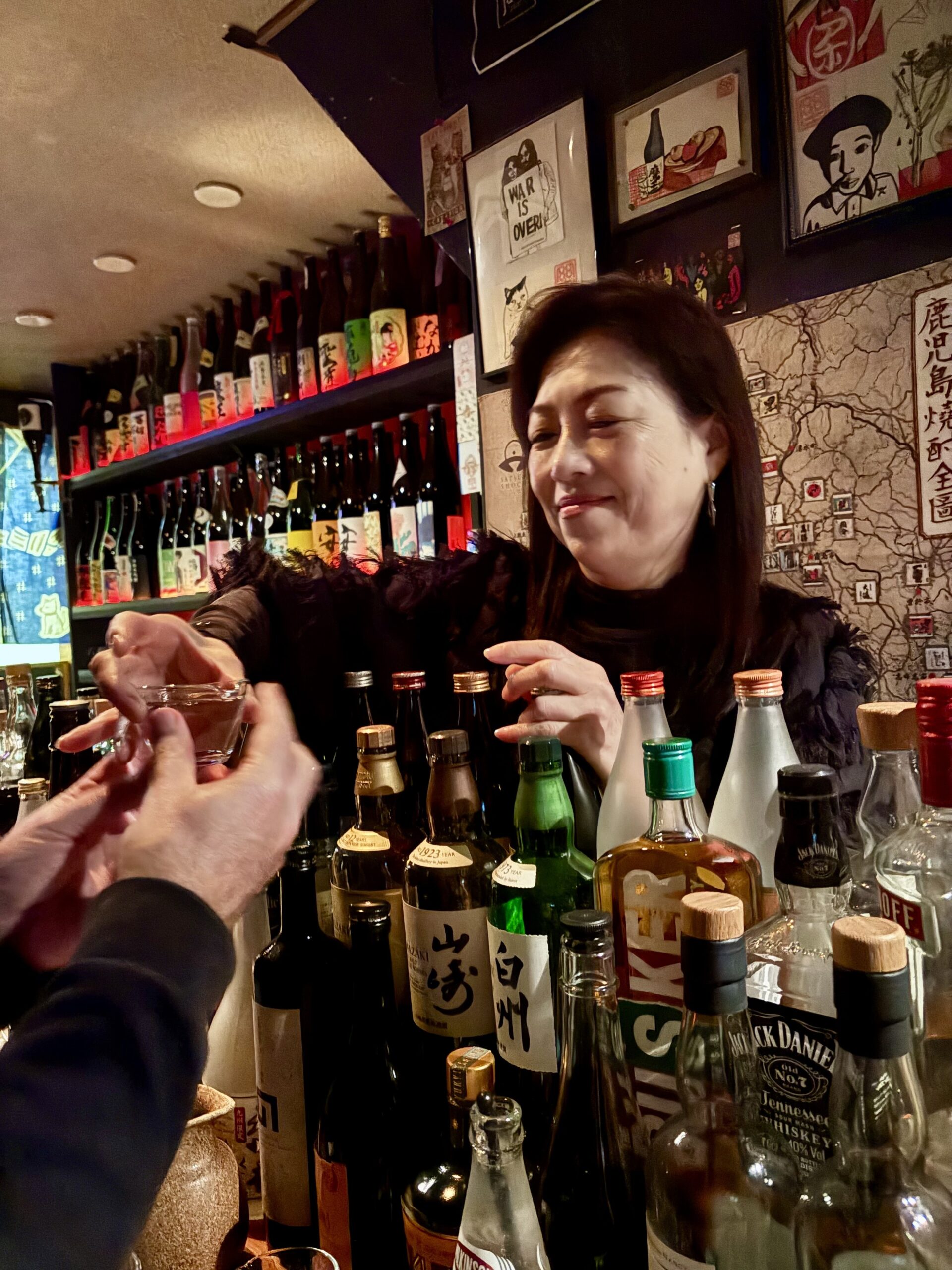
    Propietor Sayuri Ajisaka, one of just three women to run a shochu bar in Fukuoka, serves a customer a pour from her 200 bottle collection at Bar Untitled, located in the city’s Nakasu entertainment district.

    We began with an earthy and tropical purple sweet potato shochu from Yamatozakura that was blended into a refreshingly fizzy highball at Ansic, a brightly lit shochu bar crammed with hundreds of bottles. The evening’s highlight, though, was our jaunt past the riverside food stalls of the Nakasu entertainment district, past a cluster of sumo wrestlers surrounded by entourages, and deep into a warren of narrow, ancient alleyways, where we landed at a snug hideaway called Bar Untitled. Owned by Sayuri Ajisaka, one of just three women to run a shochu bar in Fukuoka, the bar has a single bench for eight drinkers. Perched at the end, I took an abbreviated sipping tour of its 200-bottle collection, savoring the Chiran Tea Chu made in Kagoshima from a blend of sweet potatoes and green tea, and another sweet potato shochu from Yanagita Distillery. Each one was more proof of the elegance of a diverse spirit category too often wrongly compared to vodka. By this point, I was thoroughly transfixed by the bar’s elite-level munchie mix, which came with an ingenious plastic toy that turned shelling sunflower seeds into a Zen-like, shochu-driven trance.

    Ramen breakfast at Ganso Nagahamaya in Fukuoka

    Hakata ramen is famous for its superrich, cloudy tonkotsu broth and skinny, straight noodles. This legendary shop, founded in 1952, is known for a deliberately lighter version known as Nagahama-style ramen, ideal since it caters to workers getting off early-morning shifts from the Nagahama Fish Market right next door. The broth is thinner but still incredibly flavorful. The ultrathin noodles cooked for just a minute or less before they landed in the bowl with finely shaved pork and scallions, to be topped tableside with sesame and pickled red ginger. The portion is also slightly lighter than usual, so as not to weigh the workers down. But Ganso Nagahamaya also originated the noodle-refill order (known as kaedama) so hungry diners can eat extra helpings of fresh-cooked noodles at peak firmness. A perfect start to our day at 7 a.m.
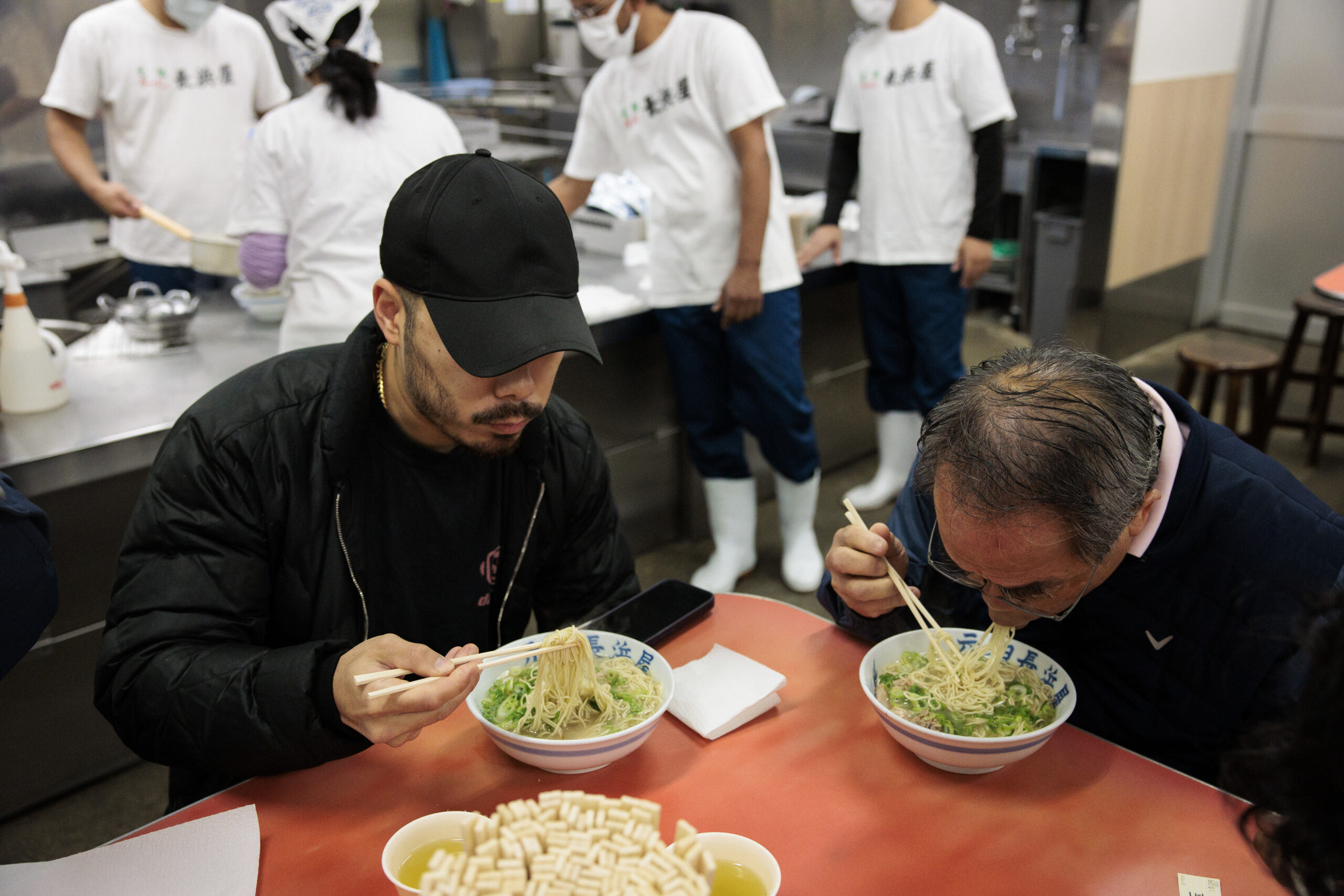
    Jesse and Matt Ito eat tonkotsu ramen at a shop across from the Nagahama Fish Market on Thursday, Nov. 6, 2025 in Fukuoka, Japan.

    Ekiben feast on the bullet train

    There’s nothing like rocketing across land at 185 miles per hour on a bullet train to stoke my appetite. Japan excels in elaborate meal kits for rail travel that are sold in stations everywhere. Known as ekibens, the options are vast, from plastic bentos shaped like bullet trains to self-heating bentos stuffed with mackerel, stuffed squid, or chicken-shiitake stew. Craving a respite from all the seafood, I went for a double hambāgu feast with patties that were more like a meatloafy Salisbury steak than an American burger. I was drawn to its thick but flavorful brown mushroom gravy. Served with rice, a katsu chicken stick, and a cool scoop of potato salad, it was a much heartier feast than I needed at 11 a.m. Was it my most delicious meal in Japan? No. But it was an essential cultural experience fulfilled.
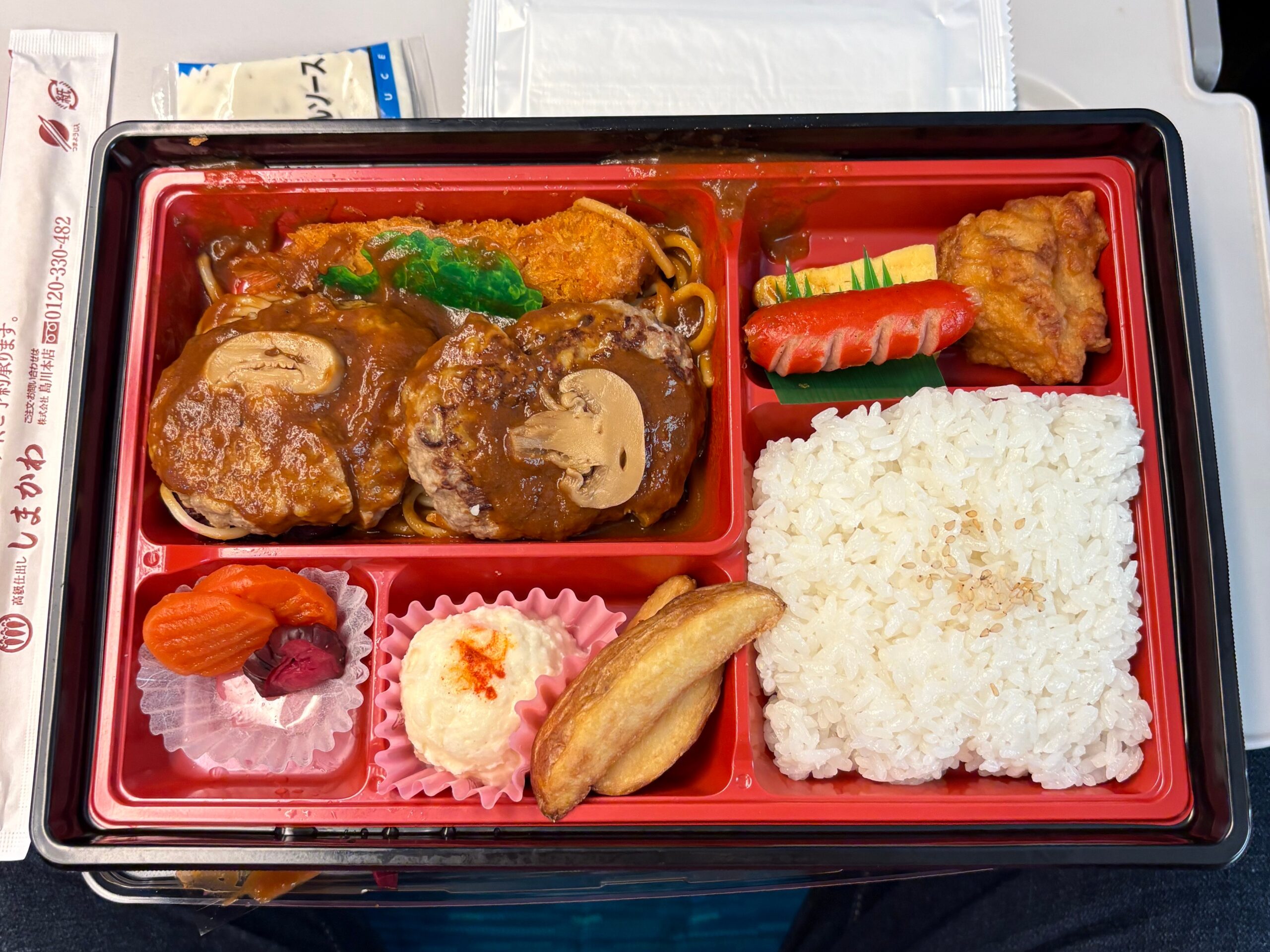
    A double hambāgu “ekiben” is typical of the boxed bento lunches that can be purchased in train stations for a complete meal on the rails.

    Coffee tasting at Glitch Coffee in Osaka

    Coffee culture thrives in Japan at all levels, from vending machines dispensing heated cans of brisk, milky joe to the most meticulously performed pour-overs at high-end Third Wave haunts like Glitch. Glitch’s Tokyo outlets are famously crowded, but we made several easy visits to a location in Osaka that met the buzzy hype. Friendly but formal baristas hand customers their business cards as they engage in deep-dive conversations to determine personal preferences, offering customers sniffs of beans from 10 different vials with elaborate tasting notes that were spot-on.

    A Colombian Huila La Loma billed as “chocolate malt, rum raisin” and an Ethiopian Yirgacheffe Idido described as “jasmine, green tea … long finish, juicy” tasted exactly like that. Yes, it cost 2,700 yen ($17!) for a cup of primo Bolivian beans. But I savored one of the best cups I’d ever sipped.
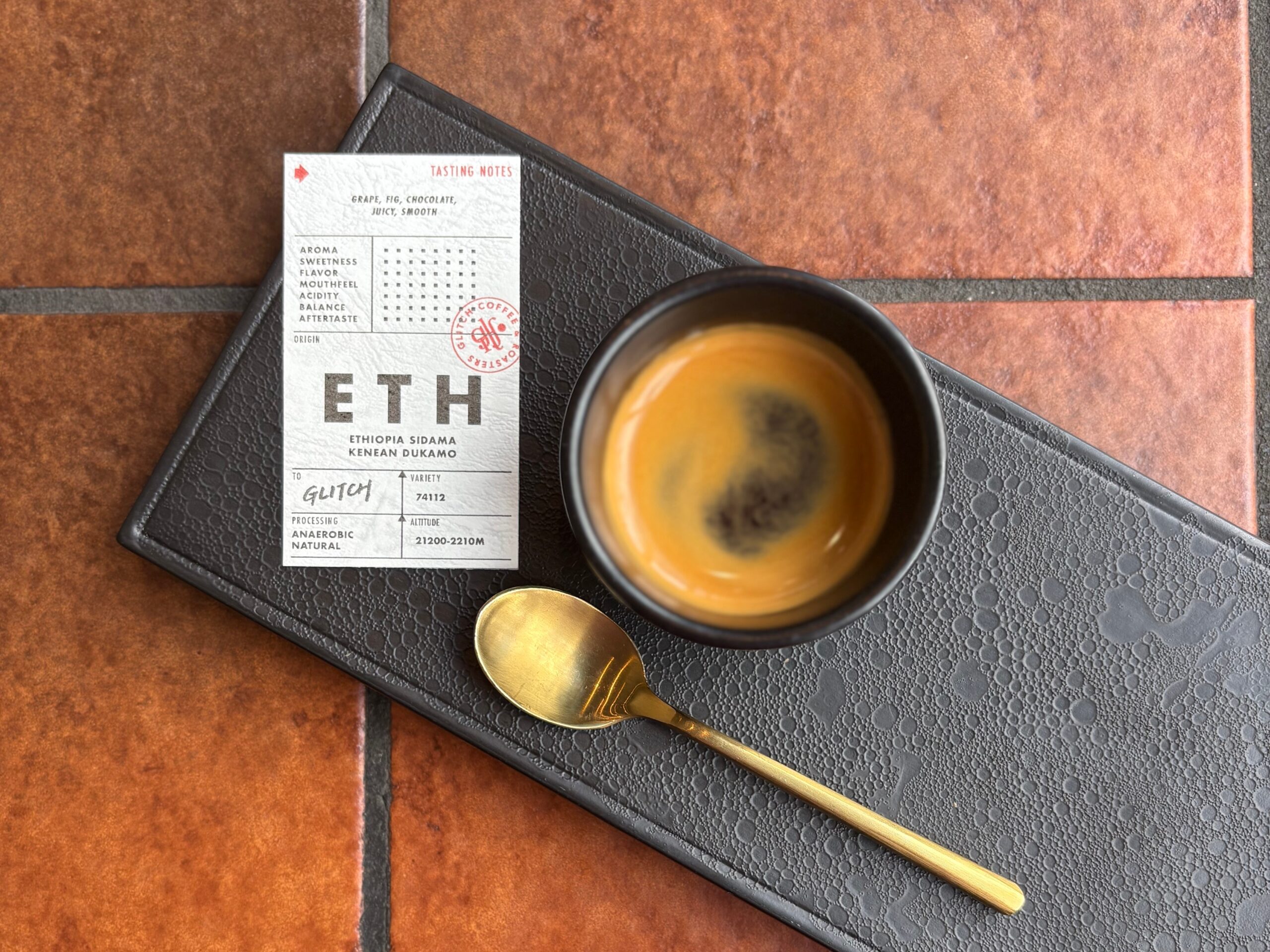
    An espresso from Ethiopian Sidama beans at Glitch is described in minute detail, brewed with precision, and served in polished style.

    Dotombori food crawl in Osaka

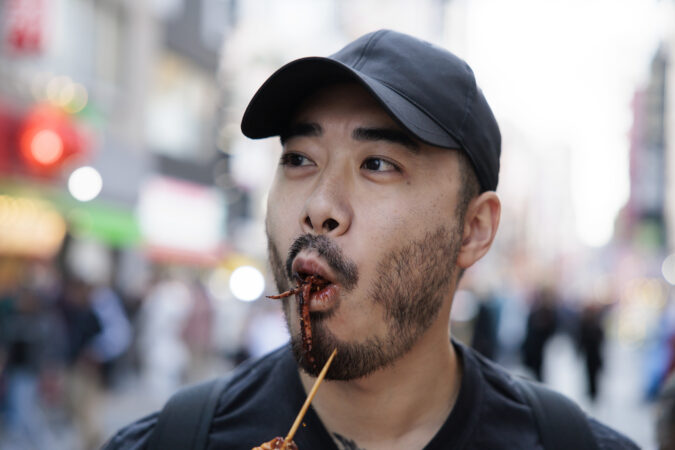
    Strolling along the canal and crowded pedestrian streets of Osaka’s historic Dotombori district is an obligatory activity for tourists, and it was worthwhile if only to take in the colorful lights and massive signs of animatronic king crabs, golden cows, and octopi waving their arms above restaurant facades. As with most tourist hubs, quality varies widely. Our ultimate choice from the dozens of stands making the local specialty of takoyaki octopus fritters was sadly burnt. But there were two genuine highlights: skewers of whole squid ikayaki scissored to frilly ribbons, grilled to order, then glazed in sweet soy and dusted with spice; and tall cups of freshly fried sweet potato chips whose massive, salt-speckled chips were impossible to stop eating.
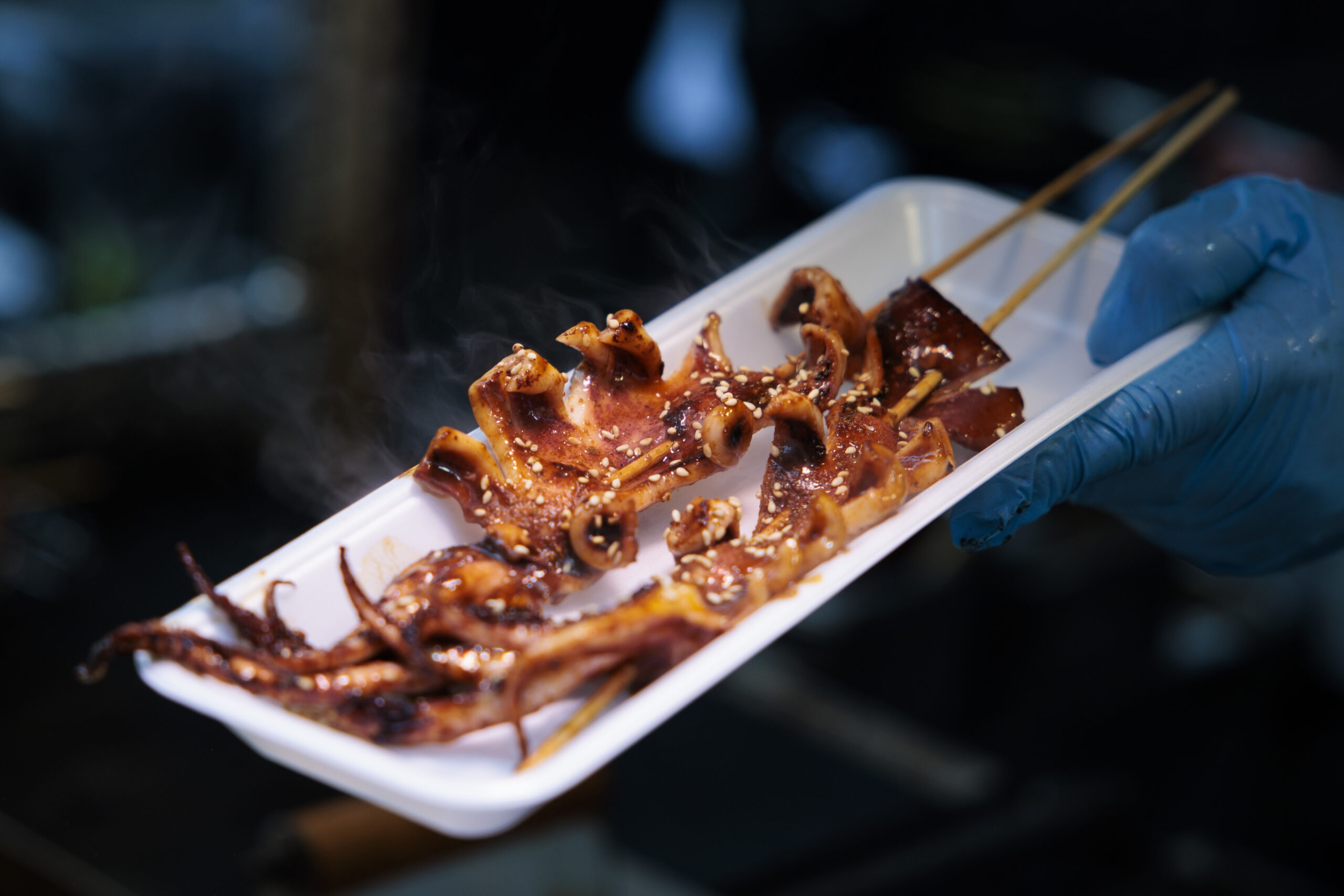
    Grilled squid in Dotombori in Osaka.

    Barracuda fillet at Yohaku in Osaka

    If Dotombori is a boisterous festival of lights and street-food classics, dinner at Yohaku revealed Osaka’s low-key-creative modern side. This husband-wife atelier in the Shinsaibashi neighborhood is a canelé bakery by day and restaurant by night, where chef Yoji Arakawa works solo behind a counter to produce an elegant 10-course tasting that spins beautiful Japanese ingredients with French techniques. Briny snow crab came in a tartlet with refreshing grapefruit, crunchy radish, and earthy Jerusalem artichokes. Custardy shirako (more cod milt!) was served with fruity cubes of pear beneath a foamy cloud of ricotta that mimicked its creamy fluff. Arakawa paired a fruity Japanese merlot with gorgeous Hokkaido beef alongside a brûléed fig and velvety hunk of taro. Local herbs and grains inspired a memorable duo: a savory churro made from buckwheat smeared with liver pâté and sweet red beans, and a chewy green mochi cake infused with mugwort. Our favorite dish, however, was a barracuda fillet with perfectly pan-roasted skin. It was set over a celery root puree layered with lacto-fermented banana — a funky pulse of tropical sweetness that gave this elegant dish an unexpected shimmer of delight.
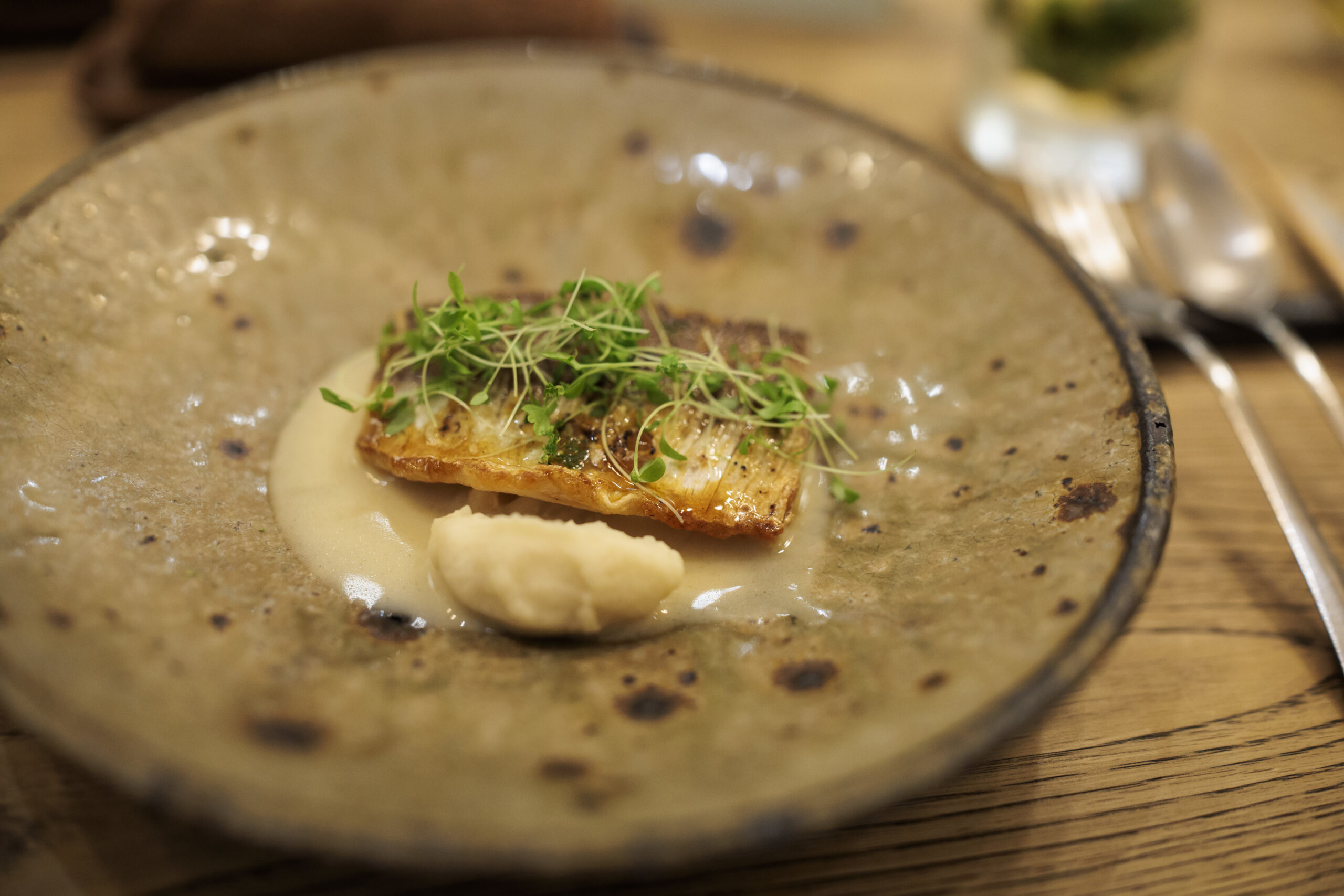
    Grilled barracuda at Yohaku on Thursday, Nov. 6, 2025 in Osaka, Japan.
    Jesse Ito holds pastries from le Croissant on Friday, Nov. 7, 2025 in Osaka, Japan.

    Katsu curry at Hakugintei in Osaka

    Jesse Ito told us to hustle so we could arrive early to this popular lunchtime destination near Honmachi station. We still waited 90 minutes to nab one of the 16 counter seats that ring its diner-like kitchen — but it was absolutely worth it. The rich brown curry is the star, a thick and fragrant sauce that swirls with fruity spice, sneakily building heat as you go. The menu options are simple: a fried tonkatsu pork cutlet, fried shrimp, spinach, or a combination of them all, mounded atop a pedestal of white rice with optional shredded cheese and raw egg yolk. It’s all thoroughly drenched in that gorgeous gravy. Easily one of my top-five favorite plates of the trip.
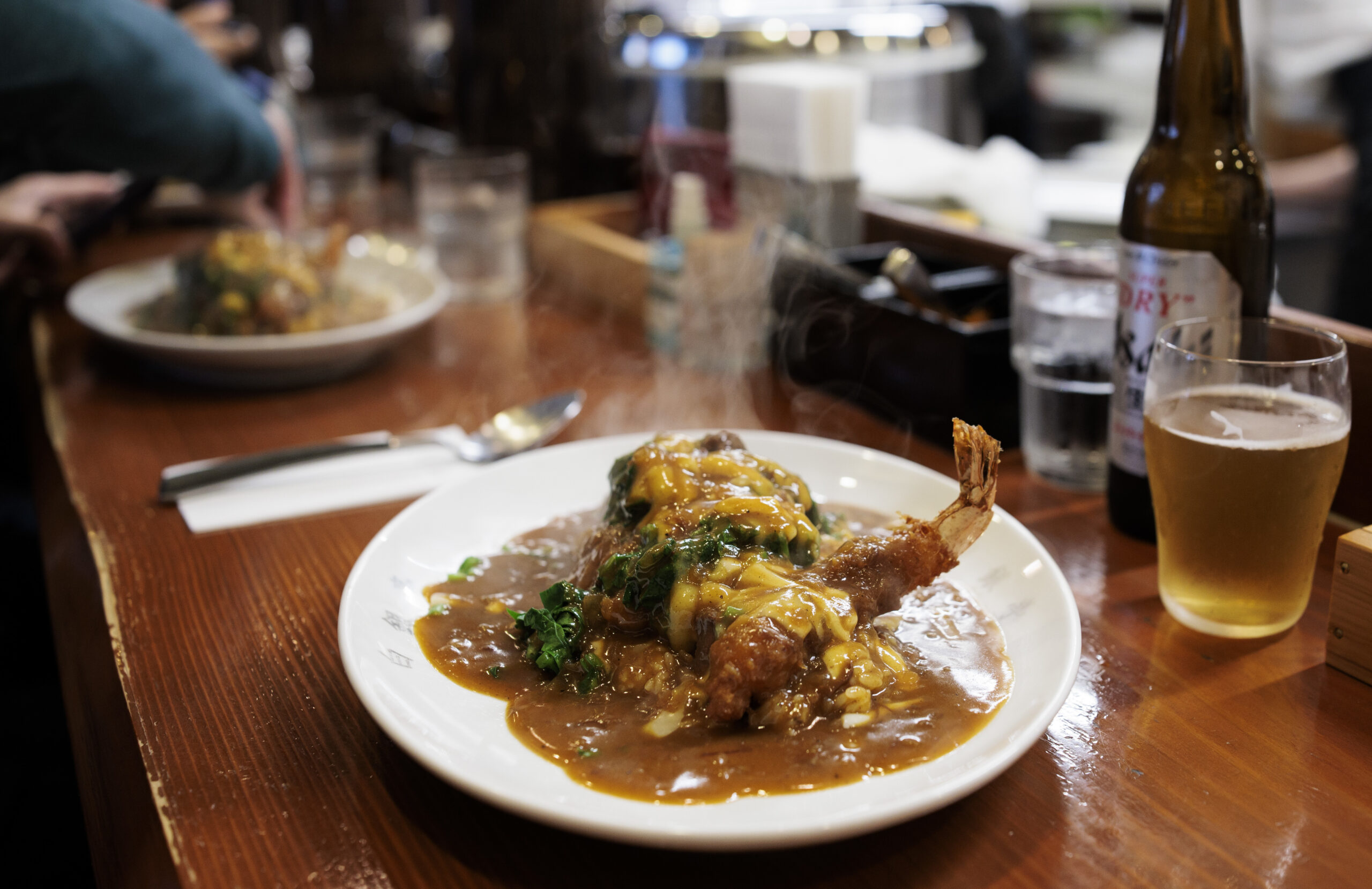
    Curry with shrimp, spinach, and cheese at Hakugintei on Friday, Nov. 7, 2025 in Osaka, Japan.

    Yakitori at Matsuri in Osaka

    At Matsuri, we feasted part-by-part on a coveted Hinai Jidori chicken, served as a parade of individual cuts on skewers, coal-grilled and basted with tare sauce. The cured “chicken ham” was the most eye-catching course — a pale leg that looked raw on the stand, but was actually cured. The salty translucent flesh, served atop a crispy sheet of nori with spicy micro-herbs, was more novelty than memorably delicious. But there were other rewards to come: tender chicken “oysters,” earthy gizzards and hearts, ground meat kebabs, fluffy dumplings, and thigh meat threaded with scallions. The most delicious bite was a rarely eaten cut from the back, a morsel of tender chicken wrapped in a thick pad of skin that arrived dripping with golden schmaltz, having been roasted over the coals till bubbly and brown.
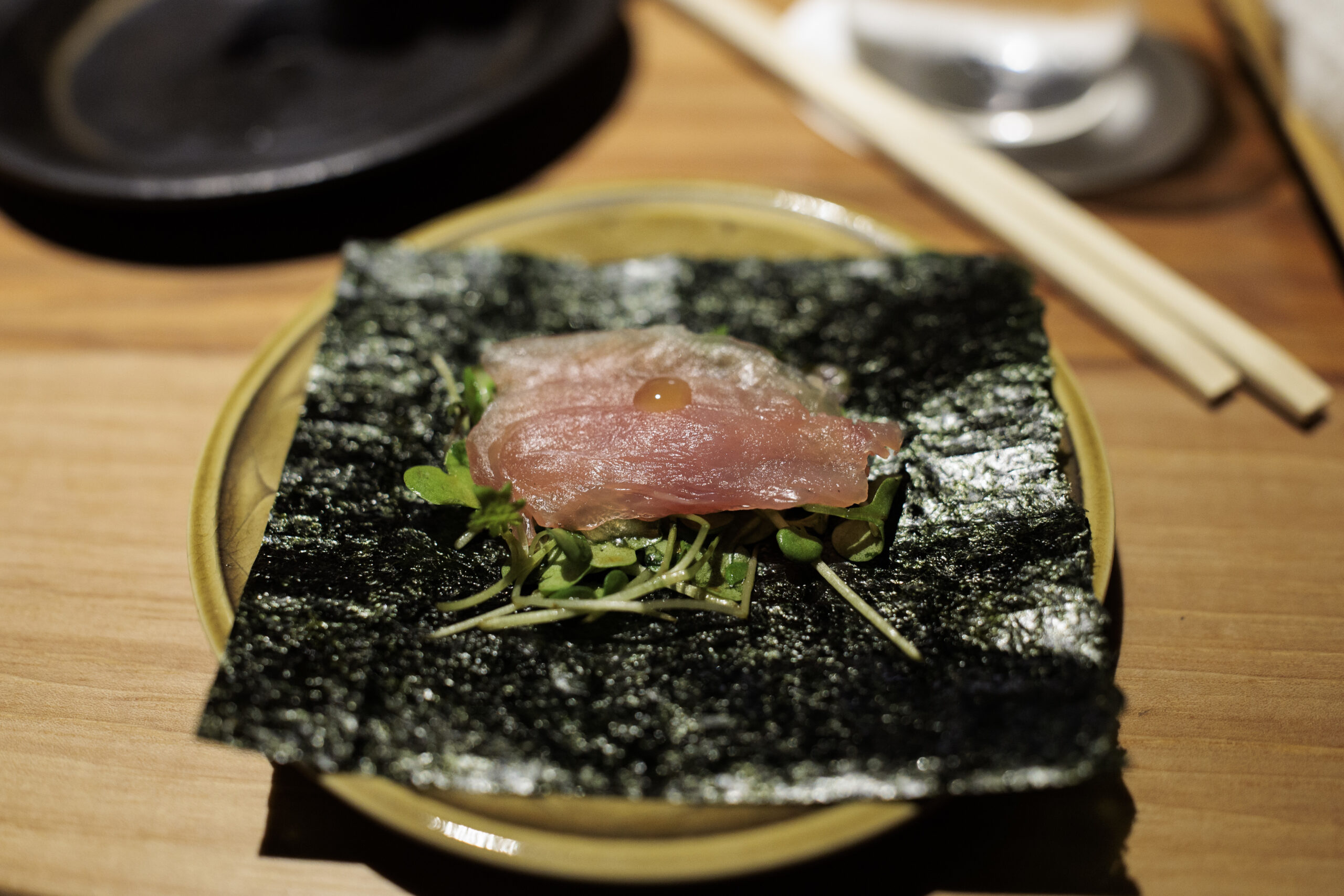
    Chicken prosciutto at Yakitori Matsuri on Friday, Nov. 7, 2025 in Osaka, Japan.

    Tea and pastries at Souen in Tokyo

    If we’d had more time in Tokyo, I would have spent it at the Sakurei Tea Experience, where a modern tea ceremony pairs rare teas with pastries and tea-infused spirits. Instead, we popped into its more casual and low-key sibling, Souen, a glass-walled cafe in residential Setagaya where manager Ayumi Imamura led us to a world of options beyond the usual matcha. She meticulously prepared sencha blended with freeze-dried persimmons, another with shiso and orange peels, and yet another infused with whole cinnamon and cardamom that she toasted and ground to order then simmered in a copper ibrik pot over hot sand. A platter of exquisite seasonal pastries — griddled black-sesame dumplings, steamed castella cake with chestnuts and roasted tea, mooncakes stufeed with walnuts — completed an experience so soothing it made me wish our itinerary wasn’t quite so busy.
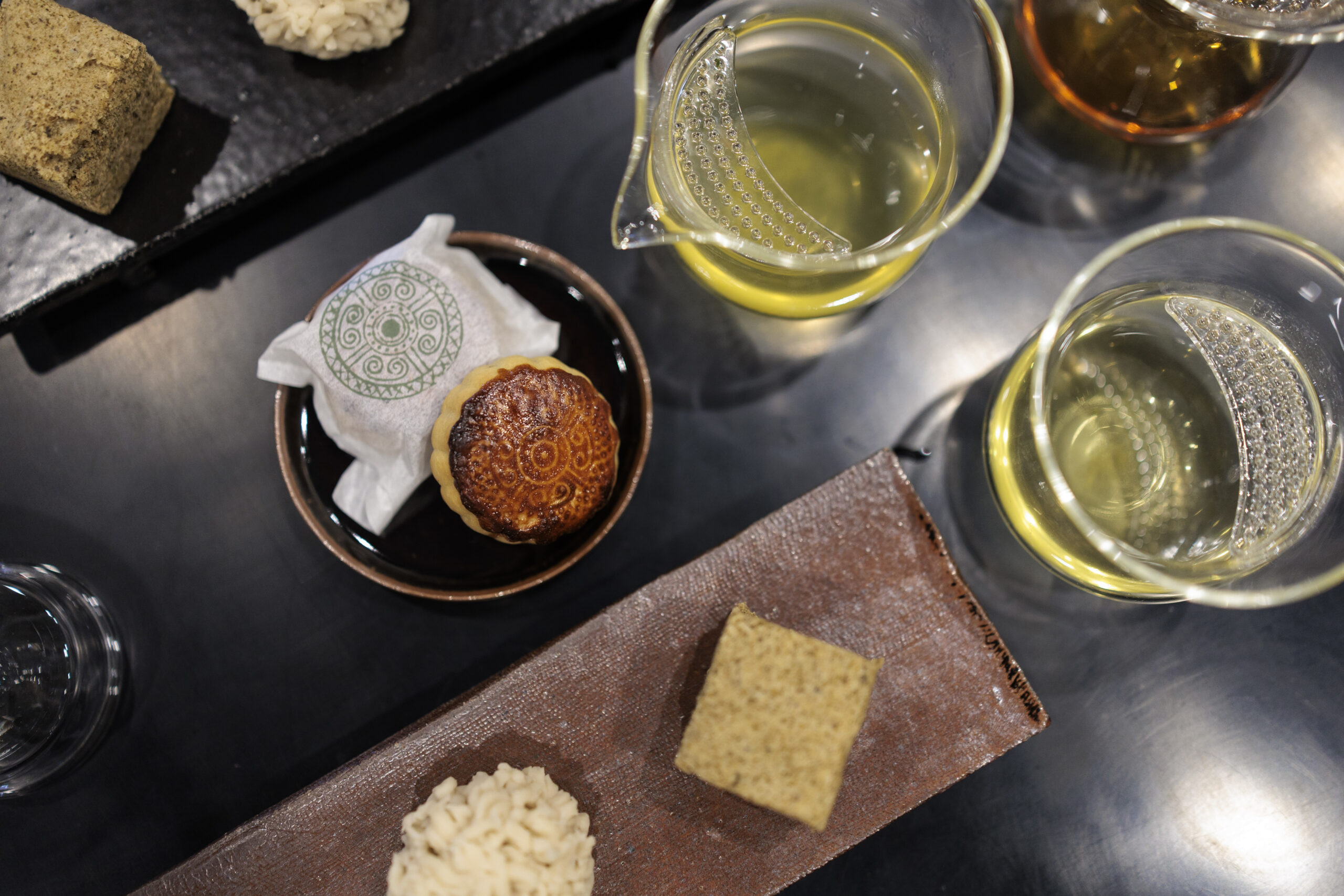
    Sweets and tea at Souen on Saturday, Nov. 8, 2025 in Tokyo, Japan.

    Pizza Y at Savoy’s Tomato and Cheese in Tokyo

    Is Tokyo pizza heaven? It just might be. There are at least a dozen great pizzerias in Tokyo to explore, but we landed at the tiny Tomato and Cheese branch of Savoy, one of the pioneers. Gravel-voiced and jolly, chef Bungo Kaneco cooked our pies in his sunglasses, rocking back and forth at the shaping station to give our crusts an almost wavy edge that lent them peaks of texture that swiftly crisped in the wood-fired hearth. I loved all of the pies, including Pizza O, with braised Ozaki beef. But the true star is the Pizza Y, topped with a fistful of chopped bluefin that, when it emerges from the oven, gets crushed to reveal a tuna tartare that’s been only half-cooked. Spread across the pie along with tangy bufala mozzarella, chopped scallions, and dabs of spicy wasabi, it’s the luscious Tokyo love child of sushi culture and a fanatical pizza scene. Jesse and Matt each told me separately it was among their favorite food memories of Tokyo together.
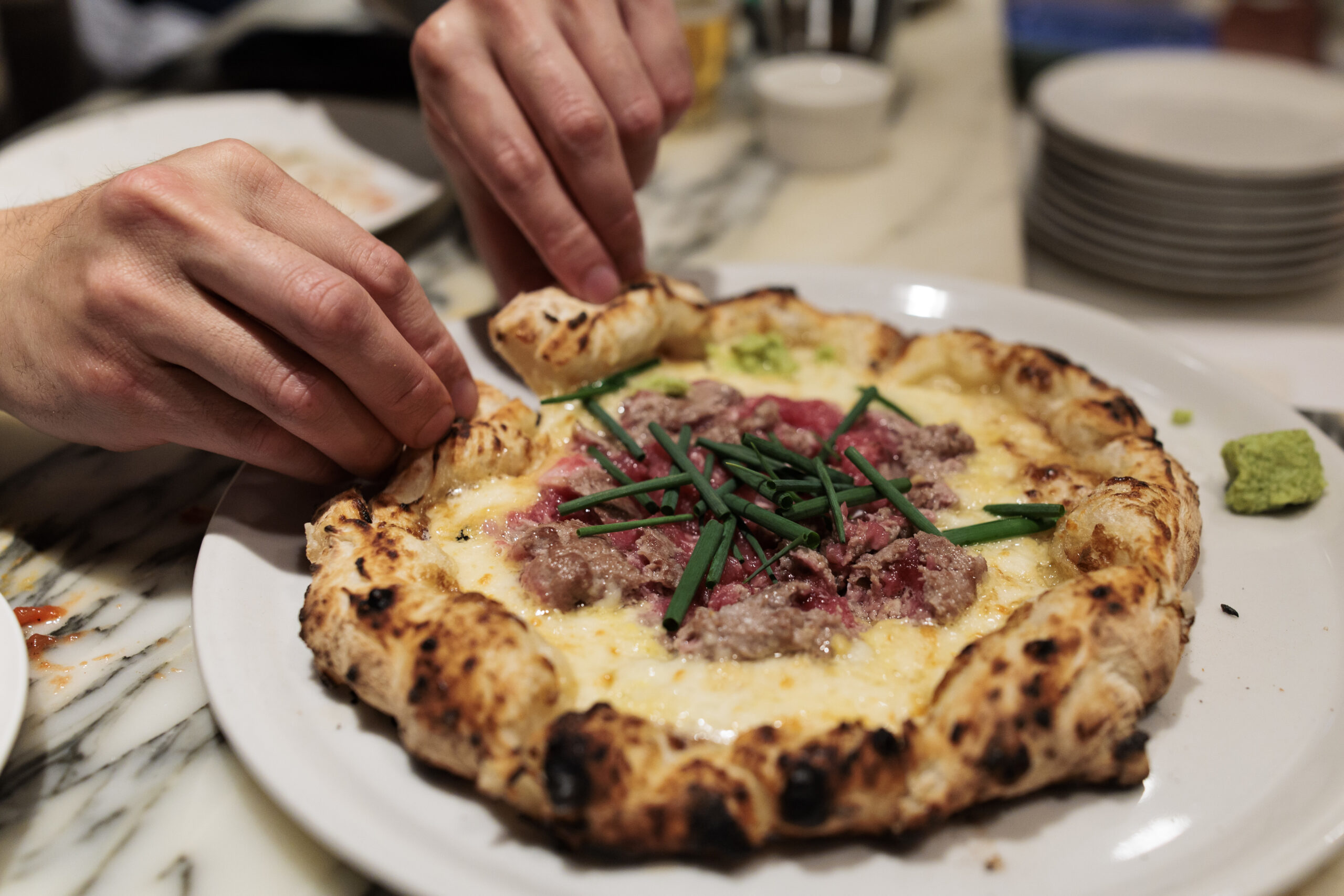
    The tuna pizza at Savoy on Saturday, Nov. 8, 2025 in Tokyo, Japan.
  • This West Philly high school is among the last of the area’s small, specialty schools. Now, the district wants to close it.

    This West Philly high school is among the last of the area’s small, specialty schools. Now, the district wants to close it.

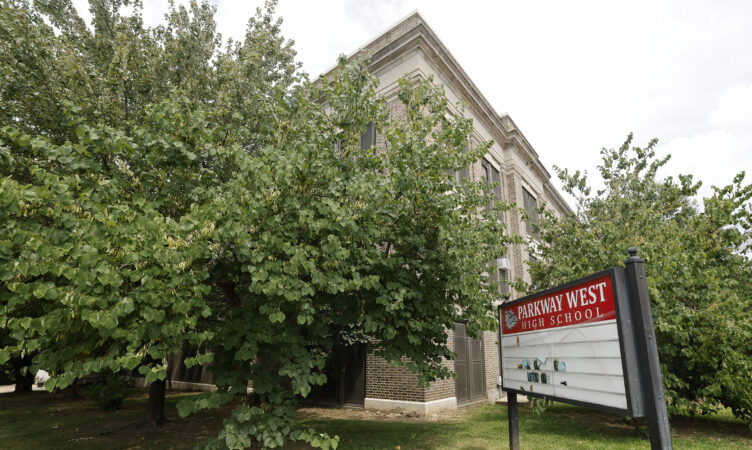
    Parkway West High School is small, by design.

    Its size is also a reason the Philadelphia School District wants to shut it down.

    It is among the 20 schools the district is proposing to close, citing its low enrollment. The district plans to merge the Mill Creek magnet school into Science Leadership Academy at Beeber, two miles northwest in Overbrook. That move would dissolve the Parkway West name — and its storied history of alternative education, its supporters say.

    Community members say the merger would do away with what makes Parkway West special and successful: the only curriculum in the city tailored for teens interested in becoming early childhood educators, specialty classrooms to support students with disabilities, and intimate class sizes that foster tight-knit relationships. And some say it would unfairly limit school options in West Philadelphia.

    “It’s a safe environment — a small school which allows for greater touches, and you just don’t get swallowed up in the size of a big school,” said Earl Morgan, a Parkway West special education teacher who coaches three Hoya sports teams.

    Morgan added: “We’re losing a real, safe alternative to private education in West Philadelphia.”

    The district’s facilities plan, which the school board is expected to vote on this winter, looks to address systemic issues like declining enrollment, aging infrastructure, and disparate programming in part by targeting some schools with large numbers of empty seats. Parkway West is operating with 140 students, or 40% capacity; its 11th-grade class — possibly its last graduating cohort — has just 18 students. Comparatively, there are nearly 500 students at Beeber, which is 54% full.

    Dwindling numbers, however, are in part a product of a 2021 overhaul to the district’s special admissions process, which stripped principals at criteria-based schools of their discretion to admit students who did not fulfill all the academic or attendance requirements. Parkway West’s 2022-23 freshman class was 54 students; the next year, it was 19.

    Morgan said the proposal poses a “logistical nightmare.” Community members have raised concerns about safety and transportation woes to get children to Beeber. Inside Parkway West, emotions range from indifference to outrage, Morgan said.

    The closure would leave “a hole” in the neighborhood, said Cecelia Thompson, a Mill Creek resident and former school board member who regularly interacts with the Parkway West community.

    West Philadelphia is now staring down an educational landscape devoid of choice: The number of small, individualized magnet high schools, like Parkway West, in the area would shrink to one, while the district prioritizes reinvesting in neighborhood schools. The proposed school closures would disproportionately affect Black students, according to an Inquirer analysis, though the district says its plan is aimed at boosting opportunities and achievement.

    This troubles City Councilmember Jamie Gauthier, whose district includes Parkway West and a handful of other schools affected by the plan.

    “It feels like they’re hollowing out my district,” Gauthier said. “They’re essentially shuttering criteria-based schools that people value and that are accessible to Black and brown children in West and Southwest Philadelphia. They’re completely taking it away … or dumping them into much larger schools that are not going to provide the experience that people want.

    “Those kids deserve to have high-quality options right where they live.”

    The consolidation of Parkway West into Beeber also threatens to erase a few of the last remnants of Philadelphia’s famed “school without walls.”

    The Parkway model was a pioneering approach to alternative education, hallmarked by nonconformism, wandering classrooms, and a casual, personable learning environment where students called teachers by their first names, alumni told The Inquirer. Shaunda Watson graduated from Parkway Gamma, which later became Parkway West, and said the program took her from a C average to honor-roll student.

    “Students like me will get lost in larger classrooms,” Watson, 48, of West Philadelphia, said. She added: “We have students that are exceptional and they will get lost in the sauce if they have to go to neighborhood schools. I don’t think that’s fair.”

    For Gamma graduate Shannon Sherrod, 54, of Delaware County, preserving the model is more important than the name: “It’s bittersweet. I hate to see it die off,” Sherrod said.

  • Letters to the Editor | Feb. 22, 2026

    Letters to the Editor | Feb. 22, 2026

    A fear unfounded

    A recent letter writer, Jeff Braff, proposes a flaw in the election system based on the difficulty in comparing signatures on electronic poll books vs. the signature made at the time of voting. I agree that many signatures do not look similar. However, to suggest potential voter fraud is ludicrous.

    I have been an elected poll worker, including a judge of elections in Delaware County, for more than a decade. I work in a polling place with four precincts servicing about 4,000 registered voters.

    If people were coming in to vote fraudulently, they would have to claim to be someone else. For the electronic poll book to accept their claim, they would have had to get to the polling place before the actual voter, as once the voter is accepted by the electronic poll book, it won’t accept it again for the same election. On the other hand, if someone fraudulently voted and the actual voter comes in later, we would recognize the issue immediately, as the true voter would assure us they had not voted, which would cause a major investigation.

    If this were an ongoing problem in the polls, we would know. In helping my neighbors vote for more than 10 years, with thousands of votes cast, I have never had a voter denied voting due to a previous vote — never.

    Our voting system is the safest, most secure, honest system in the world. Republican thoughts to the contrary are simply nonsense, and any attempts to make voting more secure are, in fact, simply attempts to deny the vote to groups that commonly don’t vote Republican.

    Michael Mayer, Wallingford

    Not-so-distant future

    If the Trump administration continues unchecked, this is what we have to look forward to: smog and heavy pollution over our cities, large concentration camps appearing all over the country. Everyone will have a friend, family member, or acquaintance who disappears into the night. U.S. Immigration and Customs Enforcement agents will spread out everywhere and do whatever they want. The middle class will all but disappear, and we will see a lot more poverty. We will all be carrying “papers” that can be randomly checked by our secret police at any time. The list goes on and on. This cannot be allowed to happen. Let’s make sure it doesn’t.

    Catherine Freimiller, Philadelphia

    Ballots, not burdens

    I just spent $212.55 on a passport — not to travel, but in case I need it to keep voting.

    If the SAVE America Act becomes law, that passport could become the price of participation. When exercising a constitutional right requires a document costing over $200, that looks like a poll tax. The 24th Amendment was meant to end that.

    Supporters point to voter fraud. Yet, even the Heritage Foundation’s own database documents roughly 1,400 proven cases nationwide over decades. Out of billions of ballots cast, that’s about 0.0001% — not a crisis, a rounding error.

    Still, U.S. Rep. Ryan Mackenzie and Sens. John Fetterman and Dave McCormick support measures built around this “threat.”

    When participation rises, some politicians lose. Making voting harder before midterms doesn’t protect elections — it protects incumbents who fear the electorate.

    Election integrity matters. But adding cost and bureaucracy to address 0.0001% looks less like security and more like strategy. Voting is a right — not a purchase.

    Sara Emerle, Albrightsville

    Join the conversation: Send letters to letters@inquirer.com. Limit length to 150 words and include home address and day and evening phone number. Letters run in The Inquirer six days a week on the editorial pages and online.

  • Dear Abby | Unexpected guest in restroom leads to unfortunate incident

    DEAR ABBY: At a recent family gathering, my sister-in-law “Paula” asked my husband if she could use our bathroom. We have three in our home — one off the kitchen, one upstairs and one in our upstairs bedroom suite. Despite the fact that she and my husband both know of my incontinence problem, she asked him to use our bathroom “for privacy.”

    I had to run upstairs to use my bathroom. It was urgent. To my surprise, there she was using my bathroom. (We don’t even allow our children to use this bathroom.) Because I couldn’t make it to the toilet, I had a wetting accident. While I could have used any of the other bathrooms, I chose to use my own, expecting that it was vacant, knowing the other bathrooms were free for our guests.

    I was extremely upset with Paula. I yelled at her, and when she saw what had happened, she was extremely apologetic. Abby, Paula knows I have bladder control issues, yet she ignored it. My husband heard the commotion and hollered at me for yelling at his sister. Did I do wrong here? He has a hard time saying no to family, but jeepers, I needed a toilet! What should I have done?

    — GOTTA GO IN NEW JERSEY

    DEAR GOTTA GO: Incontinence can happen to anyone at any age. It isn’t just little old ladies. Between 24% and 45% of women have reported urinary incontinence, “the problem no one wants to discuss.” According to statistics from the National Institutes of Health approximately 13 million individuals were affected by urinary incontinence in 2024.

    You were wrong to yell at your sister-in-law, who had been granted permission to use that bathroom, but it’s understandable given your distress and embarrassment. If you haven’t apologized to her, you should. Frankly, the person who deserved yelling at is your husband, who may never understand the “urgency” until he experiences it himself. (Many men do!)

    ** ** **

    DEAR ABBY: Three years ago, you printed a letter from a grandmother who was upset about having to raise her grandson because his parents lacked the desire to do so. I never forgot that letter. Long before it was published, my husband and I gained custody of our 7-year-old grandson, “Keith.” My husband and I were both retired and had been spending our winters in Florida. We gave up the Florida trips (willingly) to stay home and take care of our grandson.

    Keith had always spent a lot of time with us, but he was still upset that his parents had “given him away.” So, to keep busy, we joined karate, Boy Scouts, 4-H and school sports. It was one of the best times of my life. I learned new things and made new friends with grandmothers who were also raising grandchildren. Keith graduated from high school, found a good job, bought a house and recently married. We did OK! I hope “Like a Mom in South Carolina” (Nov. 3, 2022) is doing well, too.

    — GRATEFUL GRANDMA IN NEW YORK

    DEAR GRANDMA: Many grandparents today are raising their grandchildren, and many of them have success stories similar to your own. Congratulations on yours, and thank you for sharing.

  • Horoscopes: Sunday, Feb. 22, 2026

    ARIES (March 21-April 19). There are those who minimize the drama and those who revel in it. Neither is more correct. Much depends on what you’re in the mood for, though some of the happenings of the day seem to be getting more coverage than they deserve.

    TAURUS (April 20-May 20). Today you’ll embody the high-level social skill of showing your interest in others without a worry as to whether they are interested in you. It’s attractive and effective, and it’s the reason your network is growing.

    GEMINI (May 21-June 21). Order and chaos both have value, and neither is superior in all contexts. Right now, though, the conditions of your day call for structure. Taking the time to organize will multiply your available energy and time, allowing the rest of the day to unfold with far less resistance.

    CANCER (June 22-July 22). Go easy on yourself. You’re in the midst of the challenge. Stay on your own side. Simply daring to do something unfamiliar is a success in itself. You’re doing what most people don’t even try, so you’re already winning.

    LEO (July 23-Aug. 22). Throughout the day, you’re constantly choosing how to meet the world, who to respond to and what to skip. You’ll be attracted to both virtue and vice. Virtue is the soup. Vice is the spice. A little of the spice goes a long way.

    VIRGO (Aug. 23-Sept. 22). The way you’re feeling is so nuanced, there’s no emoticon for it. And you don’t owe yourself immediate clarity, tidy labels or a polished takeaway. Not knowing how you feel is part of feeling.

    LIBRA (Sept. 23-Oct. 23). If relationships were like a streaming series that releases all at once, you could go at your own pace — binge or drip, pause or fast forward. But, alas, love’s rollout schedule is for love to know and us to find out.

    SCORPIO (Oct. 24-Nov. 21). You’ll go out of your way to make sure that no one feels ignored and everyone feels heard and respected. Wherever possible, you’ll include others in the conversation, the work and the decision-making. Your spirit of inclusivity is a force of love and healing.

    SAGITTARIUS (Nov. 22-Dec. 21). Relationships can be an embodied form of negotiation. As in any negotiation, if you maintain the freedom to walk away, you are more likely to get what you want. Think of the relationship as a bonus, not a necessity.

    CAPRICORN (Dec. 22-Jan. 19). The endeavor to change another person is laughably futile and not worth pursuing. Even if it worked, the change wouldn’t hold. But you already know this. It’s why you are so focused today on something that is only for you.

    AQUARIUS (Jan. 20-Feb. 18). People with similar kinds of intelligence can recognize it in each other even when the talent is hiding. This is why today you’ll have an instant connection with someone who hears the advanced logic in your casual phrasing. They’ll notice your astute question. You’re kindred spirits.

    PISCES (Feb. 19-March 20). When you’re in the light, you can’t see the stars, and you won’t need to because there’s plenty else to orient and delight you. Enjoy yourself without worry because when darkness comes, so will the sparkles.

    TODAY’S BIRTHDAY (Feb. 22). It’s your Year of the Noble Quest. Young dreams of fame and fortune notwithstanding, there are now far more important reasons to succeed. You’ll still enjoy superficial gains, but your deepest fulfillment comes from knowing you made a difference and turned events toward ideals of truth, love and humanity. More highlights: Rare connections of heart and intellect, a new stream of income and the gift of security. Gemini and Cancer adore you. Your lucky numbers are: 5, 29, 1, 24 and 15.

  • Sixers drop fourth straight following road loss to lowly New Orleans Pelicans

    Sixers drop fourth straight following road loss to lowly New Orleans Pelicans

    Tyrese Maxey scored 27 points, and Kelly Oubre Jr added 25, but the Sixers would ultimately lose their fourth straight game following a 126-111 loss on Saturday night.

    The Sixers still remain sixth in the Eastern Conference standings.

    Jordan Poole highlighted a 23-point performance with five three-pointers, as the Pelicans outscored Philadelphia 60-35 during the final 21 minutes.

    Zion Williamson added 21 points, Saddiq Bey had 20, and 17-year veteran center DeAndre Jordan grabbed 15 rebounds and blocked four shots.

    The Sixers led from late in the first quarter until the final two minutes of the third, and by as many as 11 points. But the Pelicans chipped away, and Jeremiah Fears’ free throws put New Orleans back in the lead at 91-89 in the third quarter.

    VJ Edgecombe scored 14 for Philadelphia, which shot 31.4% in the second half, missing 21 of 24 three-point attempts.

    Karlo Matkovic followed with a corner three and hit three free throws after being fouled on another deep shot. That gave him nine points — starting with his cutting dunk as he was fouled — during a 40-point period for the Pelicans.

    New Orleans surged to a 97-91 lead by the end of three quarters and opened the fourth quarter on a 23-8 run, capped by Poole’s three which made the score 120-99 with 5:20 left.

    New Orleans remained comfortably in front from there, with Poole’s virtually squelching any chance of a late Sixers comeback.

    The Sixers will look to rebound on a back-to-back to take on Minnesota on Sunday night (7 p.m., NBCSP).

  • Tai Baribo gets some revenge on the Union, handing his old team a 1-0 loss to D.C. United

    Tai Baribo gets some revenge on the Union, handing his old team a 1-0 loss to D.C. United

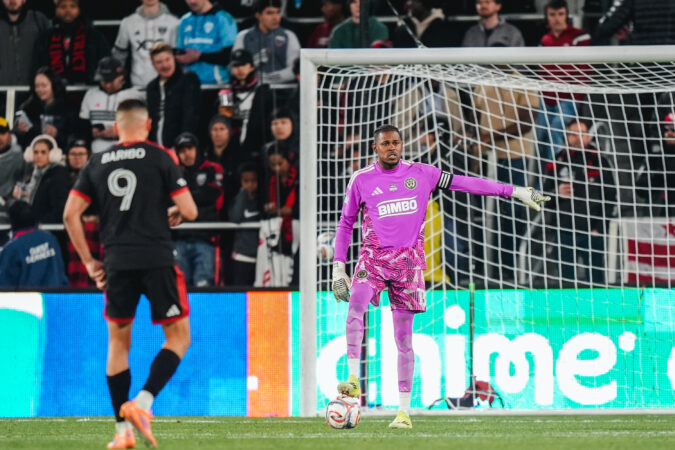
    WASHINGTON — Tai Baribo got a measure of revenge on the Union in his first game with D.C. United, scoring the only goal of a 1-0 game to open the season at Audi Field.

    It felt almost inevitable when Baribo scored against his old team in the 23rd minute, and not just because he screamed in celebration. The $4 million acquisition had put the ball in the net in the ninth minute too, but setup man Keisuke Kurokoawa was far offside in the buildup.

    The guilty party on the Union’s side was a player who wasn’t supposed to start, defender Finn Sundstrom. Left back Frankie Westfield was scratched from the starting lineup just before kickoff — so close, in fact that the Apple broadcast announced him as starting.

    Only when the teams took the field was it clear that Sundstrom was starting instead, with Olivier Mbaizo once again not on the game day roster.

    Gabriel Pirani started the play for the goal by trapping Sundstrom with a great bit of hold-up work. He then sprung João Peglow to lead a 3-on-2 against the Union’s defense. Baribo was wide open to take the feed and send a first-time shot past Andre Blake.

    The rest of the half was mostly as ugly as both teams wanted it to be. D.C. manager René Weiler set his team out in a 4-2-2-2 formation very similar to what the Union play, but with far less experience at it.

    The teams combined for 21 fouls and six shots, with referee Guido Gonzales Jr. giving yellow cards to Olwethu Makhanya in the 41st minute and Jesús Bueno in the 45th.

    On the free kick after Bueno’s infraction, Baribo hit the post with an open look. Halftime came mercifully soon afterward — and was livelier than much of the play, thanks to a concert from hip-hop group, the Sugarhill Gang.

    The closest the Union had come to scoring was a Milan Iloski free kick that went straight to Sean Johnson, the veteran goalkeeper whom D.C. signed in the offseason.

    Finn Sundstrom on the ball during the first half.

    Union manager Bradley Carnell withdrew Sundstrom at halftime for Geiner Martínez, marking the centerback’s Union debut.

    Iloski came even closer in the 54th on a well-worked break up the field, but shot just over the bar.

    Carnell made his first attacking substitution in the 58th: Agustín Anello went in for Jesús Bueno, and Indiana Vassilev moved back from the attacking midfield line to the defensive one.

    But the Union’s momentum went right back out the window just seconds later when Ezekiel Alladoh was given a straight red card after a tussle on the end line with D.C.’s Lucas Bartlett.

    After the game, Gonzales told the pool reporter from Washington’s WTOP radio station that Alladoh “directed an obscene gesture and language” at Bartlett. Gonzales’ written statement further said the ejection was for “offensive, insulting, abusive language/actions.”

    Cavan Sullivan was next to enter for the Union, replacing Iloski in the 70th. Sullivan promptly took a corner in the 72nd that Nathan Harriel headed narrowly wide.

    Baribo came close again in the 78th, hitting a low curler that Andre Blake dove to save. Carnell’s final substitutions came next, Alejandro Bedoya for Vassilev and Stas Korzeniowski for Bruno Damiani in the 79th.

    The Union were actually the better team for most of the rest of the night, but could not find an equalizer through six minutes of stoppage time. The last chance came on a free kick on the game’s final play, with Sullivan serving a cross that Makhanya headed off target.

    Geiner Martínez on the ball during his first MLS game.

    Up next is Thursday’s home leg of the Concacaf Champions Cup series against Defence Force FC at Subaru Park (7 p.m., FS1, TUDN). Alladoh will be eligible to play in that game since it’s a separate competition. And he won’t have much to worry about, since the Union hold a 5-0 aggregate lead from the first game.

  • Villanova’s second-half mistakes ‘snowball’ in humbling loss to No. 5 UConn

    Villanova’s second-half mistakes ‘snowball’ in humbling loss to No. 5 UConn

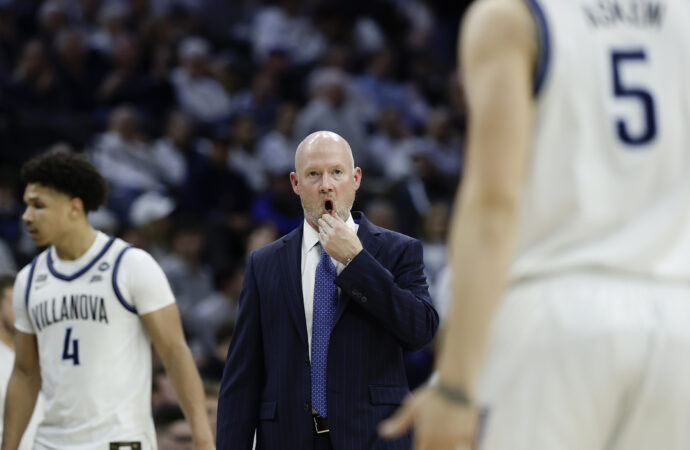
    Kevin Willard has been pretty proficient when it comes to using his timeouts. The first-year Villanova coach has used them quite a few times this season to stop an opposing team’s run.

    He called one 3 minutes, 27 seconds into the second half Saturday, his Wildcats trailing by 10. He called another, less than two minutes later, and another, the last one he had left in the holster, with 10:21 left on the game clock.

    “I ran out of timeouts,” Willard quipped after Villanova’s 73-63 loss to No. 5 Connecticut at Xfinity Mobile Arena.

    Ideas, too.

    The final deficit was 10, but the Huskies led by as many as 21 inside of five minutes to play before Villanova chipped away in garbage time and put the lipstick on the pig.

    It was — given the lead-up, the 20,261 sellout crowd, the six-game winning streak Villanova carried with it — the Wildcats’ worst performance of the season. When they were ran out of the gym on the road at No. 1 Michigan on Dec. 9, you chalked up a 28-point defeat to a young team still finding its way.

    This time felt like more of a reality check.

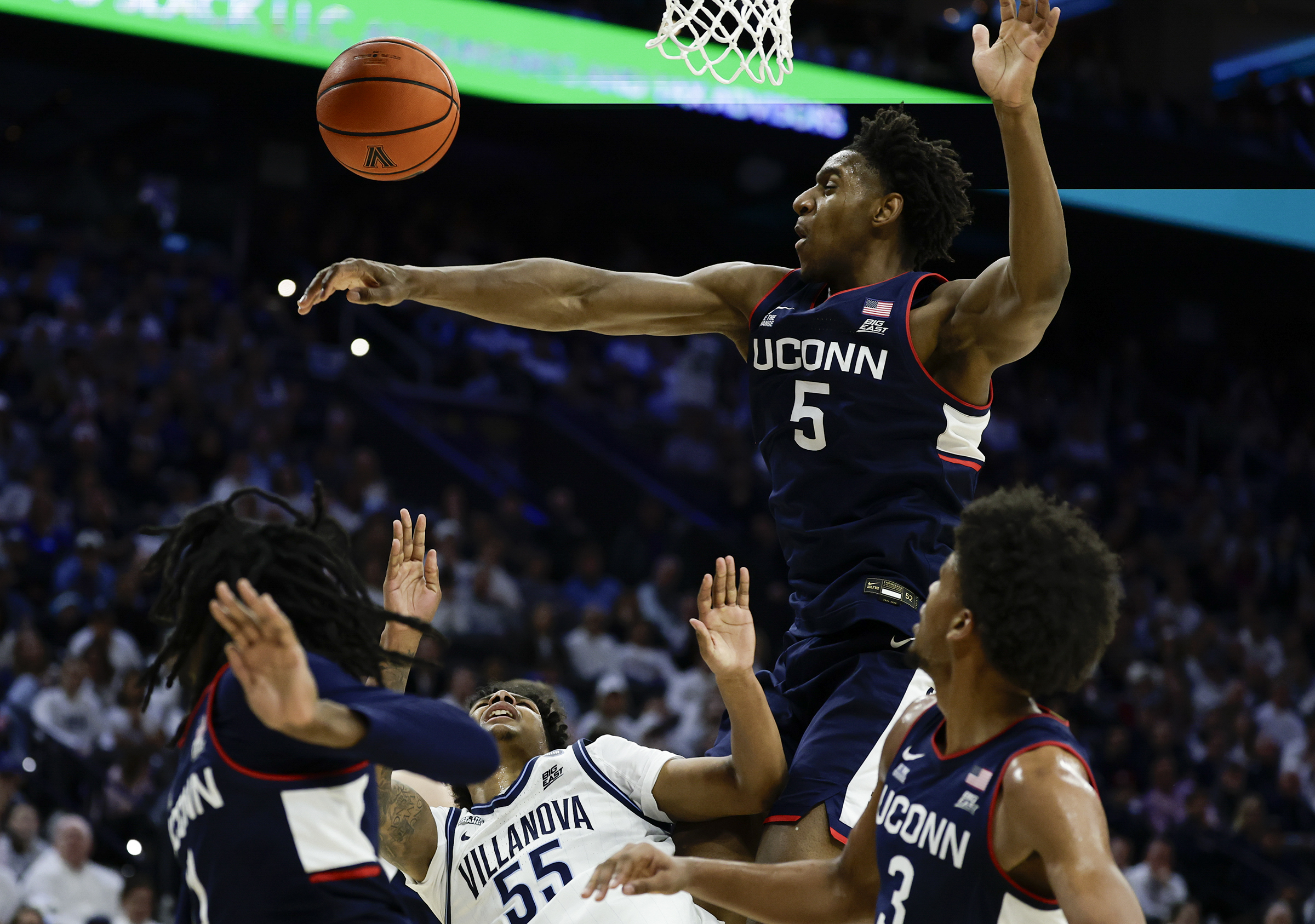
    Villanova guard Acaden Lewis gets his second-half shot blocked by UConn forward Tarris Reed Jr.

    Villanova is 21-6 and 12-4 in the Big East and well on its way to snapping a three-year NCAA Tournament drought. But if you were wondering if the Wildcats were in the same tier as UConn and No. 17 St. John’s, the answer to that query was delivered one beautiful UConn offensive set after another, and one Villanova turnover after another.

    It was 30-27 Villanova with 4 minutes, 29 seconds until halftime. A Matt Hodge putback in transition off of one of eight first-half UConn turnovers caused Dan Hurley to call a timeout and had the rally towels waving. Unlike Willard’s later attempts at stemming the tide, this timeout was a turning point. UConn outscored Villanova, 40-16, over the next 20 minutes.

    “Every once in a while you get your [expletive] kicked,” Willard said.

    “Sometimes it’s just, when guys don’t have it going … or they got into us pretty well, and we missed a couple layups, missed a couple free throws … sometimes it just snowballs.”

    Villanova made just 6 of its 28 shot attempts over those fateful 20 minutes and turned the ball over six times. The Wildcats shot just 40.7% on the night, including 6-for-24 (25%) from three-point range. They opened the second half trailing by just two points and proceeded to commit a few quick turnovers while also missing their first five attempts from the field.

    “We were too soft in the second half to start,” said Hodge, who finished with 13 points. “They came out ready to go, and it’s been a problem a couple games now so we really have to take care of that.”

    Willard referenced the slow start Villanova had to the second half against St. John’s on Jan. 17. Villanova eventually found its way back into that game, but on Saturday never cut the deficit lower than eight after UConn’s initial second-half surge. The Wildcats got beaten to almost every loose ball. UConn’s rebounding advantage was 37-24. The Huskies, who shot 55% from the floor and had six players with eight or more points, had nearly as many offensive rebounds (10) as Villanova did defensive rebounds (13).

    The game was all but over quickly in the second half, and there weren’t enough timeouts for Willard to find a way to get his team out of it.

    “It was very deflating,” Willard said. “Give them credit. They’re an older team, they kind of impose their will on you at times. The game there we did a really good job taking care of the ball.”

    Willard is referencing his team’s 75-67 overtime loss at Connecticut on Jan. 24, a game the Wildcats could have won. Among the many differences this time around was Duke Brennan’s ineffectiveness. Villanova’s center had 16 points and 14 rebounds in the first meeting and was held to seven points and a season-low three rebounds Saturday night. Huskies big man Tarris Reed Jr. defended Villanova’s high post action and his pick-and-roll defense limited Brennan’s touches.

    “We’ve been playing good basketball,” Willard said. “You just got to bounce back. It’s not the end of the world. That’s a good basketball team, and they’re coming off a tough loss against Creighton. I thought their defensive intensity was so much different than it was against Creighton.

    “Sometimes you come off a tough home loss and you go on the road and you can really find a way.”

    Villanova won’t have the same luxury, though maybe hunkering down at home and practicing after a forecast snowstorm for much of the region will yield a bounce-back performance Wednesday night at home against Butler (7 p.m., FS1).

    Tyler Perkins, who scored 10 points in the first 14 minutes of the game and finished with 15, said the Wildcats will draw on their experience from what they learned after losing to Michigan in December. They responded with an 18-point win over Pittsburgh. A similar result Wednesday night would be a confidence booster before next Saturday’s game at Madison Square Garden against a surging St. John’s team.

    “We’ve been through it before,” Hodge said. “We played Michigan and got our [expletive] kicked and bounced back. We just got to stick together.”

  • Penn women’s basketball keeps its Ivy Madness hopes alive with dominant win over Yale

    Penn women’s basketball keeps its Ivy Madness hopes alive with dominant win over Yale

    Penn dominated Yale on Saturday at the Palestra, keeping its slim hope for an Ivy League tournament bid alive.

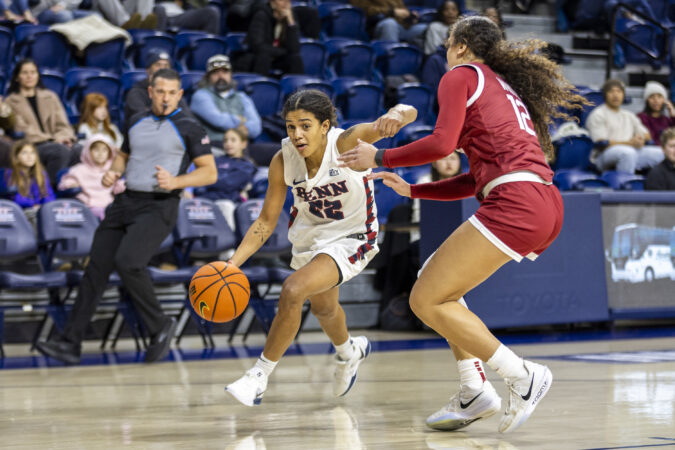
    Mataya Gayle (22 points, four assists) and Brooke Suttle (16 points) combined for 38 points in the 68-52 win, which put the Quakers three games back of Harvard and Brown for fourth place in the Ancient Eight with four games left in the season.

    Penn women’s basketball competed in the four-team Ivy Madness tournament in six of the possible seven times since its inception in 2017. The Quakers failed to qualify in 2022.

    “They know we need to win,” Penn coach Mike McLaughlin said. “Since they’re smarter than me, they can figure out statistical analysis. I’m just here to tell you one at a time.”

    A mark above

    Gayle was honored pregame at halfcourt for reaching 1,000 career points against Cornell last weekend. The point guard is the 27th player in program history to reach the historic mark, but she’s not resting on her laurels.

    “I was excited about it,” Gayle said. “I think it was more so bittersweet. It’s the last time I’ll do this, so I was happy to get it. I’m proud of myself and the work I put in, but just want to keep winning.”

    Once the ball was tipped, Gayle continued her scoring ways — she tacked on 10 more points before the end of the first quarter. The Quakers (15-9, 5-6 Ivy League) held the lead for all but 21 seconds on Saturday, repeatedly taking advantage of Yale’s Ivy League-worst defense by scoring at the rim.

    Penn took care of the ball, too, and had just seven turnovers.

    “Only turning the ball over seven times gives us a chance to beat anyone,” McLaughlin said.

    Senior guard Simone Sawyer (12 points, eight rebounds) and Suttle combined to go 10-of-17 from the field, stepping up as reigning Ivy League Rookie of the Year Katie Collins (eight points) who shot 2-of-11 from the field and struggled to score against Yale’s size.

    “I felt great,” Suttle, a sophomore guard, said. “Honestly, my teammates were doing a great job of finding me on cuts and off ball screens and actions like that. It’s just really good to be able to go out there knowing that they were confident in me.”

    Sophomore guard Ciniya Moore led Yale (6-18, 2-9) with 19 points.

    Looking for help

    After winning the first iteration of Ivy Madness in 2017, Penn has been a perennial bridesmaid, losing in the championship game the next two seasons and coming in as the fourth seed in each of the last three.

    Now, McLaughlin is looking for help from some unlikely allies down the stretch with the hope that his team, once again, sneaks its way into contention.

    “I’ll buy them something to eat when I see them next,” McLaughlin said in reference to if Princeton beats Brown. “That’s what Philly people do right? They help out. We took care of our business. Whatever happens, happens, but I’m not opposed to buying if they help us out.”

    Not as lucky

    The men’s team, which traveled to New Haven, Conn., to take on the league-leading Bulldogs, lost, 74-70. The Quakers (13-11, 6-5) remain in third with a one-game lead over fourth-place Cornell.

    Penn’s three-headed offensive attack, led by TJ Power (18 points, eight rebounds), Ethan Roberts (12 points), and Michael Zanoni (20 points), showed out — but the team failed to stop Yale’s paint presence, led by forward Isaac Celiscar (16 points) and center Samson Aletan (13 points).

    The Bulldogs (21-4, 9-2) scored 14 more points in the paint, 36-22, and seven more second-chance points (14-7).

    Penn guard Michael Zanoni had 20 points in a road loss to Yale.

    Up next

    Penn’s women embark on their final regular-season road trip, starting with Harvard on Friday (7 p.m., ESPN+). The men host Dartmouth that night at the Palestra (7 p.m., ESPN+).

  • Justin Crawford is ready to show he can take ‘control’ in the Phillies outfield

    Justin Crawford is ready to show he can take ‘control’ in the Phillies outfield

    DUNEDIN, Fla. — In 2022, the Phillies opened the season with a young center fielder. So, coach Paco Figueroa got Matt Vierling together for a meeting with the veterans on either side of him.

    “I hit Nick [Castellanos] in the chest, and I’m like, ‘You’re the leader of him,’” Figueroa recalled telling Vierling. “I hit [Kyle] Schwarber in the chest. ‘You’re the leader of him.’ I told him, ‘Whatever happens to Nick, it’s your fault, and whatever happens to Schwarber.’

    “You’re teaching him to think like, ‘I’m in control.’”

    Four years later, Figueroa, the team’s first base, outfield, and base running coach has had a variation of that talk with Justin Crawford. Because the Phillies are committing to a 22-year-old rookie in center field, and they want to make sure everyone knows who’s in charge.

    It was fitting, then, that Crawford led off the Grapefruit League season for the Phillies on Saturday. Six pitches into his first at-bat, he hit an elevated two-strike cutter from a major-league lefty (Toronto’s Eric Lauer) that one-hopped the wall in left-center field for a double.

    As first impressions go, it was pitch perfect.

    “That definitely feels good, getting the first one, first at-bat like that,” Crawford said, beaming after playing five innings of the Phillies’ 3-0 loss to the Blue Jays. “Yeah, it’s kind of nice to be able to get that and then just try to hopefully build off that.”

    Justin Crawford doubles in the first inning against the Blue Jays on Saturday in Dunedin, Fla.

    OK, some perspective: It was an auspicious start, nothing more. Crawford was always going to play a lot this spring, but he figures to see even more at-bats than usual once camp empties out of teammates who are playing in the World Baseball Classic next month.

    There’s time, then, for Crawford to keep refining a swing that produced a .322 average in the minors but also a high rate of ground balls. Near the end of last season, he moved his hands up, closer to his ear, to get his bat to the ball more quickly. He’s sticking with that for now. There will be additional tweaks.

    But spring training will also be a time for Crawford to show he can handle center field. He played exclusively center in the minors until the second half of last season in triple A, when he made 30 starts in left.

    And opinions were split, even among Phillies officials, over which outfield spot is his best right up until they decided to give him the keys to center.

    “He can play,” said Figueroa, who has coached the Phillies’ outfielders since 2018. “Like any young guy, he’s going to get to the big leagues and you’ve got to be patient with him. But one thing that I see is his makeup. He just knows how important the X’s and O’s of the game is, the mental, the physical, the preparation. He’s great with that.”

    It’s in Crawford’s blood. His dad, Carl, was a four-time All-Star outfielder. His godfather, Junior Spivey, played five seasons in the majors. His personal hitting coach, Mike Easler, had a 15-year career and won a World Series with the “We Are Family” Pirates in 1979.

    Crawford focused in the offseason on a more efficient first step in the outfield. His track-star speed enables him to compensate for taking indirect routes to the ball. But he also knows he can be more precise.

    Phillies outfielder Justin Crawford walks back to the clubhouse following Saturday’s spring training game against Toronto.

    “It kind of started with my set-up and that kind of helped clean up my angles,” Crawford said. “Then I did different types of drills that kind of helped clean up my angles as well. And just in my training, first-step drills, fast-twitch [movements], things like that.”

    Figueroa said the Phillies’ player-development staff didn’t highlight a particular skill that needs refinement. “It’s a little bit of everything,” according to Figueroa, who believes it all begins with the pre-pitch preparation.

    The biggest test in the Grapefruit League opener came in the fourth inning. Crawford got a good jump on Addison Barger’s sinking liner and made a sliding catch.

    “At this level, I think his speed is game-changing,” left fielder Otto Kemp said. “It’s game-changing on the base paths and even in the outfield. I’m excited to see him kind of take control in center field in Philly and just show everybody what he can do.”

    To Figueroa, one of the best moments of camp came a few days ago. The Phillies were doing a drill — known as “pop-up priority” — that emphasizes communication within a hierarchy of defensive positions.

    “We had all the guys out there, and it was like a high fly ball almost to where the shortstop could get it,” Figueroa said. “But he ran in there yelling. And look, he’s at the top of that pyramid. That’s him. So, that was a good sign to me of him taking charge.”

    Surely, Saturday was another good step.

    “The work that I do every day, especially with Paco and everybody we have here, it really helps me have more confidence,“ Crawford said. ”I truly feel like I could play that position and stick there.”