Tag: topic-link-auto

  • Villanova’s second-half mistakes ‘snowball’ in humbling loss to No. 5 UConn

    Villanova’s second-half mistakes ‘snowball’ in humbling loss to No. 5 UConn

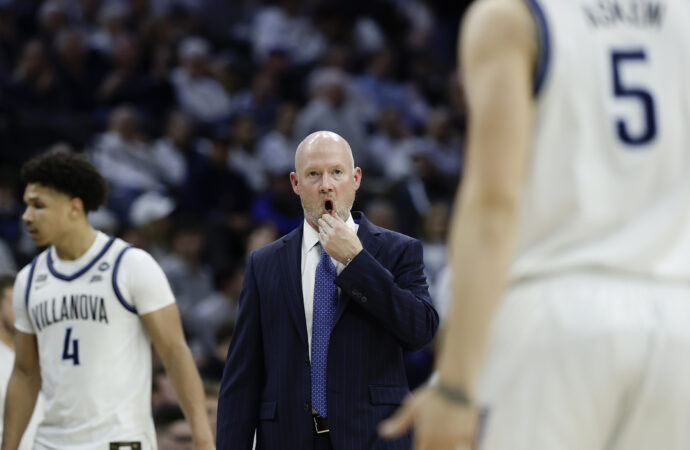
    Kevin Willard has been pretty proficient when it comes to using his timeouts. The first-year Villanova coach has used them quite a few times this season to stop an opposing team’s run.

    He called one 3 minutes, 27 seconds into the second half Saturday, his Wildcats trailing by 10. He called another, less than two minutes later, and another, the last one he had left in the holster, with 10:21 left on the game clock.

    “I ran out of timeouts,” Willard quipped after Villanova’s 73-63 loss to No. 5 Connecticut at Xfinity Mobile Arena.

    Ideas, too.

    The final deficit was 10, but the Huskies led by as many as 21 inside of five minutes to play before Villanova chipped away in garbage time and put the lipstick on the pig.

    It was — given the lead-up, the 20,261 sellout crowd, the six-game winning streak Villanova carried with it — the Wildcats’ worst performance of the season. When they were ran out of the gym on the road at No. 1 Michigan on Dec. 9, you chalked up a 28-point defeat to a young team still finding its way.

    This time felt like more of a reality check.
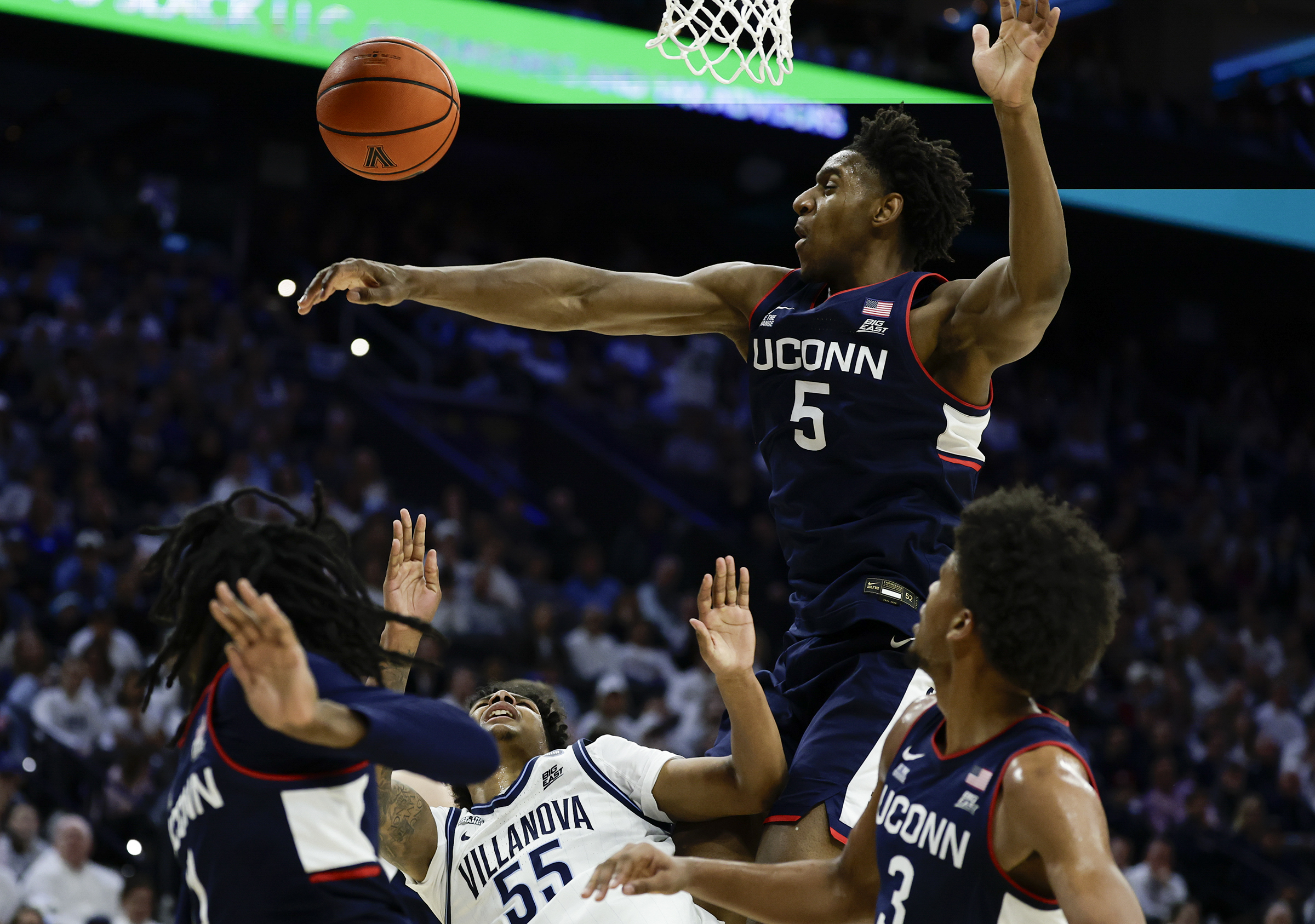
    Villanova guard Acaden Lewis gets his second-half shot blocked by UConn forward Tarris Reed Jr.

    Villanova is 21-6 and 12-4 in the Big East and well on its way to snapping a three-year NCAA Tournament drought. But if you were wondering if the Wildcats were in the same tier as UConn and No. 17 St. John’s, the answer to that query was delivered one beautiful UConn offensive set after another, and one Villanova turnover after another.

    It was 30-27 Villanova with 4 minutes, 29 seconds until halftime. A Matt Hodge putback in transition off of one of eight first-half UConn turnovers caused Dan Hurley to call a timeout and had the rally towels waving. Unlike Willard’s later attempts at stemming the tide, this timeout was a turning point. UConn outscored Villanova, 40-16, over the next 20 minutes.

    “Every once in a while you get your [expletive] kicked,” Willard said.

    “Sometimes it’s just, when guys don’t have it going … or they got into us pretty well, and we missed a couple layups, missed a couple free throws … sometimes it just snowballs.”

    Villanova made just 6 of its 28 shot attempts over those fateful 20 minutes and turned the ball over six times. The Wildcats shot just 40.7% on the night, including 6-for-24 (25%) from three-point range. They opened the second half trailing by just two points and proceeded to commit a few quick turnovers while also missing their first five attempts from the field.

    “We were too soft in the second half to start,” said Hodge, who finished with 13 points. “They came out ready to go, and it’s been a problem a couple games now so we really have to take care of that.”

    Willard referenced the slow start Villanova had to the second half against St. John’s on Jan. 17. Villanova eventually found its way back into that game, but on Saturday never cut the deficit lower than eight after UConn’s initial second-half surge. The Wildcats got beaten to almost every loose ball. UConn’s rebounding advantage was 37-24. The Huskies, who shot 55% from the floor and had six players with eight or more points, had nearly as many offensive rebounds (10) as Villanova did defensive rebounds (13).

    The game was all but over quickly in the second half, and there weren’t enough timeouts for Willard to find a way to get his team out of it.

    “It was very deflating,” Willard said. “Give them credit. They’re an older team, they kind of impose their will on you at times. The game there we did a really good job taking care of the ball.”

    Willard is referencing his team’s 75-67 overtime loss at Connecticut on Jan. 24, a game the Wildcats could have won. Among the many differences this time around was Duke Brennan’s ineffectiveness. Villanova’s center had 16 points and 14 rebounds in the first meeting and was held to seven points and a season-low three rebounds Saturday night. Huskies big man Tarris Reed Jr. defended Villanova’s high post action and his pick-and-roll defense limited Brennan’s touches.

    “We’ve been playing good basketball,” Willard said. “You just got to bounce back. It’s not the end of the world. That’s a good basketball team, and they’re coming off a tough loss against Creighton. I thought their defensive intensity was so much different than it was against Creighton.

    “Sometimes you come off a tough home loss and you go on the road and you can really find a way.”

    Villanova won’t have the same luxury, though maybe hunkering down at home and practicing after a forecast snowstorm for much of the region will yield a bounce-back performance Wednesday night at home against Butler (7 p.m., FS1).

    Tyler Perkins, who scored 10 points in the first 14 minutes of the game and finished with 15, said the Wildcats will draw on their experience from what they learned after losing to Michigan in December. They responded with an 18-point win over Pittsburgh. A similar result Wednesday night would be a confidence booster before next Saturday’s game at Madison Square Garden against a surging St. John’s team.

    “We’ve been through it before,” Hodge said. “We played Michigan and got our [expletive] kicked and bounced back. We just got to stick together.”

  • Penn women’s basketball keeps its Ivy Madness hopes alive with dominant win over Yale

    Penn women’s basketball keeps its Ivy Madness hopes alive with dominant win over Yale

    Penn dominated Yale on Saturday at the Palestra, keeping its slim hope for an Ivy League tournament bid alive.

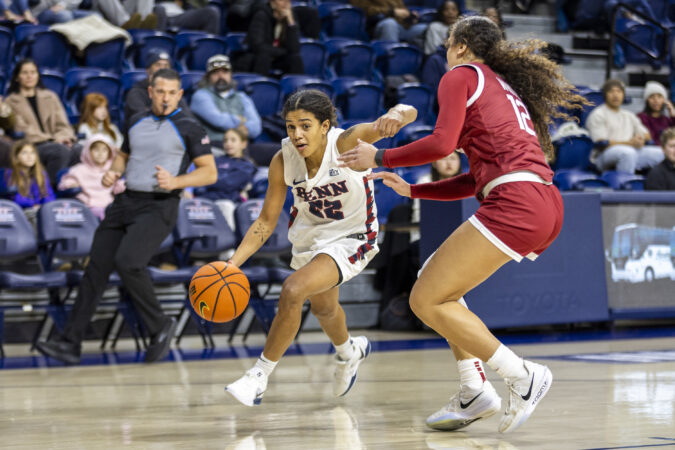
    Mataya Gayle (22 points, four assists) and Brooke Suttle (16 points) combined for 38 points in the 68-52 win, which put the Quakers three games back of Harvard and Brown for fourth place in the Ancient Eight with four games left in the season.

    Penn women’s basketball competed in the four-team Ivy Madness tournament in six of the possible seven times since its inception in 2017. The Quakers failed to qualify in 2022.

    “They know we need to win,” Penn coach Mike McLaughlin said. “Since they’re smarter than me, they can figure out statistical analysis. I’m just here to tell you one at a time.”

    A mark above

    Gayle was honored pregame at halfcourt for reaching 1,000 career points against Cornell last weekend. The point guard is the 27th player in program history to reach the historic mark, but she’s not resting on her laurels.

    “I was excited about it,” Gayle said. “I think it was more so bittersweet. It’s the last time I’ll do this, so I was happy to get it. I’m proud of myself and the work I put in, but just want to keep winning.”

    Once the ball was tipped, Gayle continued her scoring ways — she tacked on 10 more points before the end of the first quarter. The Quakers (15-9, 5-6 Ivy League) held the lead for all but 21 seconds on Saturday, repeatedly taking advantage of Yale’s Ivy League-worst defense by scoring at the rim.

    Penn took care of the ball, too, and had just seven turnovers.

    “Only turning the ball over seven times gives us a chance to beat anyone,” McLaughlin said.

    Senior guard Simone Sawyer (12 points, eight rebounds) and Suttle combined to go 10-of-17 from the field, stepping up as reigning Ivy League Rookie of the Year Katie Collins (eight points) who shot 2-of-11 from the field and struggled to score against Yale’s size.

    “I felt great,” Suttle, a sophomore guard, said. “Honestly, my teammates were doing a great job of finding me on cuts and off ball screens and actions like that. It’s just really good to be able to go out there knowing that they were confident in me.”

    Sophomore guard Ciniya Moore led Yale (6-18, 2-9) with 19 points.

    Looking for help

    After winning the first iteration of Ivy Madness in 2017, Penn has been a perennial bridesmaid, losing in the championship game the next two seasons and coming in as the fourth seed in each of the last three.

    Now, McLaughlin is looking for help from some unlikely allies down the stretch with the hope that his team, once again, sneaks its way into contention.

    “I’ll buy them something to eat when I see them next,” McLaughlin said in reference to if Princeton beats Brown. “That’s what Philly people do right? They help out. We took care of our business. Whatever happens, happens, but I’m not opposed to buying if they help us out.”

    Not as lucky

    The men’s team, which traveled to New Haven, Conn., to take on the league-leading Bulldogs, lost, 74-70. The Quakers (13-11, 6-5) remain in third with a one-game lead over fourth-place Cornell.

    Penn’s three-headed offensive attack, led by TJ Power (18 points, eight rebounds), Ethan Roberts (12 points), and Michael Zanoni (20 points), showed out — but the team failed to stop Yale’s paint presence, led by forward Isaac Celiscar (16 points) and center Samson Aletan (13 points).

    The Bulldogs (21-4, 9-2) scored 14 more points in the paint, 36-22, and seven more second-chance points (14-7).

    Penn guard Michael Zanoni had 20 points in a road loss to Yale.

    Up next

    Penn’s women embark on their final regular-season road trip, starting with Harvard on Friday (7 p.m., ESPN+). The men host Dartmouth that night at the Palestra (7 p.m., ESPN+).

  • Justin Crawford is ready to show he can take ‘control’ in the Phillies outfield

    Justin Crawford is ready to show he can take ‘control’ in the Phillies outfield

    DUNEDIN, Fla. — In 2022, the Phillies opened the season with a young center fielder. So, coach Paco Figueroa got Matt Vierling together for a meeting with the veterans on either side of him.

    “I hit Nick [Castellanos] in the chest, and I’m like, ‘You’re the leader of him,’” Figueroa recalled telling Vierling. “I hit [Kyle] Schwarber in the chest. ‘You’re the leader of him.’ I told him, ‘Whatever happens to Nick, it’s your fault, and whatever happens to Schwarber.’

    “You’re teaching him to think like, ‘I’m in control.’”

    Four years later, Figueroa, the team’s first base, outfield, and base running coach has had a variation of that talk with Justin Crawford. Because the Phillies are committing to a 22-year-old rookie in center field, and they want to make sure everyone knows who’s in charge.

    It was fitting, then, that Crawford led off the Grapefruit League season for the Phillies on Saturday. Six pitches into his first at-bat, he hit an elevated two-strike cutter from a major-league lefty (Toronto’s Eric Lauer) that one-hopped the wall in left-center field for a double.

    As first impressions go, it was pitch perfect.

    “That definitely feels good, getting the first one, first at-bat like that,” Crawford said, beaming after playing five innings of the Phillies’ 3-0 loss to the Blue Jays. “Yeah, it’s kind of nice to be able to get that and then just try to hopefully build off that.”

    Justin Crawford doubles in the first inning against the Blue Jays on Saturday in Dunedin, Fla.

    OK, some perspective: It was an auspicious start, nothing more. Crawford was always going to play a lot this spring, but he figures to see even more at-bats than usual once camp empties out of teammates who are playing in the World Baseball Classic next month.

    There’s time, then, for Crawford to keep refining a swing that produced a .322 average in the minors but also a high rate of ground balls. Near the end of last season, he moved his hands up, closer to his ear, to get his bat to the ball more quickly. He’s sticking with that for now. There will be additional tweaks.

    But spring training will also be a time for Crawford to show he can handle center field. He played exclusively center in the minors until the second half of last season in triple A, when he made 30 starts in left.

    And opinions were split, even among Phillies officials, over which outfield spot is his best right up until they decided to give him the keys to center.

    “He can play,” said Figueroa, who has coached the Phillies’ outfielders since 2018. “Like any young guy, he’s going to get to the big leagues and you’ve got to be patient with him. But one thing that I see is his makeup. He just knows how important the X’s and O’s of the game is, the mental, the physical, the preparation. He’s great with that.”

    It’s in Crawford’s blood. His dad, Carl, was a four-time All-Star outfielder. His godfather, Junior Spivey, played five seasons in the majors. His personal hitting coach, Mike Easler, had a 15-year career and won a World Series with the “We Are Family” Pirates in 1979.

    Crawford focused in the offseason on a more efficient first step in the outfield. His track-star speed enables him to compensate for taking indirect routes to the ball. But he also knows he can be more precise.

    Phillies outfielder Justin Crawford walks back to the clubhouse following Saturday’s spring training game against Toronto.

    “It kind of started with my set-up and that kind of helped clean up my angles,” Crawford said. “Then I did different types of drills that kind of helped clean up my angles as well. And just in my training, first-step drills, fast-twitch [movements], things like that.”

    Figueroa said the Phillies’ player-development staff didn’t highlight a particular skill that needs refinement. “It’s a little bit of everything,” according to Figueroa, who believes it all begins with the pre-pitch preparation.

    The biggest test in the Grapefruit League opener came in the fourth inning. Crawford got a good jump on Addison Barger’s sinking liner and made a sliding catch.

    “At this level, I think his speed is game-changing,” left fielder Otto Kemp said. “It’s game-changing on the base paths and even in the outfield. I’m excited to see him kind of take control in center field in Philly and just show everybody what he can do.”

    To Figueroa, one of the best moments of camp came a few days ago. The Phillies were doing a drill — known as “pop-up priority” — that emphasizes communication within a hierarchy of defensive positions.

    “We had all the guys out there, and it was like a high fly ball almost to where the shortstop could get it,” Figueroa said. “But he ran in there yelling. And look, he’s at the top of that pyramid. That’s him. So, that was a good sign to me of him taking charge.”

    Surely, Saturday was another good step.

    “The work that I do every day, especially with Paco and everybody we have here, it really helps me have more confidence,“ Crawford said. ”I truly feel like I could play that position and stick there.”

  • Otto Kemp ‘felt pretty comfortable’ in left field in Phillies’ spring opener

    Otto Kemp ‘felt pretty comfortable’ in left field in Phillies’ spring opener

    DUNEDIN, Fla. — Before Otto Kemp started in left field on Saturday, Rob Thomson warned him about his nickname there at Toronto’s TD Ballpark: “Satan’s Corner.”

    The Phillies manager has seen many misplays in that part of the outfield, because of a combination of the wind, the sun, and the typically cloudless sky above Dunedin.

    “I didn’t want to ask right before I started about why he called it that,” Kemp said. “But I felt pretty comfortable out there.”

    Kemp didn’t get a ton of action in the spring opener — a 3-0 Phillies loss to the Blue Jays on Saturday — and caught the only fly ball hit his way in the first inning. But his outfield education this spring will continue to be put to the test, as Kemp gets more innings in left field during Grapefruit League games.

    The 26-year-old learned left field on the fly last season in the majors, after being an infielder throughout the minor leagues. The Phillies believe that Kemp could be a platoon bat in left field for Brandon Marsh and want him to get as many reps as possible.

    Throughout camp, Kemp has been juggling keeping his infield skills sharp with a lot of additional work on his outfield fundamentals, particularly his footwork. He works with infield coach Bobby Dickerson in the morning, and then works with outfield coach Paco Figueroa for most of the day after that.

    “Seeing the ball off the bat and just trying to power shag as much as I can,” Kemp said. “Getting my reads down and getting my first step right. … I feel like I’ve worked a lot already, and it’s been great work so far. So I’m starting to feel really comfortable out there.”

    Justin Crawford walks into the dugout for the spring training game against the Toronto Blue Jays on Saturday.

    On Saturday, Kemp also shared the outfield with Justin Crawford, who started in center and had a 2-for-3 day at the plate.

    “He’s a dynamic player, and he covers a lot of ground, so it’s fun to just be out there,” Kemp said. “And I feel closer to him now being in the outfield, because I’ve been in the infield pretty much the entire time throughout our minor league career. So it’s fun to kind of work a little bit more side-by-side with him, and even learn from him. He’s a great outfielder. He tracks balls down better than I’ve seen a lot of people do.”

    Who stood out: Crawford led off the game with a double to center field off Toronto lefty Eric Lauer, after hitting a laser down the right field line that just stayed foul earlier in the plate appearance. He also singled in the fifth inning and made several solid defensive plays.

    “Definitely feels good getting the first one in the first at-bat like that,” Crawford said. “So it’s kind of nice to be able to get that early and then just trying to hopefully build off of that.”

    Keaton Anthony made a diving stop at first base, and was a part of three double plays turned by the Phillies infield.

    Bryse Wilson allowed three hits, a walk, and zero runs in two innings of work on Saturday.

    On the mound: Bryse Wilson pitched two innings for the Phillies, allowing three hits, a walk, and zero runs.

    Zach McCambley, a Rule 5 pick this offseason who is in competition for the final two bullpen spots, sidestepped a walk to Ernie Clement for a scoreless inning. He induced a groundout from Andrés Giménez and a lineout from Vladimir Guerrero Jr.

    “He’s got a good arm,” Thomson said of McCambley. “He’s working on cutter today, so it got away from him a little bit. But the slider, he can spin it, the fastball is really good and it plays. I like the kid.”

    Max Lazar tossed a scoreless frame. Seth Johnson and Nolan Hoffman each pitched an inning, and both gave up a home run.

    Quotable: “He acts like a like a professional. He acts like he deserves to be here,” Thomson said of Crawford.

    On deck: The Phillies return to BayCare Ballpark Sunday for their spring home opener against the Pirates (1:05 p.m., NBCSP).

  • St. Joseph’s men win a nailbiter against Loyola-Chicago. Here’s what we saw.

    St. Joseph’s men win a nailbiter against Loyola-Chicago. Here’s what we saw.

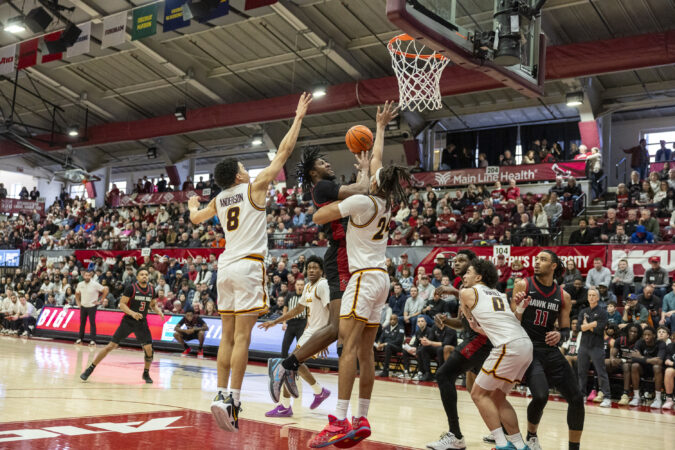
    The St. Joseph’s men’s basketball team has been in this situation multiple times before. The Hawks had double-digit leads in conference play before fumbling them away with poor shooting and losing.

    For a few minutes there against Loyola (Ill.), on Saturday at Hagan Arena, it felt like déjà vu.

    The Hawks saw their 17-point lead dwindle to four with 10 minutes, 53 seconds left in the second half. But they then took it into second gear, and surged to a 75-61 win.

    The win placed St. Joe’s (17-10, 9-5 Atlantic 10) in a tie for third place in the conference, with four games left in the regular season.

    “This is kind of our DNA right now,” said coach Steve Donahue. “We struggle sometimes on the offensive end, not from an execution point, but just the ability to be consistent with our shot making. Then we get better at that … and then we hang our hat on defense.”

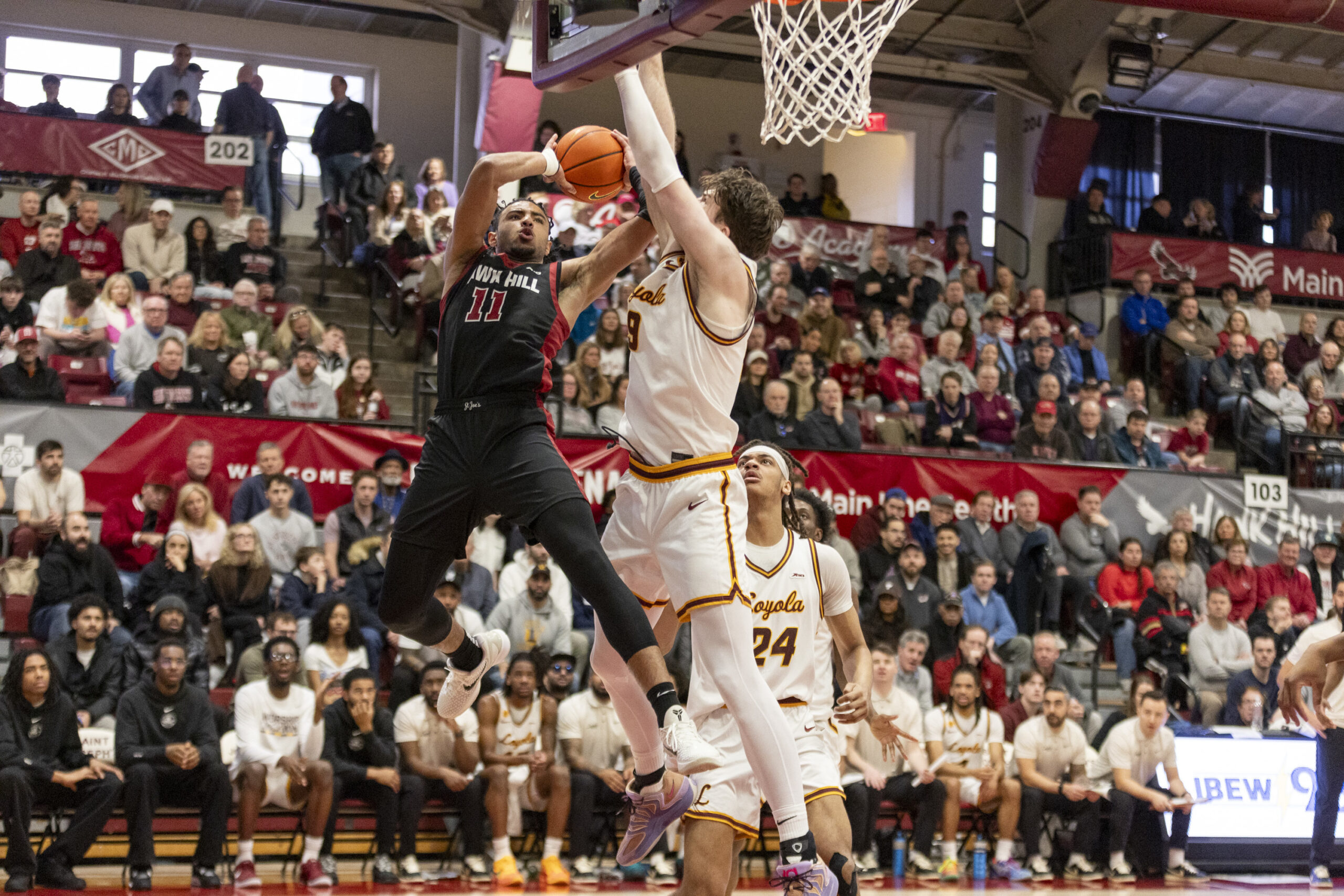
    St. Joe’s Jaiden Glover-Toscano (11) attempts a layup during the first half of Saturday’s game against Loyola-Chicago.

    Statistical leaders

    St. Joe’s dominated the rebounding battle in the second half with 20 boards compared to just 10 from Loyola. The Hawks shot 44.8% from the field and were led by guards Jaiden Glover-Toscano and Dasear Haskins with 23 points apiece, a career-high for Haskins.

    Guard Derek Simpson had 11 points and 10 assists.

    Deywilk Tavarez and Kayde Dotson both finished with 14 points for the Ramblers (6-22, 2-13), who shot just 36.8% from the field.

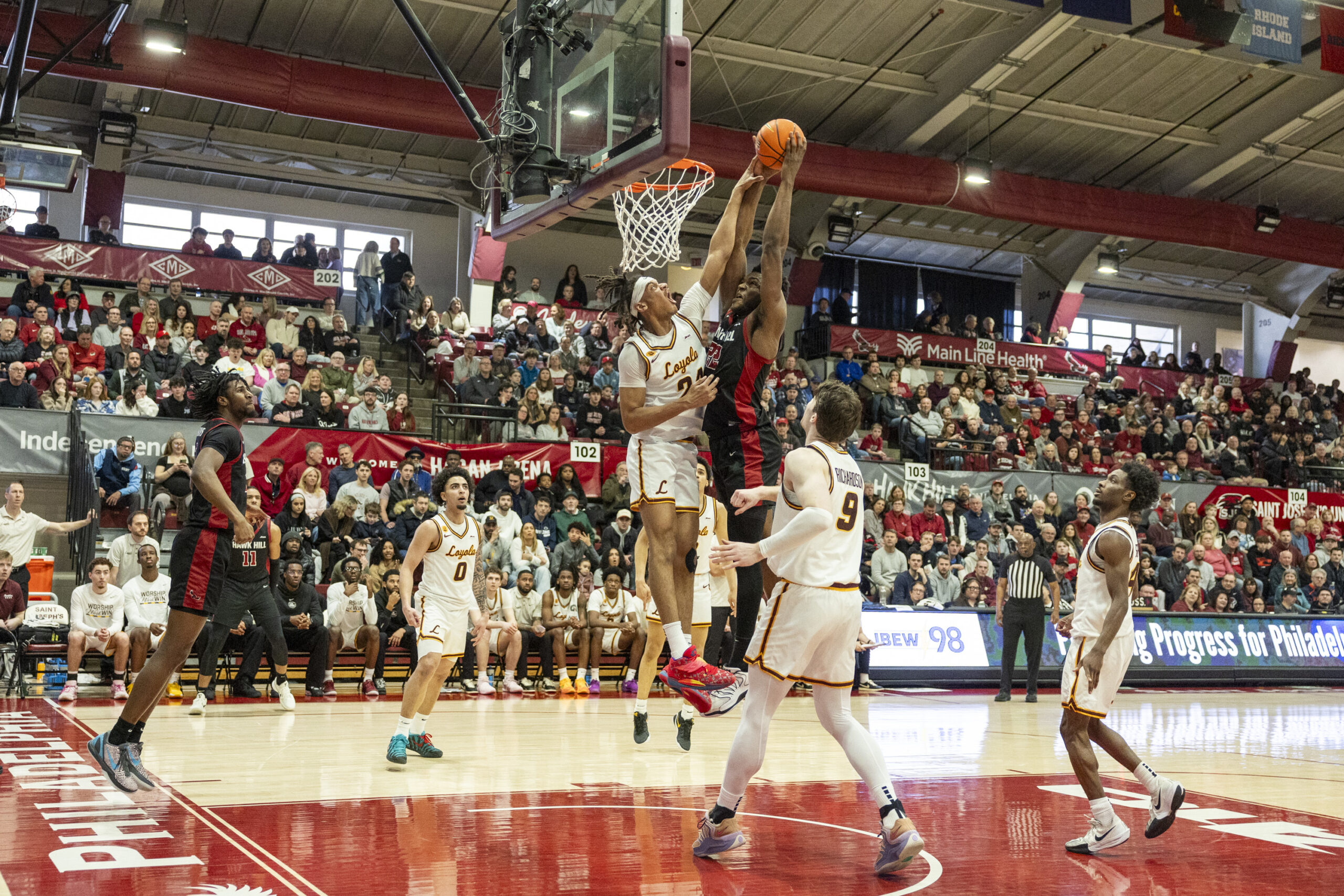
    St. Joe’s Justice Ajogbor (center) goes up for a slam in Saturday’s win over Loyola-Chicago.

    What we saw

    The Hawks bombarded Loyola with their defense. The Ramblers missed their first nine shots before guard Nicolus Anderson finally got the team’s first bucket 7:30 into the game.

    The Hawks alternated between press and man defense to stifle Loyola’s shooting, which found the Ramblers shooting just 27.6% in the first half and going 0-for-10 from three.

    However, the Hawks’ offense took a while to click as well. They made 37.9% of their shots in the half behind Glover-Toscano and Haskins, who led the charge with seven points each in the half.

    But there are inconsistencies, as Donahue was quick to point out.

    “We’re just not 40 minutes [of] consistent offense,” he said. “There’s a lot of inexperience.”

    Game-changing play

    Just more than two minutes had gone by in the second half and the Hawks were charging with a 17-point lead. Then, Loyola started chipping away, finding shots, as its three-point shooting returned and dwindling St. Joseph’s lead to just four.

    Enter Glover-Toscano and Haskins.

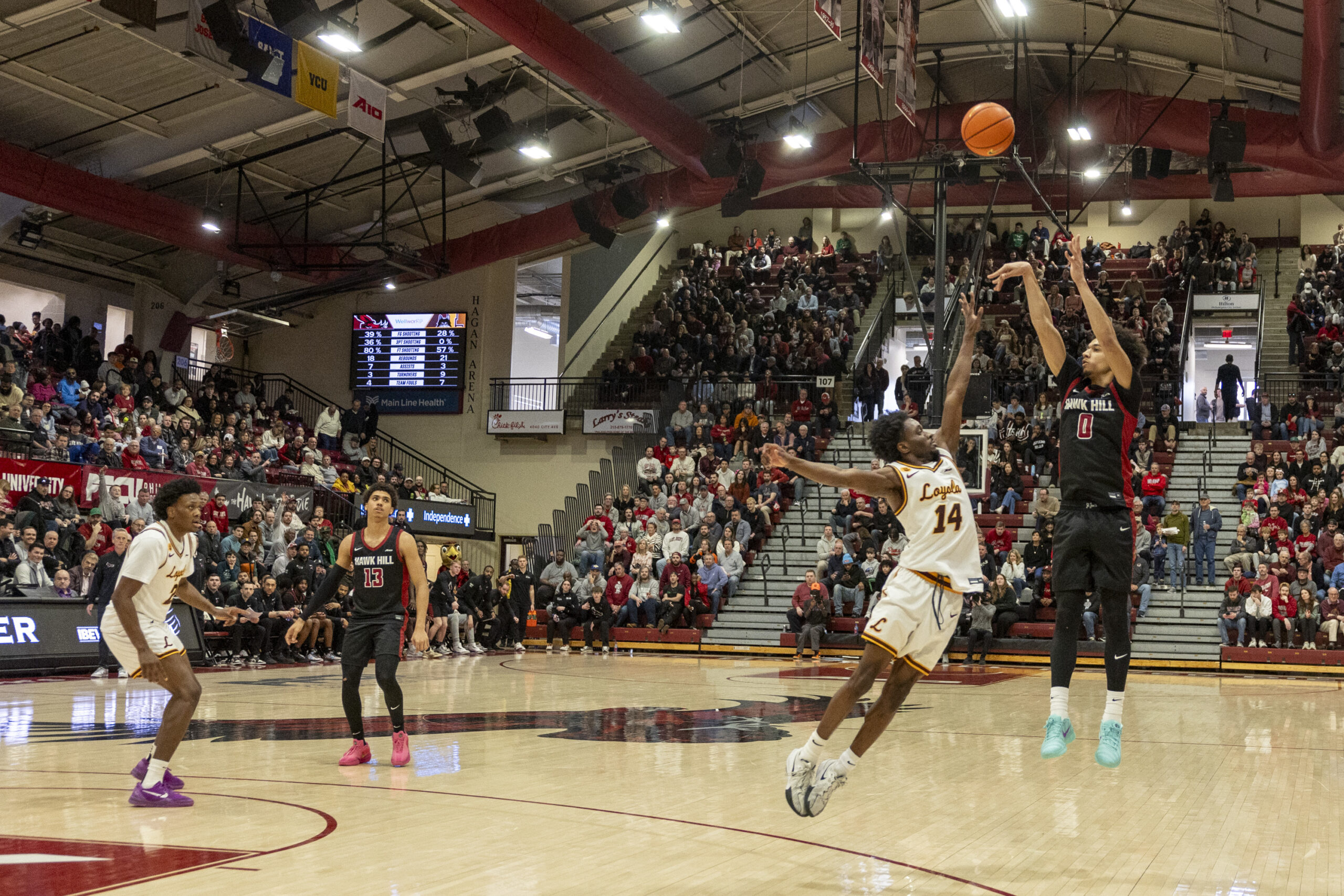
    St. Joe’s Derek Simpson (0) shooting a three-pointer during the first half of Saturday’s game against Loyola.

    Glover-Toscano drilled a three and Simpson found Haskins for an alley-oop to send Hagan Arena into a frenzy. Then both got steals, leading to a dunk and a behind-the-back layup to push the lead up to as much as 14.

    “I was thinking [about] what I was going to do, but I just wanted to get the bucket,” Haskins said.

    Up next

    St. Joe’s will host George Mason (21-6, 9-5) on Wednesday, (7 p.m., ESPN+).

  • ‘Our resistance and resilience’: Celebrating Black history at Tindley Temple

    ‘Our resistance and resilience’: Celebrating Black history at Tindley Temple

    Amid the fight to maintain exhibits about enslaved people at the President’s House Site, congregants gathered Saturday at Tindley Temple United Methodist Church — a site with significant history of its own — to celebrate Black History Month.

    “We are celebrating Black history because it’s not just cultural, it is protective,” said John T. Brice, lead pastor at the church in South Philadelphia. “When there is pressure to erase or water down our story, remembering becomes our resistance and resilience.”

    Congregants watch a video of Rev. Jesse Jackson at the Citywide Black History Celebration at Tindley Temple United Methodist Church on South Broad Street in Philadelphia on Saturday, Feb. 21, 2026. Tindley is where “We Shall Overcome,” an anthem of the Civil Rights Movement, was written.

    Tindley Temple United Methodist Church was founded by the Rev. Charles Albert Tindley, writer of an early version of the civil rights anthem “We Shall Overcome.”

    For Brice, the nation’s story can be told in full only if it includes the contributions, struggles, and leadership of Black Americans not only in February, but every month of the year.

    “Our contributions are too often minimized or left out of textbooks, public policy, and even Fifth and Market,” the site of the President’s House slavery exhibits that were removed earlier this month, Brice said. Many of the displays have been restored while litigation continues.

    Timothy Welbeck, director of the Center for Anti-Racism at Temple University, said remembering painful history is a way of honoring the contributions of ancestors.

    “In the birthplace of America, it is important to acknowledge that the first family owned people,” Welbeck said. “It’s important to honor this legacy because we had to fight for our humanity to be recognized. To tell America’s story completely, you have to acknowledge that history.”

    Philadelphia-born Shakara Wilson-Fernandez, 22, sees the acknowledgment of Tindley’s contributions as a way of empowering younger generations.

    “It warms my heart,” Wilson-Fernandez said Saturday during the service at the church.

    “There are many things going on right now, and although not all of us might be Black, we all need empowerment.”

    PJ Thomas agreed. To her, celebrating Black history in 2026 feels like celebrating and honoring the diversity of the country she loves.

    “Despite what’s going on, we are still the United States of America,” Thomas said.

    “We are still a country that celebrates our people’s history, the people that came through immigration and the people forced to come in distress, because we are all American and we all build this country together.”

  • Flyers center Sean Couturier is bringing ‘a fresh mindset’ into the final stretch

    Flyers center Sean Couturier is bringing ‘a fresh mindset’ into the final stretch

    Reset.

    That’s what Sean Couturier was planning to do during the NHL’s Olympic break.

    The Flyers captain is also looking to reset — by doing again — how he plays away from the puck, defensively, and setting up his teammates, but reset — differently — his offensive production.

    “Yeah, feels good to have a fresh mindset coming into the last stretch here,” he said. “Excited to get going here.”

    Analytically, Couturier’s numbers are solid. According to Natural Stat Trick, at five-on-five, the Flyers have a 51.9% Corsi For percentage, 53.6% of the shots, 56.64% of the expected goal share, and 57.35% of the high-danger chances, when he is on the ice. His Corsi For percentage is No. 1 for Philly, while the rest range in the top two or three among players who have skated in at least 20 games.

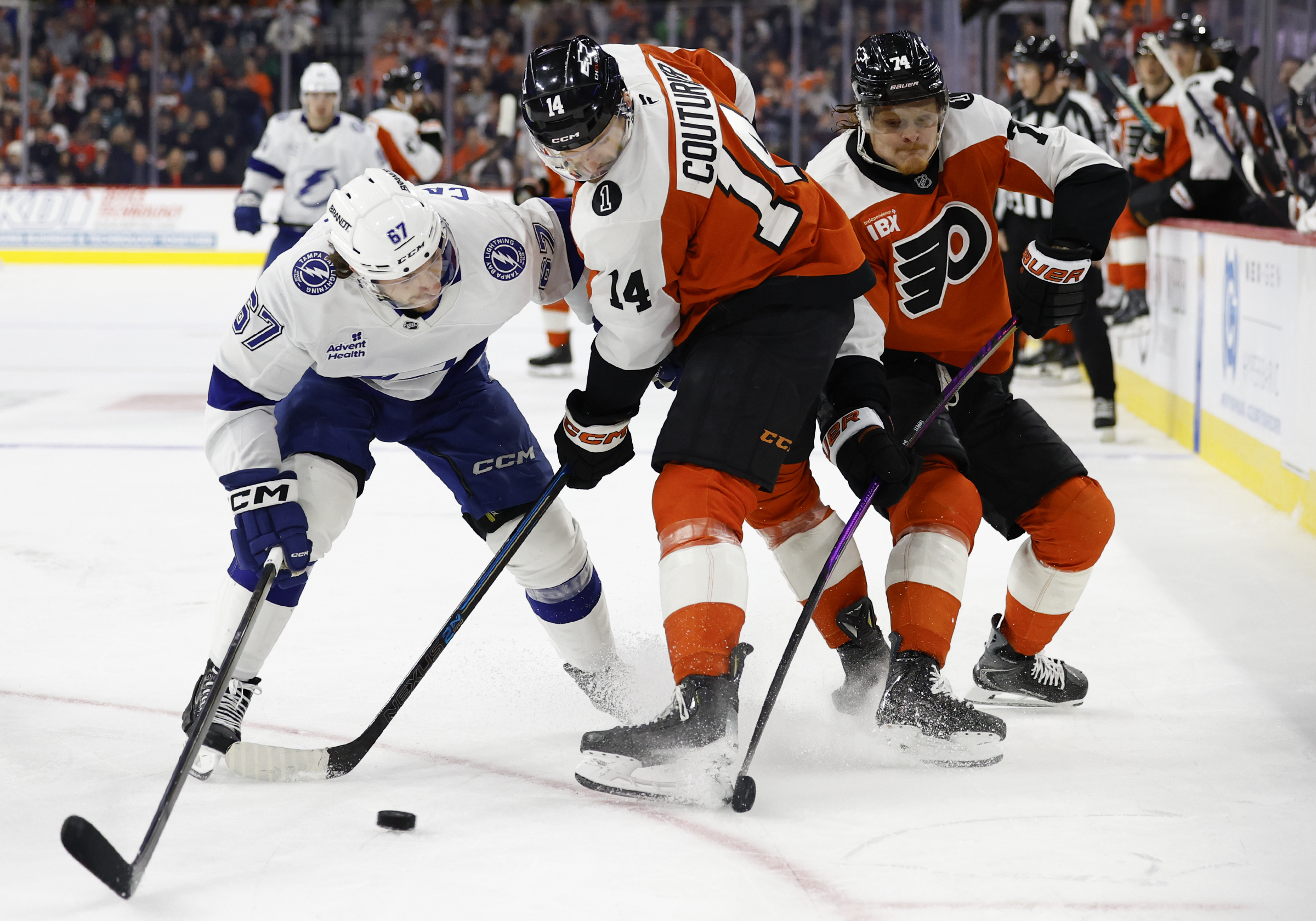
    Flyers center Sean Couturier has five goals and 26 points in 55 games this season.

    The only issue? The Flyers have allowed three more goals (29 goals for, 32 against). It’s not egregious, but the number is compounded by the fact that Couturier hasn’t scored since Dec. 7. He has five goals and 26 points in 55 games this season, with nine assists and zero goals across his last 29.

    “You know, before the break, I was just trying to simplify my game, go to the net, try to get a lucky bounce hit me off a shin pad, or my pants, or something, just get a dirty goal,” he said. “But bounces just seemed not to be going my way before the break.”

    As someone who sits 71 games away from 1,000, Couturier has gone through this type of stretch before.

    “I think you try to cut things down to not look at the big picture and try to have little goals in three-to-five-game segments, and [then] kind of always start with a fresh mindset after that,” he said after the Flyers’ fourth practice since returning Tuesday.

    “… I think it’s just, mentally be sharper, be more [even] keel, I would say. Not too high, not too low, so that you manage to go through these struggles.”

    Not to sound too cliché, but he’s pretty much taking it day by day. He’s getting chances, but he’s just snakebitten, as assistant coach Todd Reirden acknowledged on Saturday.

    Couturier said he has to “get back to that mentality of shooting first and not always looking for a pass.” Working on re-finding his offensive touch, the 33-year-old forward did have the sixth-most shots on the team (54) since his last NHL goal against the Colorado Avalanche.

    “I think it’s just to get my mindset more of just two-on ones, shoot when I can, not just look for passes,” he said. “I like to pass the puck. I like to create plays, but sometimes, you’ve got to simplify things, and I think if I have more of a shooting mentality, it’ll help out for sure putting the puck in the net.”

    It should help that Couturier is back skating with Denver Barkey and Owen Tippett after centering the fourth line for the last four games before the break — with coach Rick Tocchet moving him up the lineup depending on the scenario. The trio had primarily been connected since Barkey was called up from Lehigh Valley of the American Hockey League in late December, skating more than 140 minutes together.

    Flyers center Sean Couturier and teammate Owen Tippett go after the puck against Tampa Bay Lightning on Jan. 10.

    When they were on the ice at five-on-five, the Flyers had a 56.32% Corsi For — with 69.09% of the high-danger chances — outshot opponents 62-47, had almost twice as many scoring chances (76-47), and 64.62 of the expected goal share. The only negative is that they were outscored 9-6.

    Does Couturier, a Selke Trophy winner as the NHL’s top defensive forward in 2019-20, focus on defense to let them fly up the ice?

    “I don’t know,” he said. “They’re two great offensive young players. So, yeah, I try to, maybe, balance things out on the defensive side and let them do their things offensively, letting them take a little more chances and, you know, back them up at times.

    “But, honestly, I think it’s more on me to just be better, more involved in the play, timing-wise, when to be up the ice and when to be back under the play.”

    Couturier may not be scoring, but he’s doing the little things that lead to goals, like his play on the wall or winning a faceoff — among forwards who had taken at least 90 draws, he led the Flyers in faceoff win percentage in the last 29 games (54.0%). And the captain, whose “voice carries a lot of weight,” according to Reirden, is a key penalty killer and can play on the power play.

    Reirden has worked with some of the NHL’s best players, notably Sidney Crosby and Evgeni Malkin of the Pittsburgh Penguins, and Washington Capitals star Alex Ovechkin, who the Flyers will see on Wednesday (7 p.m., NBCSP) when they restart the season. He draws back on working with players like that to help Couturier get through the difficult times, and he feels “a little different vibe from him than I did before the break.”

    Maybe that’s because, as Couturier said, “It’s a new chapter to finish the year.”

    Bronze Age

    Flyers defenseman Rasmus Ristolainen and Finland captured the bronze medal with a 6-1 win against Slovakia at the 2026 Milan Cortina Olympics.

    The 6-foot-4, 208-pound blueliner had an impressive tournament, popping on both sides of the puck. He entered the medal game with two assists and a plus-7 across five games. He had an assist on the sixth goal on Saturday and finished plus-9, tied for the top spot in the men’s tournament with one game left to be played.

    “We know he’s a big, big body,” said former Dallas Stars forward Jere Lehtinen, who is Finland’s general manager, in a phone interview from Milan before the Olympics began. “He moves quick, a physical guy, and in the defensive zone it’s tough to play against him.

    “But at the same time, he gets up to play and has a good shot. … So, the main thing is he brings us size and speed and physicality. And if you want to succeed as a team, you need those types of players in your defensive zone, [who] may play against the top players.”

    Ristolainen, 31, skated for his country for the first time since the 2016 World Cup when it went 0-3-0, shut out by Sweden and Russia, and scored just one goal against Team North America. He was named to the 4 Nation’s Face-Off roster last February but was unable to play due to injury.

    The bronze medal now goes along with the gold he won — literally — at the 2014 World Juniors. In overtime, the physical defenseman hopped over the boards, carried the puck around Sweden’s Robert Hägg — the Flyers’ 2013 second-round pick — cut across the crease, and tucked in the golden goal. His game-winner gave Finland its first World Junior medal since 2006 and first gold since 1998.

    “Obviously, it was a big one, and, you know, sometimes I used to make plays and play a little offense,” he said with a chuckle.

    Saturday’s bronze is Finland’s eighth medal at the Olympics in men’s hockey. Its lone gold came at the 2022 Beijing Olympics, with Slovakia winning bronze that year.

    Breakaways

    Defenseman Adam Ginning and goalie Aleksei Kolosov were recalled from Lehigh Valley on Saturday. … The gold medal game will be played on Sunday with Tocchet, defenseman Travis Sanheim and Canada facing the United States and former Flyers coach John Tortorella (8 a.m., NBC, Peacock).

  • At Croft Farm in Cherry Hill, these archaeologists are searching for artifacts from the Underground Railroad

    At Croft Farm in Cherry Hill, these archaeologists are searching for artifacts from the Underground Railroad

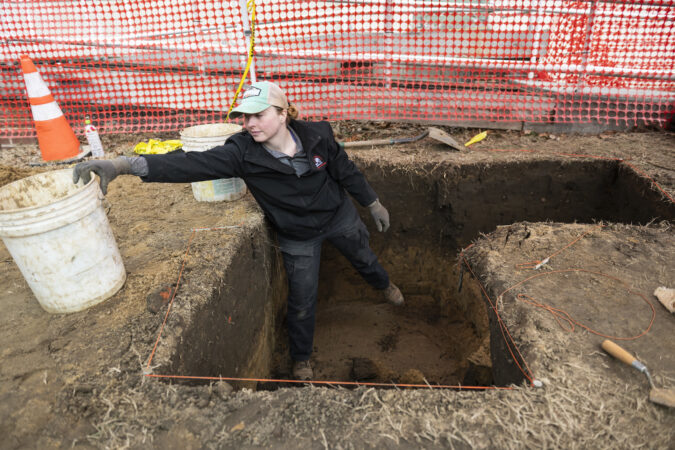
    To the casual observer, it’s just an L-shaped hole in the ground, about 40 inches deep, showing two distinct layers of dirt.

    But to the archaeologists who dug the hole, it’s a portal into the past going back thousands of years.

    Croft Farm is a national historic site. Its owners during the mid-1800s helped Black people escape from slavery. The farmhouse, outbuildings, and 80 acres of the farm are now owned by Cherry Hill Township, part of a recreational and educational space for the public.

    The darker brown top layer of “silty sand” contains artifacts from the last 300 years, an era when both enslavers and those dedicated to emancipation lived on the site, according to Matt Kraemer, 27, an archaeologist from Summit, N.J.

    Below it, the lighter-colored layer has revealed artifacts from a time when the Lenni-Lenape Indigenous people lived on the land along the Cooper River, in what is now Cherry Hill.

    “It’s a very significant site for the fact that it has a Native American component, plus everything the Evans family left behind,” Kraemer said Saturday.

    Alanna-Corinne Konkisre (center), 9, of Gloucester County, sifts through dirt to find artifacts at Croft Farm in Cherry Hill, N.J. on Saturday, Feb. 21, 2026. Croft Farm, listed on the National Register of Historic Places, is now an active archaeological site due to the farm’s role during the time of the Underground Railroad.

    The Evans family was part of the Quaker religious movement, and like many area Quakers of the time, owners Thomas Evans and his son Josiah were part of the New Jersey Abolition Society, “a group that advocated an end to slavery and also helped to maintain the Underground Railroad,” according to a history of Croft Farm provided by Cherry Hill Township.

    Matthew Tomaso, senior director of cultural resource practices at PS&S, speaks to a crowd of people before the start of an archeological dig at Croft Farm in Cherry Hill, N.J.m on Saturday, Feb. 21, 2026. Croft Farm, listed on the National Register of Historic Places, is now an active archaeological site due to the farm’s role in the Underground Railroad.

    The farm’s historical significance presents a great learning opportunity, said Matthew Tomaso, the archaeologist leading the project for PS&S, an architecture and engineering firm with a location in Warren Township.

    A year ago, PS&S was brought in to oversee cultural resource management as the township sought to stop groundwater from entering the basement of the brick house on the property, Tomaso said.

    That gave Tomaso and his team a chance to see what they might find that would shine a light on the property’s role as a station on the Underground Railroad.

    Animal bones, pieces of pottery, and other artifacts help tell that story, Tomaso said, by showing the dietary patterns, habits, and traditions of the people living there at the time.

    Nolan Arcinese (left) and Aaron Arcinese (right) look through dirt to find artifacts at Croft Farm in Cherry Hill, N.J., on Saturday, Feb. 21, 2026. Croft Farm, listed on the National Register of Historic Places, is now an active archaeological site due to the farm’s role during the time of the Underground Railroad.

    That includes previously enslaved people known to have lived there, such as Joshua Sadler, as well as others who worked and lived on the farm, he said. Sadler went on to found nearby Sadlertown, a Black settlement located in what is now Haddon Township.

    What they learn could be especially important since the Underground Railroad was not well documented at the time it was in operation, due to the need to maintain secrecy, Tomaso said.

    Mostly, though, they have found bones, said Chelsea Carriere, 29, an archaeologist who called herself “the bone lady.”

    Carriere explained that she was looking closely at cow, pig, and bird bone fragments — and the ways the animals were butchered nearly 200 years ago.

    To her, the rough cuts on the bones show that these animals likely were raised on the farm or hunted, and were likely butchered on-site, rather than through a butcher shop.

    “They were doing it themselves, and that suggests lower socioeconomic status,” Carriere said. Her team is still in the early stages of examining the artifacts.

    To her, some of the most amazing finds so far were discovered deeper down in the dirt and would date back 2,000 or more years. These include a piece of argillite that she surmised was a spear point, and a basalt biface, an ancient tool that would have been used for cutting.

    “This is a really good site,” Carriere said.

    It was also a great experience Saturday for learners of all ages who listened to demonstrations and, with archaeologists’ guidance, used a sifter to search for artifacts in the dirt.

    “I love to know what people were doing hundreds of years ago,” said Cherry Hill resident Debbie Kilderry, 71, as she watched children sift the soil.

    She came to the site with two artifacts she had obtained — a small porcelain container and a stone — hoping that the archaeologists might have insights into their origins. Tomaso’s professional analysis: She had a real arrowhead, likely from the American West, and a cup once used for coffee cream.

    To Kilderry, it is exciting to connect with those who came before her.

    “I’m excited to see what they were doing, because they were people just like us — just with different inconveniences.”

  • Jefferson women’s basketball coach Tom Shirley to be inducted into Pennsylvania Sports Hall of Fame

    Jefferson women’s basketball coach Tom Shirley to be inducted into Pennsylvania Sports Hall of Fame

    Longtime Thomas Jefferson women’s basketball coach Tom Shirley received a welcome surprise before his team’s matchup with Caldwell on Saturday.

    Shirley, who has coached the Rams for 36 years, was announced as one of 10 inductees into the Pennsylvania Sports Hall of Fame’s Class of 2026. The class will be inducted on Sept. 19.

    “I am honored to be recognized by the Pa. Sports Hall of Fame,” Shirley said. “I do realize there is group of individuals that have assisted me in receiving this recognition. Thank you to the players, alumni, coaches, staff, and Thomas Jefferson University, who have made this possible.”

    The other inductees are: Mike Bantom (basketball), Larry Bowa (baseball), Brad Cashman (administration), Joe Crawford (official), Marc Jackson (basketball), Benjamin Johnson (track and field), Kelsey Kolojejchick (field hockey), Ted Lachowicz (football), Darrelle Revis (football), Chris Snee (football), Nancy Stevens (field hockey), and Willie Thrower (football).

    Shirley has led the Rams to 14 NCAA Tournament appearances, five Central Atlantic Collegiate Conference championships, two Eastern Collegiate Athletic Conference titles, and two New York Collegiate Athletic Conference titles.

    He has 922 victories, the most an for active Division II coach, and is considered one of the most decorated college women’s basketball coaches.

    “This is a significant moment celebrating Coach Shirley’s contributions to basketball and sports in Pennsylvania,” said Hall of Fame president James Parrella.

    Shirley has been named CACC Coach of the Year four times, including consecutive seasons in 2024 and 2025. He also was named the American Women’s Sports Federation Division II Coach of the Year and Converse District Coach of the Year in 1993.

    Off the court, he was the school’s athletic director for 32 years. He stepped down from the role in August 2024.

    His team had one of its best seasons in program history in 2023-24. The Rams set a program record with 23 straight wins, lost just once during the regular season, reached the Sweet 16 for a second straight year, and finished 32-2.

    The Rams are 17-10 and 11-8 this season, after a 48-45 loss to Caldwell. They have one more regular-season game, Wednesday night at home against Chestnut Hill, before the conference tournament begins March 3.

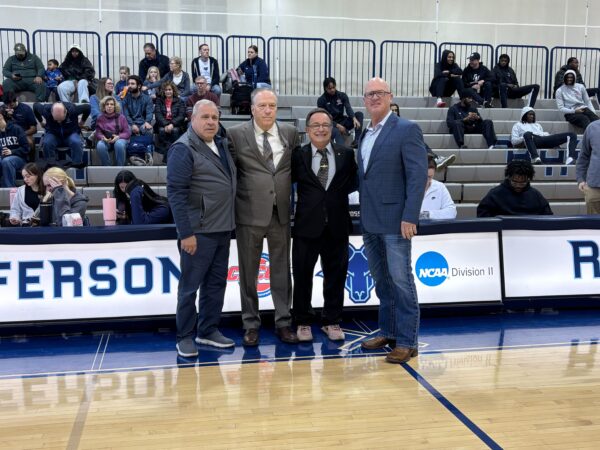
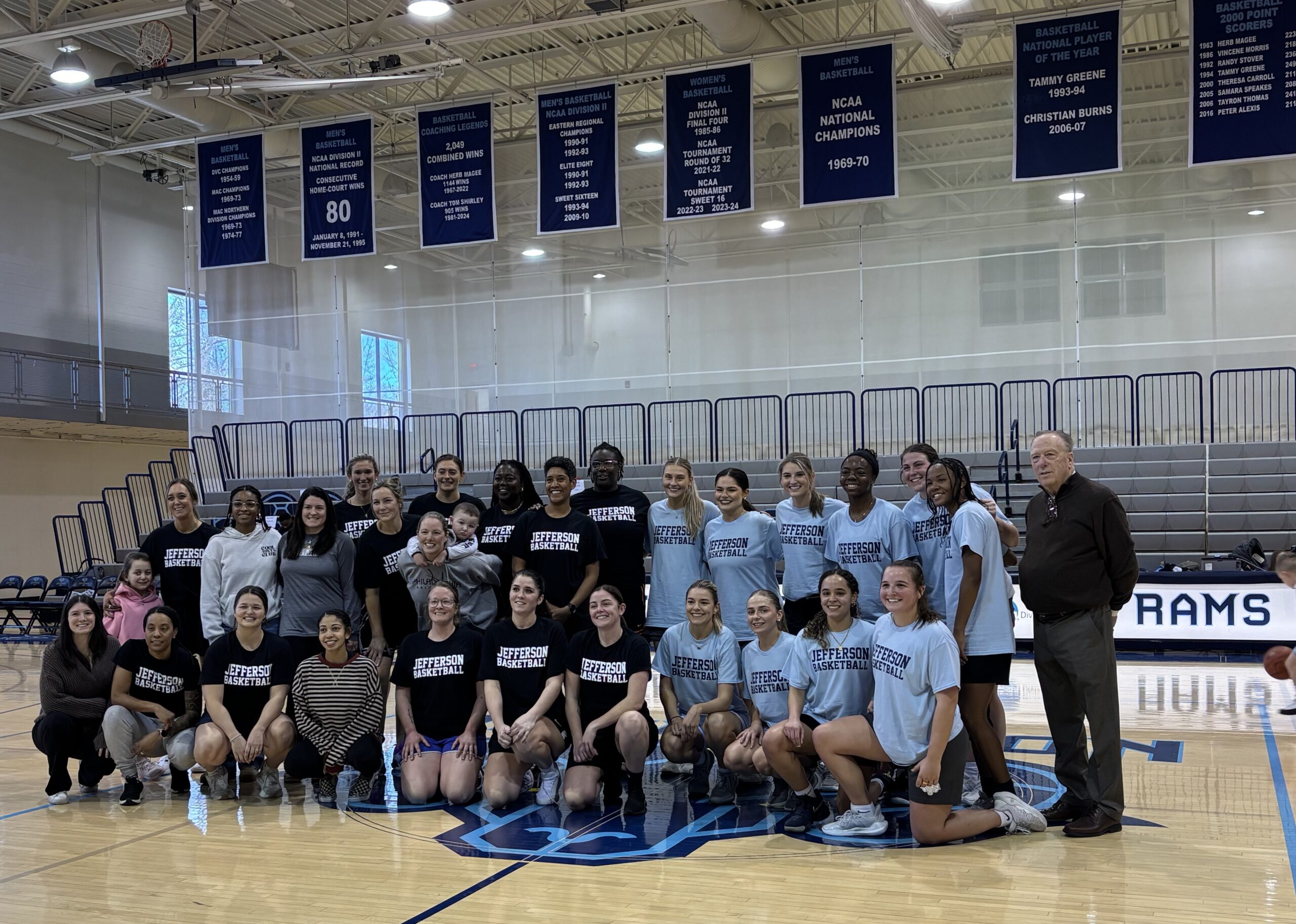
    Longtime Thomas Jefferson University women’s basketball coach Tom Shirley with Rams alumni.
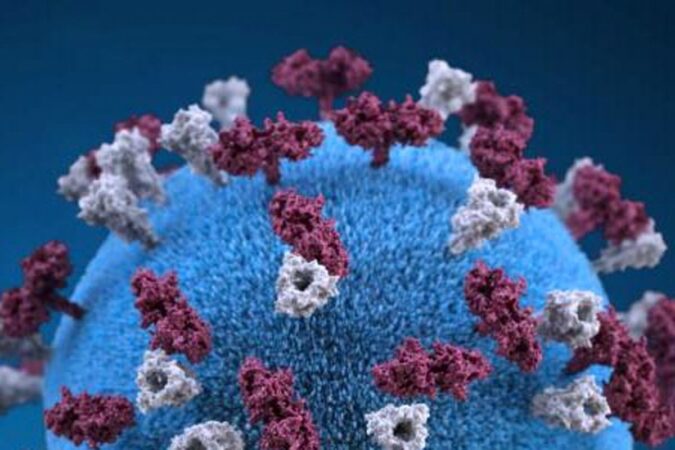
  • Measles case confirmed in a person who visited a Montgomery County car dealership and a Wawa

    Measles case confirmed in a person who visited a Montgomery County car dealership and a Wawa

    Montgomery County health officials on Saturday warned residents of a possible measles exposure at two locations in the county, after confirming another case of the highly contagious disease.

    A person infected with measles visited a car dealership and a convenience store in Royersford and Limerick earlier this week, officials said.

    The case is connected to another in the county that was confirmed earlier this month, said Richard Lorraine, the medical director of the Montgomery County Health Department.

    The original measles case was linked to a larger outbreak centered on a college in Florida, Lorraine said. A person infected with measles connected to that outbreak then traveled to Montgomery County and visited an urgent care center in Collegeville on Jan. 29, he said.

    Later, two people in their household, who live in Montgomery County, contracted measles; they were already quarantining by the time they developed symptoms, Lorraine said.

    The latest case, announced on Saturday, was in an adult who had visited the Collegeville urgent care clinic at the same time as the original patient, Lorraine said. That person developed symptoms about 20 days after exposure to the virus, Lorraine said. The virus can incubate for up to 21 days before symptoms appear.

    All of the Pennsylvania residents who have contracted measles so far this year, including the Montgomery County cases, were not vaccinated against the disease.

    What to do if you were exposed to measles

    People who were at the following Montgomery County locations during the following time periods may have been exposed to the virus, which can linger in the air for up to two hours, officials said.

    • Nissan 422 of Limerick at 55 Autopark Blvd. in Royersford:
    • Wawa at 579 N. Lewis Rd. in Limerick:

    People are generally considered protected from measles if they were born in 1957 or earlier or have had two doses of the measles, mumps, and rubella (MMR) vaccine, or the recommended number of doses based on their age, health officials said.

    People are also considered protected if they have undergone lab testing that confirms they have already had the disease or have immunity to it.

    People who are not fully vaccinated or do not have immunity to measles and were exposed to the virus should call their doctor or the county public health office. The office can be reached at 610-278-5117 or after hours at 610-635-4300.

    Lorraine said that county health officials are working to track anyone who worked at or visited the Wawa and the car dealership earlier this week.

    Once health officials identify people who passed through those locations, he said, they check to ensure they are vaccinated for measles. People with two doses of the MMR vaccine are of little concern, since the vaccine is about 98% effective at preventing disease, Lorraine said.

    The county can also test residents without documentation of vaccination for measles immunity. People without immunity can get an MMR vaccine within about 72 hours of exposure to the virus that can prevent them from contracting measles, Lorraine said.

    “For those folks who don’t have an immune status, and don’t get the MMR, they do need to quarantine for up to 21 days afterward, because that’s how long the incubation period is,” he said.

    People without immunity who were potentially exposed to the virus should observe themselves for symptoms during that period. Symptoms include fever, an unexplained rash, a cough, congestion or a runny nose, and red, watery eyes.

    Health officials said people who develop measles symptoms should stay home and call a doctor immediately. They should also call ahead to any healthcare providers they plan to visit to protect staff and other patients from the disease.

    Measles in the Philadelphia area

    As of Saturday, Pennsylvania health officials said they have confirmed 11 cases of measles in state residents, a Pennsylvania Department of Health spokesperson wrote in an e-mail.

    Seven Lancaster County residents had been infected, as well as three in Montgomery County and one in Chester County. Two more cases were identified in out-of-state residents who visited the area: one in Montgomery County and one in Chester County.

    Chester County health officials did not immediately return a request for comment Saturday.

    On Friday, Delaware health officials said they had identified a case in a patient who visited a Wilmington emergency room.

    Lorraine said it is imperative for area residents to get vaccinated against measles, which can cause severe complications including pneumonia and brain infections. About 1 to 3 of every 1,000 children who contract measles will die, according to the Centers for Disease Control and Prevention.

    Infants and children under 5 years old, adults over 20, pregnant women, and people with weakened immune systems, including patients with leukemia or HIV, are at particular risk for complications from the disease, according to the CDC.

    “Like every other illness, measles can be mild, it can be severe. But that’s the reason why we want to immunize: We want to mitigate the possibility of severe illness. We really don’t want to even take a small chance on that,” Lorraine said.