Tag: topic-link-auto

  • The New York Times agrees Philly is the place to be (locals still skeptical) | Weekly Report Card

    The New York Times agrees Philly is the place to be (locals still skeptical) | Weekly Report Card

    The New York Times also names Philly the top place to visit in 2026: A- (yet again)

    Well, here we go again. Philadelphia has once more been crowned the world’s best place to visit in 2026 — this time by the New York Times, which means we are now in the extremely Philly position of being right twice and still deeply suspicious about it.

    Yes, the reasons are familiar. The Semiquincentennial. The World Cup. The All-Star Game. Fireworks, parades, exhibitions, concerts, TED talks, themed balls, and a calendar so packed it feels like someone dared the city to see what would break first. It’s a lot. Enough, apparently, to push Philly to the top of the Times’ “52 Places to Go” list.

    But at this point, the events are almost beside the point. Big moments don’t explain why people want to be here, they just give them an excuse.

    Philly keeps landing on these lists because it’s a place that feels alive even when nothing “special” is happening. It’s opinionated without being curated. Historic without being precious. Welcoming in a way that involves some yelling, a little side-eye, and eventually someone telling you where to eat. You don’t visit Philly to be impressed. You visit to be absorbed.

    So why not an A+? Because every time the outside world decides Philly is the place to be, the city pays for it in very real ways. Hotel prices climb. SEPTA gets stress-tested. Streets designed for horse traffic brace for global crowds. And locals are once again asked to host a massive party while still making it to work, daycare pickup, and whatever delayed train they’re already standing on.

    There’s also the small matter of validation fatigue. Philly didn’t suddenly get good because the New York Times said so — just like it didn’t when the Wall Street Journal said it. The city’s been doing this for a long time, whether or not anyone was paying attention.

    Why?
    byu/UnionAdAgency inphilly

    ‘Avoid Philadelphia’ road sign goes viral: A

    Nothing says Philadelphia quite like being named the top travel destination in the world for 2026 and, at the exact same time, going viral for a road sign that simply reads: “Avoid Philadelphia.” No explanation. No branding. Just a warning.

    The photo resurfaced on r/philly and immediately became a public forum for collective truth-telling. When one user asked, “Why?” the answers poured in: “The usual reasons.” “Mental health reasons. Financial reasons.” “SEPTA.” Another went full blunt-force: “Bad things happen in Philly.”

    Of course, the Eagles entered the chat. “Eagles lost yesterday,” one commenter offered. Another countered, “Or Eagles won yesterday… Could be Eagles just did a thing. Go Birds.” Honestly, both feel correct.

    Then came the traffic trauma. “Spend a day on the Blue Route,” someone wrote — a sentence that should probably be included in driver’s ed. One person proposed Google Maps should add a new setting: “avoid highways, avoid toll roads, avoid Philadelphia.”

    But buried in the comments was the buzzkill reality check: This sign is almost certainly old. Several users pointed out it likely dates back to the I-95 bridge collapse in 2023, when avoiding Philadelphia was not a vibe, but a Department of Transportation directive. “Why are you posting a 5+ year old pic?” one top commenter asked, ruining the mystery but improving the accuracy.

    But the timing is what makes this perfect. As the Wall Street Journal and the New York Times roll out the red carpet for 2026, locals are standing off to the side holding a faded road sign like, just so you know. It’s not anti-tourism. It’s informed consent.

    An A for honesty, context, and a comment section that somehow functions as a city guide, traffic alert, sports recap, and warning label… even when the photo is old.
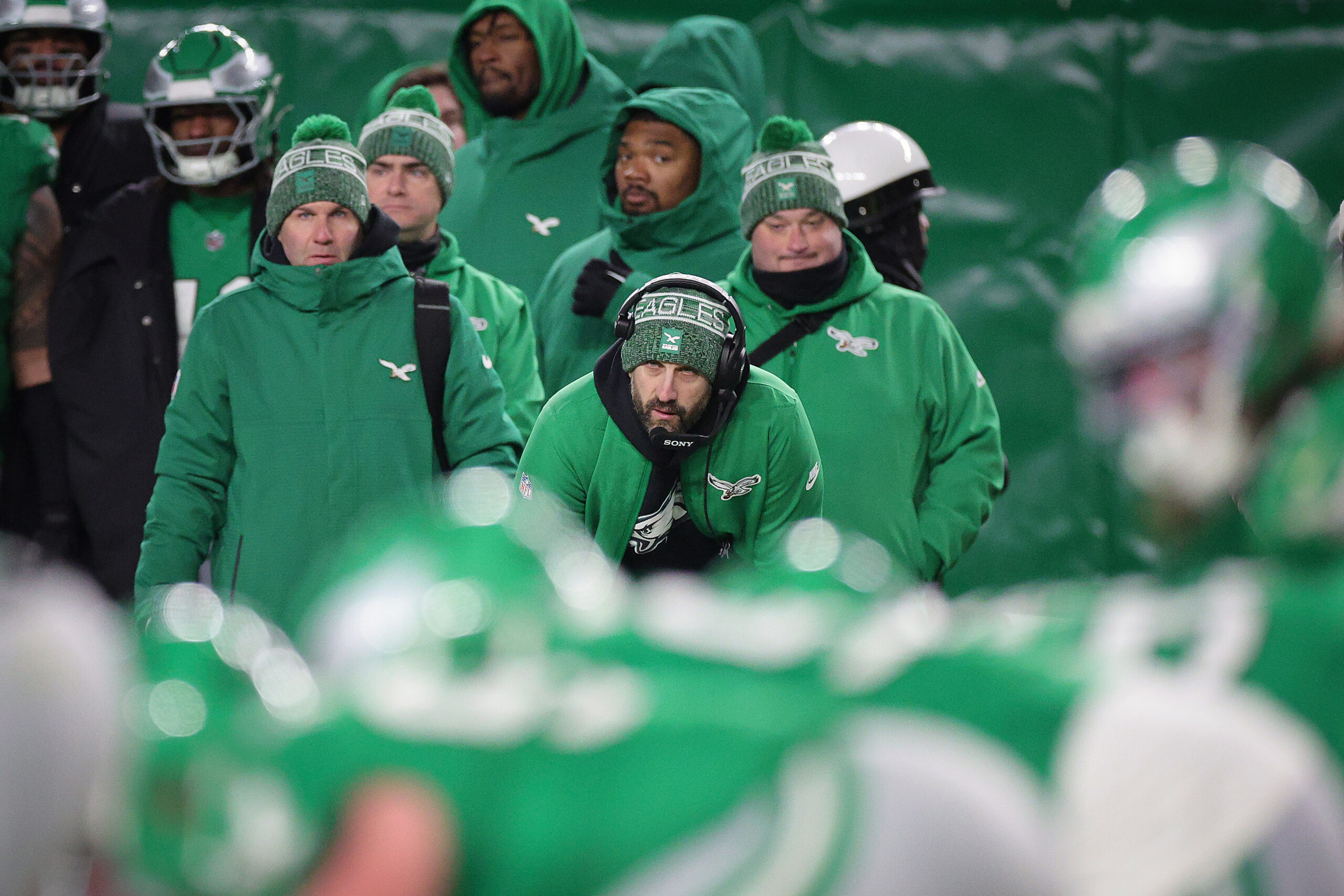
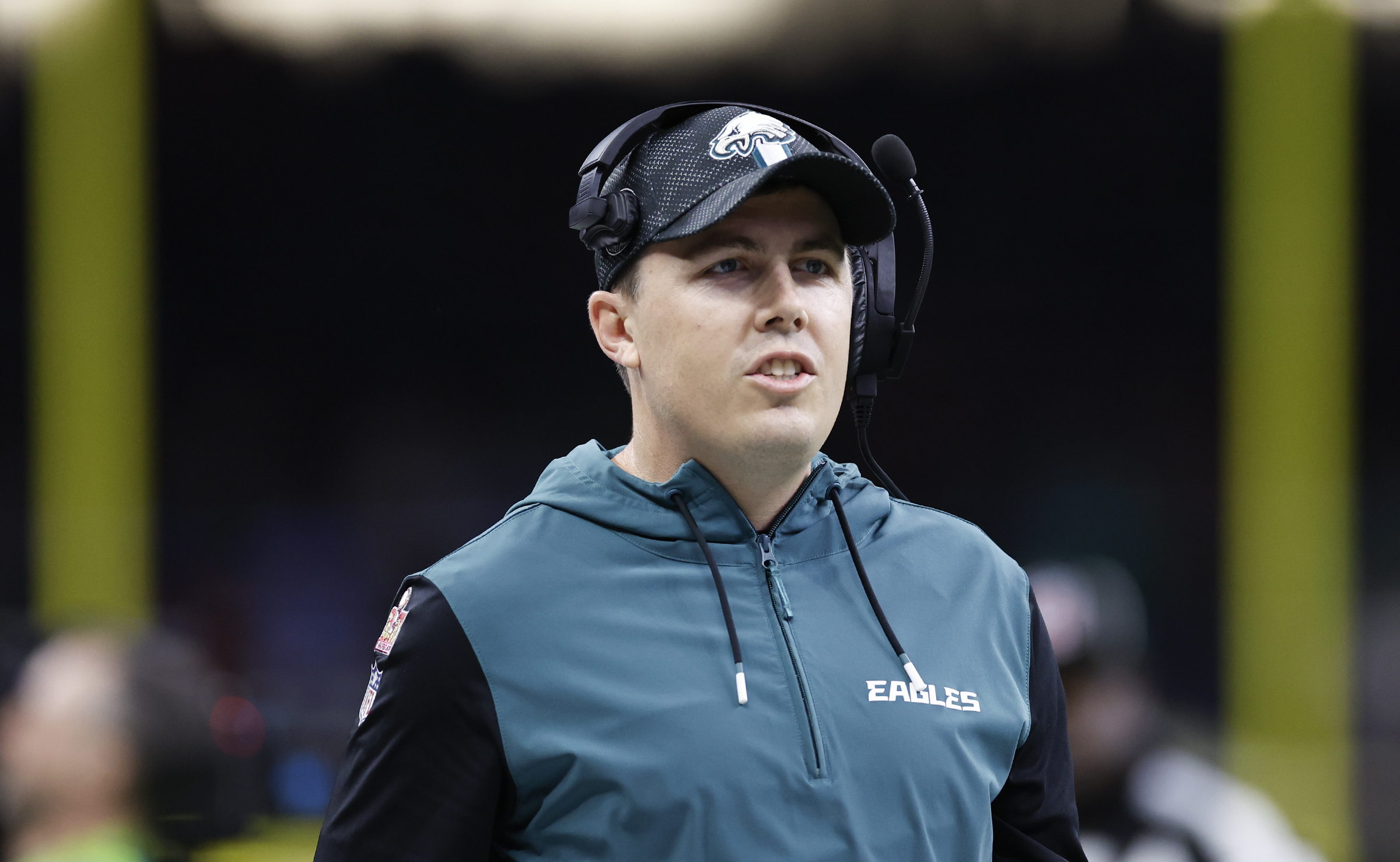
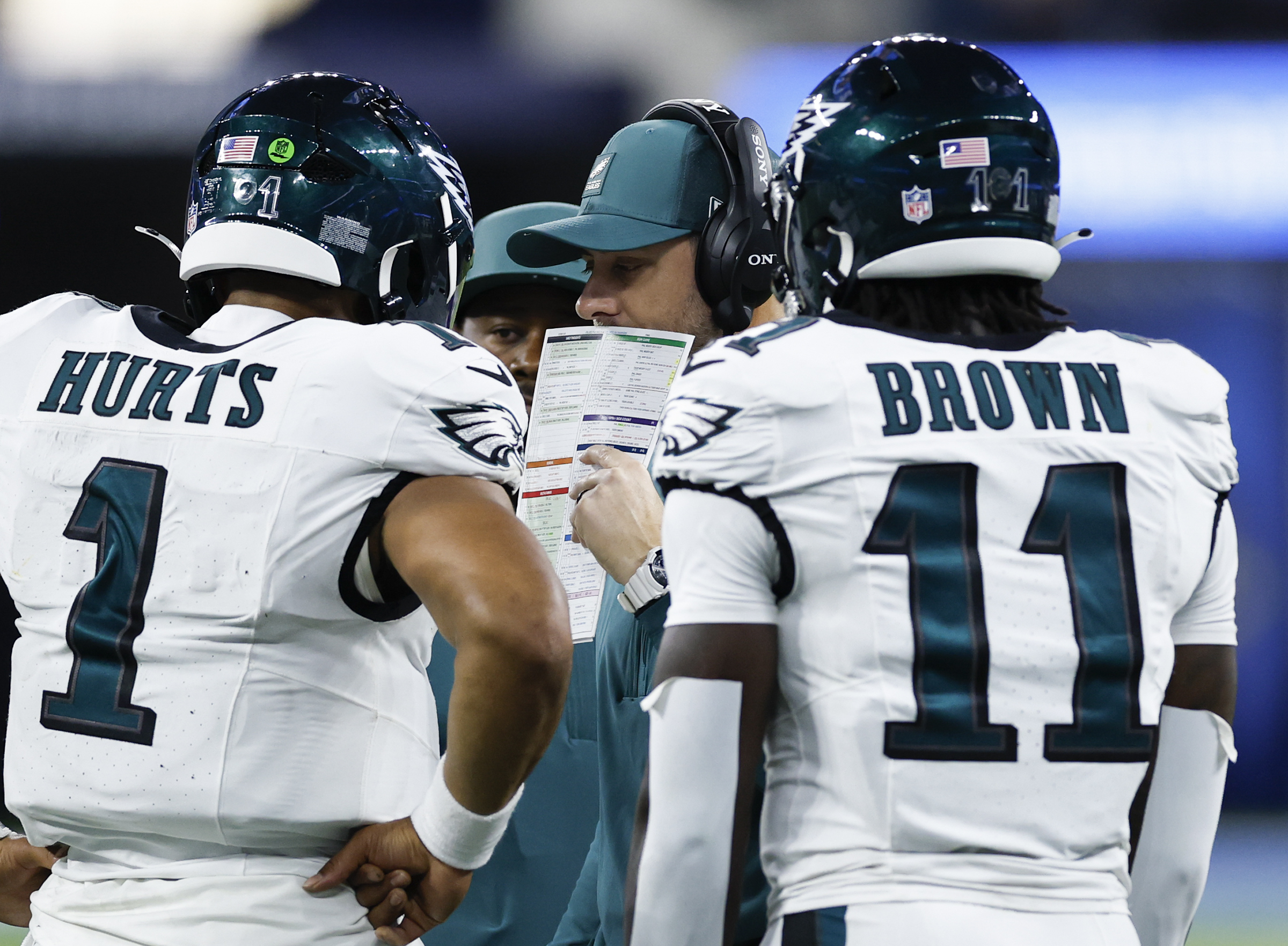
    Philadelphia Eagles head coach Nick Sirianni (center bottom) watches his team play the Washington Commanders at Lincoln Financial Field in Philadelphia on Sunday, Jan. 4, 2026.

    Eagles start the playoffs as the No. 3 seed: B-

    The Eagles enter the playoffs as a No. 3 seed, a position that history treats like a warning label. The math is rude: Few No. 3 seeds make the Super Bowl, and most of them don’t even sniff it. The Eagles themselves have tried this route before and usually wound up packing up by the divisional round. Not great.

    And yes, this is at least partially self-inflicted. Resting the starters in Week 18 cost them a real shot at the No. 2 seed and an objectively easier path. That decision is already being litigated in every bar, group chat, and radio segment. And it will keep getting relitigated until either A) the Eagles lose or B) they win enough that no one wants to admit they were wrong.

    Here’s the thing, though: This specific matchup is not terrifying.

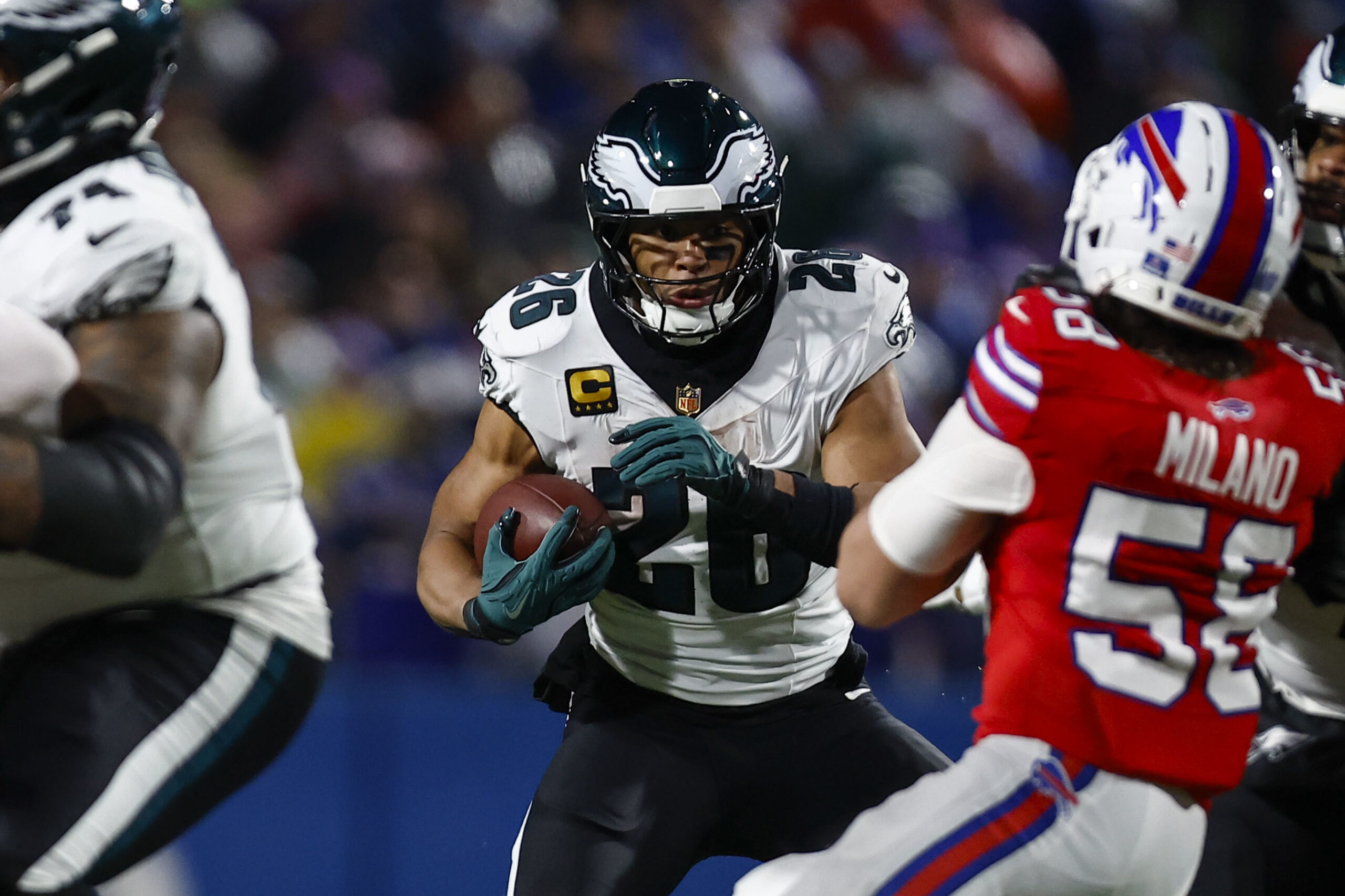
    The 49ers limping into the Linc with injuries, tired legs, and a defense that is no longer the Final Boss version Philly remembers? That’s manageable. The Eagles’ defense has been the most reliable unit all season, and if this game turns into trench warfare, that favors the Birds. Saquon Barkley doesn’t need to be vintage playoff Saquon yet. He just needs to exist long enough to keep the offense functional.

    Still, the unease is earned. This is a team with Super Bowl expectations walking a historically unfriendly path, powered by a defense everyone trusts and an offense no one fully believes in. That’s not nothing. That’s the whole tension.

    So yes, the road is harder than it needed to be. Yes, the margin for error is thin. And yes, if this goes sideways, the No. 3 seed will be Exhibit A in the postmortem.
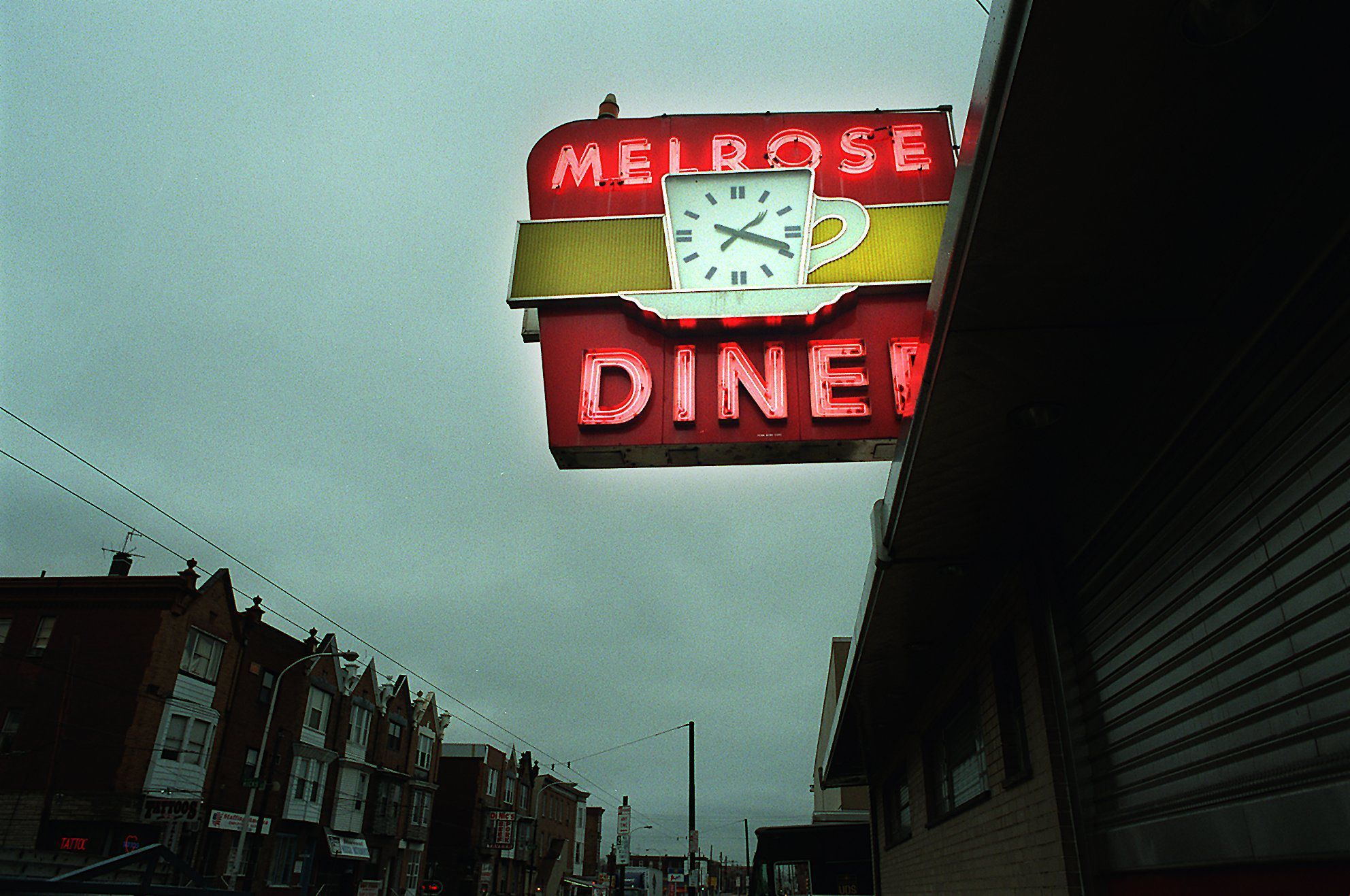
    In this photo from 2000, the Melrose Diner sign shines bright on a gray day.

    The Melrose Diner sign hits Facebook Marketplace: A+

    Nothing says Philadelphia like scrolling Facebook Marketplace and suddenly finding the neon soul of a demolished diner listed as “very heavy and totally cool.”

    Yes, the iconic Melrose Diner sign — red, yellow, stainless steel nostalgia and all — is apparently for sale. Not at auction. Not through a preservation society. Not behind glass in a museum. Just vibes, photos, and the immortal Marketplace closer: “Serious inquiries only.”

    There’s something perfectly on-brand about this. The Melrose didn’t go out quietly. It didn’t get a tasteful plaque or a respectful archival goodbye. It got torn down for apartments, went into “storage,” and has now reemerged like a ghost asking for a sizable offer and a pickup truck.

    The listing itself is doing a lot of work: four pieces, sold as a set, “used — good,” with the helpful reminder that Olga’s Diner once sold signage for $12,000. Philly translation: Don’t lowball me, I know what I’ve got.

    Selling the sign feels a little like selling a family photo album. The Melrose wasn’t just a diner — it was late nights, early mornings, post-bar waffles, post-court appearance coffees, and at least one story involving a mobster, depending on who you ask.
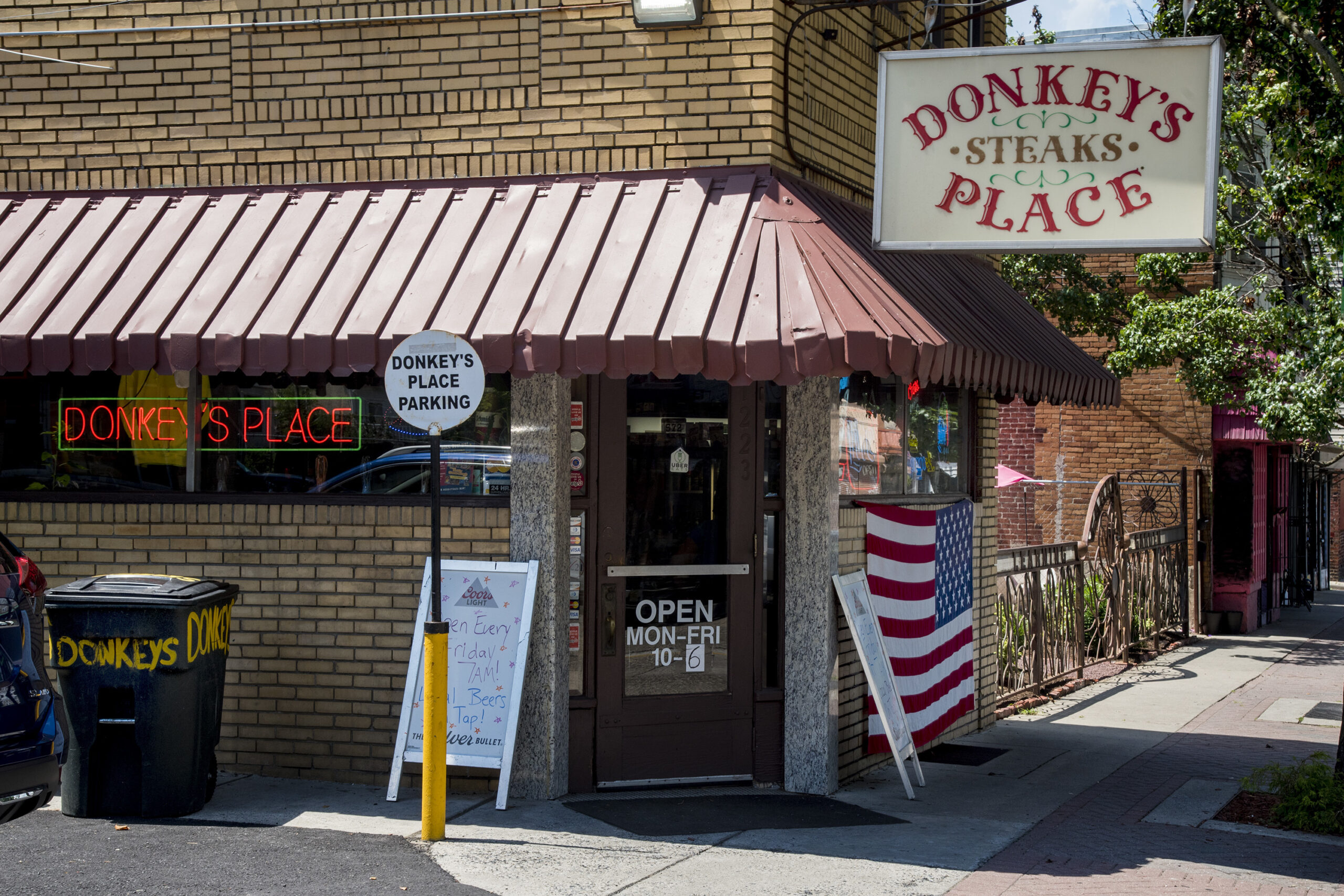
    Donkey’s Place in Camden on July 18, 2018, one of 10 eateries Anthony Bourdain visited in a 2015 episode of his “Parts Unknown” show in New Jersey.

    Donkey’s Place walrus bone theft: D (return it, coward)

    There are lines you don’t cross in this city, and stealing a beloved bar’s decades-old walrus penis bone is absolutely one of them.

    Donkey’s Place didn’t ask questions about the bone for years — it just existed, looming behind the bar like a strange guardian angel of cheesesteaks and beers. It wasn’t sentimental, it wasn’t precious. It was just there. Which somehow makes taking it worse.

    The alleged thief wrapped it in a scarf and walked out like this was Ocean’s Eleven: South Jersey Edition, and now the bar is left explaining to the internet why they’re asking nicely for a walrus baculum to be returned, no police report, no drama, just vibes and decency.

    The deduction from an A is only because this never should’ve happened. Otherwise, this is peak Philly-area energy: a historic bar, an inexplicable artifact, security footage, TikTok pleas, and a collective regional agreement that yes, this matters.

    Mail it back. No questions asked. Everyone will pretend this never happened.
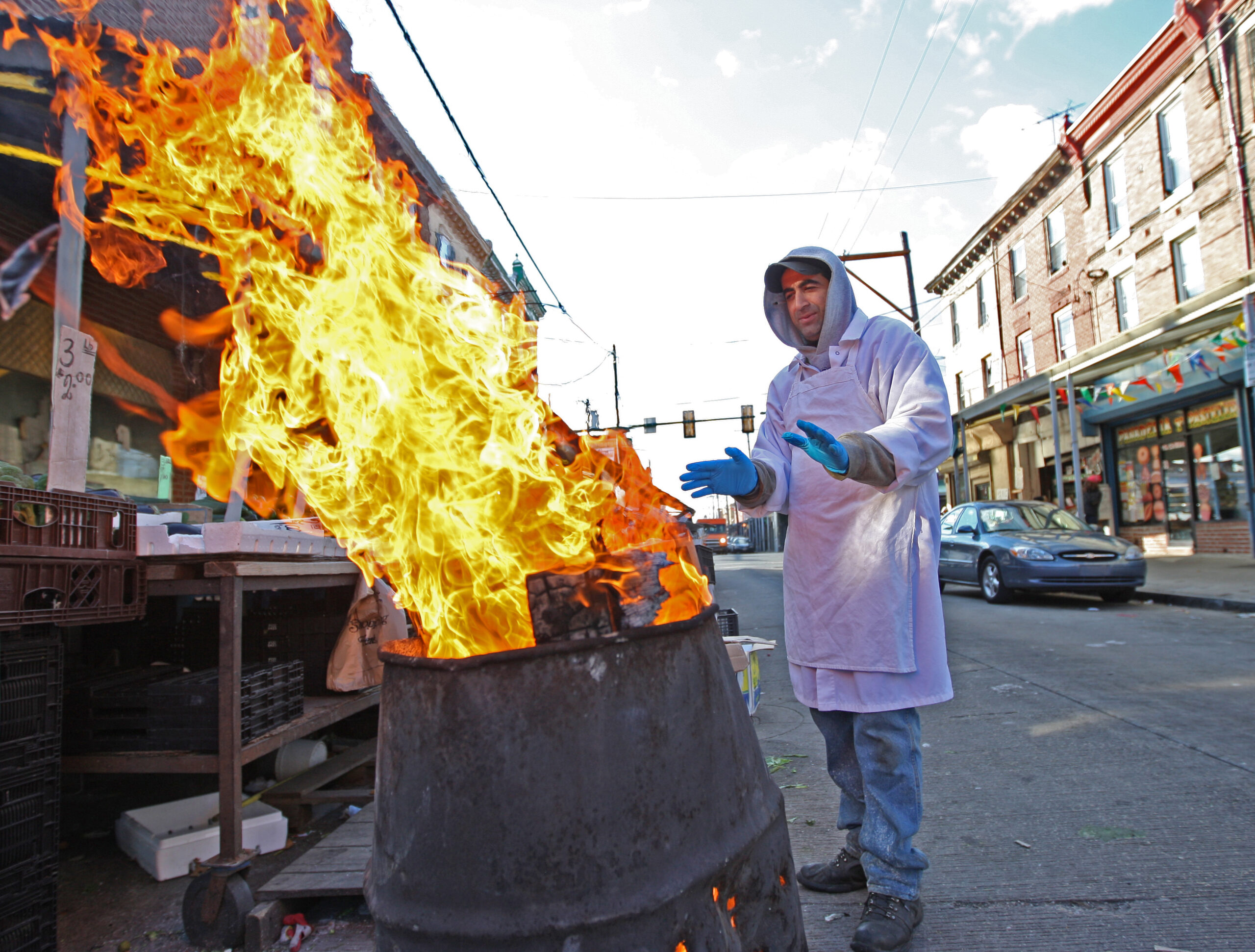
    In this Dec. 4, 2007 Inquirer file photo, Joe Carioti, of Carl’s Poultry, warms his hands on the first really cold day down at the market.

    Trash can fires are back on Ninth Street: A

    You don’t need a calendar to tell you winter has arrived in Philadelphia. You just need to walk down Ninth Street and see a trash can on fire.

    The barrels come back when mornings turn brutal and vendors are out before dawn, unloading boxes, setting up stalls, and bracing against the cold. This isn’t nostalgia or aesthetic — it’s practical. A few minutes of heat for hands that don’t get to stay in pockets, a pause before the work continues.

    They’re regulated, debated, occasionally questioned, and absolutely unmoved by any of that. Every winter, they come back anyway. Not as a statement, but as a fact of life.

    When spring shows up, they’ll disappear again. Until then, the fire’s on.

  • Jeff McLane’s keys to Eagles vs. 49ers in the wild-card round: What you need to know and a prediction

    Jeff McLane’s keys to Eagles vs. 49ers in the wild-card round: What you need to know and a prediction

    The Eagles host the San Francisco 49ers in a wild-card playoff matchup at 4:30 p.m. Sunday at Lincoln Financial Field. Here’s what you need to know about the game:

    When the Eagles have the ball

    The 49ers don’t have a good defense. Season-ending injuries to their two best players — linebacker Fred Warner and defensive end Nick Bosa — were a prominent reason why coordinator Robert Saleh’s unit struggled most of the season. But there also isn’t much talent elsewhere on that side of the ball. The 49ers ranked 25th in expected points added per play and 29th in success rate. Saleh has been forced to play a bend-but-try-not-to-break defense, which has meant more two-high safety shells than he’s accustomed to employing and hoping that opposing offenses eventually will make mistakes on grind-it-out drives. The 49ers have done a good job of limiting explosive plays as a result and rank ninth in allowing 20-plus-yard plays in EPA. They’ve also buckled down in the red zone, where they rank 12th overall and fourth in goal-to-go situations.
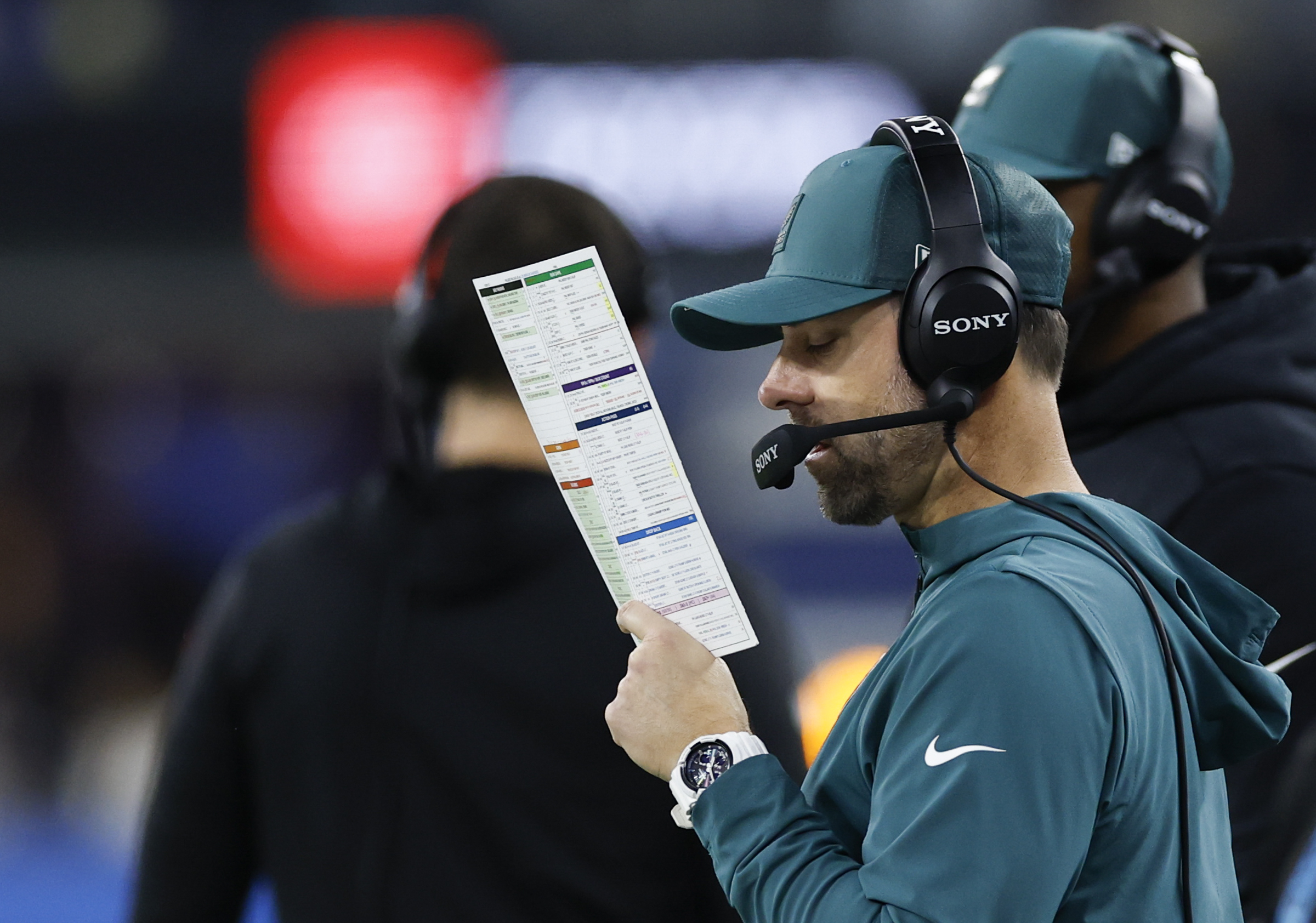
    The Eagles’ offense, conversely, has been at its best inside the 20 and ranked first in the league. Getting there on a consistent basis has been a season-long problem. The chess match here could center on which unit is willing to get out of its comfort zone. Will the 49ers play more aggressively and stack the box — only the Eagles and New England Patriots had a higher rate of light boxes — knowing the Eagles have struggled in the run game when numbers haven’t been in their favor? Or will the Eagles come out firing, looking for explosives through the air, knowing that Saleh likely will make Jalen Hurts and the pass game beat his defense?

    Nick Sirianni and Kevin Patullo have several directions they can go that should favor the Eagles, even if the 49ers match heavy personnel with their base front. It would be foolish not to test San Fran’s run defense, especially an off-ball linebacker unit that could be down to its fourth and fifth options on the depth chart. Warner’s replacement, Tatum Bethune, went down for the season last week, which means the aging Eric Kendricks, the younger brother of former Eagle Mychal Kendricks, will be at middle linebacker. Outside linebackers Dee Winters and Luke Gifford also are questionable. The Eagles offensive line, with right tackle Lane Johnson expected to return, likely will need to adapt to a slanting front if they want to carry out their combo zone blocking schemes. But if even all doesn’t go according to plan, Saquon Barkley should have opportunities to do it on his own against a run defense that missed 11 tackles against the Seattle Seahawks in Week 18.

    I think more of Hurts on designed runs, and a sprinkling in of the more north-to-south Tank Bigsby, could further buoy a run offense that has shown marginal improvement over the last month. I wouldn’t be surprised to see Patullo open with a fair amount of empty sets. Hurts has operated well out of that formation. It forces defenses to have to account for his legs on draws or scrambles if they’re going to match in man coverage.

    Saleh still favors Cover 3 more than any zone, but he’s going to have to pick his poison with Eagles receivers A.J. Brown and DeVonta Smith having skill and size edges over cornerbacks Deommodore Lenoir, Renardo Green, and Upton Stout. Logic would suggest that tight end Dallas Goedert should get a healthy dose of pass plays as the first read with the 49ers’ linebacker corps battered. The same could be said for getting Barkley more involved in the pass game. Hurts should have time in the pocket. San Fran’s pass rush has been deficient without Bosa. Former Eagle Bryce Huff may be the 49ers’ best edge rusher. I watched enough of Johnson and Jordan Mailata dominating him in training camp a year ago to think they’ll keep him under wraps on Sunday. The Eagles’ offensive line must be prepared, though, for a high rate of stunts that Saleh calls to offset his rushers’ inability to win one-on-one.

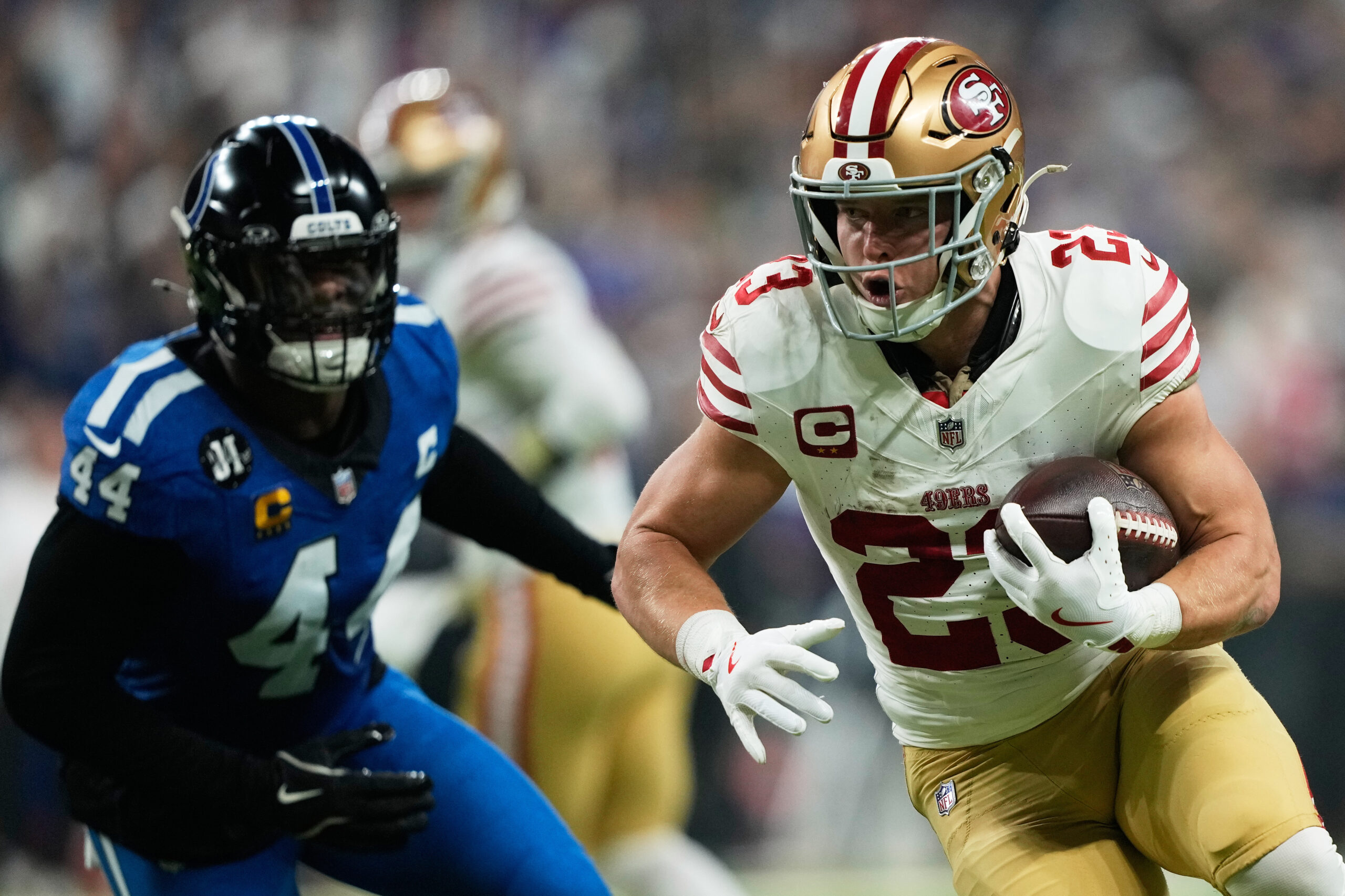
    San Francisco 49ers running back Christian McCaffrey (23) runs against Indianapolis Colts outside linebacker and Philly native Zaire Franklin (44) on Dec. 22.

    When the 49ers have the ball

    This is where the more intriguing matchup lies with 49ers coach Kyle Shanahan and Eagles defensive coordinator Vic Fangio, two of the best play-callers in the business. While Fangio’s defense has jelled into a unit comparable to last year’s, Shanahan’s offense hasn’t been as explosive as it was in previous seasons when the 49ers reached the playoffs. He still has one of the more sophisticated run schemes in the NFL, but the production just hasn’t been there for various reasons. Like the Eagles, San Fran has faced a high rate of stacked boxes. That often is by design. No team utilizes two-back personnel more than the 49ers, who have fullback Kyle Juszczyk. At 34, he isn’t as dynamic, but Shanahan lines him up all over, increasingly in an unorthodox offset position in which he can be a blocker in a variety of ways.

    Christian McCaffrey remains the workhorse running back, often from under center. He finished second in the league in carries (311), but had the lowest rushing yards over expected per attempt (-0.5) of his career. The 49ers’ scheme has long majored in wide zone runs, but McCaffrey has had more success running in between the tackles this season. Shanahan’s offense often needs to establish its ground game to utilize play action. His two-back personnel will force Fangio to decide between using his base five-man front to stop the run or his preferred nickel four-man front to protect the back. It will likely be based on the situation, but Fangio doesn’t want to leave his secondary susceptible to throws off play-action. The 49ers’ run game had two strong showings vs. the Indianapolis Colts and Chicago Bears, but it regressed last week against an athletic Seahawks defense.

    The possible return of Hall of Fame-bound left tackle Trent Williams (listed as questionable) would help San Fran, but if the Eagles contain McCaffrey, it could be a long day for Shanahan’s unit. He’ll scheme up pre-snap motions to manipulate a defense, and he’ll dial up naked bootlegs and screens to compensate for struggles on the ground. But his offense has been lacking in the dropback game without a top receiver who can consistently get separation downfield for quarterback Brock Purdy. Ricky Pearsall would be the best candidate, but he’s questionable after not practicing all week. That has left most of the heavy lifting to tight end George Kittle and McCaffrey, who led the team with 102 catches. Kittle can do it all. Shanahan will use him like a chess piece. He can win vs. linebackers, safeties, and cornerbacks. The Eagles’ Zack Baun, Reed Blankenship, and Cooper DeJean will be most responsible for keeping him in check.

    Purdy isn’t just some byproduct of Shanahan’s genius. He’s quick through his progressions, has good pocket movements, and can extend plays as well as most quarterbacks. He’s not necessarily a scrambler, but he can run to the sticks. If you can collapse the pocket, the throws get harder for him because he’s only 6-foot-1. Purdy’s excellent when “hot,” so it makes little sense to blitz him much — not that Fangio would be inclined to send extra rushers a lot. Shanahan likely will go after cornerback Adoree’ Jackson with Quinyon Mitchell on the opposite side. Fangio has found ways to cover for Jackson with split-field zones. I also could see Purdy targeting safety Marcus Epps or returning linebacker Nakobe Dean on middle-field throws.

    Extra point

    The 49ers have a lot of success throwing over the middle. But there’s a risk. Eight of Purdy’s 10 interceptions have come between the numbers. That’s part of the reason Hurts doesn’t throw over the middle as often as other quarterbacks. Sirianni has hammered winning the turnover battle into his team. The Eagles finished the season plus-6 in turnover differential, while the 49ers finished minus-6. I also give Sirianni the nod in game management and fourth-down decision-making. He has been more conservative this season, partly because the Tush Push is no longer close to automatic.

    Shanahan has lacked the gumption in key spots over his career. He’s a master game-planner and play-caller. But if his teams get behind, they often struggle to rally because his offense isn’t as strong in the dropback world. The same could be said for Sirianni’s system, as well. I think the first team to 20 points wins this game. The Eagles of old could salt away a second-half lead, but Sirianni and Patullo have been unable to find a formula when ahead. It’s been ugly at times and that should be worrisome. But this is how I see the matchup: There’s a push when it comes to the Eagles’ underperforming offense vs. the 49ers’ subpar defense; but I give the edge to a great Eagles defense over a very good, but not great 49ers offense.

    Prediction: Eagles, 23-17.

  • How to have a Perfect Philly Day, according to novelist Adam Cesare

    How to have a Perfect Philly Day, according to novelist Adam Cesare

    Adam Cesare knew by the third date that if he and his future wife were going to end up together, he was going to have to start calling sub sandwiches hoagies. “She’s a Philly lifer,” the New York-born, USA Today best-selling author said. Sure enough, after graduating from college in Boston, the couple relocated to Philadelphia, where Cesare threw himself into the city’s film and literary scenes. “I took to Philly like a fish to water,” Cesare said. That was 15 years ago.

    Fast forward to today, and the former high school English teacher is an acclaimed local author with more than a dozen horror novels under his belt, including the popular Clown in a Cornfield series, the first of which was adapted for the big screen and released in theaters this past summer. Now, Cesare is gearing up to release Clown in a Cornfield 4: Lights! Camera! Frendo!

    When he’s not busy editing his manuscript, Cesare still loves to explore Philly’s extensive film and lit scenes, roaming through used bookstores or catching a flick at PhilaMOCA.

    Here’s how Adam Cesare would spend a perfect day in Philadelphia.

    9 a.m.

    First, I would make sure it’s not a Sunday because I want to go to Beiler’s Doughnuts in Reading Terminal, and it’s closed on Sundays.

    11 a.m.

    After Beiler’s, I’d pop over to Old City to go to The Book Trader. I could name-drop all the current new bookstores, but there’s something about used bookstores that I really like. I’d swing by the comics shop, Brave New Worlds, because it’s right next door, then I’d head to Mostly Books on Bainbridge. I love that place. It’s great because they have a pretty decent VHS, DVD, and Blu-ray selection too, so I’ll get a few movies.

    I might also pop into the Philly AIDS Thrift. It’s fun to walk around. They have a good book section. It’s mostly general fiction. I like their physical media section too. You can get the DVD or VHS of every television series that’s been kicked off Netflix.

    1 p.m.

    For lunch, I’m definitely going to Monster Vegan. It is what it sounds like. It is a really good vegan restaurant themed on monsters. They play clips from Count Yorga and stuff on the walls. They do events, too. I once saw Lloyd Kaufman present Class of Nuke ‘Em High.

    3 p.m.

    After lunch, I might drive over to Manayunk to check out Thrillerdelphia. It’s a new bookstore that exclusively sells horror and thrillers. They just opened two months ago, and I did one of their first events. They’re really nice people, and they have a great selection.

    5 p.m.

    It’s time to beam back down to South Street for dinner and a movie. On a perfect day, I’m going to Royal Izakaya, a Japanese restaurant I like to go to on my birthday. Since money is no object on my perfect day, I’ll order the omakase. Let the chef decide.

    7 p.m.

    There are so many good places to see a movie in Philly. There’s the Philadelphia Film Society. There’s also PhilaMOCA. It’s probably my favorite place to go. They work closely with Exhumed Films, which is a group of film fans who screen 35mm and 16mm films from their private collection in local theaters. They do a lot of work with The Colonial in Phoenixville as well.

    The last time I went to PhilaMOCA, I saw Hedwig and the Angry Inch, and John Cameron Mitchell was there doing a live commentary, which was sick. They do really cool stuff like that all the time.

    9 p.m.

    That was a full day. I’m good for bed now.

  • What if everything isn’t Kevin Patullo’s fault? What if the Eagles’ aging, exhausted offense just stinks?

    What if everything isn’t Kevin Patullo’s fault? What if the Eagles’ aging, exhausted offense just stinks?

    It’s become fashionable to pile on first-year offensive coordinator Kevin Patullo. He’s the target of local and national self-styled experts, none of whom, you might note, works for an NFL or college team.

    Certainly, no matter how close his friendship with Nick Sirianni, Patullo won’t survive next week if the offense again struggles and the Eagles don’t beat the San Francisco 49ers on Sunday. The offense averaged 22.3 points, down 4.9 points from the Super Bowl team of 2024, and 311.2 yards, down 56 yards from last year.

    If you know anything about the Eagles front office, without a deep postseason run, that sort of performance simply will not stand.

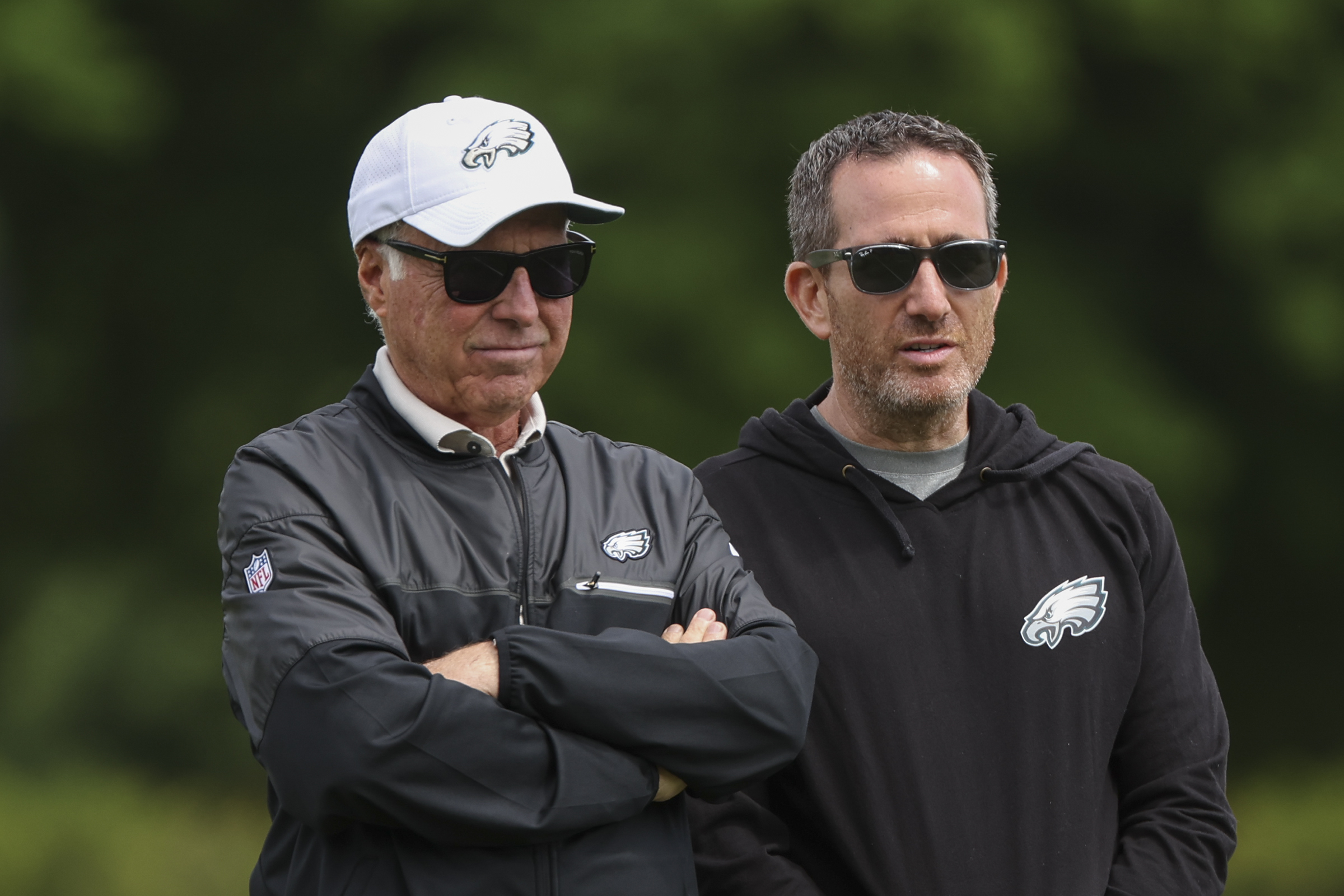
    Jeffrey Lurie and Howie Roseman have standards that are not being met.

    Howie Roseman spent $128 million of Jeffrey Lurie’s money on that side of the ball, more than twice what they spent on defense. No matter how badly the players have executed, a quick playoff exit will spell the end for at least Patullo, and probably quarterbacks coach Scot Loeffler as well. No player on the team has regressed as much as Jalen Hurts.

    But if the day after the wild-card game turns out to be Black Monday for Patullo, his defenders, if they exist, should have some ammunition. Because regardless of the plays called, the real problem lies with the players running them. These are not failures of scheme or sequence. These are failures of execution, focus, and maybe even heart.

    Is it age? Right tackle Lane Johnson is 35, but A.J. Brown and Saquon Barkley are just 28. Then again, in the NFL, high-usage receivers and backs age in dog years.

    Is it fatigue? Maybe. The Eagles enter Sunday having played 38 games in the past two seasons, more than any other team. Including playoffs, Barkley had 482 total touches last season, second-most in NFL history.

    Is it injury? Maybe. Offensive linemen Cam Jurgens, Landon Dickerson, and Johnson, who have 11 Pro Bowls among them, have been limited or absent all season. Brown battled a hamstring issue in training camp and through at least the first eight games, and he managed the lowest yardage total of his four-year tenure in Philly — but just 76 yards lower than last year.

    In fact, as much as folks want to criticize the Eagles’ passing game, it actually averaged 6.4 more yards per game this season (194.3) than it did in 2024 (187.9).

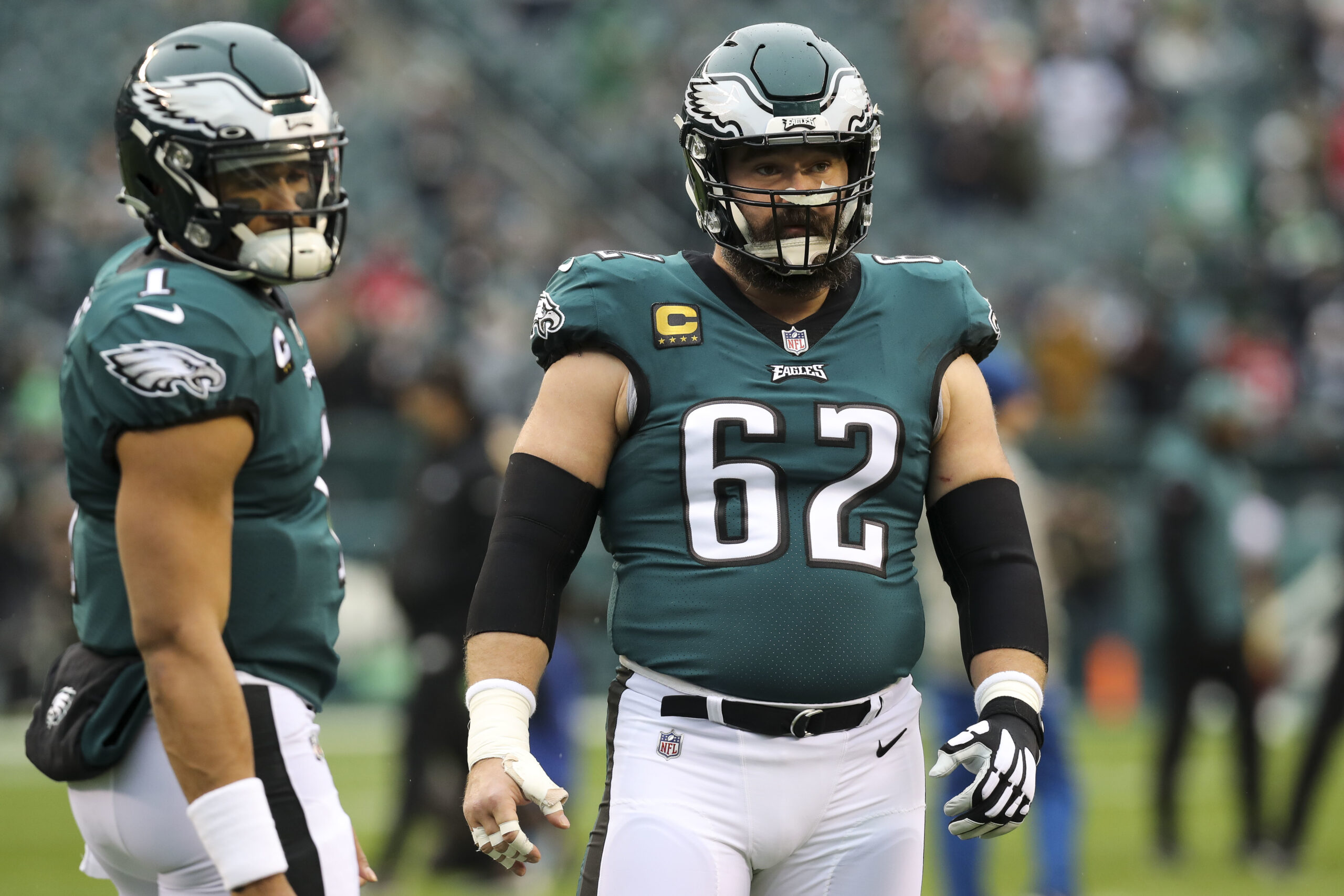
    Jason Kelce isn’t walking through that door, and it’s fair to ask how much the Eagles have really overcome his absence.

    The brutal truth is the passing offense hasn’t been the same since center Jason Kelce retired after 2023, despite Jurgens making the last two Pro Bowls.

    Are there other factors at work?

    Was last year’s passing offense a casualty of Barkley’s 2,504 rushing yards, which is an NFL record, playoffs-inclusive? Or was it because the passing game wasn’t sharp in 2024, either? After all, Hurts threw for seven more touchdowns and 321 more yards in 2025.

    Two things appear to have happened in 2025.

    First, the line got banged up and older.

    Second, opposing defenses more steadfastly forced Hurts — and, of course, Patullo — to beat them through the air.

    You can’t blame Patullo for the stagnation of Hurts’ game. His processing remains slow, his footwork remains clunky, his arm strength no better than average.

    But what Patullo will be blamed for, fairly or not, is that he did not make more of Lurie’s $255 million man. It won’t matter that Patullo’s predecessor didn’t, either.

    Kellen Moore was hired to maximize Hurts’ abilities the way he’d allegedly done with Dak Prescott as the Dallas Cowboys’ quarterbacks coach or offensive coordinator from 2018 to 2022 — emphasis on allegedly.

    History has been kind to Kellen Moore … perhaps too kind.

    Prescott’s passer rating during Moore’s five seasons was 98.8. His quarterback rating was 55.2. Since Moore left, it’s 99.4 and 73.4. Justin Herbert’s passer rating of 93.2 in 2023, Moore’s single season as the Chargers’ OC, matched Herbert’s career-low.

    Just saying: Maybe Moore wasn’t the reason the Eagles shined as brightly as they did. After all, four healthy potential Hall of Famers on any offensive line can cover up lots of shortcomings.

    Nobody likes watching Patullo call passing plays that give Hurts limited options and require too long to throw. Nobody likes watching running plays that, given the defensive alignment, appear doomed on conception. Those are on Patullo — but those also are infrequent. Besides, no OC nails every call.

    Nobody likes watching Hurts deal with pressure in his face from up the middle on every third dropback because his center and guards get blown off the ball. Nobody likes seeing tight end Dallas Goedert rounding off his routes.

    We’ve also seen Brown give up on routes and short-arm passes, seen Barkley hit holes soft, misread blocks, and run out of bounds when he didn’t have to, and we’ve seen Hurts miss wide-open receivers, sometimes two on the same play. He clearly has no interest in running the football much anymore; he ran 105 times this season, one-third less than his average over the last four seasons.

    Sure, some of that is Patullo.

    But a lot of it is a worn-down Hurts and his quickly aging cast.

  • Lindsey Heaps is a natural in the Champions League. But will other USWNT stars fit well in Europe?

    Lindsey Heaps is a natural in the Champions League. But will other USWNT stars fit well in Europe?

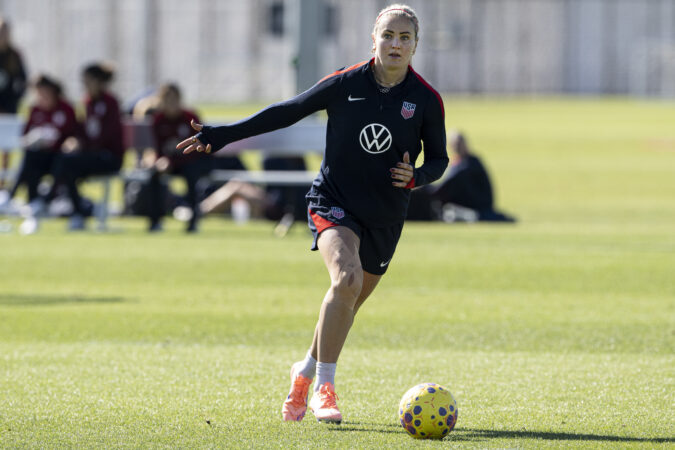
    Although some of Lindsey Heaps’ games in Europe aren’t easy for American fans to watch, the chances that do come along show why she’s so comfortable there.

    The 31-year-old midfielder plays for her club, France’s OL Lyonnes, as more of a facilitator than the do-it-all general she’s often been cast as with the United States — not just by fans, but by coaches over the years.

    It’s easy to focus on Heaps not scoring, especially given that she started her career as a forward before moving into midfield. But her last game for OL, against Spain’s Atlético Madrid in the Champions League, showed a different side of Heaps.

    She completed 42 of 44 passes that night, continuing a pace of a 90% pass completion rate in Champions League games this season, and had eight defensive recoveries. The players around her did most of the creating, especially midfielder Melchie Dumornay and wingers Tabitha Chawinga and Kadidiatou Diani.

    Any team would dream of having OL’s squad of superstars. The club was the standard-bearer in Europe long before American businesswoman Michelle Kang bought it in 2023 (she also owns the NWSL’s Washington Spirit and England’s London City Lionesses), and it has remained at that level.

    No team in France comes close to OL’s 18 league titles, all won in the last 19 years — as in, every season except one. Nor is any team in Europe close to OL’s eight Champions League triumphs from 2011-22, even though Barcelona is the continent’s top team right now.

    Heaps has three league winners’ medals and one from the European Cup, and could add to both totals this season. OL is running away with the French league, and earned a round-of-16 bye in the Champions League thanks to an unbeaten group stage run.

    “It’s unbelievable, I think this year especially,” she told The Inquirer. “New coach, new culture a bit, standards, competitiveness. The training is unbelievable in everything that we’re doing, and obviously you see it on the pitch as well. But we take each game at a time, and we just keep rolling.”

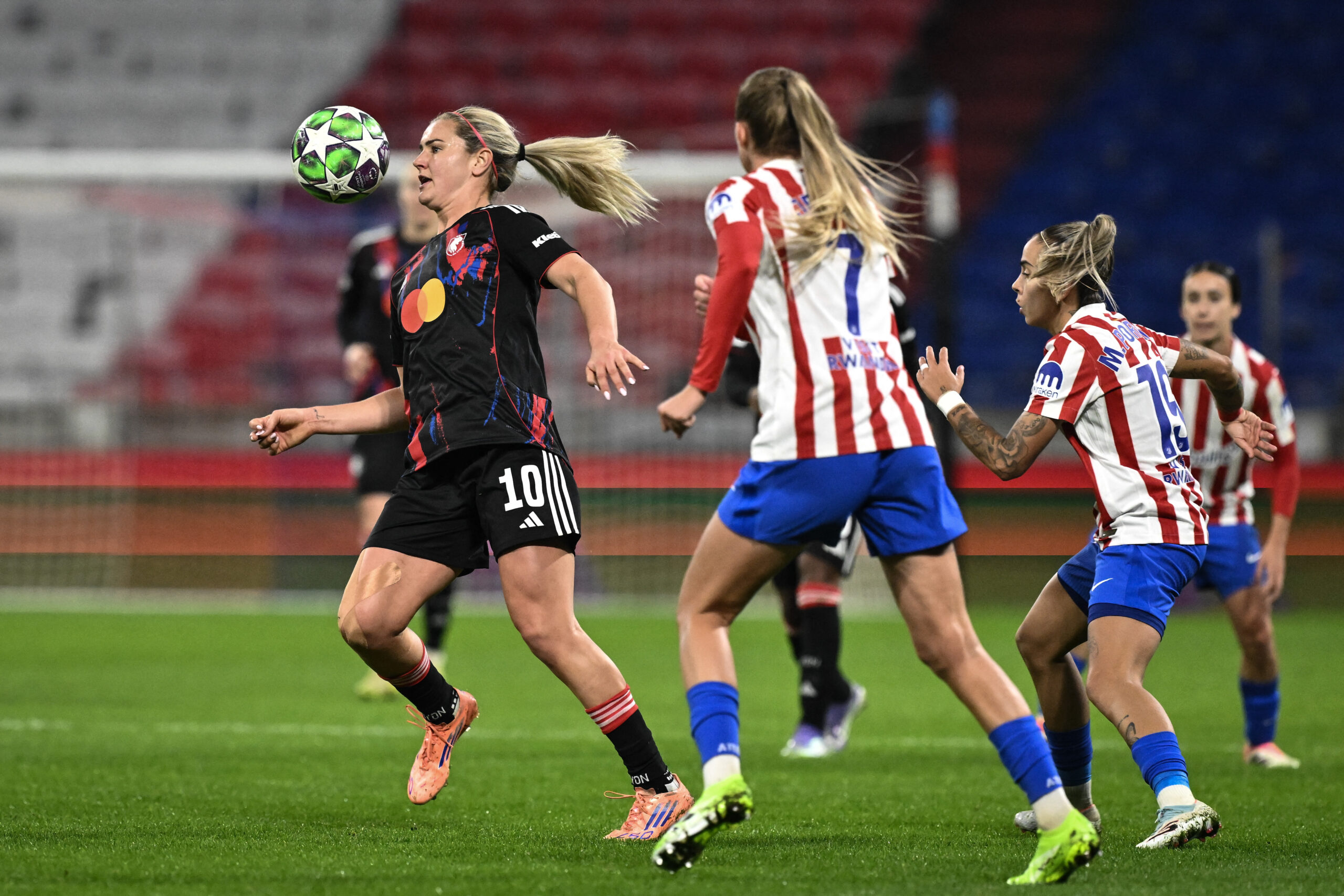
    Lindsey Heaps (left) on the ball during last month’s OL Lyonnes-Atlético Madrid game in the UEFA women’s Champions League.

    A high value on high standards

    That new coach is a familiar name: Jonatan Giráldez, who joined OL from the Washington Spirit in the summer. It was a controversial move, since Kang was accused of taking from one of her teams to boost another.

    But that claim is above Heaps’ pay grade.

    “Honestly, I think I speak for everyone on the team: he is such a quality coach,” Heaps said. “You just learn so much, and even for me, I want to continue learning, or looking at the game in a different way, or tactical adjustments, or things like that. … He wants us to win so badly, and he wants us to do so well as players, and he cares about us — he cares about how we do and how we perform, but also us as people.”

    Giráldez returned the praise.

    “A very, very important player,” he said of Heaps. “Her role on the field is beyond the tactical, because she’s able to understand a lot of situations on the field — when the team has the ball, when the team doesn’t have the ball. … I’m very happy to have her in the team.”

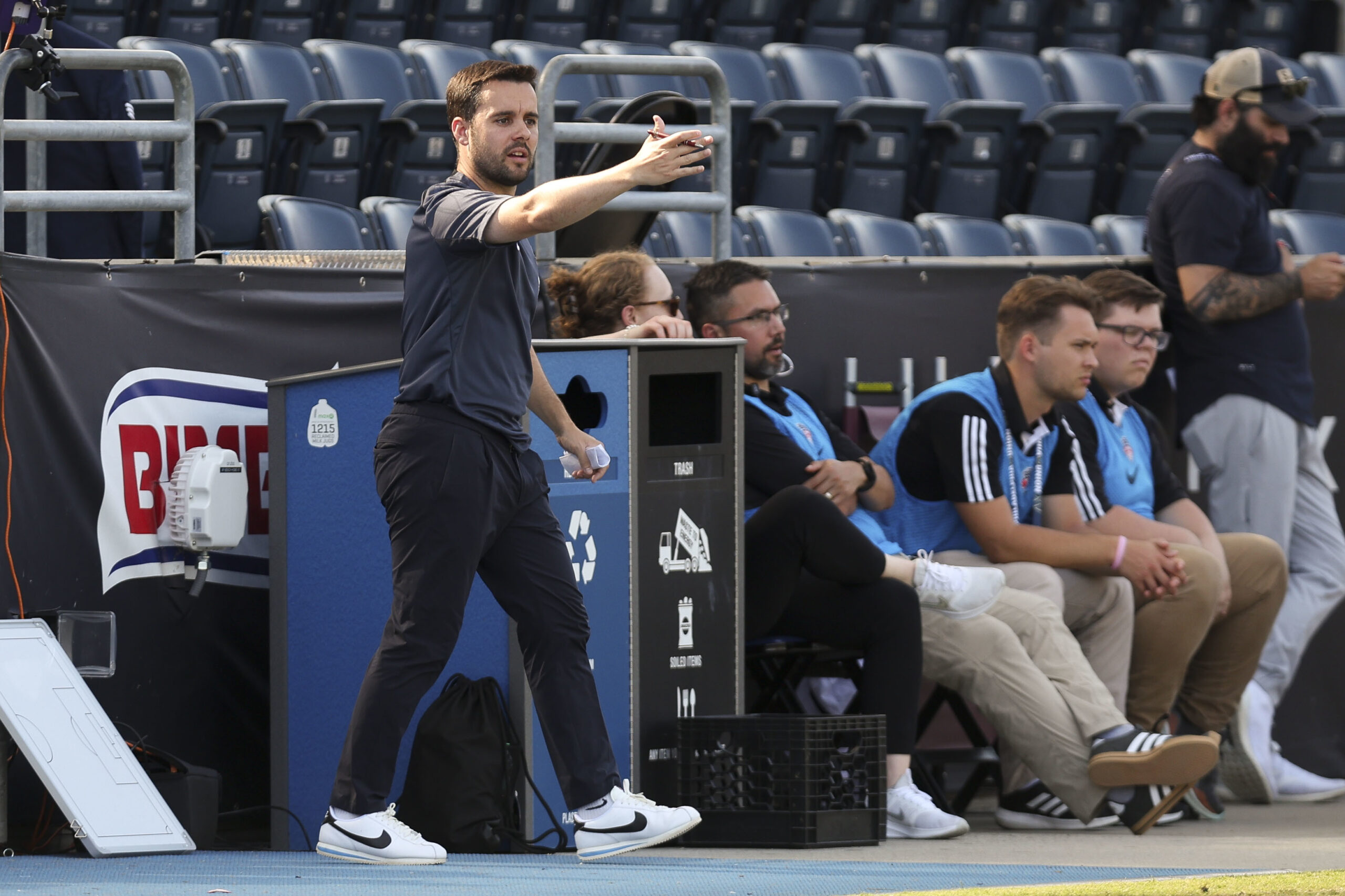
    Jonatan Giráldez on the sideline at Subaru Park when the Washington Spirit played a game there in 2024.

    Heaps mentioned the team’s “training environment” a few times in the interview, praising the high standards there. That counts for a lot, especially among U.S. national team stalwarts.

    For lack of a better way to put it, the top American players have long relished getting their butts kicked on a daily basis, whether by the NWSL’s competitive balance or the famed ferocity of U.S. practices.

    Heaps is the latest in a lineage from Mia Hamm through Abby Wambach, Heather O’Reilly, Julie Ertz, and Carli Lloyd, all of whom spoke just as bluntly (and sometimes more so). Now Heaps wants to pass it on to a new era.

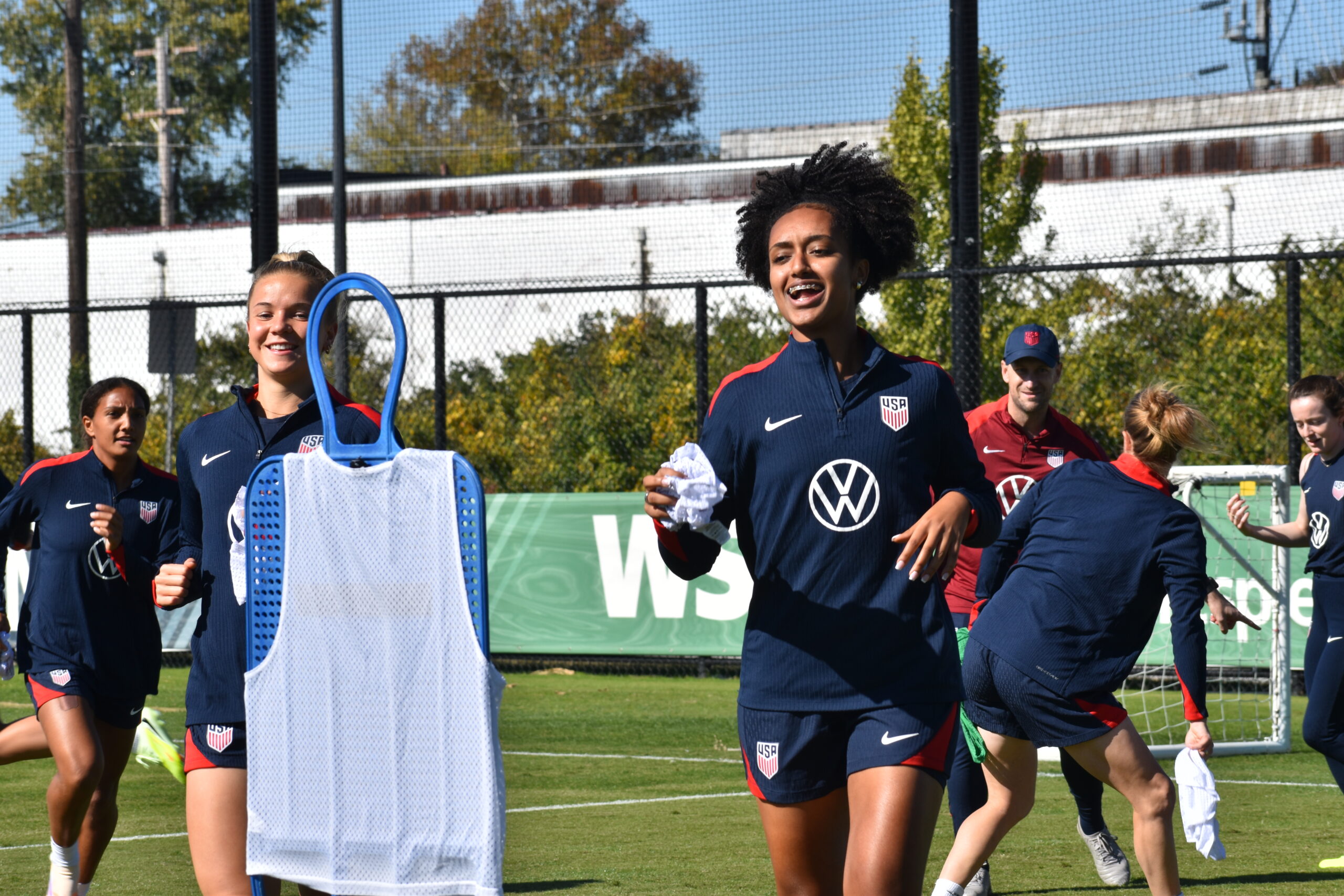
    She gets to do that in Lyon, not just with the national team. The club’s squad includes 22-year-old American midfielder Korbin Shrader and 18-year-old Lily Yohannes, the latter of whom is starting to meet the hype as a generational talent.

    Lily Yohannes (center) at work with the U.S. women’s soccer team in Chester in October.

    ‘The best midfielder in the world soon’

    Unfortunately, Yohannes hasn’t gotten to play much in the Champions League this season. She didn’t play at all against Atlético Madrid, where the tactical matchup would have been a great lesson.

    Heaps also wanted that, but she preached patience.

    “We all need to remember that she’s 18 years old,” she said. “At the end of the day, she needs to keep doing her thing, because she’s been playing so well — she’s been playing well with the national team, she’s training well here. And like I said before, it is just such a competitive environment.”

    But Heaps is not immune to the buzz around Yohannes, and didn’t mind indulging in some.

    “I know these games mean a lot for her, but her ceiling is so, so high,” she said. “I just said to her that no matter what, in a few years from now, you’re going to remember games like this that maybe you don’t come into. But you’re going to be a starting player and a non-stop player, and I believe the best midfielder in the world soon to come.”

    Yohannes has played her entire career in Europe, and Heaps has played eight of her 14 professional years there. The American contingent across the Atlantic keeps growing, with Penn State product Sam Coffey soon to join it at England’s Manchester City.

    Will playing overseas fit other Americans as well as it does Heaps? The question is always on the table, but it’s in bright lights above Trinity Rodman’s head right now. Her standoff with the NWSL over getting paid what she’s worth — with Kang on her side, trying to structure a contract within the league’s salary rules — has naturally led to European suitors chasing her.

    It might also reveal a truth that Europe’s chattering class doesn’t like admitting. Very few European clubs are truly at a high enough level to be right for elite U.S. talents.

    Lyon is one for sure, but there would be an even bigger uproar if Rodman moves there. Barcelona is another, but the Spanish giants don’t sign Americans. Manchester City, Arsenal, and Chelsea measure up in England, but Chelsea’s roster looks too loaded to have room for Rodman right now.

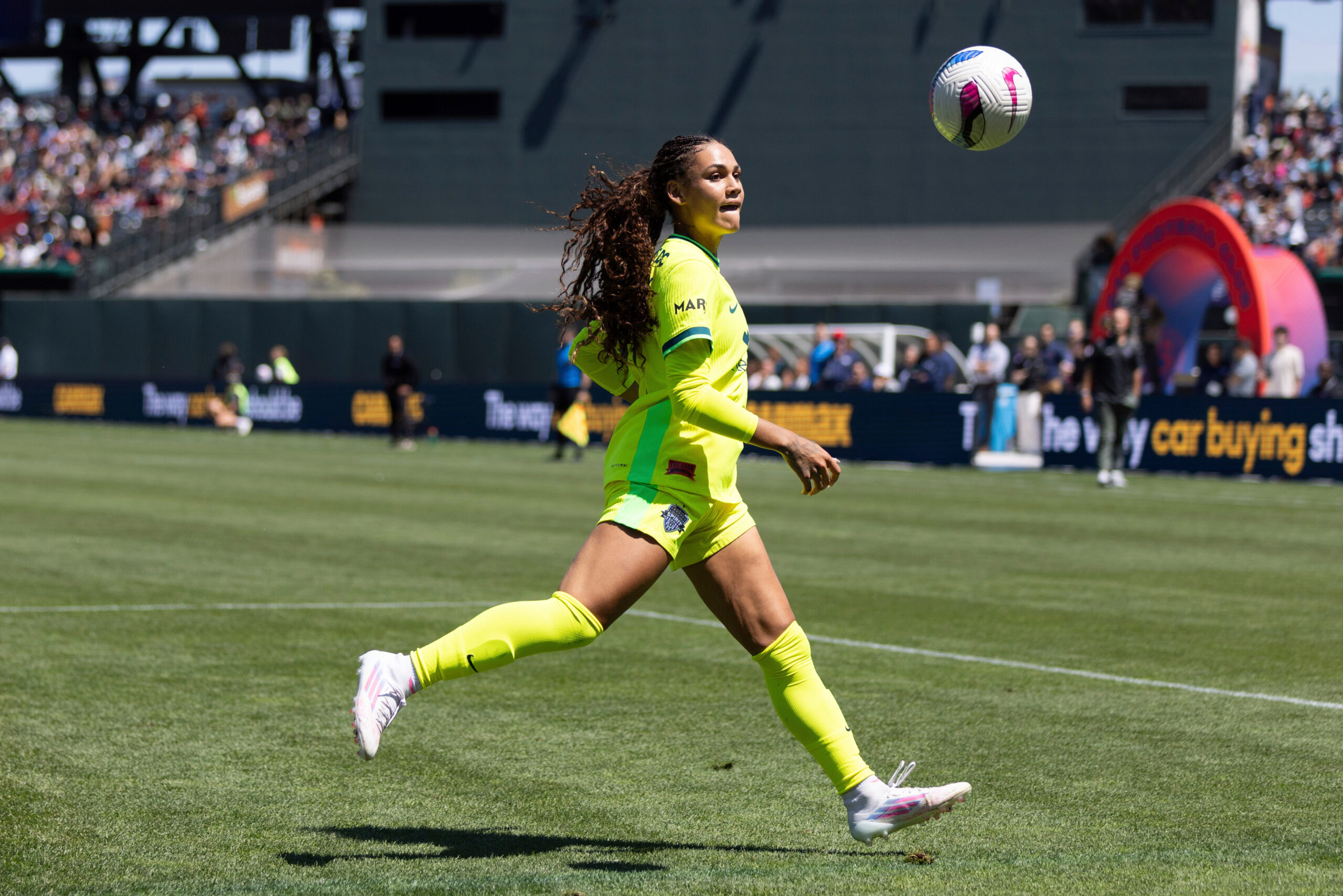
    Trinity Rodman’s uncertain future is the biggest story in the women’s soccer world right now.

    ‘Do what’s best for her’

    Beyond them? Paris Saint-Germain was in that class, but has fallen hard this year. Germany’s Wolfsburg is far from its past glories, and Bayern Munich still has a ways to rise. Real Madrid and Manchester United have stars, but their ownerships aren’t trusted to build truly top programs.

    The highest tier is really just the first five clubs you read above, and that’s not much.

    Then add in Rodman’s huge commercial impact, which would be diminished going abroad — less so in England, but still notably.

    Many clubs outside England also have poor attendances. OL averages just over 5,000 in a 59,000-seat stadium despite all its stars. PSG plays almost all its French league games at a 1,500-seat field within the bigger club’s practice facilities, far out in the Paris suburbs. Both are a far cry from the 15,259 that Washington averaged this year, or the even bigger crowds in Los Angeles and Portland.

    Not for nothing, then, did U.S. legend Tobin Heath — who played for PSG, Manchester United and Arsenal amid many years in American leagues — recently say Rodman should stay in the NWSL.

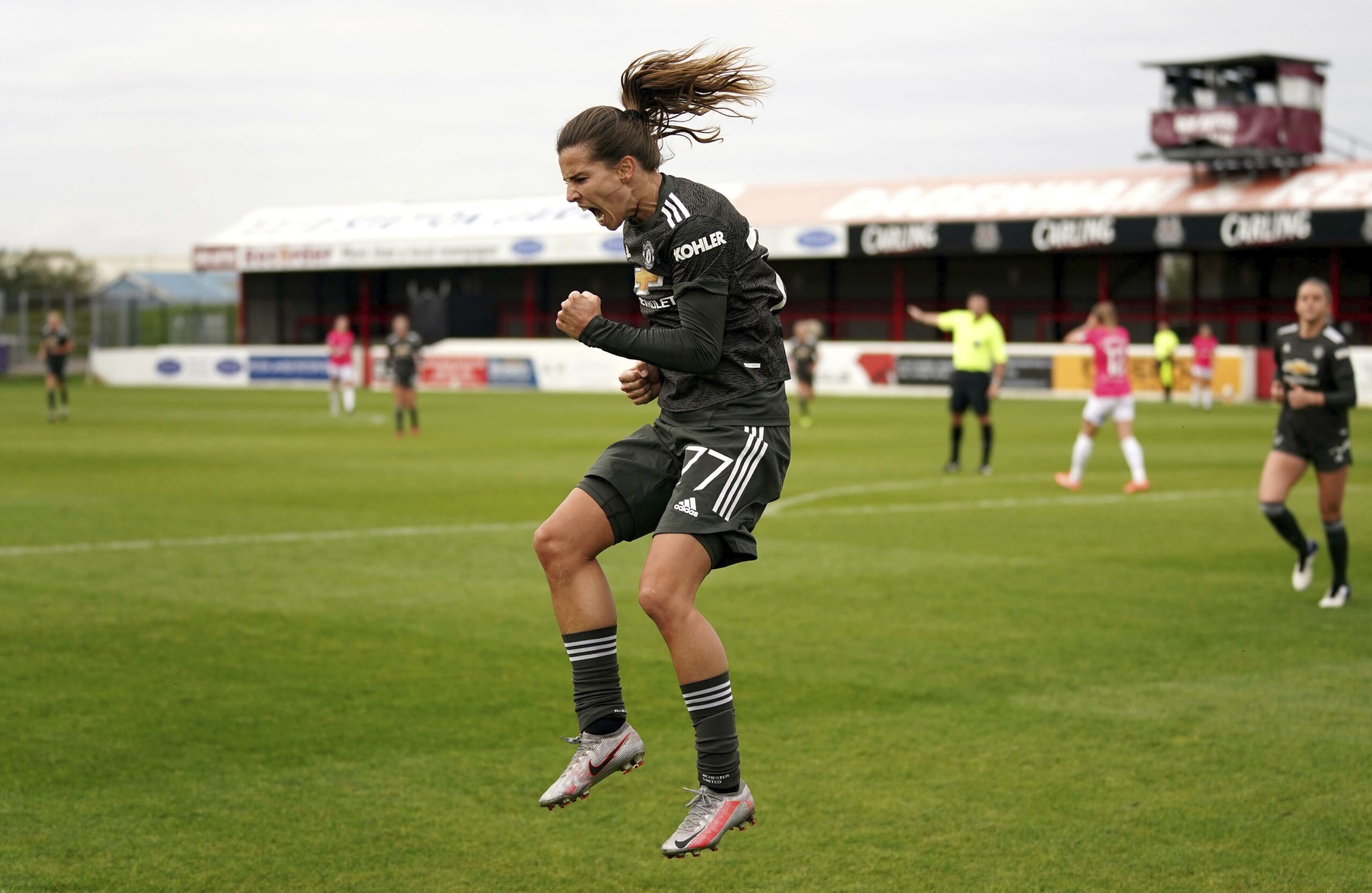
    Tobin heath during her playing days with Manchester United in 2020.

    “I advise a lot on players going or staying, and 95% of the time, I will usually say go,” she said in an interview on fellow former superstar Megan Rapinoe’s podcast. “I think that her game will be 1000% louder here. I think she can be the face of the league.”

    At the time Heaps was asked, the NWSL was still putting together its new High Impact Player rule. She had heard about it, but the details hadn’t all been published yet — including the controversial rules on how players qualify. So Heaps chose her words carefully, but she had plenty of them.

    “I don’t think it’s a bad idea,” she said, tying in what she has seen over the years from MLS’s Designated Player rule. (Her husband Tyler is San Diego FC’s sporting director.). “If you want some of the best players in the world to come and play in the NWSL, some things do have to change. … We want to continue growing the league. So, what’s the best way of doing that? We’ve got to get the best players there.”

    It was also easy to think Rodman’s situation would be settled by now. Heaps wondered if it might not just come down to salary, but she encouraged Rodman to do what she feels is right.

    “Trinity needs to do what’s best for her,” Heaps said. “The money is kind of on the side of it — obviously, that’s a big thing for us professionals. But Trinity, she’s going to make the decision that’s best for her, and I think that’s the most important.”

  • Eagles vs. 49ers: Predictions, odds, injuries, playoff schedule, and what everyone is talking about

    Eagles vs. 49ers: Predictions, odds, injuries, playoff schedule, and what everyone is talking about

    The playoffs are finally here. The Eagles officially kick off their quest to repeat as Super Bowl champions on Sunday at Lincoln Financial Field against the San Francisco 49ers.

    Here’s everything you need to know ahead of their wild-card matchup.

    How to watch Eagles vs. Niners

    Eagles vs. Niners will kick off on Fox at 4:30 p.m. ET. Kevin Burkhardt and Tom Brady will call the game from the booth, and Erin Andrews and Tom Rinaldi will be on the sidelines.

    If you’d rather listen to Merrill Reese and Mike Quick call the game, the radio broadcast can be found on 94.1 WIP, and if you’re not heading to the Linc, but want to watch the game with your fellow Birds fans, here are a few spots to check out.

    Playoff bracket and wild-card schedule

    There will be six games played over the next three days. Here’s the full playoff schedule for the wild-card round …

    NFC

    • (4) Rams vs. (5) Panthers | Saturday, 4:30 p.m., Fox
    • (7) Packers vs. (2) Bears | Saturday, 8 p.m., Prime Video
    • (6) Niners vs. (3) Eagles | Sunday, 4:30 p.m., Fox
    • Bye: (1) Seahawks

    AFC

    • (6) Bills vs. (3) Jaguars | Sunday, 1 p.m., CBS
    • (7) Chargers vs. (2) Patriots | Sunday, 8:15 p.m., NBC
    • (5) Texans vs. (4) Steelers | Monday, 8:15 p.m., ESPN
    • Bye: (1) Broncos

    Who could the Eagles face in the divisional round?

    First, the Birds need to take care of business on Sunday, but if they do, they could face one of three potential remaining NFC teams: the Los Angeles Rams, the Carolina Panthers, or the Chicago Bears. They could not, however, face the Seattle Seahawks or Green Bay Packers.

    The lowest advancing seed will play the top-seeded Seahawks in Seattle. And because the Panthers and Rams — the No. 4 and No. 5 seeds, respectively — play one another, a team with a lower seed than the Eagles is guaranteed to advance. The Packers (or Niners, if they beat the Eagles) could also be in that spot.

    If the Packers beat the Bears, Green Bay would be the lowest remaining seed and would face Seattle. The Eagles would then play the winner of the Panthers-Ram game, and would get to host that team in the divisional round. However, if the Bears win, the Eagles would travel to Chicago for the divisional round, with the Panthers-Rams winner heading to Seattle.

    Because the Eagles-Niners game is the final NFC wild-card matchup, the winner won’t have to wait to find out its opponent.

    The Eagles could get offensive tackle Lane Johnson, left, back for Sunday’s wild-card game.

    Final injury report

    It sounds like the Eagles won’t know until Sunday whether or not right tackle Lane Johnson, who has been out since Week 11 with a Lisfranc (foot) injury, will make his return to the offensive line. Johnson, interior lineman Brett Toth (concussion), and outside linebacker Azeez Ojulari (hamstring) are all listed as questionable for the Birds’ wild-card game. Ojulari was the only of the three who practiced fully on Friday. Johnson and Toth were limited all week.

    On the flip side, the Eagles will be getting several banged-up players back in time for the playoffs. Defensive tackle Jalen Carter (hip), linebacker Nakobe Dean (hamstring), edge rusher Jaelan Phillips (ankle), tight end Dallas Goedert (knee), and safety Marcus Epps (concussion) were all full participants in Friday’s practice and are expected to play.

    Meanwhile the 49ers have quite a few injuries, including to several starters. Veteran tackle Trent Williams, linebackers Dee Winters and Luke Gifford — after the team put LB Tatum Bethune on IR earlier this week — and cornerback Renardo Green are among those listed on the injury report for Sunday’s game. The following players are all questionable:

    • WR Jacob Cowing (hamstring)
    • LB Luke Gifford (quadricep)
    • CB Renardo Green (ankle)
    • WR Ricky Pearsall (knee, ankle)
    • DL Keion White (groin, hamstring)
    • T Trent Williams (hamstring)
    • LB Dee Winters (ankle)

    Eagles-Niners odds

    The Birds are a 5.5-point favorite at DraftKings and a 4.5-point favorite at FanDuel as of Friday afternoon. The over/under on both sites is set at 44.5.

    As for the Super Bowl, the Seahawks are the betting favorite to win it all. At FanDuel, the Eagles have the fourth-best odds, at +800, behind Seattle, the Rams, and the Broncos. At DraftKings, the Eagles have the fifth-best odds, at +950, also behind the Patriots.

    For more betting lines, click here.

    Kevin Patullo is in his first year as the Eagles offensive coordinator.

    Storylines to watch

    What is the state of the Eagles’ offense? With Johnson potentially set to make his first start since Nov. 16 against the Detroit Lions, the banged-up offensive line could get a big boost.

    In the starting offense’s final game of the year in Buffalo, they played one of their best first halves and worst second halves of the year. Which version will show up at the Linc on Sunday? And what will that mean for the future of offensive coordinator Kevin Patullo?

    More storylines to watch:

    • Saquon Barkley is extra excited for this weekend’s showdown with Niners running back Christian McCaffrey, whom he calls “one of the best to ever do it.”
    • Linebacker Nakobe Dean’s return from injury could be critical against 49ers ground attack. After his last playoff game ended in injury, he’s “elated” to be back.
    • The Eagles are entering the playoffs relatively healthy, while the 49ers have a few key injuries.
    • Could the weather be a factor? Wind gusts are expected to reach 40 mph Sunday.
    • Will Jalen Hurts’ “clutch gene” be the difference against the Niners?

    One number to know

    5 The total number of No. 3 seeds who have reached the Super Bowl since seeding was introduced in 1975.

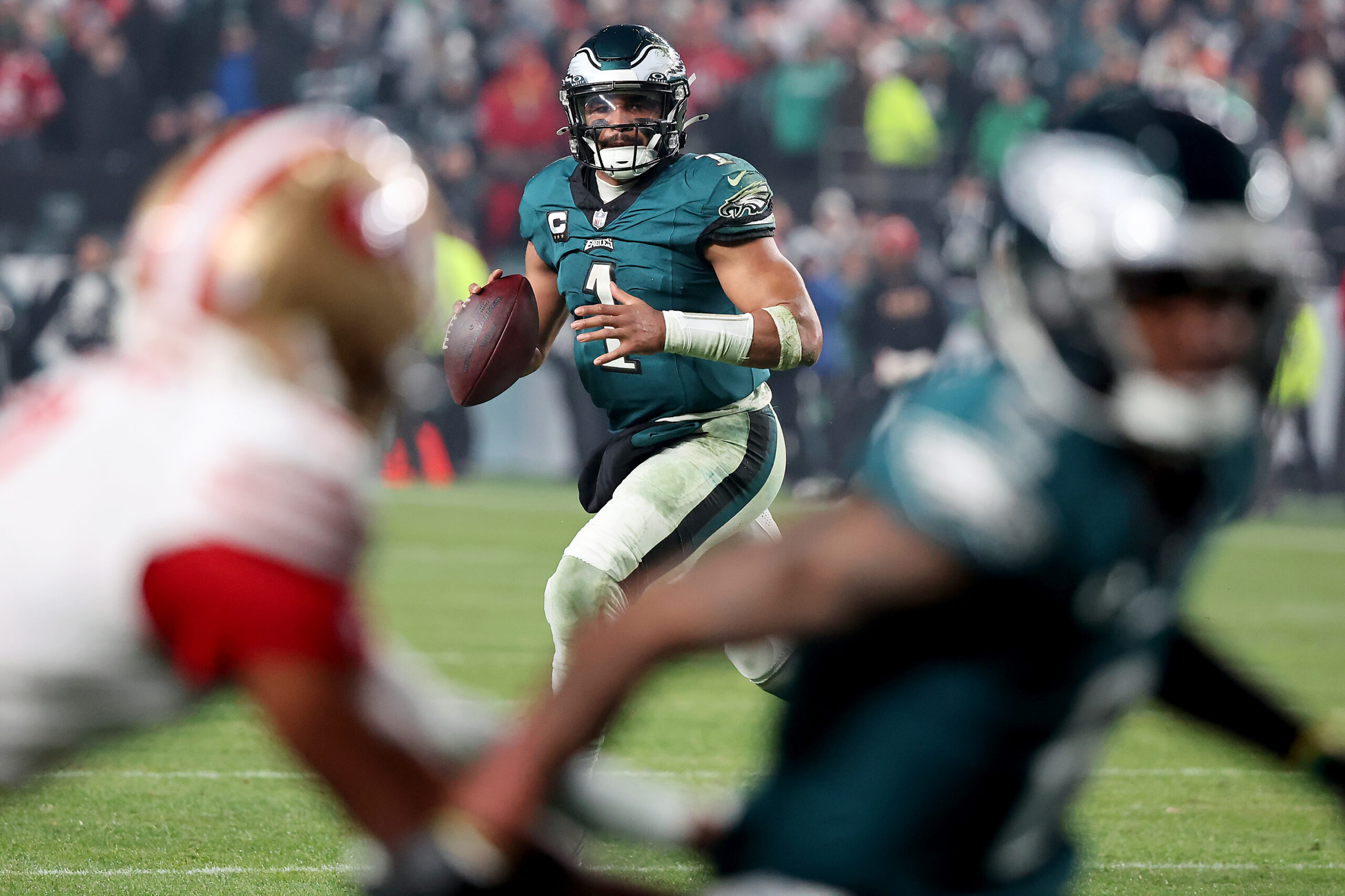
    Jalen Hurts and the Eagles last faced the 49ers in Dec. 2023.

    Our Eagles-Niners predictions

    Here’s how our writers are predicting Sunday’s game …

    Jeff McLane: “There’s a push when it comes to the Eagles’ underperforming offense vs. the 49ers’ subpar defense; but I give the edge to a great Eagles defense over a very good, but not great 49ers offense.” | Eagles 23, Niners 17.

    Jeff Neiburg: “It hasn’t been an encouraging season from the Eagles’ offense, to put it mildly, but the 49ers are down multiple linebackers and don’t have an abundance of talent in the secondary. If the Eagles don’t beat themselves, which you can’t rule out, they should be able to establish a running game that gets the offense back on track.” | Eagles 24, Niners 20.

    Olivia Reiner: “Maybe the Eagles can finish what the Seahawks started last week and continue to punish the 49ers on the ground. Maybe Jalen Hurts and the passing attack can exploit the 49ers’ thin inside linebacker corps with passes over the middle of the field. Neither have been characteristic of the offense this season, though. Or, maybe, the defense will stifle Shanahan’s offense while Nick Sirianni, Kevin Patullo, and the Eagles offense do just enough to get by. It wouldn’t be the first time.” | Eagles 24, Niners 20.

    Matt Breen: “The Niners had a great finish to the season before their dud against the Seahawks, but they just seem too banged up to hang with the Eagles.” | Eagles 24, Niners 13.

    National media predictions

    The national media is divided over this one, but there’s a definitely lean toward the home team. Here’s a look at how they are predicting Sunday’s game

    Nick Sirianni opted to rest his starters in Week 18 despite a chance to get the No. 2 seed in the NFC.

    What we’re saying about the Eagles

    Our columnists had plenty to say about the Eagles this week, including Mike Sielski, who believes their toughest opponent is not any team in the bracket, but themselves.

    “From Eagles fans to the players themselves, there has seemed to be an ever-present blanket of expectations weighing on them. It’s as if the only thing that would make anyone happy and relieved at any moment this season would be another Super Bowl victory — a benchmark so lofty that it virtually guarantees people will be worried at best and miserable at worst unless the Eagles win every game 49-0.”

    Here’s more from our columnists …

    David Murphy: “The pertinent question for Kevin Patullo and the Eagles now is what the offense will look like moving forward. This is a weird time of year. Sunday’s wild-card game against the 49ers could be the start of a month of football that leaves us memory-holing our four months of angst. Or, it could be the start of the offseason, and a litany of questions that sound way closer to January 2024 than January 2025.”

    Marcus Hayes: “It was Zack Baun. The best linebacker in football over the last two seasons. The man tasked Sunday with covering and tackling Christian McCaffrey, the best offensive player in football, and George Kittle, the league’s best tight end. In a city that still worships linebackers like Chuck Bednarik, Seth Joyner, and Bill Bergey, Baun somehow remains largely anonymous.”

    Mike Sielski: “There’s more than one way to be an excellent head coach, even if one of those ways gets a little more attention, a little more scrutiny, a little more credit these days. The film can tell you how good a coach Kyle Shanahan is. What Nick Sirianni does well sometimes isn’t so easy to see. Come Sunday, may the best savant win.”

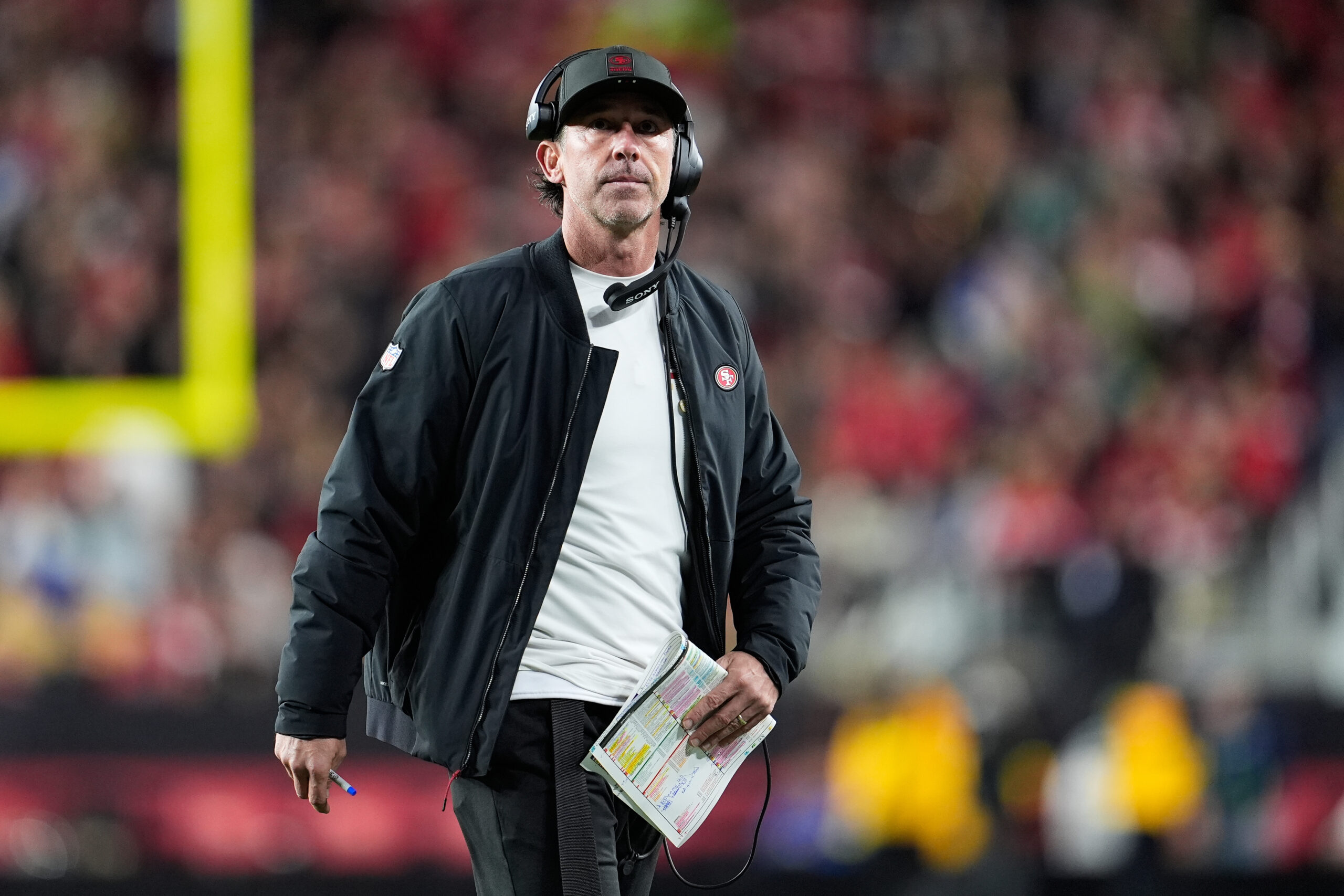
    San Francisco 49ers head coach Kyle Shanahan is a big Vic Fangio fan.

    What the Niners are saying

    Kyle Shanahan is one of Vic Fangio’s biggest fans. Shanahan is such a big fan, that he’s tried to hire Fangio in San Francisco “all the times that there’s been an opportunity.”

    “I mean, Vic schematically, he has always been the best to me,” Shanahan said. “As good as anyone there is. Has a very sound scheme that he doesn’t need to change up very much. It just naturally changes with how he does his coverages, how he does his fronts, the personnel groupings he does. He’s very good at getting a bead on what you’re trying to do and making you adjust.”

    Sunday should be an extremely hostile environment for the Niners. Tight end George Kittle recalled a few of his craziest stories on Thursday.

    “I just thoroughly enjoy it because it’s so unique every single time,” Kittle said. “I’ll never forget my rookie season, the year they won the Super Bowl, it was my first time playing in the Linc. There were like four 10-year-old kids holding a seven-foot tall papier-mâché middle finger that had a rotating thing on it that made the middle finger come up. That was the coolest thing, I’ll never forget it. That was my rookie year and I was like this is excellent.”

    Kittle isn’t the only member of the 49ers offense looking forward to playing in the Linc. Kyle Juszczyk is also ready to take on Eagles fans.

    “It’s more difficult [going into a hostile environment] but the payoff is better,” Juszczyk told reporters. “There’s nothing like that feeling of going into a hostile territory and getting a win. Yeah, it’s a little bit more difficult, but it’ll be worth it in the end.”

    What else we’re reading (and watching)

    • 👨‍⚖️ A rowdy game against the 49ers game led to Eagles Court inside Veterans Stadium, where the hardest part was “keeping a straight face.”
    • 🚒 Philly bar Ladder 15 turned away 49ers fans who were planning a playoff takeover. “We were backing our city,” the managers said.
    • ⚾ To the Eagles, Vic Fangio is a savvy defensive mind. To his native Dunmore, he’s a former umpire, bartender, and “Hector.”
    • 🎞️ Eagles-49ers film review: Christian McCaffrey’s touches, dangerous George Kittle, and where Brock Purdy struggles
    • 🖊️ Dallas Goedert tried to keep things light amid a trying offseason. He ended up having an unlikely career year.
    • 📺 NBC’s Cris Collinsworth says Eagles fans haven’t changed.
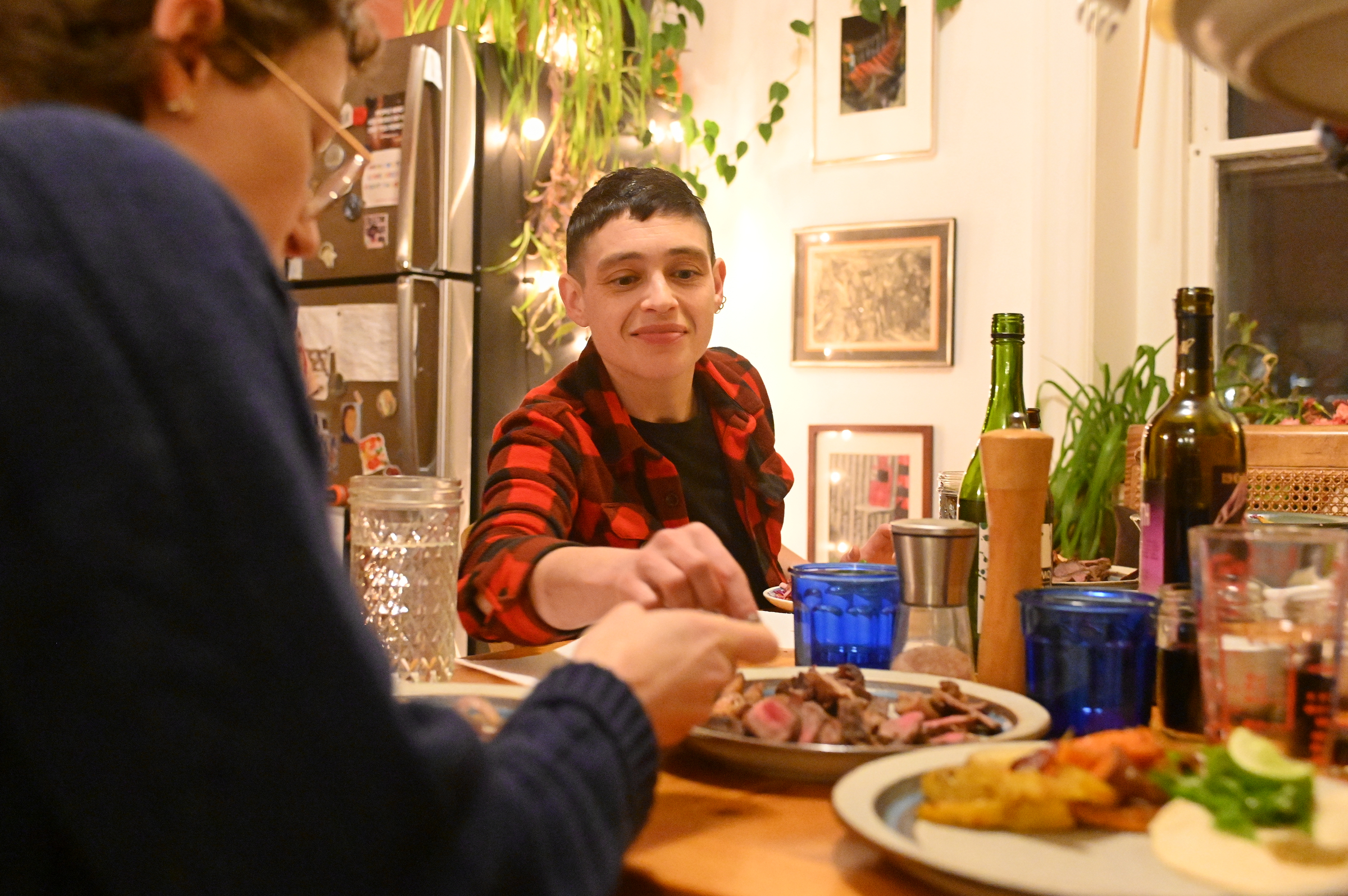
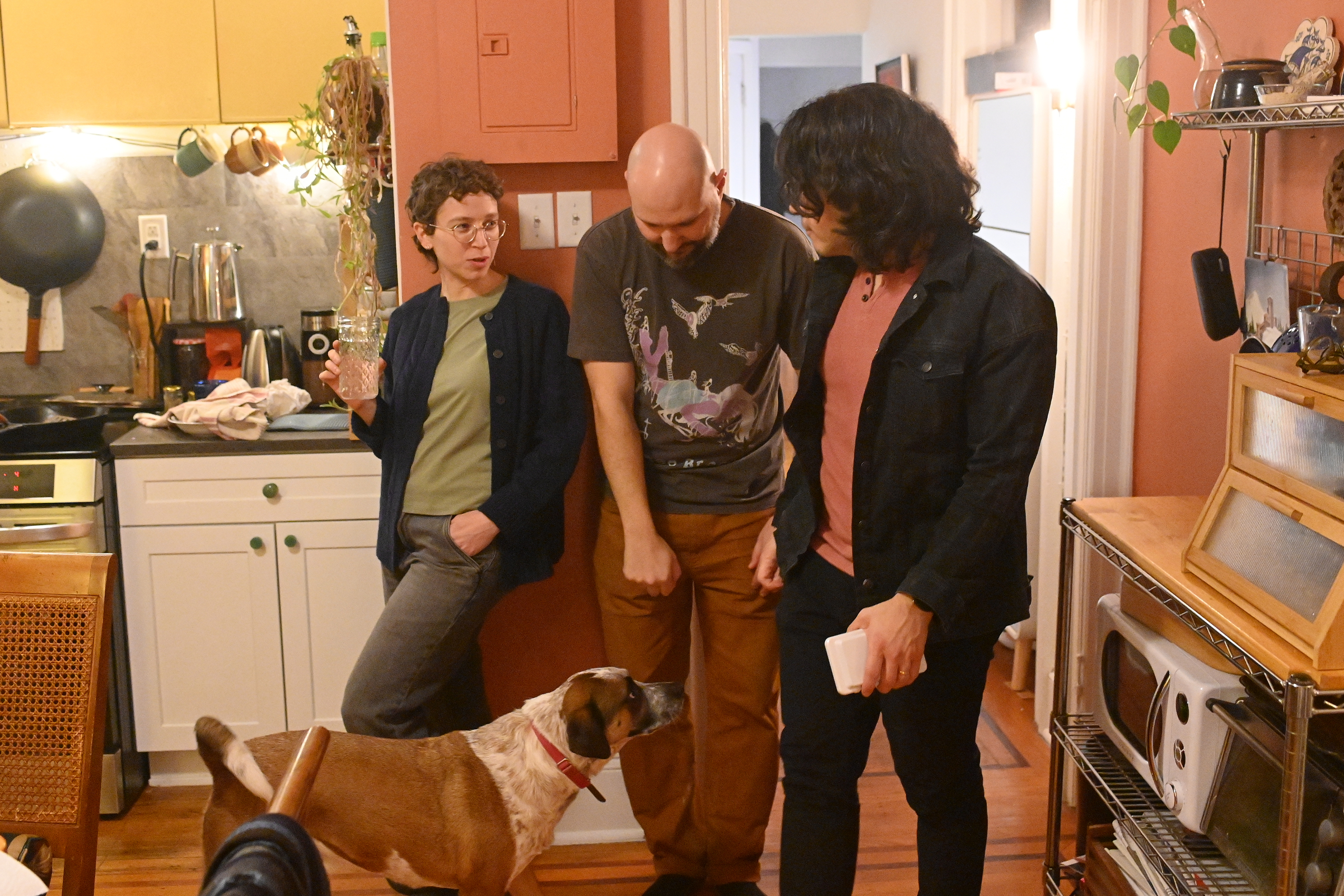
  • Three best friends from childhood decided to commit — by buying a communal house together

    Three best friends from childhood decided to commit — by buying a communal house together

    The Rachels met each other when they were 5 and 6 years old, and they met Lizzy Seitel — who would come to be known as one of the Rachels despite her name — in middle school.

    They all lived in the D.C. area, and one weekend they took part in a retreat with Cheder, a progressive Jewish community in the area. In Seitel’s recollection, they listened to Ani DiFranco, went skinny-dipping, and talked about their fears.

    “It was just a really crazy, beautiful, life-affirming teenage moment,” Seitel, now 38, said.

    It also marked the beginning of a very long friendship.

    Soon after, Rachel (Luban), Rachel (Neuschatz), and Seitel began celebrating winter solstice together with a witchy ritual drawn from a pagan book. In the quarter-century since, they’ve never missed the solstice.

    Rachel Luban (from left), Lizzy Seitel, and Rachel Neuschatz, pictured in college in 2009.

    The Rachels went to the same college; Lizzy went elsewhere. Then, after living apart for some years in their 20s, they decided to settle down, together. By that point, Seitel had married Serge Levin (he grew up in a communal house in Rostov-on-Don, Russia, and was game for an alternative arrangement) and was pregnant with their first child.

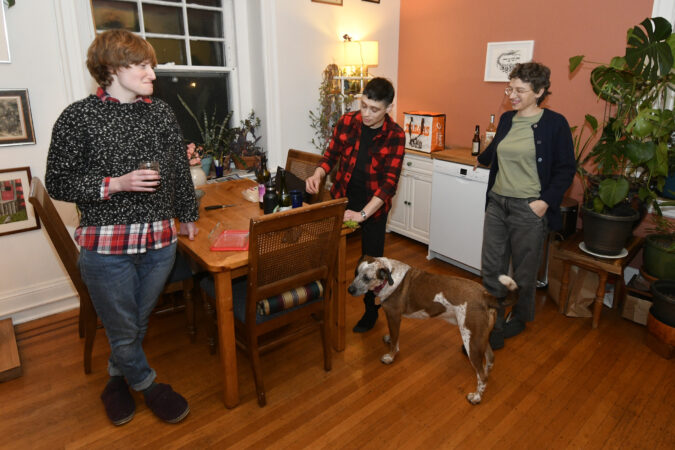
    In 2022 the four bought a giant old stone house in Mount Airy, where they now live communally. They have a shared bank account for the mortgage, house maintenance, and utilities, along with a shared backyard, basement, porch, and Google calendar.

    The Rachels, who both have romantic partners living elsewhere, coparent a dog. Seitel and Levin’s two young children call the Rachels Aunt Lu and Aunt Nu.

    The following, as told to Zoe Greenberg in separate interviews, has been edited for length and clarity and combined.

    On meeting each other as kids

    Rachel Neuschatz: I consider myself a red diaper baby [a term to describe the kids of radical/Communist parents]. We lived in a single family home, but we were always involved with the Jewish community Cheder. Rachel Luban and I were in it starting from age 5.

    Lizzy Seitel: I grew up in a pretty typical nuclear family, in most ways. But my parents always had an extra room, and they were always having people come stay with us. There was this feeling of people coming in and out, and I really loved that — just the idea of family being expansive.

    It was always my fantasy to live in a boarding house.

    Rachel Luban and Rachel Neuschatz at house dinner.

    Rachel Luban: I feel like we raised each other, and those relationships have always felt as central to me as romantic relationships. Romantic partnership was part of my vision, but as a kid I would never dream about getting married.

    On the ‘palace of dreams’

    Lizzy Seitel: The Rachels and I always talked about creating a palace of dreams.

    Rachel Neuschatz: We’d always talked very vaguely about living together. Of course, people loved to tell us it wouldn’t work, which is a very funny, ubiquitous response.

    Rachel Luban: We had been talking for many years about wanting a more communal living situation, some kind of cohousing. We didn’t know exactly what that would look like.

    Lizzy was very rooted in Philly. She’d been here for maybe 10 years, she was married, she was pregnant.

    So both Rachel and I decided to move to Philly in 2019. We moved within a month of each other, and we were all living in separate apartments in South Philly.

    On choosing to buy a house together

    Lizzy Seitel: Having a kid, and then it being the pandemic, it was like, “Oh yeah, the nuclear family is bulls—. This is not how anyone should raise kids.”

    Rachel Luban: Even though we were all living in South Philly, less than a half hour walk from each other, it felt like seeing each other had to be this big planned thing and you had to clear your night for it.

    We wanted lower barriers to spending time together, and more incidental interactions.

    On searching for the right place

    Rachel Luban: There was really no road map, and that was very challenging. We didn’t have many people to talk to. There are all of these logistics to figure out: Should we become an LLC? We decided not to do that, because then we would need a commercial mortgage.

    We wanted a single structure that had separate units. So everyone has their own door, everyone has their own kitchen, but there are some common spaces, and we’re all really close together.

    We made our own basic boundaries about what percentage of the property each person would own and therefore, what percentage of the finances they would be responsible for.

    Our runner-up was this former nunnery that was three huge conjoined West Philly rowhomes. It had one giant kitchen, 13 bathrooms, and a lot of institutional carpeting. It was kind of cool, but also just an insane space.

    The place we eventually found felt like it fell from heaven, because nothing else came close.

    Rachel Luban, house friend Fadi Awadalla, and Serge Levin share a moment in the kitchen.

    On committing

    Lizzy Seitel: I knew that these are the people that are the most committed to me, besides Serge. I know we can fight and that we’re always gonna want to come back together. There’s no question of, is this friendship gonna last? We’re gonna make it last.

    Rachel Luban: A lot of people, including lawyers, told us not to do this. They were like, “You intertwine your lives, and then somebody has a falling out, or somebody wants to move, and then you’re in a mess.”

    In a certain way, I think it required the kind of psychological commitment that people make when they get married, where they’re throwing their chips in together. Knowing that if something happens, it could be really messy.

    We decided we trust each other enough to think that if something changes, everyone will act with good faith.

    On their friendships now

    Rachel Luban: You get to know people in a different way, and your fates are more tied together. We had to replace our entire heating system, which is actually three different heating systems. There’s a range of different feelings about spending money and what kind of upkeep the house needs. Even whether we should mow the lawn was a discussion that we had to have.

    Lizzy Seitel: We might not live in this house or in this arrangement for every year until we die, but we’re thinking that far ahead — about aging and wanting to be together in this life. That feels like a commitment to each other’s future.

    Rachel Neuschatz: Probably I will not formally parent. Maybe it’ll still happen, but that’s not on my bucket list. Lizzy’s kids are like my niblings — nieces and nephews.

    On telling other people:

    Rachel Luban: Most people are like, “I’m jealous. I want to do that.” Then a minority of people are like, “That’s my personal hell.”

    Lizzy Seitel: I feel like there’s this thing of people not knowing that they’re allowed to commit to their friends, or have their friends commit to them.

    Rachel Neuschatz: I cap myself from gushing too much, because I don’t want to be a jerk. But yeah, it’s a goddamn paradise that we’ve made ourselves.


    This is part of an occasional series about life partners across the Philadelphia area. If you want to share your story about who you’re navigating life with romantically or otherwise, write to lifepartners@inquirer.com. We won’t publish anything without speaking to you first.

  • Do I risk my stress-free run club for a relationship that might not work out?

    Do I risk my stress-free run club for a relationship that might not work out?

    Is it worth it to risk part of your community for love? I invited two Inquirer staffers — one runner, and a running hater who likes drama —to help answer the question.

    Have a question of your own? Or an opinion? Email me.

    Evan Weiss, Deputy Features Editor

    This week’s question is…

    I’m in a run club, which I love because it’s chill. But, there’s another runner I want to date. Do I risk my stress-free run club for a relationship that might not work out?

    Bedatri D. Choudhury, Arts & Entertainment Editor (hobby runner)

    I am a hobby runner but was in a run club once, let’s go!

    Beatrice Forman, Food and Dining Reporter (running hater)

    Did you ever hit on anyone in your run club, Bedatri? Or get hit on?

    Bedatri D. Choudhury

    I joined a run club because I was new to the country and read somewhere that it’s a great place to socialize. That or Equinox. I couldn’t afford Equinox.

    It’s a group of fit people sweating together. I don’t think it graduated to hitting on, but there was definitely some scoping out.

    Beatrice Forman

    I actually went to one of those run clubs for singles last year for a story that never saw the light of day and got hit on twice! And even then, it felt a little out of place to me given that it’s hard to banter while jogging.

    Bedatri D. Choudhury

    Take it outside the club. Get their number, text, etc.

    Should someone do it? I’d lean toward yes, go ahead and date.

    Beatrice Forman

    That makes sense, though I guess I wonder what happens after.

    If you make a move and it doesn’t work out, or you date and it also doesn’t work out, do you keep showing up? Who gets custody of the run club?

    Bedatri D. Choudhury

    A run club is low stakes. I know a couple that are not breaking up formally because they share a couples-only rate for a Life Time gym membership.

    Beatrice Forman

    I would tolerate so much for a discounted Life Time membership.

    I did have a friend who hooked up with too many people in her run club that she was asked to leave, actually. And another who broke up with a fellow runner and then left because she had to watch them flirt with other runners.

    So your mileage literally does vary.

    Bedatri D. Choudhury

    I just think it’s about not dragging others into your drama. If it’s not working out makes you incapable of seeing this person again, just opt out of the run club. Better still, start one of your own.

    But hey, if it works out then it’s a whole world of possibilities.

    Beatrice Forman

    I’m definitely in the shoot-your-shot camp, but she needs to be mindful of how she makes her move.

    I know a lot of people are turned off by the idea of mixing running and romance (source: I read an article about this), so I would hate for her to put herself out there — which is good — and then get shunned because she didn’t respect the vibes of the club.

    Bedatri D. Choudhury

    I am totally in the shoot-your-shot tent too, but if this club is very important to her, she should also be mindful if the date doesn’t go well.

    Beatrice Forman

    Yes! I personally would never risk having to give up a space or hobby that matters to me over a partnership gone south. There’s more to life than literally running toward a relationship, so it’s really up to her if she likes the person enough to see it through.

    Bedatri D. Choudhury

    Yeah my parents met at work and kept working together for 40-something years. Go get an acai bowl and talk about your favorite color. Like a wise man once said, “You have brains in your head. You have feet in your [running] shoes. You can steer yourself any direction you choose.”

    Beatrice Forman

    Is that wise man Dr. Seuss?

    Bedatri D. Choudhury

    Yes.

    Beatrice Forman

    I vote that she discreetly asks for their number while they do quad stretches or whatever it is that you’re supposed to do to warm up.

    Bedatri D. Choudhury

    Then if the club throws you out, you can run together.

  • Philly’s ramen power couple, now living in Tokyo, are thriving in noodle paradise

    Philly’s ramen power couple, now living in Tokyo, are thriving in noodle paradise

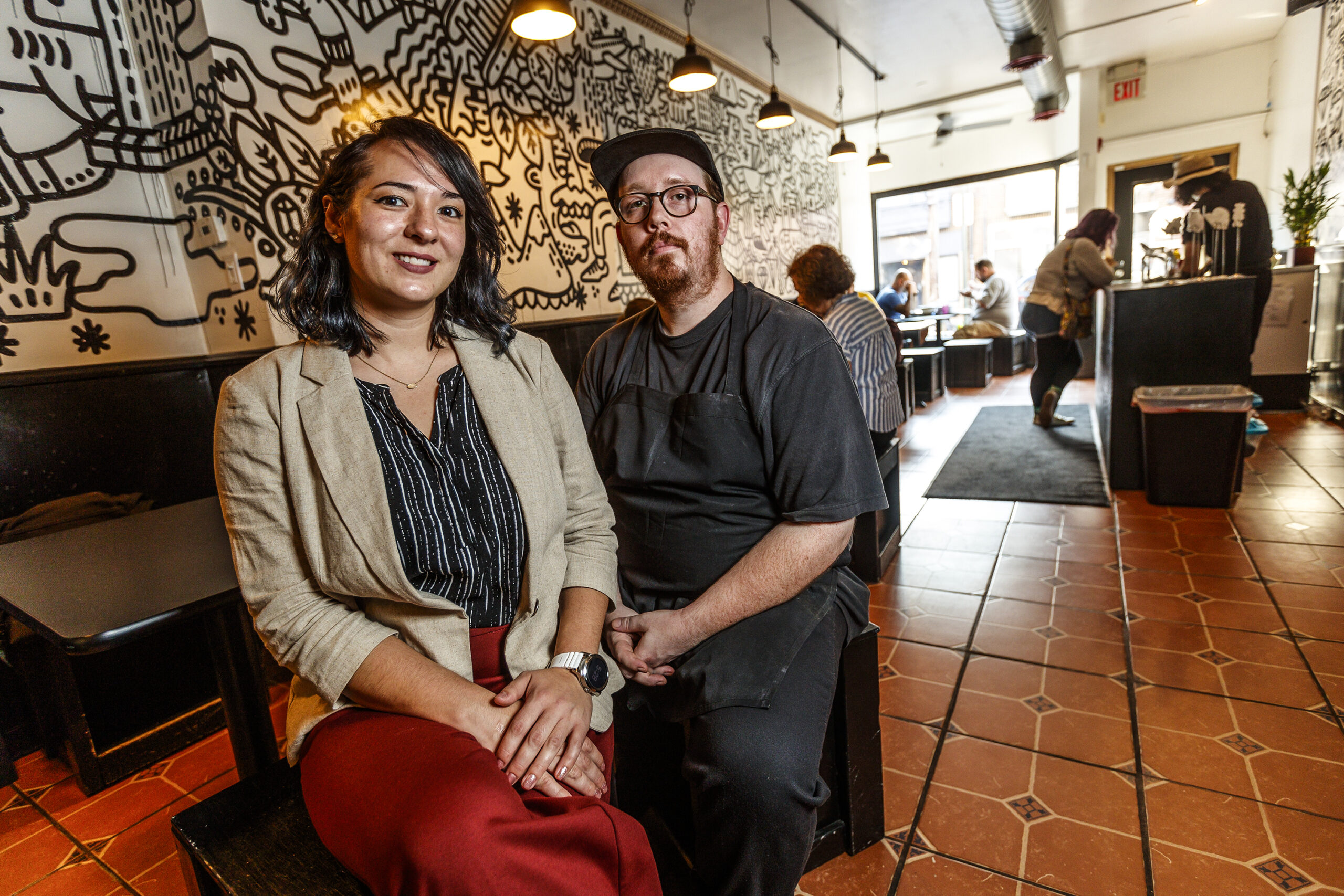
    TOKYO — Lindsay Mariko Steigerwald and Jesse Pryor set the gold standard for ramen in Philadelphia during their five-year run at Neighborhood Ramen. But when the couple announced the closure of their beloved Queen Village restaurant at the end of 2024, they also teased an audacious bit of news: They were moving to Japan with plans to reopen their shop in the ramen capital of the world.

    “This is the next chapter for Neighborhood Ramen!” said Steigerwald, 35, as we stood in a blustery November rain beside Shibuya Scramble Crossing, the famously chaotic, neon-lit intersection in Tokyo where we rendezvoused for a day of noodle slurping across the city.

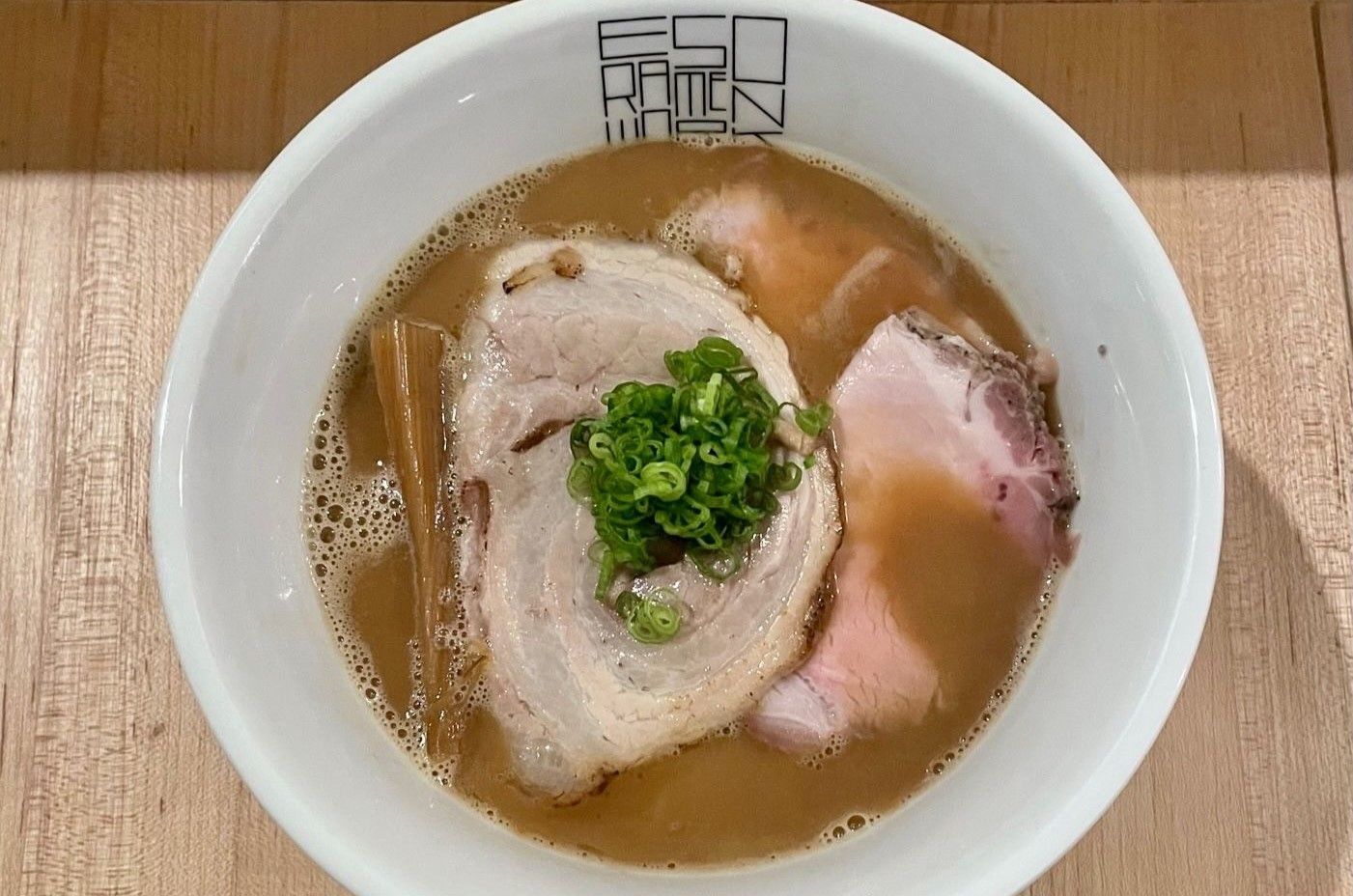
    The couple had arrived from Philadelphia just 10 days earlier — following a year of planning (and a pop-up venture called ESO Ramen Workshop in Society Hill). They’d already begun their classes at Japanese language school and launched the arduous visa process that must be settled before they can begin working on their own restaurant. It will likely still be many months before Neighborhood Ramen fires up its stockpots and noodle machine in Tokyo.

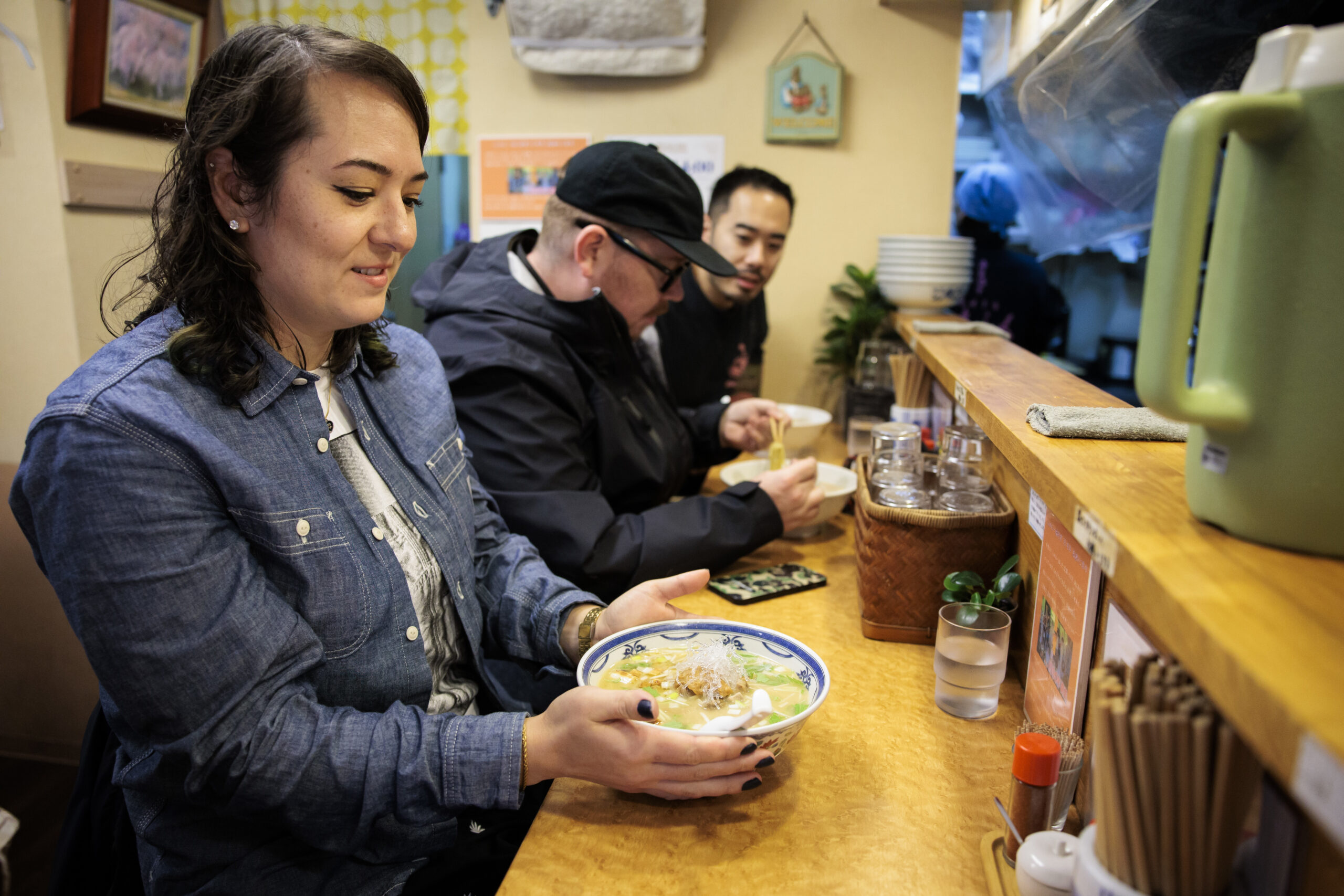
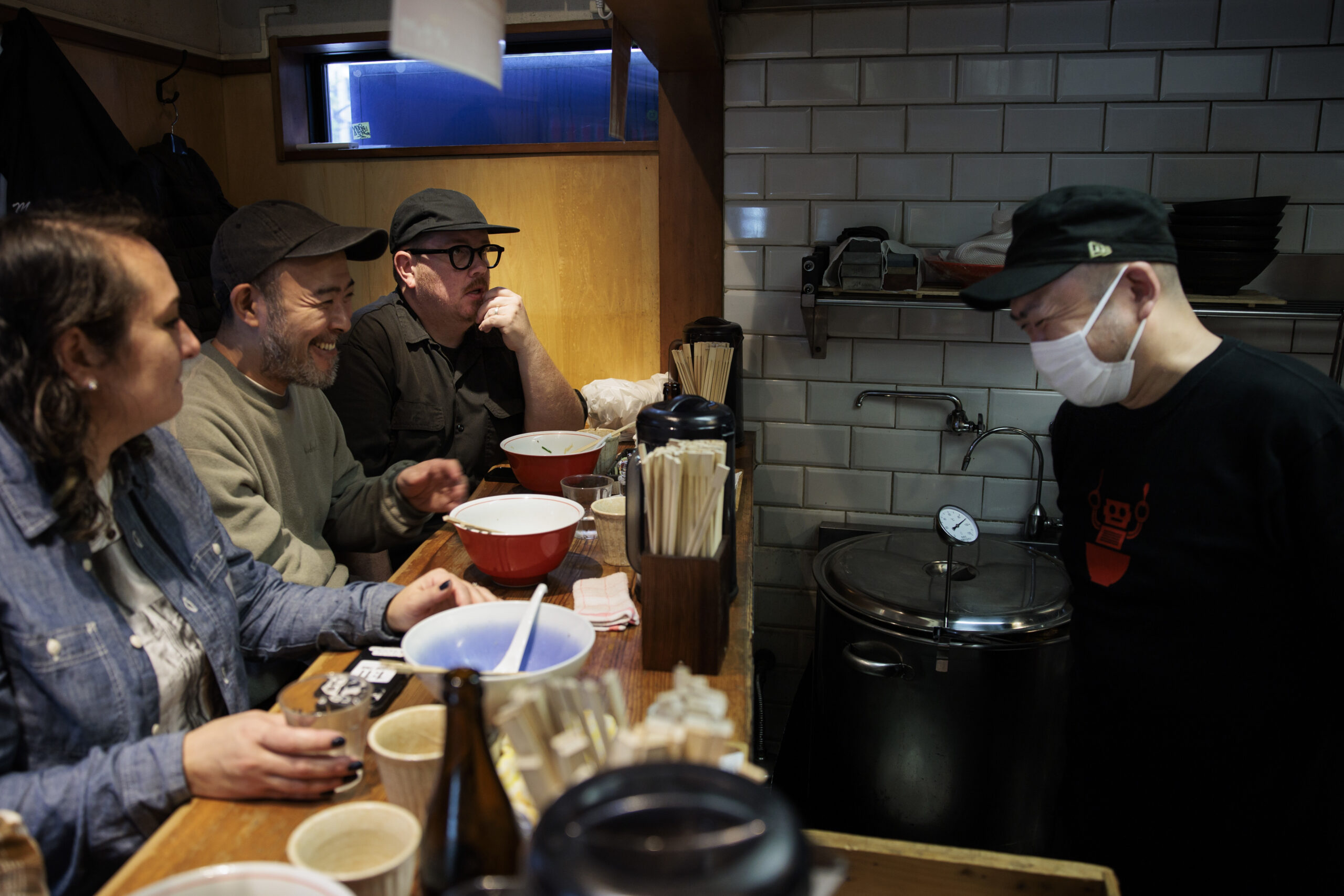
    Lindsay Mariko Steigerwald (from left), Jesse Pryor, and Jesse Ito sit at the counter at Ramen Ichifuku in November in Tokyo.

    Their move was precipitated by a long-simmering goal to practice their craft alongside the best, but also a desire for “a better quality of life” they’ve come to love over the course of multiple visits to Tokyo, says Steigerwald.

    Equally motivating is the couple’s passion for consuming ramen regularly; it’s every bit as intense as their drive to make it.

    “I want to eat ramen every day,” says Pryor, 38. “I want to go to different shops all the time, be inspired and just soak it up. It’s hard to do that in Philadelphia.”

    He’d already eaten 14 bowls of ramen in the first nine days since landing in Tokyo in November — on top of the 300 ramen shops the couple had visited during their 10 previous visits to Japan. By the end of December, Pryor was up to 80 bowls of ramen at 70 different places. (Steigerwald has been keeping pace with ramen, too, but she documents her own obsession — dumplings — on her GyozaKween Instagram account.)

    That’s still just a fraction of the 10,000 ramen shops in Tokyo serving myriad variations: rich tonkotsus cloudy with the emulsified essence of slow-simmered pork bones; crystalline shio salt broths and shoyus tinted amber with soy; creamy miso ramens; and gyokai ramens punchy with seafood umami. Pryor’s quest for soupy inspiration here, he says, is “infinite.”

    “Jesse is a true ramen hunter,” says Steigerwald. “At night he’s game planning what bowls he’s going to eat the next day.”

    “The ramen comes first,” he says, “and then the rest of the day just fills in around it, you know?”

    Ramen-hopping rules

    We were about to learn firsthand, as the couple, who’ve begun a fledgling ramen tour business, had mapped out an afternoon of visits to some of their favorites. There were rules. Our group must be small (ideally two to three guests max) because the best ramen counters are often tiny. Also, come hungry.

    “It’s expected each person that steps foot in the shop orders their own ramen and finishes the bowl. … Doggie bags are not a thing,” says Pryor.

    The last edict was especially daunting considering the belly-filling richness of ramen. Consume three bowls and you’re in for a long nap. In addition, eating ramen like a pro is a full-contact sport — a messy, broth-splashing endeavor for which there is not only a recommended dress code (“Jesse’s entire wardrobe is black,” Steigerwald says), but also an almost athletic eating technique: the power slurp.

    Ramen with shark cartilage at Ramen Ichifuku.
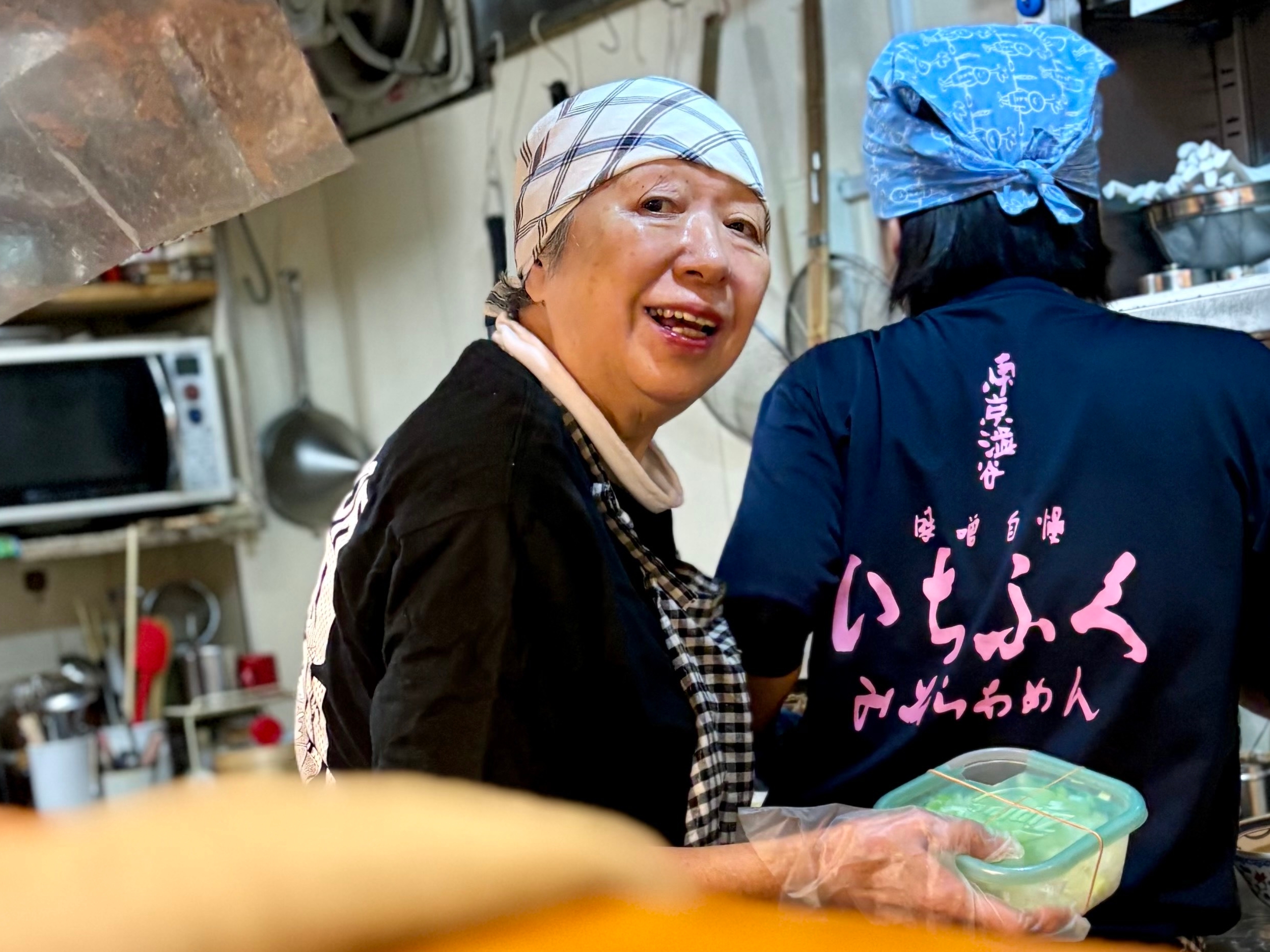
    Chef and owner Kumiko Ishida of Ramen Ichifuku in the Honmachi neighborhood of Shibuya, Tokyo, looks back across the counter while making miso ramen.

    As the bowls landed before us at Ramen Ichifuku, our first stop in the Honmachi neighborhood of Shibuya, I marveled at the nutty aroma of the tan broth of an irorimen-style ramen, enriched with three kinds of miso, tender pork, tangy sake lees, and translucent threads of shark cartilage bundled over top.

    I was just as mesmerized by Pryor and Steigerwald, though, as they locked onto their bowls with trancelike focus, then pounced, their faces hovering just inches above the steamy rims. As they began to slurp, columns of noodles steadily streamed upward into their open jaws. The jazz soundtrack of Hiromi’s Sonicwonder playing “Yes! Ramen!!” was punctuated by a gurgling roar reminiscent of shop vacs inhaling shallow pools.

    “We call it ‘hitting the zu’s,’” says Steigerwald, noting the reference to zuru zuru, the onomatopoeia for slurping ramen in Japanese comics.

    “It’s like turbo tasting, because you get the flavor of it up into all your sensory crevices,” says Pryor, who typically eats a bowl in five minutes or less, to consume each element at its peak.

    I leaned over and gave it my best slurp — only to scorch my too-tightly pursed lips with hot broth while the noodles refused to rise. I resorted to my usual leisurely pace, savoring what was nonetheless the best bowl of ramen I’d ever eaten.

    It was a comforting collage of firm but slippery noodles glazed in a nuanced broth with a parade of so many other textures — velvety pork, snappy bamboos shoots, tiny crunchy croutons. If only I could learn to properly slurp, it might be even better.

    Steigerwald give me a sympathetic look: “We’ve had a lot of practice.”

    Philly restaurant romance leads to Japan

    Philly’s ramen power couple met at CoZara in 2016, where Steigerwald tended bar, and Pryor, a former news photographer from Delaware turned line cook at Zahav, had become a regular for the restaurant’s $5 Japanese riff on a citywide (Orion beer and a shot of sake).

    “I saw them falling in love at that bar,” says Mawn chef Phila Lorn, who was CoZara’s chef de cuisine at the time.

    Steigerwald, who grew up in New Jersey near Fort Dix and McGuire Air Force Base with two half-Japanese parents who are both kung fu masters, found Pryor’s budding obsession with ramen endearing: “Cool, the guy I’m dating is into the food of my culture.”

    Lindsay Mariko Steigerwald (left) and Jesse Pryor co-owned Neighborhood Ramen on Third Street in Queen Village. They are pictured in their dining room shortly after opening in 2019.

    She studied business management at college in Texas with an eye toward opening a Japanese restaurant, so it wasn’t long before they launched one of the city’s early pop-up sensations in 2016, dishing out bowls of intense tonkotsu and spicy tantan from his apartment between shifts at Cheu Noodle Bar, Morimoto, and Zahav.

    When they finally opened their Queen Village shop in 2019, they instantly raised the city’s ramen bar. They acquired a used ramen machine in 2022 to begin making their own noodles (a rarity, considering the process is more involved than Italian pasta), raising the local standard once again.

    But over the course of their research visits to Japan — where they were entranced by the abundance of quality ingredients as well as a public sense of order that keeps the streets tidy, safe, and tranquil — their pipe dream steadily bloomed into a determination to actually move.

    “We did our thing for 10 years in Philly, but between the political climate and inflation there, the more we visited [Japan], we realized that this was where we want to be,” says Steigerwald. “We just want to make a modest living, be happy, and be proud of what we do.”

    Steigerwald is eager to bring her family’s Japanese roots full circle, closing the loop that brought her two grandmothers to the United States after World War II: “My aunt in Texas finds it interesting that [my grandmothers] moved to America for a better life in the 1950s and that we are moving back to Japan to find a better life 70 years later.”

    Steigerwald is pursuing a Nikkei visa for Japanese descendants. She hopes that the couple, who eloped in August — “moving to a new continent, we figured it was time,” she says — can open their shop in Koenji, a neighborhood known for its counterculture. It reminds them of South Street.

    Tokyo transplants

    In the meanwhile, they’ve been having rewarding ramen encounters everywhere. That included a spontaneous detour to Honmachi’s bustling and futuristic Denny’s, where ordering is automated and the food is delivered by a fleet of beeping musical robots.

    “Honestly, I’d be hyped to eat that tantan anywhere,” says Pryor, gazing approvingly at a bowl of noodles whose broth is rich with sesame paste, ground pork, and orange puddles of chili oil. (Japanese Denny’s are owned by the same company as the country’s celebrated versions of the 7-Eleven, explaining the impressive confluence of quality and value.)

    The duo’s exploration of the upper echelons of Tokyo’s artisan ramen world, however, has gone a long way toward building a community of friends and peers. When we arrived at Ichifuku, chef Kumiko Ishida was wearing a Neighborhood Ramen T-shirt. The 15-seat restaurant in a homey, living room-like space is one of the very few ramen shops in Tokyo owned and operated by a woman, and Steigerwald and Pryor had named one of their regular specials in Philadelphia “Mama Miso” in the chef’s honor.

    The source of their inspiration did not disappoint, even if Ichifuku would not divulge how (or from what) she makes her signature croutons, which remain a subject of ramen-world speculation because they never turn soggy in broth.

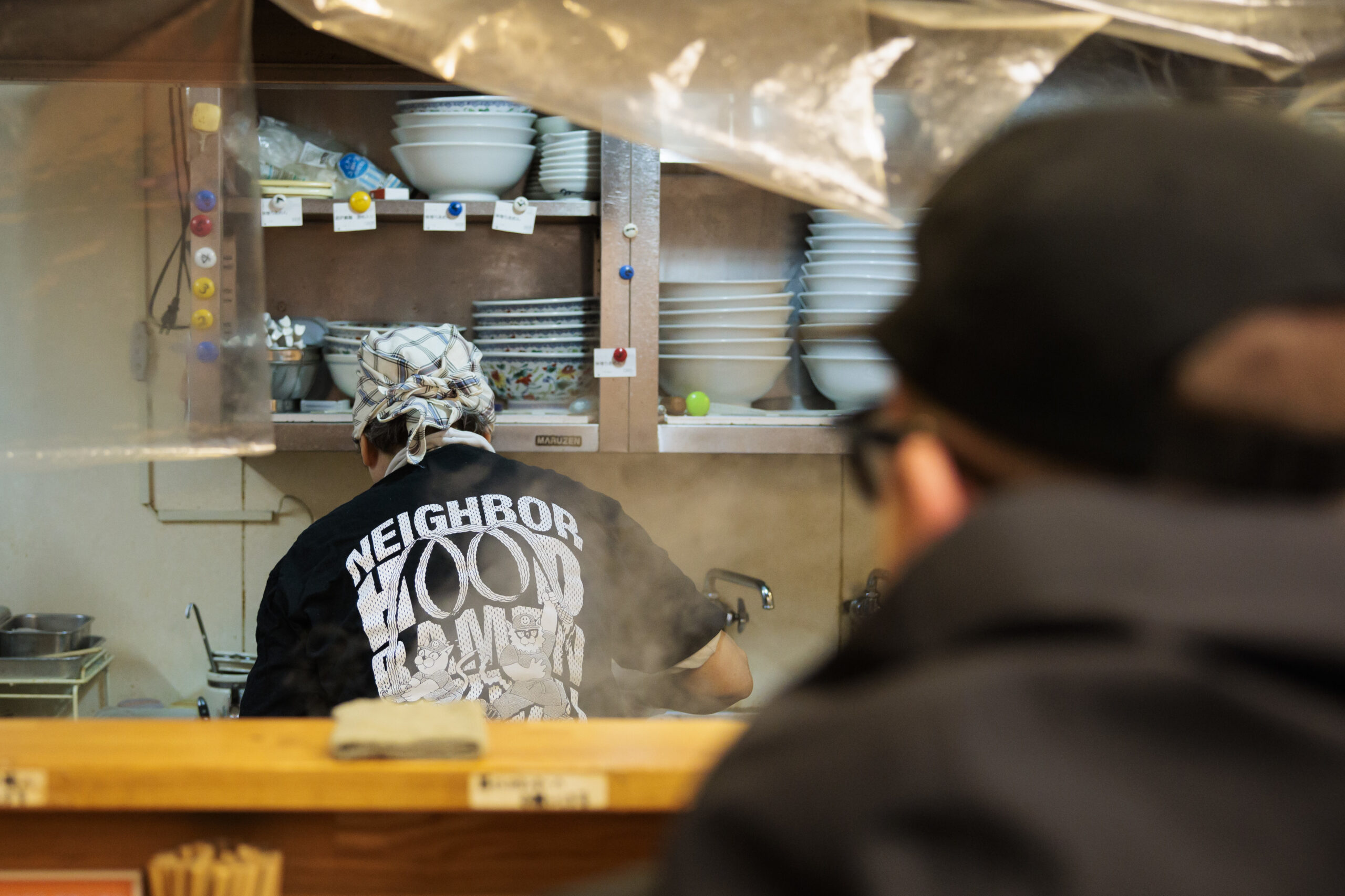
    Chef Kumiko Ishida wears a Neighborhood Ramen T-shirt while cooking at her restaurant, Ramen Ichifuku. It is one of the very few ramen shops in Tokyo owned and operated by a woman.

    Such minuscule details are the fodder for constant discussion among ramen hunters like Pryor and chef friends like Hiroshi “Nukaji” Nukui of Menya Nukaji in the Shibuya section of Tokyo, where Neighborhood staged a well-received pop-up in 2023. Nukui, who joined us for part of our journey, said he was thrilled the couple had decided to make the move to Tokyo.

    “Their passion is so strong. Many Japanese have not been to the amount of ramen shops they’ve been to,” Nukui said. And their status as foreigners might also be an advantage, he suggested. “Japanese ramen chefs typically work under a famous chef and end up following in that tradition. But [Pryor and Steigerwald] are not boxed into a style or lineage.”

    In fact, Pryor plans to focus on a ramen style similar to Nukui’s, a double-brothed ramen (also called “W soup”) that blends rich pork tonkotsu with an intense seafood broth called gyokai. While Nukui is known for his tsukemen style — in which noodles are served on the side for dipping into a broth as thick as gravy — Pryor intends to serve his noodles soup-style.

    “This style is so impactful,” Pryor says, “you eat it and you’re like ‘Whoa!’” (I tried Pryor’s gyokai tonkotsu at both Neighborhood Ramen and Eso, and it is one of the most powerful, smoky, ocean-flavored broths I’ve ever tasted.)

    Gyokai tonkotsu ramen at ESO Ramen Workshop, 526 S. Fourth St.

    “Their ramen is no joke,” agrees Kosuke Chujo, the griddle master of Nihonbashi Philly, Tokyo’s shrine to Philly culture. “They are very, very good. The broth, of course. But also the fact they make their own noodles. Your average Japanese ramen maker does not do what they do.”

    Indeed, high-quality noodles are so widely available in Japan that few ramen shops bother; there are so many other details to refine in composing a great bowl. At our final stop of the day, Ramenya Toy Box in Minowa, we were given a master class in the art of ramen’s two most elemental styles: shio (clear broth seasoned with salt) and shoyu (clear broth seasoned with soy).

    As we stood in line outside the small white building, Pryor warned us of a solemn dining experience to come. It sounded like the polar opposite of the relaxed atmosphere at Ichifuku. “Yamagami-san is strict. His vibe is very serious, and the cooks stand at attention,” he said, referring to owner Takanori Yamagami, who studied under famed “Ramenbilly” chef Junichi Shimazaki, the pompadour-coiffed social media sensation whose shop is known for its no-talking rule.

    Lindsay Mariko Steigerwald (from left), Hiroshi Nukui, and Jesse Pryor laugh with chef and owner Takanori Yamagami during a meal at Ramenya Toy Box in November. “I think it’s a great thing,” Yamagami says of Steigerwald and Pryor’s move to Tokyo. “If their ramen is good, people will go.”
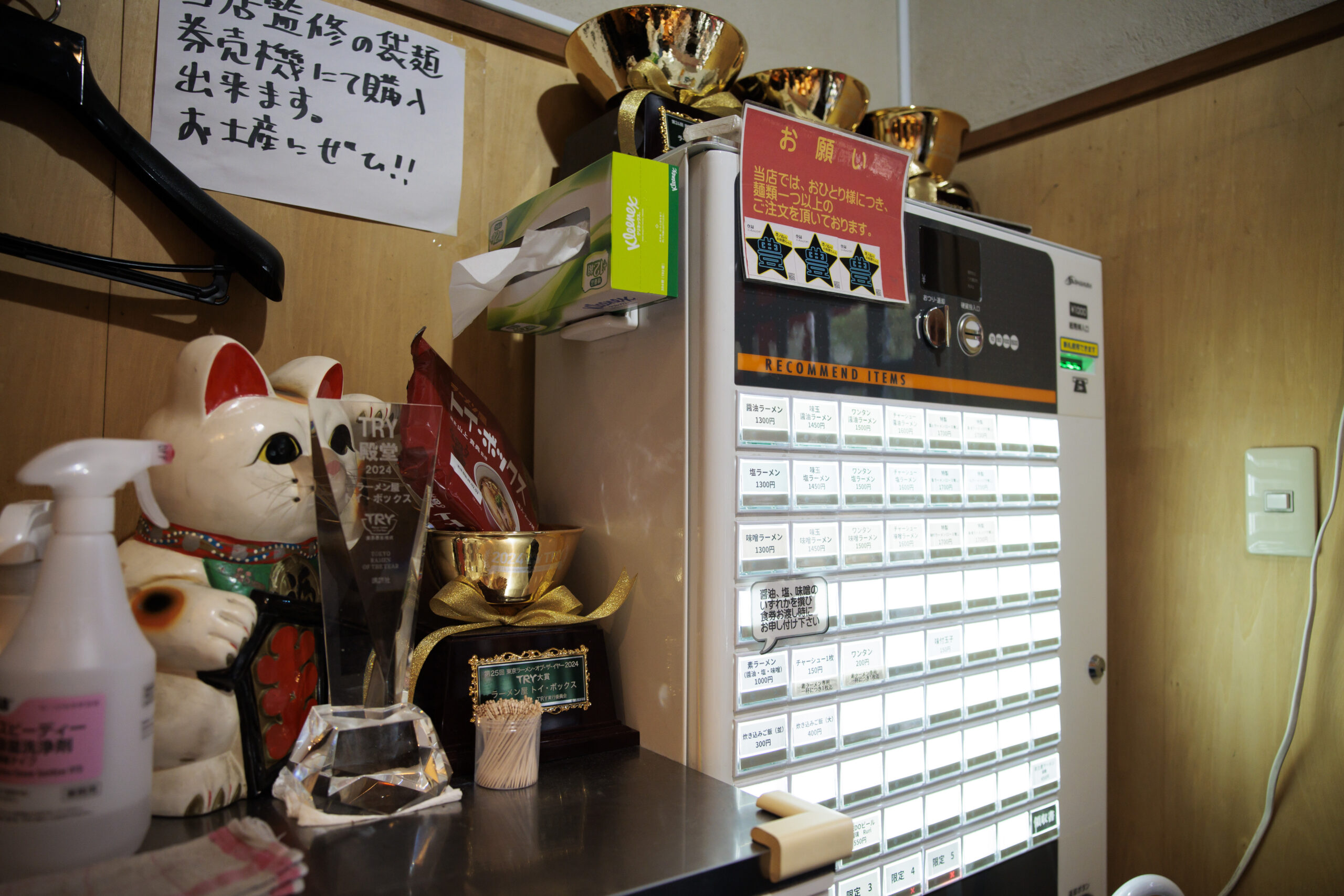
    A ticket vending machine is used to pay for ramen at Ramenya Toy Box. Gilded trophy versions of the shop’s bowls attest to its reputation as one of Tokyo’s best ramen destinations.

    Yamagami has made his own name in this tiny space, where the counter wraps like an elbow around the open kitchen. Pristine renditions of three classic styles won him induction into the ramen hall of fame in 2024.

    The small team worked silently alongside him, prepping the “tare” seasoning base while the chef drained baskets of noodles in both hands, shaking off cooking liquid with almost-musical syncopation. A flick of his chopsticks coaxed the noodles, placed in bowls, into a perfect comb-over wave, to be swiftly layered with two kinds of chashu (pork belly and loin), a perfect egg, a curl of bamboo shoot, and a final spoonful of rendered chicken fat that glinted like gold.

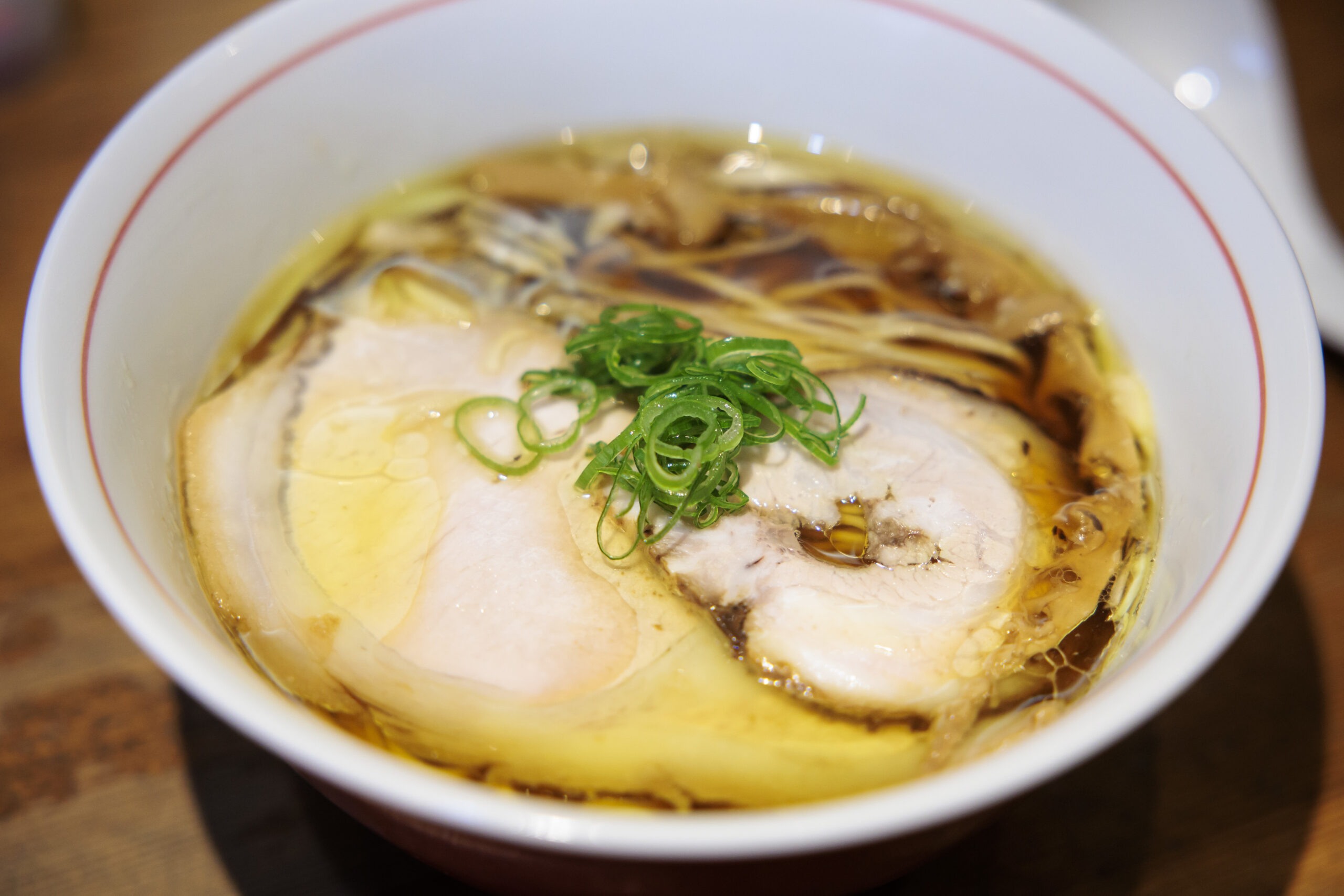
    The intense broth of just chicken and water is the true source of Toy Box’s magic, drawn from a slow-cooking cauldron in back that appears to be more chopped-up bones than liquid. Three kinds of heritage chickens contribute different properties of richness, collagen, aroma, and flavor. In the bowl, the most straightforward shio ramen is seasoned only with salt, thinly shaved scallions, and a dusting of tart sudachi citrus zest; it’s one of the most vivid yet delicate distillations of chicken I’ve tasted.

    Yamagami’s shoyu ramen — seasoned with six kinds of soy sauce, including several fermented in wood vats — begins with that same vivid chicken flavor, then blooms with earthy umami.

    Shoyu ramen at Ramenya Toy Box.

    I lean in, inhale, and — at last — execute a proper slurp, the firm, slippery noodles swiftly rising up past my lips with a velocity and snap that fans the flavor volume even higher. I can understand why Pryor, who usually visits new shops daily, has returned to Toy Box a dozen times.

    The respect is clearly reciprocal. Yamagami is eager to see the Neighborhood Ramen couple plant their flag in Tokyo. And, as if to punctuate that thought, he reached over the counter and gifted Pryor one of the white bowls lined with sky blue that he uses for his signature shio ramen. It’s like watching a great athlete hand his jersey to a rising star.

    “It’s inspiring for us, too,” Yamagami says of their arrival. “I think it’s a great thing. If their ramen is good, people will go.”

    The gesture isn’t lost on Pryor or Steigerwald, who clearly cannot wait to begin sharing their own ramen talents with Tokyo. They sold their coveted ramen machine before leaving Philadelphia (to the forthcoming Tako Taco) and have plans to buy a new one here soon, so Pryor can get his hands back in the dough.

    The couple intend to level up to the standards of their new noodle landscape. “We want it to be fun, welcoming, and chill — not intimidating,” says Steigerwald, who imagines a space with fewer than a dozen seats.

    But so many hurdles remain, from visa bureaucracy to finding the perfect location. So they have stayed focused on what’s next: their first holidays in Tokyo, a trip to the ramen museum in Yokohama, and a big test at their Japanese language school.

    They already have a post-exam celebration plan in place. Not surprisingly, said Steigerwald, it will involve “one monstrous bowl of ramen.”

    Lindsay Mariko Steigerwald and Jesse Pryor, formerly the owners of Neighborhood Ramen in Philadelphia, lead the way on a ramen crawl across Tokyo, where they moved toward the end of 2025.
  • ‘Stats don’t matter’: Can the Eagles offense flip the switch in the playoffs? Does it need to?

    ‘Stats don’t matter’: Can the Eagles offense flip the switch in the playoffs? Does it need to?

    Saquon Barkley has a favorite element of playoff football. Winning the Super Bowl in his first season with the Eagles last year and celebrating with a parade was a lot of fun. The Eagles got there and did that in large part because the NFL’s 2024 offensive player of the year rushed for 499 yards and five touchdowns in four games.

    The trophy and the stats were cool, but Barkley — who is, it’s worth mentioning here, not having a statistical season worth remembering — would seemingly hand those numbers to someone else if the postseason result can remain the same. If the Eagles, like they are more prone to do this season, plod their way to another title.

    “Most importantly it’s winning, winning football, however it looks,” Barkley said this week. “That’s the best thing about the playoffs. If we win every game the way we won against Buffalo, no one’s going to care. No one is going to feel like we didn’t do enough on offense. Even you guys can’t really write nothing about it because we got to move on to the next week.

    “That’s my favorite part about the playoffs. Stats don’t matter. The only thing that matters is winning the game, and I’m excited for that.”

    It is a constant message around the NovaCare Complex, straight from the mouths of the organization’s leaders, Nick Sirianni and Jalen Hurts, who, to be fair, have done a lot of winning.

    But it’s also the easiest message to lean on right now as the Eagles and their maligned offense start on a playoff run — in a wide-open tournament — that could conceivably end Sunday or a month from now in California. Because the stats, which Barkley says don’t matter, aren’t good.

    In case you need to be reminded how Kevin Patullo’s first regular season as offensive coordinator went: The Eagles ranked 24th in yards per game. They had a higher three-and-out percentage than the New York Jets. Barkley’s rushing yards were nearly cut in half this season as the Eagles faced a higher frequency of stacked boxes and he ran behind a banged-up offensive line that struggled to create space. They have struggled with their operation from one play to the next and snap the ball later in the clock than any other team. Hurts is running less than he ever has.

    Offensive coordinator Kevin Patullo (with wide receiver A.J. Brown and quarterback Jalen Hurts) has been subject to constant criticism this season.

    The Eagles went 11-6, won the woeful NFC East for the second consecutive season, and earned the NFC’s third seed, which awarded them a home game Sunday, in large part because Vic Fangio’s defense allows the Eagles to squeak out 13-12 victories like the one Barkley mentioned against Buffalo.

    But will the offense turn it on in the playoffs and help the Eagles make another run? Playing defense at a high level and taking care of the football is the Eagles’ formula. It can be a winning one. Which raises the question: Does the offense need to turn it on?

    ‘We just got to lock in’

    The answer to that question can be both yes and no. The Eagles can’t win a Super Bowl by just playing defense and not turning the ball over. They will obviously need to score points. But they have shown that winning football games does not require 30-point outbursts despite their high-priced offensive firepower.

    There is not, however, a lot of recent precedent for a team with this type of offense reaching the Super Bowl. Only two teams — as pointed out recently by PHLY Sports — had lower success rates and expected points added per drive than this year’s Eagles team and reached the final weekend of the NFL season: the 2015 Denver Broncos and the 2023 Kansas City Chiefs.

    The Eagles are 22nd in offensive success rate, according to SumerSports. Only one playoff team, the Houston Texans, ranks lower.

    But multiple key members of the organization this week expressed confidence that the Eagles are moving in the right direction offensively and have what it takes to make a playoff run with the offense being a big part of it all.

    Saquon Barkley’s production took a major step back from his award-winning campaign of 2024.

    Jordan Mailata pointed to the last month for evidence. He said the Eagles have gotten more creative with their formations, sending Hurts under center and using play action. The running game has shown signs of life, even if a weak Bills defense stopped the Eagles in the second half of their Dec. 28 game in New York, the last time the first-team offense was on the field.

    “I’ve seen us do it at a high level,” Barkley said. “Now we just got to lock in.”

    That would be made a little easier with the return of Lane Johnson, who missed the last seven games of the season with a foot injury. The Eagles’ offense goes as its running game goes, and while Barkley was hit behind the line of scrimmage on 47.1% of his carries this season, according to Next Gen Stats — it got even worse when Johnson was out.

    Designed rushes outside the right tackle earned 2.3 yards before contact per carry when Johnson was on the field compared to 0.1 with him out of the game, according to Next Gen.

    The Eagles can lean on that and some of their recent success in scheming runs against the Los Angeles Chargers, Las Vegas Raiders, and Washington Commanders, and in the first half of the Bills game. They can lean on under-center looks to both run out of and utilize the play-action game. They can, so long as they move the ball, lean on their NFL-best 70.45% rate of converting red zone opportunities into touchdowns. They can let Hurts loose in the running game, which could in turn help open up everything else.

    “You have to have an identity of what you want to do,” Sirianni said this week.

    He thinks the Eagles have found theirs. Better late than never.

    ‘Whatever we have to do’

    Sunday’s playoff-opening matchup with the 49ers should present opportunities for the offense. The 49ers have the 20th-ranked defense in the NFL by yards allowed per game. They are missing multiple linebackers, which should weaken a unit that already allows 4.3 yards per carry, also 20th in the NFL. The passing defense has been even more beatable. Only seven teams allow more passing yards than the 49ers.

    It is an opportunity for Patullo to dip into the playbook and game plan a balanced offensive attack that exploits San Francisco’s weaknesses and utilizes the abundance of talent the Eagles have on offense.

    Can Kevin Patullo exploit a diminished 49ers defense?

    “I think game-by-game, you’re just doing whatever you need to do to win the game,” said Patullo, whose job could be in jeopardy with an early playoff exit. “So, we will do anything and everything we have to, to put our players in a position and give them a chance to execute and win the game.

    “Really up to this point, our whole goal has just been to win games, and that’s what we’re trying to do is win as many games as we can. And obviously now it counts even more. So as far as game planning going forward, it is whatever we need to do is what we’re going to do to win the game.

    “I think we’ve spread it out to do totally different things from game-to-game, week-to-week. And so that’s where we’re at. We’ll just do whatever we have to do and keep pushing forward.”

    That is the company line. It is one that has worked, but it is one that will be tested this weekend and beyond, should the Eagles advance.

    Do the Eagles, with all the ups and downs the offense has been faced with this season, have enough answers?

    “I think it depends on what perspective you look at, half-empty or half-full,” Hurts said. “I think being able to evolve and change as much as we have and still find ways to win, in ways gives you … maybe gives off this perspective of, ‘Well, what are they going to do? Who are they?’ I do definitely think that is a way that you can look at it.

    “Also, at the end of the day, we’re not going to be judged off how it got done. We’re going to be judged off of if we did it or not. So my focus is on doing it.”