Tag: topic-link-auto

  • Kenneth W. Ford, hydrogen bomb physicist, educator, and author, has died at 99

    Kenneth W. Ford, hydrogen bomb physicist, educator, and author, has died at 99

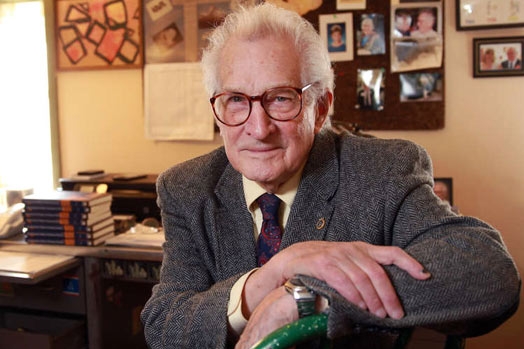
    Kenneth W. Ford, 99, of Gwynedd, Montgomery County, theoretical physicist who helped develop the hydrogen bomb in 1952, university president, college professor, executive director, award-winning author, and Navy veteran, died Friday, Dec. 5, of pneumonia at Foulkeways at Gwynedd retirement community.

    Dr. Ford was a 24-year-old physics graduate student at Princeton University in 1950 when he was recruited by a colleague to help other scientists covertly build a hydrogen bomb. “I was told if we don’t do it, the Soviet Union will,” Dr. Ford told The Inquirer in 2023, “and the world will become a much more dangerous place.”

    So he spent one year at the Los Alamos National Laboratory in New Mexico and another back at Princeton, creating calculations on the burning of the fuel that ignited the bomb and theorizing about nuclear fission and fusion. The H-bomb was tested in 1952.

    Dr. Ford’s expertise was in nuclear structure and particle and mathematical physics. He and Albert Einstein attended the same lecture when he was young, and he knew Robert Oppenheimer, Fredrick Reines, John Wheeler, and dozens of other accomplished scientists and professors over his long career.

    He came to Philadelphia from the University System of Maryland in 1983 to be president of a startup biotech firm. He joined the American Physical Society as an education officer in 1986 and was named executive director of the American Institute of Physics in 1987.

    “He always seemed to be the head of something,” his son Jason said.

    He retired from the AIP in 1993 but kept busy as a consultant for the California-based Packard Foundation and physics teacher at Germantown Academy and Germantown Friends School. Michael Moloney, current chief executive of the AIP, praised Dr. Ford’s “steady and transformative leadership” in a tribute. He said: “His career in research, education, and global scientific collaboration puts him among the giants.”

    As president of the New Mexico Institute of Mining and Technology from 1975 to 1982, Dr. Ford oversaw improvements in the school’s enrollment, faculty, budget, and facilities. He “was an accomplished researcher, scholar and teacher,” Michael Jackson, interim president of New Mexico Tech, said in a tribute, “a techie through and through.”
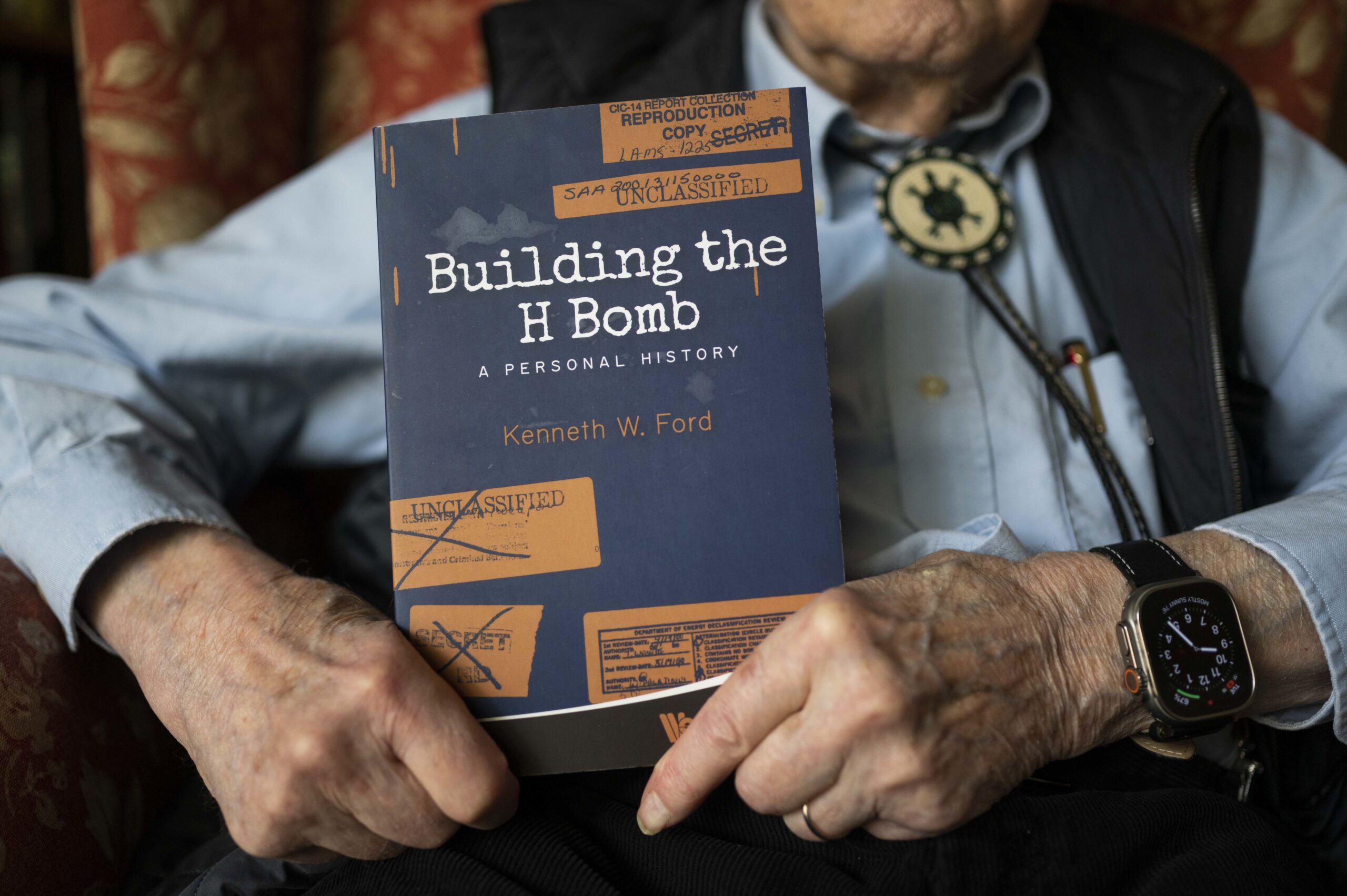
    Dr. Ford wrote “Building the H Bomb,” and it was published in 2015.

    Before Philadelphia, he spent a year as executive vice president of the University System of Maryland. Earlier, from 1953 to 1975, he was a researcher at Indiana University, physics professor at Brandeis University in Massachusetts and the University of Massachusetts, and founding chair of the department of physics at the University of California, Irvine.

    Officials at UC Irvine said in a tribute: Dr. Ford “leaves an enduring legacy as a scientist, educator, and institution builder. … The School of Physical Sciences honors his foundational role in our history and celebrates the broad impact of his distinguished life.”

    He told The Inquirer that he hung out at the local library as he grew up in a Kentucky suburb of Cincinnati and read every book he could find about “biology, chemistry, geology, you name it.” He went on to write 11 books about physics, flying, and building the H-bomb.

    Two of his books won awards, and 2015’s Building the H Bomb: A Personal History became a hit when the Department of Energy unsuccessfully tried to edit out some of his best material. His research papers on particle scattering, the nuclear transparency of neutrons, and other topics are cited in hundreds of publications.
    Dr. Ford was a popular professor because he created interesting demonstrations of physics for his students.

    In 1976, he earned a distinguished service citation from the American Association of Physics Teachers. In 2006, he earned an AAPT medal for notable contributions to the teaching of physics.

    He was the valedictorian at Phillips Exeter Academy in New Hampshire in 1944. He served two years in the Navy and earned a summa cum laude bachelor’s degree in physics at Harvard University and his doctorate at Princeton in 1953.

    In 1968, he was so opposed to the Vietnam War that he publicly declined to ever again work in secret or on weapons. “It was a statement of principle,” he told The Inquirer.

    Kenneth William Ford was born May 1, 1926, in West Palm Beach, Fla. He married Karin Stehnike in 1953, and they had a son, Paul, and a daughter, Sarah. After a divorce, he married Joanne Baumunk, and they had daughters Caroline and Star, and sons Adam and Jason. His wife and former wife died earlier.
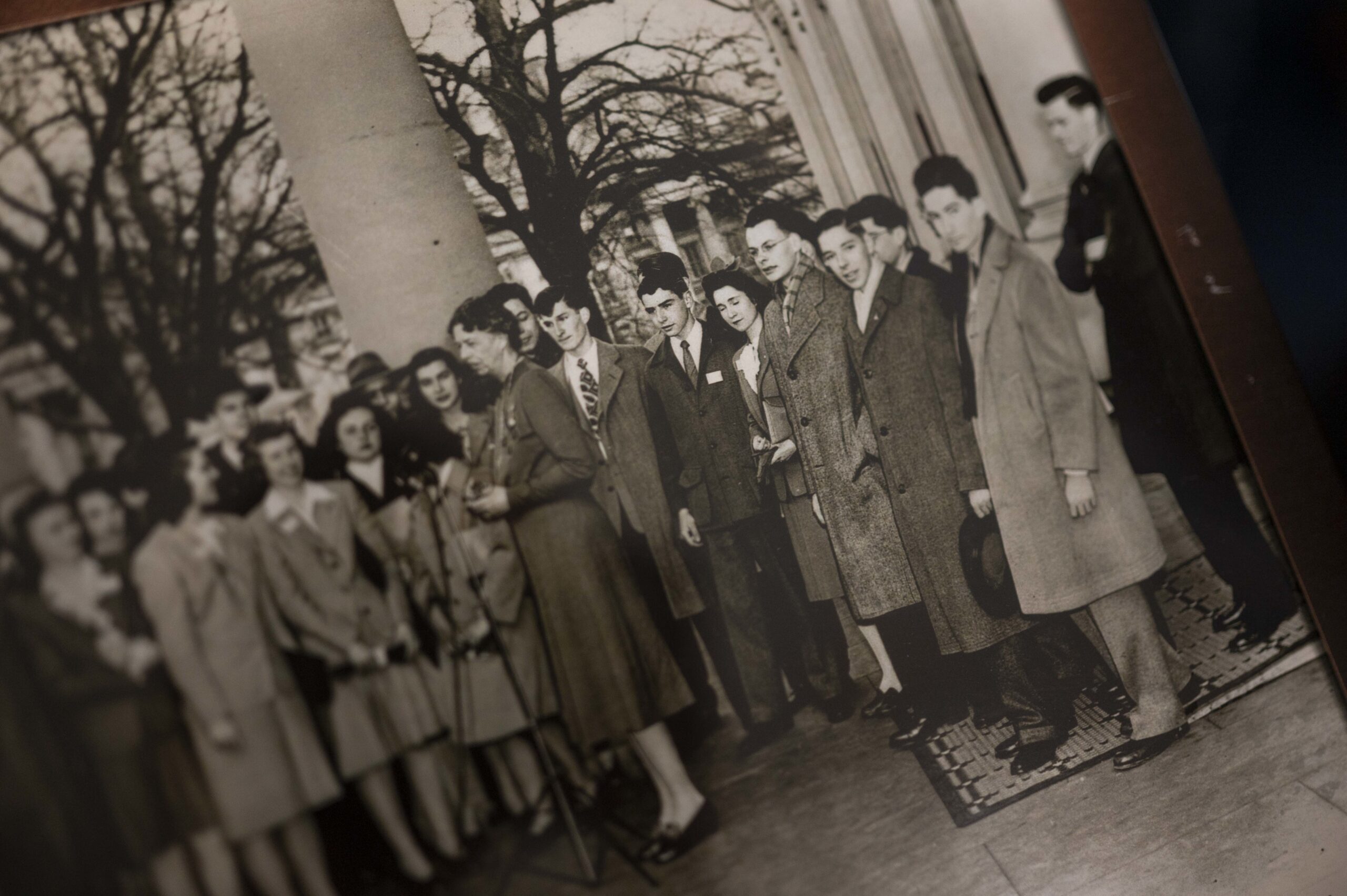
    This photo shows Dr. Ford (center) and other students listening to former First Lady Eleanor Roosevelt speak in 1944.

    Dr. Ford lived in University City, Germantown, and Mount Airy before moving to Foulkeways in 2019. He was an avid pilot and glider for decades. He enjoyed folk dancing, followed the Eagles closely, and excelled at Scrabble and other word games.

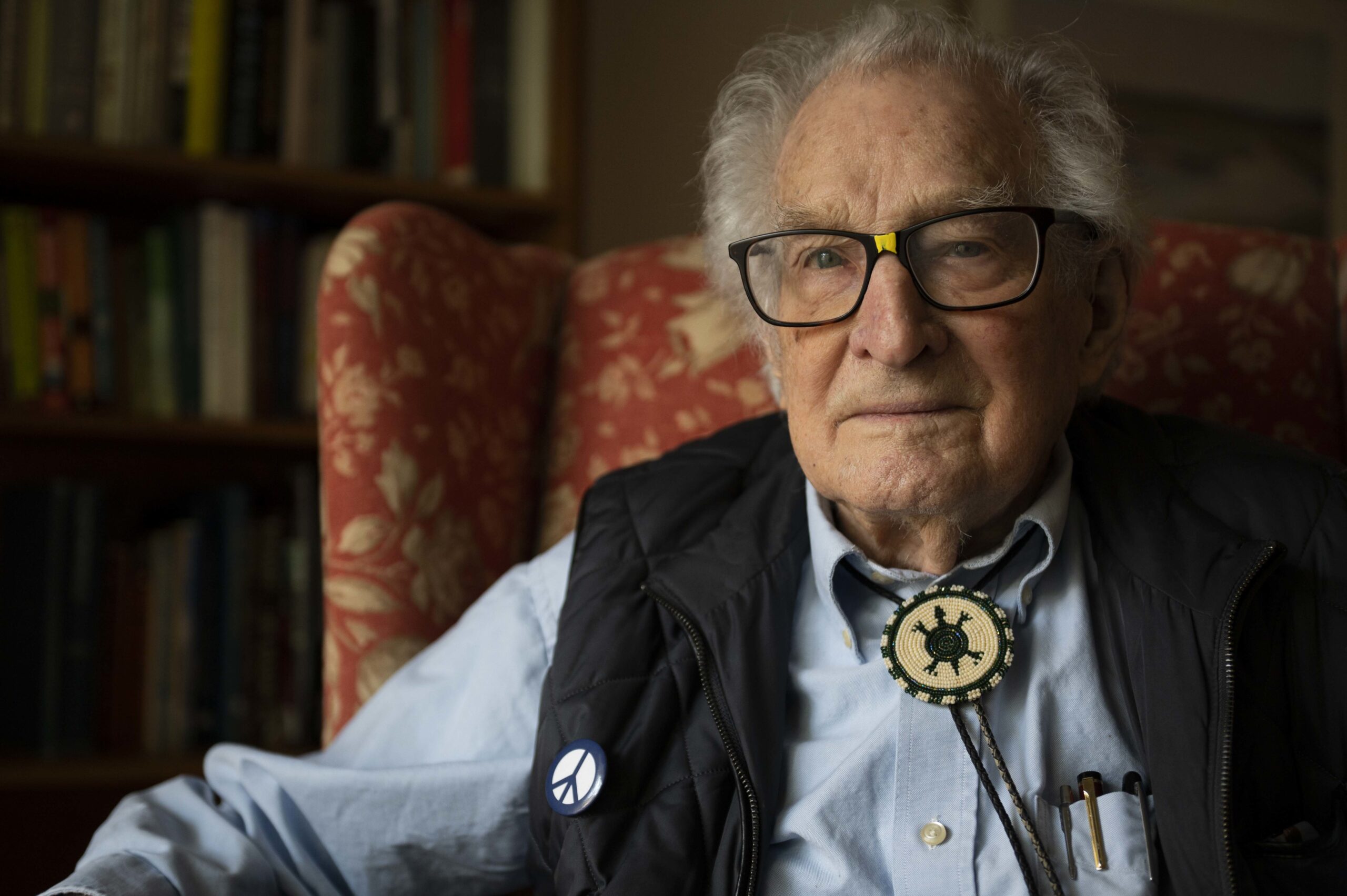
    He loved ice cream, coffee, and bad puns. He became a Quaker and wore a peace sign button for years. Ever the writer, he edited the Foulkeways newsletter.

    In 2023, he said: “I spent my whole life looking for new challenges.” His son Jason said. “He found connections between things. He had an active mind that went in all different directions.”

    In addition to his children, Dr. Ford is survived by 14 grandchildren, a great-grandson, a sister, a stepdaughter, Nina, and other relatives.

    Services are to be from 2 to 4:30 p.m., Saturday, Jan. 24, at Foulkeways at Gwynedd, 1120 Meetinghouse Rd., Gwynedd, Pa. 19436.
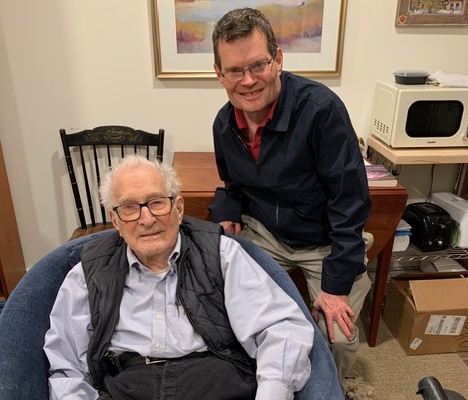
    Dr. Ford and his son Jason
    Dr. Ford wore a peace sign button for years.
  • An Indonesian man was deported on Christmas after being arrested at a routine immigration appointment in Philly

    An Indonesian man was deported on Christmas after being arrested at a routine immigration appointment in Philly

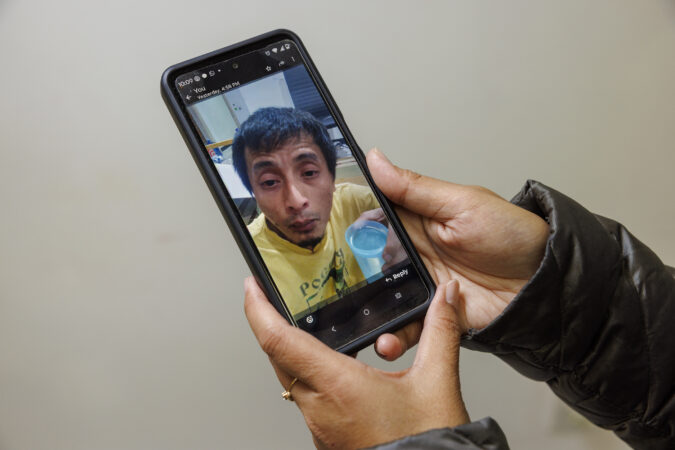
    A longtime Philadelphia resident who was arrested by ICE at a routine immigration appointment has been deported to Indonesia, his family said.

    Rian Andrianzah, 46, walked into a Philadelphia office of U.S. Citizenship and Immigration Services on Oct. 16, expecting to be fingerprinted and photographed and sent home, but instead was taken into custody and placed in detention.

    On Christmas night he was flown to Jakarta, the Indonesian capital, leaving behind his wife, also of Indonesia, and two children who are American citizens.

    The case angered the city’s Indonesian community ― and placed Andrianzah among a growing number of immigrants who have shown up for routine immigration appointments or check-ins, only to be handcuffed and taken into detention.

    Green-card applicants, asylum-seekers, and others who have ongoing legal or visa cases have been unexpectedly detained in what lawyers and advocates say is a Trump administration strategy to boost arrests and deportations.

    “It’s frustrating, because we’re going to be able to bring him back in the next few months,” said Philadelphia immigration attorney Christopher Casazza, who represents Andrianzah and his family. “They deported him simply [to gain] a statistic.”

    He expects Andrianzah could be able to return to the United States in the summer, via a legal process that could grant status to his wife and, through her, to him.

    Andrianzah’s wife, Siti Rahayu, 44, has a strong case to be awarded a T visa, the family’s lawyer said. That visa offers permission to live in the U.S. and a path to permanent residency and citizenship. As her husband, Andrianzah would receive those same benefits under her visa, said Casazza, of the Philadelphia firm Palladino, Isbell & Casazza LLC.

    Rahayu said in a text message that she was distressed and not up to discussing her husband’s deportation. Others said his removal hurts the family and the community.

    “Rian’s absence means a family without their father and our community without a friend,” said Kintan Silvany, the civic-engagement coordinator at Gapura, which works to empower local Indonesian Americans. “A warm, friendly face will no longer be seen at our annual festivals and cultural events. ICE has taken a beloved member who helped us and the folks around him.”

    Andrianzah, meanwhile, like other deportees faces a return to a homeland transformed by time, where family ties have dwindled and emotional and financial hardship looms, his lawyer said.

    Immigration and Customs Enforcement officials were unable to immediately reply to a request for comment.

    A T visa can be available to people who have been victims of human trafficking. It offers a near-blanket waiver on past immigration violations. Authorities say the issuance of T visas offer protection to victims while enhancing the ability of law-enforcement agencies to detect and prosecute human trafficking.

    Andrianzah legally entered the United States on a visitor’s visa in February 2000, but did not return to Indonesia before it expired. He was placed in removal proceedings in 2003, and a judge issued a final order of deportation in November 2006. His appeal was denied two years later.

    The removal order was never enforced, as had been common for those the government then saw as low-priority immigration violators. Some people with final orders have lived in the U.S. for decades.

    Since then Andrianzah worked factory and warehouse jobs, and married. He and his wife made a home in South Philadelphia and became parents of a son, age 8, and a daughter, 15, both U.S. citizens.

    Andrianzah and his wife went to USCIS that October day as part of her T-visa application. In an interview with The Inquirer, Rahayu said she was sent to the U.S. in 2001 by relatives who saw her as a means to pay off a debt, delivering her to an underground organization that puts people in low-paying jobs, then keeps them working indefinitely. Her work would help pay the debt owed by her relatives.

    Rahayu said that on Oct. 16, she completed her own biometrics appointment, then grew concerned when her husband did not appear. She soon learned he had been arrested.

    Some immigrants are required to appear every couple of weeks, some once a month, others once a year. The appointments help immigration officials keep track of people who in the past have been low priorities for deportation.

    Biometrics appointments are usually brief sessions at which the government captures fingerprints, a passport-style photo, and a signature. The immigrant may also be asked to provide information like height and weight.

    Despite the fresh risk of being arrested on the spot, immigrants have little option except to show up. Many types of immigration applications require in-person appearances. And failure to appear for a required ICE appointment can by itself result in an order for removal.

  • A man was charged with stealing skulls and bones from a Philly cemetery. Police say he may have tried to sell them on Instagram.

    A man was charged with stealing skulls and bones from a Philly cemetery. Police say he may have tried to sell them on Instagram.

    Documents released Friday offer new detail on how investigators assembled their striking case against Jonathan Christian Gerlach, who authorities say desecrated dozens of graves to steal human remains.

    Gerlach, 34, who is charged with stealing more than 100 skulls, bones, and body parts from Mount Moriah Cemetery, also posted dozens of photos of human remains on social media, records show, and authorities are investigating whether he may have offered to sell them.

    The investigation into Gerlach, who lives in Ephrata, spans multiple counties and law enforcement agencies. The historic cemetery stretches across Philadelphia and Yeadon, Delaware County, where officials charged Gerlach on Thursday.

    Gerlach’s lawyer, Anna Hinchman, declined to comment Friday, citing the pending criminal case.

    In all, Gerlach faces more than 500 counts of burglary, criminal trespassing, abuse of a corpse, theft, and related crimes.

    “After 30 years, I can say this is probably the most horrific thing that I’ve seen,” said Yeadon Police Chief Henry Giammarco, whose department was involved in the investigation.

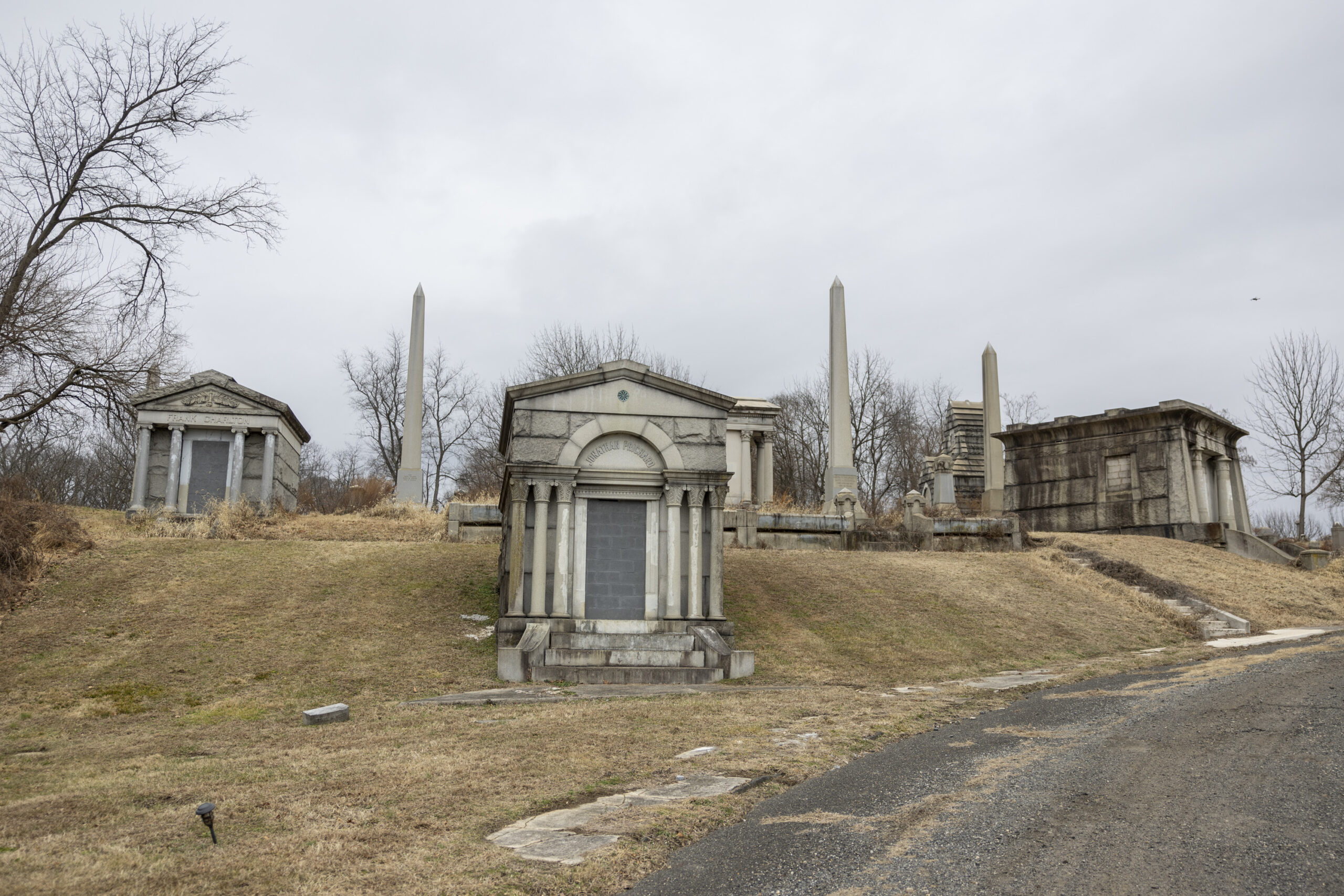
    A few Mausoleum’s that Jonathan Gerlach broke into at Mount Moriah Cemetery in Philadelphia.

    Grave sites damaged, remains stolen

    Detectives were first dispatched to the burial ground on Nov. 7, according to the affidavit of probable cause for Gerlach’s arrest. There, a board member of the Friends of Mount Moriah Cemetery — the group that helps to maintain the burial ground — led the investigators to a mausoleum where a hole in protective cinder blocks revealed a damaged marble floor, 10 feet underground. A white rope, which detectives believe the thief used to rappel into the mausoleum, hung nearby.

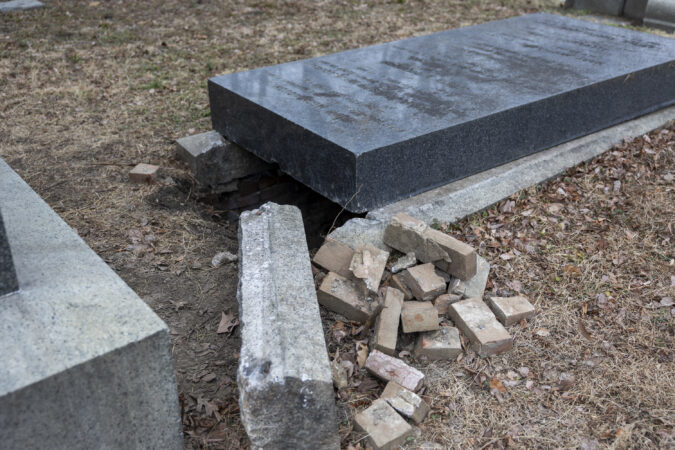
    They discovered other disturbed burial sites, both that afternoon and weeks later, according to the affidavit: a crypt with its marble entrance stone ripped off, whatever was inside stolen; a damaged, empty casket inside a mausoleum; a clear plastic tarp covering human remains discarded on the ground of the cemetery.

    Investigators collected clues, including the rope, a “Monster” energy drink can, and a partially smoked Marlboro Menthol cigarette. Each will be sent for DNA testing, the affidavit said.

    On Dec. 23, the document shows, police received a tip pointing to Gerlach. “Look into Jonathan Gerlach,” the tipster said, according to the affidavit. “I know someone who’s friends with his family, and they mentioned that they recently discovered a partially decomposed corpse hanging in his basement, but were afraid to tell police.”

    The tipster also pointed investigators to Instagram. “You’ll see he follows accounts in taxidermy, skeleton collecting and sales,” the tipster said.

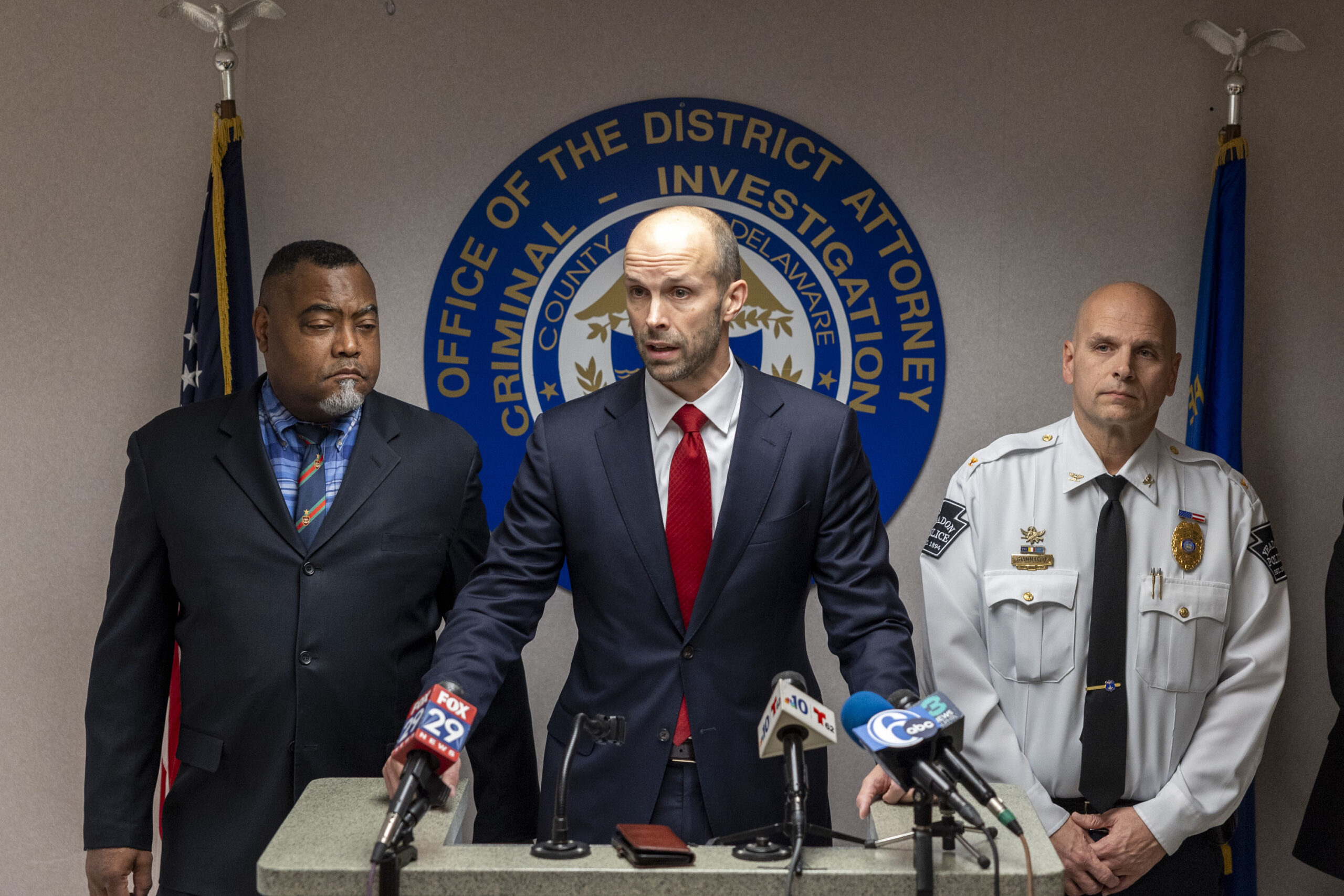
    Delaware County District Attorney Tanner Rouse speaks to reporters on Thursday about Jonathan Gerlach, who is charged with burglary, abuse of corpse and desecration, and theft or sale of venerated objects for allegedly stealing from graves.

    An Instagram trail

    The last post on the Instagram account that Delaware County authorities have linked to Gerlach appeared on Tuesday, the day that detectives took him into custody, after they say they witnessed him carrying a burlap sack filled with human remains out of the cemetery.

    A partial skull — its surface darkened and pitted with age, mounted upright like an artifact — appears in the post. Staged against a floral backdrop, the photo is paired with a caption that reads: “if you know, you know. skulls/bones available. dm to inquire.”

    The post and dozens of others like it on the account suggest that Gerlach may have been part of a largely unregulated and little-known marketplace in which human bones and remains are bought and sold online and in specialty shops. It’s a trade that can be legal under certain circumstances in a number of states, including Pennsylvania, and one that records suggest Gerlach may have engaged with — though investigators have not confirmed he ever successfully made a sale.

    Authorities say the investigation is continuing.

    Gerlach is charged with crimes associated with how authorities say he acquired the bones: by breaking into the cemetery’s mausoleums and underground vaults and stealing the remains.

    Investigators tied Gerlach’s vehicle to license plate readers near Mount Moriah, they said, and his cell phone to the area. A search of his recent purchases revealed trips to a hardware store to buy items that matched those that detectives had also recovered at damaged grave sites, including a stake.

    When detectives executed a search warrant at Gerlach’s home, in the 100 block of Washington Avenue, they said they found skulls arranged on shelves, and a collection of other bones, skeletons and mummified body parts, including feet and hands. They also found a torso hanging from the ceiling, said Delaware County District Attorney Tanner Rouse.

    Potential sales, and a call for change

    Rouse and Detective Christopher Karr said law enforcement officials are aware of social media accounts associated with Gerlach and are investigating what, if any, connection they may have to his alleged crimes.

    Rouse said accounts linked to Gerlach “certainly seemed to indicate” that Gerlach had attempted to sell the remains. “But whether that was real or not — whether a sale had ever been consummated — we can’t say for sure,” he said.

    The Instagram account, which dates back to 2023, includes images of human remains arranged on shelves and tables, or held in a man’s hands. Its posts raise questions about whether Gerlach’s alleged activity extended beyond what authorities have detailed so far.

    Investigators are working to determine when and where the images were taken and whether any of the items pictured were stolen from Mount Moriah, Rouse said.

    In addition to a curator and potential salesperson, the Instagram account presents Gerlach as a forensic practitioner and professional.

    In a recent post that pictured Gerlach holding a skull fragment beneath his heavily tattooed neck, the account’s operator wrote that he was completing a certification in forensic and osteological analysis, and planned to offer analysis through a planned company — describing services that would assess human remains using academic and forensic standards.

    Gerlach is being held in the Delaware County jail in lieu of $1 million bail.

    The investigation into Gerlach remains ongoing, Yeadon Borough Mayor Rohan Hepkins said Friday. Gerlach is suspected of burglarizing additional cemeteries, including in Ephrata, said Hepkins, who also sits on the board of the Friends of Mount Moriah Cemetery and said he helped to bring the case to police.

    In a written statement, the Friends of Mount Moriah Cemetery thanked law enforcement officials but declined to comment.

    Hepkins expressed dismay that the legal trade of human remains is even possible, and called for reform. “People never conceived that people would be stealing bones from graves and selling them in the market,” he said. “Politicians need to understand there is a type of individual out there — or a market out there — where legislation has to catch up with what’s happening out there.

    “It’s a bad situation but a lot of good, preventive maintenance could come out of it,” he added.

  • As in the case of George Floyd, the role of race hangs ominously over the shooting of Renee Good

    As in the case of George Floyd, the role of race hangs ominously over the shooting of Renee Good

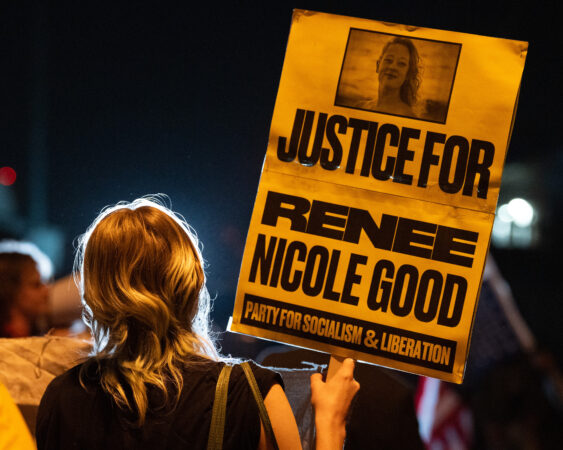
    The shooting death of Renee Good by U.S. Immigration and Customs Enforcement agents in Minneapolis will likely spark the kind of outrage that we witnessed after the murder of George Floyd.

    Not just because Good — a 37-year-old wife and mother — was a U.S. citizen whose shooting by a federal agent was captured on several videos. Not even because those videos indicate that the government’s initial account of the shooting is false. Good’s death will trigger outrage because she was a white woman, and in America, the lives of white women are valued more than most.

    It’s haunting, really. Good was shot and killed by an ICE agent about a mile from where Floyd was killed by Minneapolis Police Officer Derek Chauvin in 2020. Video of both incidents circled the world in seconds. And while Good was a white woman and Floyd was a Black man, the role of race hangs ominously over both incidents.

    Floyd was a victim of the disproportionate police violence leveled against Black people, and Good — a white woman — was a casualty of Donald Trump’s war on Black and brown immigrants.

    The confrontation that killed Good occurred after the Trump administration sent more than 2,000 federal agents and officers to Minnesota as part of a large enforcement operation targeting Somali immigrants. The surge of federal agents, which took place on the heels of fraud allegations leveled at Somalis, was met with protests.

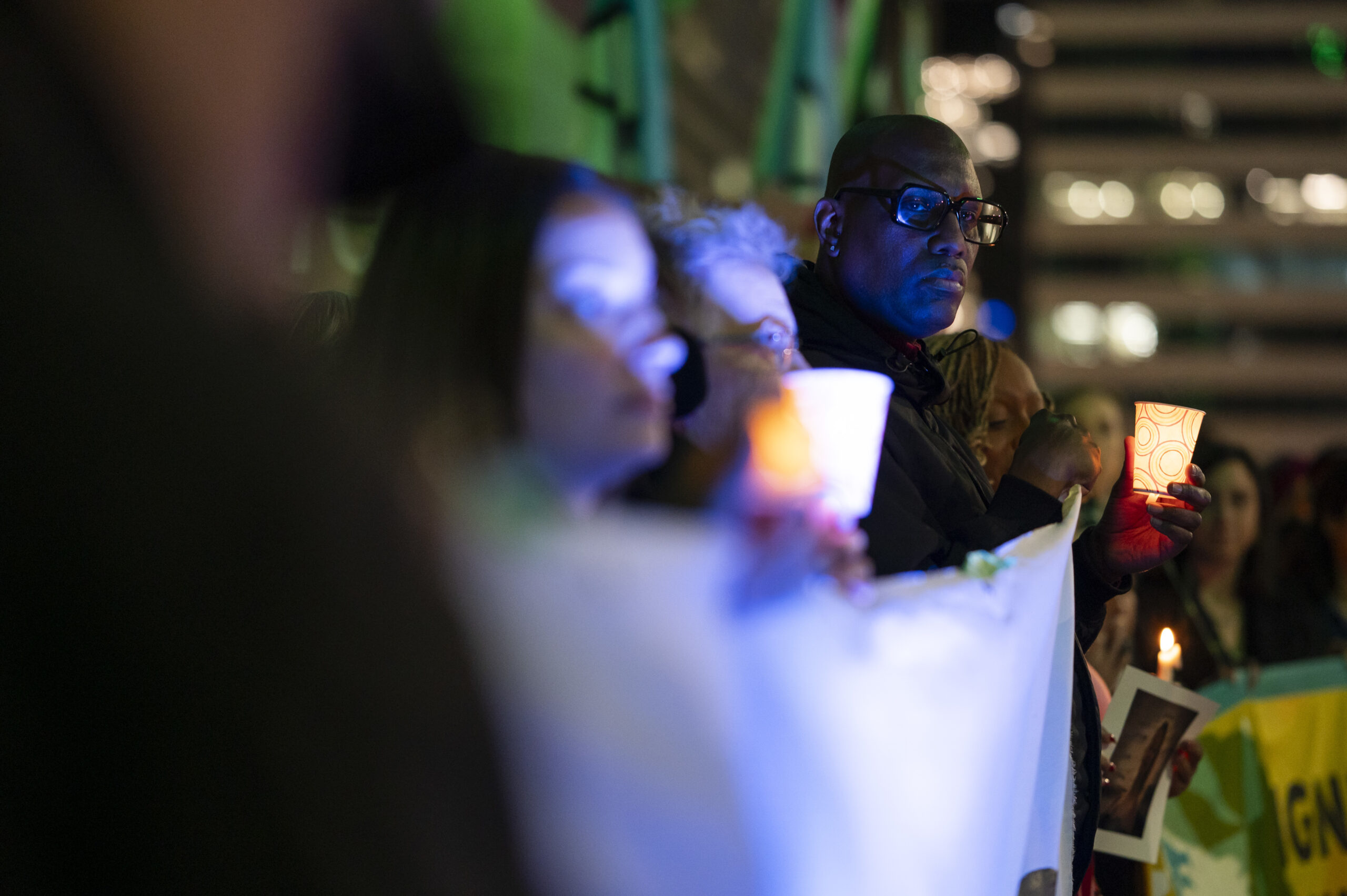
    Hundreds of demonstrators rallied outside City Hall on Thursday to protest the killing of Renee Good by an ICE agent in Minneapolis.

    Good, who was in a maroon Honda near one such protest, was approached by ICE agents in other vehicles. An agent walked up to her vehicle, pulled her door handle, and yelled, “Get the f— out of the car!”

    Good first tried to back up, and then drove forward, veering around an ICE officer who shot into the vehicle. Good died from her injuries.

    Trump claimed Good caused the shooting because she tried to “run over” the ICE agent, according to the New York Times.

    Kristi Noem, secretary of the U.S. Department of Homeland Security, claimed the ICE agent shot Good in self-defense after Good tried to commit an “act of domestic terrorism.” A Homeland Security spokesperson went further, accusing Good of trying to use her vehicle as a weapon to kill the agent. Noem even called Good an anti-ICE rioter, which makes no sense, since it would be difficult to riot from inside a stationary vehicle.

    Minneapolis Mayor Jacob Frey was having none of it. He called the claims of self-defense “bullshit,” and demanded that ICE get out of Minneapolis.

    “We’ve dreaded this moment since the early stages of this ICE presence in Minneapolis,” Frey said during a news conference. “Not only is this a concern that we’ve had internally, we’ve been talking about it. They are not here to cause safety in this city. What they are doing is not to provide safety in America. What they are doing is causing chaos and distrust.”

    Just as importantly, the death of a white woman at the hands of ICE is bringing clarity. This heartbreaking shooting lets us know that no one is exempt from the violence this administration is apparently willing to unleash to uphold its anti-immigrant policies.

    I have no doubt Good’s death will be extensively covered, because police shootings of white women are rare. In fact, the Washington Post database of police shootings indicates that between 2015 and 2024, white women comprised less than 1% of police shooting victims each year.

    Still, there’s more to it than that. White women in America are valued, and when they go missing or are victimized, media attention is so overwhelming that social scientists use a specific term to describe it: Missing White Woman Syndrome.

    With that in mind, here is the ugly truth: America’s racial hierarchy will assuredly seek justice for Good. And while I hate that she senselessly lost her life at the hands of her government, and was demonized by the president and his cabinet members, I am nonetheless hopeful for change.

    If this brutal incident wakes Americans to the danger of this moment, Renee Good did not lose her life in vain.

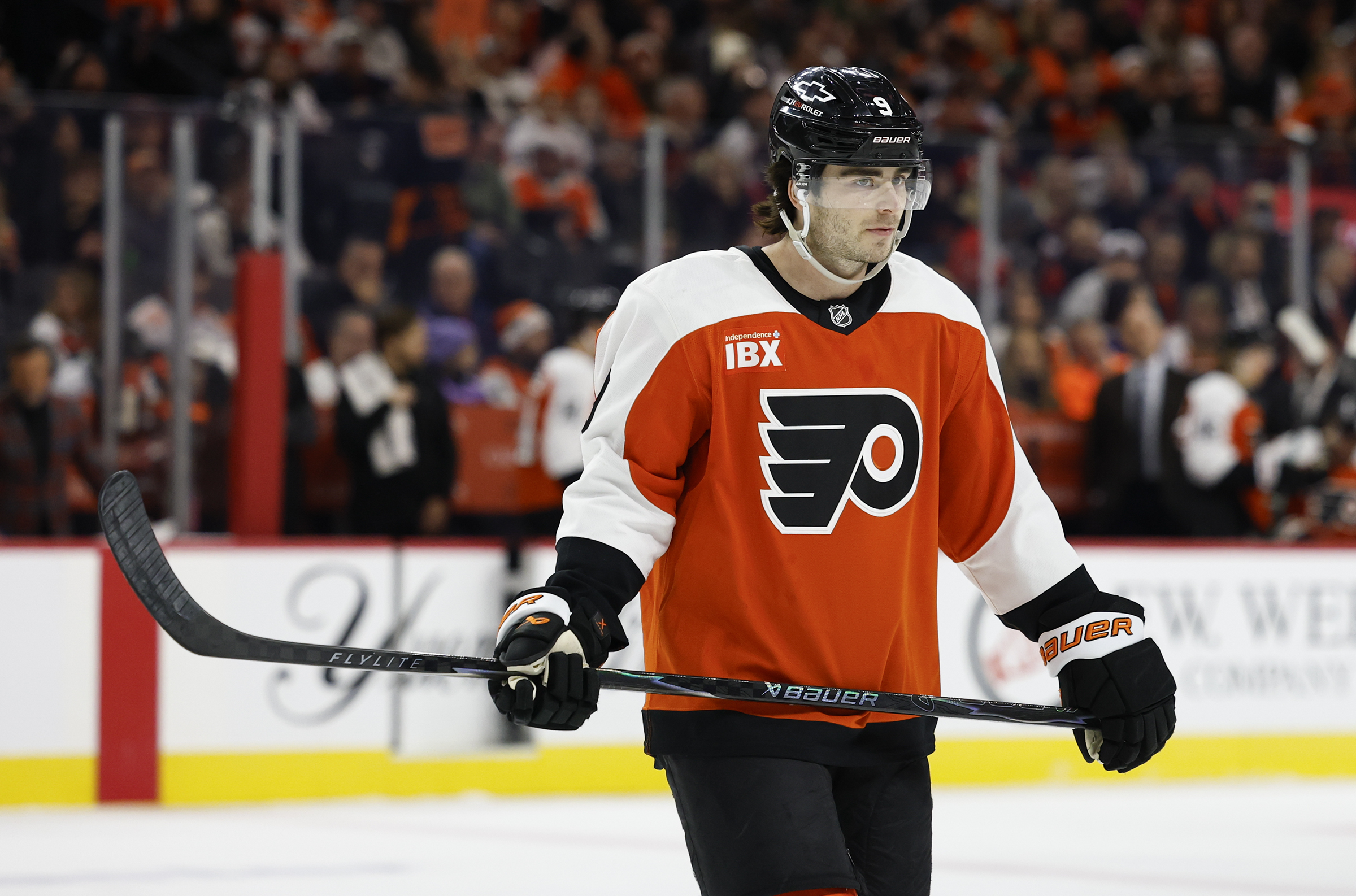
  • Flyers takeaways: Power-play struggles continue, Rick Tocchet frustrated about missed reads

    Flyers takeaways: Power-play struggles continue, Rick Tocchet frustrated about missed reads

    Still not the worst, but pretty darn close.

    The Flyers’ power play has slipped to 31st in the NHL, with a paltry 15% success rate.

    (You may want to look away at this moment.)

    It ties last year’s percentage through 82 games, but is worse than 2022-23, the first year former coach John Tortorella and Rocky Thompson were in charge. On the plus side, it is better than the 2023-24 season (12.2%).

    While some of the puck movement has looked good, the man advantage is having trouble converting — and it’s costing the Flyers games. They couldn’t score when they faced the league’s worst penalty kill, the Seattle Kraken, in a losing effort despite three-man advantages right after the holiday break.

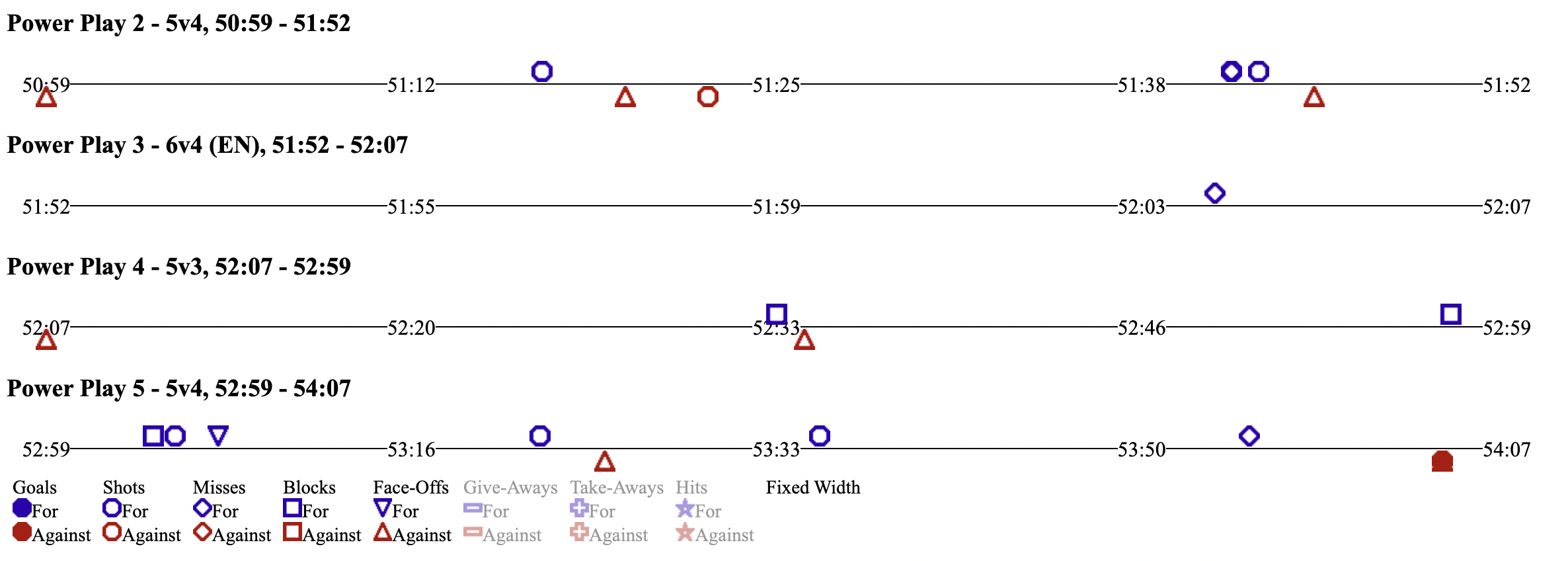
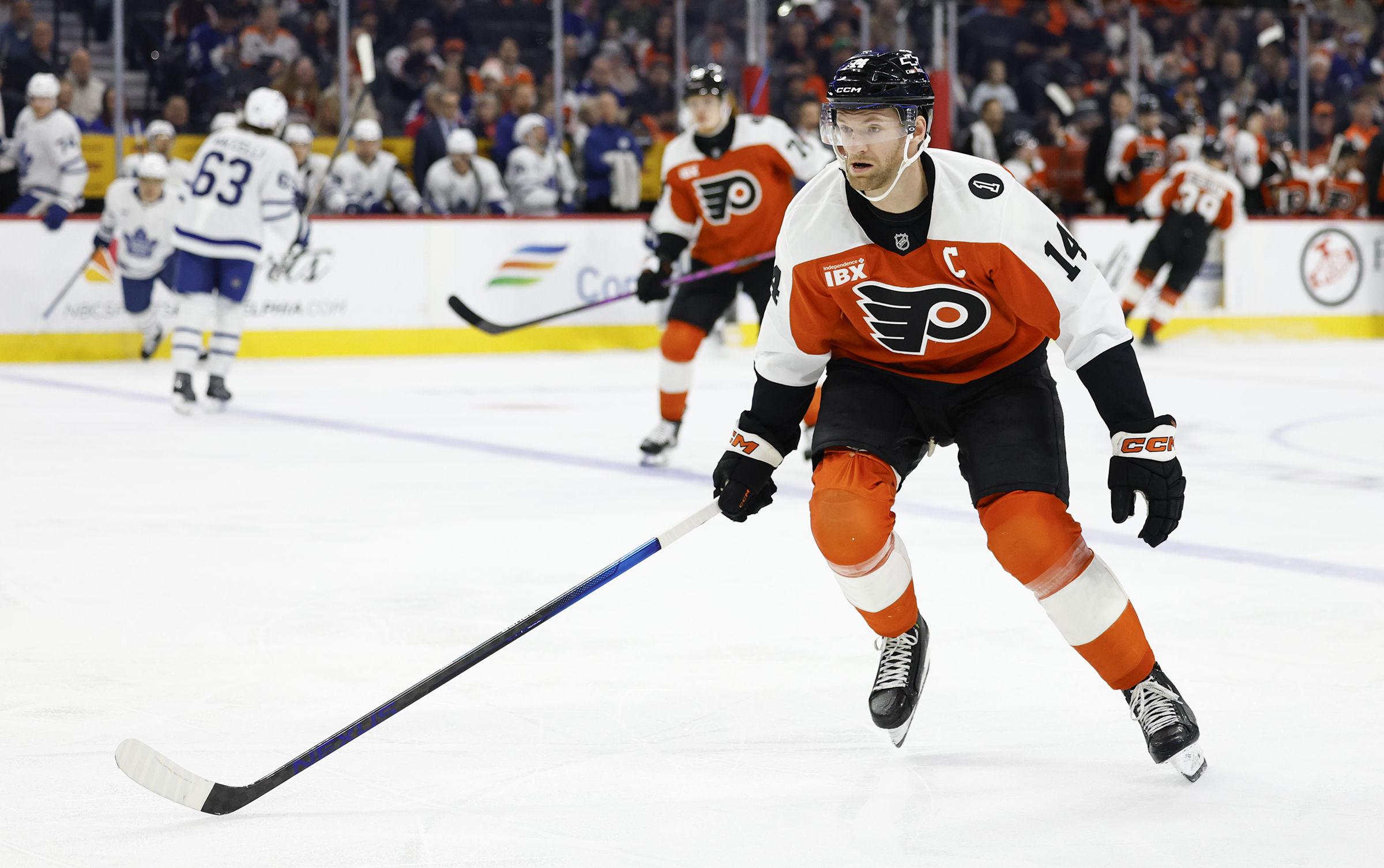
    And on Thursday, the Flyers lost 2-1 in overtime to the Toronto Maple Leafs despite having more than three minutes of power-play time in the third period. They were up 1-0 in the third period when Toronto’s Matthew Knies was called for slashing Denver Barkey, and 68 seconds later, Troy Stecher tripped Owen Tippett.

    The Flyers’ power play had 11 shot attempts in the third period but couldn’t get the puck past Maple Leafs goalie Dennis Hildeby.

    Two minutes of the man advantage were a five-on-three, and they even had a six-on-three when Dan Vladař went to the bench during the delayed call on the second penalty. But they still couldn’t score — kinda.

    “I mean, on the other hand, against Anaheim … we had quite a few looks, quite a few shots,” said Travis Sanheim about Tuesday’s game, when the Flyers went 1-for-8. “Just got to keep working away at it, and keep trying to get better each day, and hope that we can start putting some in. Obviously, it’s a big part of good teams, and something that we obviously got to be better at.”

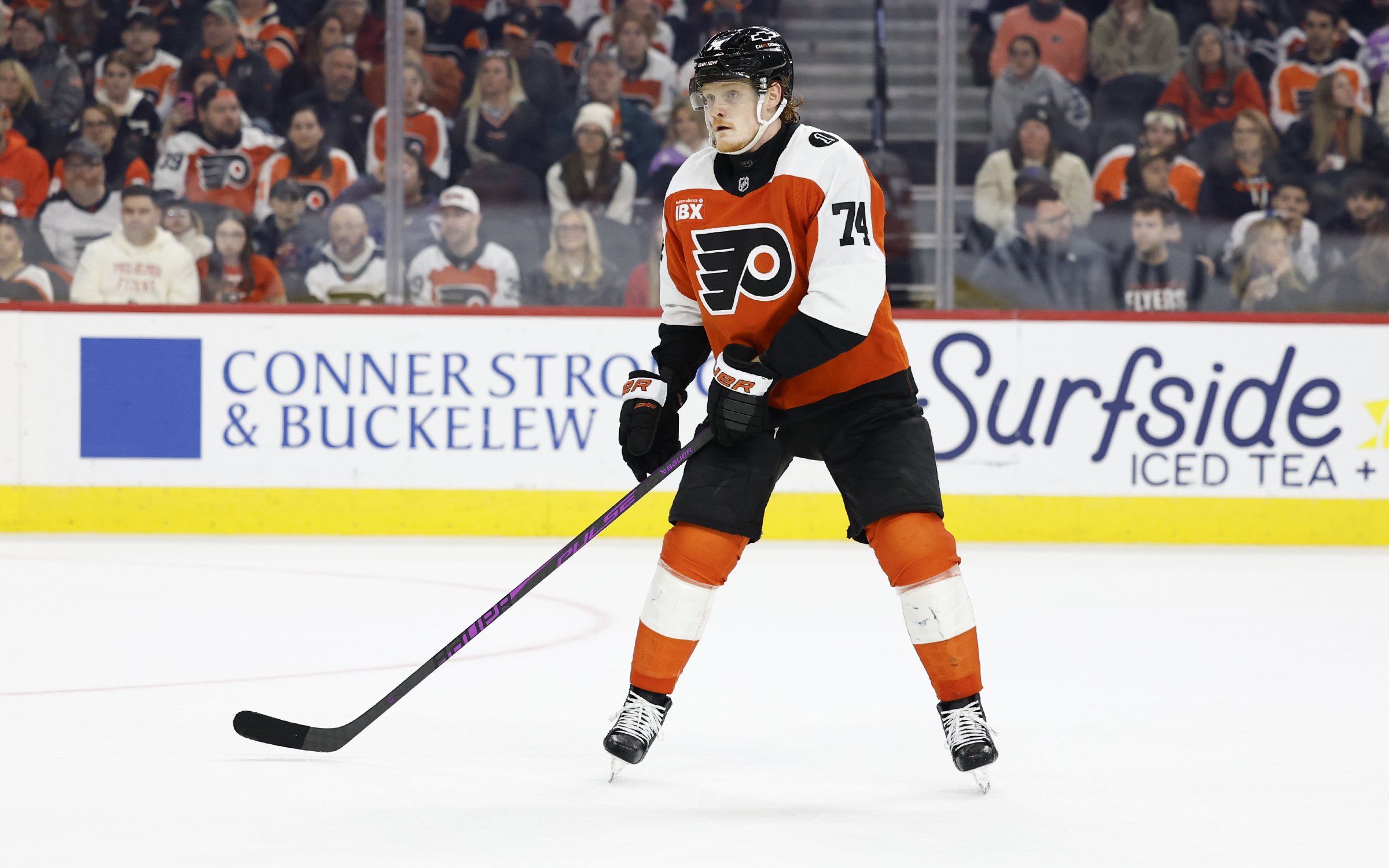
    With Knies in the box, out came Trevor Zegras, Cam York, Christian Dvorak, Matvei Michkov, and Tippett. Zegras and York have finally been united, and Dvorak has one objective: to stand in front of the goalie. Usually, Travis Konecny is with this unit, but he did not return for the third period due to an upper-body injury.

    The opening faceoff saw Dvorak lose to none other than former Flyer Scott Laughton, who was a top penalty killer during his days in Philly. The Flyers were able to regroup quickly in the neutral zone and reenter with 1:53 left in the power play.

    They were able to set up, and Michkov, now on the left side with Konecny out and Zegras a threat in the right circle — the normal spot for the Russian winger on the other unit — got the puck down low to Tippett. One of the best Flyers on the night, and the past few weeks, spun and got a shot on goal from atop the crease.

    Owen Tippett is among the Flyers who have had chances but not been able to convert.

    With 1:39 left on the penalty to Knies, that unit stayed on the ice and again Laughton beat Dvorak in the faceoff circle — Laughton was 19-for-20 on the night. The puck was sent down the ice, and the Flyers started their breakout.

    York scooped up the puck and dropped it back to Tippett, who sent it over to Zegras. Tippett got it back as he skated through the neutral zone and took off. Using his greatest asset, his speed, he flew past Maple Leafs defenseman Troy Stecher, and his wraparound hit the post.

    Dvorak got a great rebound attempt, and Zegras thought he then jammed the puck in — and maybe it was with Hildeby’s arm half into the goal and half out, and the goalie deftly moving to hide where the puck was — but it was reviewed and ruled the puck did not cross the line.

    With 1:14 left, the unit stayed out, and Laughton won another faceoff, but this time, Tippett hustled to get to the puck first along the end boards and was pulled down by Stecher. Vladař went right to the bench for an extra attacker, and Sean Couturier came on and went right to the net. York sent a shot on goal that was deflected wide, and the Leafs touched up.

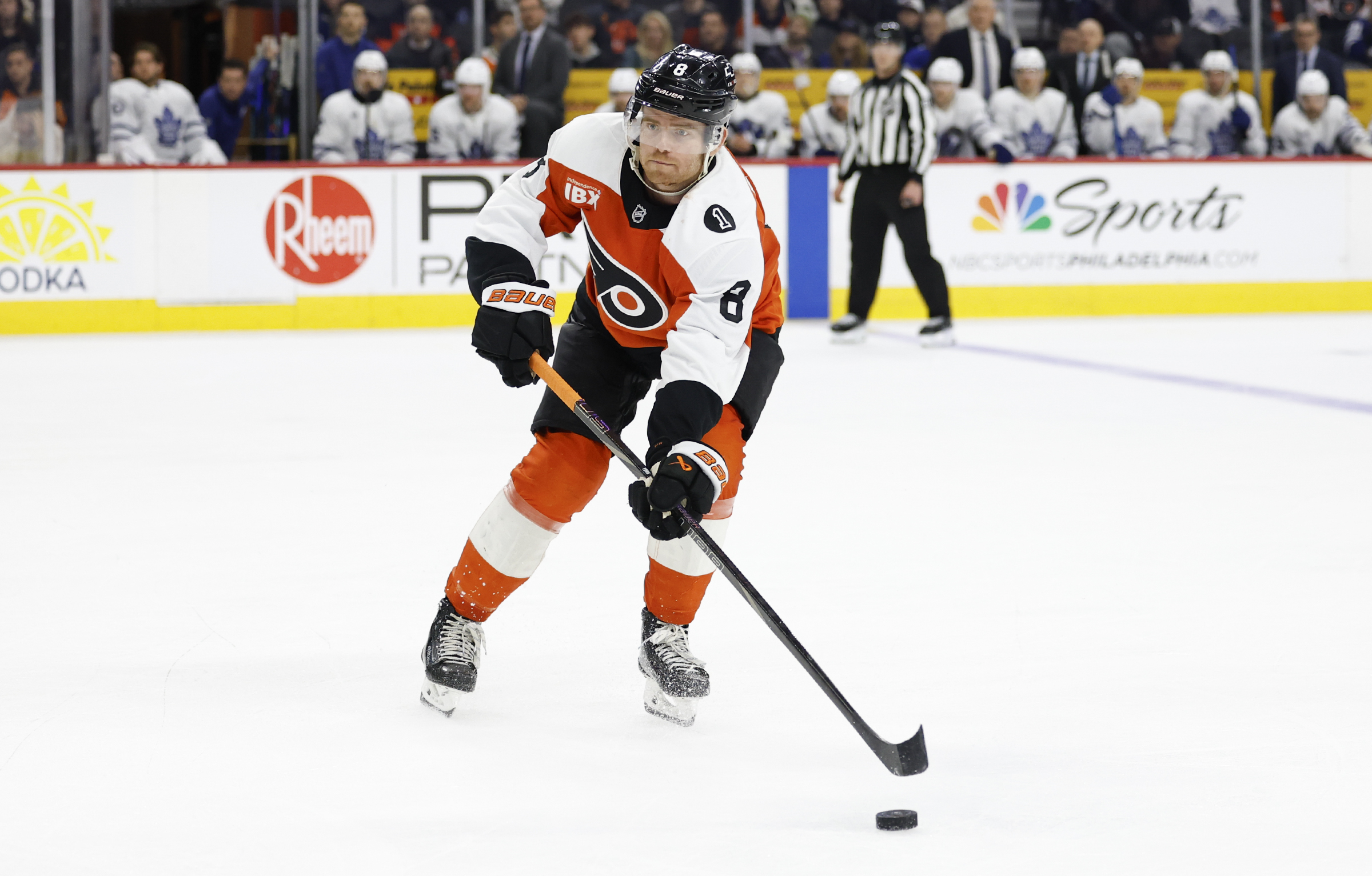
    Flyers defenseman Cam York passes the puck against the Toronto Maple Leafs on Thursday.

    It gave the Flyers a 52-second two-man advantage. The only change was Rasmus Ristolainen swapping with York. Laughton once again beat Dvorak in the circle, and the Flyers had to regroup, knocking off 11 seconds before they got back in the offensive zone.

    Herein lies the problem. They started moving the puck around the perimeter — on a five-on-three — and eventually Zegras got a one-timer deflected out by Toronto defenseman Simon Benoit.

    The Flyers have been controlling the puck better and sustaining pressure, and NHL Edge has them up to 59.4% of offensive-zone time with the man advantage; they have risen from 24th on Nov. 15 to 17th in the NHL in offensive-zone time on the power play.

    But they still need to get to the net. According to Natural Stat Trick, they are tied for the sixth-fewest high-danger chances on the power play (82).

    With 25 seconds left on the two-man advantage, Laughton won another draw, and they didn’t get back in until 10 seconds were left. Benoit lost his stick with six seconds left, leaving him vulnerable. Ristolainen put a shot on goal from that side of the ice, but it hit a teammate in front, and with 64 seconds left in power-play time, Cowan got back into the play from the penalty box.

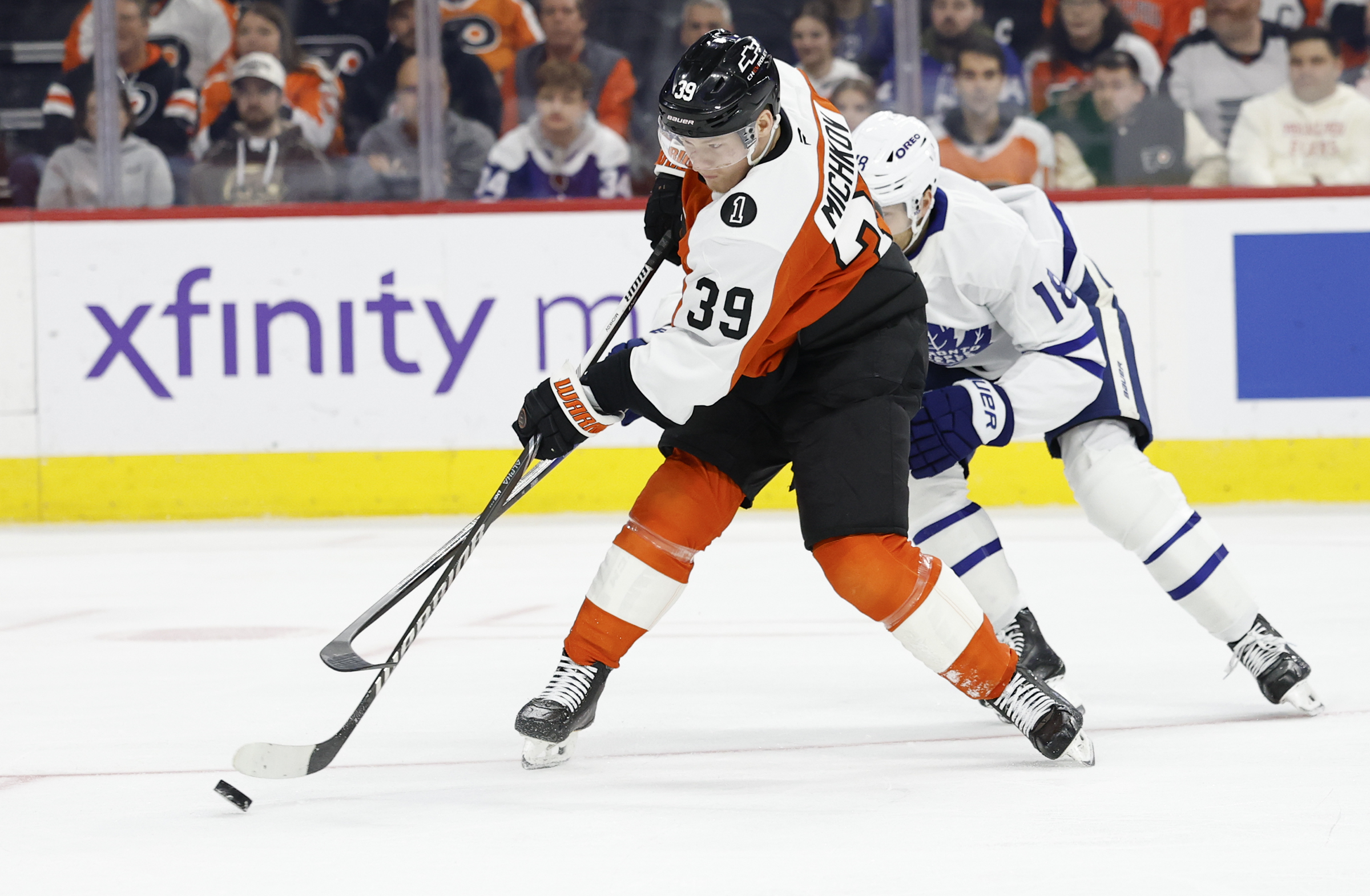
    But then Michkov scooped up the puck and made a really nice move when he was able to bounce Laughton off him as he cut through the slot. He avoided the rest of the Leafs and got a shot on goal after his first shot was blocked by Benoit — who still didn’t have a stick — as he drove to the net.

    Flyers right wing Matvei Michkov couldn’t put it home against the Leafs at a critical moment.

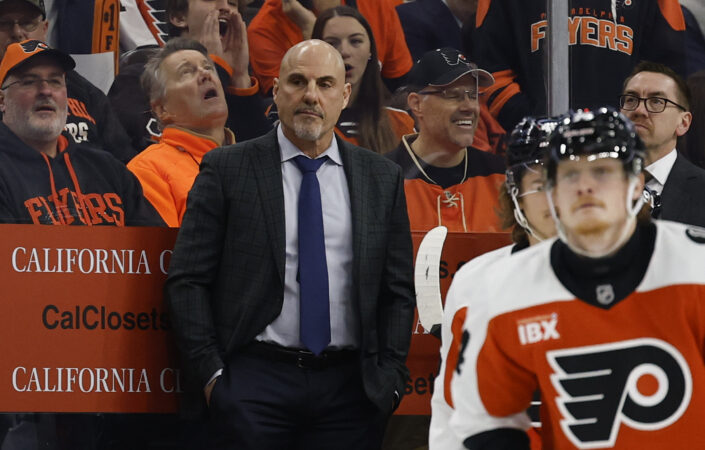
    Flyers coach Rick Tocchet expressed frustration after the game about the power play, noting his team is missing reads.

    “They had two guys on one side, and if we made one pass, somebody would have been wide-open. But we’re looking for plays instead of organically playing,” he said of the five-on-three.

    “Yeah, you want to roll [around the zone] and all that stuff, but sometimes a team will just be all in. They had a guy with no stick, and we had the puck on the other side. That’s a hard one for me to swallow, because you want the puck on the side of the guy with no stick, right? You want to pick on him, but we have the puck on the other side.”

    “I don’t know if it’s the pressure with the power play; sometimes I think guys are squeezing it so much,” he added. “But we need some guys to kind of understand the pressure and convert.”

    Flyers center Sean Couturier on the ice against the Toronto Maple Leafs on Thursday night.

    After a shift that lasted 2:08, the next unit came out with Couturier, Sanheim, York, Denver Barkey, and Noah Cates. Couturier didn’t have to face Laughton and won the draw against Nicolas Roy, allowing the Flyers to set up.

    It was now a five-on-four, and after some perimeter work, York put a shot on goal that Couturier — who went to the net right after the faceoff and never left — tipped in front. Hildeby was able to pounce on the puck. Couturier got tossed, and Cates took the faceoff, lost it, but the Flyers recovered it in the offensive zone.

    Couturier, who was, like Tippett, heavily engaged on the power play, got the puck on the half-wall and put another good shot on goal with Cates screening. The Leafs were able to clear, and with time ticking down, after getting back into the zone, Sanheim sent a shot wide that led to Laughton’s short-handed goal to tie the game.

    “Sanny can’t miss the net on that one,” Tocchet said. “You have to hit the net, or at least take it a little bit off. We had people going to the net, and they score that goal. … I still think the guys played hard. I mean, that’s a hard game to play, second [game] coming off the road, emotional [against Anaheim] and stuff, so I give them a lot of credit, yeah. The special [teams] stuff, yeah. Do you wish some guys converted? Yeah.”

  • The secret menu sandwich that’s making a Philly restaurant TikTok-famous

    The secret menu sandwich that’s making a Philly restaurant TikTok-famous

    Saban Kar walked into Falafel Time on South Street on a quiet Thursday afternoon with one mission: to try the restaurant’s exclusive crispy chicken shawarma wrap.

    The West Philly resident had been searching for the crunchy, saucy shawarma sandwich of his native Antakya, Turkey, in the City of Brotherly Love. But it wasn’t until he came across a TikTok video that he found a local restaurant serving this beloved handheld classic.

    The crackly shawarma wrap is having a moment on the internet’s virality machine. In video after video, TikTok influencers and internet chefs across the country and in the Philly-area hold blistered rolled sandwiches stuffed with chicken pieces, thin pickle slices, and garlic sauce close to the camera, scraping and biting into toasted wraps for ASMR sounds.

    @t.pierve

    Viral Krispy Shawarma from Falafel Time in Philadelphia. Top tier shawarma 🫡 #shawarmalovers #philly #shawarma #halal #muslim

    ♬ original sound – T I M M Y T U R N E R 🧢

    After ordering two sandwiches, Kar explains the wrap style is popular because the added crispiness of the bread brings out the juices of the meat within the sandwich. “There’s not a lot of places in Philly who even warm up their breads for sandwiches,” he said. “[Toasting] just makes the bread taste better.”

    At Falafel Time, it’s chef Sam Maymouna’s special sauce made of oil, shawarma spices, garlic, and lemon juice that brings forth the flavor.

    He starts by tearing open a pita at the seams in a circular motion, then stacking the two halves on top of each other. The chef then adds a splatter of house-made garlic sauce, a heap of pickles, chicken shawarma freshly sliced off a rotating spit, and a heavy drizzle of a sweet-tart pomegranate balsamic.

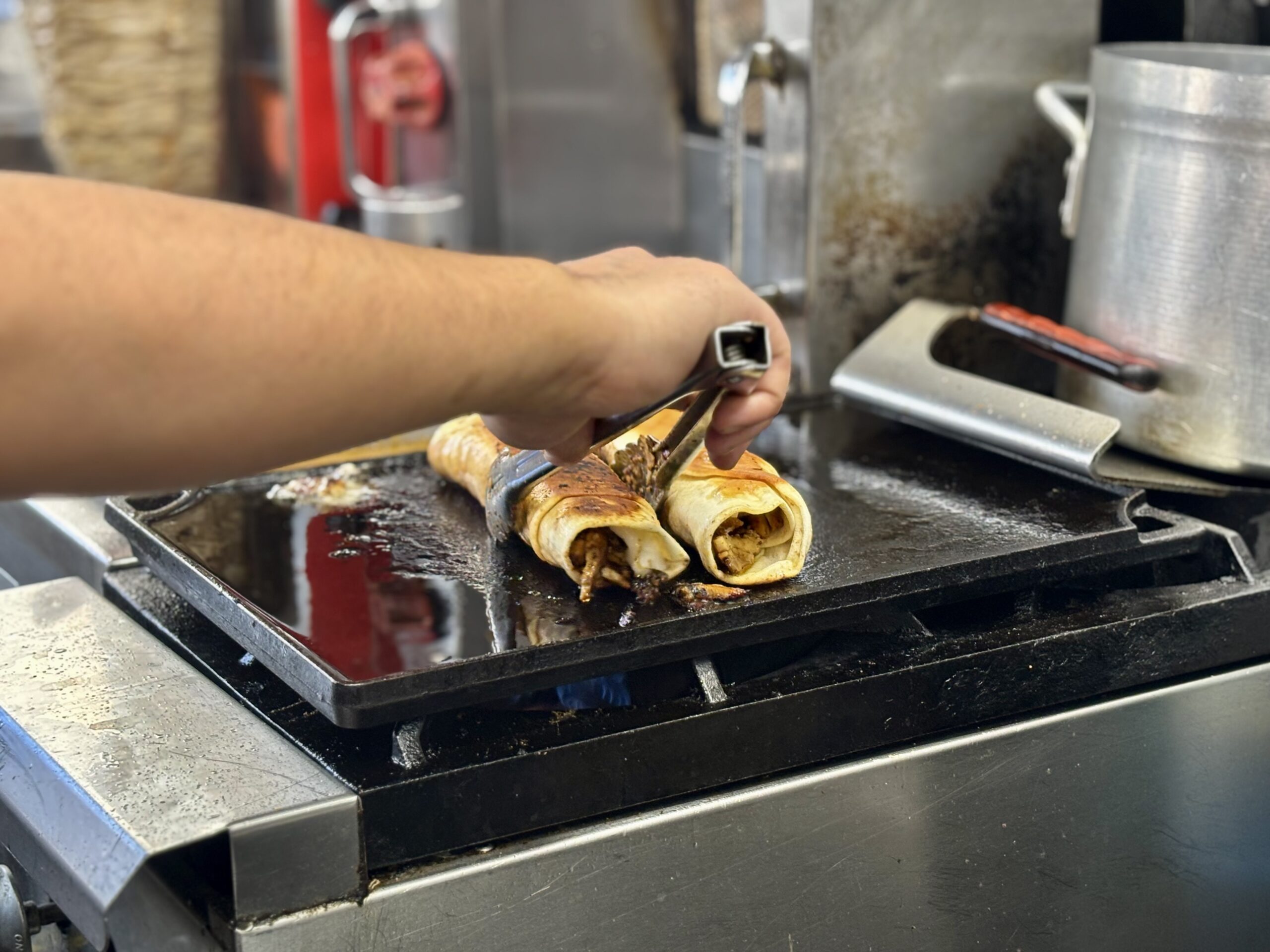
    Maymouna rolls all the fillings into a long, skinny baton and dips it in the special sauce. The wrap sizzles on the grill until golden brown and crackly.

    Chef Sam Maymouna grills a chicken shawarma wrap at Falafel Time.

    The viral sandwich isn’t new to the Syrian restaurant. In fact, the wrap has been on a “secret menu,” as Maymouna calls it, at the Graduate Hospital takeout shop since its inception in 2019. Customers in the know — typically Philadelphians from Syria and other Arab countries — seek out Syrian-style shawarma sandwich with a thinner saj bread or a pita in the now-viral crispy style.

    “Arabs order [from] it because they know the Syrian way,” Maymouna said. “But now, [the crispy shawarma] got popular because of the viral videos.”

    While the TikTok videos haven’t increased sales of the wrap by much yet, the online chatter is leading more Philadelphians to the South Street restaurant — Maymouna estimates he’s selling an additional 10 a day.

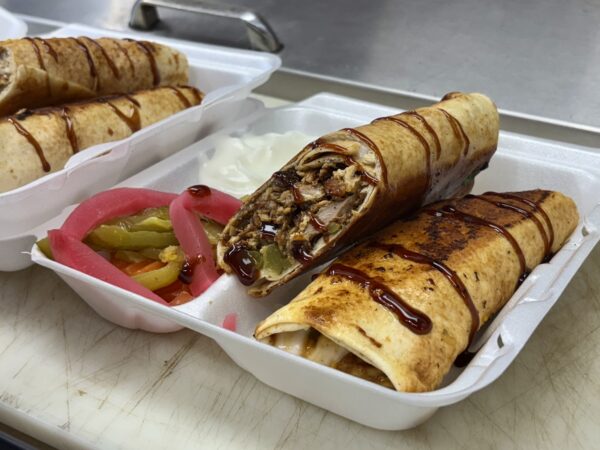
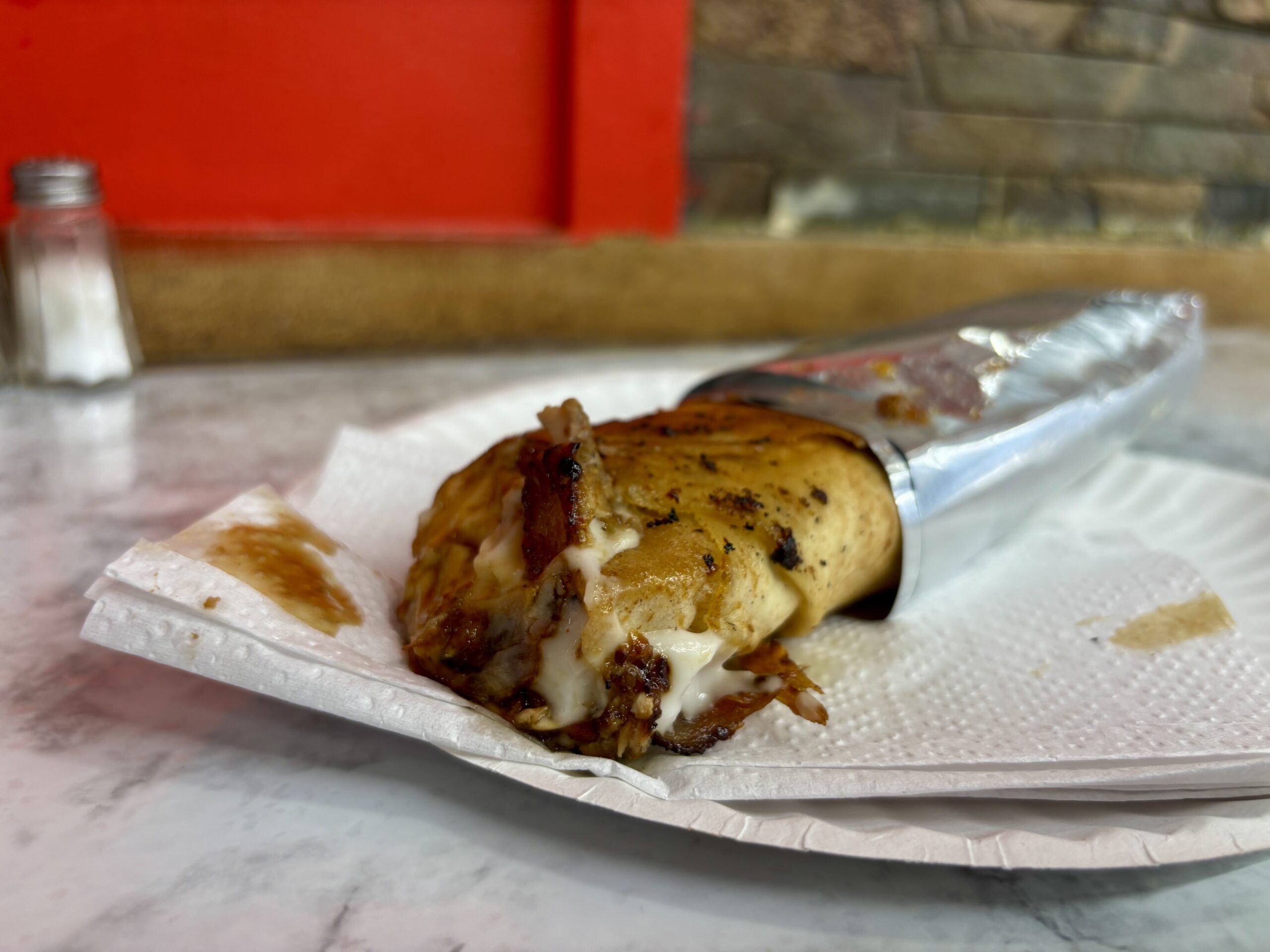
    The crispy chicken shawarma wrap at Falafel Time.

    Sitting at the counter, Kar took a big bite of the crunchy wrap as he waited for a second order he ordered to-go for his wife. “It is great, but it’s not similar to the ones back in Turkey — for us, there’s more of a red, tomato-like sauce.”

    But for the West Philadelphian, it was still exciting to finally find a restaurant in Philly offering a similar sandwich, if not a replica of the one at home. “I’ll give them a seven out of 10‚” he said. “I’m happy I’m going to take one home.”

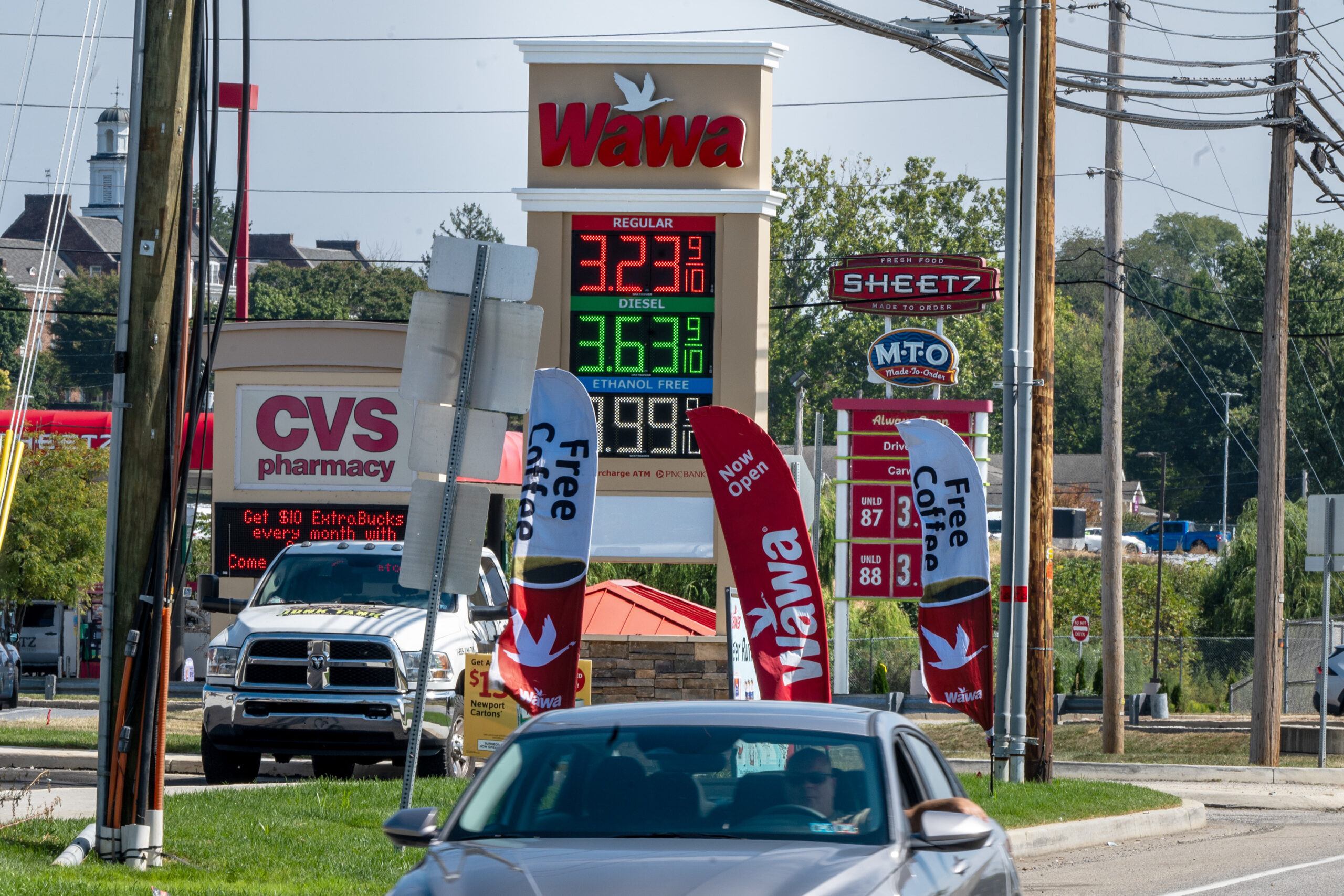
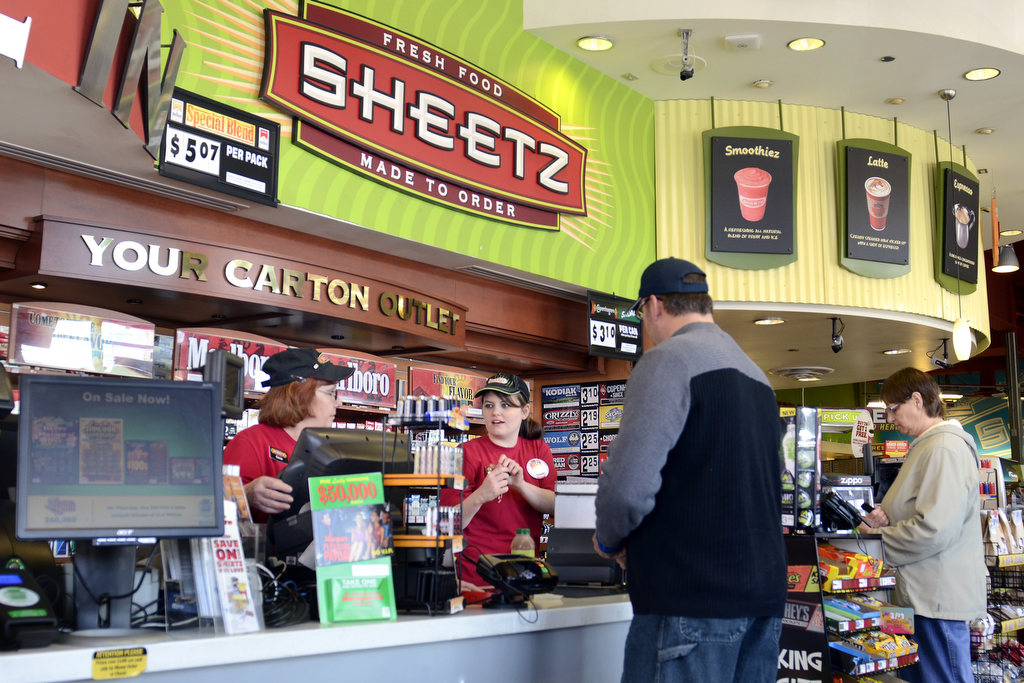
  • The first Philly-area Sheetz is set to open next month across from a Wawa

    The first Philly-area Sheetz is set to open next month across from a Wawa

    Sheetz’s encroachment into Wawa territory has an official ETA.

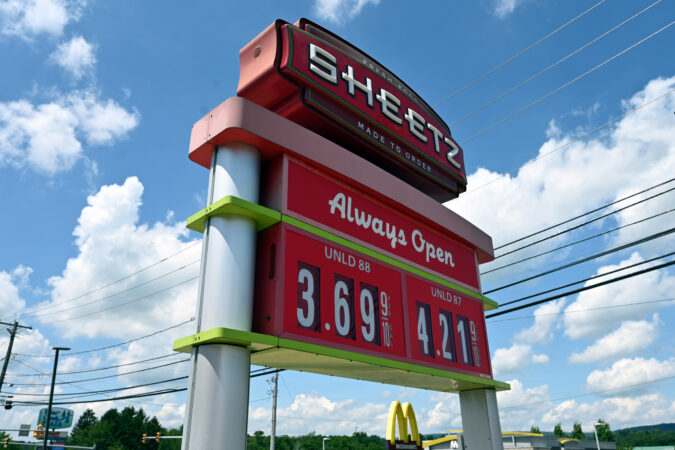
    The Altoona-based convenience store chain is set to open its first Philadelphia-area store on Feb. 12 in Limerick Township, Montgomery County, according to Sheetz public affairs manager Nick Ruffner.

    It will be located at 454 W. Ridge Pike, across the street from an existing Wawa.

    Sheetz presented its site plans to Limerick’s board of supervisors about a year ago. The area was already zoned for this type of development, officials said at the time, and no other township permits were required.

    “As Sheetz continues its expansion into communities near its existing footprint, we remain committed to being the best neighbor we can be and delivering the convenience, quality, and service Pennsylvania communities have come to expect from us for more than 70 years,” Ruffner said in a statement.

    A Sheetz convenience store and gas station near Carlisle, Pa. in 2020.

    For decades, Sheetz opened its convenience-store gas stations in the western and central parts of the Commonwealth, while Wawa added locations in communities near its Delaware County headquarters.

    Over the years, both companies expanded into other states: Wawa has more than 1,100 locations in 13 states and Washington, D.C., while Sheetz has more than 800 stores in seven states.

    But neither of the two chains would encroach on the other’s traditional strongholds in Pennsylvania. At least for a while.

    That changed in 2024, when Wawa opened its first central Pennsylvania store. The location outside Harrisburg was within eyesight of a Sheetz.

    In 2024, Wawa moved into Dauphin County, just 0.3 miles down the road from a Sheetz.

    By this October, Wawa announced it had opened its 10th central Pennsylvania store. At the time, the company said in a news release that it planned to add five to seven new locations in the region each year for the next five years — to “reach new Pennsylvania markets along the Susquehanna River.”

    Wawa plans to open its first outposts in the State College area, near Penn State’s campus.

    As of early January, Sheetz’s closest store to Philadelphia is just over the Chester County border in Morgantown.

    But along with the forthcoming Limerick location, Sheetz has also expressed interest in opening at least one store in western Chester County.

    For awhile, Sheetz, shown here in Bethlehem, Pa. in 2018, and Wawa expanded in different parts of the state, never overlapping into the other’s territory. That’s changed.

    This fall, Sheetz presented Caln Township officials with a sketch plan for a store on the site of a former Rite Aid on the 3800 block of Lincoln Highway in Thorndale, according to the township website.

    Sheetz’s namesake, Stephen G. Sheetz, died Sunday due to complications from pneumonia. The former president, CEO, and board chairman was 77.

    “Above all, Uncle Steve was the center of our family,” Sheetz president and CEO Travis Sheetz said in a statement. “We are so deeply grateful for his leadership, vision, and steadfast commitment to our employees, customers, and communities.”

  • Flyers defenseman Jamie Drysdale lands on injured reserve; Travis Konecny and Bobby Brink are day-to-day

    Flyers defenseman Jamie Drysdale lands on injured reserve; Travis Konecny and Bobby Brink are day-to-day

    The injury bug has officially bitten the Flyers.

    On Friday, defenseman Jamie Drysdale was placed on injured reserve with an upper-body injury retroactive to Jan. 6, and announced forwards Bobby Brink and Travis Konecny are day-to-day with upper-body injuries. In a corresponding move, defenseman Adam Ginning has been recalled from Lehigh Valley of the American Hockey League.

    Drysdale was injured in Tuesday’s win against his former team, the Anaheim Ducks, by a hit well away from the puck by forward Ross Johnston in the second period. There was no supplemental discipline or fine handed out by the NHL’s department of player safety.

    Brink also suffered his injury in the game on a blindsided hit in the first period by forward Jansen Harkins. He did not play on Thursday.

    “Still getting evaluated, type of thing,” coach Rick Tocchet said on Wednesday, adding he didn’t have an update after the team’s morning skate on Thursday. “I don’t want to say it’s a day-to-day. I don’t know yet. So it’s kind of one of those things. … I really don’t know. I talked to them today; they’re in a half-decent mood. Still being evaluated, so we’ll see.”

    Drysdale was curling in the offensive zone and did not see Johnston, who was skating into the zone, as the puck was deep in the Ducks’ end. They collided, and Johnston appeared to claim to officials that it was incidental contact or just a collision between two players who didn’t see one another.

    However, the video indicates that Johnston not only had enough time to avoid Drysdale but also stuck out an arm and threw it into the defenseless blueliner. Drysdale lay on the ice and did not move for a considerable amount of time before doctors and a stretcher arrived on the ice. He eventually sat up and skated off with help.

    Johnston was given a five-minute major for interference and a game misconduct.

    “Yeah, it’s tough. Anytime you see the stretcher come out, for either team, it’s not a good situation,” defenseman Cam York, who is a good friend of Drysdale’s, told The Inquirer on Thursday. “So it’s obviously not an ideal situation, but he’s OK now. So obviously that’s really good. I talked to him after that second intermission.”

    Konecny was injured on Thursday in the Flyers’ 2-1 overtime loss to the Toronto Maple Leafs. He scored the team’s lone goal in the second period but did not return for the third period. Konecny was interviewed during the second intermission by NBCSP, but appeared to be uncomfortable and winced as he walked off.

    Tocchet said after the game he did not have an update, but that “something was bugging him, I guess, early on. I think he fell or something. I don’t know [all of] the whole details.”

    The Flyers have a tough stretch ahead, and without Drysdale, and if Brink and Konecny, who is second on the team in points, cannot play, it will make it a tall task. Philly is home for games Saturday (7 p.m., NBCSP) and Monday, both against a Tampa Bay Lightning team that has won eight straight while outscoring opponents 38-22. The Flyers travel to play the Buffalo Sabres, winners of 12 of their last 13, Wednesday, and the Pittsburgh Penguins, who have won six straight Thursday.

    Ginning made the Flyers out of training camp and played in five games in October. Before being assigned to the Phantoms on Dec. 1, after clearing waivers, he was loaned to the Phantoms on a conditioning stint Nov. 18. In 17 games with Lehigh Valley, the defensive defenseman has one goal and three points.

    Veteran blueliner Noah Juulsen played with Emil Andare on Thursday. According to Natural Stat Trick, when they were on the ice together at five-on-five, the Flyers had 64.29% of the shot attempts and four scoring chances to one for the Maple Leafs.

    Flyers defenseman Jamie Drysdale on the ice against the Vancouver Canucks on Dec. 22.

    The loss of Drysdale, however, is huge as he was having a breakout year. Known for his offensive abilities with questionable acumen on the defensive side of the puck, the 23-year-old has built his game from the ground up to become a blueliner who can play a complete 200-foot game.

    This season, he had 18 points (three goals, 15 assists) in 41 games, and before the Anaheim game, he was averaging 21 minutes, 35 seconds, tying his career high and ranking third on the Flyers. He also had a plus-minus of plus-1, the highest of his career.

    “One hundred percent,” he told The Inquirer on Monday when asked if he has pride in how his defensive game has grown. “I mean, at the same time, it [stinks] to kind of have the results on the other end from the last few years. Definitely take pride in it.

    “And I think that it’s also just coming to me more naturally now; I would say that’s kind of one way to put it. So that feels good. And I think it’s just building my game, and just taking it to another level. I think it can get there, so just going to keep working at it.”

    After being acquired in the deal for Cutter Gauthier in January 2024, he played just 24 games for Philly, missing time with a shoulder injury sustained against the Penguins at the end of February. In April 2024, he underwent surgery to repair a core injury he suffered while playing for the Ducks. And he missed time last season with an upper-body injury.

    Entering 2024-25, he had played in just 147 games across four NHL seasons, missing significant time with shoulder injuries, including a torn labrum that required an operation in 2022. Since playing 81 games in his first full NHL season in 2021-22, he has never played more than the 70 he skated in last year.

  • The ultimate guide to sober-curious drinking in Philadelphia

    The ultimate guide to sober-curious drinking in Philadelphia

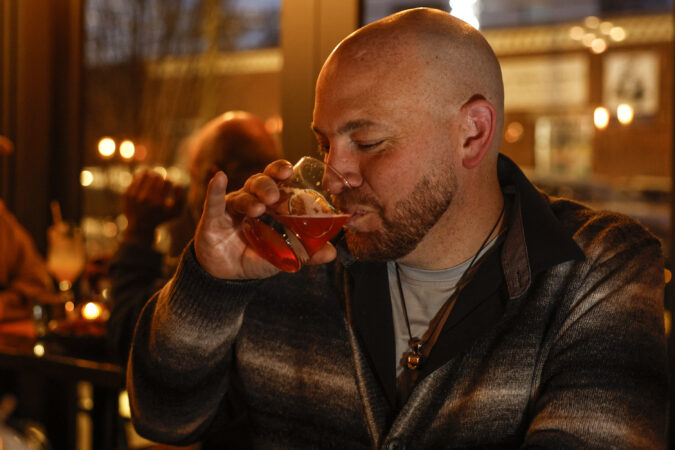
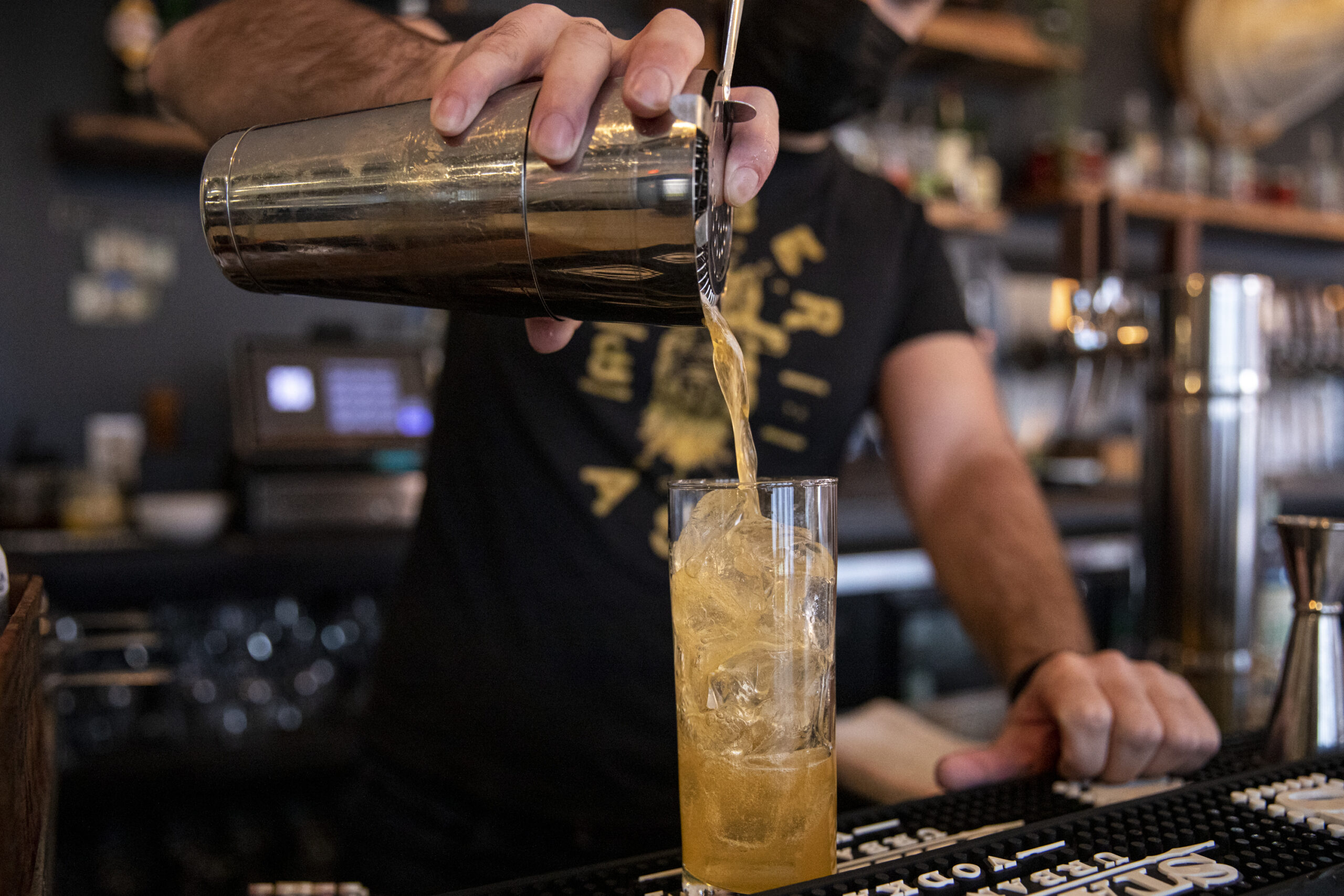
    Dry January is here, and Philly bars are serving inventive alcohol-free drinks. But that’s not all: Bartenders are also offering interactive classes and bottle shops are expanding their inventory of nonalcoholic spirits.

    We’ve complied all the tips and tricks you need navigate the month — and beyond — alcohol-free in Philadelphia.

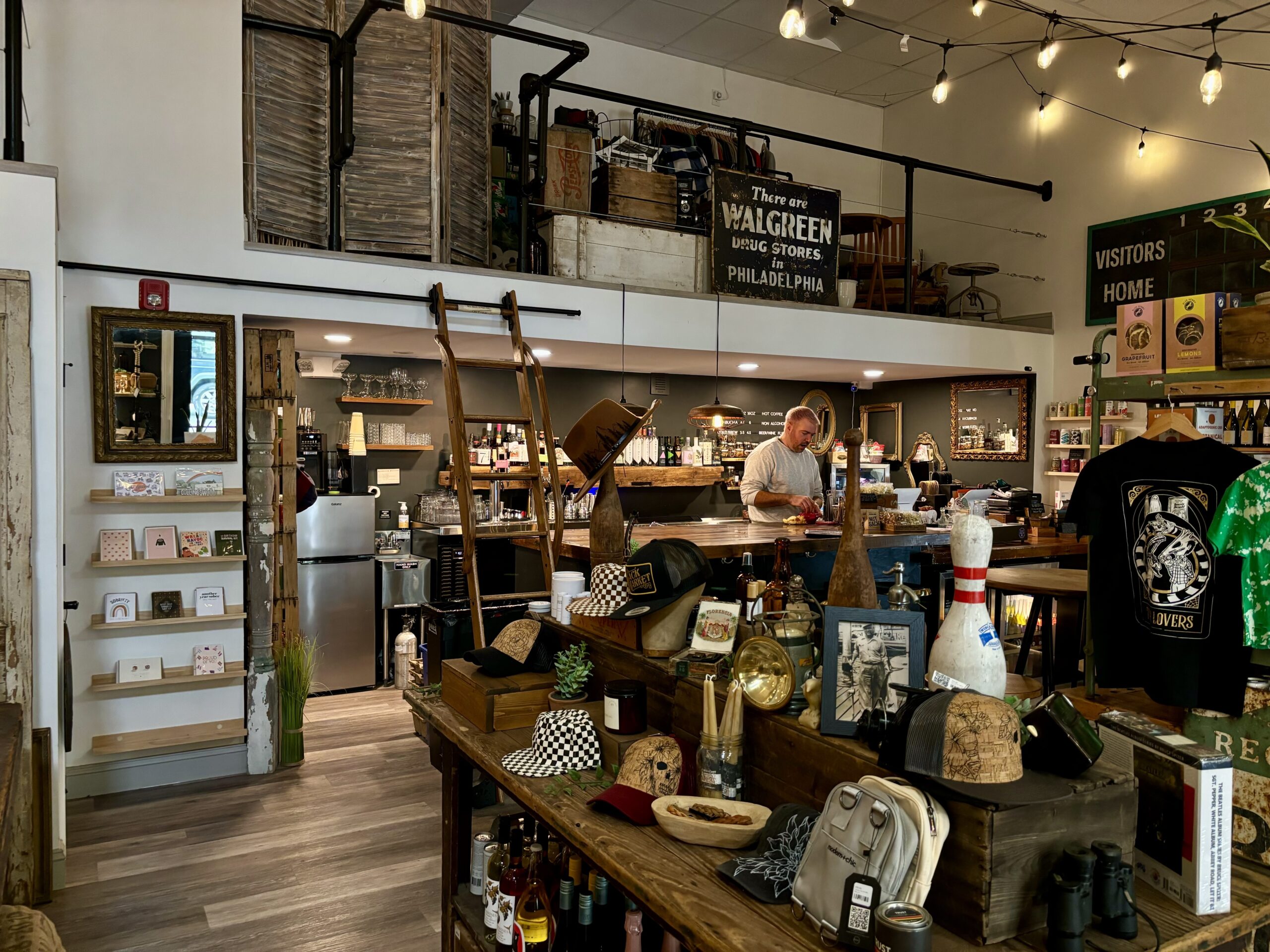
    Mercantile 1888 is a vintage store and nonalcoholic bar in Collingswood.

    Where to drink for Dry January

    Start your Dry January journey at Bar Palmina in Fishtown, where Nikki Graziano, a “former heavy drinker,” serves creative zero-proof craft cocktails featuring brands like Monday and Lyre’s.

    Over in Collingswood, Mercantile 1888 offers pomegranate margaritas with Ritual tequila, Monday mezcal palomas, and Seedlip botanical cocktails.

    Other options include:

    • Grace and Proper (South Philly): $7 zero-proof cocktails during happy hour (Wednesdays and Thursdays, 4 to 6 p.m.).
    • Mia Ragazza (Manayunk): Booze-free tiramisu espresso martinis made with Seedlip Spice.
    • Bar Hygge (Fairmount): Sparkling nonalcoholic wines.
    • Evil Genius Beer Co.: Nonalcoholic golden ales from Athletic Brewing Co.
    Dry Vibes, a touring sober festival, makes a stop in Philly this January.

    Best Dry January events

    There are plenty of events in honor of Dry January, too.

    • Jan. 14: Jesse Andreozzi, known as @mr.zeroproof, will share his expertise in zero-proof cocktail-making at Bar Hygge at 6:30 p.m. Tickets include cheese and charcuterie, a live demonstration from Mr. ZeroProof, and three nonalcoholic cocktails.
    • Jan. 15: Bar Palmina teams up with Heart to Heart Herbology, Three Wild Spirits, and Home Brewed Events for a Dry January class. Learn about the history of herbs and botanicals, along with its uses in beer brewing, distilling, and cocktails. Tickets, which can be purchased online, include a nonalcoholic cocktail featuring botanicals created in collaboration Bar Palmina.
    • Jan. 31: Dry Vibes Philly Festival at Billy Penn Studios (11 a.m. to 5 p.m.), featuring a vendor marketplace, wellness services, and celebrity meet and greets, including skateboarder Brandon Novak and author Arlan Hamilton. Tickets can be purchased online.

    In Ardmore, Wallace Dry Goods is hosting:

    Gem Life + Bar in Pitman offers over 250 nonalcoholic products.

    Where to find zero-proof spirits

    The options for alcohol-free spirits in Philadelphia are vast, with plenty of stores and shops selling an expansive selection of alcohol-free spirits for you to try at home.

    At Cork in Rittenhouse, brands like Spiritless tequila, Lyre’s Aperitif Rosso vermouth, canned Ghia aperitifs, and others are priced up to $48. Herman’s Coffee, the South Philly cafe known for espresso tonics and food pop-ups, offers a selection of over 200 nonalcoholic wines, spirits, and beers. And Riverwards Produce in Old City and Fishtown are stocked with nonalcoholic spirits, along with a variety of ingredients for cocktail making.

    Whether you’re seeking a zero-proof wine, beer, or spirit, there’s something for every palate — explore more options in the Inquirer guide.

    Best zero-proof spirits

    But with such a wide selection of nonalcoholic spirits, where do you begin?

    Buyer Michelle Flisek asks visitors walking into Cork one key question to help guide them in the right direction: What flavor profiles are you looking to enjoy? With over 100 varieties of nonalcoholic items in the store, starting with flavor is a good way to determine what brands and cocktail accessories will work for you.

    Each brand has distinct flavor profiles and ingredients. Brands like Ritual Zero Proof and Monday use botanical ingredients like Mexican blue agave and coriander seed extract to mimic the flavor profiles of mezcal, gin, and other traditional spirits. Wines like Prima Pavé create grape beverages through dealcoholization, a process that begins with the traditional fermentation process, but includes the additional step of removing alcohol from the final product.

    Remember the key to working with these nonalcoholic products is experimentation, according to Kasey Ehrgott of Manayunk’s now-closed alcohol-free bar the Volstead by Unity. Ehrgott recommends Ritual products, All The Bitter zero-proof bitters (created by botanical extraction with vegetable glycerin), and Pathfinder, a hemp-based drink with dark botanical notes of angelica root, saffron, and wormwood.

    “It’s important to remember it’s not going to be identical — you might like something you didn’t expect to,” she said.

    Kristian Fidrych, beverage manager at Ember & Ash, creating a Tomato Collins, made with zero-proof gin, zero-proof bitter aperitif, smoke tomato shrub, lemon, and club soda, in 2021.

    Are there health benefits to Dry January?

    Reducing alcohol consumption, even temporarily, can offer meaningful health benefits, according to experts. Henry Kranzler, director of the Center for Studies of Addiction at the University of Pennsylvania’s Perelman School of Medicine, previously emphasized to The Inquirer that “alcohol is not good for you, by and large,” highlighting the potential risks associated with drinking.

    In a recent report, U.S. Surgeon General Vivek Murthy outlined a direct link between alcohol consumption and an increased likelihood of developing cancer. The Surgeon General’s Advisory on Alcohol and Cancer Risk stated “alcohol consumption is the third leading preventable cause of cancer in the United States, after tobacco and obesity, increasing risk for at least seven types of cancer” with about 100,000 alcohol-related cancer cases and about 20,000 alcohol-related cancer deaths annually.

    Nikki Graziano runs Bar Palmina.

    How to keep your Dry January resolution

    With the city’s ever-growing sober-curious scene, Philadelphians are able to prioritize an alcohol-free lifestyle, even during the holidays. But sustaining mindful drinking beyond Dry January can be a challenge for some.

    Understanding what leads you to drink is the first step, according to Amanda E. White, the founder of Therapy for Women Center and author of Not Drinking Tonight.

    White and other experts say changing your mindset and having more options can help you stay booze-free year-round.

    “Sometimes people go back to drinking without even realizing why they started again,” White told The Inquirer. “This is likely because they are not familiar with their triggers or reasons that they drink — maybe it’s feeling awkward at a party or a warm day that makes you crave a margarita.

    “Learn your triggers and come up with a plan for how you will combat them.”

  • Eagles’ postseason adjustments, concerns with the offense, breakout players, and other AMA highlights

    Eagles’ postseason adjustments, concerns with the offense, breakout players, and other AMA highlights

    Heading into the Eagles’ wild-card matchup with the San Francisco 49ers, fans have plenty of questions surrounding the team’s offense, adjustments they could make in the playoffs, and players who may step up in the postseason.

    Before Sunday’s game at Lincoln Financial Field, The Inquirer’s Olivia Reiner took to Reddit for an AMA — or “Ask Me Anything” — to answer reader questions about the team … and the future of its offensive coordinator.

    The following has been edited for length and clarity.

    Despite the 11-win season, the offense has felt ‘enigmatic’ (and at times dysfunctional) compared to the defense this year. In your opinion, is the disconnect primarily viewed as a play-calling issue with Kevin Patullo, or are there deeper issues with the offensive players this year?

    Reiner: It would be very easy to chalk all of the offense’s dysfunction up to one thing, but I don’t think that’s fair. The blame deserves to be spread around. But just anecdotally speaking, I feel like there have been too many instances this year where Hurts doesn’t have anywhere to go with the ball. He’s been forced to make plays out of structure, whether he’s scrambling for yardage or extending the play.

    I think we saw in the season finale with Tanner McKee and the backups what happens when the Eagles don’t have a quarterback who can do those things. Re: the lack of answers, how much is that on Patullo for the play call? How much is that on Hurts for not changing the play if he has the freedom to do so based on what the defense presents before the snap? Or on the offense for not getting to the line fast enough for Hurts to make a change? Only the Eagles really know.

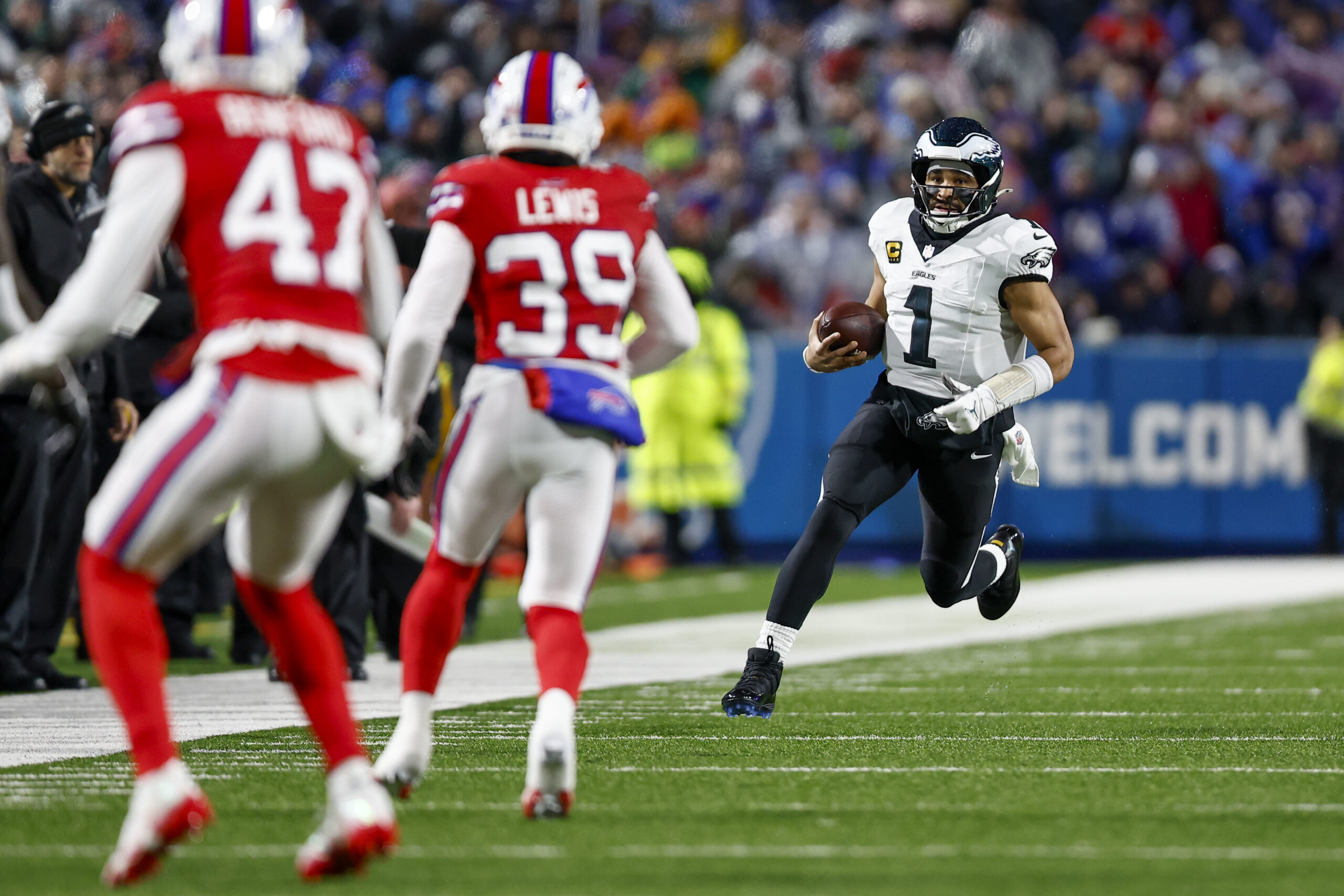
    Jalen Hurts’ designed runs have been more frequent during the second half of the season.
    What adjustments could we hope to see for the offense to finally get going in the playoffs

    Reiner: I’m curious to see if Kevin Patullo calls more designed runs for Jalen Hurts now that the team is in the playoffs and they could be a little less concerned with the self-preservation aspect of it. Hurts has insisted throughout the season that his designed rushes being down are more of a product of the offense, not so much an issue of keeping him healthy, though, although Nick Sirianni has acknowledged the health aspect of it.

    I wrote about Hurts’ designed rushes being down this year last month. His rushing ability has the power to help keep defenses honest and open up opportunities for his teammates. That could be the most logical tweak to the offense this late in the game. I wouldn’t expect wholesale changes at this point.

    Do you think the eagles offense will be able to get it done if they don’t put together four solid quarters in four straight games?

    Reiner: Well, that’s how they’ve won most games this season! Many games have come down to Vic Fangio’s defense playing nearly flawless to bail out an inconsistent offense. A.J. Brown referred to it earlier in the season as the defense putting a “Band-Aid” over the offense’s inability to produce over a full four quarters.

    I’m not sure if that method will fly in the playoffs. The competition, of course, gets better in the postseason. But can the Eagles offense suddenly become this consistent, well-oiled machine after sputtering so many times throughout the regular season? I think they’re still going to need the defense to bail them out, and that doesn’t sound like a recipe for success going forward.

    Jahan Dotson has just 18 catches on the season. Could he be more impactful in the postseason?
    If you had to pick a player likely to take a big step forward in production in the playoffs, who would it be? Is anyone unexpected going to break out?

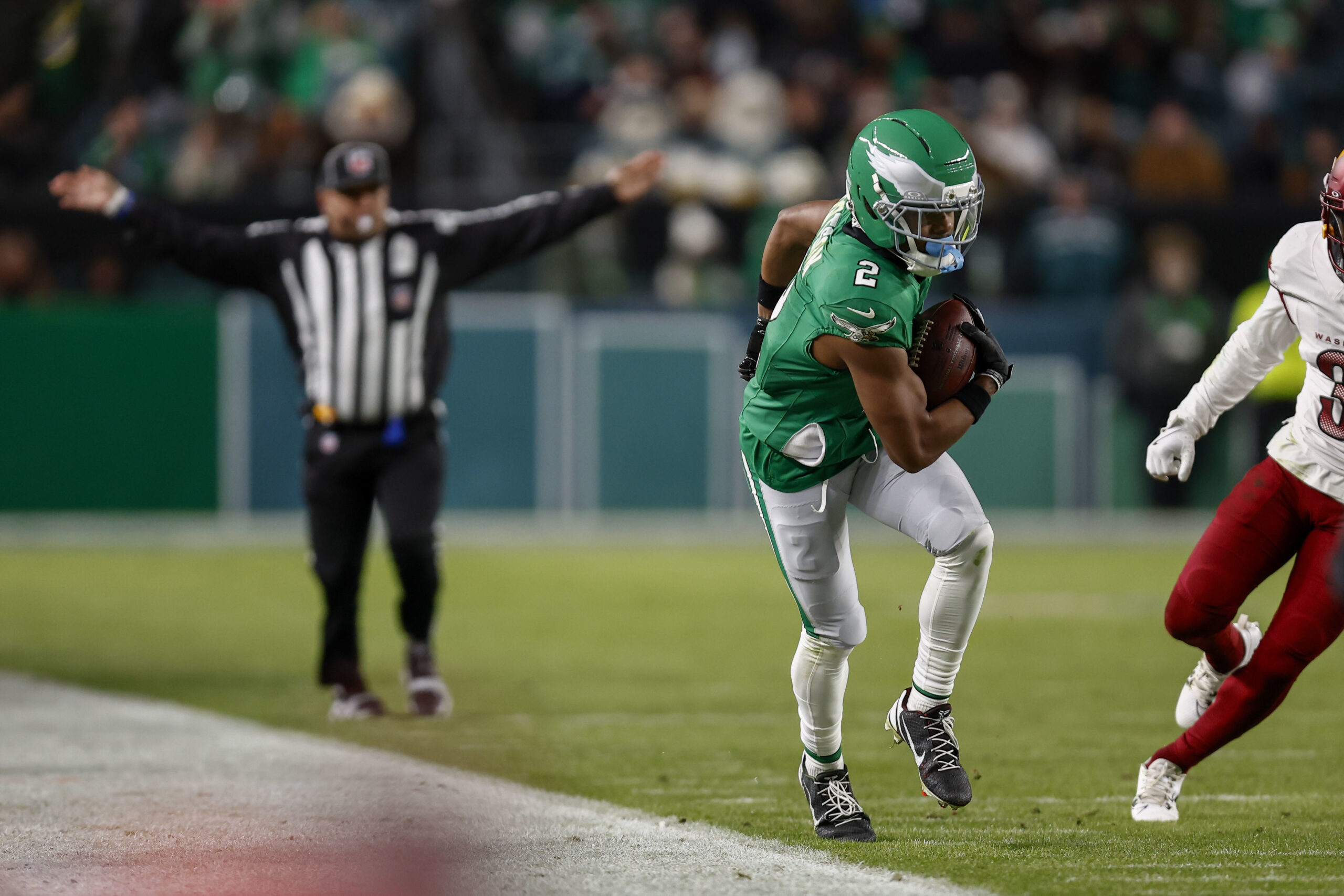
    Reiner: Jahan Dotson was kind of that player last postseason, especially in the Super Bowl. I’m more surprised that he hasn’t been more of a factor in the passing game during the regular season given his contributions in February. Maybe he comes down with a couple of key catches in the postseason. Even if it’s just a couple, that would be notable, given that he has just 18 catches on the season (one fewer than 2024).

    Regardless of Sunday’s outcome, do you expect major changes to the coordinator staff this offseason? Hopefully that change involves Kevin Patullo.

    Reiner: This is pure speculation and not reporting: I would think that Sunday’s outcome has to be taken into consideration regarding any changes at the offensive coordinator position, and the outcome of any additional playoff games. A wild-card exit wouldn’t reflect well on anybody. Another Super Bowl win would. This postseason run is important for Kevin Patullo, as my colleague David Murphy wrote about this morning.

    To check out the rest of Olivia’s AMA, click here.