
Tag: topic-link-auto

  • Lillian’s opens in Point Breeze with rotating chefs and a parlor-style cocktail bar

    Lillian’s opens in Point Breeze with rotating chefs and a parlor-style cocktail bar

    For years, Sam Ahern imagined opening a place that felt less like a restaurant than a gathering spot.

    Now, just a few doors from her first Philadelphia apartment, she’s done exactly that.

    Lillian’s opened last week at 19th and Mifflin Streets in Point Breeze, transforming a onetime barbershop into a bistro and cocktail bar decorated like an old-fashioned living room parlor, complete with vintage furnishings and an evolving food program that will regularly hand over its kitchen to guest chefs.

    Owner Sam Ahern and bar manager Avdo Babic at Lillian’s. They met while working at Fitler Club.

    “I wanted something that felt like you were hanging out in somebody’s house,” Ahern said.

    Ahern took the name from her great-great-grandmother, who had a speakeasy in her basement in North Jersey and was known in the family as Diamond Lil. “The story goes that she would keep jewelry if you couldn’t pay with cash, and apparently she made her own gin,” said Ahern, who accepts cash and credit cards at Lillian’s.

    The project is the culmination of a path Ahern never expected to follow. She studied graphic design and fiber arts in graduate school in Savannah, Ga., where she began helping a friend open a restaurant. Hospitality stuck.

    After moving to Philadelphia in 2018, she worked behind the bar at Cicala at the Divine Lorraine, then at the private Fitler Club, before becoming bar manager at Fabrika in Fishtown.

    She also put down roots in Point Breeze eight years ago. Her first apartment was three houses from where Lillian’s is now.

    Three brioche toasts (anchovy, sardine, and enoki mushroom) at Lillian’s.

    During the pandemic, Ahern and friends hosted backyard supper clubs featuring rotating chefs. The dinners proved there was an audience for intimate, chef-driven experiences outside the traditional restaurant model.

    When a property around the corner from her home came on the market, “it felt meant to be,” Ahern said. “At the same time, someone I knew was selling a liquor license and it also became available, so everything just fell into place.”

    Rather than hire a permanent executive chef, Ahern decided to build Lillian’s around residencies. The idea, she said, is to tie the supper-club ethos into a neighborhood bar where someone can stop in for a martini and a sandwich one night, then return weeks later to discover a different chef, menu, or cocktail.

    Chef Alejandro Martín Sánchez, who is location-shopping for his fine-dining restaurant Mesona, consulted on the opening menu, kitchen layout, and operations. Kitchen operations are managed by Isobella “Izzy” Ioffreda, while guest chefs rotate through for weekend or monthlong engagements.

    Panzanella salad at Lillian’s.

    The opening menu is intentionally concise, built around Mediterranean-inspired snacks and light meals meant to accompany cocktails. It includes mixed pickled vegetables ($5); panzanella salad ($12) with optional toppings; brioche toasts ($6 each), topped with anchovies, sardines, or enoki mushrooms; shrimp cocktail ($15 for five); a cheese and charcuterie board ($25), and sandwiches including vegetable ($13) with whipped ricotta, roasted piquillo peppers, and confit garlic; prosciutto and Manchego ($15) with house-made fig jam; and grilled chicken salad with Calabrian tomato jam ($15), topped with arugula and Parmesan on brioche toast. Desserts include flavored shortbreads ($2 each), chocolate mousse ($11) with Marsala and pretzel streusel, and olive oil cake ($13) with orange syrup, fig jam, and Greek yogurt. The menu is expected to evolve alongside the rotating chef residencies.

    The residency program begins this month with Miled Finianos’ Lebanese-focused Habibi Supper Club, which is on its way to a permanent location on Passyunk Square. On July 9-11, 17-18, and 23-25, Finianos will offer a six-course ticketed dinner at 8 p.m., preceded by a public happy hour from 5 to 7 p.m. featuring a more casual Habibi menu. August will be devoted to refining Lillian’s own operation before residencies resume in September.

    Lillian’s at 19th and Mifflin Streets on June 30, 2026.

    The cocktail program comes from Ahern’s former Fitler Club colleague Avdo Babic. Like Ahern, Babic came to Philadelphia through the arts, arriving to attend art school before discovering bartending under Katie Loeb at the Trestle Inn.

    The menu leans on classic cocktails interpreted through house-made ingredients. Babic prepares his own tinctures, bitters, shrubs, syrups, and cordials, drawing inspiration from Prohibition-era recipes as well as the homemade herbal infusions his family made while he was growing up in Bosnia.

    The Ms. Martinez ($15), for example, infuses Beefeater gin with osmanthus flowers and linden honey to lend floral, honeysuckle notes to the classic cocktail. Persephone’s Garden ($14) turns the martini savory through clarified pickle juice, dill, celery, coriander, black pepper, caraway, and Greek yogurt. La Molina ($16), a pisco sour, grew out of a recent research trip to Peru while incorporating a lime cordial recipe Babic has refined over several years.

    “We built it around seasonal ingredients, but the foundation is classic cocktails,” Babic said.


    Lillian’s, 1900 S. 19th St. Hours: 5 to 11 p.m. Tuesday to Thursday, 5 p.m. to midnight Friday and Saturday. Kitchen open to 10 p.m.
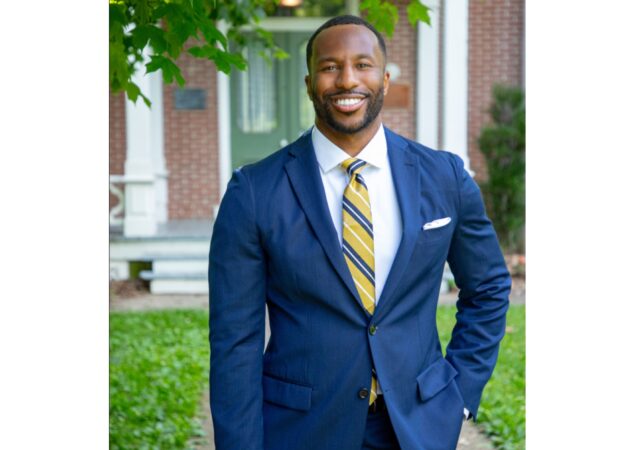

  • La Salle names Jarett Gerald as its new director of athletics

    La Salle names Jarett Gerald as its new director of athletics

    La Salle has found its new athletic director after Ash Puri departed from 20th and Olney for the same job at St. Joseph’s.

    The university announced Monday that Jarett Gerald will take over as vice president of athletics & recreation and director of athletics, starting in August. He’ll oversee the school’s 23 Division I programs, while managing a recreation department that serves nearly 3,500 students.

    “We are building tremendous momentum across our university, and I believe Jarett is exactly the kind of leader who will accelerate that momentum within Explorer Athletics,” wrote La Salle President Daniel J. Allen. “He understands that athletics is about far more than competition. It is about developing young people, strengthening our university, inspiring alumni and donors, and elevating the La Salle experience for our student-athletes and our entire campus community.”

    Gerald, who has spent 15 years in college athletics, previously served as assistant athletics director for major gifts at the University of Missouri, where he developed a naming rights and an endowment strategy, and secured six- and seven-figure commitments from donors.

    “Great institutions are built by people who believe deeply in a purpose greater than themselves,” Gerald wrote. “Throughout this process, I came to appreciate the strong foundation of faith, hope, and service that defines La Salle, along with the shared belief that the university’s best days are still ahead.”

    Prior to Mizzou, the Columbia, S.C. native spent about four years at Duke, where he moved roles from director of revenue strategy and associate director of administrative operations to the major gifts officer. He was credited for landing $11 million in athletic commitments, including multiple seven-figure gifts.

  • Superintendent Watlington announces promotions and other changes in Philly schools’ administration

    Superintendent Watlington announces promotions and other changes in Philly schools’ administration

    Numerous changes are afoot in the Philadelphia School District, with Superintendent Tony B. Watlington Sr. promoting some staffers and shifting others around amid multiple departures from the system.

    The changes took effect July 1.

    Watlington, in an announcement sent to staff detailing the changes, said he was “confident this team will help us build on our momentum as we continue improving outcomes for students, strengthening support for our schools, and advancing our goal of becoming the fastest-improving large urban school district in the country.”

    The personnel shifts include:

    Brenda Elliott, who became interim deputy superintendent of academic services when Jermaine Dawson left Philadelphia to become Baltimore’s superintendent, got that job permanently.

    Elliott came to Philadelphia a year ago as associate superintendent of student life and innovation. She’s a former Tennessee state superintendent for school turnaround who has worked in a number of urban districts, including with Watlington in North Carolina.

    She also spent time as a teacher, principal, and officer in the U.S. Army.

    Tomás Hanna, who was associate superintendent for secondary schools, is now associate superintendent for student life and school operations.

    Noah Tennant, assistant superintendent for Learning Network 13, is keeping that job, but is also now interim associate superintendent for secondary schools while a search for a permanent administrator is completed.

    Michael Farrell is now chief academic officer. He had been chief learning officer. The new title combines two jobs: chief of curriculum and instruction and chief learning officer.

    Nathalie Nérée became chief of special education, diverse learners, and wellness. She had previously been chief of special education and diverse learners.

    Nyshawana Francis-Thompson, who was chief of curriculum and instruction, became senior adviser for strategic initiatives and innovation.

    Jamina Clay, who had been an assistant superintendent supervising a learning network, is now assistant superintendent of school management and organization.

    Kelly Espinosa, who has served as the principal of Fanny Jackson Coppin Elementary, is now interim assistant superintendent for Learning Network 4, replacing Clay. Janis Butler, a retired principal who often fills in as an interim principal in the district, will run Coppin.

    Two more retired educators are now serving as interim assistant superintendents — Wilfredo Ortiz for Learning Network 8 and Lucy Feria for Learning Network 9. Ortiz replaces Renato Lajara, who’s now superintendent in Bethlehem; Feria replaces Ariel Lajara, who left Philadelphia to run the Vineland school system in South Jersey.

  • Five arrested during Philly Fourth celebrations as protesters attempted to burn American flag

    Five arrested during Philly Fourth celebrations as protesters attempted to burn American flag

    Five people were arrested ahead of Philadelphia’s July Fourth celebration after protesters attempted to set an American flag on fire, according to police.

    A small group of protesters gathered outside Washington Square around 6 p.m. Saturday, with signs calling for “No celebrations of empire” and proclaiming “All empires fall.”

    According to video of the incident, what began as a peaceful protest unraveled as an unidentified woman attempted to light an American flag on fire.

    “During the protest, one of the individuals in the group placed an American flag on the sidewalk and doused it with a large amount of an accelerant,” a Philadelphia police spokesperson said in a statement.

    Burning an American flag is considered a protected form of free speech, upheld by the Supreme Court. But burning a flag on a public street in Philadelphia is generally prohibited due to the city’s strict safety rules on setting fires.

    After police intervened to prevent the flag from being lit on fire, a few protesters yelled obscenities at police and refused to leave the area, despite repeated calls from officers.

    “The group was given multiple warnings to disperse from the area and refused, leading to five arrests,” police said.

    The five individuals, who were not from Philadelphia and ranged in age from 18 to 25, were charged with failing to disperse and have since been released.

    There were no injuries reported, police said, and the remaining protesters gathered in a peaceful march through Center City following the incident, ending at the Wanamaker Building.

    Despite extreme heat and frustration stemming from weather delays, crowds were peaceful during the city’s celebration of the country’s 250th anniversary.

    Police said there were no arrests on the Parkway or outside Lincoln Financial Field, which hosted Philly’s final World Cup match Saturday. There were also no arrests stemming from other protests that happened across the city Saturday.

  • First-round pick Labaron Philon Jr. leads Sixers’ summer league roster

    First-round pick Labaron Philon Jr. leads Sixers’ summer league roster

    The 76ers on Monday announced their Las Vegas Summer League roster, headlined by first-round draft pick Labaron Philon Jr.

    Johni Broome, a 2025 second-round draft pick whose rookie season was interrupted by knee surgery, also is on the roster. Caleb Love and Rayan Rupert, who have either signed or agreed to a two-way contract with the Sixers, are not part of the team.

    The team will be coached by Sixers player development associate coach TJ DiLeo, who held the same role last year. DiLeo, the son of former Sixers coach and executive Tony DiLeo, played at Temple and has worked his way up the Sixers’ staff since 2021.

    The Sixers play their first game in Las Vegas Thursday against the Detroit Pistons. Their other set games are Saturday against the Indiana Pacers, July 14 against the Houston Rockets, and July 15 against the Orlando Magic.

  • Ring of Honor will return to the 2300 Arena, continuing Philly’s ‘great tradition of wrestling’

    Ring of Honor will return to the 2300 Arena, continuing Philly’s ‘great tradition of wrestling’

    Ring of Honor, a wrestling promotion under the AEW banner that was founded in Philadelphia, will return to the city on Aug. 21 to host its pay-per-view event, Death Before Dishonor, at the 2300 Arena for a second consecutive year.

    “There’s a great tradition of Ring of Honor wrestling in Philadelphia,” said Tony Khan, the president and CEO of All Elite Wrestling. “It’s very fitting that one of the most important shows every year in the Ring of Honor calendar, the great Death Before Dishonor event, is coming to Philadelphia.”

    Ring of Honor got its start in Philly over 20 years ago, filming shows at the 2300 Arena for most of its run in the 2000s, before Khan purchased the promotion in 2022.

    “I went to see wrestling there when I was very young, around 13 years old,” Khan said. “ … It means a lot to go back there. There’s tremendous history at the 2300 Arena for Ring of Honor. It’s just a great tradition of wrestling there.”

    Last year’s Death Before Dishonor card took place during AEW’s multiweek residency at the arena, and was headlined by matches between Athena and Mina Shirakawa, Bandido and Hechicero, and Q.T. Marshall and Emmy Award-winning actor Paul Walter Hauser.

    Athena has been the ROH Women’s World champion for more than 1,300 days.

    Khan says fans can expect another star-studded event, featuring wrestlers like Dalton Castle, The Outrunners, and more.

    “I really loved the Death Before Dishonor show we had there last year,” Khan said. “It was tremendous. So much has happened in ROH in the past year. Bandido and Athena have maintained dominant reigns and have wrestled all over the world and have shown fans why they are two of the greatest champions in the sport.

    “We’ve seen a number of great women and men emerging in ROH and I think the shows recently have been tremendous wrestling shows. So there’s a lot to be excited about in ROH as we approach Death Before Dishonor next month.”

    Fans can get tickets online starting July 16 at 10 a.m. through Etix.com. Presale tickets will be available starting July 14. And fans interested in early access presale opportunities can register on AEW’s website.

  • ‘I’m on this roller coaster’: Philly teachers and school staff are stuck in limbo despite promises to save hundreds of jobs

    ‘I’m on this roller coaster’: Philly teachers and school staff are stuck in limbo despite promises to save hundreds of jobs

    When a deal was struck to save 340 classroom-based jobs in the Philadelphia School District, Mayor Cherelle L. Parker and Superintendent Tony B. Watlington Sr. declared it “Christmas in June.”

    It’s July now, but manystaffers still don’t have clarity on exactly who’s allowed to come back to positions that were almost cut and how that affects vacancies system-wide.

    “It’s a mess, and it’s getting messier,” said Alison Andrawos, a teacher at Potter-Thomas Elementary in North Philadelphia who accepted a job in another district after learning this spring that her position would be cut and still doesn’t know whether it will be restored.

    Monique Braxton, the school district spokesperson, said the system is “moving forward with restoring the approximately 340 school-based positions approved in the revised budget,” but that staffing the positions is separate from restoring them.

    “We have been meeting with our union partners on implementation and are now working with principals on school staffing,” Braxton said in a statement. “All approved positions will be restored in the district’s budget system by Wednesday, July 9.”

    The complex process is causing additional uncertainty for teachers and staff members and prolonging an already tumultuous hiring season as the district deals with fallout from 17 forthcoming school closings and the back-and-forth over millions in cuts stemming from a $300 million district budget deficit.

    Watlington this spring directed school principals to build their 2026-27 budgets factoring in the cuts, including about $50 million in school-based trims and the elimination of 340 classroom jobs. Parker then proposed a $1-per-trip rideshare tax she said would cancel the classroom cuts, but City Council balked, and for a time, the position losses appeared inevitable.

    After a breakthrough with city officials on June 10 — after the district’s deadline to pass its 2026-27 spending plan — officials triumphantly said the cuts were off the table.

    But restoring the positions was always going to be complicated.

    Schools’ hiring timeline means that many of the teachers, counselors, and climate staff who were told they were going to be force-transferred because of the cuts sought and found new jobs over the past few months, either inside the district or elsewhere. Now, those workers either must rescind their acceptance of those new jobs or say “no thanks” to returning. Either way, that creates new vacancies in July, months after most schools have filled jobs and when many people are on vacation.

    “We haven’t heard whether our positions are going to be reinstated, we don’t know what positions are available, and we don’t know what we’re doing in a few short weeks,” said Andrawos, an English as a second language specialist who began teaching in Philadelphia schools in 1997.

    ‘I’m pretty sure I’m going to be leaving’

    Andrawos said she didn’t want to leave the city, but amid the worry of the past few months, she felt she had to explore jobs outside the district. Andrawos has been offered a position at a Delaware County school that comes with a raise and a shorter commute.

    “I’m pretty sure I’m going to be leaving the School District of Philadelphia because of this,” Andrawos said.

    She said the decision is tough — she’s forged real bonds with her students’ families, and has been fielding messages saying they hope she stays at Potter-Thomas.

    It’s not clear whether Andrawos’ position at Potter-Thomas, in North Philadelphia, will be restored because of the complicated way budgets are built, and the latitude principals have to shift positions based on school need and their own judgment calls.

    Jobs are filled in city schools two ways — first, by a process called site selection, where principals hire any candidate they choose for open positions. Once the site selection window closes, district staff without positions choose from among open jobs in seniority order. Site selection closed weeks ago; force transfers without jobs have had their hiring sessions pushed back multiple times so far, and are still waiting.

    Jane Roh, a spokesperson for the Philadelphia Federation of Teachers, said the union notified members June 19 that all positions cut due to the deficit would be restored; the PFT was told that district notifications to affected employees would immediately follow. So far, that has not happened.

    That leaves staff sweating and frustrated by a lack of answers, some said.

    A roller coaster

    One K-8 teacher, who asked that his name be withheld because he feared repercussions, was on the force transfer list because of budget cuts. With no notice that’s being walked back, he’s left with the possibility of having to get emergency certified to teach in another subject area, which would mean taking more courses.

    The uncertainty is tough, and the answer to every question posed to the district and the union so far has been, we don’t know yet.

    “For this whole summer, where teachers are supposed to have the space to reflect and rest and plan, we can’t do that to any degree,” the K-8 teacher said.

    A teacher at a district high school, who also asked to remain anonymous because her employment situation is not settled, is in a similar boat. When her position was cut because of the deficit, she site selected into a job at another district high school.

    The process has been frustrating, she said. She once got an email saying her transfer was canceled, but that turned out to be incorrect, though she never got official notice from the district about its error and had to make calls herself to figure it out.

    When Parker and Watlington made their good-news announcement, she had no idea what to make of it. She still doesn’t, the teacher said.

    “I’m on this roller coaster; I literally don’t know which school I’m going to work at in the fall,” said the high school teacher, who would be teaching different classes, depending on where she lands. “I want to prepare for the upcoming school year, and that’s impossible if you don’t know what you’re teaching.”

    Staff at Olney High, the district school perhaps most affected by budget cuts, have been pressuring the district, publicly and in private, to halt the losses planned for their school — Olney had been slated to give up 17 staffers.

    The school had been overstaffed four years ago as it navigated a complicated, unprecedented transition from a charter school back to a district school. It has soared, adding programs and opportunities and building a strong school culture; the community fears weathering steep staff cuts would jeopardize its progress.

    Sarah Apt, a longtime Olney teacher active in the pushback against cuts, said Wednesday that the school was told it’s getting back three of its 17 staffers.

    “We’re happy about that, but still fighting for more,” said Apt.

    Among those still in limbo is Eric Baker, an Olney English teacher who’s been struggling with the back and forth, and the possible implications for the school he’s come to love — the school recruited students for a college prep track that’s potentially losing most of its teachers, including Baker.

    “Because of this uncertainty, I’ve had to interview other places. I don’t know where I’m going to go. I would rather have the certainty of knowing where I’m going to work than having to deal with this,” said Baker. “It’s been frustrating.”

  • Temple professor delves into America’s long and troubled history with public bathrooms

    Temple professor delves into America’s long and troubled history with public bathrooms

    The first public bathroom in the United States opened in 1869 in New York City. The controversies began not long after that.

    Since then, the debate over the government’s role in providing public accommodations has reflected America’s political movements and controversies.

    In the Progressive Era of the early 20th century, “comfort stations” were opened as an example of what good government could do. In the Jim Crow South, they were racially segregated. During the rise of the modern conservative movement in the 1980s, they were branded a typical failure of big government and closed.

    More recently, opinions of public restrooms have ranged from fear of disease during the COVID-19 pandemic to a sanitary necessity for people living on the streets to targets of the backlash against trans rights.

    Cities like Philadelphia are experimenting with bringing public toilets back in the form of the Philly Phlush: stainless steel contraptions that are easily cleaned but have limited privacy to keep people from sleeping or using drugs in them.

    The Inquirer talked with Temple University history professor Bryant Simon about his new book For Customers Only: Public Bathrooms and the Making of American Inequality and the debate over government’s responsibility to provide accommodation.

    This conversation has been edited and condensed for space.

    When did public bathrooms first emerge?

    What we understand as public bathrooms happened in the late 19th century, as privacy gets redefined and the scale of cities gets bigger. There’s a technology question here, too. You get the development of flush toilets and a really extensive sewer system.

    The other important thing is there’s a shifting notion of government built around the Progressive Era. There were public-ish bathrooms before fully public bathrooms, but they were all maintained by private structures [mostly taverns]. They want to solve a problem that they think is both personal, scientific, and social, and they recognize that the private sector can’t handle it.

    How long did it take for public bathrooms to become controversial?

    That is the part of the story that surprised me the most. The answer is: almost immediately.

    They offered privacy away from home. The public bathroom is seen by the middle and upper classes as an extension of the home. But privacy at home was exactly what working people, for the most part, didn’t have. Many working people lived in tenements with two or three brothers and sisters, their parents, and maybe their grandparents.

    This is an opportunity. And they immediately seize it to drink, do drugs, sleep, do their hair. Most ominously, for those in control, they seize on it to have sex, particularly men.

    As early as 1899, people in New York are complaining about men having sex in public bathrooms.

    By 1905, Long Beach hires two out-of-work actors to entrap men in public bathrooms.

    But [the authorities] can’t arrest their way out of it, and as early as the 1930s, public officials are beginning to advocate closing public bathrooms to scrub queer sex. The closing of public bathrooms becomes a way to edit people out of the public.

    The cover of Bryant Simon’s new book.

    Later, when segregation breaks down, southern leaders close public bathrooms. When mass homelessness first appeared, almost every single city closed public bathrooms. That’s what’s happening in the current moment with trans people.

    But that leads to our current problem, where now no one really has access to public facilities away from home.

    Why do public bathrooms seem to reflect major pressure points of our society?

    I would slightly reframe it and say they help to make these inequalities.

    Segregation is the most clear example. [White policymakers] are using the bathroom to not just divide people up but to really make them feel unequal.

    There was one other story I found that blew me away, where a Black janitor [in the Jim Crow era] is told to deliberately not clean Black bathrooms in the Atlanta bus station. It makes [Black Americans] feel the neglect of the state, but it also creates a smell that they know white segregationists will read as Black inferiority, which they are manufacturing.

    More recently, with the homeless, taking away public bathrooms is essentially denying their entire existence, their bodily needs. There’s a part in the book where I talk about Washington Square 20 years ago [where the public restroom was deliberately kept in a state of bad repair].

    We want them to feel their inequality in a profound sort of way. This is insulting; it’s humiliating; it’s uncomfortable; it’s cruel. There is an element of cruelty that runs through the book.

    Are paid toilets a policy solution?

    If I were building an ideal society, I wouldn’t want paid toilets, but we’re so far from an ideal that the question is would it be able to provide more people with more access? And would pay toilets also guarantee maintenance along the way?

    In a political fight, you have to know what you ultimately want and then what you’re willing to accept. [In Europe often] they’re just putting paid toilets in places where there’s wealthier people, or they’re servicing travelers only. They’re not really in service of the larger community.

    This is why what’s happening in Philly is interesting. Of the first Philly Phlush toilets, two of them are in neighborhoods. There are not a lot of parallels to that. It helps to build them in parks.

    What the past has taught us, and I think we know this in Philly really well, given the Starbucks incident downtown [where two Black men were arrested while sitting in a Starbucks and not purchasing anything] is that leaving things up to the private sector guarantees you inequality.

    Bryant Simon is a history professor at Temple University.

    In fact, if I were a progressive candidate, I would redefine sewer socialism to bathroom socialism. There was a Progressive Era reformer who said that these things show people in the most intimate way that government can work, and it actually could probably provide us leverage to do more.

    It seems like a hard idea for politicians to champion because by its very nature, it evokes shame and disgust.

    You’re right for another reason. Bathrooms are better at creating inequality than equality. The conundrum for politicians is the lack of public bathrooms is a place in which some really deep policy failures come into view. The housing problem, addiction, the collapse of the state, the fear of others.

    And public bathrooms are pretty expensive now. So when politicians invest in them and they don’t immediately yield results, then it’s hard to argue for [bathroom] funding over a new roof for a public school or a new clinic in a neighborhood or extended library hours.

    The really hard sell of the public bathroom is it’s the place that makes visible so many other problems that can’t be solved even with an investment of $300,000 for a public toilet.

    But if you don’t solve them, you become San Diego [which had a major hepatitis an outbreak in 2017] or San Francisco, which is dealing with problems of open defecation and health problems for everyone.

    It has the potential to affect all of us because of the health issues implied in not having enough public facilities.

  • After America’s 250th, Trump will test how far he can push NATO allies

    After America’s 250th, Trump will test how far he can push NATO allies

    Fresh off a week of star-spangled celebrations of America’s 250th, President Donald Trump departs for Turkey on Monday to meet with fellow leaders of NATO. They hope he wouldn’t declare independence from them.

    Trump has long been skeptical about NATO and European allies, asserting that the alliance the United States forged after World War II to fend off the Soviet Union has been taking advantage of Washington’s largesse. Deep into his second term, the president by now is now well acquainted with the theatrics of NATO gatherings, reveling, according to his associates, in the drama of threatening fellow leaders and watching them scramble to keep him happy.

    The strains increase every year, with Trump’s popularity sinking in Europe after he threatened to seize Greenland in January and sent energy prices spiking with his attack on Iran. The president has fumed that European allies didn’t do enough to help Washington in its war. And in recent days, he has renewed complaints about their defense spending, though he has successfully driven big increases.

    Now, the alliance will again attempt to weather Trumpian pressure, by flattering him where possible and avoiding unnecessary confrontations.

    Trump is scheduled to arrive in the Turkish capital of Ankara on Tuesday and will meet Turkish President Recep Tayyip Erdogan before having dinner with fellow NATO leaders that evening.

    The substantive meeting will be Wednesday morning, which diplomats have kept short to minimize potential disruptions. Afterward, Trump plans to meet with Ukrainian President Volodymyr Zelensky and Syrian President Ahmed al-Sharaa before holding a news conference and returning to Washington, according to White House spokeswoman Anna Kelly.

    The president’s grievances have already subsumed much of NATO’s business. NATO Secretary General Mark Rutte laid the foundation last month, praising the president’s stewardship and delivering a presentation in the Oval Office of what he called the “Trump trillion,” with poster boards in golden, “Art of the Deal”-style lettering boasting increases in Europe’s defense spending over the last decade.

    Trump told Rutte that he would skip the gathering altogether were it not being hosted by Erdogan, who for 23 years has ruled his nation with an increasingly tight grip.

    Asked what he wanted from allies, Trump said alongside Rutte that “I just want their loyalty.”

    He has rewarded allied leaders in recent months whom he perceives as friends, including Polish President Karol Nawrocki, whose country has been promised 5,000 more U.S. troops. And he has moved to punish those he views as insufficiently deferential, including German Chancellor Friedrich Merz, who faced weeks of open criticism from Trump after questioning the president’s Iran strategy during a public conversation with schoolchildren.

    Trump began and ended one day last week with angry posts about NATO on his social media account, declaring that “the United States spends more money on NATO than any other country, by far, to protect them, without getting any benefit from so doing.” But behind the public criticism, a senior White House official said, the president views the summits as an opportunity to impose pressure, leaning into his tough-guy role and seeing how leaders respond.

    The last summit, held in June 2025 in the Netherlands, “was great fun,” the official said, referring to an event in which Rutte called Trump “daddy,” comparing him to a father who needs to use authority to stop kids from fighting on a schoolyard. The comment went viral online and was boosted by the White House’s edit of the video clip with the Usher song “Hey Daddy (Daddy’s Home).”

    “The president always has fun at NATO, contrary to what people think,” the White House official said, speaking on condition of anonymity to speak candidly about the sensitive politics of these encounters.

    NATO officials and diplomats from NATO countries don’t expect Trump to threaten to pull from the alliance this year, as he did in 2018. But they know the president likes to surprise, and they say much will depend on his mood when he lands in Turkey. It is expected to be the first international trip on the refurbished, luxury Boeing 747 that he pushed Qatar to give him for use as Air Force One.

    One senior European diplomat fretted that Trump would arrive in Turkey exhausted and angry after a week of tiring travel, including a 3:30 a.m. Saturday return from an event at Mount Rushmore and a rally on the National Mall later that day in the sweltering Washington heat.

    Europeans are “nervous that the way [Trump] feels about NATO is that this is not fundamentally in U.S. interests and so [they] are nervous that the summit could be more calamitous,” said Max Bergmann, an expert on U.S.-Europe relations at the Center for Strategic and International Studies, a think tank. “Especially now as there’s more domestic political pressure on European leaders to be seen as standing up to Trump.”

    NATO officials are coming to the summit armed with big numbers that play to Trump’s wishes. They will trumpet an extra $139 billion spent on defense by European allies and Canada last year. They will make a show of signing billions of dollars of weapons deals and letters of intent, according to senior NATO diplomats speaking on condition of anonymity to discuss the sensitive planning around the meeting.

    And they hope to promise as much as they can to help ensure security in the Strait of Hormuz, although many countries say they need Tehran’s assent if they are to deploy naval missions there to remove the Iranian mines that are hampering shipping traffic.

    But many of NATO’s core security issues have been overshadowed by Trump’s dispute with the alliance. Ukraine and Russia have stepped up attacks on each other in recent weeks, but U.S. efforts to mediate a peace deal have all but halted. Trump’s peace envoys, Steve Witkoff and Jared Kushner, have been focused on Iran, and the White House hasn’t empowered other officials to engage, despite the deep ranks of policymakers who might do so.

    NATO diplomats are negotiating a pledge for Ukraine of about $70 billion in military aid for this year and the next, to be announced at the summit. Washington would not take part, but it has not opposed language supportive of Ukraine, as it sometimes did last year, two diplomats said, speaking on the condition of anonymity to share internal deliberations.

    The alliance has shelved work on a strategy for responding to threats from Russia, a consequence, European diplomats say, of White House caution about doing anything that would portray Moscow as an adversary.

    Some U.S. officials have downplayed the tensions. The U.S. ambassador to NATO, Matthew G. Whitaker, said last week that the summit “really is going to be a measurement of the progress,” since allies pledged last year to each spend 5 percent of their annual economic output on defense by 2035.

    Whitaker offered assurances that “the U.S. isn’t going away” but said the administration would try to reward the countries that are spending the most. He said the Pentagon and State Department have discussed possible benefits such as “more time with leaders” and “priority in acquisition and procurement.”

    Asked if the U.S. was considering measures targeting nations that are lagging behind, he said yes, but did not elaborate.

    The Trump administration has made disjointed troop announcements in recent months, with the Pentagon at times out of step with the White House. After the Pentagon surprised Poland by canceling a planned troop rotation, for instance, Trump scrapped it and promised an increase. In other cases, the president has suggested some cuts were punishment for European criticism of the war on Iran.

    European leaders plan to declare their commitment to assume increased responsibility of the continent’s defenses — a message many of them have converged on with the Trump administration, which is intent on pulling U.S. resources.

    European policymakers describe their vow to rearm as a response to an increasingly tense confrontation with Russia and shifting U.S. priorities, rather than just a bid to placate Trump. But policymakers including in France and Germany have pressed their U.S. counterparts to coordinate any military drawdown.

    Some Europeans, especially those in Western Europe, have started to work with Pentagon planners on an orderly handover. French Deputy Defense Minister Alice Rufo said Paris has long led calls for greater European autonomy, and “today it is the Americans saying it” too.

    “What we need to achieve at this summit is for this shift to happen in a coherent manner for collective defense, which also concerns the Americans,” Rufo said. “It’s in our best interest to ensure that this shift takes place in an orderly, efficient manner to deter our adversaries, and not to create frictions among us.”

    But the effort is creating strains in the alliance. Rutte is still trying to preserve a robust U.S. presence in Europe. And many policymakers in countries that border Russia still trust Washington more than France and Germany to defend them in a war with Moscow. They believe that old American instincts to defend democracies would kick in, along with pressure from hawkish Republican lawmakers.

    A senior NATO diplomat said there was a sense of optimism ahead of the summit but also a recognition that “things can derail.”

    The diplomat mentioned Italian Prime Minister Giorgia Meloni, a far-right leader who shares much of Trump’s skepticism about migration and is sympathetic with many of his issues. But the two leaders traded barbs in recent weeks in a dispute that originated with Trump’s anger at Italy’s initial caution about allowing its bases to be used to attack Iran.

    “Can I totally exclude that something like that will happen? No. I’m optimistic because I think the leaders know what is at stake,” he said. “And if something does occur, then we always have the ultimate marriage counselor, Mark Rutte, to smooth things over.”

  • China test-launches a ballistic missile in the South Pacific and raises regional concerns

    China test-launches a ballistic missile in the South Pacific and raises regional concerns

    BANGKOK — China’s navy test-launched a long-range ballistic missile Monday from one of its nuclear-powered submarines in the South Pacific, a rare act that drew protests and concern from countries in the region.

    The missile carried a dummy warhead, according to the official Xinhua News Agency. China last conducted a missile test in the Pacific two years ago, firing an intercontinental ballistic missile with a dummy warhead, the first since 1980.

    The 2024 launch mirrored the testing the United States conducts for its own ballistic missile fleet, which experts viewed as an assertion of China’s growing superpower status.

    Monday’s launch, at 12:01 p.m. local time, was part of routine annual training, complied with international law and practice, and was not directed against any country or target, according to a short statement from Xinhua, which was reposted by the Ministry of Defense.

    Australia, Japan, and New Zealand express criticism

    Beijing’s militarization has drawn concerns, and Australia, Japan, and New Zealand criticized the launch.

    The New Zealand government said it was informed hours beforehand and noted that the missile was fired into the South Pacific Nuclear Free Zone.

    The zone was established by the 1986 Treaty of Rarotonga, which prohibits nuclear weapons throughout the region. China ratified the protocols in 1987, pledging not to test nuclear weapons within the zone or threaten to use them against signatories with territory in the region.

    “It appears that despite our long-standing concerns about this type of activity, China carried out the test within hours of informing us,” Foreign Minister Winston Peters told the Associated Press in a statement.

    The launch took place the same day Australia and Fiji signed a new mutual defense treaty meant to counter Chinese influence in the Pacific.

    “Australia has been clear with China that we regard this as destabilizing to the region,” Australia’s Foreign Minister Penny Wong told reporters in Fiji in response to the test.

    Japan’s Defense Ministry in a statement expressed concern about China’s increasing military activity and urged Beijing to “rethink” its missile testing so that the projectiles would not fly over Japan or pose other security risks.

    “China’s military activities, combined with its lack of transparency, have become a grave concern for Japan and the international society,” Chief Cabinet Secretary Minoru Kihara said in Japan, citing Beijing’s military activities around Japan and its increased military spending.

    Beijing brushed off the criticism.

    “We hope that the relevant countries will avoid overinterpretation,” a Ministry of Foreign Affairs spokesperson said.

    Expert says it’s a signal to the United States

    The concern is a result of a lack of clear information, said Drew Thompson, senior fellow at the S. Rajaratnam School of International Studies at Nanyang Technological University in Singapore: “China’s military modernization and buildup have occurred without concurrent increases in openness and transparency, resulting in uncertainty about China’s intentions.”

    Lyle Morris, a senior fellow at Asia Society Policy Institute’s Center for China Analysis, said the launch was the first publicly acknowledged test with a dummy warhead from a nuclear-powered ballistic missile submarine of the Chinese navy to travel this far into the Pacific.

    Morris said it is noteworthy that the information available shows Japan, New Zealand, and Australia received notifications in advance, but not the U.S.

    The test was a signal to the U.S., he said: “The announcement demonstrates that China’s nuclear deterrent is no longer centered solely on land-based missiles.”

    China maintains a “no first use” of nuclear weapons policy, but is also actively pursuing nuclear technology and weaponry as part of its long-term strategy to modernize the People’s Liberation Army.

    China has a fleet of six ballistic-missile submarines and 59 nuclear-powered attack submarines, according to the Nuclear Threat Initiative, a Washington-based think tank.

    In its latest report to Congress on China’s military capabilities, released in late 2025, the Pentagon said China had an estimated stockpile of around 600 nuclear warheads in 2024, adding that the PLA remains on track to field more than 1,000 nuclear warheads by 2030.