Tag: topic-link-auto

  • China test-launches a ballistic missile in the South Pacific and raises regional concerns

    China test-launches a ballistic missile in the South Pacific and raises regional concerns

    BANGKOK — China’s navy test-launched a long-range ballistic missile Monday from one of its nuclear-powered submarines in the South Pacific, a rare act that drew protests and concern from countries in the region.

    The missile carried a dummy warhead, according to the official Xinhua News Agency. China last conducted a missile test in the Pacific two years ago, firing an intercontinental ballistic missile with a dummy warhead, the first since 1980.

    The 2024 launch mirrored the testing the United States conducts for its own ballistic missile fleet, which experts viewed as an assertion of China’s growing superpower status.

    Monday’s launch, at 12:01 p.m. local time, was part of routine annual training, complied with international law and practice, and was not directed against any country or target, according to a short statement from Xinhua, which was reposted by the Ministry of Defense.

    Australia, Japan, and New Zealand express criticism

    Beijing’s militarization has drawn concerns, and Australia, Japan, and New Zealand criticized the launch.

    The New Zealand government said it was informed hours beforehand and noted that the missile was fired into the South Pacific Nuclear Free Zone.

    The zone was established by the 1986 Treaty of Rarotonga, which prohibits nuclear weapons throughout the region. China ratified the protocols in 1987, pledging not to test nuclear weapons within the zone or threaten to use them against signatories with territory in the region.

    “It appears that despite our long-standing concerns about this type of activity, China carried out the test within hours of informing us,” Foreign Minister Winston Peters told the Associated Press in a statement.

    The launch took place the same day Australia and Fiji signed a new mutual defense treaty meant to counter Chinese influence in the Pacific.

    “Australia has been clear with China that we regard this as destabilizing to the region,” Australia’s Foreign Minister Penny Wong told reporters in Fiji in response to the test.

    Japan’s Defense Ministry in a statement expressed concern about China’s increasing military activity and urged Beijing to “rethink” its missile testing so that the projectiles would not fly over Japan or pose other security risks.

    “China’s military activities, combined with its lack of transparency, have become a grave concern for Japan and the international society,” Chief Cabinet Secretary Minoru Kihara said in Japan, citing Beijing’s military activities around Japan and its increased military spending.

    Beijing brushed off the criticism.

    “We hope that the relevant countries will avoid overinterpretation,” a Ministry of Foreign Affairs spokesperson said.

    Expert says it’s a signal to the United States

    The concern is a result of a lack of clear information, said Drew Thompson, senior fellow at the S. Rajaratnam School of International Studies at Nanyang Technological University in Singapore: “China’s military modernization and buildup have occurred without concurrent increases in openness and transparency, resulting in uncertainty about China’s intentions.”

    Lyle Morris, a senior fellow at Asia Society Policy Institute’s Center for China Analysis, said the launch was the first publicly acknowledged test with a dummy warhead from a nuclear-powered ballistic missile submarine of the Chinese navy to travel this far into the Pacific.

    Morris said it is noteworthy that the information available shows Japan, New Zealand, and Australia received notifications in advance, but not the U.S.

    The test was a signal to the U.S., he said: “The announcement demonstrates that China’s nuclear deterrent is no longer centered solely on land-based missiles.”

    China maintains a “no first use” of nuclear weapons policy, but is also actively pursuing nuclear technology and weaponry as part of its long-term strategy to modernize the People’s Liberation Army.

    China has a fleet of six ballistic-missile submarines and 59 nuclear-powered attack submarines, according to the Nuclear Threat Initiative, a Washington-based think tank.

    In its latest report to Congress on China’s military capabilities, released in late 2025, the Pentagon said China had an estimated stockpile of around 600 nuclear warheads in 2024, adding that the PLA remains on track to field more than 1,000 nuclear warheads by 2030.

  • 3 firefighters killed in Colorado remembered for their bravery as wildfires churn in the West

    3 firefighters killed in Colorado remembered for their bravery as wildfires churn in the West

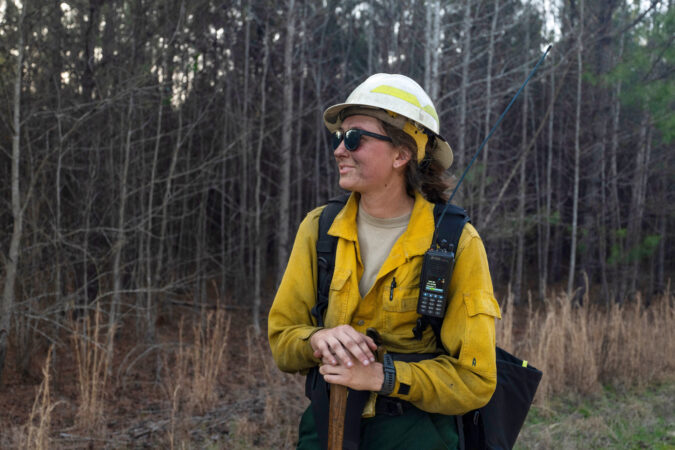
    With wildfires burning across many Western states, wildland firefighters gathered Sunday to pay tribute to three of their own who died after they were trapped by flames a week ago.

    Emily Barker, Nick Hutcherson and Sydney Watson were remembered as courageous public servants who left a lasting impact on the communities where they worked.

    “They showed up to make order out of chaos day after day with purpose, dedication and heart,” U.S. Wildland Fire Service Chief Brian Fennessy said during a memorial service in Grand Junction, Colorado, near where the firefighters died while battling flames on the Colorado-Utah border.

    While that fire is now almost entirely contained, nearly 40 large fires are still going strong across the West. Most of the current fires are scattered around Colorado, Utah and New Mexico while there are wildfires in eight other states — from Alaska to Arizona.

    Over the holiday weekend, more evacuations in Colorado were ordered across four counties where the Aspen Acres fire had burned about 136 square miles south of Colorado Springs.

    The fire had damaged or destroyed more than 200 structures as of Sunday, authorities said. National Guard soldiers were sent in Friday to help with staffing checkpoints on roads near the fire zone.

    Months of dry weather and a record lack of snow this past winter in some places along with erratic winds have been fueling the fires.

    The three firefighters killed on June 27 in western Colorado were members of a Helitack crew that sometimes drops into remote areas by helicopters.

    Barker, Hutcherson and Watson and two others who sustained burn injuries were overcome by flames from fast-moving fires in Mesa County. They had deployed emergency protective shelters, which are considered a “last resort” for firefighters when there is no other way out.

    Fennessy, the Wildland Fire Service chief, said Sunday that “the weight of this tragedy is felt way beyond our wildland fire community.”

    Photos of the firefighters were set up on the stage at the memorial service alongside flowers and flags.

    They worked jobs that require courage, selflessness, strength and heart, said Sarah Fisher, the U.S. Forest Service’s deputy chief for fire and aviation management.

    “The work demands long days, heavy burdens and quiet acts of bravery,” she said. “We will remember them, we will honor their legacy and we will carry their light forward.”

    Emily Barker

    Barker, 38, had so much spirit, and the people around her always strived to be a better person by her presence, said Sarah Brubeck Schnurbusch, a friend and former roommate.

    Barker was from Clinton Township, Michigan, and liked hiking, skiing, dirt biking and playing hockey. She loved firefighting.

    “I’ve never seen someone so excited to go to work,” Brubeck Schnurbusch said. She added that her friend helped pave the way for many women in the industry.

    Barker was a trailblazer, first working as a teacher “shaping young lives,” Fennessy said.

    “She didn’t just live in wild places, she helped to shape them, care for them and make them better,” he said.

    Nick Hutcherson

    Hutcherson, 27, served in the U.S. Navy and had plans to become a physical therapy doctor, according to the Kaibab National Forest in northern Arizona where he was assigned. He was also an active member of the Northern Arizona Deaf and American Sign Language community.

    Hutcherson, who was from Glendale, Arizona, “embodied the spirit of public service” Fennessy said.

    He was a dedicated practitioner of Muay Thai martial arts who trained in Flagstaff.

    His favorite saying was “easy day,” Fennessy said, “because Nick had an uncommon ability to face hard things with optimism, humility and a smile.”

    Sydney Watson

    Watson, 27, was from Warrior, Alabama, and a graduate of the University of Tennessee Southern, where she was a pitcher on the softball team, the university said.

    In 2023, she participated in a program in North Carolina organized by the Women-in-Fire Prescribed Fire Training Exchanges, the group said. In her application, she said she wanted to see more women on the fire line and to learn from other women in the field, the university said.

    “From the time she was very young, she knew she wanted to be a firefighter someday,” Fennessy said.

    “I have no doubt she inspired many young women to become a firefighter,” he said.

  • Mourners throng funeral procession in Tehran for Iran’s Supreme Leader Ayatollah Ali Khamenei

    Mourners throng funeral procession in Tehran for Iran’s Supreme Leader Ayatollah Ali Khamenei

    TEHRAN, Iran — Mourners dressed in black flooded into Iran’s capital Monday for a procession as part of the funeral of the late Supreme Leader Ayatollah Ali Khamenei, with throngs of people calling for the death of U.S. President Donald Trump.

    Khamenei’s flag-draped coffin, and those of members of his family killed Feb. 28 in an airstrike at the start of the war launched by Israel and the United States, sat on board a truck decorated to resemble the ornamental grating that surrounds the shrine of an imam. The massive turnout, encouraged by Iran’s theocracy as a sign of strength, came as it negotiates with the U.S. over a permanent end to the war that killed the 86-year-old cleric.

    Helicopter images aired on Iranian state television showed a massive crowd stretching from Tehran’s Azadi, or Freedom, Square for kilometers (miles) down a multilane street of the same name. The crowd appeared to be larger than the one that turned out for the 2020 procession for the late Revolutionary Guard Gen. Qassem Solemani, which drew over 1 million people.

    Authorities offered no immediate crowd count as the truck crept down the street. But people alongside the truck and elsewhere on the route carried placards, signs and banners calling for Trump’s death.

    “Today that we are here for the funeral for our leader, it’s a very tough day,” mourner Fatima Hassan said. “We are not here to say goodbye to him, we are here for revenge. And we will take revenge.”

    Sea of mourners greets Khamenei

    Mourners reached out to touch the truck, and some threw scarves and other items for attendants to brush against the coffin, a common practice in Iran seen as a blessing. Attendants, some on the ladders of firetrucks, sprayed misted water across the crowds to cool them in the heat.

    Authorities appeared concerned about the dangers of having a large crowd alongside the procession, with officials on loudspeakers urging the public to walk slowly, not to push and to stay to the edges of the street.

    The coffins will be taken through the streets of Tehran on a 12-hour journey to Mehrabad International Airport, said Revolutionary Guard Gen. Hasan Hasanzadeh, who is overseeing the procession.

    Authorities have shut down streets, airspace and daily life for the mourning, which began Saturday and will end Thursday as Khamenei is buried at the Imam Reza shrine in Mashhad, his birthplace.

    “This is the last time I am seeing him,” said a weeping Maryam Alizadeh. “Our generation lived with him for decades.”

    Calls for Trump’s death grow as funeral goes on

    As the funeral has gone on, however, there have increasingly been calls from mourners to avenge Khamenei’s death. Mourners and the signs they carry have called for the killing of both Trump and Israeli Prime Minister Benjamin Netanyahu. Such signs were seen again Monday along the procession’s route, with one effigy of Trump being hanged.

    “We are here to show that his path will continue, and every single one of these people will continue down his path with clenched fists and soon we will certainly avenge his death against the U.S and Israel,” said mourner Sahar Zaraatgar

    U.S. federal authorities have been tracking Iranian threats against Trump and other administration officials for years, stemming from Trump’s ordering the 2020 killing of Soleimani, who led the elite Quds Force. Iran has repeatedly denied plotting to kill Trump, though hard-line propaganda footage long has suggested Trump was in Tehran’s crosshairs.

    Trump meanwhile promised to destroy Iran’s civilization during the war, among other threats.

    Negotiations over war remain on hold

    The U.S. is meanwhile eager to press ahead with negotiations with Iran aimed at fully reopening the Strait of Hormuz, rolling back its disputed nuclear program and reaching a permanent end to the war. Talks appear to be on hold until after the burial.

    The funeral was in part a show of unity as Iran demands a measure of control over the strait, a vital waterway for global energy that it shut down during the war. The U.S. has rejected those demands, and the sides are divided on other key issues, including Iran’s nuclear program and the conflict between Israel and the Iran-backed militant group Hezbollah in Lebanon.

    Iran’s new supreme leader, Ayatollah Mojtaba Khamenei, meanwhile has yet to make an appearance in the funeral ceremonies, which are unfolding over several days. He is believed to be in hiding after reportedly being wounded in the airstrike that killed his father.

    At the height of the war before an April ceasefire, Israel targeted top leaders, in at least one case likely using their public appearance to fix their position. It has also threatened to kill the younger Khamenei.

  • A record number of N.J. students are earning associate’s degrees with their high school diplomas. Meet three of them.

    A record number of N.J. students are earning associate’s degrees with their high school diplomas. Meet three of them.

    When Jasmine Thach began high school four years ago, she wanted to balance academics and extracurricular activities to pursue her college dreams.

    By sophomore year, Thach was enrolled in her first college course. She began taking as many as five classes a semester — enough credits to obtain an associate’s degree in May from Camden County College.

    Thach picked up her second diploma when she graduated in June as valedictorian from Camden County Technical Schools in Pennsauken.

    “I knew that I could do it,” said Thach, 18, of Pennsauken. “I didn’t know how lucky I was.”

    Thach is among a record group of 367 students enrolled in New Jersey’s 21 county vocational-technical schools who graduated with associate’s degrees this year while attending high school. That amounts to 30 more than the previous year, said Jackie Burke, executive director of the NJ Council of County Vocational-Technical Schools.

    “It’s a great outcome,” said Burke. “This is really an attractive option that more people are looking at.”

    Once considered an option mostly for students to pursue skilled trades, vocational-technical schools have become increasingly competitive and are attracting students who want a different pathway to college or careers.

    In a tough economy, the vocational-technical schools make it easier and more affordable for students to earn credit for college-level work. Many have partnerships with county colleges and other nearby two- and four-year colleges, Burke said.

    “It’s a reflection of students seeing the value of getting a head start,” Burke said. “This is really a way to save on those costs.”

    Of the 367 students graduating this year, 31 are from Camden County Technical Schools, which has campuses in Gloucester Township and Pennsauken. The Gloucester County Institute in Deptford has 17 graduates. Burlington County Institute of Technology has students who earned some credits, but none who obtained the full associate’s degree. Cumberland County Technical Education Center in Vineland had the second-highest in the state, with 60 graduates.

    For the 2024-25 school year, more than 35,000 students were enrolled in New Jersey’s county-vocational schools. The schools are selective; only about 12,000 of the nearly 30,000 who apply annually statewide are accepted.

    Students may study a wide range of disciplines, from traditional vocational fields like cosmetology and construction to engineering and health science.

    Under the Early College Associate Degree (ECAD) program, counselors work with students to meet their high school requirements while earning an associate’s degree and attending some of their classes on college campuses.

    In most cases students earn credits at a significantly reduced cost or free. Students can enter four-year colleges as sophomores or juniors, amounting to big savings in time and money.

    Here are the stories of a few of this year’s graduates:

    Jasmine Thach: Wanted to help fund college

    With two siblings already in college, Thach wanted to help ease the financial burdens for her parents. She volunteered as a tutor and participated in performing arts and the newspaper club, all while maintaining her grades.

    She graduated from Camden County College with an associate’s degree in liberal arts and sciences, and from Camden County Technical Schools in Pennsauken.

    In a nod to her Cambodian heritage, she learned to play the kong thom, a traditional Cambodian musical instrument consisting of gongs, and the violin. Every Sunday she travels with her family to Arlington, Va., to take lessons, part of their quest to preserve their culture.

    Jasmine Thach as she graduated from Camden County Technical Schools’ Pennsauken campus last month. Thach, who also received an associate’s degree from Camden County College, plans to attend Johns Hopkins University as a math major.

    While her mother and sister learned traditional Cambodian dances, Jasmine discovered a passion for music. “I have two left feet,” she quipped.

    Jasmine received a full scholarship to attend Johns Hopkins University where she plans to major in applied math and statistics.

    She wants to become an actuary and eventually obtain a doctorate and become a college professor.

    “I’m very big on math,” she said.

    Yeheira Acosta: `I’m just really grateful’

    Education has become a family affair for Yeheira Acosta, with her parents and younger sister following in her footsteps to make a better life.

    She graduated in June from Cumberland County Technical Education Center in Vineland and picked up an associate’s degree in computer science from Rowan College of South Jersey.

    Yeheira Acosta of Vineland, N.J., (third from left) shown with her family, graduated from Cumberland County Technical Education Center and obtained an associate’s degree in computer science from Rowan College of South Jersey. She plans to attend Vanderbilt University in the fall.

    A first-generation college student, Acosta has inspired her family. A younger sister is also on track to earn an associate‘s degree while in high school. Her father recently enrolled in a DeVry University online cybersecurity program, and her mother is pursuing a GED.

    Acosta, 18, of Vineland, plans to study AI at Vanderbilt University, where she earned a full ride. A Yankees fan, she wants to work in the sports industry.

    Although she is excited about the next chapter, Acosta said she will miss her family and her church, the Life of Faith in Vineland, where she provides technical support.

    “I‘m just really grateful, not everyone has the same opportunity,” she said. “I don’t take it for granted.”

    Max Yeung: An aspiring lawyer

    The youngest of three siblings, Max Yeung has set his sights on becoming a personal injury lawyer and a public service advocate.

    He obtained an associate’s degree in prelaw from Rowan College of South Jersey in Sewell. Yeung said following a computer science track at the Gloucester County Institute of Technology and an internship he got along the way helped him realize that law is his passion.

    Yeung said he landed an internship at an Audubon law firm with assistance from a college professor. His top priority was completing as many credits as possible.

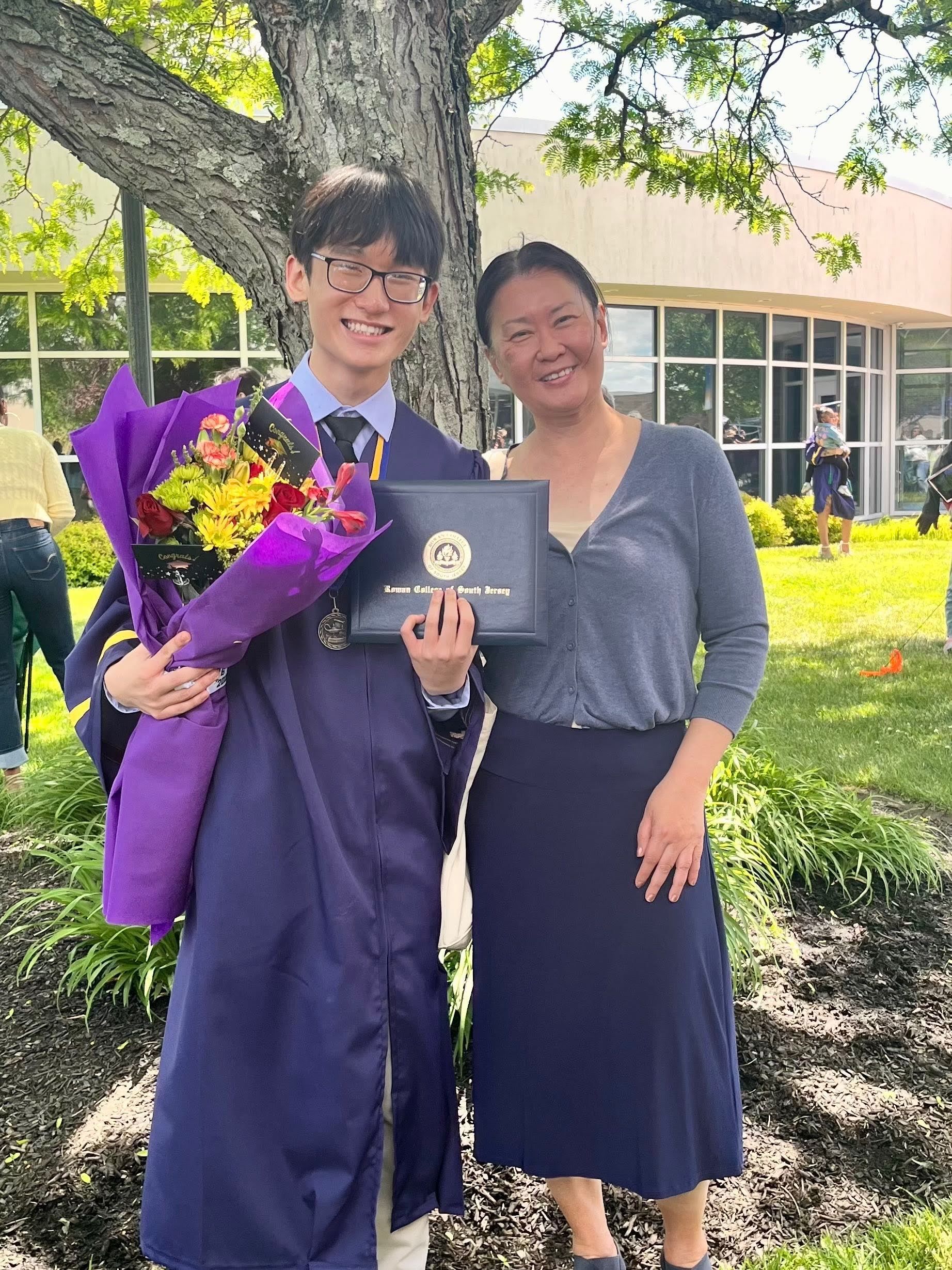
    Max Yeung, 17, of Sewell, poses with his mother, Li Khoo, after receiving an associate’s degree from Rowan College of South Jersey.

    At his high school, Yeung, 17, of Sewell, founded a nonpartisan civics group that registered students to vote. He was also president of the National Honor Society.

    “It was a lot of juggling. There were a lot of moments when I had to huddle down,” he said. “It helped me understand what the college environment looked like.”

    Yeung plans to attend Rowan University as a law justice major. Depending on how many credits transfer, he may graduate in a year or two and then hopes to attend Rutgers-Camden Law School.

  • What will Media look like in 2035? The borough is planning for diversified housing options, safer streets, and more retail

    What will Media look like in 2035? The borough is planning for diversified housing options, safer streets, and more retail

    What are the defining characteristics of Media, and how should the borough plan for the next decade?

    Those are the questions at the core of “Media 2035,” the comprehensive plan adopted by Media’s borough council last month designed to shape the next chapter of land use, housing, economic development, traffic planning, and environmental decision making in the 5,900-resident Delaware County community.

    “A comp plan is a long-term vision of how a community can look in the future,” Brittany Forman, Media’s borough manager, said.

    The 166-page plan, built on feedback from around 500 residents, is centered around four guiding principles: Preserving Media’s character, fostering inclusivity through housing diversity, preserving the environment, and becoming a more connected and less car-dependent borough.

    Municipalities in Pennsylvania are required to have a comprehensive plan under the Pennsylvania Municipalities Planning Code and must review them every 10 years.

    Media’s leaders have been tasked with stewarding a borough that has seen immense economic growth in recent decades, transforming it from a sleepy town wrought by financial disinvestment and crime to a cultural hub and destination for families settling in the suburbs. While Media’s metamorphosis has brought new residents and investment into the borough, it has also pushed the community’s limits around housing affordability, traffic, and growth.

    “We’re a victim of our success, and it’s a good thing to be a victim of your own success,” said borough Council President Mark Paikoff. “But careful planning really is helpful.”

    Here are four key takeaways from Media’s comprehensive plan.

    Media’s charm has made it a desirable, and increasingly unaffordable, place to live

    Surveyed residents said Media’s “small-town feel,” including its historic architecture, walkability, and diverse local businesses, is the borough’s most important asset. Yet the traits that make Media a great place to live have also made it a harder place to afford to stay.

    “For generations, Media has prided itself on being ‘Everybody’s Hometown,’ a motto that reflected a genuine reality: a community where wealthy professionals, hourly service workers, young families, and retirees lived side-by-side,” the comprehensive plan states, adding that economic diversity was made possible by a “varied housing stock that offered entry points for people at every stage of life.”

    As demand for walkable, transit-accessible living has surged in the Philly region, rising real estate costs are chipping away at this accessibility, creating a “severe burden” for a large segment of Media, notably seniors, teachers, nurses, and first responders, the plan states.

    Recommendations outlined in the plan include deepening partnerships with affordable housing agencies, updating the borough’s zoning code to spur housing development in key areas, and promoting non-traditional housing options like in-law suites. Officials said there’s a significant opportunity in converting underutilized office spaces into housing, as many of Media’s vacant offices are already located in former residential properties.

    Paikoff said the borough has had informal conversations with developers who are interested in both renovating older units and building new housing, though he stressed that bringing additional housing to the borough “will take some time.”

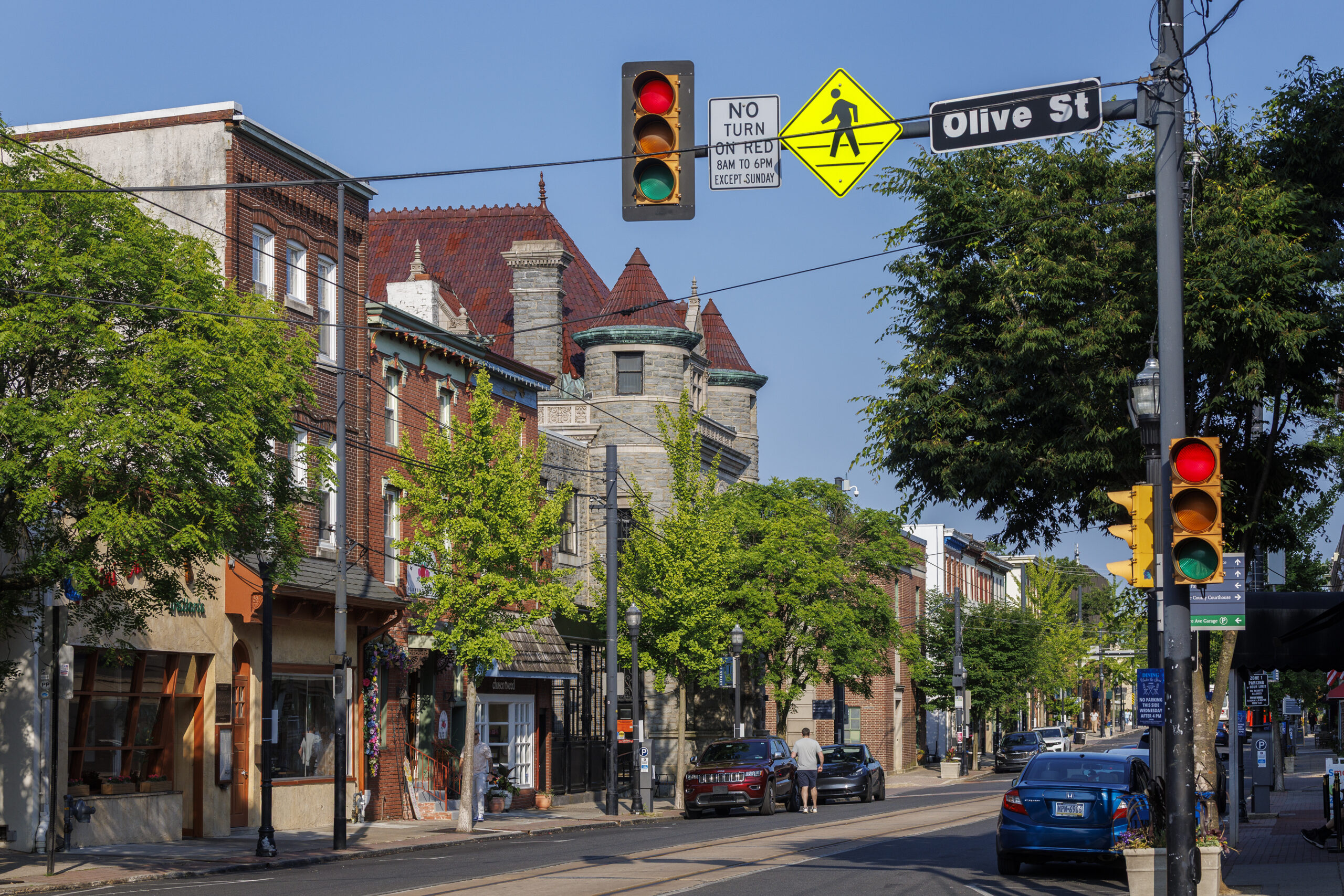
    Downtown Media on a June day.

    Media has strong transit access but ample traffic safety challenges

    Media is defined by its density. The borough’s footprint is under one square mile, and it’s a place where pedestrians, cyclists, cars, buses, and SEPTA trolleys regularly interact.

    “For a small town, I’d say we’re very sophisticated in terms of multimodal transportation,” said Forman.

    Yet Media’s density and busy streets have also created the conditions for traffic safety issues. The borough recorded eight vehicle crashes resulting in serious injury and two resulting in death between 2013 and 2024. A 2020 traffic study conducted by the borough found that drivers regularly speed, especially along Baltimore Avenue, and roll through stop signs. Media’s only bicycle infrastructure comes in the form of painted road markings. Residents expressed a desire for more crosswalks, less disruptive downtown traffic patterns, and protected bike lanes.

    Parking, too, remains a “source of friction.” The Baltimore Avenue parking garage is the anchor of the borough’s parking system, but it’s aging and requiring increased maintenance. At the same time, a surge in food delivery services has led to frequent double-parking outside of restaurants and blocking travel lanes. Media’s current parking and loading setup, the plan states, is “largely organized for a world that no longer exists.”

    The vast majority of Media’s workforce lives outside the borough

    Nearly all workers employed in Media commute from outside the borough. Of the approximately 9,800 primary jobs in Media, only 2.5% are held by residents. While Media’s accommodation, food service, healthcare, and arts and entertainment sectors have grown, its office administration, public administration, and wholesale trade sectors have shrunk. Overall tax revenues have increased in the past decade, led primarily by a growth in earned income tax revenues.

    The post-pandemic shift to hybrid and remote work has also “fundamentally altered” travel behavior in the borough, according to the plan. Twenty percent of Media residents worked from home in 2023, up from 3% in 2014, according to estimates from the U.S. Census Bureau. With fewer residents and workers commuting on a daily basis, traditional 9-to-5 traffic on SEPTA’s Regional Rail and trolley lines has shifted, following regional and national trends. Local neighborhood activity, on the other hand, has increased during the workday.

    Elizabeth Romaine, borough council vice president, said local businesses are already shifting to meet new consumer patterns, extending their hours or opening on weekdays when they would have previously been closed.

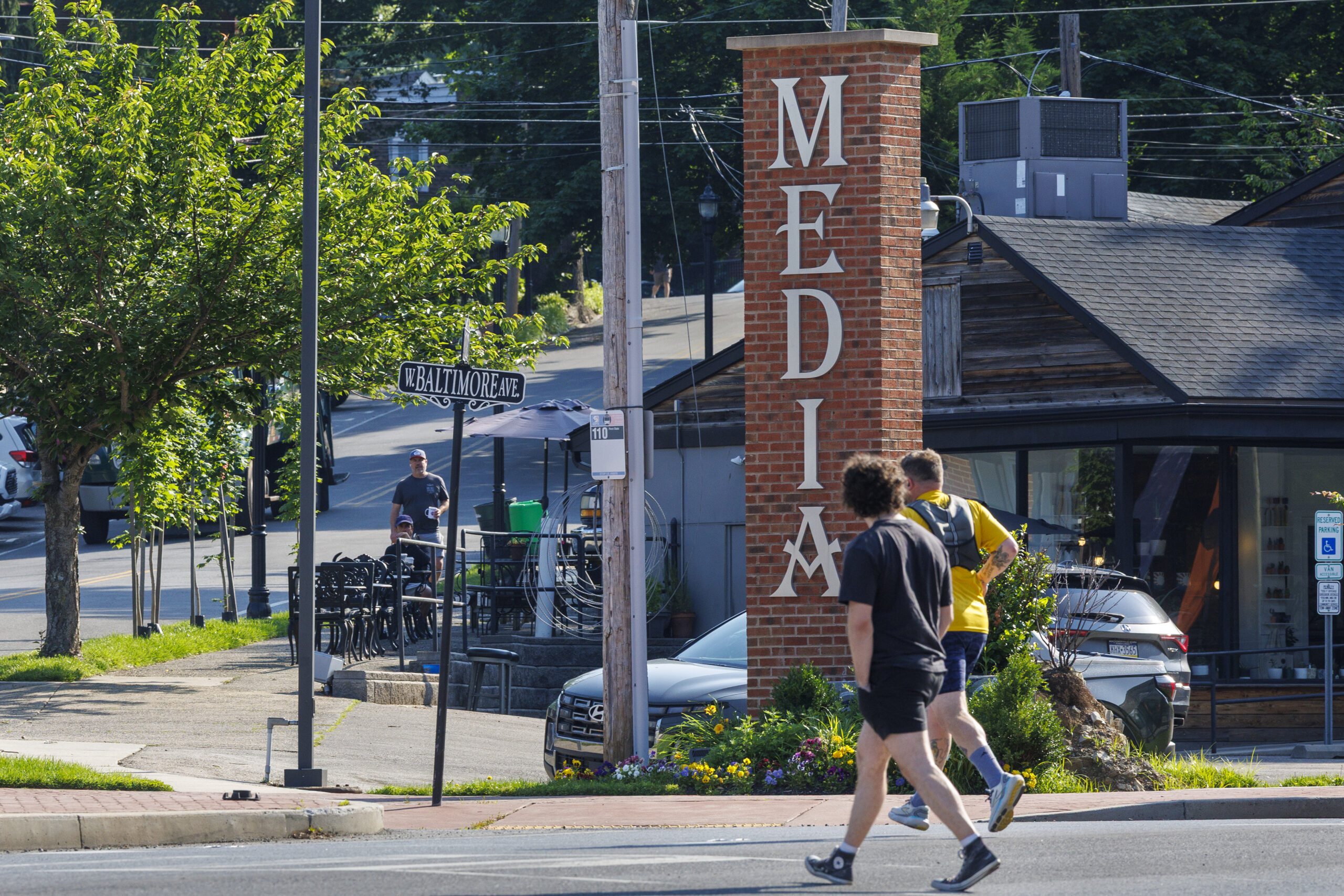
    The intersection of W. State Street and Baltimore Pike in Media.

    Residents love Media’s dining scene, but want more retail options

    Nearly 80% of surveyed residents reported satisfaction with Media’s vibrant restaurant scene, which draws diners from across the region. Media’s downtown is viewed as the borough’s “defining economic and social heart,” according to the plan.

    At the same time, residents expressed desire for a greater variety of retail, dining, and entertainment options. Non-food destinations and stores that fulfill everyday needs, specifically bakeries, clothing and home goods stores, and fitness centers, are outlined as particular areas of need.

    Romaine said Media has had some recent “retail successes,” like the opening of Sonny’s Vintage Clothing on State Street and the expansion of craft store Homesewn.

    The plan recommends increasing funding for the Media Business Authority, conducting a business-focused parking study and crosswalk inventory, and working to court new retailers. Recommendations also include enhancing programming at the Media Theatre to generate more foot traffic, deepen Media’s identity as a cultural destination, and “further solidify Media’s draw for visitors from across the region.”

    This suburban content is produced with support from the Leslie Miller and Richard Worley Foundation and The Lenfest Institute for Journalism. Editorial content is created independently of the project donors. Gifts to support The Inquirer’s high-impact journalism can be made at inquirer.com/donate. A list of Lenfest Institute donors can be found at lenfestinstitute.org/supporters.

  • A cow beauty pageant honors rural Pennsylvania’s shrinking dairy industry

    A cow beauty pageant honors rural Pennsylvania’s shrinking dairy industry

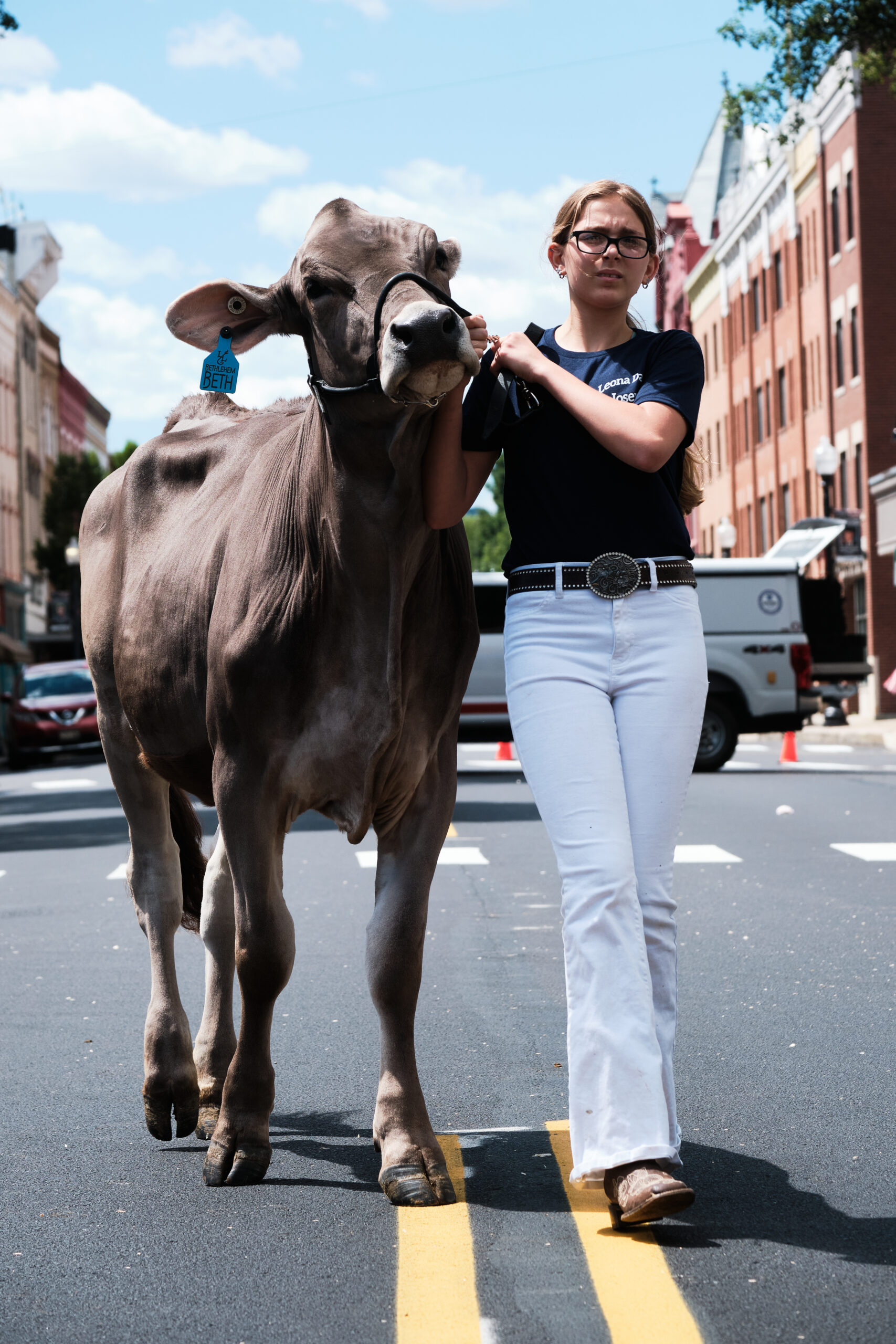
    TOWANDA, Pa. — Her full name was Cashells Jry Shakira-Red-ET — Shakira to keep it simple — and like her namesake, the big red and white Holstein had 6-foot hips that didn’t lie as she hoofed down Main Street.

    Shakira is a showgirl accustomed to winning, one of the few cows that allowed judges to place a floral crown on her head at the Bradford County dairy cow beauty pageant in Towanda on June 20, about 100 years after their last one.

    “The most beautiful dairy cow in Bradford County, folks,” said Duane Naugle, Bradford County’s community planner and the day’s emcee.

    A heifer is walked down Main St. in front of the County Courthouse in Towanda, Pa., for a cow beauty contest held on Saturday, June 20, 2026.

    Other winners were Skylar, a Lineback heifer, and Camo, a doe-eyed Brown Swiss calf.

    “They’re my favorite breed. They’re just so dopey and docile,” Miranda Neville, a dairy farmer out of Warren Center, said of Camo. “I mean, just look at her.”

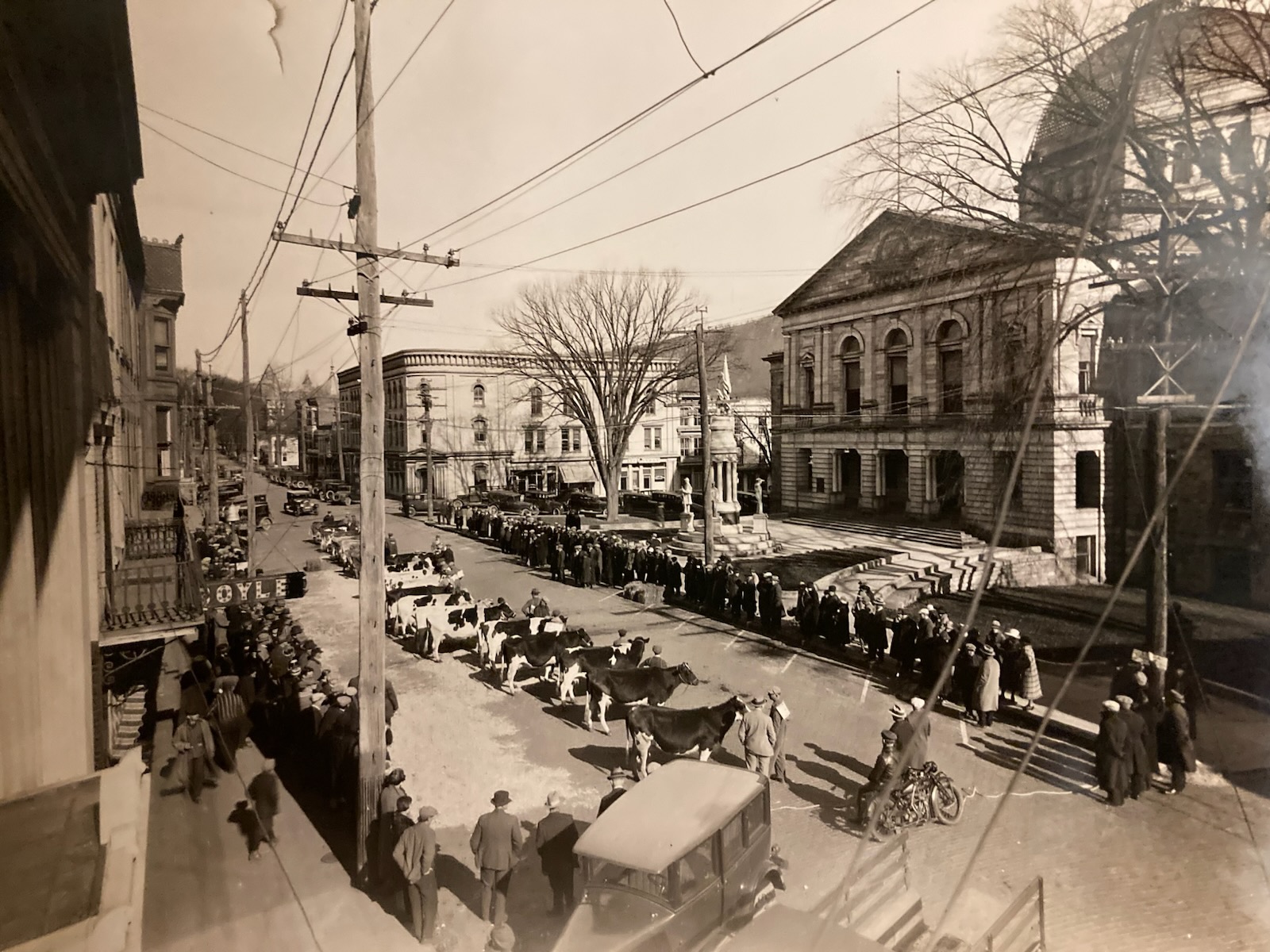
    Bradford County, population 59,600, sits about 175 miles northwest of Philadelphia in North Central Pennsylvania. County officials said they found an old, black-and-white photo of a similar beauty pageant from 1926 in the county courthouse recently.

    The 1926 event in Bradford County.

    The purpose of that contest a century ago, organizers said, was to highlight the county’s bustling dairy industry.

    “Getting down to the main idea, it may be stated that the Chamber of Commerce has seized upon this opportunity of giving recognition to the basic industry of Bradford County — dairying,” The Daily Review newspaper wrote in 1926.

    Officials figured that old photo was a sign, a good-enough reason to get cows on Main Street as part of the county’s ongoing celebration of America’s 250th. There was also free ice cream, a cow milking contest, and other livestock to pet.

    Dixie Joseph leads her heifer down Main Street in Towanda, Pa., for a cow beauty contest in front of the Bradford County courthouse on June 20.

    A lot has changed in dairy over the decades, as dairy farms have shuttered by the thousands, nationwide. In 2025, the USDA reported 23,609 dairy farms across the country, a 70% decrease in just 20 years.

    Earlier this year, The Inquirer chronicled the plight of a longtime dairy farm in New Jersey’s most rural county. Owners there were denied a variance to install solar panels and stopped milking shortly after.

    “We have been losing money for the last 10 years,” a young farmer there told The Inquirer.

    Henry Farley, the mayor of Sayre, Bradford County, said there were 41,311 dairy cows in the county in 1920. That number is down to 10,059 dairy cows today, he said.

    “We remain an agricultural county, and dairy is still a big part of it,” he said. “This is still rural America, and this was a great way to showcase that.”

    A cow owner glances back in front of a crowd gathered at the Bradford County courthouse for a cow beauty contest in Towanda, Pa., on June 20.

    Top employers in Bradford County include medical facilities, a mill, Walmart, and Cargill, a beef-processing plant in Wyalusing, where most major league baseballs are made from dairy cow hides.

    Many of the farmers in Towanda on June 20 owned small farms, which are the hardest to keep afloat. Most of the owners couldn’t depend on dairy as a full-time income and worked other jobs as a result.

    Many dairy farms in Bradford County have transitioned to beef, poultry, or swine.

    “Well, it’s pretty simple. Dairy prices are down, and beef is up,” said dairy farmer McKenzie Slater.

    Neville said she still milks 60 cows at her dairy, Vin-Deb Farms, but it’s not her only source of income. She also works for Bradford County’s conservation district.

    Sheyann of Campbell Farm rests on top of her calf, Norma, ahead of Bradford County’s cow beauty contest in Towanda, Pa., on June 20.

    “We all have full-time jobs, too, along with farming,” Neville said. “That’s normal around here.”

    Even Shakira, the showgirl, still milks, producing more than 11 gallons per day. She’s just preened and washed a bit more. Her udders hung low on Main Street.

    “She’s milking pretty heavy right now,” said owner Hannah Watson, of Columbia Crossroads, Bradford County. “It’s whole milk, straight from the cow.”

    A judge scores the cows on their beauty in front of the Bradford County courthouse in Towanda, Pa., on June 20.
  • When the buzziest restaurants in Philly need a menu, this is the designer they call

    When the buzziest restaurants in Philly need a menu, this is the designer they call

    Unless you’re paying close attention while flipping through the extensive menu at Almanac, Old City’s Japanese American cocktail bar, you might overlook some of the painstaking work that went into it. The leather-bound book’s deep green color is meant to evoke the interior of the bar. The borders of the pages hint at the seasonal ingredients that go into each cocktail, and the thin newsprint pages depicting glassware illustrations of Almanac’s complex cocktails are meant to both be a guide and evoke opening an old book.

    Kylie Silvestri is obsessed with these details.

    That’s because she is the artist and designer behind menus for some of the city’s trendiest restaurants and bars. Her roster includes Sao, Almanac, Ogawa Sushi & Kappo, Javelin, Little Coco’s, River Twice, Little Water, Habibi Supper Club and its forthcoming cafe, Slow Drinks, and the forthcoming Northern Liberties cocktail bar, Field Day. Her company, Haridelle, focuses on this meticulous hospitality branding.

    “Design is part of the holy trinity in the food service industry,” Silvestri said. “There’s the food. There’s the hospitality, and then there’s the design.”

    Almanac’s menu, designed by Kylie Silvestri.

    Menus help set the stage for each customer’s meal, and play a big role in bringing the restaurant’s story to life.

    “The second a customer sits down — before they even taste the food/beverage — they are holding a menu in hand,” she explained. “How does the menu feel, tactilely? How does it look? It all adds to the experience and helps to tell that story. So, for me, designing them is about building the puzzle pieces together in a way that connects and relays the message eloquently, from chef-owner to customer.”

    Silvestri didn’t begin her career with a roster of small hospitality clients. She previously worked for startup groups and larger hospitality companies. In 2021, she started freelancing to build her own company, called Kylie Creative, where she developed branding for predominantly women-owned entrepreneurial businesses in the wellness industry.

    As her clientele grew, she would pick up serving shifts at restaurants in the city, including Osteria, and build connections with industry folks. Soon, a friend at the restaurant introduced Silvestri to Amanda Rucker (River Twice, Little Water), who commissioned her to design flyers for a 2022 fundraising event to support abortion access. The following year, Rucker reached out to Silvestri for branding and menu development for Little Water.

    “I naturally pivoted my design work to focus on the hospitality industry — because once you start, you never leave,” she said.

    While designing menus is just a part of her restaurant branding business, the process can take up to a month for each restaurant. There are five key steps to ensure a final product that owners are happy with.

    Sao menu, by Kylie Silvestri.

    First, Silvestri takes time to understand the owners/chefs’ vision for the menu. Then, she determines a menu system and layout with brand fonts and drawings. Walk-throughs of the restaurant/bar (in person or via renderings if it’s not built yet) help her connect the menu design to the physical space. Once the vision is mapped out, Silvestri likes to settle down at a local coffee shop to create the menus on Adobe Illustrator and InDesign. The final step is sharing paper stock samples with owners/chefs for feedback on design and tactility.

    At Little Water, the linen-textured menu was the answer to conversations surrounding technique and locale, reinforcing the feeling of the coast with dishes offering the breadth of the Gulf to Cape Cod. An illustration of a little sandpiper sipping out of a cocktail on the drinks menu showcases the personality of restaurant owners Randy and Amanda Rucker. “We tied the design to that nautical experience and having this playfulness — Randy always says that ‘We don’t take ourselves seriously; we take our food seriously,’“ Silvestri said.

    At Sao, the menu was inspired by Rachel Lorn’s family’s business down the Shore, featuring a takeout menu style that sections off the dishes in categories. There are outlines of vintage signage by Philly-based artist Darin Rowland.

    Little Water menu, by Kylie Silvestri.

    For Habibi Supper Club and Field Day, the menus — like the restaurants — are still in development. On a recent Wednesday, Silvestri visited Field Day to chat with co-owner Katie Childs about the new bar’s branding and later chatted on the phone with Miled Finianos of Habibi Supper Club for his new cafe’s menu design.

    The menus, Silvestri explained, are “time capsules of culture, time, and space,” so every choice, from paper stock to illustration style, is made to capture that particular restaurant’s moment.

    Philly’s aim lately is on chef-owned restaurants, “or rather a focus on who is behind what,” she said, which means storytelling is more important than ever.

    “Philly’s food scene is incredibly versatile. … Each story is unique to the chef/beverage professional at the heart of the concept, making it an incredible city to work in,” she said. “I will never get tired of exploring new design styles and never feel pigeonholed to follow a specific one.”

  • Your guide to South Jersey’s mini golf courses

    Your guide to South Jersey’s mini golf courses

    Mini golf is an underrated nostalgic summer staple. The rainbow array of golf balls, the sun-bleached artificial turf, the tilting windmills, and fiberglass volcanoes will transport you right back to childhood, melting ice cream cones and all.

    It’s easy to find putt-putt courses dotted up and down the boardwalks of the Jersey Shore, but South Jersey has its fair share of miniature fareways, too. Many offer more than just mini golf, with homemade ice cream, arcade games, amusement park rides, and driving ranges for adults. Two courses are indoors, for big fun even when the sun isn’t shining.

    Tee up a great summer on these miniature links:

    Big Swing Golf Center

    Open year-round, weather permitting

    Big Swing boasts not one but two mini golf courses. (For the second, “Go left at the volcano,” the attendant tells me.) Both are light on props and heavy on banks, curves, hills, elevation gains, and drops, making for some genuinely tricky shots.

    Best hole: Number eight on the waterfall course starts at the top of a hill, with three options to get to the bottom, including two mystery chutes — one that could land a hole in one, and another that spits out on a separate landing.

    Other amenities: Golf simulator, golf lessons, driving range

    Price: $7 per adult for both courses, $6 for children 12 and under

    📍312 Salina Rd., Sewell N.J. 08080, 📞 856-553-6723, 🌐 bigswinggolfcenter.com

    Monster Mini Golf

    Inside Monster Mini Golf in Cherry Hill, N.J.

    Year-round

    Don’t let a rainy day (or a brutally hot one) stop you from hitting the links. Monster Mini Golf offers 18 holes of spooky-themed, indoor, glow-in-the-dark golf, with locations in Cherry Hill and Turnersville. Black light illuminates the dark interior, which is decked out with weird Jersey scenes rendered in glowing paint, and monstrous animatronics that come to life as you move around the course.

    Best hole: Tie between hole number eight, which is presided over by an enormous, glowing, talking skull and number nine, where players can spin a wheel to add an random, extra challenge to their turn, like playing with one arm behind their back or with their eyes closed.

    Other amenities: Arcade, mini-bowling alley, laser maze, laser tag (at Turnersville location only)

    Price: $10-14 for mini golf

    📍2040 Springdale Road, Suite 300, Cherry Hill, N.J. 08003, 📞 856-393-5500, 🌐 monsterminigolf.com/locations/us/nj/cherry-hill

    📍 1 Shoppers Lane, Blackwood, N.J. 08012, 📞 856-302-5240, 🌐 monsterminigolf.com/locations/us/nj/turnersville

    Pleasant Valley Miniature Golf

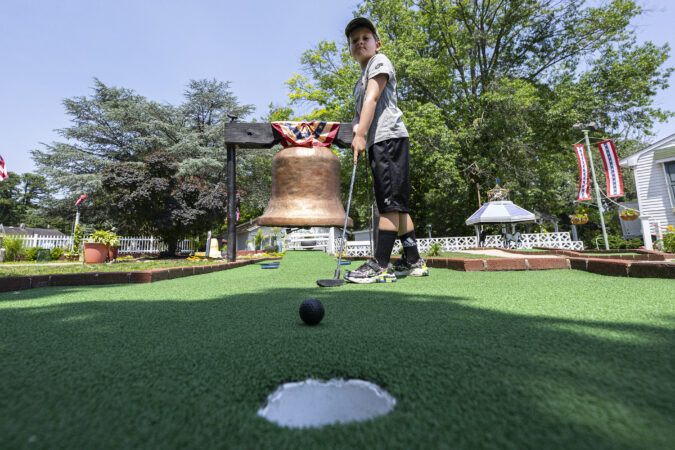
    Players play rounds at Pleasant Valley Miniature Golf on Route 73 in Voorhees, N.J. on Tuesday, June 30, 2026.

    April 1 to Halloween

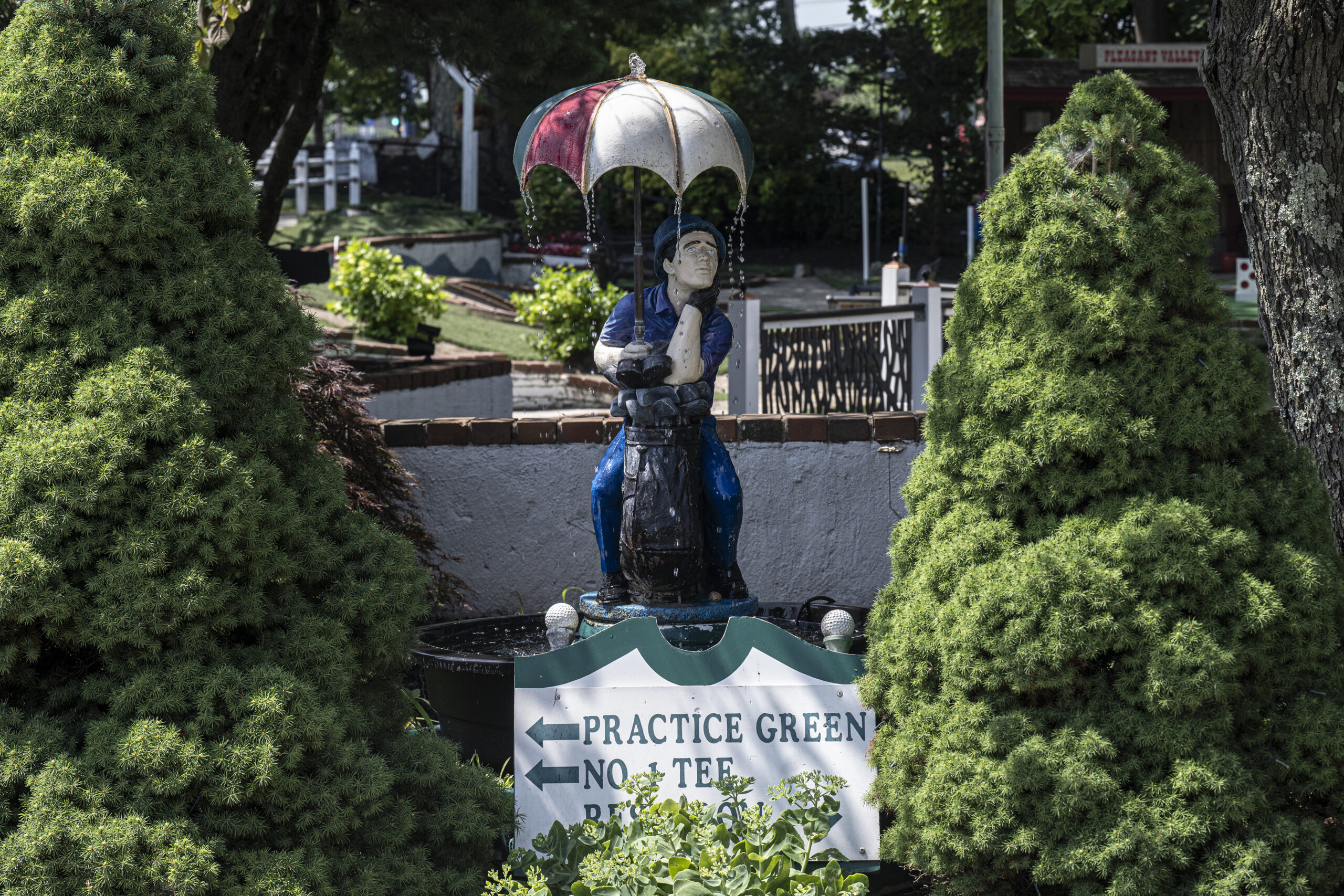
    Opened in 1972 and now run by the son of the original owner, Pleasant Valley is a throwback mini golf course with all the whacky obstacles you could dream of. The fiberglass Liberty Bell and giant sombrero, built by the owner, have been there since the 1970s. Guest-favorite hole number 12 features three gophers driving classic cars in circles. Conveniently located on the way to Atlantic City, it’s got a classic charm you won’t find at every course.

    Best hole: “The sombrero,” owner Brian Whelan says. “It’s very difficult, very easy to have the ball fly out of the sombrero. Big risk, big reward there.”

    Other amenities: Ice cream and water ice

    Price: Before 6 p.m., $10 for adults, $9 for kids 10 and under and seniors; after 6 p.m., $12.50 for adults, $10 for kids and seniors

    📍 93 Rt 73, Voorhees, N.J. 08043, 📞 609-314-1214, 🌐 pvminigolf.com

    Voorhees Golf Land

    March 1 to the weekend after Thanksgiving

    Previously known as The Golf Farm, Voorhees Golf Land reopened last year under new ownership after a year-long closure. In addition to 18 holes of mini golf, Golf Land sports the region’s only pitch-and-putt course. That’s 18 holes of golf that are just 20 to 50 yards long, “not quite the size of a par three,” owner Diana Hennefer says, so it’s a great option for people who don’t have the time or mobility to play a full round of golf, or who just want to practice their short game.

    Best hole: Number 18 has a wishing well in the middle. “It’s probably the trickiest one,” Hennefer says. “It’s also the prettiest, most picturesque one.”

    Other amenities: Pitch-and-putt course

    Price: Mini golf: $8 for adults, $6 for kids; pitch and putt: $15 for adults, $10 for kids

    📍 801 Haddonfield Berlin Road, Voorhees, N.J. 08043, 📞 856-630-0977, 🌐 voorheesgolfland.com

    Serene Custard and Miniature Golf

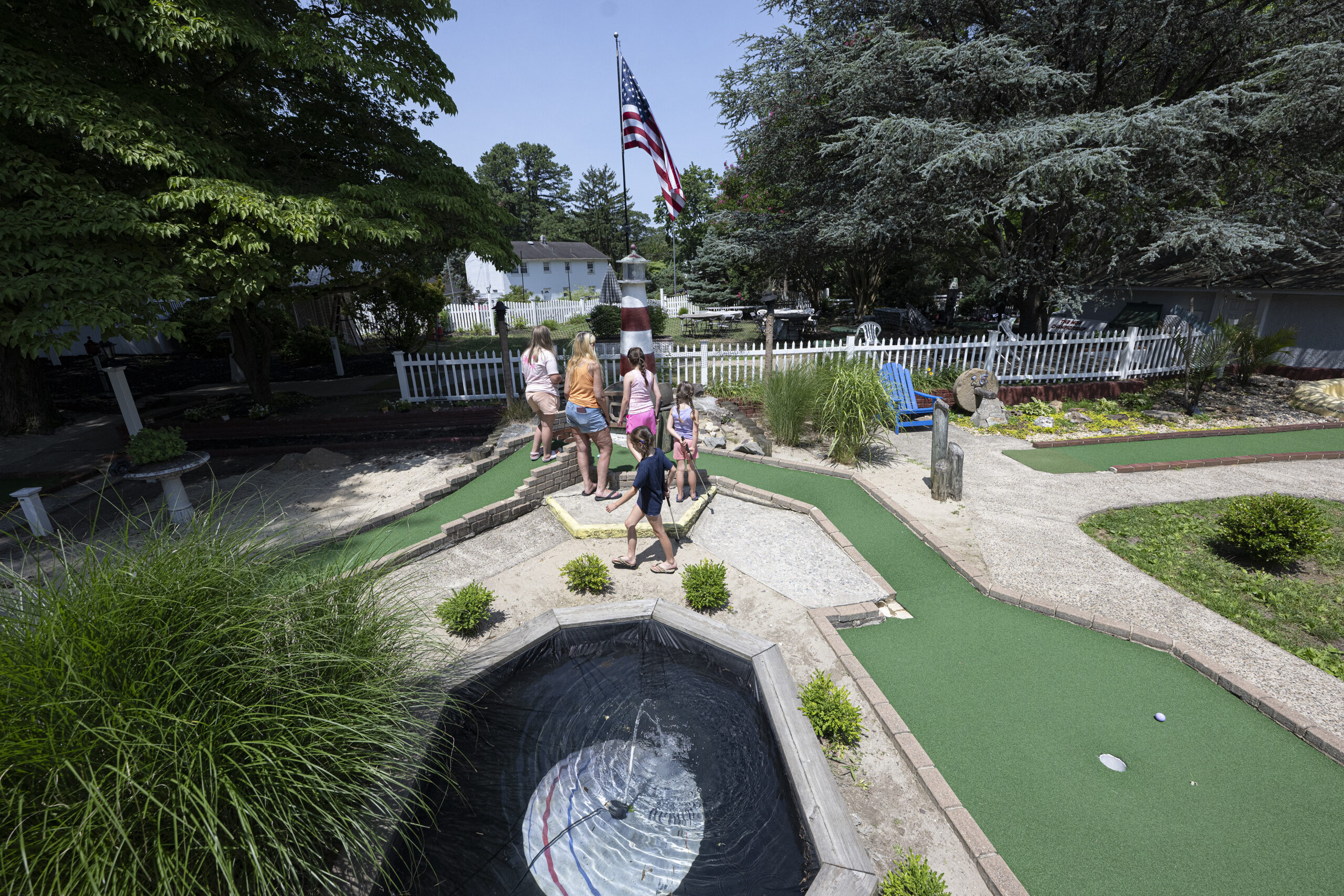
    A water feature at Serene Custard and Miniature Golf in Vineland, N.J.

    Come for the challenging, hilly course, and stay for the vintage custard stand serving homemade ice cream. Built in 1959, Serene Custard still boasts its original mid-century signage and is celebrating its 67th season this year. The 18-hole mini golf course is a newer addition, featuring tough terrains and lush landscaping. “You sort of don’t even feel like you’re in South Jersey when you’re on the course,” owner Ari Dendrinos says.

    Best hole: Number nine takes place entirely within a huge man-made cave.

    Other amenities: Custard stand serving ice cream, water ice, and some savory snacks

    Price: $6 for children, $8 for adults

    📍 2336 N. West Blvd, Vineland, N.J. 08360, 📞 856-692-1104, 🌐 serenecustardandgolf.com

    The Funplex Mt. Laurel

    Spring break to mid-October

    The Funplex at Mt. Laurel has way more than just mini golf. There’s a waterpark, indoor and outdoor rides, a bowling alley, and more. But don’t sleep on the two mini golf courses, Adventure Cave and Lost Lagoon, both of which offer 18 holes of obstacles, including a few multi-level designs.

    Best hole: At number 19, if you get a hole-in-one, your next game is free.

    Other amenities: Waterpark, indoor and outdoor rides, bowling, arcade games

    Price: $42 on weekdays and $49 on weekends for access to all attractions; $46 and $54 when purchasing at the gate

    📍 3320-24 NJ-38, Mount Laurel, N.J. 08054, 📞 856-273-9666, 🌐 thefunplex.com

    Jersey Devil Golf & Fun Center

    May to October, honor system all year round

    The Jersey Devil wants to ensure you never have to miss a mini golf fix. Despite their posted hours, this course operates on the honor system, making their putters and golf balls available every day, all year round, so you can play even when no one is working. Just drop $5 in the box at the first hole to enjoy putting on these long greens, which provide a challenge to kids and adults alike.

    Best hole: Hole number 12 features a sharp bend and splits in two before converging.

    Other amenities: Driving range, picnic area with cornhole, and fire pits

    Price: $8 for adults, $7 for 6 to 16-year-olds, free for 5 and under

    📍 276 Rte 73 S, Hammonton, N.J. 08037, 📞 609-704-9007, 🌐 jerseydevilgolf.com

    Pleasant Valley Miniature Golf is shown on Route 73 in Voorhees, N.J. Tuesday, June 30, 2026.
  • Everything you need to know about the MLB All-Star Game coming to Philly

    Everything you need to know about the MLB All-Star Game coming to Philly

    The wait is finally over.

    It was more than seven years ago that Major League Baseball announced the All-Star Game would come to Philadelphia for the nation’s 250th birthday. The game is the bookend to a season of big events following March Madness, the PGA Championship, and the FIFA World Cup.

    Baseball’s midsummer classic, which returns to Philly for the first time since 1996, will be more than just a game, as the city will be the center of the baseball world for nearly a week.

    Here’s a look at what to expect:

    HBCU Swingman Classic

    When: 7 p.m., Friday

    TV: MLB Network

    Location: Citizens Bank Park

    What you need to know: The fourth annual game is a showcase of the best players from historically Black colleges and universities. The classic was founded by Ken Griffey Jr. as a way to give a platform to players who often are overlooked.

    The local connection: Jimmy Rollins will manage one of the teams, and Mayor Cherelle L. Parker will throw out the first pitch. The teams will visit City Hall before the game to honor Octavius Catto, a civil rights activist who cofounded one of America’s first organized Black baseball teams in 1865. There is a statue of Catto outside City Hall. Mayfair’s Santino Harwood will play in the game. The Roman Catholic grad is a shortstop at Delaware State.

    Pitcher Gage Wood was the Phillies’ top pick in last year’s MLB draft.

    The MLB draft

    When: 1:30 p.m., Saturday; TBD Sunday.

    Location: Pennsylvania Convention Center Grand Hall

    What to know: The event is free to attend, but ticket registration has closed. The draft used to be held at MLB Network’s studio in Secaucus, N.J., before the league moved it to All-Star Week starting in 2021. The White Sox have the first pick, and the Phillies have to wait until No. 36 for their first selection.

    All-Star Village

    When: 10 a.m.-8 p.m. Saturday and Sunday; 10 a.m.-6 p.m. Monday and Tuesday

    Location: Pennsylvania Convention Center

    What to know: The event is similar to Fan Fest that came with the 1996 game, but it’s much bigger now. The village will feature big league mascots and appearances by a cast of Phillies legends including Steve Carlton, Cole Hamels, John Kruk, Larry Bowa, Dave Cash, and Carlos Ruiz. Fans can make their own strikeout call, test food from around the majors, throw a pitch, take batting practice, see the World’s Largest Baseball, and even strap on a Velcro suit, jump, and stick on a wall for a home run-robbing photo op.

    Former Phillies pitcher Cole Hamels is scheduled to make an appearance at MLB’s All-Star Village.

    Futures Game

    When: Noon Sunday

    Location: Citizens Bank Park

    TV: NBC10

    What to know: The game is a collection of baseball’s best prospects as each team sends two players from its farm system. The players are split into American League and National League squads. The game will feature nine of MLB Pipeline’s Top 10 prospects including top-ranked Jesús Made, a shortstop in the Milwaukee Brewers’ system.

    Local connection: The teams will be managed by Larry Bowa and Shane Victorino. Gage Wood, who may have a shot to reach the majors this year, will represent the Phillies a year after they drafted the hard-throwing right-hander 26th overall. Wen-Hui Pan, a right-handed reliever, also was selected for the Futures Game. Both pitchers are with double-A Reading.

    MLBx All-Star 3-on-3

    When: Following the Futures Game on Sunday

    Location: Citizens Bank Park

    What to know: New this year, MLBx replaces the Celebrity Softball Game. The fast-paced event is a modified home-run hitting challenge in which players are awarded points for their hitting and the catches they make in the field.

    Local connection: Ryan Howard, Rollins, and Victorino will captain teams, with Atlanta Braves legend Andruw Jones leading the fourth squad. Howard has Eagles wide receiver DeVonta Smith on his team while Rollins is teamed up with Terrell Owens. Each team includes an MLB legend, a professional softball player, and a nonbaseball celebrity.

    Bryce Harper was the last slugger to win the home run derby in his home ballpark. However, that was in 2018 while he was with the Nationals.

    Home Run Derby

    When: 8 p.m. Monday, July 13

    TV: Netflix

    Location: Citizens Bank Park

    What to know: It’s been 20 years since Howard won the Home Run Derby. The Phillies are due. Bryce Harper is the last player to win the derby in his home ballpark, which he did with the Nationals in 2018 by beating … Kyle Schwarber in the final round.

    The competitors: There will be eight participants, but could two of them be Phillies? Perhaps we’ll see a rematch of the 2018 final.

    The format: The league is ditching the clock that governed the derby since 2015, as players now will be given a finite number of swings per round. A batter gets 20 swings in Round 1, 15 in Round 2, and 15 in the final. If a batter homers on their final swing, they keep swinging until they come up empty. The top four players from the first round move to Round 2, and the top two then move to the final round. The tiebreaker in Round 1 is home run distance, and Rounds 2 and 3 use a three-swing swing-off.

    The red carpet

    When: 2 p.m. Tuesday, July 14

    TV: MLB Network

    Location: Independence Hall

    What to know: The players will showcase their fashion just steps from the Liberty Bell before walking all the way to South Philly. Just kidding. They’ll board a bus and head to the game after walking the red carpet. This event is free for fans to attend, but ticket registration has closed.

    All-Star Game

    When: 8 p.m. Tuesday, July 14

    TV: Fox29

    Location: Citizens Bank Park

    What to know: Only one player has won back-to-back All-Star Game MVP awards, Mike Trout in 2014-15. Could Schwarber be the next? It’ll be hard to match last year’s heroics, when Schwarber won the game for the NL in a dramatic swing-off at the Atlanta Braves’ stadium. Expect the game to have a star-studded lineup for pregame ceremonies and something special during the game. Last year’s tribute to Hank Aaron set the bar.

    Phillies in the game: Brandon Marsh will start after receiving the most votes on the fan ballots. He will be joined by Bryce Harper, Kyle Schwarber, Jhoan Duran, and Cristopher Sánchez.

  • Before Auston Trusty scored a World Cup goal, he ‘put the work in’ at Penncrest High and Nether United

    Before Auston Trusty scored a World Cup goal, he ‘put the work in’ at Penncrest High and Nether United

    Auston Trusty plays centerback for the U.S. men’s national team, a position that doesn’t lend itself to scoring. But when he fired a goal against Turkey in the group stage finale of the World Cup, William Hall wasn’t surprised.

    The University of Richmond junior was well-acquainted with Trusty’s shot. He’d seen it dozens, if not hundreds, of times, standing in the net at Chester Park in Wallingford, Pa.

    It was the spring of 2020. Hall was 14 years old, an incoming freshman at Strath Haven High School, and Trusty was 21, a starting defender on the Colorado Rapids. COVID-19 had, pushed back the MLS season, and Trusty was at home in his native Media, Pa.

    He still needed to train, but there were few options available. So, the professional athlete decided to return to where it all began: Chester Park, home of youth soccer club Nether United, now 1776 United FC.

    Trusty had played under coach John Waraksa for six seasons, two years above his age group, before going to the Philadelphia Union Academy in 2013. Hall was on Nether United’s U-15 team when the pandemic hit.

    The teenager would often train with his teammates at Chester Park, and one day in late April or early May, Trusty showed up. They ran through warm-ups, then L-shape passing drills, then finishing drills, then shooting drills.

    Hall was the only goaltender present, which put him in the unenviable spot of having to defend against a world-class athlete. It didn’t go well for the teenager.

    Unlike players Hall’s his age, Trusty moved with a quicker pace and a harder strike. The ball would curl into the corner rather than launching straight ahead.

    Auston Trusty (center) made his return to the Philly area in November as part of the U.S. men’s national team group that faced Paraguay at Subaru Park.

    “He would just pound them into the net, over and over,” Hall said. “I would say if he shot 20 shots, he’d probably make 18. Maybe hit the post on one of them. And I could scrape a hand on the last one.”

    Trusty continued coming back to Chester Park, training with Hall and a group of local players five or six times that spring. It was a thrill for the teenager then, but now, those moments mean even more.

    The “Delco-head,” as national team goalie and Wayne, Pa. native Matt Freese calls him, has made an imprint on the sport’s biggest stage. His goal against Turkey on June 25, which came in the third minute, was the second fastest in U.S. World Cup history.

    It was not only Trusty’s first international goal, but the first men’s World Cup goal scored by a player born in the Philadelphia region.

    “The group chats were going crazy,” said Hall. “But I think my first thought was, ‘I played with a player who just scored in the World Cup. That is insane. I saved his shot as a young kid.’”

    Others throughout the Delaware Valley soccer community felt similarly. Paul Norris, who coached Trusty as a freshman at Penncrest High School, said he became emotional just hearing his name and hometown during the roster reveal.

    As was the case with Nether United, Trusty was playing far above his weight at Penncrest. Even as a 14-year-old, he was starting alongside players who were much older and bigger than he was.

    Auston Trusty (center) celebrates scoring his first-ever U.S. goal in the final match of Group D for the Americans against Turkey.

    “What people laugh at now is he plays professionally as a defender,” Norris said. “But at the time, he had obviously a lot of skill, and we had him as a striker. And he was our second leading goal scorer that year.”

    For the last 25 years, Norris has worked both at Penncrest and at Springton Lake Middle School, where he taught Trusty physical education. He still sees that lanky kid when he’s roaming the defensive line for Team USA (even though that kid now stands at 6-foot-3, 172 pounds).

    So does Waraksa. The 1776 United coach has known Trusty since he was 8 and was at his World Cup debut in Seattle against Australia on June 19. He was down the shore, in Ocean City, N.J., watching with friends and family when the Media native scored his first goal.

    U.S. men’s soccer defender and Media native Auston Trusty (left), poses for an image with his former youth soccer coaches and his former club head coach John Waraksa (center).

    It brought Waraksa back to 2013, when Trusty scored in Nether United’s state cup final against Lehigh Valley.

    “Lehigh had won the last five state championships at our age group,” the coach said, “so he stepped up, even two years young, in a state cup final. I mean, who does that?”

    Trusty found himself in some challenging situations with Nether United. Waraksa put him on a high back line, but even from an early age, he took to it. Once the centerback realized he could compete amid a more advanced style of play, his confidence only grew.

    And as he continues to represent his country, that confidence is as high as ever. Norris is still coaching varsity soccer at Penncrest, and for the past few years, he’s shown his players clips of Trusty back when he was playing for the Philadelphia Union.

    In addition to his time with Nether United, Trusty was also groomed in the Philadelphia Union’s academy and played for its first team.

    A lot has happened since then. In 2022, Trusty signed with Arsenal. He returned to Europe in 2023, signing with Sheffield United, and in 2024, he penned a five-year-deal with Celtic.

    But Norris now has the best Auston Trusty highlight reel of all, one that is “slightly updated” from his Union days. And with Penncrest’s preseason rapidly approaching, the coach can’t wait to show it off.

    “We try to remind the kids that this was somebody who was local,” Norris said. “This was not that many years ago. These are things that somebody who was in this school, and in the seat that you may be sitting in, has done.

    “You’re all capable of it. It’s just a matter of, do you want to put the work in for it?”