The U.S. government’s crusade to prevent the spread of communism on the Korean Peninsula coincided with the 175th anniversary of the Declaration of Independence.
And in Philadelphia, where the founding document was birthed in 1776, city planners laid the groundwork for a four-day jubilee.
Festivities kicked off July 1, 1951, and centered around an unorthodox ceremony to blend dirt, or “hallowed earth,” from Independence Square with soil scooped from Revolutionary War battlefields in each of the original 13 colonies.
Judge Edwin O. Lewis, chairman of the city’s celebration, said the exercise would rededicate the states “to the principles of freedom.”
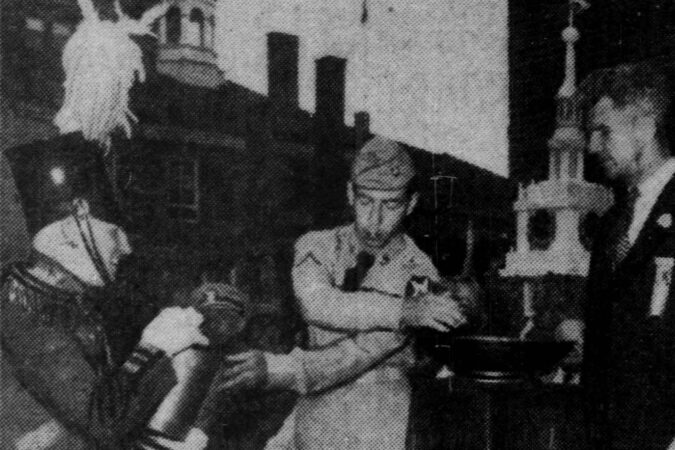
The ceremony was held in the shadow of Independence Hall and featured 19-year-old Army Pfc. Francis R. Findley Jr., of Havertown, who had recently returned from the front lines of the Korean War.
Each of the original 13 states sent representatives, who were dressed in replica uniforms from past conflicts and were escorted by a color guard, and took turns carrying an urn of battle-tested earth to the dais.
Findley took a fistful of dirt from each urn and added it to a monumentalmixture in a ceremonial pedestal bowl.
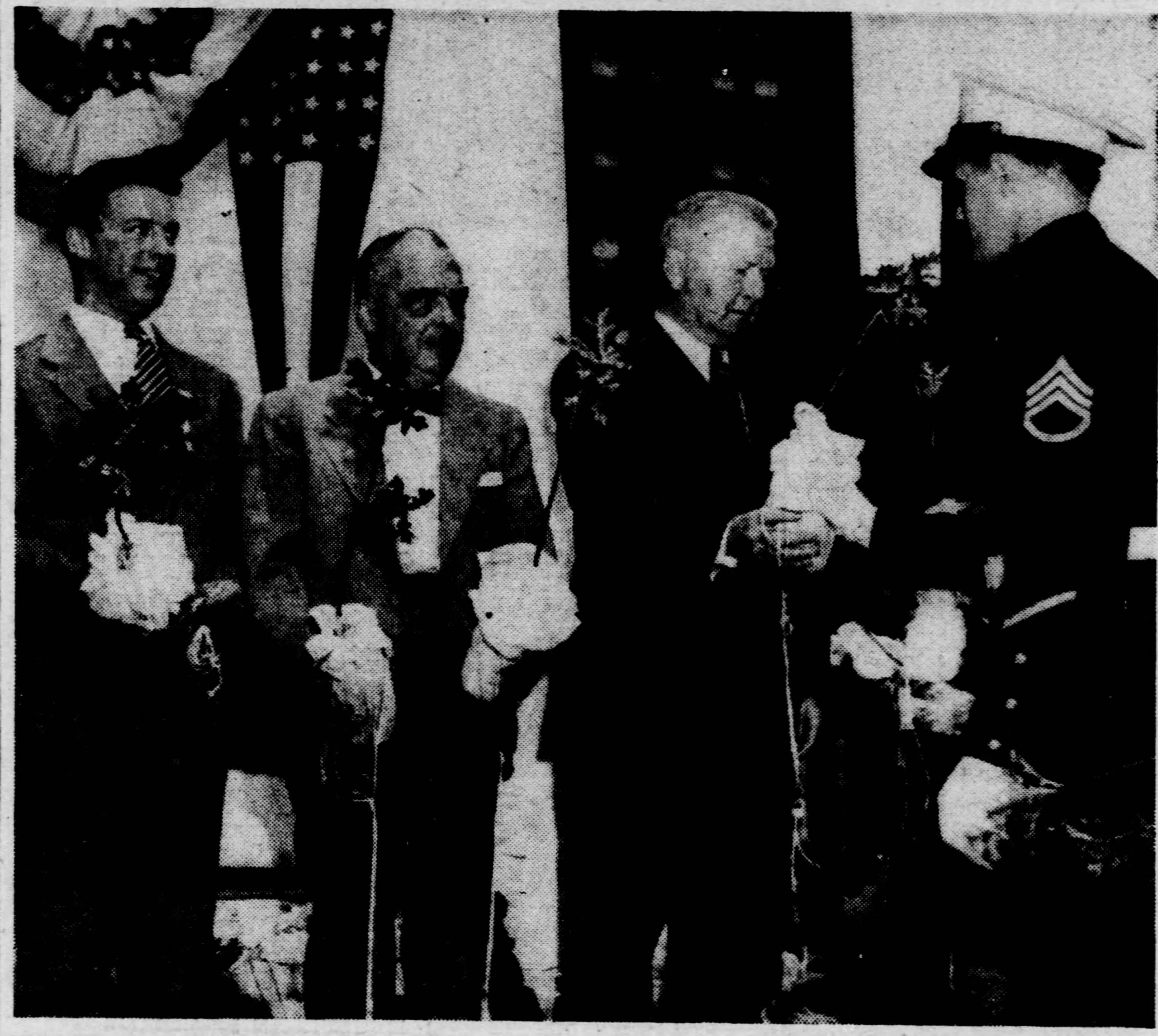
Three days later, on the Fourth of July, the then-48 states received a growth opportunity: oak seedlings rooted in the mixed soil.
Theodore Roosevelt III, (left), Philadelphia Mayor Bernard Samuel, and U.S. Sen. James H. Duff give out oak seedlings for the capitals of the then-48 states at Independence Hall on July 4, 1951.
The seedlings were to be planted as memorials in each state’s capital city.
After the dirt was mixed together, almost as part of a recipe for building democracy into a country’s bedrock, U.S. Sen. James H. Duff, a Republican from Pennsylvania, called upon an “American formula” to help challenge threats of tyranny and oppression.
Historically speaking, subtlety hasn’t traditionally been a strong suit for leaders of the U.S. government.
“We offer the world peace,” Duff said on the Fourth of July, “if we may have peace without appeasement and with freedom.”
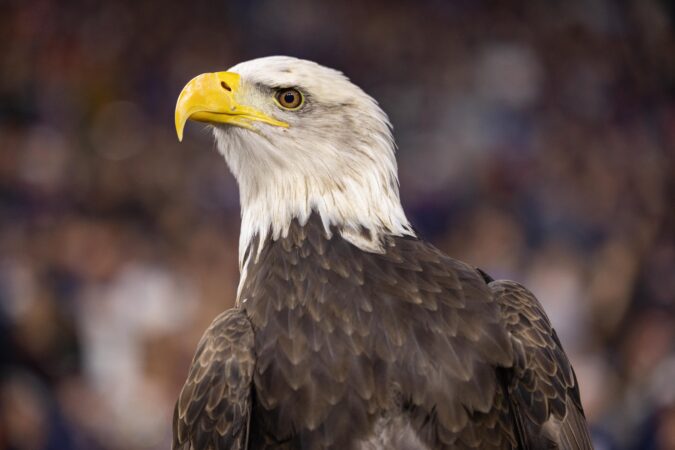
In Philadelphia, the Independence Day spectacle will include a bald eagle named Independence at Independence Hall.
The eagle, known as Indy, is scheduled to appear at the burial of America’s Time Capsule, part of the country’s 250th anniversary celebration. Visitors will be able to meet and take pictures with her.
Since 1782, when the bald eagle was placed on the Great Seal of the United States, the bird has stood for American sovereignty and power, holding arrows in one talon and an olive branch in the other. Long before that, eagles had been used as symbols of empire, authority and military strength, including in ancient Rome.
What merits does the bird have to have been attributed such strong symbolism — withappeal at events from Saturday’s time-capsule burial to flights at Lincoln Financial Field?
From a distance, the eagle looks formidable, with a six-foot wingspan. Indy is sometimes released to fly freely during Auburn football games, said Robyn Miller, Indy’s handler and the director of the Auburn University Raptor Center.
On the rare occasion that one sees eye-level with the bird — suchas in Indy’s various TV appearances — the eagle has an intense and almost disconcerting gaze. Her feet are bound or shackled to contain her but she occasionally gives out a squawk and shuffles around. The bird squawks as humans might laugh; they tilt their head back and can either let out a loud cry or many chirps, as Indy tends to do when she is inside.
The bird will travel to Philly from Auburn on a Delta flight with Miller and three other handlers. Her carrier will be strapped into two coach seats. Miller expects that she will be comfortable in her carrier but notes that she may let out the occasional squawk.
Indy, now 10, came to the Auburn University Raptor Center in 2018 after suffering a wing injury as a young bird. Although the injury healed, she had imprinted on humans during rehabilitation, meaning she could not be released into the wild. Now, she serves as an ambassador bird, teaching people about raptors, conservation, and the ecosystems that sustain them. Her appearances have included a flight at the Linc for an Eagles’ game.
Miller makes a distinction between captivity and care. “All of our raptors come to us with life-threatening disabilities,” Miller said.
The eagle is now used to human socialization and depends on human care. And yet the irony is hard to avoid. What draws people to Indy is precisely the quality that cannot be caged: the wildness she can embody, even if she can no longer live it.
“Folks can’t help but be fond of her when they meet her,” Robyn said. “Be fond of her wildness.” She added, “We wish these birds could still remain in the wild.”
NovaCare Rehabilitation’s parent company, Select Medical Holdings Corp., was taken private in $3.9 billion private equity deal this week.
NovaCare has more than 100 physical therapy locations in the Philadelphia region, including some through a partnership with Rothman Orthopaedics.
For 25 years, NovaCare sponsored the Philadelphia Eagles practice complex in South Philadelphia. Jefferson Health took over the sponsorship this year.
Top management joined private-equity firm Welsh, Carson, Anderson & Stowe in the acquisition of Select Medical, which is based in Mechanicsburg, Pa. The sale was completed Wednesday. The price per share was $16.50 per share, an 18% premium to the latest close before the deal was announced in November.
In addition to outpatient physical therapy through NovaCare and other subsidiaries at 1,850 locations in 36 states, Select Medical operates 104 long-term acute-care hospitals in 28 states and 38 rehabilitation hospitals in 15 states. The company has more than 45,000 employees and had $5.5 billion in revenue last year.
Select Medical acquired NovaCare in 1999. Publicly traded NovaCare fell on hard times because of Medicare reimbursement changes under the federal Budget Reconciliation Act in 1997. The law capped reimbursement for speech, physical, and occupational therapy in nursing homes.
The company, then headquartered in King of Prussia, lost $700 million in annual revenue because of those changes, The Inquirer reported at the time.
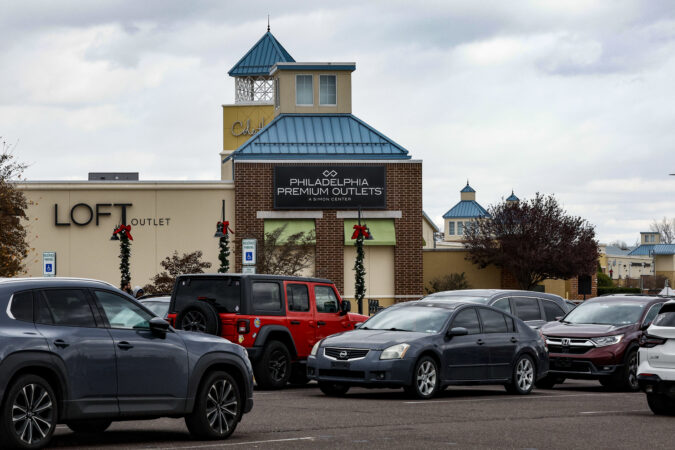
The words outlet mall or factory store make many shoppers envision marked-down designer bags, slightly damaged furniture, or last season‘s fashions at steep discounts. But a new study by Consumers’ Checkbook found that many are churning out cheaper merch specifically for their “discount” locations. Checkbook staffers spent three months visiting 40 brand-name outlets, scrutinizing online terms and conditions to learn what exactly off-price stores were selling.
What we found was that about half the off-price stores we investigated — particularly for mid-priced apparel stores like J. Crew and Banana Republic — are selling made-for-outlet goods, usually with cheaper fabrications and fewer fine details than mainline store merchandise.
Other factory stores mix made-for-outlet products with clearance items from their original brands. Houseware chains and some high-end designers operate genuine clearance centers with discounted merchandise that once appeared in regular stores: a floor model Pottery Barn dresser; last season’s Burberry trench coat.
The evolution of outlet shopping
Outlet stores started as small, manufacturer-run businesses — often near factories — selling past-season, overstock, or slightly damaged products at big discounts. Outlet malls began popping up in the late 20th century, fueled by big name factory stores from the likes of L.L. Bean and Coach. But the rise of fast fashion — and an increasingly bargain-hungry populace — meant shoppers wanted more deals.
So brands like Ann Taylor, Gap, and J. Crew opened off-price stores. These became so popular that they were impossible to fill with leftovers or older goods. So many retailers started manufacturing completely different, lower-quality, lower-priced merchandise for their “outlet” or “factory” locations.
Often, these outlet stores have obtuse signage, product labels, and logos. Many outlet stores bear signs with the company name but no mention of outlet, clearance, or factory. Some use different labels and logos on outlet merchandise, but it’s often an if-you-know-you-know secret.
“Companies are subtle about branding and labels for outlets because they don’t want to lose their magic,” said Gonca Soysal, who led a study on outlet shopping when at the University of Texas in Dallas. “If they say, ‘this is a different product,’ then that illusion vanishes.”
Another hint that the stuff at outlets may never have been on the floor at your local mall? Many brands now operate more off-price stores than regular price ones. For instance, there are 96 Ann Taylor stores — but 122 Ann Taylor Factory stores — across the U.S., and just 93 Nordstrom department stores compared to 269 Nordstrom Racks.
Yes, prices at outlet stores are usually lower than those at mainline stores for similar items, but even a casual glance at a fabric composition tag or a look at the stitching on a bag reveals significant quality differences. If you want to do some outlet shopping, arm yourself with a few tips.
Know which stores offer only made-for-outlet merchandise
Checkbook made a list of stores that only (or mostly) stock made-for-outlet items. If you shop at them, you’re getting a completely different product than you’ll find at department stores or mainline shops. “A brand you know at full price might have a certain standard of quality that isn’t the same at the outlet,” said Pamela N. Danziger, an outlet mall expert and author of Why People Buy Things They Don’t Need.
Don’t believe tags with ‘compare at’ prices
These are outlet and off-price marketing tricks and don’t mean anything. If an item came from an original store or maker, it’ll usually have a price tag reflecting that (i.e. a mainline Nordstrom tag), sometimes with little low-tech stickers planted over original prices.
Know your brand
Whether you’re bargain hunting for last-season or overstock stuff at a clearance center or a thrift store, it helps to be familiar with the mainline brand’s styling, fabrication, construction, and quality. This can also help you separate made-for-outlet wares from better-made original items: For instance, the ballet flats we spotted at the Tory Burch outlet have plastic soles and retail for around $120; mainline Tory ballerinas cost $200 or more and usually sport leather soles.
Expect chaos, limited sizing, restrictive return policies, and slight damage
True outlets (aka clearance centers) are a mixed bag, stocking things people didn’t buy at regular price in regular stores, floor model furniture, and, in the case of Anthropologie and Free People’s Reclectic outlets, used rental garments. Part of the reason off-price stores started producing made-for-outlet goods was that consumers got tired of this treasure hunt.
Compare prices
Check prices of similar items currently for sale at the mainline store. If Banana Republic’s regular store is running 40% off, you’ll probably get a nicer sweater or shirt there than if you buy the made-for-outlet version.
Similarly, when shopping outlet or factory stores for Nike, Polo Ralph Lauren, New Balance, and other brands that also sell stuff in department stores, Amazon, etc., compare what you’ll pay in the brand-operated stores with what you’d pay elsewhere. Our researchers often dug up better deals by buying online, not from outlets.
Check for coupons
Outlet malls and stores often have discount coupons, usually digital but occasionally old-school paper.
Delaware Valley Consumers’ Checkbook magazine and Checkbook.org is a nonprofit organization with a mission to help consumers get the best service and lowest prices. It is supported by consumers and takes no money from the service providers it evaluates. Until Aug. 5, readers can access Checkbook’s full outlets report, and all its ratings and advice free at Checkbook.org/Inquirer/outlets.
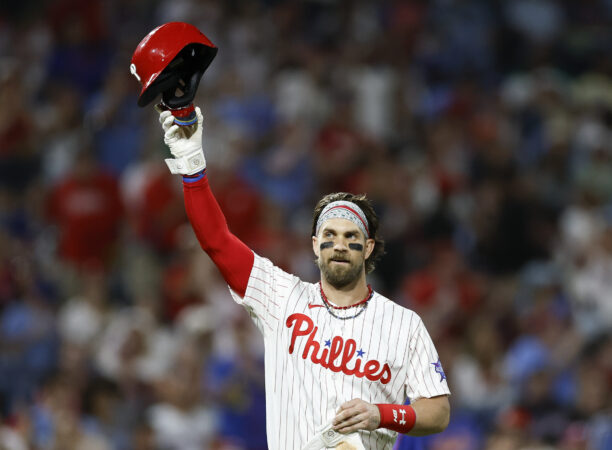
Bryce Harper hit 20 home runs through the Phillies’ first 88 games, a pace that would put him on the doorstep — but not quite over the threshold — of 400 for his career.
And wouldn’t that spice up opening day 2027?
Well, assuming it doesn’t get canceled.
Can you see the storm clouds on the horizon? Baseball’s biggest stars are about to converge on South Philly for the 96th All-Star Game, a celebration of the best talent in the sport. And once they leave, the threat of an ugly, protracted, self-destructive work stoppage will begin to creep ever closer.
It’s impossible to ignore, even though owners, players, and everyone stuck in between will try their darndest to pretend they don’t see it during the two-day All-Star festivities.
But it’s almost inevitable that the owners will lock out the players on Dec. 1, when the collective bargaining agreement expires. And unlike five years ago, when a 99-day lockout preceded a mid-March settlement and a briefly delayed start to a full 162-game season, the disagreement this time is over the fundamental structure of the sport’s economic system.
The owners are proposing a salary cap, a concept the players have rejected for, well, forever. The players are calling for changes to how revenue is shared between the clubs that they believe, in theory, would improve competitive integrity.
It’s as if one side is speaking French and the other is replying in German. Until they converse in English, progress will be virtually nonexistent.
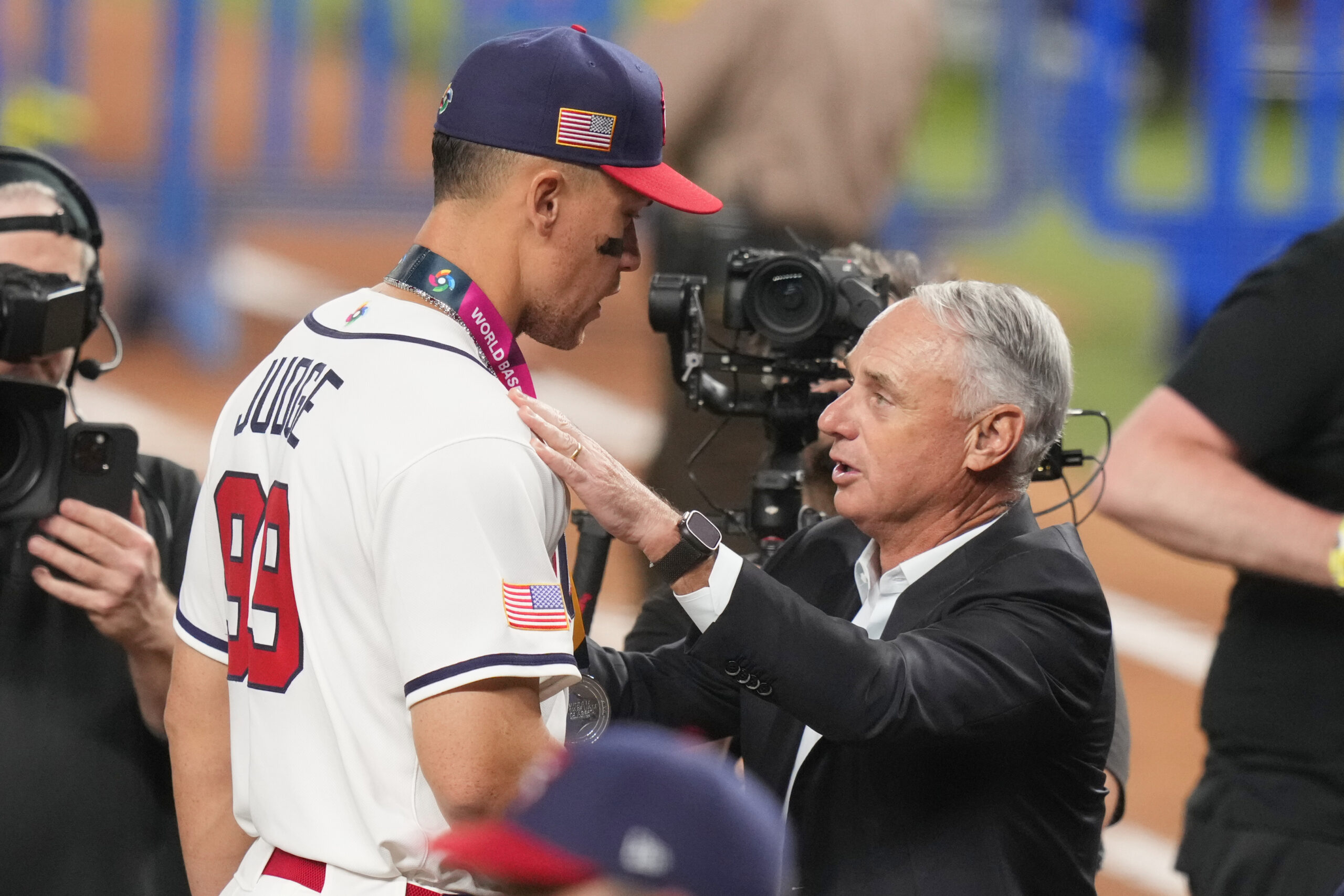
MLB commissioner Rob Manfred (right) and players such as Yankees star Aaron Judge will soon be at odds over baseball’s economic system.
And depending on how long that takes, the 2027 season — or at least a portion of it, if a deal isn’t reached before the middle of March — could be in peril.
“I hope that we can come together for the sake of our game and for where our game is right now, the direction that it’s going,” Harper said recently in a conversation with The Inquirer. “I don’t think it’s ever been, in the years that I’ve played, it’s never been [as good as] this.
“We need to both come together and understand what is best for both sides to make it work and us to play baseball because the game is where it needs to be right now. And I just see it getting better and better.”
Indeed, there’s momentum from last year’s epic World Series and the well-attended, highly rated World Baseball Classic in March. Rules changes, including the pitch clock and automatic ball-strike system, are wildly popular. The San Diego Padres recently sold for $3.9 billion, a record price for an MLB team by about $1.5 billion.
By most projections, baseball is a $13 billion industry. And in 2028, MLB will negotiate new national television deals that figure to pour even more money into the pool.
“When you’re in a position where you’ve had record attendance, record revenues, when you go through all this … we’re in a completely different place than we were five years ago,” agent Scott Boras said on The Inquirer’s Phillies Extra podcast. “We also now have a presence in Asia that is completely different; we have a presence in Canada that’s completely different. Netflix paid $100 million just for the rights for the Japanese feed for the WBC alone.
“So, when you’re seeing that, we’re in great prosperity, revenue-wise, attendance-wise. … I think it’s very difficult for anyone to say that we’re not in a far better position than we were five years ago in every category.”
A work stoppage, especially if it drags into next season, could be catastrophic for business.
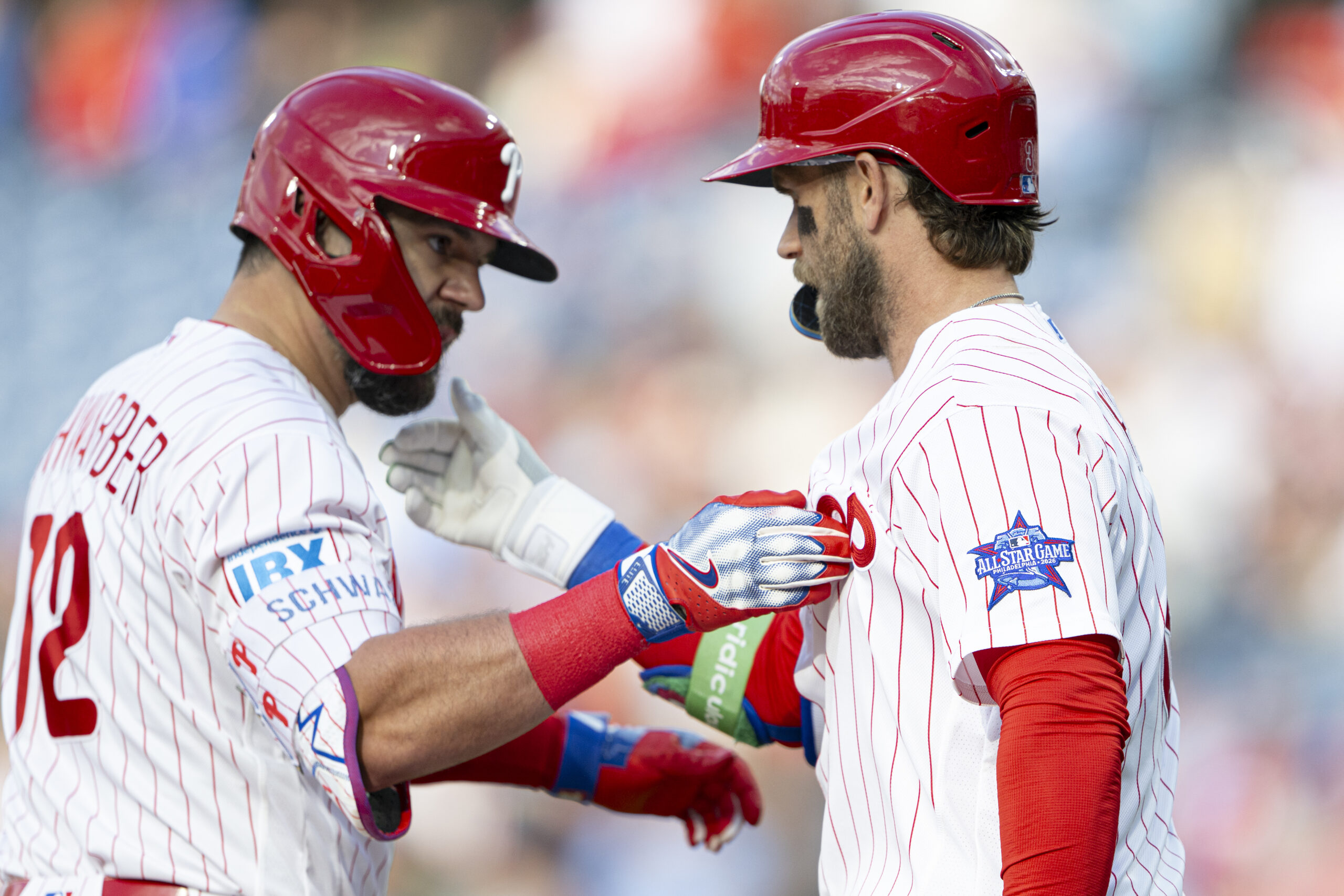
Kyle Schwarber (left) and Bryce Harper are both closing in on 400 career home runs.
It could also detract from players’ legacies.
Take Harper, for example. Since 2022, when the Phillies broke a decadelong playoff drought, he has chased an elusive World Series crown with a familiar group of teammates, notably J.T. Realmuto, Zack Wheeler, Aaron Nola, and Kyle Schwarber. Trea Turner joined the pursuit in 2023, when Cristopher Sánchez reached the majors for good.
According to Baseball-Reference, the Phillies have the second-oldest group of position players (average age: 30.1 years old) in the majors this season. Realmuto is 35; Harper, Schwarber, and Turner are 33. On the pitching side, Wheeler is 36 and Nola 33.
Playing careers are finite. Father Time is undefeated. And losing a season because of a labor dispute doesn’t help.
Just ask the NHL players whose careers spanned two shortened seasons (1994-95, 2012-13) and one that was canceled entirely (2004-05). The stoppages probably cost Jaromir Jagr close to 100 career goals.
As much as any player, Harper realizes the impact on a career. He’s closing in on 400 homers, and with a desire to play beyond the five years left on his contract, he’s a good bet to reach 500 and maybe even 600.
But there wasn’t any recouping, say, 20 homers from the pandemic-shortened 60-game 2020 season. If all or part of the 2027 season is lost, it could deprive Harper of another 30 homers … or Schwarber of his bid for 500 homers … or Wheeler in his pursuit of Hall of Fame numbers.
“Yeah, for sure,” Harper said. “Obviously missing those games, it’s possibly 30 more homers or an MVP or a World Series, right?”
And yet, it’s a sacrifice he says he’s willing to make.
The son of a former union ironworker who laid rebar to help build Las Vegas casinos, Harper is an influential voice within the MLB Players Association. When Rob Manfred visited the Phillies last July as part of his annual meetings with each team, Harper confronted the commissioner over what he perceived as an attempt to sell players on the idea of a salary cap.
“Individual numbers, getting later in my career, all that kind of stuff has to take a back seat,” Harper said. “We all think that. At the end of the day for us, it can’t be about one individual or anything else. There’s a fine line of wanting that over what Curt Flood did for us and what the guys did all through the ’70s, ’80s, ’90s.
“All the guys that sat out, went through strikes, went through situations that I couldn’t fathom — missed checks, missed meals, all that kind of stuff — way back when. I don’t want our decisions to be a negative for what those guys did for us. I couldn’t fathom being part of the group that took [a salary cap proposal] and was like, ‘OK, yeah, we’re good.’”
So, Harper will do his part as one of the bigger stars in the sport to help keep the players unified. But he won’t be a hawk, either. Mostly, he wants a compromise.
“None of us want to miss games,” he said. “But at the end of the day, if we do miss games, there’s nothing we can do at that point until the two sides come together.
“I understand where the commissioner’s office is coming from; I understand where the players are coming from. I understand both sides. But also we can’t, as owners or as players, come in and go, ‘We’re not doing this, we’re not doing this.’ We need to both come together and understand what is best for both sides to make it work.”
Philadelphia almost certainly will have set more temperature records over the next two days — but maybe not during the steam-bath afternoons.
Nature’s natural cooling system, nightfall, is having a hard time getting it done with the atmosphere so swollen with water vapor. It didn’t get lower than 82 Friday morning and an encore is expected the morning of the Fourth.
Both would be record-high minimum temperatures for the dates in Philadelphia. That record bar is considerably lower than for the high-temperature records — 104 degreesfor Friday, and 103 forSaturday — set during the sizzling 1966 Independence week. A late-day thunderstorm could knock back Saturday’s temperatures, and storms Saturday night are “likely.”
Thursday’s high, 103, tied the record set in 1901, when the nation was a mere 125 years old.
Those potential century-plus readings are attention-getting, but health officials have long held that for heat-related mortality, consistently warm nights are more dangerous than the days, particularly for older people who live alone in brick rowhouses in the city. As a former Philadelphia health official has observed, without nighttime cooling, they can become “brick ovens.”
“The intensity and length of the extreme heat will exacerbate impacts to both people and infrastructure,” the weather service warned.
The sequence of hot nights “are particularly harmful because the body doesn’t have a chance to recover,” said Kraftin Schreyer, associate professor of emergency medicine at Temple University’s Lewis Katz School of Medicine. Extreme heat can exacerbate circulatory and lung conditions, and certain mental disorders, she added.
But she and other health experts say the detrimental effects may be modified by the heat the region already has experienced this year.
The Philly forecast for the 250 climax
Friday’s high is expected to challenge the reigning champ, the 104 set during a blistering heat wave in 1966, when the nation was a mere 190 years old.
On Saturday, when Philly celebrates the nation’s 250th birthday, the high may fall just short of 100, said Matt Benz, senior meteorologist with AccuWeather, as the high pressure “heat dome” covering much of the nation loses some of its protective power over Philly.
That also could be a window for “ring of fire” thunderstorms that could be nasty. The federal Storm Prediction Center sees a 15% chance that any storms on Saturday could become “severe,” with wind gusts up to 60 mph. The National Weather sees a 60% chance of storms Saturday night.
By Sunday, highs will be backing off to the 90s, however the sequence of warm nights probably will persist, at least in areas of Philadelphia most affected by the urban heat island effect.
The urban heat island and heat-health dangers
The world has been getting warmer, but cities long ago got the jump on climate change, and their impacts on temperature were observed in the 19th century and documented in a famous experiment in the 1950s by legendary climatologist Helmut Landsberg.
Landsberg, who observed temperatures had fallen in some European cities after World War II bombings destroyed buildings, set up instrument arrays in an area of Maryland that was undergoing rapid development. As surfaces were paved and structures erected, he recorded significant localized temperature increases.
In Philly, dense neighborhoods can be several degrees warmer than other areas even within the city. Urban areas reduce cooling at night because they are efficient at storing the sun’s energy and slower to release heat after sunset.
The heat-death tolls in Paris in 2003, Chicago in 1995, and Philadelphia in 1993 underscored the urban heat hazards.
It’s warmer, but heat deaths have dropped dramatically in Philly
“We’ve been really lucky,” said Samuel Eldrich, medical director of the Temple Health-Chestnut Hill Hospital Emergency Department
The decline has a lot do with Philadelphia and that summer of 1993, Eldrich added.
That year, Philadelphia was under fire because it was the only major Eastern city reporting significant numbers of heat deaths. The medical examiner’s office was using forensic evidence, such as closed windows, in determining heat deaths.
The reasoning: With so many people dying, doctors wouldn’t be able to get to the bodies in time to verify core body temperatures of 105 degrees, the standard for hyperthermia. The Centers for Disease Control later decreed Philadelphia’s method was correct, and it was adopted elsewhere.
The dramatically high death toll was the impetus for the city’s emergency response plan, lauded by CDC and the National Oceanic and Atmospheric Administration that lauded as a national prototype.
It includes opening cooling centers and nudging residents to look in on older neighbors, and having the Philadelphia Corporation for the Aging operate a “heat line,” 215-765-9040. It will be operating daily from 8:30 a.m. to 8:30 p.m., and the agency “can also assist callers reporting concerns about vulnerable neighbors, family members, or community members,” said spokesperson Bill Conallen.
Citing Census figures, the Corporation for Aging says about 95,000 people 65 and older live alone in the city.
‘This is temporary’
Subject to change, the heat wave is due to end Monday, with highs in the lower 80s (remember when that seemed hot?).
In the meantime the experts are offering coping tips, the three most-important being hydrate, hydrate, hydrate.
How much water should you drink? More than you think, said Schreyer. Men should drink about a gallon a day, women three quarts, but four to eight cups additional wouldn’t hurt. Sip, don’t guzzle, she said.
At a time when everyone wants to be outside, it’s critical to take breaks in air-conditioned stores, malls, or wherever, even for a few minutes, Eldrich said. “It gives your body a chance to recover,” he said.
Sunny G. Hallowell, associate professor of nursing at Villanova University, recommends cool showers and tepid baths. Also, especially with storms threatened, be prepared for power outages. She suggested storing damp towels in the refrigerator or freezer as a quick cool-down resource should the A/C go off.
She also recommends keeping a cool attitude. “This is temporary,” she said, and if the temperature hits a record, that’s “something to brag about.”
And if you’ve had it with the heat, think back to your misery during the Arctic freezes, and think that with the heat, “You got your wish.”
Lastweekend, K.C. Peterson was sitting at a bar with his friends in western Nebraska, talking about Fourth of July celebrations, when he shared an unexpected tale.
It all started with a marketing gimmick, one so unique only Phillies executive Bill Giles could’ve conceived it. The year was 1976, and Philadelphia was buzzing with excitement around the Bicentennial.
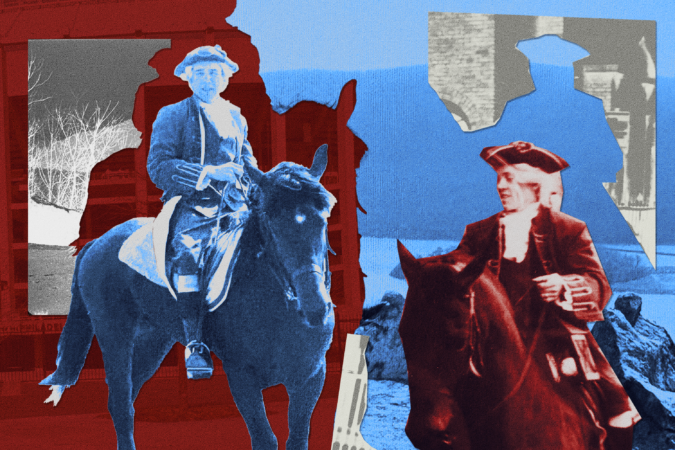
Giles, who described himself as a “pseudo historian” according to newspaper accounts, had been reading up on Paul Revere. Everyone was familiar with the blacksmith’s midnight ride, but the executive was far more interested in a lesser-known journey.
In 1774, Revere traveled by horseback from Boston to Philadelphia to deliver the Suffolk Resolves — a document that would serve as a harbinger of the revolution to come — to the First Continental Congress.
Citizens in Suffolk County, Mass., would refuse to pay British taxes. They’d organize militias to defend themselves. They’d boycott British goods.
Giles began to brainstorm. What if the Phillies could recreate such a ride for opening day? With a Paul Revere re-enactor, dressed in colonial garb? Carrying a game ball in a lantern, instead of a blueprint for civil resistance?
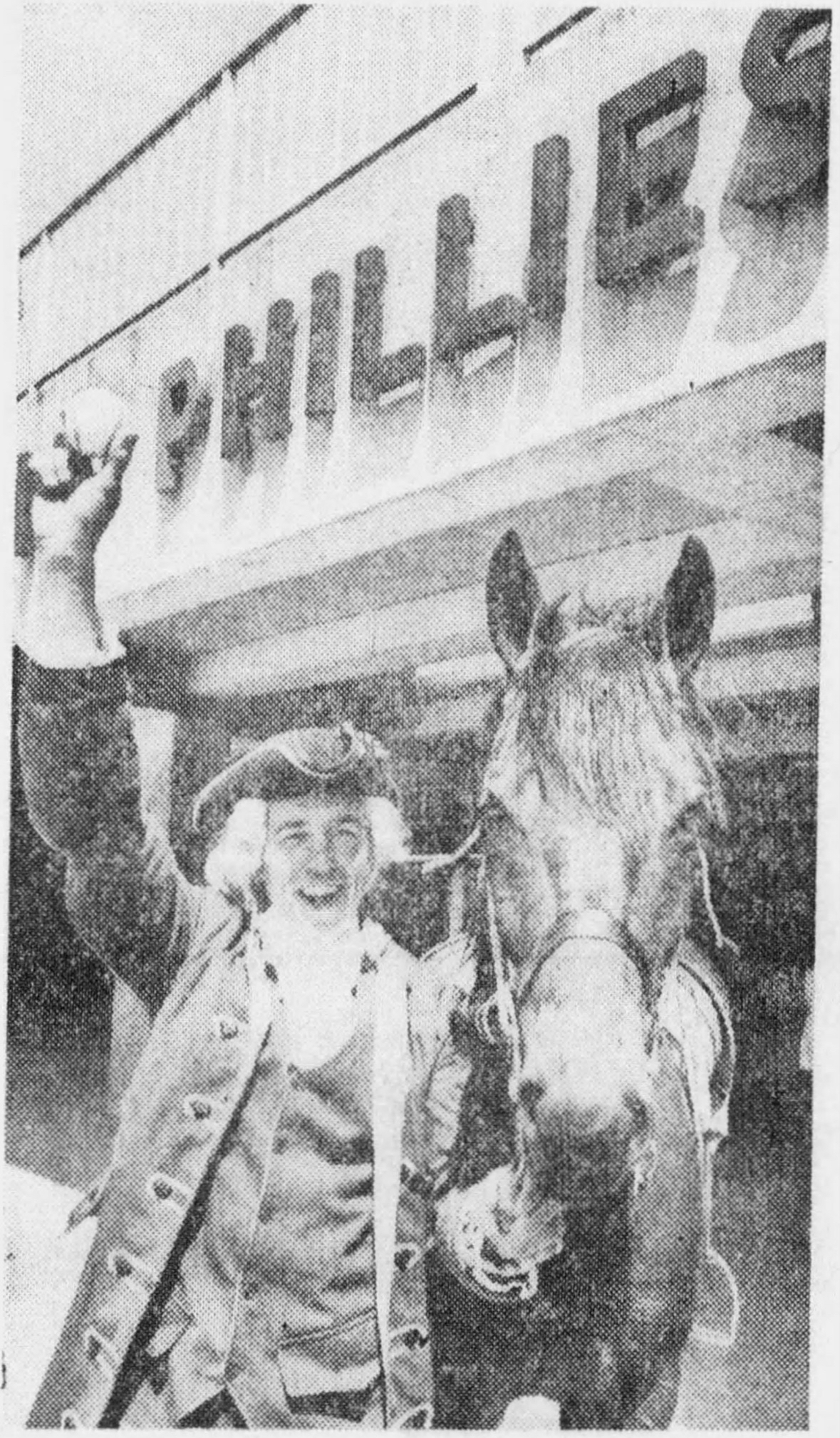
K.C. Peterson and his brother were hired by Phillies executive Bill Giles for an ambitious two-week stunt.
The plan was set into motion. In March of 1976, Giles hired K.C. and his brother, Russ, to trek 318 miles over two weeks from Old North Church to Veterans Stadium on horseback.
They arrived on April 10, a few hours before first pitch. Russ handed the ball to a man with a jet pack — “Rocket Man” — who soared 150 feet into the air, landing on the mound to deliver it to former Phillies pitcher and newly elected Hall of Famer Robin Roberts.
Peterson’s friends were skeptical. He and his brother had lived a wild life, as rodeo trick riders in Nebraska, but even by their standards, this seemed outlandish.
But the tale was all true — from the wigs to the tricornered hats to the tall black boots.
“They said, ‘Oh, bulls—,’” K.C. recalled. “I said, ‘I’m not bulls— you, we did!’
“One rode in the morning, one rode in the afternoon. And it rained almost every day. For two weeks.”
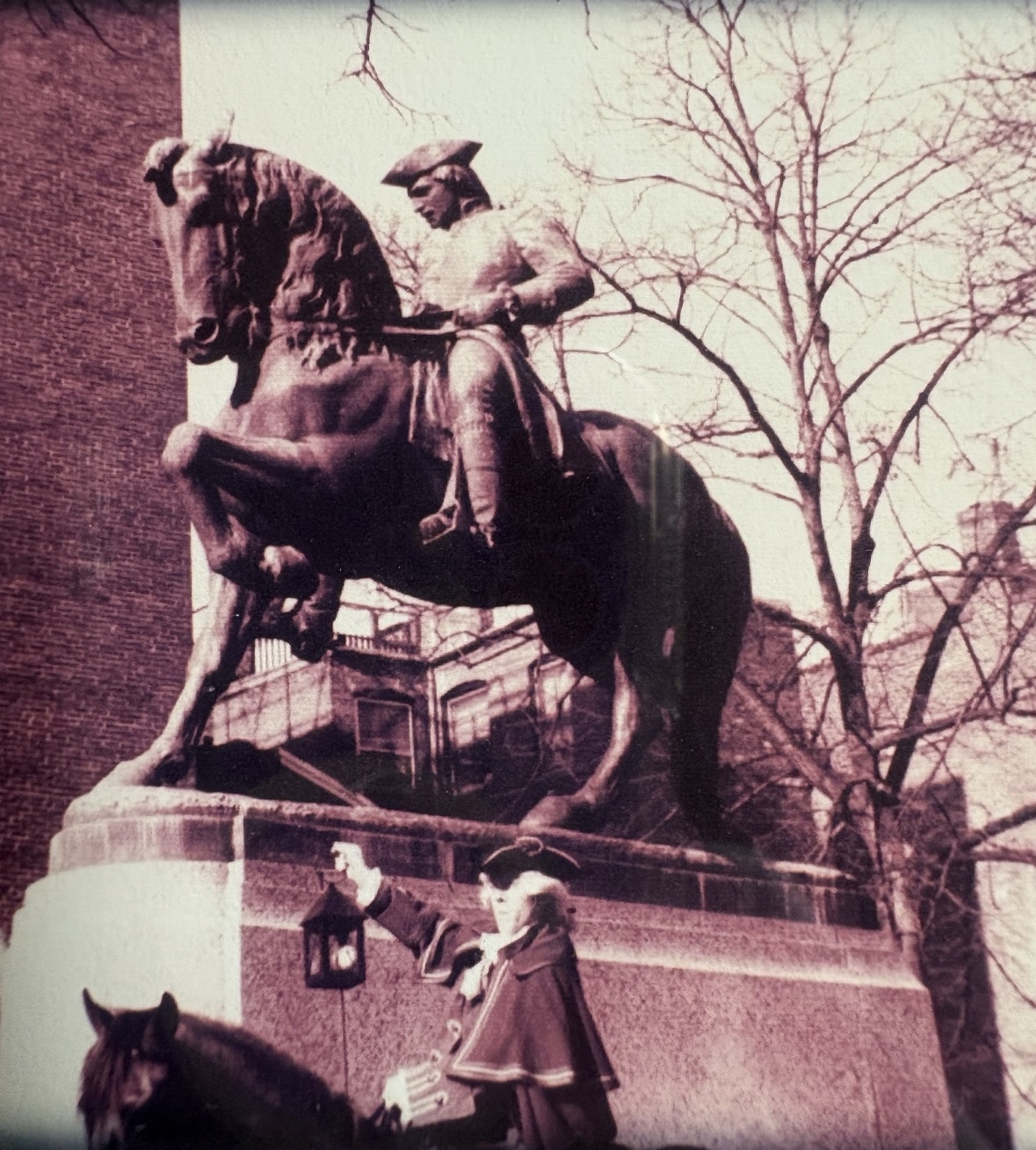
Russ Peterson (pictured) and his brother K.C. were mistaken for George Washington in some of the stops on their 318-mile ride.
$5,000 for 318 miles
K.C. and Russ Peterson knew close to nothing about Revere when they accepted Giles’ job. They had never been to a baseball game either, and didn’t consider themselves fans of any team.
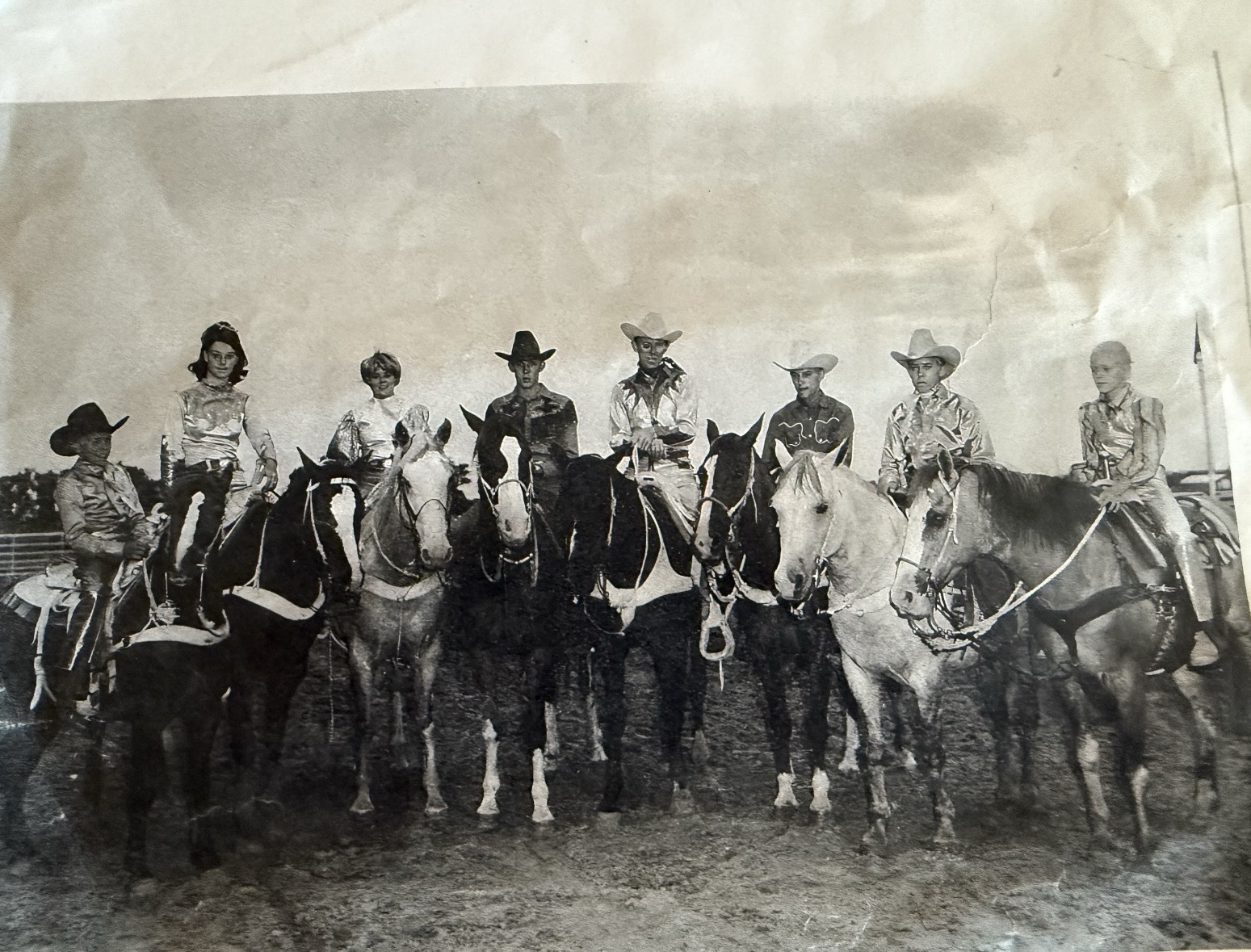
But they were expert horsemen, and that was enough. The eight Peterson siblings grew up on a ranch in Ogallala, nicknamed the “Cowboy Capital” of Nebraska. Their brother, Denny, taught them trick riding at an early age; before long, they could do shoulder stands and vaults on the back of a galloping steed.
It was a unique skillset that led to some interesting experiences. During the summer, K.C. and Russ would perform halftime shows at Ogallala’s local rodeo. In 1973, the family traveled to Japan on tour with celebrity cowboy Casey Tibbs.
K.C. (far left) and Russ Peterson (second from right at a 1971 Buffalo Bill Wild West show) had honed their horseman skills in the years leading up to their Phillies stunt.
What Giles proposed in 1976 was an entirely different commitment. For the past few years, the brothers had been working four shows a day, seven days a week, over the summer at Great Adventure Theme Park in Jackson Township, N.J.
Now, their boss was saying that the Phillies wanted them to embark on a 318-mile trek.
“I was like, ‘What the hell are you talking about?’” K.C. recalled. “And they said, ‘Well, it’s gonna take two of you, because it’s a long ways, and you’ve got to do it at a trot in an English saddle.’
“And hell, I’ve never rode an English saddle in my life. We’re just trick riders. Grew up on a ranch. Rode Western saddle, and trick riding saddle, but never an English saddle. It’s an itty bitty saddle. There ain’t much to sit on.”
“I was 17 years old, and Russ was 21, and we got paid $2,500 apiece,” he said. “For a broke kid, it’s a hell of a lot of money.”
The brothers accepted the team’s offer on the spot. Russ’ girlfriend at the time, ReNee Dancer, was not happy. She and Peterson had planned to get married before they left Nebraska for New Jersey in May.
That idea was no longer feasible. The Phillies needed K.C. and Russ to be in Boston by late March to start their trip. They’d have to postpone the wedding until after it was done.
“He was so excited that they asked him to do that,” ReNee said. “And all I was worried about was getting married.”
K.C. and Russ departed from the Old North Church on March 27 at 9 a.m. The Phillies gave them a route with different stops along the East Coast. Unlike Revere’s, this journey was not entirely on dirt, grass and cobblestone.
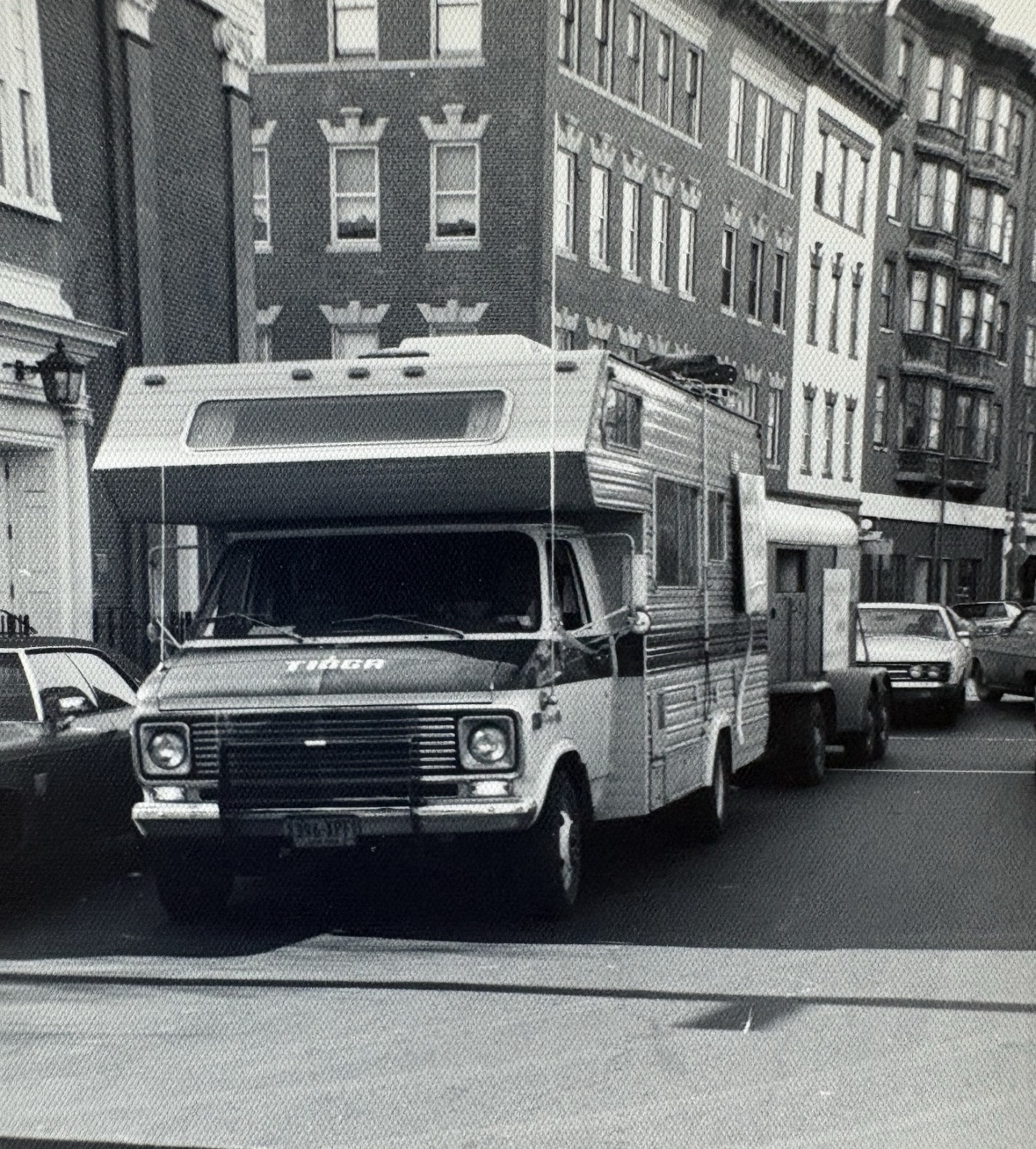
The Peterson brothers were trailed by a motor home that had its own issues in surviving the two-week trek.
The younger Peterson said there were times when one brother would be riding on the side of a small highway, with a motor home behind him — flashers on — and a horse trailer hitched to the back.
Local drivers were not enthused; honking loudly, while telling the colonial horsemen to “get the hell out of the road.”
The weather, which K.C. described as a “downpour,” only made things worse. Their wigs were soaked and their tricornered hats were slipping. A dry, wool coat would’ve been helpful amid the 40 to 50 degree temperatures, but drenched, it was essentially useless.
On their hardest days, K.C. and Russ contemplated tossing their lanterns and costumes aside. The routine was quickly getting old. But in the spirit of Revere, they continued on.
“Here we were, 200 years later, doing [his ride] on a paved road,” K.C. said.
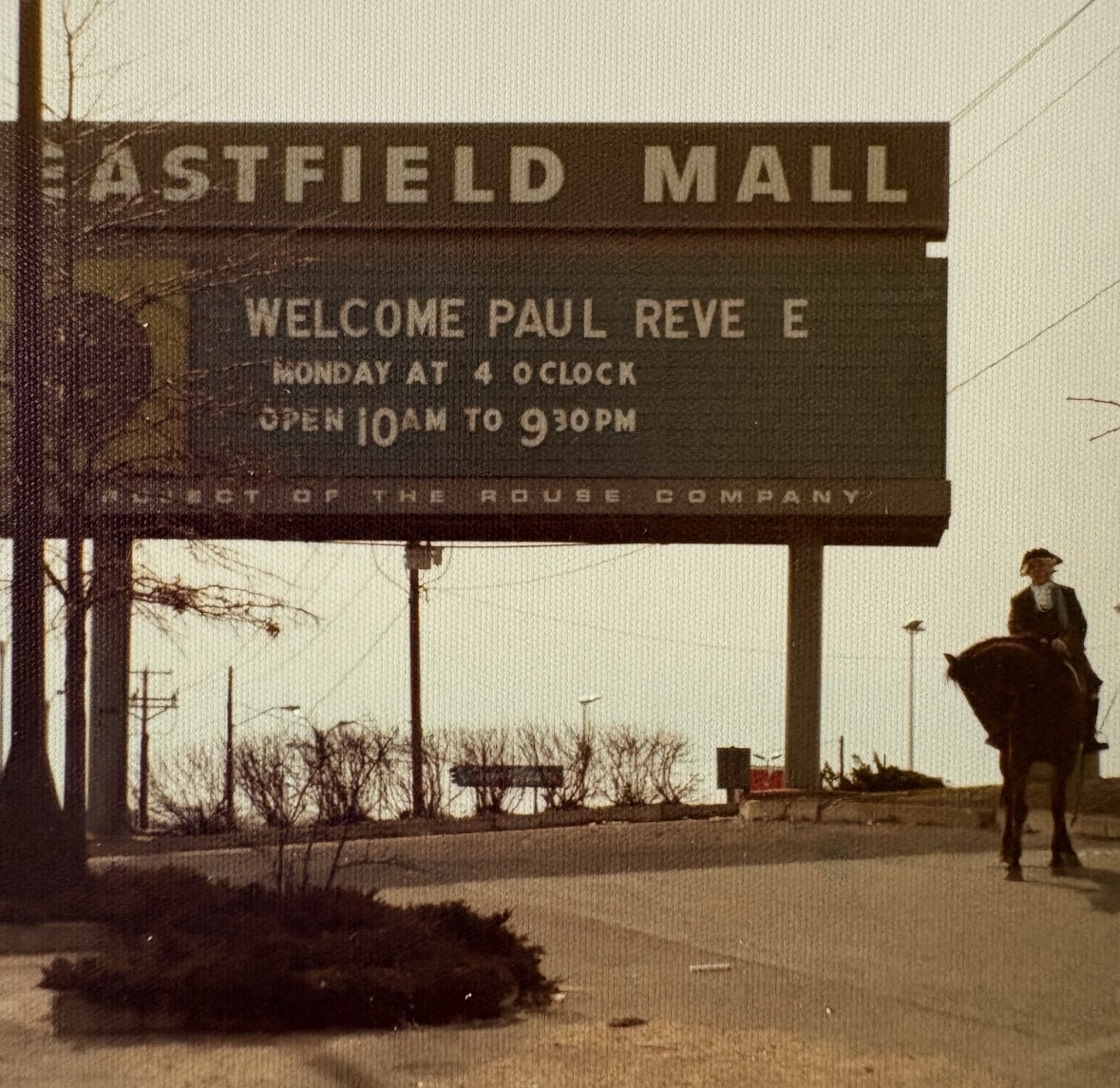
The brothers would often depart by 7 a.m. to reach the day’s destination by early afternoon. There, they would take part in a ceremony welcoming them to town, usually held by a local chamber of commerce.
“Kids would start coming out of school, yelling, ‘George Washington!’” K.C. recalled. “With our little hat on, with our little wig on, with the curls in it. But it wasn’t no raincoats, I’ll tell you that. We had to stay in costume.”
The Peterson brothers had daily, non-Phillies-related stops on their Paul Revere-style tour.
They’d have a quick meal, put the horses in a barn, spend the night in a motel, and do it all over again the next morning. Together, the brothers averaged about 20-30 miles a day, visiting 14 cities along their route.
By April 9, everyone had had enough. The “up-down” motion of riding 318 miles on a trot was uncomfortable; K.C. compared it to “calisthenics.”
Horseshoes were falling offhooves, clothes were dirty, the motor home was damaged (because its driver, another Great Adventure employee, accidentally crashed it) and the brothers were physically exhausted.
But they were only one stop away from Philadelphia. Their concrete promised land was near.
A baseball delivered, a promise kept
Unsurprisingly, Giles planned a 45-minute pregame affair around America’s founding.
The Mummers put on a Revolutionary War-themed show. Plymouth Whitemarsh High School’s marching band performed a song, and the Philadelphia Boys Choir sang the national anthem.
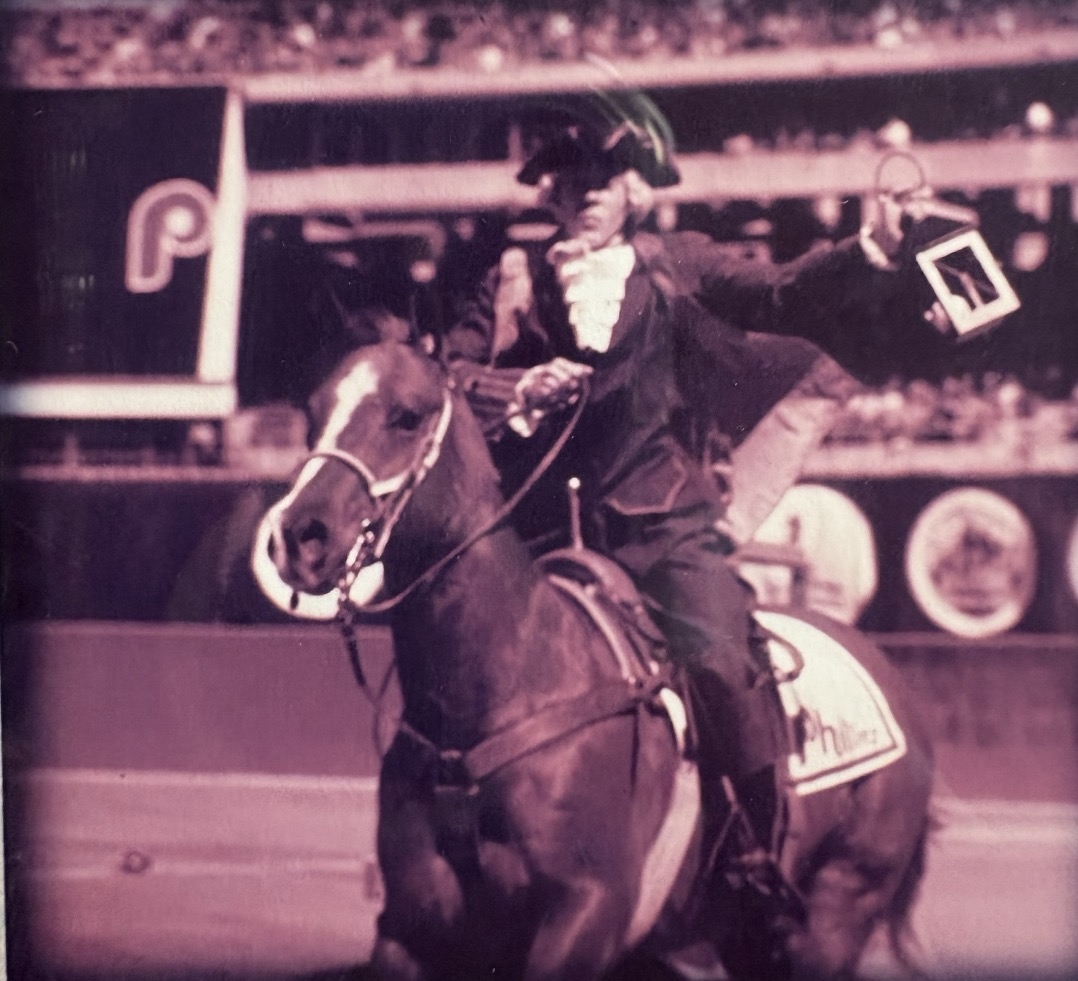
Russ Peterson (pictured) and brother K.C. finally reached their destination at The Vet after an arduous 318-mile journey.
Then came Revere. Just before first pitch, Russ brought his horse up to the right field corner. A stadium worker opened the gate, as the re-enactor trotted onto the AstroTurf, doing a lap — with some trick riding — around the entire field.
He handed the ball to “Rocket Man,” who took off for the mound, where Roberts was waiting. The Phillies offered the brothers tickets to that day’s game against the Pirates, but after the ceremony was done, they packed their horses, changed out of their costumes, and left.
Russ arrived to his trailer in Jackson Township not long after, with bags of memorabilia in hand. He was a quiet man by nature, but on this night, he couldn’t stop talking.
“You could hear the excitement in his voice, about that rocket man flying through there,” ReNee said. “That was probably the thing that he enjoyed the most. He thought it was pretty amazing.”
Peterson continued to live an eventful life. He and ReNee moved back to Nebraska later that year and started a construction business in 1993. They raised cattle of their own, and shoed horses, and did some projects for Habitat for Humanity.
But the trick rider always took pride in his two-week, 318-mile trip. So much so, that when Russ died in a work-related accident in 2015, it got a mention in his obituary.
His family noted how honored he was to be a part of the Bicentennial, in the very city where the Declaration of Independence was signed. Yet nothing compared to the events of the following day.
“Perhaps the most important of his activities while in the area,” the notice read, “involved marrying the love of his life, ReNee A. Dancer, in Howell Township, New Jersey, on April 11th.”
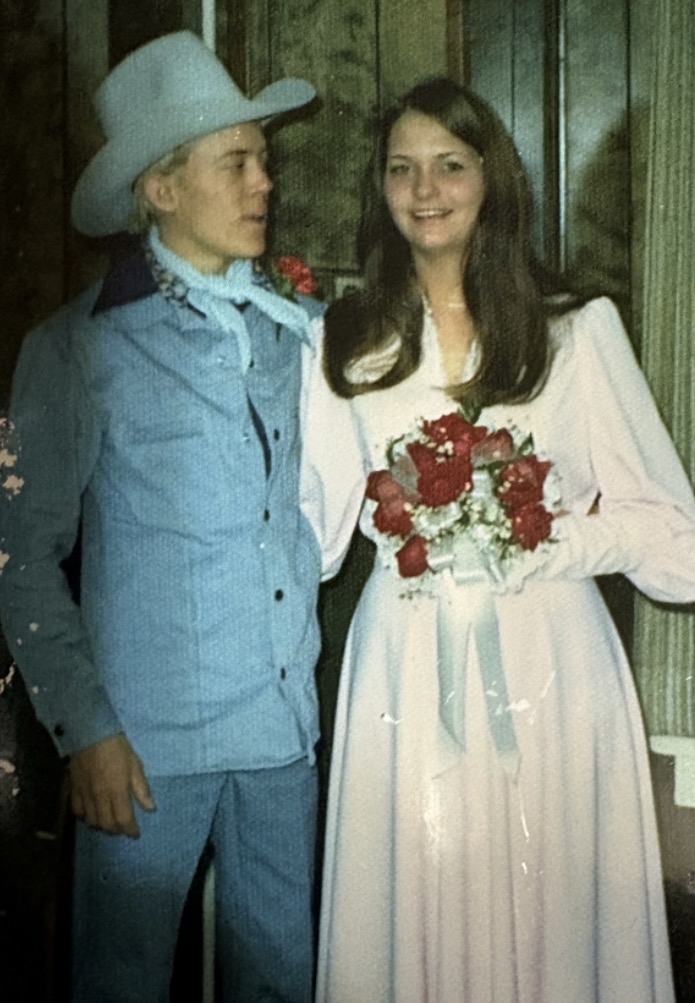
Russ Peterson and his wife, ReNee, on their wedding day in 1976.
America’s 250th birthday is finally here, and organizations throughout Philadelphia have planned a full itinerary of celebrations for the weekend.
For those seeking historical enrichment, live music from national headliners, or even a patriotic pet parade, look no further.
Here is a schedule of the activities and events happening in the city over the July Fourth weekend:
Friday, July 3
Free Museum Day: Fireman’s Hall Museum
In a renovated 1898 firehouse, the Fireman’s Hall visitors can learn about the history of firefighting in Philadelphia, the birthplace of volunteer fire companies.
10 a.m., 147 N. 2nd St.
Free Museum Day: Science History Institute
The museum will feature a new exhibition on fireworks, exploring the art, chemistry, and craft behind the colorful emblem of the holiday.
10 a.m., 315 Chestnut St.
38th annual Liberty Medal ceremony
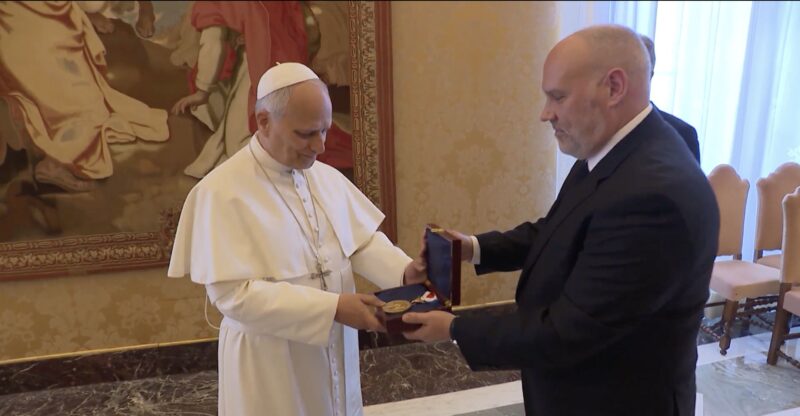
In a public ceremony, the National Constitution Center will award the 38th annual Liberty Medal to Pope Leo XIV, who will deliver live acceptance remarks virtually from the Vatican.
10:45 a.m., 525 Arch St.
Free Museum Day: Historic St. George’s Museum and Archives
Celebrating traditional craftsmanship, the museum will offer hands-on workshops where participants can create their own wax seals and try out water marbling.
11 a.m., 235 N. 4th St.
Salute to Independence Semiquincentennial Parade
The largest professionally produced 250th celebration parade in the country, the event will feature 50 marching bands, 19 floats, and all 52 Miss America state and territory titleholders.
Noon, Independence Hall to Benjamin Franklin Parkway
Free Museum Day: Historic Waynesborough
Located in Paoli, this National Historic Landmark was once the home of Revolutionary War hero Gen. Anthony Wayne. Free tours of the Georgian-style property will be available for visitors.
Noon, 2049 Waynesborough Road, Paoli, Pa.
Pops on Independence
Enjoy a live orchestral show with the Philly Pops, headlined by Tony Award-winning performer Idina Menzel.
8 p.m., 599 Market St.
Saturday, July 4
Celebration of Freedom ceremony
The ceremony will honor America’s 250th anniversary in the heart of its historic center, with speeches, awards, and a performance by Grammy Award winner Yolanda Adams.
10 a.m., 525 Arch St.
Free Museum Day: Cliveden of the National Trust
Visitors can view exhibit panels in the Barn and participate in free tours of the house, which was built in 1767 and is the site of the Revolutionary War’s Battle of Germantown.
10 a.m., 6401 Germantown Ave.
Free Museum Day: Historical Society of Pennsylvania
The museum will offer the exhibition, “Paths to Independence: 1765-1787,” showcasing more than 140 items that represent the people and events involved in the American Revolution.
10 a.m., 1300 Locust St.
Betsy Ross House Patriotic Pet Parade
An annual pet parade will occur at the Betsy Ross House, where prizes will be awarded for the best and most patriotic costumes.
10:30 a.m., 239 Arch St.
Free Museum Day: Powel House
Owned by Philadelphia’s first mayor after American independence was secured, visitors can tour the 18th century house where President George Washington once danced.
11 a.m., 244 S 3rd St.
One Philly: Unity Concert for America
The free concert will be hosted by comedian Wanda Sykes and feature performances from headliners including Christina Aguilera, Jill Scott, The Roots, and Will Smith. Music begins at 5 p.m. and will be broadcast on NBC10.
In America, one broken-down car can cost someone a job. One medical bill can wipe out a bank account. One missed paycheck can push a family from stability to desperation.
That is not freedom in any real sense.
As the nation marks 250 years of independence, we should say plainly what too many families already know: Freedom requires economic security. And economic security is only achievable when people have resources that exceed the basic cost of living, allowing them to cover their daily needs and build essential wealth — the savings, assets, and financial cushion needed to withstand life’s inevitable shocks.
Pathway to opportunity
Two hundred and fifty years ago, our Founding Fathers made a promise that people would have a right to self-determination. It was a promise that hard work, responsibility, and perseverance would open real pathways to opportunity. As we mark this anniversary, we must ask an honest question: For how many Americans does that promise hold?
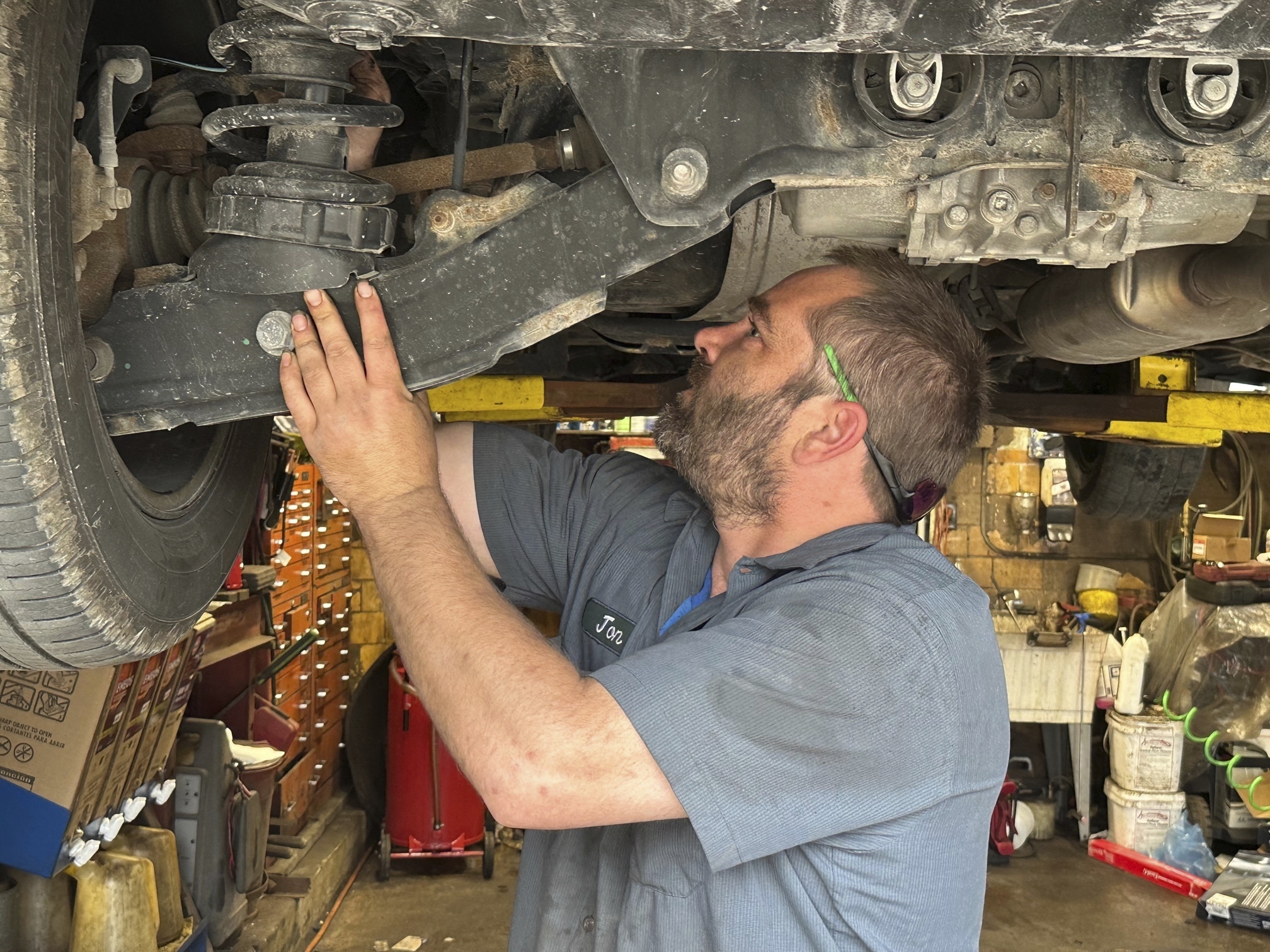
A mechanic works on a pickup truck in Michigan. The expense of a major auto repair bill can mean the difference between stability and ruin for many Americans.
The Constitution guarantees liberty, but circumstances can constrain it. People without the resources to withstand hardship face insurmountable barriers to education, purchasing homes, launching businesses, or saving for retirement. They cannot give their children a running start. They may have rights on paper, but lack the economic security to fully exercise them.
The founders understood at least this much: Liberty could not survive as an abstraction. The Virginia Declaration of Rights, a document that helped supply the moral language of the Declaration of Independence, described the inherent rights of the people as including life and liberty, but also “the means of acquiring and possessing property” and pursuing happiness and safety. That phrase matters.
Today, we understand “the means” less as land than as essential wealth. This is not wealth in the sense of luxury, privilege, or vast accumulation. It is the modest but vital foundation that allows a family to absorb a shock without being knocked flat. It is the money to repair the car that gets someone to work, cover the childcare that keeps a parent employed, pay for medicine before a condition becomes a crisis, or help an aging parent remain safe at home.
Essential wealth is what allows families to plan instead of merely react. It is the difference between recovering from a setback and being defined by it.
The real test comes when life happens. And in those moments, the difference between stability and crisis is not income. It is wealth, or the lack of it.
The cost of ignoring this is written across the country and across Pennsylvania. Tens of millions of American households cannot cover a modest emergency expense, including 48% of households here in the commonwealth, according to the “Measuring the True Cost of Economic Security” report. Wealth gaps yawn across race, geography, and generation, falling hardest on communities long denied the chance to build.
As we celebrate 250 years of American independence, we must think bigger.
We need policies that help families build assets, not just scrape by. Policies that expand pathways to homeownership, invest in children’s futures, widen access to savings and wealth-building, and tear down the barriers that block economic mobility. We need to ensure every child, no matter their zip code or their parents’ income, has the tools to build a secure future.
We must stop managing poverty and start measuring the true cost of living, which includes investing in freedom. Two and a half centuries in, the promise of America was never that people would simply get by. It was that they would have the freedom to get ahead. Living up to it now is the work this anniversary demands.
Michael A. Nutter served as the 98th mayor of Philadelphia from 2008 to 2016 and is currently a senior executive fellow at the Weitzman School of Design at the University of Pennsylvania. Jennifer Jones Austin is the CEO of the Federation of Protestant Welfare Agencies and cochair of the National True Cost of Living Coalition.
When the people drafting the U.S. founding documents got to work in the mid-1700s, they made unprecedented progress on the ills plaguing the preceding era, while failing to meet the fullest expression of their ideals. They would leave those moral aspirations to us — their inheritors.
Their impact is all around us. When any person, anywhere in the world, claims, “I have rights,” they are nodding toward the Enlightenment ideals at the heart of the U.S. founding. Today, it is difficult to appreciate the extent to which those founding principles were revolutionary for simply quelling religious violence.
In the era preceding the founding, millions of Europeans died in warfare couched within differences of faith. On this side of the Atlantic, institutions reflected the certainty of one, true God. Harvard was founded in 1636 to train Puritan clergymen; William and Mary was established six decades later to train Anglican clergy. In the colony of Maryland, Catholics battled Protestants in 1655, leading to the execution of four Catholic leaders.
In this context, 11 years before he would take control of Pennsylvania, William Penn wrote a treatise establishing a rationale for religious toleration. Benjamin Franklin picked up that emphasis when he shared Proposals Relating to the Education of Youth in Pensilvania in 1739. In the document that framed the University of Pennsylvania’s early years, Franklin insisted that students would consider “the Advantage of Civil Orders and Constitutions, how Men and their Properties are protected by joining in Societies and establishing Government.”
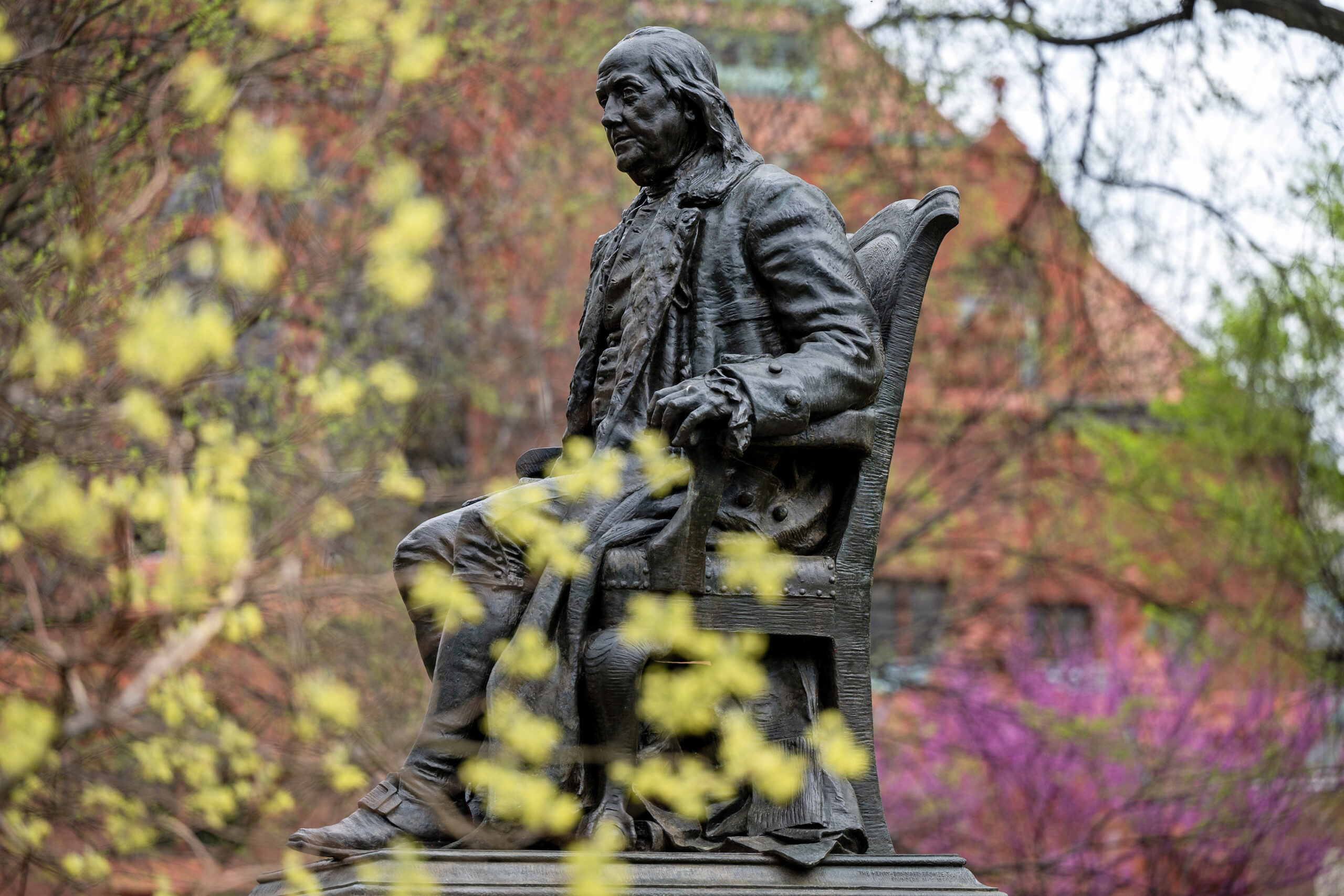
Benjamin Franklin statue on the campus of the University of Pennsylvania in front of College Hall.
Penn’s early, religiously inclusive orientation was at odds with the identity politics of the era, which featured an association between Anglicanism and British loyalty. As tensions grew, the university trustees mandated an Anglican majority on the board, contributing to suspicions of loyalist bias.
A new university was mandated — and the leadership was diverse across Protestant sects, including even Catholic representation. The leaders, however, were uniform in their support for the American revolutionaries.
This creation of, and commitment to, a civic, secular, tolerant institution of higher learning reflected centuries of conflict in arms, persuasion in conversation, and development of ideals. And, like the Declaration of Independence, it was so near in time and space that Penn’s founding was not a crowning achievement but a milestone on a much longer journey.
Indeed, America’s hypocrisies at the founding and struggles since that time are understood in terms of American ideals: enacting in life and in law, through shared governance, a country that embraces the dignity of all people.
A century after William Penn died, Frederick Douglass was born into enslavement — yet he was destined to advance America’s moral imagination.
Douglass self-emancipated by escaping to Philadelphia at the age of 20 in 1838. Only three years later, he rose to fame through his abolitionist speeches, compelling audiences with his message and oratory power.
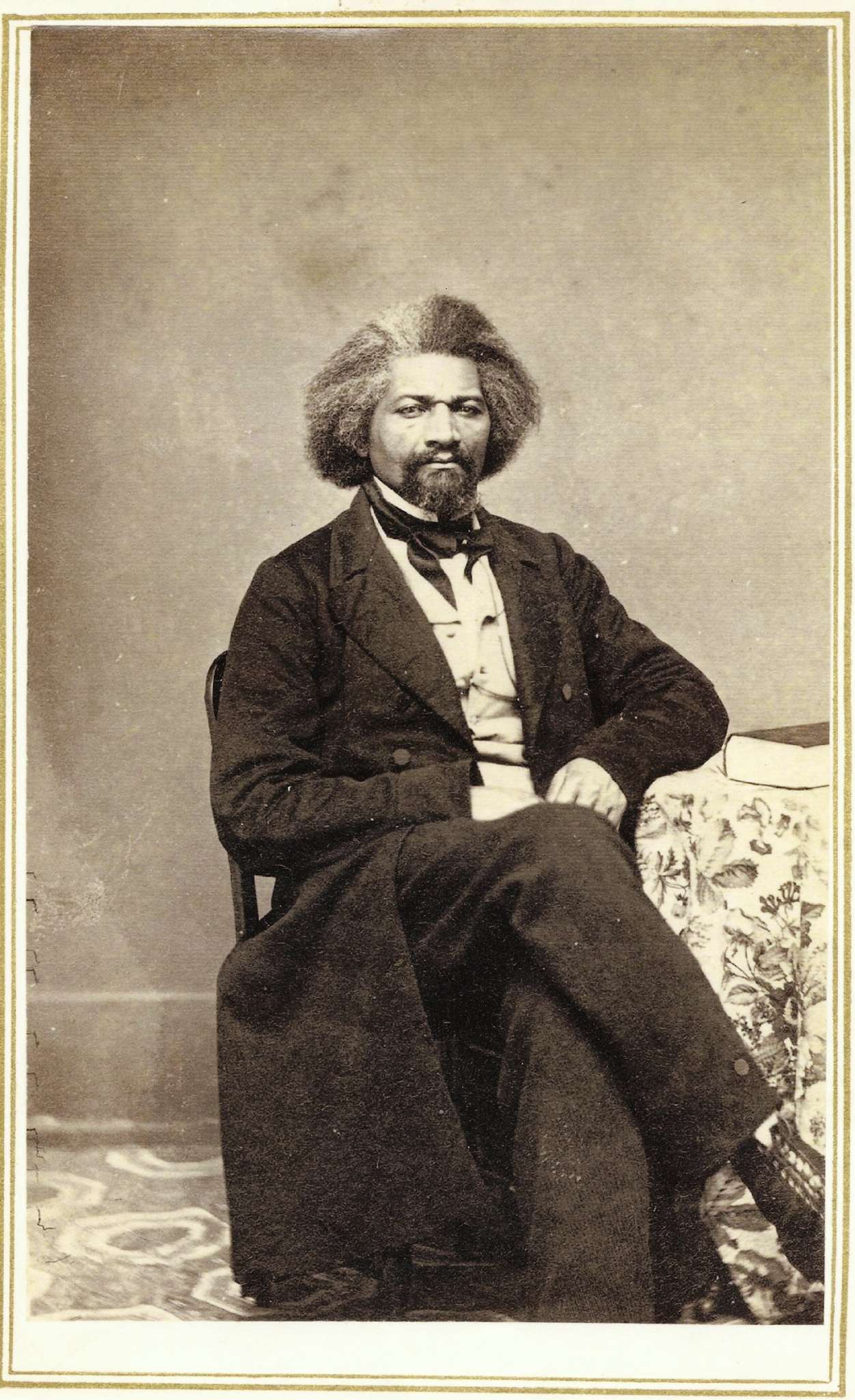
An 1863 photograph (carte-de-visite) of Frederick Douglass, by Edwin Burke Ives and Reuben L. Andrews.
He also grew through international collaboration. His 1840s tour of Ireland and Britain revealed the interdependence of global struggles for freedom.
When Douglass returned to the states in 1847, he joined Elizabeth Cady Stanton and Philadelphian Lucretia Mott in upstate New York at the Seneca Falls Convention for women’s rights. As his reputation grew, he occasionally parted ways with his mentor, the abolitionist William Lloyd Garrison.
One critical difference featured a perennial question: Is it possible to reform the system?
Garrison and many of his followers viewed the U.S. Constitution as a pro-slavery document. He refused to participate in U.S. electoral politics and believed free states should separate from states that permitted slavery. Douglass differed.
The debate extended across the Atlantic. In 1860, Douglass was invited to Glasgow, Scotland, to defend his position. He began by clarifying that “the American government and the American constitution … are as distinct from each other as the compass is from the ship.”
In an extensively argued defense of constitutional principles, textual, and moral clarity, Douglass asserted that if Americans honor the Constitution, “we will have no need of a dissolution of the Union — we will have a dissolution of slavery all over that country.”
In this orientation toward America, emerging ever more aligned with its fullest expression as a birthplace of freedom, Douglass echoed Franklin.
At the age of 81, in 1787, Franklin urged adoption of the U.S. Constitution — specifically recognizing it had faults he disagreed with. He emphasized union over disunion; he offered faith in the possibility of stepping from the rule of a king to the rule of the people, however small that first step was — it was still a spark.
Though Douglass would live most of his life in Massachusetts, New York, and the nation’s capital, he gained his freedom by coming to Philadelphia — a city and region awash in abolitionist organizing. Harriet Tubman also established her freedom in Philadelphia before moving northward. In the same era, the nation’s first historically Black colleges and universities, Lincoln and Cheyney, were founded in Southeast Pennsylvania. They would soon educate numerous pivotal civil rights leaders in the U.S., as well as the young men who would later become the first presidents of Ghana and Nigeria.
Revolutions in human freedom move much more like a river than a straight line. We who work, vote, and struggle for freedom are the water. We hit rocks, cliffs, and eddies — but freedom, like water, finds its path.
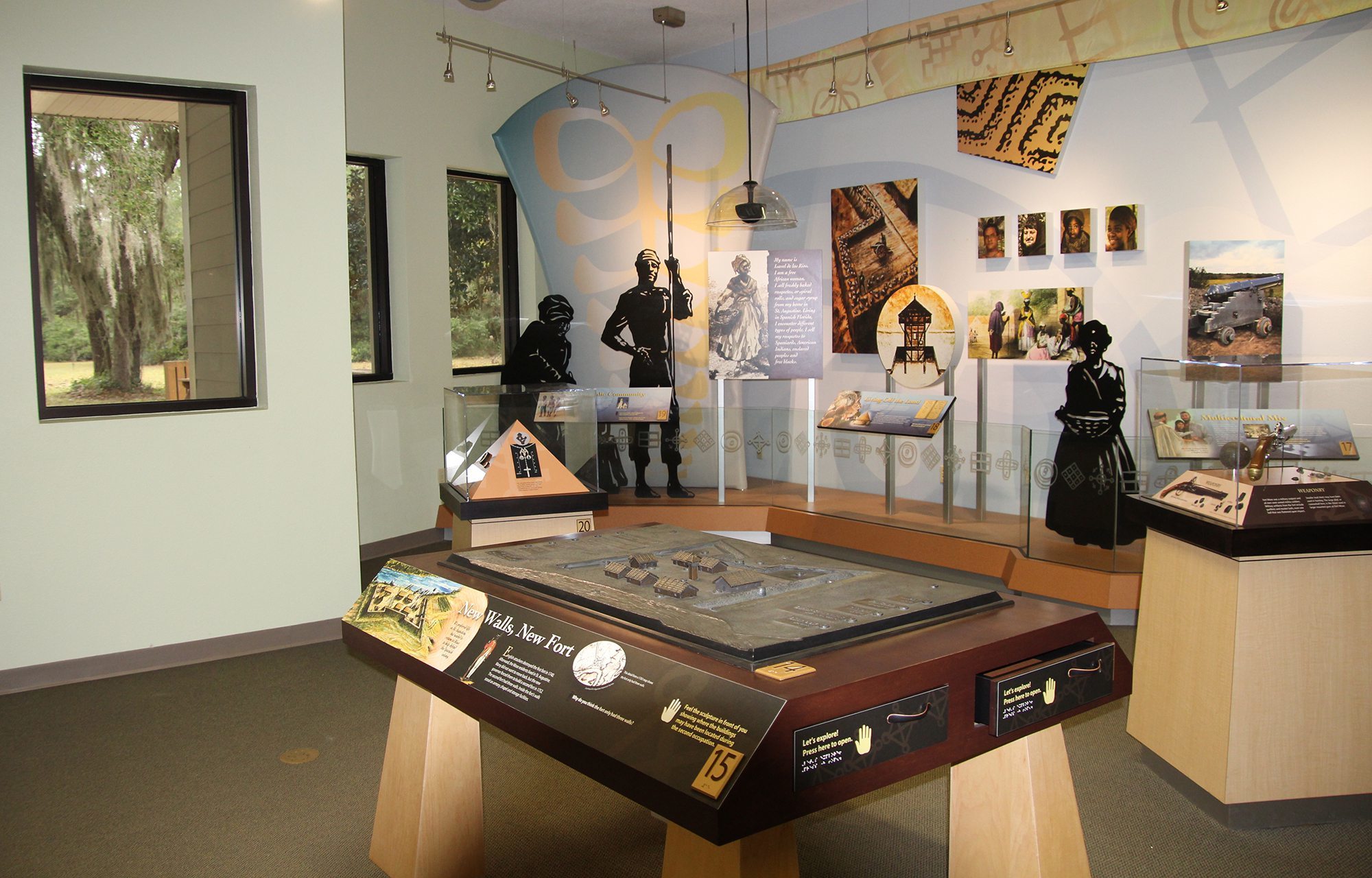
That freedom-finding is not merely metaphorical. In the 1700s and early 1800s, enslaved Africans fleeing Georgia fled not north but south, where the Spanish ruled until 1821. Just a bit north of St. Augustine, Fla., is Fort Mose, established as a legally sanctioned free Black community in 1738.
The Visitor Center at Fort Mose Historic State Park includes several exhibits and a detailed timeline that tells the story of the first free Black community in the U.S.
Freedom can be enacted on any soil, by any heritage. And it has been violated — all around the world — by a full range of traditions. Legally sanctioned slavery continued in Brazil through the end of the 1800s; it persisted in the Indian Ocean region well into the 1900s. Religious freedom — and freedom of conscience — remains an ideal that has yet to be fully enacted.
In the U.S., it is better than it is in much of the world, but we, like people anywhere, will always need to challenge ourselves to fully understand and enact our highest ideals.
When we celebrate the founding, we celebrate ideals. When we make American progress, we advance their implementation. The rights underlying democracy are not a given; they are the product of a cocreated moral imagination, grounded in shared values, extended through quality schooling, and in need of restrengthening and improving with every generation.
Eric Hartman recently delivered invited lectures on these topics at Northeastern University and at Flagler College in St. Augustine, Fla. This op-ed is excerpted from a longer article currently under review.