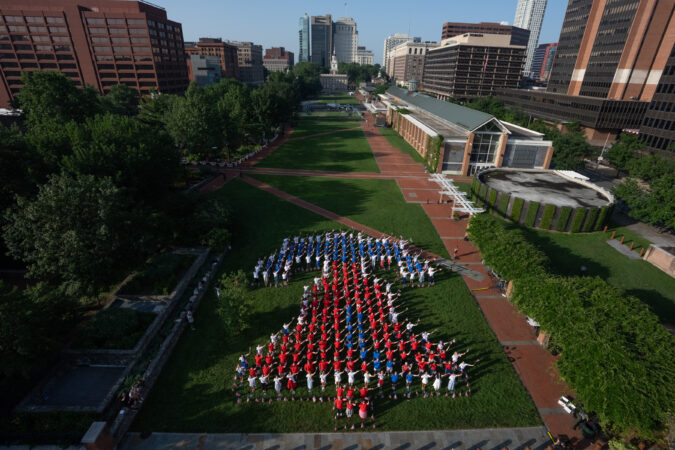
America’s 250th birthday is finally here, and organizations throughout Philadelphia have planned a full itinerary of celebrations for the weekend.
For those seeking historical enrichment, live music from national headliners, or even a patriotic pet parade, look no further.
Here is a schedule of the activities and events happening in the city over the July Fourth weekend:
Friday, July 3
Free Museum Day: Fireman’s Hall Museum
In a renovated 1898 firehouse, the Fireman’s Hall visitors can learn about the history of firefighting in Philadelphia, the birthplace of volunteer fire companies.
10 a.m., 147 N. 2nd St.
Free Museum Day: Science History Institute
The museum will feature a new exhibition on fireworks, exploring the art, chemistry, and craft behind the colorful emblem of the holiday.
10 a.m., 315 Chestnut St.
38th annual Liberty Medal ceremony
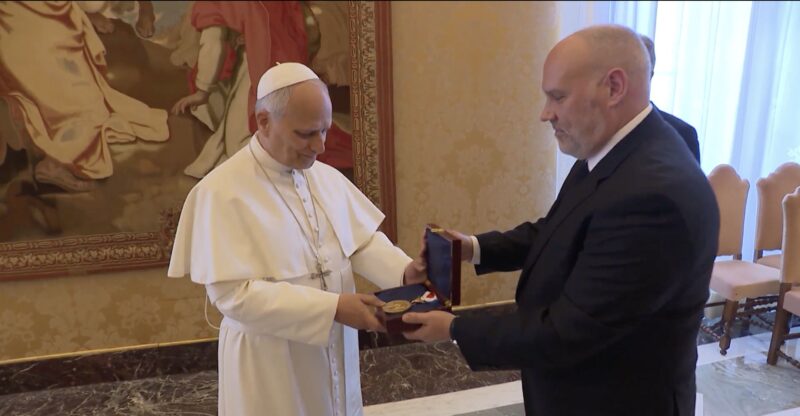
In a public ceremony, the National Constitution Center will award the 38th annual Liberty Medal to Pope Leo XIV, who will deliver live acceptance remarks virtually from the Vatican.
10:45 a.m., 525 Arch St.
Free Museum Day: Historic St. George’s Museum and Archives
Celebrating traditional craftsmanship, the museum will offer hands-on workshops where participants can create their own wax seals and try out water marbling.
11 a.m., 235 N. 4th St.
Salute to Independence Semiquincentennial Parade
The largest professionally produced 250th celebration parade in the country, the event will feature 50 marching bands, 19 floats, and all 52 Miss America state and territory titleholders.
Noon, Independence Hall to Benjamin Franklin Parkway
Free Museum Day: Historic Waynesborough
Located in Paoli, this National Historic Landmark was once the home of Revolutionary War hero Gen. Anthony Wayne. Free tours of the Georgian-style property will be available for visitors.
Noon, 2049 Waynesborough Road, Paoli, Pa.
Pops on Independence
Enjoy a live orchestral show with the Philly Pops, headlined by Tony Award-winning performer Idina Menzel.
8 p.m., 599 Market St.
Saturday, July 4
Celebration of Freedom ceremony
The ceremony will honor America’s 250th anniversary in the heart of its historic center, with speeches, awards, and a performance by Grammy Award winner Yolanda Adams.
10 a.m., 525 Arch St.
Free Museum Day: Cliveden of the National Trust
Visitors can view exhibit panels in the Barn and participate in free tours of the house, which was built in 1767 and is the site of the Revolutionary War’s Battle of Germantown.
10 a.m., 6401 Germantown Ave.
Free Museum Day: Historical Society of Pennsylvania
The museum will offer the exhibition, “Paths to Independence: 1765-1787,” showcasing more than 140 items that represent the people and events involved in the American Revolution.
10 a.m., 1300 Locust St.
Betsy Ross House Patriotic Pet Parade
An annual pet parade will occur at the Betsy Ross House, where prizes will be awarded for the best and most patriotic costumes.
10:30 a.m., 239 Arch St.
Free Museum Day: Powel House
Owned by Philadelphia’s first mayor after American independence was secured, visitors can tour the 18th century house where President George Washington once danced.
11 a.m., 244 S 3rd St.
One Philly: Unity Concert for America
The free concert will be hosted by comedian Wanda Sykes and feature performances from headliners including Christina Aguilera, Jill Scott, The Roots, and Will Smith. Music begins at 5 p.m. and will be broadcast on NBC10.
In America, one broken-down car can cost someone a job. One medical bill can wipe out a bank account. One missed paycheck can push a family from stability to desperation.
That is not freedom in any real sense.
As the nation marks 250 years of independence, we should say plainly what too many families already know: Freedom requires economic security. And economic security is only achievable when people have resources that exceed the basic cost of living, allowing them to cover their daily needs and build essential wealth — the savings, assets, and financial cushion needed to withstand life’s inevitable shocks.
Pathway to opportunity
Two hundred and fifty years ago, our Founding Fathers made a promise that people would have a right to self-determination. It was a promise that hard work, responsibility, and perseverance would open real pathways to opportunity. As we mark this anniversary, we must ask an honest question: For how many Americans does that promise hold?
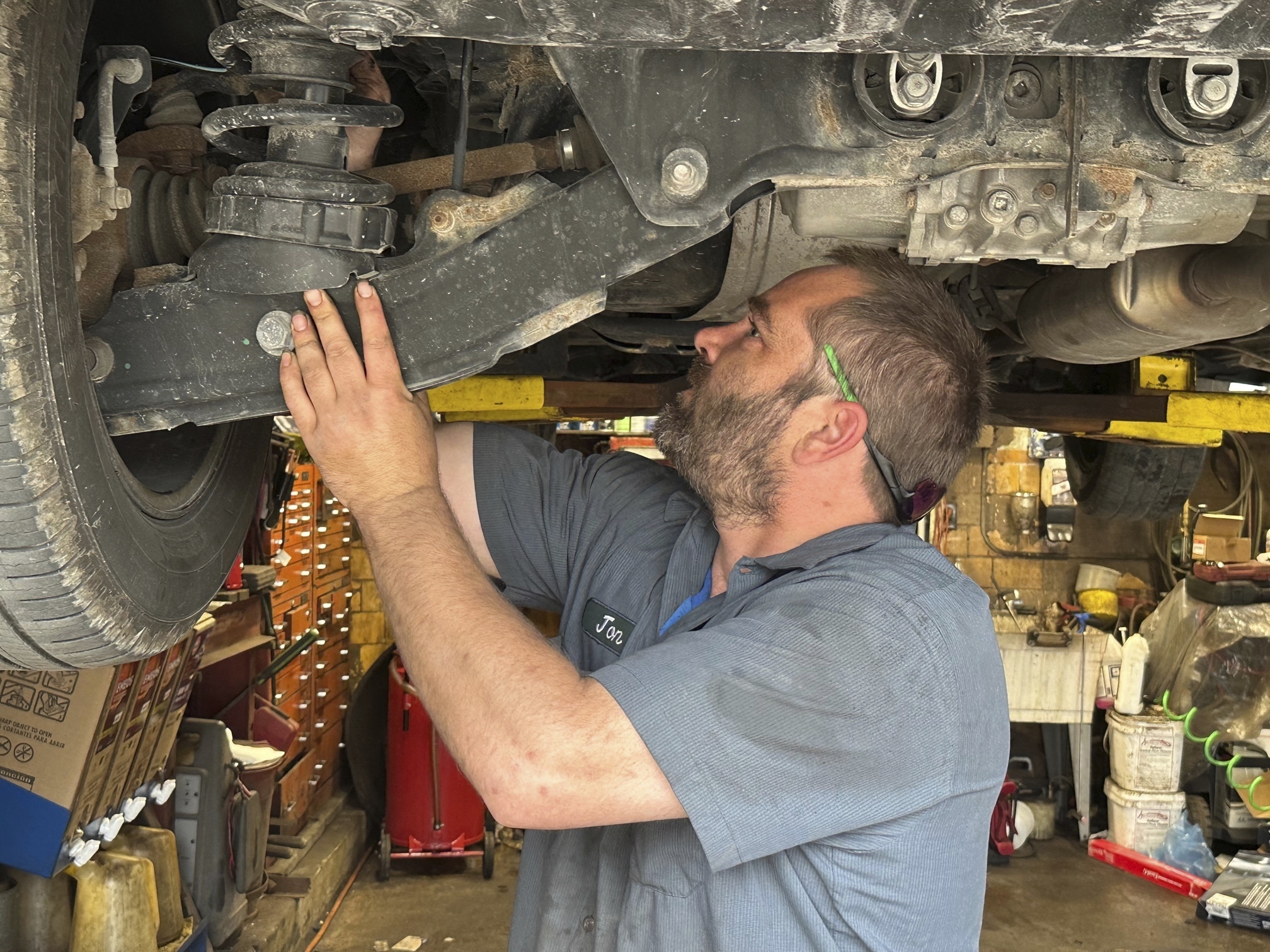
A mechanic works on a pickup truck in Michigan. The expense of a major auto repair bill can mean the difference between stability and ruin for many Americans.
The Constitution guarantees liberty, but circumstances can constrain it. People without the resources to withstand hardship face insurmountable barriers to education, purchasing homes, launching businesses, or saving for retirement. They cannot give their children a running start. They may have rights on paper, but lack the economic security to fully exercise them.
The founders understood at least this much: Liberty could not survive as an abstraction. The Virginia Declaration of Rights, a document that helped supply the moral language of the Declaration of Independence, described the inherent rights of the people as including life and liberty, but also “the means of acquiring and possessing property” and pursuing happiness and safety. That phrase matters.
Today, we understand “the means” less as land than as essential wealth. This is not wealth in the sense of luxury, privilege, or vast accumulation. It is the modest but vital foundation that allows a family to absorb a shock without being knocked flat. It is the money to repair the car that gets someone to work, cover the childcare that keeps a parent employed, pay for medicine before a condition becomes a crisis, or help an aging parent remain safe at home.
Essential wealth is what allows families to plan instead of merely react. It is the difference between recovering from a setback and being defined by it.
The real test comes when life happens. And in those moments, the difference between stability and crisis is not income. It is wealth, or the lack of it.
The cost of ignoring this is written across the country and across Pennsylvania. Tens of millions of American households cannot cover a modest emergency expense, including 48% of households here in the commonwealth, according to the “Measuring the True Cost of Economic Security” report. Wealth gaps yawn across race, geography, and generation, falling hardest on communities long denied the chance to build.
As we celebrate 250 years of American independence, we must think bigger.
We need policies that help families build assets, not just scrape by. Policies that expand pathways to homeownership, invest in children’s futures, widen access to savings and wealth-building, and tear down the barriers that block economic mobility. We need to ensure every child, no matter their zip code or their parents’ income, has the tools to build a secure future.
We must stop managing poverty and start measuring the true cost of living, which includes investing in freedom. Two and a half centuries in, the promise of America was never that people would simply get by. It was that they would have the freedom to get ahead. Living up to it now is the work this anniversary demands.
Michael A. Nutter served as the 98th mayor of Philadelphia from 2008 to 2016 and is currently a senior executive fellow at the Weitzman School of Design at the University of Pennsylvania. Jennifer Jones Austin is the CEO of the Federation of Protestant Welfare Agencies and cochair of the National True Cost of Living Coalition.
When the people drafting the U.S. founding documents got to work in the mid-1700s, they made unprecedented progress on the ills plaguing the preceding era, while failing to meet the fullest expression of their ideals. They would leave those moral aspirations to us — their inheritors.
Their impact is all around us. When any person, anywhere in the world, claims, “I have rights,” they are nodding toward the Enlightenment ideals at the heart of the U.S. founding. Today, it is difficult to appreciate the extent to which those founding principles were revolutionary for simply quelling religious violence.
In the era preceding the founding, millions of Europeans died in warfare couched within differences of faith. On this side of the Atlantic, institutions reflected the certainty of one, true God. Harvard was founded in 1636 to train Puritan clergymen; William and Mary was established six decades later to train Anglican clergy. In the colony of Maryland, Catholics battled Protestants in 1655, leading to the execution of four Catholic leaders.
In this context, 11 years before he would take control of Pennsylvania, William Penn wrote a treatise establishing a rationale for religious toleration. Benjamin Franklin picked up that emphasis when he shared Proposals Relating to the Education of Youth in Pensilvania in 1739. In the document that framed the University of Pennsylvania’s early years, Franklin insisted that students would consider “the Advantage of Civil Orders and Constitutions, how Men and their Properties are protected by joining in Societies and establishing Government.”
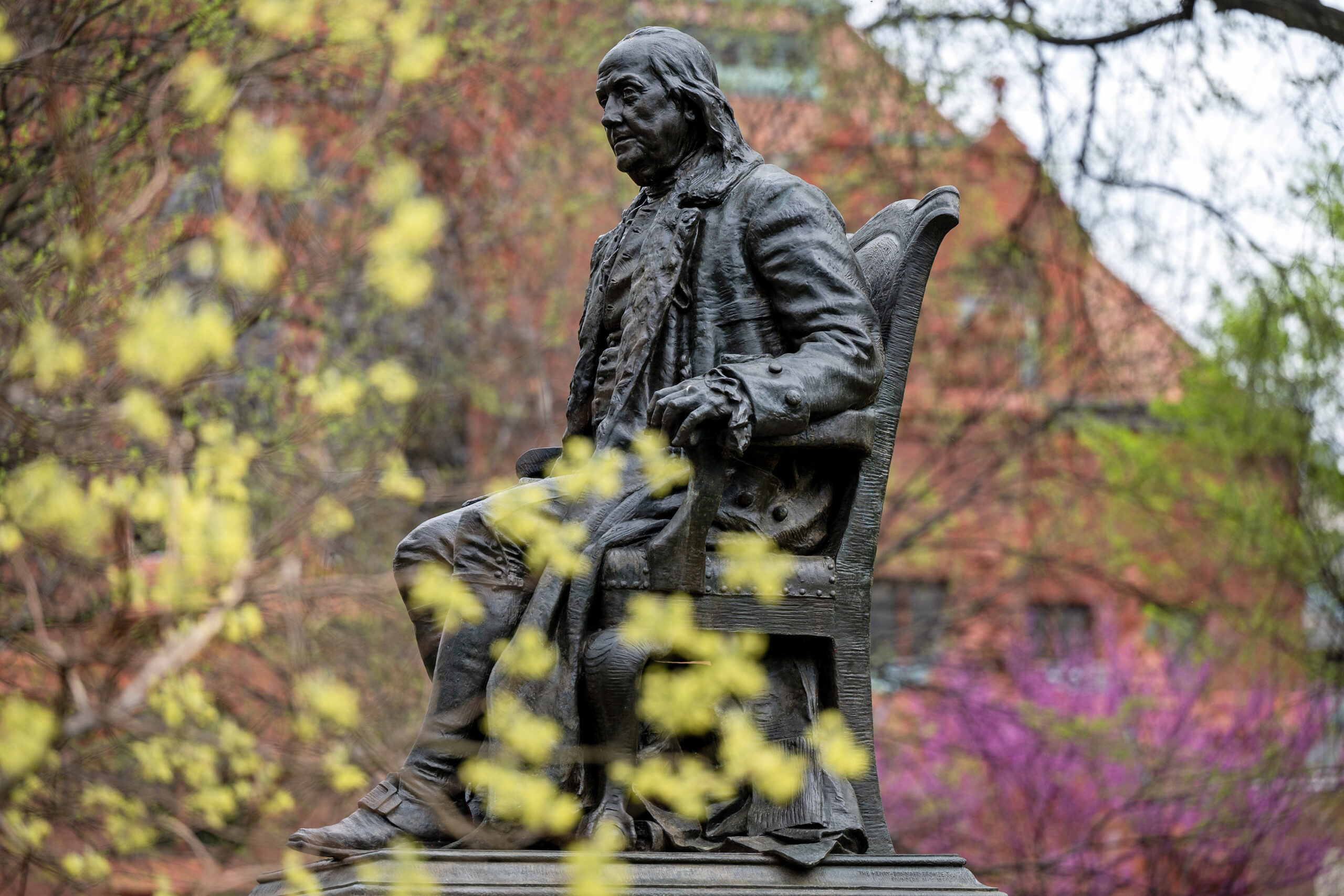
Benjamin Franklin statue on the campus of the University of Pennsylvania in front of College Hall.
Penn’s early, religiously inclusive orientation was at odds with the identity politics of the era, which featured an association between Anglicanism and British loyalty. As tensions grew, the university trustees mandated an Anglican majority on the board, contributing to suspicions of loyalist bias.
A new university was mandated — and the leadership was diverse across Protestant sects, including even Catholic representation. The leaders, however, were uniform in their support for the American revolutionaries.
This creation of, and commitment to, a civic, secular, tolerant institution of higher learning reflected centuries of conflict in arms, persuasion in conversation, and development of ideals. And, like the Declaration of Independence, it was so near in time and space that Penn’s founding was not a crowning achievement but a milestone on a much longer journey.
Indeed, America’s hypocrisies at the founding and struggles since that time are understood in terms of American ideals: enacting in life and in law, through shared governance, a country that embraces the dignity of all people.
A century after William Penn died, Frederick Douglass was born into enslavement — yet he was destined to advance America’s moral imagination.
Douglass self-emancipated by escaping to Philadelphia at the age of 20 in 1838. Only three years later, he rose to fame through his abolitionist speeches, compelling audiences with his message and oratory power.
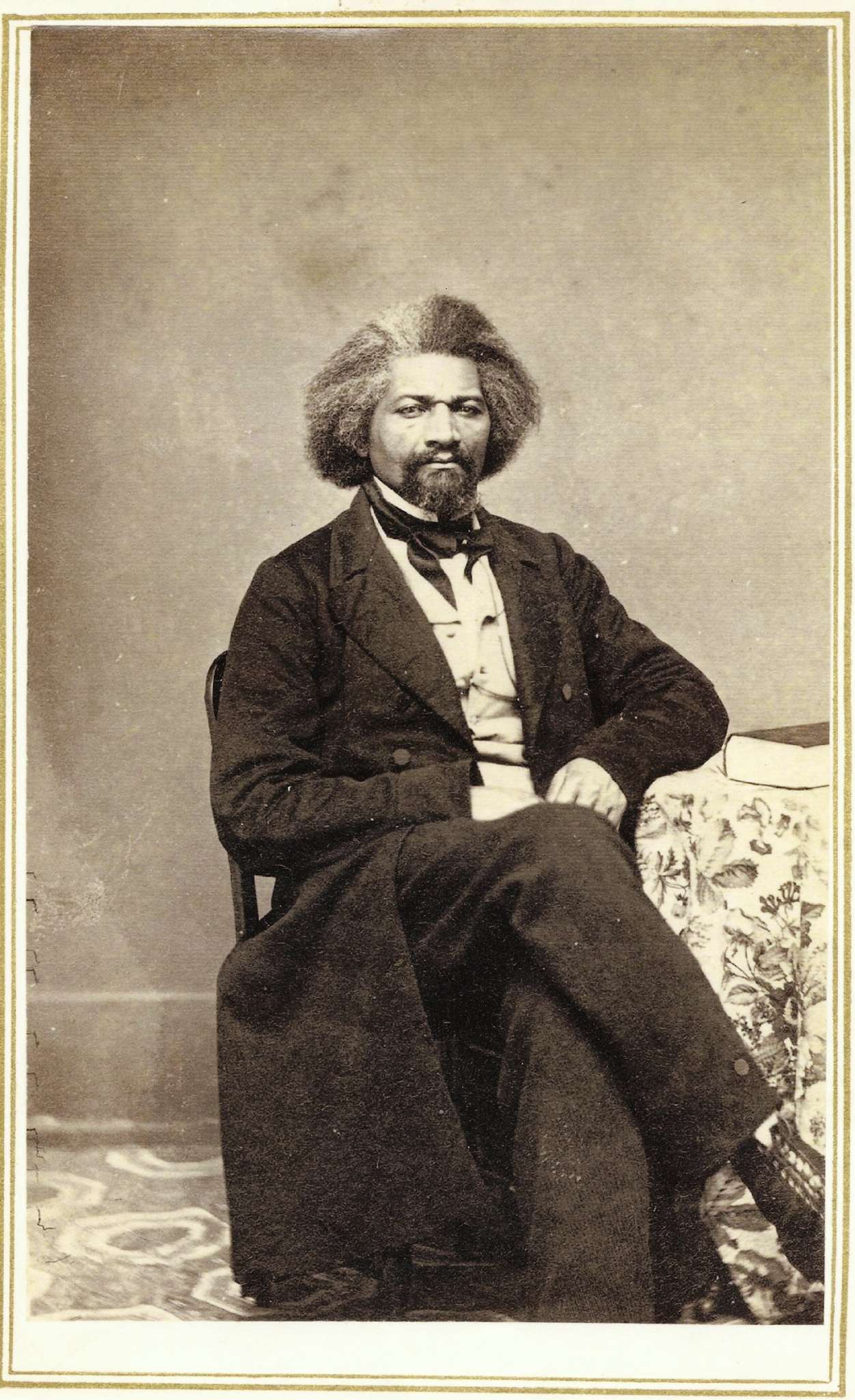
An 1863 photograph (carte-de-visite) of Frederick Douglass, by Edwin Burke Ives and Reuben L. Andrews.
He also grew through international collaboration. His 1840s tour of Ireland and Britain revealed the interdependence of global struggles for freedom.
When Douglass returned to the states in 1847, he joined Elizabeth Cady Stanton and Philadelphian Lucretia Mott in upstate New York at the Seneca Falls Convention for women’s rights. As his reputation grew, he occasionally parted ways with his mentor, the abolitionist William Lloyd Garrison.
One critical difference featured a perennial question: Is it possible to reform the system?
Garrison and many of his followers viewed the U.S. Constitution as a pro-slavery document. He refused to participate in U.S. electoral politics and believed free states should separate from states that permitted slavery. Douglass differed.
The debate extended across the Atlantic. In 1860, Douglass was invited to Glasgow, Scotland, to defend his position. He began by clarifying that “the American government and the American constitution … are as distinct from each other as the compass is from the ship.”
In an extensively argued defense of constitutional principles, textual, and moral clarity, Douglass asserted that if Americans honor the Constitution, “we will have no need of a dissolution of the Union — we will have a dissolution of slavery all over that country.”
In this orientation toward America, emerging ever more aligned with its fullest expression as a birthplace of freedom, Douglass echoed Franklin.
At the age of 81, in 1787, Franklin urged adoption of the U.S. Constitution — specifically recognizing it had faults he disagreed with. He emphasized union over disunion; he offered faith in the possibility of stepping from the rule of a king to the rule of the people, however small that first step was — it was still a spark.
Though Douglass would live most of his life in Massachusetts, New York, and the nation’s capital, he gained his freedom by coming to Philadelphia — a city and region awash in abolitionist organizing. Harriet Tubman also established her freedom in Philadelphia before moving northward. In the same era, the nation’s first historically Black colleges and universities, Lincoln and Cheyney, were founded in Southeast Pennsylvania. They would soon educate numerous pivotal civil rights leaders in the U.S., as well as the young men who would later become the first presidents of Ghana and Nigeria.
Revolutions in human freedom move much more like a river than a straight line. We who work, vote, and struggle for freedom are the water. We hit rocks, cliffs, and eddies — but freedom, like water, finds its path.
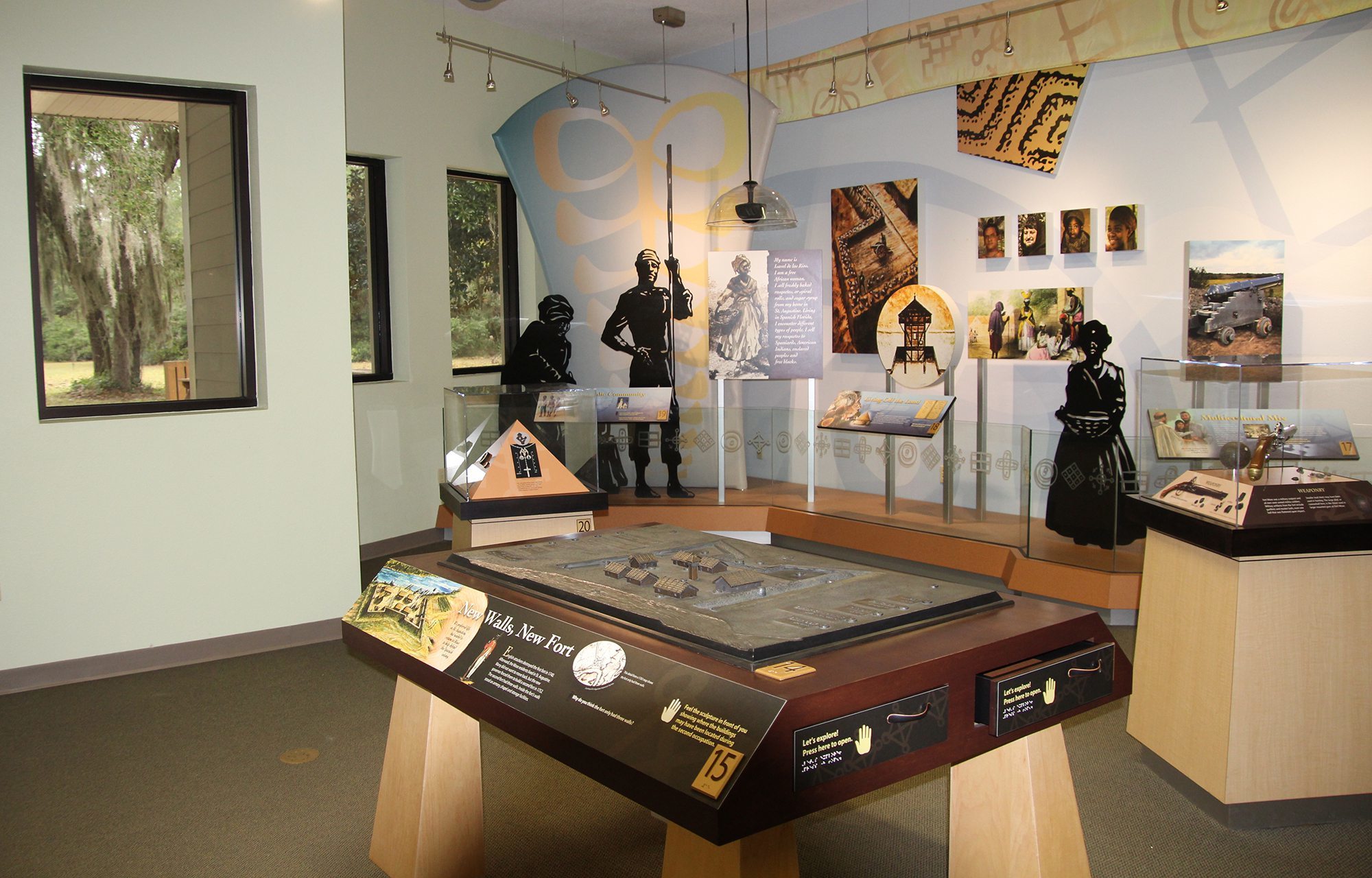
That freedom-finding is not merely metaphorical. In the 1700s and early 1800s, enslaved Africans fleeing Georgia fled not north but south, where the Spanish ruled until 1821. Just a bit north of St. Augustine, Fla., is Fort Mose, established as a legally sanctioned free Black community in 1738.
The Visitor Center at Fort Mose Historic State Park includes several exhibits and a detailed timeline that tells the story of the first free Black community in the U.S.
Freedom can be enacted on any soil, by any heritage. And it has been violated — all around the world — by a full range of traditions. Legally sanctioned slavery continued in Brazil through the end of the 1800s; it persisted in the Indian Ocean region well into the 1900s. Religious freedom — and freedom of conscience — remains an ideal that has yet to be fully enacted.
In the U.S., it is better than it is in much of the world, but we, like people anywhere, will always need to challenge ourselves to fully understand and enact our highest ideals.
When we celebrate the founding, we celebrate ideals. When we make American progress, we advance their implementation. The rights underlying democracy are not a given; they are the product of a cocreated moral imagination, grounded in shared values, extended through quality schooling, and in need of restrengthening and improving with every generation.
Eric Hartman recently delivered invited lectures on these topics at Northeastern University and at Flagler College in St. Augustine, Fla. This op-ed is excerpted from a longer article currently under review.
With Eagles training camp drawing nearer, The Inquirer is taking a closer look at the more than three dozen new faces who are expected to report along with the rest of the team on July 28.
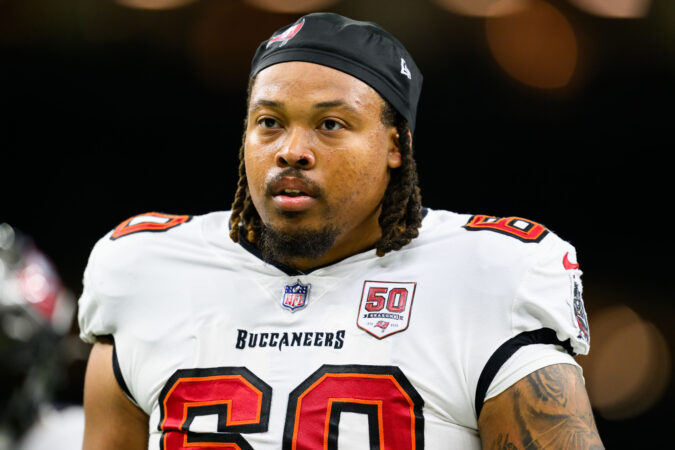
Player: Michael Jordan
Position: G
Age: 28
Previous experience: Despite suiting up for four different teams (plus two practice squad stints with the Packers), Jordan actually has a decent NFL resume. A journeyman guard, Jordan has 49 starts in 78 games in his six seasons.
He most recently played for the Tampa Bay Buccaneers, where he started nine games and played in 11 last season. He played in his home state of Ohio in college and NFL, playing two years for Ohio State before being selected by the Cincinnati Bengals in the fourth round of the 2019 NFL draft (136th overall).
Path to a roster spot: Jordan’s chances of making the Eagles roster are fairly high. Beyond Landon Dickerson and Tyler Steen, who are virtual locks to start, Philadelphia has a fairly inexperienced guard group — made up of names like Micah Morris, Willie Lampkin, Drew Kendall, Jaeden Roberts, and Jake Majors. On paper, Jordan should shine vs. an inexperienced bunch.
Fun fact: So, let’s talk about that name. Yes, Jordan is well aware that he shares a name with arguably the most famous basketball player ever. In fact, according to a story on Panthers.com, he once got “cursed out” when trying to order a pizza on Super Bowl Sunday, since the restaurant thought it was a prank call. “And he starts cussing me out,” Jordan said with a laugh. “He said ‘This is Super Bowl Sunday; you can’t be playing around with fake names like that.’”
Quotable: “I’m actually pretty terrible at basketball,” Jordan said. “You can ask the guys in the locker room; they already know that. I’ve been terrible since I was a kid. I have to look at the ball when I dribble.” — Jordan said in an interview with Panthers.com
Player: Rocco Underwood
Position: LS
Age: 23
Previous experience: The Eagles snagged one of the best long snappers in college football in their undrafted free agent group. Underwood, who played in 50 games over five years at Florida, won the 2024 Patrick Mannelly Award as the top long snapper in college football.
Path to a roster spot: Underwood is a virtual lock to make the team. The Eagles are still trying to find their long-term replacement for long snapper Rick Lovato, who was with the team from 2016 to 2024. The tandem of Charley Hughlett and Cal Adomitis didn’t quite cut it in 2025, which is why general manager Howie Roseman picked up the highly regarded Underwood.
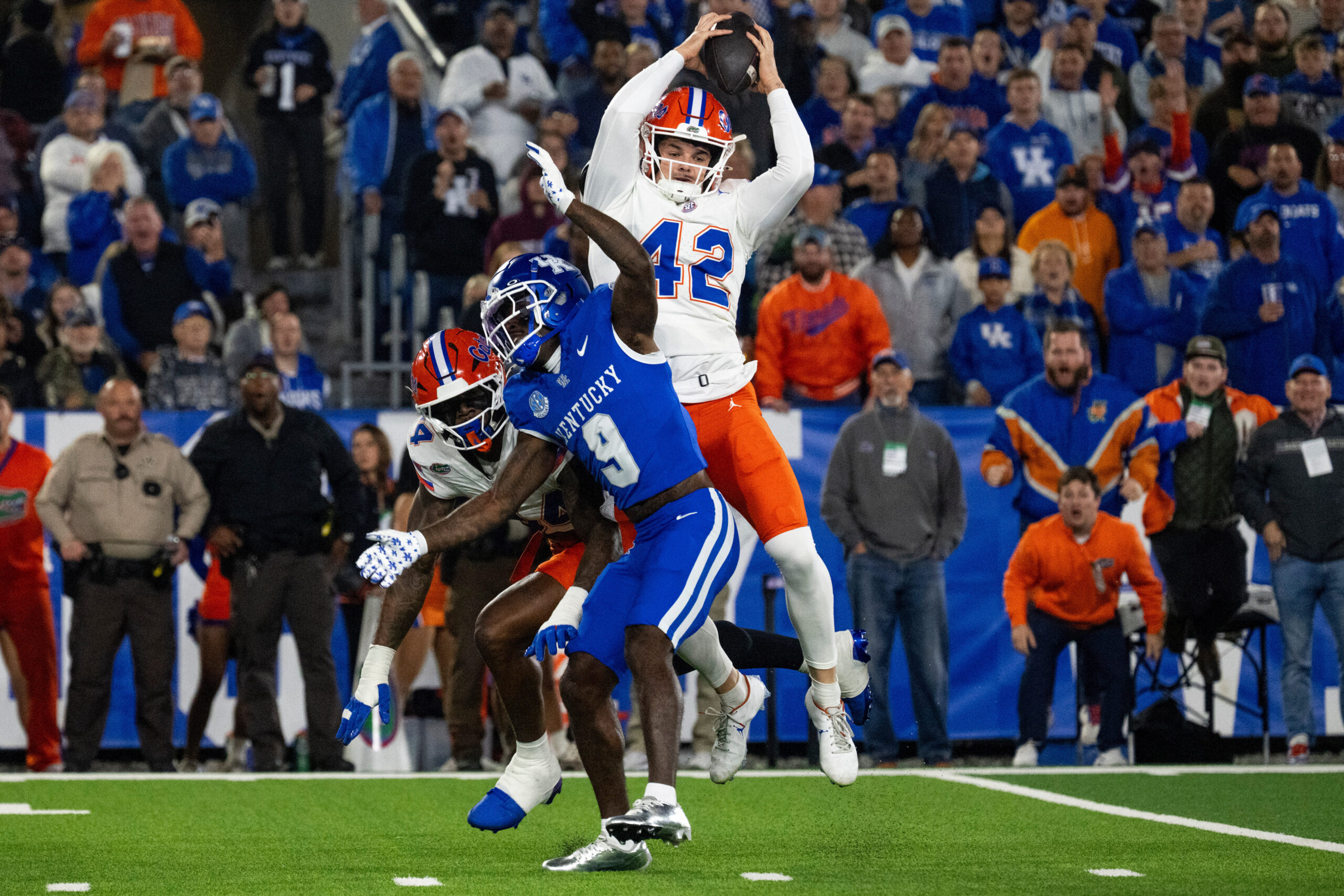
Rocco Underwood (42) won the Patrick Mannelly Award in 2024 as the top long snapper in college football.
Fun fact: Trainer Chris Rubio is widely recognized as the best long snapper coach in the nation. Rubio’s camp is the longest-running long-snapping camp in the nation. Underwood was the first ever athlete to earn six-star status as a long snapping prospect at the camp.
Quotable: “He’s jelled really well with the veteran guys. [He’s an] athletic individual,” Eagles special teams coordinator Michael Clay said. “It’s nice [that] he played under [Florida senior special teams analyst] Joe Houston, who had coached in the NFL. He knows the rigors of the NFL probably from talking to Joe, but he’s doing a really good job. Obviously, once the pads come on, he gets an actual real rush, but he’s taking it stride for stride, and he and [special teams assistant] Tyler Brown meet every day. I’m in there poking fun at him still. I’ll rush him a couple times, [but] he’s going to get rushed by a far better athlete in game situations.”
In 1852 Frederick Douglass famously asked, “What to the Slave is the Fourth of July?” Now on the cusp of the nation’s 250th birthday, some Philadelphians still question if the holiday is meant for them.
Many Black and Indigenous people say they have complicated feelings about celebrating Independence Day, when the holiday did not represent independence or freedom for their ancestors. And their fight for their rights continues in 2026.
When the nation declared its independence,“people like me, we not only did not have rights, but we were literally relegated [to] property,” said Timothy Welbeck, professor and director of the Center for Anti-Racism at Temple University. “So much of this nation’s history has been marked by the struggle for Black people to have a modicum of liberty and equity.”
“I belong here. But I certainly don’t take part in their celebration,” said Donna Fann-Boyle, a Bucks County resident of Choctaw and Cherokee descent who led the fight to change the name of Neshaminy High School’s mascot.
Donna Fann-Boyle of Langhorne, PA., is a leader in CNA, the Coalition of Natives and Allies, and has been fighting for years to make the Neshaminy school district drop it’s nickname. Photograph taken at her home on Friday morning September 4, 2020.
She said anytime she hears mention of the semiquincentennial celebration on the TV or radio, she reminds herself that this land and its Indigenous people were here long before 250 years ago.
“I think it’s very hypocritical … only certain people have those freedoms,” she said of the holiday.
It took nearly another hundred years after the Declaration of Independence was signed for slavery to end, and another hundred after that for African Americans to have a say in their nation with the passage of the Civil Rights and Voting Rights acts. And when the new nation announced itself July 4, 1776, Native Americans had already been living on the land for hundreds of years, but were still forcibly displaced from their homes and laterconfined to reservations.
For some, the holiday is not a day to ignore, but a tool. The Rev. Carolyn Cavaness, the pastor of Mother Bethel AME Church in Society Hill, said the Fourth of July is an opportunity to talk about the nation’s contradictions and to argue that Black people should have always been included in its vision of independence.
“We have responsibility to lift up these truths,” she said.
“There is a piece of the brain that says, ‘Well you should sit out.’ But then I also know that when I think about my ancestors, and when I think about the institution that I am called to serve… we have to be out front to show and to celebrate that people of African descent have always been a part of this country,” she said.
In front of a wall of portraits of former bishops, Rev. Carolyn Cavaness greets members of the congregation during a fellowship reception Sunday, Nov. 10, 2024 the day after historic Mother Bethel A.M.E Church appointed her the first woman pastor in its 230-year history.
Freedom not realized
When he was growing up in South Dakota, the Fourth of July was mostly just like any other day for Eugene Black Crow. It wasn’t something he or his community ever celebrated, because it wasn’t their holiday. Black Crow, who is of Oglala Lakota descent, learned more about the country’s Independence Day when he was sent off to a boarding school for Native American children.
“We got beaten into speaking English,” Black Crow, 70, said, havingonly spoken Lakota before then. At the boarding school, he saw Fourth of July fireworks for the first time. He and his classmates learned to recite the Pledge of Allegiance, though they didn’t really understand what the words meant until years later.
Black Crow now lives in the Franklinville section, and over the years, he said he’s noticed more Native Americans celebrating the holiday, even in his South Dakota hometown. He used to take his children to watch fireworks when they were young, but there’s been a dissonant feeling to the experience.
“It was always in the back of my mind — why are we Natives celebrating this?” he said.
Even in the 18th and 19th centuries, people of color made the Fourth of July into a day of protest, and celebrated alternative independence days from other nations instead, said Morgan Lloyd, programming coordinator for the African American Museum in Philadelphia. She believes today, the holiday is a useful moment to consider and reflect on the whole history of the United States, where Black and Indigenous people have helped shape the country despite their exclusion from its loftiest ideals of freedom.
“It is for me, a conversation starter around what does independence and what does full recognition look like,” she said.
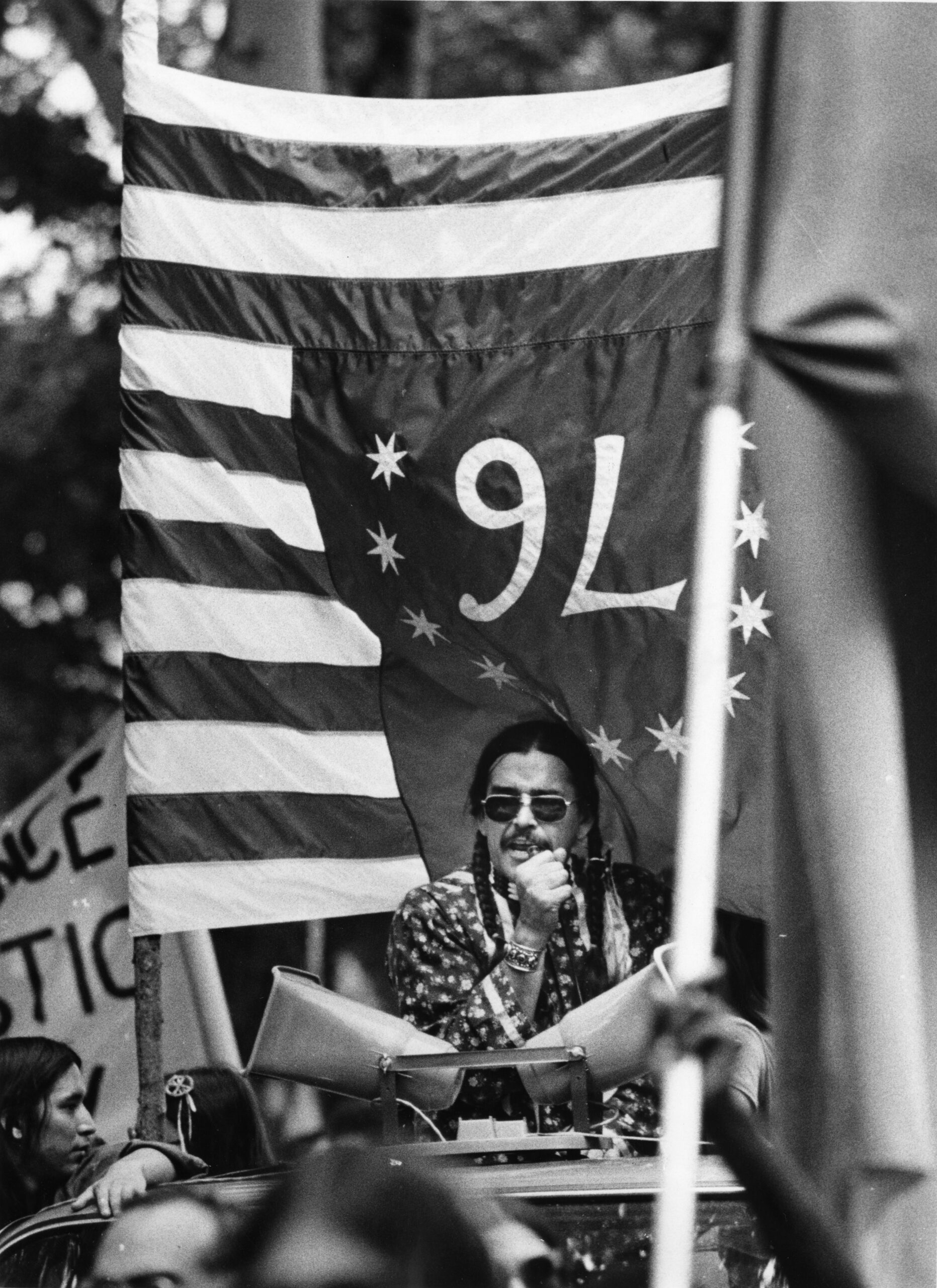
A group of native Americans lead a ‘July the Fourth Coalition’ protest parade at 33rd. & Diamond streets in Philadelphia, on July 4, 1976.
Cavaness thinks about the holiday in a similarly inclusive way, andsaid she plans to speak with her congregation about the nation’s 250th anniversary, representing how freedom is unfinished business.
“There is still freedom not realized. And every generation goes through this notion of what does freedom look like, who is left out, who needs to be brought in,” she said.
From his North Philly home, Black Crow teaches students how to speak Lakota over Zoom. His Lakhota Woglakapo Project is intended to ensure the mostly spoken language doesn’t get lost to time. He plans to visit his old reservation this fall, so he can record other Lakota speakers for posterity.
He attended a pro-immigration rally in Philadelphia this week, just a few days after the U.S. Supreme Court ruled President DonaldTrump‘s administration could revoke protected status for Haitian and Syrian immigrants. Black Crow spoke to the crowd filled with immigrants, expressing his solidarity.
Months before Philadelphia was set to celebrate the United States’ 200th birthday in 1976, Mayor Frank Rizzo was worried.
The city, he said, stood to face massive unrest and potential violence during the Bicentennial parade on July 4. There were, he believed, cadres of radical leftists plotting to disrupt what should be a day of jubilance two centuries after the country’s founding in the place where it was born.
They would come in droves from around the nation, Rizzo said. And to combat them, Philadelphia authorities didn’t just need to be vigilant — they needed thousands of federal troops to patrol the streets and quell the impending chaos.
Those troops, despite Rizzo pursuing their deployment, never arrived. Nor did the bedlam he feared would come. And neither did the throngs of tourists the city expected for the Bicentennial, at least in part because of Rizzo’s warnings.
The city, did, however, get plenty of leftist protesters — tens of thousands who held large, peaceful demonstrations in North Philadelphia on Independence Day of 1976. No blood flowed in the streets, and Rizzo, the man who claimed it would, that year became the first mayor in Philadelphia’s history to face a recall effort.
Here is how The Inquirer and Daily News covered it:
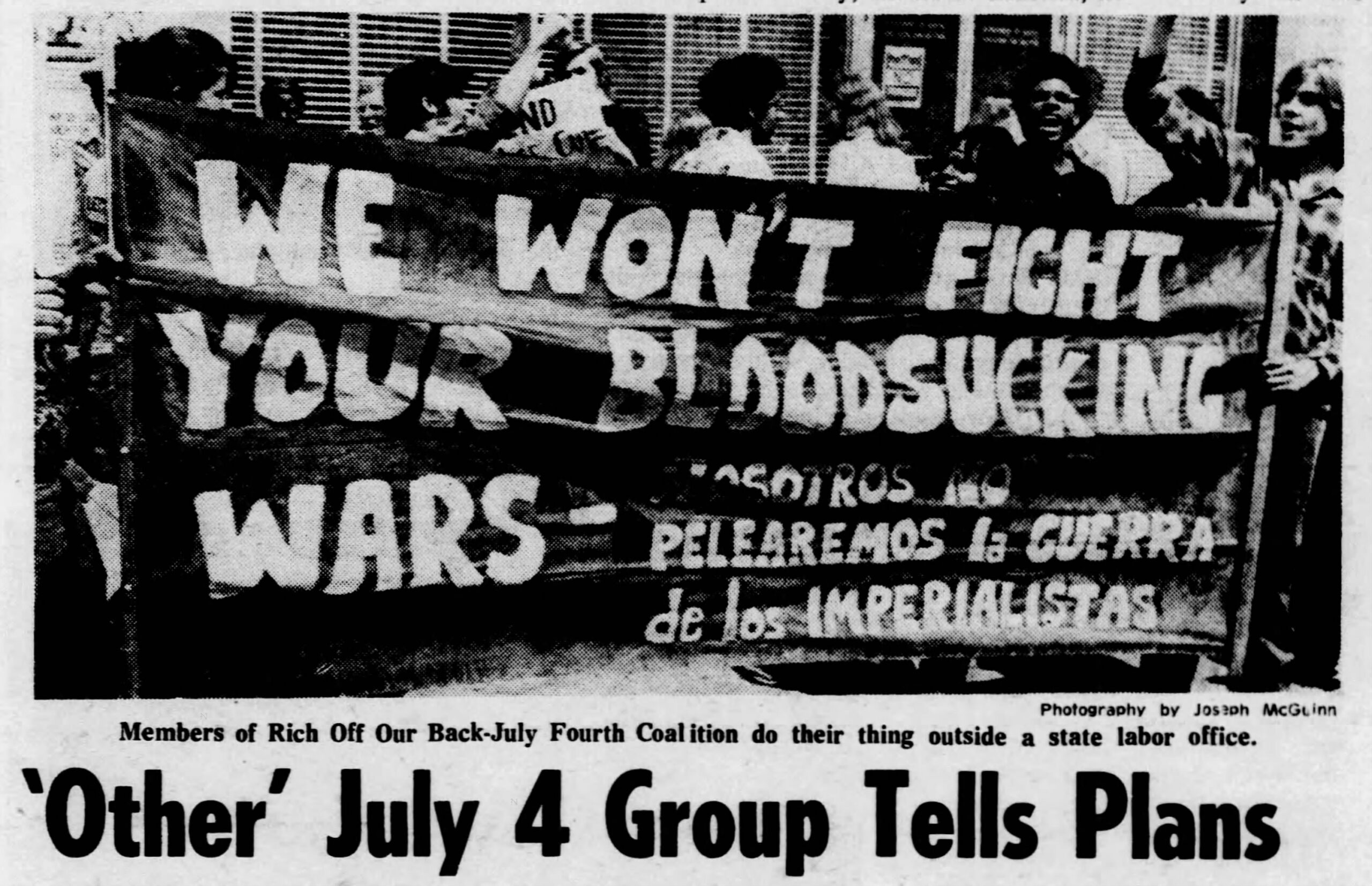
Members of Rich Off Our Backs demonstate outside a state employment office in Germantown in June 1976, as shown in an issue of the Daily News from the time.
Two groups plan protests
Rizzo’s perceived threat of chaos came from two similarly named, yet totally distinct, groups that planned demonstrations for Independence Day. Those were the July 4 Coalition and the Rich Off Our Backs-July 4th Coalition, two organizations that consisted largely of anti-war, socialist civil rights activists who hoped to offer some counter-programming for the holiday.
The July 4 Coalition was larger, with some 100 subgroups making up its ranks, which it claimed would bring 60,000 marchers to Philadelphia for the Bicentennial. Rich Off Our Backs, meanwhile, expected only 5,000 people to show up for its Independence Day demonstration, but was the larger concern for the Rizzo administration because it was considered the more radical group.
Ahead of the holiday, the city had reached an agreement with the July 4 Coalition, which planned to protest dozens of social ills ranging from racism and sexism to unemployment and military spending. Its demonstration would take place in North Philadelphia, miles away from the main festivities in Center City.
Rich Off Our Backs, meanwhile, wanted to hold its demonstration in Center City and was believed to be “dominated by a tiny, one-year-old Marxist splinter called the Revolutionary Communist Party,” The Inquirer reported at the time. The group, reports said, planned to focus on unemployment.
Those plans would have brought the group into direct conflict with the city’s Bicentennial activities, including Philadelphia’s official parade. But after a weekslong court battle, Rich Off Our Backs was denied a permit to parade in Center City, and agreed to an alternate route that would take the march through North Philly.
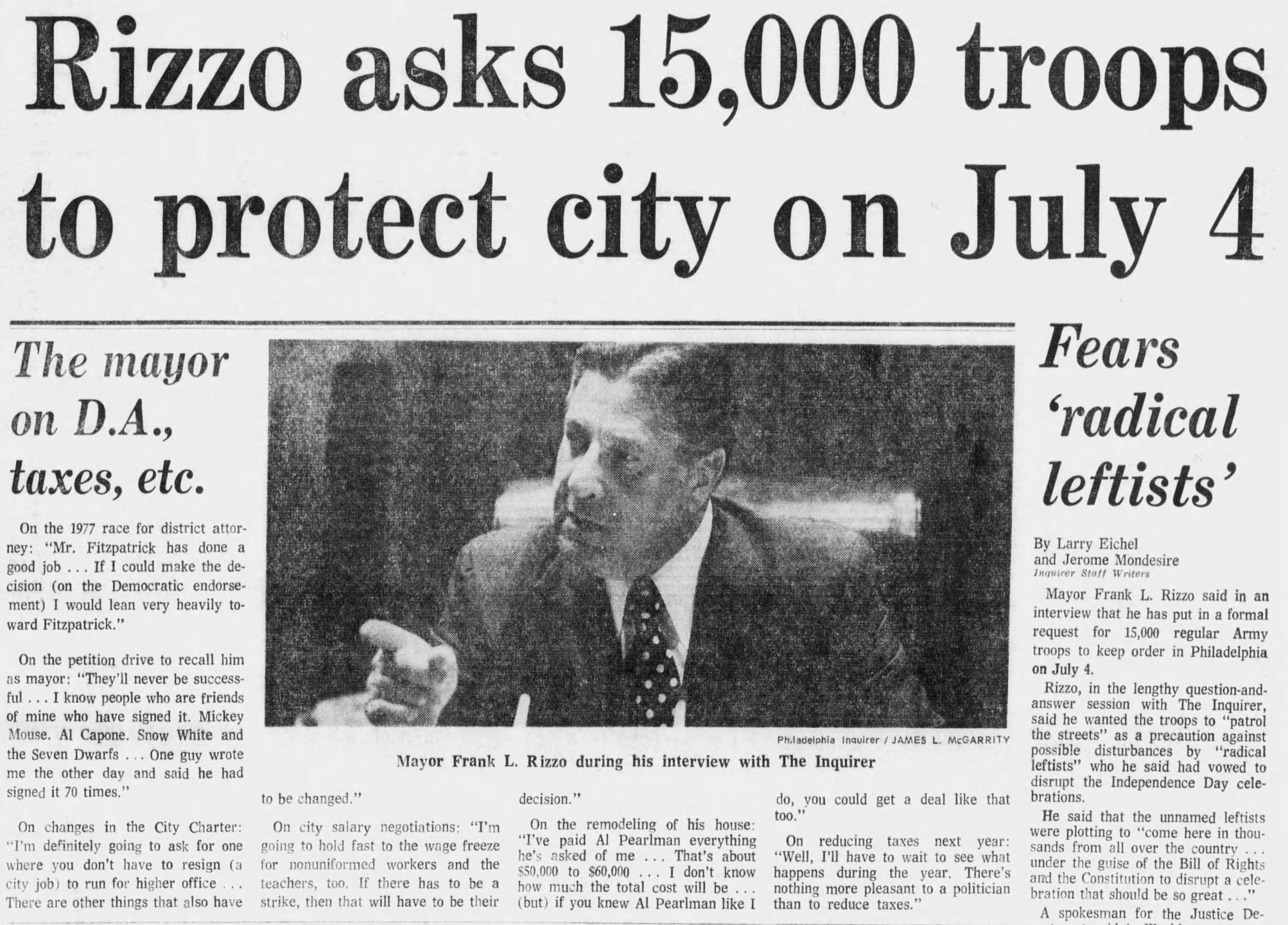
The front page of the May 30, 1976, Inquirer details Mayor Frank Rizzo’s request for 15,000 federal troops to protect Philadelphia on Independence Day that year.
Rizzo’s call for federal troops
In late May 1976, Rizzo told The Inquirer he would call for 15,000 Army troops to keep order in Philadelphia due to concerns over the planned protests and potential violence.
Federal troops, Rizzo said, would supplement the city’s police force, which would be “spread too thin” due to the number of planned festivities on July 4. Bolstering the police, he added would not included armored vehicles or heavily armed forces, but would consist merely of “bodies” carrying sidearms to quell dissent.
Deployment of federal troops, The Inquirer reported, would require approval from then-Gov. Milton J. Shapp, who supported the effort. And the FBI’s Philadelphia office said it was unaware of any federal investigation into the matter at the time of Rizzo’s announcement.
Both the July 4 Coalition and Rich Off Our Backs called Rizzo’s move “fascist,” and insisted demonstrations would be peaceful. One activist, the Rev. David Gracie, known for anti-Vietnam War protests in the 1960s, said Rizzo’s request harkened back to the city’s treatment of anti-war demonstrators.
And in late June, the Justice Department denied Rizzo’s call for troops, saying it failed to find substantive evidence of the radical activity the mayor feared would occur. There was, the FBI said, no “hard core” indication of impending terroristic activity, and no additional enforcement efforts were necessary.
A group of Native Americans lead a “July the Fourth Coalition” protest parade at 33rd and Diamond Streets in Philadelphia, on July 4, 1976.
The day of
On Independence Day 1976, both groups marched through North Philadelphia without incident, The Inquirer reported at the time. There was not a single arrest or reported disturbance, with the only snafu being late starts to both marches.
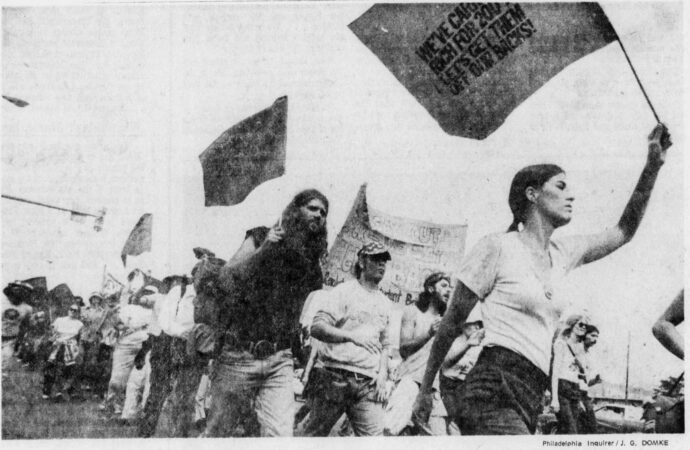
Rich Off Our Backs, despite the fervor over its planned activities, managed to attract about 4,000 participants, all of whom marched east along Girard Avenue from Broad Street before convening in Norris Square Park in Kensington. The July 4 Coalition held an 18-block demonstration along Lehigh Avenue ahead of a rally at 33rd and Oxford Streets in Fairmount Park.
The coalition claimed to have drawn some 58,000 protesters, but Philadelphia Police, estimated the crowd at about 25,000 people, and observers pegged it at half that size.
“We did it,” Rich Off Our Backs spokesperson Nick Unger said in 1976. “Thousands of working people walking through the city for miles where you couldn’t see the front of the march or the rear of the march.”
Neither demonstration, meanwhile, resulted in any of the bloodshed, destruction, or disruption the Rizzo administration advertised. In fact, The Inquirer reported, both protests “drew little response from onlookers” along their routes, and the police who were deployed — clad in riot gear — were ultimately not needed.
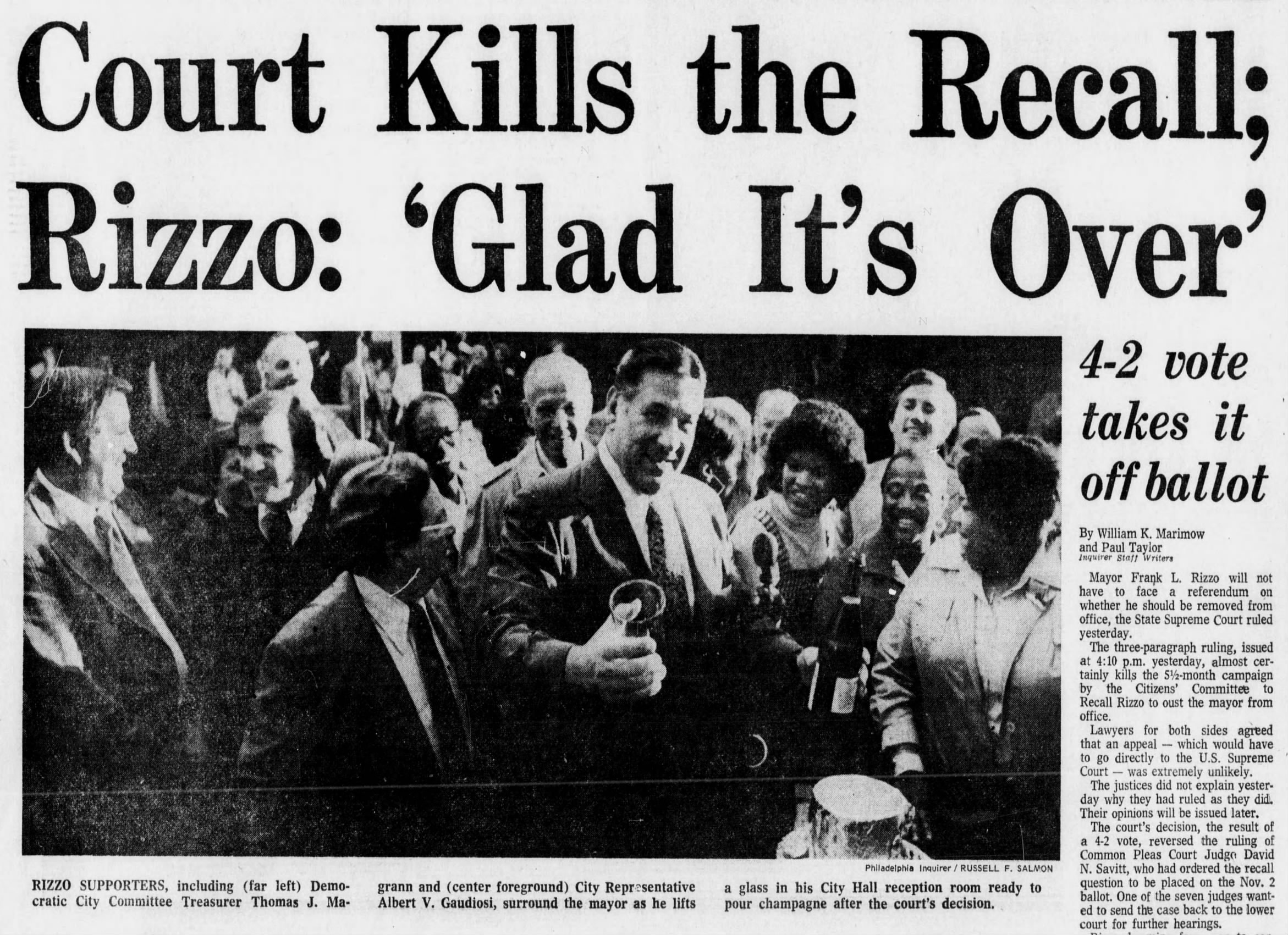
An Oct. 1, 1976 edition of The Inquirer details Mayor Frank Rizzo’s reaction to the defeat of the recall effort that year.
Rizzo’s recall
Rizzo’s treatment of the July 4 protests did not directly lead to efforts to recall him, but it certainly emboldened his critics. The mayor seemed to realize the error at the time, with Rizzo rarely showing his face publicly around Independence Day — a strategy largely believed to have been instituted by his top advisers.
In fact, efforts to recall Rizzo stretched back to April 1976, weeks before his pursuit of federal troops ever surfaced. The recall move was largely due to Philadelphia’s flagging economy, as well as tax increases and a city budget deficit.
An organization known as the Citizens Committee to Recall Rizzo organized a petition, garnering some 145,000 signatures by mid-April 1976. That figured swelled to more than 200,000 signatures following the Bicentennial, but only about 89,000 were found to be valid.
In September, a Common Pleas Court judge found that Rizzo would need to face a recall — a decision later struck down by the Pennsylvania Supreme Court. Rizzo, as a result, was never officially recalled, and the summer of 1976 would be remembered as a “Buycentennial that wouldn’t sell” amid a “call for federal troopers that neither came nor were needed,” The Inquirer reported.
And by late 1976, Rizzo expressed relief that the situation seemed to be resolved.
“I never had any doubts that it would rule in my favor. The law is on my side,” he told The Inquirer. “I’m glad it’s all over.”
Welcome to Shackamaxon, a weekly politics column focused on what’s happening at City Hall and in Harrisburg. It is named for the place where the Lenape chiefs would meet to conduct the people’s business, which is now known as Penn Treaty Park. This week’s edition looks at the ways Philadelphia has changed for the better since the Bicentennial — and the ways things have stayed the same.
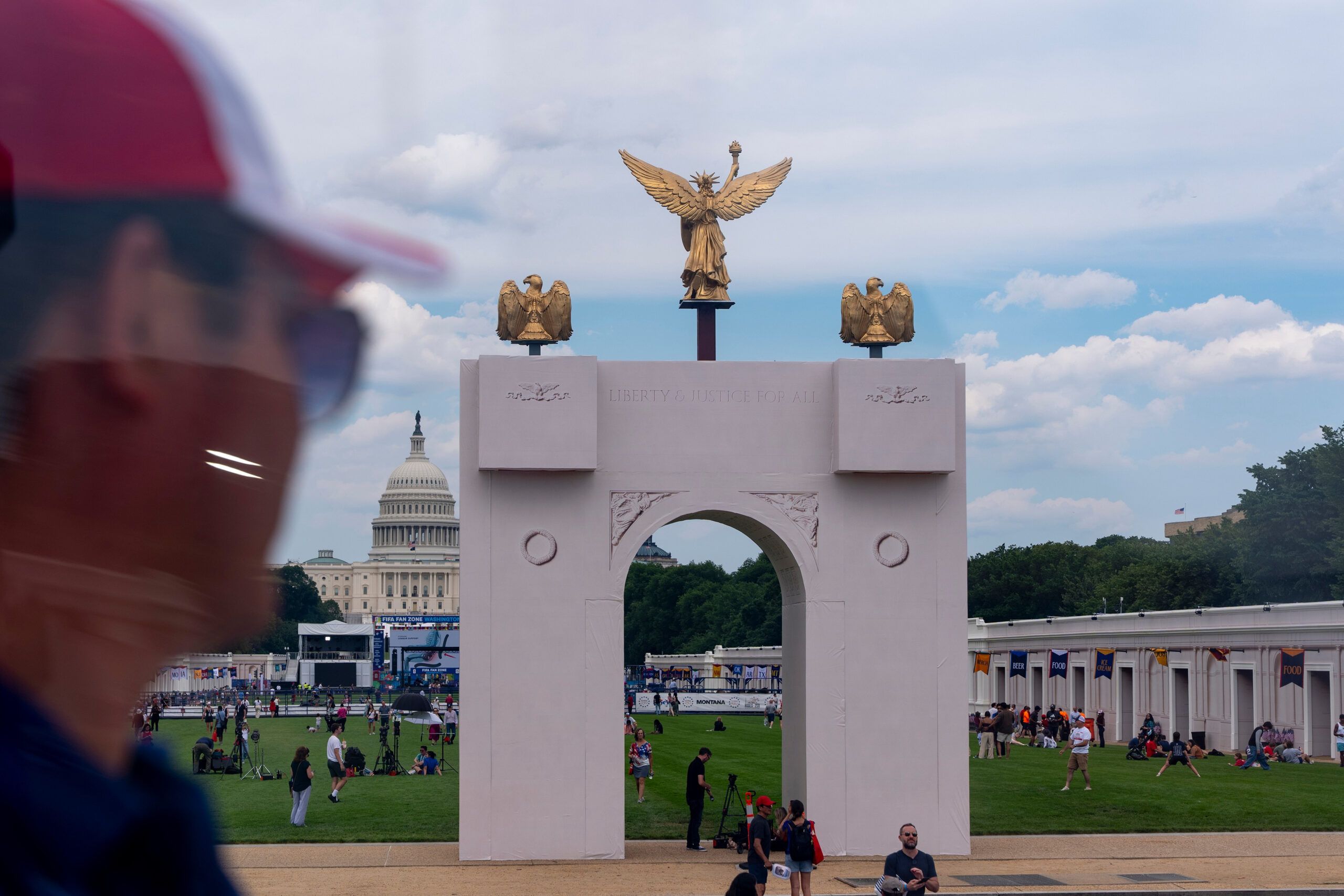
The U.S. Capitol and a mock-up of President Donald Trump’s proposed triumphal arch are seen from the ferris wheel at the Great American State Fair on the National Mall in June.
D.C. dud
My fellow columnists Trudy Rubin and Jenice Armstrong have both pointed out how disappointing Washington’s celebrations for America’s 250th anniversary have been. My advice? Skip the city that didn’t even exist in 1776 and visit Philadelphia instead. Skip Boston, the small town with the tall tales, as well. If you are healthy and hydrated enough to withstand the brutal heat wave, the City of Brotherly Love and Sisterly Affection is the best place to celebrate the Fourth.
Philadelphia embodies the story of America. Our city was founded by William Penn, a Quaker idealist who staunchly defended religious liberty. It was fostered by Ben Franklin, a writer and inventor who embodies our nation’s ingenuity and ambition. Octavius V. Catto, himself a Black man born free, fought for the rights of the enslaved, both before and after the passage of the 13th Amendment.
A century before the Rev. Dr. Martin Luther King Jr., Catto became a martyr when he was shot and killed on Election Day in 1871 as part of a broader campaign of political violence against Black voters. Catto’s fiancée, Caroline LeCount, desegregated this city’s streetcars long before Rosa Parks did the same for buses across the country. Siegmund Lubin started one of the first movie empires, right here in the city. The iconic Stetson hat, long associated with cowboys and the Wild West? Another product from the city known as the “Workshop of the World.”
There’s a case to be made that not only did America start here, but our city is the most American of them all. Everything that our country is known for, both for good and for bad, has happened here, as well.
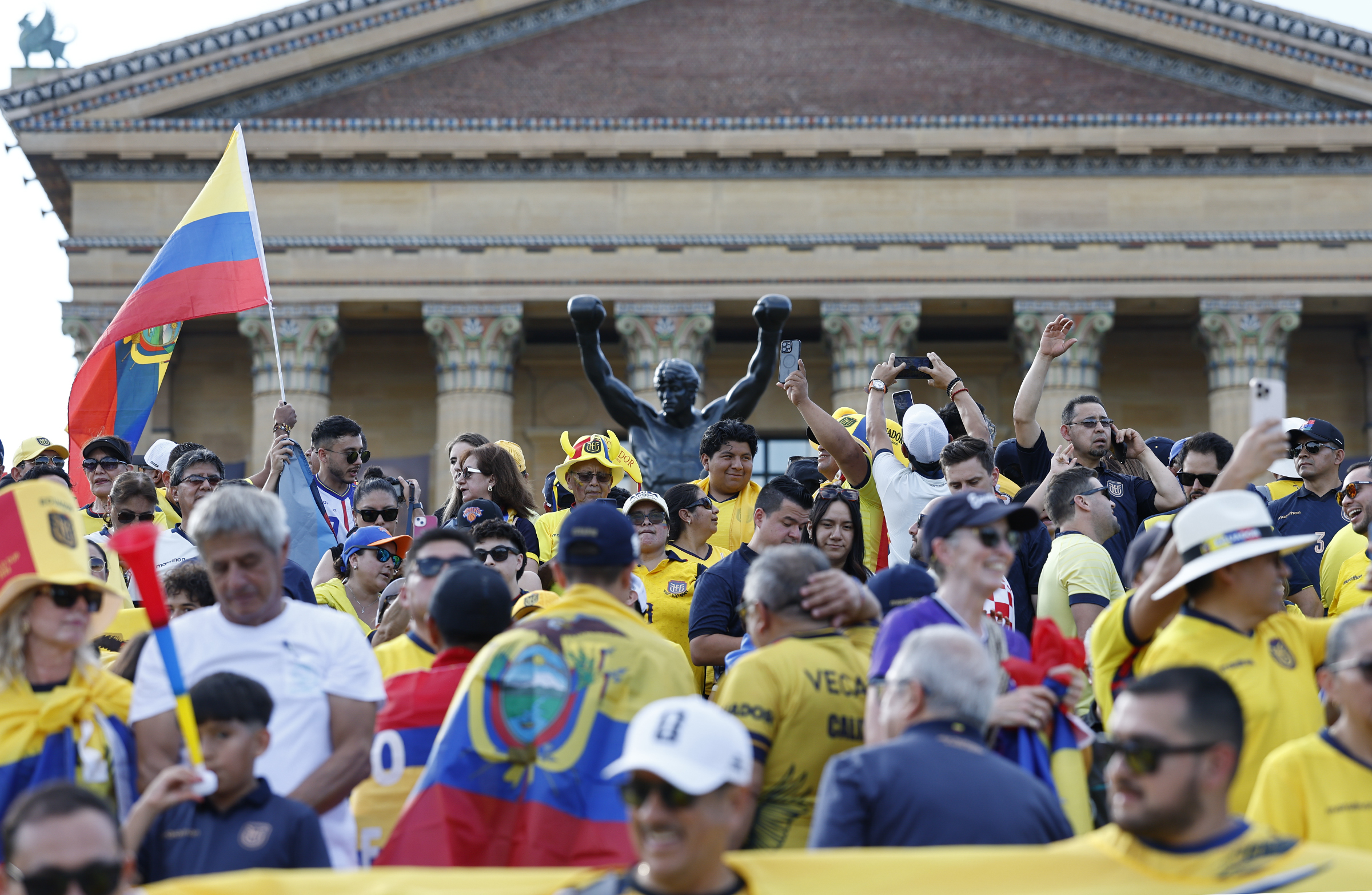
Ecuadorian soccer fans attend a flag waving event at the Philadelphia Museum of Art steps along the Benjamin Franklin Parkway, ahead of their first round World Cup match against the Ivory Coast, on June 13.
New narrative
It always bothered me that our city’s greatest draw seems to be Rocky Balboa, the fictional boxer from the eponymous film. Beyond the fact that this city is where America began, Rocky also memorializes a very specific era of our city’s history, one of decline. The first movie was released in 1976, during a decade when Philadelphia lost over a quarter million residents. Crime, trash, and disorder dominated the city’s streets.
It’s also worth noting that the film was released in the year of America’s Bicentennial. The celebrations that year were largely a misfire. Then-Mayor Frank Rizzo scared many potential visitors away, and there was an outbreak of Legionnaires’ disease.
That’s not to say Rocky, or the city he inhabited, was without charm. Despite the challenges, Philadelphians were still full of heart and grit, qualities Sylvester Stallone’s creation exemplified well. But the place shown in the movie doesn’t capture the full spectrum of what Philadelphia had to offer, even during the tumultuous ’70s. Rocky may have run up the Art Museum steps, but he never stepped inside.
Today’s Philadelphia is a dramatically different city. While the white working-class communities Rocky represented remain an important part of the city, they no longer dominate it. Rizzo would garner very few votes if he were on the ballot today. Philadelphia is now a multicultural, multiracial city on the rise. Rather than repelling visitors and residents, the city welcomes them.
According to Sports Business Journal, the city’s FIFA Fan Festival is a pacesetter, leading the 13 other public World Cup viewing areas in North America in both single-day and overall attendance. Social media feeds are filled with international visitors praising the city’s culture and cuisine. Some Brazilian fans called it the most beautiful city they have ever seen.
Throughout the year, city officials have expressed confidence in Philadelphia’s ability to recoup the investment made in hosting the World Cup and other events. The state tourism office has told The Inquirer that early indicators are positive, with flight bookings, Amtrak arrivals, and Airbnb rentals exceeding expectations. While the initial projections were for 500,000 World Cup visitors, we may end up seeing closer to 800,000.
Beyond the number-crunching, however, there’s a more important goal at stake: changing people’s perceptions of our city.
That’s something impossible to set a price tag on.
Councilmember Curtis Jones Jr. and his wife, Jazelle Jones. The couple stand to collect up to $752,000 in combined retirement payouts while keeping their six-figure jobs.
Same old problems
So far, one of the biggest reasons to be skeptical about Philadelphia’s future is City Hall. The city’s leaders too often serve their own interests, rather than those of the public.
Take Curtis Jones Jr., who represents the 4th District on City Council. Jones is certainly capable of being an insightful public official. Since his colleagues passed him over as Council president, however, he’s displayed increasingly questionable behavior.
Earlier this year, Jones asked Streets Department officials to consider delaying crucial bridge repairs until after his reelection, citing concerns that the public might blame him for their inconvenience.
Jones, however, ignored the impact of public opinion when it came to his own personal finances. Both he and his wife, Jazelle Jones, who serves as city representative, are planning to take payments through DROP, a retirement program that was never meant to accommodate elected officials. The pair stands to collect up to $750,000 by retiring for a day — and then returning to their six-figure jobs. This may be a rounding error in a city that is planning to spend $7.1 billion in the next fiscal year, but it is also more than 10 times Philadelphia’s median household income.
Asked about Jazelle Jones’ retention, Mayor Cherelle L. Parker cited the need to stay the course as a factor in making an exception for the city representative. Left unspoken was the fact that if Parker had blocked this payday, it would have likely complicated her relationship with Curtis Jones — one of the mayor’s most reliable supporters on City Council.
This kind of cronyism only reinforces negative perceptions of the city. Anyone looking for evidence that Philadelphia is the same old parochial, self-dealing city it was known for being in the past has only to try to keep up with the Joneses.
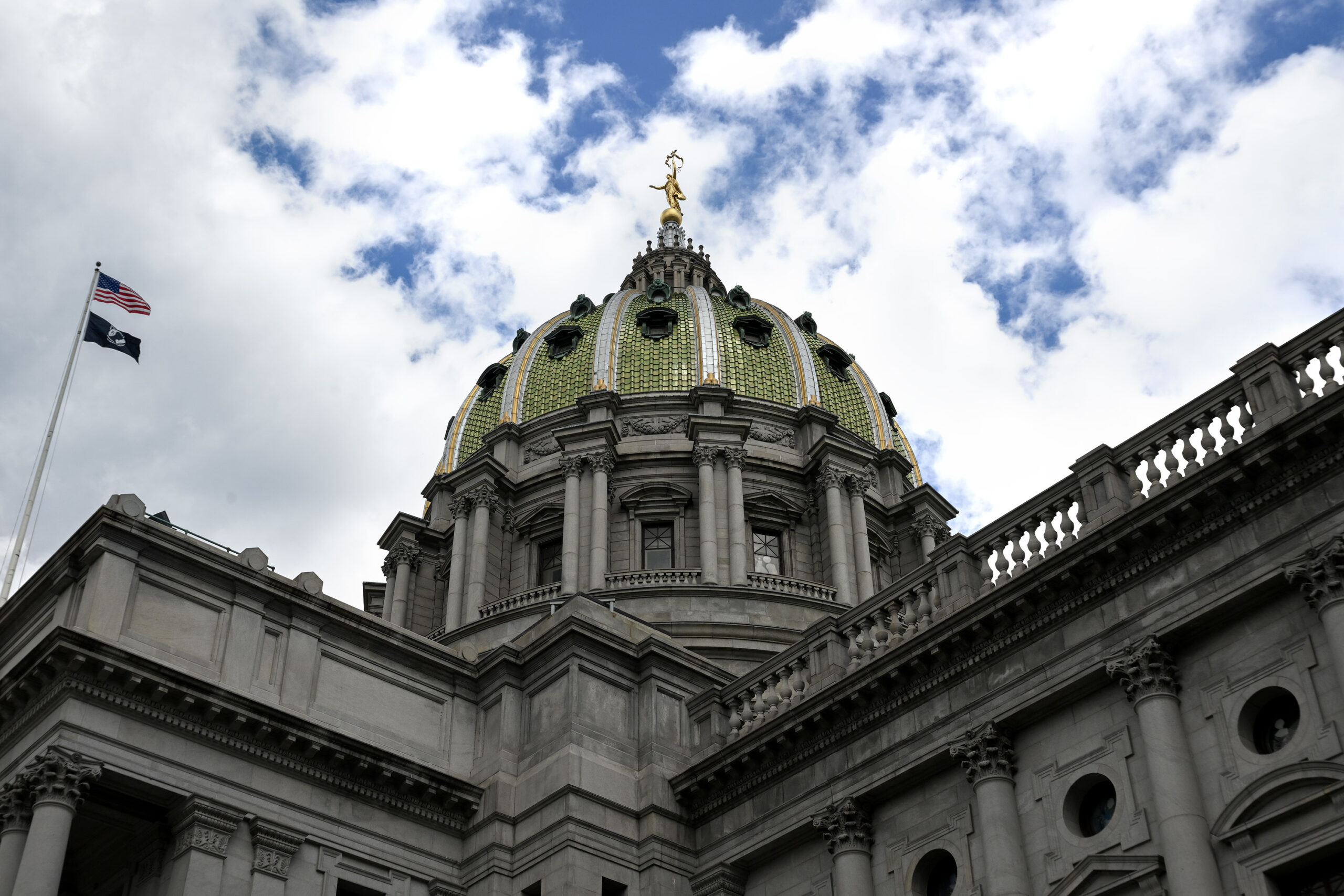
The Pennsylvania State Capitol on Commonwealth Avenue in Harrisburg. Another year, another blown budget deadline by state legislators.
Harrisburg holdups
To be fair, City Hall isn’t the only place that seems like it’s having a hard time getting its act together. Harrisburg has yet again missed its budget deadline.
While local governments, school districts, and SEPTA are expected to submit their own spending plans in a timely manner, legislators have apparently decided that deadlines don’t apply to them. The Pennsylvania Senate went home early rather than finish negotiations that its own leaders have said are productive.
Last year, the impasse went on into the fall, forcing some state services to grind to a halt and schools to take out loans in order to pay their bills. The commonwealth simply can’t afford to do that again.
This year, rising revenues from existing taxes and a potential influx of money from so-called skill games have made the process easier. Still, it is July, and there’s no budget deal.
What we need is a way to hold legislators accountable for failing to do their jobs. In the past, withholding pay was suggested as a leverage point. State Rep. Natalie Mihalek, a Republican from Western Pennsylvania, has said that failing to pass a budget should lead to a special election, a nod to the concept of “confidence votes” in Westminster parliaments.
Maybe that will get the General Assembly to take its job seriously.
After decades of dashed grand plans, months of unmeetable expectations, and weeks of fearmongering over political violence that never materialized, Philadelphia had little chance to live up to the hype that the Bicentennial carried with it in 1976.
And in the end, we didn’t. Not by a long shot.
Up to 20 million people were projected to travel to the city for the United States’ 200th birthday throughout the year — but in reality, only about 7 million came. We were supposed to build a massive suspended platform at 30th Street Station to house an international exposition, and never got either.
And instead of receiving due recognition as the birthplace of American democracy, we were given Legionnaires’ disease.
Understandably, the result in ’76 was a level of municipal malaise that rivals any since. We threw a party all summer, we thought, and no one came. No one liked us, but we did care — a lot.
Now, with five decades of hindsight, and another national anniversary this summer, perhaps the Bicentennial wasn’t as bad as Philadelphians say it was. It didn’t go off exactly as expected, sure, but maybe it wasn’t the abject failure we historically have believed it to be.
After all, in some ways, it did give us some of the Philadelphia we know today. Here is how the Inquirer and Daily News covered it.
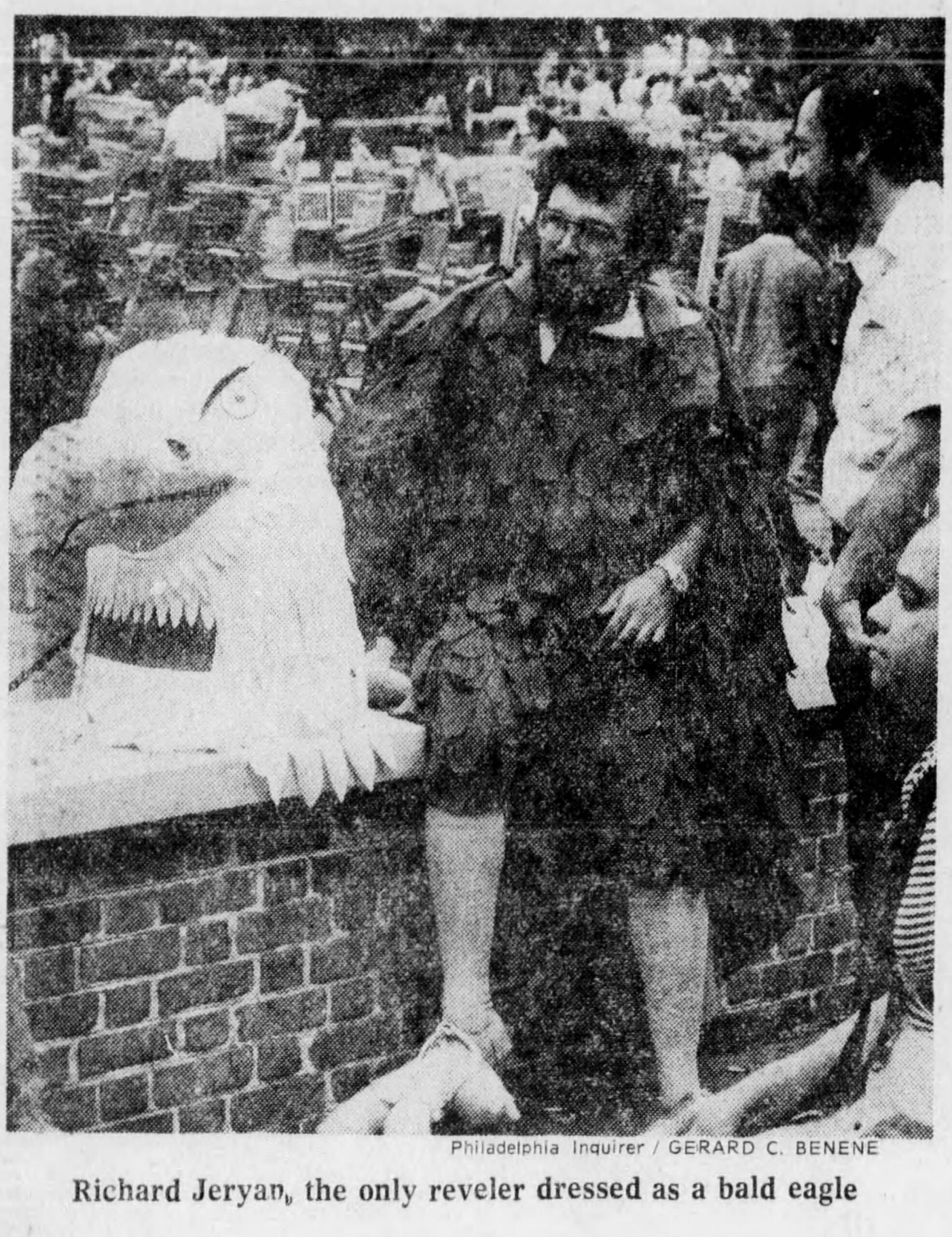
An Independence reveler celebrates the holiday in 1976 dressed as a bald eagle, as shown in an Inquirer photo from the time.
False starts and unrealized projects
Philly had big dreams for the Bicentennial as early as the 1950s, when planning tied the occasion to an international exposition that would bring travelers from all over the world. Some proposals ran into the neighborhood of $2 billion and had the exotic and impractical vision to match the price.
Among them was an $8 million plan for a flower-focused theme park in Fairmount Park known as “Philaflora” that was quickly abandoned.
Later, city planners proposed gimmicks like a large elevated platform over 30th Street Station that was to stretch more than four miles to West Philadelphia, the construction of concrete islands in the Delaware River, and converting swampland to solid ground in Eastwick to host the exposition.
None of these grand plans came to fruition. And by 1972, the entire idea for an international exposition was dead, having been “scotched” by President Richard Nixon, The Inquirer reported at the time. The city’s Bicentennial corporation, Philadelphia ’76 Inc., however held fast to plans for a large celebration, but was left with relatively little time to plan one — and no idea of what it would look like.
The result was a series of what The Inquirer in 1976 called “bread and circuses” efforts — essentially parades around town, plus a number of events and attractions on the Benjamin Franklin Parkway throughout the summer. These efforts, The Inquirer reported, were designed to give the illusion of tourist activity and interest, but without all the guff of actual planning and logistics.
And while we did have a Bicentennial celebration, it sadly did not “live up to 20 years of empty visions,” The Inquirer reported. And only months after July 4, 1976, we were left with “this feeling of promises unkept, hopes unfulfilled,” reports from the time said.
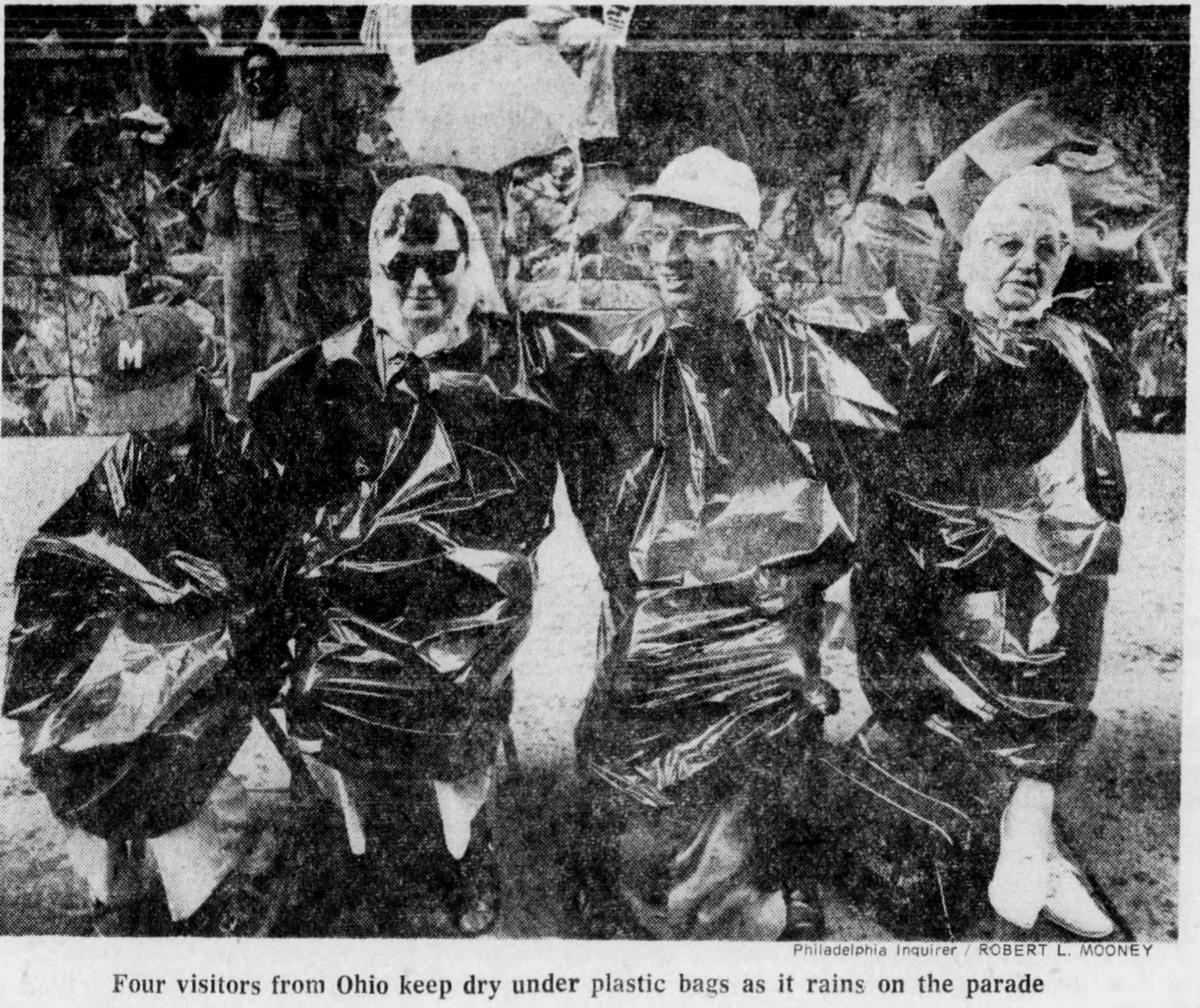
July 4, 1976 celebrants stave off the day’s rain under plastic bags during the day’s parade, as shown in an Inquirer photo from the time.
An under-attended party
Early estimates for tourism in Philadelphia in 1976 predicted 14 million to 20 million visitors for the year — figures that came from Sindlinger & Co., a Swarthmore-based research firm the city hired. The company conducted nationwide polling to determine the number of Americans who planned to visit Philadelphia in 1976.
They were way off. By October ’76, roughly 7 million visitors had come, reports from the time indicate. Some 2 million toured the city on July 4 alone, with the rest coming amid a myriad of conventions throughout the rest of the year. According to reports from the time, tourism numbers didn’t pick up until post-Independence Day — a welcome development for hotel operators, who expected a sell-out season that never arrived.
But that doesn’t mean Philadelphia fared poorly.
At least compared to 1975. As of December 1976, Philadelphia showed a 300% increase in visitors over the year before, The Inquirer reported — a proportion that placed us “better than any other American city in attracting Bicentennial visitors.”
The next closest city was Boston, which saw a mere 68% increase in tourism. No one else even came close.
In fact, no one really did well nationwide. According to a Christian Science Monitor article from the time, every city that expected an influx of Bicentennial tourists — Philly, Boston, D.C., and the like — said tourism numbers were way below predictions. Experts attributed that to the country’s economic state.
But tourism travel in the United States was high for the year, even though the Bicentennial boom never really arrived. The issue, experts said at the time, was that too much was expected. As Discover America Travel Organizations president William D. Toohey said at the time, the travel industry would have otherwise been “well-pleased.”
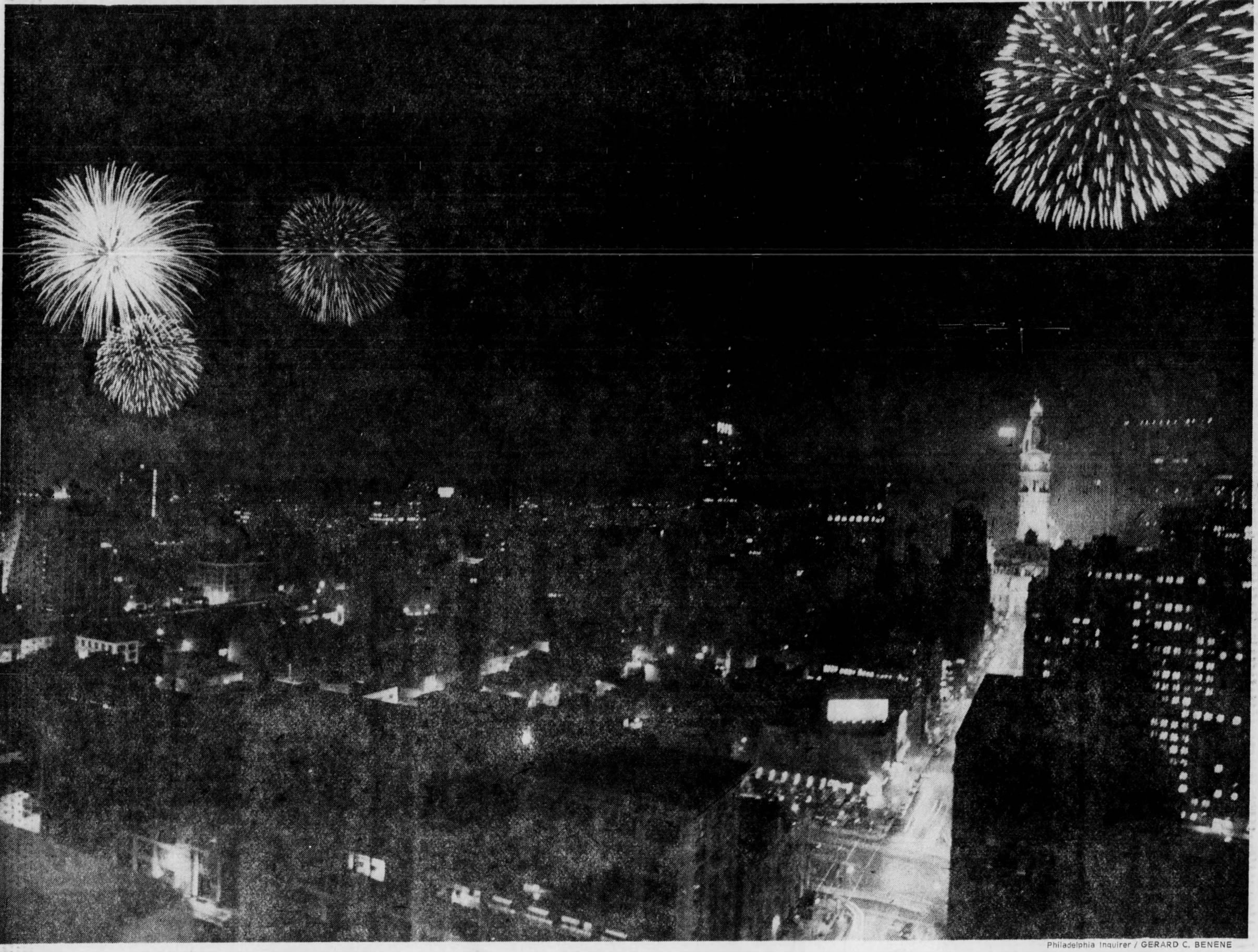
Fireworks over Philadelphia on July 4, 1976, as shown in an Inquirer article from the time.
Why Philly fell short
Philadelphia, however, was not blameless in its failure in 1976.
Chief among the factors was Mayor Frank Rizzo’s insistence that political violence would erupt on July 4, thanks to a contingent of protesters who planned to demonstrate in North Philadelphia — miles away from the day’s primary celebrations in Center City.
Rizzo was so worried that he called for thousands of federal troops to be earmarked to protect the city — a request that was ultimately not granted, primarily because investigators were unable to determine that a credible threat ever existed. And yet, when the holiday rolled around, the damage was already done.
By late June 1976, some 30,000 participants scheduled for the July 4 parade had canceled their trips to Philly, with most citing fear of political violence as the reason for backing out, reports from the time indicate. Rizzo had been essentially telling tourists not to come, and they largely listened.
Rizzo, however, wasn’t our only worry. In July, a slowdown by municipal workers caused trash to pile up in the streets for weeks. Workers refused to take overtime hours pending contract negotiations for a modest wage increase, and the dispute was not settled until early August.
And then, there was the Legionnaires’ Disease outbreak — a famous, but sometimes overlooked, factor impacting tourism for the year. The late-July outbreak severely impacted tourism due to concerns over potential illness, but didn’t entirely crush the influx of visitors.
“It was very clear that the Legionnaire’s Disease had a very sharp impact on tourism,” Philadelphia ’76 Inc. head William Rafsky said at the time.
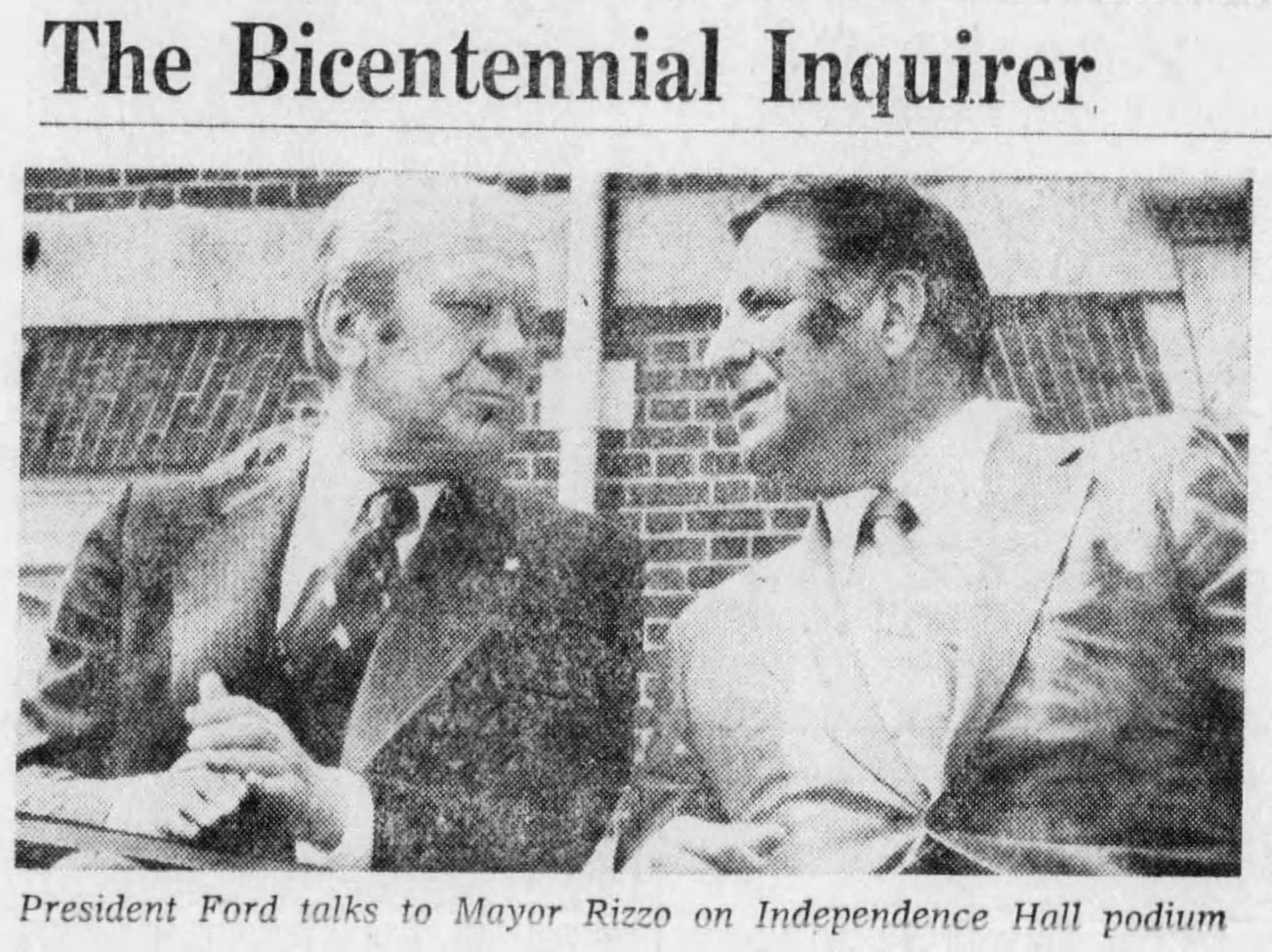
President Gerald Ford talks with Mayor Frank Rizzo at Independence Hall on July 4, 1976.
Benefits abound
Though the Bicentennial may have been something of a tourism bust, we didn’t walk away with nothing. In some ways, the city was enduringly altered — Philadelphia received an estimated $165 million in improvements for the country’s 200th birthday, a good bit of which was federal money that was not likely to be spent otherwise, reports from the time indicate.
The National Park Service, for example, spent an estimated $30 million on what we know today as Independence National Historical Park, The Inquirer reported. Those federal dollars bought a new Liberty Bell pavilion, extensive repairs and improvements to historical buildings, the construction of City Tavern and the Graff House, and the creation of Franklin Court.
Other improvements were also palpable. A number of subway stations were painted and rebuilt, institutions like the Philadelphia Museum of Art were improved, and places like the Mummers Museum and the Afro-American Museum (now the African-American Museum of Philadelphia) were established. Roughly 10,000 trees were planted in Fairmount Park.
These lasting municipal improvements had an impact, even if the Bicentennial itself did not live up to contemporary expectations. By the time 1976 hit, virtually nothing could quell the public’s want for advancement in light of the country’s 200th birthday. And so, it was deemed a failure.
But now, half a century later, perhaps we are overcoming that disappointment, or are at least willing to see what comes next — after all, the United States is 250 years old in 2026. And though tourism expectations for this year have been quieter, the city still stands, with hoards of visitors now reminiscent of our Bicentennial year.
“The Bicentennial Year will be a great year for the United States,” Rizzo said in 1976. “And particularly for Philadelphia, where our nation was born.”
To this day, former University of Oklahoma quarterback Kyler Murray and wide receiver Nick Basquine still argue over who wooed Marquise “Hollywood” Brown.
It was December 2016 and OU, in the midst of a heated Big 12 championship race against rival Oklahoma State, was in an equally heated recruiting battle against West Virginia for Brown, a 5-foot-9 junior college wideout who moonlighted as a Six Flags ride operator in California to make ends meet.
Brown just so happened to have a 40 time in the low 4.3s, too.
Murray gave his pitch. Ditto for Basquine. And while Murray still doesn’t believe this story, when Brown did finally commit to the Sooners, wide receiver coach Dennis Simmons gave Basquine the nod for sealing the deal.
“I remember we had a practice on a Monday and coach Simmons came up to me and was like, ‘Dude, thank you,’” Basquine said. “I’m like, what are you talking about? He’s like, ‘You got us Marquise.’
“And, well, the rest is history. You saw what he did here. You see what he can do in the NFL, too.”
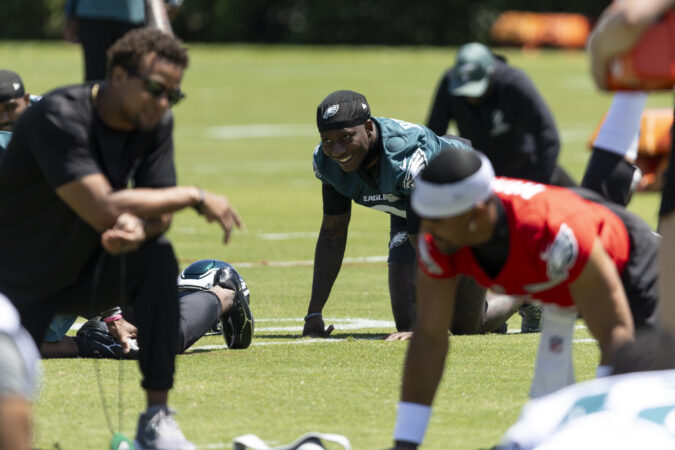
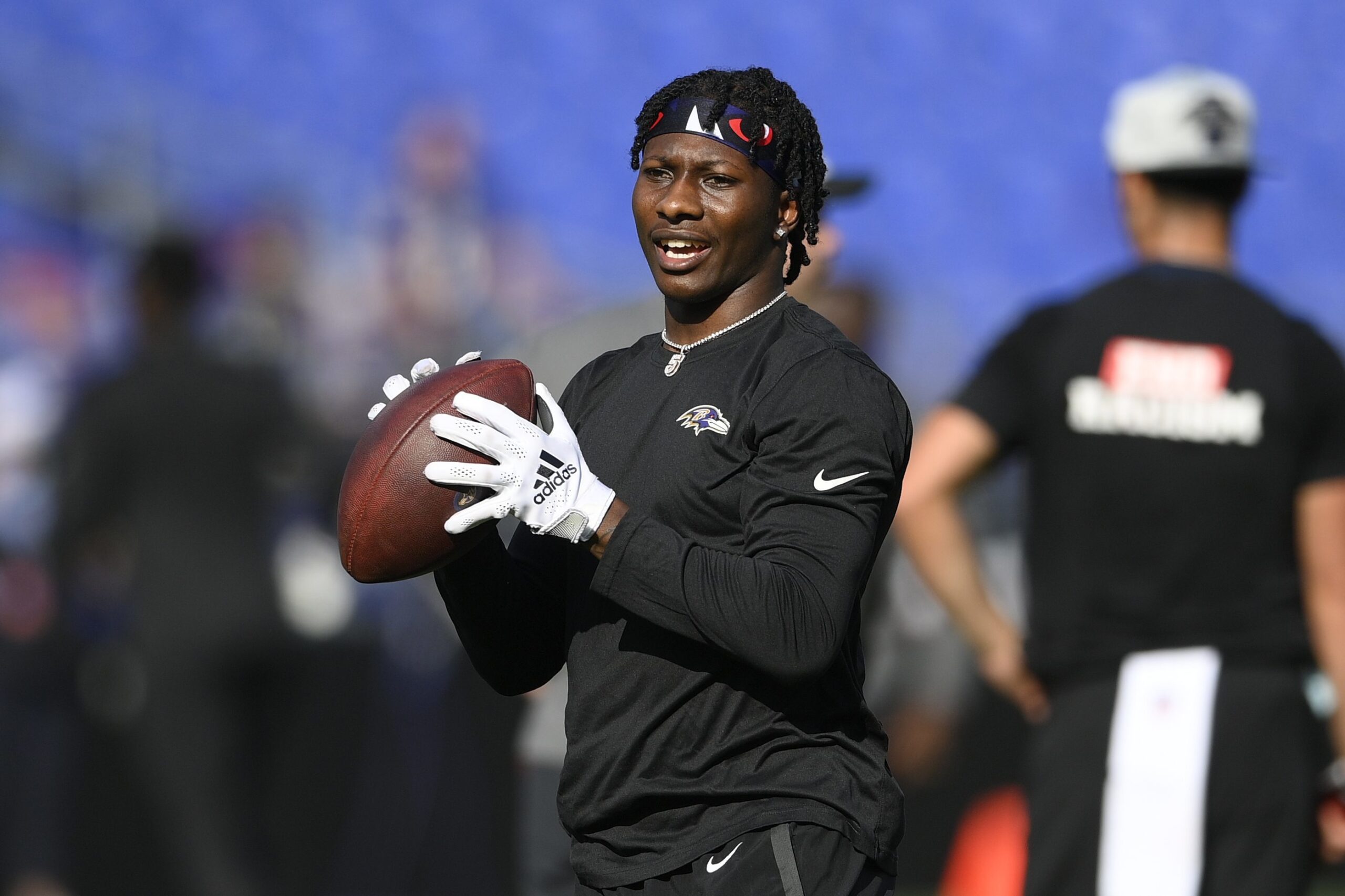
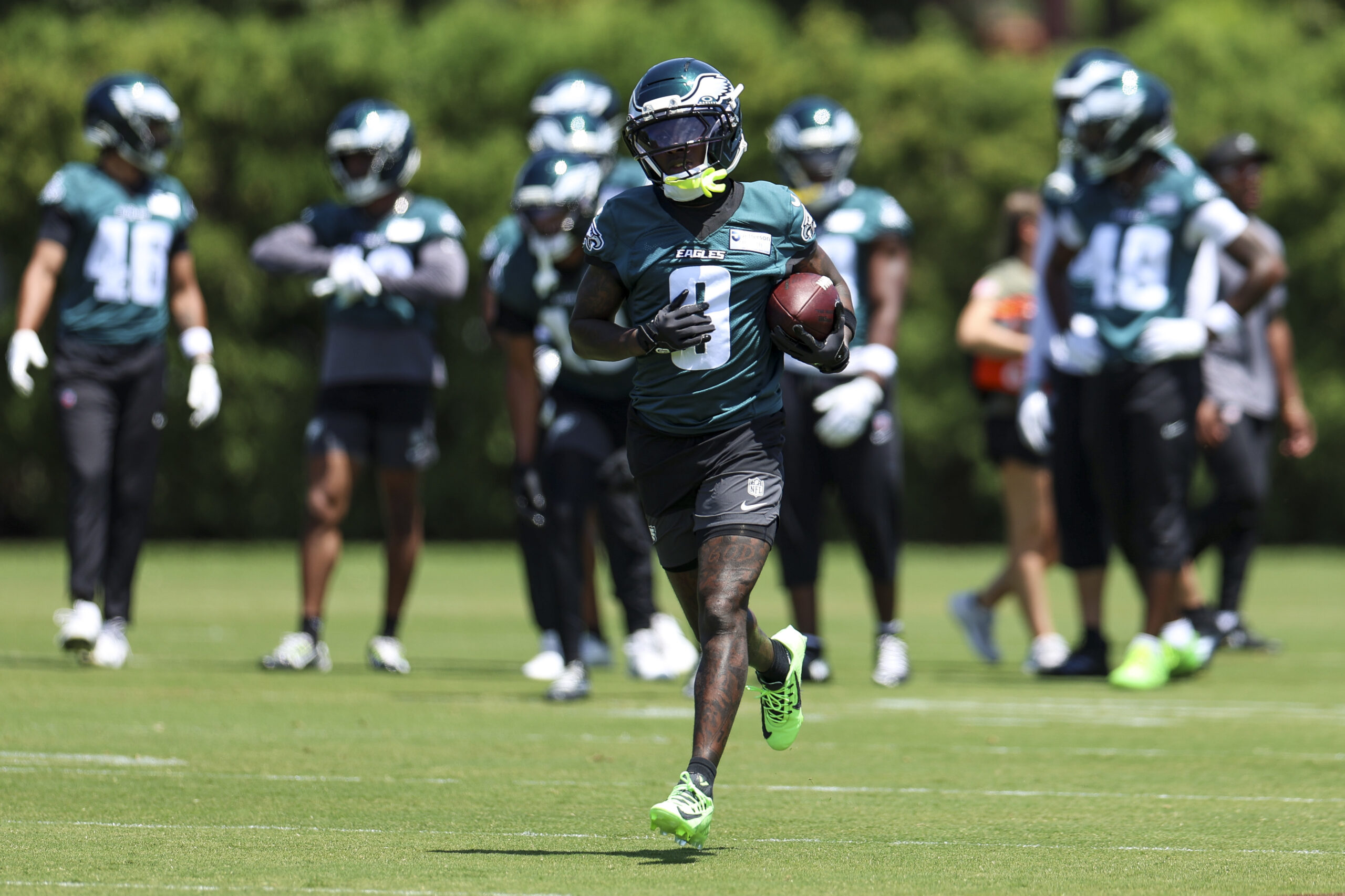
Now 29, Brown will try to have a career resurgence with the Eagles, who signed him to a one-year, $6.5 million contract this offseason.
Hollywood Brown’s 1,000-yard season in Baltimore in 2021 set the bar for what he can accomplish in the NFL.
Brown has bounced around the league since dominating in college and getting off to a strong start to his NFL career. The No. 25 overall pick by Baltimore in the 2019 draft, he still ranks No. 4 in Ravens history for total touchdowns by a wide receiver (21). The former first-round pick peaked in 2021 when he had a 1,008-yard season, but he mostly fizzled out after that.
He was traded to the Arizona Cardinals in April 2022, playing two seasons with Murray but failing to recapture his former 1,000-yard magic. Brown moved on to Kansas City but was injured for most of the 2023 season — he did catch two passes for 15 yards in the Chiefs’ Super Bowl loss to the Eagles — and had 49 catches as a part-time starter with Kansas City in 2025.
Is there any reason to believe that Brown — who had 587 yards last season — can recapture his Baltimore success in Philadelphia?
Candidly, Basquine doesn’t know if the numbers will reflect that resurgence. But that doesn’t mean Brown can’t impact opposing defenses, especially playing in a modern offense led by Jalen Hurts, Basquine’s quarterback during his senior year at OU.
“The threat that Marquise poses, it’s going to impact the defense,” Basquine said. “Whether they play two-high shell or one high, Marquise’s presence, even though he’s not going to be the first guy people think of, people who know football and understand the threat of speed, you always have to account for it. Marquise is still blazing fast.
“The stats probably won’t show up, but the stress and the game plan the defense has to do because of that is going to be valuable in itself.”
General manager Howie Roseman thought the same thing when he signed Brown in March. It’s obvious why Roseman brought in names like Brown, Dontayvion Wicks, and Elijah Moore, and drafted Makai Lemon this offseason: He wanted to bolster his wide receiver depth in an attempt to recreate A.J. Brown’s production in the aggregate.
Hollywood Brown is trying to emerge amid a new-look wide receiver group.
Barring a 2021-like revival, it’s unlikely that Marquise Brown will get many starts this season. There’s a good chance he’ll fill depth wide receiver Jahan Dotson’s spot since Dotson signed a two-year deal with the Falcons this offseason.
This could be an ideal scenario for Brown, whom Basquine said is more determined to win a ring “than anybody.” As Roseman pointed out after he signed Brown, depth receivers have been critical pieces to Philadelphia’s Super Bowl rosters.
“On Hollywood, there have been times on our offense we’ve had really that vertical skill set, but also a guy can separate at the top of his routes,” Roseman said. “And we had that a little — I was looking at our teams in 2017 — I thought Nelson [Agholor] did a great job of that, bringing that to the team. I think you looked at 2022 and Quez [Watkins] did a good job of that. I think 2024 was constructed a little bit differently, but I think that really fits the skill set of our quarterback.”
If Brown does somehow carve out a starting role due to injury, Basquine, who played with both Brown and Hurts, said they can form an “underrated duo” due to their skill sets.
With the Eagles now running a Sean McVay/Kyle Shanahan-esque offense under offensive coordinator Sean Mannion, Simmons took the prediction a step further.
“I actually think his best football is in front of him,” said Simmons, now the wide receivers coach at USC. “We can see the best of Hollywood in Philly.
“He’s been in a variety of offenses … so the playbook will not be an issue for him. I know what his work ethic is like. I know he’s healthy. Philly’s gonna love him.”
Our country has been likened to a mosaic. I compare it to a jigsaw puzzle. The picture is composed of hundreds of millions of individual pieces — all with unique shapes — fit together to form an image. The union, which we revere when we celebrate its birthday and salute the flag, is a result of pieces linked together. From a distance, they form an unbroken, seamless picture, but up close, you can still see the lines of each individual piece. When locked together as intended by the creators of the puzzle we call the United States of America, the union is solid and unbroken despite the lines of individuality that frame each component. A puzzle without each piece is incomplete. Putting the puzzle together requires the diligent effort of everyone who pledges to support the effort. We all — each one of us, native-born, immigrant — are a piece of the puzzle. To exclude anyone is to render the puzzle incomplete. In order to form a more perfect union, all pieces must be welcomed. That is our creed. It is truly what “Makes America Great” — not just “Again,” but always.
Joe Sundeen,Yardley
Drama-free
In honor of our great nation’s 250th birthday, I would like to see all media refrain from any mention or photo of anything DJT-related. Make this day about our country, not him. We need a chance to celebrate without all the drama.
Jerome Hodlofski,Marlton
Join the conversation: Send letters to letters@inquirer.com. Limit length to 150 words and include home address and day and evening phone number. Letters run in The Inquirer six days a week on the editorial pages and online.