Tag: topic-link-auto

  • The Bicentennial didn’t go as expected. But it wasn’t exactly as bad as Philadelphians say it was.

    The Bicentennial didn’t go as expected. But it wasn’t exactly as bad as Philadelphians say it was.

    After decades of dashed grand plans, months of unmeetable expectations, and weeks of fearmongering over political violence that never materialized, Philadelphia had little chance to live up to the hype that the Bicentennial carried with it in 1976.

    And in the end, we didn’t. Not by a long shot.

    Up to 20 million people were projected to travel to the city for the United States’ 200th birthday throughout the year — but in reality, only about 7 million came. We were supposed to build a massive suspended platform at 30th Street Station to house an international exposition, and never got either.

    And instead of receiving due recognition as the birthplace of American democracy, we were given Legionnaires’ disease.

    Understandably, the result in ’76 was a level of municipal malaise that rivals any since. We threw a party all summer, we thought, and no one came. No one liked us, but we did care — a lot.

    Now, with five decades of hindsight, and another national anniversary this summer, perhaps the Bicentennial wasn’t as bad as Philadelphians say it was. It didn’t go off exactly as expected, sure, but maybe it wasn’t the abject failure we historically have believed it to be.

    After all, in some ways, it did give us some of the Philadelphia we know today. Here is how the Inquirer and Daily News covered it.
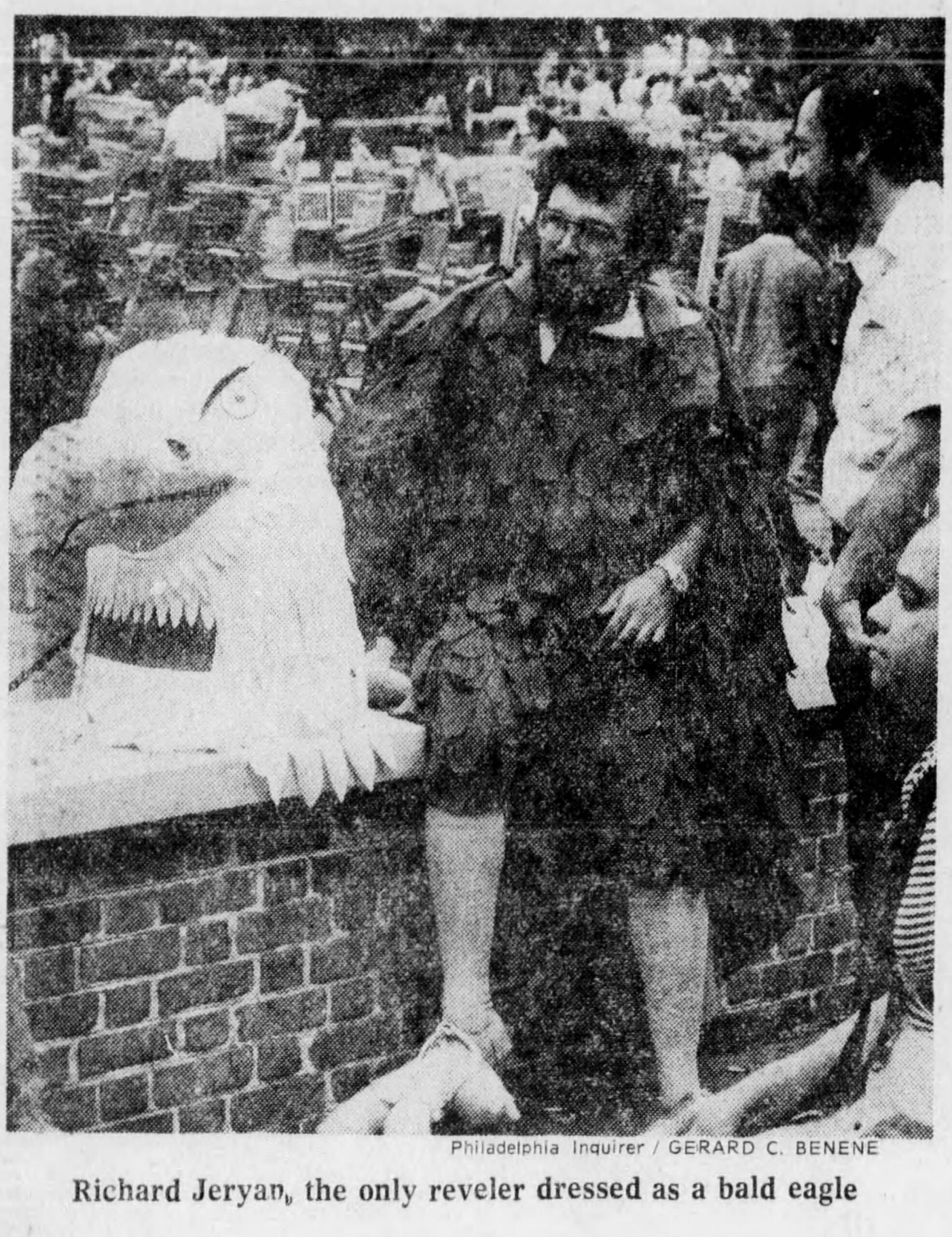
    An Independence reveler celebrates the holiday in 1976 dressed as a bald eagle, as shown in an Inquirer photo from the time.

    False starts and unrealized projects

    Philly had big dreams for the Bicentennial as early as the 1950s, when planning tied the occasion to an international exposition that would bring travelers from all over the world. Some proposals ran into the neighborhood of $2 billion and had the exotic and impractical vision to match the price.

    Among them was an $8 million plan for a flower-focused theme park in Fairmount Park known as “Philaflora” that was quickly abandoned.

    Later, city planners proposed gimmicks like a large elevated platform over 30th Street Station that was to stretch more than four miles to West Philadelphia, the construction of concrete islands in the Delaware River, and converting swampland to solid ground in Eastwick to host the exposition.

    None of these grand plans came to fruition. And by 1972, the entire idea for an international exposition was dead, having been “scotched” by President Richard Nixon, The Inquirer reported at the time. The city’s Bicentennial corporation, Philadelphia ’76 Inc., however held fast to plans for a large celebration, but was left with relatively little time to plan one — and no idea of what it would look like.

    The result was a series of what The Inquirer in 1976 called “bread and circuses” efforts — essentially parades around town, plus a number of events and attractions on the Benjamin Franklin Parkway throughout the summer. These efforts, The Inquirer reported, were designed to give the illusion of tourist activity and interest, but without all the guff of actual planning and logistics.

    And while we did have a Bicentennial celebration, it sadly did not “live up to 20 years of empty visions,” The Inquirer reported. And only months after July 4, 1976, we were left with “this feeling of promises unkept, hopes unfulfilled,” reports from the time said.
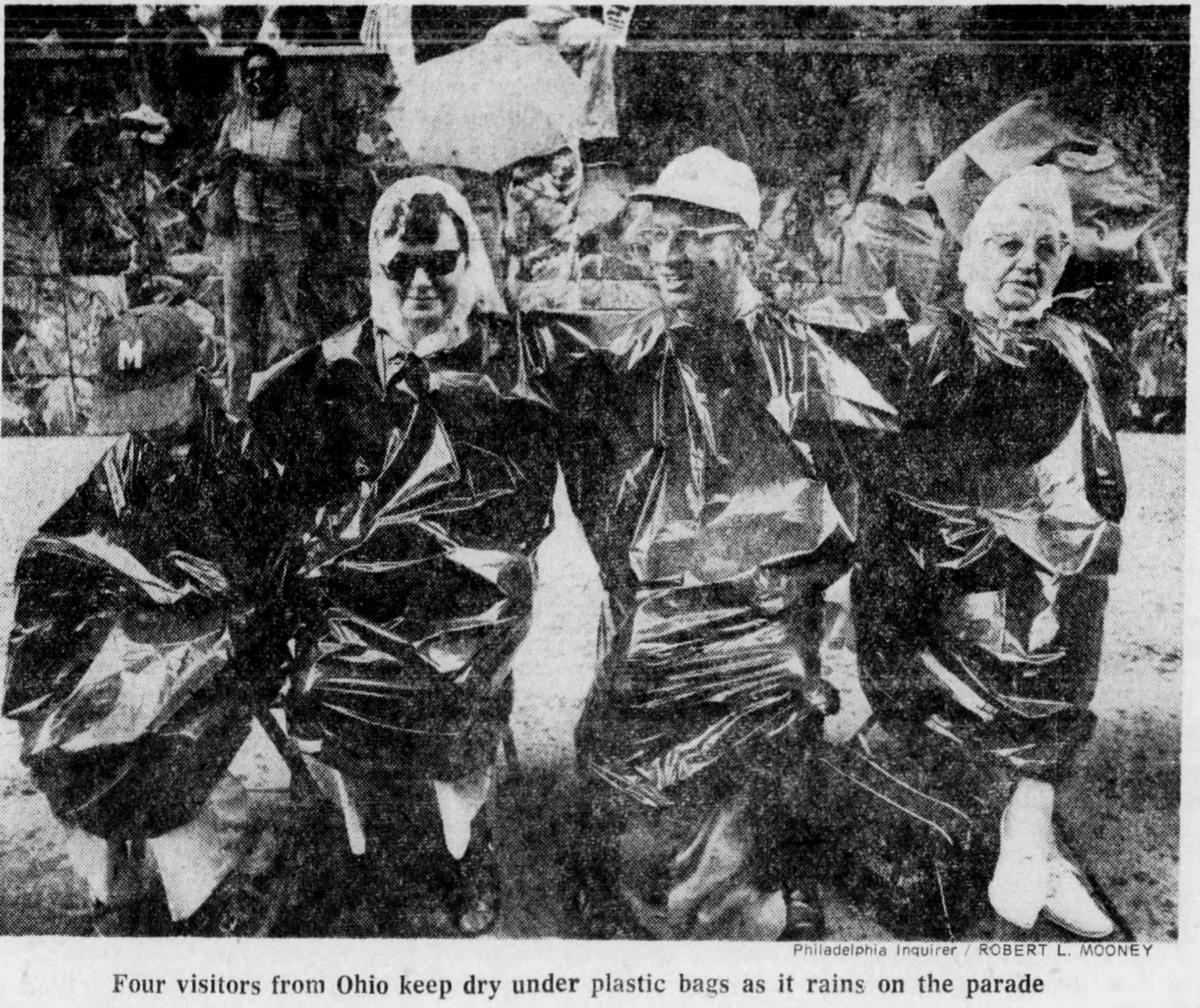
    July 4, 1976 celebrants stave off the day’s rain under plastic bags during the day’s parade, as shown in an Inquirer photo from the time.

    An under-attended party

    Early estimates for tourism in Philadelphia in 1976 predicted 14 million to 20 million visitors for the year — figures that came from Sindlinger & Co., a Swarthmore-based research firm the city hired. The company conducted nationwide polling to determine the number of Americans who planned to visit Philadelphia in 1976.

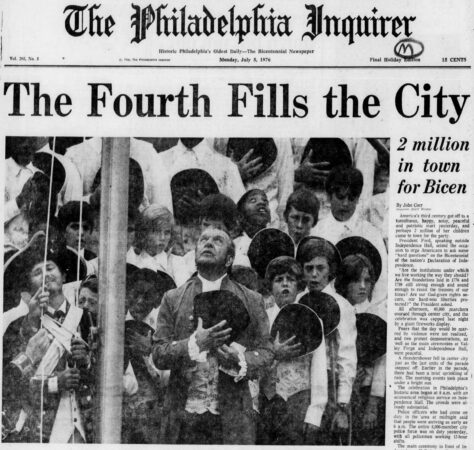
    They were way off. By October ’76, roughly 7 million visitors had come, reports from the time indicate. Some 2 million toured the city on July 4 alone, with the rest coming amid a myriad of conventions throughout the rest of the year. According to reports from the time, tourism numbers didn’t pick up until post-Independence Day — a welcome development for hotel operators, who expected a sell-out season that never arrived.

    But that doesn’t mean Philadelphia fared poorly.

    At least compared to 1975. As of December 1976, Philadelphia showed a 300% increase in visitors over the year before, The Inquirer reported — a proportion that placed us “better than any other American city in attracting Bicentennial visitors.”

    The next closest city was Boston, which saw a mere 68% increase in tourism. No one else even came close.

    In fact, no one really did well nationwide. According to a Christian Science Monitor article from the time, every city that expected an influx of Bicentennial tourists — Philly, Boston, D.C., and the like — said tourism numbers were way below predictions. Experts attributed that to the country’s economic state.

    But tourism travel in the United States was high for the year, even though the Bicentennial boom never really arrived. The issue, experts said at the time, was that too much was expected. As Discover America Travel Organizations president William D. Toohey said at the time, the travel industry would have otherwise been “well-pleased.”
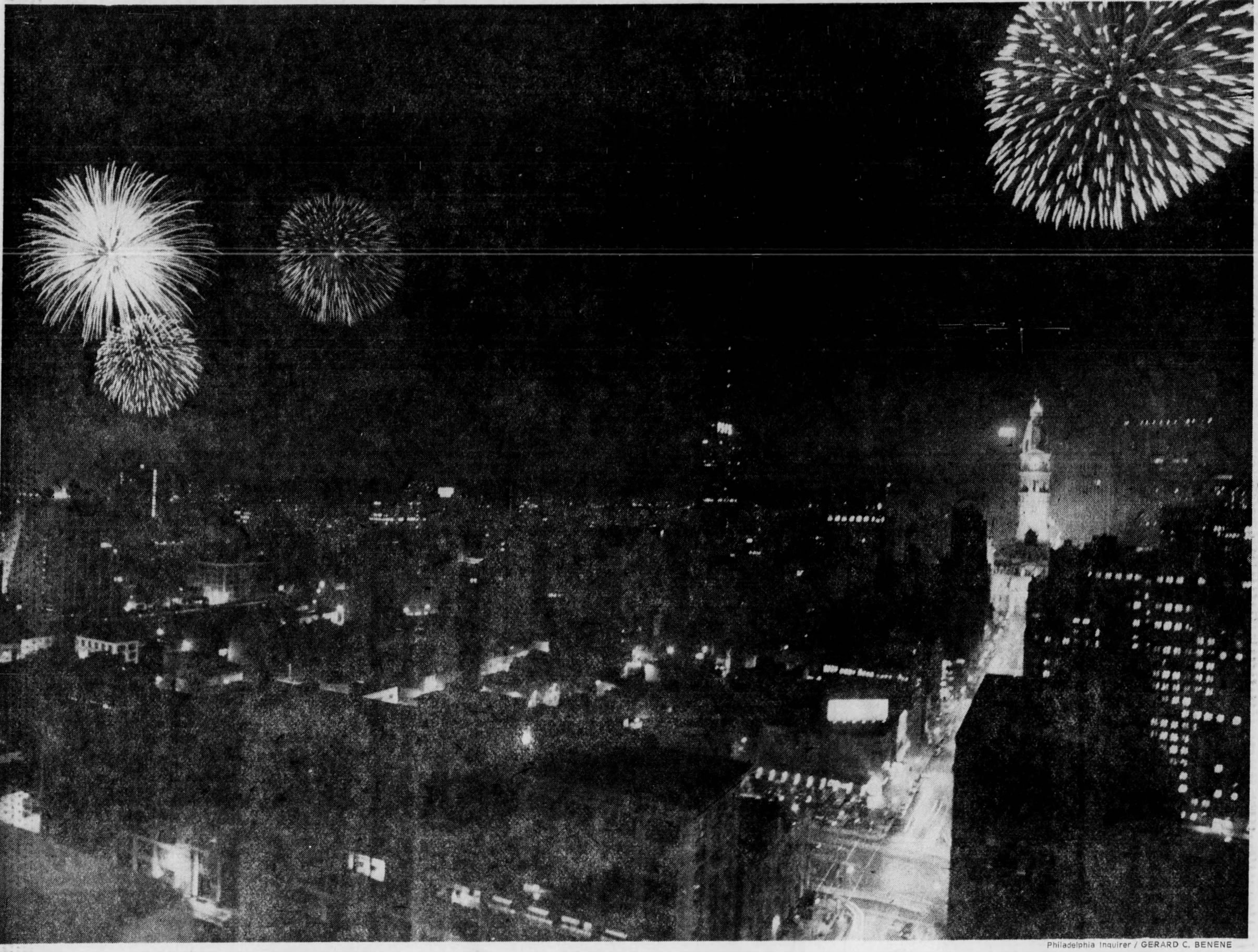
    Fireworks over Philadelphia on July 4, 1976, as shown in an Inquirer article from the time.

    Why Philly fell short

    Philadelphia, however, was not blameless in its failure in 1976.

    Chief among the factors was Mayor Frank Rizzo’s insistence that political violence would erupt on July 4, thanks to a contingent of protesters who planned to demonstrate in North Philadelphia — miles away from the day’s primary celebrations in Center City.

    Rizzo was so worried that he called for thousands of federal troops to be earmarked to protect the city — a request that was ultimately not granted, primarily because investigators were unable to determine that a credible threat ever existed. And yet, when the holiday rolled around, the damage was already done.

    By late June 1976, some 30,000 participants scheduled for the July 4 parade had canceled their trips to Philly, with most citing fear of political violence as the reason for backing out, reports from the time indicate. Rizzo had been essentially telling tourists not to come, and they largely listened.

    Rizzo, however, wasn’t our only worry. In July, a slowdown by municipal workers caused trash to pile up in the streets for weeks. Workers refused to take overtime hours pending contract negotiations for a modest wage increase, and the dispute was not settled until early August.

    And then, there was the Legionnaires’ Disease outbreak — a famous, but sometimes overlooked, factor impacting tourism for the year. The late-July outbreak severely impacted tourism due to concerns over potential illness, but didn’t entirely crush the influx of visitors.

    “It was very clear that the Legionnaire’s Disease had a very sharp impact on tourism,” Philadelphia ’76 Inc. head William Rafsky said at the time.
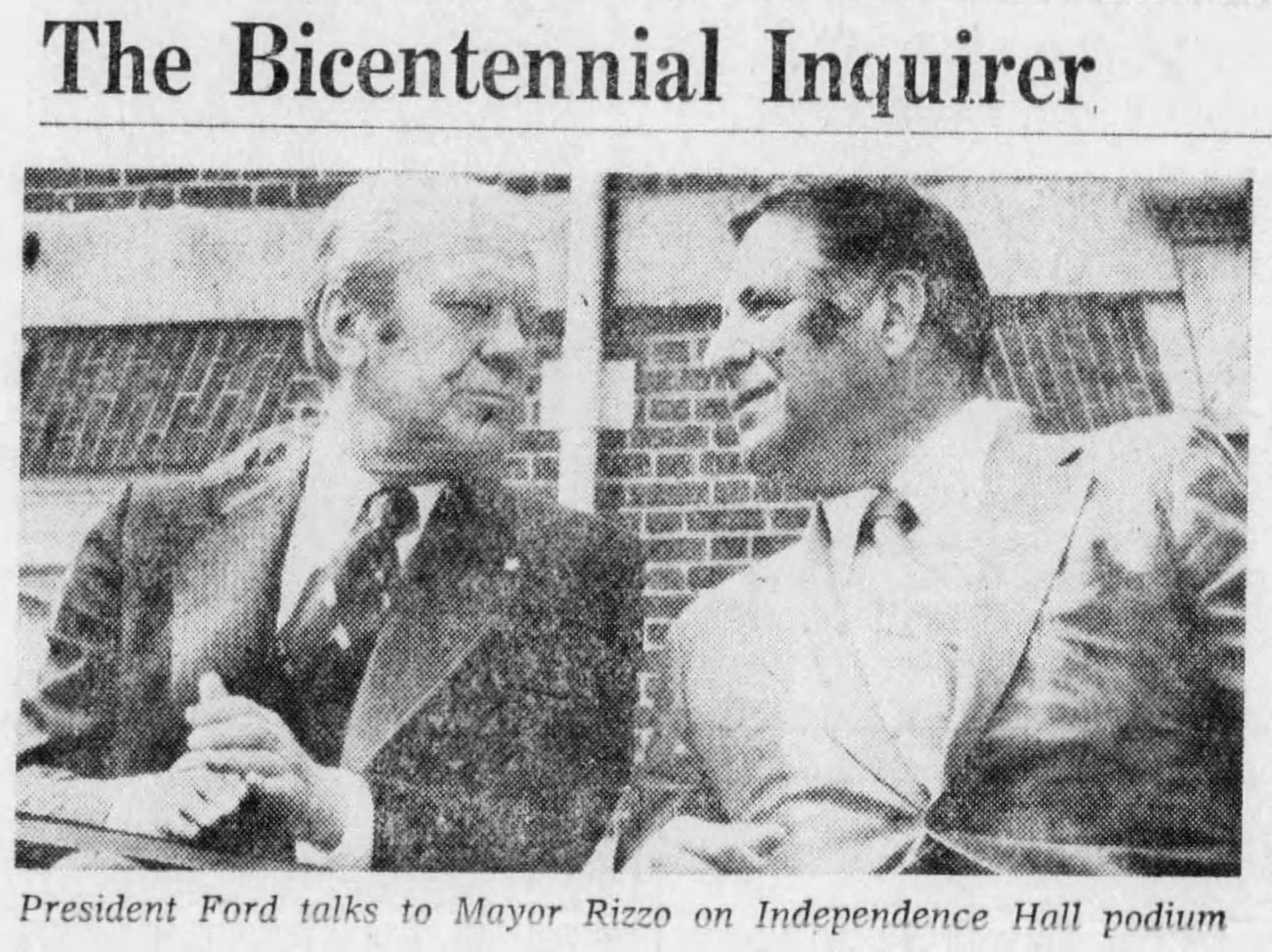
    President Gerald Ford talks with Mayor Frank Rizzo at Independence Hall on July 4, 1976.

    Benefits abound

    Though the Bicentennial may have been something of a tourism bust, we didn’t walk away with nothing. In some ways, the city was enduringly altered — Philadelphia received an estimated $165 million in improvements for the country’s 200th birthday, a good bit of which was federal money that was not likely to be spent otherwise, reports from the time indicate.

    The National Park Service, for example, spent an estimated $30 million on what we know today as Independence National Historical Park, The Inquirer reported. Those federal dollars bought a new Liberty Bell pavilion, extensive repairs and improvements to historical buildings, the construction of City Tavern and the Graff House, and the creation of Franklin Court.

    Other improvements were also palpable. A number of subway stations were painted and rebuilt, institutions like the Philadelphia Museum of Art were improved, and places like the Mummers Museum and the Afro-American Museum (now the African-American Museum of Philadelphia) were established. Roughly 10,000 trees were planted in Fairmount Park.

    These lasting municipal improvements had an impact, even if the Bicentennial itself did not live up to contemporary expectations. By the time 1976 hit, virtually nothing could quell the public’s want for advancement in light of the country’s 200th birthday. And so, it was deemed a failure.

    But now, half a century later, perhaps we are overcoming that disappointment, or are at least willing to see what comes next — after all, the United States is 250 years old in 2026. And though tourism expectations for this year have been quieter, the city still stands, with hoards of visitors now reminiscent of our Bicentennial year.

    “The Bicentennial Year will be a great year for the United States,” Rizzo said in 1976. “And particularly for Philadelphia, where our nation was born.”
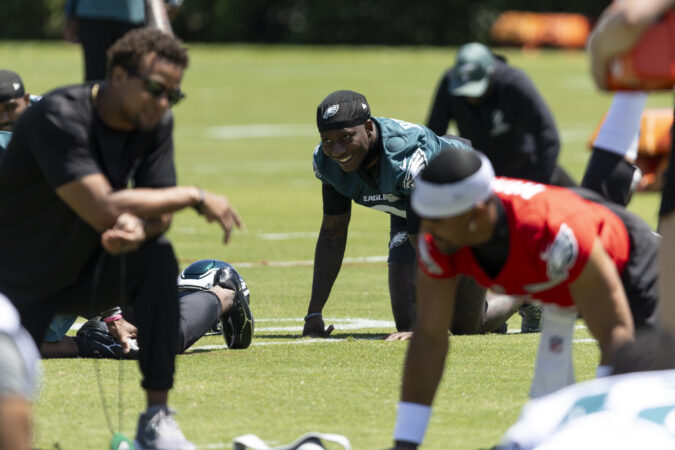
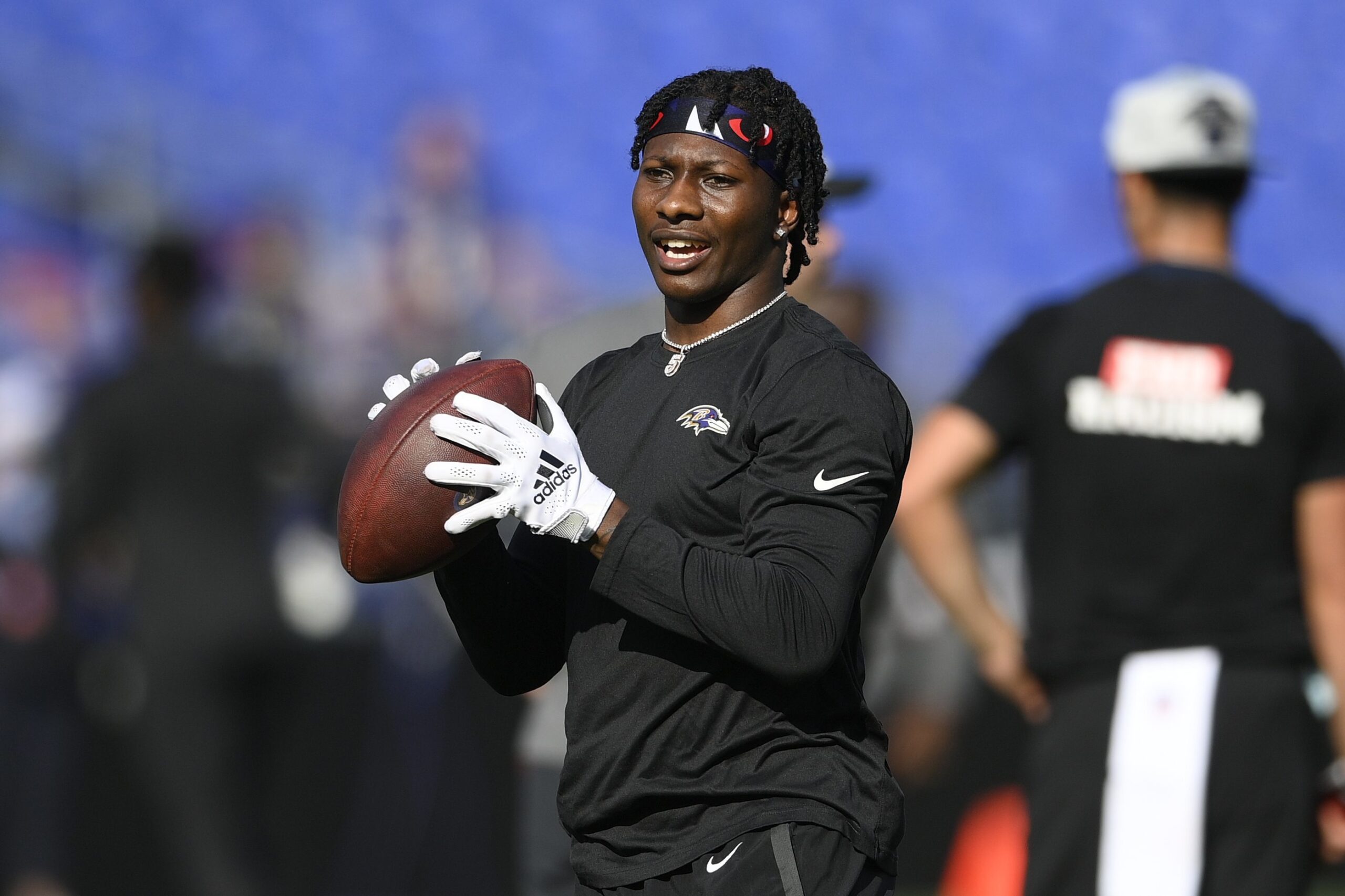
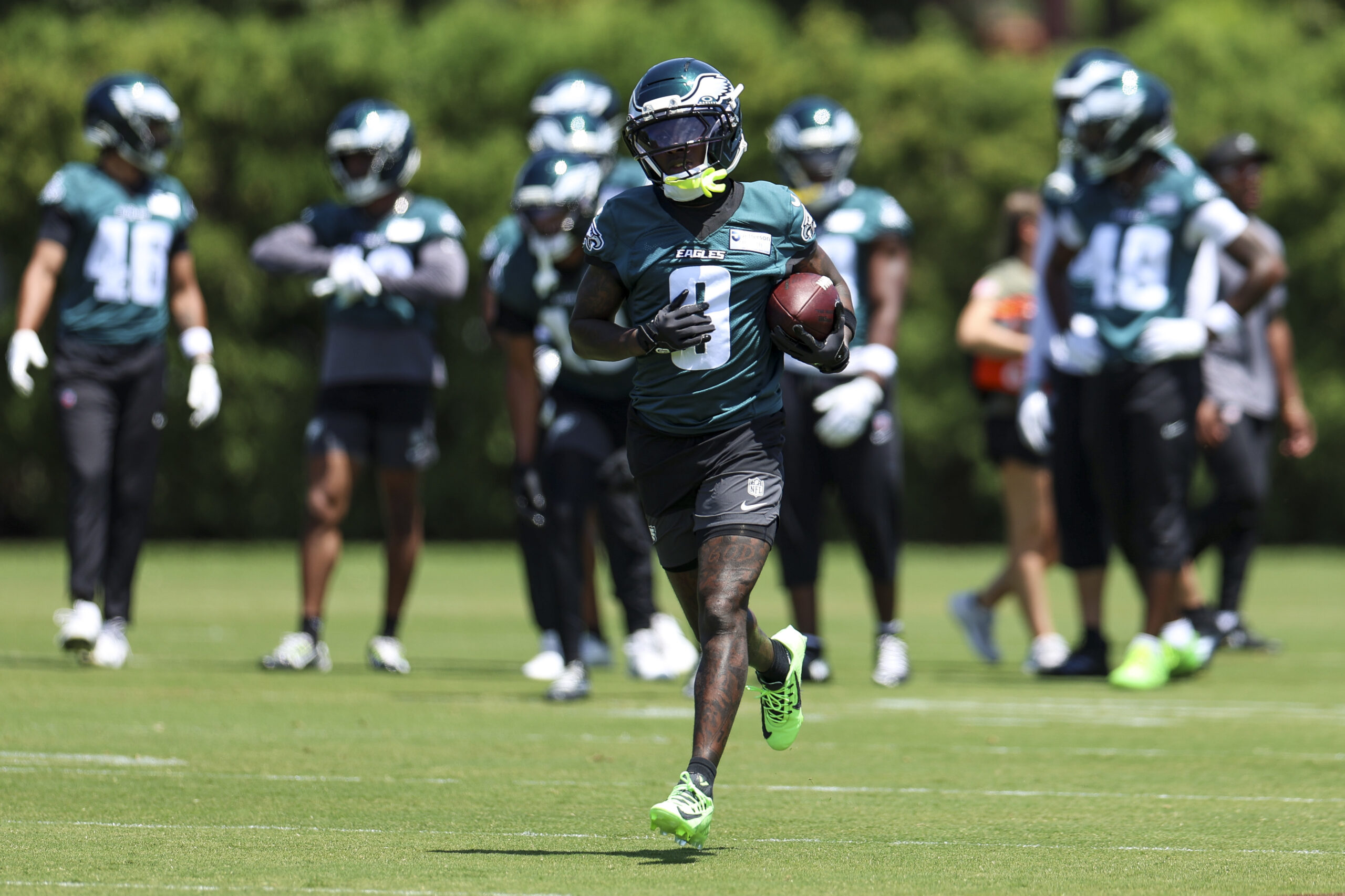
  • Hollywood Brown is a former first-rounder and 1,000-yard receiver. The Eagles are giving him another chance at NFL relevance.

    Hollywood Brown is a former first-rounder and 1,000-yard receiver. The Eagles are giving him another chance at NFL relevance.

    To this day, former University of Oklahoma quarterback Kyler Murray and wide receiver Nick Basquine still argue over who wooed Marquise “Hollywood” Brown.

    It was December 2016 and OU, in the midst of a heated Big 12 championship race against rival Oklahoma State, was in an equally heated recruiting battle against West Virginia for Brown, a 5-foot-9 junior college wideout who moonlighted as a Six Flags ride operator in California to make ends meet.

    Brown just so happened to have a 40 time in the low 4.3s, too.

    Murray gave his pitch. Ditto for Basquine. And while Murray still doesn’t believe this story, when Brown did finally commit to the Sooners, wide receiver coach Dennis Simmons gave Basquine the nod for sealing the deal.

    “I remember we had a practice on a Monday and coach Simmons came up to me and was like, ‘Dude, thank you,’” Basquine said. “I’m like, what are you talking about? He’s like, ‘You got us Marquise.’

    “And, well, the rest is history. You saw what he did here. You see what he can do in the NFL, too.”

    Now 29, Brown will try to have a career resurgence with the Eagles, who signed him to a one-year, $6.5 million contract this offseason.

    Hollywood Brown’s 1,000-yard season in Baltimore in 2021 set the bar for what he can accomplish in the NFL.

    Brown has bounced around the league since dominating in college and getting off to a strong start to his NFL career. The No. 25 overall pick by Baltimore in the 2019 draft, he still ranks No. 4 in Ravens history for total touchdowns by a wide receiver (21). The former first-round pick peaked in 2021 when he had a 1,008-yard season, but he mostly fizzled out after that.

    He was traded to the Arizona Cardinals in April 2022, playing two seasons with Murray but failing to recapture his former 1,000-yard magic. Brown moved on to Kansas City but was injured for most of the 2023 season — he did catch two passes for 15 yards in the Chiefs’ Super Bowl loss to the Eagles — and had 49 catches as a part-time starter with Kansas City in 2025.

    Is there any reason to believe that Brown — who had 587 yards last season — can recapture his Baltimore success in Philadelphia?

    Candidly, Basquine doesn’t know if the numbers will reflect that resurgence. But that doesn’t mean Brown can’t impact opposing defenses, especially playing in a modern offense led by Jalen Hurts, Basquine’s quarterback during his senior year at OU.

    “The threat that Marquise poses, it’s going to impact the defense,” Basquine said. “Whether they play two-high shell or one high, Marquise’s presence, even though he’s not going to be the first guy people think of, people who know football and understand the threat of speed, you always have to account for it. Marquise is still blazing fast.

    “The stats probably won’t show up, but the stress and the game plan the defense has to do because of that is going to be valuable in itself.”

    General manager Howie Roseman thought the same thing when he signed Brown in March. It’s obvious why Roseman brought in names like Brown, Dontayvion Wicks, and Elijah Moore, and drafted Makai Lemon this offseason: He wanted to bolster his wide receiver depth in an attempt to recreate A.J. Brown’s production in the aggregate.

    Hollywood Brown is trying to emerge amid a new-look wide receiver group.

    Barring a 2021-like revival, it’s unlikely that Marquise Brown will get many starts this season. There’s a good chance he’ll fill depth wide receiver Jahan Dotson’s spot since Dotson signed a two-year deal with the Falcons this offseason.

    This could be an ideal scenario for Brown, whom Basquine said is more determined to win a ring “than anybody.” As Roseman pointed out after he signed Brown, depth receivers have been critical pieces to Philadelphia’s Super Bowl rosters.

    “On Hollywood, there have been times on our offense we’ve had really that vertical skill set, but also a guy can separate at the top of his routes,” Roseman said. “And we had that a little — I was looking at our teams in 2017 — I thought Nelson [Agholor] did a great job of that, bringing that to the team. I think you looked at 2022 and Quez [Watkins] did a good job of that. I think 2024 was constructed a little bit differently, but I think that really fits the skill set of our quarterback.”

    If Brown does somehow carve out a starting role due to injury, Basquine, who played with both Brown and Hurts, said they can form an “underrated duo” due to their skill sets.

    With the Eagles now running a Sean McVay/Kyle Shanahan-esque offense under offensive coordinator Sean Mannion, Simmons took the prediction a step further.

    “I actually think his best football is in front of him,” said Simmons, now the wide receivers coach at USC. “We can see the best of Hollywood in Philly.

    “He’s been in a variety of offenses … so the playbook will not be an issue for him. I know what his work ethic is like. I know he’s healthy. Philly’s gonna love him.”

  • Letters to the Editor | July 3, 2026

    Letters to the Editor | July 3, 2026

    Pieces fit

    Our country has been likened to a mosaic. I compare it to a jigsaw puzzle. The picture is composed of hundreds of millions of individual pieces — all with unique shapes — fit together to form an image. The union, which we revere when we celebrate its birthday and salute the flag, is a result of pieces linked together. From a distance, they form an unbroken, seamless picture, but up close, you can still see the lines of each individual piece. When locked together as intended by the creators of the puzzle we call the United States of America, the union is solid and unbroken despite the lines of individuality that frame each component. A puzzle without each piece is incomplete. Putting the puzzle together requires the diligent effort of everyone who pledges to support the effort. We all — each one of us, native-born, immigrant — are a piece of the puzzle. To exclude anyone is to render the puzzle incomplete. In order to form a more perfect union, all pieces must be welcomed. That is our creed. It is truly what “Makes America Great” — not just “Again,” but always.

    Joe Sundeen, Yardley

    Drama-free

    In honor of our great nation’s 250th birthday, I would like to see all media refrain from any mention or photo of anything DJT-related. Make this day about our country, not him. We need a chance to celebrate without all the drama.

    Jerome Hodlofski, Marlton

    Join the conversation: Send letters to letters@inquirer.com. Limit length to 150 words and include home address and day and evening phone number. Letters run in The Inquirer six days a week on the editorial pages and online.

  • Horoscopes: Friday, July 3, 2026

    ARIES (March 21-April 19). A problem can seem small to everyone else and still feel enormous to the person living it. Because problems don’t obey laws of scale. Small things can have tremendous emotional significance. If it’s a big deal to you, it’s a big deal, period.

    TAURUS (April 20-May 20). It’s an ideal moment to update your surroundings and relationships to match who you are now. Your closet, like your contact list, contains artifacts from previous chapters. Release what no longer reflects your current life.

    GEMINI (May 21-June 21). Each individual who interacts with others is both a person and an idea of a person. We never interact with people completely objectively. We interact with them and our ideas about them at the same time. Today, some of those ideas will need updating.

    CANCER (June 22-July 22). What you want is in fine alignment with the interests of those around you. This makes manifestation much easier. You won’t have to convince anyone. No hard sell — no soft sell either — just building on the enthusiasm that already exists.

    LEO (July 23-Aug. 22). You’ll work without proof that you’re doing it right. But you know that even if this idea doesn’t work, you’ll have another one. Your confidence doesn’t depend on success. It depends on your faith in your own ability to keep creating.

    VIRGO (Aug. 23-Sept. 22). It’s not true that all dark clouds have a silver lining. Sometimes it’s black. Sometimes it’s gold. Sometimes everything disperses in a fog so diffuse there’s no lining at all. But every weather reveals something that sunshine alone cannot.

    LIBRA (Sept. 23-Oct. 23). There are things you know but don’t yet know that you know. Writing has a way of revealing them. Once thoughts leave the swirl of the mind and take shape on a page, patterns emerge, priorities become obvious, and hidden assumptions introduce themselves.

    SCORPIO (Oct. 24-Nov. 21). Smart people sometimes hide behind being smart. You’ll be around the dynamic today — people trying to have interesting conversations instead of real ones. Things gets better when nobody is trying to prove anything. So how can you put them at ease?

    SAGITTARIUS (Nov. 22-Dec. 21). Where does your responsibility end and theirs begin? Today you can clean up some of the blurred lines between “my job” and “your job.” Remember that what you establish in the early stages of a relationship is likely to become the norm.

    CAPRICORN (Dec. 22-Jan. 19). What if the universe wants to give you what you ask for, but it doesn’t understand the request? In some small way, give the very thing you want. This will serve as an example — a template for the universe to follow and scale up.

    AQUARIUS (Jan. 20-Feb. 18). Animal trainers know that training a relaxed animal is challenging but that training a stressed animal is near impossible. The human animal also learns better without too much stress and pressure. The education itself is challenge enough.

    PISCES (Feb. 19-March 20). Throughout history, reasonable people have accomplished unreasonable things — things they never imagined they could do. Don’t let a momentary crisis of confidence keep you from going forward. Doubt yourself if you must, but march on anyway.

    TODAY’S BIRTHDAY (July 3). It’s your Year of the Vineyard of Dionysus. In Greek myth, the god of wine, theater, and celebration taught that pleasure and creativity are close companions. Gatherings become collaborations. Fun turns into opportunity. Joy proves productive. More highlights: You’ll make game-changing sales. You’ll clear up a cluttered area of your life and have a deep peace. Your powers of attraction grow. Aries and Leo adore you. Your lucky numbers are: 15, 20, 41, 6, and 9.

  • Dear Abby | Grown sons tell dad to ditch wife of 45 years

    DEAR ABBY: My husband was married to a woman who lied to him about being pregnant. She wasn’t at the time, but she later became pregnant. They had two sons and divorced five years later. He never loved her.

    I married him eight years after that. We have been happily married for 45 years. I always thought I had a great relationship with both of his sons (now 58 and 56). When we retired and moved to Florida, they suddenly became angry and announced that they had always hated me.

    They had wanted us to move next door to their mother and live as “one big, happy family.” My husband and I couldn’t imagine that. His ex-wife is well educated and has a Ph.D. in family therapy. She never remarried. She is manipulative and controlling. Now, they won’t speak to us or let us see the four grandchildren. It’s heartbreaking.

    We reached out twice, trying to make amends. We had a wonderful relationship with three of the grandchildren before this happened. My husband’s sons told him: “Dad, if you move back here, live close to mom and leave your current wife, we will forgive you.” Help!

    — SADDENED IN THE SUNSHINE STATE

    DEAR SADDENED: How does your husband feel about the emotional blackmail his sons are attempting? Forgive me for using the vernacular, but they and their family therapist mother are loony tunes! You don’t need my help. You and your husband need only to use your common sense. What is being proposed is outside the realm of reality.

    ** ** **

    DEAR ABBY: I have two nieces. Each has two children. The children range from 12 to 18 years old. All of them live in my country of origin in Europe. I haven’t been able to visit for more than 10 years, so the younger ones don’t remember me. I have, however, always sent them gifts of money for Christmas and birthdays, around $25 each time for each child, plus their mothers. When the eldest was 18, I sent a larger gift, around $75, with similar amounts for significant exam results and graduation. I intend to do this for all four of them.

    My question is: Can I stop these gifts now that one is an adult and phase out the gifts for all of them after they graduate from high school? I can afford to keep on giving them $25 for the holidays and birthdays, but it isn’t going to buy them much in college and, to be honest, I’m growing a bit tired of all the gifting.

    I understand the eldest two are particularly brilliant and will go to famous universities, but I haven’t seen any evidence that they can write at all — i.e., not one thank you letter, ever! Would it seem mean and petty if I stopped, or should I wait until they are out of college?

    — MEAN AUNTIE IN NORTH CAROLINA

    DEAR AUNTIE: Do not punish the kids for something their parents failed to teach them. The money you have been sending hasn’t created a hardship for you, and a pattern has been established. If you opt to stop the monetary gifts, explain to your nieces your disappointment that in all these years you have received not one response for your thoughtfulness from their children.

  • The 250th anniversary gathering of Congress at Independence Hall touches on divided times, uneven history

    The 250th anniversary gathering of Congress at Independence Hall touches on divided times, uneven history

    Two days before the American revolutionaries signed the Declaration of Independence in 1776, the Second Continental Congress gathered in Philadelphia to formally vote on the matter.

    Standing in virtually the same spot 250 years later, their distant successors commemorated that historic moment while grappling, at times, with what it left out.

    “The fact that we have you here together is a symbol of progress,” said U.S. Rep. Dwight Evans, a retiring Democrat who’s spent more than four decades as one of Philadelphia’s central Black political leaders. “250 years ago, people like me were not fully included in the founders’ vision. … The struggle to live up to our founding ideals was hard fought.”

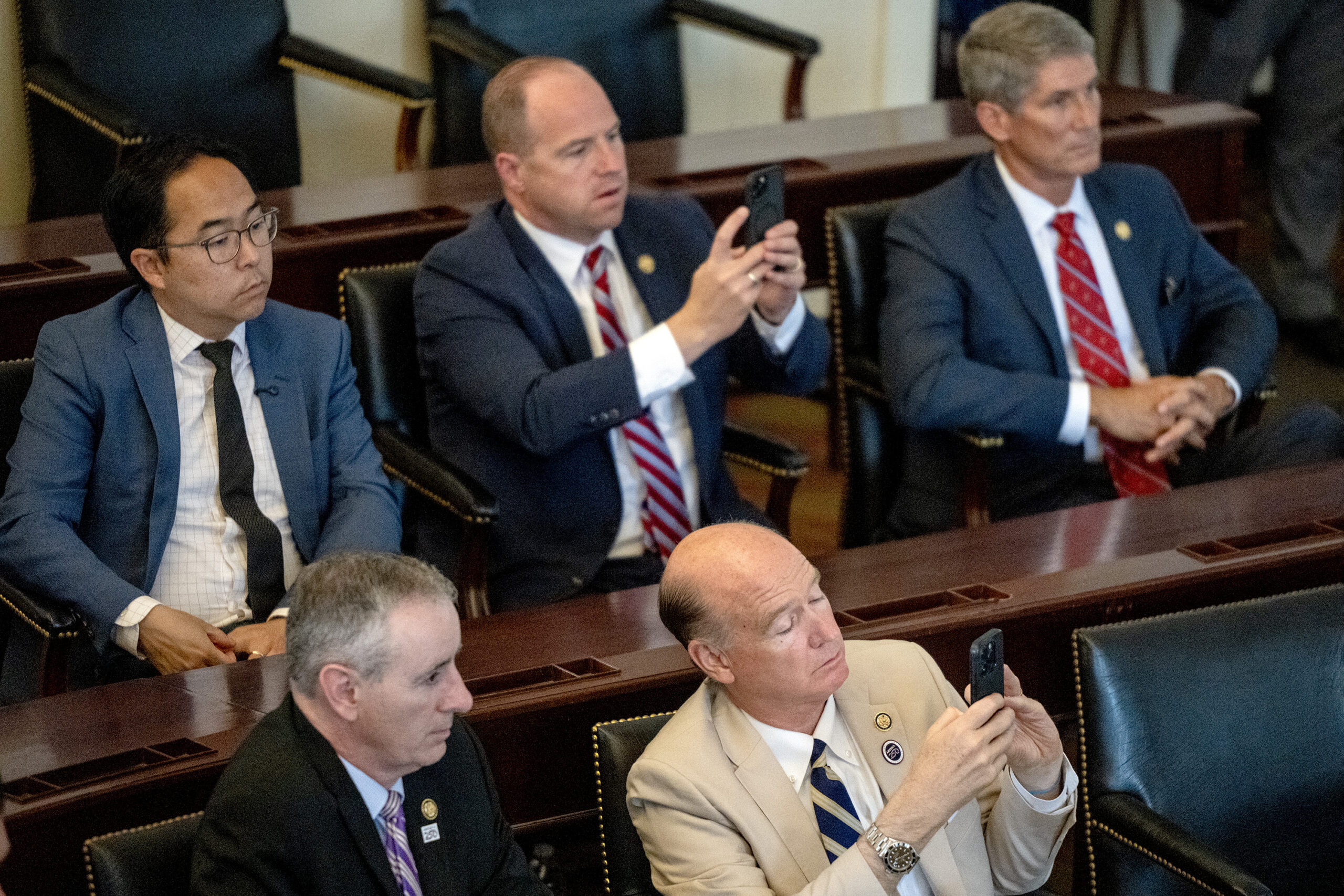
    More than 30 members of the 119th Congress attended the event at Independence Hall, one of many marking the Semiquincentennial in the city this week. U.S. Rep. Brendan Boyle, a Philadelphia Democrat whose district includes the historic site, had worked for years to bring his colleagues to the site to mark the nation’s founding.

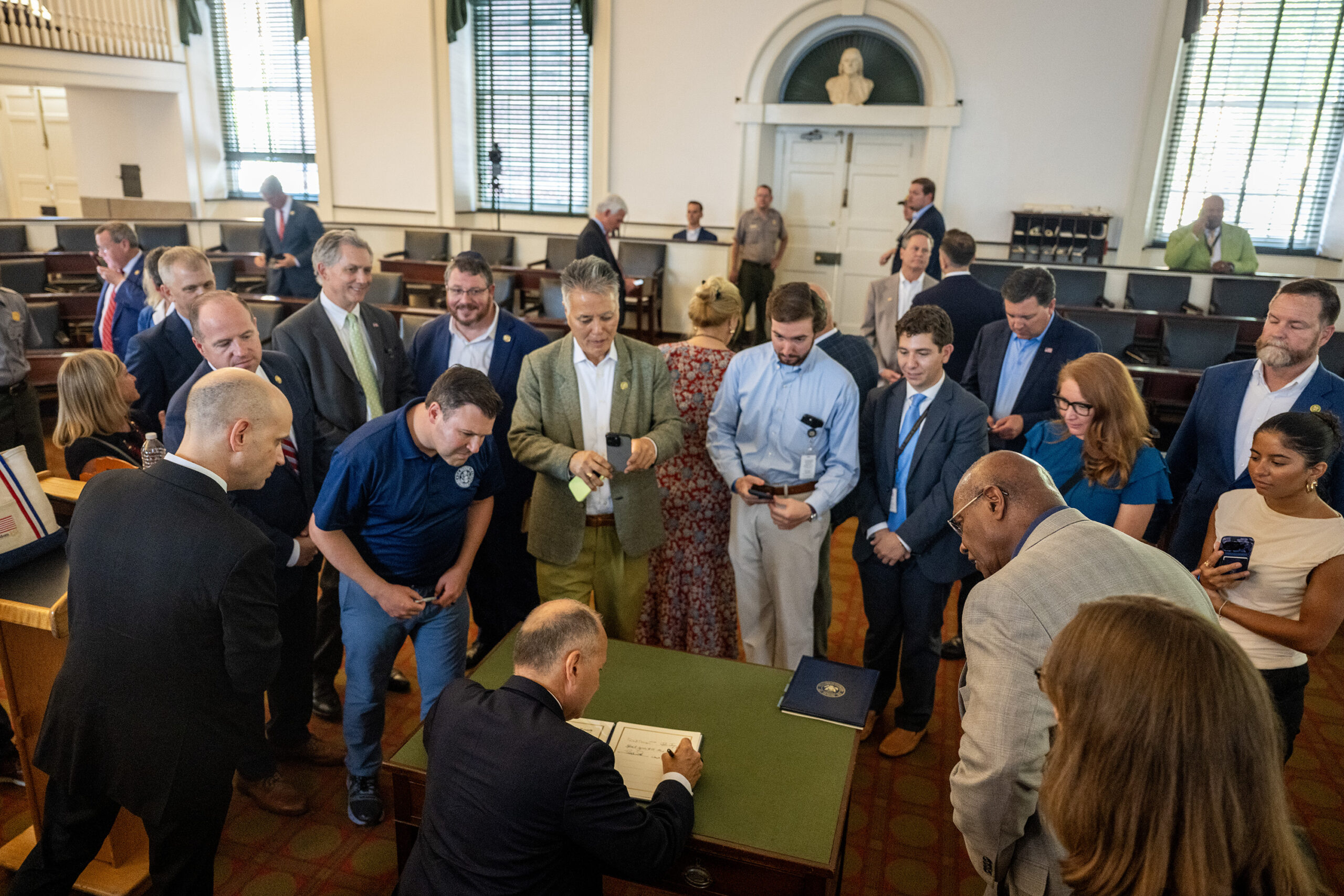
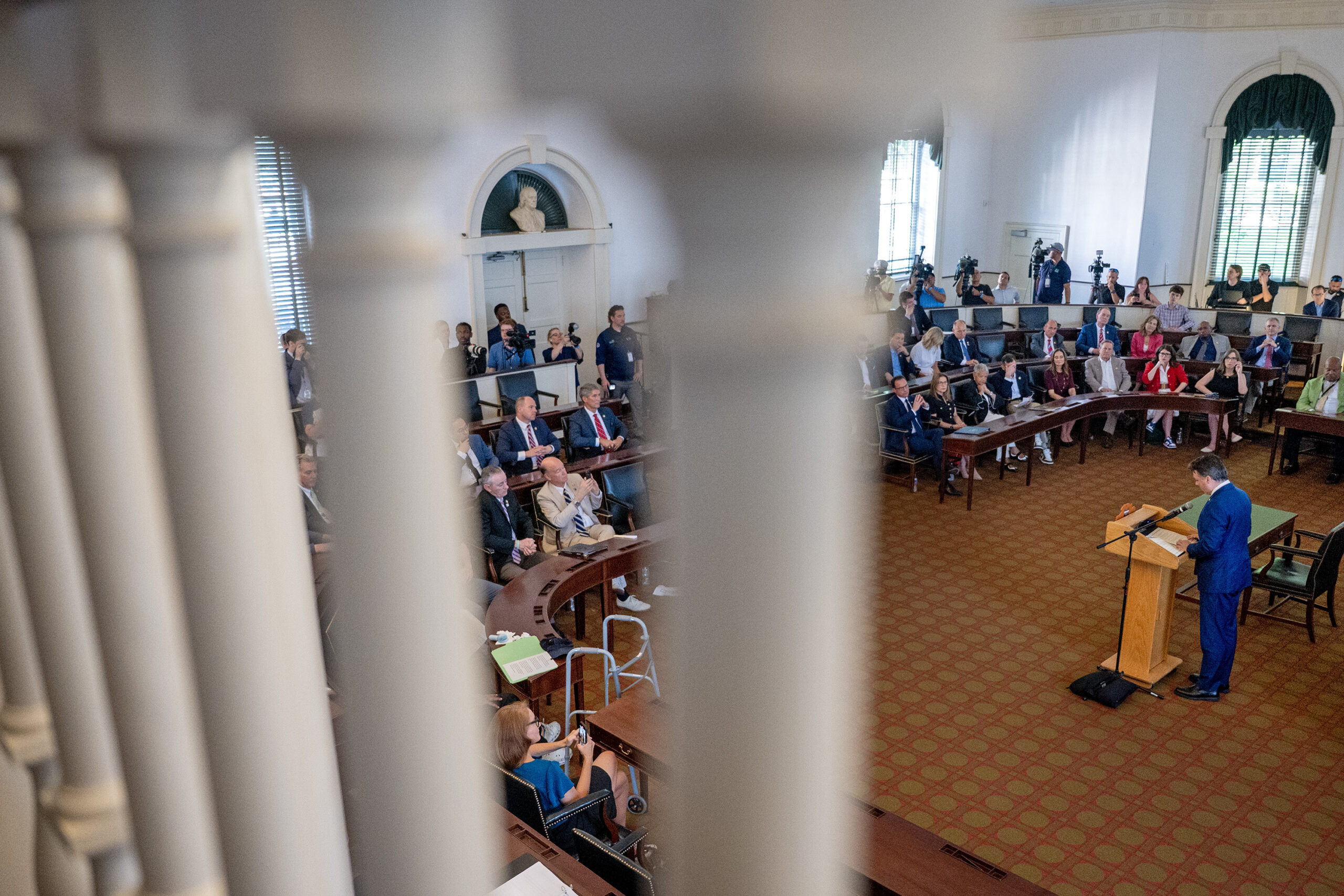
    A bust of Benjamin Franklin is above the door in the back of Congress Hall as U.S. Rep. Lloyd Smucker of Lancaster County signs a ceremonial document after the House of Representatives met at Independence Hall on Thursday.

    As Boyle and others walked through that history in Congress Hall — the room where the legislative branch convened before relocating to Washington — they referenced both the uneven history of the country and the divided, polarized times that define modern America.

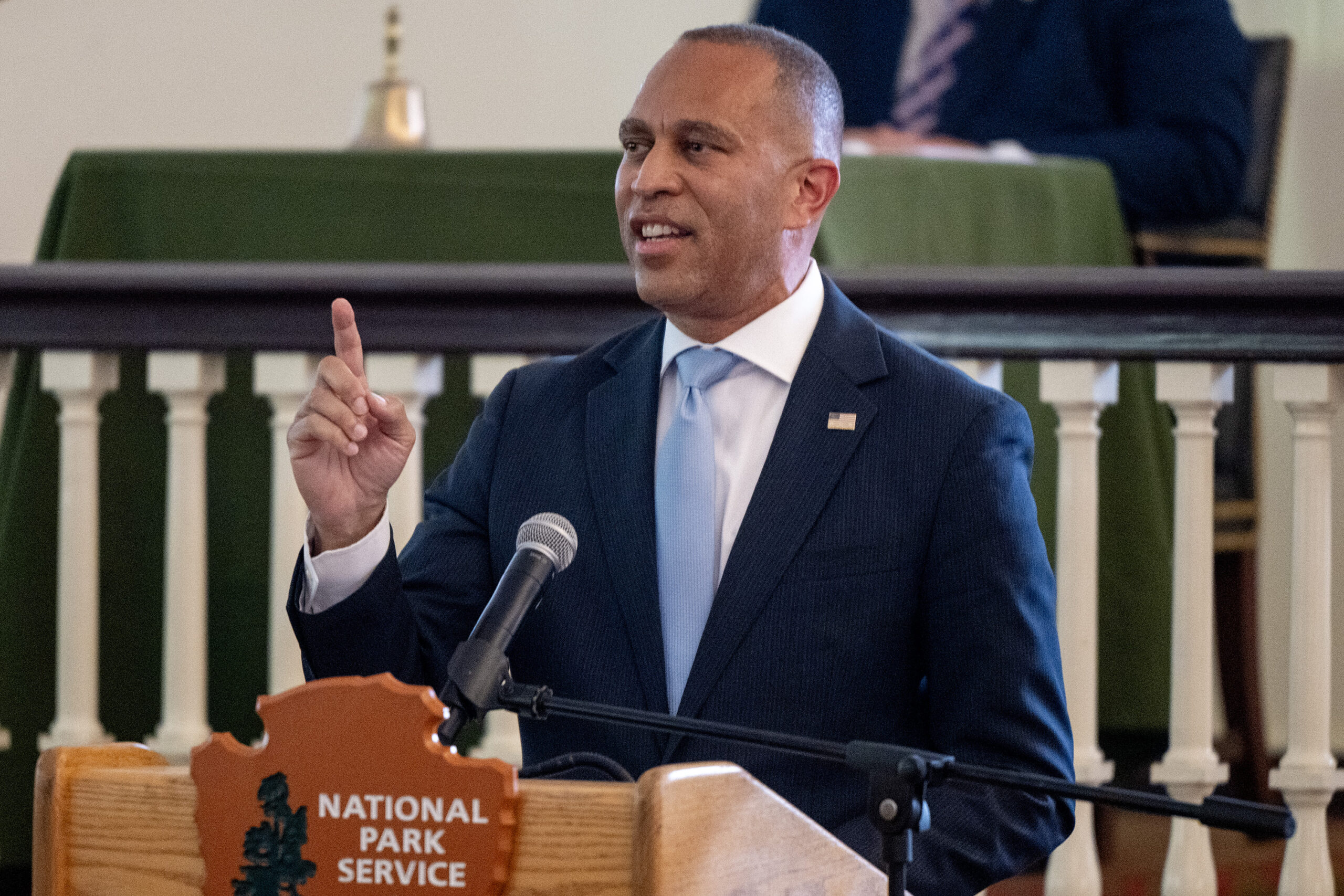
    “America has indeed struggled at times, beginning with the horrors of chattel slavery and the oppression of Native Americans, to live up to our highest ideals,” said House Minority Leader Hakeem Jeffries (D., N.Y.). “But the highminded principles, upon which this great country was born, have served as an eternal lamp post for us to continue to strive and march toward a more perfect union.”

    Jeffries’ remarks — from a high-profile lawmaker poised to become the first Black speaker of the U.S. House if his party wins control in the midterms later this year — came as President Donald Trump’s administration has tried to pull back the federal government’s references to the history of slavery, including on Independence Mall, most notably at the President’s House, a block from where the lawmakers gathered.

    The Democratic leader was one of multiple speakers, including Pennsylvania Gov. Josh Shapiro, who made veiled references to Republicans’ ceding Congress’ role as a check on Trump. The members of Congress who served at Independence Hall believed the chamber “would be separate and coequal, never subservient or co-opted,” Jeffries said.

    “Let us never forget that we don’t work for any other branch of government,” he said. “There are no kings in the United States of America. We work exclusively for the American people.”

    House Democratic Leader Hakeem Jeffries addresses the Representatives meeting in Congress Hall. He said it was important to speak about the history of slavery in America. The gathering marked the 250th anniversary of the day the Second Continental Congress voted for independence.

    U.S. Rep. Glenn “GT” Thompson, a Centre County Republican and dean of the Pennsylvania delegation, presided over the event. He said afterward that some of the remarks turned “a little political.”

    “But it is an excellent observation,” Thompson said. “We don’t have a king. We can thank George Washington for that.”

    Thompson was one of several Pennsylvania Republicans to attend the mostly Democratic event, but other top officials were noticeably absent.

    Pennsylvania’s top-ranking Republican federal official, U.S. Sen. Dave McCormick, did not attend. Neither did U.S. Sen. John Fetterman, a Democrat who has increasingly aligned himself with Trump and Republicans.

    U.S. Sen. Andy Kim (D., N.J.), who lives in nearby Burlington County, was the only senator to attend.

    U.S. Senator Andy Kim (left) of New Jersey joins House members.

    ‘Let this sacred place awaken us’

    Since 1800, Congress has met outside Washington, D.C., on only extremely rare occasions.

    In 1987, a ceremonial joint session in Philadelphia marked the 200th anniversary of the Constitution, and in September 2002, more than 300 members met in New York City for the first anniversary of 9/11.

    Thursday’s gathering in Philadelphia was considered a ceremonial event, not a formal joint session, so the lawmakers did not debate legislation or cast votes in the room where they conducted that kind of official business in the earliest days of the nation.

    There weren’t defined political parties, all those years ago.

    But the fissures that soon arose in the nation’s first capital — and that have only become more entrenched since then — were evident both in and around Thursday’s event.

    The 45-minute ceremony was a bipartisan showing. A pair of Pennsylvania Republicans in particular, Thompson and U.S. Rep. Brian Fitzpatrick (R., Bucks), kicked off the day with a call to order and invocation. Others like U.S. Reps. Ryan Mackenzie (R., Lehigh), Lloyd Smucker (R., Lancaster) and John Joyce (R., Blair) also attended.

    Fitzpatrick, a moderate Republican facing a tough reelection campaign this year, and Boyle, a moderate Democrat, were among several speakers who talked about the anniversary being a moment for Congress to recommit to its founding goals.

    “Let this sacred place awaken us, a solemn charge that flows from what was proclaimed here 250 years ago,” Fitzpatrick said.

    Among the over 30 lawmakers, though, Democrats outnumbered their colleagues across the aisle. Jeffries addressed the room, while no members of House Republican leadership, who control the chamber, made an appearance.

    ‘A great balancing act’

    The day itself came after a chaotic few weeks in Washington, even during an unusually divisive two-year term.

    The most significant bipartisan legislation produced during Trump’s second term, a comprehensive housing bill that includes a home-repair program that originated in Pennsylvania, was temporarily scuttled when the president refused to sign it. His demands for a controversial voter-ID and elections reform bill first was derided by members of both parties.

    U.S. Rep. Brendan F. Boyle speaks as members of Congress gather for the ceremonial event.

    Just 48 hours before Thursday’s gathering, that move was still causing turbulence on Capitol Hill as Republican House Speaker Mike Johnson canceled the rest of the week’s agenda because of disagreements around the legislation, known as the SAVE America Act.

    Johnson did not attend the event at Independence Hall.

    Shapiro, a Democrat and potential 2028 presidential candidate, made a veiled reference to the current Republican-led Congress’ failure to serve as a check on Trump. He said the founders set in motion “a great balancing act” that lawmakers were responsible for upholding.

    “Two and a half centuries later, we continue to work to find that balance, work that each of you is charged with taking up every single day,” Shapiro said.

    Even in the blocks around the lawmakers’ gathering, the tensions of the Trump era were evident.

    A few blocks away at the historic Christ Church, local advocates and interfaith leaders gathered before the congressional event to call out the president’s aggressive immigration enforcement tactics. One local member of Congress — U.S. Rep. Mary Gay Scanlon, a Delaware County Democrat — stood with them before joining her colleagues at Independence Hall.

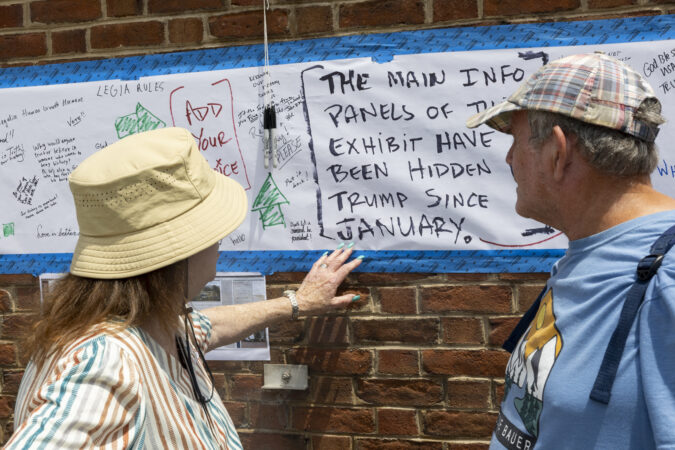
    And just down the street at the President’s House, tourists saw an incomplete display after the Trump administration took down information that memorialized the nine people George Washington enslaved in Philadelphia during the nation’s founding.

    Boyle pointed to fights by “generations of Americans who refused to accept that liberty and equality belonged only to some.”

    “That struggle is not separate from the American story,” Boyle said. “It is the American story.”

  • John Adams wanted ‘pomp and parade’ to mark July 2. For the 250th, Philly tried, despite the heat.

    John Adams wanted ‘pomp and parade’ to mark July 2. For the 250th, Philly tried, despite the heat.

    As the mercury climbed above 100 degrees in the Philadelphia region two days before the nation’s 250th birthday, it was, it seemed, too hot for liberty as originally planned.

    Thursday marked the start of the Red White & Blue To-Do — Philadelphia’s third-annual celebration of the day the Second Continental Congress voted to adopt a resolution of independence here on July 2, 1776. Though many events honoring that anniversary were planned, several highly anticipated gatherings were canceled or postponed due to the heat.

    And yet, despite the oppressive temperatures on a particularly toasty July day in the cradle of the nation’s founding, the celebration started early Thursday.

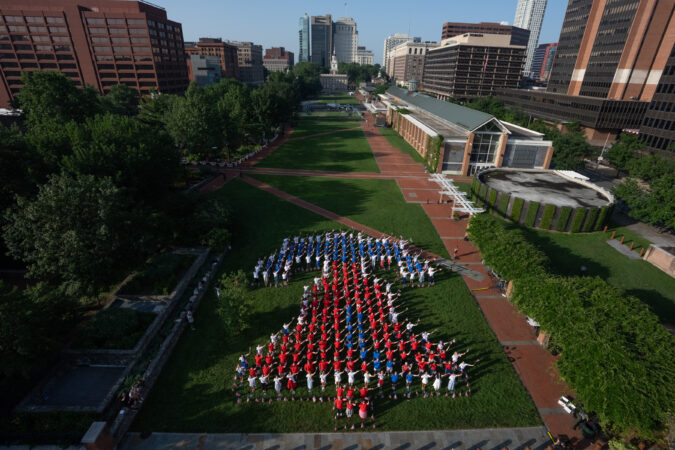
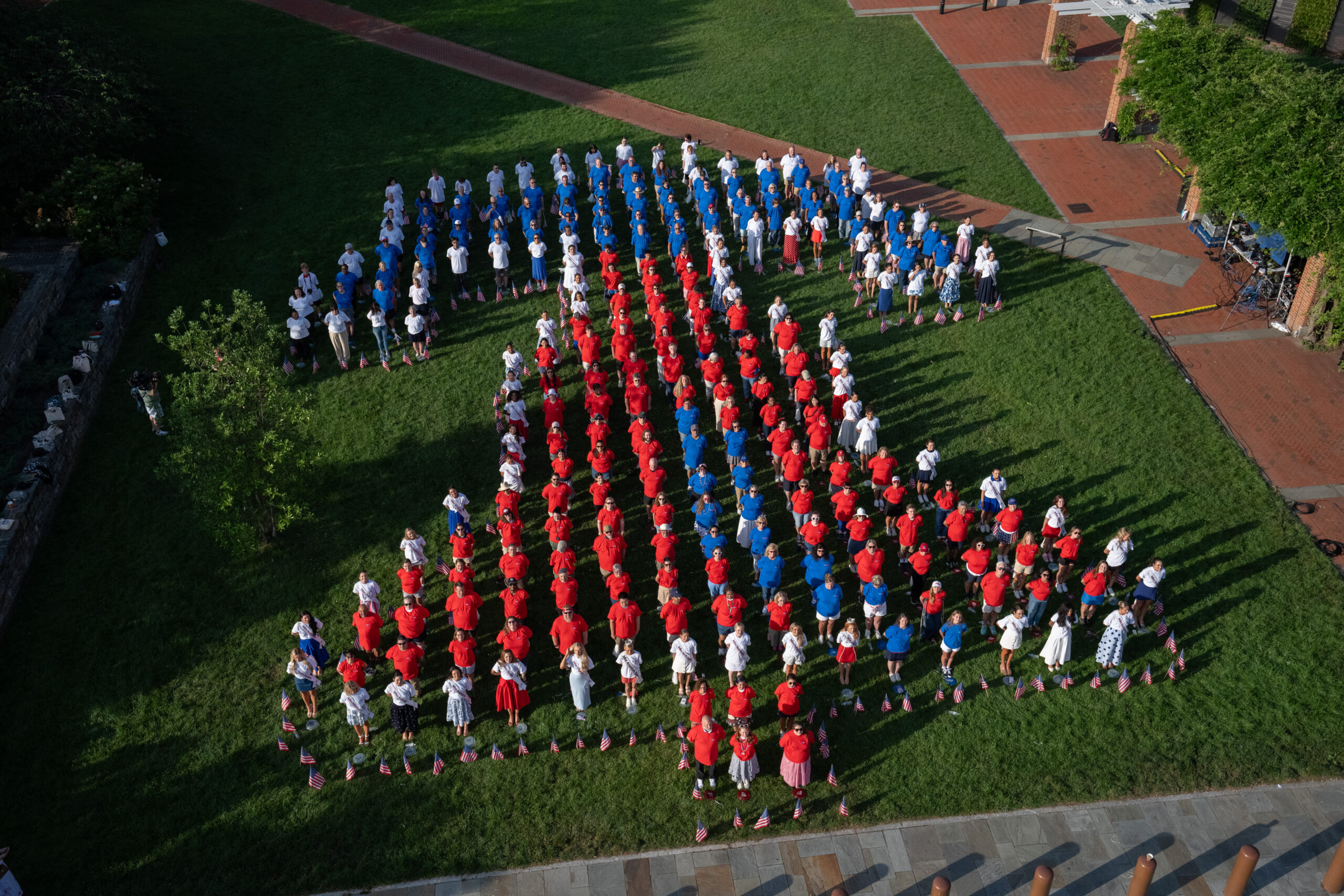
    At 7 a.m., some 250 revelers, clad in red, white, and blue clothing, gathered at Independence Mall to make a living Liberty Bell — a representation of a symbol that has defined Philadelphia for centuries, and a touchstone for Americans nationwide. The human formation even captured the bell’s signature crack through an outline of participants wearing blue.

    Participants gather to create the Living Liberty Bell, gathering 250 people to form the shape of the famous bell on Independence Mall.

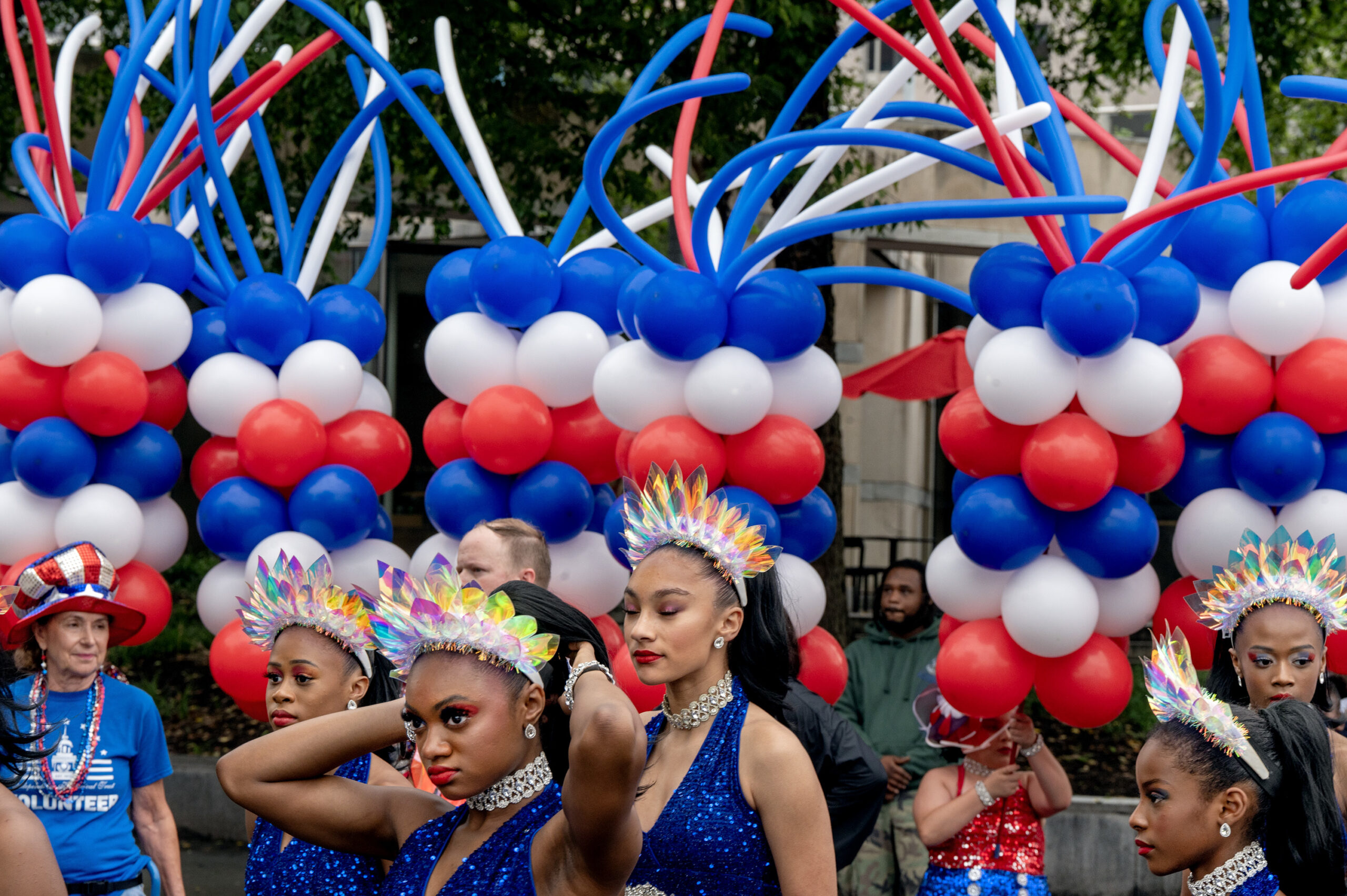
    Likewise, performers from neighborhoods across Philadelphia and nations around the world weren’t slowed down by the heat as they marched, stepped, and danced their way down Independence Mall in the Red, White & Blue To-Do Pomp & Parade. Attendance, however, did seem to be impacted, with relatively light crowds along the sunny parade route.

    The same was true for the 11 historic spaces across Old City filled with music Thursday as part of the WXPN Welcomes the Red, White & Blue To-Do Music Series. More than two dozen local artists performed, though audience seats were were not all filled as crowds remained light and foot traffic across the historic district was much sparser than an average Thursday.

    Legendary Philly poet and recording artist Ursula Rucker performed with Miles Orion on guitar at the Arch Street Meetinghouse for a crowd of about a dozen people. She gave moving renditions of her poems — like “Philadelphia Child” and “Fear or Freedom” — and ended her set on “L.O.V.E.”

    “Love soft, love hard, just love,” she said.

    Meanwhile, parade participants pulled wagons featuring small floats of Independence Hall, the LOVE sculpture, and the Liberty Bell, and a historical interpreter portraying John Adams brought up the rear of the procession. Lines for both Independence Hall and the Liberty Bell, meanwhile, snaked down the sides of their respective buildings.

    Pastor Funmi Obilana of RCCG Church in West Philly stopped to watch the parade with two other members of her congregation on their way to the President’s House site. The three women were doing a walking tour of their own city Thursday, stopping at places where their ancestors were once enslaved in advance of Independence Day.

    “We are here to pray for this city and this nation,” Obilana said. “Two-hundred-and-fifty years is a big number and it should be a new beginning, not only for Philadelphia, but for the nation.”

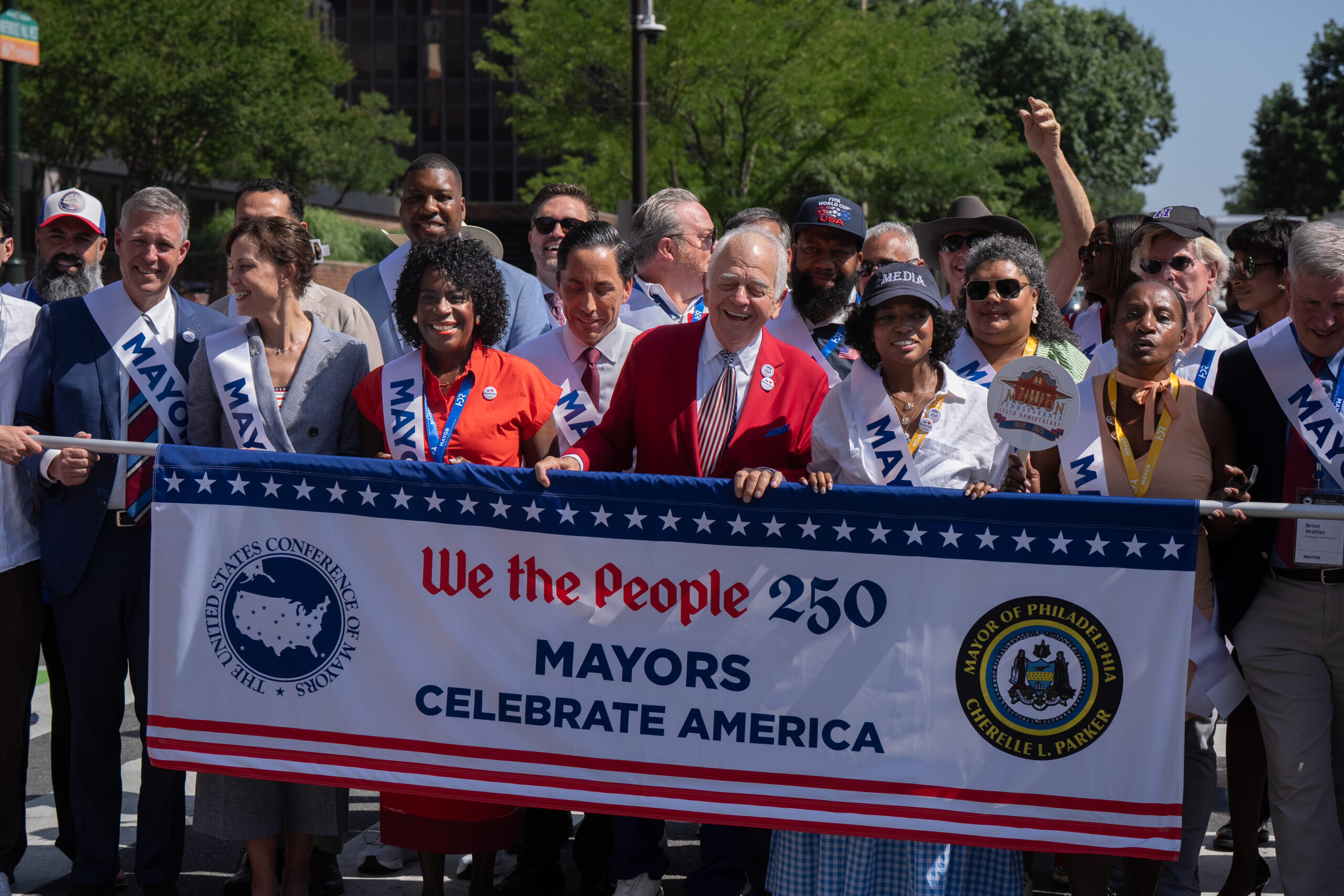
    Mayor Cherelle L. Parker leads bipartisan mayors from communities across the nation in a Historic March of America’s Mayors through the birthplace of American democracy, and past Independence Hall, in Philadelphia, July 2, 2026.

    Mayors from around the country who traveled to the city Thursday seemed to agree. Those local leaders were in town for a walk that featured 100 mayors from small towns and big cities nationwide touring Philadelphia. Despite scorching temperatures and differing political alignments, the mayors quickly befriended one another, many bonding over a shared connection of a city or state.

    That mayoral group, led by Philadelphia Mayor Cherelle L. Parker as they marched from the President’s House to Independence Hall, later gathered in a small auditorium in the Museum of the American Revolution. There, Parker urged attendees to come together and share ideas, as representatives from across the colonies had in the 1700s.

    “May today’s conversations strengthen old friendships, spark new ideas, and renew our shared commitment to public service,” Parker said. “Welcome to Philadelphia, everyone. Let’s roll up our sleeves and continue the hard work together.”

    The meeting, it seemed, was a fitting one. On July 2, 1776, 12 of the 13 colonies voted in favor of independence from Great Britain, explained Tom Cochran, U.S. Conference of Mayors CEO and executive director. Only New York cast a no vote — until a few days later when it got onboard, as well.

    “We talk about the declaration, we talk about the Constitution, it was on that day, July 2nd … that we broke,” Cochran said.

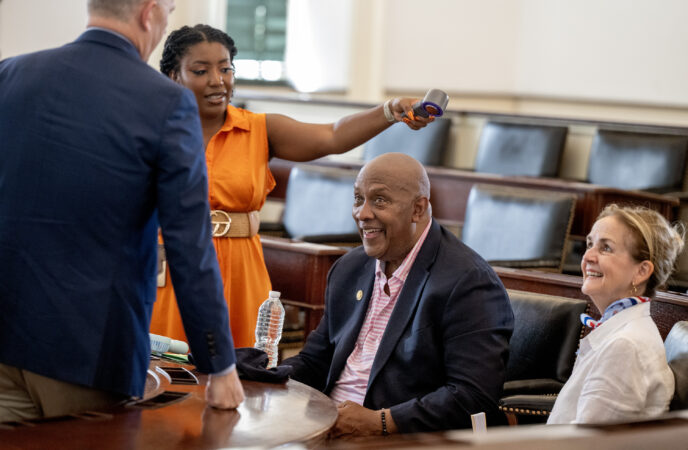
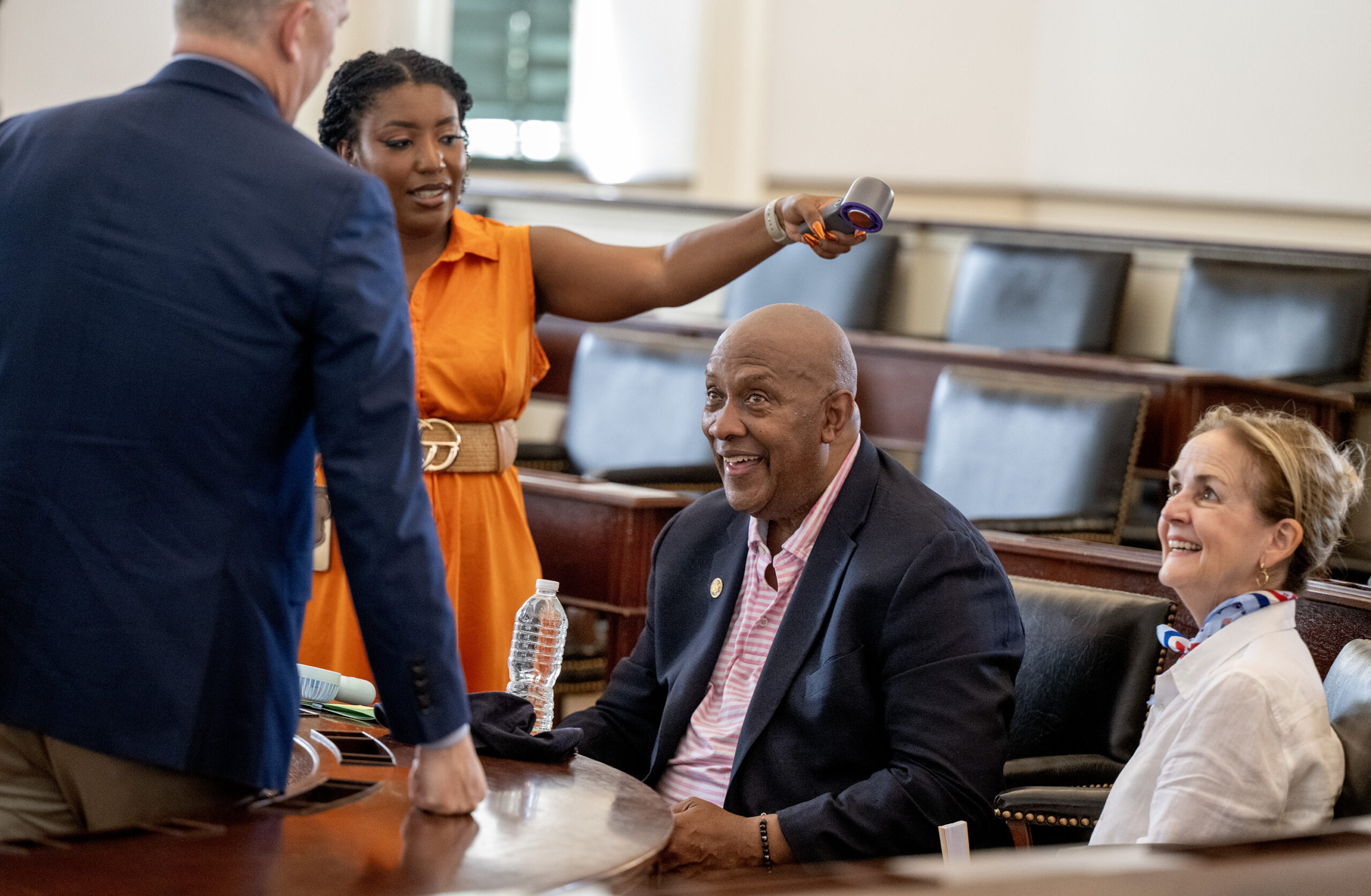
    Jarquiza Ayers, on the staff of U.S. Rep. Watson Coleman, uses a handheld fan to cool off U.S. Rep. Dwight Evans at Independence Hall.

    About 30 members of Congress also made the trip to town, lining up to enter Independence Hall for a ceremonial event that included speeches from Pennsylvania Gov. Josh Shapiro and House Minority Leader Hakeem Jeffries (D., N.Y.). The event, said U.S. Rep. Glenn Thompson (R., Pa.), showed that “the origins of our republic trace back to Pennsylvania.”

    Founding Father John Adams believed July 2 would be celebrated for generations to come with “Pomp and Parade,” but July 4, when Congress approved the Declaration of Independence, ended up getting all of the glory and became the day we mark the nation’s founding. Now, more than two centuries later, Philadelphia seemed to be making good on Adams’ initial interpretation.

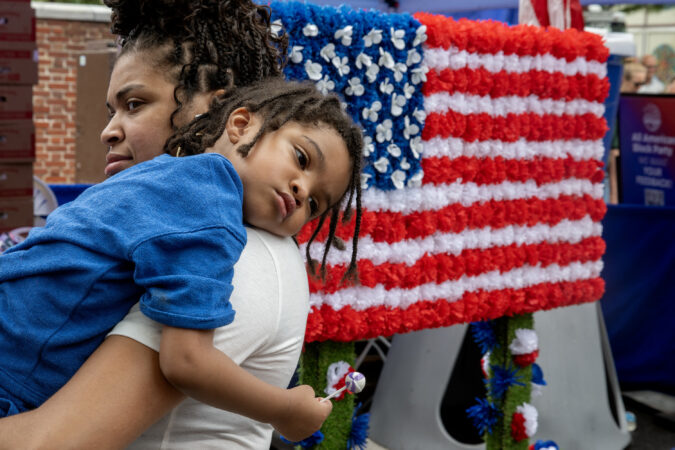
    That is, except for the heat. Thursday’s skyrocketing temperatures, which hit 102 degrees in the afternoon, resulted in some alterations to the day’s events. The parade, for example, fell victim to a shortened route. A planned All-American Block Party and the Wawa Welcome America Salute to Service concert, featuring Queen Latifah, were canceled entirely. Parades, fireworks, drone shows, and other events planned in South Jersey were also affected by the extreme heat.

    Students of DANCE4LIFE School of the Arts & Training Institute in Claymont, Del. Wait for the start of the second annual Red, White, & Blue To-Do parade.

    And as the Fourth approaches Saturday, we aren’t likely to get much relief. In fact, Friday is expected to be a little warmer, followed by possibly stormy weather slated for the evening of Independence Day.

    But the weather, however inclement, some visitors said, was illustrative of what the Founding Fathers dealt with when the United States was born a quarter-millennium ago. Lori Morgan and her three daughters traveled to Philadelphia from Boston, hoping to celebrate the nation’s historic 250th birthday in the place where it all happened. They toured Independence Hall this week, and Morgan said it gave them a new perspective on the days and people that led to the founding of our nation.

    “We really thought about how when they did the Declaration it was a hot summer and this weather is helping us empathize with what they went through,” Morgan said. ”They all had different ideas, just like we do today, but they knew they couldn’t fail and they had to come together, and they did.”

    Staff writers Michelle Baruchman, Emily Bloch, and Anthony R. Wood contributed to this article.

  • Racist backlash roiled these high schoolers’ production of ‘1776.’ It strengthened their resolve.

    Racist backlash roiled these high schoolers’ production of ‘1776.’ It strengthened their resolve.

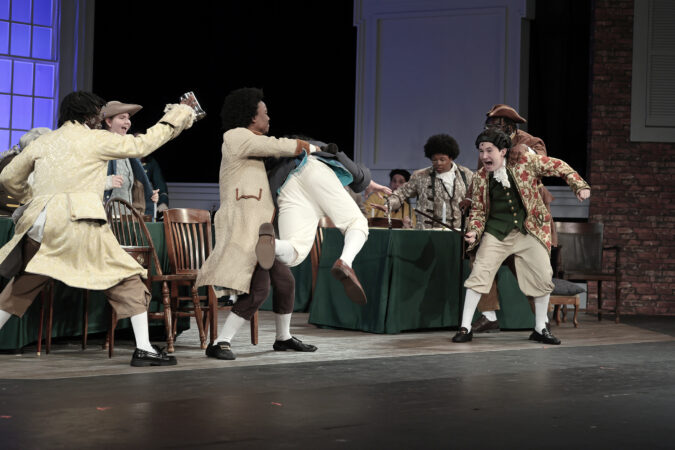
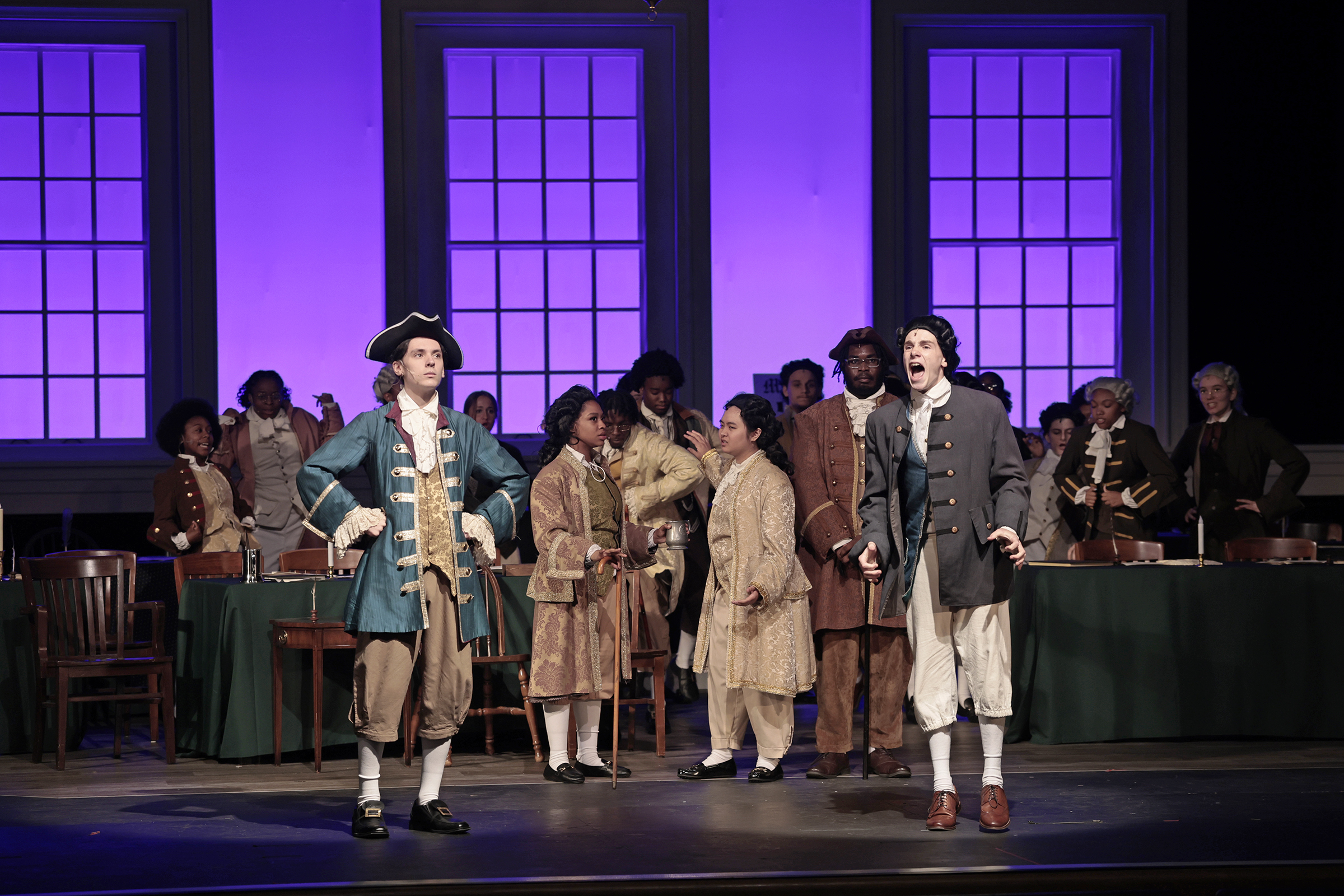
    Seventy-five Philadelphia students thought the stakes were high when they debuted 1776: The Musical in front of a crowd that included former President Joe Biden, former Pennsylvania Gov. Ed Rendell, and Mayor Cherelle L. Parker at Philadelphia’s High School for Creative and Performing Arts last week.

    Then came the hate — racist, bigoted comments on social media posts about the production, which was dreamed up by Rendell, who wanted students to learn about the “sacrifices and compromises” that went into building the nation as it celebrates its 250th birthday.

    Racially incendiary and antisemitic comments were made under social media photos of the diverse cast, which includes students of color and women playing the Founding Fathers as they debate forging a new nation and ultimately adopt the Declaration of Independence.

    Thomas Jefferson (played by Maxwell Henderson, left) and John Adams (played by Jackson Preisser, right) argue during a scene from the opening night of 1776: The Musical at the Philadelphia High School for Creative and Performing Arts on Wednesday, June 24, 2026.

    The comments, which have since been deleted, rattled some of the young actors’ families enough that over the weekend, one of the leads withdrew from the production over fears for his safety.

    The hatred was a low point — “completely dehumanizing,” said Wyatt Wynne, 17, who plays John Hancock.

    But it has galvanized the remaining students: actors, technicians, and musicians from public, private, and charter schools around the city.

    Growing up in North Philadelphia, Dhonte Hawkins-Durante, 16, said he was extra conscious of the importance of positive Black male role models. He was thrilled that a fellow Black actor was one of the play’s John Adams. (1776 is double cast, with two actors sharing most roles.)

    Losing a Black lead — especially because he was driven out by hate — was crushing, said Hawkins-Durante.

    “But instead of losing hope, I turned it into this motivation,” said Hawkins-Durante, a student at Mastery Charter-Lenfest. “If they’re not hating, we’re not doing anything right. It gave me more weight to carry, but the best weight.”

    Luciana Jean-Louis, 14, who plays Roger Sherman, a delegate from Connecticut, said the social media hate “broke my heart” and felt personal, she said.

    But it turned into a “way to empower myself, and a moment where I felt very proud of where we all come from.”

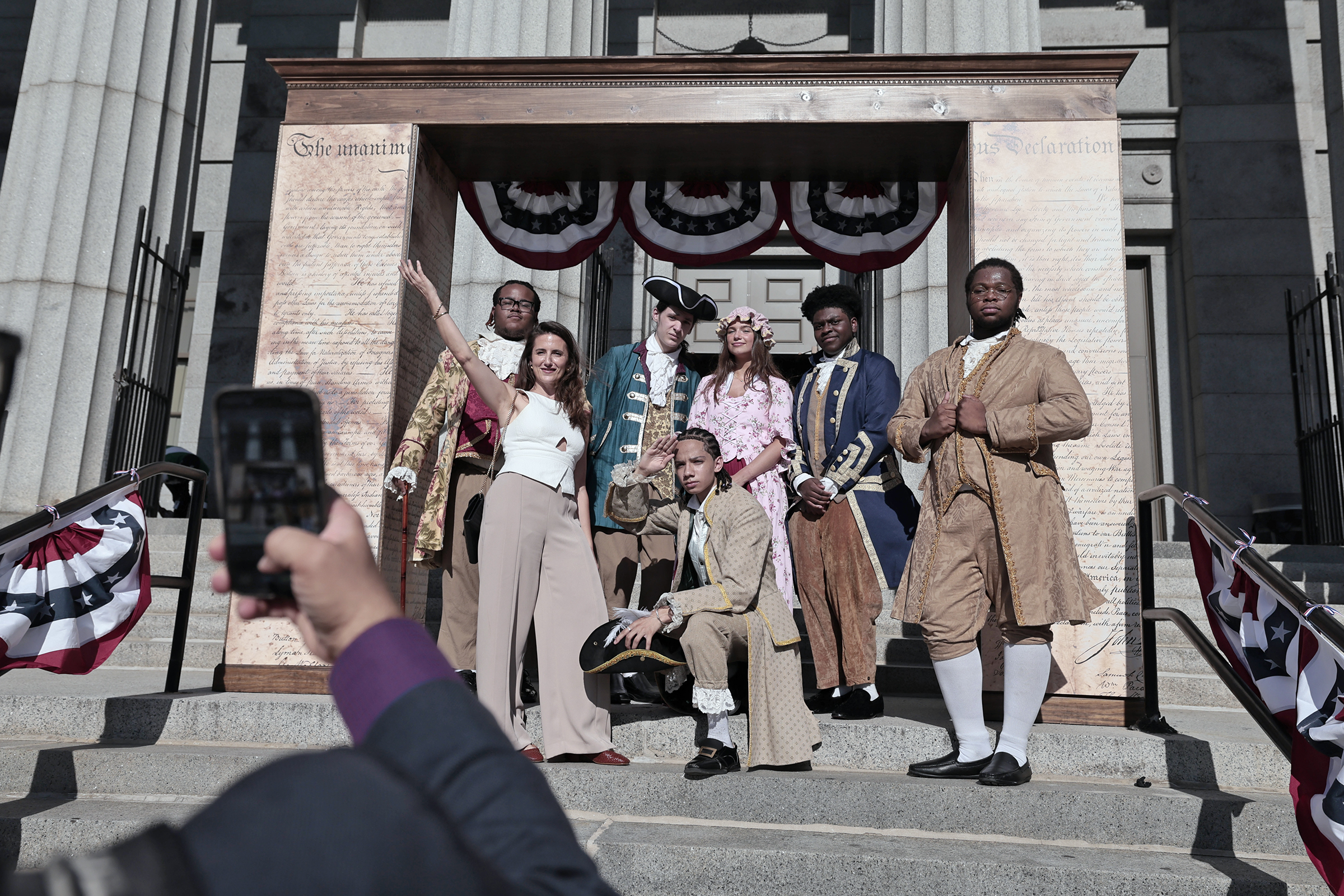
    Cast members posed with guests before opening night of 1776: The Musical at the Philadelphia High School for Creative and Performing Arts on Wednesday, June 24, 2026.

    Officials with Celebrating 1776!, the organization producing the play at CAPA and at other sites throughout the city through Aug. 15, condemned the posts in a statement.

    “Our production makes a deliberate and proud choice to present a diverse cast telling one of America’s most defining chapters,” the statement said. “The founding of this nation is rooted in human struggle, idealism, and ambition, and it deserves to be told by the full breadth of human talent. Our cast does exactly that, with exceptional skill and commitment.”

    ‘You constantly have to prove yourself’

    Suhaila Madison‘s first reaction to the hateful comments was fury, she said.

    “It really fried me,” said Madison, 15, who’s homeschooled. Madison is relatively new to the stage, and has fallen in love with the process, and with working with a group of students from different parts of the city, different backgrounds, different races. The blowback first felt like it was diminishing the story and the young people working hard to tell it.

    Then she gathered with her castmates and felt a new sense of purpose.

    Brooklyn Weaver, 17, a CAPA student, felt like she had a lot on her shoulders playing Thomas Jefferson. As a person of color, “you constantly have to prove yourself to these different people who might not support you being at this higher level,” she said.

    Seeing racist comments on social media isn’t especially shocking, Weaver said, but it hit differently when it targeted her castmates.

    “It gave me a different passion for the show,” said Weaver.

    That effect felt universal, she said.

    “Some people weren’t taking it as seriously before, but they are definitely taking it very seriously now,” Weaver said.

    And the show — which chronicles a fractious, imperfect but ultimately history-making Continental Congress wrestling with questions of liberty and freedom — also takes on a different meaning, Weaver said.

    “This is what America’s supposed to be: everyone in this land coming together to retell these stories of our forefathers,” she said.

    Shepherding a cast and crew of 75 youth, Phillip Brown, executive producer of Celebrating 1776!, was prepared for a lot of contingencies.

    But the social media vitriol, and having to replace a principal actor in less than a day, wasn’t on the list of things he was prepared for, Brown said.

    (Student Walddys Fernandez, who had played a more minor part, stepped up to take the John Adams role on very short notice, blowing the producing staff and cast away with his preparation and verve.)

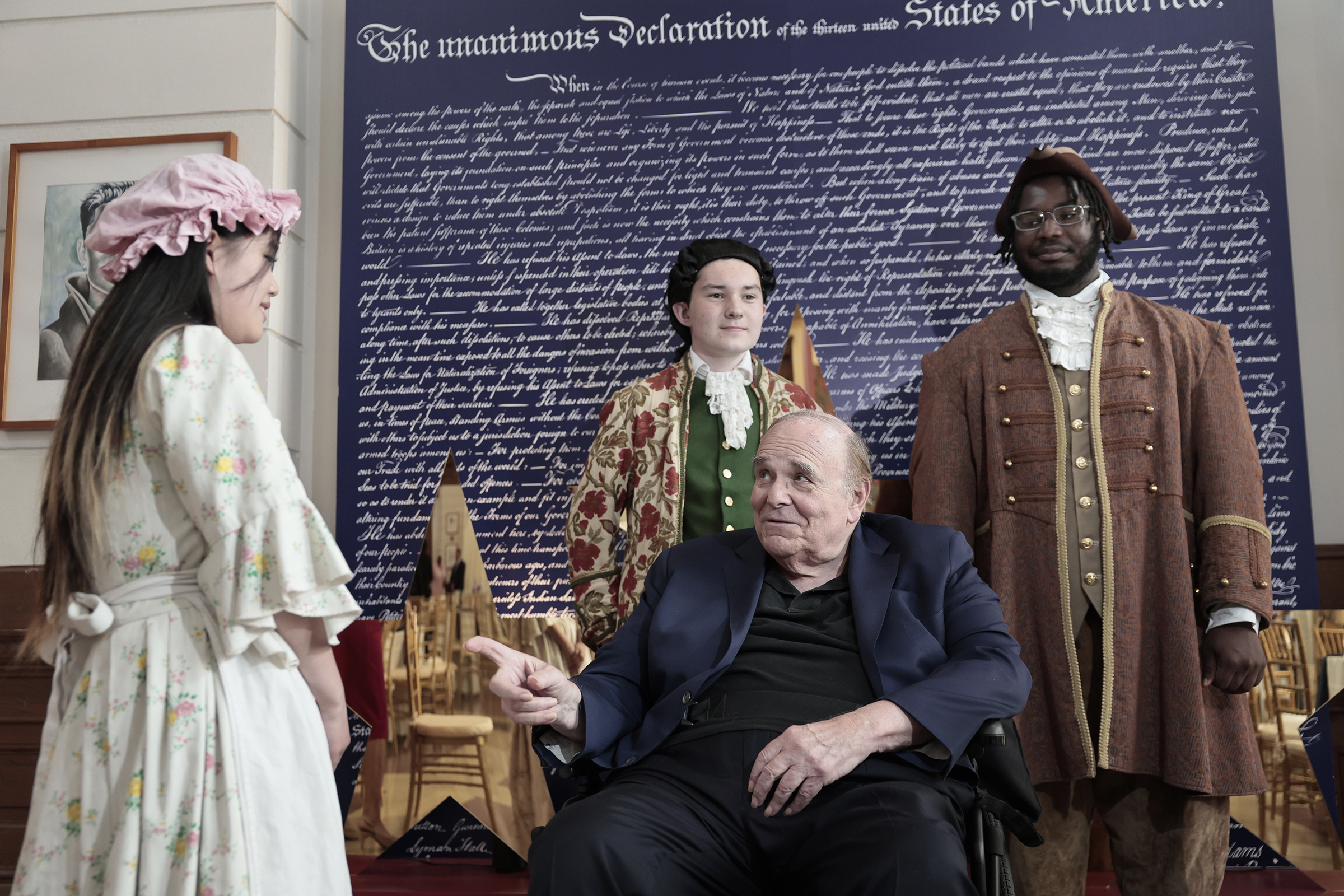
    Former Mayor Ed Rendell meets cast members (from left) Abigail Adams (played by Chloe Chau), John Dickinson (played by Gregory Rist) and Ben Franklin (played by Jayden Duvene) during opening night of 1776: The Musical at the Philadelphia High School for Creative and Performing Arts on Wednesday, June 24, 2026.

    But helping the students process and heal what happened has been humbling and powerful, said Brown.

    “It created a wonderful kind of opportunity to really teach the students the power of art, theater, and how to use their voice,” said Brown. “When you’re doing something this powerful and provocative, people are going to have strong opinions. It was almost like this was the ire and the fuel that everyone needed to really dig in — they’re taking the anger that they feel about this situation, and they’re using it to strengthen their voice, not to soften it.”

    1776: The Musical runs Wednesdays through Sundays through Aug. 15 at CAPA, 901 S. Broad Street, Philadelphia. Performances are free through Sunday; tickets start at $11, with children’s admission free with a paid adult.

  • The last legal obstacle for the Trump administration’s own President’s House panels has been removed

    The last legal obstacle for the Trump administration’s own President’s House panels has been removed

    The President’s House has been in legal limbo for weeks.

    Even though a Philly-based federal appeals court gave the green light to President Donald Trump’s administration to install its proposed panels to replace the slavery exhibit National Park Service staff dismantled in January, federal litigation out of Boston placed any actual changes to the site on hold.

    That obstacle was lifted Thursday by a Boston-based federal appeals court, just two days before the nation’s 250th anniversary celebration, and the Trump administration wasted no time.

    Hours after the ruling out of Massachusetts, Justice Department attorneys asked the Philadelphia-based Court of Appeals for the Third Circuit to take the final procedural step so the National Park Service “may begin work immediately and install its new exhibits.”

    The Third Circuit ruled last month that Philadelphia doesn’t have rights over the President’s House exhibit, and approved the Trump administration’s proposed panels, which historians criticized for whitewashing George Washington’s own culpability in the enslavement of nine people in his Philadelphia home.

    That ruling vacated a Philadelphia federal district court judge’s February injunction that ordered the National Park Service to restore the President’s House site to its state before any panels were removed in January.

    The federal government on Thursday requested the “immediate issuance” of a procedural order that would enable it to begin installing new panels and said it hadn’t done so before because of the ongoing litigation in New England.

    Still, it’s unclear when the new exhibits could be fixed to the historical site’s walls.

    A spokesperson for the U.S. Department of the Interior did not respond to questions about when the National Park Service intended to install the new exhibit and the time the installation would require.

    Instead, the spokesperson shared a statement saying the Interior Department had “encouraged Americans to visit our cultural and historic sites and engage in meaningful conversations about the moments that have shaped our country.”

    The new panels have been manufactured, Assistant U.S. Attorney Gregory in den Berken said in last month’s Third Circuit hearing.

    A spokesperson for Philadelphia’s Law Department said the city was reviewing its options.

    The change that led to the Justice Department’s request came from the Court of Appeals for the First Circuit, where a three-judge panel ruled the federal government does not have to reinstall before July Fourth exhibits the Trump administration had removed from national parks as part of its efforts to remove displays that “inappropriately disparage Americans past or living.”

    At least 50 exhibits were removed from more than 30 sites nationwide, according to court records.

    The First Circuit previously issued an administrative stay on most of a lower-court ruling that halted the Trump administration’s changes to the parks. Such stays are a way for an appeals court to maintain a status quo while the judges study the case.

    But the new order, which stays the entire ruling, is based on the arguments and facts of the case.

    The First Circuit rejected the Boston district judge‘s finding that anything but restoring the exhibits nationwide would cause irreparable harm.

    The district judge’s ruling ordered the National Park Service to “undertake a burdensome reinstallation and restoration project in short order,” the First Circuit ruling said, while the conservation groups that brought the lawsuit could not show they would be harmed directly by exhibits’ absence or alterations.

    The First Circuit judges assigned to the case were Chief Judge David J. Barron, appointed by Barack Obama, and Joe Biden appointees Gustavo A. Gelpí Jr. and Julie Rikelman.

    The ruling is “merely a temporary procedural setback,” said Brooke Menschel, an attorney with Democracy Forward that represents the conservation groups.

    “Unfortunately, for now, the decision allows the administration to continue removing and altering interpretive materials that are critical for millions of visitors to understand our nation’s history, right at the moment when so many Americans will be enjoying the parks over the upcoming semiquincentennial weekend,” Menschel said in a statement.

    Mayor Cherelle L. Parker vowed to “pursue every legal action possible” in an effort to reverse last month’s Third Circuit ruling.

    So far, Parker’s administration has not taken any action. Legal experts noted that none of the administration’s options are a slam dunk.

    One option would be to file an emergency stay request with the U.S. Supreme Court, which would be up to conservative Justice Samuel Alito to decide.

  • Philadelphia police shoot, kill man outside St. Christopher’s Hospital for Children

    Philadelphia police shoot, kill man outside St. Christopher’s Hospital for Children

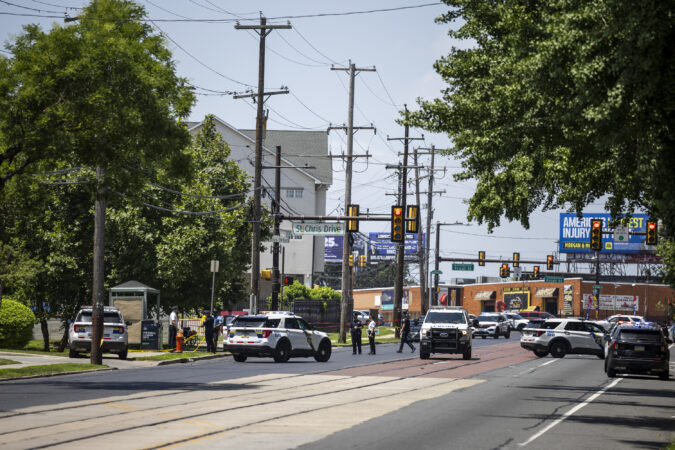
    Police shot and killed a man outside St. Christopher’s Hospital for Children in North Philadelphia on Thursday, authorities said.

    Officers were called to the hospital shortly before 10:30 a.m. for a report by hospital staff of an “irate man,” said Police Commissioner Kevin Bethel.

    At a briefing with the media Thursday evening, Bethel clarified that the man, whose name and age were not released, did not threaten anyone at the hospital.

    “The hospital was at no time under threat,” Bethel said.

    The man was at the hospital yesterday related to something involving a “child in the hospital,” Bethel said, then later adding that it was the man’s son.

    The man was asked to leave Wednesday, and when he returned Thursday, he was not allowed to enter the hospital, said Bethel, who did not elaborate on why the man was asked to leave.

    But when he returned Thursday, “he did not threaten” staff and was “compliant.”

    Shortly thereafter, a relative called police and reported that the man was suicidal and may have a gun, Bethel said.

    Police drove to the bus stop on Erie Avenue outside the hospital where the man was and an officer was just exiting from the passenger side of a police vehicle when the man allegedly pulled out a gun, Bethel said. The officer then fired.

    The man was transported to Temple University Hospital, where he later died. Bethel said a gun was recovered at the scene.

    A woman standing next to the man, who Bethel described as his girlfriend, was grazed by a bullet. He said she was in good condition.

    “He did not fire his weapon,” Bethel said about the man.

    The officer who fatally shot the man was placed on administrative duty while the shooting is investigated.

    At an earlier media briefing, Bethel described the shooting as a tragedy that unfolded in a matter of minutes.

    He added: “We have a lot to sort through,” including the mental state of the man who was killed. “He may have been going through some mental issue,” Bethel said.

    No patients or hospital staff were injured, said hospital spokesperson Bill Tierney. The man who was shot did not come inside the hospital, he said.

    The hospital initially went into a lockdown, which has since been lifted, Tierney said. Some entrances to the hospital were closed during the initial police investigation but they had reopened by Thursday afternoon, he said.

    Police have not released the name, age, or rank of the officer who discharged his weapon.

    Michael Lopez, a senior staffer at a sports complex across the street from the hospital, said he heard about a half dozen gunshots. Initially mistaking the gunfire for July Fourth fireworks, Lopez said he came out to Erie Avenue, where he saw a throng of police officers — and a woman he said appeared to be bleeding from her neck.

    “It was gruesome,” Lopez said.

    Thursday’s shooting was the second fatal shooting by a Philadelphia police officer in less than three weeks.

    On June 14, three officers were injured and Eric Franks was fatally wounded after exchanging gunfire in the Wynnefield neighborhood of West Philadelphia. The officers — who were shot in the hip, leg, and face — were hospitalized and recovered, police said.

    Their names had not been released as of Thursday because of an active threat assessment, said police spokesperson Sgt. Eric Gripp.

    — Staff writer Robert Moran contributed to this article.