Tag: topic-link-auto

  • Four years after Russian invasion, Ukrainians around Philadelphia are thankful for support, wary of future

    Four years after Russian invasion, Ukrainians around Philadelphia are thankful for support, wary of future

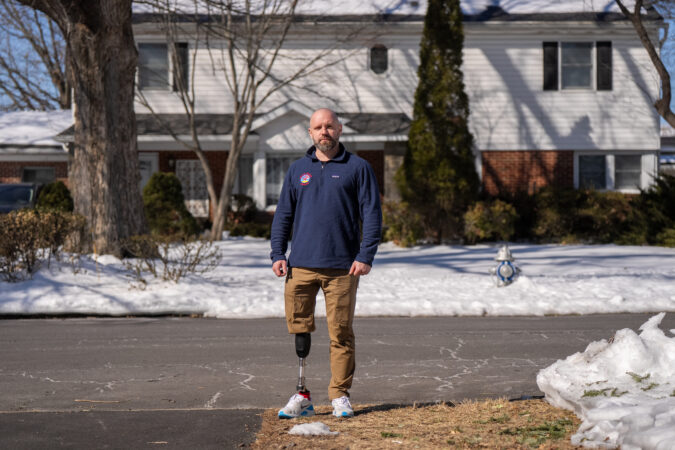
    To explain his journey from Ukraine to Huntingdon Valley in Montgomery County, Ukraine army veteran Illia Haiduk first must explain one of the worst days of his life.

    On Nov. 3, 2023, Haiduk and about 70 other Ukrainian soldiers were at an outdoor awards ceremony in Zaporizhzhia, near the war’s front line. After an enemy drone spotted the gathering, the Russians launched an Iskander-M ballistic missile.

    “You hear nothing,” Haiduk said. “It just hits immediately.”

    Haiduk awoke on the ground. To his left, people were moving. To his right was “a mess, fire, and smoke.”

    He tried to get up. That was when he realized shrapnel had mangled his lower right leg.

    Haiduk belted a tourniquet around his thigh and tried to crawl to another soldier from his unit, the 128th Mountain Division. “I wanted to get to him. And there was this hole in his chest. Nothing could save him. He was the same age as me,” the 35-year-old said.

    The attack killed at least 19 soldiers and wounded dozens more, according to news reports.

    Haiduk’s injury sent him on a long path of healing that ultimately brought him to the Philadelphia area. But more than two years later, the attack is just one incident in a war that has claimed an estimated 2 million lives.
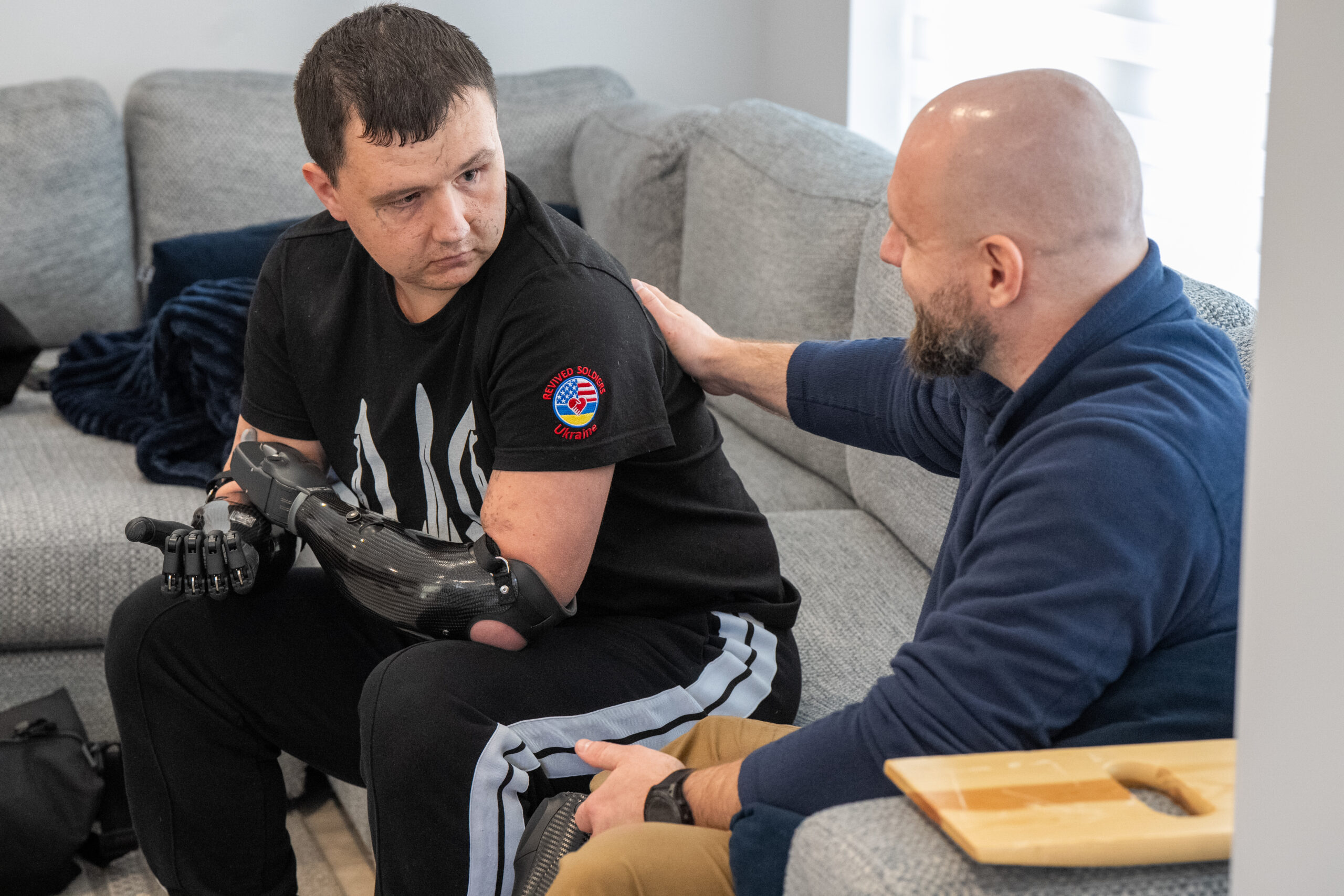
    Vladislaw Romanenko (left) and Ilia Haiduk in a community-living home where veterans of the war in Ukraine support each other through their medical journeys, in Philadelphia, Feb. 13, 2026.

    Four years after Russia invaded Ukraine, the war’s effects can be found throughout the region, among refugees and veterans seeking support services and the advocates helping them. Many are concerned about the future.

    “In 2022, support and donations poured, but every year they become smaller and smaller,” said Roman Vengrenyuk of Philadelphia, who helps run the Revived Soldiers Ukraine program that brought Haiduk to the U.S. “A lot of nonprofits closed.”

    Vengrenyuk said he has no expectation that the war will end this year. The Trump administration has failed to provide Ukraine with the weapons it needs to win, he said. Meanwhile, the bloodshed has left 60,000 Ukrainians in need of amputations, overwhelming hospitals in Ukraine and Europe.

    Though it has gotten harder to get attention for their cause, an alliance of healthcare providers, nonprofits, and advocates across Philadelphia has continued to help wounded veterans and refugees. And for that, Vengrenyuk said, he is grateful.

    “The Philadelphia community of doctors really stepped in,” Vengrenyuk said.

    Life after war

    After recovering from his injury, Haiduk went home and attempted to return to civilian life, but he felt depressed. That changed, however, in 2025, when he traveled to Canada to compete in the Invictus Winter Games, a multisport event for disabled veterans. He won a bronze medal in the skeleton race, and he found purpose and fellowship with others who had similar experiences.

    “We can talk really freely, because we know that this man will understand me,” Haiduk said of his fellow veterans.

    Vladyslaw Romanenko at a community-living home where veterans of the war in Ukraine support each other through their medical journeys, in Philadelphia, Feb. 13, 2026.

    Later that year, Revived Soldiers Ukraine sent Haiduk to Orlando , where he received a prosthetic lower leg.

    Haiduk got more involved with the Florida-based nonprofit. He has since helped numerous disabled veterans who were routed to the Philadelphia region for medical care.

    One is 30-year-old Vladyslav Romanenko, a former engineering student from Kharkiv who joined the army in 2022 and lost his lower arms in a drone strike last May. Romanenko is one of six Ukrainian war veterans living together at two homes in Huntingdon Valley.

    Revived Soldiers Ukraine flew Romanenko and his partner to Philadelphia. At Wills Eye Hospital, a Ukrainian-speaking doctor, Michael Klufas, helped to restore vision in his right eye. Then, Prosthetic Innovations in Eddystone, Delaware County, outfitted him with bionic arms. “I’m very grateful to the Ukrainian and American doctors,” Romanenko said in Ukrainian, as Haiduk translated.
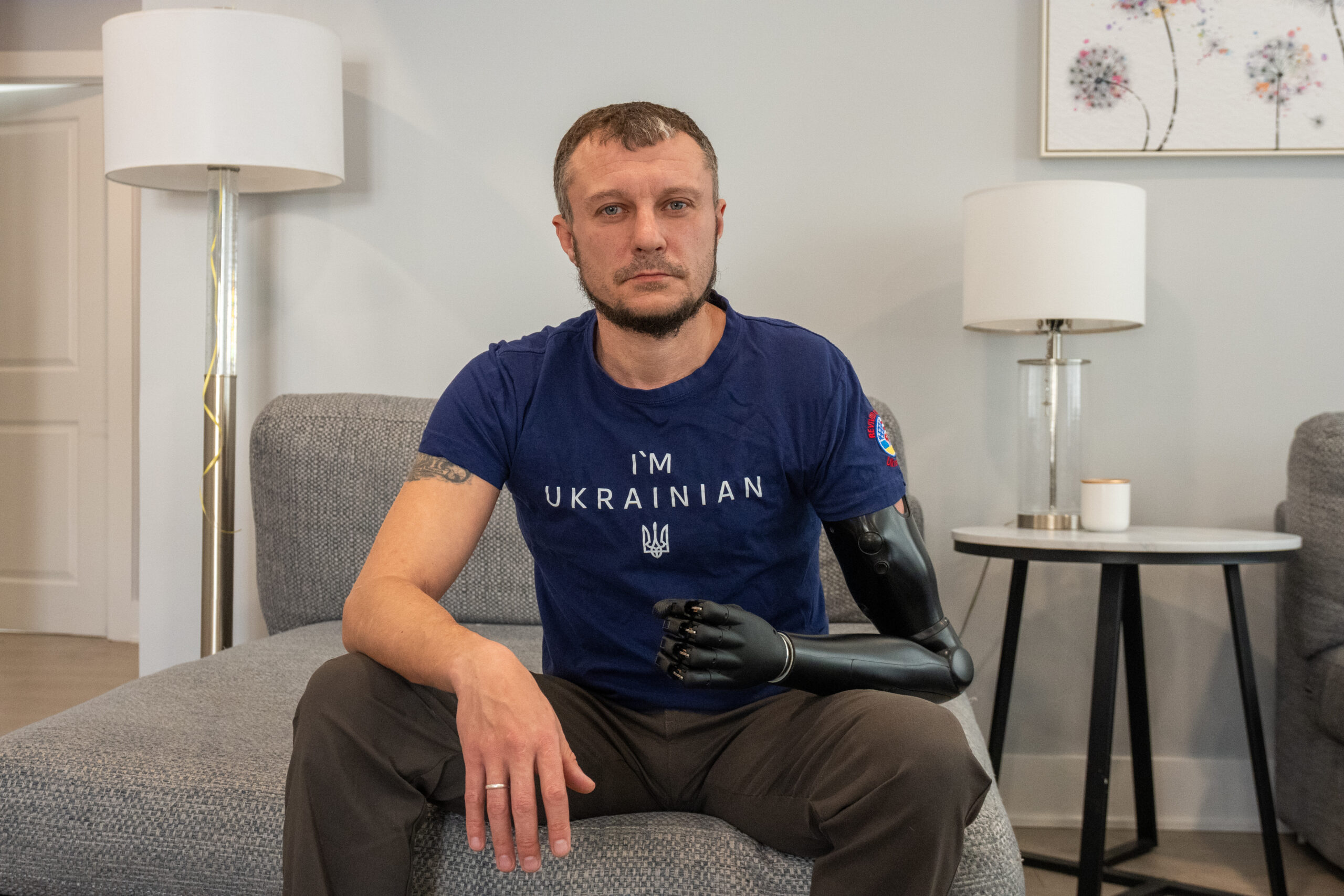
    Oleksii Kondratenko at a community-living home where veterans of the war in Ukraine support each other through their medical journeys, in Philadelphia, Feb. 13, 2026.

    Haiduk said Romanenko’s story is typical of the soldiers he works with: men from a wide range of professions and ages, who signed up to save their people. “I would never have joined the army, but because the war started, it was my responsibility to join, for my country,” Romanenko said.

    Haiduk said people in the U.S., and most of the world, support the Ukrainian cause of “democracy and humanity.” However, more pressure needs to be put on Russia, he said.

    “There is support, but it isn’t enough support to end this war,” Haiduk said.

    Paying to stay in the U.S.

    As an American-born Ukrainian whose parents were displaced after World War II, 71-year-old Mary Kalyna said, she considers it her mission to help those in “the Ukrainian diaspora.” The fluent Ukrainian speaker from Mount Airy said the situation has gotten worse for Ukrainian refugees since last year.

    “Even though Ukraine is not in the news as much, I believe people still support Ukraine,” Kalyna said. “The problem is our government has changed. Now we have a government that is less supportive of Ukraine.”

    The Konoshchuk family has lunch Sunday, Feb. 15, 2026. The family, from Ukraine, lives in Delaware County.

    She criticized President Donald Trump for welcoming Russian President Vladimir Putin and holding peace talks where Ukraine was expected to cede land to Russia.

    To her, Trump administration policy is working against local efforts from churches and communities that have embraced Ukrainians.

    “There are many, many screws being tightened,” Kalyna said.

    She provided an example: Due to one provision in Trump’s “One Big Beautiful Bill,” thousands of Ukrainians who previously had been invited to the U.S. through the federal United for Ukraine program have to pay $1,000 per family member to maintain their humanitarian parole status.

    On a Sunday afternoon at an apartment in Norwood, Delaware County, Kalyna met with one family who received such a notice at the end of December. Yurii Konoshchuk, 43, explained that he and his wife and four children came to the U.S. in May 2023. His 9-year-old daughter, Milana, has leukemia and is receiving treatment at Children’s Hospital of Philadelphia.

    “We don’t have any safe place in Ukraine,” Konoshchuk said. “It is so important for us to be here. We thank God that we’re in Philadelphia.”

    Though Konoshchuk works full-time at the Barry Callebaut chocolate factory in Eddystone, and has a supportive community at the nearby Living Hope Ukrainian Baptist Church, money has been tight. Then, he got a bill from the federal government to pay $6,000 or risk his family being deported.

    As Kalyna prayed with the family and shared in the Sunday dinner they had prepared, she was brought to tears when asked about the money. Kalyna said that after people in the Northwest Regional Refugee and Immigrant Network sent out emails, they raised $6,000 within a few hours.

    “People really want to give,” she said. “They understand.”

    Milana Konoshchuk smiles for a portrait between her parents, Yurii (left) and Anna on Sunday, Feb. 15, 2026. Refugees from Ukraine, the Konoshchuks are living in Delaware County while their daughter receives medical treatment for leukemia at CHOP.

    At the dinner table, the Konoshchuk family recounted their journey. Katie Konoshchuk, 14, remembered going weeks without school, and having to evacuate to the school basement during air raids. Each child had to carry a flashlight. Her 13-year-old sister, Ohli, said they used to hope that if the bombs came, they would come on a day they had to take a test.

    “People adjust to the situation that they’re in,” their mother, Anna Konoshchuk, said.

    Yurii Konoshchuk said he saw missiles flying so low overhead that he could read the words written on them. “It’s good then, because you think it will not fall on you, but you don’t know about next time, and you don’t know who it did fall on.”

    One of the missiles struck an electric power station less than a mile away, he said, and over the winter of 2022-23, it was a regular occurrence to rush from their home to the air-raid shelter in a city without light.

    “We never in the city saw such bright stars,” he said. “It was beautiful on the heaven, but not on the earth.”

    Yurii Konoshchuk struggled to predict what will happen next. “We are thankful, first to God, and to American nation, to give us the possibility of treatment here,” he said.

    When they came to the U.S., Anna Konoshchuk said, she told her children life would be better, more peaceful. “But we’re treating it as an experience,” she said. “We don’t know how long America will allow us to stay. We’re being flexible.”

  • Dear Abby | Widow discovers late husband’s life was full of secrets

    DEAR ABBY: My late husband was ill for six years. He experienced some dementia. He wasn’t able to work, and our life together changed a lot. I focused on supporting him through his decline until he eventually ended his own life.

    After his death, I discovered several secrets. He hadn’t been honest about his medical condition, possibly out of shame or because he wanted to protect us from the seriousness. There were also secrets about his family he may have been ashamed about. He also changed his estate plan without telling me. These secrets and betrayals show he wasn’t thinking about the impact of his death upon me, and they have made me question my beliefs about our marriage.

    I know his decisions weren’t about my worth — they were about his fear, shame, illness and preoccupation with other family issues. But I can’t tell any of this to people because I want to preserve our adult children’s love and respect for their father. Also, I don’t want to deal with other people trying to understand this crazy situation. This feels so unfair, and I may never be able to trust again. Do you have any advice?

    — KEEPING SECRETS IN NEW ENGLAND

    DEAR KEEPING: Please accept my sympathy for the loss of your husband. From what you have written, it seems the problems in your marriage started with the family secrets in addition to your husband’s increasing dementia. My advice is to put an end to all of those secrets now. Telling your children the truth should not make them lose respect for their late father. Whether the people in whom you choose to confide will understand is beside the point.

    What’s most important is that you free yourself from the prison of lies in which you find yourself and talk with a mental health professional if it will help you better understand how to move forward.

    ** ** **

    DEAR ABBY: My family is American, through and through. We had some European ancestors back in the Ellis Island days, but we’ve been here for generations and identify only loosely with our European heritage. That being said, my husband and I were discussing names for our future children, and I mentioned that I would love to have a son named after my great-grandfather. His name was Jacques, but it was always pronounced like “Jack.”

    If I used the name, I would want to spell it the same way to honor him, but I’d feel weird pronouncing it with a French accent when I don’t identify as French, nor do I have an accent. Is it OK to use the French spelling of a name and then pronounce it in an Americanized way?

    — PLANNING AHEAD IN SOUTH CAROLINA

    DEAR PLANNING: You are the parent, and you can call your son whatever you wish. Jacques will be his formal name if you choose to use it on his birth certificate, but he can use “Jack” if he wishes. When he starts school, don’t forget to communicate to his teachers and the administrators how his name is pronounced.

  • Horoscopes: Saturday, Feb. 21, 2026

    ARIES (March 21-April 19). If what they’re doing doesn’t sound fun to you, you don’t have to force it. Being intentional about your free time might mean trying something new or meeting different people. What were you doing the last time you had a blast?

    TAURUS (April 20-May 20). An interesting question: Who am I around this person? Let the answer factor into your decisions about where to take this relationship, if you should take it anywhere at all. Liking a person is far less important than liking yourself when you’re around them.

    GEMINI (May 21-June 21). Sometimes you wonder if you’re getting enough joy in life, and if you have to wonder, the answer is no. No, you’re not. Pleasure, relaxation, attention, novelty and the like are not luxurious or optional; they are essential to your health and vitality.

    CANCER (June 22-July 22). You’re not always the exquisitely protected crab. Today you’re the snail, only half-protected by shell, at home while exploring, touching and touched, feeling and felt, sticky, not stuck. Steady, even while falling in love.

    LEO (July 23-Aug. 22). Though you’re as empathetic as they come, today you won’t be able to judge others’ emotional experience by their immediate reaction. People won’t express their feelings in typical ways. Being aware of that allows you to respond with understanding instead of frustration.

    VIRGO (Aug. 23-Sept. 22). New locations open to you and you aim to go as a traveler and not a tourist, experiencing what is, not the front that’s presented to newcomers in exchange for top dollar. Take the same approach to new relationships, and you’re golden.

    LIBRA (Sept. 23-Oct. 23). Today’s work is very important. There are rewards for doing it and consequences for not doing it. But you still always put people first and you’ll never be sorry for that order of prioritization.

    SCORPIO (Oct. 24-Nov. 21). What seems convenient could be a trap instead of a solution. Poke around. What other options are there? The well-known route might be the slowest way to get there, as too many travelers created traffic jams.

    SAGITTARIUS (Nov. 22-Dec. 21). Your body moves in rhythm with your moods and mirrors your personality. Today, it speaks louder than words, revealing what you wish to express — or hide. What surprising self-knowledge!

    CAPRICORN (Dec. 22-Jan. 19). You and the stranger next to you have something in common. Say hello, and you’ll discover it fast. Don’t? You’ll still feel that mysterious, unspoken connection, like you’re part of the same secret club.

    AQUARIUS (Jan. 20-Feb. 18). You’re popular today, but you’re made well aware that you can’t always choose who wants your attention. You can, however, choose who gets it. Go where it’s peaceful and people aren’t trying to demand, steal or hoard your focus.

    PISCES (Feb. 19-March 20). You’re not just going to succeed. You’re going to succeed like YOU. You’ll make it look so good and fun that others will imitate, trying to capture your style, which of course is impossible and flattering, too. Expect and enjoy your copycats.

    TODAY’S BIRTHDAY (Feb. 21). Step into your Year of Feathered Friends, when connections and companionship send your spirit flying, flocked by kindred, and headed toward shared good fortune. Relationships, ideas, and collaborations soar to heights previously unimaginable. More highlights: You celebrate and bank on a personal achievement, family thrives in your support, and there are spontaneous entertainments and luxuries. Capricorn and Gemini adore you. Your lucky numbers are: 13, 5, 20, 12 and 33.

  • Trump administration doesn’t need to restore more President’s House exhibits for now, appeals court says

    Trump administration doesn’t need to restore more President’s House exhibits for now, appeals court says

    President Donald Trump’s administration won its first court victory in the President’s House case Friday afternoon, when a federal appeals judge paused the injunction ordering the restoration of the slavery exhibits to the site.

    Third Circuit Judge Thomas M. Hardiman, a George W. Bush appointee, overruled a district judge’s order just an hour before the government’s deadline to comply with the injunction.

    The National Park Service does not need to restore the exhibits for the the moment, the order said, but is enjoined from damaging the exhibits and required to take “all necessary steps” to ensure they are not harmed.

    The order further prohibits the federal government from making any other changes to the site, including setting up replacement exhibits, which the Department of Interior said would have been installed “in the coming days” if not for the injunction.

    “[The Department of Interior and National Park Service] are to preserve the status quo as to the President’s House as of the entry of this order,” Hardiman wrote.

    The order is not accompanied by an opinion or memorandum explaining which of the government’s arguments Hardiman found compelling.

    Hardiman’s ruling landed an hour before the deadline District Judge Cynthia M. Rufe set for the administration to restore the site to its condition before the Jan. 22 abrupt removal of the exhibits.

    Park Service staff began reinstalling exhibits Thursday.

    In a legal filing Friday, U.S. attorneys said National Park Service staff had begun planning to reinstall the exhibits once they received the Feb. 16 order to restore the site.

    On Thursday, 16 of 17 glass panels were reinstalled, with the remaining one needing repairs. Prior to the Third Circuit order, National Park Service employees on Friday restored panels around the site’s glass-enclosed archaeological dig, the wayside panel identifying the site, and four functioning video monitors, the federal government said.

    The federal government also had not reinstalled 13 metal panels, but was in the process of doing so prior to the stay, according to the filing.

    The city declined to comment on Hardiman’s order. The National Park Service did not immediately respond to a request for comment.

    The government argued to the Third Circuit that Rufe misunderstood the difference between the laws and agreements that govern the 55-acre Independence Hall National Historic Park and the stricter rules regarding Independence Hall National Historic Site, the city-owned block between Chestnut and Walnut Streets.

    The President’s House, on the corner of Sixth and Market Streets, sits on federal land and the law “imposes no restriction on the government’s removal of the President’s House exhibit,” the filing said.

    The city failed to demonstrate harm from the removal of the exhibits, the administration argued, because it has other avenues to promote the history of slavery in the President’s House.

    But an injunction forcing the restoration of the exhibits violates the federal government’s free-speech rights, the stay request argued.

    “It requires the display and operation of expressive exhibits — at a marquee national historic site in the run-up to the nation’s 250th anniversary — when the government has chosen not to display those exhibits,” the court filing said.

    The city responded to the request in a letter in which it expressed confusion about what the administration was asking for. After all, the government already began restoring the exhibits.

    “It is not clear whether the United States is asking the court for permission to re-remove the panels that were just reinstalled yesterday, or whether they are asking to be relieved of the duty to reinstall the remaining panels, or whether they are asking for more time to restore the remaining panels because today’s deadline is not feasible,” the city’s letter said.

    Either way, the city reiterated its opposition to a stay.

    Philadelphia’s lawsuit was the first in the nation challenging the removal of exhibits from national parks in accordance with Trump’s March executive order, which instructed the Interior Department to remove any content or displays that “inappropriately disparage Americans past or living.”

    Advocates celebrated the return of the exhibits commemorating the nine enslaved people who lived in George Washington’s house in a Thursday afternoon rally.

    The site will see no further changes for now. Hardiman placed the injunction appeal on an expedited track. With the current deadlines set by the judge, a ruling on the injunction is unlikely before May.

  • Measles exposure in a Delaware children’s hospital emergency room

    Measles exposure in a Delaware children’s hospital emergency room

    People visiting the emergency room at Nemours Children’s Hospital in Wilmington on Wednesday might have been exposed to measles, according to the Delaware Division of Public Health.

    Officials are working on contact tracing to notify those who could be affected, and to verify their vaccination status, provide educational resources, and recommend quarantine if needed.

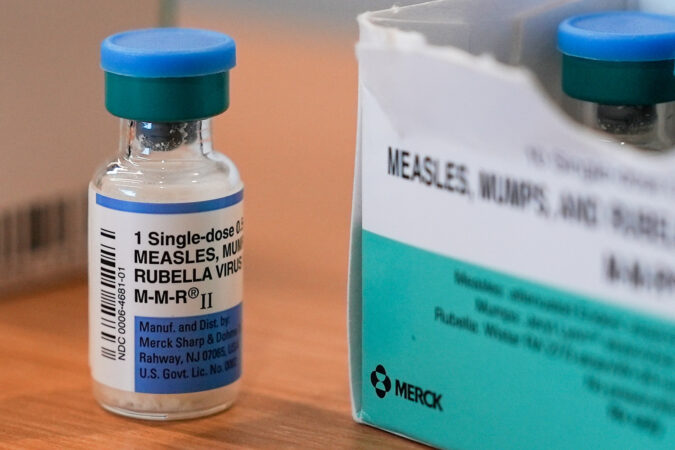
    A highly contagious illness, measles can infect 90% of exposed unvaccinated people. Delaware residents can check their vaccine status at the DelVAX Public Portal or through their healthcare provider.

    The Delaware Division of Public Health recommends a dose of the measles, mumps, and rubella vaccine within 72 hours of exposure. Pharmacies and primary care providers can help access the vaccine.

    As an airborne virus, measles can be spread through coughs, sneezes, and saliva particles. Those particles can linger in the air and nearby surfaces for more than two hours, exposing anyone who might have been in the room.

    Officials urge people to keep a 21-day watch on their symptoms — which could include high fever, cough, runny nose, and a red rash — until March 11.

    Measles can be particularly dangerous for immunocompromised people, such as organ-transplant and chemotherapy patients, people living with HIV/AIDS, and children under 5.

    No matter their vaccination status, pregnant people who might have been exposed are encouraged to go to the emergency room as soon as possible for a checkup and possible treatment.

    Delaware is not the only state dealing with a measles comeback.

    Last week, a possible measles exposure was detected at Philadelphia International Airport. And on Feb. 5, five cases were confirmed in Lancaster County, according to the Pennsylvania Department of Health. All patients were young adults and school-age children, marking the first outbreak of the year.

    Meanwhile, South Carolina is currently dealing with a large outbreak that doctors call the worst in 30 years, Reuters reported.

    The illness can lead to pneumonia, brain infection, and death. Of every 1,000 children infected with measles, between one and three will die, according to the Philadelphia Department of Public Health.

    People who have been vaccinated, those who have already had measles, or were born before 1957 are considered immune.

  • Bryce Harper goes to the Jersey Shore boardwalk with his new ‘Mad House’ cleats

    Bryce Harper goes to the Jersey Shore boardwalk with his new ‘Mad House’ cleats

    Under the boardwalk, down by the sea. That’s where Bryce Harper wants to be, apparently.

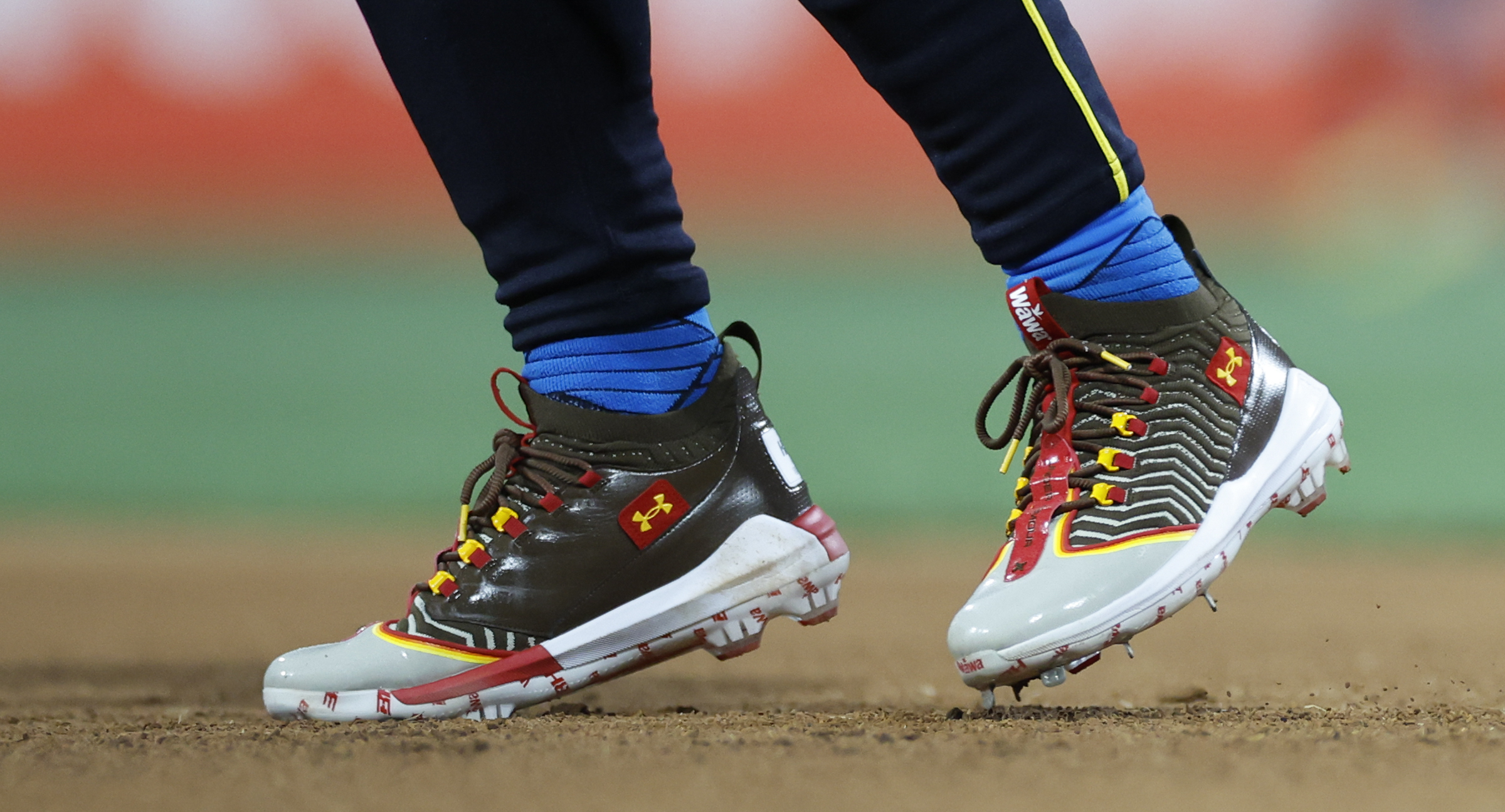
    Harper’s newest cleats — the Under Armour Harper 10 “Mad House” — pay homage to the Jersey Shore, and unlike his previous colorful, locally-inspired cleats, these are not player exclusives (PE), meaning anyone can buy the $130 cleats.

    With a hyper violet base and slime-green studs that resemble a boardwalk funhouse, the cleats are “inspired by Bryce’s love for spending time at the Jersey Shore during the offseason early on in his career,” Under Armour said.

    On Thursday, Harper posted a short promotional video for the new kicks. Inside the funhouse’s skull entrance, the Harper 10s are displayed in the middle of a spiraling, mirror maze — akin to one that can be found on the Wildwood boardwalk.

    The latest edition of Bryce Harper 10s, “Mad House,” are a nod to boardwalk funhouses.

    Harper has not gone on the record to claim one shore town in particular. In July 2022, while rehabbing his broken thumb, he spent time in Stone Harbor, taking photos with fans in a Wawa. That same month, he posed with restaurant workers at Uncle Bill’s Pancake House in Ocean City.

    The release of the “Mad House” cleats comes after Harper and Under Armour reached a contract extension on Jan. 13. Under Armour initially signed Harper in 2011. In 2016, they awarded him with what was then the largest endorsement deal in MLB history.

    Previously, Harper has made his love for the Phanatic known through apparel. Last year, Harper and Under Armour released a pair of green, fuzzy Harper 3s inspired by the Phillies mascot, equipped with insoles displaying caricatures of Harper and the Phanatic. But that was hardly the first time Harper’s cleats have paid tribute to the Phanatic — he also wore custom Phanatic cleats during his first game as a Phillie in 2019, and again during the team’s home opener in 2020, this time featuring Swarovski crystals.

    Phillies first baseman Bryce Harper’s Wawa themed spikes against the Arizona Diamondbacks on Friday, June 21, 2024 in Philadelphia.

    It’s also not the only way Harper’s shown his love of Philly culture. In 2024, Harper teamed up with Wawa for his “Gottahava Harper” PE cleats, which he liked so much that he was willing to pay a fine to wear them.

    “Obviously I understand why,” he told Front Office Sports, “but also I think kids love it.”

  • Josh Shapiro visits the White House as Mikie Sherrill skips governors meeting after clash with Donald Trump over Democrats’ attendance

    Josh Shapiro visits the White House as Mikie Sherrill skips governors meeting after clash with Donald Trump over Democrats’ attendance

    Pennsylvania Gov. Josh Shapiro joined President Donald Trump at the White House for a breakfast on Friday, following weeks of uncertainty and strife over whether any Democrats would attend the traditionally bipartisan annual event after Trump reversed course on a decision to disinvite two other blue-state governors from the meeting.

    A spokesperson for Shapiro said he decided to attend the meeting at the White House once Maryland Gov. Wes Moore and Colorado Gov. Jared Polis were invited, despite Trump previously declaring the pair of Democratic leaders were not welcome.

    “Gov. Shapiro chose to join his colleagues and go to the White House to raise real issues and harm the Trump administration is doing to Pennsylvania,” Rosie Lapowsky, Shapiro’s press secretary, said in a statement.

    Trump initially planned to invite only Republican governors to the annual event that coincides with the National Governors Association winter meeting in Washington, D.C., but faced pushback by the group’s GOP chair. Trump then invited Democrats, as well, but rescinded the invitations for Moore and Polis. In a post on his Truth Social platform earlier this month, Trump wrote that the two Democratic governors were “not worthy of being there.”

    The weekslong back-and-forth threatened the nonpartisan nature of the National Governors Association that represents 55 governors, including those from all 50 states and five U.S. territories. Ultimately, the NGA declined to facilitate the annual breakfast event, and Trump later re-invited Polis and Moore.

    President Donald Trump arrives to speak during a breakfast with the National Governors Association in the State Dining Room of the White House, Friday, Feb. 20, 2026, in Washington. (AP Photo/Evan Vucci)

    Moore, Polis, and Shapiro were among the more than two dozen governors who attended the White House breakfast Friday, where Trump delivered brief remarks. Other Democrats, including New Jersey Gov. Mikie Sherill, decided against going.

    Sherrill, a former member of Congress who just began her term last month, said in a statement that she opted to skip the White House breakfast to “focus on other NGA meetings.”

    “The president’s chaotic back-and-forth about the NGA was counterproductive and Gov. Sherrill decided not to attend,” said Sean Higgins, a spokesperson for Sherrill.

    What Shapiro talked about

    Shapiro described the closed-door meeting between Trump, the governors, and all of Trump’s cabinet as productive for him to advocate for specific issues directly with federal leaders.

    “Folks were respectful to me,” Shapiro told reporters following the meeting. “I went there with a mission to talk about things that were important to Pennsylvania.”

    Shapiro, who is currently running for reelection and touts his ability to work across partisan lines, has expressed an openness to working with Trump on issues specific to Pennsylvania, though he has challenged the president more than a dozen times in court since Trump took office last year.

    Shapiro said he was able to discuss his top issues directly with federal officials. He said he spoke with U.S. Department of Agriculture Secretary Brooke Rollins about the reemergence of the avian flu in Pennsylvania; discussed releasing withheld broadband funding with Treasury Secretary Howard Lutnick about releasing withheld broadband funding; and talked with U.S. Secretary of Health and Human Services Robert F. Kennedy Jr. and Director of the Office of Management and Budget Russ Vought about the ways “their policies are hurting rural Pennsylvanians.”

    New York Gov. Kathy Hochul, another Democrat who attended the meeting, said afterward in a news conference that she was glad to hear what lessons Trump said he learned from his administration’s immigration enforcement mission in Minneapolis that led to mass protests and the fatal shootings of two U.S. citizens by federal agents.

    Hochul said Trump told the group that “we’ll only go where we’re wanted,” alleviating concerns among some Democratic governors that their states may be the next to see a full-scale federal presence upending daily life.

    Weeks of back-and-forth ahead of the White House breakfast

    Sherrill and Shapiro were among the 18 Democratic governors who earlier said they would not attend the event if their colleagues were excluded.

    “Democratic governors have a long record of working across the aisle to deliver results and we remain committed to this effort,” they said in a joint statement on Feb. 10 through the Democratic Governors Association. “But it’s disappointing this administration doesn’t seem to share the same goal. At every turn, President Trump is creating chaos and division, and it is the American people who are hurting as a result.”

    They added: “Democratic governors remain united and will never stop fighting to protect and make life better for people in our states.”

    In comments to CNN last week, Sherrill said that “worse decisions” would be made without all the governors there.

    “For the president to pick and choose who he is going to have to sort of undermine the very focus of this, of coming together to get stuff done for the country just seeds more … chaos,” the New Jersey Democrat said.

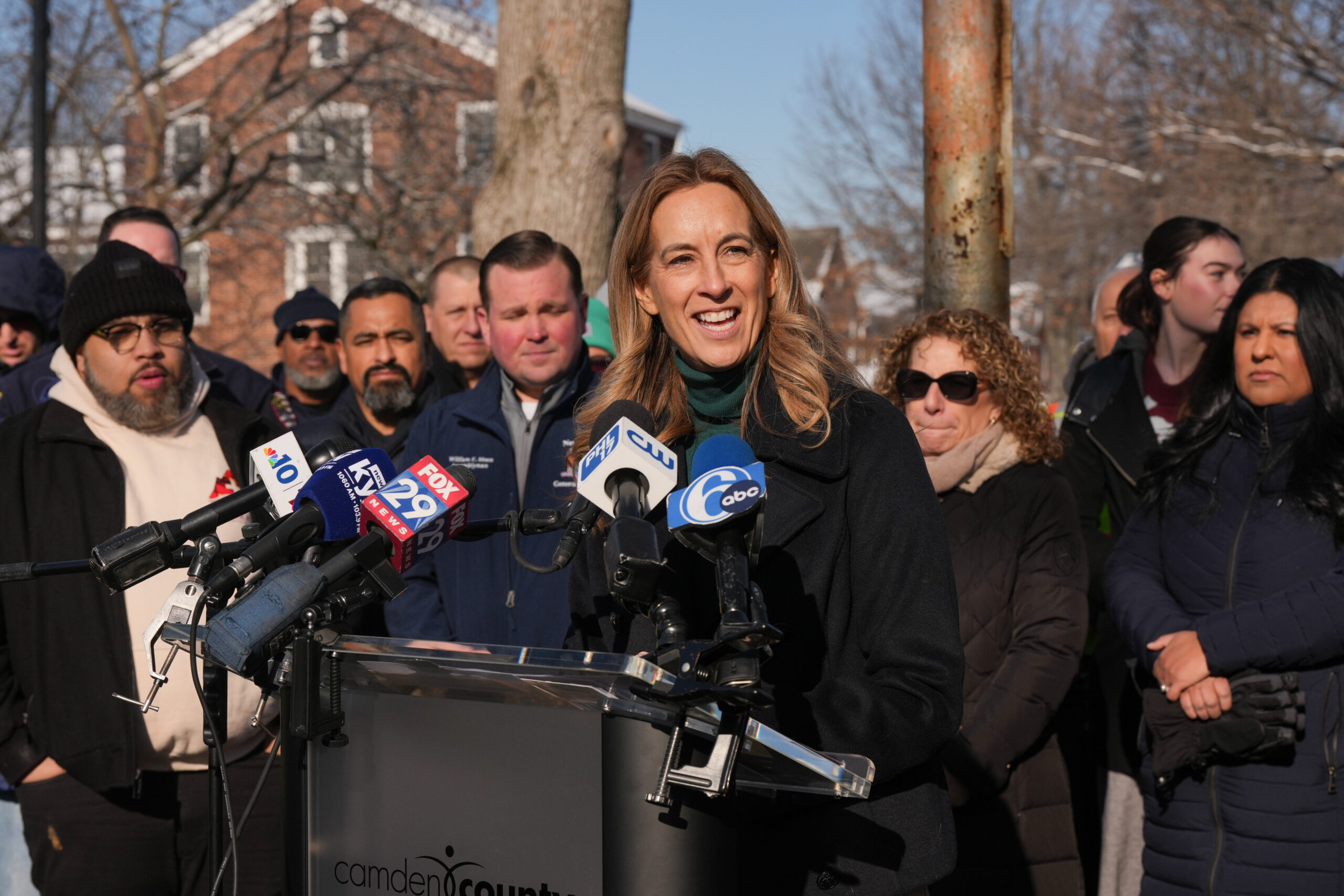
    Gov. Mikie Sherrill, shown here at a news conference as volunteers gather prior to shoveling snow at Fairview Village on Martin Luther King Day during a day of service, in Camden, New Jersey, January 19, 2026.

    Moore, the nation’s only Black governor, and Polis, the first openly gay man elected to U.S. governor, were the only two leaders Trump singled out, raising concerns by civil rights groups.

    Trump, however, cited different reasons for his objections to Moore and Polis’ attendance. He said he wanted to exclude Polis because his state continues to incarcerate a former county clerk over her conviction related to allowing election-denier activists access to election data following the 2020 election. Trump also expressed a number of grievances toward Moore, including his handling of the rebuilding of the Francis Scott Key Bridge and Baltimore’s crime rates.

    Following the meeting Friday, governors from both parties reaffirmed that they were still committed to working with Trump despite the turmoil.

    “It’s really important imagery that we stand together as governors of our states and represent all of America, and just remind people that there’s really more that brings us together and unites us than divides us,” said Oklahoma Gov. Kevin Stitt, a Republican who chairs the NGA.

    Shapiro separately told reporters that he has worked with directly Trump to “save steelworker jobs” but remains ready to challenge them in court if they threaten Pennsylvanians’ rights.

    Asked whether he has a good relationship with Trump, Shapiro said: “We have a relationship where we can work for the people of Pennsylvania, that’s my job.”

  • Penn Medicine had a $189 million operating profit in the first half of fiscal 2026

    Penn Medicine had a $189 million operating profit in the first half of fiscal 2026

    The University of Pennsylvania Health System had an operating profit of $189 million in the first six months of fiscal 2026, up from $117 million in the same period a year ago, the nonprofit reported to bond investors Friday.

    Operating income increased, even after Penn put $43 million put into reserves for medical malpractice claims. Two years ago, Penn had recorded charges totaling $90 million for the same purpose.

    Here are more details on Penn’s results:

    Revenue: Penn had $6.76 billion in total revenue, up nearly 12% even adjusting for the inclusion of Doylestown Health in fiscal 2026. Penn acquired Doylestown last April.

    “We’ve had good volume growth over the prior year, particularly in our outpatient activity,” the health system’s chief financial officer, Julia Puchtler, said in an interview.

    The system has also had an increase in the acuity level on the inpatient side, she said. That translated into more revenue.

    Expenses: The $43 million malpractice charge boosted overall malpractice expenses through December to $125 million, from $69 million in the same period a year ago.

    It’s not that Penn is seeing more claims, Puchtler said. “It’s really the average reserve per claim that we’re seeing accelerate,” she said.

    Notable: Excluding Doylestown, Penn saw a 5.9% increase in patient volumes, Puchtler said. “That’s mostly outpatient,” she said. “Outpatient surgery, endoscopy, and some of our other infusion therapy are all increased over the prior year.”

    Editor’s note: This article has been updated to reflect an additional medical malpractice charge in 2024, bring the total to $90 million.

  • Sixers need to ‘blast ahead’ and play faster — with and without Joel Embiid in the lineup

    Sixers need to ‘blast ahead’ and play faster — with and without Joel Embiid in the lineup

    No one in the NBA has played more minutes than Tyrese Maxey this season.

    Without Joel Embiid in the lineup, even more of the Sixers’ offensive load lies on Maxey’s shoulders, and it’s leading to inefficiency in his shot-making.

    To play better with — and without — Embiid, coach Nick Nurse said he needs Maxey and the Sixers to play faster. Earlier this season, the Sixers played with “tremendous speed.” But as the season has progressed, they’ve moved away from that play style.

    “I just talked to [Embiid] for a long time, and he said the same thing,” Nurse said. “[Embiid said], ‘They need to play faster, even when I’m out there. They wait for me too much. They need to blast ahead and take opportunities that are there, and if they’re not, I’ll get down there eventually to get into some of the halfcourt offensive stuff.’”

    On Thursday, Cameron Payne, playing in his first game back with the Sixers after starting the year with Serbian team KK Partizan, got the first minutes in relief of Maxey in the second quarter and again in the fourth. The Sixers lost Payne’s fourth-quarter minutes, 11-7, and Payne missed all three of his three-point attempts in his return to the NBA. But he dished out four quick assists in the second quarter and has familiarity with much of the roster.

    Payne played 31 games under Nurse after the Sixers acquired him at the trade deadline in 2024. While some things are similar to his last stint, Payne says there still are several new plays to learn, and he needed to get back into NBA shape after the time away from the league.

    “They play a lot faster,” Payne said. “I feel like we played fast when I was here, but they play a lot faster now.”

    Nurse hopes they’ll get even quicker. But to maintain that, Maxey and VJ Edgecombe especially need to have fresher legs. Edgecombe already has played more games this season than he did all of 2024-25 at Baylor.

    Nurse said that Maxey and Edgecombe’s speed and athleticism are among their biggest strengths, and the Sixers need to leverage it even more to find success down the stretch. But if players like Payne are able to come in and become playmakers on offense, that can help buoy the team in tough minutes and give Maxey more rest opportunities.

    “I thought early in the year, our guards were creating offense for each other a lot more,” Nurse said. “Remember all the VJ to Tyrese, all the stuff with [Quentin Grimes], and that has gotten a little less.

    “But I think that’s what [Payne] did last night. He came in and just hit through, ran the screen roll, got in the paint, boom, it’s out. Or even just simple throw-aheads, catch-and-shoots. … That’s what we need, is more creation for others, more hitting the paint and not trying to play through the gauntlet and then hitting the paint and getting it out a little.”

  • Cristopher Sánchez among pitchers impressing Phillies; Justin Crawford to start in spring opener

    Cristopher Sánchez among pitchers impressing Phillies; Justin Crawford to start in spring opener

    CLEARWATER, Fla. — After Cristopher Sánchez finished his bullpen session on Friday, Phillies manager Rob Thomson walked off from where he’d been observing behind the mound.

    As he passed by Mark Kolozsvary, the catcher who had been behind the plate, Thomson leaned over.

    “He any good?” he joked. “Make the team?”

    Sánchez, who looked very sharp in his session, is preparing to represent the Dominican Republic at the World Baseball Classic next month. He will make at least one start in a Grapefruit League game before he joins his federation for pool play in Miami.

    “I just want to box him up and send him up north,” Thomson said. “He’s been great.”

    Thomson said the Phillies expect Sánchez to pitch in the Dominican Republic’s first game of the tournament, which is against Nicaragua on March 6, but they don’t know the plan after that.

    He was one of several pitchers who impressed Thomson on Friday, the final workout day before the Phillies’ Grapefruit League slate opens on Saturday with a game against the Blue Jays. Also turning some heads was prospect Alex McFarlane, a 24-year-old right-hander who was added to the Phillies’ 40-man roster in December ahead of the Rule 5 deadline.

    Phillies pitcher José Alvarado throws in the bullpen during a workout on Friday in Clearwater, Fla.

    McFarlane had been somewhat “erratic” in a previous live batting practice session on Tuesday, but showed better command Friday.

    “Fastball, heavy sink, 97 [mph] or whatever it was,” Thomson said. “Slider for strikes. That’s what you’re going to see. I think a lot of times, first time out you see hitters, [pitchers] can be a little bit erratic, but he was more in the zone today. He was really good. … Very mature kid, too.”

    Another standout was José Alvarado, who struck out Adolis García and Bryce Harper in his live batting practice session. Thomson said Alvarado looked like he did last year around this time. The lefty had a strong 2025 spring, hitting 100 mph on the radar gun with his sinker multiple times and not allowing a run in nine Grapefruit League appearances.

    That hot start cooled off quickly, though, when Alvarado was suspended 80 games for testing positive for a performance-enhancing drug.

    “He’s in a good spot, and I think we’re behind all that stuff,” Thomson said.

    Justin Crawford will start in center field in the Phillies’ spring opener on Saturday against the Blue Jays.

    ‘Satan’s corner’

    Justin Crawford is scheduled to play center field in Saturday’s Grapefruit League opener against Toronto. He will be sharing the outfield with García in right and Otto Kemp, who will play left.

    It will be a tough first test for Kemp, who has been getting more outfield work this spring as the Phillies believe he could be a platoon for Brandon Marsh. Rob Thomson has nicknamed the left field in TD Ballpark, the Blue Jays’ spring training home in Dunedin, ‘Satan’s Corner,’ because it is a particularly difficult place to play.

    “The wind swirls down there. The sun, it seems like every time we go over there, there’s not a cloud in the sky,” Thomson said. “I’ve seen a lot of mistakes out there.”

    The biggest thing Thomson is looking for from Crawford this spring is to take the lead in the outfield as the center fielder.

    “Reads and routes, and taking charge,” Thomson said. “Florida for an outfielder, it’s brutal in spring training. High sky, wind, sun. I’ve seen gold glovers make a lot of mistakes out there. But that’s really what I’m looking for is just proper reads and routes and taking charge.”

    Extra bases

    Harper homered off Tanner Banks in a live batting practice session Friday. … Bryse Wilson is scheduled to start for the Phillies on Saturday against the Blue Jays (1:07 p.m., NBC Sports Philadelphia and 94.1 WIP).