Tag: topic-link-auto

  • Police arrest driver in fatal University City hit-and-run crash

    Police arrest driver in fatal University City hit-and-run crash

    Late Thursday afternoon, while Thanksgiving rituals unfurled in rowhouses and neighborhoods across Philadelphia, Rosa Mar Espinosa Rodas took her final steps.

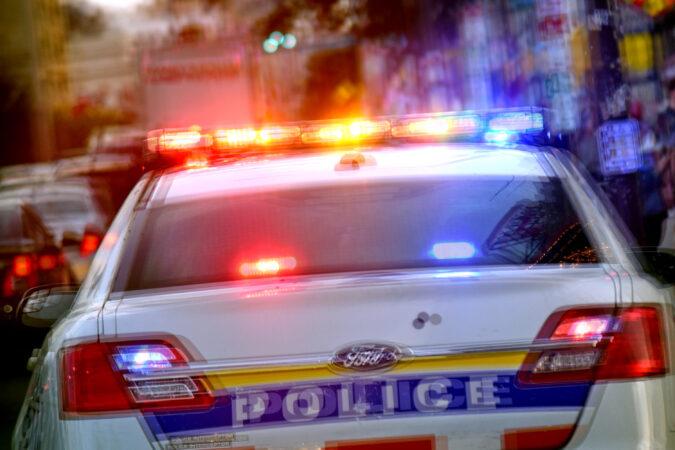
    Espinosa Rodas, 41, was struck by a black 2012 Honda Accord at 36th and Market Streets in University City about 3:50 p.m., according to preliminary information released Friday by Philadelphia police.

    After hitting Espinosa Rodas, the Honda’s driver didn’t stop. Instead, police said, the car continued eastbound along Market Street, where it then crashed into a Buick LaCrosse near 34th Street.

    The driver of the Honda attempted to flee on foot, but was apprehended by police a few blocks from the second crash scene.

    Police identified the motorist as Shamir Miller, 30.

    Miller was charged with murder, homicide by vehicle, involuntary manslaughter, and nine other offenses, court records show.

    His bail was set at $3 million, and he is scheduled to face a preliminary hearing on Dec. 15.

    Medics pronounced Espinosa Rodas dead on Market Street, police said. CBS3 reported that Espinosa Rodas had worked nearby and was on her lunch break when she was fatally struck.

    The driver of the Buick, a 41-year-old woman, was admitted to Penn Presbyterian Medical Center with neck and back injuries and was listed Friday in stable condition.

    Miller was also treated at Penn Presbyterian for head injuries.

    On Nov. 20 — a week before Espinosa Rodas was killed — a nearby stretch of Market Street was the scene of another fatal hit-and-run crash.

    Early that morning, the driver of a silver Chrysler 300 with tinted windows struck Meaza Brown at 33rd and Market.

    Police said that Brown, 48, was hit at such a high rate of speed that she was “launched out of her sneakers” and propelled through the air for several hundred feet. She was pronounced dead at Penn Presbyterian.

    Investigators later found the Chrysler at 34th and Race Streets, but no arrests have been reported.

    The city, as part of its Vision Zero plan to reduce traffic deaths, is seeking from state legislators the authority to set speed limits for local roadways, and to expand its use of automated speed enforcement cameras, The Inquirer reported this week.

    Last year, the city recorded 120 vehicle crash deaths, a 41% increase from 2015, when the Vision Zero program began.

  • Philly is testing a new traffic pattern to help Eagles fans escape post-game gridlock

    Philly is testing a new traffic pattern to help Eagles fans escape post-game gridlock

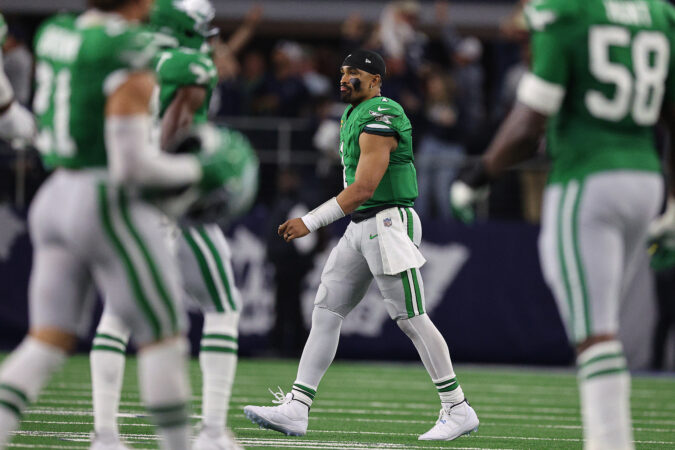
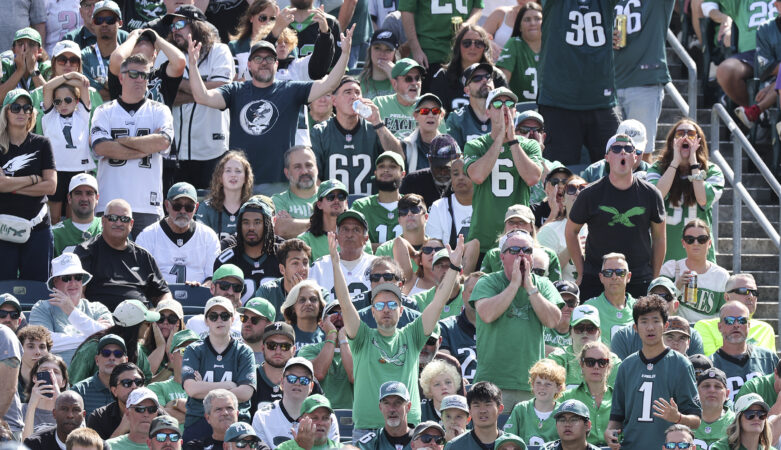
    Teeth-chattering winds and plunging temperatures awaited Eagles fans who made a pilgrimage Friday to Lincoln Financial Field for a late afternoon matchup against the Chicago Bears.

    For those who drove to South Philadelphia, the city had a post-game surprise: a new traffic management plan that might minimize stadium complex gridlock.

    In an email to The Inquirer, the city wrote that the test pattern is designed to provide drivers with an expedited route from Pattison Avenue to the Walt Whitman Bridge and I-76 East, along Darien Street.

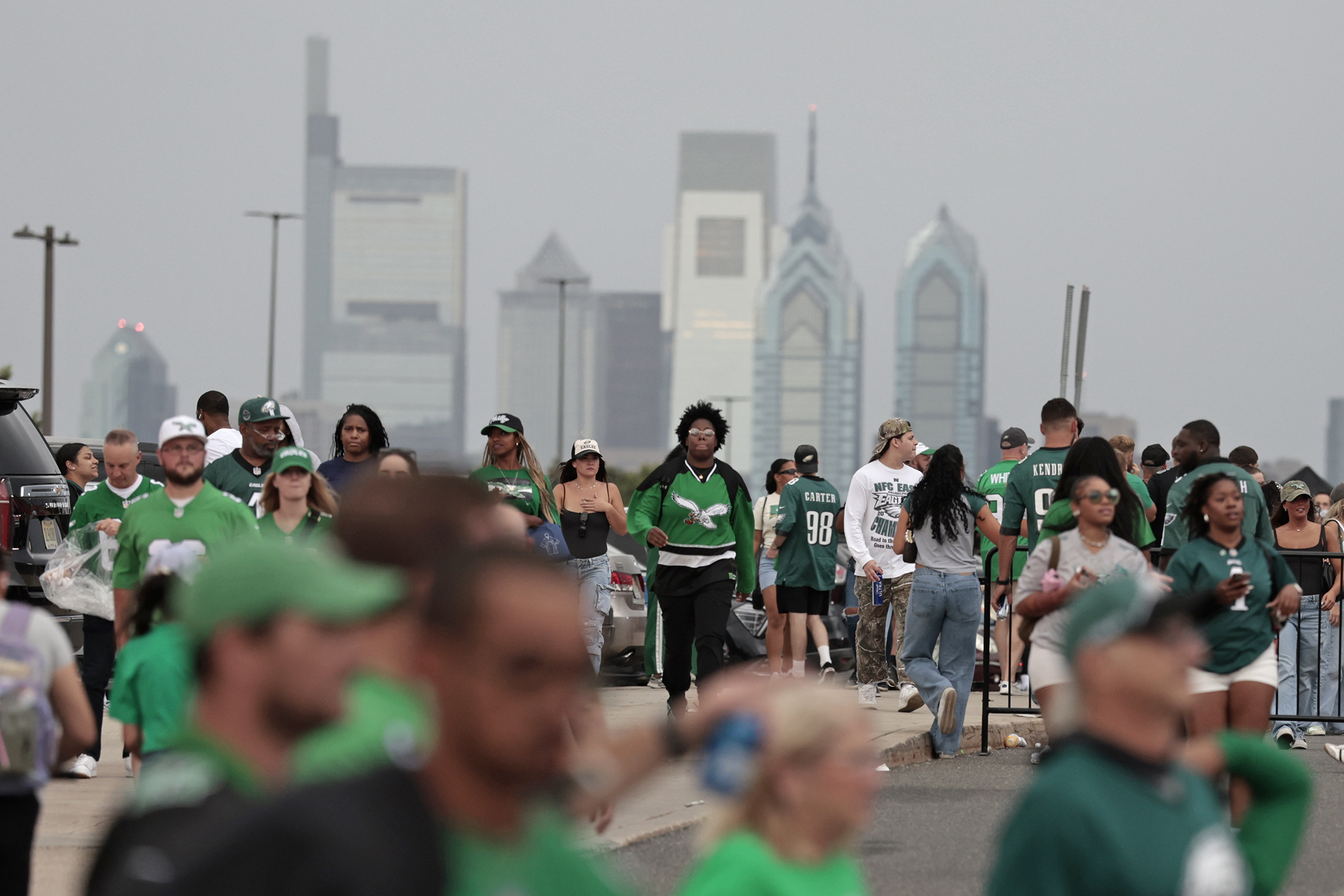
    Eagles fans make their way to Lincoln Financial Field in Philadelphia for the Eagles home opener on Thursday, September 4, 2025.

    The new pattern meant that fans who parked in the Q, R, V, W or X lots wouldn’t be able to access nearby Packer Avenue eastbound at 10th Street.

    Instead, motorists would be directed to alternative access points at Broad Street, Darien Street, or Front Street, the city said.

    The new approach Friday is an experiment, the city said, and feedback is welcome.

  • Holiday traditions, more than deals, draw Philly-area Black Friday shoppers to Cherry Hill Mall

    Holiday traditions, more than deals, draw Philly-area Black Friday shoppers to Cherry Hill Mall

    Stephanie Greenleaf has Black Friday down to a science.

    Every year, the Moorestown resident hosts Thanksgiving. The next morning, she, her sister-in-law, and her mother hit the Cherry Hill Mall early. They start at Nordstrom, then head to Soma for pajamas, Urban Outfitters for her teenagers, and anime stores for the younger kids.

    “We have it down,” she said, standing next to a Christmas ornament display around 8:30 a.m.

    “As my mom always says, ‘I just want to be out in it,’” she added. “It’s not the same when you’re sitting on your couch.”

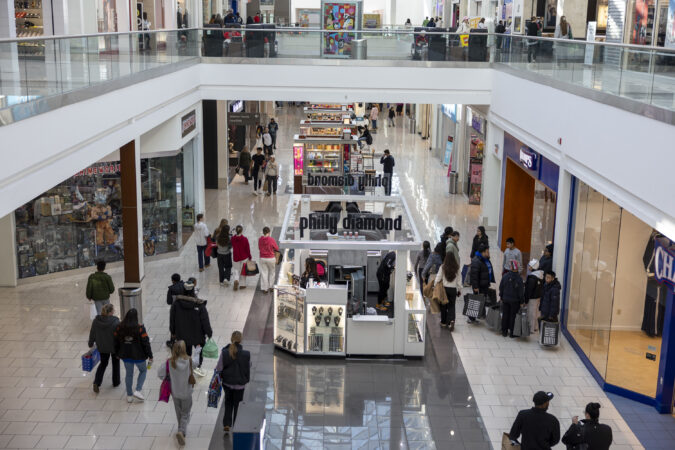
    Despite inflation, rising prices, and the omnipresent e-commerce ecosystem, a familiar Black Friday hustle was in the air at the Cherry Hill Mall on Friday morning. Shoppers filed into the parking lot early, toting shopping bags and holiday-flavored lattes. Labubus and puffer jackets were displayed in store windows. Teenagers flocked to Abercrombie and Zara.

    While some retailers reported business as usual, others described the South Jersey shopping destination as more subdued than in years past as consumers contend with an uncertain economic landscape and e-commerce giants continue to cut into a market long dominated by malls.

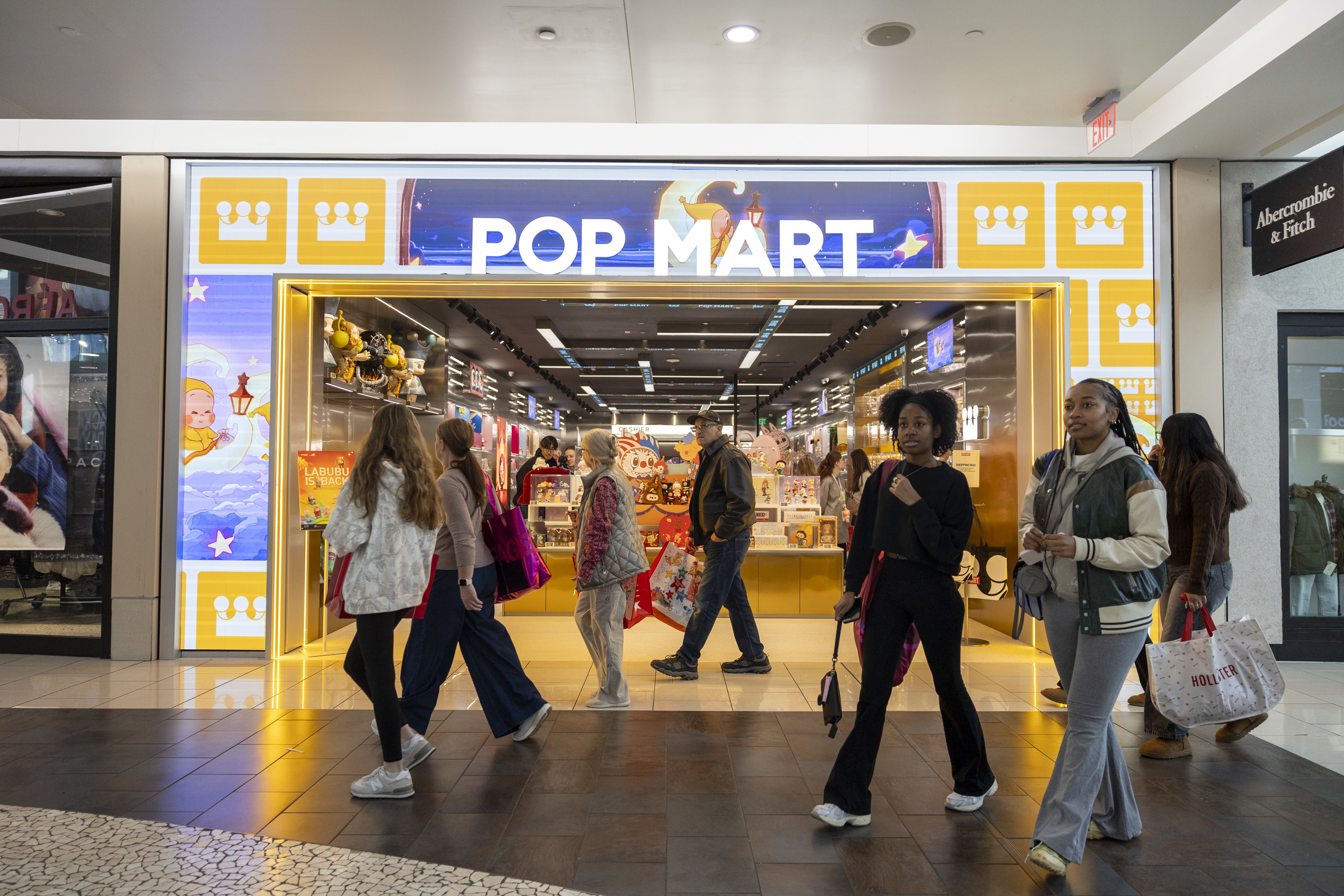
    People walk pass Pop Mart during their shopping on Black Friday at the Cherry Hill Mall in Cherry Hill, N.J., on Friday, Nov. 28.

    Black Friday, then and now

    The term “Black Friday” has Philly origins. Beginning in the 1960s, tourists would descend on Philly the day between Thanksgiving and the annual Saturday Army-Navy football game. Philadelphia police reportedly began calling the day Black Friday after they were forced to work long hours and manage heavy traffic and unruly crowds. Years later, Americans would latch onto the tale that Black Friday got its name because it was the day retailers would move from being “in the red” to being “in the black” (finally making a profit after running a loss).

    The retail-oriented holiday has morphed over the years from a one-day shopping bonanza to a month of deals. Now, the pervasiveness of e-commerce has muddied the Black Friday tradition, forcing retailers to attract shoppers both online and in stores.

    Barbara Kahn, professor of marketing at the University of Pennsylvania’s Wharton School, calls this an “omni-channel experience.”

    “It’s really more of an integration between both modalities now‚” Kahn said.

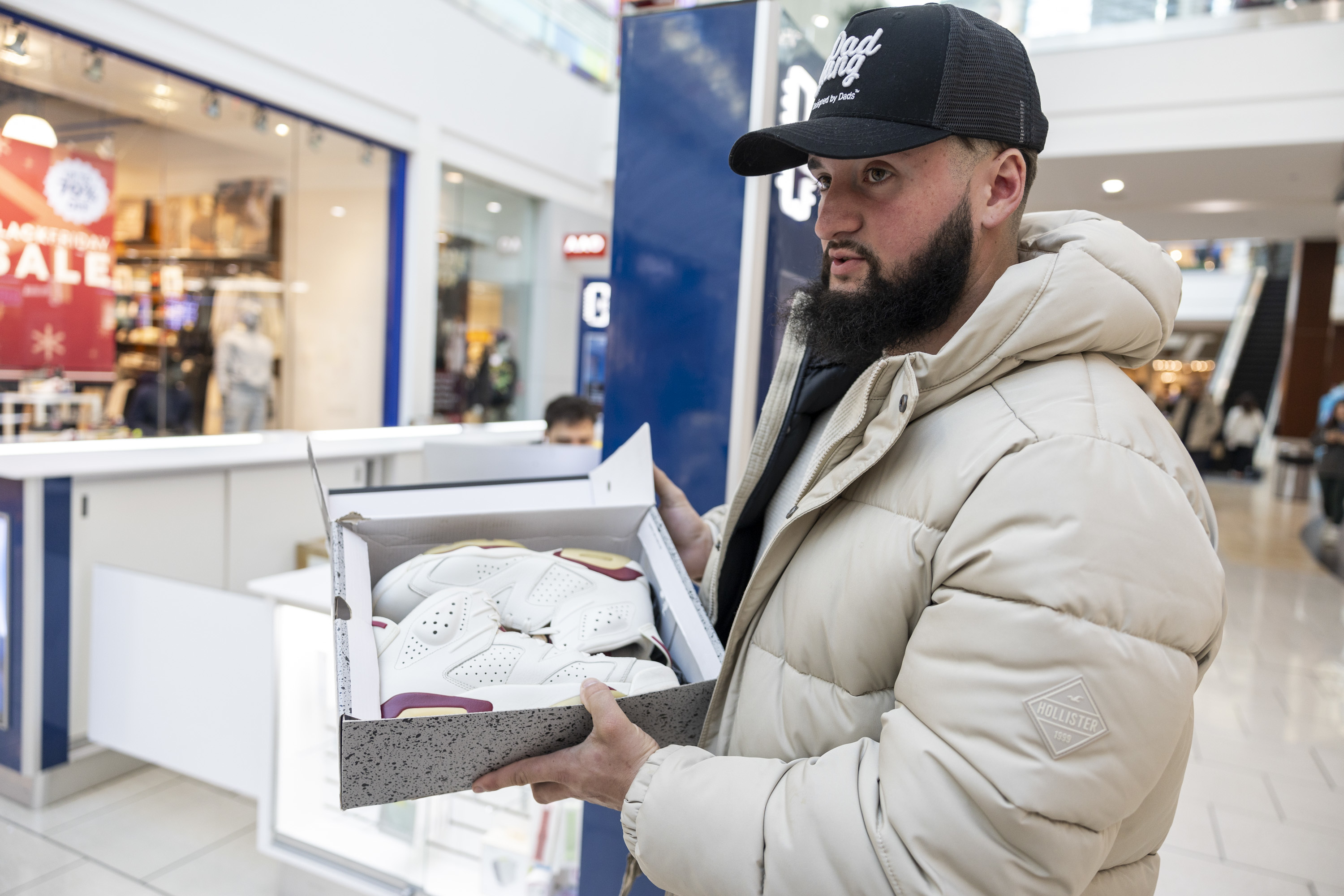
    Daniel Leslie, 23, of Franklinville, N.J., showing off a pair of Maroon Jordan 6’s he bought on Black Friday at the Cherry Hill Mall.

    Two major changes stick out to Kahn. First, the ability to compare prices online (and now with AI) has made shoppers more “price sensitive,” forcing retailers to stay competitive. Second, stores are turning to “experiences” to draw people in through giveaways, events, or exclusive items.

    “Part of what people are shopping for is not necessarily the utility of buying a particular item,” Kahn said. Rather, it’s the experience “wrapped around the actual purchase.”

    Despite these changes, a record number of shoppers were expected to hit stores, and the holiday is still largely understood to be the biggest shopping day of the year.

    Keeping the ‘Black Friday experience’ alive

    Shoppers at the Cherry Hill Mall said they had come out on Black Friday for the nostalgia more than for once-a-year deals.

    Karrim Gordon, 48, said he is “not at all” a regular Black Friday shopper. But, with his young son in tow, the South Philly dad said he wanted to give his kids the true “Black Friday experience.” They got to the mall when it opened at 7 a.m. and hoped to hit Psycho Bunny for his son, then Aéropostale and Pop Mart for his daughter.

    Daniel Leslie, 23, of Franklinville, said an Instagram ad for a sneaker deal had caught his eye. He was the first in line at a shoe store Friday morning, walking away with a pair of Timberland boots and a pair of Nike Air Force 1 sneakers for $20 each.

    Was economic anxiety curbing his holiday shopping? Not really, Leslie said.

    “The deals are just too good to pass up.”

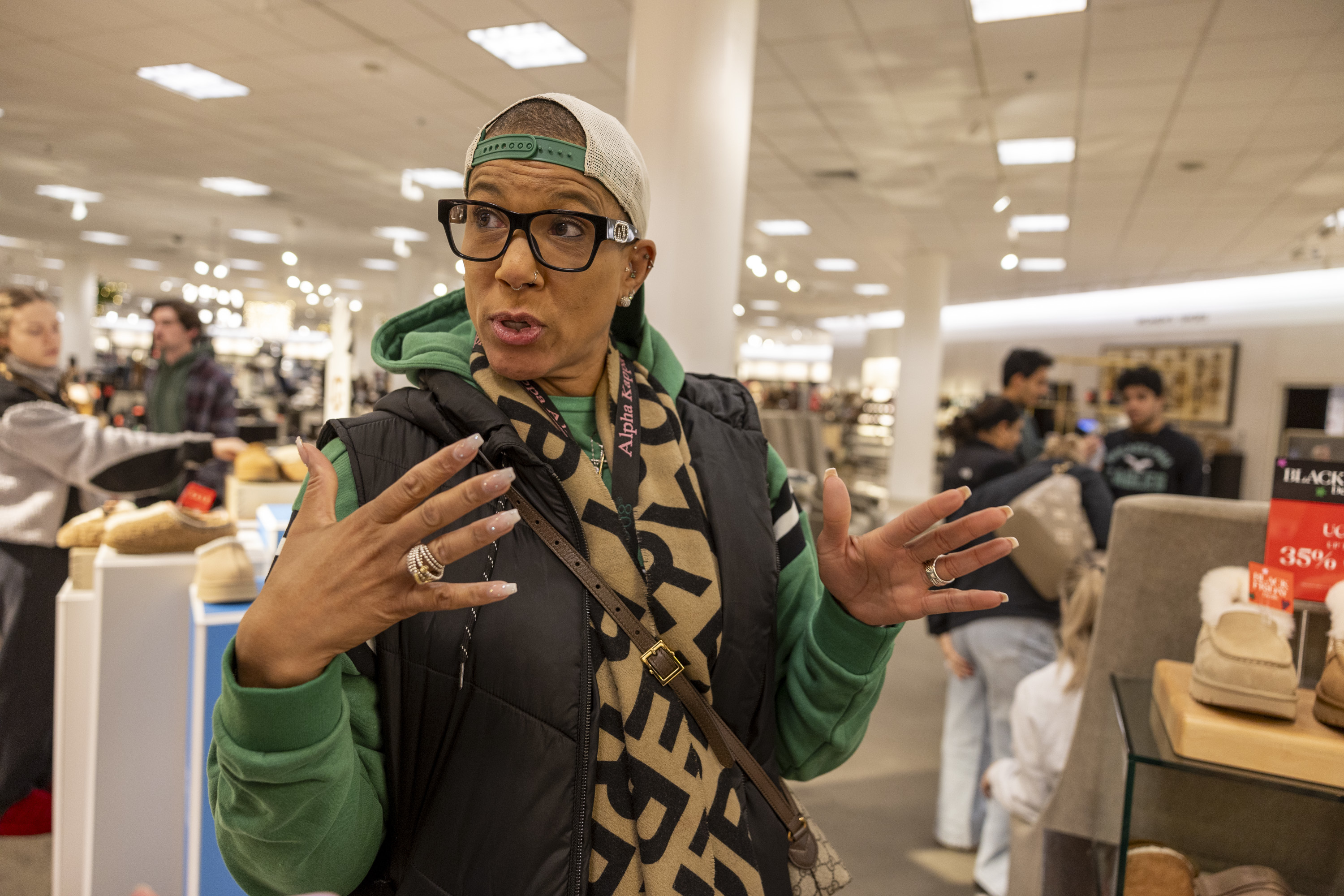
    Alicia Hall, of Philadelphia, shops at Nordstrom at the Cherry Hill Mall on Friday, Nov. 28. Hall is a regular at the mall, but said the Black Friday shopping experience isn’t what it used to be.

    Economic doom and gloom didn’t deter Alicia Hall, 54, from hitting the mall, either.

    Hall is a Cherry Hill Mall regular, driving over from Philly a few times a month to browse. For years, she would wake up early and wait in line for the big sales. Now, she said, “nothing is open like it used to be.”

    Though she sometimes thinks about looming economic concerns, “retail therapy” remains an important part of her life.

    “I go to work every day, and I work hard,” she said. “I might as well spend it.”

    This suburban content is produced with support from the Leslie Miller and Richard Worley Foundation and The Lenfest Institute for Journalism. Editorial content is created independently of the project donors. Gifts to support The Inquirer’s high-impact journalism can be made at inquirer.com/donate. A list of Lenfest Institute donors can be found at lenfestinstitute.org/supporters.

  • Skill games avoid regulation again in Pa. as gambling lobby war intensifies

    Skill games avoid regulation again in Pa. as gambling lobby war intensifies

    Spotlight PA is an independent, nonpartisan, and nonprofit newsroom producing investigative and public-service journalism that holds power to account and drives positive change in Pennsylvania. Sign up for our free newsletters.

    HARRISBURG — This year’s state budget didn’t pull slot-like skill games out of their legal limbo in Pennsylvania, despite bipartisan consensus on the need to do so.

    But it could still happen. Democratic Gov. Josh Shapiro called the matter “unfinished business,” and legislative leaders have also indicated interest in taking up the issue again next year.

    “This building has a long history of going through gaming debates, and they are very complex and very tedious and very difficult,” state Senate Majority Leader Joe Pittman (R., Indiana) said after the budget passed on Nov. 12. “I certainly believe gaming reform is — and must be — an important policy initiative going forward.”

    Pennsylvania faces a structural deficit, which will require spending cuts or more cash in the state’s coffers. A gambling levy, alongside other sin taxes, offers a way to raise revenue without making politically unpopular increases to sales or income taxes.

    While such taxes are potentially more palatable to the broader electorate, gambling debates are complex and difficult within the Capitol due to the array of monied interests that defend their existing market share or attempt to expand it further.

    The money at stake is real. Existing taxes on revenue from slot machines and table games, whether in brick-and-mortar casinos or online, as well as levies on activities like sports betting and truck stop-based video gaming terminals, brought in $2.7 billion last fiscal year, a record high.

    What was on the table this budget cycle?

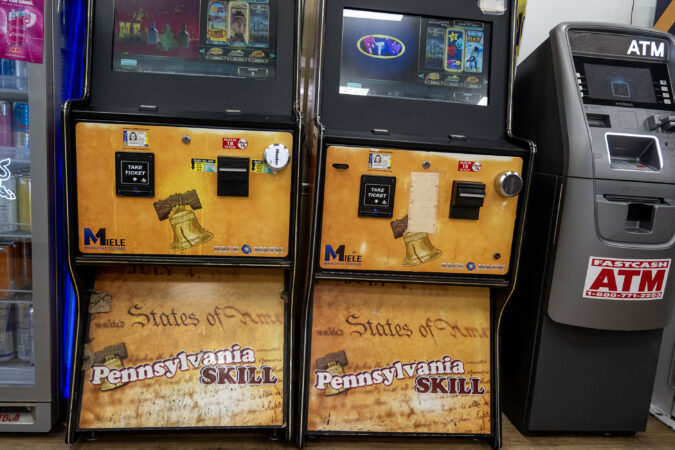
    Skill games, which have proliferated in bars and gas stations across the state, exist in a legal gray area and have been subject to years of litigation. They are untaxed and unregulated, and officially setting up laws around them would bring in more gaming cash.

    Shapiro proposed in his budget address a 52% tax on the gross revenue of skill games, estimating that it would bring in roughly $400 million. State Senate Republican leaders later backed a plan to tax skill games at a lower rate, 35% of gross revenue.

    (Politically powerful casinos pay a 55% tax on electronic games and are pushing for skill games to be taxed at a similar rate.)

    As budget talks progressed, neither of the plans went far. Lobbyists for Pace-O-Matic, a major skill games developer and distributor, wanted lawmakers to support legislation introduced by State Sen. Gene Yaw (R., Lycoming) with a 16% tax.

    In the weeks leading up to a final budget deal, Yaw and another state senator, Anthony Williams (D., Philadelphia), proposed levying a $500 monthly fee per machine, rather than a tax. They estimated such a fee would bring in about $300 million.

    Yaw, whose district is home to a skill games manufacturer, told Spotlight PA the bill was an attempt to sidestep the impasse between leaders, adding that he thinks the tax rates proposed so far would destroy the existing industry.

    Williams noted that the bill also seeks to regulate “stop-and-go” convenience stores with liquor licenses. These stores can serve as illegal gaming hubs, which is a concern among Philadelphia lawmakers.

    Both lawmakers said they hope that the legislature will finally address skill games regulations in 2026. If not his bill, Williams added, he hopes the legislature will pass another proposal.

    “I think it will be included,” Williams said of skill games. “We got a budget that’s passed, but revenue challenges are coming next year, and we’re not going to raise taxes. So this, along with other items, will be considered.”

    Adding complexity to the matter is a case before the state Supreme Court. Justices heard oral arguments about the legality of skill games in late November.

    Attorneys for the state argued that the machines’ mechanisms and functionality effectively constitute gambling, violating the state’s gaming law. “A game that looks like a slot machine, and plays like a slot machine, is a slot machine,” the state attorney general’s office wrote in its brief.

    Matthew Haverstick, Pace-O-Matic’s attorney, argued that the devices comply with decades of legal precedent and that many of the concerns raised by justices, such as the devices’ profitability, amount to policy questions.

    “Why [do skill machines] make money? Because somebody really brilliant came up with an idea that they tested. … It was held to be legal, and nobody appealed,” Haverstick said.

    It is not known when the high court will issue a ruling.

    ‘We get threatened all the time’

    Part of what makes gaming such a complex topic is simple: Money.

    Gambling is a multibillion-dollar industry in Pennsylvania with several key players. And public officials hold the keys to either helping or hurting their bottom lines.

    Pace-O-Matic alone has paid millions of dollars to employ dozens of lobbyists to influence the legislature in recent years. Casinos, legalized in the 2000s, likewise are heavily involved in the legislative process — they employ dozens of lobbyists of their own and also spend millions.

    Other, smaller players, including those involved in horse racing, sports betting, and truck-stop-only video gaming terminals, add to the complexity of the policy debate.

    Then there’s campaign fundraising. A Spotlight PA analysis of campaign finance records found that gaming interests of all stripes gave $1.7 million to top legislative leaders and the governor between Jan. 1, 2023, and Dec. 31, 2024.

    Current campaign finance reports show Pace-O-Matic has given money to a PAC that, in turn, donated to a second PAC that has attacked incumbent state Senate Republicans — something that could complicate talks going forward, particularly in the upper chamber.

    The company historically has made significant donations to legislative Republicans. But that once-friendly relationship soured earlier this year, after GOP leaders in the state Senate backed legislation that would have taxed the industry at a higher rate than it preferred.

    Around the same time, door knockers delivered fliers attacking key GOP lawmakers. State Sens. Frank Farry (R., Bucks) and Chris Gebhard (R., Lebanon) were “siding with Harrisburg insiders and lobbyists to stop small town groups like our volunteer firefighters and VFWs from being able to raise additional revenues,” the fliers, viewed by Spotlight PA, said.

    In June, Pace-O-Matic accused the state Senate’s top two GOP leaders of intimidating its lobbyists unless they dropped the company as a client. Three firms did. (A GOP spokesperson called the allegation “bizarre.”)

    A lobbyist for Pace-O-Matic told Spotlight PA at the time that it did not coordinate with the group that advanced the ad campaign attacking GOP senators.

    However, federal campaign finance records show Pace-O-Matic began giving money to Citizens Alliance, a national conservative political group, as budget talks intensified in May — $630,000 total as of Nov. 21.

    Soon after Pace-O-Matic’s first donation, Citizens Alliance contributed to an Ohio-based super PAC called Defeating Communism — the group behind the fliers. Citizens Alliance has donated $428,000 to the super PAC this year.

    Cliff Maloney, CEO of Citizens Alliance, said the organization’s aims are to make Pennsylvania into a “red wall” by running a program to “compete with Democrats’ door-knocking efforts,” and to “run a pledge program to hold both Democrats and Republicans accountable to the principles of the [Pennsylvania] and [U.S.] Constitution.”

    “Yes, partners are working to hold Senate Republicans accountable that proposed a new tax on certain small businesses,” Maloney said in a statement.

    Pennsylvania Department of State disclosures show that in October, Defeating Communism reported $225,000 for door-knocking targeting Gebhard as well as State Sen. Camera Bartolotta (R., Washington). The campaign focused on their votes on past budgets and carbon capture and sequestration, as well as skill games.

    Bartolotta told Spotlight PA that she expected taxation of skill games to still be a leading topic in state Senate Republicans’ internal discussions despite the wave of attacks.

    The skill games lobby, she said, is “just passing out garbage. And they’re acting like criminals. And I don’t know what in the world they think this is going to do to engender our support.”

    Defeating Communism did not respond to a request for comment. Mike Barley, Pace-O-Matic’s chief public affairs officer, said in a statement that the company “donates substantial amounts of funding to politicians and PACs, and we will continue to do so.”

    A growing field

    The number of moneyed gambling interests that wish to play in the Keystone State is growing.

    As Spotlight PA recently reported, the national trade group for sports betting firms launched a more than $500,000 pressure campaign to kill a closed-door budget pitch. The proposal would have raised taxes on sports betting and online casino gaming.

    That pressure helped kill the proposal for now, a source told Spotlight PA.

    Legal Sports Report, a trade news outlet, reported in November that sports bettors were creating a $10 million super PAC, citing an anonymous source who claimed that Pennsylvania has “rocketed to the top of the list of states where operators are looking to play big during next year’s midterm election.”

    While gaming was off the table in 2025, it’s unclear what the future holds.

    “We get threatened all the time by some of these interests, you know, ‘We’re going to come beat you up. We’re going to come take you out,’” state Senate President Pro Tempore Kim Ward (R., Westmoreland) said at a news conference after the budget’s passage.

    “That’s just ridiculous, and it just makes my blood pressure go up. We don’t do well being bullied. And I think a lot of these gaming interests have done nothing but try to bully us. And I don’t think we stand for that.”

    EXCLUSIVE INSIGHTS … If you liked this reporting from Stephen Caruso, subscribe to Access Harrisburg, a premium newsletter with his unique insider view on how state government works.
  • Mark Hallett, world-renowned neuroscientist and groundbreaking researcher, has died at 82

    Mark Hallett, world-renowned neuroscientist and groundbreaking researcher, has died at 82

    Mark Hallett, 82, of Bethesda, Md., world-renowned scientist emeritus at the Maryland-based National Institute of Neurological Disorders and Stroke, former chief of the clinical neurophysiology laboratory at Brigham and Women’s Hospital in Boston, associate professor of neurology at Harvard Medical School, groundbreaking researcher, prolific author, mentor, and world traveler, died Sunday, Nov. 2, of glioblastoma at his home.

    Dr. Hallett was born in Philadelphia and reared in Lower Merion Township. He graduated from Harriton High School in 1961 and became a pioneering expert in movement, brain physiology, and human motor control.

    He spent 38 years, from 1984 to his retirement in 2022, at the National Institutes of Health in Bethesda and was clinical director and chief of the medical neurology branch of the National Institute of Neurological Disorders and Stroke. He and his colleagues examined the human nervous system and the brain, and their decades of research helped doctors and countless patients treat dystonia, Parkinson’s, and other neurodegenerative diseases.

    “When I met him, I was in bad shape,” a former patient said on Instagram. “I’d also been told … that no one would ever figure out the source of my illness. … He and his team diagnosed me, and thereby, I’m pretty sure, saved my life”

    Dr. Hallett told the Associated Press in 1992: “The more that we know about the way these cells function, the better off we are.”

    He founded the NINDS’ human motor control section in 1984, cofounded the Functional Neurological Disorder Society in 2018, and served as the society’s first president. He cultivated thousands of colleagues around the world, and they called him a “giant in the field” and a “global expert” in online tributes.

    Barbara Dworetzky, current president of the FNDS, said Dr. Hallett was a “brilliant scientist, visionary leader, and compassionate physician whose legacy will endure.” Former NIH colleagues called his contributions “astounding” and said: “The scope and impact of Dr. Hallett’s work transcend traditional productivity metrics.”

    He chaired scientific committees and conferences, and supervised workshops for many organizations. He earned honorary degrees and clinical teaching awards, and mentored more than 150 fellows at NIH. “Our lab’s demonstration of trans-modal plasticity in humans was another milestone,” he told the NIH Record in 2023. “And, of course, I am particularly proud of the fellows that I have trained and their accomplishments.”

    In a tribute, his family said those he mentored “valued his intellect, his encouragement, his kindness, and his humor.”

    Dr. Hallett and his wife, Judy, married in 1966.

    Dr. Hallett had planned to study astronomy at Harvard University after high school. Instead, he earned a bachelor’s degree in biology in 1965 and a medical degree at Harvard Medical School in 1969. He completed an internship at the old Peter Bent Brigham Hospital, now part of Brigham and Women’s, and joined a research program at the NIH in 1970 to fulfill his military obligation during the Vietnam War.

    A fellowship in neurophysiology and biophysics at the National Institute of Mental Health sparked his interest in motor control, and he served a neurology residency at Massachusetts General Hospital in 1972 and a fellowship at the Institute of Psychiatry in London in 1974.

    He returned to Brigham and Women’s in 1976 to supervise the clinical neurophysiology laboratory and rose to associate professor of neurology at Harvard. In 2019, he earned the Medal for Contribution to Neuroscience from the World Federation of Neurology, and former colleagues there recently said his work “had a lasting global impact and shaped modern clinical and research practice.”

    He also studied the scientific nature of voluntary movement and free will. He wrote or cowrote more than 1,200 scientific papers on all kinds of topics, edited dozens of publications and books, and served on editorial boards.

    He was past president of the International Federation of Clinical Neurophysiology and the International Parkinson and Movement Disorder Society, and vice president of the American Academy of Neurology.

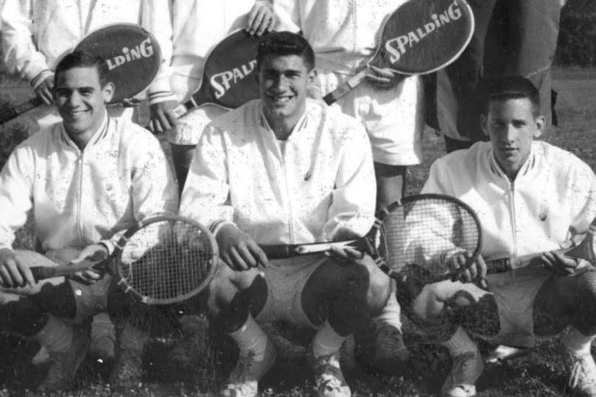
    At Harriton, he was senior class president, a star tennis player, and a leading man in several theatrical shows. “The only time he disobeyed his parents,” his family said, “was when he decided to leave Philadelphia to attend Harvard College.”

    Mark Hallett was born Oct. 22, 1943. The oldest of three children, he was a natural nurturer, a longtime summer camp counselor, and the winner of an Alfred P. Sloan Foundation national scholarship award in high school.

    He grew up in Merion and met Judith Peller at a party in 1963. They married in 1966 and had a son, Nicholas, and a daughter, Victoria.

    Dr. Hallett (center) was a star on the Harriton High School tennis team.

    Dr. Hallett was an avid photographer and a master of the family group shot. He championed a healthy work-life balance, and his family said: “He eagerly built sand castles, skipped stones, and started pillow fights. His easy laugh was contagious.”

    He enjoyed hiking, biking, jazz bands, and organizing family vacations. “He was a natural leader,” his son said, “self-assured and patient of others, with a deep sincerity and a desire to help people.”

    His daughter said: “People were constantly turning to him for medical advice, and he was always willing and eager to help.”

    His wife said: “He was very high energy. He brought out the best and the most in young people. He made them feel good about themselves.”

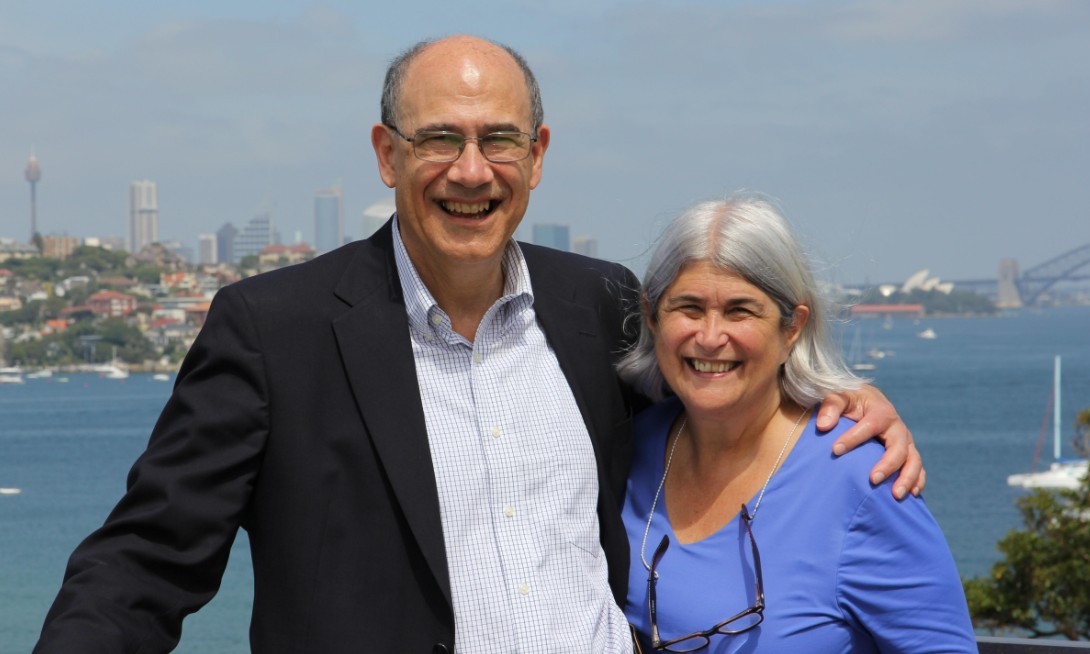
    Dr. Hallett traveled the world on business and family vacations.

    In addition to his wife and children, Dr. Hallett is survived by two granddaughters, a sister, a brother, and other relatives.

    A memorial service is to be held later.

    Donations in his name may be made to the Functional Neurological Disorder Society, 555 E. Wells St., Suite 1100, Milwaukee, Wis. 53202; and the International Parkinson and Movement Disorder Society, 555 E. Wells St., Suite 1100, Milwaukee, Wis. 53202.

  • Adam Fisher wants Temple to play with a defensive approach, but it isn’t quite there yet

    Adam Fisher wants Temple to play with a defensive approach, but it isn’t quite there yet

    Last season, Temple’s mindset was simple: score.

    The Owls averaged 78.8 points per game, the third most in the conference and the highest in program history. However, their defense lagged behind.

    They allowed 77.7 points per game, the most in the conference. The team often was outhustled, leading to multiple blown leads. That culminated in a blown 12-point halftime lead vs. Tulsa in the second round of the conference tournament to end the season with a 17-15 record.

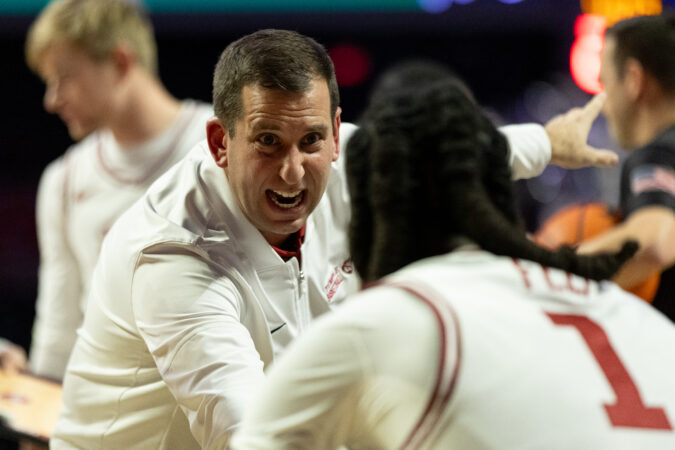
    Coach Adam Fisher wanted to change his team’s mindset before the 2025-26 season. He opted for a more defensive-minded approach in the offseason and brought in 11 new players who fit the bill.

    “We didn’t really change much, because I think [Fisher] just worked on getting guys that want to play defense and that’s something you can’t really teach,” said guard Aiden Tobiason. “So when you get guys that want to play defense, all you have to do is just install what we already know.”

    In the first four games, Temple’s defense showed signs of improvement. The Owls (4-3) gave up 70 points per game as they got off to a 3-1 start. However, the wheels have come off as of late.

    Temple allowed a combined 256 points in three games in the Terry’s Chocolate ESPN Events Invitational in Florida. The Owls finished in sixth place, with a win over Princeton (79-75) and losses against Rhode Island (90-75) and UC San Diego (91-76)

    “We tried to really work a ton this offseason, like, ‘Hey, we got to guard better,’” Fisher said. “How does your offense get better? Through your defense.”

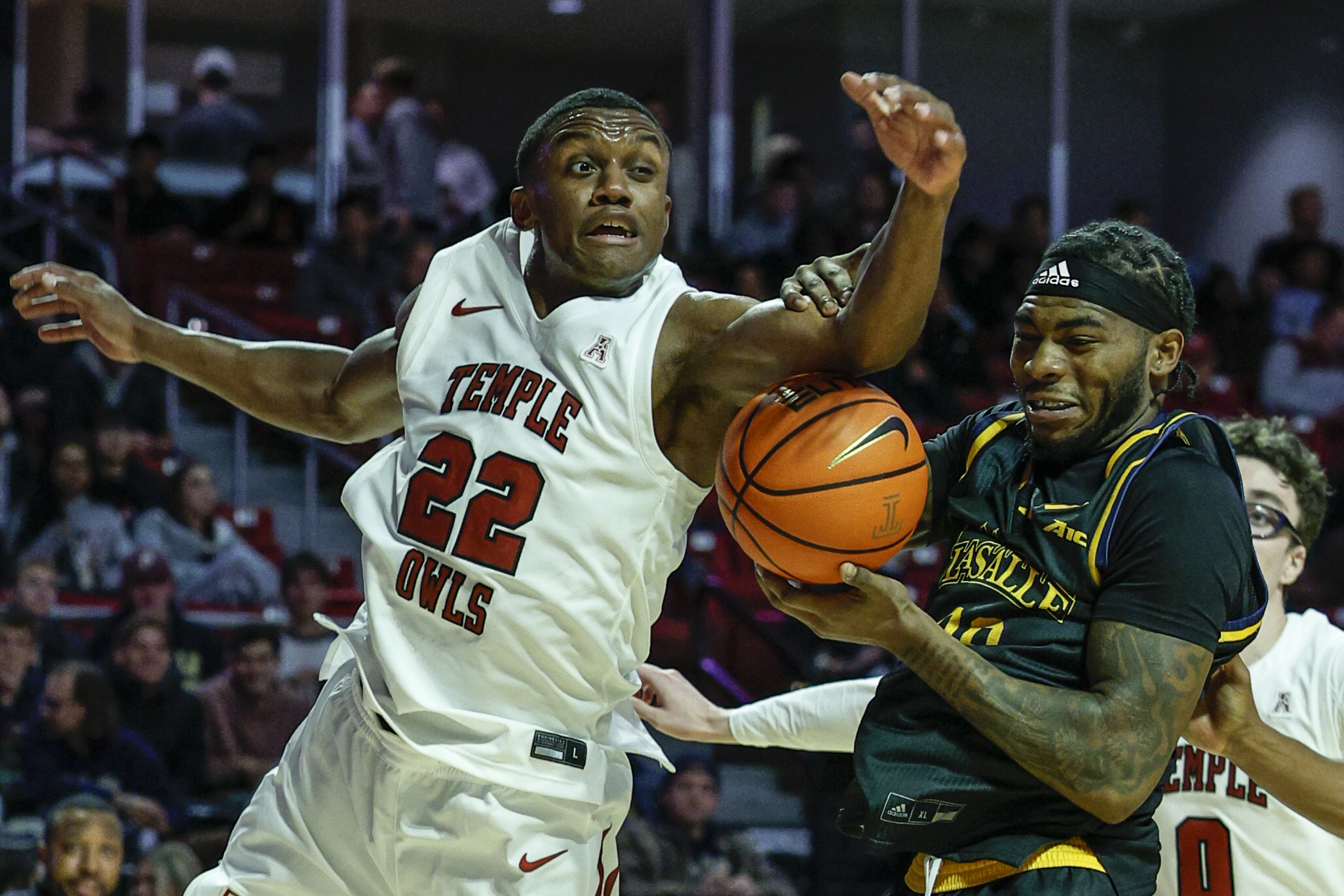
    Temple’s Derrian Ford is averaging 16.6 points and 4.6 rebounds this season.

    Fisher brought in guards Derrian Ford, Masiah Gilyard, and AJ Smith this offseason because of their defensive ability. Ford is the team’s leading scorer, averaging 16.6 points. He and Gilyard lead the team with 4.6 rebounds per game, while Smith has contributed off the bench.

    “I really just tried to make sure that I’m in my right spots on defense,” Smith said. “Allowing my teammates to know that I’m there for them and the gaps and things like that. Just defensive integrity, knowing where you’re supposed to be and how you’re supposed to be there and trying to be there early.”

    The early-season progress on defense has felt like a distant memory after this past week.

    UC San Diego (7-0) poked holes in Temple’s defense for 40 minutes on Monday. The Tritons struck down any scheme the Owls threw at them. They shot 62.5%, and Temple forced just five turnovers.

    Those problems persisted in the next two games. Princeton (3-6) and Rhode Island (6-2) put up more than 30 points in the first half. Rhode Island hit 55.2% of its shots, including 12 three-pointers.

    The trip to Florida ballooned Temple’s average points allowed. The Owls are allowing 76.6 points and opponents to shoot 48.1% per game, which ranks last in the American Conference.

    Temple came into the season looking to fix its defense. However, the last three games have shown that there still is a long way to go before the repairs are sustainable.

    “[Fisher] has done a good job of putting teams on our schedule that play like the teams want to play in our conference,” Tobiason said. “So I think we do play a lot of teams that go out and transition, and that’ll get us prepared for conference games.”

  • Eagles-Bears: Updated playoff picture, Richard Sherman blasts Birds play design, and more

    Eagles-Bears: Updated playoff picture, Richard Sherman blasts Birds play design, and more

    Thanks for nothing, Kansas City.

    The Eagles face the Chicago Bears on Black Friday still in the driver’s seat in the NFC East, but their magic number to clinch the division remains four games following the Dallas Cowboys’ Thanksgiving win against the Chiefs.

    It remains unlikely the Cowboys will be able to overtake the Eagles — even after Thursday’s victory, the New York Times gives Dallas a 3% chance to win the NFC East — but the division is suddenly a lot closer than it appeared just a few weeks ago.

    NFC East standings

    !function(){“use strict”;window.addEventListener(“message”,function(a){if(void 0!==a.data[“datawrapper-height”]){var e=document.querySelectorAll(“iframe”);for(var t in a.data[“datawrapper-height”])for(var r,i=0;r=e[i];i++)if(r.contentWindow===a.source){var d=a.data[“datawrapper-height”][t]+”px”;r.style.height=d}}})}();

    Of course, the Eagles are playing for higher stakes than simply winning the division. Entering Friday’s game, the Birds hold the No. 2 spot in the NFC, with head-to-head wins against most of the conference’s top teams, including the Los Angeles Rams, Green Bay Packers, and Detroit Lions.

    The Birds can add the surprising Bears to that list today with a win, while a loss would knock the Eagles down to third place in the NFC with just five more games to go before the playoffs.

    The Lions put themselves in a bad position with their loss against the Packers on Thanksgiving. At 7-5, Detroit is suddenly on the outside of the playoffs looking in with a tough schedule that includes games against the Cowboys, Rams, and Bears.

    NFC playoff picture

    window.addEventListener(“message”,function(a){if(void 0!==a.data[“datawrapper-height”]){var e=document.querySelectorAll(“iframe”);for(var t in a.data[“datawrapper-height”])for(var r,i=0;r=e[i];i++)if(r.contentWindow===a.source){var d=a.data[“datawrapper-height”][t]+”px”;r.style.height=d}}});

    Week 13: Bears (8-3) at Eagles (8-3)

    • Where: Lincoln Financial Field
    • When: 3 p.m., Friday
    • Streaming: Amazon Prime Video (Al Michaels, Kirk Herbstreit, Kaylee Hartung)
    • TV: Fox29
    • Radio: 94.1 WIP (Merrill Reese, Mike Quick, Devan Kaney)

    It shouldn’t be hard to watch or stream Friday’s game. In addition to simulcasting on Fox 29 in and around Philadelphia, Amazon is streaming the game for free globally on its Prime Video platform.

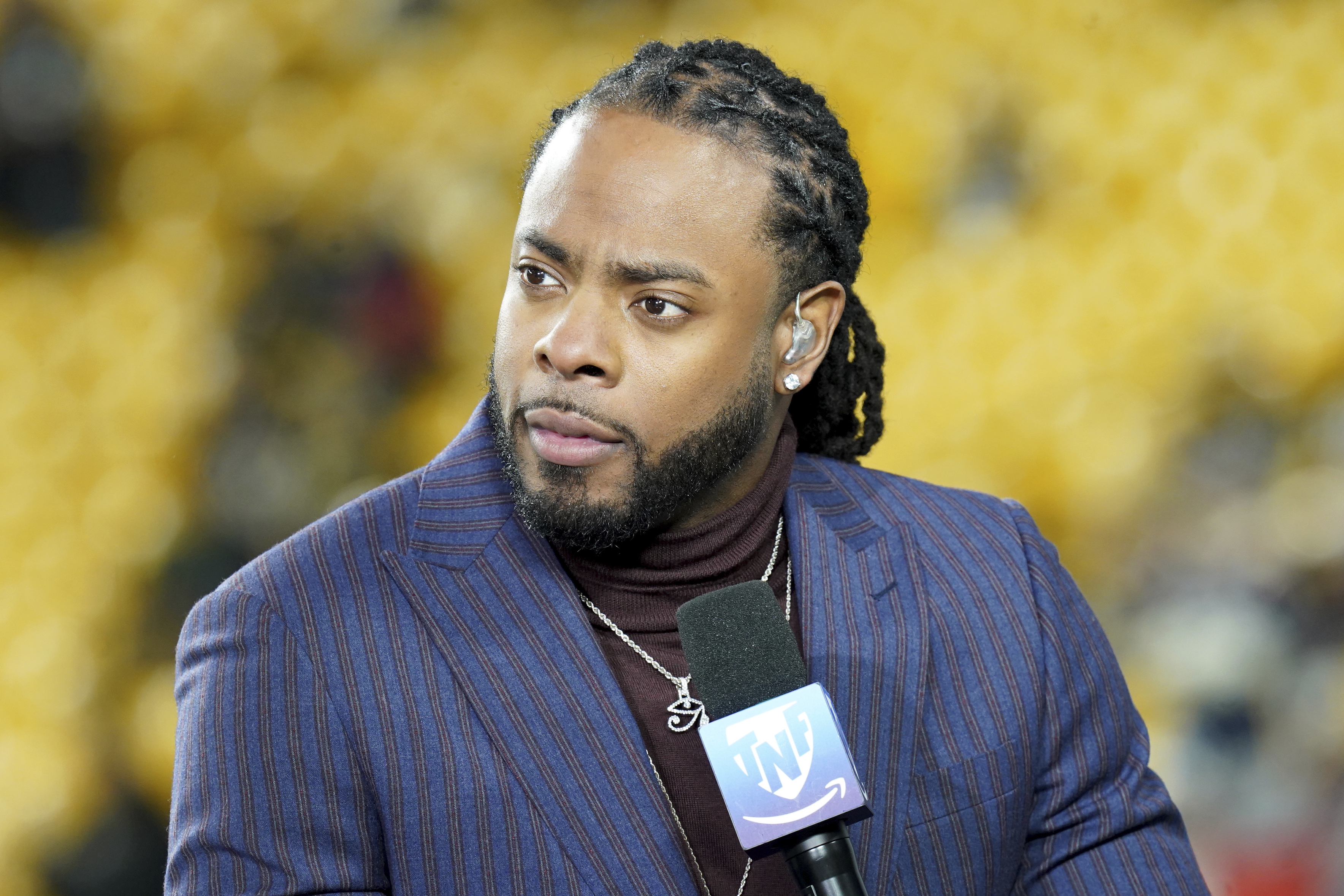
    Amazon’s Richard Sherman says Eagles play designs are ‘pretty pedestrian’

    Richard Sherman called the Eagles’ offense predictable and “pedestrian.”

    Last week, Super Bowl MVP Nick Foles called out the Eagles’ predictable offense, pointing to “simplistic” route designs that don’t create enough opportunities for wide receivers A.J. Brown and DeVonta Smith.

    “[Eagles offensive coordinator] Kevin Patullo is probably a great dude, a great coach, but there’s an art to play-calling that not everyone has and it’s not showing up this year,” Foles said.

    Richard Sherman agrees.

    The five-time Pro Bowl defender turned Thursday Night Football analyst said during a conference call earlier this week the design of many Eagles plays are “pretty pedestrian,” allowing defensive backs to “determine route combinations and route concepts” based on how the Birds line up.

    The Eagles have the 24th ranked offense in the NFL entering Friday’s game, among a handful of teams averaging less than 200 passing yards per game. Plus, Saquon Barkley isn’t coming close to repeating last year’s dominant 2,000-yard performance.

    “Do I think they can repair their offense? No, I don’t,” Sherman said. “I think Kevin Patullo’s the issue, and unless they replace him, nothing’s going to change. They’re going to go home” early in the playoffs.

    Ryan Fitzpatrick, Sherman’s colleague at Amazon who spent 17 seasons as an NFL quarterback, played with Eagles offensive coordinator Kevin Patullo during his time in Buffalo. Fitzpatrick said it’s up to Patullo and head coach Nick Sirianni to fix “some missteps,” with their receivers, including getting A.J. Brown ”on a few more out cuts” and “in the slot a little bit more.”

    “They’ve got to start in the second half of the season here, breaking some of those bad tendencies,” Fitzpatrick said. “Because you do fall in love with certain routes, with certain guys, because they’re such good players.”

    NFL games airing in Philadelphia this weekend

    Sunday
    • Texans at Colts: 1 p.m., CBS (Ian Eagle, J.J. Watt)
    • Rams at Panthers: 1 p.m., Fox (Adam Amin, Drew Brees)
    • Bills at Steelers: 4:25 p.m., CBS (Jim Nantz, Tony Romo)
    • Broncos at Commanders: 8:15 p.m., NBC (Mike Tirico, Cris Collinsworth)
    Monday
    • Giants at Patriots: 8:20 p.m., ESPN/ABC (Joe Buck, Troy Aikman)

    Eagles-Bears live updates

    Staff writers Jeff McLane, Olivia Reiner, and Jeff Neiburg will be covering the action live on Inquirer.com.

    Notes and observations about the game can be found at Inquirer.com/Eagles. Don’t forget to subscribe to our free Sports Daily newsletter.

    Eagles news

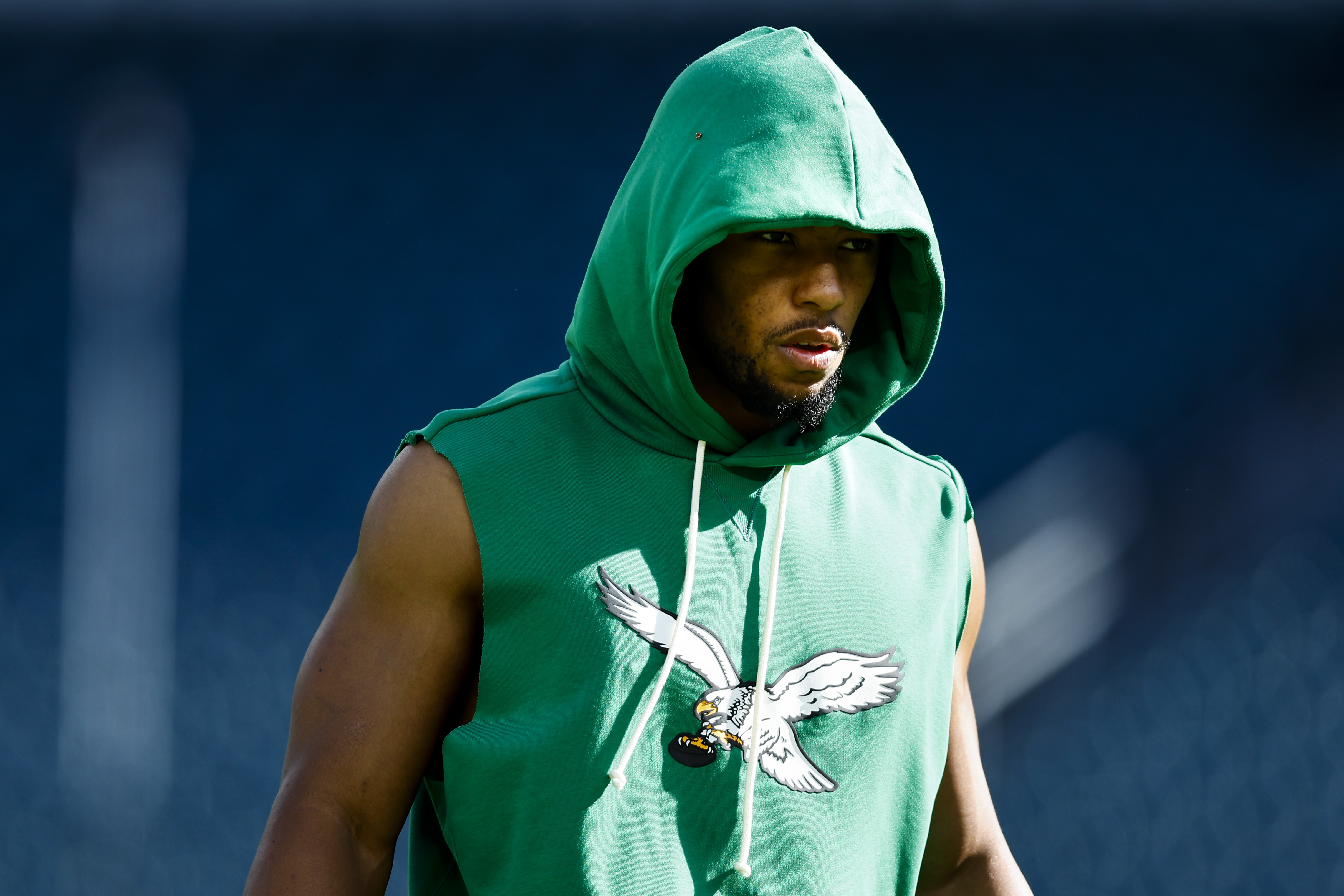
    Saquon Barkley is averaging just 62 rushing yards per game this season.

    Eagles 2025 schedule

  • Manong, a Filipino-American steakhouse from Tabachoy owner Chance Anies, opens in Fairmount

    Manong, a Filipino-American steakhouse from Tabachoy owner Chance Anies, opens in Fairmount

    Fairmount will soon get an interpretation of Outback Steakhouse— that is, if the chain restaurant existed in a Filipino alternate universe. Chance Anies’ Manong, a word that means “elder brother” in Ilocano, the Filipino dialect of Anies’ paternal family, opens to the public on December 5.

    Anies, the chef-owner behind beloved Bella Vista BYOB Tabachoy, took over the former Tela’s space at 1833 Fairmount Ave. earlier this year. It’s a huge departure from Tabachoy’s minuscule footprint of 985 square feet, and of course, from its origins as a small food truck, which Anies still owns. “Manong’s kitchen is bigger than Tabachoy,” said Anies.

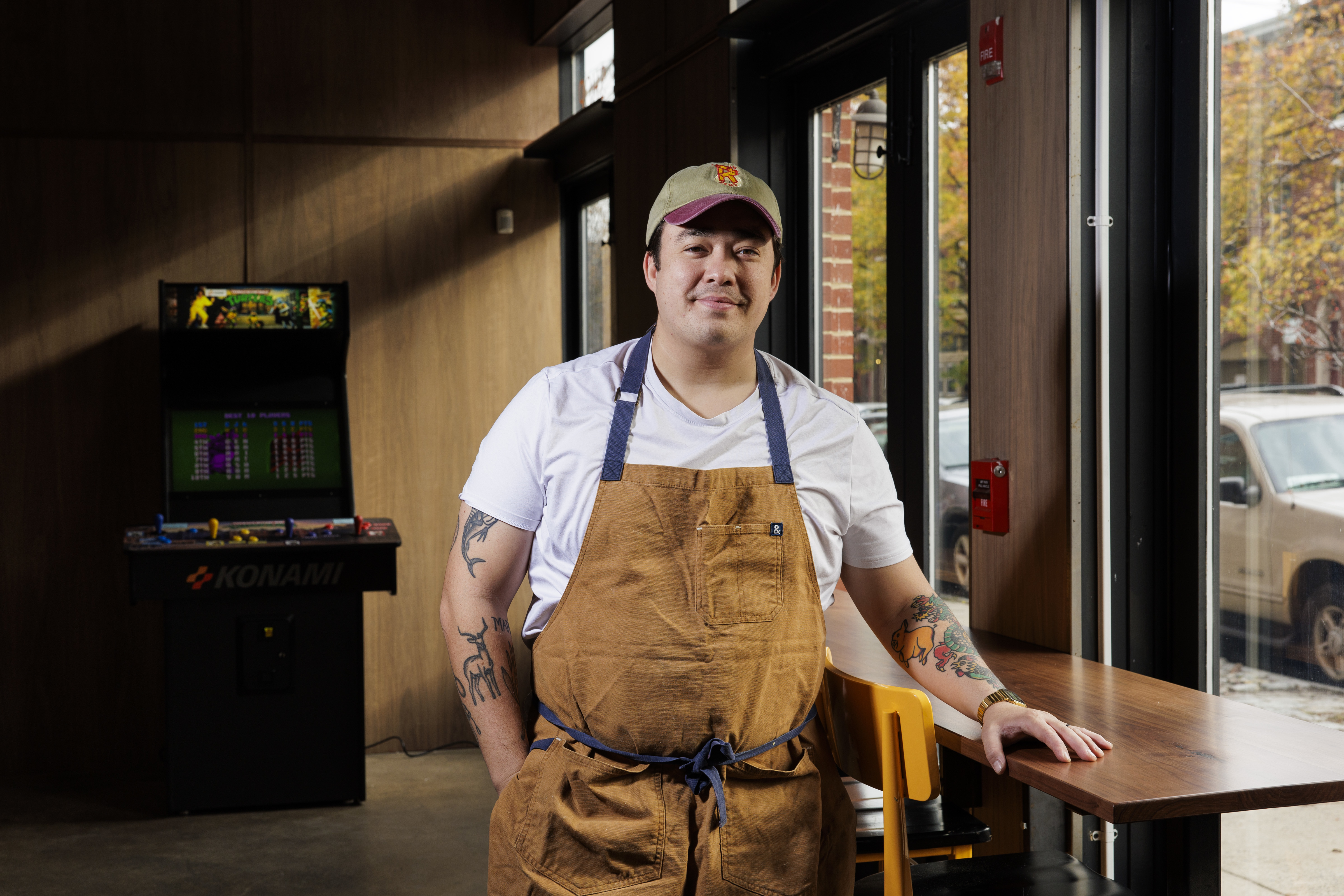
    Chef Chance Anies posed for a portrait at Manong on Thursday, Nov. 20, 2025 in Philadelphia.

    The dining room, which Anies had entirely renovated, seats over ninety people, including nine at its ample bar, at seats painted school bus yellow. There are globe lamps and custom-built booths, backed by forest green shiplap, and resembling the same leather-esque banquettes of a throwback, middle class steakhouse. There are also booths lining the windows, like in every diner movie that has ever been made. The dining room feels industrial, thanks to its exposed ductwork and concrete floor with veined cracks.

    The front-of-house and back-of-house staff numbers around 28 people, unlike the eight, mostly part-timers that run Tabachoy.

    Manong is a celebration of Anies’ ‘90s youth. Walk in through its enormous glass doors, above which their offerings are painted in orange cowboy-style font (Breakfast, Lunch, Dinner, Coffee, Bottle Shop), and on your left is a Teenage Mutant Ninja Turtles arcade game, procured from “an arcade guy in Michigan.” At Manong’s photo shoot for this article, Anies carried around a paper sack filled with Beanie Babies, given to him by his mother-in-law, as he tried to decide where to put them as decorations.

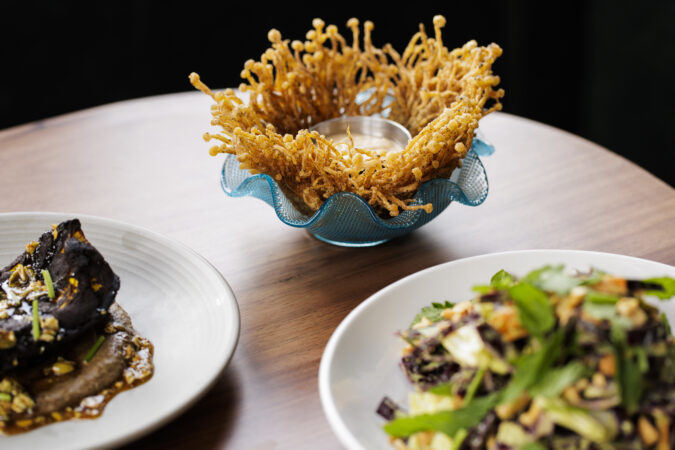
    The Bloomin’ Shroom at Manong on Thursday, Nov. 20, 2025 in Philadelphia.

    As a riff on Outback’s blooming onion, on Manong’s menu there will be a blooming mushroom, consisting of crispy enoki mushrooms tossed in cornstarch, garlic, and powdered, preserved lemon peel and arranged in a pressed glass frilled dish, mimicking a blooming effect with a ramekin of salsa rosada (a mixture of vegan mayo and housemade banana ketchup) at its center. Their Dynamite Lumpia, stuffed with pork, jalapeños, and mozzarella are enormous crispy parcels, unlike Tabachoy’s small, delicate rolls. “They’re like if a jalapeño popper married a lumpia,” said Anies.

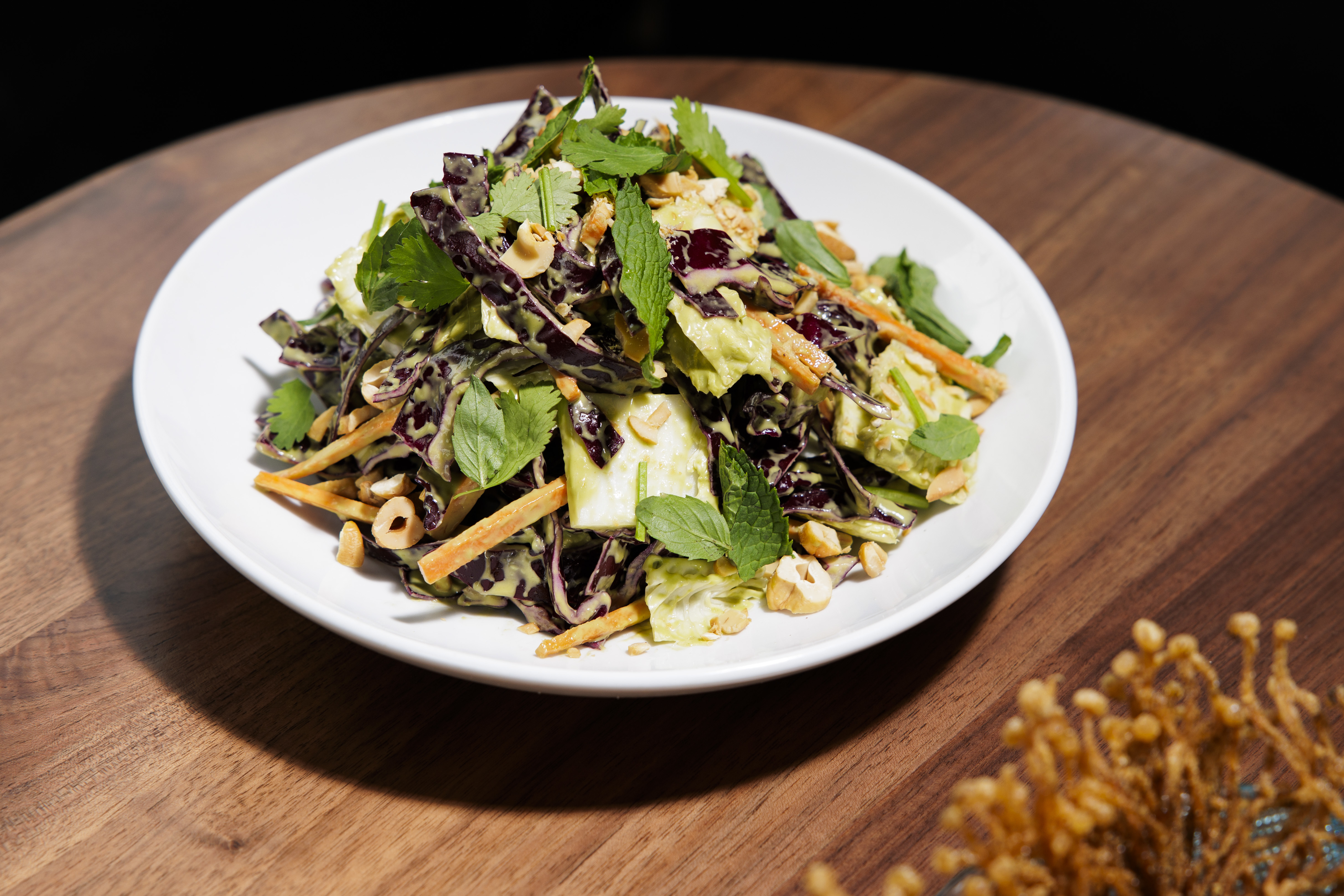
    The salad at Manong on Thursday, Nov. 20, 2025 in Philadelphia.

    Their house salad will feature a green goddess dressing made with canned bangus, or milkfish, a popular Filipino pantry ingredient. Anies is also making efforts to develop versions of Filipino stalwarts that are less processed, like pulverizing red rice yeast for his tocino, a sweet Filipino cured pork known for its bright red hue, typically synthetic in origin. “It’s crazy how red the red rice yeast is,” he said. “It’s like an all-natural Red 40.”

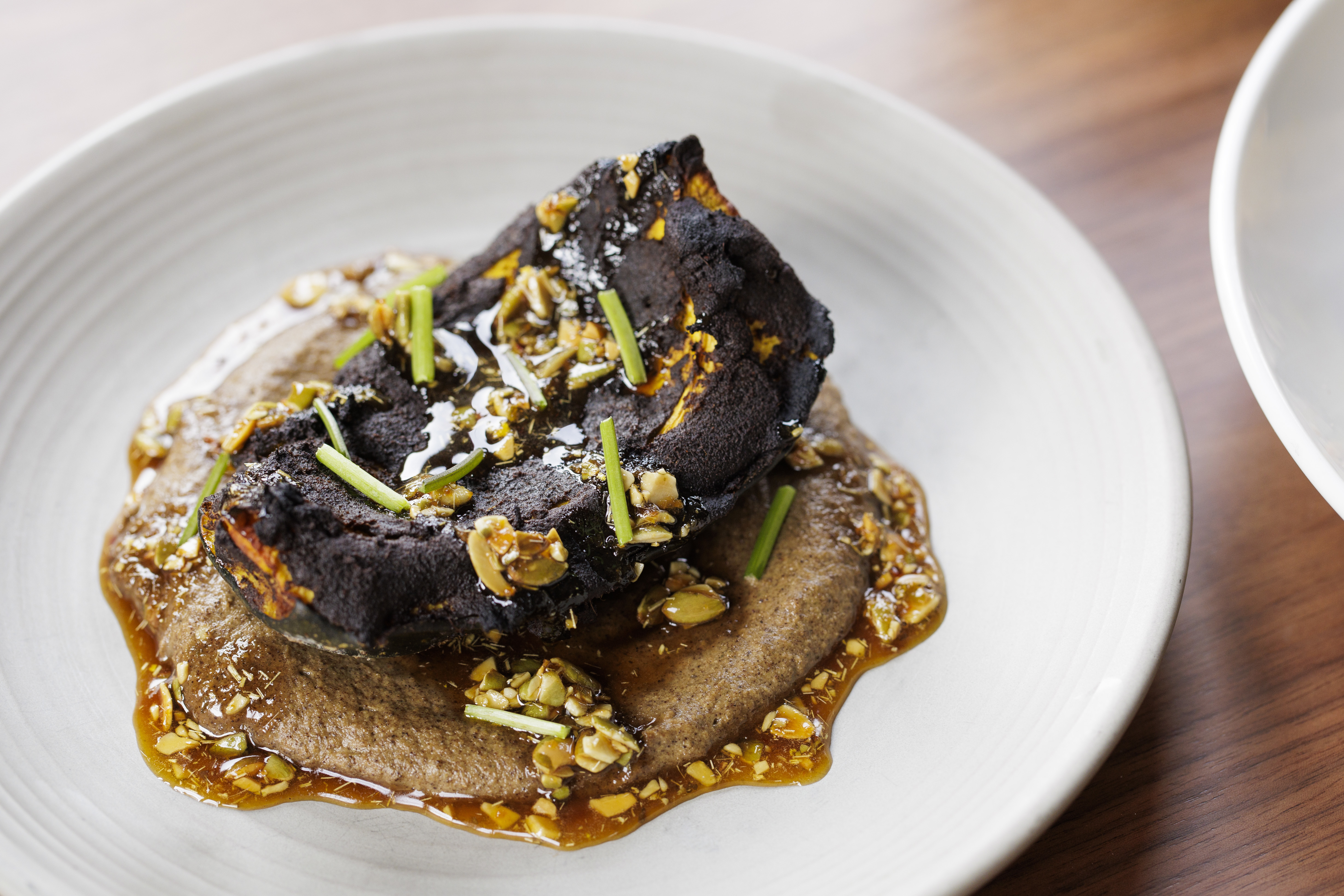
    The squash at Manong on Thursday, Nov. 20, 2025 in Philadelphia.

    Their Balong Burger — “Balong” is a term of endearment meaning “my boy” or “my child” in Ilocano and what Anies’ mother calls him — has a bun that echoes the pillowy Filipino loaves called pandesal and fashioned into four conjoined pieces. “The bun is sort of like connected King’s Hawaiian rolls,” said Anies. A half-pound burger patty will be sandwiches between the sliced open buns, with an option to add another patty on. It will be served with housemade banana ketchup and white American cheese. “But not Cooper Sharp. We’re not fancy over here,” said Anies.

    To finish your meal, there will be homemade ube ice cream, fudgy in texture, and served in little metal dishes, along with a robust dessert menu of frozen treats like calamansi water ice.

    Unlike Tabachoy, Manong has a liquor license. Expect local beers on draft from Love City and Carbon Copy, breweries that Anies developed relationships with after vending with his food truck at them for years. But there will also be Filipino Kasama rum in cocktails and served with a bottle of San Miguel beer as a “Quezon City Wide,” a nod to Anies’ father’s birthplace. Bottles of the Filipino beers San Miguel and Red Horse, an extra-strong lager brewed by San Miguel, will also be available at the bar. “But they don’t export kegs. I guess we could pour the bottles into kegs to have them on draft,” joked Anies.

    And also unlike Tabachoy, where diners need to exit the front door, make a right, turn down an alley, and re-enter the building in order to go to the bathroom, Manong’s bathrooms (indeed there are now plural “bathrooms”) are accessed through the main dining room. One is papered with old magazine articles and Applebee’s-themed. The other is Outback-themed. And where did he procure the neon decor for each? “Don’t ask, don’t tell,” he responded.

    Manong, to start, will be open Wednesday to Sunday from 5 p.m. to 11 p.m. They will seat guests until 9:30 p.m. as their kitchen will close before the bar does, at 10:30 p.m. Reservations are available on OpenTable.

  • A finger stuck in a laundry machine upset Thanksgiving brunch plans on this week in Philly history

    A finger stuck in a laundry machine upset Thanksgiving brunch plans on this week in Philly history

    Holiday or not, N. Barba had laundry to do.

    The hairdresser had two boys, ages 4 and 12, and some time to kill before Friendsgiving brunch.

    So on a chilly Thanksgiving morning, on Nov. 28, 1996, she lugged her laundry down to the basement of her West Philadelphia apartment building and loaded up the washer.

    But she forgot one thing: The dryer she wanted to use wasn’t working.

    Too late.

    She had already plugged a quarter into the dryer’s coin slot.

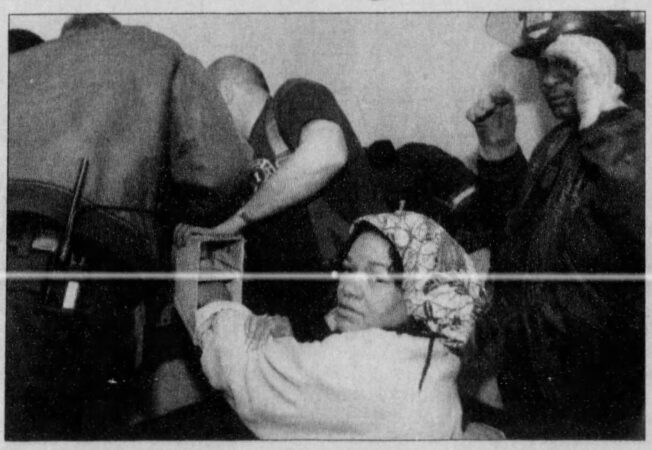
    Using the ring finger on her left hand, she tried to poke the bottom of the slot to get back her 25-cent piece.

    And then her finger got stuck.

    Barba started to cry.

    “This felt like, to her, one more thing in a long line of things that were just not going great,” Inquirer reporter Al Lubrano, who wrote the original story, said recently.

    For two hours she stood in that thankless and cold laundry room, fending off pins-and-needles sensations in her hand and worrying about her boys being alone in their apartment, before a neighbor found her.

    The neighbor brought a chair for Barba to stand on — to help release some of the pressure on her hand — and then called for help.

    Cell phones were not yet a thing, but another neighbor kindly brought down a portable phone so Barba could call and reassure her sons.

    Firefighters swooped in and cut the coin box off the machine. The machine’s operator was then called into action, and he showed up to separate the coin slot from the coin box.

    “She was little bit surprised when the firefighters came and it wasn’t the end of it,” Lubrano recalled.

    Her now-swollen finger needed a few dollops of petroleum jelly before slipping out of the coin slot. She did not report any permanent damage.

    Lubrano asked Barba back in ’96 to sum up the whole ordeal in one word.

    “Annoying,” she said.

    “Like a true mom,” Lubrano said recently, “she sort of minimized it.”

    And after all that, Barba went back downstairs later that night in ’96 and threw in another load of laundry — using a different dryer.

    “I’m grateful to my neighbors,” Barba said, “but I missed my brunch.”

  • Robert A.M. Stern, renowned architect whose designs included the Comcast Center and the Museum of the American Revolution, has died at 86

    Robert A.M. Stern, renowned architect whose designs included the Comcast Center and the Museum of the American Revolution, has died at 86

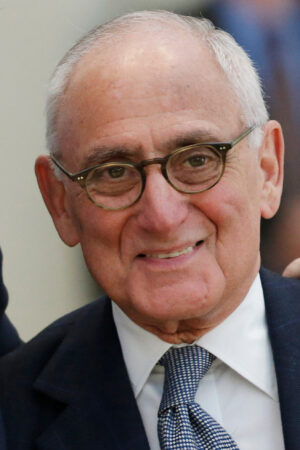
    Robert A.M. Stern, 86, a leading architect over the past six decades who left his imprint on Philadelphia by designing the Comcast Center and the Museum of the American Revolution among other notable buildings, died Thursday, Nov. 27, at home in Manhattan after a brief pulmonary illness, his family said.

    Mr. Stern also wrote respected architectural histories, taught at Columbia and Yale universities, and was dean of Yale’s School of Architecture from 1998 to 2016.

    “Bob had a great sensitivity to urbanism in design. You can see that in Philadelphia, where his work certainly sits well where it is placed,” said developer John Gattuso, who worked closely with Mr. Stern on the Comcast Center, completed in 2008, the redevelopment of the Navy Yard, and other projects.

    “He was less concerned with theatrical architecture, the gymnastics, and understood how buildings contribute to a sense of place that resonates with people,” he said. For that reason, Gattuso said, “he tended to be underappreciated.”

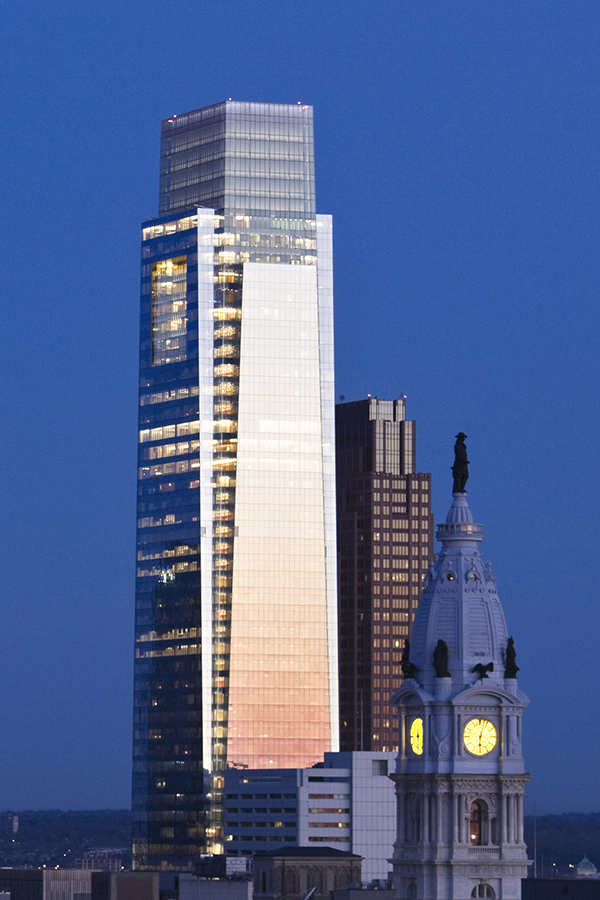
    Stern and his firm designed the 975-foot Comcast Center, the headquarters for the cable and telecommunications giant, completed in 2008.

    The 975-foot-tall shimmering Comcast Center, the company’s original skyscraper on JFK Boulevard, straddles the tracks and concourse of Suburban Station, a commuter gateway to the city. An airy 120-foot glass atrium connects the building to the station, providing for a dramatic arrival from below, and overlooks a public plaza.

    “The Comcast Center may be his finest work in Philadelphia,” said architecture critic Inga Saffron, who writes for The Inquirer. “The scale is right. It’s not fat. It’s tapered.”

    Classical indentations in the 58-story building draw the eye upward, she said. “It’s a good dignified skyscraper … Buildings like this are embedded in the city.”

    Mr. Stern’s firm was also known for luxury apartment towers. In Manhattan they include 15 Central Park West, a limestone-clad condominium at the southwest corner of Central Park that was internationally hailed.

    The firm’s work also includes university buildings, including the Darden School of Business at the University of Virginia; Weill Hall at the University of Michigan; and Miller Hall at the College of William & Mary in Williamsburg, Va., among many others.

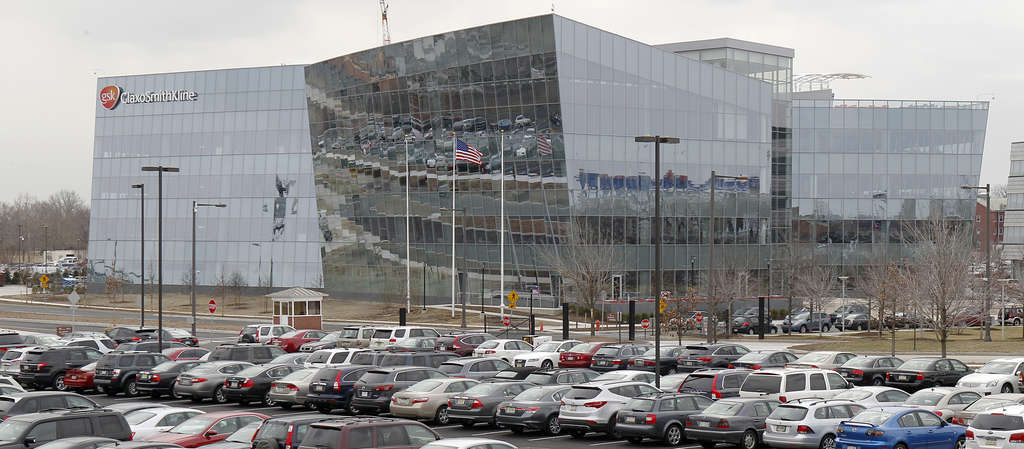
    In Philadelphia, Mr. Stern’s firm prepared the master plan for the Navy Yard, and designed buildings on Crescent Drive in that development and the 10 Rittenhouse condominium, as well as the American Water tower on the Camden Waterfront — and the LeBow College of Business at Drexel University.

    Robert A.M. Stern designed the former U.S. headquarters for GSK at Five Crescent Drive in the Navy Yard, Philadelphia. He and his associates put together the master plan for the redevelopment of the massive property.

    Mr. Stern was a proponent of post-modernism, a style of architecture that incorporated classical elements. He moved further in that direction as his career went on.

    Philadelphia’s Museum of the American Revolution was built in a Georgian style. But to Saffron, it was perhaps too much, and more out of place to the city.

    “He embraces classicism more and more,” Saffron said. In the case of the museum, “It’s a schlocky classicism,” in contrast to the relatively modest scale of the historic buildings in Old City.

    “It’s like Independence Hall on steroids,” Saffron said.

    The latest Robert A.M. Stern Architects design in Philadelphia is nearing completion, a massive life sciences research building at Drexel University, on Cuthbert Street, by Gattuso Development Partners.

    In an interview with the New York Times when he was 84, Mr. Stern said he still wasn’t using a computer and drew “everything by hand.”

    Born in Brooklyn on May 23, 1939, Mr. Stern earned a bachelor’s degree from Columbia and a master’s in architecture from Yale. In 1966, he married photographer Lynn Gimbel Solinger, a granddaughter of Bernard Gimbel, the department store magnate. They had a son, Nicholas, and later divorced.

    Mr. Stern is survived by his son, three grandchildren, and other relatives.

    The Washington Post contributed to this article.