While most of America is running to stores or shopping online on Black Friday, today’s date marks a golden moment in the history of women’s college basketball.
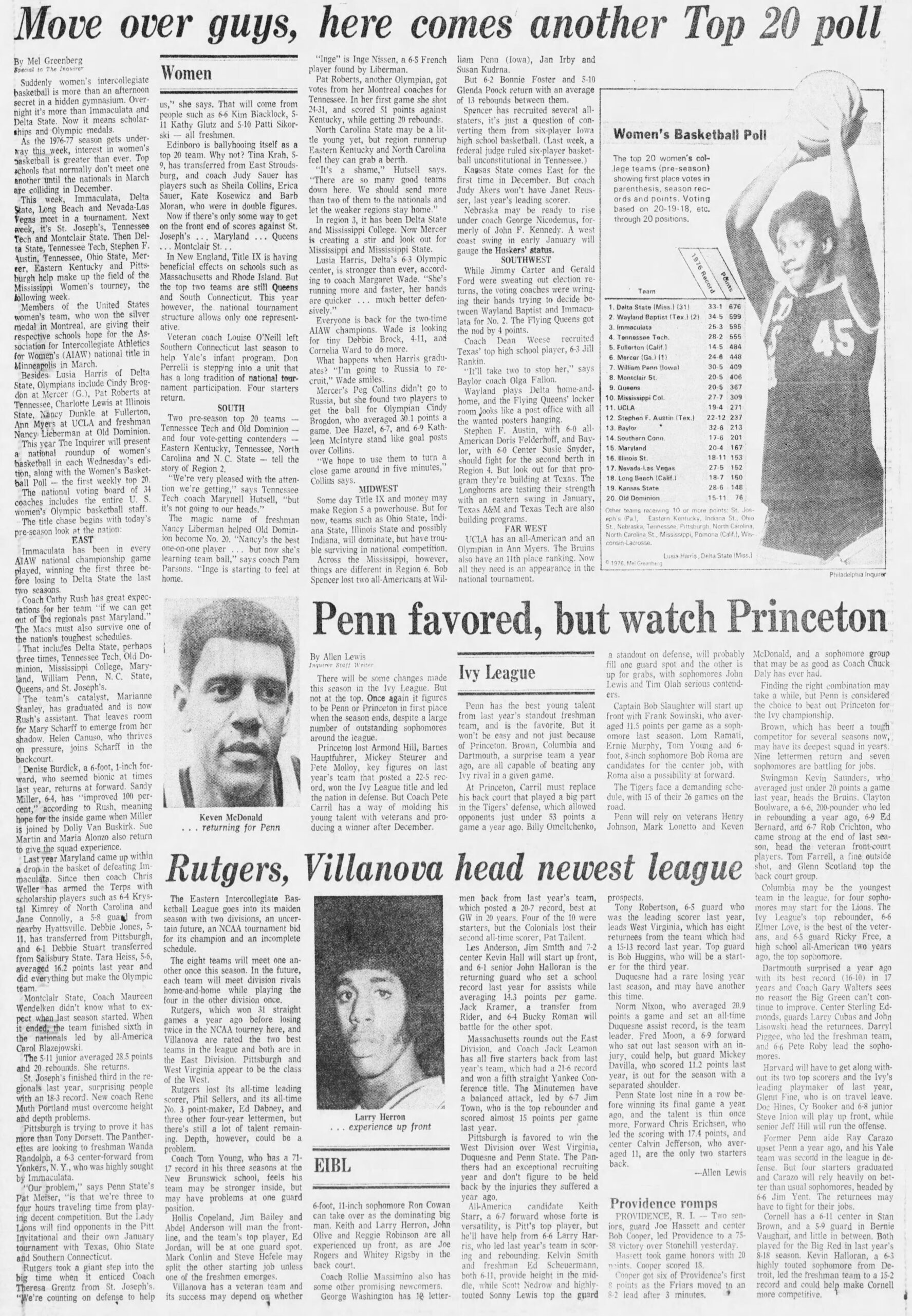
On Nov. 28, 1976, The Inquirer’s annual college basketball preview included a story with a headline proclaiming, “Move over guys, here comes another Top 20 poll.”
Just below was a graphic of Delta State’s center Lusia Harris, the consensus national player of the year, overlooking the Top 20, complete with an added national preview.
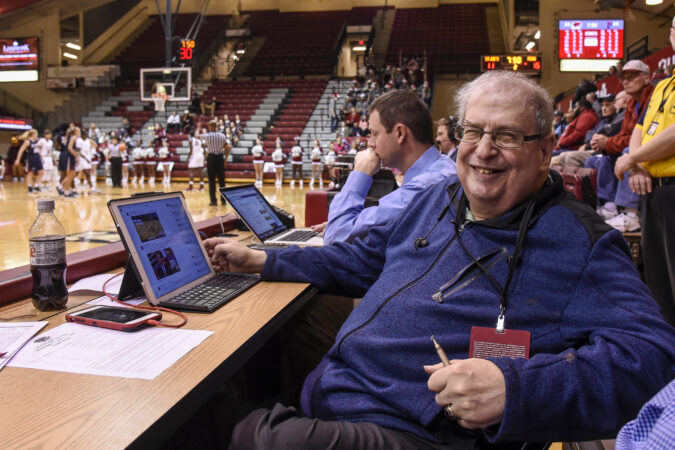
And thus, under the stewardship of this writer, inside the Inquirer offices was born an institution that led to seismic change in terms of national attention on women’s basketball. Two years later, at the request of the College Sports Information Directors of America, the Associated Press began running those first-of-their-kind weekly rankings. This season, the poll celebrates its 50th anniversary.
A clipping from the Sunday, Nov. 28, 1976 Philadelphia Inquirer. Page 14-F featured the first edition of Mel Greenberg’s women’s basketball poll.
Just as the 50th anniversary of the Title IX landmark federal legislation bringing equal opportunity to women in collegiate sports was celebrated in 2022, so too will the poll’s 50th anniversary be celebrated all season.
Technology helped spur the poll’s growth, from the pre-NCAA era to 1981-82, when the organization started sponsoring women’s championships. (Before then, women’s championships were held by the Association for Intercollegiate Athletics for Women.) This writer handled the tabulation operation through 1993-94, which is when Connecticut began an appearance streak that totals 610 times through this week.
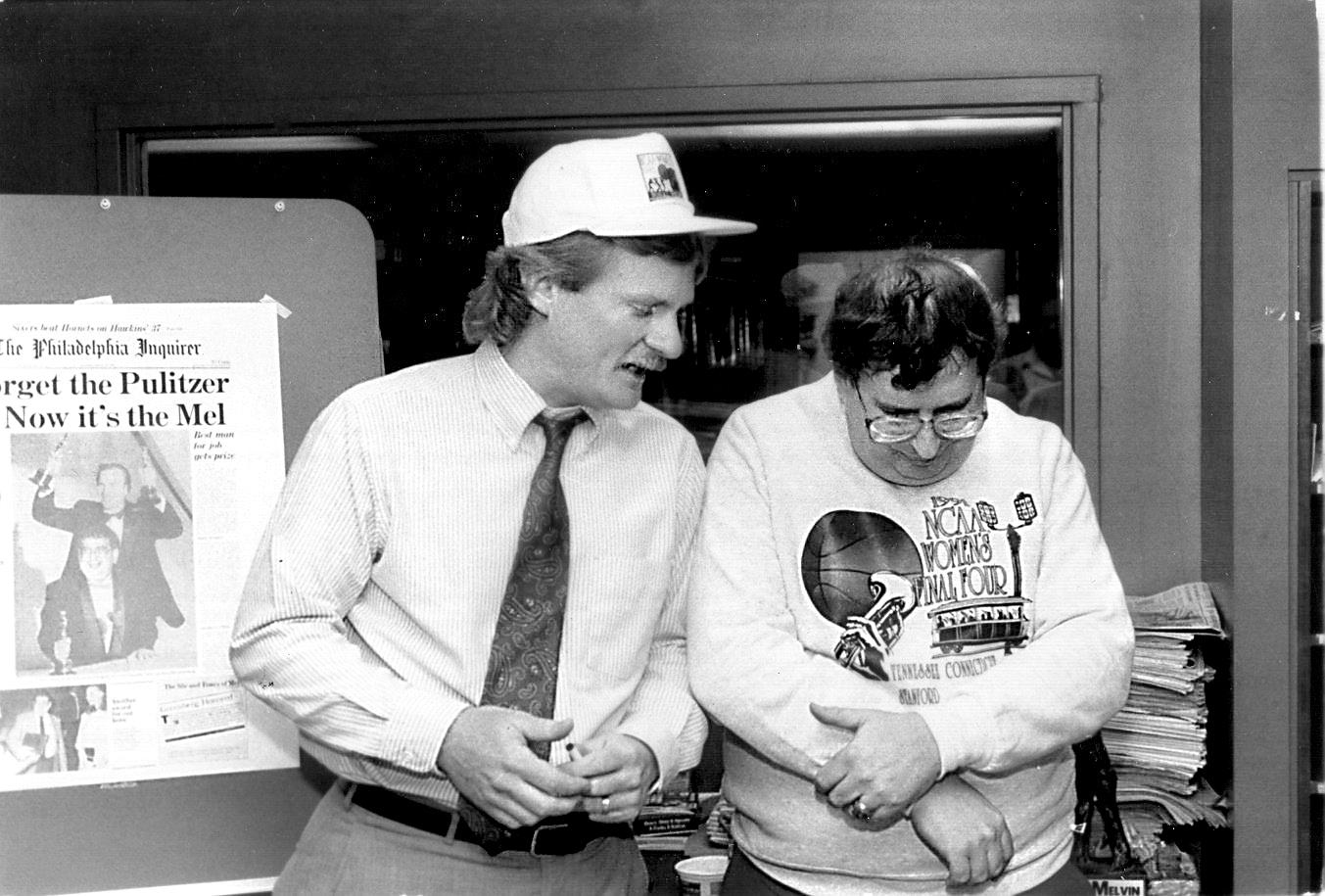
Mel Greenberg, right with former Inquirer editor William J. “Butch” Ward, inside the Inquirer offices as Greenberg is honored for winning the first Women’s Basketball Association Media Award.
Until 1994-95, coaches did the voting because writers were at a minimum nationally.
Fifty years ago, the poll was created using typewriters and $70 calculators that today cost a couple of bucks. It evolved from telerams, faxes, floppy discs, and Radio Shack TRS-80 calculators to giant hard drives, laptops, Blackberries, and, ultimately, smartphones and iPads today.
Early on, a sports media relations professional at North Carolina State called looking for information, but I wasn’t keeping records. An hour later, legendary Wolfpack coach Kay Yow, a voter, called to lecture me on the importance of preserving history.
Fortunately, Colleen Matsuhara, who phoned in then-Cal Fullerton coach Billie Moore’s vote from out West, was keeping tabs, so the first six missing weeks from the records were restored. Today, that has evolved into a spreadsheet of all polls, among other records, and this is now the 889th week of the poll.
Two people most excited about the poll creation were based here — this writer’s Temple classmate, Dick “Hoops” Weiss, the acclaimed men’s writer, and Mike Flynn, who, until recently, ran national AAU powerhouse, the Philadelphia Belles.
Way back I said one day to them, “You think I’m going to do this the next 50 years?”
They nodded in the affirmative.
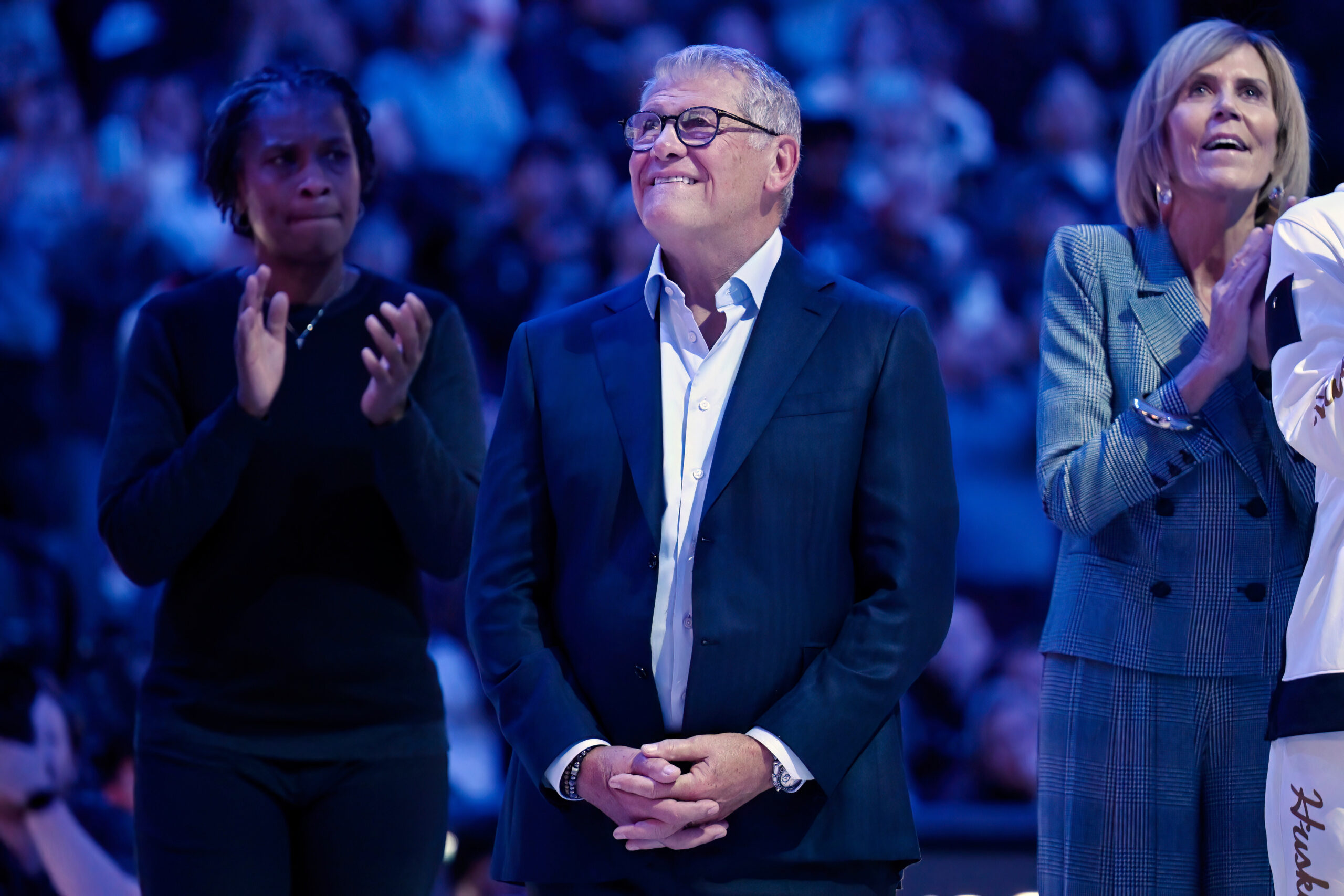
UConn head coach Geno Auriemma, center, reacts after a championship banner reveal at Gampel Pavilion on Nov. 9.
Grandpa Geno
A few years after Philadelphia hosted the Women’s Final Four in 2000, Geno Auriemma’s UConn squad was back in town to face Villanova. Over at the hotel where his Norristown posse were hanging out, Auriemma’s brother noted that perhaps some decisions would have to be made in the near future.
Two days later, UConn signed another No. 1 recruit, so he wasn’t going anywhere.
I saw his brother again shortly after that and quipped that one day someone is going to say they came to Storrs, Conn., because they like Geno’s grandfatherly ways.
Geno’s birthday is March 23, right in the middle of March Madness. Decades later, the date gets noted at an NCAA Tournament news conference, and now-WNBA standout Paige Bueckers shouts out, “Yeah, we call him Grandpa.”
This week’s Shackamaxon welcomes back City Council’s quarrelsome contrarian and makes the most out of SEPTA’s “new” funding.
Council vs. community
Councilmanic prerogative, a tradition that gives individual district Council members sole discretion over land-use decisions within their constituencies, is not popular with the public. A 2022 poll found that only 22% of Philadelphians wanted to keep the practice, while more than two-thirds wanted it abolished. Among Council members themselves, however, prerogative is king.
During a recent City Council meeting, 7th District Councilmember Quetcy Lozada wondered when the phrase “councilmanic prerogative became a dirty word.” Council President Kenyatta Johnson said that “it isn’t like they say in the newspaper.” Most of their colleagues and predecessors make similar defenses of the tradition, which they claim is just a way to make sure the community doesn’t get steamrolled by powerful interest groups.
The process, however, often stymies community aspirations or pits the interests of some neighbors against those of others.
Fourth District Councilmember Curtis Jones Jr. reduced the number of development projects allowed along a stretch of Ridge Avenue in Roxborough, citing community opposition to new construction and parking woes.
The move, known as downzoning, took a sledgehammer to the net worth of longtime business owners along the corridor, with the value of their life’s work deflated overnight. They testified against the move at City Council, to no avail.
In the 8th District, Councilmember Cindy Bass has discouraged the redevelopment of sizable properties like the former YWCA, Germantown Town Hall, and the Ada H.H. Lewis Middle School, despite community support for doing something with those buildings.
In extreme cases, councilmanic prerogative has also been an invitation to more questionable practices. Just ask former 7th District Councilmember Rick Mariano, who was convicted in 2005 of taking prerogative-enabled bribes. “It’s just a very sketchy and nontransparent thing,” Mariano told WHYY in an interview a decade ago. “If I could do everything over again, I wouldn’t be a councilman. But if I was, I would not want anything like that. It can just come back and bite you in the ass.”
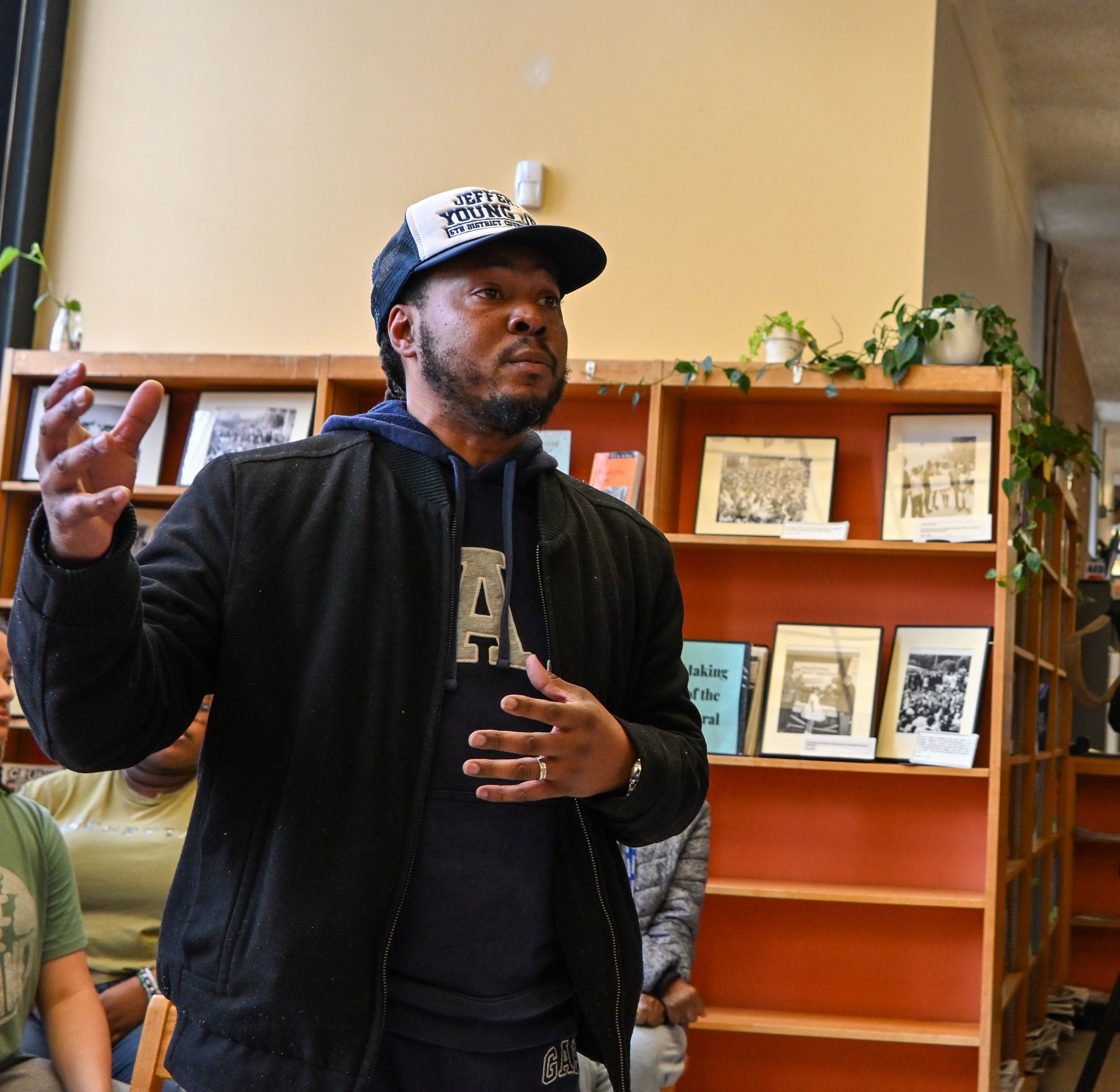
Councilmember Jeffery “Jay” Young speaks to community members at the Cecil B. Moore Library on Saturday.
No fighting in the library
A good example of how prerogative can get in the way of a neighborhood’s wishes is the recent debate over the future of the Cecil B. Moore Library.
Cierra Freeman, Claire Newsome, and the rest of the Save Cecil B. Moore Library coalition have been organizing and campaigning for years to renovate the current library building, which is on the 2300 block of Cecil B. Moore Avenue in North Philadelphia. They helped secure millions of dollars for the effort from the city’s Rebuild initiative. Then they were blindsided by Councilmember Jeffery “Jay” Young,who is finishing his second year representing the 5th District.
My newsroom colleagues have branded Young as City Council’s “quarrelsome contrarian.” While he’s bristled at the description, he also regularly confirms its accuracy. More than any other member of Council, Young has employed a haphazard approach to using the powers of his office, often stepping in at the very last moment to scuttle long-standing plans. Small businesses, street safety campaigners, and affordable housing advocates have all been burned by his tendency toward unilateral and inexplicable decision-making.
The library renovations are the centerpiece of what’s shaping up as his legacy of obstinacy.
First, Young opposed renovating the library because he wanted to redevelop the site as a mixed-use building, with affordable housing above and library services below. Community members expressed deep skepticism about the idea, and Young never produced a rendering or other documentation to prove that his plan was feasible.
On Saturday, Young told a packed community meeting about his plan to move the library, with a nearby city-owned lot on 19th Street identified as a potential location. Young, wearing a baseball cap emblazoned with his own name, presented the move as a way to ensure the community gets everything it deserves, including space for teenagers.
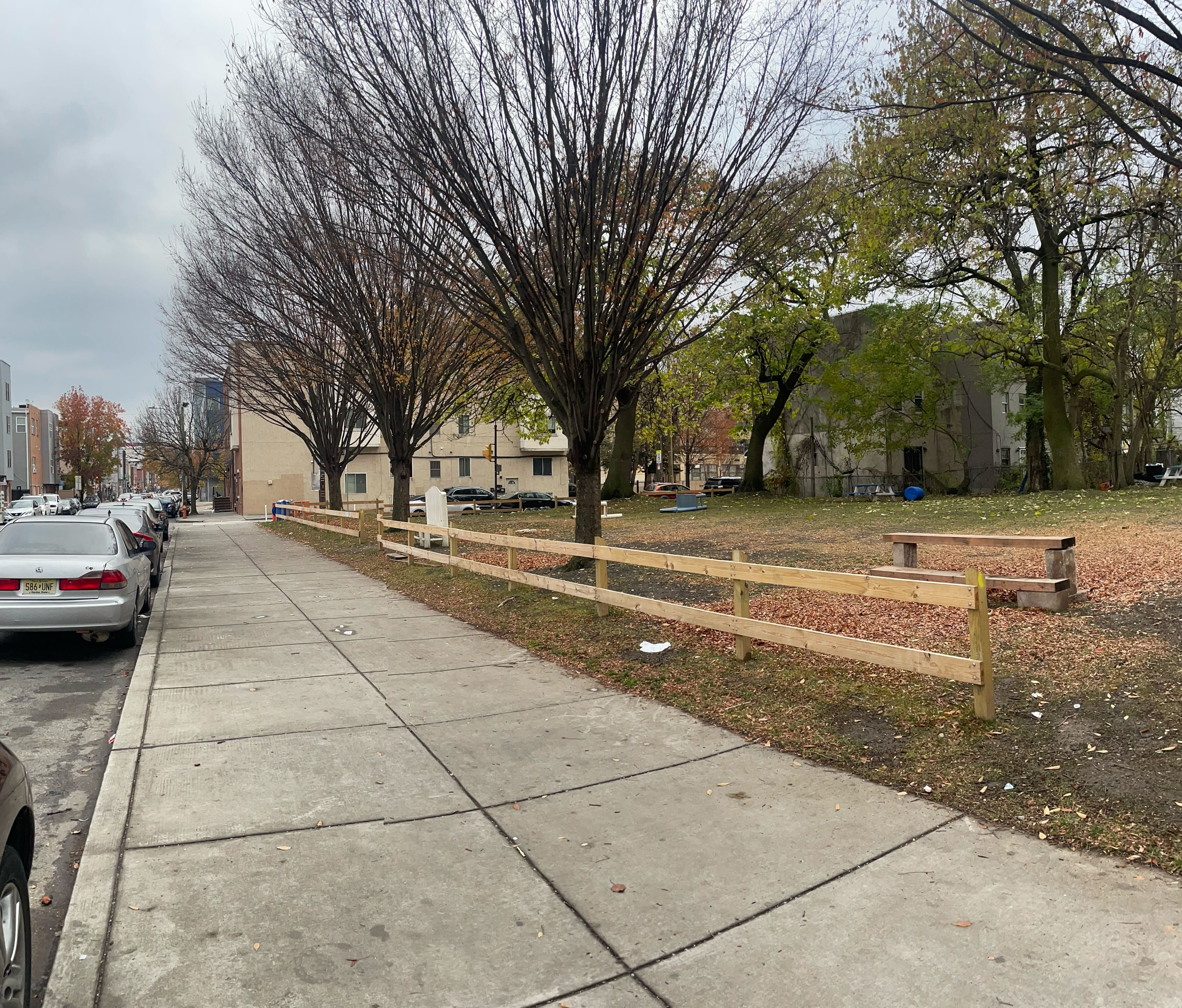
This vacant lot at 19th Street and Cecil B. Moore Avenue, currently used as a pocket park, would be the new home of the library if Councilmember Jeffery “Jay” Young gets his way.
Of course, the current renovation plans already include a revamped teen space. They are also the product of years of engagement between the city and the community. Young’s proposal, once again, lacks even the basics you’d expect from any developer coming to the community with a new construction project.
When I first arrived at the meeting, Young already had his hackles raised. He was berating a constituent and disrupting the proceedings. Another neighbor, Nadine Blackwell, who has lived in the area for 73 years, told Young, “I’m not gonna hit you,” citing his “defensive body communications.” The only resident to express any interest in his ideas was Bonita Cummings, a former staff member in his office.
Renovating a library should not be a contentious issue. It has become one only because City Council’s traditions allow members like Young to make it one.
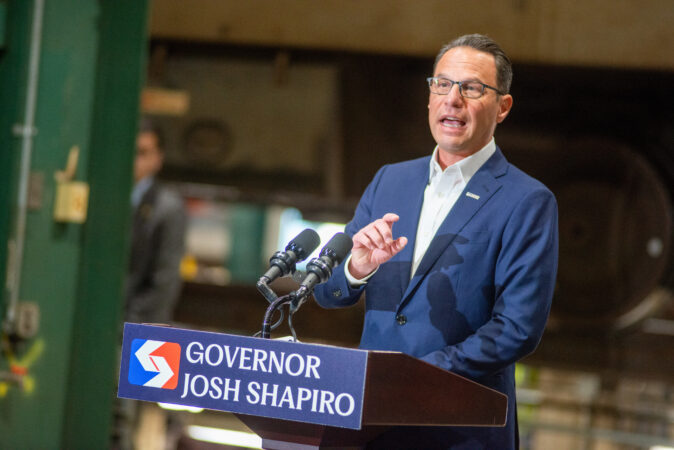
Gov. Josh Shapiro looks on as SEPTA General Manager Scott Sauer speaks at the agency’s Frazer Shop and Rail Yard in Malvern on Monday.
Don’t call it a bailout
There are few things Gov. Josh Shapiro loves more than talking about how he likes to take decisive action. From quickly repairing the I-95 collapse to last year’s maneuvers in Harrisburg that secured an infusion of money for SEPTA, it all helps buttress his “get stuff done” reputation. But Monday’s announced transfer of $220 million to SEPTA, while necessary, does not represent a real solution for our commonwealth’s transit woes. In fact, it makes transit’s future more precarious, absent new sustainable funding from intransigent Republicans in Harrisburg.
That’s because Shapiro took the money from the state’s public transit trust fund, which is tasked with supporting systems across Pennsylvania. While Republicans have presented the fund as money that’s “just sitting there,” those dollars have already been earmarked for specific projects, like SEPTA’s proposed modernization of its trolley system. The money Shapiro used was being set aside for emergencies. Using it to abate a wholly political crisis is not ideal.
The proposed investments, however, represent a judicious use of public resources. Nearly every part of the system will be revamped, providing riders with faster and more efficient trips. It’s an opportunity for Scott Sauer, who’s been working as general manager for 11 months, to prove to the General Assembly that the transit agency can be effective and efficient if given the chance.
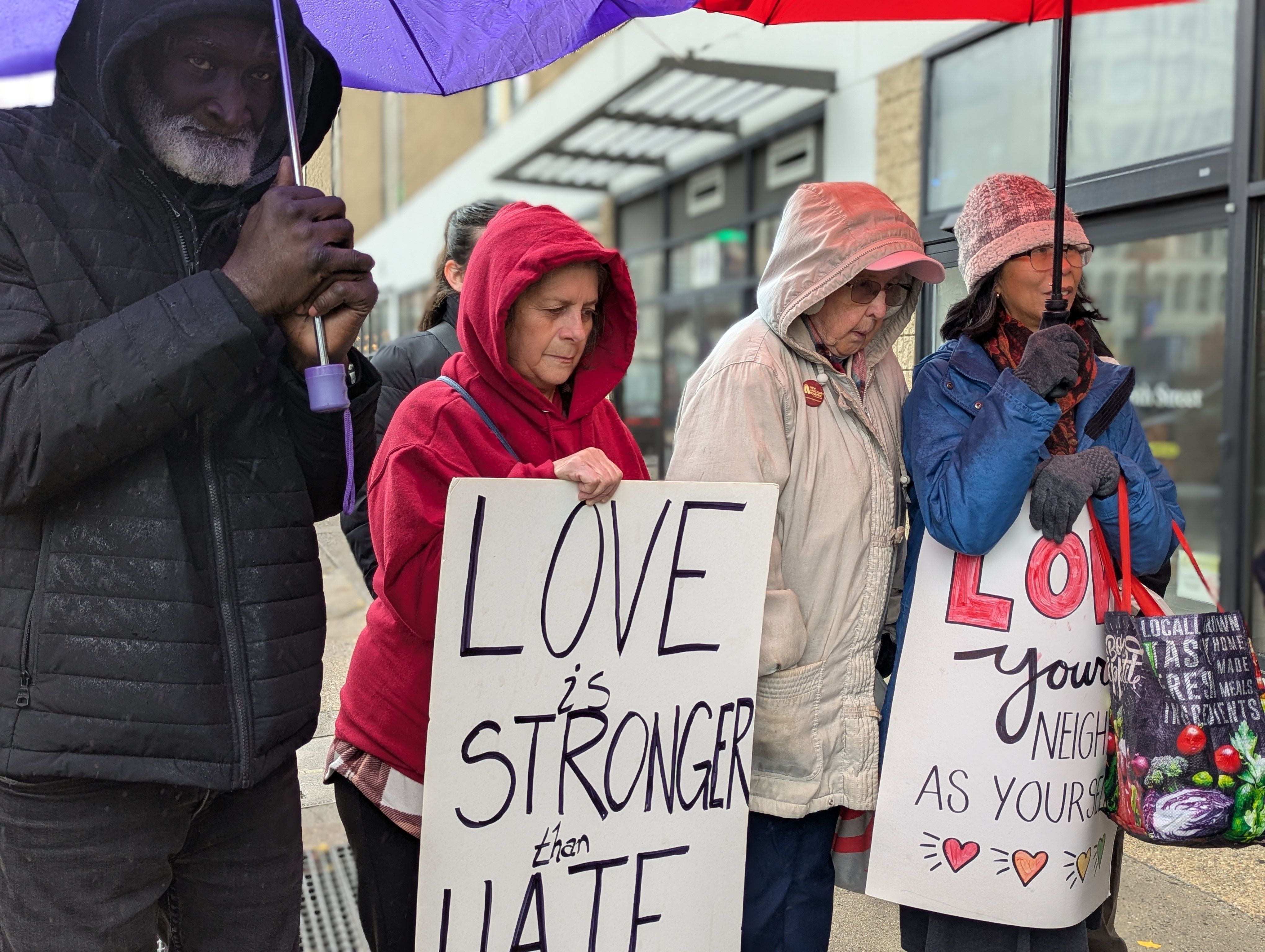
On a rainy Wednesday a week before Thanksgiving, members of the congregations of the Roman Catholic parishes of Holy Innocents and St. Joan of Arc gathered in front of the U.S. Immigration and Customs Enforcement office in Center City.
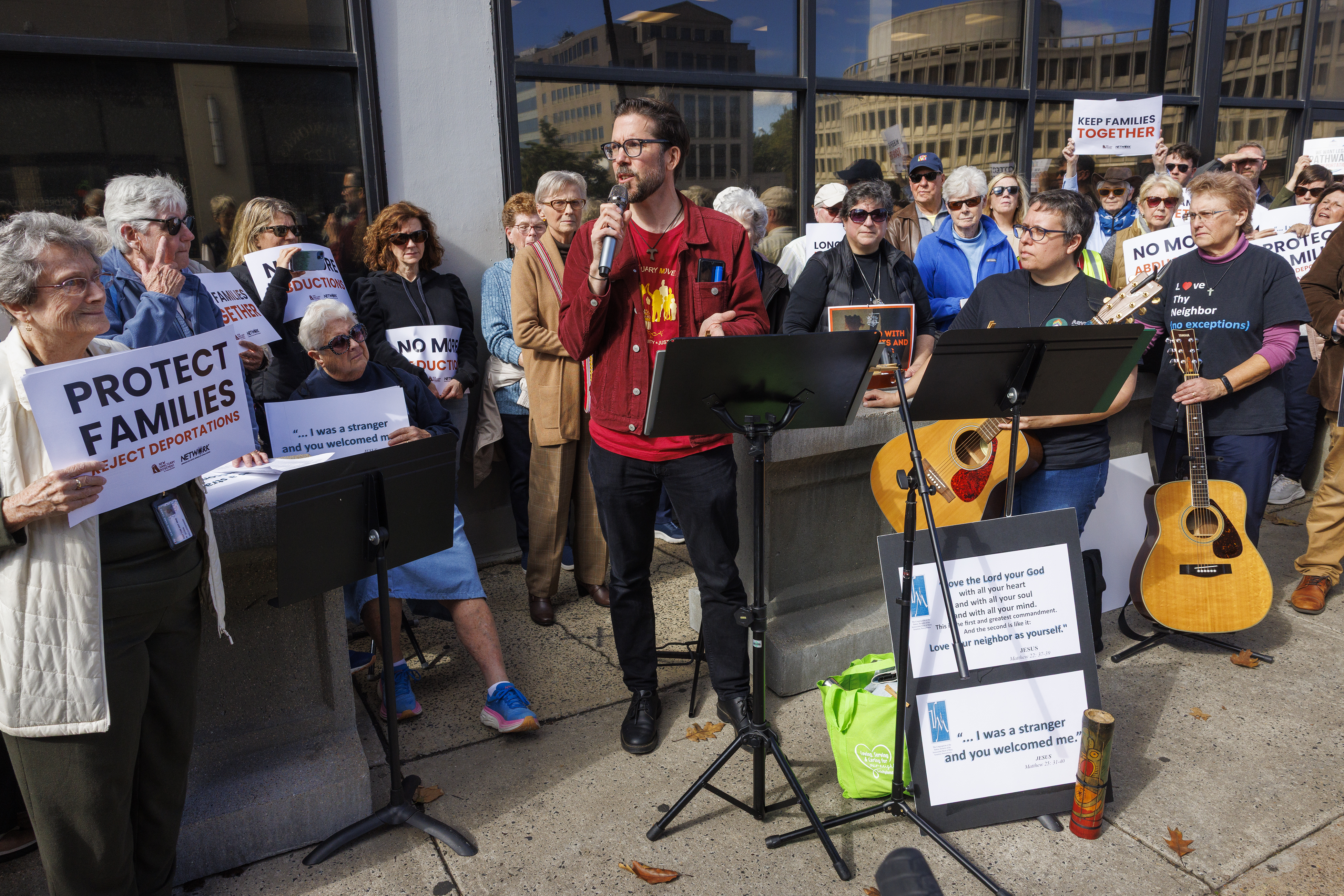
Another religious group appeared at ICE’s door near Eighth and Cherry Streets on the day before Thanksgiving. This time, it was an interfaith mix of folks led by Christianity for Living Ministries.
And there will be more. On Wednesdays to come, members of Mennonite Action, a couple of United Methodist churches, a Quaker meeting, two synagogues, a Presbyterian church, the Sisters of St. Joseph of Philadelphia and more Catholic parishes have all pledged to take part in a recurring demonstration that Neilson calls ICE Profest 40 — an ecumenical and interfaith action to oppose the government’s pitiless anti-immigrant crackdown slated to take place over 40 weeks. The word profest was coined by Neilson to mean “an amalgamation of faith expressed through proclamation, prayer, and protest.”
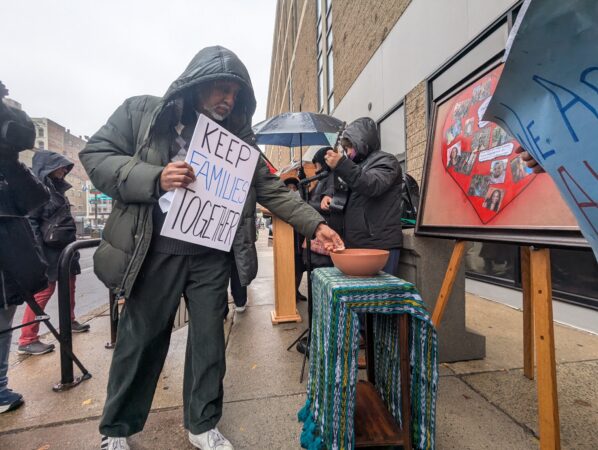
Members of the congregations of Holy Innocents and St. Joan of Arc parishes gathered Nov. 19 for an interfaith prayer vigil outside the ICE office in Center City. It was the kickoff of 40 weeks of vigils planned by faith communities across Philadelphia.
But organizers are hopeful that whatever their movement might lack in numbers, it more than makes up for in the power of their spiritual conviction — a conviction that is grounded in the Bible and other sacred texts.
“We proclaim God’s word of justice, mercy, and humility (Micah 6:8),” Neilson told me via email. “We pray for ICE agents and authorities (St. Matthew 5:44-45; St. Luke 3:24; 6:27-28; I Timothy 2:1-4), many of whom are conflicted and have crises of conscience. [We pray] for their courage, transformation, and turning, and for the protection and provision of the detainees and deportees, who are traumatized, from family separation and living in constant fear (Isaiah 1:17; Psalm 10:17-18; 82:3; St. Luke 4:18-19).”
“And,” he added, “we protest ICE activity, i.e., the orders ICE agents are given and the ways in which they are carried out, that dehumanizes and victimizes those created in the image and likeness of God [who] are our neighbors, and [which] disobeys and violates God’s command to welcome and love the stranger and alien (Leviticus 19:33-34; Deuteronomy 10:18-19; St. Matthew 25:31-46).”
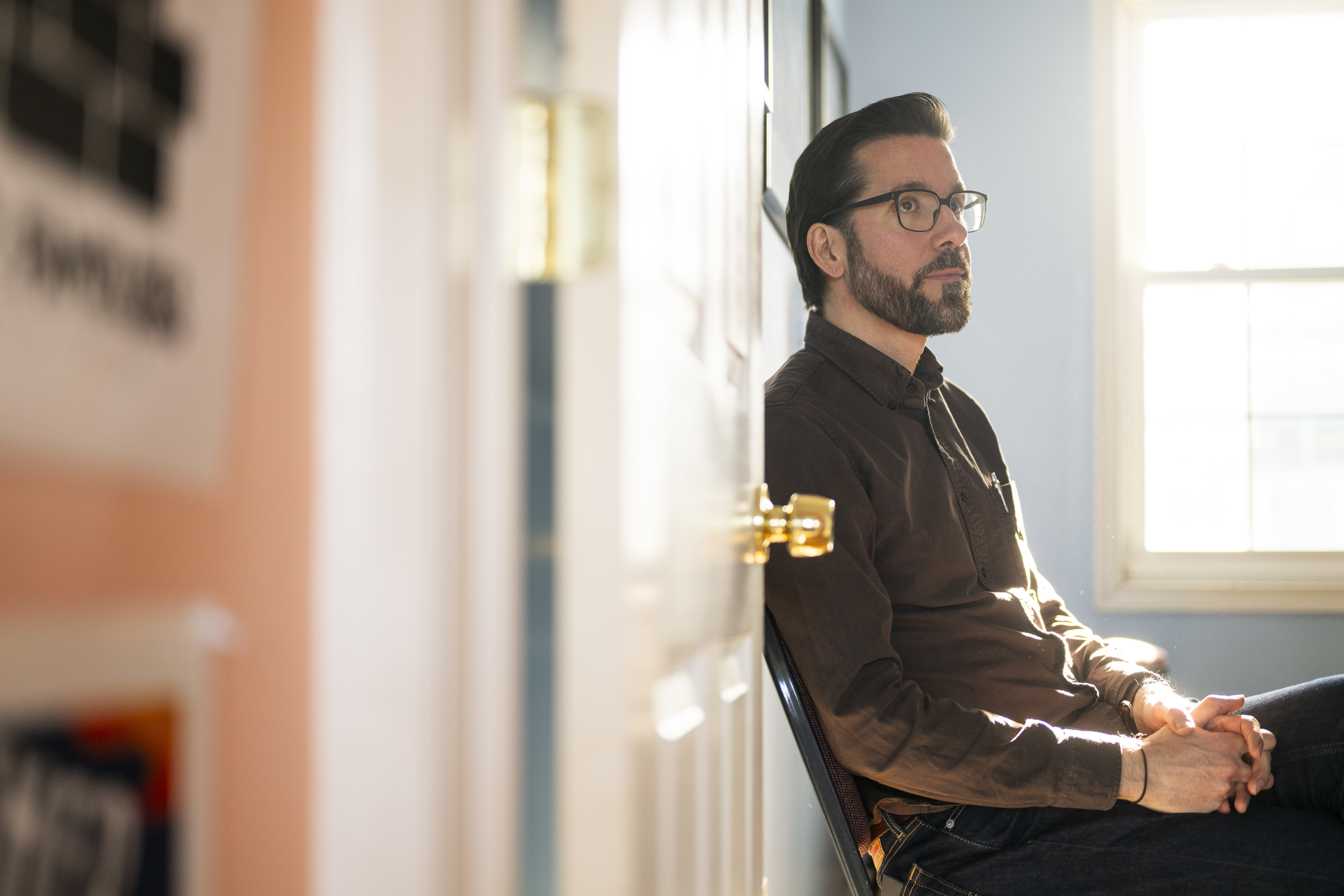
The Rev. Christopher Neilson said that demonstrators at the protests pray for detainees and deportees who have been traumatized by family separation and are living in fear. They also pray for the safety of ICE agents and that the organization’s leaders might change their policies.
The number of weeks — 40 — during which this will happen has biblical significance, Neilson said, as a period of transition from trial to transformation. (Think of the 40 days and 40 nights Jesus traveled in the wilderness before the crucifixion.)
For me, the timing of when ICE Profest 40 is gearing up is especially resonant.
We’re moving from Thanksgiving — a secular holiday which, in good years, I get to celebrate with a family that includes foreign-born and U.S.-born folks — into Advent.
The beginning of the liturgical year is when Christians like me move from anticipation to action as we wait to celebrate the birth of Christ into a humble, migrant human family. I love the hush that precedes a world on the brink of transformation. I suspect that is why the quiet power of ICE Profest 40 actions moves me so deeply.
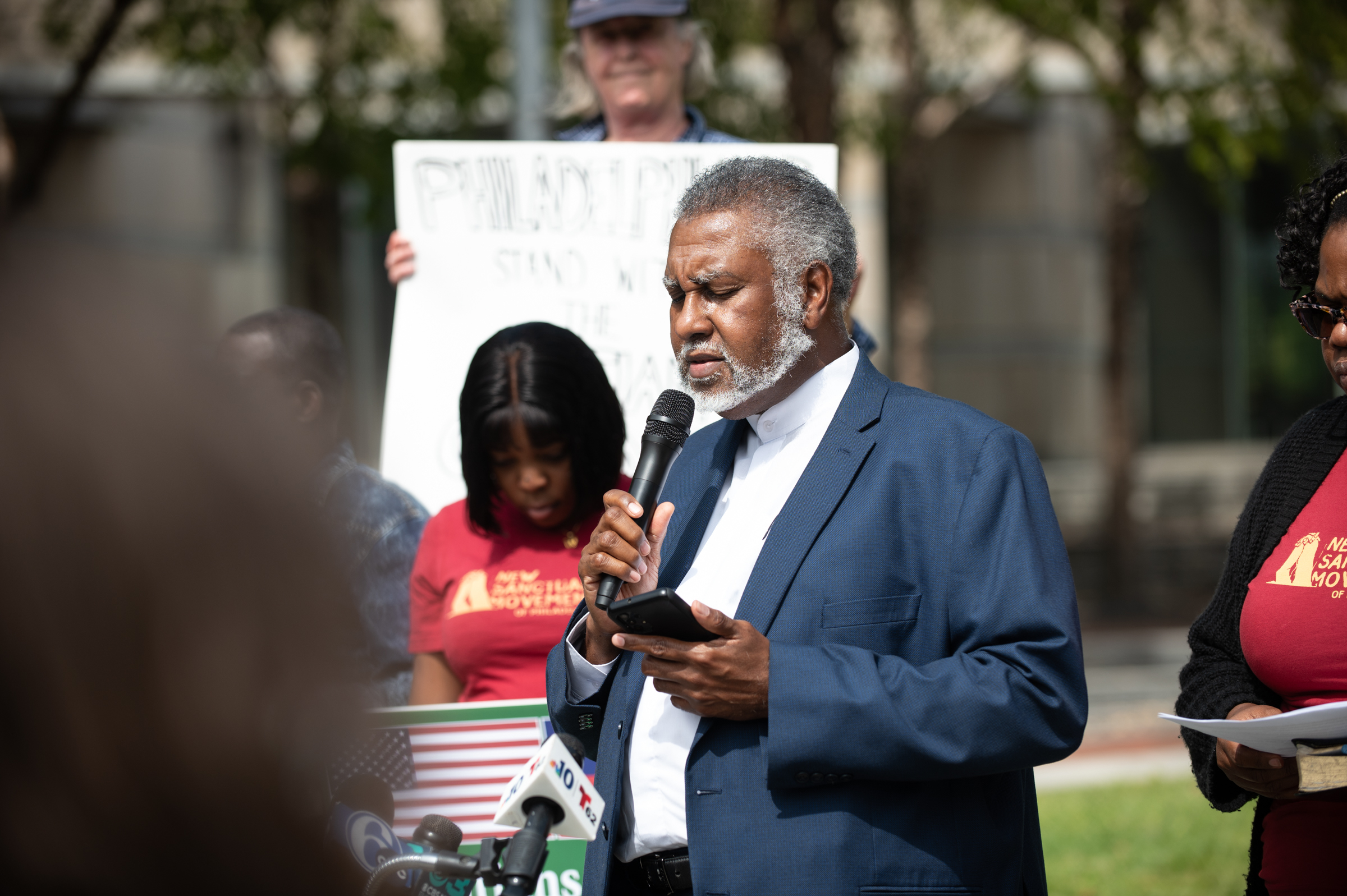
“The tone of these vigils is different,” Peter Pedemonti, the codirector of New Sanctuary Movement of Philadelphia, told me via email.
Peter Pedemonti, codirector of the New Sanctuary Movement, addressing Catholics gathered outside the ICE office at Eighth and Cherry Streets, in October.
“They are not as loud as a protest, but they have the potential for big impact,” he said. “We are seeing people sign up who are new to public witness, and so they serve as an entry into collective action. This is important as we fight not only the attacks on immigrant communities, but also Trump’s rapid steps toward authoritarianism. We need everyone right now, and it is really important we have paths for new people to get involved.”
“I have been doing faith-rooted organizing for nearly 20 years. These spiritual tools we have work. We can’t always see the immediate impact, but I have seen them help win campaigns. And so I believe that when we bring them to ICE, we are engaging in something powerful,” Pedemonti added. “The religious community has an important role right now. We are the moral voice, and when we see Trump trample our faith teachings and our democracy, it is critical [that] faith communities speak out.”
While my own faith tradition has long had priests, religious men and women accompanying immigrants and advocating for their rights, the United States Conference of Catholic Bishops has been pretty circumspect about commenting on the Trump administration’s policies.
But for Catholics who supported Trump — 55% overall (62% of white Catholics, 41% of Hispanic Catholics), according to the Pew Research Center — the Catholic bishops’ statement could serve as a come-to-Jesus (heh!) moment.
It is certainly a clear call for transformation during this most transformative of seasons.
I won’t speak for other people of faith, but for me, those are questions that go beyond political affiliation or temporal power, and touch on the “act justly, love mercy, and walk humbly” core requirements Neilson referenced.
On the first Sunday of Advent, one of the readings will be Isaiah’s proclamation that the people “shall beat their swords into plowshares, and their spears into pruning hooks; one nation shall not raise the sword against another, nor shall they train for war again,” and that throws me right back into the fact that both the Catholic bishops in their statement, and the Rev. Neilson in his description of the ICE Profest 40 vigils, reference ICE agents.
ICE agents aren’t wielding swords, of course, but they do carry firearms and other implements with which they smash the windows and doors of terrified immigrants. And with the proposal that military members could be “trained” by deployment to U.S. cities to support ICE and U.S. Customs and Border Protection agents, it’s not that much of a stretch to make Isaiah fit the moment.
I’m going to confess something now. I’ve prayed often for immigrants, never for ICE agents. In fact, I bristled a bit when I heard the bishops equating the vilification immigrants have experienced with the vilification of ICE agents — no one has accused ICE agents of eating pets, or separated them from their families, or turned them from legally residing to unauthorized in a moment.
But, as we saw with this week’s shooting of two National Guard members in Washington, D.C., those who have been asked to carry out the administration’s ill-conceived and oppressive policies may also be endangered by them.
The shooting reminded me of what Pedemonti told me: “If we want ICE to see the humanity of those they are persecuting, then we need to model that and see the humanity of ICE agents.”
“The religious community has an important role right now. We are the moral voice, and when we see Trump trample our faith teachings and our democracy, it is critical [that] faith communities speak out,” Peter Pedemonti said.
“We believe all people can change,” he added, “and so in the tradition of St. Óscar Romero, who called on soldiers in El Salvador’s authoritarian regime to put down their arms, we call for ICE agents to follow their conscience and refuse to follow orders, to leave people with their families, to leave the people in peace.”
I guess it’s time to broaden my prayers. Don’t get me wrong, my rosary (the one which, along with its crucifix and Our Lady of Guadalupe medallion, has monarch butterfly beads representing migrants) will still be in regular rotation with prayers for immigrant justice. But maybe the Romero quote with which I open my prayers using a niner that has his medallion will be different: I want to make a special appeal to soldiers, National Guard members, and policemen: Each of you is one of us.
The first candle we light at Advent represents hope, after all, and no matter how far away or unlikely the desired outcome appears, hope always leads to transformation.
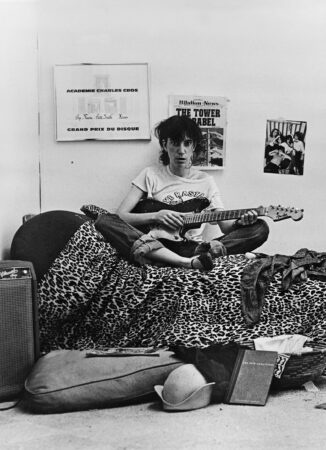
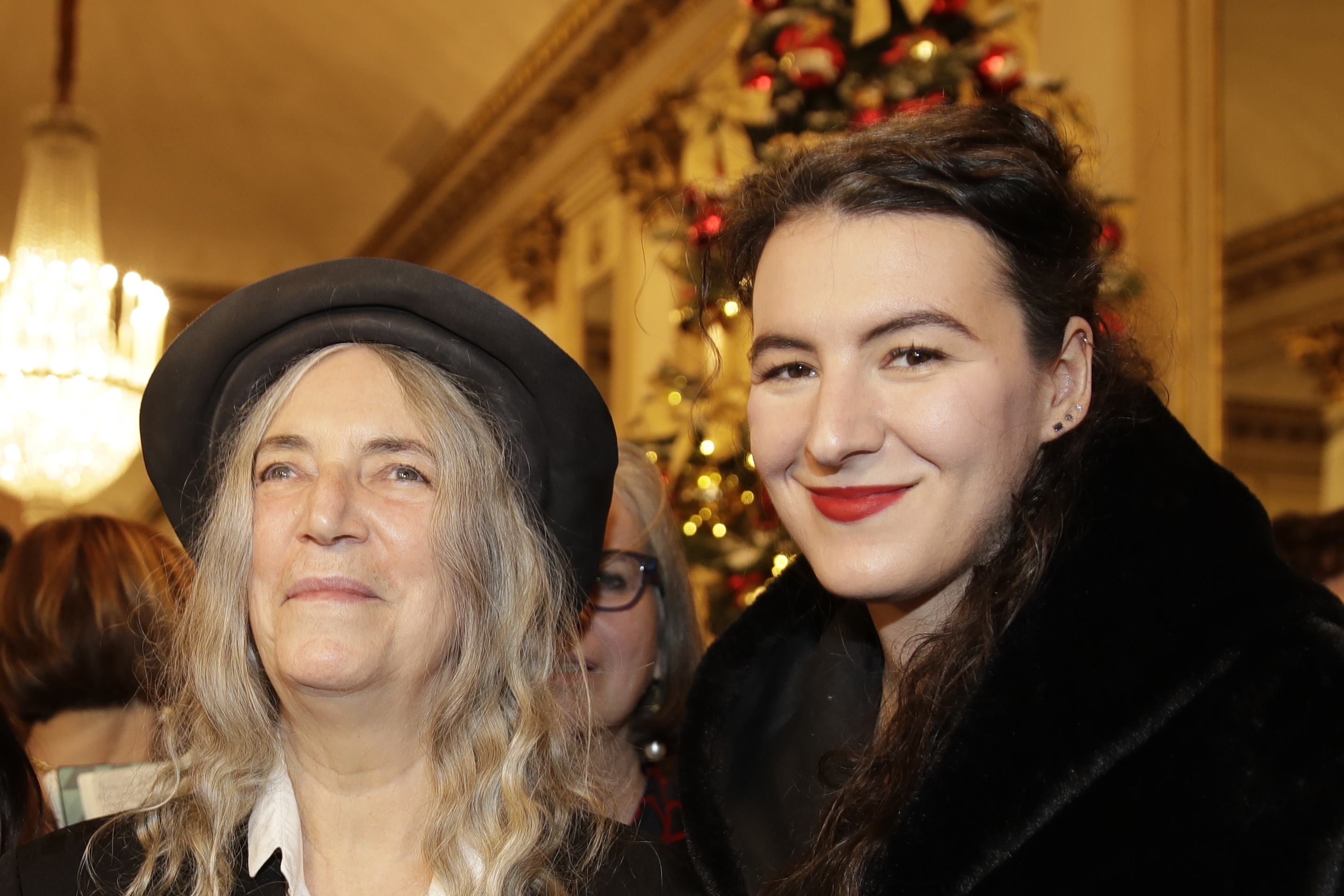
Patti Smith has been associated with New York for her entire public life.
In 1971, her first poetry and music performance was at St. Mark’s Church in-the-Bowery with Lenny Kaye on the guitar. Along with the Ramones, Talking Heads, Television, and Blondie, she was a vital force in the mid-1970s CBGB music scene.
And in 1975, she recorded Horses at Electric Lady Studios. That galvanic debut album made her an instant punk rock and feminist hero. On Saturday, she’ll celebrate its 50th anniversary at the Met Philly, with a band that includes Kaye, drummer Jay Dee Daugherty, bassist Tony Shanahan, and her son Jackson Smith on guitar.
“People think of me as a New Yorker,” Smith said, in an interview with The Inquirer from her home in New York.
“Well, I’ve lived in New York. But I was pretty much formed by the time I got to New York. The places that helped form me were Philadelphia and rural South Jersey.”
At the Met, Smith and her band will perform Horses in its entirety, starting with the take on Van Morrison’s “Gloria” that introduced her as a brash, provocative artist with one of the most memorable opening lines in rock and roll history: “Jesus died for somebody’s sins … but not mine.”
“It’s going to be a special night, because I hardly ever get to play with my son and daughter,” said Smith, who turns 79 on Dec. 30. “So I’m really, really happy about that, bringing my kids to Philadelphia.”
Bread of Angels, unlike her 2010 National Book Award-winning Just Kids, doesn’t zero in on a particular episode in the storied career of the enduring punk icon.
“Bread of Angels: A Memoir” by Patti Smith. MUST CREDIT: Random House
Instead, Bread takes the full measure of her life. It begins in Chicago where she was born before her parents moved back to Philadelphia while she was a toddler, and turns on a late-in-life DNA revelation that shakes up her conception of her own identity.
“I didn’t plan to do this book,“ Smith said. “Truthfully, it came to me in a dream.”
In her dream, she had written a book telling the story of her life in four sections. She wore a white dress, just as she does on the cover of Bread of Angels, in a 1979 photo taken by Robert Mapplethorpe.
“It was so specific, this dream, that it sort of haunted me. And I felt like it was a sign that perhaps it was a book I should write. …. It took quite a while.”
Bread of Angels is “a love letter to certain places.”
“Philadelphia when I was young,” she said. “I love Philly. And then down in rural South Jersey, and the places in Michigan I lived with my husband.”
Summaries of Smith’s life typically cite that she lived in Germantown before moving first to Pitman and then Deptford Heights in South Jersey, before moving to New York in 1967.
But Smith’s childhood was actually much more peripatetic.
“I think we moved nine times while we were in Philly,” she recalled, including stops in Upper Darby and South Philadelphia.
“My mother had three of us in rapid succession,” said Smith. It was after the war, and a lot of the rooming houses we stayed in absolutely didn’t allow infants, so my mother was always hiding the pregnancy or hiding the baby. And then we’d get found out and have to move again.”
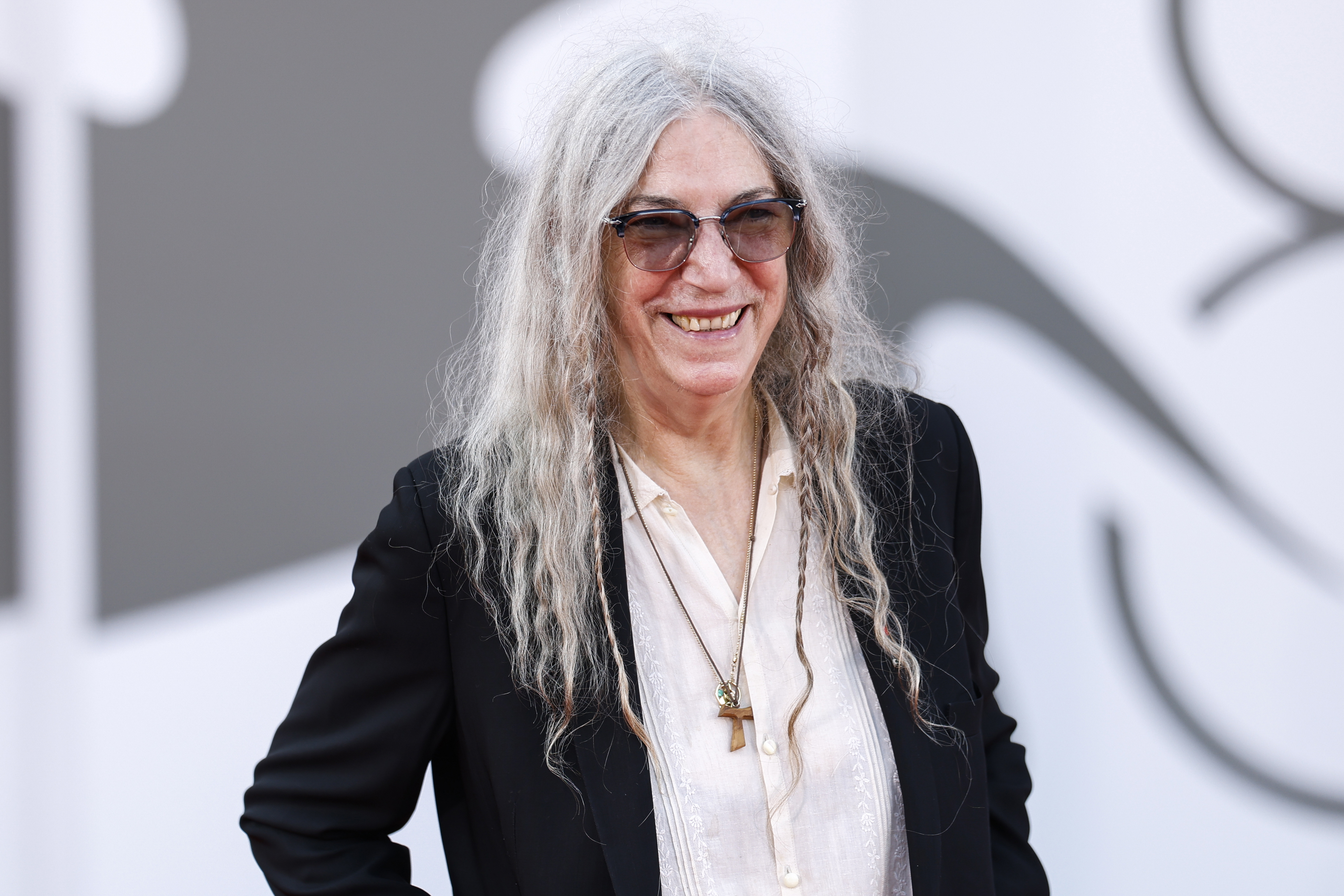
Patti Smith at the Venice Film Festival in Venice, Italy in 2024.
Her coming of age Philadelphia stories in the book evoke a happy, lower middle class childhood.
Living in a converted soldier’s barracks in Germantown she calls “the Patch,” she once beat all the boys and girls in a running race, but tripped and landed on a piece of glass, leaving blood rushing down her face. She was treated at Children’s Hospital, and rode a bicycle for the first time the following week.
“I left the perimeter of the Patch, pedaled up toward Wayne Avenue,” she writes. “I was six and half years old with seven stitches, and for that one hour, on that two-wheeler, I was a champion.”
On her seventh birthday, her mother, who then worked at the Strawbridge & Clothier department store at Eighth and Market, took her to Leary’s, the Center City bookshop that closed in 1968.
“Oh my gosh it was a wonderful bookshop,” she said. “On your birthday, you had to show your birth certificate and pay $1, and you could fill your shopping bag.”
Her bag, she said, was filled “with some very good books that I still own.”
A copy each of Pinocchio, The Little Lame Prince, an Uncle Wiggily book.
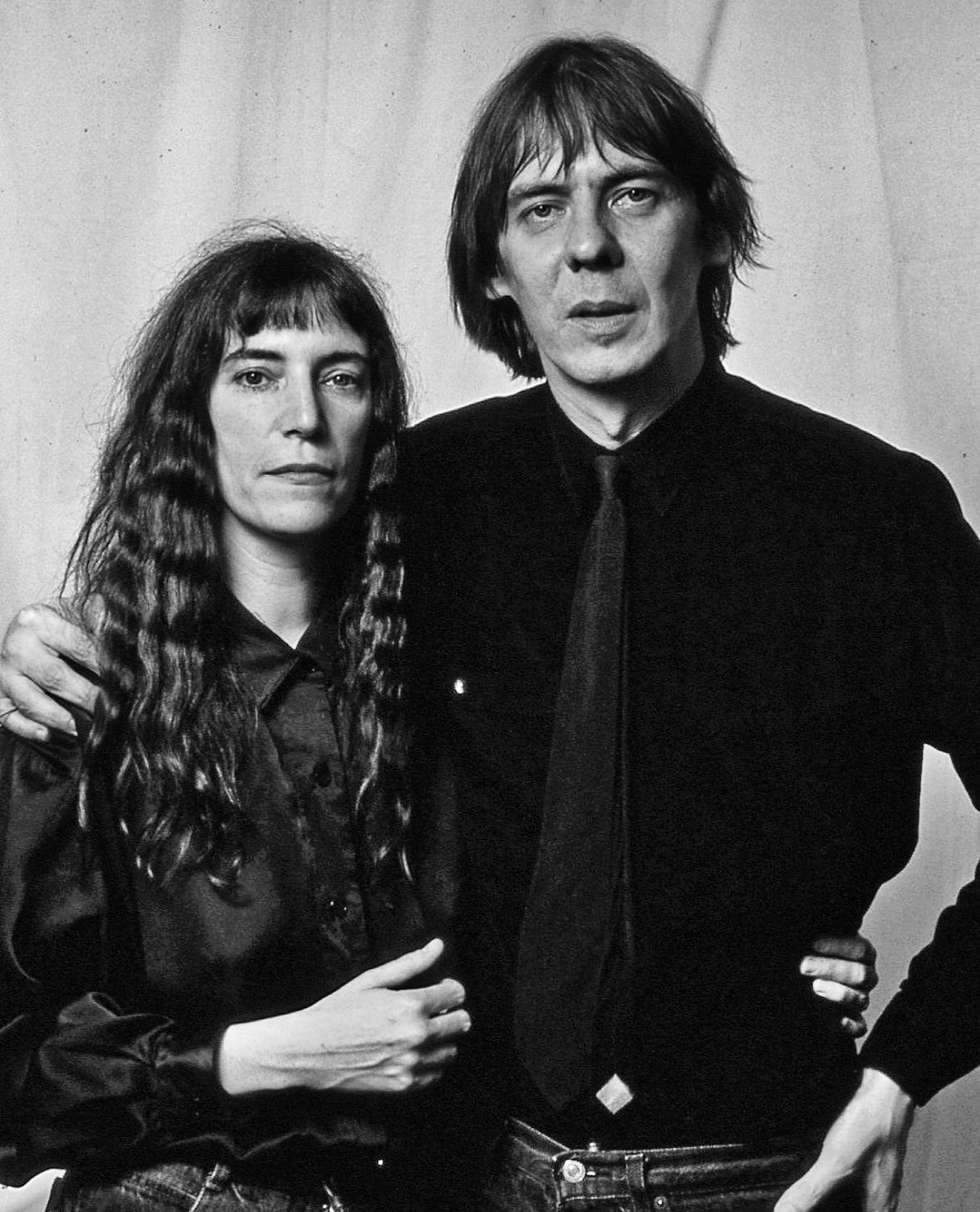
Patti Smith and her late husband Fred “Sonic” Smith, as pictured in “Bread of Angels,” her new memoir. Smith and her band will play the Met Philly on Nov. 29 on the final date of their tour celebrating the 50th anniversary of her 1975 debut album “Horses.” She will also appear on Dec. 1 at Marian Anderson Hall at the Kimmel Center in a Songs & Stories event on her Bread of Angels book tour.
As a Jersey teenager in the early 1960s, she had a crush on a South Philly boy named Butchy Magic. She once got stung by a hornet outside a dance, she writes in the book, and he looked deep into her eyes and pulled the stinger out from her neck.
“This is what the writer craves,” she writes. “A sudden shaft of brightness containing the vibration of a particular moment … Butchy Magic’s fingers extracting the stinger. The unsullied memory of unpremeditated gestures of kindness. These are the bread of angels.”
As in the book, Philadelphia loomed large over Smith’s childhood, well after the family moved to Gloucester County.
“It was our big city. It was where I discovered rock and roll,” she said.
She discovered art when her father Grant and mother Beverly took her and her younger siblings Linda, Kimberly, and Todd to the Philadelphia Museum of Art (now Philadelphia Art Museum). There, she fell for Pablo Picasso, John Singer Sargent, and Amedeo Modigliani.
“Culturally, it was the city that helped form me,” she said.
“It amazes me that half a century has gone by and people are still greatly interested in the material,” she said. “It’s a culmination of a period in my life.”
In 2012, when Smith and her sister Linda took DNA tests, Smith had already begun writing Bread of Angels. The result of the test was a shock: Grant Smith was not her biological father.
Her birth was actually the result of a relationship between Beverly Smith and a handsome Jewish pilot named Sidney who had returned to Philadelphia from World War II.
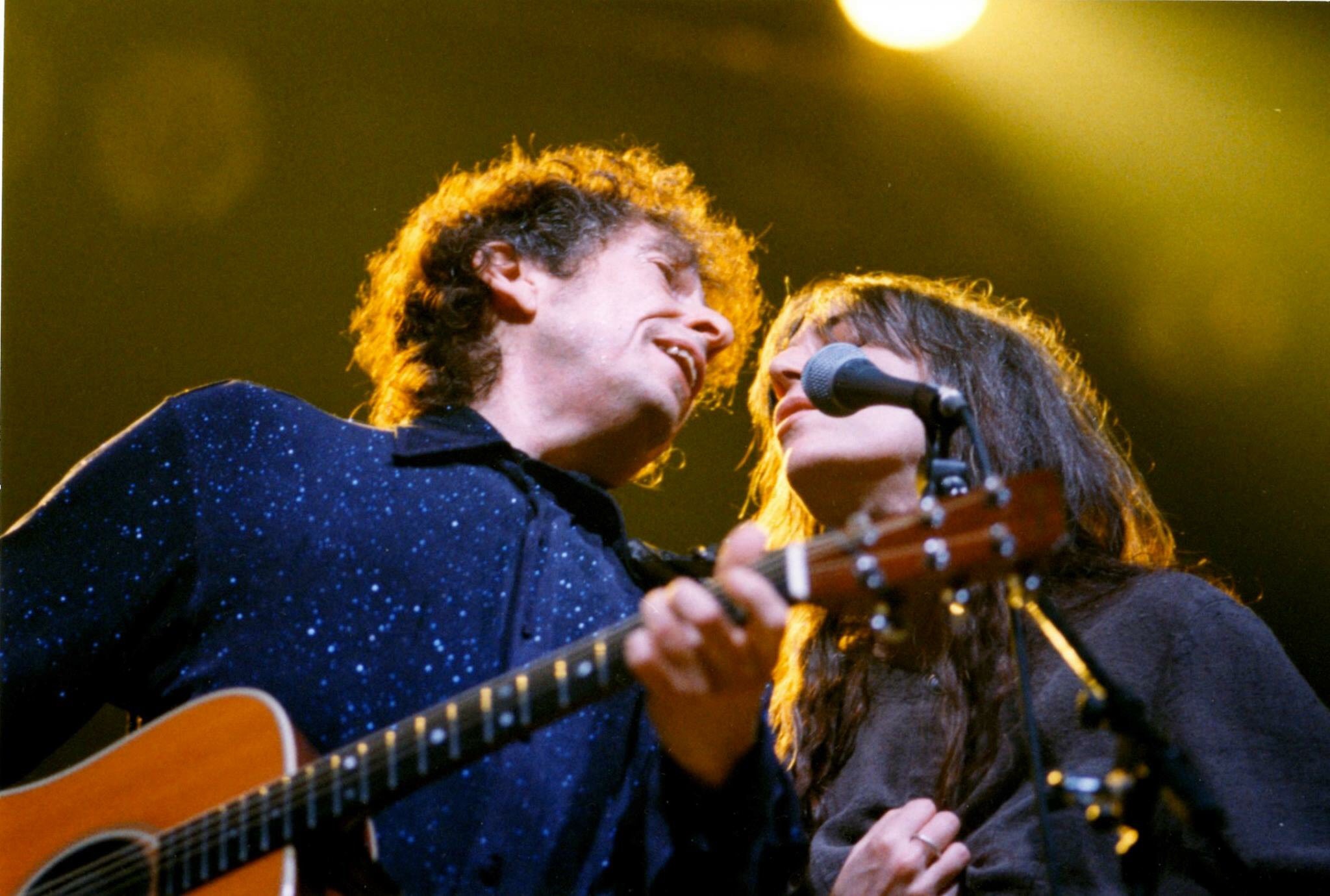
Bob Dylan and Patti Smith at the Electric Factory in Philadelphia in 1995.
“It was completely unexpected,” Smith said. “My mother was a great oral storyteller, but none of her stories gave any indication that I was fathered by a different man. … She certainly kept that a secret from everyone.”
Of the emotions Smith felt, one was “some sorrow,” she said. “Because I loved and admired my father. I felt sad because I didn’t have his blood. But I modeled myself after him so much. All of those things remain.”
She stopped work on Bread of Angels for two years.
“I didn’t know how to deal with it. Is this book false? Do I have to rewrite everything? And then I realized I didn’t have to rewrite anything. My father is still my father. But you can also show gratitude to the man who conceived with my mother. Who gave me life. So I figured it out. I have two fathers.”
Her mother, father, and biological father had all died by the time she learned the news of her parentage.
Some of Smith’s self-confidence — evident in the way she spells out “G-L-O-R-I-A!” — “might have come from the biological father I never knew,” she said. “He was a pilot. When he was young, he had this tough job. I’ve met a few people who knew him. They said he was very kind and good-hearted. He loved art, he loved to travel. He had not a conceited, but a self-confident air.
“I’ve always had that, and wondered where it came from,” she said. “I’ve always possessed that kind of self-confidence. I’ve never had trouble going on stage. So I think I have to salute my blood father, right?”
In Bread of Angels, Smith recalls her early life in Philly, and writes: “I did not want to grow up. I wanted to be free to roam, to construct room by room the architecture of my own world.”
Seven decades later, she’s still doing that, as she continues to create and perform for adoring audiences around the world.
“I have stayed in contact with my 10-year-old self, always,” she said. “I still carry around the girl that had her dog, and slept in the forest, and read [her] books, and got in trouble, and didn’t want to grow up.”
Patti Smith and daughter Jesse Paris Smith in Milan, Italy, in 2019.
She turns 80 next year.
“My hair is gray to platinum. I understand my age. I’ve had my children, and have gone through a lot of different things. But I still know where my 10-year-old self is. I still know how to find her.”
Patti Smith and Her Band perform “Horses” on its 50th anniversary at the Met Philly, 858 N. Broad St. at 8 p.m. Saturday, themetphilly.com.
“Patti Smith: Songs & Stories” at Marian Anderson Hall, 300 S. Broad St., at 7 p.m. Monday, ensembleartsphilly.org
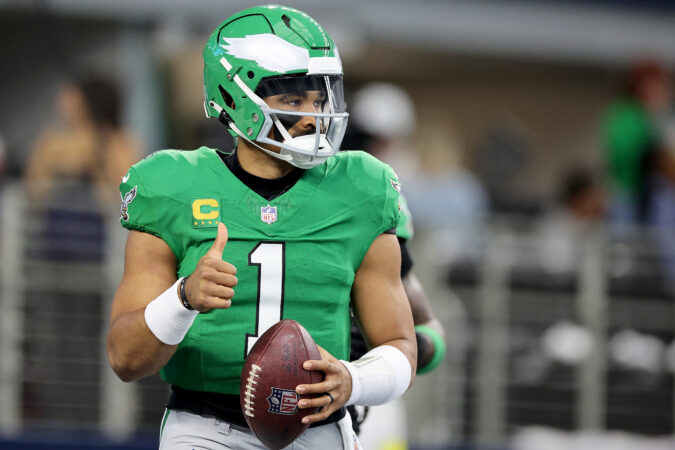
The Eagles and Bears meet for a Black Friday afternoon game with playoff positioning at stake at Lincoln Financial Field.
Can the Eagles bounce back after blowing a 21-point lead Sunday to the Dallas Cowboys on the road? Or will the upstart Bears pull off their signature win of the season?
Discount deals and Eagles football. Happy Black Friday to all.
Perhaps Sunday’s result and the current trends of this Eagles offense don’t have you feeling festive for football this weekend. But fear not, the Eagles are touchdown favorites for a reason.
Sure, the Bears are 8-3 after winning four consecutive games. But they’re doing the thing that teams do sometimes when they’re turning a corner after some down seasons: taking advantage of an easy schedule. Their win Sunday vs. the Steelers, 31-28, was their first against a team with a winning record.
The offensive numbers with Ben Johnson in charge have been impressive, though. Chicago ranks 11th in expected points added/pass and eighth in EPA/rush, and that running success allows Caleb Williams to throw the third-highest percentage of play-action passes (31.3%) in the NFL. The Eagles have really struggled there, and Dak Prescott made them pay quite a few times.
Why could Friday be different? The Eagles should be able to pressure Williams more than he usually is.
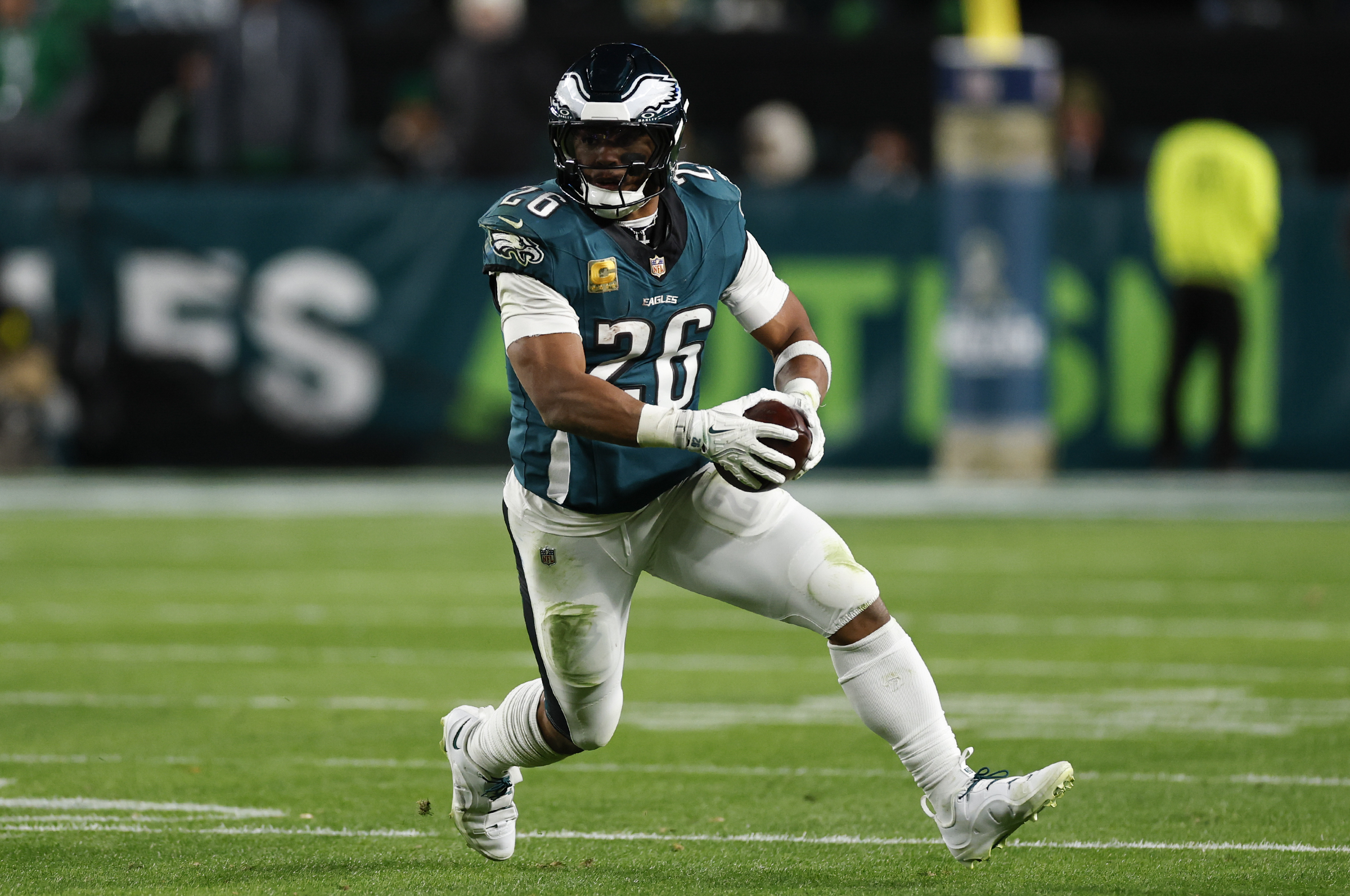
Could this be the week when Saquon Barkley pops off in the running game?
Flipping to the other side of the ball, it’s Chicago’s defense that gives the Eagles an advantage, especially considering the Bears are down multiple defensive starters. If there was a get-right game for the Eagles’ ailing running game, this is it. The Bears allow an average of 138.1 yards on the ground, fifth-worst in the NFL. They allow the second-most rushing yards per before contact per rush (2.01). I wouldn’t be at all surprised if Friday is Saquon Barkley’s second game over 100 yards.
If not, and if the Eagles can’t get the running game going against this team, especially with its injuries, the problems plaguing them are more worrisome than we all thought. The run will open up the pass, and the Eagles won’t spoil your leftovers.
Much like last week, the Eagles shouldn’t underestimate the Bears, especially given the state of their offense right now. The Bears defense ranks near the bottom of the league in average yards against (363; No. 27), but they do certain things pretty well. They have a league-high 24 takeaways. (Former Eagles safety Kevin Byard and cornerback Nahshon Wright are tied for the league lead with five interceptions apiece.)
They’ve also been the NFL’s best defense on third-and-long. The Eagles, meanwhile, have one of the worst third-down conversion rates overall (35%) and have a penchant for committing negative plays and penalties that put them behind the sticks.
But in theory, the Eagles should be able to get the running game going against this Bears defense. Their linebacker corps is banged up. The Bears have given up 470 rushing yards over the last three weeks, the third-highest total in the NFL in that span. They’re conceding 5.3 yards per carry in that same time frame.
If the Eagles can’t run the ball on the Bears, it’s officially time to sound the alarm (if the red flags haven’t already been there). My faith in the Eagles’ rushing attack is dwindling, though, especially in the aftermath of Barkley’s 2.2 yards per carry against the Cowboys on Sunday. Barkley isn’t the only issue — the offensive line has been struggling to run block for him all season long.
I had this game as a win for the Eagles before the season started. But given the state of the Eagles’ offense over the last few games, I’m picking a narrow upset.
Pennsylvania’s Department of Health investigated several complaints at the Children’s Hospital of Philadelphia between October 2024 and September of this year but did not cite the hospital for any safety violations.
Here’s a look at the publicly available details:
Oct. 30, 2024: Inspectors came to investigate a complaint but found the hospital was in compliance. Complaint details are not made public when inspectors determine it was unfounded.
Jan. 27, 2025: Inspectors came to investigate a complaint but found the hospital was in compliance.
Feb. 18: Inspectors came to investigate a complaint but found the hospital was in compliance.
March 11: Inspectors came to investigate a complaint but found the hospital was in compliance.
May 15: Inspectors came to investigate a complaint but found the hospital was in compliance.
Many Americans are deeply unhappy with their financial situation, and with good reason. They are grappling with a serious affordability squeeze.
Prices for many things, from groceries to car insurance, are high and continue to climb. Meanwhile, pay increases are slowing as job growth has stalled and unemployment is on the rise.
Americans’ unease with their finances is apparent in the long-running University of Michigan survey of consumer sentiment. This survey of consumers’ financial well-being has been conducted monthly since the early 1950s, and in the past few weeks, the responses have been about as weak as ever.
The survey likely overstates consumers’ collective gloominess, as political biases are increasingly shaping people’s feelings about almost everything, including their finances. Democrats have been more glum than Republicans since President Donald Trump’s election, whereas the opposite was true under President Joe Biden. Even so, the survey results send a loud and clear message.
The angst over affordability was also front and center in the recent election results. The cost of living was far and away the top concern of voters in New York City’s mayoral race, and in the governors’ races in New Jersey and Virginia. The high and rising cost of electricity, healthcare, and housing were especially prominent in voters’ decisions.
The affordability squeeze has been a long time in the making.
Prices jumped during the COVID-19 pandemic, as global supply chains and labor markets were upended. Then, the Russian invasion of Ukraine drove up food prices, and at the height of the economic fallout from that war, the cost of a gallon of gasoline reached a record $5 in some U.S. locations.
Adding to Americans’ financial pain, the Fed aggressively raised interest rates in an effort to slow the economy down and rein in the high inflation. This exacerbated the affordability squeeze, particularly with the cost of homeownership.
Prior to the pandemic, the typical monthly mortgage payment was no more $1,000. Once the Fed had finished increasing rates, the monthly payment was well over $2,000. Homeownership, a key part of Americans’ definition of financial success, is completely out of reach for most.
Despite all of this, it did appear, coming into this year, that the worst of the affordability squeeze had passed. Inflation was quickly receding and headed back toward the Fed’s inflation target. Fed officials were so confident in this forecast that they began cutting interest rates.
But, alas, the forecast was wrong. The Trump administration’s higher tariffs, highly restrictive immigration policy, and broader de-globalization efforts have upended that outlook.
De-globalization scrambles global supply chains, which raises costs, reduces competition, weakens productivity growth, and leads to labor shortages. Inflation now appears set to remain uncomfortably high for the foreseeable future. The affordability squeeze is intensifying again, leading to renewed anguish among consumers and voters.
De-globalization is also weighing heavily on the job market and incomes, adding to the country’s affordability woes. Job growth has come to a virtual standstill, as businesses, unsure of how the tariffs and other policies will play out, enact hiring freezes. They aren’t all laying off workers — that would be a recession — but they’ve done everything but.
Unemployment remains low, but it is steadily increasing, particularly for younger workers seeking new employment opportunities. Wage growth is thus throttling back.
The upcoming cuts to federal government benefits for lower-income households, included as part of the One Big Beautiful Bill Act, will worsen the affordability problem. Tax subsidies to help pay for the cost of health insurance under the Affordable Care Act have been scaled back, and cuts to the Medicaid program and SNAP, the food assistance program, are looming. As these programs are cut back, the cost of living for families reliant on them will increase.
Congress appears to have taken the election results to heart and seems to be focused on ways to ease the affordability squeeze. Lawmakers are holding hearings on how to reduce the financial burden on Americans from electricity, food, healthcare, and housing costs. But this won’t be easy, as there are no slam-dunk legislative solutions.
Trump has proposed providing a $2,000 stimulus check to families with an annual income of less than $100,000 — similar to the checks sent during the pandemic. Of course, like then, this might merely provide temporary financial relief, as it boosts consumer spending, pumps up inflation, and ultimately worsens the affordability squeeze.
The quickest way to address the affordability squeeze is to relax tariffs and immigration policies. The president has taken this approach on a case-by-case basis, reducing tariffs on bananas, beef, and coffee, and halting some ICE raids on agricultural workplaces that heavily rely on immigrant workers.
However, it remains to be seen if he will further backtrack on his signature economic policies. If not, the affordability squeeze and the tough financial times facing many Americans are sure to persist.
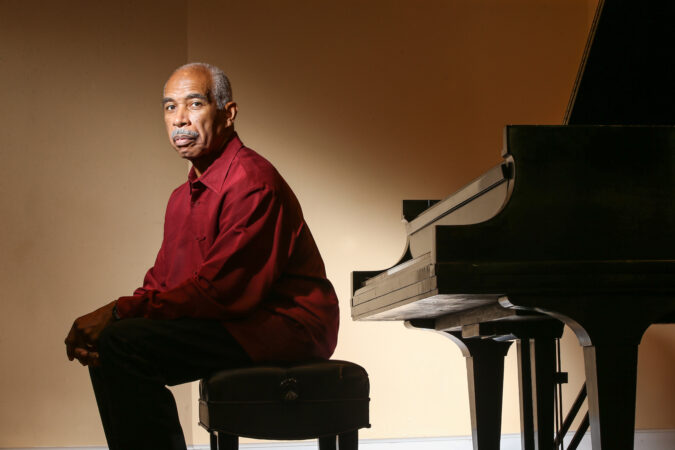
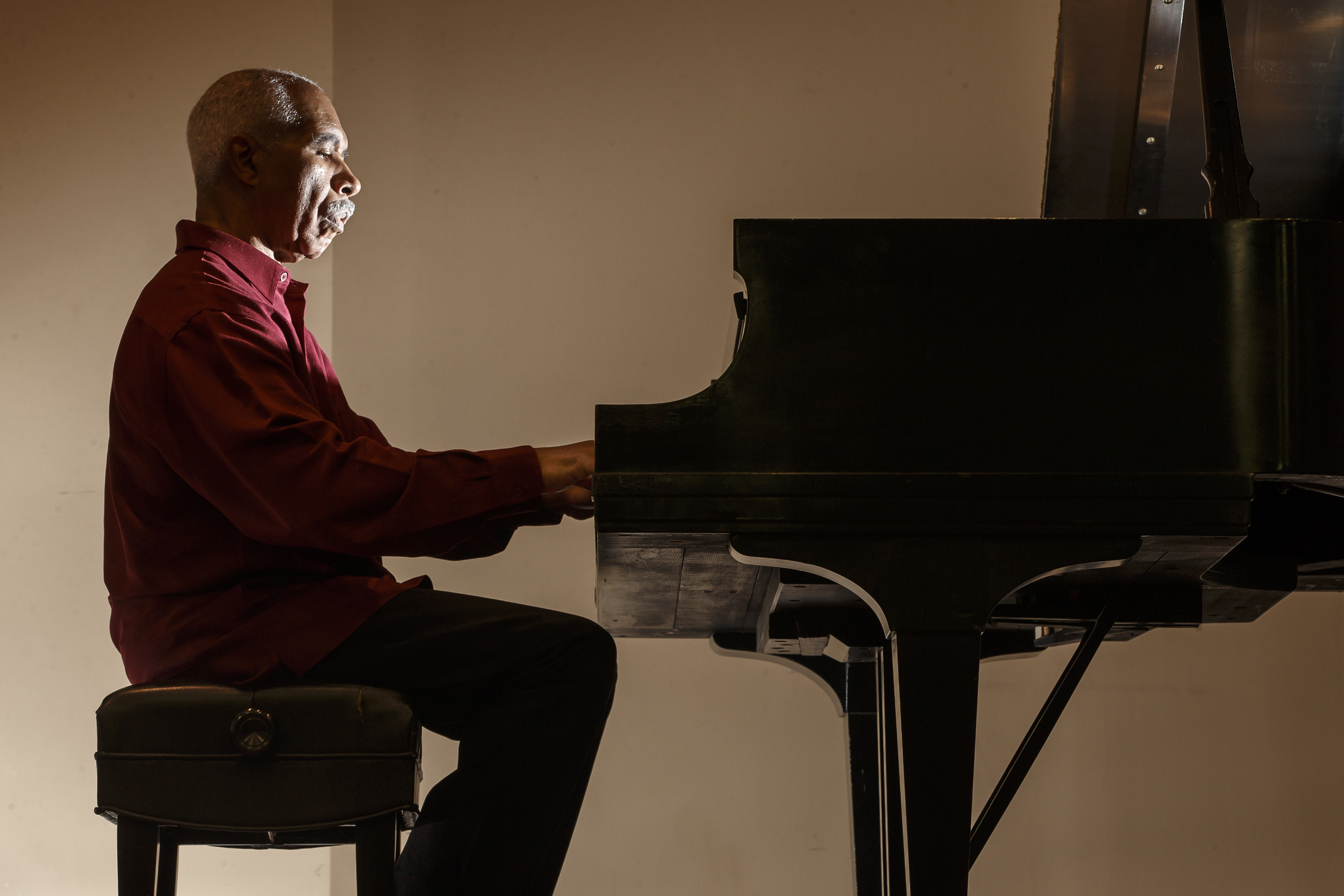
Concert pianist Leon Bates, whose musical authority and far-reaching versatility took him to the world’s greatest concert halls, died Nov. 21 after a seven-year decline from Parkinson’s disease. He was 76.
An articulate, charismatic presence, Mr. Bates was a Philadelphia born and educated pianist, and while growing up in Germantown, showed talent as early as age 6.
He started formal study at Settlement Music School and graduated from Temple University’s Boyer College of Music, where he studied under the legendary Natalie Hinderas. In his final student recital, Mr. Bates played Ravel’s fearsome Gaspard de la Nuit.
As a leading figure in the generation of Black pianists who followed the early-1960s breakthrough of Andre Watts, Mr. Bates’ dream-come-true career encompassed Ravel, Gershwin, and Bartok over 10 concerts with the Philadelphia Orchestra between 1970 and 2002. He played three recitals with Philadelphia Chamber Music Society and taught master classes at Temple University, where he also gave recitals at the Temple Performing Arts Center.
Though he maintained residency in Philadelphia with his wife and three children in Mount Airy, Mr. Bates toured the great concert halls of Europe, China, South Africa, and America, often playing 100 concerts a year. His forceful repertoire of Rachmaninoff and Liszt was partly enabled by his hobby — body building — and the stamina that came with it.
“What set Leon Bates apart was his genuine character and the way he focused on the music above all else. He impacted countless lives through his generosity, his example, and the depth of his artistry,” wrote his student of 10 years, pianist Dynasty Battles, on Instagram. Beyond that, added Battles, Mr. Bates showed him how every concert program could be “a journey” and that rich, “radical” elements in music were already there to be found.
Pianist Leon Bates in 2018
Mr. Bates’ sense of communication was illustrated by how he embraced outdoor concert settings. In such acoustically risky circumstances, he performed at Chicago’s Grant Park, played Rhapsody in Blue in the July 4, 1995 Concert on the Parkway at the Philadelphia Museum of Art, and, with the Duke Ellington Orchestra, had an audience of 20,000 at Rome’s Olympic Stadium.
In less-recreational settings, Mr. Bates’ Philadelphia Chamber Music Society programs were a high-style mixture of the lesser-known and the familiar: Edward MacDowell and Samuel Barber, for example, were followed by the mighty Liszt Sonata in B Minor.
Most adventurous of all was his 2018 recital that he did not personally perform due to his Parkinson’s diagnosis, but had students and other associates step in to play Ives and George Walker. In his prime, Mr. Bates premiered new works by living Black composers such as Walker’s Piano Sonata No. 3 and the Adolphus Hailstork Piano Concerto No. 1, in performances acclaimed for the same commitment he brought to masterworks of the past.
“When you really are involved in the process of making music, it’s something that’s with you when you’re sleeping, when you’re awake, when you’re relaxing, when you’re truly focused on working at the instrument,” he told Chicago-based journalist Brice Duffie during an in-depth 1991 interview. “It is the sum total of all of that time together that really produces what people get when they see the performer come out on stage.”
Besides being a fine pianist, Mr. Bates was also a great talker. He traveled with two prepared lectures — one on the 1954 Brown v. the Board of Education Supreme Court ruling that declared school segregation unconstitutional, and the other, titled “American Originals,” on modern American composers.
“Leon offered school shows where he often dressed in the local football team’s jersey. No suits or ties — just to connect visually with the students,” recalled his longtime agent Joanne Rile. In his WRTI-FM radio show titled Notes on Philadelphia during the 1990s, Mr. Bates was what Charles Abramovic, chair of the Temple University keyboard studies, described as “beautifully articulate and a wonderful interviewer. The warmth of personality came out. He was such a natural with that.”
And he was fun, says fellow-Philadelphia-born Lambert Orkis, now professor of piano at Temple, who was among the musicians interviewed on the show.
Even during interviews, the Bates body-building regimen didn’t let up with his squeezing a rubber ball for hand exercise, and inevitably exposing his impressive musculature.
When tapped to choose a Steinway piano to reside at the Temple Performing Arts Center, Mr. Bates “was looking for projection and power that were hallmarks of his playing,” recalls Abramovic. The Parkinson’s symptoms were noticed by others before he did — though he bore the onset of the disease with public dignity.
He declared, “My spirit is still there.”
Mr. Bates made numerous recordings and received an honorary doctorate from Washington and Lee University in Lexington, Va., as well as the Raoul Wallenberg Humanitarian Award from the Greater New York Wallenberg Committee.
He is survived by his wife of many years, Jocelyn; his three sons, Christopher, James, and Jock; and five grandchildren.
Details for a memorial service will be announced at a later date.
Philadelphia nearly experienced its own nightmare before Christmas this year, with the closure of the Center City Macy’s and the iconic, beloved holiday light show.
Capitalism can’t stop Christmas traditions, though. The light show is back, and across the region, people are buying Christmas trees, prepping for Hanukkah, and preparing for Kwanzaa events this week.
One simple way to get in the spirit? Visit one of the many holiday light shows, from neighborly displays to events steeped in decades of history and nostalgia.
Philadelphia and its suburbs offer plenty of options. Here are some of the best.
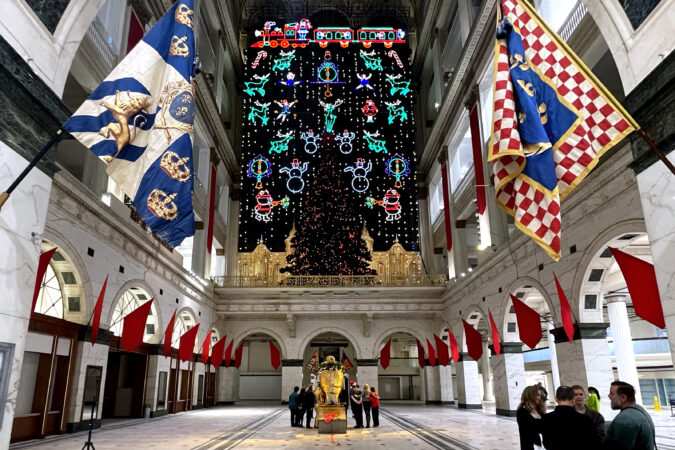
The decades-old holiday tradition is back at Center City’s shuttered Macy’s, with a new name and, possibly, an entirely better experience. With more than 100,000 LED lights, the Wanamaker Light Show remains free to the public. What makes the Wanamaker Building so magical is the melodies booming throughout the cathedral-like department store from the century-old organ, one of the largest in the world. Enjoy the massive light show beginning on Black Friday. The show operates Wednesday to Sunday from noon to 8 p.m., through Dec. 11. Starting Dec. 12, there are daily shows from noon to 8 p.m. The final day for the show is Christmas Eve, from noon to 4 p.m.
According to Visit Philadelphia, the Wanamaker Building will undergo renovations after the holidays, and the light show may be on hiatus for several years.
🕒 Through Dec. 24, daily, various times, 💵 Free, 📍1300 Market St., Philadelphia, Pa. 19107, 🌐 visitphilly.com
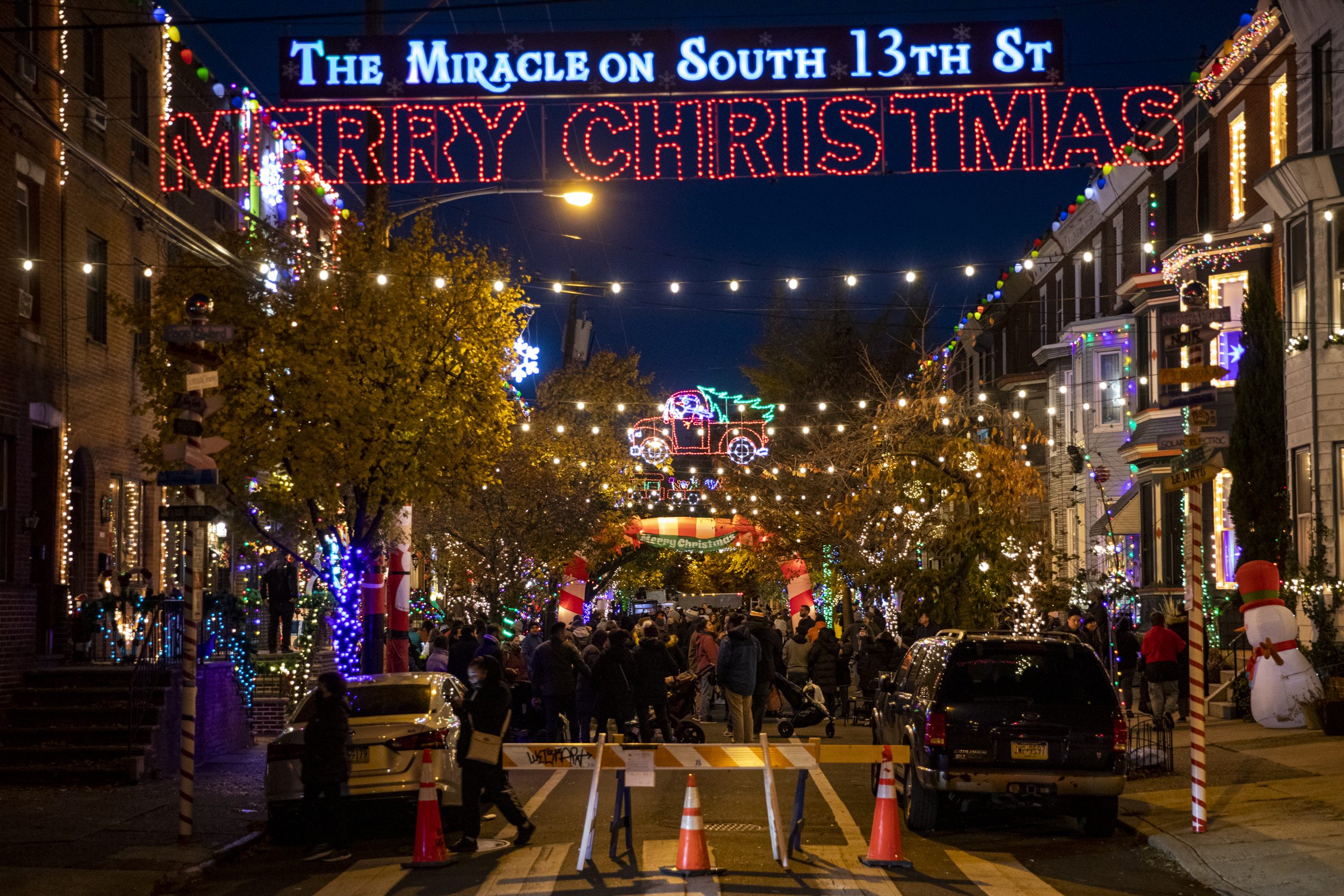
The Miracle on South 13th Street block party filled with Christmas lights and decorations in South Philadelphia, on Saturday, Nov. 27, 2021.
Nothing spreads holiday spirit more than neighbors coming together to remind us what it’s all about. Since the ‘90s, residents of the 1600 block of South 13th Street in East Passyunk have transformed their street into a Christmas light show so spectacular that Peco must see a spike in usage. The show opens with a block party on Nov. 29 from 5 to 9 p.m. with face painting, balloon art, and a 6 p.m. special guest from the North Pole.
🕒 Through Jan. 1, daily, 5 to 10 p.m., 💵 Free, 📍 1700 S. 13th St., Philadelphia, Pa. 19148, 📷 @themiracleonsouth13thstreet
It was opening night for Winter in Franklin Square featuring the Electrical Spectacle Light Show presented by PECO.
Celebrate the holidays in Franklin Square, a park older than the Declaration of Independence, where each year the Electrical Spectacle Holiday Light Show illuminates the plaza along with classic Christmas songs. The event includes mini golf, street curling, and seasonal sweet treats and cocktails at Frosty’s Fireside Winter Pop-Up Bar.
🕒 Through Feb. 23, various times, 💵 Free, 📍200 N. Sixth St., Philadelphia, Pa. 19106, 🌐 historicphiladelphia.org
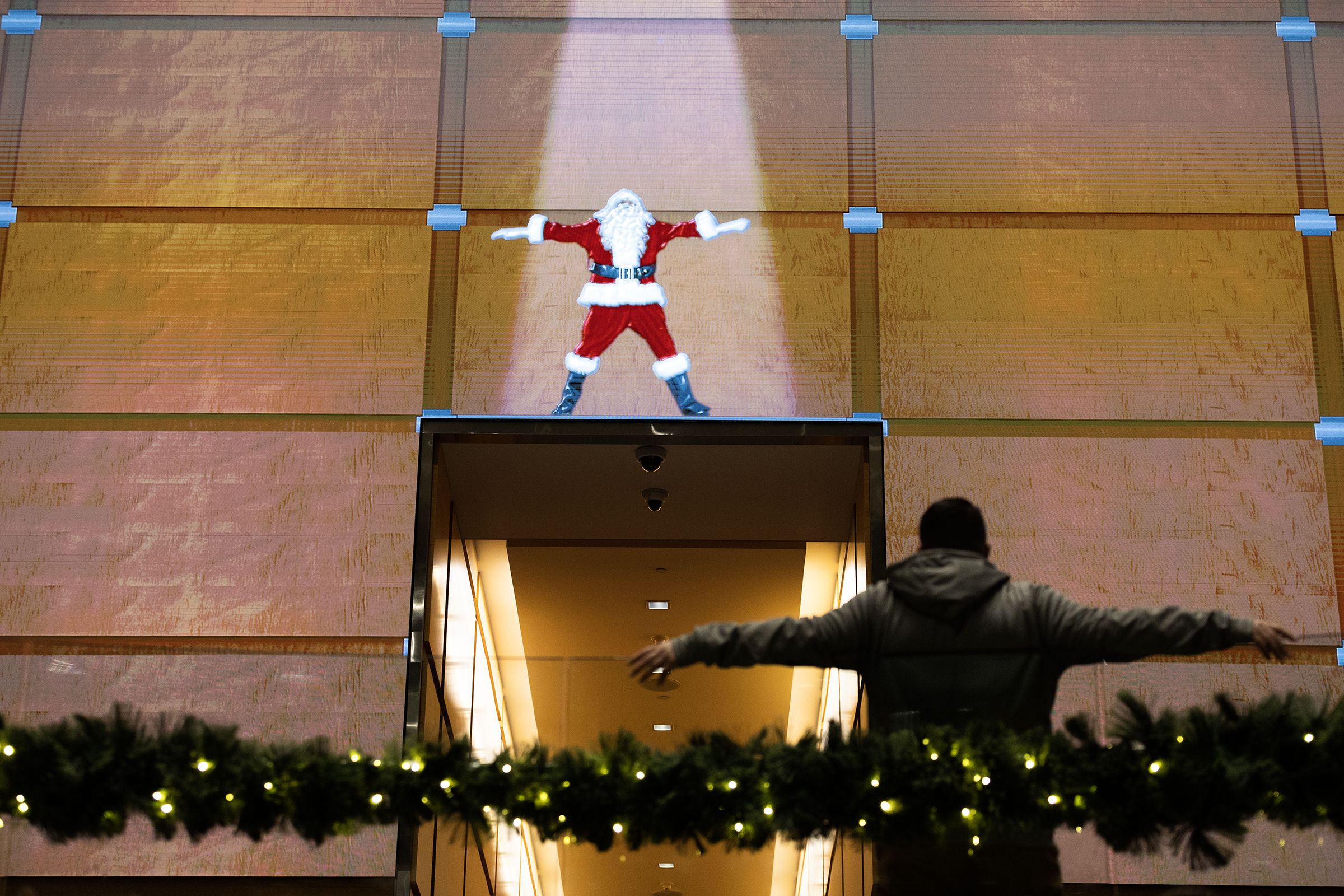
A man watches a dancing Santa with a similar body language in the lobby of the Comcast Technology Center during a Dec. 15, 2023, holiday video presentation.
Philly’s telecommunications giant has two immersive attractions again this year. Each day, the Comcast Holiday Spectacular at the Comcast Center wows visitors with light shows at the top of every hour. Inside the Comcast Technology Center, which is right around the corner, theDreamWorks’ Shrek’s Festive Flightreturns. The show tells the story of Shrek, Donkey, and Gingy’s journey from Philadelphia to the North Pole Bakery.
🕒 Through Jan. 2, daily, 10 a.m. to 8 p.m., 💵 Free, 📍1701 JFK Blvd., Philadelphia, Pa. 19103, 🌐 comcastcentercampus.com
This regional credit union gives back during the holidays with a 400,000-light display accompanied by 40-foot Christmas trees, hundreds of wreaths, and more. Stroll through American Heritage’s campus, where you can snap family photos, enjoy the displays, and take in the winter night air. The events begin on Nov. 29.
🕒 Through Jan. 1, daily at dusk, 💵 Free, 📍2060 Red Lion Rd., Philadelphia, Pa. 19115, 🌐 americanheritagecu.org
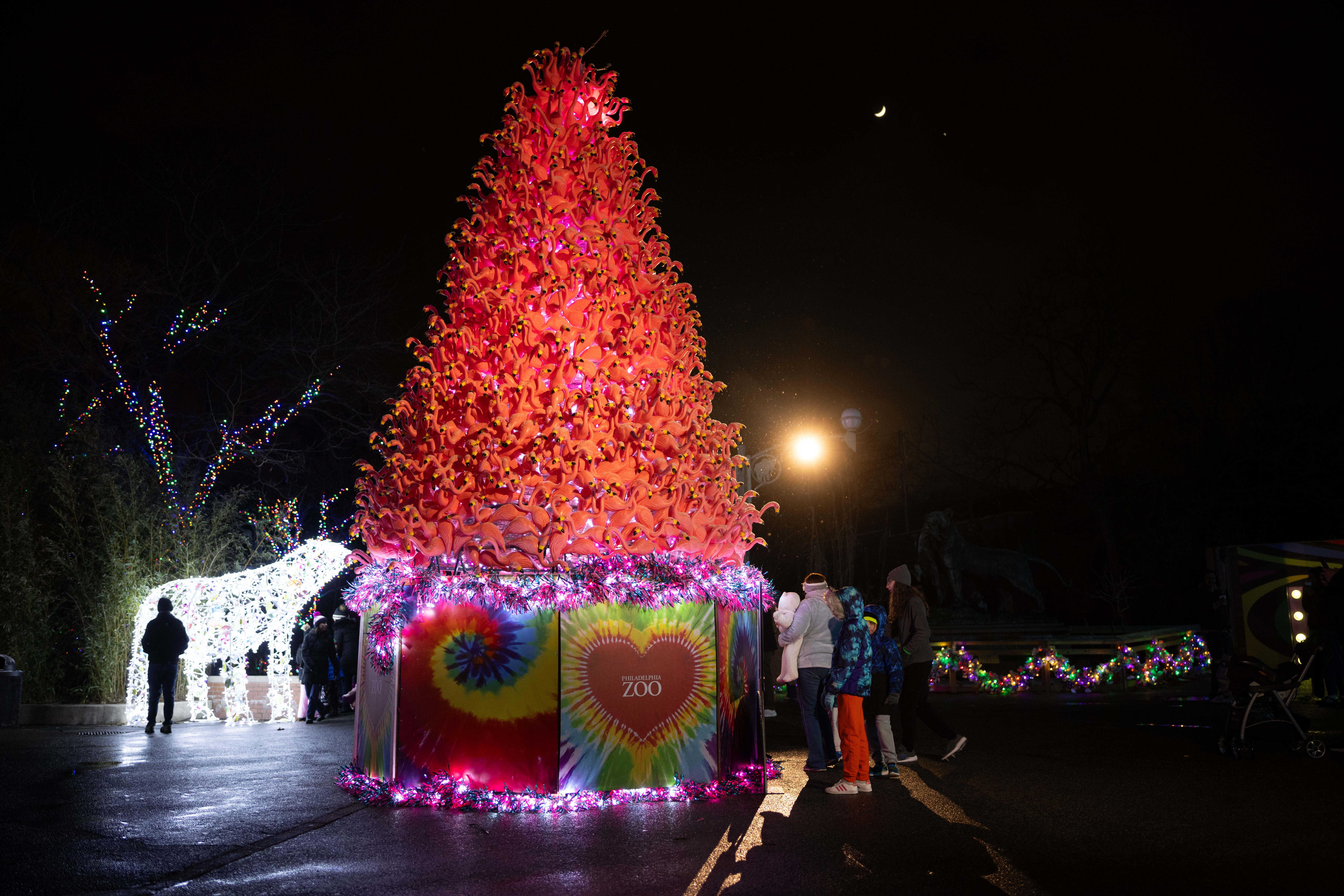
Philadelphia Zoo’s nature-inspired holiday tradition, LumiNature, returns for its sixth season of whimsical wildlife scenes come to light.
Philadelphia Zoo’s nature-inspired holiday tradition, LumiNature, returns for its sixth season of whimsical wildlife scenes come to light. Guests are invited to take a spin on the brand new Philly Zoo Pherris Wheel, a 110-foot-tall ride with breathtaking views of the city skyline, grab a drink with Santa inside his warm, cozy lodge, bring their old zoo key (or treat themselves to a new one) to turn on the magic at select displays, play and dance with roaming animal characters, and take in more than a million twinkling lights with family and friends. Guests should note the zoo’s animals will be sleeping in their indoor homes.
Bucks County’s all-in-one holiday shopping experience and attraction is back to bring smiles to all who visit. The Colonial-style Peddler’s Village is adorned with thousands of lights among the dozens of shops and restaurants connected by brick walkways. The annual gingerbread displays will feature 125 creations, and the tunnel of lights is the Instagrammable photo of the season.
🕒 Through Jan. 18, Monday to Saturday, 10 a.m. to 9 p.m.; Sunday, 10 a.m. to 7 p.m., 💵 Free, 📍100 Peddlers Village, Lahaska, Pa. 18931, 🌐 peddlersvillage.com
Clark Griswold would be proud of his estranged West Chester relatives’ over-the-top holiday display. Known as the West Chester Griswolds, this family covers their home and property with thousands of LED lights, glowing figurines, nativity scenes, and, if you’re lucky, a glimpse of Santa Claus peeking from a window. Each year, they turn their dazzling display into a charitable effort, raising $400 for the Hearing Loss Association of America in 2023. Don’t forget to tune your car radio to 87.9 FM to enjoy the synchronized light-and-music show. This year, donations are going to LaMancha Animal Rescue in Coatesville.
🕒 Through Dec. 28, Monday to Thursday, 4:45 to 9:45 p.m.; Friday to Sunday, 4:45 to 10:15 p.m., 💵 Free, 📍304 Dutton Mill Rd., West Chester, Pa. 19380, 🌐 westchestergriswolds.com
The Harnishfegers on Colonial Drive transform their Bucks County home into Danny DeVito’s from Deck the Halls, equipped with Pixel technology to sync holiday music to the thousands of LED lights and a projector that displays animations across the house. So bright, you could swear satellites can see it from space. Donations will go to the Children’s Hospital of Philadelphia’s toy drive.
🕒 Through Jan. 1, daily, 5 to 10 p.m., 💵 Free, 📍155 Colonial Dr., Langhorne, Pa. 19047, 🌐 facebook.com/ColonialLights
Herr’s, the nationwide snack brand headquartered in Philly’s backyard of Chester County, invites families and friends to enjoy a free drive-through holiday lights show. More than 600,000 lights are on display throughout the company’s corporate campus. Visitors should stay in their cars at all times while driving through the show.
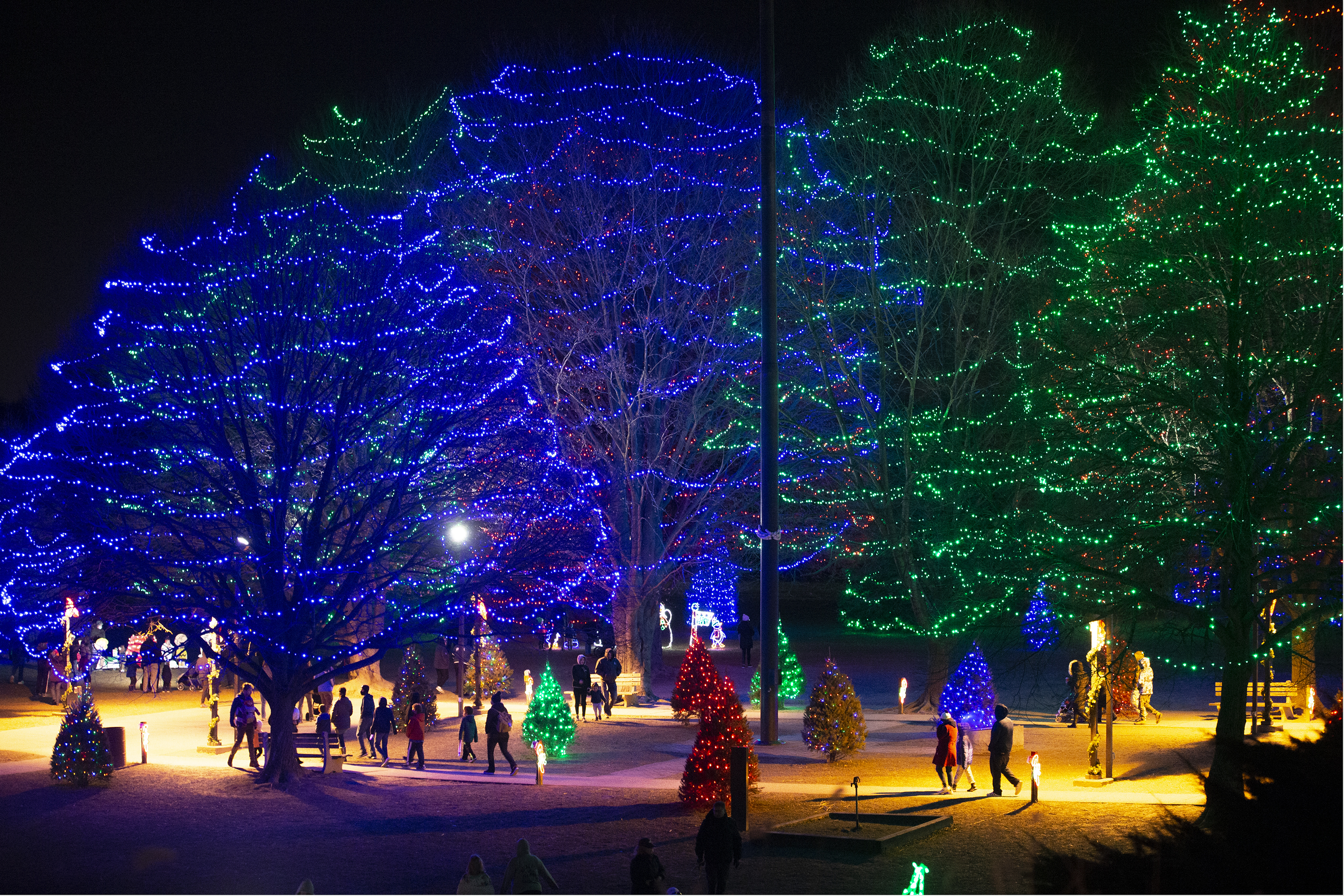
Visit Rose Tree Park anytime during the holiday season for a serene nighttime stroll among brightly colored illuminated trees. On Dec. 5, Dec. 7-8, and Dec. 14-15, enjoy food trucks, vendor markets, and live entertainment with Delco Fare and Flair Nights. Friendly, leashed dogs are welcome.
🕒 Through Jan. 4, daily, 5 to 10 p.m., 💵 Free, 📍1671 N. Providence Rd., Media, Pa. 19063, 🌐 delcopa.gov
Manayunk businesses are bringing the holiday cheer with more than 80,000 lights lining Main Street — and some friendly rivalry in the annual Manayunk Gets Lit Competition. Stroll through the hillside neighborhood to enjoy festive food, drink, and shopping while casting your votes for the Best Overall, Most Lit, and Most Creative light displays. Participants will also be entered for a chance to win a $200 Manayunk shopping spree. The lights shine daily, but for an extra festive experience, hop aboard the free Jolly Trolley for tours of the displays Thursday through Saturday, now through Dec. 20.
In Philadelphia’s historic district, December is a nonstop holiday celebration with street events, holiday shopping, menorah lighting, light shows, and more. On the Old City District’s website at oldcitydistrict.org is a full schedule of events to attend. Don’t miss the Historic Holiday Tree at the Betsy Ross House.
🕒 Through Jan. 1, various dates and times, 💵 Free to $100-plus depending on event, 📍239 Arch St., Philadelphia, Pa. 19106, 🌐 oldcitydistrict.org
The trek to Sicklerville, Camden County, is worth it for this award-winning mile-long drive-through holiday light show, marketplace, and Ferris wheel. Glow at Washington Township is one of the largest light displays in the region with 8 million animated lights synced to music playing through the car radio, and it’s perhaps the most costly starting at $40 per car.
🕒 Through Jan. 26, daily, Sunday to Thursday, 5 to 9 p.m.; Friday and Saturday, 5 to 10 p.m., 💵 $50-$75 per vehicle, 📍217 Berlin-Cross Keys Rd., Sicklerville, N.J. 08081, 🌐 visitglow.com
In West Chester, live music, markets, Santa Claus, and a professional gingerbread competition are happening on the weekends. Free to the public, each weekend will feature different events among the illuminated streets and businesses of West Chester. Find a schedule of events and promotions at greaterwestchester.com.
🕒 Through Jan. 1, various times, 💵 Free, 📍137 N. High St., West Chester, Pa. 19380, 🌐 greaterwestchester.com
Six lawmakers, including two from Pennsylvania, had good reason to remind military members not to follow unlawful orders, given Donald Trump’s illicit history and recent actions, such as sending federal troops into cities and boat strikes that violate international law.
The six Democrats, who either served in the military or the intelligence community, posted a short video telling their former counterparts that “no one has to carry out orders that violate the law or our Constitution.”
Right on cue, Trump responded with a fury of unhinged social media posts calling for the lawmakers to be jailed or executed.
“Each one of these traitors to our Country should be ARRESTED AND PUT ON TRIAL,” Trump wrote. He followed that with: “SEDITIOUS BEHAVIOR FROM TRAITORS!!! LOCK THEM UP???” He escalated in yet another post: “SEDITIOUS BEHAVIOR, punishable by DEATH!”
Trump later claimed he was not calling for members of Congress to be put to death — though his words plainly suggested otherwise.
When he isn’t lying, Trump’s abhorrent rhetoric over the past decade has become so routine that it barely causes a stir. (See: his recent outburst telling a reporter, “Quiet, piggy!” and shameful defense of Saudi Crown Prince Mohammed bin Salman, who authorized the vile murder of a journalist.)
Given Trump’s record of abusing his power, the members of Congress were right to sound the alarm.
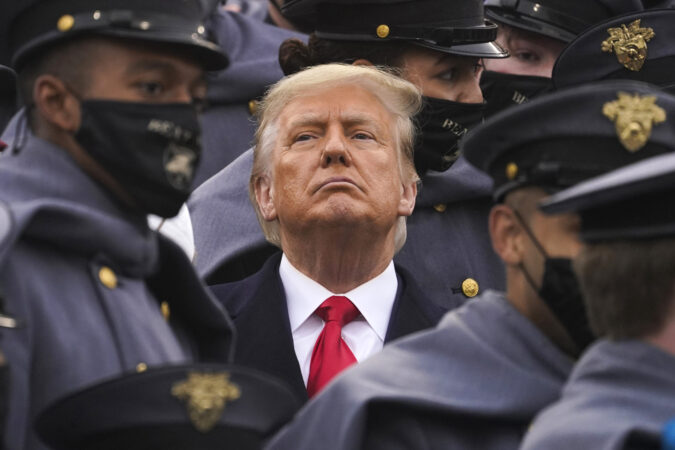
In his previous term, Trump incited a violent insurrection at the U.S. Capitol. Let’s not forget he is a convicted felon who was criminally indicted three other times.
Trump was also impeached twice in his first term. Since his return, he has committed as many as eight impeachable offenses, according to legal scholars.
Trump’s first year back in office has been marked by relentless abuses. A federal judge said his attempt to eliminate birthright citizenship was “blatantly unconstitutional.” (The U.S. Supreme Court is weighing whether to take it up.)
Trump’s pardon of more than 1,500 insurrectionists, including nearly 200 who assaulted police officers, rewarded lawbreakers. Other steps to freeze foreign aid, fire federal workers, send troops into cities, and deport migrants have faced more than 100 legal challenges and strong rebukes from judges.
The Republicans who control Congress have done nothing to stop Trump’s abuses, let alone investigate whether he has used the presidency to enrich himself.
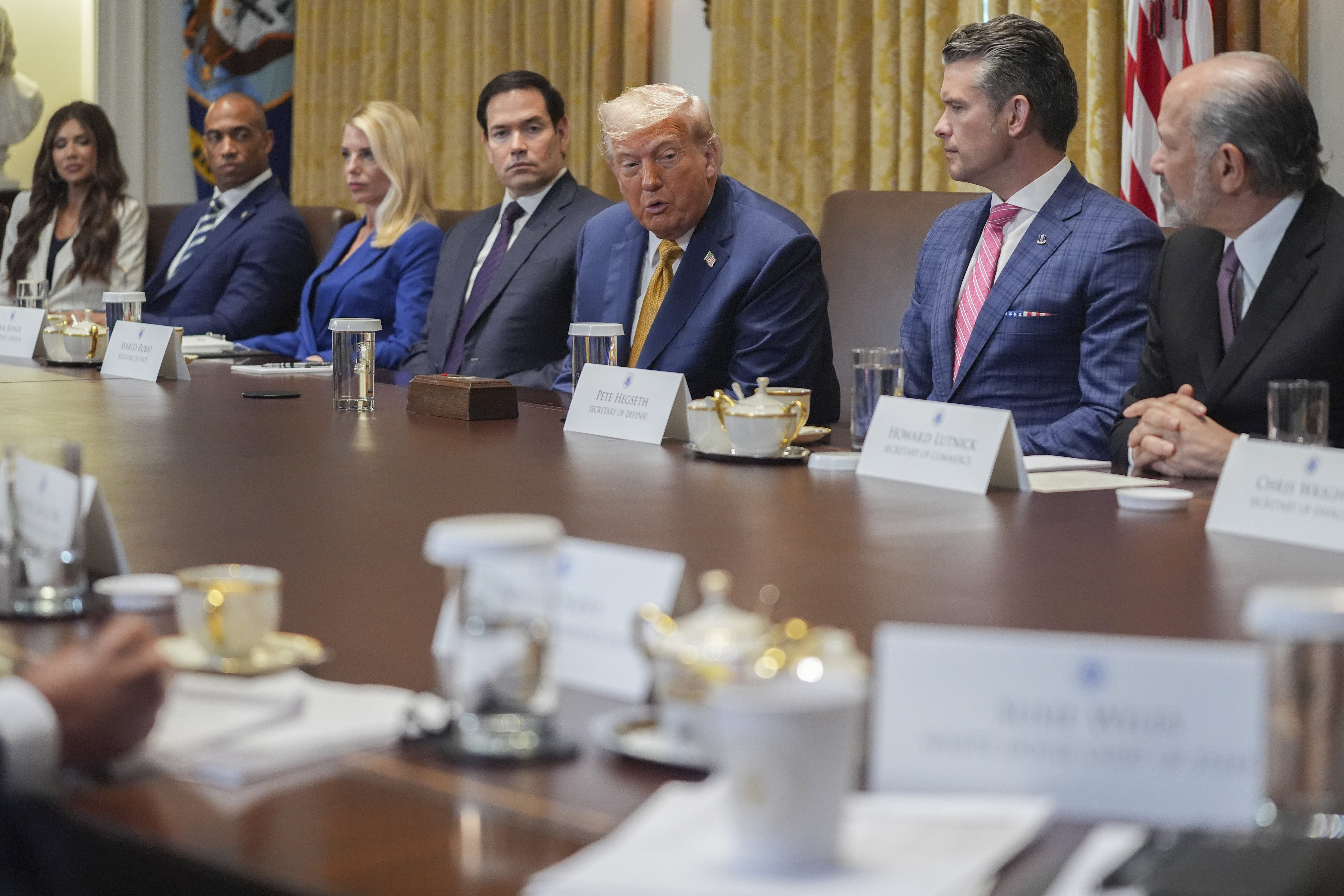
President Donald Trump speaks during a cabinet meeting at the White House in July.
Likewise, the unqualified loyalists overseeing the various government departments do whatever Trump demands. See: Attorney General Pam Bondi’s willingness to fire career prosecutors and go after Trump’s perceived political enemies.
Former Defense Secretary Mark Esper ignored Trump’s suggestion to shoot demonstrators following the death of George Floyd. Does anyone trust Pete Hegseth — a former weekend Fox News host who has faced allegations of financial mismanagement, sexist behavior, and excessive drinking — to show similar restraint?
That explains why the members of Congress urged service members to follow their constitutional oath — and not any unlawful orders.
Trump’s response to jail and kill elected officials is especially irresponsible given the rise in political violence, including murders of state lawmakers, a judge, and far-right podcaster Charlie Kirk. Not to mention the attack on former House Speaker Nancy Pelosi’s husband, the firebombing of the Pennsylvania governor’s mansion, and the attack on Trump’s own life.
After the president targeted the six Democrats, Pennsylvania Reps. Chrissy Houlahan and Chris Deluzio received bomb threats at their offices. Michigan Sen. Elissa Slotkin received a similar threat at her home.
Meanwhile, House Speaker Mike Johnson (R., La.) deflected Trump’s outrageous behavior by claiming it was “wildly inappropriate” for Democrats to urge troops not to follow the chain of command.
But that was not what the six legislators did. They reminded military members not to follow unlawful orders in accordance with Article 92 of the Uniform Code of Military Justice.
For example, the legality of Trump’s boat strikes — which have killed more than 80 people — is dubious.
A secret U.S. Department of Justice memo reportedly blessed the strikes by claiming the U.S. is in an armed conflict with drug cartels. But members of Congress from both parties argue it is illegal to target civilians — even suspected criminals — who do not pose an imminent threat. The United Nations’ human rights chief said the strikes violated international law.
As such, legal experts said if the strikes are found to be illegal, a defense by military officials of “just following orders” may not hold up in court.
Of course, Trump is shielded from prosecution thanks to a Supreme Court ruling last year that placed presidents above the law.
The same cannot be said for those who do Trump’s bidding.