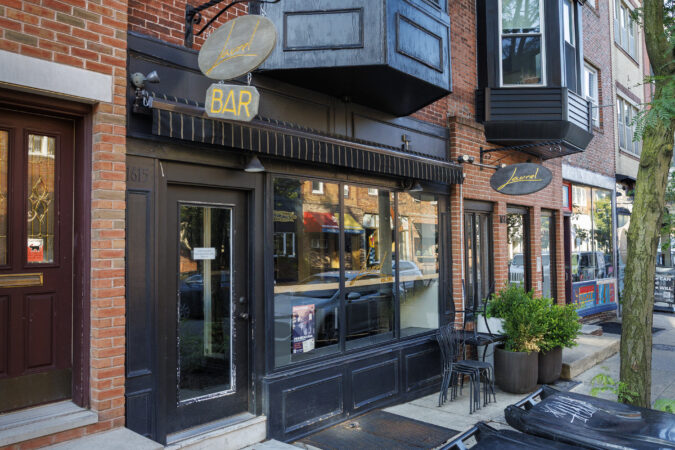
Barely 12 hours after Michelin included the fine-dining destination Laurel among its list of Recommended restaurants, chef Nicholas Elmi delivered the news that its final night of service would be Friday.
Laurel’s closing after 12 years had been set in motion over the summer, as Elmi told The Inquirer in June that its lease was ending and that he wanted to open in Rittenhouse.
Wednesday’s announcement on Instagram included word that reservations were available for a seven-course meal prepared by Elmi and chef de cuisine Kevin McWilliams.
Chef/owner Nicholas Elmi, general manager Jane Fryer, and chef Kevin McWilliams outside of Laurel on Wednesday, Aug. 23, 2023.
Although honored with the Michelin accolade, “I feel like I’ve known what’s been going on over the past year, so I’ve already gone through the whole gamut of emotions,” Elmi said. “Last night was incredibly motivational for me — it made me redouble my efforts and figure out what my next step is. So that’s where I am: keeping my options open, keeping my eyes open, and trying to remain inspired.”
The closing a week before Thanksgiving after a five-month wind-down was intentional. “Everyone’s starting new jobs in December, so it lets them take a week and a half off, get through Thanksgiving, decompress a little before moving on to the next stage of their lives and careers,” he said. “And it gives me the month of December to clear the place out and get myself organized. Winding down a business isn’t just flipping a switch — there’s a lot of paperwork to get through right now.”
Elmi said he was looking forward to family time as well as focusing on his Bala Cynwyd restaurants Lark and the Landing Kitchen, as well as the Pump House events venue, which he own with Fia Berisha.
What’s next for Elmi and Laurel?
The new restaurant will not be the same as Laurel, he said. “As the culinary landscape of Philadelphia has changed, Laurel needs to be updated, whatever form that takes. There are a couple of different concepts we’re playing with right now. I think Michelin is certainly going to improve the aspect of fine dining in Philadelphia, and I want to take some time to figure out what that means to me in the context of how I’ve grown up cooking and doing fine dining over the past 20 years.”
He said he was unsure if the Laurel name will continue.: “There’s a big part of me that understands Laurel is a recognized, branded name. But Laurel was also a little, tiny, beautiful restaurant stuffed into an apartment on a street in South Philadelphia. It was so intimate and so fun, and it represented a really cool moment in my life — being able to cook like that, and cook so freely.
“There’s part of me that wants that to remain a memory, not only for myself but for the people who worked there and for the guests who came through over the past 12 years. So I’m still struggling with the idea. I’d love to carry the name on, but that name carries weight, and there’s an expectation that comes with it. Moving into something different isn’t off the table.”
A former West Philadelphia ward leader and onetime staffer for State Sen. Vincent Hughes was sentenced Wednesday to one year in federal prison for stealing more than $140,000 from his ward and a church where he served as a deacon.
Willie Jordan, 68, had pleaded guilty to two counts of wire fraud over the summer. During his sentencing hearing Wednesday before U.S. District Judge Harvey Bartle III, Jordan said that he was sorry and that there were no excuses for his misconduct.
“It was a bad decision,” Jordan said. “It was just wrong.”
Bartle agreed, telling Jordan that although he appeared to have lived an otherwise noble life — dedicating his time and career to serving the public — stealing from institutions that sought to help people was inexcusable.
“What’s so disappointing is you had a position of trust … and you abused that position of trust,” Bartle said. “And the amount of money you took were not insignificant sums.”
Jordan for years was the unpaid leader of the 44th Ward in West Philadelphia and also a deacon at Mount Calvary Baptist Church in North Philadelphia. Prosecutors said that he had near-total control over the finances of both organizations, and that from 2020 to 2024 he took advantage of that status by writing checks to himself to cover personal expenses, including credit card and utility bills, purchases from airlines and furniture stores, and costs associated with a relative’s funeral.
In all, prosecutors said, he stole more than $57,000 from the church and $85,000 from the ward, and often claimed the money was to reimburse the organizations for expenses they never incurred. To further conceal his wrongdoing, prosecutors said, he sometimes wrote false entries on checks’ memo lines, saying they were to pay for items such as Easter baskets or summer youth programs.
Much of the fraud occurred while Jordan was working in Hughes’ office, prosecutors said, where he was a longtime top aide and had a six-figure state salary.
Jordan’s attorney, Sam Stretton, said that Jordan retired from that job earlier this year amid the federal investigation into his crimes, and that he also is no longer a ward leader.
Assistant U.S. Attorney Louis Lappen said in court that the repeated nature of Jordan’s wrongdoing, and his status as a well-paid public employee, made his crimes stand out.
“He’s somebody who should have known better,” Lappen said.
Stretton said Jordan “made a terrible mistake but is an otherwise good person.” He said Jordan has already repaid the $57,000 he stole from the church and is continuing to donate hundreds of dollars per month to help cover its bills and other expenses. Jordan also is continuing to make restitution payments to the ward, Stretton said.
Several of Jordan’s relatives wept in the courtroom after Bartle imposed his sentence. The judge then paused and addressed Jordan again before adjourning the hearing.
“You’re going to have to pay the price of your crimes, but there is life after prison, and I hope you will continue to be a useful and productive citizen,” Bartle said. “There is redemption.”
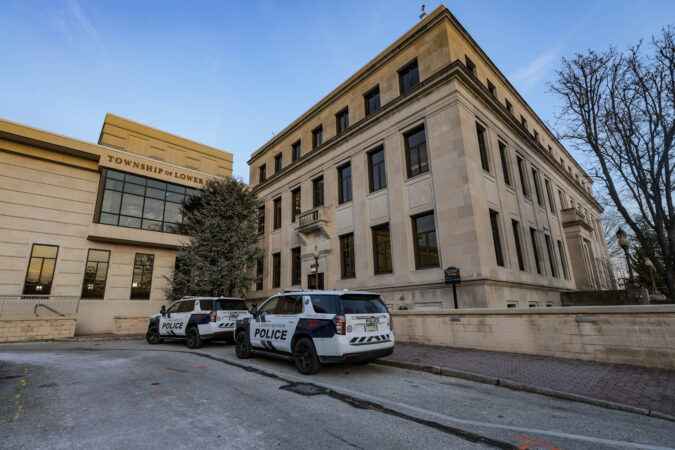
Lower Merion’s board of commissioners is set to put multiple new ordinances on the books next month, including policies raising parking meter rates for the first time since 1999, lowering the speed limit on parts of Lancaster Avenue, and regulating where smoke and vape shops can open in the township.
The smoke and vape shop regulation movedaheadlast month, and the commissioners advanced the parking meter and speed limit changesWednesday evening. Lower Merion’s assistant township manager, Brandon Ford, said the commissioners are poised to formally vote on all three proposals in December. Here’s everything you need to know.
Parking meter rate may go up
Commissioners on Wednesday moved forward an ordinance that would raise parking meter rates across Lower Merion for the first time in more than 25 years.
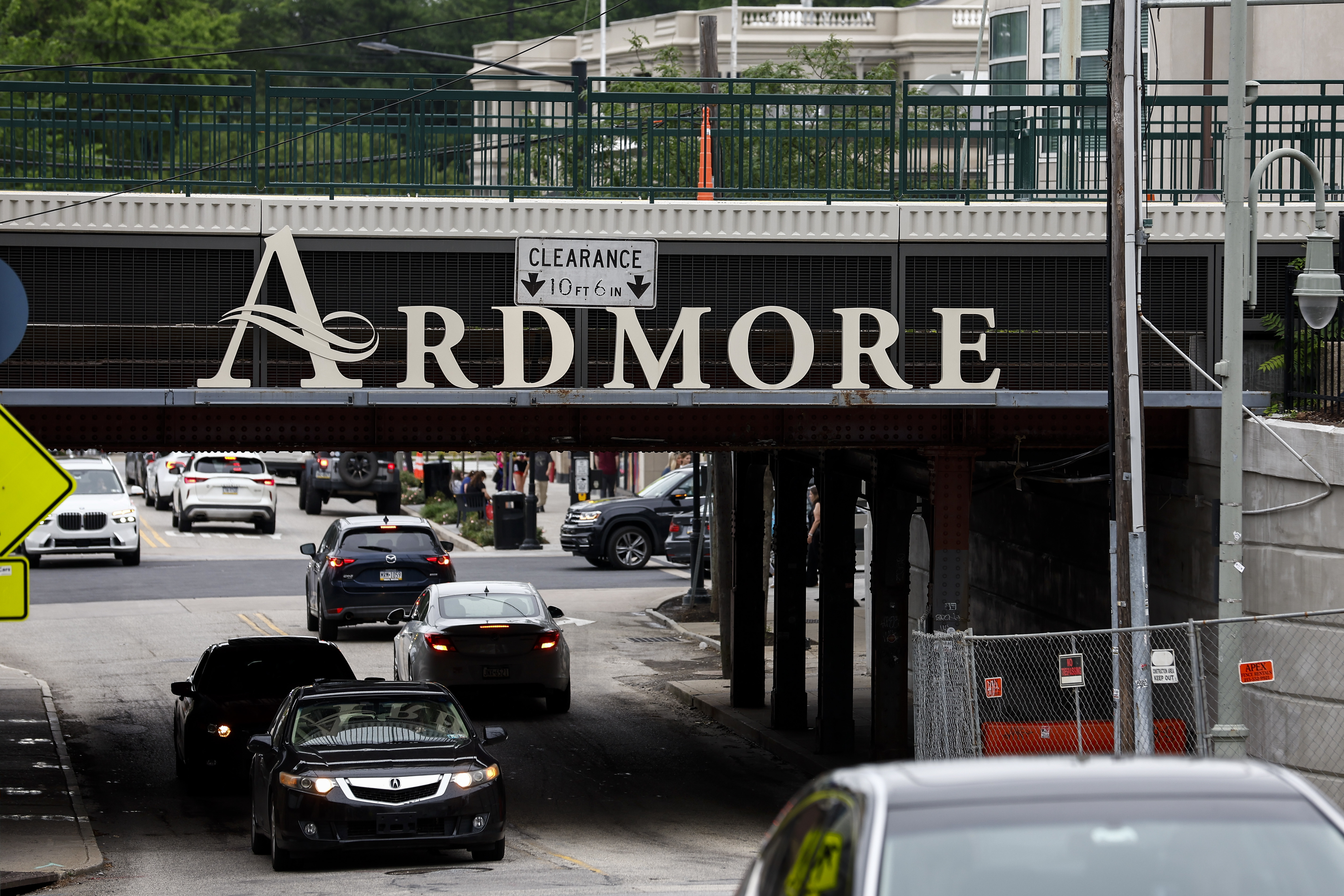
Under the proposed ordinance, parking would increase from 50 cents per hour to $1 per hour across the township, with the exception of six locations in Ardmore. Parking would go up to $1.50 per hour at Rittenhouse Place, Cricket Avenue, Cricket Terrace, and township-owned parking lots five (Cricket Terrace) and six (Schauffele Plaza). The Cricket Avenue Parking Garage would stay at 50 cents per hour.
Township staff say the proposed meter rate increase would generate around $900,000 annually and would likely drive quicker turnover in Lower Merion’s commercial corridor, generating more economic activity for local businesses.
“The rates that we are charging have not kept up with the overall cost for maintaining those parking meters, as well as our overall parking services program,” Ford said during a Nov. 5 meeting.
The ordinance, if passed, would not change how parking meter fees are collected. The township collects parking fees through meters, kiosks, and a mobile app.
Commissioner Scott Zelov, who represents Bryn Mawr, Haverford, and Gladwyne, said: “It certainly is time to do this.”
Anderson Avenue near Suburban Square on June 8. A proposed Lower Merion ordinance would increase parking meter rates across the township in hopes of raising revenue and spurring economic activity in places like downtown Ardmore.
Lancaster Avenue speed limit reduction
Lower Merion is set to reduce the speed limit on parts of Lancaster Avenue from 40 mph to 35 mph, bringing township code in compliance with an earlier speed limit change by the Pennsylvania Department of Transportation.
PennDot has already placed 35-mph speed limit signs on the selected strip of Lancaster Avenue. The board’s approval will bring the township in line with the state and allow township police to start enforcing the reduced speed limit. The speed limit change is the latest development in a major redesign of Lancaster Avenue by the state and the township.
A study conducted by PennDot earlier this year found that, out of nearly 20,000 vehicles traveling on Lancaster Avenue between Wynnewood Road and City Avenue during a 24-hour period, only 57% were driving at or below the 40-mph speed limit. PennDot considers the intersection of Lancaster Avenue and Remington Road to be a “high crash location.”
The ordinance, approved for advertisement on Wednesday, also bans right turns on red at three intersections: Lancaster Avenue and Remington Road for eastbound traffic, Lancaster Avenue and Haverford Station Road for westbound traffic, and Montgomery Avenue and Airdale Road for east-west traffic.
The township aims to place automated red-light cameras at all three intersections. The first red-light camera, at Remington Road and Lancaster Avenue, is in the process of being installed. Andy Block, Lower Merion’s superintendent of police, said the camera should be up and running by the end of the year.
Following a lengthy discussion that stretched across two meetings, the board of commissioners on Oct. 22 moved forward an ordinance that would decide where tobacco and vape shops can operate in Lower Merion.
Under the proposed ordinance, if a tobacco or vape shop wanted to open in Lower Merion, it would have to be situated at least 1,000 feet from any other tobacco or vape shop and 1,000 feet from any public or private school. The rule would also apply to hookah lounges.
Township staff said the 1,000-foot buffer would dramatically decrease the opportunity for smoke shops to operate in Lower Merion. Ford said there are currently around 1,000 properties in Lower Merion where smoke shops could operate. If the buffer ordinance were to be implemented, that number would drop to 300.
While some commissioners inquired about creating a larger buffer, officials said doing so would likely zone smoke shops out of Lower Merion entirely, which would give smoke shop owners the legal claim to build anywhere in the community.
During an Oct. 17 discussion of the ordinance, Commissioner Anthony Stevenson, who represents Ardmore and Haverford, said: “We need to avoid the continuation of making our township, and particularly in the Ardmore area, a vape central.”
This suburban content is produced with support from the Leslie Miller and Richard Worley Foundation and The Lenfest Institute for Journalism. Editorial content is created independently of the project donors. Gifts to support The Inquirer’s high-impact journalism can be made at inquirer.com/donate. A list of Lenfest Institute donors can be found at lenfestinstitute.org/supporters.
Last summer, K.C. Keeler and his wife, Janice, began building a house in Wilmington. This would not have been notable if Keeler were coaching at an SEC dynasty or a Big 10 stalwart.
But he works for Temple, where head football coaches have long been transient.
The Owls have shuffled through 11, including interims, in 15 years. Some were fired because they weren’t winning; some were poached to fill higher-paying jobs.
One coach, Manny Diaz, stayed for 17 days before running off to the University of Miami. Another, Geoff Collins, led Temple to a 15-10 record, only to leave for Georgia Tech after two years.
Collins took over for Matt Rhule, who went 28-23 over four seasons before departing for Baylor. Rod Carey came next, and was fired after three seasons, during which he posted a 12-20 record.
Stan Drayton, who won only nine games in parts of three seasons, didn’t even make it to the end of the 2024 campaign.
This dynamic — being a smaller Division I program with fewer resources — has led Temple to a difficult balancing act. The school is established enough to hire good coaches but not always to keep them.
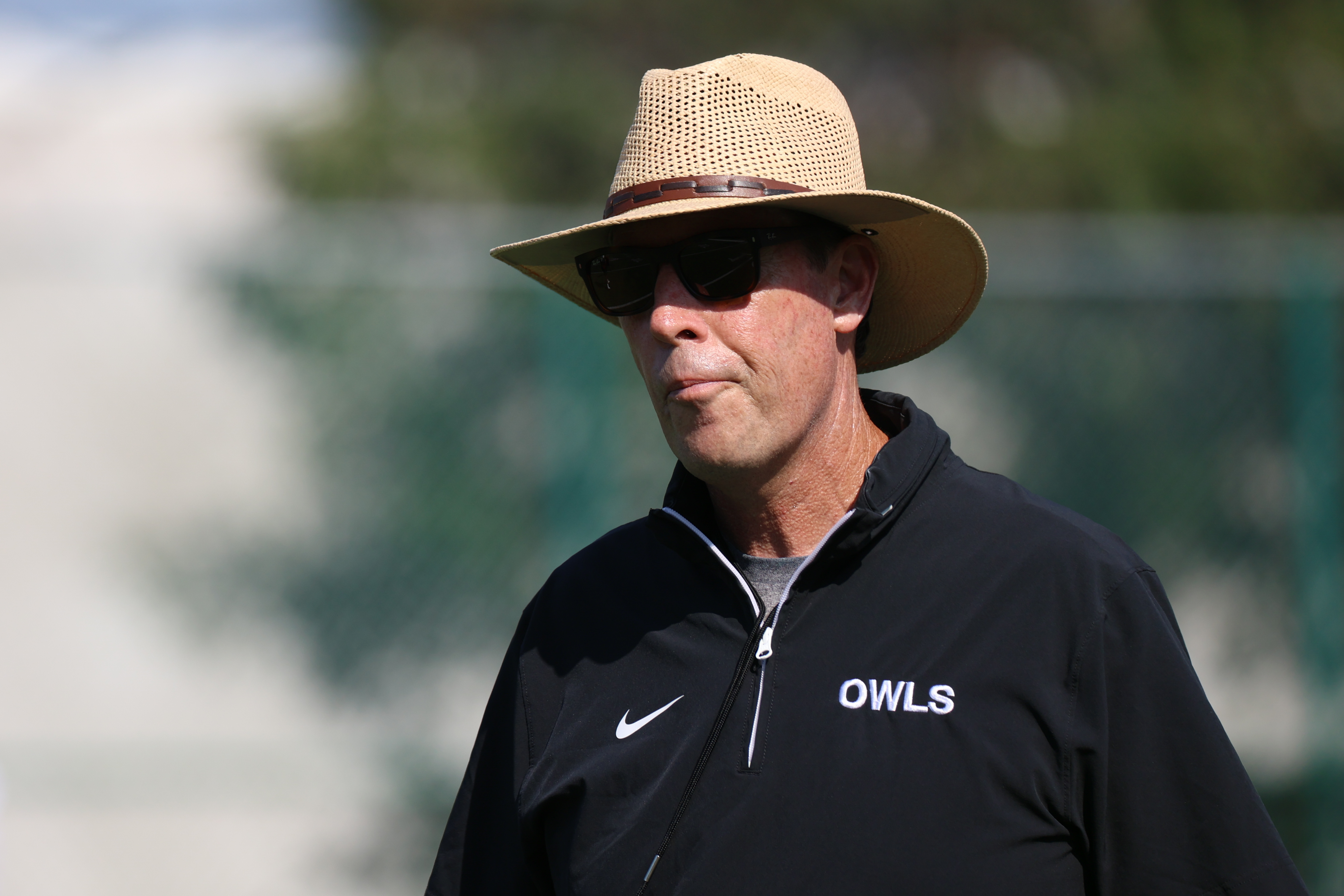
Temple coach K.C. Keeler looks on during practice at the Edberg-Olson Hall football facility in July 30.
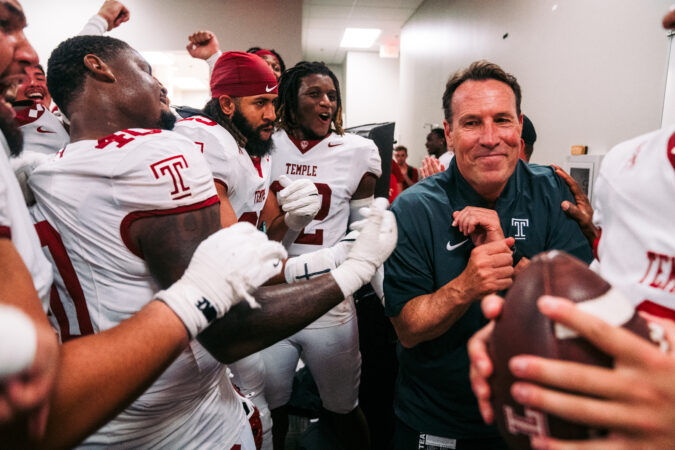
Keeler, whom the Owls hired on Dec. 1, appears to be different. He has an established track record of building winning programs, and the 66-year-old won’t likely use Temple as a stepping stone.
He’s deeply invested in the Owls and has genuine belief in his team’s ability. He also has local ties: The coach grew up in Emmaus, Lehigh County, 50 miles north of Philadelphia, and has a daughter and grandchildren who live in Delaware.
Which is why he built a home in the area. Keeler is the first Temple head coach since Bruce Arians in the mid-1980s to do so.
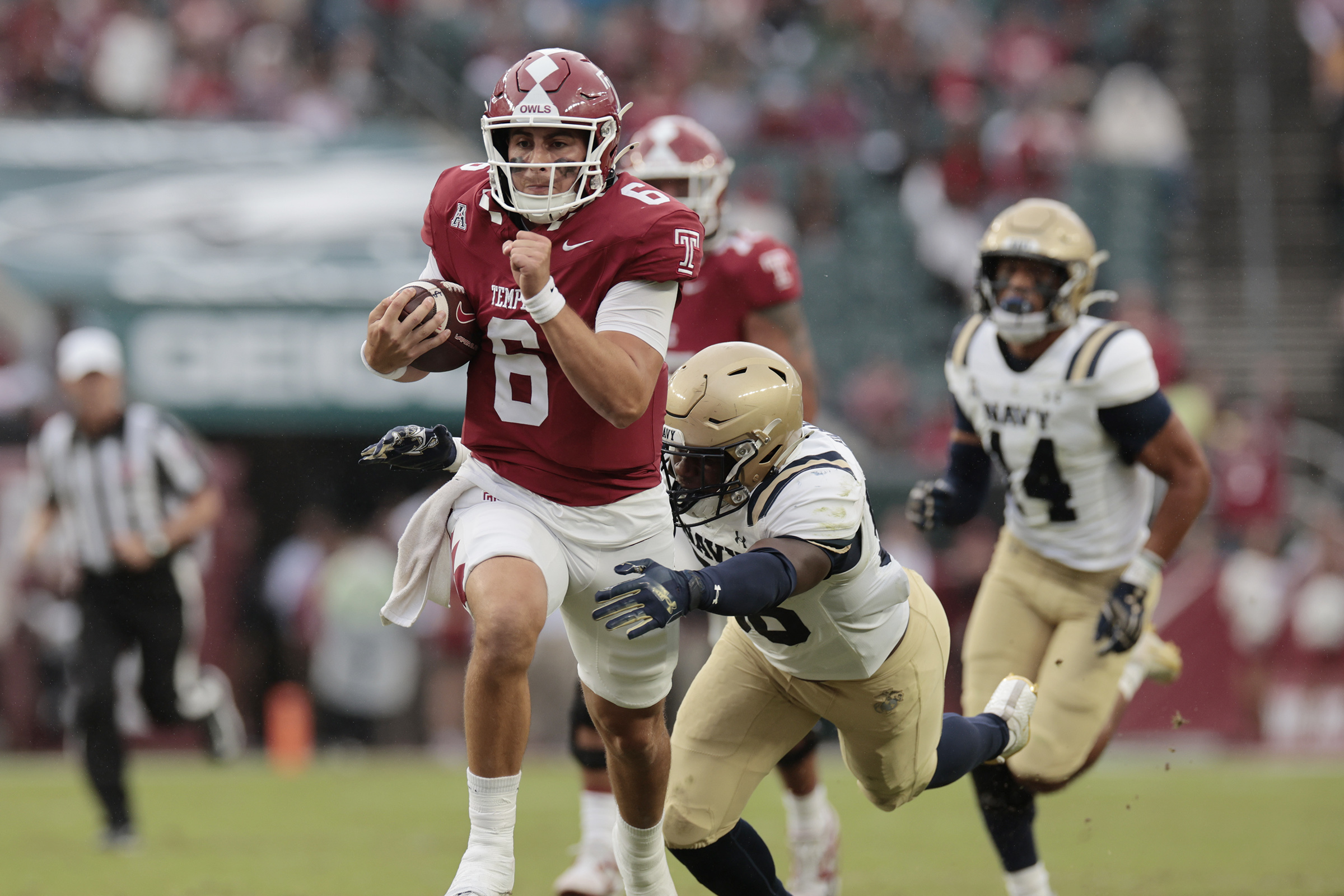
“It’s incredible what he’s done,” said senior quarterback Evan Simon, “and it’s only his first year. I wish I had a couple more with him.”
A winning legacy
Keeler’s first memory of Temple dates to the late 1970s, when he was a starting linebacker at the University of Delaware.
The Blue Hens were a strong team but consistently struggled against the Division I Owls. In 1978, they won 10 games but were soundly beaten by Temple, 38-7.
In 1979, when it won a Division II national championship, Delaware lost only one game. It was to Temple, at home, 31-14, on Sept. 22.
Keeler graduated in 1981, and was hired as an assistant coach at Amherst College in Massachusetts that year. Rowan added him to its staff in 1986 (when it was known as Glassboro State College) and named Keeler head coach in 1993.
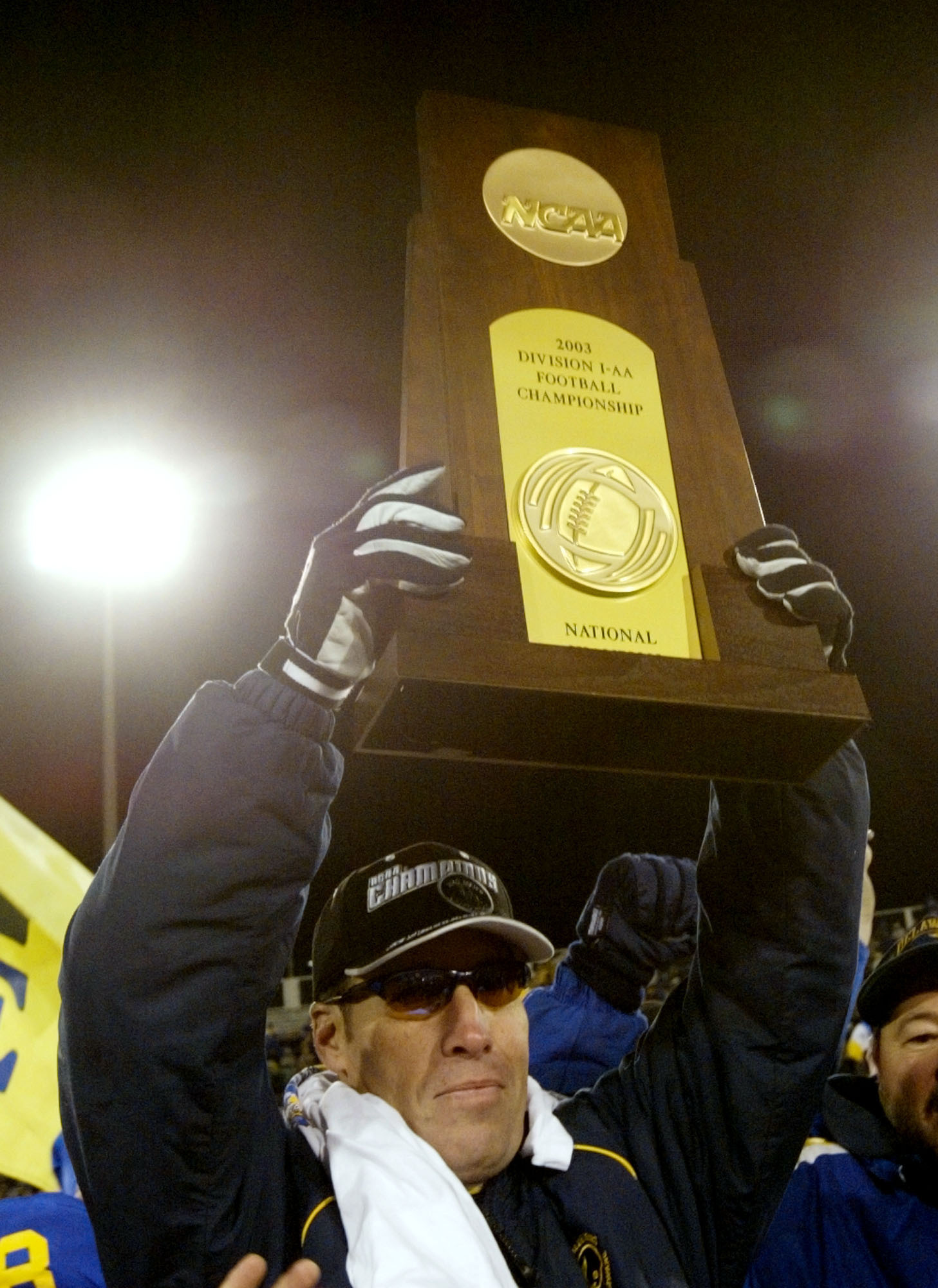
Over nine seasons, he led the Profs to an 88-21-1 record, with seven Division III playoff appearances. Delaware brought him on as head coach in 2002 (succeeding Tubby Raymond after 36 seasons) and Keeler went 86-52 with the Blue Hens, reaching the Division I-AA national title game three times and winning a championship in 2003.
He joined Sam Houston State as head coach in 2014, and posted a 97-39 record through 11 seasons, making the FCS playoffs six times and winning a second national title in 2020.
Temple, meanwhile, notched only 11 winning seasons between 1981 and 2024. The Owls had suffered an especially tough stretch of late, failing to win more than three games in a season since 2019.
K.C. Keeler won the NCAA Division I-AA Championship at Delaware in 2003.
But for Keeler, the shine of those 1970s-era teams never wore off. He still saw a winner. So, when Temple approached him last year after firing Drayton, he took the opportunity.
Things got off to a slow start. Some players were worried that they wouldn’t be welcomed back.
Others were unsure of how they’d jell with Keeler and his staff.
The head coach held a team meeting in December, before his introductory news conference. He tried to tell a couple of jokes, to lighten the mood.
No one laughed. Keeler turned to his special teams coordinator, Brian Ginn.
“Boy, these guys are serious,” he said.
“Yeah,” Ginn responded. “They just went 3-9. I can see why they’re serious.”
A few hours later, Keeler told the media what he told his team: that there would be no rebuild. That he was here to win a bowl or a conference championship.
Simon, the senior quarterback, was standing in the back of the room, listening acutely.
“It was a little scary [at first],” he said. “I mean, this place hasn’t won more than three games since, who knows? I don’t even know.”
Over the next few days, Keeler held one-on-one meetings with all 114 players on Temple’s roster.
He asked what they liked — and disliked — about the program, and what changes they wanted to see.
The coach quickly showed a willingness to listen, even to seemingly mundane concerns. Many players lived off-campus and mentioned that they had to pay for a meal plan that they didn’t use.
Keeler talked toa few higher-ups, and was able to make a change, putting $500 worth of meal money back into players’ pockets. Temple now provides grab-and-go lunches and snacks, available outside the locker room.
The head coach continued to encourage his team to communicate, and gradually, the players began to feel more comfortable.
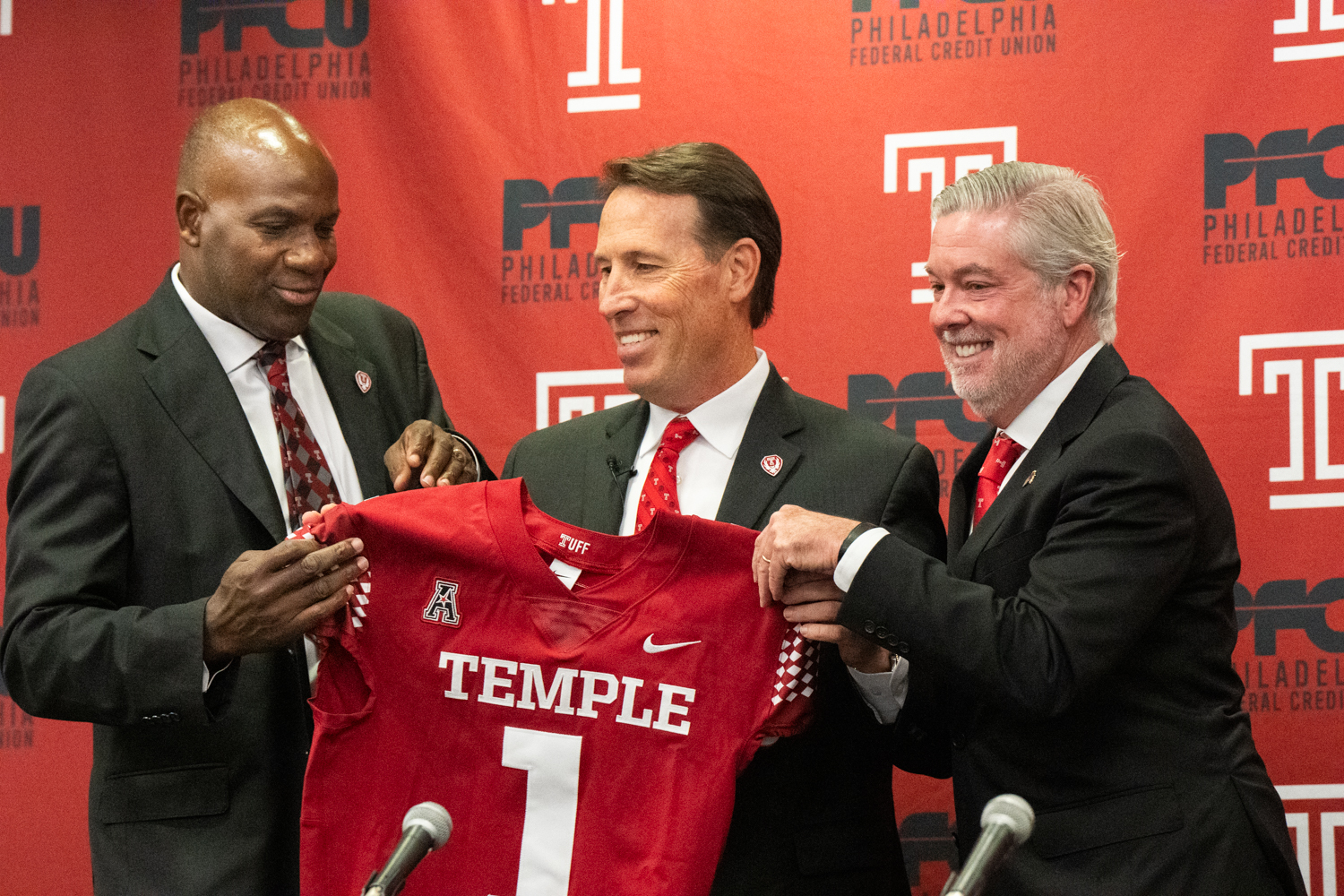
From left, Temple athletic director Arthur Johnson, newly-hired football head coach K.C. Keeler, and university president John Fry at a news conference on Dec. 3.
In February, Keeler got word that a former Temple defensive tackle, Demerick Morris, would be leaving Oklahoma State. He had transferred there in December 2024 but had a change of heart, and was eager to return to Philly.
Keeler wanted to bring him back, too, but decided to ask his defensive line coach, Cedric Calhoun, to check with rest of the linemen first.
They were not on board.
“Coach Calhoun goes, ‘They said, [expletive] no. There’s no way they’re taking him back,’” Keeler said. “And he was in a panic. I’m like, ‘It’s OK, let me handle this.’”
The three defensive linemen — Allan Haye, K.J. Miles, and Sekou Kromah — shuffled into Keeler’s office and sat shoulder-to-shoulder on his cherry-red couch.
Before Keeler explained his side, he made sure the players knew it was their decision.
Then, he asked for their perspective. They said that years ago, the four linemen had made a pact not to enter the transfer portal. To stay at Temple and “fix” the program.
When Morris left for Oklahoma State, Haye, Miles, and Kromah felt betrayed.
“[To them], it was ‘Demerick broke the pact,’” Keeler recounted. “‘Demerick took the money.’”
The head coach laid out the situation in more pragmatic terms. Temple needed to bring in another defensive tackle, regardless. Why not go with the familiar option?
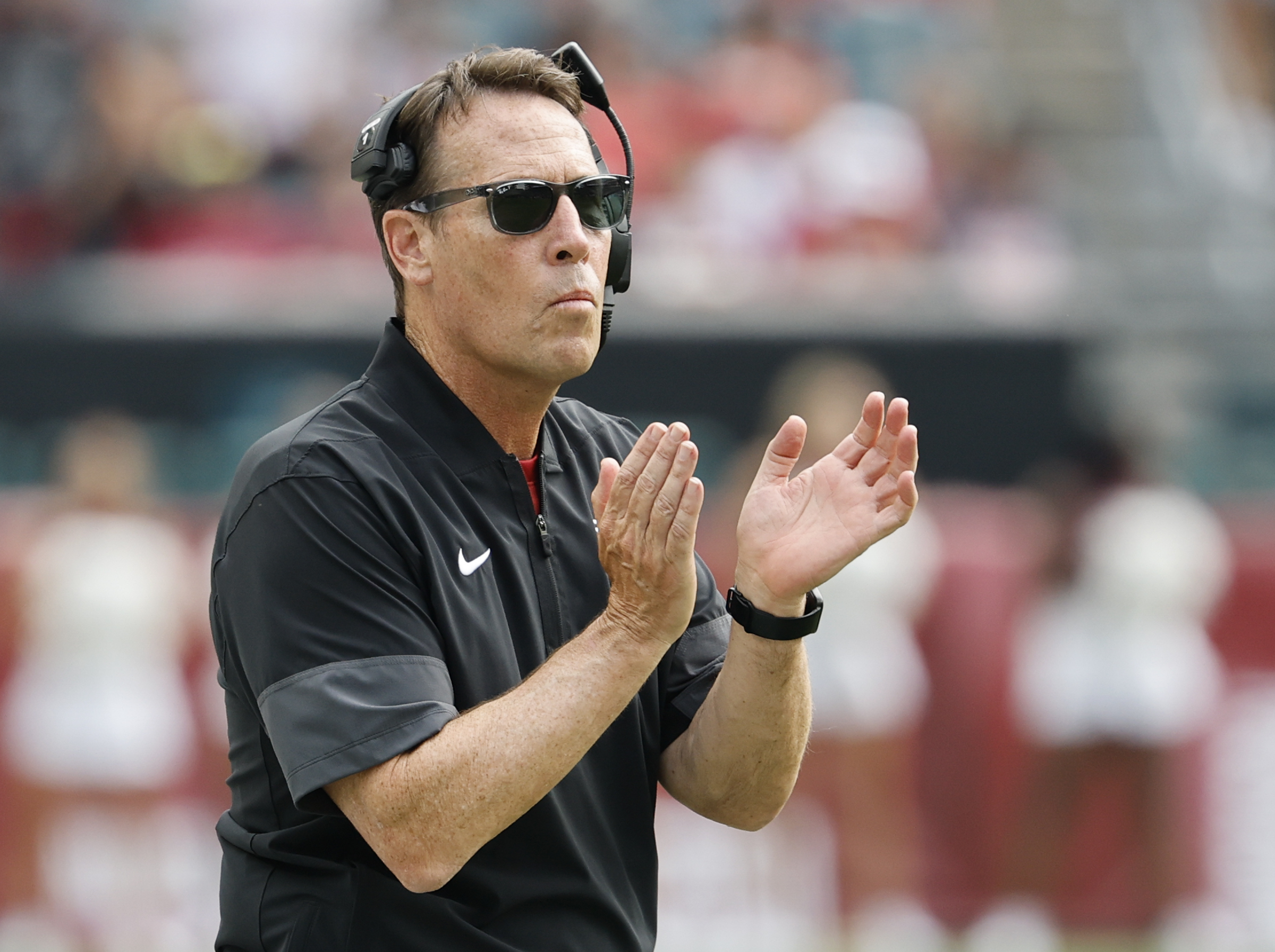
K.C. Keeler directing Temple against Howard on Sept. 6.
“I know Demerick is a great player,” Keeler told them. “I can’t guarantee the [other] guy we’re going to bring in is going to be a great player.
“I know Demerick is a great person. The guy we bring in … I don’t know a lot about him. I know Demerick loves Philadelphia. He’s living here now. He’s from Chicago.”
The linemen changed their minds.
“Again, the key was, this is still your call,” Keeler said. “I am not going to overrule your decision.”
Poor push-ups and ‘terrible’ dance moves
When Simon showed up to practice last summer, he could tell things were going to be different.
At 66, Keeler was doing push-ups in the middle of the field. He was running sprints and stretching alongside his team.
He even took control of the stereo sometimes, playing the music of his adolescence: Bruce Springsteen, Bananarama, and, of course, KC and the Sunshine Band.
The quarterback compared it to being around your fun “uncle.”
“They’re the world’s worst push-ups,” Simon said. “But his energy, it lifts the program. You’re allowed to have fun at practice.”
Keeler strikes a balance. There are times when practice is not fun. The head coach has high standards and pushes his team hard.
But he also tries to foster human connection wherever he can, whether it’s sending a birthday text to a player, hosting team dinners, or organizing trivia nights at Temple’s Liacouras Center.
One of Keeler’s biggest assets is his humor. He isn’t afraid to laugh at himself.
On Oct. 4, in Temple’s fifth game of the season, the Owls trailed Texas-San Antonio, 14-3, at the half.
Keeler reamed his players out in the locker room. He told them that it was the first time he’d been embarrassed to be their coach.
“I said, ‘This the first time I’ve ever even thought this, in my 10 months here,’” Keeler recalled.
“A lot of comments like ‘I dance like an old white guy,’” he said. “Well, yeah, I am an old white guy. But, you know, winning is hard. So when you win? You celebrate.”
The post-win dance quickly became a team tradition, and Keeler began to get creative with which guys he’d single out.
On Oct. 18, in the final seconds of Temple’s victory over Charlotte, he looked to the sideline to find three of his players — Cam Stewart, Khalil Poteat, and Mausa Palu — dancing.
“Giakoby, come on down!” Keeler said. “Birthday boy is going to lead the dance.”
This may seem like a silly custom, but for a team that couldn’t muster a laugh back in December, it’s progress.
Temple quarterback Evan Simon has 22 touchdowns with 1,847 passing yards and only one interception through 10 games this season.
And for players like Simon, it has made a difference. The quarterback is in the midst of a career season. He has 22 touchdowns with 1,847 passing yards and only one interception through 10 games.
He credits a lot to “Uncle” Keeler.
“He’s so easy to talk to,” Simon said. “And that’s important as a player. Not being nervous all the time. Because I’ve experienced that, where there’s tension, [and you’re] afraid to mess up. But he’s super easygoing.”
‘Not afraid to fail’
There are plenty of young players who have thrived under Keeler’s quirky coaching style.
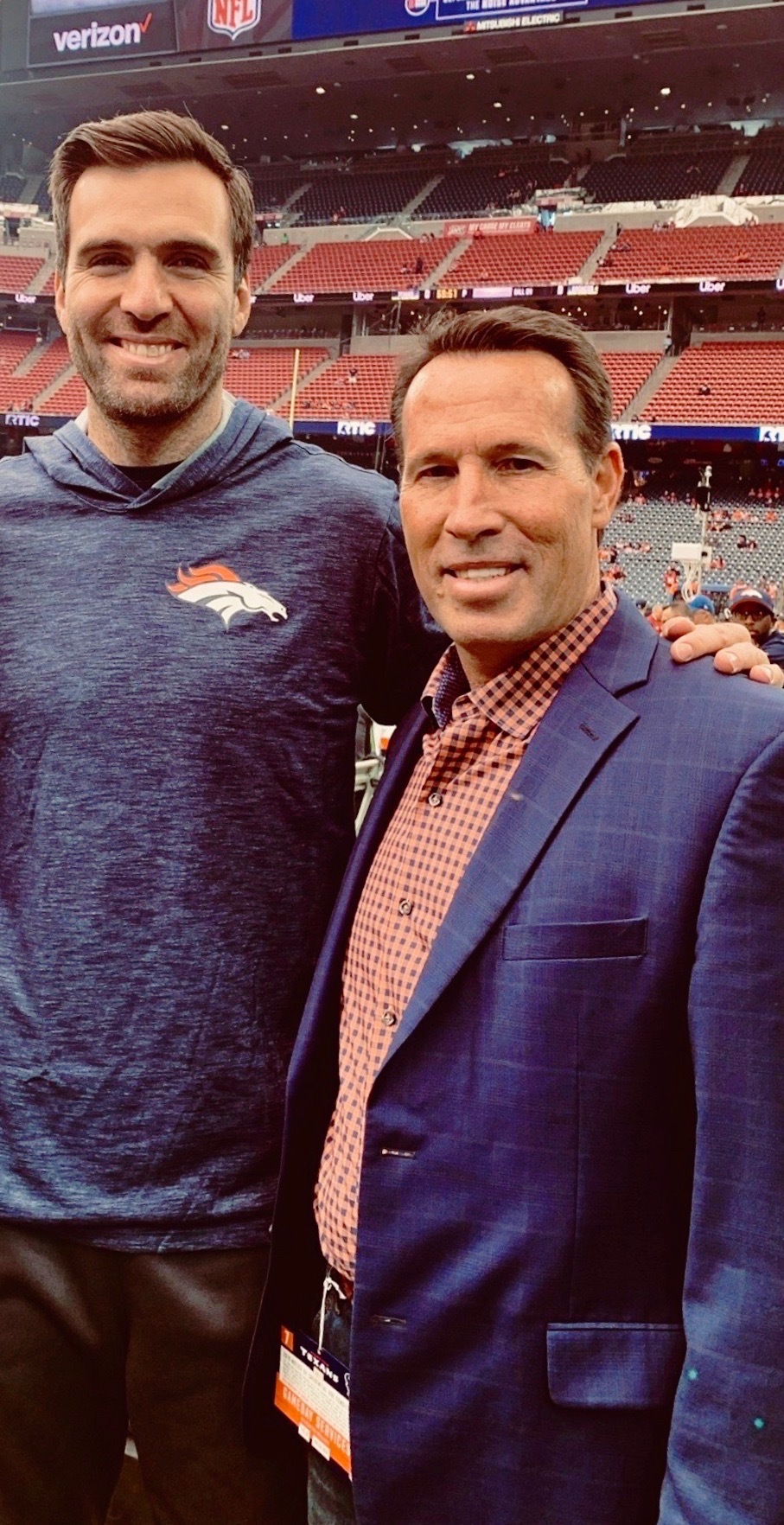
But none as successful as Bengals quarterback and 18-year NFL veteran Joe Flacco, who played at Delaware in 2006 and 2007.
Keeler brought the same enthusiasm back then that he does now (with fewer dance moves, to which Flacco responded: “Thank God”).
When Flacco transferred from Pittsburgh to Delaware, he was a backup quarterback, sorely in need of a good spring.
K.C. Keeler coached Joe Flacco at Delaware.
He contemplated playing collegiate baseball, an idea the coach quickly put an end to. Keeler told his pupil that he needed to focus on football. He reiterated, time and time again, that Flacco would be drafted by an NFL team.
It was helpful for the young quarterback to hear.
“I was honestly happy,” Flacco said. “I thought I wanted to pursue [baseball], but deep down, I really didn’t. And he didn’t want me to do it. So, I was like, ‘Good, I don’t really want to do it.’”
After Flacco was selected by the Baltimore Ravens in the first round of the 2008 NFL draft, he met with his former coach.
Keeler asked him a question.
“I’m going to be talking to another team [someday], and they’re going to want to know,” he said, “what makes Joe Flacco great?”
The quarterback answered without hesitation.
“I’m not afraid to fail,” he responded.
Keeler might have this quality, too. He was not afraid to loudly proclaim that he wanted Temple to become bowl-eligible this season, and his team is close to meeting that threshold.
The Owls have lost their last two games, in part because of mounting injuries. Despite that setback, they sit at 5-5, the most wins since 2019.
Temple needs to win one of its remaining two games — Saturday against Tulane or Nov. 28 at North Texas — to qualify for a bowl game.
But regardless of what happens, Keeler won’t be afraid of the outcome. And if the Owls win, he certainly won’t be afraid to dance.
“[He has] a belief and ability to make [a program] bigger than what everybody thinks it is,” Flacco said of his former coach. “It’s not only that he says it, and preaches it, but he also gets you to believe it. And that’s huge.”
Once again, Philadelphia music fans can look forward to a Drugcember to remember.
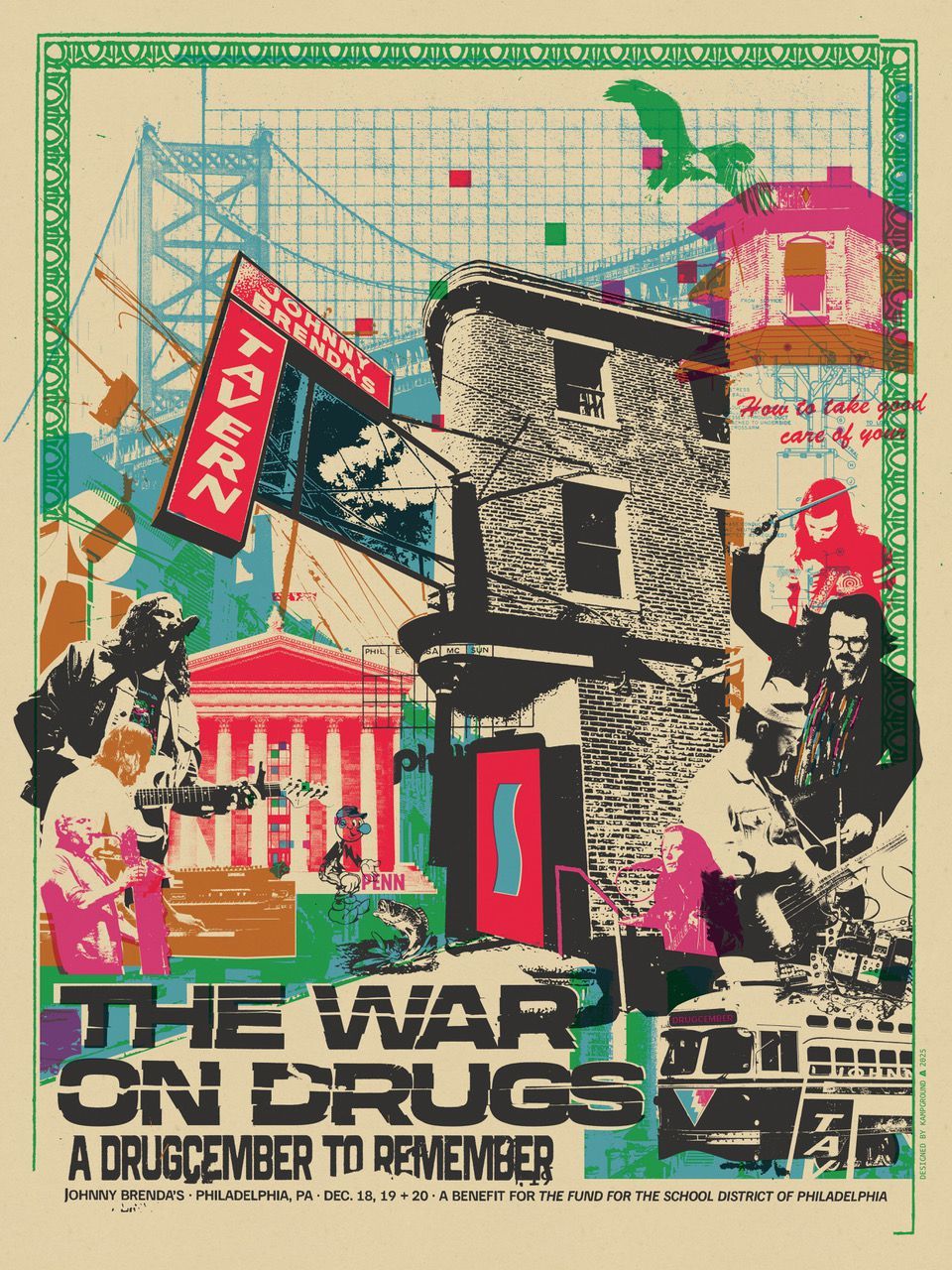
Next month, Philly rock band The War On Drugs will renew a tradition that has been on hiatus since 2022. It will perform a trio of fundraising shows to benefit the Fund for the School District of Philadelphia, the nonprofit that raises money and coordinates investments into Philadelphia Schools.
The Adam Granduciel-led seven piece band, that won a best rock album Grammy for A Deeper Understanding in 2018, will play three nights at Johnny Brenda’s in Fishtown, from Dec. 18-20.
The 250 capacity club — which the band first played on the venue’s opening weekend in 2006 — is several magnitudes smaller that the amphitheater, arena, and festival stages the Drugs typically plays in venues around the world.
Drugcember to Remember debuted in 2018 and became an annual Philly three-show tradition through 2022, with the exception of the COVID shutdown year of 2020.
But it hadn’t taken place since 2022, and seemed in danger of being gone for good, with Granduciel now living on Los Angeles and bassist and original members Dave Hartley in North Carolina.
Granduciel said in a statement that the return to the treasured tradition is a way to reaffirm its Philadelphia identity.
The flyer for The War on Drugs’ 2025 ‘A Drugcember to Remember’ benefit shows at Johnny Brenda’s on Dec. 18-20.
“This has been a year end highlight for me since we started doing it in 2018,” said the guitarist and songwriter who stepped out as a producer in 2025 on Craig Finn’s Always Been and Sam Fender’s People Watching. “Three rock shows at our old local hangout benefiting the Philadelphia School System. This band wouldn’t exist if not for the vibrant Philadelphia music community that has supported us from the beginning and we are very grateful for it.”
The War On Drugs’ most recent studio album, I Don’t Live Here Anymore, came out in 2021. Last year, they released the in-concert recording Live Drugs Again.
Its most recent Philadelphia performance was in the summer of 2024, sharing a bill with the National at the Mann Center in Fairmount Park. Besides the Drugcember shows, the only two dates on the band’s schedule are at festivals in Spain and Portugal in July 2026.
A Drugcember To Remember will raise funds through ticket sales and also the sale of exclusive items though Philadelphia businesses, including Elixr Coffee, Sacred Vice Brewing, Room Shop, Uncle Ron’s Candles, and Kinetic Skateboarding/Nocturnal Skate Shop.
Ticket for the Johnny Brenda’s shows go on sale at 10 a.m. Friday Nov. 21 at thewarondrugs.net/tour.
Kyle Schwarber spent much of his first five major league seasons trying to get things right against lefties.
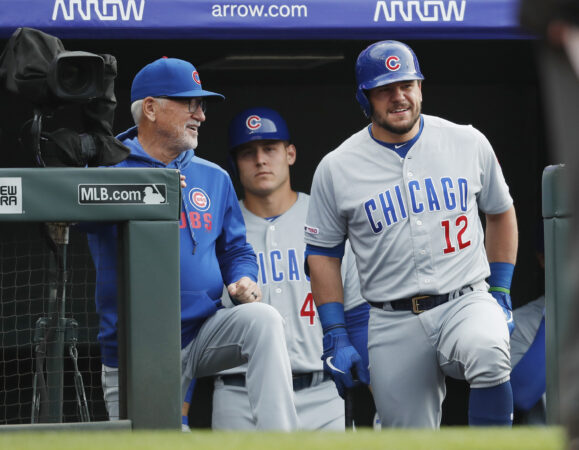
Joe Maddon watched the struggle up close.
Schwarber was a .198 hitter with a .658 OPS in 374 plate appearances against lefties from 2015 to 2020, and as the Cubs’ manager, Maddon was hard-pressed to keep him in the lineup. After the 2020 season, under an ownership mandate to cut payroll, Chicago let Schwarber go.
It must have been quite a sight, then, for Maddon to watch Schwarber bat .300 against lefties in 2024 for the Phillies and set a single-season major league record with 23 left-on-left homers this year.
Schwarber became a complete hitter in four seasons with the Phillies — and put himself in position to cash in this offseason in free agency. As Schwarber’s market develops, Maddon sat down with Phillies Extra, The Inquirer’s baseball podcast, to discuss the slugger’s maturation as a hitter.
Maddon also weighed in on how the Phillies can best protect Bryce Harper in the lineup, the value of experience in the manager’s seat, and more. Here’s an excerpt from our conversation, edited for brevity and clarity.
Watch the full interview below and subscribe to the Phillies Extra podcaston Spotify or Apple Podcasts.
Q: You managed Schwarber in his first five years in the big leagues, and there were real questions about his ability to hit lefties and be an everyday player. What goes through your mind this year, when you see him set a record with 23 homers against left-handers and evolve into a complete hitter?
A: The guy’s all heart. He comes from a family of first responders. He’s got a great charity organization. I love his wife, Paige. Also haven’t met the baby yet, but there’s a lot to love about this guy. He’s real … and that’s why he fits in so well in Philadelphia.
When we had him there [in Chicago], I wanted to hit him leadoff because of all the attributes that we’re discussing right now, the fact that I thought he had a good eye at the plate, he would accept his walks, and he could put you up 1-0 before the first hitter is done right there. However, he was deficient against left-handed pitching at that time. He didn’t wait on the ball as well as he does right now. … You can see the difference in the way that Schwarbs just lets the ball get to him, as opposed to wanting to go get it, especially against the left-handed pitcher, the ability to hit the ball to left-center has really highlighted that even better. So am I surprised? No, I thought that eventually it would get to that point.
If you’re the Cubs, at that point in his career, it’s hard to be patient. I was criticized for [hitting him] leadoff, even though I really thought it was a great idea, and you’ve seen it’s worked well, even in Philadelphia when they do that. But he really did need to learn a new approach, mentally and physically, against left-handed pitching. And he has. They’ve done a wonderful job.
The other part that was against him was his defense. He had been a catcher. When he came up, we put him in the outfield, and he was a below-average outfielder. There’s no way to describe it otherwise. But he had a good arm. He made some really great throws. And of course, he’s one of those guys, if you tell him he can’t do something, he’s going to prove you wrong, which he’s done his entire existence, from [college at] Indiana on up, and even probably when he was in high school. So these are the things he had to learn. He has learned them.
I’m so happy for him and his family that this all happened now, so that probably, I would say absolutely, a three-year heavy contract with maybe a fourth year as an option is in order right now. I’d love to see him stay in Philadelphia, because I think his sensibilities, his personality, plays with that fan base extremely well, and that’s not going to go away.
However, I know Dave Dombrowski really well. David and I scouted together in Arizona back in the ’80s. David’s a real baseball guy. He’s going to look beyond certain components of this. They know what they see, also talking to him and the impact he has in the clubhouse. I would like to believe he’s going to stay in Philadelphia, and I think he should. I don’t know that if somebody wants to give him a couple more million bucks than the Phillies do, that, I still think Schwarbs is grounded enough that he’s going to go where he wants to go, as opposed to being swayed by a couple extra dollars.
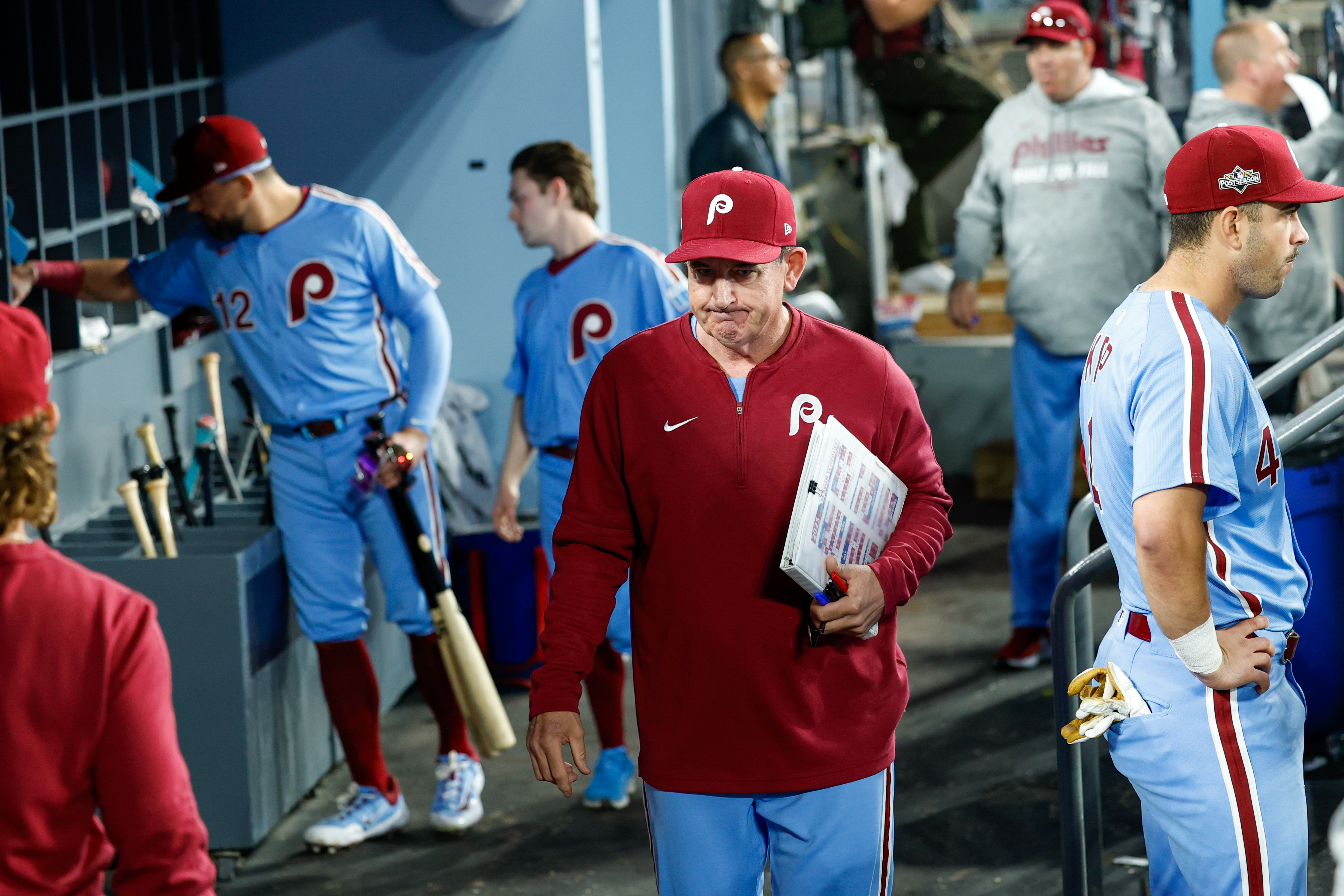
Rob Thomson’s Phillies have been bounced from the playoffs in the NLDS each of the last two seasons.
Q: What do you make of where the Phillies stand in their competitive cycle, and how far do you think they can go with the same group?
A: If you’re going to change things, you’ve got to pretty much make sure that you’re getting better, right? They are good. I like watching them. I watch them often, and I think they have grit. I think they have great camaraderie. I love their leadership. I don’t know what else you want, really. I mean to say that we’re just going to blow this up and all of a sudden we’re going to be as good next year as we were the last two or three years, and then we’re going to do better in the playoffs, that’s kind of a reach for me.
With this group, I would look to tweak it a little bit. I wouldn’t necessarily look to blow it up. There’s just too many good players on that roster, and I really think they interact well.
The division itself, with the Mets, the Braves off a bad year are going to probably be better. But I still think Philly’s the right team, the team that has a chance to repeat again as the champs of their division again next year.
My biggest thing I would look at is, “how do we prep for playoffs? What are we doing there?” My big thing is, when you get to the playoffs, I like to do less and not more. And analytical departments like to do more and not less. That time of the year, you’ve already played all these teams. You’ve played them; you’ve seen them. And then there’s the meetings. If they become more laborious, more detailed, longer, you’re putting more stuff on guys’ plate, that would be the mistake I would consider. So I don’t know this. I’m just saying I would really look at the prep work, because what would always frustrate me, we would go through the whole year, you get to this particular juncture, and now is the time to really let your players get out there, rested body, rested mind, and free. Give them a nugget or two, but let them go play some baseball, which is why we just love the World Series.
… I had Shohei [Ohtani], I’ve had a lot of these guys — they don’t hold on to analytical nuggets when the game’s played. They don’t. That’s for managers and coaches to really decipher before a game. But then again, it has to be distilled. When you get too much information, it only serves to confuse. And again, I don’t know anything here, because I’m not privy to this, but I would look into, how are we prepping going into the playoffs? What are we laying on these guys, and how are we approaching them at that point? Because, quite frankly, they look a little bit more uptight to me in the playoffs than they do during the regular season. Like with Arizona a couple years ago [in the NLCS], I couldn’t believe that.
So, I would really research and analyze my approach into that part of the year. Because obviously the approach during the year looks pretty darn good, and I don’t see that changing. So whatever you feel as though there was a deficiency, yes, try to add on to that. There’s got to be some micro stuff. But to blow that thing up doesn’t make any sense to me.
Watch or listen to the full interview to hear Maddon’s thoughts on protecting Harper in the lineup, his connection with Phillies manager Rob Thomson, and more.
The Philadelphia Housing Authority (PHA) is planning sweeping layoffs that will affect almost 300 of the agency’s 1,200 employees, beginning in January 2026.
The cutbacks are the result of dramatic changes in how PHA, which provides affordable housing to thousands of families across the city, does maintenance and repair work. Instead of directly employing union electricians, carpenters, and other workers, beginning next year, the agency will contract out for those jobs as needed.
“This is a housing program, it is not a jobs program,” said Kelvin Jeremiah, the president and CEO of PHA, in an interview.
“Do I use the resources that we have to protect residents, to advance the availability of affordable housing to the families that are most in need? Or do I use those limited resources to fund positions that I don’t need?” Jeremiah said.
There are 620 members of the Philadelphia Building and Construction Trades Council employed full-time by the agency as maintenance staff. Jeremiah estimates that by almost halving that number PHA will see a cost savings of $24 million annually.
The agency said it currently costs $15,500 to maintain a single unit of traditional public housing annually, due to the agency’s complex work rules, which require many different union workers to make repairs. Most other multifamily providers have dramatically lower per-unit maintenance costs.
“PHA has engaged the unions throughout this process and can proceed with this policy decision without additional approvals,” an agency spokesperson said in an emailed statement.
Although in-house building trades workers will constitute the majority of lost jobs, other positions will also be affected, including 33 managerial roles in PHA headquarters. Overall, PHA’s workforce will shrink by about 20%.
“We are going to talk and try to offer some alternatives, but this is an issue of price sensitivity and we have to understand, given the new environment, that there are less funds to do the same mission with,” said Ryan Boyer, business manager for the Philadelphia Building and Construction Trades Council, whose unions represent many of the affected workers.
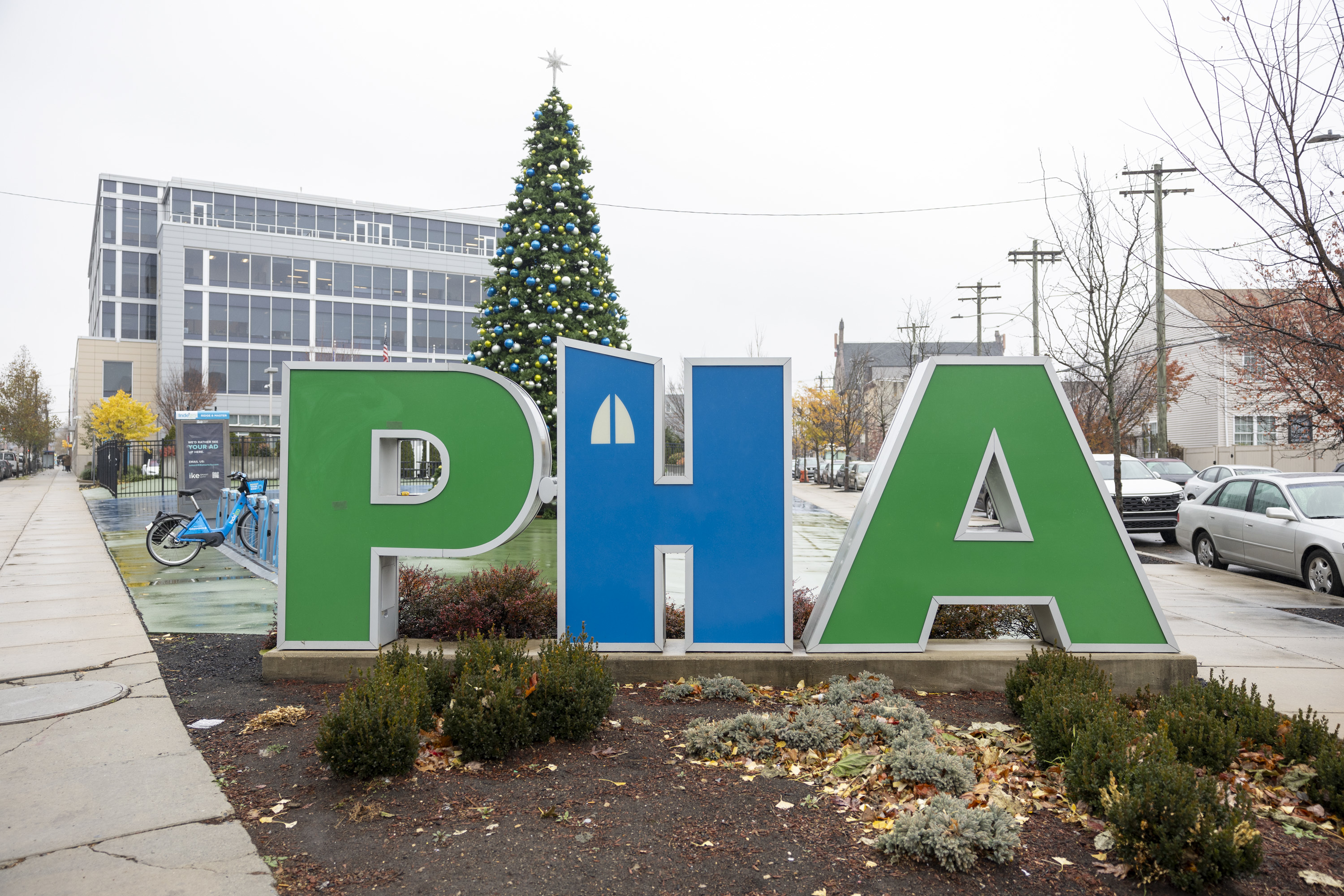
The Philadelphia Housing Authority Headquarters is planning sweeping layoffs that will affect almost 300 of the agency’s 1,200 employees, beginning in January 2026 in Philadelphia, on Wednesday, Nov. 19, 2025.
More with less?
The cutbacks come amid an aggressive $6.3 billion plan unveiled earlier this year, through which the agency hopes to expand its housing portfolio by 7,000 units while rehabbing the 13,000 units it already owns.
Jeremiah said that the staff reduction should not be seen as PHA doing more with less, and that it will not limit the agency’s ability to execute his planned expansion.
“We will not be doing less than what we’re doing now, but we have been doing too little with too much,” Jeremiah said. He said other market-rate and affordable housing multifamily operators are able to do unit repairs for far less than what PHA pays.
“My colleagues have all been doing this at substantially less cost,” Jeremiah said. “The only difference between us is that they have an operating model that does not require six different trades to do a single thing.”
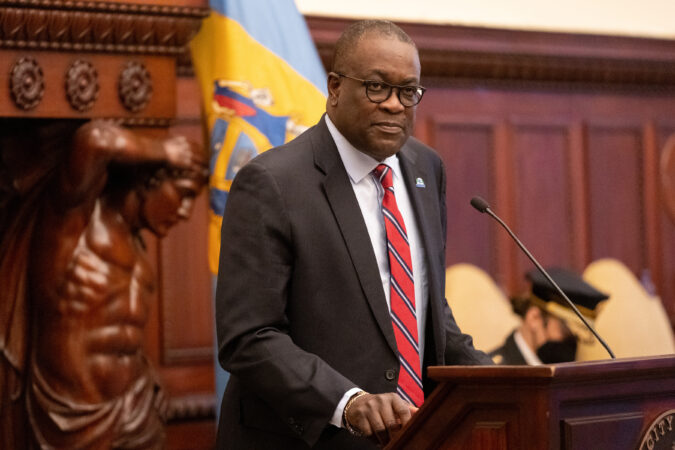
Kelvin A. Jeremiah, PHA President & Chief Executive Officer, at PHA headquarters, in Philadelphia, May 21, 2025.
Because PHA’s layoffs will affect hundreds of members of Philadelphia’s influential building trades unions,Jeremiah said, he has been negotiating with Boyer on the work-rule changes.
“My reaction is one of disappointment. However, we remain partners with PHA and we will still build most of the stuff on the capital side,” Boyer said. “I don’t want it to be lost that when they build stuff, they will still be members of the Philadelphia building trades working, and there will still be members doing maintenance work.”
Jeremiah said maintenance technicians, laborers, and painters will be the only trades that remain directly employed with the agency after the work-rule changes go into effect.
The electricians union, IBEW Local 98, said it is still studying PHA’s new policy.
PHA will also still work with the trades for discrete repair and maintenance jobs within the agency’s housing portfolio but will no longer directly employ as many workers full-time, Jeremiah said.
The Trump effect?
PHA’s layoffs, and its expansion plan, are unfolding during a period of uncertaintynationwide for affordable housing policies and organizations like PHA.
Nearly all of PHA’s funding — 93% — comes from the federal government, according to the agency.
“If Congress and the administration coughs, it impacts us,” Jeremiah said. “If there is a reduction [in funding], it impacts us.”
Jeremiah said he is seeking to operate within the mandates set by Trump’s administration while continuing to support PHA’s tenant base and plans.
“Subsidizing employment … is just not the way to go at a time when we’re looking at less funding on the horizon,” Jeremiah said. “Where am I to get the funds not only to do more developments, acquire more, and preserve what we have at the same time[that] we have a workforce that is, quite frankly, I will dare to use the word bloated?”
Waves of layoffs
Despite the layoffs, Jeremiah believes the agency will still be a rich source of jobs for the building trades unions as the $6.3 billion plan unfolds. He points to an analysis of PHA’s 10-year plan byeconomic consulting firm Econsult Solutions, which said it would create 4,900 jobsannually in the city.
The first round of 260 job losses will hit in mid-January 2026, although Jeremiah says 93 of those workers will be retained in new positions as maintenance aides, laborers, and painters. A further 116-position reduction will occur next summer.
A vice president of development, Greg Hampson, also recently left PHA, although the agency declined to comment on that case. Jeremiah said that several vice president and director-level positions will be among the coming layoffs.
The last major round of layoffs at PHA was in 2016, when 14% of the staff was cut. Those positions were mostly administrative roles.
Editor’s note: A previous version of this story misstated the number of employees impacted.
The Eagles’ Jordan Davis had a different role Tuesday night at the Salvation Army Camden Kroc Center. The 6-foot-6, 336-pound defensive tackle lined up under center as the designated quarterback in a room with over 100 children, ready to play flag football.
Davis spent time with four teams, joining each huddle and running plays as he introduced football to several kids who had never played the sport before.
“This is the best flag football team in Camden, New Jersey. And I’m standing on that right now,” Davis said. “If I had so much time, I would actually coach y’all because y’all have so much potential.”
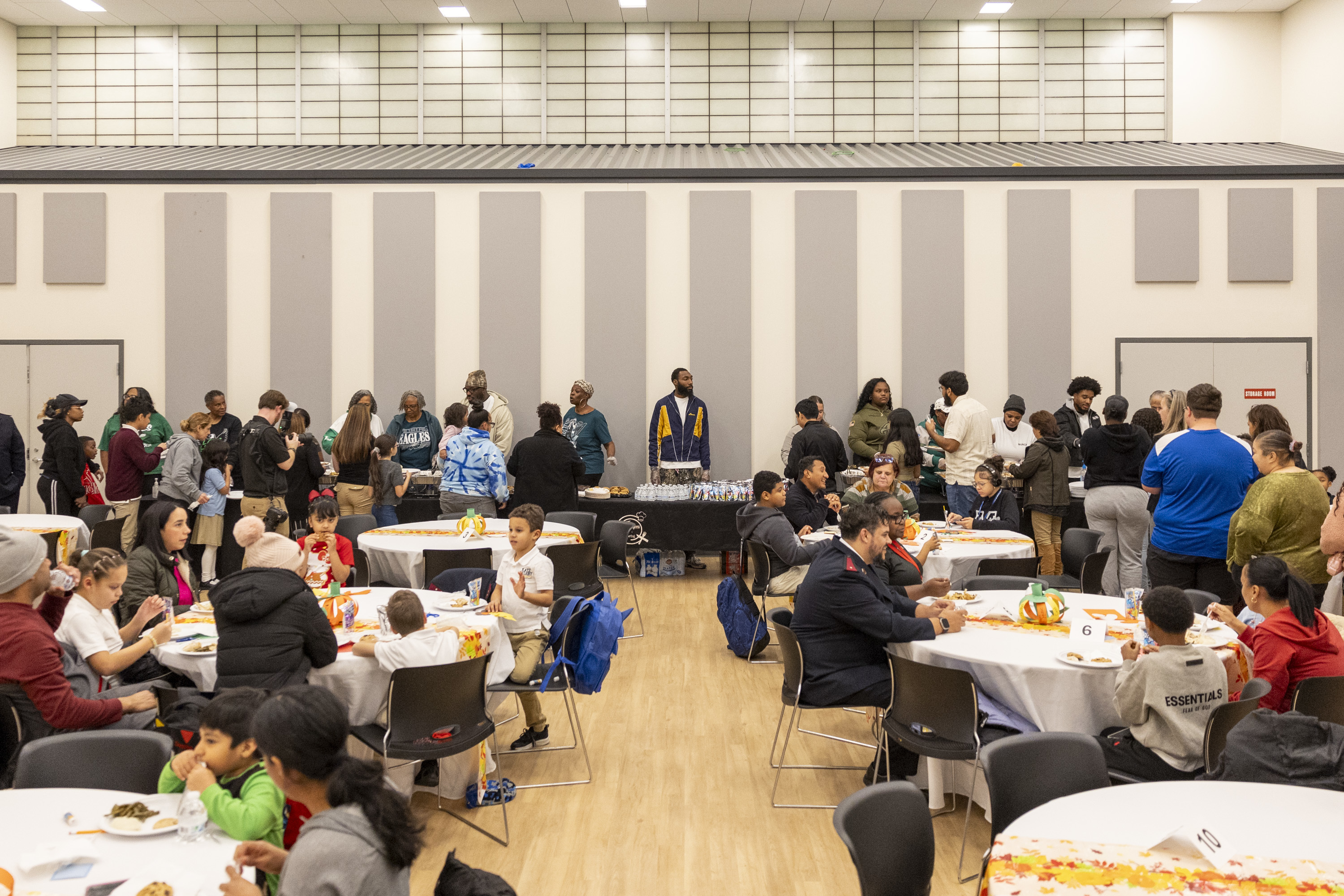
This was just one way the North Carolina native helped families in need Tuesday. The Jordan Davis Family Foundation provided a fully catered Thanksgiving meal to families who attended. And to end the night, all the families were handed Thanksgiving turkeys and AT&T laptops as they left the Kroc Center.
The Jordan Davis Family Foundation provided Thanksgiving meals for families at the Salvation Army Camden Kroc Center in Camden on Tuesday night.
Partnering with the Salvation Army is a full-circle moment for Davis. When he was a child, his family received assistance from the organization. Now, it’s his turn to give back.
“It was hard for my mom, just making sure that we had a meal every night, me and my brothers,” Davis said. “And even nights that she might have sacrificed the meal for herself, it was always meant for us to eat. And I think that’s just a wonderful story for me because it shows the type of woman that she is.
“She raised me to be that way. And it might not be a meal here, it could be a coat drive. It could be another drive. It could be a back-to-school event. It could be a kids camp. Anything matters. Everything matters. So, that’s just something that I keep in my heart, and I want to keep that going.”
Davis isn’t the only Eagles player giving back ahead of the holiday season. Last week, running back Saquon Barkley partnered with Ashley Furniture and the Salvation Army to give out mattresses and bedding to families in need.
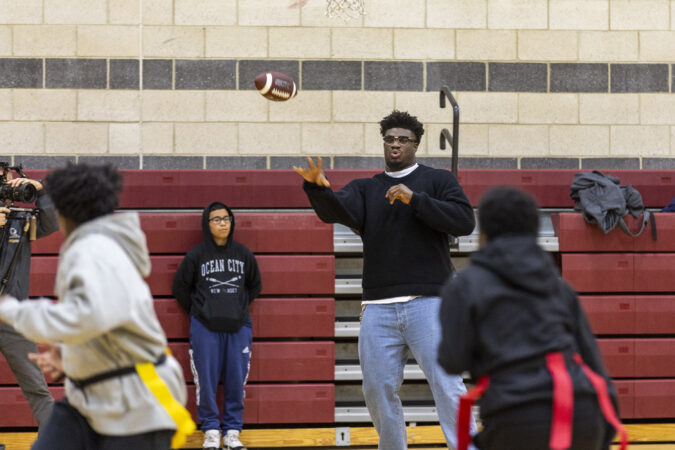
Jordan Davis played flag football with the kids after eating providing a Thanksgiving meal through his foundation on Tuesday night.
“It takes a village to raise a child,” Davis said. “And that’s something that my team, we always say. It takes a village. … When you have an opportunity to give back, it doesn’t matter what time it is. As long as you have that time, you want to make sure that you’re providing that time.
“Time is the most important thing you can spend. And we could be doing anything else with this time right now, but we spend it giving back and we spend it doing the things that matter most to us.”
From his rookie season in 2007 through 2015, Darrelle Revis was the NFL’s best cornerback: seven Pro Bowls, four first-team All-Pro selections, 28 interceptions, three pick-sixes. He was so good that the Jets, for whom he played most of his career, seldom gave him help from safeties, which left him on an island. His nickname soon became Revis Island, a place where receivers went to disappear.
Soon, Quinyonamo Bay will be as famous as Revis Island.
That’s the early nickname for the twilight zone that surrounds Quinyon Mitchell, the Eagles’ current best candidate for Defensive Player of the Year. It refers to Guantánamo Bay, the U.S. naval base and notorious military prison on the Cuban coast.
Maybe it’s not the most tasteful play on words, but it’s a bit of phrasing that aptly connotes both the sinister intent and dire prospects associated with challenging the best cover corner in the NFL.
On Sunday night, in perhaps Mitchell’s finest hour of many fine hours to date, a dozen of his friends and family from Williston, Fla., attended a 16-9 win over the Lions in what could be an NFC championship game preview. Most were second cousins, and all were laid-back Florida mellow.
From 47-year-old cousin Kendall Edwards, the senior member of the clan, to 13-year-old T.J. Snead, the aspiring quarterback / safety / outfielder / pitcher, they were bursting with pride that “Q” had played so well in prime time in a game dominated by the Eagles defense.
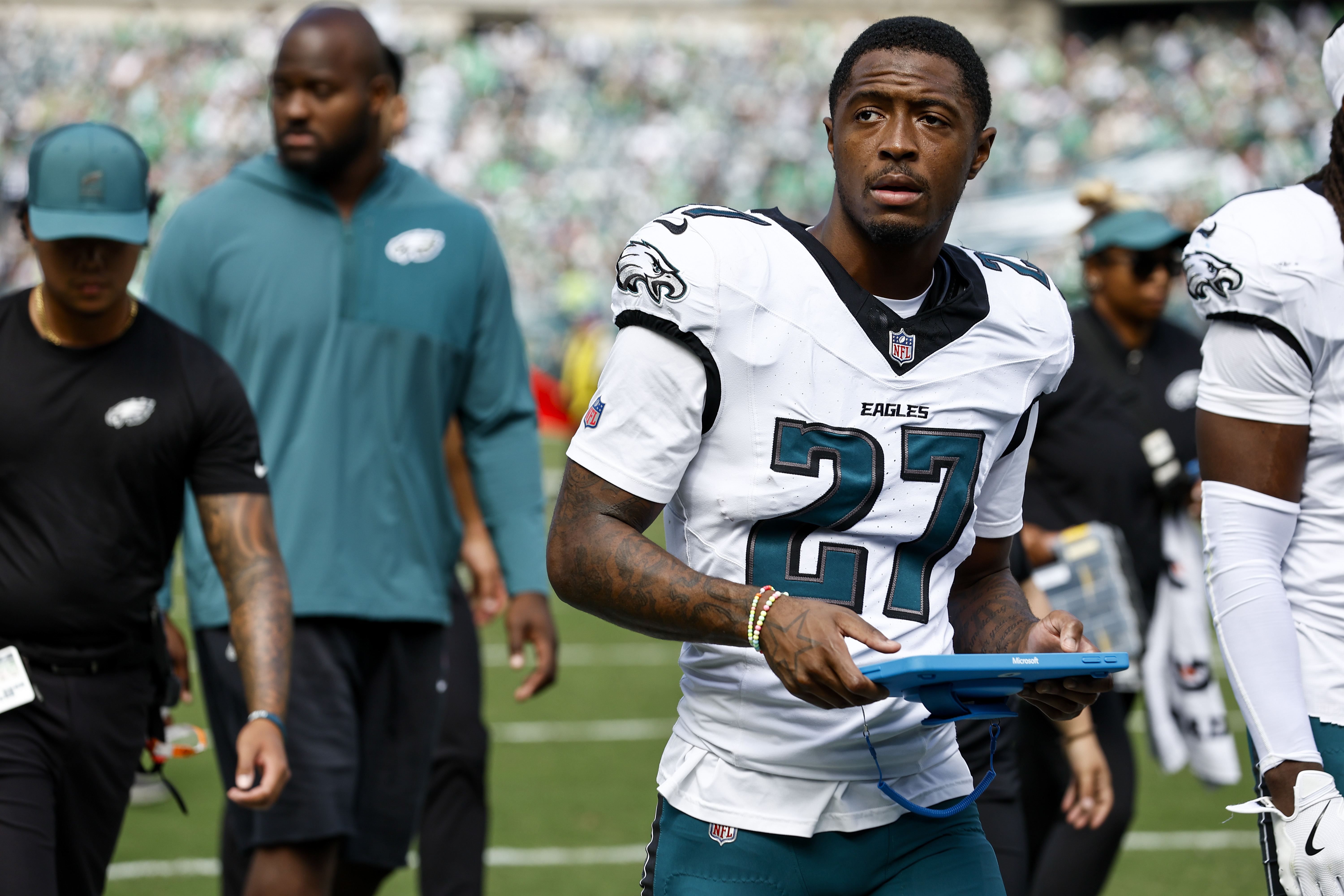
Eagles cornerback Quinyon Mitchell is in the midst of a shutdown season.
“It was awesome,” said Snead. “But cold.”
Factoring in 25-mph winds, the real-feel temperature Sunday night in Philly was 30 degrees. It was 79 back in Williston. Mitchell was even hotter.
He allowed zero catches and zero yards on six targets, according to Next Gen Stats. The league said that tied for the best performance against at least six targets since the beginning of the 2024 season.
In fact, through 10 games, Mitchell has allowed a 41.9% completion rate, which, according to Next Gen, is the lowest since 2018. He has not allowed a touchdown pass.
Quinyon Mitchell did not allow a reception on any of his 6 targets, tied for the most targets without allowing a reception in a game over the last two seasons.
Mitchell has allowed a 41.9% completion percentage this season, the lowest by any player since 2018 (min. 50 targets).… pic.twitter.com/cbrbygdGY2
As well as new edge rusher Jaelan Phillips has played; as well as linebacker Nakobe Dean has played since returning from injury; and as well as hard-hitting corner Cooper DeJean, linebacker Zack Baun, and defensive tackle Jalen Carter, the linchpin of the defense, have played all season, none has been as suffocatingly good as Mitchell.
Mitchell has not gotten the recognition he deserves because he does not take as many chances as most corners, which means he doesn’t get beaten, but he also doesn’t rack up interceptions. He has zero picks in his 26 regular-season games, but that doesn’t mean he can’t catch. He picked off Packers quarterback Jordan Love in the Eagles’ wild-card playoff win in January and snagged one from Jayden Daniels in the NFC championship game win over the Commanders.
Mitchell faces the best of the best — Hall of Fame-caliber quarterbacks and Pro Bowl receivers who play on proven teams.
The Eagles opened the season against the Cowboys, who feature CeeDee Lamb and George Pickens. They then visited Patrick Mahomes in Kansas City. They then beat Matthew Stafford, Puka Nacua, and Davante Adams when the Rams visited and did the same to two-time Pro Bowl quarterback Baker Mayfield in Tampa, when Mitchell was named NFC Defensive Player of the Week.
Mitchell blanketed Justin Jefferson, the league’s best receiver, when the Birds won in Minneapolis: one catch, 10 yards, three targets. He gave up two catches for 24 yards on seven targets in Green Bay; then, on Sunday Night Football, he pitched a shutout against Amon-Ra St. Brown and, occasionally, Jameson Williams.
NBC analyst Cris Collinsworth, who owns Pro Football Focus, an analytics service that rates every NFL player, believes in the numbers. He said Sunday that Mitchell already is among the best corners in the league, if not the best.
Emmanuel Acho, a retired Eagles linebacker and current NFL analyst, posted a film session Tuesday with evidence from Sunday to support Acho’s claim that Mitchell is No. 1.
Like Acho, Mitchell’s three cousins, who played with him at Williston High, presented evidence.
“He traveled well,” said Malik Latson, who was a senior receiver when Mitchell started as a freshman cornerback.
He referred to Mitchell often covering St. Brown whether the Lions receiver lined up on the left side, the right side, or the slot. Last season, Mitchell lined up almost exclusively on the right side. This season, Mitchell travels all the time.
“He recognized a lot of routes before they ran them. He understood leverage,” Latson continued. “That off-man, I think, is his best coverage.”
Indeed, Mitchell seemed most effective when he gave the Lions receivers a few yards of cushion at the line of scrimmage.
But still, no picks. Revis knows: Picks get you to the Pro Bowl.
“That’s fine. No picks, that’s fine,” said Zachary Riley, who was a senior receiver and defensive back at Williston when Mitchell was a freshman. “He completes the assignment. There were no big catches on him. I mean, no catches at all, that I remember.”
He remembered correctly.
“I mean, he just looked normal. Smooth,” said C.J. Strange.
He would know best.
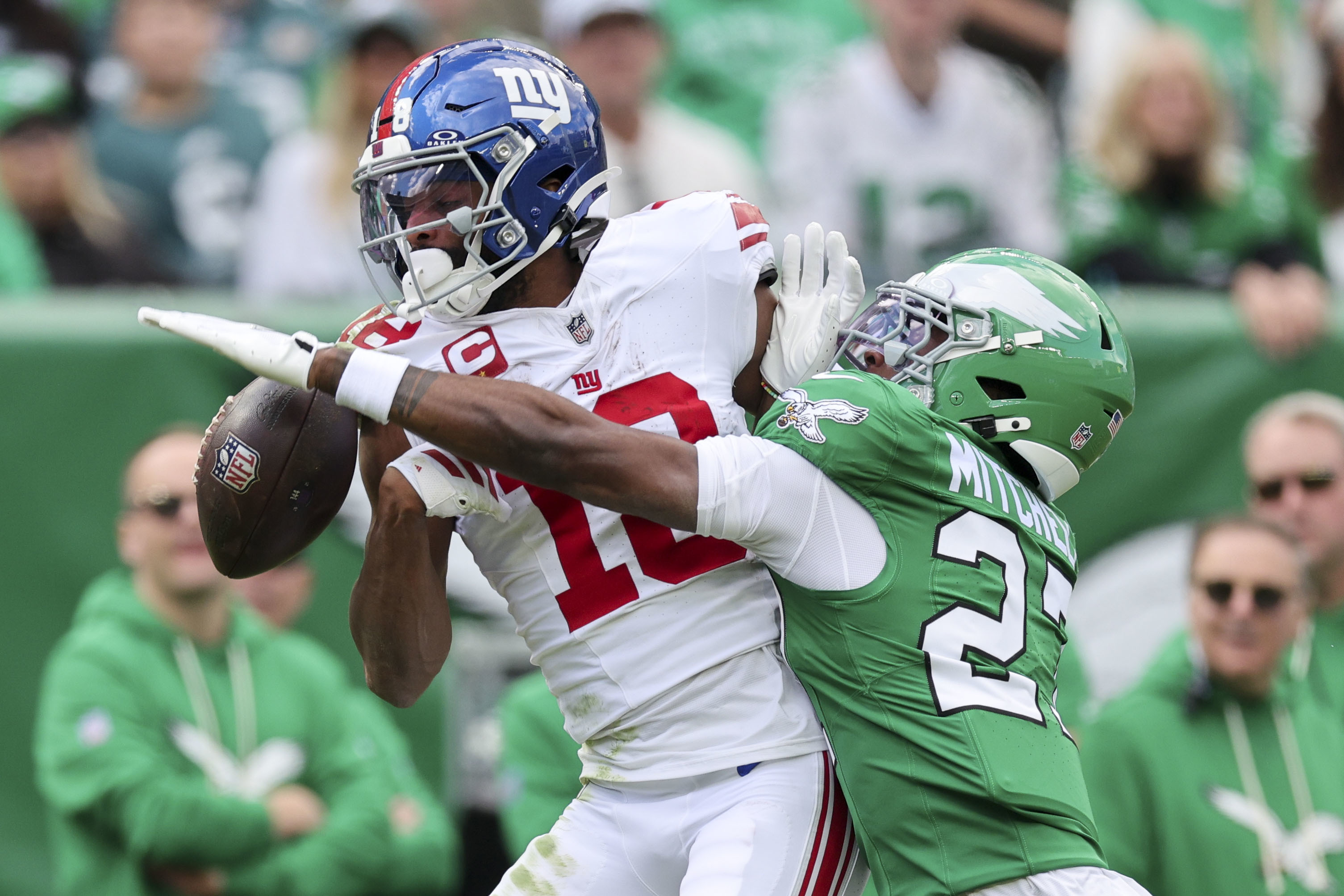
Quinyon Mitchell breaking up a pass intended for Giants receiver Darius Slayton on Oct. 26.
Strange and Mitchell graduated together. Strange played quarterback (and punter) with Mitchell, who played not only corner but also running back in high school and ran for 983 yards and 11 touchdowns as a senior.
Mitchell and Strange played high school basketball together as well. That’s why Strange got the White Glove treatment last weekend, while the rest of the clan fended for themselves.
Mitchell picked up Strange at the airport around midday Saturday. They had an early dinner, then went back to Mitchell’s home to watch college football.
Latson and Riley are working as truck drivers out of Virginia, so they rented a car and drove up, but as they crossed the Pennsylvania state line and called Mitchell in the early evening, he replied, “Sorry. I’m about to head to the team hotel.”
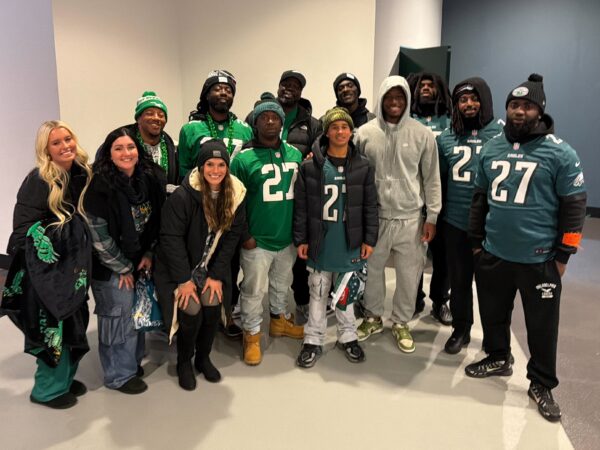
They spent the night in his home with Strange, and the trio of teammates carpooled to the game in Mitchell’s truck, piling out two hours before game time in matching midnight green No. 27 jerseys.
They didn’t see Mitchell until after the game, when he emerged from the locker room tunnel and found himself awash in the affection unique to big families from the South.
“It means a lot, having this support system, and some of them coming all the way from Florida,” Mitchell said. “A whole lot of love here.”
And with that, the whole group left Lincoln Financial Field, eager to bask in the aura of Quinyonamo Bay.
“We will sing, dance, and celebrate in the way Pierre would have wanted us to,” said Chuck Damico, WMMR’s program director.
The concert will take place at the Fillmore on Dec. 17. Tickets will cost $50 and go on sale Friday at 10 a.m. through Ticketmaster on the Fillmore’s website. A portion of the proceeds will go to MANNA, the Metropolitan Area Neighborhood Nutrition Alliance.
The show will feature bands and musicians near and dear to the former WMMR host’s heart, including The Hooters, Brent Smith and Zach Meyers of Shinedown, Lizzy Hale and Joe Hottinger of Halestorm, and Ed Roland of Collective Soul.
A poster for a concert honoring former WMMR host Pierre Robert, who died unexpectedly last month.
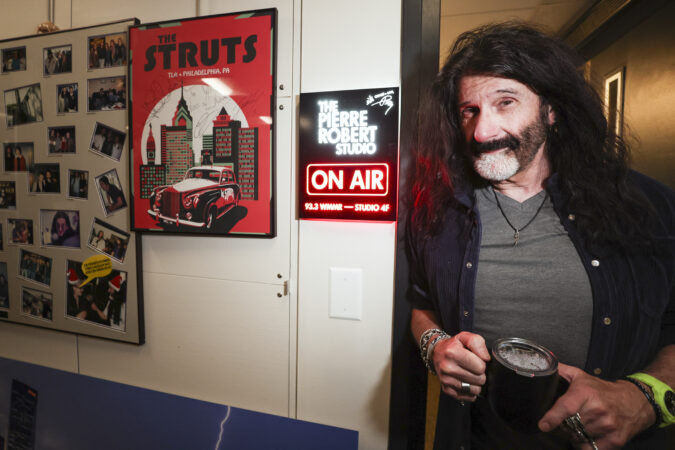
Robert, 70, was found dead in his Gladwyne home on Oct. 29 after failing to show up for his midday show. The cause of Robert’s death was not disclosed and officials don’t plan to release additional information. Caroline Beasley, the CEO of WMMR’s parent company, Beasley Media Group, said foul play was not suspected.
“Everything seemed to be natural,” Preston Elliot said on air following Robert’s death. “It just appears he passed overnight.”
Robert was a musical institution in Philadelphia, where he spent 44 years on the air sharing his deep love of classic rock and expressing a humanity that touched musicians and listeners across the county.
“He was truly irreplaceable and his passing will leave a big hole especially in the local music community,” Hooters singer and cofounder Rob Hyman said. “Pierre was that ‘good citizen’ who will be missed by all.”
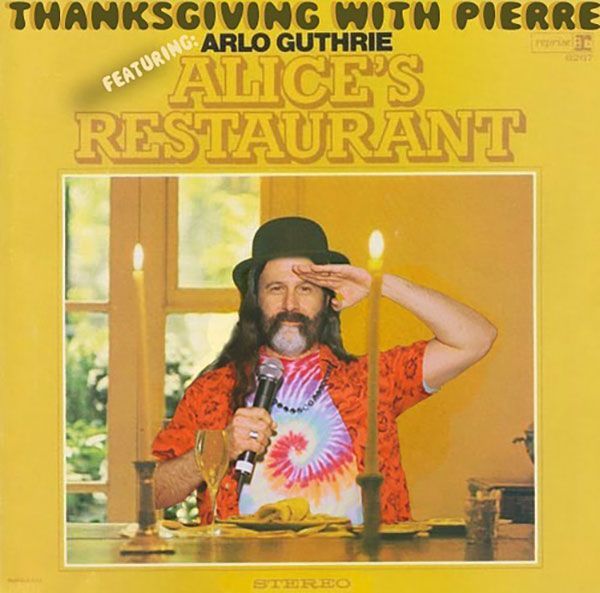
Pierre Robert’s annual Thanksgiving Day show will continue this year, hosted by his former producers.
With Thanksgiving approaching, WMMR plans to keep Robert’s annual Turkey Day show alive with a midday show anchored by Ryan Shuttleworth and featuring a collection of the rock host’s former producers — Kevin Gunn, Michael Anthony Thompson, Nick McIlwain, Jason Fehon, and Chris “Pancake” Ashcraft.
And yes, that means a heaping spoonful of Arlo Guthrie’s “Alice’s Restaurant Massacree,” the folk singer’s 18-minute opus. Expect to hear three versions of the song, including the even-longer 25th anniversary edition, which will be played at noon.