
Tag: topic-link-auto

  • Changes to Philly’s special-admission process exacerbated low enrollment at some magnets. Now, the district is trying to close them.

    Changes to Philly’s special-admission process exacerbated low enrollment at some magnets. Now, the district is trying to close them.

    Lankenau High’s 11th-grade class is tiny — just 25 students.

    That’s one of the reasons why closing the school is for the best, Philadelphia School District Associate Superintendent Tomás Hanna said at a community meeting last week.

    At small schools, Hanna said, programming options are limited and “what’s left behind is very difficult environment for young people.”

    The district proposes merging Lankenau into Roxborough High as an honors program — a move that officials say will maximize opportunities for students at both schools. That proposal has been met with fierce opposition from the Lankenau community, whose members say stripping the school of its identity and removing it from its unique location on 400 wooded acres is unjustifiable.

    But the district is responsible for some of the enrollment issues at Lankenau and some of the other 20 schools that Superintendent Tony B. Watlington Sr. has recommended for closure. Schools with large numbers of empty seats were targeted under the plan, which the school board is expected to vote on this winter.

    When the school system dramatically revamped its special-admissions process in 2021, moving to a centralized lottery from a system where principals had discretion over who got into the district’s 37 criteria-based schools, enrollment dropped at some magnets.

    For the 2022-23 school admissions cycle, Lankenau, Motivation, Parkway West, and Parkway Northwest — four of the 20 schools tagged to close — had dozens of unfilled seats in their ninth-grade classes.

    window.addEventListener(“message”,function(a){if(void 0!==a.data[“datawrapper-height”]){var e=document.querySelectorAll(“iframe”);for(var t in a.data[“datawrapper-height”])for(var r,i=0;r=e[i];i++)if(r.contentWindow===a.source){var d=a.data[“datawrapper-height”][t]+”px”;r.style.height=d}}});

    The district set academic standards for admission to those schools, and stopped allowing schools to admit students who were close to meeting academic requirements and who demonstrated they would be a good fit for the individual schools, as had been done in the past. (Officials said they wanted to centralize admissions to avoid demographic imbalances at schools; those four magnets did not have a history of them.)

    The district’s using Lankenau’s tiny now-junior class to justify closings infuriated many, including Matthew VanKouwenberg, a science teacher at the school.

    Lankenau’s size “is a district-designed and district-created problem,” VanKouwenberg said. Though the lottery was begun for equity reasons, “the result is disastrous.”

    But Tonya Wolford, the district’s chief of evaluation, research, and accountability, said Lankenau, Motivation, Parkway West, and Parkway Northwest had declining numbers of students applying prior to the lottery changes.

    And for years, those schools accepted large numbers of students who didn’t meet the district’s criteria, Wolford said.

    Dramatic enrollment drops after district orders

    The data are clear: After the district pushed changes to the admissions process, the four schools all saw dramatic drops in enrollment — and some of them never recovered.

    Motivation, in West Philadelphia, had a freshman class of 83 students and a total enrollment of 336 in 2022-23. It saw a 77% drop in its ninth- grade class — just 19 freshman in 2023-24. The school now has 151 students, and the district wants to close it and make it an honors program inside Sayre High School. It is operating at only 15% of its full capacity.
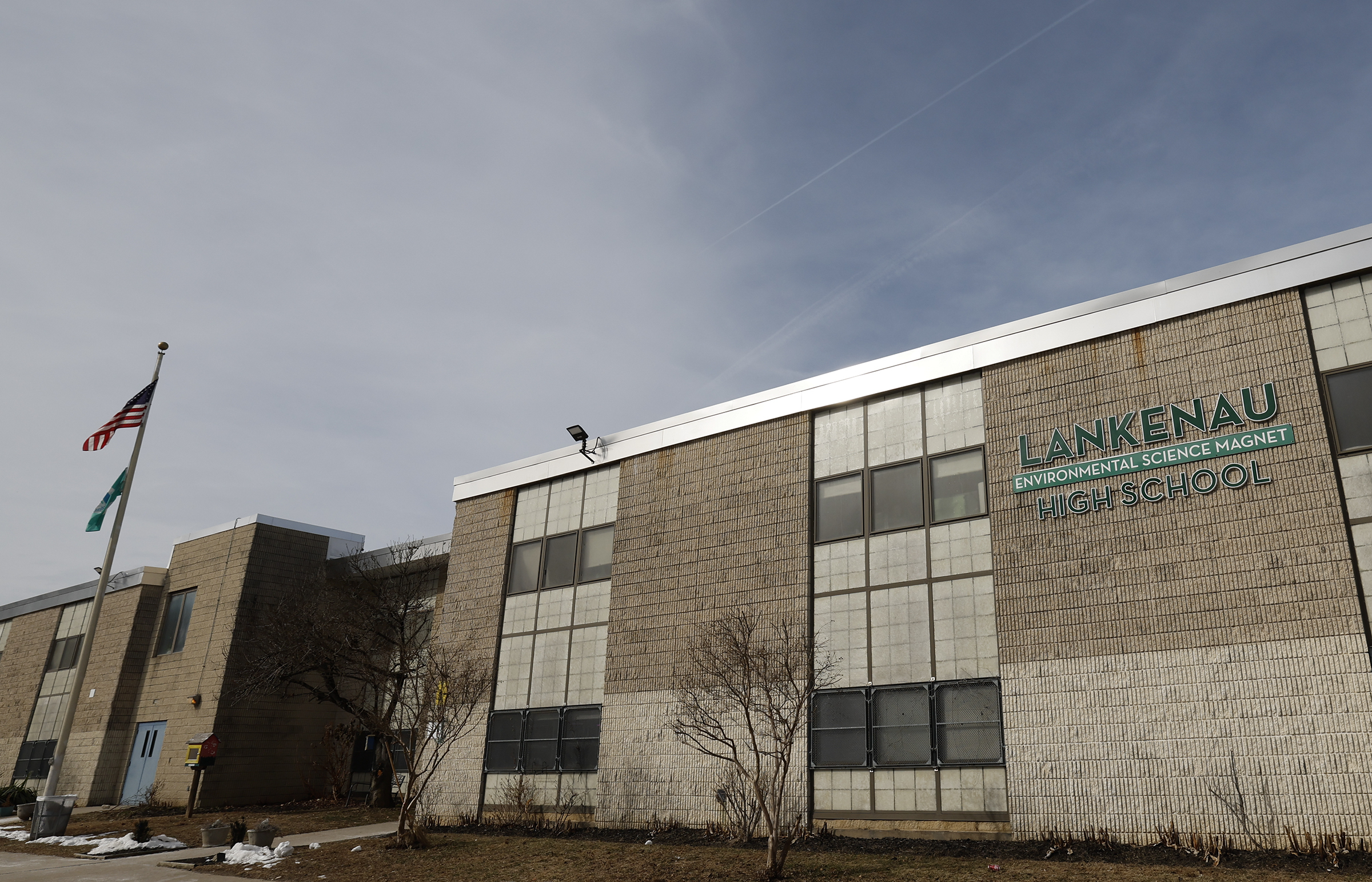
    The Lankenau Environmental Science Magnet High School in Roxborough.

    Lankenau, in Upper Roxborough, had 91 freshman in 2022-23, then 31 in 2023-24, a 66% decline. It now enrolls 225 students. The school is using 49% of its capacity.

    Parkway Northwest had 77 ninth graders in 2022-23, then dropped to 30 in 2023-24, a 61% decrease, and is 60% full. It’s got 248 students this year, and the district wants to close it and make it an honors program of Martin Luther King High.

    And Parkway West had 54 freshman in 2022-23, then 19 the following year, a 65% decrease. It now has just 140 students, and is using 40% of available seats. It’s proposed to close and become part of Science Leadership Academy at Beeber.

    A staffer who worked at Parkway West as the special-admissions process changes rolled out said they were devastating to the school, which typically filled three-quarters of its slots for incoming ninth graders with students who qualified on every measure, and a quarter by feel.

    Parkway West High School, in West Philadelphia, is proposed to close under a Philadelphia School District facilities proposal.

    “We found kids who maybe missed one criteria, but they were good kids, and had strong recommendations,” said the staffer, who asked not to be identified because they were not authorized to speak to a reporter.

    When Parkway West lost that ability, its enrollment tumbled, and never recovered.

    Lankenau community members say interest in their unique school has never waned, but the size of their incoming classes continues to be limited by the district — even beyond the admissions changes.

    For the applicant class set to start high school in the fall, 107 students listed Lankenau as their first choice, staff said, and 95 have accepted Lankenau’s school board offer.

    But since 2022-23, district officials have limited Lankenau to two sections of ninth graders, and with class sizes capped at 33. So despite having interest and students enough for 99 freshmen, it won’t have staff for more than 66.

    In the last few years, staffers said, more than 66 students show up at the start of the school year. But with only enough teachers for 66, classes are overcrowded and some students end up transferring out.

    “That is the only reason we lose enrollment,” said Erica Stefanovich, a Lankenau teacher. “We wouldn’t be in this situation if they hadn’t put us in it. This is an artificial problem.”

    But, Wolford said the trend lines were clear for Lankenau and other schools.

    In 2019-20, for instance, the prior to the district’s admissions changes just 34 students met Lankenau’s criteria, but 81 students accepted offers for the ninth-grade class, Wolford said. That same year, eight students qualified for Parkway Northwest on paper, but 34 were admitted, according to district data.

    Schools like Lankenau and Parkway Northwest “were existing without following the criteria,” said Wolford.

    Trees, bees, and a Lorax

    Lankenau is putting up a spirited battle to stay open.

    Last week, an overflow crowd — more than 100 students, staff, parents, representatives from Lankenau’s many partner organizations, and community members — packed the school for a student showcase and district-led meeting about the closure. Some students dressed as trees, bees, and a Lorax, the Dr. Seuss character who “speaks for trees” — to emphasize the importance of their school’s setting amid 400 acres of woods.
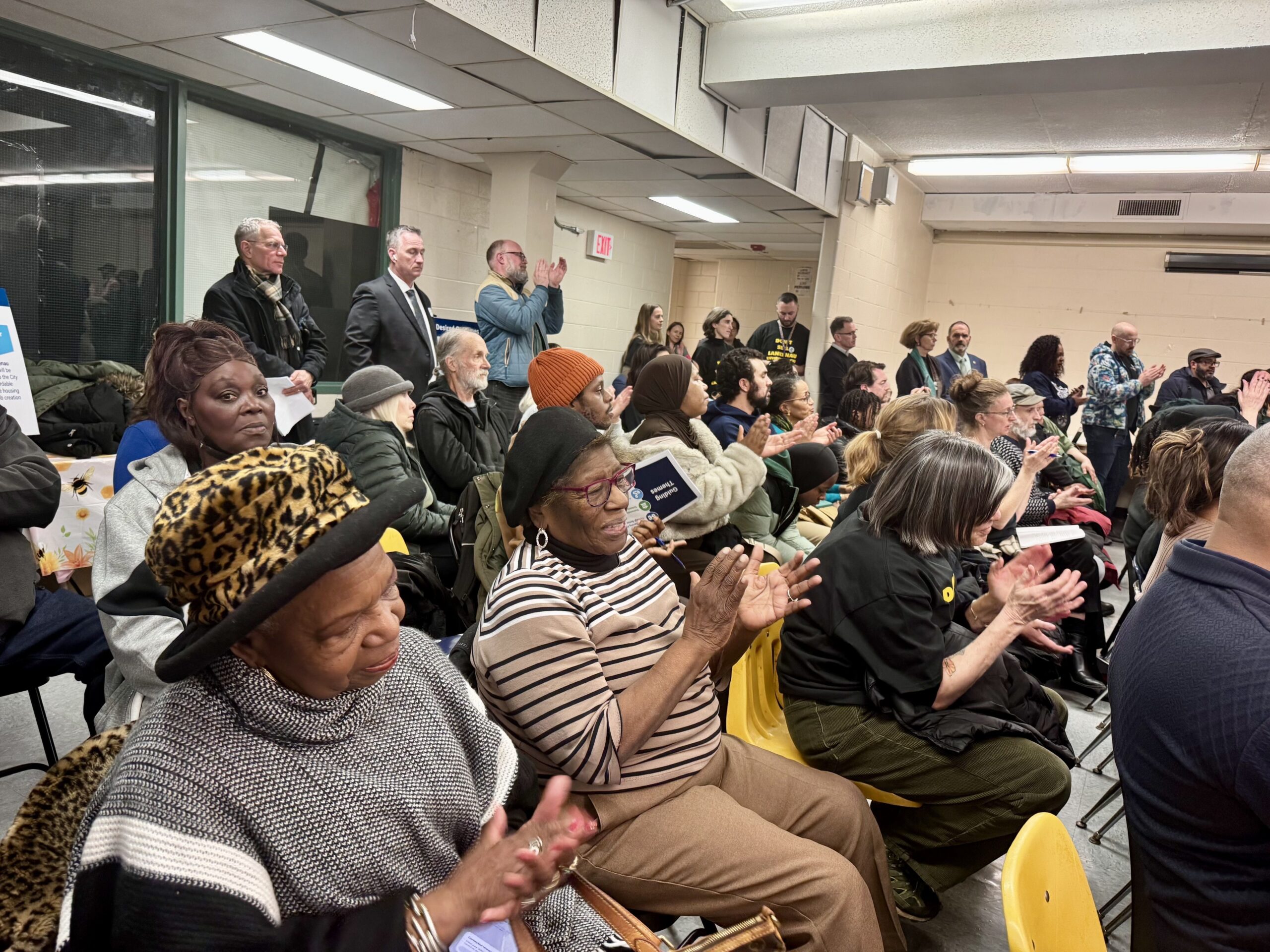
    Community members at Lankenau High School applaud a student telling district officials why the school should not close. Lankenau is one of 20 Philadelphia School District schools proposed for closure.

    First, Lankenau students wowed visitors with presentations — about their study of natural resources, about the experience of foraging for ingredients to brew their own artisan teas — and then, it was down to business. Lankenau is too small, officials said, and the district must find ways to offer a more equitable experience for all students.

    “I don’t discount that there is magic inside of these walls,” Deputy Superintendent Oz Hill said. “What I’m sharing with you is if we can take that magic and enhance it with more extracurricular activities, more expanded academic programming, the sky’s the limit.”

    The parents, students, and staff in the audience weren’t having it.

    Lankenau was just certified to become the state’s only three-year agriculture, food, and natural resources career and technical education program — a designation that took years to achieve, and cannot transfer to a new building.

    Officials are proposing closing Lankenau a year and a half from now; that’s not enough time for the district to reapply for the designation for a new Lankenau-inside-Roxborough CTE program.

    District officials said at the meeting that they believe their “close relationship” with the state education department will give them enough time to get a new Roxborough program certified in time for the Lankenau closing.

    Multiple parents told district leaders they would not send their children to Roxborough High.

    And Akiraa Phillips, a Lankenau ninth grader, said she couldn’t imagine attending school in another setting.

    In Lankenau’s current setting, “learning doesn’t stop at the desk. Our campus is the classroom,” Akiraa said. “We learn science by being in it. Here, we don’t just talk about ecosystems, climate, and sustainability, we walk through it. That kind of learning sticks with you. You can’t stick this into any random building and expect it to work.”

    The community turned out in full force, but politicians and other decision-makers were in the room, too. Three school board members, including president Reginald Streater, attended the meeting.

    State Sen. Sharif Street (D., Philadelphia), the front-runner to replace U.S. Rep. Dwight Evans in Congress, said he “was against closing the school,” but noted that the decision didn’t rest with him, and said the state needed to better fund schools “because we have not met our obligation to fully fund the program.”

    And Councilmember Cindy Bass said she was particularly incredulous that the district was attempting to close a successful magnet — Lankenau has a 100% graduation rate.

    “If it works, why are you breaking it?” Bass said. “I do not understand what the logic and the rationale is that we are making these kinds of decisions. We’re not just closing a school, we’re disrupting the lives of young people.”

  • Philly’s port has a problem with the ‘Buy America’ law: The cranes they need aren’t made in the U.S.

    Philly’s port has a problem with the ‘Buy America’ law: The cranes they need aren’t made in the U.S.

    In an effort to reduce air pollution and modernize U.S. ports, the Biden administration in 2024 announced $3 billion in grants for zero-emission equipment — including tens of millions earmarked for Philadelphia’s port to buy two new electric cranes to help unload ships.

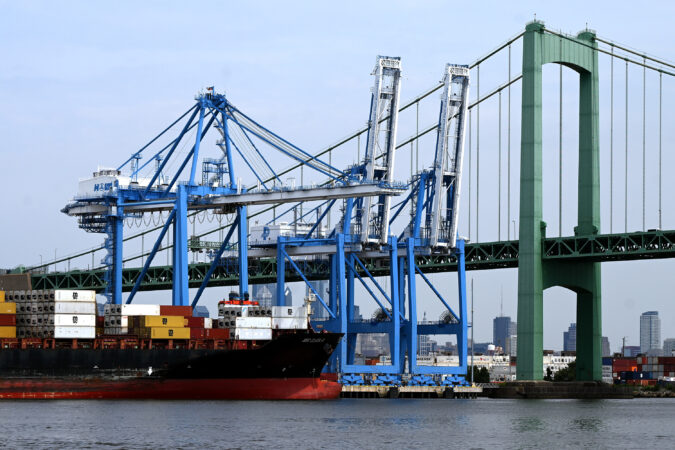
    Ports have embraced the clean energy push, but some have run into a problem. U.S. law requires federally funded infrastructure projects to use American-made products. But according to industry groups, no U.S. firm makes the giant ship-to-shore gantry cranes like the ones Philly is hoping to buy.

    So now the Philadelphia Regional Port Authority (PhilaPort), the state agency that owns terminals and logistics facilities along the Delaware River, is asking the Trump administration for a waiver from so-called Build America, Buy America rules.

    Those rules — included in a 2021 law that had bipartisan support in Congress — reflect a push under both Republican and Democratic administrations to revive American manufacturing, especially in industries such as semiconductor production and shipbuilding, where continued U.S. deference to China is seen as a potential security risk.

    But there are practical constraints to so-called onshoring, from the cost of materials to a shortage of skilled labor. The U.S. manufacturing sector has lost more than 200,000 jobs since 2023.

    In the case of the cranes, PhilaPort says that even if it could procure them in the U.S., it would still face risks because of a lack of “a reliable domestic supply chain for spare parts and service.”

    The Environmental Protection Agency said it is reviewing PhilaPort’s application. It might not be a slam dunk: President Donald Trump’s administration has slashed billions of dollars in funding for Biden-era clean energy initiatives — and early last year, PhilaPort’s grant appeared to be briefly suspended.

    Yet Trump has also expressed support for union dockworkers like the ones who would operate new cranes at Tioga Marine Terminal in Port Richmond. The International Longshoremen’s Association has celebrated the initiative, known as the Clean Ports Program, saying it protects jobs against automation.

    If the EPA does sign off on the request, the port authority will have to navigate a geopolitical minefield.

    Grant recipients are prohibited from using the funds to buy equipment made in China, whose state-owned Shanghai Zhenhua Heavy Industries Co. Ltd. (ZPMC) produces 70% of the world’s ship-to-shore cranes, including the vast majority in use at U.S. ports.

    American reliance on Chinese-made critical port infrastructure has raised national security concerns, magnified by the FBI’s 2021 discovery of “intelligence gathering equipment” onboard a ship that was delivering ZPMC cranes to Baltimore’s port, according to a congressional investigation.

    Only three companies outside China, two in Europe and one in Japan, make ship-to-shore cranes available for international buyers, according to the American Association of Port Authorities. Each firm’s cranes would likely be subject to tariffs imposed by the Trump administration.

    Another wrinkle: As PhilaPort has sought support for the waiver from Pennsylvania’s congressional delegation, some lawmakers have expressed reservations that even cranes made by a non-Chinese manufacturer might include parts made in China. Limiting that exposure could be challenging, given China’s dominance in these intermediate goods.

    It remains to be seen whether lawmakers will ultimately back the request. Labor unions such as United Steelworkers have broadly opposed exemptions from domestic production requirements. A spokesperson for United Steelworkers said the union is “still reviewing the specifics of this case.”

    U.S. Rep. Brendan Boyle (D., Pa.) said he “fought hard” to include the Build America Buy America provision in the 2021 law. “So I’m naturally quite concerned any time an entity is attempting to circumvent these important provisions that protect American jobs and industries,” he said in a statement.

    “PhilaPort’s management needs to do a much better job explaining why a waiver in this case is absolutely necessary,” said Boyle, whose district includes the Tioga terminal.

    Spokespeople for U.S. Sens. John Fetterman (D., Pa.) and Dave McCormick (R., Pa.) did not respond to messages seeking comment.

    Those restrictions will likely increase the cost. Of the $80 million awarded to PhilaPort by the EPA, the port authority had budgeted $47 million for two cranes at Tioga Marine Terminal.

    Now, “it’s unclear if we can do two [cranes] for that price,” said Ryan Mulvey, the port authority’s director of government and public affairs.

    Replacing diesel-powered cranes

    The 2022 Inflation Reduction Act passed by Congress and signed by President Joe Biden presented an opportunity for PhilaPort’s Tioga Marine Terminal, which was built in the 1960s and until recently was still using two diesel-powered cranes that had been installed in the late ‘60s and early ’70s.

    The cranes reached the end of their useful life and were recently dismantled, and the port authority has installed electrical infrastructure to support zero-emission equipment at Tioga, which handles cargoes such as forest products, containers, and steel.

    President Joe Biden speaks at PhilaPort’s Tioga Marine Terminal in Philadelphia on Oct. 13, 2023.

    Cranes can lift two 20-ton cargo containers off a ship at a time. Without them, “it really restricts the amount of cargo you can put through the terminal,” said Andrew Sentyz, president of operator Delaware River Stevedores, which leases the terminal from the port authority.

    About 100 to 200 union longshoremen work at the site, depending on cargo volumes, he said.

    When PhilaPort started reaching out to vendors, at least three — Konecranes of Finland, Phoenix-based Stafford Crane Group, and Swiss-German firm Liebherr’s U.S. affiliate — indicated they were working toward making ship-to-shore cranes that would meet domestic content requirements under the Build America, Buy America Act, a provision of Biden’s 2021 bipartisan infrastructure law. (Stafford is a new entrant in the STS crane market.)

    But when the port authority proceeded to bid for the project last spring, four potential bidders said they were not able to deliver cranes meeting PhilaPort’s technical specifications within its schedule or budget, according to the application it filed with the EPA in September.

    One firm said Buy America rules would increase the cost of the project as much as threefold. It would take three to five years to build the manufacturing facilities needed to comply with the law and a further 36 months to complete production. By comparison, cranes that are not subject to those rules can be completed within 28 months, the vendor said.

    “In the absence of continuing federal incentives toward onshore crane manufacturing, the vendor advised there is not sufficient market demand to continue to scale up its domestic manufacturing of cranes,” PhilaPort’s application says.

    Another vendor told the port authority that “the low volume of current demand for BABA-compliant cranes makes domestic manufacturing currently uneconomical.”

    To comply with Buy America regulations, more than 55% of the total cost of components in a manufactured product must be from U.S.-made parts.

    The EPA has acknowledged the limited domestic production of zero-emission port equipment and in 2024 temporarily lowered that requirement to 25% for certain items. But to take advantage of that reduced threshold, installation of the STS cranes would have to begin by the end of the year — a timeline PhilaPort says is not realistic.

    ‘Nonexistent for decades’

    PhilaPort’s findings were consistent with broader industry research.

    American crane manufacturing “has been nonexistent for decades,” Cary Davis, president and CEO of the American Association of Port Authorities, told the U.S. trade representative last May in comments opposing Trump’s proposed 100% tariff on Chinese-made cranes.

    Barriers to reviving domestic industry include a shortage of welders and the fact that “American steel is significantly more expensive than European or Asian alternatives,” Davis said.

    Holt Logistics Corp. cranes lift containers off vessels docked at the Packer Avenue Marine Terminal in South Philadelphia.

    Likewise, the National Association of Waterfront Employers told the Biden administration in 2024 that domestic crane manufacturing is years, “if not decades, away from being a reality.”

    The EPA is aware of the industry input, and as part of its review of PhilaPort’s application, the agency is now conducting its own market research to assess the availability of American-made cranes, a spokesperson said.

    There have been signs of some incremental progress toward diversifying supply chains. In September, California-based PACECO Corp., a subsidiary of Japanese firm Mitsui E&S, said it had secured a contract to supply two ship-to-shore cranes to a terminal at the Port of Long Beach in California. The cranes will be built in Japan, the companies said, and include “American-made components supplied by U.S. companies.”

    “This order underscores the shift now underway in the U.S. container handling market,” Troy Collard, general manager of sales at PACECO, said in a news release announcing the order. He said the order shows there are “reliable alternatives” to Chinese manufacturers “that both meet the needs of U.S. ports and support broader national security and supply chain resilience goals.”

    Scrutiny of China

    The focus on domestic production comes as Congress and federal law enforcement have in recent years stepped up scrutiny of potential security risks associated with Chinese equipment at U.S. ports.

    China’s ZPMC built about 80% of the ship-to-shore cranes in use at U.S. ports — including several bought by PhilaPort for the Packer Avenue Marine Terminal in South Philadelphia. The firm has close ties to the Chinese Communist Party, according to two Republican-led House committees that investigated the company.

    ZPMC cranes were installed at Packer Avenue Marine Terminal in 2018.

    In 2024, three years after the FBI’s discovery in Baltimore, the committees said their investigation found that ZPMC had installed communication devices on crane components and other maritime infrastructure at two U.S. seaports. These cellular modems, not included in contracts with U.S. ports, were “intended for the collection of usage data on certain equipment,” constituting “a significant backdoor security vulnerability that undermines the integrity of port operations,” the investigation found.

    China has called concerns about spying “overly paranoid.”

    But under Beijing’s “highly acquisitive data governance regime and comparatively high levels of control over PRC firms,” Chinese-made equipment and software in port systems enable surveillance and “may cause delay or disruption to the critical operations of U.S. maritime transport systems,” Isaac Kardon, senior fellow for China Studies at Carnegie Endowment for International Peace, told Congress last year.

    It is not easy to completely remove China from the supply chain, however. In response to a request from lawmakers, PhilaPort asked prospective bidders if they could produce the cranes without Chinese parts, Mulvey said. Only one firm said it could source “100% without Chinese components,” he said.

    PhilaPort noted in the waiver application that it is considered by the Pentagon as one of 14 “strategic military seaports.” During the Iraq War, that enabled the port to handle Army shipments.

    “These cranes enable the efficient handling of heavy, oversized, and mission-critical military cargo, directly supporting the Department of Defense’s logistical and deployment capabilities,” the application says.

  • Philly-area bariatric surgery programs face upheaval amid growing GLP-1 use for weight loss

    Philly-area bariatric surgery programs face upheaval amid growing GLP-1 use for weight loss

    At Roxborough Memorial Hospital in Philadelphia, surgeon Piotr Krecioch has his hands full launching a program offering surgical interventions to treat obesity.

    One in three Philadelphians are living with obesity, putting them at higher risk of chronic conditions like diabetes and heart disease, but these days fewer are seeking the bariatric surgical procedures long considered a leading medical treatment for the condition.

    “I’m trying to start a bariatric program at probably the worst possible time you can ever imagine because everybody’s losing patients, and I don’t even have a patient to begin with,” Krecioch said.

    Tower Health’s Reading Hospital recently closed its bariatric surgery program, and other local health systems have seen declines in weight-loss operations approach 50%.

    Independence Blue Cross, the Philadelphia region’s largest insurer, said the number of bariatric surgeries it paid for dropped by half in the five years ended June 30.

    Those shifts in the bariatric surgery landscape have followed the meteoric national rise in the use of GLP-1s and related drugs for weight loss.

    So far, the drugs have benefited patients by allowing them to avoid an invasive surgery. With bariatric surgery, people lose weight because the procedures restrict the amount of food a person can eat. Drugs in a class known as GLP-1s make people feel full longer.

    For hospitals, the upheaval in treatment options cuts into a profitable business line and adds to the financial pressure health systems have been experiencing since the pandemic.

    Despite the ever-increasing popularity of GLP-1s for weight loss like Novo Nordisk’s Ozempic and Wegovy and Eli Lilly’s Mounjaro and Zepbound, it’s too soon to write off bariatric surgery as an option, some doctors say.

    Insurers are imposing limits on coverage because of the long-term cost of the drugs compared to surgery, and doctors are watching for side effects that may emerge as more people take the drugs for longer periods of time.

    It’s not the first time a new technology has reduced surgical volumes.

    Whenever a less-invasive treatment has come along, “surgical volumes always have taken a beating,” said Prashanth R. Ramachandra, a bariatric and general surgeon at Trinity Health Mid-Atlantic’s Mercy Fitzgerald Hospital. Declines in peptic ulcer and open heart surgeries are past examples of the phenomenon, he said.

    Such industrywide moves away from profitable procedures can create financial challenges for individual clinics or independent hospitals, said Daniel Steingart, who leads the nonprofit healthcare practice at Moody’s, a major credit ratings agency.

    “But I also see it as an opportunity, because there’s other patients out there, there’s other services that can be provided. This is a matter of the management team being nimble,” he said.

    Sharp decline in bariatric surgeries

    National data show a 38% decline in bariatric surgeries from the beginning of 2024 through September, according to data firm Strata Decision Technology. Comparable local data were not available.

    A substantial portion of the drop is from patients who previously had bariatric surgery but regained weight, physicians say. In the past, they would have had a type of surgery called a revision. Now, those patients are more likely to start taking GLP-1s, local doctors said.

    Prashanth R. Ramachandra is a general and bariatric surgeon at Trinity Health Mid-Atlantic’s Mercy Fitzgerald Hospital in Darby.

    Only two Philadelphia-area health systems provided details on changes in bariatric surgery volumes in recent years as GLP-1s for weight loss took off.

    At the University of Pennsylvania Health System’s three Philadelphia hospitals, the annual number of bariatric surgeries has fallen by more than half, from a peak of 850 three or four years ago to around 400 in the year that ended June 30, said Noel Williams, a physician who leads Penn’s bariatric surgery program.

    At Mercy Fitzgerald in Darby, the number fell from an annual peak in the 220-230 range to about 125 last year, Ramachandra said.

    The volume at Mercy Fitzgerald was likely buoyed by the closure of the bariatric surgery program at nearby Crozer-Chester Medical Center in Upland.

    Tower did not provide details on the Reading closure, which was part of cutbacks Tower announced in early November. The program closed last month after a 60-day notice to the state health department.

    Main Line Health, which only offers bariatric surgery at Bryn Mawr Hospital, said surgeries have declined, but provided no details.

    Virtua Health did not provide comparable data but said that its Virtua Complete Weight Management Program, which opened in spring 2024 to expand into medication treatments, experienced a 35% increase in visits last year.

    The number of bariatric procedures is also down at Temple University Health System, but patients with complex conditions and more severe obesity are still coming to Temple for surgery, said David Stein, who is surgeon-in-chief at Temple University Hospital.

    To adapt to this rapid change in medicine, Temple is adopting a multidisciplinary approach to the disease, building on what is done in cancer care, Stein said.

    Jefferson Health did not respond to requests for information about its bariatric surgery program.

    How health systems are responding

    While full-scale closures like Reading’s are unusual, cutbacks are occurring broadly.

    When the bariatric surgeon at Penn Presbyterian Medical Center retired amid declining numbers of surgeries across the entire system, Penn did not replace him, Williams said.

    Penn does the procedures locally at the Hospital of the University of Pennsylvania and at Pennsylvania Hospital.

    “If the numbers were to continue the way they are now,” Williams said, “we may want to consolidate into one of our hospitals in the city.”

    Outside of Philadelphia, Penn has bariatrics programs at Lancaster General Hospital and Penn Princeton Medical Center.

    After Jefferson Health acquired Einstein Healthcare Network in late 2021, it consolidated bariatric procedures at Jefferson Abington Hospital, according an Inquirer analysis of inpatient data through 2024 from the Pennsylvania Health Cost Containment Council.

    Jefferson did not respond to a request for information about the changes.

    Piotr Krecioch is a bariatric and general surgeon at Roxborough Memorial Hospital in Philadelphia.

    Not the end for bariatric surgery

    GLP-1s don’t mean the end of bariatric surgery, even though the procedures are not likely to return to previous peaks, physicians said.

    Some patients don’t respond to GLP-1s and others can’t tolerate them, which means they remain candidates for surgery, Williams said. Surgery is still recommended for patients who are considered severely obese, with body-mass indexes over 50, he added.

    Outcomes cannot yet be compared over the long-term. Ramachandra and other doctors are keeping their eye on the ratio of fat loss and muscle loss in patients taking GLP-1s compared to those who have bariatric surgery. Losing muscle can lead to falls and fractures.

    A study published last month in the Journal of the American Medical Association found that bariatric surgery is associated with a favorable ratio of fat loss.

    At Roxborough Memorial Hospital, Krecioch, who also works as a general surgeon, sounds optimistic as he works on his new program. He became a Roxborough employee in April 2024 after eight years at Mercy Fitzgerald, where he worked with Ramachandra.

    Krecioch’s strategy for years has been to offer weight management services in addition to surgery. Patients come for a GLP-1, giving him a chance to build a long-term relationship.

    “I have a feeling that these people are going to come back to my office,” he said. ”I’m gonna keep seeing them, and that they will actually convert to bariatric surgery at some point.”

    Editor’s note: This article has been updated with information from Temple University Health System.

  • You can celebrate Pennsylvania’s 250th birthday at this hidden Philly landmark

    You can celebrate Pennsylvania’s 250th birthday at this hidden Philly landmark

    Days before America’s Founding Fathers declared their independence from Britain, Pennsylvania did it first.

    In June 1776, before the Declaration of Independence was signed, a group of leaders from Philadelphia and its surrounding 10 counties — Bucks, Berks, Chester, Lancaster, York, Cumberland, Bedford, Northampton, Northumberland, and Westmoreland — met in Carpenters Hall for the Pennsylvania Provincial Conference. There, the Commonwealth of Pennsylvania was born.

    Carpenters Hall, a hidden landmark just two blocks from Independence Hall in Philadelphia’s Old City, is the true birthplace of Pennsylvania, where the state declared its independence from Britain — jump-starting the framework of the state’s influential constitution that would serve as a model for the U.S. Constitution.

    Now, the little-known and privately owned historic site is celebrating Pennsylvania’s 250th birthday — which coincides with America’s Semiquincentennial — by holding commemorative events across the state to reflect on Pennsylvania’s history and ask residents how the state constitution should be strengthened in 2026 and beyond.

    “It’s the piece of the story we should own and celebrate and use as a platform for civic engagement,” said Michael Norris, the executive director of Carpenters Hall.

    Executive director Michael Norris makes remarks at the reopening ceremony at Carpenters Hall on July 3, 2023.

    Last week, Norris and others from Carpenters Hall traveled from Philadelphia — the state’s first capital — to Harrisburg to announce their yearlong schedule of events celebrating Pennsylvania’s founding, including those about the state’s constitution and its past and future.

    At a news conference last week, Rep. Mary Isaacson (D., Philadelphia) noted that she occupies the seat once held by former Pennsylvania House Speaker Benjamin Franklin. She said she sees the Carpenters Hall events as “more than learning about a key moment in Pennsylvania history.”

    “It’s also about exploring the vital importance of our state constitution in our democracy today and what citizens can do to engage,” she added.

    The commemorative events include an interactive town hall series hosted in Philadelphia, Pittsburgh, Harrisburg, and Erie to discuss the importance of the Pennsylvania Provincial Conference in the United States’ founding. The group will also host several events at Carpenters Hall, including the installation of a blue historical marker outside the hall on June 18, in addition to a three-part virtual lecture series on Pennsylvania’s constitution.

    The events, funded by America 250 PA and the Landenberger Family Foundation, are open to the public and intended to reach Pennsylvania’s “lifelong learners” who are interested in history and civics, as well as the legal community, who will be eligible for Continuing Legal Education credits for attending the virtual lectures, Norris said.

    “To me, 250 is about reflection and engagement,” Norris said. “It’s not about parties and buildings. It’s really a moment to reflect and say, ‘What are we doing here? Do we still want this democracy, and how do we protect it and keep it going?’”

    The Carpenters’ Company — the nation’s oldest craft guild, which built and still owns Carpenters Hall — will also conduct polling about how Pennsylvania’s constitution, as well as the U.S. Constitution, should be changed to better represent citizens in a modern time, Norris said. The poll results will be made public at an in-person event in Philadelphia on Sept. 28, the 250th anniversary of when the state constitution was ratified.

    Historic flags are displayed outside at the reopening ceremony at Carpenters Hall on July 3, 2023. The building opened for the first time to the public since April 2022.

    Rhode Island was the first colony to declare independence from England in May 1776, and Delaware became the first state in December 1787. Pennsylvania followed days after, and its constitution influenced the country’s founding documents. Pennsylvania’s expansive constitution — viewed as radical at the time — focused on personal freedoms and liberties in its “Declaration of Rights,” after which the Bill of Rights was modeled.

    Carpenters Hall was the nation’s first privately owned historic landmark, and remains owned by the Carpenters’ Company today, which offers free admission for 150,000 visitors each year. Because it is privately owned, it is not overseen by the National Park Service, which has in recent weeks dismantled exhibits about slavery at the nearby President’s House Site in Independence National Park that President Donald Trump’s administration contends “inappropriately disparage” the United States.

    The Carpenters Hall events will occur as Philadelphia prepares to host millions of visitors this summer for America’s 250th celebrations, the MLB All-Star Game, and FIFA World Cup games.

  • Letters to the Editor | Feb. 10, 2026

    Letters to the Editor | Feb. 10, 2026

    Calling out racism

    As GOP lawmakers trip over themselves condemning President Donald Trump’s vile post of the Obamas, Republican voters need to remember that it did not occur in a vacuum. Ever since Richard Nixon’s “Southern strategy” peeled white supremacists away from the Democrats in 1968, through Ronald Reagan’s “welfare queen” era, the party has been largely defined by racism. These same GOP voices, including Pennsylvania’s Republican senator and our 10 Republican House representatives, have remained silent through Trump’s racist comments about Somalis, Haitians, and so many others, including members of Congress. At the state level, gerrymandering by governors and legislatures has diligently worked to dilute the voting power of people of color. Essentially, anyone who voted Republican anywhere along the line has abetted and been complicit in enabling Trump’s disgusting displays. There is plenty of blame to go around and ample need for true believers in American democracy to examine their consciences for the support they continue to give to Republicans’ voices.

    Stephen E. Phillips, St. Petersburg, Fla.

    . . .

    I was thrilled that huge nationwide protests erupted in frigid winter weather after the killing by armed, masked federal agents of two innocent people in Minneapolis, Renee Good and Alex Pretti. Suddenly, Democrats in Congress quickly acted to threaten a government shutdown and demand reforms of U.S. Immigration and Customs Enforcement, including banning its outlaw methods and reestablishing adherence to the rule of law. Even some Republican leaders finally grew a spine and condemned the killings. And this whitewashing administration born in birtherism, usually unfettered by truth, empathy, or shame, made some noises about changing its ruthless roundup and detention of innocent people.

    But I wondered why this amazing and inspiring reaction to the obviously racist-based attacks on nonwhite immigrants, which have been going on for months and were visible for all to see, took so long to erupt. Was it because two white people had finally died?

    If we ever have a chance to measure up to the ideals of freedom and equality of our beautiful American dream, America needs to confront its racist sickness directly and honestly as an ugly and omnipresent aspect of our national soul that must be exorcised through education and love. Or we and our nation will be torn apart over and over and over again.

    Steve Cickay, Newtown

    Slanted viewpoints

    “The Inquirer offers news, which strives to present unbiased, factual reporting, and opinion, which showcases viewpoints.” These words appear on The Inquirer’s editorial page several times each week. If you actually read these pages on a daily basis, it is clear this is not the case.

    Viewpoints may be showcased, but 95% are slanted to the left. The Inquirer’s obsession with opposing everything Donald Trump has resulted in the abandonment of attempts to provide unbiased editorial content.

    Where are the news articles, editorial pieces, and political cartoons highlighting the tens of thousands of violent, criminal, illegal immigrants whom U.S. Immigration and Customs Enforcement and U.S. Customs and Border Protection have removed from our streets? The same question can be asked about radical ICE protesters impeding law enforcement or disrupting a St. Paul, Minn., church service. And where is the outrage about the massive fraud situations in Minnesota and California?

    The political cartoon in the Feb. 3 edition, which refers to the “slaughtering” of American citizens, was the most egregious to date. The word slaughtering is defined as “the killing of large amounts of people: massacre.” Two people were killed in Minneapolis (unfortunately, both chose to put themselves in danger), but does The Inquirer believe that cartoon is a fair depiction of the current enforcement of federal law? Words matter — particularly inflammatory ones like that. This is especially true for a journalistic organization like The Inquirer. Your readers deserve better.

    Mark Fenstermaker, Warminster, markfense@gmail.com

    Join the conversation: Send letters to letters@inquirer.com. Limit length to 150 words and include home address and day and evening phone number. Letters run in The Inquirer six days a week on the editorial pages and online.

  • Sixers takeaways: Glaring lack of depth, VJ Edgecombe’s shooting woes, and more from loss to Blazers

    Sixers takeaways: Glaring lack of depth, VJ Edgecombe’s shooting woes, and more from loss to Blazers

    Every time the 76ers seem to be on the right path, injuries and/or illness pop up.

    That prevented them from accomplishing something that hasn’t been done since March 2023.

    Also, VJ Edgecombe must regain his shooting touch.

    Those things stood out in Monday’s 135-118 loss to the Portland Trail Blazers at Moda Center.

    The loss dropped the Eastern Conference’s sixth-place Sixers to 30-23. They also fell 1½ games behind the fifth-place Toronto Raptors. Meanwhile, the Blazers (26-28) won their third straight game after losing their previous six.

    Always something

    The Sixers came into this matchup winners of six of their last seven games.

    Joel Embiid averaged 33.0 points and shot 50.0% on three-pointers while playing in six of those games. Dominick Barlow averaged 12.6 points, 3.6 offensive rebounds, and 1.2 steals while starting in the last five games. And Quentin Grimes was back to providing energy off the bench, putting his athleticism on full display.

    This matchup against the struggling Blazers was supposed to be an easy victory for the Sixers if they remained healthy.

    Unfortunately for them, health was indeed an issue.

    Embiid missed the game due to right knee injury management. Meanwhile, Barlow and Grimes were both sidelined due to illness.

    As a result, Andre Drummond and Trendon Watford started alongside regular starters Kelly Oubre Jr., Tyrese Maxey, and Edgecombe.

    The Sixers were also without Paul George, who missed his sixth game as he serves a 25-game suspension for violating the NBA anti-drug policy. Meanwhile, the team also traded guards Jared McCain to the Oklahoma City Thunder and Eric Gordon to the Memphis Grizzlies ahead of Thursday’s trade deadline to get under the luxury tax threshold and free up roster spots.

    As a result, seldom-used point guard Kyle Lowry got first-quarter minutes and two-way guard MarJon Beauchamp made his first appearance of the season.

    Is this current version of the Sixers deep enough?

    “Given these situations, it’s a good chance to give Justin [Edwards] and Beachamp tonight a chance, [and] to give Watford a start,” coach Nick Nurse said to the media. “These guys, I think we are still learning. And these guys need more minutes learning. They need to get more minutes. They need more conditioning. They need to get in the groove of things. And you know, when everybody is playing, there’s no minutes for them to do that.

    “So I mean, just those three guys I mentioned did OK.”

    Trendon Watford (12) scored 12 points while getting the start due to Dominick Barlow being sidelined with an illness.

    Watford finished with 12 points and three assists. Edwards had 12 points and three steals, while Beauchamp finished with 10 points, four rebounds, four assists, and three steals.

    Maxey finished with 30 points, marking his 22nd game with at least 30 points.

    The undermanned squad suffered its first lopsided loss since a 130-93 road setback to the Charlotte Hornets on Jan. 26. Embiid also missed that game.

    On this night, the Sixers were, once again, doomed by third-quarter struggles. The Blazers outscored them 49-22 in the quarter to take a 113-87 advantage into the fourth. Portland broke the quarter wide open thanks to a 27-7 run. It also had a 12-0 advantage in second-chance points in what was the Sixers’ worst third quarter of the season.

    “Obviously, it was a bunch of energy things,” Nurse said. “We didn’t rebound it well enough, I mean, transition rebounding. We didn’t get out to shooters near enough. They were just lacing up threes. So it was up the floor quick. We were losing matchups.”

    But none of this was surprising for a Sixers squad that entered the game with an NBA-worst minus-16.4 net rating in the third quarter.

    Toumani Camara torched the Sixers with a career high of 30 points and eight three-pointers. With the game out of hand, the Belgian forward sat out the fourth quarter.

    The Blazers came into the contest ranked last in the NBA in three-point percentage at 33.9%. But you wouldn’t have known that, as Portland shot 40.7% on Monday.

    The Sixers were also outrebounded 51-33. The Blazers held a 20-8 advantage in offensive boards.

    Unable to finish 4-1

    With the loss, the Sixers finished their road trip at 3-2. After beating the Phoenix Suns on Saturday, the expectation was that they would go 4-1 on their five-game trip against the Los Angeles Clippers (Feb. 6), Golden State Warriors (Tuesday), Los Angeles Lakers (Thursday), the Suns, and the Blazers.

    Their other loss was a 119-115 decision to the Lakers at Crypto.com Arena. On that night, the Sixers fell apart after intermission, committing 11 turnovers.

    A victory would have enabled them to go 4-1 on a road trip for the first time since facing the Miami Heat, Dallas Mavericks, Milwaukee Bucks, Indiana Pacers, and Minnesota Timberwolves.

    “I would say … four and a half really good games,” Nurse said of the road trip. “I think there was a half here tonight or a quarter here tonight that was really bad, and one quarter in LA. But most of it was really good basketball.”

    Tyrese Maxey’s 30 points on Monday were not enough for the shorthanded Sixers to finish the road trip 4-1.

    Edgecombe’s shooting woes

    Edgecombe hasn’t shot the ball well since the Sixers’ five-game post-Christmas road trip. He shot 41.3% from the field and 33.0% on three-pointers during the 19 games before the contest with the Blazers. In his previous 12 games, the rookie shooting guard shot 29.7% from deep.

    But with Embiid and Maxey dominating, Edgecombe’s poor shooting flew under the radar.

    That wasn’t the case against Portland. With three players out, Edgecombe needed to provide more of the offensive load. And as a result, his shooting woes were more noticeable.

    Unfortunately for him, he couldn’t shed the poor-shooting blues.

    Edgecombe had 11 points on 3-for-13 shooting — including going 1 of 6 on three-pointers — along with six rebounds, three assists, and two blocks. One of his missed shot attempts was a third-quarter airball three-pointer. The good thing is that Edgecombe has been able to contribute without scoring.

    However, he’s going to need to improve his shooting for the Sixers to sustain success.

  • Horoscopes: Tuesday, Feb. 10, 2026

    ARIES (March 21-April 19). The easiest time to share your expectations is at the start of an interaction or right after a boundary gets crossed. Waiting too long can feel awkward, but it’s still better to speak up than stay silent. Clear communication makes everything smoother.

    TAURUS (April 20-May 20). Of course you like what’s familiar — it’s comfortable and it works. You also get bored if you stay there too long. Today, curiosity nudges you toward the unknown. You don’t need courage, just enough interest to see what happens next.

    GEMINI (May 21-June 21). You’re so strong and forever showing up for everyone else. It’s not wrong to wish someone would take care of you for a change. Whether or not that person arrives, it’s safe today for you to soften into a moment that holds and supports you.

    CANCER (June 22-July 22). Balance isn’t perfect, but it’s possible. A gentle recalibration can reset a relationship so things can continue in a more sustainable direction. A word spoken, a boundary observed or a choice made in the name of harmony will improve the vibes.

    LEO (July 23-Aug. 22). You’re kind and diplomatic, but that doesn’t mean you miss or overlook the mistakes. It’s good that you see them all — yours and theirs — because each is an opportunity to improve. Make a private note. Strategize before acting.

    VIRGO (Aug. 23-Sept. 22). Expect surprise? That’s an oxymoron. The very nature of surprise is that it defies expectation. Still, when the unexpected arrives, yield to it like a kung fu master yielding to an opponent’s force, incorporating the momentum into your next move.

    LIBRA (Sept. 23-Oct. 23). You don’t require that everyone conform to your expectations. Maybe you don’t even have expectations to begin with. That’s the best position because then you can really see reality for what it is and accurately assess the potential.

    SCORPIO (Oct. 24-Nov. 21). Everything is easier when your head is in the right place, but how do you get there? Like external weather, the internal weather can be unpredictable. Your breath will be like the wind. Deep breathing will blow away the mental clouds and fog, clearing the atmosphere.

    SAGITTARIUS (Nov. 22-Dec. 21). You’re not expecting trouble, but if it comes, you’d be ready, and this gives you quite a lot of confidence. So even if you never use the “emergency protein bar” or candles in case of a power outage, or the Apple AirTag on your key chain, you’ll use the confidence it gives you.

    CAPRICORN (Dec. 22-Jan. 19). You don’t have to go invisible to care for others, but sometimes it’s not a bad idea. Some players are easier to manage when they feel like the main character. Today, you’ll get what you want and need by working behind the scenes.

    AQUARIUS (Jan. 20-Feb. 18). A wise part of you is always listening. Old guidance sometimes waits for the right moment. Someone gave you advice you didn’t think much of at the time, but now it applies rather directly. You’ll act on what you’ve learned to excellent effect.

    PISCES (Feb. 19-March 20). You’ll be choosing your responsibilities, and that feels different from being asked or told what to do. Even when the work is assigned, you’re still ultimately in charge of what you pick up or set down. Those conscious decisions turn obligation into self-respect today.

    TODAY’S BIRTHDAY (Feb. 10). Welcome to your Year of Effervescent Moods. This era shows you most often playing in light, breezy, feel-good tones in a life filled with reasons to be delighted. Relationships give back, meet you in joy and offer you real help. Work challenges you just enough and has you doubling down on what you’re best at. More highlights: Your generosity changes a life, epic gatherings are had and family karma is healed. Leo and Scorpio adore you. Your lucky numbers are: 7, 40, 2, 28 and 8.

  • Dear Abby | Man opts to take ex on trip instead of girlfriend

    DEAR ABBY: My boyfriend of several years, “Guy,” often asks me to take a trip with him. I have researched accommodations at the suggested destinations, only to have him say they are too pricey. Thus, we never go anywhere, although he could easily afford it.

    Now his brother (whom I’ve never met) has suggested a family cruise and suggested that Guy bring along his ex-wife, who is in the early stages of dementia. Guy has been divorced from her for decades. I haven’t said anything to him about this, though I am shocked and hurt that when a trip is finally planned, Guy thinks it’s fine to take her rather than me. I’d be OK with him not taking either of us, but not with choosing her over me. Am I the crazy one here?

    P.S. Right now, I am dog-sitting for Guy for the second time in a month while he’s out of state for a week attending to his ex-wife’s legal matters, including her will.

    — HOME ALONE IN FLORIDA

    DEAR HOME ALONE: Something definitely seems out of focus in this family picture. Your boyfriend has been divorced from his ex for DECADES. Is his brother oblivious to the fact that you have been Guy’s companion for several years? If this is a question of money, it seems to me that a more practical solution than leaving you out would be for Guy to bring you along on the cruise and he and his brother split the cost of including his former wife.

    ** ** **

    DEAR ABBY: My husband, “Dan,” and I are separated. Our children are ages 20 and 22. Dan has just been diagnosed with some type of serious medical issue (likely life-threatening). He has shared the information with our children but refuses to explain to me what is happening. I am not being nosy; I simply believe that I should be aware of what’s going on for the sake of our children.

    Our kids are not currently on speaking terms, so they won’t discuss the issue with each other. One of them still lives at home and has been diagnosed with autism, ADHD, PTSD and major depressive disorder. They are not doing well and have been hospitalized multiple times over the past five years. They have no friends and no contact with extended family. The only people they interact with are me and their father.

    I feel it is very important to keep me informed so I can offer support and help both of our children deal with whatever is happening. Am I wrong to ask my ex to explain to me what is going on?

    — IN THE DARK IN VERMONT

    DEAR IN THE DARK: You are not wrong to ask your estranged husband for that information, in light of the fact that one of the children you share has so many mental health challenges. However, if he refuses, you will have to accept it and deal with your children as best you can with limited information. Believe me, you have my sympathy.

  • Joel Embiid, Quentin Grimes, and Dominick Barlow all out vs. Blazers

    Joel Embiid, Quentin Grimes, and Dominick Barlow all out vs. Blazers

    PORTLAND, Ore. — Joel Embiid (right knee injury management), Quentin Grimes (illness), and Dominick Barlow (illness) will miss the 76ers’ game Monday at the Trail Blazers, the team announced.

    The absences leave the Sixers without three rotation players for the final matchup of a five-game Western Conference road trip. Andre Drummond and Trendon Watford will start in place of Embiid and Barlow, respectively.

    Embiid has been dominant offensively in recent weeks, and is averaging 26.6 points, 7.5 rebounds, and 3.6 assists in 31 games. Barlow, who recently was converted from a two-way contract to a standard deal, arguably has been the Sixers’ most pleasant surprise in averaging 8.4 points, five rebounds, 1.2 assists, and one steal in 42 games with 35 starts at forward. Grimes has been the Sixers’ sixth man for much of the season, averaging 12.7 points, 3.8 rebounds, and 3.6 assists in 48 games.

    Coach Nick Nurse said during his pregame news conference that Grimes’ sickness emerged during Monday morning’s shootaround. Grimes was present at the Moda Center about an hour before tipoff, but was in street clothes inside the locker room. Barlow was also at the arena and took the floor for his pregame on-court workout.

    The Sixers (30-22) could rely on Watford for more offense-initiating responsibilities, or on Justin Edwards for increased wing minutes. Kyle Lowry also could be a guard option off the bench. The Sixers are missing the suspended wing Paul George, who is a strong playmaker, while guards Jared McCain and Eric Gordon were traded last week. Jabari Walker, who has been in the rotation as a reserve big man for much of the season, is ineligible to play Monday because he has reached the maximum allowed 50 NBA games while on a two-way contract.

    After Monday’s game in Portland, the Sixers host the New York Knicks Wednesday and then enter the All-Star break.

  • Philly’s snowpack is making history, along with misery

    Philly’s snowpack is making history, along with misery

    That inert, frozen mass that has turned parking and walking and the routine business of life into punitive experiences around here is a certifiable Philadelphia rarity.

    It almost certainly will take a significant hit this week — temperature readings may reach the big 4-0 (hold the applause; a downside is possible) — but the snowpack already has earned historic status in Philly’s weather annals.

    The official snow depth at Philadelphia International Airport at 7 a.m. Monday was 5 inches, the 15th consecutive day that it has weighed in at 5 inches or more.

    That is tied for the fourth-longest streak in National Weather Service records dating to the late 19th century. But this one arguably is more impressive than its predecessors.

    The Philly snow cover’s staying power

    The staying power of the other snow-cover streaks at the top of the list were the results of heavy snow followed by additional snowfall of 10 inches or more that replenished the snow pack. That list includes the 44 inches that fell in a six-day period in February 2010.

    window.addEventListener(“message”,function(a){if(void 0!==a.data[“datawrapper-height”]){var e=document.querySelectorAll(“iframe”);for(var t in a.data[“datawrapper-height”])for(var r,i=0;r=e[i];i++)if(r.contentWindow===a.source){var d=a.data[“datawrapper-height”][t]+”px”;r.style.height=d}}});

    This time around, only 0.3 inches have been measured since the 9.3 inches of snow and white ice stopped falling on Jan. 25.

    The sleet that fell atop the several inches of snow added considerable durability to the pack, since ice melts more slowly than snow, and then it all was rock-frozen by a memorable arctic freeze, followed by reinforcements.

    Temperatures the last 15 days have averaged 10 to 15 degrees below normal, and Sunday’s low of 8 was the coldest of the season to date.

    It isn’t often that the Philadelphia region experiences such “magnitude … and persistence” of cold, said Kyle Imhoff, the Pennsylvania state climatologist. Plus, typically big snows are followed by a thawing period of few days later. What’s happened since Jan. 25, he said, “is a much rarer occurrence.”

    The cumulative effects have been evident along the Schuylkill, which is looking (deceptively) fit for skating, and the Delaware River navigation channel. The river and most of Delaware Bay are between 90% and 99% ice covered, the U.S. National Ice Center reported Monday.

    It hasn’t been just us. Data pulled by Samantha Borisoff, climatologist at the Northeast Regional Climate Center, showed impressive snow-cover endurance streaks in Wilmington, Atlantic City, Washington, and New York.

    Ice cover throughout the Mid-Atlantic region expanded Sunday, said ice center physical scientist Jonathan Edwards-Opperman. While Saturday was harsher with winds gusting past 50 mph and below-zero windchills from midmorning on in Philly, the “strong winds pushed a lot of the existing ice into the shore, which exposed open water,” he said.

    Ice levels along Midatlantic waterways on Monday, Feb. 9, 2026.

    When the gusts backed off Sunday, the ice went to town. “We saw rapid new growth,” he said.

    Said PhilaPort spokesperson Ryan Mulvey, “Talking with people around the port we haven’t seen ice like this in over 10 years.”

    That said, however, he added that the Coast Guard has kept the traffic moving and “we have not experienced any ice-related delays.”

    It is about to get better

    It did not get to freezing Monday afternoon, but it should make it to the upper 30s, or perhaps the low 40s by midweek, said Amanda Lee, a meteorologist with the National Weather Service in Mount Holly.

    And daytime highs should go above 32 at least through the workweek. That combined with the growing power of the February sun — its daily wattage will be about 10% higher on Tuesday than it was on Feb. 1, according to NASA — should lessen the snow and ice cover considerably.

    That thaw, however, could come with some bumps in the road.

    “I think it’s fair to expect potholes to grow or develop as the weather gets warmer,” said PennDot spokesperson Helen Reinbrecht. Patching crews will be out there, conditions, permitting, she said.

    Those conditions should persist at least until the weekend, when another storm could affect the region, said Lee.

    It’s only Monday, which means the computers still have several more days of disputation.

    In the meantime, you may not be seeing much in the way of bare ground, but expect an outbreak of puddles. It’s been a while.