Tag: topic-link-auto

  • A security fence has sparked dueling lawsuits between Gov. Josh Shapiro and his Abington neighbors

    A security fence has sparked dueling lawsuits between Gov. Josh Shapiro and his Abington neighbors

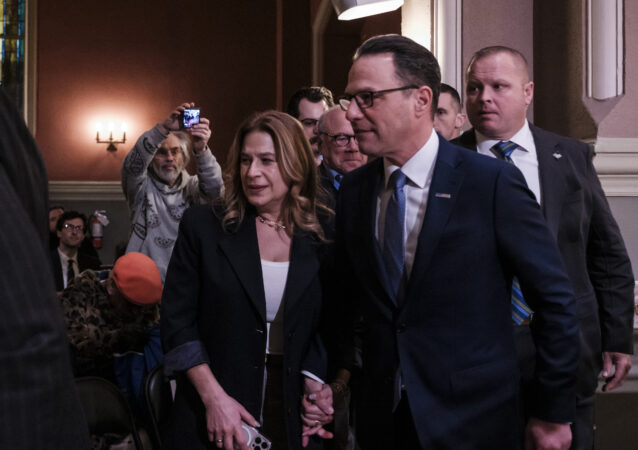
    Gov. Josh Shapiro’s Abington Township neighbors filed a federal lawsuit Monday against Pennsylvania’s first couple, in what is the latest clash over security upgrades to his personal home following an arson attack on the governor’s Harrisburg residence while Shapiro and his family slept inside.

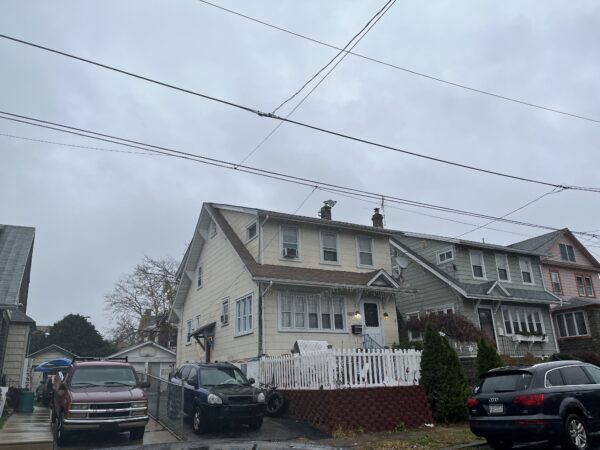
    In the suit, filed in U.S. District Court for the Eastern District of Pennsylvania, the Shapiros’ neighbors in Abington Township, Jeremy and Simone Mock, accuse the governor and his wife, Lori Shapiro, of illegally occupying part of the Mocks’ yard to build an eight-foot security fence last summer in what they claim in the lawsuit is an “outrageous abuse of power.”

    In short, they asked a federal judge to order the Shapiros off their property.

    The Shapiros quickly filed a countersuit in Montgomery County Court of Common Pleas on Monday against the Mocks, asking a judge to declare that the disputed chunk of the property has been theirs for years.

    The attempt to build the new fence is part of a larger security upgrade for Shapiro and his family, following the April firebombing of the state-owned governor’s residence in Harrisburg, when a man broke in to the mansion and set off Molotov cocktails that quickly engulfed part of the home. Cody Balmer, 38, pleaded guilty in October to attempted murder and was sentenced to 25 to 50 years in prison.

    The Mocks, whose property is adjacent to the Shapiros’ Montgomery County property, say the planned location of the fence is on their property unlawfully and violates their rights, according to the lawsuit.

    The couple is represented by Wally Zimolong, a Delaware County attorney who is described as “the ‘go-to’ lawyer in Pennsylvania for conservative causes and candidates” on his firm’s website. He previously represented the political campaigns of President Donald Trump and U.S. Sen. Dave McCormick (R., Pa.), according to his website.

    “The Governor looks forward to a swift resolution and will not be bullied by anyone trying to score cheap political points, especially at the expense of his family’s safety and wellbeing,” Will Simons, a spokesperson for Shapiro, a Democrat running for reelection, said in a statement.

    According to the Mocks’ lawsuit, the Shapiros approached their neighbors in July to discuss the construction of a security fence near where their yards meet. The Shapiros were interested in purchasing a portion of the Mocks’ property for the fence, and also discussed a lease option. But the couples couldn’t agree on the price, according to the suit.

    Things took a turn in late August, when, according to the lawsuit, the Shapiros’ attorney told the Mocks they would obtain the chunk of land through “alternative actions.”

    “What followed was an outrageous abuse of power by the sitting Governor of Pennsylvania and its former Attorney General,” the complaint says. (Shapiro served as Pennsylvania’s attorney general before he was elected governor in 2022.)

    The Shapiros told the Mock family, according to the neighbors’ lawsuit, that they owned the land through adverse possession, a legal mechanism through which a person can gain ownership of a property they’ve actively used for at least 21 years. The Shapiros have lived in their Montgomery County home for 23 years.

    The governor and first lady then began planting arborvitae-type trees and other plants on the Mocks’ property, flying drones over it, threatening to remove healthy trees, and “chasing away” contractors who came to work in the Mocks’ yard, the lawsuit claims.

    The complaint also accuses Shapiro of directing state police to patrol the property. Troopers instructed the Mocks to leave the area of the yard multiple times, calling it a “disputed” area or “security zone,” the suit says.

    The Mocks purchased the house in 2017, according to property records, and their lawsuit says they have paid taxes on the property over the time period. The offer to purchase the land shows the Shapiros knew it wasn’t theirs, according to the complaint.

    “The Shapiros continue to occupy the Mock Property without permission or any legal justification whatsoever,” the lawsuit says.

    The security fencing for the Shapiros’ home was purchased but ultimately never installed, and is being repurposed at the Pennsylvania State Police training academy, Spotlight PA previously reported.

    Zimolong declined to comment on the lawsuit Monday.

    The Shapiro’s countersuit

    The Shapiros’ lawsuit doesn’t dispute many elements of the Mocks’ suit, but casts them in a different light.

    As the Shapiros tell it, a land surveyor discovered in summer 2025 that the Mocks actually owned about 2,900 square feet of land that the Shapiros had believed was a part of their property since they bought the home in 2003. That time period, 22 years, satisfies Pennsylvania’s adverse possession law.

    The Mocks didn’t consider that part of the property to be theirs, according to the complaint, until the Shapiros told them.

    But after negotiations fell apart when the Shapiros attempted to purchase the land, the Mocks sought a permit to erect their own fence and include the disputed area on their property, the suit says.

    Shapiro’s security detail denied a tree-removal contractor access to the area, according to the complaint, because the first couple believe they possessed the land.

    And the state police troopers the Mocks saw were part of Shapiro’s security detail, which after the April attack have conducted review of his Abington home.

    The governor and his wife are asking a judge to find that they are the “legal and equitable owners” of the area in dispute.
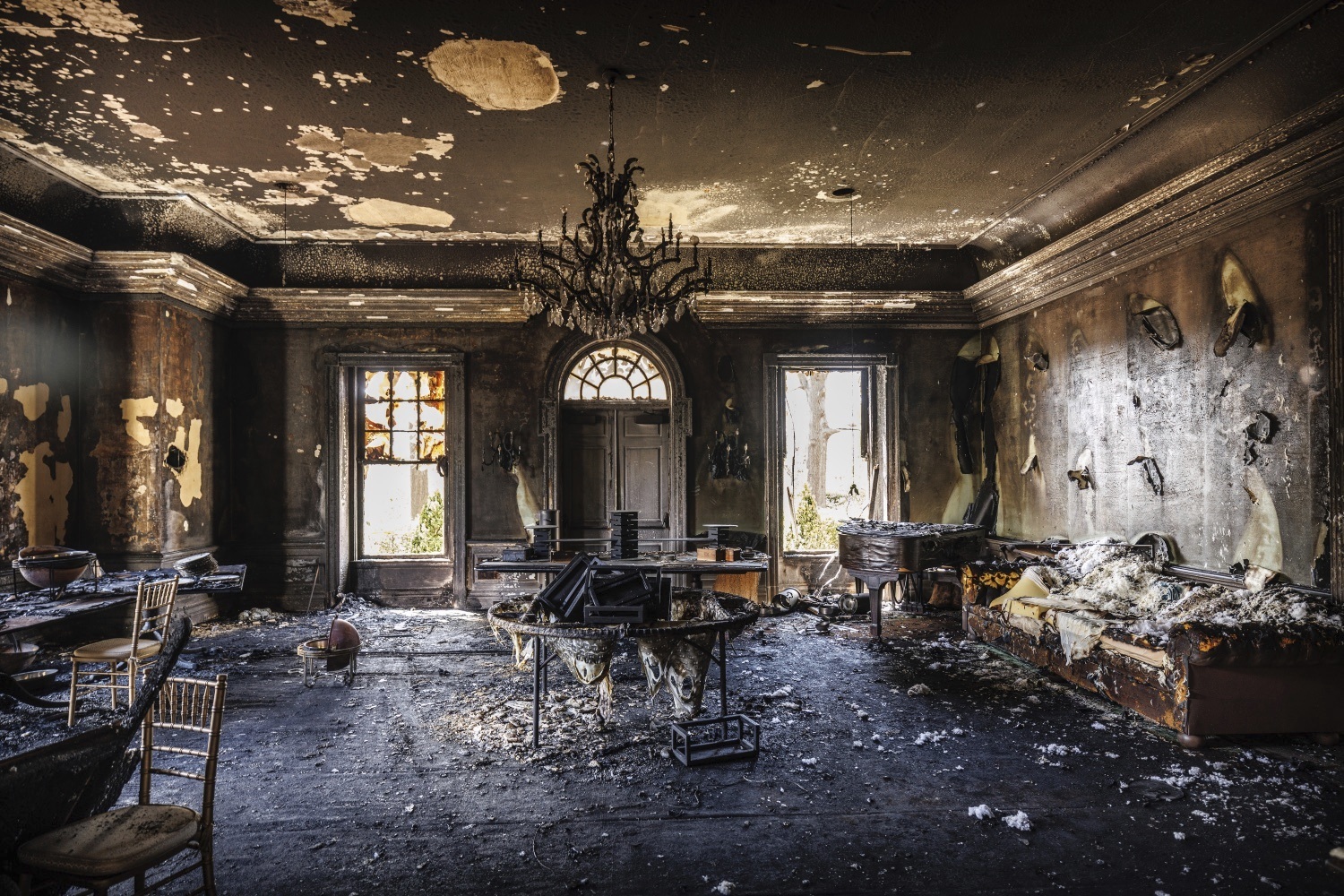
    This image provided by Commonwealth Media Services shows damage after a fire on April 13, 2025, at the Pennsylvania governor’s mansion while Democratic Gov. Josh Shapiro and his family slept inside.

    Scrutiny over security

    Shapiro has faced scrutiny for using taxpayer dollars with little transparency to upgrade the security of his personal home, which is the primary residence for two of his four children, who are school-aged. State Police spent at least $1 million to upgrade security on his Abington Township property, in addition to more than $32 million in upgrades and repairs to the Harrisburg governor’s mansion.

    The GOP-controlled Senate Intergovernmental Operations Committee in December took the rare step of subpoenaing Shapiro for access to records about how taxpayer dollars were spent to upgrade the Shapiro property and home, including a new security system and landscaping work previously reported by Spotlight PA. Sen. Jarrett Coleman (R., Lehigh), who chairs the committee, argued the subpoenas were necessary because the Shapiro administration did not turn over the requested documents, or turned over incomplete records.

    As the Democratic governor of the nation’s fifth most-populous state, Shapiro continues to face threats to his safety. Police arrested a Carlisle man last week for allegedly sending messages to the governor’s office, that said “I do plan on stalking and hurting your family, before adding “metaphorically speaking of course.” The man, George R. Brown Jr., later told police they were “fake threats” and he was trying to get help with an eye injury he suffered while at Cumberland County Prison, PennLive reported.


  • For Gopuff, Super Monday is the national holiday

    For Gopuff, Super Monday is the national holiday

    Sunday’s Super Bowl LX, featuring some 66 ads costing corporate brands an average $8 million for half a minute, shone a light on America’s snacking trends, tracked closely by Gopuff, the Philadelphia-based national delivery service.

    The game between the Seattle Seahawks and the New England Patriots, also featuring Bad Bunny’s Spanish-language halftime spectacular, was watched by nearly 40% of Americans. Their delivery orders gave marketers a broad, almost instant view of what Americans were consuming and how their ads were working — or not, said Michael Peroutka, GoPuff’s head of ads, in his Super Bowl postmortem report Monday.

    The product with the most spectacular Super Bowl increase didn’t advertise.

    Philadelphia-based Gopuff reported sharp increases in advertised snacks, but also in basic party ingredients such as limes and red party cups, during Super Bowl LX.

    Orders for limes during the game jumped over 600% over previous Sundays in 2026. Limes are, after all, a key ingredient in popular plates like guacamole and pico de gallo, served with Mexican beers and margaritas, and “easily forgotten at the store,” making them a natural for last-minute delivery, said Gopuff spokeswoman Brigid Gorham.

    Though lime consumption has been growing rapidly, the increase was more than four times last year’s Game Day spike, and no one could say exactly why.

    Lime sales exploded even more than Gopuff’s Basically-brand red party cups, a three-year-old in-house brand, which was up 381% on Super Bowl Sunday above recent Sunday sales.

    Overall, alcohol sales nearly doubled from recent Sundays. Soda sales were up more than one-third and salty snacks by about one-quarter. Compared to last year, when the Eagles were in the Super Bowl, the number of Philadelphia orders were up 7%.

    Other Super Bowl Sunday growth-leaders included PepsiCo’s Tostitos Hint of Lime chips, which were up 398%.

    But the top gains were two candies made by Italy-based candy maker Ferrero. Gopuff orders for Kinder Bueno, chocolates marketed heavily in Latin America and U.S. Hispanic neighborhoods, were up 444% vs. recent Sundays, and Ferrero’s Nerd Gummy Clusters, were up 418%.

    Kinder Bueno and Nerd Gummy Clusters saw sales roughly double in the hour after their Super Bowl ads ran. Liquid Death and Dunkin also saw orders rise at least 50% after ads.

    Day off?

    Gopuff also noticed well before the game that a record 13 million American workers planned to schedule Monday off; 10 million planned to call out sick, go in late, or not show up, and millions more were thinking about it, according to a Harris Poll survey funded by work software maker UKG.

    Founders and CEO of Gopuff Yakir Gola (left) and Rafael Ilishayev speak to a room full of staff and team members of Gopuff at a recently opened center in Philadelphia in 2022.

    Cofounder Yair Gola and his colleagues saw those numbers and thought, “This ought to be a holiday.” Last fall, it set up a 501(c)4 lobbying group, the Super Monday Off Coalition, pledging at least $250,000 to get the effort rolling.

    They hired retired Patriots quarterback Tom Brady and comedian Druski to promote the cause.

    Druski (left) and former NFL quarterback Tom Brady in an ad for Philadelphia-based Gopuff promoting its campaign to designate “Super Monday” as a national holiday, since millions already take the day off.

    The company’s contribution to the lobbying would be funded by 1% of Gopuff’s profits from sales of certain boxes of beer, sugary drinks, hot dogs, and other products from Thanksgiving to game day.

    Heavy users who placed at least four $30 orders in that period would also get $20 “Gocash” discounts and receive a chance at a Birkin handbag, a Rolex watch, and other prizes.

    By Monday, Gopuff hadn’t announced its planned donation, but the campaign was declared “a winner” by Charles R. Taylor, a Villanova University marketing professor who tracks Super Bowl ads. He spotlights not just successful marketing but also ineffective efforts like Nationwide’s painful 2015 “Boy” campaign and GM’s 2021 “No Way Norway” misfire.

    Partnering with high-profile Brady and Druski gives “instant visibility and credibility” with fans and wider audiences, Taylor said. Even if the campaign costs more than Gopuff actually donates to the cause, a national holiday is “a clever hook” watchers will remember, Taylor said.

    Going public?

    Gopuff raised over $5 billion from Saudi, Japanese, and U.S. private investors during the digital-delivery investment boom that lasted into the COVID years. These big investors hoped Gopuff (officially Gobrands) founders and early investors would win them big profits by selling shares in a high-priced stock market initial public offering or selling to DoorDash, Uber, or other delivery giants.

    But app use and delivery growth slowed in the COVID recovery. Gopuff’s perceived valuation tumbled as its publicly traded rivals’ share prices fell. The company, which had expanded to hundreds of city neighborhoods and college towns, shut marginal centers and laid off staff at its Spring Garden Street headquarters to reduce losses and save investors’ capital for better times.

    Now Gopuff is showcasing efforts to win new investor attention.

    In the past year the company announced an on-screen snacks-order app targeting Disney+, ESPN, and Hulu views; a cash-with-your-order partnership with online-broker Robinhood; hot warehouse-brewed Starbucks coffees from stores in Philadelphia and some other areas; and a partnership with Amazon to speed grocery delivery in Britain, where Gopuff remained after ending its European programs.

    Gopuff has added a warehouse camera feed and local product-sales stats for fans who want to know what neighbors are buying, app-based order updates, and user product recommendations. It added over-the-counter pharmacy items and new lines of vegan organic GOAT Gummies (which Brady is also promoting).

    The company also began accepting SNAP EBT electronic food-stamp accounts and donated $5 million for SNAP when the federal shutdown threatened low-income families dependent on the program.

    New hires include economist Matt McBrady — a veteran private-equity investor, former adviser to President Bill Clinton, and sometimes Wharton instructor — as Gopuff’s new chief financial officer, noting his experience taking companies through public stock offerings.

    Last fall Gopuff raised $250 million, its first investment since a 2021 convertible-bond financing that had valued the company at a stock-market-bubble-inflated $40 billion.

    This time, the largest investors included previous Gopuff backers Eldridge Industries and Valor Equity Partners, along with Robinhood, Israeli billionaire Yakir Gabay, the cofounders, and other earlier investors. Eldridge chairman Todd L. Boehly in a statement called Gopuff “resilient.”

    Valor partner Jon Shulkin cited the company’s “focus, innovation, and substantial gains in profitability.”

    This latest capital-raise implied a valuation of $8.5 billion — a fraction of what Gopuff was worth on paper during the digital-delivery bubble, but enough for the venture capitalists to hope they may yet get their money back with at least a modest profit.

  • Joe Frazier statue could move to base of Art Museum steps, taking Rocky’s place

    Joe Frazier statue could move to base of Art Museum steps, taking Rocky’s place

    History may not repeat itself, but at least in Philadelphia, it sure does rhyme.

    Twenty years ago, our famed Rocky statue made the move from its former perch at the stadium complex in South Philly to the base of the steps of the Philadelphia Museum of Art, where it has stood since.

    Now, the city’s statue of former world heavyweight champion “Smokin’” Joe Frazier could soon do the same.

    Creative Philadelphia, the city’s office for the creative sector, is slated to present a proposal at a Wednesday Art Commission meeting that would have the Frazier statue take over the Rocky statue’s current home at the base of the Art Museum’s steps. Last month, the commission approved the Rocky statue’s coming move back to the top of the steps, where it supposedly will permanently stay starting in the fall and following its first-time display inside the museum.

    “Relocating the Joe Frazier statue to this prominent civic and cultural space would … create a respectful dialogue between two complementary representations of Philadelphia’s spirit,” chief cultural officer Valerie V. Gay and public art director Marguerite Anglin wrote in a letter to the Art Commission. “Rocky Balboa as a symbol of hard work and aspiration, and Joe Frazier as the embodiment of those values lived out in real life.”

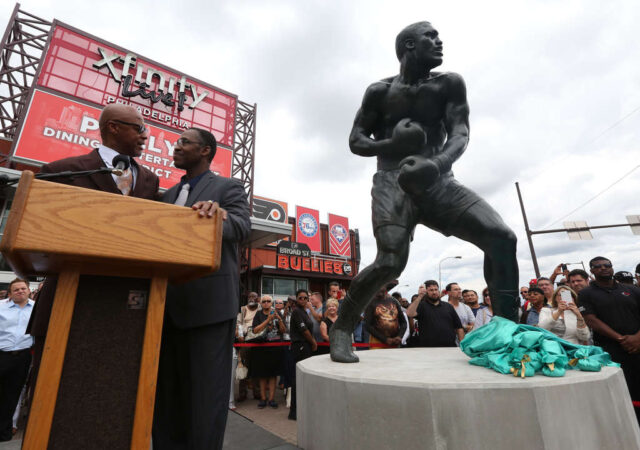
    Created by sculptor Stephen Layne in 2014, the Frazier statue has stood in the sports complex outside what is now Stateside Live! for about a decade, and has been a part of the city’s public art collection since its inception. In an effort led by Joe Hand, the owner of Feasterville’s Joe Hand Boxing Gym and a longtime friend of Frazier’s, the statue’s commission was funded by the boxer’s family and supporters before its donation to the city.

    The statue, standing at about 12 feet tall, depicts Frazier just moments after besting Muhammad Ali in the so-called “Fight of the Century” — the March 1971 bout in which Ali suffered his first professional loss after 15 grueling rounds.

    Frazier, who died in 2011, was a well-accomplished boxer before that matchup, having won an Olympic gold medal in 1964 in Tokyo. He held the heavyweight championship title from 1970 to 1973, when he lost the belt to fellow legend George Foreman following a bout in Kingston, Jamaica, in a matchup referred to as “The Sunshine Showdown.” He retired in 1976, the year following a vicious loss to Ali in the famed “Thrilla in Manila” fight. After returning for a 1981 match against “Jumbo” Floyd Cummings that resulted in a draw, Frazier left the sport for good.

    Relocating the Frazier statue to the Art Museum is expected to cost roughly $150,000 in city funds, and has support from leaders including Mayor Cherelle L. Parker, City Councilmember Katherine Gilmore Richardson, State Sen. Sharif Street, and State Sen. Anthony Hardy Williams, according to Creative Philadelphia’s Art Commission proposal.

    “Placing the Joe Frazier statue at the Art Museum affirms Philadelphia’s commitment to honoring real-life achievement alongside cultural mythology,” Parker wrote in a letter supporting the move. “Together, these figures reflect the city’s spirit, where determination, resilience, and opportunity meet.”

    Friends of Frazier also expressed support in letters included as part of Creative Philadelphia’s proposal — in part, at least, because the Art Museum has higher foot traffic than where the statue currently stands.

    The move “will give the Frazier statue many more eyes on it than at the Xfinity area,” wrote Nicholas L. Depace, the boxer’s friend and former physician.

    Frazier served as a major inspiration for the Rocky Balboa character, with the man and the character sharing several key elements, according to Creative Philadelphia. Like Rocky, Frazier trained for boxing matches by hitting frozen raw meat, ran the Art Museum steps, and faced opponents that closely mirrored those actor Sylvester Stallone’s character faced in the franchise.

    “Stallone made 5 Rocky movies mostly based on the real life humble champion Smokin’ Joe Frazier from Philadelphia,” wrote Smokin’ Frazier Championship Foundation Inc. CEO Pete Lyde in a letter of support for the move. “Joe Frazier’s statue at the Philadelphia Art Museum Steps symbolizes and celebrates the real life human heart and potential within us all worldwide.”

    The Rocky statue, meanwhile, is cleared for installation atop the Art Museum steps following its exhibition in “Rising Up: Rocky and the Making of Monuments,” an Art Museum program slated to run from April to August. After that, the statue now displayed at the top of steps — which Stallone lent to the city for the inaugural RockyFest in December 2024 — will head back to the actor’s collection, and the original, screen-used statue will take its place.

    It was not immediately clear when the Frazier statue could head to the Art Museum. Creative Philadelphia did not immediately respond to a request for comment.

    “Placing the Smokin’ Joe Frazier statue at the Art Museum steps would not only correct a historical imbalance but also serve as an inspirational symbol for residents and visitors alike,” wrote Councilmember at-large Jim Harrity in a letter of support. “It would elevate a true Philadelphia champion whose impact reached far beyond the boxing ring and whose contributions to sports, labor history, and community service continue to resonate today.”

  • Democratic ward leaders endorse Sharif Street for Congress, solidifying him as Philly’s establishment favorite

    Democratic ward leaders endorse Sharif Street for Congress, solidifying him as Philly’s establishment favorite

    Philadelphia’s Democratic Party has endorsed State Sen. Sharif Street for the city’s open congressional seat.

    The endorsement Monday came as no surprise, given Street’s insider connections. He previously chaired the Pennsylvania Democratic Party and is close to party leaders in the city. And Bob Brady, who chairs the Democratic City Committee, said last fall that he expected his fellow ward leaders to vote to endorse Street.

    But it nonetheless strengthens Street’s status as the favorite in the race among the local Democratic establishment. Street, the son of former Mayor John F. Street, was endorsed by the politically powerful unions in the Philadelphia Building & Construction Trades Council last year.

    “I am deeply honored to have received the overwhelming support of the grassroots leaders who power our party,” Street, who represents a North Philadelphia district in the state Senate, said in a statement. “This endorsement is more than just a vote of confidence — it is a demonstration that we are building a broad-based coalition.”

    Street is one of about a dozen Democrats vying to succeed retiring U.S. Rep. Dwight Evans in Pennsylvania’s 3rd Congressional District. Other contenders include State Reps. Morgan Cephas and Chris Rabb and physicians Ala Stanford and Dave Oxman.

    Street has also emerged as the front-runner in the financial race. Recently disclosed campaign reports showed he raised $348,000 from donors in the last quarter of 2025, the largest haul among the candidates.

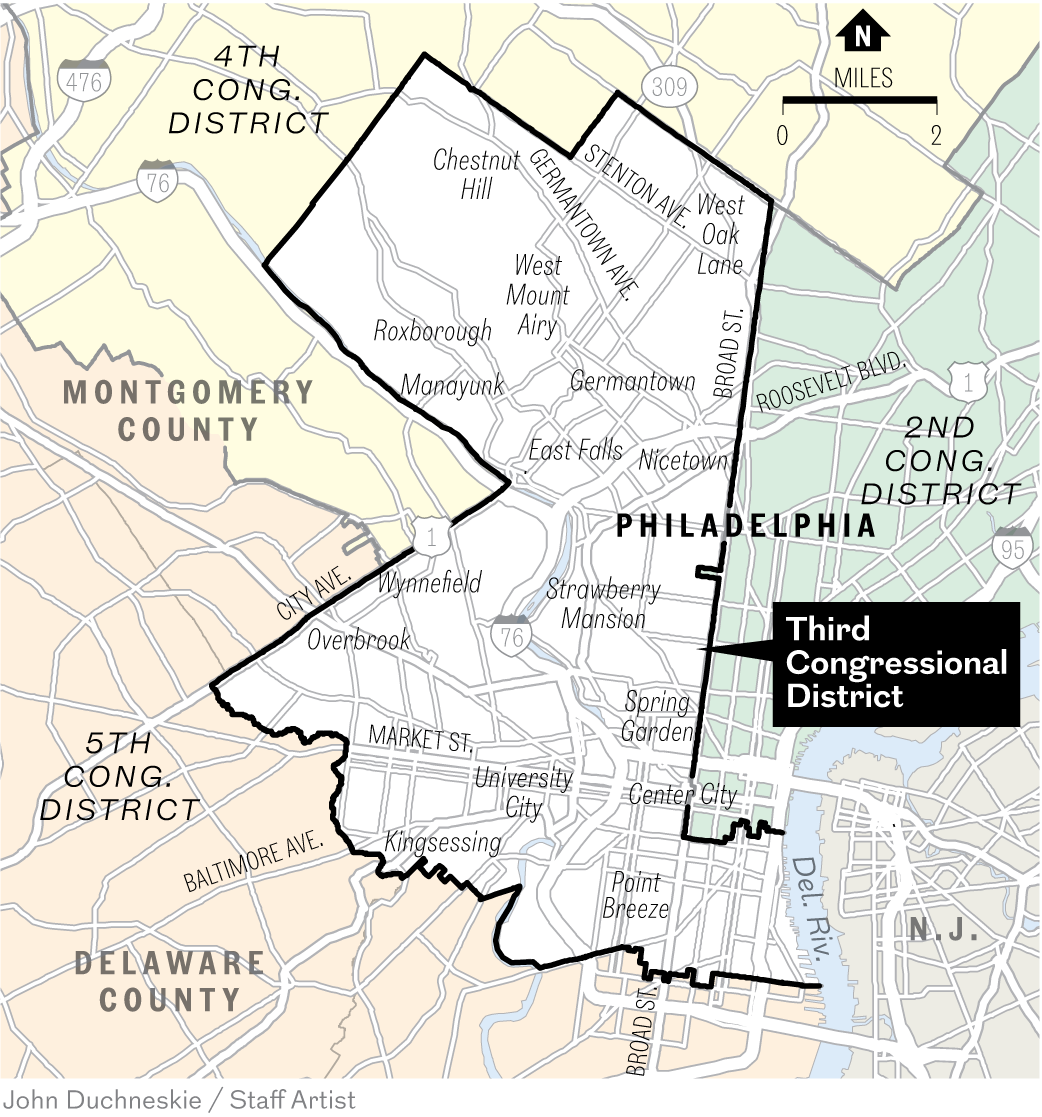
    The 3rd Congressional District is, by some measures, the most heavily Democratic district in the U.S. House, and includes West and Northwest Philadelphia and parts of Center City, Southwest, South, and North Philadelphia.

    The winner of the Democratic primary in May is all but guaranteed victory in November. Democrats hold a 7-to-1 voter registration edge over Republicans in Philadelphia.

    Map of Pennsylvania’s Third Congressional District.

    Earning the party nod may help Street stand out in a crowded field and will bolster his ground game for campaigning, activating the party’s hundreds of committeepeople to get out the vote for him.

    But it doesn’t guarantee victory. Insurgent candidates have defied the party’s dominance several times in recent city elections, and the district includes several progressive pockets that could open the door for a candidate who can coalesce the left against Street.

    The endorsement followed a vote by the Democratic ward leaders in the district. A candidate must receive at least 50% of the vote to win the party endorsement.

    If no candidate reaches that mark, each ward prints its own sample ballots with its preferred candidates, which often happens in open contests like this year’s primary.

    The party’s endorsement of Street means all ward leaders are now encouraged to include him in the literature distributed to voters before and on election day. Some wards, however, choose to print their own slates anyway.

    The party did not immediately disclose the final vote tally at the endorsement meeting.

    Northwest Philadelphia’s 50th Ward, which is led by Mayor Cherelle L. Parker, has not yet made an endorsement in the race, said Aren Platt, executive director of the mayor’s campaign, People for Parker.

    Top candidates in the race, including Street, were scheduled to face off at a candidates forum hosted by the Center City Residents Association on Monday night.

  • Moore College will consider opening undergraduate programs to men

    Moore College will consider opening undergraduate programs to men

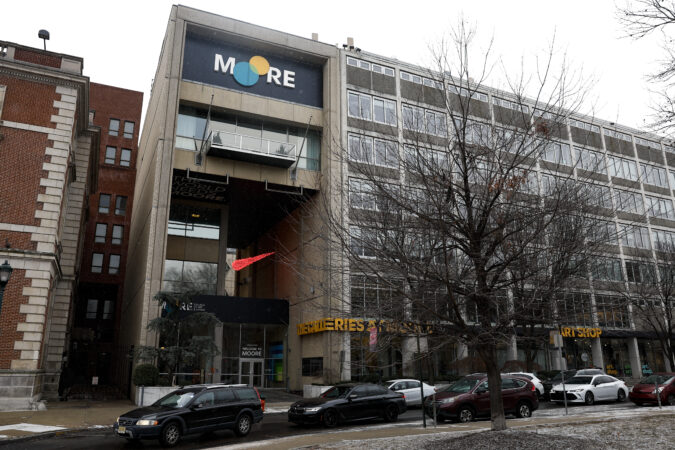
    Moore College of Art and Design will consider opening its undergraduate programs to men for the first time in its 177-year history.

    The Philadelphia school, which touts its role as “the first and only historically visual arts college for women in the nation,” cited the need to make arts programs more accessible in the region and the expected national decline in the available pool of high school graduates.

    The college, which enrolls about 500 students, will study and discuss with its community the prospect of admitting men over the next four months and make a decision by June, the school announced in emails to alumni, faculty, and students Monday. If the school decides to admit all genders, the first class admitted would be for 2027.

    “We will explore all of this together in an inclusive way for students, faculty, staff, and alumni,” wrote Moore president Cathy Young and Frances Graham and Art Block, chairs of the school’s board of trustees and board of managers, respectively. “Your voices are essential. No decision has been made at this time. The boards want your feedback.”

    Moore College of Art and Design president Cathy Young.

    If Moore goes coed, Bryn Mawr College would be the only remaining women’s school in the Philadelphia region. (In Allentown, Cedar Crest College remains primarily a women’s college.)

    Several other colleges in the region that were formerly for women have gone coed over the last decades, including Rosemont on Philadelphia’s Main Line in 2008, Immaculata University in Chester County in 2005, and Chestnut Hill College in Philadelphia in 2003.

    Nationally, the number of women’s colleges has been declining from a high of over 200 to just 31 as of 2022, according to a 2025 report by the Pew Research Center.

    It wouldn’t be the first change in Moore’s admissions policy in recent years.

    In 2015, Moore began admitting “all qualified students who live as women and who consistently identify as women at the time of application.”

    Then in 2020, Moore also began accepting nonbinary and gender-nonconforming students. Since then, the number of those students has been growing. They made up 6% of the first freshman class under the new policy in 2021. By fall 2022, they accounted for 21%, and by fall 2023, 26%. Last fall, that grew to one-third of the freshman class.

    Moore’s graduate programs and most of its continuing education programs already include men.

    Moore officials said they are making the decision from a position of financial and academic “strength.” The school has had operating surpluses for the last 24 consecutive years, a school spokesperson said. Many small schools have faced financial strain in recent years, but Moore fared among the top small private colleges in the Philadelphia region for financial health in a 2024 Inquirer review.

    Moore’s net tuition climbed from $10.8 million to $12.7 million in fiscal 2024 and to $16.5 million in fiscal 2025, financial records show. The school also saw a big gain in private gifts and grants last year to $2.2 million, up from $885,383 the year before.

    This year’s enrollment is the school’s second highest behind fall 2024, when the college accepted 112 students from the University of the Arts, which abruptly closed in June 2024. The school also took 12 students that year from the Delaware College of Art and Design, which closed that year, too.

    Moore opened a new residence hall in Rittenhouse Square last fall, which is just a seven-minute walk from campus and will allow the school to guarantee students housing for all four years.

    In announcing the possibility of accepting all genders, Moore officials noted UArts’ closure and the end of degree-granting programs at the Pennsylvania Academy of Fine Arts.

    “There is a void in Philadelphia’s higher ed creative landscape, and that begs the question: Shouldn’t all creatives, regardless of gender, have access to Moore …” they wrote. “The answer doesn’t have to be “yes,” but it is our responsibility to explore it.”

    College surveys of applicants have shown that the school’s status as a women’s college isn’t a big draw. Only 6% cited it as important to their decision out of 885 survey respondents over the last dozen years, the school said. Meanwhile, a quarter said it was one of the important reasons they didn’t choose Moore.

    Moore officials also cited the expected drop in the high school graduate population beginning this year because of declining birth rates. A decline of 10% is expected by 2037, they noted.

    “There are simply fewer students,” they wrote. “No responsible institution can ignore factors like these. And we won’t.”

    They said they will discuss ways “to preserve and activate in new ways” Moore’s history and legacy as part of the exploration.

    Between February and April, Moore plans to host about 20 sessions for faculty, staff, and alumni to share their thoughts, as well as providing an opportunity for online comments.

    Staff writer Harold Brubaker contributed to this article.

  • There is no Black Philadelphia history without Patti LaBelle

    There is no Black Philadelphia history without Patti LaBelle

    On a bitterly cold afternoon last month, Patti LaBelle walks gingerly down Mother Bethel A.M.E. Church’s center aisle, her left hand grazing the top of each pew, steadying her balance.

    Half a dozen content creators, directors, and Visit Philadelphia staff coax the Grammy award-winning songstress toward the 18th century church’s magnificent altar, their voices overflowing with encouragement, reverence, and love.

    LaBelle’s stockinged footsteps are deliberate, her unblinking eyes affixed on the organ pipes in front of her.

    She’s as contemplative as she is careful.

    “Come on, Miss Patti,” cooed Kyra Knox, the Emmy award-winning filmmaker who is directing Visit Philadelphia’s Black History Month promotional video, “We Are the Fabric. We are the Thread,” starring the Philadelphia legend. “You are doing great.”

    “We Are the Fabric” is part of the nonprofit tourism agency’s “Indivisible” campaign, a yearlong initiative highlighting Philly’s diverse tourist destinations during America’s 250th birthday and Black History Month, which, coincidentally, is celebrating its 100th birthday this year. (Carter G. Woodson introduced Negro History Week in 1926. It was extended to Black History Month in 1976.)

    The videos are streaming on several online platforms including Hulu and HBO Max in seven markets, including Philadelphia, New York, Atlanta, and Washington, D.C. During the month of February, Visit Philly will conduct a series of neighborhood walks through the city’s historic districts with a special focus on Black history courtesy of the historical arts organizations 1838 Black Metropolis and the Black Journey.

    “You cannot tell the story of American culture, innovation, music, art, and food without Black Americans because they are woven into every thread of the national narrative,” said Angela Val, president and CEO of Visit Philly.

    The filmmakers squeezed in a lot of places on the cold Thursday afternoon. Mother Bethel — the home of America’s first Black Christian church founded by formally enslaved Richard Allen — is the first stop on the hours-long shoot. After recording takes of LaBelle’s coffin-shaped ivory nails in prayer and the centuries-old church’s sunlit stained glass windows, LaBelle and the crew drive 14 blocks west to South Philadelphia’s Union Baptist Church.

    Film rolls and cameras flash as LaBelle, wrapped in an ankle-length vintage chocolate brown fur, is reflective in front of Union Baptist’s 111-year-old stately exterior. Inside, barrier-breaking early 20th century contralto Marian Anderson once sang in the choir. Like Anderson, LaBelle got her start singing gospel at Southwest Philly’s Beulah Baptist Church.

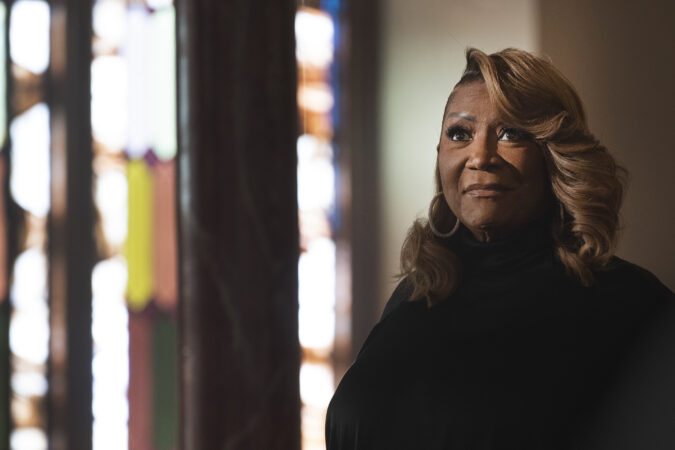
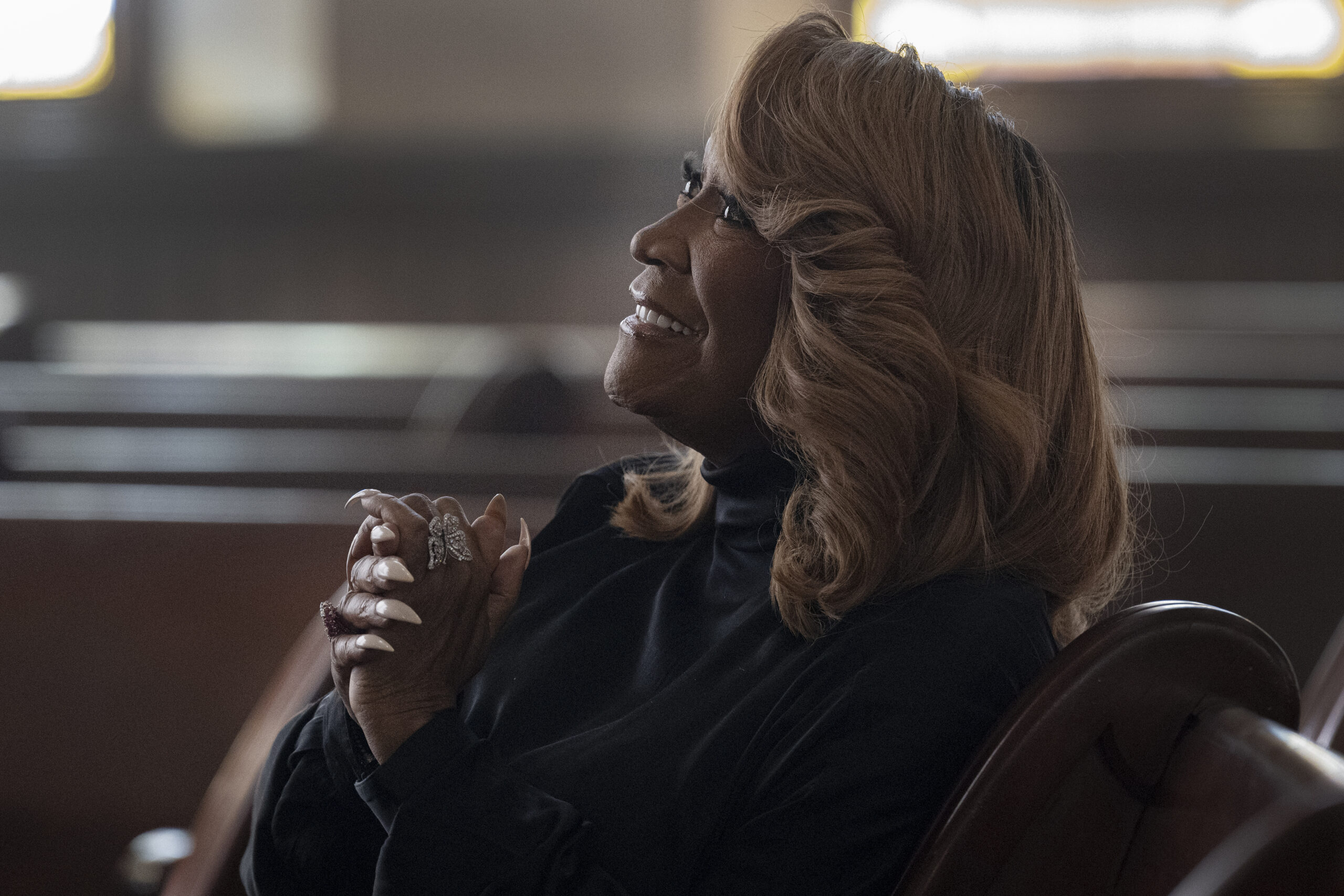
    Singer Patti LaBelle at Mother Bethel A.M.E. Church in Philadelphia during a shoot for Visit Philadelphia’s “Indivisible” initiative, part of an effort to celebrate the city’s communities of color during the city’s 250th anniversary. LaBelle is starring in the campaign’s Black History Month promotion.

    After a few windy takes, the crew made its way to the southwest corner of City Hall in front of the statue of martyred 19th century civil rights leader Octavius Catto. The day ended at the Arden Theatre, a nod to Philadelphia’s vibrant Black performing arts community.

    LaBelle stars in and narrates the video. She’s accompanied by 9-year-old Riley Mills and visits historical sites and modern locations, like Uncle Bobbie’s Coffee & Books in Germantown, reminding us that Black history is to be passed through the generations.

    “When the Constitution couldn’t hold us, we held each other,” LaBelle says, her voice clear, sharp, and determined.

    “We made the music you move to,” she continues as images of Teddy Pendergrass, Kenny Gamble, and Leon Huff fill the screen. And then, in an “if you blink, you will miss it moment,” there LaBelle is, in an old photograph flanked by her Labelle group members Sarah Dash and Nona Hendryx, followed by her powerful words: “When they wouldn’t give us a stage, we built one.”

    Living Black history

    Patti LaBelle is 81. She knows she’s Black history. She’s proud of it and doesn’t take it lightly.

    “Black people stand for everything,” LaBelle told The Inquirer in between takes at Mother Bethel, her voice barely a whisper, worn out from her performances in the “Queens: 4 Legends Tour” starring LaBelle, Chaka Khan, Gladys Knight. and Stephanie Mills. They all came of age before the Civil Rights Act of 1964 was passed.

    “And we continue to. We continue to fight while things are being taken away from us.”

    As Visit Philly filmed “We Are the Thread,” the National Park Service was in the midst of dismantling an exhibit honoring nine enslaved people who worked at George Washington’s house when Philadelphia was America’s capital city.

    The removal was part of President Donald Trump’s executive order “restoring truth and sanity to American history.” Recently, Trump shared a video that depicted former President Barack Obama and first lady Michelle Obama as cartoon primates.

    “If we don’t fight to keep what is ours,” LaBelle said, her scratchy voice taking on urgency. “It will be lost.”

    Visit Philly’s choice of LaBelle as its Black history spokesperson this year is thoughtful and necessary.

    Her generation of civil rights warriors bridges the gap between Black Americans who lived through Jim Crow and those of us who only heard horror stories of how difficult it was for our ancestors to go to school, work, and vote.

    As this administration claims that the Civil Rights Act resulted in “white people being very badly treated,” it’s important that stories like LaBelle’s aren’t just repeated but remembered and celebrated — especially as they get up there in age.

    We need to give them their flowers now.

    Without Patti LaBelle, Philadelphia — and its music — would be a different place.

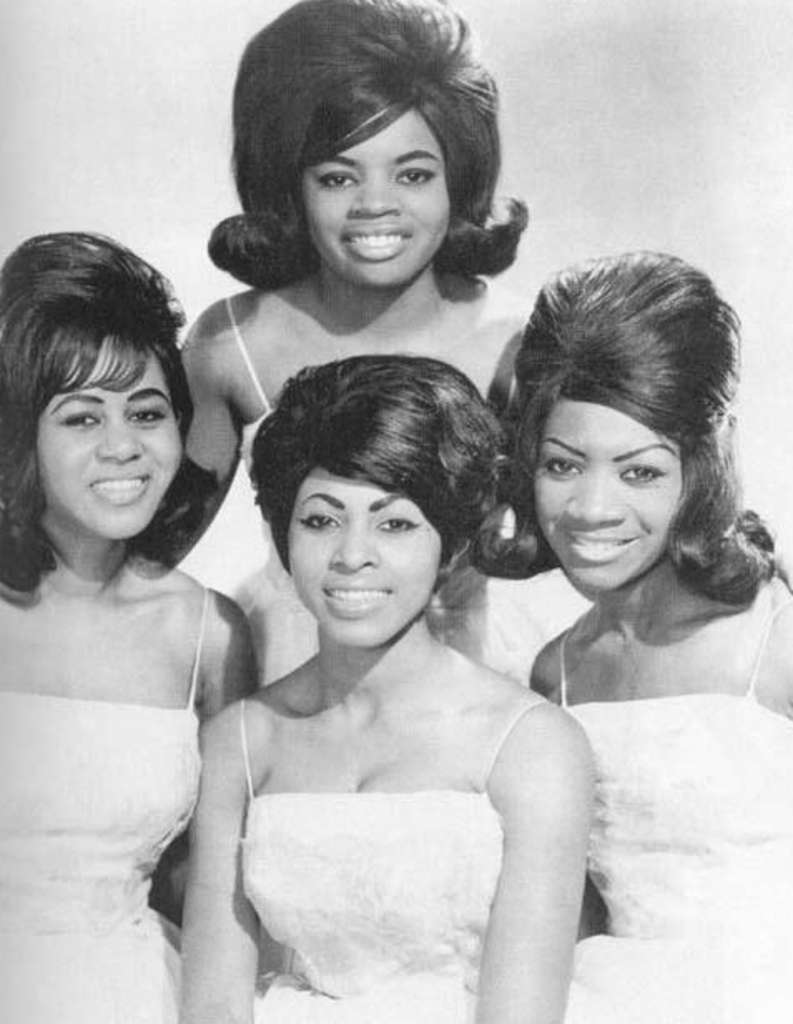
    Patti LaBelle (right) and the Blue Belles, the group with which she had her first hit, in 1962: “I Sold My Heart to the Junkman.”

    A Philadelphia girl

    LaBelle was born Patricia Louise Holte in Southwest Philadelphia in 1944. Her dad, Henry, came to Philadelphia from Georgia in the early part of the 20th century during the Great Migration. He worked on the railroad, was a singer, and an occasional gambler. Her mom, Bertha, was a homemaker. LaBelle was the youngest of five.

    She went to Bartram High and sang at Beulah Baptist before becoming the lead singer of Patti LaBelle and the Blue Belles.

    The group’s 1962 hit, “I Sold My Heart to the Junkman,” sold millions of copies, cementing LaBelle’s stardom, getting her a spot on the Chitlin’ Circuit for performances at Uptown Theater. She appeared on American Bandstand and Jerry Blavat’s radio show.

    By 1975, the group was simply known as Labelle and was a visual smorgasbord of Afrofuturistic sequins and space suits. It released the iconic “Lady Marmalade” that catapulted Labelle to the cover of Rolling Stone, becoming the first Black music group to be featured.

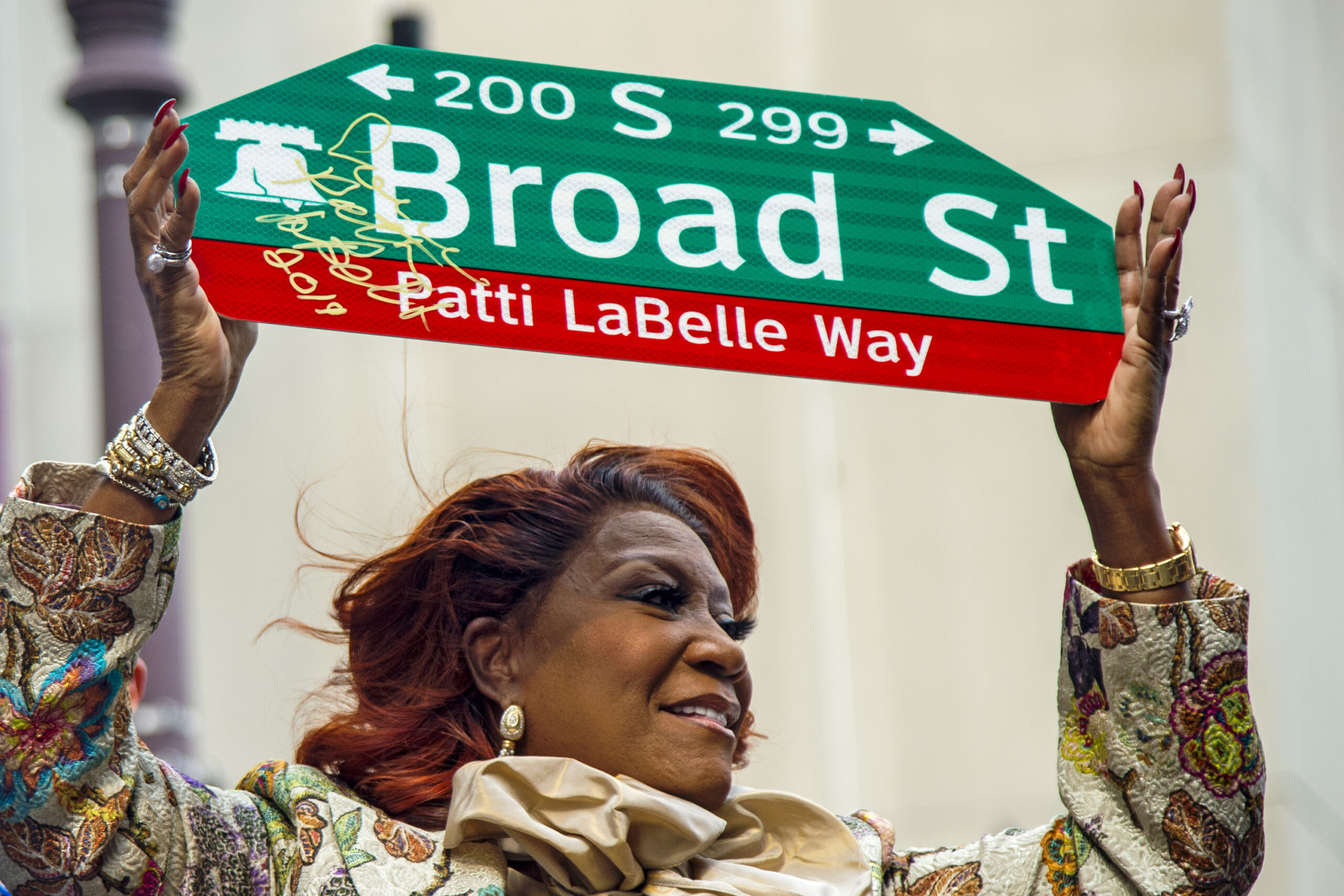
    Patti LaBelle holds up a sign during a celebration on July 2, 2019, as the block of Broad Street between Spruce and Locust Streets is renamed Patti LaBelle Way.

    “I’ve had a lot of wonderful moments in my career,” LaBelle said. “It’s nice to remember, to be proud. We made a lot of history.”

    (Christina Aguilera, Lil’ Kim, Mya, and Pink covered “Lady Marmalade” in 2001 for the Moulin Rouge soundtrack. And in 2003 Labelle’s “Lady Marmalade” was inducted into the Grammy Hall of Fame.)

    In 2016, LaBelle received the Marian Anderson Award. Three years later, the city named a block of Broad Street between Spruce and Locust Patti LaBelle Way.

    LaBelle, who lives in Villanova now, never left the Philadelphia area.

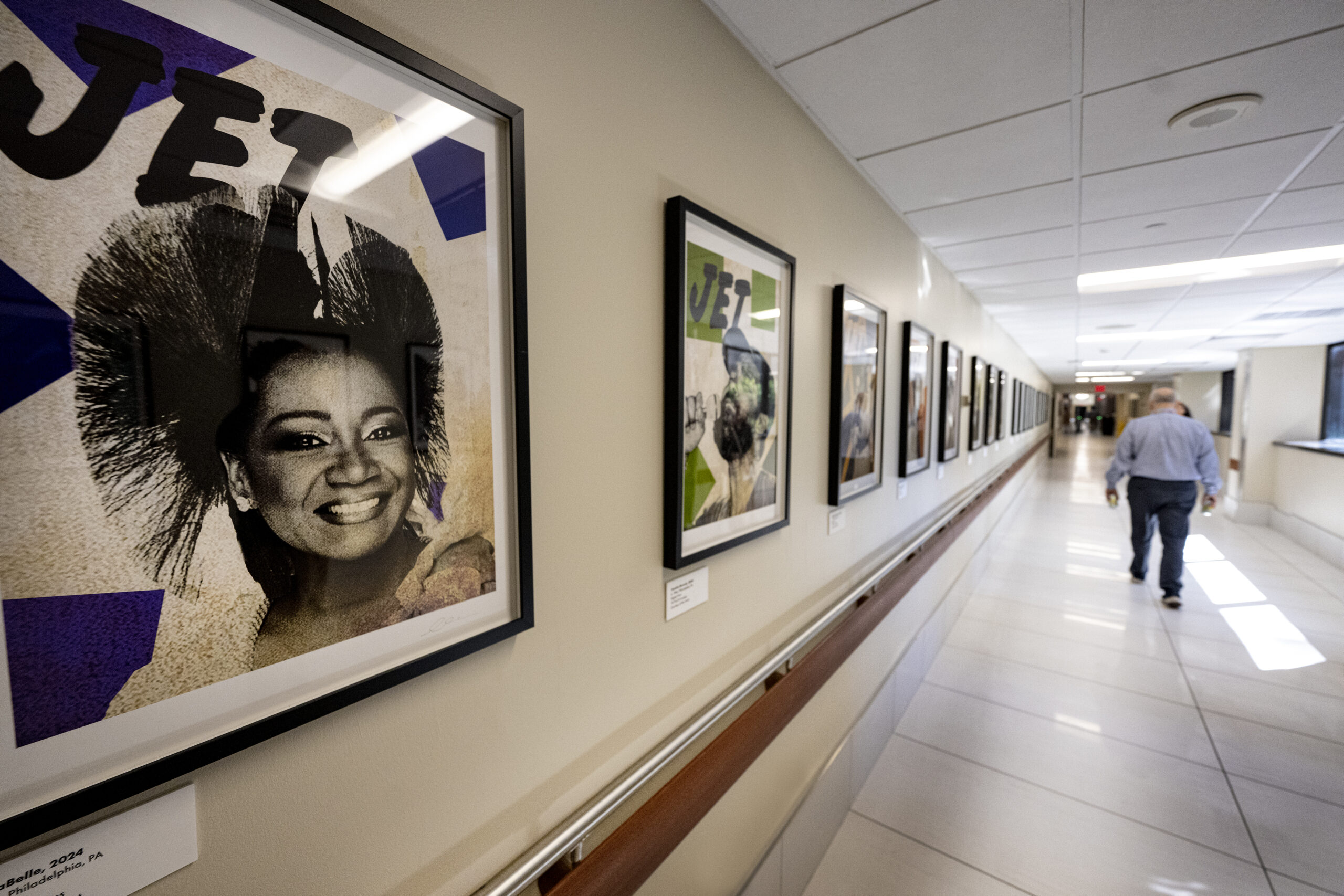
    Patti LaBelle and Frankie Beverly are two of the celebrities featured on reimagined Shaheed Rucker’s ‘(re)Covering the Iconic” in in Jefferson Einstein’s community corridor. Monday, Sept. 8, 2025.

    I’m a Philadelphia girl,” she said with pride. “It’s laid back, comfortable. … How I like it.”

    Over the decades, she has had a few entrepreneurial endeavors including two short-lived Philadelphia boutiques and a clothing collection on HSN. However, she’s best known for her indisputably yummy line of desserts — sweet potato pies and cobblers. Late last year, she introduced pancake mix and syrup that, she says for the record, is nothing like Aunt Jemima.

    “For one,” she said, mustering up a bit of her trademark LaBelle sass, “I’m a real person.”

    Real to her core.

    “She’s given a lot to Philadelphia,” Val said. “She’s given so much to the country … to the Black community.”

  • Man who stole nearly $250,000 from Pa. Occupational Therapy Association charged with theft

    Man who stole nearly $250,000 from Pa. Occupational Therapy Association charged with theft

    A Western Pennsylvania man stole nearly $250,000 from the Montgomery County-based Pennsylvania Occupational Therapy Association, prosecutors said Monday, and spent the money on a trip to Disney World, country club membership fees, an Outer Banks vacation rental, and other personal expenses.

    Michael Fantuzzo, 40, was charged with several counts of theft for the crimes, which prosecutors said took place between 2021 and 2024 while Fantuzzo, of Westmoreland County, served as treasurer for the nonprofit trade organization.

    In all, prosecutors said, Fantuzzo spent $246,708 of the association’s funds, effectively reducing its savings account to zero.

    Fantuzzo admitted to investigators that he used the association’s funds for personal expenses, though he initially told them he had spent $90,000 of the group’s funds and did so by accident.

    A further investigation into Fantuzzo’s spending found that the sum was much larger.

    Prosecutors say Fantuzzo spent more than $100,000 from the association’s bank account to pay off debt on a handful of credit cards opened in his name.

    And Fantuzzo charged more than $128,000 to the association’s credit card, including $10,513 to install a hot tub at his home; $7,247 for a vacation home rental in Duck, N.C.; $5,460 for his local and county taxes; $4,124 for membership to the Hillcrest Country Club; $2,040 for a limousine service; and $2,019 for the trip to Disney World.

    Members of the Pennsylvania Occupational Therapy Association, based in Plymouth Meeting at the time of the theft, realized something was wrong when newly elected board members learned the organization they inherited was experiencing “severe financial distress,” police said. They reported the suspicious payments to authorities in November.

    The association advocates for occupational therapists and provides career development and networking opportunities, among other services, according to its website.

    Investigators say they linked the spending back to Fantuzzo in a variety of ways.

    Some payments, such as the Disney World tickets, included Fantuzzo and his family members’ names on the charges. Meanwhile, the PayPal payments went to an account bearing the name of Fantuzzo’s wife. And investigators tracked Fantuzzo’s name back to invoices and rental agreements for other purchases.

    Fantuzzo turned himself in to Montgomery County authorities on Feb. 6. He was released from custody and is expected to appear in court for a preliminary hearing on Feb. 17.

  • Bad Bunny vs. Trump in a battle of love and hate | Editorial

    Bad Bunny vs. Trump in a battle of love and hate | Editorial

    It says a lot about the state of affairs when a Puerto Rican singer and rapper does more to unify the country in about 13 minutes than the president of the United States has done in the past 13 months.

    Bad Bunny’s halftime performance at Super Bowl XL was all about love, while Donald Trump’s return to the Oval Office is focused on hate.

    Bad Bunny’s joyful celebration of unity, diversity, and togetherness was a needed respite from Trump’s cruelty, retribution, and division.

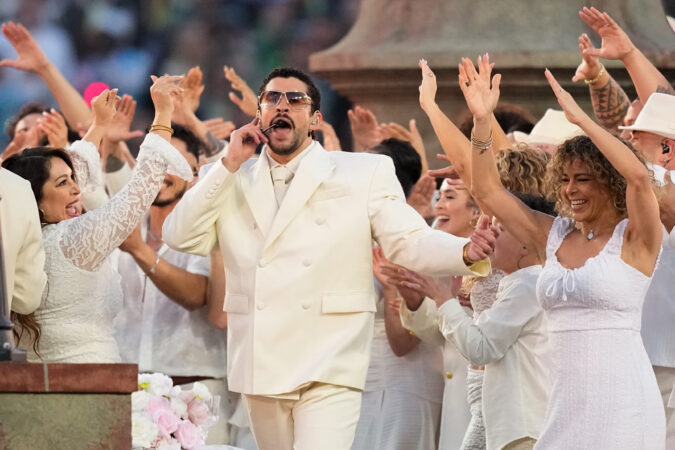
    Even though many of the more than 135 million viewers may not have understood the words Bad Bunny sang in Spanish, just about everyone could feel the positive vibe and communal celebration that showcased dancing, hard work, urban street life, family — and a wedding.

    Bad Bunny’s ode to Puerto Rico was a reminder that we are neighbors, not enemies. More broadly, the United States is part of the American continent that includes Canada, Mexico, Central America, South America, the Caribbean, and Greenland.

    We are all stronger when we work together than when we are at each other’s throats.

    Bad Bunny’s positive message stood in stark contrast to the president’s relentless serving of hate that is dividing and weakening the country.

    Just last week, Trump posted a racist video on his social media account that depicted former president and first lady Barack and Michelle Obama as apes.

    In case anyone needed a reminder that Trump has been a stone-cold racist throughout his life, he refused to apologize for the vile meme.

    Eventually, he removed the post after several — but not many — GOP officials called out the blatant racism. The bipartisan backlash is a reminder that it will only take a few good Republican men and women to stop Trump’s attack on America’s institutions and its people.

    Trump’s racist meme about the Obamas came on the heels of a racist and misleading move by the White House that posted a digitally altered image of a Black woman who was arrested while demonstrating against the unlawful actions of U.S. Immigration and Customs Enforcement agents in Minneapolis.

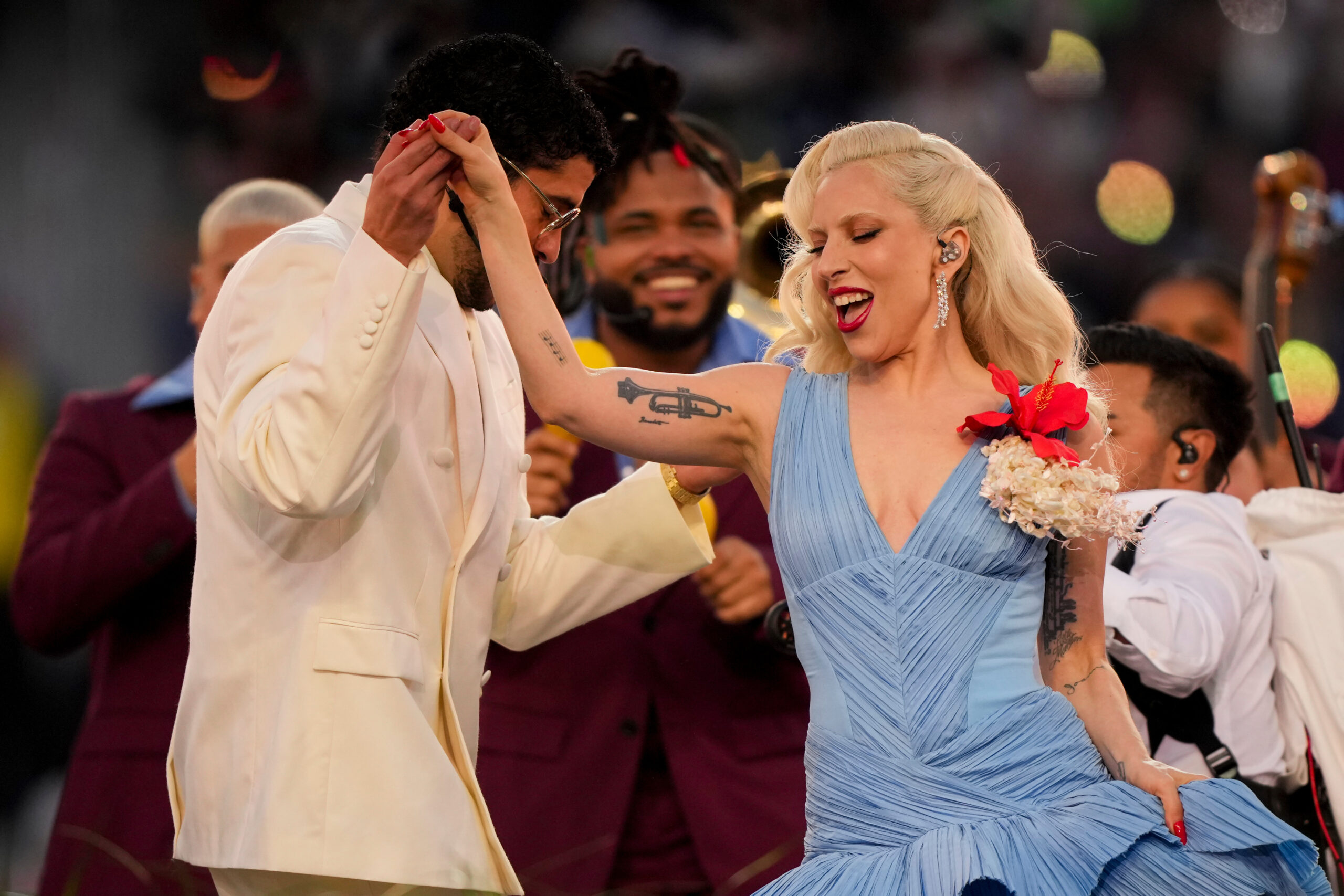
    Bad Bunny and Lady Gaga perform during the Super Bowl halftime show Sunday.

    The image released darkened Nekima Levy Armstrong’s skin and showed her sobbing, though the real picture depicted her as composed. Such detestable propaganda is how the Trump administration spends your tax dollars.

    Trump is not a serious president.

    As much of the country remained in a deep freeze, he spent his 20th weekend at his estate in Palm Beach, Fla., since returning to office last year.

    He played golf with lackey Sen. Lindsey Graham (R., S.C.), and fired off more than 50 social media posts whining about rigged elections (still), the halftime show, and a U.S. Olympic skier he called a “loser” after the athlete expressed “mixed emotions” about representing the country amid Trump’s politics of upheaval.

    The only thing Trump is serious about is enriching himself while many Americans struggle to make ends meet.

    An updated accounting by the New Yorker magazine found Trump and his family leveraged his return to the White House to increase their wealth by $4 billion.

    Lost in all the recent outrages from the Jeffrey Epstein files to Greenland to shooting citizens in Minneapolis was a Wall Street Journal story that detailed how a member of the United Arab Emirates royal family known as the “spy sheikh” invested $500 million to buy 49% of a crypto start-up founded by the Trump family.

    The crypto deal came together as the Trump administration agreed to give the Emirati government hundreds of thousands of advanced computer chips to power artificial intelligence technology — a deal the Biden administration rejected out of national security concerns that the chips could be shared to help China advance its military weapons systems.

    About 70% of Americans believe the country is “out of control” under Trump.

    Many are fed up with his mismanagement of the economy that has resulted in higher prices and fewer jobs — in addition to defying courts, prosecuting political opponents, arresting citizens, deporting immigrants, and stifling free speech.

    The landslide special election victory of a Democrat in a deep-red district in Texas shows voters are putting community before party.

    Then along came Bad Bunny to remind America that love trumps hate.

  • Philadelphia Museum of Art’s chief of staff and CFO have resigned

    Philadelphia Museum of Art’s chief of staff and CFO have resigned

    Two more Philadelphia Museum of Art senior staffers are departing as the museum continues to plot out its path after a period of institutional turmoil.

    Maggie Fairs, who was promoted to chief of staff last year by former director and CEO Sasha Suda, will leave the museum at the end of the month. CFO Valarie McDuffie has also resigned, with her last day this Friday.

    Previously, the museum parted ways with its marketing chief Paul Dien as of Feb. 1. Days later, the museum announced that it was reversing course on a renaming while keeping its new logo. Both changes were unveiled four months earlier in a rebranding overseen by Suda and Dien.

    No other immediate departures are expected, though the museum is working on an “organizational review,” with more changes possible later, a spokesperson said.

    Suda announced the arrival of both Fairs and McDuffie in May 2023, saying that “these two colleagues reflect the future of the institution.” Fairs was hired as vice president of communications after having worked in the United States, United Kingdom, and Canada. McDuffie had previously held several senior financial posts in secondary education.

    Fairs was promoted by Suda to chief of staff in May 2025. A replacement will not be hired, as the museum is restructuring the director’s office without that position.

    A pile of snow and ice sits on Eakins Oval in front of the Philadelphia Museum of Art on Feb. 2.

    Suda was dismissed from the museum in November and subsequently filed a lawsuit alleging that her dismissal was “without a valid basis.” The matter is now headed to arbitration.

    Director and CEO Daniel H. Weiss, who took over in December, said in January that the staff of the museum was “the heart and soul of the place and they need to be treasured and supported and also held accountable,” and that the museum needed “a senior management team that is available to them and transparent in its processes and also accountable.”

    Asked at the time whether there would be a reorganization, he said:

    “With our ambition and our mission, and as that evolves a little bit under each new leader, there needs to be careful review of how the organization serves the needs of the moment. So that’s underway.”

    The museum on Monday also announced Katherine Anne Paul as new curator of Indian and Himalayan art. Paul was most recently curator of Asian Art at the Birmingham Museum of Art since 2019, and held earlier positions at the Newark Museum, the American Museum of Natural History, and the Textile Museum in Washington, D.C. She holds a Ph.D. in languages and cultures of Asia from the University of Wisconsin–Madison.

    Weiss, in Monday’s announcement, singled out Paul’s scholarship and her extensive knowledge of the Philadelphia Museum of Art’s collection. She was assistant and associate curator of Indian and Himalayan art at the museum from 2002 to 2008.

    A previous version of the headline misrepresented the terms of the employees’ work termination. They resigned.

  • Judge sentences man who decapitated his wife: ‘I don’t think I’ve ever seen a case like this’

    Judge sentences man who decapitated his wife: ‘I don’t think I’ve ever seen a case like this’

    Hours before Ahmad Shareef was arrested for killing his wife, he called his mother and confessed.

    “I cut her head off,” he told her, according to the affidavit of probable cause for his arrest.

    On Monday, Shareef, 37, was sentenced to 16 to 42 years in prison in the decapitation death of Leila Al Raheel inside the couple’s Northeast Philadelphia home. Shareef pleaded guilty to third-degree murder and related crimes in the November 2022 slaying.

    “I don’t think I’ve ever seen a case like this,” said Common Pleas Court Judge Charles Ehrlich.

    New details of the killing also surfaced during the hearing.

    After Shareef confessed to his mother, she asked a neighbor to go to her son’s home in the 300 block of Magee Avenue and check on Al Raheel, according to the affidavit. The neighbor found Al Raheel dead in the dining room, she later told police.

    Officers who responded to the house discovered Al Raheel’s headless body on the kitchen floor, the affidavit said. They found Shareef about four miles away, hiding in bushes in front of a house. His sweatpants, the document said, were stained red with blood.

    Inside a police interview room, Shareef waived his Miranda rights, according to the affidavit. He told detectives he’d argued with Al Raheel after she had called him names.

    Then, he said, he cut off her head with a kitchen knife.

    In court Monday, the neighbor described how discovering Al Raheel’s body upended her life. She said she has been diagnosed with post-traumatic stress disorder. “This isn’t something that time simply erases,” she said.

    No one testified on Shareef’s behalf. His mother, who had been expected to appear, was ill and unable to attend, his defense attorney, Gregg Blender, said.

    Al Raheel, who came to the U.S. with Shareef and his family in 2011, “has no family to speak on her behalf,” said the prosecutor, Maggie McDermott.

    The judge imposed a sentence slightly below the prosecution’s request of 23 to 47 years, after Shareef’s attorney urged him to consider his client’s traumatic childhood and long-standing mental illness, which he said went largely untreated.

    As a child, Shareef moved with his mother from Kuwait to Iraq and later to Syria, fleeing both war and abusive men who, Blender said, subjected them to violence. At the insistence of his family, Shareef later married Al Raheel, a neighbor, Blender said.

    In the U.S., Shareef was treated repeatedly for mental health crises, Blender said. In 2012, he was hospitalized after striking himself and cutting his wrists, and in 2019, Blender said, Shareef stabbed himself in the neck.

    Blender urged the judge to weigh what he described as his client’s “horrific upbringing” against what he acknowledged was “nothing less than a horrific crime.”

    McDermott called the killing the “peak of domestic violence” and “unspeakably awful,” and warned that Shareef posed a continuing danger. If he was capable of such violence toward someone he loved, she argued, then even strangers were at risk.

    Ehrlich said the sentence reflected both Shareef’s traumatic past and the threat he posed going forward.

    “To sever a head with a kitchen knife takes a lot of effort,” he said. “Mr. Shareef, you have lived a life of horrors. I don’t think anyone in this courtroom disputes that.” The question, he added, was what needed to be done to protect others.

    “I’m very concerned about the future — I’m going to be honest with you,” the judge said. “What happened to you as a child was not your fault. But people with this kind of damage can hurt others.”

    After the slaying, neighbors told The Inquirer that several people had been living in the house, which had become an eyesore on the block. Shareef, they said, stood out: He behaved aggressively to other residents, and sometimes appeared outside wearing only underwear.

    Since late 2016, police responded to more than 50 calls on the 300 block of Magee Street for domestic disturbances, reports of weapons, and other complaints. However, police would not disclose exact addresses, and it remains unclear how many of those calls — if any — originated from the home Shareef shared with Al Raheel, where she was eventually killed.

    The city’s Department of Licenses and Inspections also confirmed that inspectors visited the house more than a year before Al Raheel was killed, following reports that the house’s garage was being used as a living space. But the inspectors weren’t able to gain access to the property, according to the department. Instead, they issued violations for weeds and combustible storage.