Tag: topic-link-auto

  • There is no Black Philadelphia history without Patti LaBelle

    There is no Black Philadelphia history without Patti LaBelle

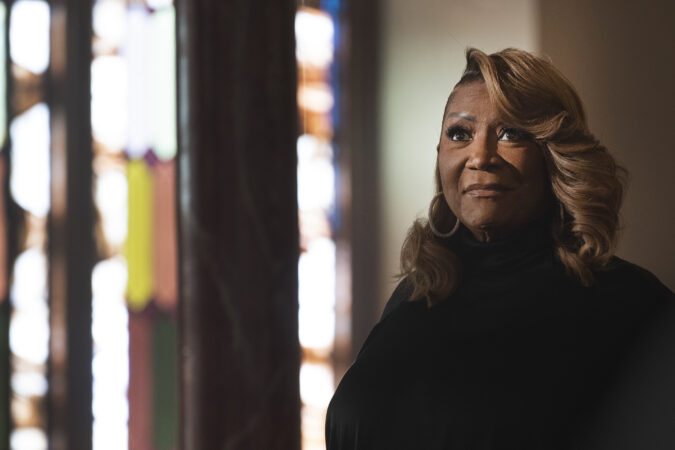
    On a bitterly cold afternoon last month, Patti LaBelle walks gingerly down Mother Bethel A.M.E. Church’s center aisle, her left hand grazing the top of each pew, steadying her balance.

    Half a dozen content creators, directors, and Visit Philadelphia staff coax the Grammy award-winning songstress toward the 18th century church’s magnificent altar, their voices overflowing with encouragement, reverence, and love.

    LaBelle’s stockinged footsteps are deliberate, her unblinking eyes affixed on the organ pipes in front of her.

    She’s as contemplative as she is careful.

    “Come on, Miss Patti,” cooed Kyra Knox, the Emmy award-winning filmmaker who is directing Visit Philadelphia’s Black History Month promotional video, “We Are the Fabric. We are the Thread,” starring the Philadelphia legend. “You are doing great.”

    “We Are the Fabric” is part of the nonprofit tourism agency’s “Indivisible” campaign, a yearlong initiative highlighting Philly’s diverse tourist destinations during America’s 250th birthday and Black History Month, which, coincidentally, is celebrating its 100th birthday this year. (Carter G. Woodson introduced Negro History Week in 1926. It was extended to Black History Month in 1976.)

    The videos are streaming on several online platforms including Hulu and HBO Max in seven markets, including Philadelphia, New York, Atlanta, and Washington, D.C. During the month of February, Visit Philly will conduct a series of neighborhood walks through the city’s historic districts with a special focus on Black history courtesy of the historical arts organizations 1838 Black Metropolis and the Black Journey.

    “You cannot tell the story of American culture, innovation, music, art, and food without Black Americans because they are woven into every thread of the national narrative,” said Angela Val, president and CEO of Visit Philly.

    The filmmakers squeezed in a lot of places on the cold Thursday afternoon. Mother Bethel — the home of America’s first Black Christian church founded by formally enslaved Richard Allen — is the first stop on the hours-long shoot. After recording takes of LaBelle’s coffin-shaped ivory nails in prayer and the centuries-old church’s sunlit stained glass windows, LaBelle and the crew drive 14 blocks west to South Philadelphia’s Union Baptist Church.

    Film rolls and cameras flash as LaBelle, wrapped in an ankle-length vintage chocolate brown fur, is reflective in front of Union Baptist’s 111-year-old stately exterior. Inside, barrier-breaking early 20th century contralto Marian Anderson once sang in the choir. Like Anderson, LaBelle got her start singing gospel at Southwest Philly’s Beulah Baptist Church.

    Singer Patti LaBelle at Mother Bethel A.M.E. Church in Philadelphia during a shoot for Visit Philadelphia’s “Indivisible” initiative, part of an effort to celebrate the city’s communities of color during the city’s 250th anniversary. LaBelle is starring in the campaign’s Black History Month promotion.

    After a few windy takes, the crew made its way to the southwest corner of City Hall in front of the statue of martyred 19th century civil rights leader Octavius Catto. The day ended at the Arden Theatre, a nod to Philadelphia’s vibrant Black performing arts community.

    LaBelle stars in and narrates the video. She’s accompanied by 9-year-old Riley Mills and visits historical sites and modern locations, like Uncle Bobbie’s Coffee & Books in Germantown, reminding us that Black history is to be passed through the generations.

    “When the Constitution couldn’t hold us, we held each other,” LaBelle says, her voice clear, sharp, and determined.

    “We made the music you move to,” she continues as images of Teddy Pendergrass, Kenny Gamble, and Leon Huff fill the screen. And then, in an “if you blink, you will miss it moment,” there LaBelle is, in an old photograph flanked by her Labelle group members Sarah Dash and Nona Hendryx, followed by her powerful words: “When they wouldn’t give us a stage, we built one.”

    Living Black history

    Patti LaBelle is 81. She knows she’s Black history. She’s proud of it and doesn’t take it lightly.

    “Black people stand for everything,” LaBelle told The Inquirer in between takes at Mother Bethel, her voice barely a whisper, worn out from her performances in the “Queens: 4 Legends Tour” starring LaBelle, Chaka Khan, Gladys Knight. and Stephanie Mills. They all came of age before the Civil Rights Act of 1964 was passed.

    “And we continue to. We continue to fight while things are being taken away from us.”

    As Visit Philly filmed “We Are the Thread,” the National Park Service was in the midst of dismantling an exhibit honoring nine enslaved people who worked at George Washington’s house when Philadelphia was America’s capital city.

    The removal was part of President Donald Trump’s executive order “restoring truth and sanity to American history.” Recently, Trump shared a video that depicted former President Barack Obama and first lady Michelle Obama as cartoon primates.

    “If we don’t fight to keep what is ours,” LaBelle said, her scratchy voice taking on urgency. “It will be lost.”

    Visit Philly’s choice of LaBelle as its Black history spokesperson this year is thoughtful and necessary.

    Her generation of civil rights warriors bridges the gap between Black Americans who lived through Jim Crow and those of us who only heard horror stories of how difficult it was for our ancestors to go to school, work, and vote.

    As this administration claims that the Civil Rights Act resulted in “white people being very badly treated,” it’s important that stories like LaBelle’s aren’t just repeated but remembered and celebrated — especially as they get up there in age.

    We need to give them their flowers now.

    Without Patti LaBelle, Philadelphia — and its music — would be a different place.

    Patti LaBelle (right) and the Blue Belles, the group with which she had her first hit, in 1962: “I Sold My Heart to the Junkman.”

    A Philadelphia girl

    LaBelle was born Patricia Louise Holte in Southwest Philadelphia in 1944. Her dad, Henry, came to Philadelphia from Georgia in the early part of the 20th century during the Great Migration. He worked on the railroad, was a singer, and an occasional gambler. Her mom, Bertha, was a homemaker. LaBelle was the youngest of five.

    She went to Bartram High and sang at Beulah Baptist before becoming the lead singer of Patti LaBelle and the Blue Belles.

    The group’s 1962 hit, “I Sold My Heart to the Junkman,” sold millions of copies, cementing LaBelle’s stardom, getting her a spot on the Chitlin’ Circuit for performances at Uptown Theater. She appeared on American Bandstand and Jerry Blavat’s radio show.

    By 1975, the group was simply known as Labelle and was a visual smorgasbord of Afrofuturistic sequins and space suits. It released the iconic “Lady Marmalade” that catapulted Labelle to the cover of Rolling Stone, becoming the first Black music group to be featured.
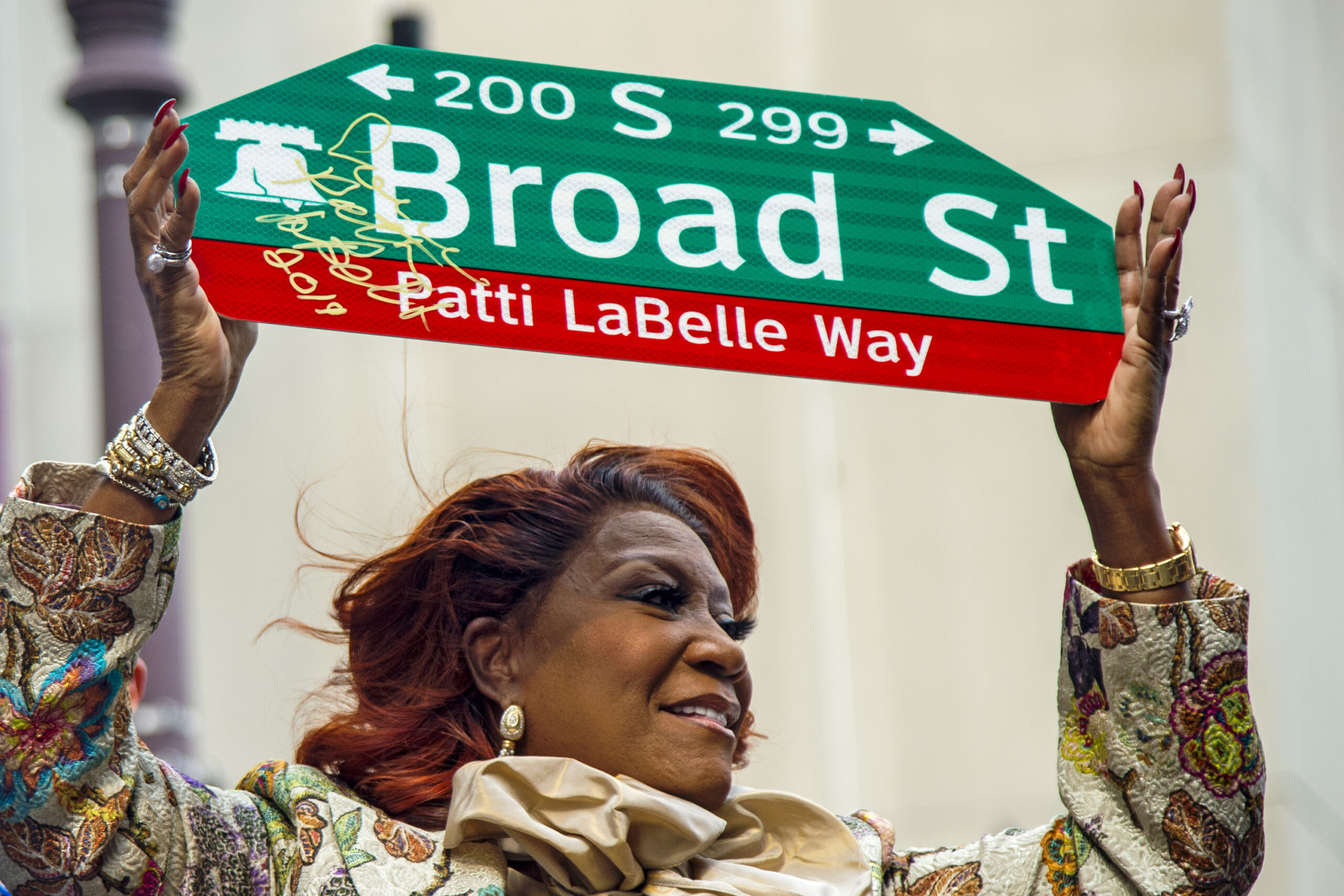
    Patti LaBelle holds up a sign during a celebration on July 2, 2019, as the block of Broad Street between Spruce and Locust Streets is renamed Patti LaBelle Way.

    “I’ve had a lot of wonderful moments in my career,” LaBelle said. “It’s nice to remember, to be proud. We made a lot of history.”

    (Christina Aguilera, Lil’ Kim, Mya, and Pink covered “Lady Marmalade” in 2001 for the Moulin Rouge soundtrack. And in 2003 Labelle’s “Lady Marmalade” was inducted into the Grammy Hall of Fame.)

    In 2016, LaBelle received the Marian Anderson Award. Three years later, the city named a block of Broad Street between Spruce and Locust Patti LaBelle Way.

    LaBelle, who lives in Villanova now, never left the Philadelphia area.
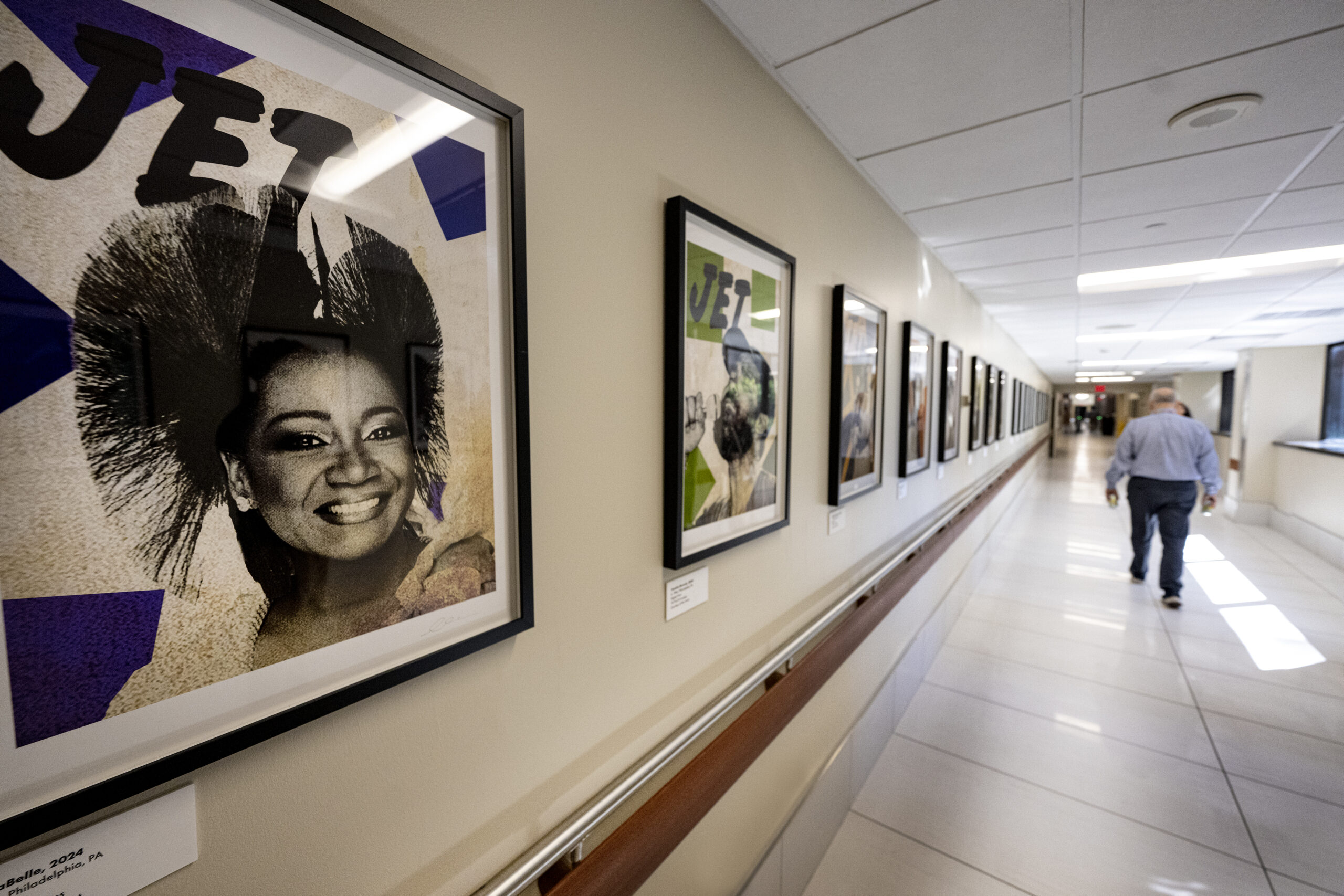
    Patti LaBelle and Frankie Beverly are two of the celebrities featured on reimagined Shaheed Rucker’s ‘(re)Covering the Iconic” in in Jefferson Einstein’s community corridor. Monday, Sept. 8, 2025.

    I’m a Philadelphia girl,” she said with pride. “It’s laid back, comfortable. … How I like it.”

    Over the decades, she has had a few entrepreneurial endeavors including two short-lived Philadelphia boutiques and a clothing collection on HSN. However, she’s best known for her indisputably yummy line of desserts — sweet potato pies and cobblers. Late last year, she introduced pancake mix and syrup that, she says for the record, is nothing like Aunt Jemima.

    “For one,” she said, mustering up a bit of her trademark LaBelle sass, “I’m a real person.”

    Real to her core.

    “She’s given a lot to Philadelphia,” Val said. “She’s given so much to the country … to the Black community.”


  • Man who stole nearly $250,000 from Pa. Occupational Therapy Association charged with theft

    Man who stole nearly $250,000 from Pa. Occupational Therapy Association charged with theft

    A Western Pennsylvania man stole nearly $250,000 from the Montgomery County-based Pennsylvania Occupational Therapy Association, prosecutors said Monday, and spent the money on a trip to Disney World, country club membership fees, an Outer Banks vacation rental, and other personal expenses.

    Michael Fantuzzo, 40, was charged with several counts of theft for the crimes, which prosecutors said took place between 2021 and 2024 while Fantuzzo, of Westmoreland County, served as treasurer for the nonprofit trade organization.

    In all, prosecutors said, Fantuzzo spent $246,708 of the association’s funds, effectively reducing its savings account to zero.

    Fantuzzo admitted to investigators that he used the association’s funds for personal expenses, though he initially told them he had spent $90,000 of the group’s funds and did so by accident.

    A further investigation into Fantuzzo’s spending found that the sum was much larger.

    Prosecutors say Fantuzzo spent more than $100,000 from the association’s bank account to pay off debt on a handful of credit cards opened in his name.

    And Fantuzzo charged more than $128,000 to the association’s credit card, including $10,513 to install a hot tub at his home; $7,247 for a vacation home rental in Duck, N.C.; $5,460 for his local and county taxes; $4,124 for membership to the Hillcrest Country Club; $2,040 for a limousine service; and $2,019 for the trip to Disney World.

    Members of the Pennsylvania Occupational Therapy Association, based in Plymouth Meeting at the time of the theft, realized something was wrong when newly elected board members learned the organization they inherited was experiencing “severe financial distress,” police said. They reported the suspicious payments to authorities in November.

    The association advocates for occupational therapists and provides career development and networking opportunities, among other services, according to its website.

    Investigators say they linked the spending back to Fantuzzo in a variety of ways.

    Some payments, such as the Disney World tickets, included Fantuzzo and his family members’ names on the charges. Meanwhile, the PayPal payments went to an account bearing the name of Fantuzzo’s wife. And investigators tracked Fantuzzo’s name back to invoices and rental agreements for other purchases.

    Fantuzzo turned himself in to Montgomery County authorities on Feb. 6. He was released from custody and is expected to appear in court for a preliminary hearing on Feb. 17.

  • Bad Bunny vs. Trump in a battle of love and hate | Editorial

    Bad Bunny vs. Trump in a battle of love and hate | Editorial

    It says a lot about the state of affairs when a Puerto Rican singer and rapper does more to unify the country in about 13 minutes than the president of the United States has done in the past 13 months.

    Bad Bunny’s halftime performance at Super Bowl XL was all about love, while Donald Trump’s return to the Oval Office is focused on hate.

    Bad Bunny’s joyful celebration of unity, diversity, and togetherness was a needed respite from Trump’s cruelty, retribution, and division.

    Even though many of the more than 135 million viewers may not have understood the words Bad Bunny sang in Spanish, just about everyone could feel the positive vibe and communal celebration that showcased dancing, hard work, urban street life, family — and a wedding.

    Bad Bunny’s ode to Puerto Rico was a reminder that we are neighbors, not enemies. More broadly, the United States is part of the American continent that includes Canada, Mexico, Central America, South America, the Caribbean, and Greenland.

    We are all stronger when we work together than when we are at each other’s throats.

    Bad Bunny’s positive message stood in stark contrast to the president’s relentless serving of hate that is dividing and weakening the country.

    Just last week, Trump posted a racist video on his social media account that depicted former president and first lady Barack and Michelle Obama as apes.

    In case anyone needed a reminder that Trump has been a stone-cold racist throughout his life, he refused to apologize for the vile meme.

    Eventually, he removed the post after several — but not many — GOP officials called out the blatant racism. The bipartisan backlash is a reminder that it will only take a few good Republican men and women to stop Trump’s attack on America’s institutions and its people.

    Trump’s racist meme about the Obamas came on the heels of a racist and misleading move by the White House that posted a digitally altered image of a Black woman who was arrested while demonstrating against the unlawful actions of U.S. Immigration and Customs Enforcement agents in Minneapolis.

    Bad Bunny and Lady Gaga perform during the Super Bowl halftime show Sunday.

    The image released darkened Nekima Levy Armstrong’s skin and showed her sobbing, though the real picture depicted her as composed. Such detestable propaganda is how the Trump administration spends your tax dollars.

    Trump is not a serious president.

    As much of the country remained in a deep freeze, he spent his 20th weekend at his estate in Palm Beach, Fla., since returning to office last year.

    He played golf with lackey Sen. Lindsey Graham (R., S.C.), and fired off more than 50 social media posts whining about rigged elections (still), the halftime show, and a U.S. Olympic skier he called a “loser” after the athlete expressed “mixed emotions” about representing the country amid Trump’s politics of upheaval.

    The only thing Trump is serious about is enriching himself while many Americans struggle to make ends meet.

    An updated accounting by the New Yorker magazine found Trump and his family leveraged his return to the White House to increase their wealth by $4 billion.

    Lost in all the recent outrages from the Jeffrey Epstein files to Greenland to shooting citizens in Minneapolis was a Wall Street Journal story that detailed how a member of the United Arab Emirates royal family known as the “spy sheikh” invested $500 million to buy 49% of a crypto start-up founded by the Trump family.

    The crypto deal came together as the Trump administration agreed to give the Emirati government hundreds of thousands of advanced computer chips to power artificial intelligence technology — a deal the Biden administration rejected out of national security concerns that the chips could be shared to help China advance its military weapons systems.

    About 70% of Americans believe the country is “out of control” under Trump.

    Many are fed up with his mismanagement of the economy that has resulted in higher prices and fewer jobs — in addition to defying courts, prosecuting political opponents, arresting citizens, deporting immigrants, and stifling free speech.

    The landslide special election victory of a Democrat in a deep-red district in Texas shows voters are putting community before party.

    Then along came Bad Bunny to remind America that love trumps hate.

  • Philadelphia Museum of Art’s chief of staff and CFO have resigned

    Philadelphia Museum of Art’s chief of staff and CFO have resigned

    Two more Philadelphia Museum of Art senior staffers are departing as the museum continues to plot out its path after a period of institutional turmoil.

    Maggie Fairs, who was promoted to chief of staff last year by former director and CEO Sasha Suda, will leave the museum at the end of the month. CFO Valarie McDuffie has also resigned, with her last day this Friday.

    Previously, the museum parted ways with its marketing chief Paul Dien as of Feb. 1. Days later, the museum announced that it was reversing course on a renaming while keeping its new logo. Both changes were unveiled four months earlier in a rebranding overseen by Suda and Dien.

    No other immediate departures are expected, though the museum is working on an “organizational review,” with more changes possible later, a spokesperson said.

    Suda announced the arrival of both Fairs and McDuffie in May 2023, saying that “these two colleagues reflect the future of the institution.” Fairs was hired as vice president of communications after having worked in the United States, United Kingdom, and Canada. McDuffie had previously held several senior financial posts in secondary education.

    Fairs was promoted by Suda to chief of staff in May 2025. A replacement will not be hired, as the museum is restructuring the director’s office without that position.

    A pile of snow and ice sits on Eakins Oval in front of the Philadelphia Museum of Art on Feb. 2.

    Suda was dismissed from the museum in November and subsequently filed a lawsuit alleging that her dismissal was “without a valid basis.” The matter is now headed to arbitration.

    Director and CEO Daniel H. Weiss, who took over in December, said in January that the staff of the museum was “the heart and soul of the place and they need to be treasured and supported and also held accountable,” and that the museum needed “a senior management team that is available to them and transparent in its processes and also accountable.”

    Asked at the time whether there would be a reorganization, he said:

    “With our ambition and our mission, and as that evolves a little bit under each new leader, there needs to be careful review of how the organization serves the needs of the moment. So that’s underway.”

    The museum on Monday also announced Katherine Anne Paul as new curator of Indian and Himalayan art. Paul was most recently curator of Asian Art at the Birmingham Museum of Art since 2019, and held earlier positions at the Newark Museum, the American Museum of Natural History, and the Textile Museum in Washington, D.C. She holds a Ph.D. in languages and cultures of Asia from the University of Wisconsin–Madison.

    Weiss, in Monday’s announcement, singled out Paul’s scholarship and her extensive knowledge of the Philadelphia Museum of Art’s collection. She was assistant and associate curator of Indian and Himalayan art at the museum from 2002 to 2008.

    A previous version of the headline misrepresented the terms of the employees’ work termination. They resigned.

  • Judge sentences man who decapitated his wife: ‘I don’t think I’ve ever seen a case like this’

    Judge sentences man who decapitated his wife: ‘I don’t think I’ve ever seen a case like this’

    Hours before Ahmad Shareef was arrested for killing his wife, he called his mother and confessed.

    “I cut her head off,” he told her, according to the affidavit of probable cause for his arrest.

    On Monday, Shareef, 37, was sentenced to 16 to 42 years in prison in the decapitation death of Leila Al Raheel inside the couple’s Northeast Philadelphia home. Shareef pleaded guilty to third-degree murder and related crimes in the November 2022 slaying.

    “I don’t think I’ve ever seen a case like this,” said Common Pleas Court Judge Charles Ehrlich.

    New details of the killing also surfaced during the hearing.

    After Shareef confessed to his mother, she asked a neighbor to go to her son’s home in the 300 block of Magee Avenue and check on Al Raheel, according to the affidavit. The neighbor found Al Raheel dead in the dining room, she later told police.

    Officers who responded to the house discovered Al Raheel’s headless body on the kitchen floor, the affidavit said. They found Shareef about four miles away, hiding in bushes in front of a house. His sweatpants, the document said, were stained red with blood.

    Inside a police interview room, Shareef waived his Miranda rights, according to the affidavit. He told detectives he’d argued with Al Raheel after she had called him names.

    Then, he said, he cut off her head with a kitchen knife.

    In court Monday, the neighbor described how discovering Al Raheel’s body upended her life. She said she has been diagnosed with post-traumatic stress disorder. “This isn’t something that time simply erases,” she said.

    No one testified on Shareef’s behalf. His mother, who had been expected to appear, was ill and unable to attend, his defense attorney, Gregg Blender, said.

    Al Raheel, who came to the U.S. with Shareef and his family in 2011, “has no family to speak on her behalf,” said the prosecutor, Maggie McDermott.

    The judge imposed a sentence slightly below the prosecution’s request of 23 to 47 years, after Shareef’s attorney urged him to consider his client’s traumatic childhood and long-standing mental illness, which he said went largely untreated.

    As a child, Shareef moved with his mother from Kuwait to Iraq and later to Syria, fleeing both war and abusive men who, Blender said, subjected them to violence. At the insistence of his family, Shareef later married Al Raheel, a neighbor, Blender said.

    In the U.S., Shareef was treated repeatedly for mental health crises, Blender said. In 2012, he was hospitalized after striking himself and cutting his wrists, and in 2019, Blender said, Shareef stabbed himself in the neck.

    Blender urged the judge to weigh what he described as his client’s “horrific upbringing” against what he acknowledged was “nothing less than a horrific crime.”

    McDermott called the killing the “peak of domestic violence” and “unspeakably awful,” and warned that Shareef posed a continuing danger. If he was capable of such violence toward someone he loved, she argued, then even strangers were at risk.

    Ehrlich said the sentence reflected both Shareef’s traumatic past and the threat he posed going forward.

    “To sever a head with a kitchen knife takes a lot of effort,” he said. “Mr. Shareef, you have lived a life of horrors. I don’t think anyone in this courtroom disputes that.” The question, he added, was what needed to be done to protect others.

    “I’m very concerned about the future — I’m going to be honest with you,” the judge said. “What happened to you as a child was not your fault. But people with this kind of damage can hurt others.”

    After the slaying, neighbors told The Inquirer that several people had been living in the house, which had become an eyesore on the block. Shareef, they said, stood out: He behaved aggressively to other residents, and sometimes appeared outside wearing only underwear.

    Since late 2016, police responded to more than 50 calls on the 300 block of Magee Street for domestic disturbances, reports of weapons, and other complaints. However, police would not disclose exact addresses, and it remains unclear how many of those calls — if any — originated from the home Shareef shared with Al Raheel, where she was eventually killed.

    The city’s Department of Licenses and Inspections also confirmed that inspectors visited the house more than a year before Al Raheel was killed, following reports that the house’s garage was being used as a living space. But the inspectors weren’t able to gain access to the property, according to the department. Instead, they issued violations for weeds and combustible storage.

  • Philadelphia reports two deaths related to intense cold

    Philadelphia reports two deaths related to intense cold

    Philadelphia health officials have reported two deaths related to the city’s extraordinary stretch of freezing temperatures in recent weeks.

    City officials did not provide additional information on the deaths, which took place between Jan. 20, when the city first declared an “enhanced Code Blue,” and Feb. 6.

    An enhanced Code Blue is declared when the wind chill makes it feel like it’s 20 degrees outside or lower for more than three days. In response, officials open up more resources to protect Philadelphians from the cold, including additional shelter beds and warming centers at libraries and rec centers.

    As of Friday, the centers have logged 26,270 stays, said James Garrow, a spokesperson for the city health department.

    Temperatures were in the single digits on Sunday night, and the day’s average temperature of 14 degrees was 20 degrees colder than normal.

    Residents who see someone who appears to be unsheltered outside during Code Blue can call the city’s homeless outreach hotline at 215-232-1984. The city maintains a list of warming centers on its website.

  • Chris Pronger weighs in on Matvei Michkov and a Flyers rebuild that’s been going on ‘for what seems like 12 years’

    Chris Pronger weighs in on Matvei Michkov and a Flyers rebuild that’s been going on ‘for what seems like 12 years’

    Flyers fans are “starving” for a superstar player. That’s what’s driving a lot of the angst around Matvei Michkov, former team captain Chris Pronger said.

    On Monday’s episode of the Spittin’ Chiclets podcast, Pronger, a hockey Hall of Famer who spent the last three years of his 18-year career with the Flyers, shared his thoughts on the team’s rebuild and Michkov’s development as a professional.

    The never-ending rebuild

    The current regime spearheading the Flyers’ rebuild, led by president Keith Jones and general manager Danny Brière, has been in place since May 2023, just under three years. But Flyers fans are still reeling from the failures of previous regimes.

    “They’ve been in what’s called a rebuild for what seems like 12 years,” Pronger said. “I think they’re frustrated and they want the rebuild to be over, but they didn’t go about the rebuild properly in the early days.”

    The Flyers haven’t made the playoffs since the COVID bubble in 2020, and have advanced past the first round just once since the 2012-13 season — during that bubble playoff run, which was played in an empty building in Toronto.

    The most important keys to any successful rebuild are finding a star center and a No. 1 defenseman, two things that have eluded the Flyers so far. It takes lottery luck, which the Flyers haven’t had much of lately. But those who believe Michkov, a winger, becoming a star will be the difference between a Stanley Cup-contending Flyers team and the draft lottery aren’t being realistic, according to Pronger.

    “I don’t know any team — any team — that rebuilds with a winger,” Pronger said. “I don’t know one good team who rebuilt with a winger. You don’t rebuild with a winger, you rebuild up the middle — center, defense, goalie. I know you [draft] the best player available, and clearly he was the best player, but as it relates to that, sometimes you have to luck out, too, in a rebuild and get the right pick when the right player is available.”

    In January, Pronger posted on X that those centerpiece players are the hardest to find, and the Flyers need to be patient and deliberate about compiling assets to make those moves if they become available. But he also suggested that the best way to rebuild is to tear it all the way down, like San Jose and Chicago have done, for a chance at landing a player like Macklin Celebrini or Connor Bedard.

    Flyers right wing Matvei Michkov has struggled in his second season with the team.

    How to help Michkov

    Michkov came into camp out of shape, something Pronger admitted he’d also done early in his career, in his second and third NHL seasons. Teams don’t get a lot of practice time, Pronger said, so it’s extremely difficult to play yourself into shape during the year. Pronger’s coach at the time, former Flyers boss Mike Keenan, was extremely tough on him, to the point where Pronger joked that even his teammates started to feel bad.

    He also pointed to the language barrier between the Russian Michkov and the coaching staff as a hurdle.

    “The fact that he doesn’t speak the language very well, if at all, that’s part of the problem, because it might not be translating properly what he’s going through, what he’s dealing with,” Pronger said. “… You’ve got to be hard on young guys, but it’s not 1995, either. That’s not how this world works in today’s hockey world, in today’s NHL. You have to find a connection with the player. There’s ways to be hard.”

    The Flyers do not employ a full-time Russian translator for Michkov, instead relying on Slava Kuznetsov, a skating coach who also works with Olympian Isabeau Levito, to translate for him.

    Now, the Flyers need to teach Michkov how to be a pro, Pronger said, and that includes setting the example of him coming into camp in shape, and learning to be more responsible with the puck.

    “I saw a few of their games last year with [John Tortorella], and he played [Michkov] a bit differently,” Pronger said. “He got him on the power play, to me it looked like he was putting him in more positions for success. It looked like he let him do a little more, but wasn’t — I don’t know if teaching him is the right word, but showcasing his abilities and not digging into the other parts of the game where he needed to improve.”

    The Flyers are off for the Olympic break and will return to the ice on Feb. 25 against the Washington Capitals.

  • Greenberg Elementary students have been relocated as Philly schools continue to face cold-weather issues

    Greenberg Elementary students have been relocated as Philly schools continue to face cold-weather issues

    Building woes triggered by a sustained blast of cold weather continue at some Philadelphia schools.

    Staff at Strawberry Mansion High reported that about half the building was without heat Monday, with some classrooms in the 40s and hallways not much warmer.

    And staff and students at Greenberg Elementary in the Northeast had to relocate to the old Meehan Middle School after nearly a week of virtual school because of heating problems.

    “Due to insufficient heat throughout the building, Greenberg is not able to safely support in-person learning at this time,” district officials wrote to parents this weekend. “Our facilities team is actively working to resolve the heating issue as quickly as possible. At this time, the repair timeline is still being assessed, but we will continue to provide updates as more information becomes available.”

    Meehan is one of the district’s “swing spaces” — it no longer operates as a school, but is used as an alternate location for schools that need it. It recently housed Thomas Holme Elementary while a new building was constructed for that school. It’s unclear how long Greenberg students will need to stay at Meehan.

    The move rankled some Greenberg parents, who had logistical and safety concerns about sending their children to a different location.

    Katy Foley-Gallagher, mom of a Greenberg kindergartener and third grader, said virtual learning was a challenge — on days she had to work, her husband had to take off from his job to manage their daughter and son.

    But moving to Meehan isn’t ideal either, Foley-Gallagher said.

    “Everybody’s getting anxious — this is disrupting their learning,” said Foley-Gallagher. “They district is not taking care of their building, and they don’t keep up with the infrastructure at all.”

    The school system, which a 2023 landmark court ruling acknowledged has been underfunded for decades, has billions in unmet building needs. Superintendent Tony B. Watlington Sr. has proposed a facilities master plan that would cost $2.8 billion and require closing 20 buildings, as well as modernizing 159 others.

    It’s not yet clear whether Greenberg would receive upgrades as part of that process. And that plan, which the school board is expected to vote on this winter, would take years to implement.

    Greenberg, like other district schools in the Northeast, is overcrowded, with over 1,000 students in a building whose capacity is 800. Students can no longer leave their classrooms for art or music; those rooms have been repurposed to accommodate extra classes.

    “They’re going to put them back in these crowded rooms,” said Foley-Gallagher. “Greenberg is such a good school, but I worry that this is going to drive people out of the school, out of the city.”

    She and other parents said they had concerns about their children being on a campus with Lincoln High, another overcrowded school.

    District officials said they were taking steps to ensure “a smooth transition for students and families” as Greenberg relocates to Meehan.

    The district is providing shuttle service for students who normally walk to Greenberg, though the shuttle leaves at 8 a.m., a half hour after classes begin.

    “We understand that unexpected changes can be challenging for families, and we appreciate your patience and partnership as we work to restore normal building operations,” district chief operating officer Teresa Fleming wrote in an email to parents. “The safety and well-being of our school community remain our highest priority.”

  • The landmark Kibitz Room deli in Cherry Hill, which closed last month, has filed for bankruptcy

    The landmark Kibitz Room deli in Cherry Hill, which closed last month, has filed for bankruptcy

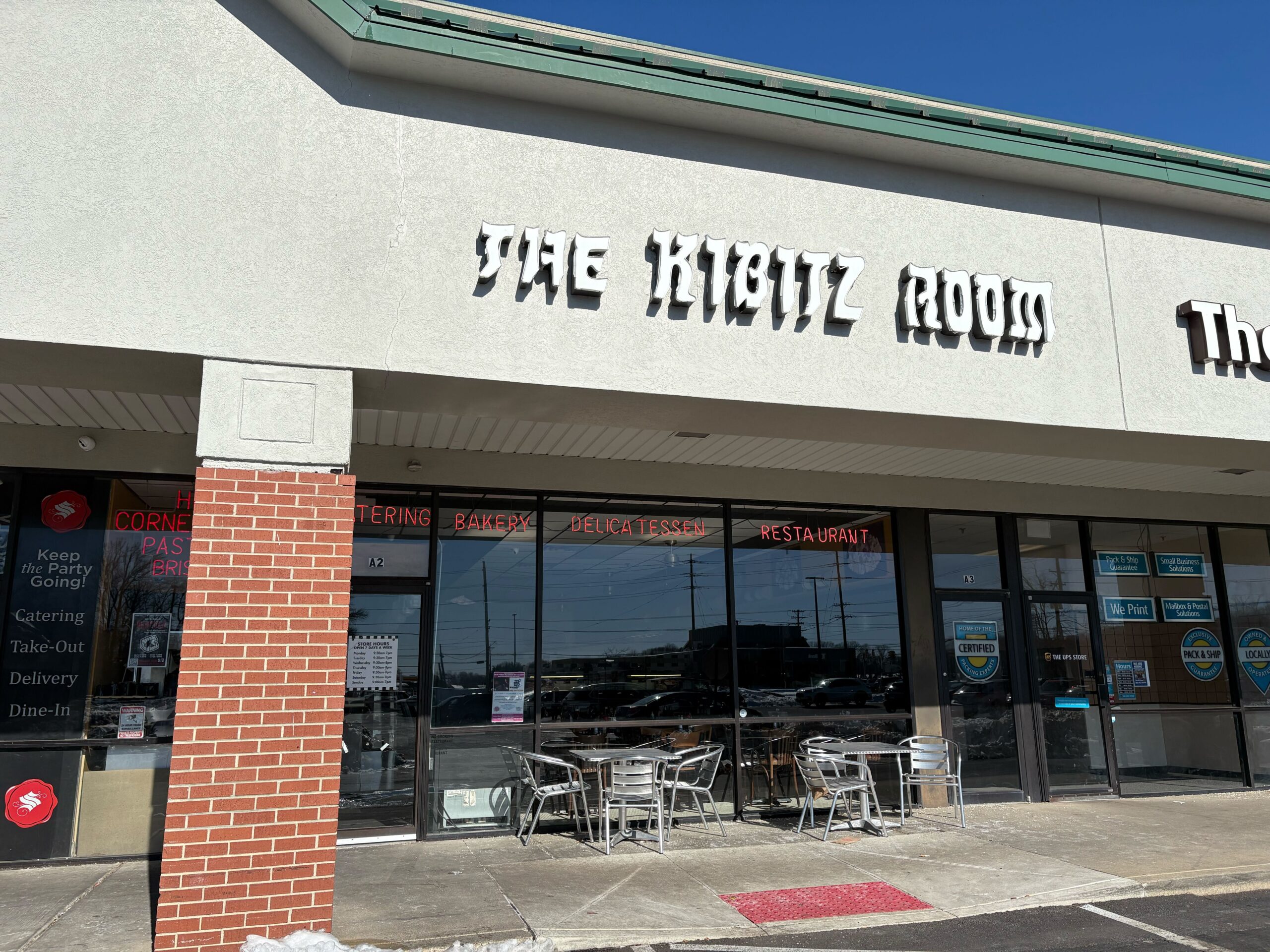
    The Kibitz Room in Cherry Hill, which shut down abruptly about two weeks ago after 25 years, has filed for bankruptcy protection, seeking to liquidate its assets.

    An attorney for the deli filed paperwork Friday in U.S. Bankruptcy Court in Camden, claiming assets of less than $50,000 and liabilities of $100,001 to $500,000. A hearing on the Chapter 7 petition was scheduled for March 3.

    The Kibitz Room, in Holly Ravine Plaza at 100 Springdale Rd. in Cherry Hill, on Feb. 2, 2026.

    Social media posts on Jan. 30 noted that the deli, owned by Sandy Parish, had apparently closed without notice.

    Meanwhile, former owner Neil Parish — Sandy’s ex-husband — told Patch in an article published Monday morning that he was talking to the landlord about reopening the deli. Their son Brandon commented on a public Facebook post midday Monday that he was working on reopening “under a new entity. Unfortunately the previous ownership was out of my hands but I did run the store for the last nine years until I left to open the other location. … It surely wasn’t from lack of business!!”

    Veteran deli operator Russ Cowan opened the Kibitz Room in Holly Ravine Plaza in 2001. Two years later, Neil Parish bought it using their daughter’s bat mitzvah gifts as the down payment. “She got four years at Syracuse, all covered,” Neil Parish said in an interview last year. “It was a good investment.”

    After Neil and Sandy Parish split up in 2016, Sandy ran the Kibitz Room with their son Brandon, now 32. Neil moved to the Baltimore area, where he ran delis before returning to Philadelphia.

    Brandon Parish stopped working in Cherry Hill early last year when he and his father opened the Kibitz Room King of Prussia in Valley Forge Center, which is not involved in the bankruptcy.

    Sandy Parish did not return messages seeking comment, nor did her son.

    In an interview last year, Brandon Parish said he had worked at the Cherry Hill deli since he could stand on a milk crate and wash dishes.

    “I didn’t want to be in camp,” Parish said. “I didn’t want to be at school. If it wasn’t the lacrosse field, I wanted to be at the shop. It was just the whole environment. The people who worked there were a second family.”

  • Source: Eagles hire ex-Vikings assistant Chris Kuper to replace offensive line coach Jeff Stoutland

    Source: Eagles hire ex-Vikings assistant Chris Kuper to replace offensive line coach Jeff Stoutland

    The Eagles have their replacement for longtime offensive line coach Jeff Stoutland.

    A league source confirmed an NFL Network report that the Eagles are hiring Minnesota Vikings offensive line coach Chris Kuper for the same role in Philadelphia. Kuper’s contract with Minnesota expired after the season and the team did not retain him, according to The Athletic.

    Kuper, 43, had been the line coach for the Vikings since 2022 and crossed paths there with new Eagles offensive coordinator Sean Mannion in 2023, when Mannion was on the roster as a quarterback.

    Kuper, who was drafted in the fifth round in 2006 and played guard for the Denver Broncos for eight seasons, also worked as an assistant offensive line coach under Eagles defensive coordinator Vic Fangio when Fangio was the head coach in Denver from 2019 to 2021.

    Jeff Stoutland had been the Eagles’ offensive line coach since 2013.

    Kuper has big shoes to fill. Stoutland was the Eagles’ offensive line coach from 2013 to 2025 and was widely regarded as the best line coach in the NFL. Stoutland announced his departure from the Eagles last week. The Eagles are moving to a new scheme under Mannion, and while Stoutland was offered a chance to return as offensive line coach, according to a source, he wasn’t going to have the role of run game coordinator and ultimately decided to step away from coaching with the Eagles.

    The Eagles’ offensive line took a dramatic step back in 2025, mostly because of injuries. Lane Johnson missed half the season, and Landon Dickerson and Cam Jurgens were never or rarely fully healthy and did not have the same impact as in previous seasons. The futures of Johnson and Dickerson could be up in the air, and the Eagles could be forced to replace one or two key parts of the line, or at the very least need to start planning for replacements via the draft or free agency.

    Kuper’s hiring marks the fourth new offensive coach in the building, a process that started when the Eagles hired Mannion on Jan. 29. They also hired former Tampa Bay offensive coordinator Josh Grizzard to be the pass game coordinator and hired Green Bay wide receivers coach Ryan Mahaffey as the run game coordinator and tight ends coach.