A Philadelphia man was charged with murder after fatally shooting his girlfriend in Levittown this weekend, shortly after she told police he had sexually assaulted her, authorities said.
Yujun Ren, 32, turned himself in to police inMiddletown Township Sunday and told them he had been trying to scare the woman, Yuan Yuan Lu, when the firearm he carried accidentally discharged, killing her.
Investigators believe otherwise, according to the affidavit of probable cause for Ren’s arrest.
In addition to murder, prosecutors charged Ren with stalking and a gun crime. He is being held without bail.
Bristol Township police discovered Lu’s body shortly after noon Sundayin the driver’s seat of a white Hyundai in a residential neighborhood, according to the affidavit.
Lu had been shot in the head. Police found that the driver’s side window had been struck by gunfire, and they recovered an expended shell casing from a small caliber handgun.
In Ren’s interview with investigators, he told them that Lu had said “hurtful things and took their cats and dogs,” the affidavit said, leading him to pull the handgun in an attempt to scare her.
A day earlier, Lu had told Philadelphia police that Ren had sexually assaulted her at his home on South Orianna Streetin Pennsport.
The assault, which Lu said happened around 1 p.m. Saturday, led her to end the relationship and pack her things to leave while Ren was at work, according to the affidavit. Lu told police she was afraid of Ren and said “he had a firearm he carried everywhere,” the document said.
Ren legally owned a Mossberg MC20 9mm pistol, investigators found.
The day Ren turned himself in, a woman who told police that she was Ren’s aunt turned that firearm over to Middletown Township authorities, according to the affidavit.
Bucks County District Attorney Joe Khan said in a statement that the killing was a “sobering reminder of the lethal nature of domestic violence.”
“Our investigation revealed a chilling course of conduct,” said Khan, adding that investigators recovered evidence showing Ren stalked Lu in the early morning hours before shooting her.
Ren is set to appear in district court Tuesday for a preliminary hearing.
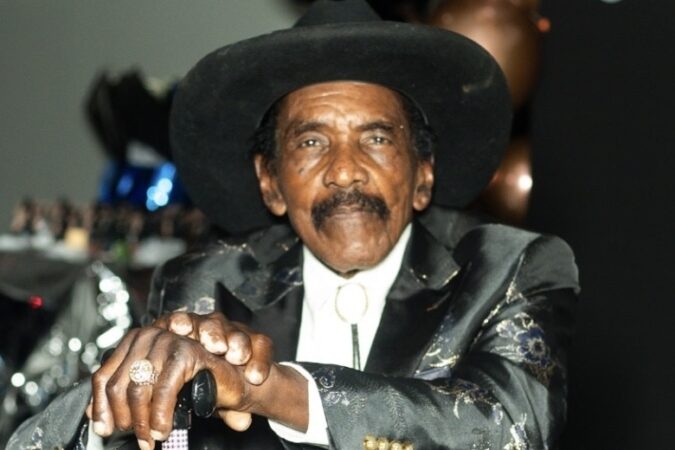
Ernest P. Richards, 85, of Philadelphia, lifelong urban cowboy, musician, singer, building contractor, mentor, veteran, and volunteer, died Monday, Jan. 12, of cancer at the Philadelphia VA Medical Center.
Mr. Richards fell in love with horses when he was a youth in South Philadelphia and went on to own four of his own: Lucky, Jaheel, Pretty Girl, and Dancer. He became an expert in horsemanship and grooming, and dressed daily in cowboy hats, bolo ties, and western boots. He shined his collection of saddles as brightly as any car in the neighborhood.
“He loved animals, period,” said his wife, Sheila, “and horses are strong. He liked that.”
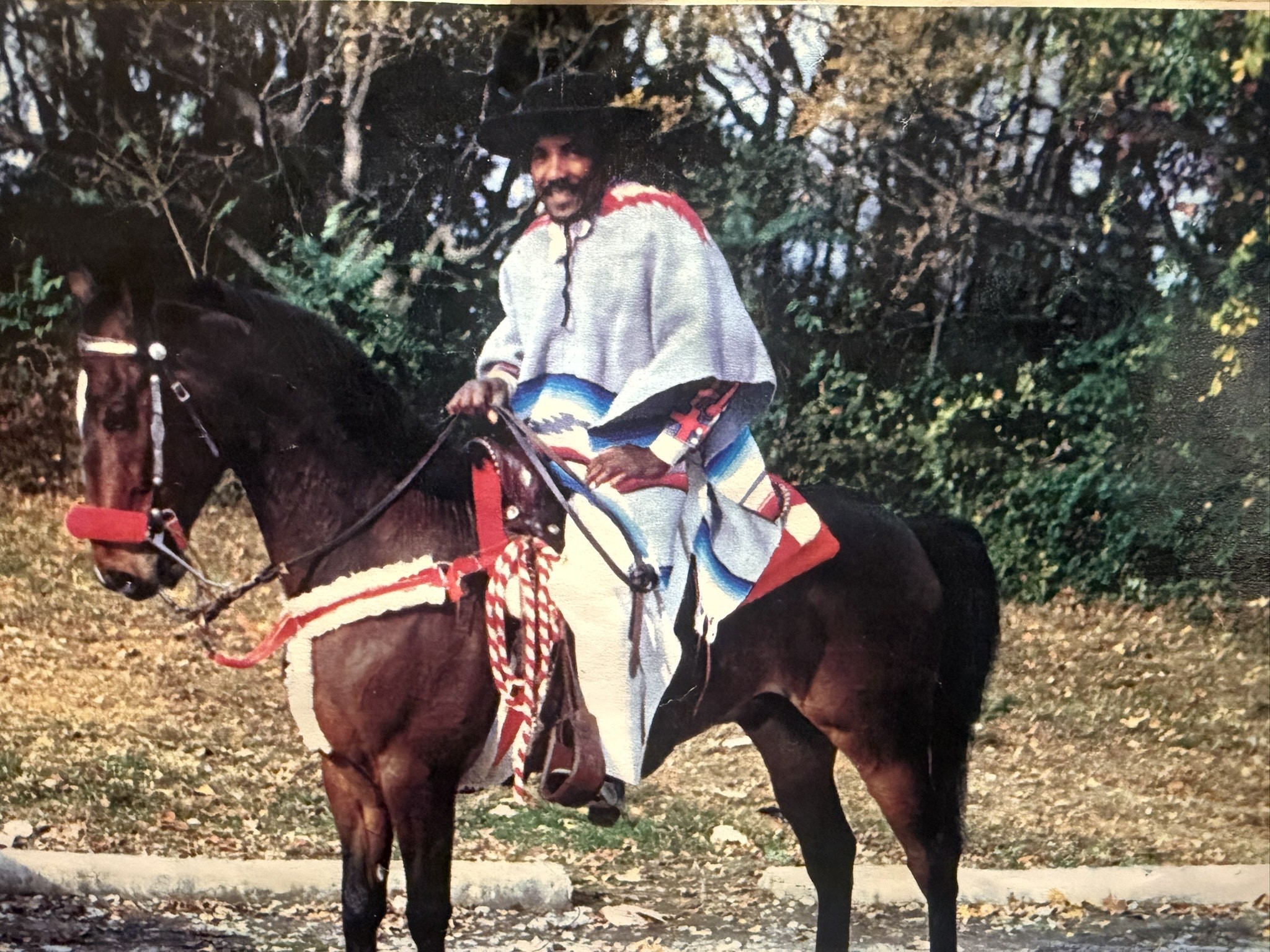
Over the years, Mr. Richards adorned his mounts in colors that matched his eye-catching outfits and rode in parades, on local trails, and elsewhere around the city and South Jersey. He started out supervising 25-cent pony rides at a farm in South Philadelphia as a teenager and later stabled his horses most often at a farm near the Cowtown Farmers Market in Pilesgrove Township, Salem County.
Mr. Richards was known for his distinctive western attire.
He became such a good rider, and his horses were so expressive, his family said, that he often led other concrete cowboys in holiday parades on Broad and 52nd Streets. “He was the star of the show,” said his daughter Passion. “My dad was sharp.”
Mr. Richards enjoyed watching John Wayne westerns and the TV show Bonanza, and he took his family on a memorable trip to a rodeo in Maryland. He taught his children, grandchildren, and anyone else who was interested how to safely ride and care for horses.
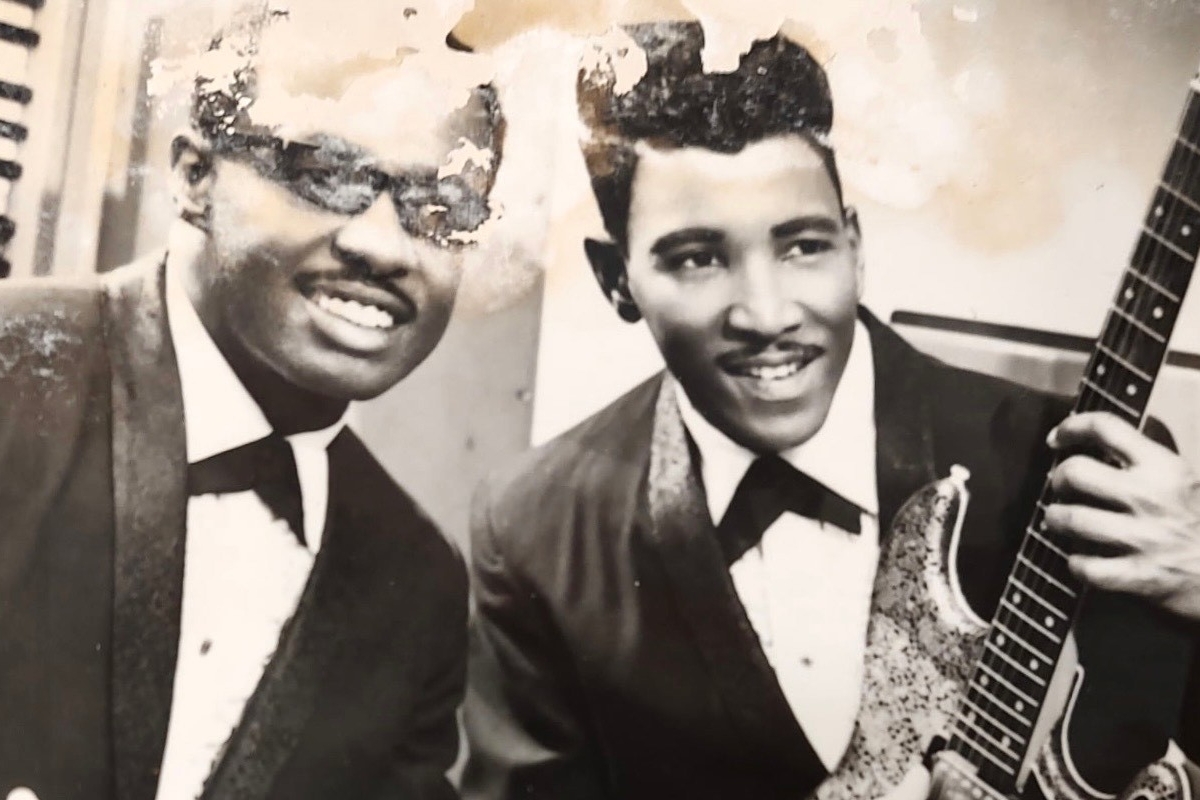
Out of the saddle, Mr. Richards was a gifted singer and guitar player. He formed a band, Fire and Rain, after he returned to Philadelphia from two years in the Army, and they played at the Apollo Theater in New York and at clubs all over Philadelphia for decades.
He specialized in love songs and covered many made popular by Teddy Pendergrass and Harold Melvin and the Blue Notes. “He was a romantic,” his wife said.
Mr. Richards (right) was an accomplished singer and guitar player.
He also had an eye for design and beauty, and a knack for construction. He built decks, repaired roofs, refurbished basements, and raised other buildings, sometimes from the ground up.
He constructed a barn and stalls for the horse farm he frequented in Salem County, and mentored young men in West Philadelphia who wanted to learn the construction skills he had picked up from his mentors and while in the Army.
“He loved to beautify things,” his wife said. “He was a beautiful person.”
Ernest Patrick Richards was born Feb. 25, 1940, in Philadelphia. He graduated from Edward Bok Technical High School in 1958 and spent two years in the Army.
Mr. Richards often dressed his horse to match his oufit when they rode in parades.
He met singer Sheila Sampson when she auditioned to sing with Fire and Rain, and they married in 1985 and had daughters Passion, Keshia, Tammy, and Sparkle. He also had daughters Jackie G., Jackie J., and Crystal. Jackie G. and Crystal died earlier.
Mr. Richards played basketball for years and whiled away many evenings strumming his guitar and singing songs around the house. He adored his family, they said, and attended the Church of Christian Compassion. “He was inspirational about his love of God,” his wife said. “He was all about family and faith.”
He had a hearty laugh, his daughters said, and tolerated no nonsense, his wife said. He helped anybody who needed anything at any time, they all said.
He valued independence and knew how to fix cars and home appliances. A friend said online that he had “a heart of gold” and was “an earth angel.” His nephew and nieces said he kept them “laughing and on our toes, teaching us great life lessons and how to repair anything.”
Mr. Richards was an expert builder.
Mr. Richards liked flashy western wear, and his wife nicknamed him Richie Rich because he dressed so snazzy. “He was never judgmental,” said his granddaughter Najzhay. “He was always offering help. He was truly my favorite person and the best cowboy.”
“He was funny,” said his daughter Passion. “He could light up a room. His presence demanded respect. He was the center of our everything.”
His daughter Sparkle said: “He was a great teacher and our best friend.”
On his 85th birthday last year, Mr. Richards told his family: “All my blessings are right here in this room. I’m so grateful, eternally grateful.”
Mr. Richards (rear, third from left) enjoyed time with his family.
In addition to his wife, daughters, and granddaughter, Mr. Richards is survived by five other grandchildren, two great-grandsons, and other relatives. A brother and a sister died earlier.
A celebration of his life was held Thursday, Jan. 22.
About 85,000 people who bought Pennie plans in 2025 did not renew for this year following the expiration of expanded tax credits that reduced what consumers had to pay, Pennsylvania’s Affordable Care Act marketplace announced Monday.
That meant that 18% of previously enrolled Pennsylvania residents dropped their coverage as premiums doubled on average across the state, according to Pennie, the state’s Obamacare marketplace.
Enrollment for 2026 totaled 486,000, down from 496,661 at the end of last year’s open enrollment period. For this year, roughly 79,500 newcomers to the exchange partially offset the people who dropped coverage.
The agency warned, however, that the number of enrollees could continue declining for several months. There’s a three-month lag between when consumers stop paying premiums and coverage ends. Open enrollment ended Jan. 31.
The agency had predicted last summer that as many as 150,000 people would drop coverage if Congress did not renew the expanded tax credits that were adopted in 2021 during the coronavirus pandemic.
New Jersey has not released final results for its ACA open enrollment period, which also ended Jan. 31.
As of the start of January, 493,727 residents were signed up for 2026 health coverage with Get Covered New Jersey. That’s up slightly from the 481,151 people who were enrolled last year.
Soaring costs for consumers
Average out-of-pocket costs were expected to double on average for people who benefited from the enhanced tax credits, Pennie said last year.
Under the ACA, people who earn less than 400% of the federal poverty level — about $64,000 for an individual and $132,000 for a family of four — are eligible for tax credits on a sliding scale, based on their income, to help offset the monthly cost of an insurance premium.
That tax credit is part of the law, and therefore did not expire at the end of December. The change affects an expansion in 2021, when Congress increased financial assistance so that those buying coverage through an Obamacare marketplace do not pay more than 8.5% of their income.
The expiration of the 8.5% cap means that a 60-year-old couple with household income of about $85,000 could see their premium triple to $22,600 this year from $7,225 last year, according to the nonprofit Bipartisan Policy Center in Washington.
The tax credits were a key issue in the federal budget debate last year that ultimately led to the longest-ever government shutdown. Democrats wanted to permanently expand the enhanced subsidies, and Republicans refused.
Weaker coverage
About 33,000 more Pennie customers enrolled in plans that have lower monthly premiums, but typically come with high out-of-pocket costs in the form of deductibles and copays. That amounted to a 30% increase in the number of consumers choosing so-called Bronze plans, Pennie said.
“As the costs of groceries, housing, utilities, and other necessities continue to rise, higher healthcare costs mean more people will delay care, skip treatments, or take on medical debt,” Antoinette Krause, executive director of the nonprofit advocacy group Pennsylvania Health Access Network, said in an email.
Pennie noted that rural counties were particularly hard hit by coverage losses. Fifteen of the top 20 counties with the highest disenrollment on a percentage bases were rural, Pennie said.
That could put more stress on rural hospitals if people have to resort more often to emergency departments for care and don’t have the means to pay.
Inquirer staff writer Sarah Gantz contributed to this article.
At Shiroi Hana last Thursday at noon, plates, bowls, and ramekins filled the dining room tables. But this was not lunchtime at Center City’s longest-operating Japanese restaurant. It was a tag sale.
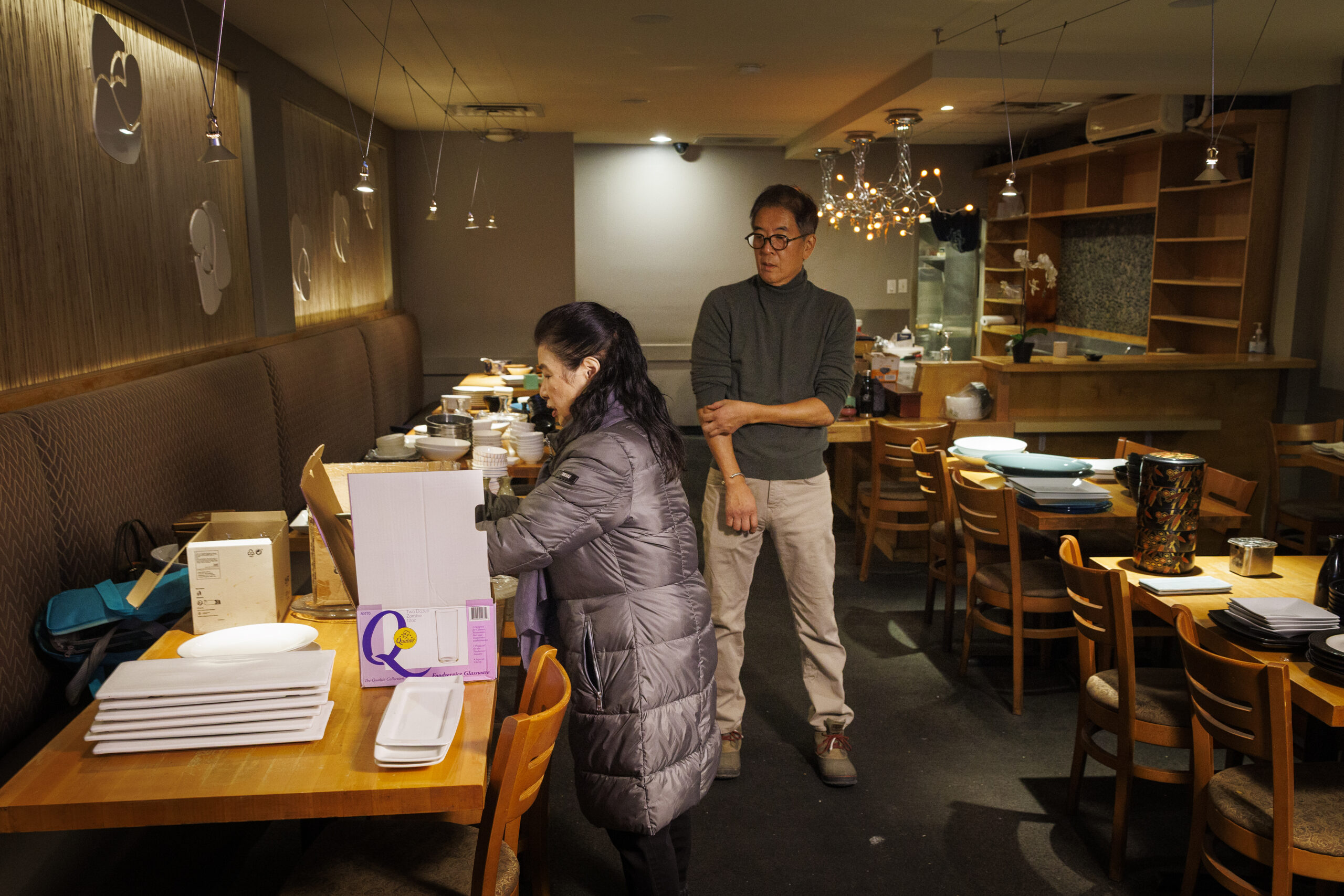
Owners Patti and Robert Moon were cleaning out the place in advance of the building’s sale in coming weeks. The kitchen was silent and the sushi bar cleared out.
Shiroi Hana served its last meal in January after 41 years. “It’s sad. Very sad,” said Patti Moon, who with her husband, Robert, took over in 1998. In 2010, the couple also opened Doma, a Japanese-Korean restaurant, at 1822 Callowhill St.
An order of delivery sushi from Shiroi Hana, ordered recently.
The modest Shiroi Hana opened in 1984 at 222 S. 15th St. — across from what was then Bookbinders’ Seafood House — as part of a nationwide group of restaurants owned by Sun Myung Moon and the Unification Church. (Many of the restaurants shared the name “Hana,” meaning flower.)
In the late 1990s, Patti and Robert Moon, in their early 30s, were running Grill Master Deli at 17th and Spruce Streets when they heard that the restaurant was for sale. Given their last name, “for some reason that mattered to [the church],” Patti Moon said. “There were other people trying to buy it, but they gave it to us. We were young. I guess it was luck. It was meant to be.” (Robert Moon said he was not related to the self-proclaimed messiah, who died in 2012.)
Patti and Robert Moon in 2010, at Doma, their BYOB.
The restaurant, modest at first but bearing a quiet elegance after the Moons gave it a 1999 makeover, had a small brush with fame under its original ownership. In 1989, Mick Jagger and Jerry Hall rolled in with a bodyguard and manager, “gobbled about $100 worth of sushi,” signed autographs for the staff, and left a 25% tip, according to a Philadelphia Daily News account.
Shiroi Hana was a favorite among Inquirer critics. Shortly after its ’84 opening, Elaine Tait praised an offering called sushi heaven — “a generously and artistically filled lacquer tray crammed with sushi and sashimi” — and proclaimed it “almost too much of a good thing.” It was priced at $20 (about $61 in today’s dollars).
Patti Moon (left) and Robert Moon with longtime manager Michiko Kadekaru at Shiroi Hana on Feb. 5, 2026.
Last week, critic Craig LaBan said Shiroi Hana “remained a favored hideaway for an intimate lunch until the end, especially beloved by Elizabeth,” his wife. “My kids grew up eating there, and it was always her choice for lunch with a particular friend because the food was great and they knew just how we liked it, down to the tiniest details. She’ll forever miss their chicken katsu bento box.”
Patti Moon said they closed because of shifting trends. Japanese dining has increasingly moved toward chef-owned omakase restaurants, she said, a model that is difficult for non-chef operators to sustain. “For a long time, we were lucky,” she said. “Our head chef, Hiroshi Abe, had been there since 1984. He stayed almost 35 years. When he left about three years ago, people noticed. Business wasn’t the same.”
Manager Michiko Kadekaru looks through mementos from Shiroi Hana with co-owner Robert Moon.
Longtime manager Michiko Kadekaru — who started in 1990 and became, in Robert Moon’s words, “the heart and soul of the restaurant” — has indicated that she would retire, though the Moons hope that she will continue working for them at Doma.
“She started in her 30s and now she’s in her 70s,” Patti Moon said. “She was crying on the last day — and so were we.”
SANTA CLARA, Calif. — As the Eagles demonstrated last year, defense wins championships.
The Seattle Seahawks pounded the New England Patriots and their quarterback Drake Maye for three quarters and cruised to a 29-13 victory in Super Bowl LX on Sunday night at Levi’s Stadium.
The Seahawks had standouts on offense and special teams, as running back Kenneth Walker displayed in an MVP performance and kicker Jason Myers showed in making all five of his field goal attempts. But it was their “Dark Side” defense that set the tone and carried Seattle to its second title and first in 12 years.
What does the Seahawks’ achievement mean for the Eagles moving forward? Well, not much more than the Eagles realized a year ago when they made a future Hall of Fame quarterback look helpless. No matter how you do it, pressuring the quarterback is paramount.
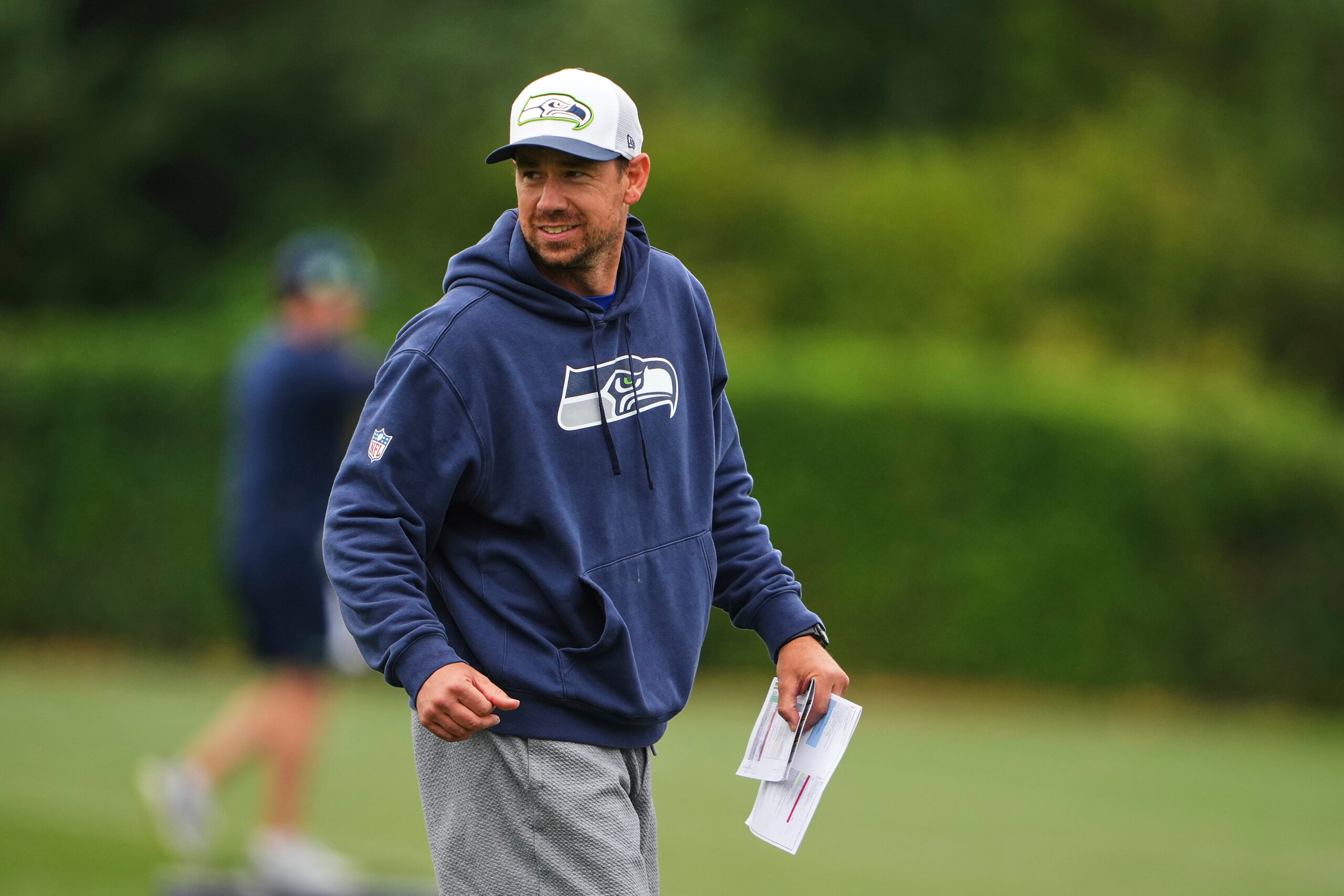
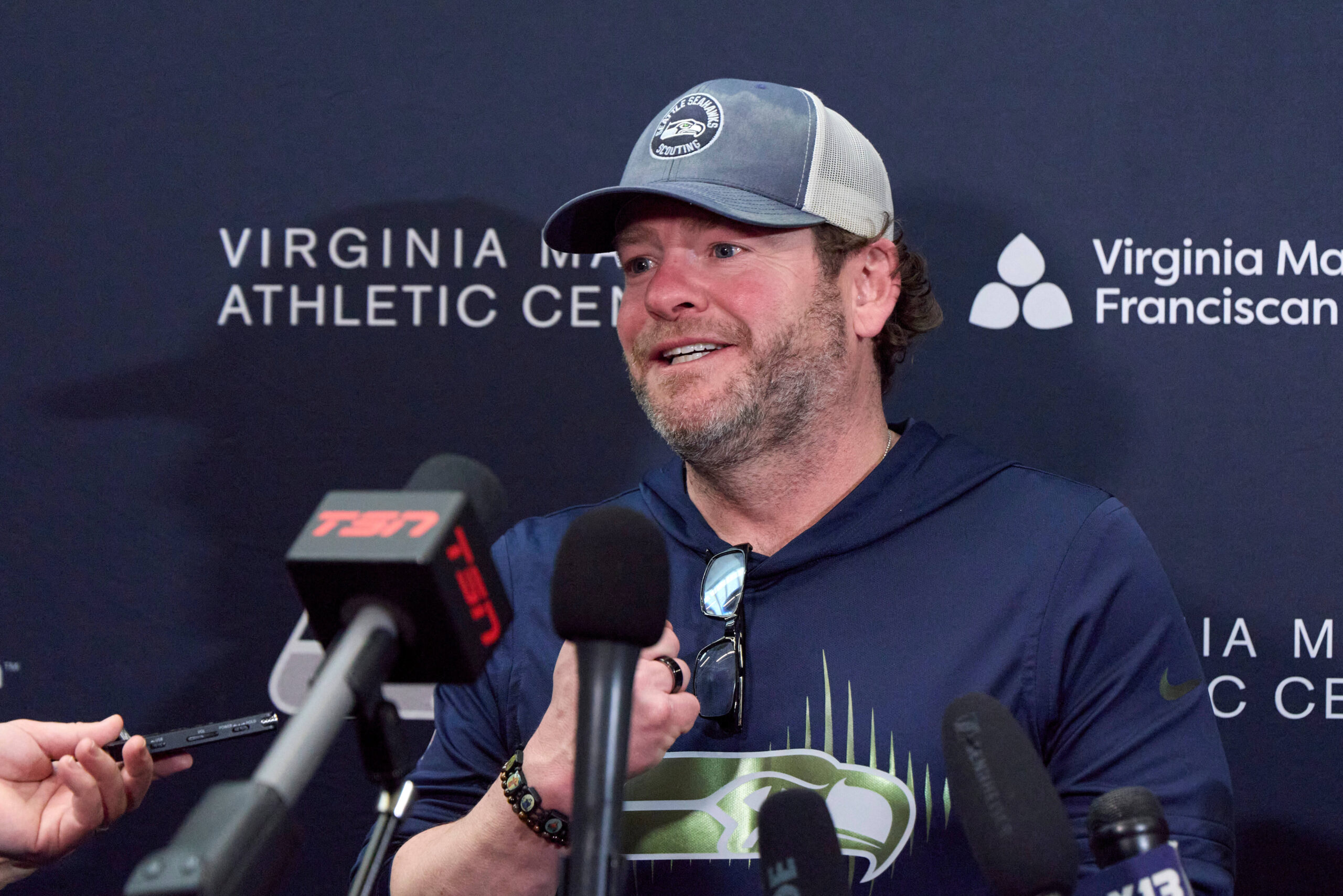
Maye is no Patrick Mahomes, and few expected the 24-year-old and a young Patriots team to get this far in coach Mike Vrabel’s first season at the helm. Of course, the same could have been said for Seattle quarterback Sam Darnold, who once got lost in the NFL wilderness before general manager John Schneider signed the free agent last offseason.
But it was coach Mike Macdonald’s defense, Walker’s tough running, and Myers’ leg that compensated for an unremarkable passing attack. Here are five takeaways — with an Eagles slant — from the 60th Super Bowl:
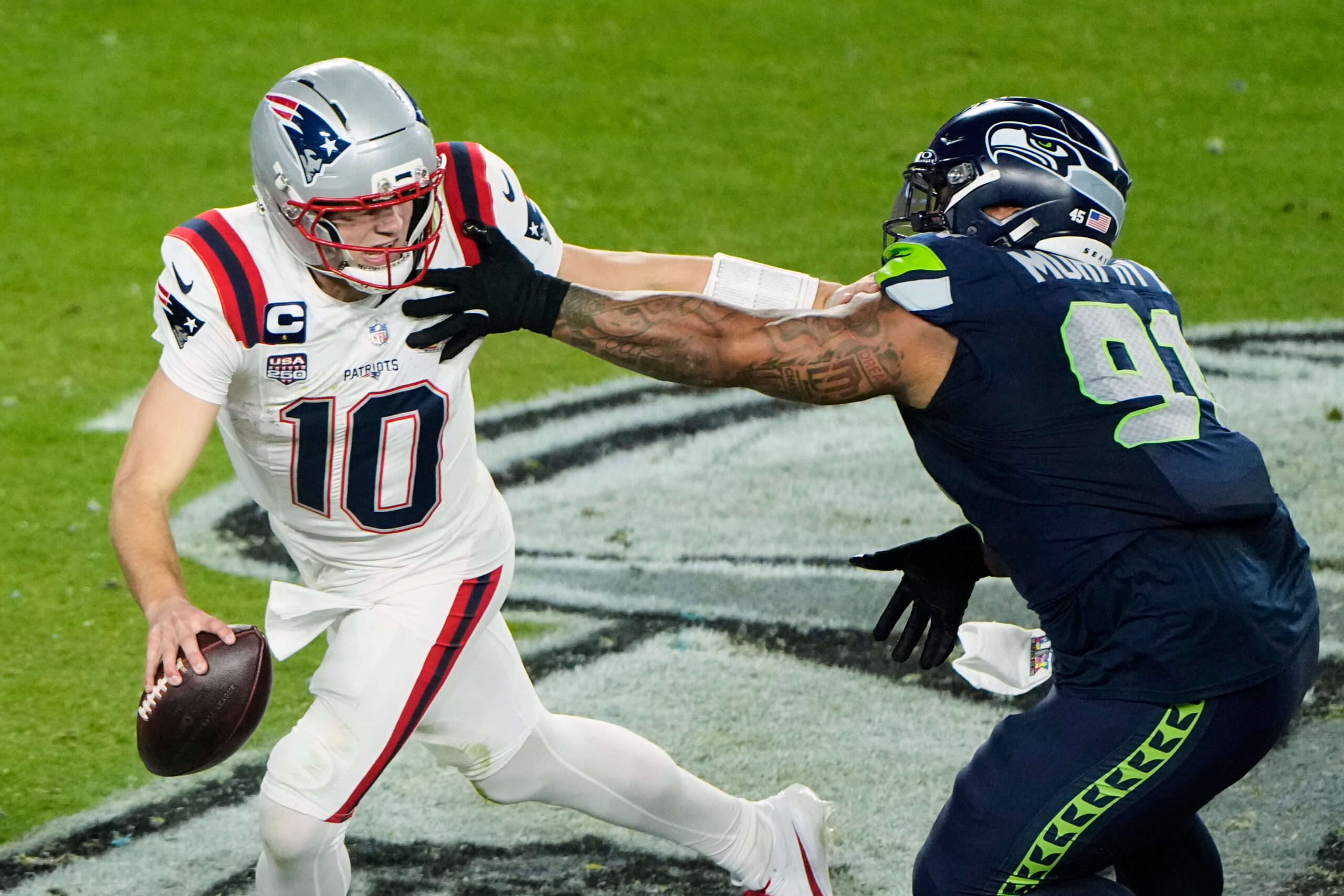
Byron Murphy II (91) and the Seahawks’ front four got after Drake Maye all night.
A familiar defensive philosophy?
Schneider knows something about building elite defenses. Twelve years ago, the Seahawks’ “Legion of Boom” unit whipped quarterback Peyton Manning and the Denver Broncos and won going away, 43-8, in Super Bowl XLVIII.
This group, led by another elite secondary, may not yet have the name recognition of Richard Sherman and Earl Thomas from that early 2010s Seattle defense. But third-year cornerback Devon Witherspoon and rookie safety Nick Emmanwori are already two of the best at their respective positions.
The Seahawks consistently pressured Maye, and their zone coverages and heavy dime personnel took away the quarterback’s few reads. There were just as many moments when the quarterback had little time in the pocket due to the pass rush.
The four-man front did its job, but Macdonald’s selective blitzes had Maye dipping his eyes as the game progressed. Witherspoon got to him four times from the slot. He forced two throwaways, registered a sack, and hit Maye just as he threw on a key play in the fourth quarter. The ball landed in linebacker Uchenna Nwosu’s arms and he went 45 yards the other way for a touchdown and a 29-7 lead.
A year ago, the Eagles famously didn’t blitz once and sacked Mahomes six times and forced three turnovers. The Seahawks weren’t a blitzing team in the regular season, and Macdonald followed that approach in the Super Bowl, sending extra rushers just 13.2% of the time, according to NextGen Stats.
Maye was sacked six times and pressured on 52.8% of his drops. And like Mahomes, he tossed two interceptions and fumbled once. The Patriots, meanwhile, went against their norm and blitzed Darnold on 53.7% of his drops.
There are different ways to skin a cat. The Eagles’ scheme isn’t changing, with defensive coordinator Vic Fangio returning after mulling retirement. But there could be room for a slightly more aggressive approach next season.
No other defense was as passive in 2025. The Eagles had the highest percentage of light boxes in defending the run and they had the lowest blitz rate in the NFL. Fangio’s approach worked for the most part, but he didn’t have the defensive front he had a year ago.
Seahawks offensive coordinator Klint Kubiak is headed to Las Vegas to become Raiders head coach, and elements of his scheme will show up in Philly next season with Sean Mannion.
How did the Shanahan-McVay scheme fare?
With the Eagles expected to change their offense after the hiring of coordinator Sean Mannion, the Seahawks offered an opportunity to see how the Shanahan-McVay system that Seattle operates offensively would fare on the biggest stage.
The results were mixed. But two staples of the scheme that have flourished under 49ers coach Kyle Shanahan and Rams coach Sean McVay and their acolytes were effective against the Patriots: under-center play-action and outside zone runs.
Darnold was under center for almost half the plays — 35 of 71 — as coordinator Klint Kubiak stayed committed to the ground game. It helped that the Patriots never really threatened the Seahawks. But Walker was often allowed to run downhill and finished with 135 yards rushing on 27 carries.
He gained 71 yards on 12 carries (5.9 average) on runs outside the tackles. The Eagles long had an inside zone-heavy offense under run game coordinator Jeff Stoutland. But they tried to shift away from that tendency last season when they essentially took that responsibility from the offensive line coach.
It was a mild tweak, meant to create more diversity in the running game, but improvement was marginal. There will likely be a more significant transition under Mannion, who played under McVay and Kubiak, and coached under another from the Shanahan tree: Matt LaFleur.
Stoutland’s sudden resignation, after coach Nick Sirianni was prepared to hire tight ends coach Ryan Mahaffey to assume running game duties, was further evidence that change is coming. The Eagles want an offense that has more variables and under-center plays that give quarterback Jalen Hurts more layup throws.
Darnold’s lone touchdown pass came from under center when play-action caught Patriots linebacker Jack Gibbens. The quarterback found wide-open tight end AJ Barner for a 16-yard score early in the fourth quarter.
How far will Sirianni go in altering the offense? It’s been relatively the same structure since 2021. The Eagles had great success with it, but last season’s regression was stark, and wasn’t all on first-time coordinator Kevin Patullo.
How Hurts and the rest of the returning offense adapt is to be determined. But change is coming.
Milton Williams (97) had a sack and was around the football all night.
Milton Williams balled out — again
Milton Williams fell short in his quest to become the fifth player to win back-to-back titles for different teams, but the Patriots defensive tackle had nothing to be ashamed about.
The same could be said for New England’s defense. The unit kept the Patriots within striking distance despite the offensive struggles. But, ultimately, they succumbed after Maye and Co. went three-and-out on five of six possessions during one stretch.
Aside from cornerback Christian Gonzalez, Williams might have been the Patriots’ best defender. He gave Seahawks right guard Anthony Bradford fits and finished with six pressures, one sack, and one batted pass.
The former Eagle, who had two sacks and a forced fumble in last year’s Super Bowl, beat a double team before dropping Darnold in the backfield for a third-quarter loss. It was the Patriots’ lone sack of the game.
Williams wasn’t as dominant vs. the run and finished with just one tackle. But Walker had most of his success running away from New England’s interior defense.
Vrabel knew he had to hang his hat on his defense, but his game management and offensive coordinator Josh McDaniels’ play-calling leaned conservative. Their most egregious moments came on McDaniels’ early run call on third-and-5, and the team electing to punt on fourth-and-1 at the Patriots’ 41 while down 12-0 in the third quarter.
Vrabel also erred in not going for two after a Patriots touchdown narrowed Seattle’s lead to 19-7 early in the fourth quarter.
Williams might not have won for a second straight year, but he further justified the Patriots signing him to a four-year, $104 million contract last offseason. The 26-year old told The Inquirer last week that he never wanted to leave Philly and felt slighted when the Eagles didn’t tender an offer.
The Eagles had first-rounders Jalen Carter and Jordan Davis, along with Moro Ojomo, returning at defensive tackle. It would have been difficult for general manager Howie Roseman to justify extending Williams with other necessary investments waiting in the pipeline.
But time will tell, assuming Carter and Davis eventually get signed to second contracts, if the Eagles made the right decision.
Mack Hollins (13) finally got the Patriots on the board and acquitted himself well overall.
How did the other ex-Eagles perform?
Williams was one of four former Eagles to play in Super Bowl LX. Josh Jobe was the only one to end the night with confetti on his head. The Seahawks cornerback started on the outside and was sticky in coverage and stout against the run. He finished with seven stops and one pass breakup.
Jobe, who spent his first two years in Philly, said he watched last year’s Super Bowl “[ticked] off” after the Eagles released him before the 2024 season. He revived his career in Seattle and will be one of the more sought-after corners on the market this offseason.
The Seahawks may not allow him to reach free agency, even if homegrown cornerback Riq Woolen is also slated to be unrestricted. Seattle has only four starters slated to become free agents. The Seahawks should, theoretically, be a contender again next season.
Woolen had a rough patch in the fourth quarter when Patriots receiver Mack Hollins caught back-to-back passes vs. him in coverage. Hollins’ first catch came over the middle for 24 yards and the second was an over-the-shoulder 35-yard grab for a touchdown.
Hollins, who won a Super Bowl with the Eagles when he was a rookie in 2017, was hoping to cap a journeyman career with a second title.
Patriots linebacker Christian Elliss played his first two seasons in the NFL for the Eagles before getting released late into the 2023 season. New England snatched him up a day later and he has risen the ranks since.
Elliss blitzed early and hit Darnold before he threw incomplete. He also notched three tackles. But he had a relatively quiet night.
John Schneider is on a short list of the NFL’s best GMs along with the Eagles’ Howie Roseman.
Best GM in the NFL?
Schneider joins the Chiefs’ Brett Veach and the Eagles’ Howie Roseman as the only current GMs to win more than one Super Bowl. While Veach has won all three of his with the same coach (Andy Reid) and quarterback (Mahomes), Schneider and Roseman have won their two titles with different coaches and quarterbacks.
The latter two men have been tied together since they became GMs just days apart in 2010. They took different paths to the top spot — Schneider came up the traditional way as a scout, while Roseman got his start on the business side — but both are now regarded by many as the two best NFL roster-builders.
Schneider can now say he’s not only been to as many Super Bowls as Roseman’s three, but he’s also matched him in Lombardi Trophies. The lone feather in his cap could be winning titles with completely different rosters and coaching staffs, while Roseman had several holdovers last season from the 2017 championship squad.
Some federal workers aren’t leaving public service altogether. They’re landing jobs in local government.
A job-seeking platform managed by national nonprofit Work for America is helping some workers find those new roles. The service is relatively new but predates President Donald Trump’s efforts to shrink the federal workforce in 2025.
Some 350 workers with federal job experience in Pennsylvania and 169 in New Jersey have used the platform, called Civic Match, since it was founded in November 2024.
Nearly 900 state and local government roles in Pennsylvania have been posted on the platform since its start and 42 in New Jersey.
And, according to new data, 187 former federal workers across the U.S. have used the site and landed jobs in state or local government.
While that’s a small fraction of the total federal workers who have left their jobs in the last year amid the Trump administration’s shake-up of the workforce, the new data shed light on where workers are landing after leaving government positions.
In October, just after Trump’s deferred resignation program took effect, Pennsylvania and New Jersey lost roughly 6,000 federal jobs.
There really isn’t a centralized place where someone looking for a state or other local government job can go, said Caitlin Lewis, executive director at Work for America. The platform is open only to job seekers who have federal work experience or who lost their jobs because of federal funding cuts, but Lewis hopes to open it up to others in the future.
Who are these federal workers?
Austin Holland was working in the U.S. Department of Housing and Urban Development last year, when federal workers were instructed to begin working in the office full-time. He had been working remotely from Lancaster much of the time and commuting to Washington, a few days per pay period. Relocating to D.C. wasn’t feasible for him.
“I really enjoyed my federal job, and I had imagined that it was kind of something I was going to do for my entire career,” he said. “I was struggling with losing that and trying to figure out ‘Where is my career going from here?’”
Holland estimates that he joined the Civic Match platform in early 2025. Through a virtual job fair, he made a connection that ultimately led to a job at the Pennsylvania Housing Finance Agency. He took a pay cut but was able to stay in Lancaster — and in public service.
Before leaving his job at the Environmental Protection Agency, Andrew Kreider uploaded his resume to Civic Match and attended some of the platform’s webinars.
“It was refreshing and validating to have such high-quality hiring officials participating,” Kreider said. “I think it helped remind those of us who maybe were a little bit disillusioned — or were feeling traumatized by what we had just been through — that there were places where we could continue to serve where we wouldn’t be subject to what we were going through at the federal level.”
Kreider, who lives in Chester County, also used LinkedIn to look for jobs and searched government websites. He ultimately landed a communications director job with Chester County, which he found on the county’s job listing board.
He’s been in the new job for roughly two months and says some days are “completely overwhelming.”
Andrew Kreider in Philadelphia in April 2025.
“County governments do a lot of work with not as many resources as federal agencies tend to have,” he said. “I’m working as a communication director for an organization three times the size of the one I came from, but I’m making significantly less money and sort of being responsible for communications related to far more things.”
He’s taken a pay cut but said he loves the new job.
“It’s been, for me, an affirmation of how many good people there are who just want to help,” Kreider said. “I’m surrounded by people who come into work every day to serve their neighbors and their communities.”
On a recent Thursday afternoon in February, Civic Match had seven jobs posted in Philadelphia. Available positions with the city included a chief epidemiologist, a director of tax policy, and a director of adult education.
The majority of the 187 platform users who have found jobs — 63% — are workers with at least eight years of public sector experience, according to new data from Work for America. Roughly 40% found jobs in human resources or other operations-related roles.
One-third of those hired have relocated for their new jobs out of state, with 22% reporting a move of over 100 miles from their previous position.
Their federal experience came from a range of departments, including the Departments of Health and Human Services, Housing and Urban Development, and Transportation, as well as USAID, the General Services Administration, and the Environmental Protection Agency.
The aim of Work for America is to curb staffing shortages in local governments and help speed up their hiring process, Lewis said.
“Unlike the private sector, government does not really think about its employer brand and marketing itself as a potential employer,” she said. “Individual local governments don’t have the same amount of resourcing to actually think about expressing an employee value proposition and really marketing to folks who could be great fits for roles that they have open.”
Nine nations will compete in five group stage matches this summer, plus two more in a knockout game on July 4. Here’s what you need to know about those countries and their fans — and what those fans need to know about Philly.
When Jacqueline Spain’s now-grown kids were having a bad day, she would sit them down at the kitchen island and bake them something. Now, she has opened up that kitchen island to her community with her roadside home bakery, Devon Road Made.
“Food is love, love is food,” Spain said, standing in her kitchen recently, bread in the oven and cookies on the counter. “I like to put a lot of heart and soul into it. I feel if you’re going to put good energy into that, people are going to feel that. They’re going to taste it; they’re going to like it.”
Devon Road Made is one of the newer additions to a trend of microbakeries that are cropping up in Chester County, some with roadside carts and stands dotting residential roads in Paoli, Downingtown, West Chester, and elsewhere.
The Devon Road Made bakery cart outside the home of David and Jacqueline Spain for folks passing by to buy some home baked goods in Willistown, Pa., on Friday, Jan. 23, 2026.
Statewide, interest in selling home-baked goods has been growing. Pennsylvania had 361 licensed home bakeries in 2023. That nearly doubled, to 663, in 2025, according to the state agriculture department, which oversees the inspections and licensing of food businesses that operate out of home, rather than commercial, kitchens. There has been a general bakery boom, too, in Philly.
Chester County appears to be a growing incubator of such little bakeries: It had 28 licensed home bakeries in 2025, compared with 16 in 2023, the department said.
Before issuing a license, the department inspects the baker’s food production site.Bakers must verify they have zoning approval to have a business on their property, submit ingredient labels, restrict pets or not have them, and have an approved water supply. It costs $35 to register.
In the few weeks since, Spain, 59, and her husband, David, 60, rolled their bakery cart to the foot of their yard at 60 Devon Rd. in Willistown, the community has indeed seemed to like it. Jacqueline Spain’s cookies and David Spain’s sourdough loaves continually sell out. People knock on their door to ask if things will be restocked. One woman sat at the Spains’ kitchen island, sampling freshly baked cookies, while awaiting her pickup order.
“Everything we make, she has been making for years,” David Spain said. “That’s kind of part of our DNA. It’s got to taste really good — something that we would only serve our friends and family.”
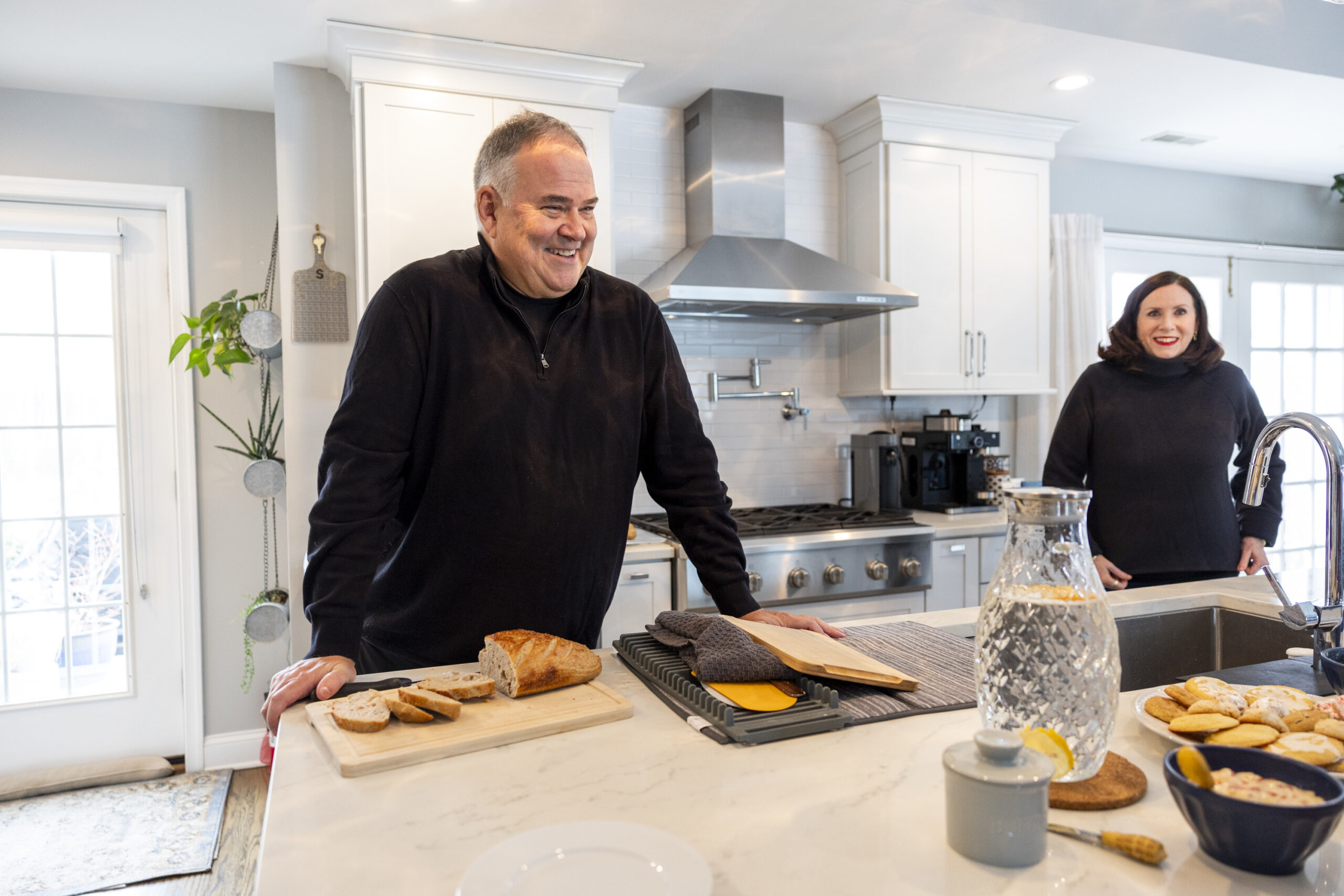
David Spain, of Willistown, Pa., and his wife Jacqueline Spain, chat with Inquirer Reporter Brooke Schultz about their Devon Road Made bakery cart at their home on Friday, Jan. 23, 2026.
And Chester County seems like a place perfectly ripe for these little bakeries to thrive, several home bakers said: It’s not a wholly rural community, nor is it totally Main Line. There is an affluent clientele (Chester is the wealthiest county by median income in the state) with an interest in homemade, quality ingredients.
But they do face some headwinds: A number of municipalities restrict such carts through zoning codes, even if the bakers are licensed to sell.
Alexa Geiser, 28, of Lulu’s Bread & Bakery in West Chester, opened her home bakery in October, originally selling her sourdough first come, first served from her porch. But then the borough told her she was not permitted to sell from her residential porch, and she moved entirely online to sell her bread and the occasional chocolate chip cookie batch.
Though it’s a bummer — she said it was nice to talk with people stopping by for a peaceful hour on Fridays — she felt supported by the community, who offered their businesses for her to host her pickups.
“I think people really value homemade goods that people put a lot of effort into, and good quality ingredients,” she said. “I use all organic flours and filtered water and good salt in my bread, which is something I personally value. It’s what I want to give to my customers as well.”
The Devon Road Made bakery cart outside the home of David and Jacqueline Spain for folks passing by to buy some home baked goods in Willistown, Pa., on Friday, Jan. 23, 2026.
But the stands are a niche the bakers feel they are filling.
“I noticed around here, at least where I live specifically, there aren’t really that many,” said Maddy Dutko, of Maddy Makes. “I’ve seen a couple that sell honey or some that sell flowers, but I haven’t really seen any that sell baked goods. I was like, why not? It’s a way for me to connect with people around here. Maybe bring them something that they didn’t know was necessarily in their community.”
Dutko’s stand, at 623 Sanatoga Rd. in East Coventry Township, is open on the weekends from spring to fall. Dutko sells bread loaves, coffee cakes, cinnamon buns, cookies, and dry mixes for pancakes or cornbread. She tries to keep things fresh and interesting, but also consistent for loyal customers. Dutko, 29, also sells orders online and at markets.
The physical presence has led to customers hiring her to bake for kids’ birthdays, or people approaching her at markets to tell her they always stop by for a treat when they end their walk on a nearby trail.
The Devon Road Made bakery cart outside the home of David and Jacqueline Spain for folks passing by to buy some home baked goods in Willistown, Pa., on Friday, Jan. 23, 2026.
There’s something to be said for products baked with love in someone’s home, Jacqueline Spain said.
On a recent Friday afternoon in Willistown, the Spains stocked the baskets of their cart with baggies of cookies, breads, and dog treats — a customer request that their daughter, a veterinary nurse, fulfilled. A red open flag commenced their weekend hours of “noon-?” People pulled up onto the lawn to shop.
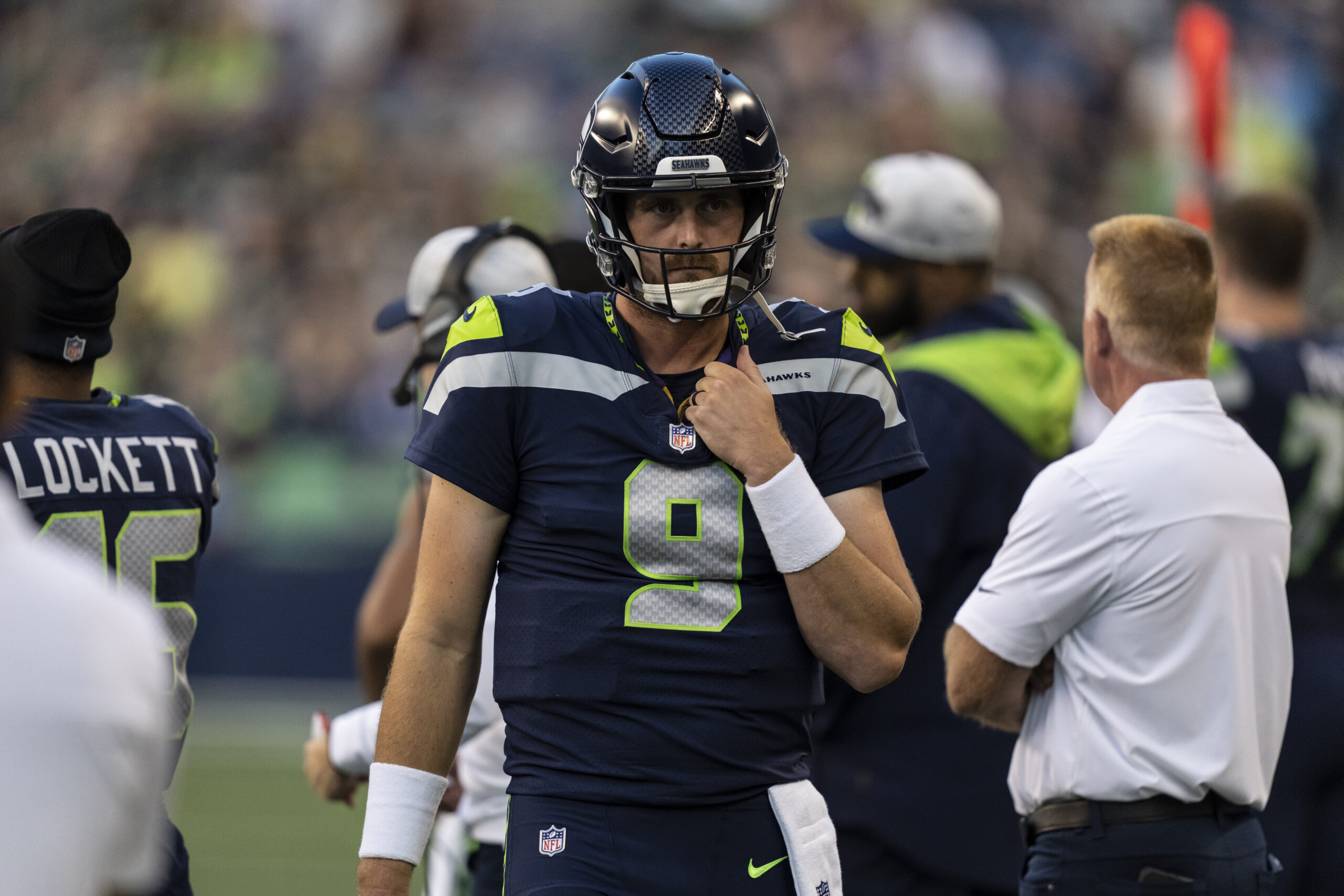
SAN JOSE, Calif. — Sean Mannion once played a pivotal role in the Seattle Seahawks beating the Eagles. But it came as neither player nor coach. It was as a quasi-player-coach — at least that’s how Drew Lock saw the future Eagles offensive coordinator.
In December 2023, Lock started at quarterback for the injured Geno Smith when Seattle hosted the Eagles in a Week 15 matchup. The Seahawks, like the Eagles, were slumping. But the playoffs were still within reach and Lock wanted to atone for the previous week’s loss to the San Francisco 49ers when he tossed two interceptions.
Mannion was the backup, just a chinstrap away from playing himself, but he spent most of the week, and especially game day, preparing the starter for his big moment.
“Me and Sean had to get really close that Eagles week — the week I ended up starting,” Lock said to The Inquirer a week before the Seahawks’ Super Bowl win. “Geno was trying to rehab as much as he could to be able to come back the next week. It was really me and Sean in the quarterback room most of the week.
“But the pep talk he gave me at my locker before we went out there, the stuff he’d say to me on the sideline, it didn’t sound like a fellow quarterback. It sounded like someone who was going to lead men one day. It just sounded different. You could feel it.”
Lock played splendidly despite not knowing what defense he might see after Eagles defensive coordinator Sean Desai’s demotion became public just hours before kickoff. Mannion, who was in his ninth and final season as a player, shifted into the role of coach just a few months before he would officially become one with the Green Bay Packers.
“It was how focused he kept me,” Lock said. “He saw and told me the things that I did well after a drive, or maybe the things I could have done better. I think it was more about delivery than anything.”
Eagles offensive coordinator Sean Mannion played with the Seahawks in his last NFL stop.
Lock was solid throughout the closely contested game, but he delivered in the clutch. With under two minutes left, he guided the Seahawks on a 10-play, 92-yard game-winning drive. All the yards came through the air, with Lock targeting cornerback James Bradberry in coverage, capped by a 29-yard touchdown pass to wide receiver Jaxon Smith-Njigba.
The 33-year-old Mannion, who was hired by the Eagles two weeks ago after a prolonged search, has several ties to the Seahawks. He was coached by both offensive coordinator Klint Kubiak and quarterbacks coach Andrew Janocko, who along with Lock, became champions after the Seahawks beat the Patriots, 29-13, on Sunday night.
Last week, ahead of Super Bowl LX, they spoke glowingly about Mannion, despite his relative coaching inexperience. Janocko said he had a photographic memory.
“In the quarterback room, going over third downs, prepping for a third down day on Thursday, being able to give him two, maybe three words of a play call, he could spit out the rest after just looking at it that morning,” Lock said. “I don’t know many guys that can do that. It was just extremely impressive.”
Standing in the hallway outside the Flyers’ locker room in the bowels of Nationwide Arena in Columbus, Ohio, Rasmus Ristolainen confessed that he isn’t the most emotional person. But for a few fleeting seconds, as he chatted with The Inquirer, a smile radiated from his face.
“Means a lot. I haven’t had the chance to play the last couple of Olympics, so [it] means even more,” he said, confirming that he had that rare smile when coach Antti Pennanen called to welcome him to Finland’s squad.
“And then, obviously, think about all the players who wore the jersey and when you watched them play when you were a kid. So that means a lot.”
For the first time since the 2014 Sochi Olympics, NHLers will be back on the world’s biggest stage. At that time, Ristolainen was 19 years old, splitting time between the Buffalo Sabres and Rochester of the American Hockey League during his first year in North America.
On Jan. 5, a few weeks before Finland would win the bronze in Sochi, he scored one of the biggest goals in the nation’s history. In overtime, the physical defenseman hopped over the boards, carried the puck around Sweden’s Robert Hägg — the Flyers’ 2013 second-round pick — cut across the crease, and tucked in the golden goal to clinch the World Junior Championship.
His game-winner gave Finland its first World Junior medal since 2006 and first gold since 1998.
“Obviously, it was a big one, and, you know, sometimes I used to make plays and play a little offense,” he said with a chuckle.
“World Juniors is a great tournament, and it’s the first time you get to play on the big stage,” he added. “So much excitement, and obviously, I have good memories when we won it.”
Worth the wait
Ristolainen manned the blue line two years later at the 2016 World Cup for a Finnish squad that went 0-3-0, was shut out by Sweden and Russia, and scored just one goal against Team North America.
But then that was it.
There were several reasons he hasn’t represented Finland since, but the biggest was a dark injury cloud that seemed to follow around the native of Turku.
Last February, the Flyers defenseman was all set to play at the 4 Nations Face-Off, but right before the tournament, he was knocked out with an upper-body injury. A month later, he underwent surgery on a right triceps tendon rupture. That came after two surgeries in 2024.
“So basically, three surgeries in the same elbow. Obviously started with a pretty bad infection, which I played with for multiple weeks until I couldn’t anymore,” he disclosed in December of the injuries that cut his last two seasons short and had him start this season late.
“And then we found out there is some infection and a torn triceps tendon. So obviously, did those two things separately, and then tried to get back.”
He returned — probably too quickly in hindsight, he thinks — “and then it suddenly snapped, and not sure when or where it happened again.”
“Obviously, second time the same tendon [was] torn,” he said. “So saw a different doctor this time, and his timeline and recovery were a lot longer, which I think was the key and helped. And, yeah, right now I’m here and feel pretty good.”
‘The more pressure, the better’
In the last few weeks, Ristolainen missed a handful of games for the Flyers, and everyone held their breath, hoping he wouldn’t have to skip yet another opportunity to don the blue and white of Suomi. Nobody held their breath more than former Dallas Star Jere Lehtinen.
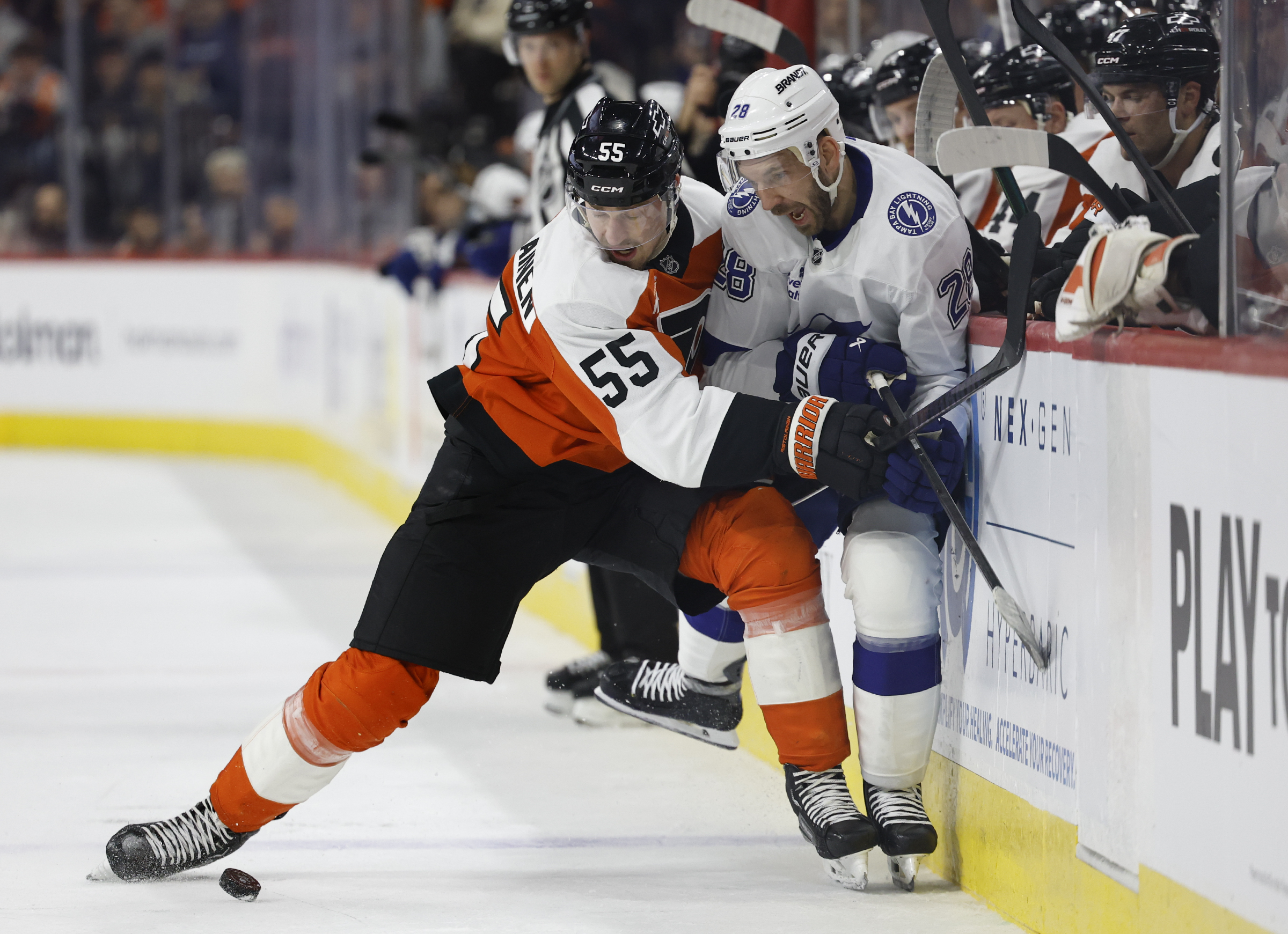
Defenseman Rasmus Ristolainen checking Tampa Bay’s Zemgus Girgensons on Jan. 10. He adds a physical presence to the Flyers.
“We know he’s a big, big body,” Lehtinen, who is Finland’s general manager, said in a telephone interview from Milan. “He moves quick, a physical guy, and in the defensive zone it’s tough to play against him.
“But at the same time, he gets up to play and has a good shot. … So, the main thing is he brings us size and speed and physicality. And if you want to succeed as a team, you need those types of players in your defensive zone, [who] may play against the top players.”
The 6-foot-4, 208-pound blueliner credits his physicality to his days growing up in Turku. Joking that he’s old enough that he didn’t have iPads growing up, he spent his days playing street hockey. As he recalls, he “was always the youngest one, so I had to kind of fight my way through and earn the spot to play with the big boys.”
Ristolainen, 31, is one of six players from that successful World Juniors squad, which includes goalie Juuse Saros of the Nashville Predators, Stars defenseman Esa Lindell, forward Teuvo Teräväinen of the Chicago Blackhawks, Colorado Avalanche forward Artturi Lehkonen, and ex-NHLer Mikko Lehtonen. And Lindell, Teräväinen, Sebastian Aho of the Carolina Hurricanes, and Mikael Granlund of the Anaheim Ducks played with the Flyers defenseman at the World Cup.
Lehtonen believes the players’ connections and experience, whether having success like in 2014 or disappointment in 2016, are important. But, while Ristolainen says watching Finland win silver at the 2006 Torino Olympics as a 12-year-old is his favorite Olympic moment, he’s looking to do one better.
So, any pressure, especially since Finland is the defending Olympic gold medalist?
“The more pressure, the better,” Ristolainen said. “Everyone wants to play the pressure games; obviously, they are all must-wins. So I’m very excited.”