Tag: topic-link-auto

  • Neighbors dig through Venezuela rubble to search for loved ones as death toll climbs

    Neighbors dig through Venezuela rubble to search for loved ones as death toll climbs

    LA GUAIRA, Venezuela — In cities across northern Venezuela, neighbors helped each other dig through rubble to search for loved ones, after back-to-back earthquakes killed at least 589 people and left thousands injured.

    Acting President Delcy Rodríguez announced the new toll early Friday, surrounded by government and military officials as she welcomed the arrival of rescue crews from all over the world.

    “We are going to rescue the people who are trapped,” she said. “We are working tirelessly on this task.”

    She said the state of La Guaira has been hardest hit by the 7.2 and 7.5 magnitude earthquakes that struck Wednesday evening, noting that it has been militarized as crews search for survivors and distribute food and water.

    The number of casualties is expected to climb with thousands reported missing and frantic rescue efforts continuing.

    The International Organization for Migration said that up to 6.76 million people in Venezuela could be affected by the quakes, some 2 million of them in Caracas alone. Loyce Pace, the International Red Cross’ regional director for the Americas, said ” people are still terrified to reenter what were their homes.”

    The injured were pulled out covered in dust and blood, among them children. Venezuelan state TV showed dramatic images of rescues, including a woman who was trapped under a cement slab with only a bare foot poking out before rescuers slid her out alive. But few government search teams were initially seen outside Caracas.

    Venezuelans reeling from quakes

    Many were stunned Thursday morning as they saw buildings reduced to skeletons, furniture hanging out of windows and helicopters circling overhead. Buildings were flattened and streets cracked open.

    Families posted missing-person flyers with photos of loved ones while others shared handwritten lists of names as they searched. Venezuelans abroad struggled to make contact with relatives due to interrupted phone service in the country.

    In downtown Caracas, hundreds spent the night huddled in parks, parking lots and other open spaces.

    Mother of three Dayana Delgado asked where the heavy machinery was that government officials had promised and said residents were the ones digging through crumpled buildings.

    “I want to know where my child is, if he’s trapped or in a shelter,” she said of her missing 8-year-old son.

    One mother sobbed and collapsed in grief as the bodies of her 3- and 10-year-old children were wrapped in blankets and carried away. Others screamed the names of the missing. Some stood in silent shock.

    Venezuelan authorities said they were diverting rescue teams from other parts of the country to La Guaira, which is no stranger to natural disasters: A 1999 mudslide killed thousands and is considered one of the country’s worst natural disasters.

    In La Guaira, Cristian Carreño stared at his charred apartment building tilting precariously to one side.

    “I lost everything,” he said. “There are people still inside, I imagine, that couldn’t get out. It’s incredibly devastating.”

    Retired schoolteacher Juan Alberto Mendaño climbed through wreckage in La Guaira and past a dead body when he spotted a woman who was trapped and signaling with her hand for help.

    “May God rescue her as quickly as possible,” Mendaño said. “When we heard the scream, there was nothing we could do.”

    Media reports have shared notable moments of hope among the destruction, including a young man brought out on a stretcher in the San Bernardino district of Caracas to the applause of onlookers as his tearful mother said, “Leandro, I love you.”

    Venezuelan public television broadcast video of a girl covered in dust and wrapping herself in a dark sweatshirt as she emerged from rubble with the help of rescuers. Caracas metropolitan rescue team head José Luis Núñez said she was found in a 10-story building in La Guaira that collapsed and flattened “like a pancake.”

    “We want to highlight this girl’s strength, determination and will to live,” Núñez said.

    Government and rescuers face huge challenges

    The natural disaster is the latest challenge for acting President Delcy Rodríguez, the former vice president who took office in January after the capture and removal from power of then-President Nicolás Maduro by the United States. Venezuela has been facing economic disarray for more than a decade and many people reject the legitimacy of the political movement Rodríguez represents.

    Rodríguez declared a state of emergency in an address to the nation late Wednesday. She said the government was creating a $200 million reconstruction fund for damaged hospitals and homes.

    She appealed to businesses Thursday to make heavy construction equipment available for rescue operations.

    “We hope to rescue as many living people as possible,” Rodríguez said.

    While Venezuela sits near multiple fault lines, its position straddling the South American and Caribbean plates makes strong earthquakes much less common than in other parts of Latin America.

    The U.S. Geological Survey said both earthquakes were centered near Moron on the Caribbean coast, about 170 kilometers (105 miles) west of Caracas.

    The one-two punch of the quakes, combined with the shallow seismic movements, amplified the destruction, said Marcos Ferreira, a geophysicist and researcher at the Geological Survey of Brazil.

    “It is as if I am screaming and then someone starts screaming, too. That amplifies the vibration and adds to the potential hazard,” Ferreira said.

    Shortly after United Nations officials in Venezuela called on the government to lift social media restrictions so people can get potentially life-saving information, Venezuelans in the country were able to access X. The site had been blocked by Maduro since August 2024 in an attempt to suppress the exchange of information among those who rejected his claim of victory in the July presidential election.

    Foreign governments offer assistance

    Some 1,000 emergency responders in 25 search-and-rescue teams from across the globe are deploying to Venezuela, said Jens Laerke, a spokesperson for the U.N. Office for the Coordination of Humanitarian Affairs.

    U.S. Secretary of State Marco Rubio, who spoke to Rodríguez following the quake, said the United States was immediately deploying assistance.

    “We have a whole-of-government response. It’ll be big; it’ll be fast; and it’ll be effective,” Rubio said, while acknowledging the closure of Venezuela’s main airport near Caracas created logistical challenges.

    Venezuelan public television on Friday showed the arrival of rescuers with dogs and equipment, including cameras and ground-penetrating radar, from Spain. Teams from Germany, Chile and Switzerland also landed. Turkey announced two flights will leave Istanbul on Friday with rescuers and a pair of search dogs. China also said it will provide assistance. Leaders from Qatar, Brazil, Portugal and Canada vowed to send help.

    Rescue teams from El Salvador and the Dominican Republic arrived in Venezuela on Thursday, along with rescuers and material aid from Mexico.

    “No country is prepared to provide the response that’s needed. That’s what neighboring countries are there for,” Dominican air force Maj. Carlos Olivares said.
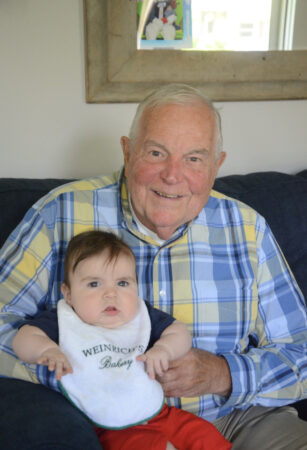
  • The death of Edward Weinrich, longtime owner of Weinrich’s Bakery in Willow Grove, has sparked an outpouring of support

    The death of Edward Weinrich, longtime owner of Weinrich’s Bakery in Willow Grove, has sparked an outpouring of support

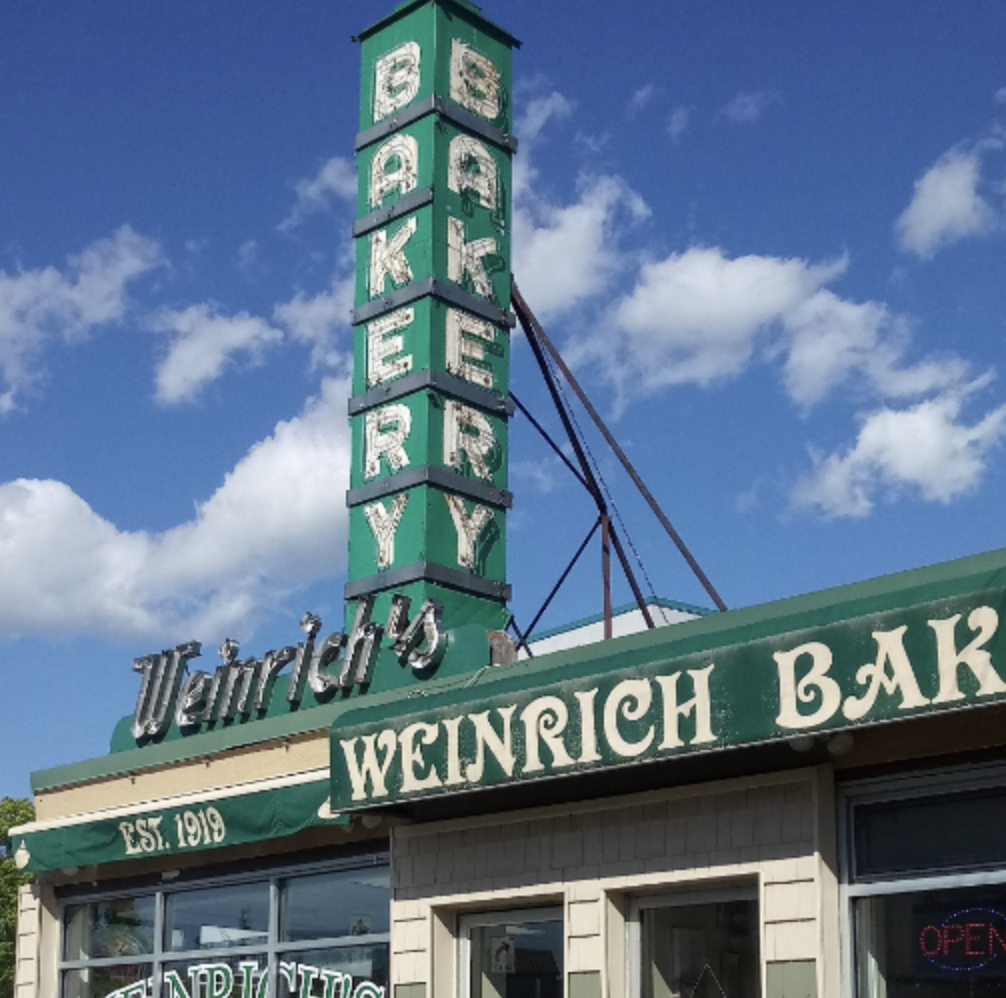
    Born above a Philadelphia bakery and forged in Willow Grove, Edward M. Weinrich, 92, died of natural causes at his home beside a Florida river on June 17 surrounded by the sons who keep his beloved cake shop alive.

    Weinrich’s parents ran a bake shop on Front Street in North Philadelphia before opening their Willow Grove konditorei — the German word for patisserie — at 55 Easton Rd. in 1952. By the 1970s, Weinrich had graduated from Villanova University, spent two years stationed in Hawaii with the Army, had five children, and taken over the Willow Grove bakery with his wife, Kippy, selling cookies, pies, danishes and cakes — many made from inherited recipes, like their famous butter cake.

    “Still today there are recipe books in the bakery archive that are written in German,” said Stephen Weinrich, the youngest of his five sons.

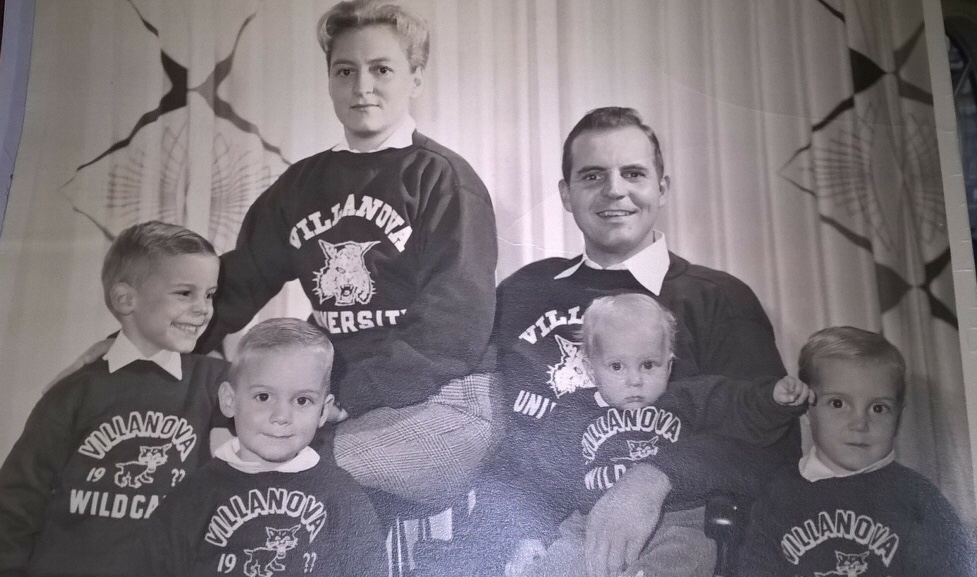
    Edward and Kathryn Weinrich pose in Villanova sweatshirts with their four oldest children.

    He also invented his own: In the 1960s, Weinrich worked with food scientists to develop his signature frosting — a buttercream that doesn’t turn gritty. It’s still used in custom cakes the store makes for birthdays, weddings, and First Holy Communions.

    Weinrich learned the trade from his dad, Herman, who left Naumburg in 1913 to help his brother August run a Manhattan bakery, opening his own in 1919. (It is descendants of their cousin, Ludwig, who operate R. Weinrich German Bakery in Newtown Square.)

    Weinrich made wedding cakes for many couples over the years. By the end of his career in 2005, he was making wedding cakes for their grandchildren.

    The news of his death this month sparked an outpouring of remembrances on social media.

    “My mother … wouldn’t get dressed to go to the doctors, but she’d call and order and drive down in her nightgown and robe for a curbside pickup,” one social media user wrote. “Her last trip to the hospital, she only worried that we froze her Weinrich order so it didn’t go to waste.”

    “We were just blown away,” said Michael Kirby, the bakery’s general manager and Weinrich’s great nephew. “It’s unbelievable how many people had such fond memories of him and the things we made.”

    Their products travel far, Kirby added. “We have people come from across the country for our butter cakes because they can’t get them anywhere else.”

    Weinrich’s Bakery in Willow Grove.

    Three of Weinrich’s sons still work for the bakery, which is now owned by the third son, Herman, and his wife, Beth.

    Though they took over the store in the 2000s, Weinrich and Kippy still showed up regularly to offer advice and to greet many of the bakery’s lifelong customers.

    After Kippy died of Alzheimer’s disease in 2015, Weinrich retired to Fort Myers, Florida. But he still asked about the bakery daily, Herman and Beth wrote on social media.

    Their cousins’ kids are now there full-time, too, Stephen said: “We have a fourth generation of family working every day in the store.”

    Weinrich was an active member of his parishes at St. David Roman Catholic Church in Willow Grove and then Immaculate Conception Church in Jenkintown, and a longtime supporter of the Abington Police Athletic League, Stephen said.

    “He is and will forever be remembered for his kind presence and loyalty to all of us,” Herman and Beth wrote.

    Funeral arrangements will be made after Weinrich is returned to Pennsylvania, the family said.

    He leaves behind his sons and their families, including 16 grandchildren and seven great-grandchildren.

    This suburban content is produced with support from the Leslie Miller and Richard Worley Foundation and The Lenfest Institute for Journalism. Editorial content is created independently of the project donors. Gifts to support The Inquirer’s high-impact journalism can be made at inquirer.com/donate. A list of Lenfest Institute donors can be found at lenfestinstitute.org/supporters.

  • An Upper Darby student was honored at the White House for a proposal to use AI to fight human trafficking

    An Upper Darby student was honored at the White House for a proposal to use AI to fight human trafficking

    As a student at Upper Darby High School, Khandakar Mahin was intrigued when the school installed a weapons detection system two years ago.

    Mahin, who was interested in the artificial intelligence behind the system, wrote email newsletters to the student body, describing how it worked.

    “I had fun doing that,” describing “how AI algorithms were working on a microscopic level,” Mahin said.

    Now an Upper Darby graduate, Mahin, 18, was honored at the White House earlier this month for a proposal he created for another use for AI: to combat human trafficking.

    First lady Melania Trump praised Mahin and the other five winning teams of the inaugural Presidential AI Challenge at a June 9 ceremony.

    “You saw AI’s potential and created ideas that will shape America’s future in many areas, including healthcare, nutrition, public safety, and beyond,” Trump told the winners, who were chosen from a field of 20,000.

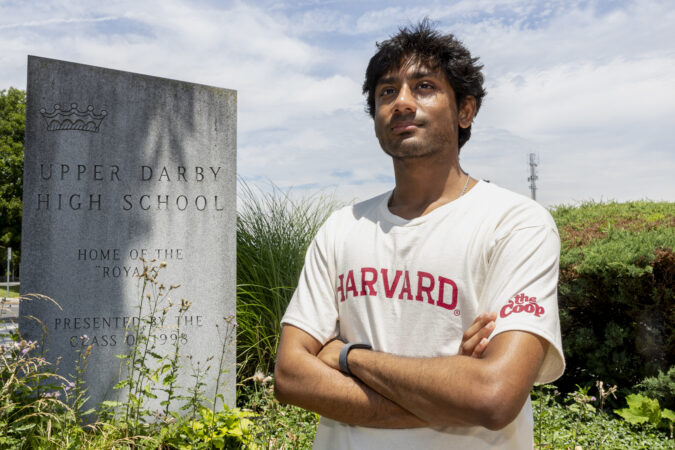
    Upper Darby graduate Khandakar Mahin, right, poses for a picture with First Lady Melania Trump at a June 9 ceremony honoring Mahin and other winners of the Presidential AI Challenge.

    Mahin — who said he got to see the Oval Office and “network with many different types of people” — won for a proposal to use computer vision to match photos from the dark web to a database of 64,000 hotels.

    The tool would identify details like carpet designs or headboard features in photos depicting trafficking, then match them to known hotels, using images scraped from the internet. Mahin created a framework and demonstration of the tool, and said his proposal included ideas for how it could be scaled to be used by law enforcement nationwide.

    The award, which Mahin said came with a $22,500 prize, was yet another achievement for Mahin, who will attend Harvard University this fall; he was also accepted to Yale and Princeton.

    While at Upper Darby High School, he took 16 Advanced Placement classes and won an array of awards and scholarships, including being selected for the Amazon Future Engineers and the Disney Dreamers Academy earlier this year.

    “This is a very bright kid who’s been looking into things like this for a long time,” said Dan McGarry, the superintendent of the Upper Darby School District.

    Mahin immigrated to the United States with family from Bangladesh 12 years ago and has attended Upper Darby schools since then.

    Mahin has been “heavily invested in being a contributor in a positive way to his school community,” McGarry said, noting that the recent graduate was involved in setting up local libraries. “It’s not just artificial intelligence. He’s also a good kid.”

    But Mahin has a particular interest in AI. Mahin, who recently served as a student representative on Upper Darby’s school board, was among a group of students who joined school leaders in meeting with company representatives about the weapons detection system.

    The students made a video about the system, which McGarry said was critical in getting student buy-in.

    The district also sends students to the Delaware County Intermediate Unit to share their perspectives; Mahin has addressed other superintendents about AI, “the good and the bad,” McGarry said.

    At Harvard, Mahin hopes to study political science and government with an aim toward creating “more ethical AI policies,” he said.

    Mahin, who has already participated in programs at Princeton and MIT, credits teachers in Upper Darby — not just in computer science and math, but English, he said — with teaching him “how to have the grit to do research.” His award-winning AI project was supervised by Roseann Burns, an Upper Darby teacher who McGarry said works with gifted students.

    Despite being an underfunded district, Upper Darby “has a lot of opportunities,” Mahin said. “As a student, you really have to seek out the opportunities if you really want it.”

    While Mahin may stand out for the level of recognition he has received, McGarry said Upper Darby has many “amazingly talented, bright” students.

    “That’s often overlooked, unfortunately,” McGarry said. He said Mahin “represents what I think makes this country great. … Every opportunity that was there, he took it.”

  • Collingswood is considering lifting its dry town status to boost local restaurants. Residents may have the final say.

    Collingswood is considering lifting its dry town status to boost local restaurants. Residents may have the final say.

    After more than a century as a dry town, Collingswood is considering lifting its ban on alcohol sales within the borough.

    For months, the three-person Collingswood Board of Commissioners has been discussing whether to lift the long-standing restrictions on liquor sales both as a potential new revenue source for the borough and as a way to bolster the local restaurant industry.

    Per the state’s population-based license cap 一 one liquor license for every 3,000 residents — Collingswood would be able to issue as many as four retail consumption licenses that permit restaurants or bars to serve alcohol, or one distribution license for a liquor store within borough limits.

    If liquor sales are eventually permitted, the borough could receive anywhere from $1,000 to $10,000 annually through licensing and renewal fees.

    But discussions are still preliminary as the commissioners work to determine what is best for Collingswood’s existing restaurant and business owners, borough administrator Cassandra Duffey said.

    “There’s a general sense that liquor can be a good thing, but there’s a concern that if it’s done in a way that’s unbalanced, it can also throw people off,” she said.

    “Is there strength in the dry-town brand that has been around for years and years?” Duffey said.

    Tracing back to its Quaker roots, Collingswood has prohibited alcohol sales by ordinance since the 19th century.

    A change to the policy would require public approval through a referendum during the November general election, borough solicitor Caitlin Harney Norcia said.

    To begin that process, the borough’s commissioners would need to adopt a resolution by Aug. 21 so that the Camden County Clerk’s Office has enough time to add the question to the ballot. In order to adopt the resolution, at least 15% of voters who participated in the last general election must sign a public petition in favor of putting the question on the ballot, Harney Norcia said.

    After that, “repealing any kind of prior restrictions could all be done relatively easily,” Harney Norcia said, describing the logistics of updating local ordinances if a referendum passes.

    If voters approve lifting the ban, Harney Norcia said, the borough could either award licenses in a competitive bidding process, which could generate one-time revenue for Collingswood’s budget, or enact an application and review process that includes annual fees and public presentations by prospective licensees.

    But if the measure were to fail on Election Day, Collingswood would be barred from holding another referendum on alcohol sales for five years, according to state law.

    Some business owners have expressed concern that the public bidding process could result in one of the borough’s few licenses being awarded to an outside business instead of an established Collingswood restaurant, Duffey said.

    “The challenge is not to disrupt the balance of businesses that already exist here,” she said. “If you get a bidder that gets a license from outside of town, sure, you get the revenue, but then you’ve added somebody and it doesn’t necessarily benefit one of our businesses.

    “The other option is to award [the licenses] directly, but then somebody must make a decision on who gets them, which is also a challenge,” she added.

    The commissioners are in continued talks with the borough’s business improvement team, local restaurateurs, and others about the best approach, she said.

    “Is there a way to distribute licenses or award licenses that is a boost for everybody?” Duffey said.

    The internal debate in Collingswood comes less than two years after residents in neighboring Haddon Heights voted to get rid of its de facto ban on liquor sales. The town has set a $200,000 minimum bid for its first retail liquor license and is currently accepting applications ahead of a public auction sale in September.

    Haddon Heights is hoping to leverage the new liquor licenses as a way to help boost a broader revival and redevelopment, Mayor Zachary Houck said.

    The licenses “would hopefully draw in one or two additional restaurants or enhance existing restaurants and let us then continue to move that ball forward when it comes to enhancing our downtown historic district,” Houck said.

    Making more, and more affordable, liquor licenses available statewide was a goal of legislation then-Gov. Phil Murphy signed into law in 2024. The measure was touted as an unprecedented reform of New Jersey’s liquor laws, long described by critics as arcane and antiquated.

    “By easing restrictions and boosting the availability of licenses, we are creating new opportunities for small businesses, especially mom-and-pop establishments, to expand and facilitate development on main streets across New Jersey,” Stella Porter, a spokesperson for Murphy, told The Inquirer that year.

  • The United States had its first mutiny on this week in Philly history

    The United States had its first mutiny on this week in Philly history

    The Constitution was not written yet, and soldiers had not yet let down their guard, when the United States had its first mutiny.

    And, naturally, it all went down in Philadelphia.

    The weeklong saga started in late June 1783, when a group of unpaid Revolutionary War soldiers marched against the country’s primitive government, then called the Confederation Congress, and sent them fleeing from Philly to Princeton, N.J.

    There was a two-year delay between England’s surrender in 1781 and the end of peace negotiations that culminated with the signing of the Treaty of Paris in September 1783.

    And the troops who fought for independence and remained on duty wanted to get paid.

    Financial overseer Robert Morris thought it could take years to figure out the claims and payments for members of the Continental Army and state militias. So our new Congress, backed by Gen. George Washington, encouraged soldiers to go home and make money while the government got its act together.

    According to the history archives of the U.S. House of Representatives, members of the Pennsylvania militias in Philadelphia and Lancaster were among the least happy with the lack of back pay and their discharge dates.

    So on June 20, 1783, they mutinied.

    Fewer than 100 officers and militiamen from Lancaster marched toward the seat of the new government in Philadelphia, to meet up with the other disgruntled soldiers.

    The show of force, despite being nonviolent, combined with unfounded robbery rumors riled up the members of this crude Congress.

    New York’s Alexander Hamilton demanded that the leader of Pennsylvania’s state government, John Dickinson, call in members of the still-loyal state militia to put down the rebellion.

    Dickinson objected.

    So when the Lancaster troops arrived at the Philly barracks that night, Hamilton decided to try to talk to them, and urge them to return home.

    It did not go well.

    The troops took exception to Hamilton’s signature arrogance and condescending tone.

    The number of troops grew to about 400 by the next day, and they protested outside Independence Hall as their leaders met with Dickinson.

    Hamilton pushed for the Confederation Congress to meet for an emergency gathering.

    “Soldiers shook their fists and jeered when delegates peered out the windows,” according to House archives. “In the afternoon local tavern keepers, in an effort to calm and cheer the soldiers, gave away drinks — a tactic that unnerved Virginia Delegate James Madison inside.”

    Delegates, feeling unsafe and disgusted by the protest, announced on June 22 that the Congress would flee to Princeton.

    But when they arrived, the then-small town did not have enough beds for all of the delegates, who would return to Philadelphia four months later.

    Meanwhile, in Philadelphia, order was restored as mutiny leaders fled and remaining mutineers who stayed offered apologies for the attempted rebellion.

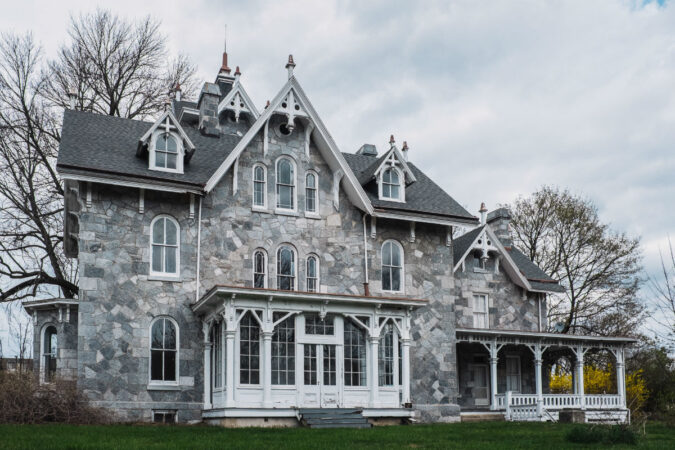
  • ‘Continuing that legacy’: Caterer John Serock purchases historic Loch Aerie Mansion wedding venue in Malvern for $4M

    ‘Continuing that legacy’: Caterer John Serock purchases historic Loch Aerie Mansion wedding venue in Malvern for $4M

    John Serock closed on the historic wedding venue Loch Aerie Mansion on a Tuesday. The first wedding was that Saturday.

    It was a natural transition for Serock, whose catering company has exclusively worked with the venue since its former owners, Steven and Dana Poirier, purchased the Malvern mansion in 2016 with the intention of giving the property a new life. Serock had come in early in the process, working with the Poiriers as they restored the historic estate and turned it into its latest iteration: a wedding venue.

    But Serock had first laid eyes on the property, which is more than a century old, in 2006. He had a storefront up the street and, one day, with the leaves off the trees, the mansion just appeared before him. He thought it would make a “cool” wedding venue.

    Now, 20 years after that first sighting, the mansion has become Serock’s first venue of the sort.

    “I was starting to get the itch to maybe look into my own venue, and then COVID hit, and I swore I said it’ll be a long time before I ever sign another piece of paper,” he said. “Then as the few years went on, and we started talking with Loch Aerie, I went back and forth … did we need this next step? But when I really broke it down, this is something I felt I needed.”

    Serock closed in mid-May, purchasing the property for $3 million and the business for $1 million. His company took over the existing book of business, honoring all future weddings. It is working on filling up the rest of the calendar, aiming for not a single Saturday off, he said.

    Under the new ownership, Serock plans few cosmetic changes — except making more photo-worthy backdrops — but will focus on operational tweaks and increasing business from corporate and nonprofit clients midweek.

    The venue is rolling out “Nonprofit Thursdays,“ offering “severely discounted” rates for nonprofits to throw fundraisers during the week.

    To appeal more to business leaders, it is looking into putting a central sound system, so clients do not have to bring in a separate company.

    More generally, Serock is looking to add a liquor license — Loch Aerie is currently BYOB — with the goal of making things as “easy and turnkey as possible” for clients, he said.

    For weddings, which make up 95% of Loch Aerie’s business, the venue lowered its offseason pricing immediately, Serock said. Saturdays in the offseason will run $7,000, compared with about $10,000 during the peak in May, June, September, and October. Fridays and Sundays go from $4,500 in the offseason to $8,000 and $7,000, respectively.

    The four-story stone mansion has a newly constructed 5,000-square-foot ballroom addition that accommodates around 200 guests. The venue features billiards and dining rooms, a parlor, an entry hall and dramatic stairway, suites to get ready, and outdoor spaces.

    Serock sees this as a first of several venues to come, hoping to build a portfolio out of multiple properties. He is not in a rush, he said, and Loch Aerie has served as a learning experience.

    “You couldn’t ask for a better opportunity, because really, like I said, nothing changed,” he said. “It’s an easier transition, because I already understood ‘where’s the circuit breaker,’ or ’how’s this work’ … so that’s a good first step. And even since then, I learned a lot.”

    Built in 1865, the estate had sat vacant for roughly 12 years. It went to auction in 2016, purchased for $700,000 by a businessman who looked to restore the home and build a hotel next door. But when the deal fell through, according to VISTA.Today, the Poiriers — who had been outbid earlier — came out triumphant.

    In the years before that, it served as a home or a business space for those “whose occupancies were short lived and rather destructive,” according to the website.

    Since first seeing the property in 2006, Serock has heard dozens of stories about it — almost folkloric in its history between historic design and a biker gang — and how it has served as a reference point, a piece of Chester County legacy.

    “For me, we’re building these new memories with our couples and families, but I think it’s really important that we’ve been able to also save and maintain this property, especially in the age where everybody wants to just knock down and have the brand, the shiny new toy, and whether it’s a house or car,” Serock said. “I think it’s really cool that we’ve had this opportunity to save this house. The Poiriers saved it, but we’re continuing that legacy.”

    This suburban content is produced with support from the Leslie Miller and Richard Worley Foundation and The Lenfest Institute for Journalism. Editorial content is created independently of the project donors. Gifts to support The Inquirer’s high-impact journalism can be made at inquirer.com/donate. A list of Lenfest Institute donors can be found at lenfestinstitute.org/supporters.

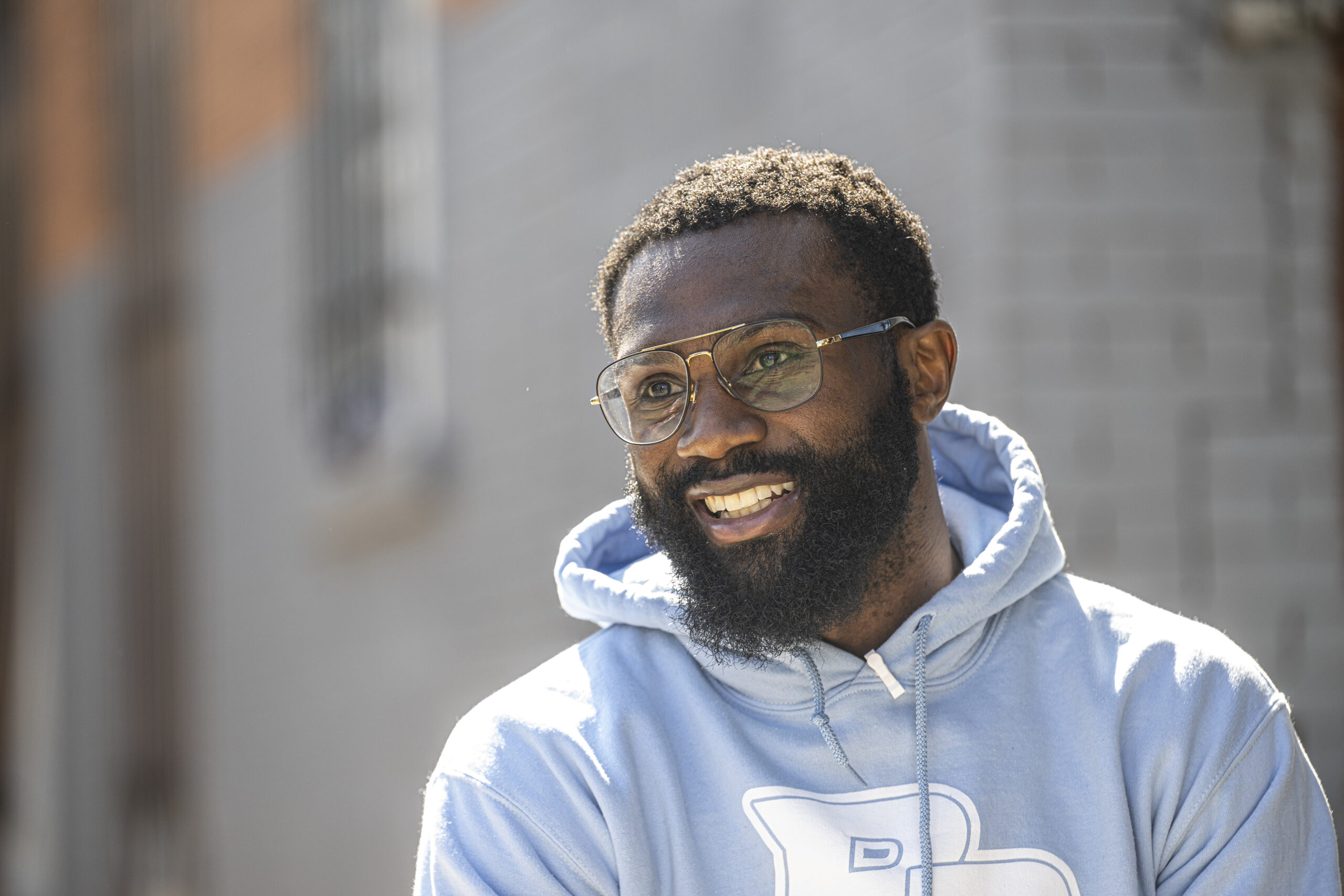
  • Philly’s Jaron ‘Boots’ Ennis wants to be the ‘face of boxing.’ First, he had to learn to fish.

    Philly’s Jaron ‘Boots’ Ennis wants to be the ‘face of boxing.’ First, he had to learn to fish.

    Bozy Ennis taught his sons to fish on the weekends, leaving Germantown to catch trout, catfish, and sunnies. They cast their rods in Perkiomen and Phoenixville. They hung by the water in Gladwyne and New Hope. Bozy Ennis took his sons Derek and Farrah everywhere. But he never taught his youngest son, Jaron.

    “You know why it skipped him?” Farrah Ennis said. “Because he and my dad were always in the gym. They didn’t have time to fish.”

    Jaron Ennis is a world champion boxer on the verge of becoming a superstar. He was molded by his father in gritty neighborhood gyms they respectfully called “dungeons.” There was no time to fish.

    But there he was last August with his brother Farrah — a former pro boxer — and an afternoon to fill in a California town near Lake Tahoe. The brothers traveled there so Jaron could train with Canelo Alvarez, one of boxing’s biggest names. Now he finally had time to fish.

    The Ennis brothers sat for three hours as the sun set. Jaron Ennis — who is known as “Boots” — won his professional boxing debut in 42 seconds. Fishing proved to be a different challenge.

    “We didn’t catch anything,” Farah Ennis said. “Fishing teaches you patience. For me, it’s not a big deal. I’ve been fishing for eight hours or longer and didn’t catch anything. You just have to have patience.”

    Jaron Ennis says he wants to become the “face of boxing,” a role he’s seemed destined for since he turned pro. But his promise was often slowed by things outside the ring: litigation against a former manager, opponents unwilling to fight him, mandatory title defenses against overmatched foes, and a signature fight earlier this year that fell through while Ennis’ opponent was stuck in a lawsuit with his promoter.

    The 28-year-old’s career has often felt like a fisherman waiting for a bite. But now things seem to be breaking his way. Ennis (35-0, 31 knockouts) will fight WBA and WBO super welterweight champ Xander Zayas (23-0, 13 KOs) on Saturday night at the Barclays Center in Brooklyn. The bout, the main event of a DAZN pay-per-view telecast, is the biggest of Ennis’ career.

    Jaron “Boots” Ennis will fight WBA and WBO super welterweight champ Xander Zayas on Saturday night at the Barclays Center in Brooklyn.

    A win would surge Ennis up boxing’s pound-for-pound lists, which he started to appear on earlier this year. It would then position him for a 154-pound unification fight against WBC champ Sebastian Fundora or a long-awaited bout against Vergil Ortiz, who was slated to fight Ennis this year. Defeat those three fighters and Ennis could stake a claim to being the face of the sport. His fishing rod finally has some nibbles.

    “That’s why I’m trying to teach him fishing,” Farrah Ennis said. “You have to be patient.”

    Next best option

    Ennis flew to Texas in November to watch Ortiz’s fight from ringside and then climbed into the ring for a promotional staredown after Ortiz won by knockout. All signs pointed to Ennis and Ortiz meeting a few months later in a long-awaited title fight. But those plans were scrapped in March because of ongoing litigation between Ortiz and Golden Boy Promotions.

    Ennis, left without a fight, said he told his own promoter — Eddie Hearn of Matchroom — to make a match with Zayas, a popular 23-year-old Puerto Rican fighter with a promising future. A few weeks later, it was official.

    “That was the next best option,” Ennis said. “He has two belts. That’s halfway to being undisputed. That’s where I want to be. Winning two belts on June 27 and it’s only up. I’m going to be the face of boxing.”

    Ennis never hid his ambition to land a big fight as he tried to arrange bouts with stars like Terrence Crawford, Errol Spence, and Keith Thurman. But none of those fights materialized, leaving Ennis to face lesser foes as he climbed the ranks. Saturday will be his biggest challenge. And he asked for it.

    “We sounded everyone,” Bozy Ennis said. “That’s from the beginning of time. Everyone knows that. Then they go back and say, ‘He didn’t fight that guy.’ Well, you can’t fight the guys who don’t want to fight you. You know what I mean? Spence, Crawford, Thurman. All those guys, we sounded. We tried. ‘Oh, yeah. He didn’t really fight anyone.’ But they didn’t want to fight us and made up all kinds of excuses.”

    Ennis’ biggest challenge will also come on his biggest stage: the main event of a pay-per-view. Headlining a pay-per-view is a status in the sport, something usually reserved for a fighter who can claim to be “the face of boxing.”

    Ennis said he’ll know he’s the face of boxing when fight-night becomes an event. Remember how it was when Floyd Mayweather Jr. fought? Or the audience that tuned in last year to watch Terrence Crawford defeat Canelo Alvarez after Ennis sparred with him in camp? That’s what Ennis envisions. A win on Saturday will move him closer to that.

    “It’s not boxing anymore at that point,” Ennis said. “It’s like a fashion show slash boxing slash concert. It’s an all-around thing, and that’s what I want my fights to be. I want everyone to come and enjoy themselves, get fly, get dressed, and enjoy a beautiful fight and a beautiful knockout that I’m going to deliver.”

    “You have to have a fanbase that’s outside of just boxing. You have to have the rappers, the entertainers, the TV stars, the movie stars. That’s what I’m looking to do and that’s what I’m going to do come June 27.

    “Everyone already knows me now. But after this performance I put on, the world is really going to see, and I’m going to be the face of boxing and a guy who everyone wants to see fight.”

    Jaron Ennis after defeating Karen Chukhadzhian in an IBF World Welterweight title bout in 2024.

    The face of boxing

    Ennis spent 13 days last year in Alvarez’s camp, which he said he did not get paid to do as he made sure he wasn’t mistaken for a “sparring partner” before Alvarez met Terrence Crawford in the biggest fight of the year. Ennis was there to work just like Alvarez was. But he did get to spend nearly two weeks around a fighter who was often the face of boxing during his career. He saw how Alvarez worked and how he trained.

    “He’s out there with the face of boxing and was just having a great time,” Farrah Ennis said. “That put it in his head like, if he’s the face of boxing, then so can I.”

    The fighter’s biggest takeaway? Superstars are just as normal as him.

    “We’re all normal,” Jaron Ennis said. “People think we’re not normal. We do normal stuff. Everybody thinks that since we’re on this high pedestal that we do these crazy things or have camp in a certain way. But it was just a normal camp.”

    Ennis trains in the Northeast in the basement of an animal adoption center on Grant Avenue. Ennis’ father keeps the door locked because too many people brought their dogs to the gym thinking it was an animal clinic. It’s here where Ennis works nearly every day. His brothers assist his dad, and other fighters are from the Germantown neighborhood they call “Brickyard.”

    “I don’t care how big I get, I’ll always train with my guys,” Ennis said. “That’s how you have to be. You can’t get too bigheaded when you get to a certain level. You always have to stay humble and grounded and keep working.”

    Ennis has what it takes to be the face of boxing as he matches an affable personality with the skills to both dazzle and punish. He has won all but four of his fights via stoppage, yet is more than just a puncher. He can fight southpaw, has smooth defense, and has great footwork.

    “People like to see him fight because he’s a boxer and he’ll fight you,” his father said. “People come to see you fight. They don’t want to see you run around. He does both. He can do what he wants to do, and I’m just waiting for someone to take him to another level. They haven’t seen anything yet.”

    Bozy Ennis didn’t travel with his son to California last year, as the trainer has built a stable of world-class fighters that he works with along with Boots. He had to stay home in Philly while his son struggled to catch a fish. He said they would’ve caught something if his rod was in the water.

    “Nah,” Boots shouted from across the gym. “He don’t got it anymore.”

    The dad laughed. He said he’ll get back out there and prove that he can still fish. First, they have to see what they catch this weekend as their patience is finally being rewarded.

    “You have to carry yourself like you’re the face of the sport,” Ennis said. “That’s how I carry myself already, and that’s how I’m going to carry myself June 27. I already fight how I fight. I fight fan-friendly. I have the speed. I have the power. I do everything. I’m explosive. I have defense.

    “Whatever I do, people are going to want to see it. On June 27, I’m just going to stamp it and show even more and in an even better way.”

  • A gift to Temple will create the first endowed editor position at its student newspaper

    A gift to Temple will create the first endowed editor position at its student newspaper

    Jack Pinkowski relished his time as a photojournalist for Temple University’s student newspaper when he was enrolled there in the 1960s.

    And he always admired the work of his father, the late Edward Pinkowksi, an historian and author who founded a small newspaper in the Montgomery County borough of Bridgeport.

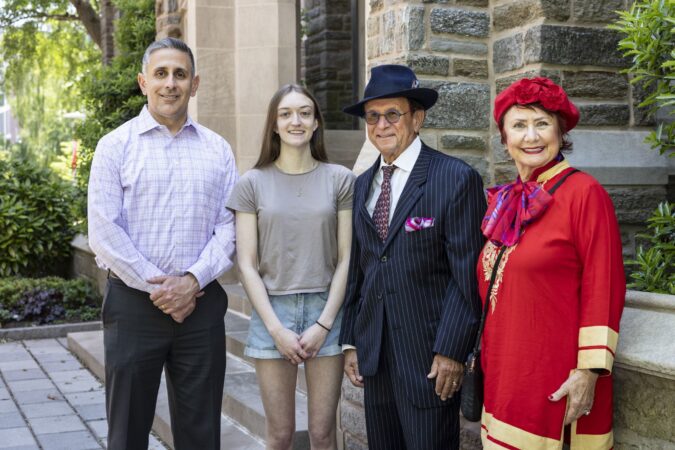
    This month, Pinkowski, a 1968 Temple grad, and his wife, Monica, gave Temple a $1.25 million gift, a portion of which will for the first time endow the editor-in-chief position for the Temple News, as well as increase other staff salaries and pay for some story-related travel and new equipment.

    Pinkowski said the need for journalists has never been more important, and he lamented the struggles print journalism has faced.

    “We hope to show it a lifeline, give it some support to encourage people to go into that as a field of endeavor,” said Pinkowski, 78, of Plantation, Fla. “This named editorship is a tribute to my father for starting a newspaper and having a lifetime as a critical mind that searched for facts and put them together and brought stories to the enjoyment of people.”

    Of the gift, $250,000 will be used to create an endowment for the student newspaper, and the remaining $1 million will fund scholarships of up to $10,000 per academic year for students to study at Temple’s Rome campus. Applicants must have knowledge of, coursework in, or a commitment to promoting Polish or Italian studies, history, or culture.

    The Pinkowskis made their money by investing in and managing real estate as well as through other careers.

    The couple both worked in businesses with global ties — Jack as an importer of furniture and Monica as an importer of gourmet foods to restaurants — and saw the merit in global study. They also both attended a study abroad program for adults at Temple Rome in 2024.

    Given the federal government’s policies affecting foreign students, Pinkowski said, he thought it was important to support the Rome campus so that students have an alternative way to attend an American university.

    Temple president John Fry said he especially likes that the gift is so personal and that it is widening access to students to participate in both studying on the Rome campus and working for the student newspaper.

    “These are two really important experiences that many students have to forgo, and I think the Pinkowskis are making both of those possible,” Fry said. “Its meaning and impact are significant.”

    The gift comes as the college prepares to close a record fundraising year, led by a record $55 million gift from alumnus Christopher Barnett in October and a large gift in April from alumna Jane Creamer Sullivan and her late husband, Thomas J. Sullivan, to start its new honors college.

    A boost for the Temple News

    John DiCarlo, managing director of student media and adviser to the Temple News, said its portion of the Pinkowski gift will be incredibly important in supporting the newspaper with a staff of 37, which last academic year ran on a $115,596 budget that largely covers salaries and print costs.

    Most of the costs were covered by the university, with the newspaper responsible for raising $23,500 through ad revenue and other means. If the publication exceeds that goal — which it did last year, raising over $29,000 — it can funnel the additional money back into operations, DiCarlo said.

    The new endowment, DiCarlo said, will bring in an additional $10,000 to $12,000 annually, depending on its earnings.

    Incoming senior Sienna Conaghan, 20, who will be the inaugural Edward Pinkowski Editor-in-Chief, said she is grateful for the funding, which will cover her approximate $5,400 salary. And she is glad that salaries for other staffers can get boosted, too.

    “We’re asking them to do full-time jobs on a college student’s budget and a college student’s schedule,” DiCarlo said. “It takes a lot out of them because they really care.”

    Conaghan, a journalism major from West Yellowstone, Mont., estimates that she spends about 30 hours a week on Temple News work. She freelanced freshman year, was assistant sports editor sophomore year, and worked as sports co-editor last year.

    The experience is more important than the paycheck, said Conaghan, who plans to pursue a career in sports journalism, but the money helps.

    “It has really been everything,” Conaghan said of her Temple News work. “I think I’ve learned so much from working at the Temple News, from how to be a journalist and also just how to be an adult and a person.”

    The Pinkowskis initially gave a gift to the Temple News in 2023 to help it reach a fundraising goal. The college wanted to be able to pay student journalists a little more because some were having to take on second jobs to generate more income, DiCarlo said. At that time, he said, he had no idea the couple would return with such a large gift three years later; it is the largest gift the Temple News has ever received.

    “Monica and I are avid readers and avid followers of print journalism,” said Jack Pinkowski, a graduate of Philadelphia’s Central High School.

    Pinkowski said his father decided to start the now-defunct Bridgeport South Side Press in 1950 because the community did not have a local paper. He also wrote history books about the local area, using skills he developed as a journalist, Pinkowski said.

    The Pinkowskis have had other career experience in addition to real estate and import businesses.

    He was a general contractor and wedding photographer early on and later spent 18 years as an associate professor of public administration at Nova Southeastern University’s school of business and entrepreneurship in Florida.

    And she was a flight attendant at one time and as a child grew up working in a family traveling carnival business in Missouri — which helped pay for her education at the University of Missouri-Kansas City.

    Jack Pinkowski said the common thread in their endeavors has been “inquisitiveness and intellectual curiosity and the ability to take something where there’s nothing and make something of it.”

    Both Temple officials and the Pinkowskis hope their gift will motivate others.

    “I do believe that other people pay attention to that, and it makes them say, well, maybe they can do something as well,” Jack Pinkowski said.

  • New Collingswood agreement opens playgrounds after school, grants $10.5 million to revamp athletic fields

    New Collingswood agreement opens playgrounds after school, grants $10.5 million to revamp athletic fields

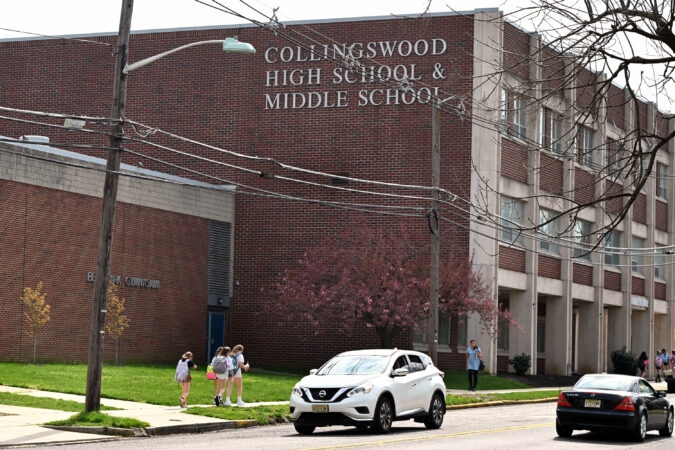
    A new agreement between the Collingswood Board of Education and Collingswood Borough approved this week will open the door for a $10.5 million renovation of the school district’s athletic complex.

    The three-person Collingswood Board of Commissioners voted in favor of the shared service agreement on June 17, and the 11-member Board of Education followed suit unanimously at its Monday meeting.

    The agreement aims to update the school district’s recreation spaces and give the borough more access to school properties formerly closed to nonstudents, including auditoriums, classrooms, and athletic fields.

    The public can now visit the district’s playgrounds and track facilities from 7 a.m. until dusk on days when students aren’t at school, including the summer months, weekends, and holidays. When school is back in session, those facilities will open when after-school activities end and close at dusk.

    The changes come just as the school district moves into its summer season, and months after the district announced that one of its elementary schools will not reopen next school year due to budget cuts.

    A new field, track, bleachers and more

    The $10.5 million renovation project for the athletic fields at Collingswood Middle and High School is financed by $15 million in bonded funds the borough authorized last spring for the redevelopment of fields and facilities in Collingswood.

    The new shared service agreement just lays out the formal framework for that collaboration and ensures the borough gets perks in return, like use of school property for July 4 celebrations and access to the new facilities.

    Amy Henderson Riley, one of Collingswood’s commissioners, said the agreement gives the spending a dual purpose.

    “When you work together, things can be kind of amazing. Everybody is being squeezed,” Henderson Riley said. “The word of the year is affordability.”

    The project proposal, presented in October at a community forum on Collingswood’s recent 310-page recreation master plan, has a long list of goals. The district wants to convert the current grass football field into a multisport artificial turf field and build a new eight-lane track, along with adding a grass softball field, a concessions building, new bathrooms, a 1,500-seat grandstand, a student press box, and more improvements.

    The firms involved so far include Remington & Vernick Engineers and Garrison Architects, Superintendent Fredrick McDowell said. A construction company won’t come on board until Collingswood and its school board publicize a bid package for construction work and review those bids at least 30 days later.

    McDowell said Wednesday the goal is to start the project as soon as possible, though there’s no timeline yet for when the project could begin or wrap up. Students will continue to use existing facilities in the meantime.

    A new grade school and park improvements

    The remaining $4.5 million in bonded funds from the borough will likely be split between improvements to Knight Park, a 70-acre green space in the middle of Collingswood, and the potential acquisition of a new upper grade school.

    The recreation presentation from October reported that $2.5 million of the $15 million bonded funds will go toward Knight Park upgrades.

    Henderson Riley said her fellow commissioner Jim Maley is overseeing the steering committee for the Knight Park project. Maley did not return requests for comment.

    The other $2 million could go to the acquisition of the former Good Shepherd Catholic School on Lees Avenue. The Collingswood School District has sought for years to convert Good Shepherd into an upper grade school building for fourth and fifth graders.

    Henderson Riley said there is currently no information to share on the status of acquiring Good Shepherd.

    The only way the school district could have afforded the athletic field renovations and these projects without collaboration with the borough is through a bond referendum, McDowell said, a vote at the ballot box to determine whether a school can borrow funds through the sale of bonds.

    In 2024, about 70% of Collingswood voters voted against a bond referendum that would have funded the athletic field redesign.

    It would have also closed two elementary schools and allowed the district to acquire Good Shepherd and convert it into an upper grade school. The referendum would’ve raised Collingswood residents’ property taxes, since that’s how bonds are paid back.

    One of those elementary schools, James Garfield Elementary, still closed due to budget cuts this week.

  • Flyers draft primer: Everything you need to know about the 2026 draft, from draft order to top prospects

    Flyers draft primer: Everything you need to know about the 2026 draft, from draft order to top prospects

    The Flyers are nearly on the clock for the first round of the 2026 NHL draft.

    The draft starts Friday night and the Flyers will have four picks — one each in the first, second, fifth, and seventh rounds. Here’s everything you need to know before the draft begins.

    What time does the NHL draft begin?

    The 2026 NHL draft officially starts at 7 p.m., but the Flyers won’t be on the clock for a lottery pick. The first round of the draft will air live on ESPN. The second round begins at 11 a.m. on Saturday, and the draft will end with the seventh round that same evening.

    When do the Flyers pick?

    After winning a playoff series overthe Pittsburgh Penguins during the 2026 postseason, the team’s first since 2019-20, the Flyers will pick at No. 21 overall during Friday’s first round.

    The Flyers will also have three picks on Saturday: in the second round (53rd overall), fifth round (136th overall), and seventh round (213th overall). The fifth-rounder was obtained as part of the package in Thursday’s Garnet Hathaway trade, essentially replacing a sixth-rounder that was sent to the Florida Panthers in the deal.

    Who are the top players?

    The projected top two picks are Penn State winger Gavin McKenna and Swedish winger Ivar Stenberg. The Toronto Maple Leafs won the draft lottery and the San Jose Sharks have the second overall pick. Other expected top picks include defensemen Chase Reid and Keaton Verhoeff, and center Caleb Malhotra.

    McKenna finished with 36 assists (second-most in college hockey) and 51 points (tied for fourth-most) in 35 games.

    Penn State forward Gavin McKenna is a projected top pick in the 2026 NHL draft.

    “It was a good season, I think,” McKenna said at the NHL scouting combine. “In college, the guys are bigger and stronger and faster and stuff, and the game in itself, I think, is just a little different than junior. It’s more straightforward hockey.

    “So found out early on that things [weren’t] just going to happen easy, and I think once I got to World Juniors, I kind of got my confidence back and kind of figured out the game a little bit more, and started working harder off the ice and on the ice and getting in the dirty areas a little bit more, and I think that’s why I started producing more.”

    Who will the Flyers pick at No. 21?

    Now that the Flyers aren’t up near the top of the draft, there are a lot more variables impacting who they might select.

    In Flyers beat writer Jackie Spiegel’s latest mock draft, she had the Flyers selecting center Jack Hextall, a distant relative of former Flyers goalie and GM Ron Hextall. The younger Hextall scored 20 goals and had 38 assists for the Youngstown Phantoms of the United States Hockey League last season.

    “His bread and butter is how well-rounded he is,” The Athletic’s NHL draft and prospects reporter Scott Wheeler told The Inquirer. “The details off the puck, up and under sticks, retrievals, board battles, he’s got pro habits.

    “If you talk to the guys in Youngstown, the first thing they say about him is that he’s a pro; this isn’t a junior hockey player, like a lot of these kids are. [He] does everything the right way, no selfishness to his game, and he doesn’t cheat for offense.”

    Winger Nikita Klepov and defenseman Tommy Bleyl are other players to keep an eye on.

    Recent Flyers first-round picks

    • 2025: Porter Martone (No. 6)
    • 2025: Jack Nesbitt (No. 12)
    • 2024: Jett Luchanko (No. 13)
    • 2023: Matvei Michkov (No. 7)
    • 2023: Oliver Bonk (No. 22)
    • 2022: Cutter Gauthier (No. 5)
    • 2020: Tyson Foerster (No. 23)
    • 2019: Cam York (No. 14)
    • 2018: Joel Farabee (No. 14)
    • 2018: Jay O’Brien (No. 19)

    2026 first round NHL Draft order

    1. Toronto Maple Leafs
    2. San Jose Sharks
    3. Vancouver Canucks
    4. Buffalo Sabres
    5. New York Rangers
    6. Calgary Flames
    7. Seattle Kraken
    8. Winnipeg Jets
    9. San Jose Sharks
    10. Nashville Predators
    11. St. Louis Blues
    12. New Jersey Devils
    13. New York Islanders
    14. Columbus Blue Jackets
    15. St. Louis Blues
    16. St. Louis Blues
    17. Los Angeles Kings
    18. Washington Capitals
    19. Utah Mammoth
    20. Buffalo Sabres
    21. Flyers
    22. Pittsburgh Penguins
    23. Boston Bruins
    24. Vancouver Canucks
    25. Ottawa Senators
    26. New York Rangers
    27. San Jose Sharks
    28. Montreal Canadiens
    29. St. Louis Blues
    30. Calgary Flames
    31. Carolina Hurricanes
    32. Ottawa Senators