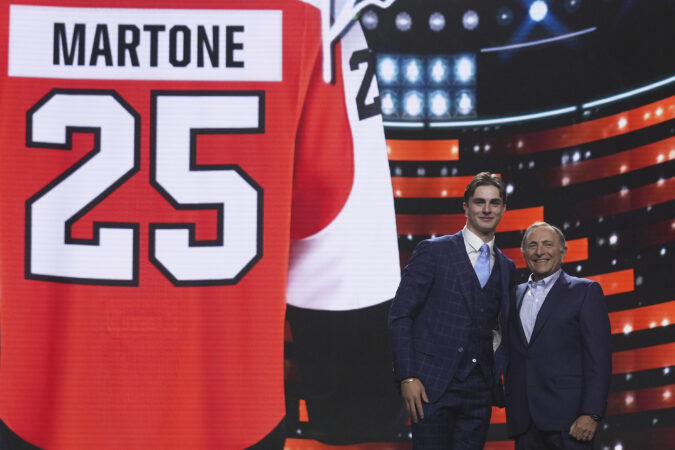
The Flyers are nearly on the clock for the first round of the 2026 NHL draft.
The draft starts Friday night and the Flyers will have four picks — one each in the first, second, fifth, and seventh rounds. Here’s everything you need to know before the draft begins.
The 2026 NHL draft officially starts at 7 p.m., but the Flyers won’t be on the clock for a lottery pick. The first round of the draft will air live on ESPN. The second round begins at 11 a.m. on Saturday, and the draft will end with the seventh round that same evening.
When do the Flyers pick?
After winning a playoff series overthe Pittsburgh Penguins during the 2026 postseason, the team’s first since 2019-20, the Flyers will pick at No. 21 overall during Friday’s first round.
The Flyers will also have three picks on Saturday: in the second round (53rd overall), fifth round (136th overall), and seventh round (213th overall). The fifth-rounder was obtained as part of the package in Thursday’s Garnet Hathaway trade, essentially replacing a sixth-rounder that was sent to the Florida Panthers in the deal.
Who are the top players?
The projected top two picks are Penn State winger Gavin McKenna and Swedish winger Ivar Stenberg. The Toronto Maple Leafs won the draft lottery and the San Jose Sharks have the second overall pick. Other expected top picks include defensemen Chase Reid and Keaton Verhoeff, and center Caleb Malhotra.
McKenna finished with 36 assists (second-most in college hockey) and 51 points (tied for fourth-most) in 35 games.
Penn State forward Gavin McKenna is a projected top pick in the 2026 NHL draft.
“It was a good season, I think,” McKenna said at the NHL scouting combine. “In college, the guys are bigger and stronger and faster and stuff, and the game in itself, I think, is just a little different than junior. It’s more straightforward hockey.
“So found out early on that things [weren’t] just going to happen easy, and I think once I got to World Juniors, I kind of got my confidence back and kind of figured out the game a little bit more, and started working harder off the ice and on the ice and getting in the dirty areas a little bit more, and I think that’s why I started producing more.”
Who will the Flyers pick at No. 21?
Now that the Flyers aren’t up near the top of the draft, there are a lot more variables impacting who they might select.
In Flyers beat writer Jackie Spiegel’s latest mock draft, she had the Flyers selecting center Jack Hextall, a distant relative of former Flyers goalie and GM Ron Hextall. The younger Hextall scored 20 goals and had 38 assists for the Youngstown Phantoms of the United States Hockey League last season.
“His bread and butter is how well-rounded he is,” The Athletic’s NHL draft and prospects reporter Scott Wheeler told The Inquirer. “The details off the puck, up and under sticks, retrievals, board battles, he’s got pro habits.
“If you talk to the guys in Youngstown, the first thing they say about him is that he’s a pro; this isn’t a junior hockey player, like a lot of these kids are. [He] does everything the right way, no selfishness to his game, and he doesn’t cheat for offense.”
In past years, the city’s budget process has followed a certain pattern for Mural Arts Philadelphia and other groups.
The mayor’s proposed budget lists city funding at one level; City Council and others advocate for modifications at a higher level; and the budget goes back to the mayor and is finalized with the higher allocation in place.
This year was different.
Philadelphia’s nationally acclaimed program that puts colorful murals in neighborhoods and provides jobs was hoping for a boost in city funding.
Instead, the budget ultimately agreed to by Mayor Cherelle L. Parker’s administration and City Council cut funding to Mural Arts — from $5.1 million in fiscal year 2026 to $3.7 million in 2027.
Likewise the Philadelphia Cultural Fund. The group — which awards hundreds of grants to arts groups throughout the neighborhoods — was looking for increased funding in the city’s newly approved $7.1 billion budget for the fiscal year starting July 1.
But the arts nonprofit, established by the city recently, learned that it will get substantially less — $3.5 million instead of the $5 million it received from the city for the fiscal year now ending.
As a result, both groups say they will have to make deep cuts to programs.
Philadelphia’s arts and culture sector had greeted the start of Parker’s term 2½ years ago with optimism for increased funding. Today, it is “alarmed” by the cuts to Mural Arts and the Cultural Fund, said Patricia Wilson Aden, president and CEO of the Greater Philadelphia Cultural Alliance.
“We always say that your budget tells a story, and I have to say that the cultural community is disappointed and frustrated with the story being told by this FY27 budget,” she said. “Cutting the budget of signature programs like Mural Arts by 26% or decreasing funding to the Philadelphia Cultural Fund, that’s going to have ramifications throughout the city.”
Parker was not available for comment, a spokesperson said.
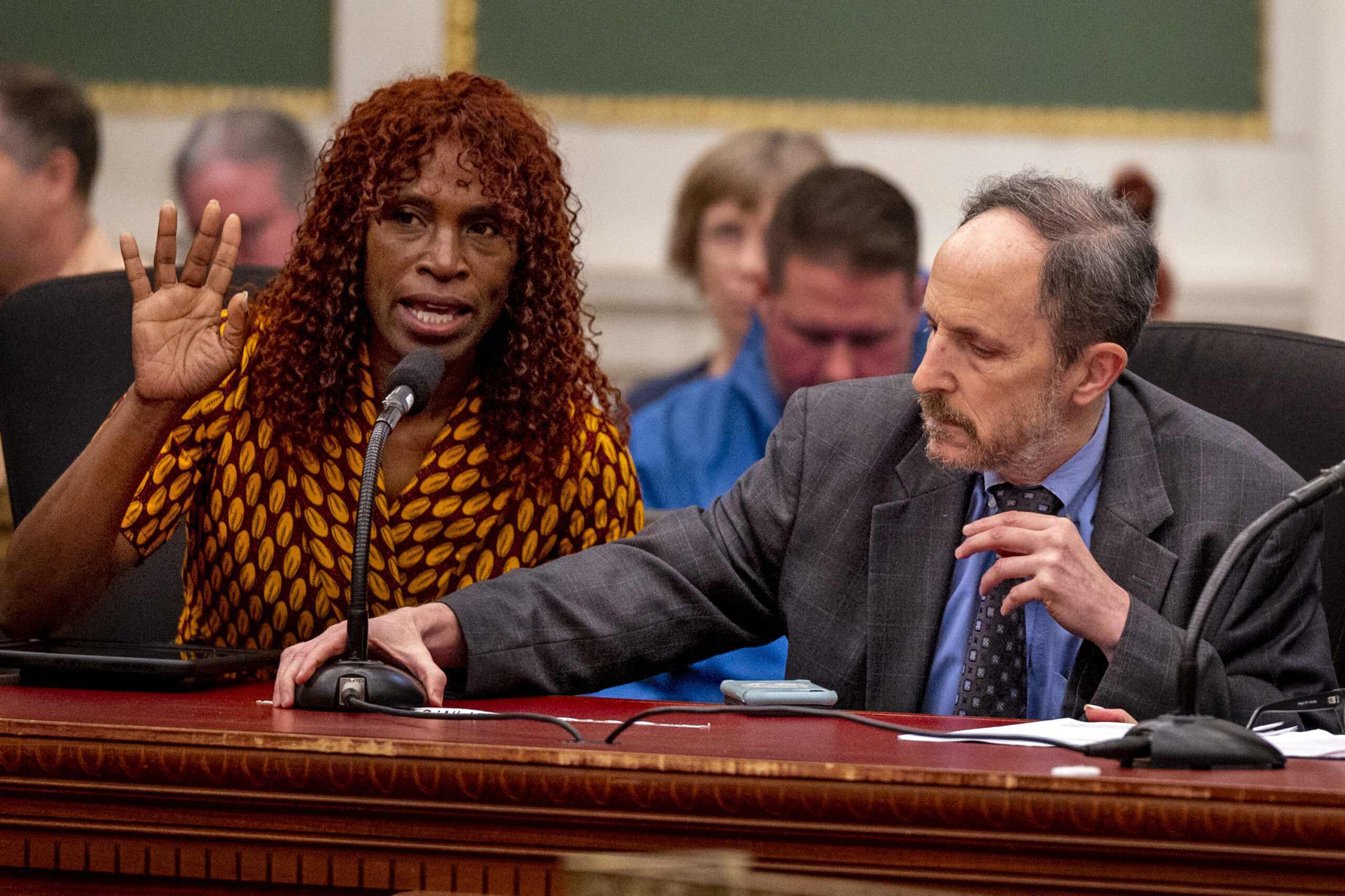
Valerie V. Gay (left) chief cultural officer with the City’s Office of Arts, Culture and the Creative Economy, and finance director Rob Dubow (right) testify at a Philadelphia City Council hearing, Aug. 8, 2024 on the collapse of the University of the Arts.
Valerie V. Gay, the city’s chief cultural officer, said it was the city’s view that funding for the two groups had remained flat from 2026 to 2027, since the base allocation stayed the same and it was only the added amount that did not come through — though she allowed that “absolutely I can see how it can be perceived.”
A ripple effect
The resulting cuts at both groups promise to be substantial. The Cultural Fund will be forced to reduce the number of grants it had been expecting to distribute in the coming year, from 332 to 232. It has changed its eligibility requirements, which will eliminate grants to a pool of midsize organizations currently eligible.
“It’s going to be a ripple effect. People are going to feel it and communities are going to feel it,” said Philadelphia Cultural Fund executive director Gabriela Sanchez.
“An investment in the Philadelphia Cultural Fund is more than a budget line item,” Sanchez wrote in a statement distributed by the group. “Funding to PCF represents how the city values neighborhood theaters, cultural centers, museums, arts education programs, festivals, dance companies, community storytelling initiatives, music programs, and cultural traditions that bring Philadelphians together. These spaces are where young people discover their creativity, where seniors find connection, where communities celebrate their heritage, and where residents gather across lines of difference.”
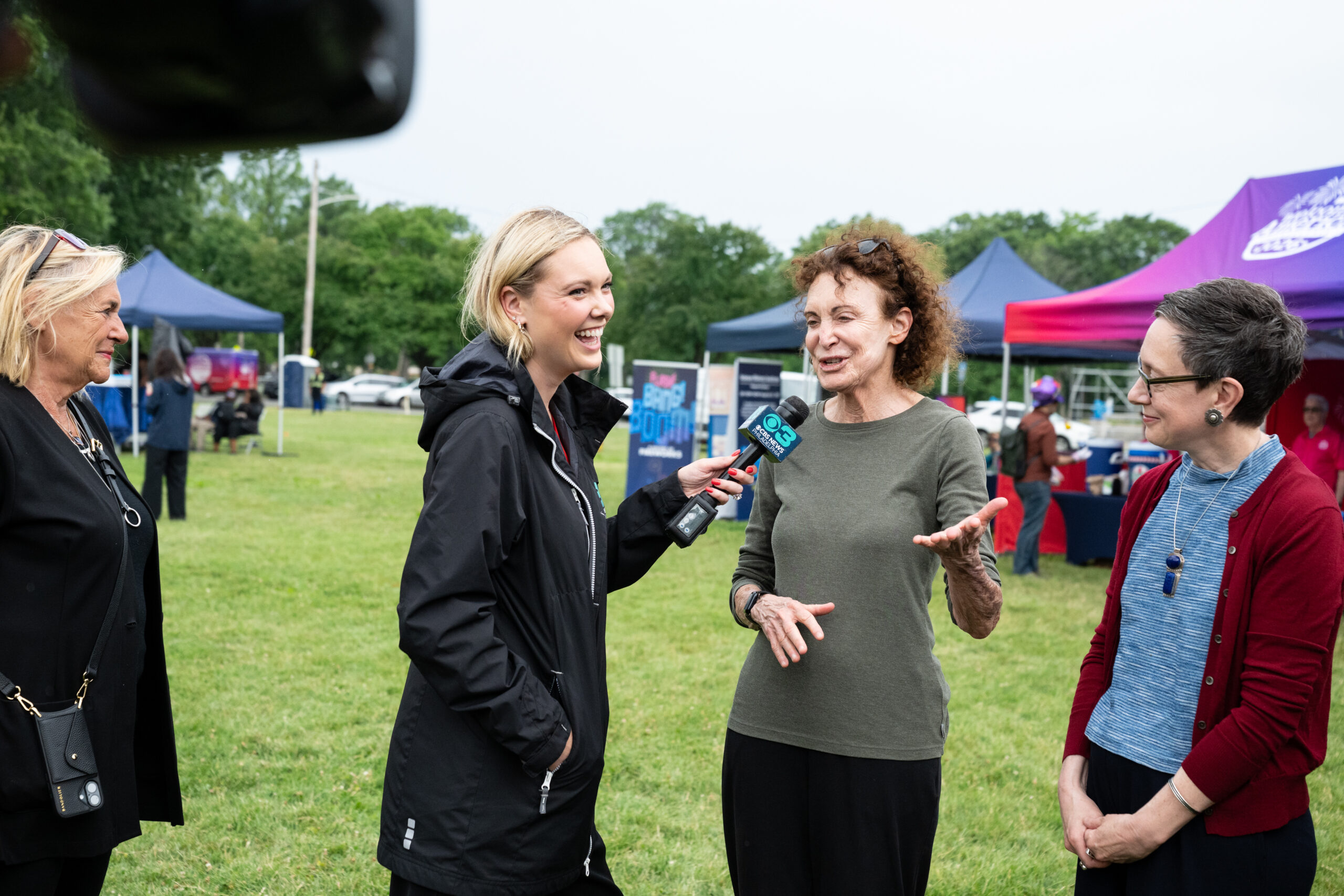
Jane Golden (center right) speaks with press at the Wawa Welcome America media preview for the Philly Fair 250, outside the Please Touch Museum in West Philadelphia, June 18, 2026. Mural Arts held a ceremonial unveiling of a 10-story-high mural replica, originally titled ‘CityKids Speak On Liberty,’ and created by Keith Haring.
Mural Arts director Jane Golden declined to comment, but an initial assessment from the group obtained by The Inquirer says that “hundreds of residents in at least 15 Philadelphia communities will lose the opportunity to develop public art projects,” and that opportunities for paid work, job training, and mentorship through the Mural Arts Restorative Justice program will be reduced by 25%.
Mural Arts will also have to cut by 75% its program of restoring and preserving the city’s murals, “putting at risk community landmarks that took years and significant public investment to create,” the impact statement reads.
Of the program reductions at both groups, Gay said: “I am always sad that any cuts are made or that any organizations are unable to do the work they thought they were going to be able to do. That’s always a sad time for us, and I’m looking forward to when we are a fully funded sector.”
A city spokesperson was unable to provide a full list of groups that in past years had received higher allocations after advocacy from City Council and others, but this year did not.
What’s behind the cuts
Aden says arts and culture has seen some significant recent “wins” from city government. Among them is the advancement of a referendum that, if approved by the mayor and then by voters this fall, would enshrine the city’s office of arts and culture, called Creative Philadelphia, in the City Charter.
The city has approved $500,000 a year to develop and implement a cultural plan for Philadelphia that would document financial needs and could identify potential pathways to establishing funding.
The ‘Ruth E. Carter: Afrofuturism in Costume Design’ exhibition at the African American Museum in Philadelphia, Nov. 1, 2025.
Sometimes the city’s support is for regular operations, and other times it is for specific capital projects. In an unusually large commitment, the city has pledged $50 million to the African American Museum in Philadelphia for its relocation to the Benjamin Franklin Parkway.
The city is providing nearly $32.5 million to arts and culture in FY27, according to a list provided by Parker’s office. While that total includes small items that might seem mundane — paying utility bills at various facilities, for instance — it also shows multimillion-dollar allocations to the Philadelphia Museum of Art, Dell Music Center, and Philadelphia Zoo.
But the arts and culture sector often finds itself fighting for adequate funding in the annual budget process. Arts leaders and others say it has been standard practice in recent memory that funding is listed at one level in the mayor’s proposed budget and after City Council testimony in budget hearings ends up being higher.
This year, the mayor “could have funded [the arts] at a higher amount,” as she did last year, but did not do so, Councilmember Rue Landau said.
The cuts came after a budget that passed without a series of tax increases proposed by Parker, including a $1 tax on rideshare services, after failing to win support from City Council. After Council signaled it would reject Parker’s tax proposals, the administration would not agree to any last-minute line items for new funding requests from lawmakers.
Councilmember Isaiah Thomas, a consistent arts supporter who, like Landau, is an ex-officio Mural Arts board member, said that with the lack of new tax revenue and the city’s extra allocation of $48 million to cover the Philadelphia School District’s budget shortfall, the funding pie for other allocations got smaller.
“This budget year, a lot of attention and advocacy went toward schools,” Thomas said. The funding cuts to Mural Arts and the Cultural Fund were “extremely unfortunate,” he said, “and I wish we could have done something different.”
The need for ‘predictable, stable, reliable’ funding for the arts
While the city’s budget is now final, there is another potential window of opportunity for funding through a midyear budget transfer process in which the city might see expenditures in certain areas coming in lower than expected, and then transfer money from those categories to other areas.
Asked whether funds might be restored through a budget transfer to Mural Arts or the Cultural Fund, Gay said:
“I think anything is on the table, but I also think nothing is guaranteed.”
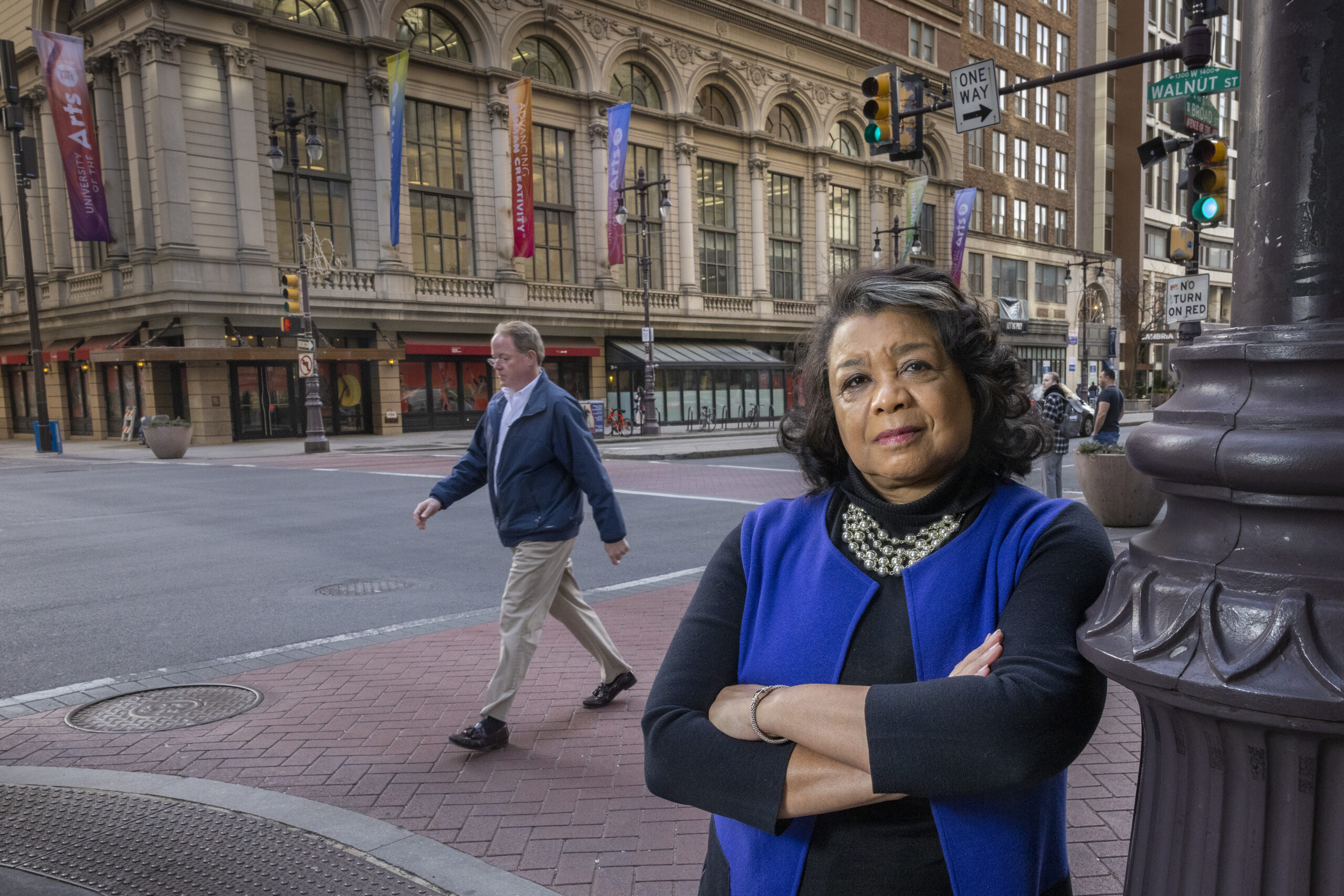
Patricia Wilson Aden, president and CEO of the Greater Philadelphia Cultural Alliance, at S. Broad Street and Walnut along the Avenue of the Arts, Feb. 15, 2023.
Any restoration of funds would happen after arts groups have already put cuts in place, and this kind of unpredictability “makes planning by these organizations very, very difficult,” Aden said.
“The practice of underfunding the arts and having Council and other entities have to go on an advocacy campaign to increase funding is illogical,” Landau said. “It is clear as day that we should be supporting the arts with additional funding every single year, so we don’t have to go through this and it won’t ever be a question mark for them.”
What is really needed, Aden said, is a dedicated arts fund in Philadelphia and the region.
“We’ve seen other regions benefit from this predictable, stable, reliable funding. And instead, here in Philadelphia, each year we have this conversation about increases and decreases and their impact. We are sometimes left to the will and whim of elected officials, and we would like to take the creative economy out of the political realm and put it solidly within our larger civic interest, so that it is stable and has the investment that is required to reach its full potential.”
Staff writer Anna Orso contributed to this article.
As president and chairman of a private school, we might seem out of place commenting on public policy. But recent state legislation that would undermine a vital Pennsylvania program — one that thousands of families and students depend on — compels us to speak up.
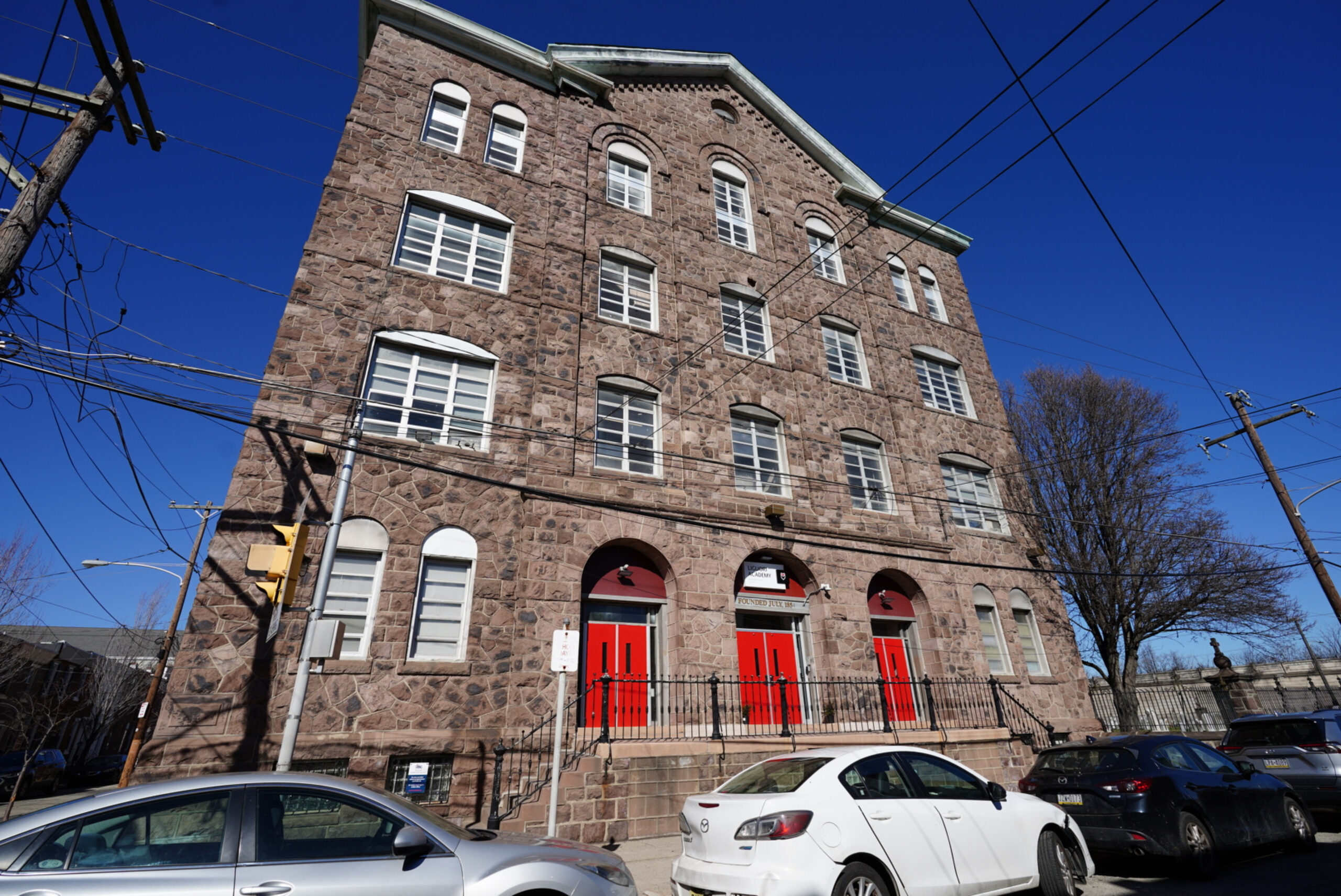
Conversations about education often focus on learning loss and declining academic performance, but students at our school, Liguori Academy, are moving in the opposite direction. Our students often arrive several grade levels behind, but they quickly recover and often surpass their peers.
And we have the numbers to back that up. This year, between 67% and 72% of our students, depending on grade level, demonstrated measurable growth in reading, gaining one and a half to more than two grade levels in a single school year. Many are now reading at a college level. In mathematics, between 58% and 74% of students also improved, with our ninth graders posting the strongest gains.
Conversations about education often focus on learning loss and declining academic performance, but students at Liguori Academy are moving in the opposite direction, write Michael Marrone and Joseph Marano.
Watching those students, who were so far behind academically, gain confidence, earn industry certifications, secure internships, and prepare for college and careers is a reminder of what is possible when students are given the support and opportunities they deserve.
And what has made this educational growth possible? It’s simple, really: Pennsylvania’s Educational Improvement Tax Credit program.
Unfortunately, state lawmakers may gut this life-changing program. The Pennsylvania House Education Committee passed legislation that would decimate the state’s wildly popular tax credit scholarship programs. Originally, House Bill 2632 proposed slashing $102 million from the Educational Improvement Tax Credit and robbing Pennsylvania kids of about 30,000 scholarships.
A committee amended the bill to avoid the cuts, but the updated bill still cuts tax credit levels, eliminates supplemental scholarships, hamstrings student eligibility, and imposes onerous taxes and regulations on scholarship organizations.
Critics of these programs — including many of the lawmakers sponsoring and supporting HB 2632 — will wrongly characterize this as a public vs. private issue. They claim the Educational Improvement Tax Credit “robs” funding from public education.
But nothing could be further from the truth. Although it may appear like a line item in the state budget, the Educational Improvement Tax Credit doesn’t use public funds. Instead, it relies on donations to scholarship organizations and the donors who receive a tax credit for their charity. Without the generosity of these donors, the Educational Improvement Tax Credit wouldn’t exist. If it went away, so would the philanthropy that funds it.
The timing of this bill is interesting, to say the very least. The Educational Improvement Tax Credit recently celebrated its 25th anniversary, having served more than 101,000 scholarships to kids across the state in conjunction with its partner program, the Opportunity Scholarship Tax Credit. Over their lifetime, these programs have awarded more than one million scholarships.
Despite this volume, there aren’t enough scholarships to go around. Even after awarding a record-level number of scholarships last year, nearly 70,000 scholarships went unfulfilled. But this isn’t because the students weren’t eligible; rather, state-legislated caps limit the number of available scholarships.
State lawmakers should take note: Pennsylvania families are demanding more, not fewer, scholarships.
These scholarships change lives and fuel academic success. The Children’s Scholarship Fund Philadelphia, one of the largest scholarship organizations in Pennsylvania, commissioned a report showing scholarship recipients from both programs outperforming their public and private school peers academically.
These scholarships provide equity for families struggling financially. The average household income for Liguori families, for example, is about $37,000, which is barely above the federal poverty line.
None of this happens without the Educational Improvement Tax Credit.
That is why what happened in Harrisburg recently should alarm every Pennsylvanian who believes every child — regardless of zip code or income — deserves a chance. This newly introduced legislation would take away much-needed scholarships not only from Liguori kids, but also from tens of thousands of Pennsylvania kids who worked hard to better themselves educationally.
As school leaders, we understand and welcome accountability. If scholarship programs are going to continue, schools must be prepared to demonstrate strong academic outcomes, sound financial stewardship, and compliance with program requirements.
But we have also seen the difference educational choice makes. We have watched students who arrived years behind their peers grow into young people ready for college and the workforce. That transformation is real — and the Educational Improvement Tax Credit made it possible.
Pennsylvania should be building more doors like ours, not slamming them shut.
Michael Marrone is the president and founder of Liguori Academy. Joseph Marano is chairman of the board of Liguori Academy.
Much of the offseason focus for the Eagles was the impending trade of A.J. Brown and new offensive coordinator Sean Mannion taking the reins of the offense. During spring workouts, though, no player seemed to have more buzz than new defensive back Riq Woolen, who joined the Birds’ secondary after four seasons with the Seattle Seahawks.
The length, speed, and size combination of Woolen was enticing enough for Howie Roseman to spend $12 million on his services for one season in Philly. With Quinyon Mitchell and Cooper DeJean’s emergence in Vic Fangio’s secondary at corner and nickel, respectively, Woolen has an opportunity to flourish at a spot where the Eagles’ defense struggled last season.
Combining his film in Seattle with some eye-popping statistics, here’s why the Eagles are excited about Woolen — and how his acquisition helped set up DeJean for safety snaps in Fangio’s base defense.
Sticky coverage
It’s easy to forget that before the Seahawks picked him in the fourth round of the 2022 draft, Woolen was a wide receiver by trade. The University of Texas-San Antonio product spent only his final two collegiate seasons at cornerback before entering the NFL.
The transition hasn’t always been seamless, though he splashed onto the scene as a rookie with six interceptions. Grabby tendencies at the top of routes and biting on double moves were setbacks in his second and third seasons in the NFL, but what he did for the Super Bowl-winning Seahawks in 2025 was particularly special.
Woolen allowed just 2.7 yards per target in man coverage last year, the best mark among defensive backs with 20 or more targets, according to Next Gen Stats.
Even on plays new #Eagles DB Riq Woolen doesn't get a great jam in man coverage or allows a free release, he has the speed to turn and run with most players in the NFL. His length also allows him to play through the catch point. Rep is never truly over for him even in a trail… pic.twitter.com/RyyU0ouEvs
Even when his attempt to disrupt a receiver’s route timing misses, or he ends up in a trail position, Woolen has the closing speed and length to make up for it. His 33⅝-inch arms are in the 97th percentile among NFL defensive backs, and his 78⅝-inch wingspan is 89th percentile.
Woolen allowed 3.2 yards after the catch and his average target separation, which measures the average distance between the receiver and the nearest defender at pass arrival, was 2.2 yards, per Next Gen Stats. Both ranked among the best of qualified defensive backs.
For a cornerback his size, Woolen can transition quickly out of his backpedal or shuffle, which allows him to break on passes thrown in front of him. He is not always able to flip his hips fluidly against shiftier receivers, but his closing speed allows him to stifle pass catchers after the catch or recover fully before the ball is thrown.
Woolen’s length allows him to physically dislodge the ball out of the hands of receivers, especially on routes breaking across the middle of the field. He finished with 12 pass breakups in 2025.
First thing I noticed buzzing through coverage snaps from new #Eagles DB Riq Woolen is how disruptive he can be driving down on throws, whether it be stops, curls, out routes, and dig routes. Utilizing his length is a big part of his game, and he is really physical at the catch… pic.twitter.com/RxOPl0zlwa
Erasing downfield passes was a big factor in Woolen’s strong final season in Seattle. The defense as a whole prevented offenses from generating explosive plays, and Woolen’s presence was a factor.
Across his career on deep passes, Woolen had an expected points added of plus-10.5 on deep passes, but that number fell to plus-0.5 in 2025, according to TruMedia. He showed the ability to squeeze vertical routes toward the sideline, run stride-for-stride with receivers, and get his head around in coverage before the ball arrived.
On nine targets of passes that traveled 20 or more air yards, Woolen allowed just two catches and had one interception as the nearest defender, per Next Gen Stats.
On passes that traveled 20+ air yards last season, Riq Woolen allowed just 2 catches on 9 attempts and had one interception. He does a nice job squeezing deep routes toward the sideline and staying in the hip pocket of receivers downfield. pic.twitter.com/3dbBROXhih
Avoiding penalties should still be a priority for Woolen in coverage. He was charged with nine accepted penalties last year, which tied for sixth among NFL defensive backs. As teams will likely throw away from Mitchell’s side of the field in 2026, Woolen should expect to be tested early and often next season.
DeJean’s strong run support
If there’s an area of Woolen’s game that has been a glaring weakness, it’s his run support. He is an arm tackler and finished with 11 missed tackles across 16 regular-season games in 2025, according to Pro Football Focus.
Meanwhile, as DeJean moves from corner to safety in Fangio’s base defense this season, one thing that won’t change is the All-Pro’s willingness to tackle in the run game. Even as offenses deployed heavier personnel (two or three tight ends) to take advantage of the Eagles’ light boxes on defense (six or fewer players between the tackles) DeJean’s presence at nickel still made the Eagles difficult to run on over the last two seasons.
On plays with at least five defensive backs on the field, which included DeJean at nickel since 2024, the Eagles had a defensive EPA on designed rushing attempts of plus-0.15 and a 62.4% defensive rushing success rate, according to TruMedia.
One area I think Cooper DeJean will benefit the #Eagles being at safety in their base defense is his run support. Even when he bounced between outside corner (in base) and nickel last season, he consistently made plays in the run game.
He will likely fill the role vacated by Reed Blankenship, who signed with the Houston Texans this offseason. Blankenship excelled at filling the alley from his safety spot in the Eagles’ secondary, and while the team is bullish on Drew Mukuba’s development heading into his second year, he’s not as consistent a tackler in space as DeJean, nor is he as physical.
DeJean’s move to safety in the base defense also allows the Eagles to have their best four defensive backs on the field at once and could signal less reliance from Fangio operating in his nickel defense on early downs. It also could open the door for more flexibility in personnel matching against teams that are looking for formational advantages.
DeJean and Woolen have shown the ability to defend different body types of pass catchers. In Seattle, Woolen would sometimes defend tight ends and slot receivers in addition to traditional outside receivers at outside corner. DeJean, playing outside corner and nickel last season, faced similar matchups.
Most of Riq Woolen's snaps came at outside corner and I'd expect that to remain true with the #Eagles, but the #Seahawks lined him up at nickel 22 times last season, and seemed matchup dependent. Spent some time defending TEs (Kittle and McBride) and some hybrid/big slots like… pic.twitter.com/c8z6SVboCY
Woolen, DeJean and Mitchell could prove to be one of the best trios in the NFL, and they’ll have challenging games to make their case, from facing the Cowboys twice to going up against the Rams’ core. There’s reason to be optimistic about an Eagles secondary that added a talented player in Woolen who could cash in big-time next offseason, whether it’s in Philly or elsewhere.
There’s a downside to the championship-or-bust mentality that permeates this city. The further one looks into the future, the less visceral the present becomes. One of the local radio stations posted a poll the other day. It asked Phillies fans if they were enjoying the team’s current run of success, or if they were waiting for October. The question was more than fair. Incisive, even. Anyway, are you enjoying your summer or is it just a prelude to winter?
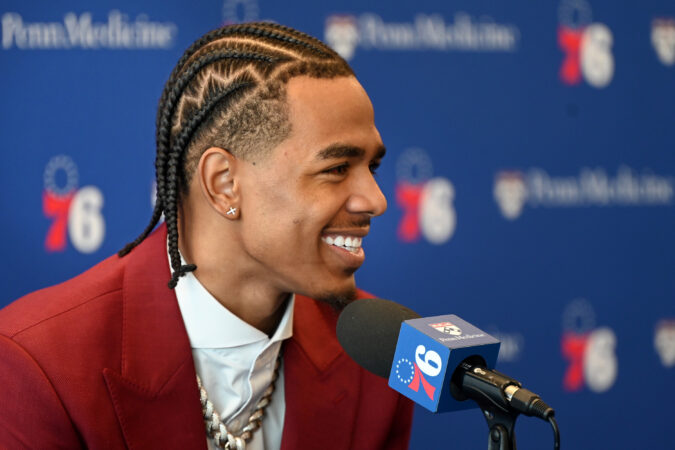
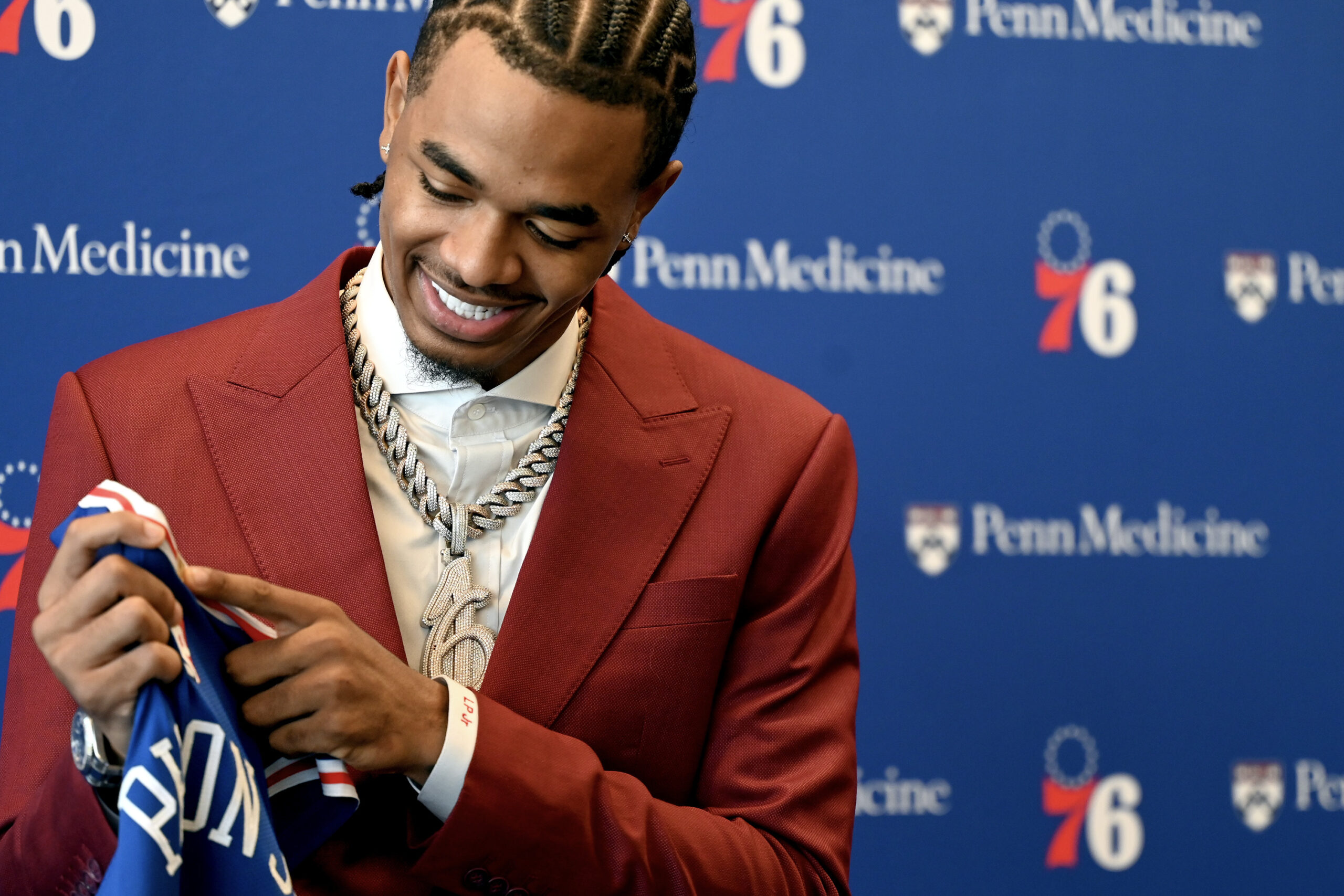
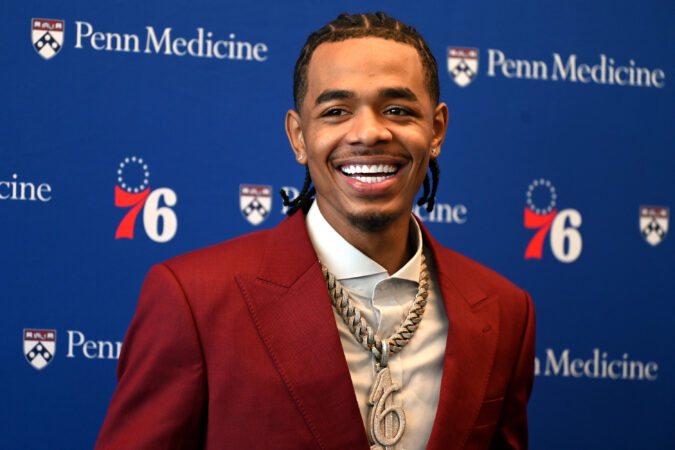
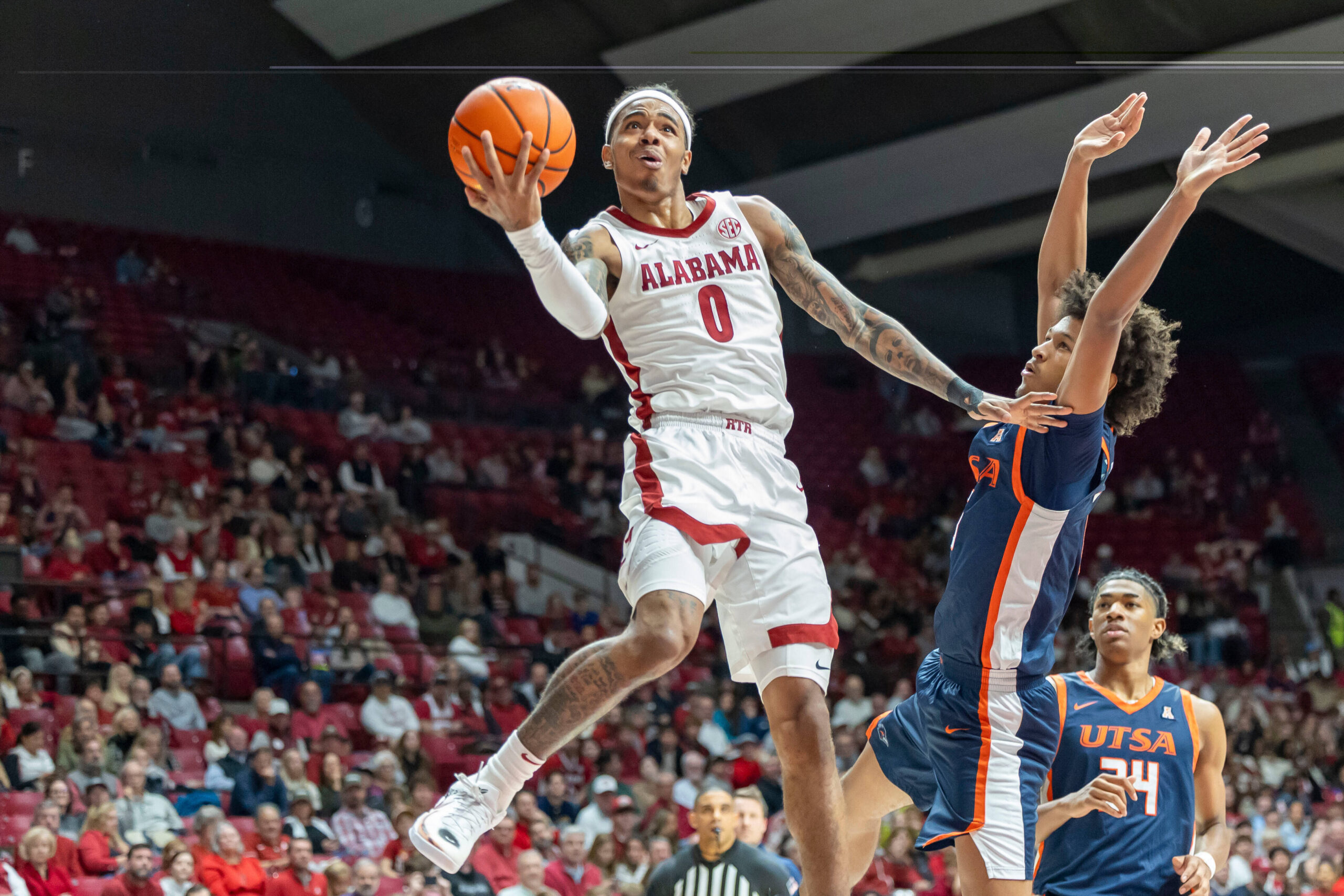
I’m thinking about these things with regard to the Sixers’ decision to spend a first-round pick on Labaron Philon Jr. By all accounts, the organization made a no-brainer of a move in selecting the former Alabama star. Most experts ranked Philon much higher than the 22nd-best player in the draft. An offensive dynamo who averaged 22 points and 5 assists in his sophomore season, the 20-year-old was available to the Sixers thanks to a draft that was deep on overall talent and especially so on talent matching Philon’s profile. It is rare for a playoff team to draft a player as late as No. 22 and expect him to contribute meaningful minutes as a rookie. It is even rarer to expect him to do so in dynamic fashion. The Sixers expect both out of Philon.
“My initial thoughts are he’s a really talented scorer, right?” Sixers coach Nick Nurse said on draft night. “Really, really fast and explosive and can really, really get it in the bucket.”
The Sixers selection of Philon did not come without some raised eyebrows, most of them from folks wondering about the end game. Didn’t the Sixers just trade away Jared McCain, another undersized guard whose upside would be capped by his inability to share the court with Tyrese Maxey and VJ Edgecombe? Is Philon really the kind of player who will meaningfully improve the Sixers’ chances of fielding a championship team around Edgecombe and Maxey after Joel Embiid and Paul George are gone? Where, exactly, does Philon fit in a world where the best NBA teams are physical and positionless and can switch on defense 1 through 5?
The answer: who cares.
The healthiest way to look at the Sixers right now is to forget about the bigger picture. They are not chasing a championship right now. Not next year, anyway. They are no longer all-in. The mission statement is no longer parade-or-bust. The Sixers have operated in that mode for most of the last decade. It is exhausting even when it is warranted, which it currently is not.
Could they surprise us? Sure, there’s a chance. It would involve a lot of ifs: Edgecombe taking a big Anthony Edwards-sized leap toward his full potential, Maxey continuing to take his remarkably consistent steps toward greatness, Embiid and George consistently being the players they were when they were at their best in the postseason. If all of that happens, then, yeah, maybe the Sixers could belong among the Knicks and the Pacers and the Heat and the Cavs and the Celtics and have as good of a shot as any of them at the NBA Finals. Maybe they could outpace the Hawks and the Hornets and the Wizards and the Raptors. Sure. If everything breaks right, then maybe they could.
Mike Gansey said first-round pick Labaron Philon Jr. has “got good instincts, good hands.”
The more likely scenario is that the Sixers can be a fun team to watch on a nightly basis, a team that can carry a city through late-winter doldrums between the Super Bowl and opening day. That should be their goal right now. Build toward a championship, and put out a good product while doing so.
The strongest argument for Philon is that he can play a significant role in that mission. Can a 6-foot-2, 176-pound guard have a role on a championship team that is built around Maxey and Edgecombe? Sure. Miles McBride had a role on a team led by Jalen Brunson. The Thunder traded for Jared McCain despite having Cason Wallace, and then they drafted Bennett Stirtz. De’Aaron Fox entered the NBA weighing less than Philon with similar length measurements. Likewise with Monte Morris, who averaged over 20 minutes per game in the Western Conference finals while playing alongside Jamal Murray and Gary Harris.
“He’s on the slighter side — he has to get stronger,” Gansey said. “But if you look at his freshman year at Alabama, he really guarded. I think this year he had to carry a huge offensive load, so I think he took a little step back there, but I know it’s in him. He’s got good instincts, good hands. He’s tough. He’ll get into people. He’s competitive. We just can’t have enough guards. In Cleveland, we needed guards, because it’s the playoffs, it’s half court, you need to go get a bucket. I think Labaron can go get one any time he wants.”
That last point is a significant one. Buckets are the point of basketball. It is fun to watch guys who can get them at will. McBride is fun to watch. McCain is fun to watch. If Philon is the guy McCain was for the Thunder this postseason, then the Sixers will at least have two additional years of him plus a few extra second round draft picks.
“You need as many guards as you can that can go create a shot,” Gansey said. “Tyrese was No. 1 in minutes last year, VJ was up there as a rookie … we need depth at that guard position. I think he can come in and play some minutes and take a load off those two. I think he can play with Tyrese a little bit.”
If that’s what happens, then it is a win, even if it isn’t a direct line to a title.
The NBA has always been the pro sports league whose fans are most susceptible to the existential malaise that can accompany the clear understanding of a team’s place in the grand scheme of things. Only 12 of the last 36 championships have been won by a team that was not led by Michael Jordan, Kobe Bryant, LeBron James, Steph Curry, or Tim Duncan. Dating back to 1991, seven teams account for 28 of 36 titles. That reality is what inspired The Process. The Process led to a desperate quest to make it pay off. The best way to watch the Sixers the next couple of years will be with a little less desperation.
Two environmental activist groups say they plan to organize resistance against a plan to build a liquefied natural gas (LNG) export facility in Eddystone, a small borough in Delaware County.
They say the facility would threaten not only the environment, but also public safety.
The Delaware Riverkeeper Network and Chester Residents Concerned for Quality Living (CRQL) said during an online meeting Wednesday that documents show negotiations have beenhappening behind closed doors for more than a year.
They cited a newly released tranche of documents that show the plan has progressed with nondisclosure agreements (NDAs) with state officials.
More than a year ago, U.S. Sen. David McCormick (R., Pa.) wrote an opinion piecein the Washington Times publicly announcing the $7 billion project by Penn America Energy to build the terminal along the Delaware River in Eddystone.
Tracy Carluccio, deputy director of the nonprofit Delaware Riverkeeper Network, said the documents show that the administration of Pennsylvania Gov. Josh Shapiro and Eddystone officials have been talking to, or in negotiations with, a developer for at least a year.
(function(){function e(){window.addEventListener(`message`,function(e){if(e.data[`datawrapper-height`]!==void 0){var t=document.querySelectorAll(`iframe`);for(var n in e.data[`datawrapper-height`])for(var r=0,i;i=t[r];r++)if(i.contentWindow===e.source){var a=e.data[`datawrapper-height`][n]+`px`;i.style.height=a}}})}e()})();
The environmental groups say Eddystone Borough officials initially denied open records requests about those negotiations, prompting a yearlong legal mediation.
The planned facility aims to produce 7.2 million tons of LNG per year from Pennsylvania’s rich Marcellus Shale deposits, Carluccio said, based on a presentation by Penn America to Eddystone Borough on March 7 that was obtained through a records request.
“There have been no public meetings or public disclosure about the proposed project,“ she said, adding that “the public knows nothing about this, and Eddystone Borough knows all about it.”
Carluccio said nondisclosure agreements (NDAs) and confidential meetings involving high-level state and local officials have helped shield the project from public scrutiny.
The Pennsylvania Department of Environmental protection said it had not had any pre-application meetings regarding a proposed LNG export facility and no permits for such a facility are under review.
In a statement from Eddystone Borough, officials said they are aware of the “public discussion” regarding a potential LNG facility. The statement said that members of Borough Council met with representatives of the project last year “for informational” purposes.
“Those meetings did not constitute approval or endorsement of any future development,” the statement said. “No approval action is currently before Borough Council.”
If an application is submitted, the statement said, the borough would conduct a “thorough review” and that the process would be open to the public.
Pa.’s drive toward LNG
State, public utility, and elected officials, as well as unions, have been working toward locating an LNG facility inSoutheastern Pennsylvania, although no site has been formally proposed.
The Philadelphia LNG Task Force was created from legislation introduced in 2022 by State Rep. Martina White (R., Philadelphia) to explore the possibility of the first liquefied natural gas export facility along the Delaware River. Former Gov. Tom Wolf, a Democrat, signed the legislation to form the task force.
Although McCormick noted Eddystone as a location, no official planning documents have beensubmitted to Eddystone or the Federal Energy Regulatory Commission (FERC).
According to records obtained through Pennsylvania’s Right to Know Act, the Pennsylvania Department of Community and Economic Development (DCED) entered into a formalized nondisclosure agreement with Eddystone Energy LLC in October 2025.
The DCED issued a statement to The Inquirer saying that it “routinely discusses potential projects with companies seeking to do business in the Commonwealth.”
The agency said the discussions are confidential because they involve proprietary information from companies.
“Maintaining confidentiality in such discussions is common practice in the business development industry across the country,” the statement said.
A draft NDA was additionally distributed between Eddystone Borough Council and Penn America Energy Holdings, though it appears it was never officially finalized, Carlucci said.
Advocates say that Franc James, CEO of the now-dissolved Penn America Holdings LLC, has been the primary figure driving the LNG project forward, alongside an array of state politicians.
On Wednesday,Carluccio asserted James isbehind Eddystone Energy LLC, a Delaware corporation formed in May 2025.
Internal records reveal that meetings have involved representatives from the offices of Shapiro, State Sen. John Kane, McCormick, and State Rep. Dave Delloso, as well as Eddystone Borough officials.
For example, a document from Shapiro’s office shows there was an hourlong meeting in February with Eddystone Mayor Ronald Hughes, Borough President William Stewart, Kane, James, multiple union representatives, and Technip Energies, an international energy infrastructure developer with a specialty in LNG.
And James wrote an email dated July 11 to Samuel Robinson, Shapiro’s deputy chief of staff, stating that the “LNG Eddystone team” would attend the Pennsylvania Energy and Innovation Summit that same month in Pittsburgh. The summit was organized by McCormick.
Community reaction
An LNG facility along the Delaware River waterfront in Southeastern Pennsylvania has been discussed for years with James’ Penn America Energy Holdings, also referred to as Penn LNG.
Though no location had been firmly named, it was initially believed Chester would be the host. However, that location received massive pushback from residents led by Zulene Mayfield, founder of the CRQL advocacy group, and resulted in a political turnover in the city. No project was ever formally proposed for Chester.
The environmental advocates say the plan for Eddystone is well underway despite the lack of public input. Mayfield said she plans to organize Eddystone residents to oppose it.
“This project is already rolling, that’s what we’re telling you,“ Mayfield said Wednesday in the webinarshehosted withCarluccio. ”The attempt is already being made to put it right in Eddystone.”
Mayfield and Carluccio said the borough is too small to host a large LNG export facility, which typically span 1,000 acres. The borough is one-square mile.
They also fear that an explosion or fire could not only reach neighboring towns but also stretch across the river to New Jersey.
Drexel men’s rowing has long dominated on the Schuylkill and Cooper Rivers, but now, it will have to navigate international waters.
The Dragons are racing in the Henley Royal Regatta, which takes place on the River Thames in Henley-on-Thames, Oxfordshire, England. They will compete in time trials on Saturday before they begin racing on Wednesday in an event that continues through July 5.
Drexel won its fifth consecutive points title at the Jefferson Dad Vail Regatta in May, with the varsity eight boat reclaiming first place for its fourth top finish in five years. Head coach Matt Weaver said throughout the season that each race has felt like preparation for the Henley Regatta. The Dragons also competed at the IRA National Championship at Gold River in California three weeks after the Dad Vail.
“The Dad Vail was the deepest field ever this year, competitors from all over the country and even into Canada, so we feel like that prepared us really well,” Weaver said. “and then [since IRA we’ve] kind of been doing a training camp here in Philly with some good practices. We did some races against Vesper Boat Club, and we’re excited, and we’re going to feel good heading into Henley.”
Making the trip to England for the Henley for the first time in four years, the men’s team has been working on fundraising and logistics since the 2022 trip ended.
And since January, the team has been in collaboration with Drexel fashion design professors Liz Goldberg and Jaeyoon Jeong, along with three students, to design the blazers that the rowers will wear at the regatta.
“We’re really proud to have these designed and made here at Drexel, and in Philadelphia, specifically,” Weaver said. “I think there’s probably never been a rowing blazer that’s been specifically designed and constructed in Philly brought over to Henley, so probably the first of its kind there.”
With the program taking a trip overseas, Weaver said the rowers have focused on jet lag protocol ahead of their flight to make sure they are adjusted to the time zone.
During their day off on Sunday, the Dragons plan to roam London, Weaver said, hoping to gain educational and cultural experiences, but the focus is always on rowing and their upcoming races.
This is the first time Weaver is making the trip since becoming the head coach ahead of the 2023-24 season. He has, however, done it a few times as an assistant coach at the high school and college levels. He’s seen how the trip “pays huge dividends” for the following season, from connecting in races to the team living together in a shared house.
And it offers a new experience in terms of race format.
Unlike the other regattas the Dragons have participated in this season, Henley features a head-to-head, bracket-style format. Weaver described it as “a little bit like March Madness,” with the crew hoping for some upsets, and having to bring their best every day. The hope is that the Dragons make it to next weekend, but it all depends on their draw, Weaver said.
Drexel had head-to-head races against Columbia, Cornell, and Navy this season, but did not have the bracket style that Henley uses. In the head-to-head races, the varsity eight won against Columbia and Navy but fell to Cornell.
Drexel men’s rowing has three boats competing in the Henley Royal Regatta, which starts on Saturday with time trials.
The varsity eight is one of three Drexel boats racing in England.
The eight will be competing for the Temple Challenge Cup and face other college entries from around the world. The Dragons will also bring a coxed four to compete for the Prince Albert Cup, another college event. The third boat is a pair competing in an open event, which is the only pair event of the regatta and includes Olympians and high schoolers. The pairs race is for the Silver Goblets & Nickalls’ Challenge Cup.
“It’s an opportunity for us to get out and race some of the best crews in the world, even outside the U.S., so for us, it’s definitely a unique experience,” Weaver said. “This will set us up really well for next season. We return like 49 of the 55 guys that were on our team. So, the guys that are making this trip are setting the tone for next year.”
The 76ers weren’t a lock to make a selection in the NBA draft, especially after former president of basketball operations Daryl Morey made it clear that he traded Jared McCain to the Oklahoma City Thunder with the intention of flipping the first-round selection they received in return.
But the hiring of Mike Gansey in that same role brought a different philosophy, as the Sixers opted to keep their ears open to potential trades while also eyeing the best player available at No. 22. That turned out to be Labaron Philon Jr., an all-American at multiple levels who slipped on Tuesday night after previously being viewed as a lottery pick.
Philon, a 6-foot-3, 176-pound guard, will join a promising backcourt led by Tyrese Maxey and VJ Edgecombe. Both players FaceTimed Philon on draft night and welcomed him to the team before also posting him on their personal social media profiles.
His brand of basketball will be welcomed by a Sixers team that needed better ballhandling and outside shooting.
We have plenty of time to get to know Philon on the court. Let’s take a beat to learn what he’s like away from it.
After winning Alabama Mr. Basketball, Labaron Philon Jr. found his way to the Crimson Tide.
He’s an Alabama legend.
Philon was a three-year starter at Baker High School in Mobile, Ala., where he picked up every accolade possible. Philon averaged 35 points, 6.2 rebounds, and 3.9 assists as a junior, won Class 7A Player of the Year twice and was named Alabama Mr. Basketball.
He added a little spice to the Alabama-Auburn rivalry.
Philon’s recruitment was a big deal in the state of Alabama as he became the first Mr. Basketball to commit to Auburn. That changed shortly after, however, after changes to the staff led Philon to withdraw his commitment. He then signed with Kansas before reopening his recruitment one final time and joined the Crimson Tide. That, of course, added a little bit more juice to the legendary rivalry between Alabama and Auburn.
The Crimson Tide came out on top this time, though, as Philon played a large part in their Elite Eight appearance in 2025 and shifted to a starring role as they reached the Sweet 16 in 2026. Philon also had a 3-1 record against the Tigers in his two college seasons.
He made a big jump as a sophomore.
Philon has described himself as a “ball hawk” on defense, and that is the role he played as a freshman with Alabama. While star Mark Sears led the Crimson Tide during their Elite Eight run, Philon averaged 10.6 points, 3.3 rebounds, 3.8 assists, and 1.4 steals.
That flipped in his sophomore season as Philon became the focal point of the offense. He made a big jump to 22 points, 3.5 rebounds, 5 assists, and 1.2 steals. A major part of Philon’s rise was his decision to endure the draft process, take feedback, and apply it in his sophomore season, during which he made a concerted effort to improve his three-point shooting and playmaking.
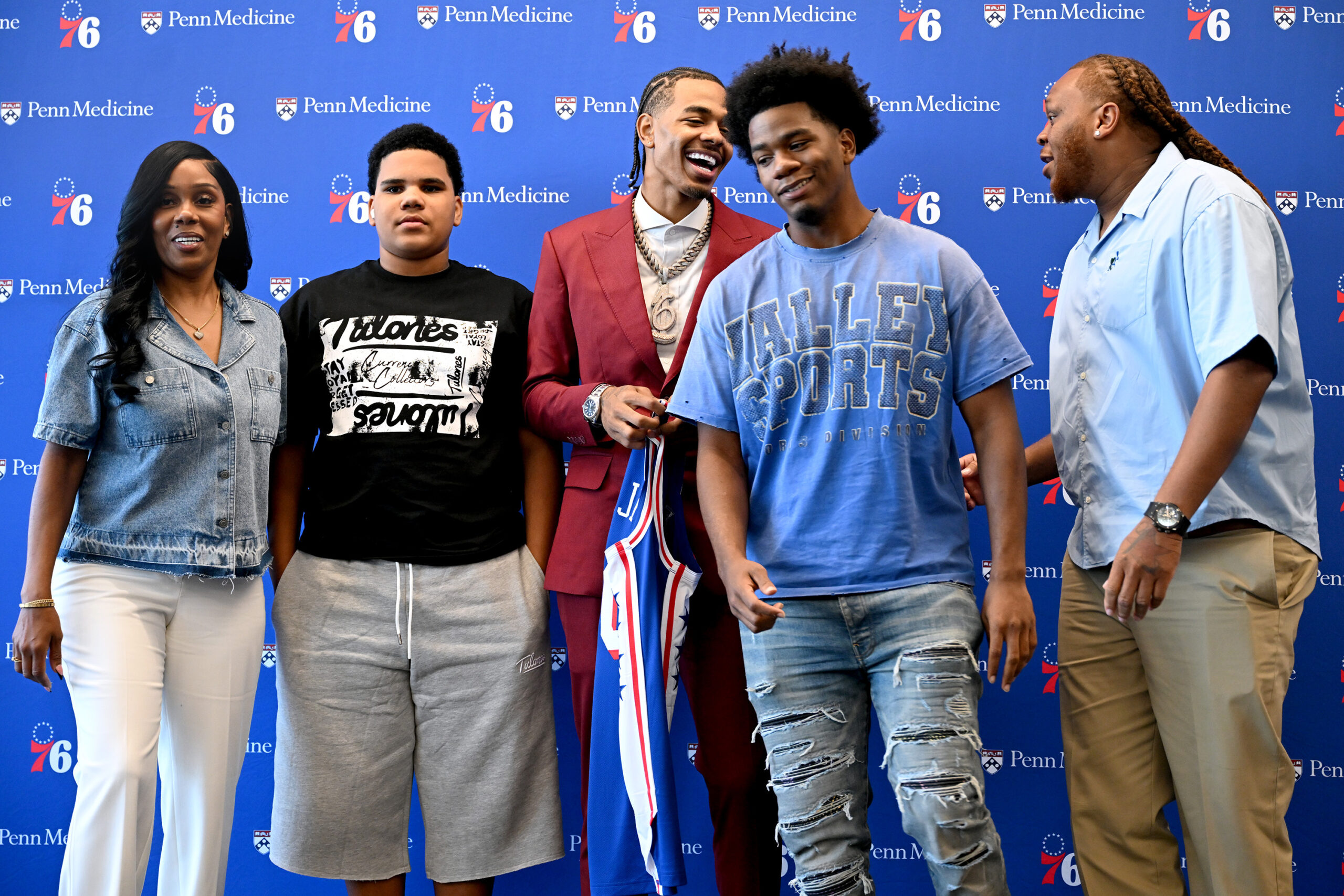
Sixers first-round draft pick Labaron Philon Jr. poses with his family after he was introduced at the team practice facility on Thursday in Camden.
He slipped on draft night.
Philon was considered a potential lottery pick and he appeared on mock drafts as early as No. 16. Yet he sat in the green room watching his peers get selected before him. When the Sixers’ pick came up at No. 22, they considered Philon the best player on the board, and his wait came to an end. The reaction from Philon made it clear that he either expected to be selected or was simply overcome with emotion as tears formed while he hugged family members.
He’s close to rapper NoCap, another Mobile native.
Philon opted for a classic look on draft night, sporting a black and white suit and black-rimmed glasses. One accessory stood out, however, as he sported a large “16″ chain over his chest. Rapper NoCap, a fellow Mobile native, lent him the piece a couple of weeks ago for his big night. So it was fitting that he played music from NoCap and rap artist Lucki to start his day as he prepared for the draft.
Each Friday, Inquirer photo editors pick the best sports images from the last seven days. This week, the World Cup craziness continues — but at least there were no more run-ins with the Rocky curse. On Monday, a powerful thunderstorm temporarily halted the fun in South Philly during the France-Iraq match, but fans — and even a French radio crew — weathered the storm and finished the game.
Across the street, the Phillies hosted the Mets before heading down to Washington for a couple of their craziest games of the season. And out in Amish country, we learned that volleyball is taken very seriously. Here’s a look back at some of our favorite photos from the week:
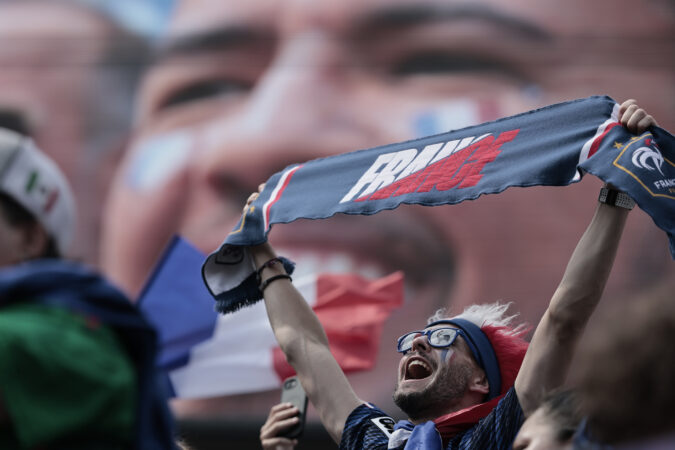
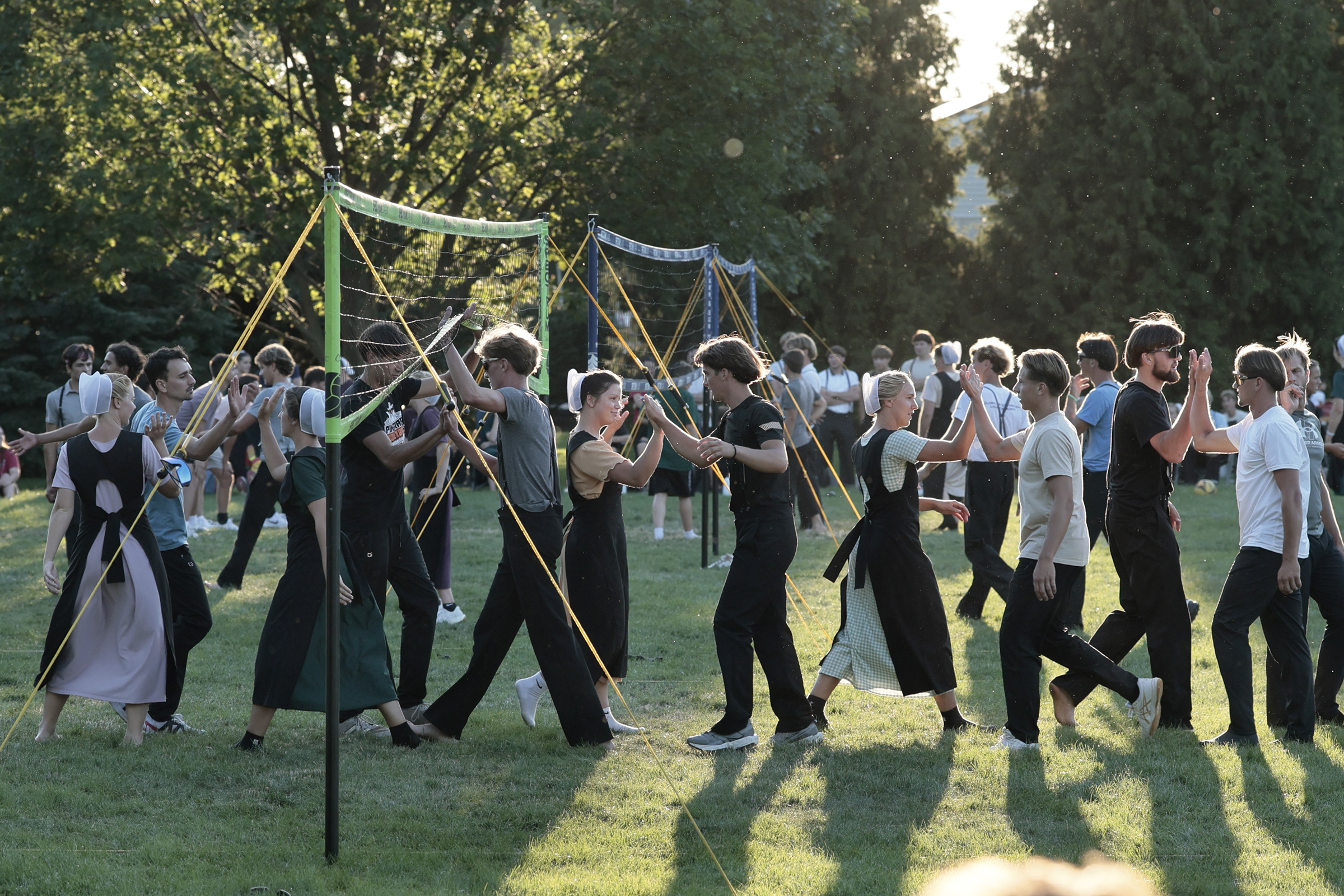
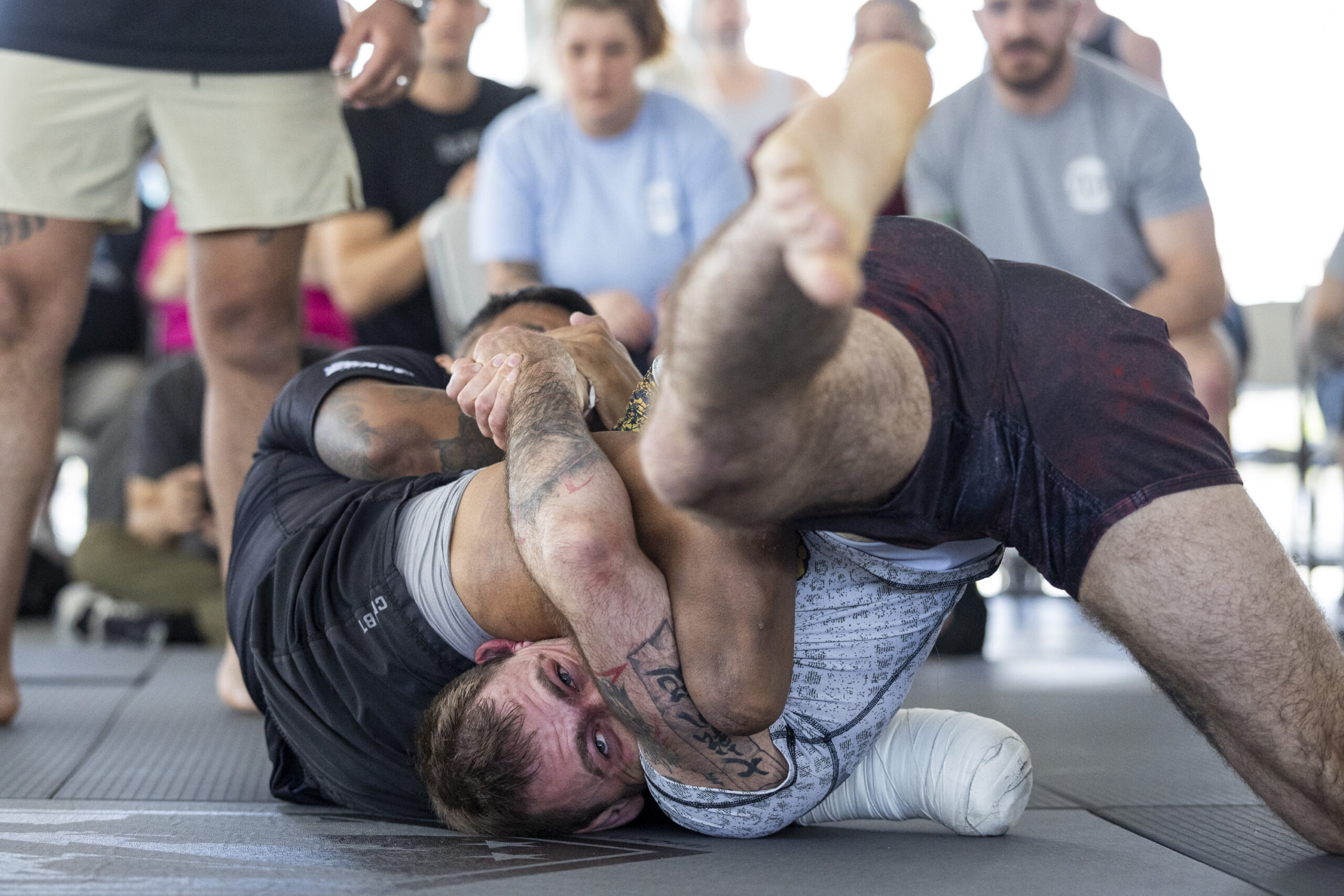
An Amish woman serves the ball during a volleyball match at the Heritage Days Co-ed 6’s Volleyball Tournament at Intercourse Community Park in Gordonville, Pa.Teams high five and shake hands after a volleyball match during day one of the Heritage Days Co-ed 6’s Volleyball Tournament at Intercourse Community Park.Phillies third baseman Alec Bohm backs off from a inside pitch from Mets reliever Austin Warren in the fifth inning of Sunday’s 6-2 win.Bryce Harper celebrates his triple against the Mets Saturday that clinched the first cycle of his career. Kaamil Nelson (left), a strong safety and wide receiver at Pennwood High School, and Semaj Pridgen (second from left), a wide receiver and defensive back at Vaux Big Picture High School take part in a friendly tug of war. The two 17-year-old Philly natives were on hand for the Open Door Abuse and Prevention youth football clinic at Mastery Charter on Saturday.Kamden Cintron, 11, ran the 40-yard dash in 6.3 seconds at the clinic, which featured an appearance from Eagles first-round pick Makai Lemon.On the USS New Jersey, Pisey Tan (top), 46, of South Philadelphia, a sergeant in US Army, has James Mevoglioni, 26, of North Jersey in an arm lock during their Jiu Jitsu match at an event on Saturday for the We Defy Foundation in Camden.France star Kylian Mbappé walks off the field during a weather delay at the end of the first half of his team’s win over Iraq Monday. The delay lasted over two hours.Prior to the rain arriving, France took a 1-0 lead over Iraq, causing Jimmy Coilliot of Lille, France, to dance in celebration.Brazil fans Miguel Sosa and his son, Enzo, of Nebraska, were in Philly for the team’s win over Haiti on Friday night.Fans cheer for Iraq from the stands before their team’s game against France.Haiti fans Roby and Mama Cristin, of New York, attended Friday’s game against Brazil in South Philly.Brazilian goalkeeper Alisson Becker makes a save in the second half as Brazil beats Haiti, 3-0.
Two hundred and fifty years after the Declaration of Independence was signed in Philadelphia, nearly 50% of Philadelphians said the most important “new revolution” the city needs to lead is “closing the educational and economic wealth gap,” according to a new CityView poll by Suffolk University and The Inquirer.
The poll of 500 Philadelphians living in all 66 city wards was conducted between June 16 and June 20. The margin of error was 4.4 percentage points.
A majority of those who supported eliminating barriers to education and economic opportunity — 57% — were women, while respondents aged 18 to 24 supported the educational/wealth “new revolution” at the same percentage.
Mai Miksic, executive director of the nonprofit advocacy group Children First in Spring Garden, said she “loved” to see poll results like these, but was not surprised by them.
“From speaking with parents, I know that moms are incredibly aware of the gap between how kids are educated here and future prosperity,” she said. “Mobility and economic security really resonate with them.” As for young people, she said, “it’s important because this is directly about their lives.”
The poll’s other findings showed that 17% of Philadelphians felt that it was more important to support “revolutionizing community-led public safety”; 14% were behind making the city “the top hub for technology and medical innovation”; and 12% wanted to fight for “clean energy and green urban spaces.”
It makes sense that poll respondents linked education to increased prosperity. Philadelphia residents with a bachelor’s degree had an average annual income of $64,205 — more than twice the income of residents with less than a high school diploma, who earned about $29,000, according to estimates from the Census’s 2023 American Community Survey.
High school graduates in Philadelphia make an average salary of about $44,077, more than 30% less than a college graduate, according to Zip Recruiter.
Healthcare a right?
In another poll question connected to the theme of America’s creation, city residents were asked, “If the Framers of the U.S. Constitution rewrote the document in Philadelphia today, what right should be added first?”
Nearly 38% of respondents named “the right to affordable, high-quality healthcare,” as their first pick followed by ”secure, affordable housing for all” (24%); then — echoing the “new revolution” poll answer about schooling and wealth — “equitable, fully funded public education” (15%); and finally, “a safe, healthy environment and clean air” (nearly 13%).
Ann Marie Healy, executive director of Philadelphia Health Partnership, believes healthcare is very much a right. The foundation, located in Center City, is committed to improving the health and well-being of people in Philadelphia.
“Everyone, whether you’re a citizen or not, should have a right and opportunity to access quality healthcare in a manner aligned with their beliefs,” Healy said.
This is change “that could take generations,” Healy acknowledged. It will require a combination of harnessing new technologies and finding alternate, untraditional ways of administering healthcare, such as relying more on nurse practitioners and tools such as telehealth.
(function(){function e(){window.addEventListener(`message`,function(e){if(e.data[`datawrapper-height`]!==void 0){var t=document.querySelectorAll(`iframe`);for(var n in e.data[`datawrapper-height`])for(var r=0,i;i=t[r];r++)if(i.contentWindow===e.source){var a=e.data[`datawrapper-height`][n]+`px`;i.style.height=a}}})}e()})();
Espousing the opposite view, Kevin Flynn, president of HealthCare Advocates Inc., a patient advocacy organization in Center City, had a succinct rebuttal.
“Health care is a privilege, not a right for most people,” he said.
“One has to work at a job to be able to obtain healthcare,” Flynn said. Beyond Medicaid and Medicare, it isn’t something “that’s bestowed,” he added.
Even a system like Obamacare, built to help people without traditional health insurance, has become expensive and difficult to manage, Flynn said.
While it sounds like a good idea to think of the ability to see a doctor as an inalienable right, Flynn said, “healthcare isn’t a life, liberty, and the pursuit of happiness sort of thing.”
Whether healthcare is seen as a right or a privilege, says the nonpartisan Builders Movement, a nonprofit dedicated to finding common ground on knotty issues,there’s one clear takeaway: Healthcare isn’teasy to navigate, and so in the end, “what people really want is a system that works.”