Tag: topic-link-auto

  • Sandra Schultz Newman, the first woman elected to the Pa. Supreme Court, has died at 87

    Sandra Schultz Newman, the first woman elected to the Pa. Supreme Court, has died at 87

    Sandra Schultz Newman, 87, of Gladwyne, Montgomery County, the first woman elected to the Pennsylvania Supreme Court, the first female assistant district attorney in Montgomery County, the first woman named to the board of directors of the old Royal Bank of Pennsylvania, longtime private practice attorney, role model, mentor, and colorful “Philadelphia icon,” died Monday, Feb. 2. Her family did not disclose the cause of her death.

    Reared in South Philadelphia and Wynnefield, and a graduate of Drexel, Temple, and Villanova Universities, Justice Newman, a Republican, was elected to the Commonwealth Court of Pennsylvania in November 1993 and to the state Supreme Court in 1995. She won a second 10-year term on the Supreme Court in 2005 but, having to step down in just two years due to a mandatory retirement age, left at the end of 2006.

    “I love the court. I love my colleagues. The collegiality was great, and I’m going to miss that,” Justice Newman told The Inquirer. “But I just felt like I wanted to move on.”

    During her 10-year tenure, Justice Newman was chair of the Supreme Court’s Judicial Council Committee on Judicial Safety and Preparedness and the court’s liaison to Common Pleas Court and Municipal Court in Philadelphia. She ruled on hundreds of issues and wrote opinions about all kinds of landmark cases, from environmental protections to school funding to clergy privilege to the Gary Heidnik and John E. du Pont murder cases.

    She had worked in criminal and family law and handled many divorce and custody cases as a private attorney in the 1980s, and was praised later by court observers for her attention to Philadelphia Family Court matters. Lynn Marks, of Pennsylvanians for Modern Courts, told the Daily News in 2005: “She’s been a wonderful justice, and she’s made herself accessible to the public interest community.”

    In 2025, her colleagues on the Supreme Court named their Philadelphia courtroom after her. “She was a remarkable jurist, public servant, and trailblazer for women, whose work and impact will leave a legacy beyond the bench,” Supreme Court Chief Justice Debra Todd said in a tribute.

    News outlets across the state covered Justice Newman’s election to the Supreme Court as she campaigned in 1995, and she easily collected more votes in the Nov. 7 election than any of the other three candidates, all men. She told the Daily Item in Sunbury, Pa., in September ’95: “I don’t think anyone should be elected solely on their gender. But I don’t think anybody should not be elected because of it, either.”

    Justice Newman touted her collegiality and feminine life experience during the 1995 campaign and told The Inquirer she wanted to be a “role model for everyone in Pennsylvania.” She told the Press Enterprise in Bloomsburg, Pa.: “I think I can bring a sensitivity and understanding on many issues, such as criminal issues like rape. I have a deep sense for the need of a safe society.”
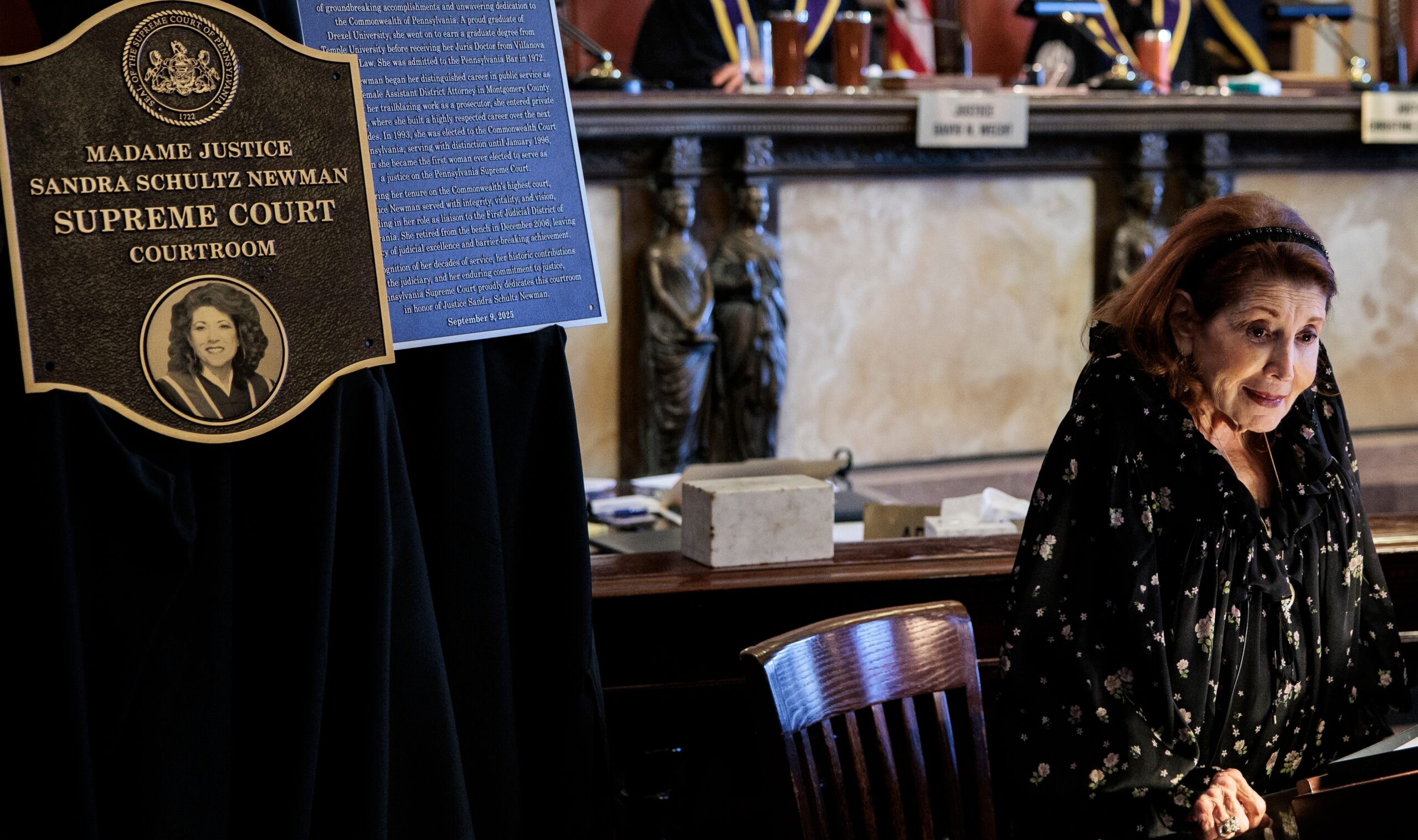
    Justice Newman speaks in 2025 during the ceremony in which the Supreme Court named its Philadelphia courtroom after her.

    After her election, Inquirer staff writer Robert Zausnersaid: “Wealthy yet down-to-earth, Newman talked often during the campaign about her grandchildren and insisted that people ‘call me Sandy’ once she was outside her courtroom.”

    Former Gov. Tom Ridge called Justice Newman a “pioneering legal giant” and said she “inspired generations of legal professionals across the Commonwealth.” Ezra Wohlgelernter, chancellor of the Philadelphia Bar Association, noted her “pathbreaking career” and “valuable service to our city and to the Commonwealth” in a tribute.

    Either “the first” or “the only” in many of her professional pursuits, Justice Newman was called a “Philadelphia icon,” “a force of nature,” and a “beautiful and radiant star” in online tributes. She flirted with running for political office several times and was colorfully profiled in Philadelphia Magazine in 1988. In that story, writer Lisa DePaulo called her “part woman/part tigress.”

    She famously endorsed a controversial cosmetic product on TV in 2006 and attended many galas and charity auctions, and her name appeared in the society and opinion pages nearly as often as the news section. In a 1983 feature, Inquirer writer Mary Walton described Justice Newman as “beautiful … with tousled auburn hair and a slender figure that she liked to cloak in expensive designer clothes.”
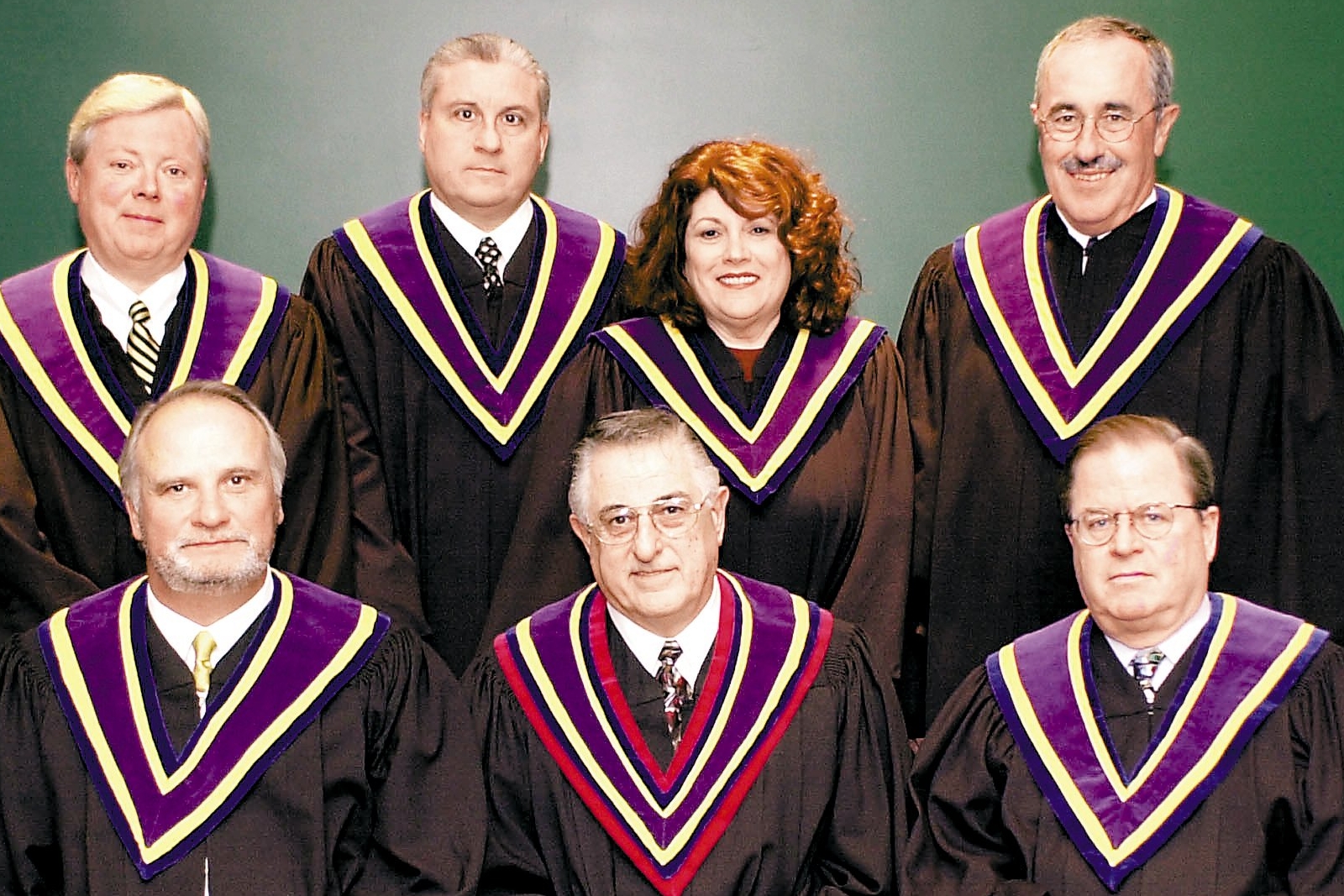
    Justice Newman was the only woman on the state Supreme Court in 2002.

    A friend said online she was “irrepressible in an Auntie Mame sort of way.” Another said: “The world has become a little quieter.”

    Justice Newman served as the first female assistant district attorney in Montgomery County from 1972 to 1974 and was an in-demand, high-profile partner at Astor, Weiss & Newman from 1974 to 1993. She returned to private practice in 2006 and handled mostly alternative dispute resolution cases until recently.

    She told the Press Enterprise in 1995 that colleagues in the Montgomery County District Attorney’s Office had adorned her desk with a green plant on her first day in 1972. “It was marijuana from the evidence room,” she said.

    She wrote papers and book chapters about trial practice, death penalty statutes, and the electoral system in Pennsylvania. She spoke about all kinds of legal topics at seminars, conferences, and other events.
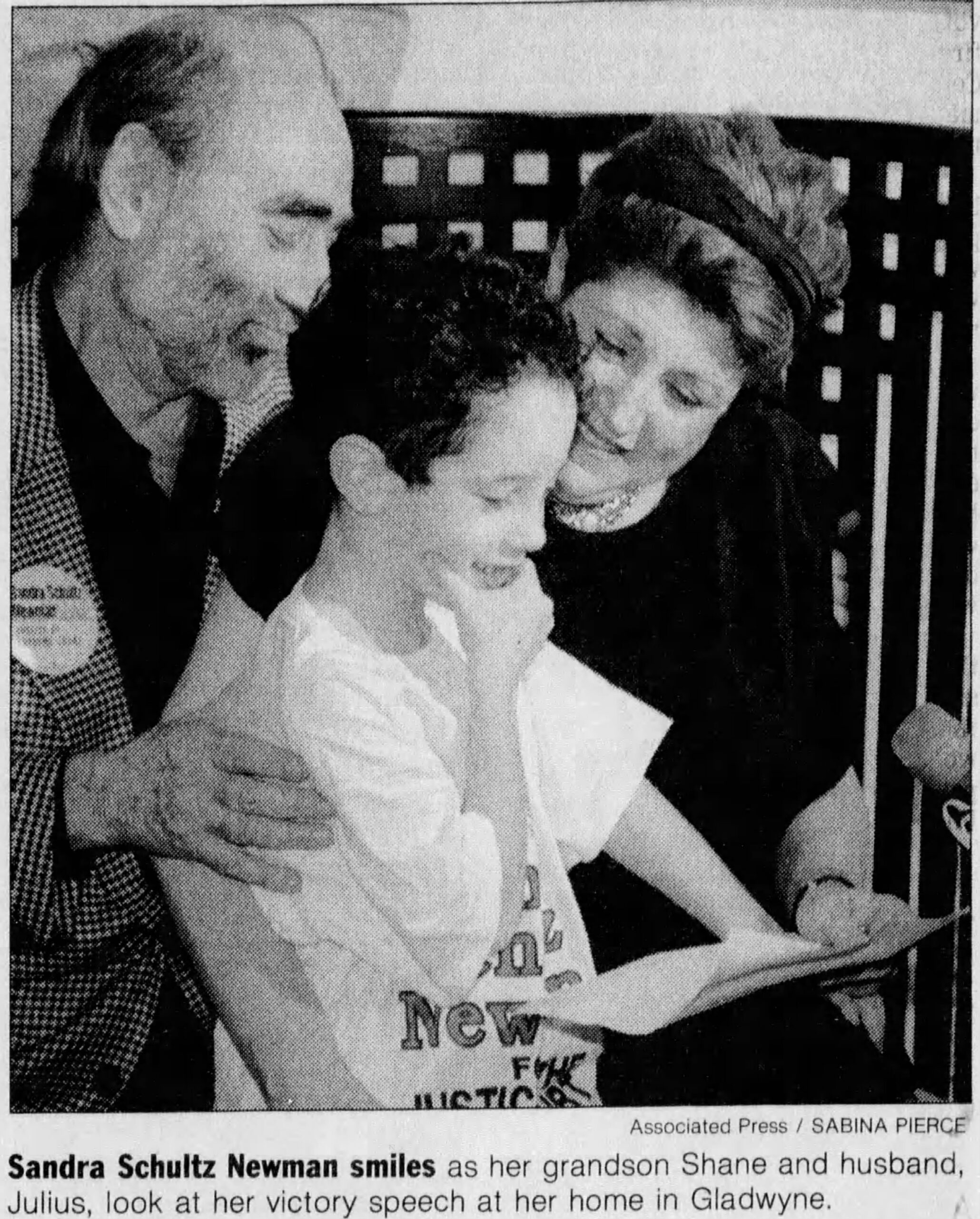
    This photo of Justice Newman, her husband, Julius, and grandson Shane was taken for The Inquirer after she won on Election Day in 1995.

    She cofounded what is now the Drexel University Thomas R. Kline School of Law in 2006, was a trustee for Drexel’s College of Medicine, and received dozens of service and achievement awards from Drexel, Villanova, the Pennsylvania and Philadelphia Bar Associations, the Women’s Bar Association of Western Pennsylvania, the Pennsylvania Association for Justice, and other groups.

    She was the president of boards, chair of many committees, and active with the National Association of Women Justices, the Juvenile Law Center, the American Law Institute, and other organizations. She taught law classes at the Delaware Law School of Widener University in 1984 and ’85, and at Villanova from 1986 to 1993.

    She earned a bachelor’s degree at Drexel in 1959 and a master’s degree in hearing science at Temple in 1969. In 1972, she was one of a handful of women to get a law degree at what is now Villanova’s Charles Widger School of Law. Later, she received four honorary doctorate degrees and was named a Distinguished Daughter of Pennsylvaniaby then-Gov. Ridge in 1996.

    Outside the courtroom, Justice Newman volunteered for charities and legal associations. She was part of a group that tried unsuccessfully to buy the Eagles from then-owner Leonard Tose in 1983, and she was criticized in the early 2000s for her financial involvement in a bungled long-running effort to fund a new Family Court Building in Philadelphia.
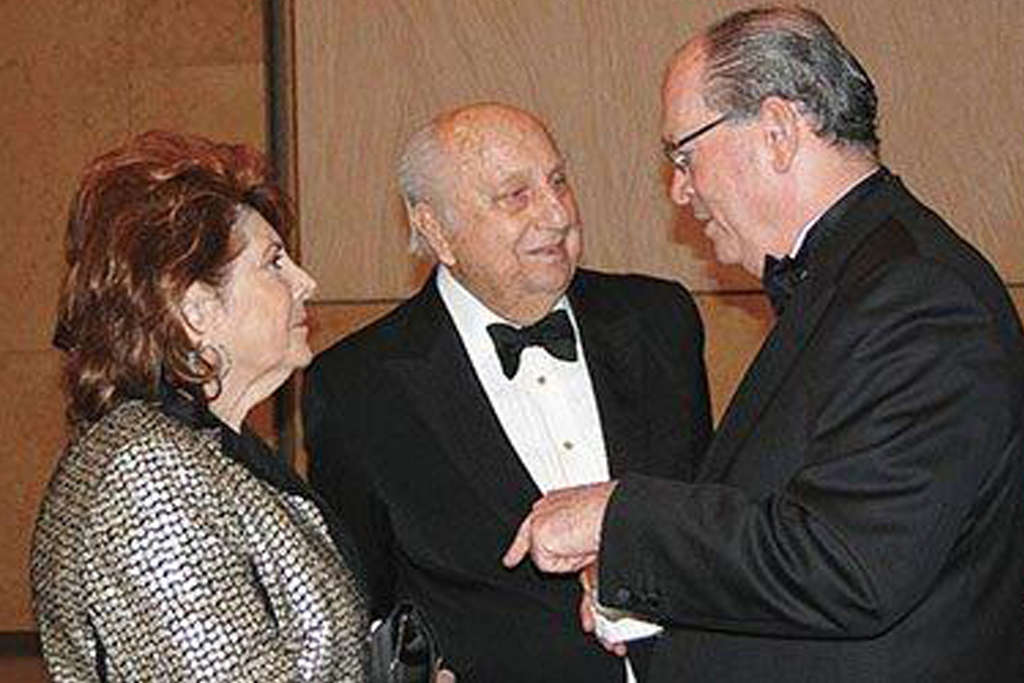
    Justice Newman chats with philanthropists and business leaders Raymond G. Perelman (middle) and Joseph Neubauer at the gala opening of the new Barnes Museum in 2018.

    “Justice Newman filled every room she entered with her strength, energy, and exuberance for life and for the law,” Supreme Court Justice P. Kevin Brobson said in a tribute. “She lived with intention and spent her entire career focused on creating and expanding opportunities for future generations of legal professionals, especially women.”

    Sandra Schultz was born Nov. 4, 1938. She graduated from Overbook High School and married cosmetic surgeon Julius Newman in 1959. They had sons Jonathan and David, and lived in Wynnefield, Penn Valley, and Gladwyne.

    Her husband and son David died earlier. She married fellow lawyer Martin Weinberg in 2007, and their union was annulled 11 months later.

    Justice Schultz was a longtime fashionista. She reveled in shopping trips to New York, and DePaulo reported in 1988 that her closet in Gladwyne was 800 square feet. She was also funny, generous, and kind, friends said.
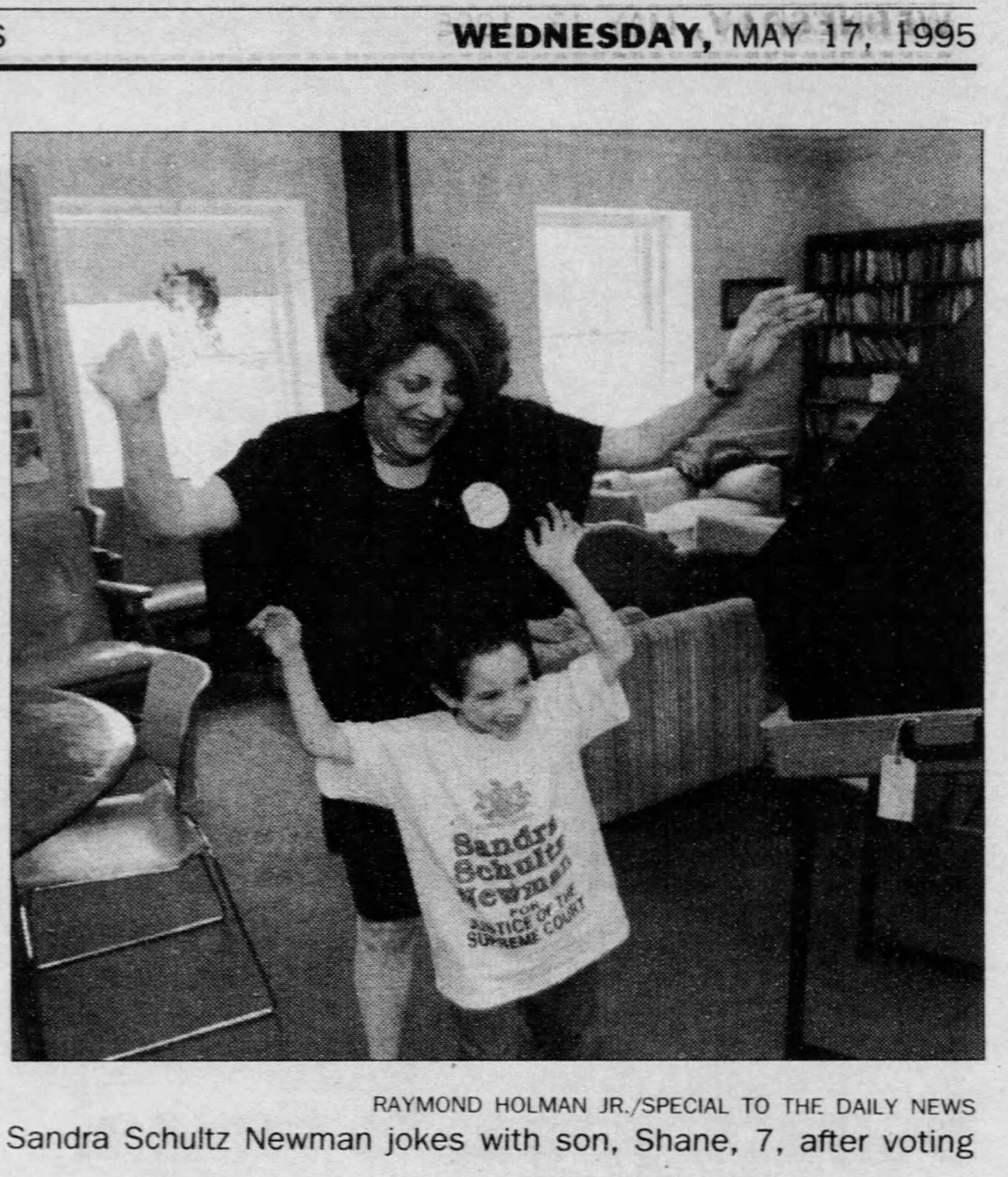
    Justice Newman dances with her grandson on Election Day in 1995. This photo appeared in the Daily News.

    She funded several college scholarships, collected art, owned racehorses, cooked memorable matzo balls, enjoyed giving gifts, and tried to have dinner every night with her family. Sometimes, DePaulo reported, in the 1970s, she took her young sons to her law school classes at Villanova.

    “Despite how busy she was, her family was always her priority,” said her brother, Mark. “She was also a true bipartisan who fought for equal rights and preserving our democratic institutions.”

    In 2003, she was asked by Richard G. Freeman, editor in chief of the Philadelphia Lawyer, to describe her judicial decision-making process. She said: “There are beliefs that you have to put aside. One of the wonderful things about being on our court is that you can make new law where your beliefs fit into the law.”

    In addition to her son Jonathan and brother, Justice Newman is survived by four grandchildren and other relatives. A grandson died earlier.
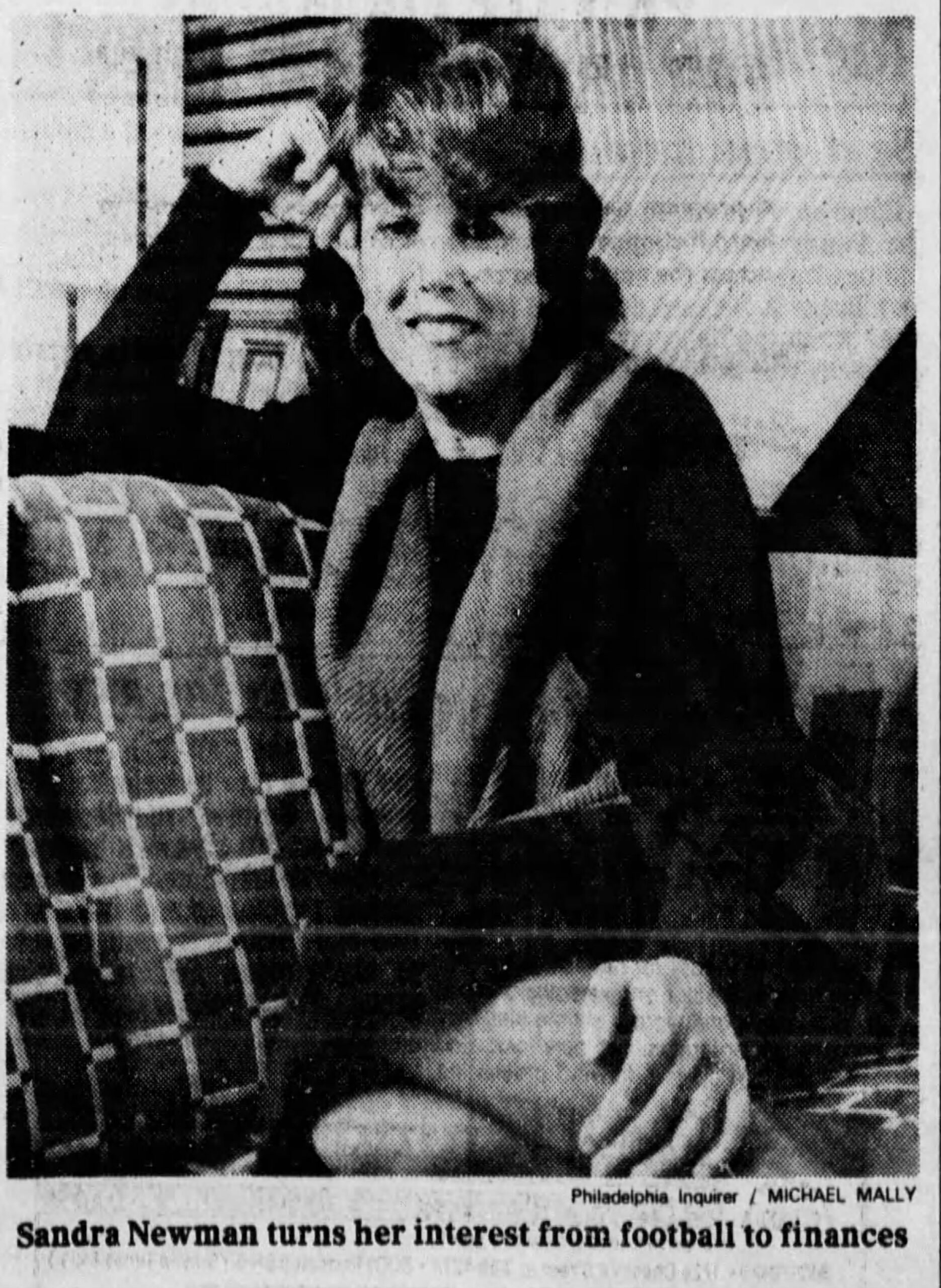
    This photo of Justice Newman appeared in The Inquirer in 1983.

    Services are private.

    Donations in her name may be made to the Crohn’s and Colitis Foundation, 733 Third Ave., Suite 510, New York, N.Y. 10017.

    Correction: One of the communities that Justice Schultz grew up in has been corrected.
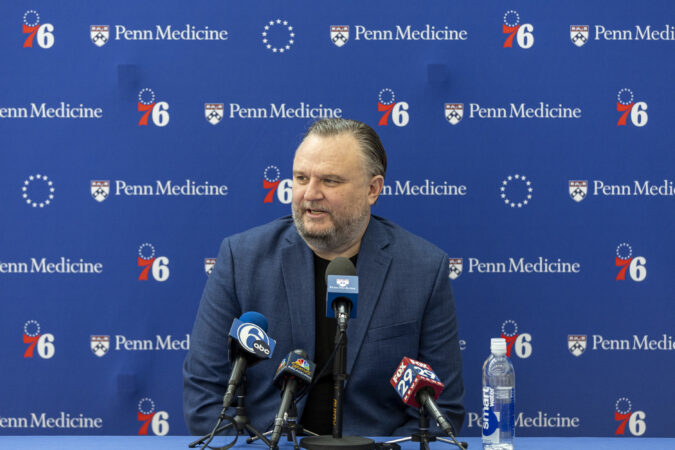
  • Sixers news: Daryl Morey defends trade deadline moves; Joel Embiid carefully weighs in on trades; reaction and opinion

    Sixers news: Daryl Morey defends trade deadline moves; Joel Embiid carefully weighs in on trades; reaction and opinion


    // Timestamp 02/06/26 1:03pm

    Daryl Morey calls Sixers’ core ‘untouchable’

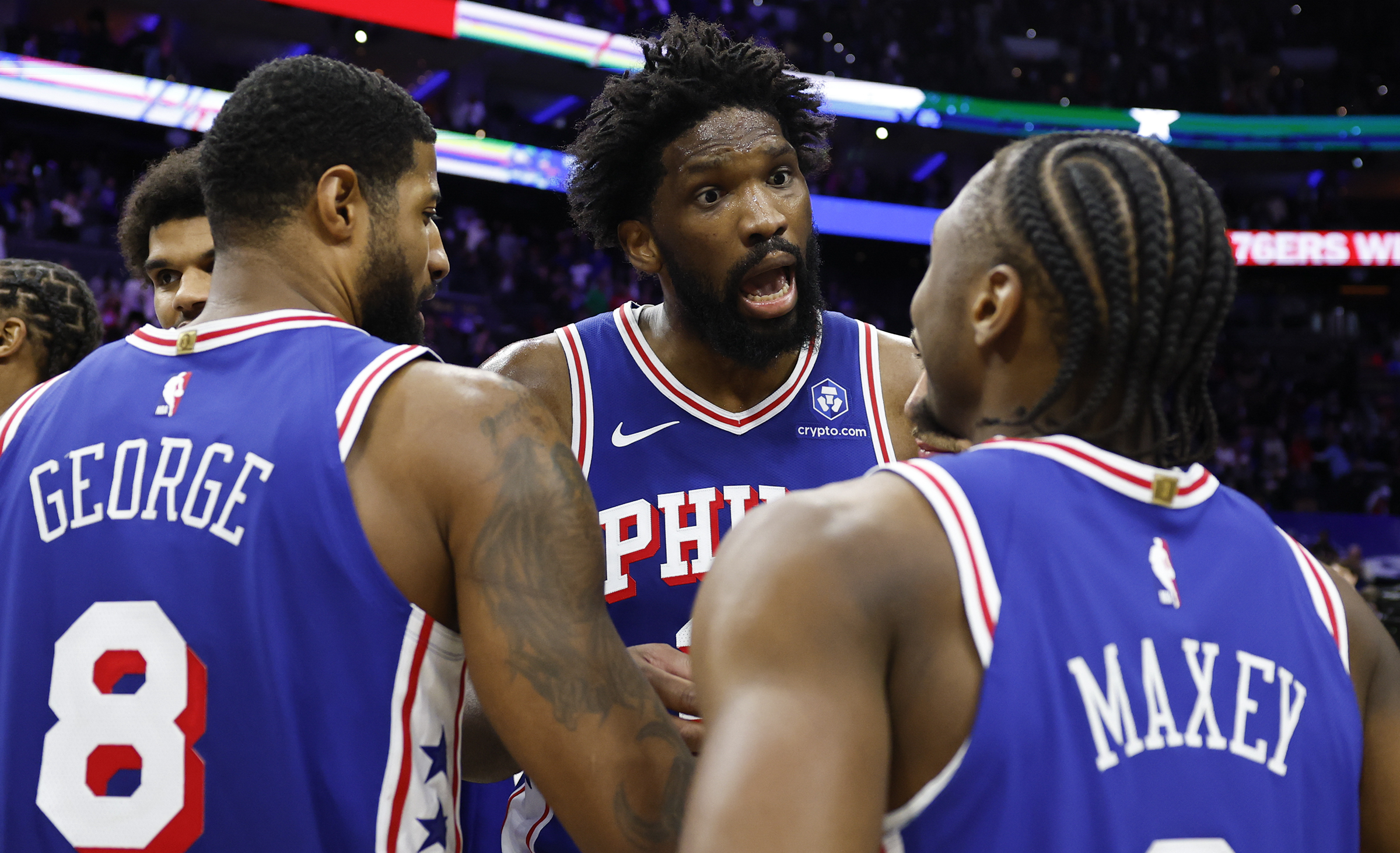
    Joel Embiid with teammates Tyrese Maxey and Paul George.

    One factor complicating any deal at the trade deadline was Daryl Morey and the front office considered the team’s core – Joel Embiid, Tyrese Maxey, Paul George, and rookie VJ Edgecombe – “as close to untouchable players as you might have in this league.”

    “We really think it’s a very good core,” Morey told reporters Friday. “Obviously we need to prove that on the court, and I think we think lately we have been proving it to a higher level.”

    Morey said at the trade deadline, the Sixers were focused on finding a player who could fill in for Paul, who is serving a 25-day suspension for violating the league’s drug policy. But Morey didn’t see any available players that could contribute more than Dominick Barlow has during Paul’s absence.

    In 41 games this season (34 starts), Barlow is averaging 8.5 points and 5 rebounds per game. The Sixers signed him to a standard NBA contract Thursday.

    “We like so much of what Barlow’s given us but we didn’t see anything that would hurdle what he’s given us,” Morey said.

    Rob Tornoe, Gabriela Carroll


    // Timestamp 02/06/26 12:30pm

    Sixers were willing to go into the luxury tax, Morey says

    The Sixers moved under the luxury tax by trading away Jared McCain and Eric Gordon, but Daryl Morey said that wasn’t the primary reason behind the moves.

    Speaking to reporters Friday, Morey said the team would’ve been willing to go above the luxury tax threshold – “We’ve done it several times” – but didn’t see a deal or player that justified the numbers.

    “For sure, if we had found a trade and were going to end up higher, we’d have ended up above it,” Morey said.

    Despite that, Morey said he understands the perception among fans and even Joel Embiid the team just wanted to save money.

    “I hope to defeat it by finding a deal that I can go to ownership and say, ‘We think this move is the right move to do for that and create the apron issues that it would create,’” Morey said. “But I haven’t been able to recommend that move yet.”

    Rob Tornoe


    // Timestamp 02/06/26 12:19pm

    Morey defends trading Jared McCain without another deal in place

    Daryl Morey was pressed on why the Sixers traded Jared McCain without having another deal in place, rather than waiting until the offseason.

    “I am quite confident we were selling high,” Morey told reporters Friday. “Obviously, time will tell.”

    Morey said the Sixers weren’t considering trading away McCain until teams approached with “aggressive offers,” and that the draft picks will help the team down the road.

    “We thought this return was above the future value for our franchise,” Morey said. “The only higher point would have been during his run last season. But otherwise, we feel like we did time this well.”

    “The bottom line is Jared’s a great future bet, and we wish him luck,” Morey added. “We feel like this return sets us up better in the future.”

    Rob Tornoe


    // Timestamp 02/06/26 12:08pm

    Sixers tried to improve the roster but ‘nothing materialized,’ Morey says

    Speaking to reporters Friday, Daryl Morey, the Sixers’ president of basketball operations, said he understands why fans might be disappointed the team didn’t add any players at the trade deadline.

    “I understand the reaction of the fans, but I feel like that comes from folks being excited about this team,” Morey said. “That’s why we had this reaction. And they should be excited.”

    Morey said the front office tried to make additions to improve the team using some of the draft picks landed in the Jared McCain trade, but “nothing materialized.”

    “I do want folks to know that this team, we think, can make a deep playoff run, as one of the top teams in the East,” Morey said.

    Rob Tornoe


    // Timestamp 02/06/26 11:31am

    Watch: Daryl Morey speaks to reporters


    // Timestamp 02/06/26 11:29am

    Timberwolves re-signing Mike Conley Jr. after trading him: ESPN


    // Timestamp 02/06/26 9:52am

    Sixers standings and upcoming schedule

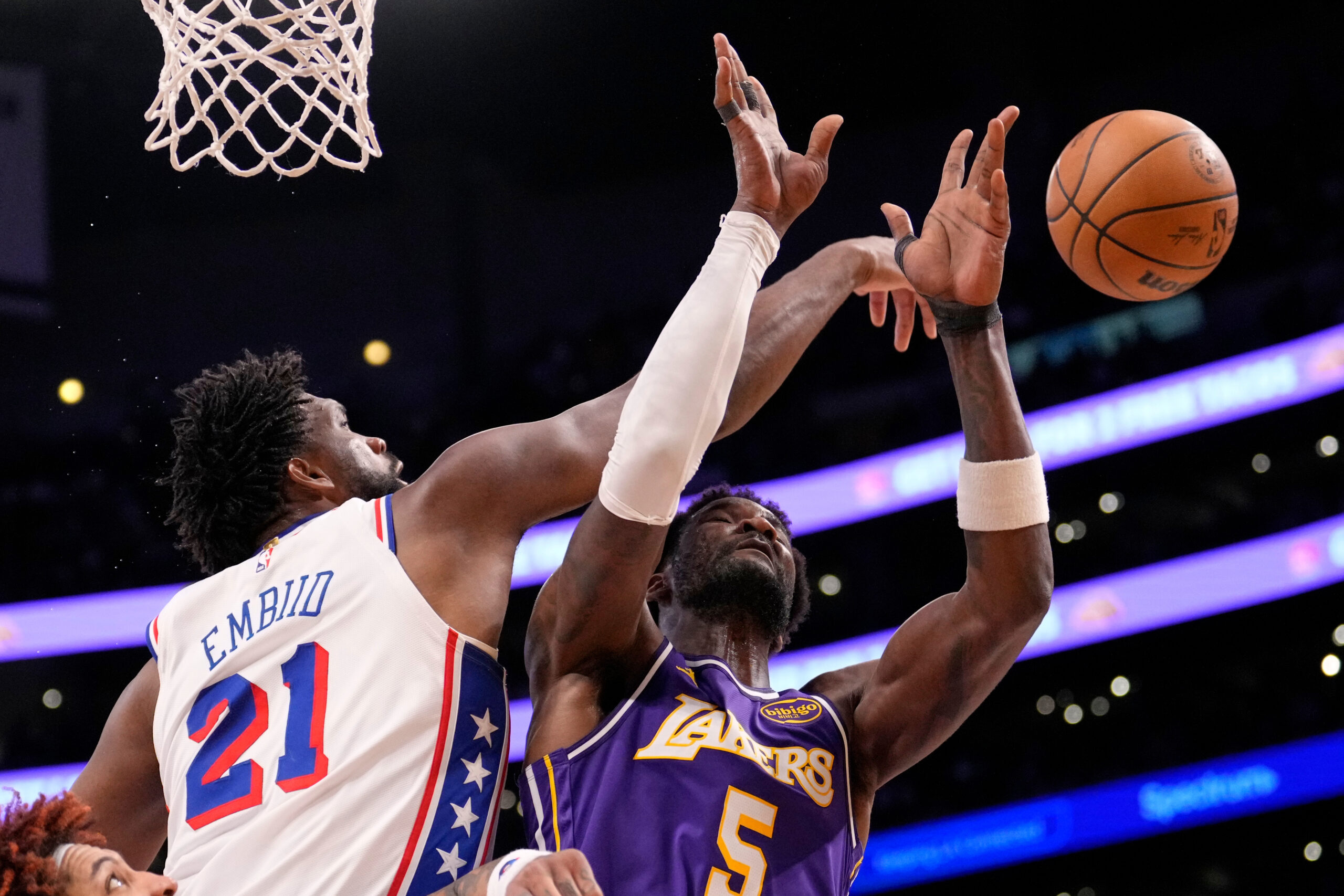
    Joel Embiid defends the rim against Deandre Ayton during the Sixers’ loss to the Lakers Thursday.

    With three games left before the All-Star break, the Sixers are in sixth place in the Eastern Conference, solidly in the playoff picture after missing the postseason last season.

    Thursday night’s loss to the Los Angeles Lakers certainly didn’t help, breaking a five-game winning streak. They’ll face the second-place New York Knicks on Wednesday, who added former New Orleans Pelicans guard Jose Alvarado to their roster at the NBA trade deadline.

    Eastern Conference standings

    window.addEventListener(“message”,function(a){if(void 0!==a.data[“datawrapper-height”]){var e=document.querySelectorAll(“iframe”);for(var t in a.data[“datawrapper-height”])for(var r,i=0;r=e[i];i++)if(r.contentWindow===a.source){var d=a.data[“datawrapper-height”][t]+”px”;r.style.height=d}}});

    Upcoming Sixers schedule

    • Sixers at Suns: Saturday, 9 p.m. (NBC Sports Philadelphia, 97.5 The Fanatic)
    • Sixers at Trailblazers: Monday, 10 p.m. (NBC Sports Philadelphia, 97.5 The Fanatic)
    • Knicks at Sixers: Wednesday, 7:30 p.m. (ESPN, 97.5 The Fanatic)
    • NBA All-Star game: Sunday, Feb. 15, 5 p.m. (NBC)

    Rob Tornoe


    // Timestamp 02/06/26 8:15am

    Daryl Morey to speak with reporters Friday

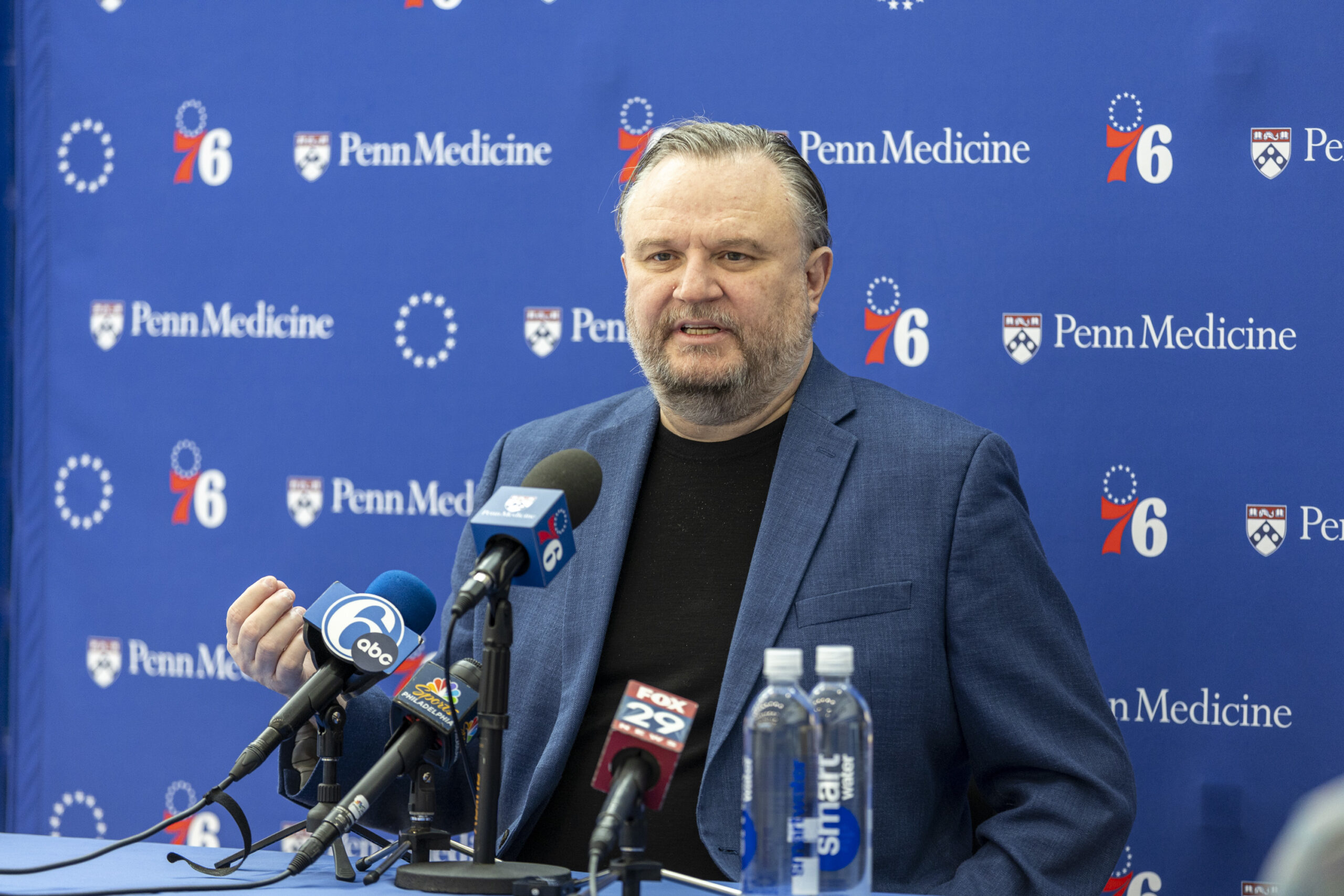
    Daryl Morey will speak to reporters Friday following the NBA trade deadline.

    Daryl Morey, the Sixers’ president of basketball operations, will speak to reporters Friday afternoon after the team made no additions at the NBA trade deadline, not even to fill in during Paul George’s 25-game suspension.

    Morey is scheduled to speak at noon at the Sixers’ training facility in Camden, N.J.

    On Thursday, the Sixers traded Eric Gordon to the Memphis Grizzlies in a salary dump. Wednesday they parted ways with Jared McCain, the 2024 No. 16 overall pick. In exchange, team landed a bunch of second-round picks and the Houston Rockets’ 2026 first-round pick.

    They did manage to dodge the luxury tax by shedding McCain and Gordon’s salaries.

    Rob Tornoe


    // Timestamp 02/06/26 8:10am

    Joel Embiid carefully comments on Sixers trade deadline moves

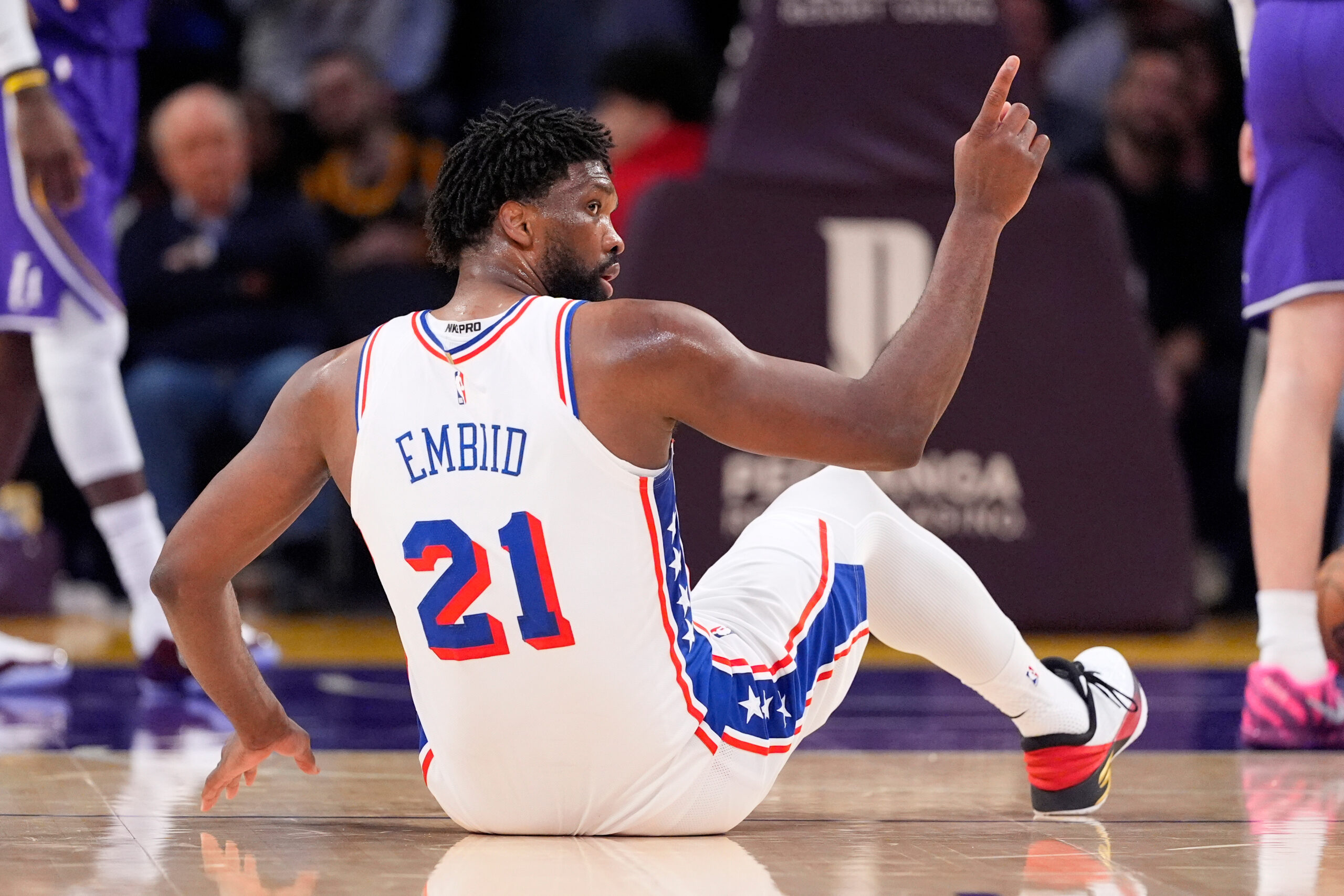
    Joel Embiid during Thursday night’s loss to the Lakers.

    LOS ANGELES — When asked to assess the 76ers’ approach and execution at the trade deadline, Joel Embiid kept his words politically correct.

    But his multiple pauses to look to his right at a team public relations staffer observing his postgame media session — not out of nervousness, but as if this was the way he could make his desired point — spoke volumes.

    “The only thing I’ll say, I believe in myself,” Embiid said late Thursday, after the Sixers dealt guards Jared McCain and Eric Gordon and did not add any players. “I believe in Tyrese [Maxey]. I believe in everybody in this locker room. But the main thing is I believe in myself.

    “So no matter what, we’re going to go out there and compete and still try to win it.”

    Those comments came exactly one week after Embiid said publicly that he hoped the Sixers (29-22) would not make moves purely to duck the luxury tax and would instead try to bolster a roster that, after Thursday’s 119-115 loss at the Los Angeles Lakers, sat in sixth place in a crowded Eastern Conference.

    “Hopefully, we keep the same team,” Embiid said then. “ … We’ve got a good group of guys in this locker room and the vibes are great. … Hopefully, we think about improving, because we have a chance.”

    When those previous comments were referenced to Embiid following Thursday’s game, the standout center coyly quipped, “I don’t remember what I said.”

    Keith Pompey


    // Timestamp 02/06/26 8:05am

    Sixers awaiting additions after subtractions

    Sixers fans will have to wait and see after a uninspiring trade deadline.

    The shaping of the 76ers took a step backward this week … perhaps just momentarily.

    The team moved on from Jared McCain, a fan favorite and 2025 Rookie of the Year front-runner, and seldom-used veteran guard Eric Gordon before Thursday’s 3 p.m. trade deadline. In return, the Sixers acquired a first-round pick, three second-rounders, and a second-round pick swap.

    Shedding those players’ salaries gives the Sixers just over $7.6 million in cap space under the first apron. That means they can sign players on the buyout market in addition to using up to $8 million in a trade exception to acquire a player.

    After the deadline, the Sixers signed forward Patrick Baldwin to a 10-day contract and center Charles Bassey to his second 10-day stint, giving the Sixers 14 standard contracts. And 48 minutes before Thursday’s game against the Los Angeles Lakers, the team announced it converted starting power forward Dominick Barlow’s two-way contract to a standard deal.

    That enabled Barlow remain active for the remainder of the season.

    But for now, they’re not in a good situation.

    The buyout market could be key for the Sixers if they don’t sign Baldwin and Bassey for the remainder of the season.

    Since then, the Sixers traded away players who were well-liked in the locker room for what on the surface appear to be moves to help them get below the luxury tax threshold.

    But it’s still too early to fully judge the moves that were made.

    McCain was exceptional in his rookie season before suffering a season-ending knee injury in December 2024. But he struggled with consistency this season, leaving him out of the rotation. Gordon played in only six games, with his last appearance coming Dec. 23 against the Brooklyn Nets.

    So these moves were made on the margins and will only be crystalized once we see how they affect the roster this season and what they do with their draft picks in the future.

    But in the interim, the Sixers got a little worse over two days while several contenders in the East improved.

    Keith Pompey


    Jared McCain trade looks bad on paper

    Jared McCain, the Sixers’ 2024 first-round pick, was traded to the Oklahoma City Thunder on Wednesday.

    Sixers president Daryl Morey is scheduled to meet with the media on Friday, so we’ll have to wait to hear the official defense of the team’s decision to trade 2024 first-round pick Jared McCain to the Thunder for what is most likely to be a low-value first round draft (plus the obligatory smattering of second round picks). We don’t have to wait to judge the optics of the thing.

    The optics are poor, and will remain true even if the thing ends up making more sense than we can immediately glean.

    The Sixers didn’t trade McCain for a player who is more likely to help them contend for championship, be it this year or beyond. They didn’t trade him for a pick that they then flipped for a player who can help them capitalize on their momentum this season. Everywhere else, teams got better, and many of them did so in ways beyond this season. The Timberwolves can re-sign Ayo Dosunmu. The Pacers can pair Ivica Zubac with Tyrese Haliburton next season. The Sixers can hope that a late first round pick is worth something in June.

    A good way to judge the optics of a move is to attempt to write an executive summary of it in as favorable a way as possible. That’s an extraordinarily difficult task, in this case.

    The Sixers just traded away a guy who they drafted at No. 16 barely a year-and-a-half ago and who would probably be drafted higher in a redo. In exchange, they received a pick that currently projects as the No. 24 pick in the 2026 draft, three picks later than where the Sixers grabbed Tyrese Maxey six years ago. It is a range of the draft that rarely yields starters, let alone stars. It is a range where the odds say you are more likely to draft a player who never cracks a first-division rotation than one who becomes a meaningful starter.

    Just look at the track record. Of the 42 players drafted with the last seven picks of the first round since 2020, only 17 have started more than 17 NBA games. Just eyeballing it, you’d be hard-pressed to identify 10 of those 42 who’ve turned out to be better than the median potential outcome of even this year’s version of McCain. Jaden McDaniels and Desmond Bane are stars. They are followed by Payton Pritchard, Immanuel Quickley, Quentin Grimes and Santi Aldama. Beyond that: Peyton Watson and Cam Thomas, and then Bones Hyland, Day’Ron Sharpe, Nikola Jovic and Kyshawn George. You get the picture.

    David Murphy

    // Timestamp 02/06/26 8:00am

  • NBC Olympic TV and streaming schedule for Feb. 6: How to watch the opening ceremony

    NBC Olympic TV and streaming schedule for Feb. 6: How to watch the opening ceremony

    With the Philly region still covered in snow, it shouldn’t take much imagination to get in the mood for the Winter Olympics, which officially begin Friday across Italy.

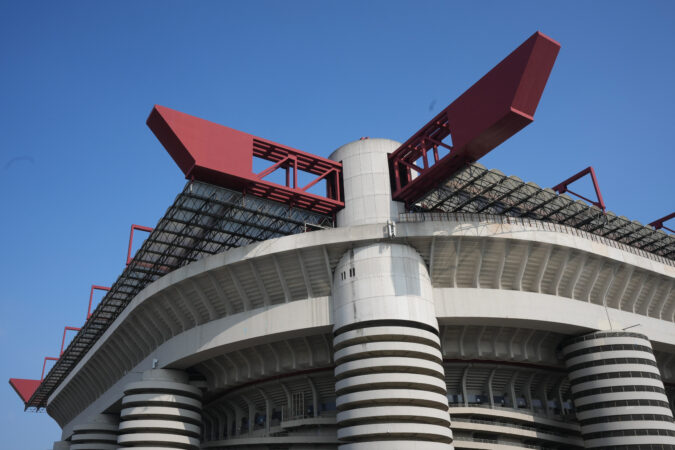
    NBC will televise the opening ceremony live from San Siro Stadium (slated to be demolished after the Games) in Milan starting Friday at 2 p.m. Philadelphia time. It will also be streamed live via Peacock, NBC’s subscription streaming platform, and on NBCOlympics.com for free with TV provider authentication.

    With Mike Tirico in Santa Clara, Calif., to call Super Bowl LX on Sunday, NBC’s broadcast will be hosted by Mary Carillo and Terry Gannon, who will be joined by three‑time Olympic gold medalist Shaun White.

    Other venues will also be on display Friday night, with the Parade of Athletes featuring athletes marching from three other locations across Italy: Livigno, Predazzo, and Cortina d’Ampezzo (which has its own Olympic cauldron, a first for the Games). Team USA’s flag bearers will be 2022 speed skating gold medalist Erin Jackson and bobsledder Frank Del Duca.

    Greece, where the Olympics originated, will lead the parade. From there it will go alphabetically until the end. The United States, which is hosting the 2034 Winter Olympics in Salt Lake City, will enter third from last (country No. 90, if you’re counting at home), followed by 2030 Winter Olympics host France and this year’s host country, Italy.

    The U.S. has the largest group of athletes — 235, including three alternates. Canada is second with 211 athletes, followed by Italy with 195. All told, more than 2,900 athletes are expected to compete in the 2026 Games.

    There are also plenty of veterans on Team USA, including four-time Olympian Lindsey Vonn, who will attempt to ski on a ruptured ACL. Other U.S. athletes back to compete in their fifth Olympics are bobsledders Kaillie Humphries and Elana Meyers Taylor, snowboarders Nick Baumgartner and Faye Thelen, figure skater Evan Bates, and hockey player Hilary Knight.

    As far as local athletes, there’s South Jersey’s Isabeau Levito, a 18-year-old figure skater looking for gold after winning the silver medal in the 2024 World Figure Skating Championships. Curling team member Taylor Anderson-Heide is a Philly native, speedskater Andrew Heo grew up in Warrington, and Summer Britcher — the all-time singles leader in U.S. luge history — was raised in Glen Rock, Pa., in York County.

    There’s also hockey star Sarah Nurse, who plays for Team Canada but also happens to be the niece of former Eagles quarterback Donovan McNabb.

    Ahead of the opening ceremony, some sports have already gotten underway. Curling began Wednesday, while the U.S. women’s hockey team began its quest for gold Thursday with a 5-1 win over Czechia.

    Friday’s Olympic TV schedule

    As a general rule, our schedules include all live broadcasts on TV, but not tape-delayed broadcasts on cable channels. We’ll let you know what’s on NBC’s broadcasts, whether they’re live or not.

    NBC
    • Noon: Team figure skating — rhythm dance
    • 12:30 p.m.: Team figure skating — pairs short
    • 1 p.m.: Team figure skating — women’s short
    • 2 p.m.: Opening ceremony
    • 8 p.m.: Prime-time replay of opening ceremony
    USA Network
    • 7:35 a.m.: Team figure skating — women’s short
    • 8:55 a.m.: Curling mixed doubles — Czechia vs. United States

    How to watch the Olympics on TV and stream online

    NBC’s TV coverage will have live events from noon to 5 p.m. Philadelphia time on weekdays and starting in the mornings on the weekends. There’s a six-hour time difference from Italy and here. The traditional prime time coverage will have highlights of the day and storytelling features.

    As far as the TV channels, the Olympics are airing on NBC, USA, CNBC, and NBCSN. Spanish coverage can be found on Telemundo and Universo.

    NBCSN is carrying the Gold Zone whip-around show that was so popular during the Summer Olympics in 2024, with hosts including Scott Hanson of NFL RedZone. It used to be just on Peacock, NBC’s online streaming service, but now is on TV, too.

    Every event is available to stream live on NBCOlympics.com and the NBC Sports app. You’ll have to log in with your pay-TV provider, whether cable, satellite, or streaming platforms including YouTube TV, FuboTV, and Sling TV.

    On Peacock, the events are on the platform’s premium subscription tier, which starts at $10.99 per month or $109.99 per year.

  • Democracy, engineered in the Black metropolis

    Democracy, engineered in the Black metropolis

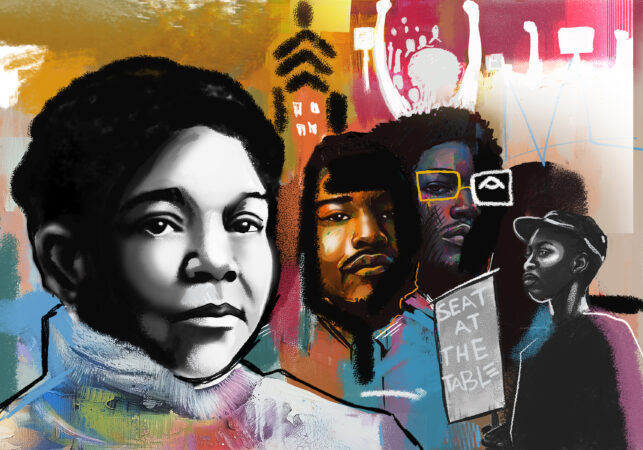
    Public narratives of American democracy often emphasize founding documents, elections, and constitutional milestones while obscuring the long and contested process through which democratic practice was learned, refined, and sustained, particularly by people denied formal power.

    The portrayal of Black civic life in early America is often reduced to suffering, resistance, or individual achievement, but these things conceal a deeper truth.

    In 1840, Philadelphia’s Black community numbered nearly 20,000 people. This population was concentrated in the center of the city, including Society Hill, Queen Village, and Washington Square in the south, 41st and Ludlow in West Philadelphia, and Northern Liberties in the north. With this intensive concentration of people, institutions, and ideas, Black Philadelphia was a metropolitan center in its own right.

    A thriving community

    By 1845, the community sustained more than 17 Black churches, along with 21 public and private schools, two fraternal lodges, more than 80 mutual aid and literary societies, labor organizations, over 600 Black-owned businesses, and a printing press.

    Formal democratic structures grew from these institutions. Churches functioned as civic laboratories, and mutual aid societies were exemplars of rules-based organizations.

    Philadelphia was where Black life cohered into a national political identity. People who had defined themselves as African, Caribbean, Indigenous, enslaved, or free identified themselves collectively as African American.

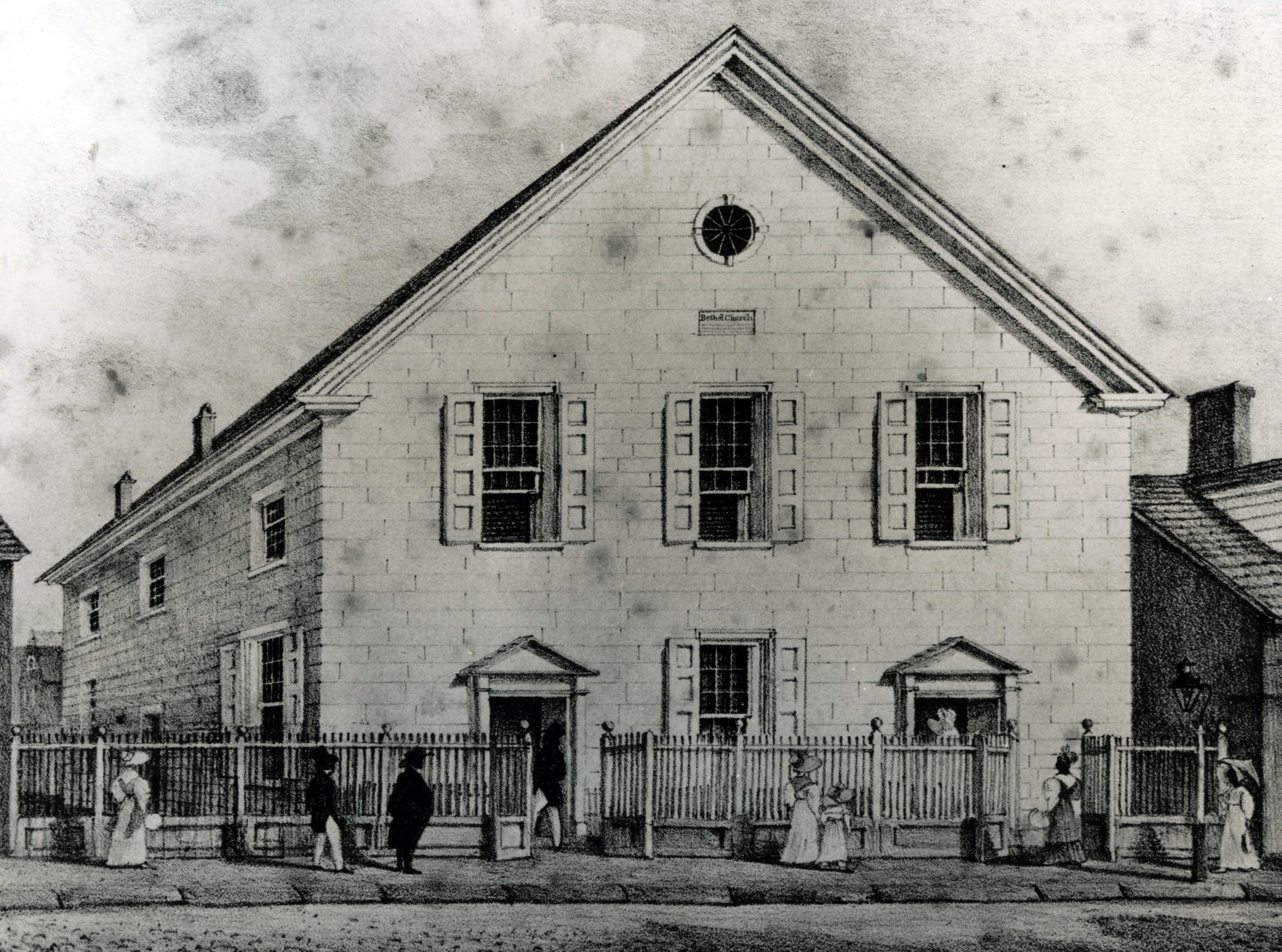
    By 1814, the Black Philadelphians were organized. They defended the city at Gray’s Ferry during the War of 1812. In 1817, they met at Mother Bethel, the country’s first African Methodist Episcopal Church, to decide if they would consider emigration to Haiti or Africa. “No!” was the resounding answer.

    Black organizations in Philadelphia served as national models. Conventions at Mother Bethel spawned the Colored Conventions Movement beginning in 1830, which extended concepts of civic and human rights across the United States. Constitutional scholar James W. Fox Jr. argues that these conventions articulated a national constitutionalism rooted in the Declaration of Independence, asserting that human rights were inherent and not contingent on state or local laws, a concept far ahead of its time that anticipated the post-Civil War ideas of citizenship and rights.

    A melting pot

    Black Philadelphia was its own melting pot, too. People arrived from the Caribbean, including Haiti, bringing revolutionary ideas. These ideas moved outward from Philadelphia nationwide and across the Atlantic through transnational anti-slavery networks. Anti-slavery Black activists Olaudah Equiano and James Somerset moved between London and Philadelphia in the 1760s. A song written by the Philadelphia-based pastor Shadrach Bassett was discovered in the papers of Nat Turner, the enslaved man who led an uprising in the Carolinas in 1831.

    The fight for social justice that grew up in Black Philadelphia demonstrated clear evidence of sustained civic practice. By 1787, the Free African Society had formed, and its leaders, Absalom Jones and Richard Allen, appeared in municipal records demanding religious freedom, the right to proper burial, and the right to assembly. In 1838, Black leaders in Philadelphia and Pittsburgh lobbied in Harrisburg.

    The understanding that there are civic rights within a democracy was a foundational concept for Black Philadelphians. In fact, we see an early use of the term “civil rights” in the records of the Social, Civil, and Statistical Association in 1863, nearly a 100 years before the 20th-century civil rights movement.

    A Nov. 12, 1862, entry from the Social, Civil, and Statistical Association, showing the use of the words “civil rights.” C.S. Statistical Association of Philadelphia, Civil and Social Committee of Superintendence, Constitution, By-Laws, Roll, Minutes [Ams .54, Part 2]

    Other examples: In 1842, after mobs destroyed the newly built Beneficial Hall, Stephen Smith sued the city for not protecting the structure. Smith won his case, setting a very public example of Black Philadelphians’ assertion of rights through the rule of law.

    In 1861, after the Rev. Richard Robinson was forced to ride outside a trolley during a storm and died when it crashed, Black leaders organized legal aid to support his widow and challenge transit segregation.

    In 1867, Caroline LeCount refused to surrender her seat on a streetcar. After being forcibly removed, she obtained a certified copy of the law, returned with a magistrate, and confronted the conductor. He was arrested on the spot.

    Asserting their rights

    All of this civic activism occurred before Black Philadelphians were enfranchised citizens.

    Black Philadelphians boldly asserted their own democratic rights across the 18th and 19th centuries, all within the context of America’s denial of human rights with enslavement and disenfranchisement.

    Yet, even as Black Philadelphians engineered this civic infrastructure, the city refused to acknowledge their achievements. Major historical texts on Philadelphia erased Black institutions entirely. Henry Simpson’s Lives of Eminent Philadelphians Now Deceased, written in 1859, doesn’t even mention Absalom Jones, James Forten, or Richard Allen, or the major religious denomination born here in Philadelphia, the African Methodist Episcopal Church.

    Mother Bethel African Methodist Episcopal Church in Society Hill, founded in 1794 and rebuilt in 1809, has long been the locus of Philadelphia’s Black community, writes Michiko Quinones.

    No Black churches or institutions appear in Moses King’s exhaustive civic visual history, Philadelphia and Notable Philadelphians, from 1902, a purportedly definitive account meant to define the city’s civic identity.

    Arguably, there is a deeper reverence in American public memory for a woman who sewed a flag than for an entire population that defined democracy and held the nation accountable to its own written ideals. That imbalance reveals not just a lack of attention to history, but a refusal to honor people who forced democracy to become real.

    The question facing Philadelphia now is whether it will recognize early Black civic engineering as foundational to its identity, or continue to exist with parallel histories, thriving yet separate. There could be no better time to ask than the 250th anniversary of our country’s founding.

    Michiko Quinones is the lead public historian and cofounder of the 1838 Black Metropolis Collective.

  • Reconciling with a difficult parent may seem impossible. Being their caregiver might help. | Expert Opinion

    Reconciling with a difficult parent may seem impossible. Being their caregiver might help. | Expert Opinion

    There are two remarkable scenes of family reconciliation in this past fall’s Bruce Springsteen biopic, Deliver Me from Nowhere. After years of alienation from his alcoholic, physically abusive father, Dutch, a slowly maturing Bruce begins to recognize that his father has struggled with lifelong mental illness. By this stage of his later years, Dutch has been diagnosed with bipolar disorder and is becoming increasingly confused as he ages.

    In the first reconciliation scene, Bruce searches for his father in bars and restaurants all over Los Angeles at the request of his mother after Dutch disappears for several days. Bruce finally finds him sitting at the bar of a Chinese restaurant. Rather than upbraiding him, Bruce sits down next to his father and asks, gently like an old friend, if he would like to go out for breakfast before heading home.

    In the second scene, a disoriented Dutch asks Bruce to sit on his lap — as if his son is 3 years old, not 32. Bruce obliges but feels awkward, telling Dutch that he never asked him to sit on his lap before. “I didn’t?” Dutch asks, appearing shocked and regretful that he hadn’t sought loving contact with Bruce when he was a child.

    These scenes come at the end of a narrative arc illuminating the surprising turnabout that can be achieved through family caregiving for an older adult: A harshly punitive parent can turn into a softer, “toothless tiger” as they become frail. An angry adult child can develop greater empathy for the vulnerability of that hated parent while witnessing their decline. The parent-child relationship is transformed through the giving and receiving of care. Reconciliation is possible, the scenes suggest, by letting go of the past and extending kindness and understanding to a now diminished and needy parent.

    Some viewers may regard this plot line as unrealistic, corny, and overly Hollywood. Our current cultural moment seems to favor alienation and complete estrangement, not reconciling. In our clinical psychology practices, we have also worked with adult children and parents who have decided to cease talking with one another after years of conflict, frustration, and continued emotional pain. These are not bad therapeutic outcomes. They represent hard, courageous work on the part of clients who now refuse to be hurt any longer. We respect their decisions.

    But as clinicians specializing in supporting family caregivers, especially those caring for aging parents, we have also seen ways that alienation can be surmounted and improved relationships formed. It requires adult children to risk getting hurt all over again by deciding to care for an aging parent who previously tormented them. Taking this chance in the hopes of forging something better doesn’t work out well in every case, but it does produce emotionally powerful results for some.

    We saw this happen with one of our patients, Gloria, who at age 43 never expected to find such healing. She had always felt belittled by her mean, narcissistic mother from whom she kept a healthy geographic and emotional distance to protect herself throughout her adult life. But then her aging mother developed diabetic complications, including sensory neuropathy in her feet, and suffered a series of harmful falls. After weighing the pros and cons, Gloria decided to become her mom’s caregiver.

    This could have gone disastrously. Gloria might have allowed herself to hope that she’d finally win her mother’s approval by being there in her hour of need — only to be rejected by her mother yet again. Like Bruce Springsteen in the biopic, Gloria avoided reliving this destructive family dynamic by being her own person, refusing to allow her hurtful parent to loom over her life. The twist here is that she managed this while immersing herself in her mom’s day-to-day care.

    To motivate her caregiving, Gloria drew on her moral convictions, not some old yearning for her mother’s love. Helping others had always provided her with a deep sense of meaning. It underpinned her successful career as a hospital floor nurse and, later, an administrative leader in her health system. She could tend to her mother’s needs because that was consistent with her values and core identity, not simply because her “patient” now would be the woman who gave birth to and raised her.

    Secondly, Gloria made a point of approaching the present as the present, not the past. Certainly, she still craved some measure of justice for the years of mistreatment that she endured as a child. An apology on her mother’s part would be a nice start. But the caregiving was not about winning justice; the current mission was limiting her mother’s falls to help her live out her final years with less suffering. Gloria had the skills and professionalism to achieve this goal.

    Perhaps most importantly, she decided to just accept her mother for the very flawed person she had always been. It no longer made sense to Gloria to wish her mother was kinder or to believe she had the power to make her happy. Mom was a sour person who inflicted her sourness on others, especially her only daughter, a personality that did not grow sweeter with her diabetic complications later in life.

    True to form, Gloria’s mother initially found a dozen ways to criticize Gloria for how she provided care. But Gloria now shrugged off her barbs, keeping her focus on helping a vulnerable older adult. To her great surprise, her mother responded by changing her behavior, too. It was akin to what happens when you steadfastly ignore the taunts of a schoolyard bully. Once her daughter stopped reacting emotionally, Mom began to respect her more. During the last two years of the mother’s life, the dynamic between them slowly shifted from mean mom/hurt child to appreciative mom/competent adult child. For the first time in her life, Gloria didn’t feel that her mother resented her. While not exactly love, it was pretty good.

    Just like there are not many Bruce Springsteens in the world, there aren’t that many Glorias so able to separate their past from present circumstances that they can turn caregiving into a transformative experience of reconciliation. But there is always that possibility. If you are like Gloria or Bruce and decide to provide some care, we have several suggestions to keep in mind:

    • Maintaining rage against a parent takes energy; it can be a relief to let it go.
    • Choosing to be a parent’s caregiver shouldn’t be undertaken with the intent of proving or winning anything; it should be about living your values.
    • You are not offering forgiveness — especially if, as is likely, your parent never expresses remorse. You are gaining pride in who you are, regardless of how your parent was or is.

    Barry J. Jacobs, Psy.D. and Julia L. Mayer, Psy.D. are clinical psychologists based in Media and the co-authors of the 2025 book, “The AARP Caregiver Answer Book.”

  • State House bills could help round out Gov. Shapiro’s ambitious housing plan | Shackamaxon

    State House bills could help round out Gov. Shapiro’s ambitious housing plan | Shackamaxon

    This week’s column covers housing debates in Harrisburg, admissions policies at the school district, and more bad zoning overlays.

    Go big or go home

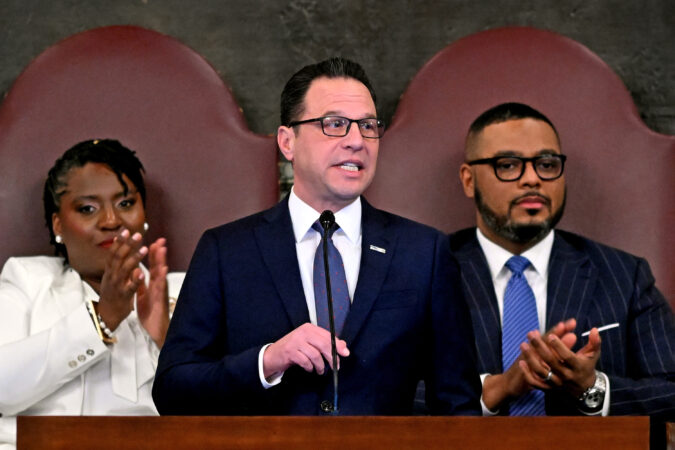
    Philadelphia Mayor Cherelle L. Parker is no longer the only person with an ambitious housing plan. Gov. Josh Shapiro joined her this week, pledging in his budget address to create a billion-dollar state fund to encourage housing production in local communities. The guv is echoing a bipartisan consensus that there simply aren’t enough homes to meet the demand. There’s just one problem: Many housing experts say Shapiro’s ideas won’t move the needle on production.

    That’s because his plan is based entirely on carrots, avoiding the creation of the kind of statewide building standards that have been most effective elsewhere.

    While factors like interest rates and the cost of construction impact housing starts, local zoning rules are also a key constraint on homebuilding. Many municipalities maintain strict rules that make it impossible to build anything other than McMansions. In the few towns that do allow for new construction, the mismatch between supply and demand means developers can charge outlandish prices. The new Coulter Place in Ardmore starts at around $3,000 a month for a one-bedroom unit.

    In states like California, the debate over housing has been going on for over a decade. State leaders there also sought to use an incremental approach and avoid attracting the ire of interest groups that are committed to the current system of regulating housing. The result has been the legislature routinely needing to revise the plan. Instead of starting with a half-measure, Pennsylvania should get things right the first time.

    Thankfully, there are plenty of initiatives to do exactly that. State Sen. Sharif Street (who is also running for Congress) is circulating a bill that would align Pennsylvania with international standards on stairwell construction. Advocates claim that allowing for buildings with just one set of stairs will facilitate construction on unique parcels, increase access to natural light for residents, and do so without increasing any safety risks.

    State Rep. Tarik Khan has proposed what he calls the “Golden Girls Law,” named after the famed ‘80s sitcom. Many municipalities restrict unrelated women from living together, which would have made scofflaws out of Blanche, Rose, Dorothy, and her mother if the show were set in Pennsylvania. Khan’s bill would end those bans.

    State Rep. Greg Scott wants to eliminate parking minimums, and State Rep. John Inglis III has introduced bills that would require municipalities to allow for more duplexes and triplexes. Shapiro should put his weight behind these efforts, as well.

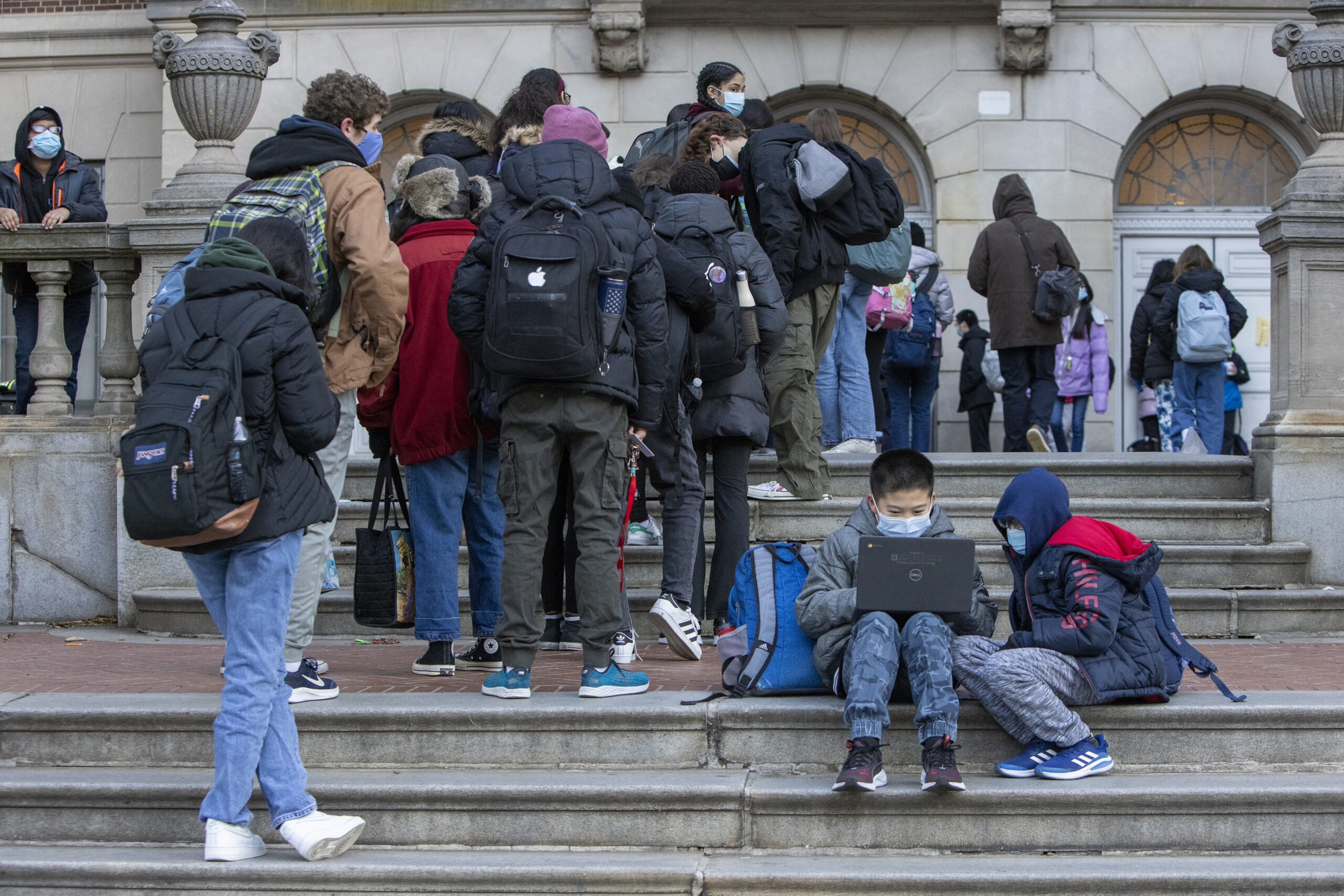
    Students outside Masterman High School in 2022.

    Polarizing magnets

    During the pandemic, the Philadelphia School District was faced with a conundrum: how to decide who got spots at the city’s well-regarded magnet schools, given the state’s cancellation of the Pennsylvania System of School Assessment, or PSSA, standardized tests.

    The schools — and standardized tests — have often been criticized for having cultural and socioeconomic biases. The demographics at Masterman and Central (where I attended) do not match those of the district overall, while standardized test scores tend to reflect the socioeconomic status of the students taking them. To many, this is enough evidence to scrap the magnet system, the tests, or both.

    The district’s solution was to take over admissions, which had traditionally been handled by the schools themselves, and subject applicants to a lottery process. To address equity concerns, some zip codes were given priority access to the schools. Students at predominantly Black George Washington Carver Middle School, who had been promised a spot at the partner high school if they maintained good grades, saw those pledges revoked. The district also created a computer-graded writing test, although that was quickly phased out. Some parents saw the revamp as a blatant attempt to discriminate against Asian students. A bipartisan federal appeals court ruled this week that these families have a case.

    With the state once again administering PSSAs, and with the new lottery system not having a substantial impact on demographics at the schools, it is worth questioning whether the new process represents any improvement at all.

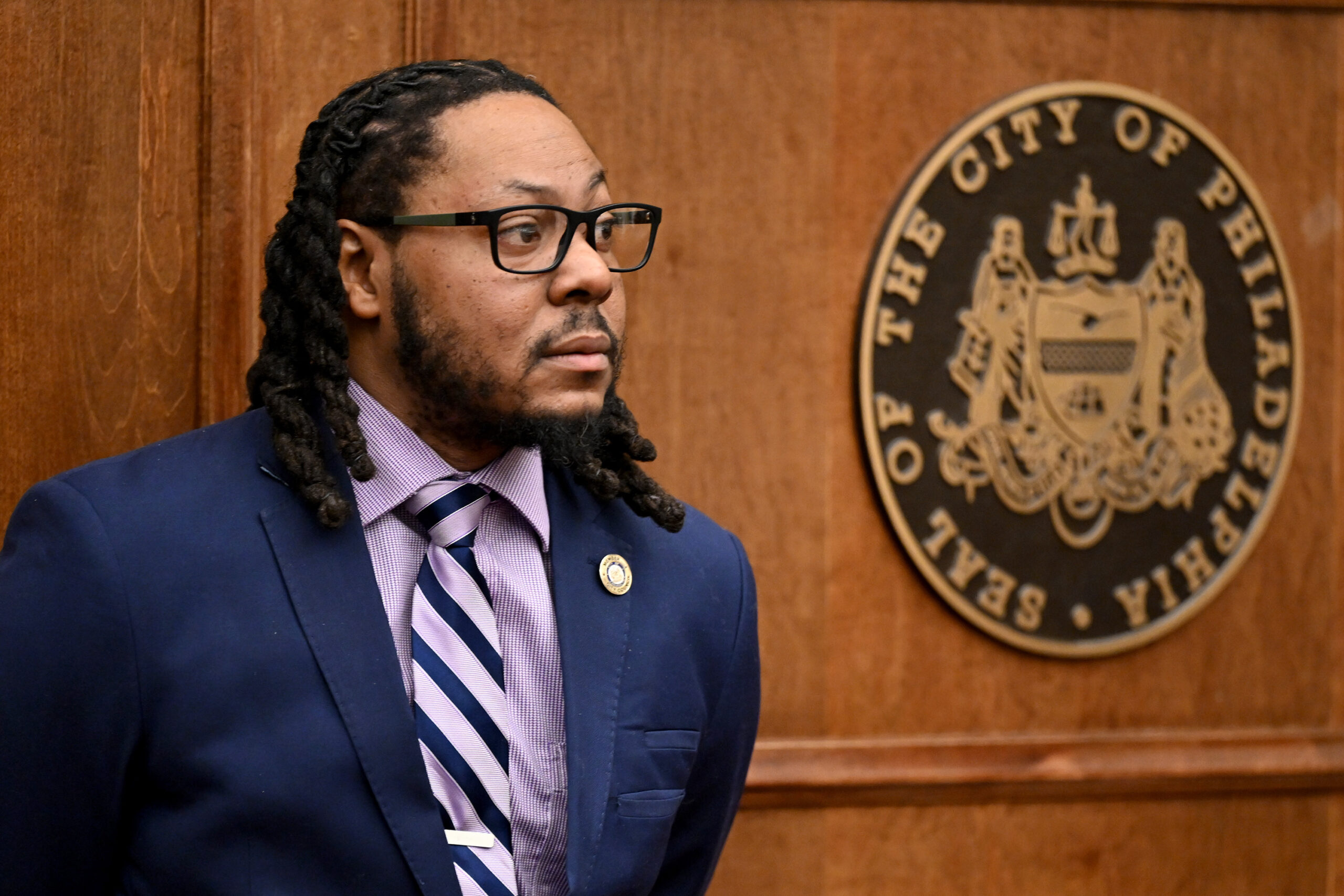
    Councilmember Jeffery Young Jr. in chambers as City Council meets in December.

    Day of Jay

    This column’s favorite City Council member, the 5th District’s Jeffery “Jay” Young Jr., decided not to advance his controversial bill to ban housing construction on or near the former Hahnemann University Hospital campus after serious pushback from local community groups and the Planning Commission. Unfortunately, the attention given to the Hahnemann bill may have helped two of his other bad ideas evade scrutiny.

    Young got two bills through the Rules Committee. One bill is aimed at preventing blight by restricting demolitions of vacant property. Ironically, most development experts say the bill will likely increase blight by incentivizing owners to create hazards to justify demolition or providing more space for squatters to operate.

    Young also introduced a bill creating an 11 p.m. curfew for some businesses within his district, which he said is aimed at stopping nuisance businesses that are selling drug paraphernalia and, per Young, sometimes the drugs themselves.

    By that logic, selling drugs at 10:59 p.m. will still be allowed.

  • The Sixers trading Jared McCain will either be a head-scratcher or an embarrassment

    The Sixers trading Jared McCain will either be a head-scratcher or an embarrassment

    A week ago, Joel Embiid decided to spend a little bit of the organizational capital he reaccrued in recent months. In response to a question about the Sixers’ approach to the upcoming NBA trade deadline, Embiid pointedly expressed his hope that the team would be looking to add talent rather than cut costs.

    “Obviously, we’ve been ducking the tax past couple of years, so hopefully, we’ll keep the same team,” Embiid said. “I love all the guys that are here. I think we got a shot.

    I don’t know what they’re going to do, but I hope we get a chance to just go out and compete because we’ve got a good group of guys in this locker room. The vibes are great. Like I said, in the past we’ve been, I guess, ducking the tax, so hopefully, we think about improving because I think we have a chance.”

    Embiid was surprisingly — some might say ungraciously — candid in noting the Sixers’ recent prioritization of shedding salary at the trade deadline to avoid paying the NBA’s luxury tax (and, thereby, to receive a share of the pooled taxpayer dollars). But he also was prescient, and unfortunately so.

    Sixers president Daryl Morey is scheduled to meet with the media on Friday, so we’ll have to wait to hear the official defense of the team’s decision to trade 2024 first-round pick Jared McCain to the Oklahoma City Thunder for what most likely will be a low-value first-rounder (plus the obligatory smattering of second-round picks). We don’t have to wait to judge the optics of the thing.

    The optics are poor, and that will remain true even if the thing ends up making more sense than we can immediately glean. The Sixers didn’t trade McCain for a player who is more likely to help them contend for a championship, be it this year or beyond. They didn’t trade him for a pick that they then flipped for a player who can help them capitalize on their momentum this season. Everywhere else, teams got better, and many of them did so in ways beyond this season. The Minnesota Timberwolves can re-sign Ayo Dosunmu. The Indiana Pacers can pair Ivica Zubac with Tyrese Haliburton next season. The Sixers can hope a late first-round pick is worth something in June.

    Jared McCain (right) only played in 60 games with the Sixers after being selected in the first round of the 2024 draft.

    A good way to judge the optics of a move is to attempt to write an executive summary of it in as favorable a way as possible. That’s an extraordinarily difficult task in this case. The Sixers just traded away a guy who they drafted at No. 16 barely a year and a half ago and who probably would be drafted higher in a redo. In exchange, they received a pick that currently projects as the No. 23 pick in the 2026 draft, two picks later than where the Sixers grabbed Tyrese Maxey almost six years ago. It is a range of the draft that rarely yields starters, let alone stars. It is a range where the odds say you are more likely to draft a player who never cracks a first-division rotation than one who becomes a meaningful starter.

    Just look at the track record. Of the 42 players drafted with the last seven picks of the first round since 2020, only 17 have started more than 17 NBA games. Just eyeballing it, you’d be hard-pressed to identify 10 of those 42 who’ve turned out to be better than the median potential outcome of even this year’s version of McCain. Jaden McDaniels and Desmond Bane are stars. They are followed by Payton Pritchard, Immanuel Quickley, Quentin Grimes, and Santi Aldama. Beyond that: Peyton Watson and Cam Thomas, and then Bones Hyland, Day’Ron Sharpe, Nikola Jović, and Kyshawn George. You get the picture.

    Risk vs. certainty is the name of the game. The Sixers traded McCain for a first-round pick that will be uncertain, even on draft day. Let alone five months before. Whatever negative certainty they felt about McCain’s mid-to-long-term trajectory, it can’t possibly be greater than the negative uncertainty of a draft-day replacement. Which is why, optically speaking, the move looks like one that was inordinately influenced by the cost-cutting benefits.

    The Sixers surely will point to optionality as a variable. On draft day, they will have another opportunity to flip the McCain first-rounder for an established NBA player or include the pick in a package. If that influenced the move, then the bet they are making is that the pick will be more in a draft-day trade than McCain would have been himself. There’s a decent chance that is true, given how far McCain has fallen on the depth chart and how little opportunity he could have to reestablish value.

    It just rings a little bit hollow to anybody who has bought into the commendable shift we’ve seen from the Sixers in their roster-building strategy over the last year. And it rings especially hollow when you consider that the team that traded for McCain is one of the best and brightest roster-builders in the modern NBA. As somebody said the other day, when Sam Presti wants one of your guys, it’s a good reason to think a few more thoughts about whether you should want to get rid of him.

    Barely a year and a half has passed since the Sixers made McCain the No. 16 pick in the 2024 draft. In that year and a half, we’ve seen McCain:

    • Play 23 games in which he looked like one of the top five players in the class, forcing his way into the starting lineup and then averaging 19.1 points while shooting 39.7% from three-point range in the 16 games before he suffered a season-ending knee injury.
    • Play 25 games where he looked like a player working his way back from a broken thumb that he suffered while working his way back from knee surgery.
    • Play 11 games in a 15-game stretch in which he logged just 132 minutes.

    In the Sixers’ defense, they’ve seen much more of McCain than the television cameras capture. Nobody can have a more informed opinion on where he projects within the context of their roster. But it wasn’t long ago that McCain looked like a player who could eventually transcend questions of fit. His ceiling never was close to VJ Edgecombe’s, and his probable reality was always short of Maxey’s. Again, though. The Thunder have a lot of guards. They are built on a two-way mentality. It makes you wonder.

    What it comes down to is that the Sixers better be right in their evaluation of McCain. Whatever the marching orders from ownership regarding the luxury tax, there is a level of player even Scrooge McDuck wouldn’t deem an appropriate cost-savings measure. McCain isn’t that player now. The Sixers could be accurate in their judgment of the odds that he ever becomes one. The question is whether they are accurate in their judgment of their risk of being wrong.

  • Eccentric former Eagle Mack Hollins is fine if you call him a journeyman: ‘At least I got to do it my way’

    Eccentric former Eagle Mack Hollins is fine if you call him a journeyman: ‘At least I got to do it my way’

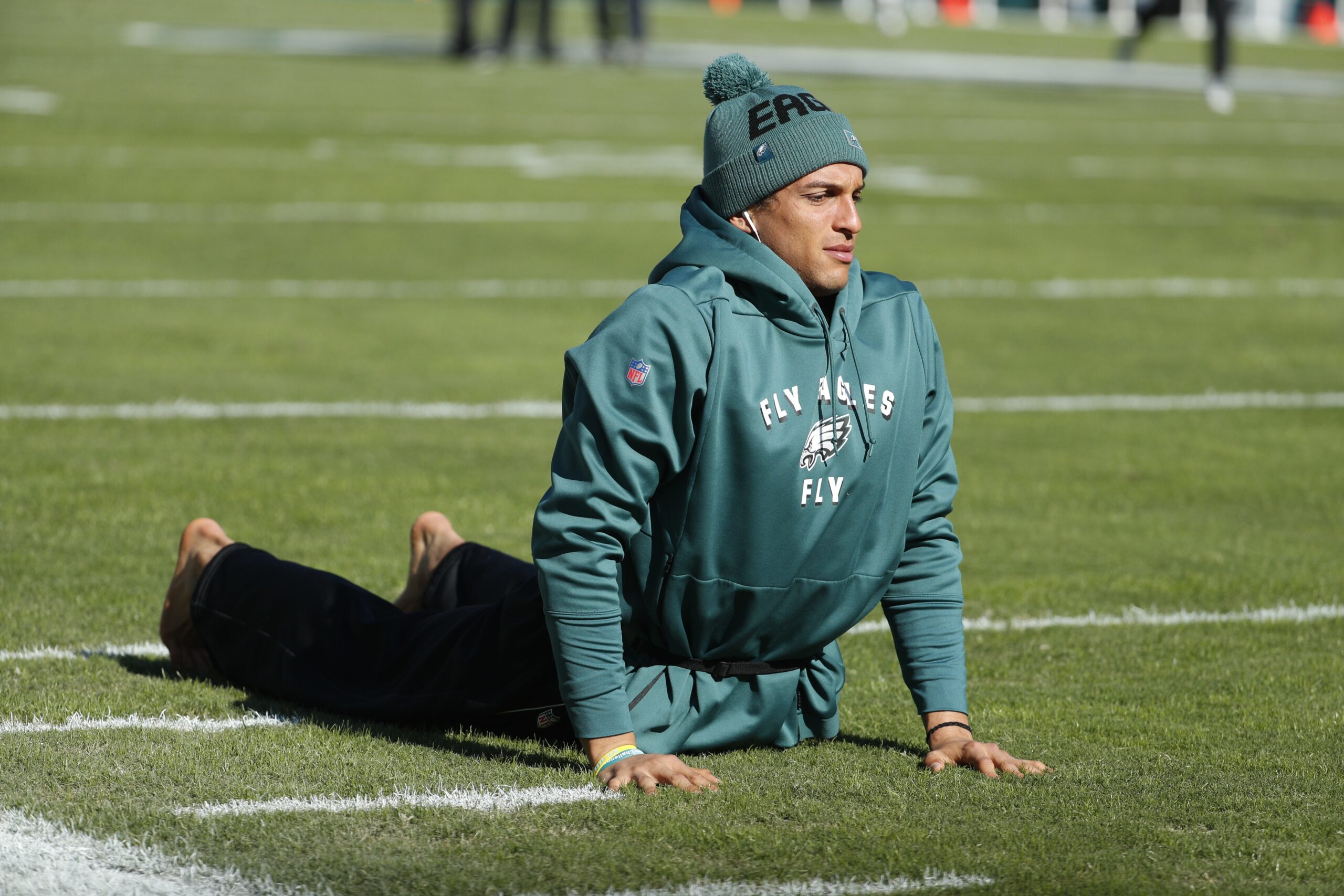
    SANTA CLARA, Calif. — Mack Hollins stood barefoot on the drab gray carpet at the San Jose Convention Center, surrounded by reporters and cameras, and couldn’t have felt more grounded in the spotlight.

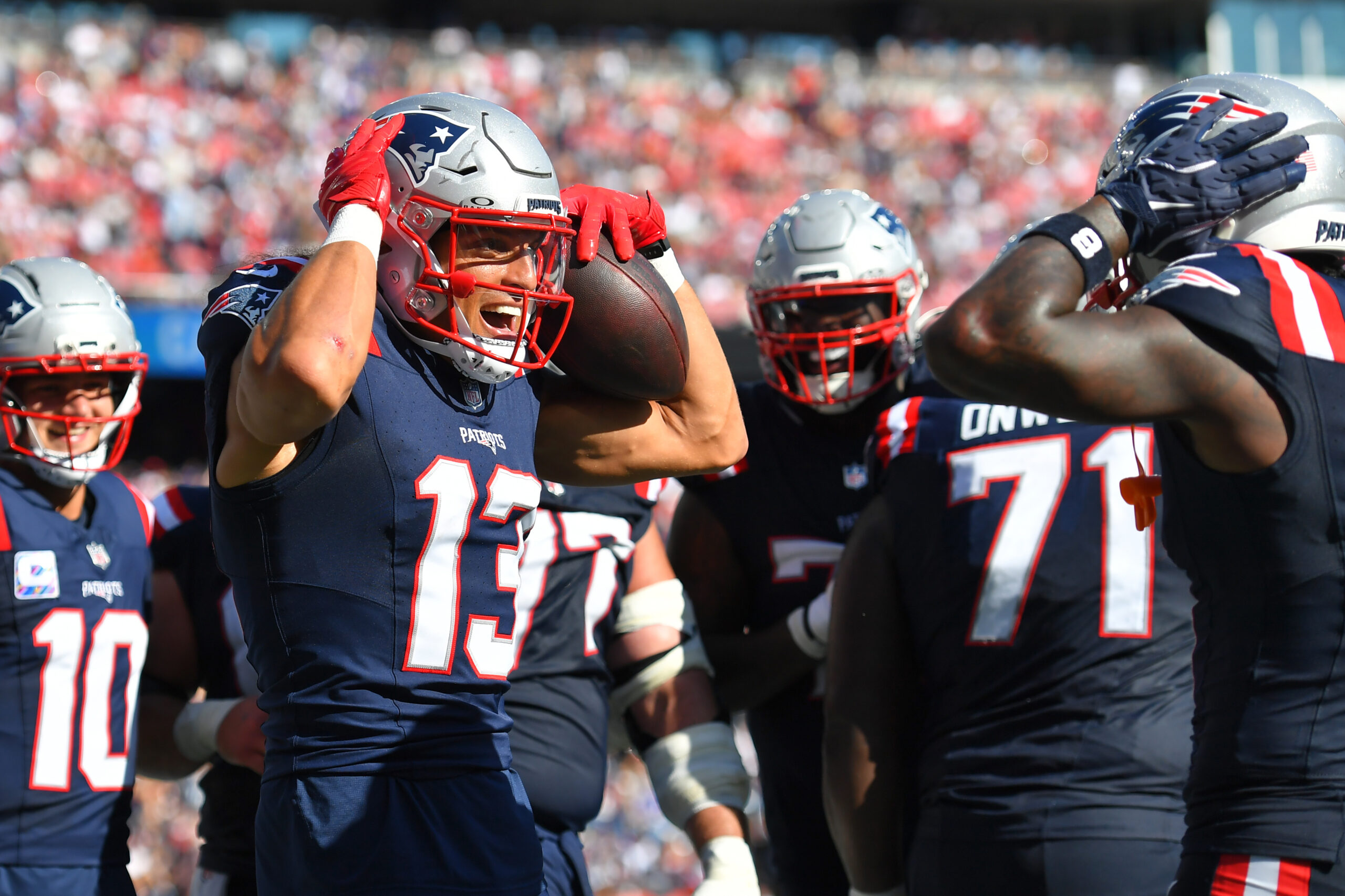
    It might have made more sense if the New England Patriots wide receiver was on one of the risers for Super Bowl LX opening night, considering all the attention the eccentric Hollins received. He’s far from a celebrity on a team lacking in stars, but the journeyman can’t help but stand out wherever he goes.

    Whether it’s the cartoonish outfits he wears on game days, his stylish hairdos, or his idiosyncratic practices and beliefs — like hardly ever wearing shoes off the field — Hollins makes an impression. On the gridiron, the ninth-year pro continues to make an impact despite never being a top receiver on any of the six teams for which he’s played.

    Hollins, who spent his first three seasons with the Eagles, has embraced his singular odyssey in the NFL.

    “I’m totally fine with that [journeyman] label, whatever it is, because I chose wherever I went — outside of getting released from Philly and picked up by Miami,” Hollins said two days after opening night from a riser (and barefoot) — at the Santa Clara Marriott. “Every choice after that I got to pick. And I always was able to pick where I saw value and they saw value in me. And I’ve learned over the years that people that value you, don’t go where the money’s the best or you think the opportunity is the best.

    “Go where it feels the best. And you only learn what feels the best from trial and error. So, yeah, if I’m a journeyman, so be it. At least I got to do it my way.”

    Hollins’ way could include bookending his career with Super Bowl victories. He’s one of three active players on the otherwise youthful Patriots who have previously won a title — cornerback Carlton Davis and former Eagles defensive tackle Milton Williams are the others. (Only former Los Angeles Rams receiver Cooper Kupp and linebacker Ernest Jones have rings for the opposing Seattle Seahawks.)

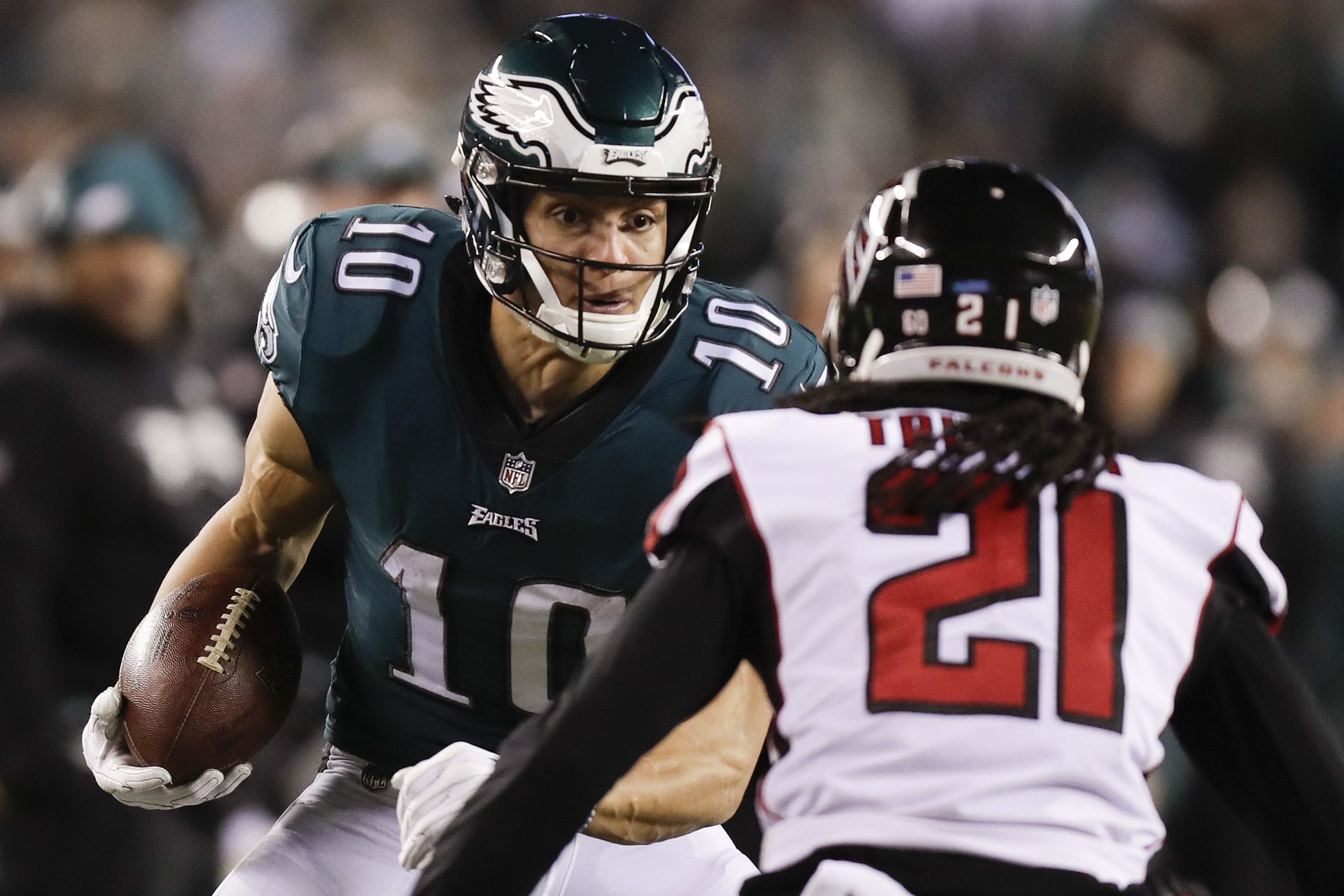
    Mack Hollins was a contributor as the Eagles’ fourth receiver in their first Super Bowl title season of 2017.

    Hollins won in his rookie season in 2017. He wasn’t targeted as the fourth receiver, but he played 17 snaps and had a few key blocks in the run game as the Eagles beat the Patriots, 41-33, in the Super Bowl LII shootout.

    He said he didn’t appreciate how tough it would be to get back to the big game.

    “Not at the time. I was like I don’t know why [Tom] Brady is like this big deal,” Hollins said of the seven-time champion quarterback. “It’s not that hard. You just go there. You win three playoff games and you’re like going to get a ring. Literally, did not know it would be eight years before I’d get back to one.”

    In that rookie season, Hollins caught 16 passes for 226 yards, including a memorable 64-yard touchdown against Washington on Monday Night Football, and was viewed as a field-stretching prospect. But he suffered a groin injury and surgery sidelined him for all of 2018. He returned the following season, but struggled to return to form.

    The Eagles released him in December and the Dolphins claimed him the next day.

    “In an ideal world, do I wish I would have had 1,000 yards every year and still be in Philly nine years later?” Hollins said. “Yeah, because then I wouldn’t have had to move my family six times. I didn’t have to like get six new jerseys for my family six times. But it worked out just the way it was supposed to.”

    It wasn’t easy. The Dolphins didn’t reach the postseason in any of Hollins’ three seasons in Miami. And he remained a deep reserve at receiver, although he shined on special teams. But signing with the Las Vegas Raiders in 2022 altered his career trajectory.

    The connection Mack Hollins (10) made with coach Josh McDaniels when arriving to the Raiders would help the receiver down the line.

    Hollins flourished in coach Josh McDaniels’ offense and finished behind only All-Pro Davante Adams in receiving with 57 catches for 690 yards and four touchdowns. But he didn’t make the playoffs with the Raiders either, and wasn’t utilized as much when he transitioned to the Atlanta Falcons the next season.

    But he became one of Bills quarterback Josh Allen’s more reliable receivers in Buffalo in 2024, and this season — after being reunited with Patriots offensive coordinator McDaniels — he posted numbers (46 catches for 550 yards and two touchdowns) that approached his career highs.

    And perhaps more importantly, he helped a young group of receivers adjust to McDaniels’ system.

    “Some of the younger guys have gravitated toward him and asked him, ‘How do we do this? How do we do that?’ And he’s been great with that,” receivers coach Todd Downing said. “And just the relationship part — getting to know him on a personal level isn’t very hard. I love his authenticity.”

    Rookie Kyle Williams has been one of the receivers Hollins has taken under his wing. He said there’s more to the 32-year-old than meets the eye.

    “He’s a little odd in his own way, not in a bad way, but in his own way, which everybody is,” Williams said. “But then you get to start knowing him, having conversations and I’m like, ‘Oh, he’s really cool. He’s chill.’ I can chop it up outside with him.

    “He’s just been a great brother, a great vet. And if I have a question on any conspiracy theory that I have, I know it’s one person I can ask.”

    Mack Hollins’ quirks have been evident throughout his career, but he’s been a beloved teammate and a productive pro.

    Hollins can confabulate with the best of them, whether it’s about regenerative agriculture, or his quest to build the world’s largest aquarium — “Big enough so I can swim in it” — or his penchant for going sans footwear.

    “I feel like I’m more connected to the ground. As corny as that sounds, and people are like, ‘Oh, you’re such a hippie,’” Hollins said. “I think the body is developed to connect to a lot of things. The same way you can feel energy when you walk in a room with people or the way you feel about something, you can’t put it into writing, but it’s just a feeling.

    “And I feel like when I’m connected to the ground or when I walk outside or I get to be outside, I feel better, I feel more connected to the earth, and I feel like my body is less stressed out.”

    Williams said Hollins would play barefoot if permitted. He and other Patriots have occasionally followed in his steps.

    “I’ve dibbled and dabbled into it,” Williams said. “I think it’s better at home. I’m not comfortable letting my dogs out around 100-some eyes. But when I’m at home, I can walk around and do it faithfully.”

    Some Eagles fans might have known about Hollins’ pet snakes or exotic fish, but their exposure to him was limited. He may be most remembered in Philly for his celebration after that long touchdown vs. Washington in 2017 when he did the then-famous “Floss” dance.

    “I still have the dance,” Hollins said. “Every once in a while when somebody needs it, I can pull it out. The backpack Mack never died. He’s just over to the side.”

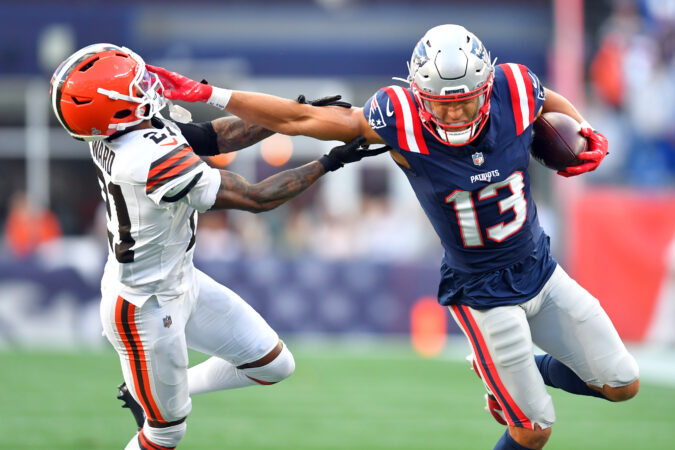
    Mack Hollins (13) has been a key part of a historic turnaround in New England this season.

    Hollins is perhaps the NFL’s best embodiment of Walt Whitman’s famous line from “Song of Myself”: I am large, I contain multitudes.

    “I think people sometimes will look away from what life is supposed to be because they’re chasing something that isn’t realistic,” Hollins said. “They see the end result. A bodybuilder goes on stage, you see him, you’re like, ‘Oh my goodness. Look at that. Look how strong he is, how his body is sculpted.’ But they skip all the pain he went through to tear his muscles apart and rebuild them.

    “Life is simple. It just takes heart to get what you want.”

  • ‘Sermon on the Lot’ compares Eagles fandom to a religious experience: ‘On Sundays, you go to Mass’

    ‘Sermon on the Lot’ compares Eagles fandom to a religious experience: ‘On Sundays, you go to Mass’

    Mike Cordisco is not the first person to compare football to religion, but he might be the first person to spend years photographing Eagles tailgates to make the comparison clearer.

    Cordisco’s newest project, Sermon on the Lot, is a 98-page book that compiles photos the Cherry Hill native took at Eagles tailgates between 2018 and 2025.

    The goal of the project, Cordisco said, was to push past the typical rowdy image of Eagles fans before a game and show their passion as a kind of religious fervor.

    Beyond the project’s title, the book itself is designed to look like something one might find in a church pew, with silver embossing on the front and a midnight green ribbon bookmark.

    It also features a sermon written by Philadelphia journalist Dan McQuade, who died last week at 43.

    Select photos from Sermon on the Lot will be on display at Unique Photo in Center City. Cordisco, 34, is hosting a gallery opening on Friday from 5 p.m. to 7 p.m. and says it will remain in place until mid-March.

    Play Ball

    Cordisco’s origin story in becoming a photographer is simple. He bought his first camera in 2016 to document his trips to baseball stadiums. It was around the same time he moved within Philadelphia’s city limits for the first time.

    Baseball is Cordisco’s “true passion.” He played high school baseball at Cherry Hill West and spent one season on the club team at Rutgers-New Brunswick, where he attended college. He spent a few years working for minor league clubs, working game day operations for the Lehigh Valley IronPigs and selling tickets for the Frisco RoughRiders.

    After three years in Texas with the RoughRiders, Cordisco moved to the Bella Vista neighborhood of Philadelphia and got a job as a database administrator with Better Tomorrows, a Camden-based nonprofit.

    Cordisco was still making frequent trips to MLB stadiums in an effort to see them all, but grew frustrated with trying to document them on his cell phone camera.

    “I was straining, lying on the ground, straining on railings to get these perfect shots on my iPhone,” Cordisco said. “And I was like, ‘You know what, why don’t I just get a camera?’”

    Cordisco’s love for photography grew, and eventually he became interested in not just documenting moments, but telling stories with his lens. He collected his baseball photography into a project titled If They Don’t Win It’s a Shame, which “exposes American culture and society within the confines of its national pastime,” according to Cordisco’s website.

    “It’s a way to tell all these stories and use my experience in the field, [to] visually tell these stories that I’m interested in,” Cordisco said.

    Sacred Sundays

    Once Cordisco started to take photography more seriously, he knew he wanted to put together a project that would capture Philadelphia, which he considers to be “the one identifiable U.S. city.”

    The city’s sports teams seemed like a natural place to begin framing Philly’s identity. Cordisco did not have personal allegiances to the Philadelphia teams, as his family had roots in New York, but he knew how much Philly cared about its teams from growing up in its suburbs. He began to shoot the places where he saw the city and its teams entwined.

    “I was photographing diners that might have Eagles merch in the windows and people’s Phillies and Eagles bumper stickers,” Cordisco said.

    He also began photographing the occasional Eagles tailgate. He became captivated by the community that surrounded Lincoln Financial Field on Sundays. By 2022, he had narrowed the project down to focus on tailgating.

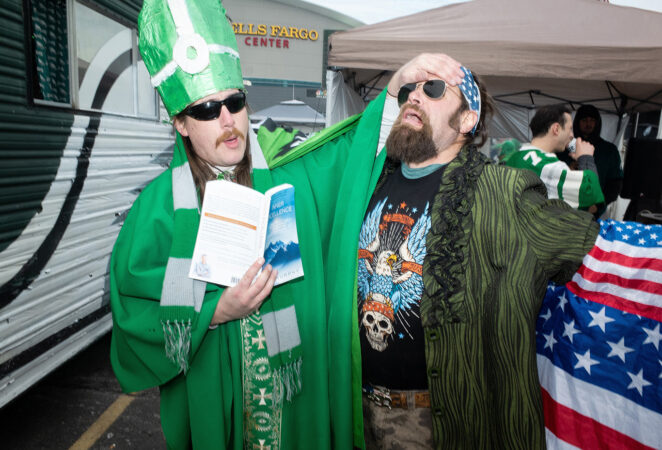
    A photo of Eagles fans tailgating from Mike Cordisco’s photo project, “Sermon on the Lot.”

    “Through the middle of this season, I went to every single one,” Cordisco said. “It was just, for me, the best way to really show and visualize Philly culture.”

    Those photos became Sermon on the Lot. Cordisco chose to drape the project in religious metaphors to frame football, and particularly Eagles fandom, as a religion — one with its own set of rituals, traditions, and ways of worship.

    “On Sundays, you go to Mass,” Cordisco said. “But in Philly, you go to the parking lot and tailgate an Eagles game.”

    Even though the scope of the project changed from its initial aim to portray Philadelphia, Cordisco still feels the city’s identity lies within Sermon on the Lot.

    “There’s no way it can’t come through,” Cordisco said. “I think my photos and the work definitely still show that classic grit and character that Philly is known for in the images … It’s still there, even if it’s maybe a layer or two deeper in the work.”

    Dan McQuade, seen here in a Daily News photo from 2014, died on Jan. 28, of neuroendocrine cancer, one day after his 43rd birthday.

    McQuade’s missive

    Cordisco was seeking a Philadelphia writer to pen a foreword for his book. He was a frequent reader of McQuade’s work, so Cordisco sent McQuade a cold email in September to see if he would be interested writing something for the project.

    “There was nobody else who could have written that,” Cordisco said. “He had no idea who I was, I just e-mailed him one day and he got back to me and said that he would love to do it.”

    To fit the project’s religious theming, McQuade’s foreword takes the form of a sermon. It is about the two men who showed up to former Eagles owner Leonard Tose’s house after news broke that Tose had agreed to sell a portion of the team and move it to Phoenix in 1984.

    The two men, Barry Martin and Robert Vandetty, left Tose a note asking the owner to reconsider, as McQuade detailed in a 2023 story for Defector. Martin and Vandetty’s note closed with a simple phrase: “Go Birds — Philadelphia Birds.”

    “‘Go Birds’ is your greeting, your mantra, your rallying cry,” an excerpt of McQuade’s sermon reads. “The Eagles trademarked it, but it does not belong to them. It is yours. Think of Barry and Rob. They risked arrest to say ‘Go Birds.’ When you go forth today, I beseech you to say it too.“

    Cordisco said McQuade went “above and beyond” in his involvement with the project, offering ideas on how to display the work at the Unique Photo gallery showing. McQuade’s words will hang alongside Cordisco’s photos on the walls of the Center City photo store.

    Cordisco started Sermon on the Mount more interested in how the Eagles reflected Philadelphia than the team itself. But now, thanks to the community he found in the parking lots, he considers himself a Birds convert.

    “I went out to the tailgates and just saw how much it truly meant to people,” Cordisco said. “Not even just the wins and losses, but just being there. I talked to people that have been tailgating in the same RV for 40 years now, and they would tell me all these stories about how they raised their kids at the tailgates.

    “Making that connection with so many people only strengthened my fandom of the Eagles.”

  • A stadium district mega-development opposed by the Phillies, Eagles, and Comcast Spectacor appears to be dead

    A stadium district mega-development opposed by the Phillies, Eagles, and Comcast Spectacor appears to be dead

    A major development project that would have brought 1,367 residential units to South Philadelphia’s stadium district seems to have fallen apart since the real estate partnership behind the project ended last summer.

    The project was revealed in 2024 and would have been a collaboration between Hines, an international development company, and the King of Prussia-based Philadelphia Suburban Development Corp. (PSDC), which owns the land.

    It would have constructed six buildings, including an office tower and entertainment complex, to the east of the Live! Casino & Hotel where Parx Casino’s South Philadelphia Race & Sportsbook and Packer Avenue Foods once stood.

    Council President Kenyatta Johnson, who represents the area, has moved to repeal several zoning ordinances that he had passed to enable the project, despite protests from PSDC president Mark Nicoletti, who says the move will kill the project.

    “Hines withdrew from the project last summer,” Johnson said in a statement. “Since the plans that were presented to me at the outset of the partnership with Hines and PSDC have significantly changed, I feel it is in the best long-term interest of the residents … to introduce new legislation this year that repeals the original 2024 zoning legislation.”

    Johnson advanced his repeal legislation at an early February hearing of City Council’s Rules committee. A final vote could come as soon as next week.

    Nicoletti says PSDC could have developed the project without Hines, but only if the zoning legislation had remained in place.

    “I’m honestly scratching my head. This makes no sense,” Nicoletti said Tuesday after the City Council hearing. “What happened today was random and inexplicable and unfortunately killed thousands of jobs and a very important economic development project.”

    The project proved controversial early on, with representatives of the Phillies, Eagles, and Comcast Spectacor — which owns the Flyers — expressing concerns at a 2024 City Council hearing.

    Earlier in 2024 those three organizations shared plans of their own for a mixed-use development of their own at the sports complex.

    The release occurred as debate raged around a plan from the 76ers to leave the sports complex and build an arena in Center City — an effort the team ultimately aborted.

    But Nicoletti says his company met with local community organizations and the major sports teams about the proposal.

    “We presented comprehensive plans from a top architectural firm at a dozen meetings with community groups and the teams,” Nicoletti said. “We worked through any concerns the Planning Commission had to win their support.”

    But Nicoletti says the two developers went separate ways last summer because Hines did not exercise an option to buy all or part of the property from the PSDC.

    Hines declined to comment.

    An overview of what Hines and PSDC are planning for the stadium district.

    Johnson’s legislation contained a sunset clause for the zoning overlay he created to aid the project, which would have repealed itself later this year. But he decided to act sooner.

    Johnson also repealed a change in the underlying zoning from industrial to land use rules that allow mixed commercial and residential use.

    If he had left that mixed-use zoning in place, the land value would have increased even without the project moving forward.

    “I look forward to hearing new proposals from anyone, including PSDC, concerning new development plans for the former South Philadelphia Race & Sportsbook location at 700 Packer Ave.,” Johnson’s statement read.

    Johnson emphasized that any new proposal would need to be presented to neighborhood groups and get their support before he introduces any new zoning legislation.

    The Hines and PSDC collaboration promised to create thousands of construction jobs, but the exit of the international developer is seen by union leadership as the catalyst for the project’s death.

    “Hines stepped away from the project, and that caused the Council president to look at it with a new set of eyes,” said Ryan Boyer, who leads the Philadelphia Building and Construction Trades Council and the Laborers District Council.

    “The Council president has approved correct development, but he wants the community to have a say — as is his right,” Boyer said. “But I also think that [Johnson] and Mark [Nicoletti] are both reasonable people and reasonable men will come to a resolution for both of them, and for the building trades.”