Tag: topic-link-auto

  • Poll: Philadelphians feel safe and see a cleaner city under Mayor Parker — but schools remain a major concern

    Poll: Philadelphians feel safe and see a cleaner city under Mayor Parker — but schools remain a major concern

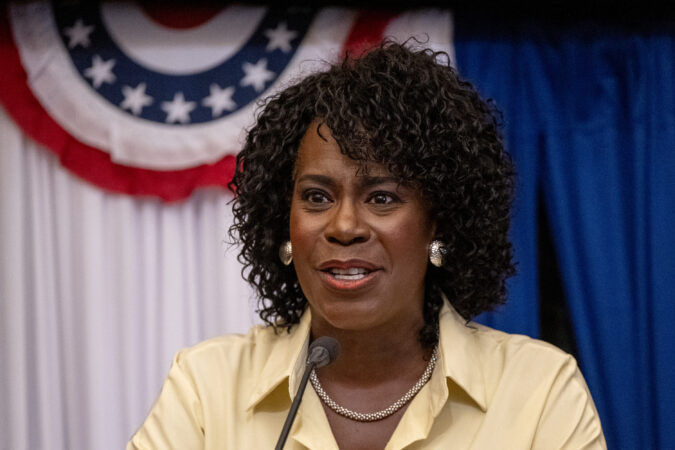
    An overwhelming majority of Philadelphians feel safe in their neighborhoods and more than 40% believe that the city has become cleaner under the leadership of Mayor Cherelle L. Parker, according to a new poll, suggesting that city residents see significant progress on the mayor’s key campaign promises.

    However, there is not a broad citywide consensus on Parker’s tenure as she heads into an expected reelection campaign next year, and there were also red flags for her and the city, including alarmingly bad evaluations of the public school system.

    That is according to a recent Suffolk University/Philadelphia Inquirer poll that surveyed 500 Philadelphians across the city on issues including crime, quality of life, city services, and education. More than half of those surveyed said they would rate Philly as a “good” or “excellent” place to live.

    About 83% of residents reported feeling safe in the city just five years after record-high rates of gun violence in Philadelphia, with respondents in neighborhoods most affected by violent crime most likely to say they feel that crime has decreased since Parker took office in 2024.

    However, the persistent opioid crisis in Kensington remains a sore spot for the city, with more than half of respondents saying that the mayor’s strategy to address the entrenched open-air drug market in the neighborhood is not working.

    And the city’s public school system emerged as a primary concern, with 45% saying they would rate Philadelphia’s schools as of “poor” quality, while more than half of the poll’s respondents said that schools play an important role in whether they stay in the city or move out.

    The survey was conducted last week, after the financially struggling Philadelphia School District and its controversial school closure plan dominated local headlines for more than a month.

    David Paleologos, director of the Suffolk University Political Research Center in Boston, said the poll provides Philadelphia policymakers with a blueprint for how to keep people in the city: continue progress on crime and improve the public schools.

    “If that happens,” he said, “then Philadelphia is poised to be a renaissance city.”
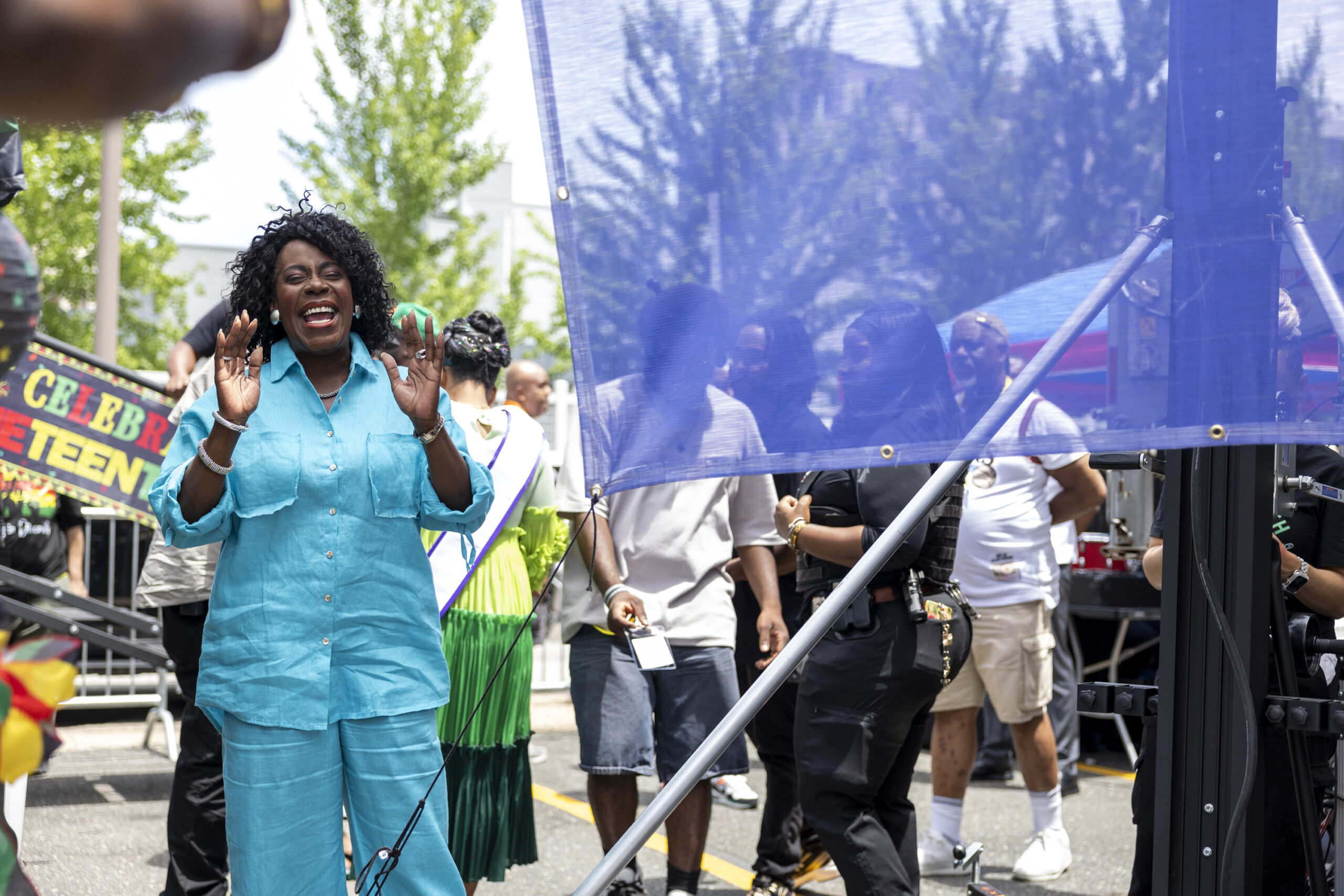
    Mayor Cherelle L. Parker attending the Juneteenth Block Party at the African American Museum in Philadelphia on June 19.

    Parker said in a statement that her administration “values both qualitative and quantitative information.”

    “The real-life, lived experiences of people in this city are what matters most,” she said. “Polling is not my North Star in how I govern. My solutions always come from the ground up, from what people can see, touch, and feel.”

    For Parker’s political fortunes, the poll represents mixed results. It showed that the substantial base of support that lifted the mayor to office in 2023 is holding up, with Black residents and older Philadelphians most likely to say they have a favorable view of her and see progress on her campaign promises.

    But Parker has not consolidated broad citywide enthusiasm, with 44% of respondents saying that they have a favorable view of the mayor and 35% saying they have an unfavorable one. That is positive territory for Parker more than halfway through her first term, but not overwhelmingly so.

    Her biggest vulnerability is with young people — respondents under age 45 were more likely to say that they had an unfavorable view of the mayor than a favorable one. White residents were also more sour on Parker.

    (function(){function e(){window.addEventListener(`message`,function(e){if(e.data[`datawrapper-height`]!==void 0){var t=document.querySelectorAll(`iframe`);for(var n in e.data[`datawrapper-height`])for(var r=0,i;i=t[r];r++)if(i.contentWindow===e.source){var a=e.data[`datawrapper-height`][n]+`px`;i.style.height=a}}})}e()})();

    Paleologos said that the poll shows there are “pockets of strength” that make Parker, a centrist Democrat, electorally strong, but that he would not consider her support broad-based.

    Those results come as the city’s most prominent progressive political groups are weighing whether to mount a challenge against Parker next year. As the incumbent, Parker would be the hands-down favorite in any contest, as no Philadelphia mayor has lost a campaign for reelection in modern history.

    But some leaders of the city’s left-leaning coalition see an opening amid gains in Philadelphia and elsewhere. For example, New York City voters last year elected progressive Mayor Zohran Mamdani, and last week, Democrats in Washington, D.C., picked Janeese Lewis George, like Mamdani a democratic socialist.

    Aren Platt, the executive director of People for Parker, the mayor’s political arm, said in a statement that Parker’s support “has always been under-counted, especially in public polling.” He cited polling conducted during the 2023 mayor’s race that showed her tied with or trailing her top opponents in the Democratic primary, in which Parker prevailed by a commanding 10 percentage points.

    Platt also said the Suffolk University/Inquirer poll is not necessarily predictive of how the mayor could perform in a theoretical reelection race. The poll was of Philadelphia residents, not likely primary voters.

    “This poll may reflect the demographics of Philadelphia, but elections are decided by the people who show up to vote on election day,” he said. “In Philadelphia, those are two very different universes.”

    The poll also showed relatively positive marks for one of Parker’s potential successors: City Council President Kenyatta Johnson. He has said that he supports Parker for reelection, but Philadelphia mayors are limited to two terms and Johnson is widely seen as a potential future contender for the city’s top office.

    Overall, 48% of respondents said they had a favorable view of Johnson and only 12% had an unfavorable one. Johnson is also far less publicly known than Parker, with 40% of those surveyed saying they had either never heard of him or were undecided on their view of him.

    Negative reviews of the Philadelphia School District

    About one in five respondents said that schools and education are the most important issue in the city, making it second only to crime. Paleologos said that is somewhat unique to Philadelphia — in other major cities where he has polled public opinion, he said, respondents often rank jobs and the economy as greater concerns.

    (function(){function e(){window.addEventListener(`message`,function(e){if(e.data[`datawrapper-height`]!==void 0){var t=document.querySelectorAll(`iframe`);for(var n in e.data[`datawrapper-height`])for(var r=0,i;i=t[r];r++)if(i.contentWindow===e.source){var a=e.data[`datawrapper-height`][n]+`px`;i.style.height=a}}})}e()})();

    Nearly 75% of respondents said they would rate the quality of Philadelphia’s public schools as “fair” or “poor.” Younger residents were far more likely than older ones to rate the schools as “poor,” and more than half of all respondents said the public schools are an important factor in determining whether they and their family stay in the city or move away.

    “That’s a big number,” Paleologos said. “That research alone gives the policymakers a bird’s-eye view of what they need to do to keep people here in Philadelphia.”

    The survey also shows that residents see issues across the school system. When asked what should be the highest priority in improving the schools, there was little consensus among respondents: About a third said teacher pay, while a quarter said school safety, and another quarter said building repairs.

    Just 4.4% said the highest priority should be instituting year-round school, an initiative that Parker campaigned on and that the district is piloting.
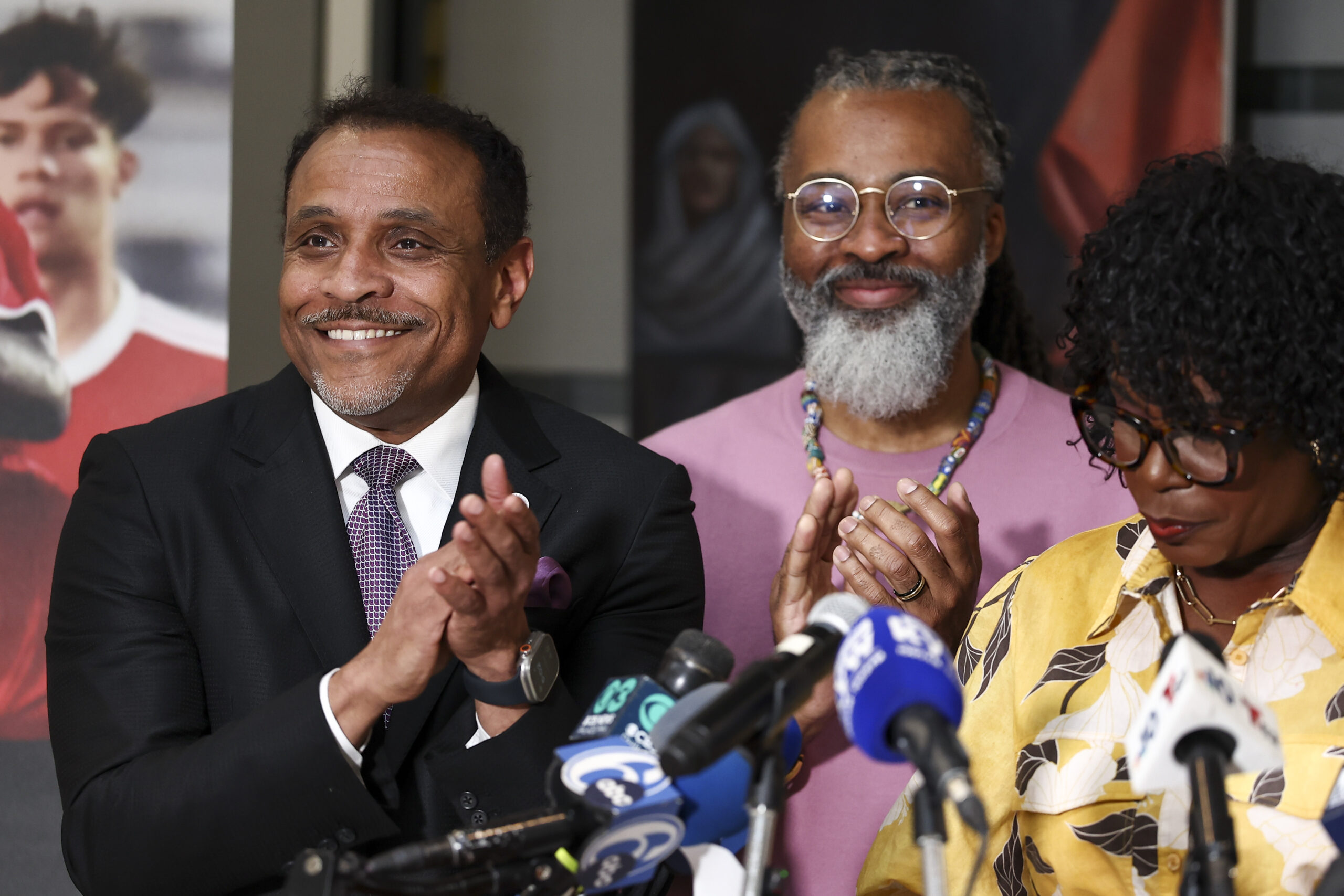
    Superintendent Tony B. Watlington Sr., School Board President Reginald L. Streater, and Mayor Cherelle L. Parker stand together during an announcement at the School District of Philadelphia Headquarters on June 10.

    In a statement provided to The Inquirer after the initial publication of this story, Monique Braxton, a spokesperson for the School District of Philadelphia, said district leaders share “the public’s sense of urgency to significantly improve public schools in the City of Philadelphia.”

    She said the district is making progress toward the superintendent’s goal of making the district the “fastest improving large urban district in the nation.”

    Braxton added that the district’s own survey suggests most parents are satisfied. The district’s 2024-25 survey, Braxton said, found that 90.3% of more than 26,000 parents whose students attend district schools said they were pleased with the quality of education their child received.

    The quality of Philadelphia’s public schools has been a perennial concern, and city leaders have long pointed to the chronic underfunding of the Philadelphia School District. In 2023, the state Commonwealth Court ruled that Pennsylvania had for years unconstitutionally deprived students in low-wealth districts of an adequate education, and state lawmakers are now funding schools under a new formula.

    District leaders have undertaken significant efforts in recent years to improve academic performance. There have been some positive results, including improvement on test scores and a recent report that said Philadelphia School District students’ learning post-pandemic was tops in the nation among large urban districts.

    The district also earlier this year adopted a sweeping, $3.3 billion effort to renovate and modernize 169 schools. That multiyear plan was hotly debated, as it included the closure of 17 schools.
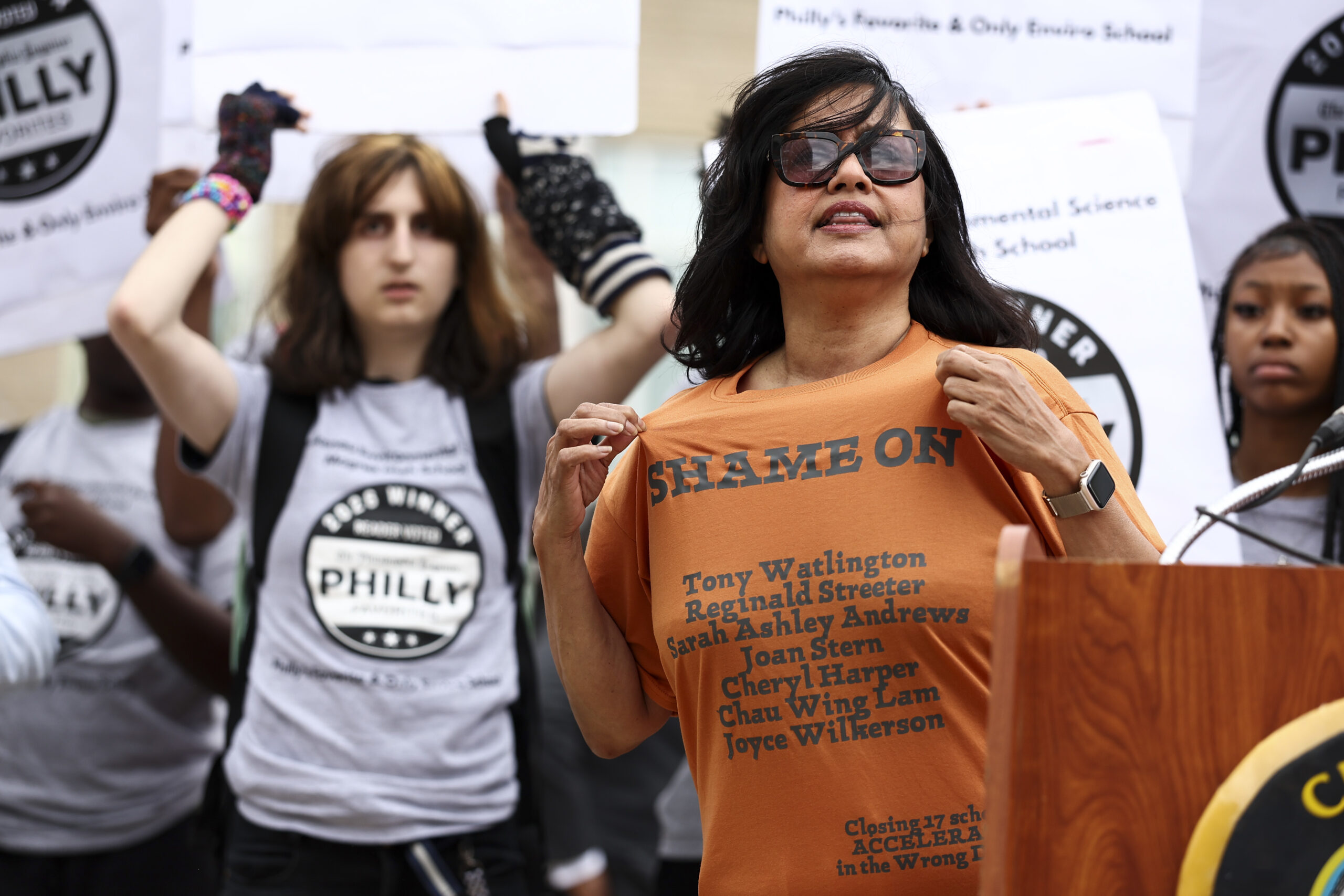
    Councilmember Nina Ahmad shows off her T-shirt during a rally outside of the School District of the Philadelphia School District headquarters building on May 28. Council members rallied to oppose the school closure plan.

    Parker has expended significant political capital on the school district this year. She unsuccessfully fought for a $1-per-ride tax on rideshare services like Uber to generate recurring revenue for the district so that it could stave off hundreds of planned staff cuts.

    After City Council rejected that plan, she agreed with lawmakers to divert existing money out of the city budget and commit $216 million in additional funding to the district over the next five years.

    Parker said the Commonwealth Court “got it right” in declaring that low-wealth districts like Philadelphia’s are chronically underfunded.

    “If we had all the resources we need, we’d see even more enhanced improvements in our schools,” Parker said. “I’ll never stop fighting for our children and their right to a high-quality education.”

    Crime is the top concern, but most residents feel safe

    Despite rates of violent crime in the city plummeting to record lows under Parker, public safety remains the top concern for three in 10 Philadelphia residents, suggesting that people who live in the city are still anxious about crime.

    When asked about whether they believe crime in their neighborhood has increased or decreased over the last two years, a third of respondents said they believe it has increased, about 32% said it has decreased, and 28% said they believe it has stayed the same.

    (function(){function e(){window.addEventListener(`message`,function(e){if(e.data[`datawrapper-height`]!==void 0){var t=document.querySelectorAll(`iframe`);for(var n in e.data[`datawrapper-height`])for(var r=0,i;i=t[r];r++)if(i.contentWindow===e.source){var a=e.data[`datawrapper-height`][n]+`px`;i.style.height=a}}})}e()})();
    (function(){function e(){window.addEventListener(`message`,function(e){if(e.data[`datawrapper-height`]!==void 0){var t=document.querySelectorAll(`iframe`);for(var n in e.data[`datawrapper-height`])for(var r=0,i;i=t[r];r++)if(i.contentWindow===e.source){var a=e.data[`datawrapper-height`][n]+`px`;i.style.height=a}}})}e()})();

    A closer look at the results shows that a plurality of respondents in the neighborhoods most affected by violent crime, including North and West Philadelphia, believe that crime has decreased.

    The respondents most likely to say that they believe crime in their area has increased live in Northeast Philly. But public data maintained by the Philadelphia District Attorney’s Office show overall crime has decreased there, too. There are five Northeast Philadelphia police districts, and the total number of crime incidents reported to police declined in all of them between 2023, the year before Parker took office, and last year.

    Despite the mixed poll results, a vast majority of Philadelphians — nearly 83% — said that they feel safe in their own neighborhood.

    That is good news for Parker, who ran for office as a tough-on-crime Democrat amid a historic wave of gun violence and who vowed often to “bring order back to our city.”

    Philadelphia police officers stand along the 2800 block of Kensington Ave. after a police involved shooting on May 23. Police shot a robbery suspect.

    Parker said in a statement that the polling results are evidence that her public safety strategy is working, calling it her “number one priority.”

    She also vowed to continue her administration’s efforts in Kensington, the epicenter of the city’s opioid crisis. The Parker administration has deployed a multipronged approach, including increased police patrols in the neighborhood and an expansion of offerings for people in addiction.

    There have been some signs of progress in Kensington, including the lowest gun violence rate in a generation.

    But 53% of poll respondents said they do not believe the mayor’s efforts there are working, and those who live closest to the problem were the least supportive. In the region that encompasses the Lower Northeast and the river wards, where Kensington is located, 68% of people said Parker’s strategy is not working while only 18% said it is.

    The mayor’s overall favorability was also lowest in that area of the city, the only region where more respondents said they had an unfavorable view of the mayor than a favorable one.

    (function(){function e(){window.addEventListener(`message`,function(e){if(e.data[`datawrapper-height`]!==void 0){var t=document.querySelectorAll(`iframe`);for(var n in e.data[`datawrapper-height`])for(var r=0,i;i=t[r];r++)if(i.contentWindow===e.source){var a=e.data[`datawrapper-height`][n]+`px`;i.style.height=a}}})}e()})();

    Parker acknowledged that there is “much more work to do” in Kensington and said that “changing culture and going to war with the status quo is never easy.“

    Parker’s ‘clean and green’ message is landing

    For a city derisively called “Filthadelphia” and where cleanliness has been a longtime concern, a significant number of people seem to think Philadelphia is getting cleaner.

    When asked about trash and litter, 41% of poll respondents said they believe the city has gotten cleaner over the last two years. Just 19% said Philadelphia has gotten dirtier, and 38% said it has stayed the same.
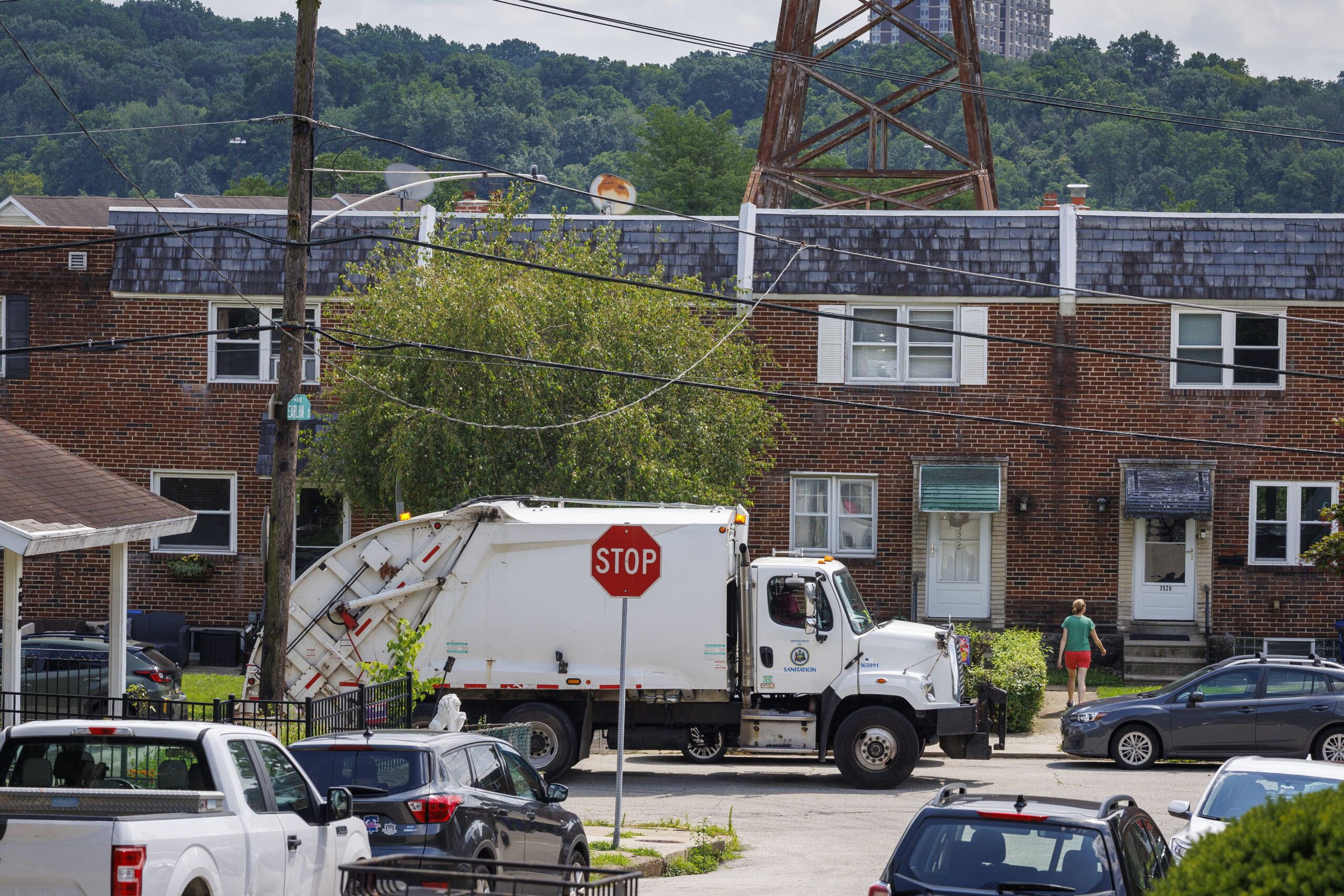
    A sanitation department truck is seen along Cresson Street at West Earlham Street in Philadelphia on the first day of trash collection after a strike on July 14, 2025.

    Those are positive marks for a mayor whose slogan is “safer, cleaner, greener” and who has instituted new programs including twice-weekly trash pickup in the densest parts of the city.

    Despite those efforts, Philadelphians gave worse reviews to the overall quality of city services in their neighborhood. About six in 10 respondents said the quality was either “fair” or “poor,” while 40% said “good” or “excellent.”

    Staff writer Michelle Baruchman contributed to this article.

  • Gov. Mikie Sherrill proposed an 80% cut to a program that provides job training and support to Hispanic women. The budget is due in days.

    Gov. Mikie Sherrill proposed an 80% cut to a program that provides job training and support to Hispanic women. The budget is due in days.

    Consensa Francisca Silva Silva moved to Camden from Costa Rica more than two years ago knowing nobody. She lived on the street for two months, she said, and then was bouncing from house to house when a young man in the neighborhood told her to check out the Hispanic Women’s Resource Center in Camden, one of several such centers in the state.

    She went. With help from the program, Silva received food, obtained a work permit, made a down payment for a studio apartment, and started a job at McDonald’s.

    That statewide initiative is now facing detrimental cuts under Democratic Gov. Mikie Sherrill’s budget proposal. The governor has proposed cutting nearly 80% of its funding, and Silva worries that other immigrant women looking to improve their circumstances will not get the help she received.

    “It was very hard to come here without knowing anyone, and it was really hard because at first I couldn’t find any work,” Silva, who is Nicaraguan, said in Spanish, translated by Jesselly De La Cruz, the executive director of the Latino Action Network Foundation, which funds the centers.

    The initiative is one of numerous South Jersey programs at risk under Sherrill’s proposal, including the Rowan University veterinary school and a program that provides mental healthcare to abused children. But the cuts are not a done deal.

    Sherrill and legislative leaders announced Tuesday they had come to an “agreement” on a budget totaling $60.7 billion, the same price tag Sherrill proposed in March. But it has not been made public and it is unclear how far into the details they have gotten. They have until Tuesday to figure it out.

    And the process is still underway. State Sen. Nilsa Cruz-Perez, a Camden Democrat who sits on the Senate Budget and Appropriations Committee, has been a supporter of the centers. She was unable to speak Wednesday afternoon because she was in a committee budget hearing.

    Client Consensa Francisca Silva Silva (right) participates in a workshop at the Hispanic Women’s Resource Center in Camden Thursday, June 11, 2026.

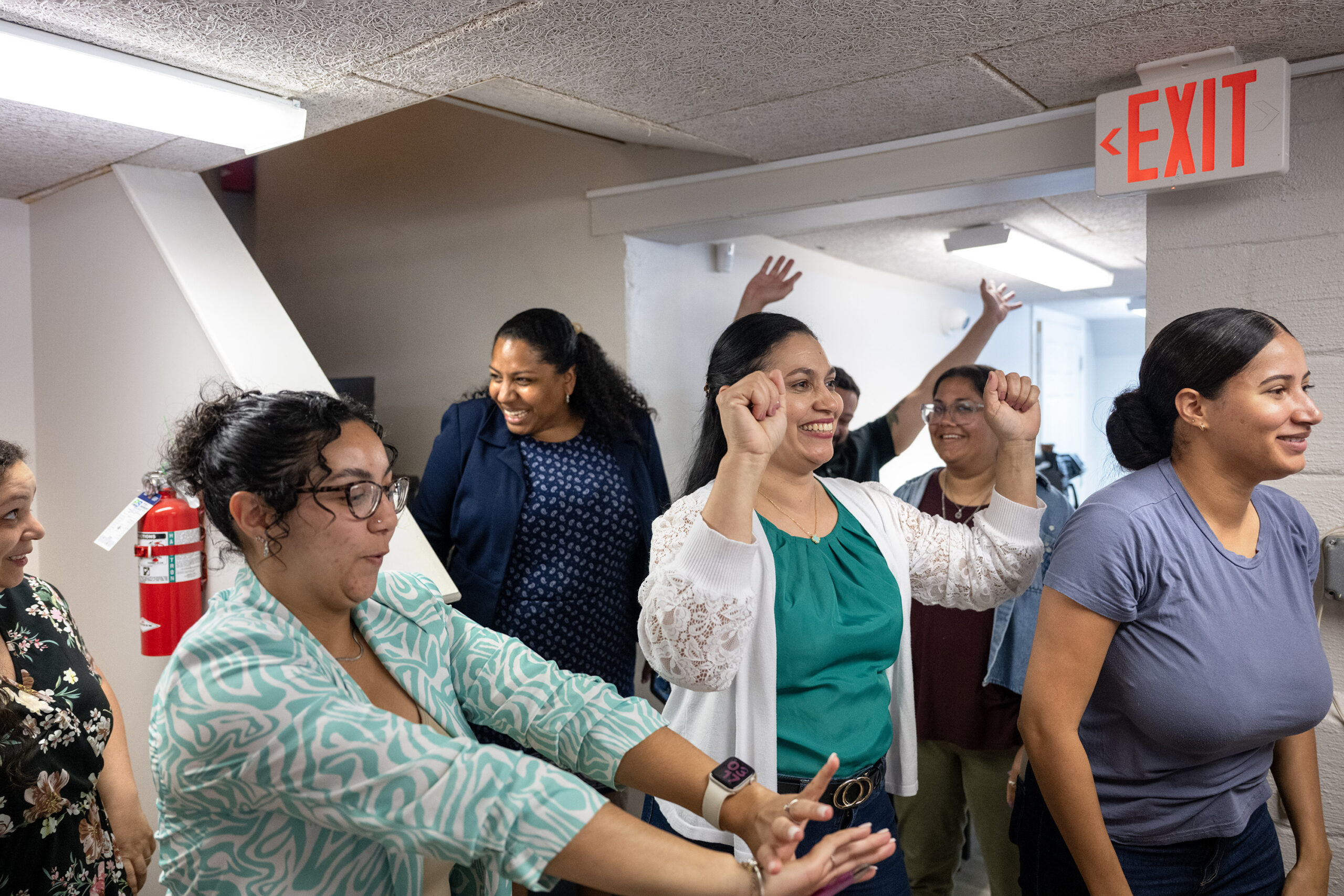
    On a recent Thursday, Silva participated in a healthy life skills workshop in Spanish at the Camden center, where she learned about taking care of herself as summer temperatures get hotter in the city. About 20 adults clapped for one another with big smiles on their faces, and they received goody bags with sunscreen, lip balm, a towel to keep cool, and a little fan. A young girl played with magnetic tiles and a baby was kept calm, passed between women.

    The governor proposed cutting funding for the center’s programs to $535,000, down from more than $2.5 million this year and more than $3 million in 2025. Murphy had proposed a similar cut last year, but the funding was restored during budget negotiations.

    Hispanic Women’s Resource Centers were established through 1991 legislation to address the wage gap for Latinas. New Jersey is one of the states with the biggest wage gap for Latina workers, according to the National Women’s Law Center.

    Staff members observe from back of the room during a workshop at the Hispanic Women’s Resource Center in Camden Thursday, June 11, 2026.

    The Latino Action Network Foundation funds these resource centers in partnership with six nonprofits across 14 sites, including five in South Jersey. The Camden center is located at the nonprofit Healthy Families and Communities, and there are centers in Vineland in Cumberland County, Hammonton in Atlantic County, Pennsville in Salem County, and Rio Grande in Cape May County.

    Sherrill’s proposal would “drastically cut” the number of resource centers, and sites in Hammonton and in Lakewood, in Ocean County, would likely be on the chopping block, De La Cruz said, adding that services would need to be cut in eight of 11 counties.

    Martha Infante, 38, who lives in Pennsauken, said she was disoriented when she moved to South Jersey from the Dominican Republic. But through the Camden center, she found out how to apply for work online and learned basic English. She obtained coats for her daughters’ first U.S. winter, and a staffer accompanied her to a New Jersey Department of Motor Vehicles center to get her driver’s license.

    “I came here and my mind was all over the place, I didn’t know where things were,” she said in Spanish.

    She now works as a home health aide, thanks to training she got through the center, and even participated in a program where she learned about advocating for her community in Trenton.

    “Don’t cut these funds, Gov. Sherrill,” she pleaded. “Don’t cut the funds! This is like a family. It’s like a home for the community.”

    Client Martha Infante (left) talks with staff member Chailienisse Vega (right) after participating in a workshop at the Hispanic Women’s Resource Center in Camden Thursday, June 11, 2026.

    Some of the women in the program are fleeing domestic violence and seeking financial independence. Others are struggling to get a work permit, or may have lost a family member who helped pay the bills to deportation. A lot of former “Dreamers” — undocumented immigrants who came to the U.S. as children — utilize the center as well, De La Cruz said.

    The need for the centers has only escalated under President Donald Trump’s second administration, she said.

    The social worker-turned-executive said she was surprised by the severity of Sherrill’s proposed cut, especially because of the governor’s efforts to push back against Trump’s immigration policies.

    A 2023 Rutgers study funded by the Latino Action Network Foundation found that the most popular services at these resource centers were English-language classes and employment services, such as job referrals, assistance filling out applications, resume writing, and interview preparation.

    Staff member Andreina Pardo pauses to stretch with participants as she leads a workshop at the Hispanic Women’s Resource Center in Camden Thursday, June 11, 2026.

    “Aside from helping them with the technical aspects of job hunting, the assistance from the Centers seemed to provide a boost of confidence for many of the women, giving them an additional push to apply for positions even if they felt hesitant to do so at first,” the study said.

    Gladys, 48, who declined to give her last name due to concerns over her safety, said in Spanish that the free English courses made her feel like she could “come up for air and breathe” after not being able to communicate.

    The Camden resident had been an ecologist in Nicaragua and has gotten involved in the center’s community garden. She said she would love to pursue a career teaching children about the environment, but her plans are on hold because her work visa was canceled.

    In the meantime, Gladys said, activities at the center like art classes have made her feel less alone. She has been able to connect with women in the same situation as her, and those who migrated to the U.S. earlier who can give her advice from their experiences.

    “Maybe my circumstances don’t change, but my emotional well-being changes because I’m able to connect with others,” she said in Spanish.

  • Philly cheesesteak outranks New York pizza in a new World Cup food study

    Philly cheesesteak outranks New York pizza in a new World Cup food study

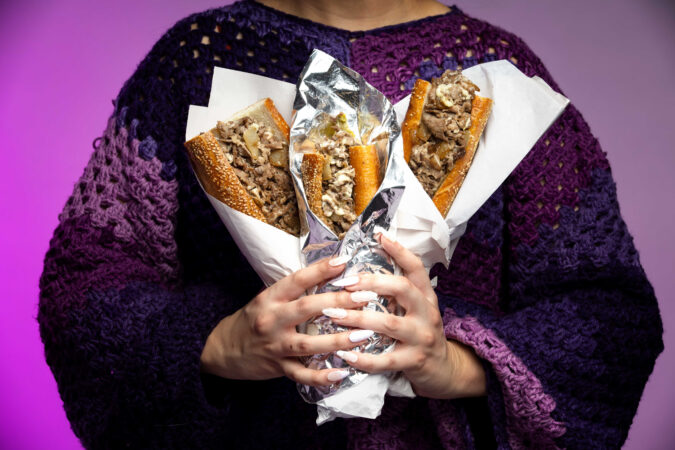
    What are the foods that tourists should try on their trip to North America for the World Cup? Apparently, the Philly cheesesteak is way up there, even higher than tacos in Los Angeles or Cuban sandwiches in Miami.

    Canada Sports Betting published the “Ultimate World Cup 2026 Food Guide: What to Eat in Every Host City” on June 15. The study placed the Philly cheesesteak at No. 5, outranking New York pizza by a long shot.

    With the 2026 World Cup spanning 16 host cities across three countries, writer Amy Harris found a tour of 16 “completely different food cultures” for this guide. Canada Sports Betting scored the “hero” dish of every host city based on source frequency, local support, tourist recognition, city-specificity, and cultural significance. The result: a ranking of the most unique city-specific dishes.

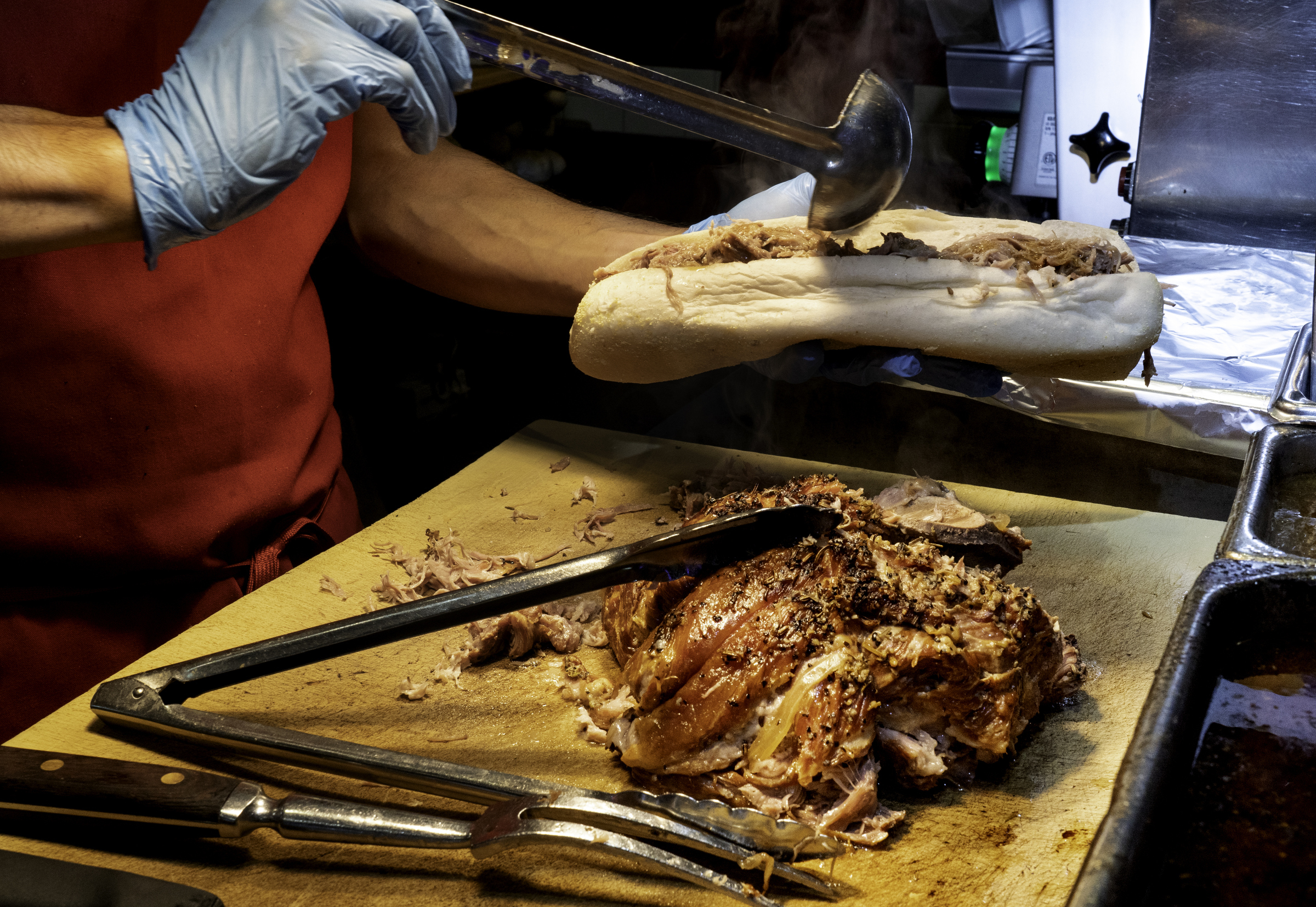
    In Philadelphia, “the cheesesteak … defines the city’s entire culinary reputation internationally,” Harris wrote. The iconic sandwich with “shaved rib eye on a hoagie roll with Whiz, provolone, or American was invented by Pat Olivieri in South Philadelphia in 1930,” she continued. “Locals will tell you DiNic’s roast pork at Reading Terminal Market is actually the city’s best sandwich. That internal argument is part of what makes Philadelphia interesting.“

    The cheesesteak is, for better or worse, depending on your point of view, No. 3 on The Inquirer’s 76 iconic Philly foods, with only one other sandwich — the hoagie — surpassing it. (Water ice was also rated above cheesesteaks on The Inquirer list.)

    “The cheesesteak, much like the city in which it was invented, is a working-class sandwich,“ wrote Inquirer reporter Tommy Rowan. “Its rugged beauty is in its simplicity.“

    The pulled pork at DiNic’s Roast Pork, Reading Terminal Market, Tuesday, September 26, 2018, in Philadelphia. JESSICA GRIFFIN / Staff Photographer

    Guadalajara’s torta ahogada landed in first place, followed by the Viet-Cajun crawfish in Houston. Cabrito al pastor — young goat roasted over live coals — from Monterrey came in third; and the burnt ends — charred tips of a smoked brisket point — from Kansas was fourth.

    And all the way in 15th place: New York pizza.

    “New York ranks 15th not because its food is unremarkable, but because its most iconic dish has become the world’s most replicated food,” Harris wrote. “New York pizza is made everywhere from Tokyo to Nairobi. That is a consequence of the city’s cultural influence, not a failure of its food.”

    But a great cheesesteak? Sorry, you have to come to Philly for that.

  • Big companies aim to ease AI transition for American workers

    Big companies aim to ease AI transition for American workers

    Congress has failed to address the workforce disruption that artificial intelligence could generate. The White House, excited about the upside for stocks and investment, has downplayed the potential for widespread job losses.

    Now, amid growing public anger over AI and a debate over how to regulate it, a group of employers, state governors, and foundations has raised $500 million to try to answer some of those questions themselves.

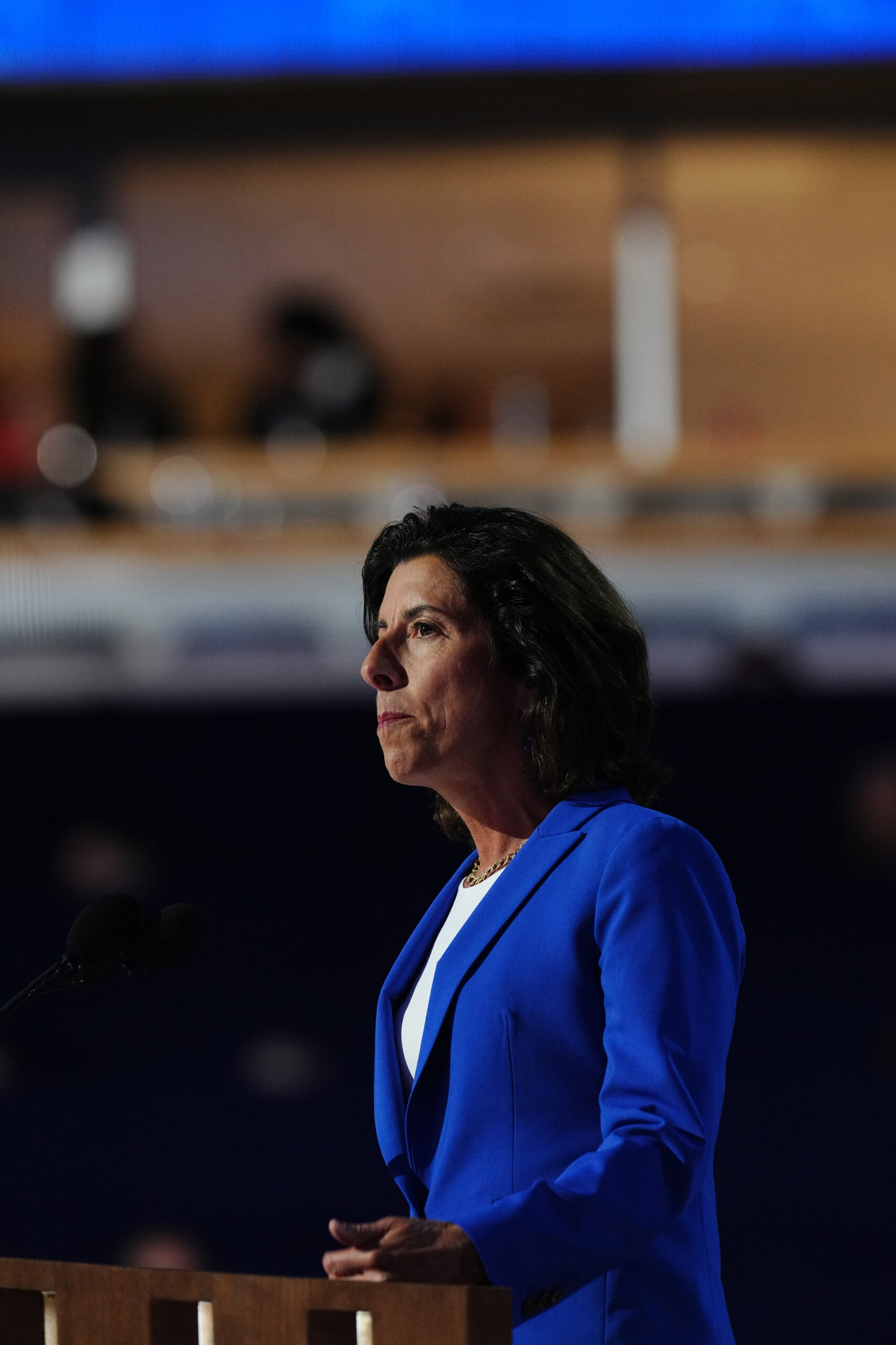
    The funders include AI labs preparing to go public, like OpenAI and Anthropic, as well as established corporate giants such as Bank of America and Amazon. Their new nonprofit, called Raise Us, is led by Gina Raimondo, a former commerce secretary and Rhode Island governor who since leaving office has called for companies and the government to do more to orient American workers in a new AI era.

    Tech companies and other corporate giants have signed on to an effort called Raise Us led by Gina Raimondo, former commerce secretary and Rhode Island governor.

    “This is an independent effort,” Raimondo said. “It’s the first one I know of where competitors in the tech industry have put aside their competition to say, ‘We’re going to write big checks and, in the service of our country, do what we can to figure out this transition.’”

    Estimates of the magnitude of job dislocation in store for the American workforce vary widely, from half of all entry-level white-collar jobs to a few thousand jobs here and there. Although layoffs are currently very low across the economy, the employee ratings site Glassdoor has found that worker sentiment toward AI has been worsening. Companies have made headlines by citing AI as a reason for deep job cuts. They include Workday and IBM, which are part of the new nonprofit, as well as Meta and Oracle, which are not.

    The organization will work primarily with governors, starting with those in Utah, Arkansas, Maryland, and Connecticut. The theory: States generally control their community college systems, which can translate workforce policy through course offerings and industry partnerships. The bulk of the budget will fund pilot programs overseen by about 15 staff members and consultants.

    For example, Maryland will establish a “service year” for recent high school graduates to provide experience in fields where there are shortages, such as healthcare. In other states, Raise Us hopes to offer “wage insurance” for workers who take lower-paying jobs rather than dropping out of the workforce entirely.

    The group plans to furnish technical assistance for companies that want to retain workers as AI changes their roles, rather than eliminating them. Microsoft, one of the companies backing the organization, said it had already found a promising model: cross-training its entry-level lawyers in different parts of the organization and equipping them with AI skills in order for them to be repositioned as technology evolves.

    “You can think of doing that with almost any job we have,” said Brad Smith, vice chair and president at Microsoft. “It creates an opportunity to transfer people from jobs that are being eliminated to jobs that are being created.”

    Retraining displaced workers has always been a difficult task, and historically not a very successful one. Raimondo called past efforts “ineffective.”

    Sam Manning, a senior research fellow with GovAI, a think tank, said the new group’s work offered a new opportunity to learn about what could work best.

    “This model — of let’s work within states and try to do pilots and demonstration programs, build more evidence, learn what works for different types of workers with different constraints — does seem to me like a pretty good thing to do,” Manning said.

    Congress has slashed funding for its flagship workforce development law since passing it in 1973. Planned overhauls of the statute have sputtered out. Research has found that while federal workforce programs do help place workers in new jobs, their long-term success is limited by the lack of high-paying positions for workers without college degrees.

    Jane Oates ran the Labor Department’s Employment and Training Administration under President Barack Obama. Despite funding cuts, she said, states as disparate as Texas and Massachusetts have found ways to raise private capital and work with employers to meet their talent needs.

    “I don’t know that she’s been anywhere else to look at the amazing, innovative things that are done in small and large places around the country,” Oates said of Raimondo.

    Part of the Raise Us mission is to adapt existing budgets to the particular challenges of AI-driven disruption. The nonprofit includes a policy lab, funded by philanthropies rather than corporations, that will incubate new ideas that governments may carry out down the line.

    Raimondo also serves as a chair on a commission, organized by the right-leaning American Enterprise Institute and the left-leaning Urban Institute, that will come up with policy recommendations to address the effect of AI on the workforce and the demands it may create. That effort is funded by Google.

    On the policy front, the groups join a crowded landscape. The air has been thick in recent months with proposals for minimizing the potential downsides of AI while harnessing its benefits.

    Sen. Bernie Sanders (I., Vt.) has suggested confiscating half of the stock value of top AI companies and depositing it in a publicly owned fund. Others have floated the idea of shifting the tax burden from payroll taxes to the computing power that is necessary to run sophisticated AI models. The Raise Us board includes Liz Shuler, president of the AFL-CIO, the labor federation, which has a technology institute that has emphasized protections for workers as AI develops.

    Raimondo’s initiatives, underwritten by corporations that have much at stake, may seem ill-positioned to make recommendations that would burden the engines of America’s AI dominance. But Harry Holzer, a professor of public policy who is part of the joint American Enterprise Institute-Urban Institute commission, said its members would not shy away from doing so.

    “I don’t think we’re going to hesitate to talk about resources,” Holzer said. “If the AI companies and tech companies start making money hand over fist, there might be an excess-profits way of dealing with that.”

    Raimondo and her colleagues are not fans of a universal basic income, an idea that has gained popularity in Silicon Valley as an answer to job disruption. They emphasize that work provides more than just wages, and plan to focus on helping people find pathways to new jobs.

    But it’s unclear whether AI will create jobs at the rate that it will destroy them. Jack Malde studied workforce policy for the Bipartisan Policy Center and is now going to work for the Windfall Trust, another AI-focused think tank. He said long-term income support might be necessary, even if better models for transitioning workers were found.

    “The truth is, there’s still a lot of uncertainty,” Malde said. “What we think is resilient now might not be resilient later. We’re not going to get everything right, so we’re going to need those strong safety-net programs.”

    Eventually, the backers of Raise Us think, federal action will be necessary to replicate successful policies across states and employers who aren’t early adopters. Raimondo said she had been in touch with the acting labor secretary, Keith Sonderling, whose department is establishing its own data hub for AI effects.

    But at the moment, she thinks that there’s no time to wait for alignment from Washington. As a historical parallel, she cited the Committee for Economic Development, an organization formed by big businesses in 1942 with the goal of absorbing American soldiers back into the economy after World War II ended and defense production was scaled back. It encouraged ways to fight inflation and foster full employment, helping to head off postwar stagnation.

    “I think this technology will lead to more productive people, new jobs and new industries, and I want to get there,” Raimondo said. “But I also worry about the transition, and a window where people could get hurt. The politics could get uglier. So I just want to get started now to build the infrastructure to be prepared to manage the transition.”

    This article originally appeared in the New York Times.

  • 2026 Toyota Crown Signia: Smooth, comfortable contender

    2026 Toyota Crown Signia: Smooth, comfortable contender

    2026 Subaru Outback Touring XT vs. Toyota Crown Signia Limited: New ways to get around.

    This week: Toyota Crown Signia

    Price: $48,990 for the Limited model.

    What others are saying: “Highs: Lexus-like interior, plush ride quality, thrifty hybrid powertrain. Lows: Noisy engine under acceleration, bland handling, underperformed its EPA highway fuel economy rating in real-world testing,” says Car and Driver.

    What Toyota is saying: “First-class comfort.”

    Reality: So suave and charismatic, maybe there should be a Thomas Crown Signia edition for 2027.

    What’s new: While I billed this competition as new ways to get around, the Crown Signia is only new to Driver’s Seat testing. This hybrid-only SUV debuted for the 2025 model year, replacing the Venza.

    The Venza was a model I really enjoyed, but it got very little respect from car lovers. Both models have a reputation for boring drivers, but I loved the comfy seats and easy controls of the Venza — and the 36 mpg — enough to recommend it heartily. Would the Crown Signia bring the same kind of experience?

    As for the Outback vs. Crown Signia comparison, two cars with more opposite market aims could hardly fit into the same category, and they could hardly have come to testing in more opposing conditions. The Outback endured 20-degree days while the Crown Signia was here for the 90s. Both offered some hesitation before they were warmed up, so we’ll just have to say that’s a feature, not a bug.

    Competition: In addition to the Outback, there are the Chevrolet Blazer, Honda Passport, Jeep Grand Cherokee, Nissan Murano, Mazda CX-70, and Volkswagen Atlas. That’s a wide range of crossovers.

    Up to speed: A new 240-horsepower 2.5-liter four-cylinder is mated to an electric motor, and it adds 21 horses over the Venza. It gets to 60 mph in 7 seconds, according to Car and Driver; with 20 fewer horses than the Outback turbo tested, it’s almost a second slower. You go, Subaru.

    Shifty: The Crown Signia uses the Prius shifter, electronically shifting up and left for Reverse and down and left for Drive.

    On the road: On-demand all-wheel drive makes the handling acceptable, and Sport mode is a little nicer. The Crown Signia lends itself to driving sedately and looking at the scenery.

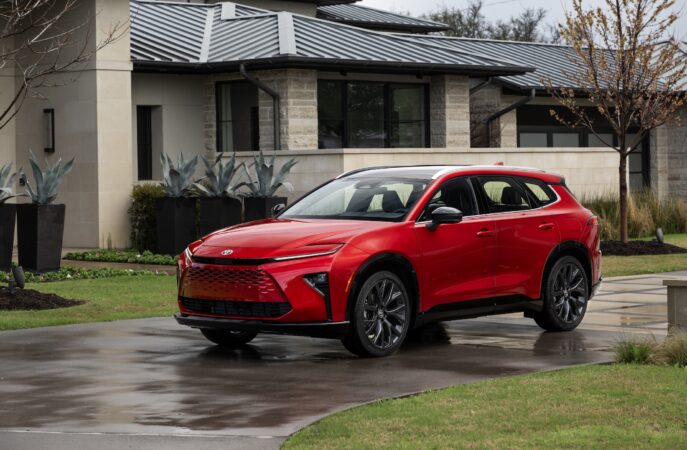
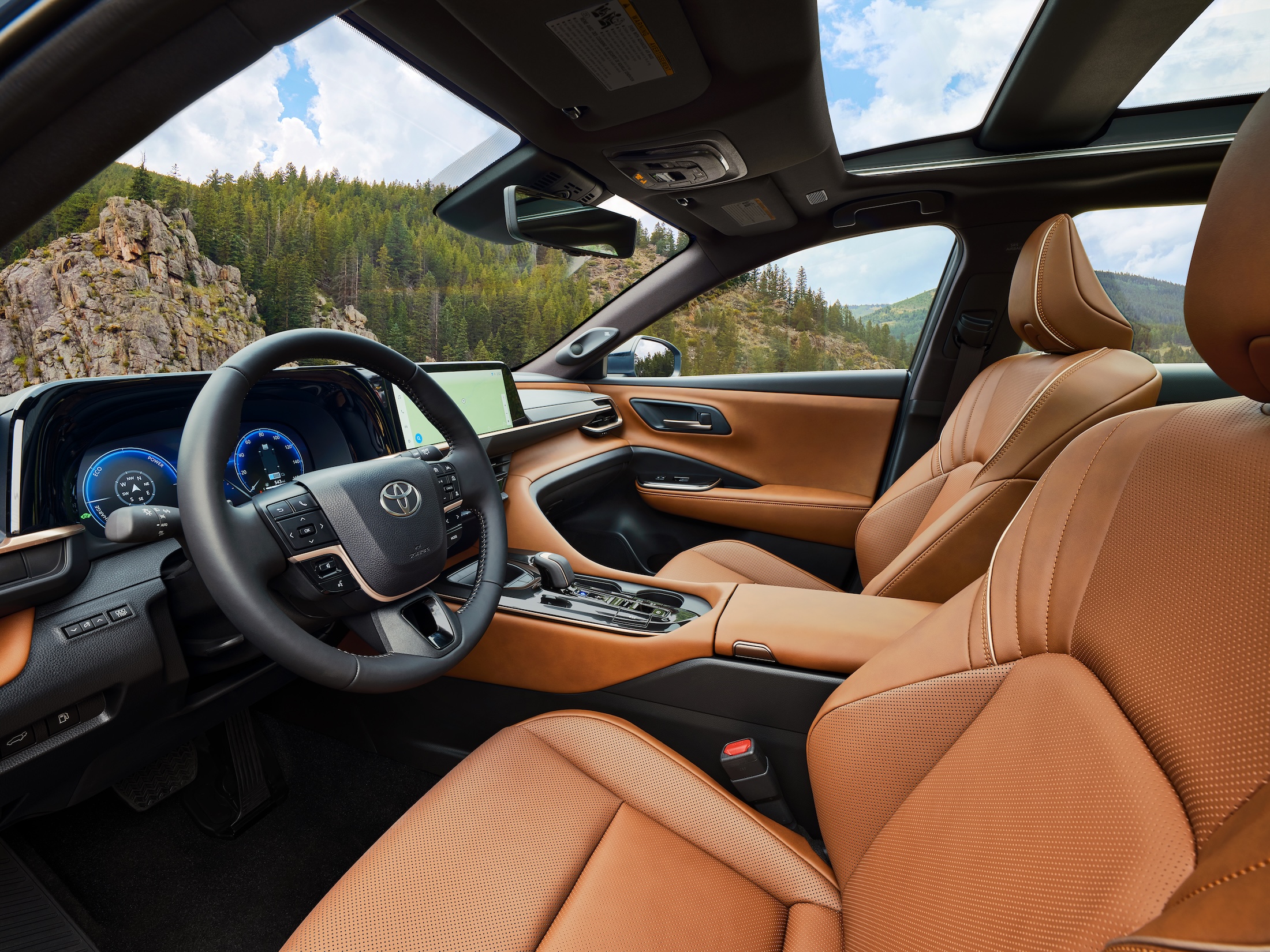
    The pretty interior of the 2026 Toyota Crown Signia turns the comfort level to 11.

    Driver’s Seat: Comfort is definitely the name of the game behind the wheel of the Crown Signia. Convenience as well. This is where I realize the Crown Signia is a nice replacement for the Venza; that too offered luxury and comfort closer to Lexus’ standard than Toyota’s.

    No ground is really broken here, as the controls match most of Toyota crossovers and cars. The Outback wins this category.

    Friends and stuff: The rear seat provides comfort in both cushion quality and spaciousness. Legroom, headroom, and foot room are all generous. The middle seat is not too bad as the floor hump sits low and wide, and the console doesn’t intrude too much.

    Cargo space is 24.8 or 66.1 cubic feet, a growth spurt over the Venza that may help improve sales. But it’s still no match for the Outback’s 80 cubes.

    In and out: The Crown Signia is at a perfect height for people of almost any age. No real climb or limbo required.

    Play some tunes: A lone volume button is the only nod to the Before Times from the stereo control people. The screen is big and easy to follow.

    Sound from the system is clear and aimed correctly, an A- to an A. Advantage, Crown Signia.

    Keeping warm and cool: Toggles control all the features, and this functions nicely. Except for the seat heaters and coolers, which sit above a different toggle, so that confuses until you get used to it. It keeps us out of the touchscreen, at least. A small screen tells you what’s blowing where and how hard.

    An annoying feature of the Crown Signia HVAC (something I noticed in the 4Runner hybrid as well) is the AC turns itself off with each restart. So I’d be blasting the fan on myself after crossing a 90-degree parking lot and wondering why I never got cool. I’m sure it’s easy to get used to but also, why? At least it’s not a touchscreen control, which would certainly malfunction when the interior exceeds 120 degrees.

    Fuel economy: I averaged close to 36 mpg during my week of testing, much nicer than the Outback turbo (as can be expected). Strong win for the Crown Signia.

    Where it’s built: Aichi, Japan

    How it’s built: Consumer Reports gives the Crown Signia a four out of five for reliability.

    In the end: The Crown Signia carries the torch of the Venza: Fun may not be part of the vocabulary, but it sure is a nice, efficient ride. The Subaru is also a nice ride, but I’m not sure 0.8 seconds off the 60-mph run-up is worth another 10 cents a mile forever.

    And at 50 grand each, a Thomas Crown-worthy heist may be needed to help pay either of these vehicles off.

  • Bill to raise minimum wage to $25 an hour will be introduced in Senate

    Bill to raise minimum wage to $25 an hour will be introduced in Senate

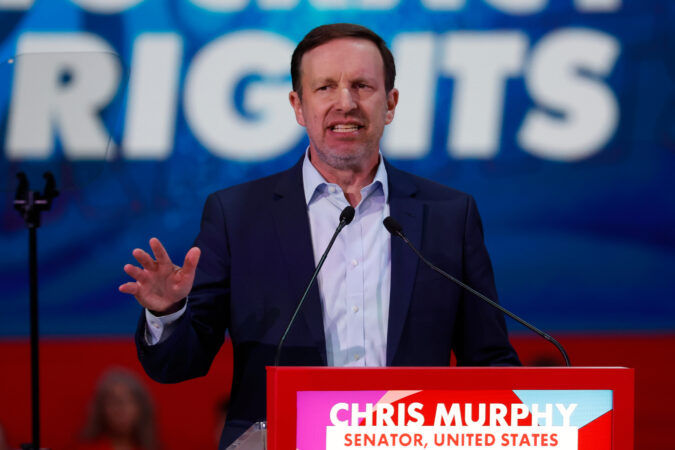
    The minimum wage would be raised to $25 an hour under a new bill to be introduced by Sen. Chris Murphy (D., Conn.) on Thursday, in a bid to enthuse the working-class voters who have abandoned the Democratic Party.

    The legislation, dubbed the Living Wage for All Act, has a companion bill already introduced in the House.

    Murphy, whose name is frequently floated as a potential 2028 presidential candidate, said he is pushing his party to take more aggressive stances on affordability, following its punishing defeats in the 2024 elections.

    “Democrats need to offer solutions that are as big as the problems people are facing,” Murphy said in an interview. “The way you solve people’s basic economic problem — not having enough money to pay the bills — is by making a minimum wage be a living wage.”

    The bill would incrementally increase the minimum wage from its current rate of $7.25, with the first jump to $12 an hour in the first year of enactment. Major corporations would have six years to work up to a $25 minimum wage, while smaller employers would have a 13-year runway. The legislation would also do away with subminimum wages for tipped workers, such as restaurant servers, youth workers and workers with disabilities. Nearly half of the American workforce makes less than $25 an hour.

    The legislation is unlikely to get very far in this Congress, with Republicans in control of both chambers, but the $25-an-hour push is one of the more significant proposals aimed at boosting Americans’ wages, which have been rising but not as quickly as inflation, especially in recent months.

    Some 34 states, territories or districts, including Washington, D.C., have increased the minimum wage above the federal minimum, according to the National Conference of State Legislatures.

    Saru Jayaraman, president of One Fair Wage, a left-leaning advocacy group that worked with Murphy on the bill, credited support for a $25 minimum wage for primary wins in competitive races in Illinois, New Jersey, Pennsylvania, and California. She said she has heard support for the proposal from liberal and MAGA voters alike.

    The $25 figure was drawn from calculations by MIT that analyzed a living wage, which takes into account costs such as food, childcare, healthcare, housing and transportation.

    Democrats have long advocated raising the federal minimum wage from its current $7.25, but Murphy’s bill would set the highest floor of any proposal in the Senate. Rep. Delia C. Ramirez (D., Ill.) is leading a House version of the bill, which she introduced earlier this year with wide support across the Democratic caucus. A similar bill by Sen. Bernie Sanders (Ind., Vt.) would set a $17 minimum wage and has 33 Democratic senators as cosponsors, including Murphy.

    Murphy’s bill also has the backing of Democratic Sens. Richard Blumenthal (Connecticut), Andy Kim (New Jersey), and Ron Wyden (Oregon).

    Congress has not raised the federal minimum wage since 2009, though only about 1% of workers make $7.25 an hour or less.

    Business groups have often campaigned against raising the minimum wage, suggesting that the economy works best when employers are responsive to market forces.

    A higher federal minimum wage could create “really damaging consequences,” including businesses closing or cutting jobs, especially in rural areas where the cost of living is low, said Ryan Bourne, an economist at the libertarian Cato Institute.

    He said the rising average wage shows that state and local governments are already responding to market changes.

    “I think it makes much more sense for it to be set at a local level where policymakers have a better sense of the local industries,” Bourne said.

    Murphy called those kinds of arguments a “red herring,” saying cities that have already established a $15 minimum wage have not seen major adverse effects. He said the staggered adoption would help assuage employers’ concerns.

    “The business community cried murder, and the job losses they predicted did not materialize,” Murphy said.

    Alex Jacquez, the chief of policy and advocacy at the left-leaning Groundwork Collaborative and a former Sanders aide, helped craft a $15 minimum wage proposal that Democrats attempted to include in their climate and economic policy bill in 2021. He said the surge in wage growth as the economy recovered from the coronavirus pandemic has led more liberal policymakers to believe that a $15 minimum wage would now be too low.

    “It’s also an organizing tool,” he said. “It’s something big and bold that people can hang on to and run on and be able to see the Democrats are fighting for them.”

    So far, most congressional action has tried to address affordability through tax cuts, including the child tax credit, covid-era Affordable Care Act credits or the numerous tax cuts in Republicans’ One Big Beautiful Bill.

    While Murphy supports programs such as the child tax credits and student loan forgiveness, he said tax cuts have proved insufficient in motivating voters.

    “People don’t want to be written a check. People want to work for pay,” Murphy said. “[Tax breaks] are designed to compensate for a rigged system. Why don’t we just unrig the system?”

  • Rep. Tom Kean, missing for months, is back home in New Jersey

    Rep. Tom Kean, missing for months, is back home in New Jersey

    Rep. Thomas Kean Jr., who has been missing from Washington for nearly four months with little explanation, is back home in New Jersey.

    He could be seen from the street Wednesday evening, standing in a brightly lit front room of his Westfield home just before 8:45 p.m.

    “It’s good to see you,” he said after a reporter for the New York Times rang his doorbell. He was wearing a dark suit and a red tie. “I’ll talk to you next week,” he said. “Thank you.”

    Kean’s wife, Rhonda, stood in the background, smiling pleasantly. He declined additional comment and closed the door.

    Aides had said that Kean, 57, was being treated for a health condition and was expected to fully recover, but had offered no additional details as their boss missed more than 100 floor votes since the middle of March.

    Kean, a Republican, is running for a third term in November in one of the country’s most competitive midterm races. His absence from the campaign trail, though, had left even some of his biggest Republican boosters frustrated.

    A spokesperson for Kean, Harrison Neely, said last week that Kean was expected to return to Washington on June 30. He declined to say how long Kean had been home or to offer any additional details about the representative’s long absence.

    “He will be fully transparent on the 30th,” Neely wrote in a text message.

    Earlier this month, Kean, in absentia, locked in the Republican nomination for his 7th District seat; he was running unopposed. Democrats selected Rebecca Bennett, 39, a former Navy helicopter pilot.

    The Democratic Party considers Kean’s seat one of its best pickup opportunities as it seeks to tip the balance of power in Washington and had been aggressively targeting the race long before he began missing votes in Washington.

    Kean was last spotted on Capitol Hill on March 5. He spoke that day during a committee hearing and cast a crucial “yea” vote in support of funding President Donald Trump’s immigration crackdown and moving to end a government shutdown.

    Then, he seemingly vanished. Neighbors in Westfield said there had been no obvious sign of Kean for months, and the family’s vacation house in Bay Head, N.J., appeared shuttered the weekend before Memorial Day. Year-round residents of Fishers Island, N.Y., where the Kean family owns a large estate, said they had not seen him, either.

    Kean’s aides repeatedly insisted that he had no plans to abandon his reelection effort and that he was expected to return to work “soon,” even as they refused to discuss the medical condition that had sidelined him.

    In May, after a debate between the four Democrats vying to run against him, Dan Scharfenberger, Kean’s chief of staff, offered a cryptic explanation for why there had been no sightings of the representative in Washington or in his New Jersey district. “There’s no cameras where Tom is,” he said, and did not elaborate.

    During his absence, Kean has nonetheless bought and sold stock, introduced remarks into the Congressional Record and urged House colleagues from afar to oppose Ireland’s effort to limit trade with Israel.

    A handful of Republican leaders in the 7th District’s six counties reported getting calls from Kean. And his office has released two statements attributed to Kean, including one on primary day, June 2, when he made no public appearances.

    “Right now I am focused on my recovery and under the advice of healthcare professionals,” the June 2 statement said.

    The statement indicated that he planned to be “completely transparent as to the nature of my medical condition.”

    “I understand the need for transparency on this matter,” he wrote, “and I look forward to sharing my experience with the public.”

    This article originally appeared in The New York Times.

  • Judge throws out federal suit against 4 N.J. ‘sanctuary’ cities

    Judge throws out federal suit against 4 N.J. ‘sanctuary’ cities

    A federal judge on Wednesday tossed out a lawsuit filed by the Justice Department that accused four New Jersey cities of having “sanctuary” policies that shield immigrants in the U.S. illegally from federal immigration enforcement.

    Justice Department lawyers had sued the mayors and City Council members of Newark, Jersey City, Hoboken, and Paterson last month as tensions were rising between local governments in the Garden State and immigration authorities.

    The complaint accused local officials of thwarting federal immigration enforcement by impeding access to immigrants in local custody, restricting the ability of local officers to turn over immigrants to agents, and barring “willing local officers from providing mission-critical information to federal immigration authorities.”

    But Judge Evelyn Padin, who was appointed by President Joe Biden, ruled that the federal lawsuit had “a fundamental flaw” because it challenged only the cities’ policies and did not take into account an order from the state attorney general’s office, known as the immigrant trust directive, that dictates how local law enforcement officers must engage with immigration authorities.

    That 2008 directive, which has been upheld by previous court rulings, was not raised in the lawsuit, Padin wrote. That means, as a legal matter, the federal government lacks the standing to file the suit.

    The judge dismissed the lawsuit without prejudice, meaning the Justice Department could refile it. A spokesperson for the department did not immediately return a request for comment.

    The ruling came as protesters have swarmed Delaney Hall, an immigration facility in Newark, with nearly daily demonstrations.

    Local officials praised Padin’s ruling, saying the immigrant trust directive was one key to maintaining good relationships between local police agencies and immigrants without permanent legal status. Police departments depend on cooperation in immigrant neighborhoods to stop crime.

    Amol Sinha, the executive director for the American Civil Liberties Union of New Jersey, wrote in a statement that the sanctuary policies “help people access public services” without fear of being detained, separated from their families and perhaps deported.

    “Public safety is strengthened when people can report crimes, and public health is improved when people can seek medical care,” he said.

    This article originally appeared in The New York Times.

  • Medford bans data centers within town limits amid public debate about AI

    Medford bans data centers within town limits amid public debate about AI

    Large-scale data centers will not be moving into Medford any time soon thanks to a new ordinance adopted unanimously by the Medford Township Council this week.

    While the township has not yet received any formal applications for data centers, officials are taking steps like the ordinance passed Tuesday that specifically prohibits the land use within town limits as a chance to be proactive.

    “These are extra precautions to ensure that we don’t move forward in a direction that we can’t come back from until we know full well what the impacts of data centers will be,” Medford Mayor Michael Czyzyk said at Tuesday’s public hearing.

    The ordinance received support from Medford-area residents at the hearing but some questioned whether the township might be making its bed too early considering how quickly technology evolves, especially if there’s a chance to reap the rewards of a data center project without negatively impacting the surrounding community.

    “If there’s no impacts to the residents and there’s only a financial benefit, I believe I would consider looking at that at that time, but we’re not there yet,” Czyzyk said.

    While the ordinance constraints may seem all-limiting as it exists today, Czyzyk said, council maintains the authority to at any point amend the ordinance to permit data centers in the township’s redevelopment district.

    “I definitely understand that things will evolve and there may be a time in the future that the term data center is something that is more amenable to the residents and the body that governs them,” Czyzyk said.

    “I will feel comfortable with the vote I cast on this ordinance tonight knowing full well that today I feel that way and that there’s mechanisms in the future if things do change, a process will be undertaken to remedy that,” he said.

    Nearby in Cherry Hill, Mayor David Fleisher has explicitly vowed to block the construction of any large AI or commercial data facilities in the township citing concerns of high energy usage, water consumption, and proximity to residents.

    There are dozens of data centers currently operating throughout the state with major hubs located primarily in North Jersey urban centers like Secaucus and Newark. But more recently, developers have been eyeing spots in rural South Jersey as the industry expands to meet growing demands for generative AI.

    For months, South Jersey residents have been protesting a major AI data center that is currently under construction in Vineland.

    Developers and other data-center proponents say the facilities bring in tax revenue, create jobs, make use of old industrial sites, and put towns on the cutting edge of a hot industry, all without straining school districts or emergency services.

    Opponents, meanwhile, cite concerns about pollution, noise, power and water use, and the impact on their electric bills. Some also say they worry the AI boom is a bubble that could soon burst.

    As concerns continue to grow among towns across the Garden State, representatives from more than 60 environmental, labor, and community groups sent a letter to New Jersey Gov. Mikie Sherrill last month calling for a statewide moratorium on the approval and construction of new facilities that use 20 megawatts or more of power.

    So far in response to the public pressure, Sherrill has proposed a plan that would require new data centers to cover grid upgrades, utilize their own power generators, and publicly report resource usage.

    While some municipalities like Medford have issued moratoriums on new data centers, no state governments have successfully done so, according to the National Conference of State Legislatures.

  • A 188-apartment building is the latest new development slated for North Broad Street area

    A 188-apartment building is the latest new development slated for North Broad Street area

    A new 188-unit apartment building is the latest in a burst of development proposals around North Broad Street between City Hall and Temple University.

    The eight-story building at 1527 Callowhill St. is being developed by Philadelphia-based Omega Home Builders with architecture from locally based firm Designblendz.

    The project features 13,300 square feet of commercial space and 24 parking spaces accessible from 16th Street. The building will have a green roof, and the developer plans to plant additional street trees.

    The property is currently a surface parking lot that was once owned by The Philadelphia Inquirer, as an annex of the media company’s former 400 N. Broad St. offices. The building is now the Philadelphia Police Department’s headquarters.

    The Inquirer’s former properties were bought by Philadelphia developer Bart Blatstein 15 years ago. He sold the parking lot to Omega Homes’ Roman Ovrutsky at the end of last year for $5.6 million.

    “I think it’s [a] good location, next to cops, plenty [of] parking around,” Ovrutsky said in a text message, “so I think it’ll thrive with our finishes and competitive pricing.”

    Ovrutsky’s project is the latest development proposed for this area. In the past eight months, not including this project, at least 1,221 apartments have been permitted along this stretch of North Broad Street.

    The majority of the apartments in this Callowhill Street project, 111 units, will be one-bedrooms, which Ovrutsky says will rent for between $2,200 and $2,400.

    The building also will include 52 two-bedroom apartments, starting at $2,800, and seven three-bedrooms with two bathrooms each and over 1,000 square feet. Those will start at $3,400.

    There will be 18 studio apartments, although the development team wanted to minimize that number. They believe the market currently has too many small studios, which they argue do not incentivize long-term living.

    “We will have a little bit more space for residents to actually live here, not necessarily the kind of studio-esque [apartments] which Center City often gets hit with,” said Scott Woodruff of Designblendz Architecture.

    We are “sizing these units with more storage space and generously sized bedrooms, so it doesn’t feel like you’re living in a shoebox,” Woodruff said.

    Ovrutsky said that he hopes to start construction by this time next year and finish by early 2029.

    Woodruff said they have been asked why the project isn’t including more parking. He noted that the proposed apartment building is within a short stroll of the Broad Street subway line and on a number of bus routes.

    A rendering of the building’s garage entrance on 16th Street, with the police headquarters visible in the background.

    It is also walkable to multiple grocery stores and restaurants, and the area has excess parking capacity.

    “With the access to public transit and where this is in the city, we didn’t feel like there was a great need to try and push a lot of parking,” Woodruff said.

    The commercial space could be ideal for a restaurant and could even be carved up between two tenants, he said.

    The property does not require zoning changes to move forward, but it is large enough to trigger consideration by the city’s advisory-only Civic Design Review committee on July 7.

    It was warmly received at a presentation to the Logan Square Neighborhood Association.

    “The group was very pleased with the building as described,” said Alan Williams of the association. “We liked the green roof, the focus on new street trees, sizing in line with neighboring buildings, and the overall aesthetics.”

    The proposed building is on the left side of this rendering.

    The burst of development attention along this stretch of North Broad Street was partly spurred by a City Council bill that would have banned new housing around the former Hahnemann University Hospital campus.

    That pushed a number of property owners to try to secure permits for apartment projects before the bill went into effect, which means these units aren’t necessarily coming any time soon. Council eventually shelved the bill.

    The North Broad Street corridor’s popularity for developers also relates to the large parcels available at attractive prices. More residents will also activate the streets in the area, which are often devoid of pedestrians at present.

    “This is a big chunk of open parking lot right now, flanked by two parking garages, so it just ruins the fabric,” Woodruff said.