At $5 million, Philadelphia’s primary arts and cultural fund is not one of its many substantial burdens for taxpayers, amounting to well under a thousandth of the multibillion-dollar municipal budget. And yet, the city’s politicians can’t seem to resist the allure of the minuscule expense as a canvas for their financial creativity.
Having narrowly survived fiscal extinction during the pandemic, the Philadelphia Cultural Fund took another disproportionate cut in the city’s recently enacted budget for fiscal 2027, which begins next week. The spending plan recently passed by City Council and signed by Mayor Cherelle L. Parker appropriates $3.5 million for the fund, nearly a third less than this year, according to the fund’s executive director, Gabriela Sanchez. It’s hardly a rounding error in Philadelphia’s $7.1 billion budget, but it’s likely to devastate many of the tiny arts and cultural groups the line item supports citywide.
Nearly 100 of the almost 300 arts organizations that depend on the fund are expected to lose the aid as a result, Sanchez said in a statement. She said the fund would halve its eligibility threshold, limiting grants to groups with budgets of no more than $1.5 million, among other “untenable decisions,” hobbling neighborhood theaters, festivals, music programs, and more. “In practice,” Sanchez added, “this means that community-based arts and culture groups … will lose essential operating funding that sustains their day-to-day work.”
Created three decades ago to supplant more traditionally Philadelphian methods for distributing tax money — according to the whims and still less defensible motives of local politicians — the cultural fund brought a measure of evenhandedness and transparency to bear, offering clear rules and a fair process. Today, it funds groups ranging from A Book a Day, which has donated thousands of books to institutions serving young readers in West Philadelphia, to the Wyck Association, dedicated to preserving and interpreting the historic house of that name in Germantown.
The impact of these groups, economic and otherwise, is far greater than their cost: A 2024 report by the Greater Philadelphia Cultural Alliance found that nonprofit arts groups generate more than $2 billion in yearly economic activity, providing $1 billion in household incomes and $265 million in tax revenues. The alliance also found that the sector suffers from inadequate, unreliable, and uneven public funding.
The cut is cruelly contrary to what city arts groups and some Council members argued for amid the Trump administration’s retreat from federal arts funding, which was to increase the cultural fund’s allocation by 20%. It’s also at odds with a city budget that raises overall spending by about 3% over this fiscal year. At that rate, given the fund’s benefits, the city should at least be able to hold it harmless and maintain this year’s relatively meager contribution.
Philadelphia’s arts groups shouldn’t be perpetually on the budgetary brink just because most of them are small and lack powerful political patrons, making them easy to pick on. The mayor and Council should find a way to restore this funding and stop creating trouble for the city’s invaluable creators.
For nine years, every week, writer Anndee Hochman attempted to answer one question.
What does the road to parenthood look like for people who don’t follow the family “norm”?
For her Inquirer column “The Parent Trip,” she profiled different Philadelphia-area families with children, all with atypical experiences creating their family.
This included queer parents, single parents, interracial parents, interfaith parents, and so on. Hochman spoke to parents who adopted children, conceived them through IVF, got pregnant unexpectedly, and more.
Anyone who had a story around parenthood with a less talked-about aspect found themselves in Hochman’s column. Forty-two of 468 of those profiles have now been compiled into a new book, Parent Trip: Unexpected Roads to Form a Family, published by Temple University Press.
Hochman, who is queer, started writing about family life in 1990, when she was living in Portland, Ore. After her straight housemates got engaged, she wrote an essay for the now-shuttered LGBTQ publication Just Out, detailing her feelings on the discrepancies between how straight and queer relationships are perceived socially.
The Eighth Mountain Press publisher Ruth Gundle reached out to Hochman, asking if she had more to say on the subject. As it turned out, she had a whole book’s worth. Her first book, Everyday Acts and Small Subversions: Women Reinventing Family, Community and Home, released on Eighth Mountain in 1994.
Anndee Hochman’s “Parent Trip: Unexpected Roads to Form a Family” is a collection of stories from her original column.
By 1999, Hochman had moved to Philadelphia and began freelancing for The Inquirer, still writing about family. In 2014, former Inquirer features editor Cathy Rubin asked her if she’d be interested in writing a weekly feature on people becoming parents.
That’s how “The Parent Trip,” the column, was born. Hochman began by reaching out to midwives and OB/GYN offices to see if any of their clients would be willing to participate. The column asked readers to submit their stories.
“Becoming a parent and forming a family felt like a messier version of the Wedding column, and that’s exactly what we got,” said Rubin, referring to the column on marital stories that “Parent Trip” replaced. “It was beyond my wildest dreams to witness and experience all of the different ways that families formed and the challenges that people had.”
Hochman, whose daughter with her long-term partner, Elissa, was born in 2001, was able to use her own experience as a parent to inform the column.
“When I was interviewing families who didn’t fit the norm and I shared my own family configuration with them,” she said, “I felt like I could feel their shoulders relax a little bit, particularly with the queer families.”
“The Parent Trip” began nine months before marriage equality for same-sex couples was legalized and concluded just over a year after Roe v. Wade was overturned, reversing a half-century of legalized abortion.
Hochman makes clear with this book that families will always exist beyond the heteronormative structures society deems “normal.”
The book is categorized into nine chapters, each carrying three to seven profiles. Through these, Hochman covers topics such as infertility, adoption, age gaps in relationships, religious differences, interracial marriages, and other circumstances that make families less “normal” per social mores.
“I wanted the 42 [profiles] that ended up in the book to reflect the same diversity and span as the 468 that comprised nine years worth of columns,” Hochman said. “You will not find a section of stories all about single parents, or a section all about queer parents. I was more interested in the themes that echoed across all kinds of families.”
Through writing this column, Hochman says she learned about situations she never experienced in becoming a parent, including adoption and how common miscarriages are.
A phrase repeated by many of the parents she interviewed was “you just don’t know what’s going to happen.” Whether that be when you try to adopt, conceive, when you’re in the delivery room, once the baby is home, and once they’re 2, 6, or 25, she said.
“There is no one right or normative way to be a family,” Hochman said. “I hope people come away with an expanded sense of what a family can look like and how children can be welcomed into one’s life.”
“Parent Trip: Unexpected Roads to Form a Family” by Anndee Hochman is now available all over the country. $20.
A significant majority of residents want Philadelphia to remain a sanctuary for immigrants, according to a new poll that shows the overwhelmingly Democratic city is undeterred by President Donald Trump’s threats to defund so-called sanctuary cities.
A recent Suffolk University/Philadelphia Inquirer poll that surveyed 500 city residents asked respondents if Philadelphia should remain a sanctuary city, “even if it means losing federal funding.” A commanding 59% answered “yes,” with only 28% saying “no” and the remainder undecided or unwilling to say.
The support for Philadelphia’s sanctuary status was consistent across age and racial groups. The only geographic region where a plurality of respondents answered “no” was far Northeast Philadelphia, which is among the most politically conservative areas of the city.
The survey question did not elaborate on what a loss of federal funding could mean for the city in terms of the impact on residents. Philadelphia received $2.2 billion from the federal government in fiscal year 2024 to pay for a wide range of critical services, including infrastructure needs, as well as healthcare, food, and housing assistance for low-income people.
(function(){function e(){window.addEventListener(`message`,function(e){if(e.data[`datawrapper-height`]!==void 0){var t=document.querySelectorAll(`iframe`);for(var n in e.data[`datawrapper-height`])for(var r=0,i;i=t[r];r++)if(i.contentWindow===e.source){var a=e.data[`datawrapper-height`][n]+`px`;i.style.height=a}}})}e()})();
Still, the results of the poll show relatively widespread support in Philadelphia for the city’s sanctuary policies, which include its practice of not complying with detainers issued by U.S. Immigration and Customs Enforcement without a court order. Those detainers are effectively requests submitted by federal agents to local law enforcement agencies that ask to hold undocumented immigrants in custody.
Mayor Cherelle L. Parker’s administration does not refer to Philadelphia as a “sanctuary city” — she and her top aides instead call it a “welcoming city,” language that has been increasingly adopted nationwide as Trump and his allies in the Republican Party have sought to crack down on sanctuary cities.
President Donald Trump travels to the Lehigh Valley to visit Mack Trucks in Macungie on Tuesday, June 23, 2026.
The sanctuary policies predate Parker’s tenure and were in place under an executive order signed by former Mayor Jim Kenney. They were codified into law earlier this year after City Council passed a package of legislation aimed at limiting ICE’s operations in the city and instituting some of the nation’s toughest restrictions on ICE.
In May, Parker signed six of the seven bills in the package, but took no action on one that bars law enforcement officers from concealing their identities, including by wearing masks. City Solicitor Renee Garcia wrote in a letter to Parker that the legislation may not be legally enforceable, but the mayor did not veto the bill, allowing it to become law.
Last week, the Trump administration sued Philadelphia and some of its top officials, including Parker, over the mask-ban ordinance. The Trump administration contended that the law is “blatantly unconstitutional” and undermines federal law enforcement’s ability to do its job.
The lawsuit is one of several filed across the nation by the Trump administration challenging local laws related to immigration as federal authorities carry out the massive deportation campaign promised by the president.
That effort is also tied up in litigation. Last year, a federal judge issued an injunction blocking the Trump administration from denying funding to jurisdictions that limit cooperation with ICE, saying the White House could not impose funding conditions without authorization from Congress.
Staff writer Sean Collins Walsh contributed to this article.
For Maxwell Adew, the owner of Kuueza, a U.S. import-export and sourcing company based in SouthwestPhiladelphia, uncertainty surrounding the African Growth and Opportunity Act is more than just a policy debate in Washington — it has forced him to rethink his business strategy.
Known as AGOA, the trade preference program allows over 7,000 products from eligible African countries to enter the United States, but it is set to expire on Dec. 31. Because of concerns raised by the Trump administration about the fairness of the program, Congress faces a steep climb to save it.
Adew argues that AGOA is well worth saving due to the critical role it plays in helping African goods enter the U.S. market at competitive prices.
“Without AGOA, some businesses using our platform have actually stopped exporting,” he said.
The uncertainty about the program’s future comes at a particularly challenging time for many businesses owned by African immigrants in the United States, including in Philadelphia.
“A lot of immigrant-owned small businesses have been affected,” Adew said. “Some have already shut down. Organizations like the African Cultural Alliance of North America in Southwest Philadelphia are helping businesses navigate these challenges.”
Why it’s important
President Trump has questioned the fairness of the trade preference program, but in February extended it for a year while policymakers weigh its merits. Rosa Whitaker, the president and CEO of the Whitaker Group and one of the program’s architects, said preserving AGOA was an important reminder to the rest of the world about the U.S. commitment to Africa.
“The extension of AGOA sent a powerful signal that Africa was perhaps more important to the United States than many people realized,” she said.
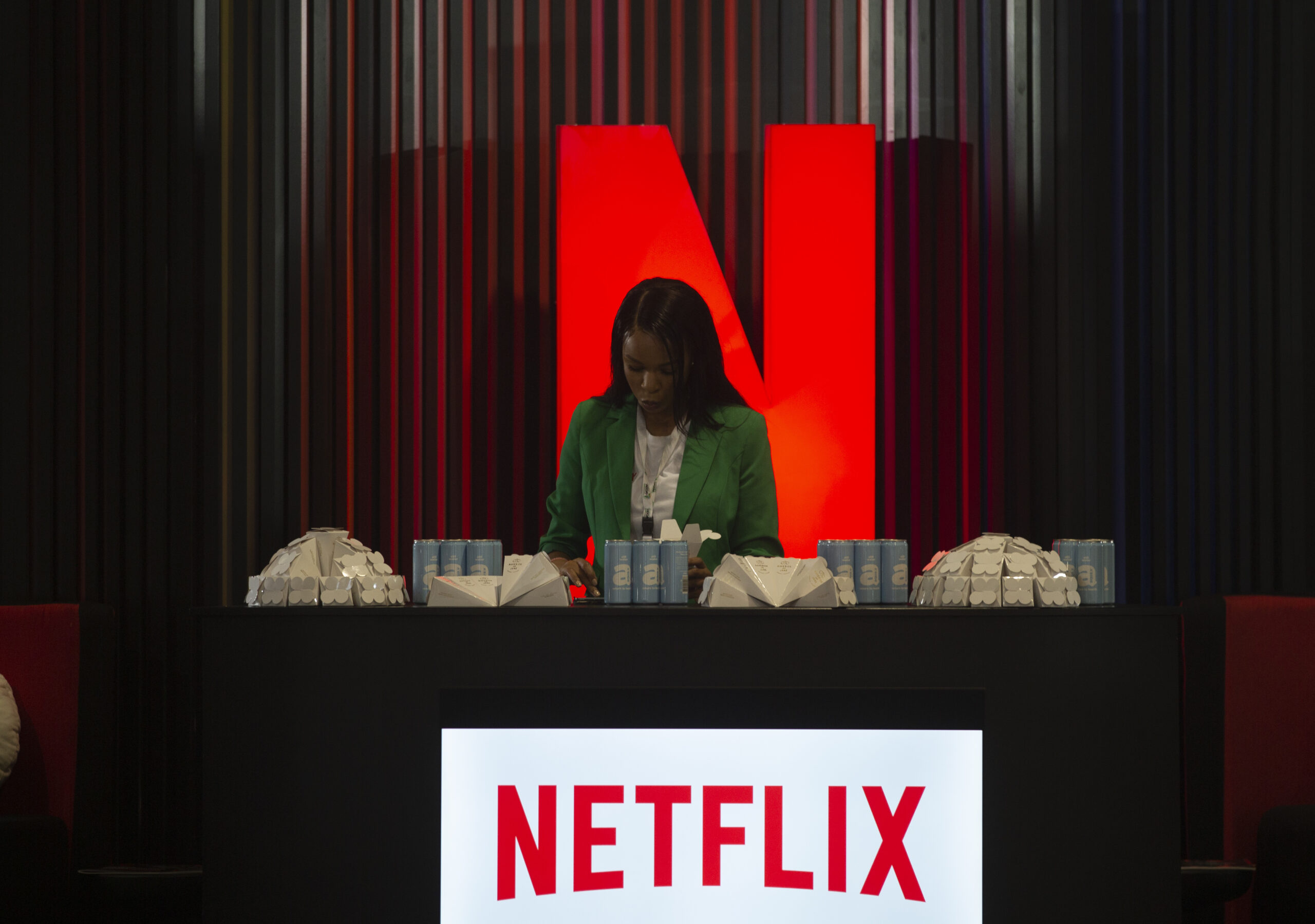
A Netflix representative at an exhibition at the Africa Growth and Opportunity Act (AGOA) Forum in Johannesburg, South Africa. The program, which fosters U.S.-African trade, is in jeopardy, writes Alexanderia Haidara.
As Congress debates AGOA’s future, several U.S. industries are pressing for both renewal and reform.
“AGOA has not generally been utilized to leverage improved market access for U.S. agricultural products, even though it was intended as a tool for that purpose to facilitate that two-way trade,” said Jim Remcheck, director of export services at the U.S. Meat Export Federation.
But Florizelle Liser, the president and CEO of the Corporate Council on Africa, the leading U.S.-Africa corporate business association, said the program is worthwhile in terms of opening up Africa as an alternative supply chain.
“AGOA has also been beneficial to U.S. companies looking to diversify their sourcing away from China,” she said. “And it supports hundreds of thousands of jobs in the United States, as well as producing significant savings for U.S. consumers.”
Nevertheless, Adew has already changed his investment decisions in Africa because of the uncertainty.
“We’re not sure about the future of AGOA,” he said. “We have to rethink where we invest our resources, and focus on products with stronger demand and higher value.”
U.S.-African relations have been sorely tested under the Trump administration. Some analysts and business leaders say cooperation between the U.S. and African nations has deteriorated amid disputes over trade, aid, migration, and diplomatic engagement.
And while U.S. companies lobby Congress to keep the lines of trade open, South Africa is pushing for a 15-year extension of AGOA, a key part of marketing its vast resource of critical minerals. Government and business leaders there warn that a shorter extension or suspension will undermine investor confidence and disrupt manufacturing plans.
“Africa is recognizing that it must become more self-reliant,” Whitaker said. “Economic integration is no longer optional.”
As Washington debates the future of AGOA, businesses like Adew’s are already adjusting their strategies. The possibility of AGOA’s renewal is no longer theoretical. It is reshaping the future of U.S.-Africa commerce in real time.
Alexanderia Haidara is a former U.S. diplomat and U.S. Agency for International Development specialist helping U.S. companies expand to emerging markets.
Georgette Luna planned her Father’s Day weekend down to a T, splurging $3,000 on three tickets to the Friday World Cup match in Philadelphia. The Fishtown resident, her husband, and her father — who traveled from New York — would go to Reading Terminal Market, she thought, barhop to mingle with fans before the game, and then head to the stadium early to tailgate before seeing Brazil take on Haiti.
She had purchased the tickets on the third-party ticket resale platform StubHub last fall, but the seller she bought the tickets from never transferred them. She called StubHub frequently in the months, weeks, and finally days leading up to the match, wondering when the transfer would go through.
Every time, a StubHub representative said her “tickets would transfer to her on the day of the game,” Luna said. But by Friday, the group — who could not wait to see Brazil play, since their favored Chileans did not qualify for the World Cup — never made it into the stadium.
“We’re standing outside the stadium and obviously everybody is in full celebration, and here we are, supposed to be living this World Cup moment together for the first time, and there’s just this feeling of disappointment,” Luna said.
As the World Cup takes over the country, people across U.S. host cities have shared the same story: Fans in Atlanta, Boston, Dallas, Houston, New Jersey, Seattle, and, of course, Philadelphia arrived at stadiums hoping their tickets would be transferred to no avail, with most facing issues with StubHub. Other reports indicate fans are having similar issues on SeatGeek.
StubHub, for one, blames FIFA’s tech infrastructure and the rollout of a new mobile phone app weeks before the tournament for why tickets have not been transferring on time. FIFA has urged fans not to buy tickets on third-party platforms, saying it “may result in issues, including the inability to cancel or accept transfers,” as well as a higher risk of fake or invalid tickets.
But fans who lost out on a generational moment are more interested in how platforms like StubHub plan to resolve these issues.
Stephanie Fred of Bristol and her 9-year-old son, Levi, are heartbroken after their tickets to the Monday France vs. Iraq game never materialized, even as they stood outside the stadium. To make matters worse, Levi, a soccer player himself, had been trying to see his favorite player, French superstar Kylian Mbappé.
Mbappé scored two goals, tyingfor the second-most goals scored by a player in men’sWorld Cup history. Fred’s son could hear the cheers from outside the stadium. He broke down into tears that did not stop even later that night, she said.
During Philadelphia’s first World Cup game, between Ecuador and Ivory Coast, Jayden Quezada, 17, and his parents came to Philadelphia from Bensalem, hoping for an Ecuadorian victory. But they were turned away. The night before the game, the trio had spent $4,350 to get three tickets through the TickPick app after seeing a social media advertisement. By the time they arrived at the stadium, the tickets still had not been transferred to their FIFA app.
“They have been the biggest fans since before I was born, and they don’t get to go to Ecuador often because of work,” Quezada said. He said they would try to get a refund, but missing the game was “really sad because we were looking forward to feeling the Ecuadorian pride.”
For that game, a line of more than 50 fans waited for help with their failed tickets. Monica Rojas, 22, and her friend Jose Avil, both Spanish speakers, were confused about what to do after the ticket office explained the problem with their ticket in English. The pair had driven two hours from New York, after having bought tickets on StubHub for $2,000, including parking. After a FIFA volunteer interpreter intervened, the pair found out their tickets had been refunded.
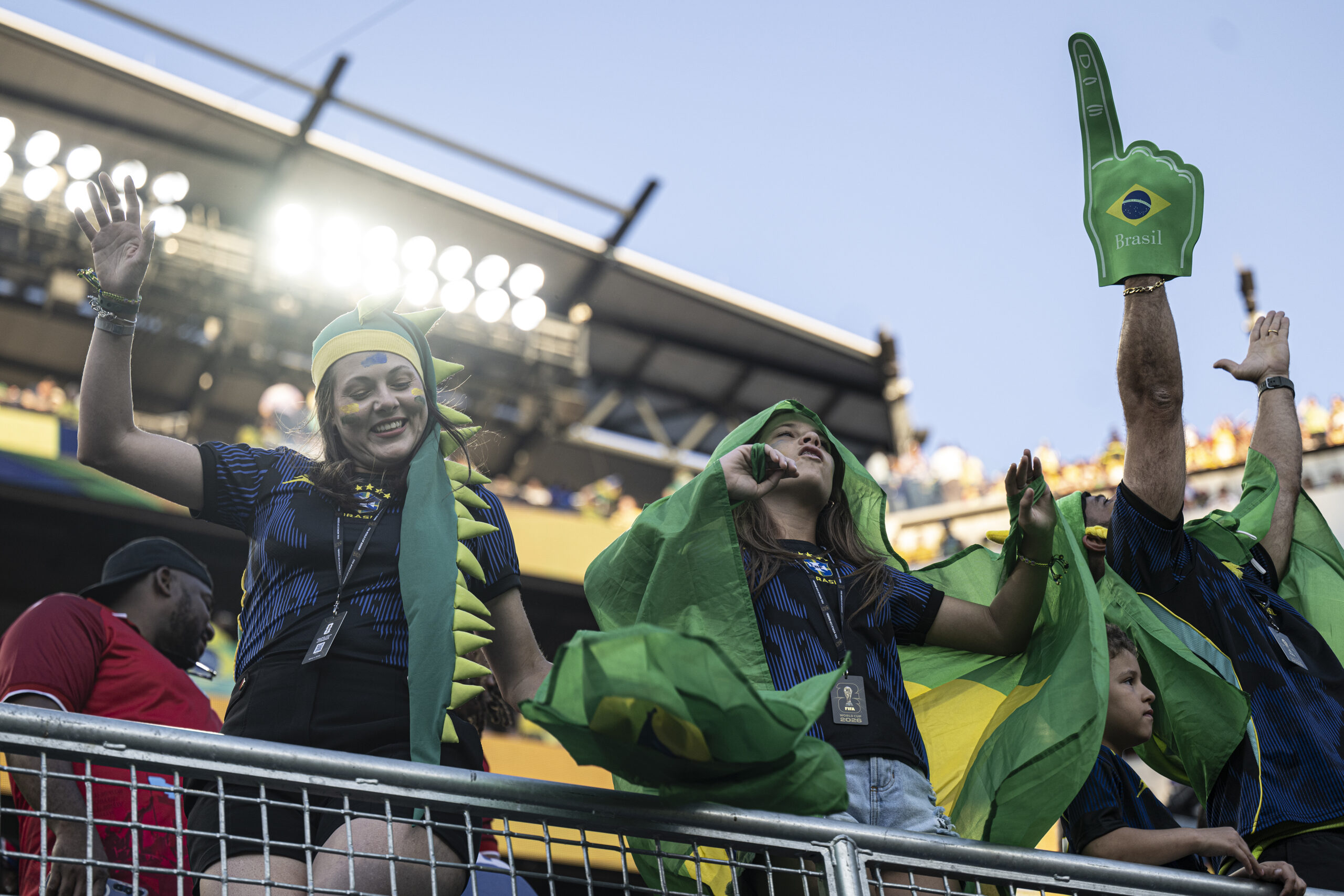
Brazilian fans cheers before a FIFA World Cup Group C soccer match between Brazil and Haiti at Lincoln Financial Field on Friday, June 19, 2026, in Philadelphia.
StubHub blames FIFA
StubHub is aware that fans are not receiving the tickets that they bought, and a company representative blamed FIFA.
“The issues fans have experienced at this World Cup are largely driven by performance problems with the event organizer’s own ticketing infrastructure, which has created transfer failures across all resale platforms,” a StubHub spokesperson said.
StubHub said the launch of a new FIFA app right before the World Cup began has led to delays, failed transfers, and access issues that have affected all resale platforms, not just StubHub.
The ticket reseller also said sellers are required to fulfill their ticket orders or they face financial penalties and bans from the platform.
Bad actors on resale platforms can engage in a practice called “speculative ticketing,” where buyers will list a ticket that they do not yet own on StubHub and other platforms, in the hope that they will find a cheaper ticket later and recover profit, said Scott Friedman, owner of the Ticket Talk Network podcast and an industry veteran who is helping to sue StubHub on behalf of 160 buyers and sellers who said company practices harmed them.
StubHub does offer a “FanProtect Guarantee‚” a promise the company will find replacement tickets or refund the order when a ticket does not transfer. But the policy repeatedly states that resolving these issues falls under StubHub’s “sole discretion.”
StubHub ticket protection measures can look like replacement tickets, a full refund, or a voucher worth 120% of the value of the tickets. During the World Cup, the company said, it is prioritizing replacement tickets so fans can get to a match.
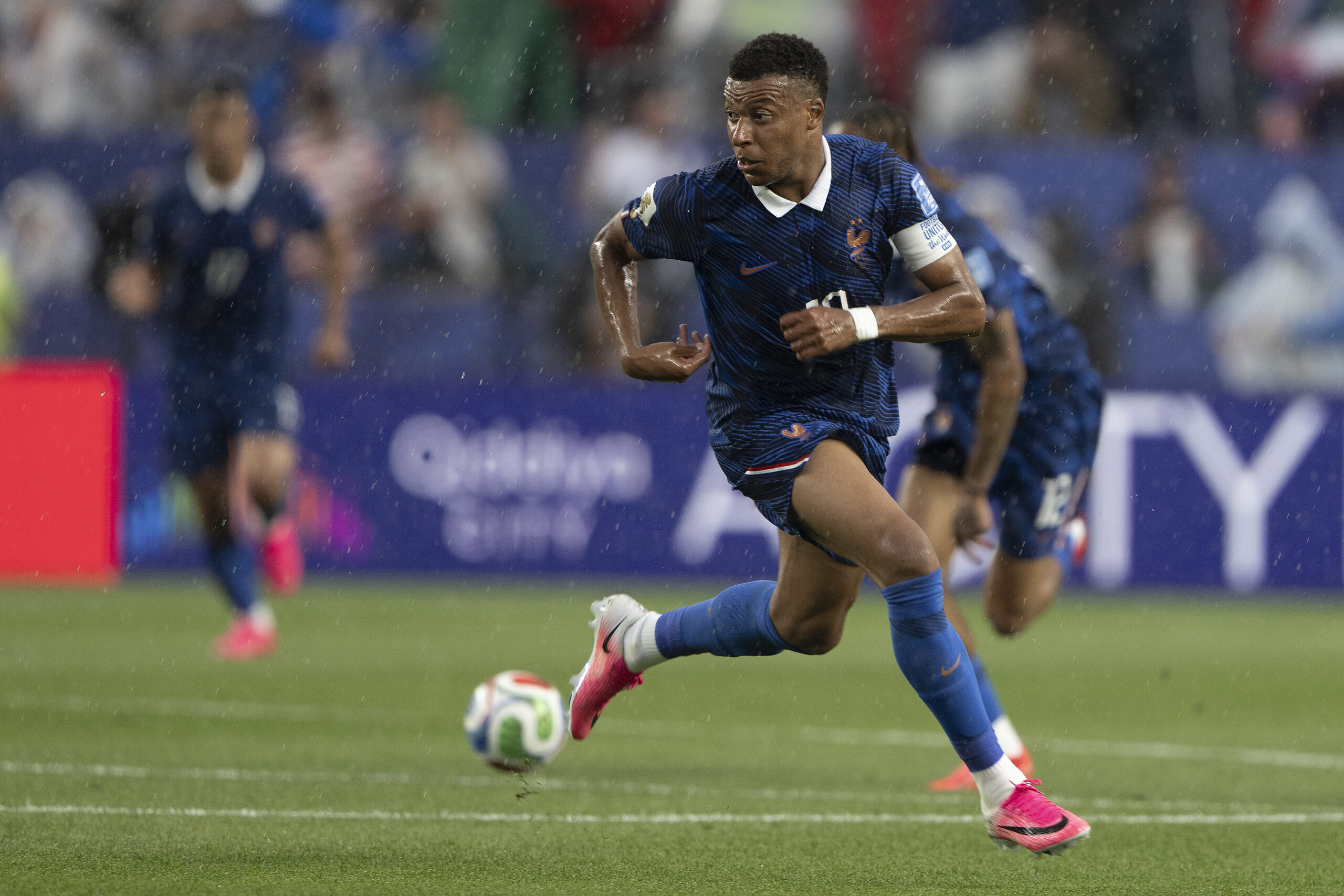
France forward Kylian Mbappé sprints for a pass against Iraq during the first half of a FIFA World Cup Group I soccer match Monday, June 22, 2026, at Lincoln Financial Field in Philadelphia.
Refunds can’t replace a once-in-a-lifetime moment
All of this leads to confusion, and eventually disappointment, when the tickets never show, Luna said. As she and her family, hanging their heads low, took a depressing train ride home from the stadium last week, Luna continued to try to get answers.
Finally, on Monday, she said, she received word StubHub would refund her June 19 match tickets and gift her similar tickets to the July 4 match in Philadelphia, which she said she would accept. But, later, Luna was told she would only receive replacement tickets.
“Is this a wonderful outcome? For sure, but my father and I would have been happy with the perfect weekend that we had planned for ourselves as it was,” Luna said. “While they’re doing right by us, there are so many people who aren’t getting this result.”
Fred’s family got word Tuesday that StubHub would provide them with tickets to France vs. Norway in Boston on Friday. Fred does not mind the drive as long as Levi can achieve his dream of seeing Mbappé play.
“We don’t get this type of opportunity from where we come from,” Fred said. “Being able to provide a World Cup experience for our kids just means the world to us, and having that be ripped away from us, it was just so hard to process.”
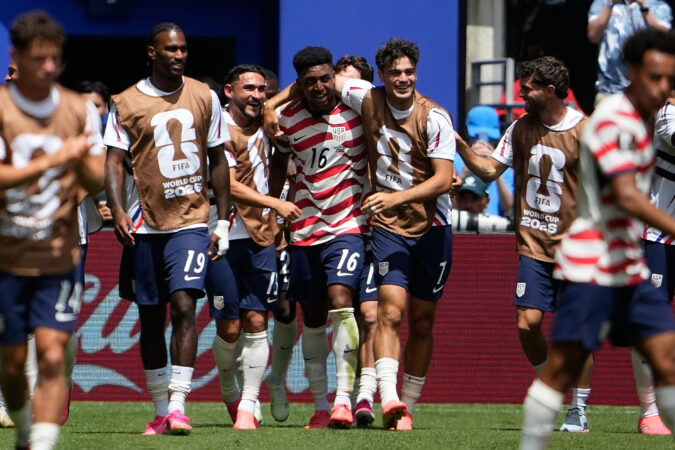
After a pair of electrifying matches in which the United States displayed arguably its most dominant performance at a World Cup, just one more match remains in Group D for the Americans, a primetime showdown with Turkey on Thursday (10 p.m., Fox29, Telemundo 62).
With the U.S. awaiting its round of 32 opponent on July 1, it’s anyone’s guess whom Mauricio Pochettino, the U.S. men’s head coach, will start against Turkey, which has been eliminated from advancing after losing to Paraguay in its second match.
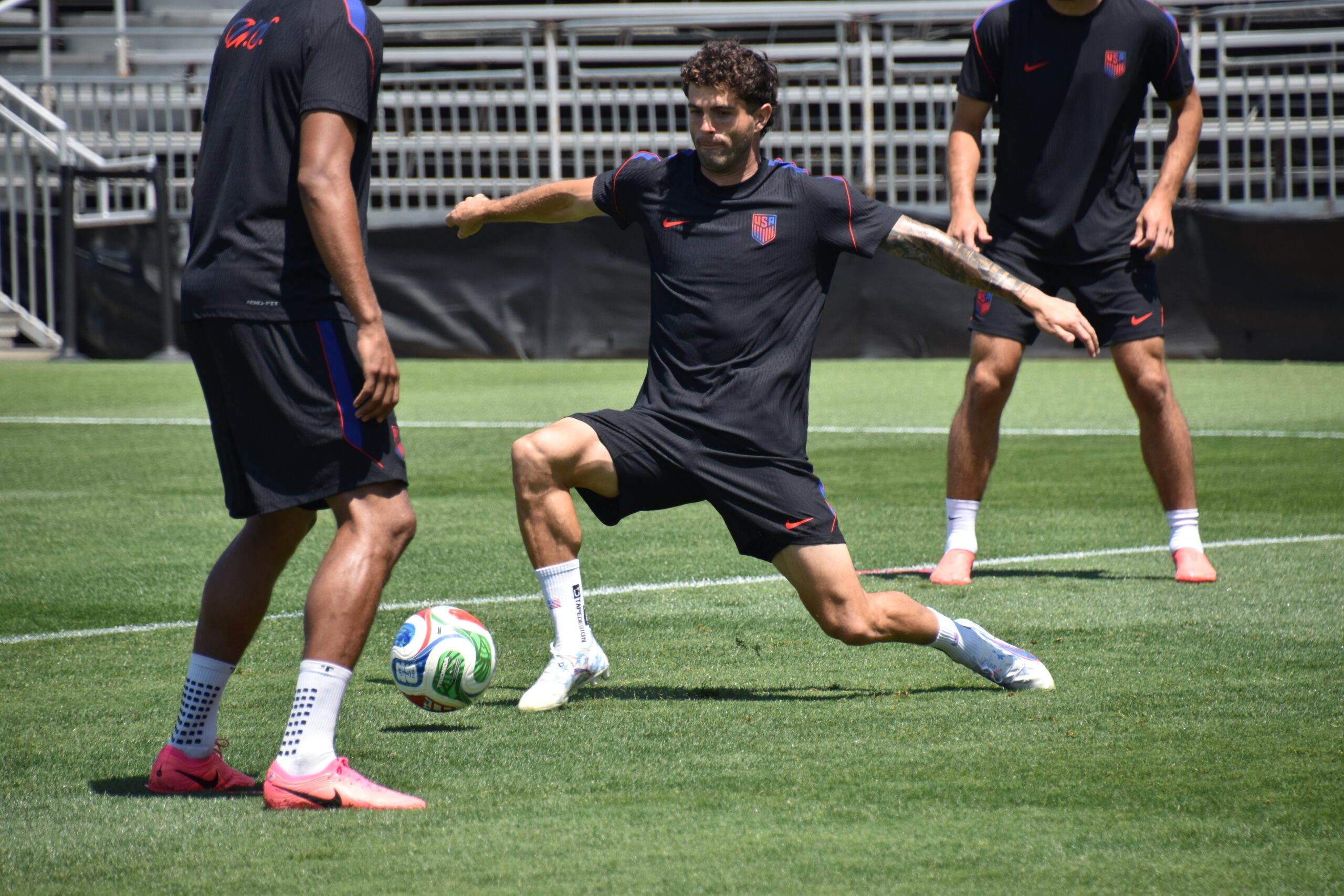
Right now, we know that Christian Pulisic is trying to return to the lineup after missing the USMNT’s 2-0 win over Australia in Seattle last Friday. But will Pochettino trot him out or offer even more rest before the knockout round match?
Christian Pulisic (center) was active in Wednesday’s practice ahead of their final match in Group D against Turkey on Thursday.
It’s what our team of soccer writers weighs in on this week as the U.S. looks to finish strong in a match that matters very little.
I really don’t know what to think about this game, since there are no actual stakes in it.
Sure, it’s nice that the U.S. has clinched first place and will now play a World Cup game with no standing stakes for the first time since 1998. (That one was the polar opposite of this, as the Americans were eliminated from progressing after two games.)
But how much will Pochettino rotate his lineup? Even being out at the team’s camp, it’s tough to say.
It’s also unclear what Turkey will do. A team with lots of attacking talent has taken 62 shots over its two games combined so far, but failed to score in both. Will this be the day they finally find the net? And if so, what will it do for their mentality?
Something tells me that’s coming, and the U.S. had better be ready.
Prediction: United States 2, Turkey 2
Will United States head coach Mauricio Pochettino consider shuffling his lineup to give other players on the roster a chance to start in a World Cup match?
Honestly, after a deeper dive into this one, the question is not so much will the U.S. win, but who will play. This might be a good chance to give players who haven’t seen the field yet the chance to prove to Pochettino that they can be effective in key moments, particularly against a bona fide soccer nation like Turkey, even if this installment of their starting 11 has yet to inspire.
Let’s see a strong performance from Brenden Aaronson and Mark McKenzie, two local guys who cracked the roster but are still looking for their first minutes. Matt Freese has been fantastic in goal, but let’s not forget that his backup is Matt Turner, who was the U.S.’s No. 1 for a while, even under Pochettino.
— U.S. Soccer Men's National Team (@USMNT) June 24, 2026
This game scratches the itch for those players who have yet to make an appearance. If that’s the mindset Pochettino employs, then motivation alone from those guys should be enough for the U.S. to take three points and finish off a perfect group stage performance heading into next week.
Win, lose, or draw against Turkey, the U.S. is moving on to the knockout round. It’s great news for an American side trying to win its second-ever knockout match in its history, but it’s terrible news for prognosticators.
There’s little way to be sure of who will play for either the U.S. or Turkey, making Thursday’s match as unpredictable as the average Week 18 NFL game.
— U.S. Soccer Men's National Team (@USMNT) June 24, 2026
Chris Richards, Antonee Robinson, Tyler Adams, and Folarin Balogun will all sit out on Thursday to avoid getting another yellow card against Turkey.
That said, the sheer quality we’ve seen from the USMNT this tournament (and the lack thereof from Turkey) should equate to another three points for the U.S.
To paraphrase Whose Line is it Anyway?, this is a game “where everything is made up and the points don’t matter.” With the U.S. already clinching first place in Group D and a spot in the round of 32, they can afford to let Pulisic rest his calf.
.
Turkey has nothing to play for, except pride. It’s just their second appearance at the World Cup since 1954, and in a game with so many unknowns, the only sure thing is The Crescent Stars will be playing hard to avoid going home scoreless and winless.
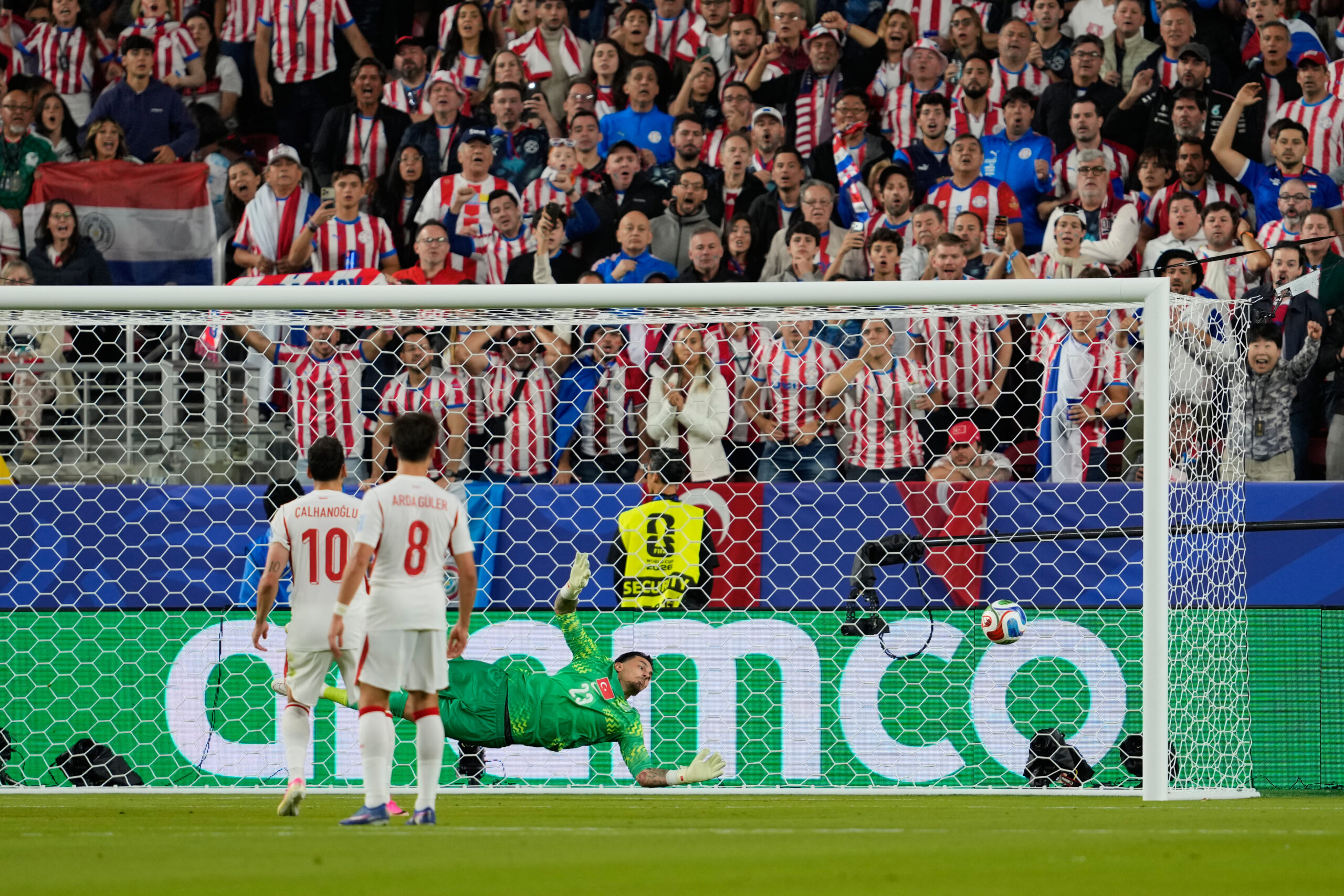
Turkey goalkeeper Ugurcan Cakir (23) makes a save during his country’s World Cup Group D match against Paraguay. Turkey, which has been eliminated from advancing, has not scored in the tournament.
Turkey certainly hasn’t lacked aggressiveness this tournament, but success hasn’t followed. Through two games, they’ve taken 62 shots, but zero have found the back of the net, the most in a World Cup since 1966, according to the Athletic.
During the second half of France’s dominant win over Iraq in Philadelphia on Monday, the refs worked hard to move the storm-delayed game along, eliminating the second-half water break and adding minimal stoppage time. That feels like the mood of this game — Turkish pride against a U.S. team already looking toward July 1.
The next generation of NHL stars will find out their destinations on Friday and Saturday at the 2026 NHL draft as teams work to fill the cupboards and holes in their depth charts.
As of Wednesday, the Flyers have four picks — one in each of the first, second, sixth and seventh rounds. The biggest question: Who will they grab at No. 21 in Friday’s first round?
Ahead of the draft, FloHockey draft and prospect analyst Chris Peters joined The Inquirer on the latest episode of Flyers Gameday Central to dissect the draft class, which players fit the Flyers, and what could happen in the next few days.
Q: Is there anything we’ve learned from the past couple of drafts with the Flyers that could suggest the route they’re going to go [at pick no. 21]?
A: Teams definitely have types, they have guys they like, they have the kinds of players they go after. I think when you’re drafting at 21 in the first round, you’ve got to be really diligent about your list and really stick to it, I feel like, because you’re just hoping to get an NHL player. … I think there’s a ton of intrigue about really from [picks in] the teens on down, where things can go, and at that point you’re going to see a wide variance in ranges of players on lists. And so you’re just trying to see whoever the Flyers have as the best pick, they might be really high on somebody else’s list, or might not be on somebody else’s list at all.
Q: Is there anyone in this draft class who fits the Flyers system at center?
A: I think it would be hard to pinpoint that. I do think that you look at guys that are centers that could potentially be wings, like Maddox Dagenais, a guy who’s all over the map in terms of draft ranges. He could be gone in the early teens, he could be gone in the mid-20s, but he is a center naturally, plays a lot on the wing though, and so I think a lot of people are thinking that he is more of a winger. … Jack Hextall, he’s a good two-way guy, high-energy player, had a really good strong season in the USHL this year. … A guy to really keep a close eye on, probably in that range, I think he could be available, there is Ilia Morozov, who plays at Miami [Ohio}. He’s a 6-foot-4 center; obviously the Flyers have not been afraid to draft some Russians, and he’s been a Russian who’s played in North America for at least three years and he’s been playing at a pretty high level, and had a great season in Miami. And the upside on him is just tremendous. So I could easily see a player with that size, skill combo being a really good fit for the Flyers.
Q: Maksim Sokolovskii is a name I heard in Buffalo as someone who the Flyers have a lot of interest in. There’s the London [of the OHL] connection, and he’s a giant at over 6-7. Is he someone they could reach on at 21 or is that too high?
A: They could, I wouldn’t. I think that would be Sam Morin part two. So I wouldn’t do that. I like [Sokolovskii] a lot, and I watched him in the playoffs a lot, and that’s where I think a lot of this late buzz is coming from, is that he was a really good shutdown guy for London in the postseason. And he was playing a physical mean brand of hockey, the kind of hockey that helps you win in the playoffs. I think that there is so little offense there … he’s too one dimensional defensively. The skating, it isn’t good enough for me to say, like it’s good for his size but like it’s not good enough, I don’t think. So, he has boom-bust potential too, because he’s got this massive frame, he has incredible reach. I think he thinks the game decently well, like I think he thinks the game defensively pretty solidly. I think he’s got good enough mobility defensively. And so I think he’s going to play [in the NHL]. The question is where does he go?
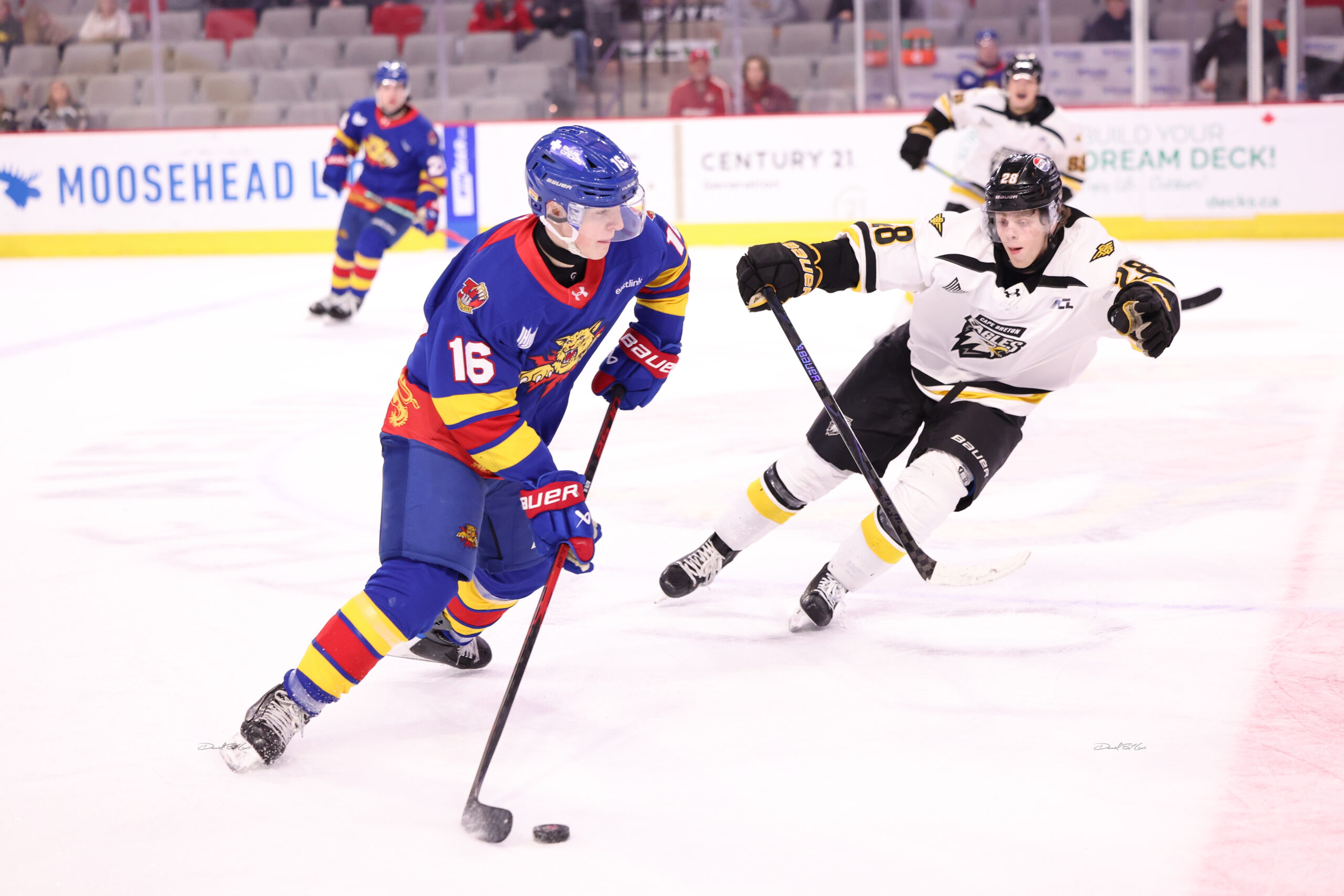
Moncton defenseman Tommy Bleyl potted 81 points in 63 regular-season games, breaking a rookie record that stood for 48 years in the Quebec Maritimes Junior Hockey League.
Q: Who’s the one player people aren’t talking enough about?
A: I would say people probably aren’t talking enough about Tommy Bleyl. It’s coming up more now, but the season that he had was historic. … And you talk to teams like, “Hey, I didn’t have him on my radar as a guy for us,” and there were some guys like, “Yeah, I had him as a pick, but no way was he a first.” And his postseason put him right in the mix as a first [round pick], and potentially even a mid-first round pick, and that’s a pretty significant jump from where he was at the start of this season. So, he’s a guy that I think is incredibly fascinating. The skating ability is about as good as anybody’s. I just think there’s a lot to unlock with that player yet, and I’m excited to see who takes him.
Q: The player you enjoyed watching the most this year?
A: One of the players I had the most fun watching this year was probably Nikita Klepov, even in the games where he was a little bit frustrating and a little bit out of it. I just think that there’s a real skill level to him. Another guy that just frustrates the heck out of scouts that I enjoyed watching was Egor Shilov from Victoriaville. Just the patience that kid has on the puck is really out of this world. The way he extends plays and finds the right read. He’s not quite competitive enough for guys, and I think that’s going to potentially knock him out of the first round. I did list him in the second round myself, but he’s a really intriguing player, too. I think the hockey sense is high-end in terms of the offensive game.
A: William Håkansson is pretty darn good [at] defending. I think he’s a stopper. Sokolovskii is a stopper. … But like I look at Håkansson, I think he’s probably one of the most mature overall defenders. And then also at the end of that top 10, top 11, Malte Gustafsson is another guy where I just think the defending is outstanding. He’s such a complete player, and I’m really impressed by him more and more.
Q: The Flyers love high-compete and great motors. Who do you think is in that range of high compete, great motor kind of guy?
A: Yeah, I think Alexander Command is probably No. 1. Viggo Björck is up there too, but I think Alexander Command has the physicality, the doggedness in pursuit of the puck. Just the absolute annoyingness of just getting under your skin, and I think that there’s a lot to like about that player. The comp that I had for him was Brayden Schenn and I think he probably has a higher motor, even there. Brayden Schenn was physical and mean, and he could score, and that’s what I think Command can do, too.
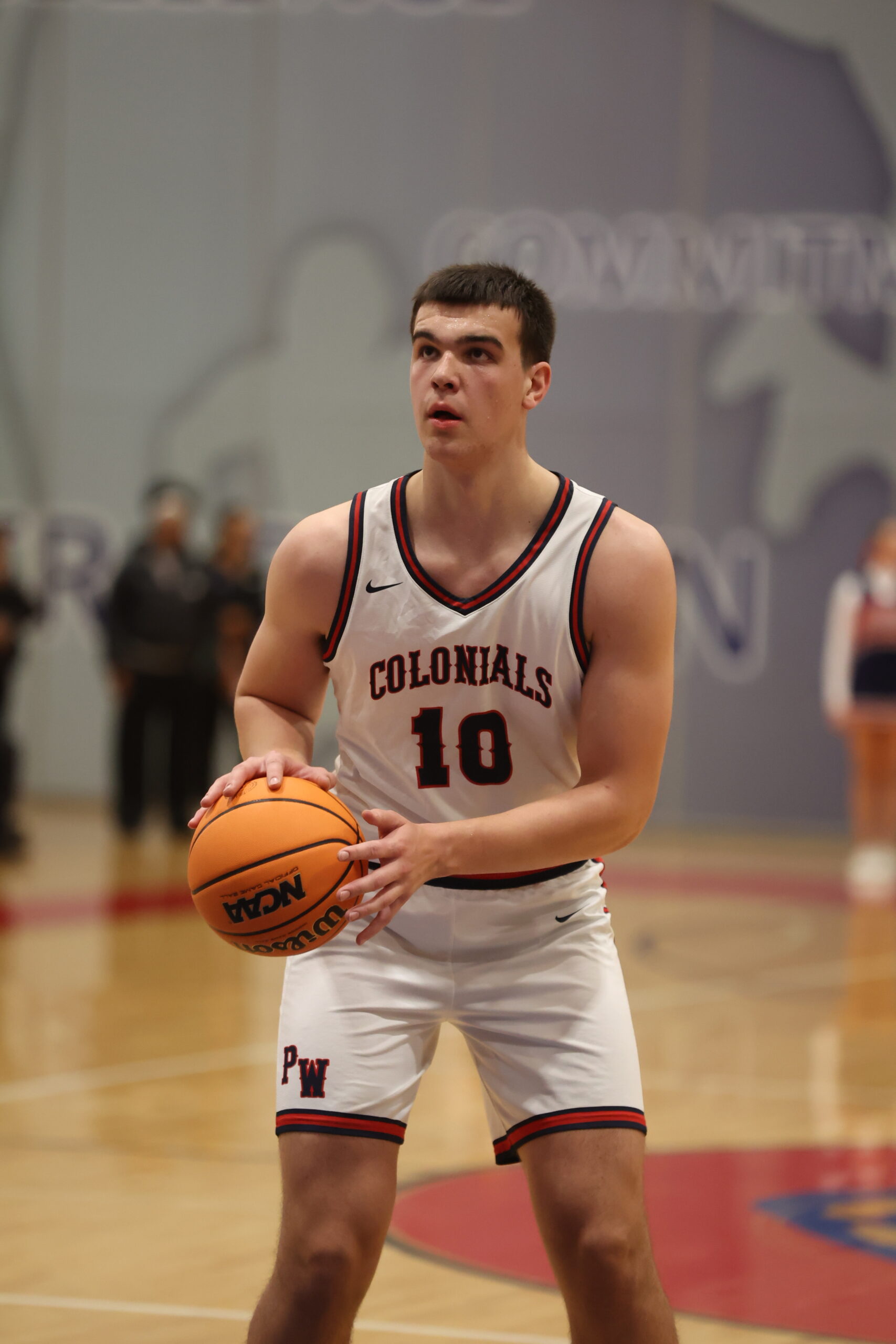
Before games, Michael Pereira needs some time alone to visualize the moment.
“I’m thinking about what I’m going to do and also trying to feel the emotion that would come with doing that thing,” Pereira said. “I’ll think of me dunking, and then feel the jolt of energy you get after you dunk it.”
It’s a practice he learned from his mother, and being a visionary through his four years at Plymouth Whitemarsh High School has taken the 6-foot-10 center pretty far. After starring for the Colonials, Pereira has been playing internationally for Brazil, where his father was born.
In June, he missed his senior prom to help the country’s under-18 national team place third in the FIBA AmeriCup in Mexico. Come fall, Pereira will join Penn, where he’s a member of Fran McCaffery’s first recruiting class.
Pereira is hoping to bring what he learned from international play to Penn.
“[The AmeriCup] was a great learning opportunity, definitely,” Pereira said. “The pace of play, the physicality of the game was faster because everyone was higher level there compared to what I’m used to.”
After falling to the United States, 102-56, in the semifinals, Brazil faced Puerto Rico in the third-place game on June 7. At halftime, Puerto Rico led by 19. It seemed as if Brazil would end AmeriCup play with back-to-back blowout losses. Then, Brazil came storming back and took the lead in the closing minutes of the fourth quarter. From there, it was able to hold on to claim an 83-77 victory. Pereira notched 4 points, 11 rebounds, and 2 blocks.
Michael Pereira averaged 14.1 points, 7.6 rebounds, and 1.3 blocks this season with Plymouth Whitemarsh.
Three days later, he was back at Plymouth Whitemarsh for his graduation.
“He’s a serious student-athlete,” said Plymouth Whitemarsh coach Jim Donofrio. “Anyone that can get accepted into Wharton early admissions obviously has a good resumé academically. Michael is a very curious guy when it comes to learning; he is open-minded to learning anything, he has high standards to want to excel in anything he takes on.”
‘Something special’
Pereira’s curiosity drove him into his coach’s Honors Philosophy & Ethics course. In class, Pereira did not shy away from offering his thoughts on whatever topic Donofrio covered that day. But before interjecting, Pereira would always stop and take in the concept.
Donofrio said this quality has become rare in today’s “hyper impatient society.”
However, it did not surprise the longtime coach that his player was a diligent and thoughtful student. Pereira showed the same characteristics in practice.
“One thing in the coaching world that we should emphasize constantly is when I’m talking to you, I want pure eye contact,” Donofrio said. “Michael gives you nothing but eye contact, he almost looks through you. He takes the message and he absorbs it, and that’s mind training — for a young guy to have that kind of discipline to want to listen.”
Pereira picked up the sport relatively late, in sixth grade. His parents had Chuck and Ronald Moore, two former Plymouth Whitemarsh players who went on to play collegiate basketball, train Pereira and his older brother Will. When Pereira entered eighth grade, Ronald was his coach.
Then, in high school, Chuck oversaw Pereira’s development as Donofrio’s assistant.
After McCaffery was hired by Penn, he brought in three assistants. One of them was Ronald Moore, who played under him at Siena. It was Ronald who put Pereira on his former coach’s radar.
“Tons of respect for Jimmy [Donofrio] and the job that he’s done for so many years there,” McCaffery said. “Also aware of the quality of play in that conference, the teams they played against, and I felt very strongly that Mike would be ready when he got here.
“When I saw him his junior year, I thought he had a chance. When I saw him his senior year, I knew he was going to be something special.”
Pereira received offers to play at various high-level prep schools for his senior season, but he wanted to stay at Plymouth Whitemarsh. His decision paid off. Pereira averaged 14.1 points, 7.6 rebounds, and 1.3 blocks, while leading the Colonials to a PIAA District 1 Class 6A championship.
“Something I liked about Plymouth Whitemarsh was that I could do more stuff, I could try stuff that was out of my comfort zone,” Pereira said. “Since it wasn’t like insanely good competition, I would get away with some stuff.
“I’ve tried different footwork. I would shoot a three or two in a high school game. But just considering my role in international play, I wasn’t really doing any of that, I was more so just doing what got me on the team in the first place.”
Improving as a Quaker
The Colonials’ 2026 campaign ended with a loss to Father Judge in the PIAA Class 6A quarterfinals. Pereira, who logged a double-double, wanted to get his mind off the defeat.
Coincidentally, Penn was playing in the Ivy League championship against Yale the next day.
“I don’t want to be depressed after this loss. Let’s just drive up,” Pereira said.
The game, played at Cornell, offered much more than a distraction. Penn junior forward TJ Power poured in 44 points to lead the Quakers to an 88-84 overtime victory and a ticket to the NCAA Tournament.
“I still think it’s one of the best games I’ve ever watched in person,” Pereira said.
Penn is expecting eight newcomers on the roster next season. Going into his second season at the helm, McCaffery has valued acquiring size and flexibility.
In order to take advantage of his frame, Pereira will need to continue his rapid progression as a player. McCaffery does not believe this will be an issue, noting he expects his new center to develop a “year-round obsession” with improvement under his watch.
Meanwhile, Donofrio believes that Pereira’s game will translate to the next level if he can better balance his intellectual side.
“He has to use his humble ability to listen like crazy and his curiosity,” Donofrio said. “All that stuff is really important, but he’s then going to have to learn how to be as aggressive as he can with that body without fouling out, but I almost want him to foul out a few times.”
“I always said, ‘Mike, you’re like in professor mode, then there’s the Hulk mode, where you turn into the Hulk.’ If we can just get the professor and the Hulk merged together, you got a guy that might be making money at the game someday.”
At an early summer lunch just before free agency began two years ago, Daryl Morey mapped out the 76ers’ dream scenario.
If the Sixers could somehow land free agent Paul George, a future Hall of Famer who then was 34, Morey told a trio of esteemed scribes that the Sixers would open a two-year window in which they could contend for the Eastern Conference title, if not an NBA championship. The East looked relatively toothless.
To his credit, or perhaps not, the team’s former president of basketball operations was being realistic. George had just made his ninth All-Star team and played in 74 games, but he’d also missed about 35 games on average in the previous four seasons.
Further, Morey had modest expectations for Joel Embiid. Yes, Embiid had just made his seventh straight All-Star team; yes, he was only 30; and yes, he was one season removed from winning his MVP award. But Embiid underwent a second surgery on his left knee a few months before and was significantly hobbled when he returned. Nevertheless, doctors told Morey that, if Embiid was diligent with his conditioning and his rehab, with proper load management, he could resume his NBA career without significant regression.
Doctors aside, Morey was no fool. He told the writers that if he got two more really good years from Embiid, that would be a good enough return on investment. Overpaying on the back ends of contracts are necessary evils in the sports industry.
That’s why Morey signed them both to max contracts — George, a delightful surprise in July; Embiid, a necessary evil in September.
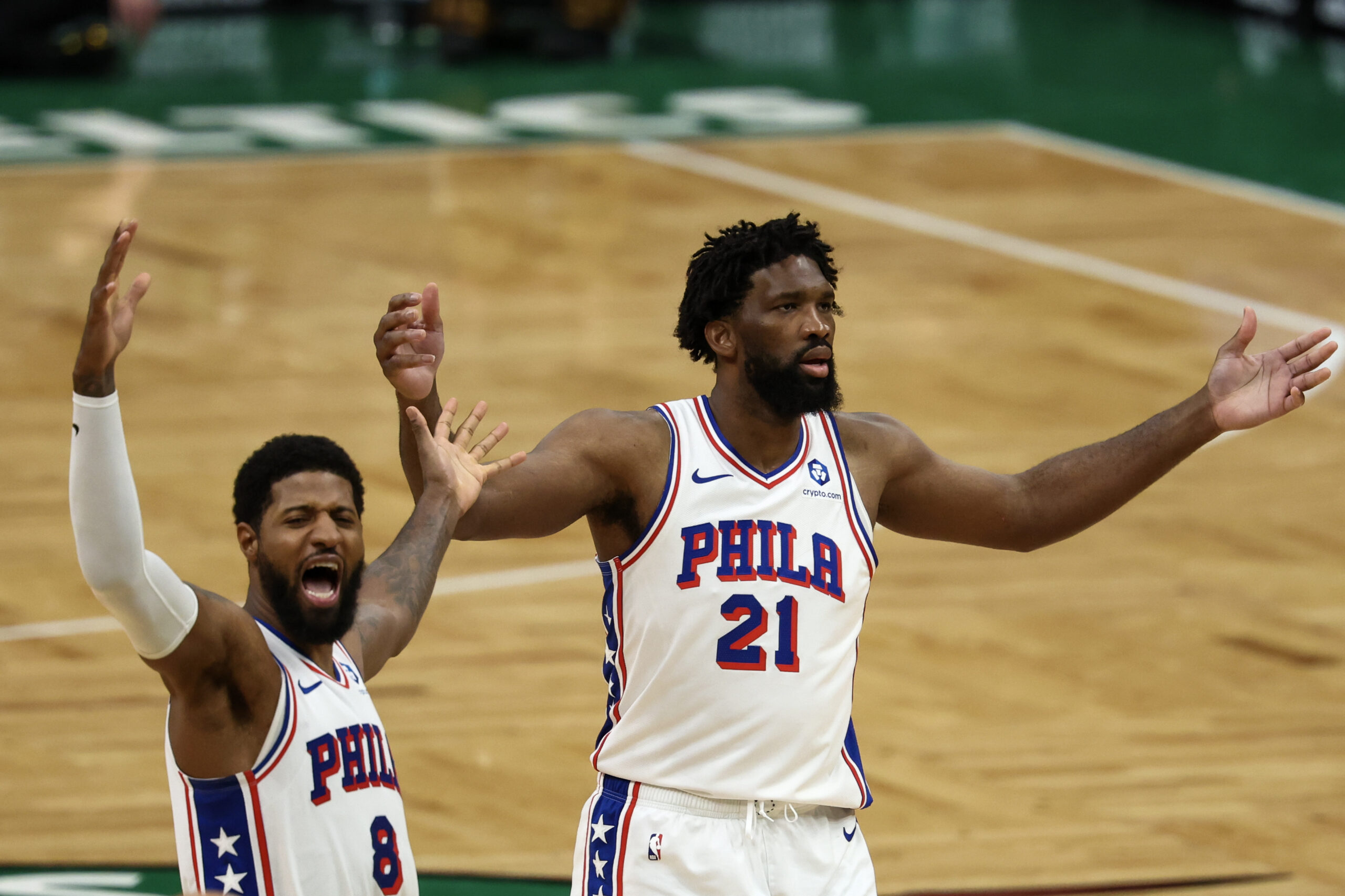
The Sixers still owe Paul George and Joel Embiid almost $300 million.
Disaster struck.
Embiid played in the 2024 Summer Olympics in Paris, but, six weeks later, he reported to camp out of shape and so far behind in his rehab that he was unable to start the season. He needed further surgery in the spring of 2025. By the end of last season he’d finally recovered from the knee problem, but he suffered three more injuries: oblique, right ankle, and right hip. He has played in just 64 games in the last two seasons, including playoffs.
Predictably, George endured a slew of injuries in his first season as a Sixer, then, in an effort to recover from injury, he was suspended 25 games last season for violating the NBA’s antidrug program. He has played a total of 89 games as a Sixer, including the playoffs.
Which brings us to Monday.
Blockbuster
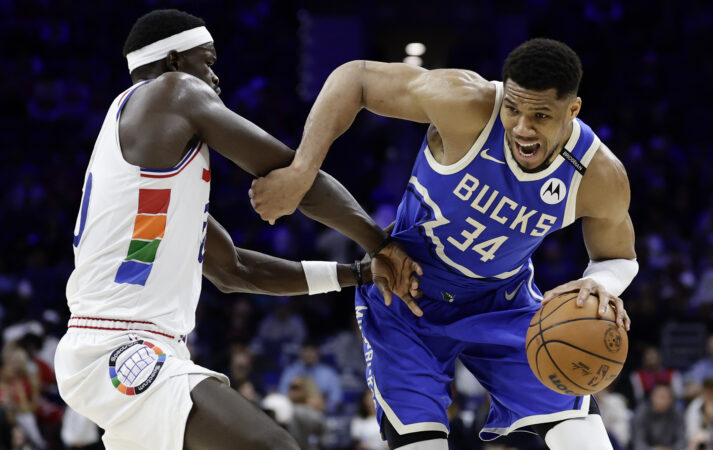
In perhaps the biggest transaction since LeBron James took his talents to South Beach 16 years ago, Giannis Antetokounmpo did the same.
Fifteen years ago today, LeBron James left the Cavaliers for the Heat in free agency live on ESPN.
‘The Decision’ was a monumental moment in NBA history, but LeBron openly regrets announcing it in this manner.pic.twitter.com/q7cbws9OCc
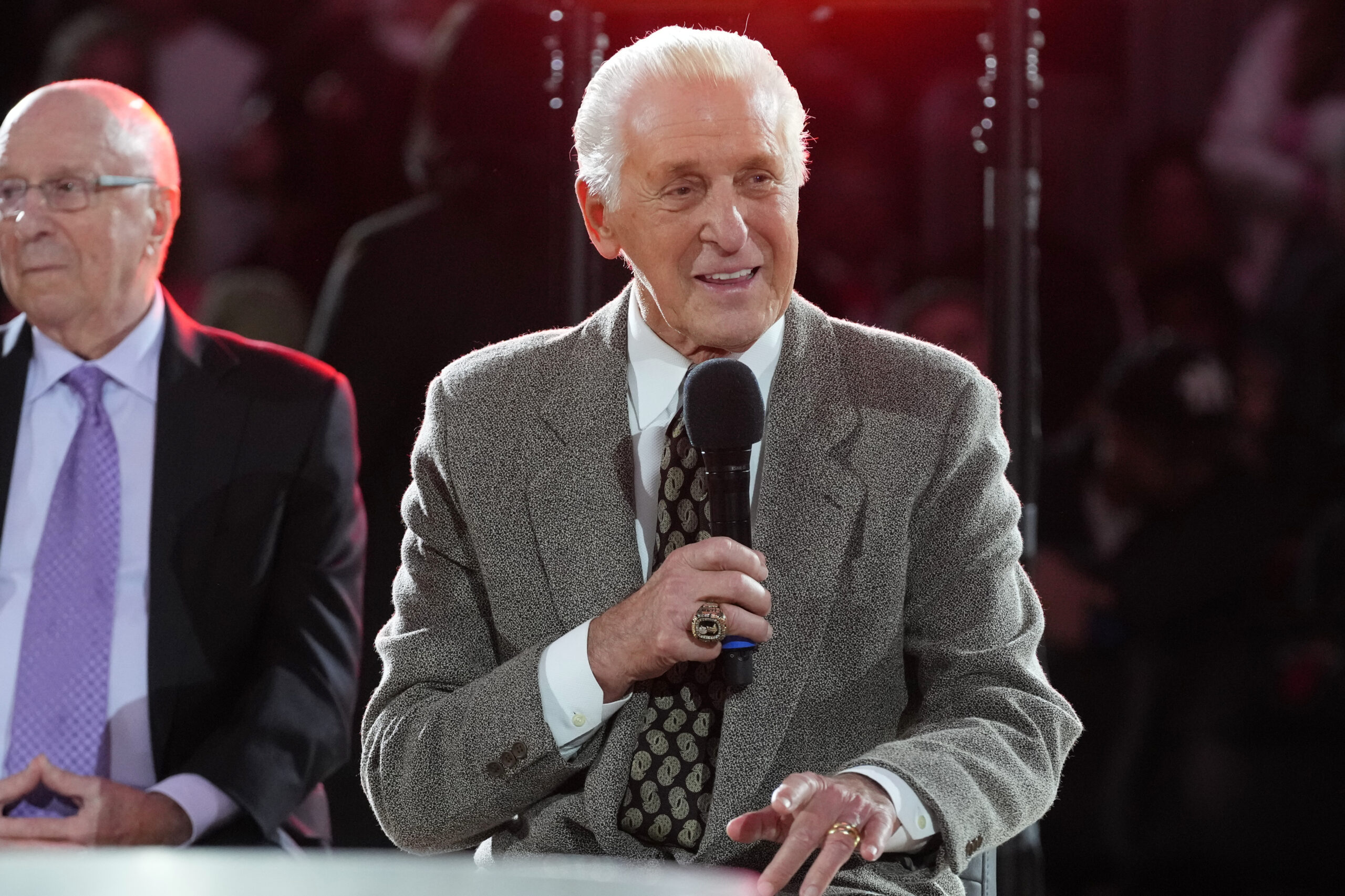
The Heat and Bucks on Monday reportedly authored a two-team, blockbuster trade. Miami saw blood in the water, jettisoned its ballast, and attacked. Pat Riley, now 81, mortgaged a Heat future in which he likely will play a diminishing a role to support the chances of second-tier star Bam Adebayo.
Brilliant.
There have been other big deals, such as the idiocy in Dallas of trading Luka Dončić in 2025 to the Lakers, but Giannis is a bigger deal. He has two MVPs, an NBA championship, and an acceptable BMI. Luka has none of those.
With the Greek Freak on board, the East is ripe for Miami, and Riley, the Heat president for the past 31 seasons, knows it. After all, he orchestrated the last trade with this sort of effect, when he brought Shaquille O’Neal to Miami in 2004, then won a title with him in 2006. On Monday, Riley’s team immediately became a contender again in a vulnerable Eastern Conference.
The principals
Celtics? The patchwork Sixers upset the mighty Celtics in the first round of the playoffs.
Knicks? The hodgepodge overachievers, the most fun team to watch since Larry Brown pushed the Pistons to the 2004 title, ran off 11 consecutive wins in the conference playoffs to reach the NBA Finals, in which they wore down an inexperienced team and its inexperienced coach.
The Cavs? They collapsed due to the cold left hand of James Harden, who, to no one’s surprise, shot just 38.9% in the conference final against the Knicks.
The Pistons? Two words: Tobias Harris.
Pat Riley, 81, orchestrated the trade of another superstar to Miami in landing Giannis Antetokounmpo in a reported trade with the Bucks.
The Pacers? Two words: Tyrese Haliburton. He pushed the Pacers to the NBA Finals in 2025 but blew out his Achilles in Game 7. With all due respect to Jalen Brunson, if Haliburton returns at 100%, then he’s the best player in the East. How good is he? The Pacers’ 19 wins were second-worst last season, but with Haliburton returning, their DraftKings odds to win the East are 12-1.
Upon news of the trade, the Heat’s odds to win the conference on DraftKings improved from 12-1 to 6-1. That’s behind the Celtics, at 2.25-1, and the Knicks, who are at 3-1.
The Sixers? They’re still seventh, at 19-1, behind the Cavs, who are 13-1, after Tuesday night’s draft. The Sixers used their 22nd overall pick on Labaron Philon Jr., a 6-foot-4 sophomore sniper out of Alabama whom they hope will compensate for Morey’s deadline trade of popular second-year shooter Jared McCain, who flourished in Oklahoma City.
Philon’s arrival did not move the DraftKings needle.
Don’t expect those odds to get any better July 6, when free-agent deals and proposed trades like the Giannis deal can be ratified.
All the Sixers will be able to do is watch.
They’re still saddled with the crippling contract of Embiid, now 32 going on 52 and who is owed almost $188 million over the next three seasons.
They’re still saddled with the last two years and almost $111 million owed George, who is 36. A second positive drug test would cost him 55 games. Maybe he needs them.
He averaged just 14.5 points and shot 40.7% from the field when the Knicks swept the Sixers out of the second round — a sweep that, two days, later, cost Morey his job as president.
These twin albatrosses will haunt the Sixers for at least two more years. This, remember, is by design.
We’re approaching the point of the World Cup where things start to move fast.
By Sunday, the knockout round begins. And tonight (at 10 p.m.), the U.S. men’s national team will compete in its final match in Group D against Turkey.
We already know that the U.S. advanced to the round of 32 after its win over Australia, but we’re still awaiting its opponent for the July 1 showdown.
As for tonight, it’s anyone’s guess whom head coach Mauricio Pochettino will start. Right now, Christian Pulisic looks to return to the lineup — and it might be in his best interest after being sidelined. Is it worth the risk in a match that matters very little?
The U.S. men’s team has never won all three of their group-stage games in a single World Cup. While, there’s still a long way to go beyond Thursday’s group stage finale, this could be a moment to stop and survey just how far the team has come, writes Jonathan Tannenwald.
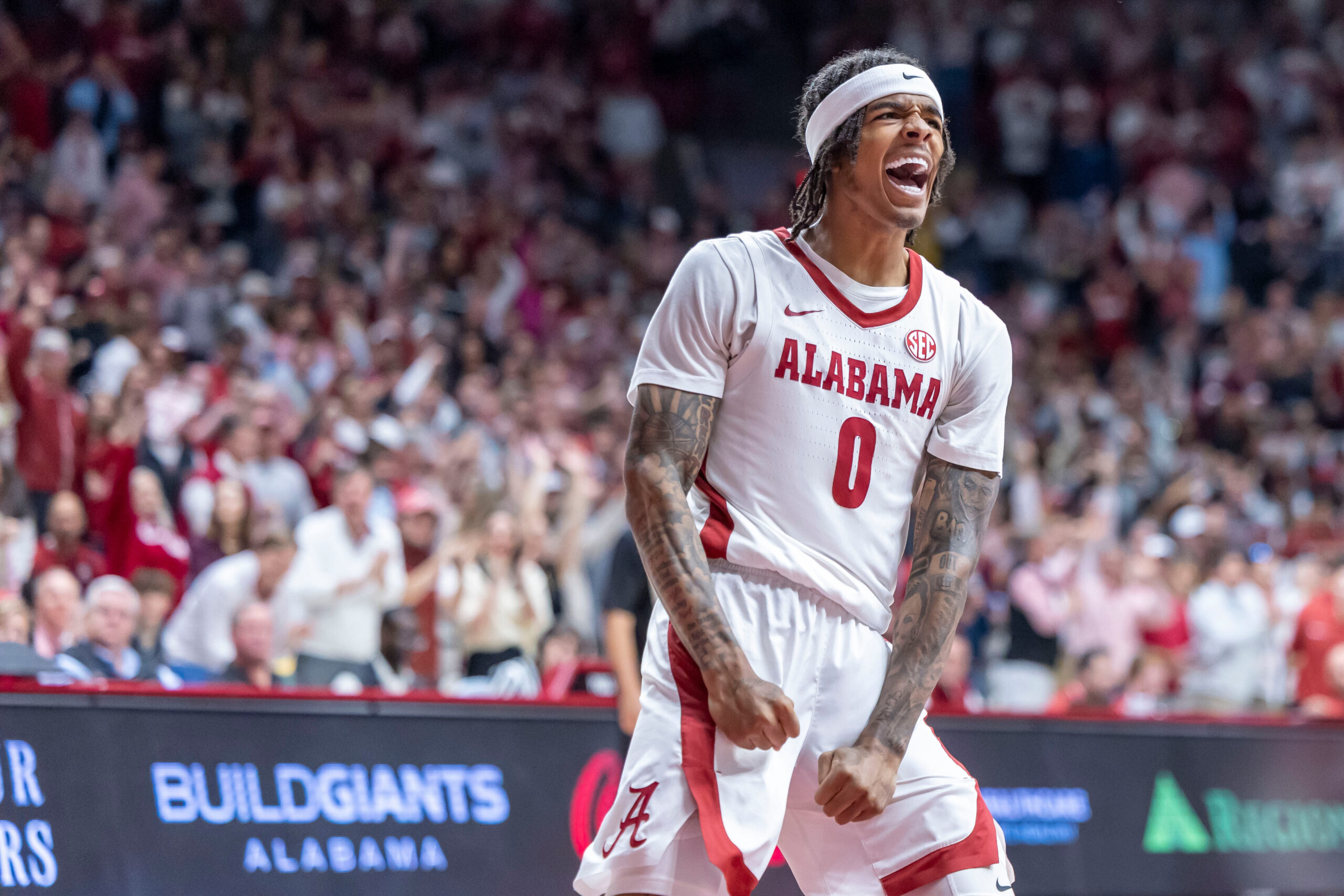
Labaron Philon Jr. landed with the Sixers at No. 22 after being projected as a potential lottery pick.
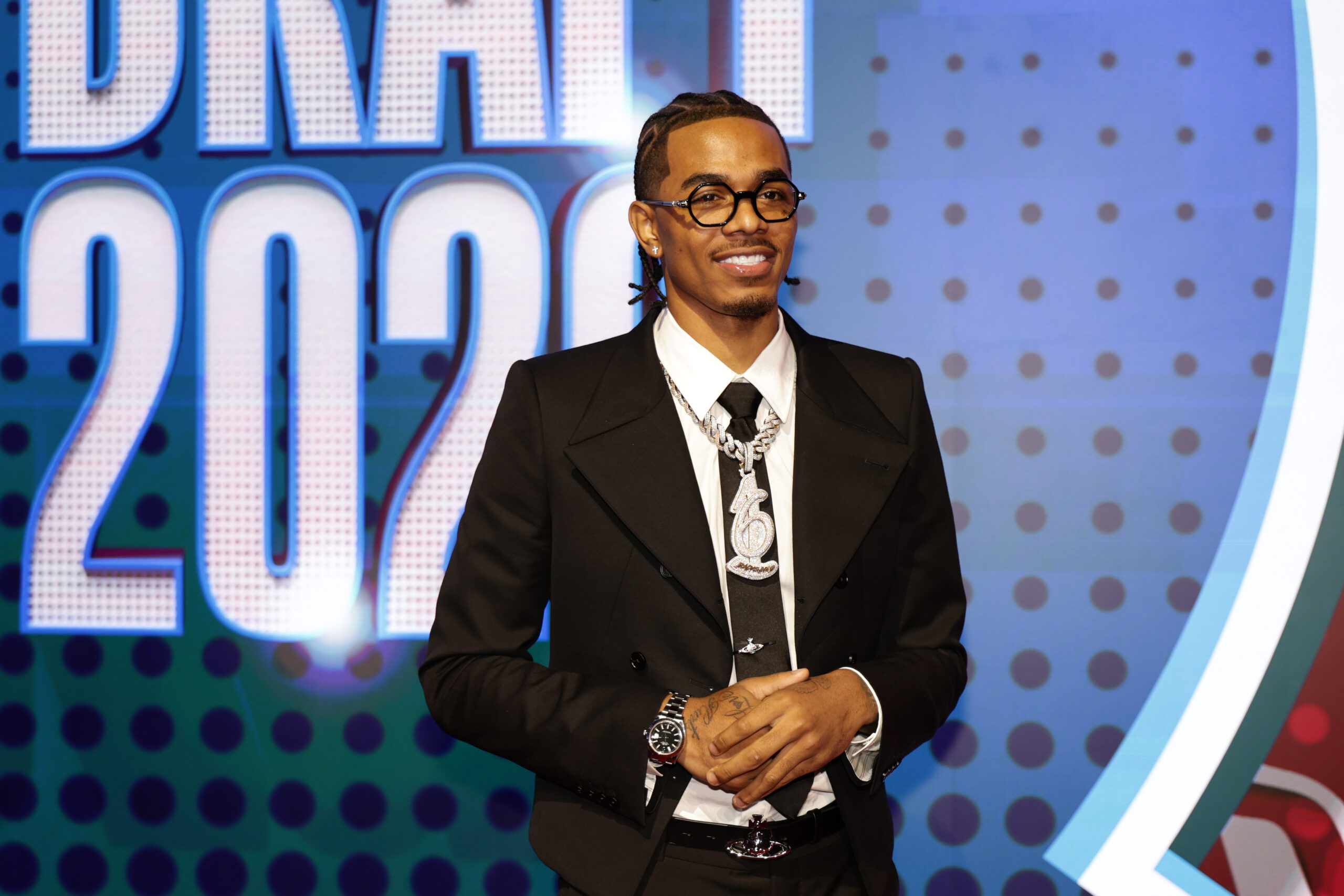
A year ago, Labaron Philon Jr. delayed his draft night after originally declaring in 2025. The guard from Alabama then sat in the Barclays Center on Tuesday for longer than expected, as a projected lottery pick who slipped past that portion of the first round. However, landing with the Sixers was worth the wait.
And the national media is divided Philon — some are calling him the steal of the first round while others expressed concern on how he’ll fit with the team.
What we’re …
👀 Watching: Highlight moments from Jason Kelce’s sixth annual Sea Isle fundraiser, which had plenty of surprise appearances.
🤔 Wondering: What Zach and Julie Ertz said about the Eagles on ‘New Heights’ — that left the former tight end emotional.
📖 Reading: Twin pitchers Austin and Blake Havertine left their mark at Radnor. Now, they’re heading to different colleges.
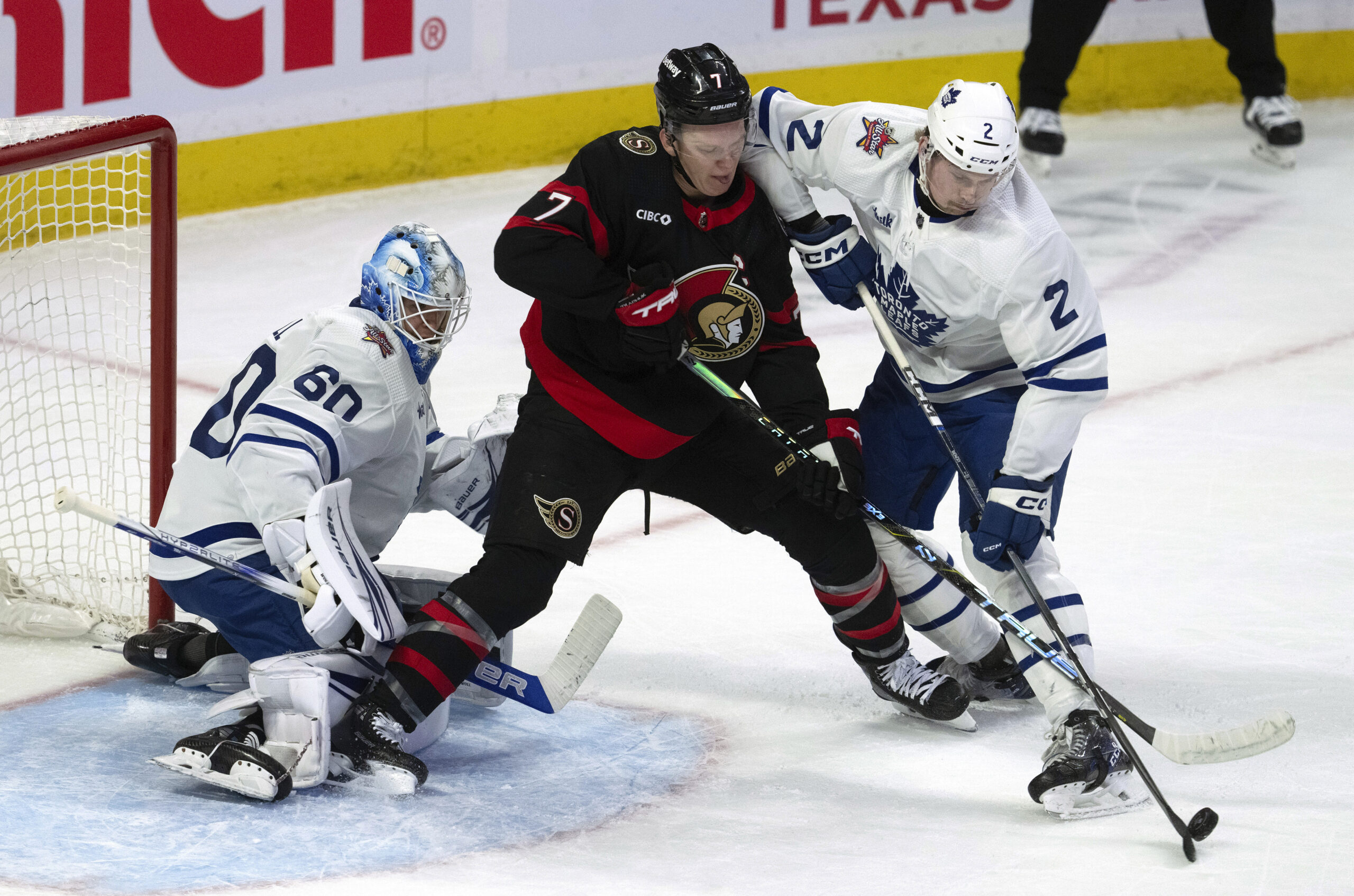
Joseph Woll (right) and Simon Benoît are now going to be teammates in orange and black.
Joseph Woll and Simon Benoît met with the media on Zoom Wednesday and expressed excitement about being part of the organization. The two newest Flyers were traded from the Leafs for goalie Sam Ersson, defenseman Emil Andrae, and a third-round 2026 draft pick on June 16.
Benoît played with Trevor Zegras and Jamie Drysdale for several seasons with the Anaheim Ducks. He’s expected to bring a physical defensive presence, while Woll is already forming a relationship with his new goalie partner, Dan Vladař.
And to get you ready for Friday’s NHL draft, here’s three defensemen who keep getting mentioned as an option for the Flyers at No. 21.
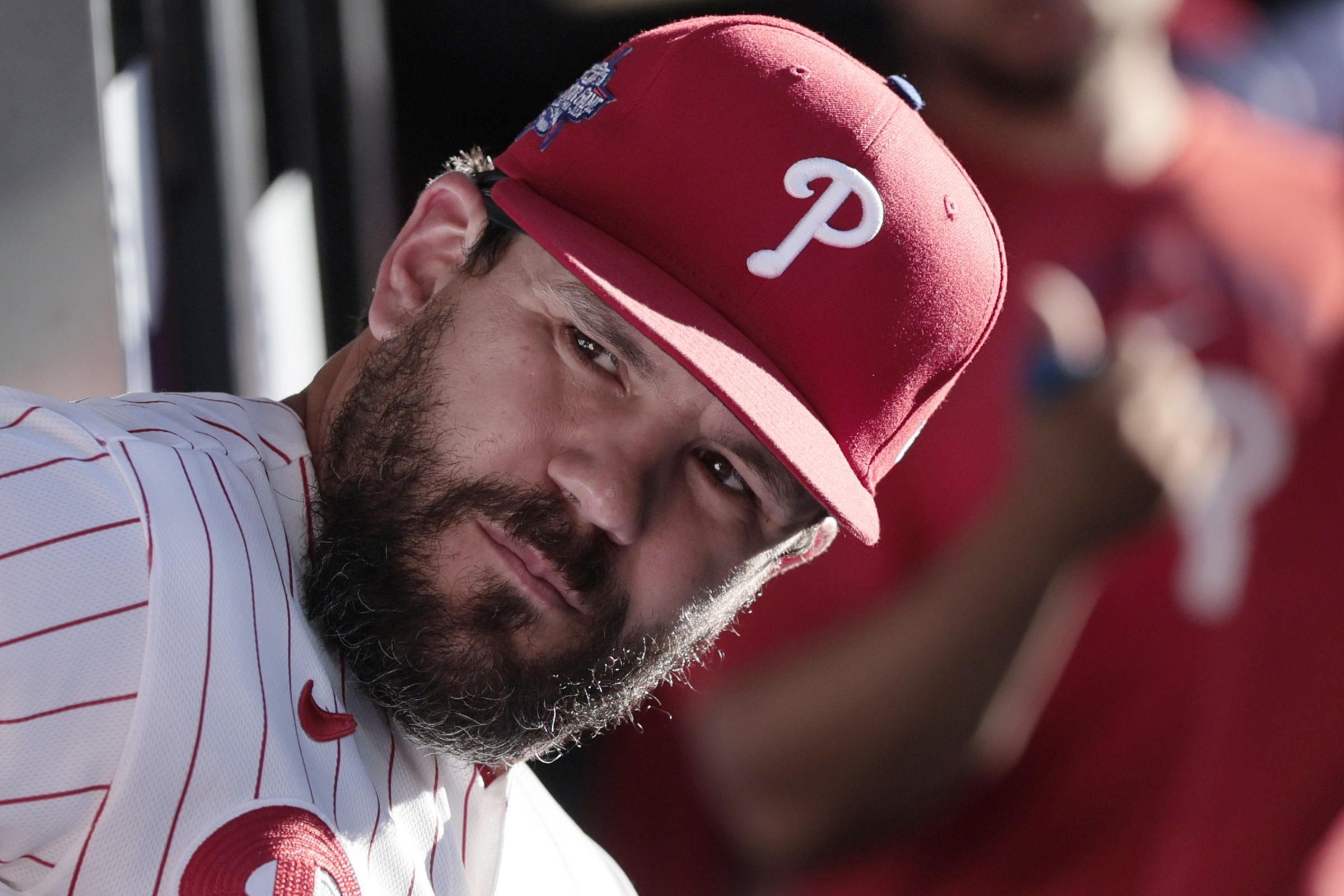
Kyle Schwarber missed a second straight game on Wednesday with tightness in his lower back.
Kyle Schwarber was out of the Phillies lineup for the second consecutive game with tightness in his lower back. Don Mattingly said Schwarber was feeling better, but the interim manager wanted to be cautious and give him another day off.
Schwarber, though, helped start the Phillies’ rally on Wednesday when he entered the game in the ninth inning, drew a 10 pitch walk with two outs, and made way for Derek Hill’s go-ahead two-run homer for a 5-4 win over the Nationals.
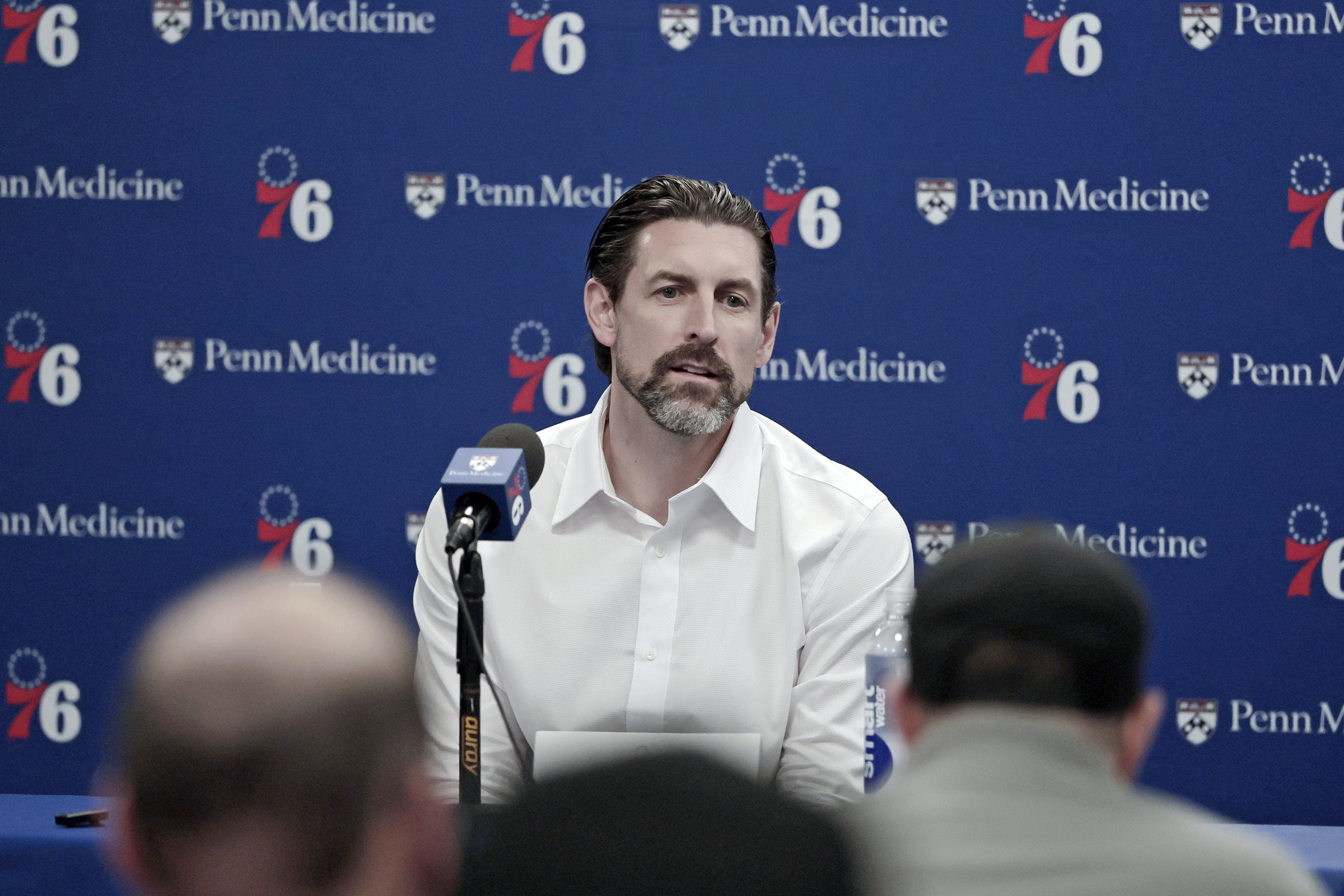
New Sixers president of basketball operations Mike Gansey says first-round pick Labaron Philon Jr., “fell into our lap.”
Mike Gansey aced his first test as Sixers president on Tuesday night. He took the player he graded as the best talent. Of course, the real test is whether he’s right.
But, however Labaron Philon Jr. turns out, the Sixers did what a team in their position should be doing: Using the opportunity to draft a player they think will someday belong in a championship caliber rotation, writes columnist David Murphy.
Jackie Spiegel answers your questions about the Flyers during our Reddit AMA at noon on Thursday.
After making the second round of the playoffs, how will the Flyers approach the NHL draft?
The Inquirer’s Jackie Spiegel will provide answers on that and more in an AMA tomorrow in the r/Flyers Subreddit!
What you’re saying about the Sixers’ pick
Alabama guard Labaron Philon Jr.is the newest member of the Sixers.
We asked: Are you happy with the Sixers’ first-round pick? Why or why not? Among your responses:
Another Guard? We are well stacked with Maxey and VJ, which is why the Sixers shipped Jared McCain out to OKC (or was it a salary dump). If he is indeed a shooter, great! If not, the Sixers could have used a “Big” given the ongoing uncertainty around Embiid. — Bob C.
Thought they had 3 guards, but traded one to Oklahoma City. Do they have a clue??— Bill M.
Just surprised that they went for a guard. I thought they would go for a big man to support our two guys who struggle every season with injuries etc. — Everett S.
Makes no matter if they would have drafted the second coming of Michael Jordon. Until they move Joel to his new home, their chances of winning any championship are nil. He’s a great part time player and that’s it! Not knowing if he’s playing in each and every game until he shows up in the locker room is just plain wrong. — Ronald R.
We compiled today’s newsletter using reporting from David Murphy, Jonathan Tannenwald,Owen Hewitt, Kerith Gabriel, Rob Tornoe, Jackie Spiegel, Lochlahn March, Gina Mizell, Ariel Simpson, Joseph Santoliquito, Conor Smith, Mia Messina, and Ethan Kopelman.
By submitting your written, visual, and/or audio contributions, you agree to The Inquirer’s Terms of Use, including the grant of rights in Section 10.
As always, thanks for reading. Have yourself a terrific Thursday, I’ll be back in your inbox tomorrow to wrap up the week. — Bella