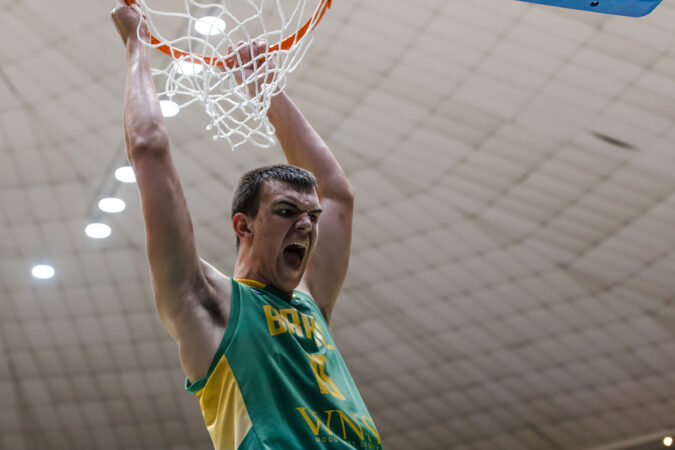
Before games, Michael Pereira needs some time alone to visualize the moment.
“I’m thinking about what I’m going to do and also trying to feel the emotion that would come with doing that thing,” Pereira said. “I’ll think of me dunking, and then feel the jolt of energy you get after you dunk it.”
It’s a practice he learned from his mother, and being a visionary through his four years at Plymouth Whitemarsh High School has taken the 6-foot-10 center pretty far. After starring for the Colonials, Pereira has been playing internationally for Brazil, where his father was born.
In June, he missed his senior prom to help the country’s under-18 national team place third in the FIBA AmeriCup in Mexico. Come fall, Pereira will join Penn, where he’s a member of Fran McCaffery’s first recruiting class.
Pereira is hoping to bring what he learned from international play to Penn.
“[The AmeriCup] was a great learning opportunity, definitely,” Pereira said. “The pace of play, the physicality of the game was faster because everyone was higher level there compared to what I’m used to.”
After falling to the United States, 102-56, in the semifinals, Brazil faced Puerto Rico in the third-place game on June 7. At halftime, Puerto Rico led by 19. It seemed as if Brazil would end AmeriCup play with back-to-back blowout losses. Then, Brazil came storming back and took the lead in the closing minutes of the fourth quarter. From there, it was able to hold on to claim an 83-77 victory. Pereira notched 4 points, 11 rebounds, and 2 blocks.
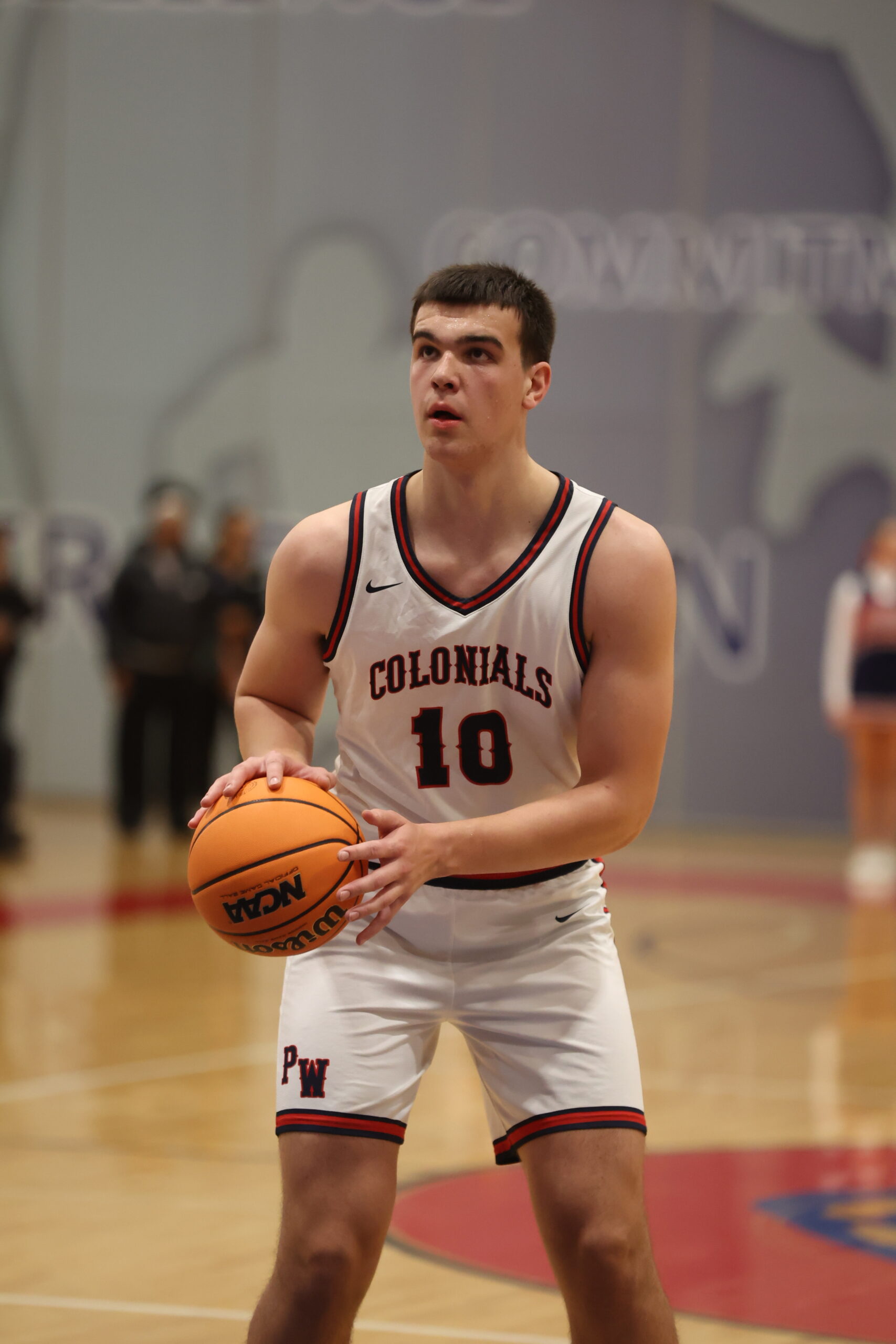
Michael Pereira averaged 14.1 points, 7.6 rebounds, and 1.3 blocks this season with Plymouth Whitemarsh.
Three days later, he was back at Plymouth Whitemarsh for his graduation.
“He’s a serious student-athlete,” said Plymouth Whitemarsh coach Jim Donofrio. “Anyone that can get accepted into Wharton early admissions obviously has a good resumé academically. Michael is a very curious guy when it comes to learning; he is open-minded to learning anything, he has high standards to want to excel in anything he takes on.”
‘Something special’
Pereira’s curiosity drove him into his coach’s Honors Philosophy & Ethics course. In class, Pereira did not shy away from offering his thoughts on whatever topic Donofrio covered that day. But before interjecting, Pereira would always stop and take in the concept.
Donofrio said this quality has become rare in today’s “hyper impatient society.”
However, it did not surprise the longtime coach that his player was a diligent and thoughtful student. Pereira showed the same characteristics in practice.
“One thing in the coaching world that we should emphasize constantly is when I’m talking to you, I want pure eye contact,” Donofrio said. “Michael gives you nothing but eye contact, he almost looks through you. He takes the message and he absorbs it, and that’s mind training — for a young guy to have that kind of discipline to want to listen.”
Pereira picked up the sport relatively late, in sixth grade. His parents had Chuck and Ronald Moore, two former Plymouth Whitemarsh players who went on to play collegiate basketball, train Pereira and his older brother Will. When Pereira entered eighth grade, Ronald was his coach.
Then, in high school, Chuck oversaw Pereira’s development as Donofrio’s assistant.
After McCaffery was hired by Penn, he brought in three assistants. One of them was Ronald Moore, who played under him at Siena. It was Ronald who put Pereira on his former coach’s radar.
“Tons of respect for Jimmy [Donofrio] and the job that he’s done for so many years there,” McCaffery said. “Also aware of the quality of play in that conference, the teams they played against, and I felt very strongly that Mike would be ready when he got here.
“When I saw him his junior year, I thought he had a chance. When I saw him his senior year, I knew he was going to be something special.”
Pereira received offers to play at various high-level prep schools for his senior season, but he wanted to stay at Plymouth Whitemarsh. His decision paid off. Pereira averaged 14.1 points, 7.6 rebounds, and 1.3 blocks, while leading the Colonials to a PIAA District 1 Class 6A championship.
“Something I liked about Plymouth Whitemarsh was that I could do more stuff, I could try stuff that was out of my comfort zone,” Pereira said. “Since it wasn’t like insanely good competition, I would get away with some stuff.
“I’ve tried different footwork. I would shoot a three or two in a high school game. But just considering my role in international play, I wasn’t really doing any of that, I was more so just doing what got me on the team in the first place.”
Improving as a Quaker
The Colonials’ 2026 campaign ended with a loss to Father Judge in the PIAA Class 6A quarterfinals. Pereira, who logged a double-double, wanted to get his mind off the defeat.
Coincidentally, Penn was playing in the Ivy League championship against Yale the next day.
“I don’t want to be depressed after this loss. Let’s just drive up,” Pereira said.
The game, played at Cornell, offered much more than a distraction. Penn junior forward TJ Power poured in 44 points to lead the Quakers to an 88-84 overtime victory and a ticket to the NCAA Tournament.
“I still think it’s one of the best games I’ve ever watched in person,” Pereira said.
Penn is expecting eight newcomers on the roster next season. Going into his second season at the helm, McCaffery has valued acquiring size and flexibility.
In order to take advantage of his frame, Pereira will need to continue his rapid progression as a player. McCaffery does not believe this will be an issue, noting he expects his new center to develop a “year-round obsession” with improvement under his watch.
Meanwhile, Donofrio believes that Pereira’s game will translate to the next level if he can better balance his intellectual side.
“He has to use his humble ability to listen like crazy and his curiosity,” Donofrio said. “All that stuff is really important, but he’s then going to have to learn how to be as aggressive as he can with that body without fouling out, but I almost want him to foul out a few times.”
“I always said, ‘Mike, you’re like in professor mode, then there’s the Hulk mode, where you turn into the Hulk.’ If we can just get the professor and the Hulk merged together, you got a guy that might be making money at the game someday.”
At an early summer lunch just before free agency began two years ago, Daryl Morey mapped out the 76ers’ dream scenario.
If the Sixers could somehow land free agent Paul George, a future Hall of Famer who then was 34, Morey told a trio of esteemed scribes that the Sixers would open a two-year window in which they could contend for the Eastern Conference title, if not an NBA championship. The East looked relatively toothless.
To his credit, or perhaps not, the team’s former president of basketball operations was being realistic. George had just made his ninth All-Star team and played in 74 games, but he’d also missed about 35 games on average in the previous four seasons.
Further, Morey had modest expectations for Joel Embiid. Yes, Embiid had just made his seventh straight All-Star team; yes, he was only 30; and yes, he was one season removed from winning his MVP award. But Embiid underwent a second surgery on his left knee a few months before and was significantly hobbled when he returned. Nevertheless, doctors told Morey that, if Embiid was diligent with his conditioning and his rehab, with proper load management, he could resume his NBA career without significant regression.
Doctors aside, Morey was no fool. He told the writers that if he got two more really good years from Embiid, that would be a good enough return on investment. Overpaying on the back ends of contracts are necessary evils in the sports industry.
That’s why Morey signed them both to max contracts — George, a delightful surprise in July; Embiid, a necessary evil in September.
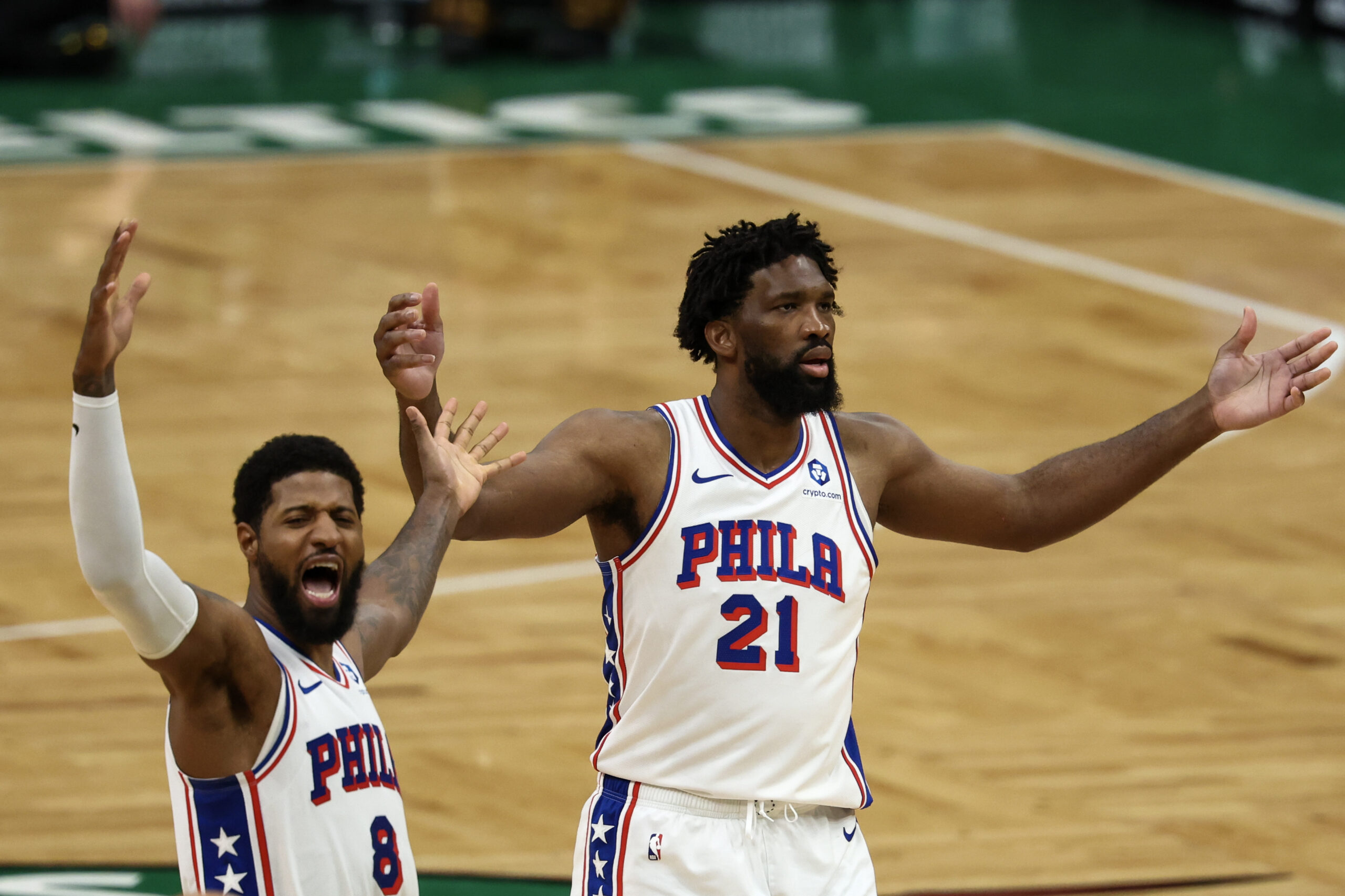
The Sixers still owe Paul George and Joel Embiid almost $300 million.
Disaster struck.
Embiid played in the 2024 Summer Olympics in Paris, but, six weeks later, he reported to camp out of shape and so far behind in his rehab that he was unable to start the season. He needed further surgery in the spring of 2025. By the end of last season he’d finally recovered from the knee problem, but he suffered three more injuries: oblique, right ankle, and right hip. He has played in just 64 games in the last two seasons, including playoffs.
Predictably, George endured a slew of injuries in his first season as a Sixer, then, in an effort to recover from injury, he was suspended 25 games last season for violating the NBA’s antidrug program. He has played a total of 89 games as a Sixer, including the playoffs.
Which brings us to Monday.
Blockbuster
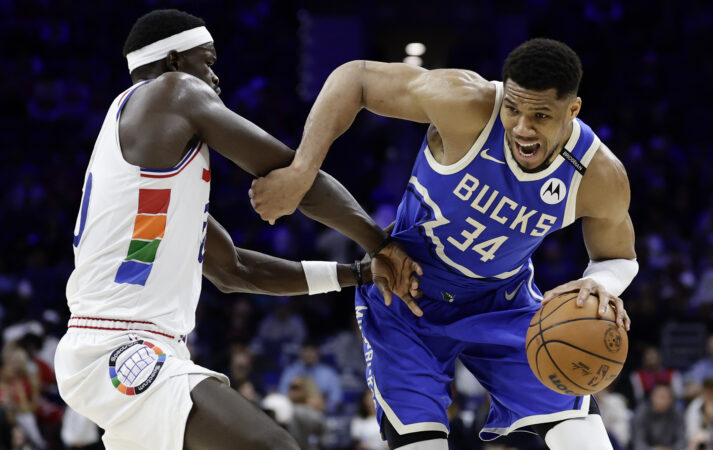
In perhaps the biggest transaction since LeBron James took his talents to South Beach 16 years ago, Giannis Antetokounmpo did the same.
Fifteen years ago today, LeBron James left the Cavaliers for the Heat in free agency live on ESPN.
‘The Decision’ was a monumental moment in NBA history, but LeBron openly regrets announcing it in this manner.pic.twitter.com/q7cbws9OCc
The Heat and Bucks on Monday reportedly authored a two-team, blockbuster trade. Miami saw blood in the water, jettisoned its ballast, and attacked. Pat Riley, now 81, mortgaged a Heat future in which he likely will play a diminishing a role to support the chances of second-tier star Bam Adebayo.
Brilliant.
There have been other big deals, such as the idiocy in Dallas of trading Luka Dončić in 2025 to the Lakers, but Giannis is a bigger deal. He has two MVPs, an NBA championship, and an acceptable BMI. Luka has none of those.
With the Greek Freak on board, the East is ripe for Miami, and Riley, the Heat president for the past 31 seasons, knows it. After all, he orchestrated the last trade with this sort of effect, when he brought Shaquille O’Neal to Miami in 2004, then won a title with him in 2006. On Monday, Riley’s team immediately became a contender again in a vulnerable Eastern Conference.
The principals
Celtics? The patchwork Sixers upset the mighty Celtics in the first round of the playoffs.
Knicks? The hodgepodge overachievers, the most fun team to watch since Larry Brown pushed the Pistons to the 2004 title, ran off 11 consecutive wins in the conference playoffs to reach the NBA Finals, in which they wore down an inexperienced team and its inexperienced coach.
The Cavs? They collapsed due to the cold left hand of James Harden, who, to no one’s surprise, shot just 38.9% in the conference final against the Knicks.
The Pistons? Two words: Tobias Harris.
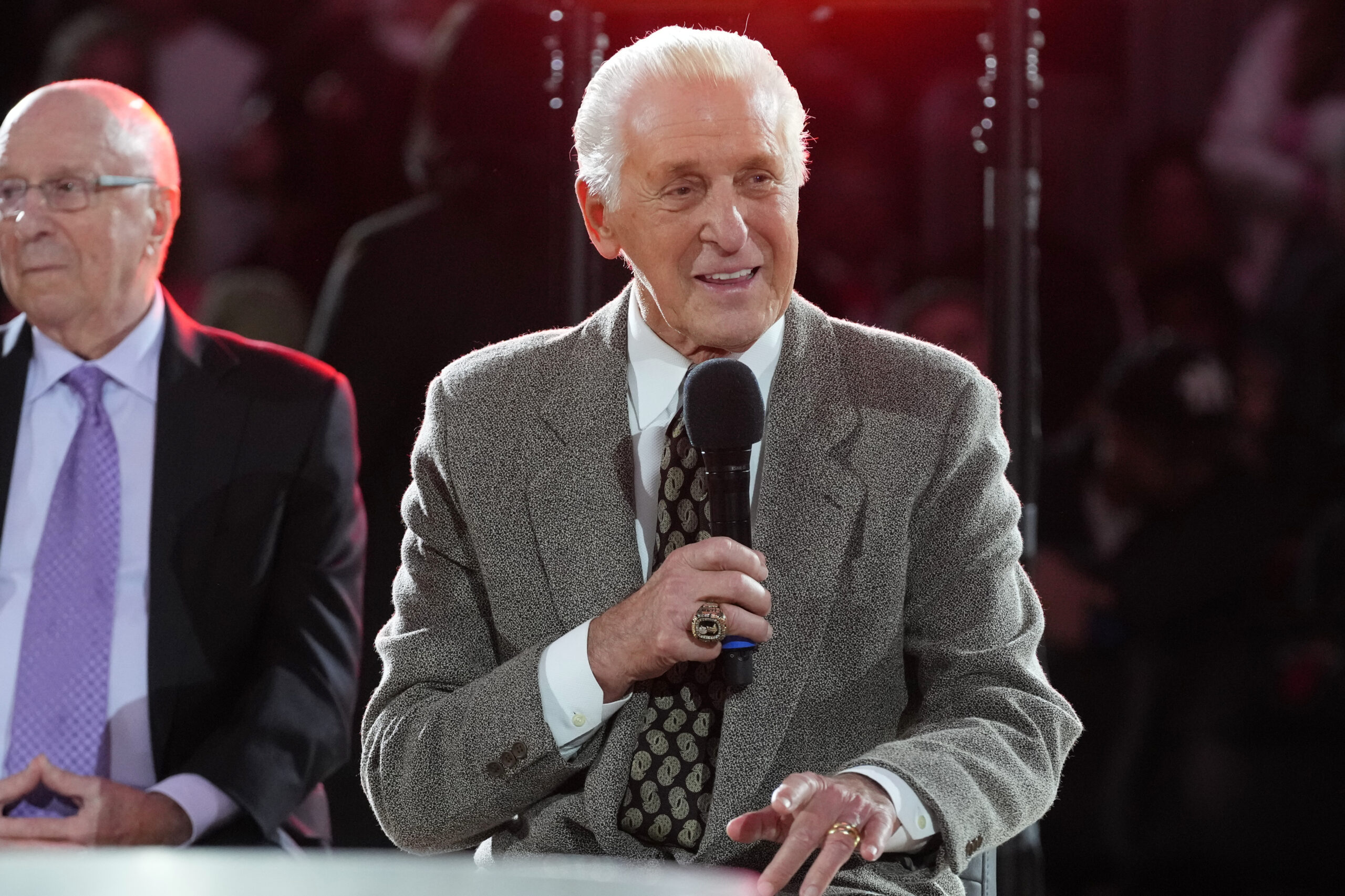
Pat Riley, 81, orchestrated the trade of another superstar to Miami in landing Giannis Antetokounmpo in a reported trade with the Bucks.
The Pacers? Two words: Tyrese Haliburton. He pushed the Pacers to the NBA Finals in 2025 but blew out his Achilles in Game 7. With all due respect to Jalen Brunson, if Haliburton returns at 100%, then he’s the best player in the East. How good is he? The Pacers’ 19 wins were second-worst last season, but with Haliburton returning, their DraftKings odds to win the East are 12-1.
Upon news of the trade, the Heat’s odds to win the conference on DraftKings improved from 12-1 to 6-1. That’s behind the Celtics, at 2.25-1, and the Knicks, who are at 3-1.
The Sixers? They’re still seventh, at 19-1, behind the Cavs, who are 13-1, after Tuesday night’s draft. The Sixers used their 22nd overall pick on Labaron Philon Jr., a 6-foot-4 sophomore sniper out of Alabama whom they hope will compensate for Morey’s deadline trade of popular second-year shooter Jared McCain, who flourished in Oklahoma City.
Philon’s arrival did not move the DraftKings needle.
Don’t expect those odds to get any better July 6, when free-agent deals and proposed trades like the Giannis deal can be ratified.
All the Sixers will be able to do is watch.
They’re still saddled with the crippling contract of Embiid, now 32 going on 52 and who is owed almost $188 million over the next three seasons.
They’re still saddled with the last two years and almost $111 million owed George, who is 36. A second positive drug test would cost him 55 games. Maybe he needs them.
He averaged just 14.5 points and shot 40.7% from the field when the Knicks swept the Sixers out of the second round — a sweep that, two days, later, cost Morey his job as president.
These twin albatrosses will haunt the Sixers for at least two more years. This, remember, is by design.
We’re approaching the point of the World Cup where things start to move fast.
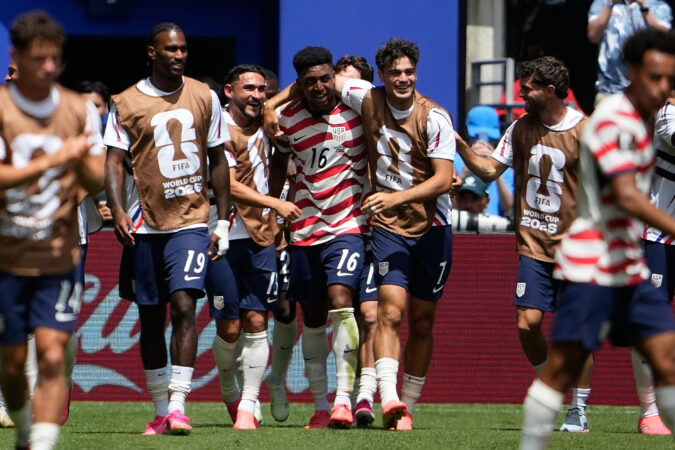
By Sunday, the knockout round begins. And tonight (at 10 p.m.), the U.S. men’s national team will compete in its final match in Group D against Turkey.
We already know that the U.S. advanced to the round of 32 after its win over Australia, but we’re still awaiting its opponent for the July 1 showdown.
As for tonight, it’s anyone’s guess whom head coach Mauricio Pochettino will start. Right now, Christian Pulisic looks to return to the lineup — and it might be in his best interest after being sidelined. Is it worth the risk in a match that matters very little?
The U.S. men’s team has never won all three of their group-stage games in a single World Cup. While, there’s still a long way to go beyond Thursday’s group stage finale, this could be a moment to stop and survey just how far the team has come, writes Jonathan Tannenwald.
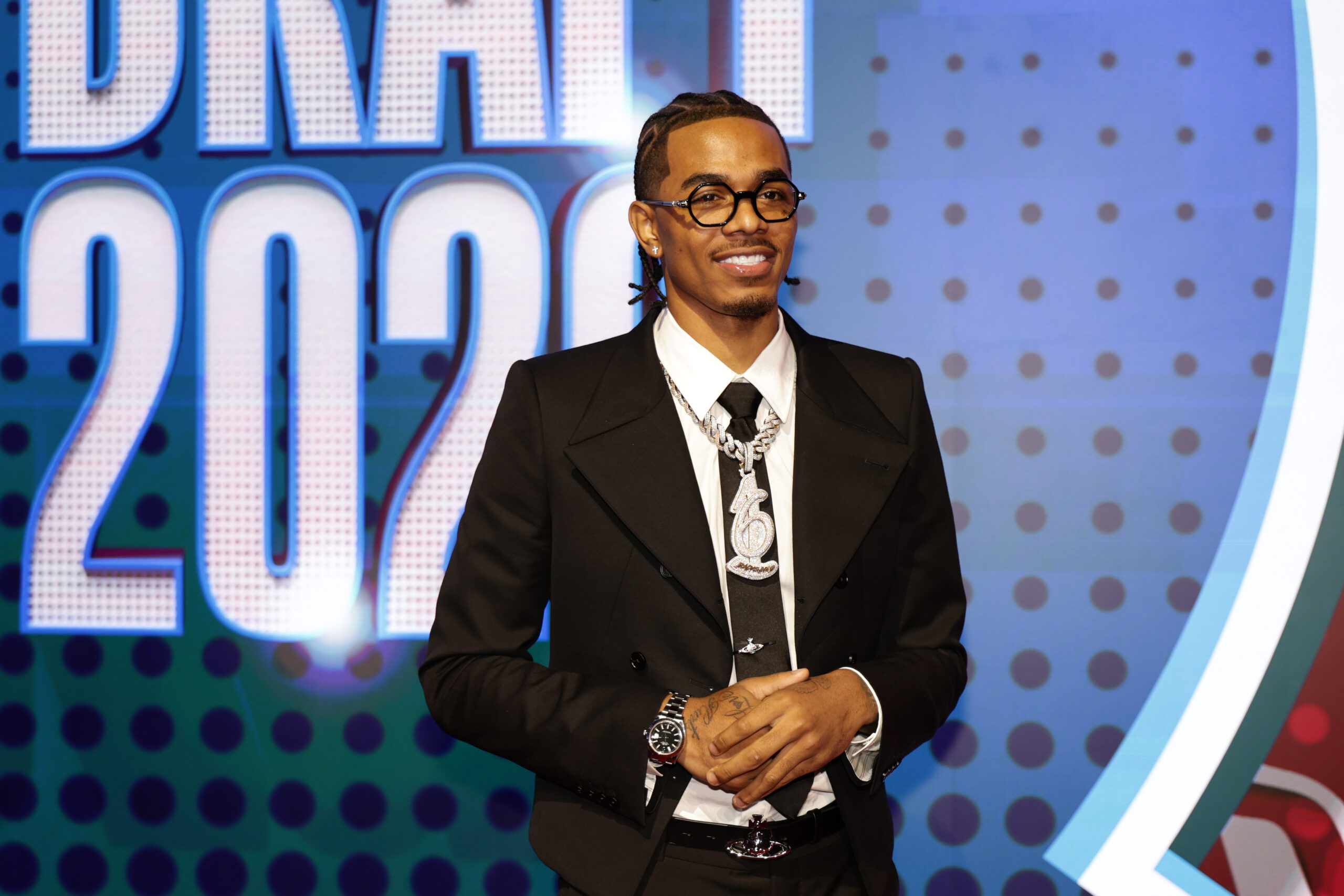
Labaron Philon Jr. landed with the Sixers at No. 22 after being projected as a potential lottery pick.
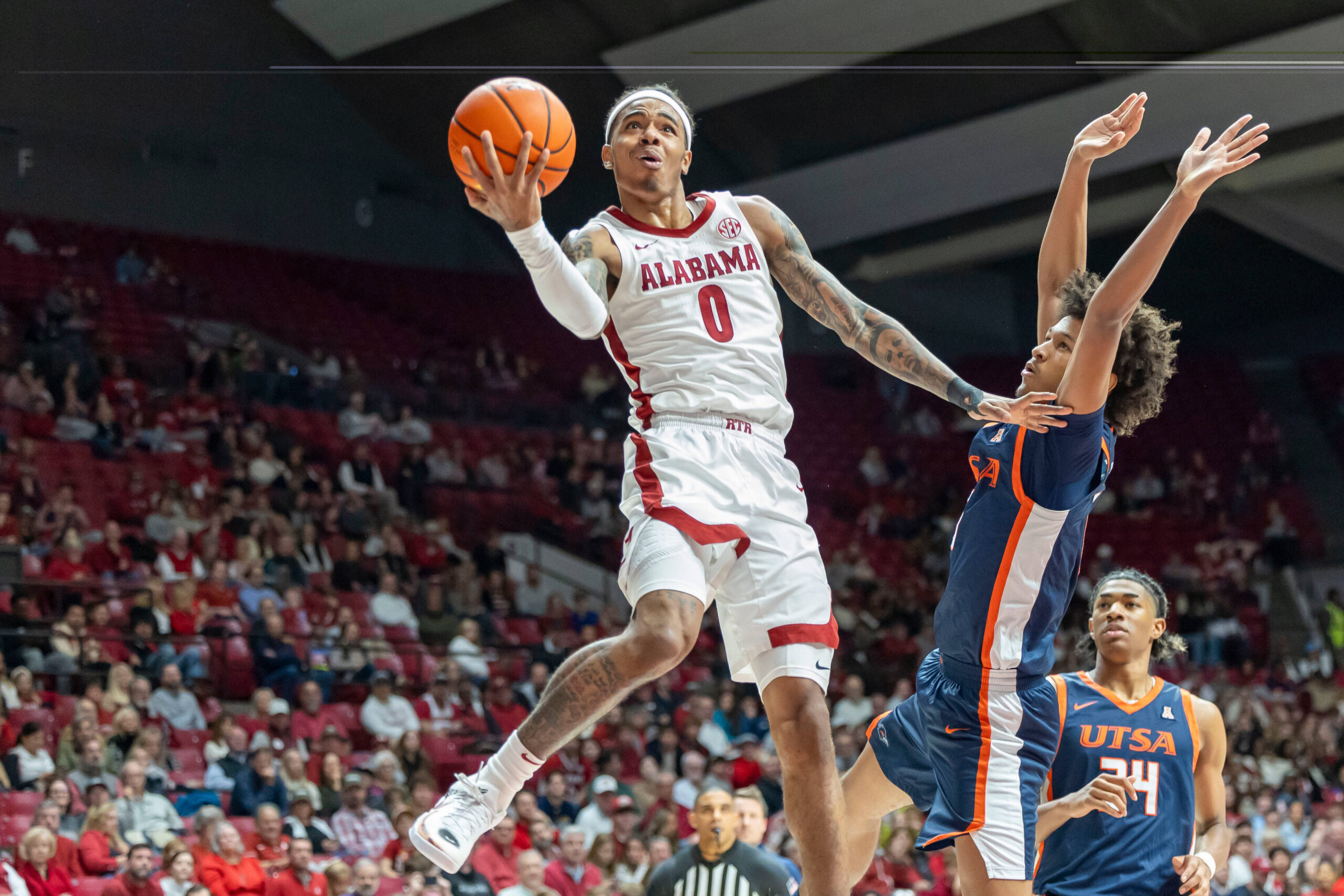
A year ago, Labaron Philon Jr. delayed his draft night after originally declaring in 2025. The guard from Alabama then sat in the Barclays Center on Tuesday for longer than expected, as a projected lottery pick who slipped past that portion of the first round. However, landing with the Sixers was worth the wait.
And the national media is divided Philon — some are calling him the steal of the first round while others expressed concern on how he’ll fit with the team.
What we’re …
👀 Watching: Highlight moments from Jason Kelce’s sixth annual Sea Isle fundraiser, which had plenty of surprise appearances.
🤔 Wondering: What Zach and Julie Ertz said about the Eagles on ‘New Heights’ — that left the former tight end emotional.
📖 Reading: Twin pitchers Austin and Blake Havertine left their mark at Radnor. Now, they’re heading to different colleges.
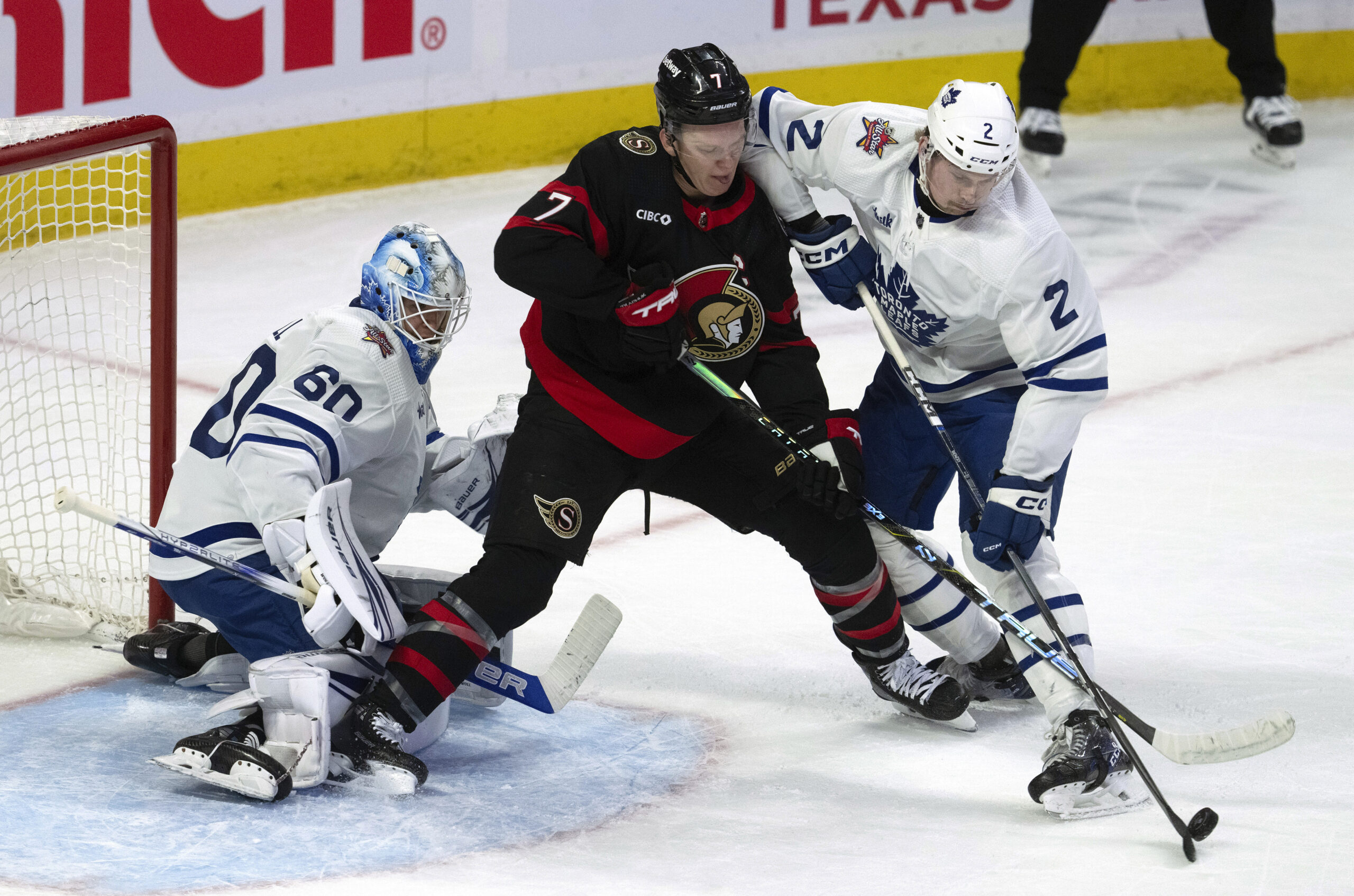
Joseph Woll (right) and Simon Benoît are now going to be teammates in orange and black.
Joseph Woll and Simon Benoît met with the media on Zoom Wednesday and expressed excitement about being part of the organization. The two newest Flyers were traded from the Leafs for goalie Sam Ersson, defenseman Emil Andrae, and a third-round 2026 draft pick on June 16.
Benoît played with Trevor Zegras and Jamie Drysdale for several seasons with the Anaheim Ducks. He’s expected to bring a physical defensive presence, while Woll is already forming a relationship with his new goalie partner, Dan Vladař.
And to get you ready for Friday’s NHL draft, here’s three defensemen who keep getting mentioned as an option for the Flyers at No. 21.
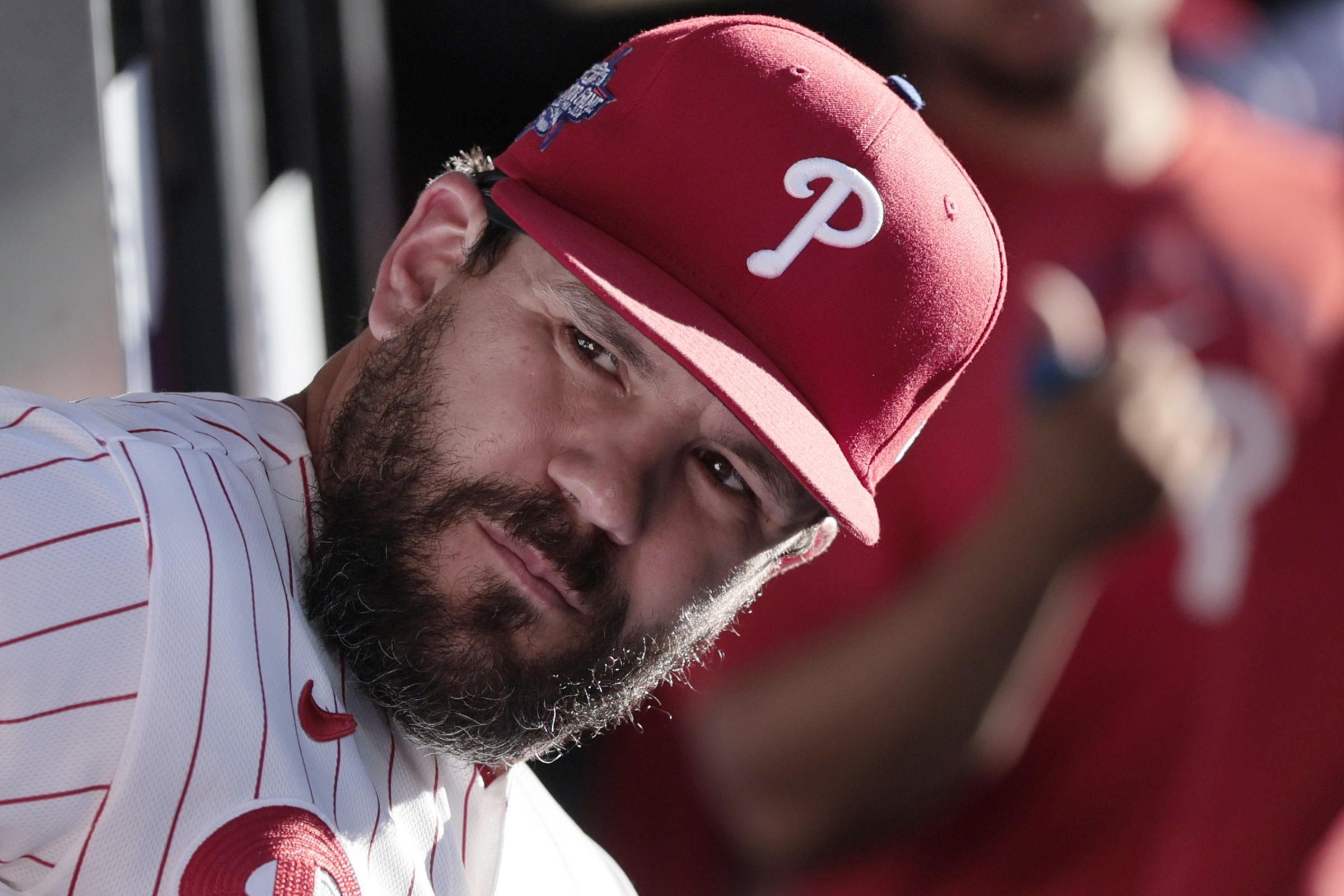
Kyle Schwarber missed a second straight game on Wednesday with tightness in his lower back.
Kyle Schwarber was out of the Phillies lineup for the second consecutive game with tightness in his lower back. Don Mattingly said Schwarber was feeling better, but the interim manager wanted to be cautious and give him another day off.
Schwarber, though, helped start the Phillies’ rally on Wednesday when he entered the game in the ninth inning, drew a 10 pitch walk with two outs, and made way for Derek Hill’s go-ahead two-run homer for a 5-4 win over the Nationals.
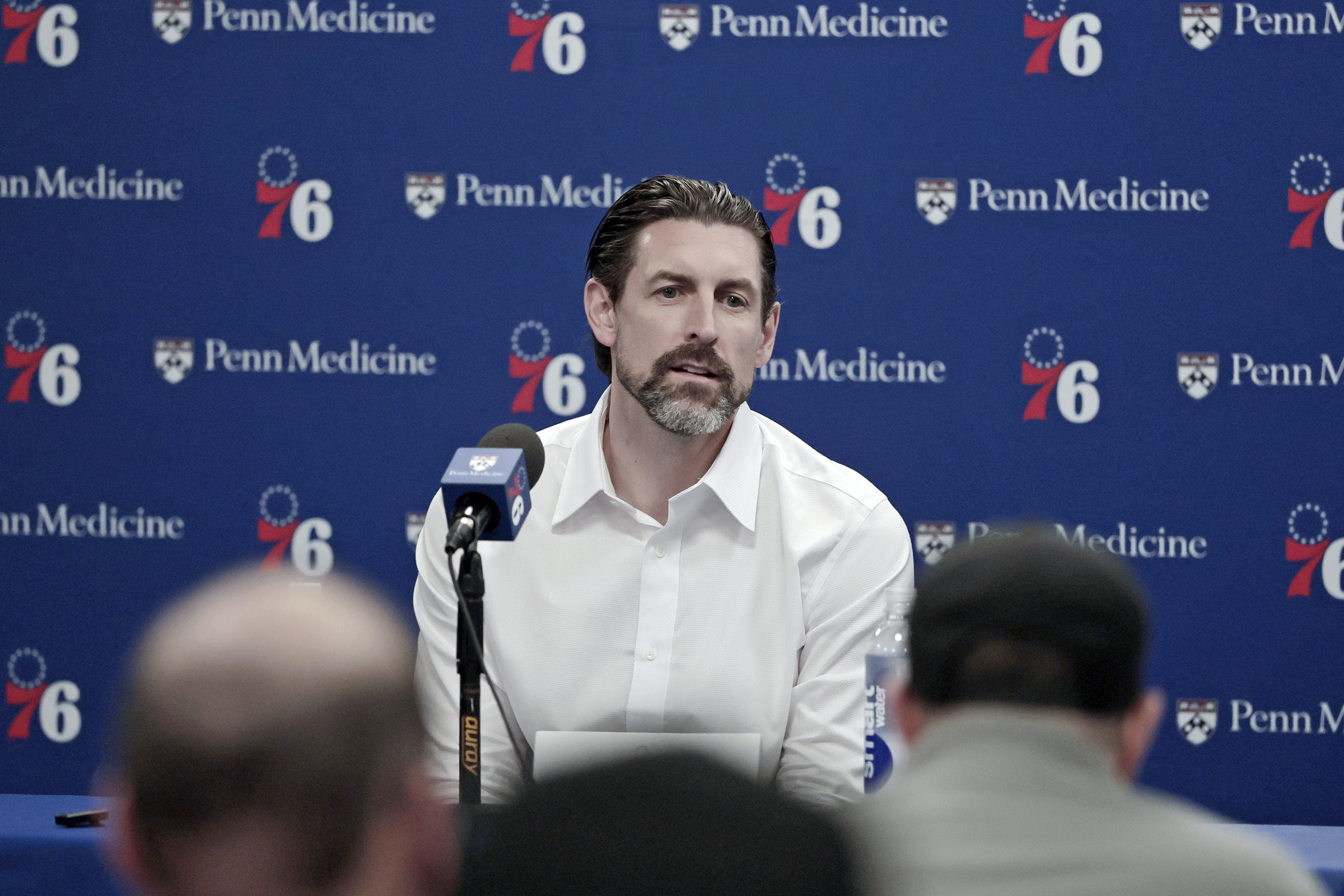
New Sixers president of basketball operations Mike Gansey says first-round pick Labaron Philon Jr., “fell into our lap.”
Mike Gansey aced his first test as Sixers president on Tuesday night. He took the player he graded as the best talent. Of course, the real test is whether he’s right.
But, however Labaron Philon Jr. turns out, the Sixers did what a team in their position should be doing: Using the opportunity to draft a player they think will someday belong in a championship caliber rotation, writes columnist David Murphy.
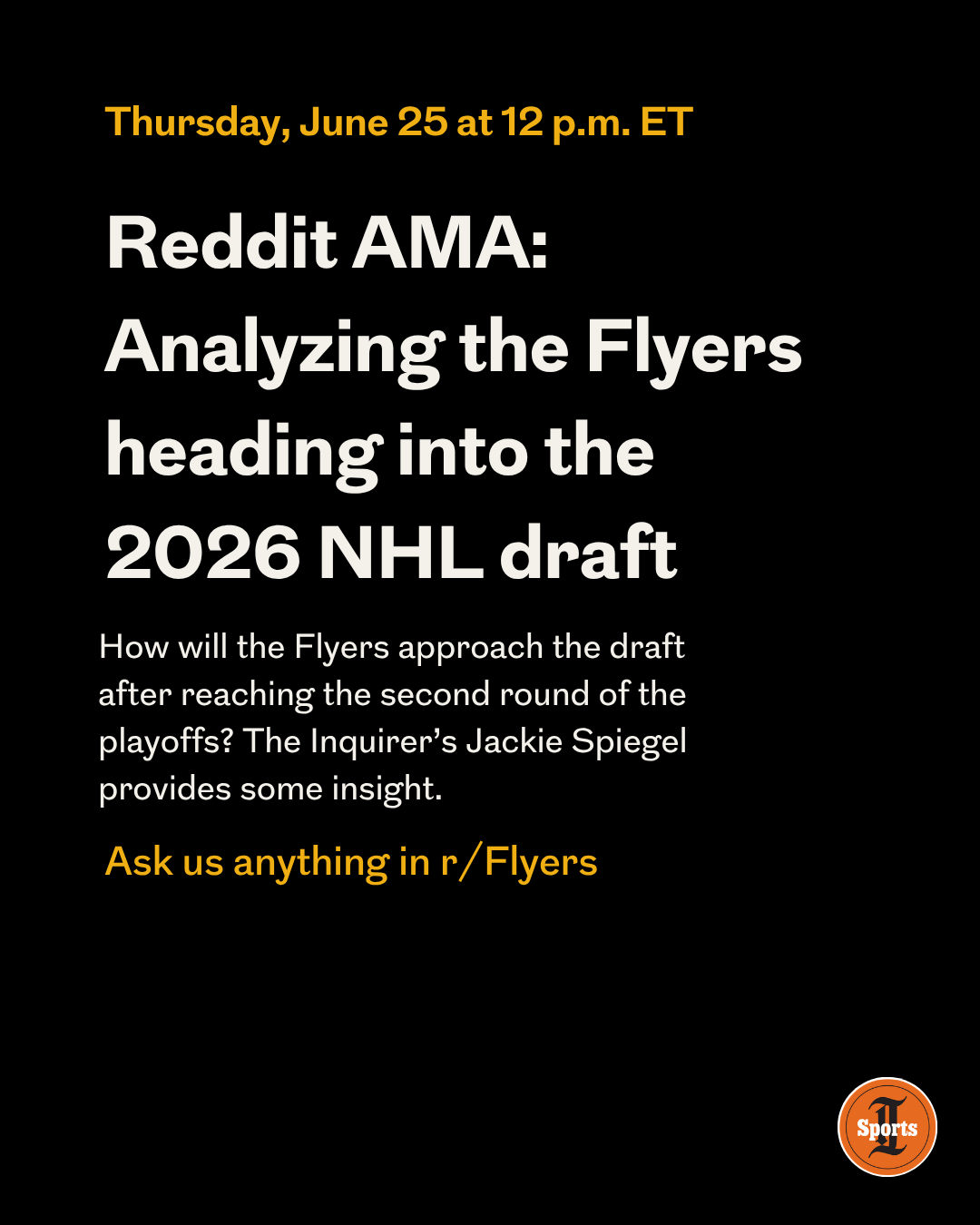
Jackie Spiegel answers your questions about the Flyers during our Reddit AMA at noon on Thursday.
After making the second round of the playoffs, how will the Flyers approach the NHL draft?
The Inquirer’s Jackie Spiegel will provide answers on that and more in an AMA tomorrow in the r/Flyers Subreddit!
What you’re saying about the Sixers’ pick
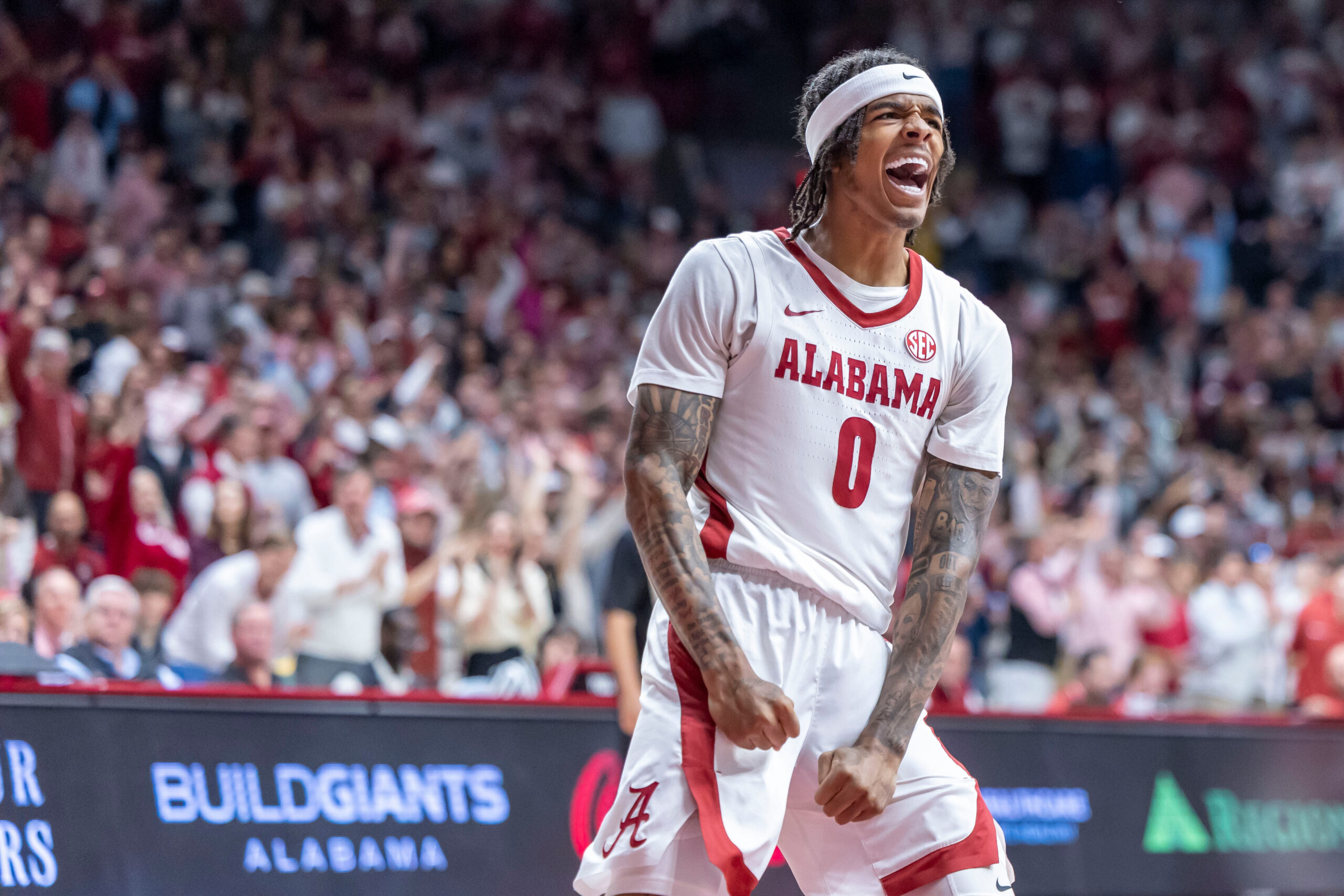
Alabama guard Labaron Philon Jr.is the newest member of the Sixers.
We asked: Are you happy with the Sixers’ first-round pick? Why or why not? Among your responses:
Another Guard? We are well stacked with Maxey and VJ, which is why the Sixers shipped Jared McCain out to OKC (or was it a salary dump). If he is indeed a shooter, great! If not, the Sixers could have used a “Big” given the ongoing uncertainty around Embiid. — Bob C.
Thought they had 3 guards, but traded one to Oklahoma City. Do they have a clue??— Bill M.
Just surprised that they went for a guard. I thought they would go for a big man to support our two guys who struggle every season with injuries etc. — Everett S.
Makes no matter if they would have drafted the second coming of Michael Jordon. Until they move Joel to his new home, their chances of winning any championship are nil. He’s a great part time player and that’s it! Not knowing if he’s playing in each and every game until he shows up in the locker room is just plain wrong. — Ronald R.
We compiled today’s newsletter using reporting from David Murphy, Jonathan Tannenwald,Owen Hewitt, Kerith Gabriel, Rob Tornoe, Jackie Spiegel, Lochlahn March, Gina Mizell, Ariel Simpson, Joseph Santoliquito, Conor Smith, Mia Messina, and Ethan Kopelman.
By submitting your written, visual, and/or audio contributions, you agree to The Inquirer’s Terms of Use, including the grant of rights in Section 10.
As always, thanks for reading. Have yourself a terrific Thursday, I’ll be back in your inbox tomorrow to wrap up the week. — Bella
But that may not jibe with what many Philadelphians want to see.
A new Suffolk University/Philadelphia Inquirer CityView poll of 500 city residents found that a quarter of respondents believe the city’s primary responsibility to the nation is to protect its historical sites for future generations. Nearly 27% said the city’s primary responsibility to the nation is to serve as a model for “diverse, multicultural urban progress.”
The poll, conducted from June 16 to 20 and released this week, comes after a ruling by the U.S. Court of Appeals for the Third Circuit in favor of the Trump administration and just weeks ahead of celebrations in Philadelphia for the nation’s 250th birthday.
(function(){function e(){window.addEventListener(`message`,function(e){if(e.data[`datawrapper-height`]!==void 0){var t=document.querySelectorAll(`iframe`);for(var n in e.data[`datawrapper-height`])for(var r=0,i;i=t[r];r++)if(i.contentWindow===e.source){var a=e.data[`datawrapper-height`][n]+`px`;i.style.height=a}}})}e()})();
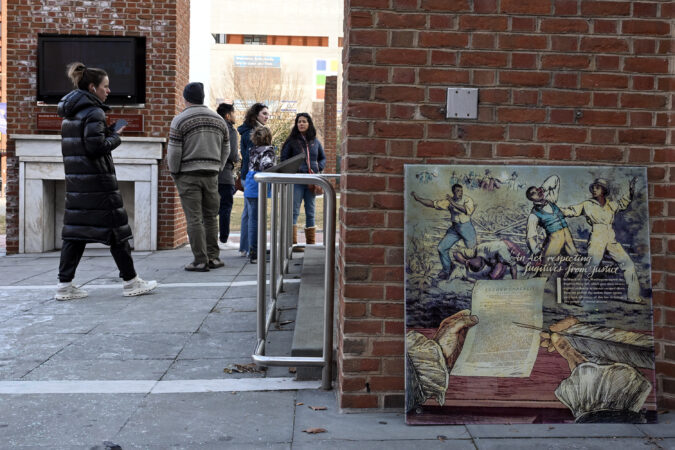
The appeals court’s ruling last week was a turning point in a legal battle waged by Mayor Cherelle L. Parker’s administration that questioned the federal government’s authority to interfere in what information is presented at the President’s House. Both the Third Circuit ruling and a recent decision by a Boston-based federal appeals court regarding National Park Service exhibits nationwide have started to pave the way for the Trump administration to make unprecedented changes to displays of U.S. history in the region.
Alacia Maxton, 36, a respondent to the poll, said frustration with the attacks on the President’s House has been at the forefront of her mind as the city prepares to celebrate the Semiquincentennial.
For nearly two decades without opposition, the site — which opened in December 2010 — has memorialized the nine people George Washington enslaved at his Philadelphia residence during the founding of America and detailed the brutality of slavery.
Last month, it was designated as an endangered historic site by a major national historic preservation organization. The new panels proposed by the Trump administration to replace the removed exhibits at the President’s House soften Washington’s role as an enslaver, according to those working to protect the site.
“I don’t like the idea that certain groups of people want to whitewash history and erase what doesn’t make them feel comfortable,” said Maxton, who lives in Overbrook Park.
Carolyn Keys, 61, another resident who responded to the poll, said the absence of the some of theoriginal panels is like “missing pieces to a puzzle.”
“Every piece was specifically put together for a purpose,” said Keys, 61, a veteran who lives in the Tacony neighborhood.
David Paleologos, director of the Suffolk University Political Research Center, said Philadelphians valuing preserving history and being a model for progress is a particularly localized issue.
“Which I think makes this really important information for the nation to see,” Paleologos said.
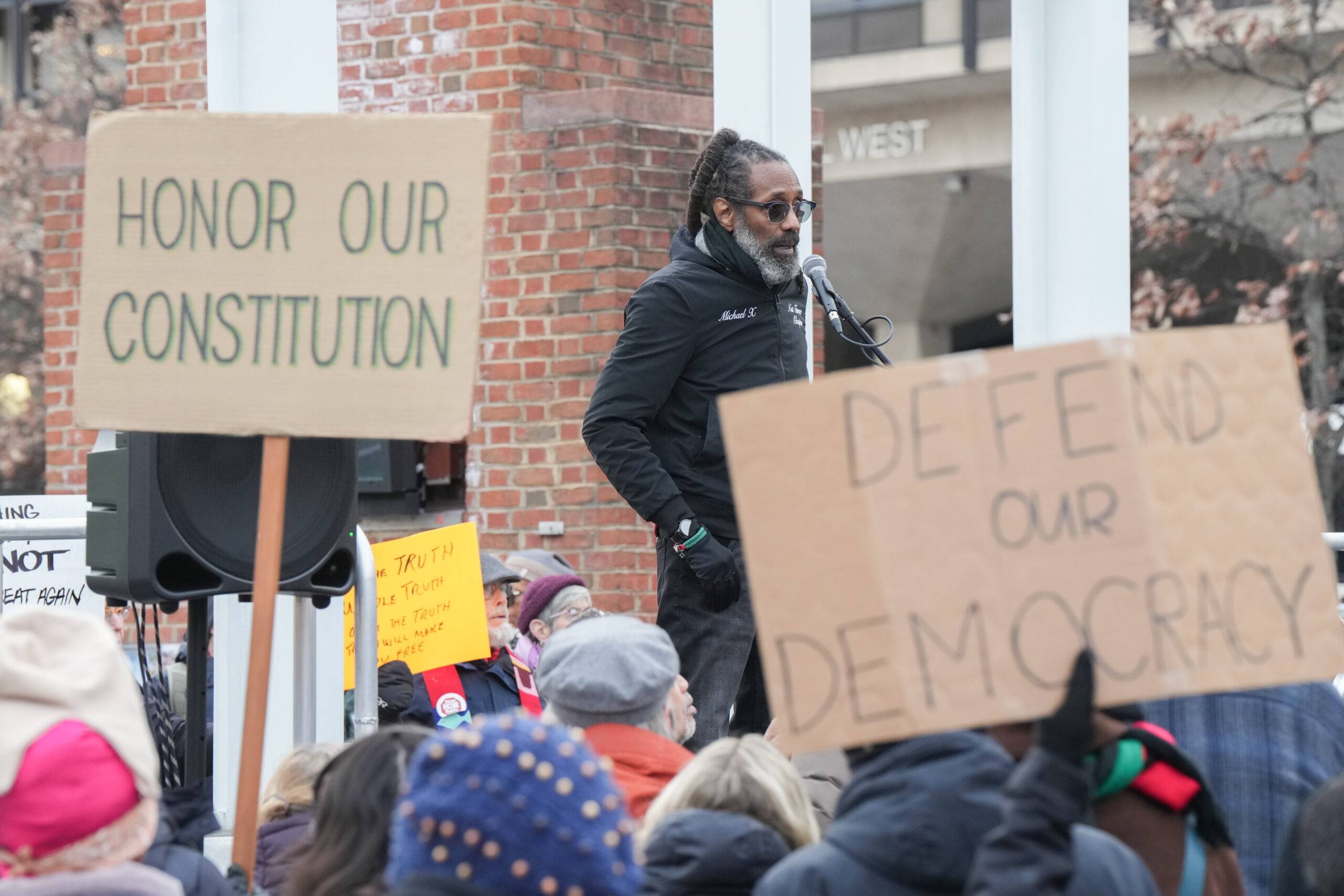
Philadelphia Lawyer Michael Coard speaks at a rally at the President’s House Site in response to the removal of the President’s House exhibit in Old City, in Philadelphia, Tuesday, Feb. 10, 2026, in Philadelphia
A bipartisan grassroots group of Philadelphians — called the President’s House/Slavery Memorial Coalition — has been spearheading efforts to protect the historical site, which has been under scrutiny from the Trump administration since last summer.
Michael Coard, an attorney and founder of one of the leading groups in the efforts to protect the President’s House, said in a statement Wednesday that the poll results show that “Philadelphians understand the importance of protecting our shared history.”
“Black history is American history, and we have both an obligation and, based on these results, a clear mandate to ensure that the stories of enslaved Africans and their descendants are preserved, honored, and accurately told,” Coard said.
Other respondents had different ideas for Philadelphia’s primary responsibility as the birthplace of democracy: Roughly 23% said “leading national conversations on civil rights and economic justice” was a top priority, while almost 17% said the city’s duty to the nation is “proving that a large, complex city can govern itself equitably.”
These insights come as Philadelphia is bracing for an influx of tourists, with particular emphasis on its history as the nation’s birthplace, ahead of the Semiquincentennial celebrations.
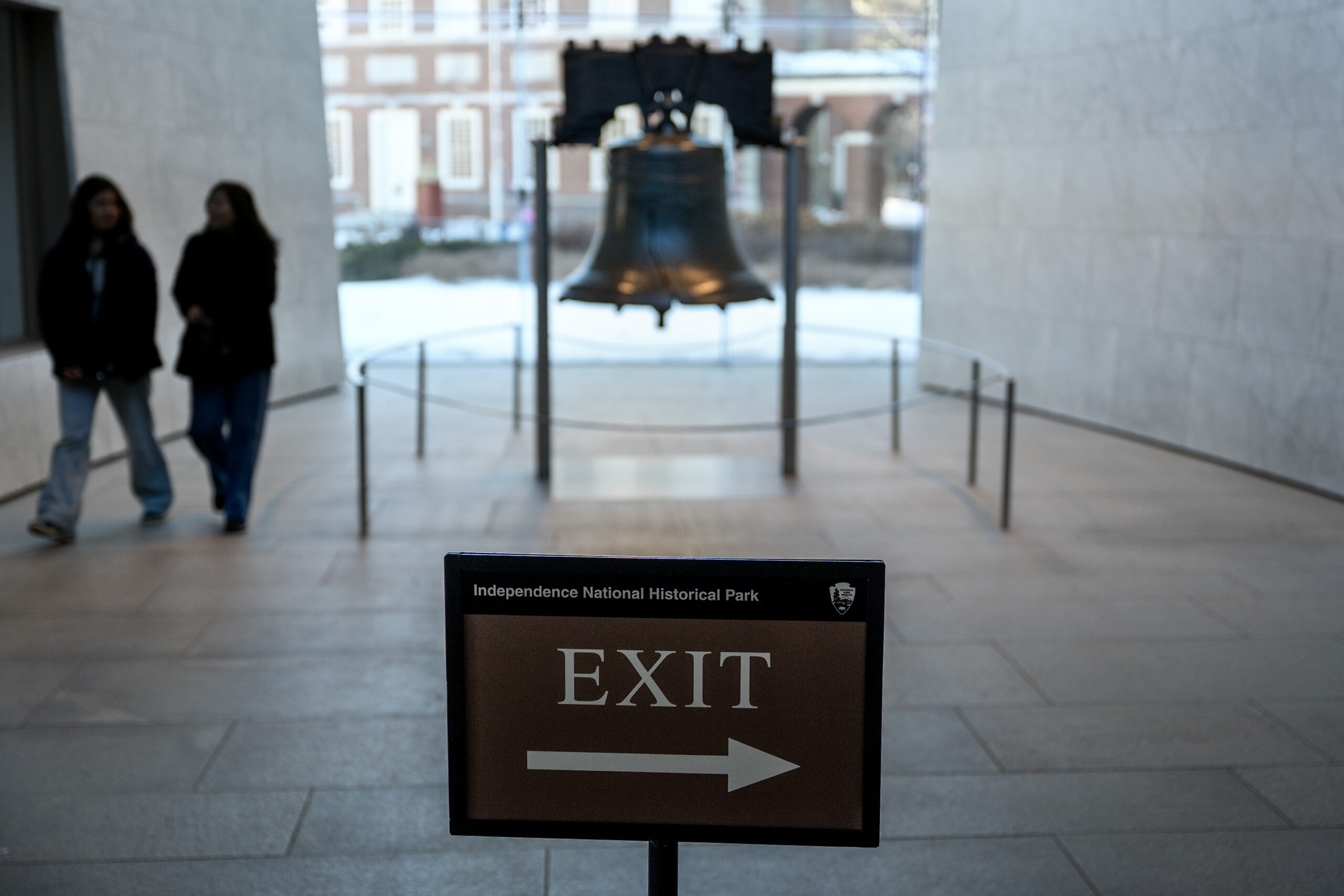
The Liberty Bell in Independence National Historical Park Feb. 2, 2026.
Almost 28% of the Philadelphia residents polled see the Liberty Bell — in comparison to Independence Hall, the National Constitution Center, and the Rocky Steps — as the city landmark that best embodies American democracy.
But hanging over the impending 250th celebrations is the uncertain fate of the President’s House, said Leeanna Lundy, 34, of West Philly.
“For them to remove where the most impactful part of where history took place, it’s like mind-boggling,” Lundy said.
Staff writer Michelle Baruchman contributed to this article.
During his news conference following the NBA draft’s first round, new 76ers president of basketball operations Mike Gansey vocalized a desire to aggressively explore acquiring a second-round pick.
“We’re always going to make calls,” Gansey told reporters from the Sixers’ facility late Tuesday, “and try to turn over every stone and see what’s out there. We have roster spots. We have playing time.
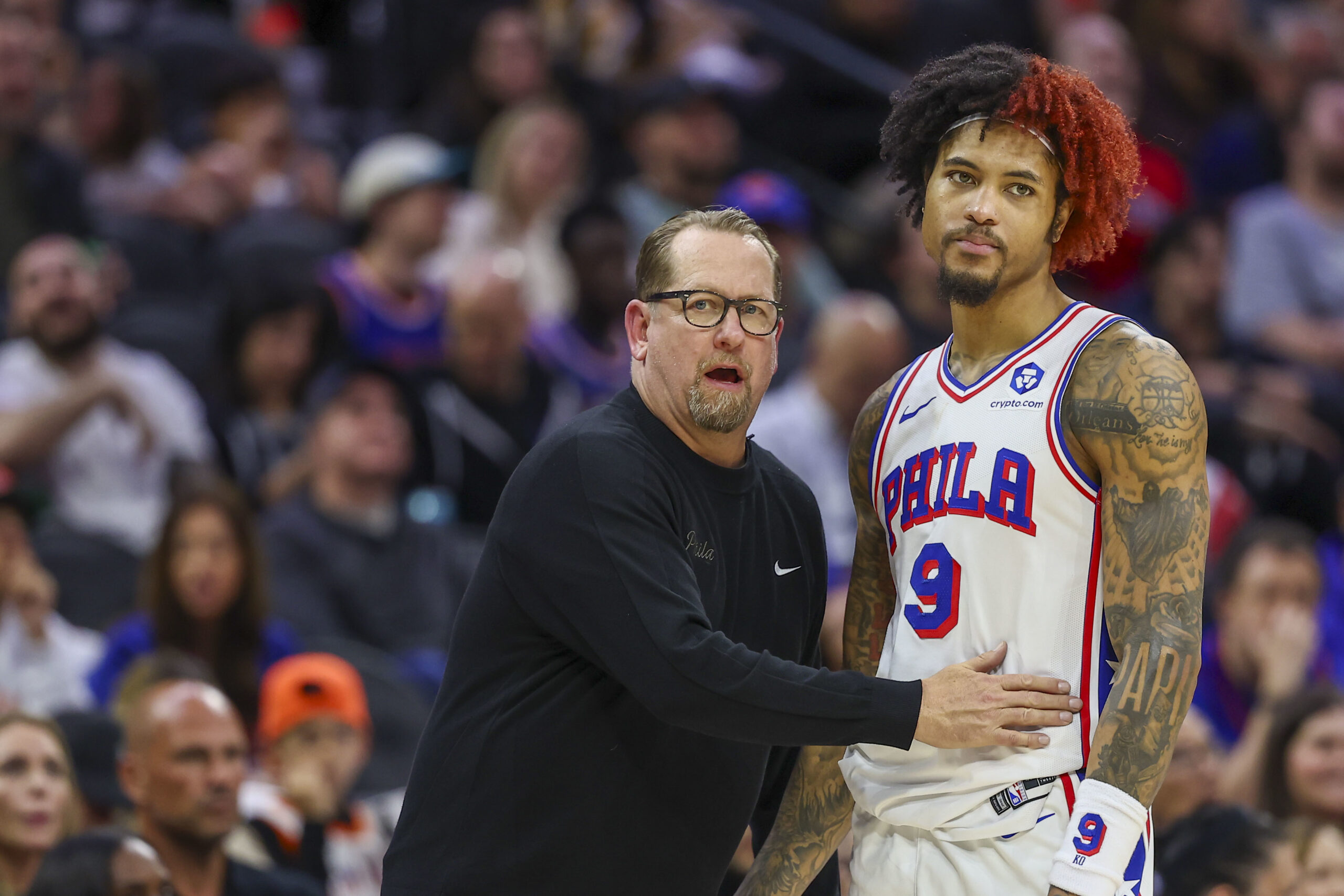
“So trying to get someone that can fit [coach Nick Nurse’s] system and the way we want to play, the character piece, we’re going to try to look at it all and try to get someone who can fit.”
Yet Wednesday night’s second round of the draft was uneventful for the Sixers. No move enticing enough materialized for Gansey, even while possessing several future second-round picks. So the Sixers exited the draft with one selection, after Alabama guard Labaron Philon Jr. surprisingly slipped to them at No. 22 overall.
Gansey’s first roster-building checkmark is complete. Next up is free agency beginning at 6 p.m. on Tuesday, likely with limited financial flexibility given Tyrese Maxey, Joel Embiid, and Paul George all remain on max contracts for multiple seasons. Embiid and George are considered difficult to trade because of their age and injury history.
The Sixers used the prudent best-player-available approach in selecting Philon, who is crafty with the ball in his hands and significantly improved as an outside shooter and facilitator in his second college season. That pick also continued to lean into their dynamic young guard rotation featuring Maxey, an All-NBA third-teamer last season, and VJ Edgecombe, who finished third on a terrific NBA Rookie of the Year ballot.
Alabama guard Labaron Philon Jr. is crafty with the ball in his hands and significantly improved as an outside shooter and facilitator in his second college season.
“Adding me, it’s a blur,” Philon said from Barclays Center after his selection. “You’ve got two guys that are really shifty, two guys that know how to handle the ball, and a guy that can jump out the roof. That means everything in the backcourt. I feel like Coach Nurse is going to have a fun time with that.”
Perhaps that is another deliberate step in the Sixers establishing an identity, a necessity that Bob Myers, the president of Harris Blitzer Sports & Entertainment, emphasized the same day the franchise formally introduced Gansey earlier this month.
That also means the Sixers still have positional gaps along the wing and in the frontcourt. Starting small forward Kelly Oubre Jr., sixth man Quentin Grimes, and reserve center Andre Drummond all are unrestricted free agents (so is reserve guard Kyle Lowry, but he is expected to retire). The availability of Embiid and George also remains unpredictable, though both former perennial All-Stars expressed optimism about their health entering the offseason last month. Rebounding and three-point shooting were team weaknesses last season.
So when North Carolina’s Henri Veesaar, a stretch-big man who was widely projected as a first-rounder, continued to tumble down the second round, an outsider could have considered his fit with the Sixers. Instead, the Atlanta Hawks traded for the 52nd overall pick to select him.
Teams have been permitted to negotiate with their own free agents since the New York Knicks’ title officially ended the NBA season. The Sixers also must make team option decisions on Dominick Barlow ($3.4 million for 2026-27), Trendon Watford ($2.8 million), and Dalen Terry ($2.6 million) by Monday.
Once the market fully opens, the Sixers will have the nontaxpayer midlevel exception (about $15 million), or could split that salary figure on multiple players. They also will be able to sign players to veteran minimum deals.
The Sixers will have decisions to make on several unrestricted free agents, including Kelly Oubre Jr.
Before then, it remains possible that the Sixers agree to terms with undrafted rookies — who typically sign two-way contracts — in the coming hours or days.
Productive players can be found via that route. Barlow, a starting forward for the Sixers for much of last season, was not selected in the 2022 draft. Neither was former Sixer Julian Champagnie, who eventually morphed into a sharpshooting starter for the San Antonio Spurs team that just advanced to the NBA Finals. And the second round progresses, agents sometimes angle for their clients to go undrafted in order to have more choice in their playing destination.
Yet the Sixers exited the 2026 draft with a potential first-round steal in Philon, and without a second-round selection.
We take paper for granted now. But in the late 1600s, when Pennsylvania’s founder William Penn recruited German papermaker and preacher William Rittenhouse to manufacture the writing parchment in the New World, paper was a luxury.
England’s King William III made it difficult for his subjects — at home and in the Americas — to have it. Like many monarchs of his day, he believed it was the Crown’s duty to record history.
The English imported paper from other European countries. So, to make matters worse, colonists who managed to appeal to the king for paper were double and triple taxed. They got fed up and went about securing their own paper to document the goings on in the government, inform citizens, record history, and ultimately plan a revolution.
Artist Ava Haitz’s No. 1 honors the country’s first paper mill, celebrating the invention and craftsmanship that made widespread written communication possible.
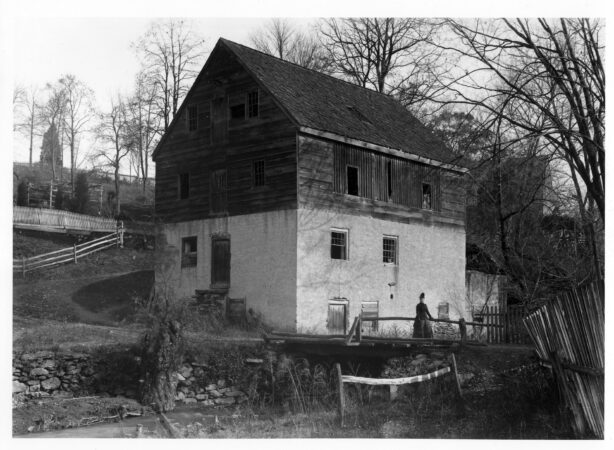
In 1690, Rittenhouse partnered with Philadelphia’s first printer, William Bradford, to build America’s first paper mill, situated in northwest Philadelphia and powered by the Monoshone Creek, a tributary of the Schuylkill.
The paper mill will be celebrated this Saturday at Historic RittenhouseTown, part of a series of weekly “Firstival” celebrations. Firstivals are the Philadelphia Historic District’s yearlong birthday nod to places and events with Philadelphia roots. The day parties are a hallmark of this year’s Semiquincentennial fetes.
At the Rittenhouse mill, paper was made from linen rags fashioned from flax grown in Germantown, that were broken down and shaped into sheets. The mill grew quickly as Rittenhouse, America’s first Mennonite bishop, provided paper for Bibles and Quaker and Mennonite texts in German.
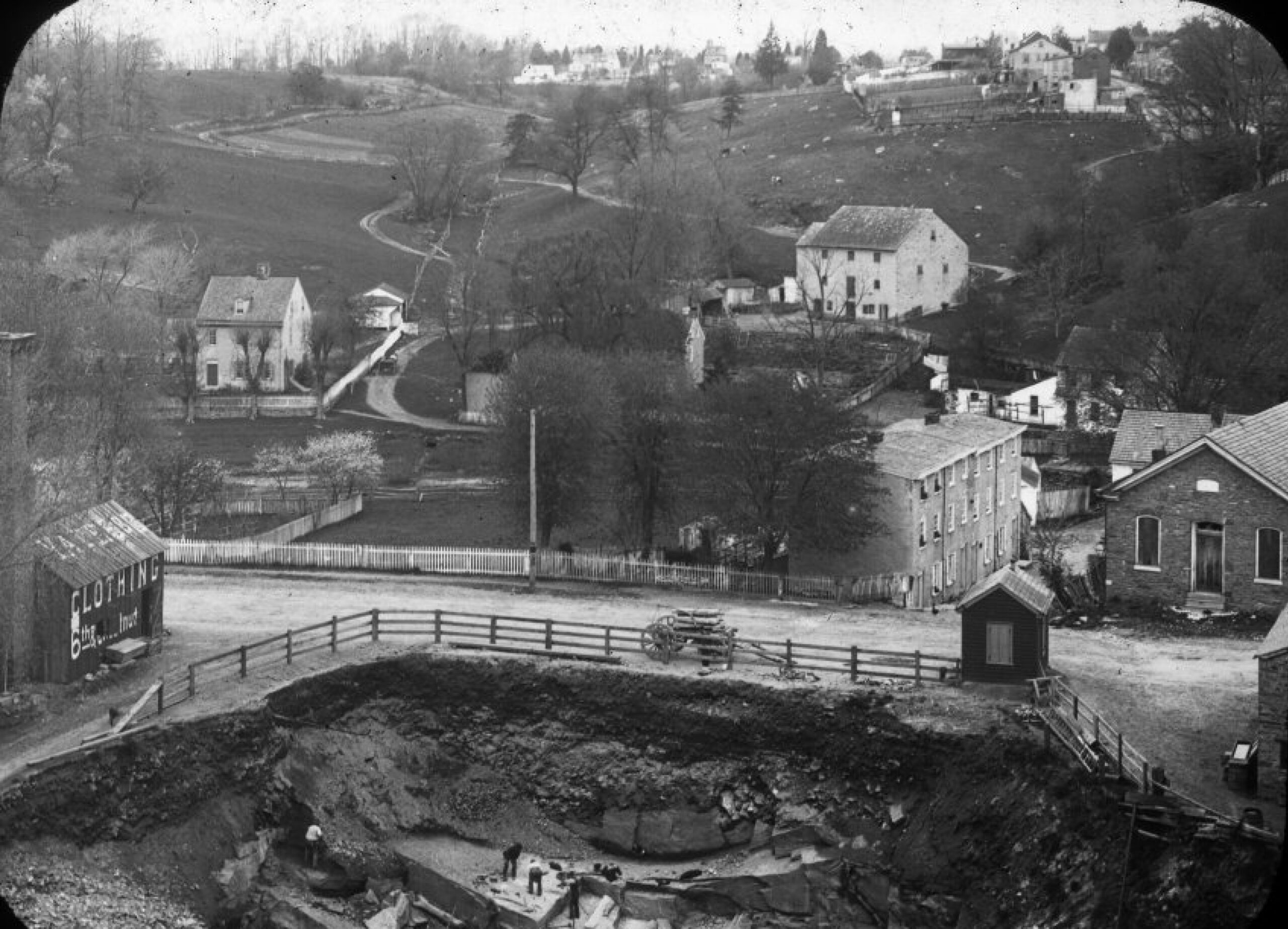
An aerial view of RittenhouseTown circa 1840-1860. The site eventually grew to more than 200 acres.
Rittenhouse’s first paper mill was destroyed by a flood, said Alexander Jones, preservation and education manager at Historic RittenhouseTown.
Then “Rittenhouse rebuilds and he buys out his partner,” Jones said. “The paper mill becomes his sole enterprise. Instead of hiring workers, he recruits his family and it becomes a giant company town. There is a church, a blacksmith, stone houses, a bake house, and more than 40 buildings with five or six of them under what is now Lincoln Drive.”
RittenhouseTown’s paper mill was the only source of paper in America for more than 40 years, Jones said. It would grow to more than 200 acres.
David Rittenhouse — Rittenhouse’s great-grandson and the astrologer, clockmaker, and first director of the U.S. Mint after whom Rittenhouse Square is named — was born in his family’s RittenhouseTown homestead in 1732.
The town thrived for more than a century.
By the mid-1800s, the paper mill began to slow down as dyes from textile and carpet manufacturers and chemicals from blacksmithing started to pollute the Schuylkill. The filthy water made it nearly impossible to produce good quality paper at the mill.
The Fairmount Park Commission began acquiring parts of RittenhouseTown through a series of purchases and donations from 1890 to 1917. The city demolished many of the town’s buildings, including a barn that, Jones said, was razed and rebuilt within a year.
RittenhouseTown’s homestead and bakehouse. The first permanent home for the Rittenhouse family and birthplace of David Rittenhouse, great-grandson of William Rittenhouse for whom Center City’s Rittenhouse Square is named.
By that time, however, the Rittenhouse family had spread throughout the Philadelphia region from Center City to Blue Bell, Jones said.
Today, RittenhouseTown spans 20 acres nestled in Fairmount Park right behind Lincoln Drive. Six of the original buildings remain, serving as a reminder that RittenhouseTown was the first building block of American industry.
“The paper mill really got the ball rolling for Philadelphia,” Jones said. “And from that first came so many other American firsts in Philadelphia: the first Mennonite bishop, the first company town, and America’s first director of the U.S. Mint.”
This week’s Firstival is Saturday, June 27, 11 a.m.-1 p.m., at Historic RittenhouseTown, 208 Lincoln Drive.
The World Cup has arrived in Philadelphia and out of town visitors are flocking to the games, and learning about Rocky’s curse.
But how much of the money they’re spending will actually stay in Philadelphia?
The World Cup games were originally expected to generate a $770 million economic impact in the Philadelphia region, Axios reported in 2024. But just $30 million to $90 million is likely to stay in the region and benefit the local economy, according to estimates in a new report by the Economy League of Greater Philadelphia.
Thousands have visited the Lemon Hill FIFA Fan Festival since it kicked off on June 11, and used SEPTA after the first Philly-hosted match earlier this month. Philadelphia International Airport also estimated a bump in travel through the airport around the June 19 game between Brazil and Haiti.
But not all spending is equal.
U.S. cities are spending hundreds of millions of dollars to host World Cup matches, but are limited in how much revenue they can amass from the events, according to a ProPublica analysis of host city contracts, including Philadelphia’s.
Some of the money coming into the city during the World Cup would have been spent in Philadelphia anyway, but perhaps differently, the Economy League report indicates.
While the city is gaining World Cup visitors, it may be losing out on regular business travelers and others that would have come toPhiladelphia if not for the World Cup, the report said. Meanwhile, some who are spending money to enjoy the tournament in Philadelphia are residents, who would be spending money in the city anyway. And some fan spending is flowing directly to FIFA and other platforms, rather than to the city’s economy.
The report highlights three areas seeing most of that spending: The stadium district, Center City hotels and restaurants, and the Fan Festival at Lemon Hill.
“The commercial corridors beyond this core, which make up most of the city, are unlikely to see much benefit without deliberate effort, because visitor spending follows the path of least friction — toward where people sleep, arrive, or already intend to go,” the report says.
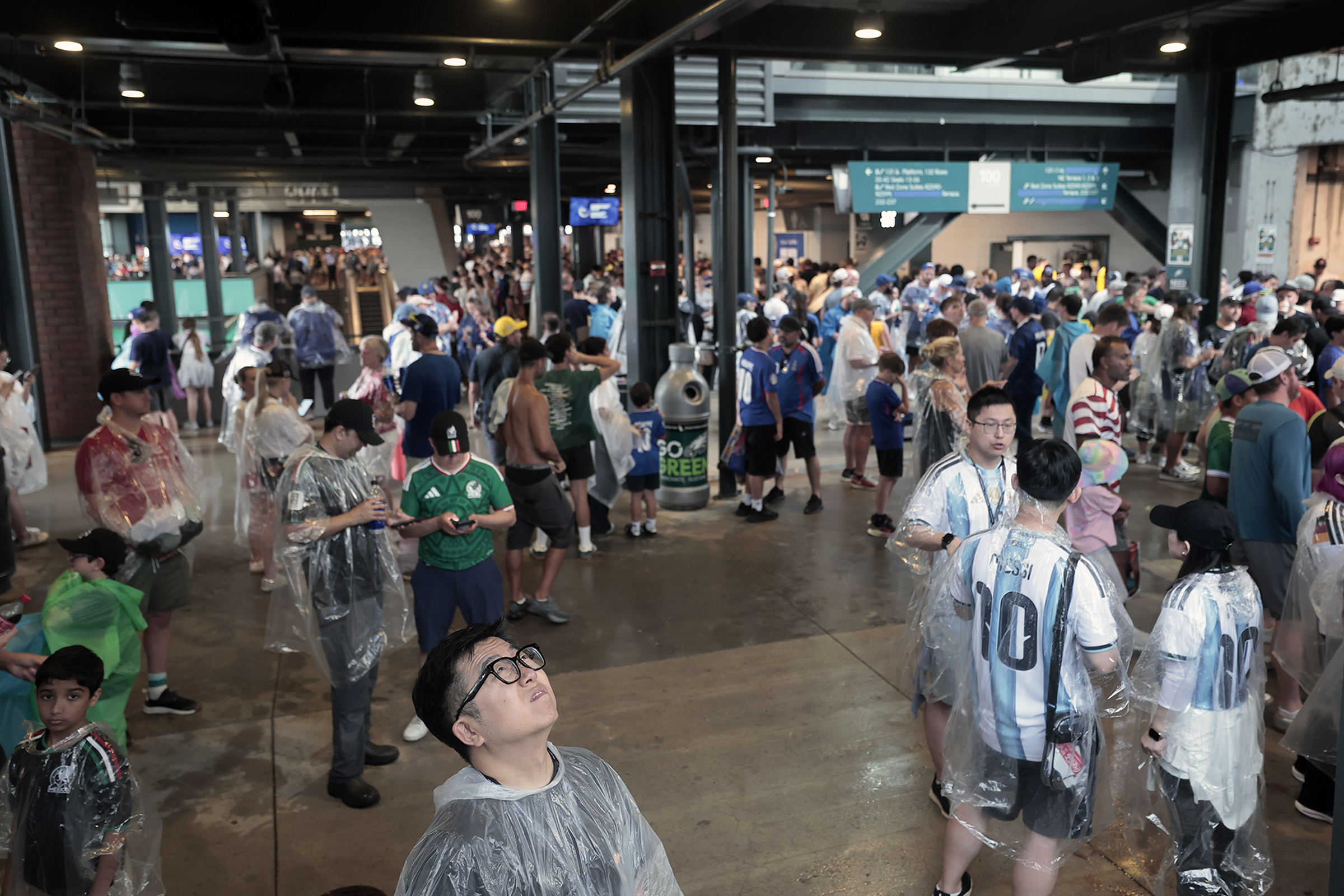
A man looks to the skies during the rain delay of the France vs. Iraq 2026 FIFA World Cup Group 1 soccer match at Philadelphia Stadium on Monday.
In the stadium district, where customers have bought tickets to attend games, they’re spending on merchandise and concessions — but few of those dollars trickle down to local independent businesses.
In Center City, hotels and restaurants are benefiting most, but it’s not as though they wouldn’t be getting business without the games, the report notes.
Some local food trucks and independent vendorscan make money at the FIFA Fan Festival at Lemon Hill. But because the venue is gated, surrounding businesses only profit if visitors leave the festival site.
And locals are paying the price of hosting the World Cup in other ways.
Residents who live around the Fan Festival at Lemon Hill are unable to catch a Lyft or Uber from homebecause of festival restrictions, and parking in the area requires applying for a special permit. The Philadelphia Parking Authority dolled out thousands of tickets in the first few days of the festival.
Still, the report outlines, much can be gained locally through the World Cup. Lemon Hill is set to receive $4 million in improvements, and some other benefits are harder to quantify.
“Philadelphia has shown it can move large crowds and stage a global event capably, and the reputational and civic returns, while hard to value, are real,” the report outlines.
Councilmember Curtis Jones Jr. and City Representative Jazelle Jones, who are married, are poised to collect up to $752,000 in combined payouts from Philadelphia’s widely criticized Deferred Retirement Option Plan, an early retirement incentive that two decades ago sparked a major scandal in City Hall.
But neither of the city officials is actually retiring.
DROP is available to all city workers. But both of the Joneses are using the program in a way that is not available to a vast majority of municipal employees:temporarily retiring and immediately returning to their jobs, allowing them to receive their DROP payouts before the end of their city government careers.
Curtis Jones, 68, who has represented the 4th District for 18 years, is able to access that perk because he is a long-serving lawmaker. Jazelle Jones, 70, a high-ranking appointee of Mayor Cherelle L. Parker, received an exception from the mayor to be rehired after her DROP retirement.
Following her one-day retirement, Jazelle Jones also received a $97,000 payout for unused sick and vacation time, a benefit normally reserved for employees permanently departing from city government.
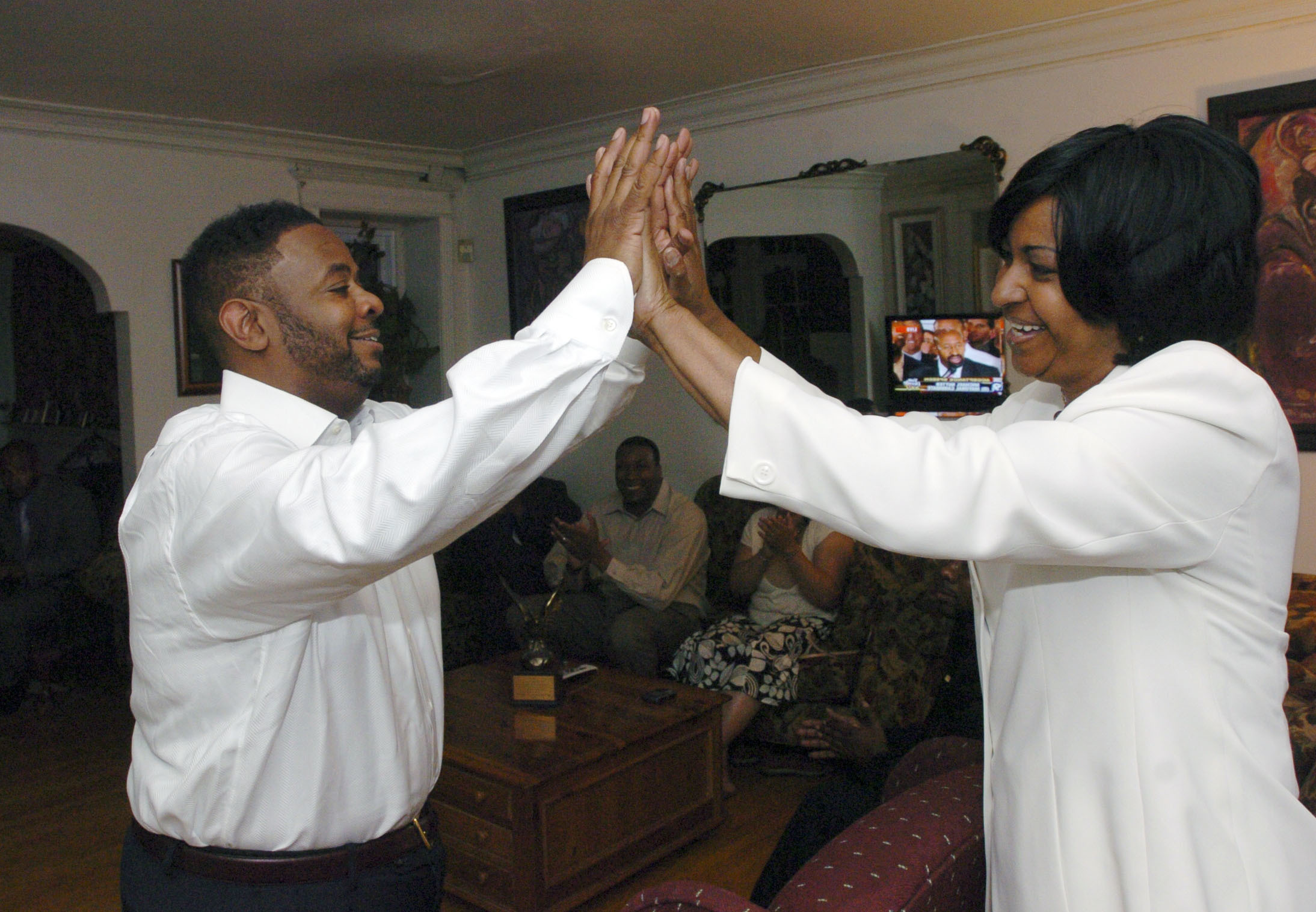
FILE – Curtis Jones, Jr. declares victory with his wife Jazelle and his family in the Council race in his home in West Philadelphia on Tuesday, May 15, 2007.
Lauren Cristella, president of the government watchdog group Committee of Seventy, said the administration’s handling of the situation further undermines public confidence in the DROP program.
“Rehiring an employee to the same position the day after she collects a DROP payout defeats the purpose of the program,” Cristella said. “DROP exists to manage workforce transitions, not to serve as a bonus for employees with no intention of actually leaving.”
Established in the late 1990s during Mayor Ed Rendell’s administration, DROP was originally pitched as a cost-neutral way to give the city predictability over retirements and entice high-earning employees to step down early.
But the program ended up costing the city far more than expected, andvoter frustration withelected officials’ enrollment in DROP was credited with ending the political careers of several Council members.
At the height of that controversy in 2010, Curtis Jones voted to enact a law banning future elected officials from accessing DROP. But he and others already serving at that time were “grandfathered” in, Curtis Jones said.
He would be eligible to collect a $432,000 lump-sum DROP payment in August 2028. However, Curtis Jones said he plans to run for a sixth Council term in 2027, using the loophole to briefly retire to collect the payout before resuming his post.
In interviews, the Council member, who earns $165,000 annually, said he instead plans to retire in December 2027, collecting a reduced DROP payment closer to $350,000. If he is reelected, the maneuver would allow him to hang on to his Council seat for another four years by being sworn back into office the following month.
He justified his enrollment in DROP by saying that times have changed since the 2010 vote — both for the city’s finances, which have dramatically improved, and for his health. He said he is suffering from glaucoma, an incurable disease that causes vision loss.
“Over the years, I’ve had four surgeries on my eyes,” said Curtis Jones, who represents the Northwest and West Philadelphia-based Council district. “I’ve actually lost 40% of my vision.”
Curtis Jones said he enrolled in DROP “so that if I was blind, I wouldn’t have been without resources.”
A centrist Democrat, he endorsed Parker’s 2023 campaign for mayor and is viewed as her most reliable ally on Council.
His wife, Jazelle Jones — who receives a $199,000 annual salary for serving as an ambassador for the city and planning special events — temporarily retiredfor one day last year and was then immediately rehired by the city with a $4,000 raise.
The Philadelphia Administrative Board, which oversees personnel matters, granted her an exception to return to her job. That board is led byParker, a staunch defender of DROP, and other top officials in her administration.
The mayor said she personally asked Jazelle Jones to return to work, and defended the decision.
Parker cited Jazelle Jones’ “lived experience” and the potential disruption her departure could cause for major events this year, like the city hosting World Cup games.
“The essential nature of her role is why I asked” Jazelle Jones to continue working, Parker said Tuesday in a phone interview. “And I’m unapologetic about asking. It’s one of the most important decisions I’ve made as mayor.”
Jazelle Jones was originally scheduled to retire in September 2024. Instead, in a departure from typical DROP procedures, she continued to work as the city representative through that date and took her one-day retirement a year later, in September 2025.
None of those changes appear to have been approved at the time they occurred by the city’s administrative board. It was not until March 2026 when the board retroactively approved exceptions allowing Jazelle Jones to receive an extra year of DROP — resulting in the 2025 retirement date — and her rehiring, according to board minutes.
Parker declared an emergency in order to approve the extra year of DROP for Jazelle Jones, the mayor’s office said. The move effectively increased her retirement payout by almost 20%, to nearly $320,000.
Parker’s office did not respond to questions about the deviation in the approval timeline.
Jazelle Jones did not respond to a request for comment through the mayor’s office.
‘Tools in the toolbox’
When city employees enroll in DROP, they select a mandatory retirement date no more than four years in the future. Between the time they sign up for the program and their selected retirement date, the city pays their regular salaries and makes pension payments as if they had already retired.
The deferred pension payments are deposited into an interest-bearing account that each city worker collects in a lump-sum payout four years after enrolling. The departing employee then begins to receive standard monthly pension checks, which are calculated based on when they entered DROP.
City workers make contributions from their salaries to the municipal pension fund. But their contributions do not cover all of the pension fund’s liabilities, let alonethe added costs associated with DROP, which ultimately come out of taxpayer coffers.
Philadelphia’s original DROP law created a loophole in which elected officials, who generally serve four-year terms, can enter into the program, retire a day before their terms end, and rejoin the city workforce when they are sworn in again the following day.
The revelation that many members of Council had enrolled in DROP rocked City Hall in the early 2000s. The scandal was credited for several members’ decisions to not run for new terms in 2011 and was widely seen as the reason former Councilmember Frank Rizzo Jr. lost reelection that year.
A 2017 city controller report found that, cumulatively, the program had cost the city in excess of $277 million despite initially being projected as budget-neutral.
While DROP programs were once common in cities across the country, the Government Finance Officers Association — a national organization that Philadelphia officials regularly cite for best practices when shaping the city budget — in 2020 warned they led to unpredictable costs and detrimental impacts on municipal pension funds.
“Government defined benefit plans should not include deferred retirement option programs for a variety of reasons,” the GFOA said a statement.
Parker, however, has defended the program as a valuable recruitment and retention tool.
“Government doesn’t pay you as much as the private sector, so we offer a great benefits package,” Parker told reporters in March. “DROP, the defined-benefit pension — I’m never going to be for taking away any of the tools in the toolbox that would allow the city of Philadelphia to compete.”
‘Semi-hypocritical’
In 2008, when Council was in the early stages of considering a ban on elected officials enrolling in DROP, some wanted the prohibition to apply not just to future officeholders, but current ones as well.
Curtis Jones, a freshman legislator at the time, agreed.
“It would be semi-hypocritical if I say [end it] for only future elected officials,” he said then.
The bill that Council eventually passed did not prohibit current members from enrolling in DROP. Now, Curtis Jones is set to become the first lawmaker to benefit from the program in years.
“At the time, when I was 20/20 vision, [banning lawmakers from using DROP] was my decision. And now that I’ve had some surgeries, I’ve changed that position,” Jones said Monday. “It’s an earned benefit that I contributed to that I would like to receive.”
Cristella, of the Committee of Seventy, accused Jones of hypocrisy.
“Being grandfathered in is not the same as acting with integrity,” she said.
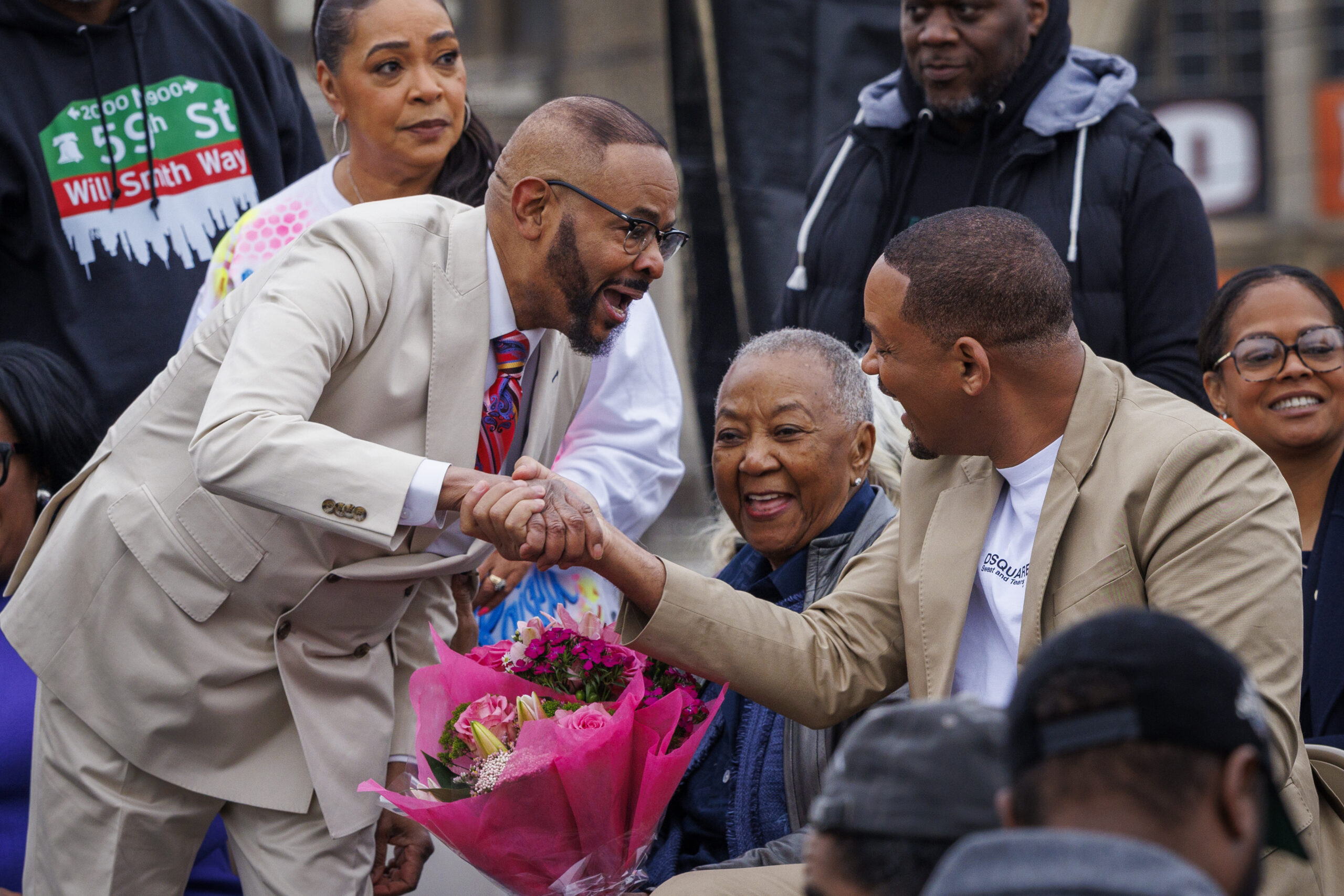
At left is Councilmember Curtis J. Jones Jr. shaking the hand of actor and rapper Will Smith who was honored with a street naming, Will Smith Way, at N. 59th and Lancaster, across from Overbrook High School, Wednesday, March 26, 2025.
Curtis Jones enrolled in DROP in August 2024, meaning he is required to retire no later than August 2028. He has made no secret of his intent to run for a sixth term next year, even publicly musing about delaying bridge repairs in his district so as not to subject potential voters to traffic jams.
Were he to win reelection and collect his maximum $432,221 DROP payout, Curtis Jones’ scheduled retirement date would fall within the first year of his next four-year term.
However, the lawmaker said in an interview that he intends to complete his next Council term. To achieve that, he said he would instead resign in December 2027, after the November election but just before he would be sworn into a new term in January 2028.
“I am going to resign, then be sworn in [if], God willing, I’m reelected,” he said.
In this scenario, Curtis Jones said, he would receive a reduced DROP payout by forgoing the final nine months of payments into his interest-bearing account by taking his brief retirement early. He would be effectively rehired to his city job by being sworn back into office.
He added that he hopes State Rep. Morgan Cephas, a West Philadelphia Democrat, will succeed him in the 4th Council District after the 2031 elections.
Cephas declined to comment.
In 2023, Curtis Jones ran for Council president, but lost to Kenyatta Johnson. He said he is now relieved he did not win.
“I am functional. My staff kind of helps to keep that good,” Jones said. ”I am thankful to God that I did not get elected [Council] president. Do you know how much reading they do? I could have not kept up with all of the numbers and stuff like that, so I know my limitations.”
‘I had heard whispers’
During Jazelle Jones’ one-day retirement in 2025, the 25-year city employee earned a $319,757 DROP payout and cashed out nearly 1,000 hours of unused sick and vacation time, worth $97,000, as all city workers are entitled to do upon their last day of service.
The very next day, she was back on the job, with a small raise that brought her salary to about $199,000.
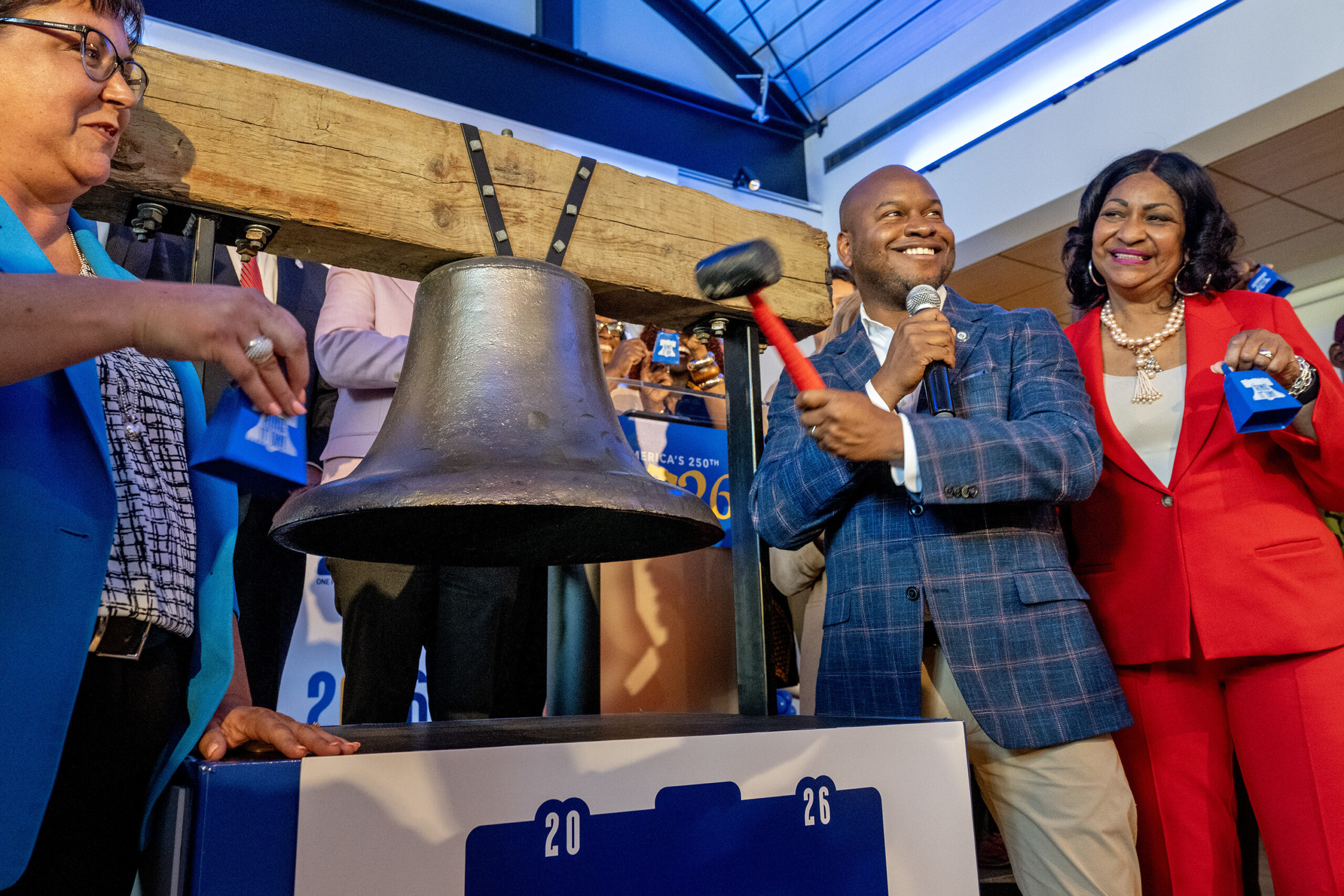
Michael Newmuis (center), the city’s 2026 Director Philadelphia, rings the bell to kick off the city’s “Ring It On! One Philly, A United Celebration” at Independence Visitor Center Wednesday, Sept. 3, 2025. Mayor Cherelle L. Parker announced the new initiative that puts city neighborhoods at the forefront of the city celebrations of America’s 250th birthday in 2026. At right is Jazelle Jones, City Representative and Director of Special Events.
Despite saying Jazelle Jones was needed to coordinate the city’s 2026 festivities, Parker has also appointed a separate 2026 director, Michael Newmuis, to a $175,000 position to also oversee this year’s major events.
The mayor said Jazelle Jones was irreplaceable given her experience managing large events like the 2015 papal visit, the 2016 Democratic National Convention, the 2017 NFL Draft, and the Eagles’ Super Bowl wins.
“Could we have hired five to 10 people to try to do the job Jazelle does?” Parker asked. “We could have tried, but there would be no reason for me to do that when I had the best person.”
Parker indicated she was aware of the steep price tag required to keep Jazelle Jones working through 2026 when the mayor first appointed her as city representative shortly after taking office in 2024.
“I had heard whispers,” Parker said. “They said, ‘You’re going to lose Jazelle.’”
City personnel records show Jazelle Jones enrolled in DROP in September 2020, meaning her first planned retirement date was September 2024, just nine months after Parker appointed her to the role.
Jazelle Jones’ $97,000 payout for unused paid time off was deposited into her account this month, four days after The Inquirer contacted the mayor’s office about her rehiring. The mayor’s office did not respond to a question about the delay in her payment.
Unlike most newly hired city employees, who are entered into a hybrid 401(k)-style pension plan, she was granted an exception allowing her to continue paying into an older, more generous pension plan.
Cristella, from the Committee of Seventy, said the decision to hire Jazelle Jones into a vital role months prior to her mandatory retirement date was irresponsible.
“It is also deeply troubling that the city would retain a high-salaried senior official with full knowledge that a large DROP payout was imminent,” Cristella said. “If city leadership knew and proceeded anyway, that is a failure of fiscal stewardship that demands explanation.”
Staff writer Max Marin contributed to this article.
No city does history quite like Philadelphia — and it’s all on full display this summer for the nation’s 250th. From museums and historic houses to outdoor experiences and more, here are some must-dos over the coming days, weeks, and months.
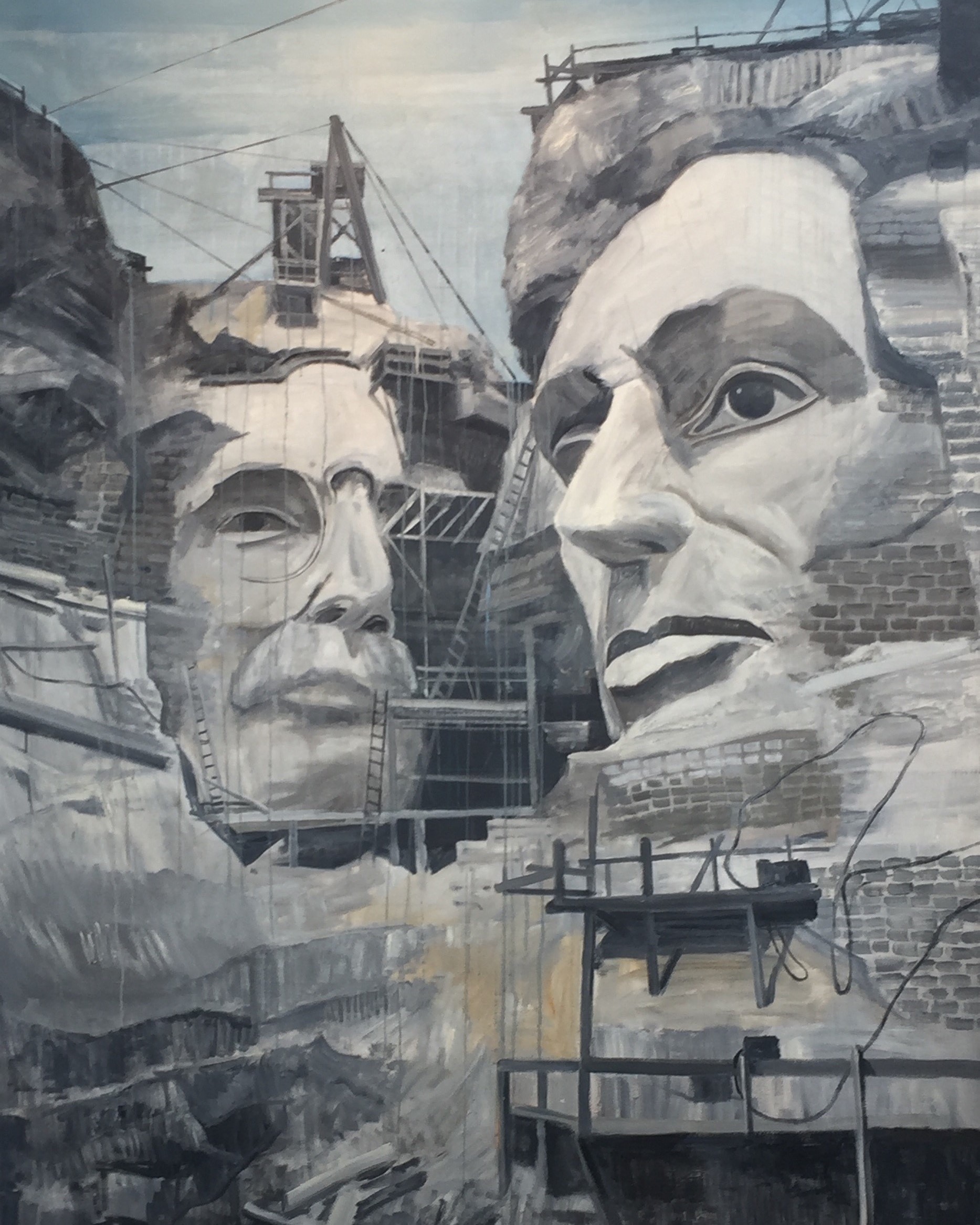
“Rushmore,” a 2016 painting by Tom Judd, is part of the “Arc of Promise” exhibit at the Woodmere Museum.
‘Arc of Promise’
Woodmere Museum
Examine how Philadelphia artists have imagined America — from earlier perspectives to modern day — in paintings, sculptures, and other media. Inspired by local artist Jerry Pinkney (1939-2021), whose “arc of promise” concept was influenced by America’s painful histories of slavery, displacement, and injustice, while holding onto the belief that renewal is still attainable.
Weitzman National Museum of American Jewish History
Explore events surrounding Nov. 16, 1776, the day the Dutch governor of St. Eustatius welcomed a ship flying the new American flag into the harbor — making the first recognition of the new nation by a foreign entity. A critical thruway for commerce between Europe and North America, the island’s Dutch leaders offered Jews a relatively high level of religious tolerance. Highlights include a 1761 Hanukkah lamp.
View works by artist Sky Hopinka featuring personal perspectives of Indigenous homelands and landscapes. In recognition of the 250th anniversary of the signing of the Declaration of Independence, these works of art thoughtfully explore and interrogate the American experience and its histories.
A fedora owned by Franklin Delano Roosevelt is part of the “Governing the Nation” exhibit at the National Constitution Center.
‘Governing the Nation’
National Constitution Center
Explore how the American system of government functions through immersive media, dynamic projections, and 3D models of the U.S. Capitol, the White House, and the U.S. Supreme Court. View a pamphlet written by Alexander Hamilton on the constitutionality of the National Bank, as well as Franklin Delano Roosevelt’s fedora.
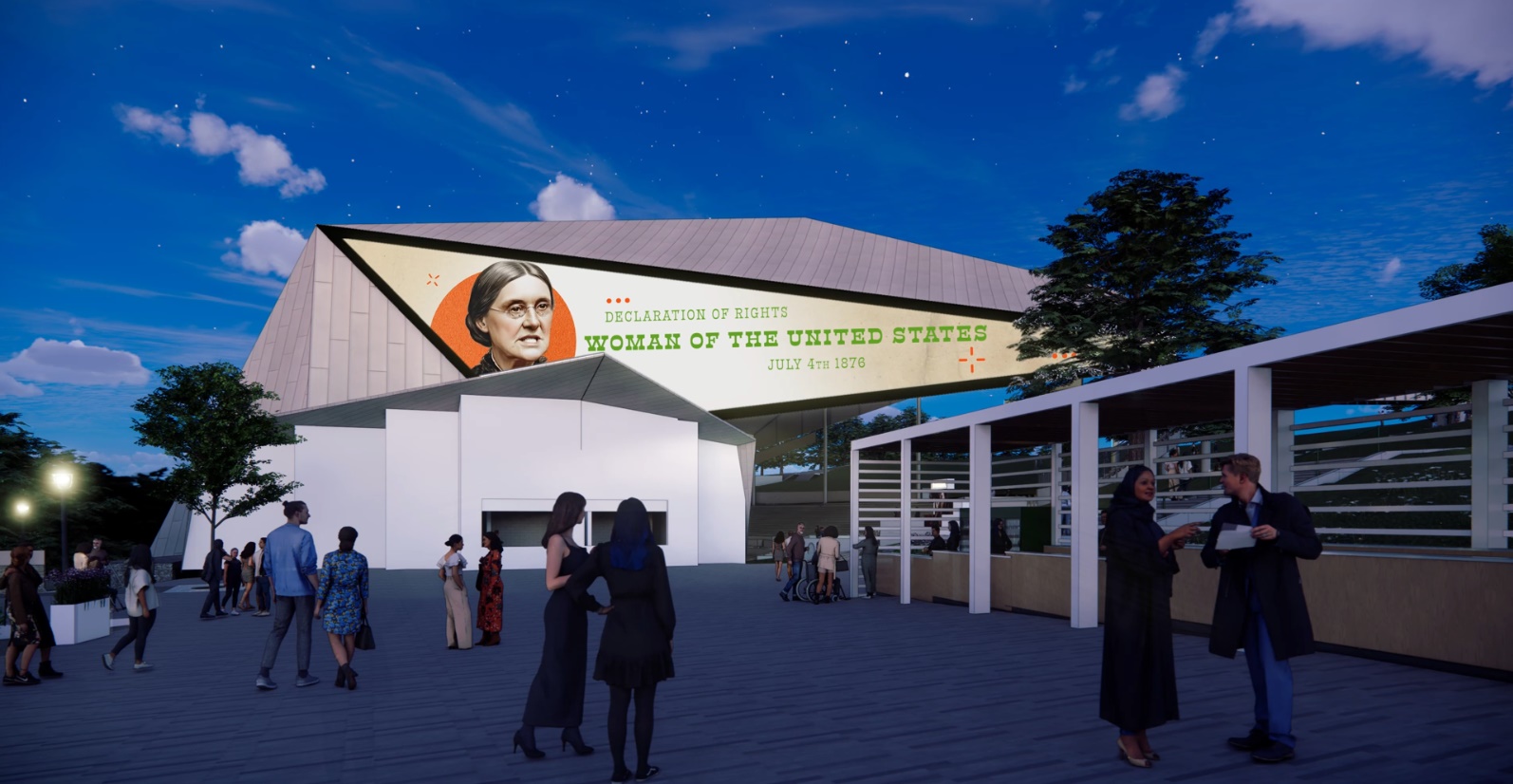
A view of “Proving Ground: The First 250 Years of the American Experiment,” at Highmark Mann Satell Centennial Wall East.
‘Proving Ground: The First 250 Years of the American Experiment’
Highmark Mann Center for the Performing Arts
Enjoy an outdoor film experience with the 4,500-square-foot immersive LED canvas at the entrance of Highmark Mann on its new Satell Centennial Wall East. This massive storytelling canvas features cinematic visuals, motion design, music, and historical imagery that immerse visitors in Philadelphia’s role in shaping the American story.
‘Revolutionary Family: The Biddles and American Independence’
Andalusia Historic House
Explore historical art and documents based on the Biddles, one of America’s most prominent colonial families. Discover what happened at the Andalusia site during the time of the American Revolution, including the military activity that surrounded the area, and view the beautiful painted portrait miniatures of Clement and Rebekah Biddle.
‘Freedom Through Faith: Judaism at Eastern State and Beyond’
Eastern State Penitentiary
Discover how religious freedom, one of the “unalienable rights” stated in the Declaration of Independence, was strongly represented and practiced in America’s first penitentiary, especially by its Jewish inhabitants. A restored synagogue is a central feature of the exhibit and is the first synagogue in a U.S. prison.
2027 Fairmount Ave., opening July 2 for permanent display, easternstate.org
‘Creating a City of Medicine’
Mütter Museum
Explore 250 years of Philadelphia’s impact on health and healing in the U.S., including medical education, technological innovation, and community-based healing practices. Featuring well-recognized Philadelphia leaders as well as lesser-known figures, the exhibit will educate visitors on the vital role Philadelphia played in American medicine and medical education.
Barbara Bates Center for the Study of the History of Nursing at the University of Pennsylvania
In celebration of America 250 at Penn, this exhibit showcases rare materials and reproductions surrounding Revolutionary-era nursing. Explore the influence of Black and Indigenous people on the profession, and the influences of African healing and Indigenous practices on early American medicine.
Explore the history of trade between the U.S. and China, as it relates to the birth of the United States and the long history of trade between them. View a bowl purchased by a Philadelphia merchant for George and Martha Washington, decorated with an unbroken circle and chains representing the strength of the new nation.
This exhibit traces the American Declaration of Independence’s global influence across 250 years, including political and social change. Featuring 120-plus artifacts from almost 20 nations, it explores how leaders from the Rev. Dr. Martin Luther King Jr. to Gandhi used the declaration’s words as inspiration to inspire political revolutions and civil rights movements worldwide.
Located next door to Independence Hall, this new exhibition shows that the declaration was a process, and continues to evolve and shape the nation. This exhibit displays 19 rare early printings of the declaration — including one handwritten by Thomas Jefferson, and a copy from July 4, 1776.
View 140 rare, original materials tracing how American colonists transformed from loyal British subjects to revolutionaries. Highlights include a letter written by John Adams the day after the adoption of the Declaration of Independence, praising a Massachusetts woman as a “historiographer” of the revolution, and view early drafts of the Constitution.
Pennsylvania Academy of the Fine Arts and Philadelphia Museum of Art
Two of Philadelphia’s premier institutions have united for this landmark exhibition. At PAFA, works made from the late 18th century to modern day showcase scenes of westward expansion and the rise of industry. At PMA, view American art from 1700 to 1960, identifying global connections that inspired artistic and technological innovation. Featuring more than 1,000 works — including pieces from the private Middleton Family Collection, and by Georgia O’Keeffe and Andy Warhol.
PAFA, 118-128 N. Broad St., now through Sept. 5, 2027; PMA, 2600 Benjamin Franklin Parkway, now through July 5, 2027; anationofartists.org
‘America Today: Voices in Contemporary Print’
The Print Center
Explore the current state of democracy through contemporary printmaking from 38 artists. This free exhibition was inspired by the New Deal of the 1930s and 1940s, when printmaking was used for political commentary. View works from generations of artists who use printmaking as an art form to explore and express the issues we face today.
The Pennsylvania Hospital Museum, which opened in May, transforms the historic Pine Building of America’s first chartered hospital, founded by Benjamin Franklin and Thomas Bond in 1751, into a public museum. Discover breakthroughs in brain health, and trace medicine from herbal healing teas to one of the most groundbreaking medical innovations: CRISPR gene editing.
Connect today’s Philadelphia to 1876, when Philadelphia made history as the first city in North America to host the World’s Fair. At this free exhibit, explore that period and see how far technology has taken us. Use your cell phones to capture a replica of Alexander Graham Bell’s first telephone.
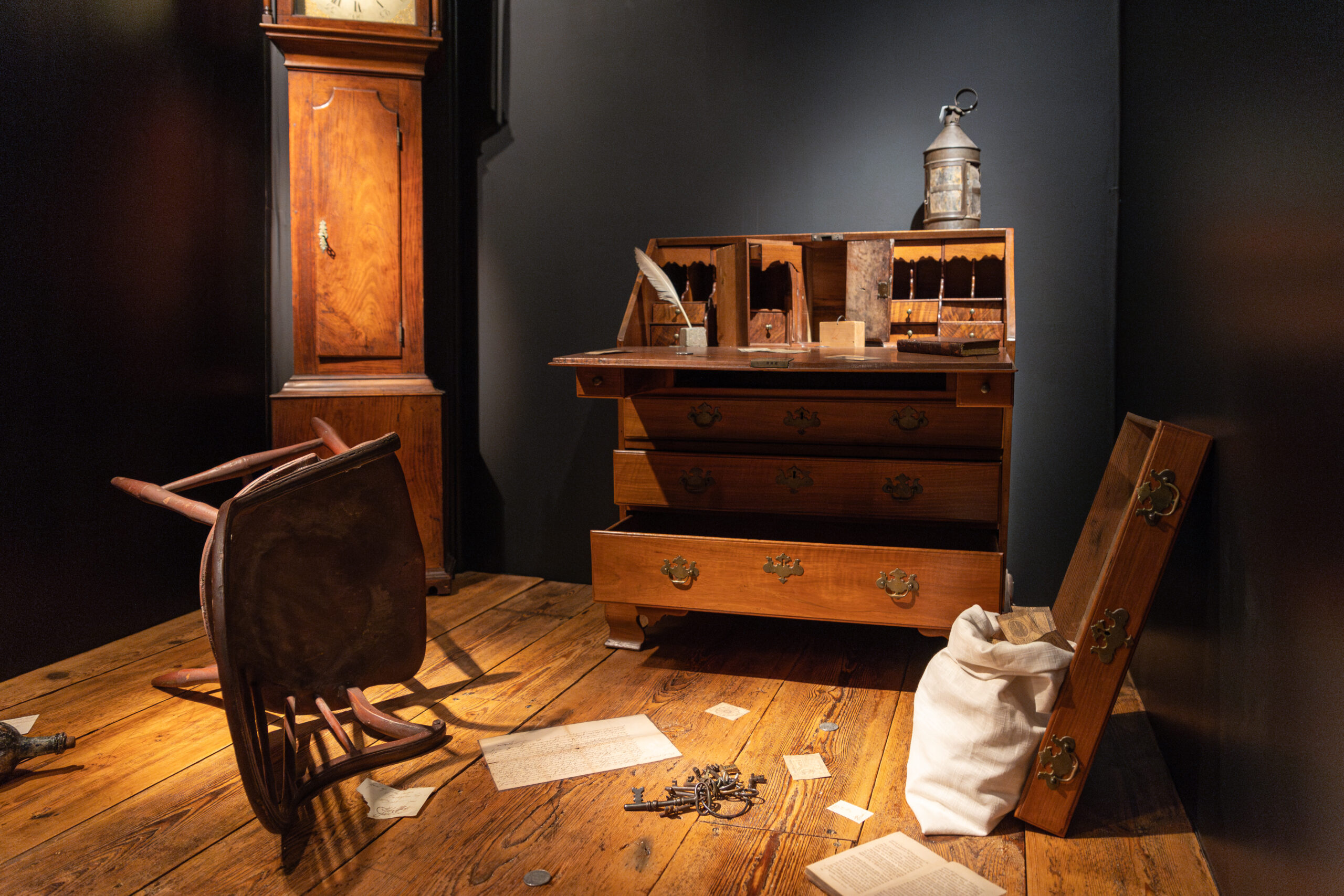
Part of “The Doan Gang: Outlaws of the Revolution” exhibit at the Mercer Museum.
‘The Doan Gang: Outlaws of the Revolution’
Mercer Museum
Explore your rebellious side with these known enemies of the Founding Fathers, the Doan Gang, who were loyal to British rule in the colonies. This exhibit is from the perspective of Loyalists, who opposed American independence. Discover the untold stories that combine espionage, legendary robberies, and mythical lost treasure.
View powerful works by artists that invite viewers to immerse themselves in the memories, dreams, and histories of Black Americans from the past and present. Reflect on how Americans of color have shaped identities and created spaces of resistance, joy, and resilience in the face of systemic oppression. Featured artists include Philadelphia-based David Hartt and Tourmaline.
This summer, the Delaware River Waterfront transforms into a free, outdoor gallery called “Where Freedom Flows.” Highlights include “Let Freedom Ring” by Paul Ramírez Jonas — where visitors can strike a 600-pound bell to sound the final note of “My Country, ’Tis of Thee,” connecting Philadelphia’s historic waterfront to the nation’s evolving story of freedom.
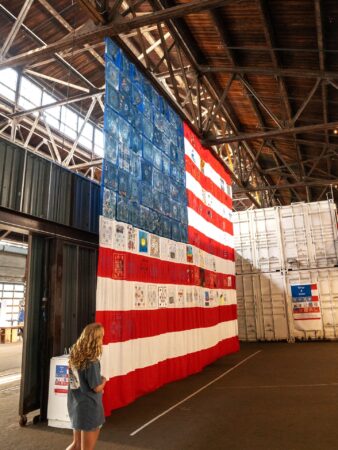
Set your sights on this beautiful community-driven artwork installation by GrioXArts — artists Duwenavue Santé Johnson and Kara Mshinda. The textile centerpiece is a reimagined American flag composed of hand-embroidered bandannas created during a previous public workshop. It reflects personal and cultural narratives of BIPOC voices into Philadelphia’s evolving story and history.
‘At Liberty: Life in the City of Brotherly Love During the Early Republic’
Arthur Ross Gallery at the University of Pennsylvania
Explore fine art during our forefathers’ time with holdings from the University of Pennsylvania, the Pennsylvania Academy of the Fine Arts, the Winterthur Museum, and the Metropolitan Museum of Art. Curated by Gwendolyn DuBois Shaw, it features paintings, sculptures, and watercolor drawings of notable figures, including Benjamin Franklin.
A portrait by Tom McKinney is part of the “From Invisible to Invincible” exhibit at the Historic Strawberry Mansion.
‘From Invisible to Invincible: Honoring the Art of Color’
Historic Strawberry Mansion
This exhibit recognizes both the 250th anniversary of the founding of America and the 100th anniversary of the Committee of 1926, a women-led organization formed during the 1926 Sesquicentennial International Exposition, and dedicated to preserving the history and heritage of this mansion. It will showcase artists who did not get a fair opportunity to shine in the original 1926 exposition due to systemic inequities.
Merakey USA, based in Lafayette Hill, is acquiring Boundless, an Ohio nonprofit that provides services for people with intellectual and developmental disabilities and behavioral health needs, in a deal that leaders of both organizations described this week as a model for their industry.
“It’s the marriage of two financially stable organizations” that are preparing for turbulence in the human services sector, said Merakey CEO Joseph S. Martz. More typically human services deals happen because one nonprofit needs a financial rescue, as happened with Philadelphia’s Resources for Human Development in 2024.
Merakey and Boundless planned to announce the news Thursday.
Martz and the CEO of Boundless, Patrick Maynard, both said the size of the combined organization — more than $1 billion in revenue — would enable it to invest in the systems, technology, training, and workforce development needed to be financially sustainable.
The deal, expected to close in July, will create an organization that supports 50,000 individuals and families annually in 12 states and employs 11,000 people.
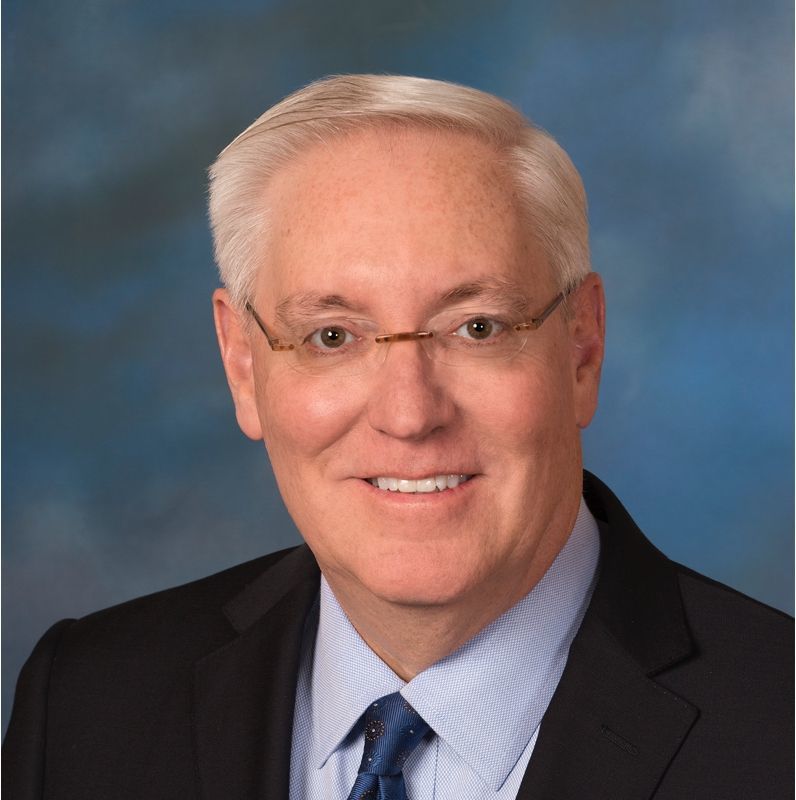
Joseph S. Martz is CEO of Merakey USA, which is acquiring Boundless, a human services provider based in Columbus, Ohio.
The executives cited pressures from an expected change in how their organizations get paid. A shift is underway to payment for results rather than for straight volumes of services. Looming cuts to Medicaid over the next decade are also forcing human services providers to rethink how they operate.
“We’re entering a time when resources are going to be a lot tighter, and I think organizations need to be thinking differently about how they approach that. We’re seeing some other pretty large consolidations,” said Chuck Ingoglia, CEO of the National Council for Mental Wellbeing, a Washington nonprofit advocacy group.
Origins of the Merakey-Boundless deal
Stacy DiStefano, CEO of Consulting for Human Services, a Philadelphia-based adviser firm, introduced Martz and Maynard to each other in July 2024.
That led to a series of conversations about issues the two organizations were spending money to solve and the realization: “Why don’t we just come together and use the combined resources of our organizations to solve that problem,” Martz said.
Merakey and Boundless had already been growing through acquisitions, though Boundless has grown more dramatically. In the last seven years, the nonprofit made five acquisitions that helped increase its annual revenue to an expected $200 million this year from $20 million, Maynard said.
“My goal was to create sustainability in a broken system where most of us are living off of Medicaid, which comes nowhere close to providing the resources that cover the costs,” Maynard said.
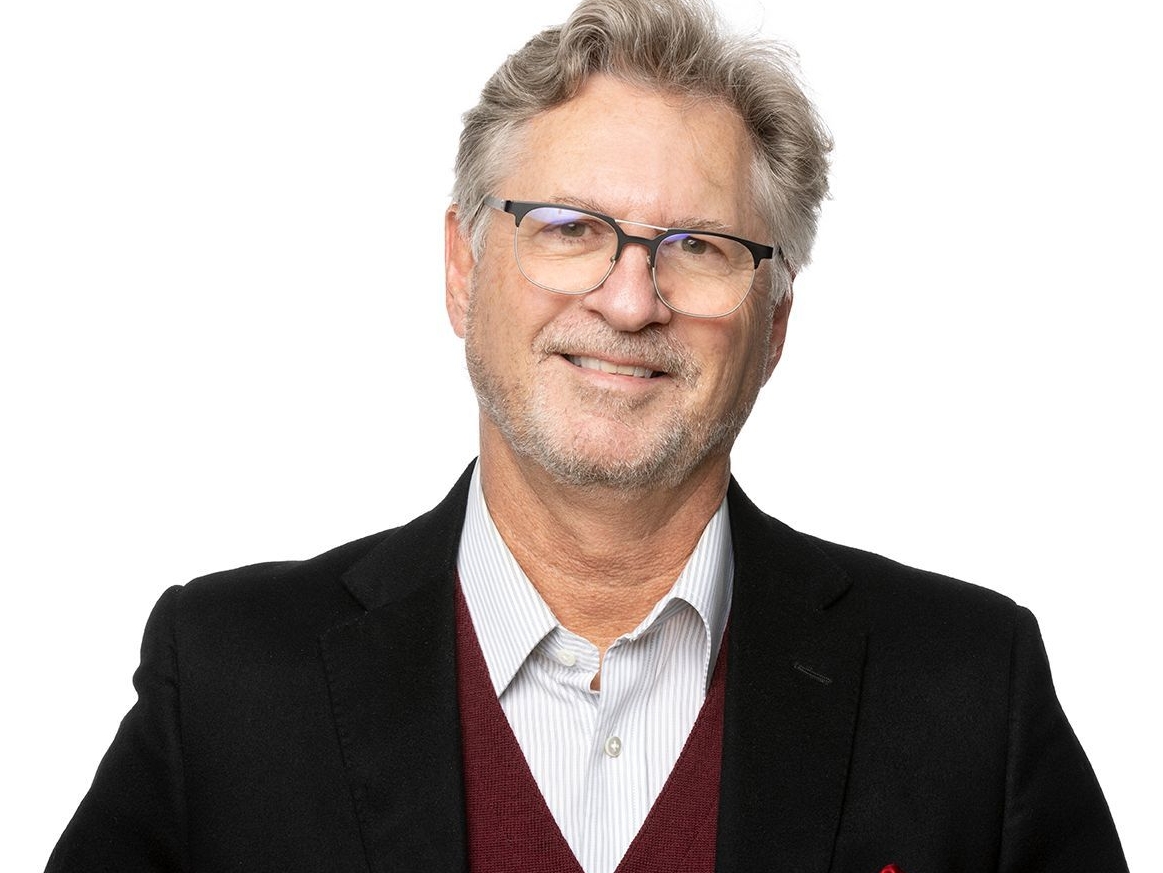
Patrick Maynard is CEO of Boundless, a Ohio human services provider that is merging into Merakey USA, of Lafayette Hill.
The added scale enabled Boundless to add healthcare and dentistry for its clients, but the Medicaid shortfall for those dental services is $75,000 a month, Maynard said. That kept Maynard looking for even bigger partners, like Merakey.
Maynard cited Merakey’s expenditure of $18 million for Workday software, a system for human resources and financial management as an example of something Boundless could never afford. At $200 million in annual revenue, Boundless struggled to spend $2 million on a system for electronic health records, he said.
A new structure
Merakey, which started as the Northwest Center in the Mount Airy section of Philadelphia in 1969, remains firmly rooted in Pennsylvania. The state is expected to account for more than half its $850 million in revenue for the fiscal year that ends this month, Martz said.
States where Merakey operates include Indiana, Kentucky, Ohio, Michigan, and Wisconsin. A new division called Boundless Midwest, led by Maynard, will assume responsibility for Merakey’s operations in that region when the deal is done.
Both boards have approved the transaction, which remains under review by the Ohio Attorney General.
Martz said he expect Boundless to continue growing though acquisitions and the development of new programs with the support of Merakey.
“We are going to be a big organization, but it’s really about being a better organization, about the quality of care that we provide,” Martz said. “If you’re not culturally aligned, bigger for bigger sake, just doesn’t make any sense to me.”