Tag: topic-link-auto

  • Philly police union defends questionable expenses, blaming city ‘ineptitude’ for delayed funeral payouts for officers killed in the line of duty

    Philly police union defends questionable expenses, blaming city ‘ineptitude’ for delayed funeral payouts for officers killed in the line of duty

    Philadelphia’s police union issued a statement criticizing city officials for failing to promptly reimburse expenses incurred for officers who died in the line of duty, and disputed the city’s claim that it did not use tax dollars to cover a roughly $11,500 funeral luncheon, which included a 94% “gratuity.”

    The Fraternal Order of Police Lodge 5’s statement, which was posted on Facebook last week and emailed to its members, followed an Inquirer investigation that found the union has for years billed the city following an officer’s death for expenses that are unrelated to funeral home and cemetery costs.

    “The problem has always been and continues to be the city of Philadelphia’s ineptitude to pay bills in a timely fashion,” the FOP wrote. “Which leads to the survivors’ families having to make large financial decisions for funerals, services, luncheons, transportation, cemeteries, funeral attire, and cremations within days of suffering a traumatic life-changing event.”

    Since 2014, the city has contributed up to $75,000 in tax dollars for each line-of-duty death, up from $15,000. The FOP’s contract with the city calls for the union to be reimbursed for “reasonable and necessary funeral expenses.” But there is no further explanation of what would qualify, and The Inquirer found the union has asked the city to pay tens of thousands of dollars for everything from bar and restaurant tabs to socks and underwear.

    The FOP has also billed the city for at least eight events at its own bar, 7C Lounge, located inside its sprawling headquarters in Northeast Philadelphia. One of those events was a luncheon in May 2020 for Cpl. James O’Connor IV, a 23-year veteran and married father of two, who had been shot and killed in March of that year.

    His funeral had to be postponed for eight weeks due to the COVID-19 pandemic and only a limited number of people, all in masks, were permitted inside the church.

    Pallbearers carry the body of slain Philadelphia Police Cpl. James O’Connor IV outside Our Lady of Calvary on May 8, 2020. O’Connor was killed in the line of duty.

    Even though the city had restricted bars and restaurants to takeout and delivery service, the FOP held a 2½-hour lunch for O’Connor at its own bar.

    Records show the FOP billed the city for $5,700 worth of bottled beer, an open bar, and food for 160 people. The union added a $5,375 gratuity.

    Sharolyn L. Murphy, the city’s risk manager and deputy finance director, wrote in an email to The Inquirer that the city did not reimburse the FOP for the O’Connor luncheon.

    The FOP statement claims otherwise. The union wrote that it provided the city with comprehensive documentation and was fully reimbursed.

    The FOP statement also says that the $5,375 was not all a gratuity — which is how it is listed on the bill — but just $925 for a tip while the rest was payment for kitchen and catering workers, bartenders, servers, and managers.

    “This was the only way to add the payroll and gratuity expense to the catering invoice,” the FOP wrote. “This was all documented and explained in timestamped email records and provided to the city which is why they approved the reimbursement.”

    The FOP attached to its statement copies of six emails listing the amounts paid to the staffers, all of whose names are redacted. Names of the senders and recipients are also redacted, except for then-FOP president John McNesby’s.

    The emails were not included in the Right-to-Know records The Inquirer received from the city. The city did not respond to questions about whether the risk management team had gotten them and, if so, why they were not among the documents previously provided to the newspaper.

    But Murphy on Tuesday e-mailed The Inquirer a breakdown of the items the city denied from a $32,600 reimbursement request, including the cost of the O’Connor luncheon, as well as liquor bills totaling $800 and $50 in miscellaneous beverages.

    “The city provides expeditious payment of funeral expenses to support families of those who made the ultimate sacrifice to service to Philadelphia,” Murphy wrote in an e-mailed response to The Inquirer. “At the same time, the city has a responsibility to ensure that taxpayer funds are spent appropriately.”

    Current FOP president Roosevelt Poplar and McNesby, who served as the union’s president for 16 years before stepping down in 2023, did not respond to multiple requests for comment before The Inquirer published its investigation. In its June 13 statement, the FOP called The Inquirer’s investigation a “hatchet job hit piece.”

    The Inquirer’s examination of the funeral expenses underscored questions about the FOP’s nonprofit Charitable Foundation, commonly known as the Survivors’ Fund, which raises money to pay for funerals and support the families of officers who were killed or seriously injured in the line of duty.

    A 2025 Inquirer investigation found that the FOP reported spending hundreds of thousands of dollars on “funerals and special events” in years when no officers died in the line of duty, and that its expenditures and cash donations had been loosely documented and were difficult to track.

    The Inquirer sought further clarity by filing Right-to-Know requests with the city for more than 1,000 pages of invoices, bills, emails, and other public records concerning 17 police line-of-duty deaths since 2014. Eight of the deaths were attributed to COVID.

    The FOP publicly criticized The Inquirer’s records request.

    Included in the documents were FOP submissions of receipts from businesses such as Target, Home Depot, Walmart, Acme, 7-Eleven, and CVS that include no explanation as to why they were funeral expenses. The union has also forwarded statements of corporate credit cards requesting reimbursement for restaurants and beer stores.

    Some reimbursement requests lacked receipts or itemized breakdowns, and at least two were for cash. The FOP did not address the cash requests in its statement.

    The Inquirer found that the city has covered the bulk of the FOP’s requests, although in almost all cases, the documents do not point to which specific reimbursements were approved or denied. An FOP request for $1,870 to cover two bar tabs and pipes and drums after a dinner is the only explicit denial in the records.

    The FOP wrote in its statement that its “finance office and accounting firm have comprehensive, accurate, and detailed records for all financial transactions for our multiple accounts. There are no missing or incomplete records.”


  • When storms hit the France-Iraq game in Philly, a French radio station stayed on air from under a tarp

    When storms hit the France-Iraq game in Philly, a French radio station stayed on air from under a tarp

    Everyone knew that there was a risk of thunderstorms in Philadelphia on Monday, and Mother Nature delivered on cue.

    But while the players could go to the locker rooms and the fans could go to the concourses, broadcasters calling the action couldn’t just go off air. Even worse, the TV and radio areas are in the upper-deck stands, part of extra media seating FIFA always builds at World Cups. So there was no cover overhead when it was only raining.

    While FIFA put plastic covers on the tables, that wasn’t enough to protect all the expensive equipment and the people using it. So the team at France Info, one of the many French radio stations broadcasting the game, had to get creative.

    Virginie Lorda, the crew’s technician, found a hardware store a few blocks from their hotel in Center City, and bought a tarpaulin and some ropes to tie it onto the table. Then when the rain started falling, the tarp came out.

    Broadcaster Julien Froment documented it all on his social media feeds, adding to the spectacle of a night with a two-hour delay in the game. The next morning, he talked with The Inquirer about it as the crew headed back to France’s base camp in Boston.

    “I have to give the credit to Virginie,” Froment said. “She had the idea to set this up, a little bit at the last minute, to protect us. … It was a mix of French and American expertise.”

    Summers can get very hot in France — the country recorded its hottest day ever on Tuesday, and highs are expected to top 100 degrees multiple times this week. But the sky doesn’t explode like it does here, even if that feels normal to Americans.

    “You all are used to this,” Froment said. “For us Europeans, to have to deal with a thunderstorm, it’s a bit new. This one was a grand premiere.”

    It’s worth noting that when Philadelphia hosted the Club World Cup last year, the city got pretty lucky. There were big storms on nongame days, and multiple games in other cities got hit. But no action here got delayed or postponed.

    France superstar Kylian Mbappé getting drenched by the storm that arrived in South Philadelphia late in the first half of Monday’s game.

    So maybe we were due, and unfortunately it happened during an especially star-studded game. France’s Kylian Mbappé scored two of Les Bleus’ goals in the 3-0 win, including a viral sensation of a hit for the opener, and reigning world player of the year Ousmane Dembélé capped things off with his first World Cup tally.

    To the city’s credit, the stands were almost totally full when the game resumed. No one went home even with the long delay, wanting to make the most of a rare chance to see these players in person.

    Though it’s unusual for American stadiums to have media seating in the middle of the stands, it’s the norm in Europe and elsewhere. There aren’t broadcast booths the way there are at American football, baseball, and soccer stadiums.

    The locations of the “media tribune,” to use the world’s game’s phrase, can vary. At Chelsea’s famed Stamford Bridge in London, you can almost touch the team benches. At Lyon’s modern Groupama Stadium in France, which hosted the 2019 women’s World Cup final, you’re up in the heavens.

    But no matter the distance from the field, there’s almost always a roof over the stands in some form.

    “We’re in the open air to capture the atmosphere — it’s the tradition,” Froment said. “We’re used to being outside. But the big difference between European and American stadiums is we aren’t protected here. There’s no roof, there’s nothing to protect us from the elements.”

    That is especially the case at the stadiums Froment’s crew has been to so far in New England and the Meadowlands. France isn’t playing at the indoor venues in Atlanta, Houston, or Dallas; or in Seattle or Los Angeles, where the stadiums are open-air but the stands are covered.

    But Froment has enjoyed the experience overall, marveling at America’s modern stadiums that are palatial compared to European soccer cathedrals with decades of history but fewer amenities.

    “Here, you get the feeling that everything is almost at extremes,” he said. “The stadiums are huge, built specifically for the fans. I’m kind of shocked by how many snack bars and concession stands there are. … It really represents a different kind of consumerism — a different sports culture — compared to what we’re used to in Europe.”

    They’re also a lot bigger than most stadiums in France. The biggest, the Stade de France in suburban Paris, seats 80,000; the second, Marseille’s Vélodrome, seats just over 67,000; and the venues in Lyon and Lille are the only others nationwide over 50,000.

    Asked his opinion of Lincoln Financial Field, Froment called it “the best stadium I’ve been to at this World Cup,” helped by location, architecture, and the vibe of the broader Sports Complex.

    “It’s a little different,” he said. “At MetLife Stadium [in North Jersey], it doesn’t have personality. It feels like it could be any stadium in the world. In Philadelphia, you feel like there’s a story there.”

    (We couldn’t help responding that he’s far from alone in those opinions.)

    A view of the stands at the start of the Ivory Coast-Ecuador game, which like all of Philadelphia’s World Cup games so far drew a full house.

    He had some time to explore as well. There were a few trips to Reading Terminal Market, and walks to the Liberty Bell and the Rocky Steps — documenting France fans’ night-before pep rally at the latter.

    It’s playing the hits, sure. But it’s also a reminder of how warm a welcome Philadelphia has put on for its international guests this summer, and that Center City being easy to walk around is another of its great assets.

    There might be a second chance to welcome France, too, if Les Bleus win their group and the round of 32 game afterward.

    “I find the city really nice,” Froment said. “It’s less oppressive than New York. You can breathe more easily.”

  • Mr. Edison brings old-school glamour — and chef Matt Levin — back to Center City

    Mr. Edison brings old-school glamour — and chef Matt Levin — back to Center City

    Veteran restaurateur Jeffrey Chodorow has spent decades in and around Philadelphia without ever opening a restaurant here.

    That changes Thursday at the Bellevue, where the mind behind such destinations as China Grill and Asia de Cuba is opening Mr. Edison, a supper club-style restaurant and bar built around dinner, drinks, and live music.

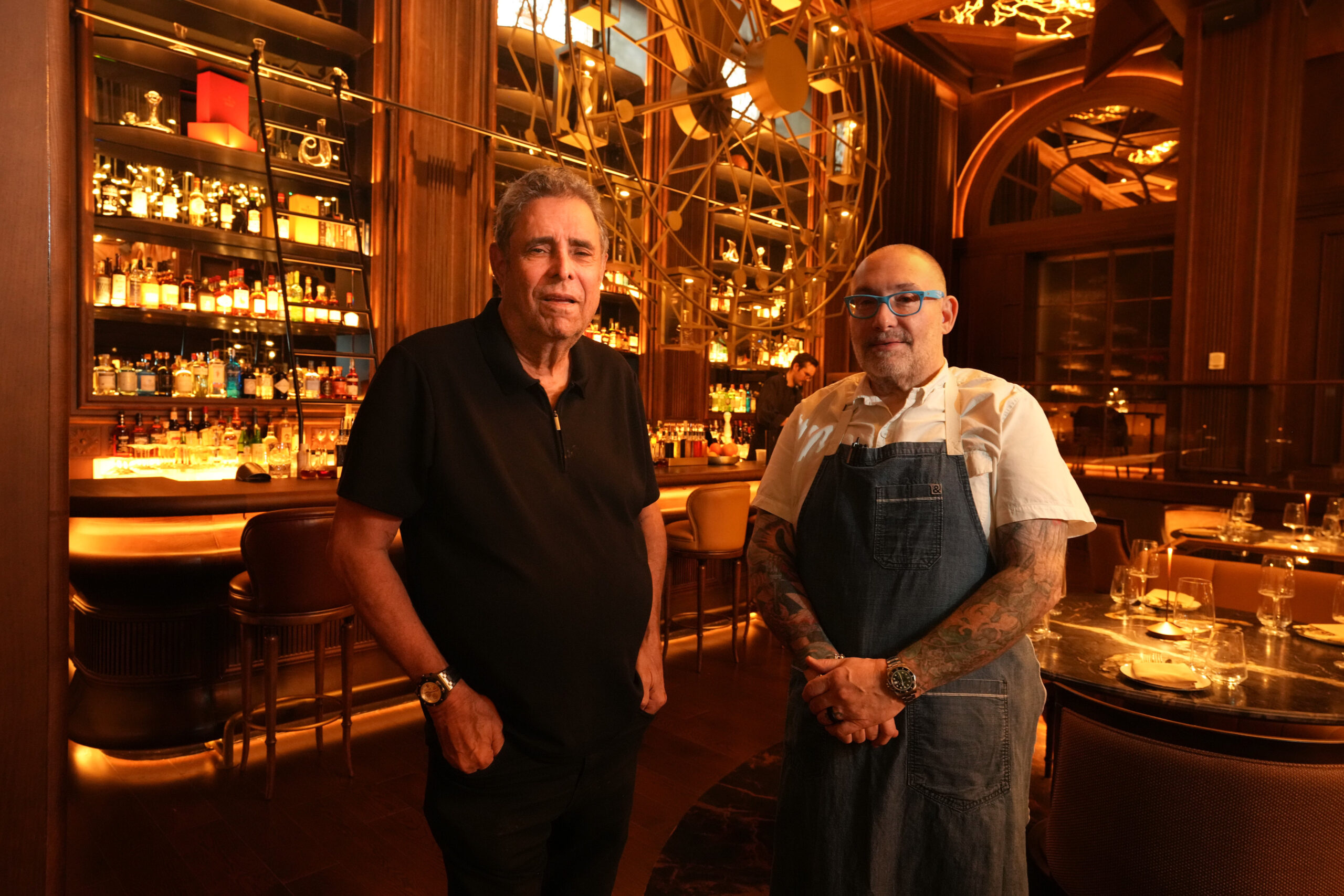
    Jeffrey Chodorow (left) with chef Matt Levin at Mr. Edison at the Bellevue.

    Mr. Edison is also a throwback: a large, theatrical restaurant built as much for occasion as for dinner.

    The room, in the former Polo Ralph Lauren store, announces itself immediately from the new Walnut Street entrance just west of Broad Street: a two-story space topped by a dense canopy of suspended Edison bulbs, clustered in branching formations that cast the dining room in a warm amber glow.

    The ceiling seems to split open in places, allowing lightning bolt-like streaks of light through — all the work of Manuel Clavel of Spain’s Clavel Arquitectos. Behind the bar is a 12-foot-tall Ferris wheel, its dozen spokes each carrying a bottle of wine or spirits and turning the backbar into something like a stage set.

    Caviar service at Mr. Edison.

    Building owner Dean Adler, who is investing millions in the Bellevue as part of its redevelopment, put the 160-seat restaurant’s price tag at $10 million. “I think I got my money’s worth,” he said Tuesday. Adler also plans to install a library bar off the Bellevue’s lobby on the Broad Street side, where the Palm was before its closing in 2020.

    “I love history, so to take a genre — a 1940s-type environment — and bring it into 2026 has been really exciting,” said Chodorow, who of late has been shuttling between his Bucks County home and Miami Beach, where he opened China Grill Bar Harbour two weeks ago.

    Mr. Edison — named for Thomas Edison, who helped bring electricity to the Bellevue in 1904 — is calibrated to the building’s long identity as a grand social address. It also carries a personal connection for Chodorow. In 1982, when he was a lawyer at Blank Rome, he rented the roof for his own Rio-themed engagement party to celebrate with his wife, Linda.

    “This is not a tiny little neighborhood restaurant,” Chodorow said. “This is a place where you come to have a night.”

    Bottles glow inside niches at Mr. Edison.

    Chodorow built his reputation on restaurants that function as entertainment as much as dining. He rose in the business in the 1980s and ’90s with New York hotspots, such as Asia de Cuba, Kobe Club, and Red Square, and said he long avoided opening in the Philadelphia area because he wanted to keep work separate from family life.

    With his children grown, that changed. At the Bellevue, Chodorow said, he saw an opportunity to build destination dining — a place where patrons might stop in for cocktails and snacks or settle in for dinner and stay long into the evening. The room is arranged to support both. A large bar runs along one wall; tables and banquettes wrap around in multiple zones and along a mezzanine; and a piano with an old-fashioned microphone sits on a platform to one side.

    Chef Matt Levin at the stove at Mr. Edison.

    “We’re trying to create an experience,” he said. “Not just a restaurant.”

    To run the kitchen, Chodorow recruited chef Matt Levin to come back downtown. Levin, who made his name at Lacroix at the Rittenhouse and later at Adsum in Queen Village, has spent much of the last decade in catering, consulting, and Bucks County restaurants. Chodorow found him at Pineville Tavern in central Bucks County, where Levin had been consulting and where owner Andrew Abruzzese is an old friend and neighbor.

    Mr. Edison is more interested in reworking the classics than experimentation. Levin and Chodorow drew on dishes from Philadelphia landmarks, including the crab galette from Le Bec-Fin, where Levin worked for several years, the Milan salad from Jimmy’s Milan, and duck with orange sauce from La Panetière.

    Edison bulbs provide the lighting at Mr. Edison.

    Levin said the menu is a way of tapping into Philadelphia’s dining memory. “I think Philadelphia has a lot of shared history,” he said. “I think people will remember bits and pieces and say, ‘Oh, I remember that — let me try it.’”

    The challenge, Levin said, was to build a menu flexible enough to support several kinds of nights at once. “You want to be able to have people come in and just have a drink and a couple of things,” he said, “but also have the people who are coming in to really have dinner.”

    Jeffrey Chodorow in front of the bar and Ferris wheel at Mr. Edison.

    Chodorow said average tabs would be $100 to $110 per person for a dinner experience. He said roughly 25 dishes can work as a grazing menu, alongside larger-format entrees, raw-bar offerings, seafood, and steaks. Levin also brought over a foie gras tartlet with cherries and pistachio, adapted from a dish he served at Moonlight.

    The beverage program leans into the Edison theme with cocktails named for his inventions, including Patent Pending and Filament No. 6.

    Filament No. 6 at Mr. Edison.

    For Chodorow, the point of Mr. Edison is straightforward: “I wanted something that felt special,” he said.

    “I wanted people to walk in and say, ‘Wow.’”

    Mr. Edison opens Thursday at the Bellevue, Broad and Walnut Streets. Hours are 4:30 to 10 p.m. Sunday through Thursday and 4:30 to 11 p.m. Friday and Saturday. The bar will remain open later.

  • Twin pitchers Austin and Blake Havertine left their mark at Radnor. Now, they’re preparing for different paths.

    Twin pitchers Austin and Blake Havertine left their mark at Radnor. Now, they’re preparing for different paths.

    If you saw one, you would always see the other.

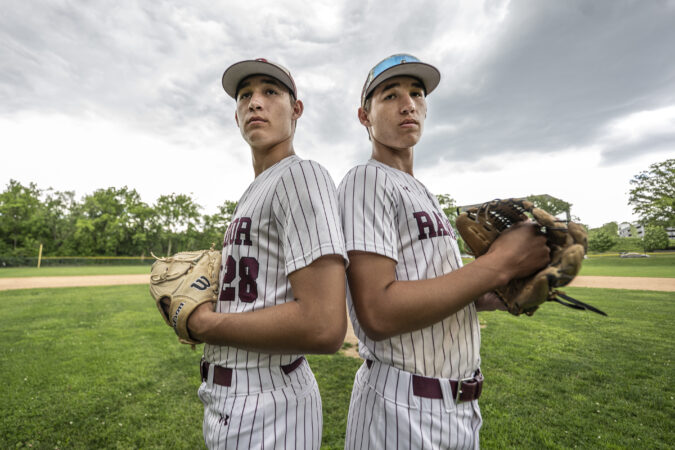
    Twins Blake and Austin Havertine used to spill out of their father Gary’s car at a local park in Radnor and break out into a pitch-and-catch game. One would pitch and the other would catch, and then they would switch. For young teenagers, they threw the ball pretty hard, too.

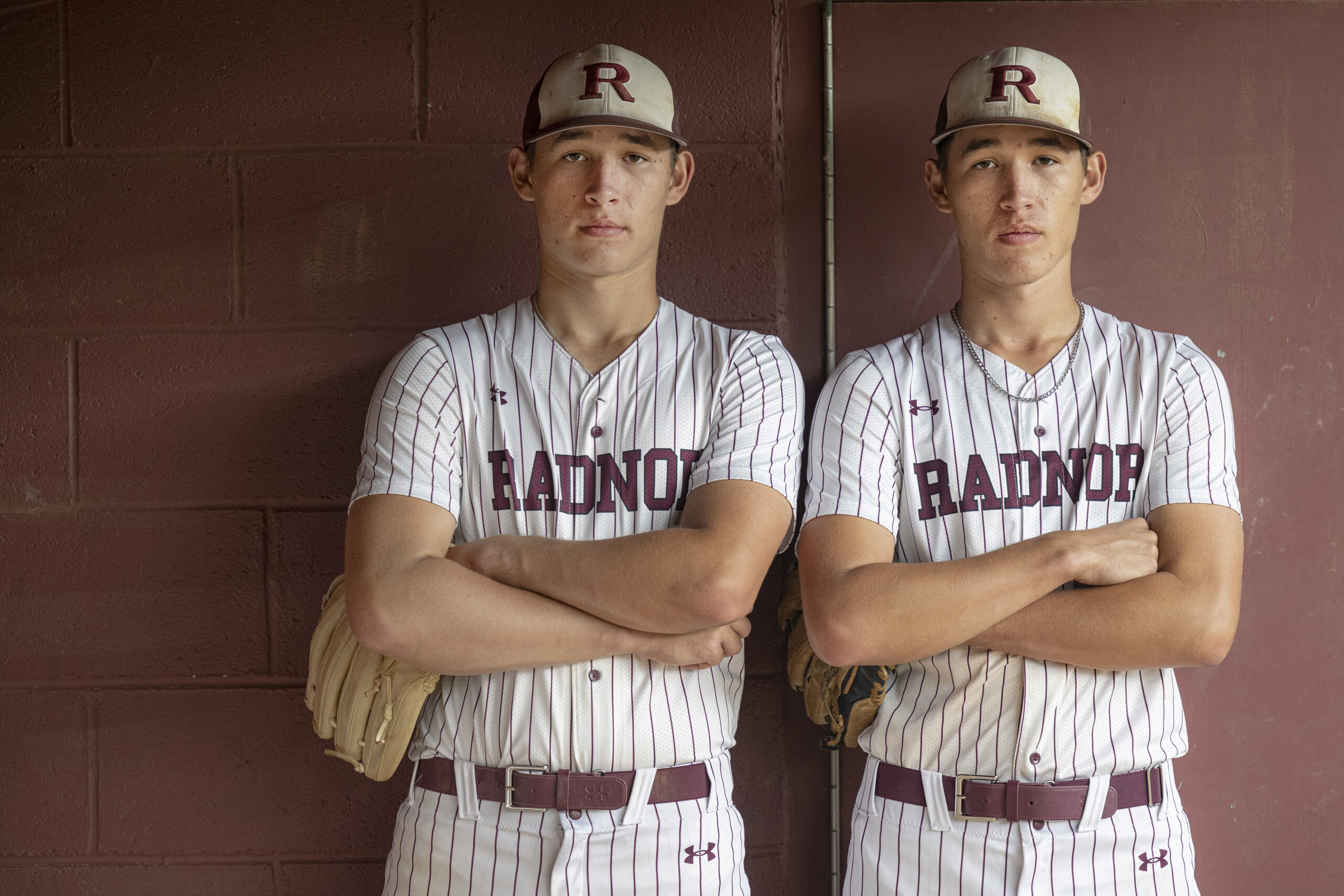
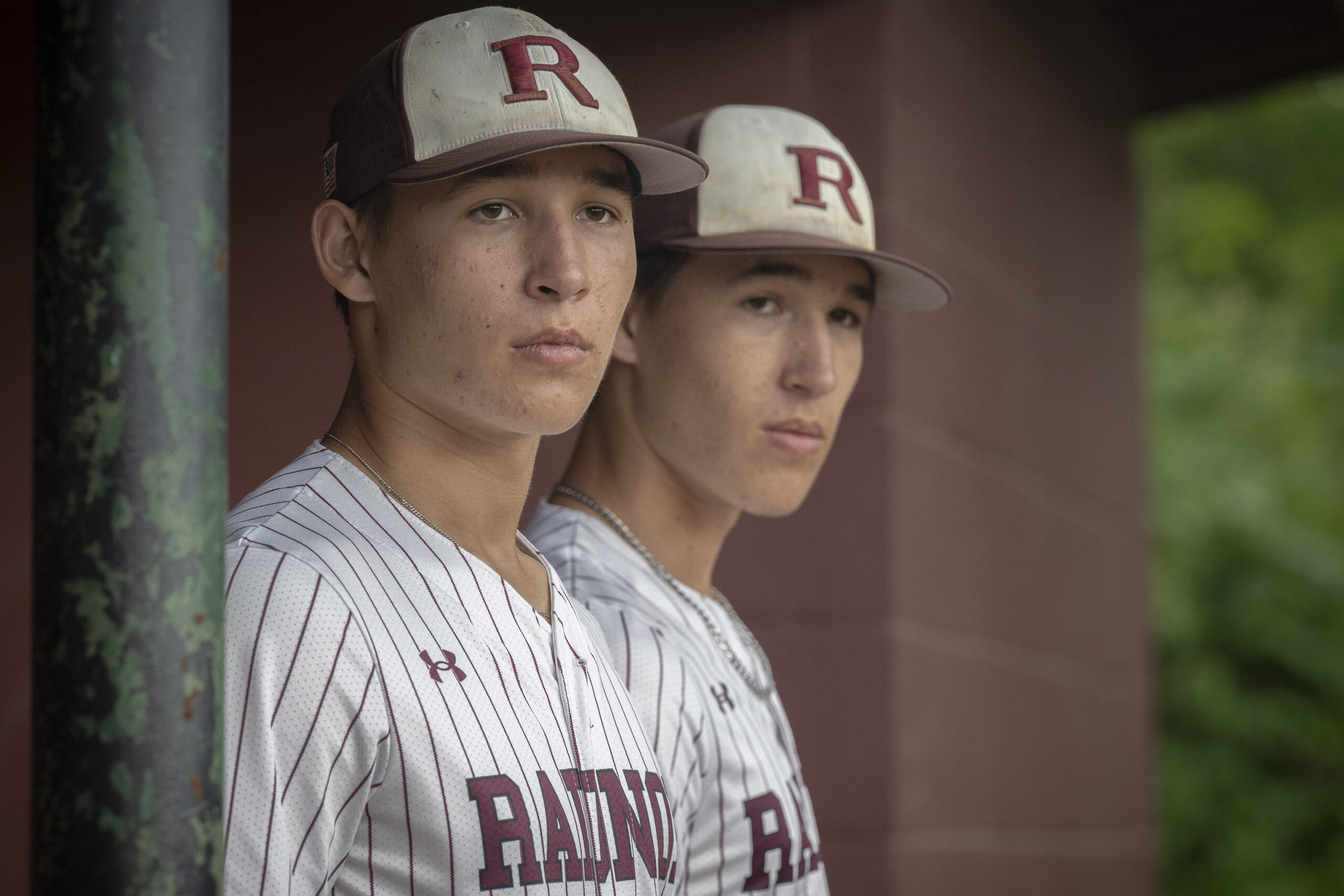
    And sometimes umpires had to go by the color of their cleats to tell them apart. As they got a little older, their difference in height and width helped. Blake, younger by a minute, is slightly taller than his 6-foot-2, 210-pound older Austin, who was always thicker than his younger sibling.

    Wherever they went, whatever they did, they did it together. Soccer, basketball, football, and baseball — when it came to sports, the Havertine twins were inseparable.

    What they also did together was leave an indelible legacy for Radnor baseball that may never be surpassed by a pair of brother pitchers, winning a combined 30 games, throwing a combined 290 innings, and striking out a combined 402.

    Austin carried the bulk of that load, winning a career school-record 22 games, striking out a career school-record 327, and throwing a career school-record 220 innings, while Blake over the last three years tossed 70 innings, won eight starts and struck out 75.

    When Radnor captured the 2025 PIAA District 1 Class 5A championship, it was Austin who tossed the final pitch, a pop out that fell into Blake’s glove. Austin throws in the mid-90s, Blake in the high-80s to low-90s, with his special slurve ball, he calls it (a combination curveball and slider).

    Now, for the first time in their lives, , they will be going their separate ways. Austin is heading to Lehigh on a baseball scholarship, and Blake will be going to Franklin & Marshall to play for the baseball team.

    There are distinct differences between the brothers. For example, Blake says they are identical twins; Austin says they are fraternal (They’re fraternal). Though he’s only a minute older, Austin carries himself like he’s older by a few years, while Blake is more the needler of the two, teasing Austin if he spikes a pitch or makes a mistake.

    Twin pitchers Austin and Blake Havertine helped Radnor to a 2025 PIAA District 1 Class 5A championship.

    They are best friends. Austin carries a slightly serious tone about him, while Blake is more on the jovial side. They don’t usually argue, say their father, Gary, and Radnor coach Mark Jordan.

    “I’ve coached a ton of brothers and sisters, and a few twins in my time, and they would go at it like cats and dogs,” said Jordan, who just finished the eighth year of his second stint as baseball coach at Radnor and his 14th season overall. “I never saw Austin and Blake fight. I mean really fight. I go way back to coaching them in seventh grade at Wayne Junior Legion. You could tell even then that Austin was special, and he was our ace as soon as he started his freshman year. And Blake keeps improving. His best baseball is still ahead of him.

    “But in six years of coaching them, that’s legion and high school, they never were at odds with one another. They may bust on each other a little, and Austin always supported Blake. They were captains this year for us and simply in tune with each other. It is kind of weird as twins, they are best friends, and you rarely see that. They leave an amazing legacy at Radnor. I’m always going to miss their commitment to the area and to the school, and this is a time when kids are bouncing from school to school, at the high school level and at the college level. They enjoyed where they were. … These guys grew up in Radnor, stayed in Radnor, and pitched and won in Radnor.”

    Jordan says Major League Baseball has called about Daniel Kellis, a 6-foot-5, 230-pound right-handed pitcher/outfielder who threw 10 innings this season and is committed to Wake Forest. Kellis is projected to go in the 14th or 15th round, and Austin may get drafted in the late teens, though he seems committed to Lehigh.

    The twins still have two months together pitching against grown men for the Wayne club in the Delco League. They’re soaking it in before leaving for college.

    “It is great having a twin,” Blake said. “We do push ourselves, we always have. Austin was our ace freshman year, but he always supported and encouraged me..

    “I think what I will miss the most is not having someone by me all the time, which we have done our whole lives. We still have the summer in the Delco League together, and then we’re gone.”

    There may be an hour’s distance between Lehigh and Franklin & Marshall. But the twins are a FaceTime call or a text away. Gary and Betsy Havertine come from large families, where each was one of five siblings.

    Austin Havertine is heading to Lehigh, while Blake Havertine will attend Franklin & Marshall College.

    “We have good friends of ours who asked us one time how our boys get along, because they had twins, and I remember telling them, ‘Great,’” Gary said. “They were curious because their twins constantly fought. I never saw them get into a fight, which is crazy for two boys. When they leave, it won’t be easy for them, and it won’t be easy for me and my wife. They’ve always been around the last 18 years. They were apart for a couple of tournaments, but for the most part, they were always together. [This] step in their lives will be good.”

    Austin agreed. This will be Austin’s second year in the Delco League and Blake’s first. They will be tested, and it will certainly help prepare them for college hitters.

    The Radnor season did not end the way the Havertine twins or the Raptors wanted. Radnor was knocked out in the second round of the PIAA District 1 Class 5A playoffs by eventual district runner-up West Chester Rustin. Jordan traditionally has his seniors address the team after their final game, sharing their experiences and gratitude.

    It was the most emotional Jordan ever saw the usually stoic Austin. He referred to his teammates as his “brothers,” and talked about how memorable his four years at Radnor was.

    “I always remember the bonds we created, and it’s the last time I ever played with Blake,” Austin said. “We’re going our different ways in August, but we do have the summer together. It won’t be easy saying goodbye to him, because we have always been together. I know there is a minute between us, but I look out for him. We bust on each other, and every time I pitch, if there is one small detail I do wrong, he’ll be the first one to tell me, ‘You suck at this!’ I may miss hearing that.”

  • The son of the Jersey Kebab restaurateurs now faces his own fight to stay in the U.S.

    The son of the Jersey Kebab restaurateurs now faces his own fight to stay in the U.S.

    The son of the Jersey Kebab restaurant owners whose ICE arrests sparked wide condemnation last year now confronts his own battle to stay in the United States.

    Muhammed Emanet, 26, said he is trying to be upbeat as he faces the prospect of being separated from his wife and two sons, ages 4 and 1, all American citizens.

    “I try not to dwell on what I can’t control,” said Emanet, who with his parents operates the popular South Jersey eatery in Collingswood. “I still have a restaurant to run, employees that depend on me, customers, family. I have no other choice but to be positive.”

    Still, his situation feels disorienting, as what seemed to be settled is now newly unsettled.

    In spring the Department of Homeland Security ended its effort to deport Emanet, which seemed to clear the path for him to stay in the U.S. But this month, a different federal immigration agency told him it plans to deny his request for legal permanent residency, what is known as a green card.

    That intended denial carries a 30-day window for Emanet, who came here from Turkey as a boy, to present new or additional evidence to try to change the minds of officials at U.S. Citizenship and Immigration Services.

    The government also told him that under a new Trump administration policy, he and other immigrants who are pursuing green cards while living in the U.S. must leave the country and apply from their home nations. Emanet hasn’t been in Turkey since he was 12.

    It’s unclear what will happen when the 30-day deadline expires around July 2.

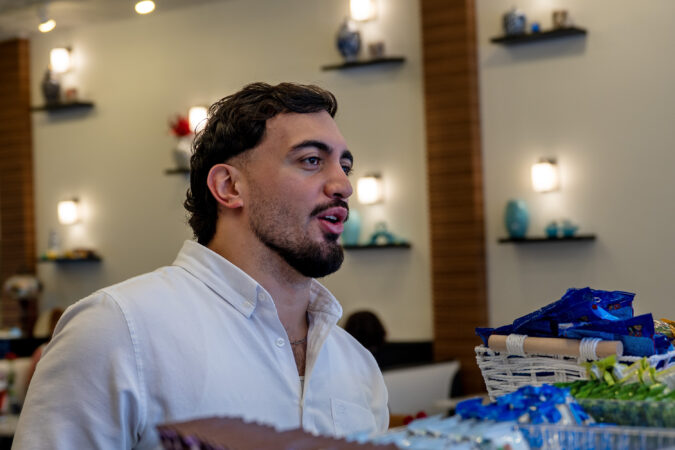
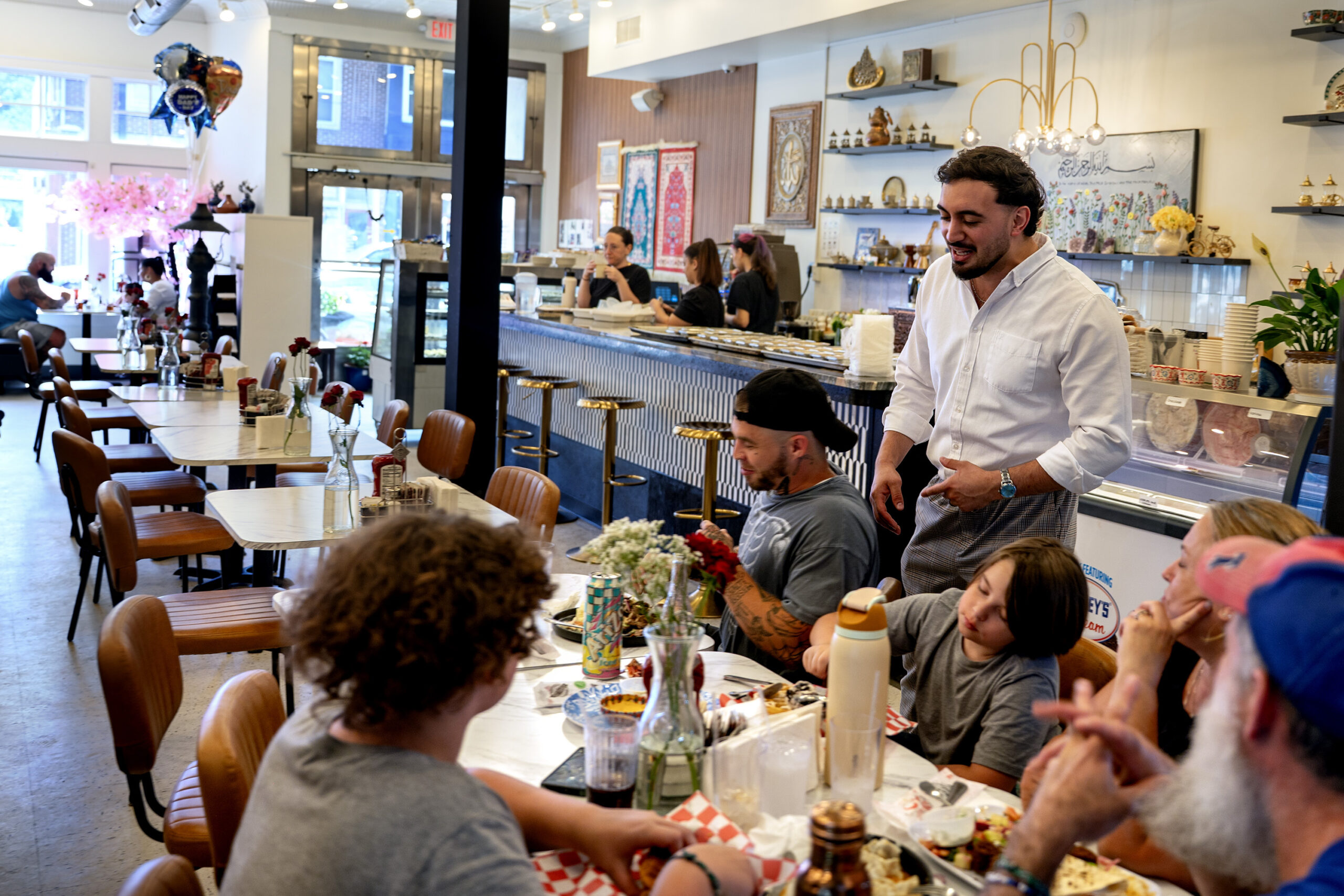
    Muhammed Emanet greets Elijah Brown, a friend from high school, and his family, at Jersey Kebab in Collingswood on Sunday.

    A little more than a year ago, on Feb. 25, 2025, the small Mediterranean restaurant on Haddon Avenue generated national headlines. Immigration advocates and local leaders railed against what they saw as government injustice, after ICE agents arrested owners Celal Emanet and his wife, Emine.

    Celal Emanet was released after being fitted with an electronic ankle monitor ― later removed ― while his wife was held at an ICE detention center in Elizabeth. She was released on bond after two weeks and a day.

    Their arrests angered a South Jersey community that has long known the couple as caring people who offer free food to the hungry. A GoFundMe campaign to pay family costs and expenses raised $327,000, drawing donations from across the country and beyond, including from Ireland, Germany, and England.

    Now, a community effort to help Muhammed Emanet is driving a new letter-writing campaign, with person after person attesting to his good character and his importance to his neighbors. Hundreds of letters have been signed and gathered to be presented on his behalf, said Lori Leonard, who organized the GoFundMe campaign last year.

    “People are rallying behind Muhammed,” she said.

    State Assemblyman Bill Moen, a Democrat who represents parts of Camden and Gloucester Counties, signed a letter of support. He said on social media that Emanet “has touched the lives of many people throughout South Jersey” as a husband, father, neighbor, friend, and businessperson.

    “While I don’t make immigration decisions,” Moen said, “I do believe decision-makers should understand the character of the people whose lives are affected by those decisions.”

    U.S. Rep. Donald Norcross, a South Jersey Democrat, met with the family soon after Emine Emanet was released from ICE detention, and as her son’s situation emerged this month he stressed in a statement that the family had been long “rooted in our community.”

    In response to questions on Muhammed Emanet’s situation, USCIS said it does not comment on individual immigration cases.

    Being removed to Turkey would likely separate Emanet from his wife and children for years. It also could subject him to reprisals from the Turkish regime, where repressive human-rights conditions under President Recep Tayyip Erdogan has driven an exodus.

    Marriage to a U.S. citizen by someone who legally entered the country ― as Emanet did ― has long been a reliable route to an adjustment of status and acquisition of a green card.

    But the Trump policy change announced in May said adjustment should be an “extraordinary” relief, one that depends on government discretion, not merely on having a valid marriage and submitting the proper forms. Failing to depart the U.S. under the policy can by itself be treated as a negative factor in the government’s decision-making.

    Emanet’s immigration lawyer, Joseph Best, said that change in administration policy does not alter the law around eligibility for green cards.

    “If USCIS follows the law,” Best said, “he will attain his lawful permanent resident status just as Congress intended. It is not some fluke or exceptional ‘ask’ here.”

    Discretionary factors, he said, all favor Emanet, who was brought legally to the U.S. as a child, was admitted under a valid visa, and has no criminal history. He is loved in his community, and a key person in a successful family business that is known for helping others, Best said.

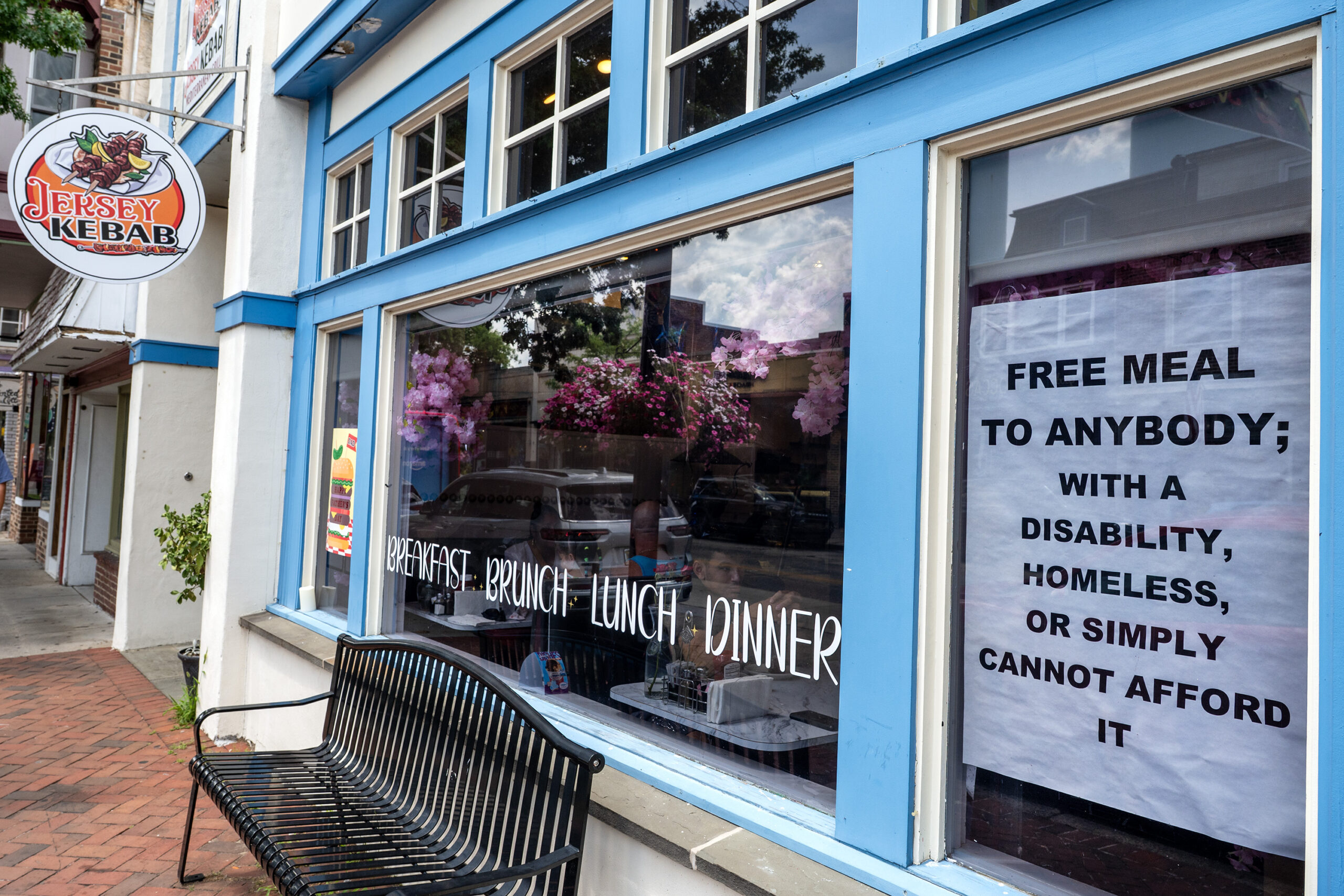
    The Jersey Kebab restaurant in Collingswood where Muhammed Emanet works is seen on Sunday, June 21. It offers the same “Free Meal” policy as at the prior location in Haddon Township.

    Celal and Emine Emanet came legally to the United States with two young children in 2008, entering under a religious visa that allowed the father to work at a New Jersey Islamic center.

    They said that they sought green cards before that visa expired in 2013, but that the application has been in government limbo for years.

    In 2021, they founded Jersey Kebab in Haddon Township, and the restaurant recently moved west on Haddon Avenue to a new location in Collingswood.

    The couple’s immigration cases continue. Celal Emanet’s next hearing is scheduled for December, while his wife is to appear in April 2027.

    The family stands among roughly 386,000 Turkish immigrants and people of Turkish ancestry who live in the United States, according to Inquirer computations of U.S. Census figures. That includes about 15,000 in Philadelphia and surrounding suburban Pennsylvania and New Jersey counties.

    Turkey is a longtime U.S. ally, a rectangular land bridge between Europe and Asia that is surrounded by sea on three sides. It is a Muslim nation, a country of tea drinkers, the place where Julius Caesar is said to have immortally proclaimed “Veni, vidi, vici” ― “I came, I saw, I conquered” ― after a decisive battle victory near what is now the modern town of Zile.

    Today, people are leaving the country amid economic instability and political purges, with many trying to get to the United States.

    U.S. government apprehensions of Turkish nationals at the Mexican and Canadian borders surged from 67 in 2020 to more than 15,000 in 2022 and another 15,000-plus in 2023, dropping to 10,500 in 2024. Figures for 2025 were not immediately available.

    President Donald Trump is expected to be in Turkey next month to attend the NATO summit in Ankara.

    Muhammed Emanet works at his family’s restaurant, Jersey Kebab, in Collingswood on Sunday, June 21.

    During Trump’s second term, USCIS has repeatedly paused the processing of applications for all types of immigration benefits, including those for legal permanent residency.

    Last month, the administration announced it would require foreigners who are living in the U.S. and want to obtain green cards to leave the country to do so. The administration said they must now apply in their homelands, a departure from longstanding policy that has sowed confusion and concern.

    For decades, foreign nationals who meet requirements have been able to complete the green-card process in the United States, including those married to U.S. citizens, holders of work and student visas, and refugees and asylum seekers.

    USCIS spokesperson Zach Kahler said in a statement that entering the U.S. on a visa should not be a first step toward obtaining a green card, that tourists and temporary workers are permitted to come here for limited times.

    “Our system is designed for them to leave when their visit is over,” he said.

    Making people leave the country to apply for green cards “reduces the need to find and remove those who decide to slip into the shadows and remain in the U.S. illegally,” he said.

    The administration instructed immigration officers to consider violations of immigration laws, including overstaying a visa, as negative factors in their decision-making.

    Since the uproar, though, USCIS has seemed to walk back the policy, saying it would be implemented on a case-by-case basis. That could mean that some immigrants will be able to stay in the U.S. while they seek green cards.

    Emanet said his immigration case started in 2020, when two plainclothes ICE officers arrived at the family home and said he was in the country illegally.

    In spring, his attorney persuaded an immigration court in Newark to terminate Emanet’s court case ― with no opposition from the DHS Office of the Principal Legal Adviser, the ICE prosecutors. That termination seemed to clear the way for Emanet to adjust his status.

    Instead, on June 3 he received a Notice of Intent to Deny from federal immigration officials, indicating they plan to reject his application to adjust his status. He is not sure what will happen when the 30-day deadline for new information expires.

    “I have children here who need my support ― American citizens who depend on me,” Emanet said. “I thought I was that one, that I did everything exactly how I was supposed to, that I should receive my green card. … It feels like a punch in the gut.”

  • Why Mike Gansey’s sound process in selecting Labaron Philon Jr. bodes well for Sixers’ future

    Why Mike Gansey’s sound process in selecting Labaron Philon Jr. bodes well for Sixers’ future

    At the broadest, most general philosophical level, Mike Gansey aced his first test as Sixers president on Tuesday night. He looked at his draft board, saw a player he’d graded as the best talent by a significant margin, and then he selected that player. The process was sound.

    As insignificant as it may seem, plenty of front offices mess it up. They prioritize things like roster construction or positional fit and they allow motivated reasoning to cloud the reality that all of the perfect players are long gone by the 22nd pick in the NBA draft. You must defy the odds just to select a player who ends up deserving a spot in a playoff rotation, let alone one who can make a decisive impact at a position of need. In Labaron Philon Jr., a sophomore guard from Alabama, the Sixers saw a talent so obvious that they didn’t feel like there was a choice to make.

    “He’s someone that fell into our lap, so to speak,” Gansey said.

    Of course, the real test is whether they are right. Not just about Philon, a dynamic ballhandler and shooter who averaged 22 points per game last season and who some mock drafts had going in the top 15. Gansey and his front office must also be correct in their evaluations of the players they could have drafted instead of Philon. Zuby Ejiofor, Chris Cenac Jr., Joshua Jefferson, to name a few. Each of those three possesses the size that Philon lacks and that a roster like the Sixers’ will eventually need on the wing alongside Tyrese Maxey and VJ Edgecombe. Each went off the board in the six picks after Philon. Two of them went to Eastern Conference playoff hopefuls (Ejiofor to the Hawks at No. 23, Cenac to the Celtics at No. 27). History will be written by the teams that got it right.

    All you need to know about how the Sixers feel about Philon can be derived by the fact that they saw fit to draft him despite the overlap in skill sets with Maxey and Edgecombe and also the player they traded away for the pick they used to draft the Alabama guard. When Daryl Morey dealt Jared McCain to the Thunder with ownership’s approval, the thought was that the 2024 first-round pick’s long-term utility would be capped by his inability to play alongside two other smallish guards. He and Philon are hardly carbon copies of each other. Philon is a little longer in terms of standing reach and wingspan, and he is a quicker, more dynamic playmaker with the ball in his hands. But they both exist in the same general bucket, with the same limitations with regard to Maxey and Edgecombe.

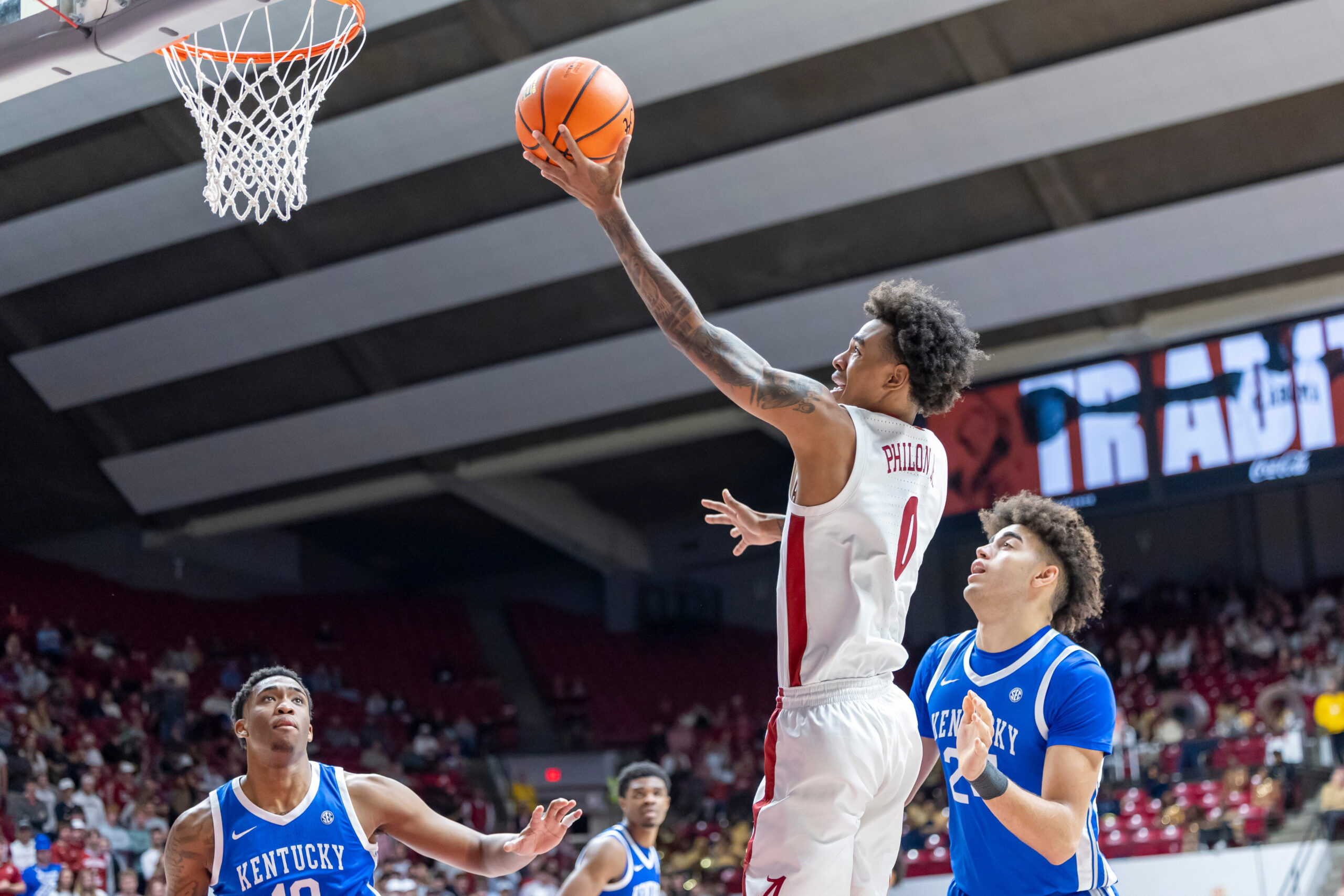
    Sixers first-rounder Labaron Philon Jr. averaged 22 points in his final season at Alabama.

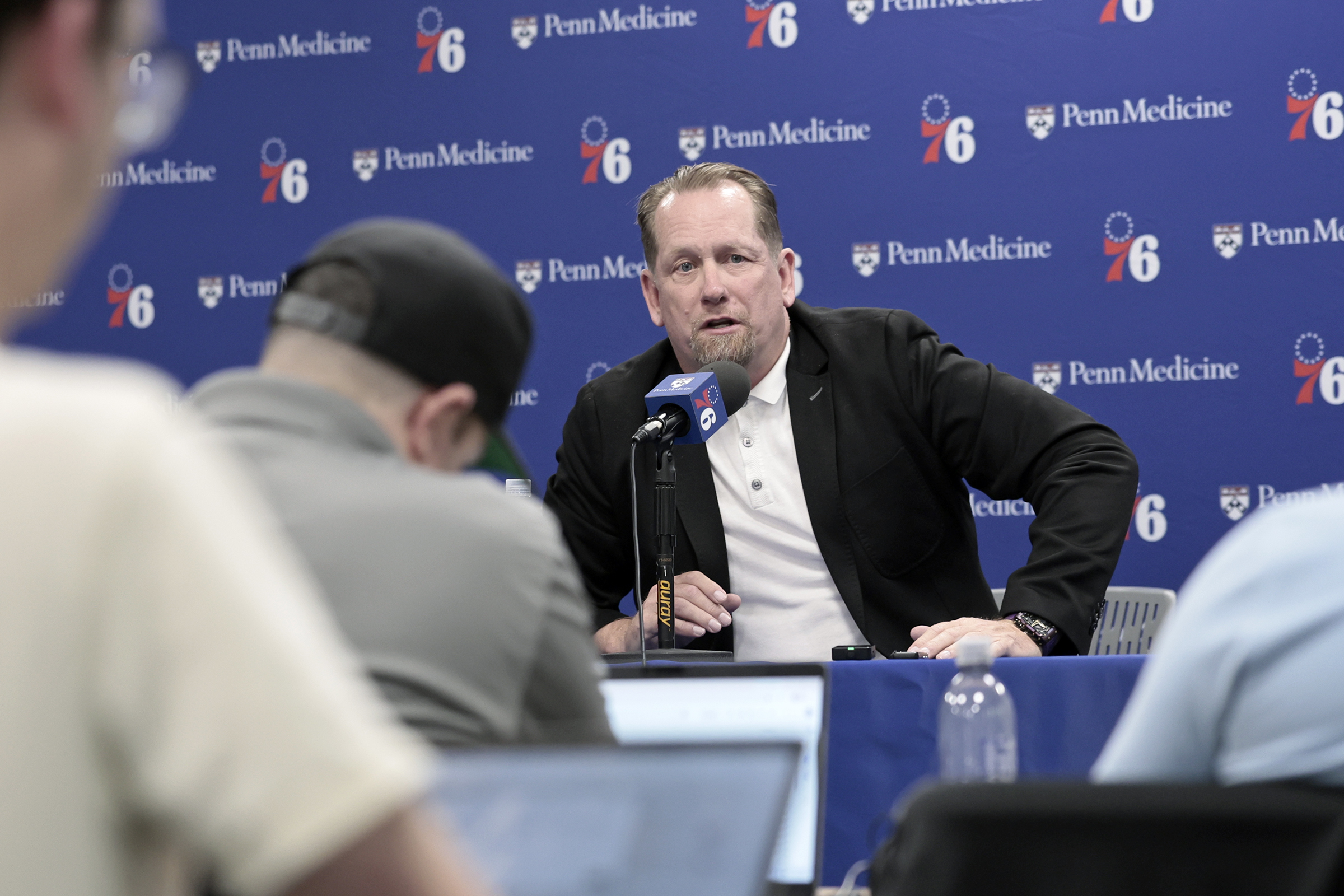
    Speaking to reporters after the conclusion of Tuesday’s first round, Gansey and Sixers coach Nick Nurse both spent a lot of time talking about how similar Philon is to Maxey and Edgecombe.

    “He’s another fast, kind of exciting guy that kind of plays a lot like Tyrese and VJ,” Nurse said. “It’s another guy with the speed, athleticism, quickness, deep range, some creativity with the ball. He’s a pretty good pick-and-roll player already, probably more advanced than a lot of guys coming out. I think he sees all the pieces of the pick-and-roll.”

    Nurse and Gansey both hemmed and hawed when asked whether they envisioned using all three of their young guards on the court at the same time.

    “I don’t see a lot of minutes, but maybe in certain situations we can,” Gansey said, while also deferring to Nurse.

    Nurse sounded equally skeptical.

    “I think it’s a little early to answer that,” he said.

    Both downplayed the significance of the question. Games are more than long enough to accommodate three guards playing starter minutes at staggered intervals. Maxey and Edgecombe both finished among the league leaders in playing time last season, perhaps counterproductively so. In a world where each averages 32 minutes per game, that would leave another 32 where one or the other is on the bench.

    “My mindset is he’s talented,” Nurse said of Philon. “Let’s figure out how we’re going to get him on the floor.”

    Nick Nurse and Mike Gansey saw a lot of similarities between new Sixer Labaron Philon Jr. (right) and VJ Edgecombe and Tyrese Maxey.

    The Sixers will have a good problem on their hands if Philon ends up good enough to warrant more minutes than are available. It will mean the minutes he does play are valuable. The Knicks won an NBA championship with Jalen Brunson, Miles McBride, and Jose Alvarado. The Spurs had Dylan Harper playing starter minutes off the bench behind De’Aaron Fox and Stephon Castle. The Thunder had a slew of guards contribute, including the smallish McCain and Cason Wallace.

    “You look at our roster, we need help at every position, one through five,” Gansey said. “Obviously, we have the big four, and I think he fits. He’s another guard so now we can kind of focus in other areas on the roster.”

    However Philon turns out, the pick does offer us a little more evidence on what to expect out of Gansey and this Sixers roster. They didn’t use the No. 22 pick to select a player who might someday help alleviate the roster’s clearest current need (size on the wing). They didn’t trade it for a veteran who might’ve made them better in the short term. They didn’t use it to entice a team to take on Paul George’s contract. They did what a team in their position should be doing. They had an opportunity to draft a player they think will someday belong in a championship-caliber rotation, and they availed themselves of that opportunity. That is how it is going to need to be done: piece by piece.

  • Rutgers Women’s Brain Health Initiative will explore how hormonal changes affect the brain

    Rutgers Women’s Brain Health Initiative will explore how hormonal changes affect the brain

    A group of Rutgers researchers led by neuroscientist Ioana Carcea want to learn more about how women’s brains are affected by pregnancy, motherhood, menopause, and other hormonal changes that they say have been under studied.

    The Women’s Brain Health Initiative at the Rutgers Brain Health Institute in Piscataway will focus on research and public education about women’s brain function, neurodevelopment, mental health, and disease vulnerability.

    The Inquirer spoke with Carcea, associate professor in the Department of Pharmacology, Physiology and Neuroscience at Rutgers New Jersey Medical School, to learn more about the initiative, which launched in June.

    The interview has been lightly edited for clarity and length.

    Ioana Carcea is an associate professor in the Department of Pharmacology, Physiology and Neuroscience at Rutgers New Jersey Medical School.
    What is the focus of your research and the Women’s Brain Health Initiative?

    In my laboratory we study different aspects related to how the brain works, how it communicates with the body. One focus area for us is understanding maternal behavior and what regulates maternal behavior. The institute is much broader than what I do. In the Rutgers Women’s Brain Health Initiative, we want to focus on the transitions in life that are specific to women — puberty and monthly menstruation, pregnancy, postpartum, menopause. These are very dramatic hormonal changes that women experience and they impact general health, particularly brain health.

    How are the hormonal changes women experience different from men?

    Men obviously experience puberty, but it’s a different set of hormones. Post-puberty, testosterone does have a full cycle mode of release, but it’s not the monthly cycle that women experience in hormone levels, and the fluctuations are not as profound as in women. Then with aging, men don’t really experience a “pause.” There is going to be a decrease in testosterone levels with aging, but it’s not a complete pause like we see in women.

    What are some of the challenges in this type of research?

    It is a difficult topic to study. Menopause varies among women, as far as when it starts, how long the perimenopause period lasts — it can be two years, it can be 10. The symptoms vary, genetic risks can amplify the risk of disease. Another challenge is we don’t really have great animal models for menopause. Menopause is very rare in nature. Other than women, only orcas and some other whales have true menopause, where they can lead healthy lives after the reproductive window closes. Primates can come close to menopause – it’s not quite the same, but they do experience reproductive aging.

    Has research funding been a challenge?

    We need more funding in this area. The funding climate has been changing and both NIH and private foundations are now investing more in women’s brain health research, but that hasn’t happened for a long time, and I think that’s one of the reasons we have these gaps in knowledge when it comes to women’s brains.

  • Letters to the Editor | June 24, 2026

    Letters to the Editor | June 24, 2026

    American graffiti

    If, in the dead of night, someone had placed their name above John F. Kennedy’s name at the Kennedy Center for the Performing Arts, then drained and repainted the Reflecting Pool at the Lincoln Memorial after tearing down the East Wing of the White House, we would call it the biggest case of vandalism in U.S. history. The perpetrator might even face life in prison without parole. In this case, these acts were done by the president right out in the open with backing from U.S. taxpayers. If we were expecting help from his side of the aisle in Congress — or even a word of protest — we picked the wrong representatives. In addition to the expense of the projects and the sheer chutzpah in these undertakings, the results have been horrific. The Kennedy Center has lost performers and the backing of its subscribers. The algae-filled Reflecting Pool looks to be in a state of disrepair, and the pictures of the new ballroom look to be as garish as one would expect from a Trump project.

    In the meantime, as Trump searches for the vandals responsible for the peeling paint in the reflecting pool, he might check in the mirror. His no-bid contracts and incompetent oversight are the culprits.

    Elliott Miller, Bala Cynwyd

    War enablers

    On June 16, both of Pennsylvania’s U.S. senators voted against ending funding for the Iran war, which is far from over. This war was a mistake from the beginning and has steadily devolved into the abject humiliation it is now. It would be funny, except thousands are dead. I am sickened, in particular, at the callousness and lack of accountability shown by these two extraordinarily privileged men. I am sure they are both encouraging their children to enlist.

    Andrew Clark, Philadelphia

    Iran wins again

    The Islamabad Memorandum of Understanding (MOU), an interim ceasefire agreement designed to end the U.S.-Iran war, has been universally condemned as one-sided, heavily favoring Tehran. The criticism, as noted by Trudy Rubin, stems directly from the lack of strategic depth displayed by a team of novice American negotiators.

    With Steve Witkoff, a real estate developer, at the helm, a dangerous level of inexperience is driving our diplomatic strategy. America’s once-respected international statecraft has been replaced with naivete and appeasement, rendering our foreign policy apparatus impotent. This handicap will likely lead to a similarly disastrous outcome when the final terms of a peace agreement are negotiated in the coming weeks in Switzerland.

    The Iranian delegation, composed of seasoned veteran diplomats, held a strategic advantage over the American neophytes in MOU negotiations. With that leverage firmly in place, a geopolitical victory for Iran, effectively U.S. terms of surrender, seems inevitable.

    Jim Paladino, Tampa, Fla.

    Skill game ban

    The Inquirer’s recent editorial calling for a ban on “skill games” seemed to miss the mark.

    While not a fan of these parasitic devices, there is a dearth of fairness in supporting an outright ban. Their prevalence and harm are undeniable, but they pale in comparison to the even easier access to phone betting. It would seem the only equitable solution is to tax skill games at the same rate as casino slots.

    That outcome won’t sit well given the insidious, outsized influence established gaming has on lawmakers from Gov. Josh Shapiro on down — and that may be a good thing.

    J. Savage, Philadelphia

    Merci à nos amis

    I was outside for a nice Father’s Day lunch at my son’s house in Hammonton when I heard the sound of multiple jets. As I looked up, directly overhead was the Patrouille de France, the official precision aerobatics demonstration team of the French air and space force. They were in two formations of four. This aviation nut was so happy for my own personal little air show.

    “Liberté, Égalité, Fraternité”

    Ed Truncale, Mays Landing

    From the jaws of defeat

    Twice this century, the Electoral College has decided the presidency in favor of candidates who lost the popular vote, with George W. Bush in 2004 and Donald Trump in 2016.

    Those elections have led to a U.S. Supreme Court whose rulings have determined the Constitution supports limited presidential immunity, and that an element of women’s healthcare — abortion — is unconstitutional. Perhaps it is time to realize that the current framework of the Electoral College is a built-in barrier to democracy and an impediment to the promise that all men and women are equal under the law.

    Joel H. Beldner, Glenmoor

    Merit or privilege?

    Your article on Stacy Garrity’s campaign for governor asserted that “Republicans, in particular, often emphasize that candidates should rise on their skills and talent, not personal identity.” Garrity, herself, is quoted as claiming, “Republicans, for the most part, are based on merit, and that’s how I was raised.”

    It’s bad enough when Republicans delude themselves into believing this. But it is really unfortunate that an Inquirer reporter does not notice that current Republicans seem focused on merit only when they criticize and undermine women and people of color who have advanced in the military, been admitted to Ivy League colleges, etc., because they assume such people could not have been chosen based on merit. However, when they support Donald Trump appointees — most of them white males — who lack the fundamental skills and knowledge and experience required to do these critical government jobs, they seem to have abandoned their focus on merit. Or are they just assuming that being male and white are guarantees of merit?

    Vicki W. Kramer, Philadelphia

    Yes, we can

    Thankful is what I am. It is brutal to have to listen day in and day out to a leader who thinks a barrage of lies, threats, and incompetence delivered transparently annuls the distrust, hatred, and divisiveness it foments. How in the world did we get into this predicament in the first place?

    So, I was rapt listening to decency, humility, and character delivered so eloquently by former President Barack Obama during a live broadcast of the opening of his presidential library. I believed him when he said it was in our hands to bring this country back from the abyss. We can rebuild an America where everyone counts with fairness, common sense, and mutual respect.

    William Cohen, Huntingdon Valley

    Common thread

    The Inquirer’s recent article about the sewing table donated to the Betsy Ross House reminded me that Ross was a dedicated patriot as well as a flag maker.

    Ross’ first husband, John, joined a militia and was killed in a gunpowder explosion in January 1776. Four months later, according to lore, her husband’s uncle, George Ross, visited her with George Washington and Robert Morris to ask if she would make a new flag. Secrecy was paramount because a new official flag, if discovered, likely would be seen by loyalists and the crown as evidence of the colonies’ final break for independence. (In fact, many colonists continued to have hopes for a negotiated constitutional monarchy in the early years of the war.) During this time, the Grand Union flag was often flown (sporting a canton with the Union Jack’s crosses of SS. George, Andrew, and Patrick), and included 13 stripes added to that canton. Washington’s canny decision to maintain a connection to Great Britain was strategically a smart one.

    The lack of definitive information from those secretive times might explain why Ross’ work would be kept under wraps until the new American flag was officially proclaimed on June 14, 1777.

    Pat Jordan, Wayne

    Join the conversation: Send letters to letters@inquirer.com. Limit length to 150 words and include home address and day and evening phone number. Letters run in The Inquirer six days a week on the editorial pages and online.

  • The Sixers ‘couldn’t pass up’ Labaron Philon Jr. after he ‘fell in our lap’ at No. 22 overall in NBA draft

    The Sixers ‘couldn’t pass up’ Labaron Philon Jr. after he ‘fell in our lap’ at No. 22 overall in NBA draft

    Mike Gansey made his first move as 76ers‘ president of basketball operations on Tuesday, selecting Alabama’s Labaron Philon Jr., with the No. 22 overall pick.

    After his official introduction on June 11 as the team’s new leader, the draft was the first item on the docket. In his opening press conference, Gansey said explicitly that he viewed the 22nd overall pick as one of the critical tools to improve next year’s roster. He liked the range of players expected to be available for the Sixers at 22, but as the Alabama guard dropped down the board, he became the obvious choice.

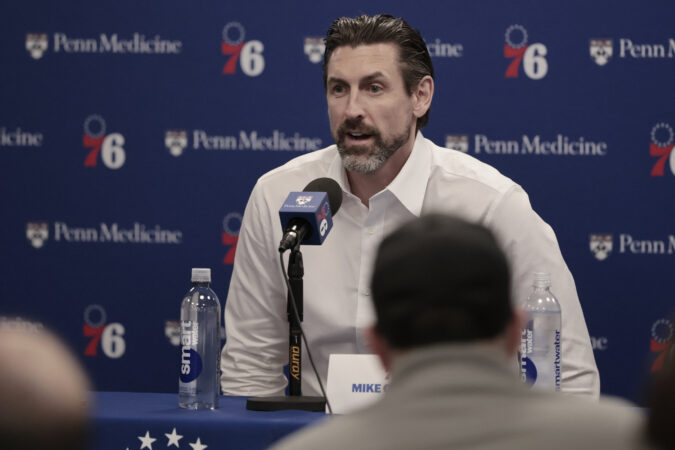
    “He was the highest guy on our board at 22,” Gansey said. “We had him higher than that. You look at our roster, we need help in every position, one through five. Obviously we have the big four, but we need guys outside of it. I think he fits. He’s another guard, so now we focus in other areas on the roster, but he’s someone that just fell in our lap.”

    The guard played two seasons at Alabama, averaging 22 points, 5 assists, 3.5 rebounds, and 1.2 steals in his sophomore season.

    Nick Nurse said he sees Philon as a player who “can play right away,” and the Sixers needed to add depth at every position. Tyrese Maxey averaged the most minutes per game in the NBA last season. VJ Edgecombe was 11th. Gansey said he doesn’t necessarily see Philon playing alongside those two in a three-guard lineup, but expects him to give both of those players more rest next season, and to get Maxey working off the ball more.

    Sixers head coach Nick Nurse needed more guard depth last season as Tyrese Maxey and VJ Edgecombe played big minures.

    Philon was also the right culture fit with his competitiveness and hunger, Gansey said. He emphasized that he’s looking for “fountains, not drains.” and wants players who want to be in Philadelphia and will help build a team culture that’s been missing the last few seasons.

    “His mentality, I think fits the way I want guys, and especially with Coach Nurse,” Gansey said. “Nick wants guys who play the right way, play with some edge and toughness.”

    No. 22 overall was the only pick the Sixers owned heading into draft night, but it might not be the only selection the Sixers make in this year’s draft. Gansey said the team will “be aggressive” in attempting to trade back up into the second round if a player they like is available.

    If the Sixers bypass the second round, free agency will be the team’s next big opportunity to improve the roster ahead of opening night.

    Picking Philon doesn’t necessarily mean that pending free agent Quentin Grimes is out the door, Gansey said, adding that the front office was engaged with both Grimes and Kelly Oubre Jr. as free agency approaches. But it does open up the opportunity for the Sixers to let Grimes walk and use that money to upgrade at other positions, if they so choose.

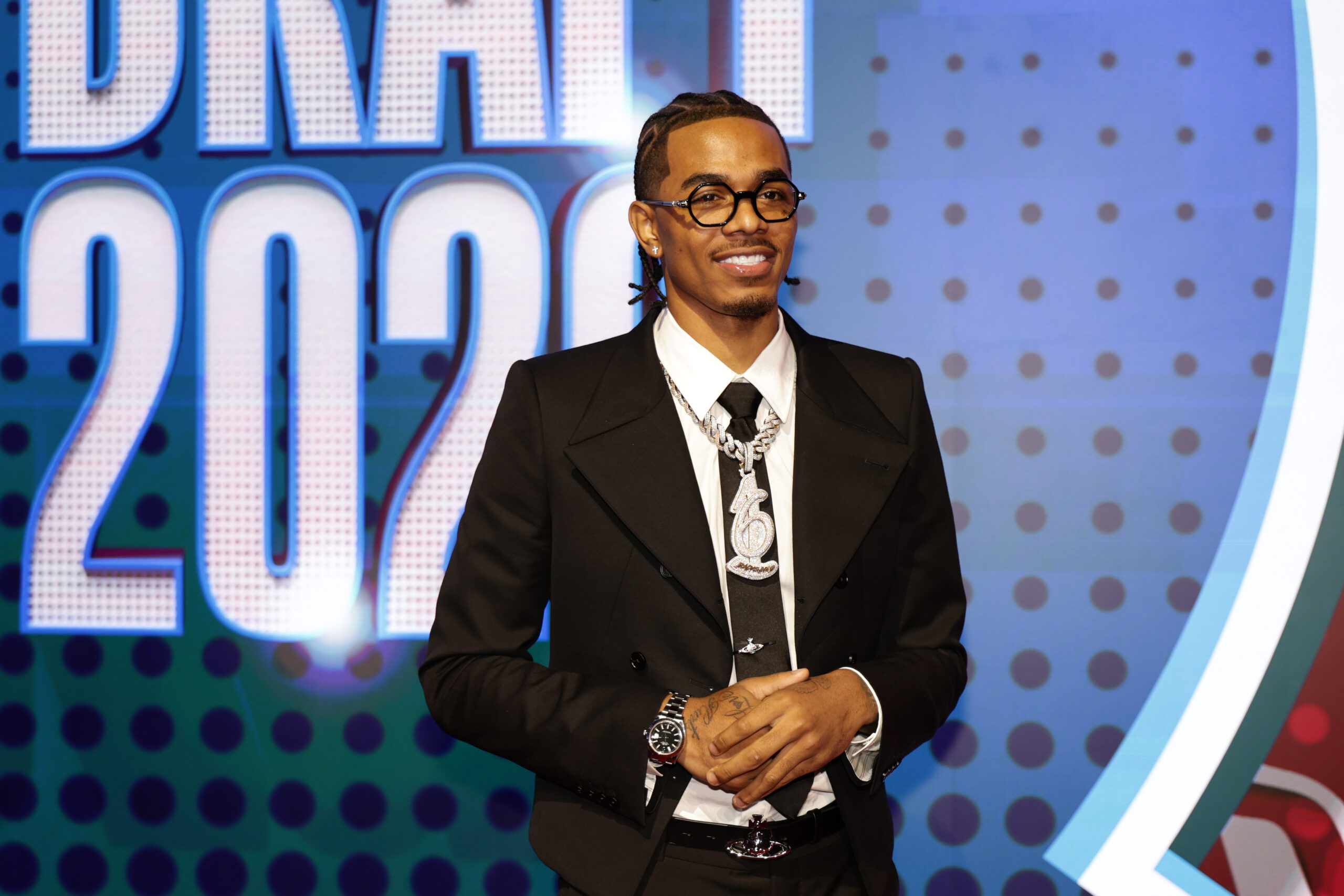
    Labaron Philon Jr. arrives for the first round of the NBA basketball draft Tuesday, June 23, 2026, in New York. (AP Photo/Adam Hunger)

    “It just takes a little pressure off Tyrese and VJ, when you have another ballhandler,” Gansey said. “We’re going to have to get another ball handler too. We can’t rely on a rookie point guard, but I just think he’s just too talented, too young, that where he was at the draft, we couldn’t pass up.”

  • First-round pick Labaron Philon Jr. brings ball-handling, shooting ability, and playmaking to the Sixers

    First-round pick Labaron Philon Jr. brings ball-handling, shooting ability, and playmaking to the Sixers

    NEW YORK — The 76ers entered the NBA draft fresh off a playoff series that exposed their roster shortcomings.

    That decisive second-round sweep by the New York Knicks showed that the franchise needed to double down on what it received from cornerstones Tyrese Maxey, VJ Edgecombe, and Joel Embiid. They needed more speed, more scoring, more shooting, more rebounding, more everything.

    The Sixers’ first attempt at improving came with the selection of Alabama guard Labaron Philon Jr. at No. 22 overall on Tuesday, christening the Mike Gansey era as president of basketball operations.

    Let’s take a closer look at Philon’s career at Alabama, how he fits with the Sixers, and other areas of the Sixers’ roster that can still be addressed.

    What Philon brings to Philly

    Philon arrived at Alabama as a homegrown talent who proved to be a big-time scorer, earning Alabama’s Mr. Basketball high school honors.

    Before leaving town for Link Academy in Missouri for his senior season, Philon played three seasons at Baker High School in Mobile, Ala., and averaged 35 points, 6.2 rebounds and 3.9 assists as a junior. That scoring ability didn’t immediately translate to college in his freshman season at Alabama, when he averaged 10.6 points, 3.3. rebounds, and 3.8 assists in 37 games.

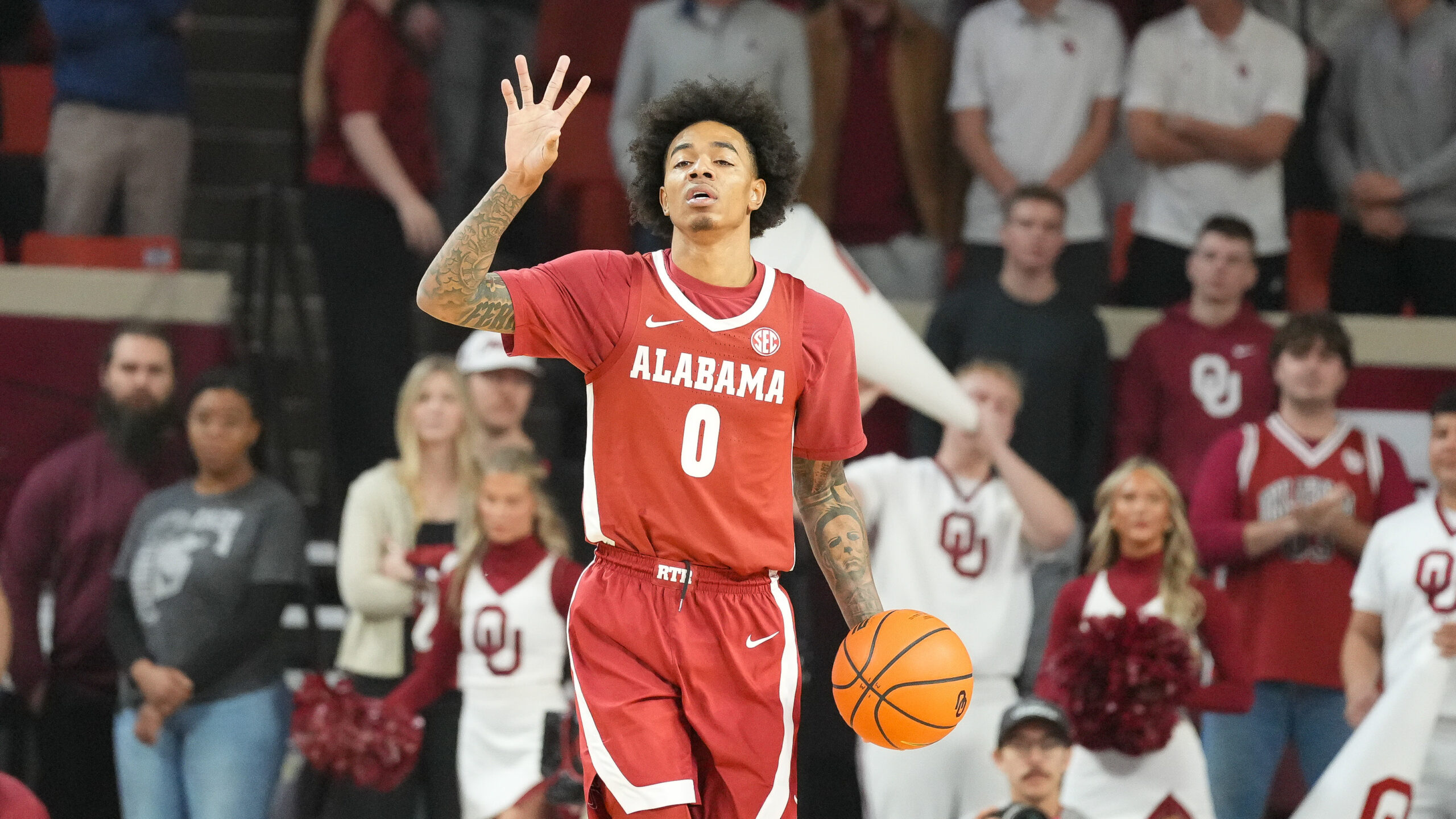
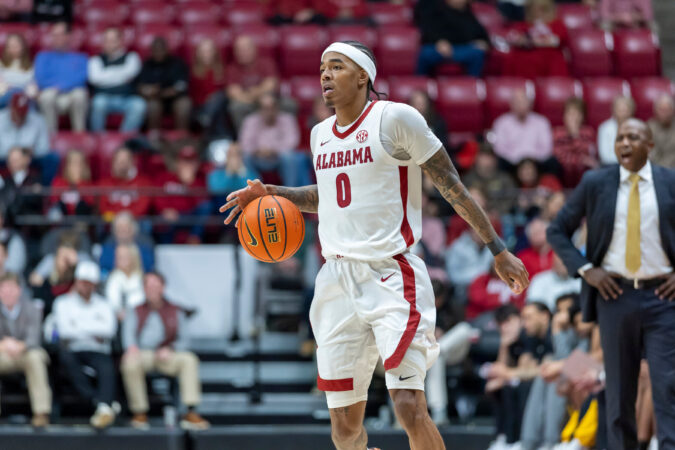
    Alabama’s Labaron Philon (right) averaged 10.6 points, 3.3. rebounds and 3.8 assists in 37 games as a freshman.

    Philon realized that he didn’t put together a strong enough campaign to enter the NBA. He went through the process and returned to school for another year, where his tape was more undeniable. As a sophomore, Philon averaged 22 points, 3.5 rebounds, and 5 assists. That was good enough to get buzz as a lottery pick before dropping to the Sixers at No. 22.

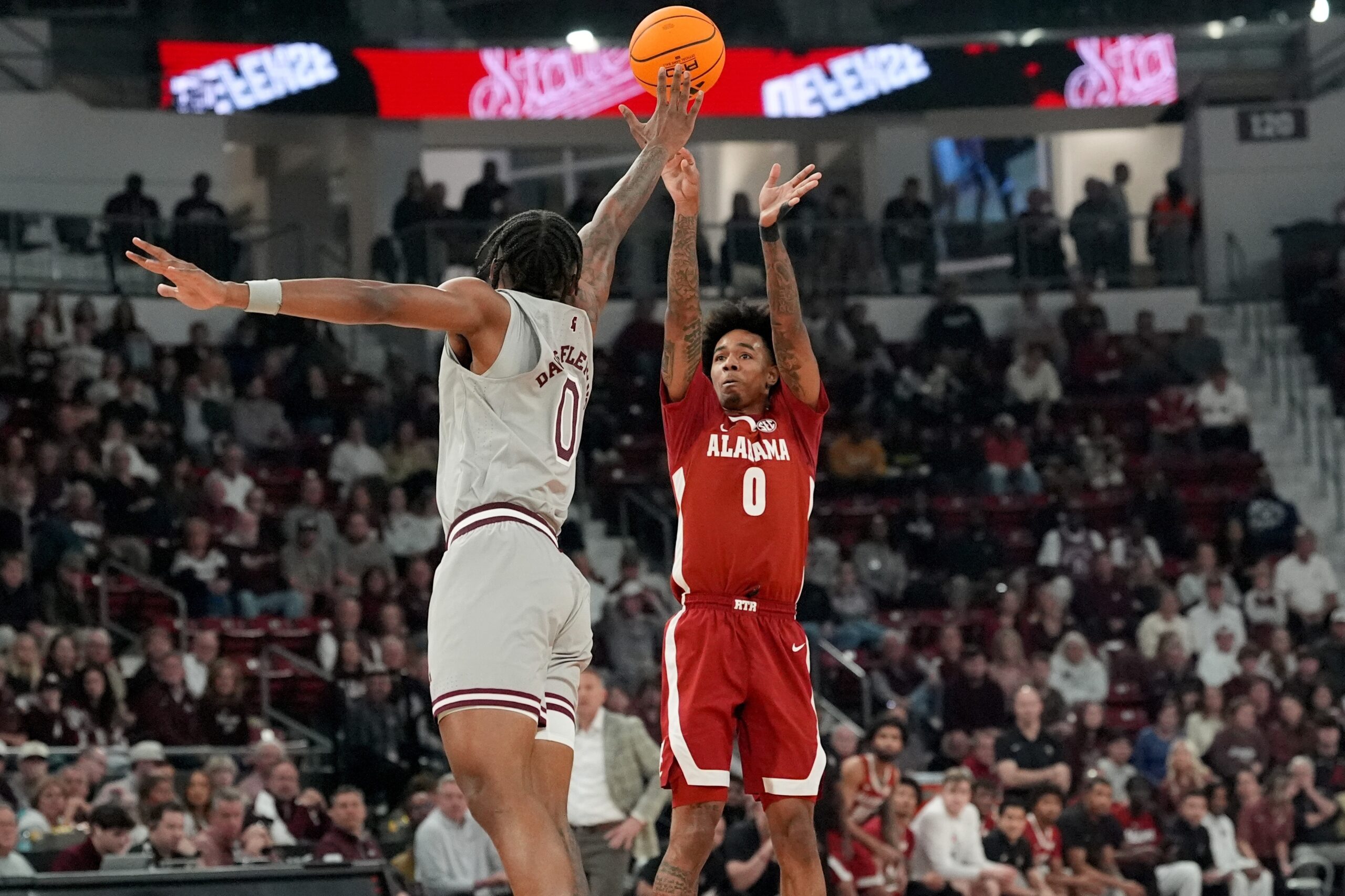
    Philon’s skill set features a crafty handle, ability to finish at the rim, and shooting range from deep. He can function in the screen-and-roll and is creative in open space. He made 57.4% of his two-pointers and 39.9% of his three-pointers last season, and those numbers are made more impressive by the fact that Philon was often the center of attention for Alabama and created a large share of his own shots.

    Most important, Philon’s numbers weren’t empty calories. His production contributed to winning in both seasons for the Crimson Tide, as he helped direct a team that made the Elite Eight as a freshman and the Sweet 16 this past season. Each time his team met a No. 1 seed, losing to Cooper Flagg’s Duke team in 2024-25 and eventual champion Michigan in 2025-26.

    How Philon fits in Philly

    The Sixers have too many holes to fill in one draft. They entered Tuesday with voids in the backcourt and frontcourt. The franchise hit on Maxey and Edgecombe in recent drafts, but those stellar guards were near the top of the league in minutes played. Paul George and Embiid played inspired basketball at times when available, but they were not healthy nearly enough. George played only 37 games because of injury and suspension and Embiid called his 38 games played a “successful season” after he managed 19 games the season before.

    There were several players on the board who could have helped the Sixers when the 22nd pick rolled arrived. And several of them were names that slipped down the board as Arizona’s Koa Peat, Houston’s Chris Cenac Jr., and Philon were available. The Sixers appeared to take the best player available, as president of basketball operations Mike Gansey intimated that they would.

    During the draft process, Iowa sharpshooter Bennet Stirtz, who was picked 16th and joined former Sixer Jared McCain with the Oklahoma City Thunder, made a poignant statement. He said every team can use more shooters and ballhandlers. That’s what Philon will bring to Philly, another player who can create and score when Maxey goes to the bench.

    He’s adept at getting downhill and making buckets in the midrange and over bigger bodies, which will be needed on a Sixers team that received most of its scoring from four players. That he is a strong three-point shooter will be a bigger boon for the Sixers after trading McCain at the deadline in February and struggling to make shots from deep in the postseason.

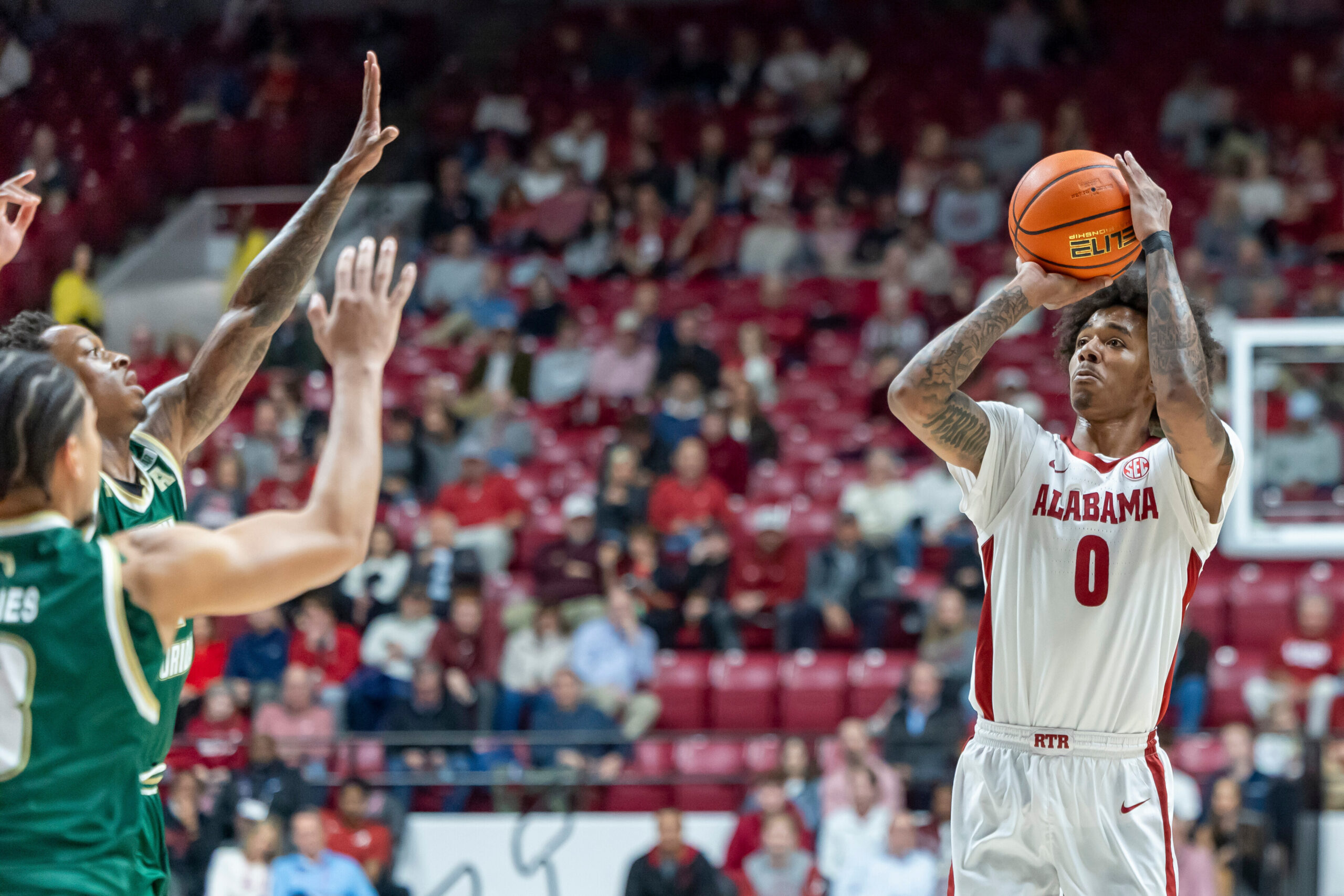
    Alabama guard Labaron Philon (right) shot 39.9% from three as a sophomore.

    The Sixers also trotted Edgecombe out as a secondary ballhandler often in his rookie season. But that typically amounted to him creating offense for himself or initiating and getting out of the way. There wasn’t much in between as he continues to improve his ballhandling. Philon can take some of that pressure off Edgecombe and do more to find Embiid and George, who have grown more dependent on their teammates to get them the ball at this time of their careers.

    What the Sixers still need to address

    Rebounding was a major issue for the Sixers last season. As was on-ball defense and communication. As were turnovers. Those things won’t all be addressed in the draft or free agency. The Sixers can add reinforcements at forward to lower the usage of a smaller lineup around Embiid. They can also retain Kelly Oubre Jr. or Quentin Grimes to keep depth and talent on the wings.

    But because of their contract obligations, there are some things that can only be fixed from within. Maxey, George, and Embiid are all on max contracts, limiting who the Sixers can add to the roster. That means those players will have to do more. It’s hard to ask Maxey to be better than he was during the regular season, when he carried the franchise to the playoffs and earned All-Star and third-team All-NBA honors. That leaves George and Embiid, whose availability will remain the biggest factor in this team’s success.