Tag: topic-link-auto

  • Gov. Josh Shapiro says he’ll prevent data center developers from ‘saddling’ Pennsylvanians with higher energy costs

    Gov. Josh Shapiro says he’ll prevent data center developers from ‘saddling’ Pennsylvanians with higher energy costs

    Gov. Josh Shapiro had a message for data center developers on Tuesday: Come to Pennsylvania, but bring your own energy — or pay up.

    During his budget address, Shapiro said his proposal — the Governor’s Responsible Infrastructure Development (GRID) standards — will ensure center operators are “not saddling homeowners with added costs because of their development.”

    Data centers, which house the technology to power cloud storage and other computing, have been proliferating across the country and the region due to the increasing demands of generative artificial intelligence, or AI. State and local officials are trying to keep up with the rapid pace of development, proposing new legislation — and updating existing measures — in an attempt to regulate the facilities.

    Shapiro’s plan would require data centers to supply their own energy or pay for any new generation they need. It also calls on them to hire and train Pennsylvania workers and comply with “the highest standards of environmental protection,” including in water conservation, Shapiro said.

    In exchange, the governor added, data center developers will get “speed and certainty” in the permitting process, as well as applicable tax credits.

    The comments from Shapiro, a Democrat who has consistently encouraged data center development, come amid a flurry of legislative and executive action, as elected officials promise to keep Pennsylvania and New Jersey consumers from bearing the costs of these power-hungry facilities.

    Data centers, the electric grid, and governors’ proposals

    Locally, proposals for large AI data centers have faced opposition from East Vincent Township, Chester County to Vineland, Cumberland County.

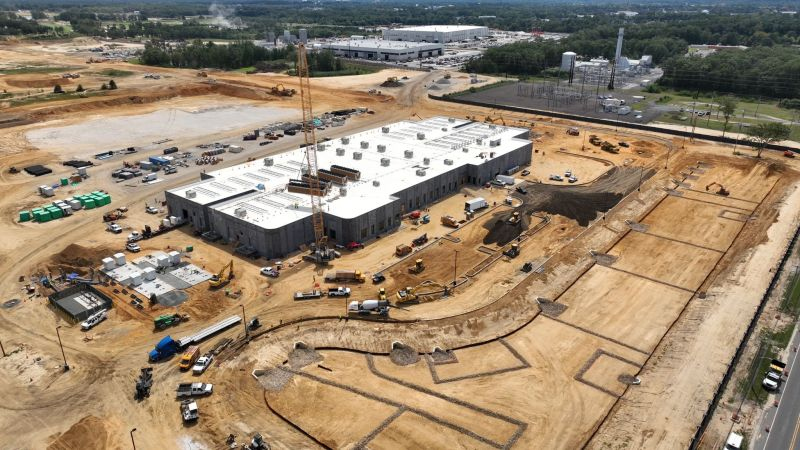
    A half-built data center in Vineland is expected to be completed later this year, with a capacity of 300 megawatts.

    Many experts have attempted to quantify the impact of these centers on Americans’ energy bills. In one analysis, Bloomberg News found that the monthly electric bills of customers who lived near significant data center activity had increased 267% in the past five years.

    At the same time, some governors, including Shapiro, have criticized and sued PJM, the Montgomery County-based electric grid operator, over its annual capacity auction, which influences how much customers pay.

    On Tuesday, Shapiro reiterated calls for PJM to speed up new power-generation projects and extend a price cap.

    Separate from GRID, Shapiro also said electric companies, including Peco, should increase transparency around pricing and “rein in costs” for consumers, including low-income and vulnerable Pennsylvanians.

    “These steps will save consumers money immediately,” Shapiro said. He announced an energy-affordability watchdog to monitor utility-rate requests and take legal action if necessary to prevent companies from “jacking up their rates and costing you more.”

    In New Jersey, new Gov. Mikie Sherrill made energy affordability a central tenet of her campaign. At her inauguration last month, she declared “a state of emergency on utility costs,” following through on a promise she had made in stump speeches and TV ads.

    Through several executive orders, she froze utility rates and expanded programs to spur new power generation in the state. She also ordered electric utilities to report energy requests from data centers.

    “This is just the beginning,” Sherrill said in her inaugural remarks. “We are going to take on the affordability crisis, and we are going to shake up the status quo.”

    In Pennsylvania, ‘Data Center Consumer Protection Bill’ advances

    An Amazon data center is shown last year while under construction in front of the Susquehanna nuclear power plant in Berwick, Pa.

    Meanwhile in Harrisburg and Trenton, some lawmakers have other ideas about how to keep residents from subsidizing data centers.

    As of Tuesday, nearly 30 bills in the Pennsylvania and New Jersey legislatures mentioned data centers, according to online records. Many of those bills aren’t directly related to residents’ electric bills, and instead address the facilities’ energy sources, water usage, environmental impacts, and general regulation.

    Others attempt to tackle rising consumer costs.

    On Monday, the Pennsylvania House Energy Committee advanced a measure referred to as the “Data Center Consumer Protection Bill.” Lawmakers say it would keep residents’ bills down by creating a regulatory framework for data centers and requiring their operators to contribute to utility assistance funds for low-income Pennsylvanians.

    “Today’s vote brings us one step closer to protecting ratepayers,” Robert Matzie, the Beaver County Democrat who introduced the bill, said in a statement. “Data centers can bring jobs and expand the local tax base, but if unchecked, they can drive up utility costs. Electric bills are already too high.”

    The state House Energy Committee also heard testimony Monday on a bill that would allow the state to create a “model ordinance” for local municipalities to regulate data centers, and another that would require centers to report their annual energy and water usage.

    The bills were introduced by State Reps. Kyle Donahue and Kyle Mullins, both Democrats from the Scranton area, which has become a hot spot for data center development.

    “There is a real concern and a sense of overwhelm among the people we represent,” Mullins said at the hearing. “The people of Pennsylvania have serious concerns about data center energy usage and water usage, especially as they see utility bills continue to rise rapidly.”

    Dan Diorio, vice president of state policy for the Data Center Coalition, said he worried the bills would discourage operators from building in Pennsylvania. He said they are already incentivized to reduce energy costs, which are estimated to make up anywhere from 40% to 80% of a data center’s total operating costs.

    “Data center companies strive to maximize energy efficiency to keep their costs low,” Diorio said.

    Rep. Elizabeth Fiedler, the Philadelphia Democrat who chairs the energy committee, closed Monday’s hearing by reminding members of one of its main objectives: to “keep down the energy bills that are skyrocketing for people back home.”

    A South Jersey lawmaker says his bill could help consumers
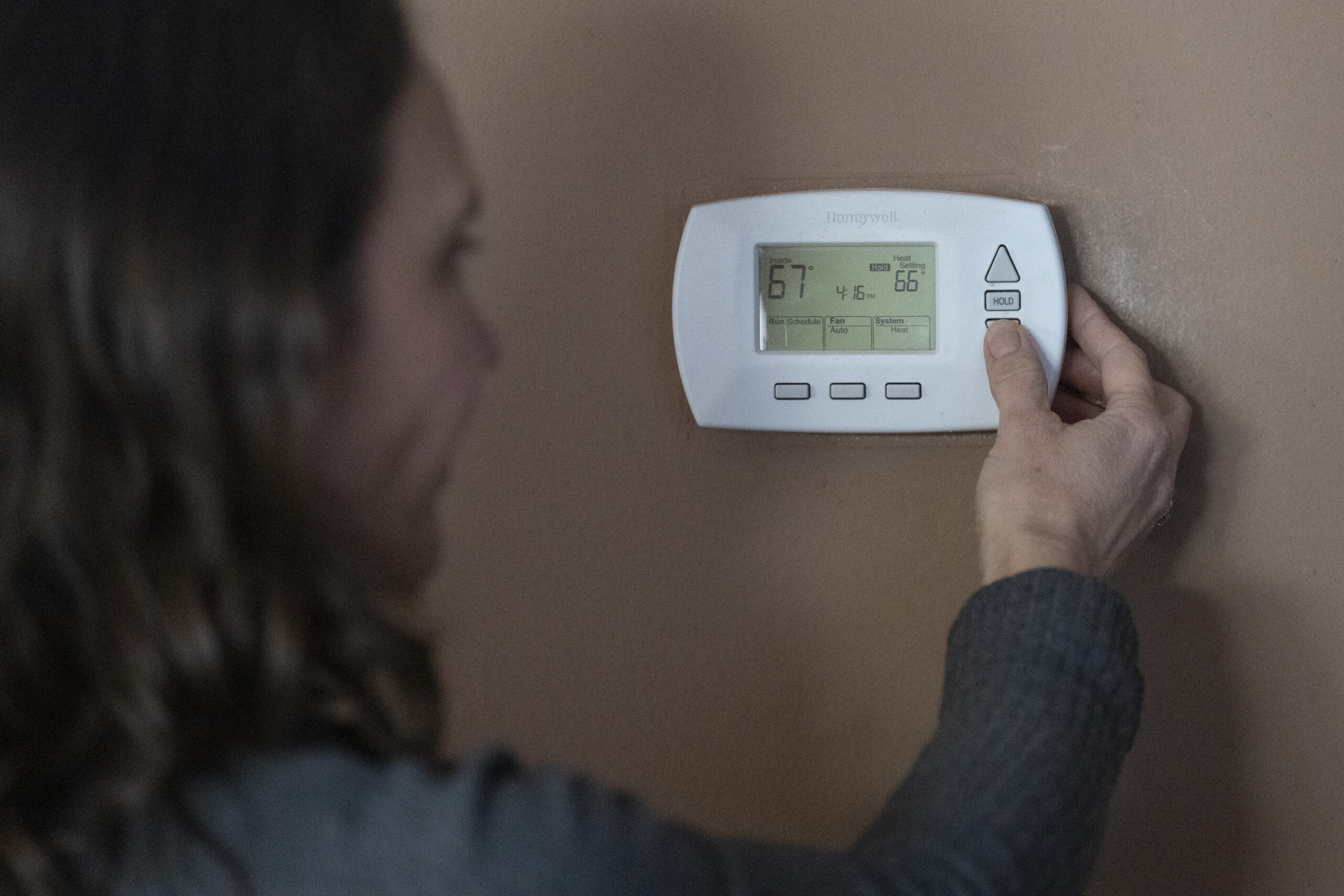
    A Philadelphia-area woman woman turns down her thermostat in attempt to save on electricity in this January 2023 file photo.

    The pain of skyrocketing utility bills has been felt acutely in New Jersey, which unlike Pennsylvania uses more energy than it produces.

    Between 2024 and 2025, New Jersey residents’ electric bills rose more than 13% on average, the fifth steepest increase in the U.S., according to federal data analyzed by the business magazine Kiplinger. Pennsylvanians saw a nearly 10% increase during the same period, according to the data.

    Prices are expected to keep rising in the coming years as more data centers are constructed.

    A bill sponsored by New Jersey State Assembly member David Bailey Jr., a Democrat from Salem County, attempts to prevent future price hikes.

    The legislation would require data center developers to have “skin in the game,” as Bailey described it in a recent interview, and sign a contract to purchase at least 85% of the electric service they request for 10 years. He said it would also provide incentives for data centers to supply their own energy generation.

    “I don’t want to come off as an anti-data center person,” said Bailey, who represents parts of Gloucester, Salem, and Cumberland Counties. “This is a very positive thing. We’re just saying we don’t want these big companies to come in and pass this [cost] on to our mom and pops, our neighbors, and our everyday ratepayers.”

    Bailey said he was disappointed that his bill was pocket-vetoed by former Gov. Phil Murphy last month. Now, it has to restart the legislative process. But Bailey said he expects it to eventually pass with bipartisan support.

    “No matter your party affiliation you understand the affordability issue,” Bailey said. “You understand your electric bill” — and how much it has risen recently.
  • Born in The Inquirer’s newsroom, the AP women’s basketball poll ‘has stood the test of time’

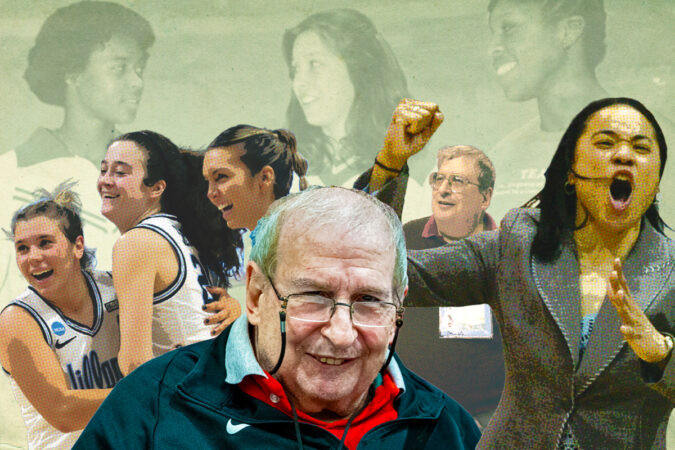
    Born in The Inquirer’s newsroom, the AP women’s basketball poll ‘has stood the test of time’

    Paging through the bulky Sunday Inquirer on Nov. 28, 1976, readers encountered a sports section that might have been compiled in Mount Athos, the tiny Greek republic that’s been off-limits to women for centuries.

    It was stuffed with man’s-world staples — stories, stats, and standings on the NFL, NHL, pro and college basketball. There were columns on hunting, golf, boys’ high school sports; features on boxing, men’s cross-country, minor league hockey; an entire page devoted to horse racing.

    The ads were no less macho-flavored, promoting car batteries, rifles, tires. A prominent one hyped January’s U.S. Pro Indoor Tennis Championship at the Spectrum with its lineup of “50 of the world’s top male pros.”

    About the only indications that women participated in sports were an account of a West Chester State field hockey game and, buried on the gray scoreboard page, a truncated leaders’ list from that weekend’s LPGA tournament.

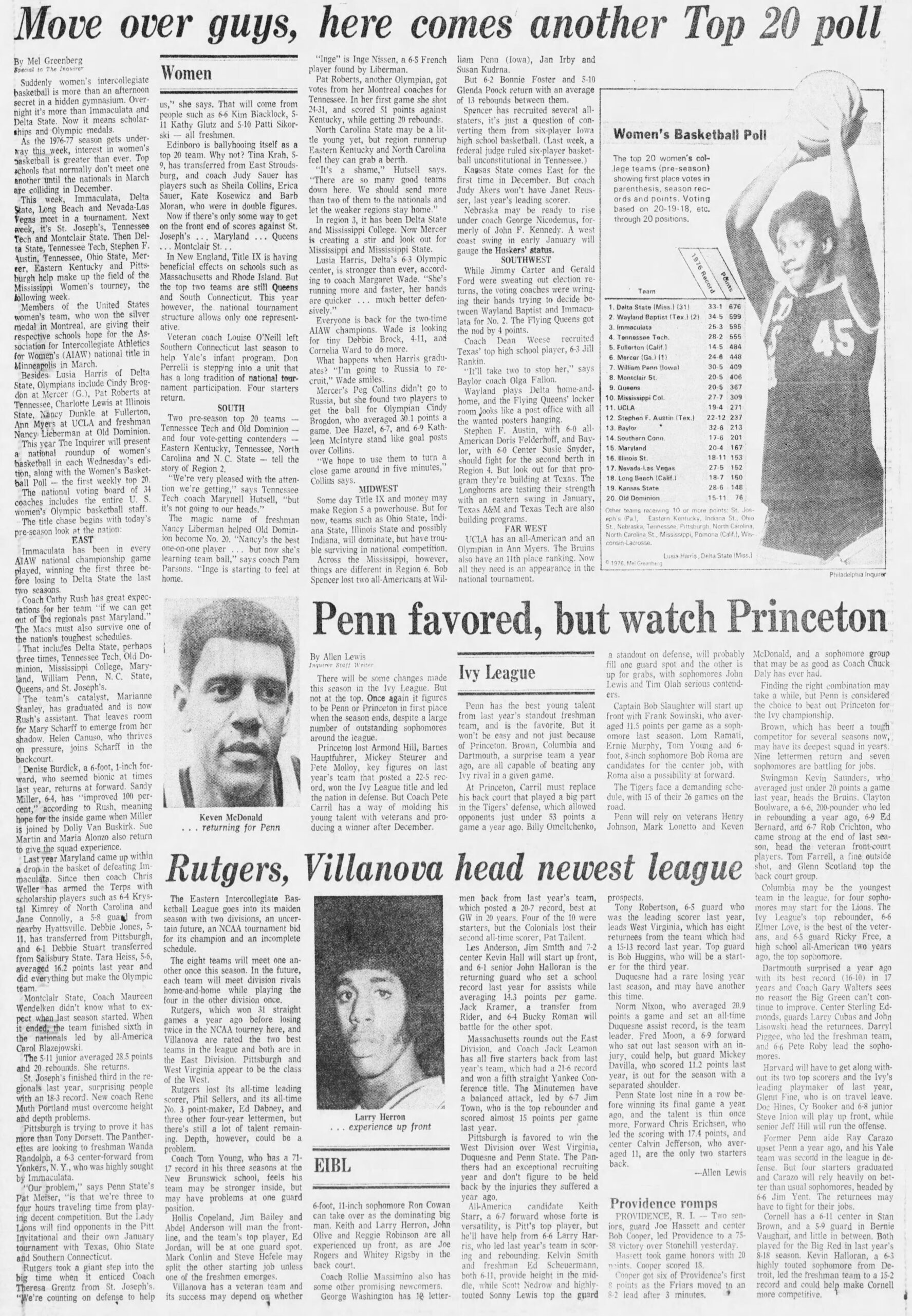
    But for those who reached Page 16, a strange interloper awaited. Sandwiched between two men’s basketball previews, as if editors thought it incapable of standing alone, was one of the earliest and most consequential harbingers of a bubbling sports revolution — the first women’s college basketball poll.

    Conceived by then-Inquirer sports editor Jay Searcy and obsessively nurtured by a Temple-educated newspaper clerk named Mel Greenberg, its headline read like a polite plea for recognition: “Move over guys, here comes another Top 20 poll.”

    A clipping from the Nov. 28, 1976, edition of The Inquirer that features the first installation of what became the AP women’s basketball poll.

    It came. And it stayed. Week after week, year after year, Greenberg’s poll accumulated popularity and heft, becoming a building block in the growth of women’s basketball. A sport that had been widely ignored and loosely governed by the Association for Intercollegiate Women’s Athletics now had validation, a common sense of purpose, and unity.

    “That poll gave coaches and others around the country an opportunity to know what was going on everywhere with women’s college basketball,” said Marianne Stanley, a star on Immaculata’s 1970s championship teams and later a successful college and WNBA coach. “Prior to that, there was only word-of-mouth. Newspapers didn’t cover it, and no one was tracking what was happening nationally.”

    Revisiting that debut poll in this, its 50th anniversary year, is eye-opening. Its top 10 might today be mistaken for a ranking of Division III field hockey teams — Delta State, Wayland Baptist, Immaculata, Tennessee Tech, Fullerton, Mercer, William Penn, Montclair State, Queens, and Mississippi College.

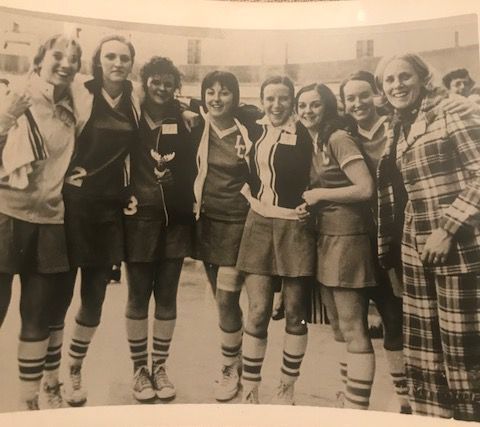
    Theresa Grentz (second from left) and Marianne Stanley (fourth from right) with Immaculata teammates and coach Cathy Rush at right. Immaculata was one of women’s college basketball’s first powers.

    The large state schools that dominate in 2026 mostly were absent.

    But not for long.

    Motivated by the mandates of 1972’s Title IX and by a desire to see themselves in the new rankings, many started to invest in the sport.

    By 1981, when the NCAA replaced the AIAW as the game’s overseer, there were 234 women’s Division I programs. That jumped to 284 in 1991, 317 in 2001. Last season there were 325 D-I programs, and more than 1,000 when Division II and III are included.

    “The fact that so many schools where women’s basketball was nonexistent or an afterthought went all in is a credit to Mel and his poll,” said Jim Foster, the retired women’s coach at St. Joseph’s, Ohio State, and elsewhere.

    Deirdre Kane, the retired West Chester University coach, said that “until Mel’s poll, the NCAA wasn’t even acknowledging our existence. That poll made people realize, some of them for the first time, that women’s collegiate basketball was being played.”

    Greenberg built a national network of coaches and administrators, contacting them weekly for information and input. As newspapers beyond Philadelphia added his poll, its significance deepened.

    “We were all fighting for recognition, but none of us were getting much,” said Geno Auriemma, the Norristown-raised, spectacularly successful coach at Connecticut. “Mel came along, and he was one of the few who gave us a little. His poll helped us all grow the game.”

    It grew so widely that in 1996 the NBA launched a women’s pro league, stocked with the stars of the college game. The WNBA now has a national TV contract, recognizable superstars, and a lineup of big-city franchises that in 2030 will include Philadelphia.

    “When Philadelphia gets that team,” Foster said, “they ought to call it the Philadelphia Mels.”

    Philadelphia roots

    It took 28 years after the inception of the Associated Press’ men’s college basketball poll for the women to get one. In 1976, Searcy, who before arriving at The Inquirer had covered women’s sports for the New York Times, decided the time had come. His motivation likely sprang from developments in that Bicentennial year.

    Women’s basketball made its Olympic debut that summer in Montreal. A few months earlier, Immaculata had appeared in its fifth straight AIAW national title game. The Mighty Macs, who in 1971 played in the first nationally televised women’s game, had won the first three and were runners-up the next two years.

    Searcy reached out to Greenberg, an editorial clerk who by then was the de facto Immaculata beat writer.

    “Jay called me into his office and said, ‘What do you think of the idea of a women’s basketball poll?’” Greenberg said. “And I said, ‘I think you’re nuts.’”

    As Greenberg prepared for the poll’s November launch, Searcy promoted it. He revealed his plan to Temple students during a campus visit. In that audience was Foster, then a physical education major who also coached Bishop McDevitt High School’s girls.

    “It was really exciting news for anyone interested in the sport,” Foster said. “He told us he was going to start a women’s basketball poll that would be just like the men’s.”

    Still, many scoffed. Women’s basketball, after all, existed deep in the shadows. Most newspapers and TV stations ignored it. With few exceptions, games were played before tiny crowds, often in substandard gyms. Rules weren’t standardized, qualified coaches and referees were in short supply, and, until the AIAW’s 1971 founding, there was no universally accepted end-of-season tournament.

    “The only people who followed women’s basketball then were the people involved in the game,” Kane said.

    But if there was a hotbed, it probably was the Philadelphia area. Numerous elementary schools, high schools, and colleges here had teams. West Chester State, with its strong physical education program, gained prominence in the 1960s under coach Carol Eckman, now known as “the mother of women’s college basketball.” And it was a West Chester grad, Cathy Rush, who turned Immaculata into the nation’s best team in the early 1970s.

    “There was always a huge basketball presence in Philadelphia,” Stanley said. “But it wasn’t until Immaculata that many people noticed the women. Then, the AIAW was formed, and that was big. Now, here comes the poll, and suddenly we’ve got a way to track and pay attention to what was happening not just here but across the country.”

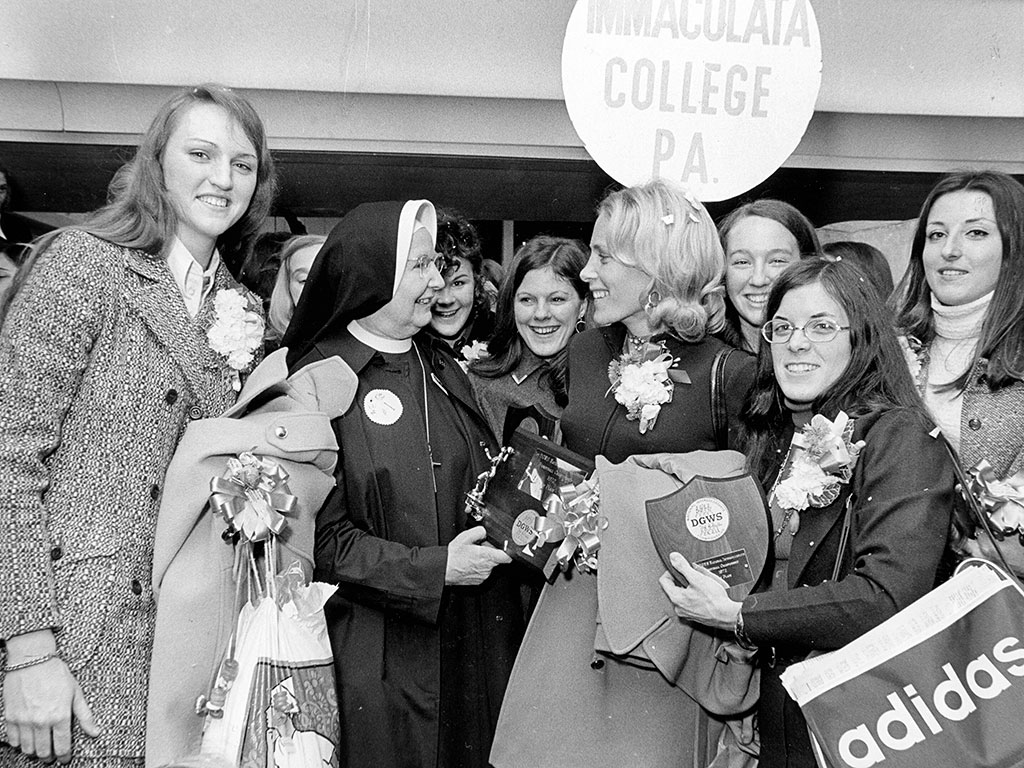
    Members of the Immaculata College basketball team gather around their coach as they return after winning the first women’s collegiate national championship in 1972. From left in the foreground are Theresa Shank, college president Sister Mary of Lourdes, coach Cathy Rush, and Janet Ruch.

    Despite Greenberg’s occasional stories on the Mighty Macs, few readers knew much of the women’s basketball world beyond. And few sports editors and writers besides Searcy and Greenberg saw its potential.

    “I loved women’s basketball,” said Dick Weiss, a veteran sportswriter who then was covering men’s college basketball for the Philadelphia Daily News, “but most of us never saw it becoming a regular beat. All our energy went into the Sixers with Julius Erving and the Big 5, which still had NCAA teams filled with local talent.”

    Launching the poll proved problematic. If women’s programs were second-class on most campuses, so were their support staffs. Gathering schedules and stats was nearly impossible. When Greenberg reached out to the AIAW for help, the organization balked.

    “They told me women’s sports shouldn’t get involved in things like newspaper polls because that would lead to the evils of men’s athletics,” he said.

    So he built a Rolodex of contacts, then he and some basketball contacts painstakingly collected information over the phones.

    “Mel based the poll operation in our sports department,” said Gene Foreman, then The Inquirer’s managing editor. “His volunteer helpers were several tall women.”

    Coaches telephoned in their votes on Sunday nights. One, N.C. State’s Kay Yow, provided an early indication of the poll’s impact.

    On Jan. 2, 1977, Immaculata visited N.C. State, which typically played before small gatherings. But the new rankings promised a compelling matchup. The Wolfpack were ranked No. 15; Immaculata, which triumphed, 95-90, was No. 2.

    “I remember Yow calling and talking about how excited she was,” Greenberg said. “It was snowing before the game, but there was a long line of fans outside the arena waiting for tickets.”

    In 1978, the Associated Press began distributing the poll, giving most news outlets access. Then, in 1994, Greenberg ceded its compilation to the AP, and media members replaced coaches as the voters.

    The poll was a cornerstone of the game, and in 2000, another Sunday Inquirer spotlighted women’s basketball’s maturity.

    Philadelphia was hosting that year’s Final Four. Its lineup of Connecticut, Tennessee, Rutgers, and Penn State revealed the game’s progression from the days when little Immaculata could win three straight titles. Its two sessions attracted nearly 40,000 fans. Millions more watched on ESPN.

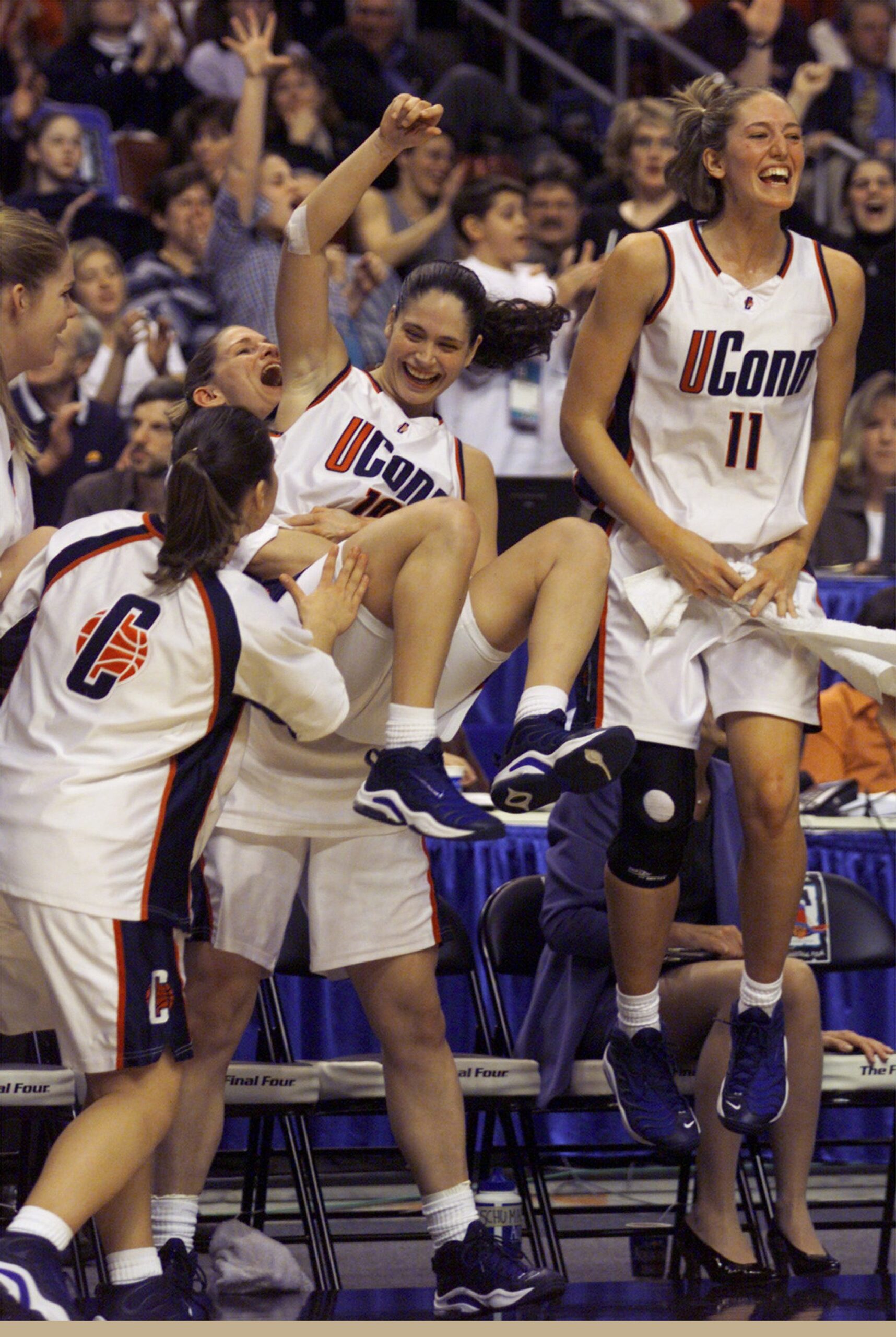
    Stacy Hansmeyer, Sue Bird, and the UConn bench celebrate after Swin Cash makes a breakaway layup late in the second half of UConn’s Final Four game against Penn State on March 31, 2000, at what then was called the First Union Center.

    The April 2 Inquirer ballyhooed that night’s title game on Page 1. Inside was an entire section previewing the event from every angle. There were profiles of coaches, players, even the referees. There were analyses, features, columns, statistics, photos and predictions.

    And the poll?

    Well, the championship game itself proved just how plugged in it was. Connecticut, the No. 1 team in the regular season’s final rankings, defeated No. 2 Tennessee.

    Greenberg retired from The Inquirer in 2010 but still compiles a widely read blog. Organizations, including the Naismith Basketball Hall of Fame, have recognized him and his poll’s contributions.

    “Mel was a gift to the women’s game,” Stanley said. “He was so passionate, and so dedicated and so single-minded. Who knows how long it otherwise would have taken for anything of substance to occur? Not many news outlets gave a crap about it, but Mel and The Inquirer decided to do something about women’s basketball. And that poll has stood the test of time.”

  • James Ijames rewrote the script to ‘Good Bones’ after seeing the pushback to the Sixers arena. Is the play any good?

    James Ijames rewrote the script to ‘Good Bones’ after seeing the pushback to the Sixers arena. Is the play any good?

    Gentrification is perhaps not the flashiest subject for a play. But in a city like Philadelphia — which has seen years of rapid development and community backlash, particularly surrounding the contested Sixers arena effort — it serves as a ripe starting point for dramatic exploration in Good Bones, running at the Arden Theatre through March 22.

    Directed by Akeem Davis and written by Pulitzer Prize-winning playwright James Ijames, the play centers on Aisha (Taysha Marie Canales), a businesswoman tasked with community outreach for sports complex developers, and Earl (Walter DeShields), the contractor she hires for home renovations who vehemently opposes the arena. They both grew up in the same (fictional) neighborhood but hold vastly different visions for its future.

    Arts reporter Rosa Cartagena and residential real estate reporter Michaelle Bond discuss the production’s funny, emotional, and complex portrayal of a very Philly reality.

    Old neighborhoods, new names

    Rosa Cartagena: You’ve been covering real estate extensively here in Philadelphia. I’m wondering what’s your first impression of the way this play addressed gentrification?

    Michaelle Bond: I saw a lot of themes that I hear about all the time covering housing. The feelings of longtime residents vs. newer ones, revitalization vs. displacement, what new construction looks like and how it fits (or doesn’t) in a neighborhood, even what a neighborhood should be called.

    RC: Right, there was a funny moment on opening night when Earl criticized the newcomers for calling their neighborhood the new name “Finbrook” instead of “the Heat” and an audience member clapped. We’ve seen that kind of rebranding all across this city, too.

    MB: I think the Heat is the cooler of the two names, by the way. There’s more passion behind it. But yes, developers and real estate agents have rebranded or tried to rebrand lots of neighborhoods. The Gayborhood, for example, is also called Midtown Village now. Almost 10 years ago, a small developer in North Philly’s Norris Square tried to rename the neighborhood Stonewall Heights and was promptly shut down. In an extreme example, the Black Bottom neighborhood in West Philly was bulldozed and renamed University City.

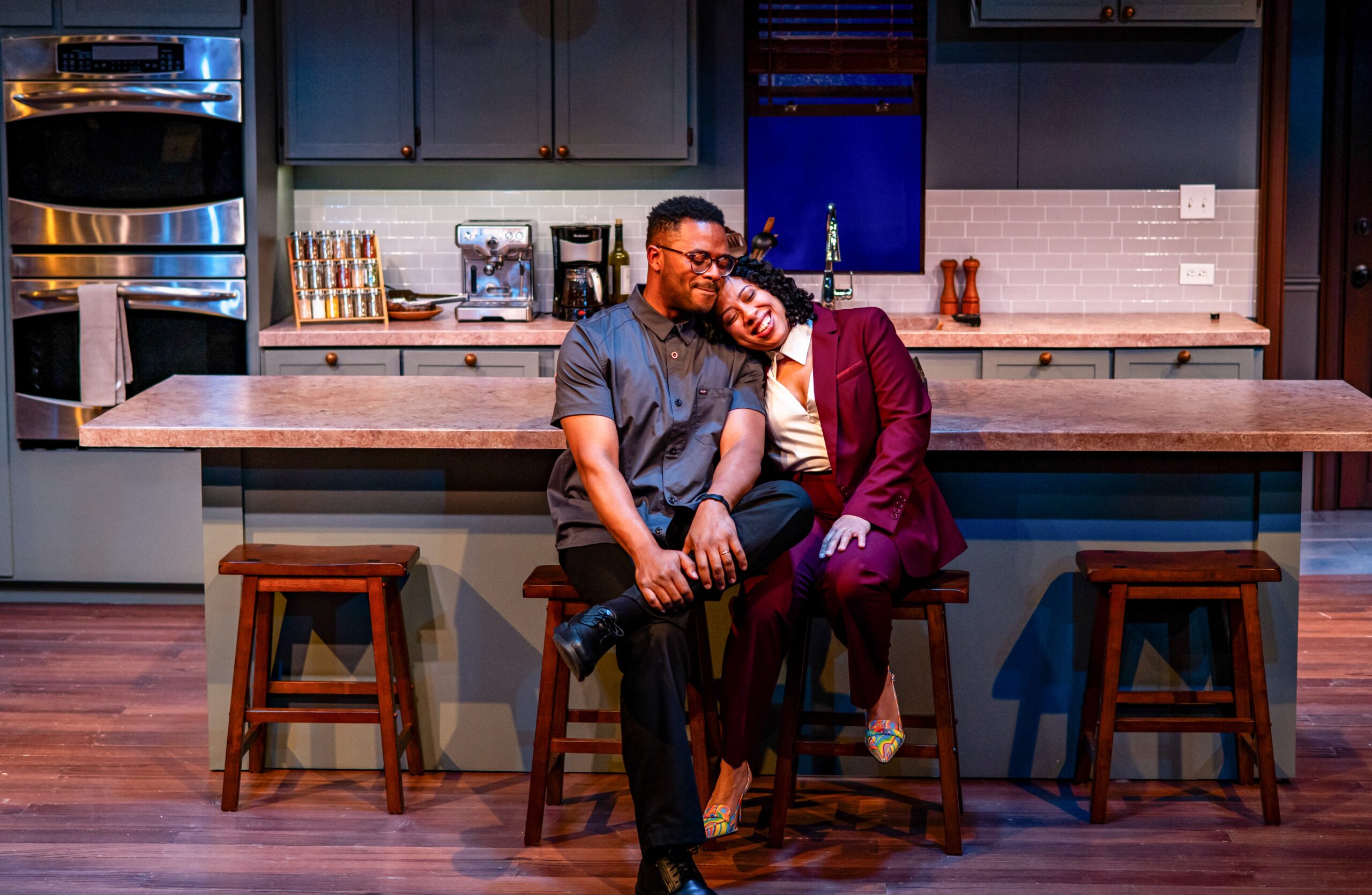
    Taysha Marie Canales (Aisha) and Walter DeShields (Earl) examine a model sports complex development in ‘Good Bones,’ running at the Arden Theatre through March 22.

    The Sixers arena influence

    RC: This story is set in an American city that could stand in for Philadelphia, or the sites of previous performances in Washington, D.C., and New York. The playwright James Ijames was living in South Philly when he wrote Good Bones, and he’s previously discussed his own growing pains of moving to a new community. This production delivers a specifically Philly version but with a universal resonance.

    MB: Right, because in the other productions, the new development coming in wasn’t a sports complex, was it?

    RC: Ijames rewrote the script after seeing the local pushback to the Sixers arena proposed in Chinatown. There are a few Philly callouts, like Earl’s sister Carmen (Kishia Nixon) attending the University of Pennsylvania and a joke about the Sixers sucking (which killed).

    Revitalization vs. destruction

    MB: One thing I’ve heard a lot about across Philly is that residents raise their kids in their neighborhoods, but when the kids grow up, they can’t afford to buy a home in that same neighborhood. Earl says that the public housing complex where he and Aisha grew up will be torn down and probably replaced with condos that no one can afford. The production does a good job highlighting the displacement and the class dynamics that are often at play.

    RC: Absolutely. In this case Aisha grew up, moved away, married a guy from a rich family, and returned to purchase a home with “character and charm.” But her view of the neighborhood’s drastic transformation isn’t a negative one — she sees her efforts as “healing” her once neglected and sometimes violent home. Aisha and Earl bond over their memories of the Heat but fiercely disagree about what is revitalization vs. destruction.

    MB: That’s the thing. They’re both passionate about the neighborhood and want to help the residents there, but they have different ways of going about it. Aisha wants to get rid of the public housing complex and “start over,” but Earl wants improvements that don’t erase the history.

    Taysha Marie Canales (Aisha) and Kishia Nixon (Carmen) in ‘Good Bones,’ running at the Arden Theatre through March 22.

    RC: We learn that Earl has been handcrafting cabinet knobs that look like the ones originally in the kitchen, because he has memories of playing in the empty house after the previous owner died.

    MB: Earl is a big fan of preservation. He calls new construction ugly and says it has no character or charm. And that’s definitely something I’ve heard from Philadelphians. And how that’s particularly irritating in a historic city like Philadelphia. Inquirer architecture critic Inga Saffron said in a recent column that Philly neighborhoods “are now awash in interchangeable blocky structures, all dressed in the same dreary gray clothing, their aluminum panels shrink-wrapped around the exterior like a sheet of graph paper.”

    Block parties and traditions

    RC: Ew, yeah the millennial gray. New neighbors also bring new problems. When a block party interrupts Aisha’s husband Travis’ (Newton Buchanan) sleep, he decides to lodge a noise complaint using an app called the Hood — a clever Ijames invention that makes “this narc s— so pleasant,” Carmen says — and the cops come in a harrowing scene portrayed through anxiety-inducing lighting design thanks to Shannon Zura. It’s later revealed that the event was an annual community gathering Earl organized.

    MB: That’s also something I hear about. The tension between longtime residents who have longstanding traditions and newer residents who don’t have an understanding of that history or what it means to the community.

    RC: Or who are scared to even talk to their neighbors. Earl makes the point that Travis could have simply stepped outside and asked them to turn it down. It’s even more damning because Aisha’s whole job is to “help the franchise speak the language of the community.” Earl criticizes her by saying, “I expect more from my people.” As universal as it is, Good Bones isn’t a stereotypical representation of gentrification because these aren’t white newcomers in a historically Black community, which makes this portrayal richer and thornier.

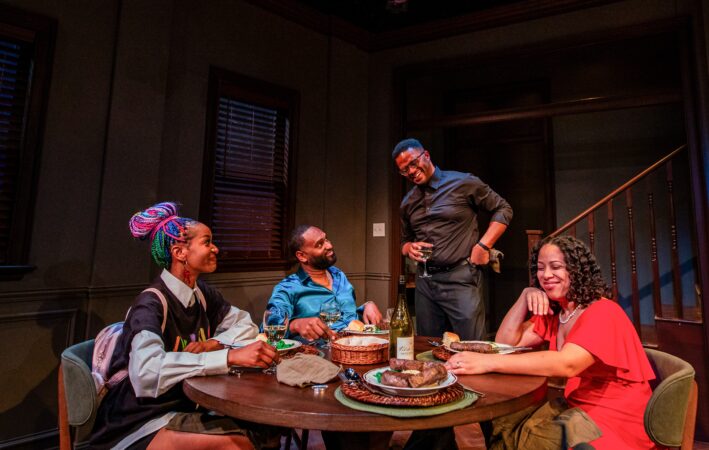
    Newton Buchanan (Travis) and Taysha Marie Canales (Aisha) in ‘Good Bones,’ running at the Arden Theatre through March 22.

    Nuance and personal experience

    MB: Speaking of thorny, the play also touches on what can be development’s double-edged sword. Investment boosts existing residents’ property values, but then everything gets more expensive, from property taxes to groceries. Earl mentions at one point that a Whole Foods replaced a neighborhood spot.

    RC: That frustration shined through in DeShields’ strong performance, too. The actor has had his own direct experiences with gentrification here after growing up in South Philadelphia and seeing his neighborhood renamed to Point Breeze. I think that personal pain and loss bolstered his take on Earl, who reminds Aisha that transformation to some means elimination for others. Aisha, on the other hand, primarily focuses on her memories of violence and trauma that she experienced, saying that they deserved better. Canales delivers a layered and emotional speech that underscores how these conversations can be conflicting and difficult.

    MB: I went into the play thinking there would be a clear resolution, but there really wasn’t one. And that speaks to the complexity of the subject matter.

    RC: That’s also a testament to the play’s strengths — it succeeds in getting audiences to think critically about a nuanced topic. Hopefully that means they’ll actually talk to their neighbors, too.

    “Good Bones” runs through March 22 at the Arden Theatre, 40 N. Second St., Phila., 215-922-1122 or ardentheatre.org. Runtime: 1 hour and 45 minutes (no intermission).

  • A Main Line town leads the charge of new Philly-area restaurants for February

    A Main Line town leads the charge of new Philly-area restaurants for February

    February’s crop of restaurant openings includes two restaurants’ expansions to Narberth, a reopened brewery in South Jersey, a chic restaurant/lounge in Center City, an intriguing wine bar/bottle shop in Chestnut Hill, and two French newcomers.

    Restaurants can take awhile and owners are often hesitant to pinpoint an opening date. I’ve listed the targeted day where possible; for the rest, check social media.

    Duo Restaurant & Bar (90 Haddon Ave., Westmont): Brothers Artan and Arber Murtaj and Andi and Tony Lelaj, who own the Old World-style Italian Il Villaggio in Cherry Hill, are taking over Haddon Avenue’s former Keg & Kitchen with a pub serving a bar menu supplemented with seafood.

    Eclipse Brewing (25 E. Park Ave., Merchantville): Last August, food trucker Megan Hilbert of Red’s Rolling Restaurant became one of the youngest brewery owners in New Jersey when she bought this 9-year-old Camden County brewery, open as of Friday.

    Lassan Indian Traditional (232 Woodbine Ave., Narberth): The second location of the well-regarded Lafayette Hill Indian BYOB takes over the long-ago Margot space in Narberth.

    LeoFigs, 2201 Frankford Ave., as seen in January 2026.

    LeoFigs (2201 Frankford Ave.): Justice and Shannon Figueras promise the delivery of their long-awaited bar/restaurant, with an urban winery in the basement, at Frankford and Susquehanna in Fishtown. The food menu will be built around comfort-leaning small plates.

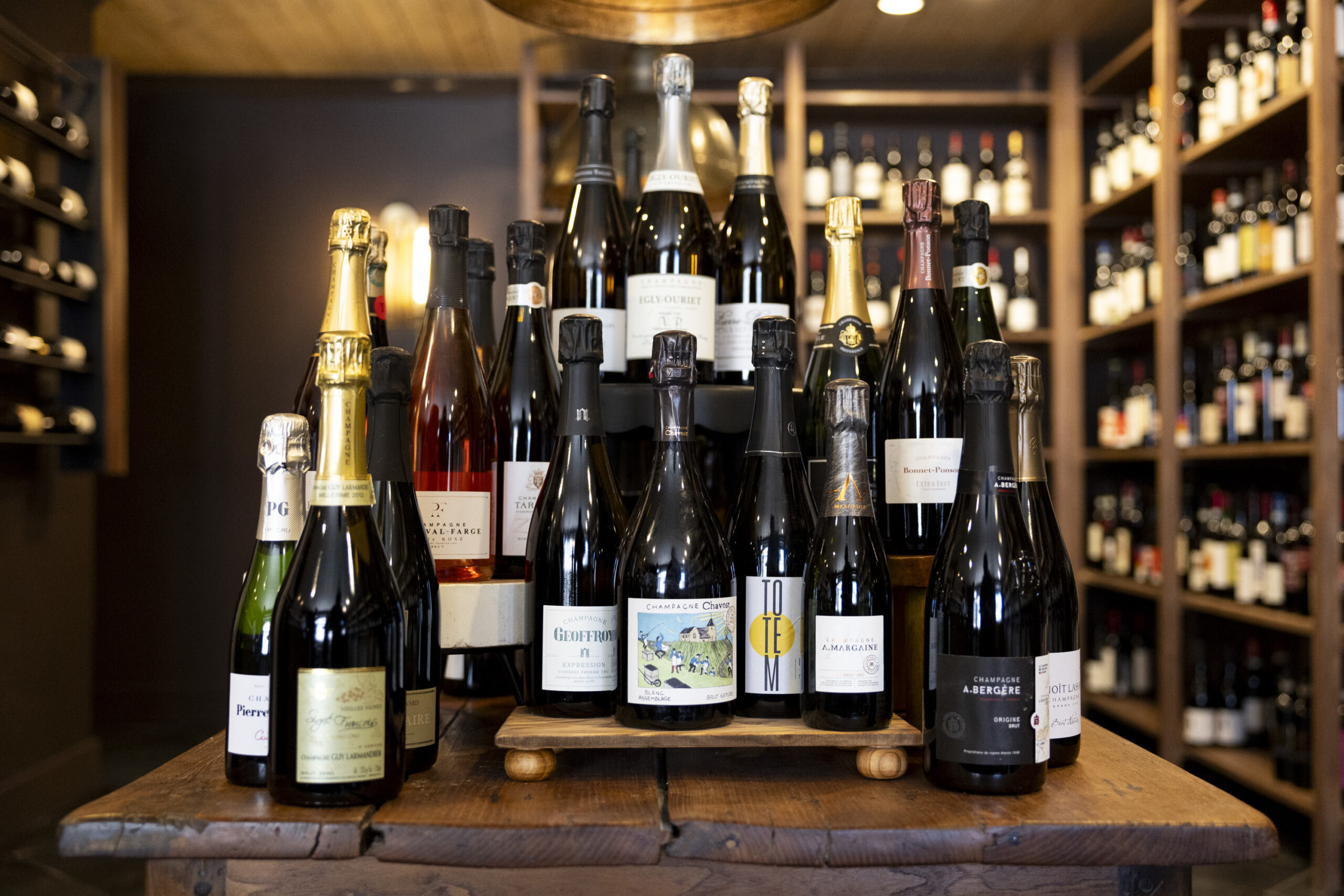
    The bubbly selection at Lovat Square in Chestnut Hill.

    Lovat Square (184 E. Evergreen Ave.): Damien Graef and Robyn Semien (also owners of Brooklyn wine shop Bibber & Bell) are taking over Chestnut Hill’s former Top of the Hill Market/Mimi’s Café property for a multiphased project: first a wine shop with indoor seating, then a courtyard with a full dinner menu, followed later by a cocktail bar/restaurant component. Opens Feb. 12

    Malooga (203 Haverford Ave., Narberth): The Old City Yemeni restaurant is expanding to Narberth with lunch and dinner service plus a bakery, with expanded indoor/outdoor seating and space for groups.

    Mi Vida (34 S. 11th St.): Washington, D.C.-based restaurant group Knead Hospitality + Design is bringing its upscale Mexican concept to East Market, next to MOM’s Organic Market. Target opening is Feb. 18.

    MOTW Coffee & Pastries (2101 Market St): Mahmood Islam and Samina Akbar are behind this franchise of Muslims of the World Coffee, offering a third-space experience at the Murano.

    Napa Kitchen & Wine (3747 Equus Blvd., Newtown Square): A California-inspired restaurant rooted in Midlothian, Va., opens in Ellis Preserve with an extensive domestic and international wine list in a polished setting. Opens Feb. 9.

    Ocho Supper Club (210 W. Rittenhouse Square): Chef RJ Smith’s Afro-Caribbean fine-dining supper club starts a six-month residency at the Rittenhouse Hotel, tied to the Scarpetta-to-Ruxton transition, serving tasting menus through July. Now open.

    Piccolina (301 Chestnut St.): A low-lit Italian restaurant and cocktail bar at the Society Hill Hotel from Michael Pasquarello (Cafe Lift, La Chinesca, Prohibition Taproom). Targeting next week

    Pretzel Day Pretzels (1501 S. Fifth St.): James and Annie Mueller’s pretzel-delivery operation is becoming a takeout shop in the former Milk + Sugar space in Southwark. Expect classic soft pretzels plus German-style variations (including Swabian-style) and stuffed options.

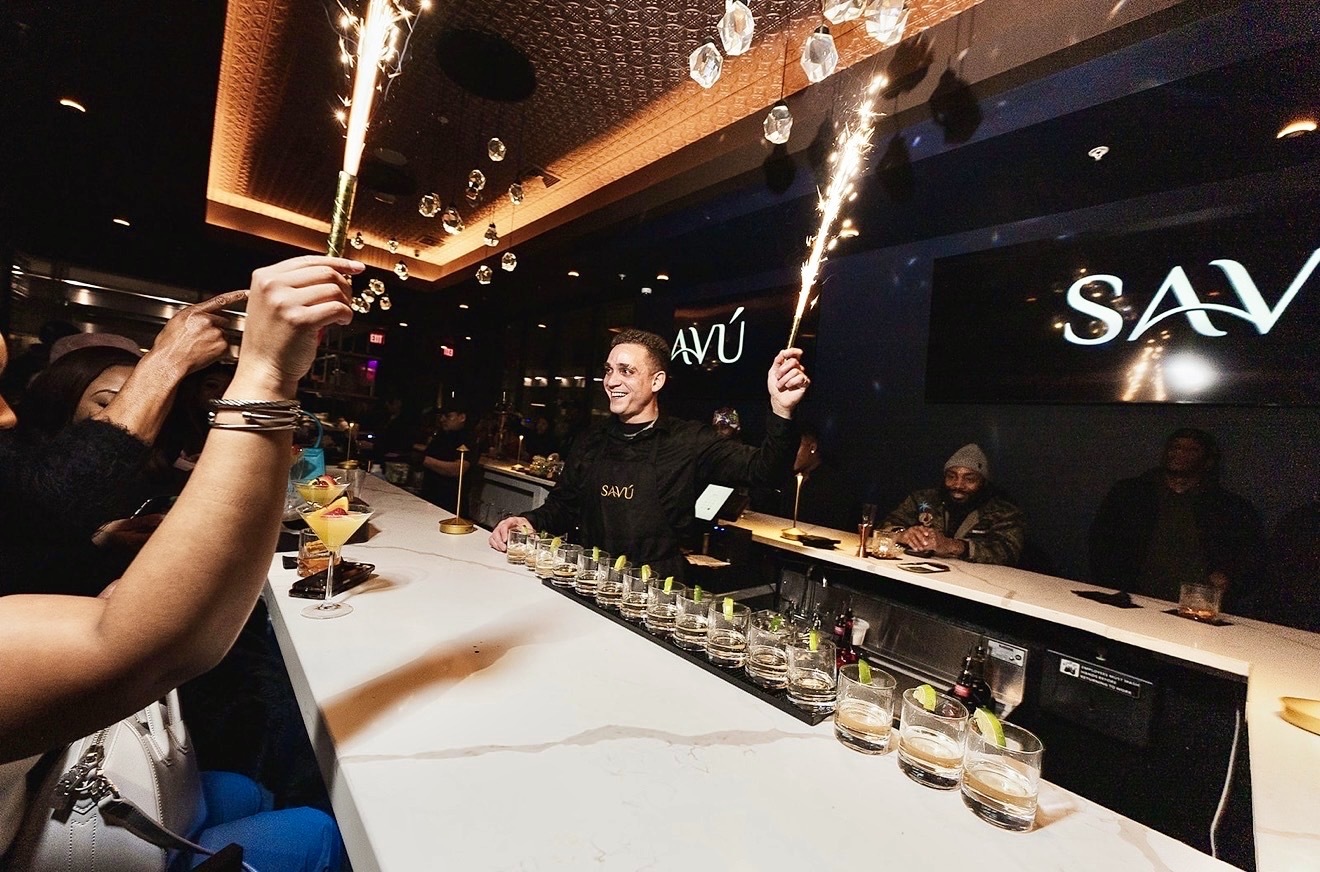
    Merriment at the bar at Savu, 208 S. 13th St.

    Savú (208 S. 13th St.): Kevin Dolce’s Hi-Def Hospitality has converted the former Cockatoo into a modern, bi-level dining and late-night lounge with a New American menu from chef Maulana Muhammad; it just soft-opened for dinner Thursday through Sunday and weekend brunch.

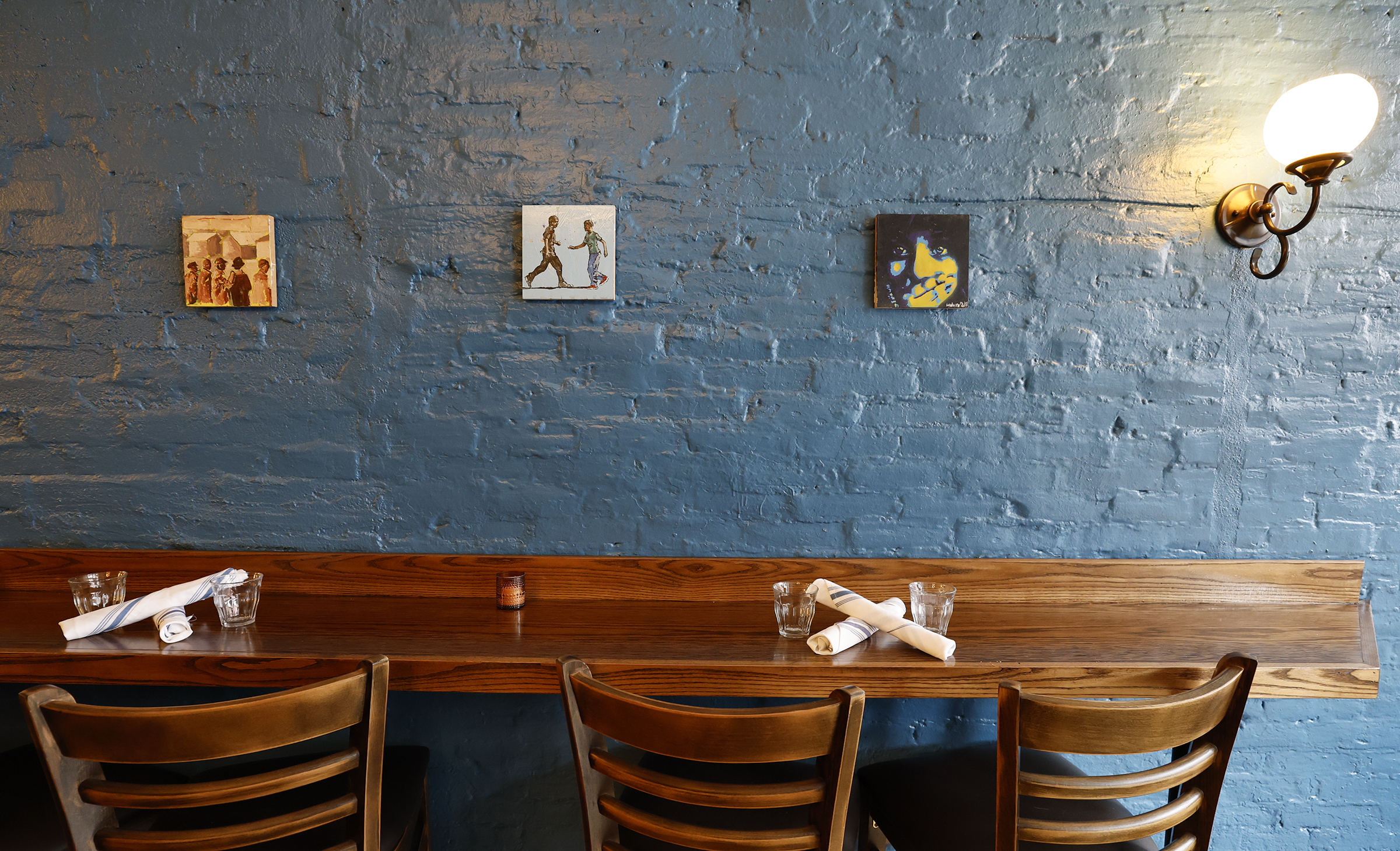
    Bar-adjacent seating at Side Eye.

    Side Eye (623 S. Sixth St.): Hank Allingham’s all-day neighborhood bar takes over for Bistrot La Minette with “French-ish” food from chef Finn Connors, plus cocktails, European-leaning wines, beer, and a late-night menu. Opens 5 p.m. Feb. 7 with 50% of the night’s proceeds going to the People’s Kitchen.

    Soufiane at the Morris (225 S. Eighth St): Soufiane Boutiliss and Christophe Mathon (Sofi Corner Café) say there’s a 90% chance of a February opening for their new spot at the Morris House Hotel off Washington Square. It’s billed as an elegant-but-approachable restaurant inspired by classic French bouillons/brasseries, with a menu spanning small plates and full entrées alongside Moroccan-influenced tagines. Expect evening service indoors, daytime service outdoors.

    South Sichuan II (1537 Spring Garden St.): A second location for the popular Point Breeze Sichuan takeout/delivery specialist, near Community College of Philadelphia; this one will offer more seating.

    Zsa’s Ice Cream (6616 Germantown Ave.): The Mount Airy shop’s end-of-2025 “grand closing” proved short-lived after a sale to local pastry chef Liz Yee. Reopened Feb. 7.

    Looking ahead

    March openings are in the offing for the much-hyped PopUp Bagels in Ardmore, as well as the long-delayed Terra Grill (a stylish room in Northern Liberties’ Piazza Alta) and ILU (the low-lit Spanish tapas bar) in Kensington.

  • Letters to the Editor | Feb. 4, 2026

    Letters to the Editor | Feb. 4, 2026

    Follow suit

    In response to Sen. John Fetterman’s claim that U.S. Immigration and Customs Enforcement agents wear masks because they fear doxing, perhaps he should ask himself why police departments don’t wear masks or share those same fears.

    When law enforcement follows the Constitution, they have little to fear from the law-abiding public, and they earn the respect required to do their jobs. If ICE and U.S. Customs and Border Protection stopped circumventing the Constitution and started upholding it, they wouldn’t need to hide behind masks.

    Colleen Dunn, Bethlehem

    . . .

    I would like to inform Sen. John Fetterman that if U.S. Immigration and Customs Enforcemen agents did not murder legal protesters, did not use tear gas on legal protesters, did not hunt down and brutalize people who try to document their illegal acts, and arrest legal citizens and children from the streets (even when they have documents on their person that prove citizenship), then they would not have to fear doxing. If ICE agents were to follow the law and treat the public with respect, they would not have to worry about having their identities revealed.

    Edward Gardella, Langhorne

    America 250+

    As our nation approaches the 250th anniversary of the Declaration of Independence, we should not only celebrate our freedoms — we should also remember the faith that helped shape them. William Penn founded Pennsylvania as a “Holy Experiment,” a colony built on Christian principles of justice, peace, and love of neighbor. Long before 1776, Penn wrote and spoke passionately for religious tolerance and freedom of conscience in England, even at great personal risk, facing imprisonment and threats of death. His vision of liberty of conscience, fair laws, and respect for all people was groundbreaking and helped lay the foundation for what would eventually become the United States Constitution.

    In 1751, to mark 50 years of this Holy Experiment, the Pennsylvania Assembly commissioned John Pass and John Stow to cast a bell. Inscribed with the words of Leviticus 25:10, “Proclaim Liberty Throughout All the Land Unto All the Inhabitants Thereof,” the bell celebrated the enduring connection between faith and freedom that Penn championed. This bell, later known as the Liberty Bell, remains a powerful symbol of liberty rooted in moral conviction.

    If liberty is to endure today, we should revisit Penn’s faith, grounded beyond himself, where love of God and neighbor produced a durable, shared freedom together.

    The Rev. Pete Linko, McDonald Bible Methodist Church, McDonald, Pa.

    Join the conversation: Send letters to letters@inquirer.com. Limit length to 150 words and include home address and day and evening phone number. Letters run in The Inquirer six days a week on the editorial pages and online.

  • Sixers takeaways: Winning without Joel Embiid, best stretch since 2024, and more from victory over Warriors

    Sixers takeaways: Winning without Joel Embiid, best stretch since 2024, and more from victory over Warriors

    Andre Drummond has to sustain quick starts in games.

    The 76ers, however, bucked the recent trend of losing on nights when Joel Embiid is not playing.

    And in the process, they’re in the midst of their best stretch since concluding the 2023-24 season with nine consecutive victories.

    Those things stood out in Tuesday’s 113-94 victory over the Golden State Warriors at the Chase Center in San Francisco.

    The Sixers (29-21) are a half-game behind the fourth-place Toronto Raptors and Cleveland Cavaliers in the Eastern Conference standings.

    Drummond must sustain his shooting

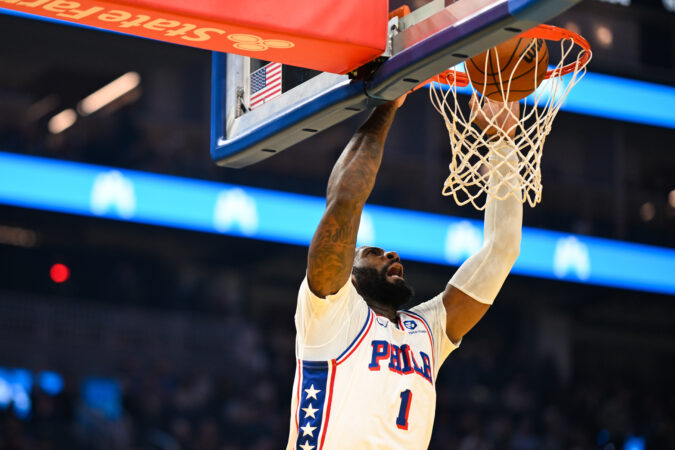
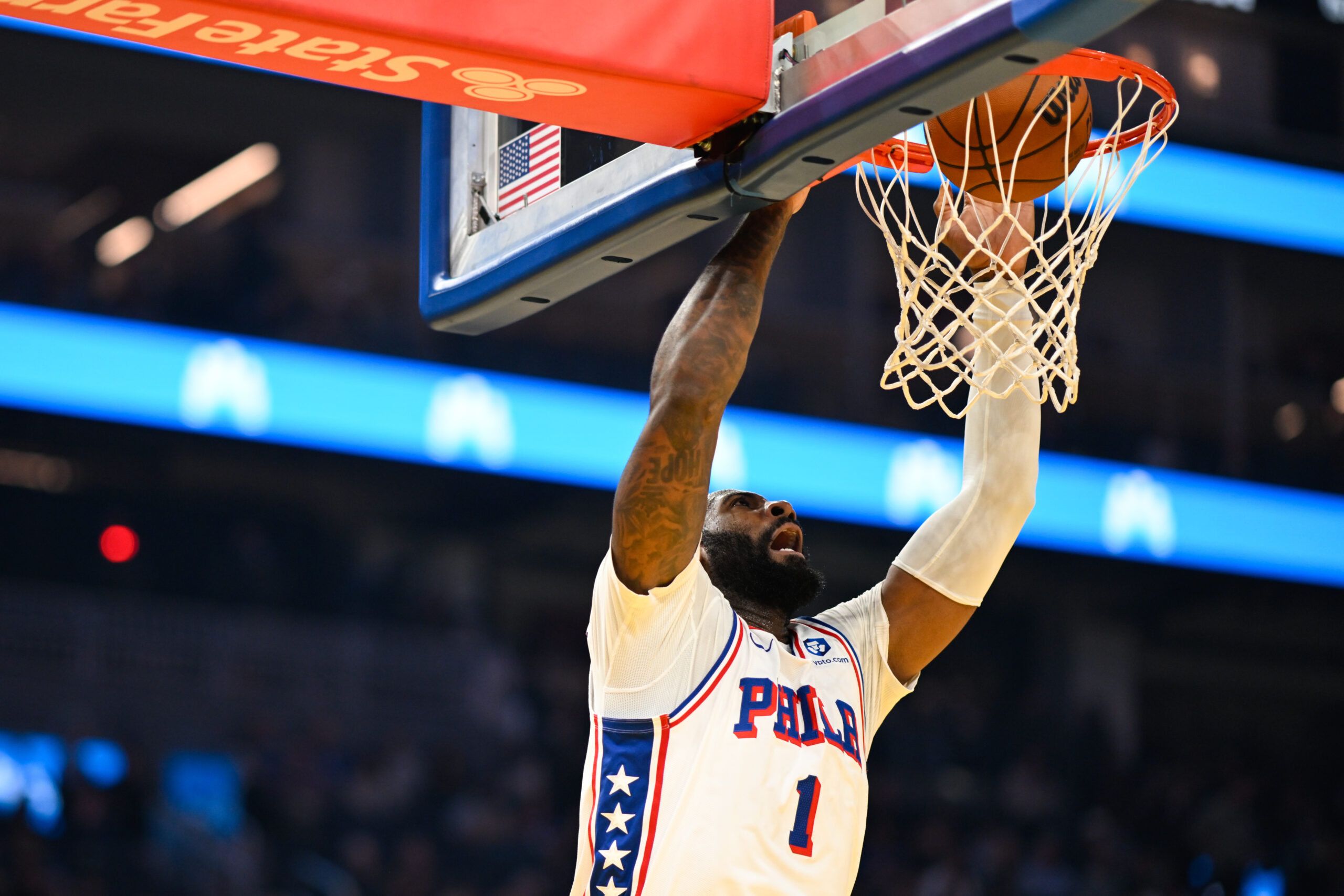
    Drummond got his 18th start of the season due to Embiid not being cleared to play on back-to-back nights. Drummond finished with a game-high 11 rebounds to go with 12 points for his 12th double-double of the season.

    On paper, his stat line looked good. He made 5 of 11 shots, including 1 of 2 on three-pointers, to go with one assist, one steal, and one block.

    But he’ll have to be a more consistent shooter to gain the coaching staff’s trust as a reliable reserve when Embiid plays.

    Sixers reserve center Adem Bona scored 11 points in 16 minutes off the bench Tuesday night.

    Drummond was unable to build off his solid shooting start to the game.

    He had four points on 2-for-2 shooting and five rebounds in the first five minutes. He scored those baskets on a put-back dunk and a tip-in. However, Drummond missed his next six attempts.

    He missed a reverse layup and had a driving dunk blocked before being subbed out for Adem Bona with 2 minutes, 15 seconds remaining in the first quarter. He followed that up by missing a 23-foot three-pointer and a put-back layup in the second quarter.

    His rough shooting night continued in the third quarter, when he missed an eight-foot turnaround jumper and an alley-oop.

    Drummond snapped out of his shooting skid, scoring on two layups in the fourth quarter. The majority of his misses came on shots around the basket.

    Drummond’s offensive shortcomings could be one reason sources say the Sixers are open to trading him, even though he is their leading rebounder.

    While he struggled from the field, Bona had 11 points on 5-for-6 shooting.

    All-Star point guard Tyrese Maxey (14 points on 3-for-9 shooting), Dominick Barlow (10 points, 3-for-10), and Kelly Oubre Jr. (15 points, 4-for-12) all struggled from the field.

    But VJ Edgecombe paced them with 25 points, seven rebounds, and seven assists, and the Sixers got quality contributions from their bench.

    They also benefited from the undermanned Warriors (27-24), who were without Stephen Curry, committing 20 turnovers.

    Needed win without Embiid

    Before Tuesday, the Sixers had lost four straight games when Embiid didn’t play. Teams were blitzing Maxey, and role players weren’t stepping up. They didn’t have that problem against the Warriors.

    Trendon Watford had 16 points, eight rebounds, and two blocks in a reserve role. The Sixers had eight scorers in double digits.

    This victory serves as a major confidence boost for a team dealing with Paul George’s 25-game suspension.

    Sixers guard VJ Edgecombe (left) had a game-high 25 points against the Warriors.

    Extending overall winning streak

    The Sixers have the league’s second-best active winning streak at five games. The Charlotte Hornets and New York Knicks are tied for the best with seven consecutive victories.

    They opened the season with four consecutive victories before winning three straight games from Dec. 30 to Jan. 3.

    But this time, the Sixers appear to be coming into form, getting major contributions from several players.

  • Horoscopes: Wednesday, Feb. 4, 2026

    ARIES (March 21-April 19). You want to know you’ve made a difference. Today’s endeavor might just be the answer because it’s an opportunity to serve people what they need. The job may pay you, but it’s not about the money.

    TAURUS (April 20-May 20). As much as you wish people would understand you in real time, it will probably take a beat. Expect the lag and know the right audience will catch up to you eventually.

    GEMINI (May 21-June 21). When the world gets noisy, you get quiet — not aloof, not superior, just grounded. You won’t feel compelled to fix anything or defend anyone. People will be who they are. It doesn’t have to destabilize your own footing.

    CANCER (June 22-July 22). You can hear confessions, complaints or even jabs without flinching at all because you know that information is simply information. What others say is usually more about them than you. You have strong emotional boundaries and social maturity.

    LEO (July 23-Aug. 22). You already know coping skills that help your mindset. You have insight, gratitude, rituals and regulation techniques. But right now, it’s not about using your mind to feel better. You need structural changes that stop life from demanding more of you than it returns.

    VIRGO (Aug. 23-Sept. 22). You value social integrity and will leave interactions clean. No regrets for oversharing, no silent resentments and no replaying conversations wondering what was right or wrong. You simply observe, register what matters and move on.

    LIBRA (Sept. 23-Oct. 23). You won’t catch everything the first time around, and this is a good thing. If you did, there would be no reason to return. The return visit, the afterthought, the follow-up — that’s where it all starts.

    SCORPIO (Oct. 24-Nov. 21). To some, “nirvana” suggests bliss. More literally, it refers to the extinguishing of the mental fires that cause suffering. Today’s happiness comes from loosening your grip on an unhappy idea.

    SAGITTARIUS (Nov. 22-Dec. 21). Doing your favorite activities with talented people is a sweet treat, but you could make it a regular fixture in your life. Making your self-development and joy a top priority in whatever way you can will improve much more than a few hours of your day.

    CAPRICORN (Dec. 22-Jan. 19). You’re chasing something fast and wild, which makes you incredibly hard to pin down. People would love to have your attention, your work, your commitment and more, but this just isn’t the time. You need spontaneity and freedom.

    AQUARIUS (Jan. 20-Feb. 18). Your ambition is a feature, not a flaw. It’s a form of optimism that calls a meeting with your strategic mind, your discipline, abilities and tenacious attitude. The result is confidence and, ultimately, success.

    PISCES (Feb. 19-March 20). Could someone else do your job or fill your role in a relationship? Maybe. But no one has your voice, style, timing or appetites. It’s what you want that matters today. The more you follow these cravings, the more original you’ll be.

    TODAY’S BIRTHDAY (Feb. 4). Welcome to your Year of Mesmerizing Charm. Since you’re sure to attract admirers, followers and customers, your first order of business is to focus on what’s worth adding to your life and keep flowing your attention toward the enriching, uplifting and truly interesting pursuits. More highlights: higher learning, intellectual connections, a joining of assets and investments that hit a tipping point. Sagittarius and Leo adore you. Your lucky numbers are: 19, 9, 27, 6 and 8.

  • Dear Abby | Couple still maintain two homes after years together

    DEAR ABBY: I am a widow who has been dating a widower for the past eight years. He’s a wonderful man and the love of my life. We both have children, so we have been extremely careful not to cause them any distress with our relationship, and we have kept our home lives pretty separate.

    At first, I thought that when the kids graduated from high school, we would maybe change our living situation, but now with all of our kids in college, the kids are going back and forth. One has moved home with me, so a change still doesn’t seem appropriate.

    However, even when the kids are all out of college and living on their own, I’m still not sure I want to move into his house. It’s an amazing home in a wonderful town with lots of room for me, but it was built with his deceased wife, and all of her things and decorations permeate the place.

    I just don’t feel I could ever make it my home, as it was their family home from the time they were married and where they raised their daughter. Moving into my house is not an option because it is small, and I don’t think he would want to do that.

    I thought we could possibly sell both places and buy something together, but, again, his house is such an amazing place that I doubt we could find anything comparable. What should I do?

    — MAKING A CHANGE, OR NOT

    DEAR MAKING: I think it is time you and your longtime partner have a serious, honest conversation about what your options are after all the children are finally independent. Express that as beautiful as his home is, you have qualms because it was the home in which he and his late wife raised a family. Tell him you fear any changes would be resented, and the house you live in is just too small. Then listen to what he has to say.

    ** ** **

    DEAR ABBY: I recently became aware that someone I know through various community groups is married to a man who is on the local sex offender list (involving a child under 13). This information was confirmed by another community group member as we needed to see how it would affect his volunteer status and our location near a school.

    I don’t know how to respond to this information. The man is pleasant and friendly. If I had not known this information, I would have suggested he and his wife get together with my husband and other friends. There are no children in my household, so no one would be endangered by his presence.

    Should this information about his sex offender status change how I see or respect him? Neither he nor his wife know that I know, and I don’t plan to tell them or anyone else. What are my responsibilities if I see him around children?

    — ON ALERT IN MICHIGAN

    DEAR ON ALERT: Whether or not to see or respect this person is a decision only you can make. No one can do that for you. However, if you see a sex offender in the presence of minor children, you are morally and ethically bound to report it.

  • VJ Edgecombe scores 25 as Sixers beat Warriors 113-94 for fifth straight win

    VJ Edgecombe scores 25 as Sixers beat Warriors 113-94 for fifth straight win

    SAN FRANCISCO — Rookie VJ Edgecombe had 25 points, seven rebounds and seven assists, Andre Drummond added 12 points and 12 rebounds, and the 76ers won their fifth straight game, 113-94 on Tuesday night over the Golden State Warriors, who were missing Stephen Curry because of a painful right knee.

    Trendon Watford had 16 points and eight rebounds off the bench while Adem Bona made all five of his first-half field goals in nine minutes to help the Sixers to a 58-57 lead at the break. Bona finished with 11 points.

    Philadelphia’s second bus arrived only about 75 minutes before tipoff because of Bay Area traffic, but coach Nick Nurse was unconcerned about his team having a prolonged warmup since it was the second game of a back-to-back. The Sixers beat the Clippers 128-113 on Monday.

    Curry exited early from Golden State’s 131-124 loss to Detroit on Friday because of the troublesome knee. Forward Jonathan Kuminga, whose future with the franchise remains uncertain, sat out his fifth straight game with a bone bruise in his left knee.

    Gui Santos and Pat Spencer scored 13 points apiece and Moses Moody added 12 for the Warriors, who lost a third straight game at home.

    Sixers center Andre Drummond finished with 12 points and 12 rebounds against Golden State on Tuesday night.

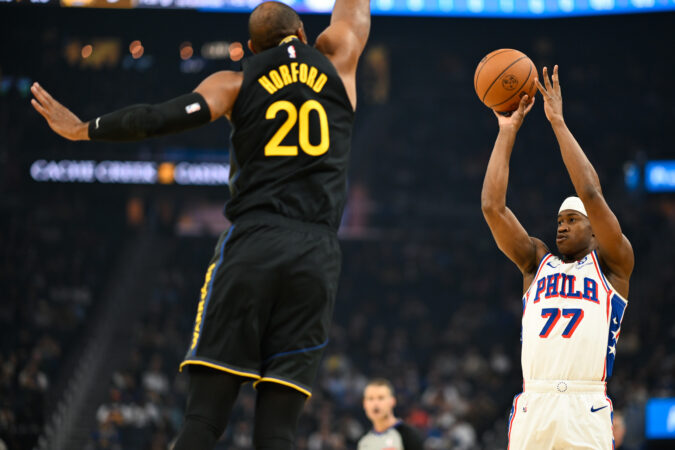
    With Golden State trailing 16-9 early, Draymond Green and Al Horford hit consecutive three-pointers midway through the first quarter on which they both assisted for the other. Golden State hit eight three-pointers in the opening period and shot 12-for-19 overall from deep. Horford had 10 points playing through foul trouble.

    The Sixers their five-game West Coast swing at the Los Angeles Lakers on Thursday night (10 p.m., NBCSP).

  • James Harden traded to Cavaliers in deal that sends Darius Garland sent to Clippers, source says

    James Harden traded to Cavaliers in deal that sends Darius Garland sent to Clippers, source says

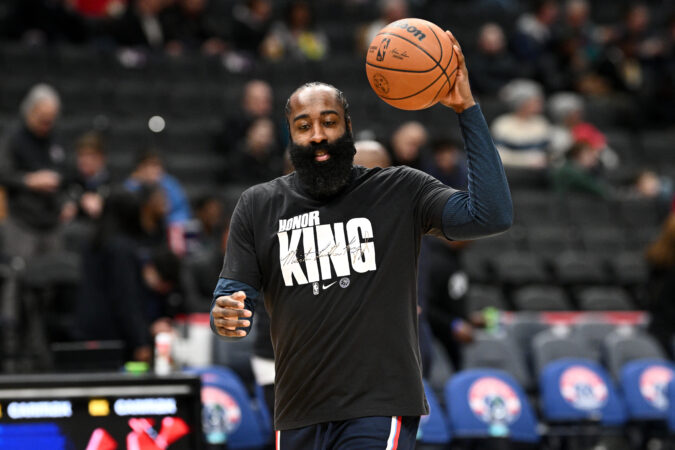
    James Harden is headed to the Cleveland Cavaliers, with the Los Angeles Clippers agreeing to send the 11-time All-Star back to the Eastern Conference during his highest-scoring season in six years, a person with knowledge of the agreement said Tuesday night.

    ESPN was first to report the deal was finalized.

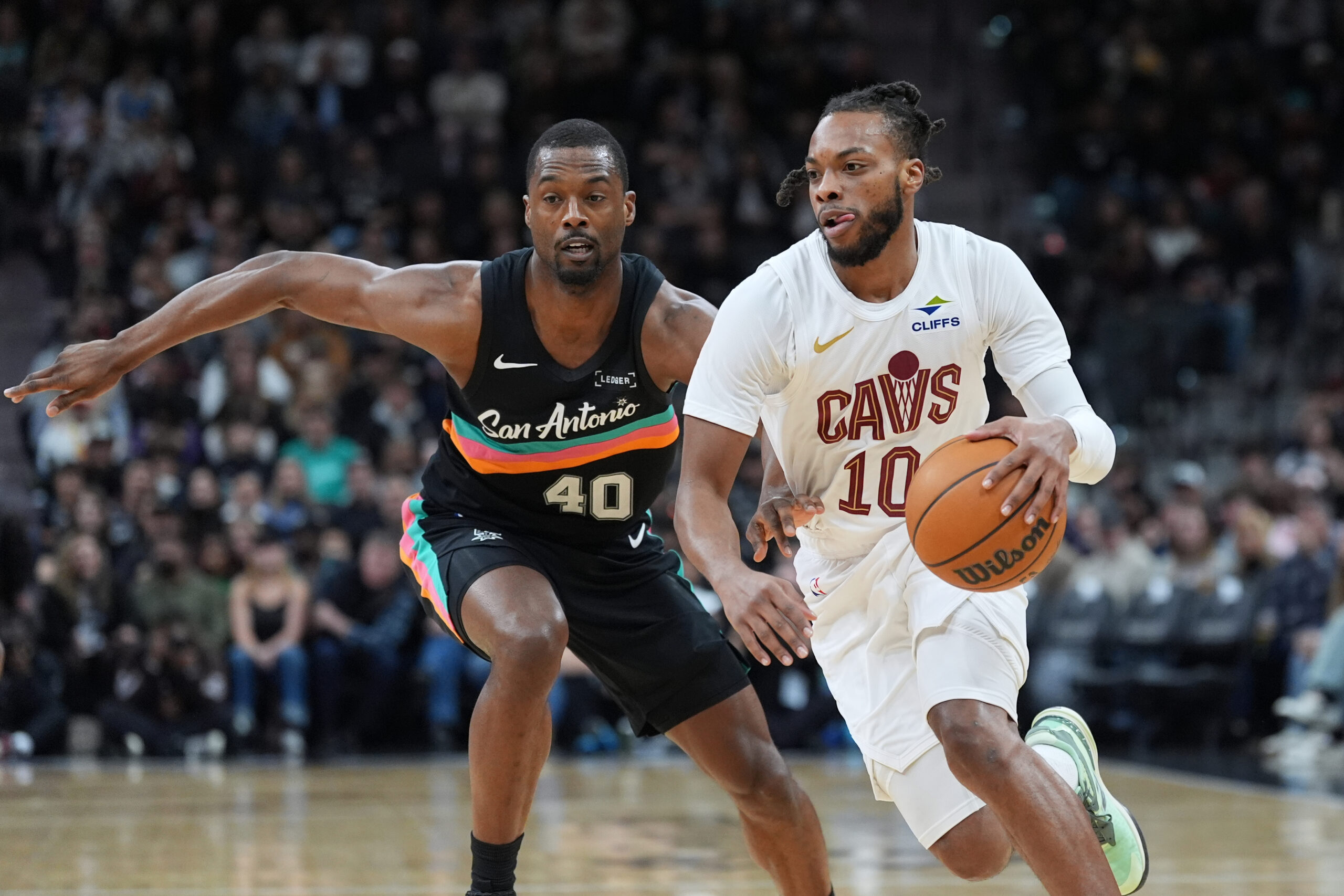
    The Cavaliers are giving up point guard Darius Garland and a second-round pick, said the person, who spoke to the Associated Press on condition of anonymity because the trade has not yet been approved by the NBA.

    That approval could come by Wednesday, when the Cavaliers and Clippers face off in Inglewood, California.

    Harden is averaging 25.4 points this season, his most since averaging 34.3 points in 2019-20. He’s been a huge part of the Clippers’ resurgence back into playoff — or, at least, play-in — contention after a dismal 6-21 start.

    “He means a lot to our team and we’ve seen it the last three years,” Clippers coach Tyronn Lue said Monday night when stories began breaking indicating such a move was close. “Who wouldn’t want to have James Harden?”

    Cleveland will become Harden’s sixth team. He played for Oklahoma City, then Houston, then Brooklyn, then Philadelphia and, since 2023, the Clippers.

    Darius Garland (right) was drafted by Cleveland in 2019.

    For the Cavaliers, it seems to be a move for right now — pairing the 36-year-old Harden with another star guard in Donovan Mitchell. For the Clippers, it seems to be a move with an eye on the future — the 26-year-old Garland is a two-time All-Star, averaging 18 points and 6.9 assists this season for Cleveland.

    Harden opted out of the final year of his contract last summer with the Clippers to sign a new deal that would have been worth $81.5 million for this season and the 2026-27 campaign. Next year is at his option, which basically meant he was on a one-year contract anyway.

    He got that deal after averaging 22.8 points, 5.8 rebounds and 8.7 assists and returning to the All-NBA team for the first time since 2019-20.