Tag: U.S. women’s soccer team

  • Meet Huntingdon Valley-bred Erica Dambach, who built Penn State’s pipeline to the USWNT

    Meet Huntingdon Valley-bred Erica Dambach, who built Penn State’s pipeline to the USWNT

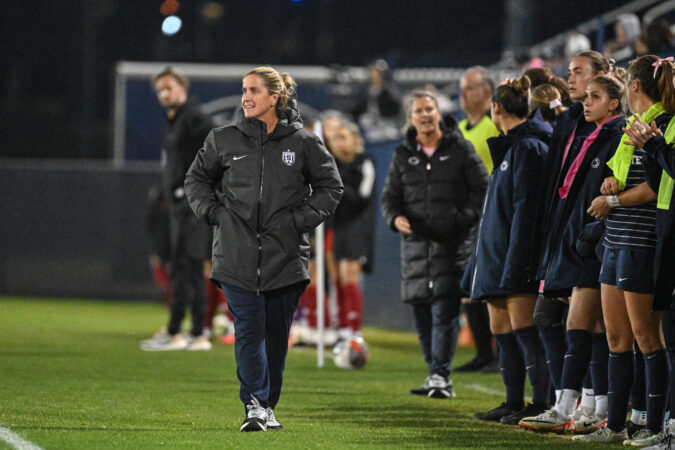
    To casual followers of the U.S. women’s soccer team, Erica Dambach’s name might not be familiar. But to many years’ worth of players and coaches, it means a lot.

    Nineteen years into her tenure as Penn State’s head women’s soccer coach, Dambach hasn’t just built one of the nation’s top college programs. She has built a pipeline from State College to the sport’s biggest stages.

    If the first name you think of is Alyssa Naeher, you’re right. But the legendary goalkeeper is far from alone. Christine Nairn arrived in Naeher’s senior year, then overlapped with Raquel Rodríguez, who won a 2015 national championship and later a NWSL title.

    Rodríguez overlapped with Marissa Sheva, who went from Bucks County to Ireland’s first-ever World Cup team in 2023. Sheva then overlapped with Kerry Abello, Kate Wiesner, and Sam Coffey, who have played for Emma Hayes’ U.S. national team.

    Wiesner later welcomed Olivia Smith, who spent just one year on campus before rocketing to the pros. Her move from Liverpool to Arsenal last year was the first in women’s soccer to earn a transfer fee of over 1 million British pounds (around $1.4 million).
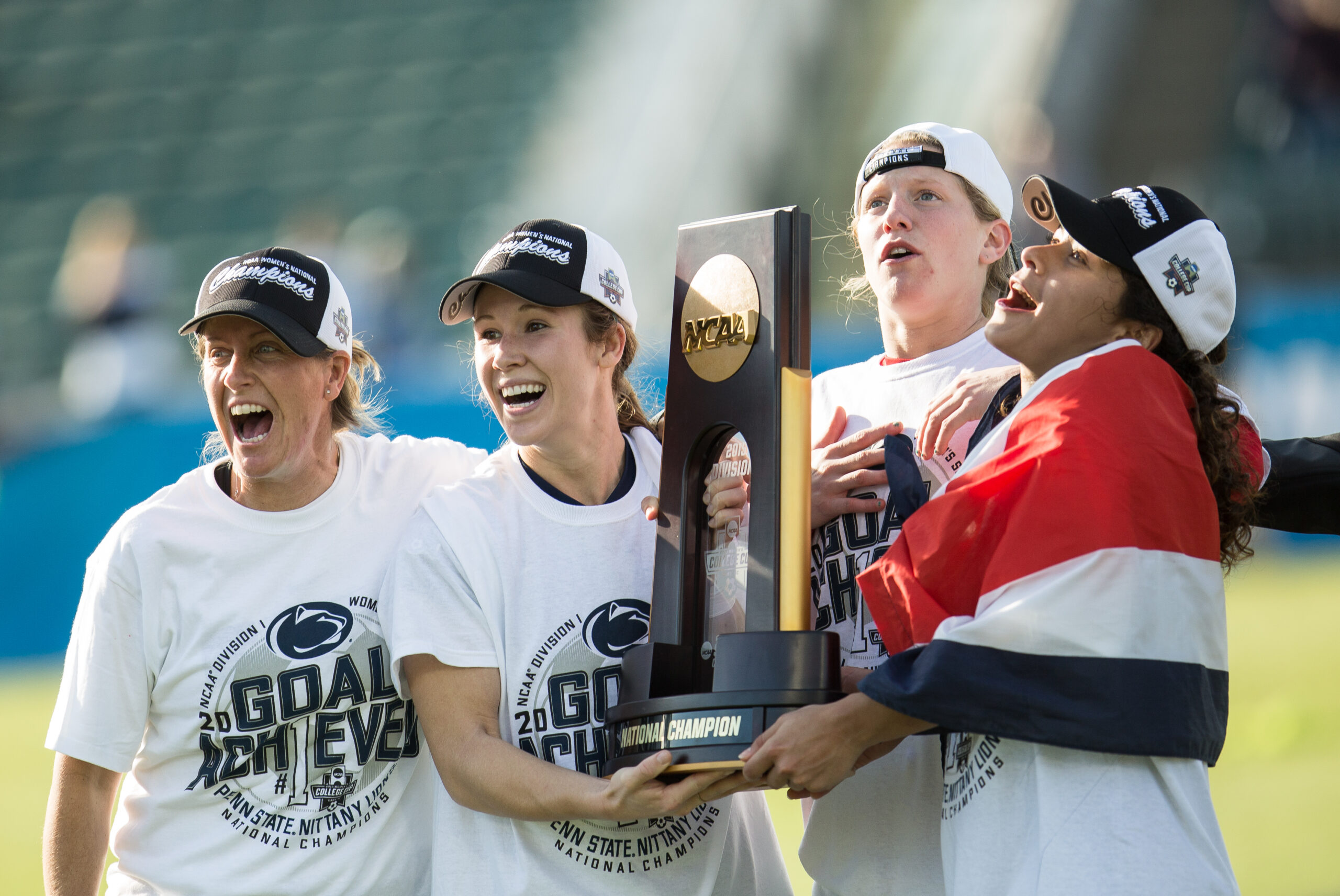
    Erica Dambach (left) with a trio of future pros who won Penn State’s 2015 national championship: Mallory Weber, Britt Eckerstrom, and Raquel Rodríguez.

    Along the way, Dambach has had her own turns with U.S. Soccer coaching staffs. She was an under-19 team assistant in 2004, the under-17 head coach from 2004 to 2007, and a senior team assistant from 2008 to 2012 and in 2020.

    It’s been quite a run for the 50-year-old, with room for plenty more to come.

    “There’s been opportunities to to look in different directions or to think about is the grass greener,” Dambach told The Inquirer. “And I think every time I’ve looked in a different direction, all it does is reaffirm that this is who I am, and this is what I enjoy.”

    But go back before all that, and you’re standing in the Philadelphia suburbs.

    ‘These women live out their dreams’

    Dambach was born in Bordentown, N.J., and moved across the Delaware River to Huntingdon Valley at a young age. She played high school soccer on the boys’ team at Lower Moreland, then was recruited to play college soccer at another historic program, William & Mary.
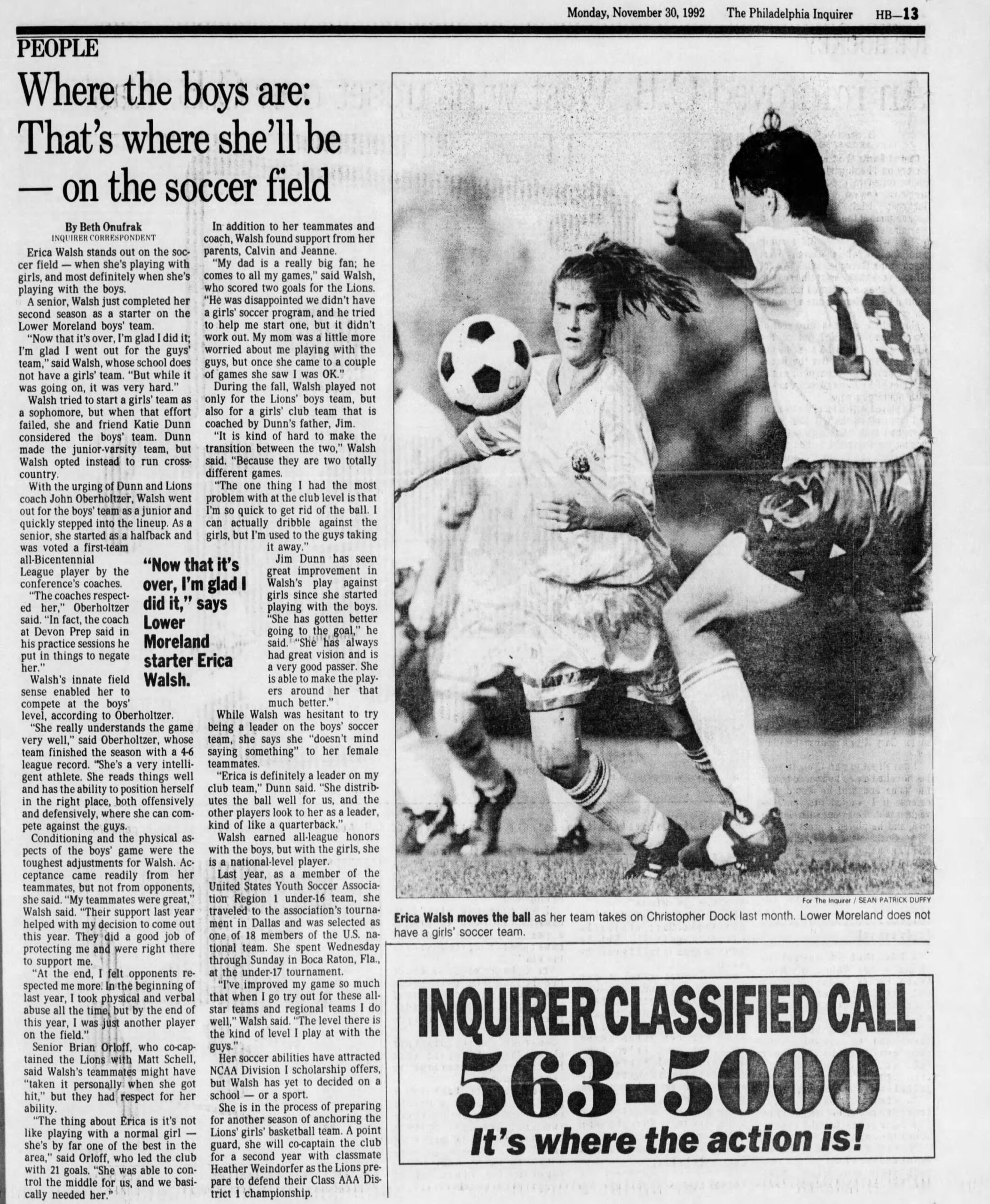
    A clipping from the Bucks County Neighbors High School Sports section of The Philadelphia Inquirer on November 30, 1992, featuring Erica Dambach (née Walsh) playing for Lower Moreland’s boys’ soccer team.

    Her coaching career began a year after she graduated in 1996. She started at Bucknell, then went to Dartmouth, Lehigh, Florida State, and Harvard before Penn State called in 2007.

    Now Dambach’s mantel includes 11 Big Ten regular season titles, five conference tournament crowns, that 2015 national championship, runner-up in 2012, and five more Elite Eights.

    And there have been so many players who’ve made it to the pros.

    “It’s a big reason why I’m in the college game for sure, to see these women live out their dreams,” Dambach said. “Obviously, when they sit in our office when they’re 14 years old, they talk about lifting a World Cup trophy. And now to see these players get an opportunity to wear the crest and to represent the country and watch their dreams come true, it’s certainly proud moments around here.”
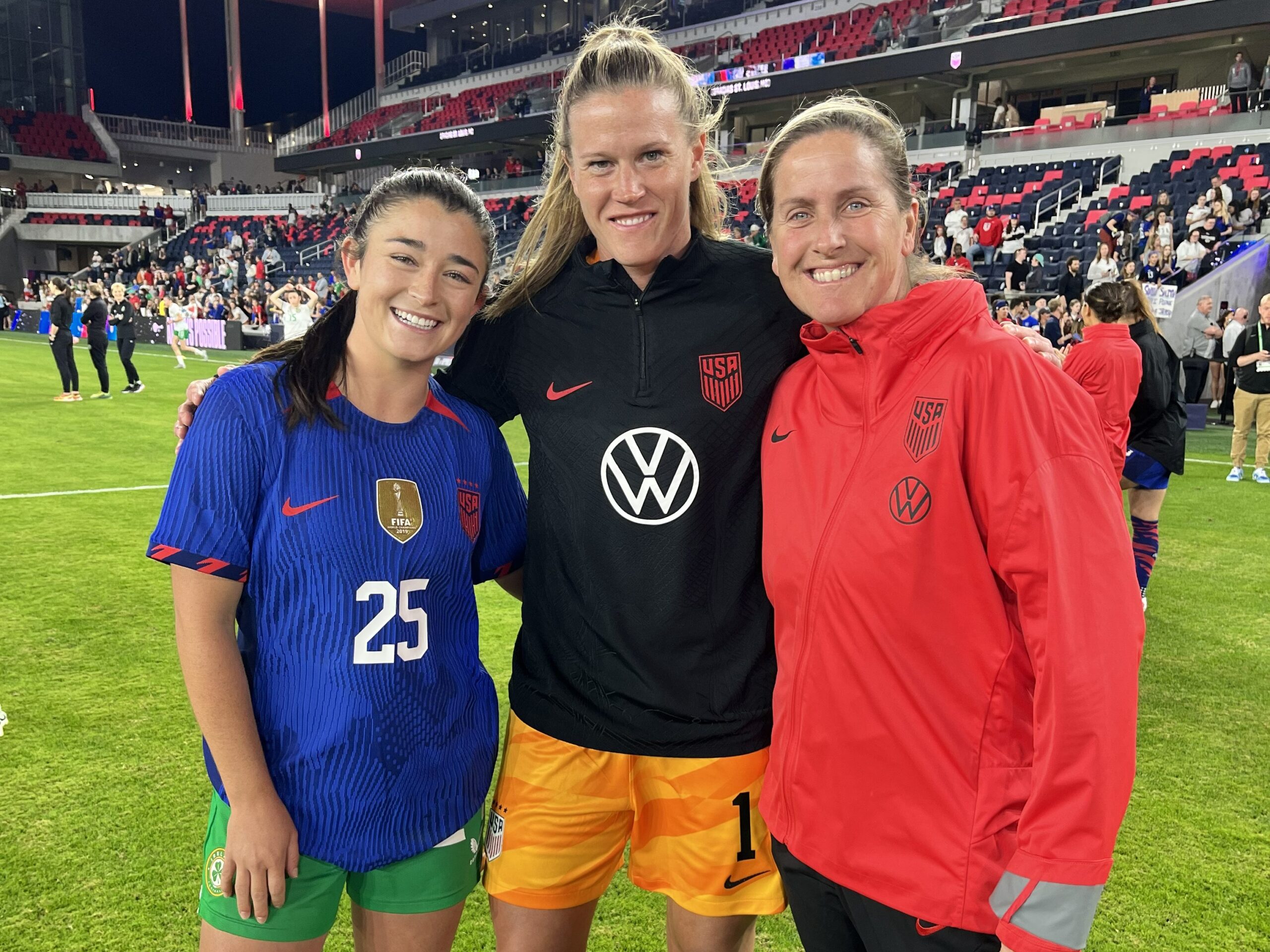
    Erica Dambach (right) with Marissa Sheva and Alyssa Naeher at the U.S.-Ireland game in April 2023, where Sheva and Naeher were on opposite sides.

    Dambach faces the same headwinds as other college coaches these days. No one bats an eye anymore when a talented teen turns pro without going to college.

    “What I’ve learned is that when a player and a family has their mindset on it when their daughter’s 16, you need to be careful because they’re going to find a way to get there [to the pros] very soon,” she said. “The generational talent of Claire Hutton? Yeah, good move.”

    But while Hutton already has 15 caps at age 20, there’s still plenty of room for college products. Dambach believes that can remain the case.

    “I would argue that our ability to help the 17-, 18-, 19-year-olds right now, that time is too valuable in their life and too precious in their life,” she said. “This is an environment where I do think that they can get to all the same points with having a little bit more guidance in their first time away from home. And having people that are educated and care about that side of the human and the player.”
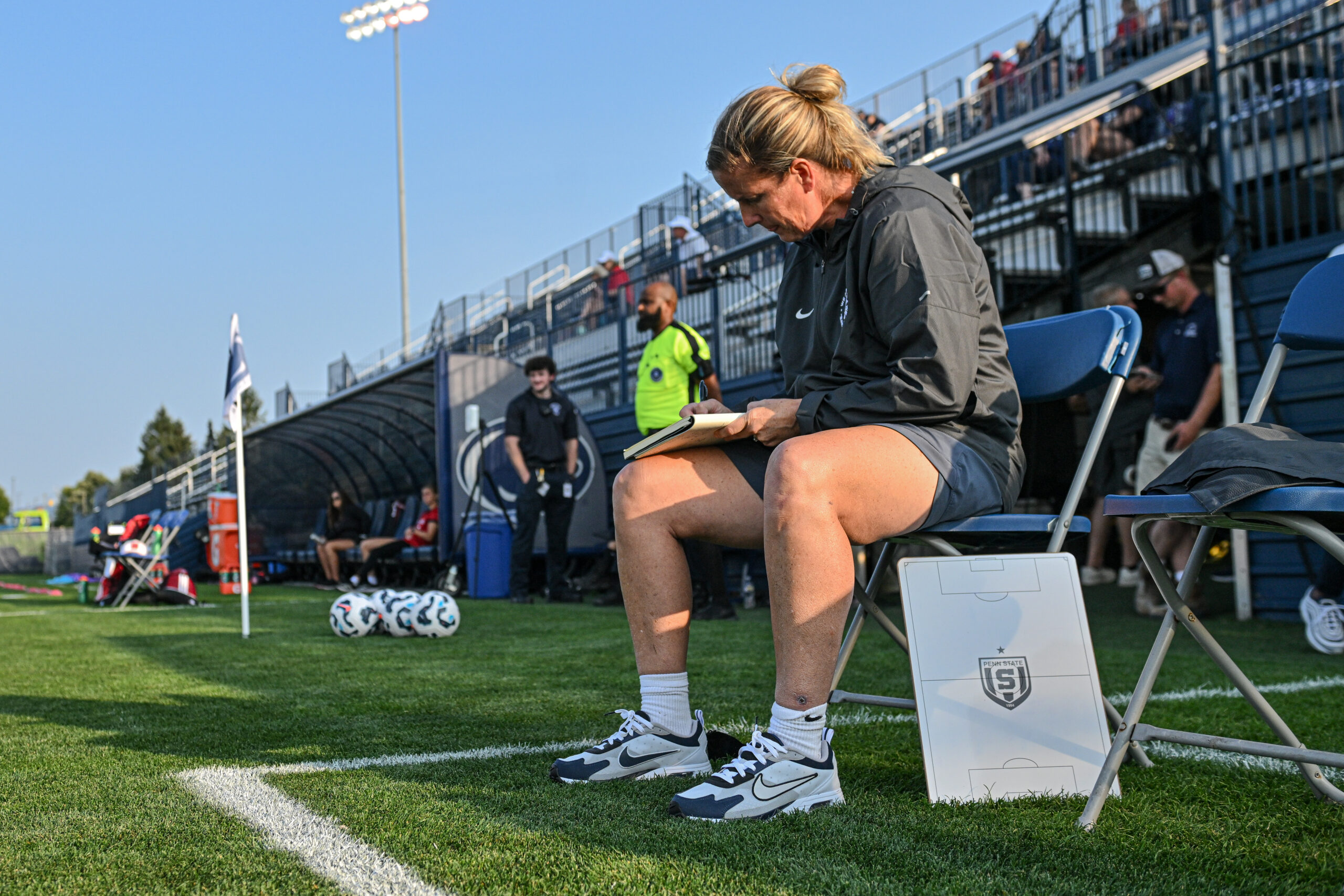
    Erica Dambach taking notes on the sideline during a Penn State game in 2024.

    Another is the fight every college coach has: to get NIL money and attract top players with it. Dambach is comfortable with where she is on that front.

    “There are 10 programs historically, five to 10 programs, that are competing for a national championship,” Dambach said. “You’ve got those teams that have seniors that bubble up and have a particularly good year. But when those programs go head to head for a player, you’re splitting hairs, and the dollars do matter.”

    It also helps that Penn State just opened a $21 million expansion of its soccer facilities a few days ago. And Dambach has the privilege of a veteran staff, including three assistants who’ve been there for 15 years or more. One of them, Ann Cook, was her roommate at William & Mary.

    “I think [players] walk in here and they know that they’re going to be coached by four head coaches, four coaches that have been sought after by so many different programs,” Dambach said, “and they look at it, and everywhere they turn it’s going to be a professional environment for them.”
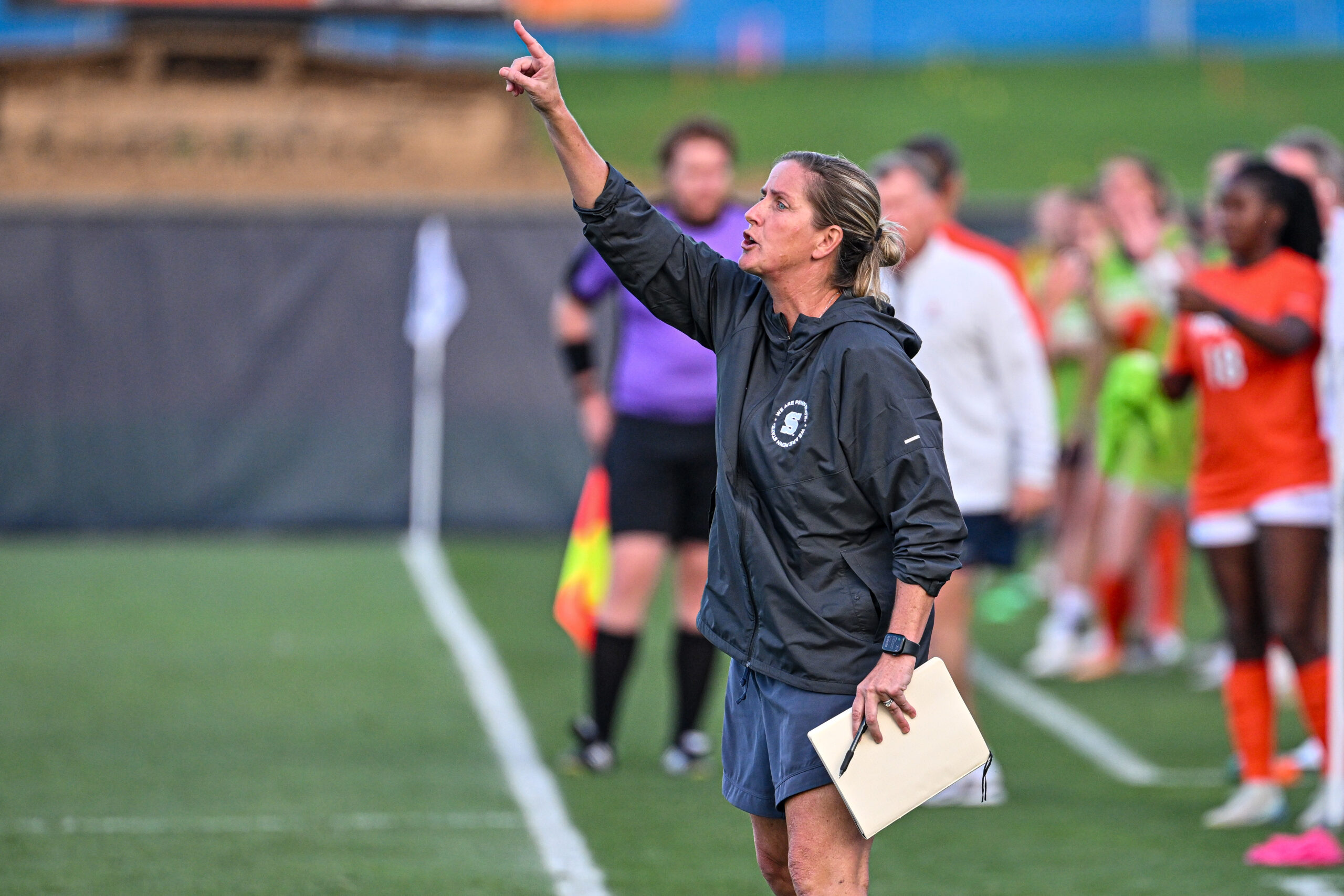
    Erica Dambach giving her players some instructions during a 2024 game.

    Tributes from the stars

    Dambach knows Hayes well and keeps in touch with Coffey and other former players. Ahead of the U.S.’s return to north Jersey for Saturday’s SheBelieves Cup against Colombia (3:30 p.m., TBS, Telemundo 62), that duo paid tributes to their friend.

    “I could, like, write a book on her just to give an answer,” said Coffey, who transferred from Boston College after her sophomore season (and could indeed write that book as a journalism major). She was an attacking midfielder at the time, and Dambach helped convert her to the ball hawk she is now.

    “I came from B.C. as a player that was so one-dimensional, and it might sound shocking, but I really had no interest in defending whatsoever,” Coffey said. “I just think that she developed me so much as a player and a person.”

    The latter still resonates.

    “She is so focused on us being this complete person,” Coffey said. “Especially when you’re at a college age, it can so easily be so much about just what you do on the field, but for her it’s all about who you are in all aspects of your life.”
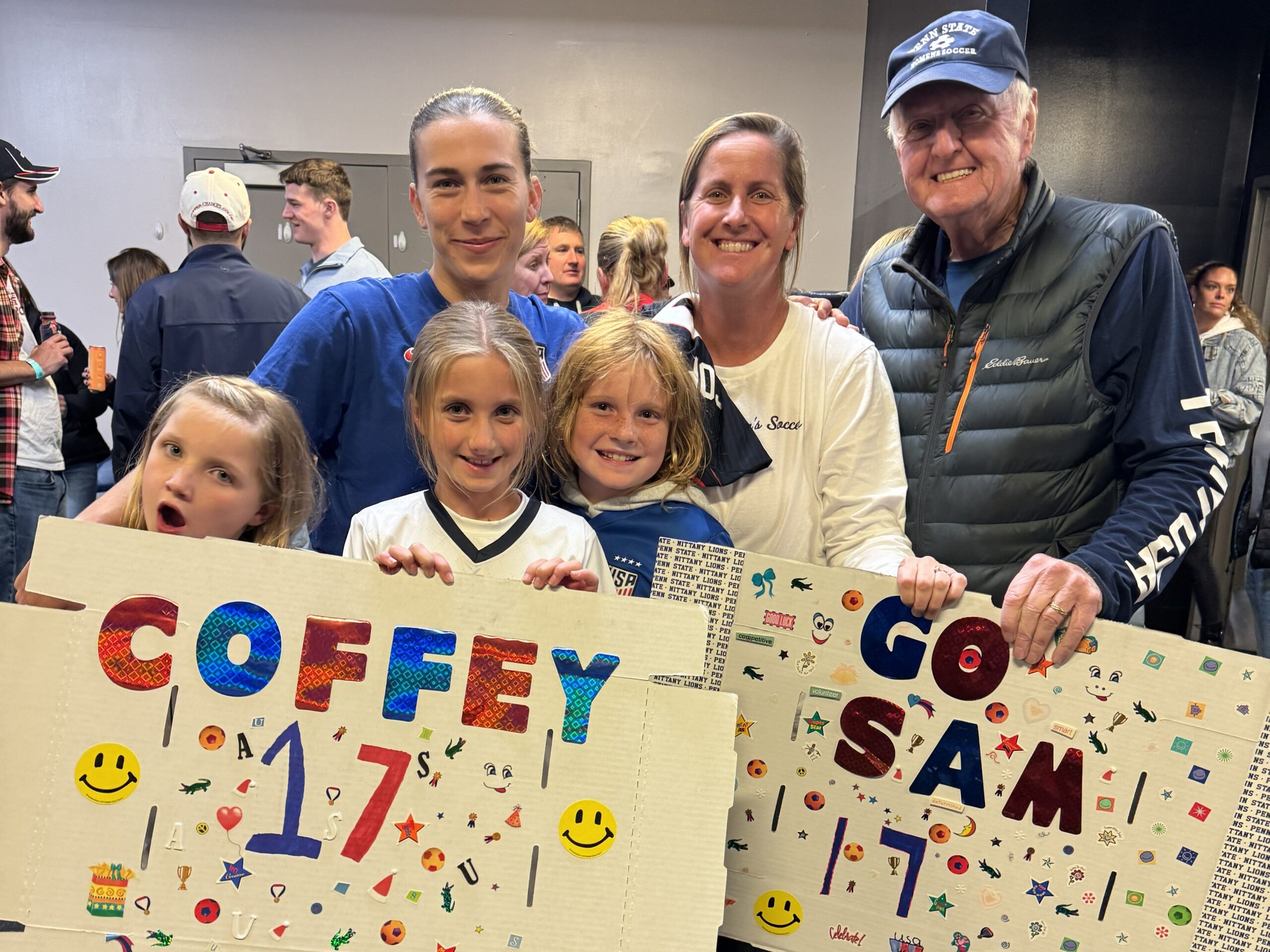
    Erica Dambach (second from right) and her family with Sam Coffey at the USWNT game vs. Portugal in October at Subaru Park.

    Hayes recalled that when she came to the U.S. from England to begin her coaching journey in the early 2000s, Dambach was “the first coach I looked at and that I was in close contact with. I thought she’s the best, and I think she’s quietly had an influence on my own career.”

    Now Hayes gets to take Dambach’s players on their next journeys. Coffey is a star, and Wiesner is a World Cup contender. (She was to be on this SheBelieves Cup squad until suffering a calf injury last month.)

    “It’s the way players speak about her, it’s the way other colleagues speak about her,” Hayes said of Dambach. “It’s a real testament to not just the quality she has, but the longevity to keep doing that, and to keep producing players whose characters you can clearly see have been well-shaped.”

    There even was praise from a U.S. player who played against Penn State back in the day and has worked with Dambach over the years since. Emily Sonnett was part of a 5-1 Virginia rout of the Nittany Lions in 2013, before earning well over 100 national team caps.
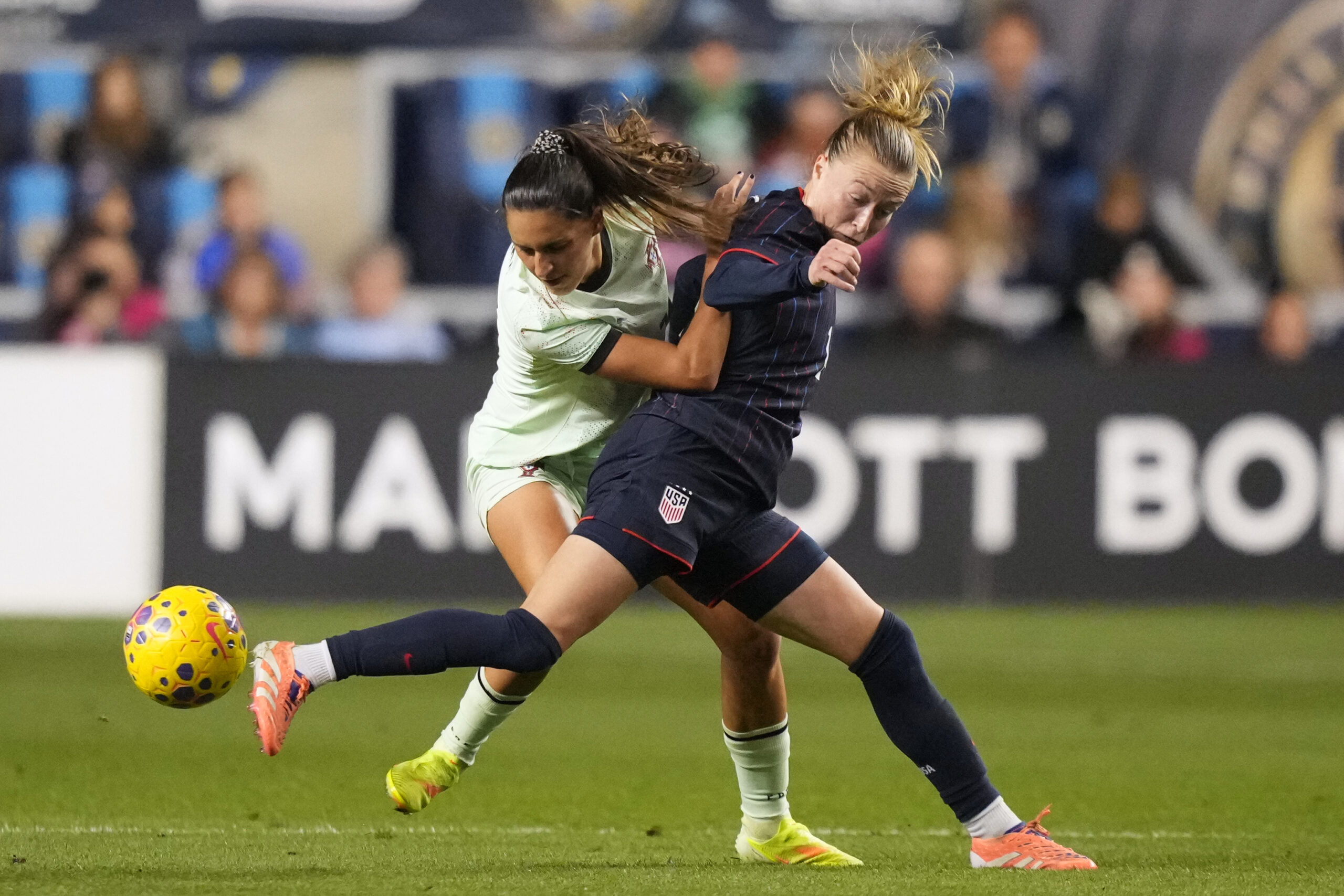
    Veteran U.S. national team defender Emily Sonnett (right) worked with Erica Dambach when Dambach was an assistant coach in the program.

    “When she was in [the national team], she led a lot of our small-group meetings in terms of defending and was] very detailed,” Sonnett said. “That short amount of time, the impact that she had on me, and the intentionality … I really enjoyed working with her, and when I see her, I remind her how much I enjoyed it.”

    Told of this, especially the players’ words, Dambach was moved.

    “Honestly, you know, that means a lot,” she said. “That’s never going to get old for me. … Those are two world-class players and world-class humans, and the fact we can play a small part in it is everything.”
  • Ally Sentnor’s goal is enough for the USWNT to edge Canada, 1-0, in the SheBelieves Cup

    Ally Sentnor’s goal is enough for the USWNT to edge Canada, 1-0, in the SheBelieves Cup

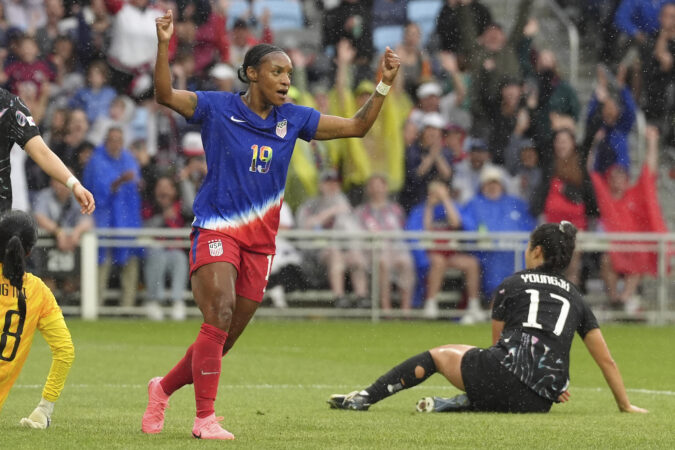
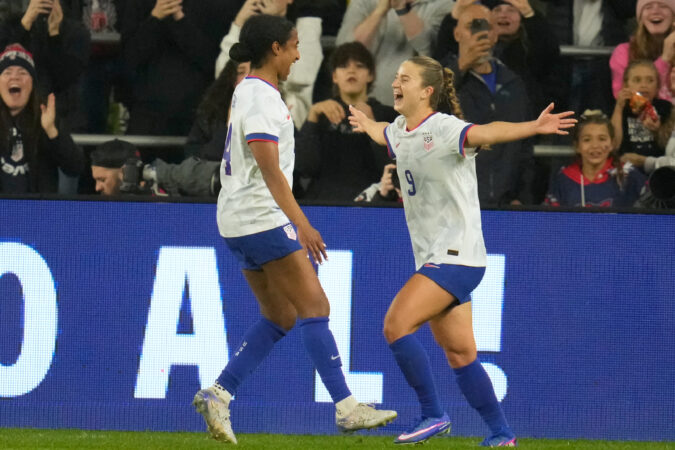
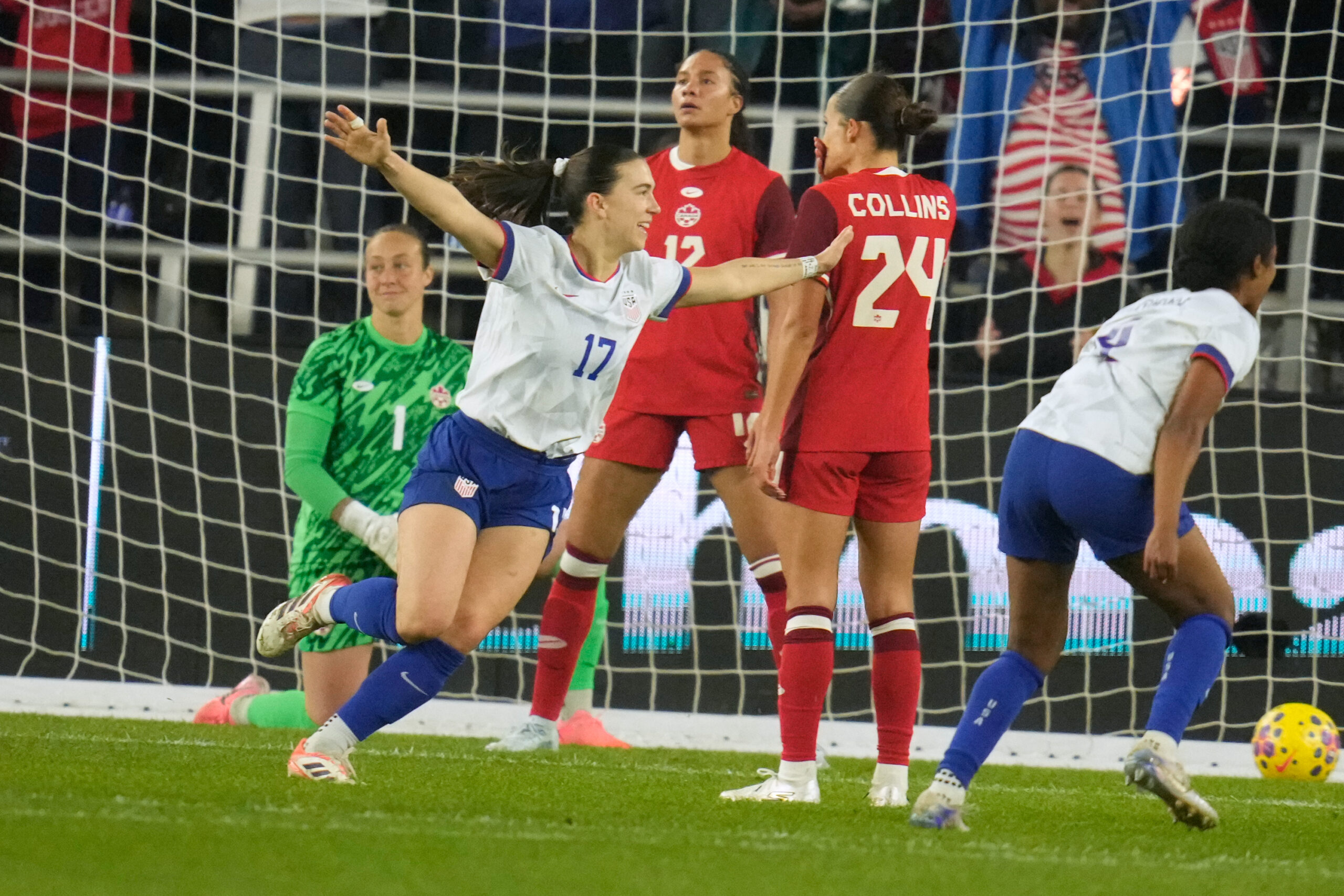
    COLUMBUS, Ohio — Ally Sentnor scored in the 55th minute and the United States beat Canada 1-0 on Wednesday in the SheBelieves Cup tournament, the Americans’ seventh straight shutout.

    Sentnor scored her seventh international goal off a corner from Rose Lavelle, gathering the ball on a bounce before punching it past two defenders and Canada goalkeeper Kailen Sheridan.

    The U.S. hasn’t allowed a goal since a 3-1 win over Portugal last October, a stretch of 714 minutes.

    “Honestly, our goal was just to win the game,” Sentnor said. “I think going into a rivalry game, we knew what was going to happen. It was going to be on the line and Canada gave us an incredible performance, and we really had to work for this win.”

    United States midfielder Sam Coffey (left) celebrates a goal by teammate Ally Senator in the second half of a SheBelieves Cup soccer match against Canada on Wednesday.

    The United States sat atop the SheBelieves table with two wins, ahead of Canada and Colombia with one each. The Colombians defeated Argentina 1-0 in the early match Wednesday at ScottsMiracle-Gro Stadium.

    The United States is 55-4-9 against Canada since their first meeting in 1986. The U.S. won the last meeting, 3-0, in July.

    The Canadians’ last win in the series came at the Tokyo Olympics in 2021. Jessie Fleming converted a penalty in a 1-0 semifinal victory. Canada went on to win the gold medal.

    U.S. coach Emma Hayes included Trinity Rodman in the starting lineup despite Rodman taking a hit in the back late in Sunday’s 2-0 SheBelieves victory over Argentina in Nashville. Rodman struggled with a nagging back injury last year.

    Canada, which defeated Colombia 4-1 in the tournament opener, was without captain Fleming because of an illness.

    The game was scoreless after the first half despite the United States dominating possession by nearly 70%.

    Sentnor, who plays professionally for the Kansas City Current, broke the stalemate with her third goal of the year. The 22-year-old was named U.S. Soccer’s young player of the year in 2024.

    Canada coach Casey Stoney felt her team showed “huge progress” from the last time the Canadians faced the United States, but was disappointed about conceding on a set piece.

    “I think we were competitive throughout the game. I think we kept our distances better, we had good discipline,” Stoney said. “I think we had moments in their box where we can have a little bit more composure.”

    Colombia will play the United States on Saturday in the tournament finale in Harrison, New Jersey. Canada plays Argentina in the early game.

    It is the 11th annual SheBelieves Cup hosted by the United States. Canada was making its fourth appearance in the tournament.

  • Lindsey Heaps and Jaedyn Shaw score as USWNT blanks Argentina 2-0 in SheBelieves Cup

    Lindsey Heaps and Jaedyn Shaw score as USWNT blanks Argentina 2-0 in SheBelieves Cup

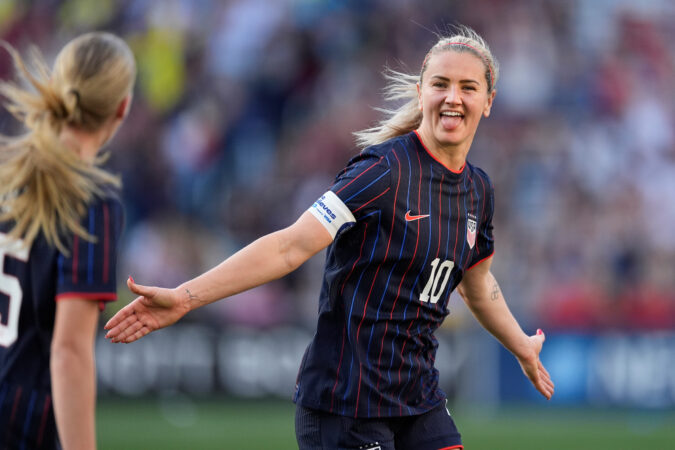
    NASHVILLE — Lindsey Heaps had a goal and an assist, and Jaedyn Shaw also scored to propel the United States to a sixth straight shutout victory, 2-0 over Argentina in the SheBelieves Cup on Sunday.

    The U.S. has outscored opponents 27-1 over its past seven games. Coach Emma Hayes’ squad hasn’t lost since falling 2-1 to Portugal in Chester, Pennsylvania, on Oct. 23.

    Heaps scored from the top of the box in the 19th minute. Emma Sears worked the ball out of the left corner and into the box, then passed to a wide-open Heaps, who converted with her left foot. It was her 39th international goal, the most on the current U.S. roster.

    Shaw found the back of the net from the top left corner of the box. Her right-footed shot curved toward the left post and into the net for her 10th international goal.

    After Shaw scored, Lilly Reale was treated for a right leg injury and replaced by Emily Fox.

    During stoppage time, Argentina’s Milagros Martín was assessed a yellow card for shoving Trinity Rodman in the back. That sparked concerns about a recurrence of the back injuries that have bothered Rodman for years.

    The U.S. dominated possession, holding the ball 67.7% of the time. The Americans had three shots on target, while Argentina had just one on target against U.S. goalkeeper Claudia Dickey.

    The SheBelieves Cup — a four-team round-robin that also includes Canada and Colombia — moves to Columbus, Ohio, on Wednesday, when the Americans will take on Canada. The Canadians beat Colombia 4-1 earlier Sunday.

    Inquirer staff writer Jonathan Tannenwald contributed to this report.

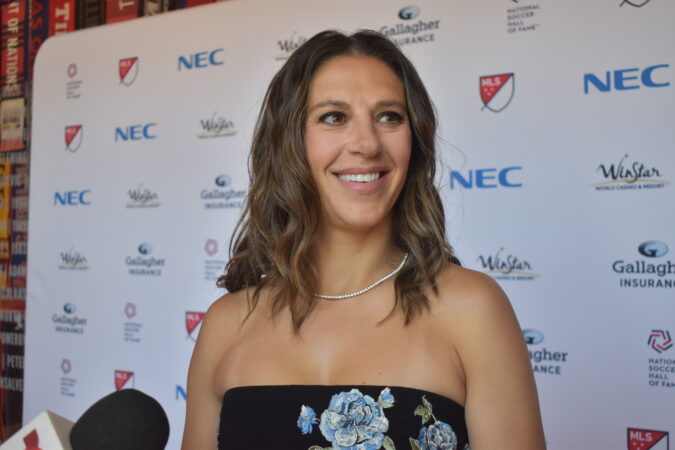
  • Carli Lloyd’s return to Fox’s World Cup coverage comes with goals for herself and the USMNT

    Carli Lloyd’s return to Fox’s World Cup coverage comes with goals for herself and the USMNT

    In 2022, Fox Networks threw Carli Lloyd into the proverbial fire — on the other side of the world.

    Barely a year removed from her own retirement from professional soccer, the Delran native was announced as one of the primary studio analysts for the network’s monthlong coverage of the FIFA World Cup in Qatar.

    She handled it all in stride, finding her voice while taking cues from longtime on-air personalities Rob Stone and Alexi Lalas, but it was the first time she’d be a consistent presence, and a different look from what’s customary, with her observations of each match being critiqued and analyzed by soccer fans all over the world.

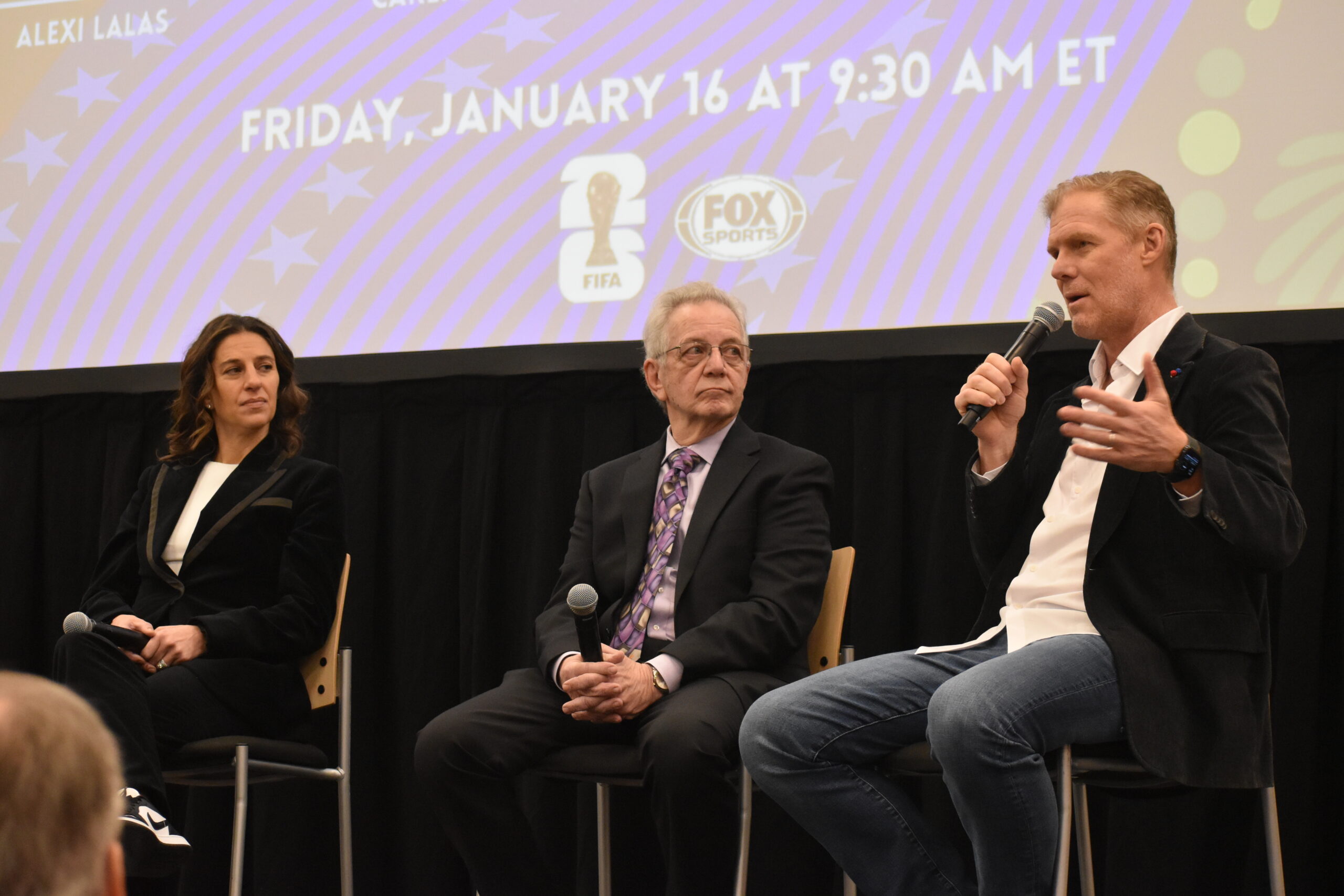
    From left, Fox Sports soccer broadcasters Carli Lloyd, JP Dellacamera, and Alexi Lalas speak at the United Soccer Coaches Convention in Philadelphia last month.

    “It was a lot to learn really fast, a lot to take in,” Lloyd recalled during the United Soccer Coaches Convention in Philadelphia last month. “But I was fortunate enough to learn from guys like Alexi and [Fox commentator] Stu [Holden] who helped me along the way really feel confident and like I can really do this.”

    Lloyd did it well enough that she’ll be among Fox’s lead crew of studio analysts once again for the 2026 World Cup as the tournament makes six stops through Philadelphia as part of a 104-match schedule this summer.

    It’s a task she says she’s “ready and excited for” after getting her feet wet in 2022, in addition to the commentary she’s been able to provide in the years since — some of which along the way stirred up a bit of controversy.

    But a new year finds the tournament on home soil, with the United States hosting the bulk of scheduled matches, also spread across Canada and Mexico. It’s the perfect time for the United States to return to the biggest stage and show the world just how far it has evolved as a soccer nation, Lloyd says.

    “I wouldn’t say there’s immense pressure in winning the World Cup,” Lloyd said. “But there’s the pressure to show the country that they are there to compete and they’re going to fight, and they’re going to give everything they have for our country.”

    Made to inspire

    Lloyd can recall being a 12-year-old girl watching the 1994 World Cup, the last time the men’s edition was held in America. That tournament, she recalled, sparked her excitement and love for the sport.

    Follow that up with the unforgettable 1999 women’s edition, also hosted in the States, and those two moments galvanized the idea that Lloyd would do all she could to pursue it as a career.

    The World Cup, Lloyd says, has that effect.

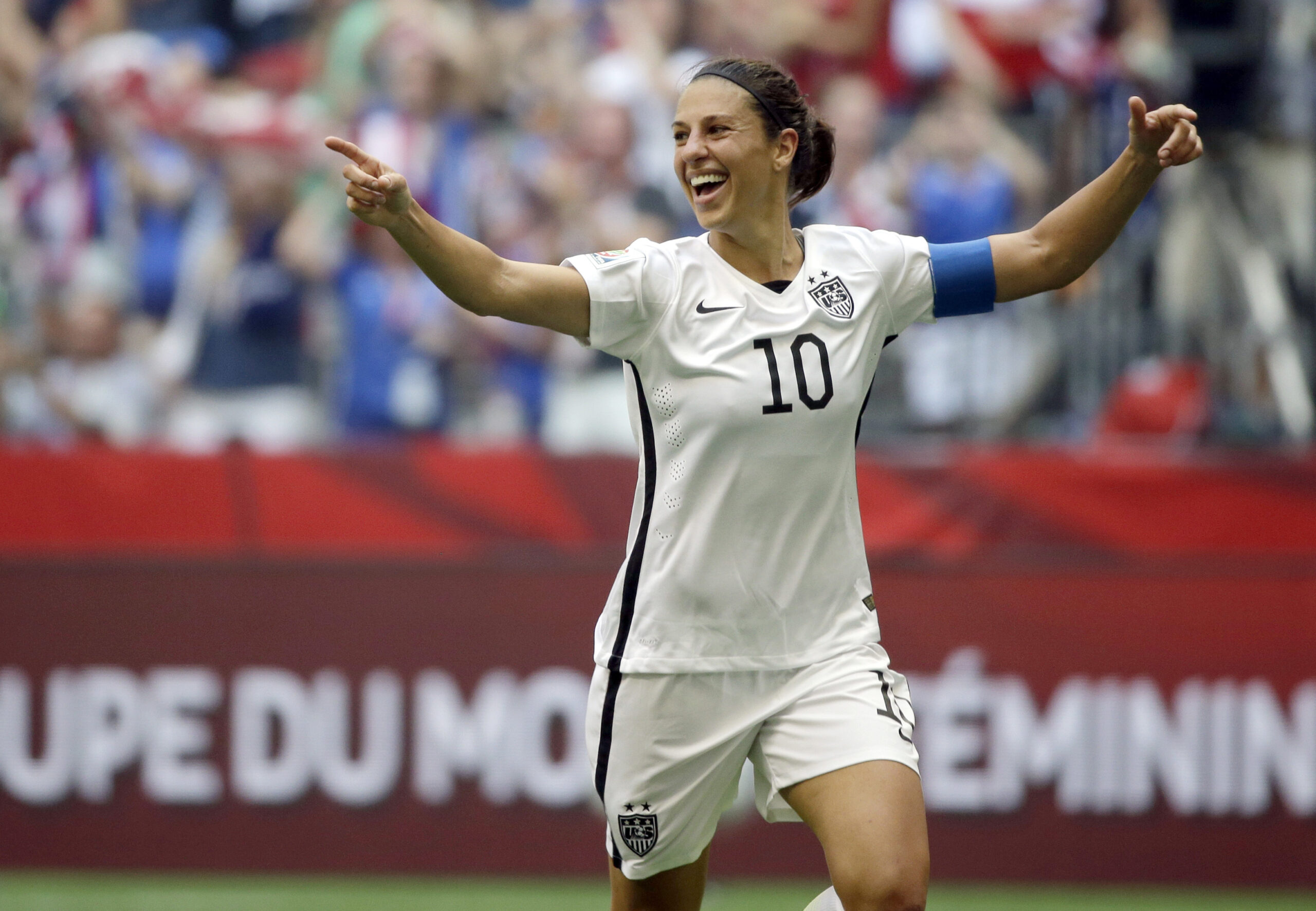
    Carli Lloyd celebrates scoring her third goal against Japan in the 2015 women’s World Cup final in Vancouver.

    “I don’t think we all know yet just how massive this is going to be, and the impact that it’s going to have on generations to come,” Lloyd said. Those 1994 and 1999 World Cups “jump-started my dream; they were life-changing for me. But I think it’s only going to be massive in the United States of America if our team shows up with that grit and that fight and that mentality.”

    But it’s not just on the fans’ side. Lloyd said U.S. manager Mauricio Pochettino’s decision to leave a lot of the USMNT’s bigger names off the roster for the Concacaf Gold Cup, deciding to bring top American talent from Major League Soccer and elsewhere — like the Union’s Quinn Sullivan and Nathan Harriel — was an eye-opening experience for those players who might work a bit harder to remain on Pochettino’s radar.

    “For me personally, I think the Gold Cup was the turning point for this team, leaving a lot of those well-known players off the roster,” Lloyd said. “I think it was the best thing that could have happened to this team going into this World Cup. It gave a lot of the non-European [American] players the confidence, the belief, and [allowed Pochettino] to instill the culture he wants to build.”

    U.S. manager Mauricio Pochettino, second from left. Carli Lloyd said the manager’s decision to bring fresh faces into the national team last summer and in the November cycle reinvigorated the team ahead of the World Cup.

    Games and opportunity

    Lloyd compared all of that to the success U.S. women’s coach Emma Hayes achieved in a short span, becoming the change that was needed after the Americans’ shocking exit at the 2023 women’s World Cup.

    There’s no reason, she says, that Pochettino can’t find similar success — despite being off to a noticeably slower start.

    “Obviously, the 2023 [women’s] World Cup didn’t end well,” Lloyd said. “The team needed change and almost needed to be blown up in order to be rebuilt again. Emma Hayes comes in. A lot of players retire. She selects different rosters, and they instantly change the culture, the mentality, the pride of wearing the jersey again, and that happened very quickly.

    “But with the men’s team, I feel like it took a lot of time, and I don’t know why it took time. Maybe it was the language barrier [between] coach and the team, and the lack of games and opportunities that they had together.”

    The U.S. seemed to find continuity during November’s qualifying cycle with a pair of exhibition wins, against Paraguay in Chester and a 5-1 rout of Uruguay in Tampa, Fla., to close the year.

    Pochettino will call up a number of players for matches against Belgium on March 28 (3:30 p.m., TNT, Peacock) and Portugal on March 31 (7 p.m., TNT, Peacock), in what will surely be a final audition for many on that roster.

    Both matches will be in Atlanta, home of U.S. Soccer’s new multimillion-dollar national training center. Lloyd noted that the investment and the caliber of nations the U.S. is bringing in show a commitment to improvement on the global stage.

    Now, it’s up to the players to cash in, she says.

    “I think we saw that fight [during this last FIFA window] in November,” Lloyd said. “You can see there’s a different tone within this group. And I’m glad that they found it when they did. There were some big wake-up calls for some players … and I think that’s all we’ve been wanting to kind of see, these guys having the pride when you put on that jersey. And they sure showed that those last two games in November.

    “It’s not a vacation when you come into the men’s national team anymore. There should be an excitement around it where you want to come in and lay your body on the line and do everything possible for the team and for your country.”

  • Trinity Rodman and Lily Yohannes lead the USWNT’s SheBelieves Cup roster, but some big players are out

    Trinity Rodman and Lily Yohannes lead the USWNT’s SheBelieves Cup roster, but some big players are out

    The theory after the U.S. women’s soccer team’s January camp was that the SheBelieves Cup in March would be the first big step toward World Cup qualifying in the fall.

    Tuesday’s announcement of the tournament roster signaled that the step might not be as big as believed.

    The 26-player squad doesn’t lack for marquee names. Naomi Girma, Sam Coffey, Lily Yohannes, Rose Lavelle, Trinity Rodman, and Alyssa Thompson are among them. But just as significant are two names not on the squad.

    Sophia Wilson is back from maternity leave and participating in the Portland Thorns’ preseason camp out west. Catarina Macario hasn’t played since December for the U.S. or her English club, Chelsea, but there’s been a lot of chatter that a reported heel injury isn’t the only reason. She turned down a new contract offer in London and could be headed to the NWSL’s San Diego Wave.

    Catarina Macario (right) likely is leaving Chelsea after three years at the London club.

    U.S. manager Emma Hayes has made it clear that she won’t call in players who haven’t been playing for their clubs lately. That makes sense. Still, Monday’s news raised some eyebrows. Hayes was not surprised to be asked about the two stars and said she would have called in both, were they healthy.

    “‘Soph’ and I spoke, and she’s just not ready,” she said, noting that the Thorns didn’t deem her fit yet either. “The return to play protocol, it’s just not given her enough time, I think, for her to be in the place that she wanted to be in. So it’s right that she’s not part of this squad, however much I want her to be.”

    The manager described Macario as “getting closer and closer [to returning] every day” and said she didn’t know when the forward will return to club action.

    “She’s not available for selection yet at Chelsea. ”I don’t know when that is going to come — I don’t know if it’s a week, two, three weeks away.”

    The situation is different with two other major absentees. Mallory Swanson, the third member of the “Triple Espresso” forward line, is also a new mother and hasn’t returned to work with the Chicago Stars. Centerback Tierna Davidson has resumed training with Gotham FC after a torn ACL last year — “we’ve missed her,” Hayes said — but isn’t yet in game shape.

    “A player coming back from injury, you have to give them the time to be able to find their best version of themselves,” Hayes said. “I expect Tierna, when she is cleared to play for Gotham, to be competing, to come back into this side as soon as she, ideally, starts competing for Gotham on a regular basis. But most importantly, when her body is ready.”

    As for players who are on the 26-woman squad, the battle to be the new starting goalkeeper is one of the biggest stories. Phallon Tullis-Joyce, Claudia Dickey, and Mandy McGlynn are the three on this squad as the competition continues.

    Tullis-Joyce has the most club pedigree at Manchester United, at least for now. But she hasn’t always looked the part in a U.S. jersey. Dickey, of the Seattle Reign, has looked sharper in starting five of the last seven U.S. games, though Tullis-Joyce missed December’s games with an injury and January’s as they weren’t in a FIFA window.

    Phallon Tullis-Joyce hasn’t played for the U.S. since the Americans lost to Portugal in October at Subaru Park.

    “I’ve been really happy with Claudia Dickey and Mandy McGlynn from [the] last camp,” Hayes said. “With Phallon, we didn’t get the chance to select her because she was injured in the back end of November, December, so I’m looking forward to having Phallon back with the group. And, for now, I’m happy with this group.”

    The U.S. will play Argentina, Canada, and Colombia in this year’s tournament, on March 1, 4, and 7, respectively. Sports Illustrated Stadium in Harrison, N.J., will host the last day’s doubleheader, Argentina-Canada and U.S.-Colombia. As ever, a sellout crowd will be expected, with a few Philadelphia accents in the stands from fans making the trip north.

    Six days later, the NWSL season will kick off in Washington with Rodman’s Spirit hosting Wilson’s Thorns. That will be Rodman’s first game since signing her big new contract in D.C. The potential for Wilson to return to action that night will make it an even bigger occasion.

    Claudia Dickey (center) dives for a loose ball during a U.S. game last November.

    2026 USWNT SheBelieves Cup roster

    Goalkeepers (3): Claudia Dickey (Seattle Reign), Mandy McGlynn (Utah Royals), Phallon Tullis-Joyce (Manchester United, England)

    Defenders (9): Jordyn Bugg (Seattle Reign), Emily Fox (Arsenal, England), Naomi Girma (Chelsea, England), Lilly Reale (Gotham FC), Tara Rudd (Washington Spirit), Emily Sonnett (Gotham FC), Gisele Thompson (Angel City), Kennedy Wesley (San Diego Wave FC), Kate Wiesner (Washington Spirit)

    Midfielders (8): Sam Coffey (Manchester City, England), Lindsey Heaps (OL Lyonnes, France), Claire Hutton (Bay FC), Riley Jackson (North Carolina Courage), Rose Lavelle (Gotham FC), Olivia Moultrie (Portland Thorns), Jaedyn Shaw (Gotham FC), Lily Yohannes (OL Lyonnes, France)

    Forwards (6): Maddie Dahlien (Seattle Reign), Jameese Joseph (Chicago Stars), Trinity Rodman (Washington Spirit), Emma Sears (Racing Louisville), Ally Sentnor (Kansas City Current), Alyssa Thompson (Chelsea, England)

    2026 SheBelieves Cup schedule

    Sunday, March 1: Canada vs. Colombia, 2 p.m. (truTV, Universo) and U.S. vs. Argentina, 5 p.m. (TNT, Universo) in Nashville

    Wednesday, March 4: Colombia vs. Argentina, 3:30 p.m. (truTV, Universo) and U.S. vs. Canada (6:45 p.m., TNT, Universo) in Columbus, Ohio

    Saturday, March 7: Canada vs. Argentina, 12:30 p.m. (truTV, Universo) and U.S. vs. Colombia (3:30 p.m., TBS, Telemundo 62) in Harrison, N.J.

  • U.S. Soccer needs your kid’s youth club to help its national teams. Will it happen?

    U.S. Soccer needs your kid’s youth club to help its national teams. Will it happen?

    U.S. Soccer Federation sporting director Matt Crocker didn’t invent his slogan of choice, but that’s no reason not to use it.

    “If we do what we’ve always done, we will get what we’ve always got,” he said in a seminar at the United Soccer Coaches Convention last month. He said it at another event in December, too, and has no doubt said it many other times in his tenure so far.

    The message might even be getting through, helped by Mauricio Pochettino and Emma Hayes’ big-ticket successes lately with the senior national teams. But the people Crocker really needs to reach don’t work for his employer. In fact, they’ve historically worked against it.

    America’s youth soccer industrial complex — a phrase whose accuracy is confirmed at every convention — doesn’t like being told what to do by the sport’s governing body, or by anyone else. Many coaches and administrators have long cared more about winning games, making money, and keeping their jobs than about big-picture player development.

    Youth soccer tournaments rake in big bucks for organizers and are part of an overall machine that prioritizes winning over development in the American soccer landscape.

    For as much as Crocker is judged on the senior national teams’ successes, he is also measured on that big picture. And while he’s happy to let the men, the women, and the youth game do some things differently, he knows how he wants to steer the freighter carrying them all.

    His map is the “U.S. Way” program scheduled to roll out this year. It includes some medicine for the youth game to consume, and Crocker is trying to serve it with quite a bit of sugar.

    “We understand this is not U.S. Soccer standing here going, ‘You must do this, you must do that,’” he said. “It’s us better understanding your environments. It’s us better collaborating and working with you and giving you the resources — for free — to be able to tap into some of the things that might help you as a coach, that might help you as a club.”

    Free sugar certainly tastes good, right?

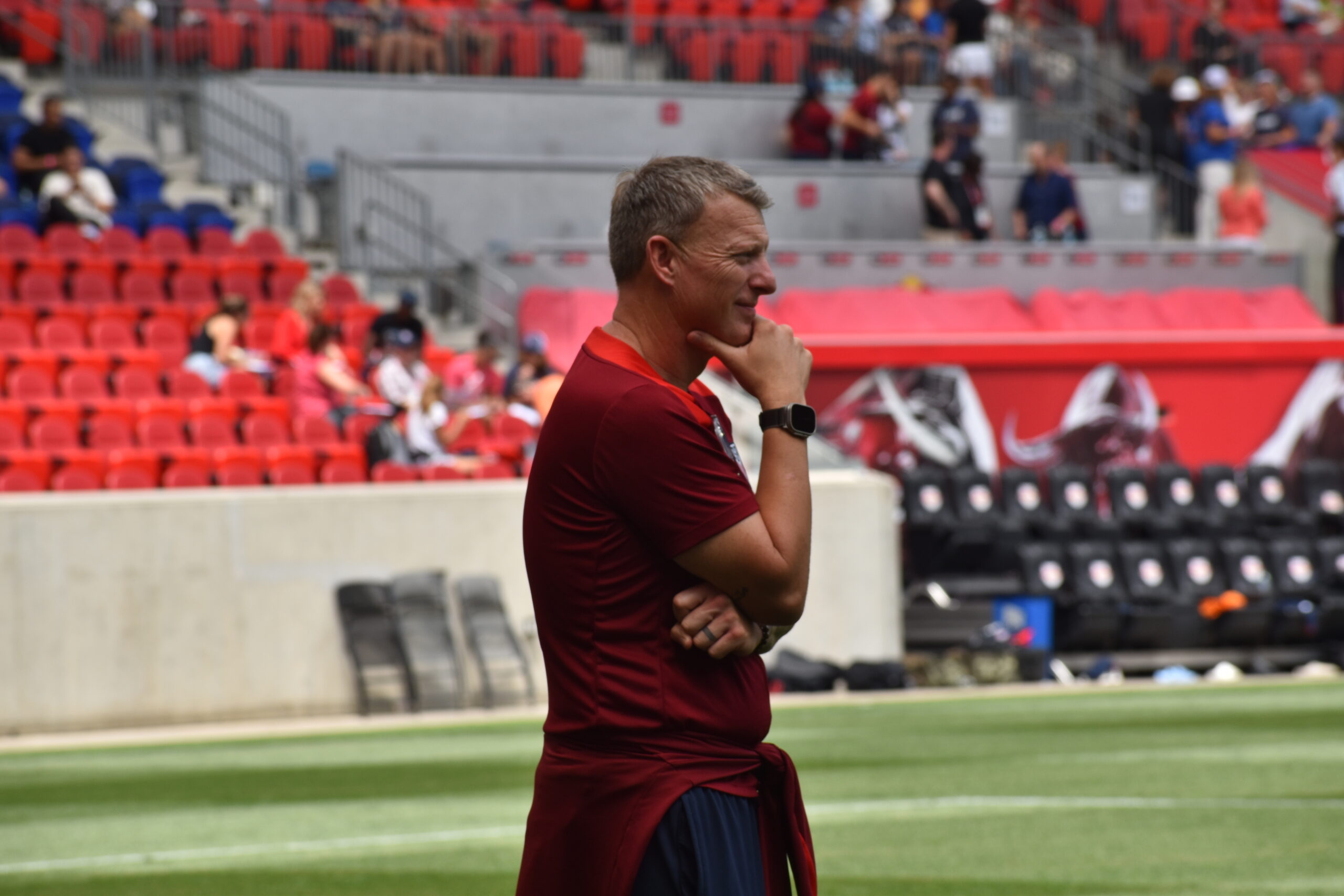
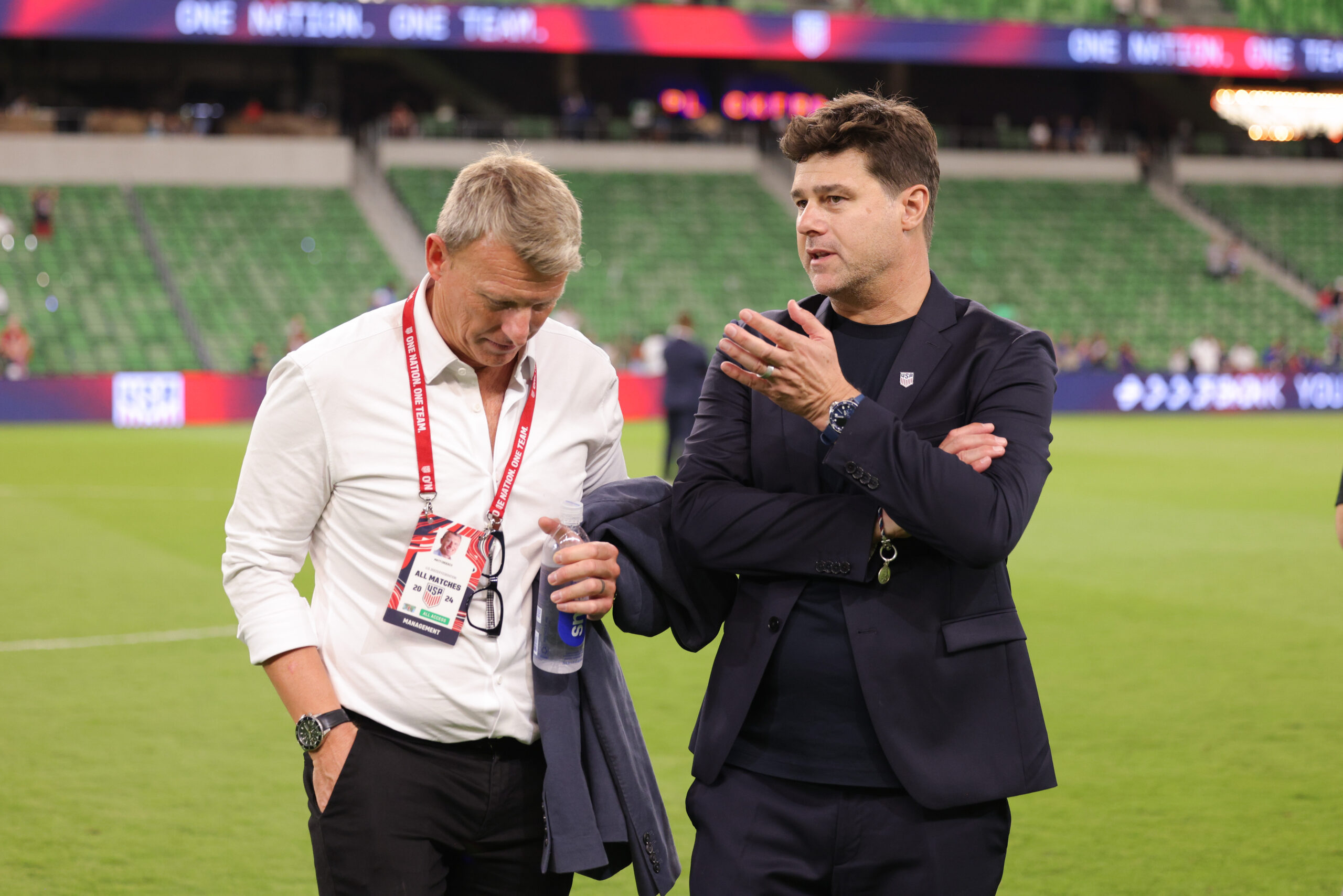
    Matt Crocker on the sidelines at a U.S. women’s team practice in 2024.

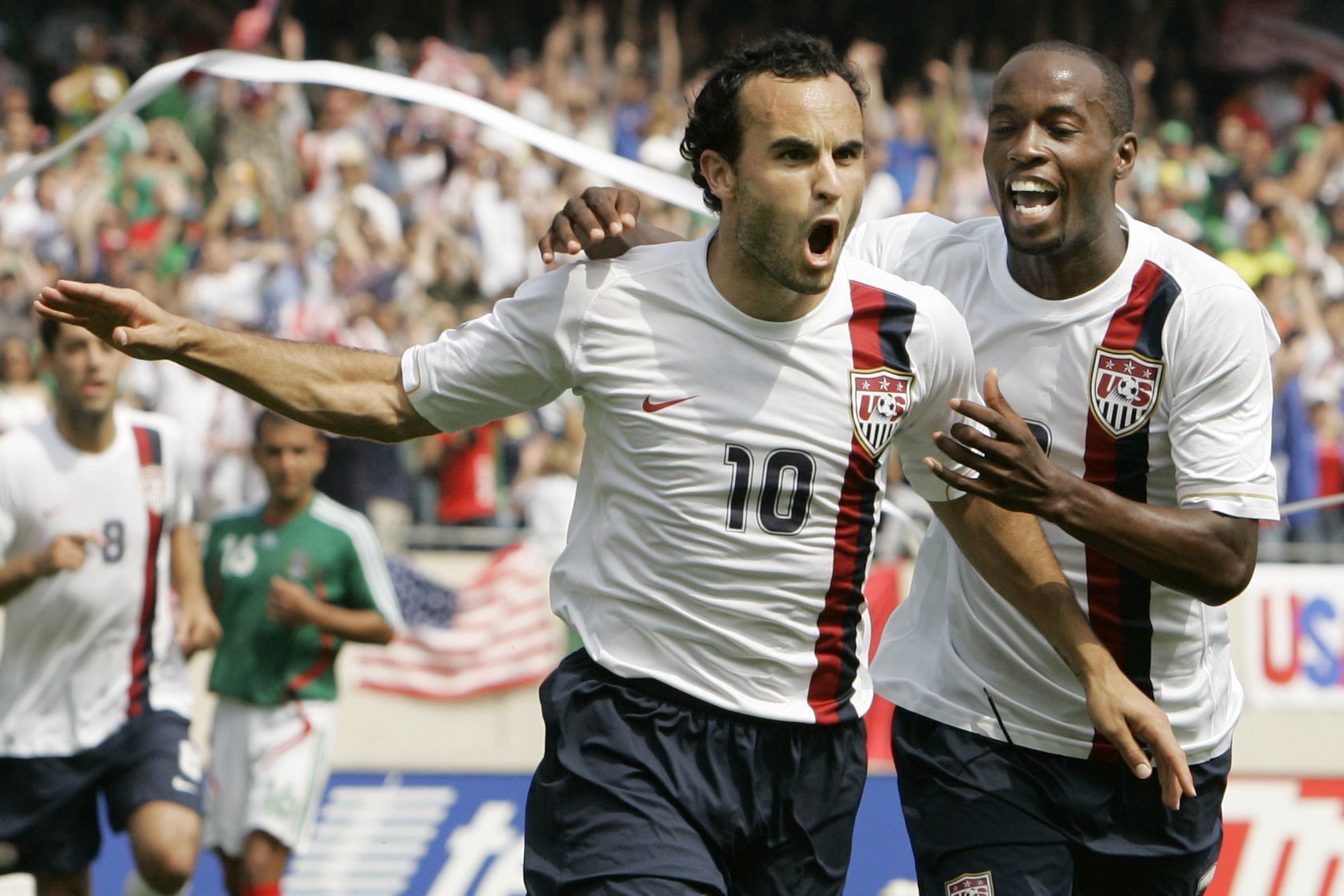
    Crocker’s case is helped by some medicine that U.S. Soccer has taken over the years. Before MLS teams built out their youth academy pipelines (which the NWSL hasn’t even started yet), the governing body ran a residency program for elite teenage boys in Bradenton, Fla., from 1999 to 2017.

    From 2007 to 2020, there was also the U.S. Soccer Development Academy league for elite youth clubs. It had strict and often controversial rules for participation.

    Both entities are not missed these days, and that proves an important point. Player development is supposed to be the job of clubs, not national federations.

    ‘The cherry on top’

    Even though Crocker has pushed the governing body to fund full-scale youth national teams at every needed age (under-14, 15, 16, 17, 18, 19, 20, and 23, boys and girls), they’re all still meant to be finishing schools. Clubs develop players, then the national teams pick from them.

    U.S. legends Landon Donovan (left) and DaMarcus Beasley (right) played in U.S. Soccer’s former academy in Bradenton, Fla.

    “Without you guys in this room, we all fail,” Crocker said to a room that housed coaches, administrators, and more across American youth soccer. “We can put all our resources into the national teams, but unless we’re improving the quality of the child or young player coming into the system, it doesn’t matter. We just get the opportunity to sprinkle the cherry on the top, and we get 60 days [a year] if we’re lucky.”

    Club teams, he continued, “get all that time with the players. You have the opportunity to really kick on player development.”

    Some of his remarks went into the weeds, but it’s necessary to understand how player development in soccer works around the world, and how different it is from basketball, football, and baseball.

    “When we talk about our international players or the international players that exist in this country, even at that level, 85% of player development happens in club [soccer] — and it starts when they’re 4 ,” Crocker said. “It’s not like as if, as soon as they go to the so-called pro club, whether that be MLS or NWSL, then all of a sudden, when they become a professional player, that’s when they develop. Development happens from the first touch point, the very first touch point at the grassroots.”

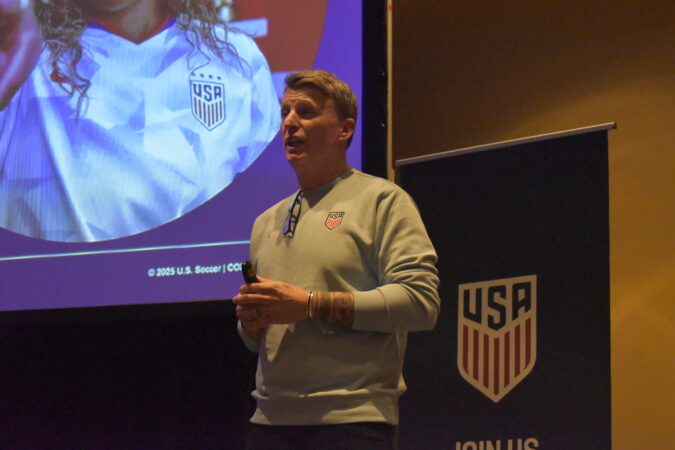
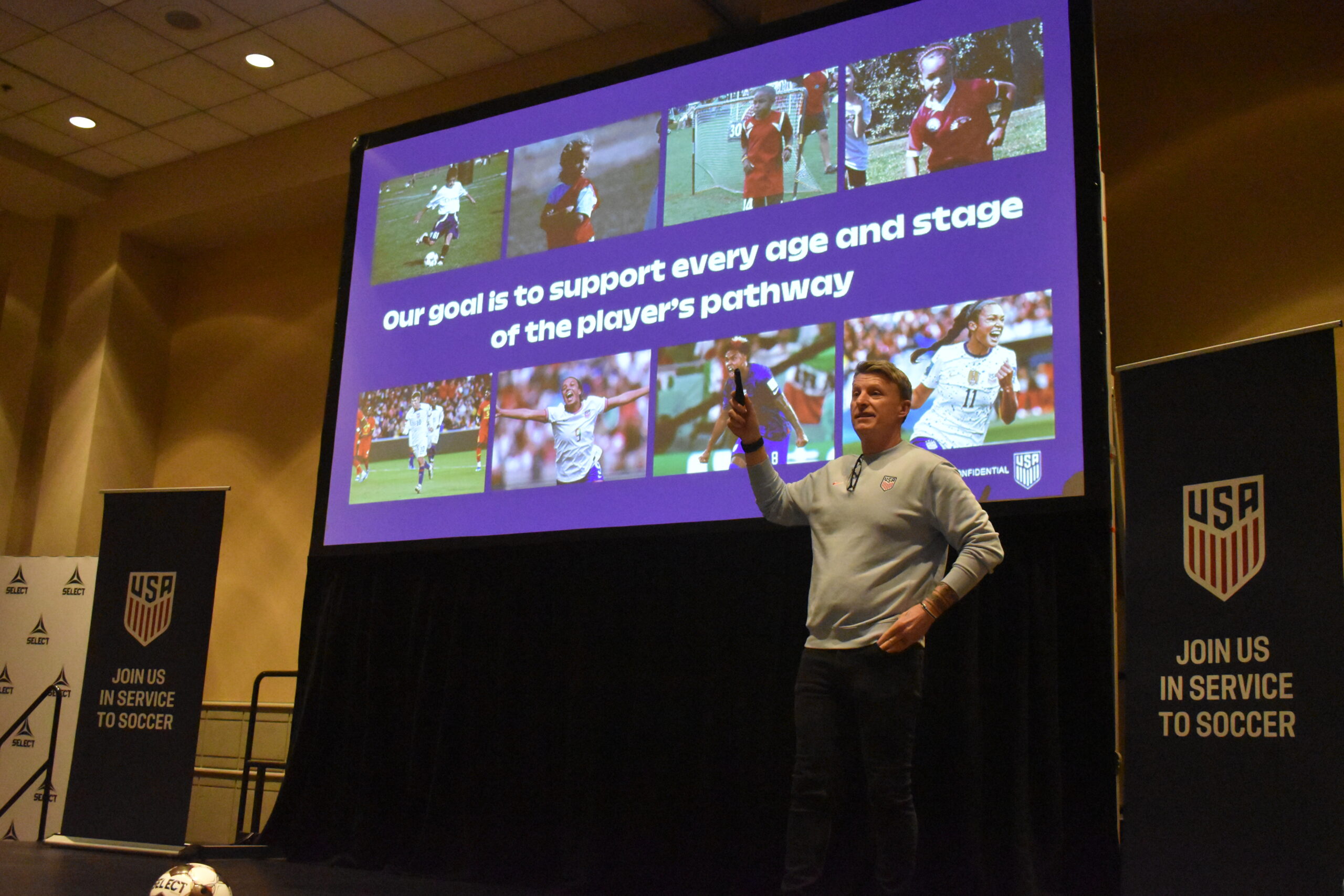
    Matt Crocker on stage at this year’s Coaches’ Convention at the Pennsylvania Convention Center.

    The crowd in attendance for Crocker’s remarks wasn’t very big, and he noticed from the stage.

    “Either the presentation went really well last year, and everybody got all the content that they needed, so [they] didn’t decide to come back, or the presentation wasn’t good enough,” he said of his well-attended speech at last year’s convention.

    When Crocker talked about how “there’s a lot of infighting, a lot of players going from one club to another, a lot of teams not playing each other and going further afield” — all of which are true — there was no applause, laughter, or groaning.

    “That team can’t play that team, and they go all the way past them and jump on a plane and spend hundreds of dollars to go and play [another] team, because that league fell out with that league,” he said at another point. “Just crazy. This is about children. This is about the best opportunities for children.”

    About 10 minutes in, Crocker got ready to slip in the medicine. But first, he offered a little more sugar.

    Meanwhile, the crowd for Matt Crocker isn’t great.

    But those who are here have just heard him give a lot of praise to the culture of the Union’s academy, which he visited yesterday:

    [image or embed]

    — Jonathan Tannenwald (@jtannenwald.bsky.social) January 15, 2026 at 9:50 AM

    “I think I opened last year with the same thing, which is player development happens in your clubs and your environment,” he said. “And our job in U.S. Soccer is to recognize that, celebrate it, and support you in doing the best jobs you can in really really challenging difficult situations.”

    Then he went for it.

    “Basically, our job is to define as the federation, as hopefully the leaders in soccer, to be able to give you guys clear guidance over: we believe youth development needs to look like this in the future,” he said. “And these are the things that we believe you could do to support a better quality of child, of player, achieving a better experience within the game in the future. So, us as a governing body finally putting the stake in the ground and going, ‘This is what we believe in.’”

    He offered a little more sugar just to make sure it went down.

    “Our job is not to tell you,” he said. “Our job is to show you these things can work and hopefully positively influence you to want to come and be part of the things that we’re talking about.”

    A few minutes later, he went back to the medicine — this time, with something he knew is close to sacrilege in some parts of youth soccer.

    Matt Crocker (left) in a conversation with U.S. men’s national team manager Mauricio Pochettino.

    “Our job as U.S. Soccer is to educate clubs, coaches, parents on when you are looking for your team next year, don’t automatically bring up the league table of winners and go, ‘I want my son to go there or daughter to go there because they must be the best club,’” he said. “That might not be the right environment for them. We need to start to make sure that we promote and value clubs that do great player development.”

    And he happened to have an example lined up.

    The day before Crocker spoke, he visited the Union’s facilities in Chester. It wasn’t his first time there, but it was his best chance yet to actually see the whole place, from the youth academy on up. He raved about it, just as Pochettino did when he came to town and counted the Union alumni on his squad.

    “You see the culture that exists in that building,” Crocker said. “You see the kids smiling, and they’re in education — this is not even when they’re on the field to play. The education and the soccer go hand in glove, and it’s really just a great environment to see.”

    WSFS Bank Sportsplex in Chester is the site of the Union’s entire operation from its youth academy to senior team.

    Crocker tied all of this together with slides showing how many players in the world’s top 250 and 1,000, based on club success, come from various countries. He hired sports consulting firm Twenty First Group to crunch the numbers for him, and the result was clear.

    In women’s soccer, it’s seven or more in the top 250. From 2016-25, the U.S. averaged 80 players at that level, by far the most; and only England had a higher major-tournament winning percentage. In the top 1,000 players, the U.S. had 180, almost 20% of the total.

    Those teams, the data said, usually win at least 50% of their games in major tournaments, a benchmark “associated with consistently reaching the quarterfinals or later.”

    But reduce to the top 50 players, and the U.S.’ portion has gone down lately.

    “There’s this chasing pack now who are doing more youth development than they’ve ever done before,” Crocker said. “So the challenge in the women’s game is how do we maintain our top 180, but how do we get more players in that top 50?”

    The U.S. women’s soccer team has long had a much bigger player pipeline than the rest of the world, but that’s starting to change.

    In men’s soccer, the success benchmark hits when a nation has four players in the top 250, or 15 in the top 1000. In the same 2016-25 time period, the U.S.’ average was zero in the top 250 and 5.8 in the top 1,000.

    “Any team can win at any moment,” Crocker said. “But what we’re talking about is consistent, sustained success over many, many years … Clearly this picture doesn’t put us in that situation.”

    His goal is to get to 15 in the top 1,000, the men’s benchmark for a 50% win rate. And he returned to the top 250 to push home the final message.

    It’s no surprise that the top five teams over the 10 years surveyed are Spain, France, Brazil, England, and Germany. But England was far off the pace at the start of the period: 15 players in the top 250 compared to Spain’s 49. Since then, they’ve steadily risen from 18 in 2018 to a table-topping 30. Spain is now second with 26.

    The Twenty First Group researchers don’t think it’s a coincidence that England has reached two European Championship finals and a World Cup semifinal in that time.

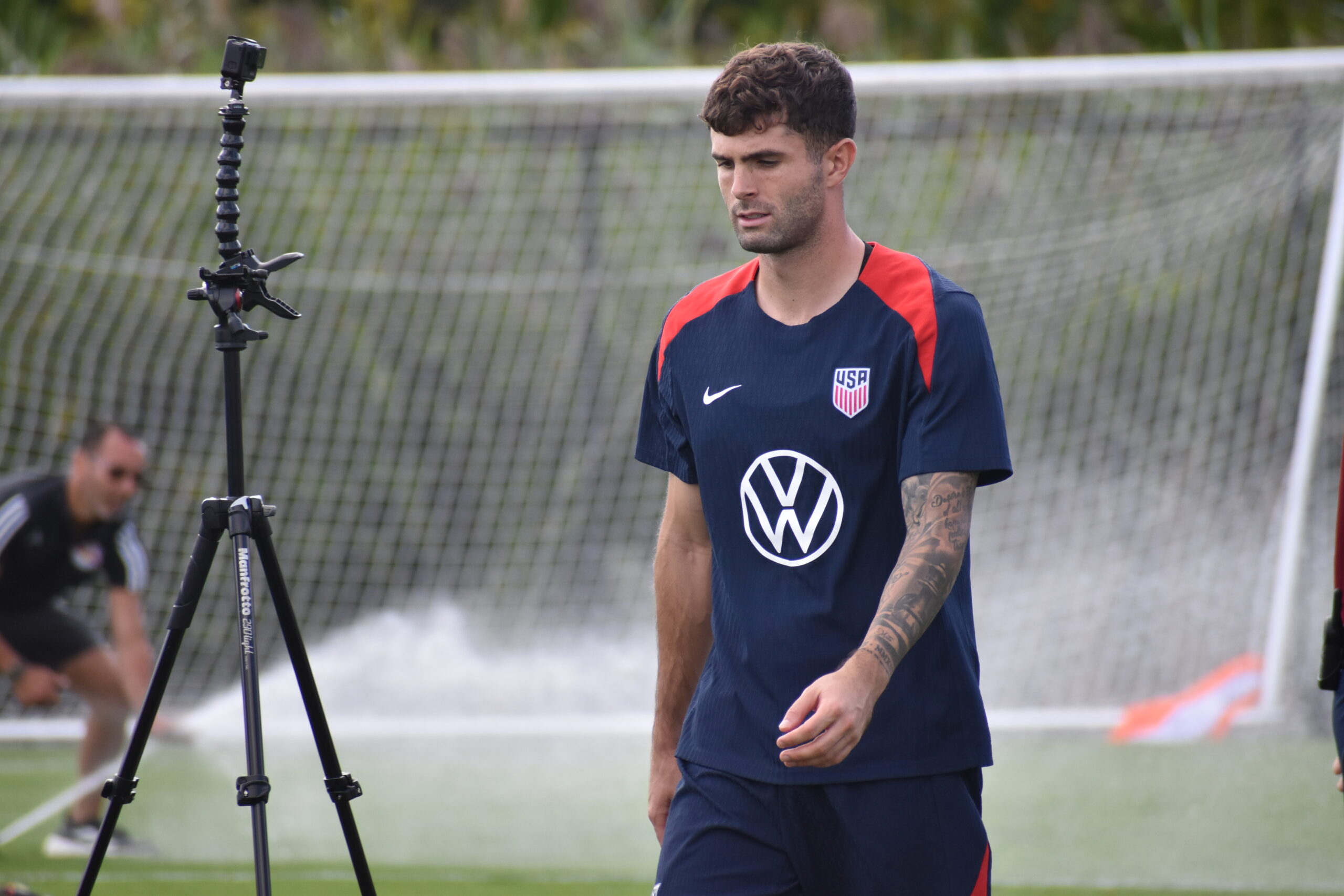
    Christian Pulisic is one of the few American men’s soccer players who is considered truly world-class.

    And was it a coincidence that Crocker was the technical director of England’s Football Association from 2013-20, launching the “England DNA” program for the nation’s youth national teams along the way?

    As he told The Inquirer in December, scaling that program up to a country the size of the United States — in both population and geography — is a gigantic task. But he knows where he wants to get to, and his U.S. Soccer colleagues used the rest of the convention to start to lay out the specifics.

    “Currently, we have a landscape where it’s totally, I think, not ungoverned, but there’s not consistent standards across the whole country or best practices,” Crocker said. “We want to come to you, we want to be clear and concise about: if you want to be a club and you want to operate in this landscape, this is what best practice looks like. And we want to work with you to get to those best practice outcomes, and we are not going to to accept lower standards.”

    The sugar tasted good. So will the right people take the rest of the medicine?

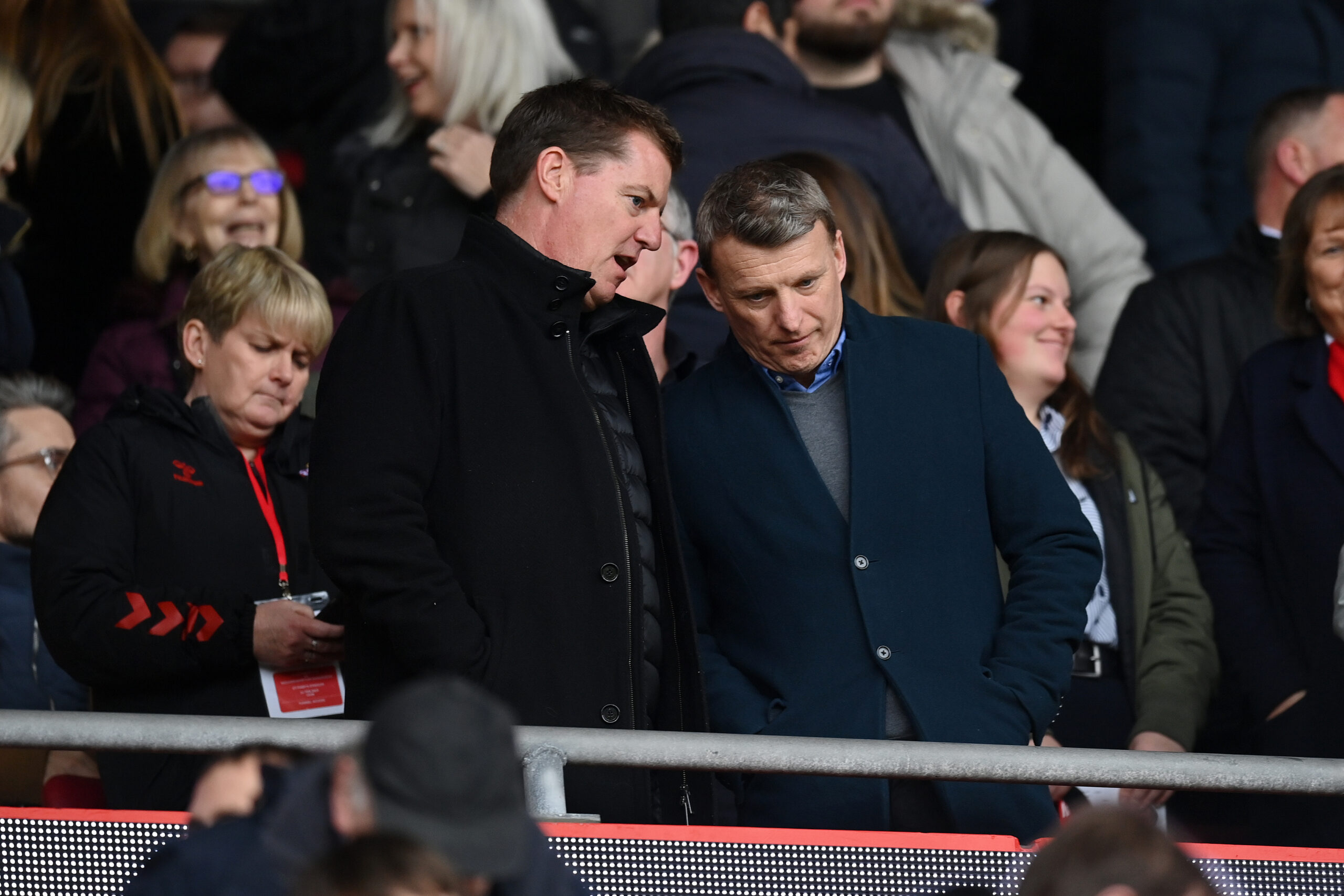
    Matt Crocker (right) worked at England’s Football Association, and at the club level with Southampton.

    “This is not going to be an inspector coming in with a clipboard telling you all the things you’re doing wrong,” Crocker said. “This is U.S. Soccer going [for] health checks coming into your environments: where are you, what do you need, this is what good looks like, this is where you are. How do we work together to solve these things?”

    By the end of the seminar, the crowd hadn’t revolted yet. It remained small, but greeted the end of Crocker’s prepared remarks with applause.

    “You’ll walk away from here today, and you’ll either say that was great, or that was whatever,” he said.

    Visiting a doctor can be that way sometimes.

  • USWNT star Crystal Dunn announces retirement from soccer at age 33

    USWNT star Crystal Dunn announces retirement from soccer at age 33

    PARIS — United States international Crystal Dunn has retired from professional soccer after a decorated playing career to spend more time with her family.

    The 33-year-old New York native helped the U.S. win the 2019 women’s World Cup and the gold medal at the Paris Olympics.

    “This decision has not come easily, but I am at peace and deeply fulfilled with all that I have accomplished,” she wrote in an Instagram post Thursday. “I’ve achieved nearly everything I dreamed of in this sport and gave all I had to give.

    “I’m ready to embrace the life that awaits me on the other side. I look forward to spending more time with my family and being a more present mom.”

    Dunn was under contract with Paris Saint-Germain, which said Thursday that both sides agreed to end their collaboration. A versatile player who contributed from multiple positions, Dunn joined PSG in January 2025 after leaving Gotham FC of the NWSL. She made nine appearances for PSG, scoring two goals and providing two assists.

    Dunn appeared in 160 games for the United States, scoring 25 goals.

    “As one of the first Black stars of the U.S. women’s national team, especially as a field player, Dunn has long been a role model to many young players of color across the country who aspired to reach the highest levels of the game,” the U.S. Soccer Federation said in its announcement about Dunn’s retirement.

    “Dunn’s career will be remembered for her versatility, her tremendous one-on-one defending, her ability to perform far above her size (5-foot-1), her popularity among her teammates, her ability to inspire generations of U.S. Women’s National Team players and for a heck of a lot of winning.”

    Before Gotham, Dunn played for the Portland Thorns and took most of 2022 off for the birth of her son, Marcel. She also had stints with the North Carolina Courage, Chelsea, and the Washington Spirit.

  • Amid controversy, the NWSL stands firm on the High Impact Player rule

    Amid controversy, the NWSL stands firm on the High Impact Player rule

    Though Trinity Rodman’s contract saga has at last been resolved with her re-signing, the controversy over the NWSL’s High Impact Player rule likely won’t die down soon.

    It remains the subject of a grievance by the NWSL Players Association, which claims the rule should have been collectively bargained; and it remains unpopular with many fans, for a variety of reasons.

    The league’s commissioner, Jessica Berman, does not mind being the main target of that ire.

    “I very much stand behind the decision and the process,” she told The Inquirer in an interview on Friday. “We intentionally negotiated for the right to do exactly what we did, which is to develop a specific rule for a specific classification of players which there is a reduced salary cap charge, so long as we consult in good faith with the Players’ Association. And I want to reinforce that’s exactly what we did in this context.”

    The NWSLPA disagreed.

    NWSL Players Association Statement on League’s Unilateral Implementation of the High Impact Player Rule:

    [image or embed]

    — NWSL Players Association (@nwslplayers.bsky.social) December 23, 2025 at 1:43 PM

    “At no point in time in CBA negotiations or any time prior to the end of 2025 did [the] NWSL articulate a plan to impose a separate pot of funds with a new cap and eligibility criteria that were unrelated to roster classifications by any name,” NWSLPA executive director Meghann Burke told The Inquirer via email. “We disagree with NWSL’s representation that it consulted with the NWSLPA.”

    Burke claimed that the first “written communication” she got on the proposal came on Dec. 11, and the union registered its objections after multiple board meetings in the ensuing days. The league announced the rule on Dec. 23, and said it will take effect on July 1.

    Washington Spirit superstar Trinity Rodman’s threat to leave the NWSL in free agency sparked the league to adopt the High Impact Player rule.

    Berman acknowledged the grievance in saying that “as in all labor relations in professional sports and otherwise, the union and the league can disagree,” and the league will follow the established procedures for resolving disputes.

    “We are very confident in our position,” she said. “We have been contemplating different iterations of a potential rule or policy like this for a long time, and for that reason, we negotiated into the CBA the specific right to move forward with this if and when we believed it was appropriate.”

    How the HIP rule works

    If there’s enough money going around to give each of the 15 clubs $1 million from the HIP pot, why not just raise the salary cap by the same amount?

    “At some point, the board and NWSL are going to have to realize that increasing the cap — while retaining it — is in their own best interests,” said Burke, whose union has been loudly calling to raise the cap. “Until then, we stand ready to enforce the terms that were negotiated.”

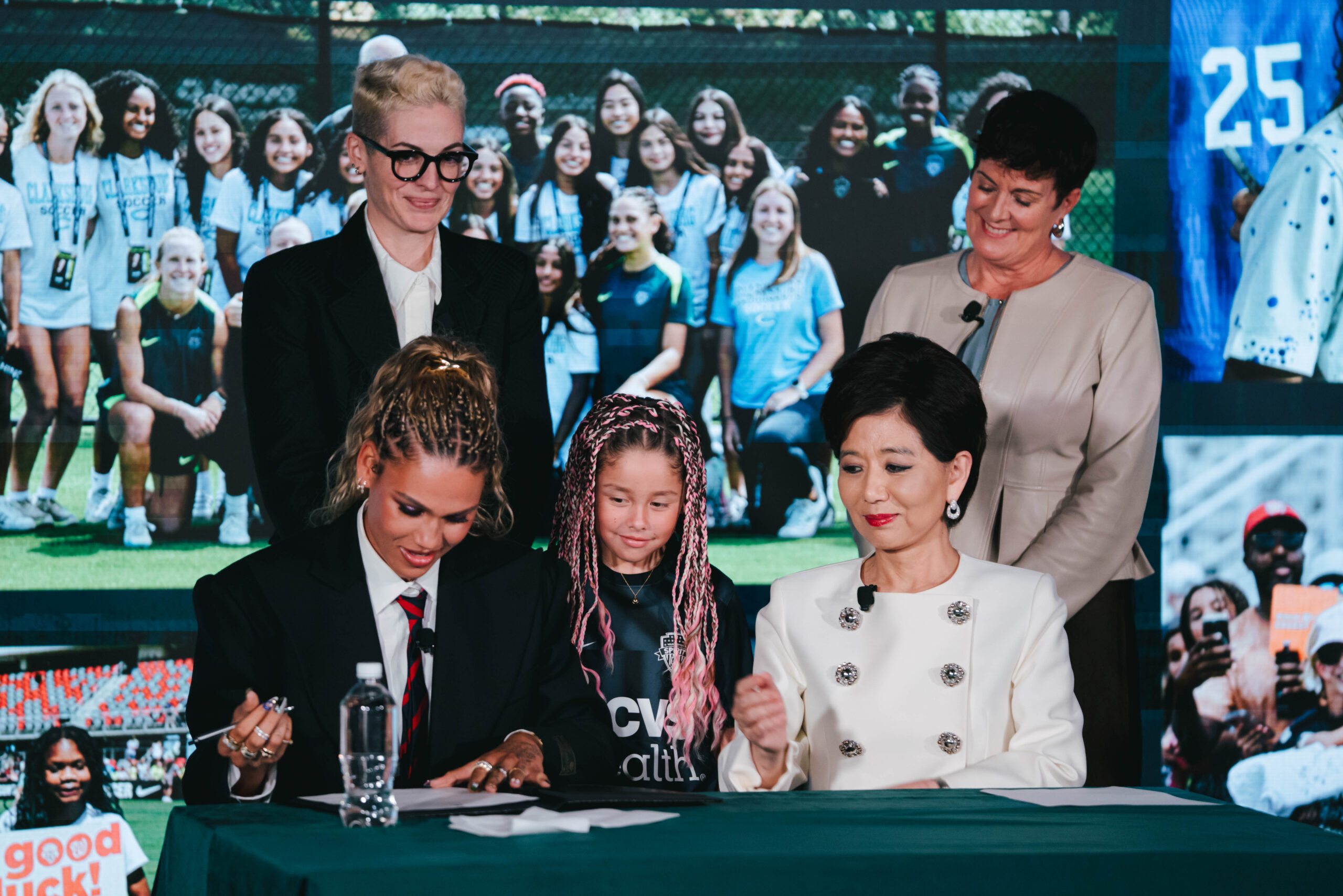
    Trinity Rodman (bottom left) signing her new contract on Thursday.

    Berman started the league’s case by bringing vice president of player affairs, Stephanie Lee on the call to give more context.

    Lee, who previously worked in the front offices of Gotham FC, the Utah Royals, and the Seattle Reign, noted that a player who gets HIP money must have a salary cap charge of at least 12% of the teamwide base cap, which for this year is $3.5 million.

    Teams also can’t get cap relief from the rule unless they hit the cap in the first place. Up to that point, the player’s salary is charged to the regular payroll.

    “As they roster build throughout the year and through [transfer] windows and different transactions, there’s flexibility there to how they designate players and take advantage of that HIP [money],” Lee said. “It’s not something that they have to decide at the beginning of executing a player’s contract.”

    A league spokesperson added that teams can retroactively apply the money to a player when they hit the cap by signing other players, so they can go over the cap to keep everyone they want to.

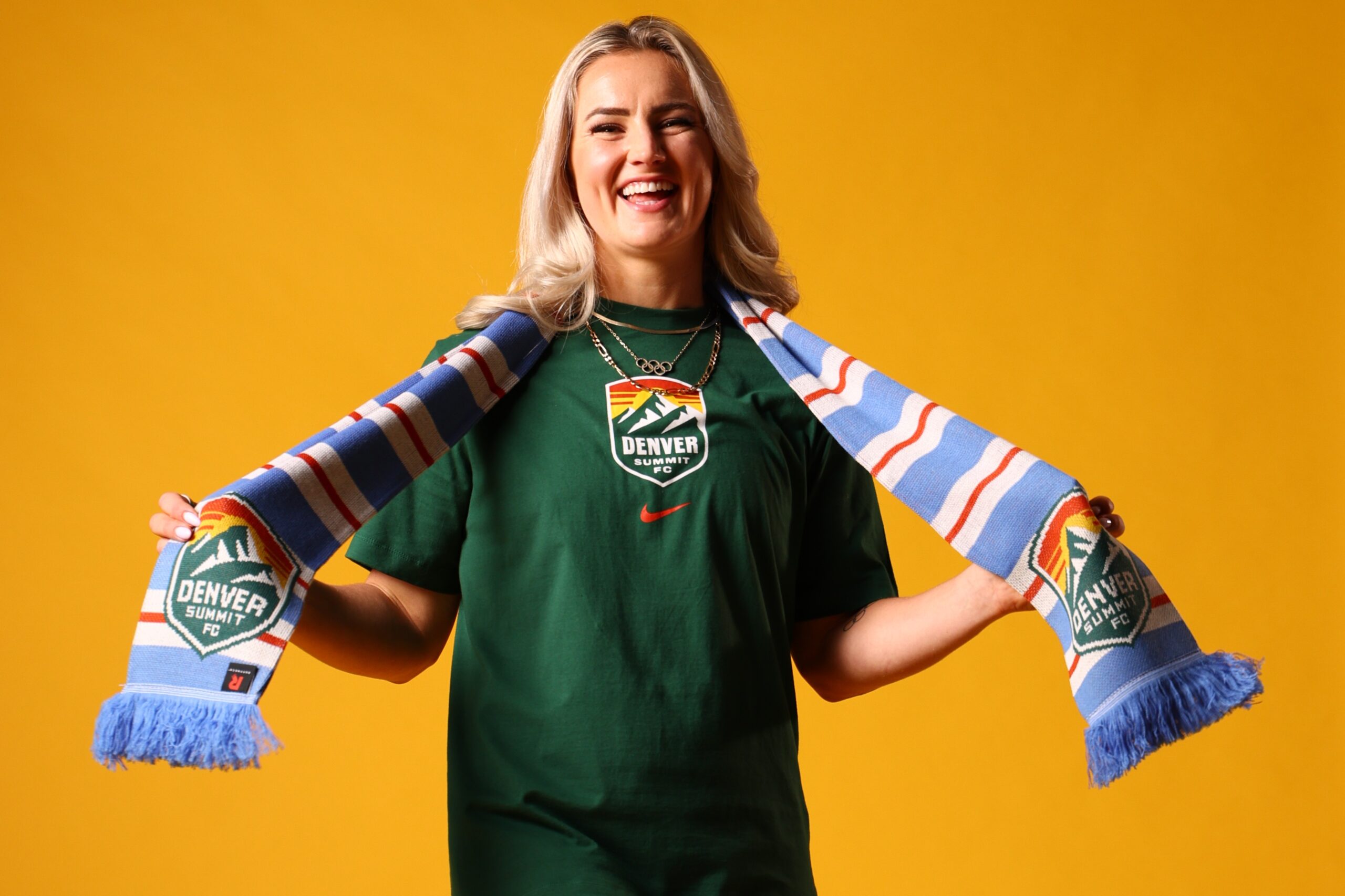
    U.S. women’s national team captain Lindsey Heaps is expected to be paid through the HIP rule when she joins her hometown Denver Summit in the summer.

    Why limit who can get the money?

    Then there are the criteria the league laid down to limit which players are “high impact,” from media and marketing rankings to U.S. national team playing time. This also is widely unpopular.

    But there’s also a question at a higher level: Why have criteria in the first place? Why not let teams spend the money on whoever they want, as MLS now does with its Designated Player rule, and let teams potentially make mistakes?

    “It is the league’s, and in this case our — my — responsibility to be responsible stewards of capital in service of growing the business,” she said. “In this circumstance where we have unlocked the ability for our clubs to spend an incremental $115 million [combined through 2030], it is our job to make sure that it is going to have a relationship to growing our revenue. That growth in revenue will also feed the revenue-sharing mechanism that was negotiated into our most recent CBA, which means that we are incentively aligned with our players to grow this business.”

    U.S. veteran Crystal Dunn (right) is one of the most notable players who is not eligible for HIP money.

    Burke strongly disagreed.

    “Nothing in the CBA,” she wrote, “permits [the] NWSL to create an additional pot of funds (with an entirely new and separate cap) which only some players are eligible for based on ill-conceived criteria unilaterally determined by NWSL, including and especially when those criteria violate the non-discrimination clause in our CBA.”

    Does Berman see a day when the league would loosen the reins?

    “In the most general sense, we will always analyze the health of our business and the health of the game in the NWSL,” Berman said. “If we believe that there are business reasons for us to modify our rules, we will.”

    Jaedyn Shaw (left) is another notable American who isn’t currently eligible for HIP status.

    She stood firm again in saying “we feel like we’ve enabled our clubs to invest significantly.” And as she chose her words, she made it clear that the league will push those clubs to invest in specific ways.

    “This particular mechanism, that was very prescriptive in what it was developed to address, is important in that it is supposed to help us to target top players,” she said. “Which, as you’ve heard me say many times, is in service of us being the best league in the world. In order for us to be the best league in the world, we need to compete for the best players, and we want this policy to guide the behavior of our clubs so that they can compete financially to attract and retain top players.”

    ‘The most strategic mechanism’

    It’s no secret that there’s a fair amount of variance in how much money NWSL teams have in the bank. Nor is it a secret that Washington Spirit owner Michele Kang sits at the higher end of the scale. She had long been ready to spend big on Rodman, and Rodman’s agent has said the three-year deal is worth over $2 million per season.

    But when Kang first put a contract proposal on the table, Berman vetoed it for violating the league’s salary rules. A source with knowledge of the offer told The Inquirer that the Spirit would not have been able to pay Rodman and also meet the league requirement of a 20-player roster, even if all the others were on the league’s minimum salary.

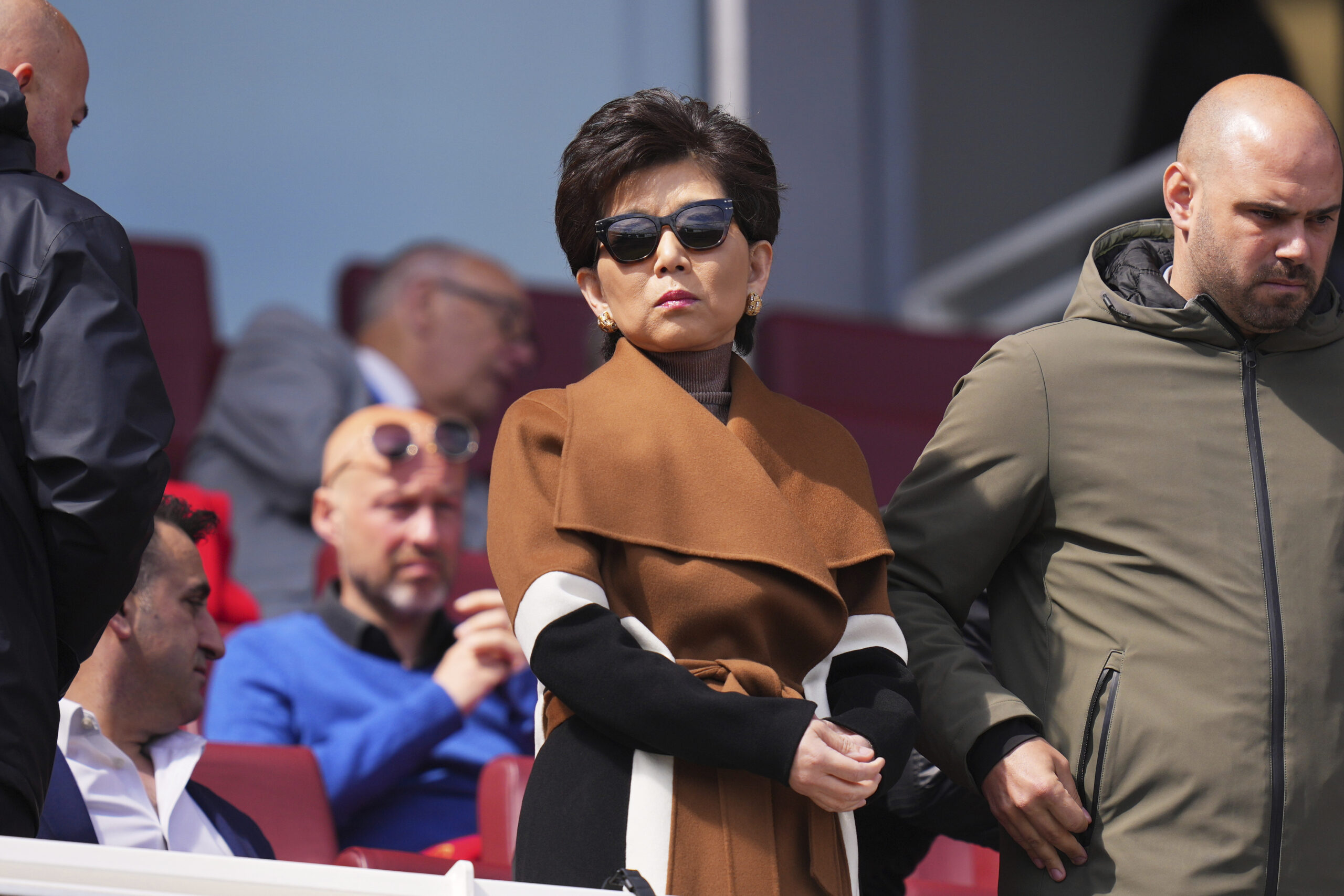
    Michele Kang (second from right) with, from right to left, Trinity Rodman, Spirit president of soccer operations Haley Carter, and CEO Kim Stone.

    That has led some outsiders to wonder how much resistance there was elsewhere in the league to raising the cap and whether the HIP rule might have been an easier sell. A two-thirds majority of team owners is required to pass a vote.

    “It is in our best judgment that the HIP rule is the most strategic mechanism for us to advance the business,” Berman said.

    Burke took particular objection to this.

    “A rule that has been adopted with such a singular focus on generating revenue is not even about soccer, building a competitive roster to win NWSL games, or meeting a team’s performance needs,” she said, “which are obvious functions of a team when they are constructing a roster.”

    Catarina Macario might be the next U.S. star to get HIP money, as there’s speculation she might come to the NWSL in the summer.

    Another milestone in all this is expected to arrive when the current European season ends in the summer. There’s been much speculation that U.S. national team star Catarina Macario could come home from England’s Chelsea, and Spanish superpower Barcelona reportedly has nine players on expiring contracts — including stars who’ve fueled the club’s three Champions League titles in the last six years.

    Will the NWSL be willing to hit the gas pedal to bring them over?

    “We developed this rule very intentionally to put our clubs in a position to compete financially with top clubs around the world for top players, and we believe it will put us in a position to do that effectively,” Berman said. “Without naming specific clubs or naming specific players, it is our expectation that when we look back on this, we will have a list of players that we’ve been able to attract and retain by virtue of enacting this rule.”

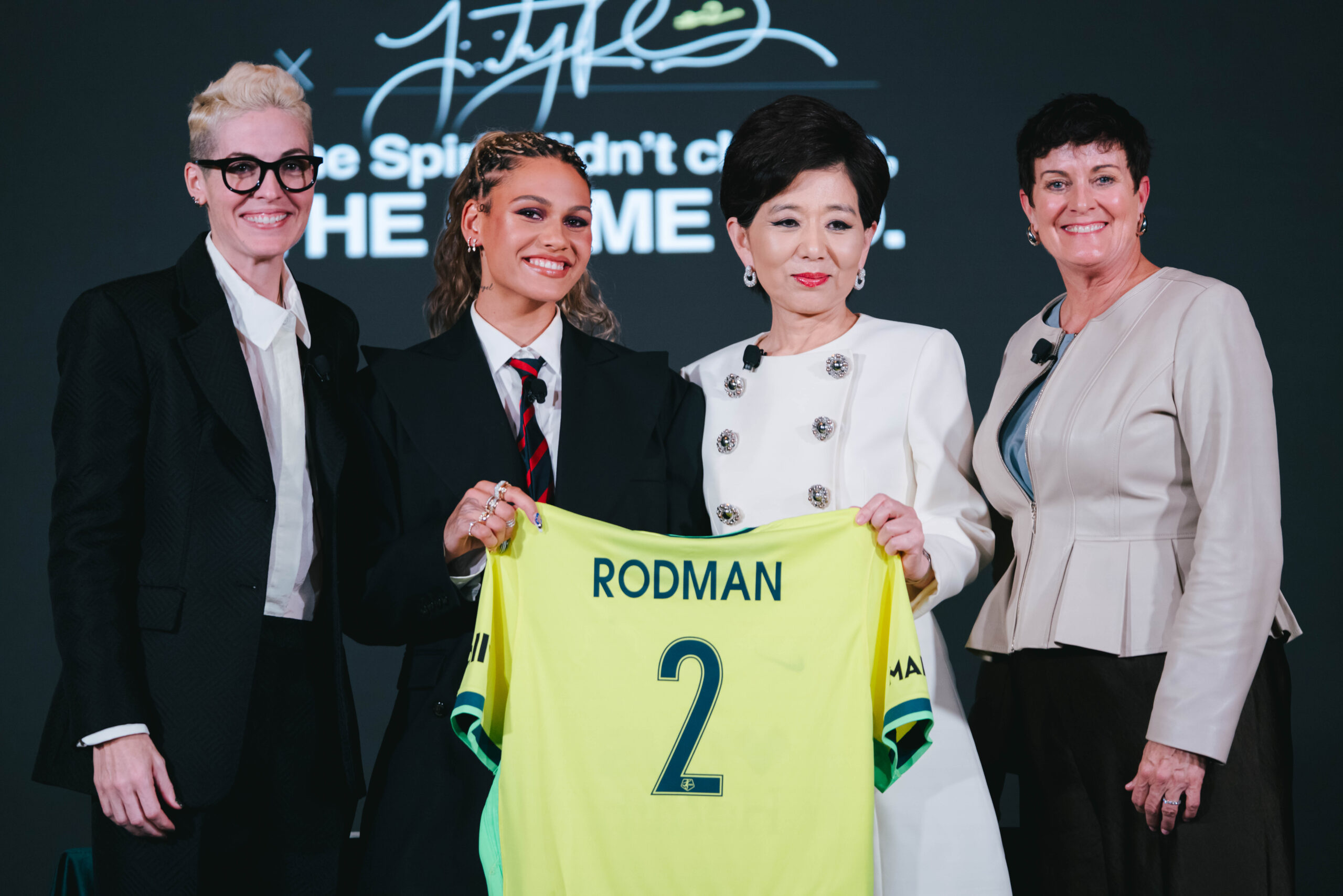
  • Trinity Rodman signs a new three-year deal with the Washington Spirit, a big win for the NWSL

    Trinity Rodman signs a new three-year deal with the Washington Spirit, a big win for the NWSL

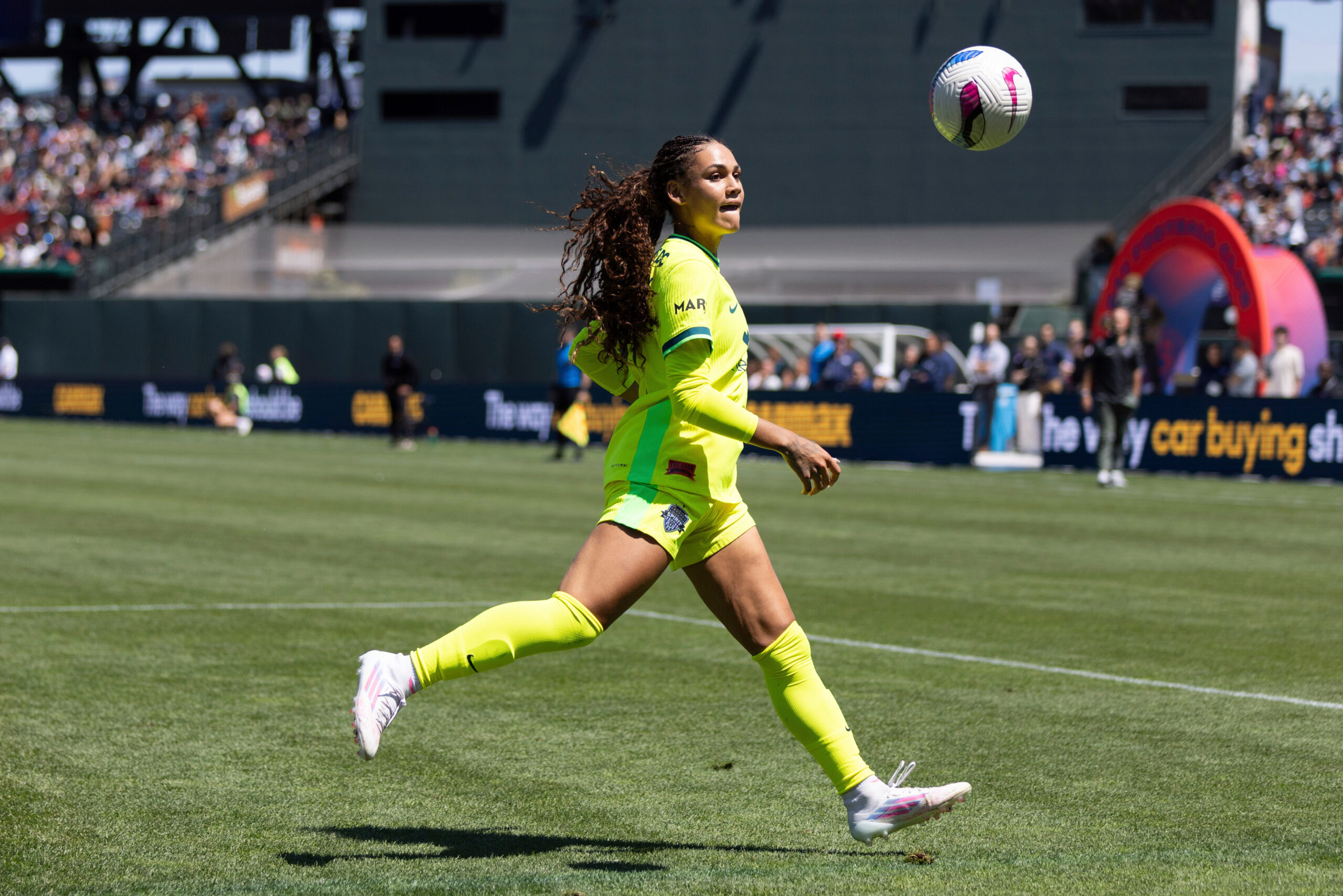
    Forward Trinity Rodman has agreed to a three-year contract to remain with the Washington Spirit, ending months of speculation about the Olympic gold medalist’s future in the National Women’s Soccer League.

    “I think I’ve always had a vision and an idea of what I wanted my legacy to be,” Rodman said at an event announcing her new deal on Thursday in Los Angeles. “And for me, we’re doing that and I’m so grateful for that.”

    The speculation over Rodman’s future with the Spirit spurred criticism of the NWSL salary cap and whether it hampered the league from attracting and maintaining top players.

    The 23-year-old Rodman became a free agent at the end of last season after five years with the Spirit. One of the biggest stars in the NWSL, keeping her in the league was considered vitally important as other U.S. national team stars, including Naomi Girma and Alyssa Thompson, opted to play in Europe.

    Rodman, who won a gold medal with the United States at the Paris Olympics, had been drawing interest from European teams that don’t have a salary cap.

    “I can’t think of the Washington Spirit without her,” Spirit owner Michele Kang said. “And I hope she can’t think about her career without the Washington Spirit. So this is really monumental and it was really important, not only for the Spirit, especially for our fans who expect to see her. They come to Audi Field and that’s where Rowdy Audi clearly came out.”

    Rodman said she always wanted to stay with the Spirit

    “Making my decision, the one question I was asked was: ‘Do you feel like you’re finished with the Spirit? Can you say that and feel confident leaving?’” she said. “I didn’t even need half a second, and I was like, ’No, I’m not. I don’t feel ready to make a different decision. That’s just, again, getting drafted here and developing and maturing and learning – and failing – at the Spirit, in D.C., it’s become so much of my legacy and my story. But on top of that, I still feel like there’s so much more I have to give and so much more that I want to do.”

    The Spirit and Rodman had previously struck a multi-year deal that both parties maintained was in compliance with the salary cap, but it was rejected by the league because it went against the spirit of the rules.

    The National Women’s Soccer League Players Association filed a grievance claiming that the NWSL’s rejection of the contract violated Rodman’s free agency rights and violated the collective bargaining agreement.

    To address the salary cap issue, the NWSL in late December adopted a “High Impact Player” mechanism that allowed teams to spend up to $1 million over the cap to sign players that meet certain criteria. Those included metrics like national team minutes, inclusion among the 30 candidates for the Ballon d’Or or player rankings by outlets like the Guardian or ESPN.

    The NWSLPA filed a grievance over the rule, claiming it violated the collective bargaining agreement and federal labor law because player compensation must be negotiated. The NWSLPA maintains the league had no authority to “unilaterally create a new pay structure.”

    Spirit President of Soccer Operations Haley Carter said the High Impact Player rule figured into the contract Rodman ultimately agreed to. Carter also said the grievances would not alter Rodman’s deal.

    The financial terms of Rodman’s contract were not disclosed, but the Spirit called it “one of the most significant deals in NWSL history.”

    The NWSL’s salary cap is $3.5 million for each team for the 2026 season, although it will increase each year until it hits $5.1 million in 2030.

    Rodman is currently with the national team in their annual January training camp in Carson, California. The team plays a match there against Paraguay on Saturday and then plays Chile on Tuesday in Santa Barbara.

    Rodman has 47 appearances and 11 goals with the national team, more than any other player on the latest roster. She played in one U.S. match last year, a 2-0 victory over Brazil in April, because of injuries.

  • Trinity Rodman’s future remains uncertain, and the biggest story in women’s soccer

    Trinity Rodman’s future remains uncertain, and the biggest story in women’s soccer

    Washington Spirit president of soccer operations Haley Carter knows better than anyone that Trinity Rodman’s future is the biggest story in the women’s game right now.

    Carter also is sworn to secrecy over the superstar’s contract talks, a fact she reiterated as she spoke Thursday at the United Soccer Coaches Convention here at the Pennsylvania Convention Center. But that did not stop her from talking about Rodman in other ways, including her impact on the NWSL and the sport as a whole.

    Carter saw The Inquirer’s recent feature on U.S. captain Lindsey Heaps, which made the point that only five teams in Europe are at a truly high enough level to be worth it for the top American talent: England’s Arsenal, Chelsea, and Manchester City, France’s OL Lyonnes, and Spain’s Barcelona. All but Barcelona have top U.S. players, with City signing Penn State product Sam Coffey this week.

    A veteran of two NWSL teams’ front offices, two national team coaching staffs, and the Houston Dash bench as a player, Carter agreed with the point. Many other teams in Europe are trying to raise their games, but none has reached the level of those five yet.

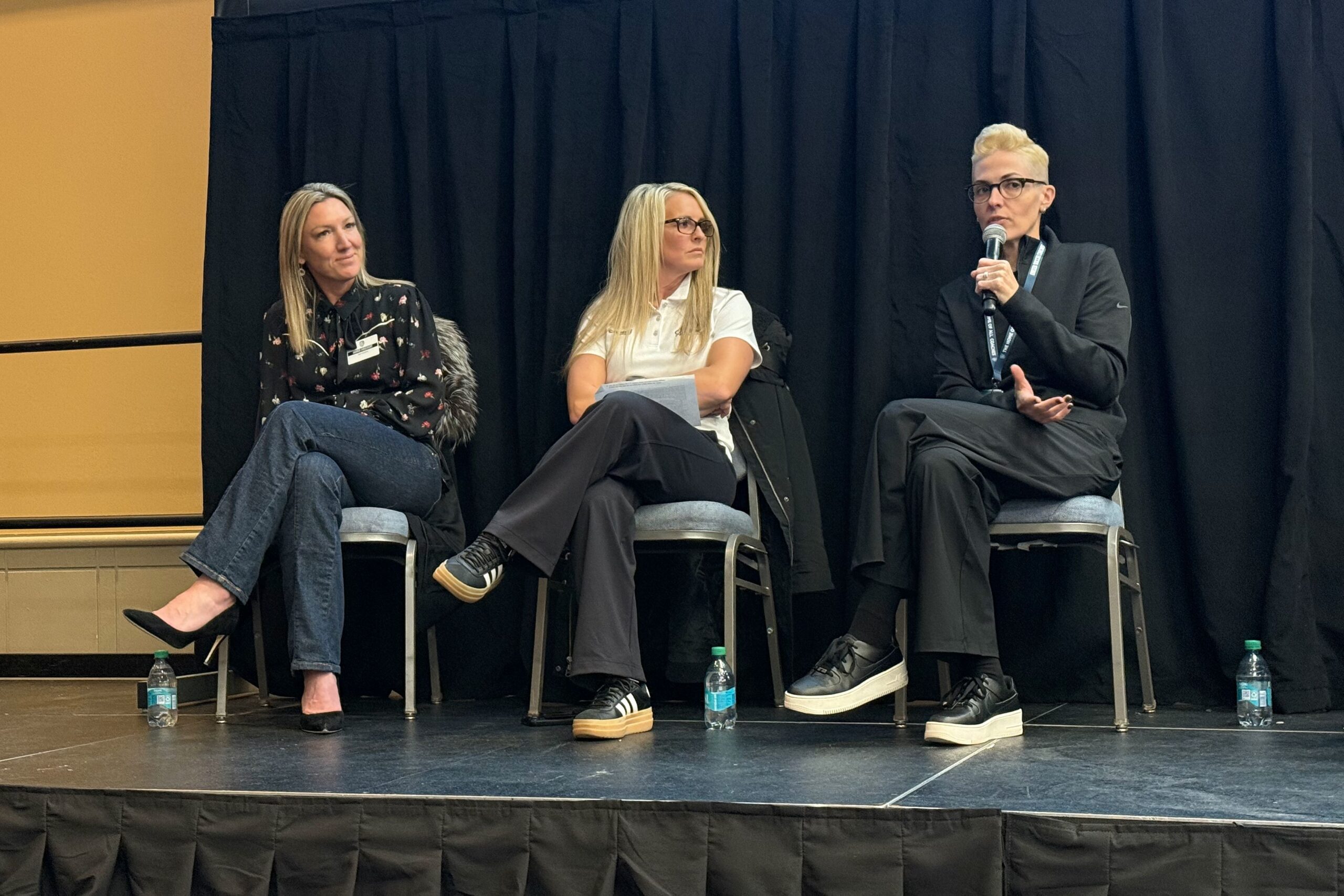
    Haley Carter (right) speaking on a panel at the United Soccer Coaches convention on Thursday with USL Super League president Amanda Vandervort (left) and Women’s Premier Soccer League commissioner Kendra Halterman (center).

    Does that matter when trying to sign not just Rodman, but other players from around the world?

    “We’re not necessarily competing with leagues, per se, for U.S. talent — we are competing with very specific clubs, and we have to be cognizant of that” Carter told The Inquirer. “That being said, though, more teams and more leagues are starting to make major investments. So the number of teams that we’re competing with is going to grow every year, right?”

    Indeed it is, and many have said the NWSL should compete accordingly. Raising the salary cap by $1-2 million this winter would be the fastest way to do it, and far less controversial than the league’s High Impact Player status that is set to take effect in July.

    The NWSL Players Association formally filed a grievance against that on Wednesday, six weeks after filing a grievance over commissioner Jessica Berman’s veto of a contract that Spirit owner Michele Kang offered Rodman.

    Washington Spirit owner Michele Kang already offered a contract to superstar Trinity Rodman, but it was vetoed by NWSL commissioner Jessica Berman.

    It is widely understood that Rodman wants to stay in Washington but wants a deal that will pay her what she’s worth. Kang, who also owns OL Lyonnes and England’s London City Lionesses, is clearly ready to offer it.

    Rodman isn’t just a star in the U.S.

    For now, everyone else is stuck waiting. But that did not stop Carter from offering a few words in a seminar Thursday that will raise the heat a bit.

    “The reasoning behind having a salary cap is to have competitive parity,” she said. “And I think you hear the phrase ‘best league in the world’ thrown around a lot about the NWSL, but the reality is we are the most competitive league in the world; we are not the best league in the world. I wouldn’t even know how you would measure that.”

    There surely are ways, whether subjective or statistical. The former would include the endorsements international players make when they come over here, such as one Gotham FC and Spain striker Esther González gave to Sports Illustrated last year.

    “Every match you play in, you have to prepare like it is a final,” she said. “There are a lot of international players who are at the top of their game and want to play in the NWSL, and there’s a reason for that.”

    Esther González (right) on the ball for Gotham FC during last year’s NWSL championship game.

    Carter said that point “still resonates with players. Players want to play in a league where every match is a meaningful match.”

    But some of her other remarks, on the business side of the game, might have framed Rodman’s importance even more strongly.

    “How can we tap into that international fan base and find a way to monetize that?” Carter said. “If you look at Trinity Rodman for instance — Trinity Rodman’s kit sells like crazy in the U.K. How can we do that for more of our athletes? How do we create that buzz and excitement?”

    Rodman’s jersey sells plenty well in the U.S. too, whether it’s her Spirit one or her U.S. national team one. Just the potential of her presence at Washington’s Audi Field on a game day helped the Spirit draw an average attendance of 15,259 last year, third-best of the NWSL’s 14 teams.

    “One of the reasons I came to the Washington Spirit was because of the work that Michele Kang has done specifically to make the Spirit a cultural icon within that city,” said Carter, who took the job in early December.

    She tied that to the Spirit’s grassroots work in Washington as much as anything else, but specter of Rodman still hung over the moment for many people in the room.

    The next global measuring stick

    A milestone of a different kind will come later this month when FIFA stages its inaugural Women’s Champions Cup in London. In the semifinals, Gotham will play Brazil’s Corinthians, and Arsenal will play Morocco’s AS FAR — all winners of their respective continental championships.

    Those games will be single moments among many, but they’ll still be a measuring stick.

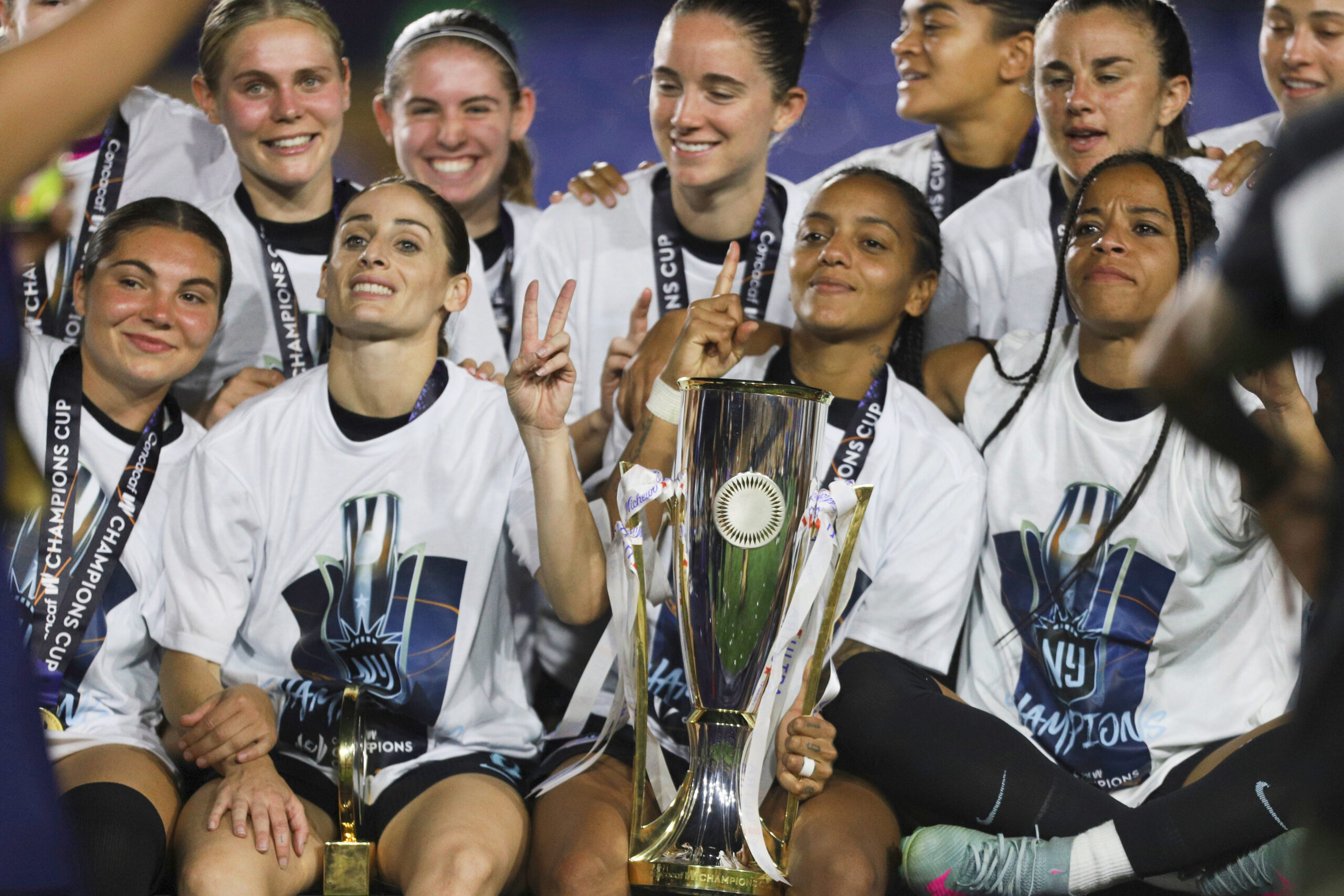
    Gotham FC won last season’s Concacaf women’s Champions Cup to qualify for FIFA’s inaugural global tournament.

    “It may not necessarily reflect whether your league is the best league in the world, but it gives a good opportunity for us to put our best teams against other best teams,” Carter said.

    It might also make a point about another measuring stick that gets attention: player rankings by the international media. This year’s edition strongly favored European players, partially because some major U.S. players have been out of action — Rodman and Rose Lavelle with injuries, Sophia Wilson and Mallory Swanson while pregnant.

    But beyond that, many voters are based in Europe, so they might favor players whom they see more. And now the rankings have even more significance because the NWSL is using them to judge players’ eligibility for HIP status.

    “I always take those player ratings with a bit of a grain of salt,” Carter said, and wondered aloud why the players should care about things “that in the big scheme of things are very subjective, anyhow.”

    But there is a reason, she admitted: “Now you look at the HIP criteria, and so much of the HIP criteria is based on these ranking and ratings.”