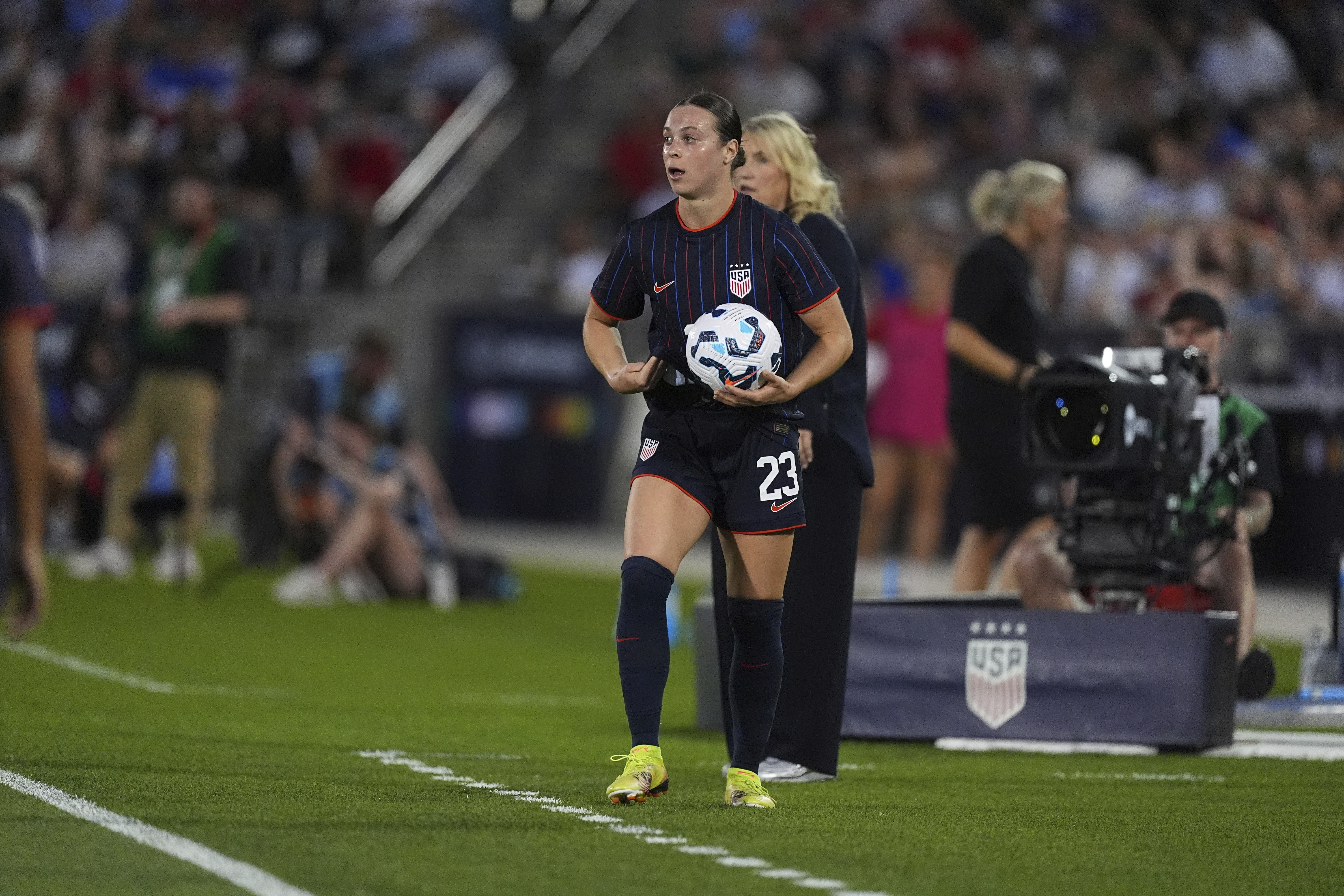
For the first 33 seconds this time, it looked like things had changed. But by the end of the night, Portugal had the Americans’ number again — this time a 2-1 win as the visitors at Subaru Park.
It was the U.S.’s first loss in a visit to the Philadelphia area since 2004 and the current team’s first loss in seven games dating back to February.
Those 33 seconds were how long it took for the U.S. to open the scoring through Rose Lavelle. Catarina Macario set the play up with a dazzling move, running and dancing amid Portugal’s defense before feeding the assist.
It was the seventh-fastest goal in U.S. women’s team history, and it will not be recorded that Lavelle clearly was offside. But with no video review in this friendly, the goal stood, and the crowd of 17,297 — including U.S. legend Alex Morgan and many ex-teammates honoring her retirement ceremony — cheered.
Lavelle nearly scored again on a breakaway in the ninth, sprung beautifully by Alyssa Thompson. But Portugal goalkeeper Inês Pereira denied her with a charge off her line and a tip of the ball to just the right side of the post.
From there, Portugal turned the tide. In the 37th minute, Kika Nazareth spun around Lavelle, passed wide to Andreia Jacinto, and she tried a chip attempt that landed on top of the crossbar. Two minutes later, a misplay by Tara McKeown let Tatiana Pinto get free on goal, and U.S. goalkeeper Phallon Tullis-Joyce had to come off her line for a sprawling stop.
Portugal scored on the ensuing corner kick, as Diana Gomes beat Emily Sonnett on the jump.
The U.S. looked livelier early in the second half, but Thompson flubbed a chance, and Macario got caught up to on a breakaway just in time to have the ball poked from behind.
Nor could the Americans capitalize on a close-in free kick from the right wing, served well by Sam Coffey but not finished by anyone in the crowded 18-yard box.
U.S. manager Emma Hayes took her time to make substitutions, but when she did, it was a quadruple move in the 69th minute. In came midfielders Claire Hutton and Lily Yohannes and forwards Yazmeen Ryan and Emma Sears; out went Coffey, Lindsey Heaps, Michelle Cooper, and Macario.
Three minutes later, Portugal took the lead off another corner kick when Fátima Pinto trapping the service wonderfully and shooting low past Tullis-Joyce. There was a bit of a deflection, but Tullis-Joyce looked a little too frozen, and Hayes did not hide her frustration.
Jaedyn Shaw was next to enter for the U.S. in the 78th, replacing Lavelle.
The U.S. did not lack for scoring chances, but it couldn’t finish them. Outside back Avery Patterson forced a sharp save from Pereira in the 81st, and Yohannes headed right at Pereira a few seconds later.
As the U.S. searched for an equalizer, Sears sent a well-placed pass through the 18-yard box in the 93rd that no teammate caught up to. And in the last seconds, Thompson shot when she could have passed — one of a few less-than-ideal decisions she made on the ball — and Yohannes lofted a cross that Pereira caught.
That felt like the night in a nutshell, right as the final whistle blew to end it.
In the mind’s eye, October 2010 might still feel recent. But there are a few ways to measure how long it has really been since Alex Morgan scored her first U.S. women’s soccer team goal.
One is that back then, the future superstar was in college at the University of California. She was a senior set to graduate a semester early, but she still wasn’t a pro yet when she took the field at what then was called PPL Park.
The other is that her historic night in Chester had just 2,505 witnesses in the stands.
That was partially because the Phillies had a home playoff game that evening, one that turned out to be Roy Halladay’s no-hitter. But it was also nine months before the moment that sparked a new boom of interest in women’s soccer that has carried into the present: Megan Rapinoe’s legendary cross for Abby Wambach’s goal in the 2011 World Cup quarterfinals.
LAST MINUTE EQUALIZER 🤯
At No. 2 in our memorable moments in FIFA Women’s World cup history is Abby Wambach’s late equalizer for the @uswnt in the 2011 quarterfinals 🇺🇸 pic.twitter.com/8M0eKEp2sE
Before all that — before two World Cup titles, an Olympic gold, two U.S. league titles, a Champions League title in Europe, and so much more — there was this moment.
And before Morgan grew her girl-next-door personality into a hammer that pounded soccer’s old guard, a 21-year-old entered a game as a substitute with her team down, 1-0.
“It was a really tense night before that goal,” Morgan told The Inquirer ahead of her national team retirement ceremony Thursday at the U.S.-Portugal game at Subaru Park (7 p.m., TNT, Peacock). “We had a really long unbeaten streak on home soil, and so coming in in that moment and being called upon, it was like, ‘OK, are you sure you’re calling upon me?’”
Just over 10 minutes after Morgan took the field, Heather Mitts hit a long ball forward from the midfield line. Wambach was first to it, knocked it down, and, two bounces later, Morgan thumped it in the net.
“It was a big sigh of relief,” Morgan said, “and it was a great moment that I’ll always remember.”
She also remembered the small crowd. That was a fairly common sight back then, with the glow of the 1999 era long faded. The U.S.’s 2008 Olympic gold, led by Carli Lloyd, briefly rekindled the flame, but there was no top-level domestic league in this country from 2004 to 2008.
In June 2011, Morgan, Lloyd, and company played their World Cup send-off game at the former Red Bull Arena (now Sports Illustrated Stadium) in North Jersey before a crowd of 5,852. Six weeks later, their world changed forever.
“We come back [after] we lose in the final, and all of a sudden, everyone’s paying attention more,” Morgan said. “We gain momentum, we win an Olympics in 2012, and in that final in 2012, we have 80,000 people watching at Wembley [Stadium] in London. … Everything kind of turned, all in that moment.”
For over a decade, Morgan was the star of stars. But time comes for every athlete, and after the Olympics in 2021, it started to for her. Then-U.S. manager Vlatko Andonovski started to bring in the next generation, and Morgan did not play for the national team from that October until June 2022.
She was recalled for Concacaf’s World Cup and Olympic qualifying tournament, as the national team faced many injuries and she was on a tear in the NWSL. But she insisted on taking nothing for granted.
As she spoke now, she again summoned the weight of the crest she wore 224 times.
“I never took playing for the national team for granted,” she said. “I knew that one day you could be there, and the next day you won’t, if you don’t continue to make a case for yourself. I think that was really the mentality that the previous generation — Abby, Shannon Boxx, Christie Rampone — set in stone for this team, and maybe it was the previous generation that also instilled that in them.”
Morgan knew she was perceived — and still is — as the golden girl, attractive to marketers for more reasons than just her skills. But people in the soccer world who know her well knew she put in the work.
“For me it was like, you don’t walk into this team and wear this jersey with the assumption that you deserve to be there day in and day out without working for it, sunup to sundown,” she said. “A lot of people think with me it was an easy ride, and I was a real shoo-in on the team for 13, 14, 15 years, and that’s just not the case. I fought to be there every single day.”
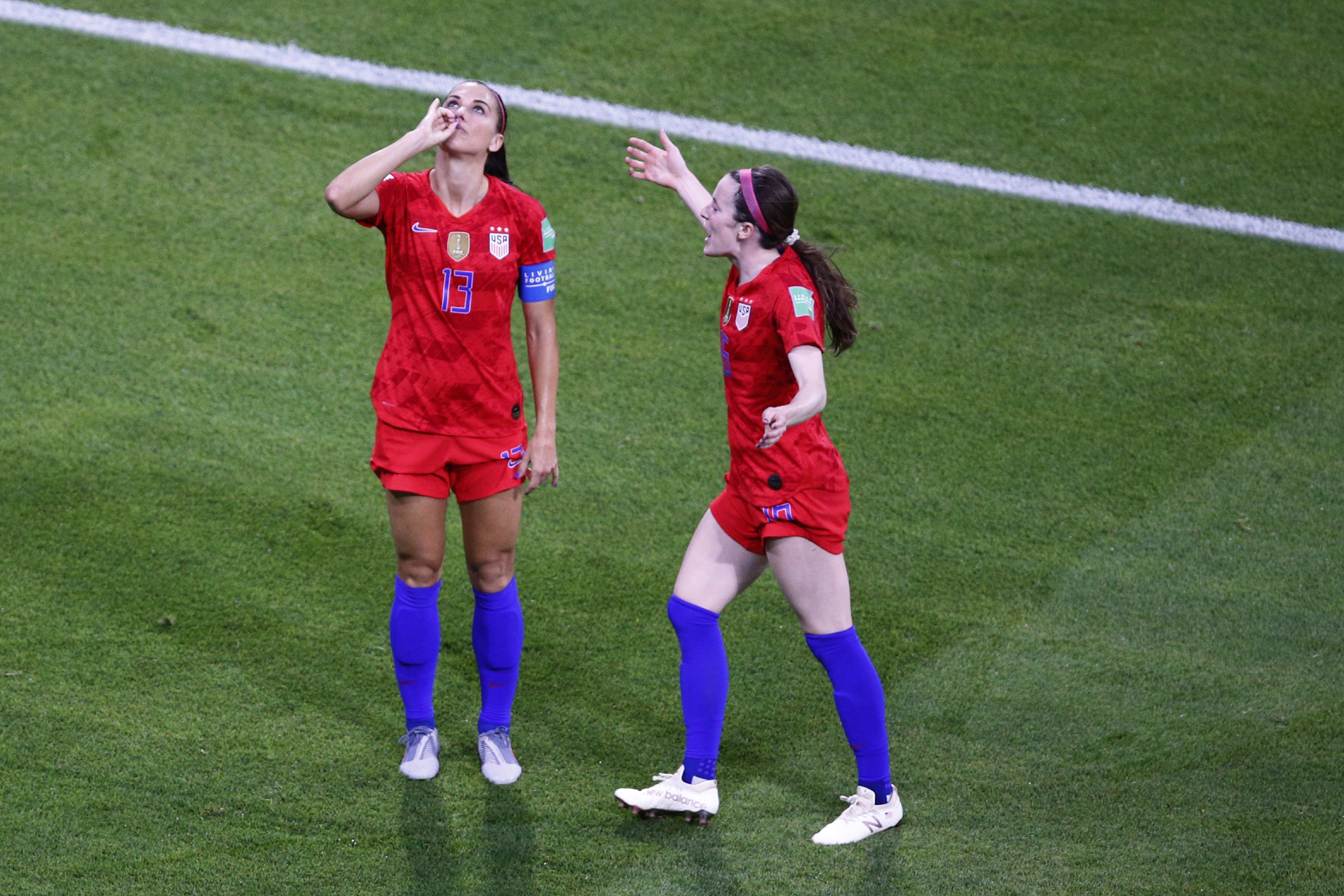
The most famous of Alex Morgan’s many goal celebrations: drinking tea after flattening England in the 2019 World Cup semifinals, on her birthday no less.
And though she has given countless interviews in her career, she had not forgotten that one from 2022 and the circumstances that surrounded it.
“I had injuries, and I was out on maternity leave, and I needed a break after grinding and having my daughter, and this is exactly when we talked,” she said. “[I] was being omitted from the team for a certain amount of months because I needed a little bit of an extra break because I hadn’t stopped since having my daughter.”
When Andonovski expressed his displeasure, Morgan was ready.
“I said, ‘This is how you’re going to get the best out of me, is if I take this break,’” she said. “I’m glad I’d made that decision at the time, but I had to grind to get back into it.”

Vlatko Andonovski (left) dropped Alex Morgan from the U.S. squad after the 2021 Olympics but brought her back in 2022 and kept her involved through the 2023 World Cup.
She was ready for that, too.
“That mentality is not one that I created on my own,” Morgan said. “It’s one that this team had from the very start, from the very first time that I entered into the team: one of not making assumptions, and one of working for everything that we earned, and knowing that we can never take anything for granted. I hope that players now continue to live by that — certainly, certainly I did.”
And so, on cue, to the present generation of players whom Morgan will watch from the stands on Thursday. Some of Morgan’s teammates are still going, surrounded by a fleet of young risers aiming for the 2027 World Cup.
“To be there and to be able to see the players and kind of be in that environment for a little bit is really fun and nostalgic,” Morgan said. “But I think that this team is in a really good place. You want to be in this place where you’re giving players chances a couple of years before you kind of narrow in on that core group when it comes to the World Cup year.”
They likely will be on display at Subaru Park: 18-year-old Lily Yohannes, 19-year-old Claire Hutton, 20-year-olds Olivia Moultrie, Jaedyn Shaw, and Alyssa Thompson — the last two of whom already have major tournament experience.
“There’s a lot of young players that already have incredibly valuable experience, with either the previous World Cup or Olympics,” Morgan said. “There’s also a lot of opportunity to become leaders on this team. … I feel like all these younger players are making names for themselves, and, yeah, I’m really excited to see [them].”
Just as they will be excited to see her, the one who set the bar they all want to reach.
*that* goal (you know the one)
Exactly a decade ago at London 2012, @alexmorgan13's game-winning header vs. Canada sent the @USWNT to the gold medal match.
There are a few ways to measure who the players of the moment are for the U.S. women’s soccer team.
One is in the box score, as usual: goals, assists, saves, and so on. Another is measured before kickoff, and with a decibel meter.
Most of the time, the winner of that contest is a veteran, and that might happen again when the Americans play Portugal on Thursday at Subaru Park (7 p.m., TNT, Peacock). Sam Coffey is an obvious favorite, as is electric playmaker Rose Lavelle.
But keep an eye — or an ear, in this case — out for two of the U.S. squad’s younger players who are quickly becoming fan favorites. Midfielder Lily Yohannes and winger Alyssa Thompson have all the skills and charisma to be national team mainstays, and their bandwagons are filling up fast.
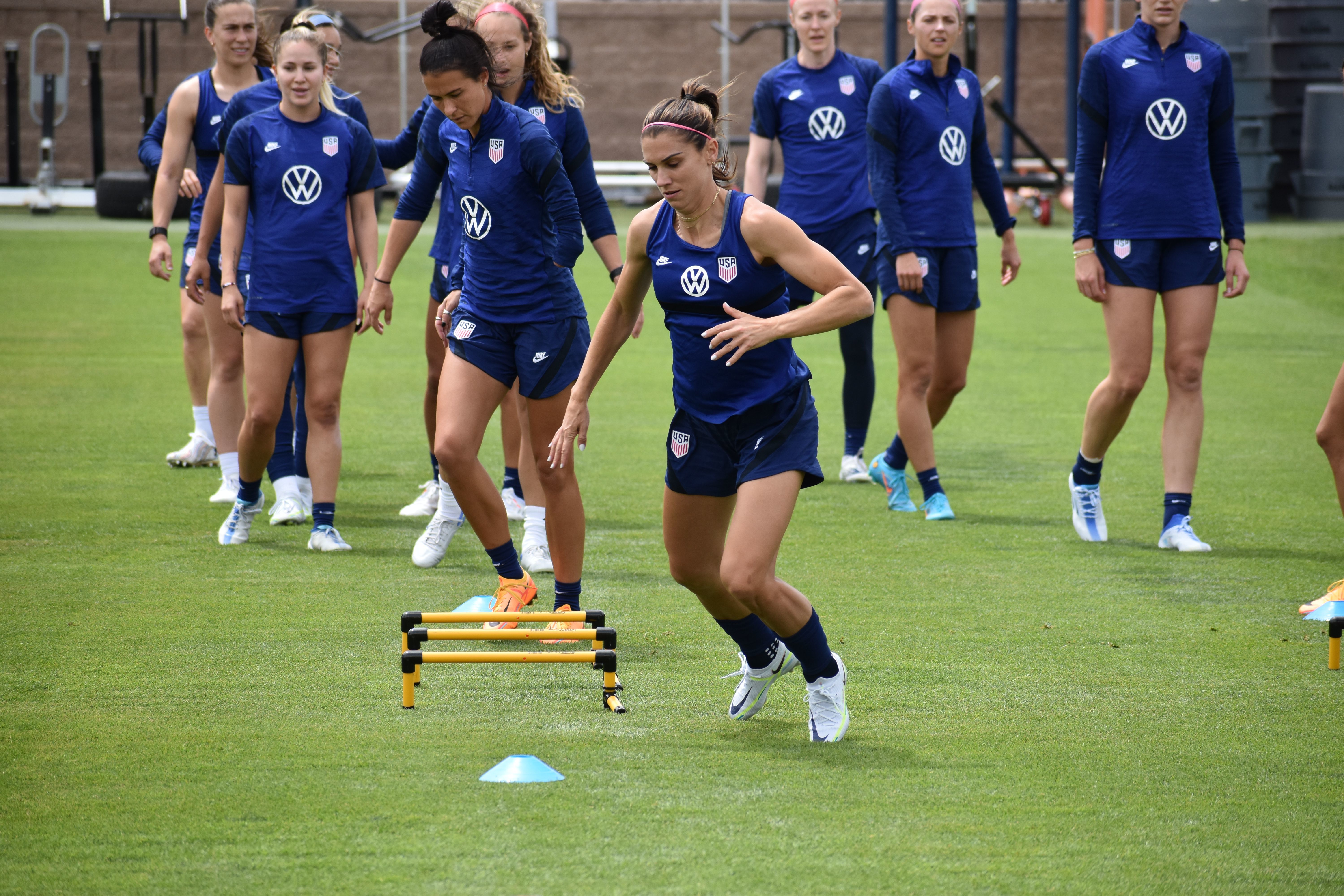
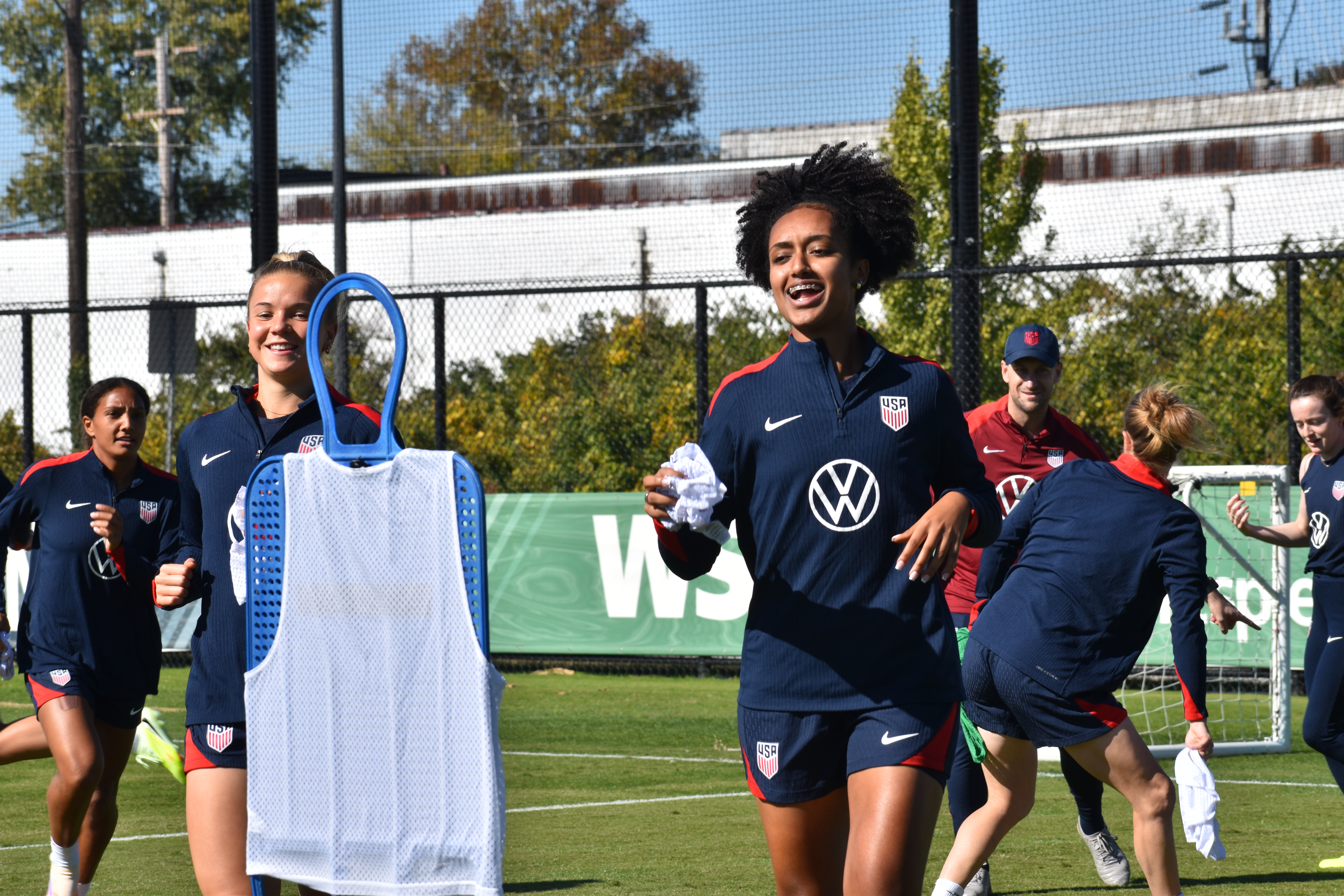
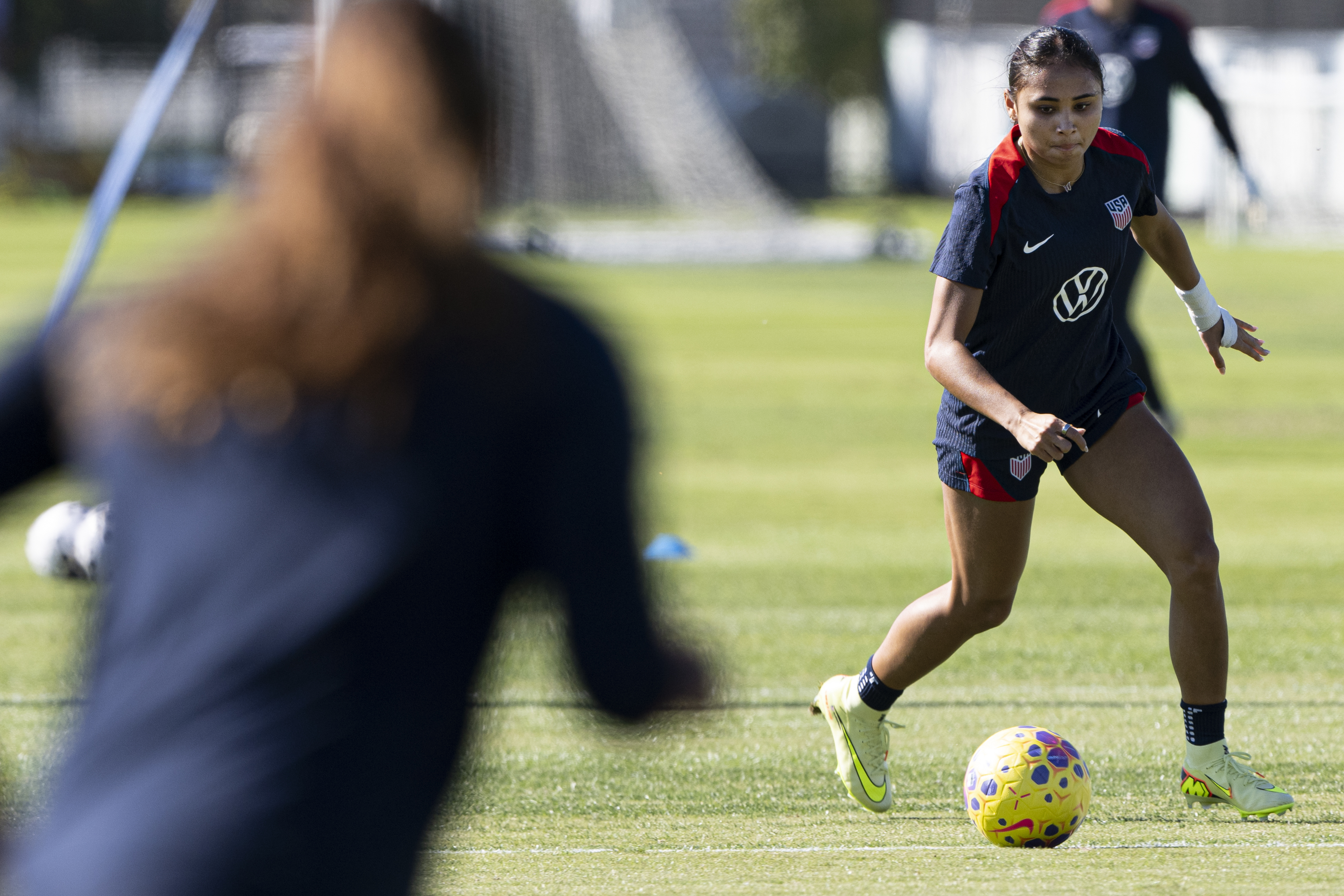
Lily Yohannes (center) working out during the U.S. women’s soccer team’s practice Tuesday morning at the Union’s facilities.
Yohannes plays club soccer for Europe’s most decorated team, France’s OL Lyonnes (formerly known as Lyon). The 19-year-old from D.C.’s Virginia suburbs joined in July, as OL retooled its squad to seek a record-furthering ninth Champions League title.
She hasn’t needed long to settle in. Last Wednesday, she scored a stunning goal from nearly 45 yards out in her team’s European season opener, a 3-0 win over Austria’s St. Pölten. The play went viral instantly, heightening the anticipation of her first U.S. appearance since June.
“So many world class players and such a high standard, high level every day in training,” Yohannes said. “Every day is super-intentional, and you just have to, like, stay switched on every day. And I think that’s something that’s super good for me and for my development to have.”
LILY YOHANNES WITH A MOMENT OF MAGIC 🪄
The @USWNT and OL Lyonnes young star with an absolute worldie for her first #UWCL goal ✨
She has two American teammates at the club, midfielders Lindsey Heaps — the national team’s longtime captain — and Korbin Shrader. Heaps had already taken Yohannes under her wing in U.S. camps, and has done so more now.
“I think she’s just such a quality player and such a footballer,” Heaps said. “And to have her in Lyon, to now be there and learn from all the players that are there, is such a an incredible experience for her. But I think she just fits in our team so well, as she started out.”
Heaps blazed the trail 11 years ago for American teens who skip college to turn pro in Europe, and Yohannes is one of many who’ve followed her. But even the veteran had to rave about that long-range goal, calling it “absurd when you think about an 18-year-old taking a chance like that.”
Thompson joined Chelsea, England’s biggest team, this summer from the NWSL’s Angel City. The Blues have never won the women’s Champions League, and have never been shy about craving it.
So it turned heads when they not only brought Thompson to London, but did so for a $1.3 million transfer fee — not small by women’s soccer standards, but well below expectations for a 20-year-old.
She has also started quickly. At the same hour as Yohannes’ goal, Thompson notched a goal and an assist in Chelsea’s 4-0 rout of France’s Paris FC.
“I really wasn’t thinking about leaving Angel City, and then when I got the offer, like, a week before the transfer window, I felt like immediately that I wanted to go,” Thompson said. “I’ve always wanted to play in Europe, and I felt like this opportunity, I don’t know when it would come again, and Chelsea is such an amazing club, known all over the world.”
“I was like, I really want to go and experience a different place — I’ve lived in L.A. my whole life,” she said. “I feel like this should be just so good for me, like, as a player, obviously, but as a person too, just developing things that I’ve never had to think about before.”
There have also been moments of levity. A reporter from The Athletic got the best answer out of Thompson on the day, asking about off-the-field adjustment.
“They have less AC … I really like it cold when I’m sleeping, so that’s annoying sometimes,” Thompson said, joining a long tradition of Americans lamenting England’s lack of air-conditioning. “And I haven’t tried any of the English food. I don’t like beans in general, so I just wouldn’t try it.”
Alyssa Thompson (right) working out in a drill during Tuesday’s practice.
Neither player is new to the national team at this point, or to its devoted fan base. Yohannes debuted in June of last year (and scored that night too) and has played seven games; Thompson has 22 caps, three goals, and three assists, and was on the 2023 World Cup team.
Thompson narrowly missed making last year’s Olympic squad, but that was always likely to be just a short setback. Now she’s in form, and will likely see a lot of playing time in this month’s games.
“Alyssa, she fits in seamlessly to to Chelsea’s game,” Heaps said. “She just got her first goal, and I think that’s something that she’s wanted since she’s set foot there in Chelsea. So, very happy for her.”
A historic day in Chester
Tuesday marked the return of the U.S. women to the area for the first time in 3½ years, and also something never seen around here.
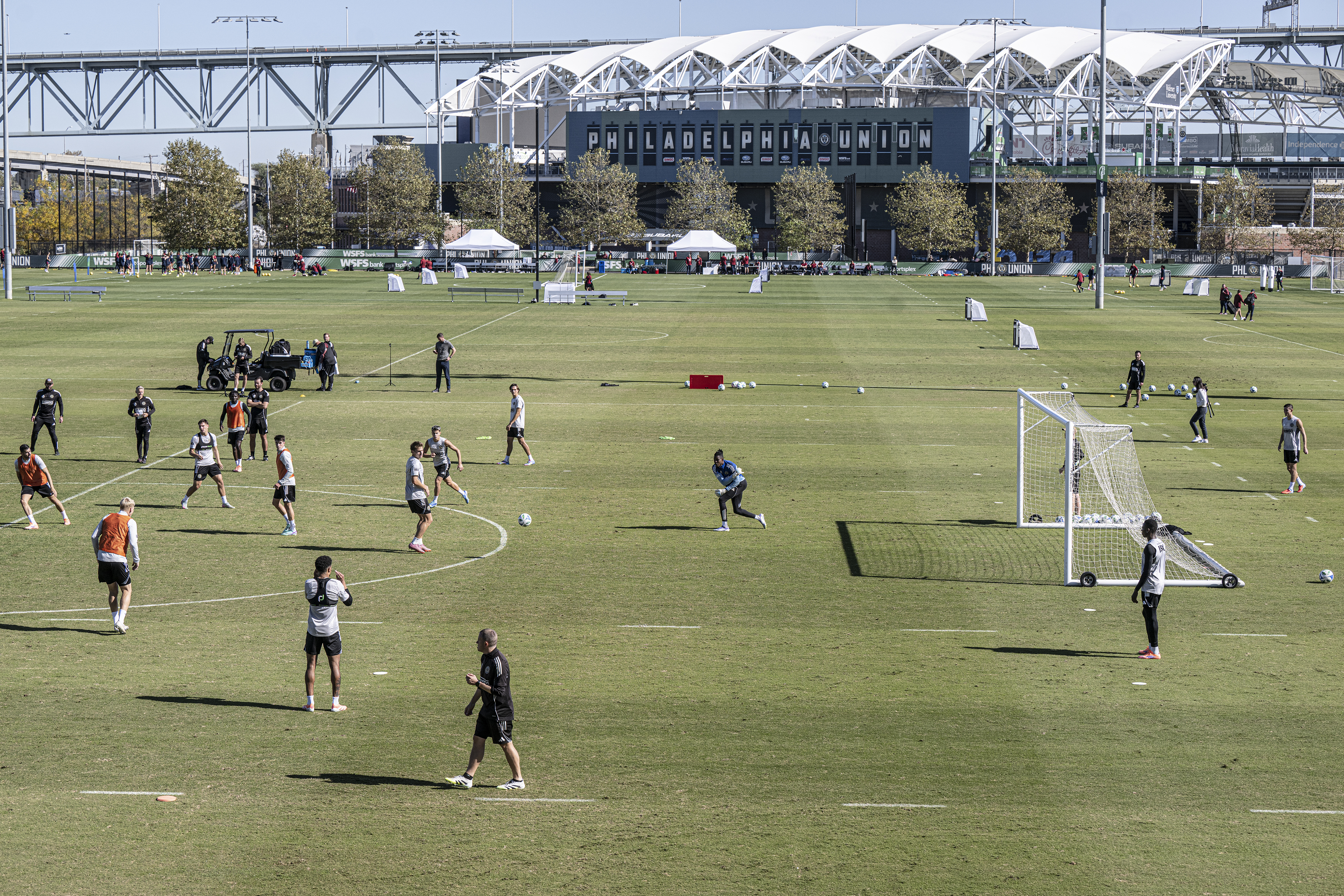
For a few minutes in the late morning, the national team and the Union were practicing in the club’s training complex at the same time, with one squad at each end of the three grass fields along Seaport Drive.
It was the first time the Union shared the space simultaneously with another professional squad, and it likely won’t be the last.
A view from above the fields on Tuesday morning, with the Union in the foreground and the U.S. women in the background.
“The appetite for soccer here is incredible,” said longtime Union captain Alejandro Bedoya, who will attend Thursday night’s game with his daughter. “There’s so much talent when you look at the men’s national team, for the women’s national team, for the Union academy, the players that have come through here. … It’s amazing. And what this sportsplex means, it was a great initiative to get this built.”
The closest previous occasion was earlier this summer, when Chelsea borrowed some of the Union’s fields but did most of their work inside Subaru Park. The nearest thing to an overlap was when the English club invited a few Union reserve squad players to come over from their practice to fill out a scrimmage.
Next year, the complex will be a base camp for one of the teams in the World Cup. But it will be mostly reserved for that, with MLS planning to shut down its schedule during the tournament.
NEW YORK — After months of speculation and waiting, the United States’ big bid to organize the 2031 women’s World Cup across the continent became official on Monday.
The U.S. launched its effort with Mexico, Costa Rica, and Jamaica, with one eye on the tournament’s expansion to 48 teams and another on giving women’s soccer in the Concacaf region a big boost.
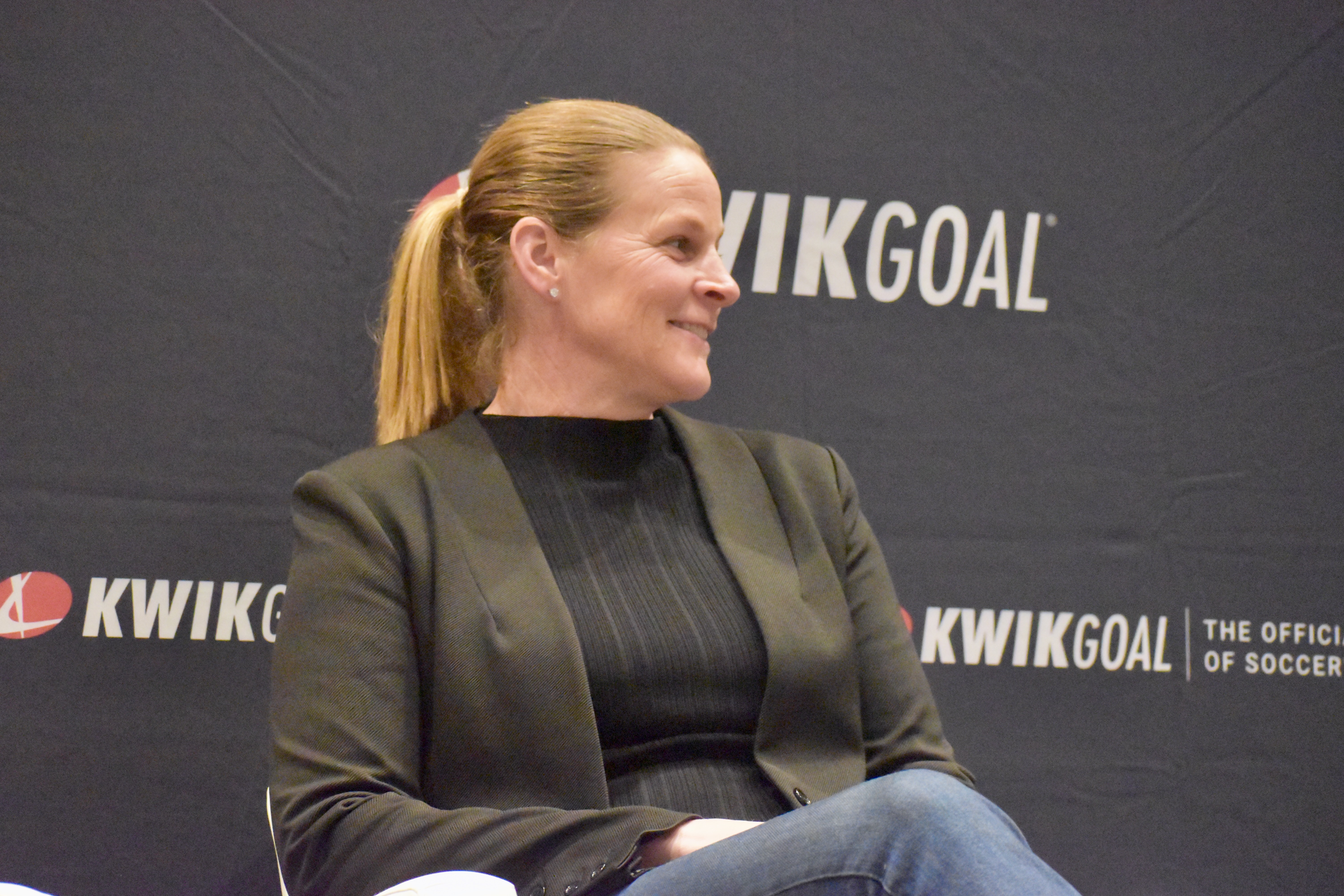
“We’re proud to lead this bid, and we chose to do it together with our Concacaf partners because this moment is bigger than any one country,” U.S. Soccer Federation president Cindy Cone said at a news conference with officials from the three other countries and a number of former star players.
More than 30 U.S. cities have expressed interest in getting involved, including Philadelphia. The city was a host the last time the women’s World Cup was in the U.S., in 2003, and will host the men’s tournament for the first time next year.
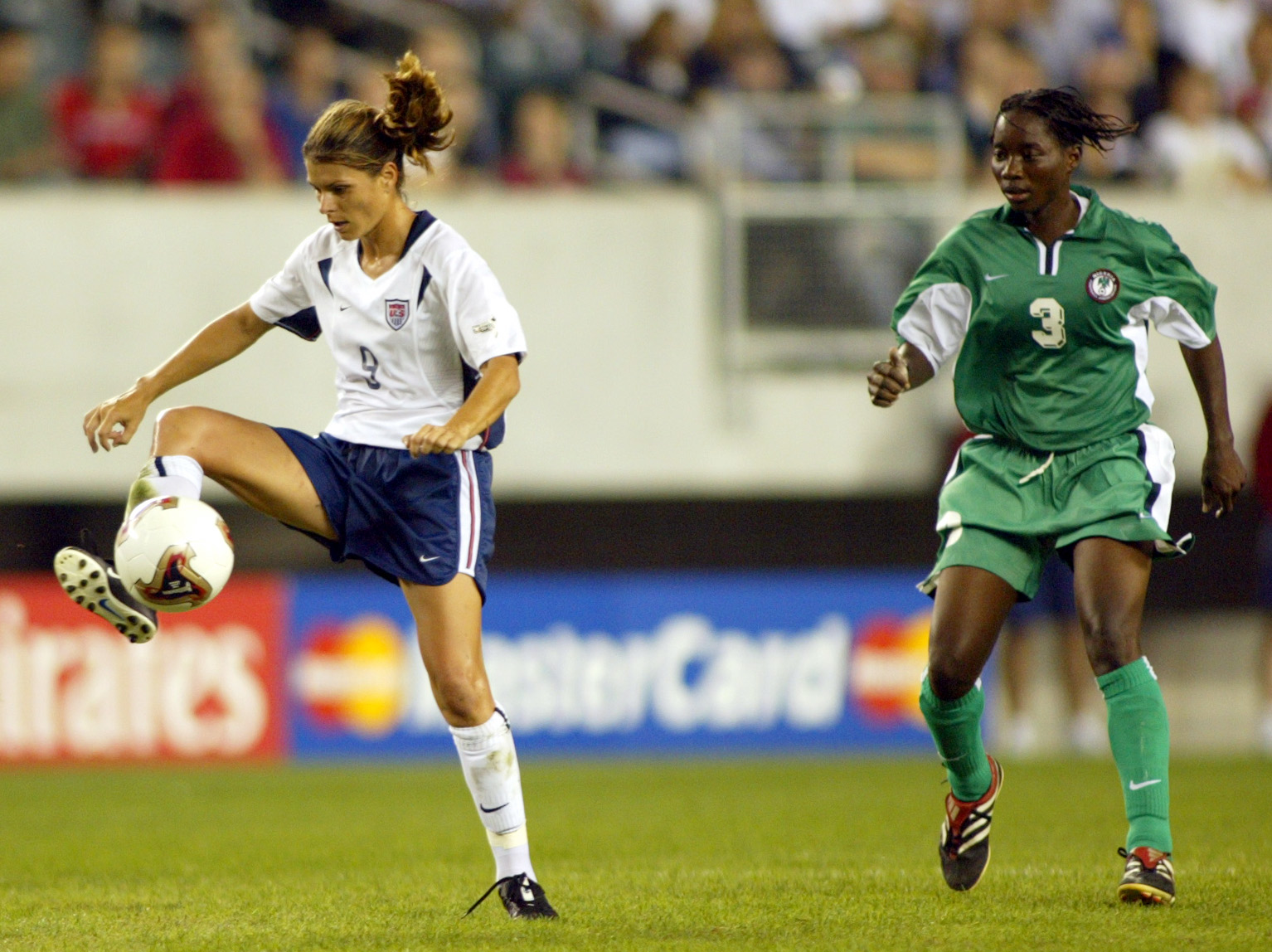
Mia Hamm (left) led the United States’ win over Nigeria at Lincoln Financial Field in the 2003 women’s World Cup.
“We are excited for the possibility to host the women’s World Cup and learning the bid process, and we’re definitely interested to learn more,” PHL Sports deputy executive director Brea Stanko told The Inquirer. “We hosted the women’s World Cup in 2003 — it’s grown exponentially. It was a great event for us, and we’re excited to see what we could bring here.”
The World Cup would come a year after Philadelphia’s WNBA team launches, continuing the growth of women’s sports in the city.
“You can see the growth of the sport, as we heard tonight,” said Maria Grasso, chiefs sales officer for the Convention and Visitors Bureau. “I think that’s truly exciting for us. We have a tremendous relationship with FIFA, as well as U.S. Soccer, which just gives us all the reasons we [are] really excited about this, like the rest of this room.”
The official bid book is due in November, and this bid is expected to be the only one worldwide. While it’s not official yet, it’s likely just a formality. And though the due date is a month from now, the host cities don’t have to be officially set when the bid book goes in.
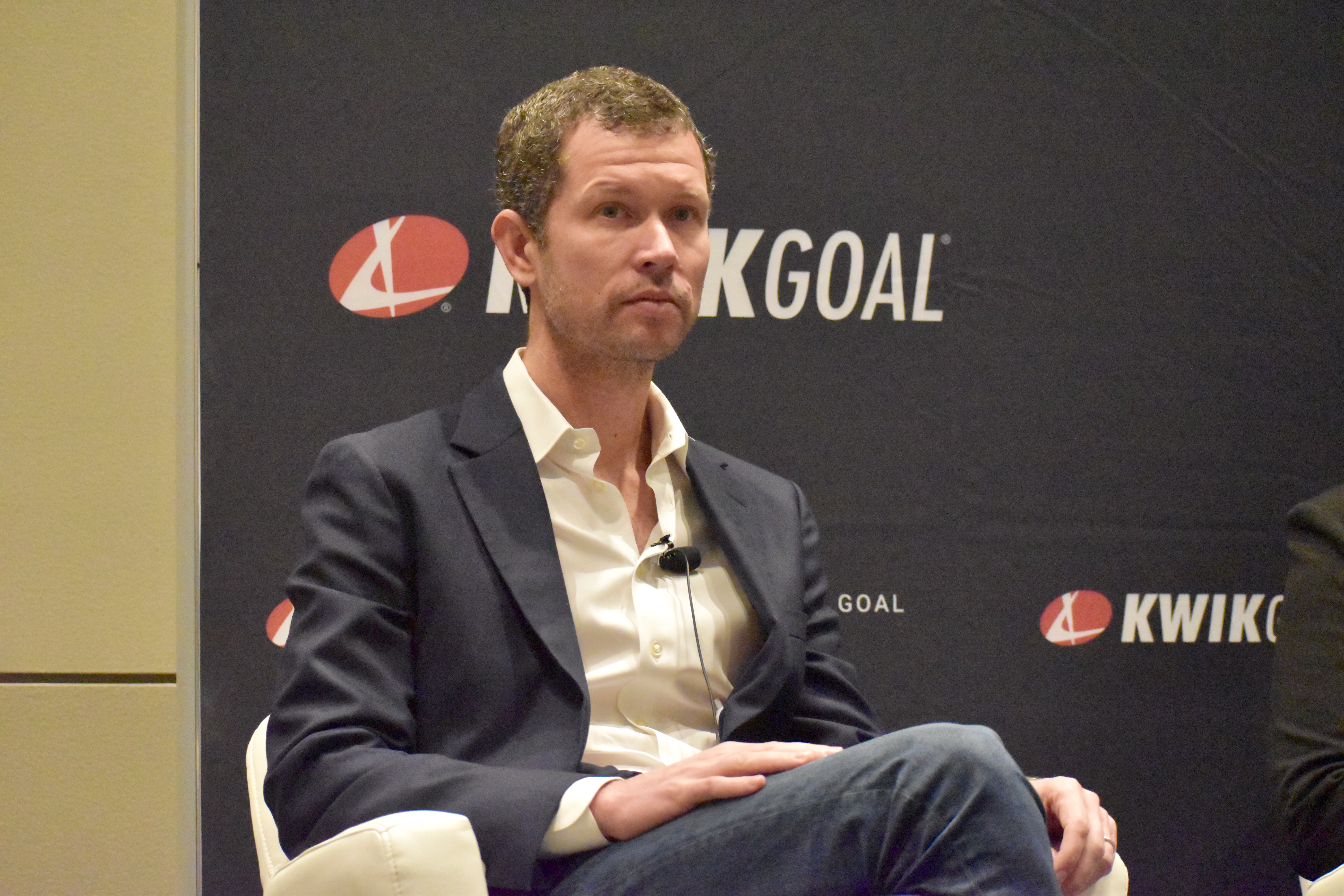
U.S. Soccer Federation CEO JT Batson in January.
Cone and U.S. Soccer CEO JT Batson said the selection process won’t happen until after next year’s men’s tournament is done, given how much work is going into that. (For comparison, North America’s 2026 men’s bid won a vote in 2018, and cities were picked in 2022.)
“As the only bidders for the FIFA 2031 women’s World Cup, I admit I like our chances,” Cone said with a laugh. “When we are officially selected, we’ll work with FIFA to deliver the biggest, most impactful women’s sporting event in history.”
FIFA’s vote is expected next April at the global governing body’s congress in Vancouver, the host city of the 2015 women’s World Cup final and one of the many hosts of next year’s men’s tournament.
“Our confederation’s commitment to women’s football has never been stronger, and hosting the FIFA women’s World Cup [in] 2031 will build on this momentum,” Concacaf president and FIFA vice president Victor Montagliani said in a statement. He was unable to attend in person.
U.S. Soccer president Cindy Cone
Cone said when she pitched the multi-country idea to Montagliani, “he didn’t hesitate for a second. He jumped in immediately, offered his full support, and has been one of the strongest advocates for our vision from day one.”
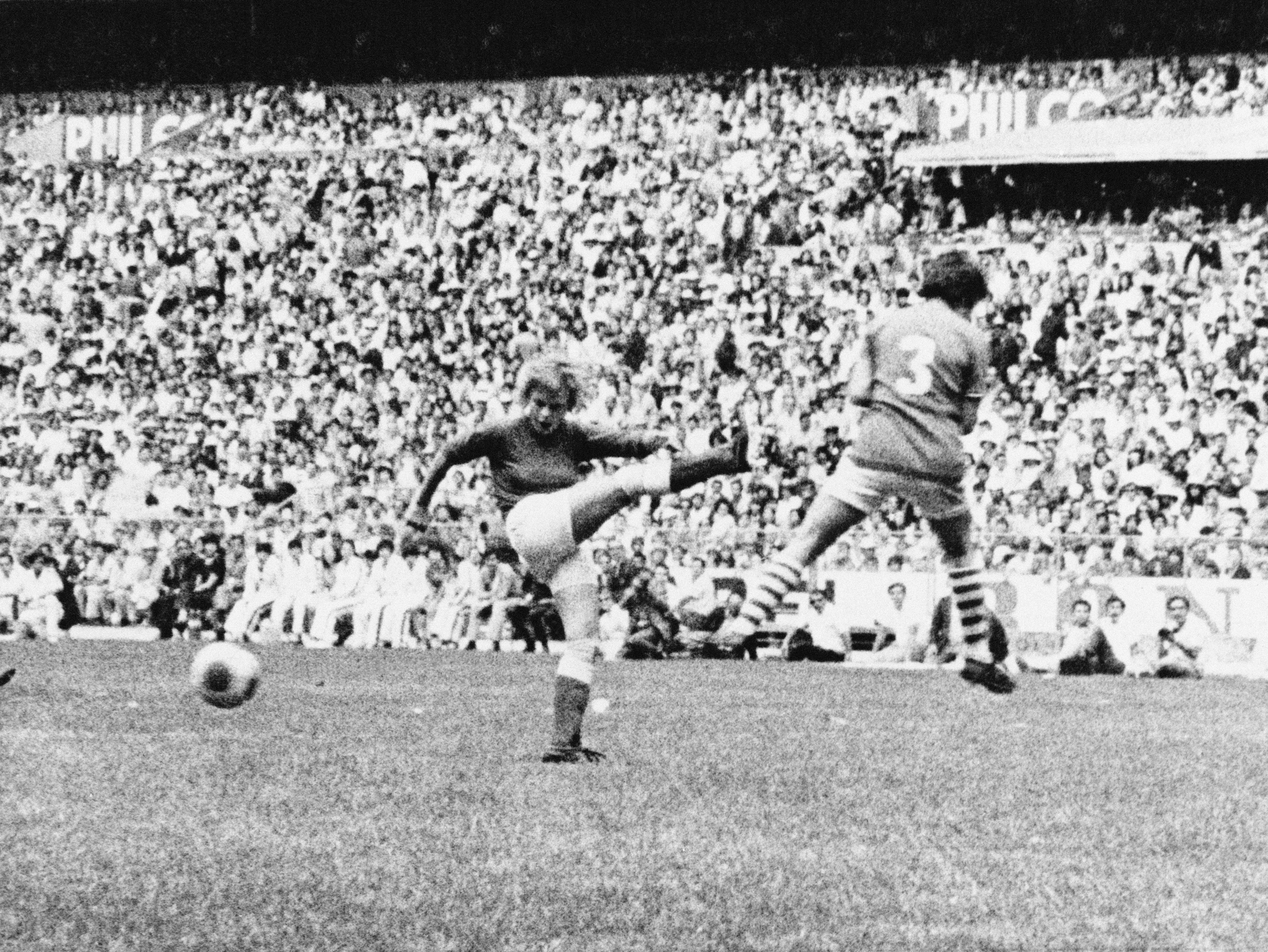
It will be the third time the U.S. hosts the tournament, after the groundbreaking 1999 edition and the on-short-notice 2003 edition. Mexico hosted a world championship for women’s national teams in 1971 before FIFA officially launched a women’s World Cup 20 years later, and the country will become a three-time men’s World Cup host next year — 1970, 1986, and 2026.
Costa Rica and Jamaica, meanwhile, will host a senior-level FIFA tournament for the first time.
“One of our goals of an inclusive 2031 women’s World Cup was [to be] an instigator for investment, obviously in our countries, but also across the region and ultimately the world,” Batson said. “And for Jamaica and Costa Rica to show the world that they can host a Women’s World Cup and obviously field great teams, that is a great motivator to programs and countries all across the world.”
Mexico hosted an unofficial women’s soccer world championship in 1971. In modern times, FIFA has officially recognized the event’s significance in growing the sport.
The proposed venues in the other countries aren’t official yet, nor is how many games each country will get. Mexico will have choices to make, with Monterrey, Guadalajara, and Mexico City set to be host cities next year. Monterrey in particular has become a hotbed for the women’s game in recent years.
Costa Rica and Jamaica will presumably use their national stadiums: the former’s 42,000-seat modern venue in San José, and the latter’s historic 35,000-seat venue in Kingston.
“To realize that there’s a chance that globally, people can experience this on this great of a scale, and for the U.S. to recognize the beauty of that, and to be in partnership with us, it means so much,” said former Jamaican national team player Cheyna Matthews, who played in the 2019 and 2023 World Cups and for seven years in the NWSL.
“I just think about the impact that this is going to have for young girls in Jamaica,” Matthews continued. “I think even young boys who aspire to be part of the Reggae Boyz [Jamaica’s men’s team], I think that this just provides an opportunity for them to see it. Because some can’t travel, some have never left Kingston. … I think that it will obviously inspire, but it’ll continue to have that dividend later on.”
A quiet Saturday morning in Kensington was graced with a bit of soccer stardust.
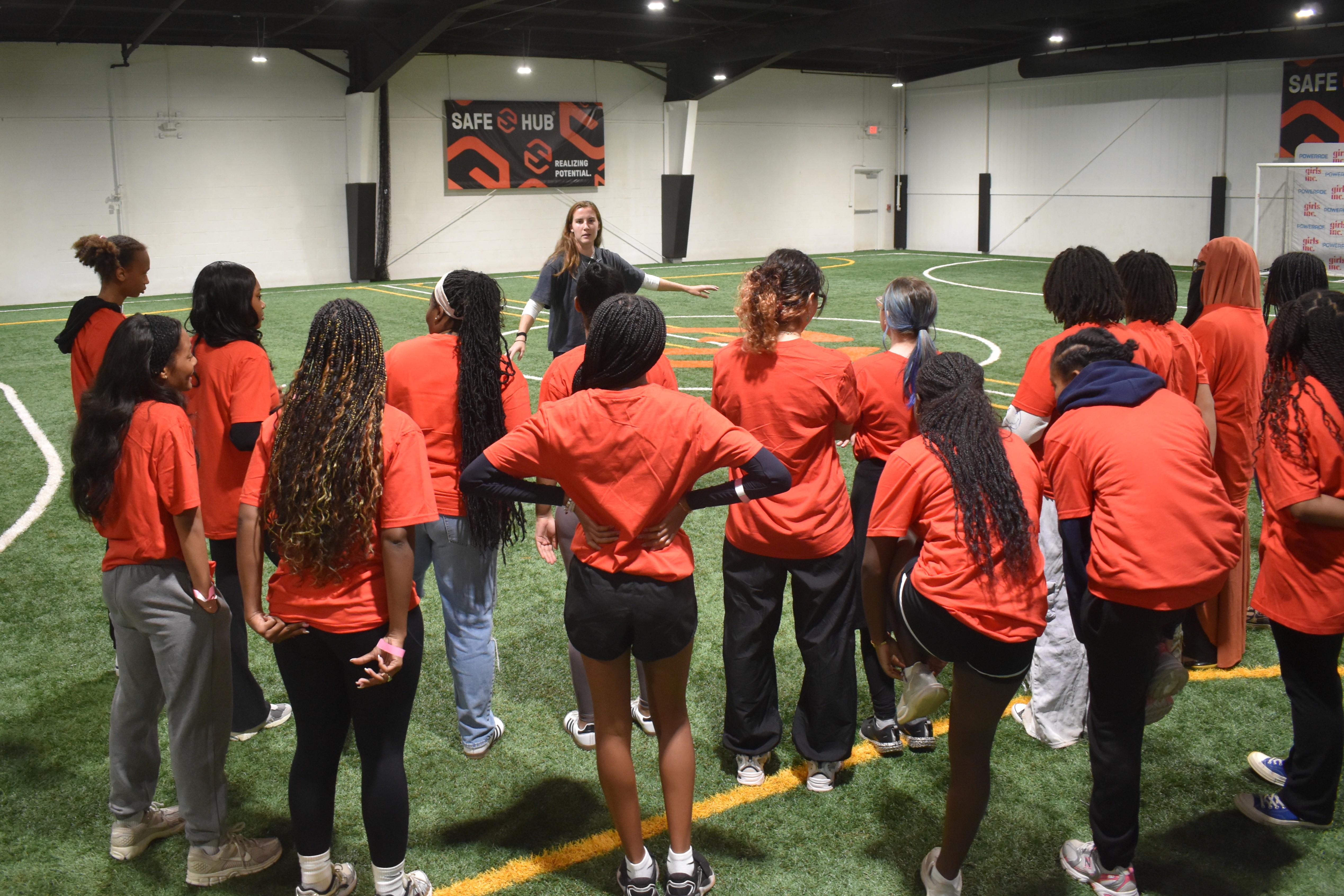
U.S. Women’s and Gotham FC centerback Tierna Davidson visited the Safe-Hub complex, adjacent to the Scanlon Recreation Center, to help to run a clinic for young girls from across the city.
“It’s such an honor to be asked to do something like this,” she told The Inquirer. “I always love being able to connect with the next generation and inspire, even if it’s not to play soccer. If it is, fantastic, but if it’s even just to be inspired in any other realm of life, that’s something that I strive to do as well.”
Along with a few rounds of drills, Davidson sat down for a Q&A session with the kids. She spoke about her journey in the sport and as a person, including some powerful words about the importance of seeking help when needed along the way.
“I think that’s something that I wish I heard younger, how important it is to ask for help and how it is not something that you should be ashamed of,” she said. “It’s actually something that you should be proud to be able to do, and it requires humility and confidence to do it.”
Tierna Davidson (center) speaking with some of the girls who took part in Saturday’s clinic.
Those younger days were when she made her senior U.S. Women’s debut while still in college at Stanford. Either of those things would be hard enough on its own.
“For a long time, I thought that I needed to be excellent at everything by myself, and if I had help, then it meant that I wasn’t that good at it,” Davidson said. “And that’s just not how you get good at things. You have to ask people for help, whether it’s an expert in that field, whether you just need kind of some emotional support, whatever it might be. It is the way that you get better at something, it is the way that you get through hard things.”
Now the 27-year-old centerback’s mantle is full of trophies: the 2017 NCAA championship, the 2019 World Cup (where she was the U.S. squad’s youngest player), last year’s Olympics, and this year’s Concacaf women’s Champions Cup.
The girls in attendance Saturday were drawn to Davidson’s presence, no matter how much experience with soccer they’d had.
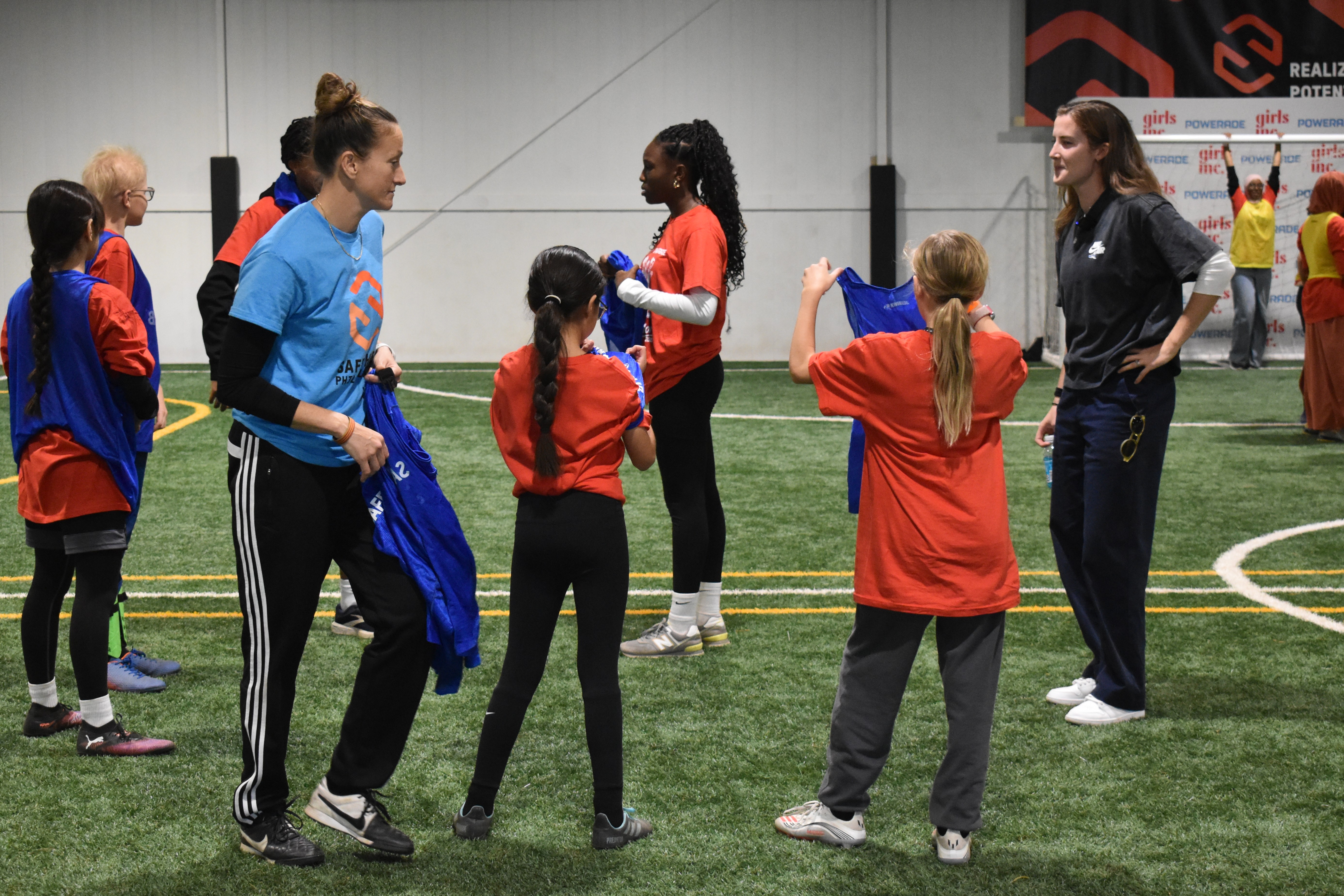
Tierna Davidson (right) and Safe-Hub program development director Samantha Swerdloff (left) working with some of Saturday’s participants.
“To have her come to Philly, and specifically to Kensington and Safe-Hub, is a really powerful message,” Safe-Hub coach and program development director Samantha Swerdloff said. “It shows the girls in this neighborhood that they matter. … So it was great for them to hear from her about what it takes to be successful, and I really appreciated her reflections on [how] she’s more than just a soccer player.”
Davidson praised the players for being “excited and engaged” and said “it warms my heart to see the group of girls that we have here today be such stewards of the next generation.”
The day was also a reminder of something less positive: Davidson isn’t playing right now because of the second torn ACL of her career. She suffered the injury in late March and is making her way through the long rehab process. It was merely a coincidence that she came to town a few days before the U.S. women’s team’s game against Portugal at Subaru Park on Thursday (7 p.m., TNT, Peacock).
She’s one of the few big names on the injured list for the team’s October games. Fans also won’t get to see centerback Naomi Girma or superstar striker Trinity Rodman. But at least Davidson will be in the stands, joining what’s expected to be a slew of legends attending Alex Morgan’s retirement ceremony.
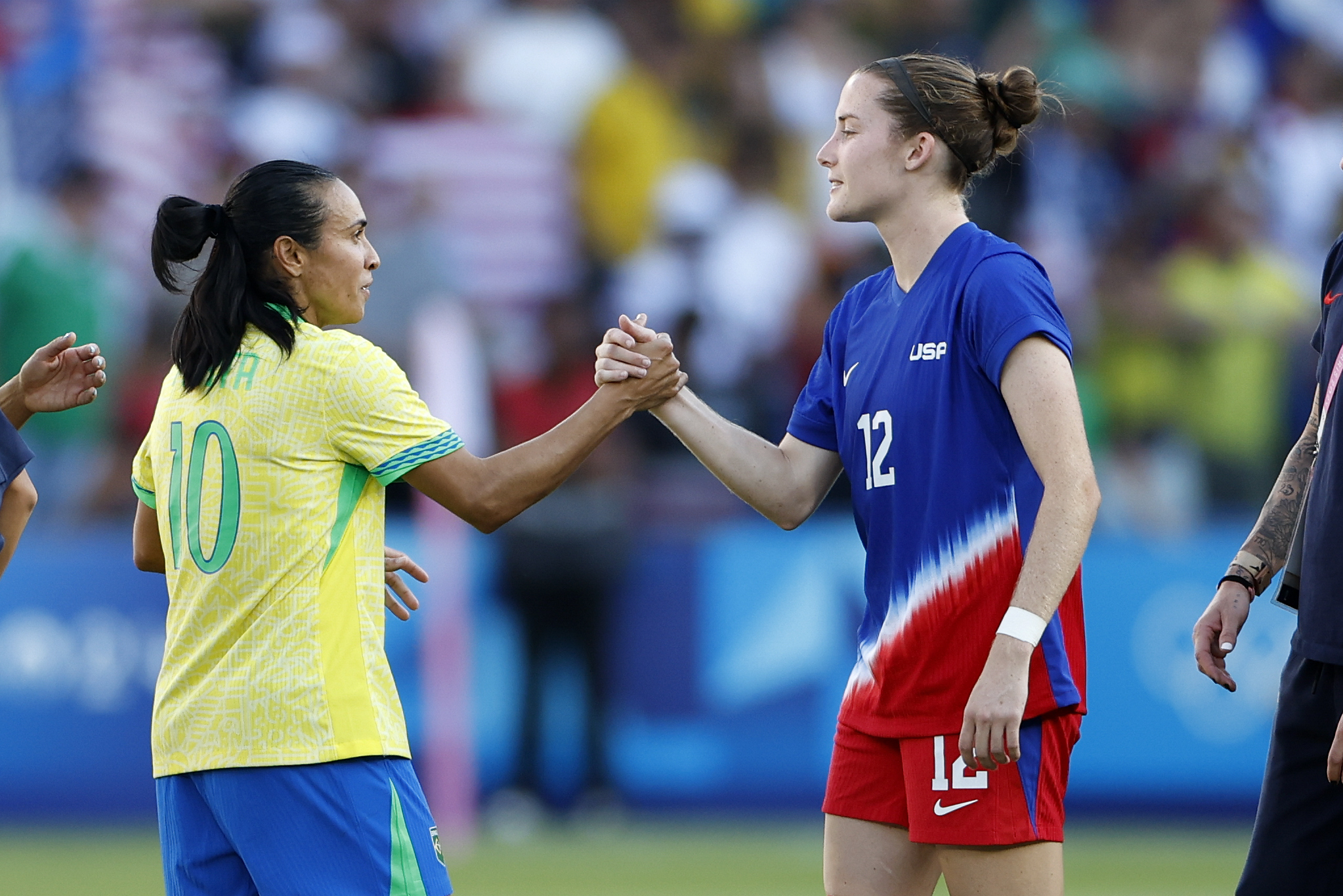
Tierna Davidson (right) helped the U.S. beat Marta’s Brazil in last year’s Olympic gold-medal game.
Manager Emma Hayes’ roster has its share of familiar faces, including longtime captain Lindsey Heaps and Rose Lavelle, Davidson’s Gotham FC teammate. There also are many young players whom fans will want to get to know, and Davidson is an expert on one of them: defender Lilly Reale, another Gotham colleague.
The 22-year-old was one of Gotham’s first signings after the NWSL abolished its college draft, allowing college players to be pursued as free agents. Reale was a four-year starter at UCLA and was last year’s Big Ten defender of the year. After turning pro, she converted from centerback to left back.
Davidson praised Reale for doing “an excellent job adapting” to the new role.
“Doing it at a very high level as a rookie in this league is very difficult to do, with the kinds of forwards that you have to be handling,” she said. “She’s really taken it in stride. And on top of that, aside from being an exceptional player, she’s also a great teammate and a fantastic locker-room personality to have.”
Lilly Reale made her senior U.S. women’s national team debut in June.
As for Davidson’s recovery timeline, she said she hopes to be back on the field, at least in training, by January. That would allow her to travel with Gotham to that month’s inaugural FIFA Women’s Champions Cup final four in London.
Gotham will play the winner of South America’s Copa Libertadores, Brazil’s Corinthians, in the semifinals. The winner would then likely would play England’s Arsenal for the title, with that side of the bracket still to unfold.
“To be able to potentially play an exceptional team, a Champions League winner from Europe, is something that we’d be really excited about — but, of course, we have to take care of business in that semifinal game,” Davidson said. “I think that we have a lot of fantastic, well-experienced international players on our team, but we also have a good group of players that haven’t been in this sort of situation. And I think it’ll be really, really great for the whole team to experience that level of exposure, and pressure, and quality of game.”