Tag: UniversalPremium

  • Amid college basketball’s gambling scandal, concerns that mid-major players could be vulnerable

    Amid college basketball’s gambling scandal, concerns that mid-major players could be vulnerable

    Rollie Massimino “did not mess around” when it came to drawing up defensive schemes against Patrick Ewing … or warding off gambling temptations that might filter through to his Villanova players.

    “When we were playing, we had an FBI agent who was a former ’Nova basketball player give talks about gambling,” said Chuck Everson, a member of Massimino’s 1985 Wildcats title team that took down heavily favored Georgetown.

    “Rollie did not mess around with that stuff. It wasn’t that far removed from the Boston College [point-shaving] scandal. Rollie brought in the FBI to talk to us. Coach Mass did a great job of teaching us, and it wasn’t all basketball; it was life lessons. And with gambling, it was, ‘Don’t do that.’

    “To this day, I have never called DraftKings, or anything like that. I attribute that to being scared straight with Coach Mass.”

    Everson, 61, played in an era when sports betting wasn’t legal in most of the country. These days, things are quite different. College athletes are compensated by their schools or through lucrative name, image, and likeness deals, and the legal/illegal gambling culture infiltrates every level of sports.

    Last Thursday in Philadelphia, federal authorities announced a sweeping criminal indictment and related filings against 26 people on charges related to manipulating NCAA games and Chinese professional games through bribes, some as high as five figures.

    It is the fourth federal criminal indictment that involves gambling and sports unsealed in the last six months, and the latest alleged gambling scheme involves one of the storied Big 5 programs: La Salle.

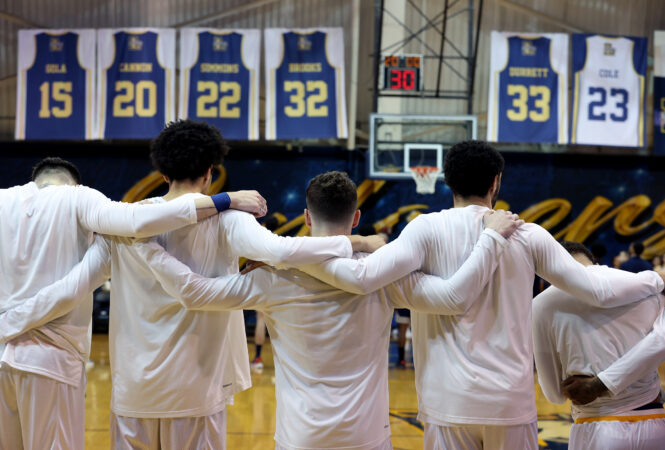
    According to the indictment, at least one of the purported rigged games took place in 2024 in Philadelphia between La Salle and St. Bonaventure.

    There are at least 39 players from 17 NCAA Division I schools who are alleged to have been involved in the scheme, but the indictment may underscore other, more troubling concerns.

    Players at mid-major or smaller Division I programs might earn a fraction in NIL money compared to what their counterparts at elite programs take in, and therefore might be more susceptible to the temptations of illicit paydays. As one former federal prosecutor put it, this alleged scheme might be one of many dominoes waiting to fall.

    “Anything that interferes with the integrity of sporting events, you’re going to get action by prosecutors,” said Edward McDonald, who prosecuted those involved in the Boston College point-shaving case in the late ’70s. McDonald, now senior counsel at the Dechert law firm, thinks that mid-major schools, like La Salle and some others in the Big 5, could be particularly vulnerable to gambling and bribery schemes.

    “These smaller schools, the compensation to players is not as great [compared to larger programs], even for the better players on the team,” said McDonald, who learned of the Boston College scam through his investigations of organized crime family members with the Justice Department (and played himself in the Martin Scorsese-directed mob film Goodfellas).

    “Players going to big-time schools are making 10 times more. A player [at a smaller program] might not be having a good season or might think they’re not going to play in the NBA or professionally, and they might say, ‘What the hell, I might as well cash in now.’”

    Prop bets on a La Salle game

    According to the court filings, one of the defendants, Jalen Smith, and former LSU and NBA player Antonio Blakeney (who is “charged elsewhere,” according to the indictment), attempted to recruit players on the La Salle men’s basketball team for the point-shaving scheme.

    The fixers offered the La Salle players payments to underperform and influence the first half of a game against St. Bonaventure on Feb. 21, 2024, according to the filings.

    Prosecutors allege that before the game at Tom Gola Arena, defendants who acted as fixers placed bets totaling approximately $247,000 on the Bonnies to cover the first-half spread. A $30,000 wager was made in Philadelphia at a FanDuel sportsbook, according to the indictment. But those bets failed after La Salle covered the spread.

    “Neither the university, current student-athletes, or staff are subjects of the indictment,” La Salle wrote in a statement. “We will fully cooperate as needed with officials and investigations.”
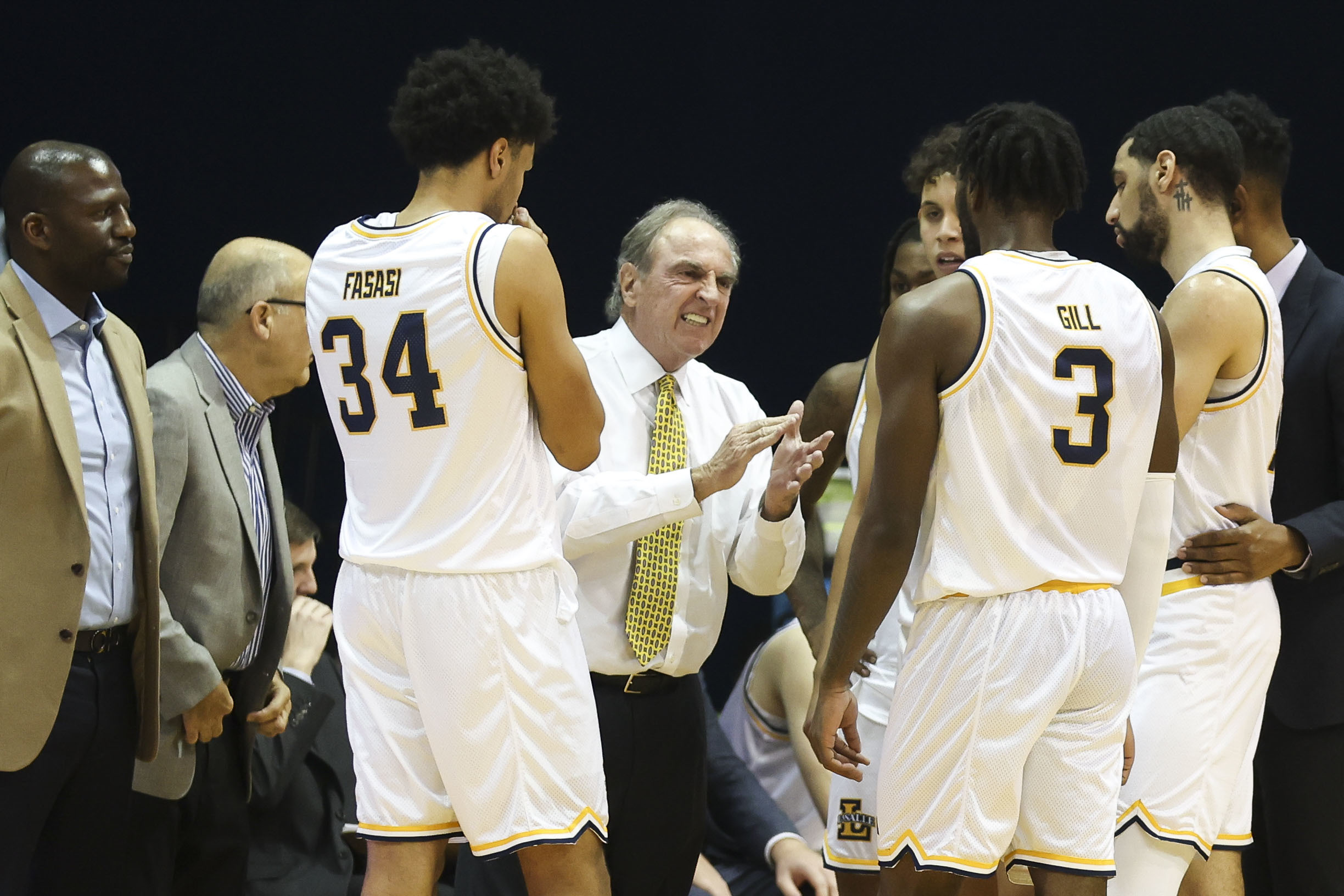
    La Salle coach Fran Dunphy directing the Explorers in November 2023. Dunphy retired after last season.

    Ohio Gov. Mike DeWine told The Inquirer that several years ago he received complaints from a number of college coaches in his state about online abuse directed at players and threatening calls from gamblers who had lost big.

    “I called up [NCAA president] Charlie Baker, and asked him, ‘What do you think of prop betting?’” DeWine said. “He said, ‘We don’t like it.’ And I said, ‘Give me a letter that says that.’

    “Under Ohio law, if I can get a letter from a league saying, ‘Don’t bet on certain things,’ that gives me the ability to go to my Casino Commission and they can [enact rules] without any legislation. Charlie sent the letter, I took that to the commission, and that stopped collegiate prop betting.”

    The Ohio Casino Control Commission granted the NCAA’s request to prohibit proposition bets on collegiate sports in February 2024, but the decision affected only Ohio.

    “It doesn’t really eliminate the problem,” DeWine said.

    The ban in Ohio is only a drop in the bucket against a sea of pro-gambling momentum, legislation, and, most significantly, lucrative revenue streams.

    CJ Hines, a guard who was dismissed from Temple’s basketball team on Jan. 16, allegedly participated in a point-shaving scheme during the 2024-25 season while playing for Alabama State, according to the indictment. Hines transferred to Temple in May but didn’t play this season after the university announced that he was under investigation for eligibility concerns before his enrollment.
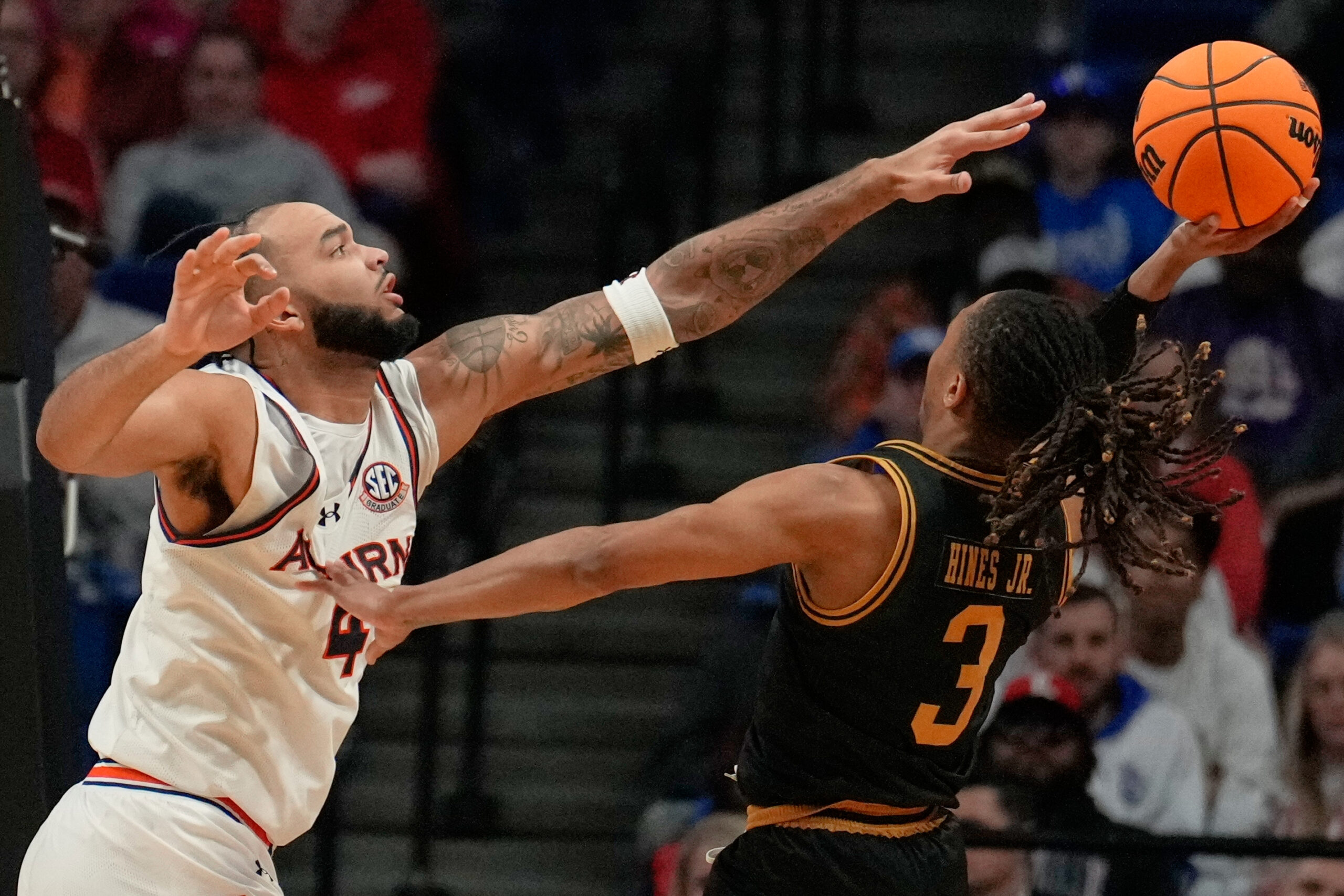
    Former Alabama State guard CJ Hines (3) averaged 14.1 points in 35 starts last season.

    The Atlantic 10 Conference — which includes La Salle and St. Joseph’s — weighed in on the latest gambling indictment.

    “Any activity that undermines the integrity of competition has no place in college athletics,” commissioner Bernadette V. McGlade said in a release. “The Atlantic 10 and its member institutions will continue to work closely with the proper authorities to combat illegal activities.”

    A St. Joe’s spokesperson added: “St. Joseph’s University has not been approached by federal investigators or any other entity about suspicious sports wagering activity involving St. Joe’s student-athletes or team.”

    Villanova, which plays in the powerful Big East Conference, has numerous resources and protocols in place to address the sports wagering issue.

    Handbooks, which include NCAA rules on gambling, are distributed annually to athletes, who also must sign a sports wagering document before being declared eligible. The athlete must acknowledge he or she won’t engage in activities that influence the outcome or win-loss margins of any game.

    In 2021, 2023, and 2025, Villanova brought in speakers who have a history with sports gambling to talk with athletes about the risks and dangers associated with it. Villanova’s athletic compliance office meets twice annually with every athlete to review NCAA compliance standards, including its rules on sports wagering.

    Former Villanova basketball star Maddy Siegrist told The Inquirer last year that her college alma mater ingrained in her mind the potential devastating consequences of gambling, values that she continues to adhere to as a WNBA player.

    ‘The integrity of sports is at risk’

    Even after the 2018 Supreme Court ruling that legalized sports wagering state to state, the honesty and integrity component still comes into question when so much is riding on any sports wager.

    DeWine, the Ohio governor, is taking a proactive role in trying to address malfeasance in the gaming culture.

    “I’m writing letters to all other major [sports] leagues,” DeWine said. “They need to get on this. If they sit back, they’re making a huge mistake. I think the integrity of sports is at risk. I’m continuing to urge these leagues to take care of business, because they’re the ones that are going to get hurt.”

    But McDonald said that with the flurry of recent indictments involving sports and gambling, “you have to wonder how pervasive [the illegal gambling problem] really is.”

    “This could very well be the tip of the iceberg,” McDonald said.
  • Are the Phillies ‘running it back?’ Maybe, but that’s not the most important question for 2026

    Are the Phillies ‘running it back?’ Maybe, but that’s not the most important question for 2026

    Rob Thomson served dinner at a soup kitchen in Kensington and read books to students in Germantown. He spoke at banquets in Cherry Hill and Bethlehem. For four days this week, he met fans and talked baseball across the region.

    And in case he wasn’t previously aware of the discourse about the Phillies’ offseason, let’s just say the phrase “running it back” came up a few times along the trail.

    Thomson’s take:

    “We’re going to have three new relievers,” the manager said at one stop of the Phillies’ annual winter tour. “We’ve got a new right fielder. [Justin] Crawford’s going to get every chance to play. We’ve probably got a rookie starting pitcher in [Andrew] Painter. We’ve got Otto Kemp, who wasn’t here at the start of last year. We’re turning over 20 to 25% of our roster.

    “So, if you think that’s turning it back, or running it back, whatever the saying is, I can’t help you.”

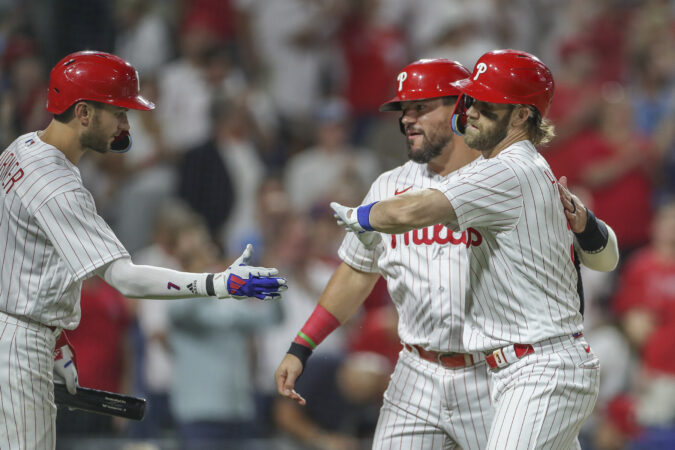
    OK, Thomson isn’t wrong. But two things can be true. The Phillies can change two-thirds of the outfield and half the bullpen and still bring back the guts of a roster that accounted for nearly three-quarters of the team’s plate appearances and almost 70% of its innings pitched last season.

    Does that constitute running it back? Maybe. Maybe not.

    Regardless, it misses the point. Because whether or not you think president of baseball operations Dave Dombrowski made an appropriate number of changes after a second consecutive NL East title and another loss in the divisional round of the playoffs, the pertinent question is this: Are the Phillies better or worse today than when last season ended Oct. 9 at Dodger Stadium?

    The Phillies are replacing Nick Castellanos (right) with Adolis Garcia in right field.

    And on that topic, Thomson was less definitive.

    “I think it’s to be determined,” he told Phillies Extra, The Inquirer’s baseball podcast. “But I feel better about it.”

    It’s a manager’s job to be optimistic — and as importantly, to project optimism to the public, especially in a week when single-game tickets went on sale. Thomson listed reasons to be bullish. He likes the addition of free-agent reliever Brad Keller and suspects new right fielder Adolis García tried too hard to put the injury-wracked Rangers on his broad back last season and is primed to rebound. He also believes Crawford and Painter will bring youthful vigor as rookies with substantial roles.

    But Thomson also acknowledged the twin bummers of losing Ranger Suárez in free agency and Bo Bichette to the Mets after the Phillies thought they had a seven-year, $200 million agreement with him. It wasn’t only the fans who felt dispirited over the Bichette soap opera. Dombrowski said it felt like a “gut punch.” Several members of the front office are still seething.

    It surely didn’t help that the Mets followed their backdoor deal with Bichette by trading for center fielder Luis Robert Jr. and top-of-the-rotation starter Freddy Peralta, the biggest splashes in a roster overhaul that needed to happen after a three-month collapse caused them to miss the playoffs last year. Add it all together, and Fangraphs upped its projection of the Mets’ total WAR to 46.7, third-highest in baseball and better than the Phillies’ 43.9 forecast.

    Whatever, Thomson said. Step back from the last seven days, and he contends the Phillies’ internal outlook remains as bright as the Florida sun that awaits them in a few weeks.
    “There are a lot of really good things going on,” Thomson said. “Because of the Bichette thing, a lot of that stuff gets overlooked a little bit, and I understand that. But we’ve got a really good club. We’ve just got to play better in the playoffs.”

    So much will happen before that. In the interim, let’s attempt to answer whether the Phillies are any better with a cast of characters that is one year older but almost as familiar as ever. A few factors to consider:

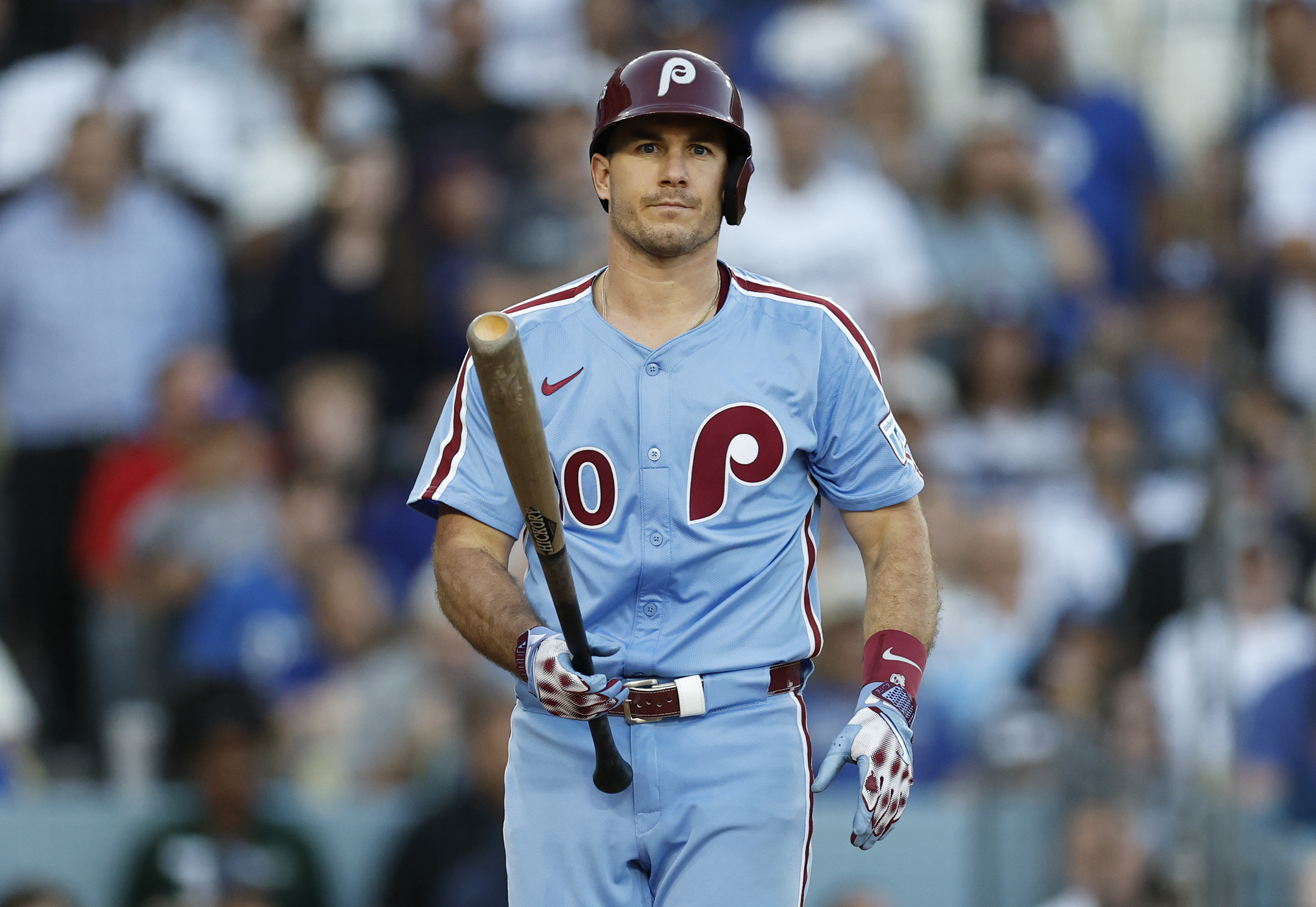
    After a long free agency, J.T. Realmuto finally re-signed with the Phillies on a three-year, $45 million contract.

    Letting go of Bo

    There isn’t much use for the Phillies to cry over the spilled milk of having Bichette slip through their fingers.

    But there’s still milk all over the floor.

    Signing Bichette would’ve set several dominoes in motion, including a likely trade of third baseman Alec Bohm. J.T. Realmuto almost certainly wouldn’t have been re-signed, with the Phillies getting so far down the Bichette road that Dombrowski phoned Realmuto’s agent, Matt Ricatto, to tell him they were headed in that direction.

    “I wouldn’t want him to read about it in the paper,” Dombrowski said.

    Within an hour of Bichette-to-the-Mets, Dombrowski called back Ricatto. The Phillies boosted their three-year offer to Realmuto to $45 million, with $5 million per year in incentives, and the iron-man catcher was right back where he has been since 2019.

    But there was an underlying awkwardness when the Phillies announced their deal with Realmuto in a video news conference. Such occasions are typically celebratory in nature. Instead, Realmuto sounded like a human consolation prize.

    “There’s no secret the Phillies had other opportunities,” he said. “Luckily, after they missed out on an opportunity there at the end, they called back, improved their offer, and got to a place we were happy with.”

    Swell. As long as both sides are really happy.

    The Phillies have developed a band-of-brothers culture over the last several years, especially since Thomson took over as manager in June 2022. Kyle Schwarber is the leader in the clubhouse; Realmuto on the field. There’s a bond here that players have been eager to join.

    But given how much management clearly wanted Bichette, how can anyone be sure that Realmuto, Bohm, and others who may have been collateral damage are in the right frame of mind as spring training begins?

    “It’s a good question,” Thomson said. “I think for the most part, our guys, because we’ve got a pretty experienced club, they understand the business side of it. They understand that things happen and things don’t happen, and they have to keep moving forward and stay focused on what they can control. They’ve been through it quite a bit, free agency, trade rumors. That’s all part of the business.

    “I think they understand that. And now that we’re past that, I think they’re ready to go.”

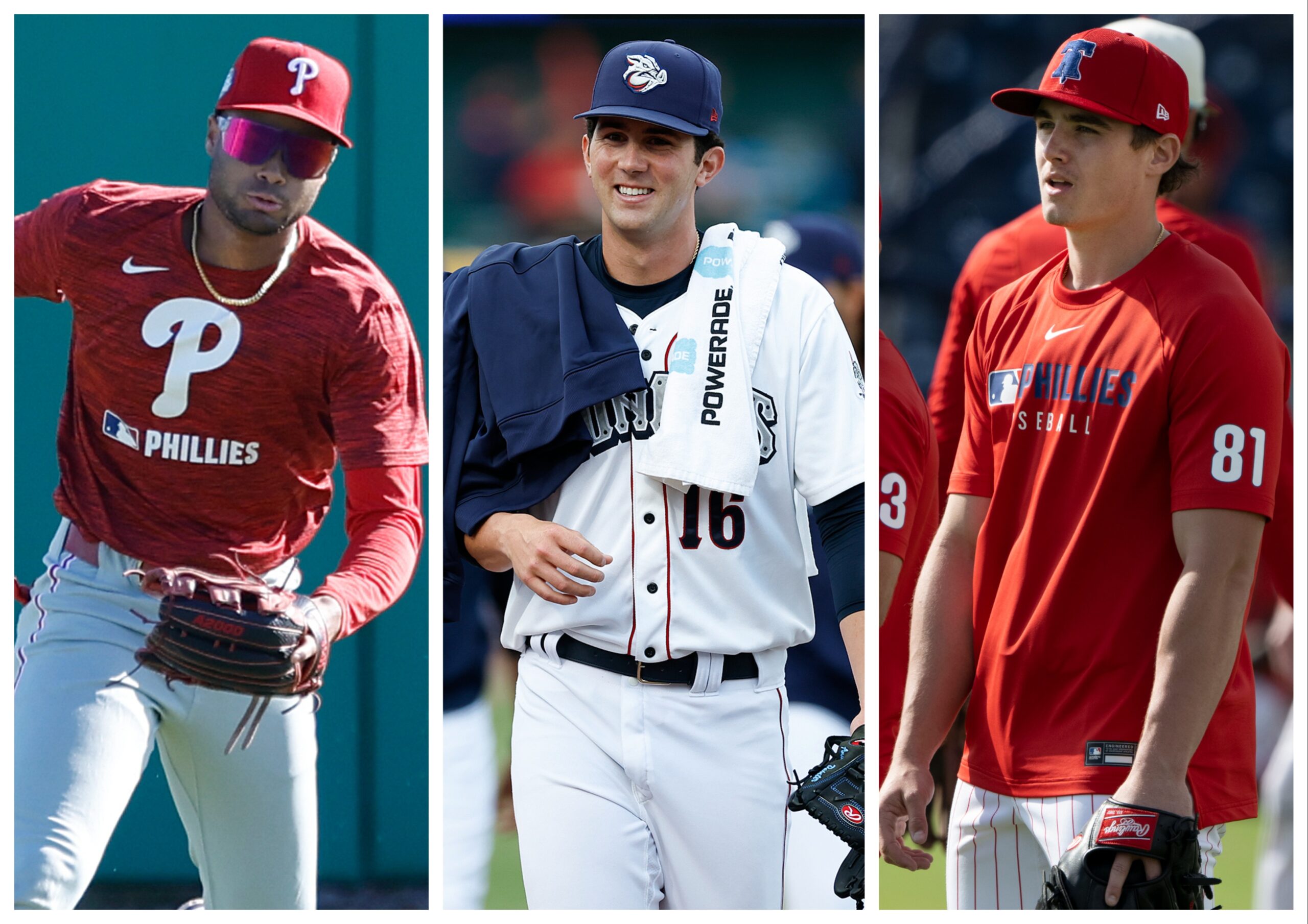
    From left: Prospects Justin Crawford, Andrew Painter, and Aidan Miller should all be in the mix for the Phillies in 2026.

    Generation next

    Other than playing for the Phillies, what do Bryce Harper, Realmuto, Schwarber, Zack Wheeler, and Trea Turner have in common?

    They all came up with another team.

    In making the playoffs four seasons in a row for only the second time in their 143-year history, the Phillies built this core through free agency. Most of those signings worked out well, save Nick Castellanos and Taijuan Walker. Still, the number of long-term, big-money contracts on the books has limited their flexibility.

    If it feels like the Phillies keep running back the same roster, that’s why.

    The only way, then, to really alter the mix is to assimilate young, inexpensive players from the minors. And since 2023, the Phillies have had only 12 players make their major-league debuts — fewer than any team, based on Fangraphs research.

    Crawford and Painter could change that. The Phillies expect Crawford to win the center-field job out of camp at age 22, which would make him their youngest player in an opening-day lineup since Freddy Galvis in 2012. Painter, 23 in April, could claim a spot in the season-opening rotation.

    “If you want to have a really healthy organization,” Thomson said, “I think you have to be able to infuse some youth along the way.”

    Thomson witnessed it firsthand a decade ago.

    In 2016, he was the bench coach for the Yankees, who had the second-highest payroll in baseball and seven players in their 30s who made 240 or more plate appearances. They contended for the playoffs, but fell short with 84 wins. The roster had become stale.

    A year later, the Yankees got younger without rebuilding. Gary Sánchez replaced Brian McCann behind the plate; Luis Severino and Jordan Montgomery emerged as the team’s best starters at age 23 and 24, respectively; a rookie named Aaron Judge took over in right field.

    The Yankees changed the mix on the fly, won 91 games, and went to Game 7 of the AL Championship Series against the trash-can-banging Astros.

    “There were some warts there, no doubt, some growing pains,” Thomson recalled. “But when we turned it over into ‘17, they just took off and ran with it, and it was really good. I think there’s some similarities there.”

    The biggest difference, according to Thomson: Whereas the 2017 Yankees were carried by the kids, the Phillies won’t have to ask theirs to do as much because the stars are still closer to their primes.

    “Our core guys are really good, so if Crawford can come in and just kind of do his thing, don’t put too much pressure on him, he’s going to be fine,” Thomson said. “Same thing with Painter. If Painter’s in our [No.] 5 spot to start the season and he just relaxes and just grows with it, he’s going to be fine.

    “I’m really excited about it. I love young guys. I just love the enthusiasm, the energy that they bring to the team that filters throughout the clubhouse and into those veteran players. And sometimes they need that.”

    The Phillies need it like they need oxygen. You might even say it’s their best chance to be better than last year.

  • A former St. Joe’s walk-on won $1 million picking NFL games while ‘changing diapers’

    A former St. Joe’s walk-on won $1 million picking NFL games while ‘changing diapers’

    Chris Coyne had a chance to win $1 million earlier this month, but that wasn’t enough to get him out of reading his son a bedtime story.

    His friends were coming over the next afternoon to watch the final slate of NFL games as Coyne neared the prize. So his wife said it was his night to make sure one of their two children was sleeping.

    And there was Coyne — a cell phone on his lap so he could follow the Buccaneers-Panthers game on Jan. 3 — reading The Pout-Pout Fish to 2-year-old Charlie.

    “I know it by heart now, so I’m just reading it from memory and watching the phone on mute while I’m telling the story,” said Coyne, who also has an infant son named Harrison. “But I have a million dollars on the line. The Bucs missed a field goal, and I’m like, ‘Ahh.’ I had to grit it.”

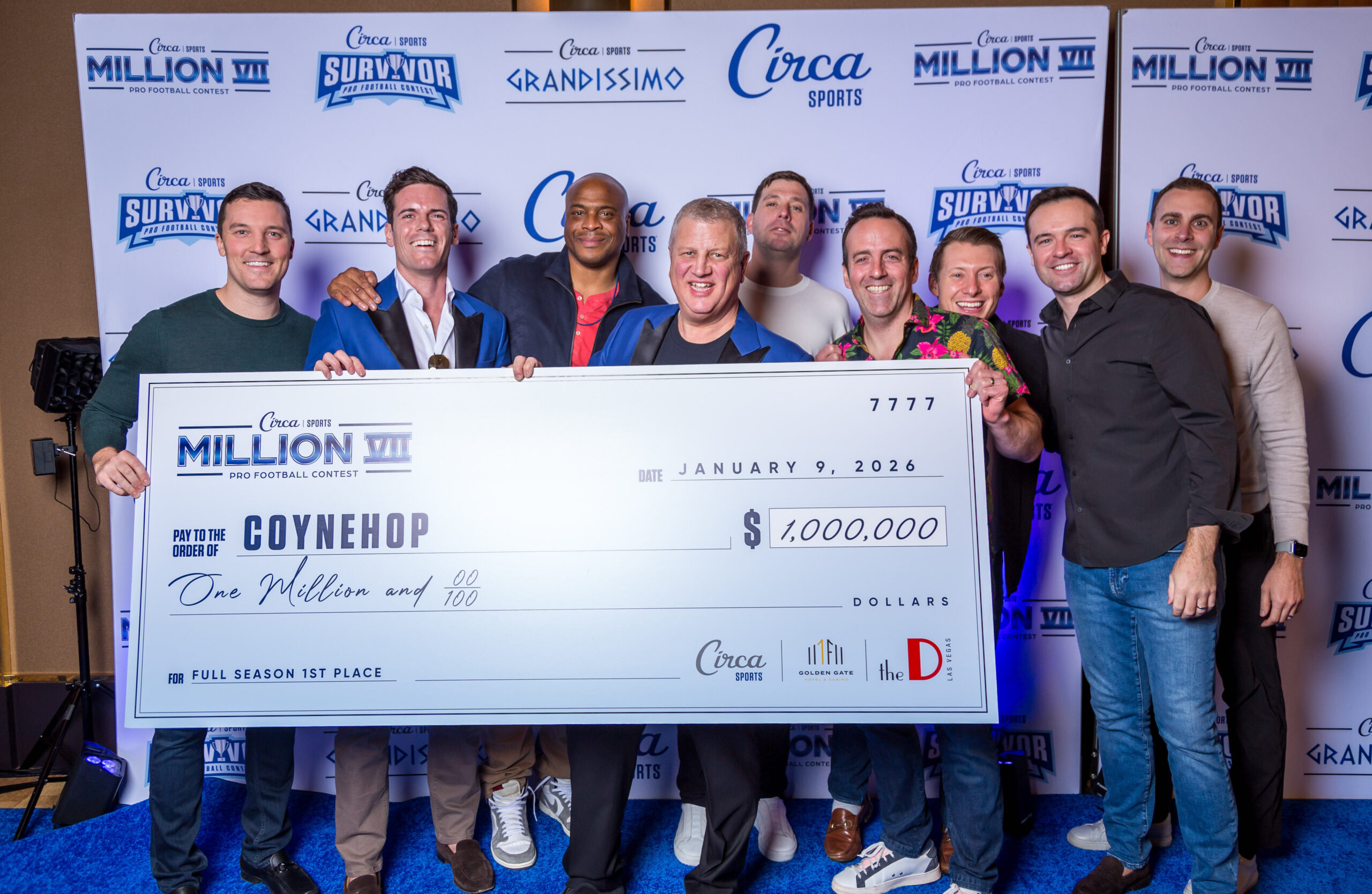
    It was the start of an emotional roller coaster of a weekend that ended with Coyne, a 34-year-old former walk-on for Phil Martelli at St. Joseph’s, winning the $1 million grand prize in a season-long NFL pick ’em contest run by a Las Vegas casino with 6,000 participants.

    He lost a game in September when the Eagles returned a blocked field goal against the Rams, picked up a win in December when the Raiders kicked a meaningless field goal to lose by 7 points instead of 10, and then pouted through that bedtime story as the Buccaneers faded.

    It was a season-long marathon. But it ended with Coyne, who lives in Brooklyn, flying to Las Vegas during the NFL’s wild-card weekend to claim his oversized check and custom blue jacket at the Circa Resort & Casino as the winner of the Circa Million VII.

    “I wasn’t as dedicated to it as many others are,” said Coyne, who was at the playground with his kids when he checked his phone to see how Jordan Davis’ sprint spoiled that game against the Rams on Sept. 21.

    “I joke that there were no models, no Excel spreadsheets. It’s just me changing diapers and making picks.”

    A team photo of the 2012-13 St. Joe’s team with Chris Coyne (first row, third from the left).

    Walk-on Hawk

    Coyne was cut from the St. Joe’s basketball team as a freshman and sophomore but was certain that his junior year in 2011-12 would be different.

    He could have played Division II hoops but came to Philly because his Manhattan high school followed the Jesuit educational model just like St. Joe’s. Coyne played JV ball as a freshman and sophomore for the Hawks and practiced with Martelli’s crew in the offseason.

    He rode his bike home from the gym the night before tryouts and thought it was finally his chance to make the team. Then Coyne hit a curb and flew over his handlebars. His palms were gushing blood and his wrists were banged up.

    “I had no skin on my hands,” Coyne said. “There it goes. There goes the dream.”

    Coyne arrived early to the tryout, hoping that the Hawks athletic trainer could do something. The trainer wrapped Coyne’s hands and sent him on the court.

    “I pretty much looked like a boxer,” he said.

    It worked as Coyne — shooting like coaches always stressed with his fingers and not his palms — seemed to knock down everything. Maybe he should always play like a prizefighter, he thought.

    Martelli called to tell him that his third try was a success: Coyne was a walk-on.

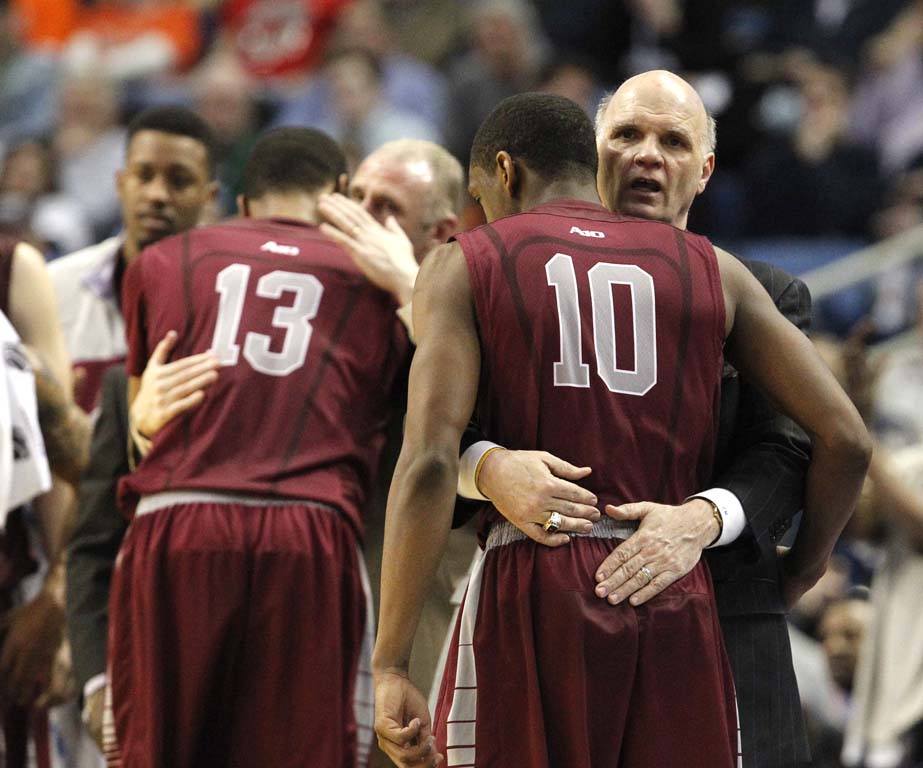
    Chris Coyne played for coach Phil Martelli alongside star Langston Galloway (10) during his time with St. Joe’s.

    “It was my dad’s birthday and I called him to tell him,” Coyne said. “He was the one who pushed me to see this through and not just play at the D-III level. He said, ‘This is your dream. Whether you get one minute in a game or 30 minutes, go see this through.’ I couldn’t thank him enough.”

    He played two years for Martelli, who told the bench players on the “Pinnie Squad” to give it their all in practice against the starters. The reserves were a bunch of guys like Coyne, who could have played elsewhere but stayed on Hawk Hill with Martelli.

    So the future $1 million NFL picker battled every day against Langston Galloway, the future NBA player. Martelli assigned his players to read articles about leadership and teamwork and preached the value of family. It was always more than basketball.

    “I never felt like I was just sitting on the sidelines getting guys water,” Coyne said. “You were in the mix every day, which was really cool.”

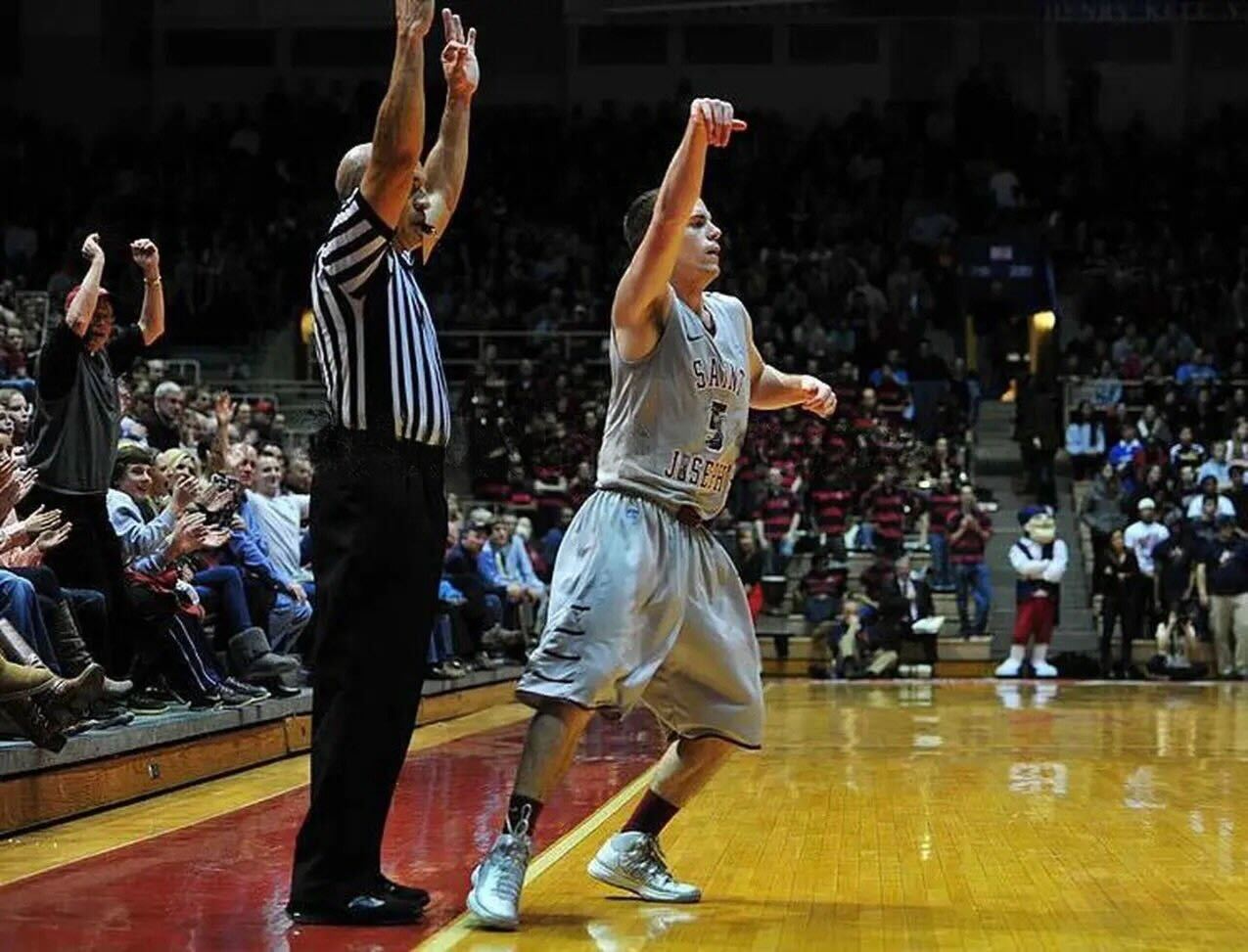
    Coyne played just 12 minutes over eight games during those two seasons. But he did knock down a three-pointer at the Palestra, entering the game late against Penn on ESPN for his first NCAA basket.

    “It’s funny looking back and thinking, ‘Why would you ever be nervous?’” Coyne said. “But you’re just sitting there, you’re cold, there’s 15,000 people in the stands, and he’s going to call your name but you don’t know when it’s coming or if it’s coming. You’re just thrown out there.

    “My parents were there and it was a dream come true. It was years of seeing your dream not play out the way you wanted to and then have that opportunity.”

    Chris Coyne making the first and only three-pointer of his St. Joe’s career in 2013 against Penn at the Palestra.

    Winning it all

    Coyne entered his first football contest in 2019 after his friend Brian Hopkins signed him up during a trip to Vegas. He split that entry with Hopkins, and they met each week at a Manhattan bar after work, scribbling down the five games they liked on napkins.

    The pool has a $1,000 buy-in and requires each entrant to pick five games every week against the point spread. A proxy then places the bets for them in Vegas, as more than half the players live outside Nevada.

    Coyne and Hopkins decided to each enter the next season, and they developed their own strategies. Coyne stays away from Thursday night games as he would have to pick all five games by then instead of waiting until Saturday afternoon. The lines for every game lock on Thursday morning, which sometimes means a line could move before Coyne sends in his picks.

    He didn’t watch a full NFL game until the middle of October because he was usually busy on Sundays with his kids. He read articles during the week and listened to podcasts. Picking games, Coyne learned, is less about breaking down game tape and more similar to the sales job he has on Wall Street.

    “You’re aware of trends,” Coyne said. “When the public A.K.A. retail is buying a lot of stock, that’s never a good sign. Maybe in the short term it works out, but over the long term, you try to find those overreactions in the market where the public really likes a team. Especially if the public loves a team and the line is going against the public.

    “That’s the biggest telltale sign right there. You have to have a process and you have to know what you’re doing, but so much of it is you have to get the breaks sometimes. The breaks went my ways sometimes.”

    That bedtime story would have been a bit less stressful had the Bills converted their two-point try a week earlier against the Eagles, as Coyne would have entered the final weekend with a three-game lead.

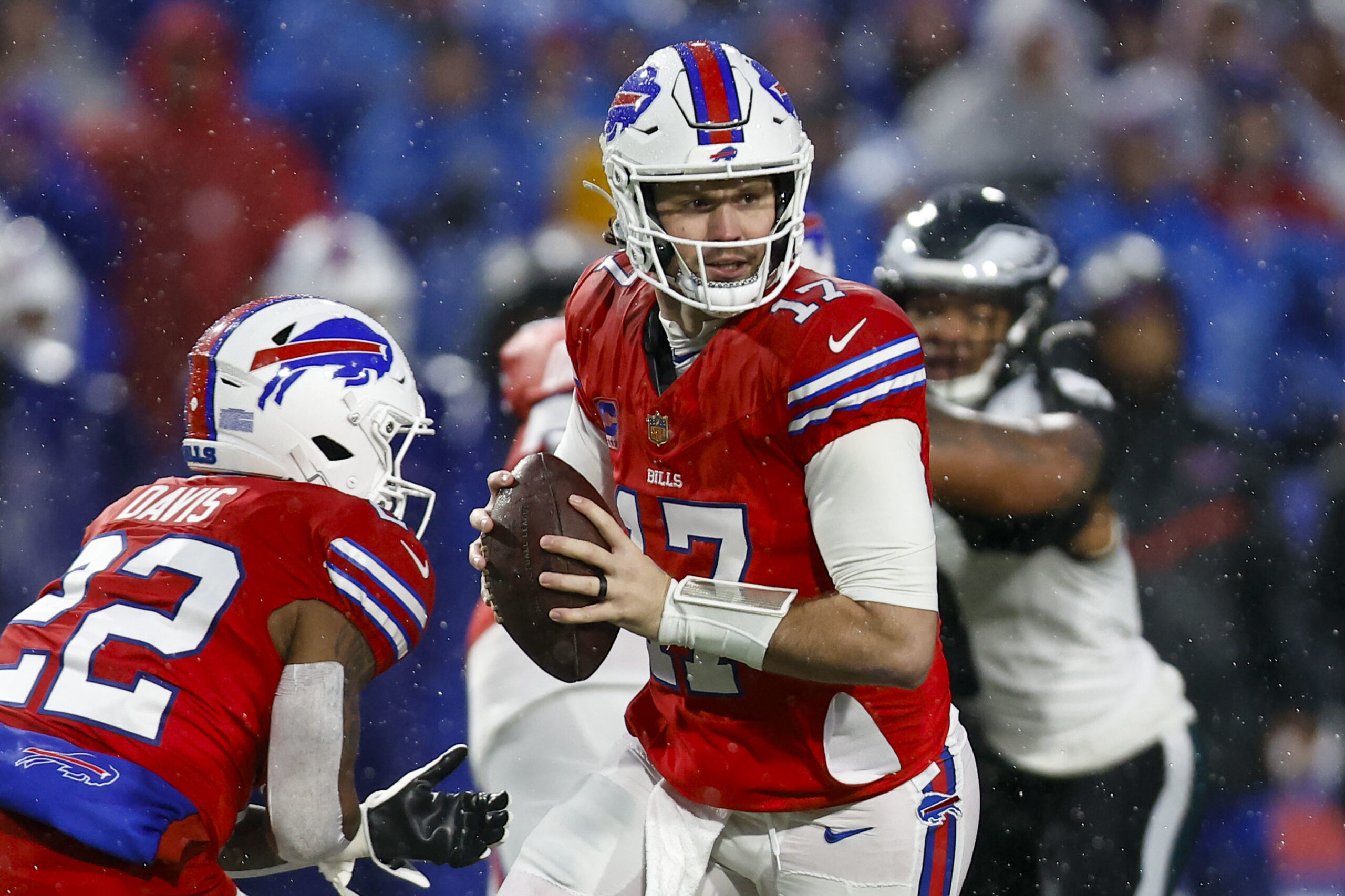
    Josh Allen and the Bills’ inability to execute a two-point conversion against the Eagles on Dec. 28 made Coyne’s road to the $1 million a little more stressful.

    Coyne was in Berwyn for that game visiting the family of his wife, Maddy, which was rooting for the Birds despite knowing Coyne was in the hunt for big money.

    “I’m devastated and I’m like, ‘Can’t you for one week just be on my side?” he said “But Eagles trump all in that household.”

    He instead had to sweat it out. He won Saturday night with the 49ers after the Buccaneers lost and then won Sunday with the Giants but lost with the Titans and Dolphins. Coyne said he tends to pick bad teams since he’s often going against the popular choices.

    The Steelers won on Sunday night, pushing the second-place entry even with Coyne. He thought they would then split the first and second prizes ($750,000 each) and went to bed disappointed.

    “It was a long couple of weeks and I was football fatigued,” Coyne said. “I’m all [ticked] off. But I couldn’t complain. It was still $750,000 and it was a great season, but I didn’t know if I was getting the blue jacket. That’s what I really wanted. It’s like the Masters green.”

    Coyne woke up at 5 a.m., checked his phone, and saw he finished in first place on a tiebreaker, because he had more winning weeks than the other entry. The $1 million prize was his. The blue jacket was, too.

    Chris Coyne (second from the left) with his friends in Vegas on Jan. 9 after he won the $1 million prize.

    Coyne flew to Vegas that weekend with his friends, received his prize, spent 30 hours at the resort, and didn’t take his blue jacket off until he got home.

    It was perfect, like a walk-on hitting a three-pointer at the Palestra with his parents in the crowd.

    “I spent all of November and December saying, ‘How am I going to screw this up?’” said Coyne, who finished 60-29-1 over 18 weeks. “But somehow I came out on top. It was the weekend of a lifetime.”

  • The Flyers will be irrelevant as long as they lack a No. 1 center. A trade for Robert Thomas could change that.

    The Flyers will be irrelevant as long as they lack a No. 1 center. A trade for Robert Thomas could change that.

    The Flyers are leaking oil.

    Losers of seven of their last eight games, Rick Tocchet’s men, who have resided in a playoff spot for most of the season, are in free fall and now sit three points out of both the final spot in the Metropolitan Division and the wild card.

    With injuries piling up, the latest suffered by indispensable goaltender Dan Vladař, and a condensed schedule, the Flyers are in real danger of falling out of the postseason race before the March 6 trade deadline.

    The recent slide has also made painfully obvious what many already knew: The Flyers aren’t nearly as close to contending as they think they are.

    Why?

    For all their improvement and the savvy acquisitions of Trevor Zegras, Christian Dvorak, and Vladař, the Flyers have yet to acquire maybe the most important ingredient to any contending hockey team: a No. 1 center.

    To make matters worse, they don’t look to have a prospective solution to that problem in their farm system, as Jett Luchanko, Jack Nesbitt, and Jack Berglund all project to top out as middle-sixers.

    Florida had Aleksander Barkov. Vegas had Jack Eichel. Colorado had Nathan MacKinnon. Tampa Bay had Brayden Point. The Flyers have … Christian Dvorak? That’s not to say the Flyers are simply a 1C away from doing laps around the ice with a 35-pound silver bowl over their heads, but until they find one, everything else they do is more or less a futile exercise.

    That brings us to Robert Thomas, a bona fide top-20 center who some around the league believe could be pried away from St. Louis — he is listed on both the Athletic and Daily Faceoff’s most recent trade boards — for the right price. Thomas, who turns 27 in July, is one of the league’s top playmakers and has tallied 80-plus points in each of the last two seasons.

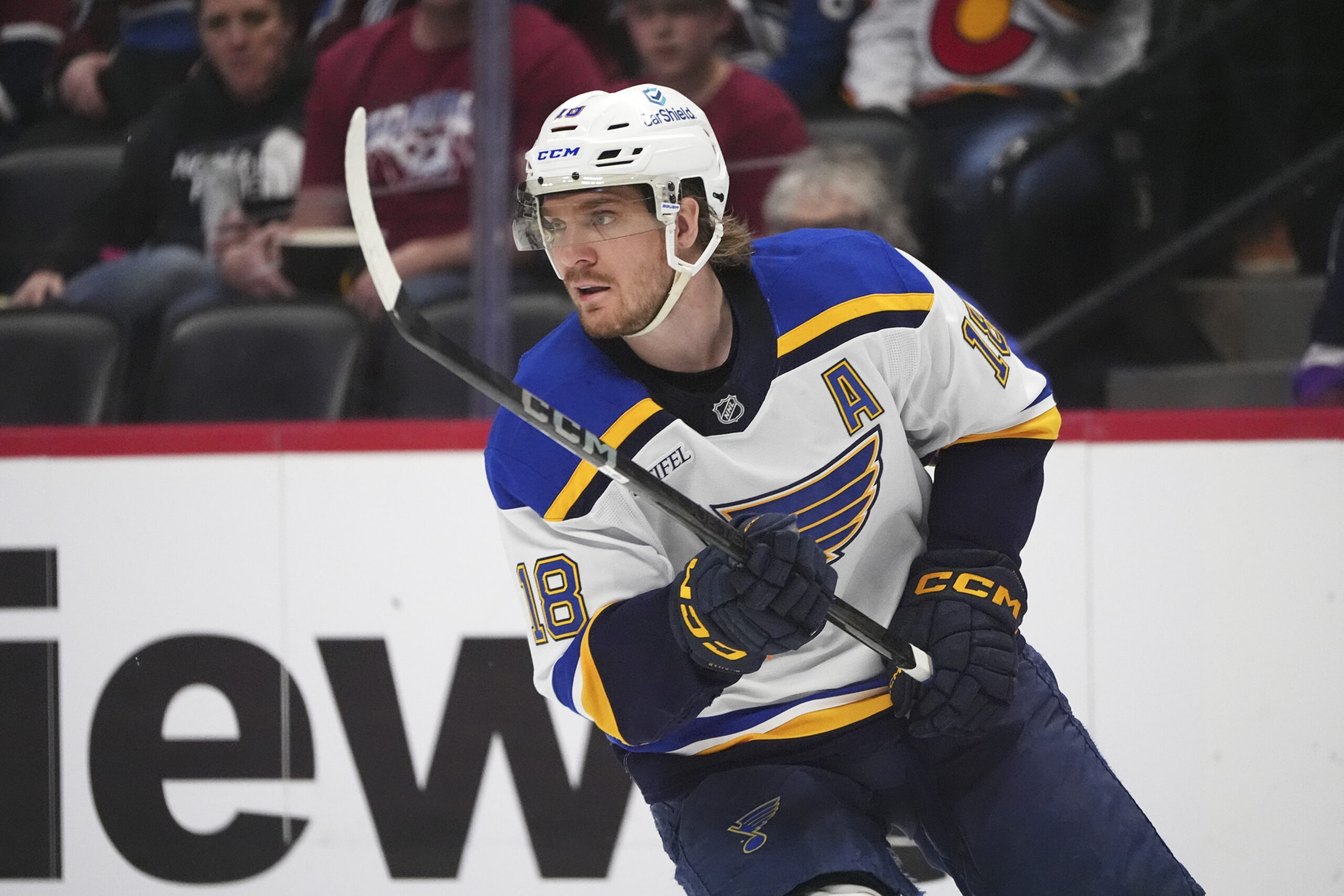
    There’s a lot of speculation that the St. Louis Blues will listen to offers for talented center Robert Thomas.

    In addition to his tremendous vision, he’s a sturdy 207 pounds, possesses above-average speed, wins faceoffs (53.4% since 2022-23), and plays a responsible 200-foot game — a trait the Flyers clearly prioritize in their centermen.

    In other words, he’s exactly what the Flyers need.

    Did I mention he’s already won a Stanley Cup and is signed for five more seasons after this one at a below-market average annual value of $8.125 million?

    So is Thomas actually available? That depends on whom you ask, but with the Blues tied for the league’s second-fewest points, it would be surprising if general manager Doug Armstrong wasn’t at least listening on pretty much everybody.

    Armstrong all but confirmed that in December when he said, “There’s really no untouchables — not [just] on the St. Louis Blues, [but] there’s really few untouchables in the league. There’s a lot of other guys that, when things aren’t going well, I would say that [trade] list grows.”

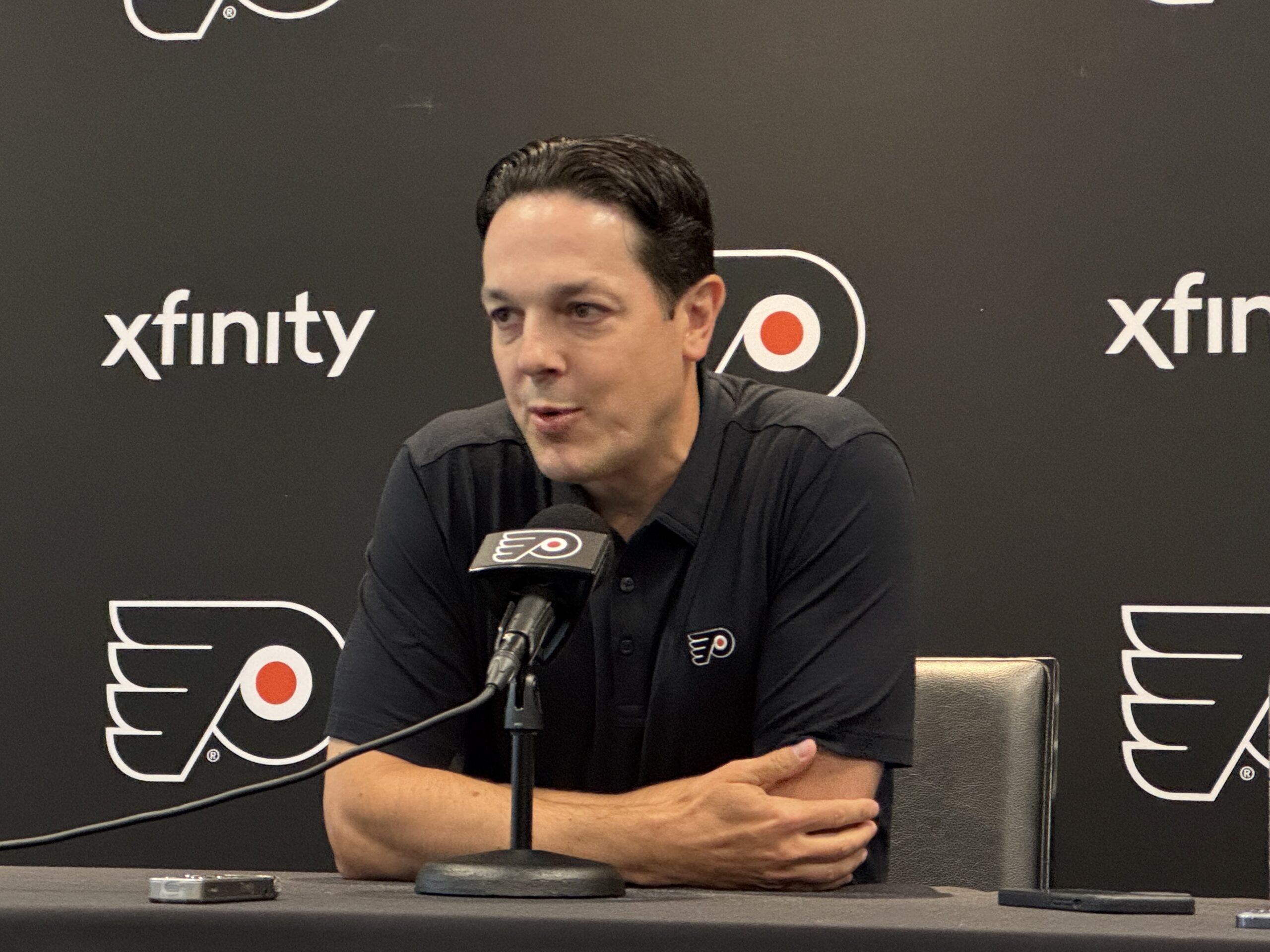
    Danny Brière and Armstrong are no strangers, as the two did a deal in 2023 involving Kevin Hayes, and infamously had another deal centered on Travis Sanheim nixed at the 11th hour. So with a gaping hole down the middle and armed with a deep prospect pool and three first-round picks over the next two drafts, why wouldn’t Brière blow Armstrong away with a deal he can’t refuse?

    Flyers general manager Danny Briere has acknowledged the team’s need to upgrade down the middle. Could Robert Thomas be the answer?

    Assuming that Porter Martone, Matvei Michkov, and potentially Tyson Foerster are off the table, any deal will start with at least one first-round pick in 2026 or 2027, a center prospect, and a combination of one or two more picks, prospects, or young roster players.

    The Blues would have their pick of Luchanko and Nesbitt and would likely covet another first-rounder in a 2026 draft — the Flyers would likely prefer to trade a 2027 first since they have two of them — that features three blue-chip prospects in Gavin McKenna, Ivar Stenberg, and Keaton Verhoeff.

    It’s worth mentioning that Stenberg’s brother Otto plays for the Blues, and with a closely-contested East and the Flyers’ precarious position at present, St. Louis might gamble that the Flyers’ draft pick would land them a second selection inside the top 10.

    St. Louis also is likely to ask for a youngish defenseman to go the other way, which would mean Cam York, Jamie Drysdale, Oliver Bonk, or Emil Andrae.

    The Flyers would likely balk at moving York, a key part of their blue line who just signed a five-year extension, while the 23-year-old Drysdale’s value has decreased, not to mention that he’s a restricted free agent at season’s end and would require a new deal. That leaves Bonk and Andrae as the most realistic targets, with the former, a first-rounder in 2023, having the higher upside.

    Rounding out the deal would be another draft pick — let’s say a second — or a prospect or young roster player. Would the Blues have interest in Bobby Brink or Nikita Grebenkin as cheap wingers who can play up and down the lineup and have some untapped potential? St. Louis native Shane Vansaghi, a bruising second-rounder from this past June’s draft with a unique skill set, is another player who might intrigue Armstrong.

    Flyers defensive prospect Oliver Bonk could be an intriguing player to the rebuilding St. Louis Blues.

    The Flyers are in a tough spot, as they need a No. 1 center and are unlikely to have a pick high enough to draft one — 19 of the 27 players I’d characterize as No. 1 centers were top-10 picks, with 15 of them selected in the top three — and there are none available this summer in free agency.

    That leaves a trade as the likeliest path, and even those options are largely limited to guys either on the wrong side of 30 or younger, distressed assets looking to rediscover their 1C potential à la Seattle’s Shane Wright.

    Thomas represents something different entirely. He’s a proven commodity who not only fits the right age profile but has 5½ years of control. His high-danger passing would also be a tantalizing proposition alongside exciting wingers like Zegras, Michkov, Martone, Foerster, and Travis Konecny. If you have to overpay for someone like that, so be it.

    Would a 2026 or 2027 first-rounder, Luchanko, Bonk, and Brink get a deal done? And is that too much for Thomas, who is having a down year with 11 goals and 33 points in 42 games?

    The Flyers need to get uncomfortable and take some risks if they are going to address the organization’s biggest need. Until they do, they will be stuck in NHL purgatory, the worst place an organization can be.

  • Mets take aim at Phillies with Freddy Peralta and Bo Bichette, but let’s not get ahead of ourselves

    Mets take aim at Phillies with Freddy Peralta and Bo Bichette, but let’s not get ahead of ourselves

    Well, it finally happened.

    The Mets made a move that makes sense.

    Freddy Peralta is the kind of acquisition who can change expectations in a hurry. The Phillies know it as well as anybody. They’ve scored three runs in four starts against Peralta since 2022. Bryce Harper, Kyle Schwarber, and Trea Turner are a combined 2-for-26 with 10 strikeouts against the veteran right-hander in that four-year stretch. They’ll go from facing him once or twice a year to potentially three or four times now that the Mets have shipped a couple of top-100 prospects to the Brewers in exchange for the 29-year-old Peralta, who had a 17-6 record last season, with a 2.70 ERA and 204 strikeouts in 176⅔ innings.

    Wednesday’s trade is the second straight salvo the Mets have fired in the Phillies’ direction. The first was a gut-punch in the form of a three-year, $126 million contract signed by Bo Bichette. The Phillies thought they were about to land the former Blue Jays star on a seven-year, $200 million deal. Instead, the Mets unveiled their unique and devastating spin on the notion of addition by subtraction. Needless to say, it has been a rough week for the Phillies’ NL East odds.

    But let’s not go overboard here. While Major League Baseball doesn’t hand out trophies for sensibility, it also doesn’t hang banners for offseason champs. Offseasons are pretty much the only thing the Mets have won in the 40 years since the ’86 Amazin’s did their thing. They are going to need a lot of things to break right for that to change this year.

    It should be almost impossible for a team to enter spring training with a projected $360-plus million payroll and Jorge Polanco batting cleanup. Yet that’s exactly where the Mets find themselves with three weeks to go before pitchers and catchers report. The Mets can argue all they want that Polanco is a much better value on a two-year, $40 million deal than Pete Alonso would have been on the five-year, $155 million deal that he signed with the Orioles. But Alonso has hit 72 home runs over the last two years, while Polanco has hit 72 over the last four.

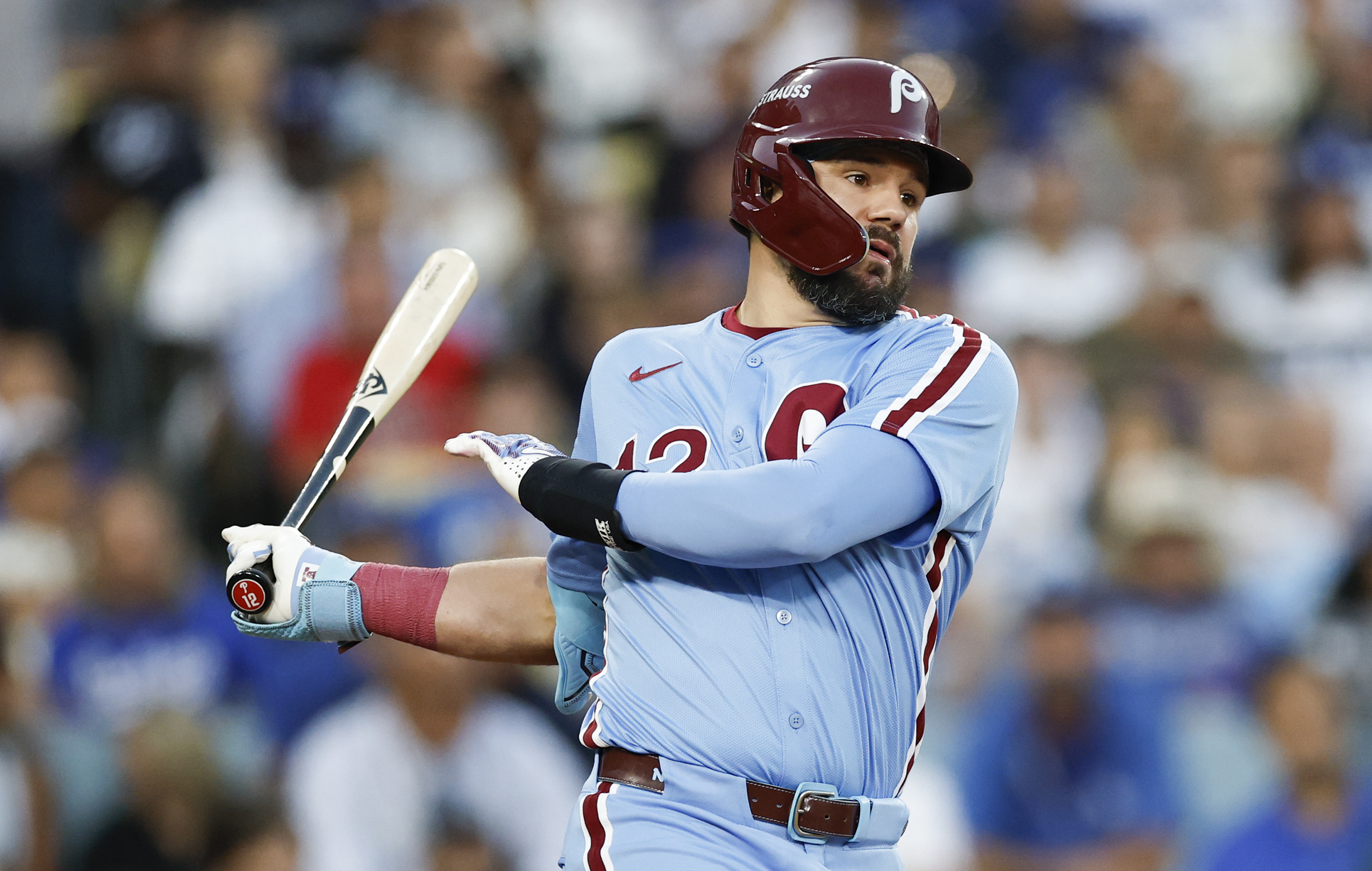
    Kyle Schwarber is one of several Phillies who have not fared well against Mets pitcher Freddy Peralta.

    And what about the five-hole? Right now, you’d probably pencil in Marcus Semien there. Which would be great, if “right now” was 2023. But Semien has looked nothing like the guy who finished third in MVP voting for the Rangers during their World Series campaign. In 2024 and 2025, the 35-year-old infielder slashed .234/.307/.379 for a .686 OPS that was almost exactly league average. Semien, whom the Mets acquired from Texas in a trade, is making $26 million this year.

    Luis Robert Jr. could work his way up in the lineup if he hits like he did over his last 35 games last season (.819 OPS, six home runs, 140 plate appearances). Or, he could be a $20 million eight-hole hitter if he hits like he did over the last two seasons overall (.660 OPS, 28 home runs, 856 plate appearances).

    There’s no question the Mets have succeeded in building themselves a different lineup. Francisco Lindor and Juan Soto are the only name-brand holdovers from a year ago. Brett Baty figures to start at designated hitter after the former top prospect rescued his career with a .311./.372/.500 batting line and seven home runs in his last 42 games. Mark Vientos can only hope to factor into the equation after a season in which he failed miserably to follow up on his 2024 breakout. Again, there are things that can break right. But a team’s win total usually has a negative correlation with the number of “ifs” it brings to spring training. And that likely would have been the case with the Mets, until Wednesday.

    In Peralta and second-year sensation Nolan McLean, the Mets will have the kind of 1-2 punch atop their rotation that can carry a questionable lineup a long way. In two starts last year, McLean held the Phillies to one run and 14 base runners in 13⅓ innings with 11 strikeouts. Combine his numbers with Peralta’s against Schwarber-Harper-Turner and you get 3-for-40 with 14 strikeouts. If Sean Manaea can get back to his 2024 form (3.47 ERA in 181⅔ innings) and Kodai Senga can stay healthy, the Mets could be a big problem for opposing lineups. And that’s assuming they don’t make another late splash (Framber Valdez, for instance).

    But, then, there’s that pesky little word again. The Mets may yet salvage their offseason and move the needle in a more decisive manner. For now, Phillies fans shouldn’t be too hard on Dave Dombrowski’s roster. It’s still better than the Mets, for about 80% of the price.

  • One year of inspections at Chester County Hospital: December 2024 – November 2025

    One year of inspections at Chester County Hospital: December 2024 – November 2025

    Pennsylvania’s Department of Health did not cite Chester County Hospital for any safety violations between December 2024 and November of last year.

    The West Chester-based hospital is part of Penn Medicine.

    Here’s a look at the publicly available details:

    • Feb. 6, 2025: Inspectors came to investigate a complaint but found the hospital was in compliance. Complaint details are not made public when inspectors determine it was unfounded.
    • May 5: Inspectors visited for a special monitoring survey and found the hospital was in compliance.
    • July 25: Inspectors came to investigate a complaint but found the hospital was in compliance.
  • Penn’s medical school received an $8 million gift to redesign the way it trains doctors

    Penn’s medical school received an $8 million gift to redesign the way it trains doctors

    The University of Pennsylvania has received an $8 million gift to redesign how it trains doctors at the Perelman School of Medicine, Penn officials announced Thursday.

    Incorporating technology, AI, and data to create customized learning pathways for Penn medical students is an overarching goal. The effort comes at a time when increasingly easy access to medical information and changes in care delivery are leading medical schools nationwide to revamp their curricula.

    The gift to Penn is from New York-based RTW Foundation, a philanthropy associated with the life sciences investment firm founded by Perelman School graduate and Penn Medicine board member Rod Wong. Penn said the gift from Wong, and his wife, Marti Speranza Wong, is the largest single donation to support curriculum innovation at the medical school, which dates back to 1765.

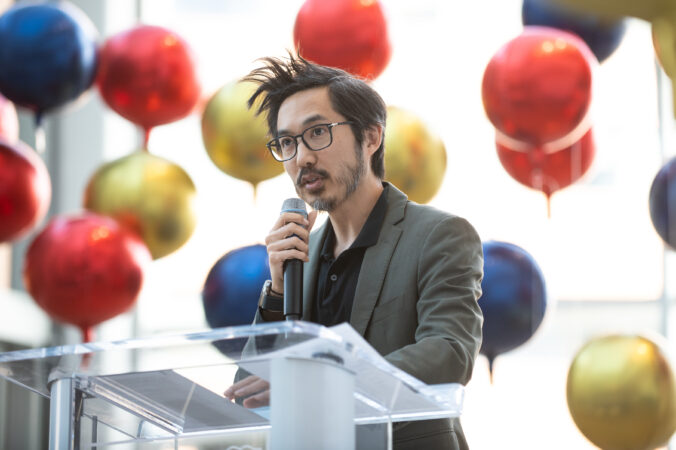
    At a news conference announcing his donation Thursday, Wong recalled his time at the medical school right after its last major overhaul of the curriculum in 1998. One update under Penn’s “Curriculum 2000” revamp was recording and making lectures available online — a relatively innovative move at the time (YouTube wouldn’t be created for another several years).

    “Technology has changed, and obviously we’re at this same inflection point because of AI and data science,” said Wong, who is managing partner and chief investment officer at RTW Investments LP.

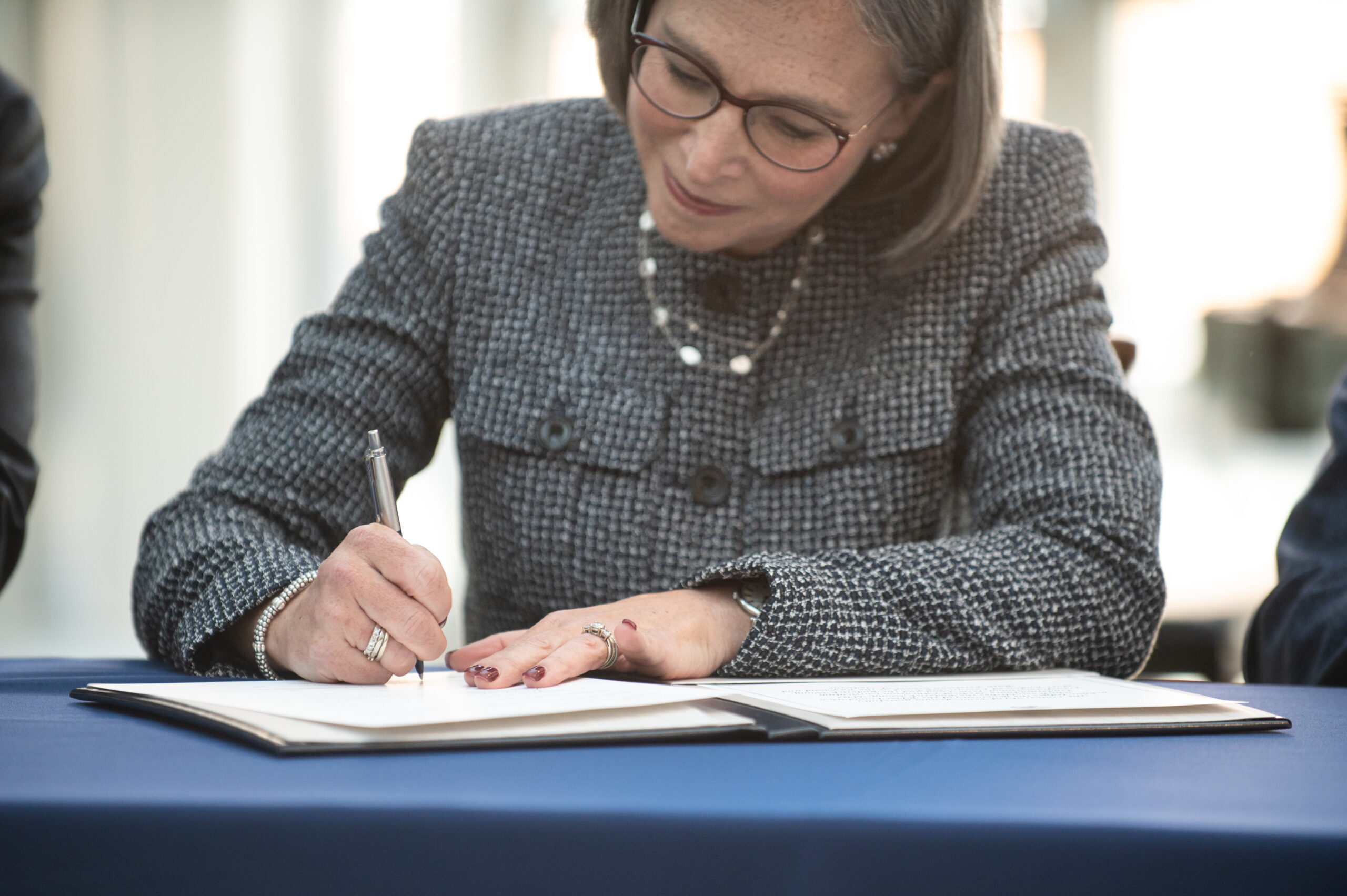
    Penn alumnus Rod Wong (center) sits with dean of Perelman School of Medicine Jonathan A. Epstein (left) after signing the gift agreement.

    The vast majority of the $8 million gift will go toward hiring data scientists and engineers, supporting faculty, and building and acquiring the platforms needed to deliver the new curriculum.

    Technology will be incorporated into new training techniques, such as by using augmented or virtual reality to assist in learning anatomy, developing knowledge needed to diagnose illnesses and develop treatment plans, and mastering clinical skills such as IV placement and suturing.

    For example, students can practice taking a person’s medical history or doing a physical exam on a virtual patient, while an AI agent is there to give feedback in real time.

    “It’s really adaptive to the individual learner, but you do it at your own pace, on your own time,” said Lisa Bellini, executive vice dean of the medical school and a leader on the project.

    The redesign will take place over the next three years as school leaders consult with stakeholders and work on building the platform.

    Some of Wong’s gift will be used to create a biannual endowed lecture in business and entrepreneurship that will bring leaders in medicine and healthcare innovation to campus. The gift will also establish the Roderick Wong Entrepreneurship Pathway, which will provide mentorship, workshops, and project-based learning to students with business interests.

    “We really need to incorporate the fundamentals of how best to use technology responsibly within the practice of medicine and create something incredibly enduring, because you’re not going to go through this exercise every three years,” Bellini said.

    The Perelman School of Medicine is embarking on its curriculum revamp at a time when medical education is evolving at many schools.

    Some medical schools have concentrated the traditional two years spent learning science into one year to give students more time to learn how to interact with patients and collaborate with other medical professionals.

    A three-year medical school option is offered at institutions such as the Pennsylvania State University College of Medicine to speed doctors into the clinic and reduce students’ debt loads.

    Jennifer Kogan, vice dean for undergraduate medical education at the Perelman School of Medicine, is a leader in the curriculum revamp.

    Faster, flexible learning

    Like most medical schools, Perelman has a standard curriculum where students take foundational science courses for a stretch of time and then transition to the hospital to gain clinical experience.

    This can lead to some students repeating courses that they already mastered in college.

    “If you were a biochemistry major as an undergrad, do you really have to take biochemistry again?” said Jennifer Kogan, vice dean of undergraduate medical education and a leader on the redesign project. “How could you better use that time to achieve whatever your career goals are?”

    Leaders at Penn want to give students the flexibility to adjust their timelines based on their skill sets and goals.

    Instead of setting a fixed time for how long a class or rotation will take, a student who masters a skill more quickly should be able to move on and devote their time to other interests, such as research or entrepreneurship.

    Many students at Penn pursue dual degrees or research fellowships that end up adding a fifth year of medical school. Penn leaders hope adding flexibility to the curriculum could enable students to instead finish in four years or “maybe even three,” Kogan said. (The possibility of a three-year path is not yet guaranteed but will be explored.)

    “It will be better set up to support students like me who have had to use significant federal loans to finance their way through medical school and might have benefited from the condensed training timeline,” said Alex Nisbet, a fourth-year medical student at Perelman who spoke at the signing event.

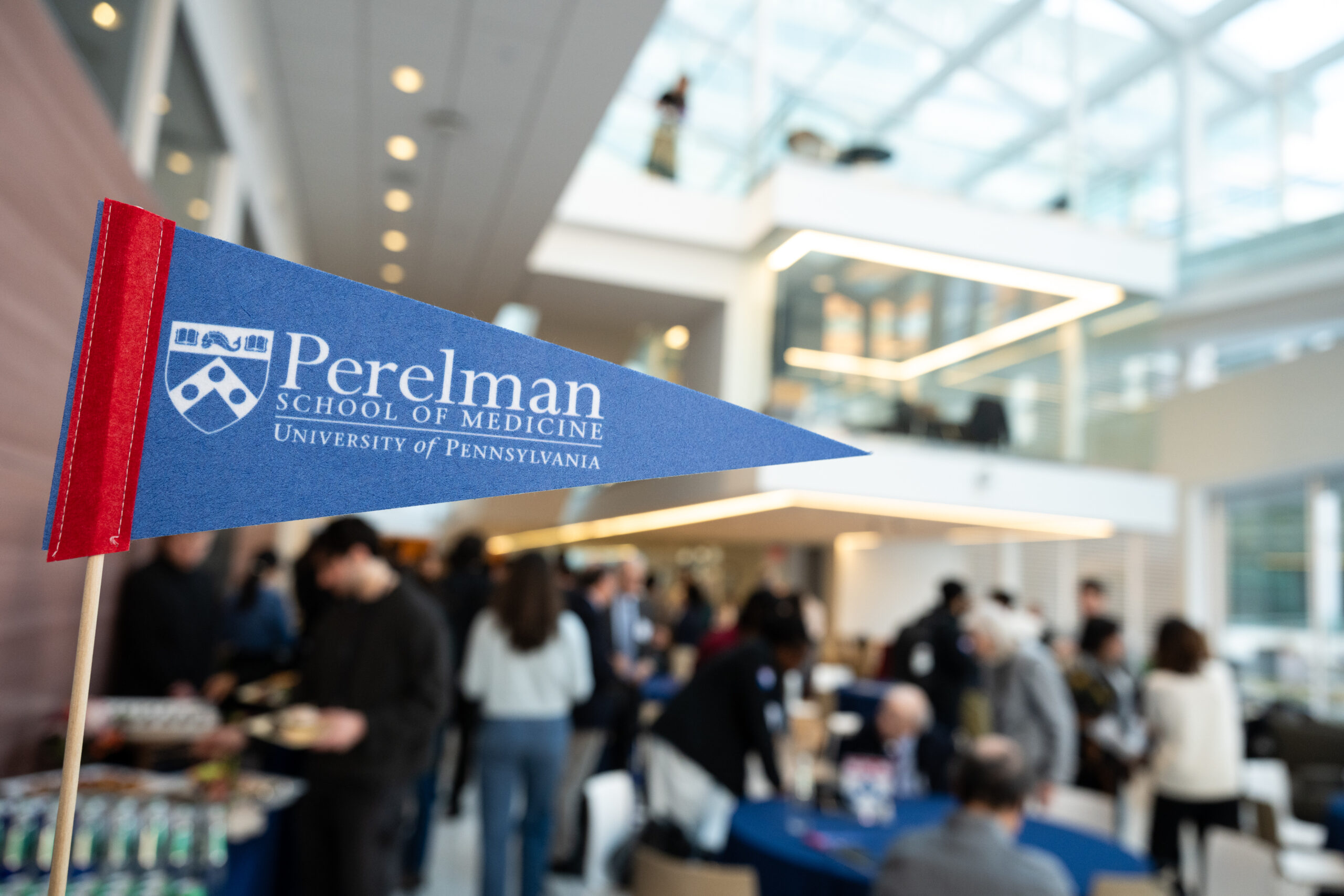
    An attendee holds a pennant flag representing the Perelman School of Medicine.

    The school will leverage data and AI to assess how individual students are progressing in what they’re calling a “precision education model.”

    Though parts of the program will be piloted over the next three years, the first class to see the full implementation of the curriculum will be in the fall of 2029.

  • Five Penn State hockey players made history  — and gained fans — at Switzerland’s Spengler Cup

    Five Penn State hockey players made history — and gained fans — at Switzerland’s Spengler Cup

    STATE COLLEGE, Pa. — Imagine filling a roster with 25 of the best Division I hockey players. It almost sounds daunting.

    That was the task assigned to Penn State head coach Guy Gadowsky, who assumed the same position for the United States Collegiate Selects during their inaugural campaign at the 2025 Spengler Cup.

    The Spengler Cup, which began in 1923 and is considered the world’s oldest invitational ice hockey tournament, features six club and national teams from around the world. It was played this year from Dec. 26-31 in Davos, Switzerland, and is annually hosted by local pro team HC Davos.

    “The entire experience was tremendous,” Gadowsky said. “Everybody was curious about how we were going to do. Most [people] thought that we weren’t going to win a game. And the way the team played, the locals in Switzerland really got behind them, and you started to hear ‘USA’ chants when we walked down the street, went to a restaurant, walked into the arena.”

    The coach wasn’t exaggerating. As the lone collegiate squad among four professional teams and a fifth composed of Canadian pros, the U.S. Selects were massive underdogs, expected to participate and nothing more.

    After an opening-game 3-2 loss to Canada and Flyers farmhand Anthony Richard, those lowly expectations remained. That is, until the U.S. Selects stunned host HC Davos, 5-3, on Dec. 27 in a result that showcased college hockey’s growing talent. HC Davos, which leads Switzerland’s top league, featured several former NHLers, including Filip Zadina, Rasmus Asplund, and former Flyer Brendan Lemieux.

    “What we learned is that college hockey is really good,” Gadowsky said. “You’re playing some of the best professional teams in Europe, with 1,000-plus NHL games on their roster. And our guys played with them tooth-and-nail.”

    The coach wasn’t the only Penn Stater in Davos. Five Nittany Lions skaters — Aiden Fink, Charlie Cerrato, JJ Wiebusch, Matt DiMarsico, and Guy’s son, Mac Gadowsky — joined their coach at the Spengler Cup. The roster also had a local flair with Flyers prospect Cole Knuble (Notre Dame), Sewell’s Chris Pelosi (Quinipiac), and Philadelphia’s Vinny Borgesi (Northeastern) all making the team.

    Fink and Mac Gadowsky received automatic invitations because they earned All-American honors last season. Guy Gadowsky said he selected the other three, labeled the “behind-the-back boys” for their skilled passing while playing on the same line at Penn State, because when rosters were due in November, they were three of the top six goal scorers in Division I.

    Penn State coach Guy Gadowsky led the U.S. Collegiate Selects to two wins over European pro teams last month in Switzerland.

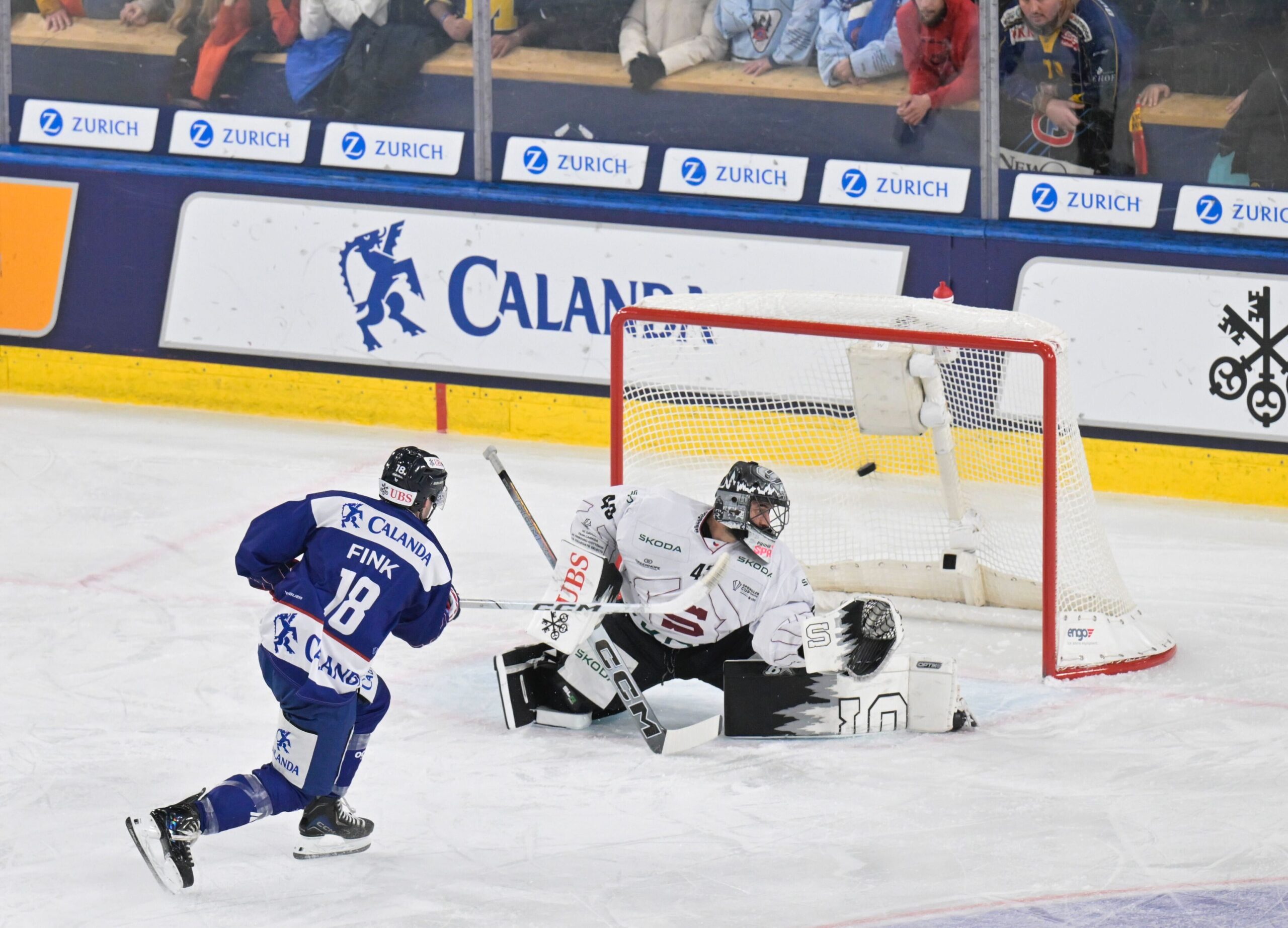
    Fink, a Nashville Predators draft pick who recently became the fastest Nittany Lion to reach 100 career points, led the U.S. Selects with four goals in Switzerland. His eight points led the entire tournament and earned him recognition on the 97th Spengler Cup All-Star team.

    “The experience I had [in Davos] was unforgettable,” said Fink, who tallied two points in the U.S. Selects’ victory over HC Davos. “It was my first experience [in Europe], and it was beautiful. The hockey was great.”

    After dropping their first contest, the U.S. Selects rattled off consecutive wins over professional squads. Their second victory was a 5-3 win in the semifinals over HC Sparta Prague, a team in seventh place in the Czech Republic’s top professional league.

    The underdogs had conquered two giants. And the Davos locals noticed and rallied behind the 25 college kids as they earned a spot in the tournament’s championship game.

    “You’d be walking down the street, and every person would stop you to try to get pictures,” Fink said. “All our merchandise was sold out. [The Davos locals] were super nice to us. It was pretty cool seeing that.”

    Knuble, who faced off against Fink last weekend when Notre Dame visited State College for a Big Ten series, skated alongside the Predators prospect with the U.S. Selects.

    The 5-foot-10 forward lauded the local support and labeled the event “a hockey party,” one he said he will remember for the rest of his life.

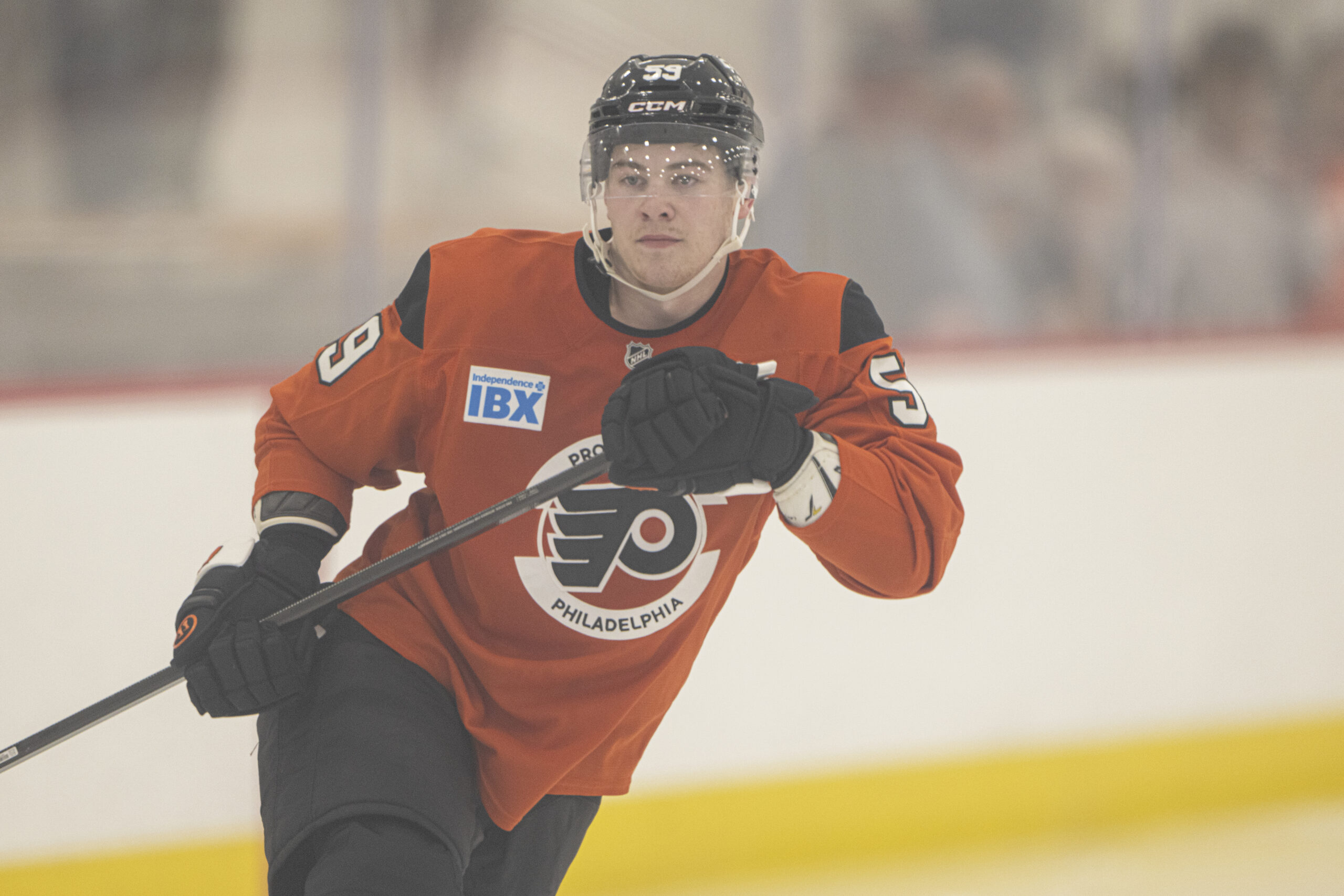
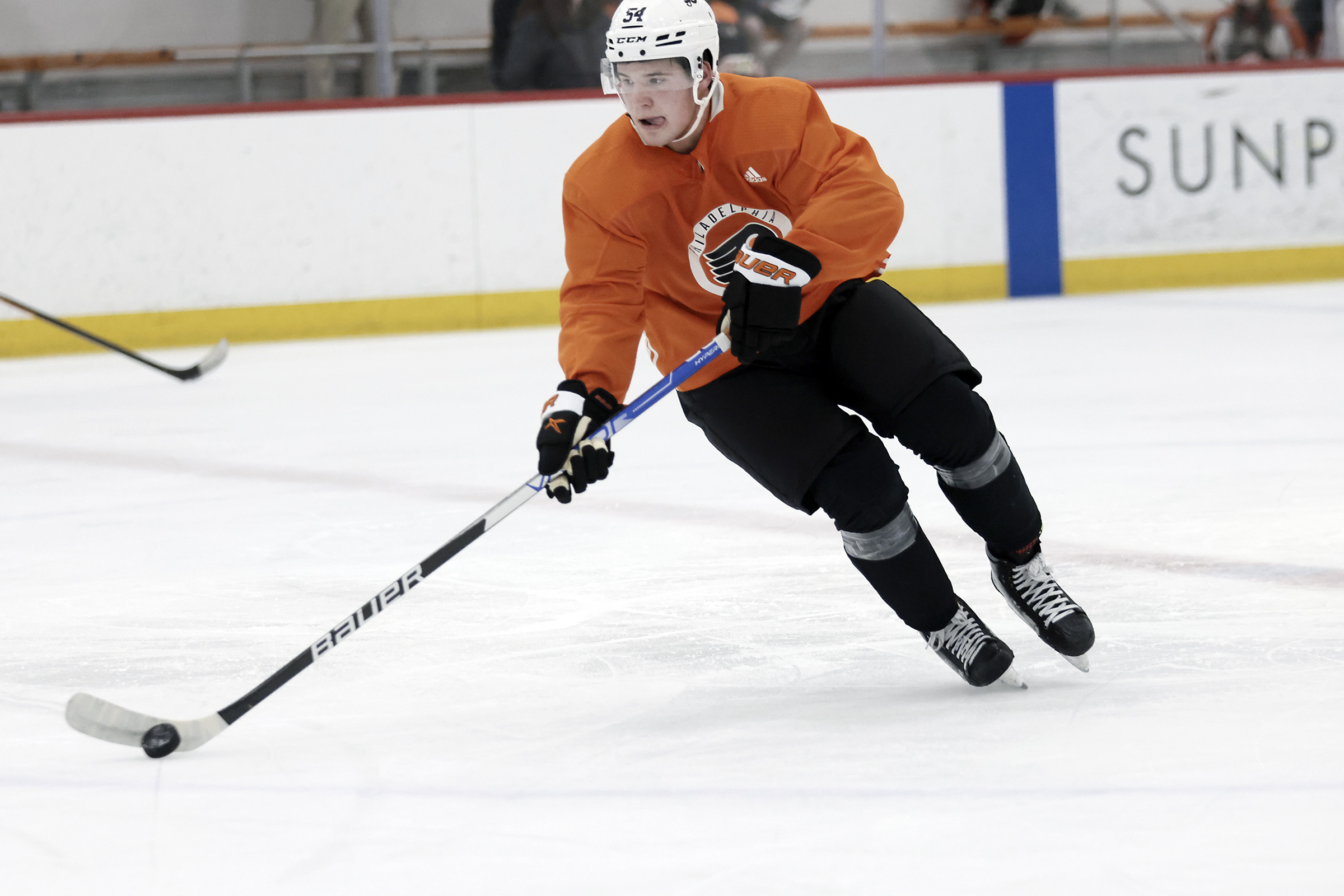
    Flyers prospect Cole Knuble, the son of former Flyer Mike Knuble, is someone the organization is very high on.

    “The excitement in the town for the tournament was insane,” Knuble said. “I don’t think [the locals] knew anything about college hockey and expected us to not be competitive. But everywhere we went, we were stopped, and people were really curious about where we were from and how we were enjoying our time.”

    The Flyers selected Knuble in the fourth round of the 2023 NHL draft. He is the son of former Flyers winger Mike Knuble, who spent five productive seasons with the organization.

    Knuble tallied his lone Spengler Cup point in the championship game — a net-front feed to Cornell’s Ryan Walsh to knot the score at 1. But the U.S. Selects lost that game, 6-3, after a third-period surge from HC Davos and fell just short of their ultimate goal.

    While they didn’t return with a trophy, they had earned the respect of the hockey world. A team of inexperienced college kids had marched into Switzerland and proved it could hang with some of Europe’s best.

    And for that, it was mission accomplished.

    “We definitely felt a responsibility as the first college select team [to play in the Spengler Cup],” Knuble said. “Before the tournament, we talked about how we are making an impression on people about what college hockey is, and [we] wanted to prove that this team should be back.”

    Penn State’s Aiden Fink led the U.S. Collegiate Selects with four goals and the entire tournament with eight points.
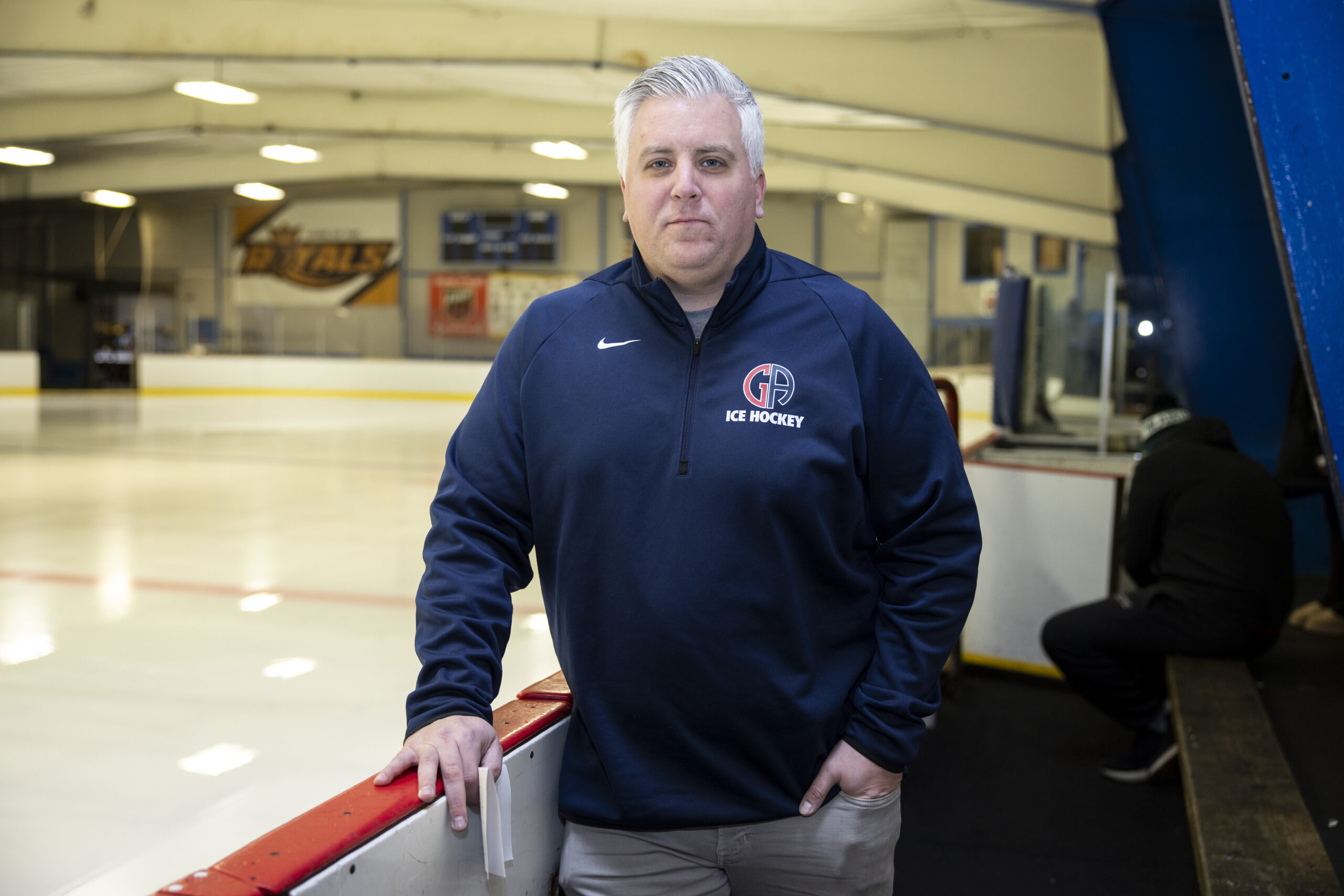
  • Frank Seravalli’s late cousin played hockey at Germantown Academy. Now the NHL insider is coaching the Patriots in his honor.

    Frank Seravalli’s late cousin played hockey at Germantown Academy. Now the NHL insider is coaching the Patriots in his honor.

    Frank Seravalli was standing behind the players’ bench at Bucks County Ice Sports Center when his phone buzzed. He didn’t reach for it — which is not his usual instinct.

    Seravalli, a former Daily News reporter, is one of only a handful of NHL insiders. His job is to talk to athletes and decision makers around the league. Missing a call or a text can mean missing a story, and in a competitive media environment, in which quick, accurate information comes at a premium, being “late” isn’t ideal.

    But on Jan. 12, in the midafternoon, Seravalli was busy. He was coaching Germantown Academy’s varsity hockey team. It was the third period and the Patriots were up, 6-2, in a rematch against Episcopal (5-2 on the aging scoreboard, which was missing a number).

    Despite their lead, Seravalli’s players didn’t relent. With 35.6 seconds remaining, sophomore Mick Tronoski fired another shot into the net. A smattering of fans cheered.

    After the two groups shook hands, Seravalli walked off the ice. He pulled his phone from his pocket, and read that the Columbus Blue Jackets had fired their head coach, Dean Evason.

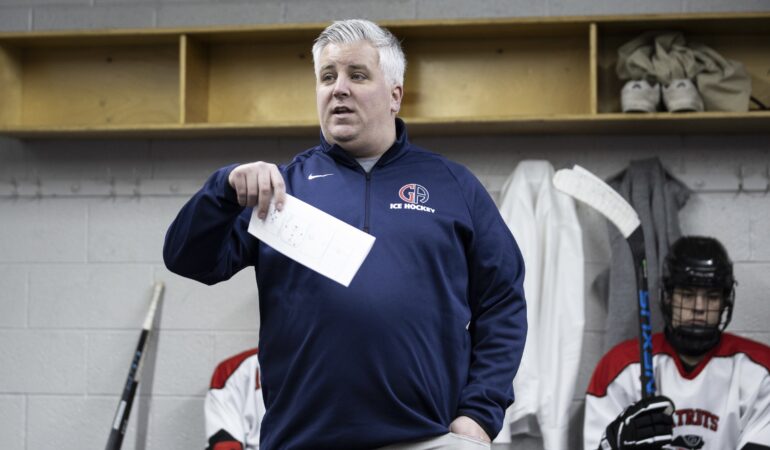
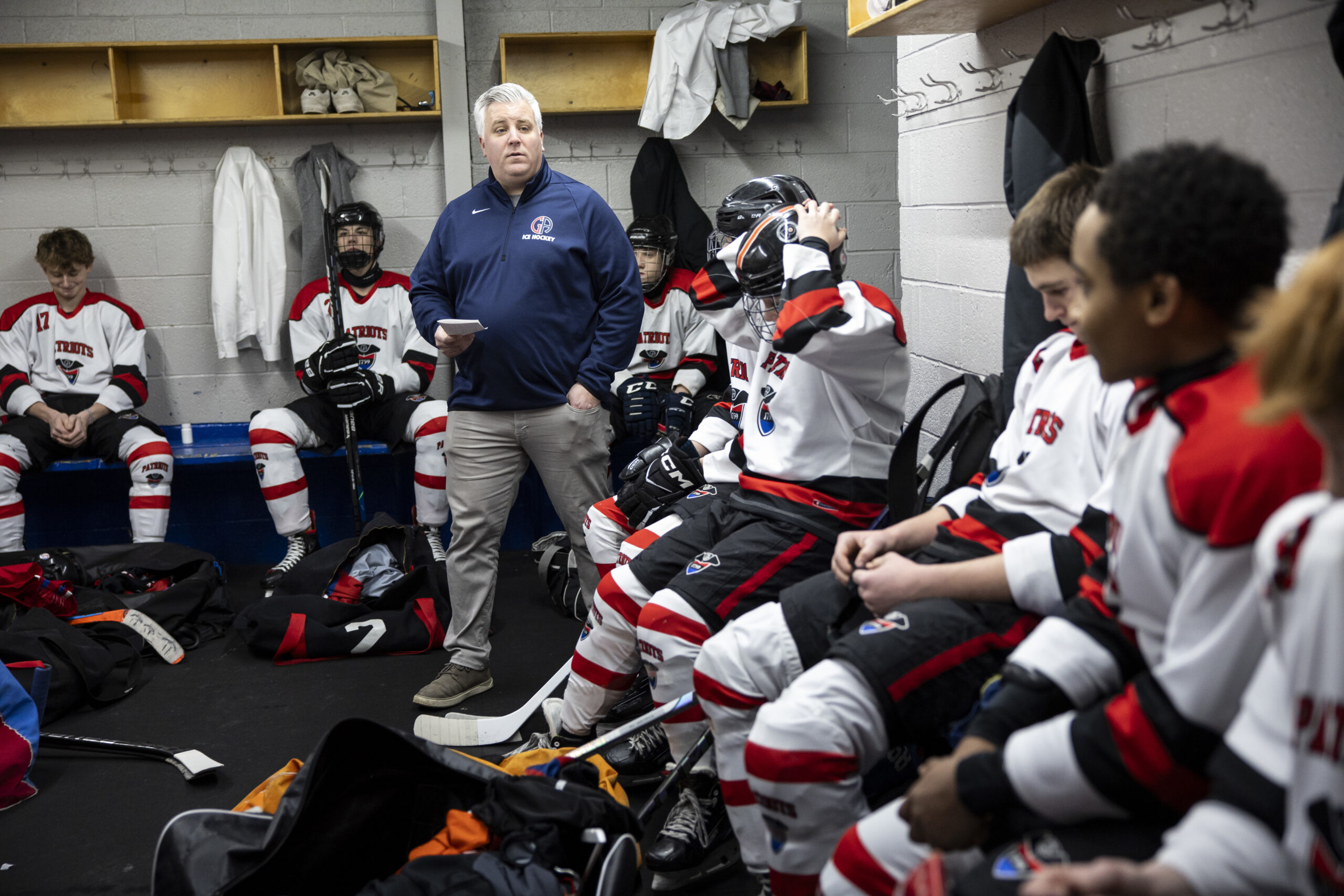
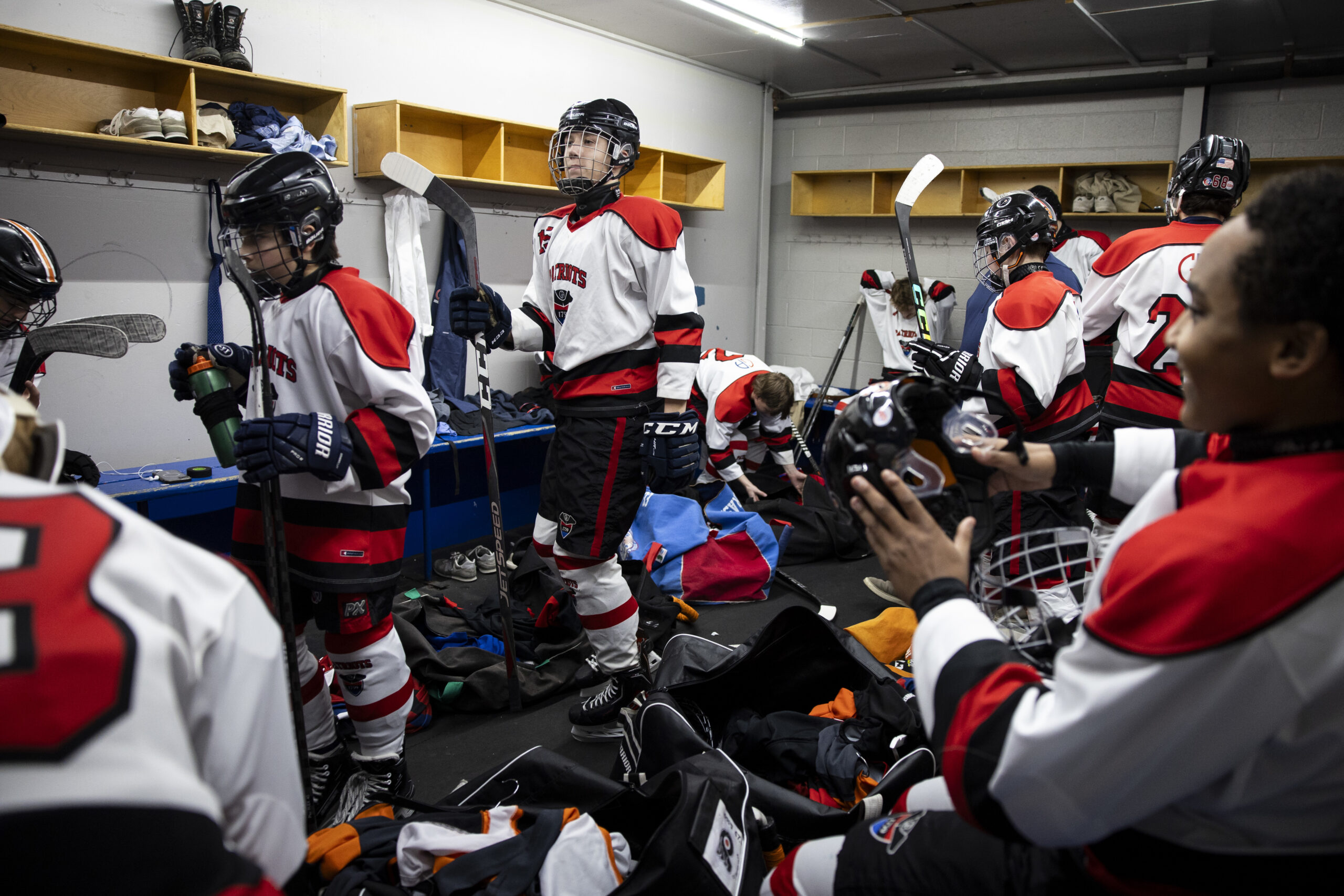
    Coach Frank Seravalli talks with his Germantown Academy team in the locker room at the Bucks County Ice Sports Center on Jan. 12.

    He retweeted a team statement, 27 minutes late. The NHL insider shrugged.

    “I mean, it’s just life, right?” he said. “What are you going to do?”

    Since July, Seravalli, 37, has served as GA’s head hockey coach. It is a daily commitment, one that he takes as seriously as his podcast and TV hits for various outlets. Five times a week, Seravalli oversees hourlong practices, and coaches hour-and-a-half games, with some 7 a.m. morning lifts mixed in.

    He is not above doing the grunt work, either, like ordering gear, setting the schedule, and keeping the team’s stats. He reviews film, plans workouts, and runs the middle school program, all while keeping an eye on promising players in the area.

    NHL insiders do not have an abundance of free time, so when Seravalli first told his family that he’d be coaching high school hockey, they thought the idea was absurd. And maybe it is a little absurd. Seravalli is not an alumnus of Germantown Academy. He is not doing this for the small stipend he gets halfway through the year.

    But he is doing it for a reason. Just over two years ago, Seravalli’s cousin, Anthony Seravalli, died unexpectedly. He was 41 and left behind a wife and three sons.

    Frank always looked up to him. Anthony was mature for his age, even as a teenager. He was a team captain and a star defenseman at Germantown Academy in the late-1990s, back when the school was winning Flyers Cups and producing NHL-caliber talent.

    GA hockey’s stature has diminished since then. New York Rangers goalie great Mike Richter once played for the Patriots, but for years, the program was essentially dormant. Local recruiting wasn’t a priority. It was unclear whether there would be enough players to field a team in 2025-26.

    Until Seravalli arrived. He has told the school he’s willing to make a five-to-10-year commitment to restore the program to what it was. In his mind, this is the best way to honor his late cousin.

    “I thought of him, and how big high school hockey was 25 to 30 years ago, and how I could help make that big again,” Seravalli said. “And I was like, ‘Maybe, this was supposed to happen.’”

    A ‘fixture’ of GA hockey

    Germantown Academy was an unlikely hockey powerhouse in the 1980s, ’90s, and 2000s. The coed school had an enrollment of only 1,200 students, from kindergarten through 12th grade. These numbers allowed the Patriots to fill only one varsity team most years.

    It paled in comparison to some of the bigger programs in the area, like La Salle College High School, which was able to fill four teams (one varsity and three junior varsity).

    Nevertheless, GA found success. Players took pride in its underdog identity, especially while playing local behemoths like Council Rock and Malvern Prep. Germantown Academy won two Flyers Cups — the hockey championship for eastern Pennsylvania high schools — in 1982 and again in 1983, and a state championship later that year.

    The team won three more Flyers Cups in 1991, 1994, and 1995, and went 100-0-6 in regular-season league play for over five seasons in the mid- to late-1990s.

    Anthony Seravalli was a key part of GA’s team. He joined the varsity as a freshman in 1996, and quickly established himself as a leader. Dan McDonald, a defenseman who was two years older, would drive him to school every morning.

    Anthony Seravalli (right) was a critical part of GA’s program in the late 1990s.

    The underclassman would rarely — if ever — call out sick with an injury or illness. His teammates estimated that he’d be on the ice for about 70% of Germantown Academy’s games (a hefty workload for a young player). Seravalli was a physical presence, standing at 6-foot-2, with a big windup slap shot that was hard to miss.

    He carried no ego, despite his abilities. Anthony was inclusive with all of his teammates, including those who spent more time on the bench. In 1999, a few players got injured, and Seth Gershenson, a self-described “bench guy,” was asked to play some shifts.

    Before Gershenson took the ice, Seravalli pulled him aside to give a few words of encouragement.

    “He respected my effort and willingness to go out there and get beat up a little bit,” Gershenson said.

    Many local players also participated in club hockey. They saw it as a way to get noticed in eastern Pennsylvania, which was not exactly a hotbed for the sport. As a result, club teams often took precedence over high school teams.

    But this was not the case for Seravalli. GA always came first. Gershenson referred to him as a “fixture.”

    “He took being a captain really, really seriously,” Gershenson said, “and he took the success of GA really seriously. He took pride in our success much more than whatever his club team was doing.”

    Frank Seravalli grew up in Richboro, Bucks County, just a few minutes from the Face Off Circle, where Germantown Academy played at the time. By age 6, he was attending games and practices to watch Anthony and another cousin, Jason Jobba.

    The elementary school student would stand in the same spot, behind the net, with a fizzy Coke in hand, and his face pressed up close to the glass.

    “Watching your cousins who are a bit older, those are your heroes,” Seravalli said. “And for me, that’s part of where my love for the game came from.”

    The Seravallis were a big, tight-knit group. Almost everyone played hockey, and almost everyone went to work at the family construction business. This was the path Anthony took, but he also found time to give back to his alma mater.

    Frank Seravalli fondly remembers watching his older cousins play hockey when he was a child.

    In 2004, while Frank was playing at Holy Ghost Prep, Anthony returned to GA as an assistant coach. He had a knack for connecting with the players, most of whom were familiar with his high school career.

    One example was Brian O’Neill, a GA alum and former U.S. Olympian who is now playing pro hockey in Sweden.

    O’Neill was a talented skater, but he lacked defensive fundamentals. This was one of Anthony’s strengths, and when O’Neill was moved to defense in his sophomore year, he began to work with the assistant coach.

    Seravalli constantly reminded him to keep “stick on puck.” It was a message that O’Neill had heard for years but never fully understood. That changed when the coach stepped in.

    “It was easy for him to sell me on what he was trying to teach, because I had a lot of respect for him as a player and a person,” O’Neill said. “He didn’t really have to earn my trust. That was already there.”

    The goal was to put pressure on his opponent, in a way that didn’t involve hitting or cross-checking. The coach ran drills in which O’Neill would hold a puck in his right hand, and the stick in his left, to focus on keeping the stick down.

    “It’s amazing,” O’Neill said. “You would think, ‘OK, I can’t grip the stick with my other hand, so I pretty much am playing with one hand,’ and all you can do with that is pretty much stick on puck.

    “You would think you would be way worse at defending, but it’s actually the opposite, because all you’re focused on is stick on puck. And you’re not focused on hitting.”

    The concept finally clicked. O’Neill, who went on to play in the NHL, still uses it to this day.

    “[Anthony] was the guy that gave me the most advice on defense,” he said, “and that definitely made a huge impact on my career.”

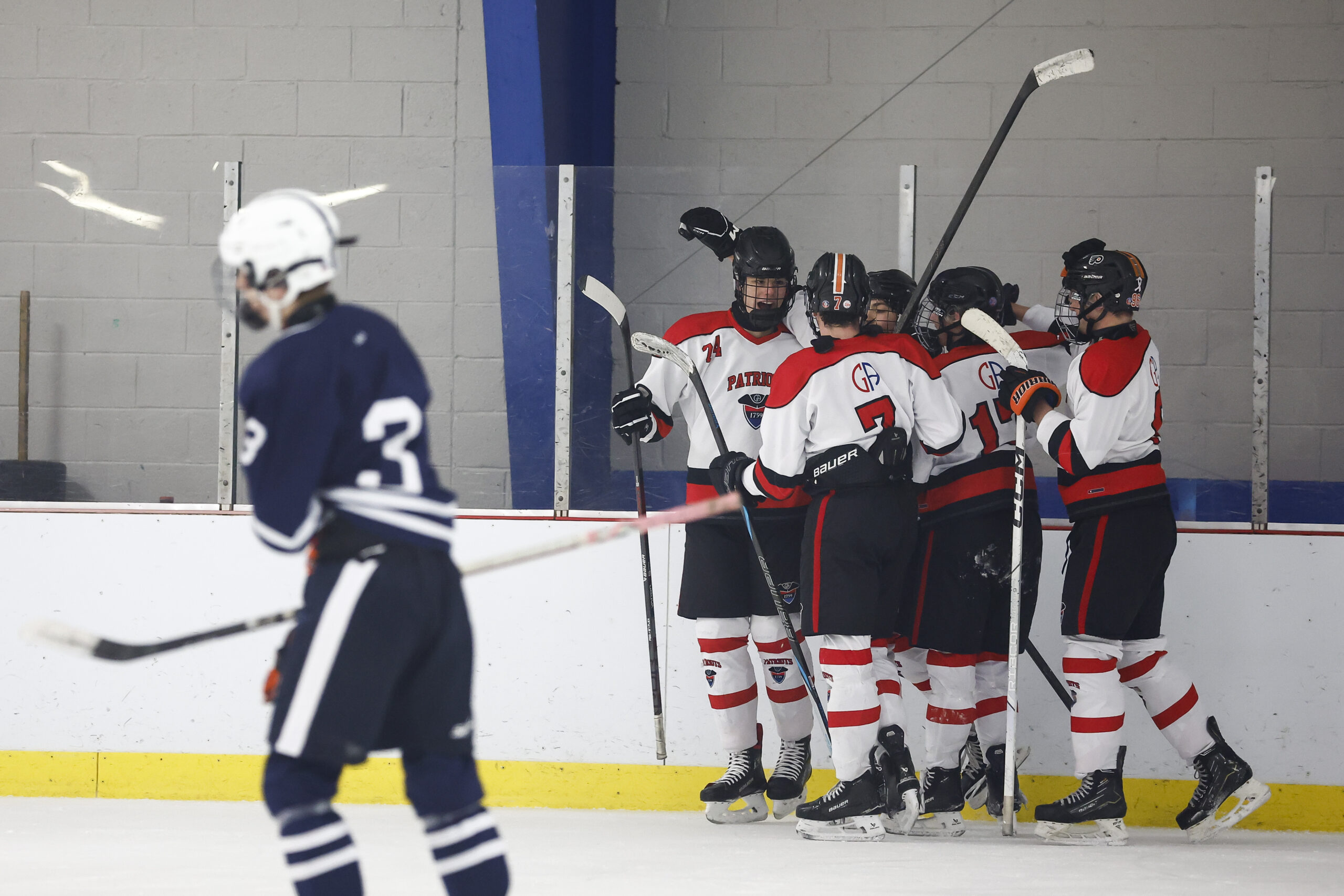
    Germantown Academy players celebrate after a goal against Episcopal Academy at Bucks County Ice Sports Center.

    ‘Please help save our program’

    When he was young, Frank Seravalli would visit his family’s construction business in Northeast Philadelphia. He’d often notice workers perusing thick copies of the Daily News over lunch, and dreamed about having a byline someday.

    In 2009, that dream became a reality, when the paper hired Seravalli out of Columbia University’s journalism school to cover the Flyers. He stayed for six years, before leaving for the Canadian television network TSN, where he worked as a senior writer and NHL insider.

    In 2021, Seravalli started his own business, the Daily Faceoff, which was sold to a media group in Denmark in 2024. He’s now building a hockey network at the streaming service Victory+.

    A typical day includes a radio interview in the morning, a podcast taping at noon, and more radio and television hits at night. Interspersed are hours spent texting and calling sources throughout the league.

    It is a frenetic lifestyle, one that requires Seravalli to be glued to his phone. Finding time to coach a high school hockey program seemed impractical, if not impossible. But Seravalli was drawn to the idea. So, when he saw the job opening last year, he decided to apply.

    The school’s athletic director, Tim Ginter, could only laugh when he read the insider’s resumé. Among his references were two NHL general managers, an executive with the league, and a former NHL head coach.

    “He’s like, ‘Call [former Anaheim Ducks head coach] Dallas Eakins,’” said Ginter. “And I’m like, ‘You’ve got to be kidding me.’”

    Seravalli interviewed for the position in the spring. He talked to two of the team’s captains, J.P. McGill and Joey Lonergan, who explained that their program was in jeopardy.

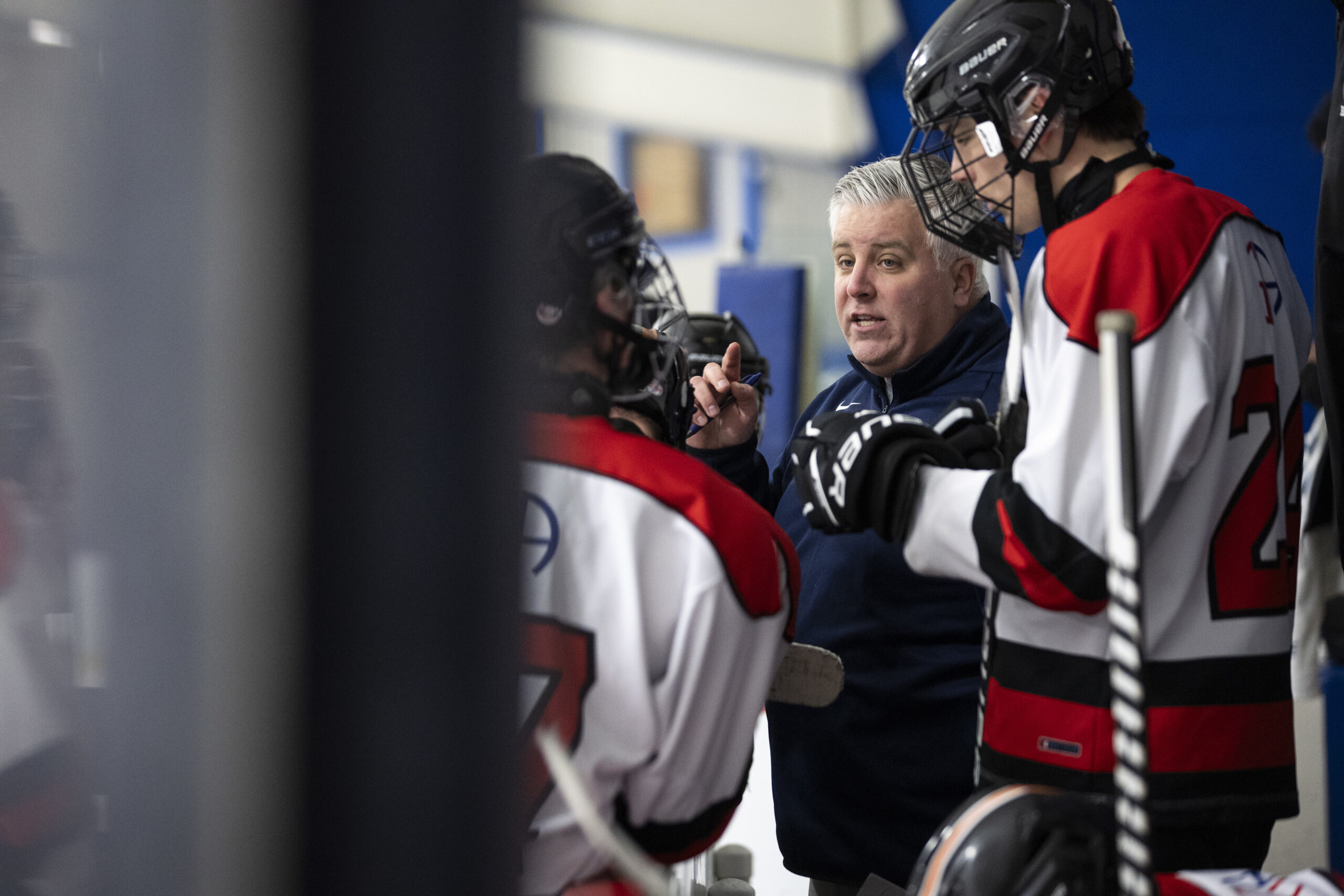
    Coach Frank Seravalli talks with his team during the game against Episcopal Academy.

    GA had lost five players in 2025. School officials didn’t know how they were going to fill those spots. McGill and Lonergan had heard stories about the 1990s and 2000s teams, but returning to that level seemed like a long shot.

    The Patriots hadn’t played in a Flyers Cup since 2009. After years of shrinking rosters and coaching changes, the team was moved for 2009-10 from the Suburban High School Hockey League to the lesser Independence Hockey League, which isn’t eligible for Flyers Cup entry.

    “Essentially their plea was, ‘Please, help save our program,’” Seravalli said. “‘We’re not even sure we’re going to have a team next year.’

    “I couldn’t say no at that point. I knew I was hooked.”

    Seravalli met with Ginter shortly after. He made a succinct but powerful pitch.

    “If you don’t have interest in changing your program, and really tearing it down and rebuilding it, I’m not your guy,” the insider told him. “But if you are interested, I’m willing to make a five-to-10-year commitment to build this the right way.”

    He was hired in July. Seravalli rarely mentioned his full-time job, but it didn’t take long for the teenagers to figure it out. One day, while McGill was “doomscrolling” on the internet, he spotted his high school coach on Bleacher Report Open Ice.

    His reaction: “Oh [expletive].”

    “I texted some of my teammates,” McGill said. “I’m like, ‘He’s the Adam Schefter of the NHL!’”

    Germantown Academy’s players were not aware at first that their new coach was an NHL insider.

    Added junior defenseman Jack Stone: “He’s a reporter, so obviously he knows what he’s talking about.”

    The insider started to use his connections behind the scenes. He’d ask current and former NHL head coaches for advice, among them Eakins, who now works for Adler Mannheim in Germany.

    Eakins encouraged Seravalli to model the behavior he wanted to see in his team. He emphasized how important it was to show not only that he cared about the program, but about the players as people.

    He also shared some mistakes he’d made in his own coaching career, with the hope that Seravalli could learn from them.

    “Sometimes people [will] say, ‘OK, I’m a coach, now I have to take on a different persona,’” Eakins said. “And I told him, don’t do that. Don’t go in there and pretend to be [Florida Panthers head coach] Paul Maurice.

    “You’ve got to go in there and be Frank Seravalli. Because as soon as you step outside of that, you’re cooked. You can only pretend to take on this other persona for so long.”

    The tenor of the program changed almost immediately. Before Seravalli’s arrival, on-ice practices and team lifts were optional. Sometimes, as few as two or three players would show up. Now, they were mandatory, and everyone was expected to arrive on time.

    The teenagers learned this the hard way. In October, during preseason workouts, Seravalli organized morning weightlifting. Two players — who will remain anonymous — slowly waltzed into the gym, 15 minutes late.

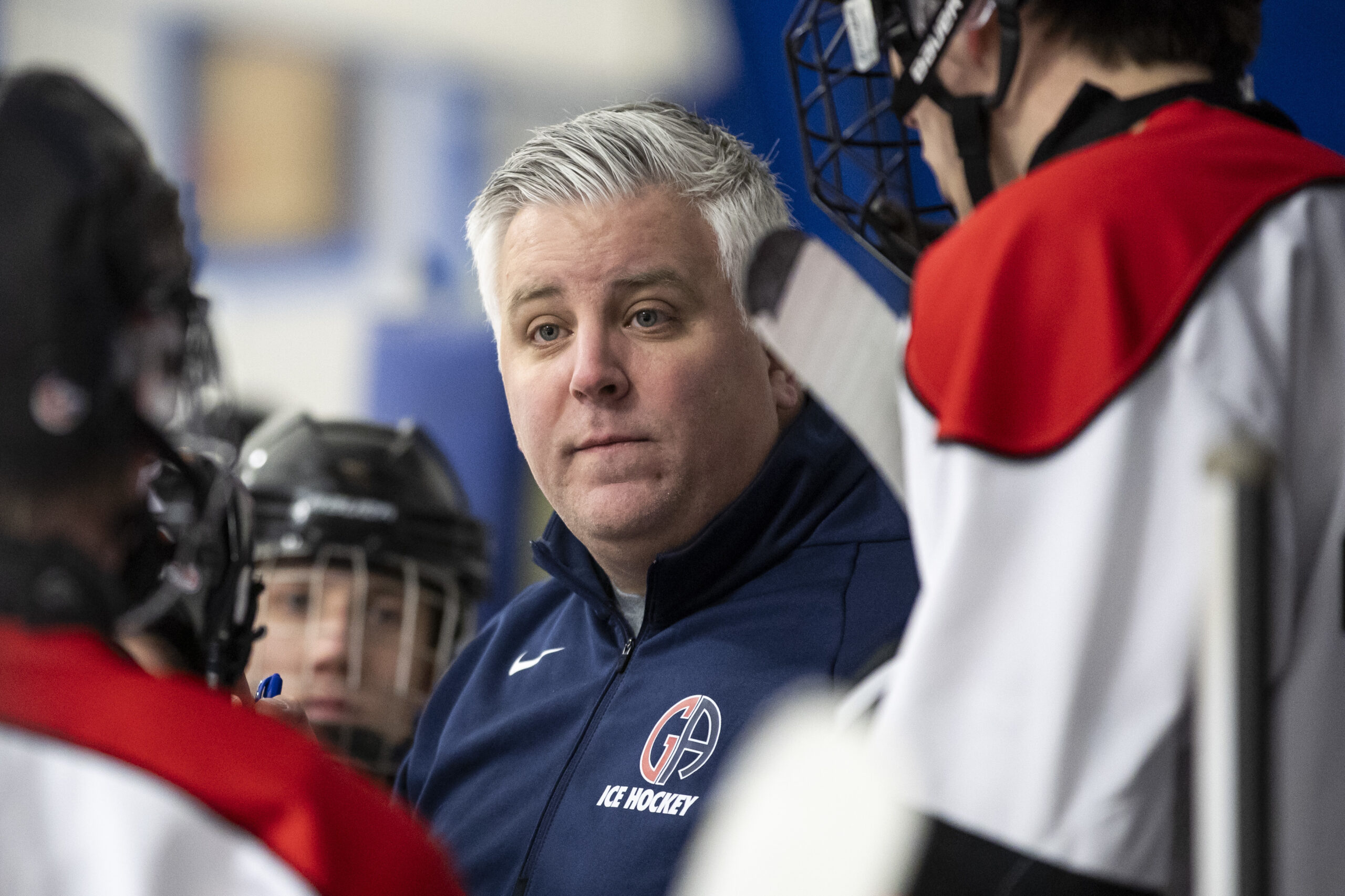
    Coach Frank Seravalli brought a disciplined approach to the Germantown Academy hockey team.

    Seravalli didn’t say anything in the moment. But after the workout, he brought the team down to the field house to run sprints. The two late arrivals were put on the sideline, so they could watch their peers suffer on their behalf.

    “And I just said, ‘Look, we have a standard here,’” said Seravalli. “‘You have to make the commitment that everyone else is to show up on time and be ready.’

    “And I’ll tell you what: Since then, no one’s been late.”

    The players have embraced the newfound discipline. Stone said it’s something that they didn’t realize they needed, but they’re grateful to have. McGill agreed.

    “He’s way more intense than what we’ve had in the past,” McGill said. “Which, to some people, can be intimidating. But if you want to play at a high level, that can’t be intimidating.

    “There’s no getting away with anything around here anymore. Frank has done a great job of holding us accountable to what the new standard needs to be.”

    A different type of connection

    Not long after he was hired, Seravalli moved the team from the Hatfield Ice Arena to the Bucks County Ice Sports Center (formerly known as the Face Off Circle). The building looks just like it did when Anthony was in high school.

    The white-and-blue paint is faded, but intact, and so is the thermostat, set to the coldest possible temperature. Five days a week, Seravalli walks past the spot where he stood as a child, watching his cousins with wide eyes, as they swept across the ice.

    Anthony’s death was a shock to the entire family. He no longer roams the halls of the construction firm. He is no longer behind the bench at the Face Off Circle.

    But when Frank is skating around that rink, with GA students spinning past him, he feels connected to his late cousin.

    “I can’t really explain how or why I ended up here,” he said. “I just know that it’s for a reason.”

  • Reports: Top OC picks Mike McDaniel, Brian Daboll spurn Eagles. Are they ‘dumb,’ ‘stupid,’ or justified?

    Reports: Top OC picks Mike McDaniel, Brian Daboll spurn Eagles. Are they ‘dumb,’ ‘stupid,’ or justified?

    Jake Rosenberg is Howie Roseman‘s former salary cap wizard who left the Eagles two years ago for greener pastures. Rosenberg now is a consultant for college athletes and administrators, as well as a headhunter for doctors. Quite the CV.

    He’s also a hardy tweeter.

    On Tuesday night, after Brian Daboll interviewed with the Eagles for the vacant offensive coordinator position, Rosenberg quote-tweeted a report from The Athletic’s NFL reporter, Diana Russini, refuting her answer to a question posed during her appearance on 94-WIP’s afternoon show that painted the Eagles’ job as unattractive: “I think coordinators on this list are aware that navigating Philly is difficult.”

    Rosenberg, a fiery sort, called both the question and the answer “dumb,” as he issued what you would have to assume was a state-sanctioned response, with a list of nine reasons.

    Cleaned up from its Twitter-speak abbreviations, the post read thus:

    “Ask dumb questions get dumb answers. …

    “1. Talent at skills positions and quarterback. 2. Market. 3. Head coach with five straight playoff appearances and two Super Bowl appearances. 4. Two offensive coordinators who got head coaching jobs. 5. Best GM in league. 6. Max prime-time games. 7. Offensive line. 8. Draft resources. 9. (Generous) Ownership.

    “I’m sure an OC wouldn’t want this job. So stupid.”

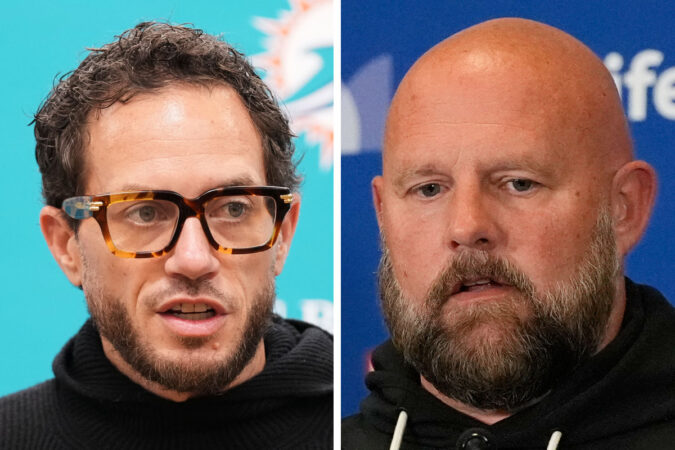
    Minutes before Rosenberg’s post, Russini, among others, reported that Mike McDaniel would take the Chargers’ OC job if he didn’t get one of the head-coaching jobs still in play.

    A league source said Wednesday that McDaniel made his decision after a lengthy virtual interview with the Eagles early this week.

    On Wednesday morning, Russini, among others, reported that Daboll would take the OC job in Tennessee if he wasn’t hired as Sean McDermott’s replacement as the Bills’ head coach. Whatever happened in Philly on Tuesday convinced Daboll by Wednesday that Nashville and Buffalo were better places for him.

    If the reports are correct, it’s a scathing indictment on what appears to be a prime NFL job. Until you look a little closer.

    Then you see the cracks in the Eagles’ foundation, and you realize:

    Maybe it’s not so prime.

    Counterpoints

    The QB

    The Eagles aren’t the only team with QB talent. Bills star Josh Allen and Chargers starter Justin Herbert are simply better than Jalen Hurts. Cam Ward, the No. 1 overall pick by the Titans in 2025, has a much higher ceiling than Hurts has ever displayed.

    Yes, Hurts is the reigning Super Bowl MVP, but he has arm strength that is no better than average. After five seasons as a starter he’s shown himself to be slow to process what defenses present him, and often he is blind to open receivers. After several injuries including a late-season concussion in 2024, he is ever more reluctant to run, which, in his first four seasons, was his superpower. Also, in an era of 6-foot-4 passers he’s just 6-foot-1. As we all know, every inch counts.

    The Philly experience

    Yes, Philadelphia is a big, vibrant market, but lately that passion has boiled over into abuse. The environment for any coordinator or head coach in Philadelphia is especially toxic. It takes a thick skin to survive a fan base that has treated the last two defensive coordinators and two of the last three offensive coordinators horribly. A few days after a Black Friday home loss, Eagles fans egged the house of former offensive coordinator Kevin Patullo.

    The toxicity is driven by two sports talk radio shows and endless podcasts and local TV shows, an ecosystem of which I am a part as a host on 94-WIP. It also is driven by a print and online press corps, also of which I am a part. Finally, it is driven by a hot-take national media industry, mainly podcasts and analyst gaggles, populated mostly by retired athletes and coaches who recklessly farm engagement.

    The combination creates a stressful situation that would affect any human being, as well as his family. None of that is going to change, but, given a choice, you can understand why some candidates would decline to engage with the unique Philadelphia experience.

    The GM

    Roseman might be the best GM in the NFL over the last nine years, but that doesn’t mean he’s going to have the best roster in 2026. Any top OC candidate is looking at the Eagles job as a one-year stepping stone to the 2027 cycle of head-coaching vacancies. The 2026 Eagles are richly talented on paper, but they are saddled with far more questions than answers.

    Further, the Eagles could not land their top candidates when they hired both Nick Sirianni in 2021 and Doug Pederson in 2016. One big obstacle: Eagles head coaches have little say over roster construction, and Roseman can be difficult to work with.

    Why would this matter to an offensive coordinator hire? Because, if the offense shines in 2026 but the team does poorly, Sirianni could be fired. His OC would be considered for the vacancy — a vacancy made less attractive by Roseman’s imposing presence.

    Head coach

    While Sirianni has made the playoffs in each of his five seasons in Philly, he’s also suffered unceremonious defeats in three of those playoff trips. He also has displayed an inability to control his emotions, which causes distractions, whether it’s with his players, like A.J. Brown or Jalen Carter, or with fans, both home and away.

    And, while it might have been entertaining, pairing Sirianni with a combustible coach like Daboll would have been like smoking a cigarette in a gunpowder factory.

    Offensive line

    When healthy and rested, left tackle Jordan Mailata, left guard Landon Dickerson, center Cam Jurgens, and right tackle Lane Johnson are the best combination in the business. However, Dickerson, Jurgens, and Johnson have lingering, if not chronic, health concerns.

    The owner

    Jeffrey Lurie is generous and supportive, but he can be … a lot.

    Mostly through Roseman, Lurie monitors the day-to-day machinations of the team more closely than most owners, more often than not watching practice at Roseman’s hip. Also, after every game, Lurie talks with Sirianni and sometimes with other coaches, very extensively, usually before Sirianni addresses the press — a delay of an hour or more from the game’s end.

    Other owners talk to their coaches, too, but not to this degree.

    Again, for better or worse, anyone who succeeds Sirianni as head coach will be subjected to these weekly postgame interrogations.

    Other issues

    Brown might be the best receiver in Eagles history, but he is, without question, the most distracting. His constant public complaining the past two years, especially on social media, prompted Lurie to publicly reprimand him during a practice in November.

    Also, Brown often did not complete routes and did not make catches he usually makes, particularly in the wild-card playoff loss to the visiting 49ers.

    When asked last week if he planned to trade Brown, Roseman did not say that he would not, despite the crippling salary-cap repercussions that would accompany any trade or cut.

    Regardless, the new OC will inherit the fallout of Brown’s seasons of discontent.

    Other issues include the drop-off in production from Saquon Barkley and the fact that the Birds have no frontline tight end under contract, but these are issues that will accompany most positions.

    The rest of the issues?

    They paint a much less appealing picture.