NBA commissioner Adam Silver last week fined the Utah Jazz $500,000 for tanking. He fined the Indiana Pacers $100,000 for doing the same.
The Jazz paid Lauri Markkanen more than $500,000 for each of the games in which he was benched to ensure losses. The Pacers paid Pascal Siakam more than five times their fine for sitting him on Feb. 3. The teams literally paid the players more than the fines to not play.The fines were nothing more than performative outrage. The fines were a joke.
The NBA is fast becoming a joke.
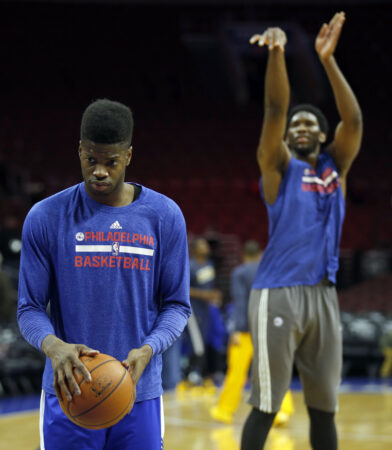
For years, the NBA has faced the existential threat of dwindling interest because its uninteresting product is infected with the simultaneous practices of tanking, losing on purpose to secure a better draft position; and load management, not playing available players to better ensure their availability in the postseason. The Sixers have been on the vanguard of both of these reprehensible movements; first, by instituting “The Process” 13 years ago, and then by coddling premier players like current centerpiece Joel Embiid.
Load management might never go away. After all, it kept Kawhi Leonard viable for the Raptors’ 2019 title run, and it’s keeping LeBron James viable at the age of 65, or however old he is (he’s now up to 41).
Tanking? That’s another story. The NBA could fix that in a hot minute if it wanted to. It is a blight on the sport, a fraud perpetrated on fans, media partners, and sponsors on a nightly basis, all brazenly executed, and with no real penalty.
It is a league descending into fringe status, one without a universally likable face this century besides, at its very beginning, Michael Jordan, and even he turned out to be kind of a jerk.
Silver said at his All-Star Game press conference Saturday, “There is talk about every possible remedy now to stop this behavior.”
There is a simple remedy to stop this behavior: Kick the cheaters out of the lottery and replace them with honestly mediocre teams.
This penalizes the egregious tankers, but still gives them a reasonable chance to improve despite their crimes against basketball. It rewards non-tankers who played just well enough to miss the lottery.
This is not the only solution.
One thought: Silver could fine teams even more. ESPN’s Kendrick Perkins suggested $5 million per infraction.
The problem: That’s still chump change. The Pacers owners have a combined net worth of about $16 billion; co-owner Steven Rales spends $5 million on biotech research and development every day.
"I wish Adam Silver would've fined them $5M for disrespecting the game of basketball. Let's stop being nice about it and throwing out the word 'tanking.' No, it's actually throwing games."
Another idea: The NBA could abolish the draft entirely. On Monday, David Aldridge of The Athletic wrote exhaustively about such a proposal.
The problems:
Teams that play in states without a state income tax, such Florida’s Heat and Magic and Texas’ Mavericks, Spurs, and Rockets, would have a significant financial advantage in attracting young talent. Similarly, big-market teams in Los Angeles and New York would attract big-endorsement players, whose endorsers would make it worth their while to be a Laker or a Knick.
Ask any 19-year-old kid if he’d rather stay warm with the Heat and make more after-tax money, play for the Clippers in the epicenter of hedonism, or spend six months in frigid, turgid Milwaukee?
The better solution:
If you get caught tanking in the manner of the Sixers from 2013-16, when they won a total of 47 games in three seasons, then you lose your place in the lottery. Your chance at the top-tier players of the best draft in eight years — gone.
In the NBA draft, the top 14 draft slots are lottery slots. That means teams with those picks have a chance for the No. 1 overall pick. Generally speaking, the worst teams have the best chances at the higher picks.
If a team is found guilty of tanking, they’re out of the lottery. They move to the 15th slot in the draft, and the 15th team moves into 14th and therefore into the lottery.
If a team has two lottery slots in the draft, their higher-slotted pick gets moved down.
If a team is found guilty of tanking twice in the same season, they move from 15th to last, or 30th, and the other 15 non-lottery teams move up one slot.
If a team has two lottery slots in the draft and is found guilty of tanking twice in the same season, that lottery slot is moved to 15th, which bumps their previous lottery slot from 15th to 16th, and it bumps the team with the original 16th slot into 14th, the team with the original 15th slot to 13th, etc.
It might sound complicated but it’s not. You violate the spirit of the process (delicious usage there), you lose your privilege. It’s not as draconian as it might be.
You still get to draft, and thereby get a little better.
Unless you’re an idiot and offend repeatedly, you still get to draft at a decent spot. Tyrese Maxey, Siakam, Jarrett Allen, and Jalen Brunson all were drafted 16th or lower.
Then again, so were Wade Baldwin, Justin Patton, and, of course, former Sixers prospect Zhaire Smith.
That should be enough to scare off any would-be tankers.
Inside a half-empty John E. Glaser Arena on La Salle’s campus Tuesday night, Robert Moore lounged at the end of the Constitution boys’ basketball team’s bench, head back, arms folded, legs crossed, as if he had resigned himself to being powerless to stop the blowout before him. He wasn’t. He could have. He hadn’t.
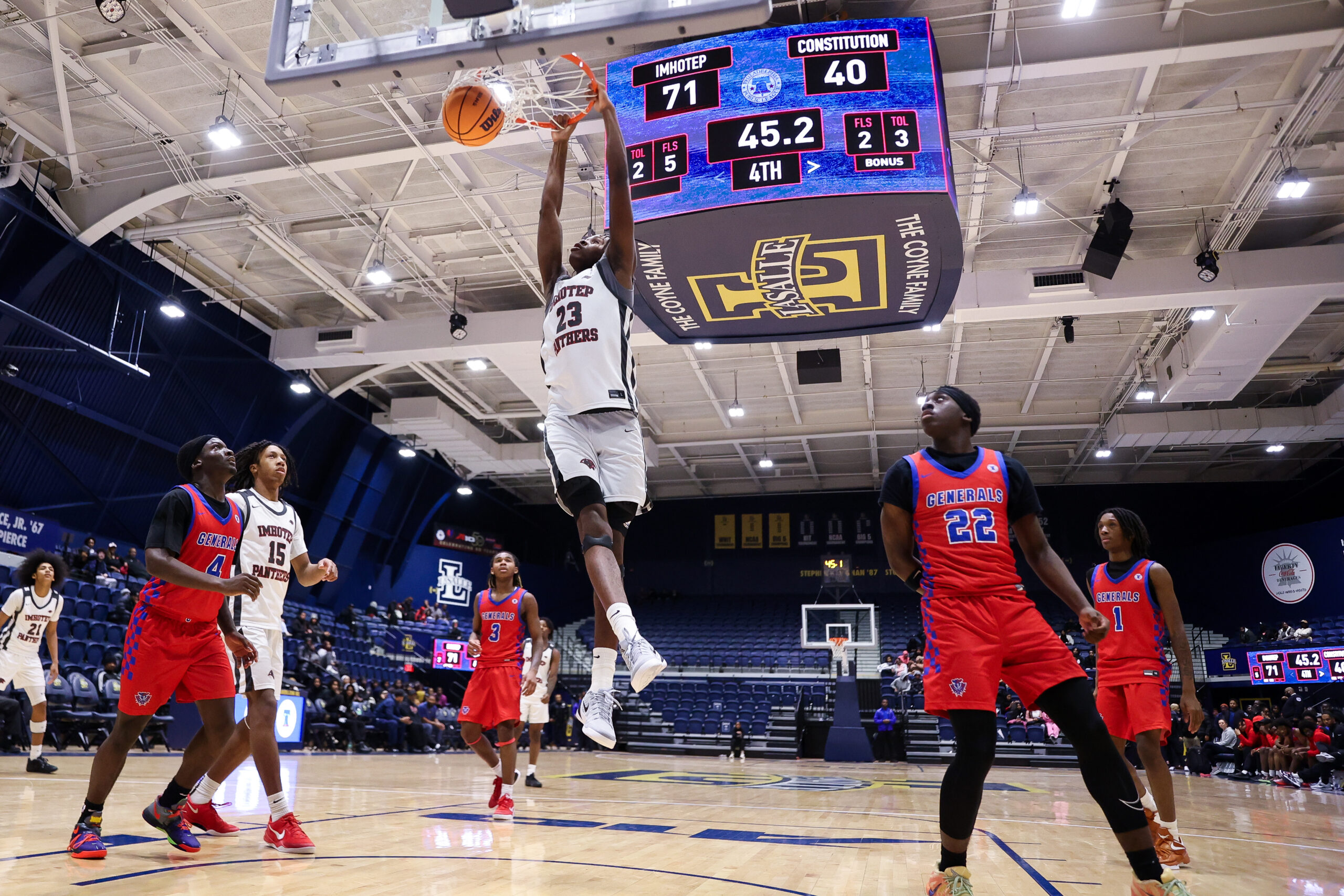
The second game of the Public League semifinals was a rout from the start, a 73-41 Imhotep Charter victory that was never close, was never in doubt, and never should have been played. Constitution was there only because its previous opponent, Carver Engineering & Science, had been forced to forfeit their quarterfinal matchup when an altercation marred the game’s final minutes. With his team down by 12 points, with 71 seconds left in regulation, a Constitution player had shoved an E&S player, sparking an on-court confrontation among athletes, coaches, and fans. E&S’s bench had emptied, which, according to Public League rules, disqualified E&S from the tournament, allowing Constitution to move on to face Imhotep.
From that ugly set of circumstances, Moore, his team, and Constitution’s administration received a gift that they never should have accepted. Constitution was on its way to losing in the quarterfinals until one of its players committed the act that ignited the chaos. And even if the Public League was following the letter of the law by confirming that E&S had to forfeit — “Constitution did the right thing,” league president Jimmy Lynch said, “by not entering the floor during the incident” — Moore and Constitution still could have done the honorable thing and declined to play in the semis, too.
It would have sent a powerful message to Constitution’s players, and to the league as a whole, that certain principles are more important than playing a game. It would have turned this fiasco into a teachable moment, a cautionary tale that Constitution’s kids hadn’t earned the right to compete against Imhotep, against the Public League’s dominant program. It would have been a better resolution than the scene Tuesday night at La Salle, where security and city police officers stood poised at the corners of the court and the public-address announcer admonished spectators to stay off the floor and let the referees do their jobs.
“We didn’t feel like it would be a great look for the league,” Moore said, “not having a team here to play in a semifinal game, [having] rented out an arena.”
Sorry, it would have been an admirable stand for the Public League and its leaders to take. And while Moore deserves credit for facing some questions about the incident and Constitution’s and the league’s courses of action, his explanations sounded more like excuses for the failure to make the difficult but correct decision here. The price of renting Glaser, for instance, was already a sunk cost. That money was gone one way or another, so why not use that second semifinal game as a stage to show everyone what class and responsibility look like?
“It’s really an administrative thing,” Moore said. “Honestly, after reviewing everything, we felt like the people who needed to be suspended were suspended.”
Imhotep defeated Constitution, 73-41, in the Public League boys’ basketball semifinal on Tuesday.
Yes, the Public League suspended two Constitution players for their roles in the melee, but that was the minimum discipline for an embarrassing situation that those young athletes had created and escalated. The incident happened last Thursday. By Friday afternoon, someone from Constitution, from the Public League, from District 12, or from the PIAA should have been on the phone, arranging a meeting, getting the right people in the same room or on a Zoom call to settle on a solution that didn’t let Constitution benefit from its own mistakes.
Instead, Moore called coaches around the league, starting with Imhotep’s Andre Noble: “I said, ‘What do you want?’ He said, ‘I want to play a game. … I kind of left it up to the kids as well.” Except this wasn’t Noble’s call to make, and it certainly wasn’t the kids’. Of course an opposing coach wouldn’t want an important postseason game canceled. Of course teenagers would want such an incident to be wiped away with few consequences. And of course, E&S’s parents and players have been lobbying for absolution and justice for themselves, as if anyone comes out of a mess like this with clean hands.
“To be fair, we’ve tried to take the high road, but we felt like we’ve been basically scapegoated as we were in the wrong with everything that happened,” Moore said. “In actuality, with all the facts the district had to deal with, it just wasn’t the case. …
“There were a lot of moving parts, and we evaluated everything when we looked at it. Obviously the district and the PIAA had all of this information, so what you’re getting is — and I completely understand — parents who are unhappy about the situation. I completely understand that.
“I’m a coach and an athletic director. I answer to a principal, who answers to an assistant superintendent. There are so many people above me.”
From Congress to college sports, through virtually every institution in American society, there’s a deep and desperate need for someone in a position of authority to be a genuine leader, to stand up and stand firm and say, This is who we’re expected to be. This is the right thing for those we’re supposed to serve. This is what we’re supposed to do, and this is how and why we’re going to do it. Yet here was another example where no one put the greater good and a larger lesson above appearances and self-interest. Here was another occasion where no one bothered to be an adult.
Moore and Constitution and the Public League had a chance, a real chance, to teach young people the value of accountability and the power of grace. They had an opportunity to be true educators, and they passed up that opportunity. They decided it was more important to play a game whose result was all but certain and would be quickly forgotten, and by the fourth quarter Tuesday night, Robert Moore was stretched out in his seat at the end of the bench, striking that posture that suggested he was content to have taken the easy way out. His team lost by 32 points. Hope it was worth it.
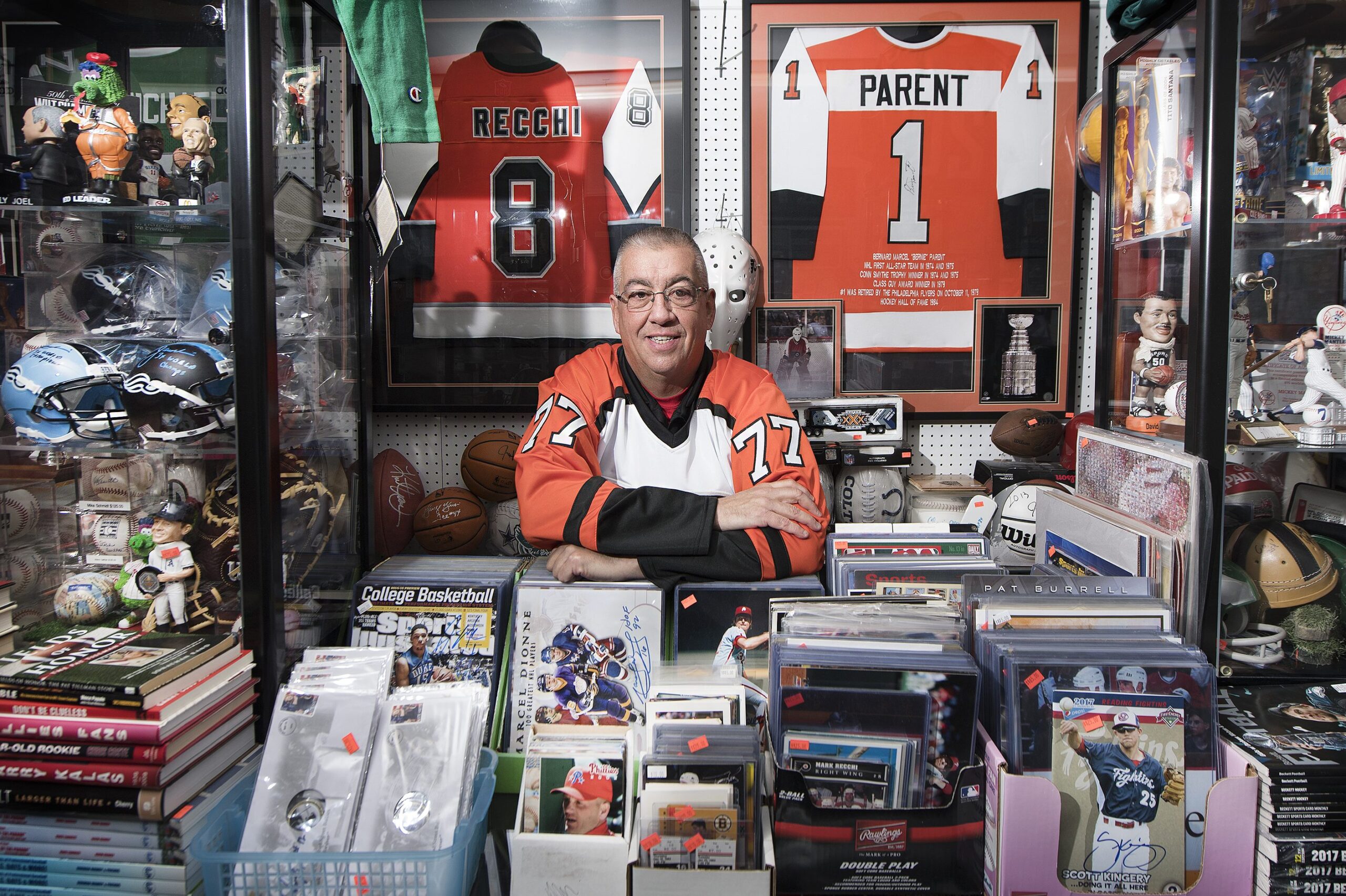
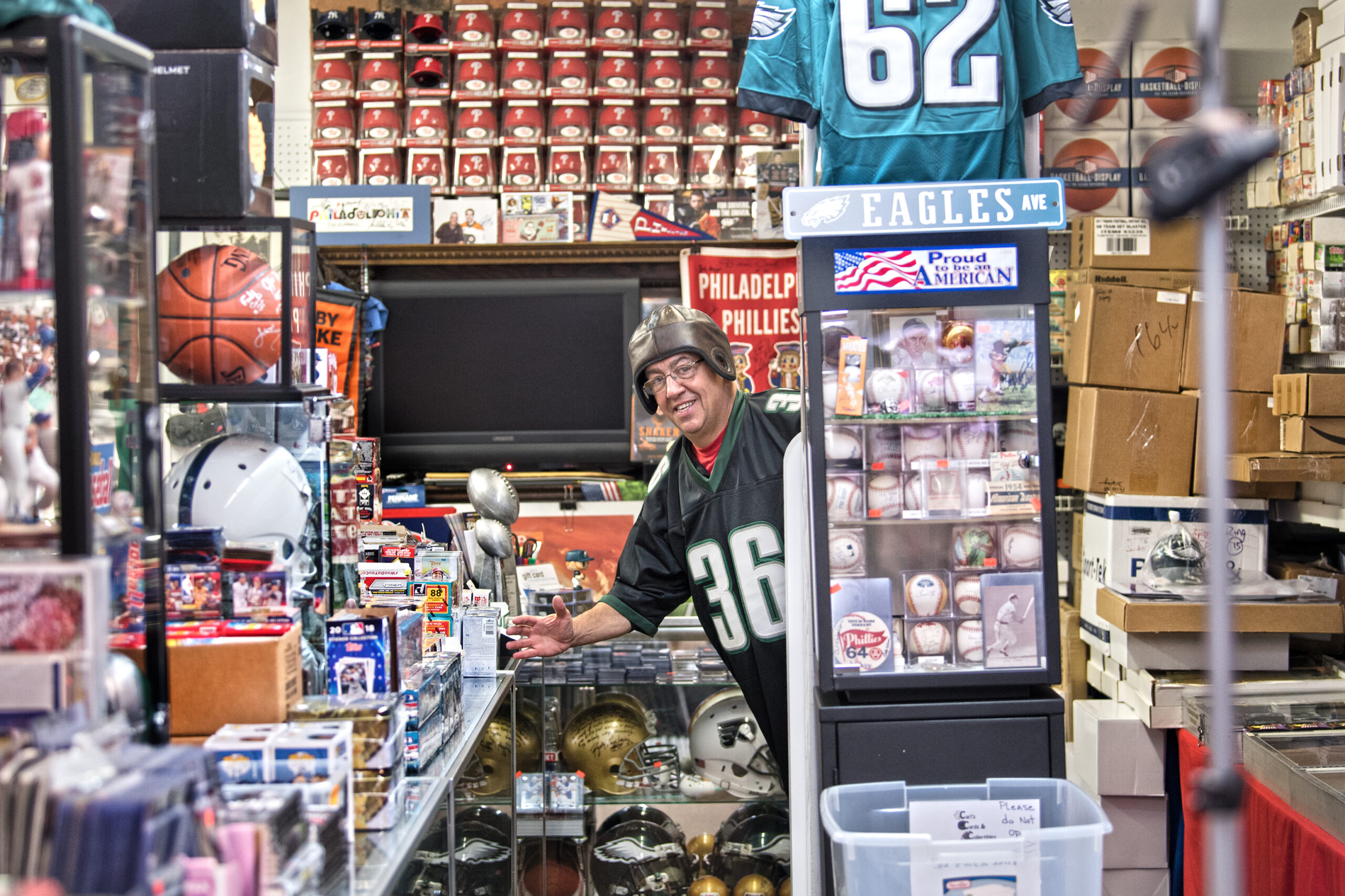
On the morning of Jan. 31, a few hours after Carl Henderson died unexpectedly in his sleep, his daughter, Lauren Henderson-Pignetti, drove to her late father’s sports cards and collectibles shop.
She opened it up like she would any other Saturday. Sometimes, kids stopped in with their parents on the back end of trips to the grocery store. Or while they were driving home from basketball practice or piano lessons.
Being there — just like her father had for 31 years — seemed like the right thing to do. So, the younger Henderson stayed at Carl’s Cards in Havertown from 11 a.m. to 7 p.m., until the last customer left.
Carl Henderson at his Havertown store in 2018.
The shop owner was 69 when he passed. His family announced the news on Sunday, and received an overwhelming response; thousands of messages from children and adults and even a few local pro athletes.
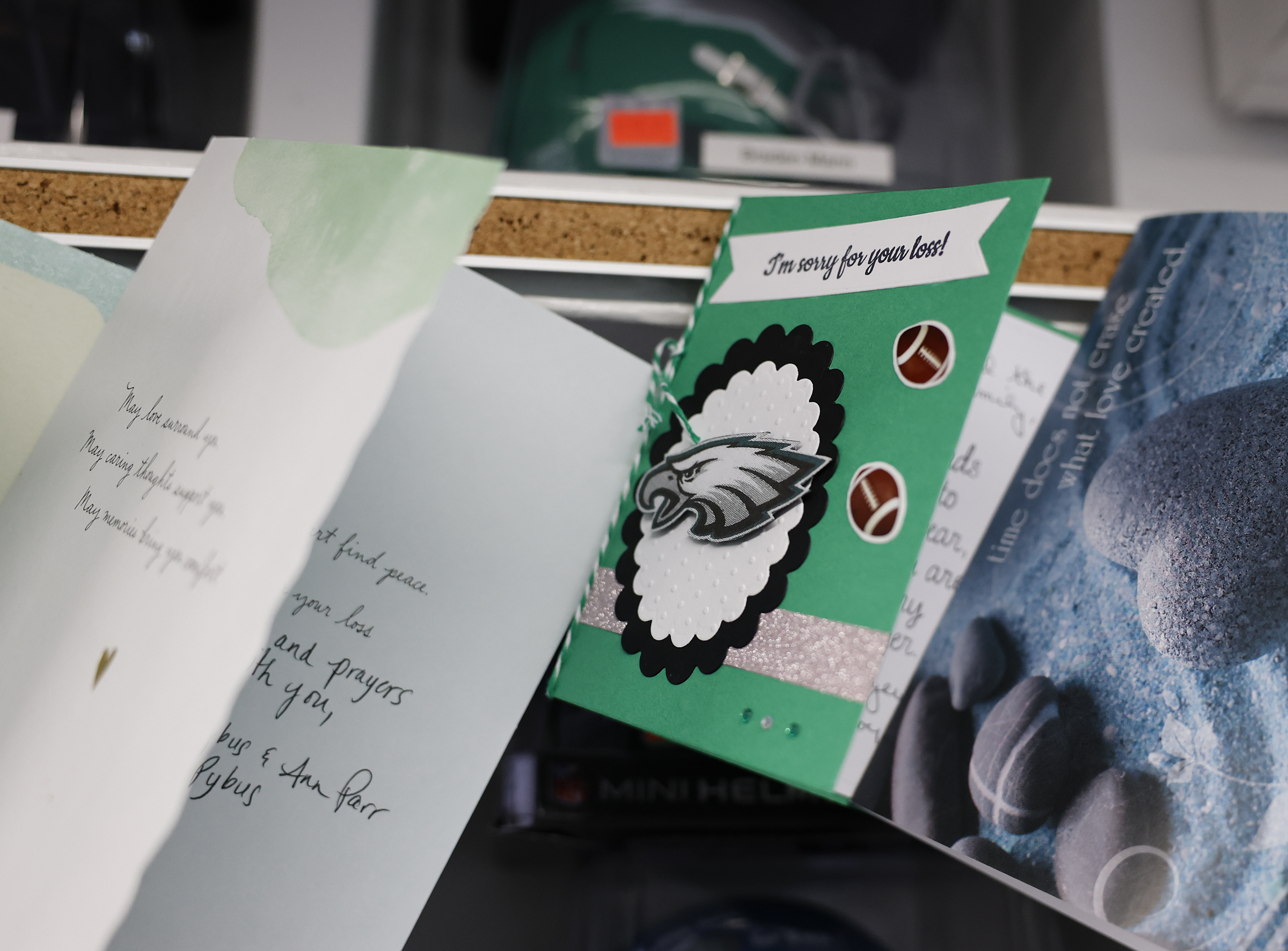
By Monday morning, bouquets of flowers were wedged between the doors. Customers started sending sympathy cards. Some showed up in person to express their support.
A memorial service held last week, in Bryn Mawr, drew about 400 people. Former Phillies pitcher Dickie Noles read a passage from the Old Testament. Members of the Broad Street Bullies sat among the crowd.
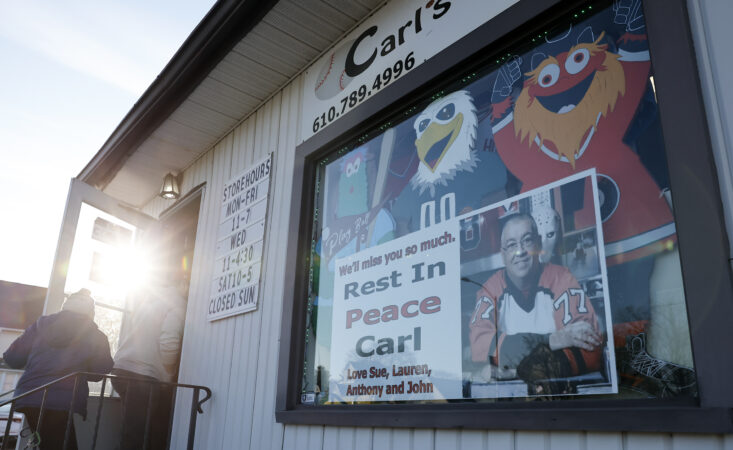
His shop looks a little different now. Those sympathy cards are pinned along the walls. A sign commemorating the longtime owner sits in its front window.
Condolences and tributes have poured into Carl’s Cards, including some from area sports figures.
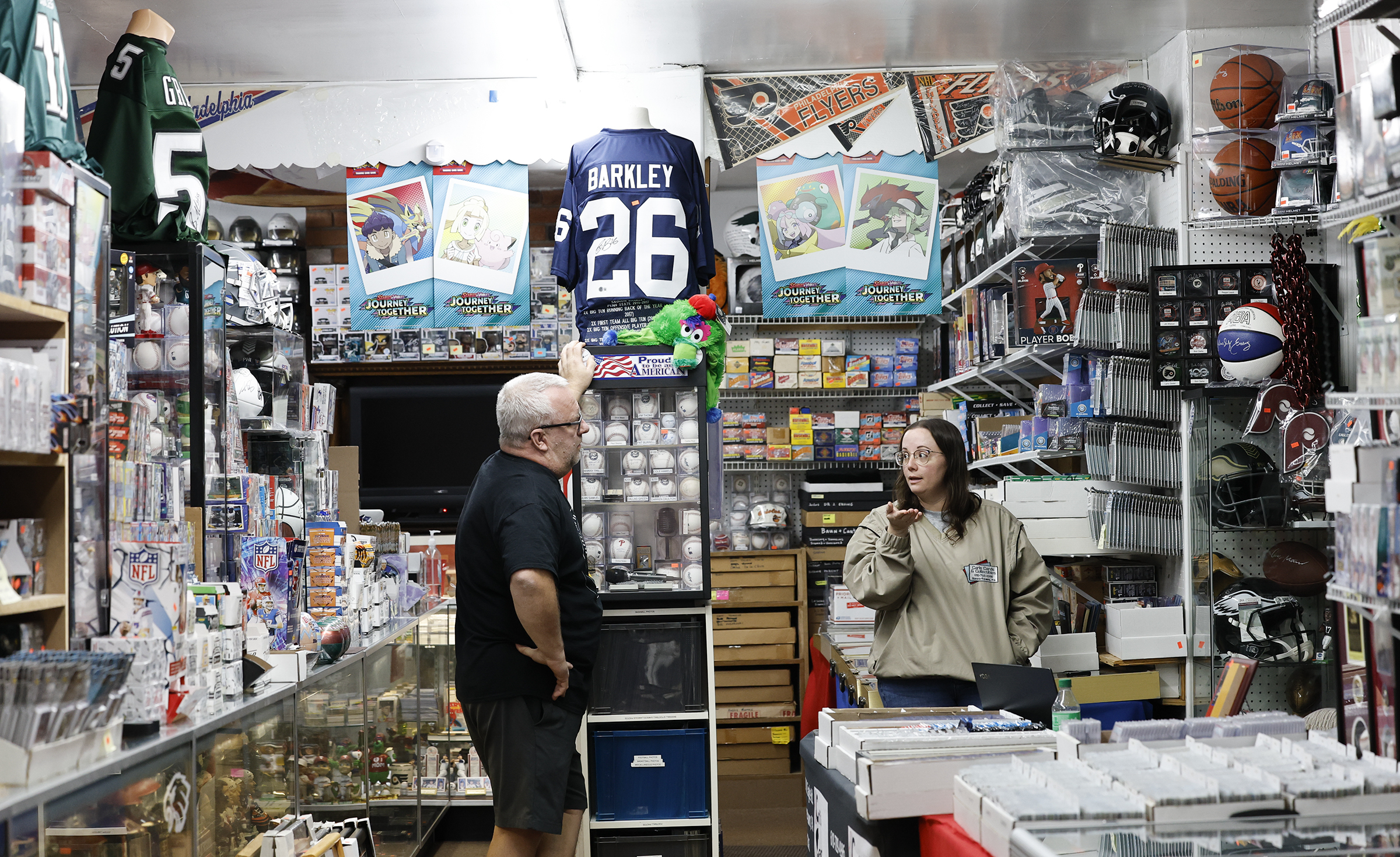
But the character remains the same — and Henderson-Pignetti is determined to keep it that way. Carl’s Cards has something for everyone. Kids can fish through the dollar bin for unexpected treasures. Right above it, collectors can purchase a limited edition Bryce Harper-signed bat more than 1,000 times that price.
There are more run-of-the-mill items, like signed helmets and jerseys, but also packs of Pope Leo XIV trading cards, and a rectangular piece of wood cut from the old Spectrum court.
The sports memorabilia world can be transactional, if not cold, but Henderson navigated it with warmth and integrity. He frequently donated money and autographed items to charity.
He liked to say he knew his clientele — and they weren’t always big spenders.
The shop owner cared just as much about the 10- or 11-year-old student with only a few dollars in their pocket. Or those who had no money to spend at all, but just wanted to vent about Philadelphia sports.
“He didn’t care if you were buying something,” said Henderson-Pignetti. “It was almost like a version of a bar where you stop in and talk to a bartender.
“You can buy something, [but] you don’t have to. You can just stop in and talk. It wasn’t always about the dollar.”
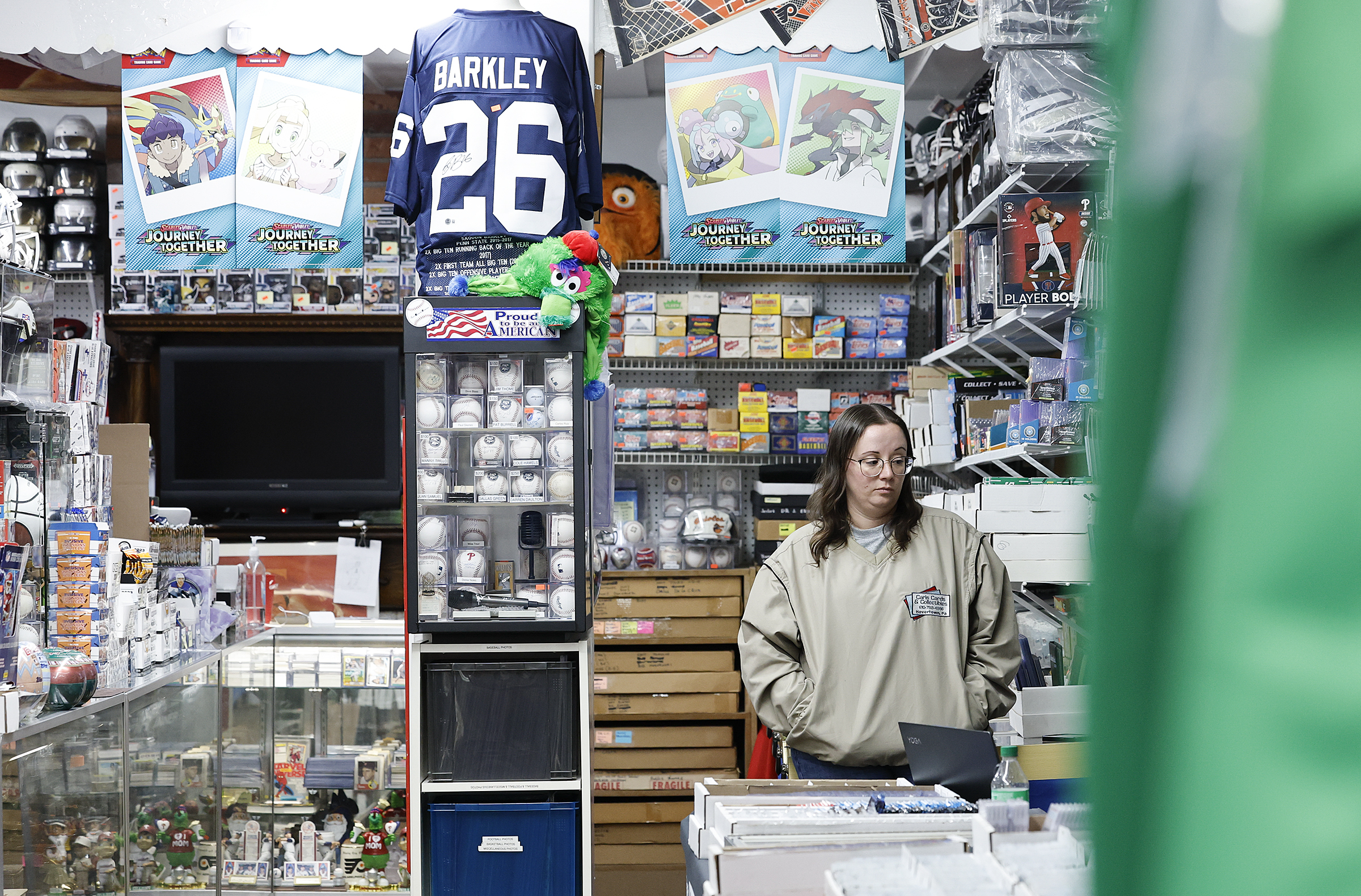
Lauren Henderson-Pignetti has taken on the responsibility of maintaining her father’s life’s work.
The store has been open since Henderson passed. For now, it’ll stay on its previous schedule.
Henderson-Pignetti sees this as a way of honoring her late father, who would’ve wanted Carl’s Cards to stay alive, no matter what.
“We made the decision to keep everything rolling the way he would have,” she said. “He spent 31 years building this place. He would have wanted everything to stay the way it was.”
A family atmosphere
When Henderson opened Carl’s Cards in 1995, his family thought he was out of his mind. He’d left a stable, corporate job working for Ryerson Steel, and had a wife and young daughter to support.
But Henderson loved collecting, and was ready for a change. So, he signed a three-year lease for a small property on Darby Road.
By 1998, he’d outgrown it, moving to a bigger location across the street from The Haverford Skatium. In 2010, he outgrew his budding collection yet again, moving Carl’s Cards to its current home on West Eagle Road.
These shops were where Henderson-Pignetti spent her childhood. She watched as her father welcomed world-class athletes for autograph signings, and put them at ease in a way bigger card shops couldn’t.
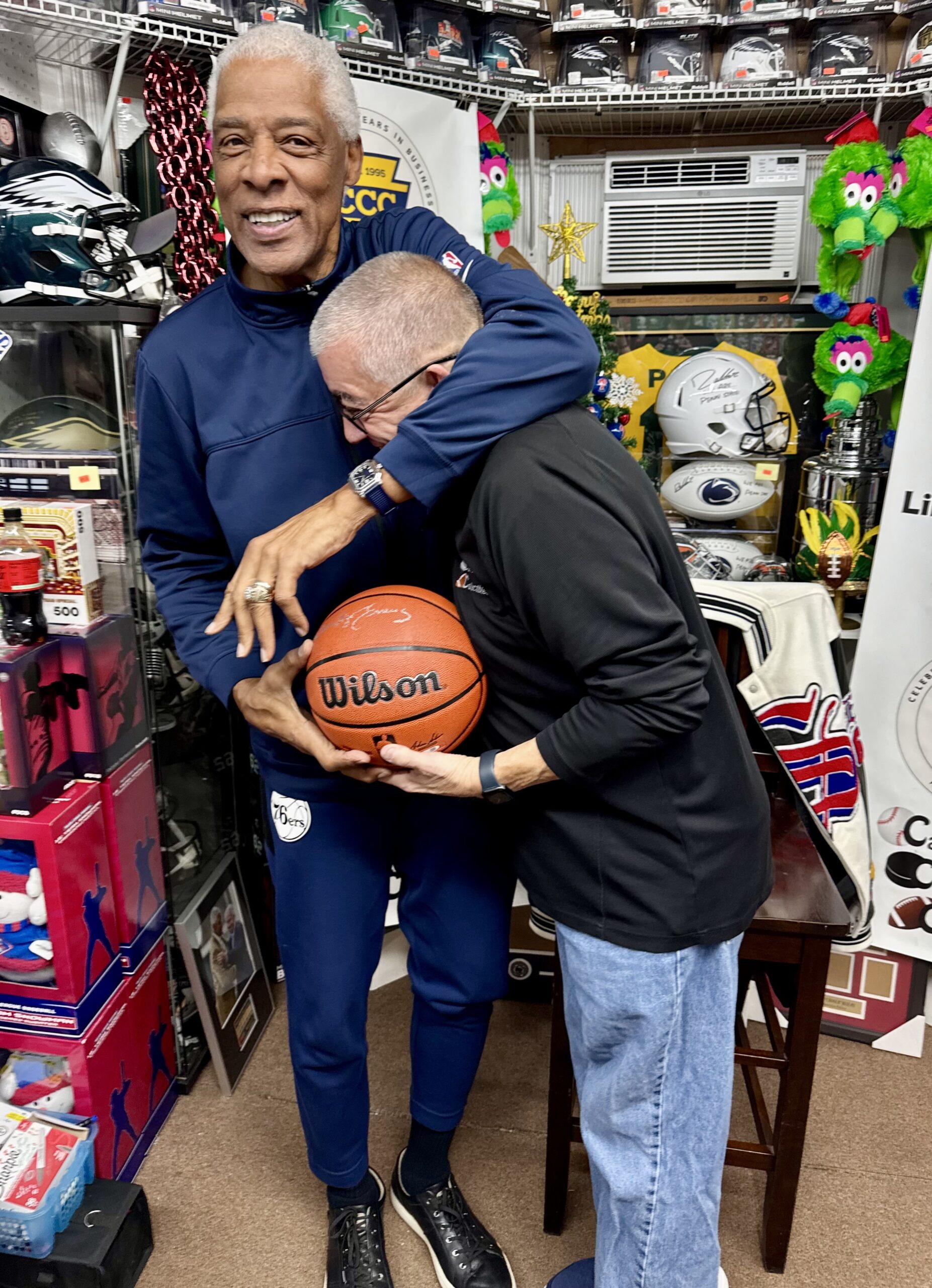
Julius Erving was among the local sports dignitaries who were made to felt comfortable by Carl Henderson (right).
There were no strangers at Carl’s Cards. He was always running the show, with his wife, Sue, selling tickets. As Lauren got older, she began to help out too, mainly with social media and website management.
“It’s not like one of those big card shows where you’re sort of forced in and forced back out again,” Henderson-Pignetti said. “It’s very much a family atmosphere. So, I think a lot of players really enjoyed that.”
Henderson’s theory was that when athletes were more relaxed, they were able to show their authentic selves. This proved true time and time again. Carl’s Cards hosted everyone from Allen Iverson to Jimmy Rollins to A.J. Brown.
Many of these athletes returned for more signings. Some, like Eagles offensive tackle Fred Johnson, even reached out after Henderson’s passing. Others, like Julius Erving, treated the store owner like an age-old friend.
An appearance by Erving had long been on Carl’s bucket list. Like many kids growing up in Philadelphia in the 1970s, Henderson idolized Dr. J. He owned Converse sneakers — just like the Sixers forward — and played varsity basketball at John Bartram High School.
Not much enthralled Henderson, but the idea of sharing a room with one of the best athletes of his generation did. They booked the signing for Dec. 21. After it was done, Erving hung around and talked to the store owner.
At one point, he heard some employees poking fun. He joined in.
“Dr. J was like, ‘Man, they even talk to the boss like that!’” Henderson-Pignetti recalled. “And my dad was like, ‘Do you hear that, guys? I’m the boss here.’
“It was just a really fun, sort of banter conversation. It was just nice.”
While autograph signings were part of the job, they were not the whole job. Henderson wanted his shop to be just as accessible for young kids.
Carl Henderson was a lifelong fan of the area’s sports teams, and that passion showed in his work.
In addition to the dollar bin, he made sure to stock the shelves with affordable card packs. He brought in a gumball machine and added $25 mystery memorabilia boxes.
But above all, he was an uplifting presence in their lives, in a way that Henderson-Pignetti wasn’t even aware. After her father died, she heard from all sorts of kids.
One of them, 12-year-old Owen Papson, crafted a handmade letter.
“I just heard the news,” he wrote. “I am so sorry. We will miss Carl so much. Your store will always be my favorite.”
Inside, he taped a signed Harold Carmichael Topps card with an inscription above: “Hopefully this will help.”
More stories came pouring in on Facebook. One, in particular, stuck with her. It was from a longtime customer who used to frequent Carl’s Cards in the early 2000s.
Lauren Henderson-Pignetti (right, with John O’ Brien) has been touched by the outpouring over her father’s death.
He explained that at the time, his parents were going through a divorce. Henderson was a stable presence when he needed one. He’d ride his bike to the store and was greeted with a smile every time.
“I had no idea,” said Henderson-Pignetti. “To think that something so simple as my dad just being in his place of business … for this kid [it] meant more to him than I think he probably even realized.”
‘A gift from God’
Last September, Henderson-Pignetti quit her role as director of development at the Humane Society in Reading. She loved working there, but was ready for something different, similar to her father when he left Ryerson Steel.
In the moment, her decision was based on a gut feeling, but now she can see the bigger picture. Last fall, Henderson-Pignetti started working full-time at Carl’s Cards.
On Thursdays, her father would give her run of the shop; how to properly open and close, how to track sales, how website orders are mailed out, and other intricacies of the job.
“It was a gift from God, basically, because it allowed me to just absorb even more information from him,” she said. “I kind of look back on that as a weird sort of intuition type of thing. If I hadn’t left my job, that wouldn’t have happened.”
Lauren Henderson Pignetti says her goal is to keep Carl’s Cards & Collectibles up and running after her father’s passing.
The goal, for now, is to keep the shop open. Some days are easier than others. Sue is sick and unable to work. Coworkers, and even customers, have helped pick up shifts when Henderson-Pignetti needs some space.
It can be emotionally exhausting at times. But she’s going to see it through.
“The plan is to not have anything change,” she said. “He would want me to step right into this role. I have no doubt about that. So that’s what I’m going to do, for as long as I possibly can.”
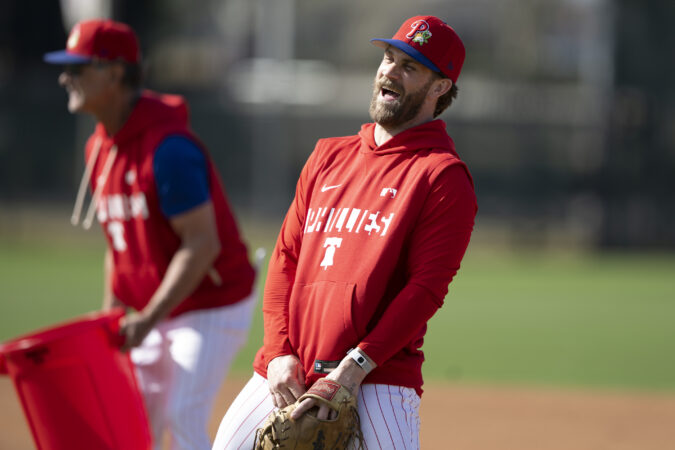
The best way to understand Bryce Harper is to think about all the things he can’t say.
He can’t say that Alec Bohm is a seven-hole hitter at best. He can’t say that Adolis García is much closer to Nick Castellanos than he is a legitimate four- or five-hole hitter. He can’t say that J.T. Realmuto isn’t the guy he was three years ago. He can’t say that he’d swing at fewer pitches out of the zone if he had more confidence that the guys behind him would get the job done.
Given all of those things, Harper also can’t say that Dave Dombrowski has not been an elite personnel boss for at least a couple of years. He can’t say that Dombrowski’s lack of eliteness is chiefly to blame for the Phillies’ run-scoring struggles. Harper can’t say that he was much closer to the hitter the Phillies needed in 2025 than Dombrowski was to being the roster-constructor they needed.
To throw shade at Dombrowski would be to implicitly throw shade at teammates whose “underperformance” is mostly a function of Dombrowski needing them to be something they aren’t.
Harper could have gone deeper. He could have said that the Phillies lost to the Dodgers last season because Dombrowski cobbled together a playoff roster that didn’t allow Rob Thomson to pinch-run for Castellanos. He could have said that the Phillies have finished the last three seasons one reliever short. That they lost to the Diamondbacks in 2023 because Gregory Soto, Craig Kimbrel, and Orion Kerkering were pitching in roles where the Phillies should have had a prime high-leverage arm.
Harper could have pointed to Austin Hays, to Whit Merrifield, to Max Kepler, to David Robertson. He could have asked why he, or we, should have any faith in the decisions to sign García or trade away Matt Strahm when those decisions were made by the same man who made all the previous ones.
But Harper didn’t say those things. He couldn’t say those things. Instead, he said things that could lead one to conclude that he is a little too sensitive, a little too close to the prima donna archetype, a man in possession of emotions triggered by even the faintest whiff of criticism.
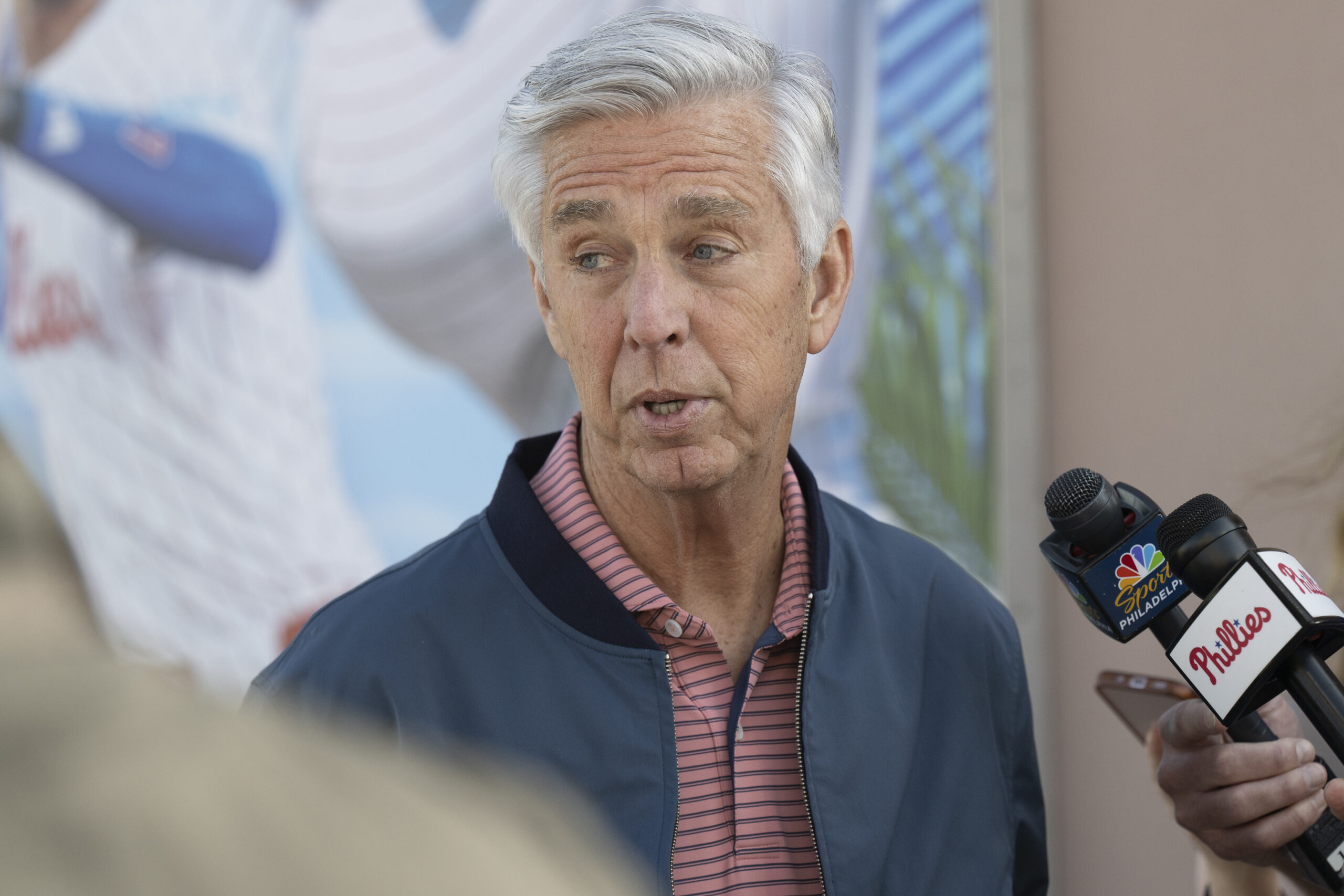
Phillies president of baseball operations Dave Dombrowski at BayCare Ballpark last week.
When Dombrowski raised the question of whether Harper would ever be the elite player he’d once been, Harper could have raised a question of his own:
Who are you to talk, suit?
Instead, he said things like this:
“It was kind of wild, the whole situation,” Harper said Sunday when he arrived at spring training. “I think the big thing for me was, when we first met with this organization, it was, ‘Hey, we’re always going to keep things in-house, and we expect you to do the same thing.’ When that didn’t happen, it kind of took me for a run a little bit. I don’t know. It’s part of it, I guess. It’s kind of a wild situation, you know, that even happening.”
It only makes sense in conjunction with the other things we heard from Harper and his camp. In October, in an interview with MLB.com, agent Scott Boras pointed to the number of pitches Harper saw in the zone (43%, fewest out of 532 qualifying players). On Sunday, Harper riffed on that theme, pointing out the paltry production the Phillies got out of the lineup spot directly behind his usual place in the three-hole.
Look at last season’s Mount Rushmore of hitters and you’ll see the source of Harper’s frustration.
One of the common bonds for Aaron Judge, Shohei Ohtani, and Cal Raleigh was the talent that followed them in the batting order.
Hitting behind Judge were Cody Bellinger, Ben Rice, Jazz Chisholm, and Giancarlo Stanton. Each of those players finished the season with at least 24 home runs and an .813 OPS.
Ohtani’s supporting cast needs no introduction. Mookie Betts and Freddie Freeman are both former MVPs. Will Smith has been an All-Star in three straight seasons.
Raleigh was most often followed directly by Julio Rodriguez, Josh Naylor, Eugenio Suárez, and Jorge Polanco. Three of those players finished 2025 with at least 26 home runs.
Each of those three superstars — the three leading vote-getters on AL and NL MVP ballots — were followed in the batting order by at least three players who finished the season with at least 20 home runs. Compare that to Harper, who usually had two players behind him with more than 12 home runs, neither of whom is on the roster this season (Kepler 18, Castellanos 17).
If anything, Harper was underselling the situation when he met with the media Sunday in Clearwater. The two-time MVP limited his focus to the Phillies’ struggles in the cleanup spot, where they ranked 20th in the majors in OPS last season.
“I think the four spot has a huge impact,” Harper said. “I think the numbers in the four spot weren’t very good last year for our whole team. I think whoever’s in that four spot is going to have a big job to do, depending on who’s hitting three or who’s hitting two.”
Bryce Harper fist-bumps Phillies teammates Sunday ahead of the team’s workout in Clearwater, Fla.
But the issues behind Harper — and/or Kyle Schwarber, depending on the configuration — are deeper than the next-man-up. As we saw last season, pitchers are more than willing to pitch around two hitters when those hitters are Harper and Schwarber, especially when the guys behind them allow for an extended period of exhalation. Lineup protection is a cumulative thing.
We saw that in 2022, didn’t we? A big reason the Phillies thrived with Schwarber leading off and Harper batting third was the presence of Rhys Hoskins (30 homers, .794 OPS) and Realmuto (22 homers, .820 OPS) behind them. Even in 2023, they had some combination of Castellanos (29 homers, .788 OPS), Realmuto (20 homers, .762 OPS), and Bohm (10 homers, .765 OPS).
Boras and Harper have zeroed in on the number of pitches he sees out of the zone. It’s part of the story, no doubt. Over the last three seasons, he has seen a lower percentage of pitches in the zone than any previous three-year stretch of his career. When he was NL MVP in 2021, he saw a career-high 46.7% of pitches in the zone.
At the same time, Harper was pretty darn good in 2023, when he saw 41.2% of pitches in the zone, the second-lowest of his career, according to FanGraphs. Just as important is what Harper chooses to do with the pitches he sees.
Last year, his chase rate was 36%. In 2021, it was 25.5%. But he wasn’t necessarily chasing more pitches. His swing percentage on pitches in the zone was 78.3%, up from 72.1% in 2021.
Protection is a mindset as much as it is an externality. The more protected a hitter feels, the more comfortable he is waiting for his pitch rather than trying to do too much. Pitchers won’t necessarily approach Harper differently if they feel more danger from the hitters behind him. But Harper will absolutely feel more comfortable taking whatever pitchers give him.
The Phillies acknowledged as much with their openness about their failed pursuit of Bo Bichette. Dombrowski knows what the Phillies need. They need what they had in 2021 and 2022 in prime Hoskins and prime Realmuto (and company).
They will need to get lucky to have it this season. Their decision-making will need to be filtered through this context. Aidan Miller, Justin Crawford, the trade deadline. Bohm and García will get the first chances. Dombrowski’s future as the bossman will be determined by how they perform, and then by what happens if they don’t.
The University of Pennsylvania is getting $7.8 million over the next two years to study an overlooked aspect of human health: the lymphatic system.
Often described as the body’s sewer system, its main job is to maintain the body’s balance of fluid and filter out waste. Millions of Americans live with dysfunction in the system, often unknowingly.
The time to diagnose some lymphatic disorders is at least five years, said Maxim Itkin, an interventional radiologist who directs Penn’s center specializing in lymphatic disorders.
He’s even had a patient who experienced unexplained symptoms for 50 years before getting treatment.
“Right now, most healthcare providers simply aren’t equipped — or trained — to recognize lymphatic dysfunction, and the tools they need are virtually nonexistent,” said Kimberley Steele, a program manager at the Advanced Research Projects Agency for Health (ARPA-H), the federal agency organizing the research effort.
That’s why the government, through ARPA-H, is investing $135.7 million toward research headed by 11 institutions in the U.S. and Canada, including Penn, to improve detection of issues in the lymphatic system.
With its slice of funding, the team at Penn will develop ways to image the network and identify hidden signs of disease.
An inside look
Similar to plumbing, fluids in the lymphatic system can be flowing, obstructed, or leaking.
Doctors are able to “close” these leaks and even “open” obstructed areas, but the problem is knowing when those procedures are needed.
Existing contrast agents — substances used to increase visibility of tissues during imaging — for the lymphatic system are largely considered obsolete and offer poor resolution, said Itkin, who is leading the Penn project, which started last October.
When he began researching the system 20 years ago, he “started to realize that it’s of enormous importance, and it’s forgotten primarily because nobody can image [it] and do interventions,” he said.
Maxim Itkin, an interventional radiologist at the Hospital of the University of Pennsylvania, found a way to track the flow of lymphatic fluid using X-ray imaging equipment.
Itkin and his team have come up with ways of imaging by injecting dye into lymph nodes and tissues and tracing the dye’s location. This has enabled him to diagnose hidden conditions and develop new treatment methods.
The ARPA-H funding will allow them to go even further, developing imaging agents that focus on the parts of the lymphatic system in the liver and gut — organs that generate the majority of the network’s flow in the body.
These will be used for CT (computed tomography) and MRI (magnetic resonance imaging) scans.
One of the imagingcandidates is designed to be swallowed and absorbed in the intestine, so doctors can see the lymphatic system in the gut. The second imaging agent will be administered via IV to show the system in the liver.
“It was my dream to see the lymphatic system from inside by itself,” Itkin said.
They’ll be using an approach called AI-driven multi-omics, where AI will analyze samples for unique molecules being excreted by the lymphatic system in the liver.
Penn and several other funded groups are working with the New York-based nonprofit Lymphatic Education and Research Network to help with research and patient recruitment.
Current funding is for two years, with the potential to extend for another three years.
Itkin says seeing the lymphatic system in the liver will be a thrill.
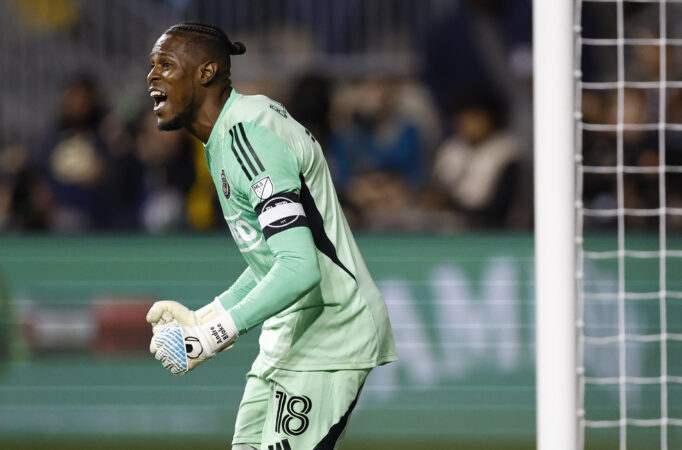
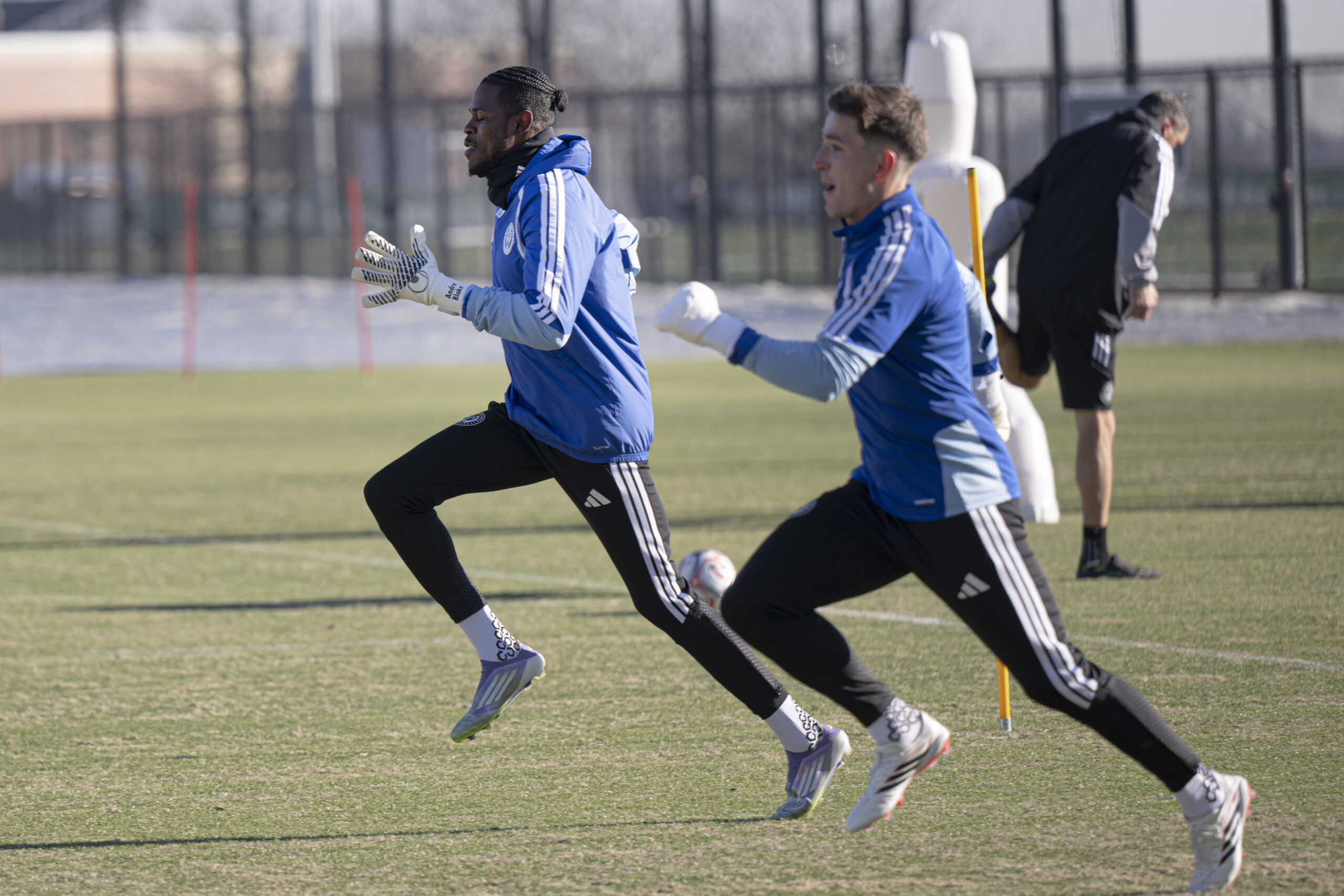
CLEARWATER, Fla. — Sometimes, you don’t have to hear Andre Blake speak to know what’s on his mind.
You can tell from looking at eyes that have seen more Union games than any other player. From hands that have stopped more shots than any goalkeeper should have to, and let more by than any goalkeeper would want to. From feet that have stood by nets across the United States, the continent, and beyond.
You also don’t have to be a Union fan or a Jamaica fan to share the question that resonates so deeply with the 35-year-old, as he begins his 13thseason with the only professional team of his career.
Why has Blake been denied, time and again, the privilege of reaching the twin peaks he so deeply craves: winning an MLS Cup with his club and qualifying for the World Cup with his country?
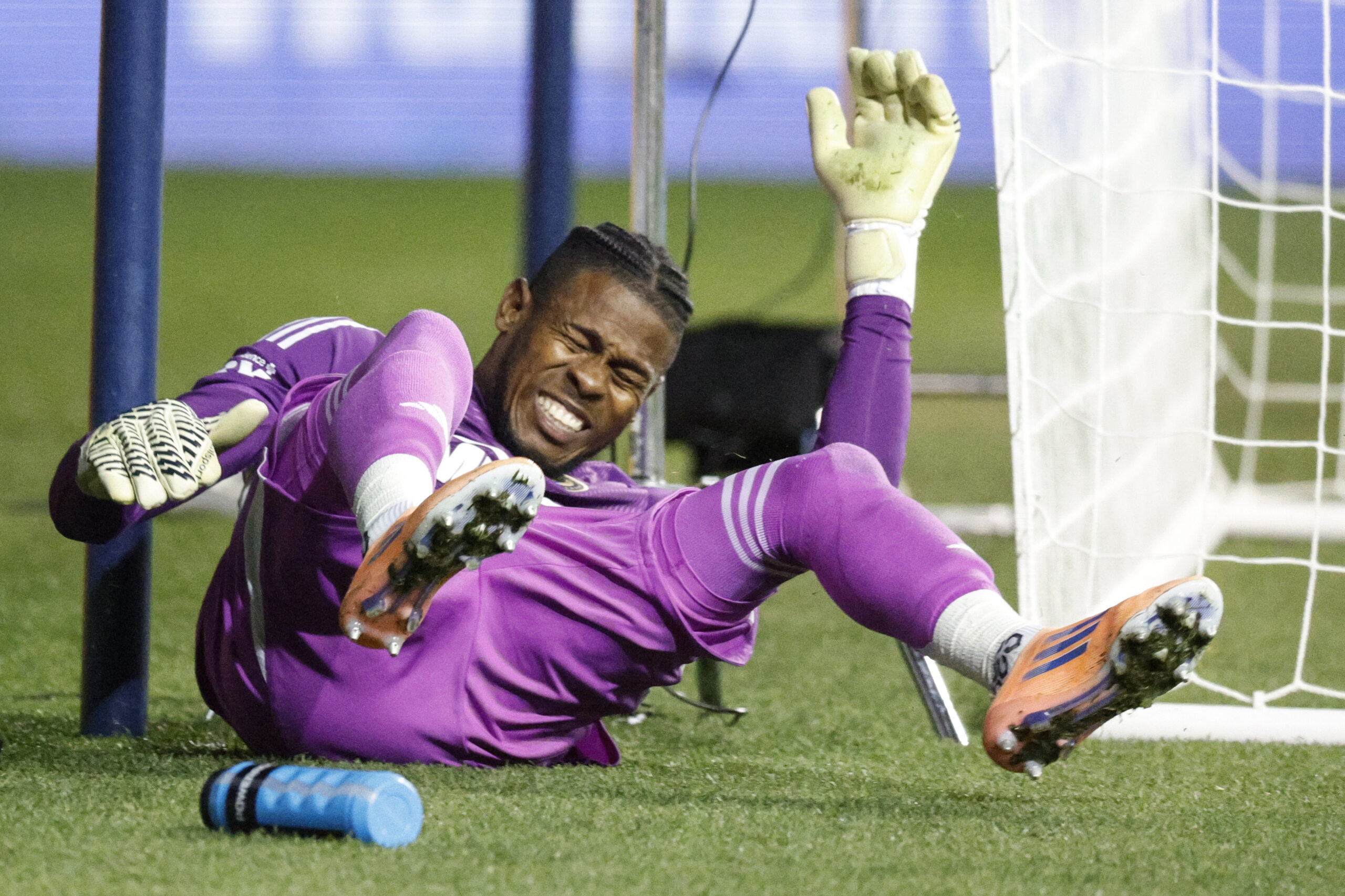
Andre Blake suffered an injury during last year’s playoff loss to New York City FC.
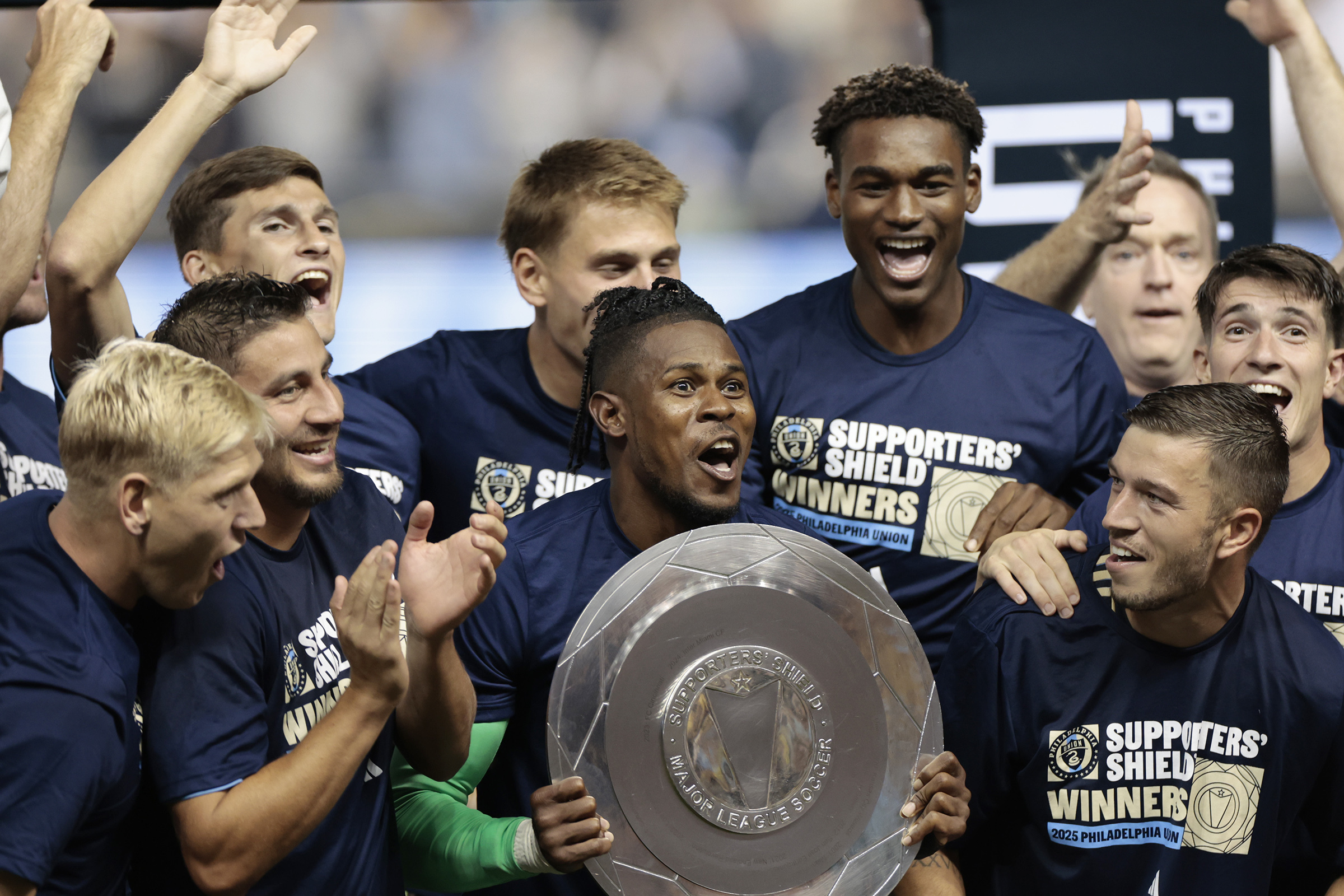
The soccer gods can be cruel, and they have forced Blake to suffer. Yes, he has won two Supporters’ Shield titles, but all of his playoff runs — and his U.S. Open Cup runs, Leagues Cup runs, and Concacaf Champions Cup runs — have ended in defeat, often heartbreak, and most often out of his control.
With Jamaica, the pain cuts especially deep right now. If the failures of past World Cup qualifying campaigns, Gold Cups, and Concacaf Nations Leagues weren’t hard enough, this moment seems almost unfair.
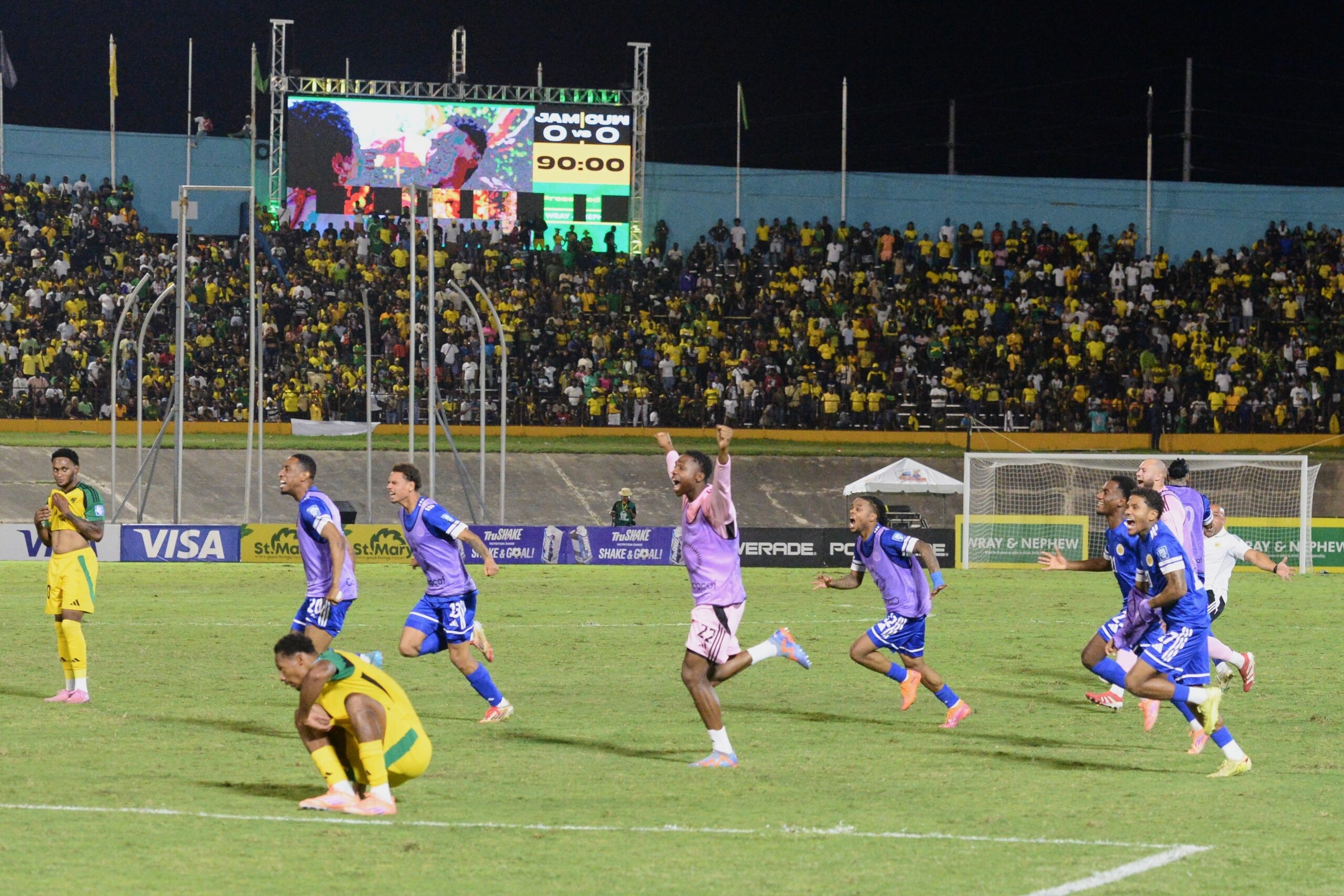
The Reggae Boyz entered the last night of qualifying needing a win at home over Curaçao. But they were held to a scoreless tie, with Blake stuck at the other end of the field from his misfiring teammates. Curaçao took the berth and sent Jamaica to next month’s intercontinental playoffs.
Up the hill and knocked back down, again and again.
Curaçao players celebrating in Jamaica’s stadium after qualifying for the World Cup at the Reggae Boyz’ expense.
‘We need silverware’
“I felt like we were so close again,” Blake said of the Union falling short last year. “We had it — had it where we wanted it to be. But that’s just soccer. Single-elimination games can go either way.”
“I really thought that last year would have been it, knowing that MLS Cup would have been in Philly, but it didn’t happen,” Blake said. “But we just use that as motivation, as experience for us to know that we were that close. And just use that to give us confidence to know that hopefully this year we can go one or two steps closer and win the whole thing.”
Will the stars finally align this year? That’s not how this works, in either Chester or Kingston, and Blake knows as well as anyone. But he’s ready to go once more.
Andre Blake has won two Supporters’ Shields with the Union, but nothing more so far.
“Pretty simple for me: My personal goal is to be better than I was last year,” he said. “That’s always my challenge, to be a better version of myself. And for the team, it’s always the same as well: We need silverware. And the ultimate one is the MLS Cup, so that’s got to be the goal.”
The present moment proves it again. With Jakob Glesnes, Kai Wagner, Mikael Uhre, and Tai Baribo gone, this Union team feels like the start of a new era. As captain, Blake must help set the tone as newcomers blend in with returnees.
“It feels new,” Blake said. “That’s the obvious [part]. But I’ve learned to control what I can control, which is my performance. And whoever is here, the goal is to get the best out of everybody.”
Andre Blake (left) working out at the start of the Union’s preseason.
For now, he continued, his aim is to “just focus on the positives, and positives are whoever is in this room. That’s what we have, and that’s what we have to work with and make the most of.”
‘Everybody starts at zero’
Considering Blake’s history of criticizing the Union for a lack of ambition, what he said next might please the highest-ups — especially as he goes into the last guaranteed year of his contract.
“It’s a new season, everybody starts at zero,” he said. “So I think it’s only fair to judge the season after the season, and not before the season. We have what we have right now, we’re going to do our best, and at the end of the year, we’ll evaluate and see how it was.”
This team doesn’t seem to have the firepower to beat MLS’s best — Lionel Messi’s Inter Miami, Son Heung-Min’s Los Angeles FC, and Thomas Müller’s Vancouver Whitecaps — in the games that matter most. But it has made substantive moves to replace the players it cast off, signing center backs Japhet Sery Larsen and Geiner Martínez and forwards Ezekiel Alladoh and Agustín Anello.
The Union broke their transfer fee record to sign Ezekiel Alladoh.
Sery Larsen could be especially impactful for Blake because of his track record of leadership at past clubs.
“The most important thing coming into a new team is just the willingness to learn and to adapt, and to listen,” Blake said. “I think he came in with an open mind. He wants to learn, he’s willing to do the work.”
The new group must build chemistry fast. The MLS season starts at D.C. United on Saturday (7:30 p.m., Apple TV), and the overall campaign starts Wednesday in the Concacaf Champions Cup at Defence Force FC in Trinidad.
“The Champions Cup is always a different challenge,” Blake said. “Obviously, it’s a reward to be playing in that tournament. And yeah, the first game against Defence Force — for me, these days, there’s no easy game in soccer. You have to be ready to play, mentally and physically.”
If the Union win the two-game series against Defence Force as they should, the climb will get steep fast. Not only will they face Mexican superpower Club América next, but they’ll face playing nine games from Feb. 18-March 21.
The Union could face Club América in the Concacaf Champions Cup for the first time since the 2021 semifinals.
“Not looking past that game, but after that it gets pretty tough,” Blake said. “We’ll prepare accordingly, and we’ll approach every game in a professional manner.”
‘Very angry’ about Jamaica’s struggles
Now to the subject Blake rarely enjoys discussing, but he knows he must.
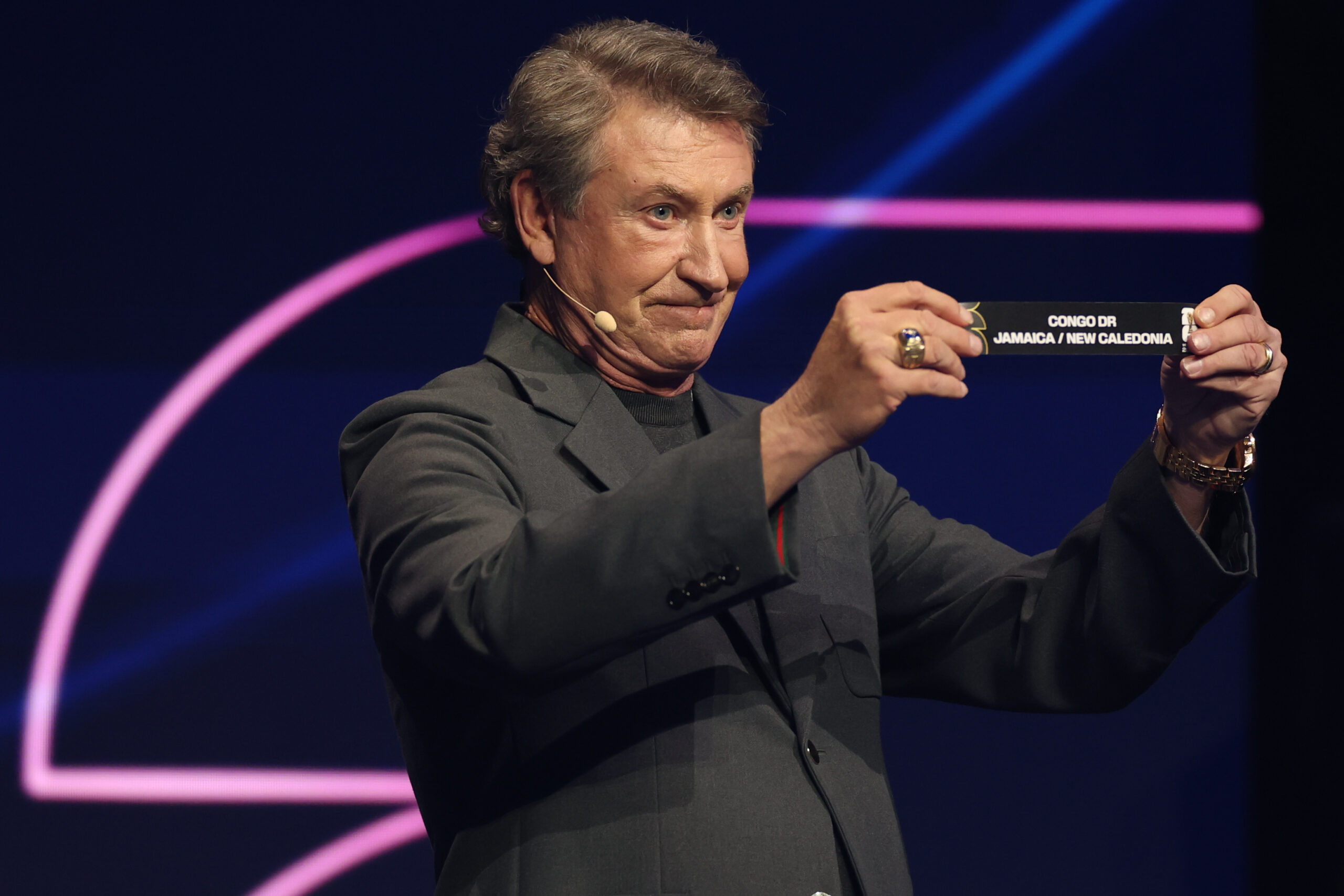
The intercontinental playoffs are five weeks from now. Jamaica will play New Caledonia in the semifinal, then the winner will play the Democratic Republic of the Congo. Both games will be at Guadalajara’s Estadio Akron, a World Cup venue this summer.
That task is not fully on Blake’s mind yet with so much to do before then. But it is still a presence, along with emotions from last fall that still simmer.
“It’s been very tough for me these last couple months,” Blake said. “When you kind of invest so much into something and it doesn’t go the way you want it to go, it can get you, and that’s just kind of the phase I’m in right now as it relates to the national team.”
The words came mixed with stretches of silence that were equally piercing.
“It’s just trying to still process what really happened,” Blake said. “But when the time is right, I’ll do whatever I have to do, and I’ll be ready to go again.”
He will play for the seventh manager of his national team tenure, Rudolph Speid, as famed veteran Steve McClaren resigned after the Curaçao game. The players have not changed, though, including big names like Leon Bailey and Michail Antonio.
It’s on them to deliver.
Jamaica has one last chance to qualify for this year’s World Cup, through FIFA’s intercontinental playoffs in March. Hockey great Wayne Gretzky was at the World Cup draw.
“I haven’t spoken to anyone [since] after we left camp, so I don’t know what the vibe [is],” Blake said. “I know I’m very angry. I can only speak for myself, because I feel like we had an opportunity — a big, big opportunity — and we let ourselves down as players, And yeah, that’s just how I feel. I feel like it should have never gone that way.”
He ran through a series of questions he asks himself about preparation, execution, effort, and controlling the controllable. They brought him back to a repeated answer.
“I just feel like as players we let ourselves down,” he said, “and that’s what made me so angry.”
The Reggae Boyz haven’t made a World Cup since 1998, and ending the drought in North America would be even sweeter. It cheers him up to know how many people are rooting for him in Philadelphia, across MLS, and worldwide.
Jamaica is looking for its first berth in the FIFA World Cup since the 1998 edition in France.
“I believe so,” he said. “At the end of the day I can still hold my head high. You can lose a game, you can not accomplish something, but it’s just how, if you give it your all — you did all you could, you left no stones unturned — and then you lose a game, then you can accept that, you know?”
It’s a message he takes home to a family that enjoys calling Philadelphia home, and that four months ago welcomed a third child — a first daughter.
“For me, whenever I go out there, I always try to make, my family, my fans, myself proud by leaving it all on the field,” he said. “So even if you don’t really accomplish what you want, it’s not going to feel good, but you can still be proud.”
At that point, two more questions remained. Will this finally be his year? And if not now, will it ever?
In 2014, after one season as the Eagles’ head coach, Chip Kelly decided he’d had enough of DeSean Jackson, who’d been kind of a headache. Jeffrey Lurie had given Kelly power over the roster, and Kelly cut Jackson.
Jackson proceeded to lead the NFL in yards per catch in three of the next five seasons, two of which were 1,000-yard seasons. The Eagles would have just one 1,000-yard wide receiver in the next eight seasons (2014-21). They later had two in the same year, 2022, and the No. 1 receiver was A.J. Brown.
Today, 12 years after Kelly’s first foolish move — he also traded running back LeSean McCoy and he drafted disappointing receivers Nelson Agholor and Jordan Matthews — the Eagles again have a high-production receiver who’s been kind of a headache. NFL sources say they Eagles are considering trading him, even though such a trade would carry severe salary-cap ramifications; about $16 million, minimum.
That receiver is A.J. Brown.
Trading him would be crazy.
The Eagles should not even entertain offers for Brown. He is 28. He is driven. He is dedicated. He is irreplaceable. He’s spent the last four years making quarterback Jalen Hurts look good. That’s got to count for something.
Sure, he’s a diva, but then, he’s always been a diva. He was a diva when they traded for him four years ago. Brown immediately hung an “Always Open” sign above his locker. Huge diva move.
He has, at times, looked exasperated on the field. He has argued with coach Nick Sirianni on the sideline. For the last two seasons he’s continually criticized the offense both in person and on social media. The Eagles let him get away with it because they knew he’d still play well. They also let him get away with it because they knew, when they made the trade, and when they extended his contract twice, that he was likely to act like this.
Think about it: If you let your kid throw tantrums on the floor of the grocery store for three years, you can’t expect him to stop throwing tantrums when he’s 4. You just hope the tantrums aren’t so bad you can’t keep shopping.
Could this behavior be a distraction? On most teams, yes. But nobody in the Eagles locker room pays much attention to Brown’s antics.
“There is a genuine appreciation for A.J,” Jason Kelce said Wednesday on 94 WIP.
Kelce has been retired for two seasons, but he remains well-connected to his former coaches and teammates. On Wednesday, Kelce also noted that Brown’s frustrations might be limiting the receiver’s effectiveness. Kelce certainly would know. In his final season, Kelce, himself an emotional player, counseled Brown on harnessing frustration.
Both Kelce and Brown’s current teammates know Brown for who he is. They also know the Eagles cannot afford the luxury of sudden sanctimony.
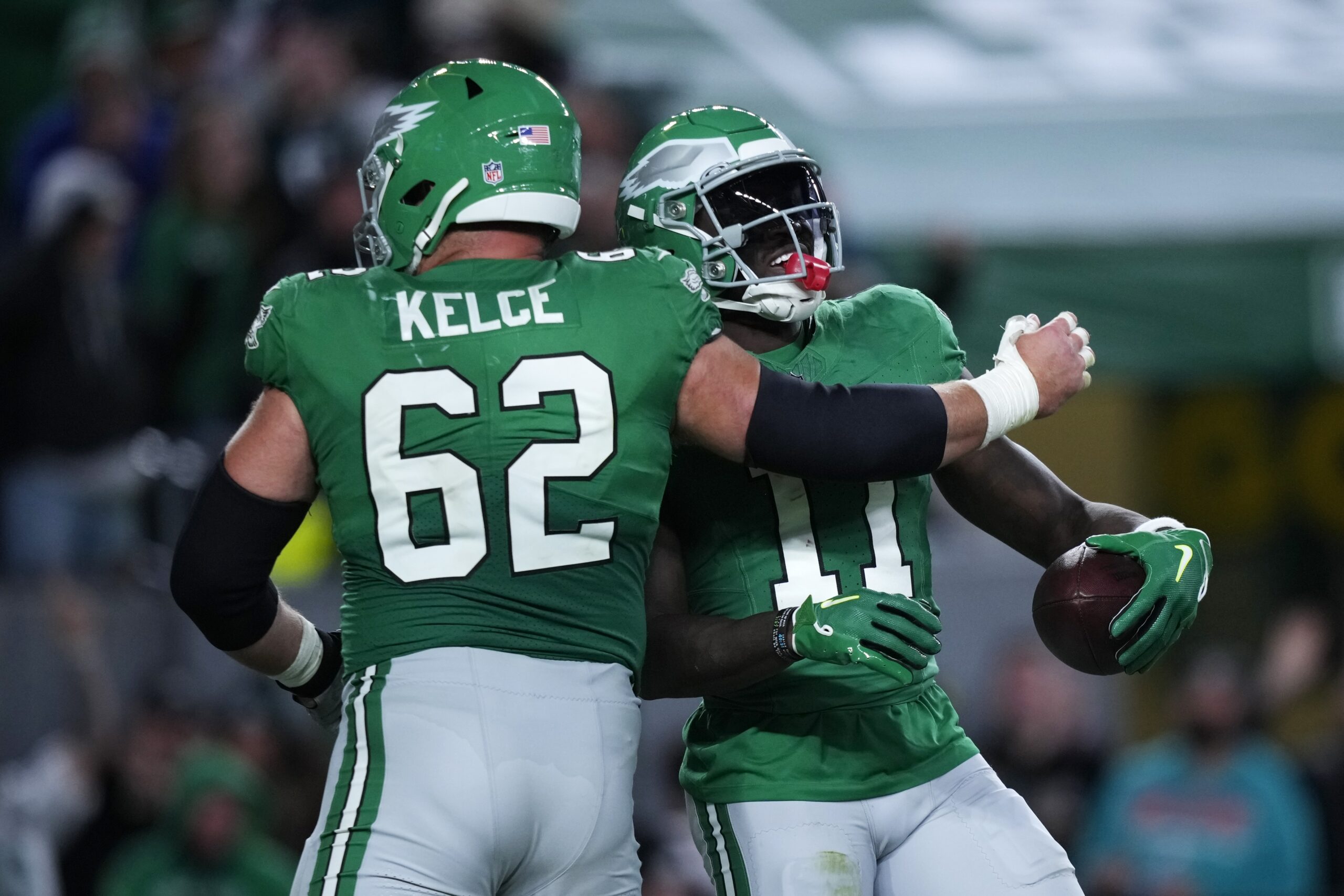
Eagles wide receiver A.J. Brown (11) celebrates a touchdown with center Jason Kelce during the 2023 season.
But does he really want to be here?
Brown hinted during the season that he might want to leave Philadelphia, posting the Bible verse Mark 6:11 after Week 4 on X: “If you’re not welcomed, not listened to, quietly withdraw. Don’t make a scene. Shrug your shoulders and be on your way.”
He then ignored the media for the season’s final two months. When he departed the locker room after the Eagles’ home playoff loss to the 49ers, he hugged several teammates in scenes that looked like permanent goodbyes.
However, last week, Brown broke his media silence on Micah Parsons’ podcast, apparently to send the message that he’d be happy to return to the Eagles.
“As an offense, we just come back and just really watch the tape and rediscover ourselves,” Brown said.
Asked if he was excited about new offensive coordinator Sean Mannion, he replied, “I’m excited for the season. I’m excited for what’s to come.”
In the bigger picture, it’s less important whether Brown wants to return than whether the Eagles can win another championship without him.
They cannot.
The Eagles have a shrinking window in which to reach another Super Bowl without a significant rebuild. They went to two of the last four Super Bowls. Get rid of Brown, and you can forget reaching a third any time soon.
He just had a 1,000-yard season in only 15 games, and that was his worst season in Philly. In 2024 he had a 1,000-yard season and played in just 13 games. He gave up on a few routes this season, and he disappeared in the wild-card playoff loss, but even when he’s bad, he’s good.
He’s gained 5,034 receiving yards on 339 catches in four seasons. That’s 387 more yards and 76 more catches than Mike Quick’s best four seasons, 986 yards and 104 catches than Harold Carmichael’s best four seasons, and 1,097 yards and 131 catches more than Tommy McDonald’s best four seasons as an Eagle. They played in different eras, especially McDonald, but if you think A.J. Brown wouldn’t have dominated in the 1950s and ’60s, then you need to YouTube some NFL Films.
Why would you trade the best receiver in team history if he’s still in his prime?
Which opens another discussion: Is Brown still in his prime?
If you look at simple stats, then probably yes. If you look at some advanced metrics, you might think his moon is waning.
For instance, Brown’s average separation last season, according to NFL Next Gen Stats, was 2.2 yards, eighth-lowest among qualified receivers. It also was an improvement; his 2.1 average in 2024 was third-lowest. But does it matter? After all, when he went to the Pro Bowl in 2022 and 2023 his separation averages were 2.6 and 2.4 yards, respectively.
Brown still consistently draws coverage from the other team’s best cornerback. He still consistently draws double teams. Last season, Pro Football Focus ranked him 11th in all-around play among receivers with at least 60 targets. He was No. 2 in drop rate.
That’s not to say he couldn’t have played better, but then, the wide receiver position is more dependent on the rest of the team than any other position.
The Eagles passing offense has averaged fewer than 195 yards per game each of the last two seasons, which seems absurd considering the weapons at Hurts’ disposal, but nobody in their right mind would consider this issue to fall at the feet of Brown, nor DeVonta Smith, nor Dallas Goedert.
In 2024, with defenses having discovered Hurts’ shortcomings and challenged Hurts’ arm, veteran offensive coordinator Kellen Moore leaned on running back Saquon Barkley and a historically dominant offensive line. That’s how the Eagles won the Super Bowl.
In 2025, opposing defenses sold out to stop Barkley, which worked, since the line had deteriorated due to age and injury. Challenged again, and with a first-time coordinator in Kevin Patullo, Hurts failed.
Not Brown. Hurts.
Let’s be real, folks.
You’re talking about trading the wrong damned guy.
CLEARWATER, Fla. — One of the best catchers in baseball history intercepted Dave Dombrowski during a break in the general managers’ meetings in November.
Buster Posey had an itch to scratch.
Posey made roughly $170 million over a 12-year playing career in which he was a seven-time All-Star and three-time World Series champion. But he also observed that catchers, on the whole, weren’t as well-compensated as similar players at other positions, even though they are tasked with calling a game and handling a pitching staff.
So, Posey, now the San Francisco Giants’ president of baseball operations, approached his Phillies counterpart, who has led the front offices of five organizations over nearly four decades.
“He said, ‘Yeah, let me ask you a question: Why does the industry not put more dollar value on some of those things?’” Dombrowski recalled. “It’s hard, I think, the way it is. And we had a long conversation about it.”
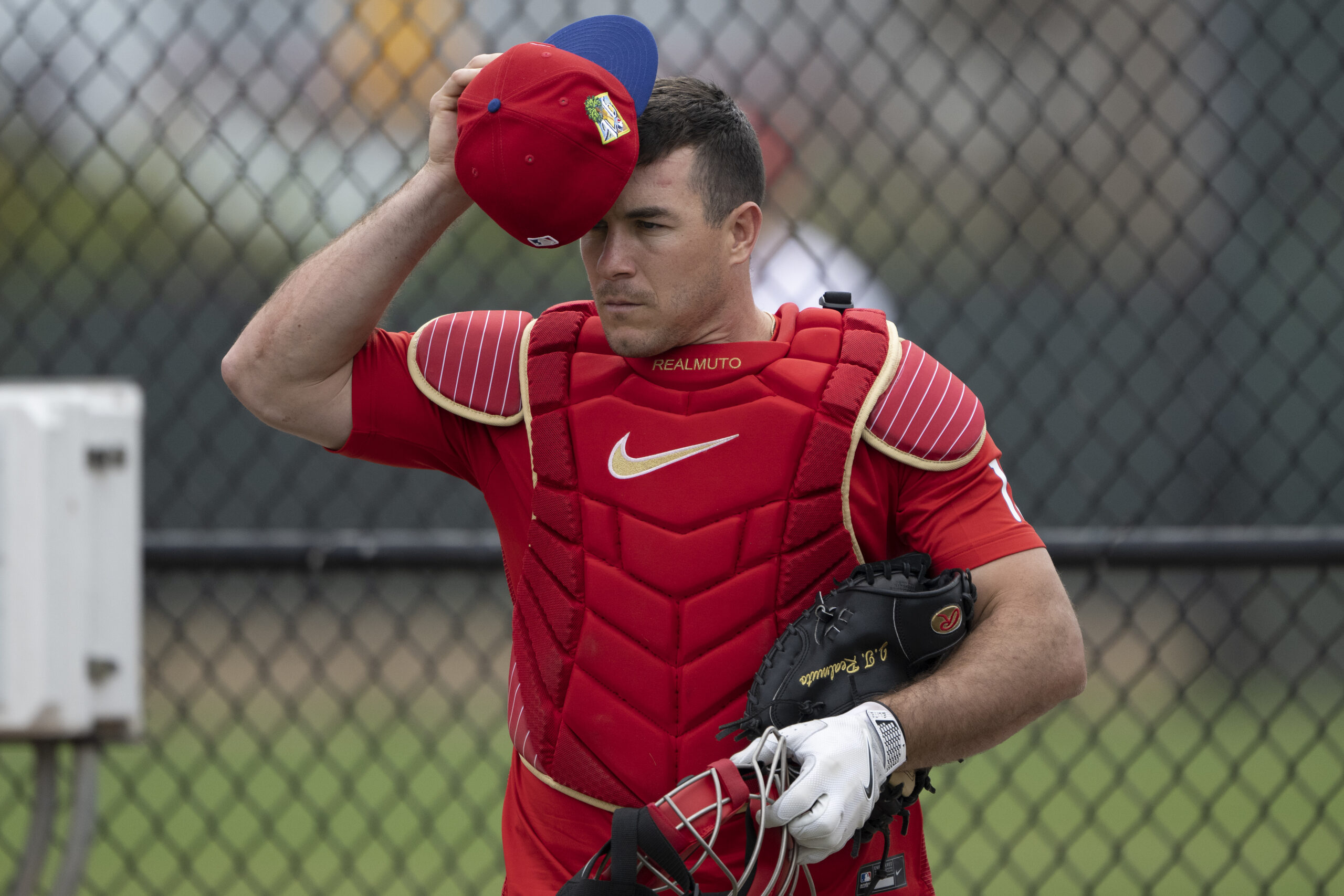
Timely, too, as it turned out. Because the Phillies were in contract negotiations with free agent J.T. Realmuto, their catcher since 2019 and a foundational player in one of the winningest runs in the franchise’s 143-year history.
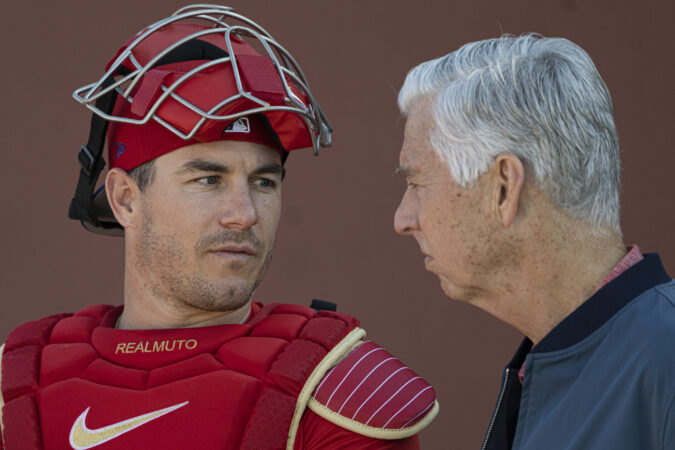
Phillies catcher J.T. Realmuto shown during the first day of pitchers and catchers practice on Wednesday.
And it would soon be clear that there was at least a $4 million-per-year gulf between what the team and the veteran catcher’s camp believed he was worth.
The Phillies prioritized re-signing Realmuto this winter. They made an offer in December — but at a reduced annual salary (in the $10 million to $11 million range, major-league sources said) after three consecutive seasons of declining offense. Behind the plate, Realmuto, who turns 35 in March, remains unassailable as a game-caller and leader.
Realmuto felt those skills were worth a certain salary. The Phillies valued them differently.
“We had a number in our mind, and we knew what we were worth,” Realmuto said this week on Phillies Extra, The Inquirer’s baseball podcast. “And I wasn’t going to take anything less than that.”
It was a familiar stance. Realmuto and his agents, who also represented Posey as a player, have long sought to boost the pay scale for catchers.
In 2021, Realmuto re-signed with the Phillies for a $23.1 million annual salary, a record for catchers — by $100,000. Five years later, the mark still stands. And it’s less than the record for any position other than relief pitcher (Edwin Díaz: $23 million). It’s also less than the seven highest salaries for third basemen and the top nine for outfielders, according to Spotrac.
Realmuto went to an arbitration hearing against the Phillies in 2020 over a $2.4 million difference in salary proposals because he was trying to move the goal posts for catchers. He lost.
“I don’t believe teams — from a) their models and b) their valuations — take into account the nonanalytical special sauce of a catcher,” said Matt Ricatto, Realmuto’s agent at CAA, the same agency that represented Posey as a player. “I think it’s a blind spot for baseball.”
So, Realmuto fought that fight again this winter. It nearly ended with him and the Phillies going their separate ways.
There was some uncertainty this offseason that J.T. Realmuto would not return to the Phillies, but both sides reached a deal last month.
Catch 22
Most people know the story by now.
In January, as talks with Realmuto reached an impasse, the Phillies pivoted to free-agent infielder Bo Bichette, even agreeing to make his desired seven-year, $200 million offer, major league sources said. If the Mets hadn’t swooped in with a higher-salary ($42 million per year) three-year deal, Bichette would be with the Phillies and Realmuto … well, with whom exactly?
“It got a little stressful there for a couple of days,” Realmuto said. “We started kind of thinking about our other options and putting the logistics together of what it might be like to go somewhere else. And thankfully it didn’t come to that because, as we’ve stated all along, this is where we wanted to be. We’re happy we didn’t have to up and move and go somewhere else.”
Indeed, Realmuto lives on Clearwater Beach. His wife and four children are with him throughout spring training. They’re comfortable in Philadelphia. Nobody wanted to leave.
But Realmuto felt it was important to continue his crusade for catcher equity. He held firm on not accepting the Phillies’ initial offers. On the night of Jan. 15, Dombrowski called Ricatto to inform him the Phillies were going in a different direction.
Roughly 12 hours later, once the pursuit of Bichette was foiled, the Phillies raised their offer to Realmuto: three years and $45 million, with as much as $7 million per year in bonuses based on merit (top-10 MVP votes, All-Star elections/selections, Gold Glove, Silver Slugger).
“If you ask any pitcher, any pitching coach, any manager, the most important thing a catcher can do is call a game and know his pitching staff and give them confidence when they’re on the mound,” Realmuto said. “If you can make your pitchers 5% better, 10% better, over the course of a year, that’s extremely, extremely valuable.”
Sure. But game-calling and handling a pitching staff are among the last largely unquantifiable skills in baseball’s analytics age.
“And because it’s not really quantifiable, then you don’t really get rewarded for it,” Realmuto said. “That’s the aspect that I just don’t agree with. It doesn’t sit well with me, so that’s kind of just why I enjoy fighting for it.”
J.T. Realmuto re-signed with the Phillies on a three-year, $45 million contract.
Measuring up
In modern baseball, there’s a metric for everything.
Almost everything.
Who’s the fastest runner? Statcast tracks feet-per-second sprint speeds. The best outfield jump? There’s data for that, too. A hitter’s average exit velocity, launch angle, and bat speed. A pitcher’s spin rate and vertical/horizontal movement.
The metrics for catchers include blocking, throwing, and framing, the technique of receiving a pitch in a way that influences the umpire to call a strike. “Pop time” measures how fast a catcher releases the ball on steal attempts. Realmuto annually has among the best pop times of all catchers. His framing isn’t typically as strong, in part because the Phillies don’t emphasize it as much as other teams.
But there isn’t a reliable gauge for calling a game. Phillies manager Rob Thomson, a former minor-league catcher, suggested catcher’s ERA and OPS as decent barometers.
In that case, opponents have a .682 OPS and Phillies pitchers have a 3.75 ERA with Realmuto behind the plate since 2023. The major-league averages during that time: .722 and 4.18.
A catcher’s ability to handle a pitching staff is almost entirely anecdotal.
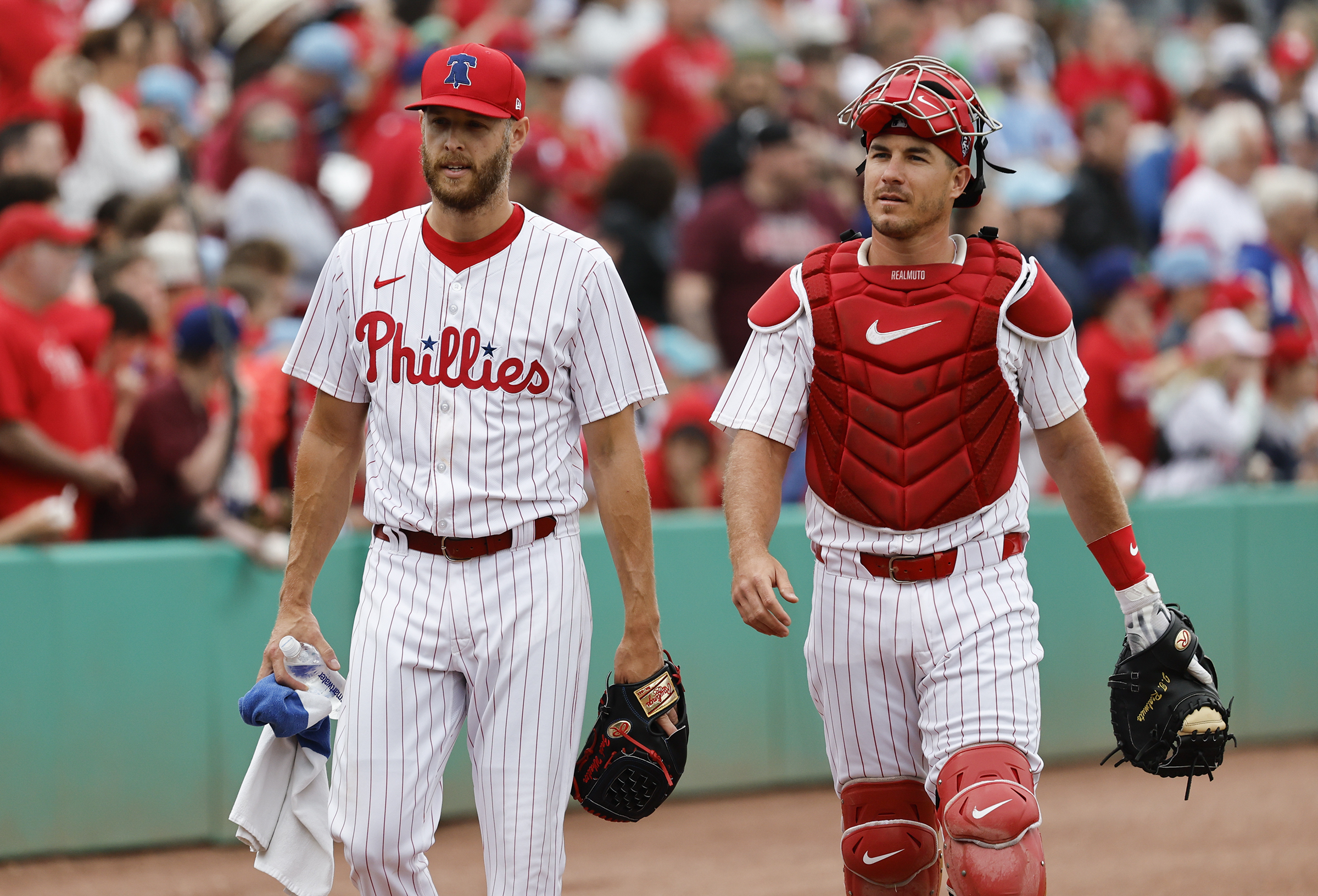
Zack Wheeler swears by Realmuto. He barely ever pitches to anyone else (134 of Wheeler’s 157 starts for the Phillies have come with Realmuto behind the plate) and hardly ever shakes off a pitch that he calls.
Cristopher Sánchez, who emerged as the Cy Young runner-up in the National League last year, cited Realmuto’s diligence in putting together a game plan, a process that begins even before the starter arrives at the ballpark. And Jesús Luzardo describes Realmuto as “a no-B.S. guy” behind the plate.
“You show up to the field, he’s already there, doing homework, going over scouting reports, watching video,” Luzardo said. “So, when he goes up back there and he tells us, ‘This is the plan that we’re going to do throughout the game,’ you have confidence that he knows what he’s talking about and that it’s not [him] just winging it.”
In conversations with the Phillies and other teams this winter, Ricatto described Realmuto’s “cascading effect” on a team. Because although he’s not the best player on the roster, “he makes [teammates] better than anyone else at that [catcher] position,” Ricatto said.
Surely, that’s worth something.
But how much?
It’s a question that gets to the heart of Dombrowski’s chat with Posey.
“J.T. is outstanding, right?” Dombrowski said. “He handles the staff well. He does all those other things. But let’s say you had a catcher that, let’s say they hit .150. And they did all that [other stuff]. What would you pay that person? I don’t have that exact answer.
“But it’s one of those where it’s a combination of the value, the defensive performance, and all that — and the hitting aspect of our game. The game has rewarded offense [more than anything] throughout the years.”
Phillies ace Zack Wheeler (left) has said he almost never shakes off a pitch called by J.T. Realmuto.
‘I never felt like Plan B’
Realmuto is coming off his worst offensive season since his rookie year in Miami. But he wasn’t a .150 hitter, either. He batted .257 with 12 homers and a .700 OPS. Based on OPS-plus, he was 9% less productive than league average.
But even at Realmuto’s offensive peak, his agents believed he was paid less simply because he’s a catcher.
After the 2019 season, Realmuto filed for $12.4 million in arbitration because his numbers were comparable at the same point in his career to then-Nationals third baseman Anthony Rendon, who made $12.3 million in 2018. But a three-person panel ruled in favor of the Phillies’ $10 million offer, still an arbitration record for catchers.
And although the judges didn’t provide an explanation, Jeff Berry, one of Realmuto’s agents at the time, believed it was because they compared Realmuto only to fellow catchers, notably Baltimore’s Matt Wieters, who made $8.3 million in his third year of arbitration in 2015.
Which doesn’t mean Realmuto gets paid squat. He has made approximately $135 million since 2016. When his new contract expires, he will have made at least $180 million.
It’s little wonder, then, that Realmuto said he doesn’t have any hard feelings toward the Phillies after they nearly broke up with him last month. He insisted he doesn’t feel like a consolation prize for not landing Bichette.
“To be honest, I never felt like Plan B because I could have signed with the Phillies a month and a half earlier,” he said. “They just valued me differently than I valued myself.”
So, Realmuto stood on principle, just like he always has.
Jefferson Health had an operating loss of $201 million in the six months that ended Dec. 31, compared to a $55 million loss the year before, the nonprofit health system said in a notice to bondholders Friday.
The $201 million loss included a $64.7 million restructuring charge related to severance for 600 to 700 people laid off in October and other changes designed to improve efficiency in the 32-hospital system that stretches from South Jersey to Scranton.
Excluding the restructuring expenses, Jefferson’s operating loss was $136.3 million in the first half of fiscal 2026.
Jefferson said in a statement that it continues facing significant financial headwinds, like health systems nationwide, citing rising pharmaceutical costs.
“We remain focused on driving efficiency, advocating for reimbursement rates that better reflect the true cost of care in Pennsylvania, and advancing the long-term stability of our academic health system,” the health system’s chief financial officer Michael Harrington said.
Here are some details:
Revenue: Patient revenue reached nearly $6 billion in the first half of fiscal 2026. The figure for the previous year is not comparable because it does not include Lehigh Valley Health Network for the full six months. Jefferson acquired the system on Aug. 1, 2024.
Jefferson’s total revenue of $8.6 billion included $145.9 million of investment income that directly boosted operating income. Competitors who use heath-system reporting rules do not include investment income in revenue. Jefferson, by contrast, follows rules for higher-education reporting.
Insurance business: Jefferson noted improvement in its health insurance arm. Jefferson Health Plans’ loss in the six months ended Dec. 31 was $90.7 million, compared to a $118.5 million loss in the same period the year before. The number of people insured in the plans climbed to 371,005 from 359,662. Medicaid recipients account for most of that enrollment.
Notable: Both Moody’s Ratings and Standard & Poor’s Ratings Service in December and January revised their outlooks on Jefferson to negative, which means the agencies could downgrade the organization’s credit rating if Jefferson’s finances don’t improve over the next two years.
“The negative outlook reflects the magnitude of current operating losses as well as anticipated difficulties in returning to or near operating profitability for several years,” Standard & Poor’s said.
Tower Health had an operating loss of $16 million in the first six month of fiscal 2026, according to its report to bondholders Friday. In the same period a year ago, the Berks County nonprofit’s loss was $16.1 million.
Here are some details:
Revenue: Revenue from patient care rose less than 1% to $889.3 million, while total revenue climbed 4.3% to $1.03 billion, thanks to a 34% increase in other revenue.
Cash reserves: Tower reported $244 million in cash reserves on Dec. 31. That translates into enough money to keep operating for 44 days without any new revenue. Both of those figures were at their highest levels since 2022.
The quarterly low was in March 2024, when Tower reported $153 million in cash. That amounted to 30 days of cash on hand. Financially strong systems often have 200 days in reserve.