Tag: UniversalPremium

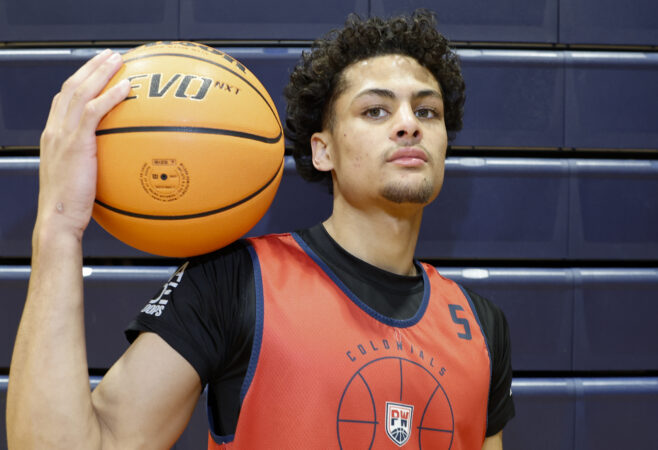
  • Mani Sajid takes ‘no off days.’ Now he’s etched his name in Plymouth Whitemarsh hoops history.

    Mani Sajid takes ‘no off days.’ Now he’s etched his name in Plymouth Whitemarsh hoops history.

    In over three decades years of coaching basketball at Plymouth Whitemarsh High School, Jim Donofrio had to convince one player to take a day off.

    That’s Mani Sajid, now a 6-foot-4 senior shooting guard.

    His resumé can attest to it. He has led the Colonials to an 19-5 record and the top seed in the District 1 Class 6A tournament. Plymouth Whitemarsh will host the winner of Friday’s game between Downingtown West and Central Bucks East on Tuesday.

    Sajid also became Plymouth Whitemarsh’s all-time leading scorer, finishing with 1,686 points in the regular season, and is committed to play at Towson, where he will enroll early.

    Donofrio said the coaches there will be lucky if they can get Sajid out of the gym.

    “His natural work ethic is as high as any kid I’ve coached in 35 years,” Donofrio said. “His work ethic and drive is at that special level.”

    Sajid recognizes that becoming the program’s all-time scoring leader is a great achievement, but he also wants to experience postseason success. The Colonials reached the district final last season, where they fell to Conestoga in overtime.

    “I did have a chance for the scoring record, but that wasn’t my main goal,” Sajid said. “That just came as we played. [We are] just trying to win everything. Districts and state titles are our main goal as a team and the main goal for me.”

    Plymouth Whitemarsh’s postseason did not start off as anticipated. The Colonials were upset, 45-43, by rival Upper Dublin in the semifinals of the Suburban One League tournament. But the Colonials were still the top-seeded team in the District 1 Class 6A bracket when it was revealed last Sunday.

    The right ingredients

    Chuck Moore Jr., an assistant with Plymouth Whitemarsh, has known Sajid since he was a middle schooler. Moore was a 1,500-point scorer at Plymouth Whitemarsh and graduated with Sajid’s father, Ayyaz, in 1997.

    Moore, who runs an AAU program with his younger brother, Penn assistant Ronald Moore, would see Sajid’s father at tournaments and showcases. Every time the old classmates met, Ayyaz would try to convince Moore to train his son. Moore finally agreed the third time Ayyaz asked and arranged a session with Sajid at the Plymouth Whitemarsh gym.

    “Right away, you could see the skill set,” Moore said. “He was already a long, lanky kid with long arms.”

    He developed quickly in a year. By the time Sajid finished his eighth grade season and was entering high school, Moore knew his spot on PW’s scoring leaderboard was in jeopardy.

    “I said, ‘Yeah, he’s going to be the all-time leading scorer one day,’” Moore said. “I could see it in him at that early age.”
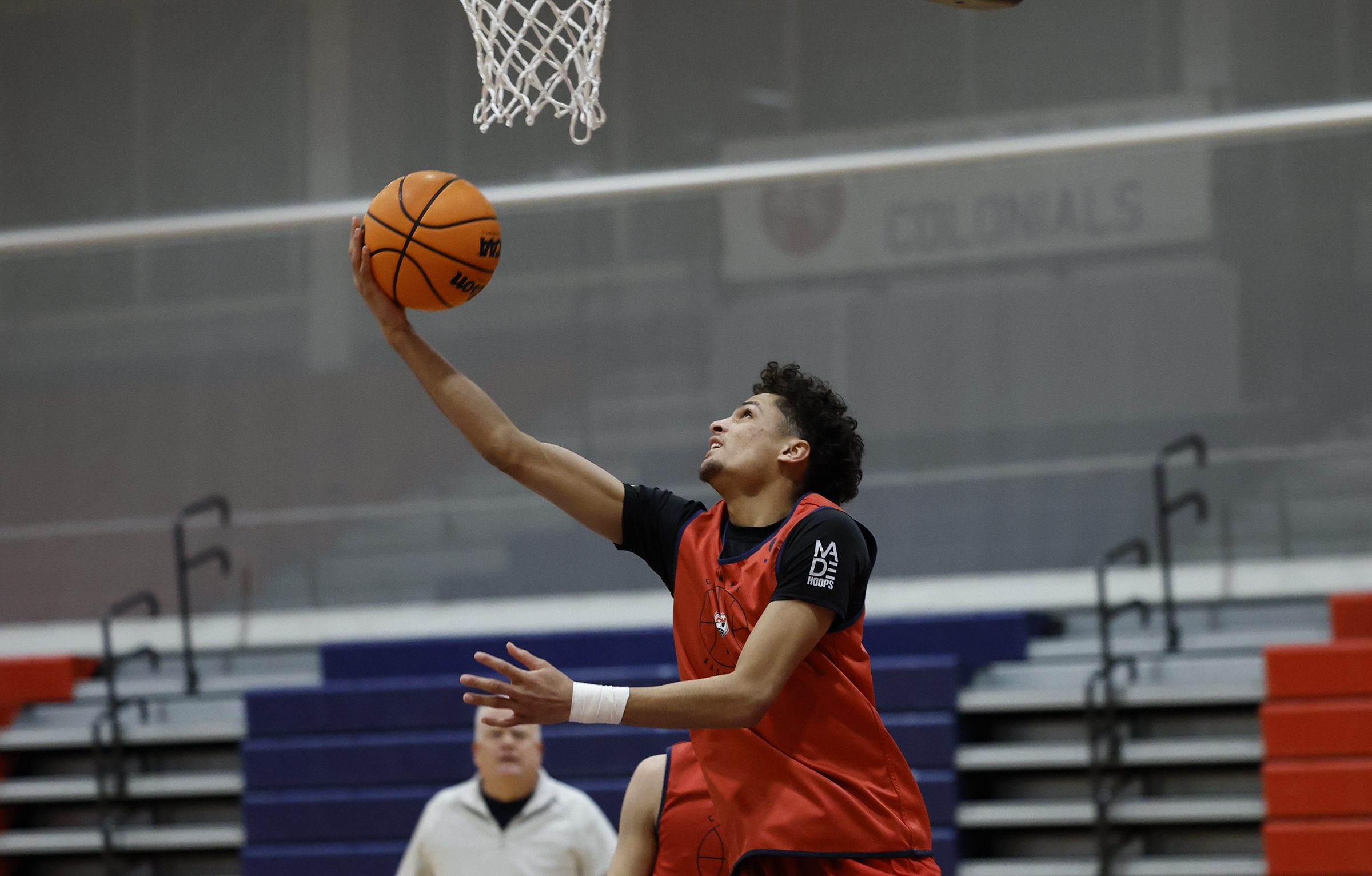
    Mani Sajid helped Plymouth Whitemarsh earn the No. 1 seed in the District 1 6A playoffs.

    Donofrio confirmed that his assistant called Sajid’s ascent to the top.

    “Chuck Moore, he predicted it when [Sajid] was a freshman,” Donofrio said. “He goes, ‘That’s the all-time leading scorer.’ I remember him saying it. Mani had the right stuff. He had the right ingredients.”

    No time off

    Those ingredients — a long, lanky frame and a natural shooting ability — do not guarantee success. They need to be combined with a solid work ethic. Sajid’s coaches say that the senior has that in abundance.

    When Donofrio told Sajid to take a day off during the offseason, he ignored his coach’s order.

    “I had to call his dad up a couple of summers ago and say, ‘He has to take a day off,” Donofrio said. “I said, ‘Please, take Sunday.’ It was in the summertime. And then I find out, not only did he not take Sunday off, he worked out twice that day.”

    Sajid likes being in the gym as much as possible, which should benefit him as he transitions to Towson.

    “It’s hard to get me out of the gym, man,” Sajid said. “I’m a guy that likes to go seven days a week, especially in the offseason. There really are no off days.”
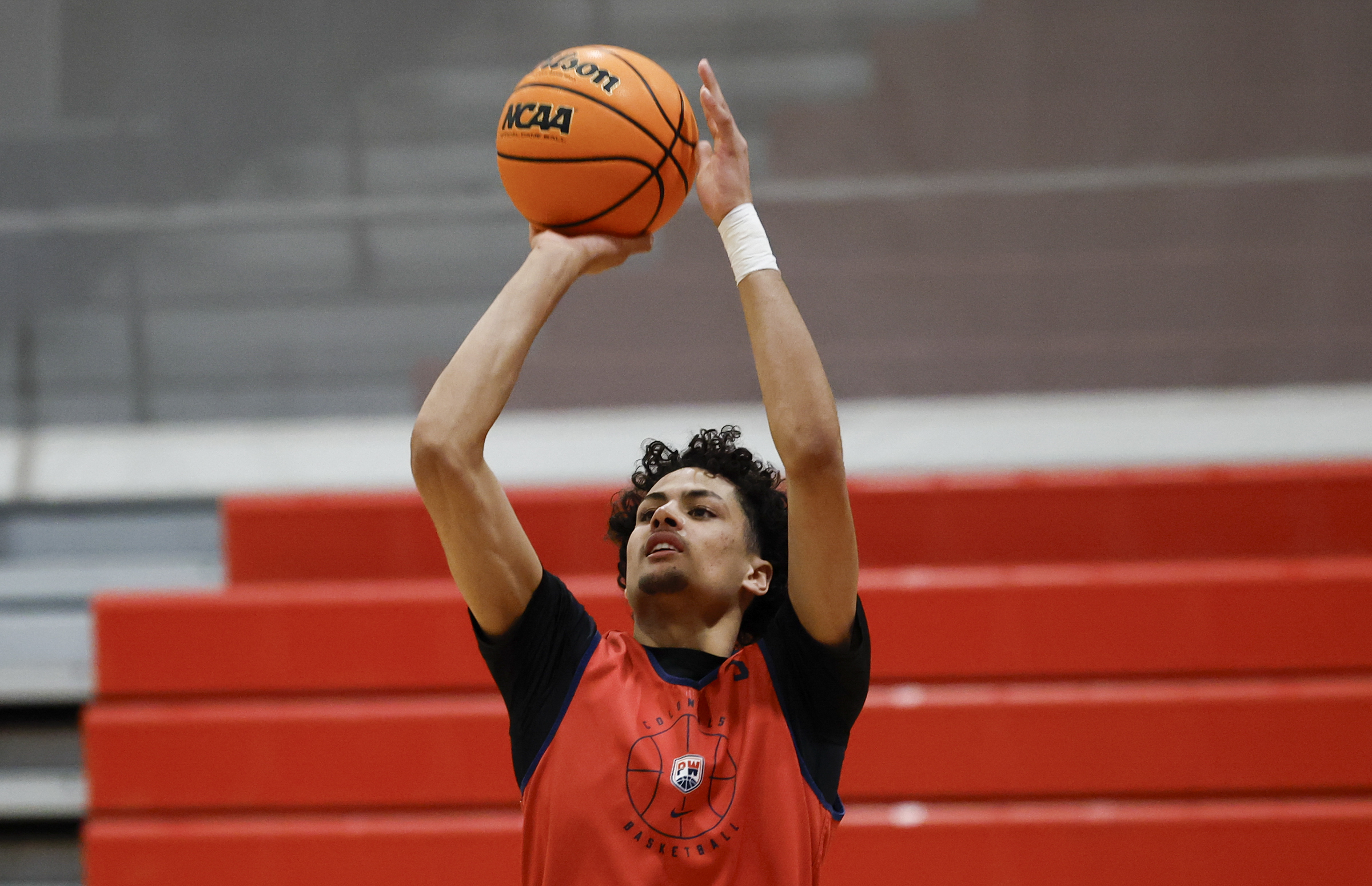
    Plymouth Whitemarsh assistant coach Chuck Moore Jr., said “right away” Mani Sajid had a strong skill set.

    After last season’s run to the district final, Donofrio challenged Sajid to share the ball with his teammates more effectively.

    “You’re going to score 26 points the hard way or the easy way,” Donofrio said. “If you get rid of the ball, you’re still scoring 26 points, only we’re going to win a lot more.”

    It took Sajid some time to accept that piece of coaching, but once he did, he began to develop his skills as a passer.

    “I think I just grew up more as a player, grew up more as a person,” Sajid said. “Just being able to trust those guys. I know that they always have my back, and I always have their backs. I trust them a lot.”

    Transition to Towson

    After emerging as a contributing piece for the Colonials as a sophomore, Sajid started to draw some attention from colleges. He fielded offers from Albany, St. Joseph’s, Temple, La Salle, East Carolina, Bryant, Penn State, and Towson before committing in July to play for the Tigers.

    Sajid said he chose Towson for its coaching staff.

    “They’ve just been really consistent,” he said. “They’ve been a great coaching staff. They hit me up often and always check up on me, and that’s what I like.”

    Sajid, a three-star recruit, is the highest-ranked player of three signees in the Tigers’ class of 2026. Towson’s 2026 class also includes Neumann Goretti guard Stephon Ashley-Wright, the younger brother of BYU guard Robert Wright III.

    Sajid hopes to see minutes early at Towson, which competes in the Coastal Athletic Association.

    “That is my goal, to step on there freshman year and play,” Sajid said. “But I’ve got to work for that spot.”

    Donofrio believes the most crucial part of Sajid’s college development is adding weight. He weighs about 170 pounds and will need to put on muscle to keep up with college players, especially on defense.

    “He’s going to have to want to get more physical,” Donofrio said. “That’s his next challenge for this summer, into the fall. And he loves the weight room now, and he loves strength training and agility, conditioning. Hopefully he still loves Franzone’s pizza, because he should eat a lot of that to get about 8 to 10 more pounds on him.”
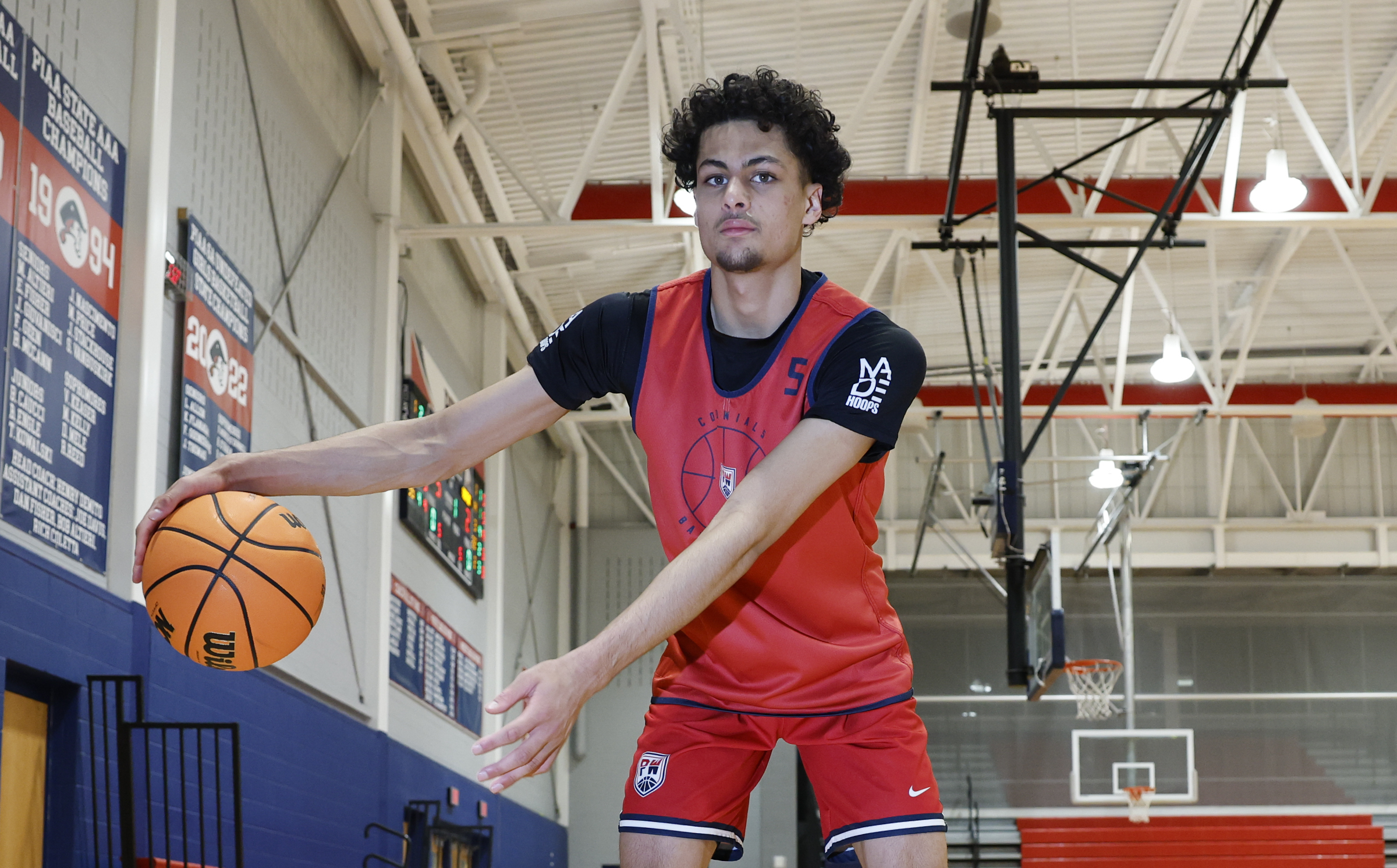
    Mani Sajid looks to earn a district and state crown for Plymouth Whitemarsh.

    His coach isn’t worried, though. Donofrio said Sajid could be a major talent at the next level.

    “It would not surprise me at all if, by the end of his first college season, a lot of coaches are punching themselves in the head,” Donofrio said. “I’ve coached a lot of talented guys, and, trust me, the ceiling on him has got a ways to go.”
  • A Delco restaurant gem is born, fueled by Mexican family flavors

    A Delco restaurant gem is born, fueled by Mexican family flavors

    There is something magical about the mole poblano at Tlali in Upper Darby, but it took me a moment to register what it is.

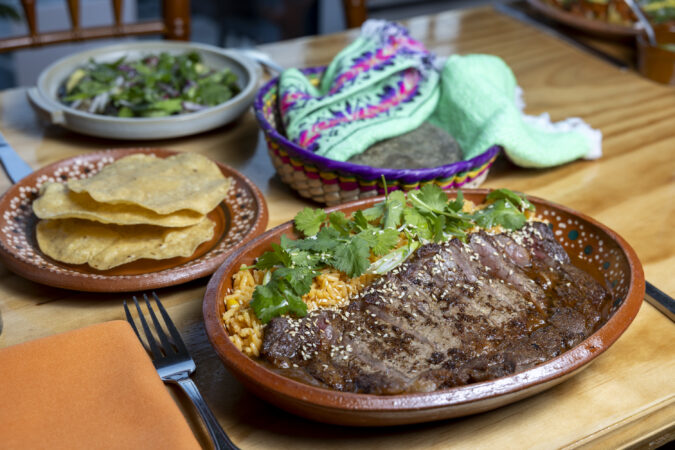
    The Sandoval family’s mole, at first glance, is as deep a brown as any other you might have encountered from the state of Puebla, the result of a blend of dried chilies, fruits, and bittersweet Mexican chocolate. But when I swipe a juicy morsel of prime seared rib eye through the luxuriously dark puree, what I’m struck by is its ethereal lightness, both of the texture and the complexity of flavors. It’s so elegantly balanced, I taste each note — the smoky dry heat of chipotle meco peppers in the background, the fruity sweetness of ripe plantains and raisins, the nutty richness of walnuts and sesame seeds, a whiff of canela and bay leaf — all flowing into one earthy harmony of measured sweetness and spice.

    What I’m tasting here, in fact, is Alberto Sandoval’s memory as a 10-year-old come to life. He vividly recalls the moment when his mother, Teresa Hernandez, was cooking that same mole for his father’s birthday in San Mateo Ozolco and held up a spoonful for Alberto to see.

    “Your mole has to be this consistency — really light, not too thick, not too spicy. This is a good mole.”
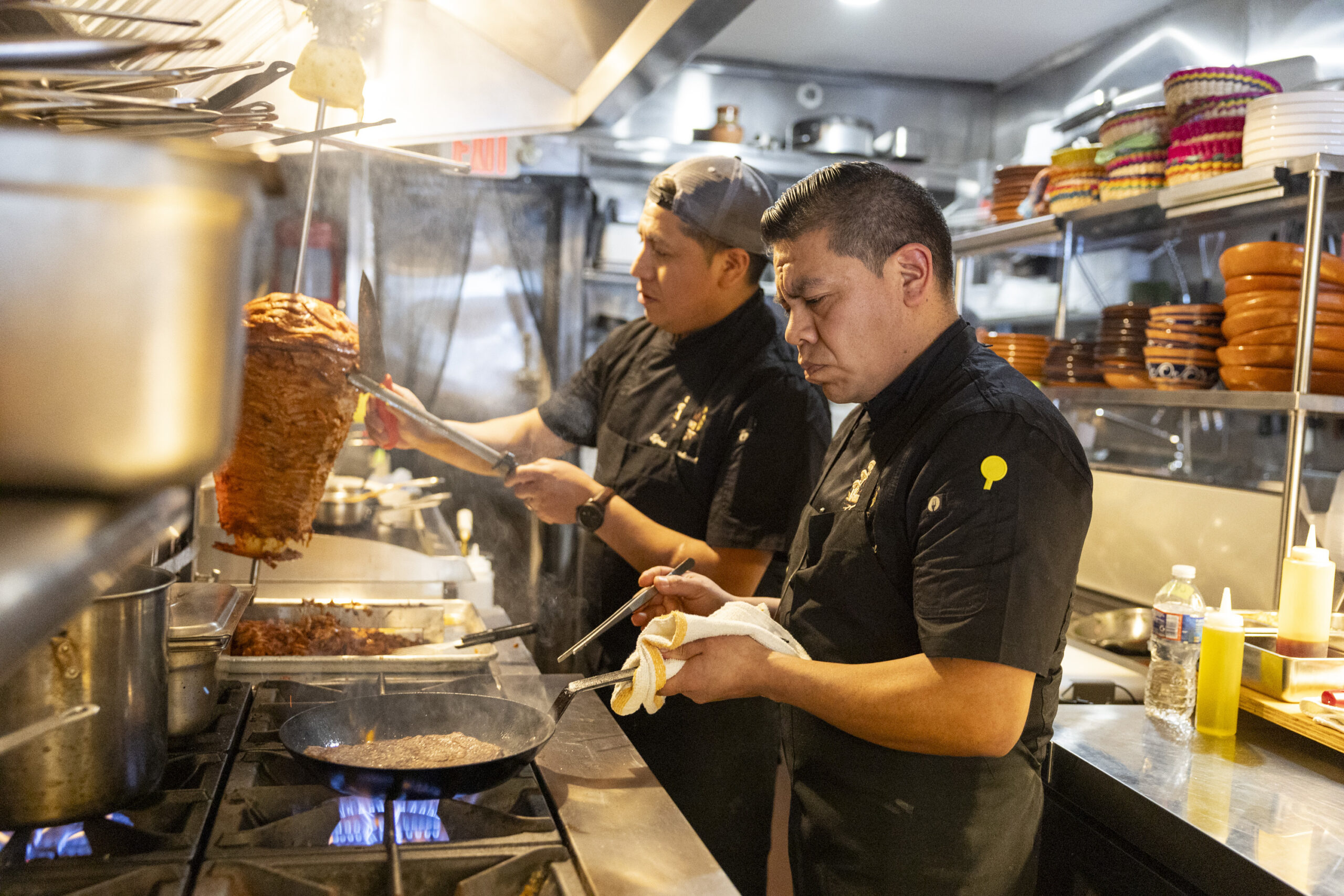
    Decades later, after a career rising through the ranks of some of Philadelphia’s most vaunted kitchens, including Striped Bass, Lacroix at the Rittenhouse, Le Bec Fin 2.0, Volvèr, Suraya, and Condesa, he and his brother, Efrain, are leaning into those memories of home for the menu at Tlali.

    “These recipes represent who we are and where we came from,” says Alberto.

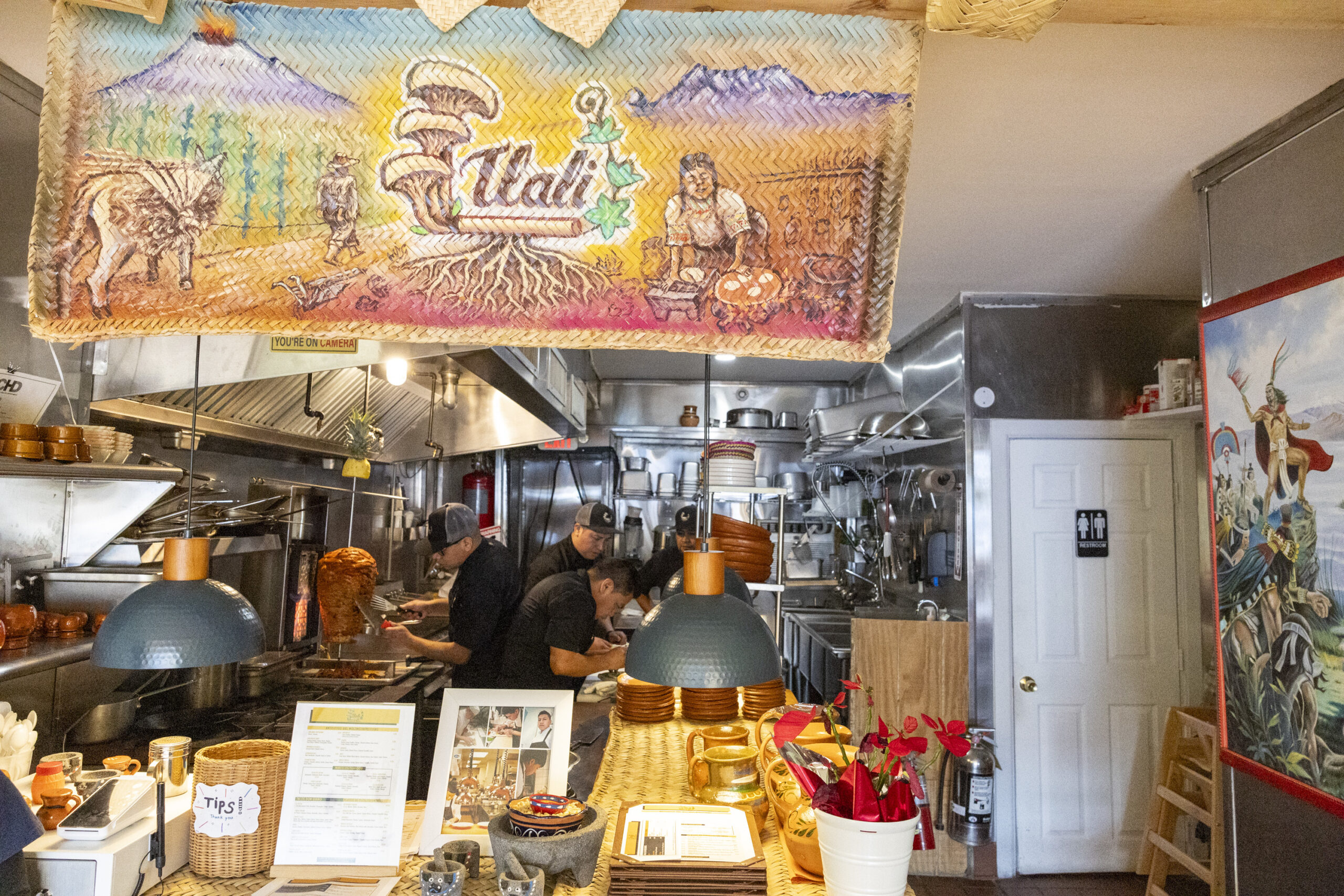
    Alberto Sandoval (right), chef and co-owner of Tlali, and his brother and partner, Efrain Sandoval, working in the kitchen preparing a dish in Upper Darby Pa., on Thursday, Feb. 5, 2026.
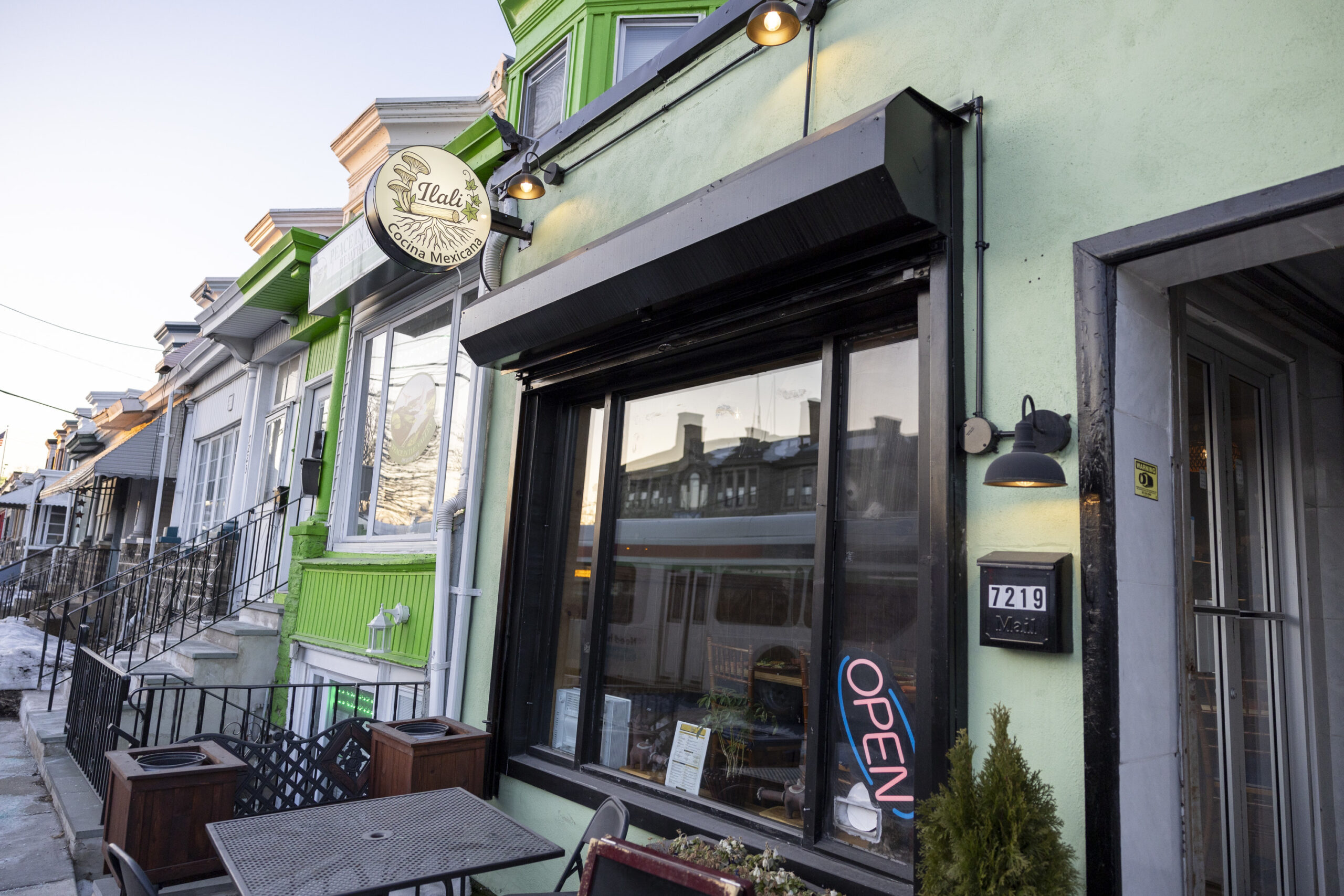
    The outside of Tlali in Upper Darby Pa., on Thursday, Feb. 5, 2026.

    The base of that mole — which their mother still makes over the course of two days in Mexico and sends to her sons, who rehydrate and simmer it to completion with chicken stock — is only the beginning. Everything about this charming 18-seat BYOB the brothers opened in August inside a renovated pizzeria is a tribute to their birthplace in San Mateo Ozolco, the tiny town on the side of an active volcano in Puebla from which much of South Philly’s Mexican population immigrated. There’s an image of Popocatépetl, its volcanic peak ever fuming, depicted on a colorful woven mat that hangs above the open kitchen here. The hand-painted terra cotta ceramics that decorate the walls and deliver the food were all imported from Puebla.

    The brothers have cut no corners in crafting the flavors on this menu, especially with another key building block: the tortillas. They are patiently made from blue and yellow heirloom Mexican corn that’s nixtamalized overnight then ground into fresh masa, resulting in pressed tortillas that have a velvety suppleness when cooked to order off the plancha.

    Alberto Sandoval, Chef and Owner of Tlali, is with his brothers working at their restaurant in Upper Darby Pa., on Thursday, Feb. 5, 2026.

    You can taste this in the enmoladas, in which the tortillas are coated in that mole before being folded into half-moon bundles over tender shreds of chicken. The tortilla’s toasty corn flavor also powers the bright orange puree of Tlali’s tortilla soup. They’re fried into shatteringly crisp rounds for antojito starters like the irresistible mashed-to-order guacamole and tostadas topped with chipotle-stewed chicken tinga.

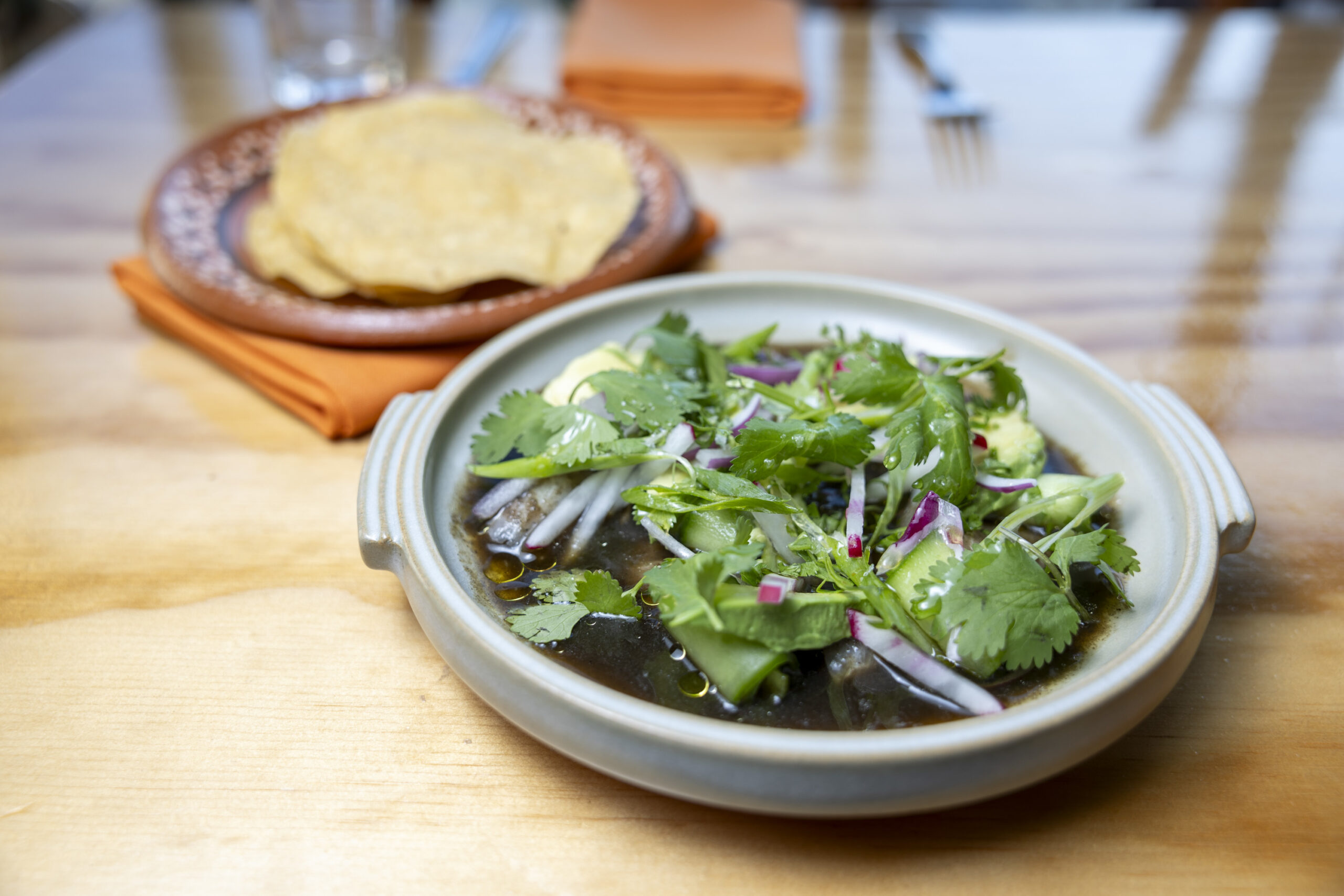
    Those crispy discs also accompany the striking aguachile negro, making the perfect cracker on which to layer slices of raw kanpachi that have been bathed in a spicy brew of citrus and olive oil tinted black with charred habaneros and onions. Scattered with green tufts of cilantro and crunchy matchsticks of radish, it’s the single most refreshing starter on a list of other seafood cocktails that are solid but lack a little spark. A notable exception was Dorito Nayarit, in which poached shrimp striped with Valentina hot sauce and crema are served atop crispy pork belly crackers known as chicharrónes preparados. (A tuna tostada topped with a spoonful of frumpy poached tuna salad, though, was the one dish at Tlali where the extra-homey approach left me truly underwhelmed.)

    The aguachile negro at Tlali in Upper Darby Pa., on Thursday, Feb. 5, 2026.

    Tlali, which means “land” in Nahuatl, the Indigenous language of Puebla, occupies a simple space on West Chester Pike that took a significant investment to completely rehab. It lacks the design frills of the high-style dining rooms where the brothers have largely worked, including Stephen Starr’s LMNO, where Alberto is still the chef de cuisine. There is nonetheless a comforting warmth to the pale green walls and natural wood wainscoting in Tlali’s dining room, bolstered by hospitality from the restaurant’s single server, Melanie Ortiz. She deftly sorted out a sticky situation by convincing a couple to move to a two-top after she’d accidentally sat them at the only remaining table reserved for a party of four (which happened to be us).

    It’s clear from the many emails and messages I’ve received since this restaurant opened in Upper Darby — a multicultural nexus of international dining, but not previously known for Mexican food — that Tlali has a devoted clientele rooting for it to succeed.

    Alberto Sandoval, chef and owner of Tlali, with his family members in Upper Darby Pa., on Thursday, Feb. 5, 2026.

    After diving much deeper into the menu, it’s easy to see why. Tlali is in many ways a sequel to the small restaurant the two brothers used to co-own in South Philadelphia, La Fonda de Teresita, which closed during the pandemic. But the Sandovals have both since continued to grow as chefs and have taken their pursuit of family flavors to the next level. That includes a tribute to their father, Don Guero, who ran a taqueria in Mexico City by the same name where Alberto got his first taste of kitchen life as a teen mincing mountains of onions and cilantro.

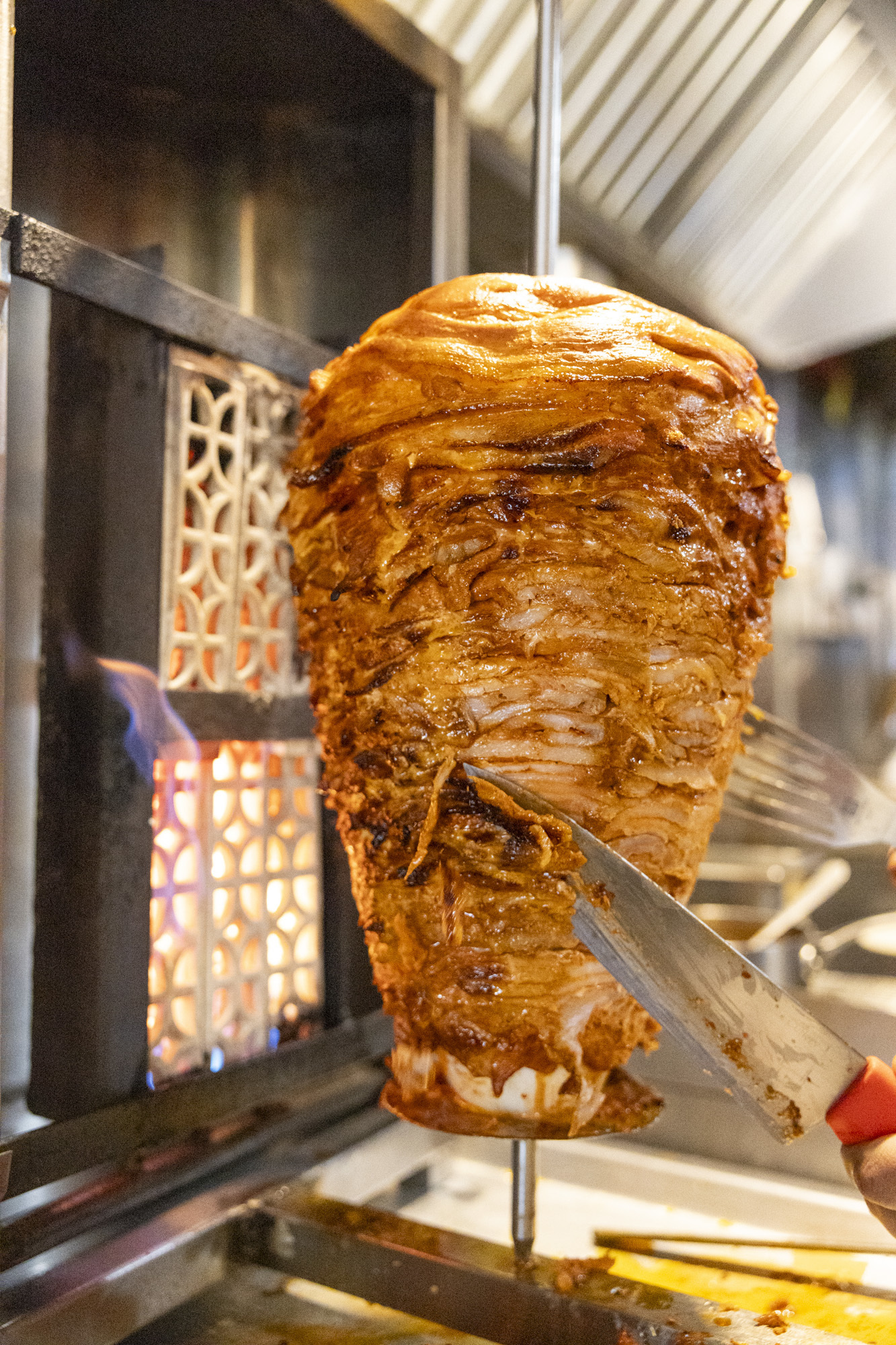
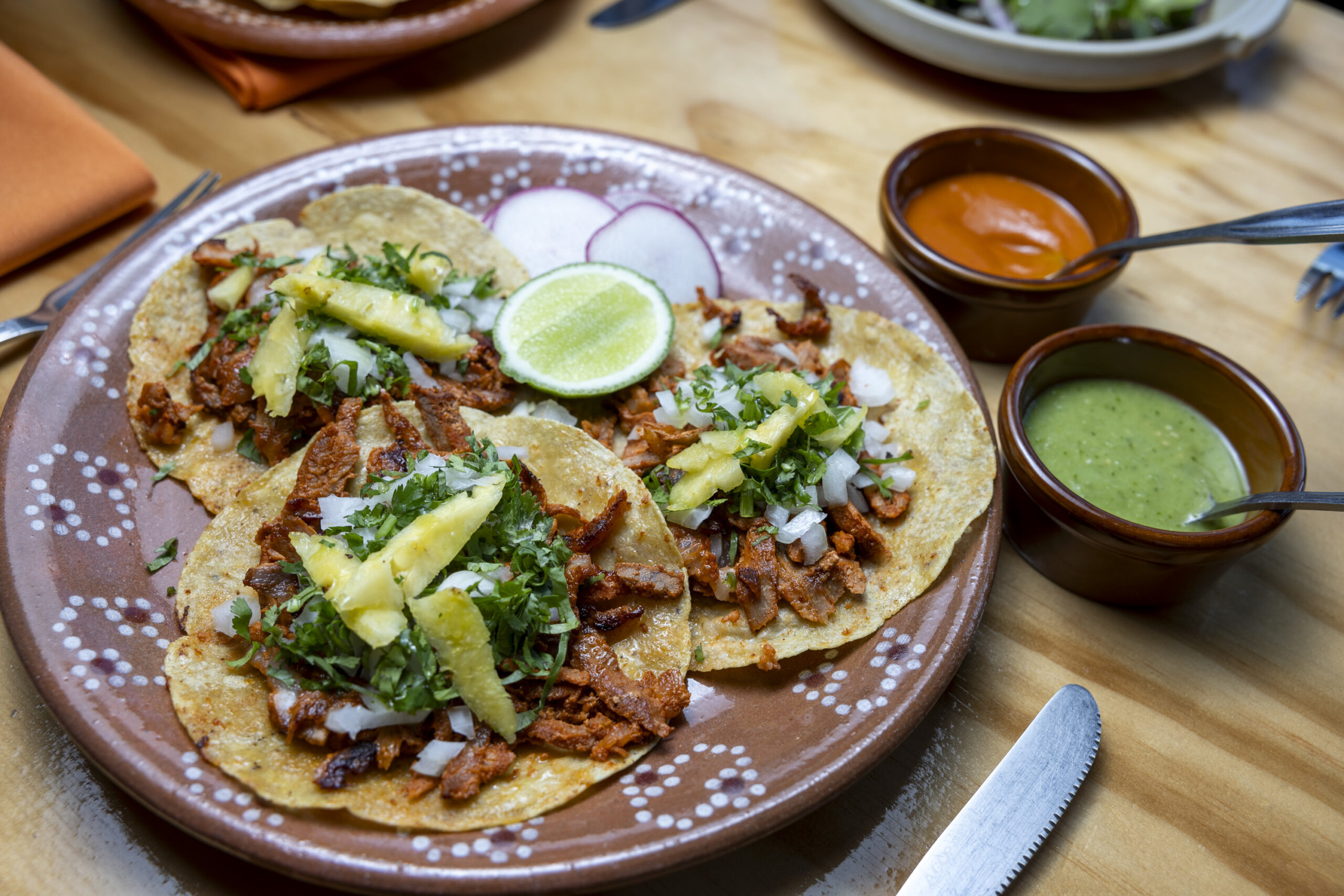
    Don Guero’s recipe for Chilango-style carnitas — whose pork belly and shoulder are simmered for hours in a large copper cazo pot bubbling with lard, orange juice, Coca-Cola, and herbs — produces meltingly soft, flavorful carnitas that are among the best I’ve had. But even that takes second place to the al pastor, a vertical spit of stacked pork shoulder marinated with three kinds of chilies, pineapple juice, achiote, and bay leaves; the pork roasts on a turning trompo fueled by real fire that flows through the perforated bricks that Don Guero himself gifted them from Mexico shortly before he died two years ago. The family taqueria lives on here.

    The al pastor used for the tacos at Tlali in Upper Darby Pa., on Thursday, Feb. 5, 2026.
    The al pastor tacos at Tlali in Upper Darby Pa., on Thursday, Feb. 5, 2026.

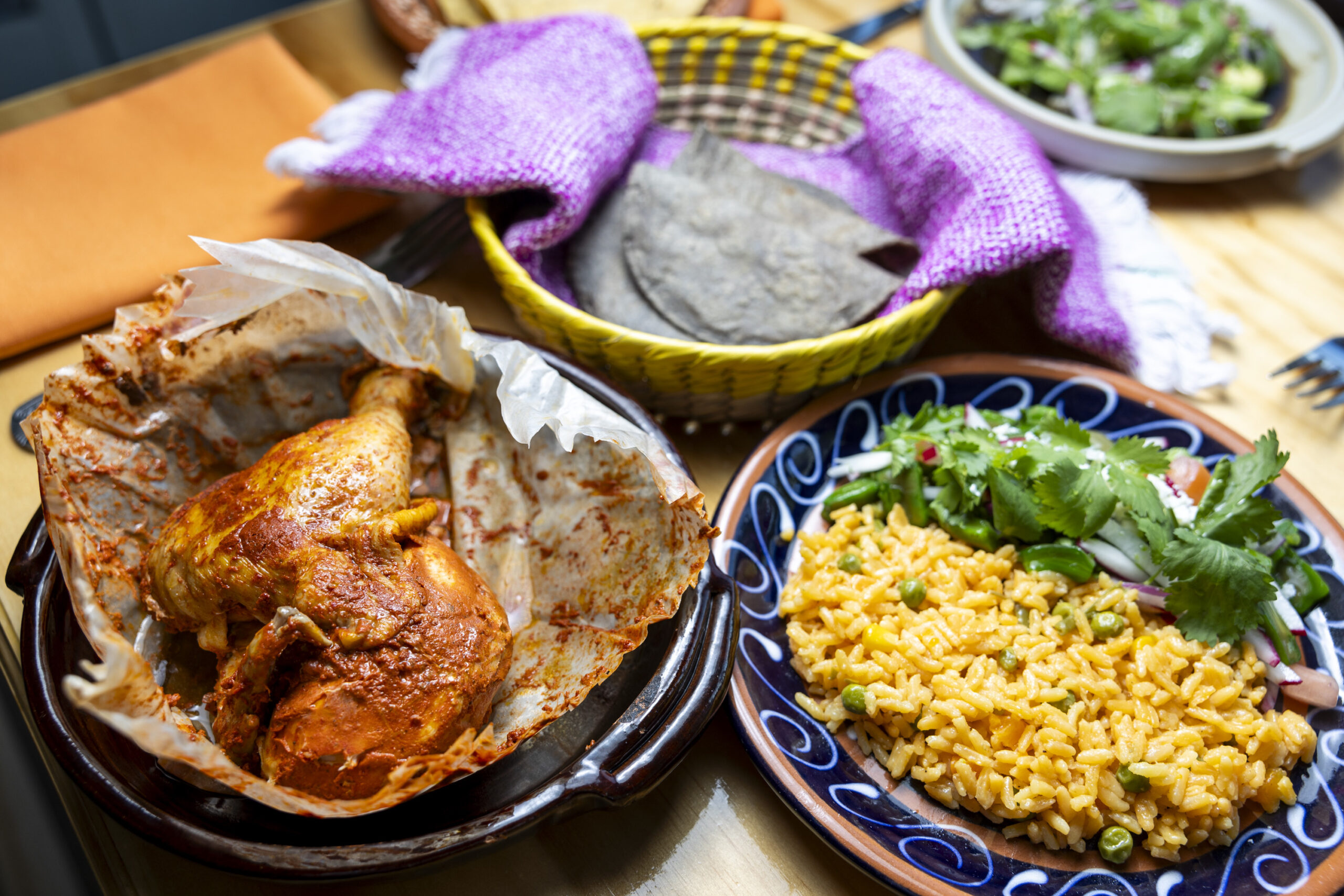
    The entree section of the menu noted as “Platos de Ozolco” offers a handful of other standout dishes that showcase the brothers’ hometown flavors in both traditional and modern ways. I was especially fond of the classic mixiote: When the maguey leaf-wrapped bundle of steamed chicken rubbed in adobo spice was cut open tableside, the fragrant cloud of guajillo-scented steam that enveloped us brought me straight back to my own 2023 visit to San Mateo with chef Dionicio Jiménez of Cantina La Martina, where mixiote was the first thing we were served at his mother’s home — the ultimate dish to welcome a special guest.

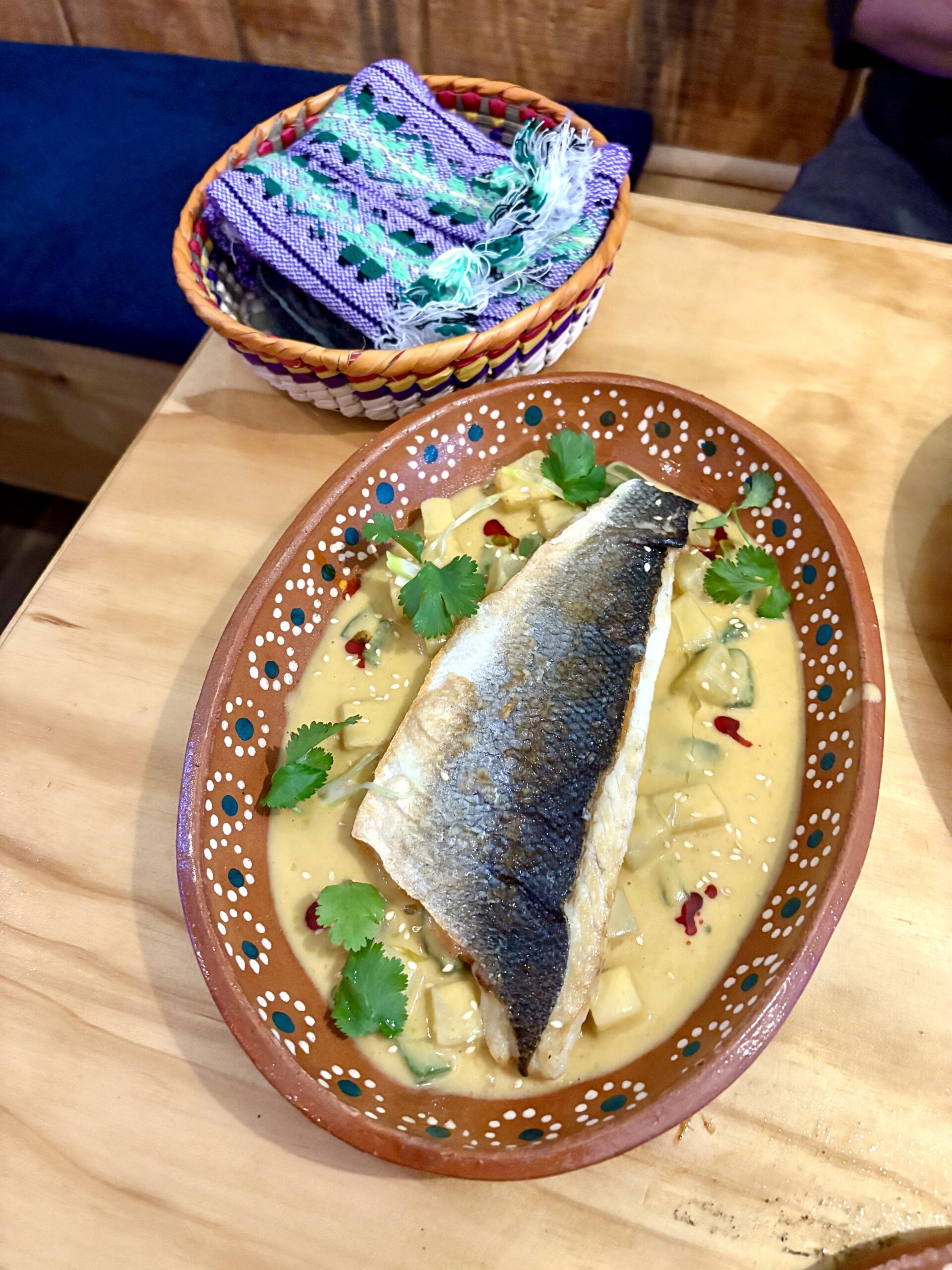
    I was also intrigued to see Alberto and Efrain stretch their chef chops to reinterpret traditional flavors in inventive ways. That includes the michmole, which steeps a dried fish from Puebla in a tomatillo-chile salsa for deep marine flavor, then discards the bony remains for a golden sauce that gets topped with nopales and a gorgeous fillet of pan-roasted branzino (also lightly brined) to retain just enough of the traditional dish’s brackish edge.

    A fillet of branzino is served over a seafood michmole sauce with cactus and potatoes at Tlali in Upper Darby.

    Another distinctive offering pairs the chefs’ love of fresh pasta with head-on shrimp and a zesty ragù of house chorizo simmered in a lightly creamed chipotle salsa. It’s a unique dish that bridges the Sandoval brothers’ origin story with their current status as longtime contributors to Philadelphia’s contemporary dining scene. As they continue to grow their audience in this tiny Upper Darby dining room, I wouldn’t be surprised if more such creations appear.

    I have no doubt that those future plates will remain somehow rooted in the memories of their mother’s table in San Mateo Ozolco, which not only give Tlali’s owners a proud reservoir of traditions, but an elusively distinctive and delicate family touch that will always be their own.

    The mixiote at Tlali in Upper Darby Pa., on Thursday, Feb. 5, 2026.

    Tlali

    7219 West Chester Pike, Upper Darby Township, 484-466-3593, instagram.com/tlalirestaurante

    Full menu served daily, noon to 10 p.m.

    Entrees, $12-$38

    BYOB

    Street parking only.

    Not wheelchair accessible. There are two steps at the entrance and the narrow bathroom is not accessible.

    Almost the entire menu is gluten-free, except for the cemita sandwiches.

    Menu highlights: guacamole; empanadas; albóndigas; sopes; sopa de tortilla; aguachile negro; coctel de campechano (shrimp and octopus); tacos al pastor; carnitas tacos al estilo Chilango; res en mole Poblano; huarache Teresita; mixiotes de pollo; michmole; pappardelle with shrimp en chorizo ragù.

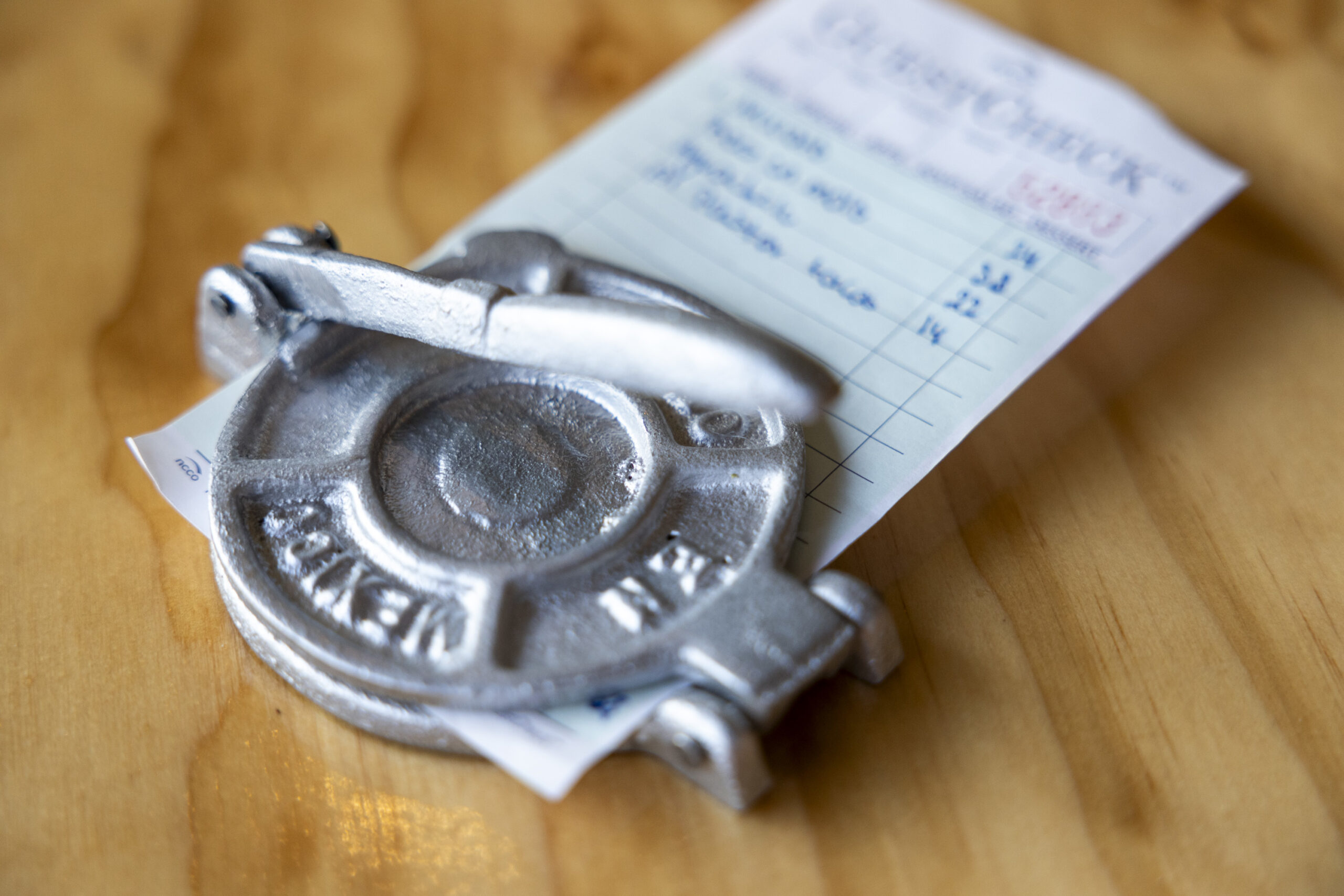
    A tiny tortilla press used for the dinner checks at Tlali in Upper Darby Pa., on Thursday, Feb. 5, 2026.
  • How Inquirer staffer Mel Greenberg’s poll changed women’s college basketball forever

    How Inquirer staffer Mel Greenberg’s poll changed women’s college basketball forever

    When the NCAA decided to go all-in on Division I women’s college basketball by adding a national championship tournament in 1981-82, it marked a fascinating turnaround. By grabbing the reins from the Association for Intercollegiate Athletics for Women — the longtime governing body of women’s hoops — the NCAA set out to make the game bigger and better forever.

    The sport did change, vastly. Television exposure finally found big-name programs. Title IX brought more girls and women into play, literally and figuratively. All-American players and Hall of Fame-worthy coaches promulgated. What should not be lost is this: the roots of the game were plentiful, but none more important than what grew strong at schools throughout this tri-state region.

    Here, programs and players were so impactful that to ignore the flood of talent became indefensible by 1982. So, the NCAA bit.

    Why? One needed to look no further than the locals that dotted the all-important 50-year-old Mel Greenberg national poll early on.

    Think back …

    Before the dynasties at UConn and Tennessee, there were giant-killers on the courts of tiny Immaculata and Cheyney State.

    Before there was a Geno Auriemma or Pat Summitt, there were legendary coaches like the Mighty Macs’ Cathy Rush and Cheyney’s C. Vivian Stringer. Rush’s and Stringer’s reputations and extraordinary programs surely caught the attention of the NCAA as they traveled the path to the Naismith Basketball Hall of Fame.

    Before there were all-Americans like Dawn Staley, Maya Moore, and Caitlin Clark, future Hall of Famer Theresa Shank-Grentz and the fabulous talent, Yolanda Laney, were dealing here in the Delaware Valley.

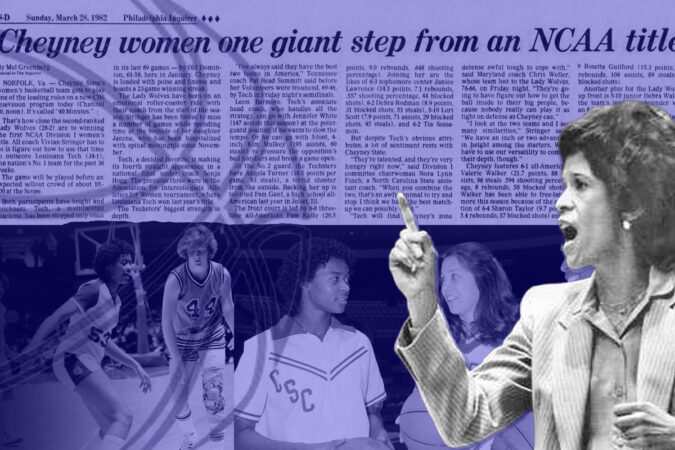
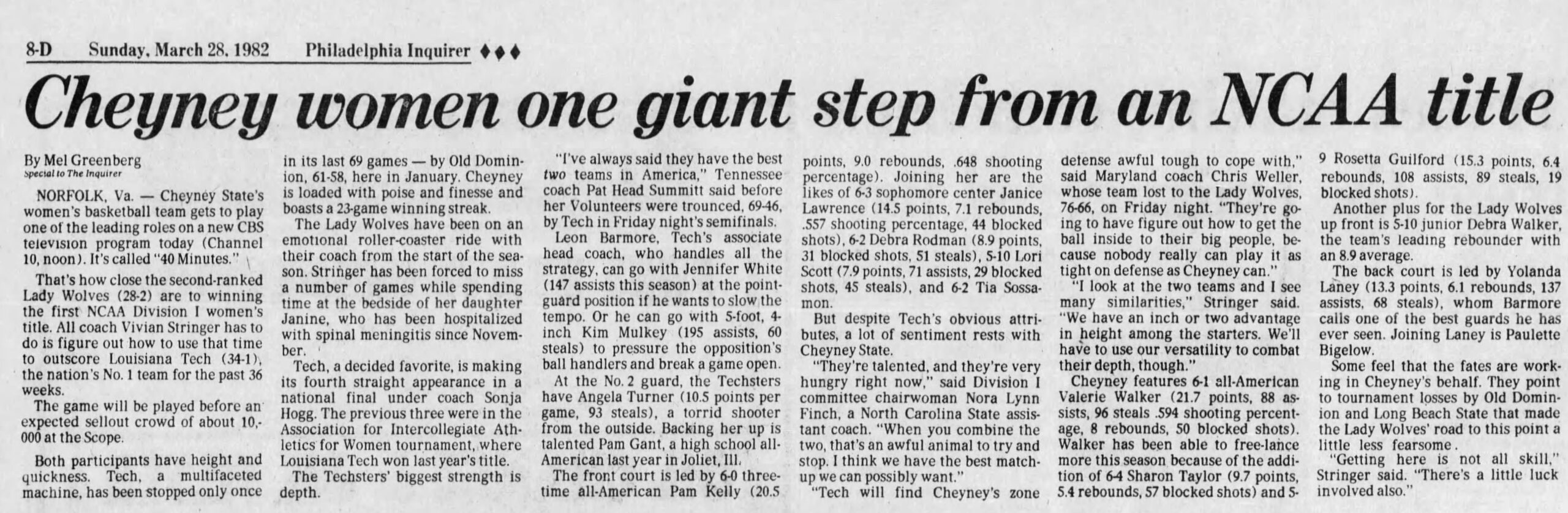
    A clipping from The Philadelphia Inquirer’s sports section on March 28, 1982, when Yolanda Laney, C. Vivian Stringer, and the Cheyney State women’s basketball team was headed to the championship game of the first NCAA women’s basketball tournament.

    Shank-Grentz, star of the Mighty Macs’ improbable AIAW championships, helped put a school of fewer than 3,000 students on the map. The Macs ruled the game for a near decade, winning three AIAW crowns while reaching five consecutive AIAW Final Fours.

    At even tinier Cheyney State, the All-American Laney and other talents who desired to play for Stringer helped the nation’s oldest historically Black college or university become the first HBCU to play in an NCAA Division I national championship game. Stringer’s team, with not one athletic scholarship to give, made that possible in 1982.

    “When you look at our team, we were part of God’s plan … a team of All-American, all-state players turning down scholarships [from larger schools] but we had one common denominator, and that was the great Vivian Stringer,” the team’s star center, Valerie Walker, said in her acceptance speech at the Women’s Basketball Hall of Fame ceremony in 2024. The Lady Wolves were enshrined as “Trailblazers of the Game.”

    The NCAA certainly was watching and calculating how to build off the growing women athletes’ import. But it arguably would not have had the curiosity or the vision if Greenberg had not provided the cohesiveness and foresight to champion programs, big and small.

    The Philadelphia Inquirer’s women’s basketball savant did so by founding his national poll 50 years ago. By connecting the dots of powerhouses across the country, the poll allowed teams, whether big, small, or minuscule, to bring into focus what previously had been a guessing game of who, what, and why which teams and trends mattered. The clarity benefited not only the programs, but the players, recruits, fans, and media from coast to coast.

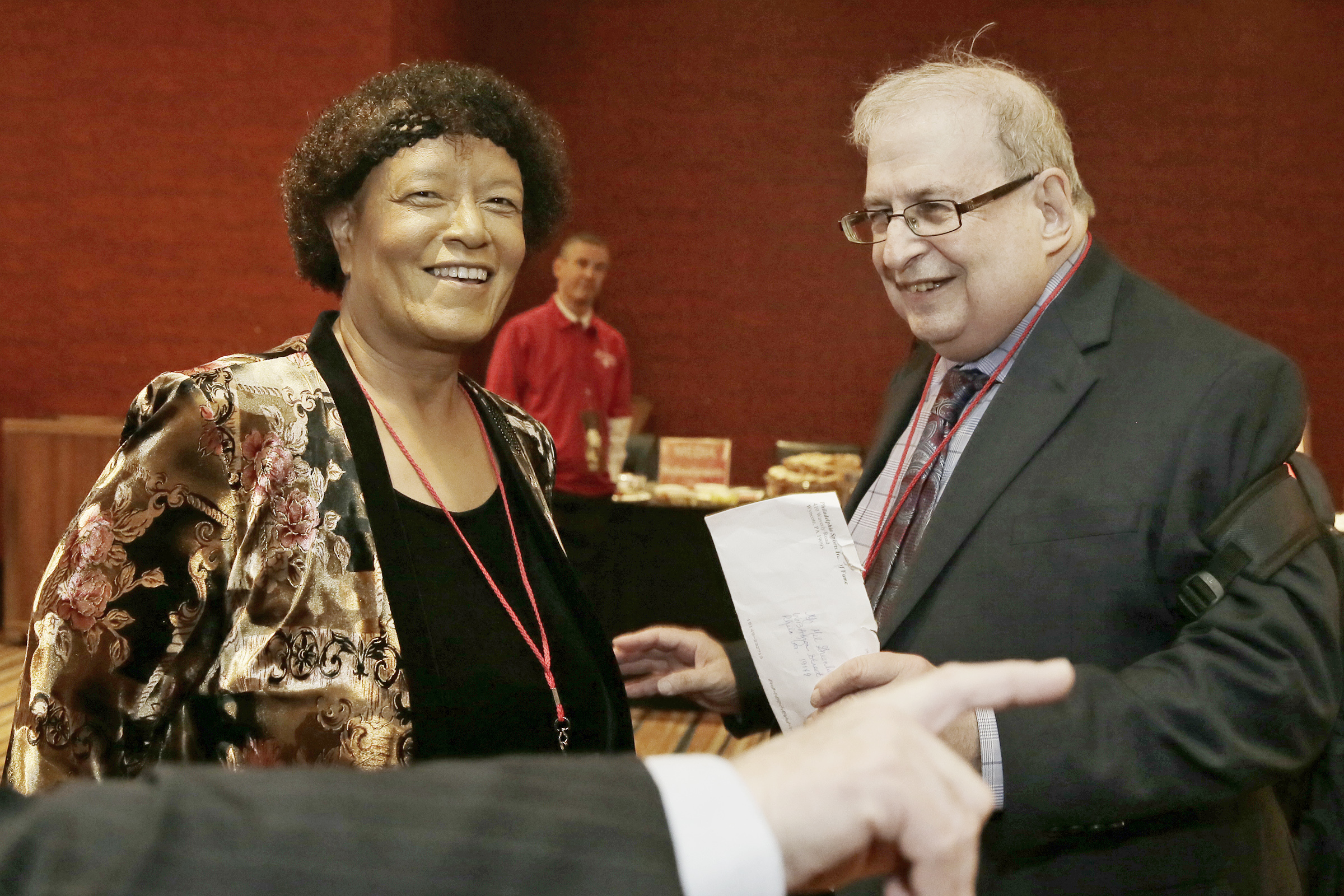
    Claire Smith and Mel Greenberg, Hall of Famers and former Inquirer writers.

    Greenberg gave even the most accomplished chroniclers of women’s hoops — as well as newbies such as this reporter — a divining rod. His informative and increasingly powerful poll beautifully grew in strength alongside the game. Local teams certainly benefited, as Greenberg shone a light on both with his polling and prose.

    He helped me, a frenemy at the late, great Philadelphia Bulletin, appreciate the bushels of all-American players, future Hall of Fame coaches, and prominent teams that dominated the AIAW right in our own backyards. From Rutgers to Maryland, Cheyney State to Penn State, and rising Big 5 women’s teams, it fascinated me to see the seeds that one day sprouted so prominently.

    To say that I saw the important contributions of the local teams growing the women’s game as clearly as did Greenberg would be beyond impudent. Rather, following the game in and around the immediate area as well as following the pollmeister was an education, one I and others needed to appreciate why the NCAA move was inevitable.

    I missed seeing the Mighty Mac era by mere years. Still, I often was reminded of the footprints left during their legendary run through the ’70s. Greenberg, a walking encyclopedia of the sport, can to this day bring to life any tale about the Macs, starting with the 1972 team that won the first women’s national basketball championship.

    Though I came to the job too late to witness the Mighty Macs magic, I saw what followed in their footsteps. For a similar miracle was unfolding at Cheyney State where Stringer was building a national behemoth at the tiniest of schools (today’s enrollment at Cheyney, which is now known as Cheyney University, is less than 1,000 students).

    John Chaney, the Hall of Famer and Philly legend who was the coach of the men’s team at Cheyney when Stringer was leading the women there, knew which team was the stronger draw. “We were ranked No. 1 in Division II, but we’d play the first game so that we would have somebody there by halftime,” Chaney, laughing, told me for a column written for the New York Times. “The real show was our women’s team. They didn’t come to see me; they came to see Vivian!”

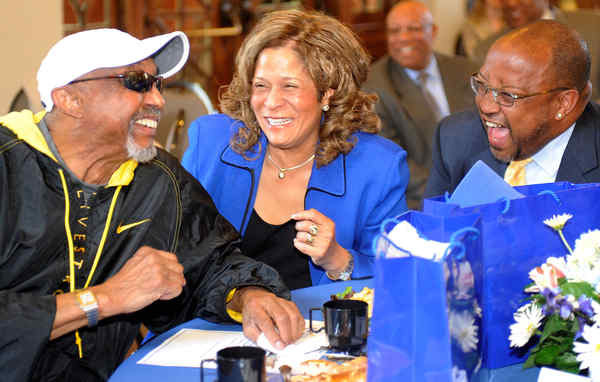
    Former Temple coach John Chaney (left) shares stories with Rutgers coach C. Vivian Stringer and Nike executive Ralph Greene. Chaney and Stringer coached the men’s and women’s teams at Cheyney State in the 1980s.

    It always was standing-room-only in Cheyney’s compact Cope Hall, for the scribes and fans had a sense that what they were watching was special: Two Hall of Fame coaches in the making. Oh, and one Hall of Fame team. For Stringer’s 1981-82 team that finished the season ranked No. 2 in the nation.

    That final standing in the polls reflected Cheyney’s having come within one win of claiming the first-ever women’s NCAA championship. Though the team lost to Louisiana Tech in the final, just getting there was the ultimate victory.

    In those days, Stringer spoke of how her Lady Wolves had to sell cookies, cakes, and sandwiches to raise funds to travel to Norfolk, Va., for that first Final Four.

    That Cheyney team finished 28-3. The 11 players and coaching staff were honored years later by the Women’s Basketball Hall of Fame in 2024. The team also was nominated for the Naismith Basketball Hall of Fame in 2025.

    Alas, those David and Goliath stories no longer happen in a world where a Cheyney State or Immaculata wouldn’t even dream of being allowed to compete at a Division I championship level. Big universities and programs awash with NIL money now gobble up the best players in the land. The little guys play in lower divisions, noses pressed against windows of the massive arenas holding tournaments made possible by the Immaculatas and Cheyney States, the Cathy Rushes and Vivian Stringers … and Mel Greenberg’s vision of what could be.

  • A beer in the dugout, a benching, and a rift with his manager: Inside the final Phillies season for Nick Castellanos

    A beer in the dugout, a benching, and a rift with his manager: Inside the final Phillies season for Nick Castellanos

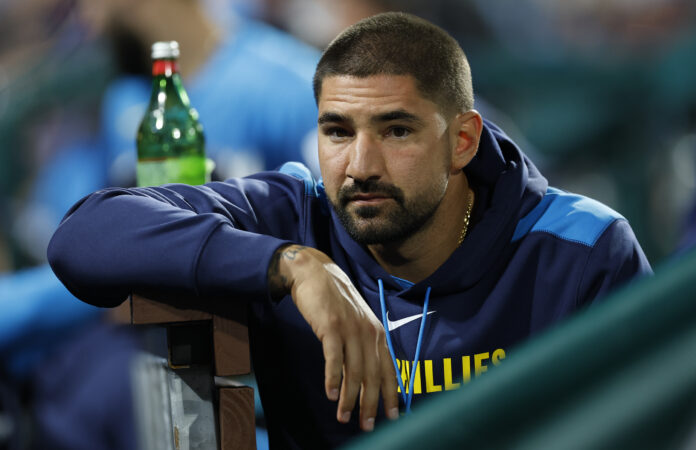
    CLEARWATER, Fla. — After getting replaced for defense late in a close game, the worst defensive outfielder in baseball since 2022 based on defensive runs saved brought a beer into the dugout and lectured his manager.

    Brought a beer into the dugout.

    Let those words wash over you. They belong, incidentally, to the player himself. The Phillies released Nick Castellanos on Thursday after trying to trade him for three months. And when the deed was finally done, the $100 million right fielder laid bare the June 16 incident in Miami that precipitated his unceremonious departure.

    “I brought a Presedente [sic] into the dugout,” Castellanos said in a handwritten letter posted on Instagram. “I then sat right next to Rob [Thomson] and let him know that too much slack in some areas and to [sic] tight of restrictions in others are not condusive [sic] to us winning.”

    That was 241 days ago.

    And it was the beginning of the end.

    There were other tension points. Castellanos, a two-time All-Star with 250 career homers and an everyday player in the majors for a decade, lost his job in August while producing at a less-than-league-average clip. In September, he accused Thomson of “questionable” communication.

    As president of baseball operations Dave Dombrowski put it in explaining why the Phillies-Castellanos relationship soured like a lemon with $20 million left on the final season of his five-year contract, “I don’t think it was necessarily one incident.”

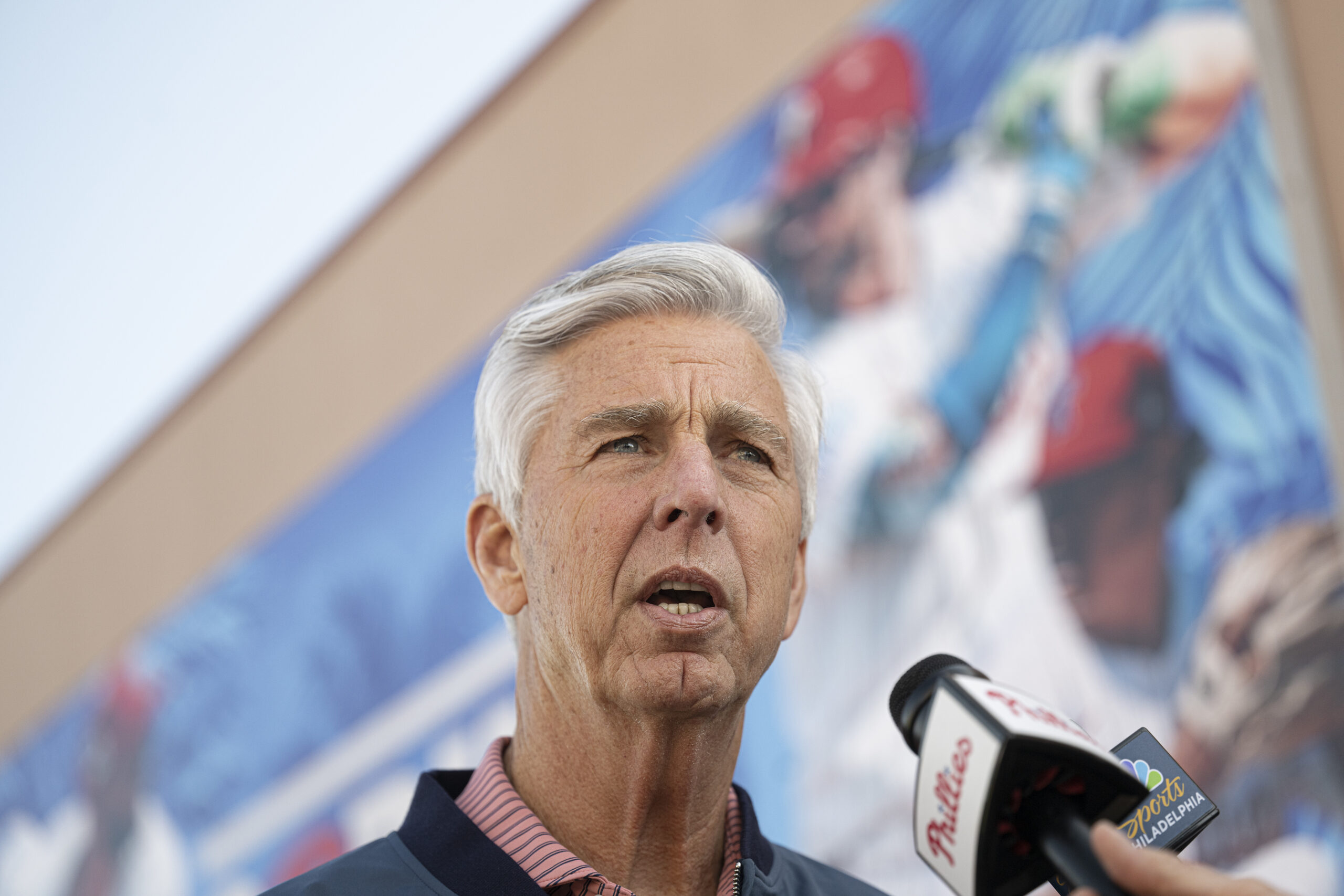
    Phillies president of baseball operations Dave Dombrowski talks to the media on Thursday after releasing Nick Castellanos.

    In truth, Castellanos was always a strange match for Philly.

    His introductory news conference in March 2022 — after signing the contract that put the Phillies over the luxury tax for the first time in their history — revealed an edgy personality, a directness that didn’t always sit well with everyone even in the clubhouse, and a penchant for taking things personally.

    “He’s a little different,” former teammate Whit Merrifield said recently on The Inquirer’s Phillies Extra podcast. “And he’ll tell you, he’s just a little different. He’s very, very blunt. He’ll tell you exactly how he feels.

    “There are just some things that happened that Casty didn’t like along the way, and he’s not the guy to hide his feelings or sugarcoat it. And I think it just kind of came to a head.”

    It didn’t help that Castellanos struggled on the field in 2022, his first year with the Phillies, posting the lowest full-season OPS of his career (.694) — until he matched it last year.

    He often quibbled over his spot in the batting order, especially when Thomson dropped him to the seventh or eighth spot, insisting he felt more comfortable in the top half of a lineup. And when coaches worked with him at, say, reducing his rate of swings at pitches out of the zone, Castellanos often pushed back, noting that he’s “always been a free swinger.”

    But Castellanos could also be supportive of teammates. He encouraged young outfielder Mickey Moniak to stay around the team after breaking his hand on the last day of spring training. And after Orion Kerkering made a series-ending error in the postseason last year, Castellanos raced in from right field to be at his side.

    “He treated me and my family wonderfully,” left fielder Brandon Marsh said Thursday. “He’s always got my respect and I always got love for [No.] 8.”

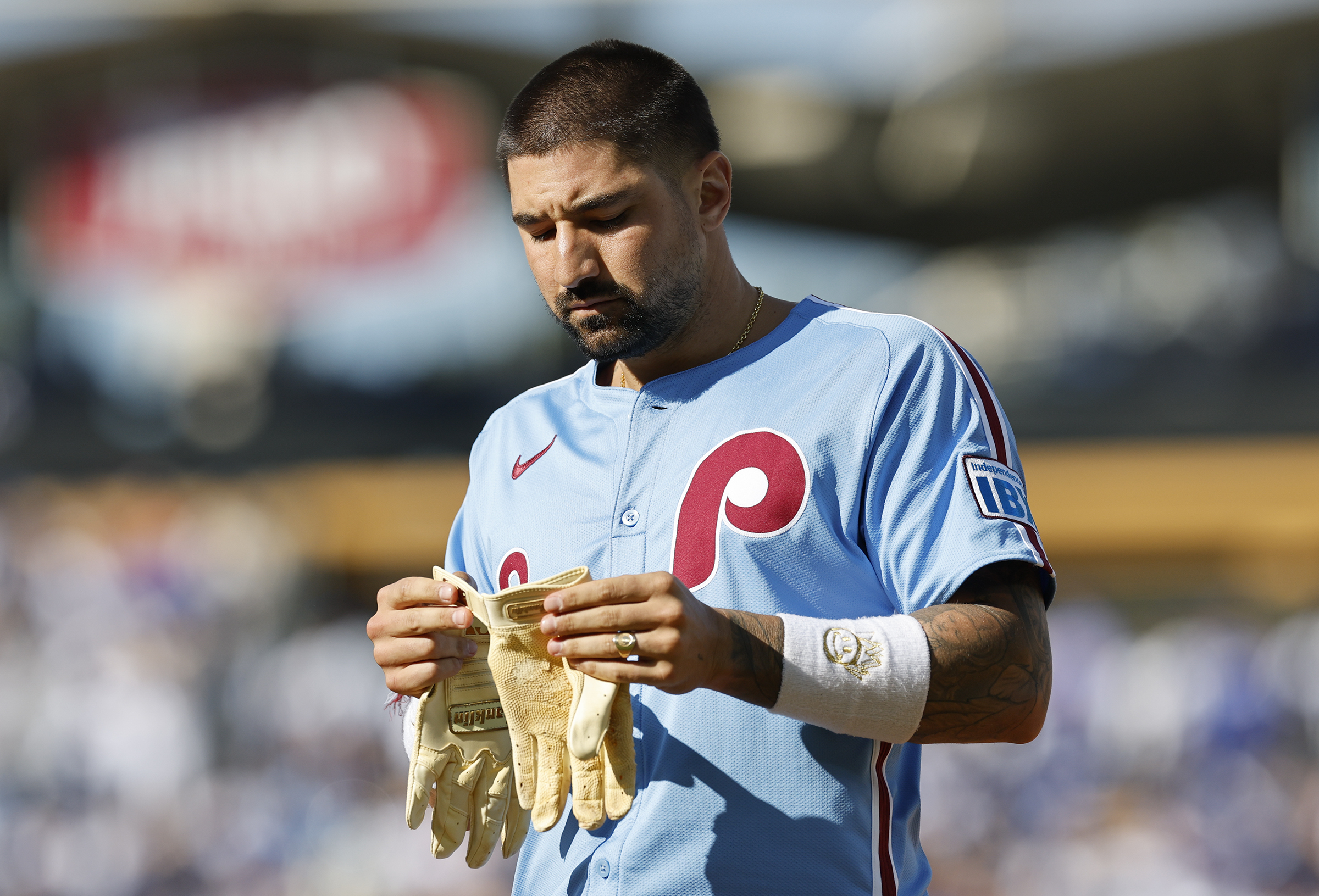
    Nick Castellanos bookended his four-year run as a Phillie with .694 OPS seasons.

    It was all part of the enigma of Castellanos. Dombrowski knew all about it. He was running the Tigers’ baseball operations in 2010 when Detroit drafted Castellanos out of high school.

    “He’s been a very good player, he’s had a nice career, and he probably will continue to do so,” Dombrowski said. “Things happened, things changed over a 15-year period, and I’ve still had a good relationship with Nick and his family members. You always wish things end up on a good point, but it doesn’t always happen.”

    In his four-page letter, Castellanos thanked owner John Middleton, Dombrowski, staff members, outfield coach Paco Figueroa (who often coached Castellanos’ son, Liam, on the field before games), and “my teammates,” though none by name.

    Notably omitted: Thomson and hitting coach Kevin Long.

    But Castellanos didn’t spare the details of his confrontation with Thomson in what he termed the “Miami incident.” He gave a “shout out” to special assistant Howie Kendrick and teammates for “taking the beer out of my hands before I could take a sip,” as if actively drinking would’ve made the whole thing worse.

    Castellanos noted that he met with Dombrowski and Thomson after the game.

    “We aired our differences,” Castellanos wrote, “and the conversation ended with me apologizing for letting my emotions get the best of me.”

    Thomson benched Castellanos the next day, ending a streak of 236 consecutive games started. Castellanos conceded that “there are rules and I broke one in Miami.” Dombrowski said the Phillies didn’t consider a harsher punishment, such as releasing Castellanos midway through last season.

    Nick Castellanos played for manager Rob Thomson with the Phillies since 2022.

    “That [incident] wasn’t the final or determining factor,” Dombrowski. “Because if it was, we would’ve done it at that particular time.”

    Beyond that, Dombrowski wasn’t interested in discussing an incident that happened seven months ago. Besides, by the time the Phillies got knocked out of the postseason in the divisional round, it was clear to everyone that they were moving on from Castellanos, who said in September that he and Thomson didn’t talk much last season.

    Dombrowski called Castellanos after the playoffs and said he thought a change of scenery was best. Castellanos didn’t disagree.

    “I think that we all felt that it was probably in the best interest,” Dombrowski said, “to have a change of scenery.”

    Throughout the offseason, Dombrowski didn’t conceal the Phillies’ intention to move on from Castellanos. Early in the winter, they were hoping to find a team that would pay more of Castellanos’ salary.

    But over the last few weeks, they hoped to simply move him off the roster, even if it meant paying down most of his salary. In releasing Castellanos, the Phillies must pay his $20 million salary minus the league minimum salary ($780,000) if he signs elsewhere.

    “I know the dollars weren’t standing in the way at this point of clubs taking him,” Dombrowski said.

    Maybe the whole thing will be humbling to Castellanos. He punctuated his letter with this: “I love this game. I love being a teammate and I am addicted to winning. I will learn from this.”

    But after the eighth inning June 16 in Miami, it wasn’t ever going to be with the Phillies.

  • Selfish, insubordinate Nick Castellanos  released by Phillies, then issues a wild manifesto on Instagram

    Selfish, insubordinate Nick Castellanos released by Phillies, then issues a wild manifesto on Instagram

    This is a make-or-break season for the Phillies, so they aren’t taking any chances with any clubhouse cancers.

    A fading talent who will be 34 in less than a month, malcontent right fielder Nick Castellanos was released by the club on Thursday afternoon. That was one day after pitchers and catchers officially reported and four days before full-squad workouts begin, but position players typically trickle in a day or two early.

    The Phillies didn’t want Castellanos showing up. Not after the crap he pulled last season, when he put his desires above the team. And not after the crap he pulled Thursday. In fact, nobody might want Castellanos after his latest stunt.

    It will cost the Phillis the last $20 million on the five-year, $100 million contract that he has never played up to. Twenty mil is a bargain to remove a player like this.

    Their decision to release Castellanos immediately gained merit. Upon his release, Castellanos posted on Instagram a page-and-a-half screed scrawled on loose-leaf notebook paper explaining the notorious incident in Miami last season that betrayed his selfishness, insubordination, and disrespect for the game.

    It was a manifesto that would have made Sam Hinkie proud.

    The details of the incident had been shrouded in mystery. The Phillies said only that Castellanos had been insubordinate to Phillies manager Rob Thomson. Castellanos refused to provide details. As it turns out, according to his post, Castellanos actually brought a beer from the clubhouse to the bench, and then began berating his manager in front of the team.

    He should have been released that night.

    To review:

    On June 16 in Miami, Thomson replaced Castellanos in right field for a defensive replacement. Castellanos is rated by Baseball Savant as the second-worst outfielder in the majors since he arrived with the Phillies in 2022.

    Amid all of the bizarre aspects of the Castellanos situation, that Castellanos took offense to being replaced — a move that clearly benefited the team — is the most appalling aspect. Every star on the Phillies roster has sacrificed preferences at some point.

    Castellanos is a Florida native. He had friends and family in the ballpark that night. He was embarrassed. So, after he left the game, he went to the dugout, got a bottle of Presidenté, and went back to the dugout to insult his boss.

    “I then sat right next to Rob and let him know that too much slack in some areas and to [sic] tight of restrictions in others are not condusive [sic] to us winning,” Castellanos wrote Thursday.

    You know what’s conducive to winning?

    Getting Nick Castellanos out of right field every chance you get.

    Castellanos wrote that, after the game, he, Thomson, and president of baseball operations Dave Dombrowski “[a]ired out our differences” in Thomson’s office and he apologized. Castellanos was benched for the next night’s game as punishment. He wrote that the team told him not to divulge the details of the incident.

    He also wrote that his confession Thursday was spurred not by any heartfelt impulse to make things right, but rather by pure, unadulterated self-preservation; as usual, Nick’s looking out for Nick. Castellanos wrote that he was preempting a story about the incident being written “without my consent or comment.”

    What’s going on in that mind of his? The media have sought his comment for months. The media do not need his consent to write about him.

    At any rate, to Thomson’s discredit, Castellanos got his way.

    Thomson never again pulled Castellanos for defensive purposes. By the end of the season, Castellanos was playing so poorly that he’d been reduced to a platoon role with Max Kepler.

    With Castellanos clearly poised to exit the team one way or another, Thomson was asked at the end of the season if he would have issues managing Castellanos again. Thomson said he would not have a problem.

    Castellanos clearly did have a problem with Thomson.

    As part of the Instagram post, Castellanos included a similar, separate goodbye message for the fans, his teammates, principal owner John Middleton, Dombrowski, and most Phillies personnel. He singled out outfield coach Paco Figueroa, who has spent endless hours working on Castellanos’ defense the past 3½ seasons (after Castellanos conceded that he wasn’t always engaged when playing outfield). To his credit, Castellanos, a converted infielder who is leaden-legged and devoid of outfield instinct, worked hard to improve as a fielder.

    Notably, though, Castellanos clearly made it a point to exclude Thomson in his thanks.

    That “apology” on June 16 certainly was not heartfelt.

    We’re not naive here. If Castellanos had earned his money at the plate, he’d still be a Phillie. If he’d hit .300 with 30 homers every year, he could’ve brought a keg into the dugout and done keg-stands. “Topper” would’ve held his feet.

    However, Castellanos hit just 82 home runs in the next four seasons, which tied for 60th among all players. His OPS of .732 ranked 130th, three points lower than former Phillies prospect Mickey Moniak.

    It will be interesting to see how other teams view Castellanos as a player and a person. Despite his oddities and antics, he remained a popular character in the Phillies’ clubhouse. He has a big personality, he works hard, he is kind, and he is a devoted father.

    There’s plenty of tread left on his tires. He’ll find a home with some team as a right-handed designated hitter. But he’ll be a DH with baggage.

    He wrote in his Miami manifesto:

    “I will learn from this.”

    We’ll see.

  • ArchWell Health is a new primary care provider for Philadelphians with Medicare Advantage

    ArchWell Health is a new primary care provider for Philadelphians with Medicare Advantage

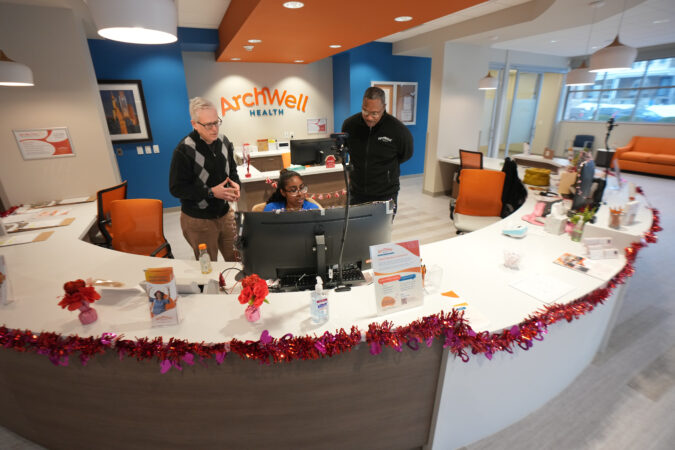
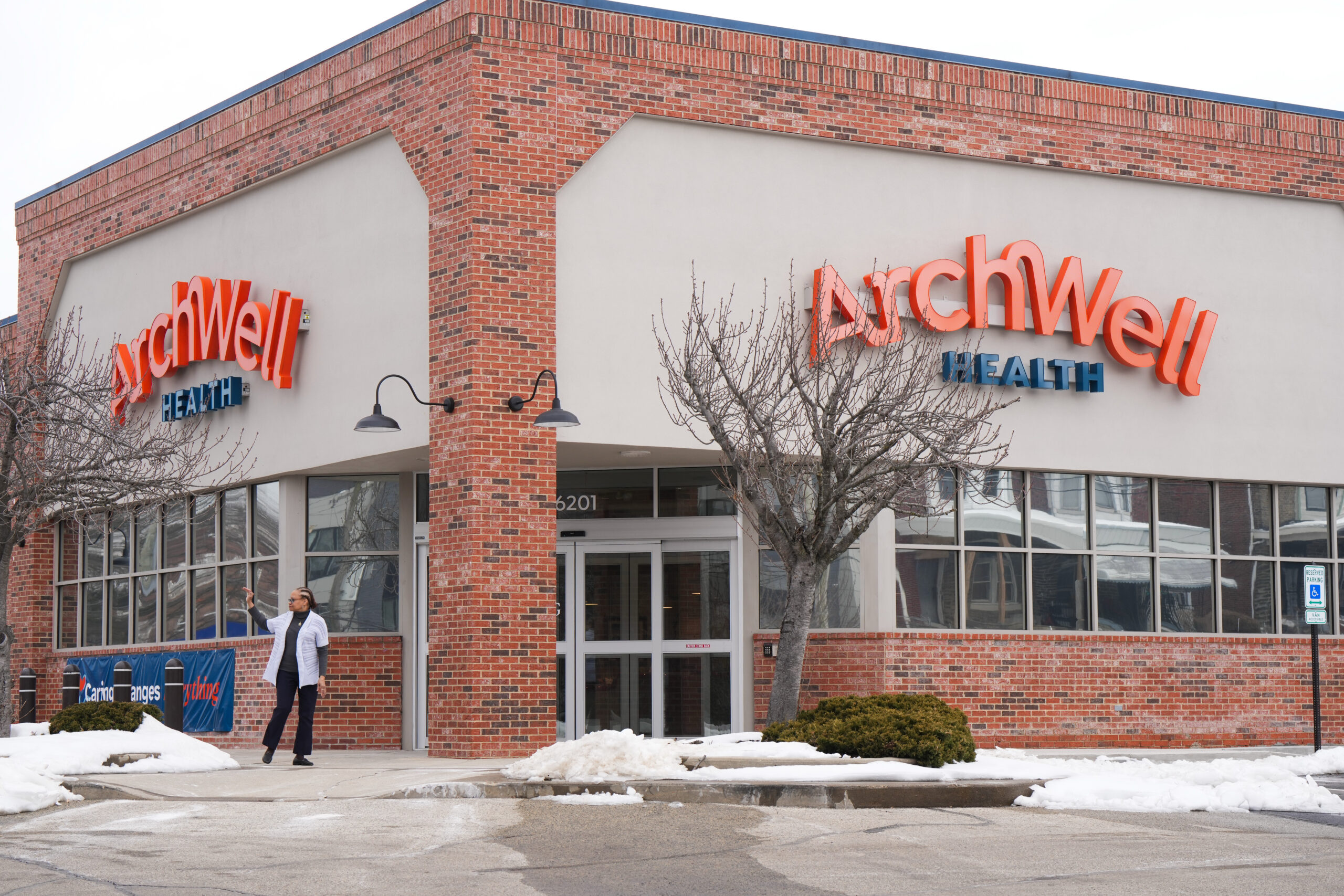
    A new sign with orange letters outside a former Rite Aid in Germantown announces the arrival of a primary care model new to the Philadelphia region.

    ArchWell Health recently opened its first three of eight planned primary care centers here for people with Medicare Advantage, promising convenient and personalized care in neighborhoods with a relative lack of doctors.

    Two others have opened on North Broad Street, near Stenton and Susquehanna Avenues, also in former Rite Aid stores.

    A privately held company based in Nashville, Tenn., ArchWell says it can offer patients greater access to healthcare through lower patient-provider ratios.

    It plans to limit each of its physicians to no more than 500 patients — about a fifth of the patient load for typical primary care doctors. Nurse practitioners working under the doctors will manage a maximum of 250 patients, officials said.

    The approach is built around a financial model that differentiates ArchWell from Medicare-focused competitors already in Philadelphia like Oak Street Health and ChenMed’s Dedicated Senior Medical Centers. ArchWell only accepts patients who have private Medicare or are willing to switch to it. Oak Street and ChenMed also accept traditional Medicare.

    Privately run Medicare Advantage plans are increasingly popular among people ages 65 and older who qualify for government-funded Medicare coverage. Advantage plans appeal to people by covering services, such as dental and vision care, left out of traditional Medicare, but have come under scrutiny for exaggerating how sick patients are to rack up more revenue.

    ArchWell sees exclusively working with Medicare Advantage plans as helping doctors to focus solely on the best outcomes for patients, rather than on providing more services to bring in more revenue, a criticism of traditional Medicare, said Doron Schneider, its medical director for the Philadelphia market.

    Melissa A. Herd, community relations specialist for ArchWell Health in Philadelphia, is shown outside the company’s Germantown location, which is in a former Rite Aid building.

    “You have different incentives, you have different care models, you have different case management models, you have different ways to treat one person versus the other,” Schneider said.

    Before starting at ArchWell in late 2024, Schneider worked at Tandigm Health, an Independence Health Group company founded in 2014 with the goal of helping primary care doctors manage costs and improve care for their patients. He learned there how hard it is for doctors to work with different types of insurers and the varied incentives that go with them.

    How ArchWell conducts business

    ArchWell, which opened its first clinic in 2021 in Birmingham, Ala., operates under contracts with Medicare Advantage plans. The plans give ArchWell a portion of the monthly payment they get from Medicare for each patient. That money is supposed to cover all of the person’s medical costs.

    Aetna, UnitedHealthcare, and Devoted Health have contracts with ArchWell to cover the Philadelphia market. ArchWell is close to getting contracts with HealthSpring and Humana, Schneider said. Those five companies had more than 90,000 people in their plans in December, according to federal data.

    Aetna and UnitedHealthcare said they work with clinics like ArchWell’s around the country to improve health outcomes and leave patients more satisfied with their experience.

    “We are pleased that they are now an option for Aetna Medicare Advantage members in the Philadelphia area,” Aetna said in a statement.

    ArchWell declined to provide financial details, such as annual revenue from the more than 80 clinics it had in a dozen states before coming to Philadelphia or how much it spends to open each center. ArchWell representatives also did not disclose who its owners are.

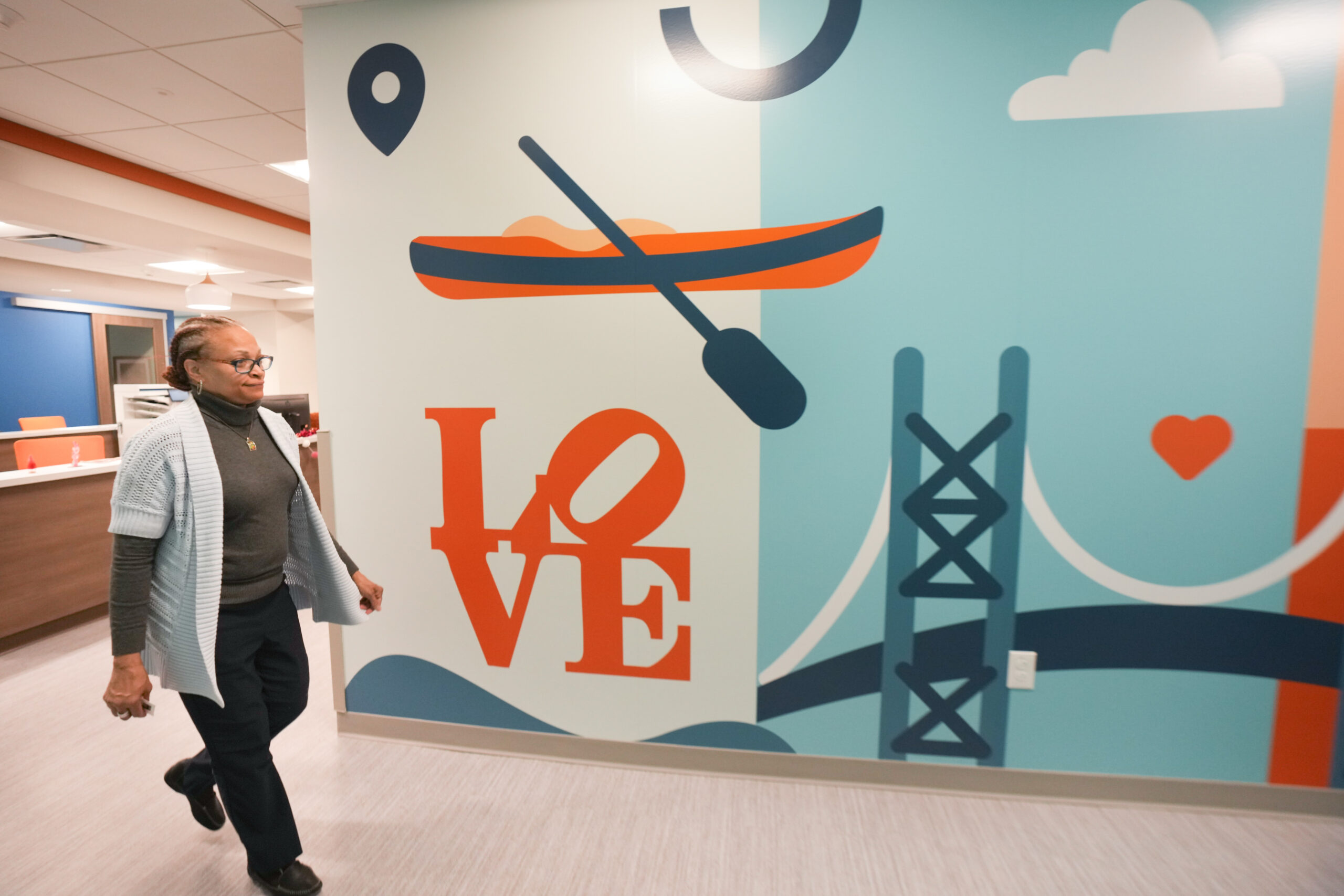
    The interior of Archwell Health’s Germantown primary care clinic has Philadelphia-centric images painted on the walls.

    Company founder Carl Whitmer worked at Clayton, Dubilier & Rice, a global private equity firm, before founding ArchWell.

    “We have partners that are focused on our sustainability and growth,” said Christina Cober, ArchWell’s vice president of marketing.

    But companies focused on primary care for seniors haven’t always been as successful as anticipated.

    Oak Street, founded in Chicago in 2012, grew rapidly and now services 450,000 patients at 230 centers across the country. It declined to say how many patients it has in Philadelphia. Oak Street arrived here in 2018.

    CVS Health bought Oak Street in 2023 for $10.6 billion, anticipating that it would expand to more than 300 centers by this year. Last fall, CVS announced it was closing 16 centers and taking a $5.7 billion write-down on its health-services business, largely because of slower anticipated growth at Oak Street.

    Patina Health, a Bala Cynwyd company that offered virtual and in-home primary care for Medicare Advantage patients through a partnership with Independence Blue Cross, shut down last year due to “unforeseen business challenges.”

    How ArchWell approaches patient care

    ArchWell says its lower patient-provider ratios allow more frequent interactions with patients. If a patient is diagnosed with high blood pressure, Schneider said, the message to the patient is: “We’ll see you back in a week. We’ll see you back in two weeks.”

    The repeat visits happen with no cost to the member and no extra revenue to ArchWell because all care is supposed to be covered by a monthly payment per member.

    ArchWell expects to add about 300 patients per year at each center, said Cober. Staffing at the centers starts out with a physician, a nurse-practitioner, two care navigators, two medical assistants, and a center manager.

    Among the early patients at ArchWell’s center on Germantown Avenue is Marcella James, 69, who lives across the street from the clinic and watched as the building was transformed from a shuttered Rite Aid.

    “I walked over there one day just to see what it was like and what they offer, and I signed up right away,” James said. James likes her doctor at Temple Health, but ArchWell was irresistibly convenient.

    “If I can get the same help or better help from ArchWell is to be seen because I just started with them,” she said.

  • La Salle’s loyal baseball community restored the program. Now it’s time to get it ‘back on the map.’

    La Salle’s loyal baseball community restored the program. Now it’s time to get it ‘back on the map.’

    Kevin Ibach reached a milestone as Tampa Bay Rays assistant general manager in September 2020. The Rays defeated the Toronto Blue Jays in the wild-card round, marking the first time in Ibach’s 20-year career in baseball that he made it past the opening round. Before the team opened its next series against the New York Yankees, though, Ibach received news that crushed his mood.

    La Salle, his alma mater, was shutting down its baseball program after the 2020-21 school year. Ibach played middle infield for the Explorers from 1996-2000, but the program that helped forge his baseball career was suddenly on its way out.

    The Rays reached their second World Series that year, but the success was stained for Ibach.

    “I have a ring to this day from that journey and at the same time, it was the low point,” Ibach said. “A program that I cared so much about. Four years that were instrumental in my life and my development that probably led me to my job today. Getting that email that they were shutting the doors was pretty disheartening.”

    When Ashwin Puri took over as La Salle’s athletic director in July 2023, he ensured that those doors did not stay closed. With a three-phase plan centered on facility upgrades, fundraising and fan experience, Explorers baseball was officially welcomed back in April 2024, targeting a return this year.

    “What I soon realized after being here for two or three months was that every other conversation was about baseball,” Puri said. “I don’t know if it was fate or chance, but I felt an amazing sense of pride and connection to the university. A lot of people love baseball and care about baseball.”

    La Salle spent 2025 preparing to throw its first pitch in four years. Now, the program’s return is right around the corner. The Explorers will open their season against Maryland Eastern Shore on Friday (2 p.m.) at Hank DeVincent Field.

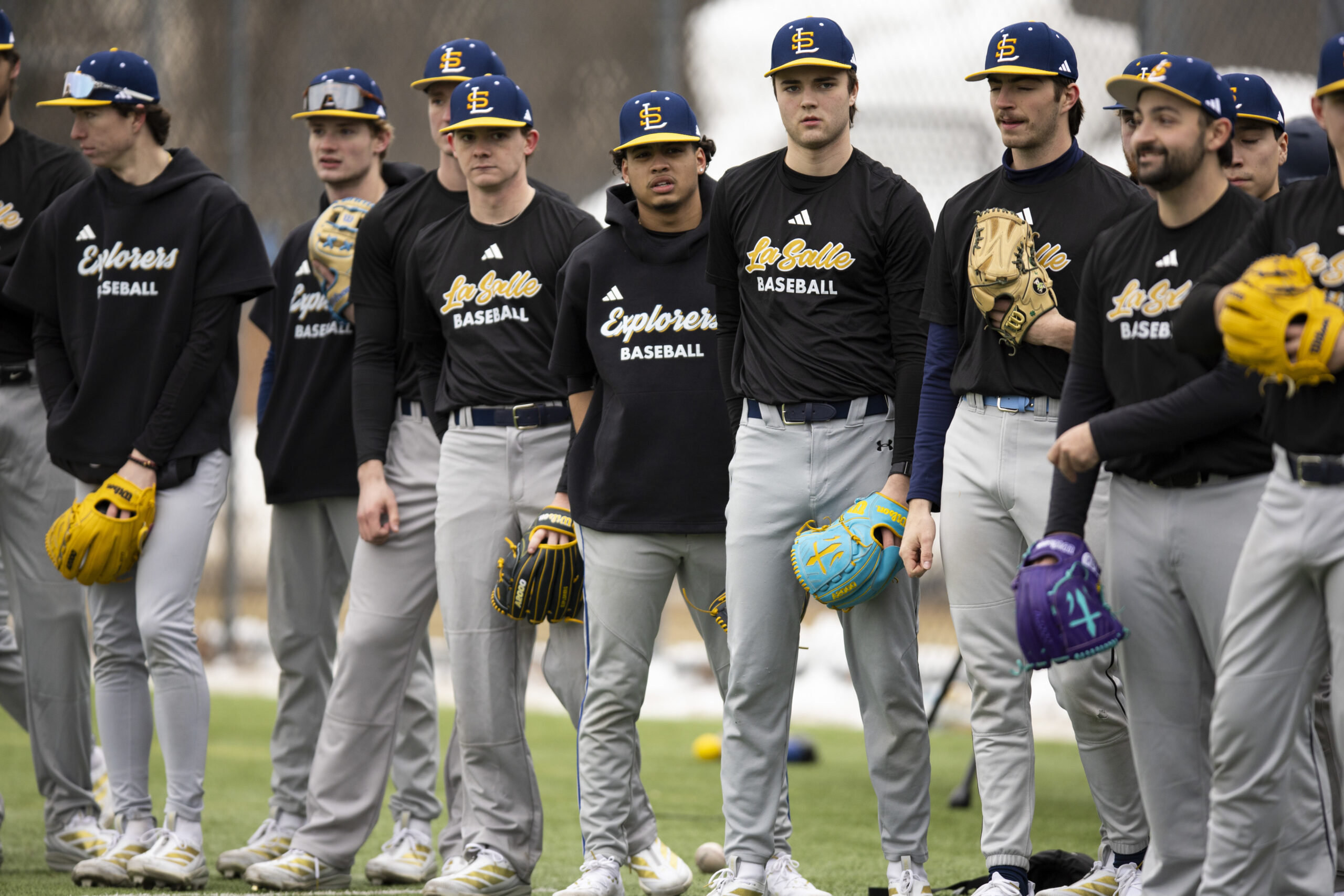
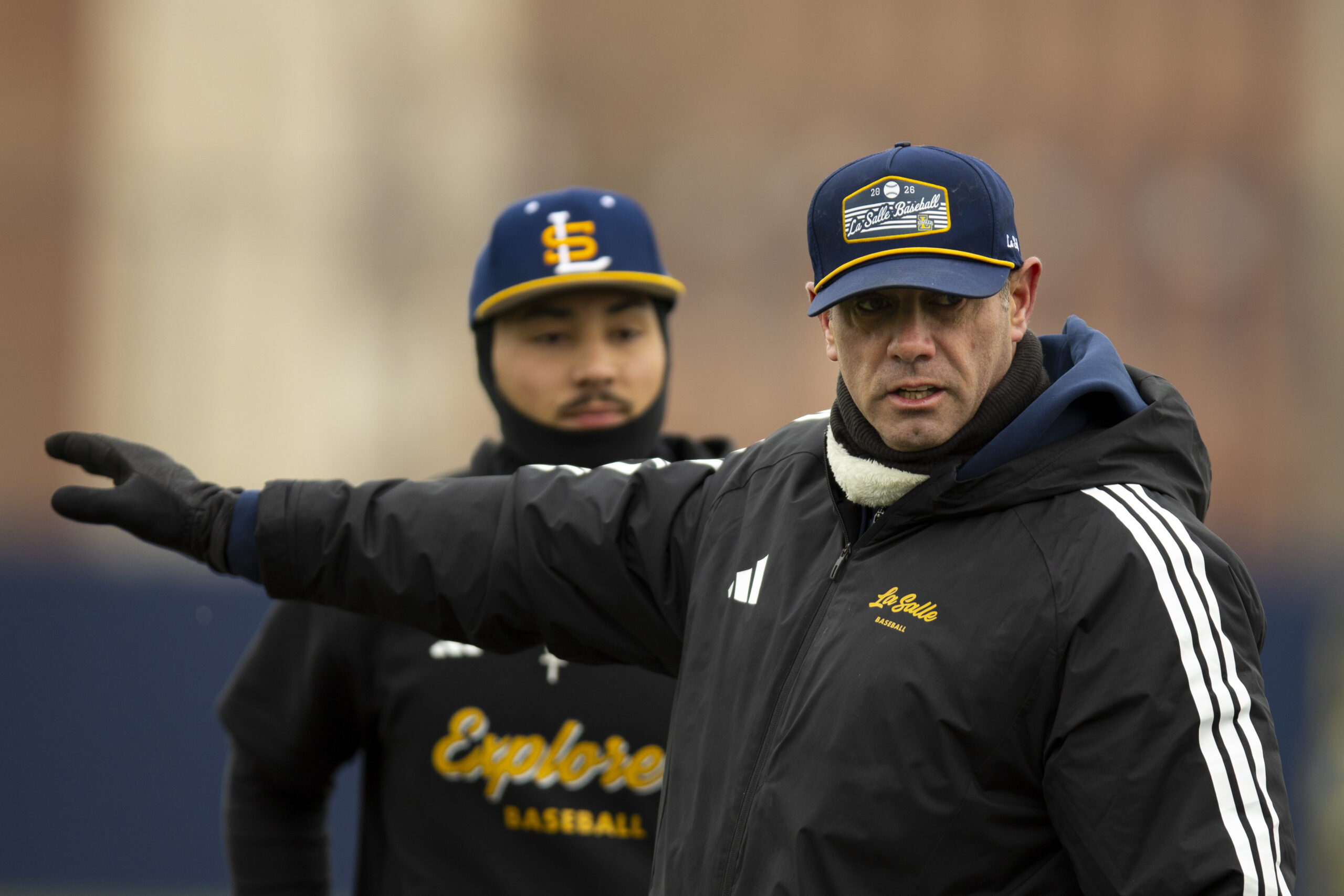
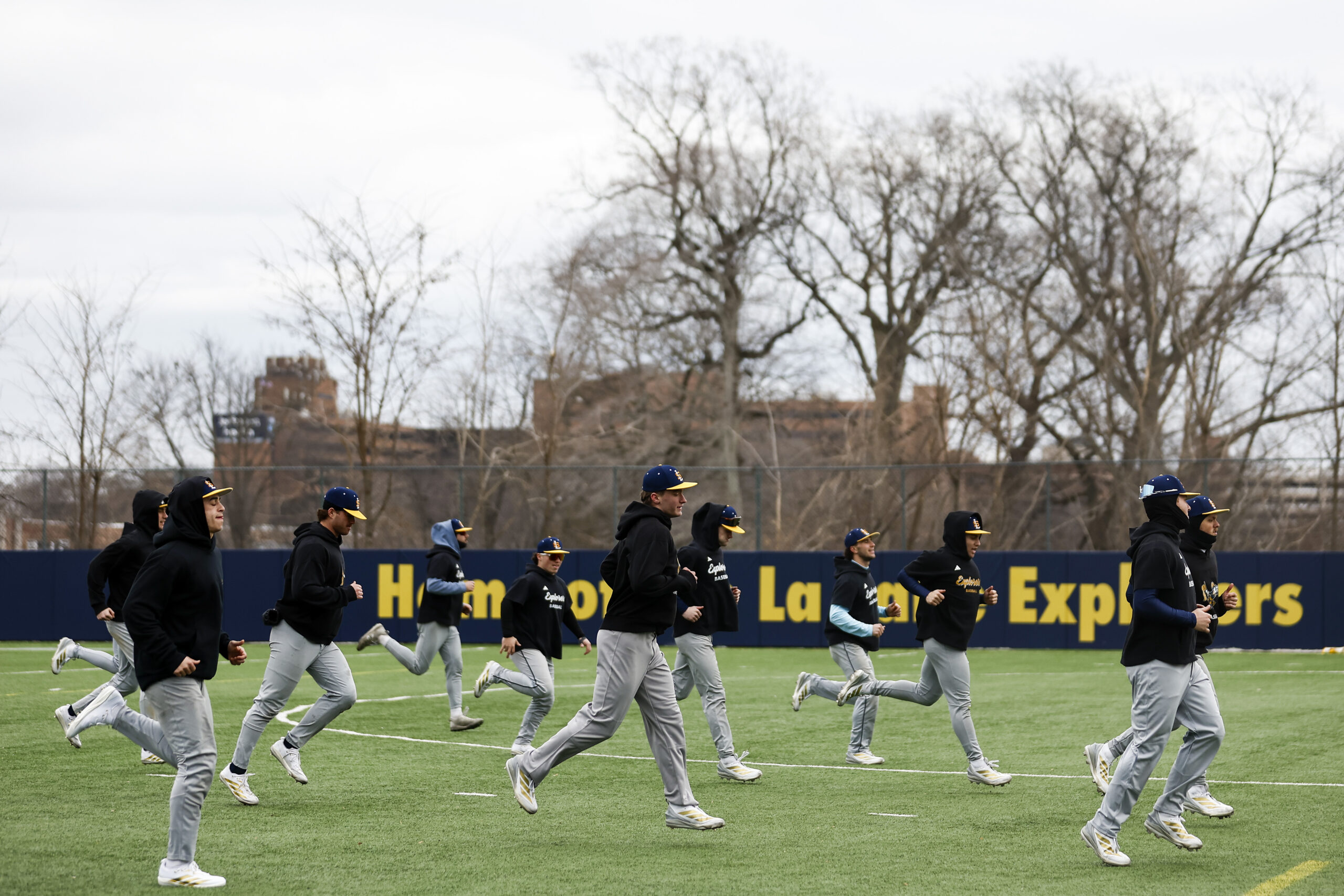
    La Salle baseball players practicing Wednesday at Hank De Vincent Field.

    Coach David Miller constructed a roster that is ready to write a new chapter of La Salle baseball while remembering the history that brought the Explorers to this point.

    “It’s going to be a lot of hard work that everybody collectively did to make this happen,” Miller said. “That first pitch, hopefully that first win, it’s going to be a great day for La Salle athletics.”

    Bringing a vision to life

    The main step in getting the program off the ground was improving the stadium and facilities while raising the necessary funds. An alumni advisory board formed to lead the operation helped focus on alumni outreach, and after a few months the progress in donations became notable.

    “When baseball came back, there was a small group of us that were excited to have the program back,” said Bill Watts, who played at La Salle from 1991-94 and serves on the advisory board. “Ashwin reached out and asked, ‘Would you be willing to be part of the rising here?’ I thought about it for a while and talked it over with some of my teammates and decided if we did it, we needed to do it the right way.”

    The feedback and excitement from alumni have been encouraging. More than 200 former players and alumni attended a “La Salle first pitch” dinner as an official welcome back for the program. While the program may have taken a few years off, the history and tradition carried on.

    The Explorers held alumni games in 2023 and 2024 at Hank DeVincent Field. La Salle made its conference tournament nine times before the program shut down. In its last season, La Salle finished with 32 wins, the most in program history.

    It is important, Puri said, that the program’s history is remembered in a new era.

    “I think history is a big part of it, but we also want to do things a little different this time,” Puri said. “We are going to take baseball very seriously. We are going to invest and we want to compete.”

    Building the team

    To put a team back on the field, Puri and the advisory board knew it started with one man: Miller.

    Miller was named La Salle’s head coach in 2018 and had the Explorers on an upward trajectory before the program shut down. They went 14-41 in his first season, then improved to 25-31 in 2019. After a shortened 2020 season, Miller led La Salle to one of its best performances in program history in 2021, finishing 32-21. Miller was named Atlantic 10 coach of the year and believed he was on the verge of accomplishing something special.

    That momentum was halted when the program shut down.

    Miller coached at Manhattan for two years before he got the offer to return to La Salle. Despite having to take a year off from coaching in 2025, the former Penn Charter coach decided it was worth it.

    David Miller returned to La Salle as the head coach, after serving at the helm for four seasons before the program was cut.

    “There’s just something about this place that draws me,” Miller said. “It’s like home to me. When my time is up here, I want La Salle baseball to be a destination baseball program in the northeast. And I don’t see why we can’t be.”

    With Miller back at the helm, the next step was putting the roster together. It was no easy task, considering he was starting from scratch.

    La Salle netted the 17th-ranked recruiting class by Perfect Game in 2025, bringing in 36 commitments. Next, its attention turned to the transfer portal.

    The Explorers brought in seniors who were looking for one more season to play college baseball or underclassmen seeking a fresh start. For utility man Chase Swain, a transfer from West Virginia, playing at La Salle brings his college career full circle.

    “I was committed here for like two years in high school,” said Swain, who played at Woodstown High. “… [The program getting cut] threw everything into a tailspin for me, recruiting-wise. So this place coming back, it was always in the back of my mind. I wonder what it would have been like there. I stayed loyal and the second that they brought it back, it was like a light bulb went off in my head, and I thought I would really enjoy playing there.”

    Underdog mentality

    With a completely new team, the players understand that expectations from the outside are low. The Explorers know a restarted program won’t be picked as a preseason favorite in the Atlantic 10 Conference, but they are using that as a chip on their shoulders and carrying an underdog mentality into the season.

    Because of the weather, La Salle has been forced to travel about an hour away to find an indoor facility for practice. The team has embraced the challenges.

    La Salle coach David Miller says his team is “more excited now than ever to play.”

    “I think we can take the motivation of being a gritty program because we don’t have all the facilities and everything that a lot of other schools have in Division I baseball,” said shortstop Justin Szestowicki, a transfer from Elon out of Kingsway High. “But I think we take that as an advantage. We have more of a chip on our shoulder, just knowing that, based on our opportunities to create a grittier play style, instead of just being taken care of all the time, we have to take some accountability for ourselves to be successful.”

    The players and coaches counted down the days until Friday, when they can say La Salle baseball is back and the two-year rebuilding process has come to fruition.

    Miller is ready to show the college baseball world who the Explorers are.

    “You’re seeing all these high-profile fans from Tennessee and LSU saying, ‘La — who?’” Miller said. “And we embrace that. That’s now my hashtag for the year. We’re going to show you who it is. These kids are more excited now than ever to play, because all the vision that we talked about, and getting them to see what’s coming, is here.”

    Ibach added: “I think that a lot of players who will be playing can take that inspiration to show the world, show the city, that La Salle baseball’s back on the map.”

  • Medicaid insurer AmeriHealth Caritas is closing its PerformRx PBM at the end of this year

    AmeriHealth Caritas, one of the nation’s largest Medicaid insurers, is closing its in-house pharmacy benefits manager, PerformRx, by the end of this year, the Newtown Square company said in an announcement to employees Wednesday.

    Health insurers effectively subcontract with pharmacy benefit managers to oversee drug benefits. They have become increasingly powerful cogs in healthcare and face new restrictions under a law signed by President Donald Trump this month.

    OptumRx, a unit of UnitedHealth Group Inc. and one of the three largest PBMs, is scheduled to take over for PerformRx on Jan. 1. OptumRx already provides PBM services to the majority owner of AmeriHealth Caritas, Independence Health Group. Independence is best known for its Independence Blue Cross business.

    “This decision reflects evolving market and regulatory landscape, not the performance or dedication of our PerformRx leadership or associates,” the AmeriHealth Caritas announcement to staff said.

    Caritas said in a statement to The Inquirer that it expected a “limited impact on jobs, with many functions remaining in-house to support the same high-quality experience for members and providers.”

    The company did not elaborate on the market and regulatory changes that precipitated the decision to close PerformRx, which Caritas formed in 1999. PerformRx has contracts in 13 states, including Pennsylvania and Delaware, according to the Caritas website.

    One of those states is California, where a new law took effect Jan. 1 that prohibits PBMs from charging health plans, including Medicaid plans, more than they pay the pharmacy for a drug. PBMs are still allowed to change a flat administrative fee in the state.

    Independence owns 61.3% of AmeriHealth Caritas. Blue Cross Blue Shield of Michigan owns the rest. Caritas accounted for about three-quarters of Independence’s $32 billion in revenue in 2024. The former CEO of AmeriHealth Caritas, Kelly A. Munson, succeeded Gregory E. Deavens in the top job at Independence last year.

  • Tyrese Maxey: The hero Philadelphia needs

    Tyrese Maxey: The hero Philadelphia needs

    There is no Philadelphia sports figure without blemish.

    The Phillies’ hitters failed again, and Zack Wheeler is hurt. The Eagles collapsed en masse after winning their second Super Bowl; even Saquon Barkley took hits before and during the season. The Flyers remain mired in a rebuild. And no team has engendered as much disappointment, if not disgust, as the Sixers over the past 14 years.

    With one exception.

    Tyrese Maxey.

    With his incandescent smile, his irrepressible joy, his boundless energy, and what has turned into a sterling set of skills and talents, Maxey is a beacon among the blurred and foggy landscape of Philadelphia sports.

    Everybody loves Maxey. He’s the breath of fresh air Philly sports needed. He’s never worried about the score of the game. You never see him dog it. He’s Pete Rose with a jump shot.

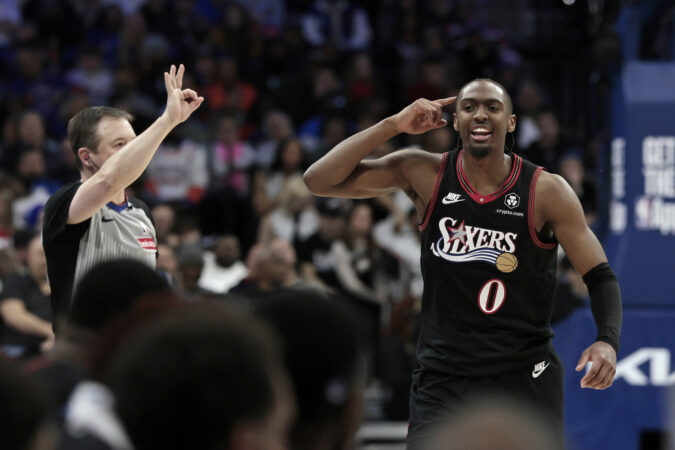
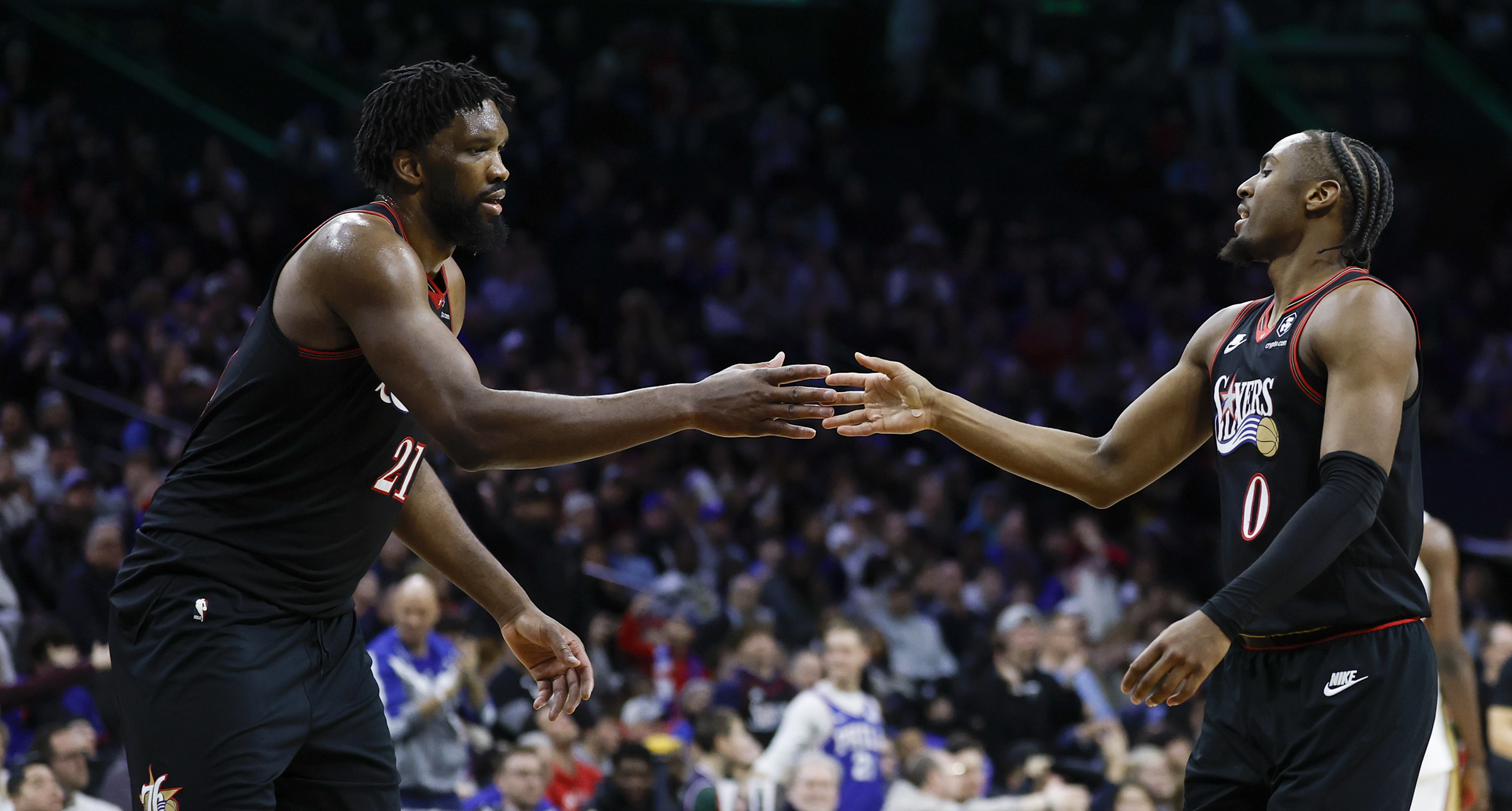
    Sixers guard Tyrese Maxey (right) no longer has to play second fiddle to Joel Embiid.

    Maxey will represent the Sixers as an NBA All-Star Game starter in Los Angeles on Sunday. This is fitting, since he’s the embodiment of what the Sixers hope to be and emblematic of how Philadelphia sees itself.

    Joel Embiid represents “The Process,” has been diminished as a part-time role player, and is a reminder of the disastrous slash-and-burn rebuild that began in 2013.

    Paul George represents the failed philosophy of Sixers president Daryl Morey, who bet everything on James Harden both in Houston and Philadelphia and made a similarly bad bet on George, addled by injury and seven games into a 25-game drug suspension.

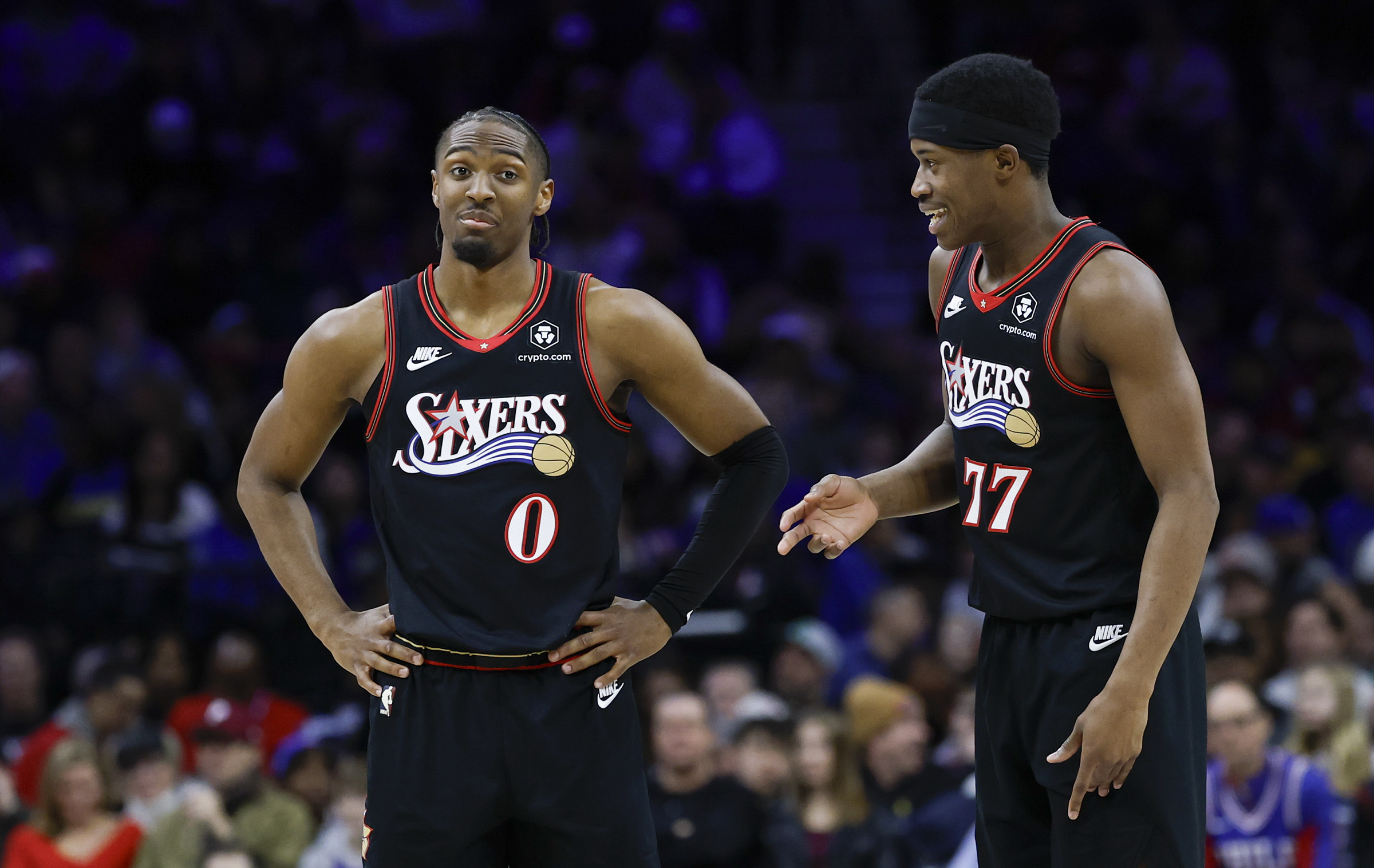
    Rookie guard VJ Edgecombe was the MVP of the Rising Stars All-Star competition Friday night and represents the future, but it is a future that depends on working in harness with Maxey.

    Maxey represents the Philly of today: a city that sees itself as a collection of hardworking, well-meaning, decent, and spirited underdogs.

    Philly guy

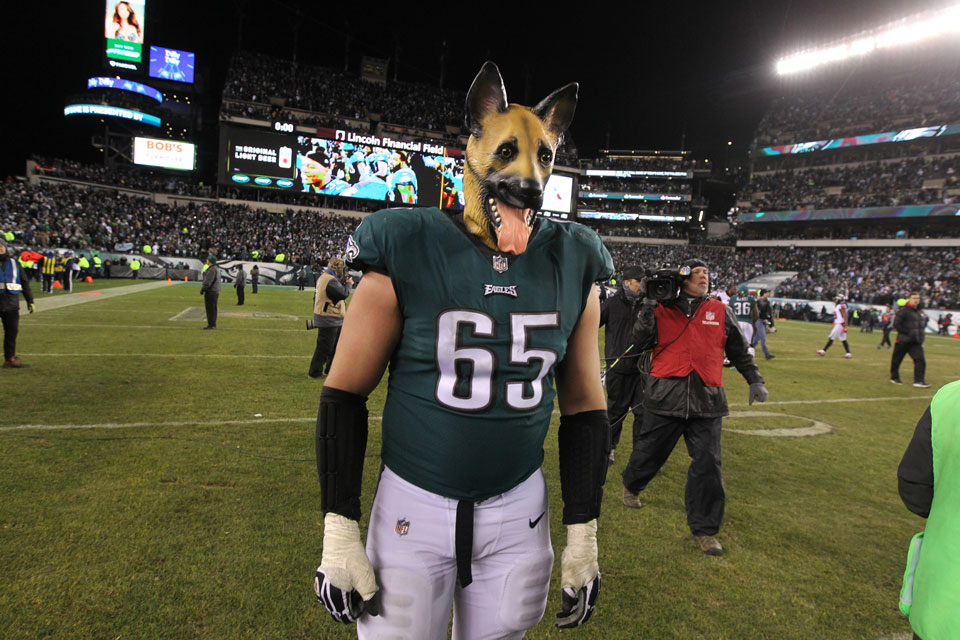
    From Vince Papale to Rocky Balboa to the 2017 Eagles, Philly loves an underdog.

    Eagles tackle Lane Johnson dons a dog mask after a playoff victory against the Atlanta Falcons on Jan. 13, 2018.

    Maxey has always been an underdog.

    He was never touted as an AAU player. He played for Kentucky for one uninspired season. He then was the 21st overall pick of the COVID-19 draft in 2020, behind the likes of Killian Hayes (seventh) and Kira Lewis (13th). A poor shooter, he started just eight games as a Sixers rookie. The Sixers hoped he’d be Dario Šarić or Landry Shamet, players drafted outside of the top 10 who have become dependable, if limited, NBA performers.

    As it turns out, Maxey has no limit.

    His maniacal offseason workout regimen focused on shooting and turned him from a 30.1% three-point shooter as a rookie into a 42.7% bomber in his second season. His scoring average over the years went from 8 points to 17.5 to 20.3 to 25.9, which made him the 2023-24 Most Improved Player and an All-Star reserve. He missed much of last season with injuries and still averaged 26.3 points, and now he’s at nearly 29 points per game, an All-Star starter, and an MVP candidate.

    Like former Eagles offensive line coach Jeff Stoutland said: Hungry dogs run faster.

    Maxey stays hungry. Hungry for wins.

    “I just want everybody to know I try extremely hard, I work extremely hard, and I leave it all out there on the court every single night. I play through whatever,” he said recently. “That’s the legacy I want to leave behind. But the main thing is to win.

    “This is a town that believes in winning. And I believe in winning.”

    Tyrese Maxey (left) and VJ Edgecombe form a potent combination at guard for the Sixers.

    Ravenous

    Maxey used to practice so much they had to take away his keys to the gym.

    He never was expected to play point guard. The Sixers drafted Maxey while Ben Simmons was on the team, then traded Simmons for Harden, then, when Harden forced a trade in 2023, Maxey took over the point. It was not pretty. He went to work.

    He’s a complete point guard today. His ballhandling and passing have advanced so much that his Player Efficiency Rating this season is 22.72, about three points higher than his last All-Star season and fifth among point guards. He trails reigning MVP Shai Gilgeous-Alexander, five-time top-10 MVP candidate Luka Dončić, two-time MVP Steph Curry, and 2026 All-Star and NBA champ Jamal Murray. Which is why Maxey is an MVP candidate himself.

    His game has blossomed.

    “I play three different roles on this team,” he said. “Sometimes I’ve got to shoot 30 times. Sometimes I’ve got to get Joel the ball. Sometimes I have to play full-time point guard and guard [elite] people. That’s OK. Whatever it takes to win.”

    He didn’t just develop a three-point shot, he developed Harden‘s three-point shot after pestering Harden to teach him during the Beard’s 1½ seasons with the Sixers. The result: a lethal, sidestep-stepback, coil-and-release mortar shell whose range knows no limit.

    This season, he mastered the most important skill of any backcourt scorer: the pull-up jumper, the most lethal weapon in basketball, from Jerry West to Michael Jordan to Kobe Bryant to Kevin Durant.

    How far has he come? He’d dropped in the draft because he couldn’t shoot. Now, on Saturday, he’ll be the first Sixer to compete in the three-point shooting contest since Kyle Korver in 2005.

    He remains driven by that disrespect, but he isn’t disrespectful, and that endears him to Philly even more. Sure, Philly’s a rough place. Some people got a kick out of Embiid and his Twitter-beefing with players like Karl-Anthony Towns. Some people loved it when Bryce Harper stared down mouthy Atlanta Braves shortstop Orlando Arcia in the 2023 playoffs.

    But those incidents also rubbed some people the wrong way. Maxey seems to always rub folks the right way.

    What’s not to like? After all, Maxey is the No. 1 dog dad in a canine-crazed city.

    Maxey owns three dogs. His first is named Apollo, after the Apollo Creed character in Rocky. Then he got Aries and Arrow. They are his family. Maxey told Sixers videographers that when he bought a house in South Jersey, he insisted it have lots of land: “Try to create a happy home for my dogs. Let them run around in this big backyard.”

    He made a cameo appearance at the National Dog Show when it visited the Philadelphia area in November.

    So, he loves dogs. He loves kids, too.

    Maxey won the Bob Lanier Community Assist Award in 2024 for his offseason work with youths in Philadelphia and his native Dallas.

    With Tyrese Maxey, it’s never about Tyrese Maxey.

    I ran an informal Twitter/X poll Tuesday into Wednesday that asked, “Who’s your favorite Philly athlete?” I listed Harper, Kyle Schwarber, Saquon Barkley, and Maxey. (X only allows four entries.) Maxey won with 38% of the votes. Schwarber got 23%, Harper got 15%, and Barkley got 24%.

    No, it’s not a scientific poll, and yes, it drew only about 400 respondents, but it makes sense nevertheless.

    When the local TV broadcast spotted Maxey’s parents, Tyrone and Denyse (his name is a combination of theirs) at the Sixers’ game Saturday in Phoenix, play-by-play announcer Kate Scott called them “the Royal Family of Philadelphia.”

    That’s because, at this moment, their son is king.

    Always ‘us,’ never ‘me’

    In an era of shameless self-promotion, Maxey never lobbies for personal accolades. He has never deemed himself an All-Star or an MVP until somebody else deemed him thus.

    He’s always accountable, but he spreads the love. When Embiid dropped 40 on Jan. 31, Maxey detailed how the big guy’s game had developed to the point that Embiid found Maxey late in the game instead of forcing his own shot: “He played the right way.”

    When George got suspended in the middle of a playoff push, Maxey never wavered: “We stand with Paul.”

    He plays a child’s game with a child’s glee. It isn’t perfect, but Maxey has the most recognizable Philly smile since Flyers legend Bobby Clarke, and he flashes it all the time.

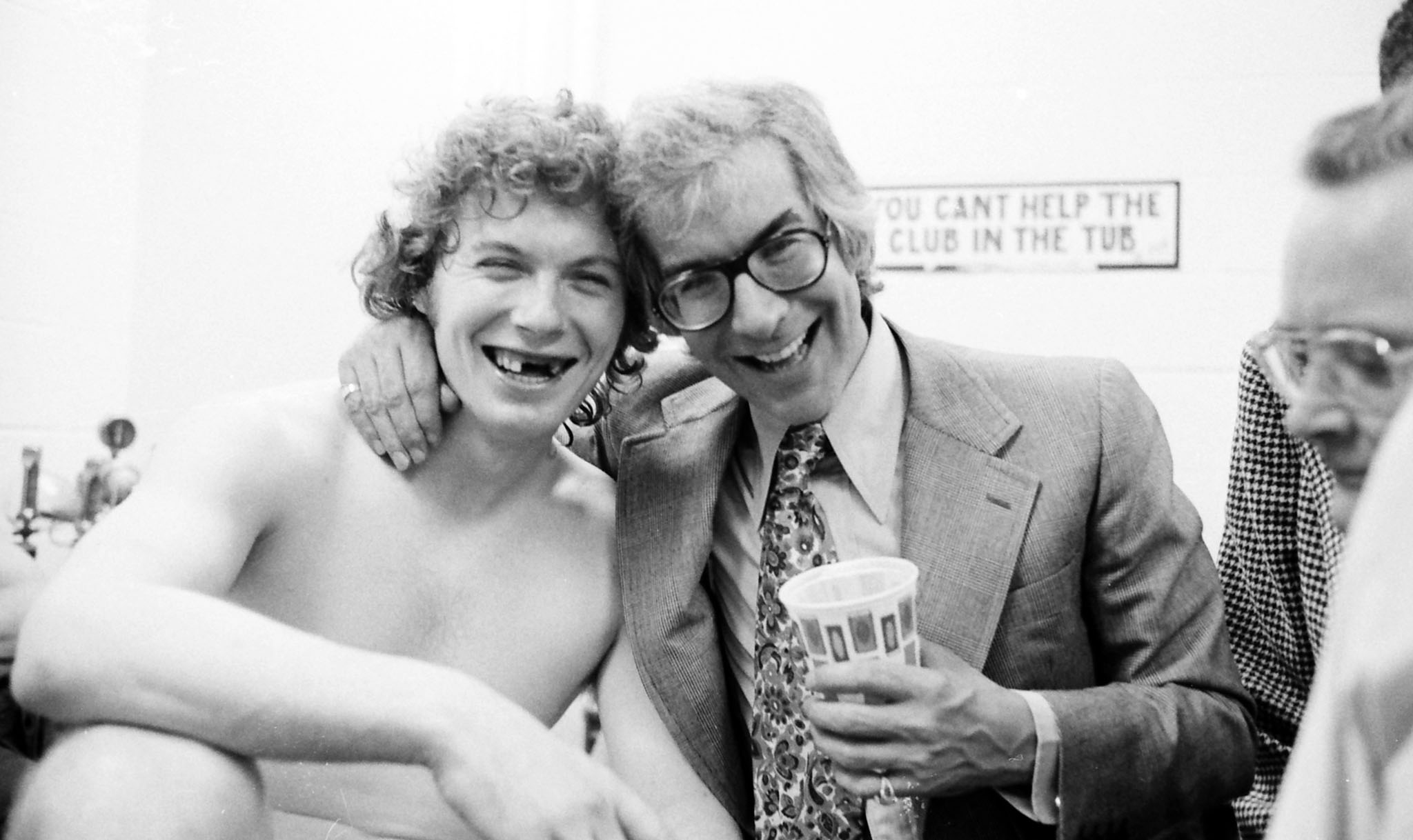
    Bobby Clarke and Ed Snider in the Flyers’ locker room in 1974. (Spectrum Archives)

    From diet to conditioning to practice to rest, he adores the process and the progress as much as he relishes the result.

    It was Maxey who, in a team meeting last season, finally confronted Embiid about his selfishly tardy habits: how he kept teammates waiting at meetings, on buses, and on planes.

    Maxey just shows up on time, pays attention, and plays his hardest every second. He’s the type of player Philadelphians swear they would be if they had the chance. He understands that he has a gift, and that he should rejoice in his gift, even if it doesn’t take him to the top of the mountain.

    This weekend, that gift took him to L.A.

  • At 91, Joe Pagliei is believed to be the oldest living Eagle. It’s made him popular at his South Jersey retirement home.

    At 91, Joe Pagliei is believed to be the oldest living Eagle. It’s made him popular at his South Jersey retirement home.

    When Joe Pagliei moved to the Azalea senior living facility in September of 2023, word spread quickly. This was not just because he spent a season playing for the Eagles.

    It was also because of his unabashed personality.

    Pagliei would walk the halls of the Cinnaminson retirement home practicing his golf swing. If he lost a game of bingo, he’d throw the cards into the air and accuse his neighbors of “cheating.”

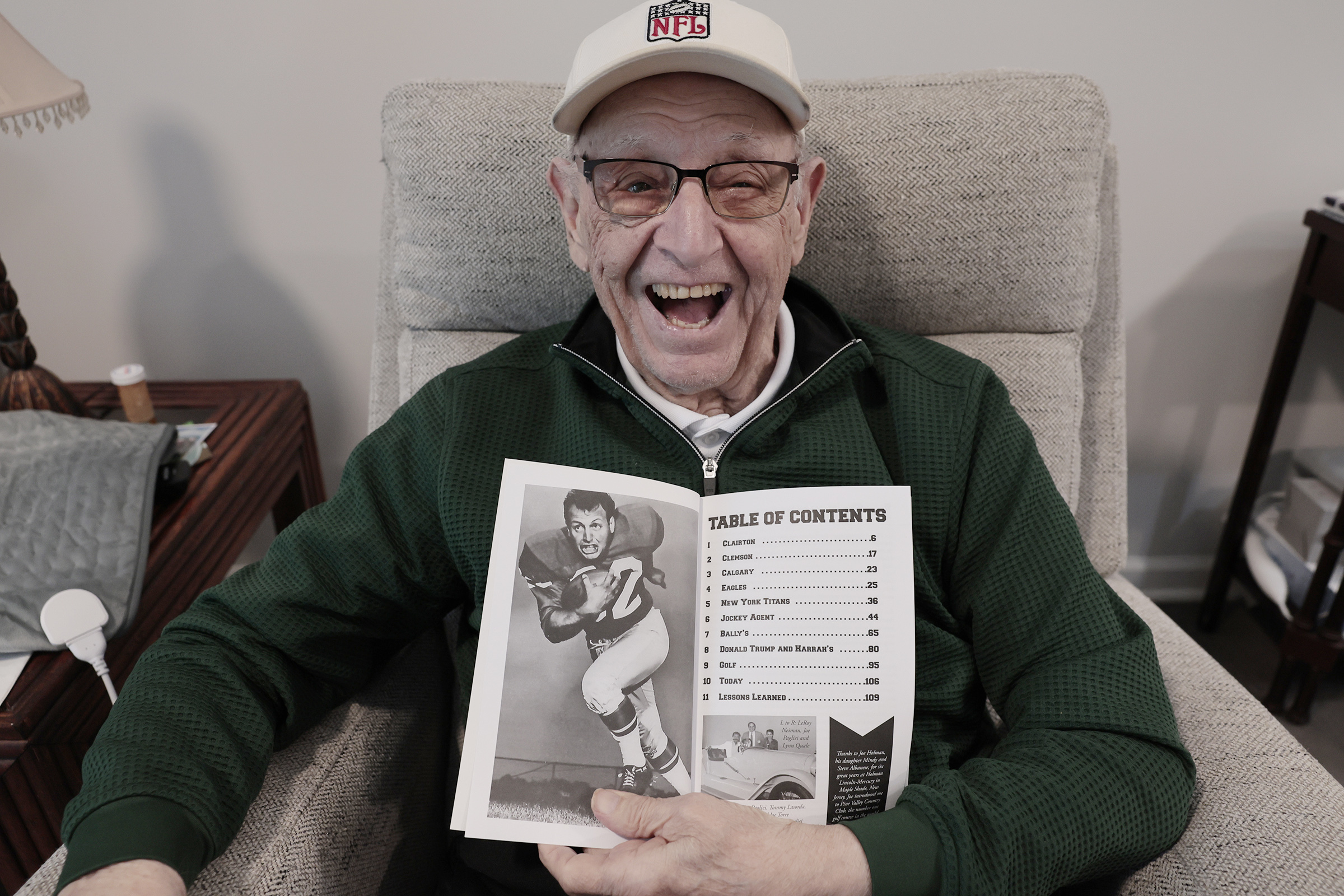
    Every day, at 3 p.m., he’d sit at the bar, nursing a ginger ale, with copies of a book about his life stacked beside him. Before long, residents began to ask for some.

    This wasn’t your average nonagenarian, after all. Pagliei spent parts of the 1950s and 1960s as a pro football player, first in Canada in the CFL, then in the NFL, and eventually, the AFL.

    He played the 1959 season as a fullback and punter with the Eagles. Pagliei was the last cut in training camp before the 1960 season. The Eagles called him back, asking if he’d want to rejoin the team, but it was too late.

    The fullback had already signed with the New York Titans, later to become the New York Jets. Pagliei ended up missing out on a championship.

    “Big mistake,” joked his daughter Vicki.

    It didn’t hamper Joe’s confidence. The former football player worked in auto sales and real estate for a few years, and became a jockey agent in 1970 out of Garden State Park Racetrack.

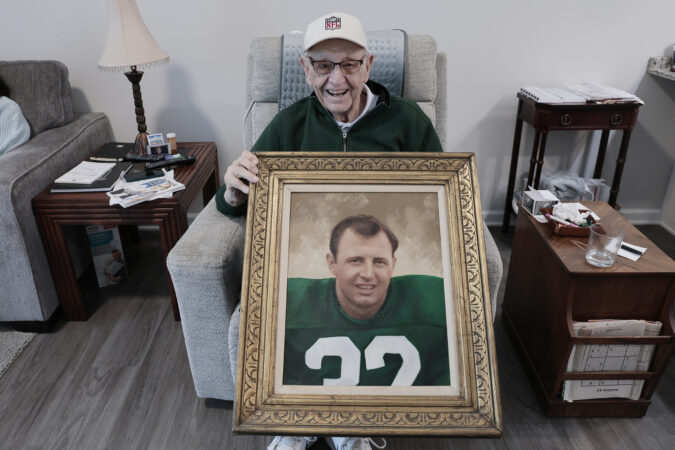
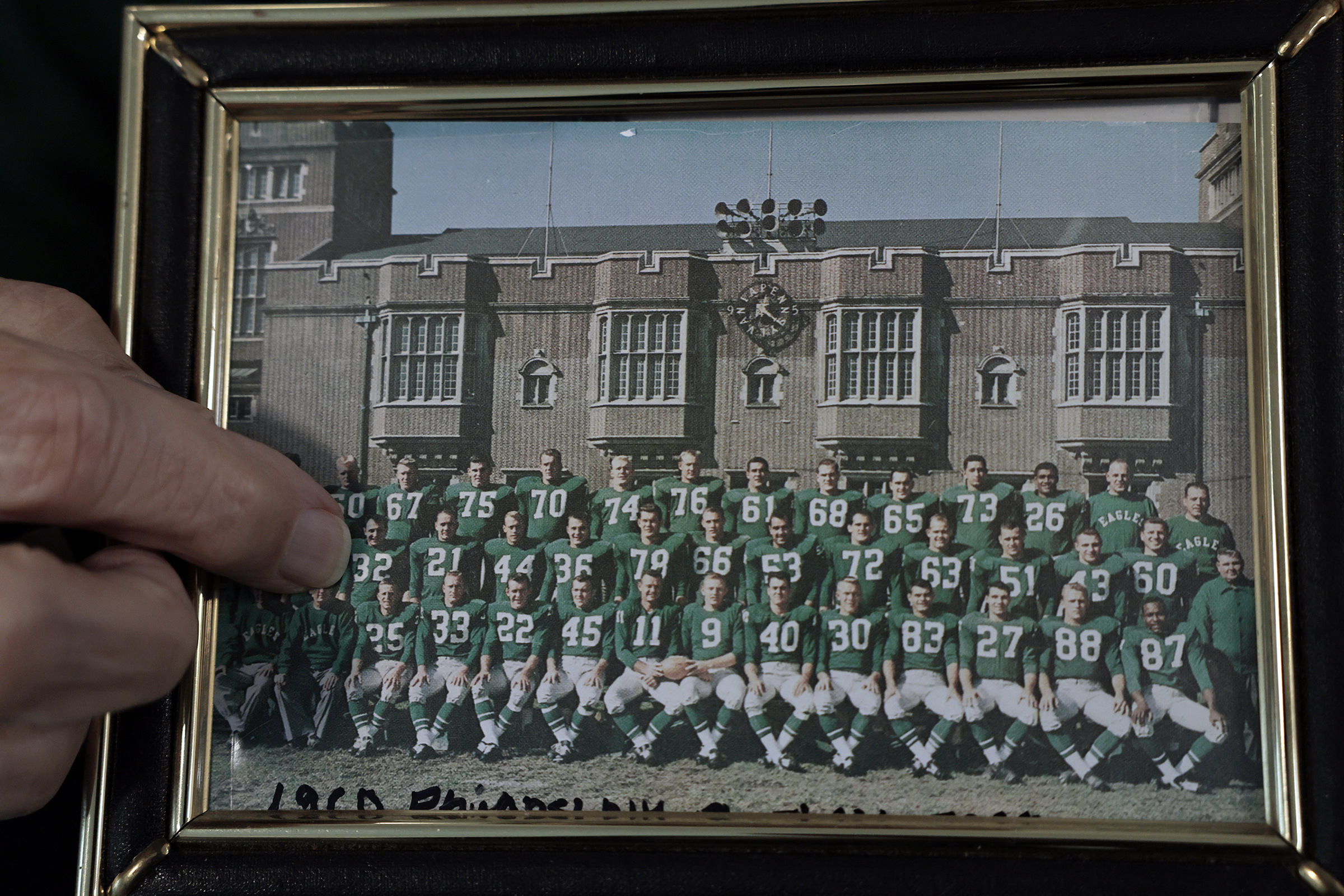
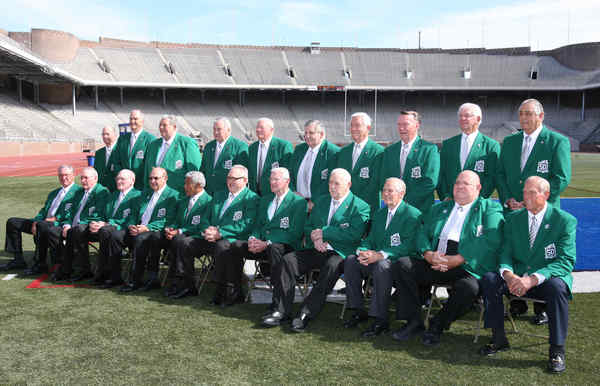
    Joe Pagliei points to himself, wearing No. 32, in the 1960 Eagles team photo taken at Franklin Field.

    When the track burned down in 1977, Pagliei headed to Atlantic City, where he became a casino host, crossing paths with everyone from Mickey Mantle to Joe Frazier to Sammy Davis Jr.

    He moved to Mount Laurel with his wife of 62 years, Rita, and four children in 1991. He sold cars for a few years, retired in 2000, and moved to Azalea after Rita died in 2023.

    At 91, Pagliei is believed to be the oldest living former Eagle. It is not a title he takes lightly. Last year, before the Super Bowl, his senior facility arranged for a visit from an Eagles-themed bus.

    Dressed in his kelly green jersey, Pagliei signed one of the bus panels: “Joe Pagliei, #32.”

    When he’s not lifting weights, or playing poker, he is watching Eagles games in his apartment, often with critiques of his own. Philadelphia will always be his favorite team, but he does have some misgivings about how he was used back in the day.

    “I was awfully good to be sitting down,” the 91-year-old said. “Not enough [playing time].”

    ‘I’m going to make you famous, buddy’

    Pagliei grew up in Clairton, Pa., a small town southeast of Pittsburgh, full of hard-nosed steel mill workers. His father, Alberto, emigrated from Italy and spent 48 years working as a janitor at the local plant.

    The elder Pagliei, a pragmatic man who saved every dollar, didn’t see the benefit in his son joining the football team. He refused to let him play until the 11th grade.

    Despite missing a few seasons, the younger Pagliei was not short on confidence. On the first day of practice, he walked straight up to his new coach.

    “I said, ‘I’m going to make you famous, buddy,’” Pagliei recalled. “He said, ‘You’re full of [expletive].’ And I said, ‘Oh really?’

    “I didn’t know the plays. I went out on a Wednesday. I ran two touchdowns. He said, ‘Wow.’ I said, ‘You just put my [butt] in there. Don’t worry about it.’”

    Famous might have been an exaggeration, but Pagliei did catch the attention of some big-name schools. According to his 2017 self-published book, The Roast Master, he received more than 100 recruitment letters.

    The fullback chose Clemson University in South Carolina. His arrival on campus in 1952 marked the first time he’d ever traveled outside of Western Pennsylvania. He played both football and baseball, and separated himself on the gridiron.

    Joe Pagliei came to football later than most, but he made up for lost time as a dual-position standout.

    In 1954, he led the Atlantic Coast Conference in punting, averaging 37.8 yards on 26 kicks. In 1955, his senior year, he topped the conference again, averaging 39.1 yards on his punts. He also made a dual-threat impact for the Tigers on offense, rushing for 476 yards and catching 10 passes for 233 yards.

    Clemson’s 1955 team program referred to the fullback as a “flashy performer,” a characterization that seemed apt, though perhaps insufficient in retrospect.

    “I did a number on ’em when I went to Clemson,” Pagliei said. “I just ran everybody the hell out. They had me as number five. I said, ‘I’m number uno.’ They said, ‘You’re five.’ I became the best one.”

    After going undrafted in 1956, Pagliei received free-agent invitations from the Green Bay Packers and Washington, but said neither came “with any form of guarantee.”

    He ended up getting a better contract outside the NFL, with the Calgary Stampeders of the CFL, where he played the 1956 season. Pagliei was drafted into the U.S. Army in 1957.

    He joined the football team on the base while serving at Fort Knox in Kentucky, and the Eagles offered him a contract for the 1958 season. Because of his military commitment, he was unable to suit up until May 1959, when he was discharged from the Army.

    The Eagles had a deep backfield, and as Pagliei noted, he didn’t get much playing time (only two carries for minus-5 yards and two catches for 9 yards). He didn’t get much time as a punter, either, because he was the backup for Hall of Fame quarterback Norm Van Brocklin.

    But Pagliei did emerge with one stat to be proud of. According to The Roast Master, on Dec. 6, 1959, in the middle of a rainy game against Washington, Van Brocklin suggested that Pagliei take the kick.

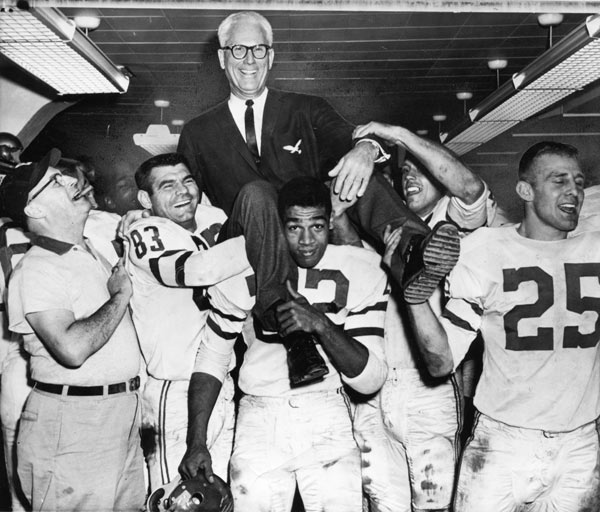
    Joe Pagliei was not officially a part of Buck Shaw’s 1960 title team, but he was considered an honorary part of it by his former Eagles teammates.

    He did, for 45 yards. It was the NFL rookie’s only punt of the 1959 season, giving him a yearly average of 45 yards (for his one attempt) while Van Brocklin had only 40.8 (for his 53).

    “I always rubbed that in with Van Brocklin,” Pagliei wrote. “And he’d say to me, ‘You son of a [expletive]. One punt and you lead the team.’”

    Pagliei again faced stiff competition in training camp the following year. He was cut on the day the Eagles took their team photo, Sept. 19, 1960, thereby capturing his final moment on the future championship-winning squad.

    After he signed with the Titans of the AFL, the Eagles contacted Pagliei again. Fullback Theron Sapp had broken his leg in a preseason game and would be out longer than the team had expected.

    They asked Pagliei if he’d like to return to Philadelphia, but he’d already signed his Titans contract. While missing out on history was bittersweet, the 91-year-old always felt like he was a part of the 1960 Eagles group.

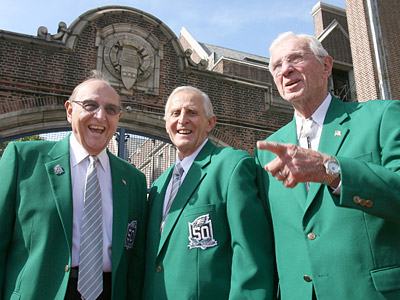
    Joe Pagliei (left) with Tommy McDonald (center) and Chuck Bednarik at an event honoring the 1960 team.

    It included some of his closest friends. Defensive tackle Jesse Richardson was the best man at Pagliei’s wedding. Wide receiver Tommy McDonald was like a family member. McDonald’s wife, Patty, was the godmother to Pagliei’s daughter Lizanne and the confirmation sponsor for Vicki.

    Pagliei left professional football in 1961 but continued to stay a part of that fraternity. His kids would play with McDonald’s kids, and linebacker Bob Pellegrini’s kids. The team always invited Pagliei to reunions and celebrations of the 1960 championship.

    In 2018, after the Eagles won their first Super Bowl, former players and their families were invited to the NovaCare Complex to see the Lombardi Trophy up close.

    McDonald had been diagnosed with dementia. He attended the event in a wheelchair, donning his gold Hall of Fame jacket. The former receiver’s recall was shaky, but when he saw Pagliei, his face lit up.

    “He knew who my dad was,” Vicki said. “He didn’t know too many people, but he knew who my dad was. He used to call him his brother.”

    The mayor of Azalea, senior living

    The staffers at Azalea of Cinnaminson say that Pagliei is something akin to a mayor. He knows everyone in the building. He also knows everything going on in the building, for better or for worse.

    The 91-year-old goes to the gym once a day, where he rides a bike, and does “40 reps of each weight.” On Tuesday and Thursday nights, he plays poker, a game that he might take more seriously than any other.

    Members of the 1960 Eagles NFL championship team pose for a team photo at Franklin Field, the site of their 17-13 win over Green Bay in the title game.

    “I make a lot of money,” Pagliei said, pointing to a stack of bills totaling $21 on a nearby counter. “Big time. Big time.”

    The former Eagle is 66 years removed from his last NFL season, but he has not lost his competitive spark. The Azalea staff learned this the hard way.

    Gracie Pouliot, a guest services manager, has had to intervene in a few contentious games of bingo.

    “He’s not a very good loser,” she said. “Everyone is cheating if he loses. He’s like, ‘This is [expletive]! They cheated!’

    “And we’re like, ‘No!’ He’ll throw the cards. He just cracks us up. He’s so funny.”

    Linda Bryant, a life enrichment assistant, said that Pagliei used to make fun of how she’d play pool.

    “He was joking around,” she said. “‘You guys don’t know how to do it.’”

    Bryant and Pouliot wouldn’t have it any other way. Pagliei might not be able to punt the ball, or run the length of a field, but he still has the spirit of a teenager.

    “He’s our little, fun-loving guy,” Bryant said.