Tag: University City

  • ‘Courage is contagious.’ How Philadelphia churches and neighborhood groups are preparing to confront ICE.

    ‘Courage is contagious.’ How Philadelphia churches and neighborhood groups are preparing to confront ICE.

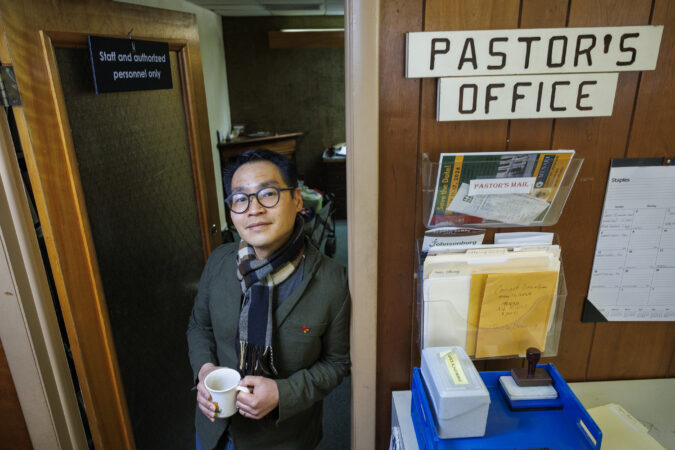
    Within the serpentine halls and stairways of Olivet Covenant Presbyterian Church, congregants have established several private, off-limits rooms ― each a potential last-stand space where members would try to shield immigrants from ICE, should agents breach the sanctuary.

    Church leaders call them Fourth Amendment areas, named for the constitutional protection against unreasonable search and seizure. The plan would be to stop ICE officers at the thresholds and demand proof that they carry legal authority to make an arrest, such as a signed judicial warrant.

    “It’s a protective space,” said the Rev. Peter Ahn, pastor of the Spring Garden church. “While you’re here, you’re safe, is what we want to assert.”

    Could it come to that? A pastor confronting armed Immigration and Customs Enforcement agents in the hallway of a church?

    It’s impossible to know. But across Philadelphia, churches, community groups, immigration advocates, and block leaders are actively preparing for the time ― maybe soon, maybe later, maybe never ― that the Trump administration deploys thousands of federal agents. People say they must be ready if the president tries to turn Philadelphia into Minneapolis ― or Los Angeles, Chicago, or Washington, D.C.
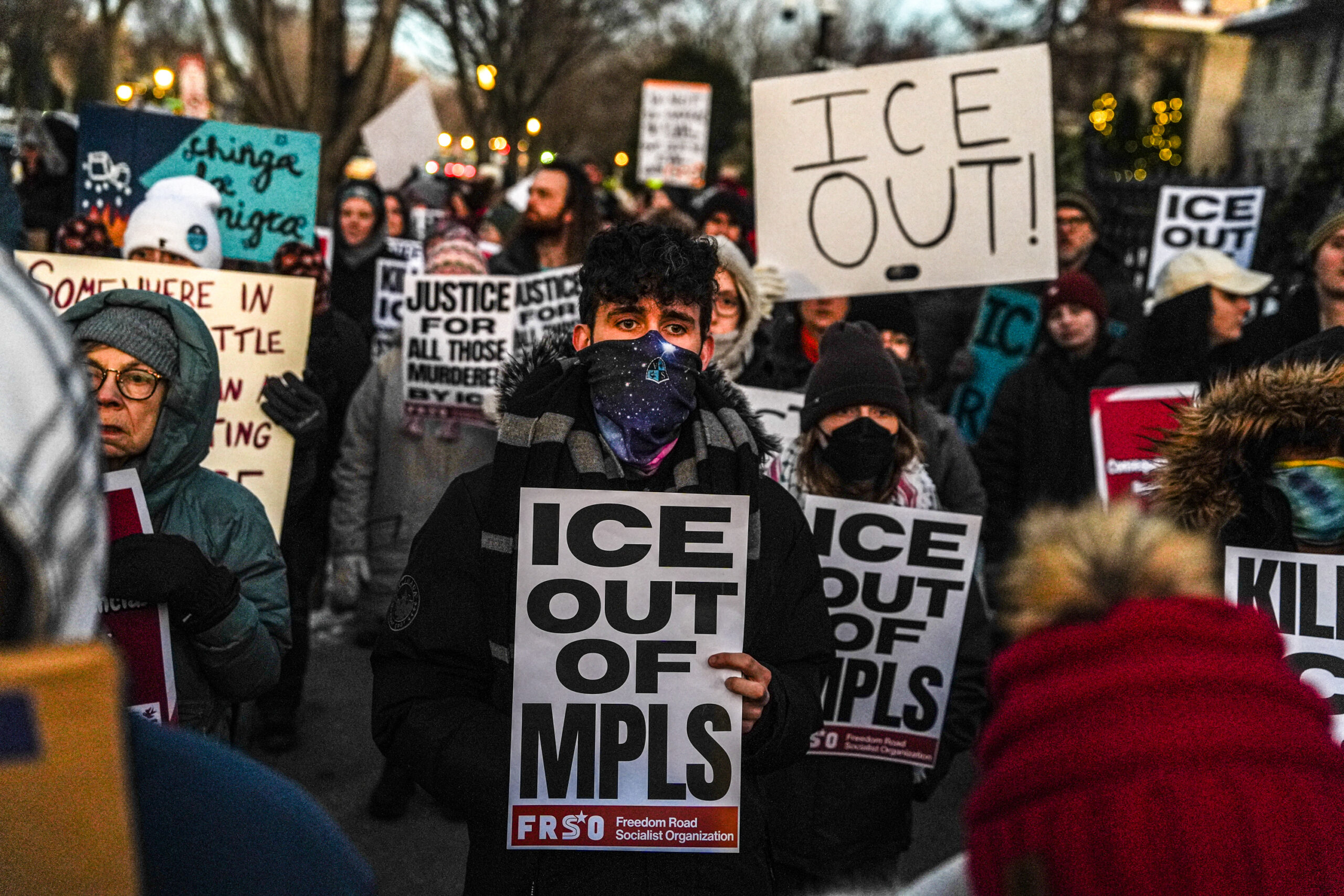
    People participate in an anti-ICE protest outside of the Governors Residence on Feb. 6, in St. Paul, Minn.

    Know-your-rights trainings are popping up everywhere, often to standing-room-only attendance, and ICE-watch groups are abuzz on social media.

    The First United Methodist Church of Germantown held a seminar last week to learn about nonviolent resistance, “so that we will be ready for whatever comes,” said senior pastor Alisa Lasater Wailoo.

    “That may mean putting our bodies in the path to protect other vulnerable bodies,” she said. “We’re seeing that in Minnesota.”

    In Center City, Temple Beth Zion-Beth Israel has ordered 300 whistles ― portable and efficient tools to immediately alert neighbors to ICE presence and warn immigrants to seek safety.

    “There was a sense of needing to support our neighbors if it comes down to it,” said Rabbi Abi Weber. “God forbid, should there start to be ICE raids in our neighborhood, people will be prepared.”

    In other places around the country, immigrant allies have similarly readied themselves for ICE’s arrival, and organized to react in concert when agents show up.

    In Washington state, the group WA Whistles has distributed more than 100,000 free whistles to create what it calls “an immediate first line of community defense.” Chicago residents set up volunteer street patrols to warn immigrants of ICE and to contact family members of those detained. In Los Angeles, people raised money to support food-cart vendors, and organized an “adopt a corner” program to protect day laborers who seek work outside Home Depot stores.
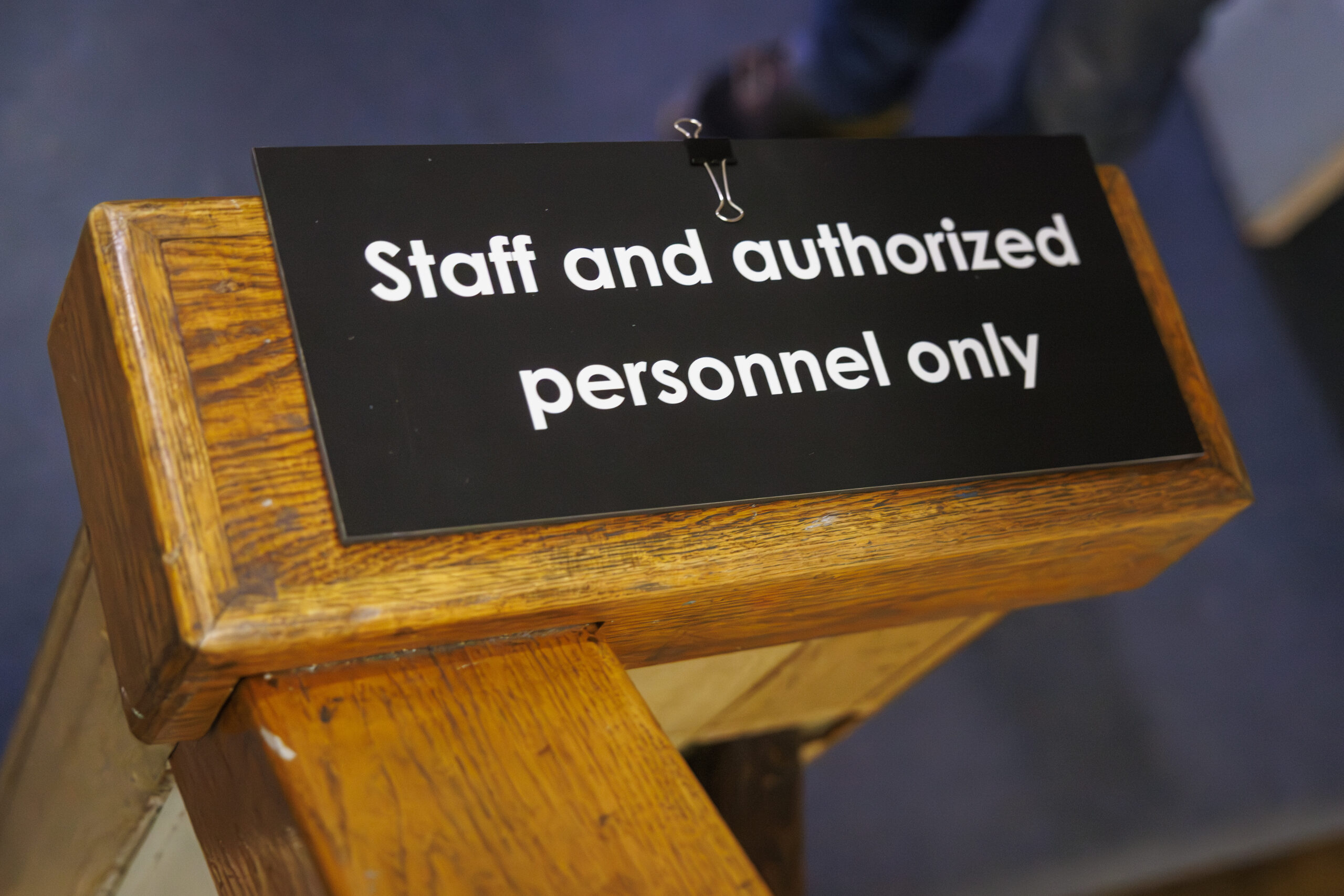
    A small sign at the Olivet Covenant Presbyterian Church, where the Rev. Peter Ahn is creating space to shield immigrants if necessary.

    Ask Philadelphia groups that advocate for immigrants — 15% of the population, including about 76,000 who are undocumented — and they say ICE isn’t about to land in the city. It’s been here.

    The agency’s Philadelphia office serves as headquarters not just for the city but for all of Pennsylvania and for Delaware and West Virginia as well. Arrests take place every day in the Philadelphia region.

    “You all seem to be ‘preparing’ for something that’s already happened,” veteran activist Miguel Andrade wrote on Facebook.

    What has changed, however, is the dramatic escalation in ICE enforcement, particularly visible in Democratic-run cities like Minneapolis, where agents fatally shot two U.S. citizens in January.

    ICE detained 307,713 people across the country in 2025, a 230% increase over the 93,342 in 2024. What federal immigration agencies record as detentions closely mirror arrests.

    Today residents in communities like Norristown and Upper Darby see ICE agents on the streets all the time. Cell phone videos have captured violent footage, including the smashed front door of a Lower Providence home after agents made an arrest on Feb. 9, and two people roughly pulled from a car in Phoenixville earlier this month.

    For immigrants who have no legal permission to be in the U.S. ― an estimated 14 million people ― the rising ICE presence steals sleep and peace of mind. They know not just that they could be arrested and deported at any moment, which has always been true, but also that the U.S. government is expending vast resources to try to make that happen.

    A woman who came to Philadelphia from Jamaica last year, and who asked not to be identified because she is undocumented, said she rarely leaves her home. She said she steps outside only to go to the grocery store, a doctor, or an attorney.

    She recently asked her daughter to check something on the computer, and the girl balked ― afraid to even touch the machine, worried that ICE could track her keystrokes and identify their location, the woman said.

    “How can I tell her it’s going to be OK when I don’t know it’s going to be OK?” asked the woman, who came to the U.S. to escape potential violence in Jamaica. “You come here expecting freedom, but here it’s like you’re in jail except for the [physical] barriers of the four walls.”

    Even as arrests have soared, Philadelphia has been spared the federal intrusions visited on other American cities.

    Why?

    Some say President Donald Trump doesn’t want to ruin the summer celebration of the nation’s 250th birthday, or spoil the grandeur of the World Cup or Major League Baseball’s All-Star Game. Others suggest that he might be timing an ICE deployment to do exactly that.
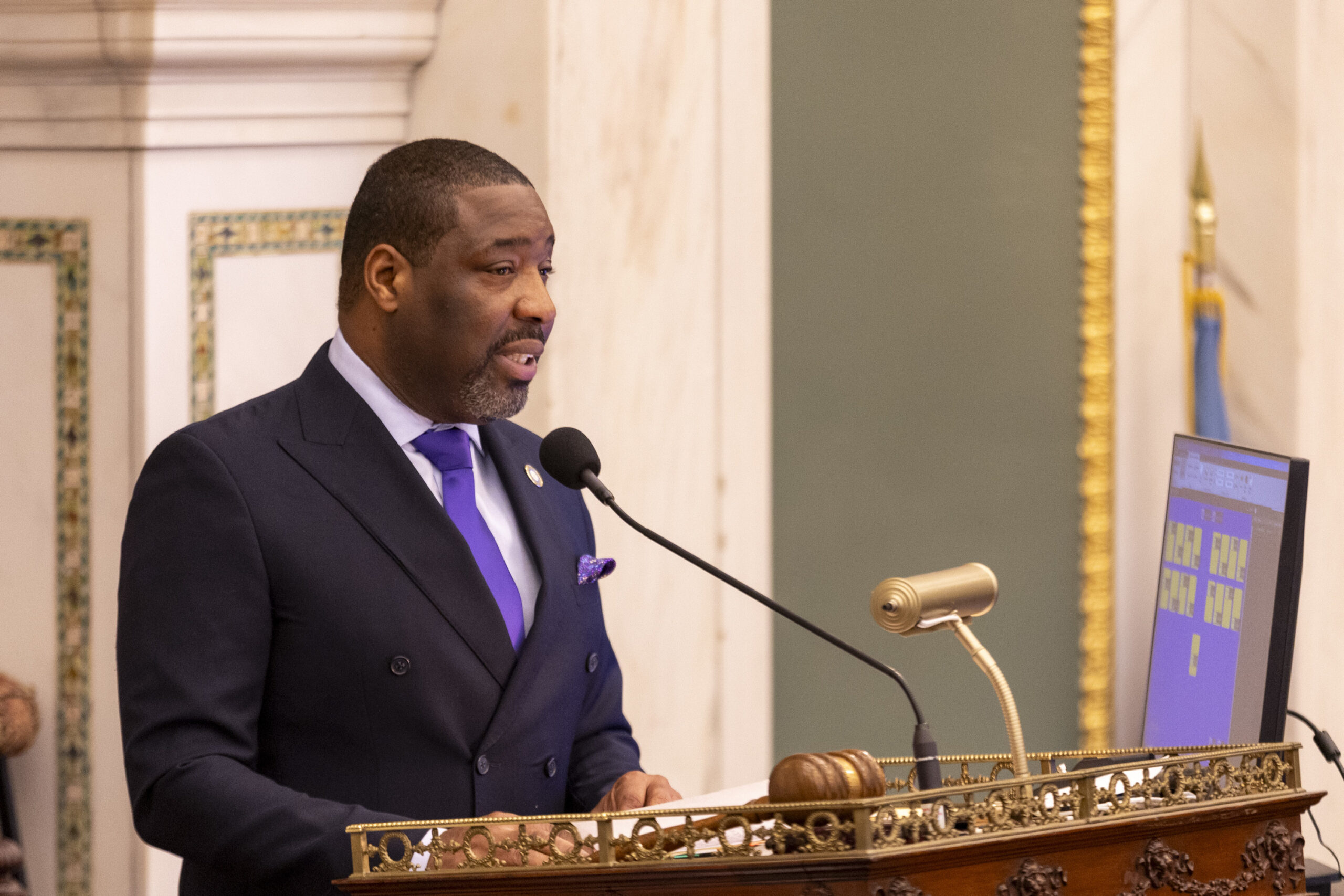
    City Council President Kenyatta Johnson speaking at the City Council’s first session of the year Jan. 22. He said this month that it’s time to stand up for immigrants in Philadelphia. “It’s my responsibility to step up in this space and be more vocal,” he said.

    That as Philadelphia City Council prepares to consider “ICE Out” legislation that would make it more difficult and complicated for the agency to operate in the city.

    Trump told NBC News this month that he is “very strongly” looking at five new cities.

    Some people are not waiting to see if Philadelphia is on the list.

    The monthly Zoom meeting of the Cresheim Village Neighbors usually draws about 20 people. But a hundred logged on in January to hear a presentation: What to do if/when ICE comes to our neighborhood.

    The short advice: If it happens, get out your phone and hit “record.”

    “If I see ICE agents, I will film,” said neighbors group coordinator Steve Stroiman, a retired teacher and rabbi. “I have a constitutional right to do that.”
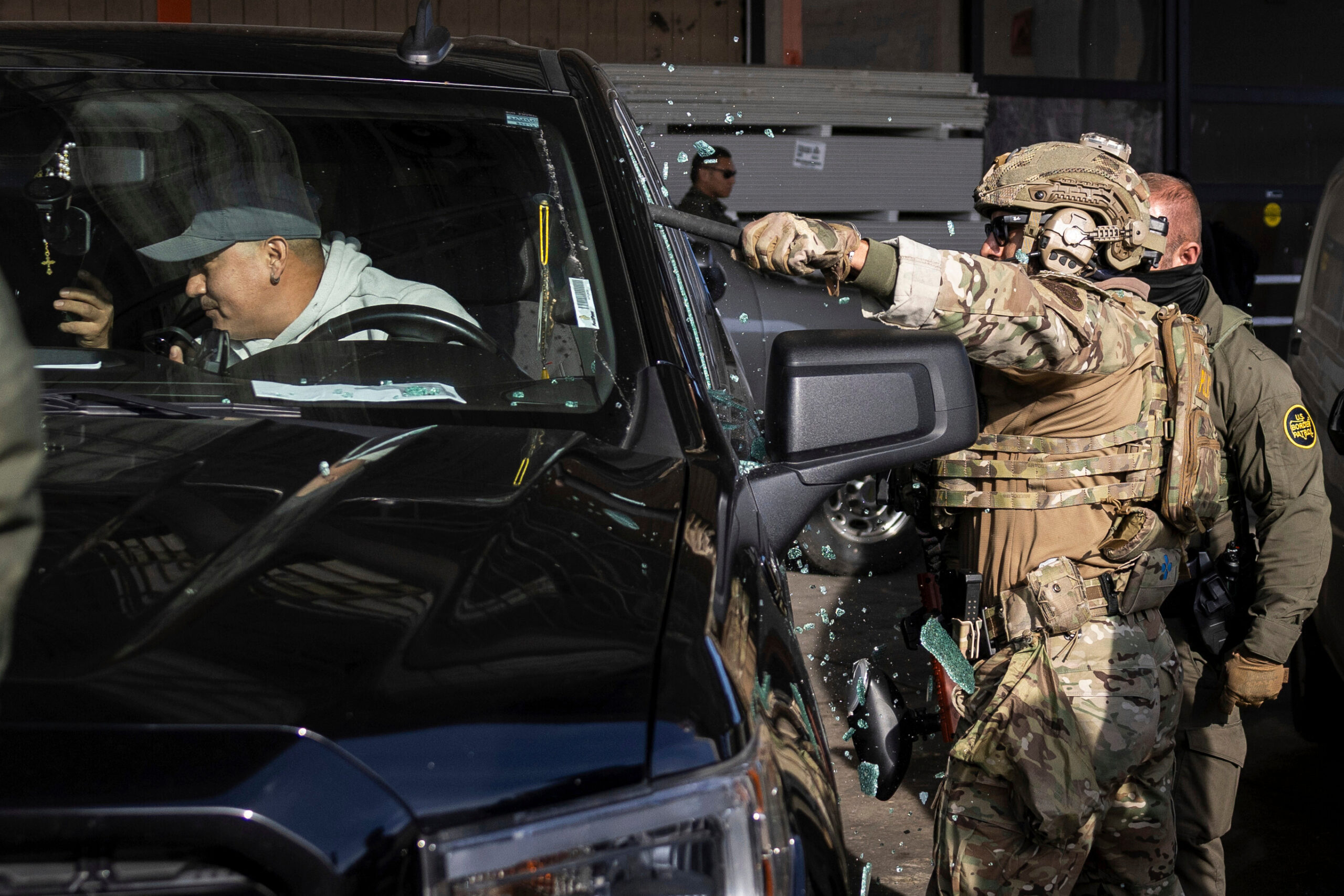
    Federal immigration enforcement agents shatter a truck window and detain two men outside a Home Depot in Evanston, Ill., on Dec. 17, 2025.

    In a sliver of University City, Miriam Oppenheimer has helped lead three block meetings where neighbors gathered to discuss how they would respond.

    They set up a Signal channel so people can communicate. And they formulated a loose plan of action: People will come outside their homes and take video recordings ― and try to get the names and birth dates of anyone taken into custody, so they can be located later.

    “Courage is contagious,” Oppenheimer said. “Everybody is waiting for somebody else to do something, but we have to be the ones.”

    Inside Olivet Covenant Presbyterian Church, doorways to some rooms now bear black-and-white signs that say, “Staff and authorized personnel only.”

    Issues around ICE access to churches have become more urgent since Trump rescinded the agency policy on “sensitive locations,” which had generally barred enforcement at schools, hospitals, and houses of worship.

    Legal advocates such as the ACLU say ICE agents can lawfully enter the public areas of churches, including the sanctuaries where people gather to worship. But to go into private spaces they must present a warrant signed by a judge.

    “There are many front lines right now,” said Ahn, the Olivet pastor. “We’re not trying to be simply anti-ICE, or anti-anybody. We’re just trying to be for the rights of the Fourth Amendment.”

    Staff writer Joe Yerardi contributed to this article.
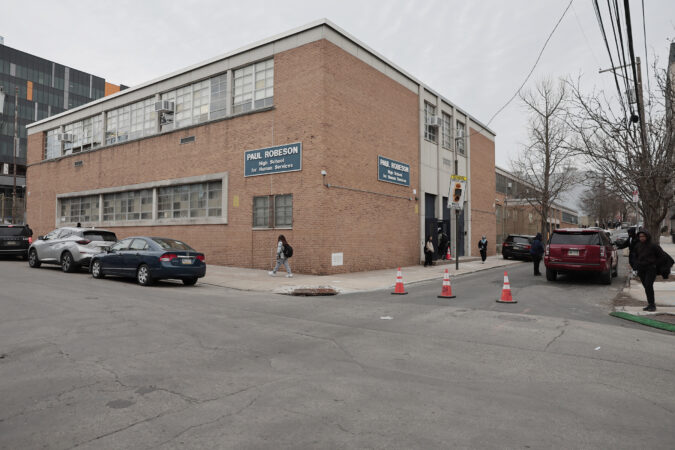
  • The Philly School District tried to close Paul Robeson HS before. Now, it’s back on the chopping block.

    The Philly School District tried to close Paul Robeson HS before. Now, it’s back on the chopping block.

    In 2022, the governor of Pennsylvania stood on a stage at Paul Robeson High in West Philadelphia and hailed the small school as “a model for what can happen in Pennsylvania.

    But four years later, the Philadelphia School District has recommended closing Robeson, suggesting its small size limited students’ opportunities. Superintendent Tony B. Watlington Sr. wants its students to attend Sayre High, where Robeson would become an honors program, losing its separate identity, administration, and staff.

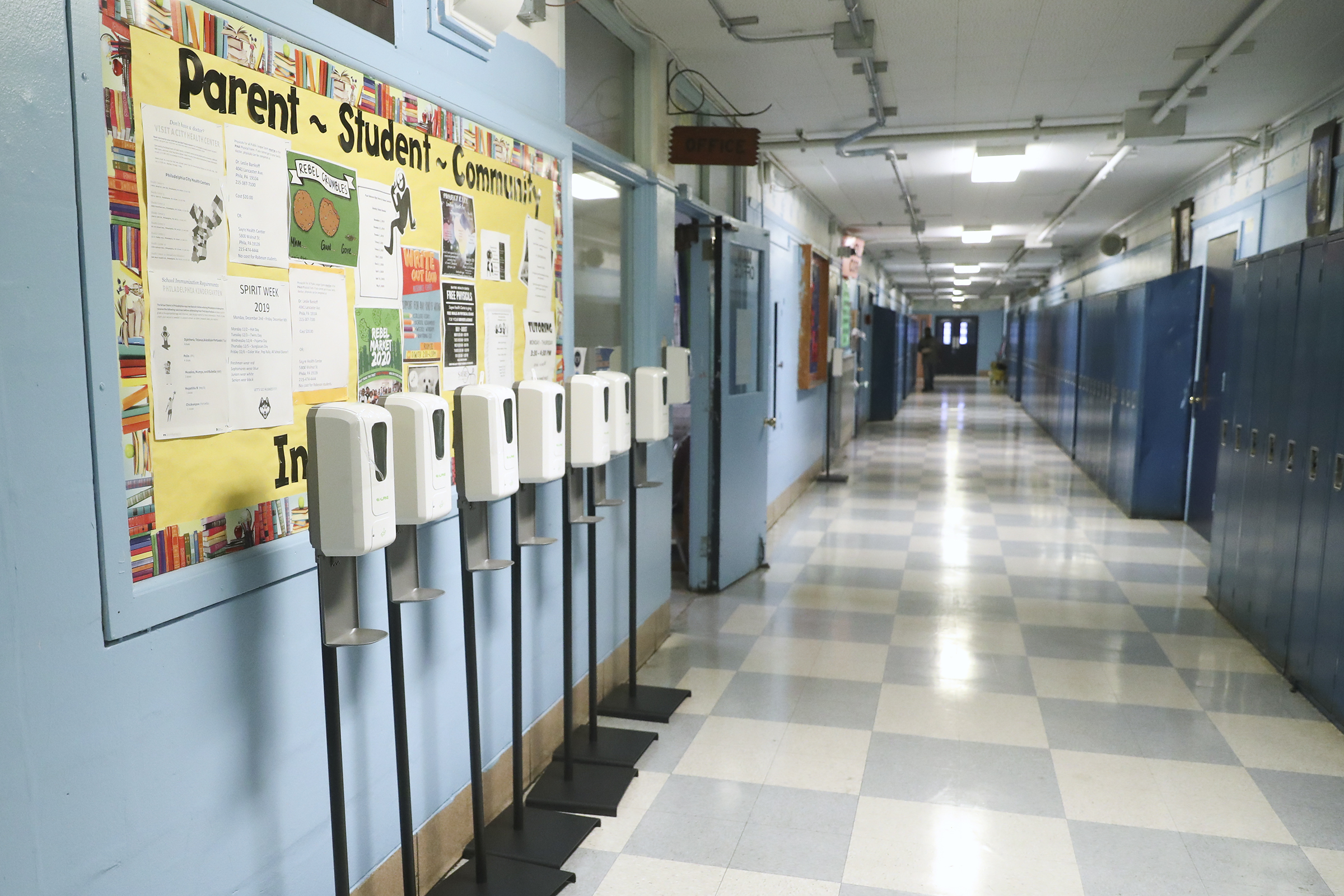
    A hallway at Paul Robeson High School, which the district is attempting to close for the second time.

    Having Robeson listed among 20 schools slated for closure was the worst kind of déjà vu for some in the Robeson community: In the last round of large-scale Philadelphia school closures, district officials recommended closing Robeson and sending students to Sayre, which is about two miles away.

    “This is the exact same plan,” said Andrew Saltz, who helped organize the Robeson community against closure in 2013 and who is doing it again 13 years later. “We need a different plan.”

    The community is speaking out, hoping to persuade the school board to save Robeson again when it votes on Watlington’s recommendations later this winter.

    An upward trajectory

    Robeson soared after successfully fending off its last attempted shutdown.

    By 2017, it was named the district’s most-improved high school. It built upon its core of dedicated teachers and students; though most Robeson students come from its own West Philadelphia neighborhood, it is a citywide school, meaning they have to apply to be there.

    Robeson expanded existing partnerships and formed new ones that gave students opportunities to get onto nearby college campuses. Richard Gordon, who came to lead the school in 2013, was recognized as national principal of the year. (Gordon has since been promoted to assistant superintendent in the district.)

    Multiple Robeson teachers have been honored as among the district’s best.

    The school sent a student to Harvard, a coup for any district high school, let alone one without strict academic criteria. Its students successfully pushed to get their school air-conditioned. School staff secured outside funding to renovate the cafeteria.

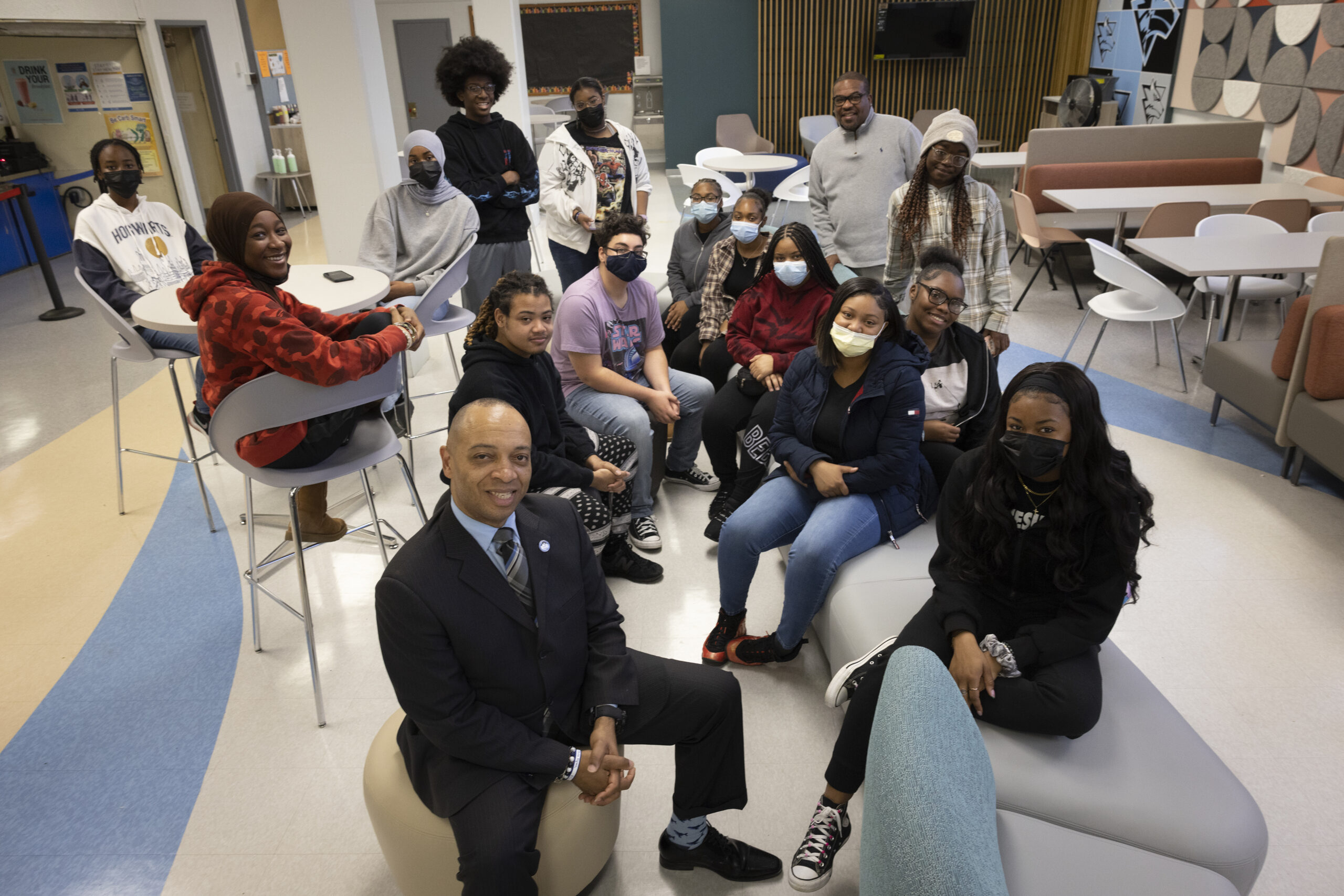
    Then-Principal Richard Gordon (front, tie), then-assistant principal Lawrence King (rear, gray sweater) and members of the Robeson High student body in the newly renovated cafeteria in this 2022 file photo.

    Then-Mayor Jim Kenney visited Robeson to tout its success. So did then-Gov. Tom Wolf.

    Elana Evans, a beloved Robeson teacher and the school’s special education compliance monitor, has already weathered one school shutdown — she taught at the old University City High School, closed in 2013

    That loss was brutal, Evans said. But she is proud of what the community has built at Robeson.

    “It’s an amazing story that continues to stay amazing because we still keep growing,” Evans said. “To say, ‘OK, you’re going to merge with this school, and your name is just going to fade to nothing,’ is, to me, disrespectful.”

    District officials are pitching Robeson’s closure — and the closings writ large — as a move to expand opportunities for all students.

    Sayre, with Robeson as a part of it, would get modernized career and technical rooms and equipment in the facilities plan, Sarah Galbally, Watlington’s chief of staff, told the Robeson community. Sayre would get more accessibility features; renovated stormwater management, roof, and restrooms; and new paint.

    But that didn’t convince Evans.

    “You say one thing, ‘This is how it’s going to look like,’ but for real for real, stop gaslighting me,” Evans said.

    ‘They needed something small’

    Samantha Bromfield homeschooled her twins for seven years, and was wary when she enrolled her children in public school — until Robeson made her believe.

    The move to shut the school frustrated and saddened her, Bromfield said. She and many other Robeson parents said they would not send their children to Sayre.

    “If you as a board choose to close Paul Robeson, I choose to pull my children from the public school system,” Bromfield said at meeting held at Robeson on Saturday. “They needed something small. They needed a family. They needed someone who could hold their arms around the children and say, ‘Hey, are you having a bad day?’”

    Multiple parents echoed Bromfield’s statements.

    The district is choosing to invest in some schools but not others under the facilities proposal, they said.

    Cassidy got a new school, why not us?” one parent told district officials, referring to a $62.1 million new building for a West Philadelphia elementary school.

    ‘Y’all don’t know’

    Ahrianna DeLoach, a Robeson ninth grader, struggled in middle school but is soaring at Robeson, she said, because of the nature of a place where teachers know every student’s name.

    “I don’t want it to close down,” DeLoach said. “I was looking forward to graduating from this school. It would devastate me if I couldn’t.”

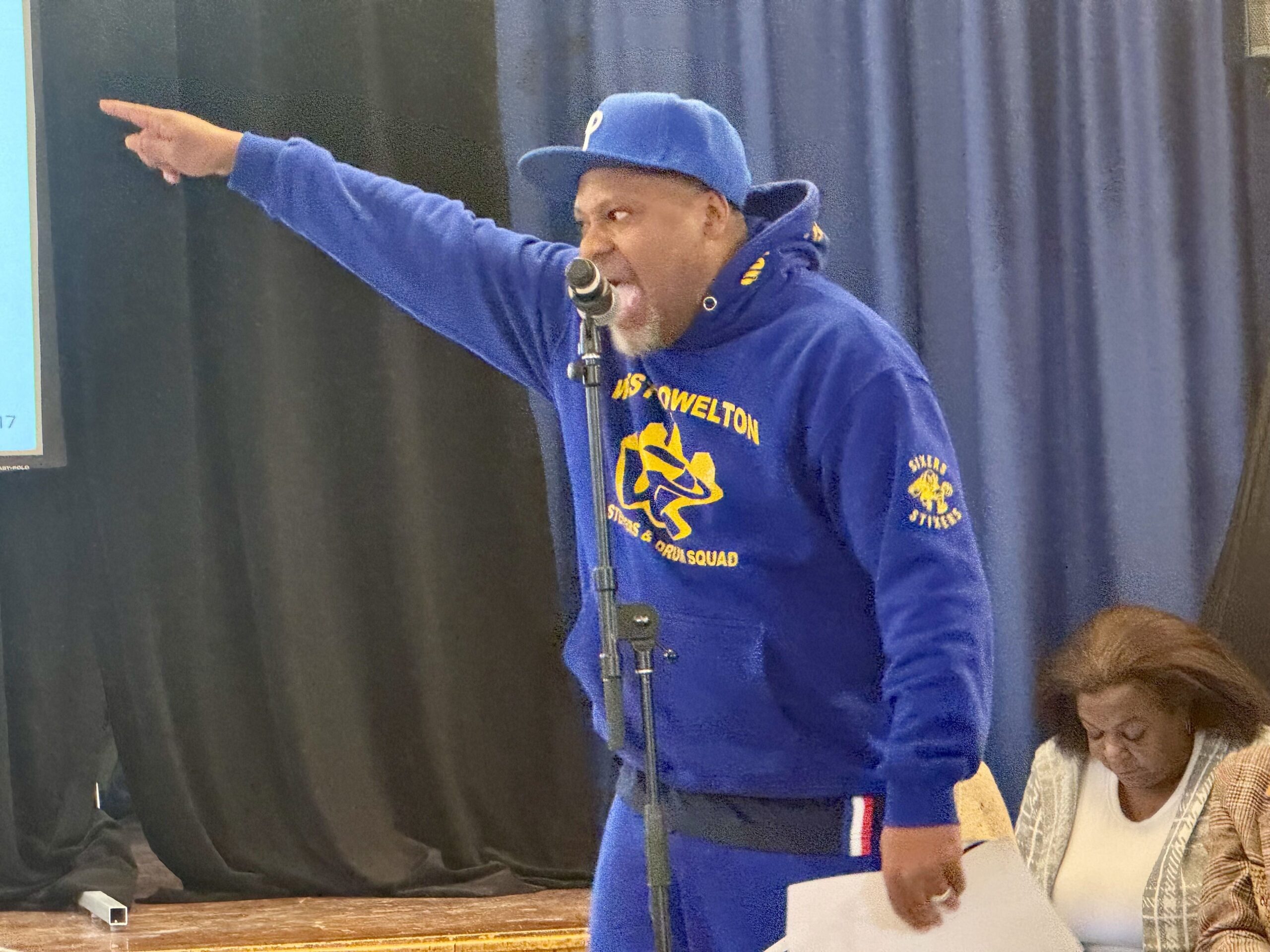
    Antoine Mapp Sr., a West Philadelphia resident, expresses frustration that the Philadelphia School District is attempting to close Paul Robeson High School. Mapp spoke at a district meeting on the subject.

    West Philadelphia resident Antoine Mapp Sr. graduated from University City High, but has been spending time at Robeson since he was 11. Mapp’s West Powelton Steppers and Drum Squad rehearses inside the Robeson gymnasium.

    It feels especially cruel to lose Robeson as gentrification creeps in, Mapp said, and with gun violence still plaguing Philadelphia. He worries about the routes children would have to take to get to Sayre, and about neighborhood rivalries.

    “You guys don’t understand what it’s like living in the community or our neighborhood, or what we go through,” Mapp said. “Y’all don’t know how hard it is just to go to the store in our community. Y’all don’t know what it’s like trying to go to an activity in our neighborhood. We have none of those things. Now you want to take this school away from us and send our kids to different communities. I want you to know that the crime rate and the murders are going to increase and there’s nothing y’all can do about it.”

  • Big-money and out-of-state donors helped Josh Shapiro raise $30 million while Stacy Garrity raised $1.5 million from Pa.’s grassroots

    Big-money and out-of-state donors helped Josh Shapiro raise $30 million while Stacy Garrity raised $1.5 million from Pa.’s grassroots

    Democratic Gov. Josh Shapiro is racking up contributions from out-of-state billionaires as well as thousands of individual donors across the country.

    His likely Republican challenger, State Treasurer Stacy Garrity, meanwhile, is capturing small-donor donations from Pennsylvanians.

    That’s according to an analysis of the latest campaign finance filings in the Pennsylvania governor’s contest, as a clearer picture of the race emerges nine months out from Election Day. Shapiro entered 2026 with $30 million on hand — money raised over several years as he has built a national profile — while Garrity raised $1.5 million in her first five months on the campaign trail as she tries to unseat the popular Democratic incumbent. Last year, Shapiro brought in $23.3 million.

    Here are three takeaways from the first campaign finance filings in the race, tracking fundraising heading into 2026.

    Almost all of Stacy Garrity’s contributors are from Pennsylvania, while 62% of Shapiro’s are in state

    Nearly all of Garrity’s individual 1,155 contributors — more than 97% — live in Pennsylvania, and on average gave $889 each.

    Shapiro — who has amassed a national following and is a rumored 2028 Democratic presidential contender — had a much further reach and attracted many more donors from around the country. He received contributions from 4,981 individual donors, 62% of whom are from Pennsylvania. The average individual donor to Shapiro contributed $3,461, a number buoyed by multiple six- and seven-figure contributions.

    Shapiro received most of his remaining individual donations from California (7.1%), New York (6.3%), New Jersey (2.5%), Florida (2.5%), and Massachusetts (2.4%), according to an Inquirer analysis.

    (The analysis includes only donors who contributed more than $50 in 2025. Campaigns are required to list only individual donors who contribute above that threshold.)

    (function() { var l = function() { new pym.Parent( ‘shapiro-garrity3__graphic’, ‘https://media.inquirer.com/storage/inquirer/ai2html/shapiro-garrity3/index.html’); }; if(typeof(pym) === ‘undefined’) { var h = document.getElementsByTagName(‘head’)[0], s = document.createElement(‘script’); s.type = ‘text/javascript’; s.src = ‘https://pym.nprapps.org/pym.v1.min.js’; s.onload = l; h.appendChild(s); } else { l(); } })();

    Shapiro’s broad donor base is a result of his status as a popular incumbent governor who is liked among people of both political parties, said Robin Kolodny, a Temple University political science professor who focuses on campaign finance.

    “These amounts that you’re seeing is a very strong signal that ‘This is our guy,’” Kolodny said. “That underscores he is a popular incumbent.”

    Kolodny also noted that Shapiro’s state-level fundraising cannot be transferred to a federal political action committee should he decide to run in 2028. But his war chest shows his ability to raise money nationally and his popularity as the leader of the state, she added.

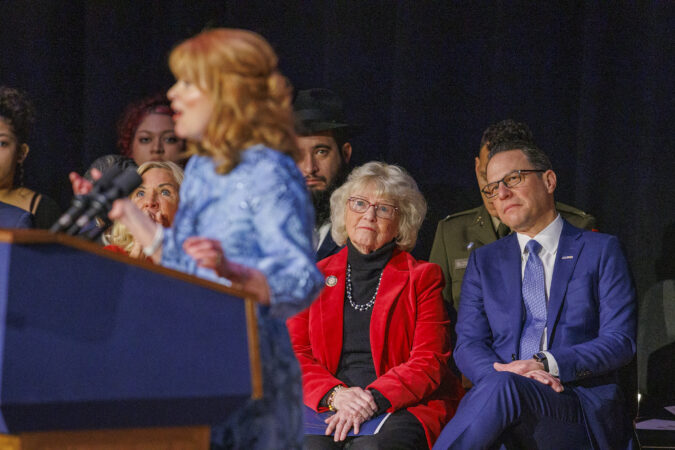
    Governor Josh Shapiro during a reelection announcement event at the Alan Horwitz “Sixth Man” Center in Philadelphia on Thursday, Jan. 8, 2026.

    Only a small percentage of the population contributes to political campaigns, Kolodny said. And sometimes, it’s the smallest contributions that pay off the most, she said. Small-dollar donations suggest grassroots support that can translate into a person assisting the campaign in additional ways to get out the vote, she said.

    Both Shapiro and Garrity have received a significant number of small-dollar donations that illustrate some level of excitement in the race — though Shapiro’s more than 3,000 in-state donors outnumber Garrity’s total by nearly 3-1.

    “Think of fundraising as not just a money grab, but also as a campaign strategy,” Kolodny said.

    Since announcing his reelection campaign in January, Shapiro has run targeted social media ads and sent fundraising texts, asking for supporters to “chip in” $1 or $5. The strategy worked, bringing in $400,000 in the first two days after his announcement, with an average contribution of $41, according to Shapiro’s campaign. This funding is not reflected in his 2025 campaign finance report.

    Most of Shapiro’s money came from out-of-state donors, including billionaire Mike Bloomberg and a George Soros PAC

    While Shapiro garnered thousands of individual contributions from Pennsylvania in all 67 counties, according to his campaign, the latest filings show it was the big-money checks from out-of-state billionaires that ran up his total.

    Approximately 64% of the $23.3 million Shapiro raised last year came from out-of-state donors.

    And more than half — 57% — of Shapiro’s total raised came from six- or seven-figure contributions by powerful PACs or billionaire donors.

    By contrast, only 31% of Garrity’s total fundraising came from six-figure contributions.

    The biggest single contribution in the governor’s race came from billionaire and former New York City Mayor Michael Bloomberg, who gave Shapiro $2.5 million last year.

    Shapiro also received $1 million from a political action committee led by billionaire Democratic supporter George Soros; and $500,000 from Kathryn and James Murdoch, from the powerful family of media mogul Rupert Murdoch.

    Kolodny noted that big contributions from people like Bloomberg are a drop in the bucket of his total political or philanthropic spending.

    window.addEventListener(“message”,function(a){if(void 0!==a.data[“datawrapper-height”]){var e=document.querySelectorAll(“iframe”);for(var t in a.data[“datawrapper-height”])for(var r,i=0;r=e[i];i++)if(r.contentWindow===a.source){var d=a.data[“datawrapper-height”][t]+”px”;r.style.height=d}}});

    “This is not something extraordinary,” Kolodny said. “He’s got nothing but money.”

    In Pennsylvania, Shapiro received notably high contributions from Philadelphia Phillies owner John Middleton, who gave $125,000, and Nemacolin Resort owner Maggie Hardy, who gave $250,000, among others. He also received a number of five-figure contributions from private equity officials, venture capitalists, and industry executives in life sciences, construction, and more.

    Garrity’s single biggest donation was $250,000 from University City Housing Co., a real estate firm providing housing near Drexel University and the University of Pennsylvania. Her largest contributions from individuals included $50,000 from her finance chair, Bob Asher of Asher Chocolates, and another $50,000 from Alfred Barbour, a retired executive from Concast Metal Products.

    Garrity has served as Pennsylvania’s state treasurer since 2020 and has led the low-profile statewide office with little controversy. She did not join the race for governor until August and raised only a fraction of the funds Shapiro did in that same time. Meanwhile, Shapiro spent 2025 at the political forefront as a moderate Democrat trying to challenge President Donald Trump in a state that helped elect him. Shapiro also benefited from his national name recognition after he was considered for Vice President Kamala Harris’ running mate in 2024.

    Shapiro has so far outraised Garrity 30-1, and top Pennsylvania Republicans have said they want to see Garrity fundraising more aggressively nationally.

    Kolodny said Garrity’s low fundraising is a reflection of the state of the race: Republicans put up a weak candidate in 2022 against Shapiro during his first run for governor, and now many powerful donors want to keep the relationship they have formed with Shapiro over the last three years.

    “That will reflect as a lack of enthusiasm for her,” Kolodny said. “Now she could turn that around, but from what I see, I don’t see her that much, only recently. She had the last six months; she could have done a lot more.”

    Controversy over donations tied to associates of Jeffrey Epstein

    Shapiro’s top contributions from individual donors also included a $500,000 check from Reid Hoffman, the Silicon Valley-based billionaire cofounder of LinkedIn. His name showed up thousands of times in the trove of documents recently released by the U.S. Department of Justice related to the investigation into financier and convicted sex offender Jeffrey Epstein.

    Garrity has highlighted the donations Shapiro received from Hoffman, and has publicly called on Shapiro to return the tech billionaire’s campaign contributions from last year and prior years, totaling more than $2 million since 2021.

    Hoffman has claimed he had only a fundraising relationship with Epstein, but publicly admitted he had visited his island. He has not been charged with wrongdoing.

    A spokesperson for Shapiro said Garrity should “stop playing politics with the Epstein files.”

    “Donald Trump is mentioned in the files over 5,000 times. Is she going to ask him to rescind his endorsement?” asked Manuel Bonder, Shapiro’s spokesperson.

    Garrity has previously downplayed Trump’s appearance in the Epstein files, and argued that Democrats would have released them much sooner if there was clear evidence of Trump partaking in any inappropriate behavior.

    Trump endorsed Garrity for governor last month.

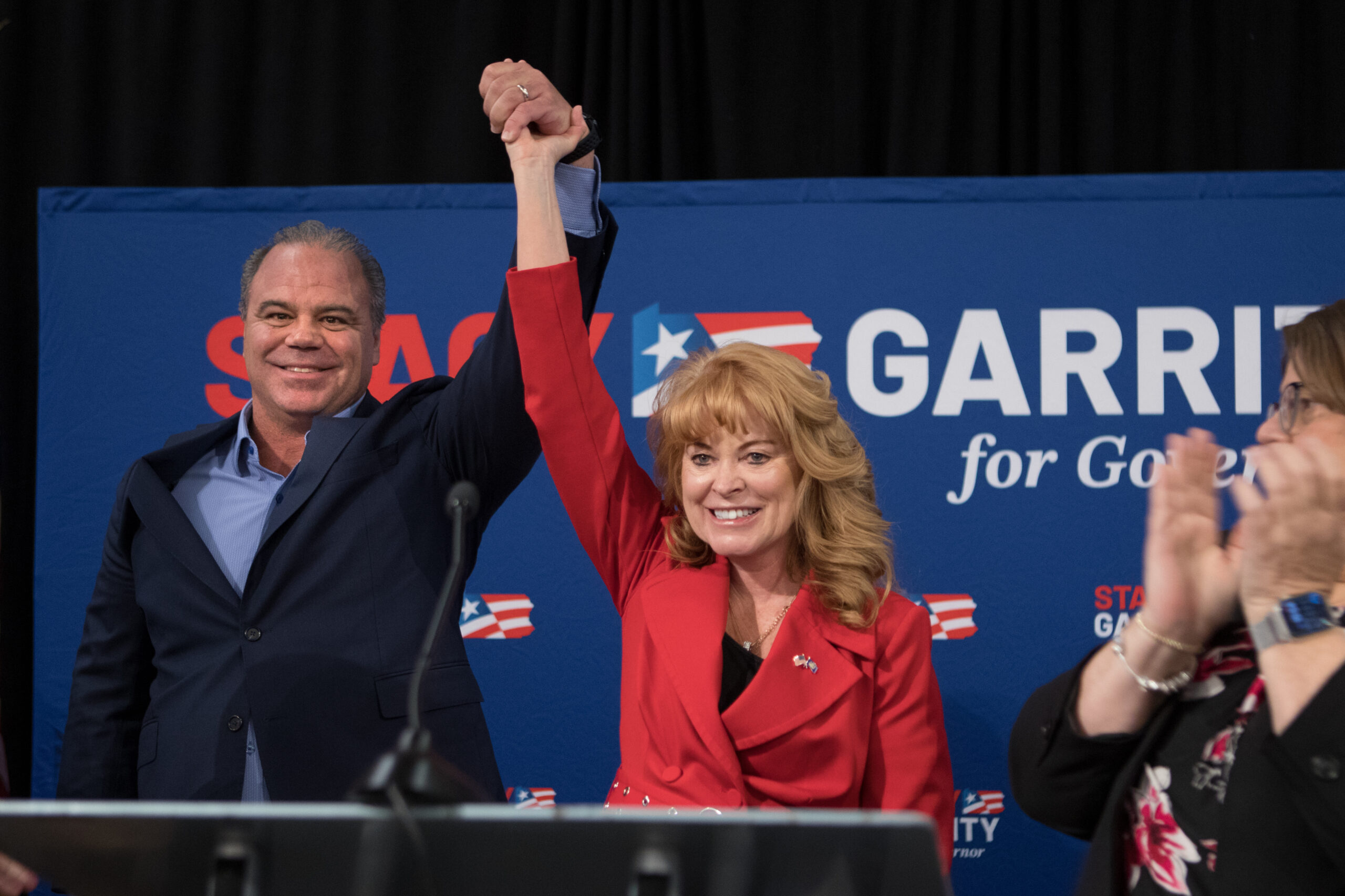
    GOP candidate for Pennsylania Governor, Stacy Garrity and Jason Richey hold up their arms in Harrisburg, Pa., Saturday, February 7, 2026. The PA State Republican Committee endorsed the two in their quest for the governor’s mansion. (For the Inquirer/Kalim A. Bhatti)

    If Shapiro were to return the funds from Hoffman, it would be bad for Garrity, Kolodny said, because she has made very few other political attacks against him.

    “That’s her [main] issue,” she said.

  • Philly biotechs are getting a small funding boost from a new city program, but it doesn’t replace ‘America’s seed fund’

    Philly biotechs are getting a small funding boost from a new city program, but it doesn’t replace ‘America’s seed fund’

    Philadelphia biotechs are worried about losing a key source of federal funding for early-stage innovation.

    Known as “America’s seed fund,” the Small Business Innovation Research (SBIR) and Small Business Technology Transfer (STTR) programs help small companies develop innovative technologies. In recent years, they’ve allocated $4 billion annually to more than 4,000 businesses nationwide. However, after Congress failed to reauthorize the decades-old programs last fall, their funding officially expired in September.

    The fallout has affected more than a dozen local life sciences companies, raising concerns about whether they can maintain staffing and make up for the delay in funds promised months ago, said Heath Naquin, senior vice president of innovation and new ventures at University City Science Center, a nonprofit commonly known as the Science Center that provides startup support.

    For many, staffing and financing plans could be disrupted by funding shortfalls, as companies either haven’t gotten their payment yet or can’t get their funding for next year approved, he said.

    An exact figure is unknown, but Naquin estimated that some affected companies could be short up to a million dollars for the year.

    At the same time, the city of Philadelphia launched last spring a new program that provides additional funding to those who have already earned SBIR/STTR grants. The 21 awardees who will share $450,000 from the city were announced publicly in January.

    The city money is earmarked for technical assistance, such as the cost of attorneys, marketing, and anything else needed for commercialization, while SBIR/STTR money normally goes toward research and development.

    “There is no overnight solution to SBIR right now,” said Tiffany Wilson, chief executive officer of the Science Center, which is partnering with the city to implement the program. “It’s just another layer of uncertainty that we’ve got to navigate through.”

    New city-led program

    Pennsylvania is not one of the dozens of states that offer matching programs to supplement the federal SBIR/STTR funds.

    To fill that gap, Philadelphia launched its new city-level program, which is one of the first in the nation and the only one of its kind in the state.

    The idea was to boost companies already vetted by the federal government that could still benefit from smaller amounts of money.

    “Life science companies need millions of dollars, but this was a way that we could help Philadelphia-based companies thrive,” said Rebecca Grant, who runs the program and serves as senior director of life sciences and innovation for the city.

    This year, the city offered funding to all eligible applicants.

    The $450,000 is doled out in three tiers: companies with the earliest stage grants received $20,000 while those in the next phase received $40,000. Those whose grants were no longer active received $2,500.

    The program is still a pilot, and city leaders hope to run it on an annual basis, Grant said.

    Naquin has heard from at least three companies in the last six months that are formally considering moving to Philadelphia as a result of the program’s existence.

    Pivoting

    The SBIR/STTR grants are valuable to early-stage biotechs for two reasons: They provide funding without asking for ownership or equity in return, and signal to potential investors that the company is less risky, Wilson explained.

    The programs traditionally have been reauthorized every few years without major lapses. However, recent debates over reforms have created a deadlock.

    Policymakers from both parties want to address companies that are repeatedly going back for more funding, concerns over foreign involvement, and how to better support commercialization, Naquin said.

    “We’re still in a waiting game,” he said, adding that the programs were not reauthorized in the latest government funding bill passed this week.

    With the SBIR/STTR pipeline stalled, the Science Center has had to pivot. Federal support for science has been particularly precarious under President Donald Trump’s second administration, with widespread cuts and pauses to millions of dollars worth of programs and grants.

    Late last year, the center launched an initiative to help startups figure out which agencies still have available funding opportunities.

    The aim is to help them better shop around for the grants that they can apply to, Wilson said.

  • City Council seeks to stop demolitions as anti-blight measure

    City Council seeks to stop demolitions as anti-blight measure

    Late last year, some members of Philadelphia City Council began pursuing legislation to further regulate demolition.

    Philadelphia has many thousands of vacant properties, and historically, some local politicians have sought to encourage razing such structures to prevent fire risks or eliminate drug havens.

    But in the last couple of decades, as real estate development heated up in many neighborhoods, concerns emerged that potentially historic older buildings were being destroyed to make the vacant land more valuable.

    “We know that when these properties are demolished in certain communities, that typically is a sign of gentrification,” Councilmember Jeffery Young, who represents much of North Philadelphia, said at a Tuesday hearing.

    “When you demolish that property and you build up, you’re trying to make more money than the property was originally stated as a shell,” said Young, whose district also includes parts of Center City.

    Young introduced a bill last year that would ban demolition permits from being issued in his district unless a property owner had secured building permits for a new project.

    He said he saw the legislation as a means to encourage property owners to repair existing buildings and to ensure that vacant lots would not scar his district.

    “When you rehab a property, the price is typically lower than a brand-new house, and so we’re trying to keep homes affordable,” Young said, “and prevent blight from our communities.”

    Young’s bill would not apply to buildings deemed imminently dangerous by the Philadelphia Department of Licenses and Inspections.

    Last year Councilmember Jamie Gauthier passed a law containing a similar provision, but for a more tightly proscribed area that covered properties held by large higher education institutions in University City.

    The Building Industry Association (BIA) presented a litany of concerns about Young’s bill at Tuesday’s Rules Committee hearing.

    The BIA feared the legislation would delay projects, as many developers demolish structures while they are waiting for their building permits. The additional months in limbo would increase insurance, security, and financing costs, the group argued.

    The bill could also encourage bad actors to engage in dangerous behavior, the BIA said.

    “To qualify for an exception based on structural danger, certain property owners may be compelled to intentionally incur code violation or enforcement action to demonstrate instability,” said Kenn Penn, a local developer, who spoke on the BIA’s behalf. It “incentivizes the very condition that the city seeks to avoid.”

    Penn also warned about the danger of preserving long-vacant properties.

    “The bill would prevent demolition of vacant and unsecured structures that are highly susceptible to unlawful occupation,” Penn said. “Philadelphia has already experienced multiple fires this winter, many historically linked to squatters and abandoned buildings.”

    Penn asked Young to limit the legislation to properties that do not have a vacant property license.

    But the bill passed from the committee with only technical amendments.

    “I understand the impacts this will have on the development community,” Young said. “But what I think this bill does is ensures that property owners maintain their properties in a prudent manner.”

  • Temple has released its plan for the next decade. See what the North Philadelphia university has in mind.

    Temple has released its plan for the next decade. See what the North Philadelphia university has in mind.

    Temple University on Wednesday released its plans for the school’s future, including a new 1,000-bed residence hall, STEM complex, quad with green space, and more attractive and defined entrances to its North Philadelphia main campus.

    That’s just part of the 10-year strategic plan, which will take the more than 33,000-student university through its 150th anniversary in 2034 and includes supports for students and learning, a campus development plan, and a new vision for Broad Street both near and beyond its campus.

    It emphasizes the student academic experience, with plans to elevate its honors program to an honors college, implement systems to identify and help students who are at risk of failing early on, increase online offerings to accommodate non-traditional students, and require career development and experiential learning for all students.

    And the 20-year campus development plan, which is part of the strategic plan, also reiterates President John Fry’s desire to create an “innovation corridor” stretching from the recently acquired Terra Hall at Broad and Walnut Streets in Center City to Temple’s health campus, a little more than a mile north of main campus on Broad Street.

    Temple is in the quiet phase of a $1.5 billion capital campaign — its largest to date — to raise money for faculty support and student financial aid, but also for initiatives outlined in the plan.

    “What we’re trying to do is build on the momentum we think we have right now as already one of the most consequential urban research universities that wants to go to the next level,” said Temple President John Fry.

    “What we’re trying to do is build on the momentum we think we have right now as already one of the most consequential urban research universities that wants to go to the next level,” Fry said in an interview before trustees approved the plan Wednesday. “This is a very ambitious plan that I think honestly will be a very big lift for us. But I think it’s achievable.”

    Interim Provost David Boardman, who led the strategic planning effort, emphasized that the top priority is student success and new buildings and development are meant to support that.

    “That, more than anything, is the heart of what we do,” Boardman said. “This is about providing meaningful research … It’s about us becoming the most important academic institution and partner in this community and really partnering for the future of Philadelphia and the region and the Commonwealth.”

    David Boardman, Temple University’s interim provost

    The planning effort, which included input from more than 2,000 Temple faculty, staff, students, and community members, started as an update of the 2022 plan that Fry initiated after becoming president in November 2024. But Temple officials realized a new plan was needed, Fry said.

    More greenery for campus and Broad Street

    Fry envisions more green space for recreation and events and for making North Broad Street more aesthetically pleasing.

    “It is a really harsh streetscape,” Fry said. “It’s really not inviting. Traffic is moving very quickly. …That street needs to be calmed down, and the best way … is to create medians, plants — both sides of Broad Street — making it a much more civilized area than it is now.”

    The effort, he said, is modeled after the recently announced $150 million streetscape plan to make the Avenue of the Arts in Center City greener. Temple also is involved with that through its ownership of Terra Hall, which will become Temple’s Center City campus, he said.

    “But we can’t do that without other public and private partnerships,” he said. “It’s beyond the institution’s capacity to fund that.”

    To start, Temple will fund “significant greening” around the entrance to the under-construction Caroline Kimmel Pavilion for Arts and Communication, he said. More green work is planned at Burk Mansion at Broad and Oxford, which Temple owns, as development occurs there, he said.

    With a large green lawn and courtyards, a quad is planned for the campus center, surrounded by Paley Hall, Tyler School of Art, the Charles Library, and the biology life sciences building.

    Temple in December purchased the former McDonald’s site at 1201-1219 N. Broad St., by Girard Avenue, which is adjacent to the Temple Sports Complex. Fry envisions using that property to create a major campus gateway.

    “Right now, you don’t really know when you come onto the Temple campus,” he said. “We would like Broad and Girard to announce you’re starting to enter Temple’s campus district.”

    More on-campus student housing

    Temple wants more on-campus residential space to improve the student experience and safety, Fry said.

    “We think we’re at a minimum several thousand beds short of where we need to be,” he said. “A stronger residential experience really does make for a much more fulfilling undergraduate experience. The more kids living on campus, the more dense campus is, I think the better we’re going to do on safety.”

    The plan calls for beginning to build a 1,000-bed residence hall along Broad Street on the former Peabody Hall site, south of Johnson and Hardwick Halls, in 2027. That would increase the current 5,000-bed capacity on the main campus by 20%. When that opens, Temple would upgrade Johnson and Hardwick, which have another 1,000 beds, he said.

    The Annenberg Hall/Tomlinson Theater building, which will relocate to the new arts and communication building in 2027, could also be converted into more residential space if needed, Fry said.

    An emphasis on STEM

    Temple intends to upgrade facilities for science, technology, engineering and math.

    “We just don’t have the research space, the wet lab space in particular, to accommodate the work that our faculty are doing,” Fry said.

    Several buildings, including the biological life sciences facility, will be renovated, and the school plans a new STEM building, perhaps behind the engineering building, or the conversion of an existing facility, Fry said. The decision on whether to build new will come within six months, he said.

    Temple needs to close some current science facilities to gain more space, he said.

    The Beury building, next to the Bell Tower and across from the new Barnett College of Public Health, will begin to be demolished this summer, he said.

    “Think of that as sort of the first down payment on this quad,” he said.

    That would be the first step toward developing an innovation district, Fry said. While not on the scale of University City’s, it would be “a very good attempt to begin to build that capacity in North Philadelphia,” he said.

    Terra Hall will nurture an arts hub, and both would contribute to creating an innovation corridor, he said.

    The plan also calls for a new ambulatory care center to better serve North Philadelphia. Fry said those plans are in very early stages.

    “A lot of outpatient care is occurring within the hospital right now,” Fry said. “It’s not great for patients… It also puts a real strain on our capacity to serve people who need inpatient services.”

    A new academic home for star students

    Temple aspires to make its honors program into an honors college, like Pennsylvania State University’s popular Schreyer Honors College, though with different parameters.

    Boardman said that effort would require major fundraising. Currently, the program exists within the college of liberal arts and enrolls more than 2,200 students.

    Elevating it to a college would require more programming, study-abroad and research stipends, experiential learning opportunities, and an option for those enrolled to live together in a residential community.

    Temple’s college would consider more than grade-point averages and SATs for admission, Boardman said. Various talents and leadership potential would be considered, with interdisciplinary studies and public service infused, he said.

    Staff writer Peter Dobrin contributed to this article.
  • Wistar CEO Dario Altieri will step down after 11 years

    Wistar CEO Dario Altieri will step down after 11 years

    The Wistar Institute’s long-standing president and CEO Dario Altieri will step down at the end of the year after leading the independent biomedical research institute for 11 years, officials announced Monday.

    Wistar plans to launch a national search for his successor, but did not share further details.

    Altieri joined Wistar in 2010 as its cancer center director and first chief scientific officer. Five years later, he was promoted to the role of president and CEO.

    During his tenure, the West Philadelphia-based institute’s annual budget quadrupled to more than $100 million, and its endowment tripled to $277 million, according to a news release.

    The number of independent labs also grew from 30 to 41, and two new research centers were created.

    Its cancer center, which Altieri directs, received its third consecutive renewal as a National Cancer Institute (NCI)-designated Basic Cancer Center with an “exceptional” rating.

    “Due in large part to Dario’s efforts, Wistar is exceptionally well positioned for continued growth and success,” said Rick Horowitz, the board’s chair, in a statement.

    The 67-year-old started his career in Milan, Italy, where he underwent his medical training. He has served in faculty roles at the Scripps Clinic and Research Foundation, Yale University, and the University of Massachusetts Medical School.

    As a cancer biologist who still leads a research laboratory, he has authored more than 260 research papers and been listed as an inventor on 13 patents.

    “[I] look forward to dedicating my time to the values of work that have defined me since I was a medical student: laboratory research, teaching and mentoring,” Altieri said in a Monday statement released by the institute.

  • Why is everyone so excited about University City’s new Taco Bell?

    Why is everyone so excited about University City’s new Taco Bell?

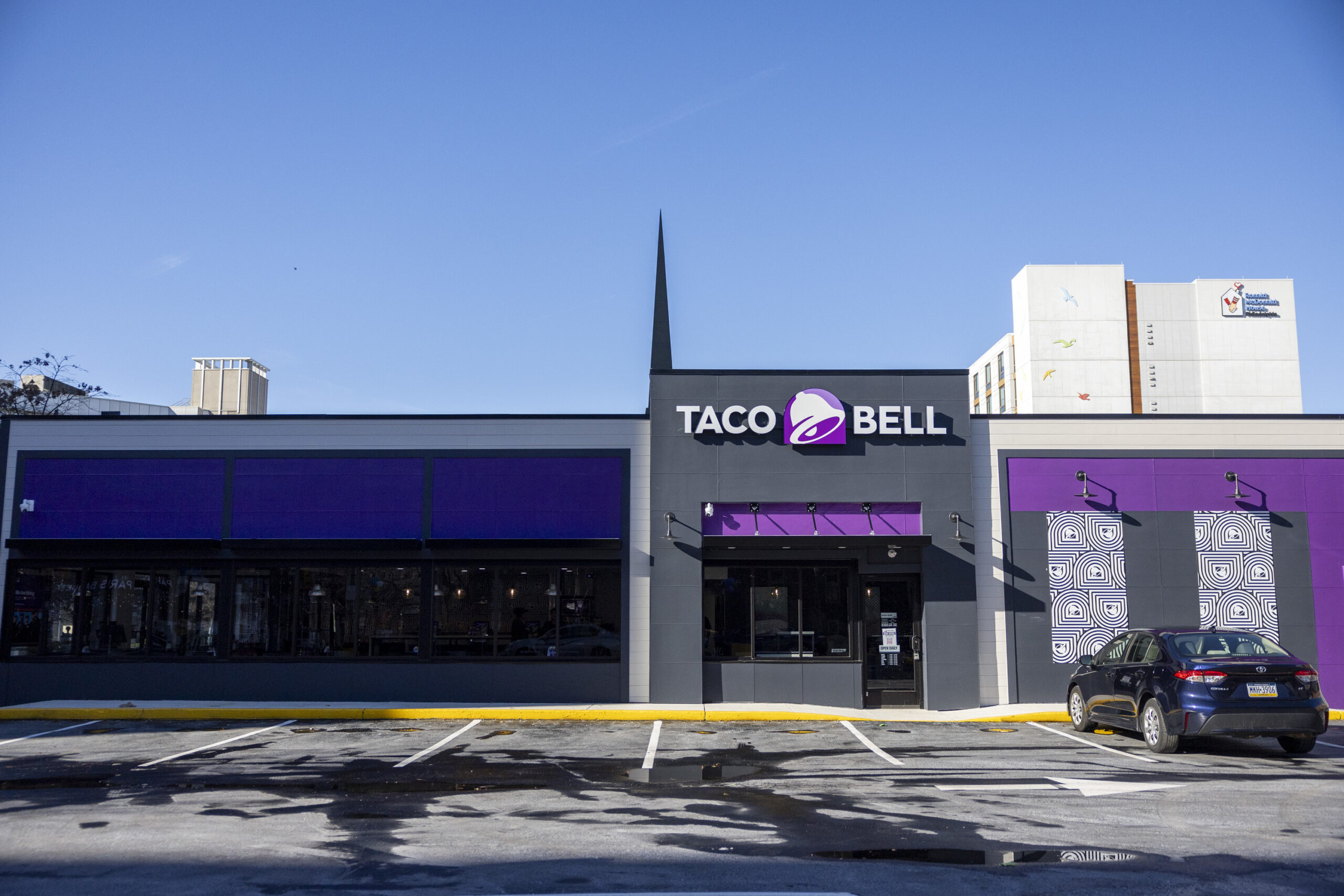
    It was a Christmas miracle of the fast food variety: A 24-hour Taco Bell had opened in University City.

    The Mexican-ish chain opened its 16th Philly location in late December at 3901 Chestnut St., where it replaced a Boston Market outpost that once owed nearly $220,000 in rent after defaulting on a lease. To hear some Philadelphians tell it, the opening was practically heaven-sent.

    The new Taco Bell generated two separate posts from different users last month in the 95,000-member r/Philly subreddit. Other restaurants yearn for that kind of word-of-mouth marketing.

    “Anyone have any info on the Taco Bell they’re putting on 39th and Chestnut?” asked user 8hivefiend8 on Dec. 17. “I have high hopes that maybe it will open soon because it looks so close to finished.”

    Six days later, user rad_rascal posted pictures of the Taco Bell in all of its grand opening glory under the title “New Taco Bell in West Philly!” In the days leading up to the opening, the user wrote, they “would pass it every day and peer in like a buncha [sic] creeps.”

    New Taco Bell in West Philly!
    byu/rad-rascal inphilly

    Under both threads, commenters expressed the kind of jubilation normally reserved for, say, rotisserie chicken-eating stunts or Super Bowl parades. “This just made my day,” commented one Taco Bell enthusiast. Others chimed in. “This the best Christmas present yet,” wrote one user. “My new home away from home,” said another.

    In a city with no shortage of affordable (and excellent) Mexican food, why do people care so much about a Taco Bell that doesn’t even serve alcohol? And could this Taco Bell possibly live up to Reddit’s expectations?

    Is it normal to care this much about a Taco Bell?

    Taco Bell is as much a fast food chain as it is a borderline “cult,” according to chef Reuben Asaram, one of Philly’s most notable Taco Bell enthusiasts.

    The 34-year-old’s love affair with Taco Bell began after his family emigrated from India to Queens in 1993, the chain quickly becoming a staple for weekend meals out. Taco Bell partially inspired Asaram’s Mexican and pan-Asian pop-up menus, which led the chain to name him one of three chefs allowed to reimagine the iconic Crunchwrap Supreme in 2024. At one point, Asaram was so tight with the staff at the 1037 Chestnut St. Taco Bell that they would turn part of restaurant into a private space for him to take dates.

    Philly chef Reuben Asaram was one of three chefs tapped by Taco Bell to revamp the Crunchwrap Supreme. The local Taco Bell enthusiast created a butter chicken version.

    True Taco Bell devotees will go out of their way to try a new location, Asaram said, because “they’re obsessed with getting the perfect bite” and need to know if there’s a reliable option nearby in case a Dorito Locos Taco emergency hits. Asaram is one of those people.

    “If I have a craving and know I’m going to be in a random place, I have to know where the [nearest] good Taco Bell is,” said Asaram while sipping a Baja Blast on Zoom. Asaram’s preferred locations are the two closest to his house in Cherry Hill. He must visit the University City outpost before it can be added to his reserves.

    Taco Bell has spent decades converting its Mexican food into a lifestyle brand with legions of devoted fans by pushing the boundaries of fast food marketing. There’s a Taco Bell wedding chapel in Vegas and a faux-retirement community in San Diego, plus an ultramarathon that requires stopping at nine Taco Bells. The brand occasionally rewards that devotion by letting fans contribute to the menu, at one point even bringing back the Mexican pizza based on an online petition.

    In Philly, Taco Bell is best known for bait and switches. On April Fools’ Day 1996, the chain took out a full-page ad in The Inquirer claiming it had purchased the Liberty Bell, a prank that sparked both outrage and a boost in sales. Nearly 30 years later, the brand announced that it would plant the region’s first booze-serving Taco Bell Cantina at 1614 Chestnut St., only to reverse course and open a regular location after failing to obtain a liquor license.

    Perhaps the University City Taco Bell is a representation of what could’ve been, four walls for Philly fans to place their shattered hopes and dreams. Or maybe people are just happy something replaced the Boston Market.

    “That Boston Market was profoundly cursed,” one Philadelphian wrote on Reddit. Others claimed they got food poisoning there.

    “Everyone I know that ever went into the Boston Market when it was open has a horror tale about it!” wrote user rad_rascal, who broke the Taco Bell news.

    window.addEventListener(“message”,function(a){if(void 0!==a.data[“datawrapper-height”]){var e=document.querySelectorAll(“iframe”);for(var t in a.data[“datawrapper-height”])for(var r,i=0;r=e[i];i++)if(r.contentWindow===a.source){var d=a.data[“datawrapper-height”][t]+”px”;r.style.height=d}}});

    What are the vibes?

    The University City Taco Bell has all the makings of what some in the Taco Bell-loving community refer to as a “Taj-Mah-Bell,” or a higher-end location.

    This Taco Bell location is large, with a mix of booths, standard tables, and counter seating that isn’t sticky: When I visited on a Wednesday afternoon in early January, employees were cleaning tables within minutes of customers leaving. There were ample napkins (necessary for taco spillage), and the soda machine dumped out pellet ice, perfect for fountain drinks. It made my medium-size Baja Blast taste extra electric.

    The outside of University City’s new Taco Bell, which is open 24-hours, seven days a week.

    The only downside: Humans don’t take your order. Customers use one of several digital kiosks spread across the store. That’s a bummer for Asaram.

    “What makes a good Taco Bell franchise is mainly how the workers treat their guests,” he said.

    How’s the food?

    Not Taj-Mah-Bell quality, I’ll tell you that much.

    I ordered a beef Crunchwrap Supreme, beef Doritos Locos Taco, cinnamon twists, and the all-important beef chalupa. The latter, Asaram said, is key for understanding the quality of a Taco Bell.

    “You want to see all the components of your Taco Bell [at once]. You want to see if the fryer oil is fresh, if their vegetables and other garnishes are good,” he said.

    A textbook chalupa is golden brown, Asaram said, with firm tomatoes and a layer of ground beef on the bottom that’s roughly an inch thick. If the deep-fried flatbread shell has a sheen — or worse, approaches a russet shade of brown — it means the fryer is dirty.

    “That’s when you know the Taco Bell [location] doesn’t give a s— and you want to dip out,” said Asaram.

    A tray of menu items from University City’s new Taco Bell, which includes a Crunchwrap Supreme, Doritos Locos Taco, Chalupa, and cinnamon twists.

    Despite receiving my chalupa in less than five minutes, it was cold. The fried shell was inexplicably both light brown and vaguely sparkly. Who knows what that means for the fryer oil.

    They also skimped on the meat, which was not evenly distributed across the bottom. The Crunchwrap and taco had the same issues: cold and limp.

    Perhaps this was my fault. I ordered close to 2 p.m. The prime time to visit a Taco Bell is between 11 a.m. and 12:30 p.m., Asaram said, when the morning and afternoon shifts switch over.

    At that time, Taco Bell is “like an omakase,” he explained. “They just make everything in front of you and hand it to you to eat.

    Taco Bell, 1037 Chestnut St., 215-925-1037. Hours: Open 24 / 7.

  • Kenneth W. Ford, hydrogen bomb physicist, educator, and author, has died at 99

    Kenneth W. Ford, hydrogen bomb physicist, educator, and author, has died at 99

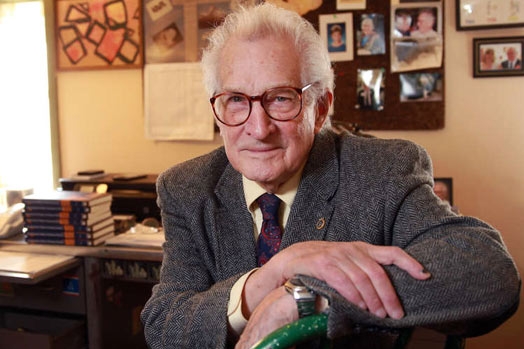
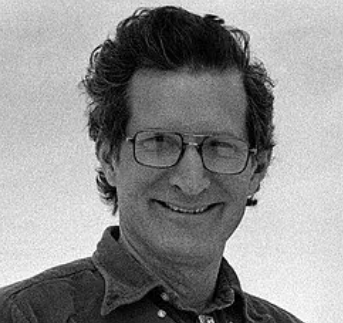
    Kenneth W. Ford, 99, of Gwynedd, Montgomery County, theoretical physicist who helped develop the hydrogen bomb in 1952, university president, college professor, executive director, award-winning author, and Navy veteran, died Friday, Dec. 5, of pneumonia at Foulkeways at Gwynedd retirement community.

    Dr. Ford was a 24-year-old physics graduate student at Princeton University in 1950 when he was recruited by a colleague to help other scientists covertly build a hydrogen bomb. “I was told if we don’t do it, the Soviet Union will,” Dr. Ford told The Inquirer in 2023, “and the world will become a much more dangerous place.”

    So he spent one year at the Los Alamos National Laboratory in New Mexico and another back at Princeton, creating calculations on the burning of the fuel that ignited the bomb and theorizing about nuclear fission and fusion. The H-bomb was tested in 1952.

    Dr. Ford’s expertise was in nuclear structure and particle and mathematical physics. He and Albert Einstein attended the same lecture when he was young, and he knew Robert Oppenheimer, Fredrick Reines, John Wheeler, and dozens of other accomplished scientists and professors over his long career.

    He came to Philadelphia from the University System of Maryland in 1983 to be president of a startup biotech firm. He joined the American Physical Society as an education officer in 1986 and was named executive director of the American Institute of Physics in 1987.

    “He always seemed to be the head of something,” his son Jason said.

    He retired from the AIP in 1993 but kept busy as a consultant for the California-based Packard Foundation and physics teacher at Germantown Academy and Germantown Friends School. Michael Moloney, current chief executive of the AIP, praised Dr. Ford’s “steady and transformative leadership” in a tribute. He said: “His career in research, education, and global scientific collaboration puts him among the giants.”

    As president of the New Mexico Institute of Mining and Technology from 1975 to 1982, Dr. Ford oversaw improvements in the school’s enrollment, faculty, budget, and facilities. He “was an accomplished researcher, scholar and teacher,” Michael Jackson, interim president of New Mexico Tech, said in a tribute, “a techie through and through.”

    Dr. Ford wrote “Building the H Bomb,” and it was published in 2015.

    Before Philadelphia, he spent a year as executive vice president of the University System of Maryland. Earlier, from 1953 to 1975, he was a researcher at Indiana University, physics professor at Brandeis University in Massachusetts and the University of Massachusetts, and founding chair of the department of physics at the University of California, Irvine.

    Officials at UC Irvine said in a tribute: Dr. Ford “leaves an enduring legacy as a scientist, educator, and institution builder. … The School of Physical Sciences honors his foundational role in our history and celebrates the broad impact of his distinguished life.”

    He told The Inquirer that he hung out at the local library as he grew up in a Kentucky suburb of Cincinnati and read every book he could find about “biology, chemistry, geology, you name it.” He went on to write 11 books about physics, flying, and building the H-bomb.

    Two of his books won awards, and 2015’s Building the H Bomb: A Personal History became a hit when the Department of Energy unsuccessfully tried to edit out some of his best material. His research papers on particle scattering, the nuclear transparency of neutrons, and other topics are cited in hundreds of publications.

    Dr. Ford was a popular professor because he created interesting demonstrations of physics for his students.

    In 1976, he earned a distinguished service citation from the American Association of Physics Teachers. In 2006, he earned an AAPT medal for notable contributions to the teaching of physics.

    He was the valedictorian at Phillips Exeter Academy in New Hampshire in 1944. He served two years in the Navy and earned a summa cum laude bachelor’s degree in physics at Harvard University and his doctorate at Princeton in 1953.

    In 1968, he was so opposed to the Vietnam War that he publicly declined to ever again work in secret or on weapons. “It was a statement of principle,” he told The Inquirer.

    Kenneth William Ford was born May 1, 1926, in West Palm Beach, Fla. He married Karin Stehnike in 1953, and they had a son, Paul, and a daughter, Sarah. After a divorce, he married Joanne Baumunk, and they had daughters Caroline and Star, and sons Adam and Jason. His wife and former wife died earlier.

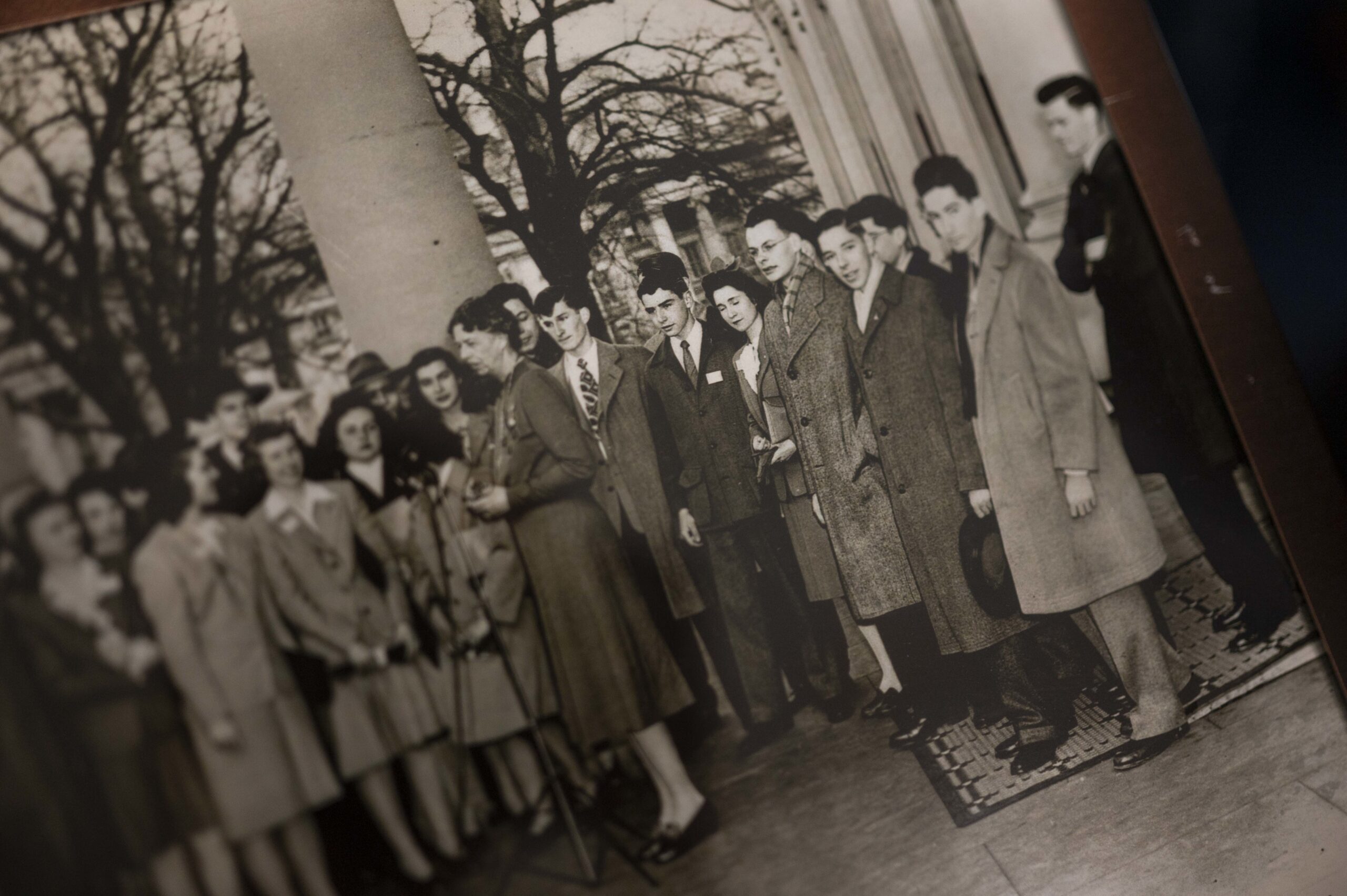
    This photo shows Dr. Ford (center) and other students listening to former First Lady Eleanor Roosevelt speak in 1944.

    Dr. Ford lived in University City, Germantown, and Mount Airy before moving to Foulkeways in 2019. He was an avid pilot and glider for decades. He enjoyed folk dancing, followed the Eagles closely, and excelled at Scrabble and other word games.

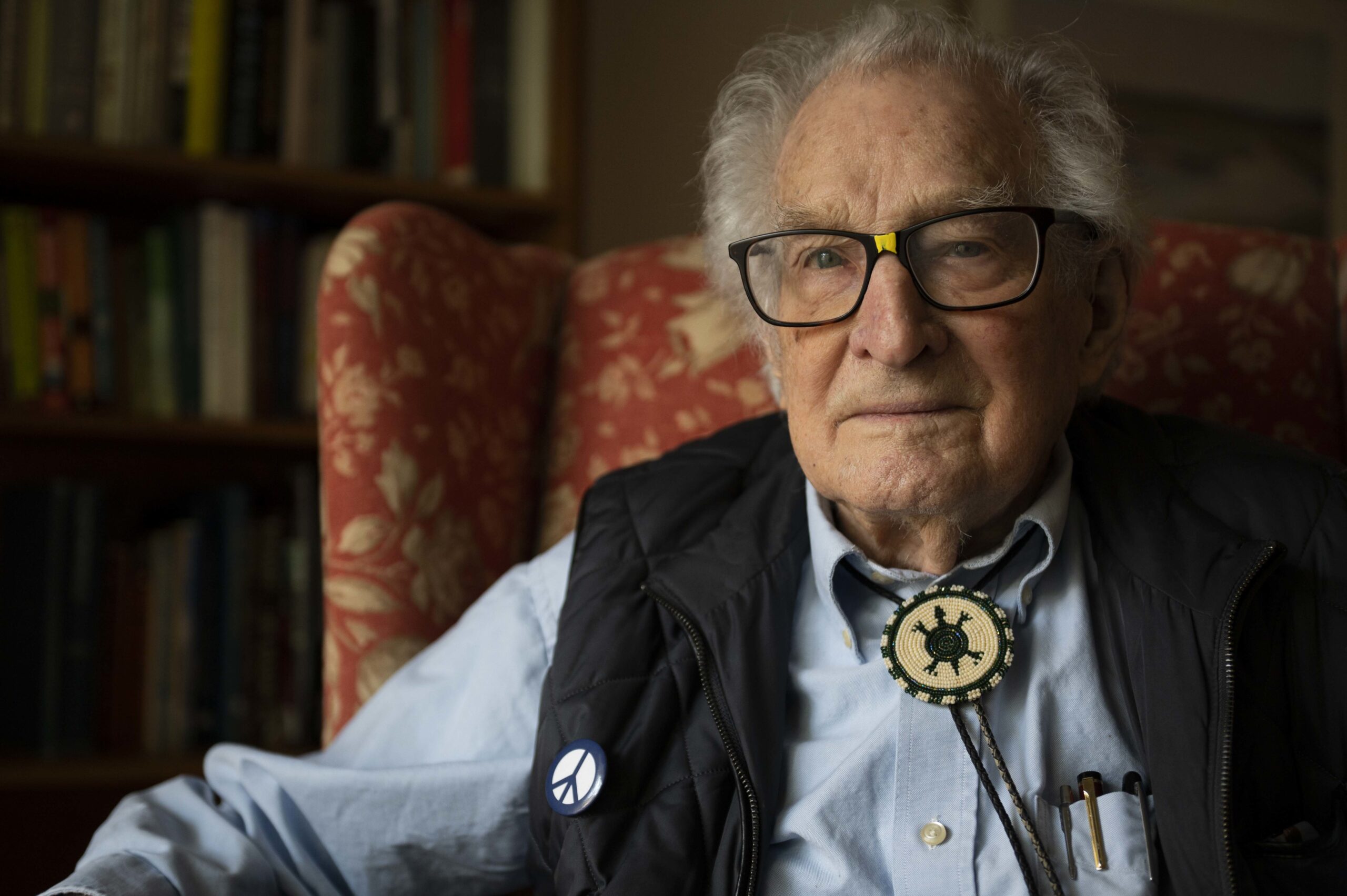
    He loved ice cream, coffee, and bad puns. He became a Quaker and wore a peace sign button for years. Ever the writer, he edited the Foulkeways newsletter.

    In 2023, he said: “I spent my whole life looking for new challenges.” His son Jason said. “He found connections between things. He had an active mind that went in all different directions.”

    In addition to his children, Dr. Ford is survived by 14 grandchildren, a great-grandson, a sister, a stepdaughter, Nina, and other relatives.

    Services are to be from 2 to 4:30 p.m., Saturday, Jan. 24, at Foulkeways at Gwynedd, 1120 Meetinghouse Rd., Gwynedd, Pa. 19436.

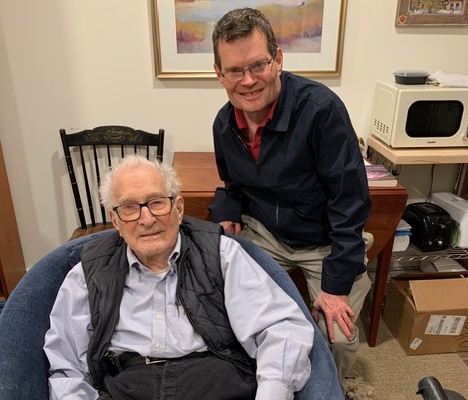
    Dr. Ford and his son Jason
    Dr. Ford wore a peace sign button for years.
  • Developer Iron Stone transfers two Hahnemann properties to new ownership

    Developer Iron Stone transfers two Hahnemann properties to new ownership

    Philadelphia-based Iron Stone Real Estate Partners transferred control of two of their former Hahnemann University Hospital properties in the last two weeks.

    The investment group acquired a portfolio of Hahnemann properties in 2021 and began redeveloping them into laboratory and office space.

    But in recent weeks Iron Stone disposed of two of these properties.

    The company donated the New College Building at 245 N. 15th St. to Drexel University on Dec. 31.

    “It’s a charitable donation,” said Jason Friedland, director of operations and investments at Iron Stone. “We felt that that building was best served with Drexel owning it and using it for a long time, long-term, for their research.”

    When Iron Stone acquired the New College Building five years ago, Drexel occupied the property’s medical labs and was one of the few remaining tenants in the Hahnemann campus.

    Back then the university was considering moving this Center City operation to the suburbs in the short term and to University City in the long term.

    “The generous gift will provide the university with flexibility as it continues to consolidate operation of its College of Medicine on its University City campus,” Drexel spokesperson Britt Faulstick said in an email statement. “Plans for the New College Building will be determined in the future.”

    On Jan. 6, Iron Stone sold the Broad and Vine Parking Garage at 1416 Wood St. to the Philadelphia Parking Authority for $21.3 million.

    The 850-space garage had been exclusively for Hahnemann’s use. Iron Stone renovated the vacant garage after the bankruptcy and hired Metropolis Technologies — the largest parking operator in the United States — to run it.

    The acquisition is the first time the Parking Authority has purchased a garage built by someone else, said Rich Lazer, executive director of the Parking Authority.

    “Most of our garages, outside of the airport, are Center City-based, so its nice to push out onto North Broad,” Lazer said. “Our garages are lower cost than private garages, so it’ll help us maintain reasonable pricing.”

    The authority plans to retain Metropolis Technologies as the operator, Lazer said.

    Iron Stone still owns a couple former Hahnemann properties, including the 120,000-square-foot Race Street Laboratories at 1421 Race St. and the 15,000-square-foot building at 231 N. Broad St., which is fully leased by Bayada Home Health Care Inc. with a third of the space and Dynamed Clinical Research with the rest.

    Race Street Laboratories was developed to tap into the life sciences and biomedical market, which boomed during the pandemic but has slowed substantially as interest rates spiked. Currently the building has only one tenant, Sbarro Health Research Organization, with 7,500 square feet of space.

    Friedland said Iron Stone plans to move its headquarters from University City’s FMC Tower to one of Race Street Lab’s unused floors.

    As for the rest of the space, Iron Stone is exploring alternative uses as the life sciences market continues to struggle.

    “We’re seeing where the opportunities are in commercial real estate,” Friedland said. “We have a couple things we’re exploring, but we’re not really in a rush.”

    New York-based Dwight City Group has purchased most of the remainder of the former Hahnemann buildings.

    Their plans for an apartment building were complicated by a bill introduced in December by Councilmember Jeffery Young to ban housing from the former hospital site.

    But on Dec. 24, in advance of City Council action on the legislation, the developer received zoning permits for a 361-unit apartment complex at 222-248 N. Broad St. Dwight Group says they are nonetheless in negotiations with Young to secure his support.