Tag: Weekend Food

  • A tale of two festivals: Philly Bierfest wants NYC-rooted Philly Beer Fest to stop confusing customers

    A tale of two festivals: Philly Bierfest wants NYC-rooted Philly Beer Fest to stop confusing customers

    A battle of the beer festivals is brewing in Philadelphia, and it’s set to come to a head next weekend, when Philly Bierfest and Philly Beer Fest — two completely unrelated beer festivals with names that are homophones — take place on the afternoon of Saturday, Feb. 28.

    This isn’t a coincidence, according to some members of Pennsylvania’s beer scene who claim the New York City-based organizers of the two-year-old Philly Beer Fest are deliberately trying to capitalize on the good name of Bierfest, a long-standing event with deep local roots.

    “It’s a very pointed move,” said Meredith Megan Rebar, the founder of Home Brewed Events, which plans major food and drink festivals in the Philly region. “They’re just doing this intentionally to mess with the event that’s been around longer.”
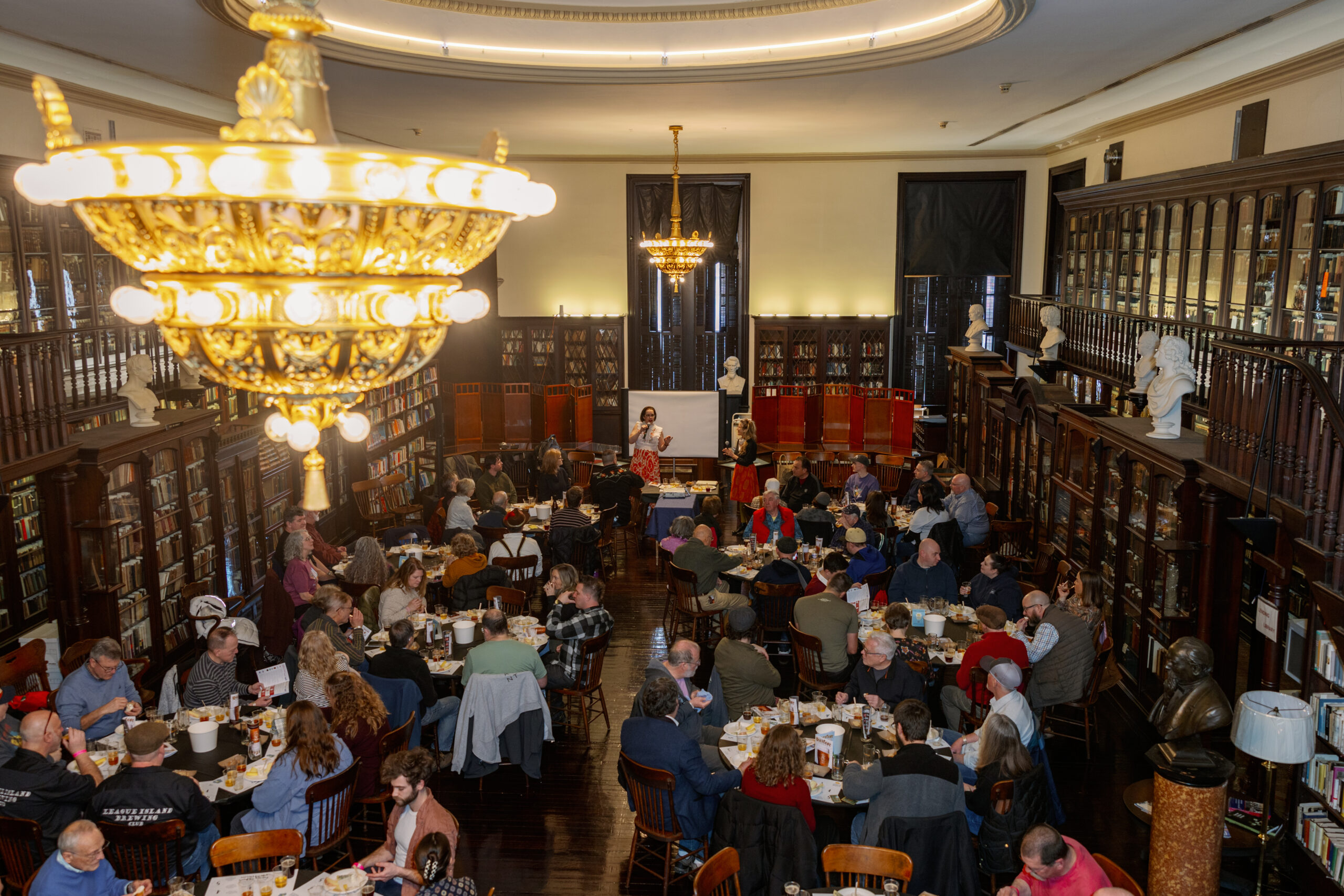
    The 2024 Philly Bierfest, held at the German Society of Pennsylvania at 611 Spring Garden St. The event spans two buildings and includes a food hall, beer classes, and burlesque performances, among other things.

    Philly Bierfest was created in 2013 by Northern Liberties-based nonprofit the German Society of Pennsylvania and Marnie Old, a local wine author and longtime freelance columnist for The Inquirer. It began as a way to honor the state’s rich tradition of brewing German-style beers, such as pilsners, kölsches, and lagers. With a deep bench of Pennsylvania- and Germany-based brewers — there are 45 pouring at this year’s event — the festival sells out each year, and was named one of the best beer festivals in the U.S. by USA Today in 2023. The event’s proceeds have gone to the Philly Roller Derby and Brewers of PA since its inception.

    Philly Beer Fest, on the other hand, is hosted by by Craft Hospitality, a national events company headquartered in New York City that organizes beverage festivals across the U.S., including the Philadelphia Zoo’s Summer Ale Festival. Craft Hospitality launched Philly Beer Fest at the 23rd Street Armory in 2024. Just over 30 Philadelphia-area beverage makers are featured this year, and proceeds partially benefit the Trauma Survivors Foundation.

    In 2024 and 2025, Craft Hospitality scheduled Beer Fest on the weekends immediately before and after Bierfest, which has been held on the last Saturday of February for 13 years (save for a pandemic-induced disruption).

    This year’s identical scheduling hasn’t necessarily hurt Bierfest, Old said, noting that tickets sold out this week. But it has caused some headaches. Bierfest’s barbecue vendor accidentally showed up to the wrong venue for a site visit, and Old has spent a great deal of time confirming with vendors that they’re signed up for the right event. In past years, Old has heard from some disappointed Beer Fest attendees who showed up to their event expecting it to be the German-themed Bierfest.

    The nonprofit-run festival tried to get ahead of any confusion this year. Prior to Bierfest selling out, it had a pop-up on its website that read: “Friends don’t let friends get the wrong tickets. Share this link to ensure pals get tickets to the original, authentic Philly Bierfest and not the other similarly named event.”

    Old isn’t sure if the warnings entirely worked.

    “We don’t hear from anyone who got tickets to the wrong festival until after our event,” she said. “I don’t know what their intention is because I’m not on their team, but misleading [the consumer] does seem to be the end effect.”

    Craft Hospitality denies scheduling Beer Fest for Feb. 28 as a way to undercut its preexisting competitor. In a statement, the company attributed the scheduling snafu to the event being held at a National Guard facility, which limits scheduling.

    “Event dates are determined based on venue availability and planning logistics, and are often set by contract approximately 12 months in advance,” the statement read. “Philadelphia has an incredibly active event calendar — this year especially with the World Cup … Overlap between events is not uncommon.”

    ‘It just feels predatory to me’

    This isn’t the first time Craft Hospitality’s Beer Fest has been accused of riding Bierfest’s coattails.

    After a Craft Hospitality employee emailed Ploughman Cider owner Ben Wenk in Nov. 2023 to gauge interest in vending at the first Philly Beer Fest — then scheduled for Feb. 17, 2024 — Wenk said his cidery would boycott all future Craft Hospitality events over what he felt was the company’s “intentional and malicious” attempt to deceive.

    Scheduling a beer festival with an identical-sounding name just a week before its established competitor, Wenk said, went too far.

    “Our people and our brand won’t be devoting any further resources towards an organization such as yours that is so brazenly and transparently willing to act in such a predatory way towards an established event like Philly Bierfest, who, by our estimation, have done nothing to deserve it,” Wenk emailed the Craft Hospitality employee in February 2024.

    Another Craft Hospitality employee replied to Wenk days later. “No one else has ever mentioned this other beer fest to me personally. Brands have just signed up fairly easily but I do see the conflict you’re pointing out. I will be looking into this,” they wrote.

    No one followed up with him, Wenk said, and Craft Hospitality didn’t respond to questions about this interaction.

    “Why is this New York events company coming down here to Philadelphia and thinking they can get one over on us?” Wenk said. “It just feels predatory to me.”
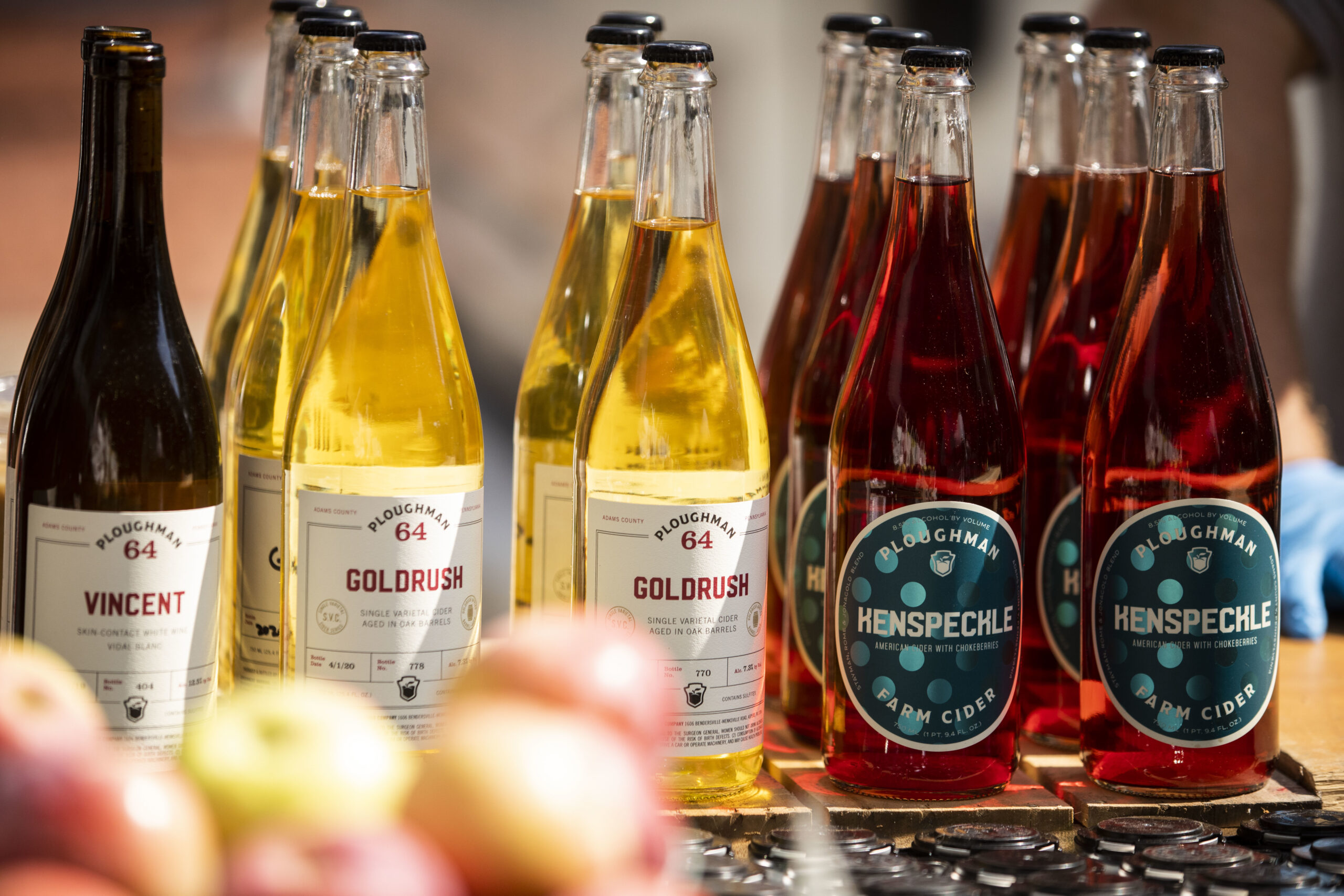
    Ploughman Ciders, of Adams County, Pa., is boycotting Philly Beer Fest and all other Craft Hospitality events.

    Bierfest co-creator Old had also directly flagged issues to Sam Gelin, Craft Hospitality’s founder. Shortly after both beer festivals wrapped in 2024, Old learned Craft Hospitality had scheduled its 2025 Beer Fest on the same day as Bierfest. When she asked Gelin if he would consider moving his event out of concern that it would confuse customers and vendors, Old recalled that Gelin said it would be “desirable” for the events to share the date. Still, Gelin obliged. Philly Beer Fest 2025 took place one week after Bierfest.

    “After that conversation and then for this year, I didn’t think I needed to follow up with them. I assumed that they would continue choosing a different date,” Old said.

    When she learned in September that this year’s Beer Fest was once again set for same exact date as Bierfest, Old figured it wasn’t worth reaching out to Gelin again.

    “If you’re renting your venue, it’s too late to change by that point. Six months is cutting it too close to make any changes,” she said. “And it was clear to me at that stage that [Craft Hospitality] saw having [its] event on the same date as ours as a benefit.”

    Craft Hospitality did not respond to questions about whether its founder had been contacted by Old. “Philly Beer Fest is not affiliated with Philly Bierfest,” they said in their statement. “They are separate events with different producers, different names, different socials, different formats, different pricing, different breweries, different cultural focuses, different venues, and overall different experiences.”

    Festivals with different aims

    The different vibes are part of the problem, according to Rebar, the festival organizer who specializes beer festivals.

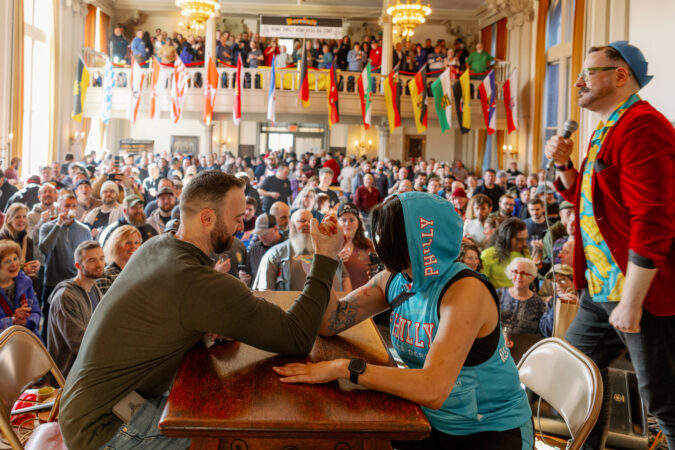
    Bierfest typically draws “real beer enthusiasts,” who are there to drink but also to deepen their understanding of German brewing techniques and beer culture. The festival’s format includes beer seminars, a food hall showcasing traditional German eats by local makers, a German Masskrugstemmen (stein-holding) strength competition, and performances from Bavarian folk dancers.
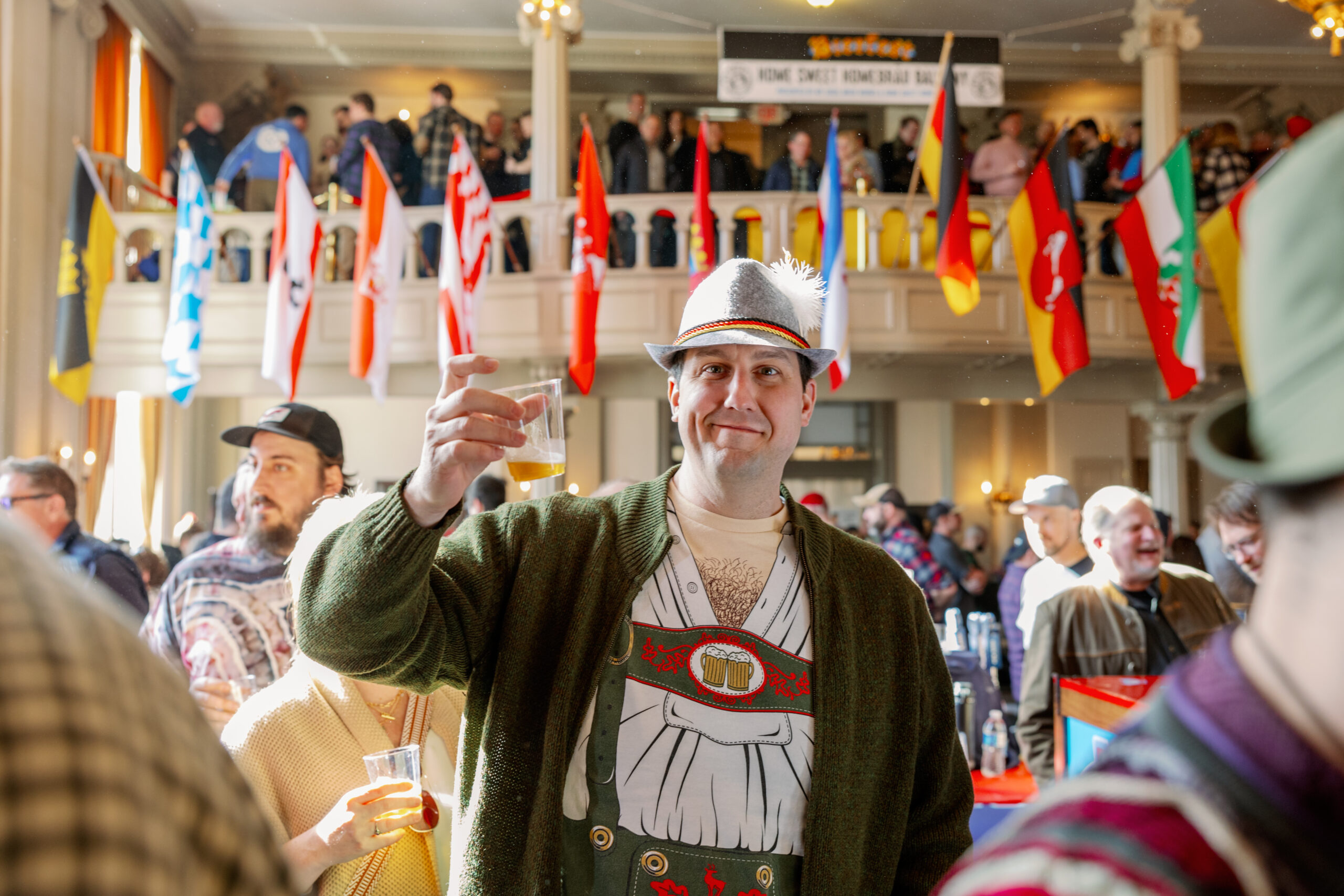
    An attendee at the 2024 Philly Bierfest, which has been held on the last weekend of February since its inception in 2023.

    Beer Fest, said Rebar, is for people who want to party. The festival is a hodgepodge of beer, hard seltzer, and spiked tea purveyors compared to Bierfest’s lineup of respected German beermakers and Pennsylvania brewers making traditional German beer styles.

    “There’s no educational standards to it. It’s just a generic festival, and it’s not [organized] by anybody local,” said Rebar, who attended the first Beer Fest in 2024. “Philly Bierfest has been around for so long, has a really good representation, and has a very clear mission.”

    Craft Hospitality did not respond to questions about whether it would provide refunds to attendees who showed up thinking they were at Bierfest and are dissatisfied with their experience.

    And while Rebar concedes that it would’ve been difficult for Craft Hospitality to reschedule given the impact on vendors, she said the winter months are typically slow for beer-industry events.

    “There’s plenty of other weekends in January, February, [and] March when there’s not a lot going on,” Rebar said.

    Not everyone views the festivals as being in competition. Currently three local breweries are participating in both festivals: Norristown’s Von C Brewing, Broad Street Brewing in Bristol, and Triple Bottom Brewing in Spring Garden.

    Old said she didn’t force any vendors to choose between the two events. “I hate to put my vendors in an awkward situation … We do not have a problem with anyone being registered for both.”
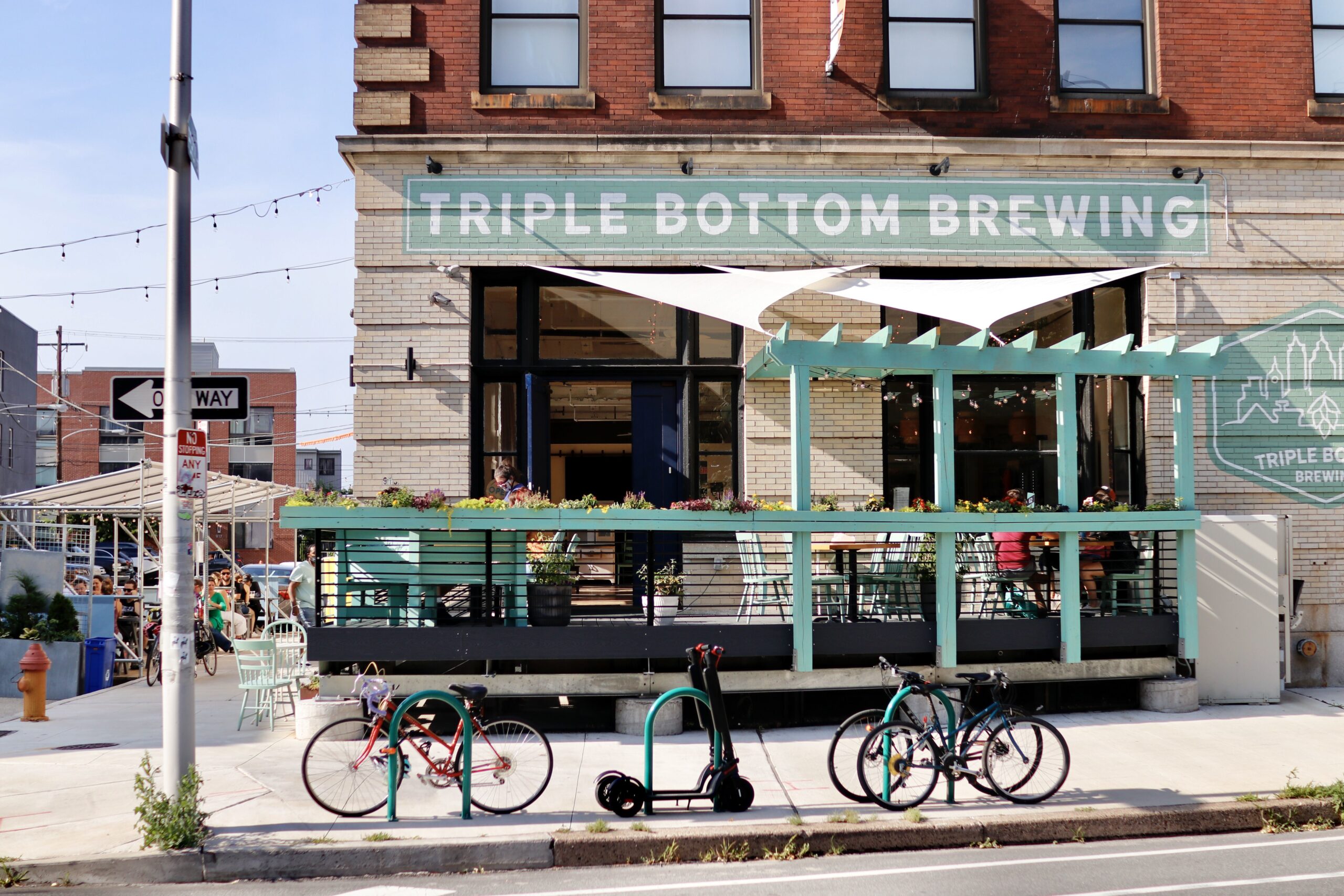
    Triple Bottom Brewing is one three breweries participating in both Philly Bierfest and Philly Beer Fest on Feb, 28, 2026.

    Triple Bottom Brewing co-owner Tess Hart has found a silver lining to the fest-on-fest drama. The six-year-old brewery has repeatedly participated in both festivals. The dual events kick off Triple Bottom’s 16-week brewer apprenticeship program for individuals impacted by the justice system and housing insecurity, she said.

    This year’s 10-person cohort started last week, Hart said, and they’ll be staffing both festivals concurrently. The challenge, she thinks, will be rewarding.

    “We’ll be stretched a little thin on Saturday,” Hart said. “But this will be a good opportunity to get them out of the taproom and really well-practiced about talking about beer in a high-volume situation. For us, that’s a big benefit.”
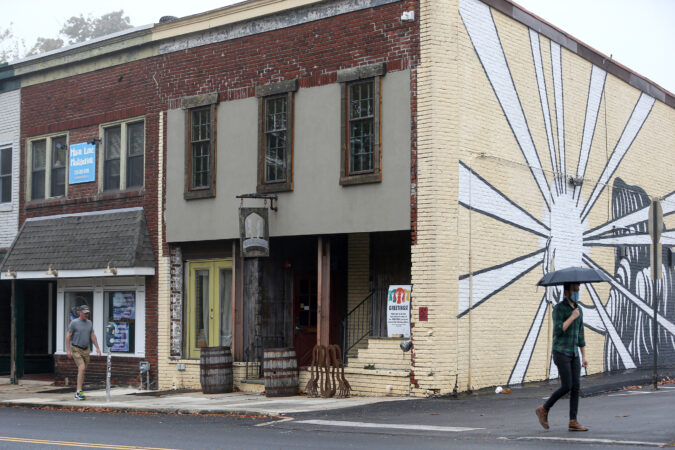
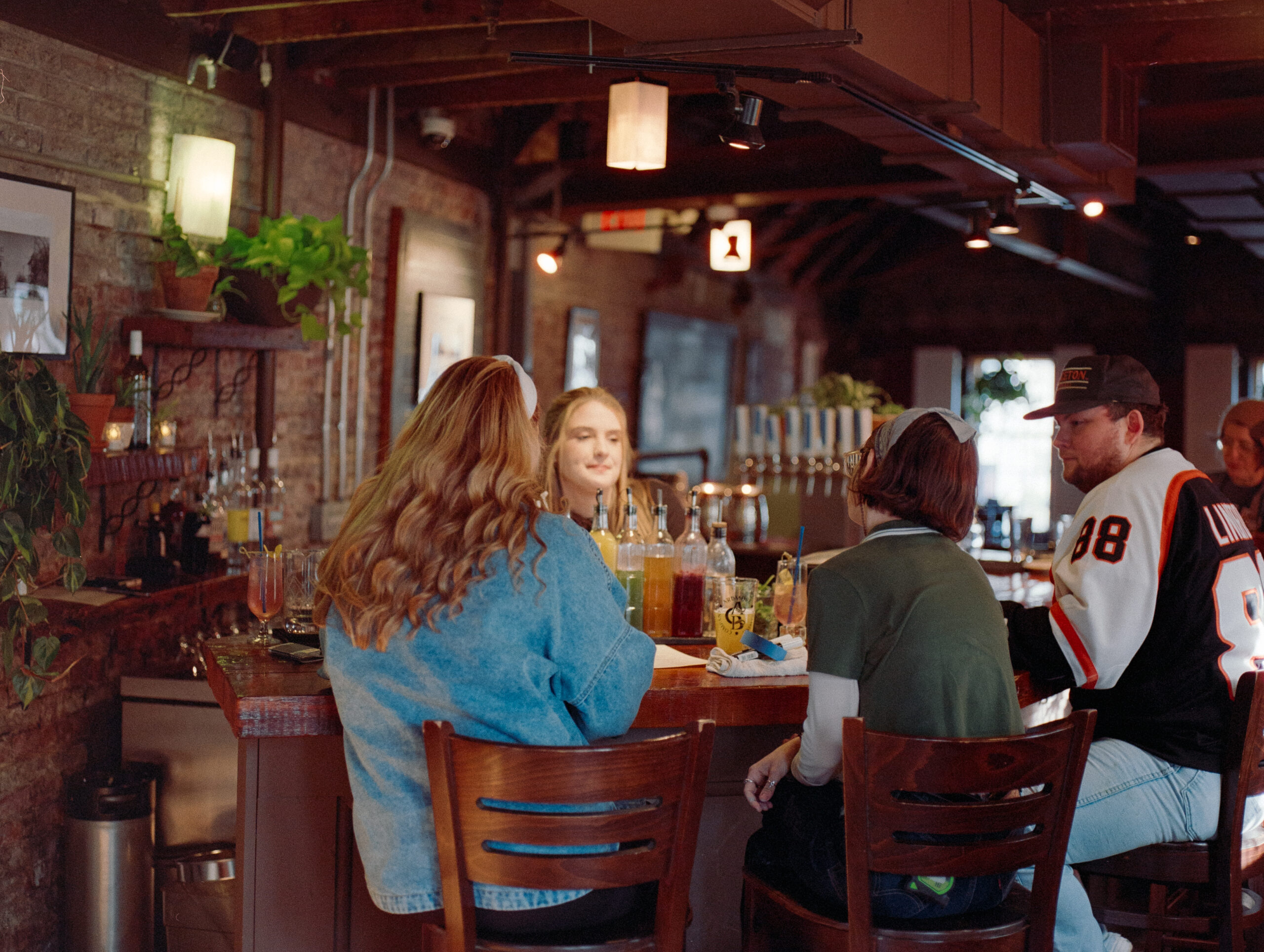
  • Tired Hands Brewing turned its original Ardmore outpost into a private event space as it navigates the future

    Tired Hands Brewing turned its original Ardmore outpost into a private event space as it navigates the future

    Tired Hands Brewing’s Ardmore Brewing Company brewpub has been turned into a private event space, for now, as its owner navigates the future of the beer company.

    Tired Hands’ Kennett Square taproom and bottle shop is permanently closed, owner Jean Broillet confirmed to The Inquirer on Thursday. Tired Hands’ Beer Park in Newtown Square also will not reopen this summer as the property’s owners are looking to redevelop it, Broillet said.

    Tired Hands’ Ardmore Fermentaria and Fishtown restaurant St. Oner’s remain open for business. The brewing company’s MT. Airy Biergarten is a seasonal operation that will reopen in the spring.

    Broillet said the decision to shift to private events at the Ardmore Brewing Company location was born out of a number of factors: having two Tired Hands locations in Ardmore was confusing for customers; ongoing construction in Ardmore created a “prohibitive environment” for doing business; and the changing landscape of brewing has prompted Tired Hands to begin reimagining parts of its business model.

    The changing face of Ardmore, and of Tired Hands

    When Broillet opened the first Tired Hands location, the BrewCafé, in 2012, he said there was little by way of interesting, high-quality food and drink in Ardmore. At the time, he said, Tired Hands’ craft beer and artisan meats and cheeses stood in stark contrast to the Wawas and Irish pubs the area was accustomed to. Now, that era is a distant memory as Ardmore blossoms as a culinary destination on the Main Line.

    Ardmore “went from zero to 60 really quickly in terms” of dining and entertainment options, said Broillet. He added that Tired Hands was a catalyst for that progress.

    In 2015, Broillet and his business partner and wife Julie Foster opened the Fermentaria at 35 Cricket Terrace, just blocks from Tired Hands’ first location at 16 Ardmore Ave.

    The Fermentaria was a major expansion for Tired Hands. It offered food options that extended beyond the BrewCafé‘s sandwich-and-salad-based menu, like steak frites and baby back ribs. It also quadrupled Tired Hands’ production capacity. At the BrewCafé, Tired Hands’ brewers were able to produce 1,000 barrels of beer annually. At the time of its opening, Broillet anticipated the Fermentaria would increase production to 4,000 barrels per year.

    Tired Hands opened St. Oner’s, a Fishtown restaurant and brewpub, in 2020.

    In the years that followed, Tired Hands opened the seasonal Biergarten in Mount Airy, the Kennett Square taproom, and the Beer Park in Newtown Square.

    In 2021, Broillet stepped down from daily operations after allegations of sexism and racism at Tired Hands proliferated on social media, including claims that women were held to different standards than their male counterparts and employees were berated or publicly humiliated for mistakes. Broillet returned to his post at the helm of Tired Hands a year later.

    Broillet said that “lots of valuable lessons, worldly lessons, were learned during that process” and that Tired Hands is doing everything it can to “prevent that from ever happening again.”

    Ardmore Brewing Co., located at 16 Ardmore Ave. in Ardmore, Pa. Owner Tired Hands Brewing Company has transitioned the brewery into a private events space for the time being.

    Changes in Ardmore, closure in Kennett Square

    While opening a second Ardmore outpost helped grow Tired Hands’ footprint on the Main Line, having “two of the same company” also made things “pretty confusing for people,” Broillet said.

    In efforts to iron out the confusion, Tired Hands rebranded its BrewCafé last spring, renaming it the Ardmore Brewing Company, upgrading its interior, and adding more food and cocktail options while cutting down its beer list.

    “The confusion was still there,” Broillet said.

    Broillet also brought on a culinary team that had extensive experience with private events. They began to host a handful of events at the brewery — retirement parties, birthdays, etc. — which were a success.

    At the same time, major construction had created a “prohibitive environment for us to do business here on Ardmore Avenue,” Broillet said. Construction on the mixed-use Piazza project and Ardmore Avenue Community Center are ongoing, both of which are proximate to Ardmore Avenue and the businesses that operate there.

    The brewery shifted to exclusively hosting private events in the last few months, a decision Broillet said he “couldn’t be happier” with.

    The brewery owner said the Ardmore Avenue location will be open to the public again in the future, but did not specify in what form.

    The taproom and bottle shop in Kennett Square will not reopen.

    Broillet said he opened a Tired Hands outpost in Kennett Square, in part, to have a presence near his family members who lived there. Though it was a “fun” chapter, Broillet said it no longer made sense to operate in Kennett Square, where Tired Hands already has a strong network of distributors that can get their beers into people’s hands without making them trek to the bottle shop.

    What comes next?

    Broillet offered assurances that Ardmore Brewing Company will open up to the public again, but said the specifics aren’t clear yet. Tired Hands also plans on expanding its Mount Airy footprint with a permanent restaurant space.

    For brewers across the country, the specter of people drinking less alcohol looms large. Sales of craft beer fell 4% in 2024, and there were more brewery closings than openings in late 2024 and early 2025, the first time in 20 years such a phenomenon had occurred. Brewerytown’s Crime & Punishment Brewing shuttered last April, with its owners citing a shifting culture around alcohol among the reasons for its closure. Iron Hill Brewery & Restaurant, a Philly-area craft brewing pioneer, abruptly shuttered all of its locations in September.

    Broillet said that while the changing dynamics of the industry remain on his mind, Tired Hands was not “acutely a victim of that downturn.” Sales had been down slightly over the past few years, but Broillet attributes that more to having two locations in Ardmore than to the state of the industry. He’s bullish about Tired Hands’ ability to distinguish itself and sees excitement in the changes.

    “Those sentiments have a way of just propelling you forward,” Broillet said.

    This suburban content is produced with support from the Leslie Miller and Richard Worley Foundation and The Lenfest Institute for Journalism. Editorial content is created independently of the project donors. Gifts to support The Inquirer’s high-impact journalism can be made at inquirer.com/donate. A list of Lenfest Institute donors can be found at lenfestinstitute.org/supporters.

  • Taking Amtrak? Now you can order Parc’s spaghetti bolognese on the train

    Taking Amtrak? Now you can order Parc’s spaghetti bolognese on the train

    Now you can order Parc en route to New York or D.C. Amtrak is rolling out dining experience with new dishes from Philly mainstays Parc, Pizzeria Stella, and Buddakan, in partnership with STARR Restaurant Group. But you’ll have to book a first class ticket on the NextGen and FirstGen Acela trains to enjoy these favorites on board.

    The three-year-old collaborative menu has been updated with a rotating selection of seasonal dishes for lunch and dinner services.

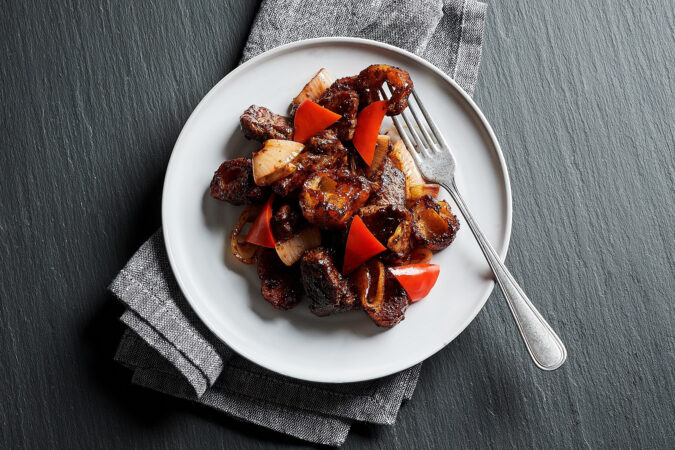
    The options include: lasagna al forno, saucy lasagna with rich ricotta, mozzarella, and Parmesan cheese, from Pizzeria Stella. There’s also spiced black pepper marinated tenderloin topped with wok-tossed herbs, red finger chilies, and crispy Chinese crullers from Buddakan, or Parc’s rich, slow-simmered spaghetti bolognese with crunchy garlic toast.

    STARR Restaurant Group is led by Philadelphia-based restaurateur Stephen Starr, who recently opened his 41st restaurant, Borromini, with mixed reviews. And while he’s an operator known for fanatical attention to detail and an assortment of over-the-top restaurants, it hasn’t stopped him from getting in some hot water on occasion — he is facing union-busting charges brought by the National Labor Relations Board.

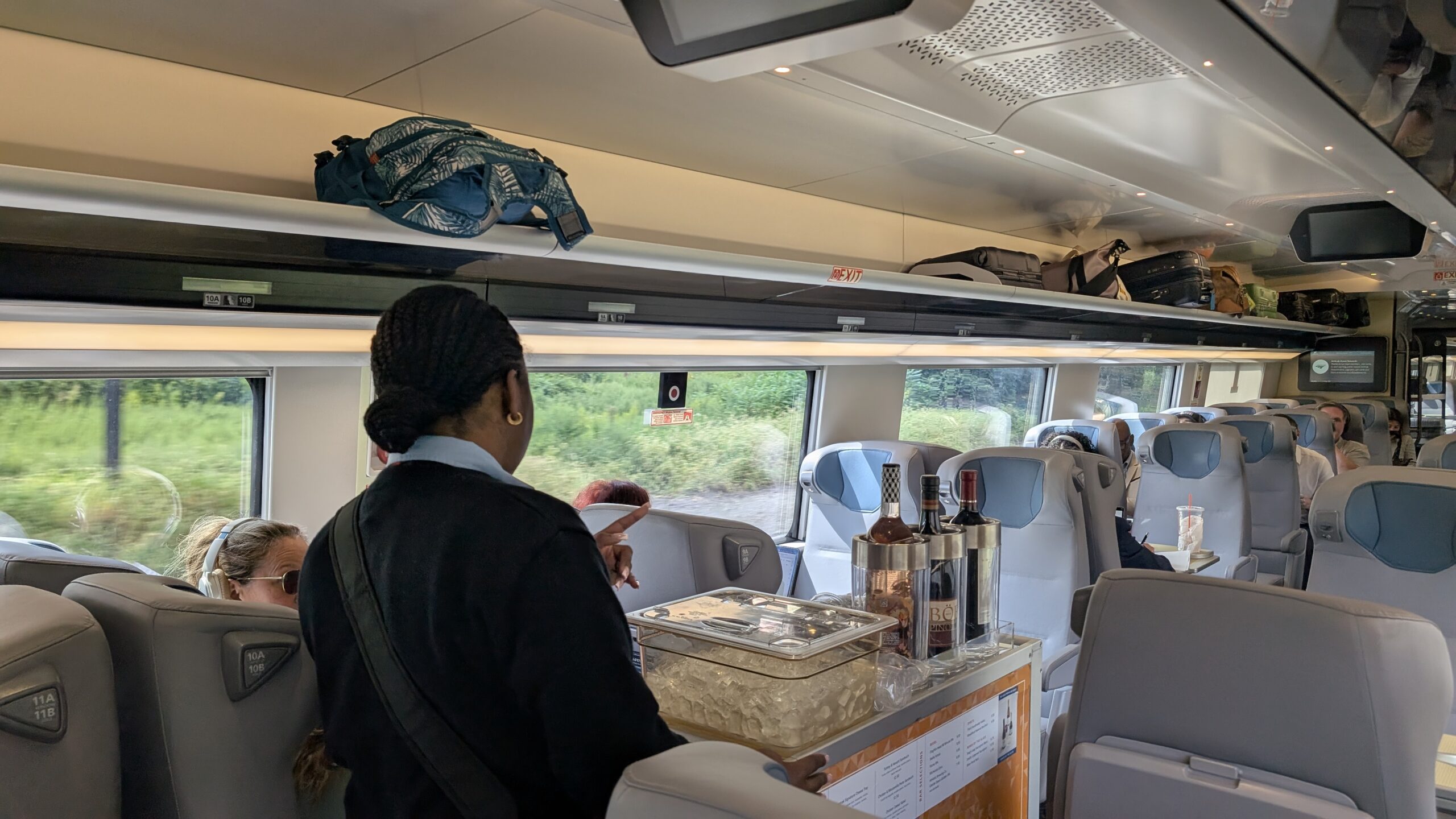
    A server pushes a bar cart down the aisle of a business class car in a NextGen Acela

    Onboard, Amtrak aims to offer the same culinary expertise enjoyed at Starr’s restaurant portfolio across Amtrak’s Northeast Corridor.

    “Serving elevated offerings in Acela First Class in partnership with STARR Restaurant Group adds an exceptional touch to our customers’ experience onboard on our trains,” said Eliot Hamlisch, Amtrak’s executive vice president and chief commercial officer, in a statement.

    Amtrak is also debuting two new dishes by executive chef David Gottlieb. There’s a caramelized apple bread pudding for breakfast and chilled harissa salmon for lunch and dinner.

  • Old City’s latest all-day cafe doses coffee, tea, and mocktails with kava and kratom

    Old City’s latest all-day cafe doses coffee, tea, and mocktails with kava and kratom

    A new all-day lounge in Old City is betting on kava and kratom — two controversial psychoactive plants — to pull crowds away from bars.

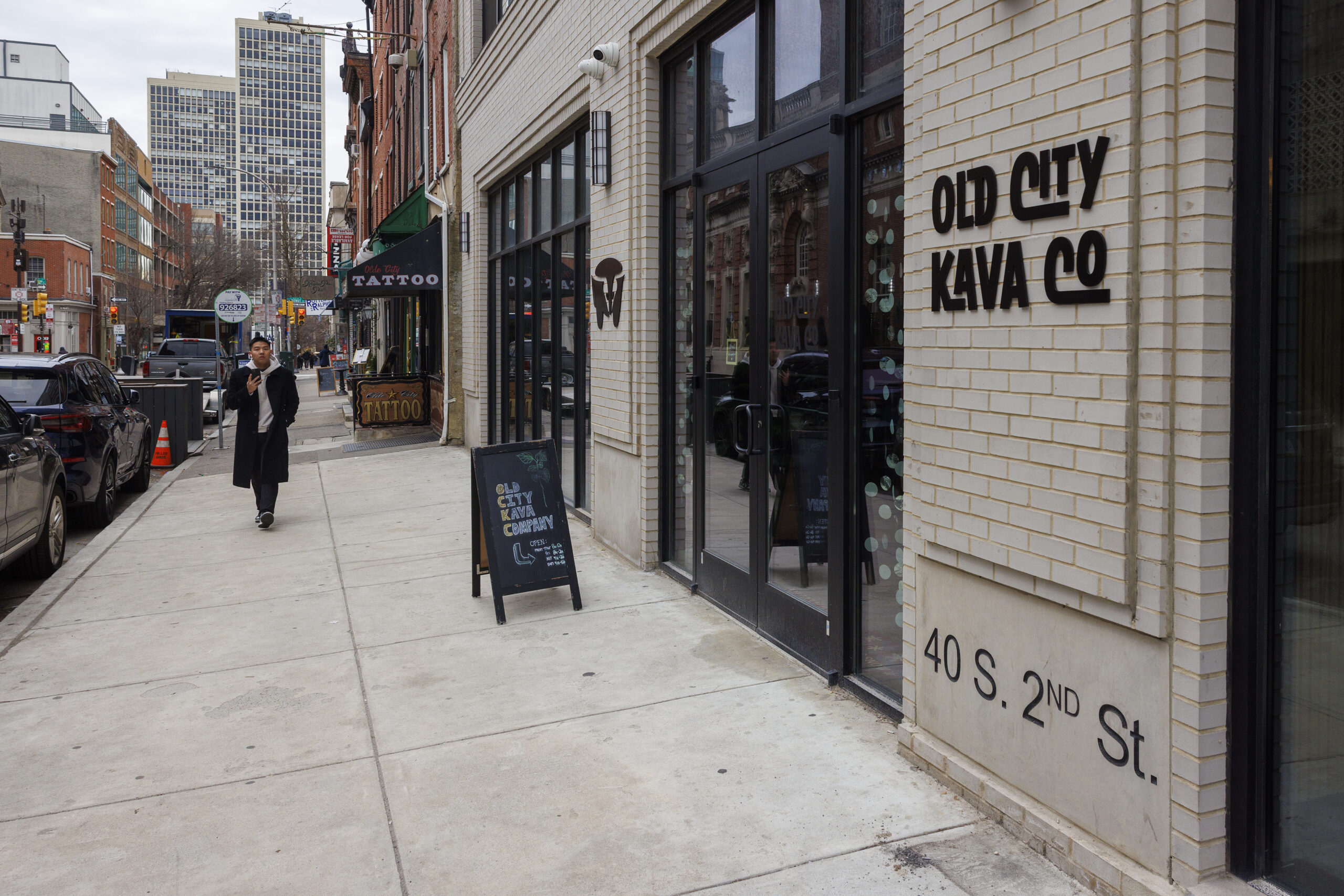
    Old City Kava Company opened in December at 40 S. Second St., across from a Fine Wine & Spirits and a honky-tonk bar. The lounge specializes in kava and kratom mocktails intended to boost mood and lower inhibitions, not unlike knocking back of a couple drinks. The establishment’s co-owners, Luca Kobza and Adam Lagner, believe the substances can open up a new social scene in Philly — namely, one that isn’t centered on alcohol.

    “We’ve had groups of people showing up who I otherwise believe would’ve been at bars… maybe having a cocktail and then regretting it the next day,” said Kobza. Customers have told them the space is a welcome change from bars and nightclubs, Kobza said.

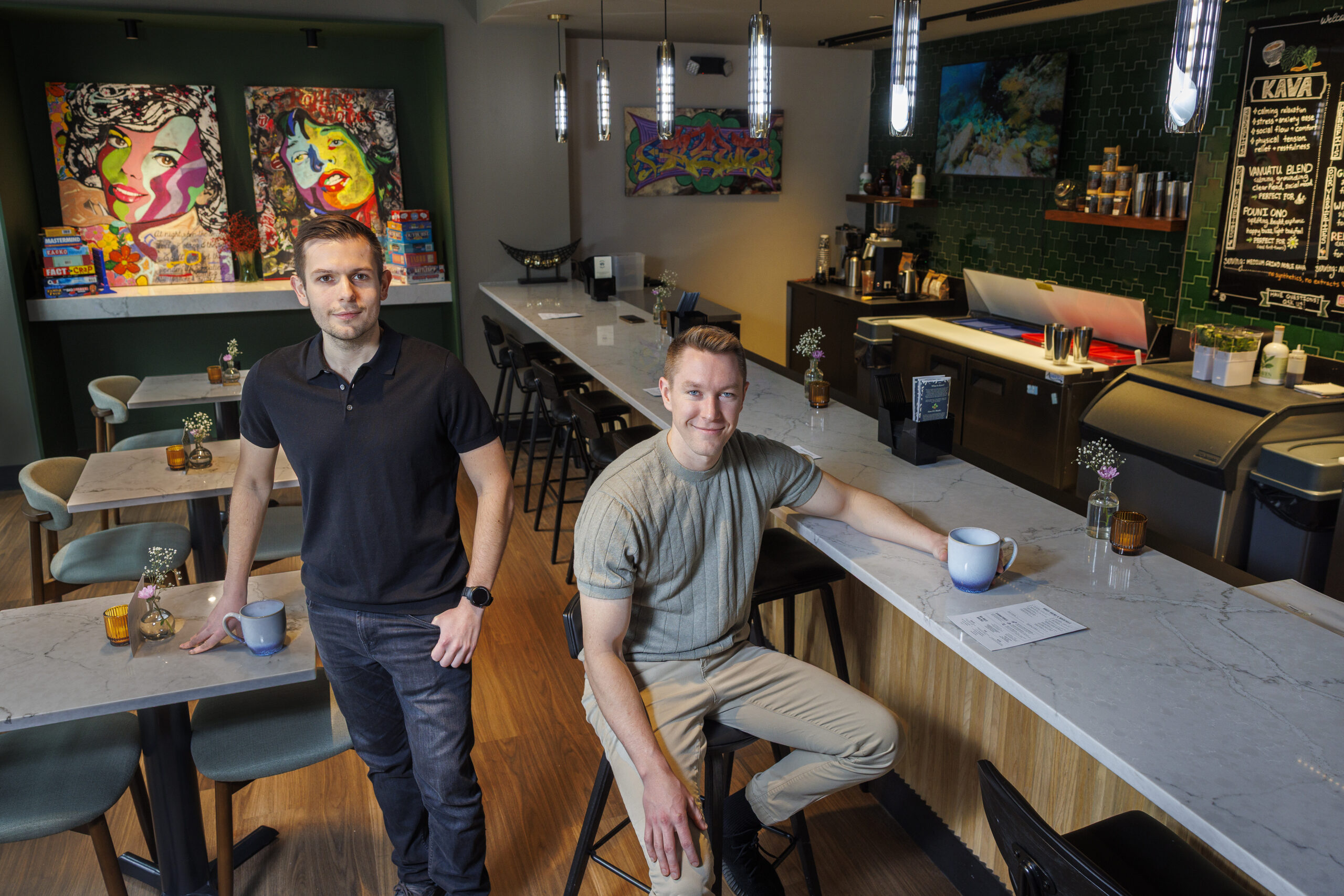
    Old City Kava Company co-owners Luca Kobza (left) and Adam Wagner (right) met in college at the University of Miami and ran a kava bar in Naples, Fla. before moving to Philly.

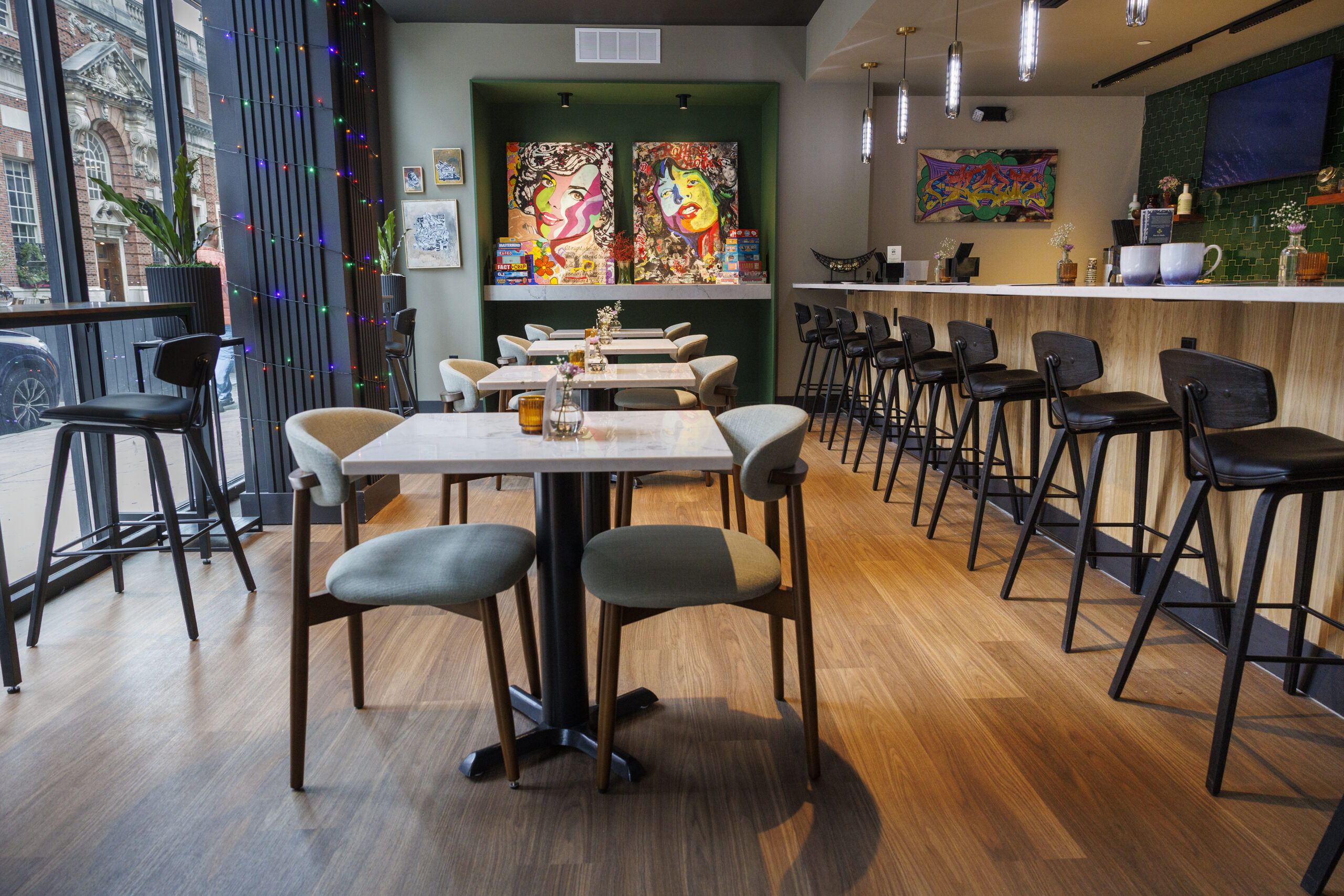
    The 1,900-square-foot lounge is designed for lingering, with 60 seats between its bar, two-top tables, and plush jeweled-toned couches. The space has a small-yet-serviceable board game collection, plus a rotating display of contemporary art for sale from Kensington’s Vizion Gallery.

    Old City Kava opens at 10 a.m. daily, serving its kava and kratom- infused mocktails alongside drip coffee from ReAnimator, teas from Random Tea Room, and a selection of pastries from wholesaler Au Fornil. By day, it largely functions as a co-working space.

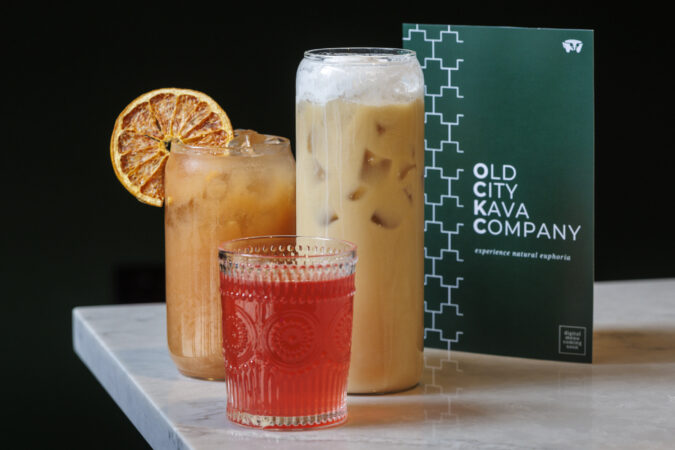
    The atmosphere shifts at night. Open till midnight on weekdays and 2 a.m. on weekends, the space feels cocktail bar-adjacent, with a menu of 16 kava and kratom-infused mocktails. They range from a kava-lemongrass-and-guava paloma to a kratom-kombucha-ginger beer mule and a matcha tonic shaken with kava and kratom. Lagner and Kobza have already hosted run clubs, singles events, and book clubs to highlight the spectrum of Philly’s sober-curious scene.

    The interior of Old City Kava Company at 40 S. 2nd Street.

    What are kava and kratom?

    Old City Kava sources kava — derived from the leaves of the piper methysticum, a large plant that grows in Hawaii and other South Pacific islands — from Fiji, Tonga, and Vanuatu and kratom from Vietnam, Thailand, and Malaysia. They brew both as teas, adding roughly a tenth of an ounce to each mocktail.

    The lounge’s eight employees had to undergo 15 hours of in-house “kava-tending” training, which mostly involves learning how to educate first-timers. Lagner hated kava the first time he tried it.

    “It’s bitter, earthy. I was very off-put,” said Lagner. At the age of 30, he now prefers drinking it straight.

    Kava is traditionally brewed as a tea for religious ceremonies. Advocates say the substance can briefly reduce anxiety or stress.

    Kratom, on the other hand, comes from the leaves of a Southeast Asian tree and acts like a caffeine-esque stimulant in small doses and a sedative in larger ones. Users treat it as a catch-all to self-soothe pain, depression, and anxiety.

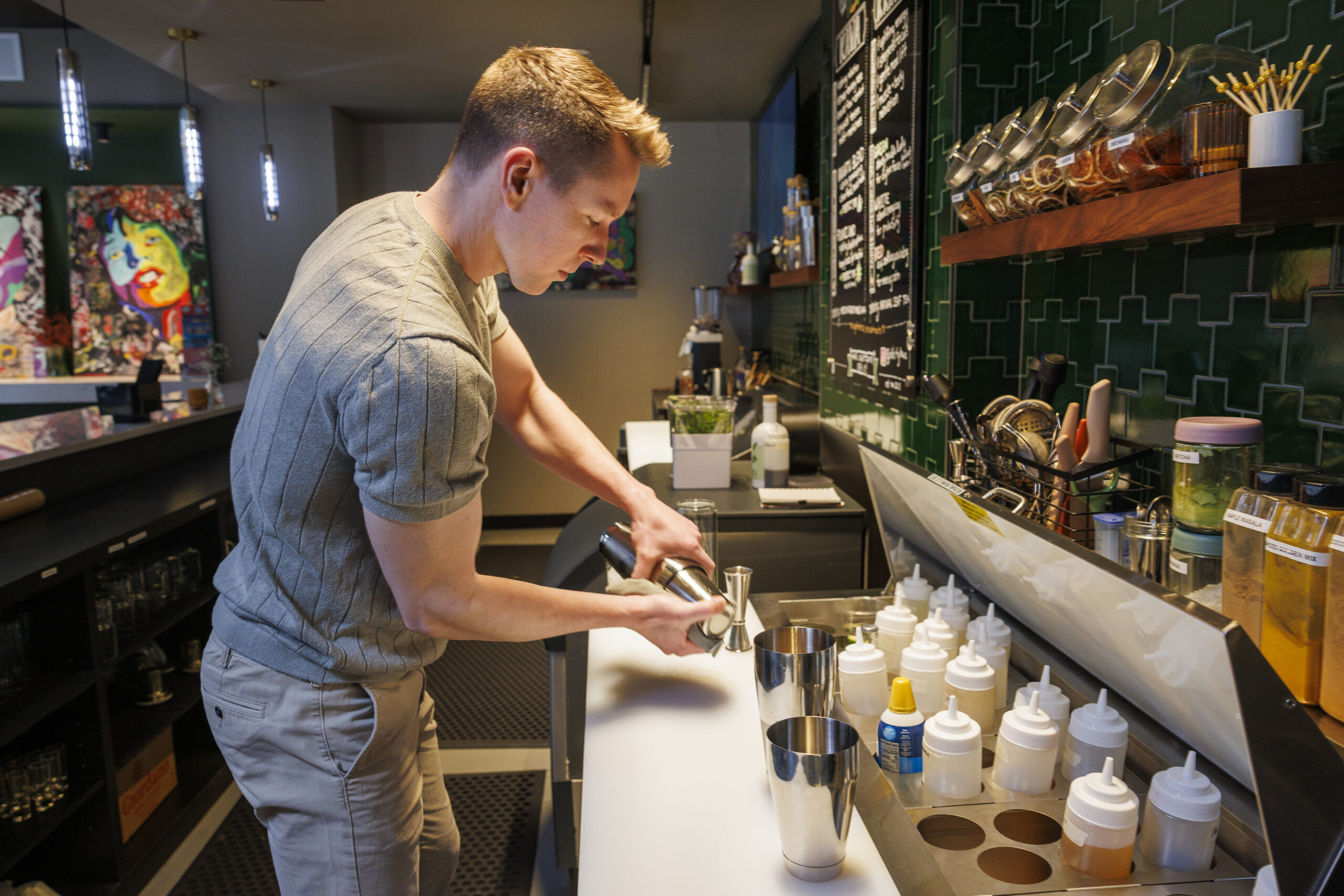
    Adam Wagner making Old City Kava Company’s Lemongrass Paloma, which swaps alcohol for kava.

    A visit to the lounge starts with a kava-tender offering samples of pure kratom or kava tea, the latter of which makes your lips tingle with a mild numbness. Despite having no real relationship with one another, kava and kratom often come as a package deal in kava bars across the U.S., which have exploded in popularity as an alternative to traditional bars during a time when fewer young people are choosing to drink.

    Both substances are contentious, having raised public concerns about addiction and other risks. Neither is currently regulated by the Food & Drug Administration, but the FDA announced plans last summer to schedule kratom as a controlled substance after an uptick in reports of synthetic kratom addiction. Sold in tiny bottles at gas stations and smoke shops, synthetic kratom isolates 7-OH, a compound that can cause intense opioid-like addiction and withdrawal symptoms. Kratom is currently banned in seven states. In December, two Pennsylvania state representatives introduced a bill that would prohibit the sale of the synthetic variety.

    These laws and the FDA’s plan include carve-outs for the botanic kratom from the leaf — which Old City Kava uses in its mocktails. The varieties are fundamentally different, Lagner said.

    “A lot of people conflate the two. … when they hear ‘kratom,’ they think of the products you’re seeing in gas stations,” he explained. “We serve natural kratom leaf tea how it’s been consumed safely for centuries in Southeast Asia. They’re much less potent in their natural form.”

    That may be true, but experts still have concerns about botanic kratom. According to Dr. Adam Scioli, chief medical officer of Wernersville, Pa.’s Caron Treatment Centers, botanic kratom is five to 20 times less potent than its synthetic counterpart. But it still carries an addiction risk, Scioli said, and can cause other health issues, such as nausea, high blood pressure, a racing heartbeat, and averse drug interactions, particularly when consumed with sedatives.

    “What concerns me most clinically is that kratom is often perceived as ‘natural and therefore safe,’” said Scioli. “History has repeatedly shown us that natural substances can still carry significant addiction risk, especially once commercialized.”

    A bar, but not

    Lagner, a Blue Bell native and La Salle High School grad, met business partner Kobza, also 30, when they were both students at the University of Miami. The duo would study together at kava bars on South Beach, and after graduating in 2018, opened their own, called Nektar Lab, in Naples, Fla.

    Lagner and Kobza sold their stakes in Nektar in 2022. They moved to Philly shortly after, where they found a far less vibrant scene than what they were used to in Florida, the U.S.’s kava capital. (Philly has only one other kava bar, Queen Village’s Lightbox Cafe.)

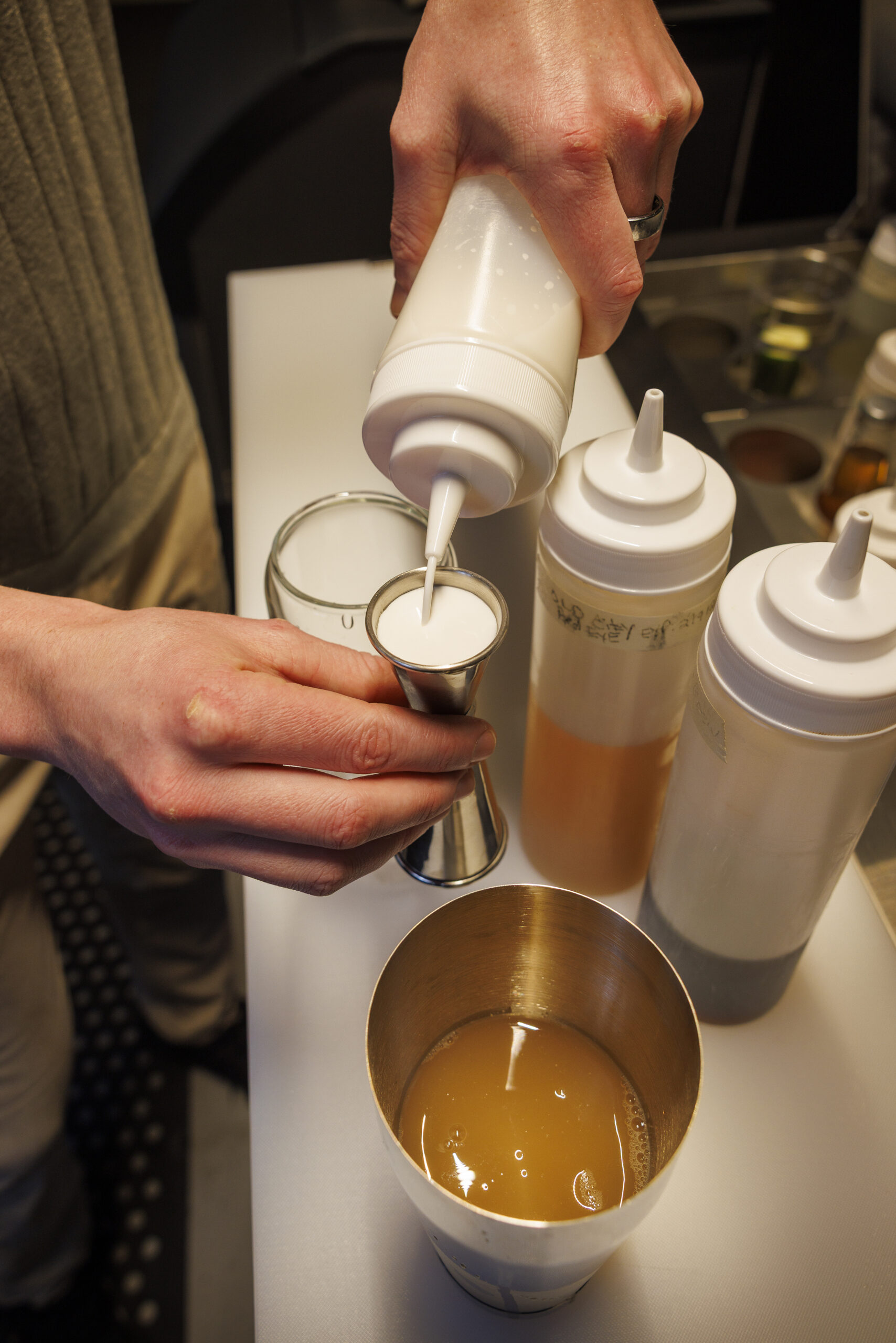
    Adam Wagner pours a shot of creamer for Old City Kava Company’s Old City Red Eye, a coffee drink that includes kava and kratom.

    “Most kava bars around the country are very grungy and tiny,” said Lagner. “And there haven’t been enough concepts [in Philly] to show people that this can be a a nice alternative to the social scene that revolves around alcohol and can also fill gaps in some of the daytime third-space sort of sphere.”

    Old City Kava’s bestseller is the Old City Red Eye: kava and kratom tea shaken together with ReAnimator cold brew, oat milk creamer, agave, and vanilla syrup. “You would think the kava and kratom cancel each other out because, at face value, it’s an upper and a downer in the same drink,” said Kobza. “But in reality they complement each other. The kava takes the edge off the coffee … the [kratom] just adds a mild euphoria.”

    Kobza said first-timers shouldn’t have kava or kratom on an empty stomach, or try too many cocktails at once. (That’s what this Inquirer reporter did, and she ended up with a splitting headache plus lingering nausea.)

    The exterior of Old City Kava Company at 40 S. 2nd Street.

    Carissa Kilbury, 24, goes to Old City Kava weekly. Sometimes, she spends full workdays at the lounge, sipping a few infused drinks while at her computer. A slow drinker, Kilbury said she doesn’t feel much other than mild relaxation.

    “When I’m stressed at work, I feel a little bit less stressed, which is nice,” she said. “It feels like a bar without really being a bar. I like that vibe.”

    Old City Kava Company, 40 S. Second St., 215-402-7047, oldcitykava.com. Hours: 10 a.m. – 12 a.m. Sunday through Thursday; 10 a.m. – 2 a.m. Friday and Saturday.

  • Philip Korshak returns to South Philly. This time, bagels aren’t on the menu

    Philip Korshak returns to South Philly. This time, bagels aren’t on the menu

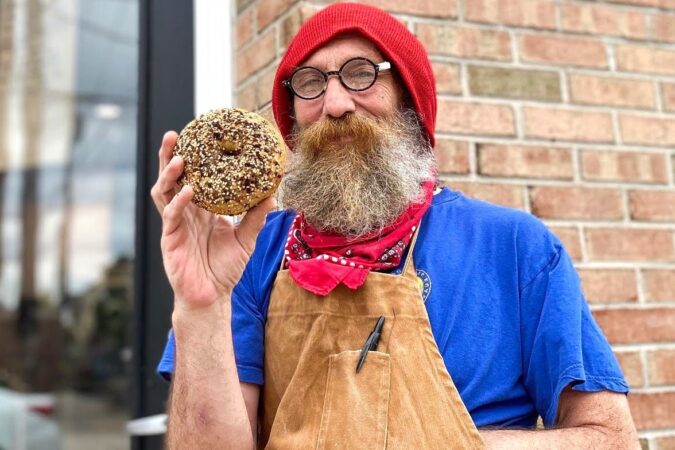
    Philip Korshak, the poet-baker who left town after closing his cult favorite Korshak Bagels 2½ years ago, plans to return to South Philadelphia this spring with a new, deliberately modest venture:

    Korshak Picnic Provisions will be a corner shop built around grilled hot dogs, house-made sourdough biscuits, and the idea that food is community.

    “If I had to model this place after something, it’s Mr. Hooper’s store on Sesame Street,” Korshak said. “The weird little corner shop that’s always there.”

    It’s a former animal hospital at the southeast corner of 13th and Reed Streets, across from the old Faragalli’s Bakery and Columbus Square Park. He is targeting a May opening.

    Korshak impressed both the New York Times and Bon Appétit with his bagel shop, which opened in May 2021 at 10th and Morris Streets. But success came at a price. When he closed it in September 2023, he cited financial and personal strain.

    The shop’s popularity brought pressures that clashed with his ideals. Korshak resisted automation and expansion, wary of becoming something other than a neighborhood bakery. His staff was one of the first in the city to unionize at an independent cafe. (Korshak voluntarily recognized the union.)

    “The staff would prefer to continue,” he wrote in his farewell letter, “but the changes to the process in exchange for efficiency … are not changes I think … are on brand for Korshak Bagels.”

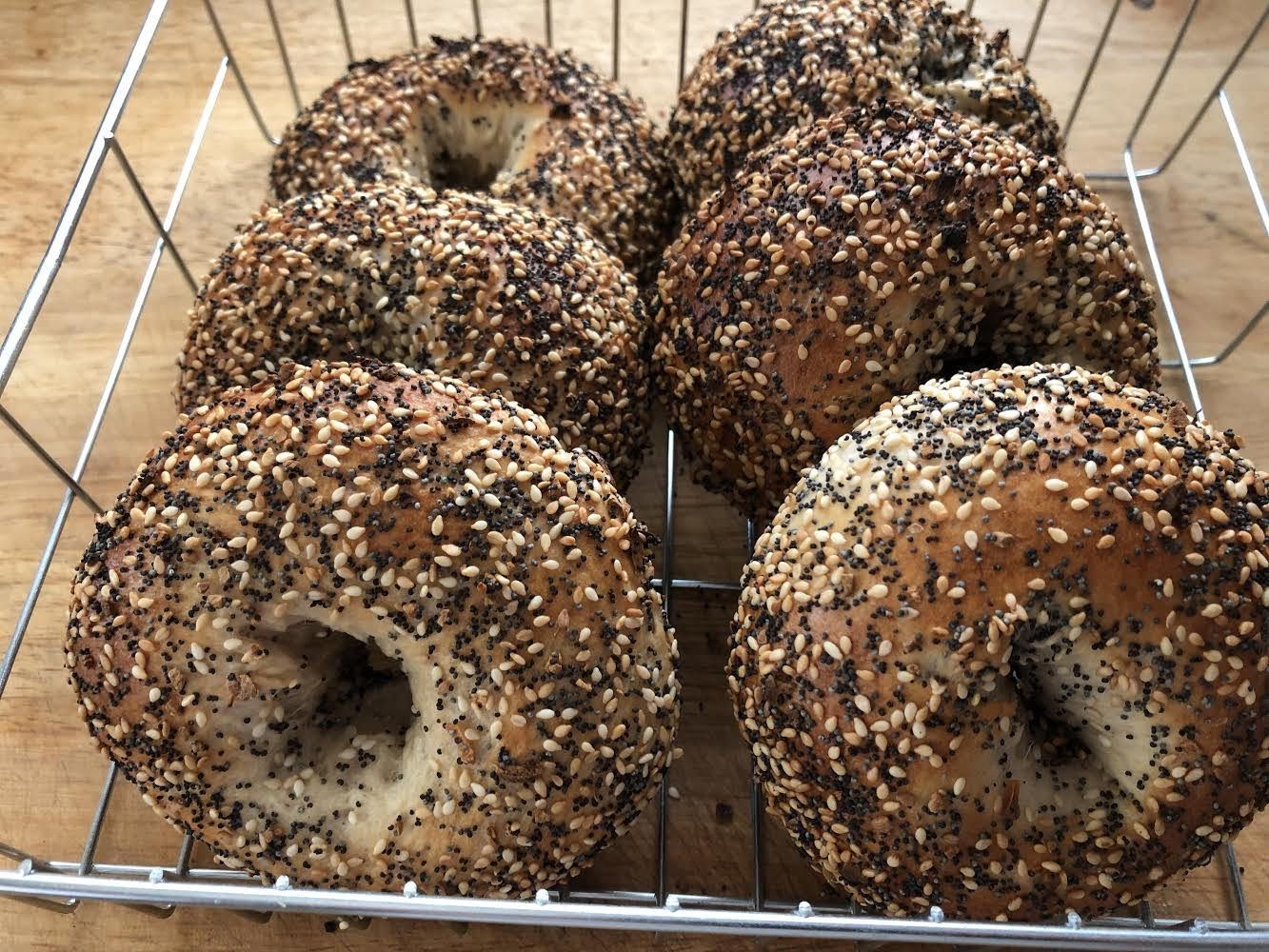
    Bagels by Philip Korshak, whose South Philly bagel shop became a gold standard before shuttering in 2023.

    He also wrote that the shop “simply can’t function economically. And provide a living wage. And work/life balance. And reasonable prices.”

    Korshak’s path back to Philly

    After closing Korshak’s Bagels, Korshak first lived in Seattle but relocated to Austin, Texas — his previous stop before Philadelphia. He had no real plans other than working on a memoir and “spinning my wheels,” he said.

    Then the phone rang last fall. It was Pat Duffy, a friend who owned the building where Korshak used to take his pet cat for veterinary care. “He said, ‘I’ve got this spot. The neighborhood misses you. It could use your vibe,’” Korshak said.

    Korshak initially demurred. “I told him I wasn’t in town and I wasn’t ‘doing the thing’ anymore,” he said. “But just to be thought of — in that world of absurdity and hope — meant everything to me.”

    Duffy walked him through the space over FaceTime. The building, which had been outfitted to become a takeout bakery, had little more than a plumbed floor and sinks. There was no ventilation hood or even potential for a sprawling production line.

    Which was exactly what intrigued Korshak.

    “What I already knew how to do wasn’t that interesting to me anymore,” he said. “What I don’t know yet, that’s compelling.” He moved back to Philadelphia on Dec. 20, settling in Conshohocken.

    The idea for a picnic provisions shop, anchored by hot dogs, came quickly. The corner sits near a bike path, a dog run, a playground, and softball fields. Korshak imagined it as a rendezvous point before or after the park: a place to grab a soda, a cookie, a sourdough biscuit with honey from Green Meadow Farm, or a couple of hot dogs “because dinner’s in a couple hours.”

    “I’m an old guy,” the Brooklyn-born Korshak, 58, said. “I’ve had a lot of hot dogs and a lot of picnics. I like both.”

    Korshak’s reasoning is more philosophical than nostalgic. “The hot dog appealed to me because it can’t really be fetishized,” he said. “You can’t put it on a ‘best of’ list in any meaningful way. It’s ubiquitous. It transcends nationality. For me, food is the connector — it’s not the end in itself. A hot dog almost refuses to be the end in itself. It’s silly, fun, quick.”

    Korshak Picnic Provisions will offer four styles of dogs, all grilled: a standard beef or vegan dog with mustard, relish, onion, or kraut; a Coney-style dog with chili, cheese, and onions (with vegan chili available); a Chicago dog with traditional through-the-garden accoutrements on a poppy-seed bun; and a Pacific Northwest dog topped with cream cheese, fish-sauce ketchup, and cabbage. Though he has not yet selected a supplier, he plans to use all-beef dogs.

    He plans to source buns from Mighty Bread Co., around the corner, shifting away from the labor-intensive, in-house production that defined Korshak Bagels. “It’s not about the hot dog I can make — it’s about what happens when we work together,” he said. “I love baking, but I’m not interested in running big production again.”

    Beyond hot dogs, Picnic Provisions will carry crisps, crackers, jams, honeys, sodas, candy, and seasonal produce. Korshak will keep much of the product line local. He said he is talking to Rhonda Saltzman of Second Daughter Artisanal Bakery and Carol Ha of Okie Dokie Donuts about stocking some of their products. He also envisions stocking non-edible picnic goods — kites, blankets, quilts — reinforcing the shop’s central metaphor.

    There will be baking, just not at former volumes. Helen Mirren, his pet name for his long-ferment starter, will inform a sourdough biscuit and a sourdough-spiked cinnamon roll. (Korshak has been testing at the former Conshohocken Bakery, run by longtime friend Danny DiGiampietro, who hosted his first bagel pop-ups.)

    This time around, he says, the sense of risk is different.

    “It’s all exciting to me,” he said of the new venture, which will have three employees. “The only thing that scares me is if this becomes bigger than it’s intended to be — but I don’t think it will.”

    The goal, he said, is durability rather than buzz. “A friend of mine talks about being ‘hot.’ You can only be hot for so long. After that, you’re judged against whether you were hot or not. But the things people truly love aren’t hot — they’re established. They become part of the common language.”

    “I’ve been around,” Korshak said. “Philly doesn’t exist anywhere else. The people here are the reason it’s the way it is. It’s unlike anywhere.”

    He said he found it “unbelievable” that his last name means something positive to Philadelphians. “How do you not keep trying to do something worthy of that?” he asked. “The goal isn’t accolades. It’s helping someone get through their day a little better — even if you never know about it.”

    Sounding more poet than proprietor, he returned to the idea that first drew him back: movement.

    “I’m incredibly lucky,” he said. “And if you’re not moving forward, you’re not moving at all.”

  • A style of chardonnay that’s bone-dry and tart

    A style of chardonnay that’s bone-dry and tart

    Chablis is a French white wine made with 100% chardonnay grapes, but its flavor profile is nothing like the chardonnay American wine drinkers are accustomed to. Where most Chardonnays are fuller-bodied and richer in texture than other whites, Chablis is lightweight and sheer on the palate. Where the majority of Chardonnays feature some overt apple-pear fruitiness and the distinctive pumpkin spice flavors of new oak, almost all Chablis wines are bone-dry, unoaked, and a little anemic in the fruit department. Most importantly, where most Chardonnays are on the softer end of the white wine acidity scale, Chablis is famously tart — so much so that it can taste unpleasant alone, needing to be partnered with salty foods in order to taste balanced.

    All of these qualities give Chablis an austerity whose appeal is a challenge to describe in positive terms, as with the ferocious bitterness of Campari or the beach-fire funk of an Islay single-malt scotch. Like these other drinks, Chablis tends to be an acquired taste that rarely appeals to the wine novice, but nonetheless retains its prestige from generation to generation as new converts discover its charms.

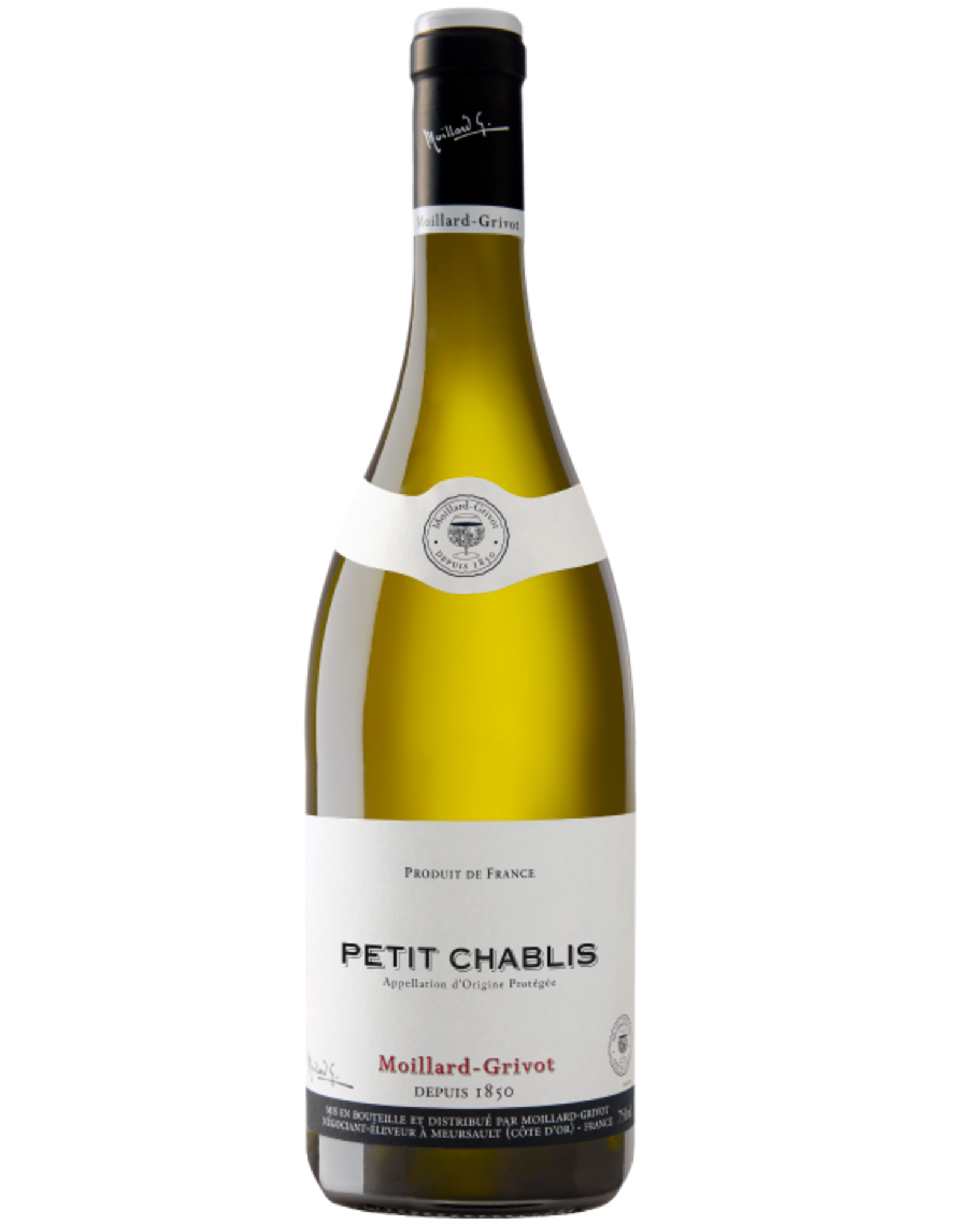
    What makes Chablis so distinctive is that it is grown in considerably colder conditions than is normal for the chardonnay grape — in a zone of northern France whose climate is a closer match to that of Nova Scotia than it is to California’s. Low ripeness in the fruit grown in Chablis amplifies acidity and minerality, while suppressing fruitiness and alcohol. While most Chablis is quite pricey, petit Chablis — or small Chablis — is the name used there for modest, entry-level wines like this one. It may not have the complexity or the long finish of a superior Chablis, but makes a solid introduction to this style that is a chardonnay for chardonnay haters. Brisk, cleansing, and as dry as the desert, with flavors of crabapples and goat cheese, it makes a marvelous match for any food you might squeeze some lemon on.

    Moillard-Grivot petit Chablis

    Moillard-Grivot petit Chablis

    Burgundy, France; 12.5% ABV

    PLCB Item #100048775 – on sale for $17.99 through March 1 (regularly $19.99)

    No alternate retail locations within 50 miles of Philadelphia according to Wine-Searcher.com

  • Savú, a two-level restaurant-bar in Washington Square West, aims for dining and nightlife under one roof

    Savú, a two-level restaurant-bar in Washington Square West, aims for dining and nightlife under one roof

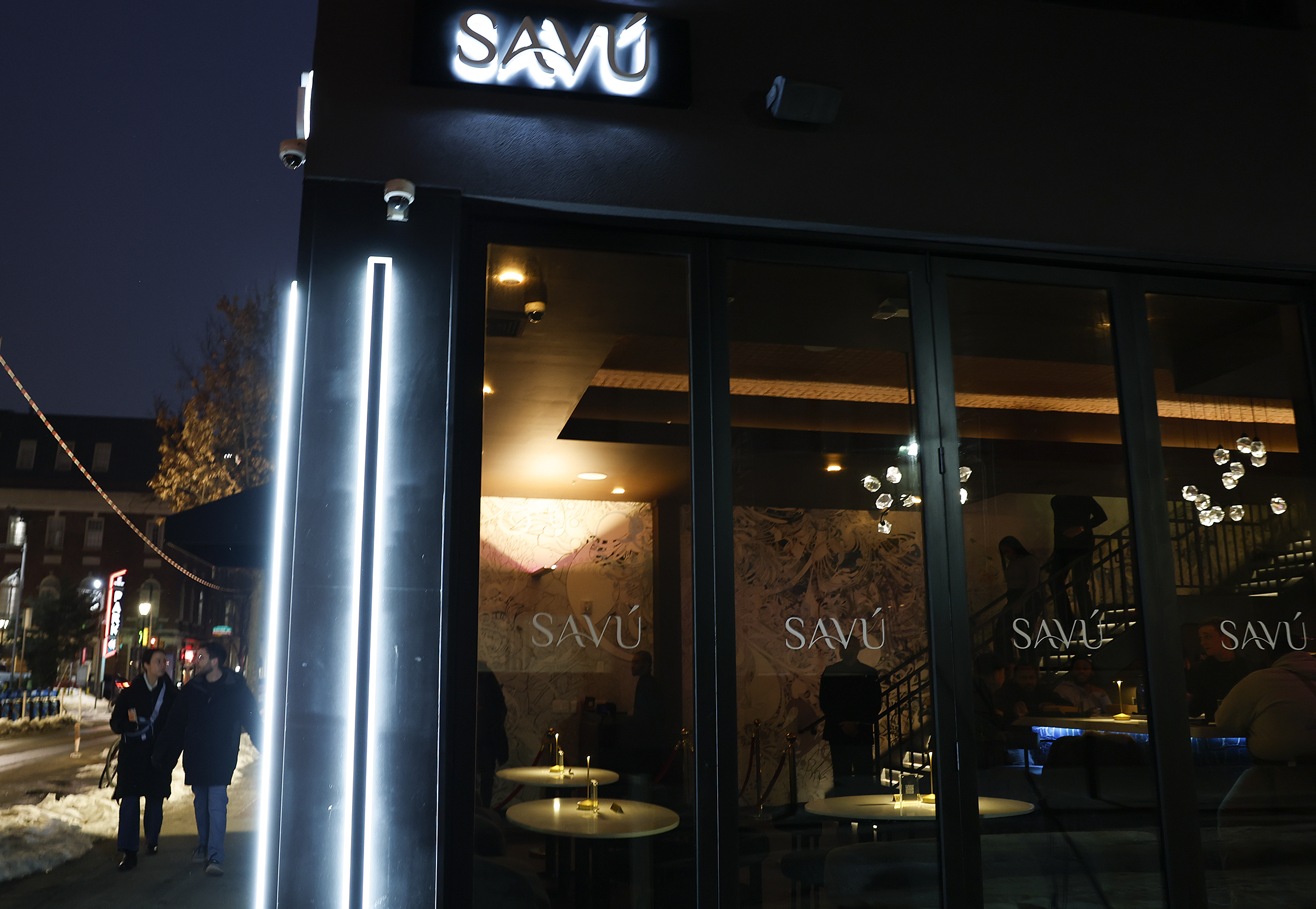
    Savú opened earlier this month in Washington Square West with a clear pitch: dinner and nightlife under one roof — and a retractable one, at that.

    “The concept is really about bringing a little bit of Miami and New York to Philadelphia,” said owner Kevin Dolce, the restaurant’s managing partner and founder of Hi-Def Hospitality. “There are places that do dinner and places that do nightlife. We want both in the same space, consistently.”

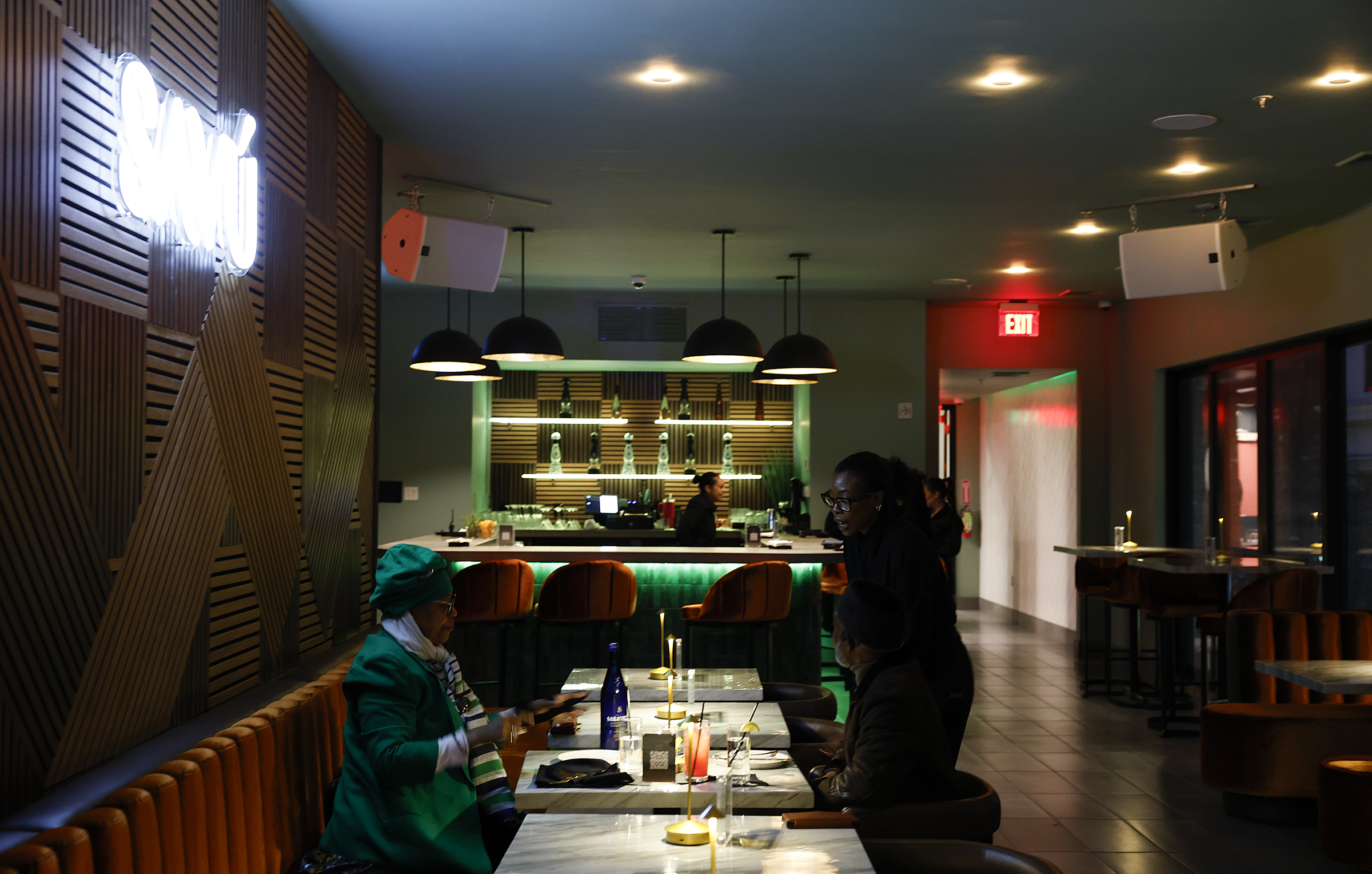
    The second-level dining room, and the rear bar, at Savú.

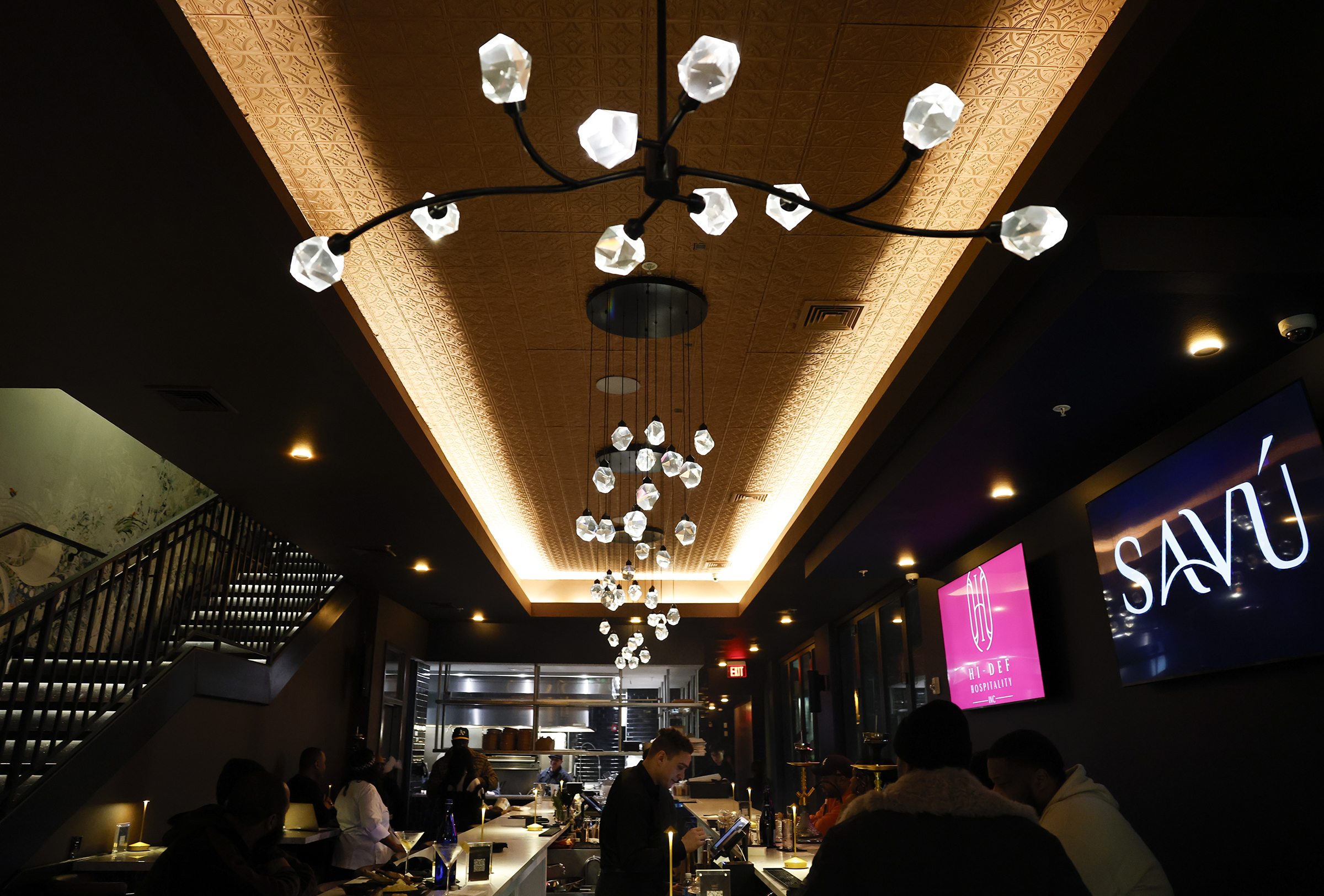
    Savú occupies the two-level space that last housed Cockatoo, an LGBTQ-friendly bar-restaurant. Dolce said Savú is aimed at everyone. The first floor is anchored by an enormous rectangular bar for walk-ins at the center of the room, with seating wrapped around it. Lounge seating lines the fling-open front windows at 13th and Chancellor Streets, where DJs spin Thursday through Sunday from 9 p.m. to 2 a.m., shifting the mood from dinner to late-night. Cocktails stick to standards — espresso martinis, French 75s — alongside Champagne and bottle service.

    Upstairs, two additional bars designated for customers with reservations serve a dining room outfitted with banquettes and low lighting. When weather allows, the retractable roof will open, creating an indoor-outdoor feel rare among Center City restaurants.

    The ground-floor bar at Savú, in Washington Square West.

    Savú’s address — along the restaurant row that includes Barbuzzo, Double Knot, and El Vez — has turned over in recent decades. A midcentury diner called Dewey’s once stood there, followed later by Letto Deli. The building was razed in the mid-2010s and replaced with a modern structure that reopened in 2017 as Maison 208. That concept gave way in late 2020 to Cockatoo.

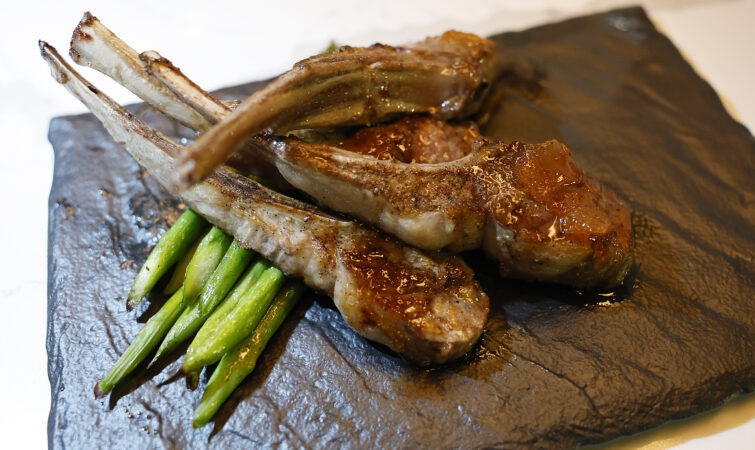
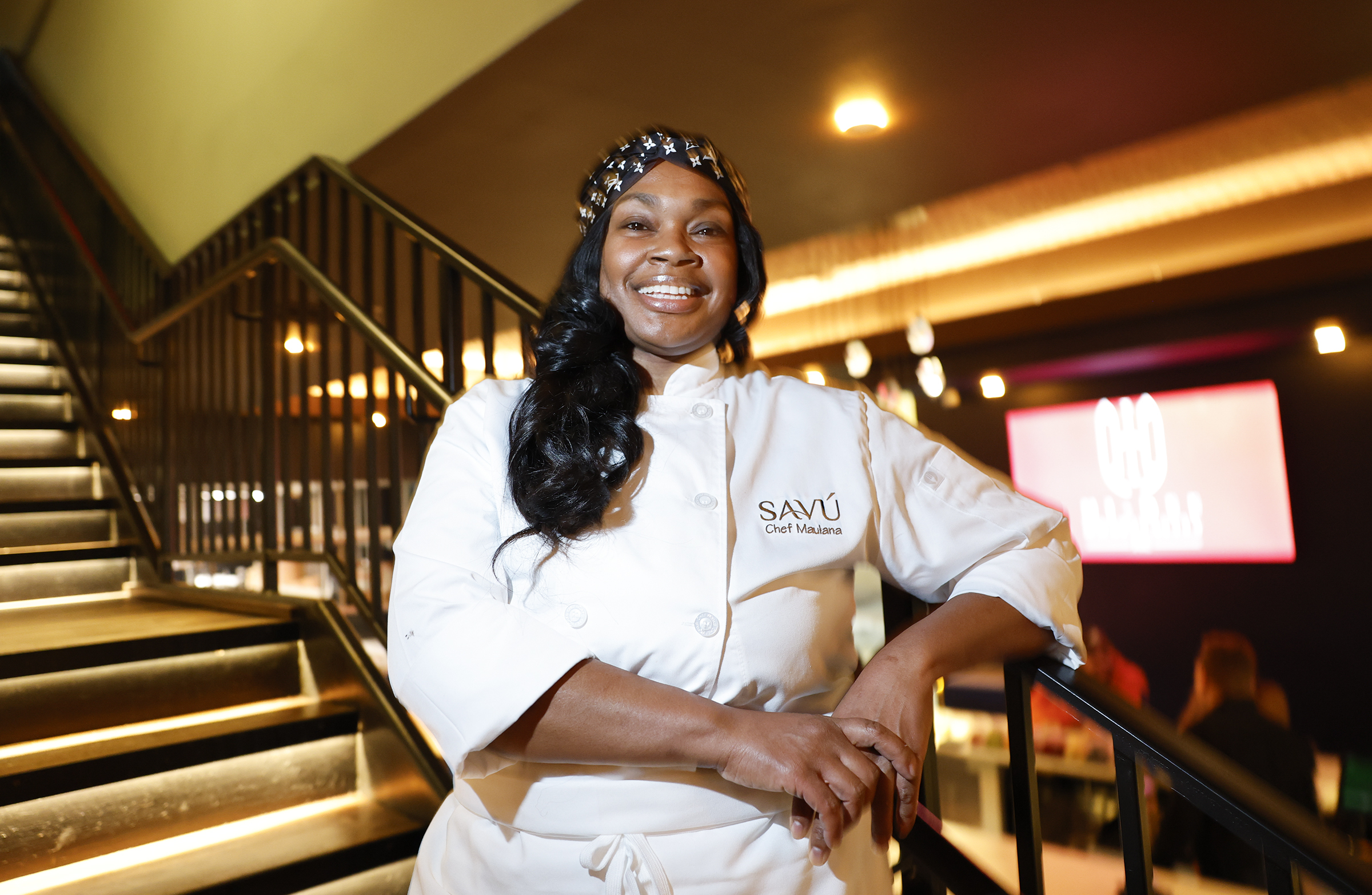
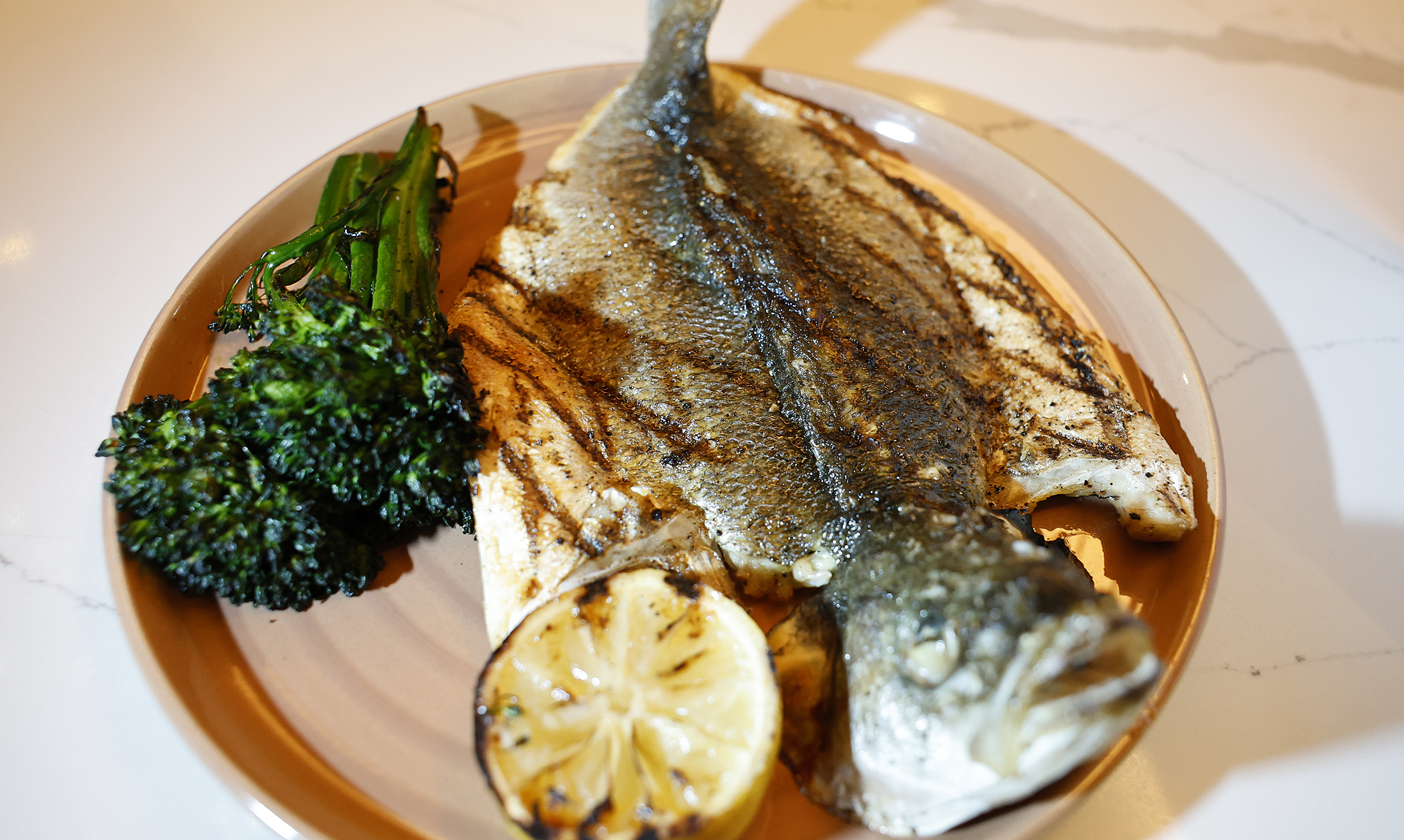
    Chef Maulana Muhammad’s dinner menu signals a push toward a higher-end night out: caviar bumps paired with fries and champagne, lamb chops, grilled branzino, lobster pasta, and ribeyes.

    Chef Maulana Muhammad at Savú.

    Muhammad, a graduate of the Restaurant School, has been around the block. She interned at the old Striped Bass and spent 12 years at the Four Seasons on Logan Square under chef Jean-Marie Lacroix and his team. Through the 2010s, she ran her own restaurant, Maulana’s Café, in the Philadelphia Design & Distribution Center in Wissahickon, and then worked for Constellation Catering just before the pandemic.

    After handling production that had her and colleagues cranking out 50,000 meals a day, she stepped away from the kitchen to help operate her family’s home healthcare agency.

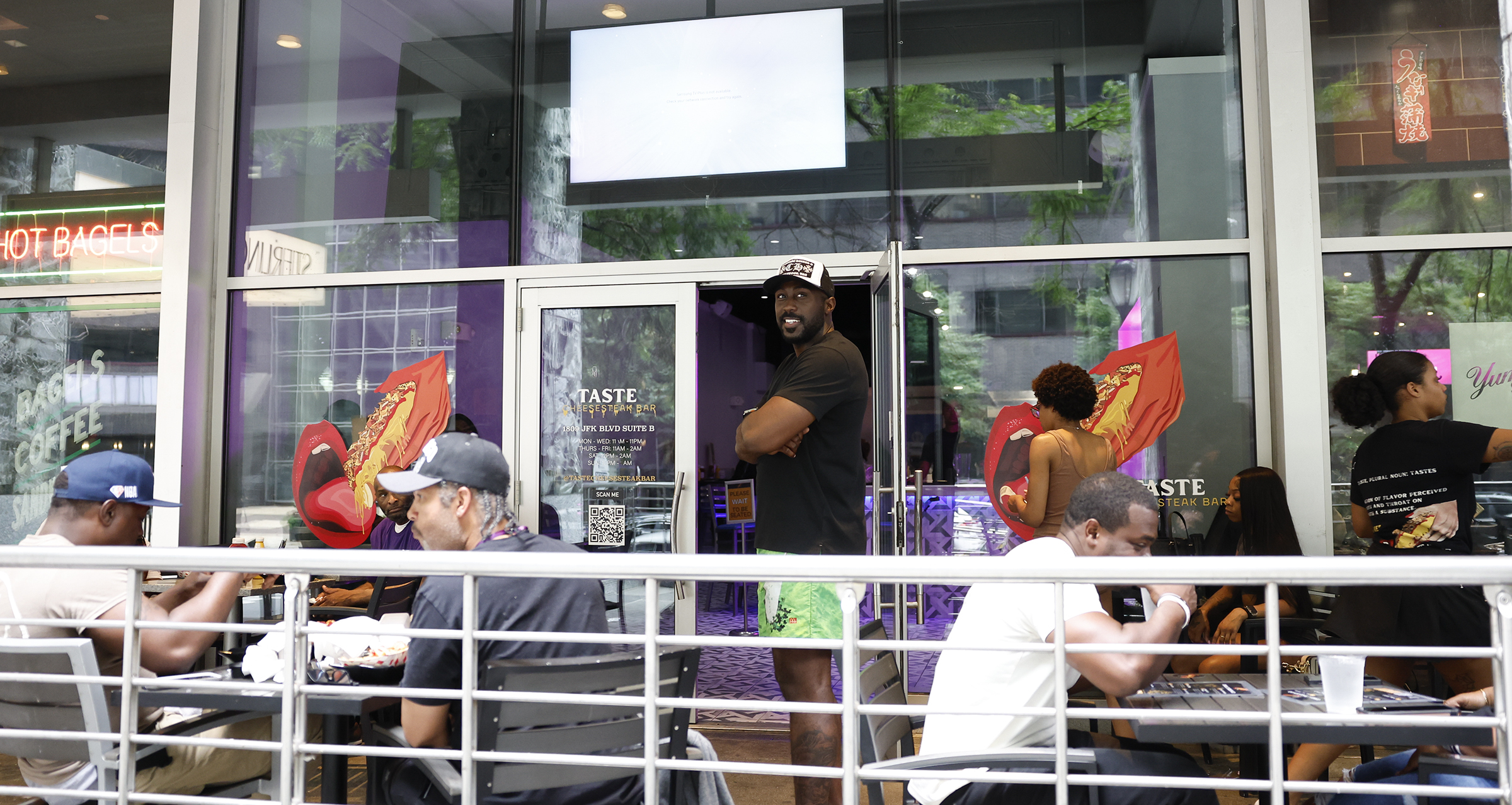
    Kevin Dolce with customers at Taste Cheesesteak Bar in 2024.

    Muhammad joined Savú a year ago to build the menu, after her brother, who knows Dolce, mentioned plans for the restaurant. “I like simple, good food,” Muhammad said. “I love creativity, but I want people to feel full and satisfied. I don’t want them leaving and stopping somewhere else to eat.”

    Dolce has brought in chef Dominique Shields, founder and former owner of North Philly’s Pretty Girls Cook, to oversee weekend brunch, which starts Feb. 28 with such offerings as seafood grits with fried flounder and shrimp, pancakes with fried chicken wings and honey butter, and oxtail hash along with made-to-order omelets and classic egg plates with beef or turkey bacon. In addition to the 11 a.m.-to-3 p.m. brunches, there will be a Sunday Champagne brunch from 4 to 8 p.m. that will be a ticketed, entertainment-focused event upstairs. General admission will include a drink and booths will be reservable.

    Branzino served at Savú.

    Dolce, whose background is in financial consulting, got a taste for nightlife in September 2023 when he opened Taste Cheesesteak Bar on the ground floor of the Sterling, an apartment building at 1809 JFK Blvd. It was, and still is, one of the city’s few cheesesteak shops offering DJs and a full bar.

    Dolce has been on a tear of lease-signing. In 2024, he announced plans for Enigma Sky, a three-story Thai-fusion restaurant and lounge in the former Golf & Social at 1080 N. Delaware Ave., as well as Taste Taco Bar, under the Larry Fine mural at Third and South Streets, at the former Jon’s Bar & Grille. Last year, Dolce said he was also converting the former 7-Eleven store at 1084 N. Delaware Ave., next to Enigma Sky, into Finish Your Champagne, a brunch-driven concept. Citing delays with permitting and approvals, Dolce said Taste Taco Bar is expected to open for Cinco de Mayo, with Enigma Sky and Finish Your Champagne opening by the end of the year.

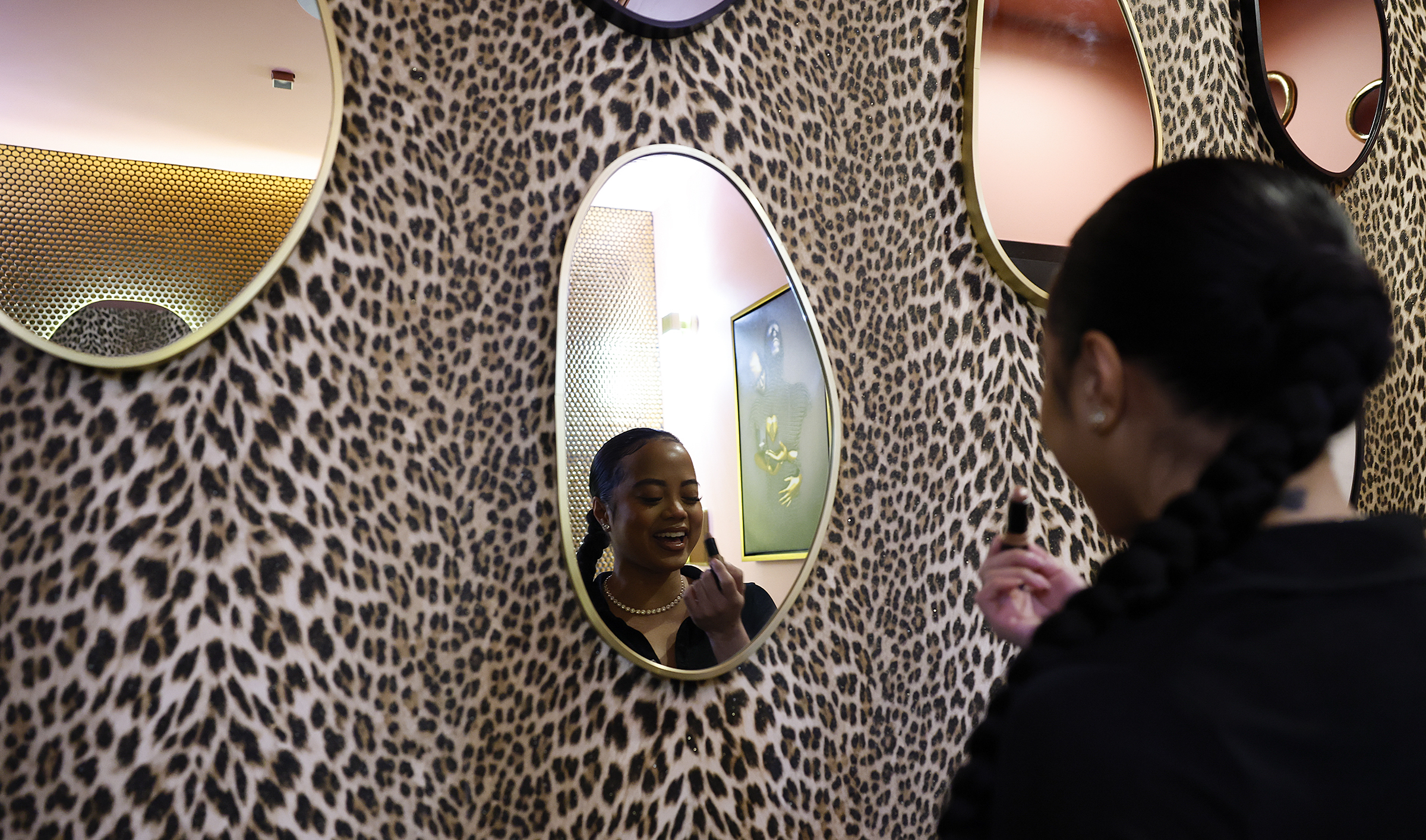
    Savú waitress Dominique Antes fixes her lipstick in a restroom at the restaurant.

    “Philadelphia is about to have a huge few years: the World Cup, the city’s 250th anniversary, the MLB All-Star Game, NCAA tournaments, PGA events,” Dolce said. “Millions of people are coming, and we want to grow alongside the city and be part of that story.”

    Savú, 208 S. 13th St., 445-223-4865, savuphl.com. Initial dinner hours: 4 p.m. to 2 a.m. Thursday to Saturday. Brunch (starting Feb. 28): 11 a.m. to 3 p.m. Saturday and Sunday. Champagne brunch: 4 to 8 p.m. Sunday.

    Savú at 13th and Chancellor Streets.
  • We tried a cocktail bar’s new Philly-themed menu, from the HitchBOT to the Crum Bum

    We tried a cocktail bar’s new Philly-themed menu, from the HitchBOT to the Crum Bum

    When Aaron Deary, partner and general manager of R&D cocktail bar in Fishtown, began formulating his “liquid love letter” to Philly in honor of our nation’s 250th anniversary this year, he set out to challenge his bartenders in a new and novel way.

    Seems appropriate, given that Philadelphia finds new and novel ways to challenge each of us every day.

    Typically the mixologists at R&D receive cocktail projects that are flavor-focused, but for the bar’s latest themed menu, “Ripoff & Duplicate,” Deary asked them to create 13 drinks based on the stories, legends, and places that make Philadelphia Philly — from the murder of a meddling Canadian robot to the city’s long history of choking in big moments.

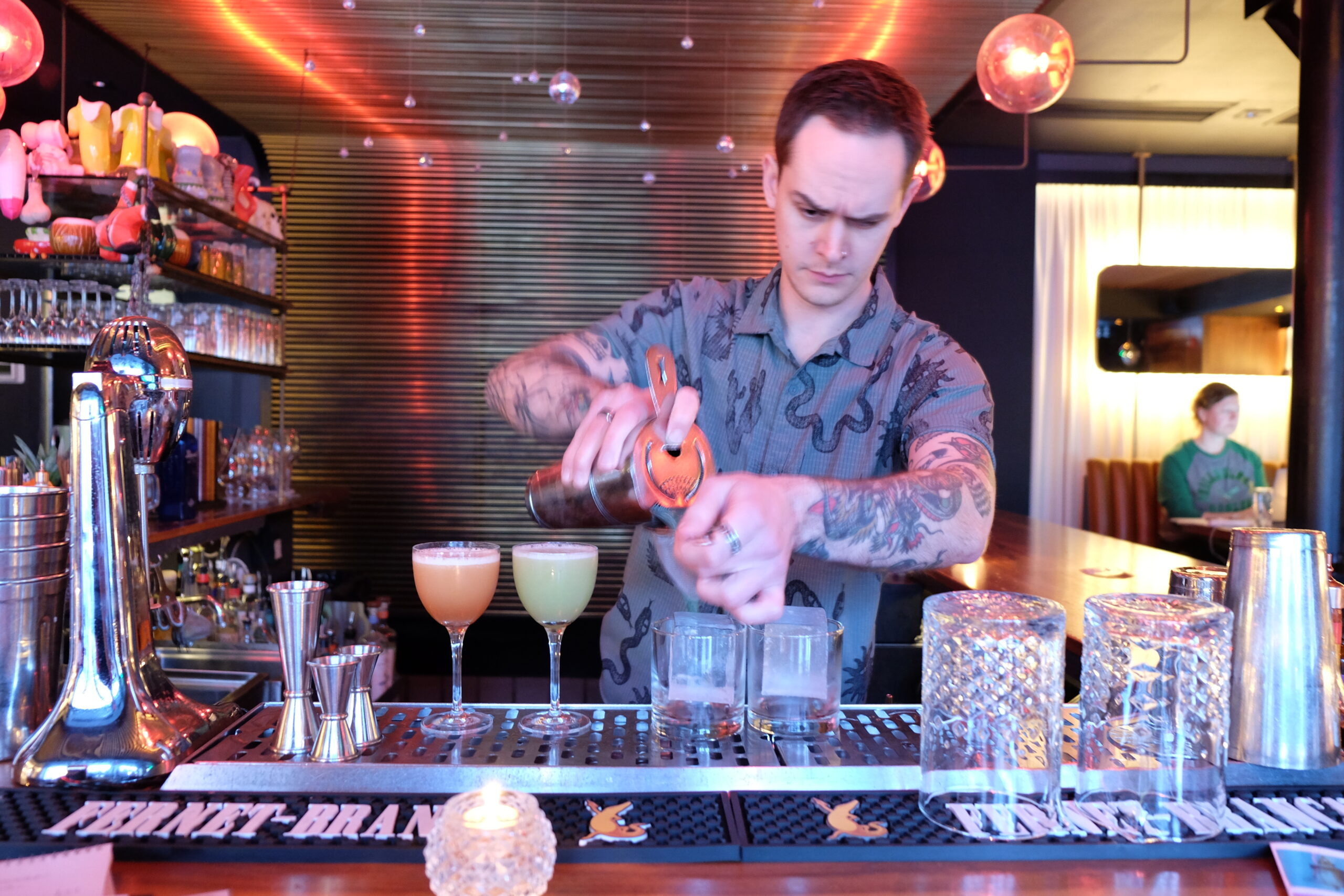
    Bartender Eddie Manno makes cocktails at R&D.

    The concoctions are presented in a 10-page glossy magazine-like menu designed by Deary that features cheeky Philly tidbits, tips, and neighborhood recommendations.

    “We obviously had to put some funny things in there, too, because that’s our city and we wanted to show off some of the more ridiculous sides of Philadelphia that we all love,” Deary said.

    While the new menu is the first of its kind for the bar, Deary said they plan to do other iterations throughout the year featuring different Philly neighborhoods and events. So while a dumpster pool drink didn’t make the cut this time, there’s still hope yet.

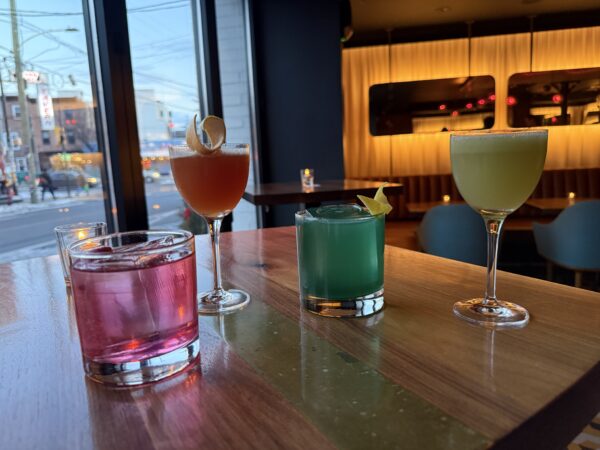
    The Casting Bait (a tropical sour with Vietnamese gin, mangosteen, ginger, guava, and lime) at R&D.

    “There were a few of them that came up and ones that I was a wee bit too scared to jump into, but you never know, you might see them in summertime,” Deary said.

    Can Philadelphia’s stories be conveyed in a cocktail glass, and, if so, do they taste good? Inquirer food writer Kiki Aranita joined me at R&D last week to find out. We chatted about our experience the next morning. — Stephanie Farr

    Kiki Aranita, food and dining reporter

    Looking at some of the cocktail descriptions, I won’t lie — I was initially skeptical. There was nutmeg paired with watermelon, cream cheese paired with white chocolate. It takes a sort of mad genius (or 10 of them) to come up with those flavor combinations and have them be good.

    I believe the technical term is “wackadoodle.”

    Stephanie Farr, Philly culture columnist

    Agreed. What I loved was how the drinks were created. Aaron told us they came up with the Philly reference for the drinks first and then created different challenges for the bartenders to invent them. For the HitchBOT, the rule was to create a drink made with ingredients from each of the countries HitchBOT went to before being murdered in Philly. So there’s a gin from Holland, a German herbal liqueur, a Philly orange liqueur, and Canadian maple syrup.

    Longing for Awnings and the Art of the Choke.

    For the Art of the Choke, an ode to all the times Philly’s choked in major moments over the years, the rule was to create a drink using ingredients that spelled out J-A-W-N, so there’s Jamaican rum, artichoke amaro, watermelon, and nutmeg.

    The best analogy I can think of is it was like these bartenders were given amazing writing prompts and came up with great liquid stories.

    Kiki Aranita

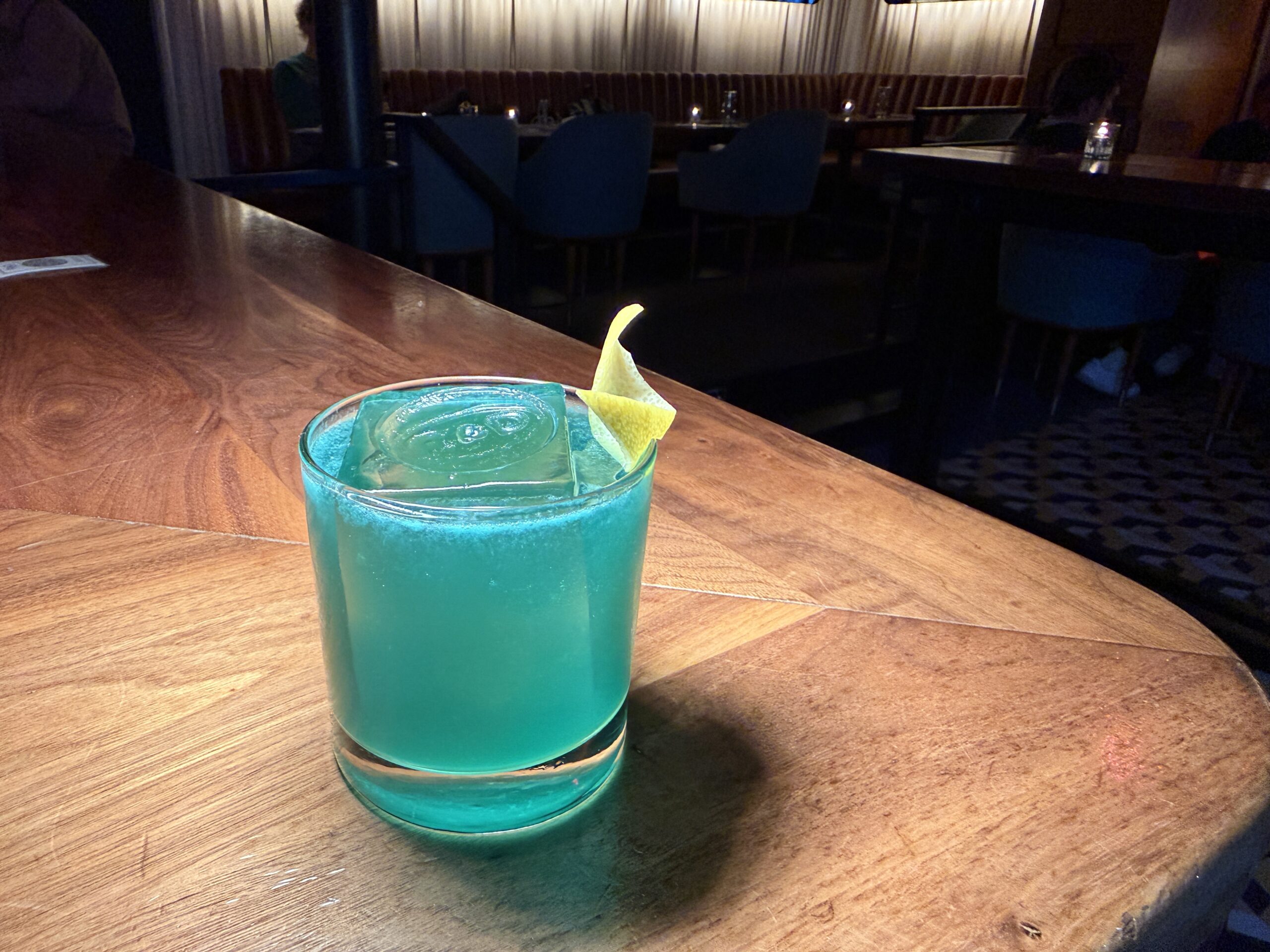
    HitchBOT was made blue by blue Curacao. It was the most visually stunning of all the drinks, which showed shocking restraint in terms of garnishes and presentation.

    It’s one of the less sweet sours I’ve had and it had Jagermeister in it, which gave it a surprising, herbaceous balance.

    The Hitchbot (a blue sour with Dutch gin, Jagermeister, maple, and lemon).

    Stephanie Farr

    I think the Crum Bum was really interesting. It’s listed on a menu page that tells about Philly’s history with pretzels and baseball, but it’s a pretty clear nod to the infamous incident where KYW reporter Stan Bohrman approached a then-retired Frank Rizzo to ask why city police were acting as his private security detail. In turn, Rizzo called him a “Crum Bum.” I love getting to introduce that legendary Philly moment to people who haven’t seen it yet. And as I said, as a reporter, it’s good to be hated by the right people, and Rizzo is definitely someone you want to be hated by.

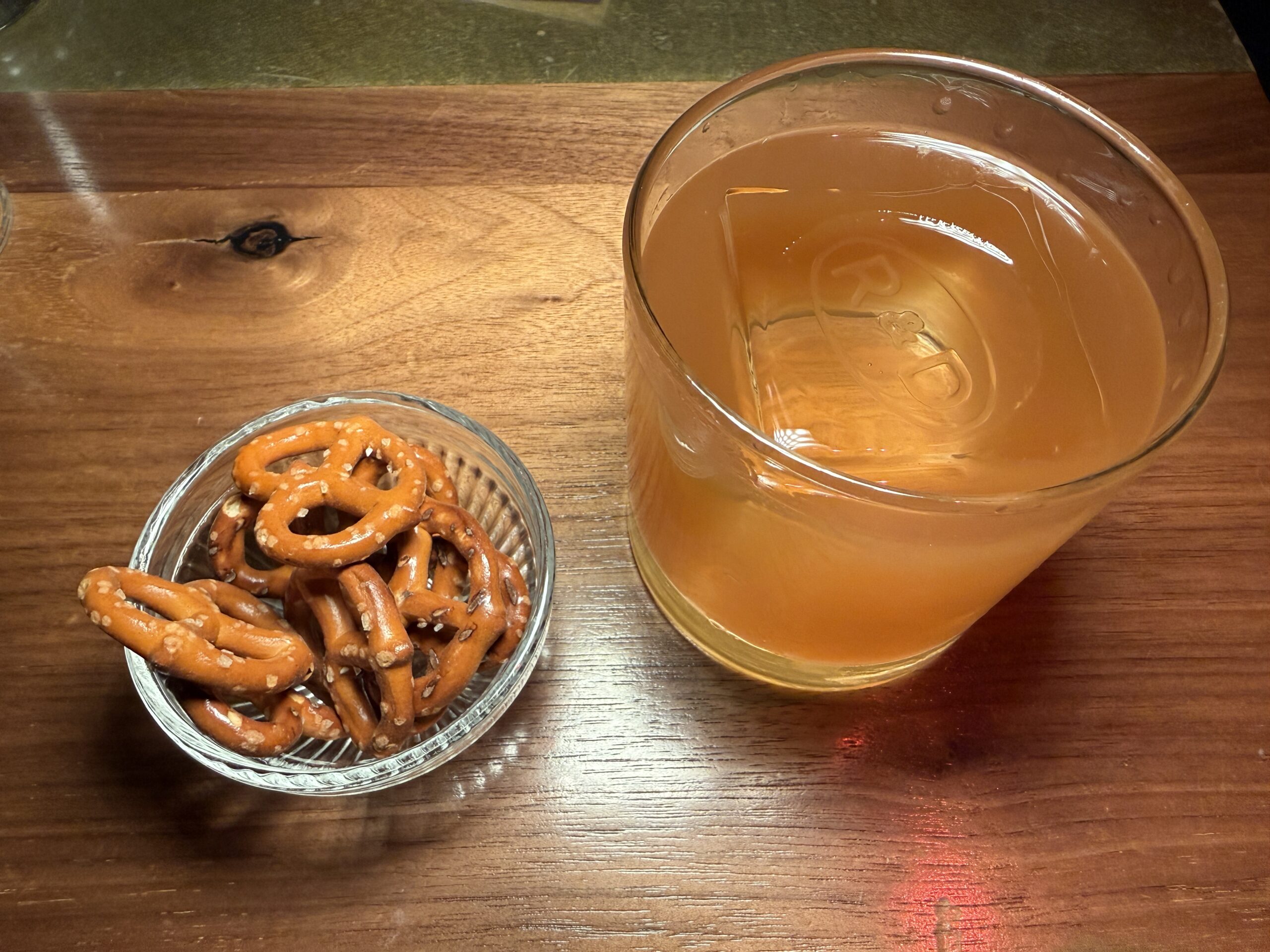
    Also that drink came with a sidecar of pretzels, and it smelled like pretzels and Philly and love. It was a little strong for me though.

    Kiki Aranita

    We had to ask for seconds of pretzels at this point.

    Stephanie Farr

    I mean, that is a Philly drink. I want all my cocktails to come with a sidecar of pretzels from now on.

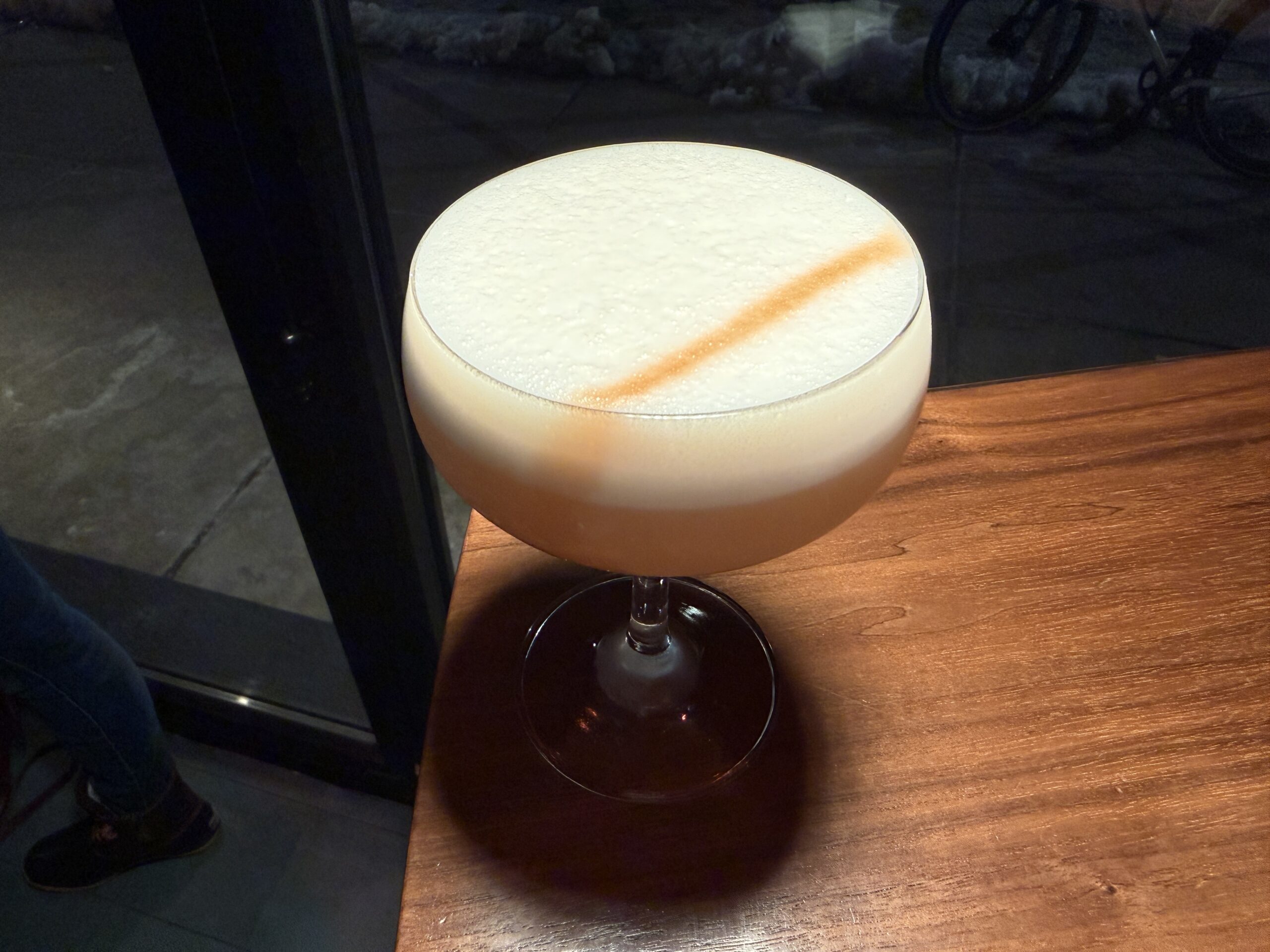
    The Crum Bum, a tequila old fashioned with genever, burnt honey, pretzel and mustard spices.

    Kiki Aranita

    I have to say — a lot of the drinks sounded weird but didn’t taste weird. They were straightforward, balanced, and really lovely.

    Stephanie Farr

    As you noted, there was a lack of garnishes overall, aside from a few twists. Do you think that was the right call? I don’t know why I was expecting them to come with a Tastykake on the rim or something. That being said, I did not miss the garnishes once I dove into the drinks.

    Kiki Aranita

    I’m not a native Philadelphian … and I’ve never had a Tastykake. I’m glad my first one didn’t have to be shoved into a cocktail last night.

    No component was ever too much. Longing for Awnings, an ode to South Philly, had lingering spice (but not too much!) from serrano pepper and beautiful body from tomatillo (but also not too much! It didn’t taste like salsa).

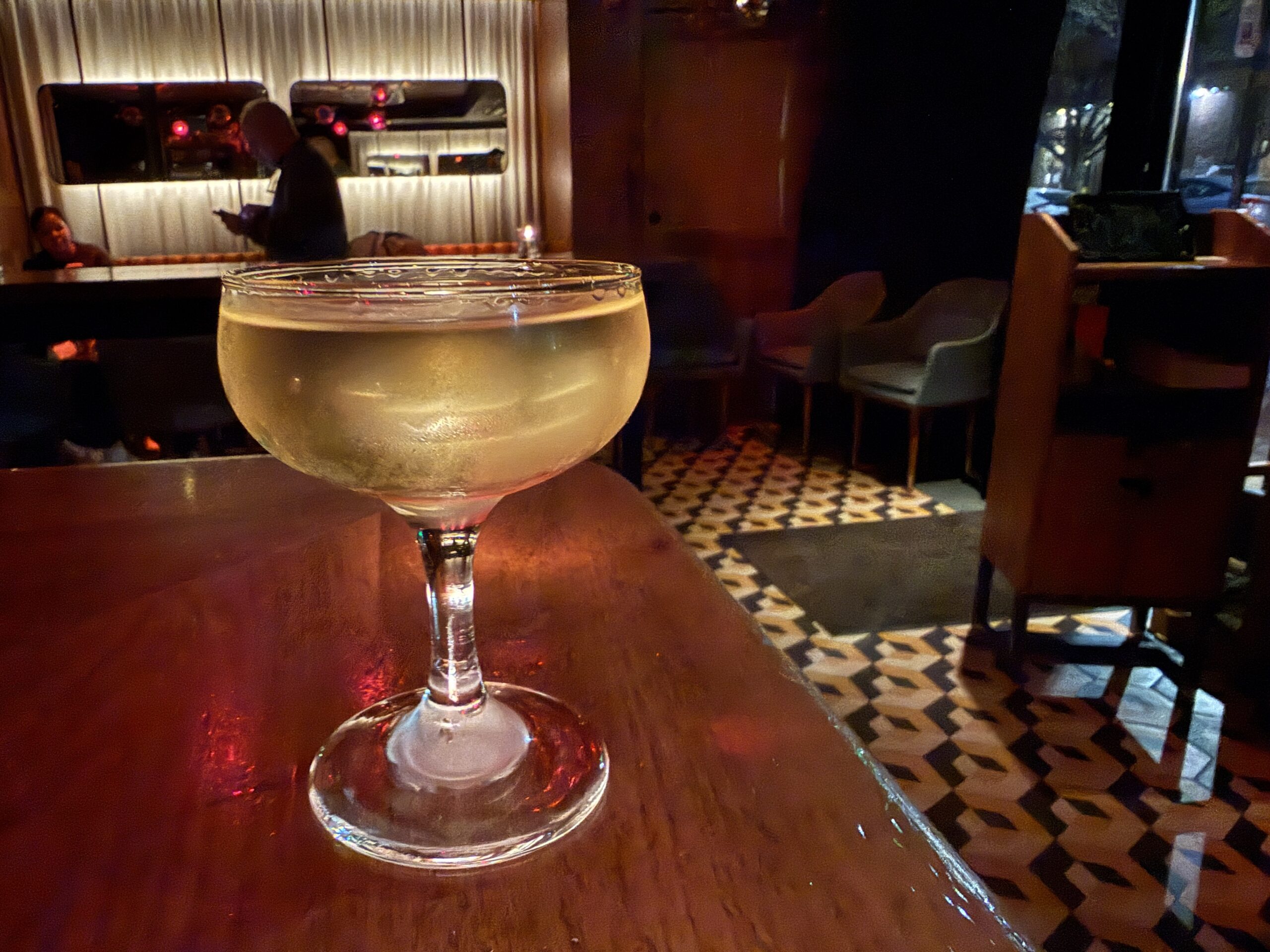
    I also loved the Kompleta martini, which I found really smart and a great way of using Polish bison-grass vodka (not the easiest to find and rarely seen except in Polish restaurants) with Italian Nonino bitters. It tells the story of major immigrant groups coming to Philly in a really thoughtful way.

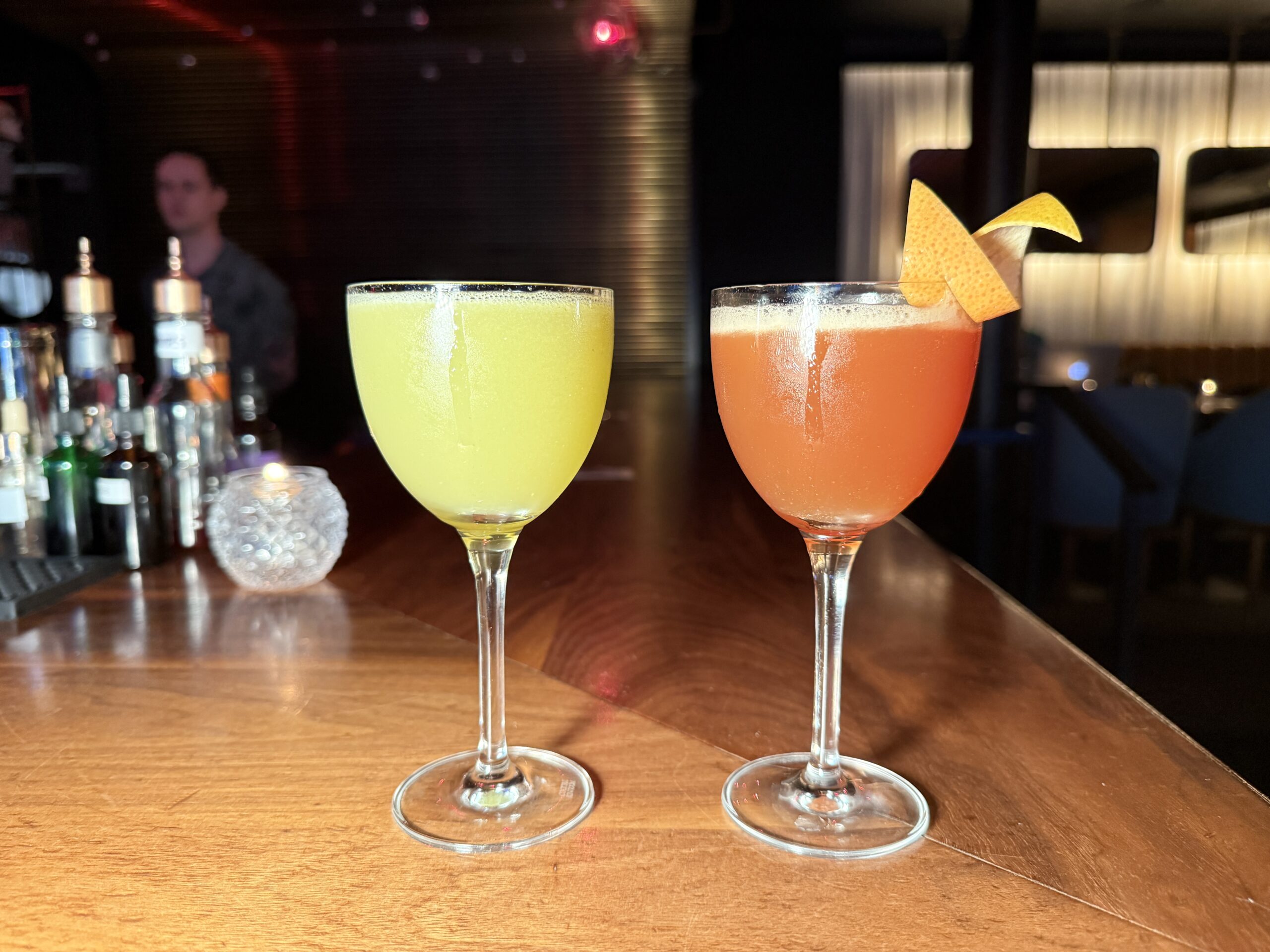
    The Kompleta Martini with bison grass vodka, Italian bitters, and Islay gin.

    We also found that embedded in all the Philly history, there were personal stories, the fingerprints of previous bartenders and bar managers who left their mark on R&D. For instance, Resa Mueller, who used to run the bar there — her citywide is a pet-nat and room-temperature gin. You can go and order that off this Very Philly Menu.

    Stephanie Farr

    And how about that menu? It’s beautiful and cheeky — part neighborhood guide, part Philly history, part urban legend and also still a menu.

    In a small guide to Bella Vista in the menu, for instance, it says to go to Angelo’s but “don’t pee on the street” and it also reads “Magic Gardens, mushrooms,” without any context. I’m pretty sure they don’t sell mushrooms at the Magic Gardens, so I can only assume what they’re talking about here.

    Kiki Aranita

    They self-deprecatingly describe these cocktails as gimmicky, but they’re really not. They lead with flavor and balance first, and gimmick second.

    Reading through the menu (it’s basically a graphic novel) and tasting through the cocktails that were odes to different neighborhoods (though unfortunately not mine), made me feel a lot of Philly pride. You really see how vast our bank of flavors, spices, produce, and dishes is.

    And in the hands of nerds, it was so much fun to see what they came up with.

    I do have to recommend for our readers, though, that they should not attempt to try all the cocktails solo. Bring a group. There are so many cocktails.

    Stephanie Farr

    I think the menu also illustrates how vast our stories are but also how we have a shared sense of culture as Philadelphians — moments we all remember and some we can never forget, like when Philadelphians caught babies thrown from the window of an apartment building fire, “unlike Agholor.”

  • Missing Di Bruno’s on the Main Line? Carlino’s has your back — and has for decades

    Missing Di Bruno’s on the Main Line? Carlino’s has your back — and has for decades

    As the Main Line contends with the recent abrupt closure of Di Bruno Bros. markets in Ardmore and Wayne, a homegrown Italian-specialties purveyor — just as storied as its South Philly-rooted counterparts — remains open for business.

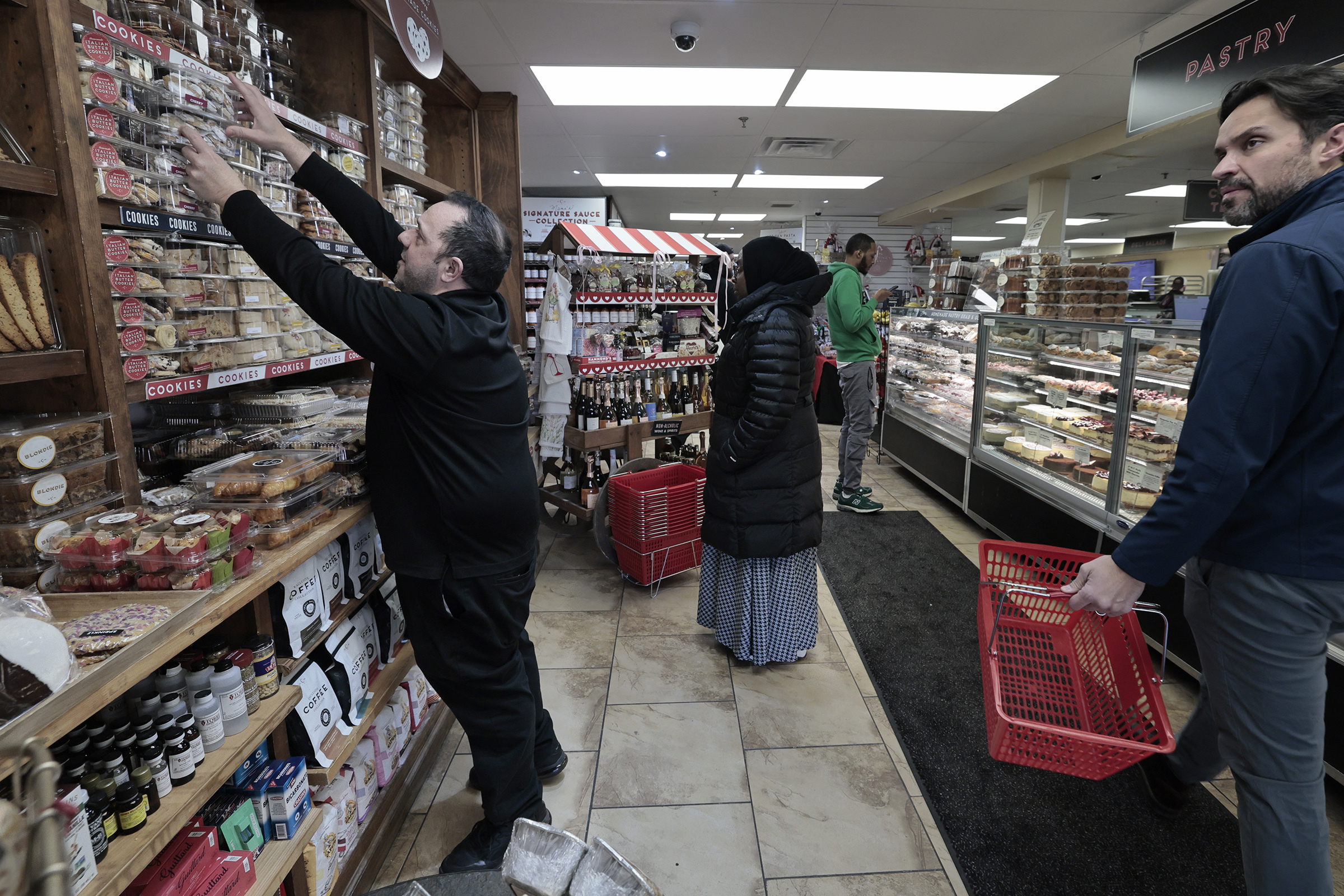
    On the day before Valentine’s Day, shoppers at Carlino’s Market on County Line Road tucked heart-shaped macarons and chocolate-dipped cannoli into baskets already full with marinara sauce, freshly packed chicken cutlets, and imported cheese. Regulars stopped by for their pre-weekend deli orders, and shoppers took refuge from the cold amid aisles of dried pasta and prepared foods.

    Carlino’s is an Ardmore institution, founded in 1983 as a small, family-owned pasta shop serving Lower Merion’s Italian community. In the decades since, the market has grown into a suburban powerhouse, supplying Ardmore, West Chester, and the surrounding towns with prepared foods, baked goods, and high-end groceries seven days a week.

    The Carlino’s brand has started to transcend its Ardmore roots: In recent years, the family-run operation has expanded its wholesale business to hundreds of grocery stores, from New York to Delaware and as far as Texas. Even as the company grows, its second- and third-generation leaders remain grounded in its origins as a mom-and-pop shop.

    Carlino’s Market general manger Bruno DiNardo (left) restocks cookies, pastries and treats, all homemade, at Carlino’s Market in Ardmore on Friday, Feb. 13, 2026.

    From Abruzzo to Ardmore

    Carlino’s was founded by Nicola and Angela Carlino, who left Abruzzo in 1968 to move to the United States with their two sons, Pasquale (“Pat”) and Carmen. In Abruzzo, the Carlinos tended to olive groves and grape vineyards and raised livestock on Nicola’s family farm. They left in search of better opportunities for their sons, landing in Ardmore, where Nicola initially worked as a bus driver and groundskeeper at Mitchell Prep, a private school, while Angela sold cookies, fresh pastas, and sauces out of their home.

    When Mitchell Prep closed in the early 1980s, Nicola and Angela decided to take a chance on a family business. They opened Carlino’s Homemade Pasta in a former barbershop on East County Line Road in South Ardmore — at the time, an Italian American enclave. Residents in search of a taste of home regularly patronized Carlino’s, and the family started wholesaling some products to local restaurants and casinos.

    According to Pat Carlino, 63, now the company’s CEO, it’s easy to take the Philly area’s formidable Italian-food scene for granted. But when his parents opened Carlino’s in the 1980s, Pat said, you could barely find marinara sauce in the grocery store. No one knew what tiramisu was, or how to tell the difference between high-quality Parmigiano Reggiano and grocery-store sprinkle cheese. Mention of ciabatta would prompt blank stares.

    Carlino’s was “an education to the public,” he said.

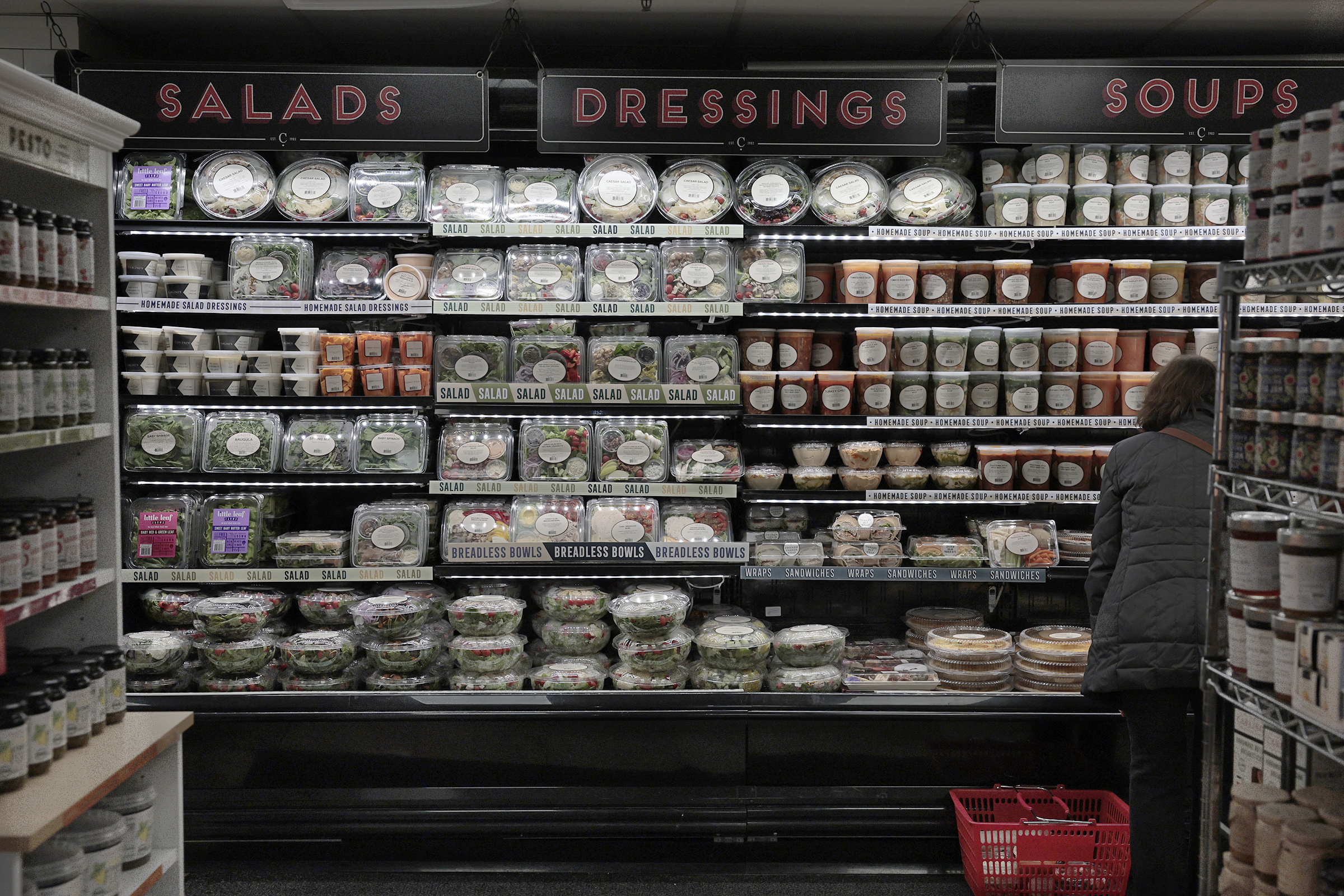
    Customers look over some of the homemade soups, salads and ready to go meals available at Carlino’s Market in Ardmore on Friday, Feb. 13, 2026.

    As time went on, the store expanded, subsuming other houses on its block, and shifted to a retail focus. The family renamed it Carlino’s Market and expanded offerings to include baked goods, pizza, sandwiches and wraps, imported meats and cheeses, and groceries like sauces, olive oils, and coffee. By the mid-1990s, Carlino’s selection and specialties — handmade ravioli, freshly stuffed sausage, garden-grown bruschetta on house-baked bread, tiramisu cake, and more — attracted savvy customers from as far as New York City and Washington, D.C.

    A growing business

    The Carlinos opened a second market, on Market Street in West Chester, in 2007. Angela, aka “Mama Carlino,” died two days after the second store opened. (Many of Mama Carlino’s recipes, the backbone of market’s origin story, have been recorded in two cookbooks, including a 2023 volume compiled and written by granddaughter Nadia Carlino.) Nicola Carlino died in 2020.

    In 2022, Carlino’s began wholesaling its sauces, dry pastas, and pestos — which you can now find at other small, local retailers like Riverwards Produce and Kimberton Whole Foods, as well as large grocery chains like Wegmans and Giant. Carlino’s products are available in parts of Pennsylvania, Delaware, New Jersey, Maryland, Virginia, Washington, D.C., Florida, Texas, New York, and Massachusetts, and will soon be on shelves in California and the Chicago area.

    Pat declined to share specifics about the company’s business model, though he said future growth will be in wholesaling and the grocery market, not retail. (Many former patrons of Di Bruno’s now-shuttered suburban outposts said the company grew its retail presence too hastily, diminishing its quality).

    While Carlino’s business is growing, Pat said his core customers are still people he knows “people that I grew up with.”

    Carlino’s also remains a family operation. Pat and his wife, Laura, are the company’s top executives, and their children — now the third generation of Main Line Carlinos — help manage marketing, wholesaling, importing, and manufacturing.

    Talking about Carlino’s products, a word Pat comes back to regularly is “clean.”

    Before influencers and foodies popularized the idea of “clean eating,” Carlino’s was doing it, Pat said. Nicola cooked with fresh tomatoes, cucumbers, and herbs he grew in his Ardmore garden. Pat said Carlino’s continues to rely on fresh produce, organic flour, and high-quality olive oil and French butter.

    “Things that are trending now, we were doing 40 years ago,” Pat said.

    “You can pick up anything and it’s clean,” he added, just like how your grandma would make it (or at least how a Carlino grandma would).

    This suburban content is produced with support from the Leslie Miller and Richard Worley Foundation and The Lenfest Institute for Journalism. Editorial content is created independently of the project donors. Gifts to support The Inquirer’s high-impact journalism can be made at inquirer.com/donate. A list of Lenfest Institute donors can be found at lenfestinstitute.org/supporters.

  • Here are 8 restaurants offering happy hour deals in (and around) Cherry Hill

    Here are 8 restaurants offering happy hour deals in (and around) Cherry Hill

    From strip mall diners to high-end steakhouses, South Jersey’s restaurants are abundant and ascending in the Philly region’s culinary scene. If you’re looking to dine out for a bargain or enjoy a pre-dinner snack, these eight restaurants in and around Cherry Hill are offering happy hour deals, from $3 tacos to $7 martinis.

    Steak 38

    Looking for charming service, a nostalgic vibe, or perhaps a Caesar salad made tableside? Cherry Hill’s Steak 38 is known for all of the above, and the restaurant even made the Inqurier’s list of the most thrilling places to get a steak in and around Philly. Happy hour is Tuesday through Sunday from 4 to 6 p.m. Though the Caesar salad with a show is not on the happy hour menu, try $9 appetizers like prime rib egg rolls or bleu cheese chips. Sangria is $10 per glass, and all draft beer is $2 off. See the menu here.

    515 Route 38 E., Cherry Hill, N.J., 08002, www.steak38restaurant.com

    Monterey Grill

    Monterey Grill is an upscale American restaurant serving steaks, seafood, and classic steakhouse sides. Grab a glass of house wine for $8, select draft beers for $6, or a cocktail for $10. Happy hour bites are priced at $12, including salmon sliders and angry cashew shrimp. Happy hour is available Monday through Saturday from 4 to 6 p.m. and Sunday from 3 to 5 p.m. in the bar area. See the menu here.

    558 Fellowship Rd., Mt. Laurel, N.J., 08054, www.montereygrill.com

    Farm and Fisherman Tavern

    Farm and Fisherman brought farm-to-table dining to Cherry Hill in 2013 and has been serving up fresh, seasonally-inspired dishes ever since. The restaurant’s unique, herby cocktails even prompted The Inquirer to ponder if Philly’s most interesting drinks program was happening in a South Jersey strip mall. Happy hour diners can snack on P.E.I. Mussels for $8, “line cook fries” (fries with cheese sauce, pickled serrano peppers, and chili butter) for $5, and veggies with a homemade ranch for $5. Draft beers and glasses of wine are $2 off, and martinis (vodka or gin) are $7. Happy hour is Monday through Wednesday from 3 to 6 p.m. See the menu here.

    1442 Marlton Pike E., Cherry Hill, N.J., 08034, www.fandftavern.com

    Kaminski’s Sports Bar and Restaurant

    Locals have called Kaminski’s the closest thing Cherry Hill has to a neighborhood bar. The South Jersey watering hole has been a destination for brews, sports, and bar food for more than 50 years. Happy hour takes place at the bar, Monday through Friday, from 3 to 7 p.m. Try a flatbread or burger sliders for $9 or pepperoni rolls or fried pickles for $7, among other options. Drinks are discounted, too. See the menu here.

    1424 Brace Rd., Cherry Hill, N.J., 08034, kaminskisbarandgrill.com.

    Randall’s Restaurant

    Randall’s Restaurant at the Legacy Club prides itself on serving upscale classics with modern twists. Get $2 off draft beer, $7 featured wines, and $12 featured cocktails during happy hour, which takes place Wednesday and Thursday from 3 to 6 p.m. Featured bites include chicken wings for $12, braised short rib arancini for $6, and clams casino for $9. See the menu here.

    300 E. Evesham Rd., Cherry Hill, N.J., 08003

    Tortilla Press

    Merchantville’s Tortilla Press describes itself as “a favorite spot for locals to enjoy classic Mexican dishes.” During happy hour, try $2.99 tacos, $6.50 pork sliders, or $7.50 chicken flautas, among other choices. House margaritas are $6, sangria is $6.50, domestic draft beers are $4, Mexican bottled beers are $5, and draft Modelos are $5. Happy hour takes place every day from 3 to 6 p.m. and is all day on Tuesdays.

    7716 Maple Ave., Merchantville

    Il Villaggio

    Il Villaggio is an old-school eatery that serves up traditional Italian lunch and dinner dishes, seven days a week. During happy hour, diners can enjoy $6 off bar food, $2 off draft beers, $3 off cocktails, and $3 off wines. Bar menu specials include the crab cake sandwich with parmigiana truffle fries and the beet salad with arugula, pistachios, and goat cheese. Happy hour takes place at the bar area only, Sunday through Thursday from 3 to 6 p.m.

    211 Haddonfield-Berlin Rd., Cherry Hill, N.J.,

    Treno Pizza Bar

    Haddon Township’s Treno Pizza Bar is home to hand-tossed, artisan pizzas, scratch-made pastas, and seasonal cocktails. Happy hour offers a sampling of Treno’s Italian flavors, from $7 Aperol spritzes and $13 blood orange martinis to $6 garlic knots. Happy hour is Monday through Friday from 4 to 6 p.m. See the menu here.

    233 Haddon Ave., Haddon Township, N.J., 08034, trenopizzabar.com

    This suburban content is produced with support from the Leslie Miller and Richard Worley Foundation and The Lenfest Institute for Journalism. Editorial content is created independently of the project donors. Gifts to support The Inquirer’s high-impact journalism can be made at inquirer.com/donate. A list of Lenfest Institute donors can be found at lenfestinstitute.org/supporters.