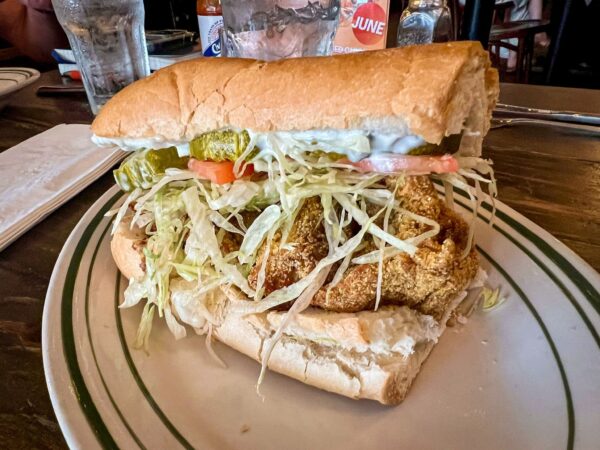
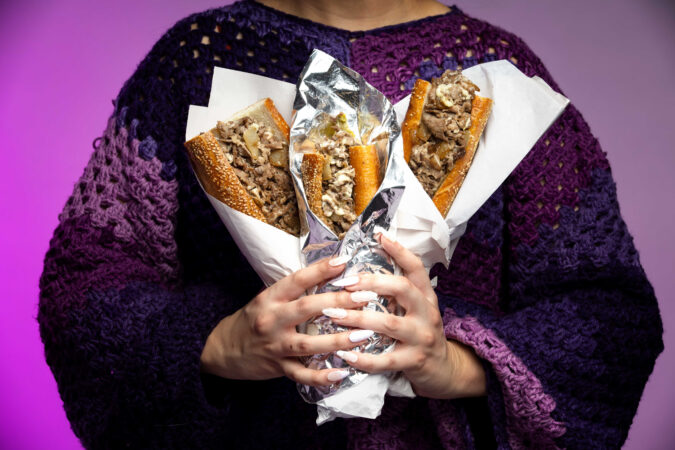
The good times roll at Khyber Pass Pub in Old City, where the menu of New Orleans-style comfort food includes a hearty share of vegan items. The chicken-style po’ boy, for example, delivers crispy, thinly breaded seitan while keeping the classic New Orleans formula intact. Served on a crackly Leidenheimer roll, it’s dressed with shredded lettuce, tomato, pickles, vegan mayo, and Creole mustard, delivering a satisfying mix of crunch, tang, and subtle heat. It’s a convincing plant-based rendition that feels like a true po’ boy, not a compromise. Khyber Pass Pub, 56 S. Second St., 215-238-5888, khyberpasspub.com
— Michael Klein
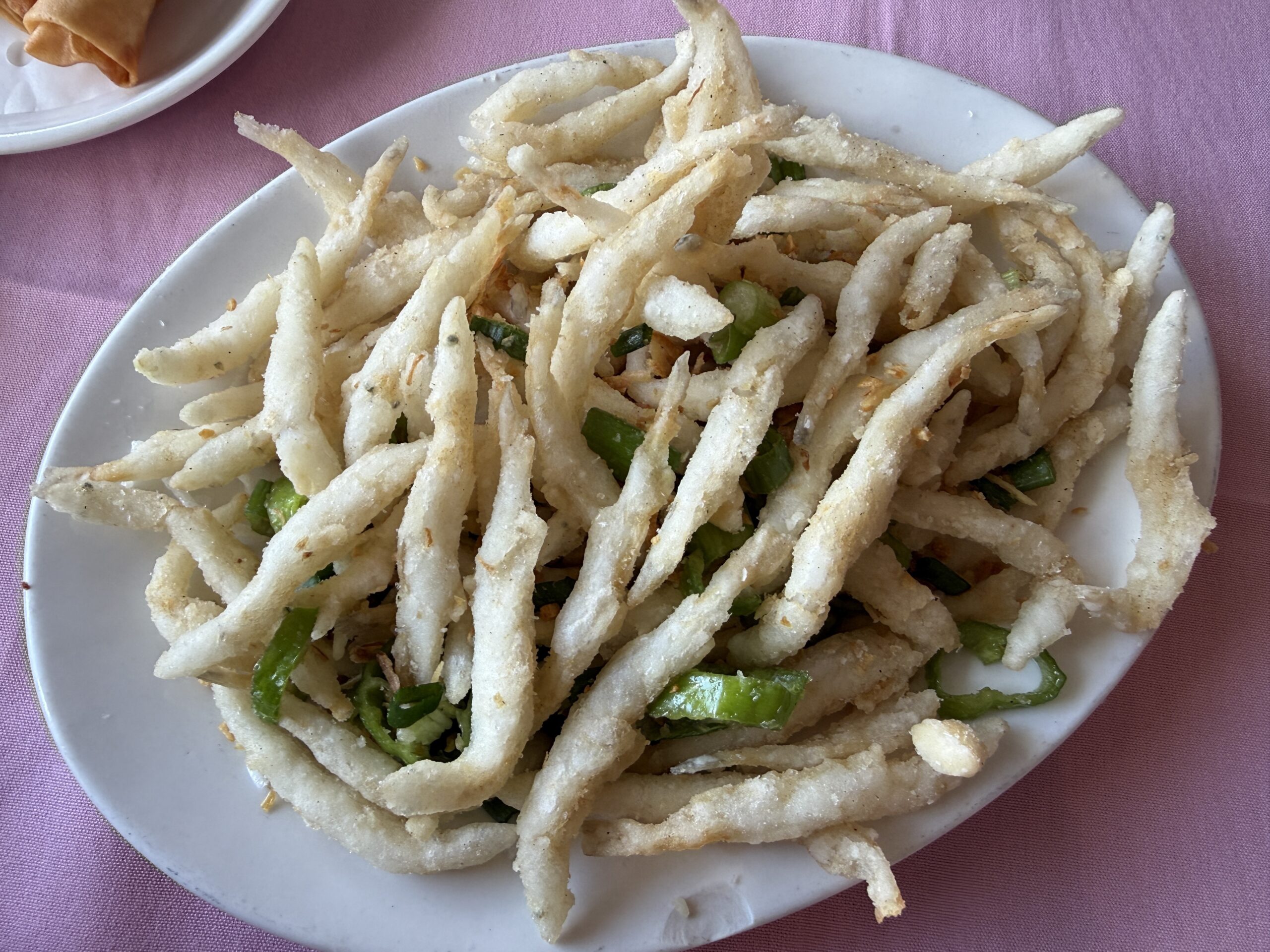
Fried silverfish — a Cantonese delicacy that’s pretty similar to a French Fry — at Grand Palace, 600 Washington Ave. #3B.
Fried Silverfish at Grand Palace
Weekend dim sum at Grand Palace in South Philly’s Little Saigon is a party where the whole family (second cousins and all) is invited, so the party-sized portions of Cantonese delicacies deserve special attention. The rice-flour-battered and fried silverfish (also known as noodlefish or whitebait) are generously sized and hopelessly addictive. More delicious than any French fry — though similarly salty, crunchy, and thin — the tiny fish are lightly funky and just barely scented with jalapeños and scallions. I haven’t stopped thinking about them since. Grand Palace Restaurant, 600 Washington Ave. #3B, 215-645-0079, grandpalacechineserestaurant.com
— Kiki Aranita
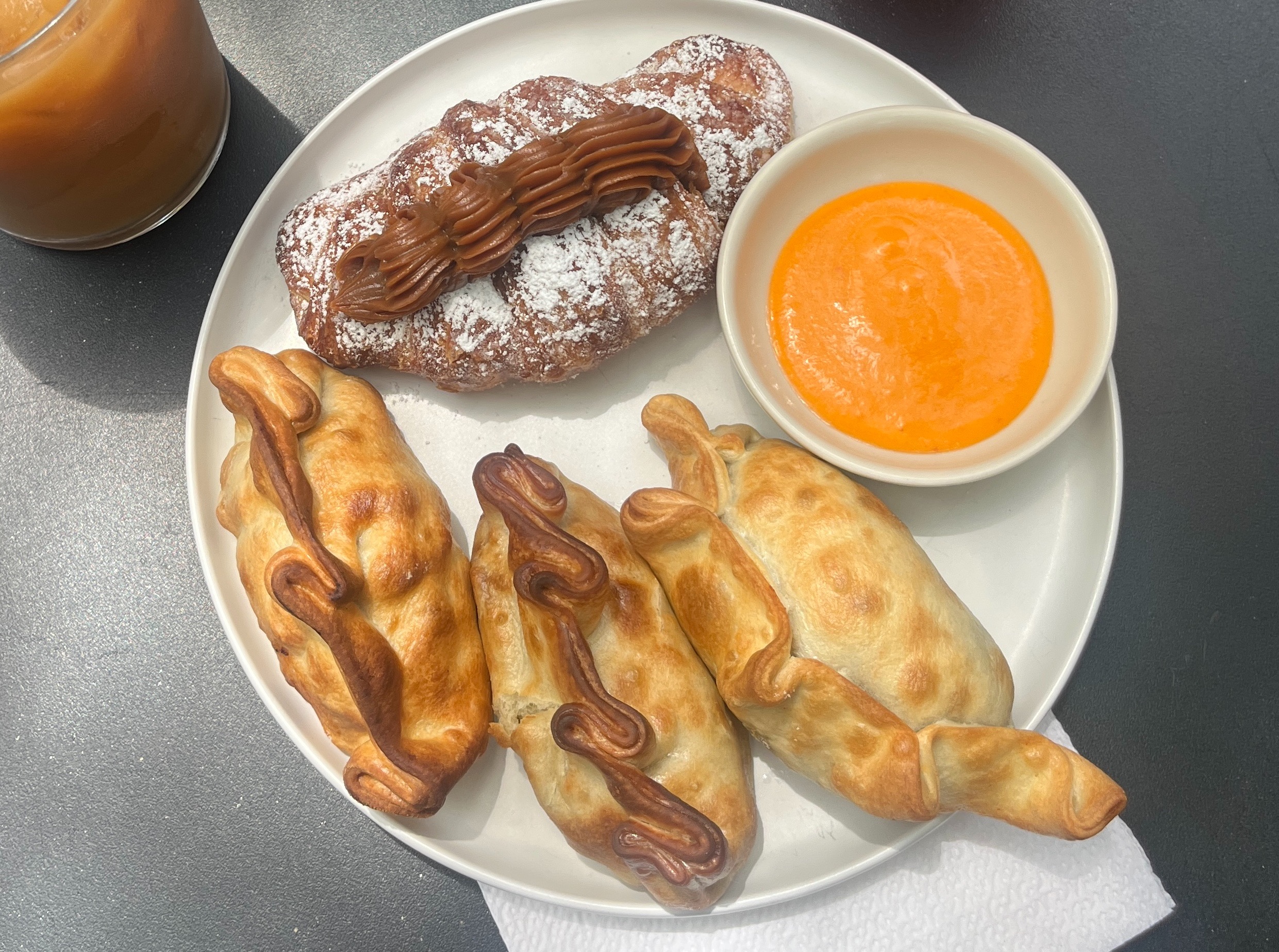
An array of empanadas and a dulce de leche medialuna at Jezabel’s in West Philadelphia.
Empanadas and a dulce de leche medialuna at Jezabel’s
Empanadas are the main attraction at Jezabel Careaga’s eponymous West Philly cafe, where the open-concept kitchen feeds into a dining room that allows customers to watch bakers knead, shape, and pack the dough tight with fillings. The lineup is special, but simple: a stewed chicken empanada lightly seasoned with aji dulce; a vegetarian version stuffed with leeks and gooey white cheese; and a vegan version packed with a summery lentil and corn salad. Careaga’s empanadas are baked — not fried — and so light that it’s easy to snack on several in one sitting.
Even more excellent are the cafe’s medialunas, an Argentinian pastry that sits somewhere between brioche and a croissant. The dulce de leche version is ultra-decadent, its butter crescent-shaped layers peeling apart to reveal a core of caramel cream. When Careaga returns to Fitler Square with a second location — likely opening this fall, I’m told — it’ll still be empanadas and medialunas galaore. Thank goodness. Jezabel’s, 206-208 S. 45th St., 215-554-7380, jezabelsphl.com
In 2026, you either die a bargain or stay around long enough to get hit by inflation. In other words, Fountain Porter’s iconic $6 burger is now $7, roughly the price of a fancy latte or a McDonald’s Quarter Pounder with cheese after tax.
The East Passyunk neighborhood bar made the nearly 17% price increase official last Wednesday, said owner Evan Clancy, after months of watching the prices of ingredients creep up.
Five days later, a post appeared in the popular r/PhiladelphiaEats subreddit breaking the news like a bargain hunting, beer-loving version of Paul Revere. “Recession indicator: Fountain Porter has officially raised the price of their burger,” the post read. “End of era.”
Commenters were aghast.
“Noooooooo,” bemoaned one Redditor. “Bring back boiled peanuts!” shouted another. A third cried of shrinkflation, alleging that the patty had gotten smaller. But most agreed on one thing: the burger is still dirt cheap and delicious.
“I still ate three total this past weekend,” wrote another Reddit user, undeterred by the change.
This isn’t first time inflation has come for Fountain Porter: When Clancy opened the bar at 1601 S. 10th St. in 2012, its burgers were just $5. Somewhere along the way — Clancy couldn’t recall when — he raised the price to $6 in recognition of the labor his staff put in to running a pub that, in many ways, also doubles as a burger factory.
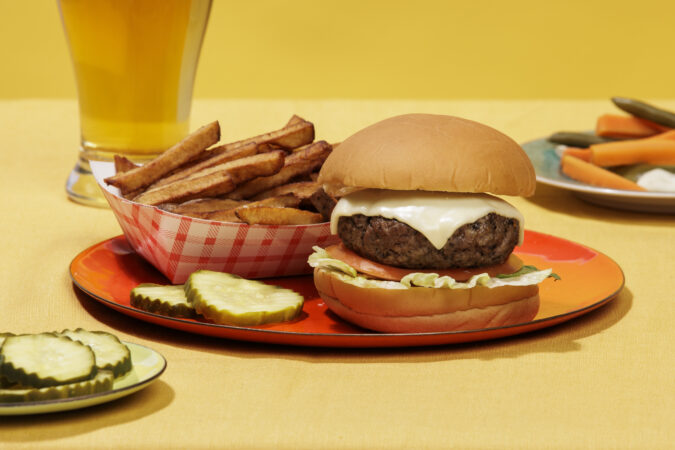
Fountain Porter makes upwards of 800 burgers a week, Clancy said, with the three cooks alone dedicated just to grilling and flipping patties. It’s also the platonic ideal of the sandwich, comprised of a modest beef patty with a salty char topped with American cheese, crisp lettuce, and a tomato slice on a Martin’s potato bun with two pickle chips on the side.
The burger and its price — along with the bar’s deep beer list, dirty martini, and solid Guinness pour — has cemented Fountain Porter’s status as a Philly icon, beloved equally by world class chefs and people who just really like eating and drinking.
“Their burger is the perfect size — not too small, not too big — and their lettuce is always cold and crispy,” Rachel Lorn, the co-owner of acclaimed South Philly restaurants Mawn and Sao, previously told The Inquirer.
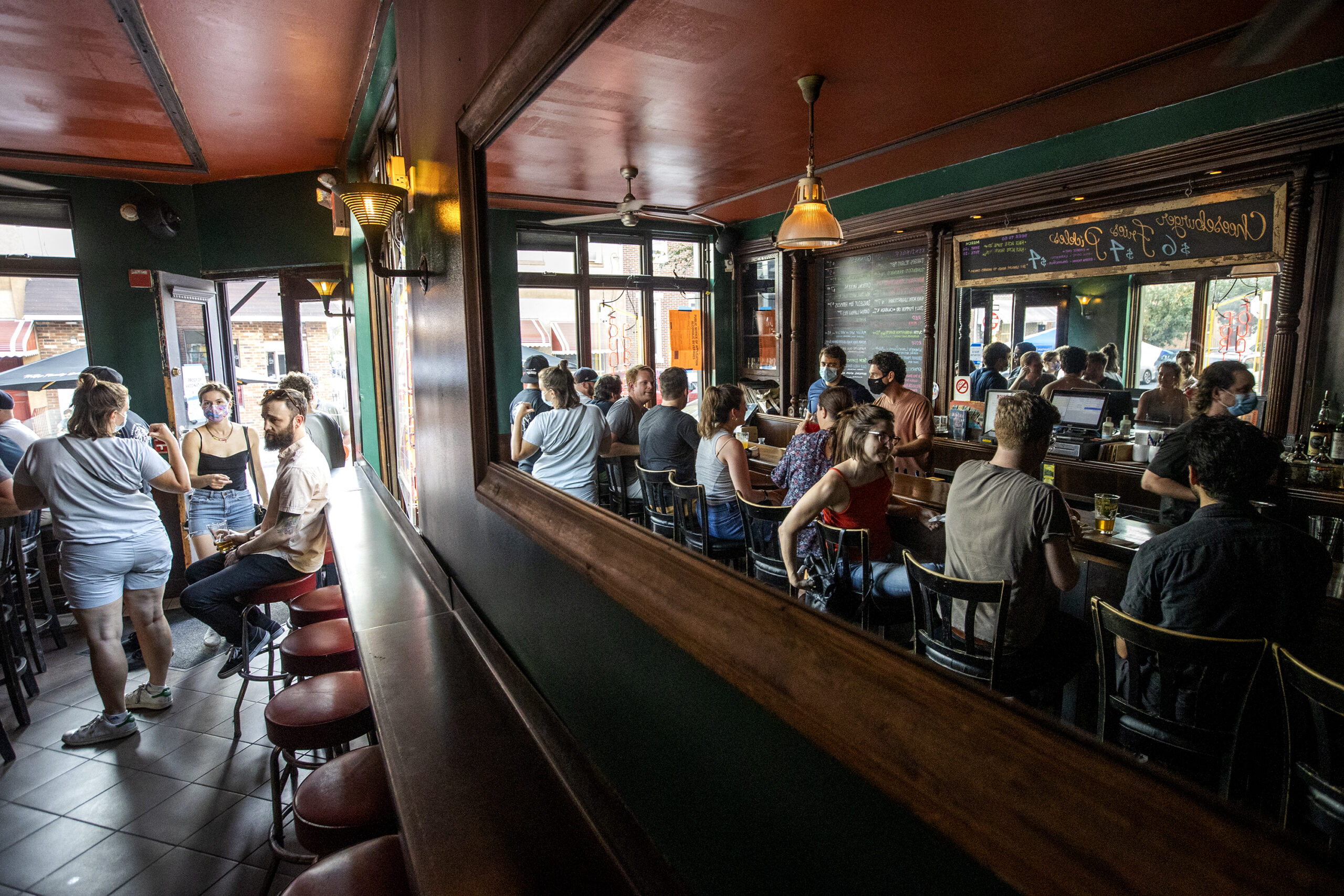
The crowd is reflected in a mirror at Fountain Porter at 1601 S. 10th St. in 2021.
The burger will remained unchanged despite the price increase, Clancy said. He also doesn’t think it will harm the bar’s reputation, and was shocked that people cared enough to post about it on social media.
“If the burger is not good at $7, then it’s really not that good at all. And that’s not on me, that’s on whoever is heaping the praise,” said Clancy. “It’s never been about a budget burger. It’s about being fair and honest. That’s what a burger is supposed to be.”
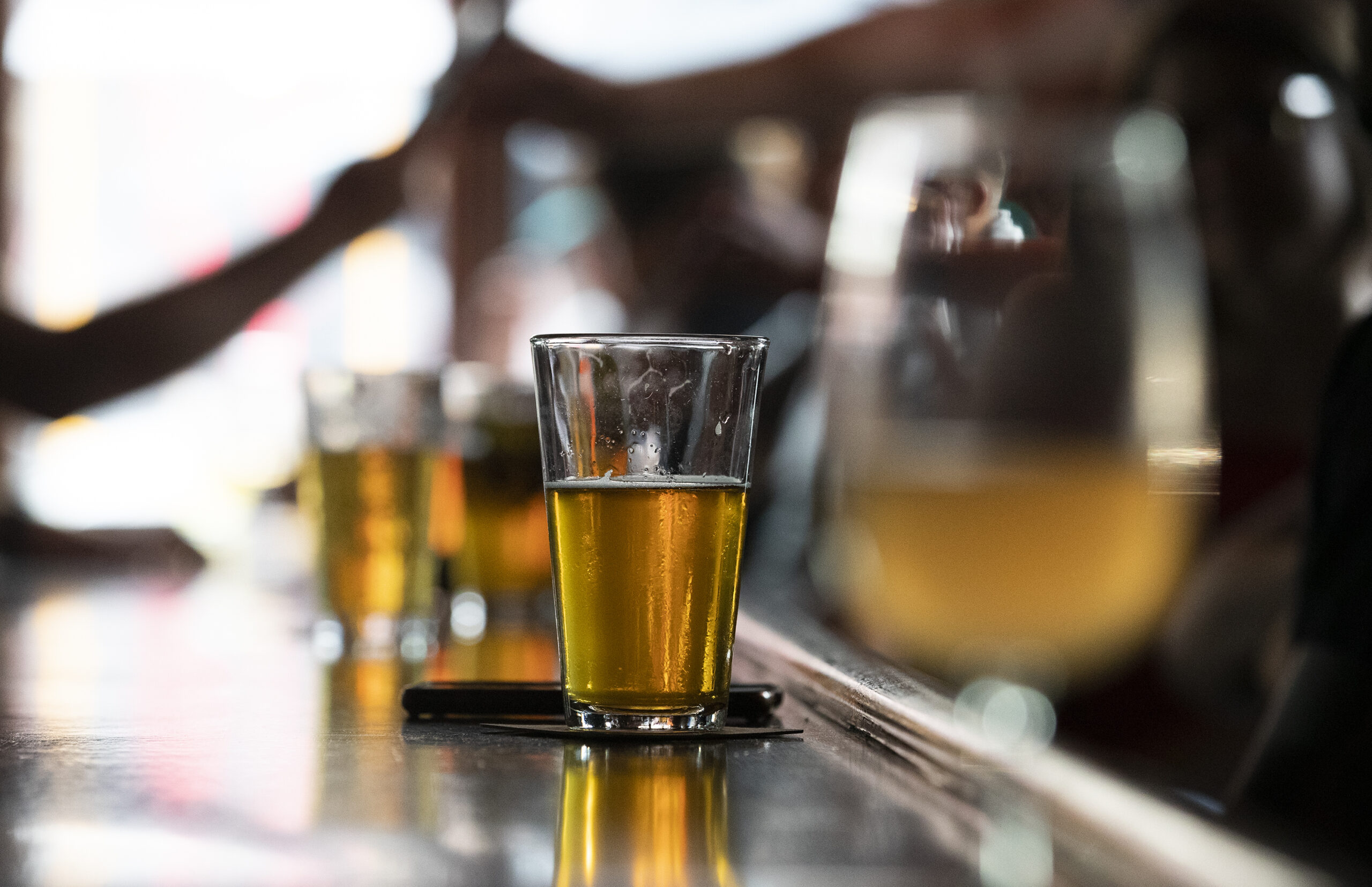
Drinks on the bar at Fountain Porter at 1601 S. 10th St. in 2021.
The price of the beef Fountain Porter uses in its burgers nearly doubled over the past two months, Clancy said, and he expects it to keep rising. The cost of tomatoes has also risen sharply and varies daily due to a mixture of tariffs and crop shortages, making it difficult for Clancy to budget. And, Clancy said, that despite Fountain Porter’s high volume of burgers, “we’re not making a lot of money off them.”
Besides, Clancy wondered, why shouldn’t his burger be allowed to get more expensive if everything else is?
“I know it’s a change, but we raised the price twice in 13 years, Clancy said. ”Tell me something else that hasn’t changed the price a lot in 13 years.”
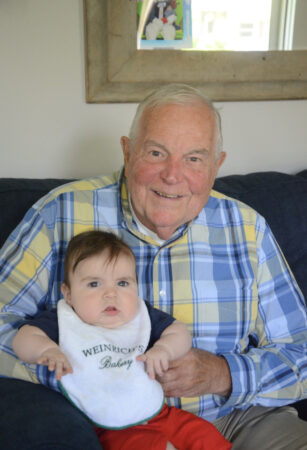
Born above a Philadelphia bakery and forged in Willow Grove, Edward M. Weinrich, 92, died of natural causes at his home beside a Florida river on June 17 surrounded by the sons who keep his beloved cake shop alive.
Weinrich’s parents ran a bake shop on Front Street in North Philadelphia before opening their Willow Grove konditorei — the German word for patisserie — at 55 Easton Rd. in 1952. By the 1970s, Weinrich had graduated from Villanova University, spent two years stationed in Hawaii with the Army, had five children, and taken over the Willow Grove bakery with his wife, Kippy, selling cookies, pies, danishes and cakes — many made from inherited recipes, like their famous butter cake.
“Still today there are recipe books in the bakery archive that are written in German,” said Stephen Weinrich, the youngest of his five sons.
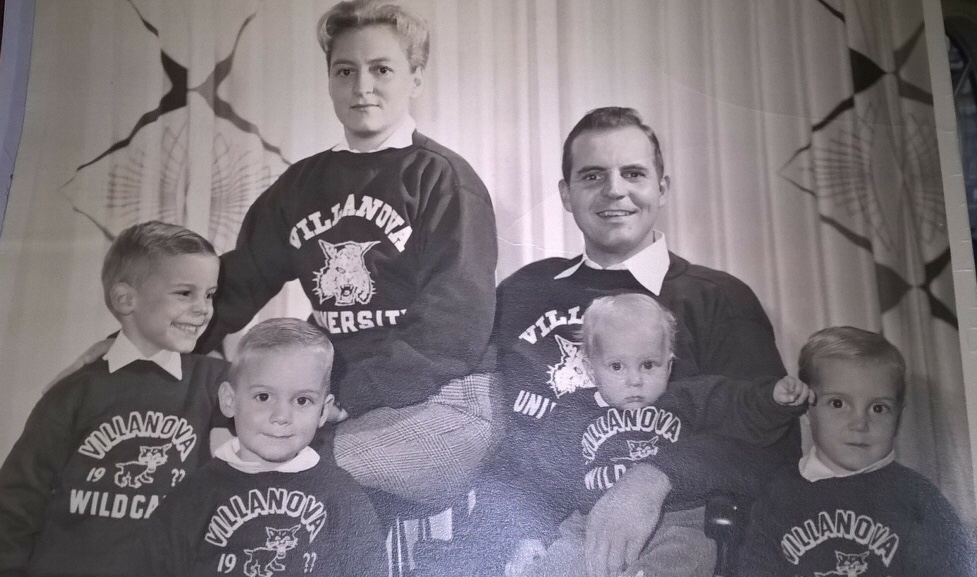
Edward and Kathryn Weinrich pose in Villanova sweatshirts with their four oldest children.
He also invented his own: In the 1960s, Weinrich worked with food scientists to develop his signature frosting — a buttercream that doesn’t turn gritty. It’s still used in custom cakes the store makes for birthdays, weddings, and First Holy Communions.
Weinrich learned the trade from his dad, Herman, who left Naumburg in 1913 to help his brother August run a Manhattan bakery, opening his own in 1919. (It is descendants of their cousin, Ludwig, who operate R. Weinrich German Bakery in Newtown Square.)
Weinrich made wedding cakes for many couples over the years. By the end of his career in 2005, he was making wedding cakes for their grandchildren.
“My mother … wouldn’t get dressed to go to the doctors, but she’d call and order and drive down in her nightgown and robe for a curbside pickup,” one social media user wrote. “Her last trip to the hospital, she only worried that we froze her Weinrich order so it didn’t go to waste.”
“We were just blown away,” said Michael Kirby, the bakery’s general manager and Weinrich’s great nephew. “It’s unbelievable how many people had such fond memories of him and the things we made.”
Their products travel far, Kirby added. “We have people come from across the country for our butter cakes because they can’t get them anywhere else.”
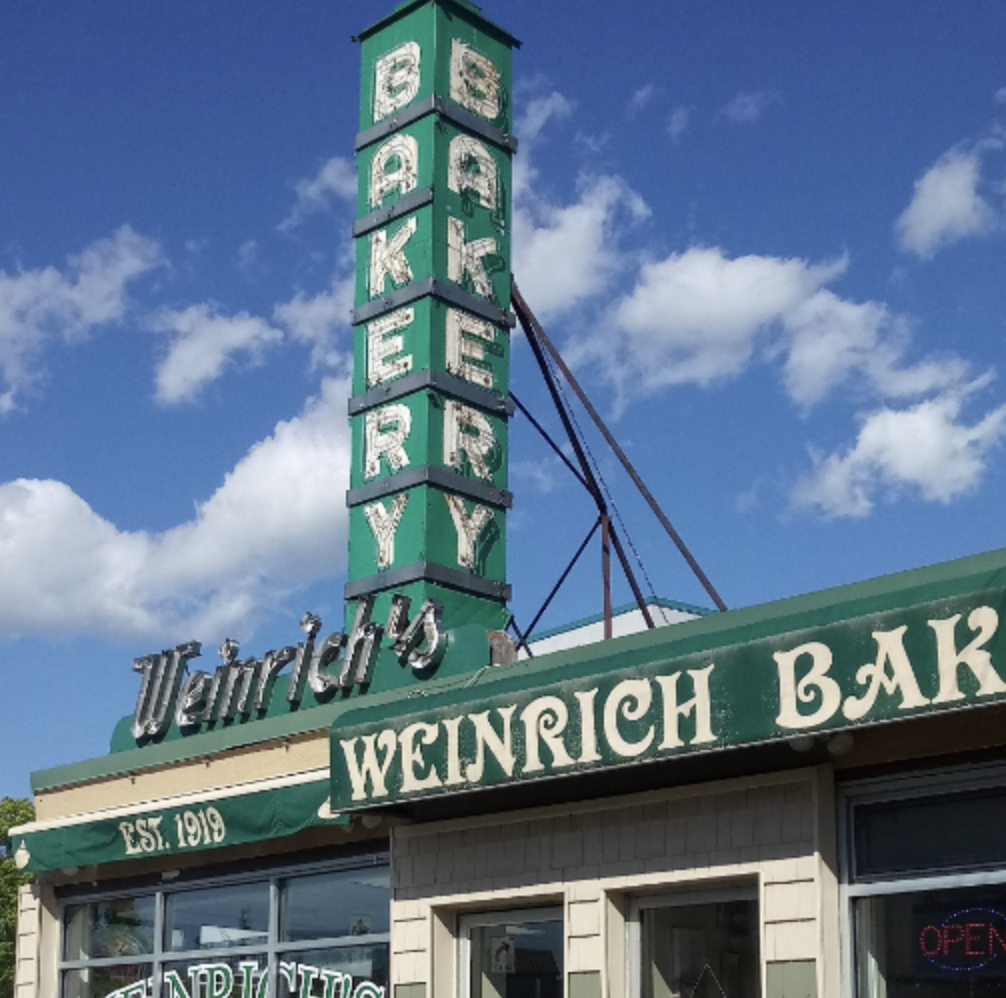
Weinrich’s Bakery in Willow Grove.
Three of Weinrich’s sons still work for the bakery, which is now owned by the third son, Herman, and his wife, Beth.
Though they took over the store in the 2000s, Weinrich and Kippy still showed up regularly to offer advice and to greet many of the bakery’s lifelong customers.
After Kippy died of Alzheimer’s disease in 2015, Weinrich retired to Fort Myers, Florida. But he still asked about the bakery daily, Herman and Beth wrote on social media.
Their cousins’ kids are now there full-time, too, Stephen said: “We have a fourth generation of family working every day in the store.”
Weinrich was an active member of his parishes at St. David Roman Catholic Church in Willow Grove and then Immaculate Conception Church in Jenkintown, and a longtime supporter of the Abington Police Athletic League, Stephen said.
“He is and will forever be remembered for his kind presence and loyalty to all of us,” Herman and Beth wrote.
Funeral arrangements will be made after Weinrich is returned to Pennsylvania, the family said.
He leaves behind his sons and their families, including 16 grandchildren and seven great-grandchildren.
This suburban content is produced with support from the Leslie Miller and Richard Worley Foundation and The Lenfest Institute for Journalism. Editorial content is created independently of the project donors. Gifts to support The Inquirer’s high-impact journalism can be made at inquirer.com/donate. A list of Lenfest Institute donors can be found at lenfestinstitute.org/supporters.
After more than a century as a dry town, Collingswood is considering lifting its ban on alcohol sales within the borough.
For months, the three-person Collingswood Board of Commissioners has been discussing whether to lift the long-standing restrictions on liquor sales both as a potential new revenue source for the borough and as a way to bolster the local restaurant industry.
Per the state’s population-based license cap 一 one liquor license for every 3,000 residents — Collingswood would be able to issue as many as four retail consumption licenses that permit restaurants or bars to serve alcohol, or one distribution license for a liquor store within borough limits.
If liquor sales are eventually permitted, the borough could receive anywhere from $1,000 to $10,000 annually through licensing and renewal fees.
But discussions are still preliminary as the commissioners work to determine what is best for Collingswood’s existing restaurant and business owners, borough administrator Cassandra Duffey said.
“There’s a general sense that liquor can be a good thing, but there’s a concern that if it’s done in a way that’s unbalanced, it can also throw people off,” she said.
“Is there strength in the dry-town brand that has been around for years and years?” Duffey said.
Tracing back to its Quaker roots, Collingswood has prohibited alcohol sales by ordinance since the 19th century.
A change to the policy would require public approval through a referendum during the November general election, borough solicitor Caitlin Harney Norcia said.
To begin that process, the borough’s commissioners would need to adopt a resolution by Aug. 21 so that the Camden County Clerk’s Office has enough time to add the question to the ballot. In order to adopt the resolution, at least 15% of voters who participated in the last general election must sign a public petition in favor of putting the question on the ballot, Harney Norcia said.
After that, “repealing any kind of prior restrictions could all be done relatively easily,” Harney Norcia said, describing the logistics of updating local ordinances if a referendum passes.
If voters approve lifting the ban, Harney Norcia said, the borough could either award licenses in a competitive bidding process, which could generate one-time revenue for Collingswood’s budget, or enact an application and review process that includes annual fees and public presentations by prospective licensees.
But if the measure were to fail on Election Day, Collingswood would be barred from holding another referendum on alcohol sales for five years, according to state law.
Some business owners have expressed concern that the public bidding process could result in one of the borough’s few licenses being awarded to an outside business instead of an established Collingswood restaurant, Duffey said.
“The challenge is not to disrupt the balance of businesses that already exist here,” she said. “If you get a bidder that gets a license from outside of town, sure, you get the revenue, but then you’ve added somebody and it doesn’t necessarily benefit one of our businesses.
“The other option is to award [the licenses] directly, but then somebody must make a decision on who gets them, which is also a challenge,” she added.
The commissioners are in continued talks with the borough’s business improvement team, local restaurateurs, and others about the best approach, she said.
“Is there a way to distribute licenses or award licenses that is a boost for everybody?” Duffey said.
The internal debate in Collingswood comes less than two years after residents in neighboring Haddon Heights voted to get rid of its de facto ban on liquor sales. The town has set a $200,000 minimum bid for its first retail liquor license and is currently accepting applications ahead of a public auction sale in September.
Haddon Heights is hoping to leverage the new liquor licenses as a way to help boost a broader revival and redevelopment, Mayor Zachary Houck said.
The licenses “would hopefully draw in one or two additional restaurants or enhance existing restaurants and let us then continue to move that ball forward when it comes to enhancing our downtown historic district,” Houck said.
Making more, and more affordable, liquor licenses available statewide was a goal of legislation then-Gov. Phil Murphy signed into law in 2024. The measure was touted as an unprecedented reform of New Jersey’s liquor laws, long described by critics as arcane and antiquated.
“By easing restrictions and boosting the availability of licenses, we are creating new opportunities for small businesses, especially mom-and-pop establishments, to expand and facilitate development on main streets across New Jersey,” Stella Porter, a spokesperson for Murphy, told The Inquirer that year.
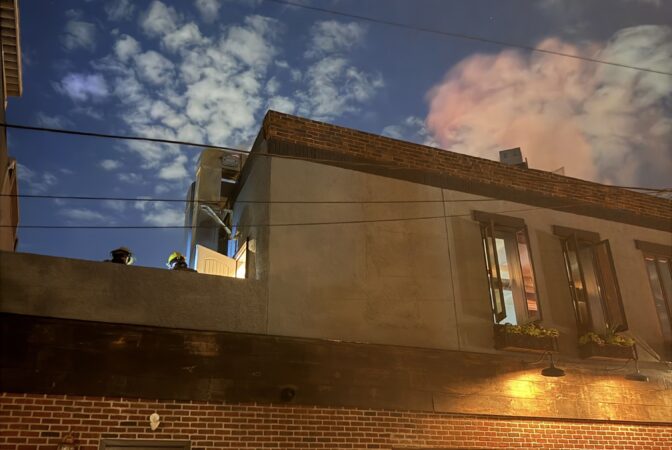
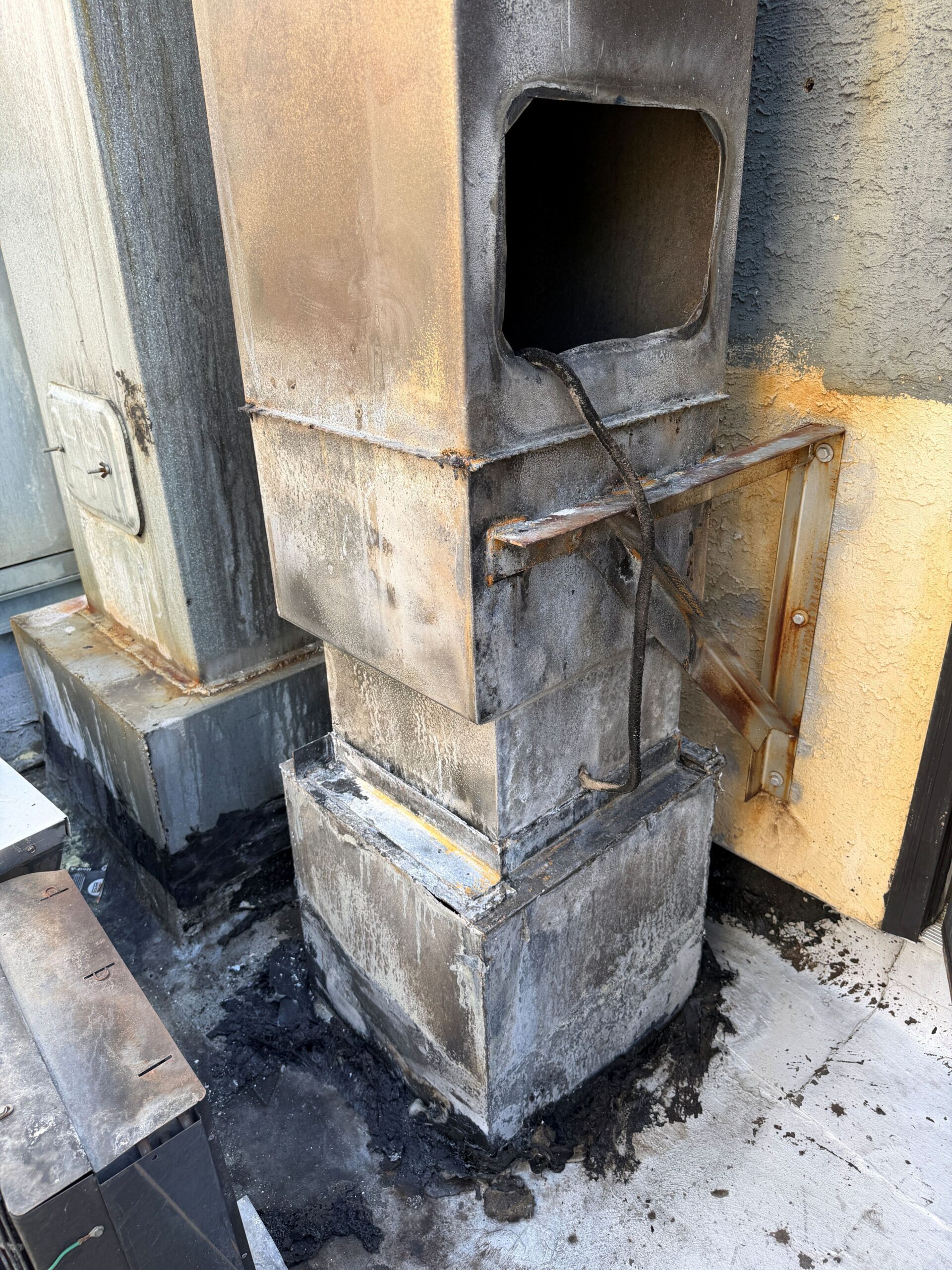
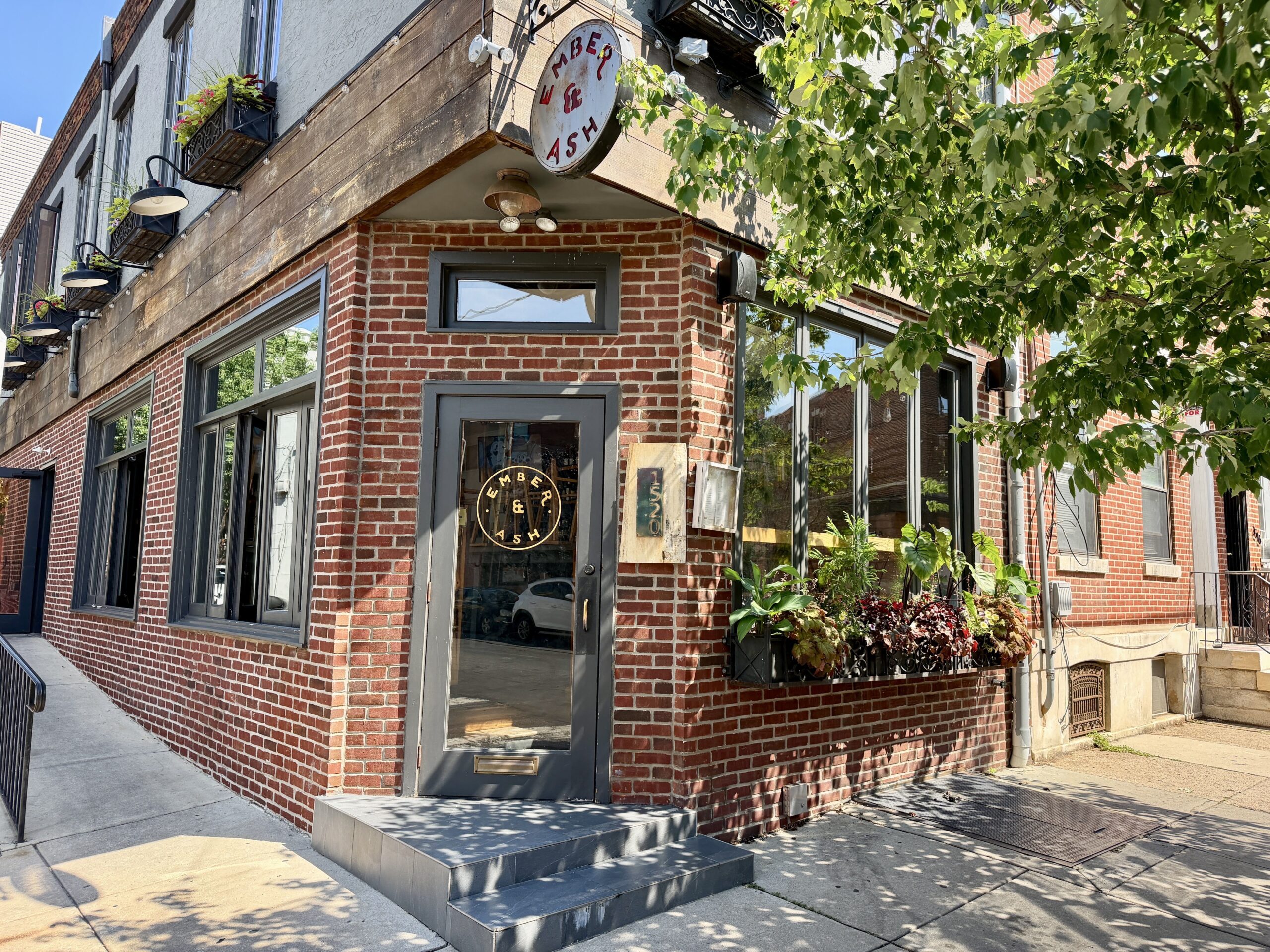
Ember & Ash restaurant on East Passyunk Avenue in South Philadelphia is closed indefinitely after a late-night fire Wednesday sent flames to the roof through its ventilation system, its owners said.
No injuries were reported. Owner Lulu Calhoun said she, her husband and chef-partner Scott Calhoun, and another chef, John Forkin, were leaving for the evening through the kitchen door about 10:20 p.m. when they heard a loud sound from above.
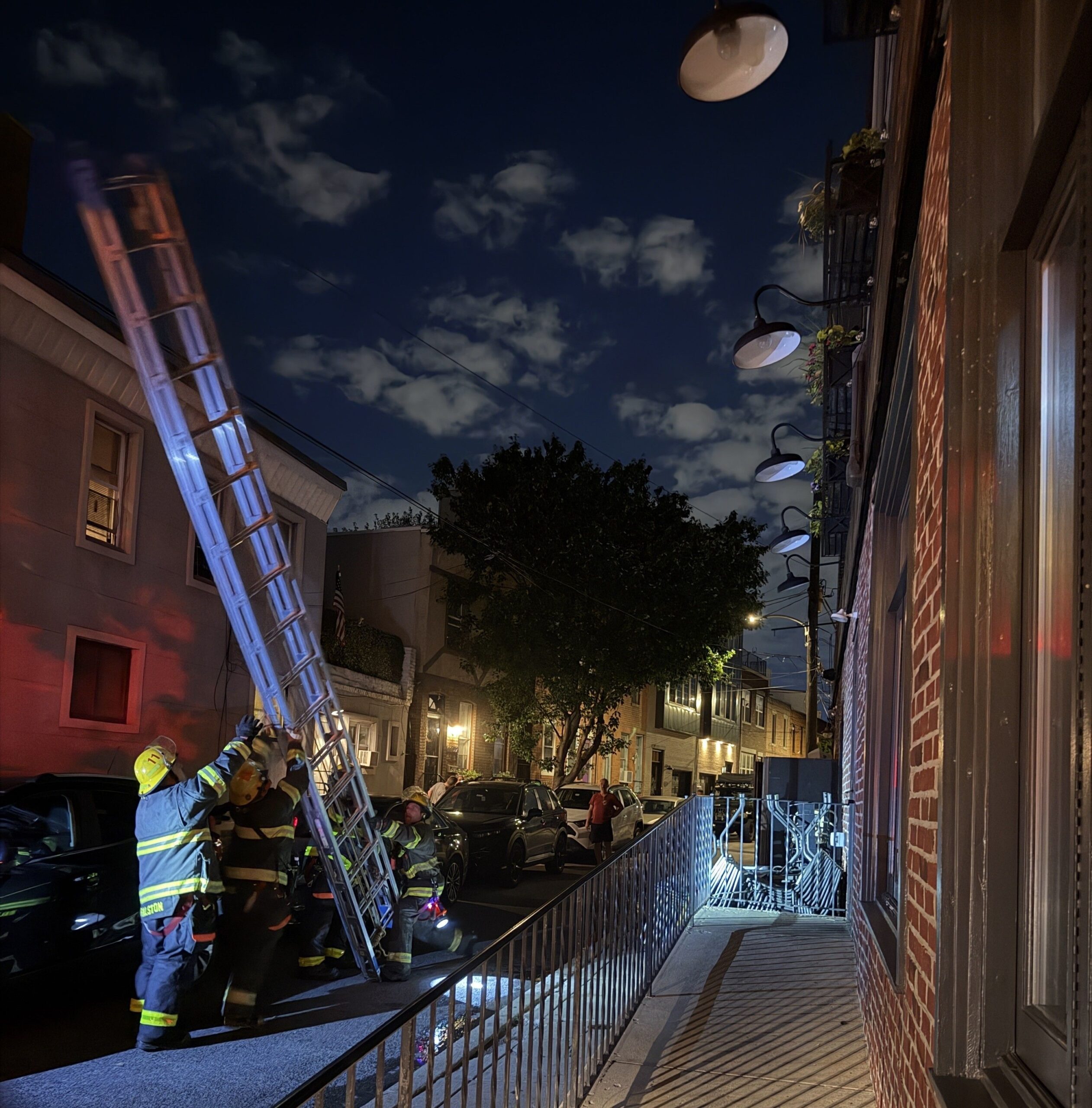
Firefighters positioning a ladder outside of Ember & Ash, 1520 E. Passyunk Ave., on June 24, 2026.
“We didn’t know what it was,” she said. “We thought maybe like a helicopter or a jet.”
Scott Calhoun looked up to see fire on the roof. He grabbed fire extinguishers and ran upstairs to try to put it out, she said.
The couple called 911, and firefighters arrived almost immediately. Ember & Ash is about two blocks from Ladder 11 at 12th and Reed Streets, a fire company that was restored in 2024 after having been shuttered for 15 years. “We’re just so grateful, because it could have been a much, much worse situation,” Lulu Calhoun said.
A charred portion of the ventilation system at Ember & Ash, 1520 E. Passyunk Ave., as seen June 25, 2026.
Thursday morning, the full extent of the destruction was still being assessed, but she said the restaurant was facing professional cleanup for water throughout the building and repairs to the hood and roof. Fire damage was not apparent from the Passyunk Avenue sidewalk. The Philadelphia Fire Department said the fire was under control in about an hour and 20 minutes but had no information on its cause.
“That’s the part that’s the most heartbreaking,” she said. “It’s not only our livelihoods, but our entire team.”
She said the timeline for repairs was not yet known, adding that the duct work had been professionally cleaned recently as part of maintenance.
Ember & Ash, 1520 E. Passyunk Ave., on June 25, 2026.
The hearth at Ember & Ash, a live-fire restaurant built around a custom wood-burning grill made by Grills by Demant, has been the center of the kitchen since the restaurant’s opening in late 2020.
Fires that travel through ventilation systems can sideline a restaurant for months because damage is not always immediately visible and insurance claims can drag on. Kampar in Bella Vista has been closed since a February 2025 fire and has not announced a reopening date. Black Sheep in Rittenhouse has been closed since a May 18 fire. Tequilas in Center City was shuttered for about two years after a 2023 fire, though owners spent some of that time creating a second restaurant, La Jefa, in its rear dining room.
Calhoun said Ember & Ash was contacting customers with bookings along with parties that had reserved private events in July and August.
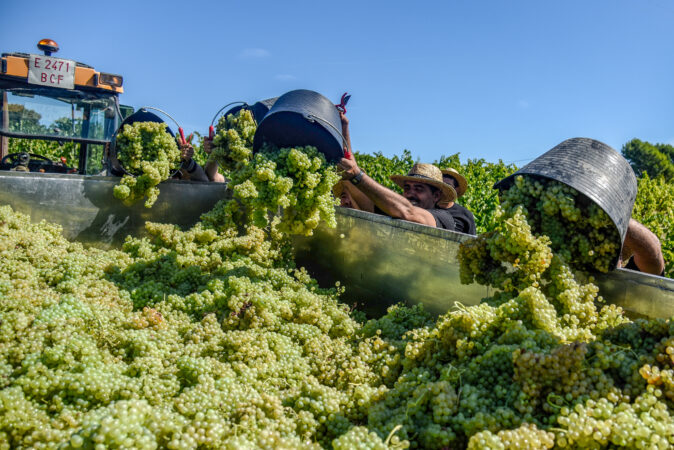
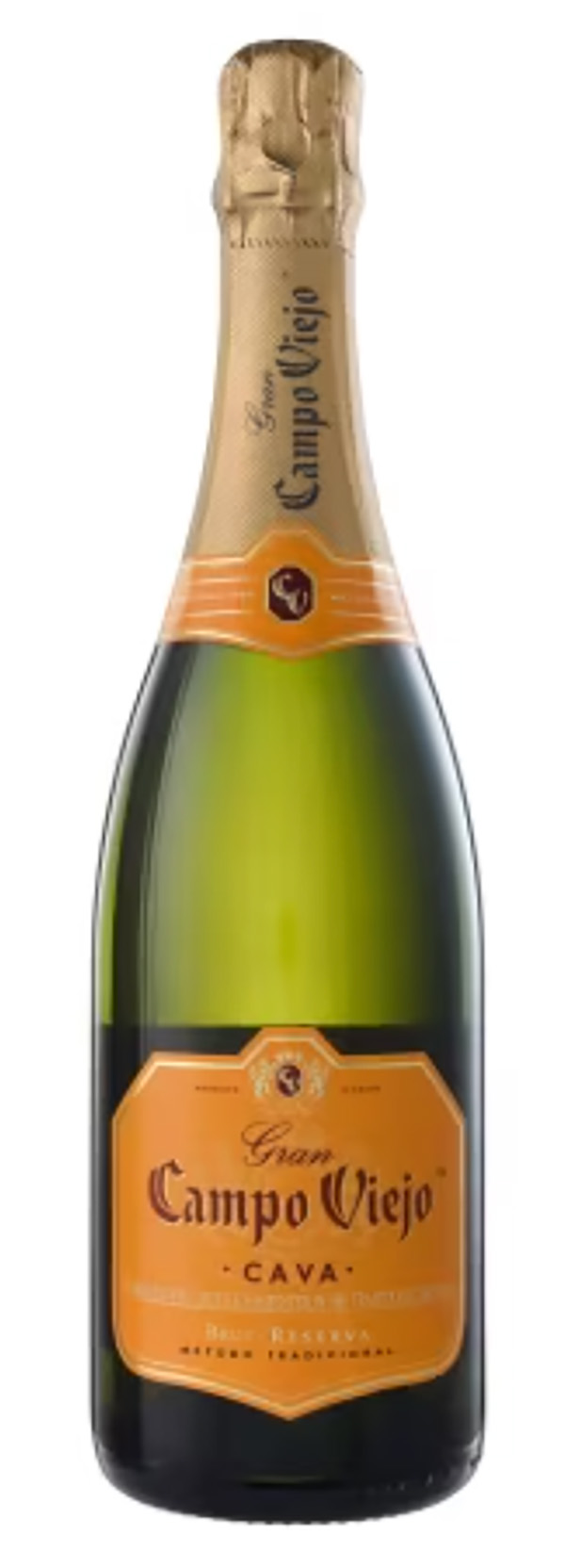
Sparkling wines are having a moment, and it’s hard to beat Spain in this category when it comes to great value. The country may be most commonly associated with red wine, but sparkling, white, and even rosé wines from Spain are all seeing significant growth in total exports. While there are other sparkling wine appellations in Spain, the vast majority — including this example — are labeled as cava.
Where most wine appellations take their name from a place — think Champagne from France’s Champagne region — cava is different. The term means “cave” or “cellar,” referring to how it is made. Cava wines must, by law, follow the same traditional method of production as Champagne, which involves a second fermentation that takes place inside each bottle. The mechanism for adding the bubbles and letting the wine patiently age in a cellar is also central to its quality.
Cava’s appellation was first conceived as a means for wineries across Spain to be able to sell a high-quality sparkling wine regardless of their region. In practice, however, most cava is grown and produced in northeastern Catalonia, near Barcelona, using native Spanish grapes such as macabeo, parellada, and xarel-lo. That’s the case for this wine as well, which is labeled under the name of a Rioja-based brand better known for their reds. In Spain, it’s not uncommon for large wineries in one region to extend their range by sourcing wines from partners elsewhere.
Cava wines can be found at every level of ambition and price, from the cheap and cheerful to the ambitious and gastronomic. This wine falls at the simpler end of the continuum (as the price might suggest), with a delicate mouthfeel and refreshing flavors of apple, lemon, and blanched almond. It’s an ideal choice for relaxed day-drinking — mimosas highly recommended.
Gran Campo Viejo Cava Brut Reserva
Gran Campo Viejo Cava Brut Reserva
Spain; 11.5% ABV
PLCB Item #6563 — $10.49 through July 5 (regularly $13.49)
What are the foods that tourists should try on their trip to North America for the World Cup? Apparently, the Philly cheesesteak is way up there, even higher than tacos in Los Angeles or Cuban sandwiches in Miami.
With the 2026 World Cup spanning 16 host cities across three countries, writer Amy Harris found a tour of 16 “completely different food cultures” for this guide. Canada Sports Betting scored the “hero” dish of every host city based on source frequency, local support, tourist recognition, city-specificity, and cultural significance. The result: a ranking of the most unique city-specific dishes.
In Philadelphia, “the cheesesteak … defines the city’s entire culinary reputation internationally,” Harris wrote. The iconic sandwich with “shaved rib eye on a hoagie roll with Whiz, provolone, or American was invented by Pat Olivieri in South Philadelphia in 1930,” she continued. “Locals will tell you DiNic’s roast pork at Reading Terminal Market is actually the city’s best sandwich. That internal argument is part of what makes Philadelphia interesting.“
The cheesesteak is, for better or worse, depending on your point of view, No. 3 on The Inquirer’s 76 iconic Philly foods, with only one other sandwich — the hoagie — surpassing it. (Water ice was also rated above cheesesteaks on The Inquirer list.)
“The cheesesteak, much like the city in which it was invented, is a working-class sandwich,“ wrote Inquirer reporter Tommy Rowan. “Its rugged beauty is in its simplicity.“
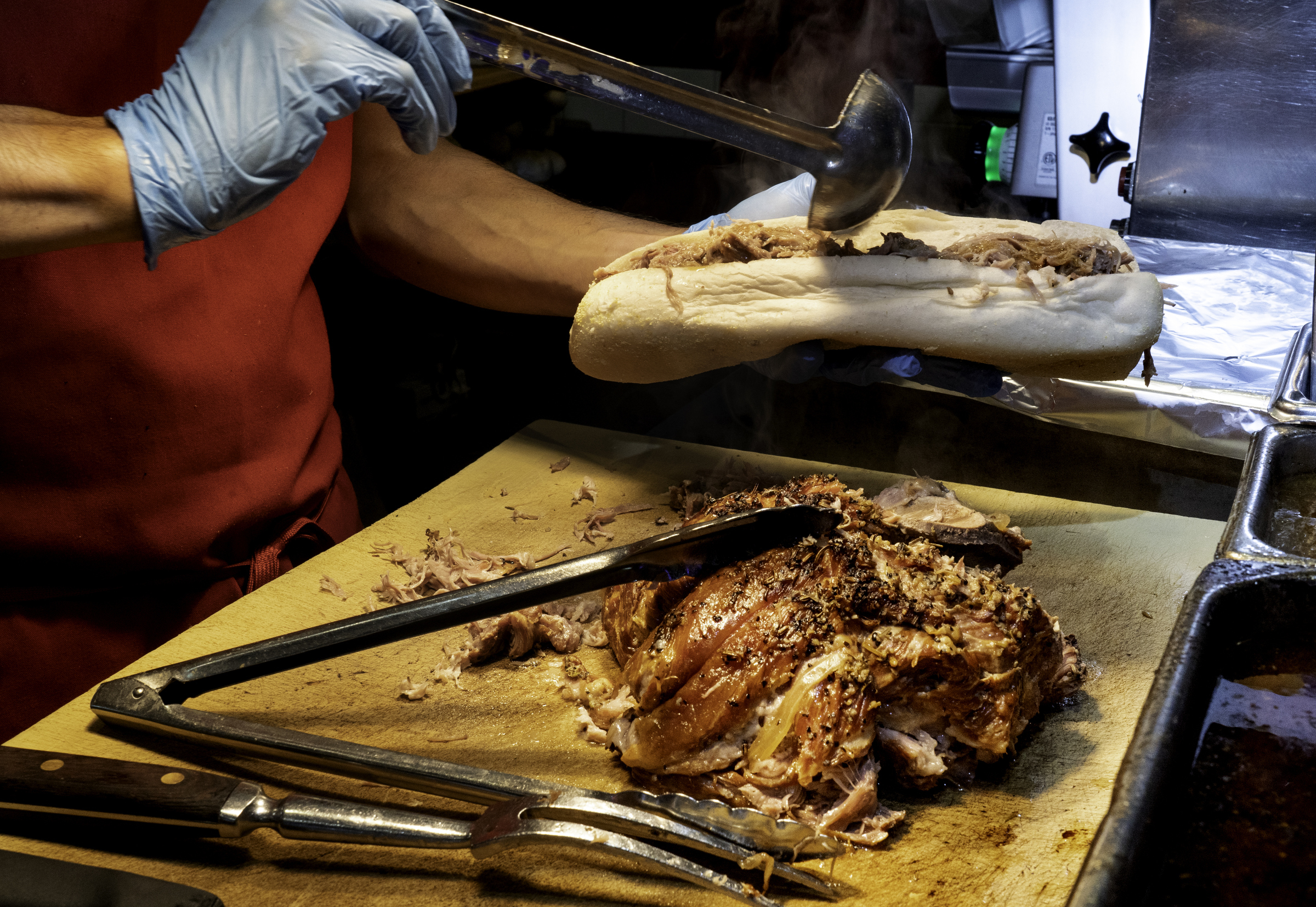
The pulled pork at DiNic’s Roast Pork, Reading Terminal Market, Tuesday, September 26, 2018, in Philadelphia. JESSICA GRIFFIN / Staff Photographer
Guadalajara’s torta ahogada landed in first place, followed by the Viet-Cajun crawfish in Houston. Cabrito al pastor — young goat roasted over live coals — from Monterrey came in third; and the burnt ends — charred tips of a smoked brisket point — from Kansas was fourth.
And all the way in 15th place: New York pizza.
“New York ranks 15th not because its food is unremarkable, but because its most iconic dish has become the world’s most replicated food,” Harris wrote. “New York pizza is made everywhere from Tokyo to Nairobi. That is a consequence of the city’s cultural influence, not a failure of its food.”
But a great cheesesteak? Sorry, you have to come to Philly for that.
Veteran restaurateur Jeffrey Chodorow has spent decades in and around Philadelphia without ever opening a restaurant here.
That changes Thursday at the Bellevue, where the mind behind such destinations as China Grill and Asia de Cuba is opening Mr. Edison, a supper club-style restaurant and bar built around dinner, drinks, and live music.
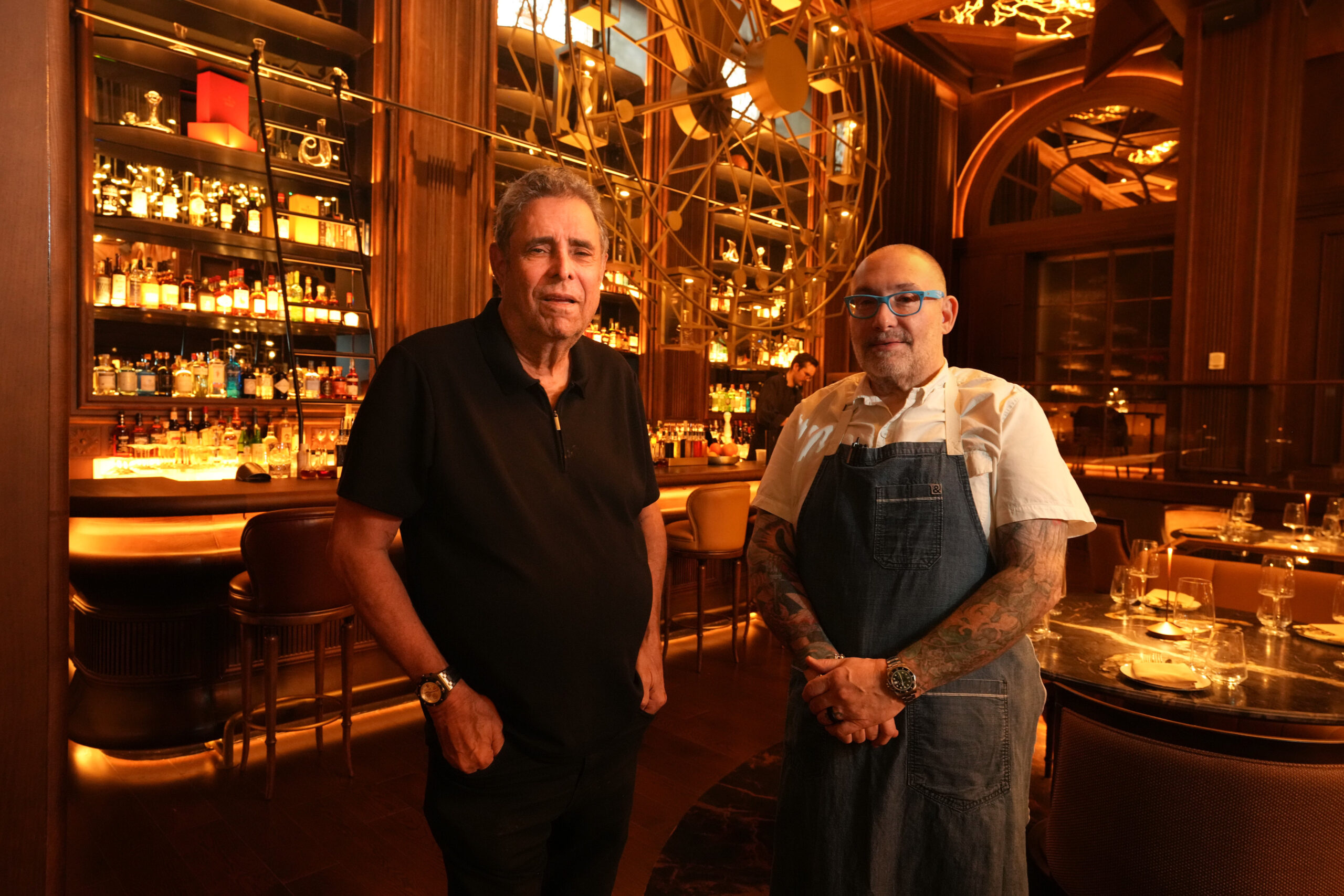
Jeffrey Chodorow (left) with chef Matt Levin at Mr. Edison at the Bellevue.
Mr. Edison is also a throwback: a large, theatrical restaurant built as much for occasion as for dinner.
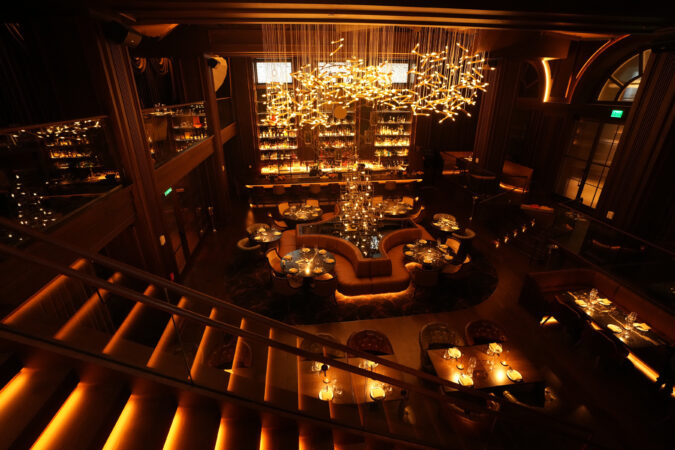
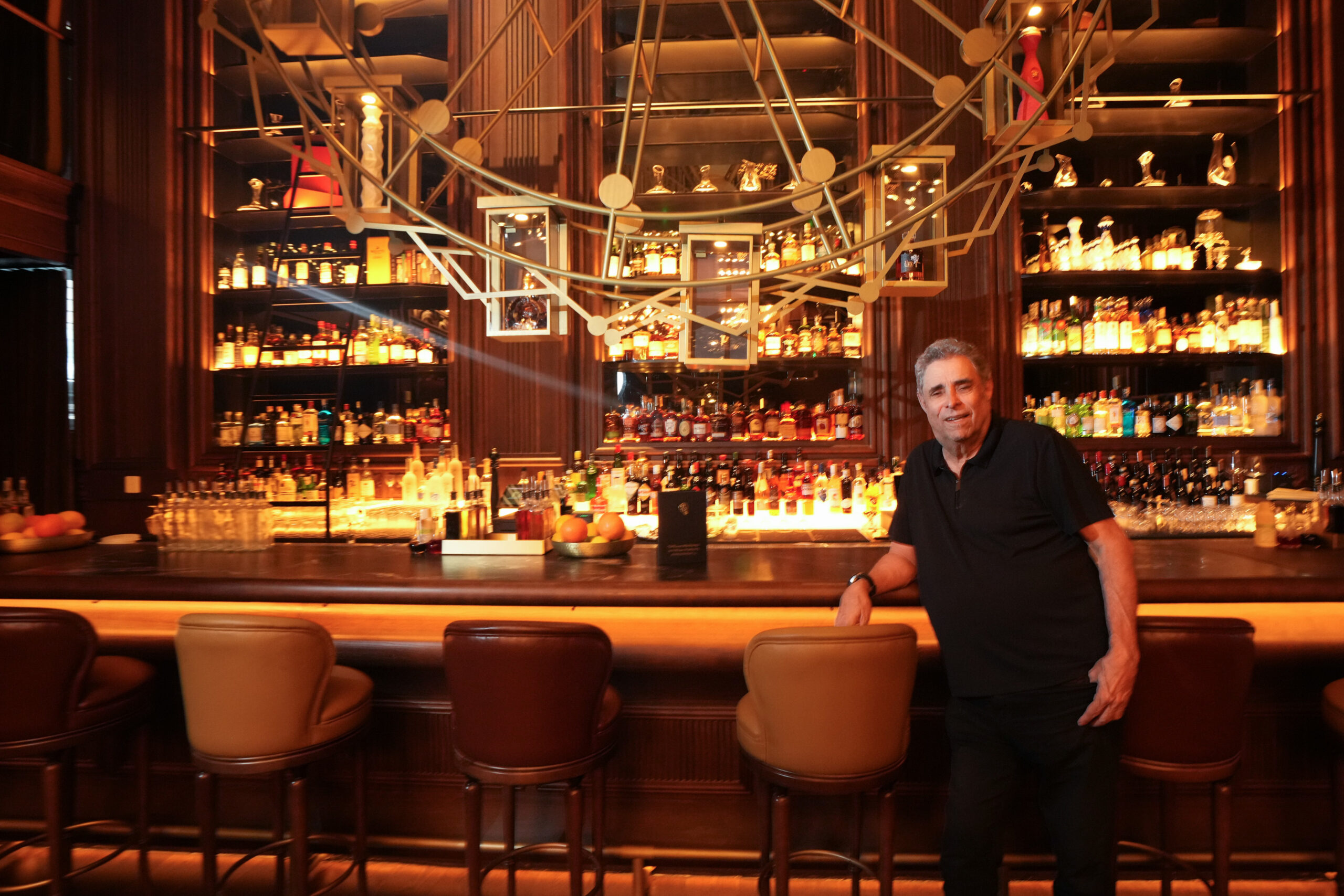
The room, in the former Polo Ralph Lauren store, announces itself immediately from the new Walnut Street entrance just west of Broad Street: a two-story space topped by a dense canopy of suspended Edison bulbs, clustered in branching formations that cast the dining room in a warm amber glow.
The ceiling seems to split open in places, allowing lightning bolt-like streaks of light through — all the work of Manuel Clavel of Spain’s Clavel Arquitectos. Behind the bar is a 12-foot-tall Ferris wheel, its dozen spokes each carrying a bottle of wine or spirits and turning the backbar into something like a stage set.
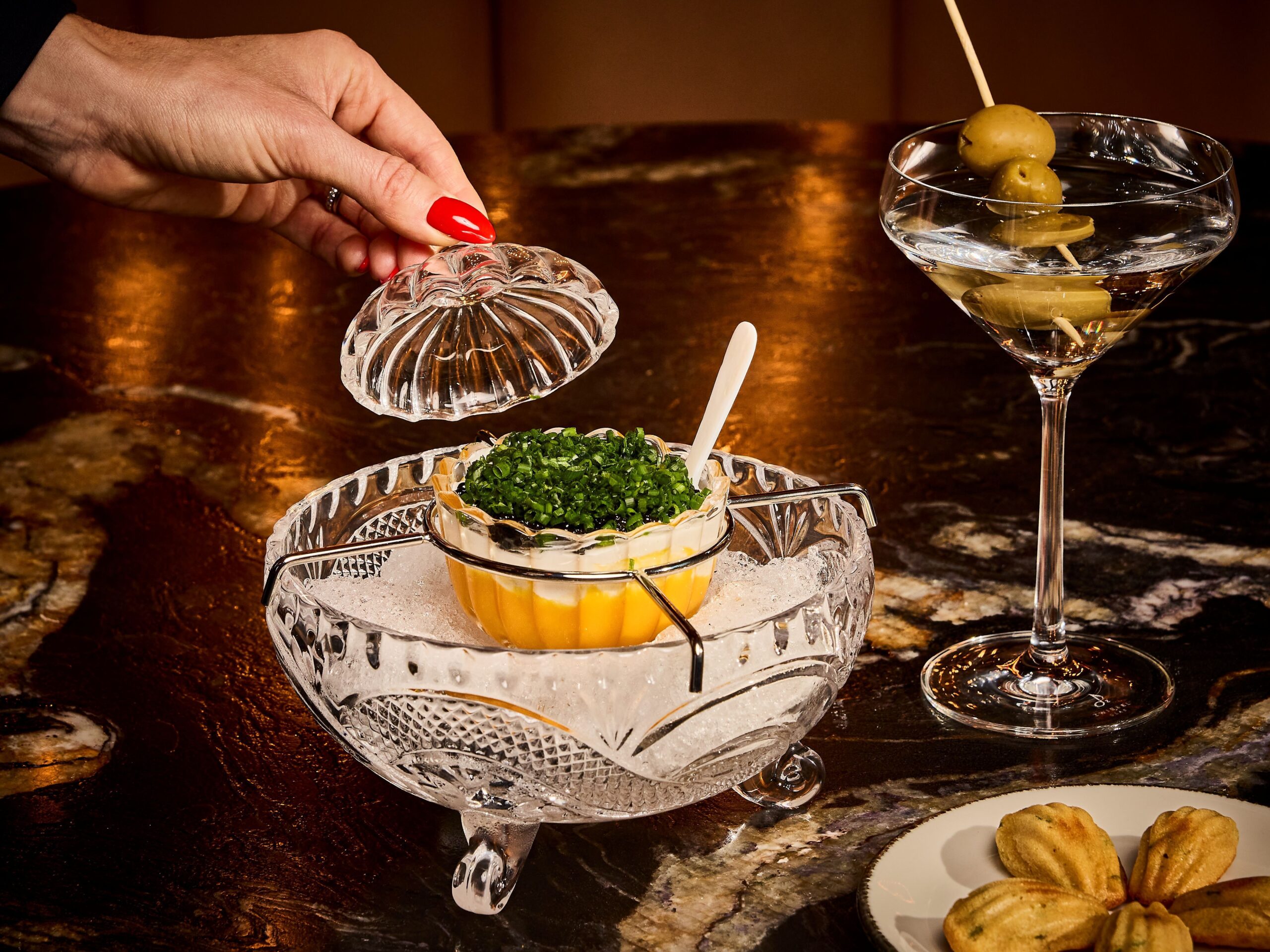
Caviar service at Mr. Edison.
Building owner Dean Adler, who is investing millions in the Bellevue as part of its redevelopment, put the 160-seat restaurant’s price tag at $10 million. “I think I got my money’s worth,” he said Tuesday. Adler also plans to install a library bar off the Bellevue’s lobby on the Broad Street side, where the Palm was before its closing in 2020.
“I love history, so to take a genre — a 1940s-type environment — and bring it into 2026 has been really exciting,” said Chodorow, who of late has been shuttling between his Bucks County home and Miami Beach, where he opened China Grill Bar Harbour two weeks ago.
Mr. Edison — named for Thomas Edison, who helped bring electricity to the Bellevue in 1904 — is calibrated to the building’s long identity as a grand social address. It also carries a personal connection for Chodorow. In 1982, when he was a lawyer at Blank Rome, he rented the roof for his own Rio-themed engagement party to celebrate with his wife, Linda.
“This is not a tiny little neighborhood restaurant,” Chodorow said. “This is a place where you come to have a night.”
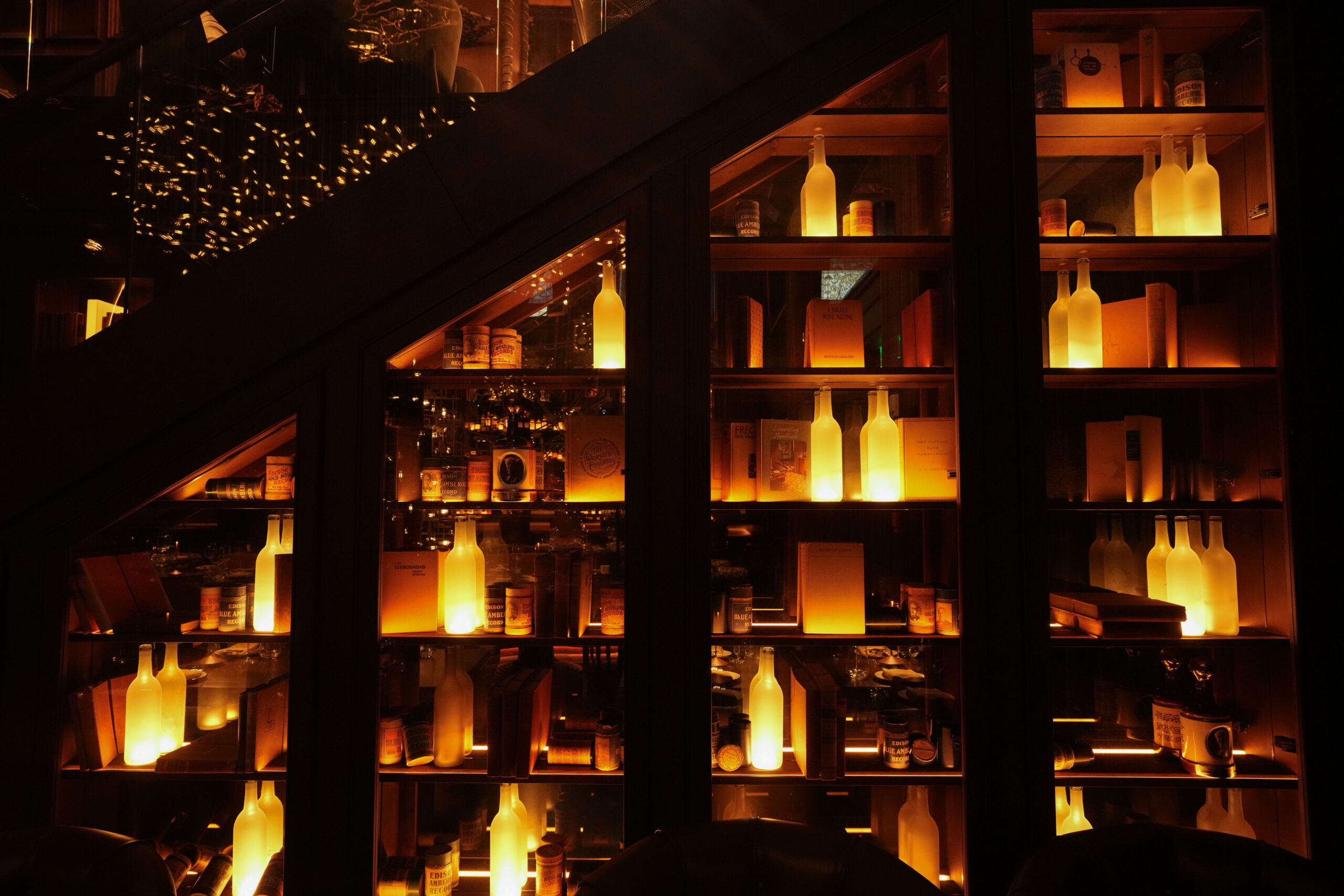
Bottles glow inside niches at Mr. Edison.
Chodorow built his reputation on restaurants that function as entertainment as much as dining. He rose in the business in the 1980s and ’90s with New York hotspots, such as Asia de Cuba, Kobe Club, and Red Square, and said he long avoided opening in the Philadelphia area because he wanted to keep work separate from family life.
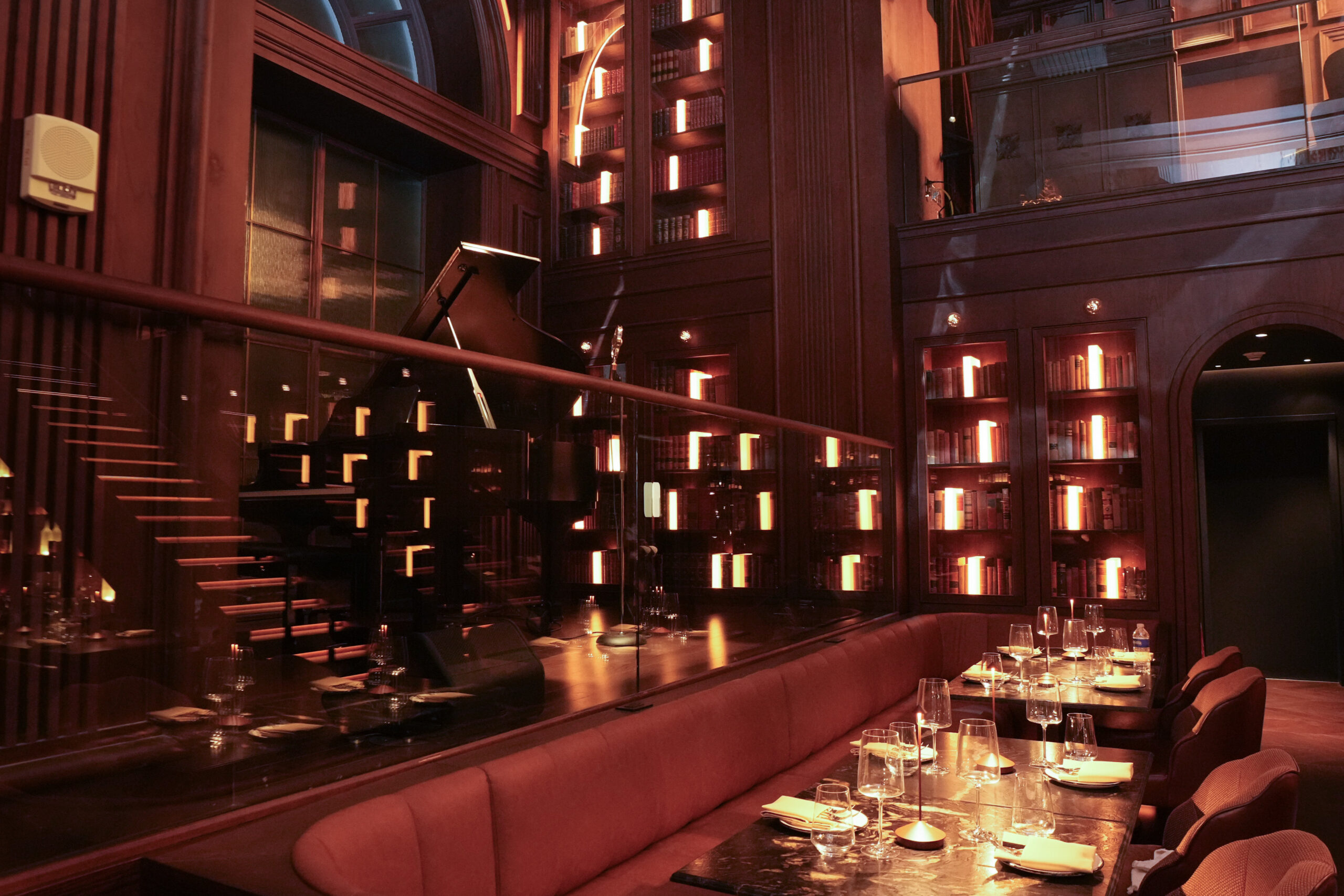
With his children grown, that changed. At the Bellevue, Chodorow said, he saw an opportunity to build destination dining — a place where patrons might stop in for cocktails and snacks or settle in for dinner and stay long into the evening. The room is arranged to support both. A large bar runs along one wall; tables and banquettes wrap around in multiple zones and along a mezzanine; and a piano with an old-fashioned microphone sits on a platform to one side.
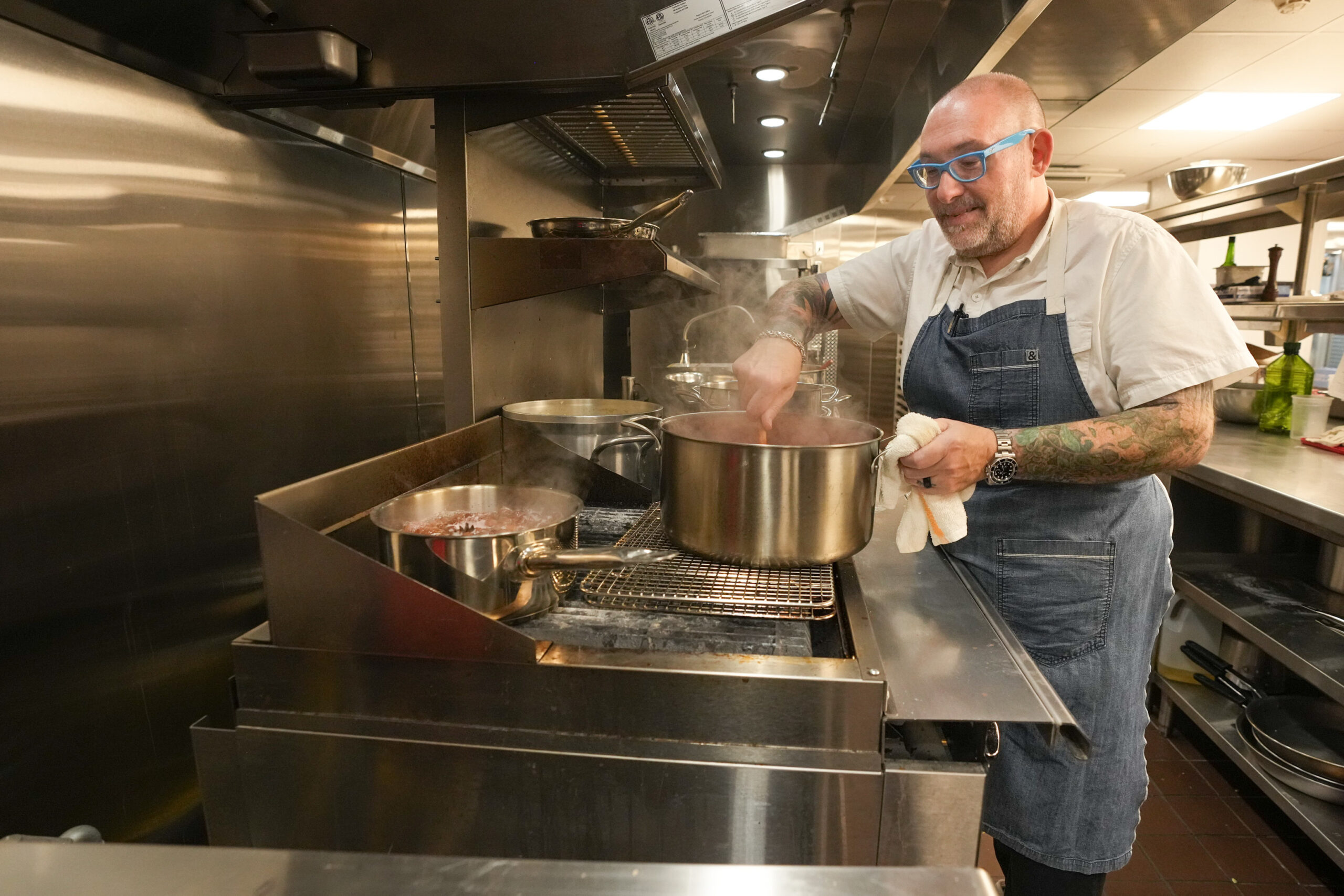
Chef Matt Levin at the stove at Mr. Edison.
“We’re trying to create an experience,” he said. “Not just a restaurant.”
To run the kitchen, Chodorow recruited chef Matt Levin to come back downtown. Levin, who made his name at Lacroix at the Rittenhouse and later at Adsum in Queen Village, has spent much of the last decade in catering, consulting, and Bucks County restaurants. Chodorow found him at Pineville Tavern in central Bucks County, where Levin had been consulting and where owner Andrew Abruzzese is an old friend and neighbor.
Mr. Edison is more interested in reworking the classics than experimentation. Levin and Chodorow drew on dishes from Philadelphia landmarks, including the crab galette from Le Bec-Fin, where Levin worked for several years, the Milan salad from Jimmy’s Milan, and duck with orange sauce from La Panetière.
Edison bulbs provide the lighting at Mr. Edison.
Levin said the menu is a way of tapping into Philadelphia’s dining memory. “I think Philadelphia has a lot of shared history,” he said. “I think people will remember bits and pieces and say, ‘Oh, I remember that — let me try it.’”
The challenge, Levin said, was to build a menu flexible enough to support several kinds of nights at once. “You want to be able to have people come in and just have a drink and a couple of things,” he said, “but also have the people who are coming in to really have dinner.”
Jeffrey Chodorow in front of the bar and Ferris wheel at Mr. Edison.
Chodorow said average tabs would be $100 to $110 per person for a dinner experience. He said roughly 25 dishes can work as a grazing menu, alongside larger-format entrees, raw-bar offerings, seafood, and steaks. Levin also brought over a foie gras tartlet with cherries and pistachio, adapted from a dish he served at Moonlight.
The beverage program leans into the Edison theme with cocktails named for his inventions, including Patent Pending and Filament No. 6.
Filament No. 6 at Mr. Edison.
For Chodorow, the point of Mr. Edison is straightforward: “I wanted something that felt special,” he said.
“I wanted people to walk in and say, ‘Wow.’”
Mr. Edison opens Thursday at the Bellevue, Broad and Walnut Streets. Hours are 4:30 to 10 p.m. Sunday through Thursday and 4:30 to 11 p.m. Friday and Saturday. The bar will remain open later.
When chef Christopher Kearse was planning Forsythia, the French restaurant he opened in Old City in 2019, he had two ideas that could not fit into the same room.
One was Forsythia. The other opens in Washington Square West on Friday, seven years later.
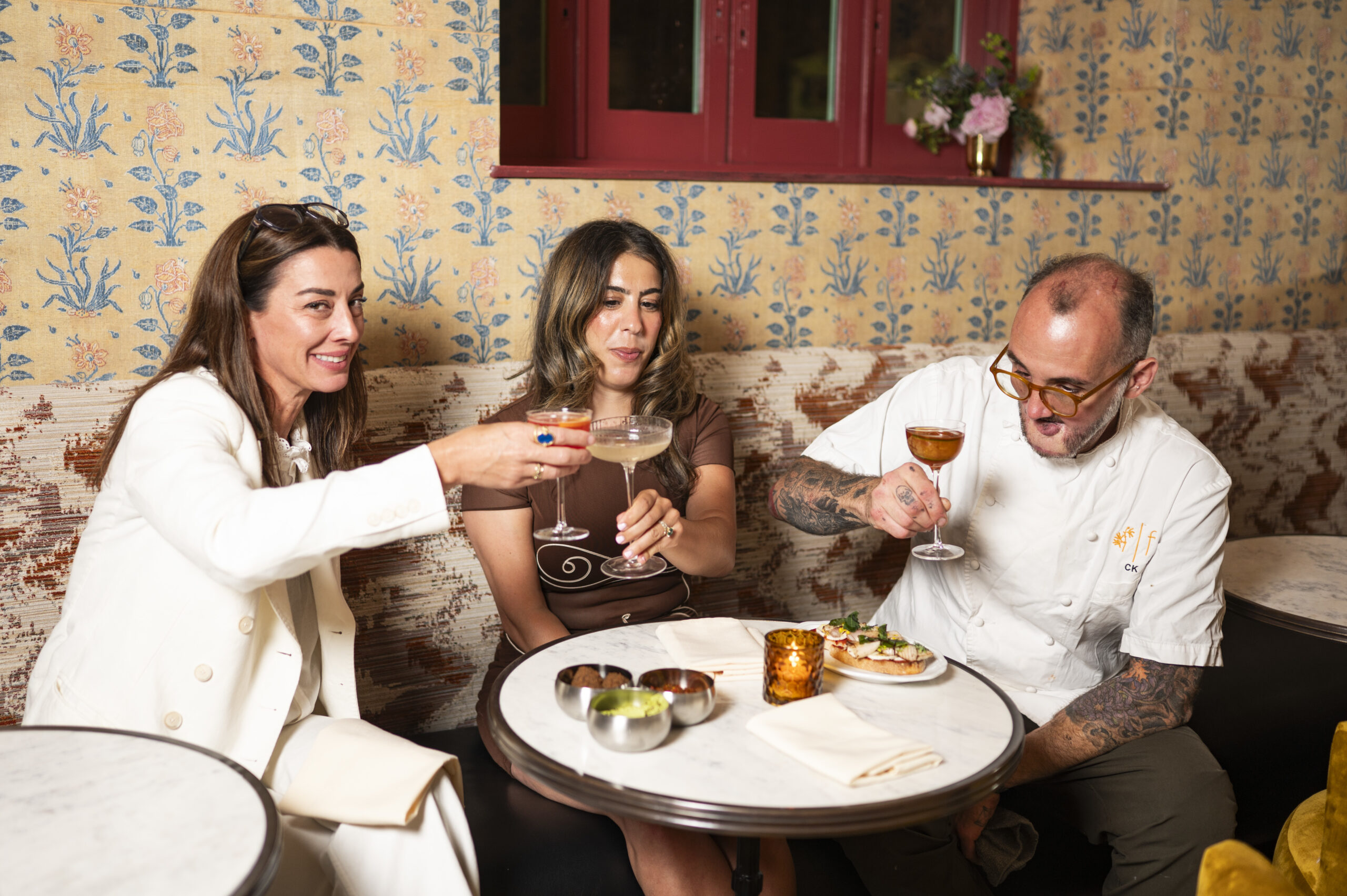
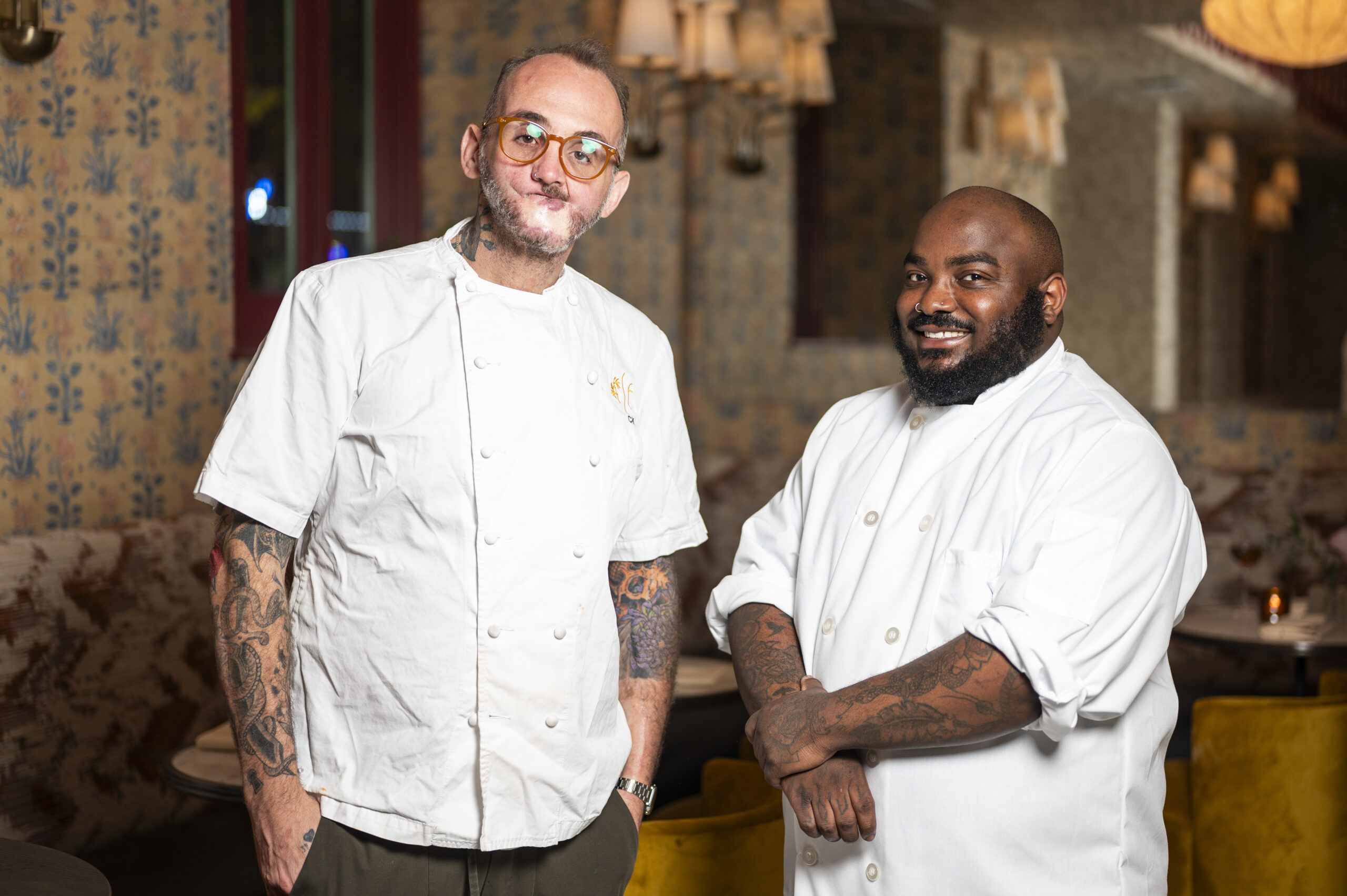
Phoebe Schuh of PS & Daughters (left) with owners Lauren and Christopher Kearse toast on a banquette at Known Associates.
It’s a 40-seat cocktail bar called Known Associates, taking over the corner space at 10th and Spruce Streets that previously housed Varga Bar. The concept is built around cocktails and a compact food menu rather than full dinner service, though the fare is substantial.
For Kearse, the opening is another chapter in a career that began far from cocktail bars and French dining rooms. He grew up in Levittown, one of eight children, and learned to cook while recovering from a serious car crash at 16 that left him with severe facial injuries. During that long recovery, he cooked for his parents and siblings. He later worked in some of the country’s most exacting kitchens — Charlie Trotter’s and Alinea in Chicago, and the French Laundry in California — before returning to the Philadelphia area to become sous chef at Lacroix and Blackfish, followed by 2½ years as chef de cuisine at Pumpkin. In 2012, at 28, he opened Will BYOB on East Passyunk Avenue, closing it to move uptown to open the French restaurant Forsythia in the former Capofitto space in Old City. Forsythia earned a Michelin recommendation last year.
The tile floor is one of the few elements saved from Known Associates’ previous incarnation, Varga Bar.
Known Associates is not intended to be an extension of Forsythia. Kearse and his wife, Lauren, who is also an owner, said the concept came into focus during their honeymoon trip through Europe, traveling by train from Zurich to Florence and spending time in smaller bars and cafés in places like Lake Como and Milan.
Lauren Kearse said one nearly empty bar in Como became the image they kept returning to: quiet, low-key, hospitable, and free of the sort of self-conscious “experience” building that now attaches itself to so many cocktail bars.
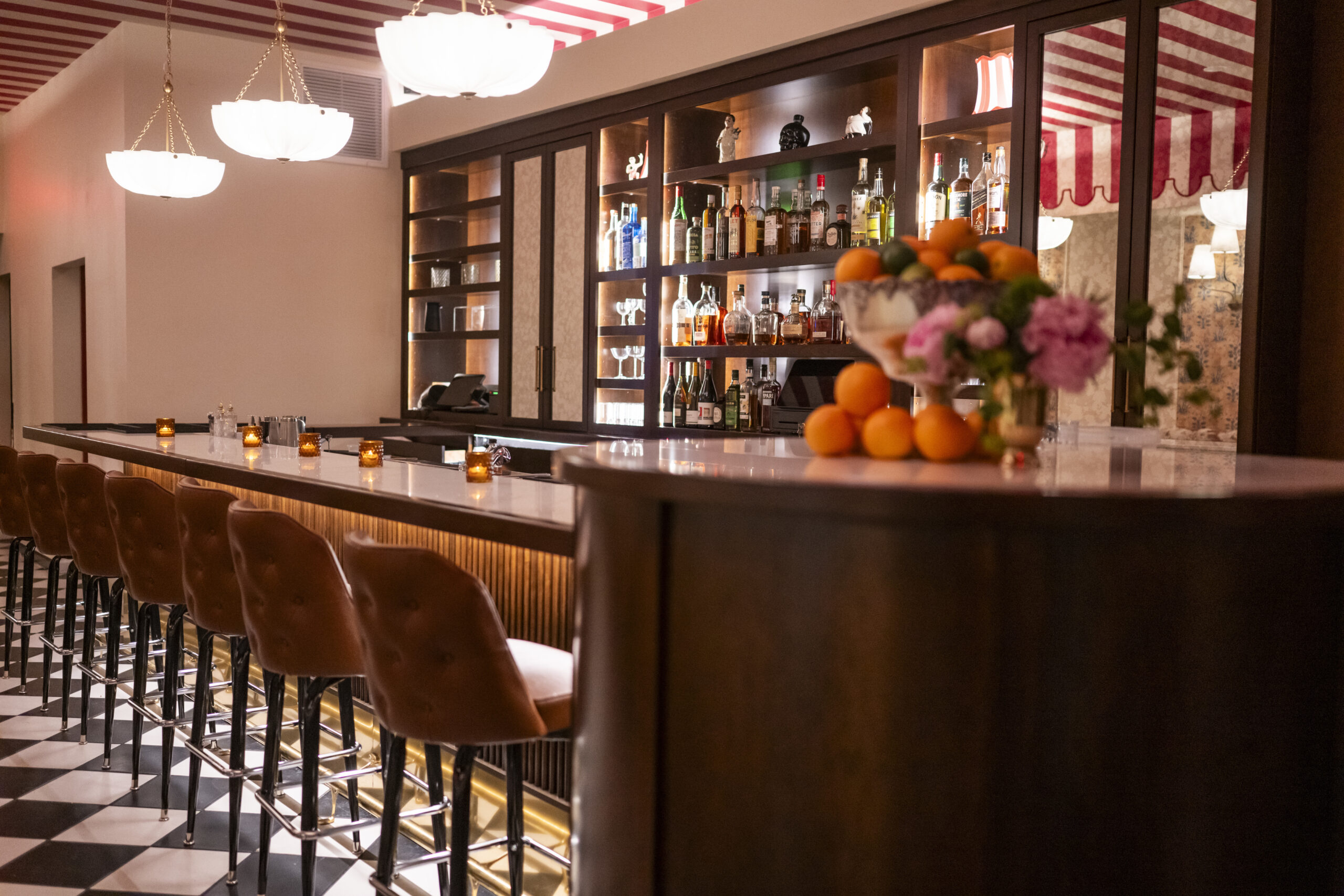
The bar at Known Associates, chef Chris Kearse’s new cocktail bar on 10th and Spruce streets, on Tuesday, June 16, 2026.
That idea is reflected in the room itself, which was rebuilt almost entirely. Phoebe Schuh of PS & Daughters, who also designed Forsythia, said the black-and-white tile floors were among the few elements retained from Varga, an unassuming gastropub with serious beer chops that closed after the unexpected death of owner Rich Colli in February 2025.
The Varga Bar murals painted on the ceiling — the “Varga girls” that were part of the bar’s identity for years — were salvaged and may be auctioned, with proceeds going to a fund in Colli’s memory, Schuh said.
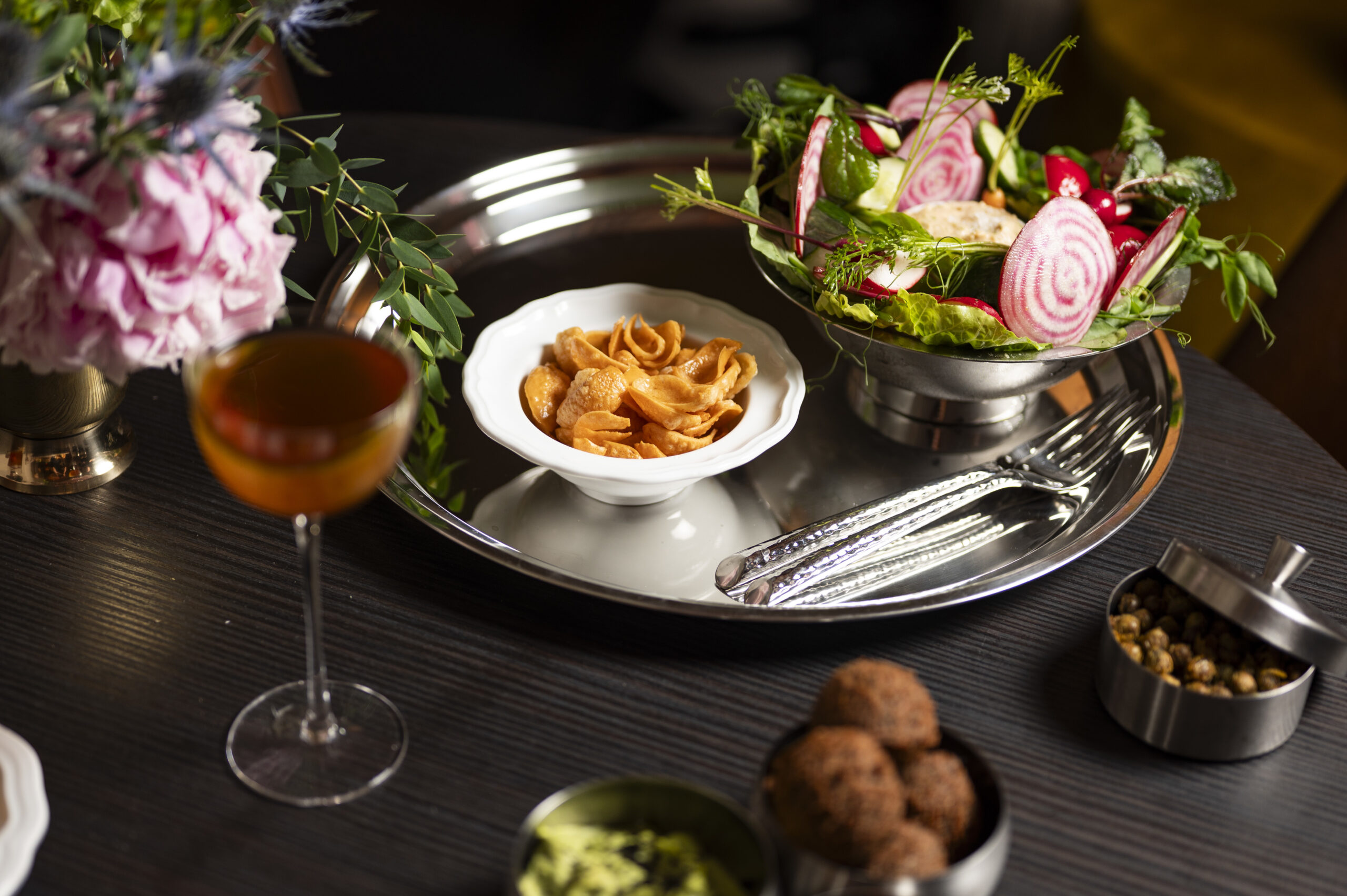
Crudite with potato puffs and caramelized sour cream and onion dip at Known Associates.
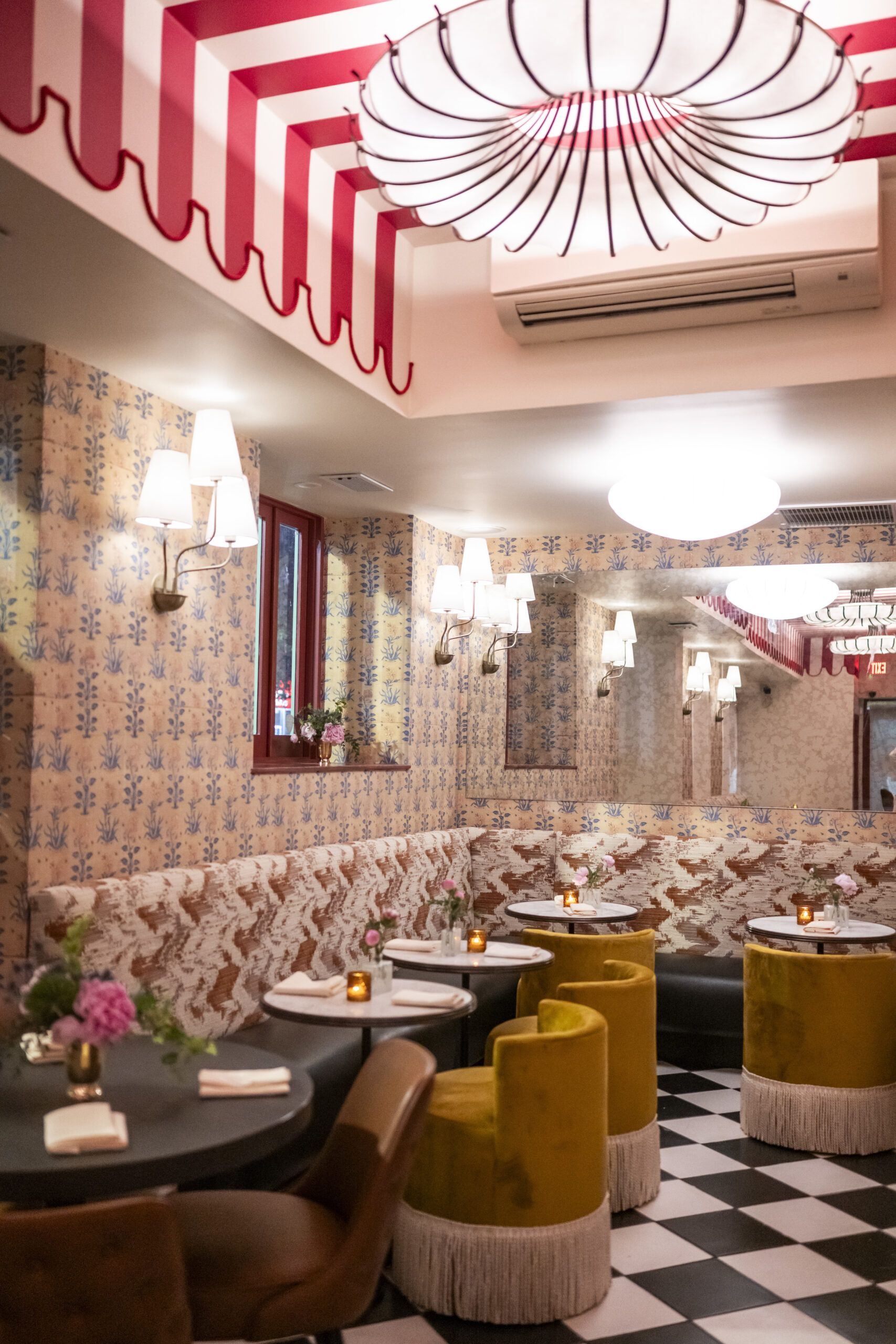
The finished room is emphatically café lounge, not neighborhood drinking den. Floral wallpaper wraps the walls. Patterned banquettes line marble-topped tables. Mustard velvet chairs sit beneath wall sconces, with checkerboard flooring underfoot and a red-and-white striped canopy treatment stretched overhead. The overall effect is layered and slightly theatrical.
Schuh said her working relationship with Kearse is built on familiarity. “Chris and I just kind of speak the same language because we’re both artists,” she said. “We’re not that great at talking about our work, but we’re great at producing our work.”
The location — within blocks of Jefferson, Wills Eye, and Pennsylvania Hospitals — also helped shape the project. Lauren Kearse said they envisioned a room that could work for after-work drinks and dinner-adjacent snacking as much as destination cocktail traffic.
That balance shows up on the food menu, which is limited to 10 savory dishes and two desserts. Kearse said the kitchen’s role is to support the bar rather than turn it into another restaurant. Still, the menu is more ambitious than standard bar snacks and has some of Forsythia’s cheffy feel.
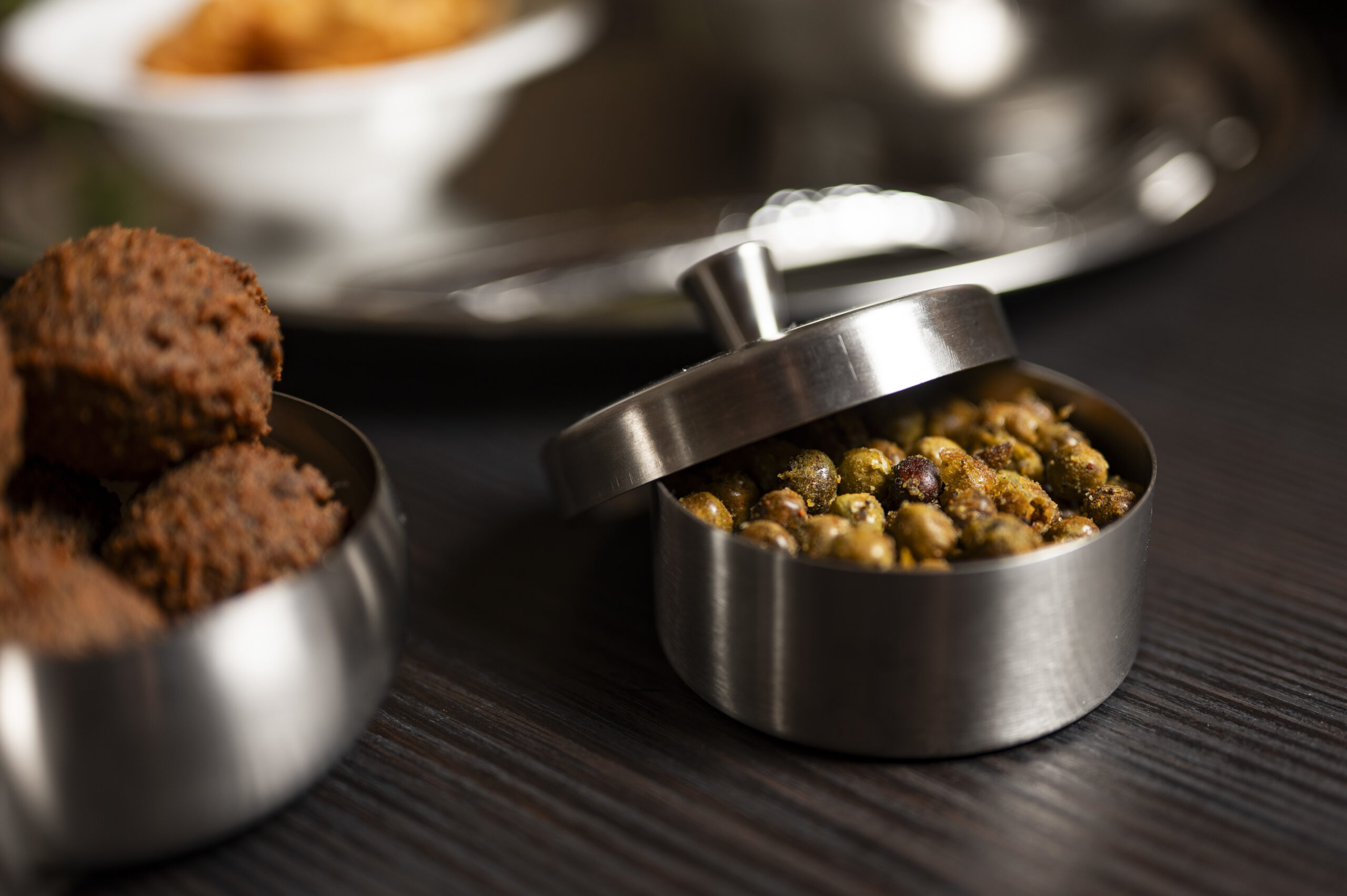
Cool ranch peas at Known Associates.
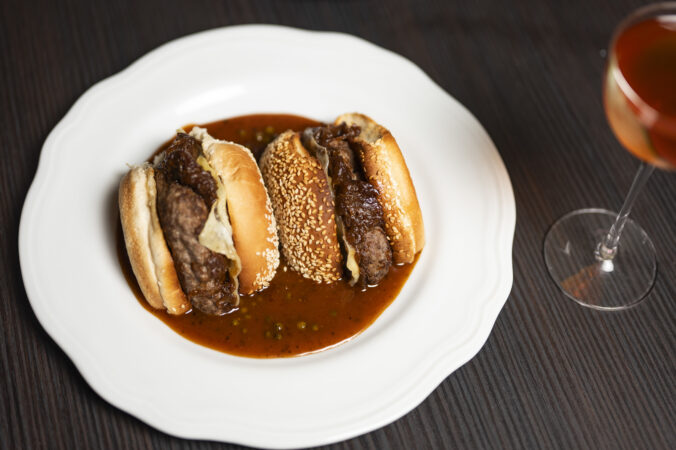
The burger that is a signature at Forsythia appears at Known Associates as burger au poivre, topped with Comté, cut in half, and served cut-side down in a pool of peppercorn reduction ($20). Char siu duck legs ($22) come on a pretzel milk bun with fish sauce and pickles. There’s also a chicken club ($23) with green goddess dressing and Benton’s bacon.
Lighter dishes include black-eye pea falafel with muhammara and green-scallion hummus ($15); hamachi toast with hard-boiled egg and piri piri ($22); pomme frites with Comté cheese foam ($10); and freeze-dried cool ranch peas meant for snacking with drinks. Seasonal crudité ($12) comes with potato puffs and a caramelized sour cream and onion dip. Desserts ($12) are limited to two: toasted rice milk ice cream with sesame and peanut brittle, and triple chocolate mousse with dulce de leche and toasted hazelnut.
The kitchen is led by chef Brandon Brokenbough, formerly of Enswell and Scarpetta.
Chefs Christopher Kearse (left) and Brandon Brokenbough at Known Associates.
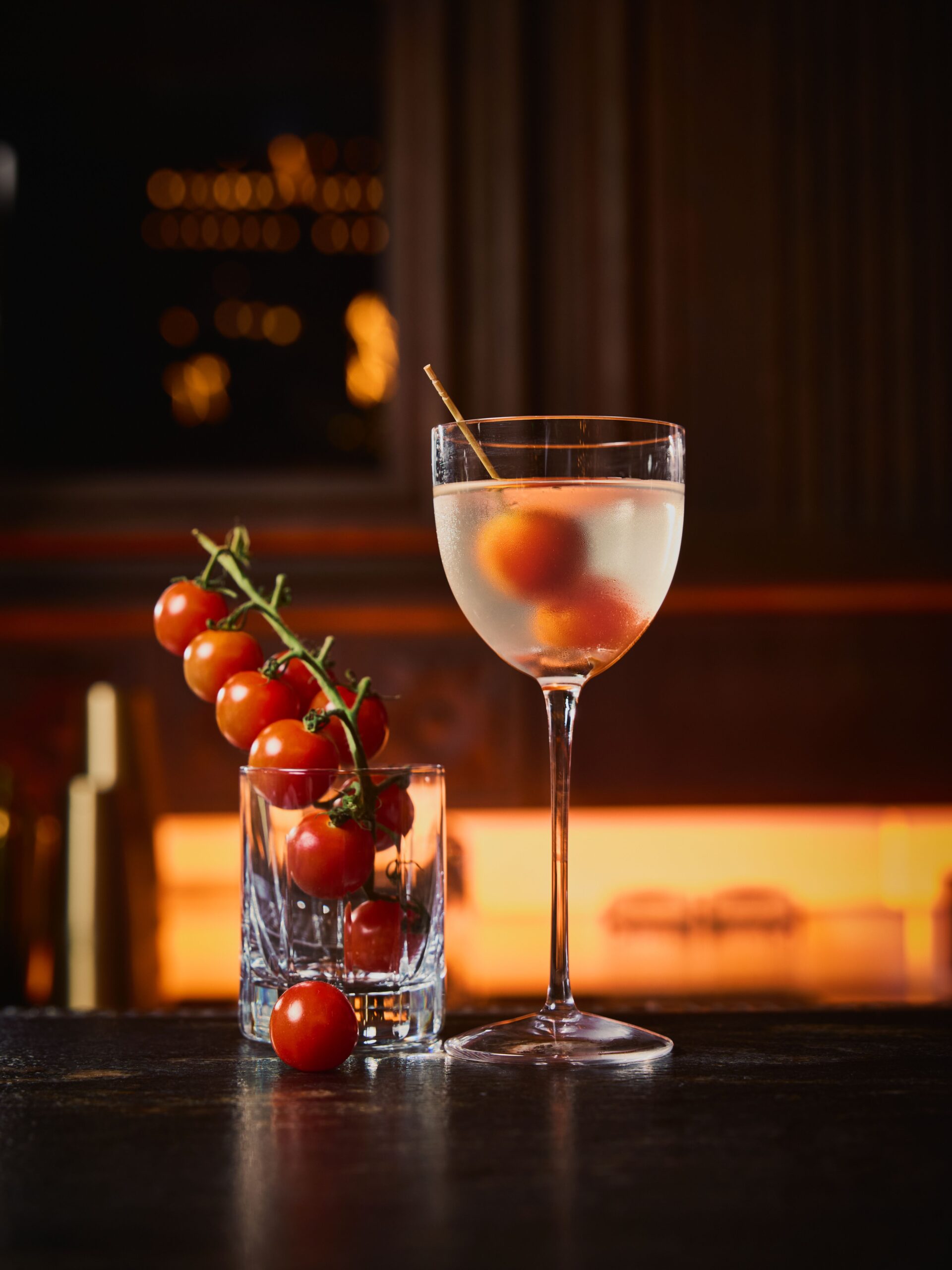
Beverage director Chris Harrop’s cocktails are built around prep work and technique. The TNT ($18) — tomato and tonic — uses clarified tomato water made from tomato, red bell pepper, shallot, fennel, and cucumber. The solids left behind after clarification are dehydrated and served as chips alongside the drink. Harrop said the same clarified base can also be used as a zero-proof savory soda.
The Bittered in Bond ($20), a Boulevardier variation, is made with a house mezcal amaro, Bonal Gentiane, Cappelletti Aperitivo, Licor 43, and salt. It is bottled in a small flask with a batch number and bottling date and poured tableside, a nod to bottled-in-bond whiskey labeling.
Between Harvest ($19), meanwhile, is a Martinez variation with Hayman’s Old Tom gin, Luxardo Maraschino liqueur, Nardini Rabarbaro, and muddled cucumber. Harrop said the name came from a Forsythia customer’s observation that rhubarb and cucumber almost never overlap in season — one fading as the other begins. For summer, he said, the bar has a frozen zombie ($19) assembled to order, with the rum blend kept separate from the slush machine so each drink can still be measured and built fresh.
The name Known Associates carries a passing wink to spy movies — the Kearses are fans of Bond films — but Lauren Kearse said the bar is not built as a themed concept.
“We have no interest in doing that,” she said. “We wanted something punchy that had a little bit of mystery to it.”
Known Associates, 941 Spruce St., opens June 26 and will be open daily from 3 p.m. to midnight.
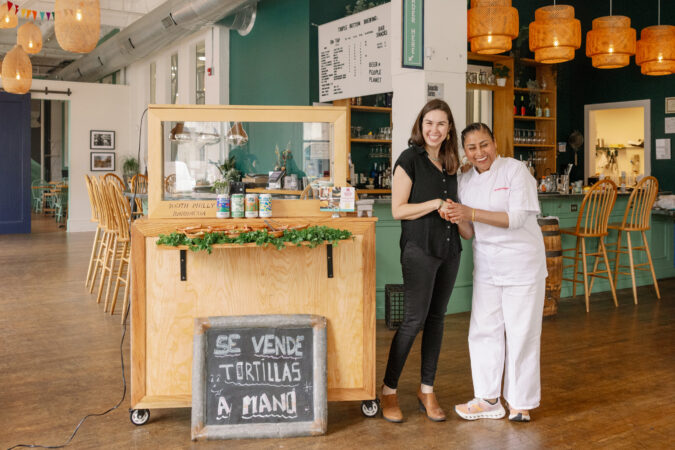
On a recent Saturday inside Triple Bottom Brewing, award-winning chef Cristina Martinez stood behind a wooden taco cart next to the bar making barbacoa tacos for an eager crowd.
At the June 14 event, Triple Bottom owners Tess Hart and her husband, Bill Popwell, announced South Philly Barbacoa as their new permanent food vendor for the Spring Garden brewery.
The brewery was ready to have a permanent food vendor after two years of hosting chef residencies, including La Llamita Vegana and Angie’s Vietnam. In early spring, the CEO of Triple Bottom decided to email the restaurant she felt would be the best fit: South Philly Barbacoa.
“Their team has been in our space a lot, and I’ve been down there,” Hart said. “We introduced the conversation at a moment where they were also thinking about their next steps and what growth could look like for them. It felt very natural, because I think — even though we do such different things in the food and beverage space — both of us are really led by values,” including caring about the supply chain for their respective businesses and supporting the immigrant community of Philadelphia.
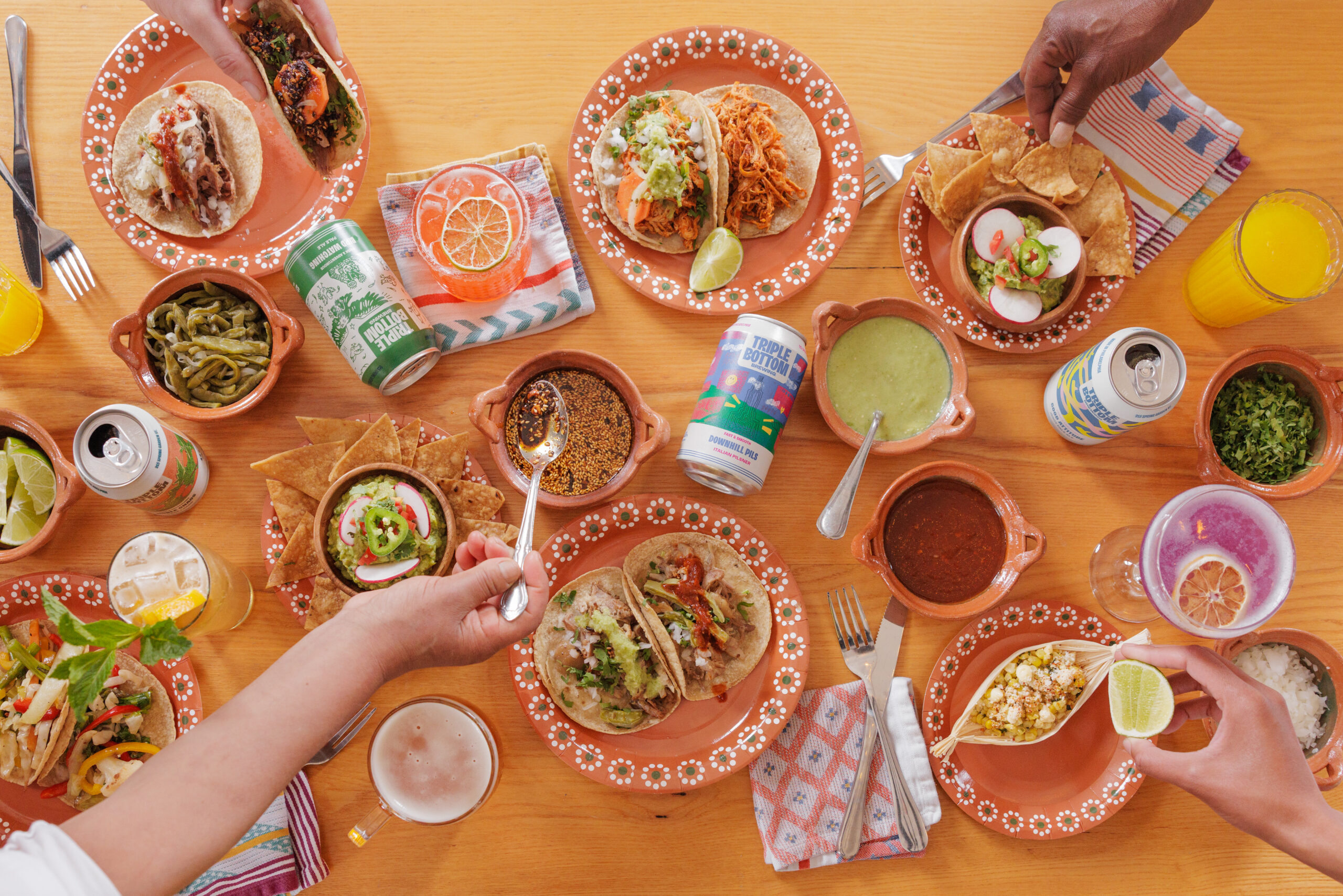
The South Philly Barbacoa menu, attached to Triple Bottom drinks menu, features most of the same items found at its South Philly location inside Casa Mexico, where South Philly Barbacoa still operates.
Find South Philly Barbacoa at Triple Bottom Brewing, 915 Spring Garden St.
“The only thing that is not here is the consommé, which hopefully we’ll have in the wintertime,” Hart said. “But for now,” there are tacos — slow-cooked lamb barbacoa, shredded chicken covered in smoky tomato chipotle sauce, slow-braised pork, spicy lamb offal sausage pancita, and a vegan option with seasonal vegetables — $7 for one or $21 for three, chips and guacamole with crispy corn tortillas for $10, esquites for $10, and handmade sweet tamales made with corn masa for $7.
“Having a very amazing food program that’s reliable is a way to make sure that you can come here even if you don’t want a beer or any kind of drink — this is still a place for you,” Hart said.
“Triple Bottom Brewing is this little oasis on Spring Garden Street with these bright, airy windows,” Hart continued. “And now, barbacoa tacos.”