‘Tis the season of spiked hot cocoa in novelty glassware and donning Christmas sweaters before waiting in line to take Instagram photos.
The holiday bars are back, baby. And this year, they’re making me feel like the Grinch.
Holiday bars typically run from the weekend after Thanksgiving through New Year’s Eve, and Philly has no shortage of them. This season brings pop-ups that serve cocktails inside snowmen-shaped mug, a mini-golf course with a greased North Pole, and a slew of Santa impersonators looking to make some extra cash.
And cash they will make: Holiday pop-ups can give bars and restaurants an extra leg up during what already is the busiest time of year, with the most successful — such as New York City’s Miracle on 9th Street — spawning lucrative franchise opportunities. Sometimes, however, they yield more coal than Christmas magic, like when drunk St. Nick impersonators spill into the street at the end of the annual SantaCon bar crawl.
Holiday bars have always struck me as late-stage capitalism holly jolly-ified, because they commodify something as simple (and cheap!) as the joy of drinking with your friends in December.
Despite this, I have a soft spot for them. I love taking in the slightly tacky displays and sipping on a sugary cocktail from a novelty glass that I’ll pay extra to take home. There’s also something magical about the tipsy train ride home that comes after, where my friends and I crack enough jokes to turn an overrated experience into one we end up doing annually.
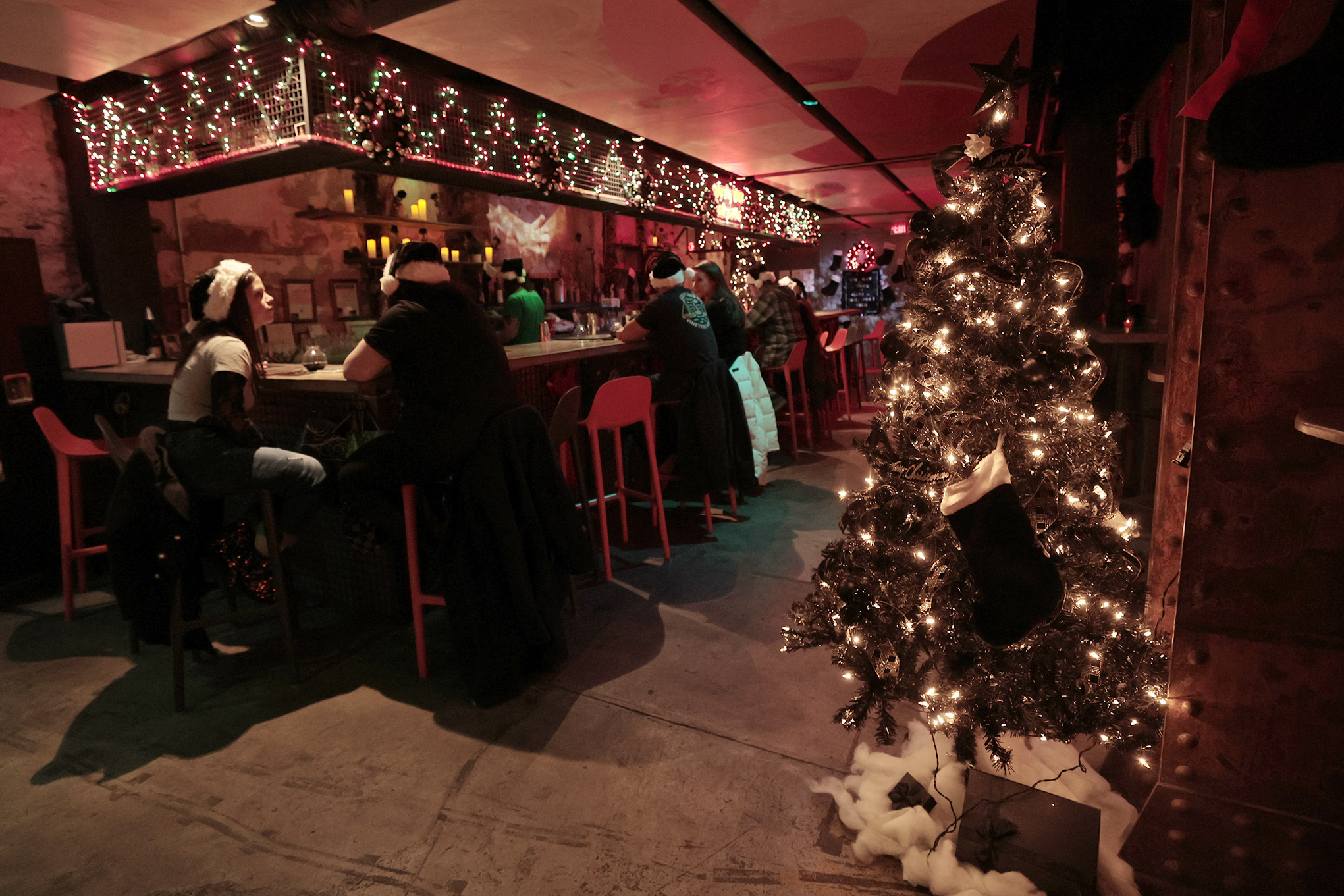
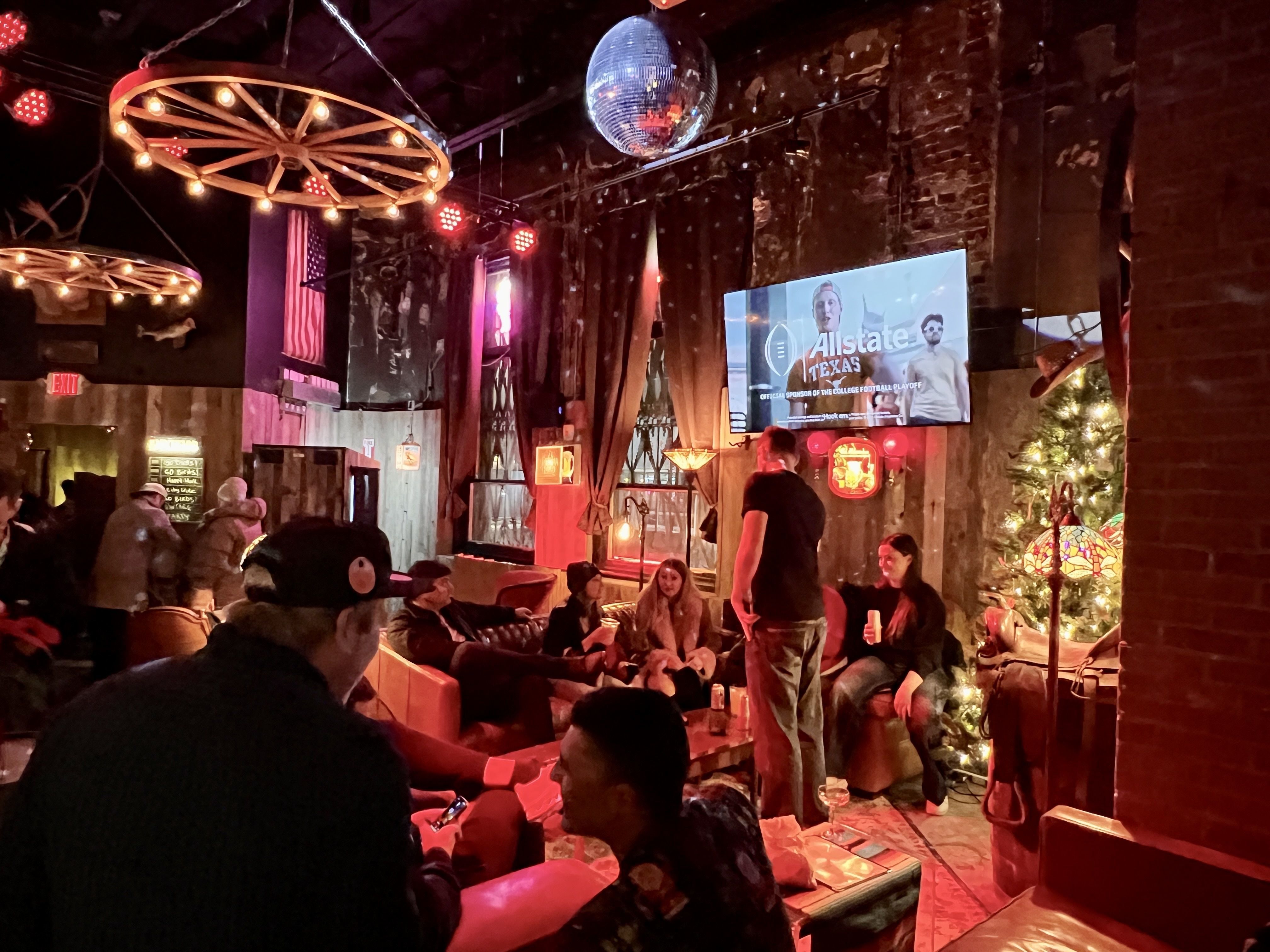
Christmas lights hang from the bar inside the Emo Christmas pop-up inside foundation at 699 N. Broad Street.
This season feels different to me . One bar has ruined it for the rest by stripping away the whimsy and up-charging for something more nefarious: A holiday bar distilled down to its barest elements — gimmicky cocktails and Hobby Lobby discount-bin decor held together by a barely-there theme. There’s no sentiment behind the displays of miniature nutcrackers and colorfully wrapped (empty) gift boxes, just profit motive.
The batch’s most egregious offender is the Emo Christmas bar pop-up that runs through Dec. 28 at Foundation., an event space beneath the Divine Lorraine on North Broad Street. It’s hosted by Bucket Listers, an New York City-based company that puts on limited-run events in cities across the U.S., from a Christmas Bar co-signed by Mariah Carey in Los Angeles to a murder-mystery dinner series in Miami.
In Philly, Bucket Listers’ track record is mixed: When I attended their cereal-themed pop-up bar in March, plastic bowls of resin Fruit Loops fell from the photo wall. But I had also won putt-putt at this year’s Christmas collaboration with Libertee Grounds (the second of Bucket Listers’ three holiday pop-ups), where the mini-golf course was decked out in Philly-centric holiday decor, like a sleigh covered in Philadelphia Parking Authority tickets.
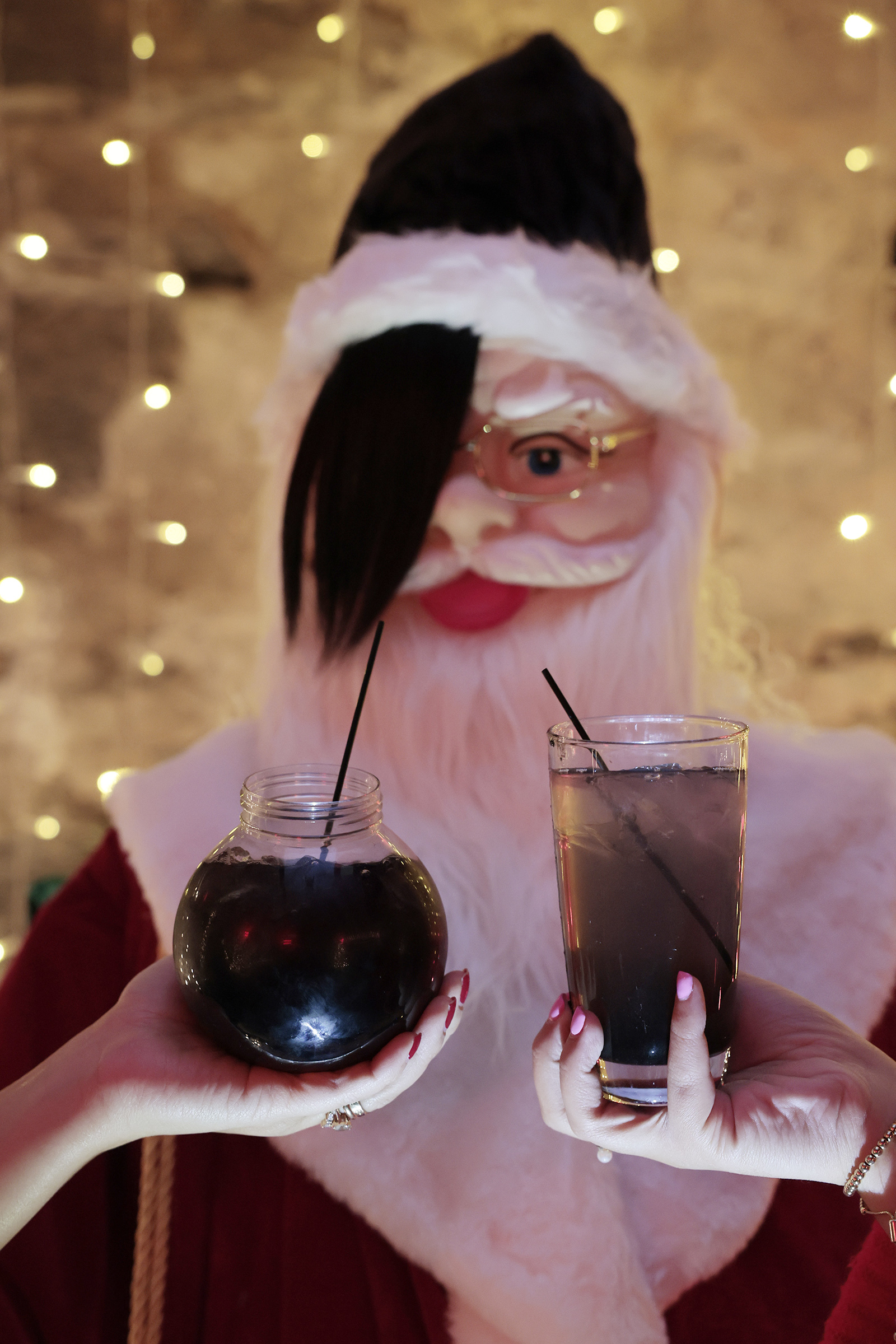
The Taking Back Christmas welcome cocktail (left) and the I’m Not Okay cocktail (right) sit in front of an Emo Santa Claus at the Bucket Listers’ Christmas pop-up at Foundation.
So when I learned before Thanksgiving that Bucket Listers was hosting an Emo Christmas pop-up, I was undeterred by any red flags. I love Christmas, and I spent high school on the outskirts of a clique of emo teens, cool enough topartake in My Chemical Romance listening sessions but not cool enoughto vape with. If I was going to love a holiday bar, it should’ve been this one.
A poser bar that preys on nostalgia
I paid $57.20, after fees, for two Friday night tickets to Emo Christmas. The cost included one welcome cocktail per ticket, but, as I would later learn, any drinks or food beyond that would be pay-as-you-go.
The only thing that’s punk rock about Bucket Listers’ Emo Christmas bar is that it doesn’t care about first impressions.
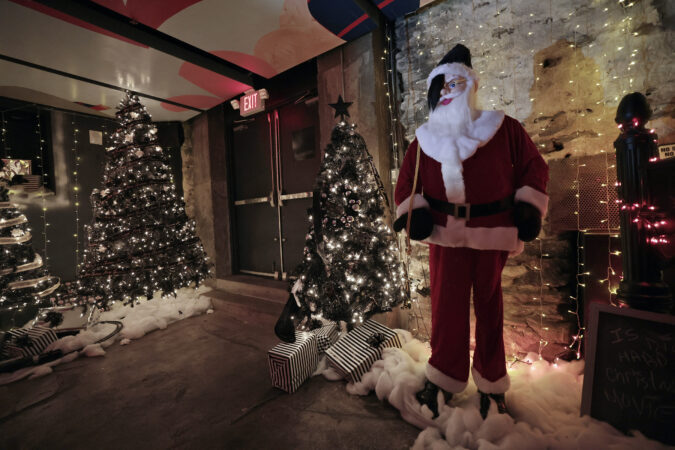
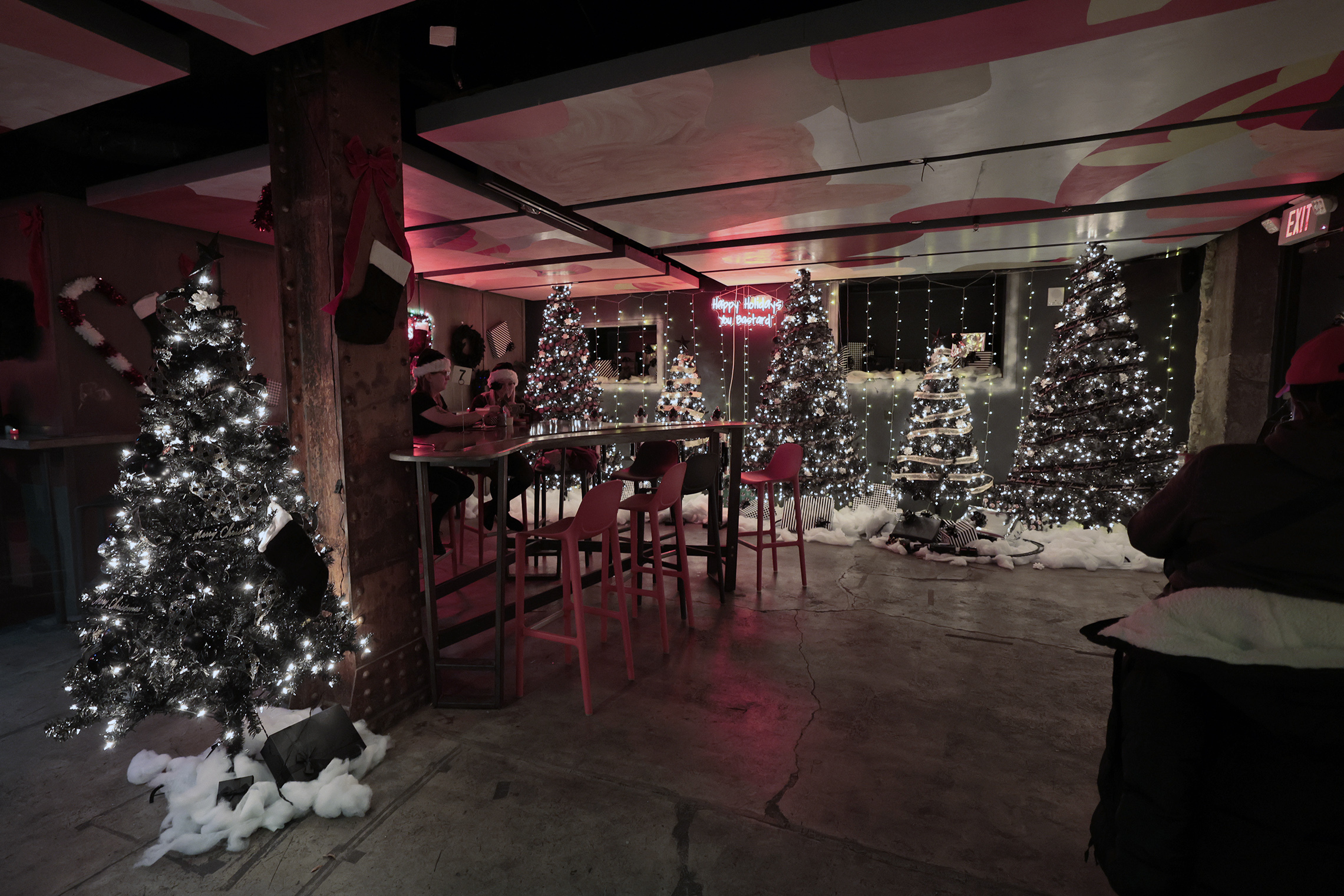
The decorations feel half-baked, amountingto fake Christmas trees and a trio of full-sized nutcrackers that had black Sharpie smeared under their eyes to mimic eyeliner. Across from them stood a mannequin dressed as Santa, with swide-swept fringe bangs so you know he’s emo. Like everything else in the bar, he smelled lightly of kitchen grease.
Each Bucket Listers pop-up is clearly designed as Instagram bait, as evidenced by the influencers that post about each one. Yet the space is too dim to take any photos. The only lights in the room emanated from the Christmas trees or red-tinted neon signs with phrases that no one has ever uttered seriously, such as “happy holidays, you bastard.”
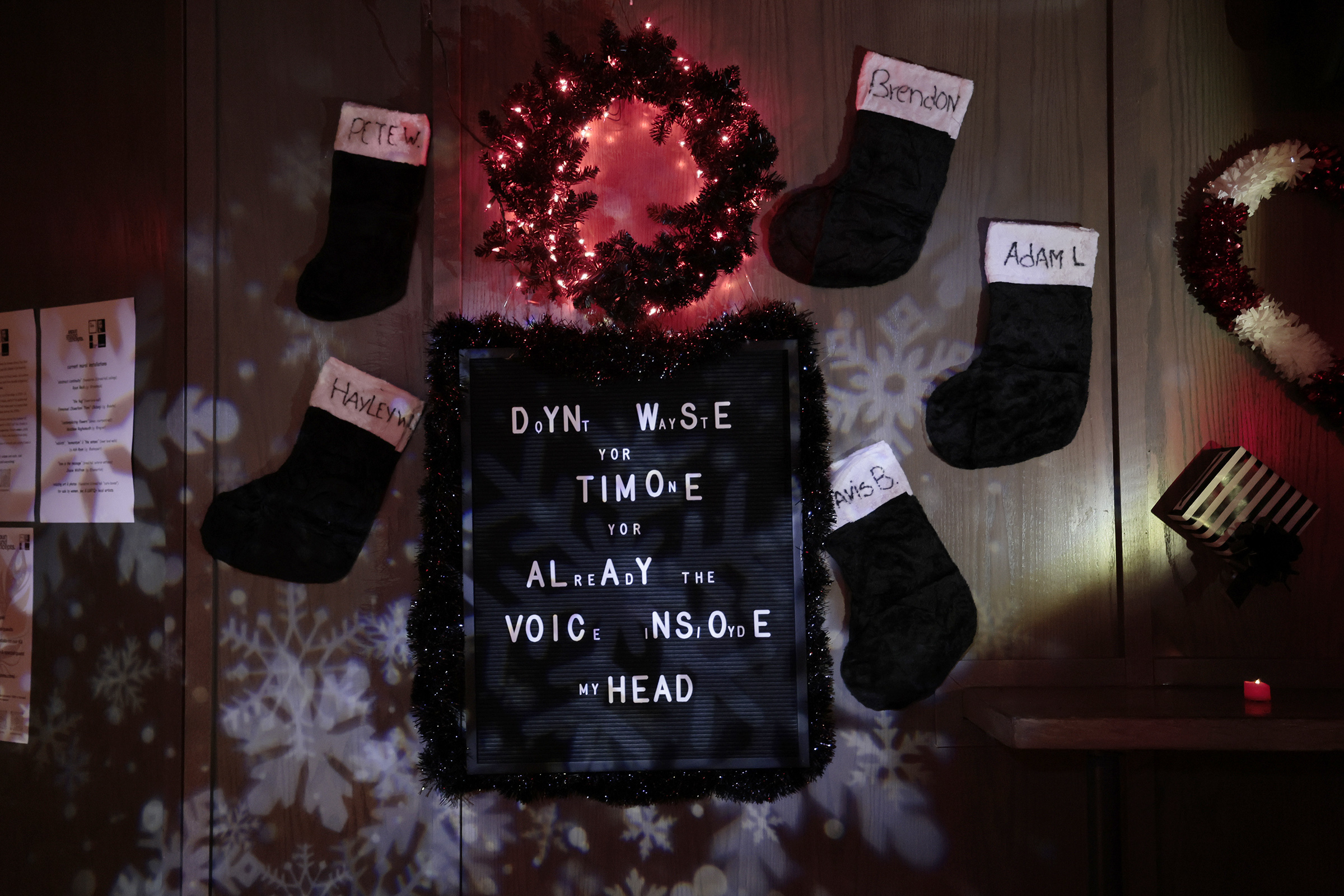
Christmas stockings hanging on the wall at the Bucket Lister’s Emo Christmas bar Philly pop-up. One honoring Blink 182 drummer Travis Barker has his name misspelled.
It’s clear the space was decorated by posers. The back wall is covered in Christmas stockings labeled in chicken-scratch with the names of so-called pop-punk greats: Brendon Urie, Pete Wentz, and my personal favorite, Tavis B., a misspelled bastardization of Blink 182 drummer Travis Barker.
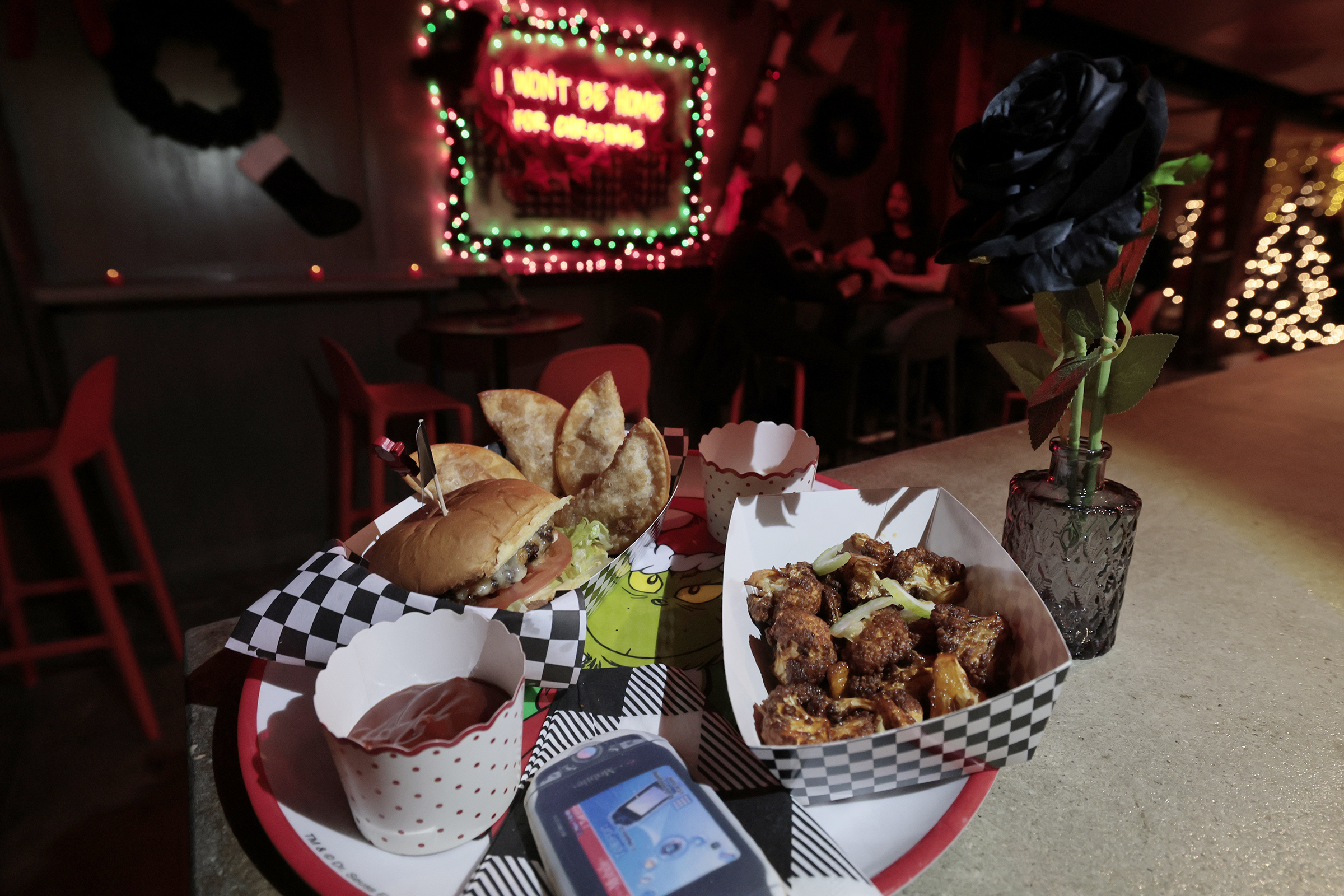
I cringed, and cringed again while skimming the food and drink menus, which read as a list of poorly constructed puns. There’s the Panic! at the Pizza Bites (deep-fried pockets of sausage and cheese) and the Blink Wing82, which come in sets of six with either Buffalo sauce or dry rub. The most unfunny is the Still Into-fu, a tofu hoagie on a long roll named after “Still into You,” a pop love song from Paramore.
My friend had already sent of photo of the menu to be flamed by her groupchat. “The obvious choice is Panic! At the Disco Fries,” she read from her phone. “BlinkWing182? All the Small Wings is right there.”
An unexpected silver lining was our bartender. A true elder emo, he led with apathy, dodging questions about what’s good on the menu and the decorations with a shrug and a simple answer: “I don’t know. I just work here.”
Buffalo cauliflower, pizza bites, and a slider from the Bucket Lister’s Emo Christmas Bar pop-up in Philly. Tickets start at $16.00 and do not include food or drink beyond a welcome cocktail.
The bartender’s eyes roll while squeezing black food coloring into the aptly named I’m Not Okay, a vodka-club soda cocktail zhuzhed up with a whisper of blackberry. By the time he got to my Mezcal Confessional, he was was over it, leaving out the orange bitters to serve me a clear glass of mezcal spiked with brown sugar.
Not that it mattered. Both drinks tasted like rubbing alcohol despite being made with completely different spirits. That’s a first — a Christmas bar where the drinks aren’t sweet enough. We toasted to the bartender’s commitment to the bit while an overdramatic ennui overtook me.
I felt like I was taken for a ride, and not one on Santa’s sleigh.
Christmas trees decorate the dimly lit seating area inside the Bucket Listers’ Emo Christmas Bar pop-up at Foundation.
Emo Christmas preys on nostalgia. All holiday bars are designed todo this. Maybe the decor reminds you of a favorite window display from childhood or a scene from your guilty-pleasure Christmas movie. Or perhaps the peppermint espresso martini recalls the Schnapps you downed on your first pre-Thanksgiving Blackout Wednesday. The anticipation of it could even feel like waiting for a turn with mall Santa.
I usuallydon’t mind paying extra for an experience like this. When done right, these bars conjure feelings that are more difficult to come by in adulthood: whimsy, silliness, glee.
I came to Emo Christmas in search of all of those things. I left with none, only a check for $82.00 and a shriveled-up Grinch-sized heart.
With two acclaimed restaurants and a high-end coffee bar in Center City, chef Greg Vernick wasn’t looking to expand two years ago when a close friend introduced him to developers working in the Fishtown-Kensington corridor.
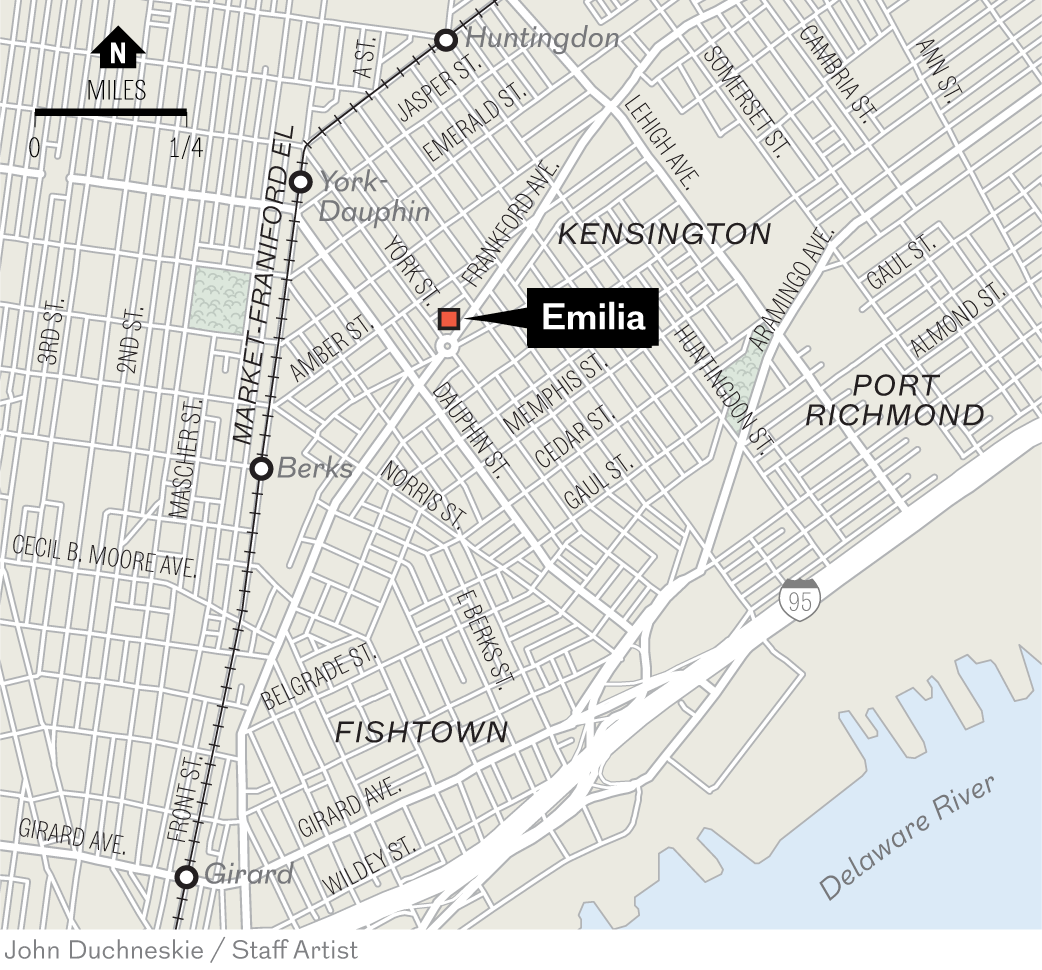
They had a mixed-use building going up on Frankford Avenue, just north of the York Street roundabout. Vernick walked the neighborhood. “It reminded me of the East Village — a place you want to hang out at night, but also a real community,” he said. Still, Vernick was not entirely sold on the project until he and his wife, Julie, started spending more time nearby, dining at Fiore across the street and around the corner at Picnic and Zig Zag BBQ.
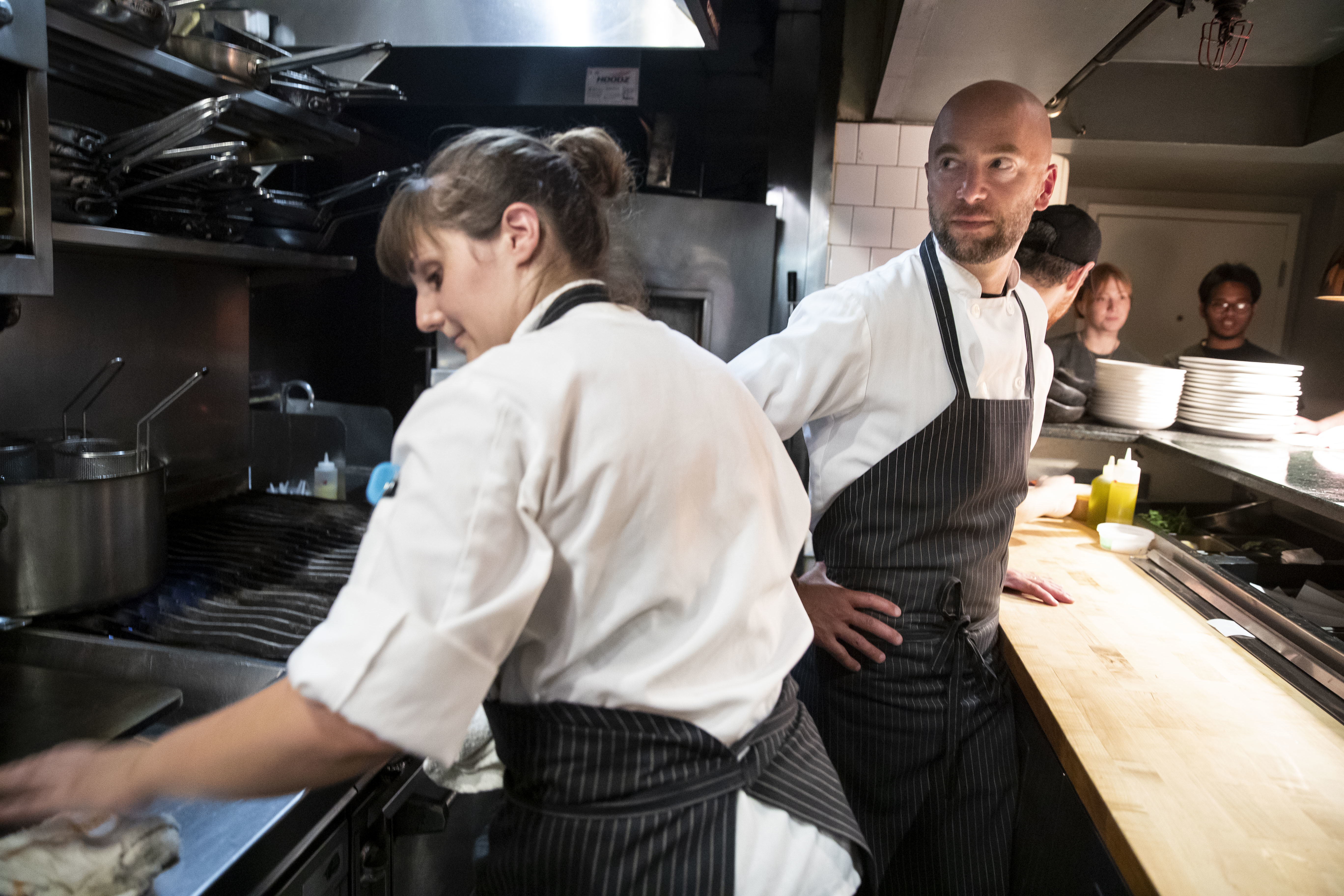
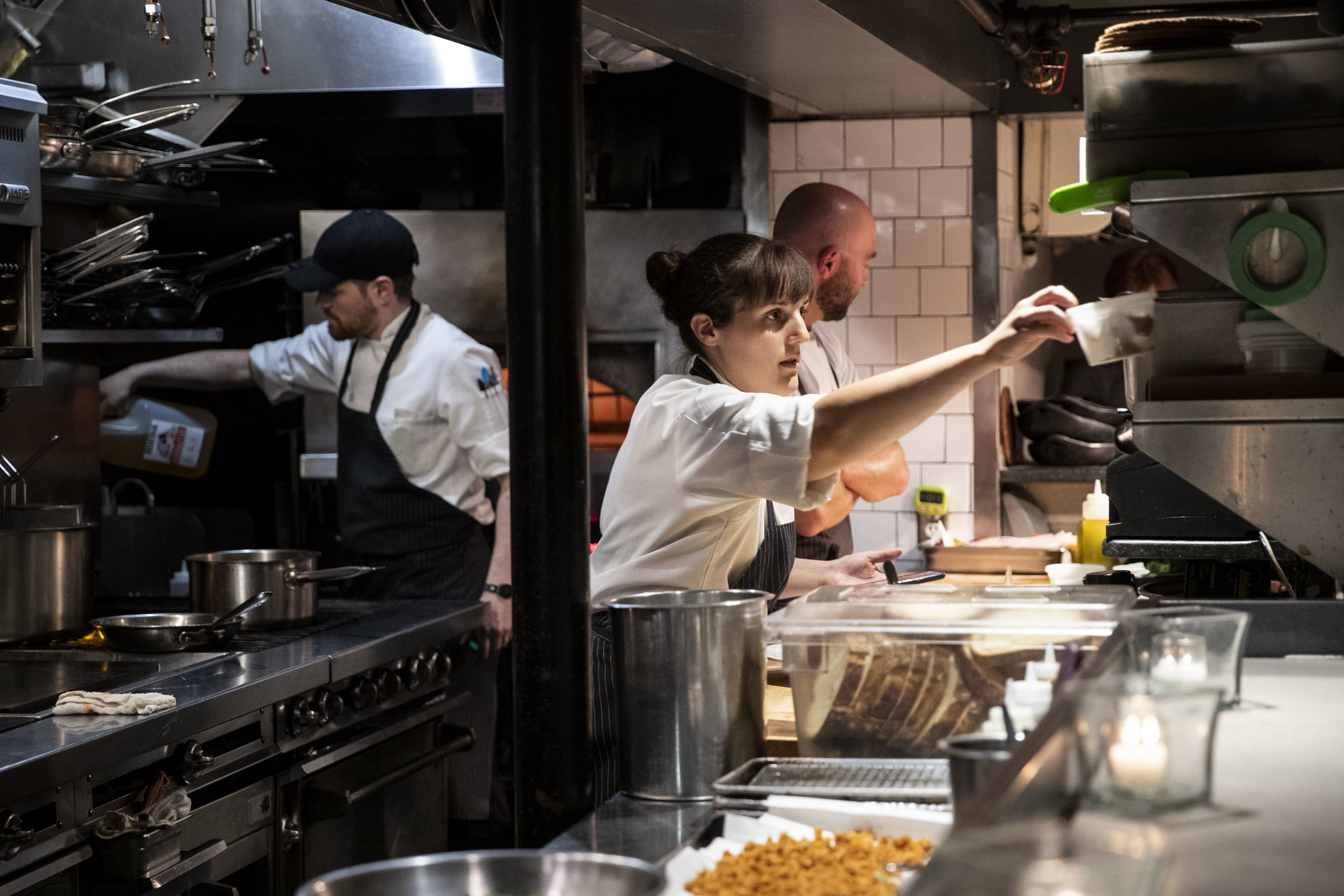
Chef de cuisine Meredith Medoway and chef Greg Vernick in the kitchen at Vernick Food & Drink in 2022.
The developers — Henry Siebert, Ryan Kalili, and Michael Dinan, all Vernick regulars — were keen on having an Italian restaurant in the building, at 2406 Frankford Ave. Vernick’s thoughts naturally turned to Meredith Medoway, the longtime chef de cuisine at his Vernick Food & Drink on Walnut Street. “Her heart has always been in pasta and Italian food,” Vernick said. “She took our pasta program from really good to great. So I started thinking: This could be the right person.”
They’ve targeted “early 2026” for Emilia, a neighborhood trattoria featuring a seasonally flexible menu built around house-made pasta and live-fire cooking. (Vernick’s connection to the project has not previously been made public, and the restaurant’s name, recently set into tiles at the entrance, has been a subject of speculation on community Facebook groups.)
Chef de cuisine Meredith Medoway working in the kitchen at Vernick Food & Drink in 2022.
Canno Design’s Carey Jackson Yonce, who worked on Emilia with California-based designer Bob Bronstein, said they were going for “calmness, cleanliness, and contrast,” using contrasting materials, such as cinderblock on the bar’s front, spruce slats lining the ceiling, and oak panels on the walls. (During a visit last week, Vernick declined a request to photograph the space, as it was not completed.)
“I wanted it to feel like the kind of place where you walk in and exhale and relax,” Vernick said. “Industry-friendly, not precious. We want to hit two markets from day one: the neighborhood and the industry. If you get those right, everything else falls into place.”
Emilia restaurant is at 2406 Frankford Ave.
There will be seating for about 60 in the dining room, with 20 additional seats in a lounge area and 10 at the bar. The bar and lounge are intended for walk-ins, while the main dining room will lean more heavily on reservations.
The 33-year-old Medoway — a Cherry Hill native like Vernick, who is 45 — studied political science at American University in Washington, D.C.
During one college summer, she worked at Hinge Café in Port Richmond and fell in love with cooking. She interned at Vernick Food & Drink, stayed on, worked every station, and moved to Hearthside in Collingswood for its 2017 opening. She spent three months cooking in Calabria, and flew back to the United States to work at Vernick Fish at its opening in 2019. She returned to Vernick Food & Drink in 2021.
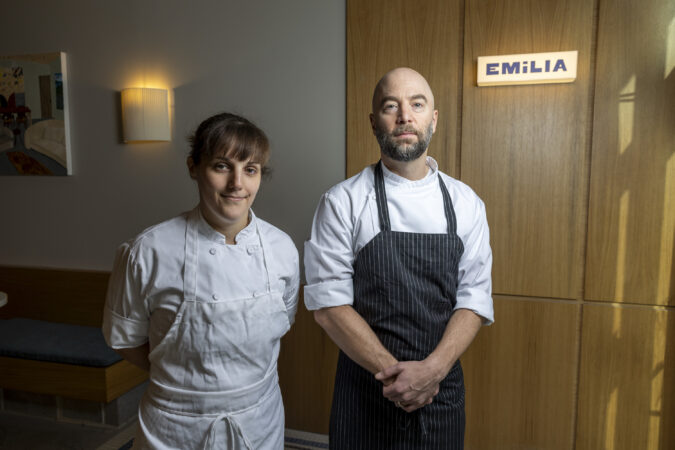
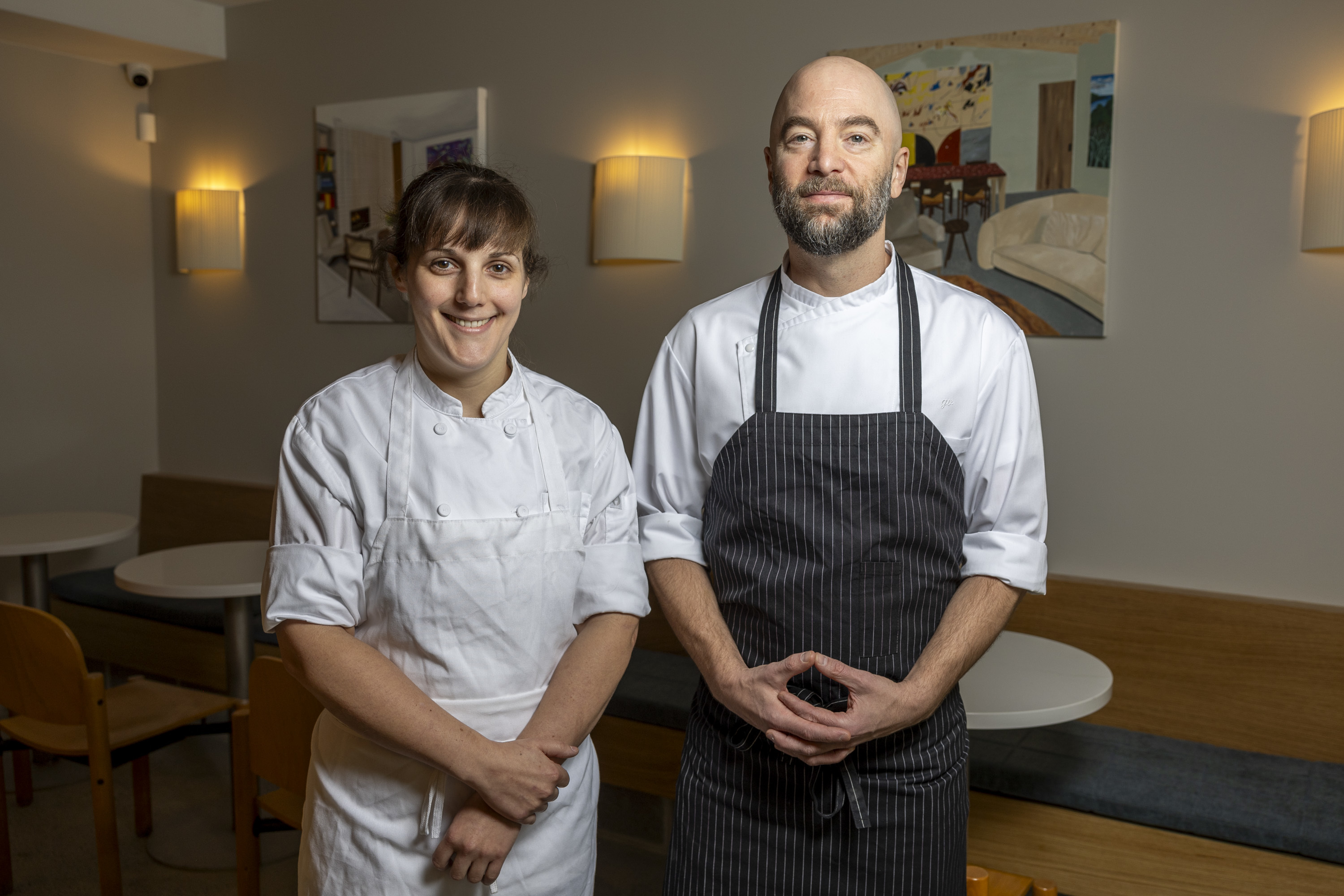
Greg Vernick and chef Meredith Medoway in the lounge at Emilia.
At Emilia — a purely made-up name (Vernick said he was tired of putting his own name on restaurants) — Medoway will work on a 48-inch grill fueled by charcoal and oak. The menu is intentionally restrained: about six small plates, six pastas, and six large dishes, supplemented by nightly specials.
Medoway said the pasta dishes are rooted in personal experience rather than strict regional rules. One anchor will be tortellini in brodo, based on a handwritten family recipe she received while staying in Emilia-Romagna. Another is what they’re calling chicken ragù bianco — a white ragù made with hand-cut chicken and offal — inspired by a staff meal that they ate at the American Academy in Rome during a tour of Italy.
“It was the best pasta we had on that trip,” Vernick said. “Simple, balanced, and deeply satisfying.”
Elsewhere, the menu leans toward lighter preparations and Vernick’s bold style, with brothy sauces, acidity, and restrained use of fat rather than heavy butter-and-cheese finishes. Subtle char from the grill will appear throughout the menu, even in dishes that do not come directly off the fire. Proteins include rabbit prepared in cacciatore style with orange, rotating fish dishes, shellfish stew, and a nightly steak special.
Bread service will be complimentary: house-made focaccia, the imported Italian breadsticks known as grissini, and Mighty Bread’s sesame ciabatta. A separate bread course, the crunchy carta da musica, will be offered as a menu item.
“We want the neighborhood to feel like this is their place,” Medoway said. “You shouldn’t need a reservation just to come in for a drink and a snack.”
The wine list will focus exclusively on Italian bottles. The cocktail program is still being finalized but is expected to emphasize lighter, simpler drinks.
Emilia is expected to employ between 40 and 50 people. Vernick said opening a restaurant today requires tighter menus and less waste than a decade ago, but also greater attention to staff experience — from locker rooms to staff meals — as an essential part of operations.
“We’re building this deliberately,” Vernick said. “It’s taken time — but that’s the point.”
Technically it’s always whiskey-sipping season in my house. But there is something extra cozy about the December chill that sparks the spirit of giving whiskey, too. The glint of colorful lights on a big ice cube rattling through a tumbler of amber elixir. The toasty vanilla perfume of barrel char, the punchy spice of distilled rye, a whiff of peat smoke from a faraway land. A great bottle that captures this kind of magic is the definition of a win-win gift because, hopefully, whoever receives it will be in the cheerful mood to crack it open right there and share! That’s just good manners.
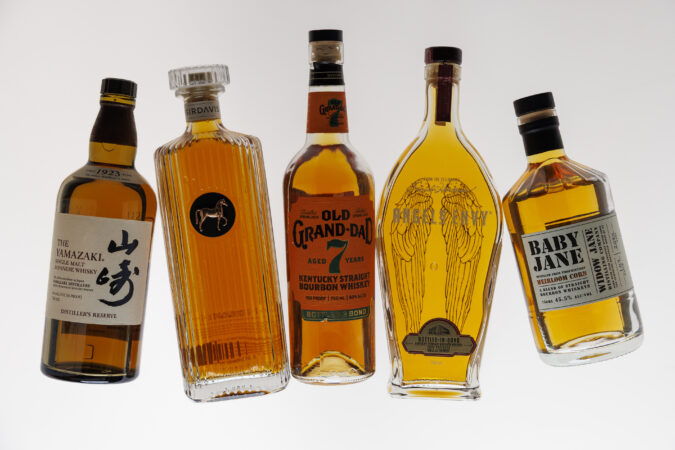
That is exactly what I did recently when I gathered a group of thirsty friends, neighbors, and spirit nerds for an afternoon tasting to determine the stars for my annual holiday bottle list. This year we sniffed, sipped, and selected 14 winners from a competitive collection of 33 bottles from across the world, including intriguing entries from two countries not yet known for whiskey — Mexico and Korea — as well as a pleasant surprise from a music icon more famous for her Billboard hits than her high-rye mashbill. All of these bottles are currently available retail in Pennsylvania and South Jersey, and they suit a wide range of tastes and price points, from a half-dozen sub-$50 values to a handful of triple-digit splurges.
One noticeable trend is the continued swing toward high-proof spirits, and in particular, whiskeys categorized as bottled-in-bond. This legal designation was created in 1897 to certify purity — with no additives other than water — and that the whiskey in question is produced by one distillery, aged no fewer than four years, and bottled at 100 proof. While the Bottled in Bond Act was launched as an integrity initiative when late 19th-century rectifiers were adding ingredients like creosote and wintergreen to their booze, the reasons for the current resurgence is unfortunately economic.
America’s craft industry is in the midst of a major implosion, with nearly 25% of America’s craft distillers closing over the past year due to a variety of reasons, from a rise in legalized cannabis and GLP-1 drugs that have cut into liquor consumption to the double-whammy of rising costs and plummeting exports due to tariffs. The net effect, says Rob Cassell of New Liberty Distillery in Northeast Philly, has been a wave of distillers unloading their more expensive aged inventory as the industry consolidates. That’s concerning for whiskey fans.
The flip side is that I also happen to be a fan of the 100-proof category, which offers more punch (and, often, more flavor) than standard bottlings typically in the 80- to 90-proof range. So I was happy to do my part and support the cause, putting several of these intriguing bottles on my annual tasting table and now passing them along as recommendations. While the industry confronts the sobering facts of its new reality, we can at least drink well.
Scotch
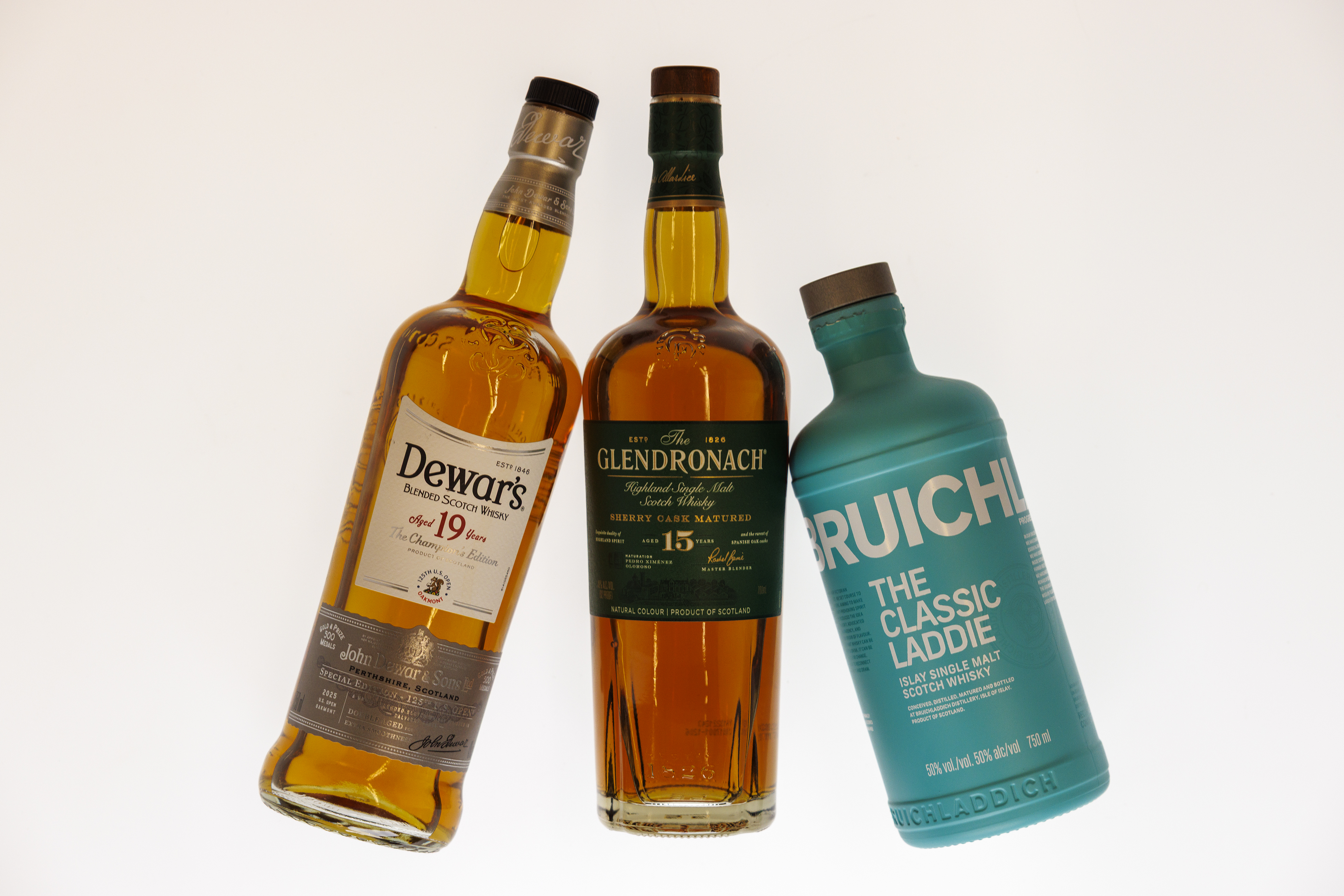
From left: Dewar’s Blended Scotch Whisky, The Glendoronach Highland Single Malt Scotch Whisky, and Bruichladdich Islay Single Malt Scotch Whisky.
Bruichladdich The Classic Laddie
The eye-catching teal blue bottle is only one sign this whisky is different. Bruichladdich, a once-fallow Victorian-era distillery, was revived in 2001 by emissaries of the French wine industry with a modern aesthetic and a focus on locally grown barley, which always comprises at least a portion of the mashbill. It’s one of the only distilleries on Islay (the smoke-shrouded home of Laphraoig) that makes some of its whiskies without peat-smoked malts. (Some of its bottles, like Octomore and Port Charlotte, are actually quite peaty). The Laddie is its signature elegant bottling. It smells of lemon and honey on the nose, then coats your palate with a fresh, clean flavor that evokes a breezy field of grain, then blooms into the fruity flavor of a Bosc pear glazed in salted dark caramel. Remarkably smooth for a 100-proof dram. Bruichladdich The Classic Laddie, 100 proof, 750ml, on sale in Pennsylvania in December ($3 off) for $54.99 (PLCB Item # 000096308)
Dewar’s Blended Scotch 19-year-old, Champions Edition Oakmont label
My dear late mother-in-law was a devoted Dewar’s drinker, and what’s fascinating is that even in its fancied-up form, such as this 19-year-old collectible for the U.S. Open Golf Championship, the traditional sweet side notes of this classic blended Scotch hold true: bananas and chocolate, tanged with citrus and baking spice. That profile reads deeper and more resonant in this slightly higher-octane edition (86 proof vs. the usual 80), which also has the added notes of apple brandy from the Calvados barrels used for aging. Apparently, because this 2025 golf tournament was held at Oakmont Country Club in Pittsburgh, Dewar’s wanted to honor Pennsylvania’s long affinity for the fruit, and it landed with my judges. “Smells like Mott’s apple sauce!” said one after a big sniff, while another, who added a splash of water, noted it took on a lovely butterscotch finish. Dewar’s Blended Scotch 19-year-old, The Champions Edition Oakmont label, 86 proof, 750ml, $79.99 (PLCB item #100047823)
The Glendronach 15-year-old Sherry Cask
This 15-year-old Highland malt looks and smells like burnished old copper, and delivers a decadent fruitcake of deliciousness on the palate — fudgy chocolate, bitter oranges, toasty walnuts, candied cherries, and figs, all wrapped up in a minty finishing puff of pipe smoke. Aged in Pedro Ximénez and Oloroso sherry casks, which accounts for the nutty and dark caramel notes, this 92-proof dram is both smooth and brawny, so a small splash of water only lengthens the flavors rather than dilutes them. A worthy splurge for the single-malt collector in your life.The Glendronach 15-Year-Old Sherry Cask, 92 proof, 700ml, $114 (PLCB Item #100043250)
Asian whiskeys
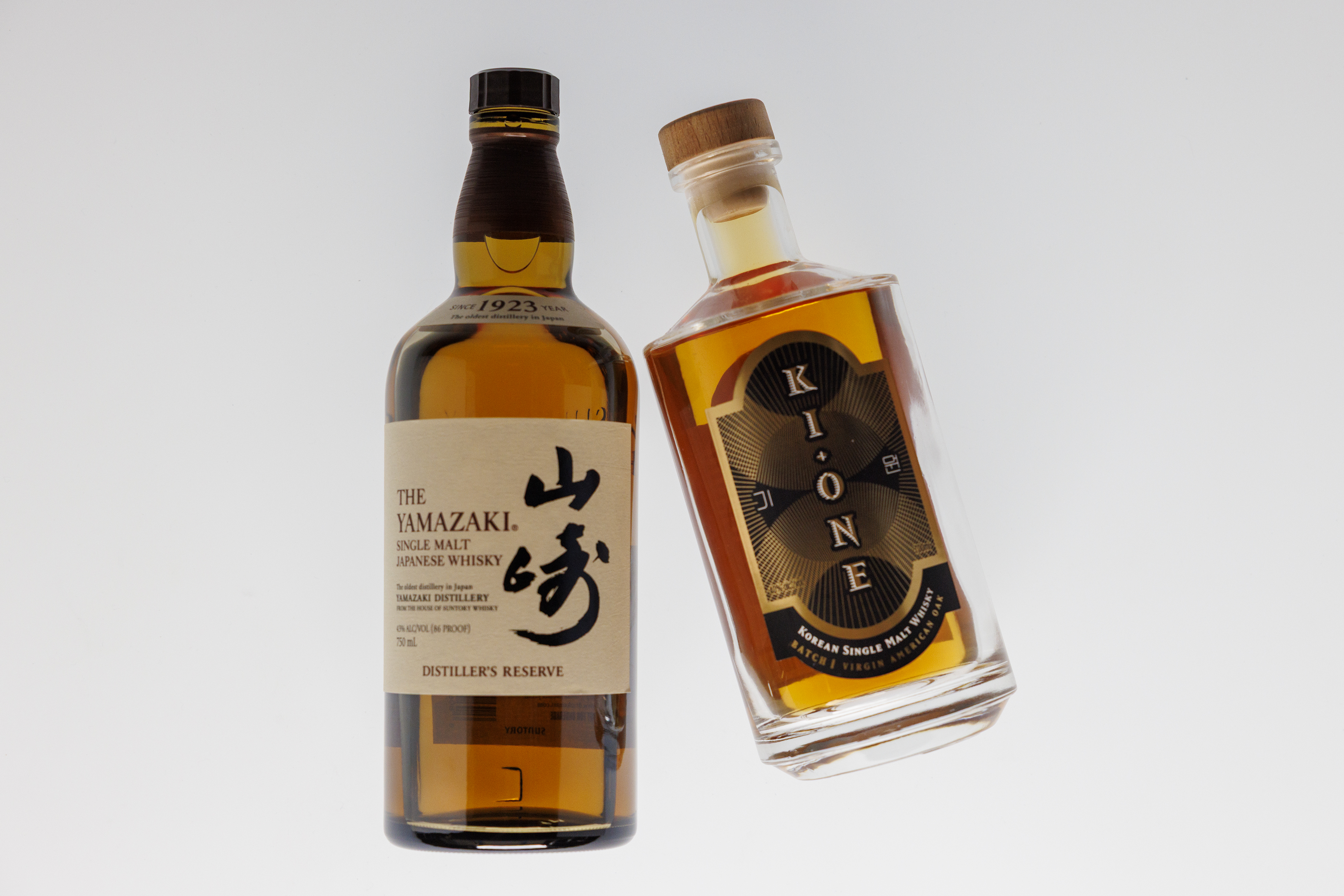
From left: The Yamazaki, Single Malt Japanese Whiskey and Ki One Single Malt Korean Whiskey.
Ki One Korean Single Malt Whisky
The single most fascinating whisky in this year’s tasting came from Ki One, South Korea’s first single-malt distillery, founded in 2020 by Korean American Bryan Do, who quit his job as a Microsoft exec to pursue his passion for spirits. He and master distiller Andrew Shand, who’s worked in both Scotland (Glenlivet) and Japan (Nikka), wanted to create a whisky that spoke to Korea’s love of spice, achieved largely through the choice of casks and the fast-aging properties of the region’s heat. This “Batch 1” edition aged in virgin American oak gets there beautifully, with deep caramel color and tropical fruit notes on the front — bananas, passion fruit, green Gage plums — along with a sweetness that phases into a tingly finish with a peppery, fermented tang reminiscent of gochujang. Not for everyone, considering the price, but well-made and utterly unique. Ki One Korean Single-Malt Whisky, 80 proof, 700 ml, $124.99 at Benash Liquors & Wines, 2405 NJ-38, Cherry Hill, N.J., 856-667-3539, benashliquors.com
Yamazaki Distiller’s Reserve
Any good Japanese whiskey under $100 is worth a second look, but especially one from the Yamazaki, Japan’s pioneering single-malt distillery built in 1923. The Distiller’s Reserve is Yamazaki’s entry-level bottling, but it’s still a gloriously smooth and complex sipper that will convey much of what makes the brand so coveted. The use of Japanese mizunara oak casks, along with American and Spanish wood, lends a subtle incense-scented component to the mix. Each sip is like a lovely pastry of beguiling flavors, with spiced stone fruit and caramel-vanilla on the nose segueing to strawberries and toasted coconut on the palate, shaded by a soft backdrop of peated malt. This is the kind of whiskey that coats your teeth in the best way. Its aromatics are also lovely when they sparkle atop the icy fizz of a luxury highball. The Yamazaki Distiller’s Reserve, 86 proof, 750ml, $94.99 (PLCB Item #100051645)
Mexican whiskey
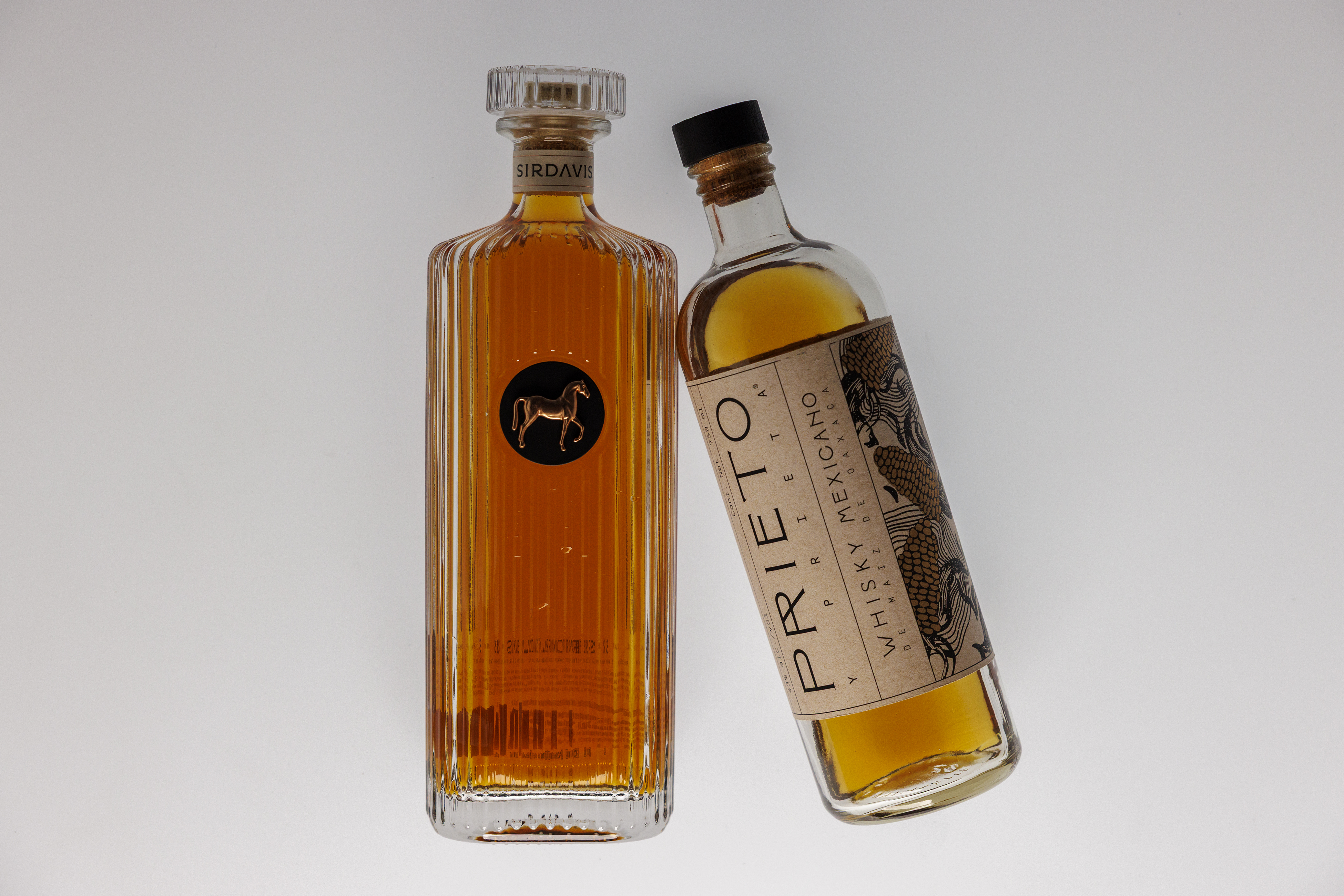
Prieto y Prieta
When I think of Mexico, I naturally think of agave spirits, but Mexico’s deep relationship to corn is also inspiring, so why not whiskey? This unique, brassy-colored whiskey de maiz shows what can be done with four heirloom varieties of corn from Oaxaca, and the results are intriguing. Caramel corn, grilled corn husks, and cinnamon are the most obvious aromas that hit you first, but what makes this whiskey so cool are the intensely earthy flavors that emerge on the palate, evoking mushrooms, green peppercorns, and a soft hibiscus tang. Your first instinct might be to add a splash of water to this 86-proof spirit, but that only seemed to dilute the character of its best traits. The label, featuring ears of corn with gilded kernels, will look pretty on any bar cart.Prieto y Prieta Mexican Whisky, $49.99, 86 proof, 750ml, at Benash Liquors & Wines
From left: Sirdavis Rye Whiskey Finished in Sherry Casks and Preito y Preita Whisky Mexicano.
American whiskey
SirDavis American Whiskey
On the subject of beautiful packaging, the tall, fluted shoulders of SirDavis’ bottle — topped with a cut crystal-style stopper and embossed with a bronze horse — stood out like an oversized bottle of luxury perfume. The soigné Western-themed look made sense once I told the tasting team this American whiskey was created by Beyoncé Knowles-Carter in collaboration with Moët Hennessy in the midst of her Cowboy Carter glory. I did not reveal that fact, however, until after we sipped. And this brilliant copper-hued spirit rose on its own merits. It wore its high-rye spice proud, lending some needed backbone to the pretty flavors of barley malt that followed with toffee-caramel sweetness, baking spice, and a raisiny finish thanks to Pedro Ximenez barrels.
Celebrity bottles almost always fall flat. But Queen Bey is no ordinary celeb. She also has whiskey roots, paying tribute here to her great-grandfather, Davis Hogue, a Prohibition-era moonshiner for whom SirDavis is named. Not really a profound whiskey, but given the pedigree, far better than it has to be. SirDavis American Whiskey, 88 proof, 750ml, $98, available online at sirdavis.com
Bourbon
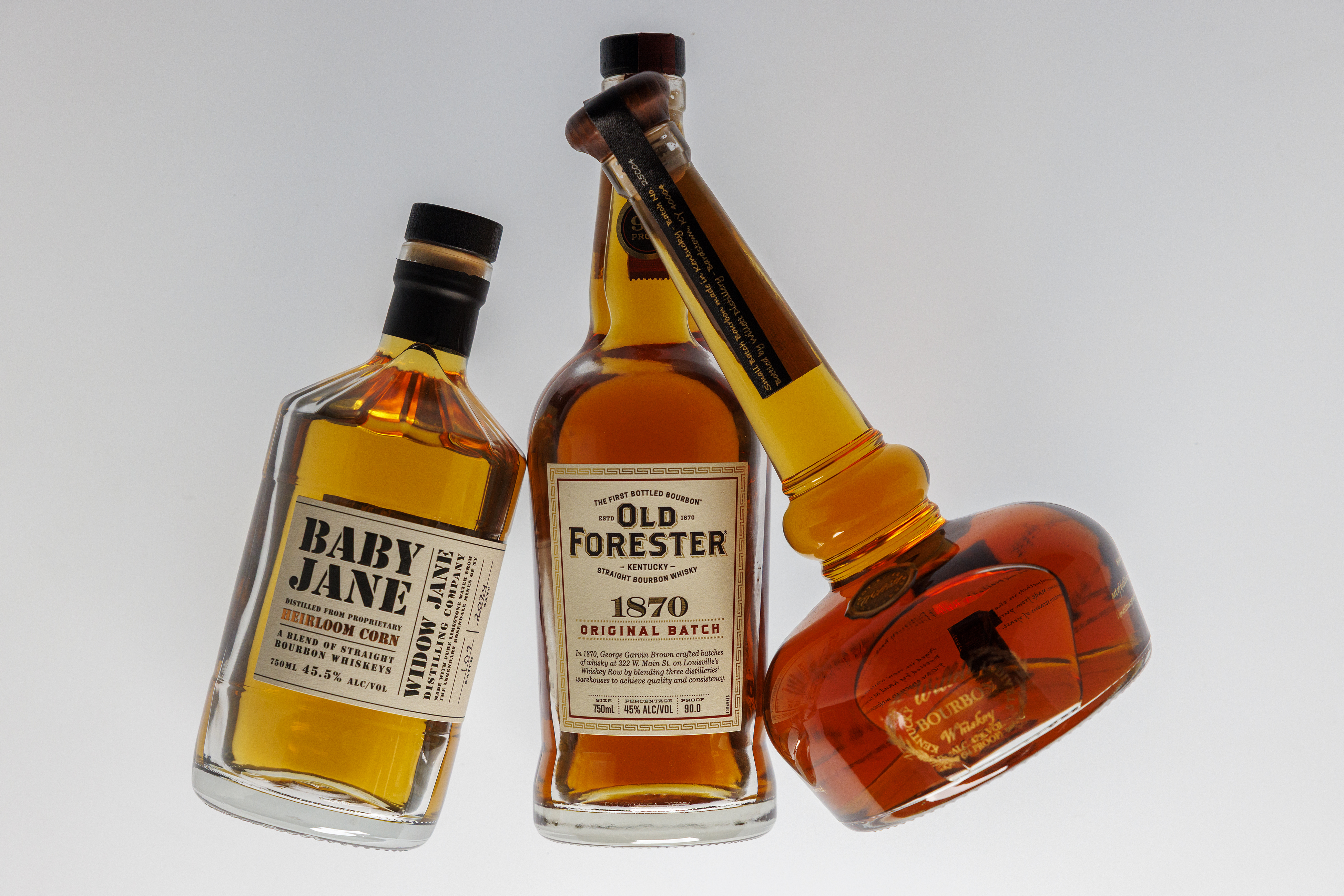
From left Baby Jane Bourbon, Old Forester Kentucky Straight Bourbon 1870, and Willett Bourbon
Old Forester Straight Bourbon 1870
This version of Old Forester is made to the original mashbill and shines like a copper penny in the glass. It’s an easy drinker that shows the brand’s classic chocolate-and-cherry notes, but also floral aromas, citrus, and baking spice. Old Forester aficionados will debate which bottling of its age-dated series is best (I’m still partial to the chocolate-cake goodness of the 1920 label), but this bottle — a stellar sub-$50 value that’s perfect over a big ice cube or two — satisfies every time. Old Forester Straight Bourbon 1870, 90 proof, 750ml, $44.99, (PLCB Item # 9882)
Widow Jane Baby Jane Bourbon
The “Baby Jane” edition from Brooklyn’s Widow Jane is the first bourbon that includes whiskey made at its Red Hook distillery in New York. Named for the proprietary Baby Jane breed of heirloom corn that lends this bourbon both creamy and spicy notes, it’s blended with sourced whiskey from Kentucky and limestone mineral water from the abandoned Widow Jane mine in Rosendale, N.Y. (the distillery’s namesake). The nose offers a bright combo of sweet corn and crushed red apple skins, while the flavors channel the advertised duo of sweetness and spice — think strawberry shortcake topped with lots of whipped cream, plus several grinds of black pepper and sea salt. One taster found the name “too creepy,” but the rich texture and balance of this small-batch whiskey, at just under $50, is a worthy gift to give or receive.Widow Jane Baby Jane Bourbon, 91 proof, 750ml, $49.99 (PLCB item # 35053)
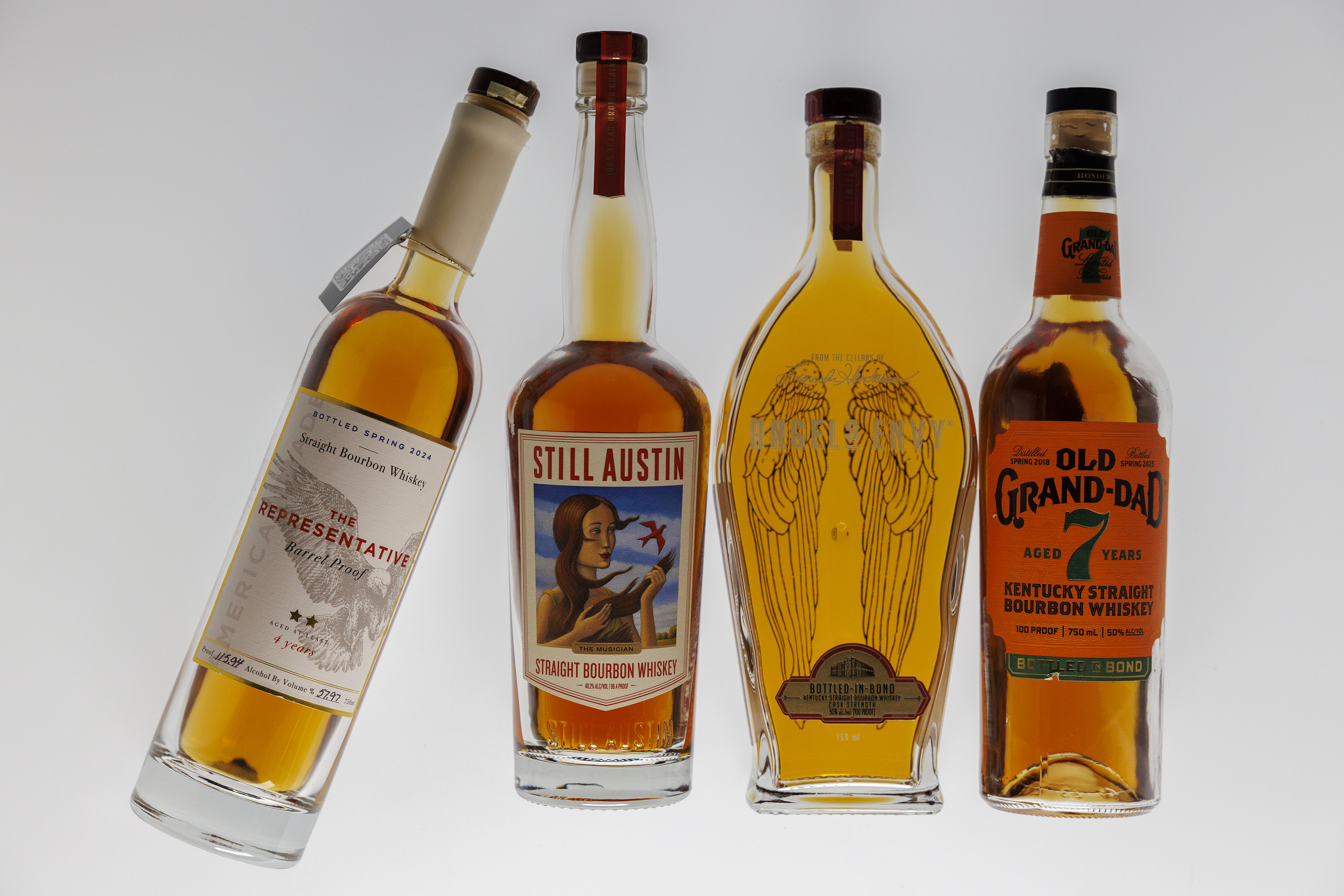
From left The Representative Straight Bourbon Whiskey, Still Austin Straight Bourbon Whiskey, Angels Envy Kentucky Straight Bourbon Whiskey and Old Grand Dad Kentucky Straight Bourbon Whiskey for Craig Laban, studio, Tuesday, December 9, 2025
Still Austin “The Musician” Straight Bourbon
This relatively new distillery from Texas’ Hill Country impressed the tasting panel last year with a rye (“The Artist”) that landed on our final list for its combination of character and value. No surprise Still Austin’s straight bourbon earns another recommendation. This also features a relatively high rye mashbill (25%) among its all-Texas grain, which lends some peppery spark to the honeyed, toasty nose of this deep amber juice. More fruit and nuts rise on the palate, shaded by a finish tobacco, baking spice, and tea. Overall, it’s impressively smooth for a young whiskey (aged just two years) that clocks in just shy of 100 proof. Still Austin “The Musician” Straight Bourbon, 98.4 proof, 750ml, $42.99 at Total Wine (Cherry Hill), $44.99 (PLCB Item #52349)
Old Grand-Dad Straight Bourbon Bottled in Bond 7-year-old
The seven-year-old Bottled-in-Bond expression of Old Grand-Dad is a relatively limited seasonal release for this standby bourbon brand. It’s also a step up in character over the basic bargain label associated with Old Grand-Dad, which was founded in 1840 by the grandson of whiskey legend Basil Hayden Sr., also the namesake Jim Beam’s popular (and much more expensive) small-batch whiskey. This 2018 edition is somewhat restrained on the nose, but the initial flavors of grainy graham cracker sweetness open up into a zingy plume of caraway and pepper spice, with a lingering lime-zest acidity that flashes and lingers on the tongue. Those savory elements step forward even more with a splash of water. This would make a fantastic julep. The panel also gave a collective “Wow!” of surprise when I revealed the price: This thrifty Old Grand-Dad rings in just under $40. Old Grand-Dad Straight Bourbon Bottled in Bond 7-year-old, 100 Proof, 750ml, $39.99, (PLCB Item # 100050572)
Angel’s Envy Bottled in Bond Bourbon
This is the first bottled-in-bond edition from Angel’s Envy, which also happens to be its first cask-strength spirit, a six-year-old whiskey that is decadent and rich from first sniff to final sip. Its nose of vanilla custard and caramelized Demerara sugar led one taster to declare it “the crème brûlée of bourbons!” On the palate, the dessert notes take a different and fruity turn — like chocolate-covered apricots — that just keep going. Don’t be tempted to add water. Despite the high proof (actually relatively low for a cask-strength), this whiskey is perfect as is. Angel’s Envy Bottled in Bond Bourbon, 100 proof, 750ml, $64.99 (PLCB Item #53715)
Proof and Wood Straight Bourbon “The Representative”
I never thought about Congress in terms of whiskey until I encountered this series of Washington-themed spirits from Proof and Wood, which ages whiskeys according to political terms in office, from the “Senator” (six years) all the way up to the Presidential Dram (eight years). The “Representative,” aged “at least two Congressional terms,” is a four-year-old powerhouse distilled in 2020 that blends sweetness and spice with impressive balance considering it’s bottled at 114.8-proof cask strength. (When diluted to 80 proof, the same mashbill becomes Proof and Wood’s Deadwood bourbon.) It’s eminently sippable as is, but a splash of water accentuates the buttery sweetness and also teases forward some of its more interesting notes — sassafras, licorice, and an herbal bitterness reminiscent of amaro. It’s delicious on its own terms, but for a cask-strength whiskey at $50, it’s an absolute deal.Proof and Wood Straight Bourbon “The Representative”, 114.8 proof, 750ml, $49.99 Benash Liquors & Wines
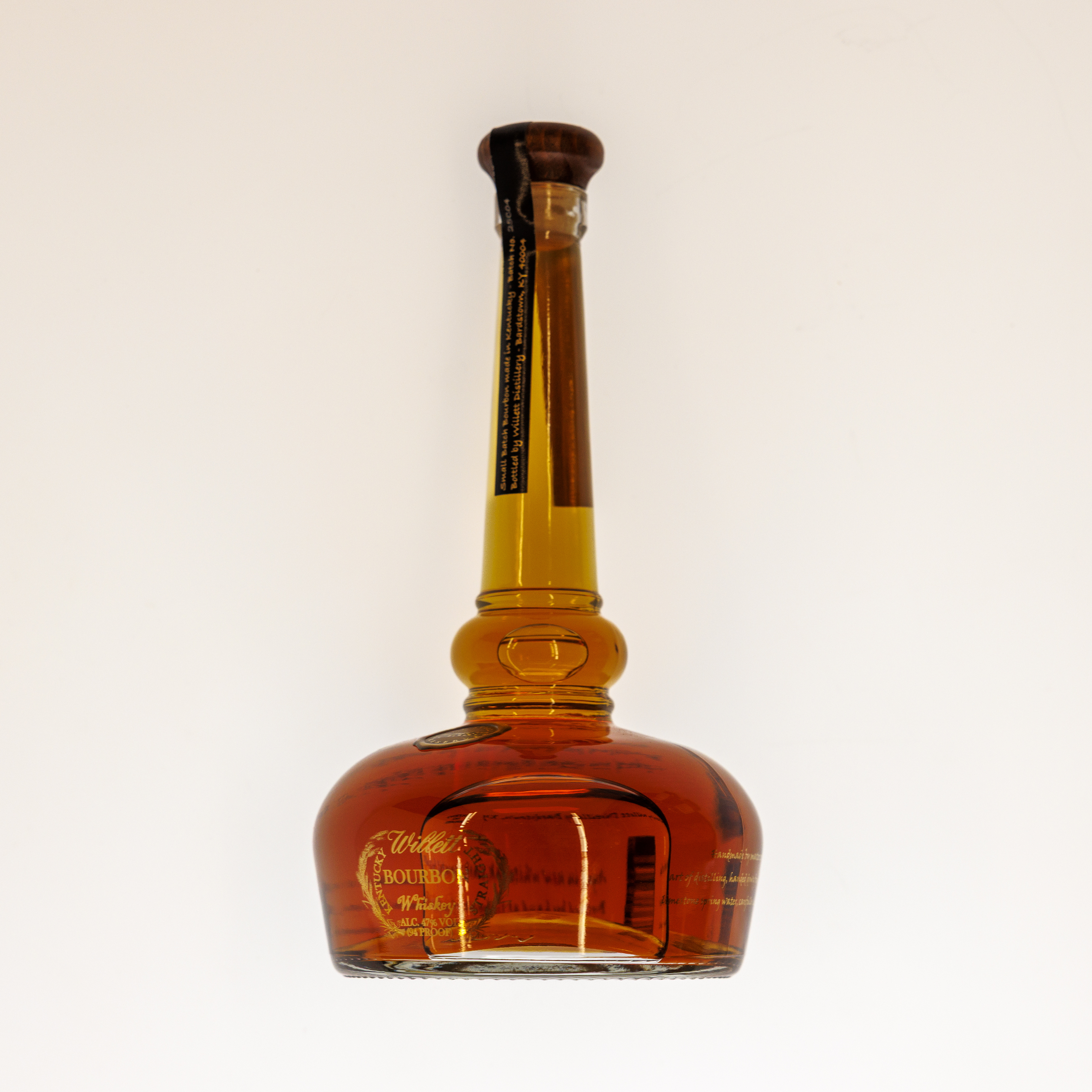
Willett Pot Still Reserve Small Batch Bourbon
Despite its slightly elevated heat at 94 proof, this straight bourbon from Bardstown, Kentucky, is an easy sipper that rides the smooth caramel notes of a mashbill that’s mostly corn and wheat, giving off the elegant tang of a moist lemon cake soaked in vanilla syrup. An herbal whiff and salty wave rise just enough to keep the finish peppery and interesting. (“I’d love this in a Manhattan!” opined one judge.) The elegant bottle — shaped like a long-necked pot still — is a major selling point on its own for gift-giving in the $50 range. Even better, this whiskey comes in 50-milliliter minis that makes it perfect for stuffing your stockings with the magic of bourbon, too.Willett Pot Still Reserve, Small Batch Bourbon, 94 proof, 750ml, $46 at Total Wine; 50 ml for $9.49 at Total; $54.99, 750ml in Pennsylvania (PLCB Item #: 30489)
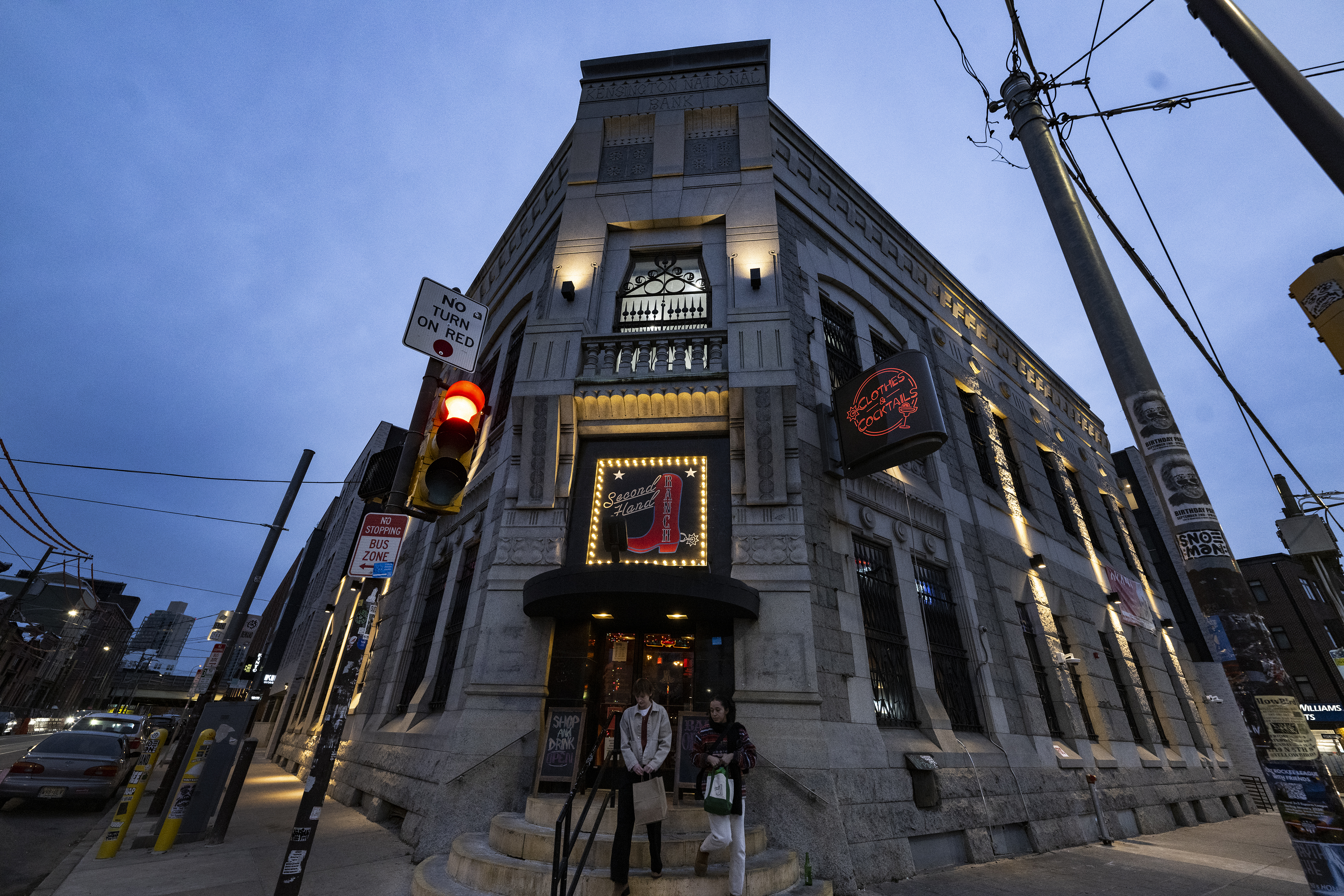
Waylon Jennings drawls as customers cradle bottles of Lone Star beer while browsing the racks at Secondhand Ranch — the latest attraction deep in the heart of Fishtown.
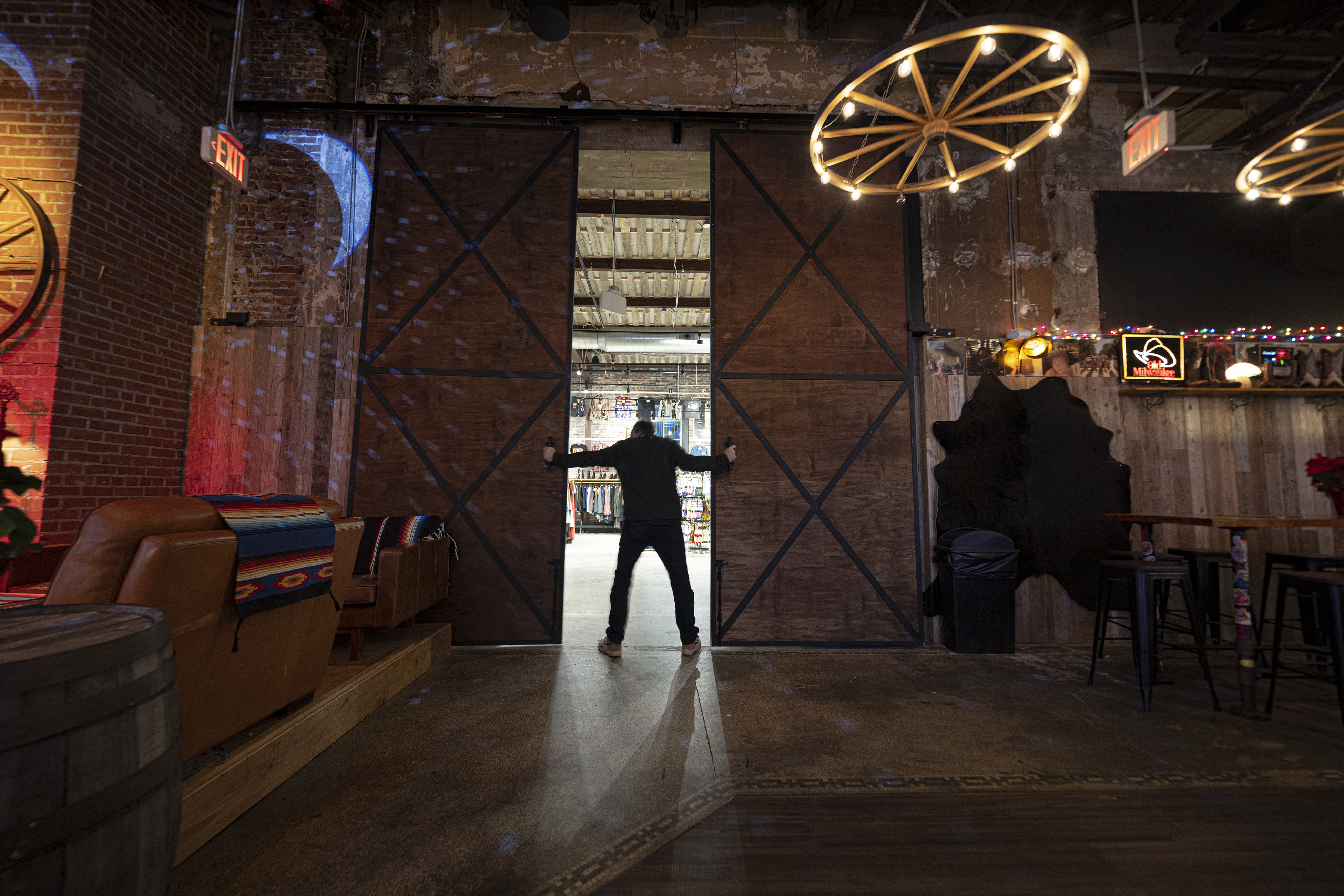
The rough-hewn, outlaw-country theme bar paired with a retail store specializing in secondhand clothing and vintage merchandise opened Dec. 6. It’s set behind saloon-style swinging doors inside the Frank Furness-designed former bank building at Frankford and Girard Avenues, across from Garage, Joe’s Steaks, and Johnny Brenda’s.
This retail-bar pairing dates to 2020, when founder Josh Sampson opened Garage Sale Vintage in Denver. Sampson describes the idea as “a love letter to the circular economy — with salt on the rim.”
The three pillars, he said, are sustainability, a focused margarita program, and partnerships with local vendors. He later expanded it to two locations, with a tacos-and-tequilas menu, in Nashville and then to New York.
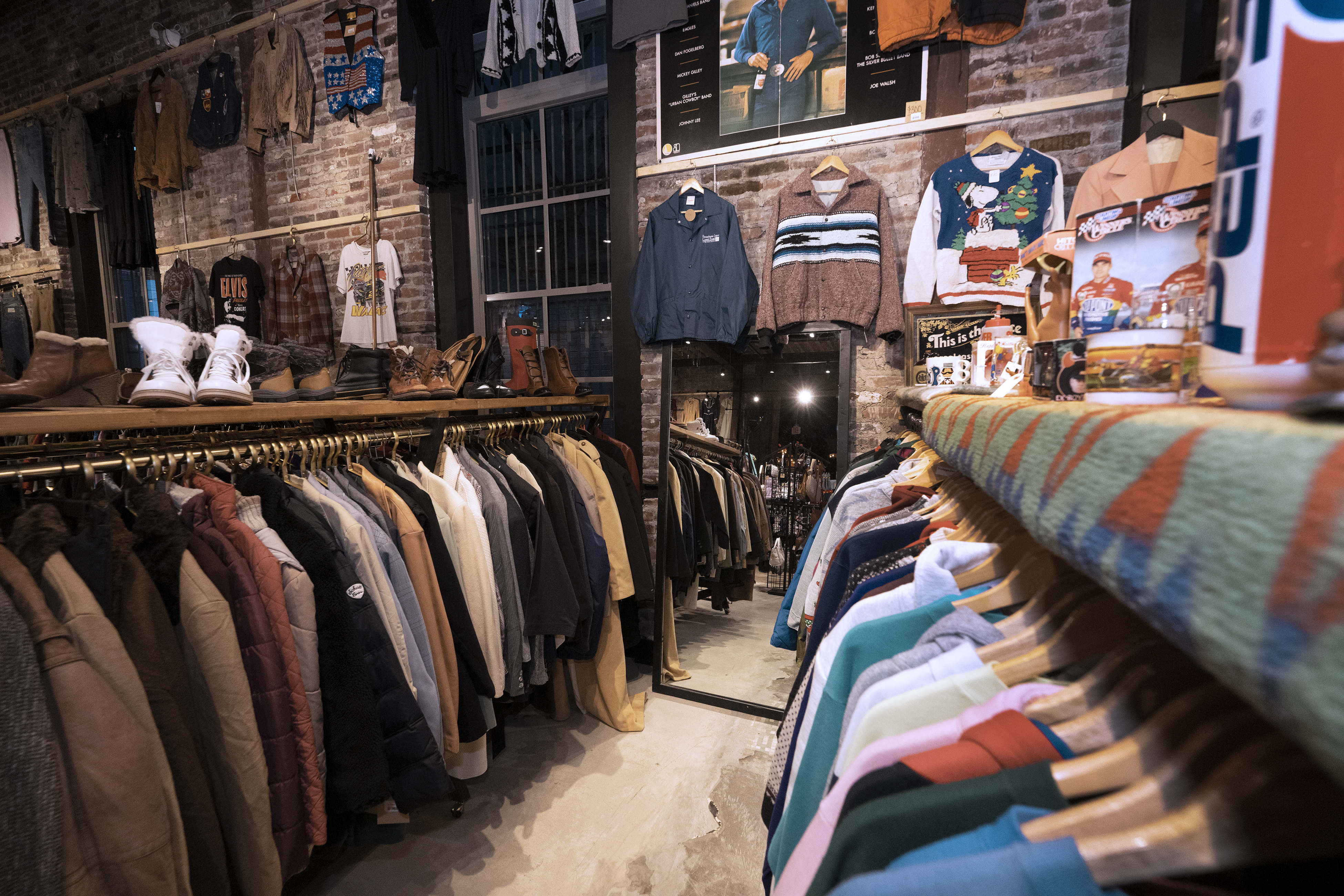
Decor items and clothing are shown at the thrift store inside the new Secondhand Ranch in Fishtown.
Seeking a space in Philadelphia last year, he struck a deal with Alterra Property Group for the Fishtown building. Soon after, he became embroiled in a copyright lawsuit with the operators of Garage, the bar across the street.
Sampson changed the name and concept for the Philadelphia location. Rather than strictly vintage items, he decided that Secondhand Ranch would be a country bar paired with secondhand retail, with a smattering of vintage items.
Barn doors separate the bar and retail at Secondhand Ranch in Fishtown.
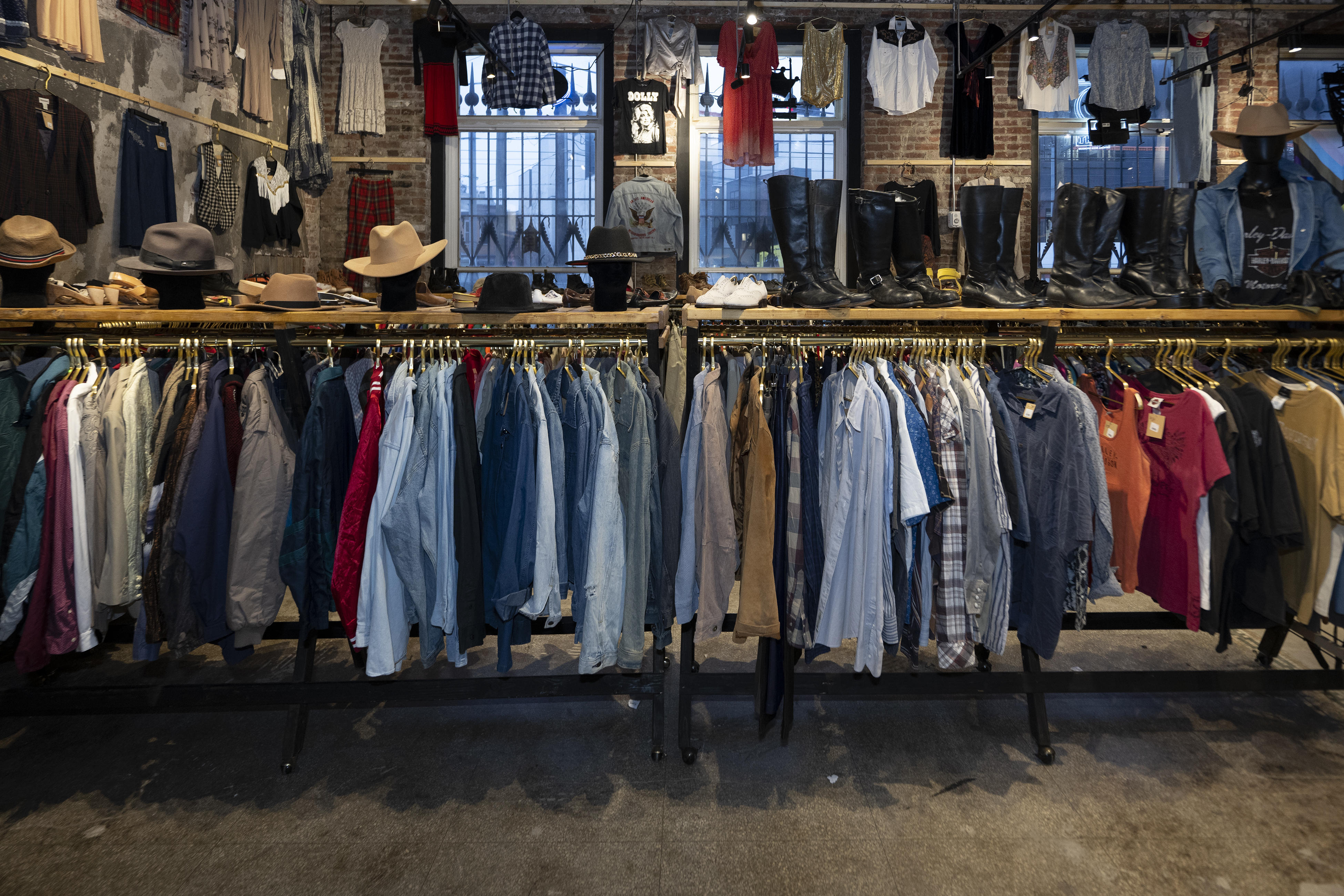
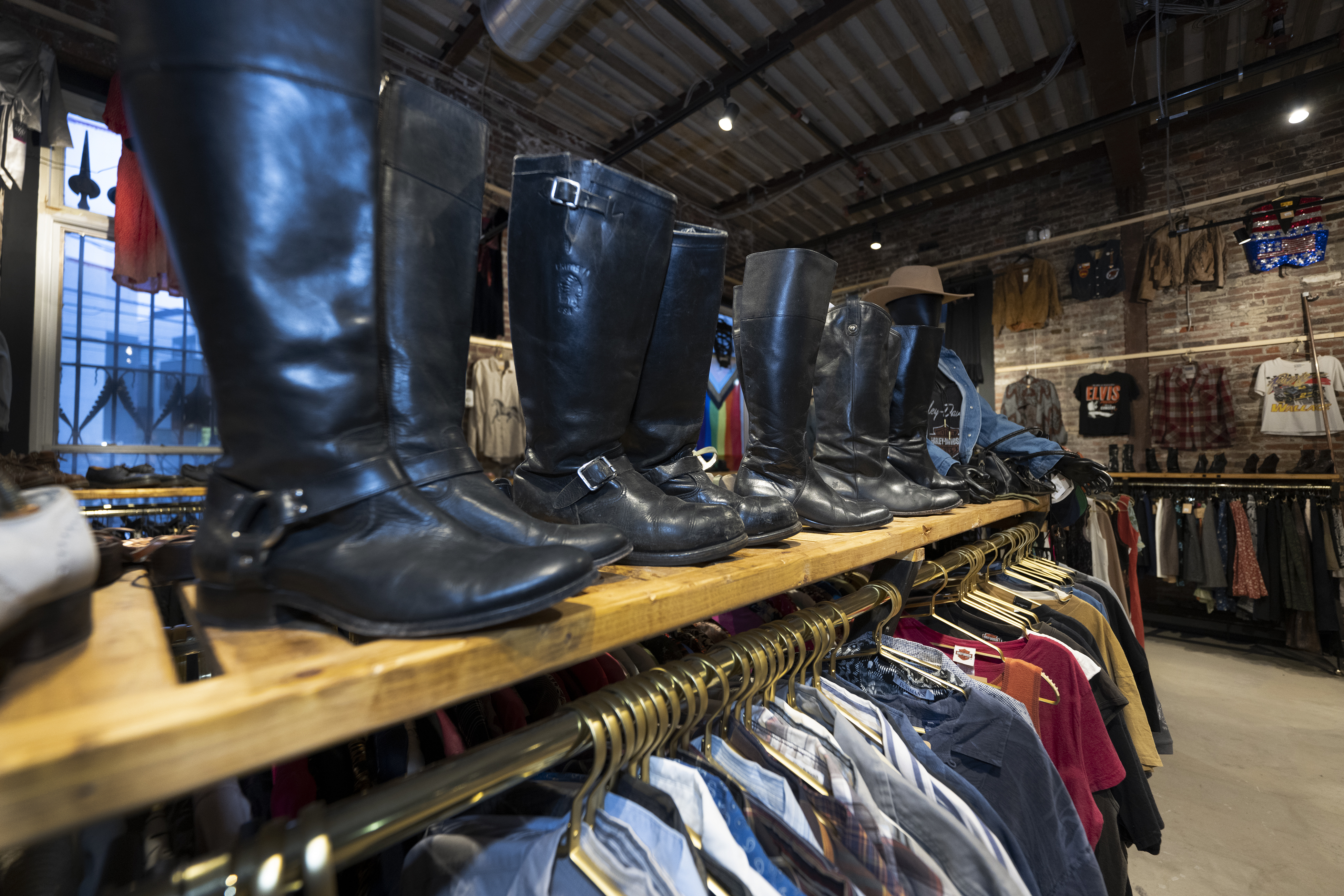
The distinction between secondhand and vintage is crucial: “Secondhand is a much broader category,” Sampson said. “With vintage, it’s simple — everything has to be 20 years old or more. Secondhand lets us focus more on sustainability and diverting usable goods from landfills. It also allows for lower price points and a different kind of fun.” Think racks upon racks of T-shirts, sweaters, hats, jeans, button-down shirts, as well as a rodeo’s worth of cowboy boots — all secondhand.
The retail operation, behind barn doors, is split evenly between in-house curation and a vendor collective, said manager Nikki Gallipoli. Each vendor (such as Zac Cowell, known as VintageZac) manages its own rack in the store — “they come in, sort it, and keep it updated,” she said. Inventory includes vinyl records, books, and knickknacks.
Decor items and clothing are shown at the thrift store inside the new Secondhand Ranch in Fishtown.
“Part of the experience is grabbing a drink and going on a treasure hunt,” Gallipoli said.
A retro-style gift shop within the space focuses on new, non-clothing merchandise such as accessories, novelty items, stickers, matchbooks, and handmade goods. Much of that inventory is sourced from small independent businesses online rather than strictly from Philadelphia suppliers. “The clothing itself isn’t always handmade, but it is always secondhand,” she said.
Decor and clothing items are shown at the thrift store inside the new Secondhand Ranch in Fishtown.
Secondhand Ranch leans fully into honky-tonk aesthetics and sound for what Sampson calls “very much the kind of vibe you’d see in Austin or Nashville.”
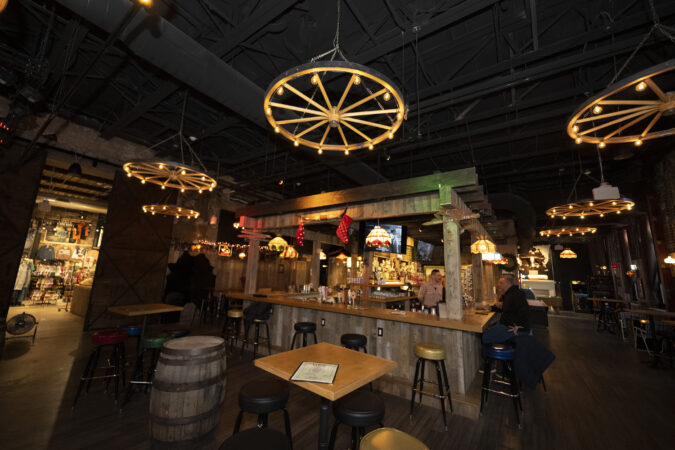
The massive bar, set beneath wagon-wheel chandeliers, seats about 30, with an additional 30 to 40 seats spread throughout the room. The former bank vault has been preserved and now functions as cold storage for beer. There are old-fashioned coin-operated games in one corner, and a stage that’s now set up with den-style furniture.
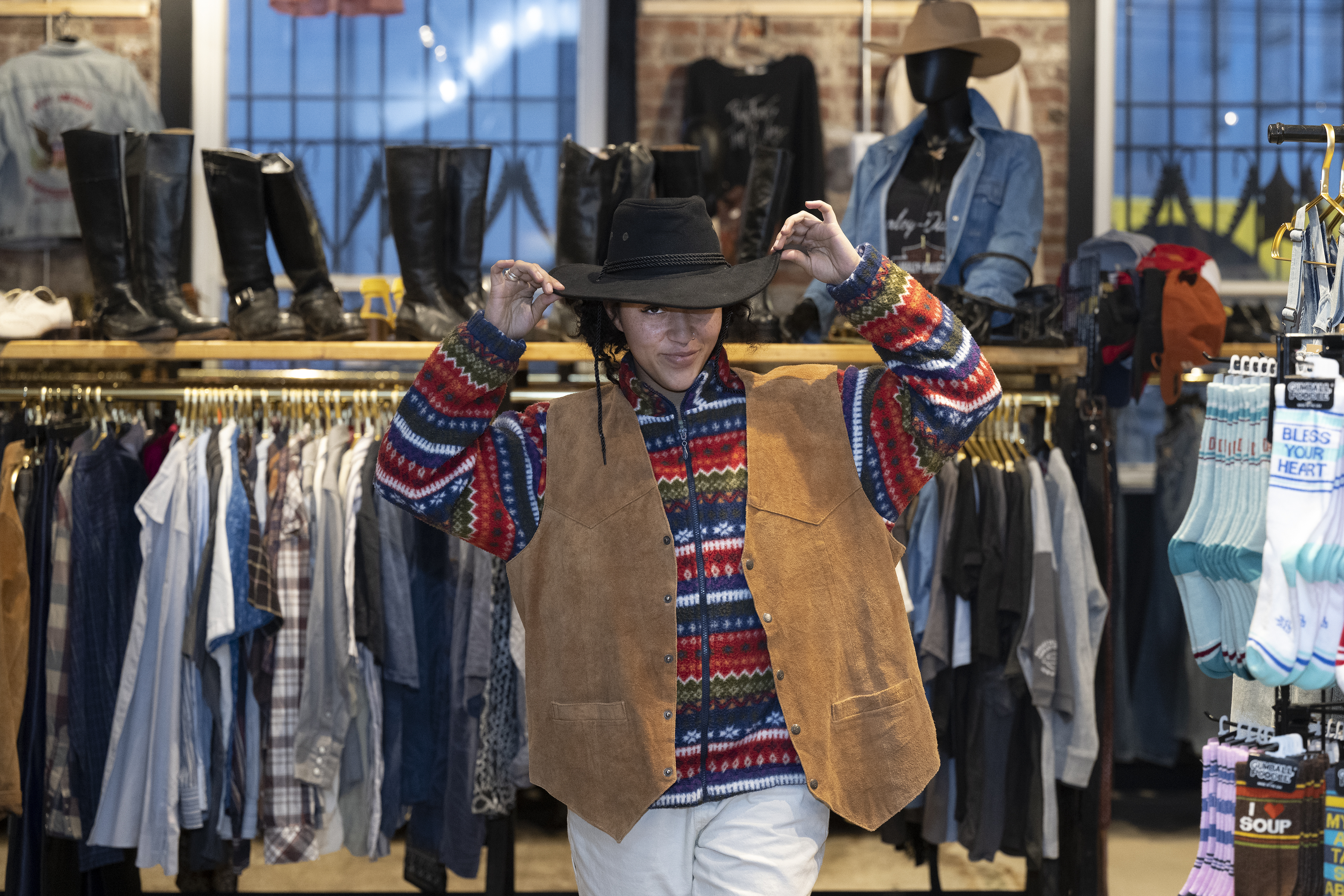
Jordan Sims tries on a cowboy hat at the thrift shop inside Secondhand Ranch in Fishtown.
The stage will host live music, scheduled to begin in early February, when the food menu — primarily wild-game sausage, nothing fancy — launches. Right now, hot peanuts are served.
Lone Star is the beer of choice; it’s part of the citywide special ($10), paired with an infusion shot.
Customers gather in the lounge at Secondhand Ranch in Fishtown on Dec. 6, 2025.
“One fun goal we set for ourselves is trying to become the No. 1 Lone Star beer account,” Sampson said. There are 12 beers on tap. Besides Lone Star, the bottle list includes Star and Shiner Bock from Texas, plus elevated local craft options like Tonewood Brewing’s Freshies. “It’s exactly what you’d expect at a honky-tonk,” Sampson said.
Classic and seasonal margaritas anchor the cocktail program, along with zero-proof options. Programming will include DJ sets, pop-ups, and “Trade-In & Sip” nights, designed to connect the drinking and shopping experiences while emphasizing community engagement. Vendor applications will open online, and a pop-up showcase with margarita specials is planned as part of opening festivities in February.
Secondhand Ranch, 1148 Frankford Ave., 267-807-13450, is open from noon to midnight Monday, Wednesday, and Thursday, and 11 a.m. to 2 a.m. Friday, Saturday, and Sunday. Closed Tuesdays through December. The retail store closes at 10 p.m. Friday and Saturday, and at 9 p.m. the other days.
If you’re feeling world-weary this holiday season, why not skip the homemade feast and take an easier, if more indulgent route? Dine-in or takeout. The options in the Philly area are plenty, from chopped liver to high-end sushi.
Here are 14 local options for Hanukkah, Christmas Day, and New Year’s Eve. Note that some restaurants have menus for more than one of these holidays.
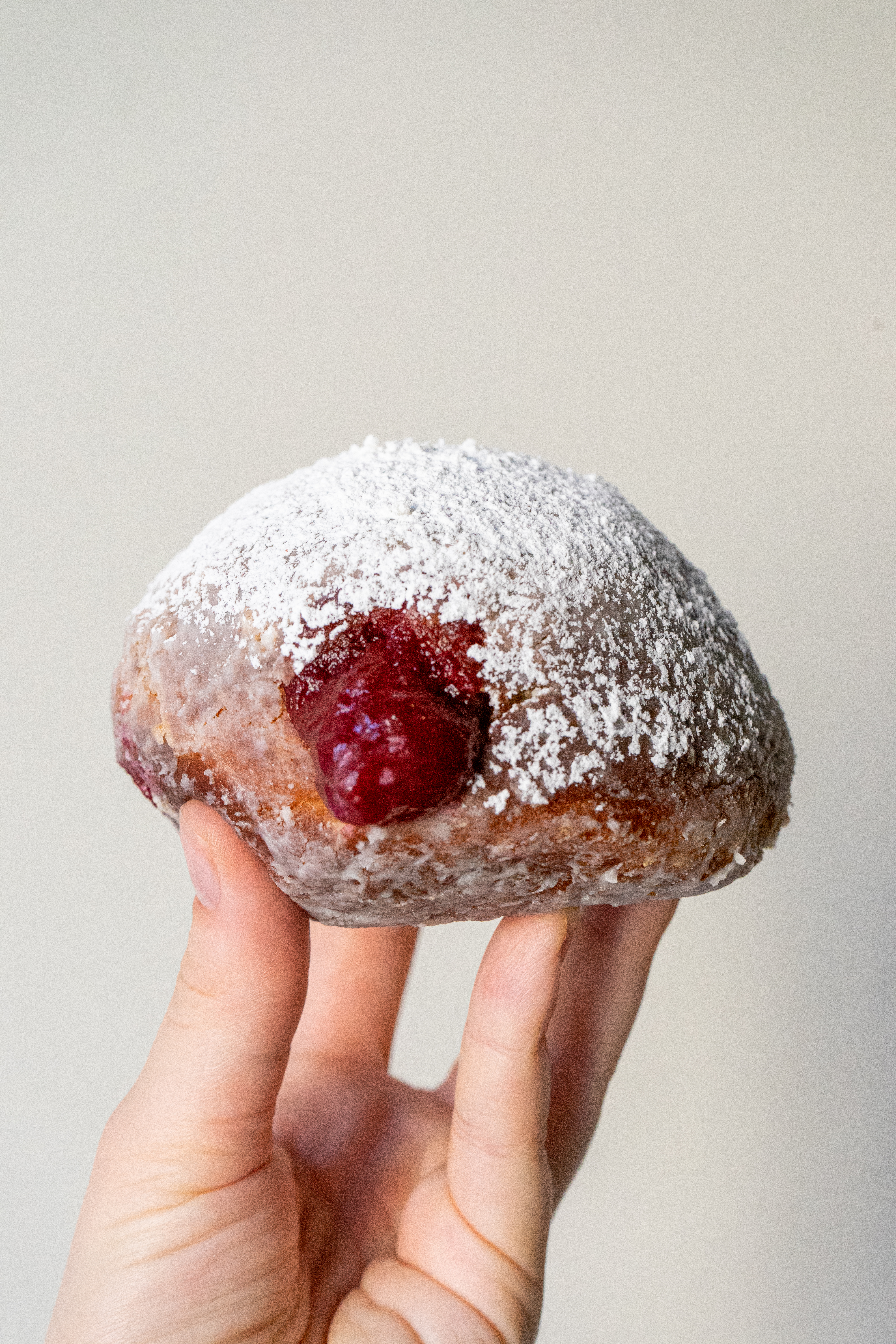
Get Hanukkah doughnuts at High Street Bakery.
Hanukkah
Biederman’s Specialty Foods
Order a Hanukkah brunch board, complete with gelt, bagels, and all the fixings, for $150. Add a latkes package for $20 with caviar supplements for an additional $85 to $165. You can also opt for Christmas Eve brunch boards ($150 to $200). Pick up orders from Dec. 13 to 31.
Get four-packs of sufganiyot (filled with either strawberry-pink peppercorn jam or chocolate-chestnut cream) for $24 this Hanukkah from High Street. Preorder online. Pickups run Saturday, Dec. 13, to Monday, Dec. 22, between noon and 4 p.m. The restaurant and bakery will also host a luxe, three-course New Year’s Eve supper in its private dining room. Tickets are $100, plus $50 for a wine pairing on OpenTable.
Also check out High Street’s Ever Eve holiday pop-up bar, open Saturdays in December from 6 to 10 p.m., for boozy hot chocolate and other holiday cocktails, plus bar bites like crispy fried oysters. Enjoy live jazz from Dave Brodie and a rotating lineup of local artisans, too. Walk-ins are welcome, but reservations are strongly encouraged to guarantee a spot.
Consider Famous 4th’s Hanukkah prix fixe takeaway or dine-in dinner. Order noshes of chopped liver, herb-roasted chicken, and braised beef brisket served with potato pancakes and challah stuffing, and desserts like assorted rugelach and sufganiyot. Expect $39 per person for dine-in and $155 per kit, which serves four people. The Hanukkah menu runs Dec. 13 to Jan. 2. Reserve online.
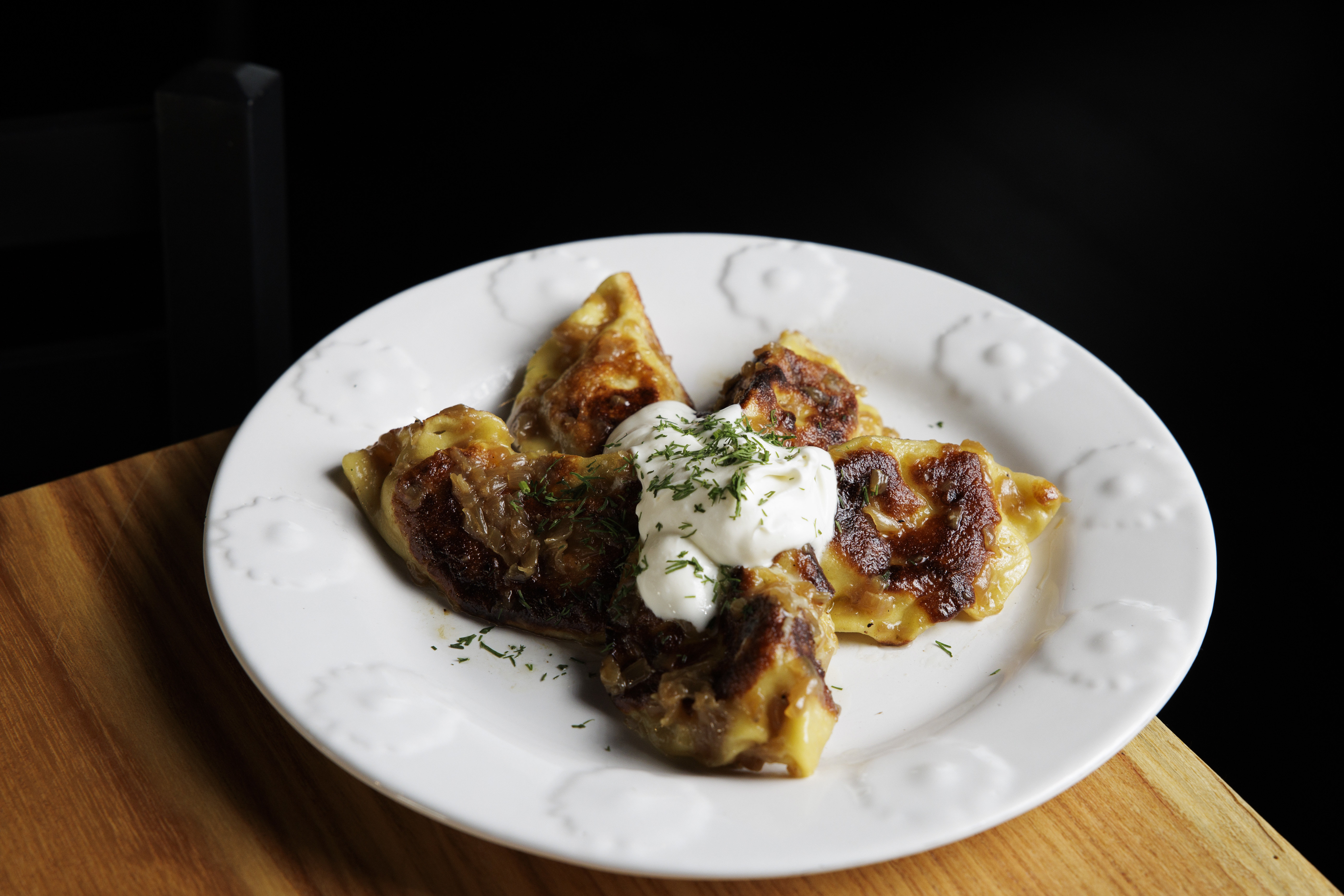
The pierogi ruskie at Little Walter’s in Philadelphia on Wednesday, Sept. 4, 2024.
Christmas Day
Urban Farmer
Inside the Logan Hotel, enjoy dine-in or takeout options for Christmas Eve and Christmas Day. On Dec. 24 and 25, specials include maple-glazed ham ($34) and rib-eye ($53), with a selection of sides and desserts. For takeout, pick up a holiday dinner on Christmas Eve or Day from noon to 2:30 p.m. The $280 package serves four to six people and includes a choice of maple-mustard-glazed ham or rib eye and three different pies.
The Northern Liberties Tex-Mex bar nods to tradition with its Christmas and New Year’s Eve dinner to-go packages ($110 to $300), which offer choices like rib-eye roast, brisket, and turkey. Scale your menu’s size for two to 10 people. Christmas orders must be picked up on Dec. 24, and New Year’s orders on Dec. 31. Purchase online.
The splashy new Rittenhouse sushi restaurant, which comes by way of Austin, is offering a holiday omakase at home special for takeout or delivery all month long. For $120, feast on 12 pieces nigiri, two makimono rolls, hama chili crudo, chicken karaage, Brussels sprouts, and house-made fried milk ice cream. Order online up to Dec. 30.
Recently opened next to the Cambria Hotel on South Broad Street, Kitchen + Kocktails will be open for regular dinner service on Christmas Eve. There are also plenty of takeout options: Consider a pan of candied yams, cornbread dressing, collard greens, and other sides for $79 to $115. Entrees include lamb chop, smoked turkey leg, catfish, and blackened salmon pans for $79 to $185, and desserts like peach cobbler and sweet potato pie are $79 each. Orders can be made online.
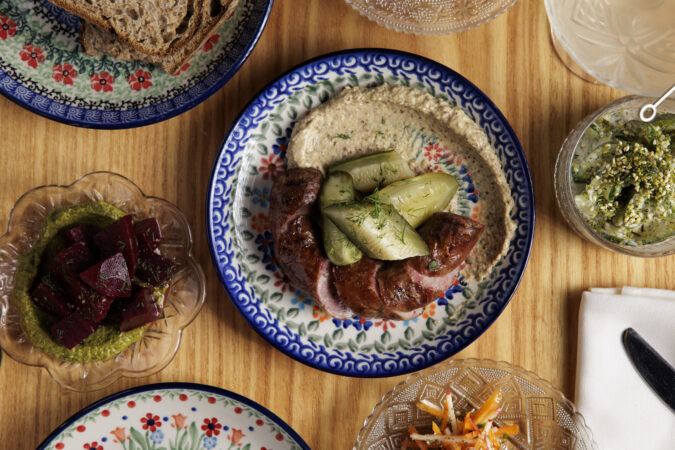
Chef Michael Brenfleck is serving handmade kielbasa, holiday breads and baked goods, pantry staples, and a selection of frozen pierogi this Christmas. On Dec. 20 and 21, pick up kielbasa at $10 per pound. Bakery options including babka and poppy seed rolls are priced at$12, while pantry items like ogórki konserwowe(pickles) and smalec (whipped lard with crunchy pork skin) will go for $8 each. A selection of frozen pierogi can be purchased for $25 per dozen. Orders can be placed via Toast.
Square 1682, located at 17th and Sansom Streets, is serving up a Christmas menu featuring squash soup, deviled eggs, lobster risotto, Thai fried red snapper, crème brûlée, and more. The three-course meal, including a side, will be offered from 4 to 8:30 p.m. on Dec. 24 and 25, and 5 to 10 p.m. on Dec. 26 and 27. Book on OpenTable.
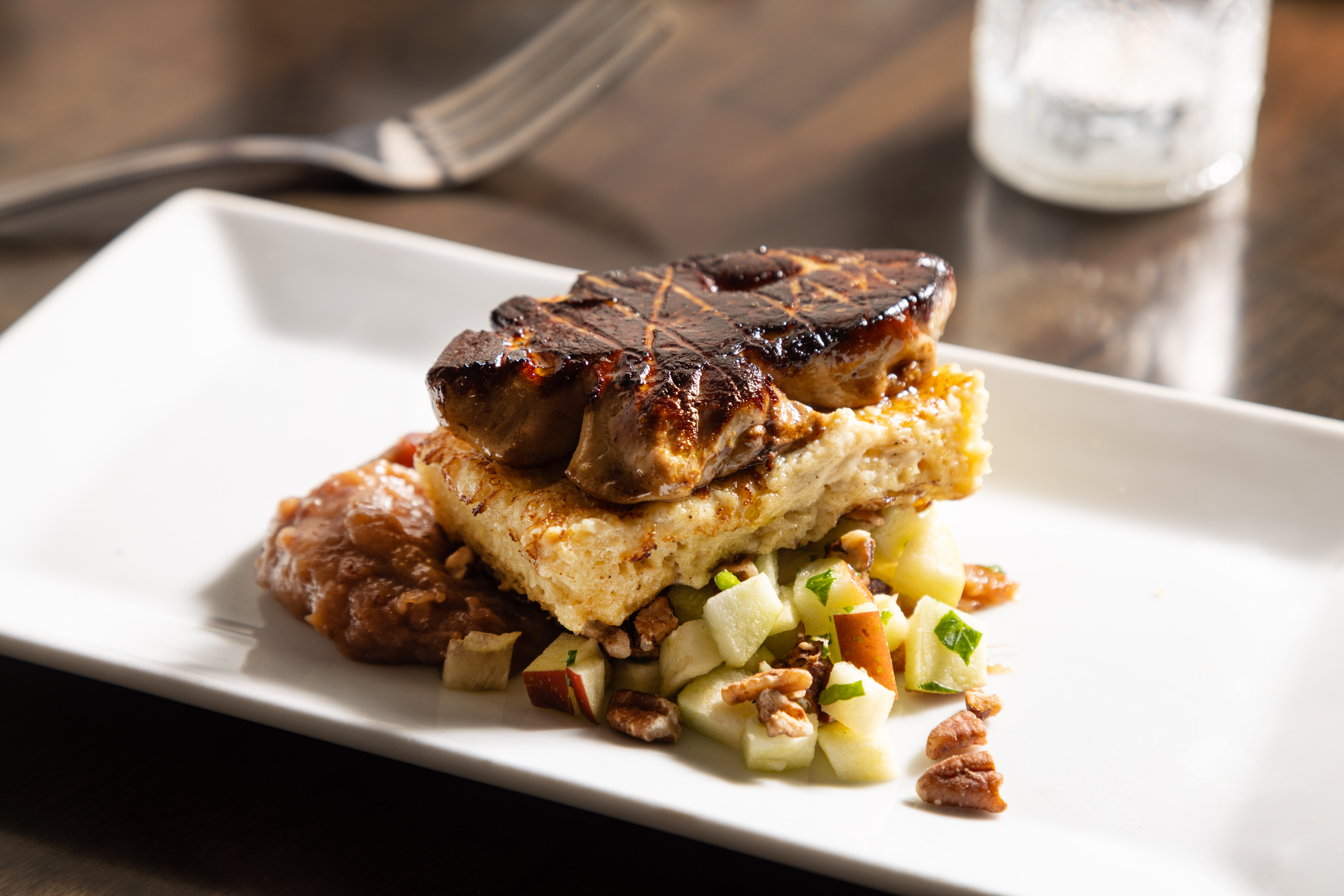
Enjoy seared foie gras at Fond this New Year’s Eve.
New Year’s Eve
Fond
Chefs Lee Styer and Jesse Prawlucki-Styer are ringing in New Year’s Eve with afive-course dinner for$135 per person. Takers will be in for a feast starting with a half-dozen oysters followed by grilled radicchio salad; tuna tartare; seared foie gras; scallops with braised fennel and endive; pork bellywith Okinawan sweet potato, escarole, and Dijon jus; and hazelnut chocolate mousse with vanilla tangerine, toffee cannoli, and sour cherry coulis. Reservations are encouraged at the Wallingford BYOB; book on Resy.
21 N. Providence Rd., Wallingford, 484-445-2108, fondbyob.com
Forsythia
Chef Chris Kearse’s Old City boîte is offering a four-course dinner for New Year’s Eve. The meal features fluke crudo, beef short rib, and mousse au chocolat noir for$150. Seatings will be from 4:45 to 9:45 p.m. Reserve a spot on Resy.
Ring in the new year at River Twice on East Passyunk with a seven-course tasting menu and a Champagne toast. The New Year’s Eve lineup includes raw aged beef seasoned with golden ossetra caviar and oyster emulsion, halibut from the gulf of Maine with shimeji mushrooms and shellfish gumbo, and more. Dinner is $150 per person at a table or $175 at the chefs counter, with optional beverage pairings available. Guests will also receive a complimentary glass of Champagne at midnight. Book a reservation on Resy for seatings from 5 to 10 p.m.
Ring in 2026 at Almyra’s New Year’s Eve dinner. For $95 per person, dig into mezzes like spanakopita manti and Wagyu dumplings, entrees like filet mignon kebab and chicken kofta, and assorted Greek desserts. NYE reservations can be made for seatings from 4 to 7 p.m. After 9:30 p.m., reservations are $95 per guest with a sparkling wine toast and DJ starting at 9 p.m. Book on Resy.
Get loose on New Year’s Eve: Instead of prix fixe menus, Mish Mish will serve whatever dishes chef Zev Flores feels during this “dinner party of your dreams.” There will be plenty of bottles of Champagne. Pick a seating between 5 to 8:45 p.m. and book on Resy.
There two ways to celebrate New Year’s Eve at Aqimero inside the lobby of the Ritz-Carlton. From 6 to 8 p.m., enjoy a curated four-course dinner with chilled seafood tower, caviar service, and lack of lamb by Chef Richard Sandoval. Optional wine or beverage pairings are available, too. After dessert, move directly into the New Year’s Eve celebration, from 8 p.m. to midnight, with no additional ticket. Or head directly into the holiday party, which features an open bar, appetizers and desserts, and live music by DJ Eddie Tully. There will be a champagne toast and a standout balloon drop at midnight. Tickets for dinner and party combo are $295 per guest, and party entry is $175 per guest. Book online.
In Kensington, Fleur’s is hosting a New Year’s Eve prix-fixe dinner featuring a six-course menu. Devour dry-aged hamachi crudo with golden Osetra caviar, grilled sweet potatoes with hazelnut, kombu-cured egg yolk, and black truffle, and lamb loin torchon. Dessert includes a dark chocolate mousse cake. There are two beverage pairings available, including a zero-proof beverage pairing, both with five drinks, plus a Champagne toast at midnight. Tickets are $125 per person; book on Resy.
Another Kensington restaurant is hosting a night of complimentary Champagne and caviar for New Year’s Eve. Emmett is offering a one-night only four-course menu with signature Emmett riffs: think venison tartar, grilled dorade, and winter citrus trifle. It’s $175 per person to reserve on OpenTable.
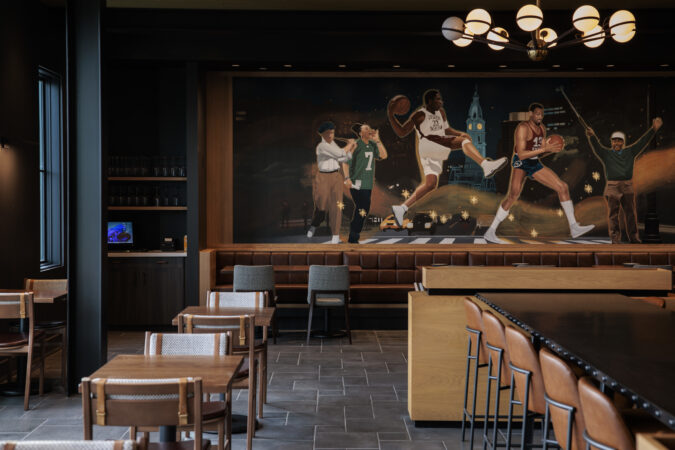
Little Horse Tavern — a full-service restaurant, bar, and event space named in honor of Charlie “Little Horse” Sifford, the Black golfer who led the integration of the PGA tournament in the 1960s — opens Monday. The Fitler Club and Strother Enterprises are overseeing it.
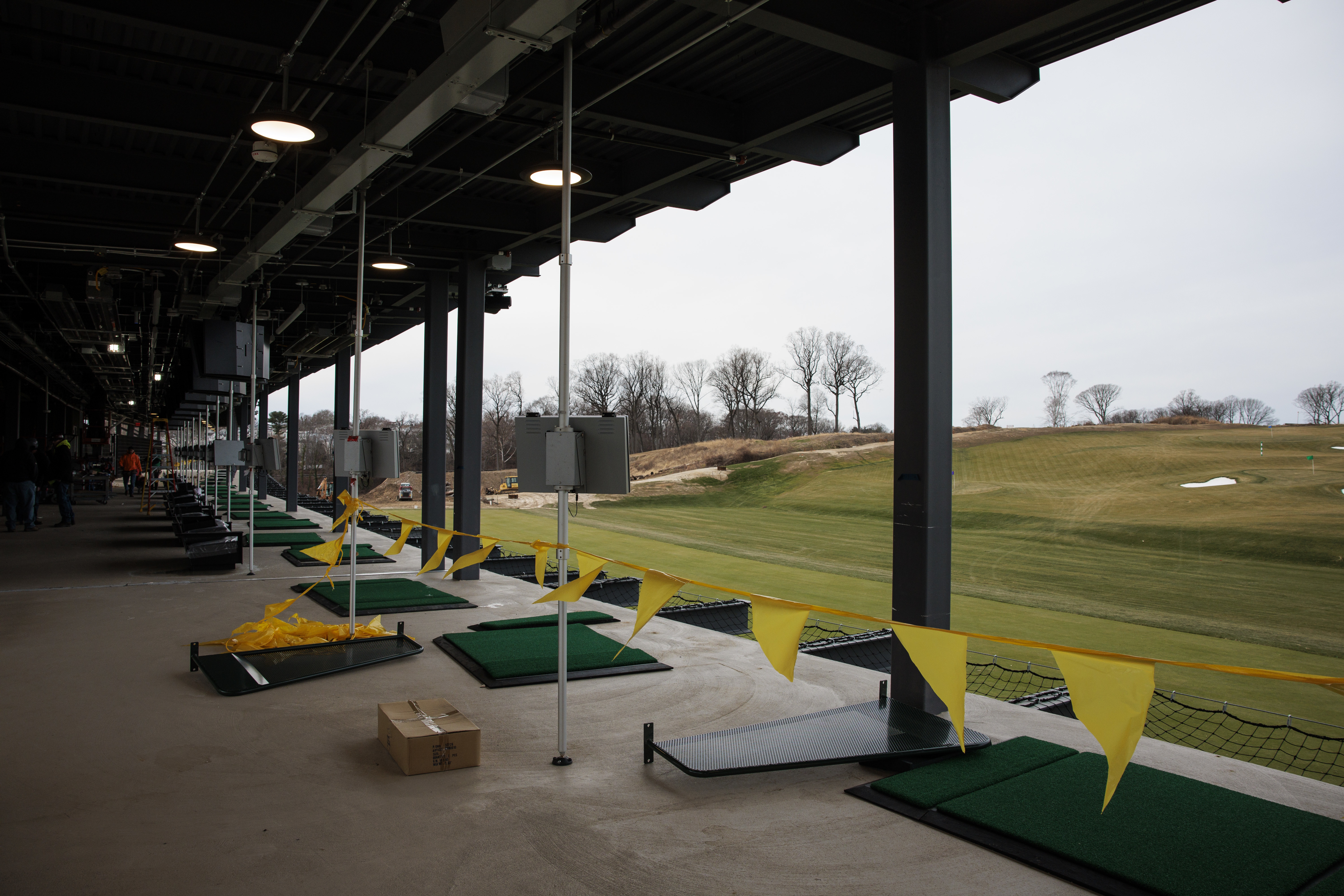
The tavern, in a new building on Lansdowne Avenue called the Lincoln Financial Center, is next to a heated, 68-bay driving range, similar to a Topgolf. (Buckets of balls start at $10.) Nearby is a nine-hole short course designed for beginners and families, and — expected to open in 2027 — the renovated 18-hole championship-level course known as the Olde Course.
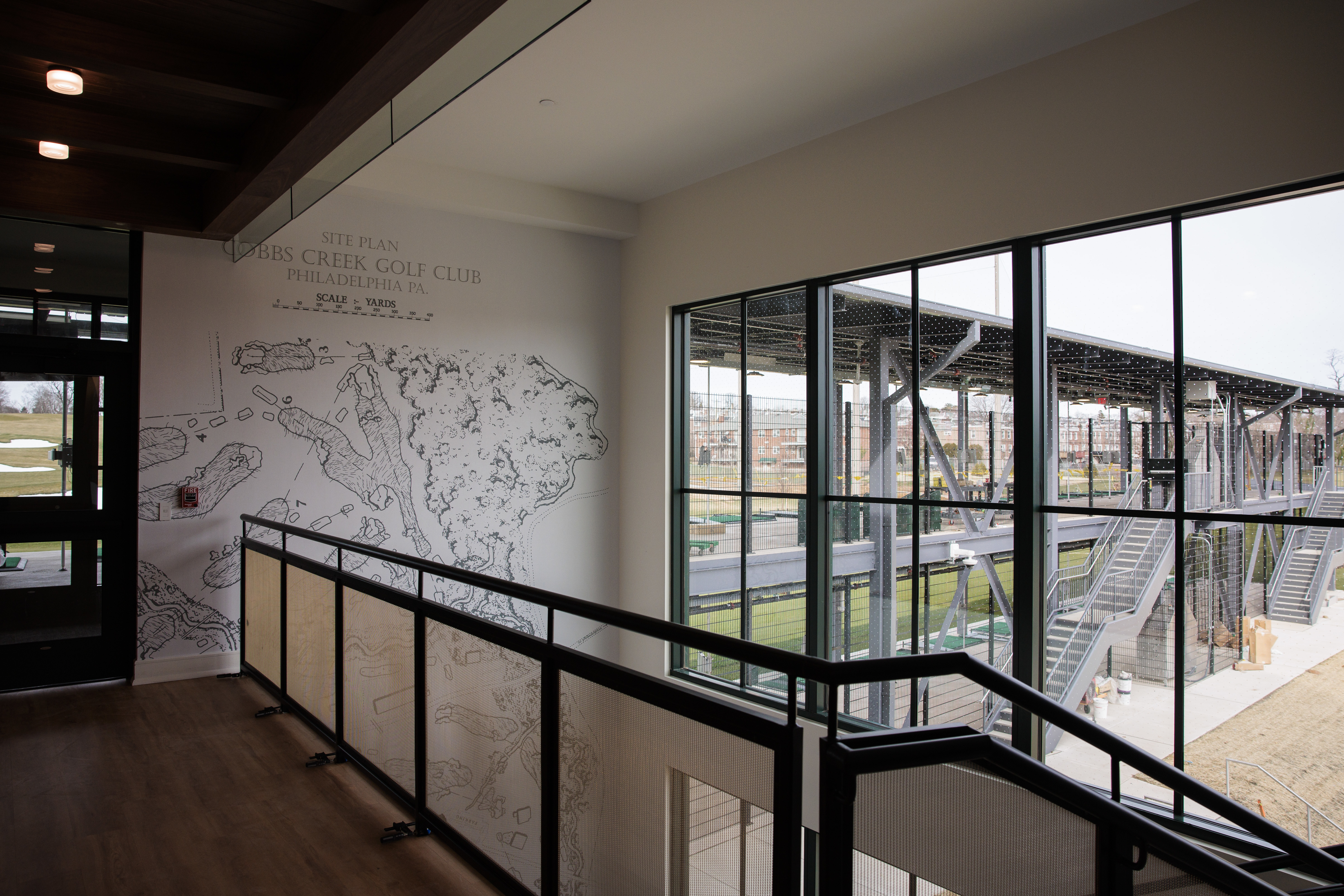
All told, the $180 million effort aims to transform Cobbs Creek into a premier public golf destination. The club, founded in 1916, offered access to players when the game was largely off-limits to anyone but white men who could afford memberships at private clubs.
A map of Cobbs Creek Golf Course decorates a wall at Little Horse Tavern.
Cobbs Creek was Sifford’s home course in the 1950s. Sifford — who got his nickname because of the horse pendant he wore — went on to win two PGA Tour events and was inducted into the World Golf Hall of Fame in 2006; he died in 2015 at age 92.
The course fell into disrepair in the 2000s and was closed in 2020. Shortly after, “a group of people who loved Cobbs Creek started asking, ‘What if this could be Philadelphia’s Bethpage Black?’” said Fitler Club president Jacob Smith, referring to the celebrated public course on Long Island that hosted the 2025 Ryder Cup.
The driving range, seen in its pre-opening phase on Dec. 8, at Little Horse Tavern.
That idea grew into the Cobbs Creek Foundation, which raised money and secured partnerships with Troon, the large golf-management company, and the Tiger Woods Foundation, which operates the adjacent TGR Learning Lab, aimed at teaching the game to schoolchildren.
In addition to its public dining room and bar, there’s a private event space upstairs that can host up to 200 people.
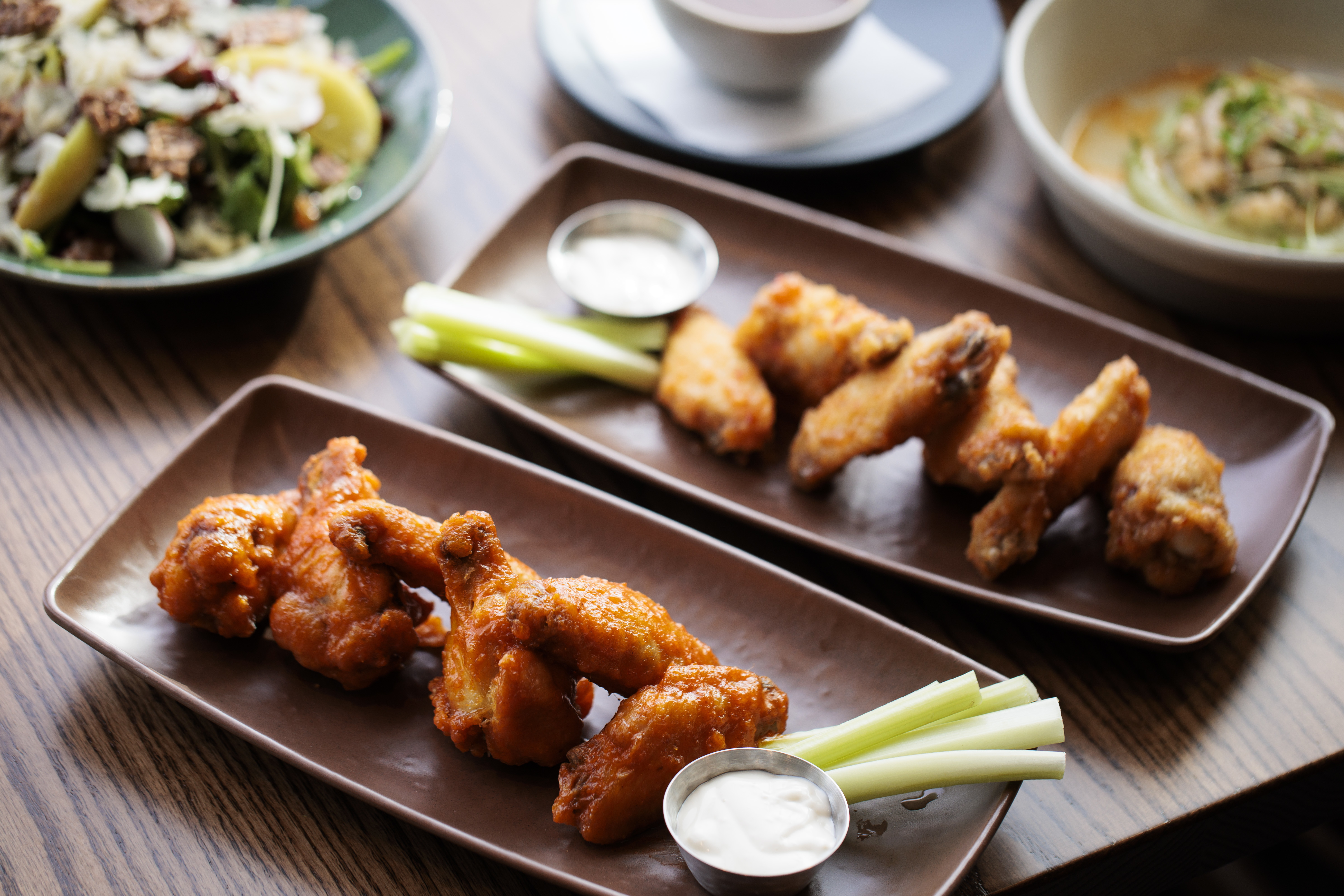
The Tavern Wings at Little Horse Tavern on Monday, Dec. 8, 2025 in Philadelphia. Little Horse Tavern serves as the main restaurant and bar at Cobbs Creek Golf Course. The restaurant, catering, and refreshment carts on the course are a collaboration between Fitler Club and Strother Enterprises.
Fitler manager Clancy Smith oversees the restaurant as food and beverage director. Chef Adam Carson is putting out a something-for-everyone mix in his all-day menu, which starts at noon.
There are tater tots, a basket of chicken tenders and onion rings, and wings (choice of six sauces). Sandwiches, accompanied by tots, onion rings, salad, or fries, include a double smash burger, turkey club, fried chicken, and truffle chicken salad.
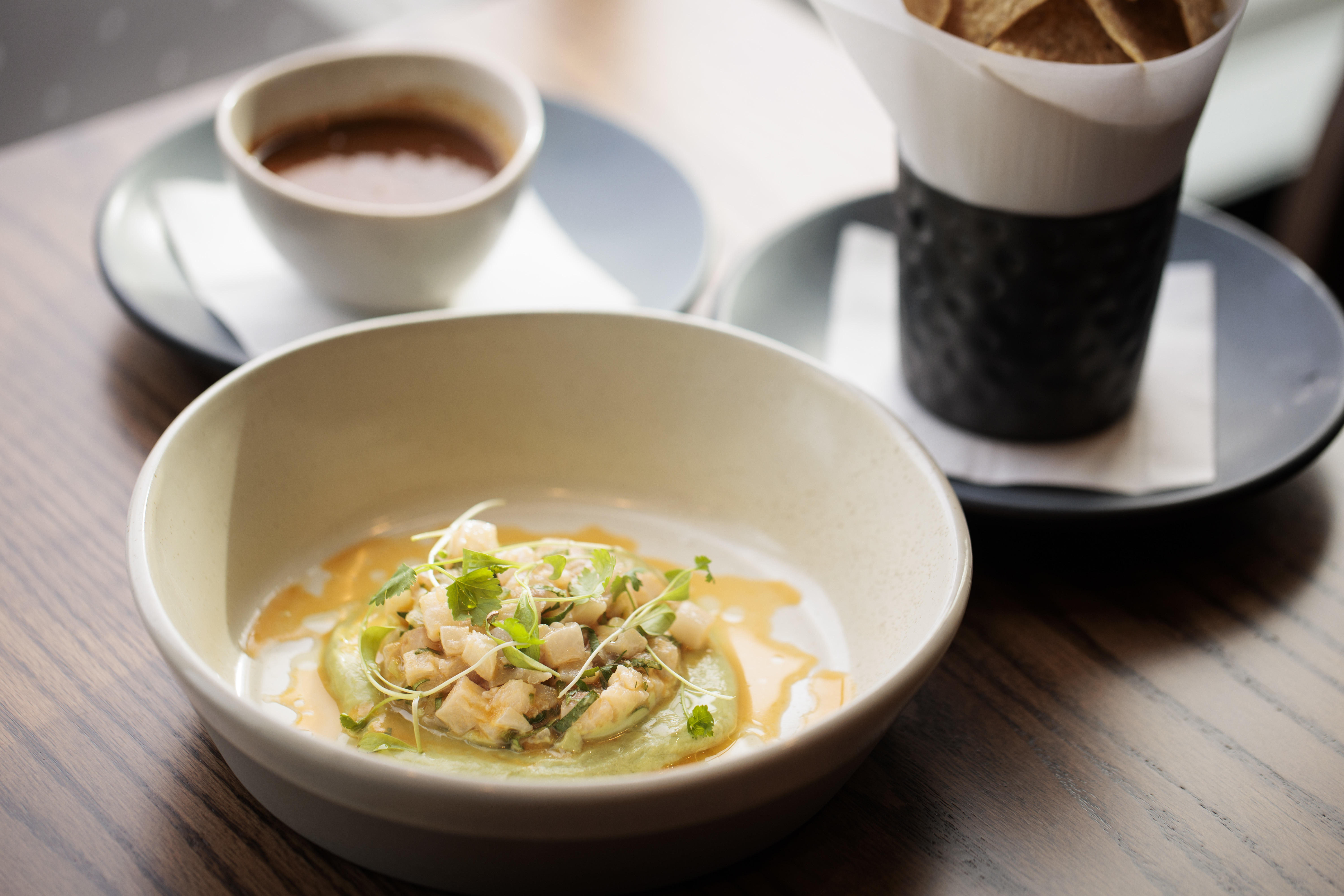
The ceviche at Little Horse Tavern on Monday, Dec. 8, 2025 in Philadelphia. Little Horse Tavern serves as the main restaurant and bar at Cobbs Creek Golf Course. The restaurant, catering, and refreshment carts on the course are a collaboration between Fitler Club and Strother Enterprises.
He’s also aiming a bit higher with esquites guacamole; huarache pizza; yellowfin tuna ceviche dressed in leche de tigre and avocado mousse; and a mixed green salad including fennel, radish, compressed apple, golden raisins, Cabot clothbound cheddar, sunflower brittle, and lemon vinaigrette. Top price is $20 for the cheesesteak. (Michael Franco, Fitler’s vice president of operations, says he expects to lower it to $18 once beef prices drop.)
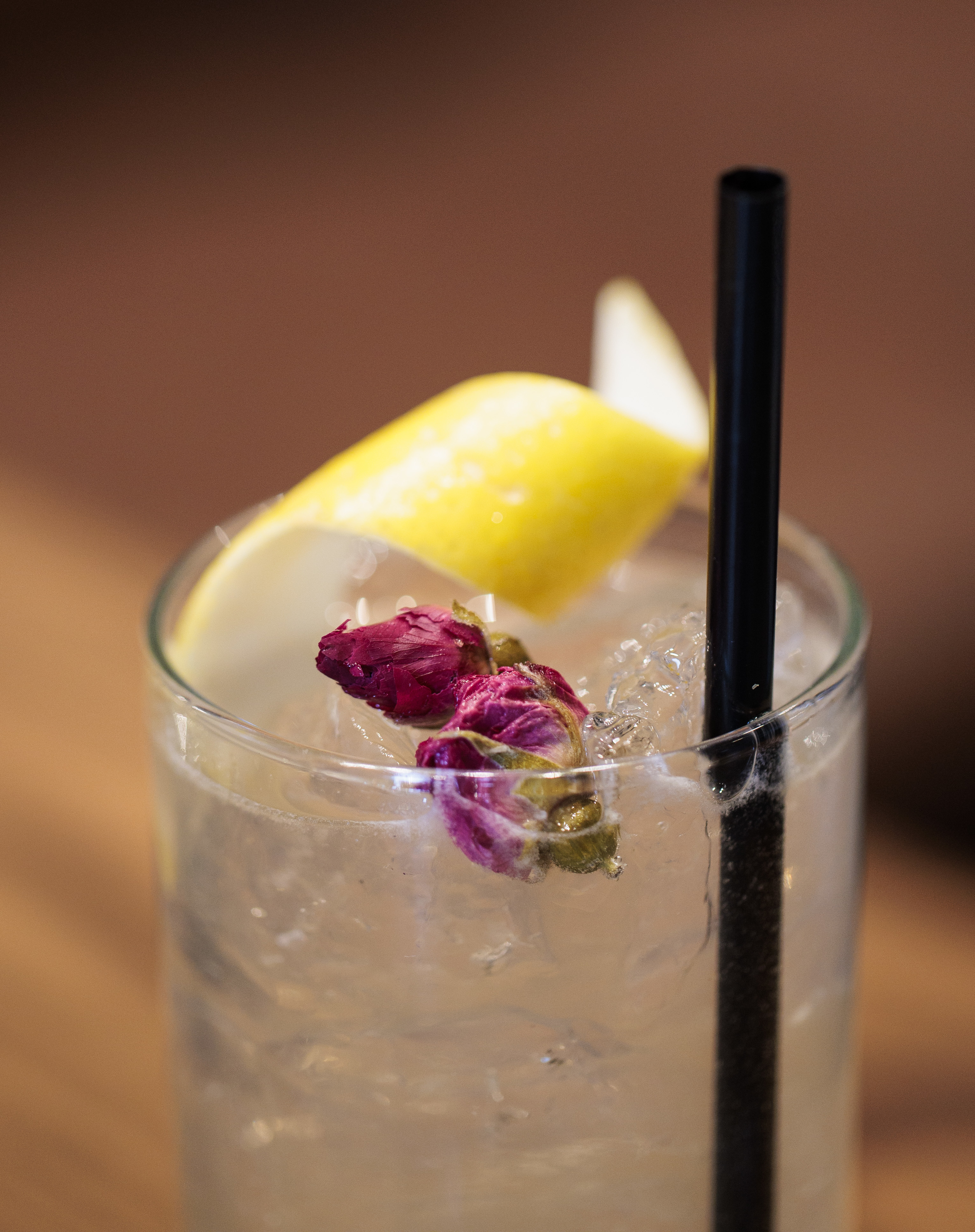
There’s a full bar, including beer, wine, and nine cocktails. Rose Is a Rose, named after Sifford’s wife, is a floral spritz featuring gin, honey, lemon, sparkling rose wine, and a dash of rose water, and it’s garnished with an expressed lemon twist and dehydrated rose buds.
The Rose is a Rose cocktail at Little Horse Tavern.
Fitler’s involvement grew out of its interest in projects with civic impact. Though best known as a members-only club in Center City, Fitler wants to expand its hospitality expertise beyond its walls.
“We look for opportunities where we can contribute something meaningful to the city,” said Smith, whose golf handicap is 13. “This was at the top of the list.”
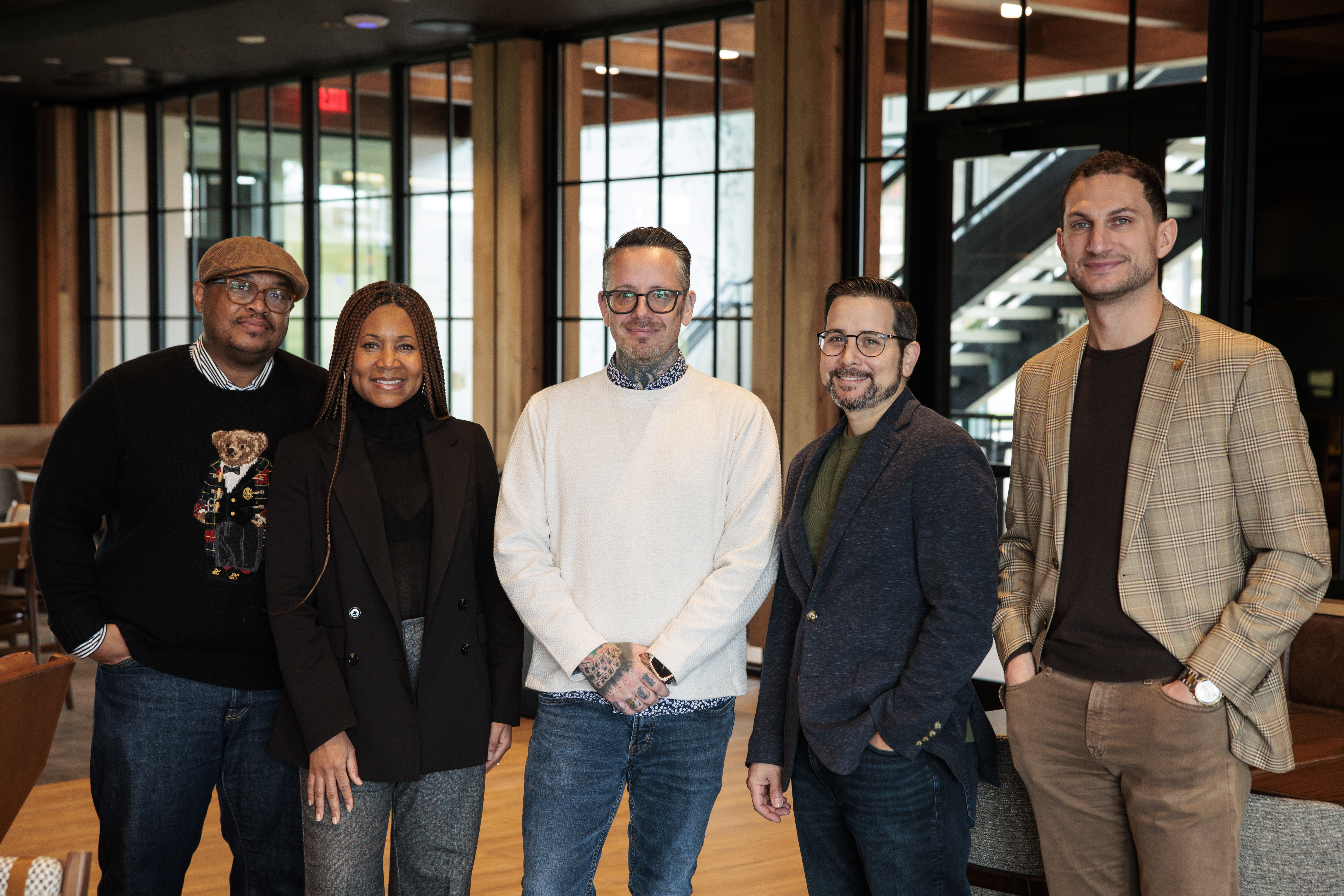
At Little Horse Tavern (from left): Robert A. Strother, Cobbs Creek manager for Strother Enterprises; Natasha Strother Lassiter, chief strategy officer for Strother Enterprises; Clancy Smith, director of food and beverage; Michael Franco, vice president of operations for Fitler Club; and Jacob Smith, Fitler Club president.
For Strother Enterprises, a family-run food service company that began as a catering business in West Philadelphia, the connection is deeply personal. Robert A. Strother and Natasha Strother Lassiter are first cousins whose fathers — Ernest Strother and Robert Strother Jr. — worked as certified caddies at Cobbs Creek when they were teenagers.
“This was one of their first jobs,” Strother said. “They carried bags here all day, multiple rounds a day. Cobbs Creek was part of their upbringing.”
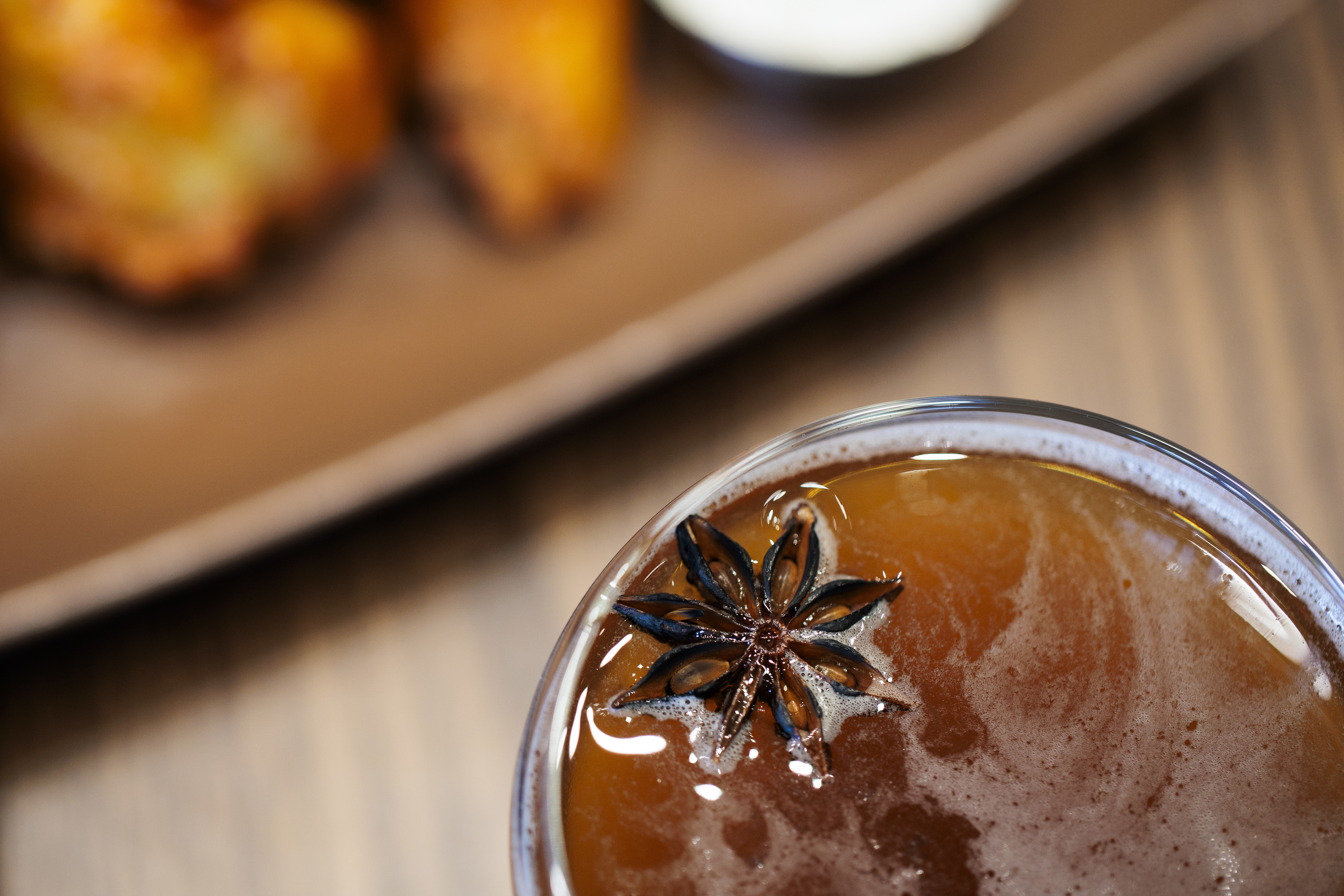
The Shotgun Start cocktail, garnished with absinthe-soaked, torched star anise, at Little Horse Tavern.
Lassiter said returning to the course as partners in its rebirth brings the family’s story full circle. “Being from West Philly, seeing this space restored, and being able to contribute to it in a meaningful way — it’s emotional,” she said. “This isn’t just another project for us.”
Strother manages day-to-day operations and oversees the after-school snack program at the TGR Learning Lab.
“This project isn’t just about hospitality,” Lassiter said. “It’s about community, education, and access.”
Little Horse Tavern, 7403 Lansdowne Ave., 267-900-3740, cobbscreekgolf.org. Initial hours: noon to 8 p.m. daily.
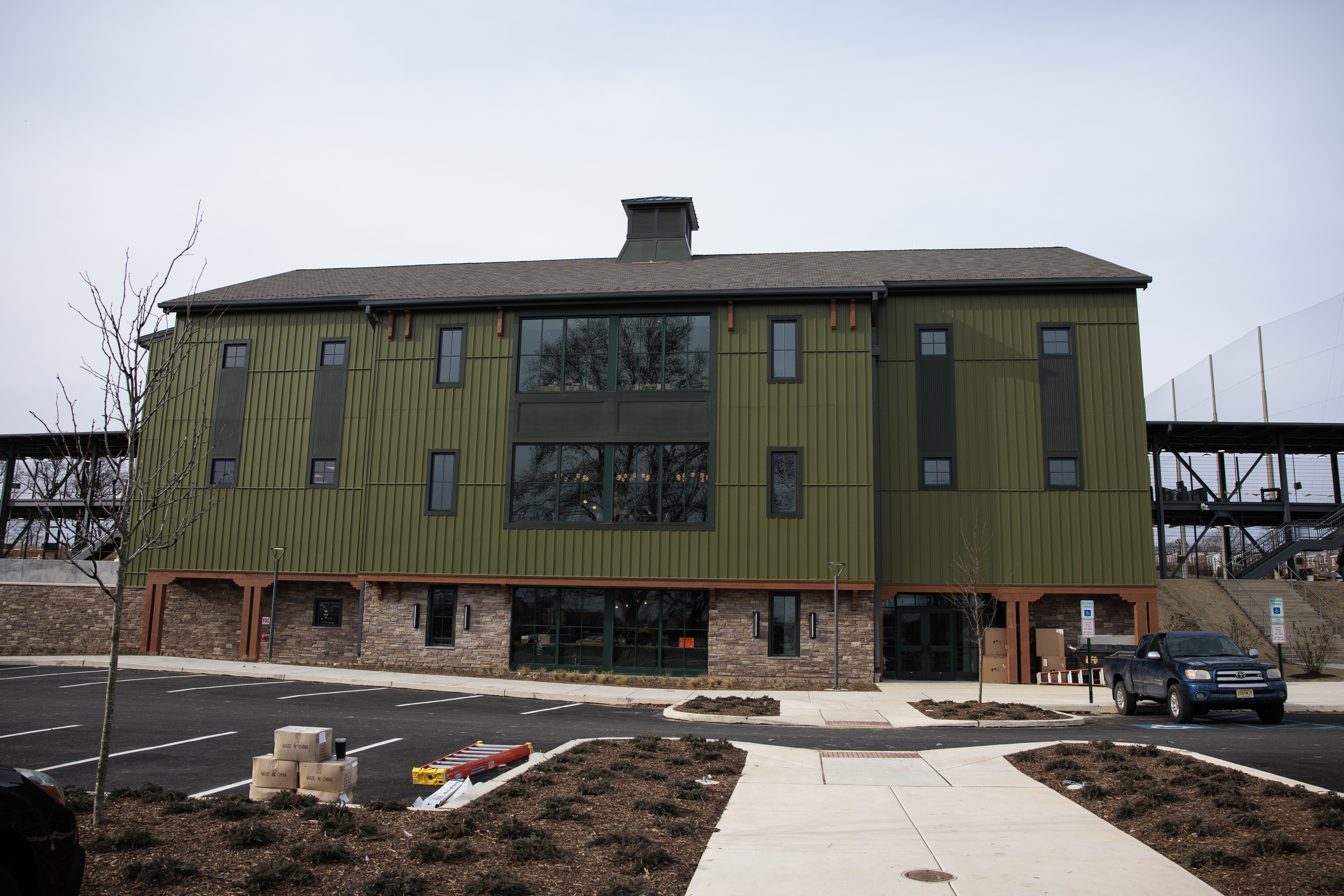
Little Horse Tavern, as seen from Lansdowne Avenue, on Dec. 8.
While you may be familiar with kombucha’s benefits for your gut, one brewer is determined to show that the beverage and its byproducts can also make for excellent skincare.
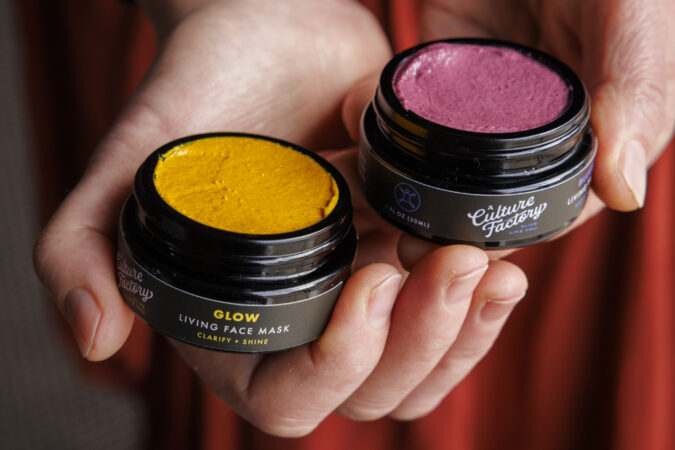
Phoenixville-based Olga Sorzano, 49, the owner and brewer behind decade-old Baba’s Brew as well as a chef and culinary instructor, has an expansive, multifaceted career — but all her varied interests are united by one thing: fermentation. Her newest venture is A Culture Factory, a line of kombucha-infused skincare products that ranges from toners and masks to scrubs and serums.
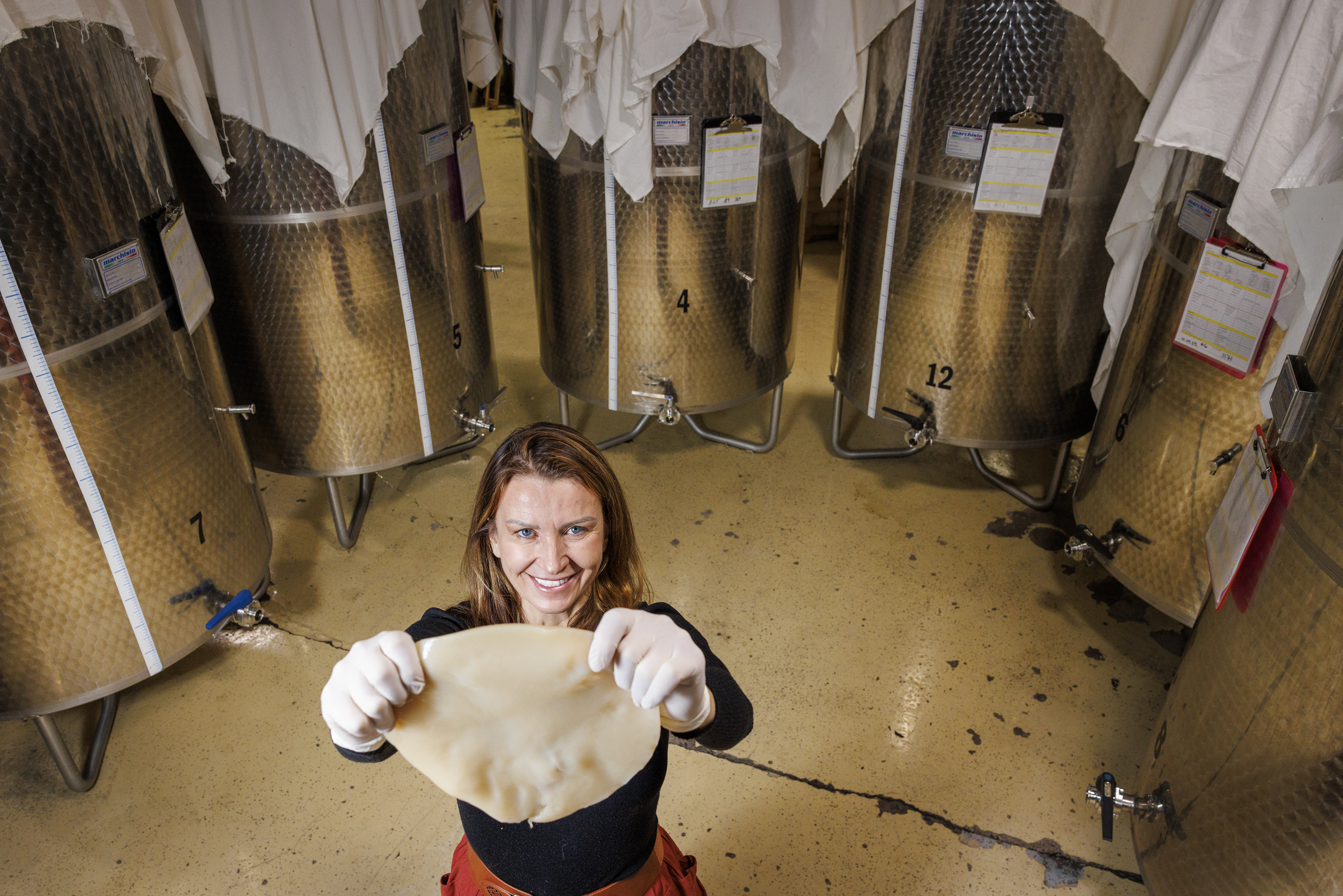
Olga Sorzano, owner of Baba’s Brew of Phoenixville, holding a scoby in the brewing room, Wednesday, December 10, 2025.
“Our skin is alive. Most skincare is like Wonder Bread, designed for shelf-stability, but what if it could be like a beautiful, artisanal loaf of sourdough, which is living and nourishing? It feeds you with a living culture,” said Sorzano.
“As a chef, I want to feed you. And I have a chef’s approach to the skin as well. My great-grandmother and grandmother didn’t have all these [store-bought] solutions. They had lard and they would put it on their elbows. And kombucha vinegar on their skin. If they had berries leftover from making jam, they’d mix it with yogurt for a face mask.”
Sorzano‘s kombucha company generates large amounts of scoby, or the mother culture used as a kombucha starter. “It’s loaded with all these enzymes and I was thinking, how awesome to use some surplus scoby and turn it into face masks.”
Many ingredients from Baba’s Brew — like turmeric, which Sorzano also ferments — make it into A Culture Factory’s products, too, along with tallow from Breakaway Farms in Mount Joy, which Sorzano renders, refines, and blends with green coffee oil for a bright yellow eye butter.
Paying tribute to Baba
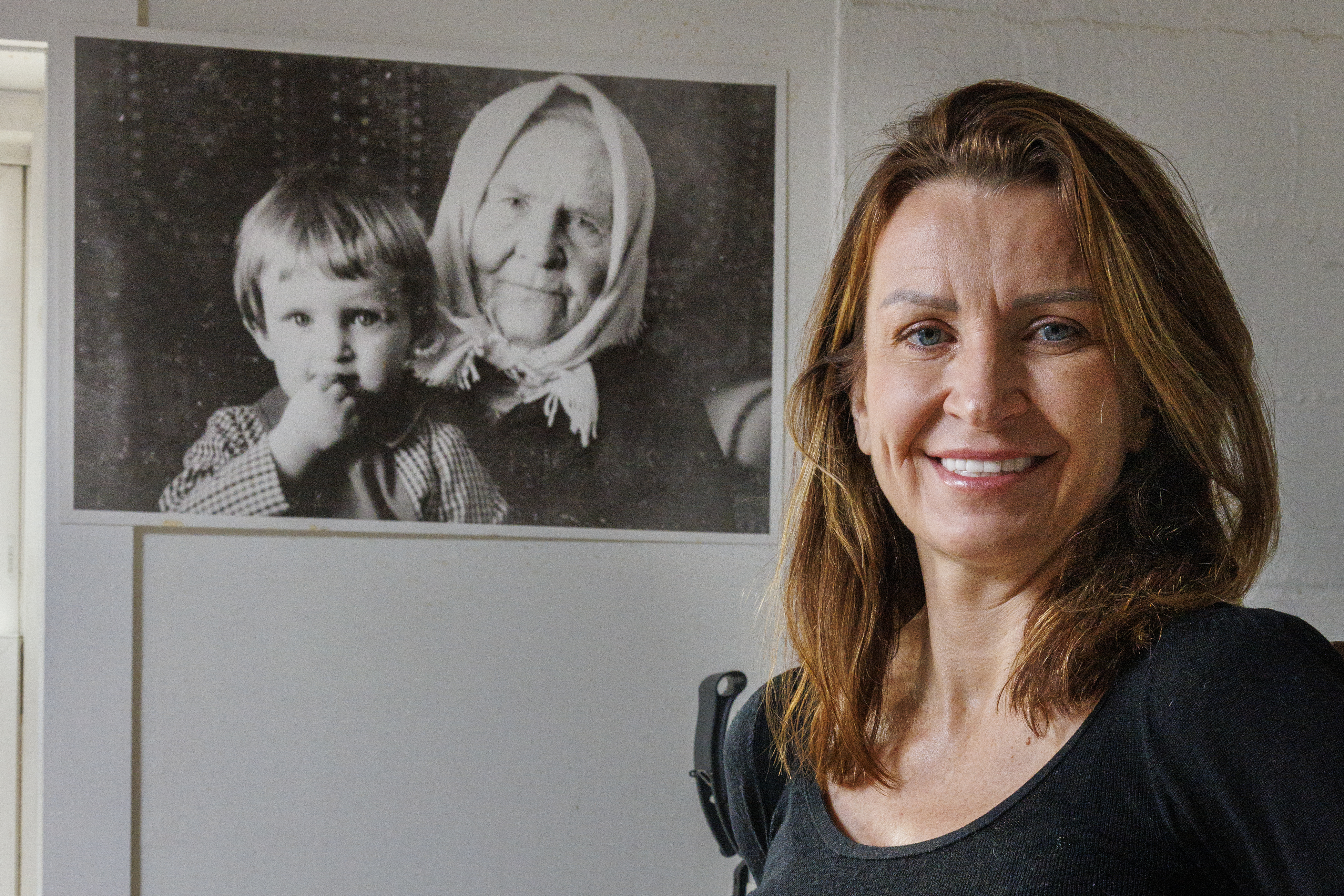
“Baba” means grandmother in Russian. Sorzano’s kombucha company, in both its branding and its recipes, is an homage to her great-grandmother, who raised Sorzano in the town of Barnaul, Siberia (close to the Mongolian border) when she was very young.
“I would say, ‘Baba, my belly hurts,’ and she would say, ‘Have some kombucha.’ Or I would say, “My leg hurts,’ and she would also say, ‘Have some kombucha,’ ” said Sorzano with a laugh. She grew up thinking kombucha was everywhere, that everyone had access to it, and that it was a balm for all ills.
If Sorzano’s Baba made kombucha that over-fermented, “she would put it on her skin as a toner.” This was a beauty tip that has followed Sorzano her entire life, brewing as an idea for years until finally blooming into a business concept.
Olga Sorzano, owner of Baba’s Brew, Phoenixville, on Wednesday, December 10, 2025. She is shown in a portrait as a child with her great-grandmother.
Fermentation, and the patience it demands, has long been a part of Sorzano’s family. To survive the long, bitter winters, the women in Sorzano’s family fermented everything they grew in their garden. “When I tell people about my childhood, they think I grew up in the 1700s,” she joked. “We foraged, we would go on mushroom hunts, we’d have a big cabbage day where several families would get together, chop cabbage, and preserve it for the winter.”
Baba’s Brew uses organic, fair-trade tea and sugar as the base for its kombuchas, but otherwise all its ingredients are local, like plums from Frecon Farms, blueberries from Hamilton, N.J., and honey from Swarmbustin’ Honey. They also brew many one-off, seasonal kombuchas, with ingredients like black currants, which frequently show up on Sorzano’s doorstep, brought by small farmers.
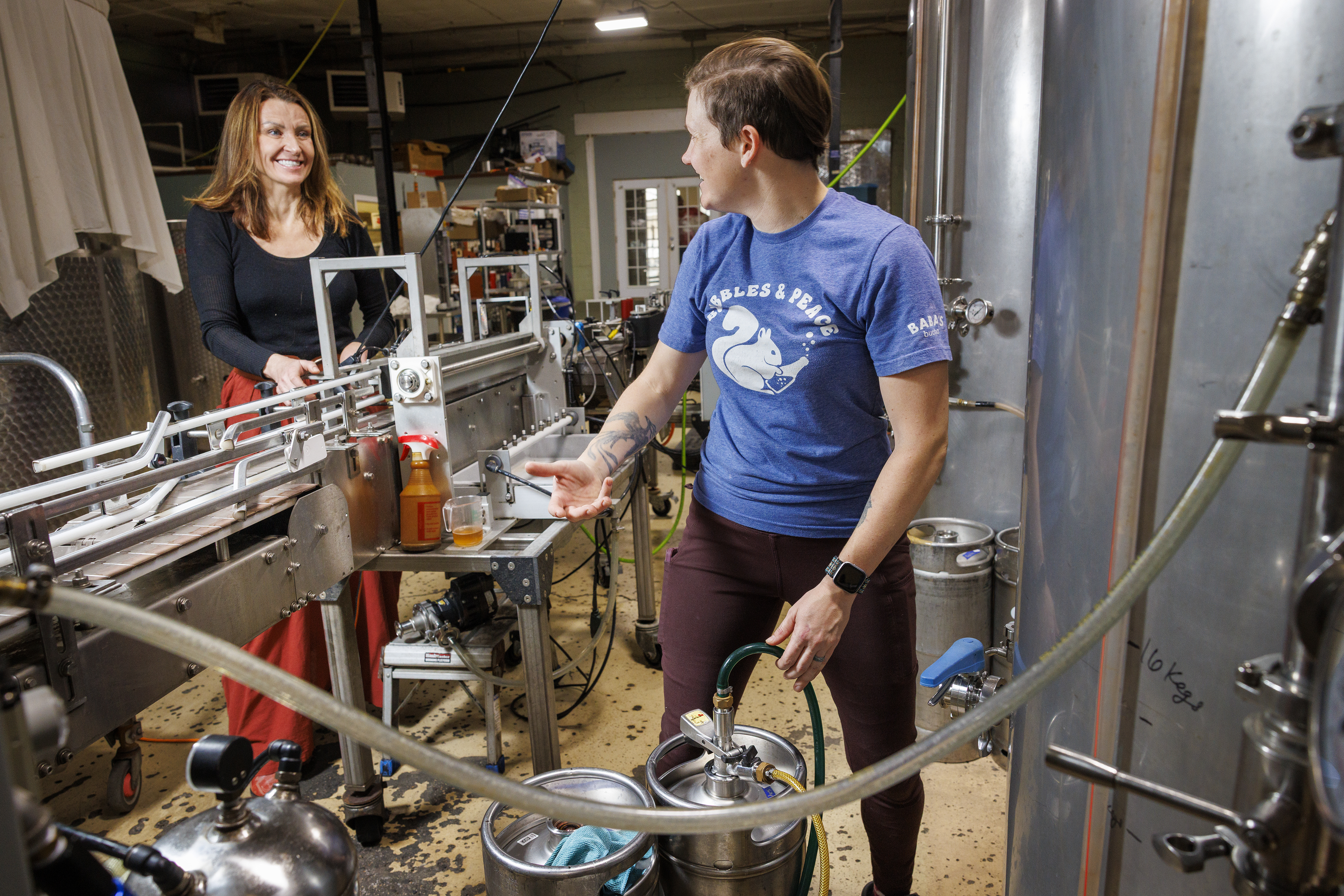
Olga Sorzano, owner of Baba’s Brew, with brewer Sarah Jagiela in the brewing room in Phoenixville on Wednesday, December 10, 2025.
Sorzano came to the U.S. in 2000 as an exchange student with Future Farmers of America after receiving a doctorate in veterinary medicine in Moscow. She worked on a dairy farm in Nebraska for a year, milking cows and doing other farm work, then moved to Florida, met her husband, and when he was offered a job in Philly, moved to the area. She enrolled at the Restaurant School at Walnut Hill College and applied her veterinary school-informed chemistry knowledge to cooking.
“I found cooking very easy, because to me, everything is about chemical reactions,” she said. Cooking eventually led to her opening Baba’s Brew, the spark of which was born at a fermentation festival, where she realized there was a community of people in the U.S. fermenting single ingredients, just as her Baba had. In a sense, she found her own culture, through cultures.
Olga Sorzano, owner of Baba’s Brew, in Phoenixville, Wednesday, December 10, 2025.
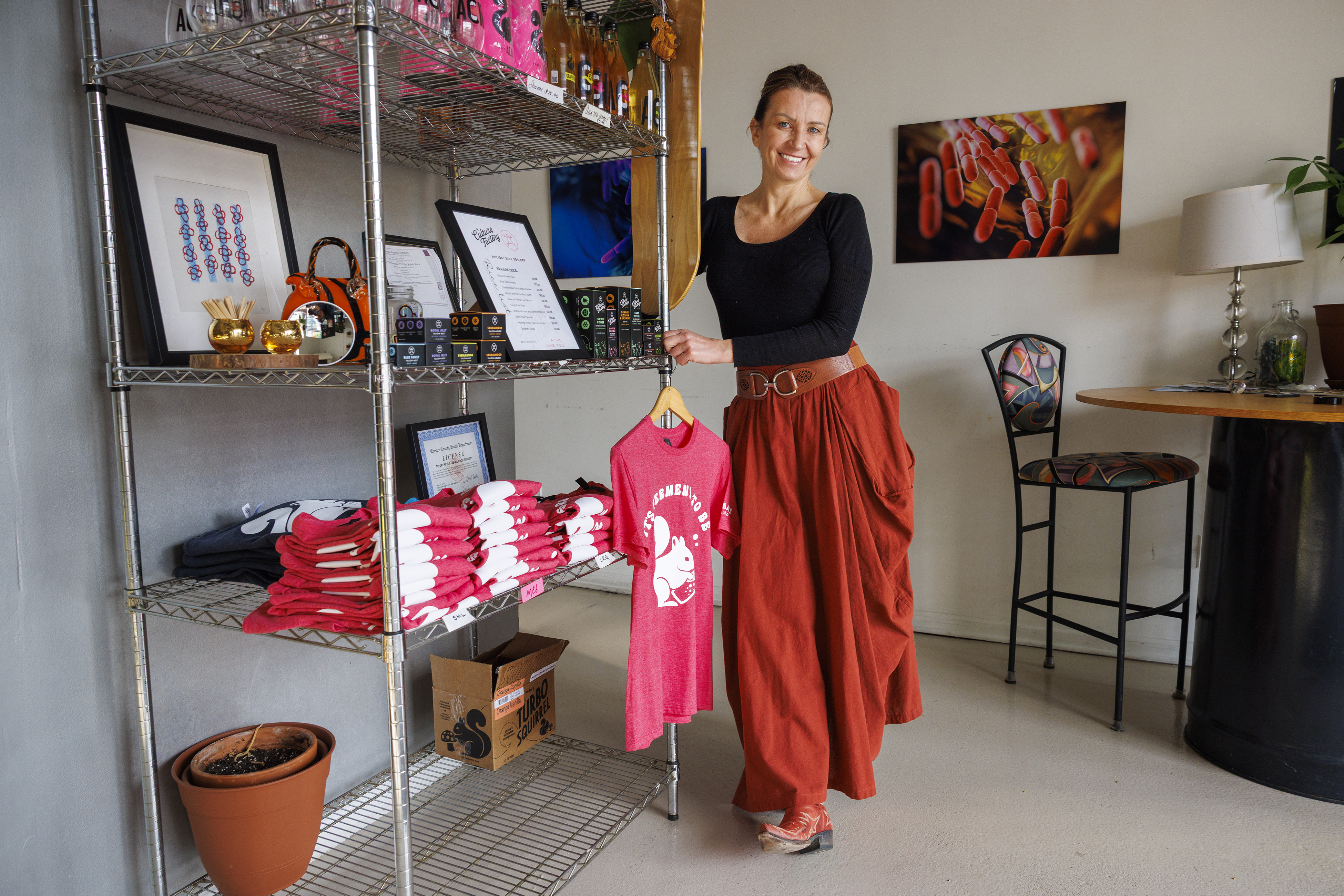
A Culture Factory skincare launched this month and shares its name with the tasting room where Sorzano hosts private events and teaches cooking and fermentation classes (such as making your own kimchi or mastering basic cooking skills). “It’s where I bring people in and teach them to cook but focus on techniques like how to season or layer flavors,” said Sorzano.
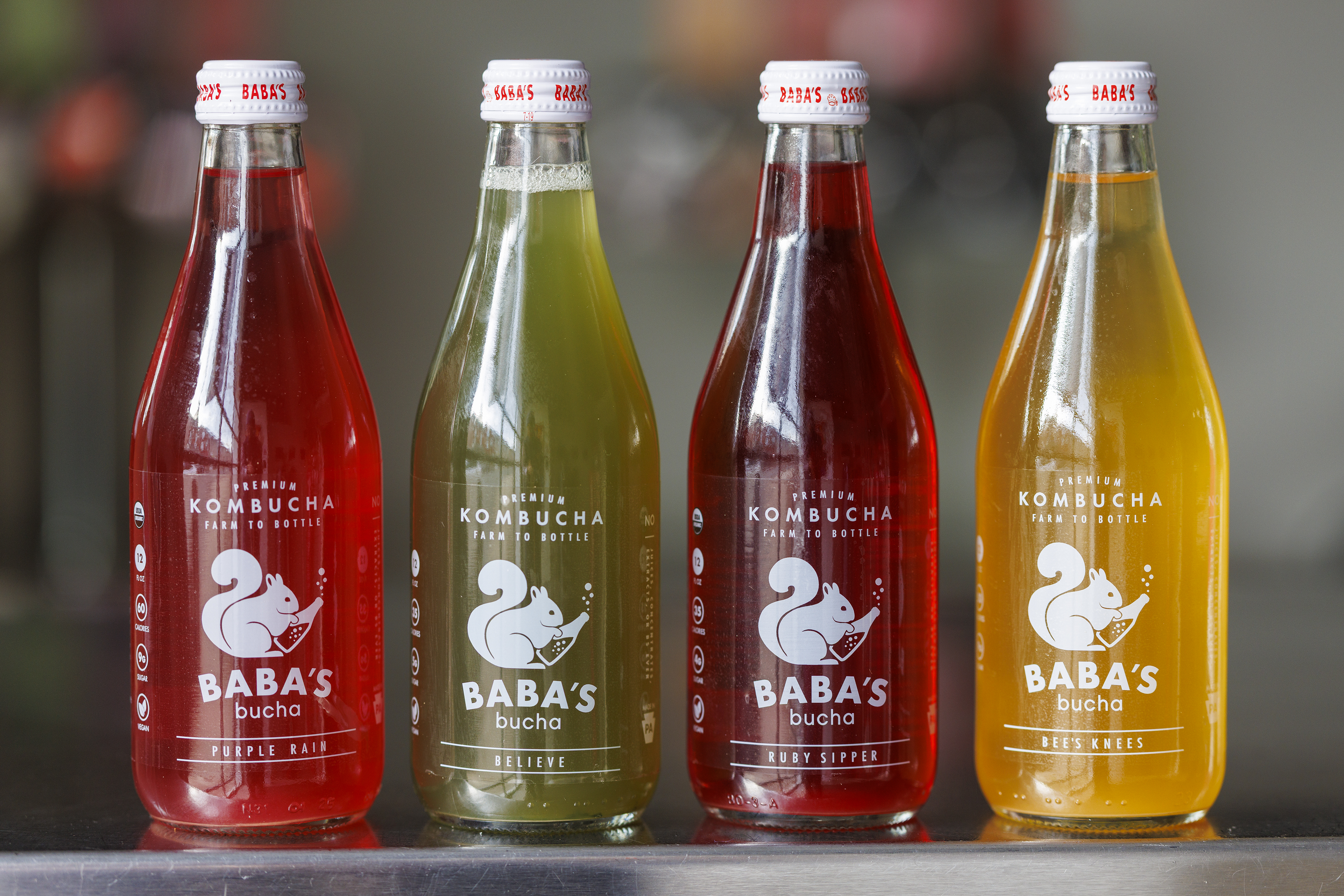
An assortment of kombucha beverage flavors by Baba’s Brews, a Phoenixville, company, Wednesday, December 10, 2025.
Like the notions of producing fermentation “mothers” and the actual mothers in Sorzano’s family who treated every ailment with kombucha, Sorzano’s life has been threaded with yet another motif: the squirrel. She constantly “squirrels” ingredients away to ferment them.
The logo for Baba’s Brew is a squirrel because “Baba’s nickname was Belka [the Russian word for ”squirrel”]. And when we moved into this brewery, we had a squirrel infestation and we had to call animal control to remove them from the attic. And when we moved to our farmhouse, we had a flying squirrel infestation. I safely captured and released all 18 of them,” said Sorzano, proudly.
The tasting room is adjacent to the now-squirrel-free brewery in which Baba’s Brew produces 4,000 liters of kombucha per week. There, along with Baba’s Brew’s eight kombuchas on tap, you can now purchase Sorzano’s handmade skincare products, as carefully and locally sourced as the fruit that goes into her kombuchas.
Soon, the distinct smells of the Pennsylvania Farm Show will waft through Harrisburg, everything from manure to hay to the ubiquitous milkshakes.
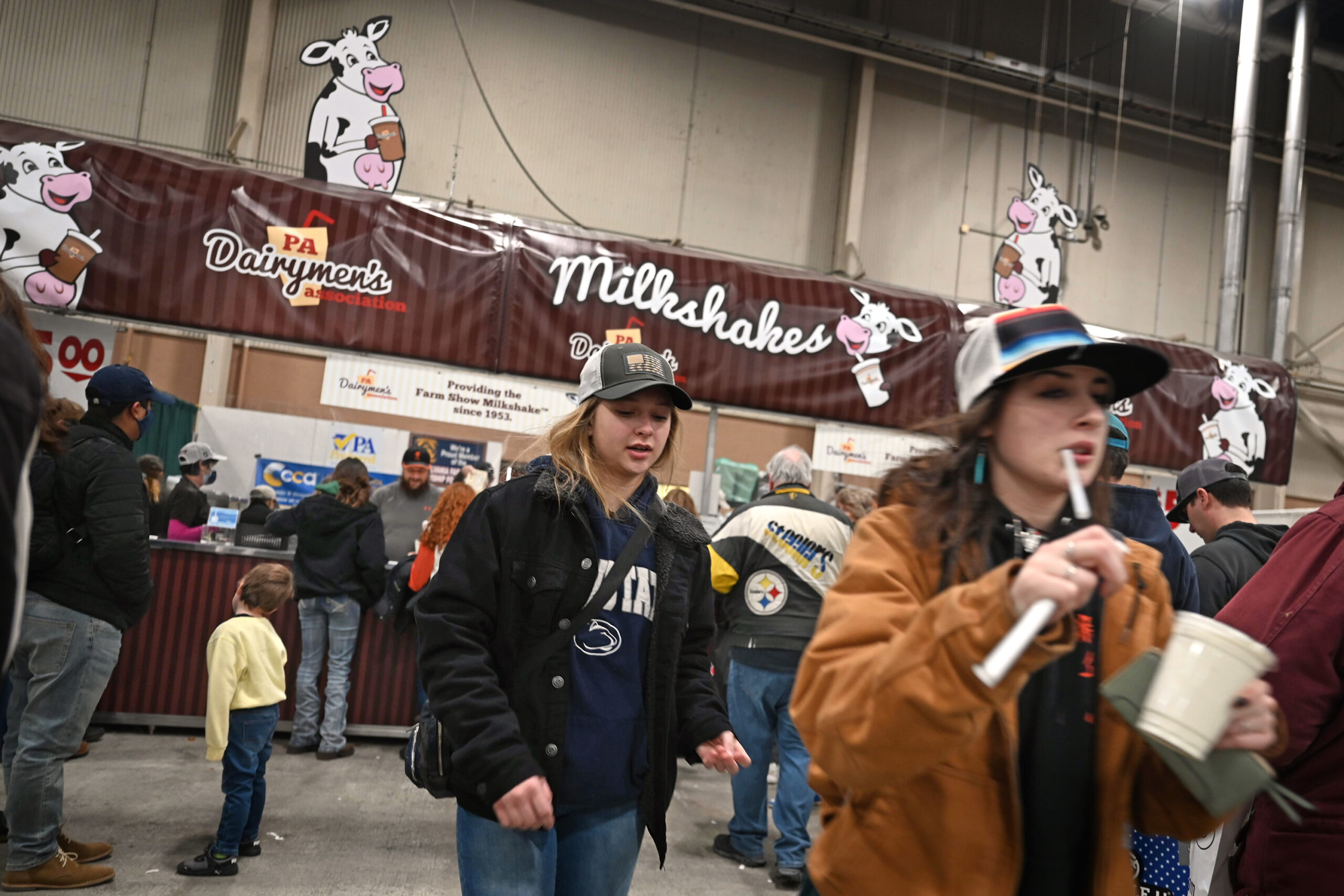
The shakes, sold by the Pennsylvania Dairymen’s Association, are a Farm Show tradition, along with looking at the enormous butter sculpture and watching live calf births.
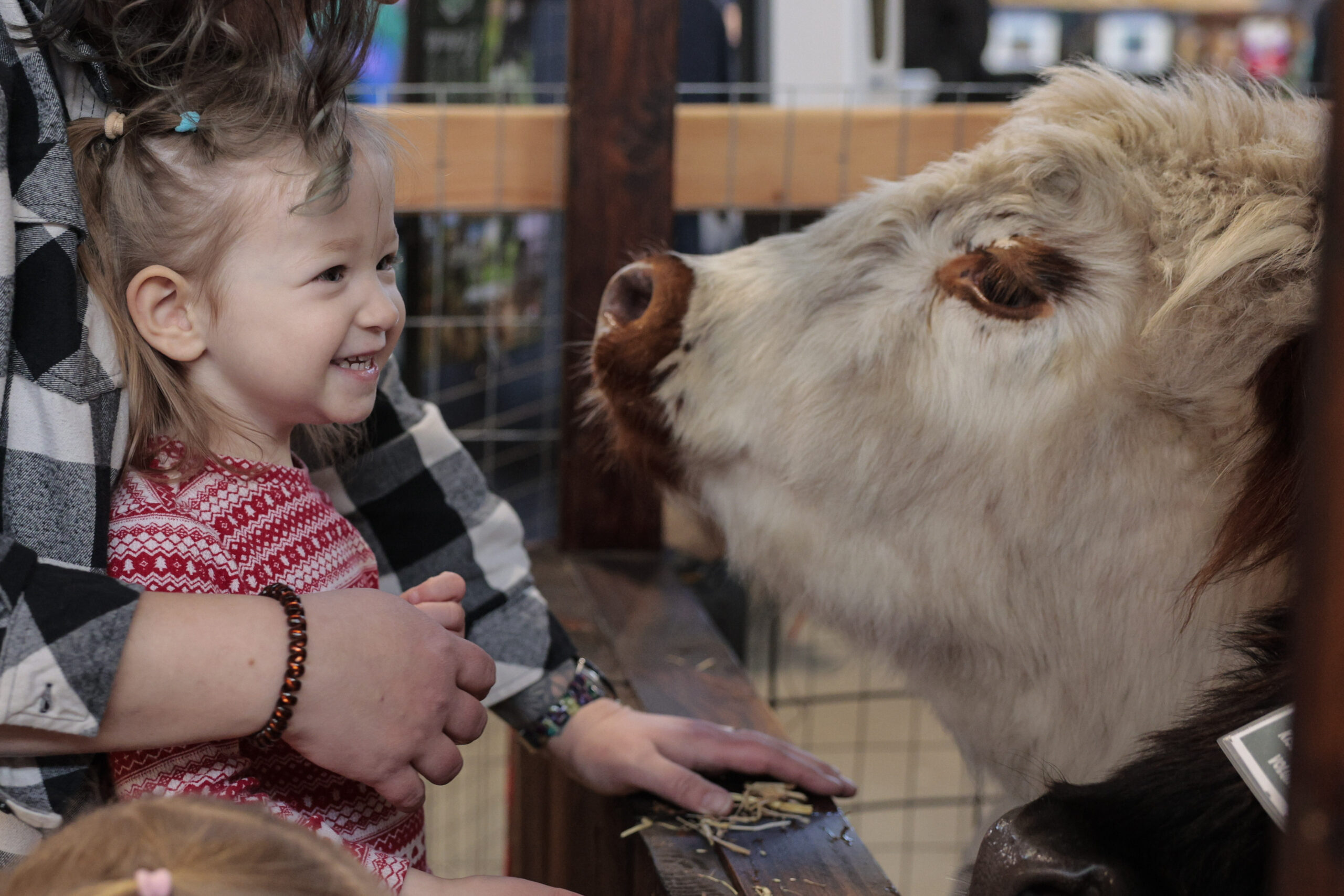
Kaitlyn Groff from Lancaster is visiting a kiss a cow with a Highland cattle at the Pennsylvania Farm Show in Harrisburg, Thursday, January 9, 2025.
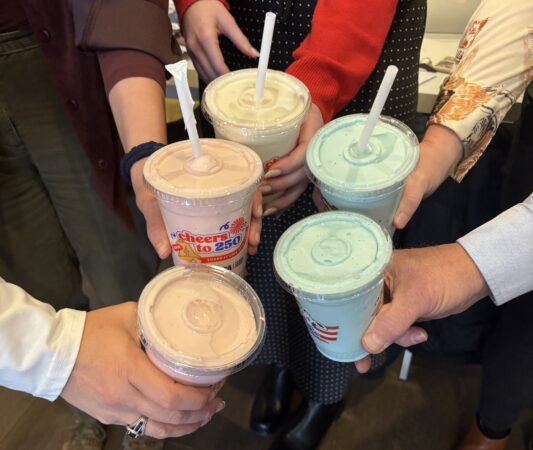
Traditionally, the flavors are vanilla, chocolate, and strawberry, but this year, to celebrate America’s 250th birthday, the shakes are getting patriotic. The “America250Pa Milkshake flight” will now be red, white, and blue thanks to the addition of blue raspberry.
The farm show is the country’s largest indoor agricultural exhibition, and it starts on Saturday, Jan. 10, 2026, with the massive food court opening on Friday, January 9th. You can get mushroom burgers from Chester County and baked sweet potatoes douses in butter and cinnamon.
Pennsylvania is second nationally in the number of dairy farms with 465,000 head of cattle on 4,850 farms. The state’s dairy industry provides 47,000 jobs across the Commonwealth and generates $11.8 billion in annual revenue.
Attendees visit the the PA Dairymen’s Association milkshake booth at the Pennsylvania Farm Show in Harrisburg Jan. 10, 2022.
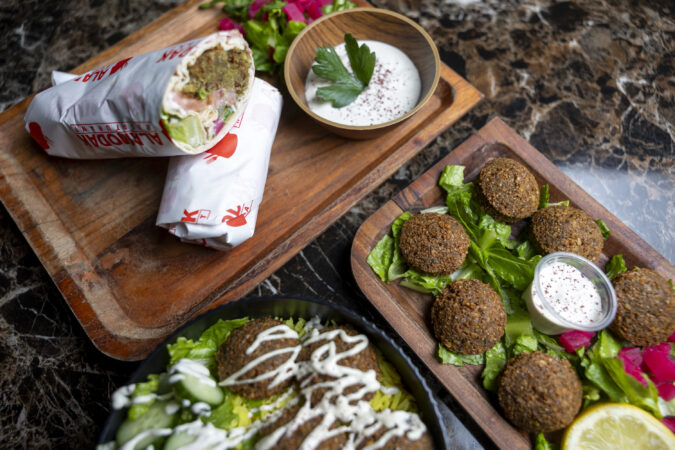
Eating at over 20 Middle Eastern restaurants as a scout for The Inquirer’s 76 list may seem like a daunting task (and in some ways it was). But when your search includes eating falafel over six weeks, the quest becomes a delightful lesson in texture and taste.
My beat included Lebanese, Yemeni, Afghan, Palestinian, Jordanian, Turkish, Egyptian, Syrian, and Moroccan restaurants, which meant I became a falafel obsessive, tasting over two dozen falafels. At every restaurant I went to I would ask my dining companions to evaluate the dish. And I would ask:
Could I feel the crispiness of the exterior by tapping on it? Was there a soft, herb-hued mush inside when I tore it in half? Did the earthy, nutty flavors of warming spices like cumin, coriander come through with each bite?
No matter how it’s made — legumes soaked overnight, blended (with spices, herbs, and sometimes flour), and fried — falafel is about the herbs, spices, and legumes that come together to make the palm-sized rounds that are perfect on platters, in a sandwich, or as a snack by themselves.
While falafel originates from Egypt, there are various techniques used throughout the Middle East to create this popular dish. Growing up with many Arab friends, I knew falafel looked and tasted a bit different depending on the chef’s country of origin — after all, Middle Eastern cuisine is not a monolith.
What was fascinating to learn were the specific differences in technique and ingredients within Philly restaurants. Palestinian falafel, like those served at Al-Baik Shawarma, tend to have bronze exteriors with slightly spicy, earthy, light-green interiors. Egyptian falafels use fava bean and chickpea mixes fried to perfection for the most satisfying crunch at Cilantro near South Street. Fluffy Lebanese falafels are made gluten-free and with baking soda in Collingswood at Li Beirut.
My journey revealed the rich tapestry of falafels that make up this city. After a summer of munching, Cilantro, Al-Baik, and Apricot Stone falafels live rent-free in my head.
But most importantly, these palm-sized legume balls were a clear reflection of just how expansive and diverse the Middle Eastern dining landscape is in Philadelphia. One that only takes sinking your teeth into super-satisfying falafels to experience.
As the health inspector left Cafe Michelangelo in the Far Northeast last week, she affixed a “cease operations” sticker to the front door, ordering the restaurant to close for at least 48 hours.
Co-owner Giuliano Verrecchia got an idea.
He would come clean.
Chastened by the report’s findings and mindful of his restaurant’s previous dodgy health inspections this year, Verrecchia decided to go public and explain all 16 violations, one by one.
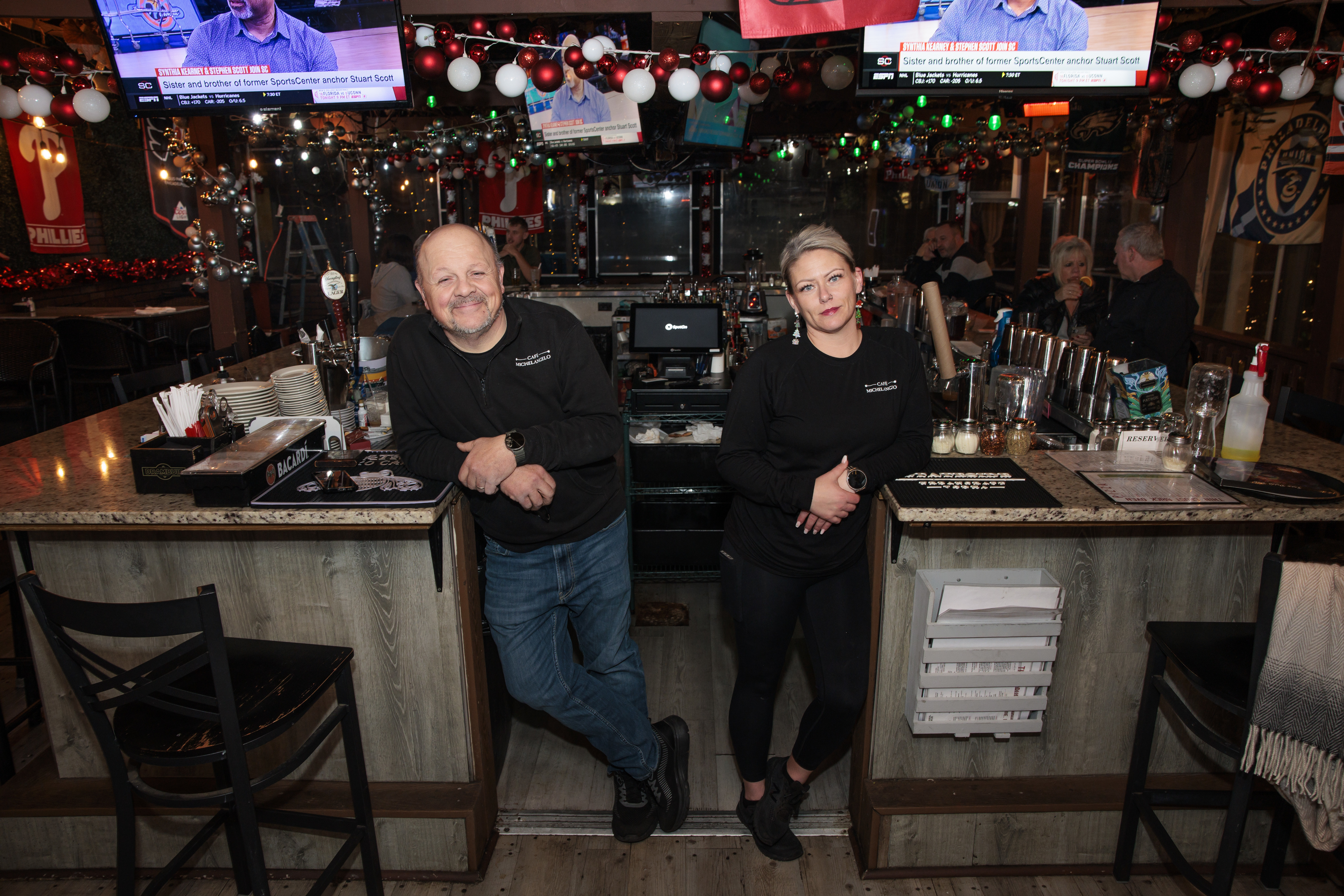
Co-owner Giuliano Verrecchia and manager Danielle Runner at Cafe Michelangelo on Dec. 9, 2025.
“I wanted to put my side out there and be transparent,” Verrecchia said, adding that he considered some of the cited issues “a bit misleading.” He and his manager, Danielle Runner, printed out the inspection report, added commentary, and posted it to Michelangelo’s Facebook page on Dec. 4, the day after the shutdown.
Addressed to “all of our amazing customers,” the post on Michelangelo’s profile paired the exact wording of the health report’s violations with Verrecchia’s own explanation (and redress or occasional rebuttal). He detailed 16 violations, including “peeling paint observed on walls in one of the women’s restroom areas” (“Bathrooms and storage areas were repainted yesterday,” he explained) and “ice build-up observed in the first-floor walk-in cooler unit” (“removed ice build-up,” he wrote).
Reaction to the post was mostly positive. Customers replied with words of support. Some commenters — several of whom identified as food-service industry workers — downplayed the inspector’s finding, describing them as minor.
(In a Facebook post earlier that day, the restaurant described the violations as “non-hazardous,” which was not entirely accurate.)
On Friday, Dec. 5, Michelangelo passed its reinspection, paid a $315 fee, and prepared to reopen. Verrecchia held his breath. Would the public respect his attempt at transparency?
A Northeast Philly staple
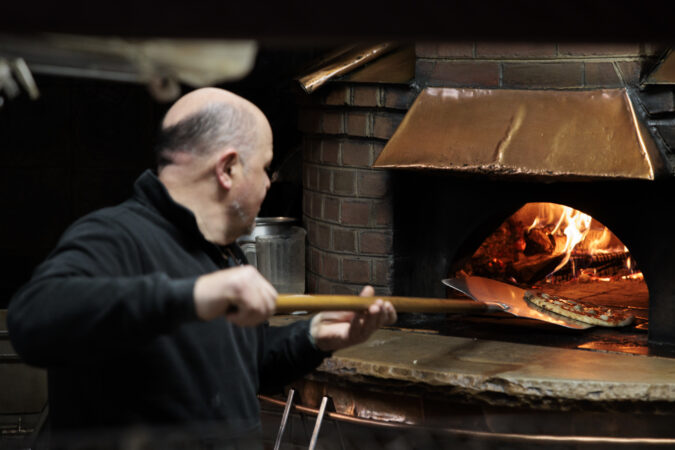
In 1992, brothers Michael and Angelo DiSandro combined their names to open a family-friendly Italian restaurant, complete with bocce courts and room for 250 guests, in a Somerton strip center. By Northeast Philadelphia standards, Cafe Michelangelo was years ahead of its time, serving espresso and brick-oven pizza. Angelo DiSandro died in 2012, and Michael has stepped aside from the day-to-day operation.
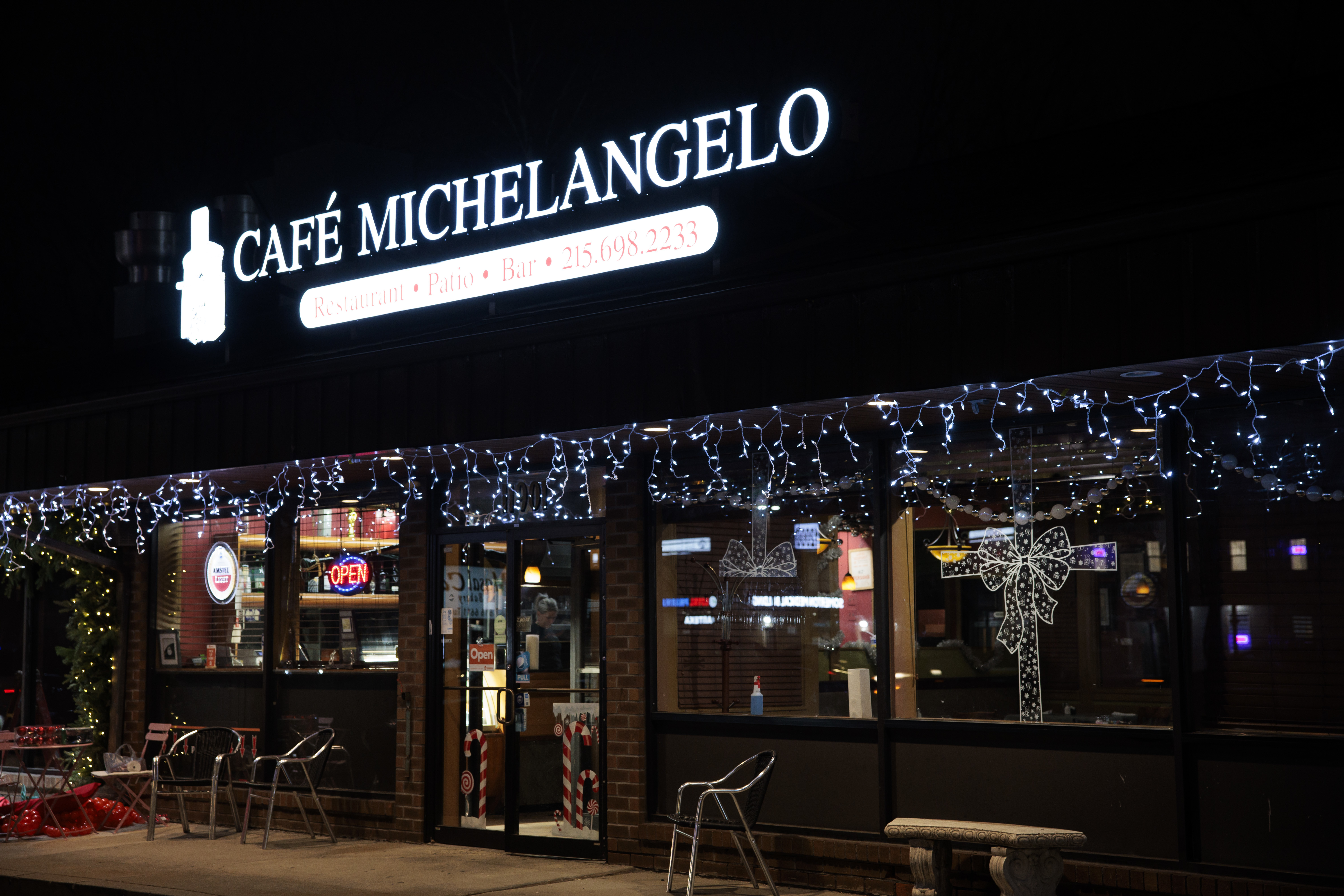
Cafe Michelangelo, 11901 Bustleton Ave., on Dec. 9.
Verrecchia, 56, a nephew, oversees the restaurant, which has a bar in a rear dining room as well as a newer second bar on a covered, heated patio. There’s live music at least three days a week. Michelangelo’s business, like that at many older restaurants, hasn’t been the same since the pandemic. Rising food prices and labor costs have cut margins, and competition has become keener. Customers can get a world of cuisine delivered via apps.
To boost traffic, Verrecchia offers a $15 lunch buffet Tuesday to Friday with two pastas, two proteins, salads, and pizza. Over dinner, the calamari, the parm dishes, and pizzas still move, but he said his customers are cautious about spending. He still sells bigger-ticket items — steak, rack of lamb, whole fish — “but I’m not charging you $45,” Verrecchia said. “I’m charging you $37 and I’m not making money on it, but if you want a steak and the kid wants pizza? You got a home run.”
The aftermath
Michelangelo reopened the same day it passed its reinspection. The phone rang over the weekend. It was a group of teachers canceling their large annual party. Then another big order fell through.
Neither cited a reason. Business was down about 25% on Friday, the restaurant’s first day back, and remained soft Saturday. There was a slight improvement Sunday. The restaurant is closed Mondays. Tuesday was slow again, which Verrecchia partly attributed to cold weather. He said it was too soon to tell what was driving this.
Timeline of inspections
In interviews, Verrecchia said he acknowledged that some of the inspector’s findings required attention, but added: “I don’t think those issues put customers in jeopardy.”
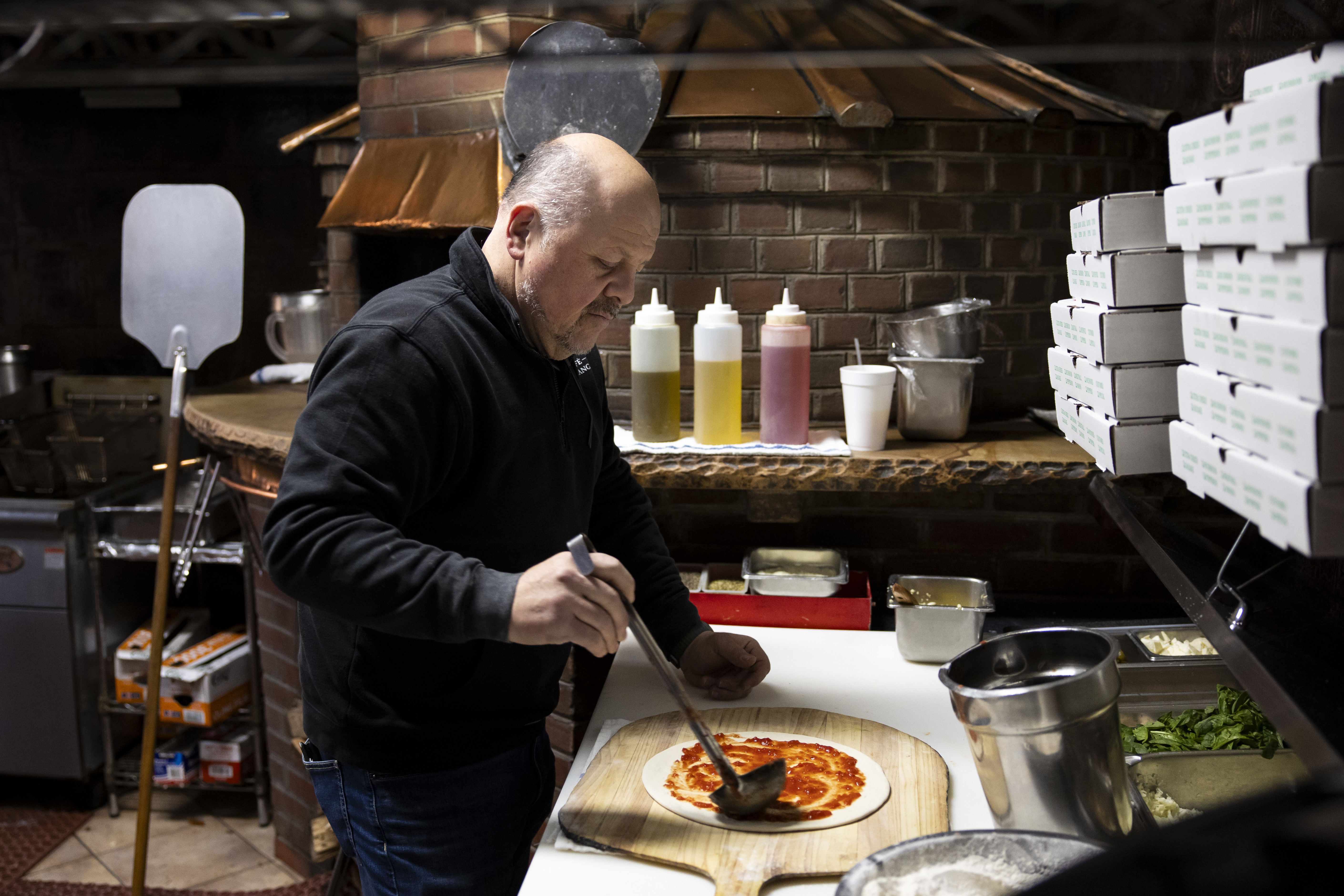
Giuliano Verrecchia sauces a Margherita pizza at Cafe Michelangelo.
“You as a layman read what they wrote and you get scared,” he said. “I wanted to explain what’s really meant.”
He cited rules about labeling containers as an example. “If [the inspector comes in] at 11:30 [a.m.] and my guys are prepping, some things won’t have labels because they have to open them up,” he said.
Verrecchia said he was cited for some issues that had been addressed previously, including cracked floors observed in the kitchen preparation area. “I had already fixed it and showed her,” he said. The report called out a chest freezer that was not commercial-grade. “I fixed that, too, but it still showed up again as if nothing had been done.”
“She made some valid observations,” he said. “I’m not denying that. But the wording in those reports can sound scarier than it really is if people don’t understand the terminology.”
But given its inspections in 2025, Cafe Michelangelo’s record showed mounting problems.
This also was not the restaurant’s first involuntary closure. In February 2023, an inspector cited repeated violations, including improper food labeling, missing temperature controls, rodent activity, improper food storage, and sanitation problems such as grease on walls near the hood, food debris and mouse droppings in the basement, damaged flooring, and missing wall tiles. The restaurant also was cited for using plastic crates to elevate beverages in the takeout area.
Cafe Michelangelo was allowed to reopen four days after that 2023 reinspection, and a follow-up two months later found no serious violations.
At the next inspection, Feb. 27, 2025, four risk-factor violations were noted: missing handwashing supplies, a dirty ice machine, missing date-marking, and unlabeled chemicals. All were corrected on site.
By Sept. 11, the violation count had risen to six and included flies throughout the facility, shellfish storage and record-keeping problems, and significant structural and equipment issues. The Health Department ordered a reinspection.
On Oct. 29, many of the same issues appeared again as repeat violations, and a certified food-safety manager was not on-site at the start of the inspection.
On Dec. 3, the inspector pointed out unsafe cooling of salads and onions, along with unresolved pest, handwashing, and facility problems — all what are deemed “imminent health hazards.” She also logged six risk-factor violations, which include any violation that increases the likelihood of foodborne illness; three of them were repeats. Two and a half hours after the inspector walked in, Michelangelo was shut down.
Corrections and changes
Verrecchia said the inspection issues were a wake-up call. He said he has tightened oversight throughout the restaurant, which employs about 30 people.
“I’m on it every single night now,” he said. “I’m re-educating my team. I’ve got to be more diligent. If I [mess] up, I admit it. I [messed] up. I’m human.”
He is now conducting mock inspections at the end of the day. “I walk through everything, write up what’s wrong, and then go over it with the staff in the morning,” he said.
He also has begun purchasing new equipment, including wall-mounted metal shelving and fruit-fly traps where required.
Verrecchia said he is standing by his decision to go public.
“If I didn’t think it was right, I wouldn’t have done it,” he said. “I can’t afford to shut down again — and I’m not going to.”