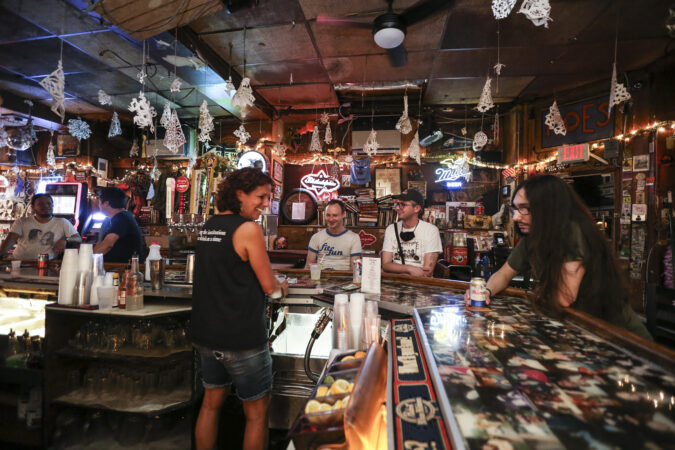
There’s magic at work in Philly’s dive bars. Some are great for the memories made in their low-lit, low-key backdrops. Some have a hard, regulars-only shell that melts away the moment you plant your butt on the barstool. Others feel frozen in time — portals to an era where beers were cheap, smoking inside was allowed, and strangers could become friends over a drink or three.
But for several years now, Philly’s dives have felt in jeopardy, with the cost of a drink rising along with real estate prices. At least one strand of dive — the smoking bar — is decidedly on the way out, evidenced most recently McGlinchey’s closure, but also stalwarts like Grumpy’s Tavern and Buckets going non-smoking earlier this year.
It’s made us think, Why wait to celebrate something until it’s gone?
So The Inquirer is asking readers: What are Philly’s best dive bars, and what makes them special?
Fill out the form below to tip us off to your favorite Philly dive. If your bar makes the list, an Inquirer reporter may follow up.
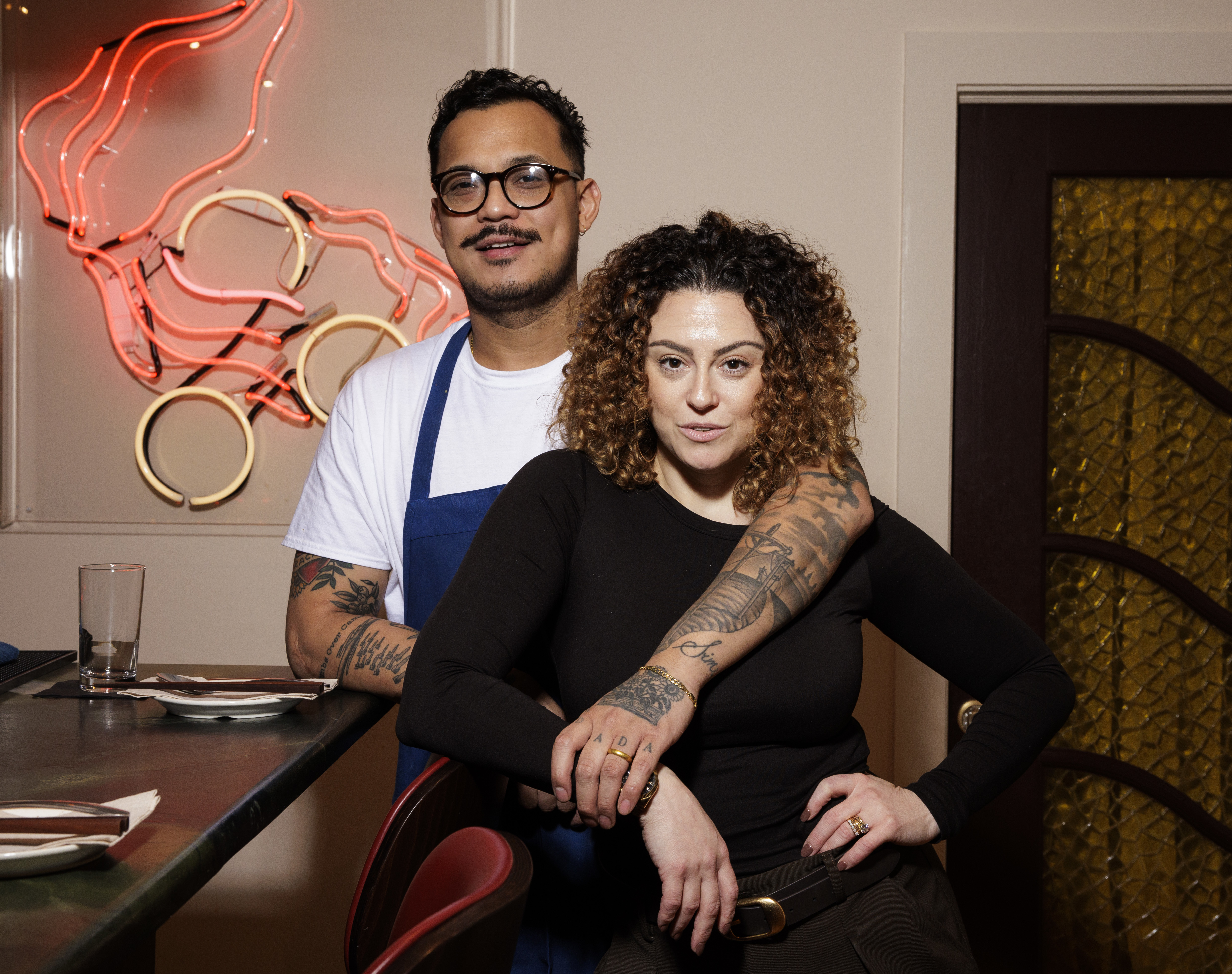
Philadelphians can’t get enough of Rachel and Phila Lorn. At Sao, their sultry new oyster bar on East Passyunk Avenue, diners pull up at the counter for warm corn cakes soaked in honey and bejeweled with roe, oysters splashed with Cambodian peppercorn fish sauce mignonette, and barrel-aged “Jabroni Negroni” cocktails tinged with Islay whiskey smoke to wash them down.
Owners Phila and Rachel Lorn at Sao in Philadelphia.
You’ll find the same high-voltage “no rules” pan-Asian cooking here that propelled this married couple’s first restaurant, Mawn, to an incredible string of local and national accolades (including a spot on The Inquirer’s Top 10 list, a new edition of The 76, a “Best New Chefs” award for Phila from Food & Wine, and a similar nod from the James Beard Foundation). Considering the constant reservation traffic jam of wannabe diners angling to nab one of Mawn’s 28 seats, why open a second restaurant with room for just 33? Surely, this couple could fill a much larger space.
“Rachel and I have enough, we don’t need more,” says Phila, 39. “I still have that old-school mentality that we protect our family and we funnel our lives through this [little] store of ours. I never wanted to be a rock star or be recognized at Target. We just opened restaurants because that’s what we know how to do.”
The fact they do it so well is a blessing and a curse. At Sao, the monthly scrum for tables offers the same exercise in reservation-app frustration as Mawn, and the long line for the 30-or-so walk-ins that find their way into Sao over the course of an evening understandably vexes the gift shop next door, whose manager emerged to politely redirect us from blocking her storefront on this lively stretch of Passyunk Avenue.
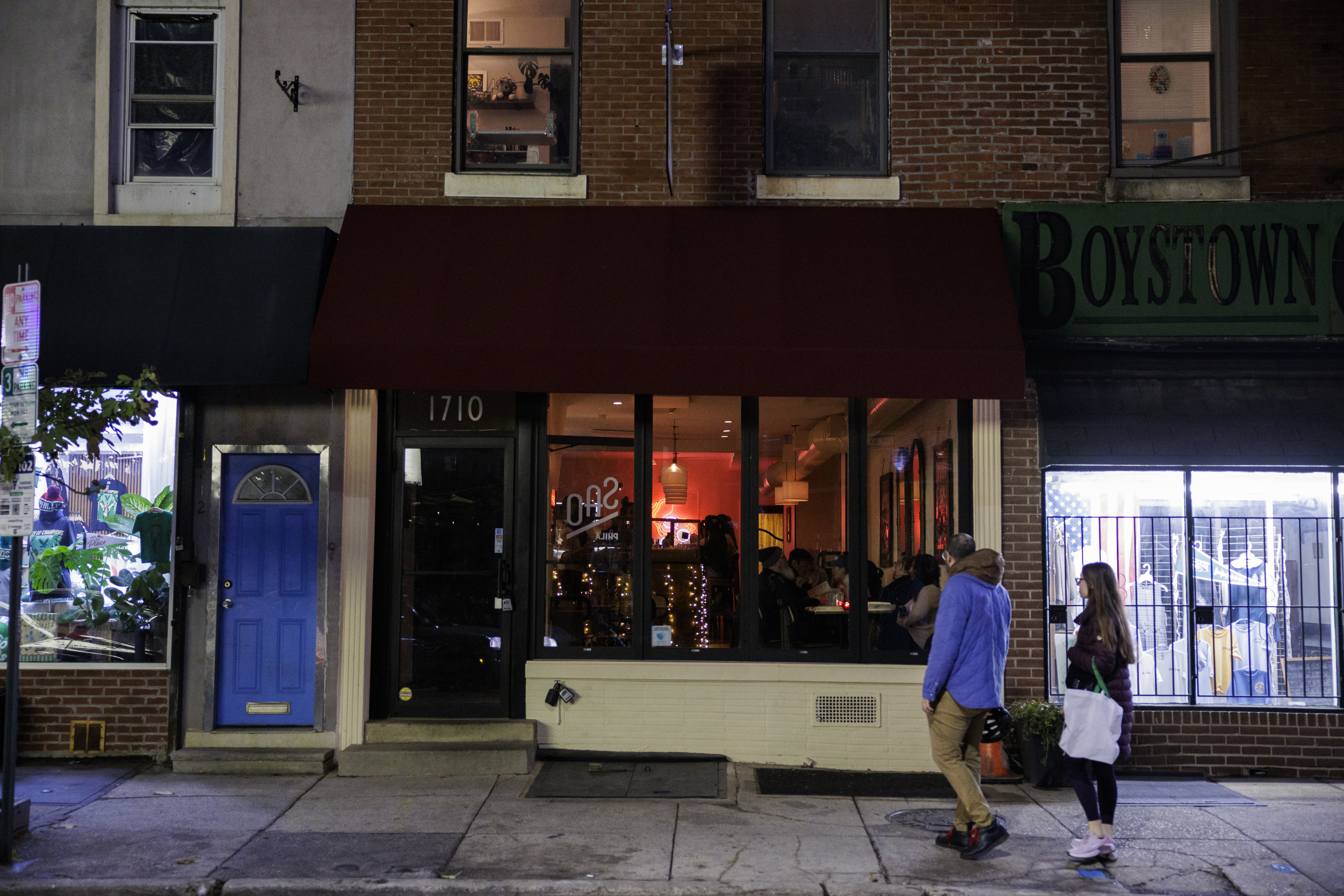
The exterior of Sao on Wednesday, Nov. 26, 2025 in Philadelphia.Owner Rachel Lorn speaks with diners at Sao.
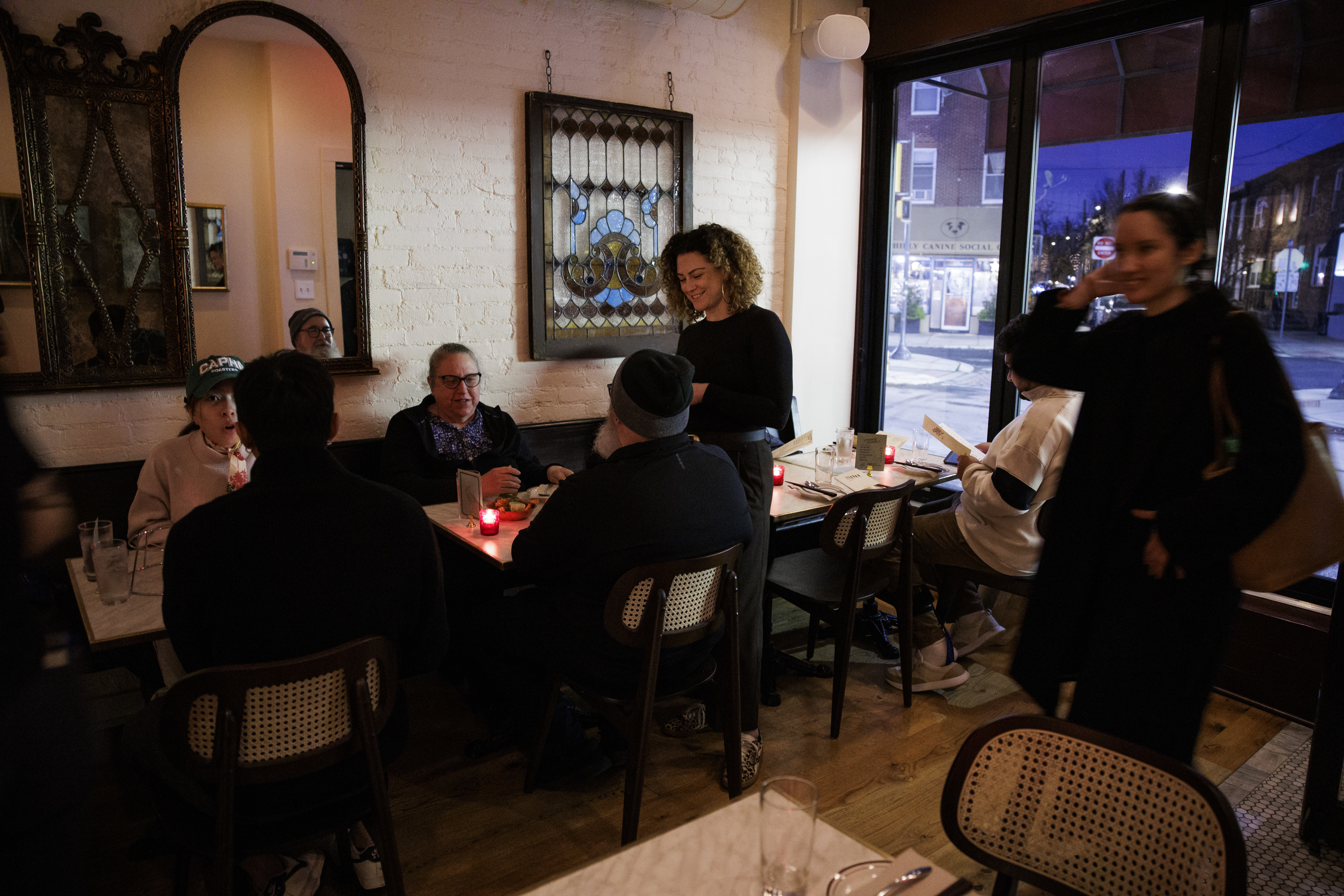
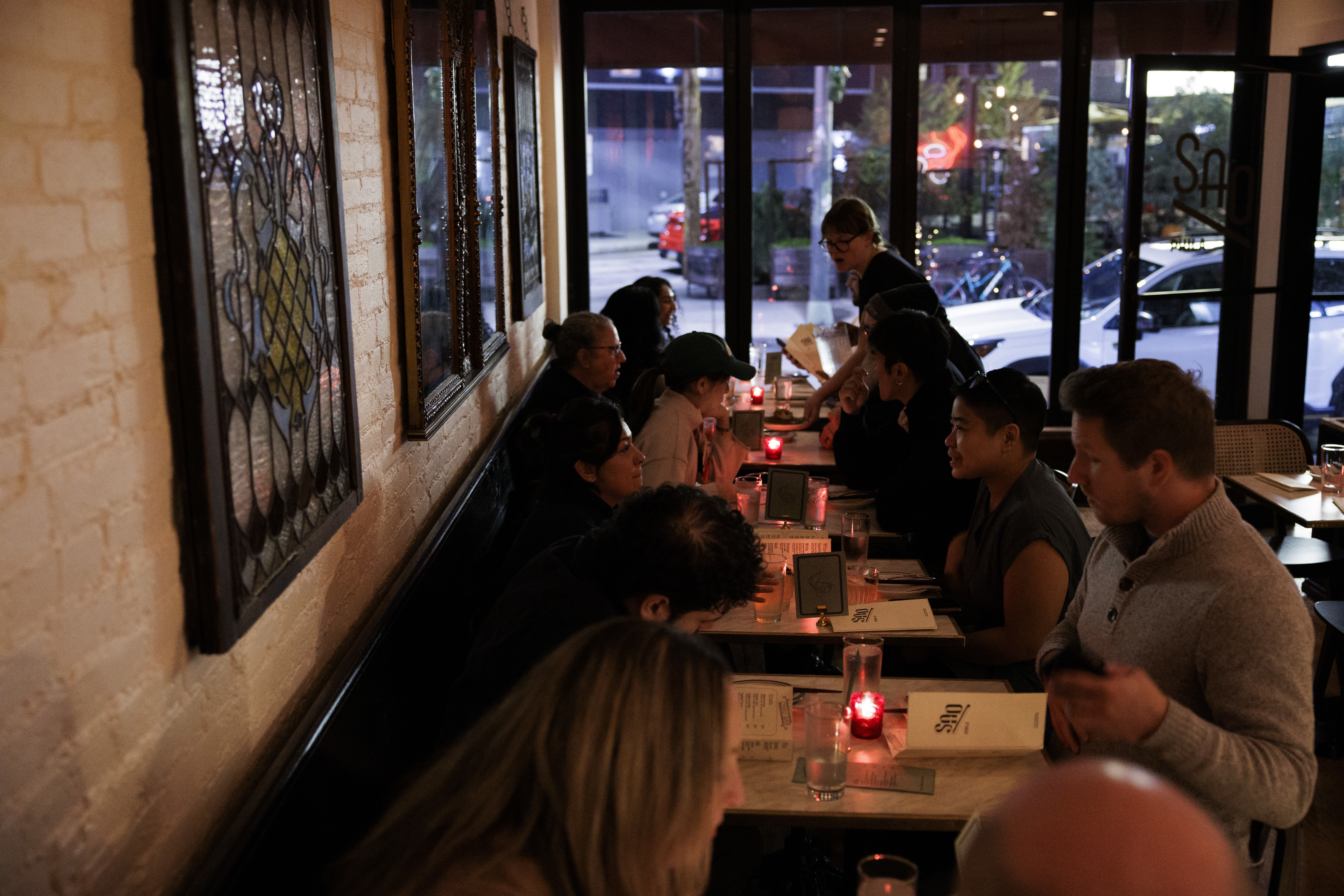
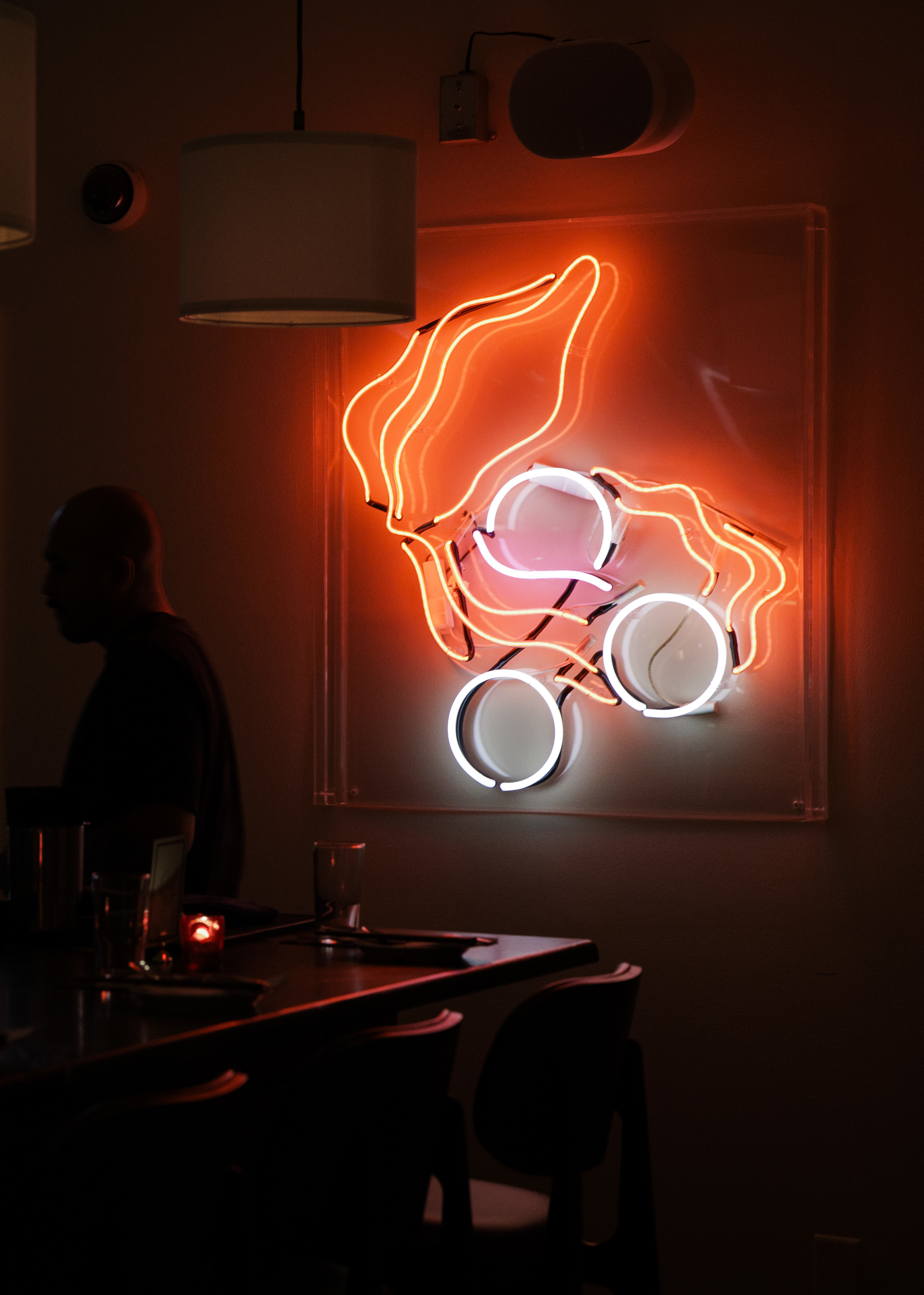
Once inside, however, the virtues of Sao’s intimate setting are clear, as diners lean into their crudos and cocktails at candlelit banquette tables along a whitewashed brick wall hung with mirrors and stained-glass panes. Another 10 guests — in my opinion, the lucky ones — perch in the red neon glow of the bar counter, where the action unfolds on multiple stages.
To my right, bartender Steph Liebetreu manages to simultaneously rattle a cocktail shaker in her left hand and stir a crystal decanter of martinis with her right, all while dancing in perfect syncopation to Sao’s soulful soundtrack mix of vintage R&B, Cambodian rap, and Frank Sinatra. To my left, shucker Davina Soondrum (also a talented pastry chef) festoons our icy oyster plateau clockwise from “lemon wedge o’clock” with plump Japanese Kumamotos, tiny-briny BeauSoleils from Canada, and Jersey’s finest, Sweet Amalias. Each one is oceanic perfection on their own, but they become electric when splashed with that Cambodian mignonette, or a spicy-tart jolt of Lao sauce sparked with lime and crushed cilantro stems. Amid Philly’s current boom in new oyster bars, those vivid sauces are part of what make Sao unique.
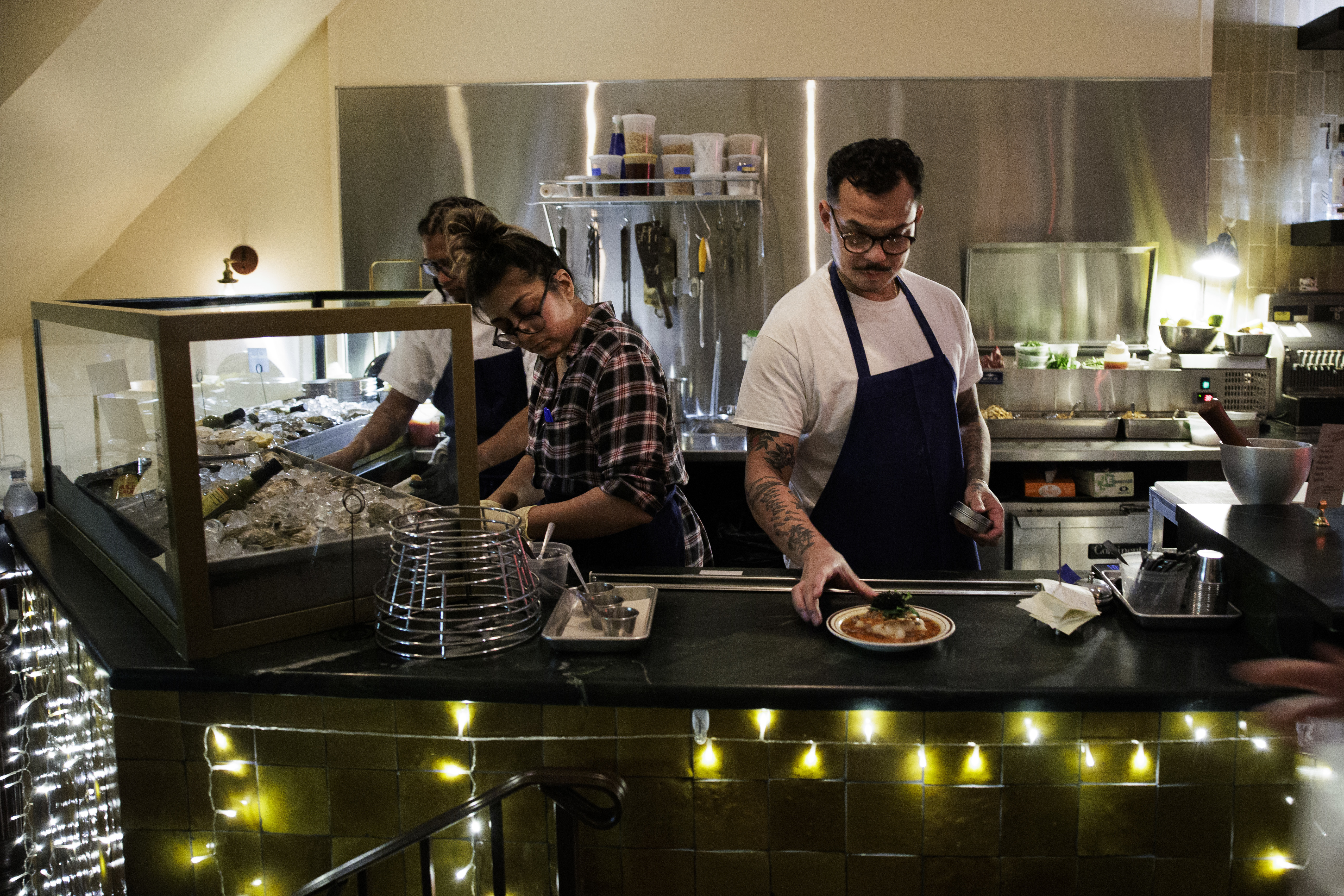
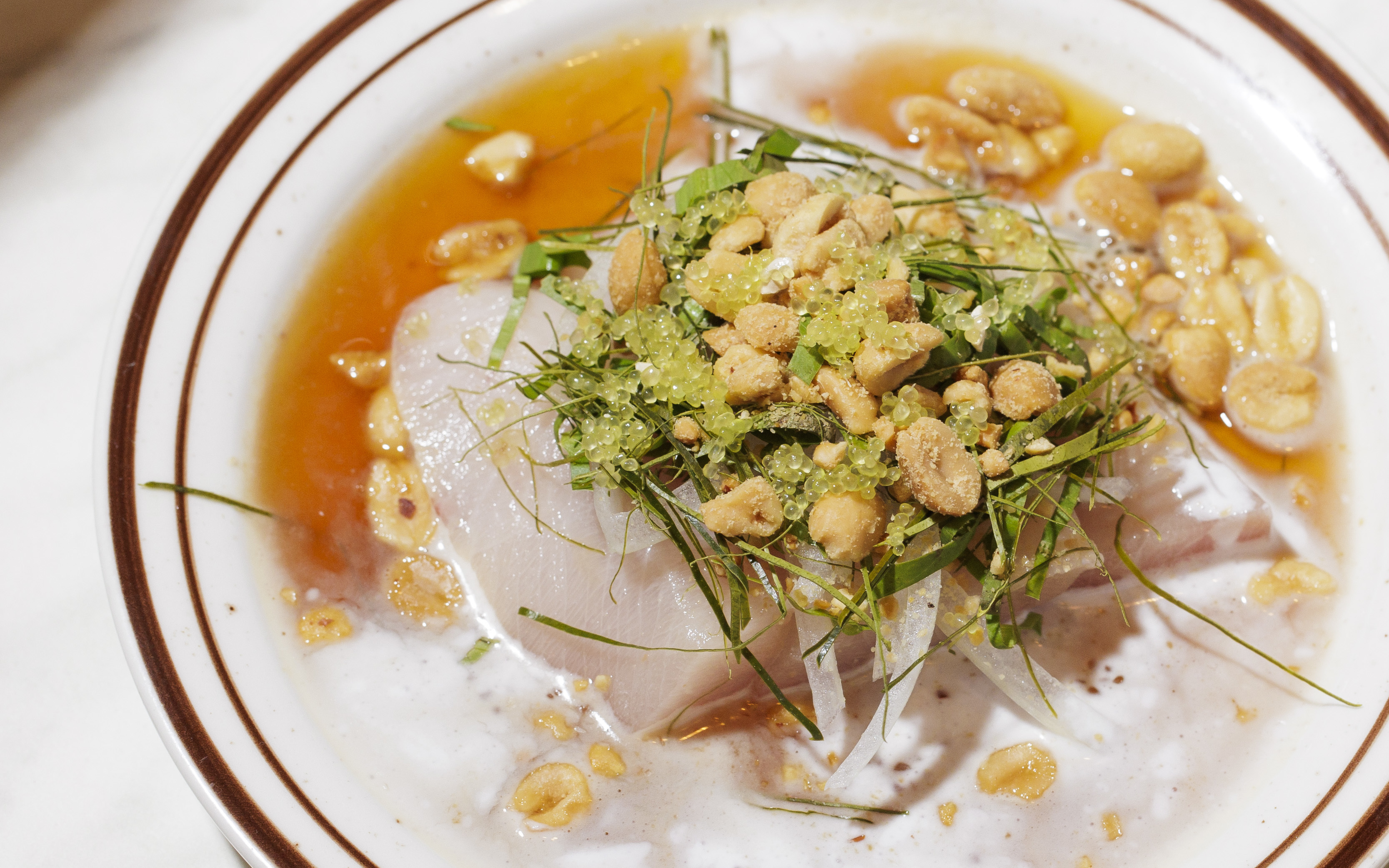
Chef Phila Lorn places a crudo at the pass at Sao on Wednesday, Nov. 26, 2025 in Philadelphia.The dry-aged hamachi crudo at Sao.
Front and center, meanwhile, there’s chef Phila himself butchering a whole dry-aged hamachi mid-service to serve raw with fish sauce, coconut milk, and vinegared onions — a salute to the beloved nearby soup hall, Pho 75. He’s slicing thick pink tiles of bluefin tuna and stacking them like a deck of sashimi cards doused with soy sauce and lime beneath fistfuls of roasted green chilies and crushed marcona almonds.
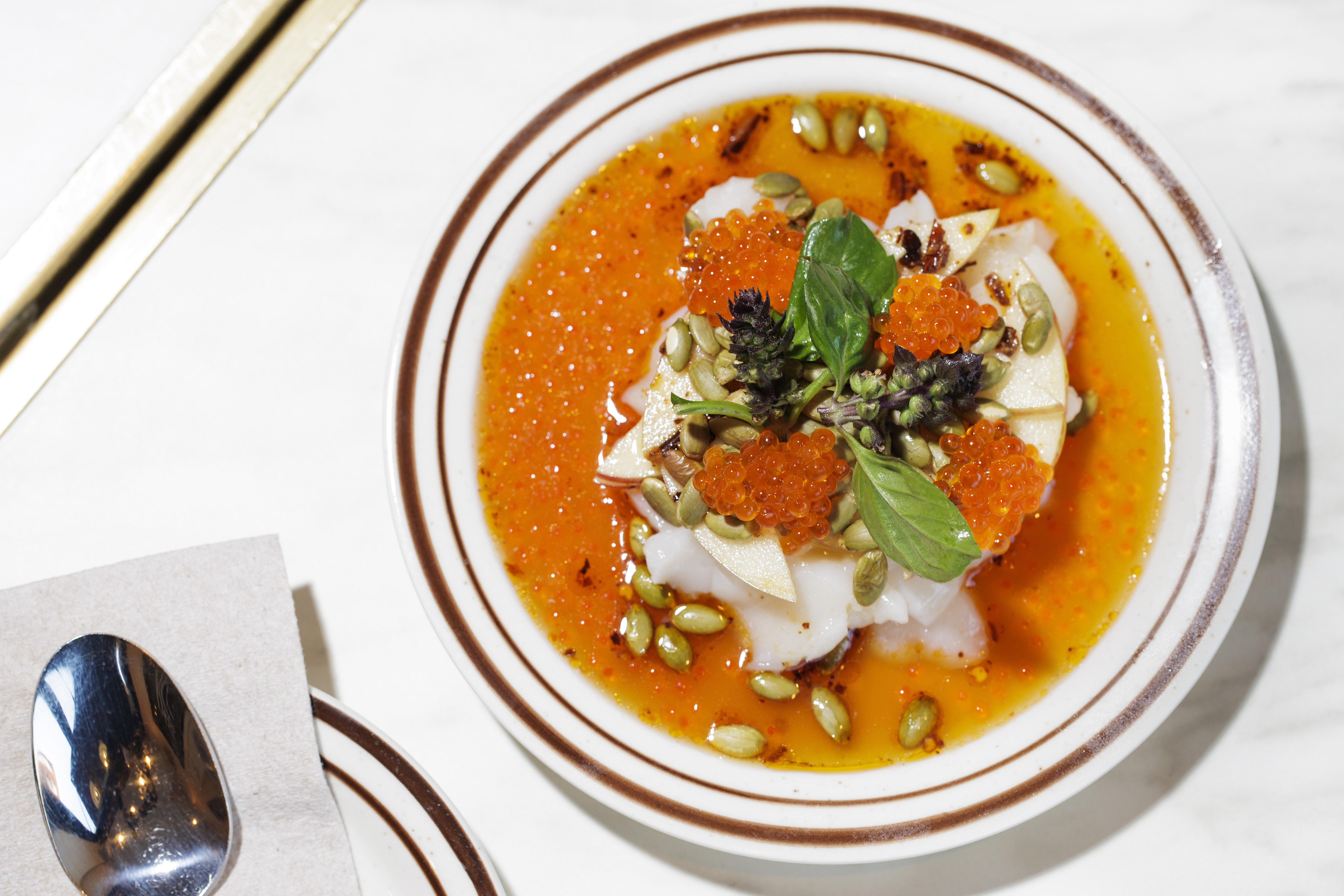
As I waver on which crudo to order next (perhaps the spot prawns with brown butter and prawn-head oil?), he pours sweet and spicy orange chili jam over an ivory mound of raw scallops, apples, and pepita seeds and I have my answer: “That’s Phila’s favorite,” confides Rachel as she patrols the narrow dining room, ever-playing Tetris with seats to accommodate more walk-ins.
The Dayboat Scallop Crudo at Sao on Wednesday, Nov. 26, 2025 in Philadelphia.
That scallop-and-chili jam combo will be familiar to anyone who’s dined at Mawn, where Lorn workshopped many of these dishes for months. There are other overlaps here of Mawn’s greatest hits, like the crispy soft-shell shrimp in fish sauce caramel, or the awesome 20-ounce rib eye piled high with “Cambodian chimichurri,” boosted with lime juice and fermented prahok fish paste.
One standard you must order, though, is the intricate papaya salad, a colorful crunch-fest of long beans, peanuts, candied shrimp, and shredded green papaya lashed with blasts of sour tamarind, chile, and shrimp paste. It dials your taste buds up to a certain base level of funk and sour heat before moving the conversation to more contemporary flights of fusion fancy.
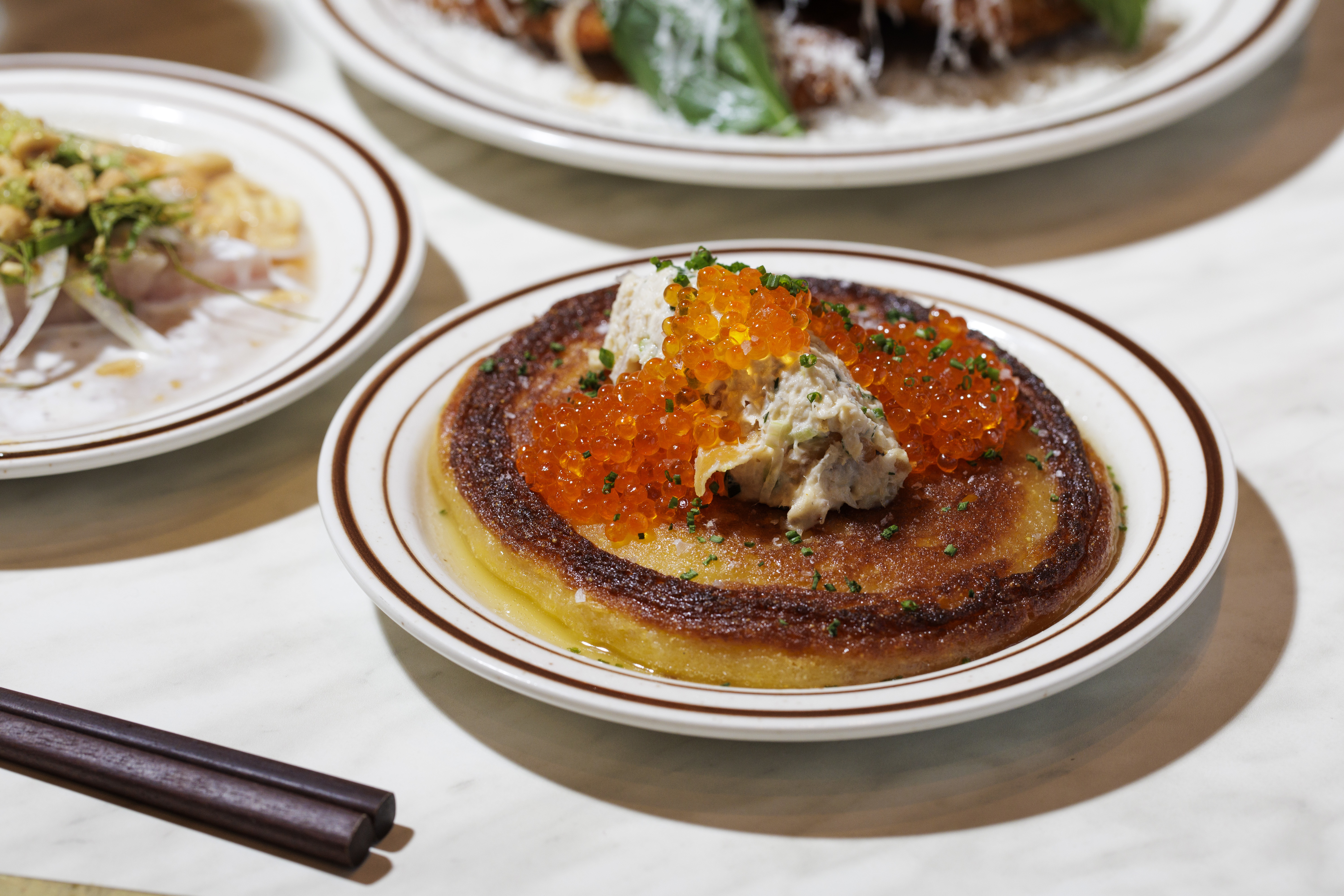
The Honey Butter Hoe Cake at Sao on Wednesday, Nov. 26, 2025 in Philadelphia.
Sao’s menu is more an extension of Mawn’s repertoire, rather than something entirely new, with a greater emphasis on raw seafood and an even more playful approach to cooked dishes rooted in tributes to favorite restaurants. Perhaps the most memorable dish at Sao, in fact, is a direct corn cake homage to Boston’s Neptune Oyster bar, whose signature johnnycake is remade here as a warm, honey butter-soaked hoe cake enriched with dashi then topped with cool smoked trout salad and beads of roe, which Phila tends to piles onto Sao’s plates by the spoonful. The lacy crunch of that warm sweet cake against the savory pop of roe, amped by the saline burst of a supplemental scoop of caviar, was one of my favorite bites of the year.
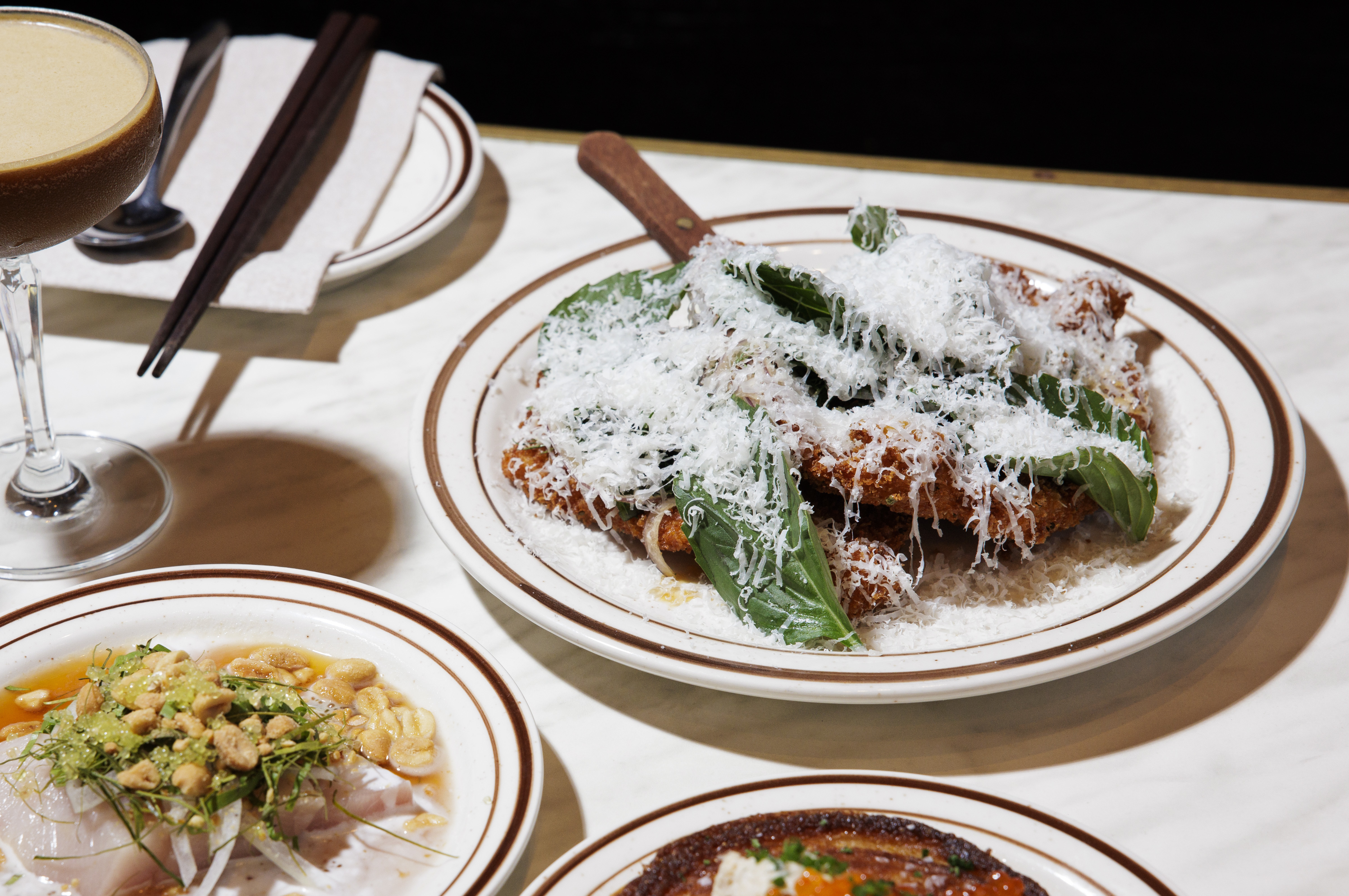
Sao’s menu is full of Easter eggs for the keen-eyed diner, including an irresistible tuna carpaccio topped with fried shallots, cured chile rings, and a sizzling finish of sesame oil that’s an ode to the “bronzizzle” roll at Zama, where Phila spent some formative years. There’s also a nod to the beloved late-night cutlet from Palizzi Social Club that’s transformed with Southeast Asian pickled cucumbers, Thai basil, and fish sauce caramel. The chef, who grew up just a few blocks from East Passyunk, also pays tribute to South Philly’s Italian “crab gravy” tradition with his own take, a blend of red and green coconut milk curries steeped with crab shells that comes topped with crisply fried scallops.
The Mawn Cutlet at Sao on Wednesday, Nov. 26, 2025 in Philadelphia.
A frequent chicken skewer special, whose meat is marinated in kreung spice paste, is grilled over binchotan coals as Phila’s nod to the weekend Khmer barbecues at the Southeast Asian Market. The mee caton is a straightforward stir-fry of velvety soft beef, Chinese broccoli, and fat rice noodles kissed with sesame oil that’s a throwback to one of the best home dishes made by his mother, Sim Khim. (I also loved the seafood rendition.)
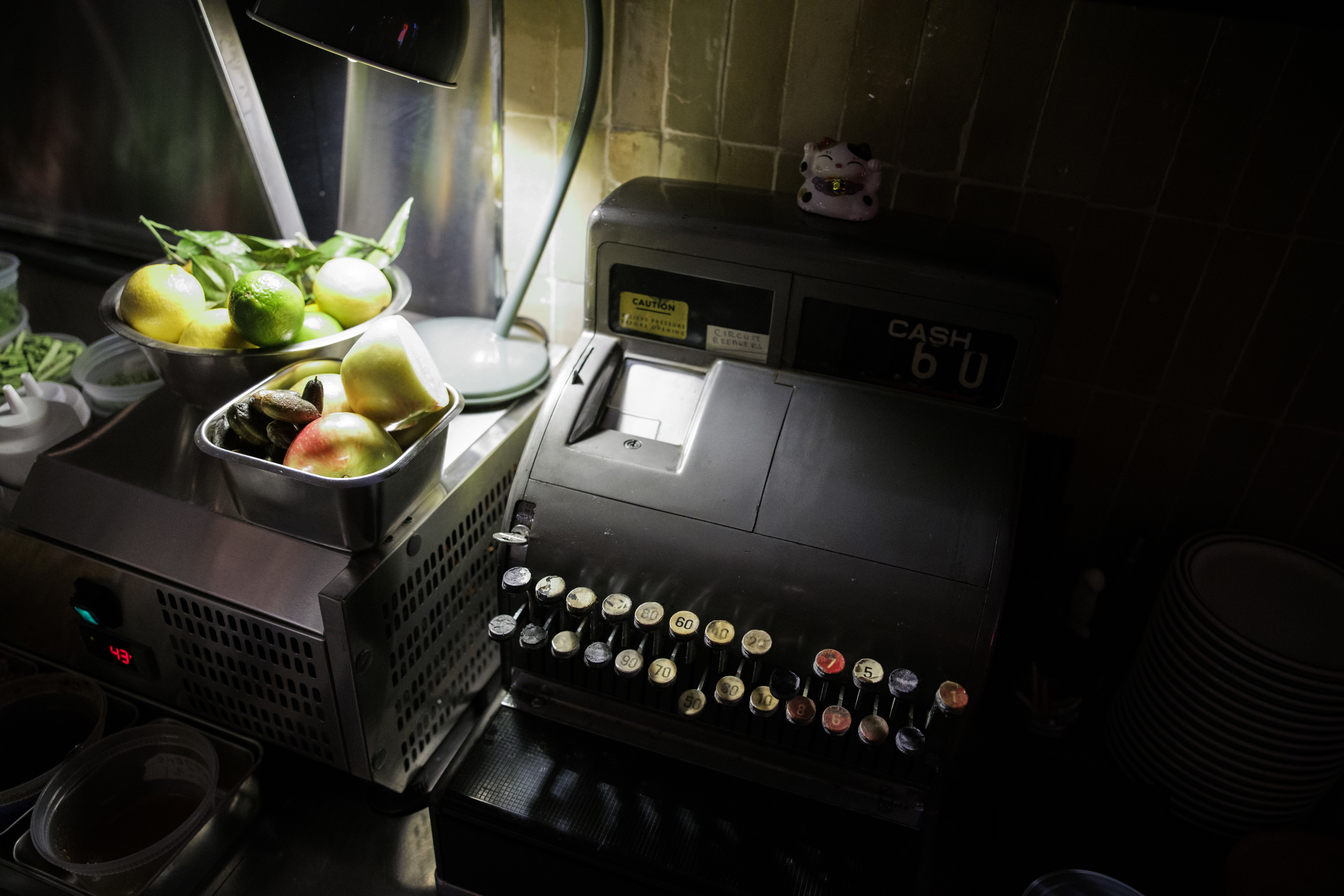
Nostalgia for family and neighborhood pervades every corner of Sao, from the vintage bathroom door with textured glass and wavy panes that replicates the vestibules of many South Philly rowhouses (including the Lorns’ house), family pictures, and an antique cash register from the Atlantic City Boardwalk hotel once owned by Rachel’s grandparents.
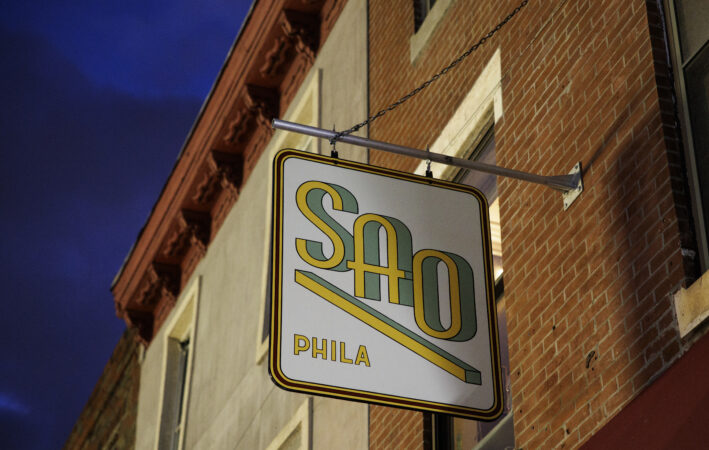
Even the restaurant’s name channels a sense of place: It’s a phonetic representation of how Phila’s mother, a Cambodian refugee, pronounces the “South” in South Philly. Her son, famously, is also named for the family’s adopted city, although Khim and everyone else pronounce it “Pee-la.” The sign hanging out front — Sao Phila — has multiple meanings.
An old school cash register from Rachel Lorn’s family at Sao on Wednesday, Nov. 26, 2025 in Philadelphia.
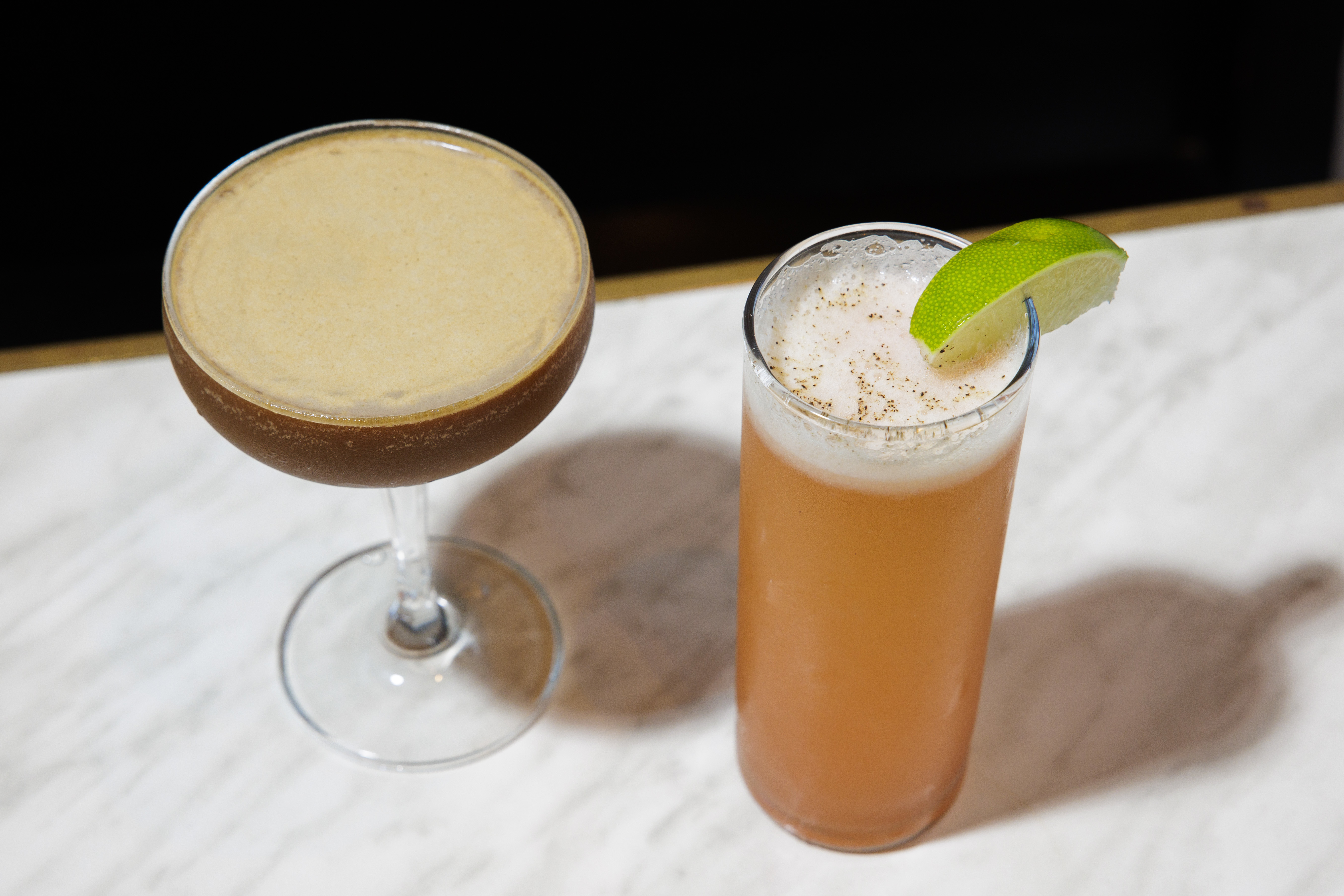
With the added element of a liquor license at Sao, the Lorns’ business partner and close family friend, Jesse Levinson, designed an opening drink list that follows on theme. The chicory-scented, coconut-creamed Vietnamese coffee martini, Wing Phat Plaza, is named for the bustling Asian strip mall on Washington Avenue nearby. The Angkor Baby borrows a michelada from South Philly’s lively Mexican scene, then adds the Asian touches of ground Kampot peppercorns and a rice vinegar tang.
The Wing Phat Plaza and Angkor Baby cocktails at Sao.
Levinson says the drink menu will keep evolving as Liebetreu and her fellow bartender, Lillian Chang, begin to take creative control, supplementing the small but trendy selection of natural wines. I also expect Sao’s sake selection to take a big leap once general manager Kelly Brophy, formerly the lead omakase server at Royal Sushi, begins to share her expertise.
Indeed, so much is still evolving here, including the tasty but limited dessert selection of crème brûlée and whoopie pies from Soondrum (when she’s not shucking shellfish), that I’m certain we’ve only seen the beginning of what Sao can truly become.
“We’re locked and loaded for more because we have room to grow,” says Phila, referring mostly to desserts. If only they also had room to grow more seats! Philadelphia’s diners, no doubt, would quickly snap those up, too.
Diners fill the space at Sao on Wednesday, Nov. 26, 2025 in Philadelphia.
Reservations are highly suggested, but a handful of walk-in seats are available.
Not wheelchair-accessible. There is a step up into the restaurant, as well as at the bathroom.
About 90% of the menu is naturally gluten-free, while certain dishes that typically use the fryer (like the scallops in crab gravy) can be modified to avoid cross contamination.
Menu highlights: Crudos (aged hamachi; scallops with chili jam); bluefin tuna carpaccio; Cambodian papaya salad; honey butter hoe cake; Mawn cutlet; scallops in crab gravy; mee caton; grilled chicken skewers; crème brûlée.
Drinks: Cocktails are well-made with a South Philly twist (like the barrel-aged mellow Jabroni Negroni) and on-theme Asian accents, such as Cambodian Kampot peppercorns for the Angkor Baby riff on a michelada, or the chicory-flavored Viet coffee martini named after Washington Avenue’s Wing Phat Plaza.
A neon oyster sign at Sao on Wednesday, Nov. 26, 2025 in Philadelphia.
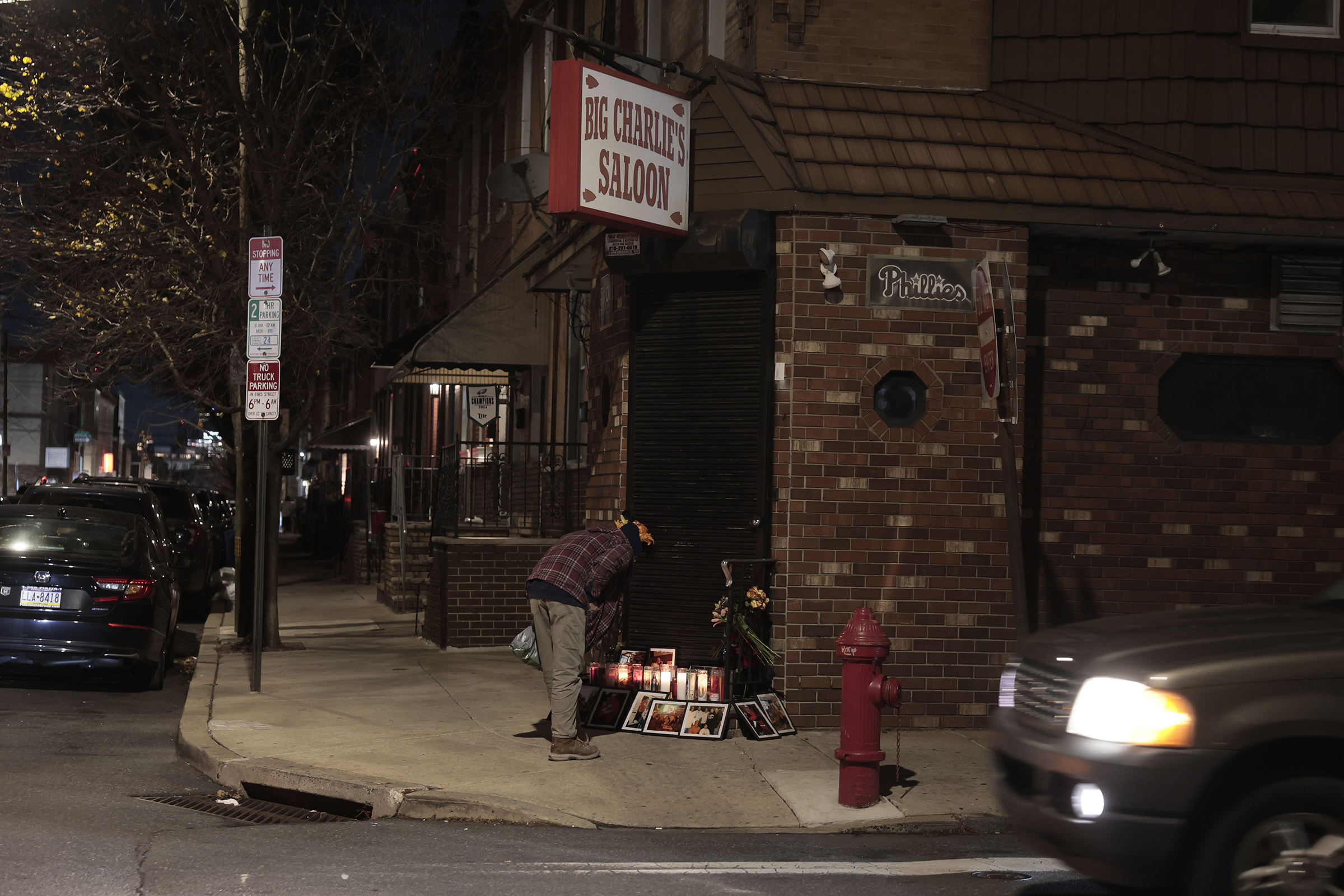
He became the bar’s owner before he could legally drink, taking it over at 16 years old when his dad died. The two-room corner bar with wood paneling and a jukebox soon became the place to watch the Kansas City Chiefs, a South Philadelphia haven to watch a Midwestern football team just a few blocks from where the Eagles play.
But many of the people who packed Big Charlie’s Saloon every Sunday had a secret: They weren’t really all that crazy about the Chiefs.
“I get heat for being a Chiefs fan,” said city councilman Jimmy Harrity, who does not miss a game at 11th and McKean Streets. “But I wasn’t a Chiefs fan. I’m a Paul Staico fan. If I could name three players, that’s a lot. I was there cheering for him. Some are there to watch the game. But for the most part, they were there for Paul.”
Mr. Staico died suddenly Sunday morning, a few days after his bar stayed open on Thanksgiving night because the Chiefs were playing. He was 59.
“It was sudden,” Harrity said. “Nobody saw it coming. He had no problems. No issues. The bar did well. I was with him the day before. I knew he wasn’t right, a little depressed. But I didn’t think it was like this. It was shocking to everyone. It’s so tragic. He didn’t deserve to go out like that. He protected people. He didn’t let bad eggs around.”
Mr. Staico was born on March 10, 1966. He attended Bishop Neumann High School, boxed as a teenager, and stayed in shape as a bodybuilder. He looked like a linebacker but was as gentle as a kicker.
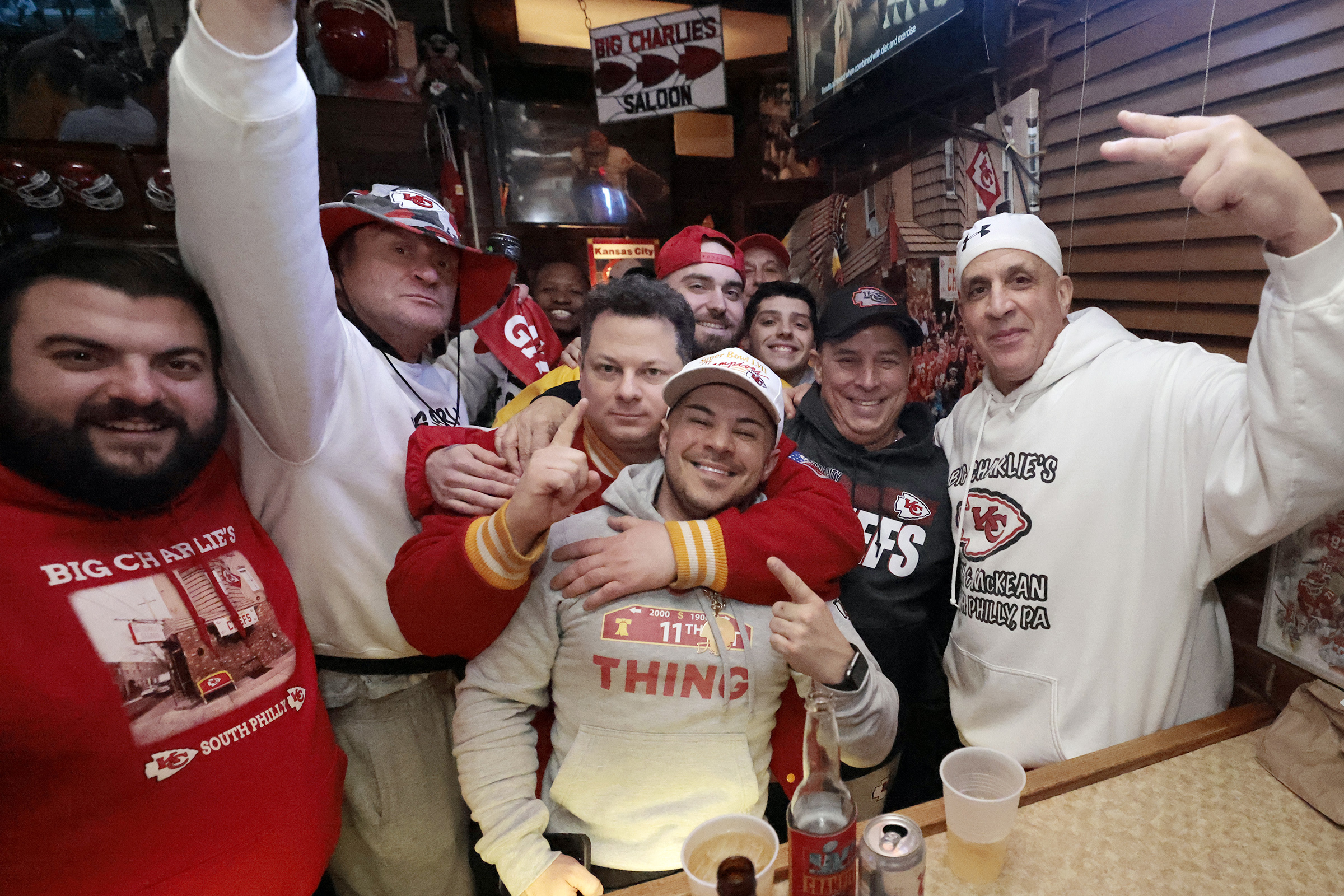
Kansas City Chiefs fans, including Big Charlie’s Saloon owner Paul Staico (far right) celebrate their teams Super Bowl win at the bar in 2024.
He became a Chiefs fan as a boy when his dad — Big Charlie — hit on a bet in 1970 for the Chiefs to win the Super Bowl. Big Charlie told his boy he would buy him a bike if the team in red won. The Chiefs won, giving Big Charlie’s boy a new ride and a new favorite team.
The Chiefs fell off after that championship, but Mr. Staico remained loyal to his team. The South Philly Chiefs fan bought a satellite dish in 1986 to air games at Big Charlie’s, slowly converting his friends from the neighborhood like Anthony Mazzone to cheer for the red and gold instead of the Birds.
The bar was dubbed “Arrowhead East” as Mr. Staico covered the walls in Chiefs memorabilia, turning the corner bar into a shrine for the team that helped him land that bike.
Mr. Staico’s bar was packed shoulder-to-shoulder for big games (a back room is invite-only) and even shut down 11th Street a few times to watch the Chiefs outdoors on a projector screen.
He paid a guy from the neighborhood to sweep the sidewalk every day and offered wisdom to anyone who sat at his bar.
“We make people feel at home,” Mr. Staico said in an NFL Films feature about the bar. “It’s not like it’s just our thing. Everyone is invited.”
Harrity moved into the neighborhood when he was 18, living in an apartment on Emily Street. He was an outsider — an Irish kid from Southwest Philly dating an Italian girl in deep South Philly — but Mr. Staico made him feel welcome. Harrity would walk his dog past Big Charlie’s and talk to Mr. Staico outside.
“I didn’t drink. I was sober,” Harrity said. “The reason they have water in there is because I didn’t drink. He bought spring water so I’d have something to drink when I went in to watch the games. That’s the kind of guy he was. If you met him once, you were his best friend.”
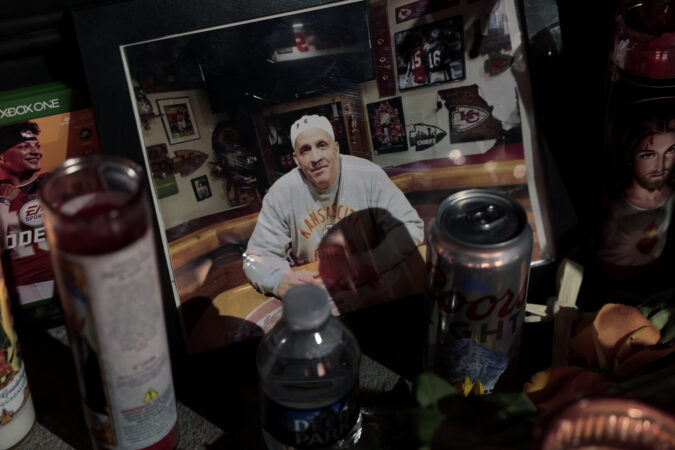
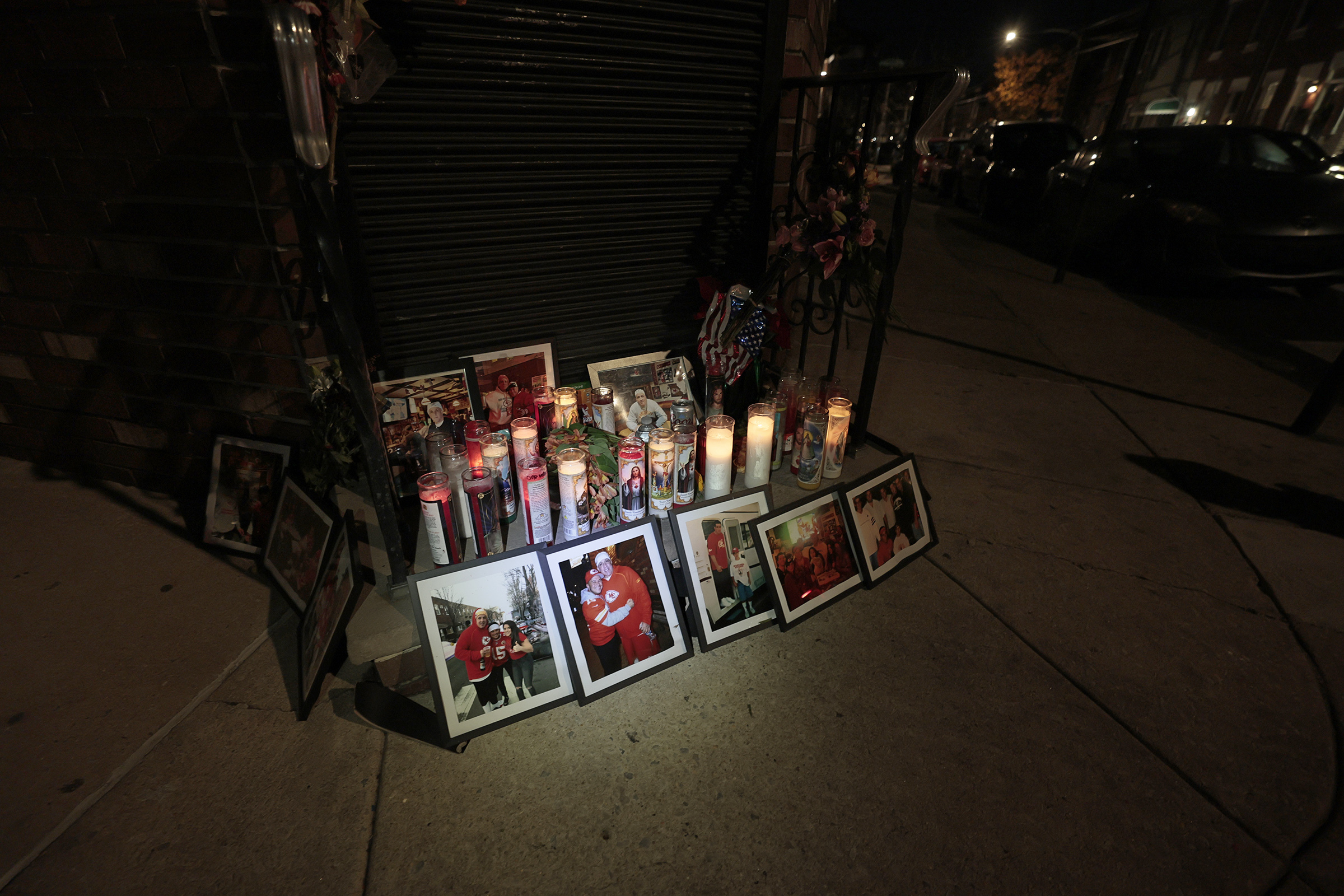
A memorial appeared on the front step of Big Charlie’s Saloon, located at 1953 S. 11th St. in Philadelphia.
The guys at Big Charlie’s root for the other Philly teams but not the Birds. They have Chiefs tattoos, Chiefs jerseys, and raised their children to be Chiefs fans.
Charlie Staico’s winning bet spawned a generation of Chiefs fans. The allure of Big Charlie’s continued to grow, almost like a quirky roadside attraction. Is there really a spot in Eagles country devoted to a team from 1,100 miles away?
NFL Films stopped by occasionally, TV news trucks pulled up whenever the Chiefs were gearing up for a Super Bowl run, and even some Chiefs players and coaches sat at the bar. The regulars made pilgrimages to Arrowhead Stadium and wore Big Charlie’s sweatshirts with pride. Mr. Staico’s South Philly bar was known as a place to watch the Chiefs, but the brick building was more than that to the people who filled it.
Photos of Paul Staico are part of a memorial for the late owner of Big Charlie’s Saloon.
“It started out with 10 of us in the back bar crying every game because the Chiefs stunk,” Harrity said. “Then it grew to 300, 400 people for the first game every year. That’s not because of the Chiefs. That’s because of Paul. He made you feel at home. He made you feel like part of the family. One time in there, and that was it. The kind of place where you walked in there, threw $20 down on the bar, bought a round, and didn’t pay for another drink all day. It was just a friendly place.”
Mr. Staico is survived by his longtime girlfriend, Gloria Quinone; his sister, Linda Staico; and brother-in-law, Mark Mancini. A funeral service is planned for 11:30 a.m. Saturday at Epiphany of Our Lord Church at 11th and Jackson Streets.
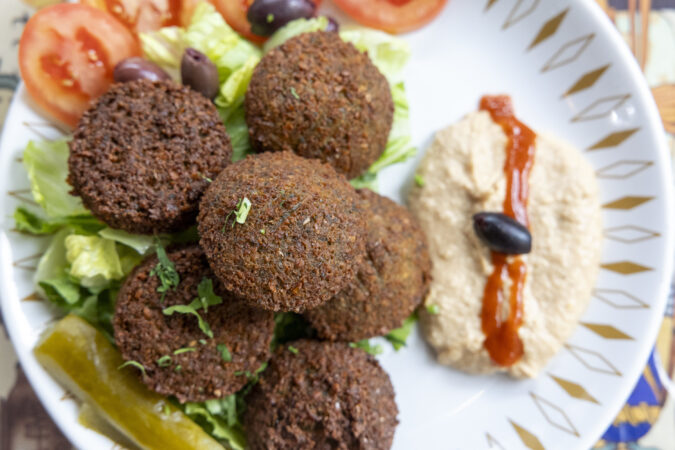
What makes a good falafel? Ask Marwan Alazzazy of Cilantro Mediterranean Restaurant and he’ll tell you it’s all about the perfectly browned, crispy exterior that easily tears in half to reveal a tender, herb-flecked interior.
“Besides the recipe? It’s the hand who makes it,” Alazzazy said. “We have this saying in Egypt about any type of food that’s good, that the person making it did it with his soul — when he’s enjoying making it, it tastes different.”
As an Egyptian, Alazzazy and his family know a thing or two about falafel; the legume-based balls originate from their motherland. But there are various techniques used throughout the Middle East to create this popular dish. In Palestine, it’s common to add veggies like onions and peppers to the chickpea batter, according to Bishara Kuttab of Bishos in Fox Chase. In Lebanon and Egypt, you’ll often find falafel that combines fava beans and chickpeas — sometimes with a little bit of baking soda, as Patricia Massoud does at Li Beirut in Collingswood.
No matter how it’s made, falafel is about the herbs, spices, and legumes that come together to make the palm-sized rounds that are perfect on platters, in a sandwich, or as a snack by themselves.
I ate falafel at over 20 restaurants to find some ofthe best Middle Eastern cuisinein Philly for The Inquirer’s 76. Turns out, the legume balls were a key factor in determining what restaurants made the cut: I found my favorites served exceptional falafel.
While each place offers slightly different variations, what set them apart was the harmony of texture and flavor — an exterior firm enough to tap on and an herby-nutty inner mush that’s super-satisfying to sink your teeth into.
Al-Baik Shawarma
Dining at Sohaib Al-Haj’s Northeast Philly family restaurant, featured on The 76, means devouring a generous spread of the best Palestinian dishes in Philadelphia — especially the falafel. It’s made with chickpeas that have been soaked in water for 20 hours and mixed with spices (think cumin, coriander, salt), parsley, onions, jalapeños, and green peppers. Blended together, the mixture is rounded with a scooper then deep-fried. The crispy falafel reaches the table with a bronze exterior, and the slightly spicy, earthy light green interior dances on your tongue. Get it as an appetizer, in a sandwich, or a platter with hummus, rice, and salad.
Over in Collingswood, Li Beirut chef-owner Patricia Massoud soaks her chickpeas for 12 to 18 hours — the minimum time to let the legumes hydrate and soften for grinding. She makes falafel according to her Lebanese father’s recipe. The cooked chickpeas get tossed in a food processor with onion, garlic, warming spices, fresh parsley, and cilantro. The key to her fluffy falafels, she said, is baking soda — it’s also how she keeps them gluten-free. Deep fried after resting in the fridge for 30 to 40 minutes, the cylinder-shaped falafel are served as an entree or a hot mezza for sharing.
You can smoke hookah while munching on crispy falafels in this Kensington-area restaurant. Alamodak offers a Jordanian rendition of the dish in their traditional dining room as well as their upstairs hookah lounge. Owner Francisco Ayoub’s falafels are made fresh daily using a spice mix imported from Jordan, and fried to order for a crispy outside and soft, flavorful inside that packs herby nuttiness with each bite. Order them as an appetizer, in a sandwich, or in a platter with rice and salad. Either way, there will be tahini sauce for dipping.
Just off South Street, chef Dalia Soliman and her husband, Mohamed Alazzazy, serve solid falafel along with other Egyptian classics that have made the restaurant a neighborhood favorite. The falafel are made with a mix of chickpeas and fava beans and seasoned with spices imported from Egypt. The family hand-rolls, freezes, and then fries them — a method that ensures the balls don’t crumble while cooking. Get five as an appetizer or opt for the platter, which includes a choice of rice or french fries, salad, hummus, and pita bread.
Head to Fox Chase for Palestinian falafels — warm, earthy chickpea fluff in a crisp, savory cast. Owner Bishara Kuttab said making falafels is all about the technique, ensuring the balled-up mix of chickpeas, parsley, onions, garlic, and spices are fried at the right temperature. Made to order, there are five ways to order falafel: in a hoagie, on a rice bowl, with loaded fries, in a salad bowl, or wrapped in their house-made saj bread. I recommend the last option, pairing the falafel’s nutty, earthy undertones with the soft, chewy bread.
Vartuhi Bederian, one of the matriarchs of this Northern Liberties BYOB, is Armenian but serves crisp-tender falafels with the Syrian influences she grew up with. Chickpeas are soaked for at least 24 hours before being mixed with fava beans, cilantro, sesame seeds, and spices in a food processor. The falafels are pan-fried in a wok-style vessel and offered on the fattoush salad, as a mezze dish, and on a platter. Order takeout and get it in an exclusive sandwich with house-made tahini sauce that “just elevates the falafel itself,” said owner Ara Ishkhanian — I agree.
In Bensalem, Flame Kabob’s falafels begin with chickpeas soaked for 15 hours. The next day they are ground with onions and spices. Owner Esmatullah Amiri adds chickpea flour to his falafel, which is how the dish is made in his native Afghanistan — it helps prevent crumbling, he said. The mix is rolled into balls using molds, frozen, and then fried. Falafel comes in a wrap, as an appetizer with hummus, and over rice.
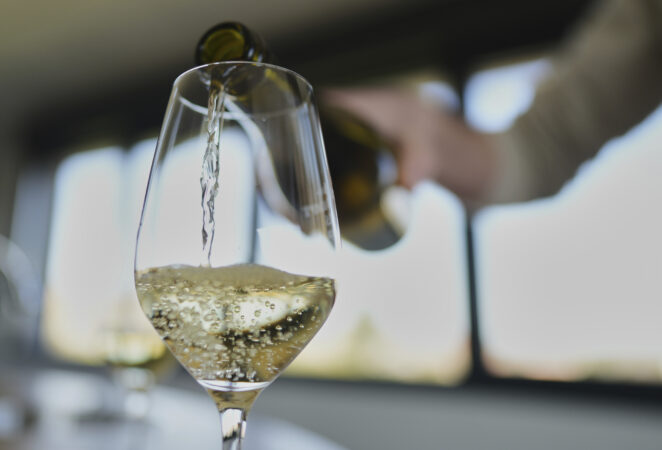
As the shortest day of the year grows near and night begins falling well before we pour dinnertime wine, the perfect season for savoring rich winter whites like this luxurious Sonoma chardonnay has arrived.
The white wines we crave in warmer weather — pinot grigio, albariño, or sauvignon blanc — are almost always light in body, brisk in acidity, and typically fermented in inert steel tanks. This method is chosen to economize, of course, but has the added benefit of preserving the fresh-picked vibrancy of fruit that defines summer-weight styles.
When it gets colder out in winter, our preferences move away from pure refreshment toward richness and the warmth that higher alcohol levels can provide, a seasonal shift that holds true even among those wine styles we serve chilled. Few wine grapes can do this gracefully, with chardonnay being the unrivaled queen of the winter whites.
The time-honored method for enriching white wines is to ferment in barrels made of oak and to then allow the wine to continue resting there for months in contact with its yeast sediment. Not only does this process produce a plush and silky mouthfeel, but both the oak and the yeast sediments boost the wine’s flavor in complementary ways. The oak taste is most noticeable, evoking the toasted pecan and baking spice flavors we associate with cognac or bourbon, while yeast adds more subtle accents of buttered toast. When added to Chardonnay’s base flavors of golden apples and ripe pears, the effect is much like transforming fresh apples into a decadent spiced and caramelized apple cake.
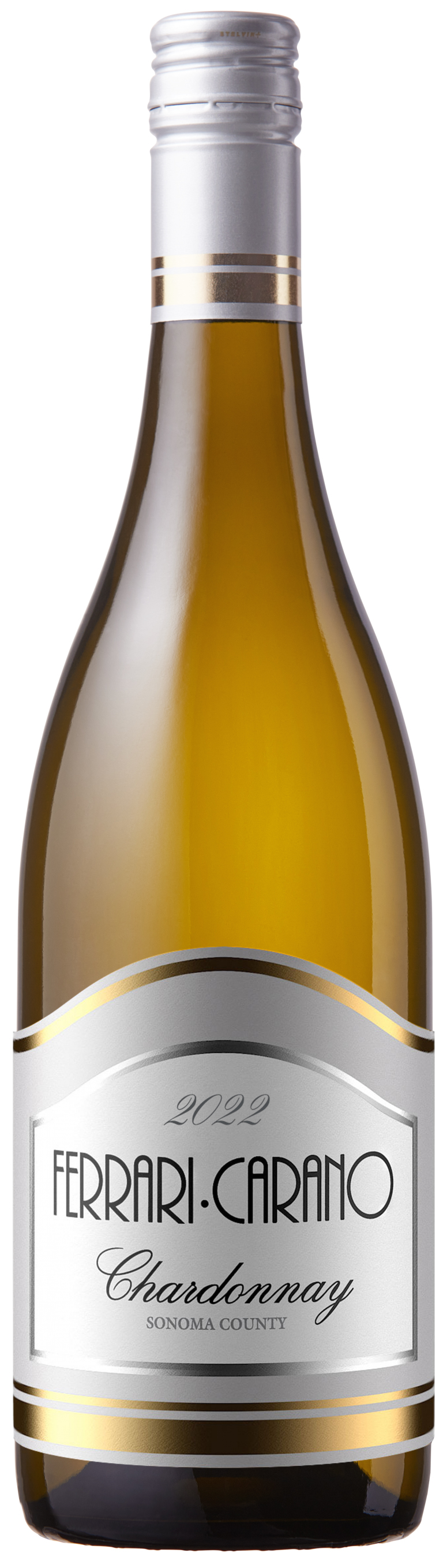
Ferrari-Carano has specialized in this rich style of chardonnay for decades and executes it brilliantly here, with an interesting twist. Where almost all of their competitors use 100% chardonnay grapes, their winemaker adds a tiny splash of fragrantly floral gewürztraminer to add flavor complexity, just as a mixologist might add a dash of orange bitters to round out their signature Manhattan.
Ferrari-Carano Chardonnay
Ferrari-Carano chardonnay
Sonoma County, Calif., 14.5% ABV
PLCB item #8704, on sale $22.09 through Jan. 4 (regularly $29.09)
Also available at: Total Wine & More in Wilmington and Claymont, Del. ($17.99; totalwine.com), Moorestown Super Buy Rite in Moorestown ($17.99, moorestownbuyrite.com), and WineWorks in Marlton ($18.98; wineworksonline.com).
“Heaven … I’m in heaven … and my heart beats so that I can hardly speak.”
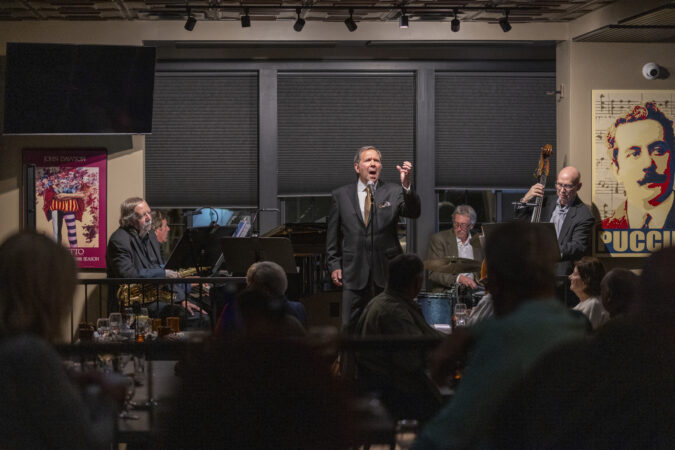
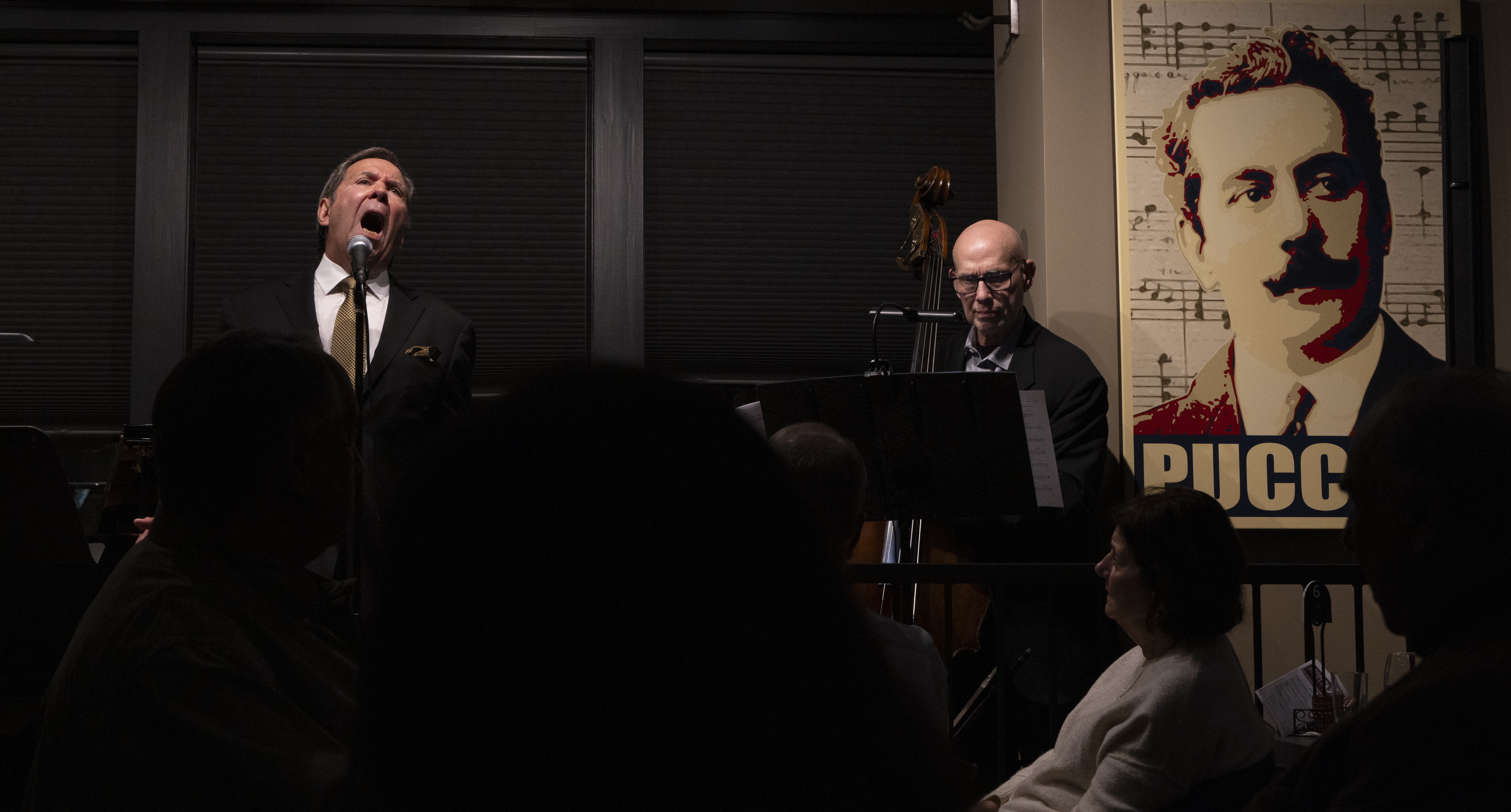
Harry Barlo, in a crisply tailored black suit, bronze tie, and matching pocket square, bopped jauntily to the Fred Astaire standard, his quartet swinging effortlessly behind him, the crowd nodding and foot-tapping.
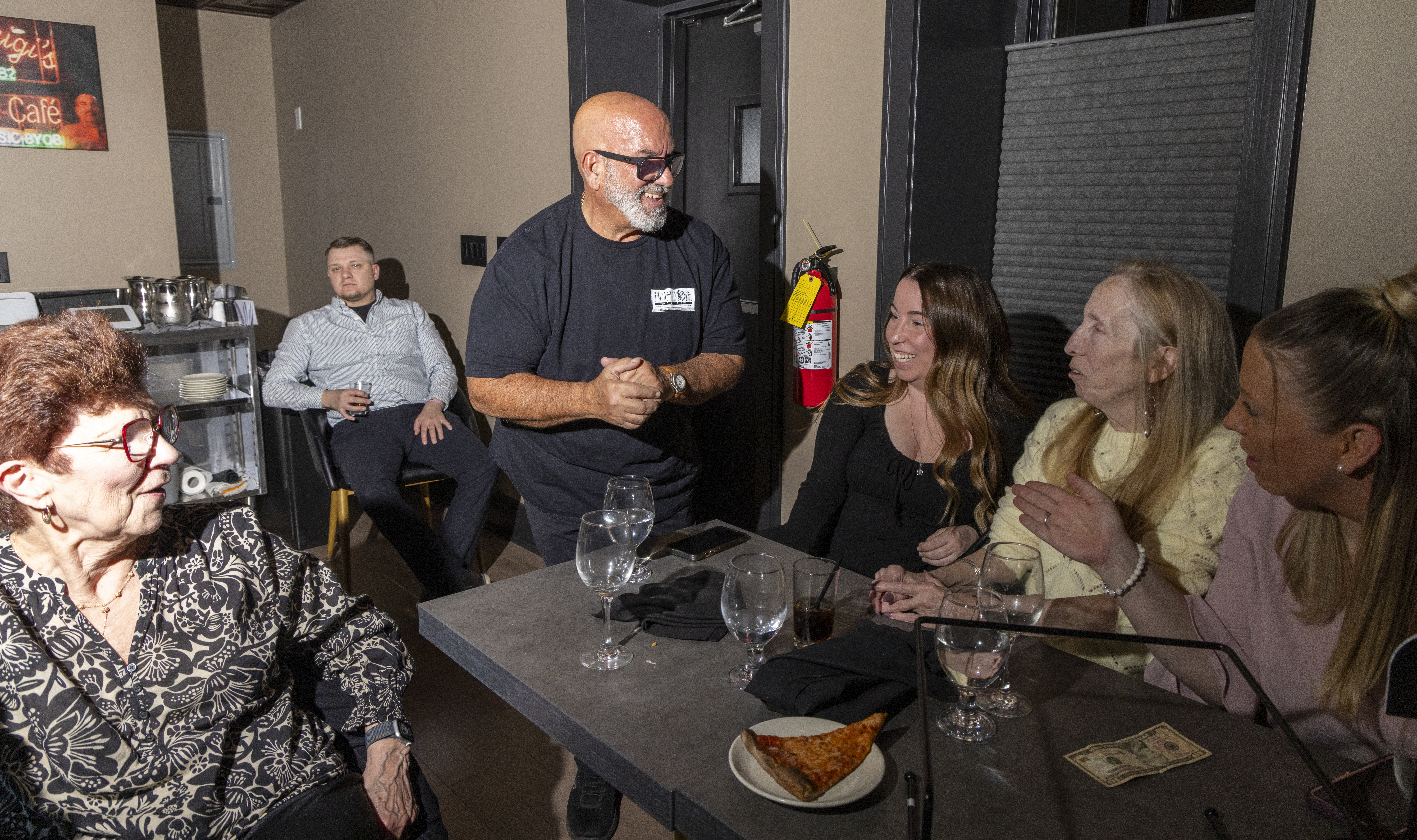
High Note Caffe owner Franco Borda works the room during the Nov. 8 show.
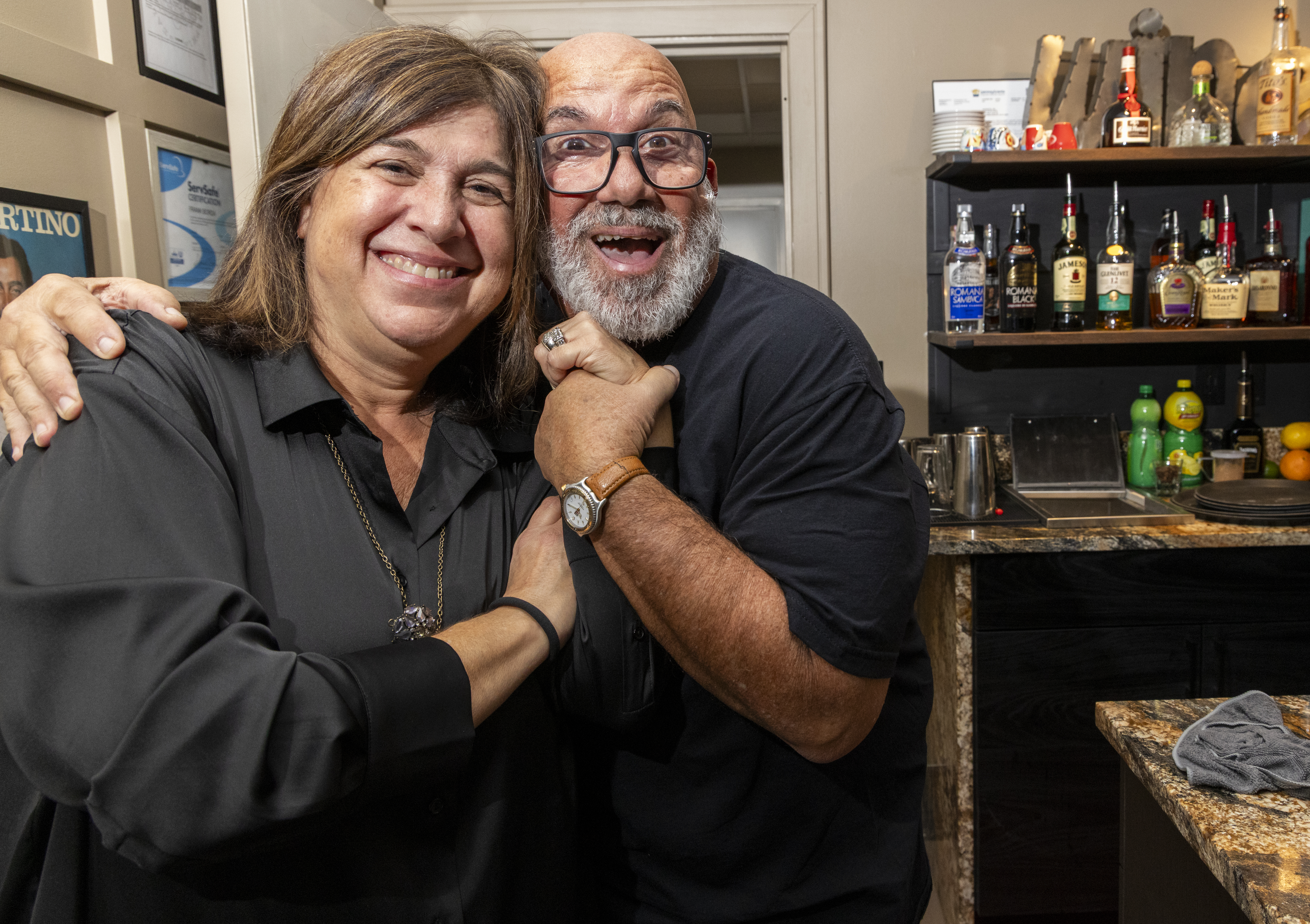
At that moment — for a moment, anyway — Franco Borda’s right knee quit acting up. Beaming from the back of his revived High Note Caffe in South Philadelphia, Borda took it all in: 64 people dressed up for a Saturday night out, sitting in his restaurant, eating his eggplant rollatini and his son Anthony’s pizza, enjoying live music.
“You see this?” he said in amazement.
Borda, 64, wants to create the sort of supper club that barely exists anymore — intimate, aimed at a boomer audience, with drinks and an informal menu.
Harry Barlo hits a note at High Note Caffe.
It’s an all-new act for the High Note — an update on Borda’s previous restaurants at 13th and Tasker over the last 35 years.
Borda, who grew up three blocks away, has been singing opera all his life. In the days he ran Francoluigi’s with his former business partner, he would pop out from the stove to sing an aria, and he’d bring in other amateur singers. Sometimes, Phil Mancuso, who owned Mancuso’s cheese shop, and Frank Munafo, a nearby butcher, would show up, and they’d bill themselves as the Butcher, the Baker & the Cheesemaker.
Over the years, however, Borda found that younger diners were less interested in opera overtaking their meals. He switched gears at High Note Caffe. Jazz stayed, but opera became occasional.
In March 2020, when the pandemic shut down the High Note and other restaurants at the outset of the pandemic, Borda stepped back altogether. He hired an engineer and an architect, removed a wall, expanded the room, slid the kitchen back, and secured assembly and entertainment licenses.
Franco Borda embraces his wife, Teresa, to sing to her after the Harry Barlo show.
His wife, Teresa, said she thought he was crazy. “You need knee surgery,” she reminded him.
Borda countered: “I got 10 more years in the kitchen, you know, and I love it.”
In 2022, Borda’s son Anthony — who started making pizzas with his pop while in kindergarten — opened Borda’s Italian Eats, a walk-up shop on the Tasker Street side of the property (now closed). That was a temporary setup until the rest of the place could be finished.
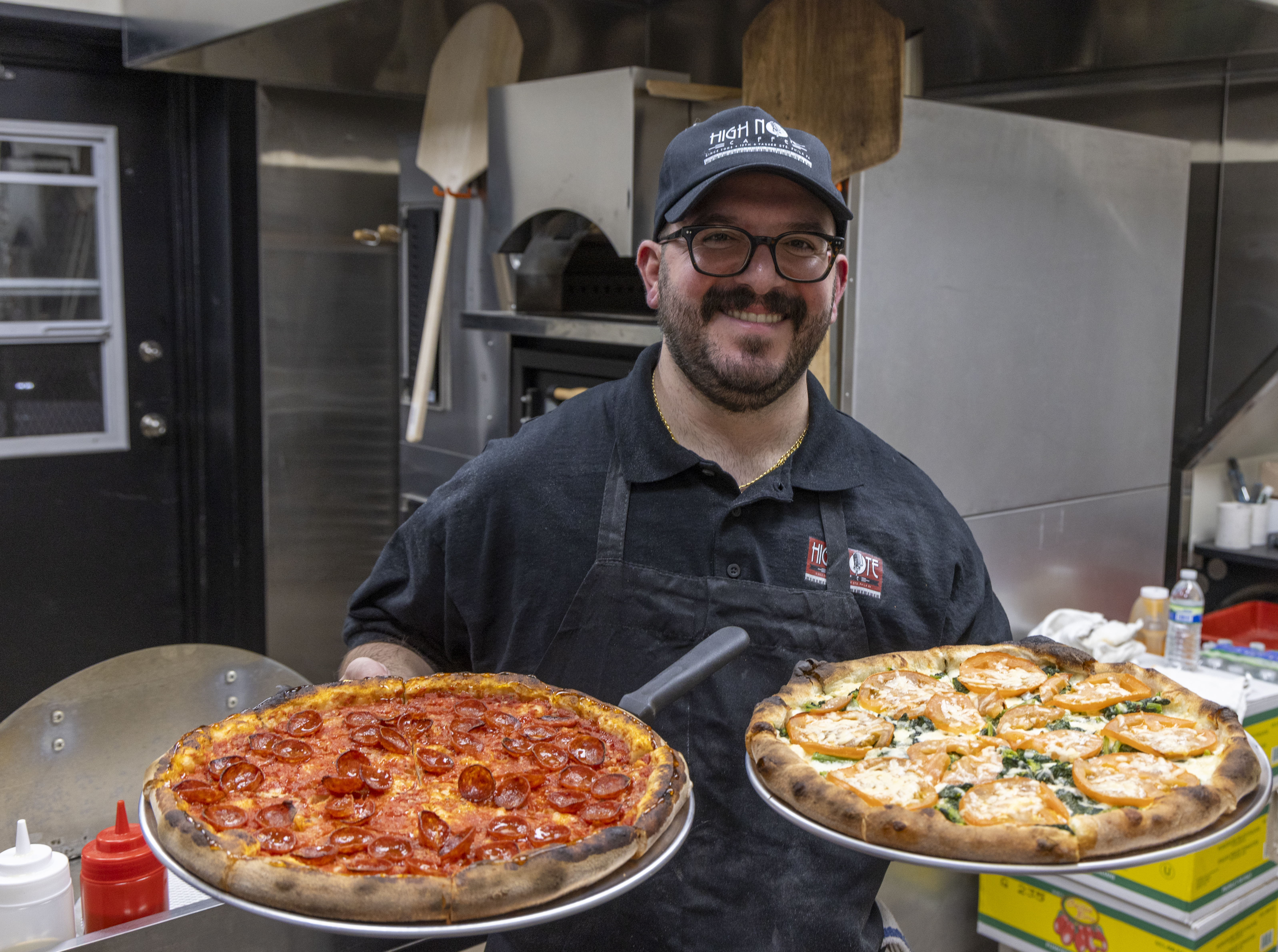
Anthony Borda, son of High Note Caffe owner Franco Borda, with a pepperoni pizza and a white “Pavarotti” pizza (sliced tomato, broccoli rabe, and sharp provolone).
“I really wanted to focus on the entertainment,” Franco Borda said. “We want to give people a place in South Philly where you can sit down and enjoy some jazz and eat a little bit and not get banged over.”
Ticket prices vary but are reasonable. It’s $25 for the Dec. 12 show by the Jack Saint Clair Quartet. All told, you’re looking at a date night for just over $100, with a pizza ($20 or $25), a plate of mussels red ($18.95), $15 cocktails (White Russians! Sloe Gin Fizzes!), and a $7 tiramisu you should not miss.
“I’m not doing this as a business,” Borda said.
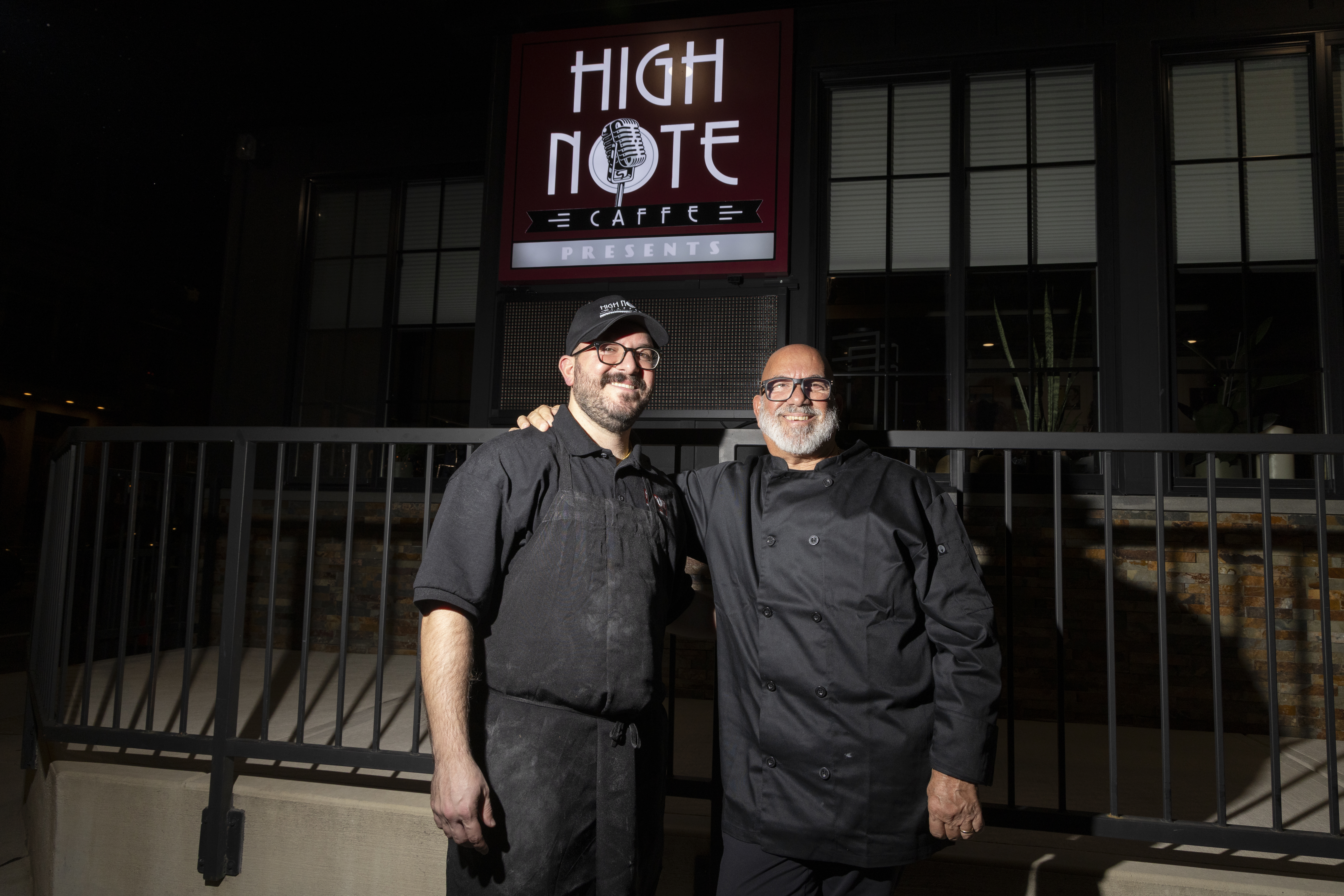
Franco Borda (right) and his son, Anthony, outside High Note Caffe.
That much is clear. For now, he is booking only about two shows a month, with tickets sold online and no walk-ins. After the Jack Saint Clair show, vibraphonist Tony Micelli will perform on Dec. 13. On Jan. 30, George Martorano — who served 32 years in federal prison for a drug conviction before his release in 2015 — will do a one-man show to talk about his time in custody.
Borda said the idea is to not run a conventional restaurant again, rather to provide a venue to musicians who rarely get a platform.
Eventually, when Borda’s knee gets straightened out, he said he wants to get himself back into vocal shape, get up on stage, and do some opera.
For now, he said, “I want to find some tenors and sopranos who want to be exposed and come out and sing their [hearts out].”
People like Harry Barlo.
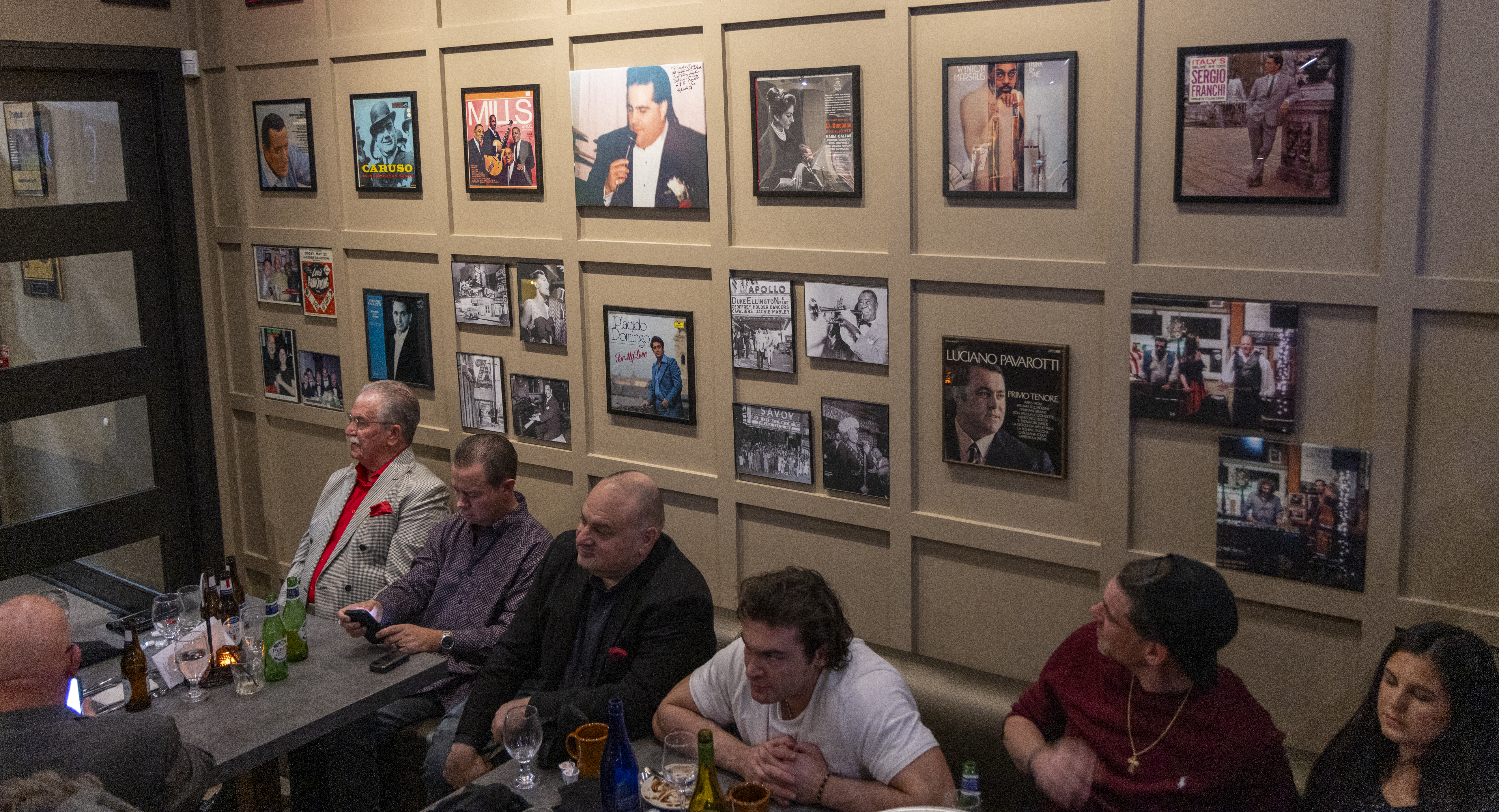
Owner Franco Borda decoarated his new High Note Caffe with music photos and album covers.
Barlo — born Harry Schmitt — spent 21 years on the Philadelphia police force before retiring in 1992. All the while, he sang in clubs. “I balanced show business and my other jobs because I had to eat,” he said.
Twenty years ago, in his early 50s, he chased his dream and moved to Las Vegas, where he sang in a doo-wop group in casino lounges before switching to the Great American Songbook under the nom de croon Golden Voice Harry.
“Las Vegas — that was the dream of a lifetime,” he said. ”Show business is a tough business. It only fed me for a while.” After returning to Philadelphia, he got into recording and, later, streaming, he said.
Barlo said he had gigs lined up before COVID-19 dried up live music. Now a casino compliance representative with the Pennsylvania Gaming Control Commission, he said he thought his performing days were over. Then he heard from Benny Marcella, a friend of Borda’s.
Part of the audience at Harry Barlo’s performance at High Note Caffe on Nov. 8.
Barlo said he was initially unsure about playing at High Note. “Benny said, ‘Go down and look at the place.’ So I met Franco, we talked, and Franco said, ‘Why don’t you stand on the stage and see what you think.’ When I stood on that stage, he had me. That’s the perfect room for me. I like working in an intimate setting.” Marcella helped round up the musicians, and it was showtime.
“Are the stars out tonight? I don’t know if it’s cloudy or bright. I only have eyes for you, dear…”
Ken Moyer nailed his sax solo, backed by Bill Tesser on drums, Marty Mellinger on piano, and Steve Varner on bass. Barlo’s eyes swept the room. His kids were there, watching with their friends. “I first saw him perform when he sang to me for my 16th birthday,” said his stepdaughter Danielle DeAngelis. “And all these years later, it never gets old. He’s still amazing.” He dedicated “I’ve Gotta Be Me” to her.
Harry Barlo’s stepdaughter Danielle DeAngelis smiles as Barlo dedicates “I’ve Gotta Be Me” to her at the High Note Caffe.
Barlo, who is booked at the High Note for Valentine’s Day, said High Note reminded him of the rooms at the Sahara and the Stardust. “They were intimate lounges,” he said. “I’m an old-style guy — you get a lot of feedback from the audience when you’re close to them. A friend of mine who was there that night said, ‘Harry, you finally found your niche.’ He’s right. Franco’s got a great idea, and I hope it works.”
The National Labor Relations Board is pursuing charges against Philadelphia-based restaurateur Stephen Starr and his company, Starr Restaurants, over union-busting allegations at his D.C. steakhouse St. Anselm, according to documents reviewed by The Inquirer.
The NLRB’s case revolves around anti-union activity that Local 25 alleges occurred in February at St. Anselm, one of three D.C.-based Starr restaurants that sought a union at the start of 2025 and the only one where workers voted to unionize.
The complaint consolidates a set of unfair labor practice (ULP) allegations Local 25 initially filed to the NLRB on behalf of St. Anselm workers, who said that Stephen Starr and a St. Anselm supervisor directly coerced employees with false information, made promises of improved benefits if they voted against unionizing, and threatened loss of revenue if they voted for it.
In one instance, the complaint alleges, Starr “interrogated” a St. Anselm staffer about their union involvement during a one-on-one conversation.
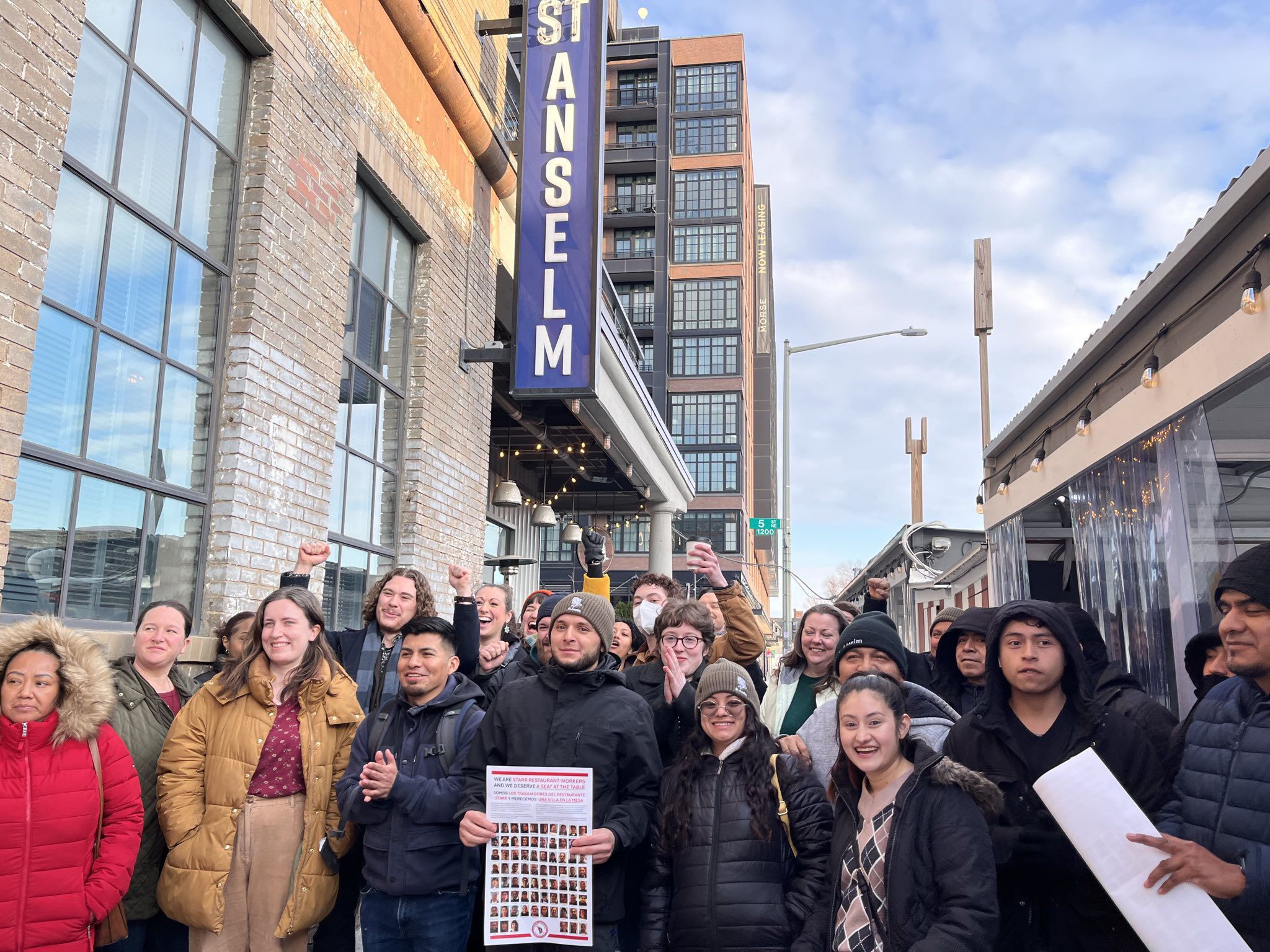
A delegation of workers pose in front Stephen Starr’s D.C. steakhouse St. Anselm before delivering their union petition in Feb. 2025.
The ULP filings were submitted to the NLRB in June. After investigating, the board’s general counsel found merit in the accusations that Starr Restaurants, Starr, and the supervisor violated the National Labor Relations Act. It is now set to bring the charges before an administrative judge on Feb. 24, 2026.
“We are aware of the complaint and strongly disagree with the allegations made therein,” a Starr Restaurants spokesperson for St. Anselm said in a statement. “We look forward to vigorously defending this case through the litigation process.”
The spokesperson declined to address whether Starr spoke directly with St. Anselm employees about union efforts, citing pending litigation.
“It speaks volumes about what happened at this restaurant that, given the challenges that the NLRB is facing, that [general counsel] have chosen to act on this issue,” said Benjy Cannon, Local 25’s communication director, referring to the staffing shortages the agency has faced.
A spokesperson for the NLRB declined to comment.
A contentious dynamic from the start
In January, workers at three of Starr’s sevenD.C restaurants announced plans to unionize with Local 25: French bistro Pastis, Parc-inspired brasserie Le Diplomate, and St. Anselm, an outpost of the upscale Brooklyn steakhouse. The Starr workers, along with employees at two high-profile restaurants affiliated with Knightsbridge Restaurant Group, would’ve ultimately added 500 members to Local 25, if the drives proved successful.
Nearly a year later, both union campaigns remain caught up in litigation.
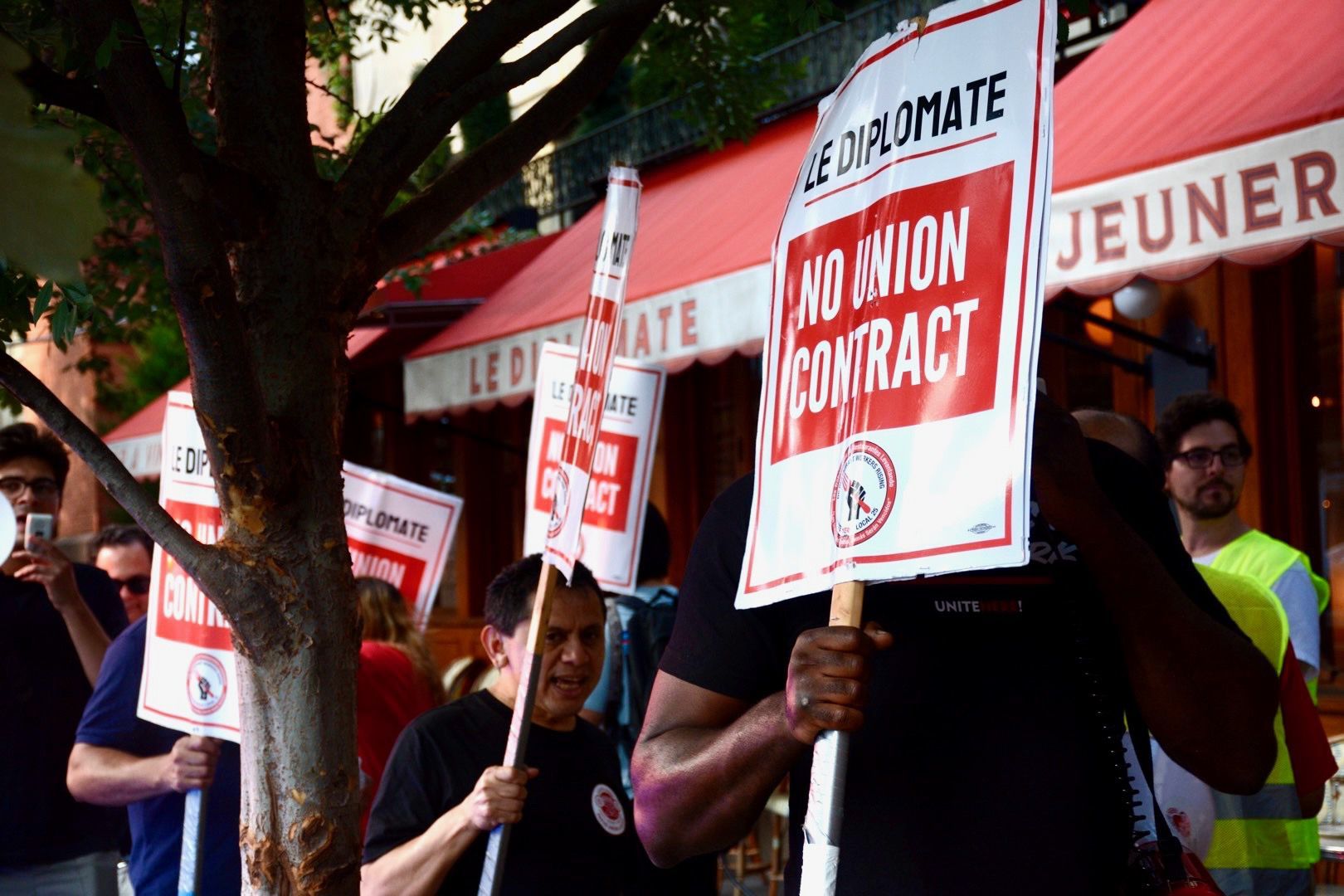
A picket line outside of Stephen Starr’s D.C. restaurant Le Diplomate is led by Unite Here Local 25 after Starr Restaurants challenged a unionization vote at St. Anselm.
Relations between Starr Restaurants and organizers there turned acrimonious almost immediately. The Washingtonian magazine reported that Starr Restaurants hired anti-union consultants from the American Labor Group to meet with St. Anselm staff. Other employees there told online publication Eater that Local 25 organizers had ambushed them at their homes and pressured them to sign cards that indicate they want to vote for union representation.
Only workers at St. Anselm voted to unionize in February. Local 25 lost the union election at Pastis by a margin of 20 votes, and Le Diplomate’s election has been suspended indefinitely as of March.
Starr Restaurants has yet to recognize the St. Anselm union and filed an objection to the results with the NLRB in February, alleging that Local 25 organizers unfairly influenced the outcome through a campaign of bullying and intimidation. The case remains open.
What workers say
Working conditions at St. Anselm have been a mixed bag, according to Ana Reyes, who has been a line cook at the steakhouse since 2022. The fast-paced workplace allowed her to make enough money to help put her youngest daughter through her freshman year of college, Reyes said in Spanish through an interpreter. But, she said, management often ridiculed employees who didn’t speak English, telling them to learn the language if they wanted to get questions answered about pay or scheduling.
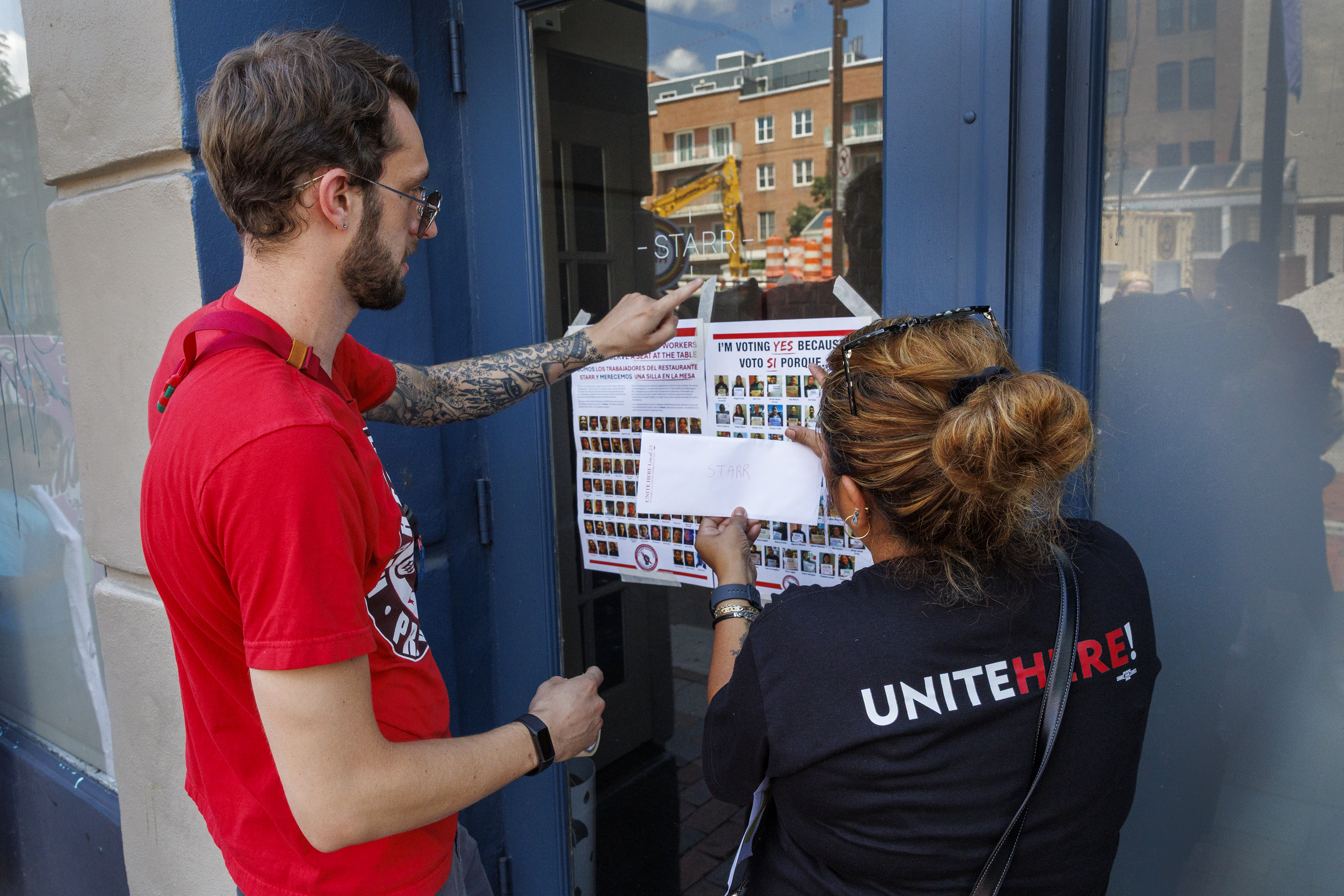
Greg Varney (left) and Ana Reyes, both with Unite Here Local 25, outside Starr headquarters at 134 Market St. as they work to unionize.
Reyes, 43, told The Inquirer that she wanted to join Local 25 for respect: “Whether we speak English or not, we deserve to be respected because we’re doing the work they don’t want to do.”
About two weeks into the union drive in February, Reyes recalled, Starr personally asked to meet with all morning-shift staffers. During the meeting, she said, Starr was “surprised to learn that we didn’t get raises each year … and promised to look into it.”
“He made a lot of promises about sick pay, about vacation pay,” Reyes said. She added that nothing has changed to date.
One host at St. Anselm spoke to The Inquirer on the condition of anonymity for fear of retaliation. About four months into working there, she said, Starr asked to chat with her alone, pulling her aside in a near-empty restaurant to ask questions about any problems she had and her involvement in the union.
“I certainly felt cornered and uncomfortable,” she said. Starr “ultimately told me that supporting the union was [quote-unquote] delusional, and that if I voted no, it would be in my own best interest.” The host departed St. Anselm a month later for a full-time customer service job.
Dennis Asaka, a St. Anselm bartender, doesn’t recall Starr making any promises about improved wages or benefits when he sat in on a voluntary informational meeting led by the restaurateur.
In late 2024, however, Asaka recalled a new server at St. Anselm, asking to join him for Bible study at his Baptist church in Arlington. After attending a second meeting, Asaka said, the server invited him to her house to discuss their faith. There, Asaka said he was instead met by several coworkers who pressured him into signing a union card. Asaka declined.
“I felt like I was kind of blindsided and just kind of used a little bit,” Asaka said.
Cannon denies the union ever engaged in such conduct: “We don’t believe that there were any labor laws broken.”
Stephen Starr (right) talks with Erik Battes, Starr Restaurants’ executive vice president of food and beverage, during at a menu-tasting for the Italian restaurant Borromini, in Philadelphia, July 1, 2025.
What happens next?
Unfair labor practice charges are common, said Rutgers University labor and employment law professor James M. Cooney, and cover a variety of tactics that employers or unions can use to interfere with union elections, from retaliation and coercion to promising incentives. Once a ULP is filed, a regional NLRB will launch an investigation. If the board believes there’s merit, they will issue a complaint.
After the hearing, both parties can appeal the administrative law judge’s decision with the NLRB at the federal level, which can decide to uphold and or reject the decision. There’s no punitive damages on the table in most ULP complaints, Cooney said, only an admittance of wrongdoing.
The five-member federal NLRB has been in a bureaucratic standstill since January, when President Donald Trump fired board member Gwynne Wilcox. The move left the independent agency without a quorum, forcing the NLRB to leave hundreds of cases in limbo.
So, why then did the NLRB decide to wade into union drama at one D.C steakhouse?
Because the charges are “old school, really in-your-face-type labor violations,” said Cooney.
“These violations appear to be really egregious that the board just couldn’t overlook them. It’s true that the board isn’t moving on a lot cases, but this one may be easier for them to prove,” Cooney said. “Everybody knows you can’t threaten workers for supporting a union, and you can’t make promises. This is labor law 101.”
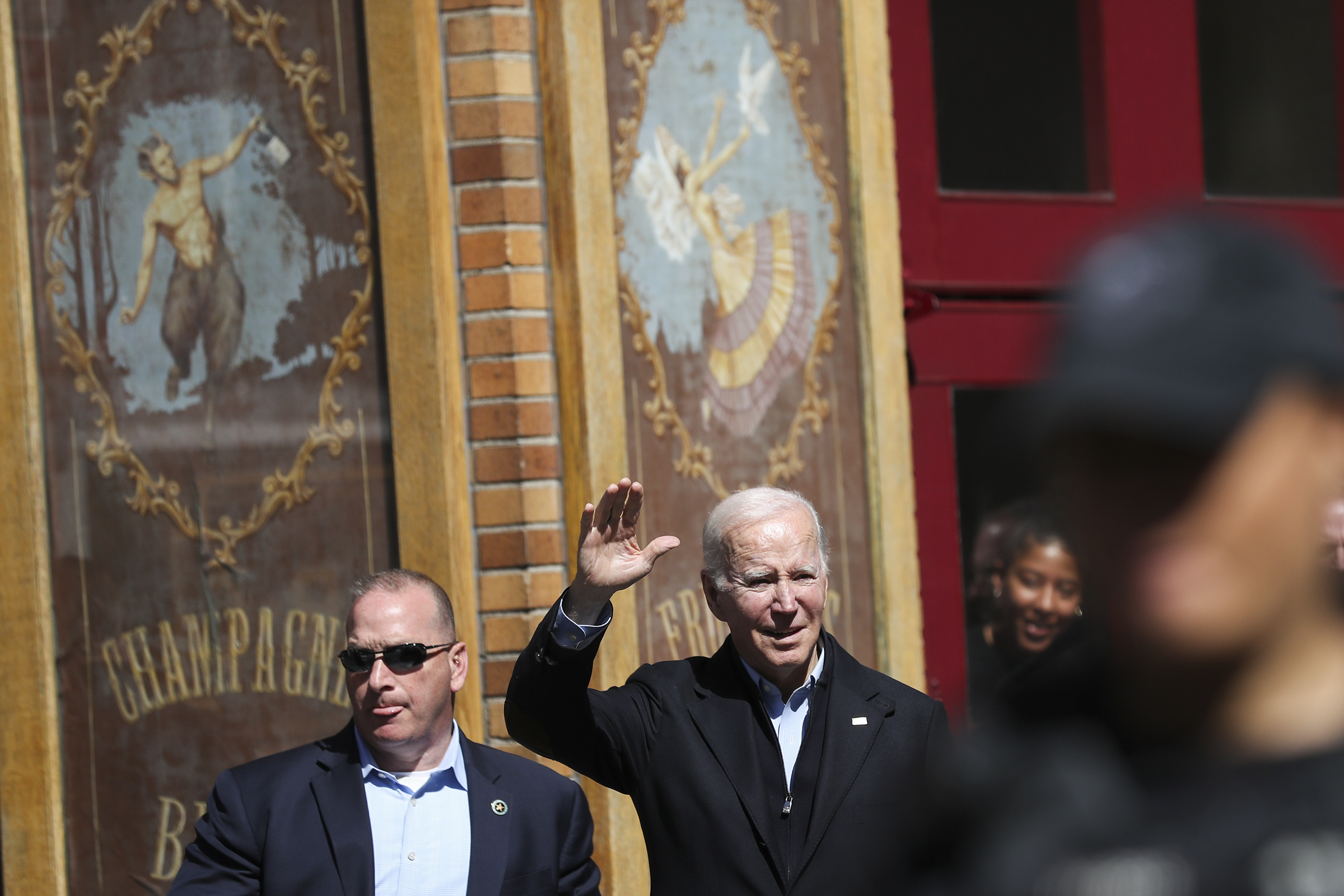
Former President Joe Biden waves to the crowd gathered outside Stephen Starr’s Rittenhouse Square restaurant Parc, where he dined for lunch with his family in April 2023.
Starr is a registered Democrat who has donated thousands of dollars to campaigns for politicians including Tom Wolfe, Barack Obama, Sen. John Fetterman, and Hillary Clinton, according to OpenSecrets.org. His restaurants are common stomping grounds for D.C’s political elite, including former President Joe Biden.
In June, Local 25 called for a boycott of Starr’s three buzziest D.C. restaurants (all currently uninvolved in union efforts). To date, 88 members of Congress signed on, including Sen. Bernie Sanders, Rep. Alexandria Ocasio-Cortes, and Sen. Chuck Schumer.
Cooney does not think the NLRB’s complaint has partisan motivations. “The board has been historically apolitical” at the regional level, he said.
Regardless, the stakes of the proceedings are high for all parties, including employees.
If St. Anselm is forced to recognize the union, Asaka said he’d quit. “I have [health] insurance that includes dental and medical. I have a 401(k) plan. I have commuter reimbursement … I have paid vacation. Those are things that don’t really happen in restaurants,” he said. “I have everything I need.”
The Philadelphia area’s December restaurant forecast is on the light side, compared with previous months, but this crop of newcomers is an intriguing mixture: a Euro-inflected bistro with a Bing Bing/Cheu pedigree, a colorful pizza bar, a honky-tonk vintage shop, a Filipino riff on Outback Steakhouse, the makings of an Indian brewpub, and the eagerly awaited casual corner spot from Michelin-starred Amanda Shulman and Alex Kemp .
Banshee (1600 South St., opening Dec. 11): Twin brothers Bryan and Kyle Donovan, partnered with Bing Bing/Cheu alums Shawn Darragh and Ben Puchowitz, are ready to unveil their sleek South Street West bistro offering casual cuisine influenced by Paris, London, and Basque wine bars. Menu sampling: Barnstable oysters (kiwi mignonette); tarte flambee (smoked crème fraîche, maitake, caramelized onion); Berkshire pork collar (Tarbais beans, Savoy cabbage, bearnaise); and a Butterscotch Krimpet filled with Boysenberry jam.
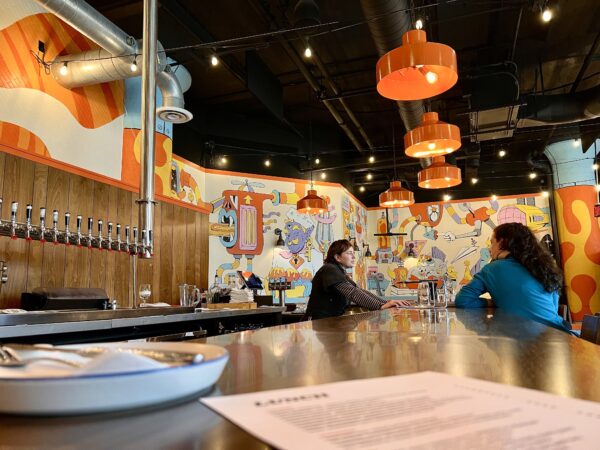
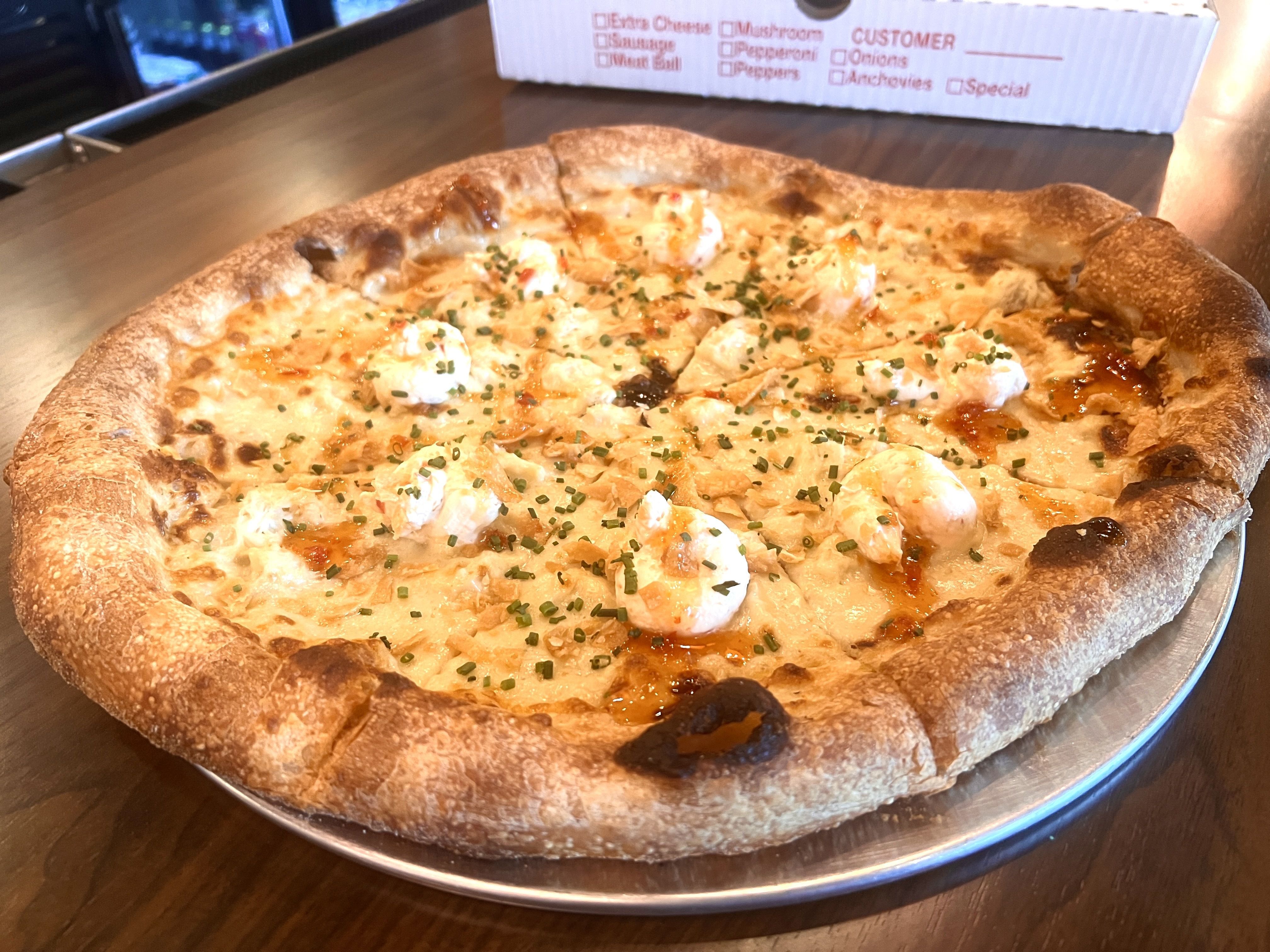
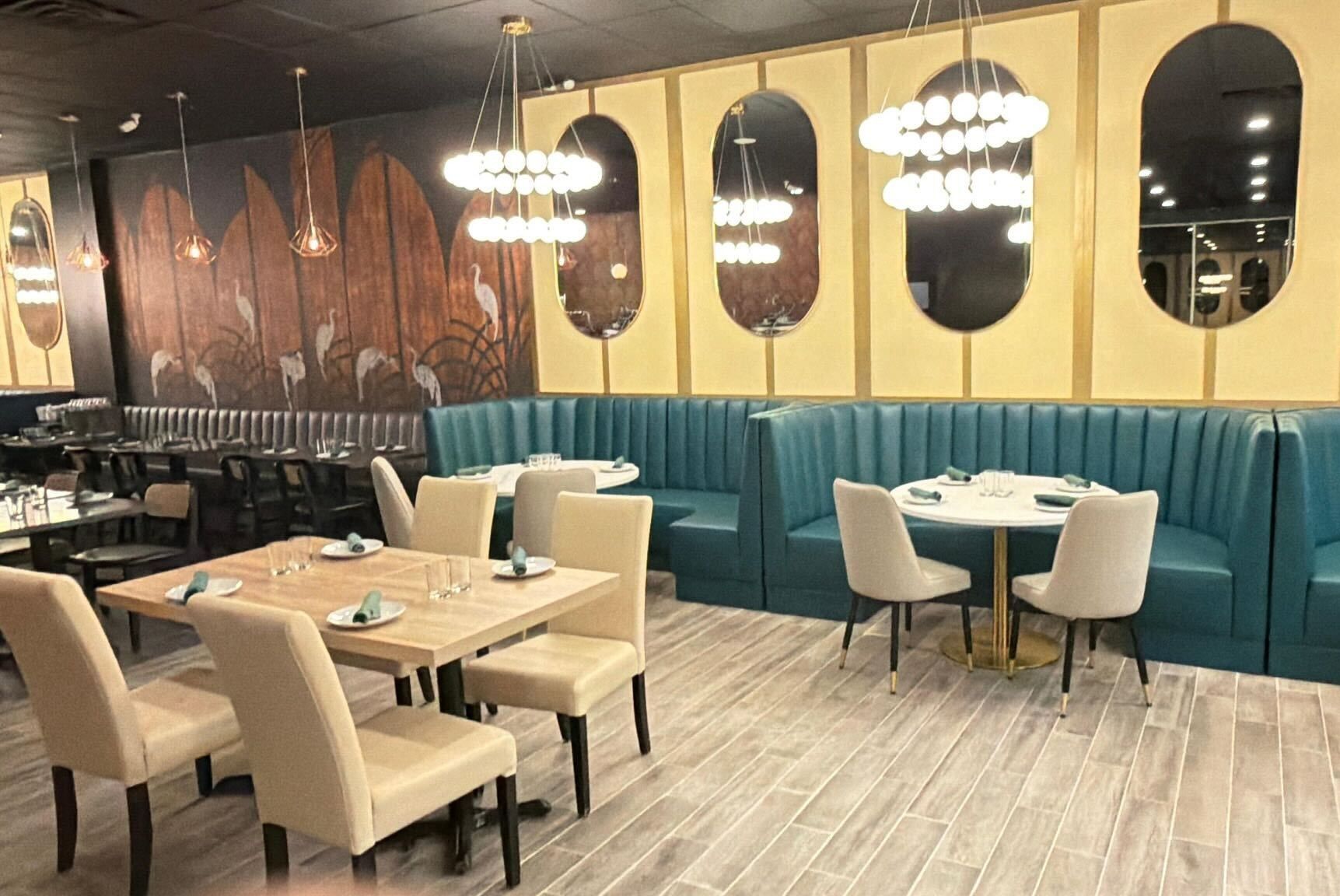
Cerveau (990 Spring Garden St.; now open): Finally operating full bore with its liquor license, this Mediterranean-leaning newcomer from Pizza Brain cofounder Joe Hunter rocks colorful — almost surreal — surroundings with murals and columns resembling lava lamps. The menu mixes pizzas, pastas, small plates, and the mini-sandwiches known as tramezzini, with attention to vegetarian and vegan options. A full bar, including zero-proof cocktails, supports a plan to evolve into an all-day café-style hangout. Do not miss the crab rangoon pizza, which is exactly what it sounds like.
Crab rangoon pizza at Cerveau, 990 Spring Garden St.
LeoFigs (2201 Frankford Ave.; opens “later in December”): Shannon Leocata Figueras and Justice Figueras’ urban winery, cocktail bar, and restaurant in Fishtown is built around the idea of “unpretentious deliciousness” with a warm living room setting. In addition to house-made wines and ciders and cocktails, menu leans toward comfort-driven small plates. (The couple was not above creating a cheeky ruse on the neighborhood recently.)
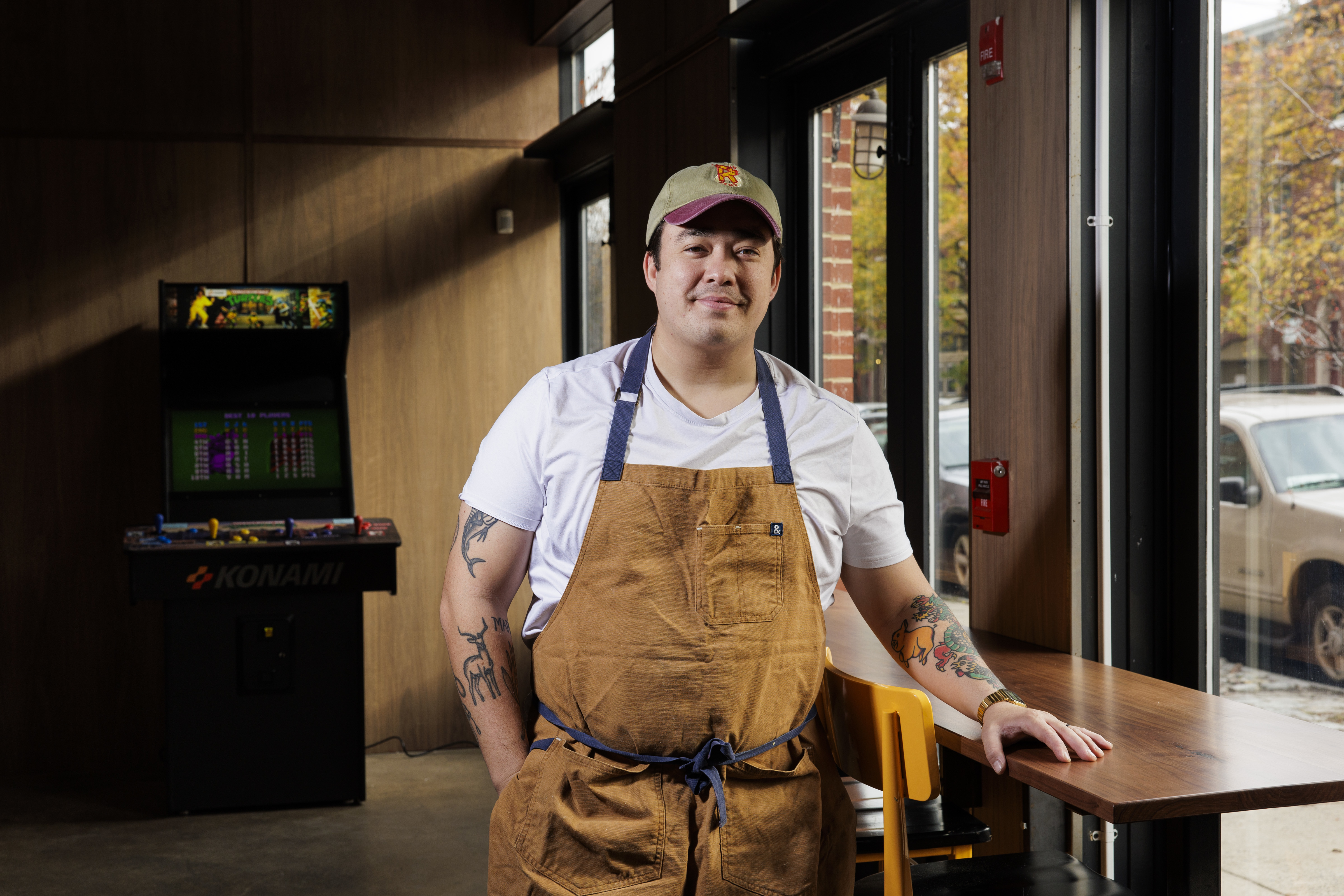
Chef Chance Anies at Manong.
Manong(1833 Fairmount Ave.; opens Dec. 5): Chef Chance Anies follows up his South Philadelphia hit Tabachoy with an interpretation of Outback Steakhouse — “that is,” writes Kiki Aranita, “if the chain restaurant existed in a Filipino alternate universe.”
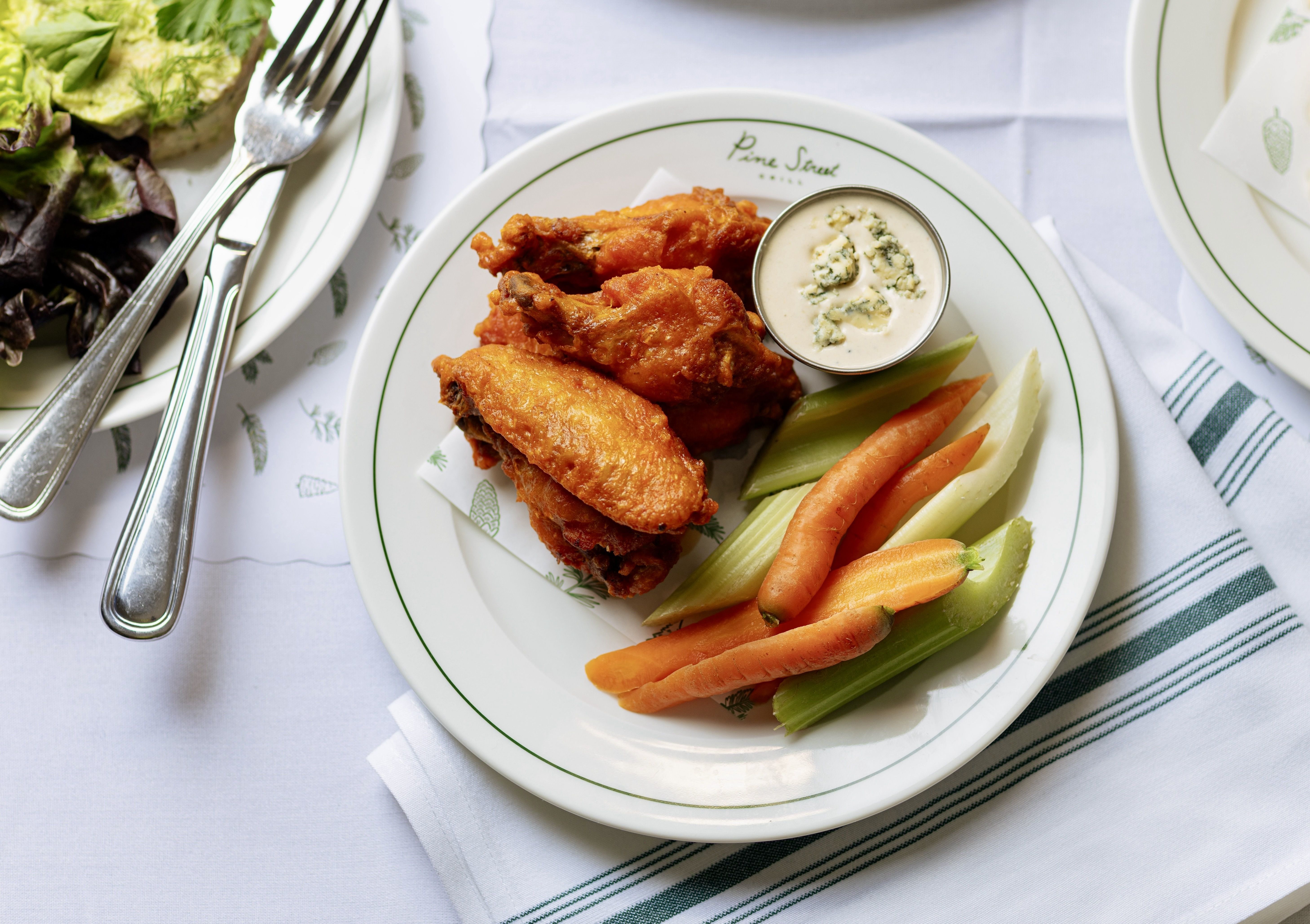
Buffalo wings at Pine Street Grill, 2227 Pine St.
Pine Street Grill (2227 Pine St.; “this month”): Amanda Shulman and Alex Kemp’s neighborhood spot in the former Cotoletta space in Fitler Square — a more casual counterpoint to Her Place Supper Club and My Loup — will serve “timeless American food made with care,” such as matzo ball soup, spinach-artichoke dip, Greek salad, French dip, and rotisserie chicken, and a drinks program of classic cocktails, beer on tap (including birch!), and wines “with no pretense” at a variety of price points.
Secondhand Ranch(1148 Frankford Ave.; soft opening Dec. 6 with a grand opening in January): Here’s what happens when a vintage shop and a honky-tonk bar have a baby in a former bank building at Frankford and Girard in Fishtown. This mash-up hosts independent vendors selling secondhand finds, while the bar slings beer, cocktails, and simple saloon fare like sausages and hot dogs, all while rocking a Western-outlaw vibe. It’s meant as much for hanging out as for thrifting.
Side Eye (623 S. Sixth St.; “later this month”): Queen Village gets a neighborhood bar serving “French-ish” food, classic cocktails, European-leaning wines, and beer at approachable prices in the former Bistrot La Minette. Owner Hank Allingham leads a team including chef Finn Connors (formerly of Sally and Wilder) and beverage director Ryan Foster (Messina Social Club). The menu has house-made breads, fresh pasta, frites, French onion soup, mussels, and a late-night raw bar.
Dining room at Vibe Haus, which opened Dec. 1, 2025, at 402 Swedesford Rd. in Berwyn.
Vibe Haus Indian Plates & Taps (402 Swedesford Rd., Berwyn; opened Dec. 1): Karthic Venkatachalam and Gopal Dhandpani of the well-regarded Nalal Indian Cuisine in Downingtown and Adyar Cafe in Exton have taken over the long-shuttered Lotus Inn with what they intend as an Indian brewpub for the western suburbs. Though the on-site brewery is at least several months away, they’re now teasing out a pub menu of Indian-meets-American favorites, such as Madras nachos (papdi chips layered with spiced queso, black beans, masala corn, and cilantro crema), tandoori mushroom flatbread, and butter chicken bao buns.
Blackfish BYOB’s 19-year run in Conshohocken will end New Year’s Eve. Chef-owner Chip Roman said the decision to close the restaurant did not come from financial strain or burnout.
He said he, his wife, Amanda, and their four children are doing well, and business on Fayette Street is good.
Why then?
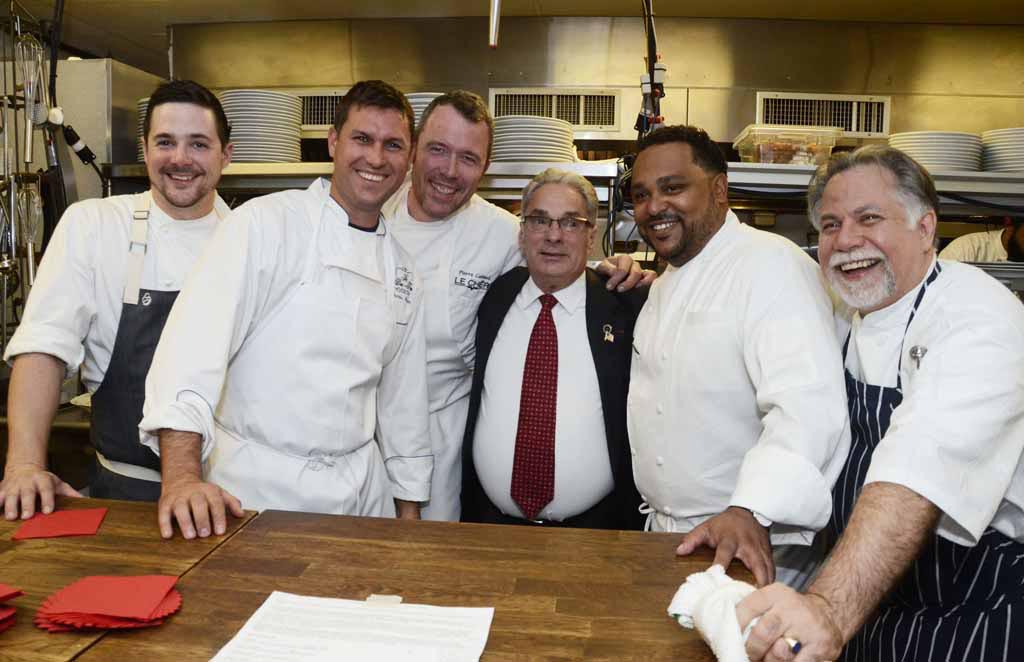
Chip Roman (second from left) at a 2014 tribute dinner for chef Georges Perrier (center) with fellow chefs (from left) Nicholas Elmi, Pierre Calmels, Kevin Sbraga, and Al Paris.
“It’s hard to put into words. I’ve always felt that I’m here for a bigger purpose, like there’s more for me to do rather than cook,” he said in an interview Tuesday. “I could probably go on for another 20 years, but I don’t feel like that’s my ultimate calling. If I don’t follow what’s in my head and my heart, I’m going to regret it. On paper, it’s really stupid, but you only live once.”
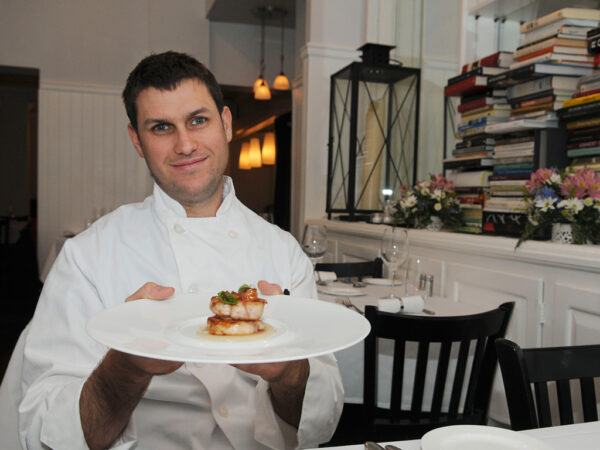
Roman, 46, grew up in Fishtown, attended culinary school at Drexel University, and worked for Marc Vetri at Vetri Cucina and Georges Perrier at Le Bec-Fin. At 22, he arrived on Fayette Street in Conshohocken to take over a restaurant called Maya Bella, where he set up a catering business before opening Blackfish in fall 2006.
For his review in early 2007, Inquirer critic Craig LaBan praised Roman for brightening the rooms with “a vaguely nautical air” and “producing a stellar bistro-plus menu full of clever surprises, from foie gras streaked with cinnamon oil to seafood flavored with spruce.”
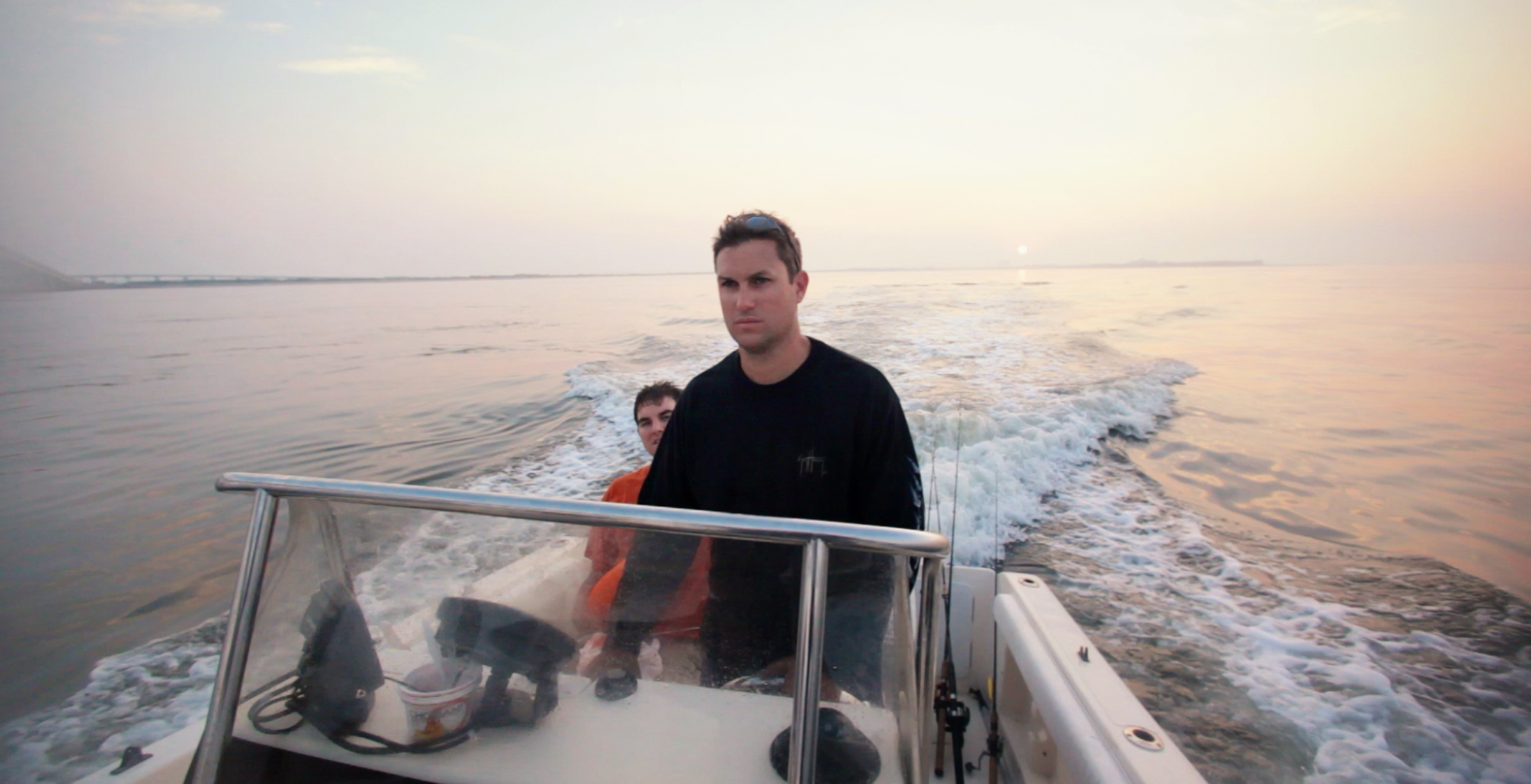
Chip Roman (left) with fellow chef Josh Lawler on a fishing trip off Ocean City in 2011. Roman enjoyed cooking his catch at his restaurants.
Over the years, Roman opened Blackfish locations at the Jersey Shore, a BYOB in Chestnut Hill called Mica, and a bistro in Center City called the Treemont. A dedicated fisherman, he would cook his catch at his restaurants. He also was a partner in Tradestone Confections, a candy business.
He said that he began thinking about a post-chef career after his father, Charles, died in February.
Roman has real estate investments and said he can always return to a kitchen if he misses the work. He feels pushed toward a different path. “Whatever there is, it’s putting all these opportunities in front of me and leading me down certain paths,” he said. “I’m starting to see clues. I’d be a fool not to explore it.” He emphasized that he is fortunate — “God’s given me a lot of blessings,” he said — and believes it is time to give something back.
Roman acknowledged that stepping away from Blackfish when the business is healthy makes him feel “crazy,” particularly when so many restaurateurs close under duress. “That’s not my situation.” Roman said he has watched others stay too long in a role that no longer fits them, and he wants to avoidthat.
In a Facebook post, he and his wife wrote: “This is not a decision I made lightly — this restaurant has been a defining part of my story, my work, and my heart. What made Blackfish truly special was never just the food or the space. It was you — our guests — who showed up year after year, celebrating milestones, sharing meals with loved ones, and trusting us with your most important moments.
“And it was our extraordinary staff, past and present, whose talent, dedication, and passion brought Blackfish to life every single day. They are the soul of this place, and I am endlessly grateful for everything they have given.”
After 10 years in Rittenhouse, Revolution Taco, a fast-casual restaurant whose menu blends global influences from chorizo to Peking duck to Korean BBQ beef, plans to close early next month.
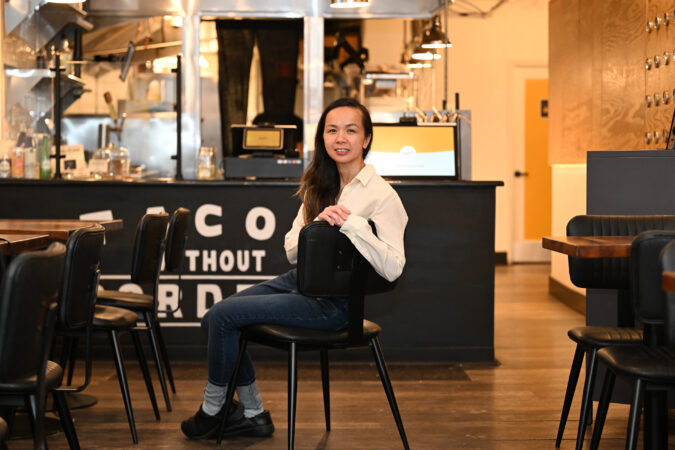
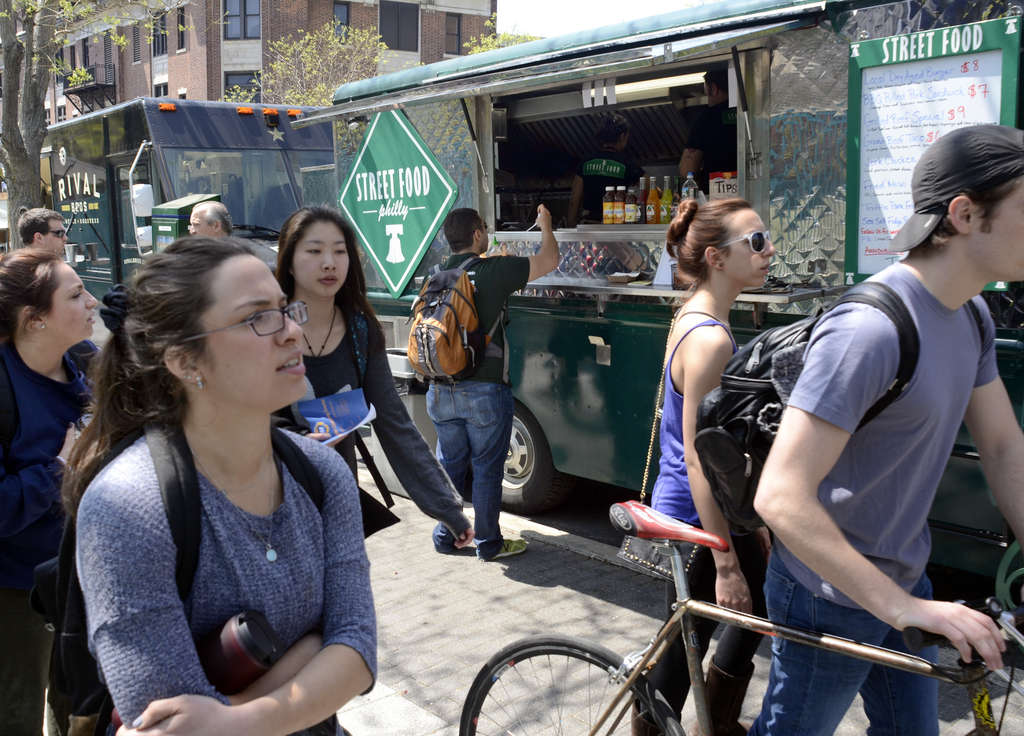
Owner Carolyn Nguyen, 41, grew the business from Street Food Philly and Taco Mondo, two stalwarts of Philly’s new age food truck scene, which had its heyday from 2012 to 2016. The two trucks, which Nguyen co-owned and operated, vended regularly on 33rd Street at Drexel University’s campus — a street once referred to as Philly’s “Food Truck Mecca” — and at the now-defunct Night Markets, once run by The Food Trust.
Revolution Taco’s Jan. 6. closure isn’t goodbye for Nguyen, who has leased the space at 2015 Walnut St. for another three years. Rather, Nguyen is returning to her roots: For the first time in her two decades of working as a chef in Philadelphia, Nguyen will be cooking the Cajun Vietnamese food of her Louisiana youth.
Also for the first time, her name will be on the door of her business. She aims to open Carolyn’s Modern Vietnamese within weeks of Revolution Taco’s closure. “It will combine my Vietnamese heritage, my Cajun upbringing, and the global flavors that I’ve come to love and enjoy to cook through my career,” said Nguyen.
“Growing up, we always had seafood boils when crabs and crawfish were in season. They were a major part of my childhood. We ate boudin — a stuffed rice sausage with pork — lots of curries, and a lot of chicken. My family had a little chicken farm just for our relatives, with around 20 to 30 chickens,” said Nguyen. “As a child I had so much curry chicken, but I’ll modify it a little [for the new restaurant], along with thịt kho, a braised pork with egg that I’ll use pork belly for. And there will be slow-cooked grits.”
Nguyen speaks both English and Vietnamese with a soft but distinct Southern twang. She was born and raised in Amelia, Louisiana. “It’s a very small town with a population of around 2,000 people. When I lived there, around a third of the population consisted of Vietnamese people,” she said.
Nguyen came to Philly in 2007, intending a visit to her sister here to be a stopover on her way to New York. But she never left and ended up attending the Arts Institute for culinary school. After graduating, she worked for Susanna Foo in Center City, and then at Nectar and Maia with Patrick and Terence Feury. When Terence went to work for Ellen Yin at Fork, she followed as a line cook from 2013 to 2014 and worked closely with Andrew Wood (now the chef at Le Virtù). “He was a big part of my cooking journey,” she said.
During a catering stint in the early 2010s, “I was watching a lot of Food Network and The Great Food Truck Race and I knew I wanted to open one.” Together with a former business partner, she leased the truck that would become Street Food Philly. The menu was a conglomeration of many influences, featuring everything from tacos to the handmade pastas Nguyen mastered at Fork.
Street Food Philly, run by restaurant vets Carolyn “Mama C” Nguyen and Michael Sultan. TOM GRALISH / Staff Photographer
These experiences will feed the menu at Carolyn’s Modern Vietnamese, where Nguyen is planning on making a curry duck with handmade gnocchi.
To cook from her roots is something Nguyen has long wanted to do, “but I never felt the timing was right. Then a lot happened in my personal life and I was just like, the timing is never going to be perfect, it’s now or never.”
And yet, perhaps Nguyen’s timing is perfect. Philly is having a moment where chefs, especially Southeast Asian ones in their 30s and early 40s, are reflecting on their childhoods. With restaurants like Manong, Baby’s Kusina, and Rice and Sambal retelling their chef-owners’ American upbringings — mingled with Southeast Asian flavors and ingredients — Philadelphia is primed for Nguyen’s story. And the Mid-Atlantic as a region may be on the cusp of a much deeper exploration of Cajun Vietnamese flavors, as chef Kevin Tien has done in D.C. with Moon Rabbit.
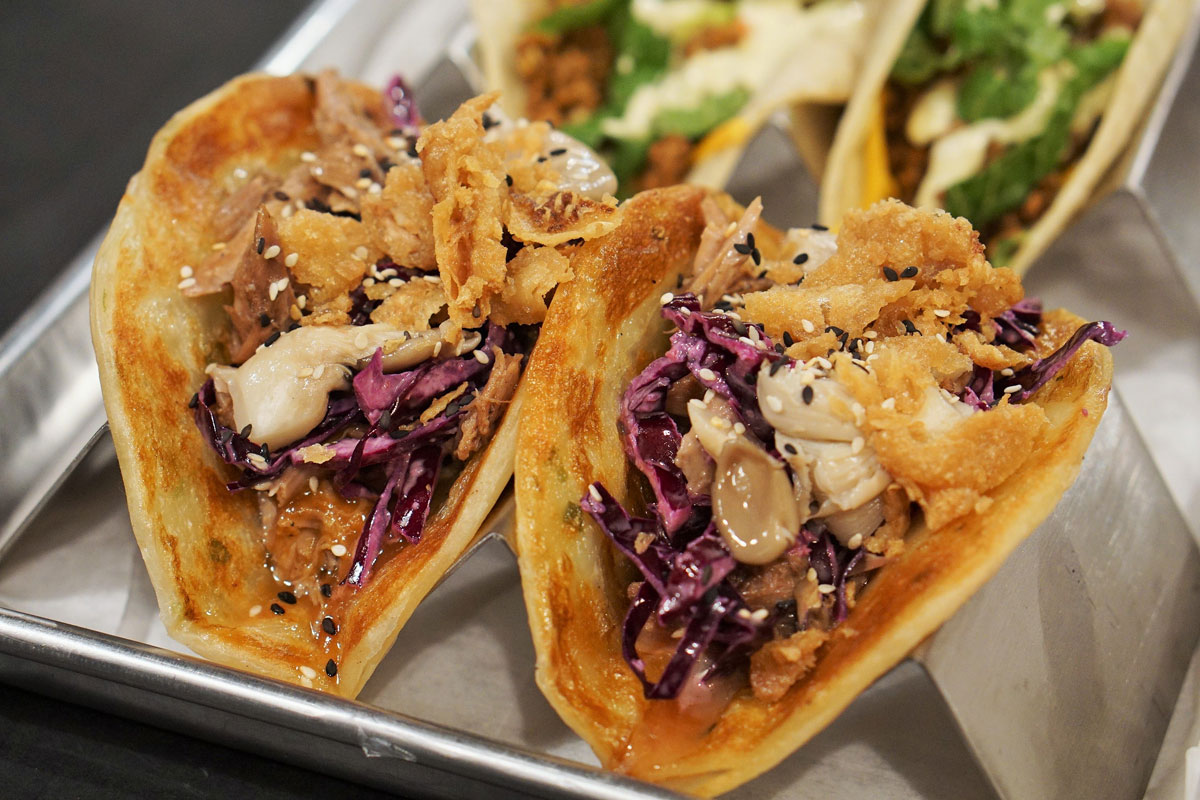
Roast duck tacos from Revolution Taco at 2015 Walnut St.
Nguyen returned to Louisiana last month after a many-year absence and spoke to her family about her plans. “The excitement, enthusiasm, and support from family and relatives,” coupled with Ellen Yin’s encouragement, solidified her resolve to make a change to her Rittenhouse business.
Minimal work is required to revamp Revolution Taco’s existing space. The upstairs dining room will receive a paint job and new decor, and the front counter and dining area will be reconfigured for table service. Some Revolution Taco staff will remain at Carolyn’s Modern Vietnamese, and others will be offered positions at Revolution Taco’s kiosk at the Comcast Center’s concourse, which will continue to operate as Revolution Taco Express.
“Revolution Taco has been my home for the past 10 years. But I’m looking forward to being more creative with the food and being vulnerable with the way I cook, not knowing how people will receive it,” she said.