Tag: Weekend Food

  • A Delco restaurant gem is born, fueled by Mexican family flavors

    A Delco restaurant gem is born, fueled by Mexican family flavors

    There is something magical about the mole poblano at Tlali in Upper Darby, but it took me a moment to register what it is.

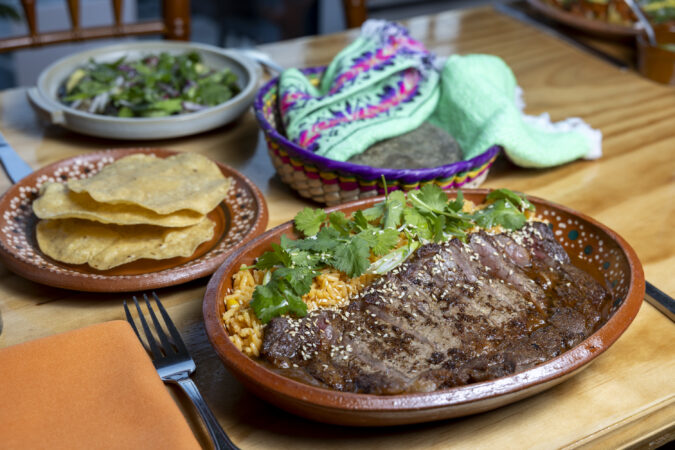
    The Sandoval family’s mole, at first glance, is as deep a brown as any other you might have encountered from the state of Puebla, the result of a blend of dried chilies, fruits, and bittersweet Mexican chocolate. But when I swipe a juicy morsel of prime seared rib eye through the luxuriously dark puree, what I’m struck by is its ethereal lightness, both of the texture and the complexity of flavors. It’s so elegantly balanced, I taste each note — the smoky dry heat of chipotle meco peppers in the background, the fruity sweetness of ripe plantains and raisins, the nutty richness of walnuts and sesame seeds, a whiff of canela and bay leaf — all flowing into one earthy harmony of measured sweetness and spice.

    What I’m tasting here, in fact, is Alberto Sandoval’s memory as a 10-year-old come to life. He vividly recalls the moment when his mother, Teresa Hernandez, was cooking that same mole for his father’s birthday in San Mateo Ozolco and held up a spoonful for Alberto to see.

    “Your mole has to be this consistency — really light, not too thick, not too spicy. This is a good mole.”

    Decades later, after a career rising through the ranks of some of Philadelphia’s most vaunted kitchens, including Striped Bass, Lacroix at the Rittenhouse, Le Bec Fin 2.0, Volvèr, Suraya, and Condesa, he and his brother, Efrain, are leaning into those memories of home for the menu at Tlali.

    “These recipes represent who we are and where we came from,” says Alberto.
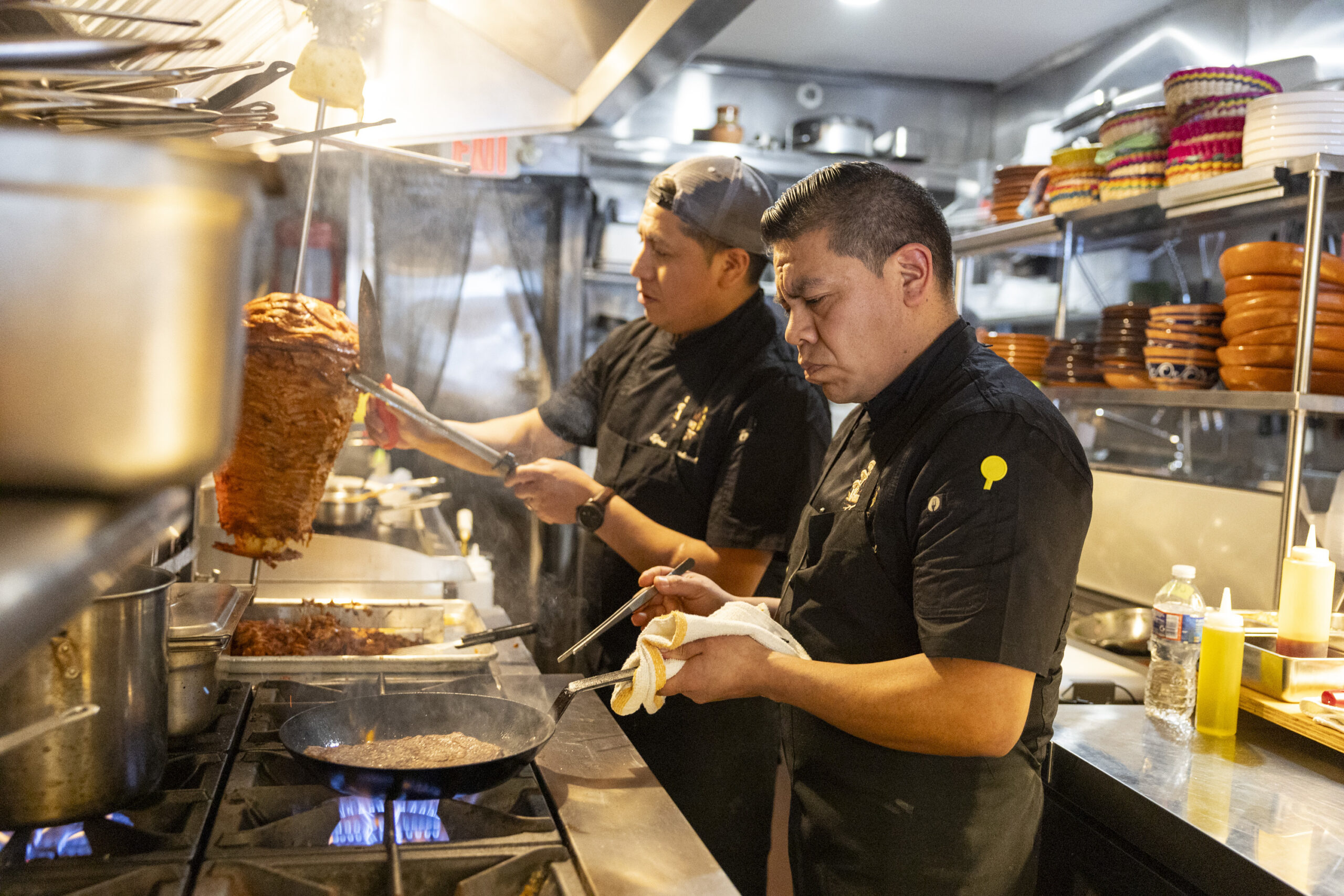
    Alberto Sandoval (right), chef and co-owner of Tlali, and his brother and partner, Efrain Sandoval, working in the kitchen preparing a dish in Upper Darby Pa., on Thursday, Feb. 5, 2026.
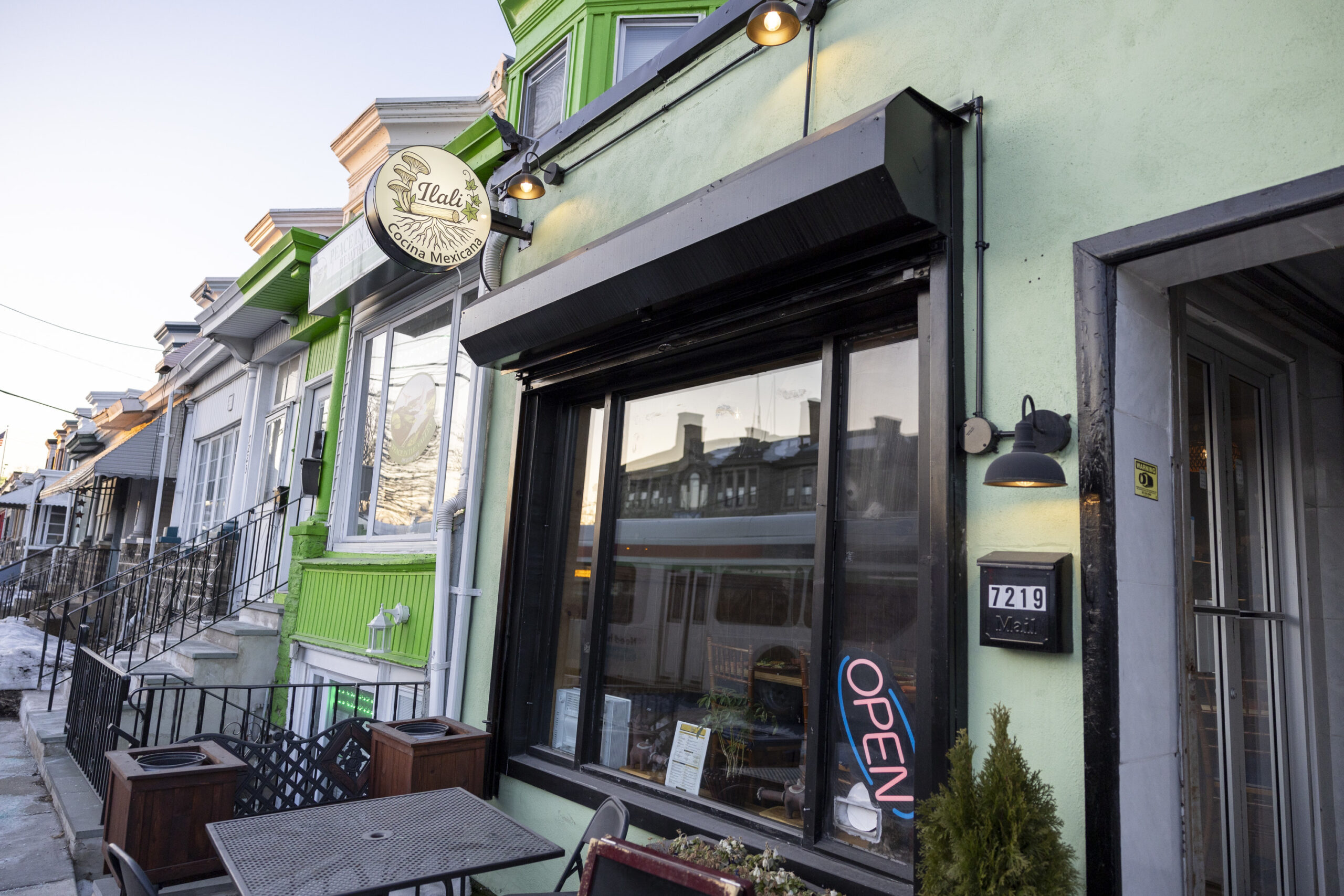
    The outside of Tlali in Upper Darby Pa., on Thursday, Feb. 5, 2026.

    The base of that mole — which their mother still makes over the course of two days in Mexico and sends to her sons, who rehydrate and simmer it to completion with chicken stock — is only the beginning. Everything about this charming 18-seat BYOB the brothers opened in August inside a renovated pizzeria is a tribute to their birthplace in San Mateo Ozolco, the tiny town on the side of an active volcano in Puebla from which much of South Philly’s Mexican population immigrated. There’s an image of Popocatépetl, its volcanic peak ever fuming, depicted on a colorful woven mat that hangs above the open kitchen here. The hand-painted terra cotta ceramics that decorate the walls and deliver the food were all imported from Puebla.

    The brothers have cut no corners in crafting the flavors on this menu, especially with another key building block: the tortillas. They are patiently made from blue and yellow heirloom Mexican corn that’s nixtamalized overnight then ground into fresh masa, resulting in pressed tortillas that have a velvety suppleness when cooked to order off the plancha.
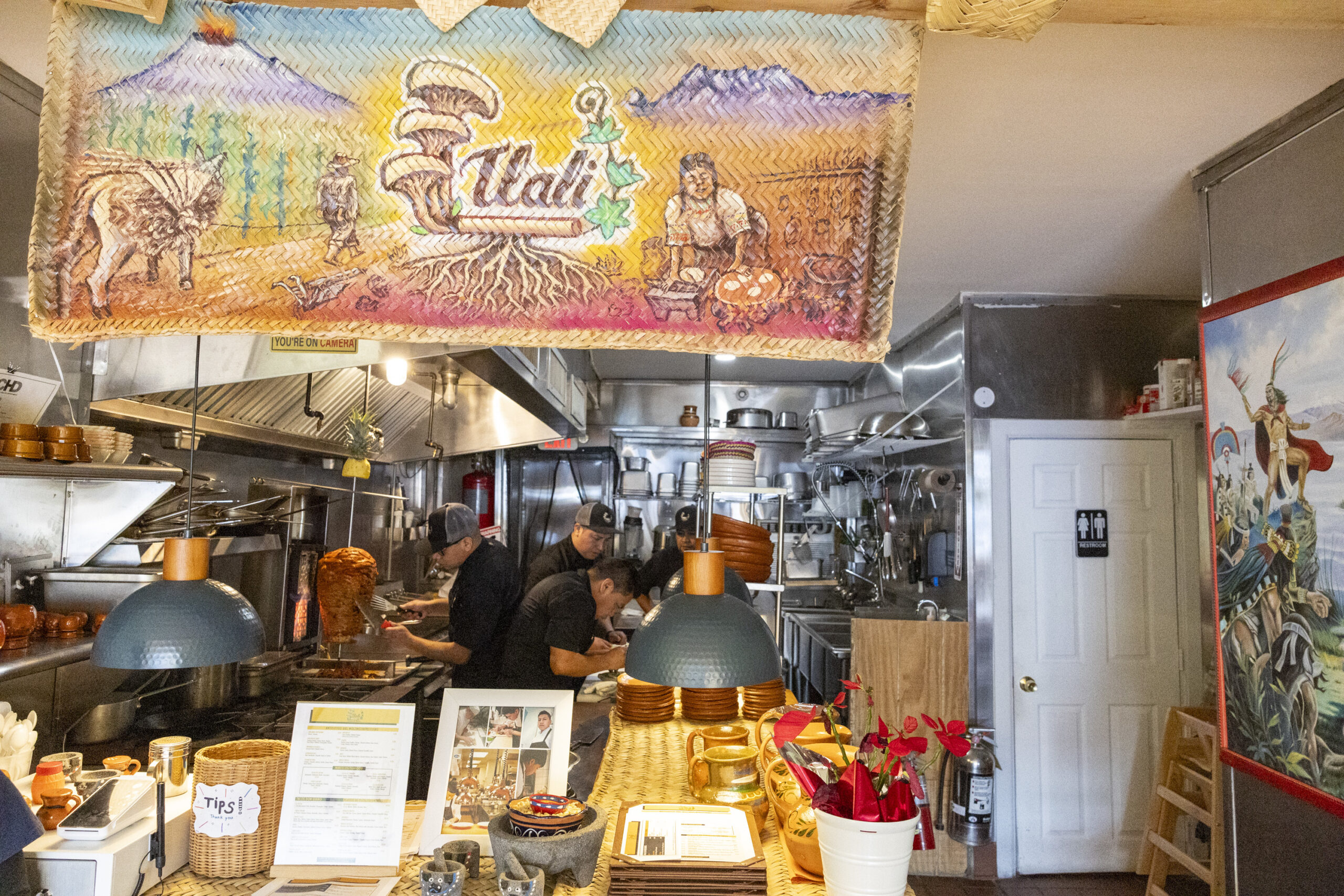
    Alberto Sandoval, Chef and Owner of Tlali, is with his brothers working at their restaurant in Upper Darby Pa., on Thursday, Feb. 5, 2026.

    You can taste this in the enmoladas, in which the tortillas are coated in that mole before being folded into half-moon bundles over tender shreds of chicken. The tortilla’s toasty corn flavor also powers the bright orange puree of Tlali’s tortilla soup. They’re fried into shatteringly crisp rounds for antojito starters like the irresistible mashed-to-order guacamole and tostadas topped with chipotle-stewed chicken tinga.

    Those crispy discs also accompany the striking aguachile negro, making the perfect cracker on which to layer slices of raw kanpachi that have been bathed in a spicy brew of citrus and olive oil tinted black with charred habaneros and onions. Scattered with green tufts of cilantro and crunchy matchsticks of radish, it’s the single most refreshing starter on a list of other seafood cocktails that are solid but lack a little spark. A notable exception was Dorito Nayarit, in which poached shrimp striped with Valentina hot sauce and crema are served atop crispy pork belly crackers known as chicharrónes preparados. (A tuna tostada topped with a spoonful of frumpy poached tuna salad, though, was the one dish at Tlali where the extra-homey approach left me truly underwhelmed.)
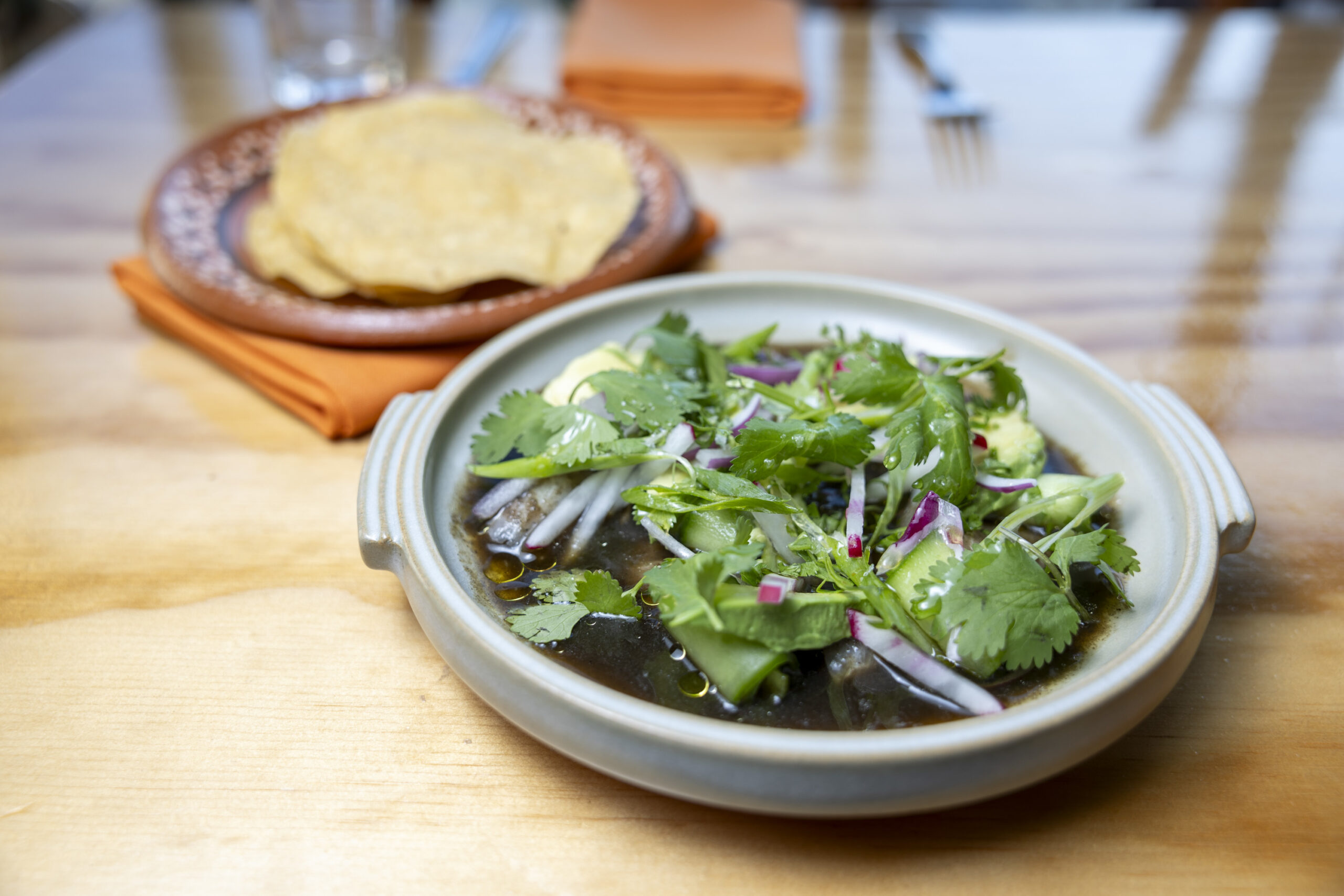
    The aguachile negro at Tlali in Upper Darby Pa., on Thursday, Feb. 5, 2026.

    Tlali, which means “land” in Nahuatl, the Indigenous language of Puebla, occupies a simple space on West Chester Pike that took a significant investment to completely rehab. It lacks the design frills of the high-style dining rooms where the brothers have largely worked, including Stephen Starr’s LMNO, where Alberto is still the chef de cuisine. There is nonetheless a comforting warmth to the pale green walls and natural wood wainscoting in Tlali’s dining room, bolstered by hospitality from the restaurant’s single server, Melanie Ortiz. She deftly sorted out a sticky situation by convincing a couple to move to a two-top after she’d accidentally sat them at the only remaining table reserved for a party of four (which happened to be us).

    It’s clear from the many emails and messages I’ve received since this restaurant opened in Upper Darby — a multicultural nexus of international dining, but not previously known for Mexican food — that Tlali has a devoted clientele rooting for it to succeed.

    Alberto Sandoval, chef and owner of Tlali, with his family members in Upper Darby Pa., on Thursday, Feb. 5, 2026.

    After diving much deeper into the menu, it’s easy to see why. Tlali is in many ways a sequel to the small restaurant the two brothers used to co-own in South Philadelphia, La Fonda de Teresita, which closed during the pandemic. But the Sandovals have both since continued to grow as chefs and have taken their pursuit of family flavors to the next level. That includes a tribute to their father, Don Guero, who ran a taqueria in Mexico City by the same name where Alberto got his first taste of kitchen life as a teen mincing mountains of onions and cilantro.

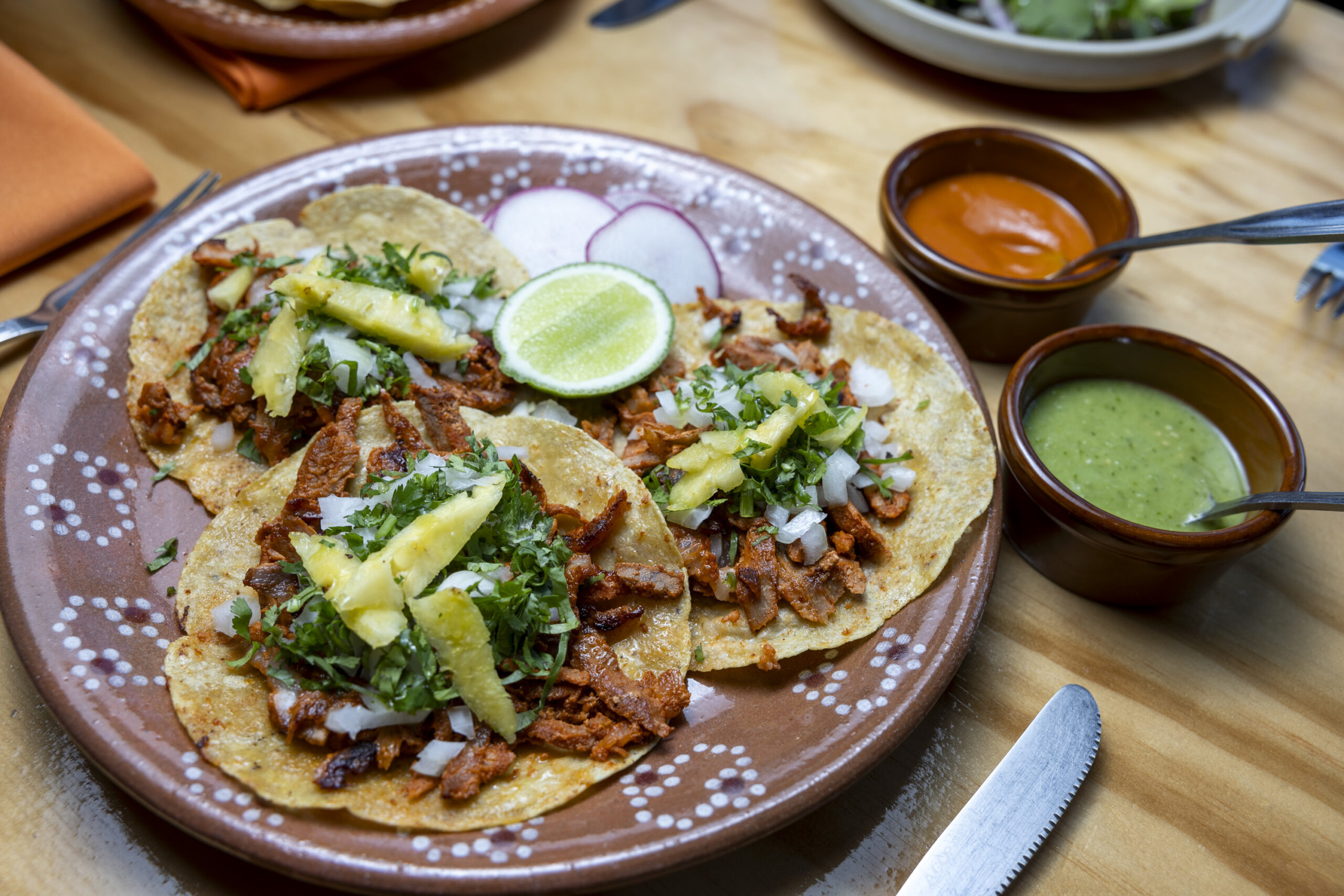
    Don Guero’s recipe for Chilango-style carnitas — whose pork belly and shoulder are simmered for hours in a large copper cazo pot bubbling with lard, orange juice, Coca-Cola, and herbs — produces meltingly soft, flavorful carnitas that are among the best I’ve had. But even that takes second place to the al pastor, a vertical spit of stacked pork shoulder marinated with three kinds of chilies, pineapple juice, achiote, and bay leaves; the pork roasts on a turning trompo fueled by real fire that flows through the perforated bricks that Don Guero himself gifted them from Mexico shortly before he died two years ago. The family taqueria lives on here.
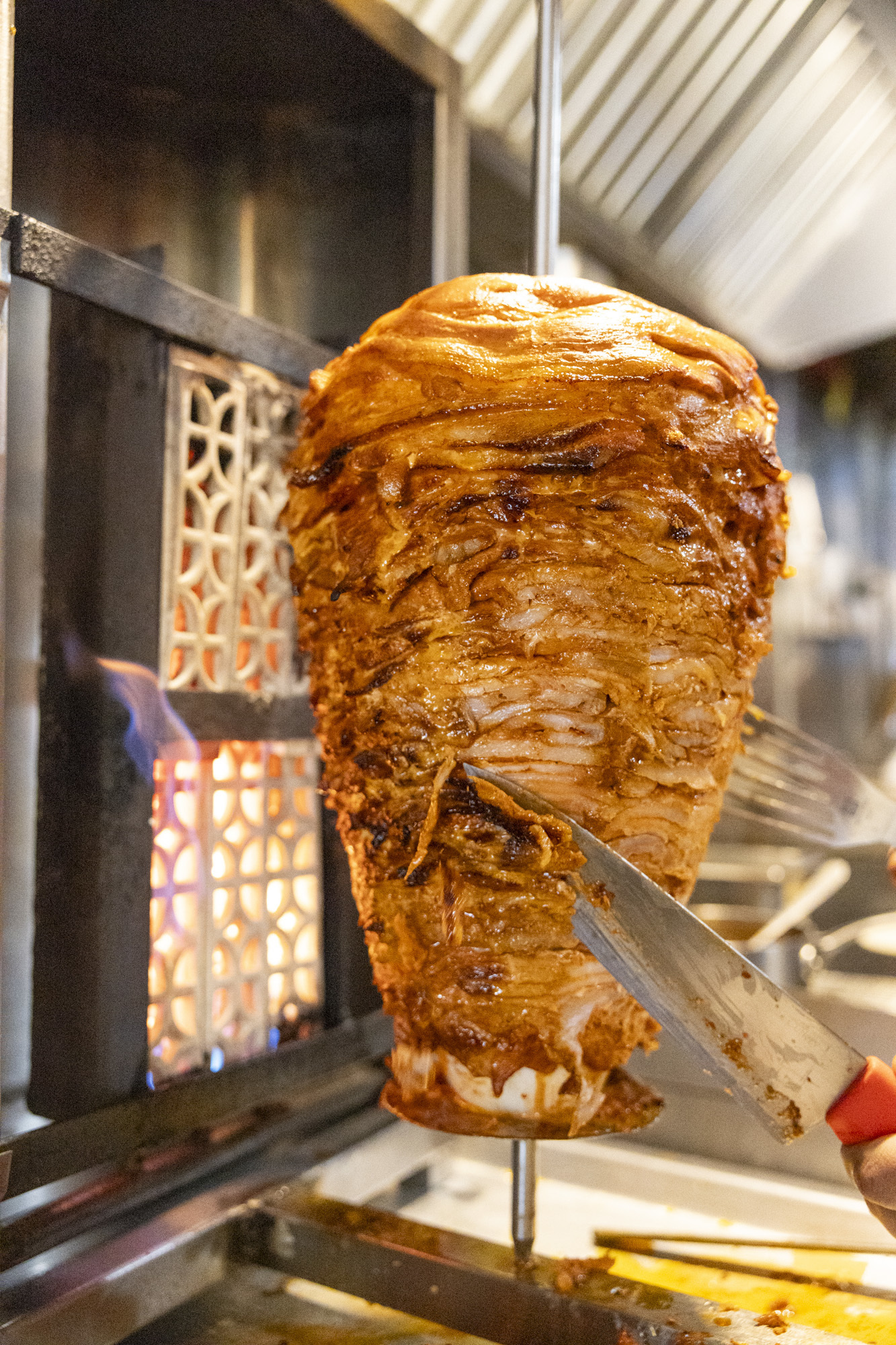
    The al pastor used for the tacos at Tlali in Upper Darby Pa., on Thursday, Feb. 5, 2026.
    The al pastor tacos at Tlali in Upper Darby Pa., on Thursday, Feb. 5, 2026.

    The entree section of the menu noted as “Platos de Ozolco” offers a handful of other standout dishes that showcase the brothers’ hometown flavors in both traditional and modern ways. I was especially fond of the classic mixiote: When the maguey leaf-wrapped bundle of steamed chicken rubbed in adobo spice was cut open tableside, the fragrant cloud of guajillo-scented steam that enveloped us brought me straight back to my own 2023 visit to San Mateo with chef Dionicio Jiménez of Cantina La Martina, where mixiote was the first thing we were served at his mother’s home — the ultimate dish to welcome a special guest.

    I was also intrigued to see Alberto and Efrain stretch their chef chops to reinterpret traditional flavors in inventive ways. That includes the michmole, which steeps a dried fish from Puebla in a tomatillo-chile salsa for deep marine flavor, then discards the bony remains for a golden sauce that gets topped with nopales and a gorgeous fillet of pan-roasted branzino (also lightly brined) to retain just enough of the traditional dish’s brackish edge.
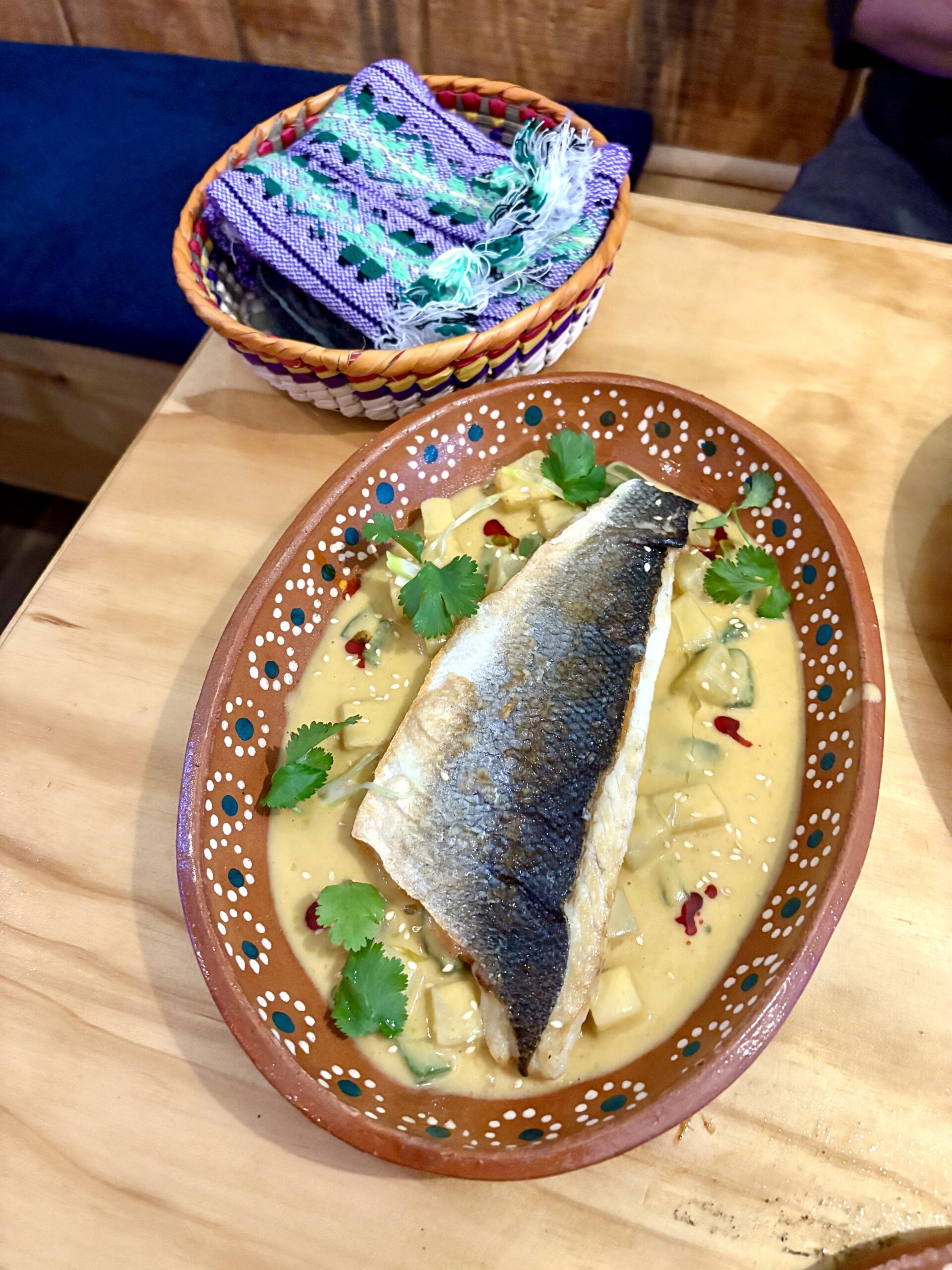
    A fillet of branzino is served over a seafood michmole sauce with cactus and potatoes at Tlali in Upper Darby.

    Another distinctive offering pairs the chefs’ love of fresh pasta with head-on shrimp and a zesty ragù of house chorizo simmered in a lightly creamed chipotle salsa. It’s a unique dish that bridges the Sandoval brothers’ origin story with their current status as longtime contributors to Philadelphia’s contemporary dining scene. As they continue to grow their audience in this tiny Upper Darby dining room, I wouldn’t be surprised if more such creations appear.

    I have no doubt that those future plates will remain somehow rooted in the memories of their mother’s table in San Mateo Ozolco, which not only give Tlali’s owners a proud reservoir of traditions, but an elusively distinctive and delicate family touch that will always be their own.
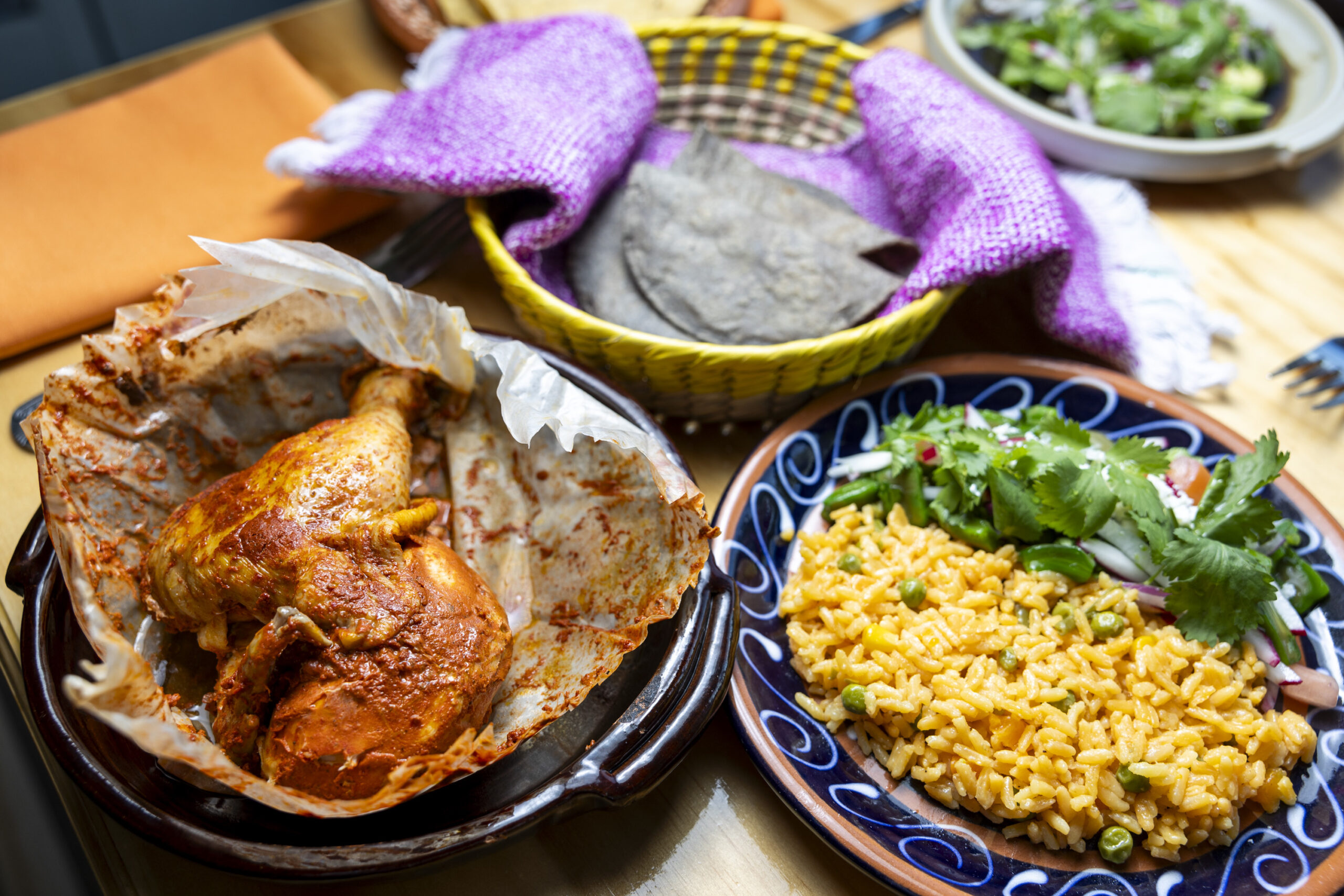
    The mixiote at Tlali in Upper Darby Pa., on Thursday, Feb. 5, 2026.

    Tlali

    7219 West Chester Pike, Upper Darby Township, 484-466-3593, instagram.com/tlalirestaurante

    Full menu served daily, noon to 10 p.m.

    Entrees, $12-$38

    BYOB

    Street parking only.

    Not wheelchair accessible. There are two steps at the entrance and the narrow bathroom is not accessible.

    Almost the entire menu is gluten-free, except for the cemita sandwiches.

    Menu highlights: guacamole; empanadas; albóndigas; sopes; sopa de tortilla; aguachile negro; coctel de campechano (shrimp and octopus); tacos al pastor; carnitas tacos al estilo Chilango; res en mole Poblano; huarache Teresita; mixiotes de pollo; michmole; pappardelle with shrimp en chorizo ragù.
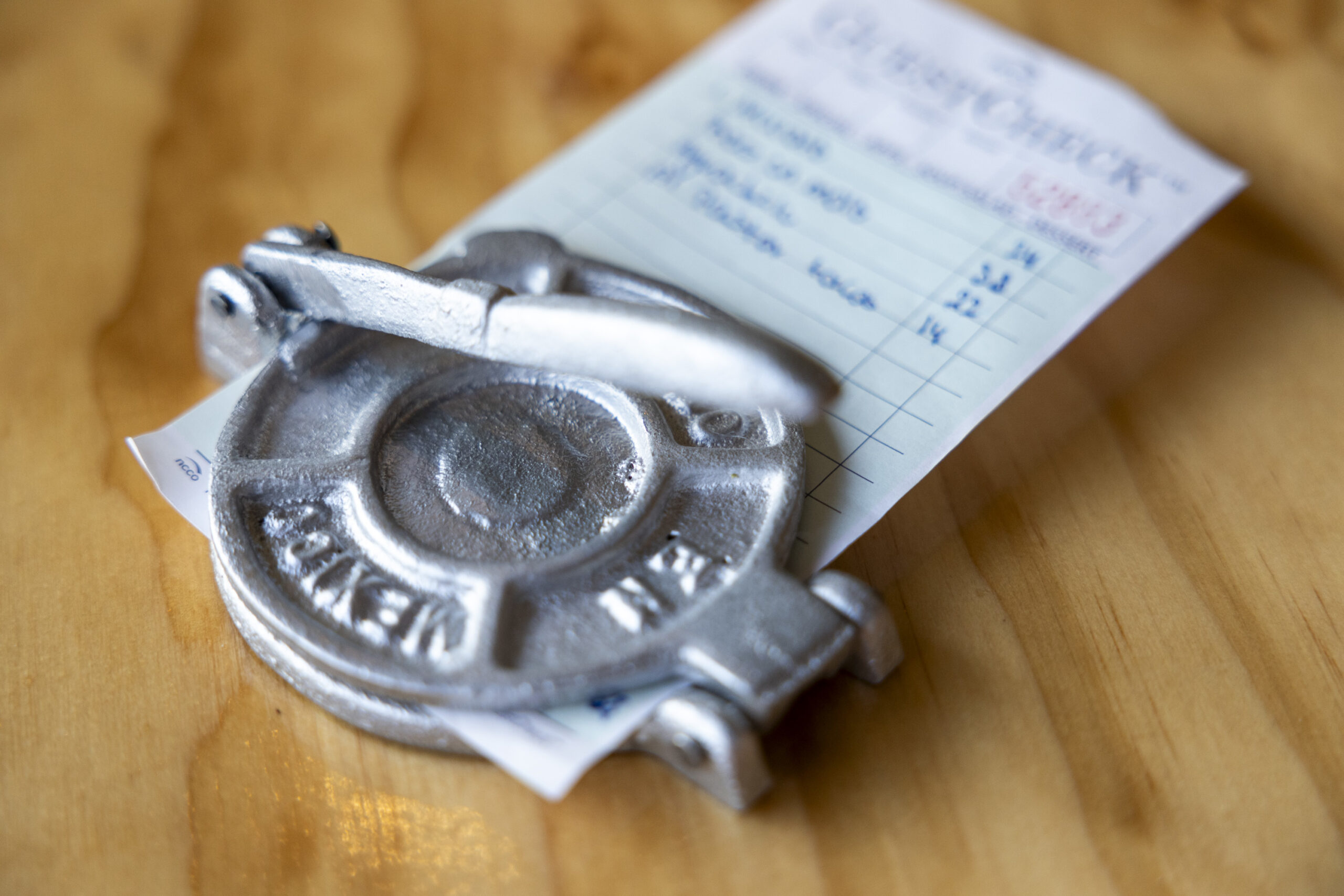
    A tiny tortilla press used for the dinner checks at Tlali in Upper Darby Pa., on Thursday, Feb. 5, 2026.
  • The owner of Hop Sing Laundromat has been hoarding rare booze. Now, he’s selling it by the pour — at bargain prices.

    The owner of Hop Sing Laundromat has been hoarding rare booze. Now, he’s selling it by the pour — at bargain prices.

    Hop Sing Laundromat has never been laid-back.

    For nearly 14 years, the speakeasy-style Chinatown cocktail bar has operated under the authority of its enigmatic owner, who goes by Lê, and his house rules, which are as well known as the drinks: No photos. No cellphones. No flip-flops, sandals, or shorts. Cash only. Entry begins at the metal gate on Race Street, where aspiring customers hand over their photo IDs, which are scanned before they are allowed inside.

    Those on Lê’s banned list — the 6,600 people he’s barred for breaking rules or tipping poorly — are turned away.

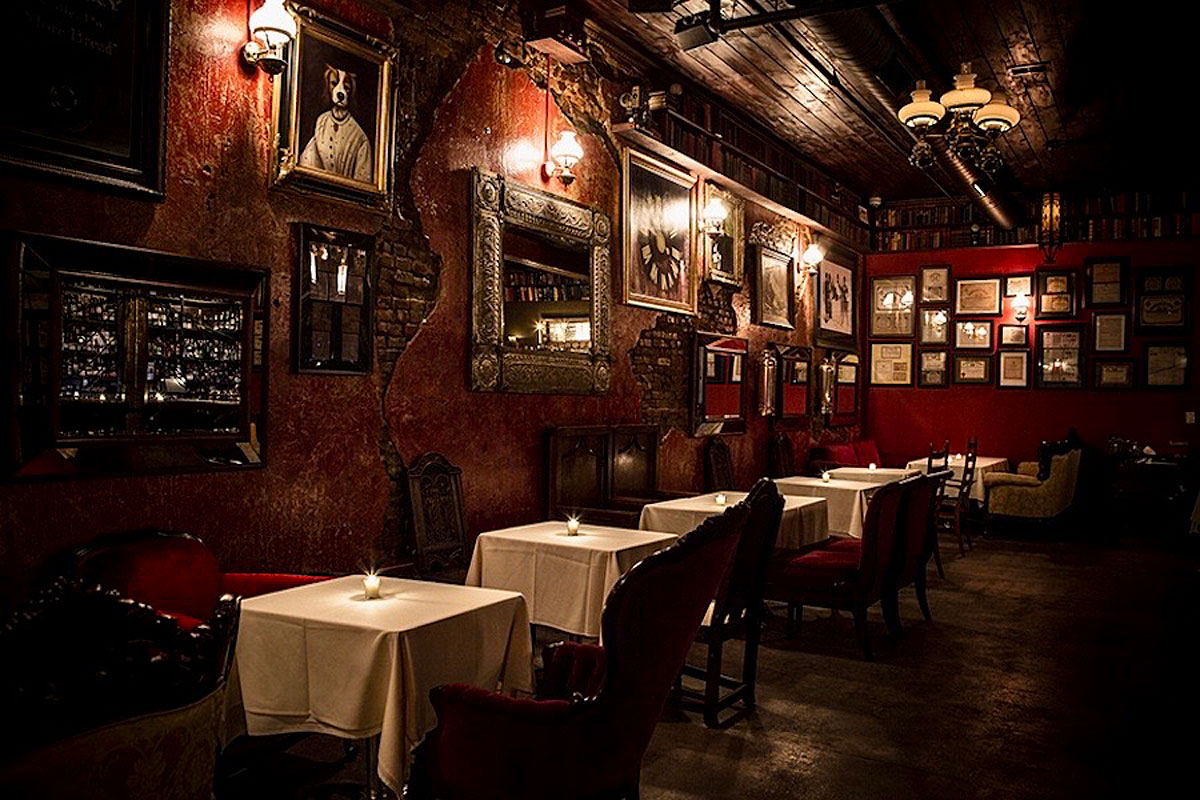
    The payoff for entry is a table in Hop Sing’s Old World library setting, where one can order cocktails made with fresh mixers and high-end liquor.

    Hop Sing Laundromat, which opened in 2011 at 1029 Race St.

    As Hop Sing expands its Friday and Saturday schedule to include Thursdays, Lê wants to begin moving his inventory of high-end spirits — particularly tequilas and American and Japanese whiskies — at below-market prices.

    Regulars know about this list, which includes about 30 whiskies and 20 tequilas, typically offered neat or on the rocks in 2-ounce pours.

    They also know that Lê is a bit of a hoarder.

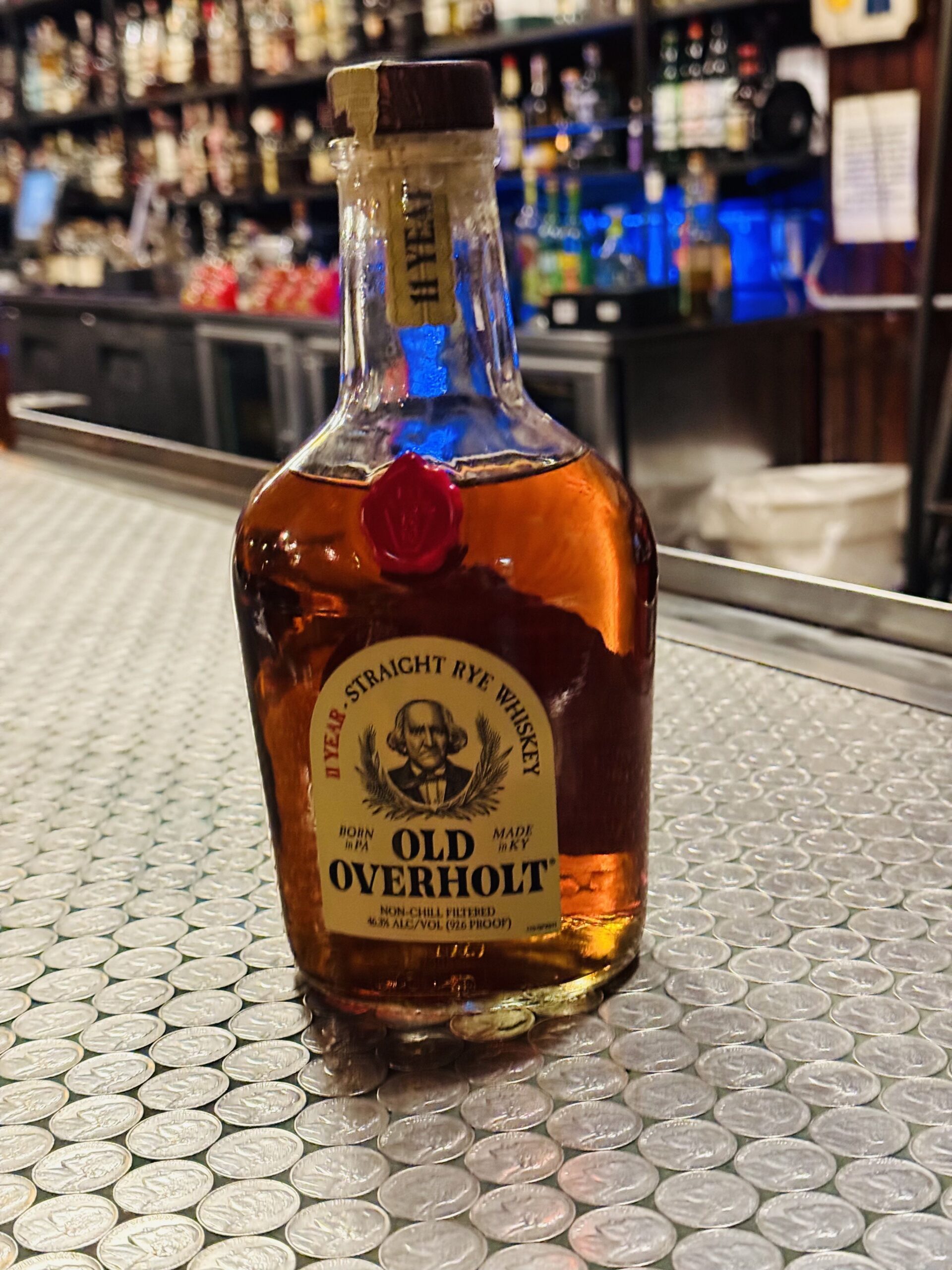
    One example: Old Overholt 11-year-old rye, a limited-release bottle that Bourbon Culture gave an 8.5/10 (“a flavorful sipper that is all about balance”).

    A bottle of Old Overholt 11-year-old rye, one of the cache of 835 bottles that Hop Sing Laundromat purchased through the Pennsylvania Liquor Control Board in 2022.

    You cannot get it anywhere else in Pennsylvania because Lê effectively bought out the state’s remaining supply of the whiskey several years ago — all 835 bottles at $75 each.

    Michael Betman, a sales manager for Suntory Global Spirits, said Lê first bought 10 cases and then asked how much was left. “Once he realized how limited it was, he said, ‘I want all of it,’” Betman said.

    Betman called the Pennsylvania Liquor Control Board to request the bottles. “They were stunned,” Betman said. “But they made it happen.”

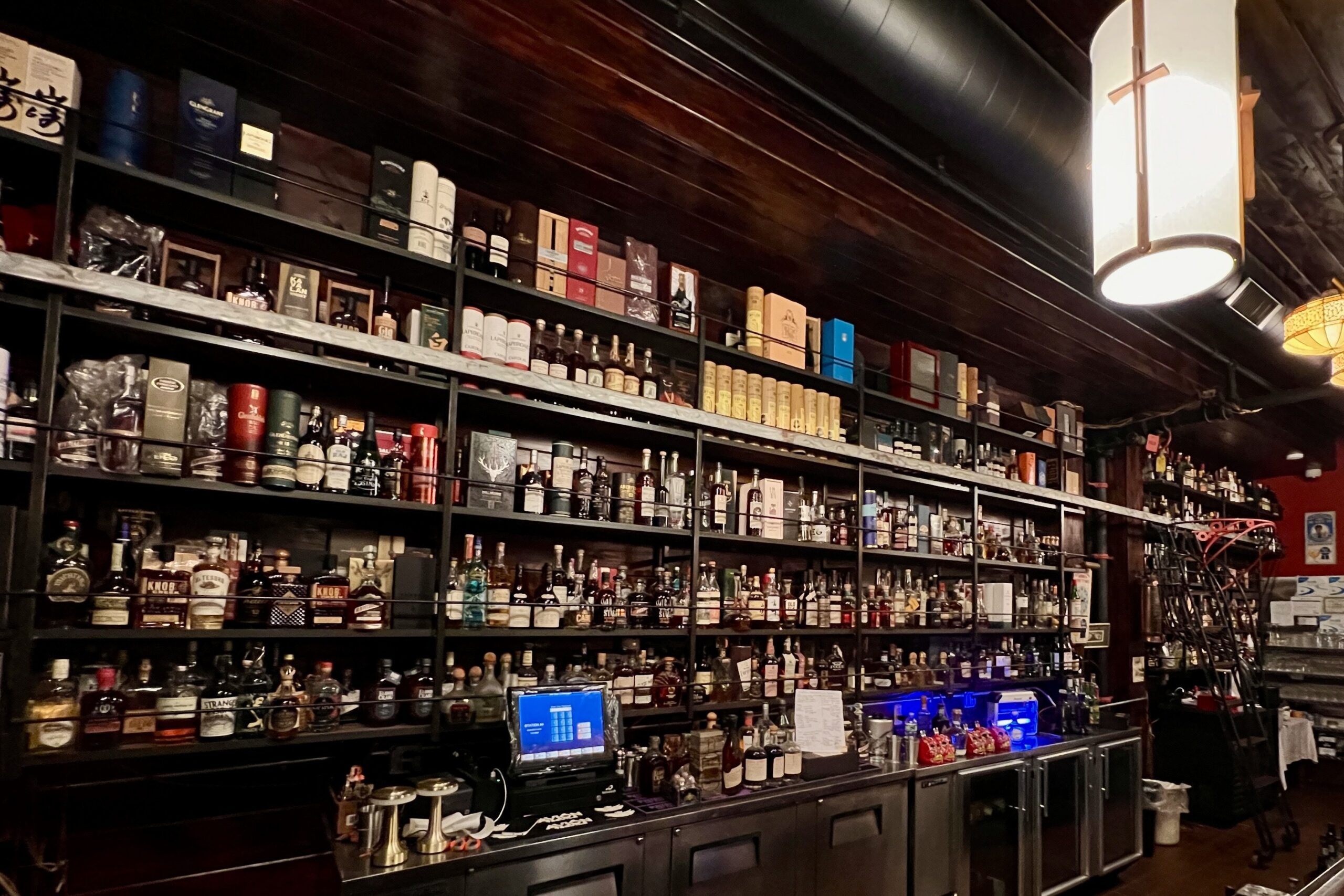
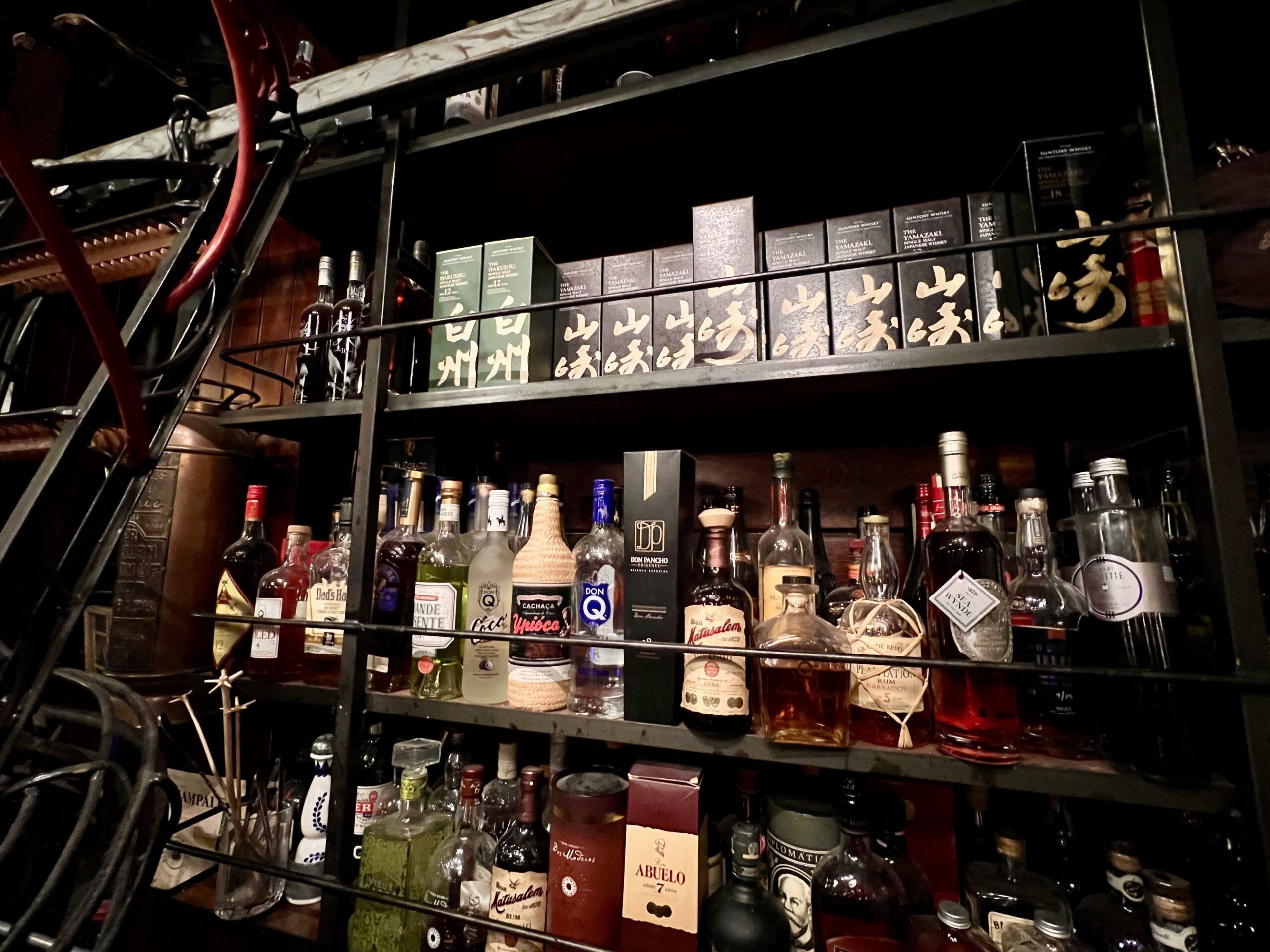
    High-end spirits fill the shelves behind the bar at Hop Sing Laundromat at 1029 Race St.

    The PLCB gathered bottles from stores all across Pennsylvania and delivered them to Hop Sing. “At first people thought Lê might be joking,” Betman said. “But he was completely serious.”

    Hop Sing is going through its supply. Lê declined to specify how much he had left, but given the bar’s limited hours, it’s likely a lot.

    Bottle math

    At Hop Sing, Lê charges $18 for 2 ounces of the Old Overholt. Although $18 sounds expensive, it’s modest by industry standards.

    A 750-milliliter bottle yields about 12 pours. Multiply $18 times 12, and each $75 bottle grosses about $216 — a 188% markup before accounting for labor, breakage, overhead, overpours, and comps. Many bars aim for 200% to 300% markups, often while pouring 1½ ounces instead of 2.

    Bottles of high-end Japanese whiskies line the top shelf at Hop Sing Laundromat at 1029 Race St.

    Lê said he was happy with this math, which extends to his cocktail list. (An old fashioned made with 2 ounces of Booker’s straight bourbon, for example, is priced at $20 — a relative bargain for a bottle that retails for $100.)

    This approach comes from a bar owner who no longer drinks. Lê said he tastes cocktails during development but hasn’t had a full one in 15 years.

    “This isn’t about me drinking it,” he said. “It’s about letting people experience it.”

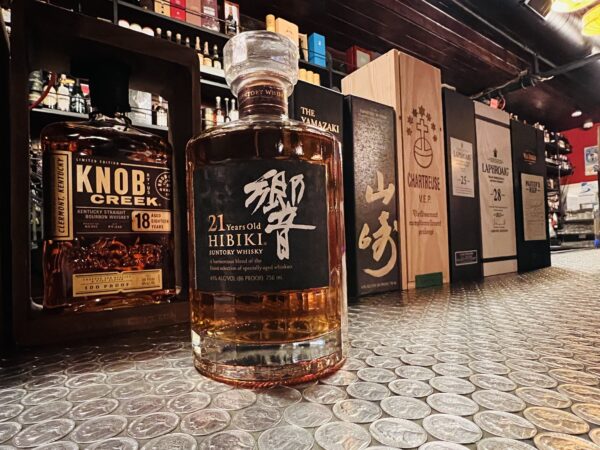
    That philosophy shows up across the pour list. Among the tequilas, there’s a 2014 Herradura Reposado Scotch Cask at $35 and Casa Dragones at $45. On the whiskey side, Yamazaki 12-year is $35. Knob Creek 18 is $35. Elijah Craig 18 is $42. Hibiki 21 and Yamazaki 18 — which have become scarce amid the Japanese whiskey boom — are $100 per pour. While $100 may seem way out of kilter, consider that the Hibiki and Yamazaki bottles retail for $750 — and Hop Sing has rows of them on its top shelf.

    Many of these bottles now circulate almost entirely through secondary markets, where prices can climb multiple times above retail.

    Lê said the goal is to pour whiskies that people read about but rarely see, without turning curiosity into a financial stunt.

    “I’ve been collecting these bottles for years,” Lê said. “At some point, it’s time to let them go.”

    Hop Sing Laundromat, 1029 Race St. Hours: 5 p.m. to 1 a.m. Friday and Saturday. Thursday hours, also 5 p.m. to 1 a.m. No reservations, cash only.

  • A wordplay-forward California cabernet sauvignon that’s ripe and fruity

    A wordplay-forward California cabernet sauvignon that’s ripe and fruity

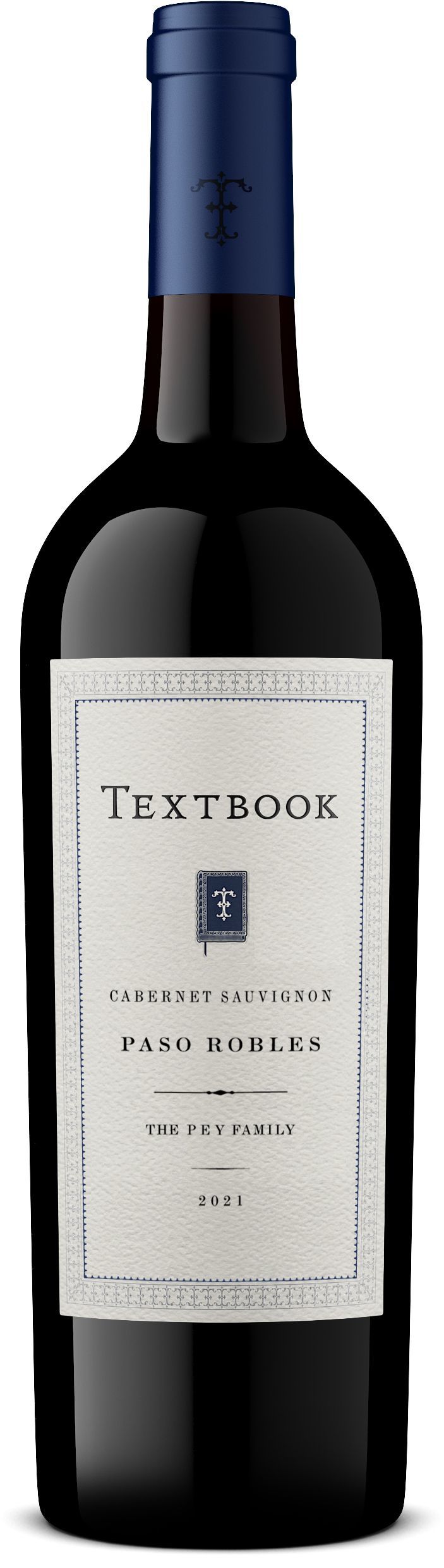
    Much of the communication that takes place in the wine world is in code. Words are used that may seem to mean one thing, but actually signal another. This wine unpacks an expert-level wine concept (as its name indicates), and its lesson is quite helpful for those who’d like to be able to navigate their wine options with more confidence.

    While the name Textbook cabernet sauvignon might seem innocuous, it’s a clever play on words — suggesting that this wine is a good example of the classic style associated with that particular grape. This is a reference to what experts call “varietal correctness” in wine, a concept that is rarely encountered in other corners of the food world. After all, most of the time, a tomato tastes like a tomato, a cheddar cheese like a cheddar, and so on. However, there is considerable style variance found in wines made using the same grape. Not only can they taste quite different based on where they are grown, but that flavor can also be manipulated dramatically in the winemaking process.

    So what is the “correct” way for cabernet sauvignon to taste? A century ago, all wines of quality came from Europe, from regions that each grew their own native grape varieties, with cabernet sauvignon hailing from the Bordeaux region of France. So when vintners aim to produce a classically styled version of this grape, they aim for Bordeaux-style characteristics, and that is what the sly branding here conveys.

    While this California wine is far riper and fruitier than a Bordeaux, thanks to the climate and terrain of the Paso Robles region, it does display a French-inspired restraint in its styling. Compared to its closest competitors, it feels a touch lighter on the palate, tastes a smidge drier on the tip of the tongue, and has a bit more of the tartness and slight bitterness found in French cabernet sauvignon. The overall effect is to give the wine a flavor profile closer to that of fresh blackberries than of baked blackberry desserts, making it quite food-friendly and especially well-suited to foods containing peppers, tomatoes, or olives.

    Textbook Cabernet Sauvignon

    Textbook Cabernet Sauvignon

    Paso Robles, California; 13.9% ABV

    PLCB Item #100034407 — on sale for $22.99 through March 1 (regularly $27.99). No alternate retail locations within 50 miles of Philadelphia.

  • Closed Iron Hill Brewery in Newtown is officially becoming a P.J. Whelihan’s franchise

    Closed Iron Hill Brewery in Newtown is officially becoming a P.J. Whelihan’s franchise

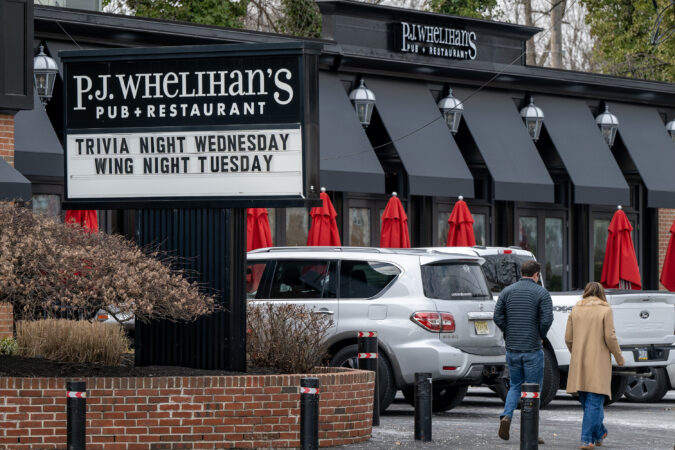
    The company behind P.J. Whelihan’s is officially moving into a shuttered Iron Hill Brewery.

    The Haddon Township-based PJW Restaurant Group has signed a lease for Iron Hill’s former location at the Village at Newtown, according to Brian Finnegan, the CEO of Brixmor Property Group, which owns the Bucks County shopping center.

    PJW marketing director Kristen Foord confirmed the lease signing, saying in an email that the company was “not in a position to share additional specifics” at this time.

    The move was approved by a federal judge last month as part of Iron Hill’s bankruptcy proceedings.

    Like more than a dozen other former Iron Hills throughout the region, the nearly 8,000-square-foot space in Newtown has sat empty since the Exton-based brewpub chain closed all locations and filed for liquidation bankruptcy last fall.

    Iron Hill opened in the affluent suburb in 2020. The restaurant moved in after Brixmor refurbished the more than 200,000-square-foot complex on South Eagle Road.

    As part of the revamp, the developer added new buildings, allowing it to bring in shops and restaurants like Iron Hill, Harvest Seasonal Grill, and Turning Point. The 30-acre complex is anchored by the high-end grocer McCaffrey’s Food Markets.

    In Newtown, “we’ve got Free People and Lululemon and Ulta that we added to the shopping center,” Finnegan said Wednesday in an interview. “We’ve got a lot of strong service tenants. We also have Capital Grill and Harvest, so some great food and beverage options.”

    And soon, he said, that list will also include P.J. Whelihan’s.

    PJW’s most well-known restaurant is P.J. Whelihan’s, which started in the Poconos in 1983 and has expanded to include 25 P.J. locations, the majority of which are in the Philly region.

    PJW also owns the Pour House in Exton, North Wales, and Westmont, Haddon Township; the ChopHouse in Gibbsboro; the ChopHouse Grille in Exton; Central Taco & Tequila in Westmont; and Treno, also in Westmont.

    While the Newtown restaurant will get new life soon, many other former Iron Hills still sit vacant.

    Some landlords are actively looking for tenants, with West Chester’s John Barry saying he hopes to have a lease signed by the end of this month.

    “We have a number of groups interested in the space and a few [letters of intent] have been submitted,” Barry said in an email last month.

    In other places, such as Voorhees, township officials and community members remain in the dark about whether another tenant will move in soon, and landlords can’t be reached.

    A few of the closed breweries may be revived under new owners, though details are slim.

    A federal judge last month approved the acquisition of Iron Hill’s trademark and intellectual property in conjunction with the transfer of restaurant leases in Center City, Huntingdon Valley, Hershey, Lancaster, and Wilmington.

    Representatives of the potential new owner, Rightlane LLC, have been unable to be reached. Contacted through the owner of Iron Hill’s building in Center City, Rightlane declined to comment to the Philadelphia Business Journal earlier this month.

  • A Center City steakhouse is the unlikely home of a viral ‘Girl Dinner’ offering

    A Center City steakhouse is the unlikely home of a viral ‘Girl Dinner’ offering

    Del Frisco’s Double Eagle Steakhouse in Center City, with its large round tables, soaring ceilings, and big screens flashing sports games above the bar, regularly attracts many large groups of men.

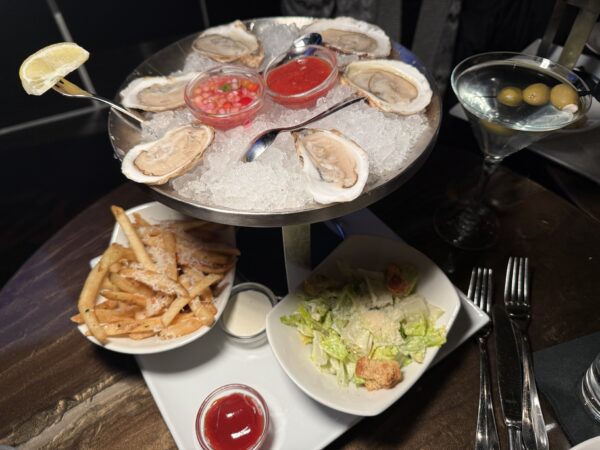
    And yet, the establishment has recently gone viral, mainly among women, thanks to a bar menu item entitled “Shucked, Fried, Tossed, and Stirred.” A video of 24-year-old Philly native and influencer Hannah Sparkevicius dubbing the $39 combination — which encompasses a cocktail, half a dozen oysters, truffle fries, and a small Caesar salad — “girl dinner” currently has over 100,000 views.

    @hannahhnotmontanaa

    My first time trying an oyster! I love finding good food deals in the city and this one is fire 🦪 🍸 @Jamie Wolf #philly #philadelphia #phillytiktok #phillyfoodie

    ♬ original sound – HANNAH SPARKS –

    Sparkevicius posts regularly about beauty trends, going out to eat in Philly, and great deals. The Shucked, Fried, Tossed, and Stirred menu item fits the bill, standing out on a menu that otherwise features $20 cocktails and half a dozen oysters for $25. (The sampler debuted on the bar and lounge menus at all 15 Del Frisco’s Double Eagle locations last October.)

    “Girl dinner” is a social media trend that took feeds by storm two years ago and it hasn’t waned since. Why? Because girl dinners have always existed. The trend simply put a name to casual, pulled-together meals that might not make sense on a restaurant menu. (You don’t have to be a girl to partake in girl dinner.)

    Sparkevicius’ video has inspired legions of social media users tagging one another in her comments section, suggesting future Del Frisco’s outings. It also spurred similar posts on others, like one from the Instagram account Who What When Where Philly — which actually prompted me to gather my own girl group and head to Del Frisco’s.

    My three girl friends and I made our way to Del Frisco’s 15th and Chestnut location, an ornate, cavernous 1922 lair that was formerly a First Pennsylvania Bank. We elbowed our way past several groups of bachelor parties, snagged seats at the bar, and ordered our bar specials.

    “For me, fries and salad means girl dinner,” said one of my companions. “It’s yin and yang. You have your vegetable, which is healthy and refreshing, and your fries, which are warm, salty, and comforting… If all I eat is a salad, then there’s inadequate satiation. Fries balance out that craving.”

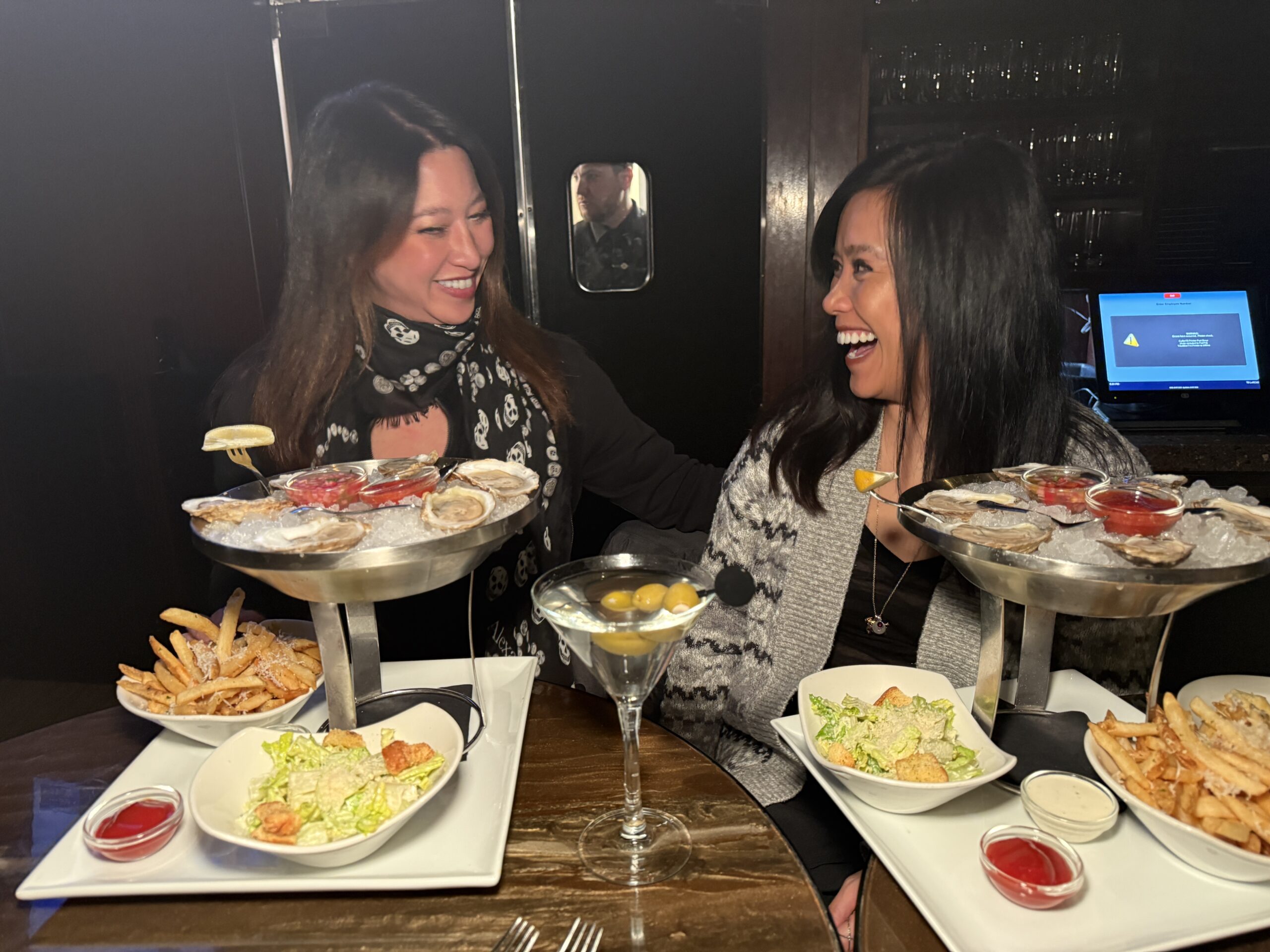
    Jojo Goodwin and Bonnary Lek at Del Frisco’s on Feb. 7, enjoying what has been recast as “Girl Dinner”: Caesar salad, French fries, oysters, and martinis.

    Our server, Bradley, put exceptional care into taking our orders for martinis and didn’t bat an eye when we requested multiple orders of Shucked, Fried, Tossed, and Stirred: “So that will be four girl dinners for the table?”

    When he returned, he carefully arranged the oyster towers (cradling East Coast Blue Points) balanced on top of a plate holding fries, romaine Caesars, and ramekins of ketchup and extra Caesar dressing. Bradley walked around the table cracking fresh black pepper over each mini salad.

    Sitting by the kitchen, I watched one girl dinner after another emerge through its double swinging doors. Bradley reported that a dozen other guests had also ordered the same special and called it “girl dinner.”

    “Since the video went live, we’ve seen a noticeable increase in guests visiting specifically to request the bar special,” said Sawan Thakkar, vice president of operations for Del Frisco’s in Philly. They’ve also seen a “significant rise in new guests ordering it.”

    And how does Del Frisco’s feel about their bar special being renamed?

    “We love it,” said Thakkar. “We’re happy to embrace the name.”

  • Taylor Chip abruptly closes Philly stores, says bankruptcy is on the way

    Taylor Chip abruptly closes Philly stores, says bankruptcy is on the way

    Philly apparently didn’t get a rise out of Taylor Chip.

    The Lancaster County cookie and ice cream company abruptly shuttered its stores in Center City and Fishtown in the last week with no notice. They had been open for less than a year and a half.

    In an email late Tuesday, a Taylor Chip representative said the company planned to file for bankruptcy protection under Chapter 11, which would enable it to continue operating while restructuring its financial obligations. In addition to the two Philadelphia locations, a store in Lancaster was also closed, leaving the eight-year-old company with four locations, all in Central Pennsylvania, and an e-commerce business.

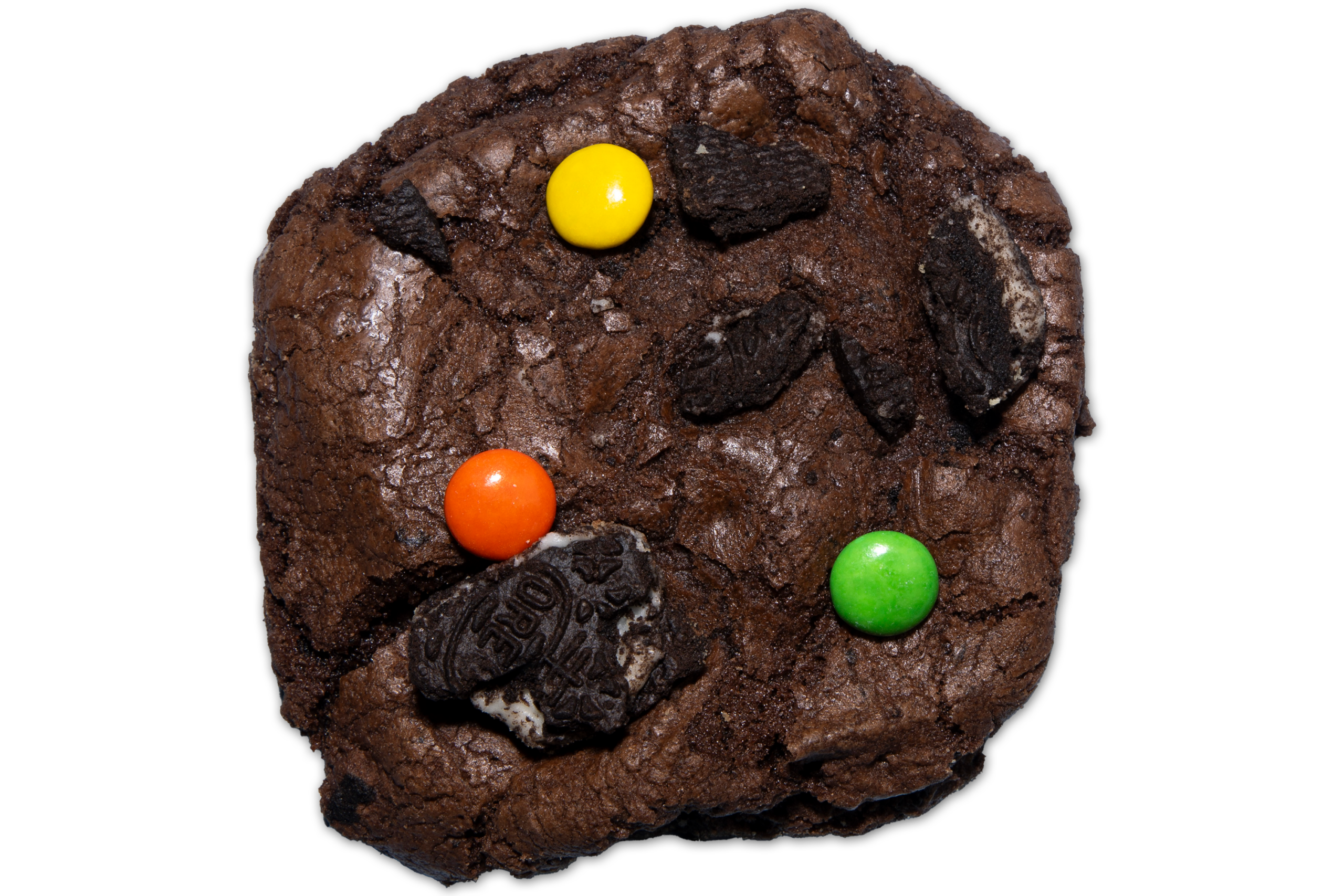
    A Taylor Chip midnight Oreo cookie.

    The company said it had signed Philadelphia leases in late 2022 expecting a timeline and costs similar to past openings, which typically took about three months. Instead, permit delays turned what was planned as a six-month rollout into nearly two years. “Without investors, the company relied on creative financing to continue moving forward,” it said. The Philadelphia stores performed well but could not generate enough profit to offset the debt created during the delays, it said.

    Taylor Chip, which launched in 2018 as a home-baking project by husband-and-wife Doug and Sara Taylor, joined a burgeoning trend of high-priced cookie shops in Philadelphia in fall 2024. The owners prided themselves on the shop’s vast cookie selection: 24 to 30 varieties available at all times. Their enormous treats, weighing more than 5 ounces and priced at $5.25 apiece, touted local ingredients and house-made inclusions.

    Heavy social media marketing accompanied the September 2024 debut of a Taylor Chip beneath a nail salon at 1807 Chestnut St. in Rittenhouse, as well as the opening in a storefront at 1828 Frankford Ave., near Berks Street. Fishtowners, in particular, were irked over a lower-tech promotion that festooned parked cars with fliers made to look like tickets.

    The Fishtown and Rittenhouse stores were the sixth and seventh locations for the budding business, but Doug Taylor told The Inquirer for a 2025 story on the big cookie trend that the company’s goal was to open 40,000 stores in 100 countries.

    Around the time of the Philadelphia openings, Taylor Chip was pursuing plans for a multimillion-dollar production facility in Lancaster County. That project fell through last year.

    Taylor Chip has been adept at securing grants, including a $470,076 Pennsylvania Dairy Investment Program grant in 2019 (later extended) to support dairy-based processing, and a $510,971 Resilient Food Systems Infrastructure grant announced in 2025 to launch ice-cream production and expand processing to new markets with Pennsylvania dairy farms.

    Lately, the company has been touting its new seed oil-free protein cookie and the success of live sales on TikTok.

    In December, Doug Taylor told Bloomberg News that even on a slow day, Taylor Chip can generate as much in sales in a few hours livestreaming on TikTok as the company does during a full day at one of its stores.

    Taylor also said the company had hired a full-time livestream host and was building a facility in Pennsylvania with two live video studios.

    This article has been updated with a company statement about the reason for the closing.

  • Lovat Square debuts in Chestnut Hill as a wine shop, and there’s a restaurant on the way, too

    Lovat Square debuts in Chestnut Hill as a wine shop, and there’s a restaurant on the way, too

    Since moving to Glenside in 2016, Brooklyn transplants Damien Graef and Robyn Semien have frequented the Evergreen Cheese Shop in Chestnut Hill, located in a charming courtyard that fringes a parking lot off East Evergreen Avenue, steps from Germantown Avenue. As time went on, the couple took note of two empty buildings next door to the cheese shop, the former homes of Top of the Hill Market, which closed in 2019, and Mimi’s Cafe, which closed in 2022.

    As entrepreneurs— the couple own a Williamsburg wine shop together, and Semien runs the podcast company Placement Theory — their gears started turning. “We’d always had this loose idea that maybe someday we’d open [another] wine store, but the logistics are hard,” Semien said.

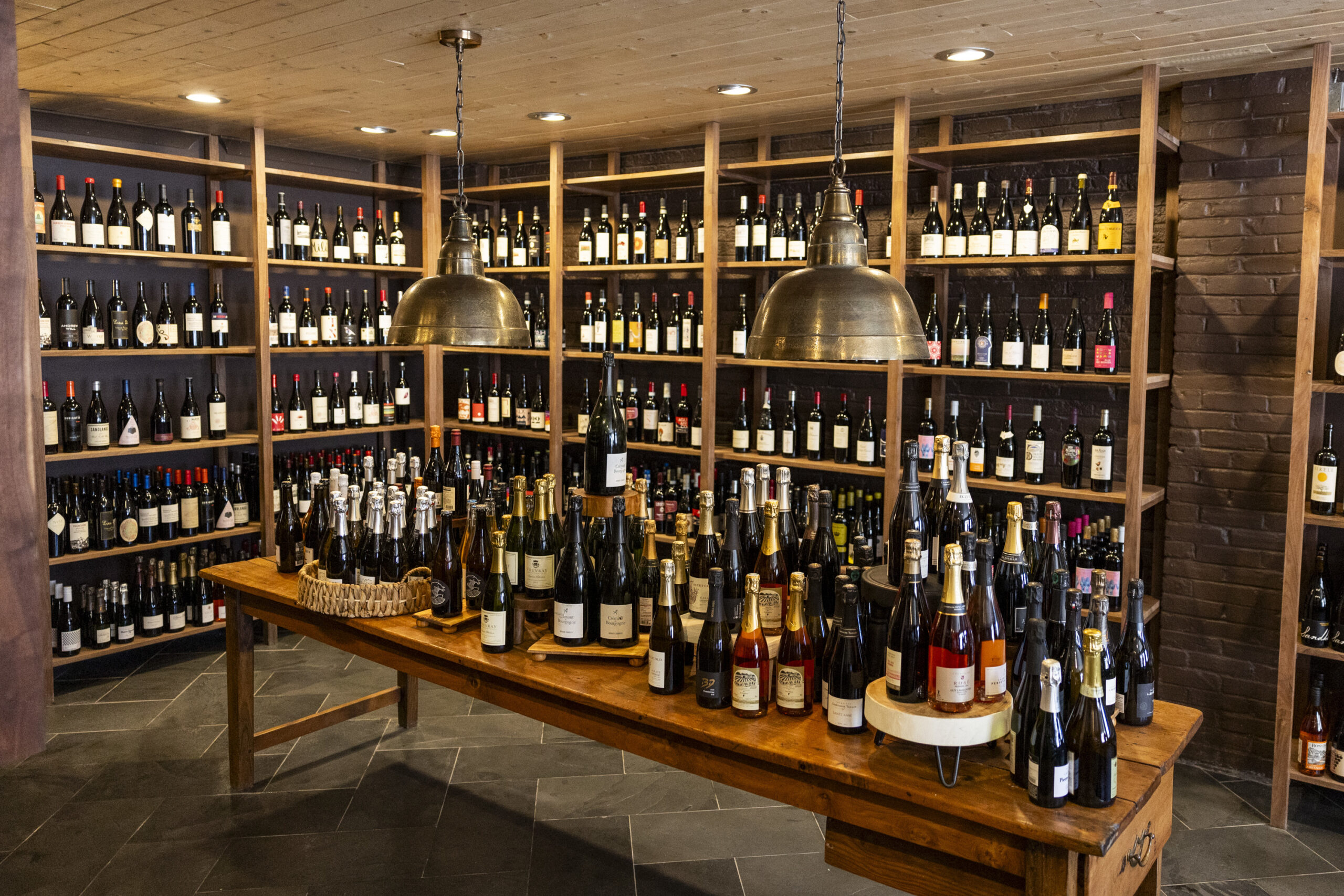
    Part of the bottle selection at Lovat Square.

    In 2023, they chatted up John Ingersoll, the Evergreen Cheese owner, who referred them to the landlord for the space at 184 E. Evergreen Ave.

    Graef and Semien were not entirely sure what they wanted to create. “We said, ‘Let’s put one foot in front of the other and see how far we get,’” said Graef. “Turns out, pretty far.”

    After sitting dark for four-plus years, the Evergreen Avenue courtyard will light up again this week with the opening of Lovat Square, which the couple plan to unfold in stages: first as a bottle shop, then as a garden restaurant, and eventually as a full bar and dining room.

    Lovat Square’s bottle shop and tasting room opens Thursday, with about 30 seats, wines by the glass, and a small menu of snacks. The wine selection — just under 400 labels, with about 200 more on the way — doubles as both retail inventory and will become the backbone of the restaurant’s wine list.

    Thursday’s opening is a hopeful sign for Chestnut Hill, stung from the recent closings of Iron Hill Brewery and Campbell’s Place. Other coming attractions in the near future will be the Blue Warbler, a day-into-evening restaurant at Germantown and Willow Grove Avenue, and a reopening of Fiesta Pizza on Germantown Avenue near Gravers Lane.

    Before relocating from New York with their two children, Semien and Graef opened the Brooklyn wine shop Bibber & Bell in 2013. Since 2022, Graef has been lead sommelier at Jean-Georges at the Four Seasons Hotel. Semien spent 16 years at This American Life and now executive-produces Question Everything, a show focused on journalism in America.

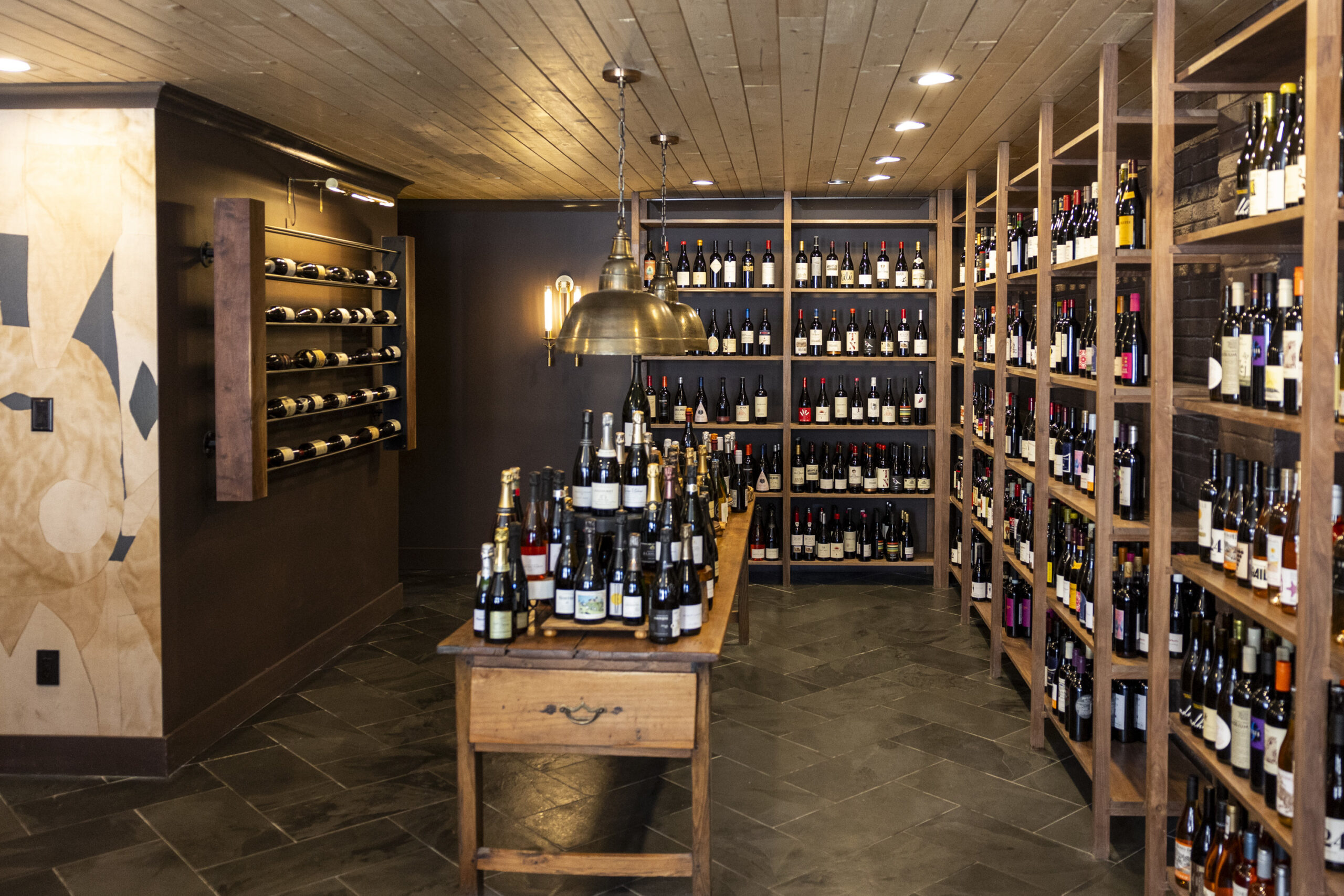
    A table at Lovat Square houses a collection of Champagnes and other bubbly wines.

    Lovat Square — pronounced “love it,” named after a shade of green often used in tweed — will start with a by-the-glass program of about 15 wines, though Graef expects that number to fluctuate as additional bottles are opened for tastings, events, and informal pours. Snacks — house-made pickles, focaccia, sour cream soubise with potato chips (with optional trout or ossetra caviar), and a cheese plate created by Evergreen’s Ingersoll — will accompany the wine during the initial phase. More substantial food will come later as the outdoor and indoor dining spaces open.

    “I think of the wine-shop phase as a cocktail party: small bites while we build toward the main course,” he said.

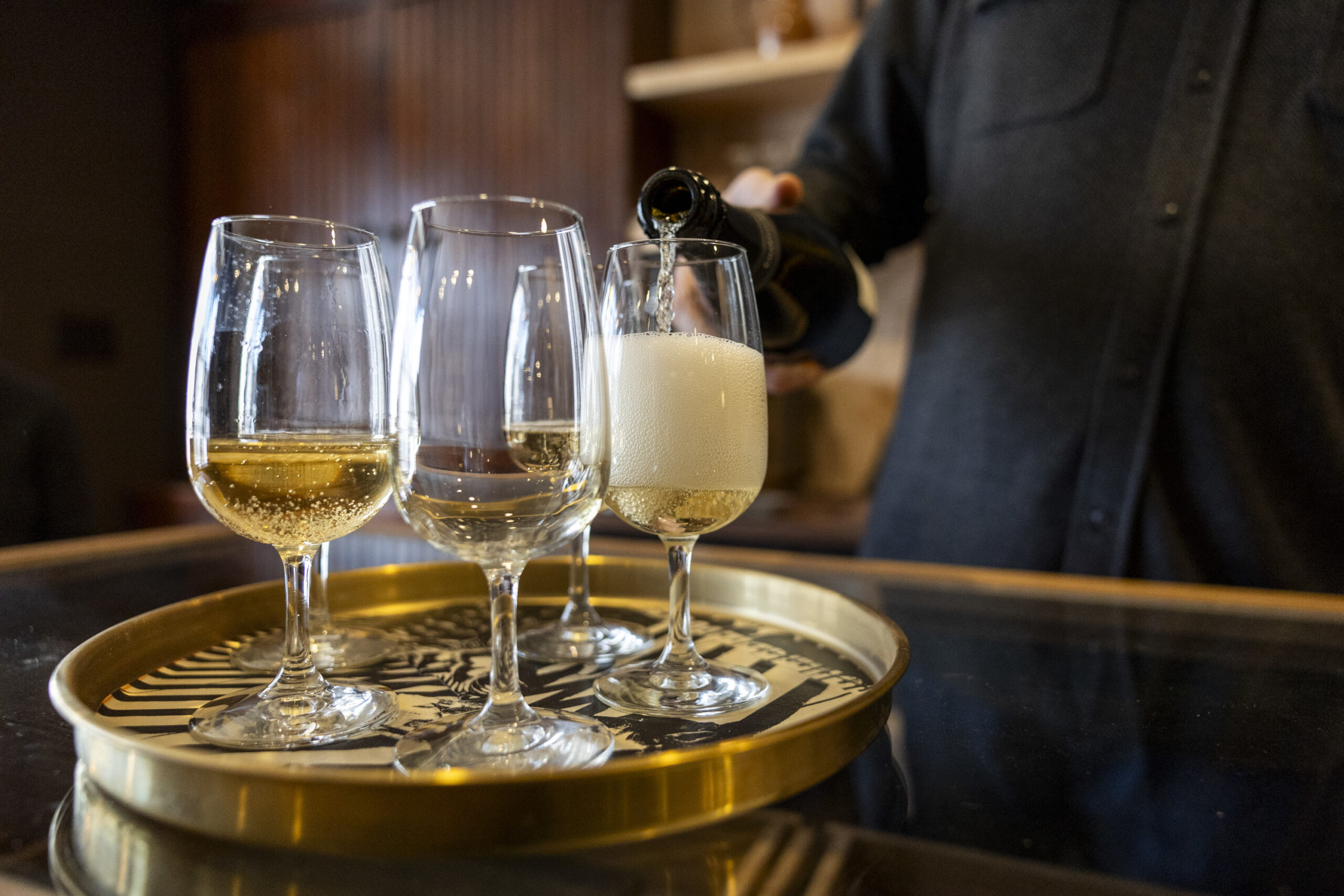
    Co-owner Damien Graef pours Chartogne-Taillet Champagne Sainte Anne for sampling at Lovat Square.

    Graef is focusing on independent winemakers. “You’re not going to find Josh or Caymus [wines] here,” Graef said. “But we’ll have something for the person who likes that style. The through-line is small producers who are serious about their land and what they’re making.”

    The shelves skew European, with a particular emphasis on Italy and France, but also include wines from the United States, South America, and Eastern Europe. There’s a long table devoted just to Champagne and other bubbles.

    The spring opening of the courtyard garden will expand the menu into full dinner service, with seating for about 70. Just under half of those seats are expected to be under a canopy by late summer, extending usability into the shoulder seasons.

    Lovat Square’s final phase, targeted for late fall, will bring a full-service restaurant and cocktail bar, including an 18-seat bar and counter seating along the front windows of the former Mimi’s, a separate building in the courtyard.

    Lovat Square opens Thursday at 184 E. Evergreen Ave.

    Graef, born in the Bay Area but raised in New Jersey, has spent his career in restaurants, beginning as a dishwasher at 13 before moving through kitchens and into front-of-house roles. In the early 2000s he worked at Il Buco in New York, where he met Semien (also a Bay Area native) and Lovat Square manager Patricia Jo Peacock. “I thought I knew something about wine [then], but that was very short-lived,” Semien said.

    At the time, Graef was a beer-only drinker — and “not like great beer or anything: Negra Modelo and Yuengling.”

    While Graef was at Il Buco, wine director Roberto Paris demystified wine for him. “Getting to meet winemakers for the first time and having them eat family meal with us and get to taste their wine and talk about these little corners of Italy that they were coming from made it more accessible for me,” he said. “That really turned me onto all of this, and then I just fell deep down that hole and have not gotten out since. And it’s only got worse.”

    Graef later worked at Chanterelle in TriBeCa before running Aurora in Brooklyn, known for its Italian wine list. As Lovat Square ramps up, he is transitioning to a part-time role at the Four Seasons.

    The Chestnut Hill project, the couple said, reflects both their professional histories and their lives in the neighborhood.

    “We’re trying to build our favorite place,” Graef said.

    Lovat Square, 184 E. Evergreen Ave., lovatsquare.com. Initial hours: noon to 10 p.m. Thursday to Sunday.

  • Philly’s chefs celebrate Chinese New Year with a bonanza of collaboration dinners and special menus

    Philly’s chefs celebrate Chinese New Year with a bonanza of collaboration dinners and special menus

    In many cultures, Chinese New Year, which falls on Feb. 17 this year, is a holiday spent at home. It’s a time to get together with one’s family, preparing auspicious dishes that represent wealth, like spring rolls that mimic the appearance of gold bars and dumplings that are shaped like ancient gold ingots.

    Here in Philadelphia, it is the perfect opportunity to get out and about within the wider Pan-Asian community. Several restaurants are joining forces to celebrate the Year of the Horse, collaborating on menus that combine different New Year’s traditions, while others have special one-offs and time-limited offerings to mark the event.

    Philly observes a truly global version of Chinese New Year, which is sometimes called the Spring Festival, celebrating the end of winter and onset of spring. Chinese New Year is also known more inclusively in the U.S. as Lunar New Year, though not every East Asian or Southeast Asian community celebrates the New Year at the same time (or for the same length of time). For instance, Khmer New Year occurs between April 14 and 16 this year, and Tibetan New Year, or Losar, is Feb. 18. In Vietnam, Tết is celebrated for several weeks (longer than in most Chinese cultures).

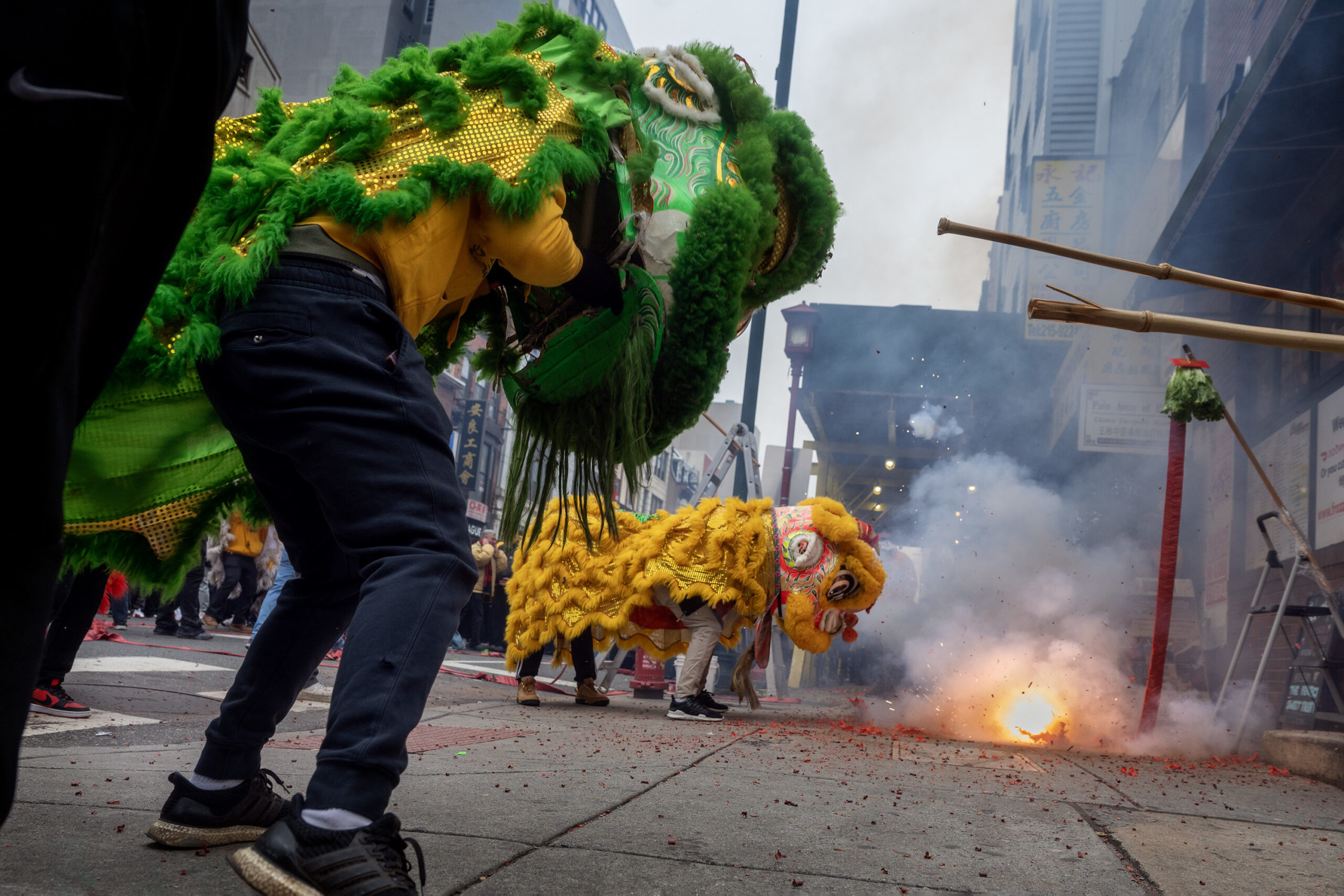
    The Year of the Snake is celebrated in Chinatown Sunday, Feb. 2, 2025, bringing in the Lunar New Year with a parade, lion dancers and fireworks.

    If you’re celebrating at home, Chinatown’s grocery store shelves are well-stocked with essential New Year foods like seeds and nuts for good beginnings and plants that are considered lucky, like mandarin trees and bundles of willow branches. Vendors are now selling red envelopes for lai see, or lucky money, and red scrolls denoting traditional well wishes on most Chinatown street corners. Expect some restaurants to be closed for the holiday.

    Here are some noteworthy opportunities to celebrate.

    This list may be updated as new information becomes available.

    Dinner series and collaborations

    Lunar New Year dishes for a special collaboration dinner between Gabriella’s Vietnam and Ember and Ash.

    Ember & Ash and Gabriella’s Vietnam’s “Smoke meets Saigon”

    Scott and Lulu Calhoun, the owners of Passyunk’s Ember & Ash, are hosting their fifth annual Lunar New Year celebration, this time welcoming Gabriella’s Vietnam chef Thanh Nguyen. There will be Vietnamese street food-inspired bites to start, then meat and fish cooked over live fire, along with noodle dishes (denoting long life) and rice and vegetable sides.

    Dinner is $75 per person (not inclusive of tax and a 20% auto-gratuity) and will be served family-style starting at 5 p.m. in staggered seatings throughout the evening. Reservations, available on Resy, are strongly encouraged.

    Feb. 17, Ember & Ash, 1520 Passyunk Ave., 267-606-6775, emberandashphilly.com

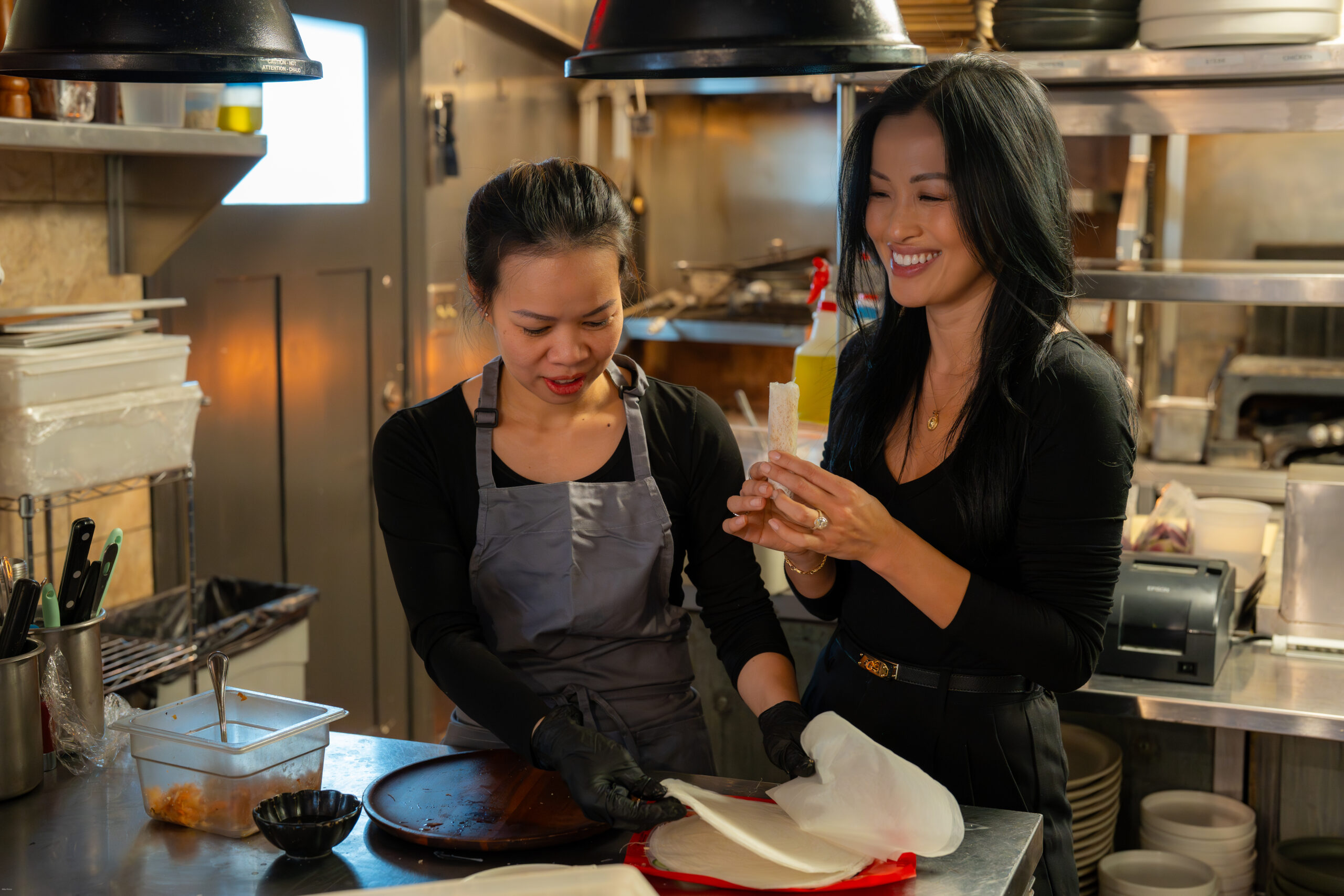
    Thanh Nguyen of Gabriella’s Vietnam and Lulu Calhoun of Ember and Ash test Lunar New Year recipes.

    The Muhibbah dinner at BLDG39 at the Arsenal

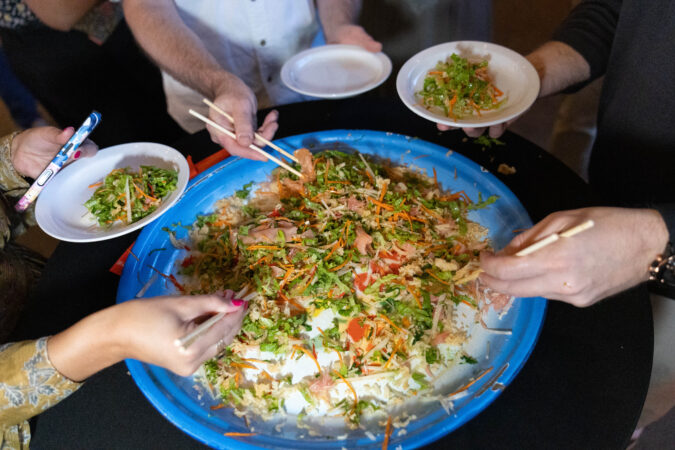
    The Muhibbah Dinner series was started by chef Ange Branca of Kampar in 2017 to celebrate diversity and raise money for immigrant and refugee nonprofits in Philadelphia. Its next iteration is on Feb. 16. While it isn’t strictly a New Year’s celebration, dinner will commence with a prosperity yee sang salad, which diners traditionally toss in the air with chopsticks.

    Participating chefs and restaurant owners include Yun Fuentes of Bolo, Natalia Lepore Hagan of Midnight Pasta, Brizna Rojas and Aldo Obando of Mucho Peru, Enaas Sultan of Haraz Coffee House Fishtown, and David Suro of Tequilas and La Jefa.

    Dinner is BYOB and tickets are $170 per person. Sales will benefit Puentes de Salud, a nonprofit that promotes the health and wellness of Philadelphia’s Latinx immigrant population. Tickets are available at muhibbahdinners.org/tickets.

    Feb. 16, BLDG39 at the Arsenal, 5401 Tacony St., 215-770-6698, bldg39arsenal.com

    Com.unity’s Tết collaboration dinner at Yakitori Boy

    Ba Le Bakery, Cafe Nhan, Le Viet, Miss Saigon, and more are teaming up for Com.unity’s third annual Tết dinner, hosted this year at Yakitori Boy in Chinatown. After dinner, guests can walk over to the Lunar New Year Parade presented by the Chinatown PCDC and the Philadelphia Suns. Áo dài, or traditional Vietnamese outfits, and other formal garment are strongly encouraged.

    There will be one 60-seat seating, with doors opening at 6:30 p.m. A cash bar will be available for the LNY cocktail menu from the Yakitori Boy team. Dietary restrictions cannot be accommodated. Dinner tickets are $108 per person and can be booked via a link accessed through Com.unity’s Instagram profile.

    Feb. 16, Yakitori Boy, 211 N. 11th St., 215-923-8088, yakitoriboy.com

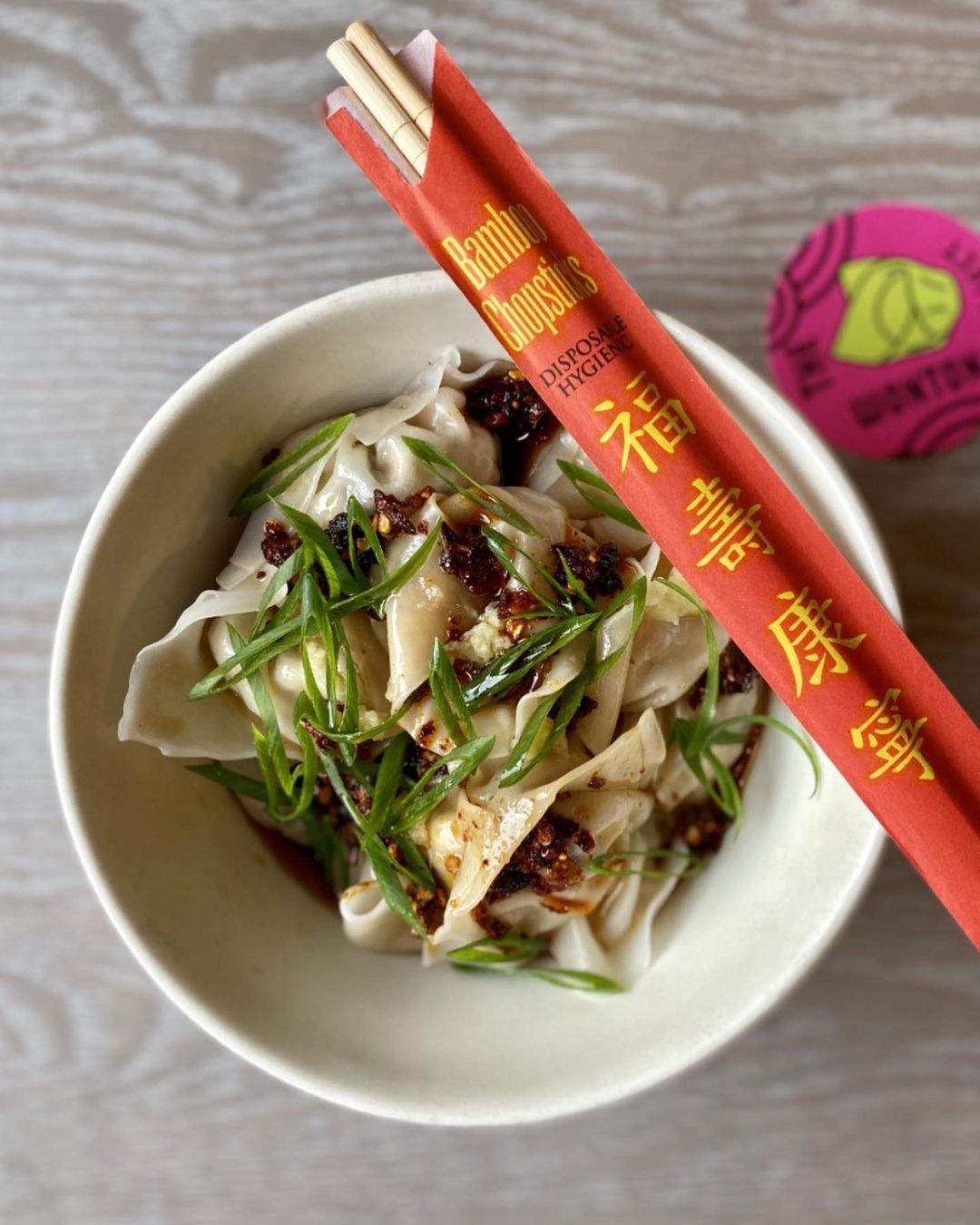
    Chicken and ginger wontons from The Wonton Project by Ellen Yin.

    Hot Pot at the Bread Room

    Ellen Yin’s the Wonton Project will host Lunar New Year Hot Pot parties at the Bread Room for groups of six to eight ($125 per person, excluding tax and gratuity). The parties are inspired by an event the Bread Room hosted with Natasha Pickowicz, the author of the cookbook Everybody Hot Pot.

    Diners will cook Lunar New Year menu staples together, such as noodles for longevity, Shanghai rice cakes, and dumplings for prosperity. There will also be whole fish on the menu and spring rolls. It will be available to book on OpenTable.

    Feb. 17-21, the Bread Room, 834 Chestnut St., Suite 103, 215-419-5820, thebreadroomphl.com

    Buddakan’s Lunar New Year brunch

    Stephen Starr’s Buddakan will be serving a tasting menu of modern interpretations of traditional Chinese New Year dishes like trotter-stuffed spring rolls, Dungeness crab longevity noodles, whole fish with black bean sauce, as well as a horse-themed dessert (for the Year of the Horse). Brunch runs from 11 a.m. to 2 p.m. Seats are $75 per person (excluding tax or gratuity), with a four-person minimum for reservations. Reservations can be made on OpenTable. The Lunar New Year menu will also be available a la carte for parties of any size.

    Feb. 22, Buddakan, 325 Chestnut St., 215-574-9440, buddakan.com

    A la carte menu specials

    Càphê Roasters

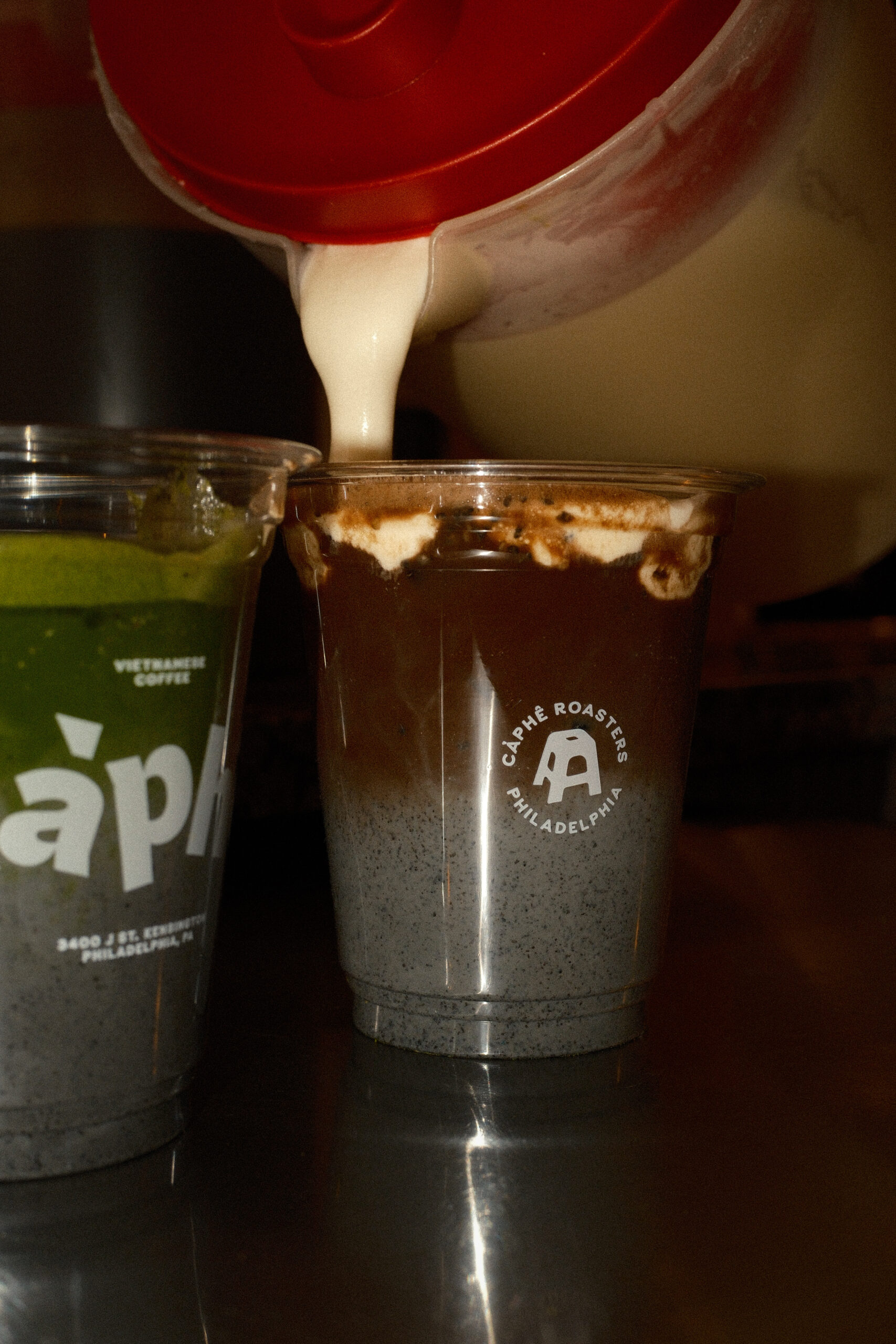
    The Kensington-based Vietnamese coffee roaster and cafe will serve two specialty drinks based on Tết treats: a black sesame hojicha, consisting of black sesame paste, hojicha (roasted green tea), milk of choice, condensed milk, and topped with salted foam. “This drink reminds us of kẹo mè đen, which is a black sesame taffy usually found in the traditional Vietnamese Mứt Tết tray (the tray of dried fruits and candies),” said owner Thu Pham. They’re also making a black sesame banana matcha (black sesame paste, matcha, milk of choice, condensed milk, and topped with banana foam), reminiscent of kẹo chuối, a banana taffy also found in the traditional Vietnamese Mứt Tết candy tray.

    Feb. 13-20, Càphê Roasters, 3400 J St., 215-690-1268, capheroasters.com

    Black sesame banana matcha and black sesame hojicha from Càphê Roasters for Lunar New Year 2026.

    Luk Fu at Live! Casino

    Luk Fu is serving an a la carte menu of very traditional Chinese New Year dishes such as braised pork trotters ($38), whole pompano ($48), and a New Year’s stir fry with spring vegetables and auspicious ingredients like snow peas, wood ear mushrooms, and sweet lapchong, or Chinese sausage ($28). Reservations are available on OpenTable.

    Feb. 1-28, Live! Casino, 900 Packer Ave., 267-682-7670, livech.com/Philadelphia/Dine-and-Drink/Luk-Fu

    Ba Le Bakery

    At this Washington Avenue institution, you can pick up Tết essentials like the cylindrical bánh tét ($20) and square-shaped bánh chưng ($25), savory rice cakes made with mung beans and pork belly and wrapped in banana leaves. Takeout only. Order online.

    Available now until Feb. 18 (or until sell-out), Ba Le Bakery, 606 Washington Ave., 215-389-4350, balebakery.com

  • Forget the apps and algorithms. To find love, maybe just go to a 166-year-old bar.

    Forget the apps and algorithms. To find love, maybe just go to a 166-year-old bar.

    McGillin’s Olde Ale House, the 166-year-old pub in Center City long owned by the same family, has determined that being a matchmaker is a strategic advantage in a crowded industry.

    Of course they serve draft beer, Philly cheesesteaks, and wings — but the bar has leaned especially hard into being, in its own description, the place where more couples have met than anywhere else in Philadelphia.

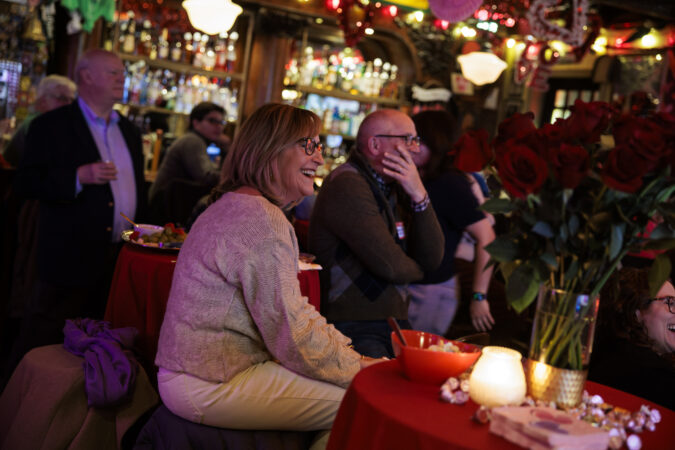
    At McGillin’s first reunion for such couples this month, attendees seemed less like regulars at a bar and more like alumni of the same beloved college club, touched by those who came before and rooting for those to follow.

    Everyone wore red-and-white name tags with the year their significant McGillin’s romantic event had taken place. The upstairs bar, where couples sat under tinsel hearts and drank from frosted glasses, was warm and close. There was merch; the crowd clapped especially hard for long marriages.

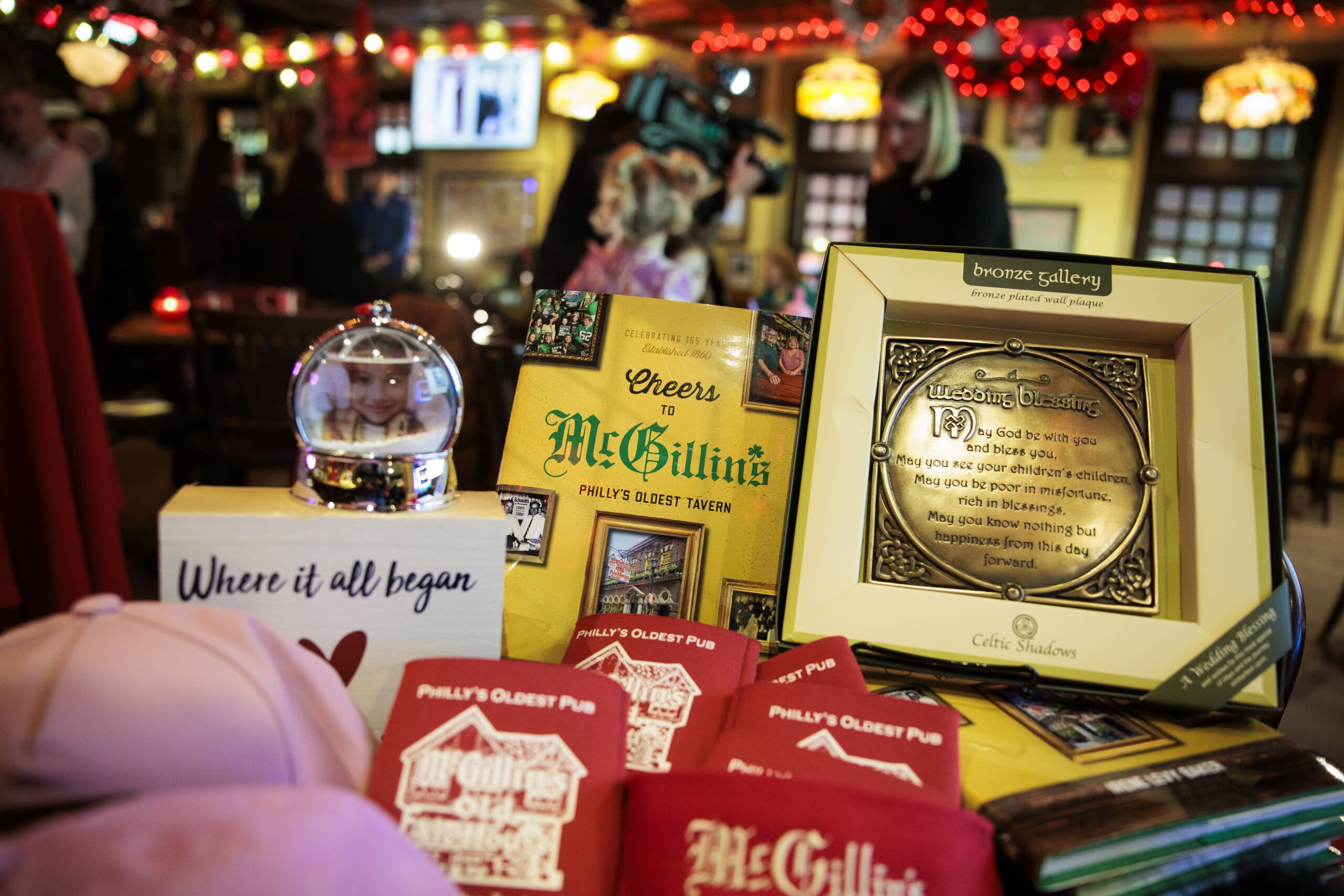
    Merch on display at McGillin’s, including a snow globe that says “where it all began.”

    It was also a media event: four TV news stations, as well as the Philadelphia Citizen and The Philadelphia Inquirer, came to capture the famous McGillin’s couples. Irene Levy Baker, the bar’s longtime publicist and author of the new book Cheers to McGillin’s, Philly’s Oldest Barwhich has its own chapter devoted to “mating magic,” is clearly good at her job.

    She is in touch with more than 200 couples who found love at the bar, and McGillin’s has so far filled up four guestbooks of signatures and anecdotes: Met New Year’s Day 2002. Engaged 9/22/12. Met here in 1996 when I was waitressing. Still together in 2024!

    “We actually met for the first time one bar stool over. I was eating a grilled cheese sandwich,” said Emily Dowling, 28, sitting beside her husband, Giacomo Trevisan, after a keynote presentation of McGillin’s love stories. Dowling and Trevisan’s name tags were marked 2022.

    On the fateful night that year, Dowling was out with a friend and Trevisan was visiting for the first time, having just arrived in the United States on an extended work trip from Italy. Hearing him speaking Italian, Dowling asked what had brought him to town.

    “I was impressed that a girl would just start talking to me. In Italy, it doesn’t work like that,” Trevisan, 32, said.

    The two got married less than a year later. They closed out the night of their wedding with a drink at McGillin’s.

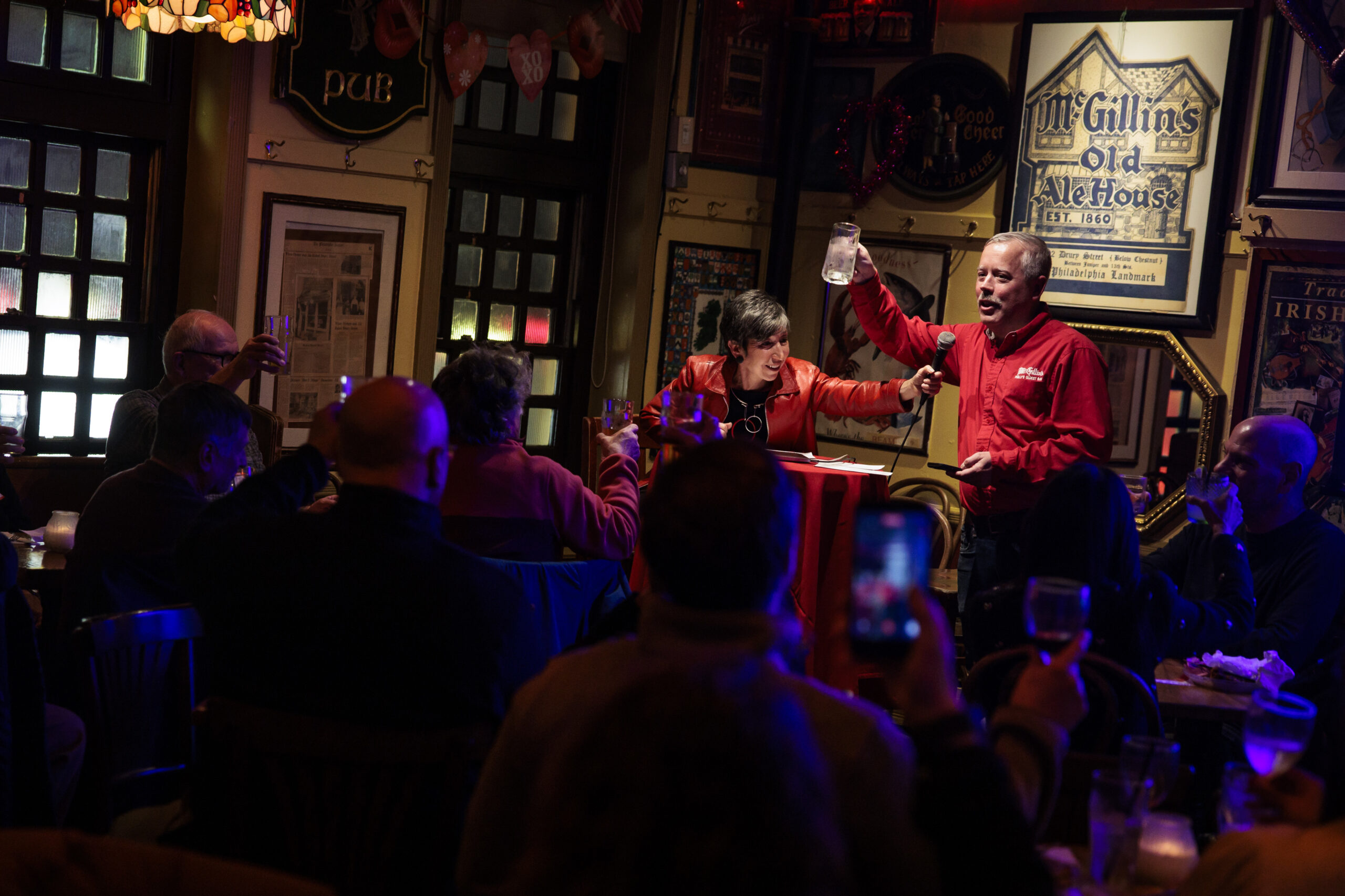
    Irene Levy Baker, McGillin’s longtime publicist, and Chris Mullins Jr., co-owner of the bar, led a toast to couples who met there.

    In a world of loneliness and dating app dread, in which people pay matchmakers and make PowerPoint presentations and even take out billboards looking for love, there is a certain nostalgia to the idea that a bar, with salvaged oak tables and framed liquor licenses dating back to 1871, is the best place to find it. At some point, the legend probably becomes self-fulfilling.

    During an interview, Baker googled “where do couples meet in Philadelphia,” and the AI summary dutifully reported that “couples in Philly meet in classic old spots like McGillin’s Olde Ale House.”

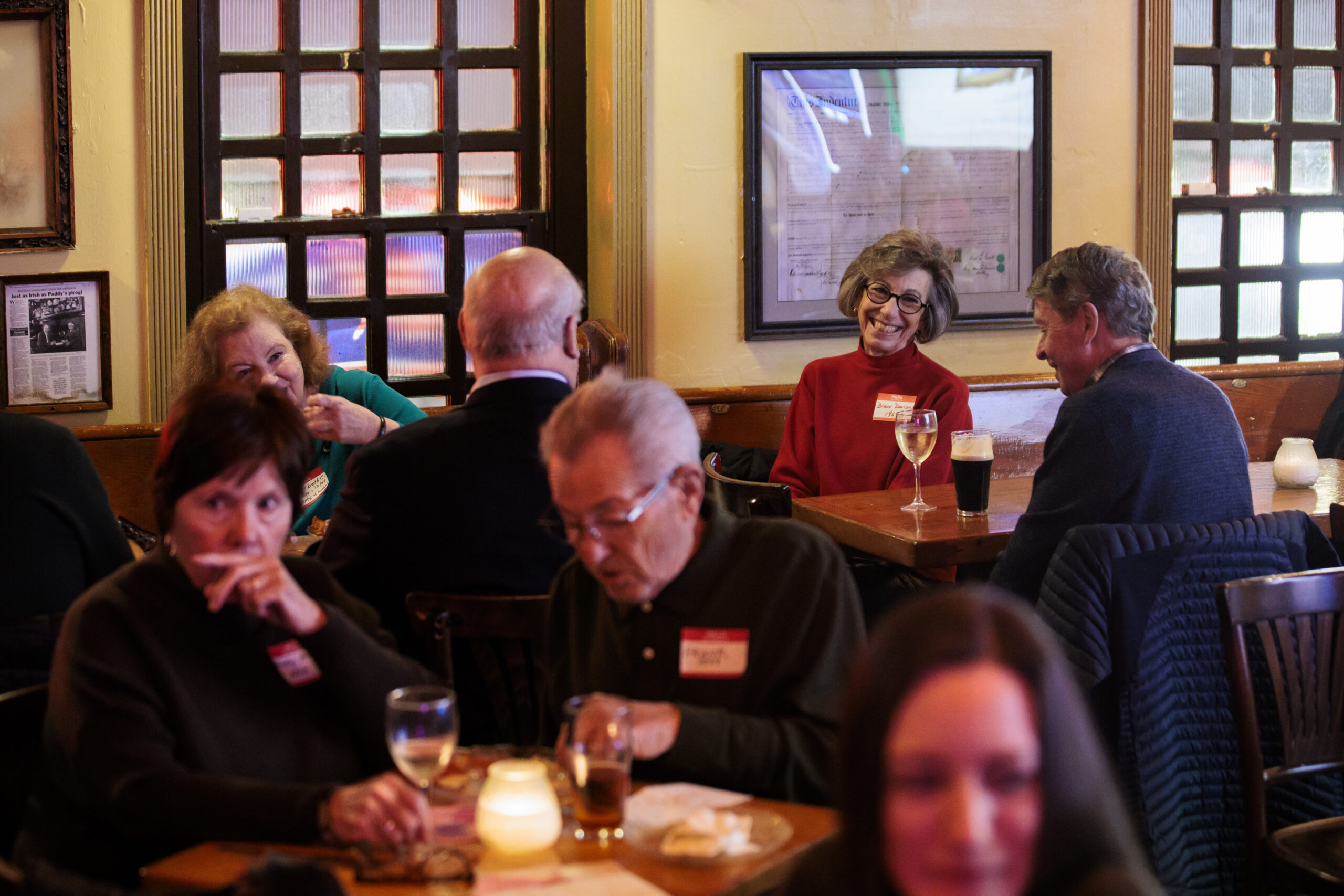
    Diane and John Davison, for example, met in 1969: He was a regular, she was a first timer. The downstairs bar was smoky and packed. Patrons passed glasses of beer hand-to-hand above the crowd because no one could reach the bar.

    “I remember the first time I saw her face,” John said. “Nice smile.”

    “I remember the night,” Diane, 79, said. “John and I don’t exactly agree on some of the details.”

    The two have been married for over 50 years, and the bar is an intimate part of their story. John’s brother, who has since passed away, also met his wife at McGillin’s. Just before Christmas, John celebrated his 80th birthday there, and the other diners sang to him.

    At right, Diane and John Davison, who met at McGillin’s in 1969.

    Both Baker and Christopher Mullins Jr., who co-owns the bar with his parents, have theories about why McGillin’s is a magnet for connection: it’s unpretentious, it’s approachable. The tables are close. The beer obviously helps.

    At night it can get packed, but the atmosphere during the day is cozy; a fire crackles in the downstairs grate and patrons order soup for lunch.

    “We don’t want to be old-fashioned and forgotten, but we want it to be the same kind of feel that people experienced 50 years ago,” Mullins said.

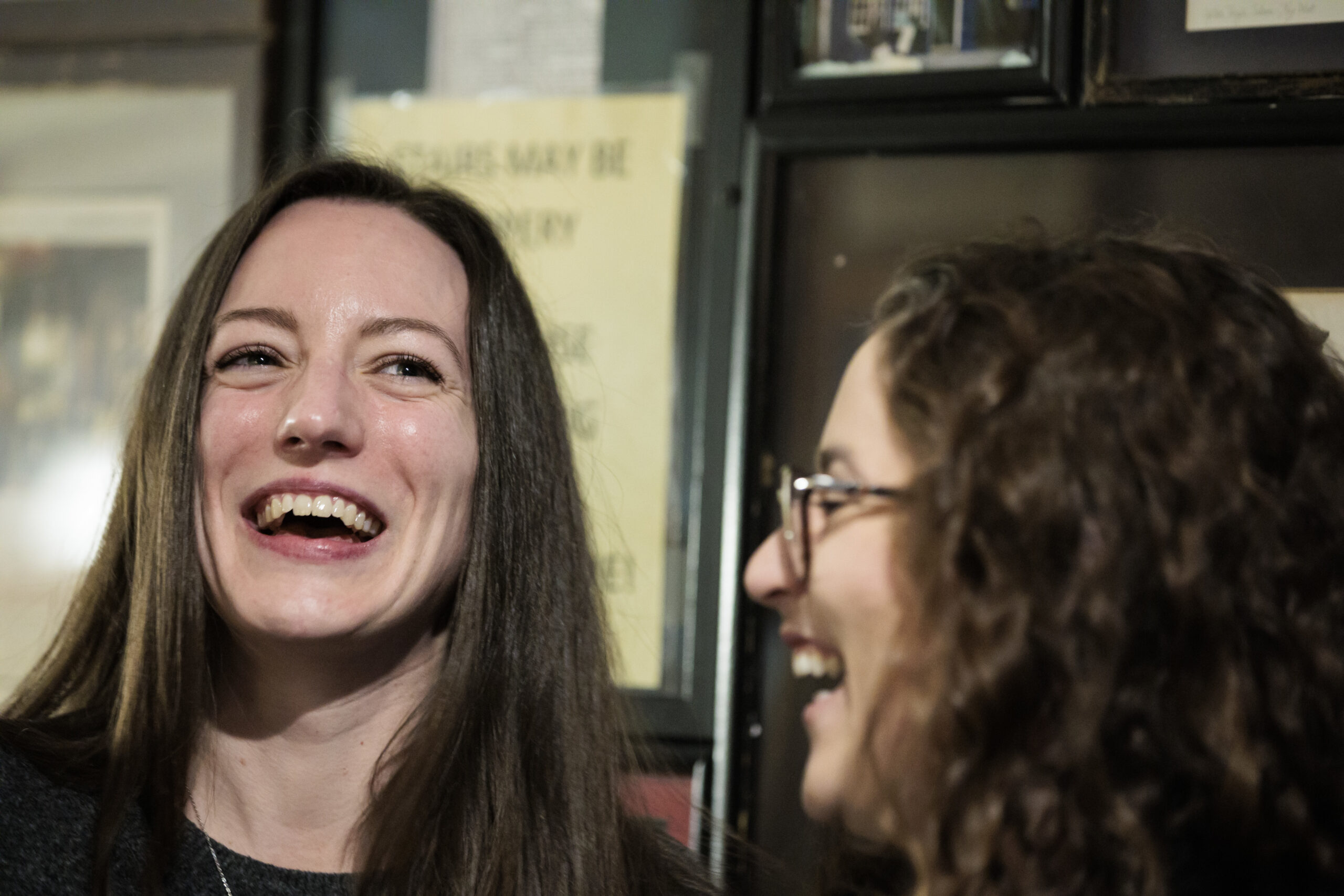
    Kaitlynn and Amanda Capoferri laugh while telling their love story at the bar where they met.

    Of course, there are some differences. Kaitlynn Capoferri, 32, mentioned wanting to get wings and beers at McGillin’s — on her Tinder profile. So Amanda Capoferri, 32, asked her on a date to the bar in 2017.

    When Amanda proposed at the bar three years later, “All I could get out of my mouth after stumbling to pull the ring out of my pocket was, ‘I know how much you love McGillin’s, and I can only hope that you love me as much.’” (They’ve been married for four years).

    It’s all part of the lore, carefully curated and growing by the day.

    “There is one guy who sometimes comments on the Facebook page and he’ll say, ‘I met my wife there and we’re divorced now,’” Baker said. She wasn’t deterred. “I’m like, ‘Well, I’m glad you found love here once. Be sure to come back.’”

  • The landmark Kibitz Room deli in Cherry Hill, which closed last month, has filed for bankruptcy

    The landmark Kibitz Room deli in Cherry Hill, which closed last month, has filed for bankruptcy

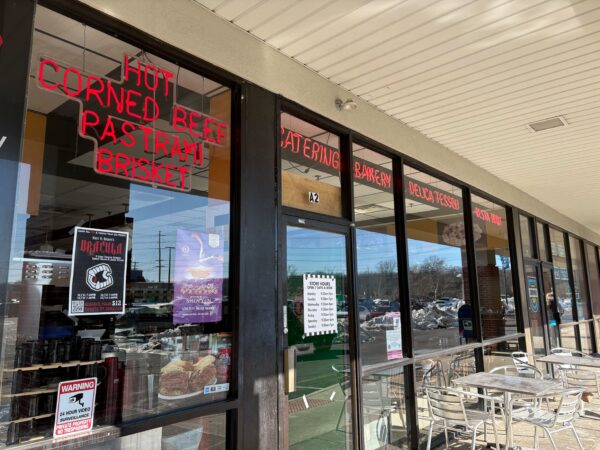
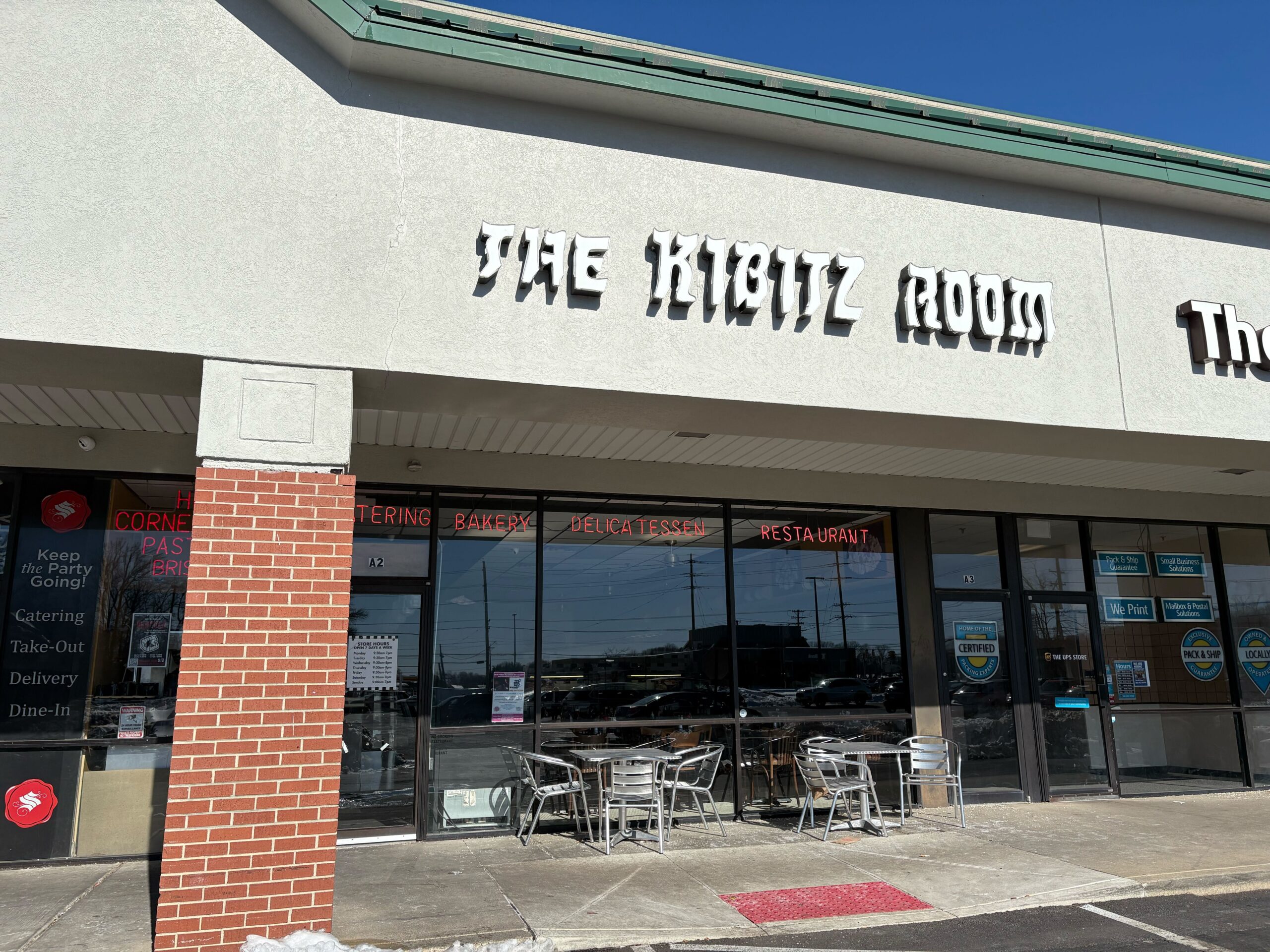
    The Kibitz Room in Cherry Hill, which shut down abruptly about two weeks ago after 25 years, has filed for bankruptcy protection, seeking to liquidate its assets.

    An attorney for the deli filed paperwork Friday in U.S. Bankruptcy Court in Camden, claiming assets of less than $50,000 and liabilities of $100,001 to $500,000. A hearing on the Chapter 7 petition was scheduled for March 3.

    The Kibitz Room, in Holly Ravine Plaza at 100 Springdale Rd. in Cherry Hill, on Feb. 2, 2026.

    Social media posts on Jan. 30 noted that the deli, owned by Sandy Parish, had apparently closed without notice.

    Meanwhile, former owner Neil Parish — Sandy’s ex-husband — told Patch in an article published Monday morning that he was talking to the landlord about reopening the deli. Their son Brandon commented on a public Facebook post midday Monday that he was working on reopening “under a new entity. Unfortunately the previous ownership was out of my hands but I did run the store for the last nine years until I left to open the other location. … It surely wasn’t from lack of business!!”

    Veteran deli operator Russ Cowan opened the Kibitz Room in Holly Ravine Plaza in 2001. Two years later, Neil Parish bought it using their daughter’s bat mitzvah gifts as the down payment. “She got four years at Syracuse, all covered,” Neil Parish said in an interview last year. “It was a good investment.”

    After Neil and Sandy Parish split up in 2016, Sandy ran the Kibitz Room with their son Brandon, now 32. Neil moved to the Baltimore area, where he ran delis before returning to Philadelphia.

    Brandon Parish stopped working in Cherry Hill early last year when he and his father opened the Kibitz Room King of Prussia in Valley Forge Center, which is not involved in the bankruptcy.

    Sandy Parish did not return messages seeking comment, nor did her son.

    In an interview last year, Brandon Parish said he had worked at the Cherry Hill deli since he could stand on a milk crate and wash dishes.

    “I didn’t want to be in camp,” Parish said. “I didn’t want to be at school. If it wasn’t the lacrosse field, I wanted to be at the shop. It was just the whole environment. The people who worked there were a second family.”