Cocktails in Philly have been getting ever more savory, taking inspiration from pickles, salad, even soup — the last being the most seasonally timed. Several local bars like El Techo and Jerry’s Bar have even been poking fun at cocktail’s “soup season,” posting videos of people consuming their margaritas and espresso martinis with spoons, blowing on the sips as they go.
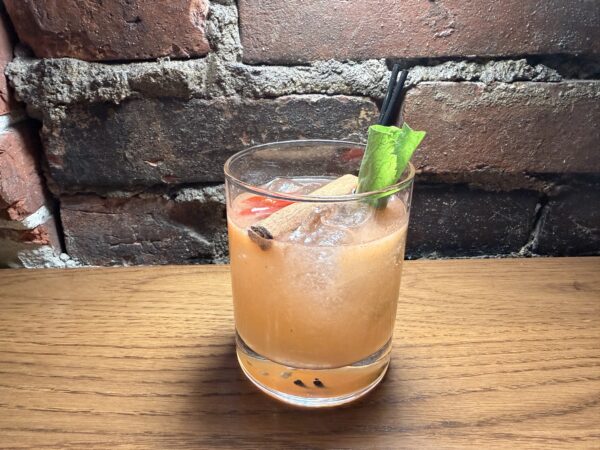
But there’s at least one soup cocktail taking the trend more seriously. Chef Thanh Nguyen’s signature pho cocktail at Gabriella’s Vietnam is a many-layered marvel. It’s not like drinking pho broth spiked with vodka. Instead, it’s warming and softly spicy — the heat hits the back of your throat and sinks into your chest — the beefiness only an umami-laden back note. It’s complex, mildly sweet, and more well-balanced than, say, a typical spicy margarita. A tiny squirt of Sriracha muddled with fresh culantro and ginger adds a soft orange hue.
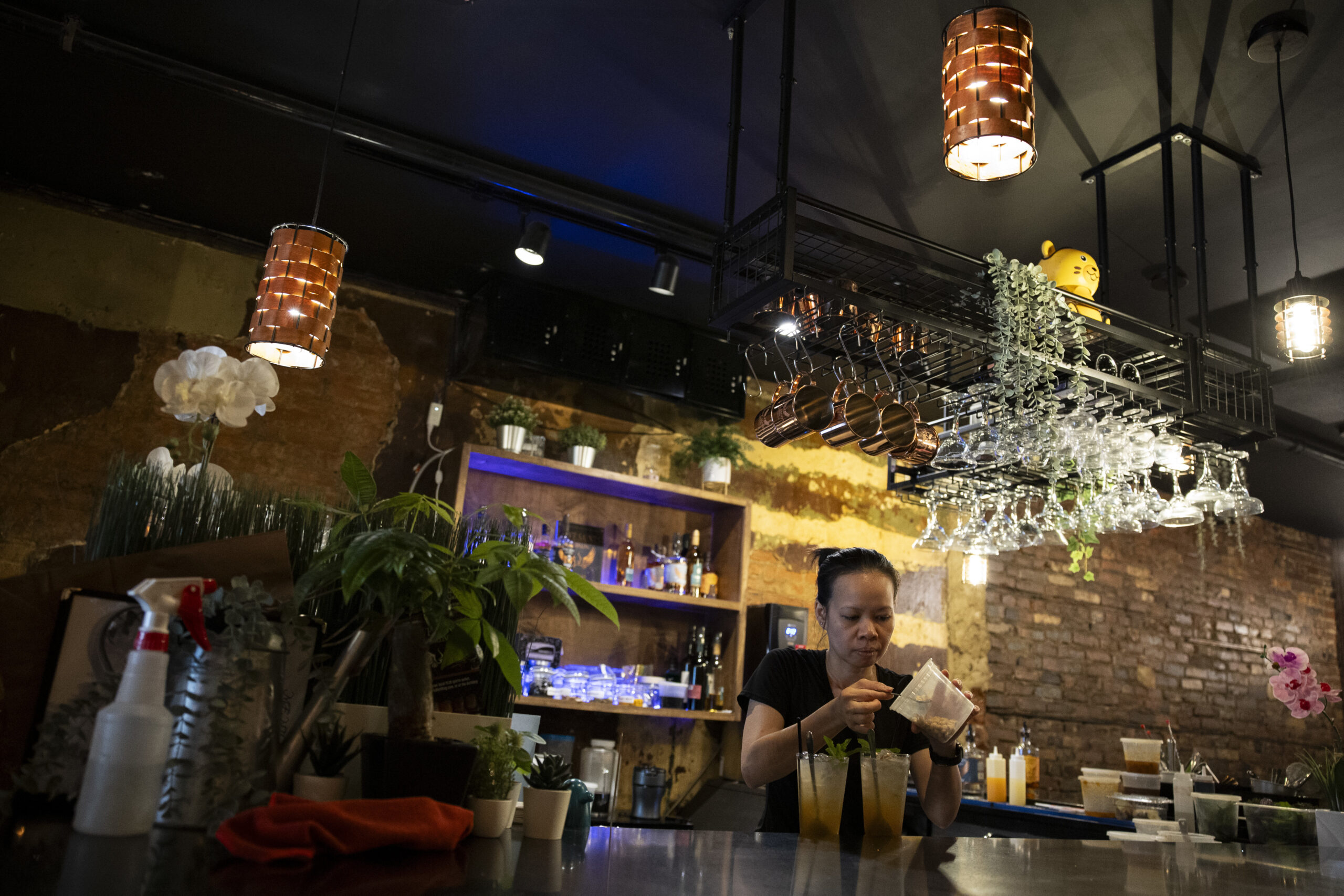
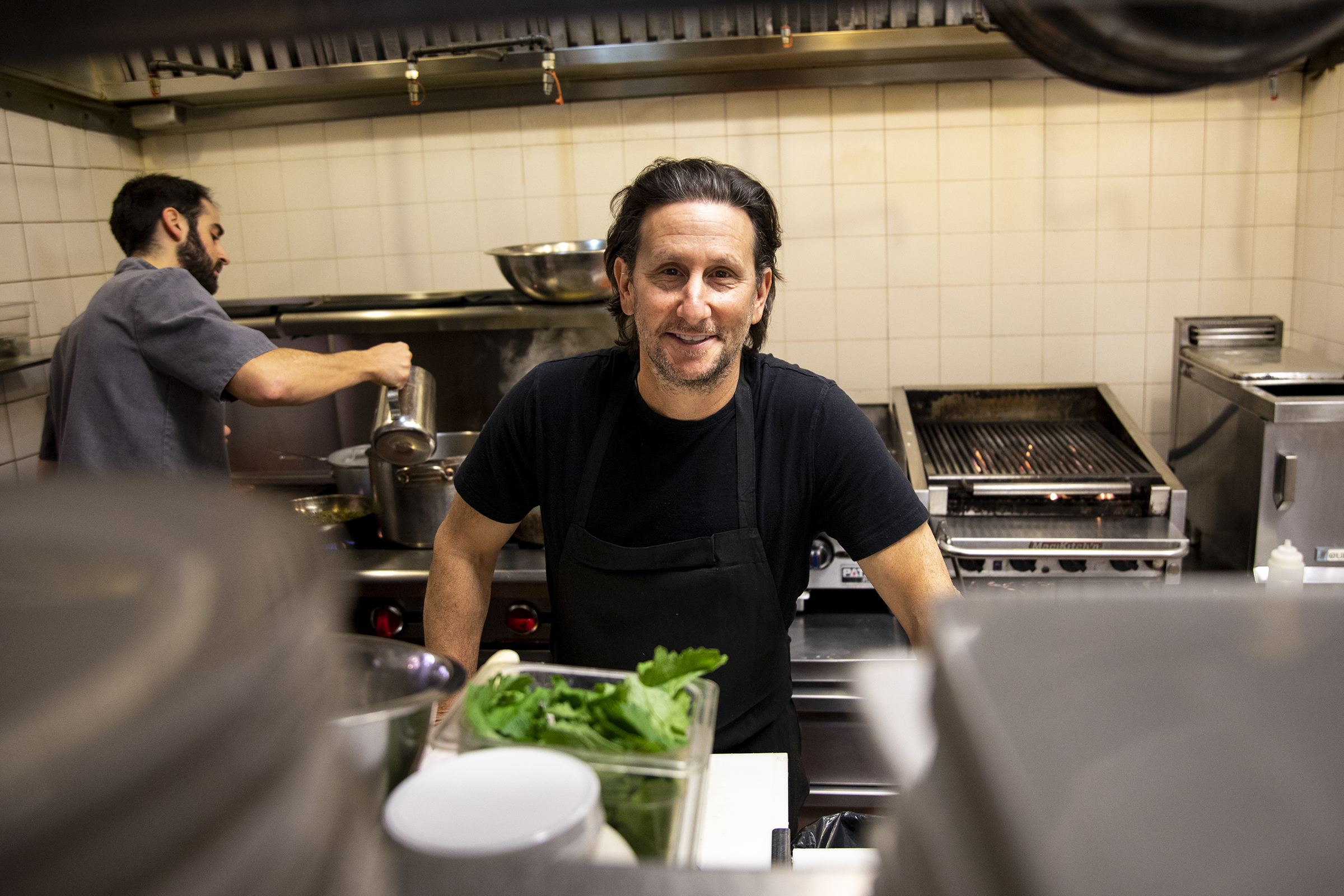
Chef Thanh Nguyen prepares drinks at Gabriella’s Vietnam in Philadelphia on Wednesday, Aug. 28, 2024.
“Culantro is what gives you the true pho flavor,” said Nguyen. “In South Vietnam, we use culantro more for pho than basil, which they do here [in Philly]. And of course, we need Sriracha.”
The cocktail is shaken up with fresh lime juice, simple syrup, and a mix of vodkas (one part pho-infused vodka, three parts plain vodka).
The liquor license at Gabriella’s (a two-time pick for The 76 most essential restaurants in Philadelphia) is a satellite license associated with Five Saints Distilling — allowing the restaurant to serve any beer, wine, and liquor made in Pennsylvania — and so the Norristown distillery’s line of spirits forms the backbone of Gabriella’s bar program.
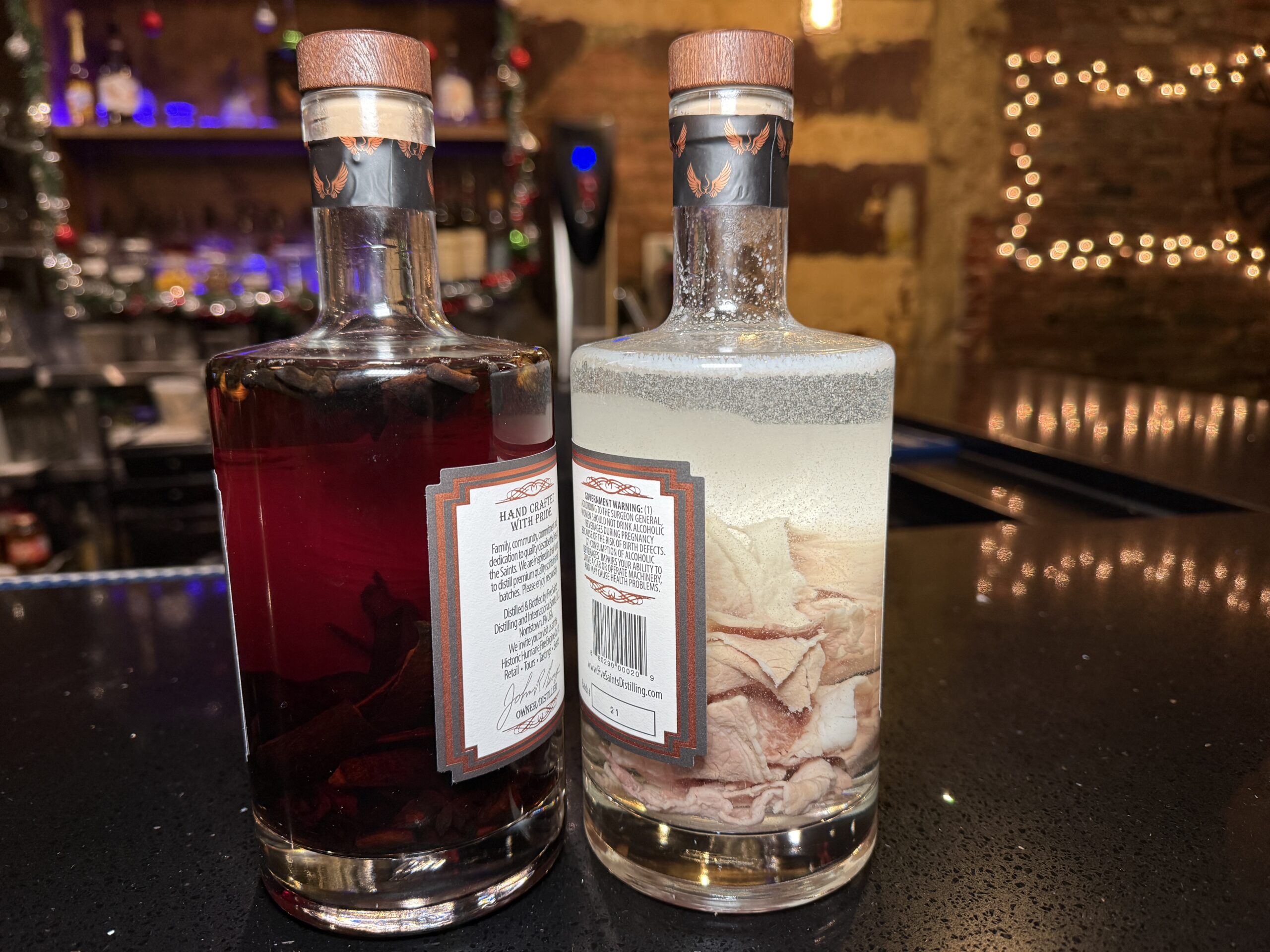
Two bottles of beef infused vodka: the one on the left has been steeping with herbs for six weeks and the one on the right has beef only and has been steeping for three weeks.
There’s actual beef steeped in the vodka that forms the base of Gabriella’s pho cocktail. Thin slices of brisket and eye of round, like the ones in a typical bowl of phở tái, are seared, then crammed into the bottles of vodka, to sit for three weeks, creating a lava-lamp effect as they release droplets of fat into the liquid. At the three-week mark, the vodka is strained multiple times through coffee filters. (Nguyen discards the beef that infuses the vodka with its meaty flavor. I tried a bite before it went in the bin, but that was all: If I had kept on eating, I risked inebriation by beef.)
Next, toasted spices are added to the bottle: fresh ginger, star anise, coriander, fennel seed, cardamon, cloves, and cinnamon. “The exact same spices for when I made pho,” said Nguyen. The concoction steeps for another three weeks, “until it’s the color of Coke,” said Nguyen.
Nguyen approaches mixing cocktails with the mind of a chef. This is most apparent in this cocktail, which is simultaneously an ode to the pho she served at her former restaurant, Melody’s Vietnam Grill in Ambler, and to the medicinal concoctions her now 94-year-old grandfather made her drink as a child and, later, as a postpartum mother.
“He would make vodka — yes, homemade vodka — and put garlic, ginseng, or ginger in it. This was his medicine. He’s never taken any other medicine in his life,” said Nguyen. “After I had my daughter, he had me drink this liquor with ginger soaked in it.”
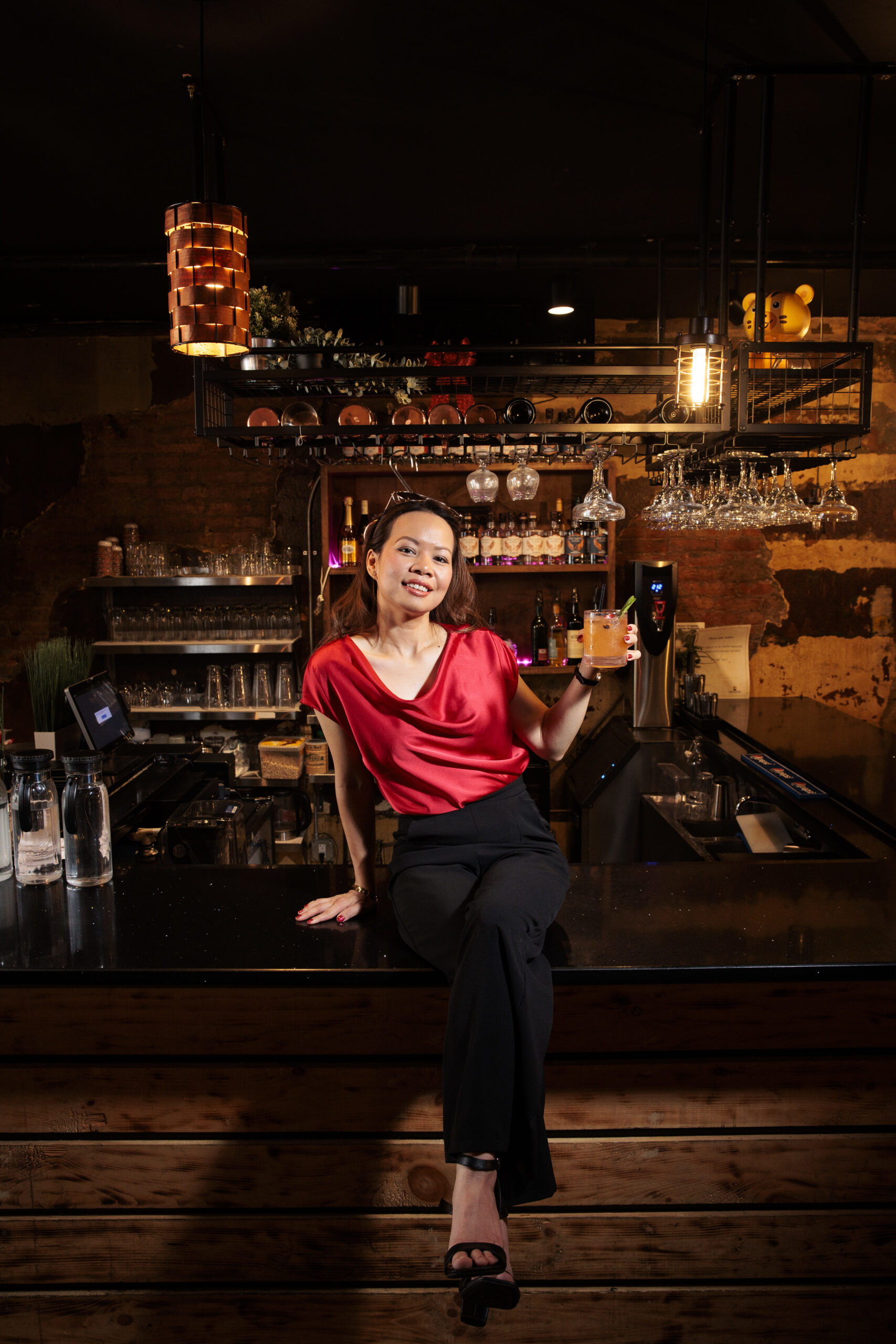
Chef Thanh Nguyen posed for a portrait at her restaurant, Gabriella’s Vietnam on Thursday, Sept. 11, 2025 in Philadelphia.
Pho-spiced cocktails are common in bars in Vietnam, made popular at upmarket places like the Michelin-starred Anan Saigon and the Anantara Hoi An (whose pho cocktail is heavily garnished with fresh cilantro and whole star anise). The cocktail is frequently credited to Hanoi bartender Pham Tien Tiep. But each of these versions take the inspiration of pho far less literally than Nguyen does.
“I don’t want to limit myself to one thing,” Nguyen said, explaining her experimentation behind the bar. “I love cooking but I have more fun behind the bar sometimes.” And she wants there to be constant crossover between her kitchen and bar. The passion fruit that her beef carpaccio is marinated in goes into her margarita. The kumquats that appear seasonally in her salads are muddled into her Saigon smash cocktail and blended into margaritas.
As for the future of her soup-based cocktails, Nguyen is working on developing a bún bò huế-infused vodka. “I’m still trying to get shrimp paste and lemongrass flavors to come through,” she said.
Founder Danielle Jowdy announced in December 2024 that she planned to end her 14-year run at the end of 2025. She called the wind-down a “grand closing” to allow customers to enjoy a final full season of scratch-made scoops and staff time to prepare for transitions. But as Jowdy considered the future, she decided to try selling the business to someone with roots in the neighborhood.
Zsa’s Ice Cream Shop, 6616 Germantown Ave.
That someone is Liz Yee, a pastry chef at the nearby Catering by Design who also creates desserts for Doho restaurant, also in Mount Airy. Yee plans to reopen Zsa’s (6616 Germantown Ave.) on Saturday, Ice Cream for Breakfast Day.
For Yee, the opportunity was both personal and professional. From the moment she saw the sale announcement over the summer, she began exploring the idea of keeping Zsa’s alive, not just as a retail store but as a community hub.
Keeping the business in Mount Airy was a major part of the appeal for Yee, who lives in Roxborough. “I work down the street, and I’ve always loved coming here,” she said. “It’s just special.”
She plans to keep it as Zsa’s — a nickname that Jowdy and her sister, Rebecca, shared since childhood — and will offer the same menu, plus twists and specials. Yee also wants to bring back the wholesale business.
For Saturday’s return, Yee will lean into her pastry background, offering fresh croissants paired with cereal-milk ice cream. She’s also bringing back favorites such as Black Magic (coffee ice cream with chocolate cake swirled in).
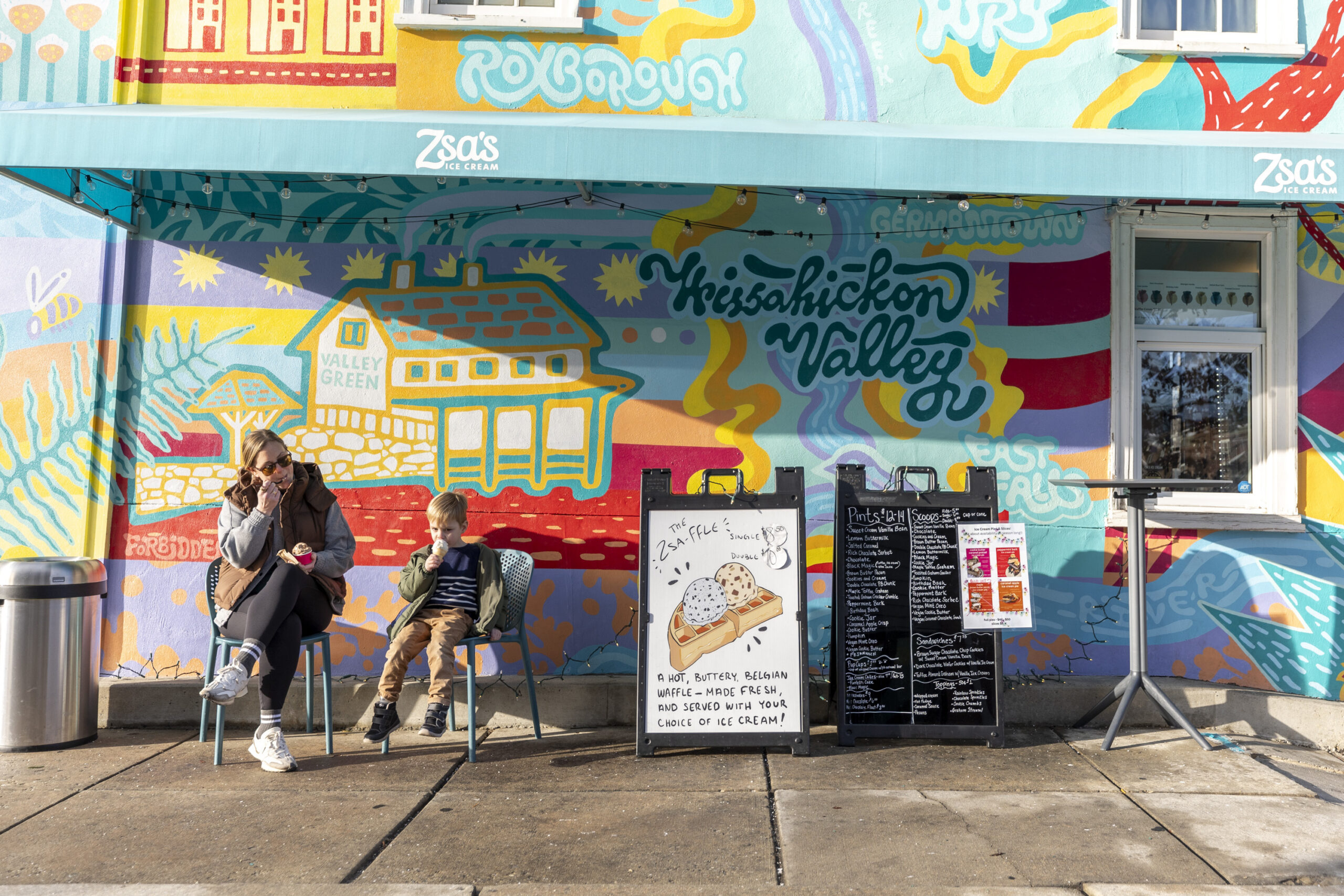
Erica Dixon, 38, of Mount Airy, Pa., is with her son Owen Redmond-Dixon, 4, enjoying some ice cream at Zsa’s along Germantown Avenue.
“I know when people sell a business, there are often mixed feelings, but I’m honestly over the moon right now. It feels terrific,” said Jowdy, who will work with Yee during the transition. Jowdy said she was still deliberating her next professional steps but hopes to stay involved in food and community work.
Jowdy fell into ice cream years ago. When she and her mother were packing up the family home in Connecticut for sale, they found a hand-cranked ice cream machine the parents received as a wedding gift in 1980. As kids, Jowdy and her brother, Christopher, poured in skim milk and Hershey’s syrup “and we’d have at it,” she said.
Jowdy brought the machine back to Philadelphia and, armed with a 1980s-era Ben & Jerry’s cookbook, began making ice cream to take to parties and cookouts. She was working at a stained-glass studio as her dessert hobby grew. When she was laid off 14 years ago, she went professional.
Yee’s path to Zsa’s is equally windy. Back in the 2010s, she was studying math at Drexel University when she decided to turn her baking hobby into a career. She headed the pastry department at the Rittenhouse Hotel and in 2018, she joined Walnut Street Cafe as executive pastry chef and baker before she joined Catering by Design six years ago.
Yee, whose 6-year-old son and 7-month-old daughter enjoy Zsa’s, said she would fit the business in with her personal and professional lives. “I work down the street and I run like a little 10-mile circuit around [the area],” she said.
Zsa’s, 6616 Germantown Ave., 215-848-7215, instagram.com/zsas. Winter hours starting Feb. 7: 3 to 9 p.m. Thursday and Friday, noon to 9 p.m. Saturday and Sunday, or sell-out.
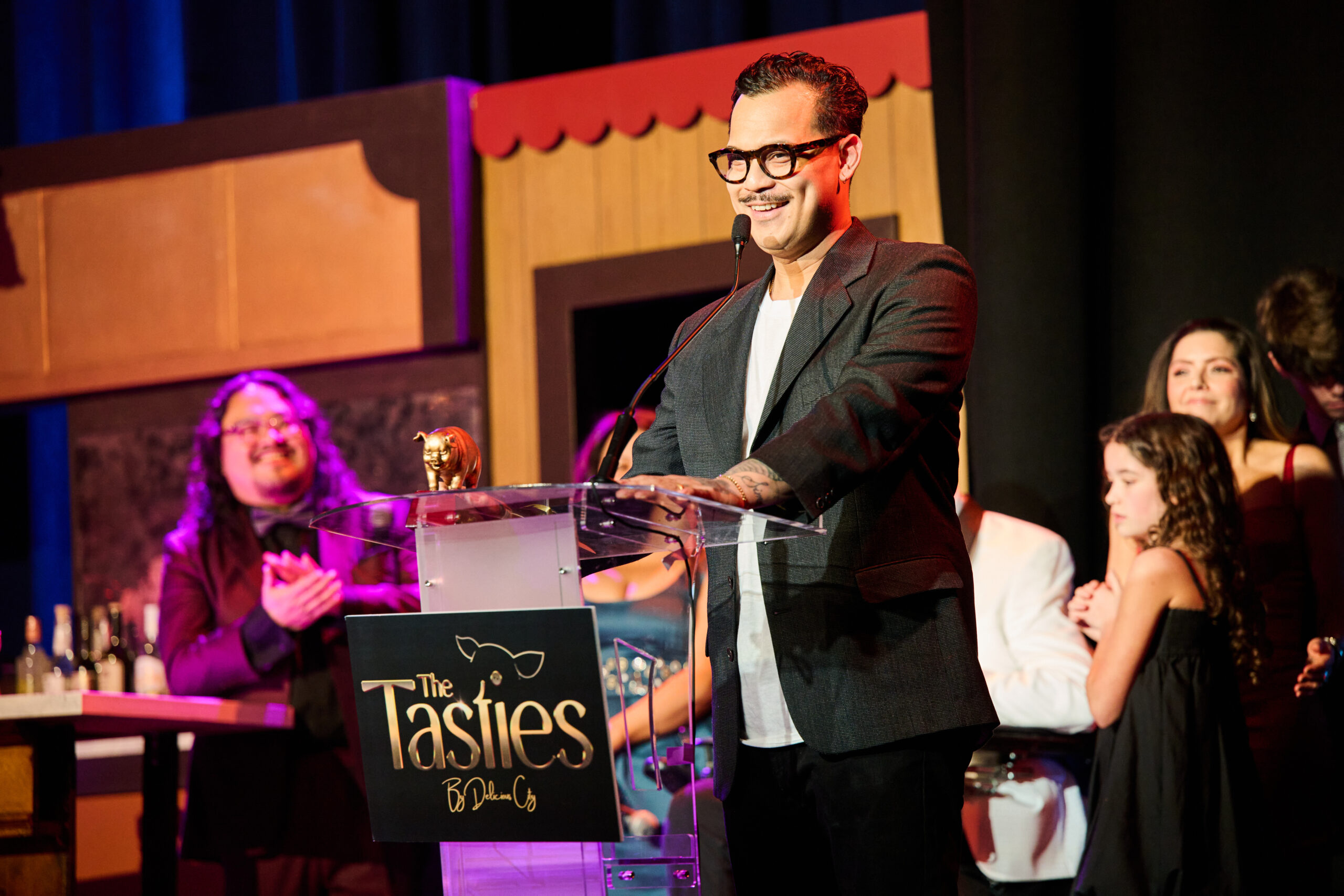
How does Philly celebrate Philly’s food scene? With an awards show that includes a special category for condiments, an honor for the best neighborhood restaurant, and an after-party with an Italian Market-themed speakeasy.
Those were some of the highlights from the Tasties, the second edition of the Philly-based culinary awards for hospitality professionals. The party is thrown by the hosts of the Delicious City podcast (James Beard award-winning chef Eli Kulp, food influencer Dave Wez, and 93.3 WMMR radio host Marisa Magnatta). Chefs, bartenders, and dishwashers were among the more than 600 attendees at Sunday night’s event at South Philly’s Live! Casino.
Here are the Tasties’ 2026 winners, from Philly’s best new restaurant to city’s best hospitality experience, frozen dessert, and breakfast. Read on for more background on this now-annual awards ceremony.
Best New Restaurant & Craft Cocktail Excellence: La Jefa
It was a big night for La Jefa, the “Guadaladelphian” all-day cafe and cocktail bar from the Suro family that functions as the trendier sibling to the more distinguished Tequilas next door. The restaurant, which opened in May, took home two honors — for Best New Restaurant and Craft Cocktail experience — making it one of two restaurants to do so. La Jefa beat out Little Water, Emmett, and Amá in the Best New Restaurant category, as well as Kampar, Messina Social Club, and Next of Kin for craft cocktails.
By day, La Jefa is a destination brunch and coffee spot, with a menu that spans omelette-style chilaquiles, huevos verdes, conchas, and experimental lattes with flavors like burnt corn tortilla and guava caramel. At night, the space transforms into a sleek cocktail bar with light bites and easy-drinking cocktails, like tepache highballs, agua frescas spiked with aged El Dorado rum, and cilantro gimlets. Its back bar, La Jefa Milpa, is a more serious drinking experience, with a cocktail list designed in consultation with James Beard award-winning mixologist Danny Childs.
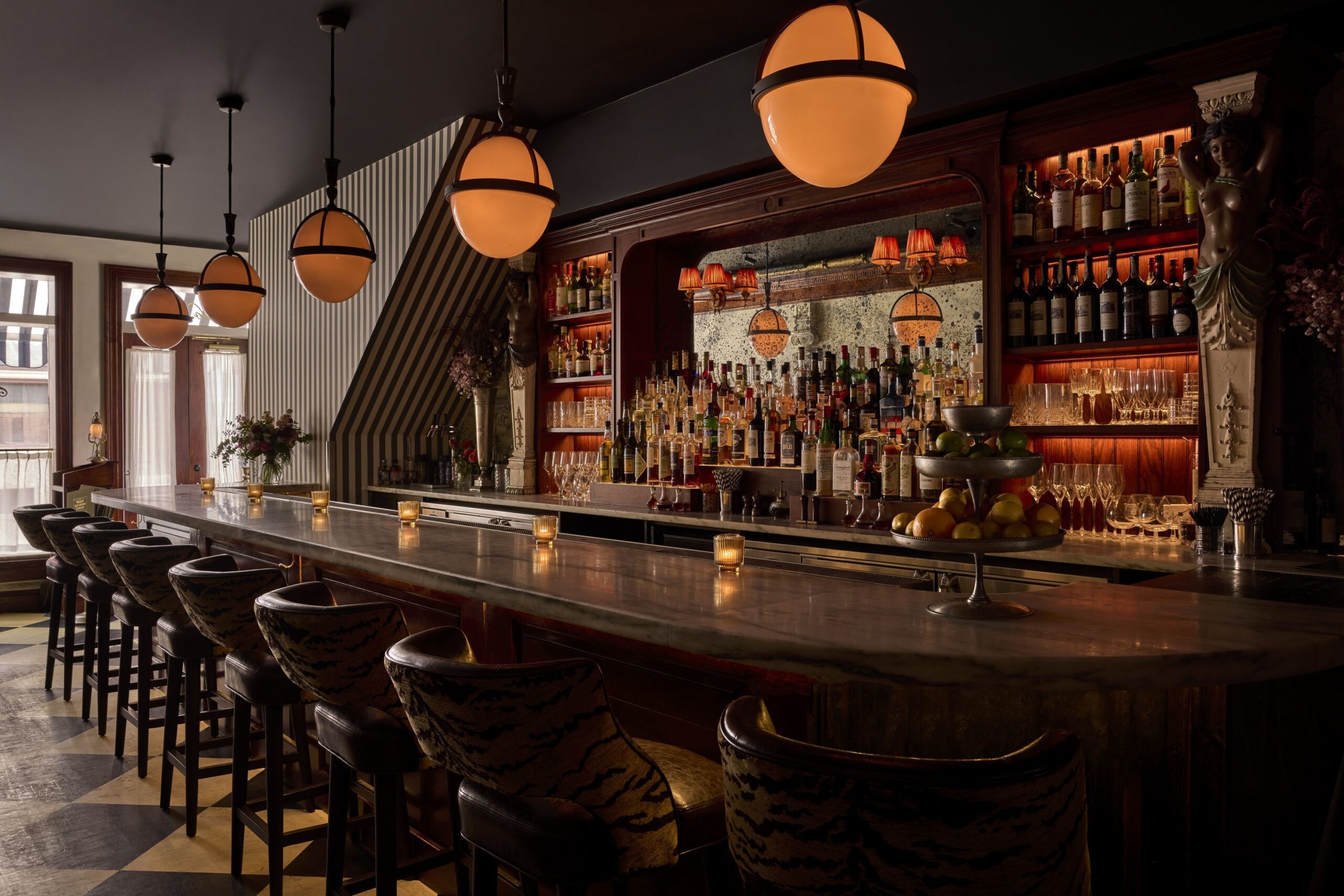
The Lovers Bar at Friday Saturday Sunday, which won Excellence in Hospitality at the The Tasties in 2026.
Friday Saturday Sunday won Excellence in Hospitality, an award that celebrates the front of the house, said Kulp. The Michelin-starred, James Beard award-winning restaurant helmed by Chad and Hanna Williams is notably unstuffy, with its downstairs walk-ins-only bar taking on a reputation of its own as the perfect place to fall in love or become a regular. Friday Saturday Sunday was up against Her Place Supper Club, Honeysuckle, and Kalaya.
Standout Bakery or Pastry Chef: Emily Riddell, Machine Shop
Machine Shop owner and pastry chef Emily Riddell took home the Tasties’ award for Standout Bakery or Pastry chef, adding to the South Philly bakery’s honors from Food & Wine magazine and the New York Times. Riddell, who honed her pastry skills at Le Bec-Fin, is known equally for her savory laminated pastries (think everything bagel croissants and shakshuka-esque danishes) as she is for her sweets, which include ginger-spiced cookies and lemon tarts topped with torched meringues. Riddell beat out Majdal Bakery’s Kenan Rabah, Baby Kusina’s McBryan Lesperance, and Provenance’s Abby Dahan.
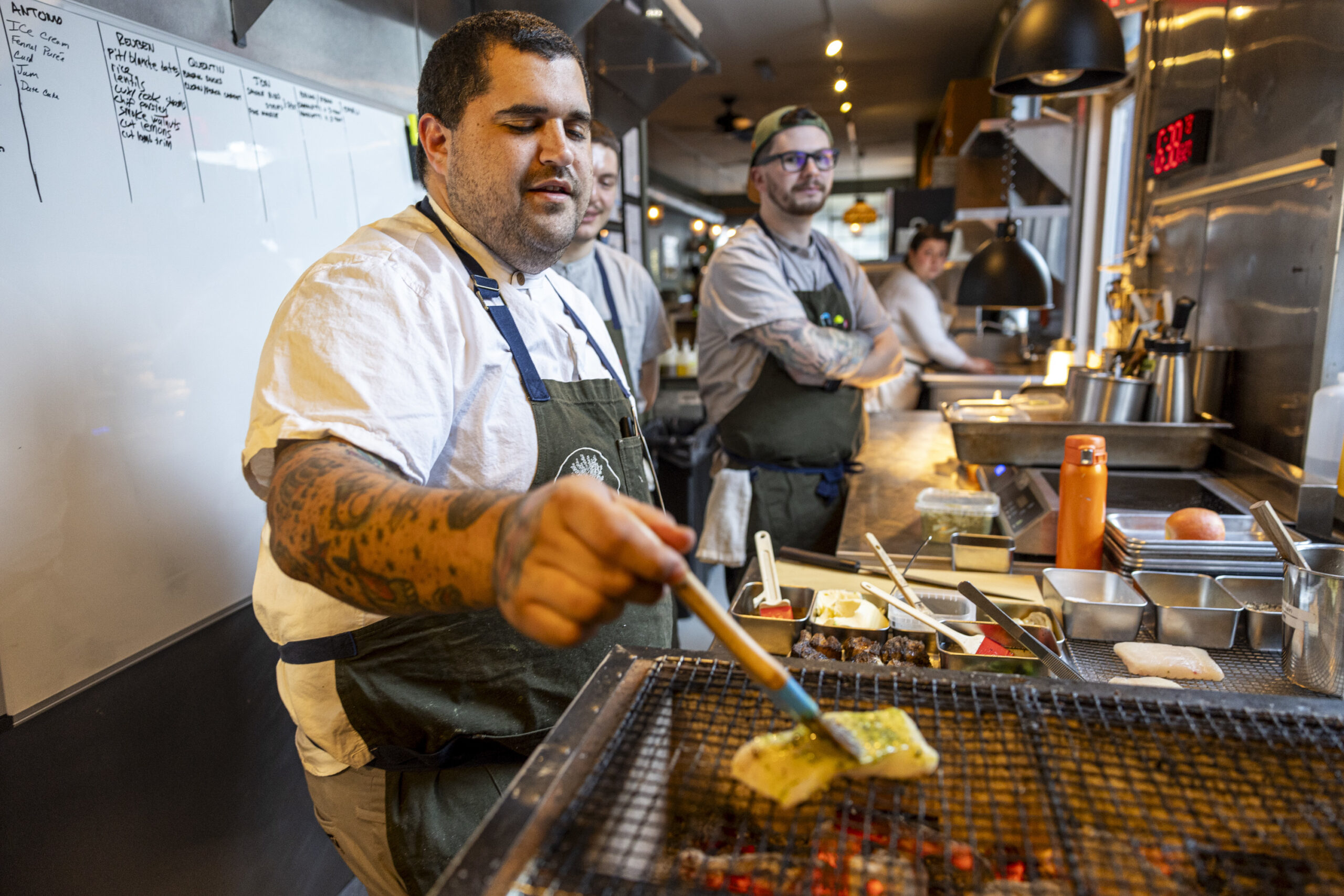
Chef-partner at Emmett Evan Snyder grills a halibut over charcoal. Snyder won Breakout Chef at the 2026 Tasties awards.
Chef-owner Evan Snyder took home the Tasties’ Breakout Chef award for his work at Emmett, the Levantine-inspired restaurant he opened on Girard Avenue last January. Named after his toddler, Emmett is a forum for Snyder to revamp flavors of his childhood: His grandmother’s stuffed cabbage become malfoufs stuffed with foie gras, and traditional boreks are reimagined with braised short rib and melted comté cheese. It’s a menu that landed Emmett on Esquire’s best new restaurant’s list, plus praise from Inquirer critic Craig LaBan. Snyder has a knack for “artfully layering multiple components into a dish that eats like a journey,” LaBan wrote in April.
Others in the Breakout Chef category were Dane DeMarco of Gass & Main, Jacob Trinh of Little Fish, and Sam Henzy of Fork.
La Jefa didn’t steal all the thunder from its older sibling. Tequilas, the fine-dining Mexican restaurant from David Suro-Piñera, took home the night’s Icon Award. Suro-Piñera first opened Tequilas in 1986 to celebrate traditional Mexican cooking and agave spirits beyond its namesake alcohol. After a kitchen fire closed the Locust Street restaurant in 2023, Suro-Piñera and family spent two years rehabbing Tequilas (and creating La Jefa inside of its adjoining Latimer Street space). The original restaurant reopened last spring, with the same ornate decor and a menu that reaches far beyond Suro-Piñera’s native Guadalajara to other regions of Mexico. Tequilas “not only came back” Kulp said, “they came back bigger and better.”
Fork, Monk’s Cafe, and Oyster House were the other Philadelphia institutions vying for the Icon Award.
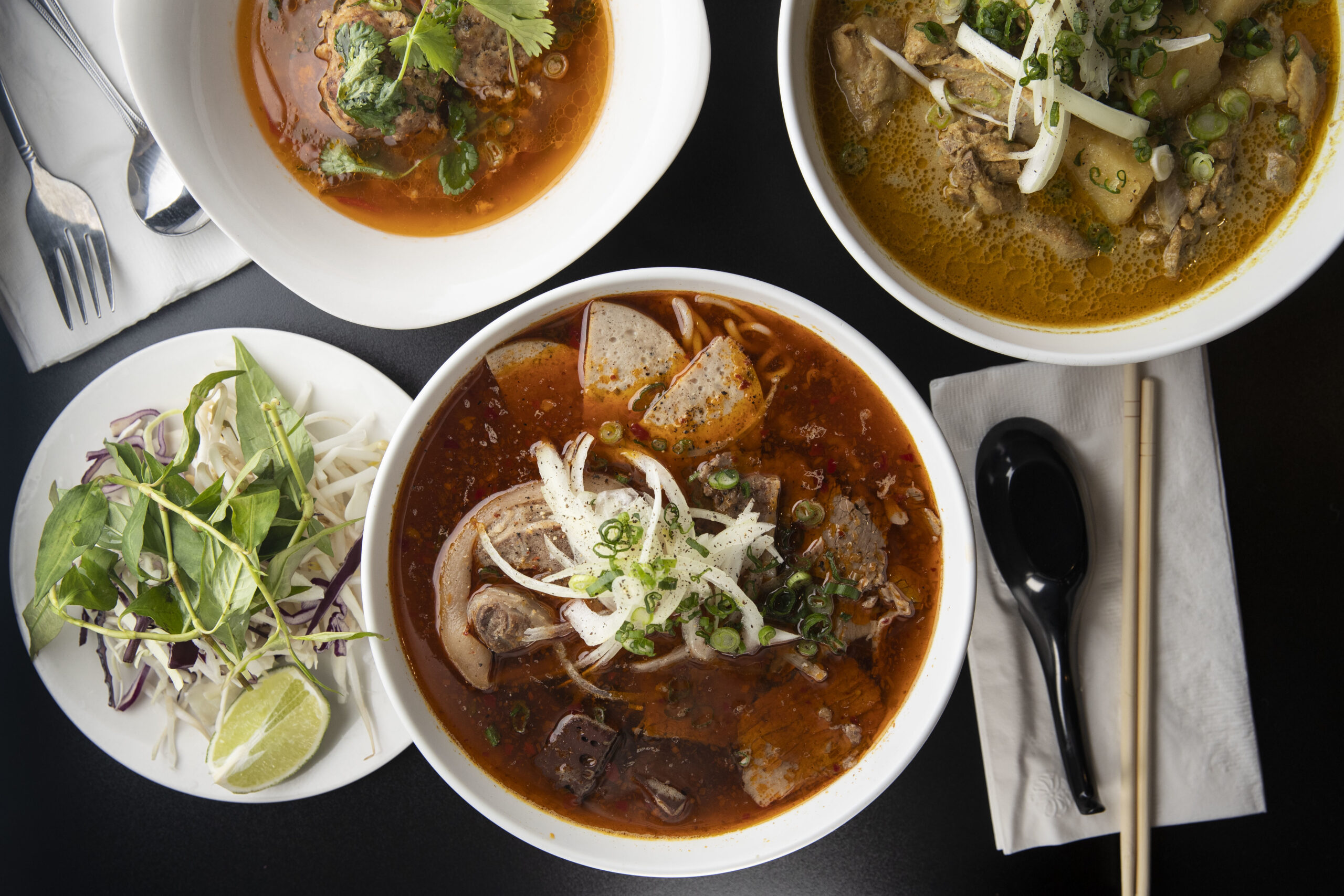
From left: The Banh Mi Xiu May, Bun Bo Hue Dac Biet, and the chicken curry at Cafe Nhan, which received the Best Neighborhood Gem award at the 2026 Tasties.
Vietnamese restaurant Cafe Nhan won the Neighborhood Gem award. Run by mother-son duo Nhan Vo and Andrew Dinh Vo, Cafe Nhan is a West Passyunk go-to for hearty bowls of soup and crispy fried chicken wings. The restaurant’s signature bún bò hue dac biet — a spicy lemongrass soup from Central Vietnam loaded with brisket and pig’s feet — and gluten-free pho — rank among the best in the city.
Other contestants for Neighborhood Gem included Cafe Nhan neighbor Stina, as well as Baby’s Kusina in Brewerytown and the Breakfast Den on South Street.
Restaurant and Chef of the Year: Phila Lorn & Mawn
The Mawn team, including chef-owner Phila Lorn, added another feather to their caps at the Tasties, taking home top honors for both Restaurant and Chef of the Year. According to Kulp, Lorn brought the entire staff of both Mawn and its sister oyster bar, Sao, to the Tasties Sunday night.
Mawn co-owner and executive chef Phila Lorn accepts the award for Chef of the Year at the 2026 Tasties.
Blue Corn, Her Place Supper Club, and Royal Sushi were also nominated for Restaurant of the Year. Royal Sushi owner Jessie Ito rounded out the Chef of the Year category alongside Thanh Nguyen of Gabriella’s Vietnam and Omar Tate and Cybille St.Aude-Tate of Honeysuckle.
Celebrating excellence in all matter of frozen desserts (ice cream, gelato, and water ice), the Brain Freeze Bestie people’s choice award went to Milk Jawn. Co-owned by Amy Wilson and Ryan Miller, the small-batch ice cream purveyor started as a hobby before spawning two storefronts in South Philly and Northern Liberties. Milk Jawn beat out Franklin Fountain, Coco’s Gelato, John’s Water Ice, Siddiq’s Water Ice, and Cuzzy’s Ice Cream.
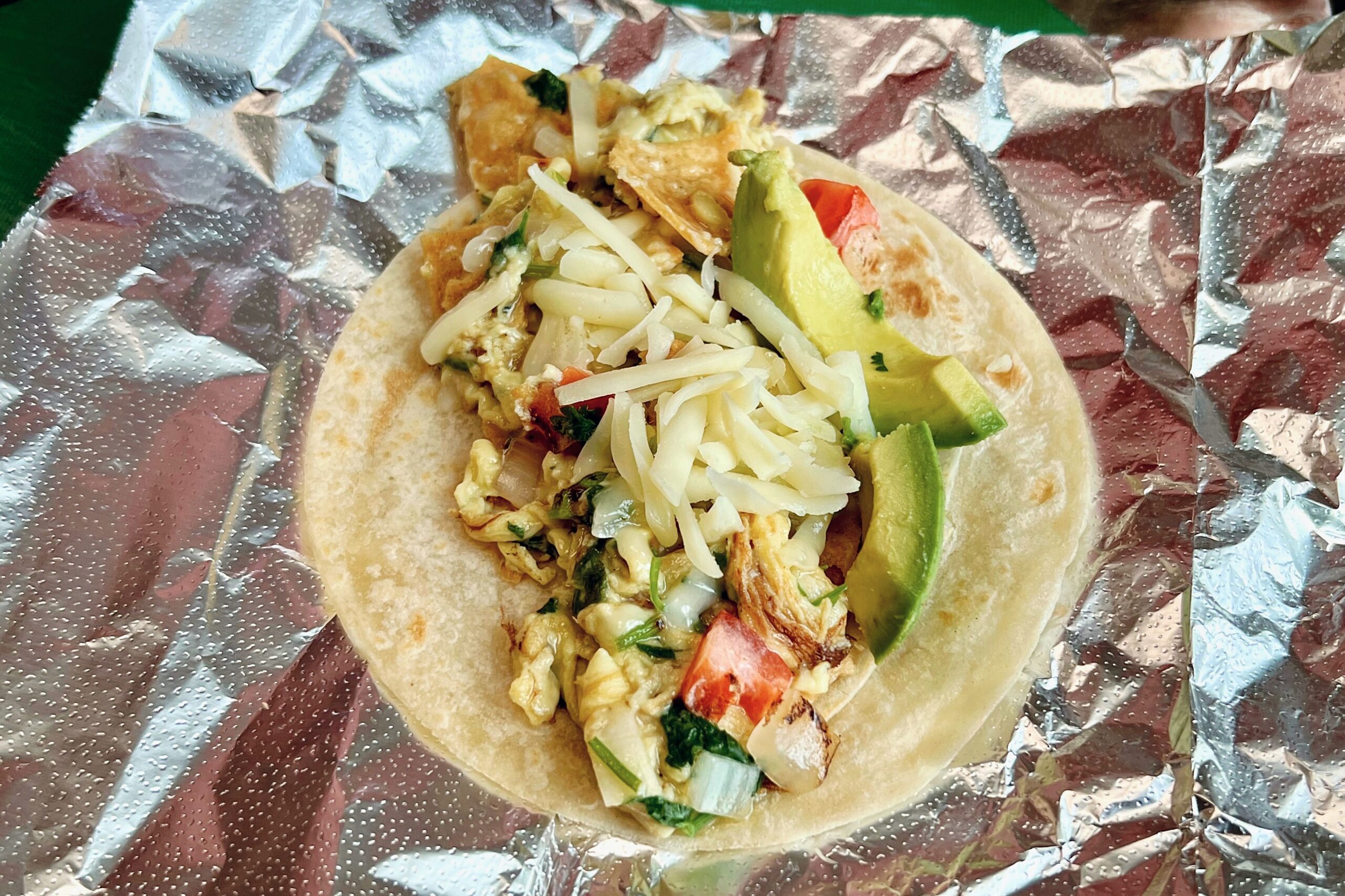
The Migas breakfast taco from Taco Heart, which won the people’s choice Breakfast of Champions Award at the 2026 Tasties.
The Breakfast of Champions pitted breakfast sandwiches against tacos against diner plates. Austin-style taqueria Taco Heart and its flour-tortilla wrapped breakfast tacos ultimately won, beating out Fishtown diner Sulimays, and breakfast sandwiches from Fiore, Gilda, Paffuto, and Homegrown215.
The Sauce Boss is the Tasties’ people’s choice award for best condiment. Sea Isle City hot sauce brand Hank Sauce took home the prize, likely pushed over the edge by an Instagram endorsement from their new investor Jason Kelce, who called it the perfect condiment for “eggs without any f— flavor.” Other nominees included boutique mayo brand Jawndiments, Willow Grove’s Mammoth Sauce Co., Sunny Chili Oil, Kensington Food Co., and Chili Peppah Water from Inquirer food writer Kiki Aranita’s sauce brand Poi Dog.
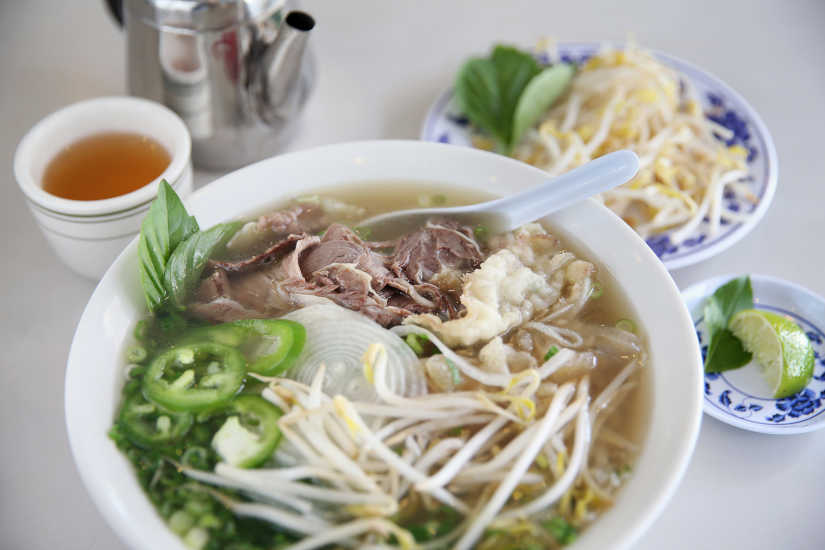
Pho with steak, flank, fatty brisket, tendon, and tripe from South Philadelphia’s Pho 75, which received the people’s choice Supreme Slurp Award at the 2026 Tasties.
The Supreme Slurp is exactly what it sounds like: A people’s choice award for soup. Washington Avenue pho shop Pho 75 took home the prize, beating out potato soup from dive bar Cherry Street Tavern; French onion soup from Forsythia; matzo ball soup from Hershel’s East Side Deli; ramen from Terakawa; and the Souper Bowl from Sang Kee Peking Duck House.
Deliberations started in October, when a 14-member nomination committee of local food writers, content creators, and past winners whittled down a list of hundreds of restaurants. From there, a smaller panel of judges (including Inquirer food desk editors Margaret Eby and Jenn Ladd) rate the finalists. People’s choice voting occurs for sillier categories; more than 1,200 people cast ballots for the people’s choice awards this year, Kulp said.
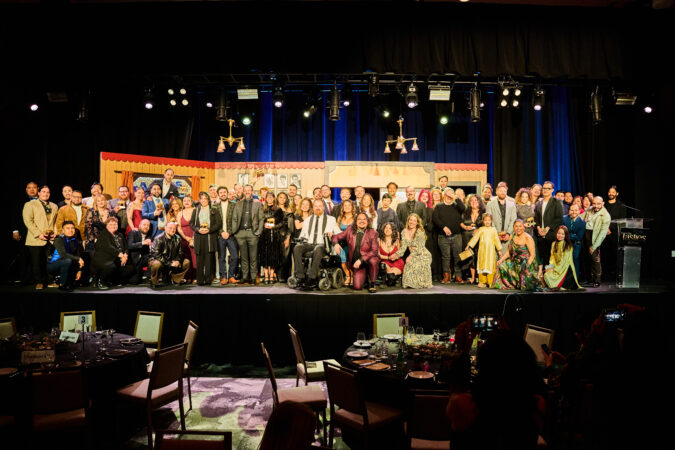
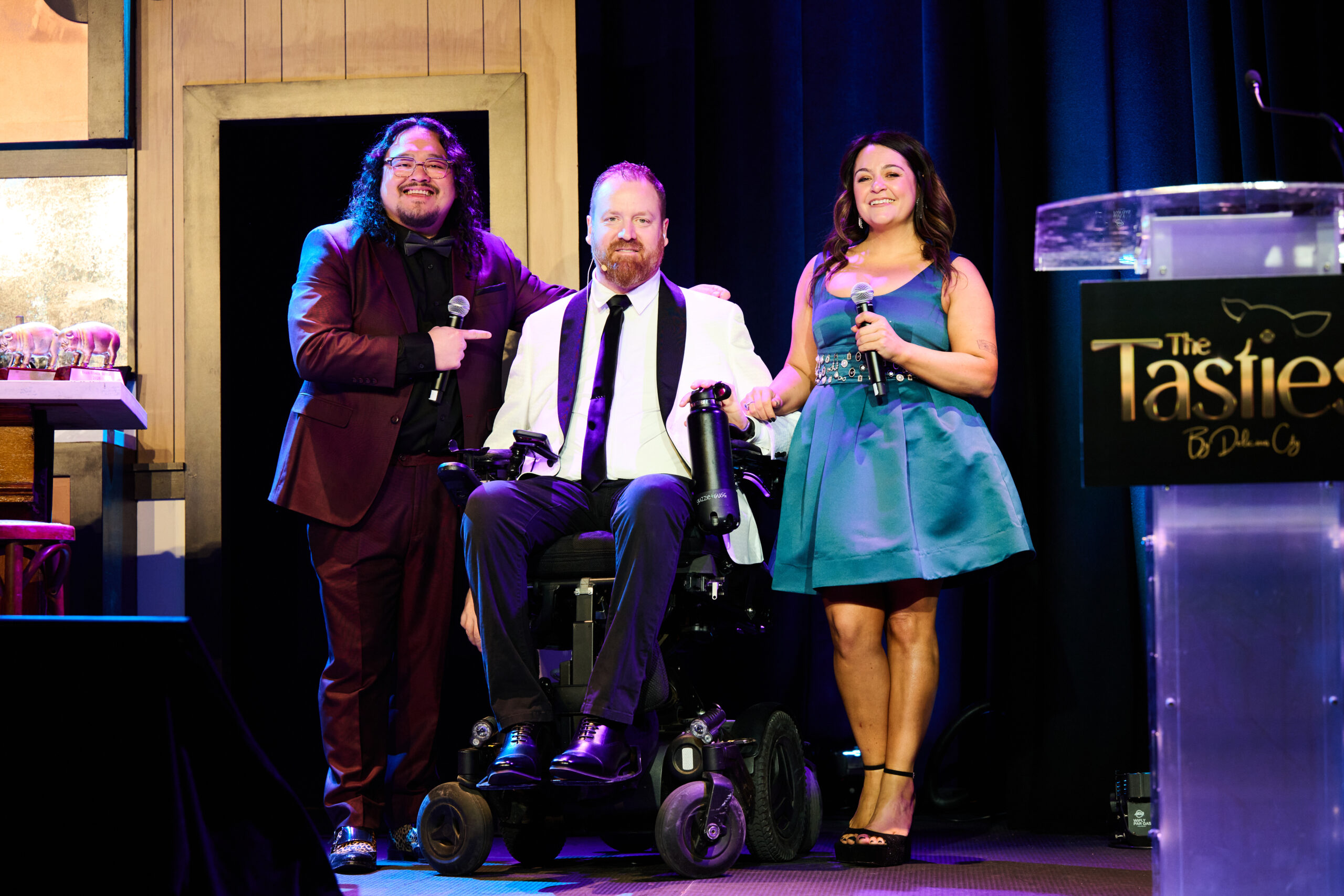
From left: “Delicious City” podcast cohosts Dave Wez, Eli Kulp, and Marisa Magnatta post onstage at the Tasties culinary awards at Live! Hotel & Casino on Feb. 2, 2026.
The Tasties includes all the standard award show categories, as well as more bespoke accolades. At Sunday’s ceremony, Miriam Bautista of Vernick Fish won the Dish Wizard award, an honor bestowed upon the city’s best dishwasher. Sous chefs at La Croix, Little Water, and Pesto all took home Future Tastemaskers awards, which come with $1,000 grants for professional development.
At the Tasties, “there are no losers,” Kulp said. “It’s so cliche, but it’s really an award [show] where you can throw a dart to pick a winner and no one would argue.”
Twenty years ago this month, chefs Rich Landau and Kate Jacoby opened what they hoped would become Philadelphia’s signature vegan restaurant.
Horizons debuted in Bella Vista in February 2006 in a former nightclub called Goosebumps on Seventh Street near South Street. It was a reboot of their groundbreaking Horizons Cafe, which Landau opened in a Willow Grove strip mall in 1994.
“At the time there was no signature upscale vegan dining experience in Center City, so we decided to go to where our crowd was and make the move downtown,” Landau said last week.
From the start, Landau and Jacoby signaled that Horizons would not resemble the plant-based restaurants many diners expected. It was not meant to be a manifesto or a niche experiment.
“There will be no granola, alfalfa sprouts, or wheat germ anywhere on the menu,” Landau said in 2006. Instead, the kitchen focused on globally influenced, technique-driven dishes, such as spicy red chili-cauliflower rolls and Caribbean udon with caramelized chayote and hearts of palm.
Chef Rich Landau in the kitchen at Vedge in 2019.
Horizons, which served vegan beer and wine, enjoyed a solid five-year run at 611 S. Seventh St. — earning a three-bell review from Craig LaBan out of the gate — before the couple closed in 2011 to open the far more exclusive Vedge in the grand former rowhouse at 1221 Locust St., which used to house Deux Cheminees.
Landau and Jacoby went on to open and close other restaurants, including the casual V Street and Wiz Kid in Rittenhouse and Fancy Radish in Washington, D.C. Last June, they sold their well-received Vedge spinoff, Ground Provisions, in West Chester. (Ground Provisions was on the inaugural edition of The 76, The Inquirer’s list of the area’s most essential restaurants.)
A 2012 Inquirer article by Vance Lehmkuhl, director of the American Vegan Center, credited Horizons alumni with launching some of the region’s most notable vegan restaurants. That piece cited Nicole Marquis (HipCityVeg, Charlie was a sinner. and Bar Bombon), Mark Mebus (20th Street Pizza), Ross Olchvary (the now-closed Sprig & Vine), and Rachel Klein (Miss Rachel’s Pantry) as examples of the couple’s reach. (Disclosure: Rachel Klein is my daughter).
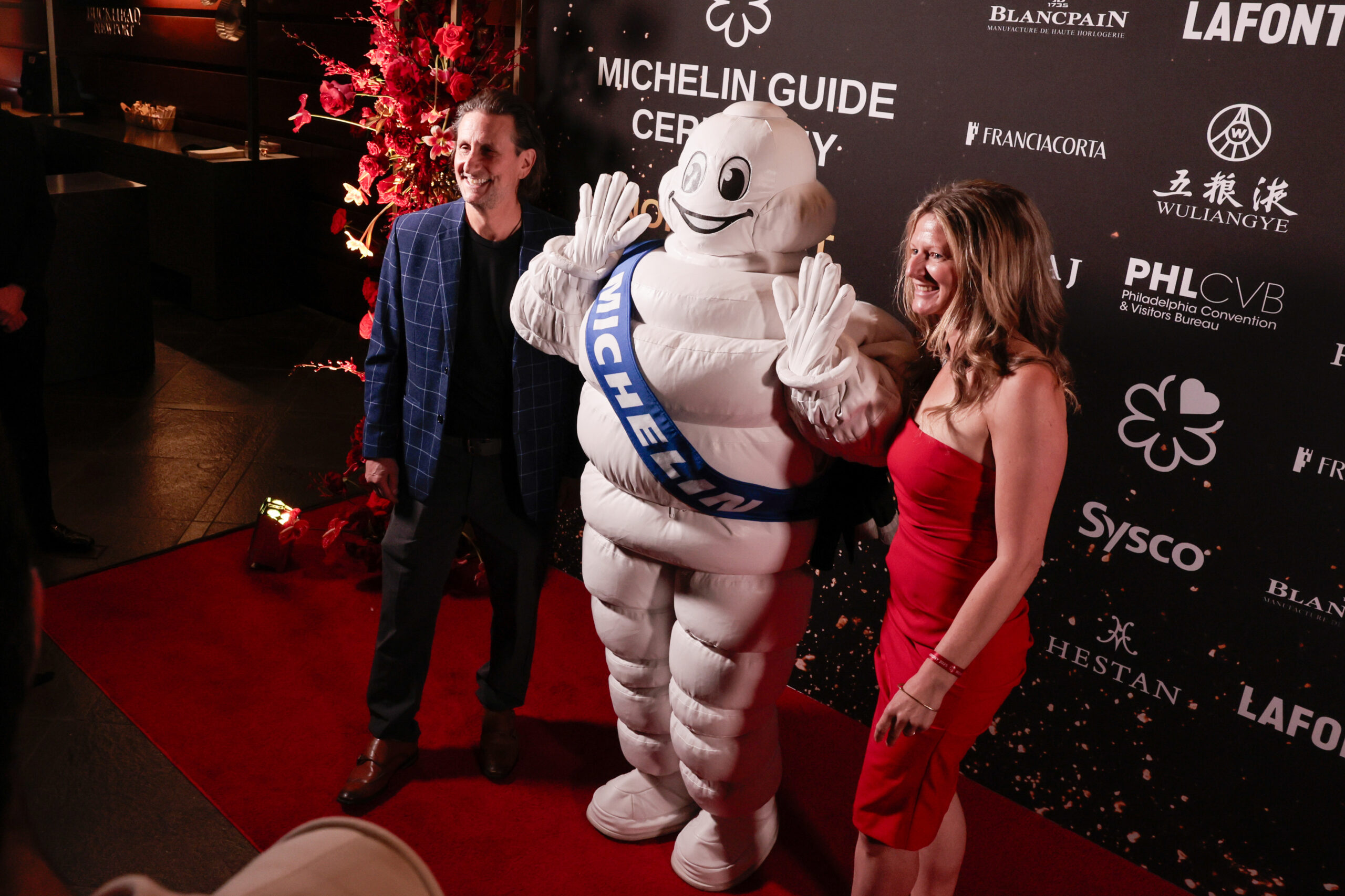
Rich Landau and Kate Jacoby of Vedge at the Michelin Guide announcement event at the Kimmel Center on Nov. 18, 2025.
Landau is a six-time James Beard Award nominee for Best Chef, Mid-Atlantic (2015 to 2020), while Jacoby was a semifinalist for Outstanding Pastry Chef in 2014, 2015, and 2016, and also a semifinalist for Best Chef, Mid-Atlantic in 2014. In November, Vedge was added to Michelin’s list of recommended restaurants.
“Twenty years later, it’s hard to not look back and smile and feel so much gratitude that the city of Philadelphia embraced us and vegetable cuisine,” Landau said. “It’s amazing to see how much it’s taken off. Sure, there’s lots of new vegan restaurants.
“To me, the most remarkable thing is the change in mainstream restaurants,” he said. “Back in the ’90s and early 2000s, you would go to a restaurant and scroll all the way down to the bottom of the menu, where you would see the gnocchi or the pasta primavera. Nowadays, there are original and creative vegetable dishes in every mainstream restaurant in the city. That was our goal — to have what we do be taken seriously.”
Also this month in Philadelphia restaurant history
February 1996: Martini Cafe opened at 622 S. Sixth St. on the Queen Village-Bella Vista line, replacing Ristorante Mona Lisa. It closed in the early 2000s. (The building’s most recent occupant was Isot, which closed in December.)
February 2001: Capital Grille opened at Broad and Chestnut Streets, replacing a concept called Heritage that lasted nine weeks. Capital Grille was Center City’s seventh chain steakhouse at the time, following Ruth’s Chris, Morton’s of Chicago, the Palm, the Prime Rib, Smith & Wollensky, and Davio’s. … Chef Yong Kim, previously at August Moon in Norristown, opened Bluefin in a strip center on Germantown Pike in Plymouth Meeting. He moved it in 2012 to its current quarters in East Norriton.
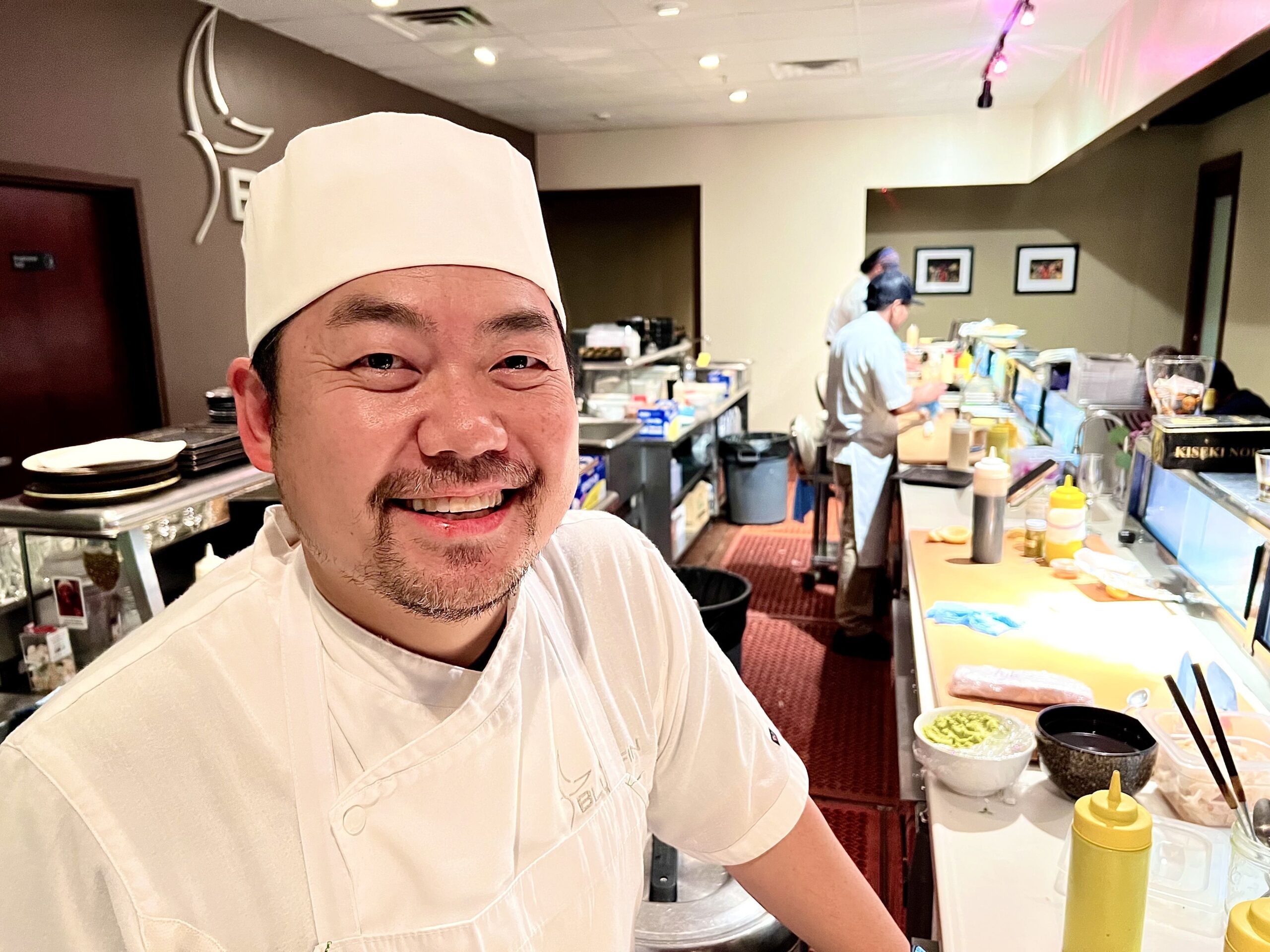
Chef Yong Kim behind the sushi counter at Bluefin, 2820 Dekalb Pike, East Norriton, in 2023.
February 2006: Chestnut Grill in Chestnut Hill turned the entire restaurant, including its bar, smoke-free – a bold move at the time. … Flo’s Diner opened at 20th and Arch Streets; it lasted a little over a year. That site (1939 Arch St.) had housed St. George Restaurant/St. George’s Diner in the 1960s before shifting into nightlife mode — Tom Hagen’s Tavern, the Bamboo Lounge, and Cascamorto Piano Bar. After Flo’s, it became the simply named Indian Cuisine. Since 2018, it’s been Thanal Indian Tavern.
February 2011: Chef Pascual “Pat” Cancelliere, formerly of Butcher’s Cafe (where Alice is now, at Ninth and Christian), opened 943, an Argentine-Italian BYOB, in an Italian Market storefront at 943 S. Ninth St. (Paesano’s is there now). Cancelliere, who closed it a year later, shortly after heart surgery, worked at other restaurants (Morgan’s Pier and Route 6) before he died in December 2023.
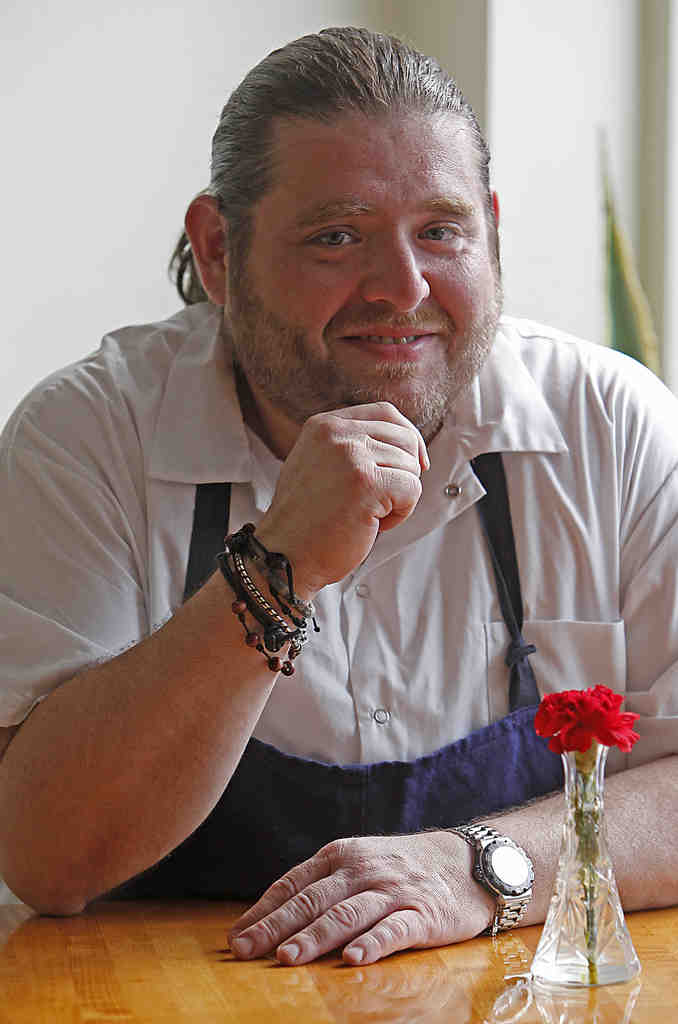
Pascual “Pat” Cancelliere in 2011.
February 2016: Downey’s, which opened in 1976 at Front and South Streets, closed amid tax problems. … The posh Le Castagne at 1920 Chestnut St. (now Veda), closed after 14½ years; executive chef Michael DeLone now owns Michael Coastal Italian Grille in Collingswood.
February 2021: “Ty” Bailey, who hosted countless romantics over 28 years at the Knave of Hearts on South Street before it closed in 2003, died of complications related to heart surgery at age 69. … The month’s roster of openings included the food hall at Live! Casino & Hotel in South Philadelphia and Stove & Tap’s location in downtown West Chester.
Let’s be honest, watching this year’s Super Bowl is bound to bring on mixed feelings, apathy, and thoughts of what was and what might have been.
The best salve for that pathos? Good food.
Thankfully, we live in a city that is practically unmatched in its culinary prowess, especially when it comes to foods that pair well with pigskin.
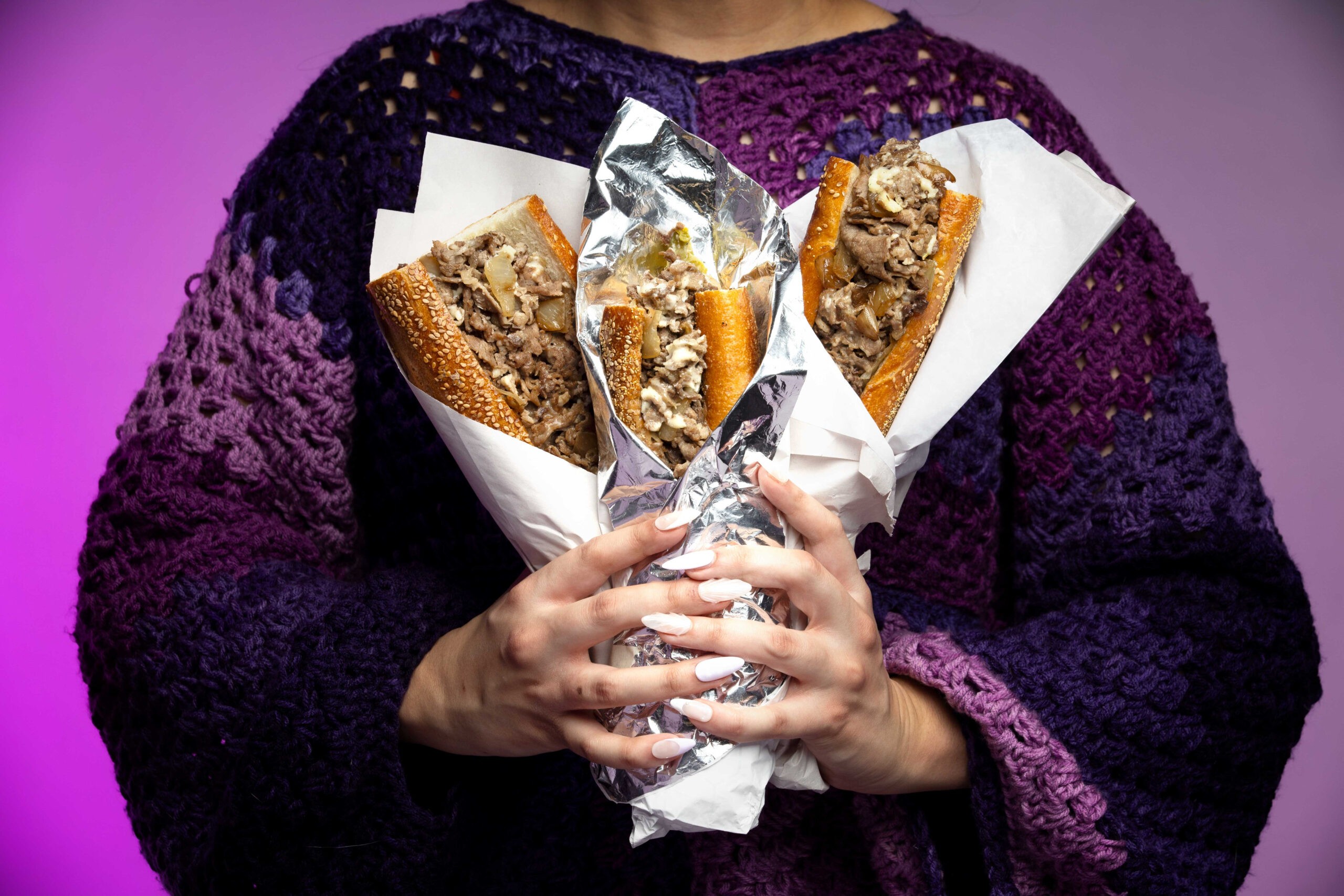
In the last year, The Inquirer food team assembled guides to the area’s best cheesesteaks (whether consumed on the spot or delivered to your door), hoagies, wings, and tomato pie — all prime suspects for your Super Bowl spread. If that doesn’t appeal, we have options for party trays and barbecue, too, plus places to stock up on good beer and wine.
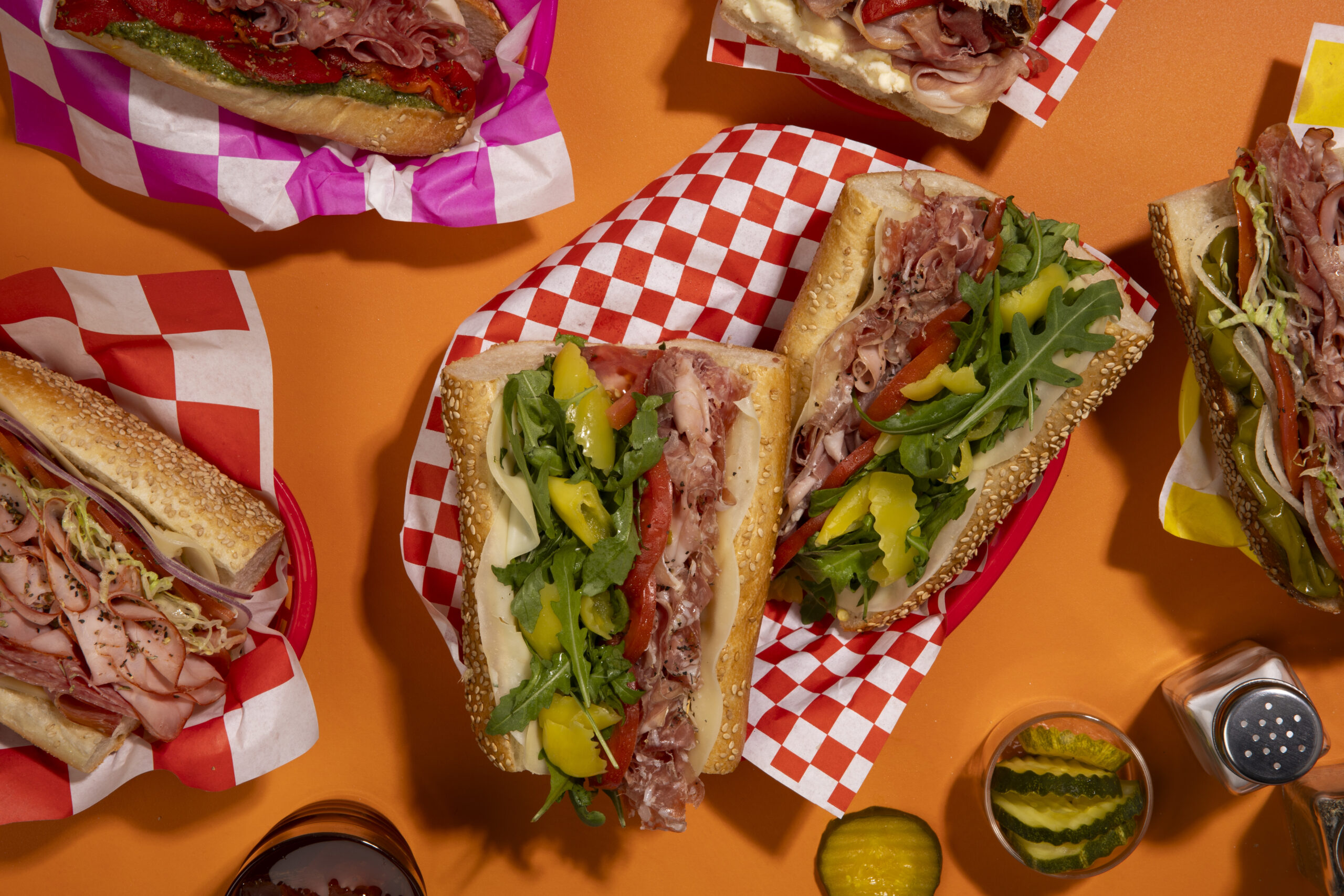
Hoagies photographed in the Philadelphia Inquirer studio on Tuesday, Jan. 28, 2025 in Philadelphia.
Hoagies
Arguably the city’s true sandwich star, a hoagie provides a better-balanced meal — hey, there’s usually some veg in there! — and we have so many spots that do them really, really well.
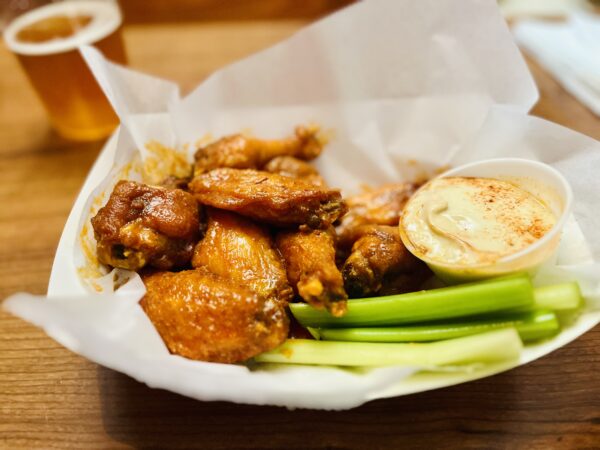
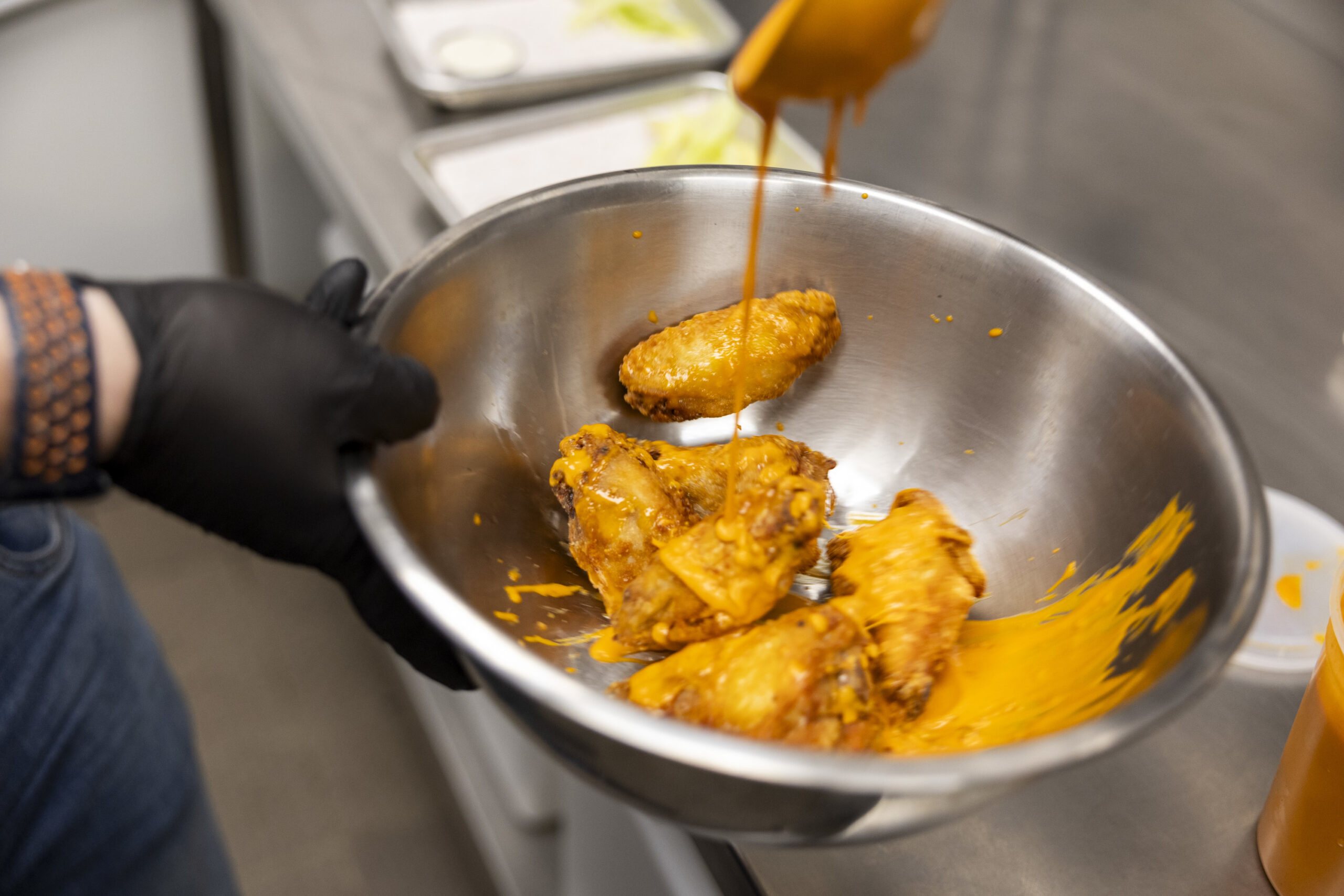
The Valentina Buffalo wings at Hi Lo Taco Co., on Friday, Oct, 31, 2025
Wings
The end of football season may be the unofficial end of wing season, too. Whether you like them sauced in traditional Buffalo or something funkier, we have many recommendations.
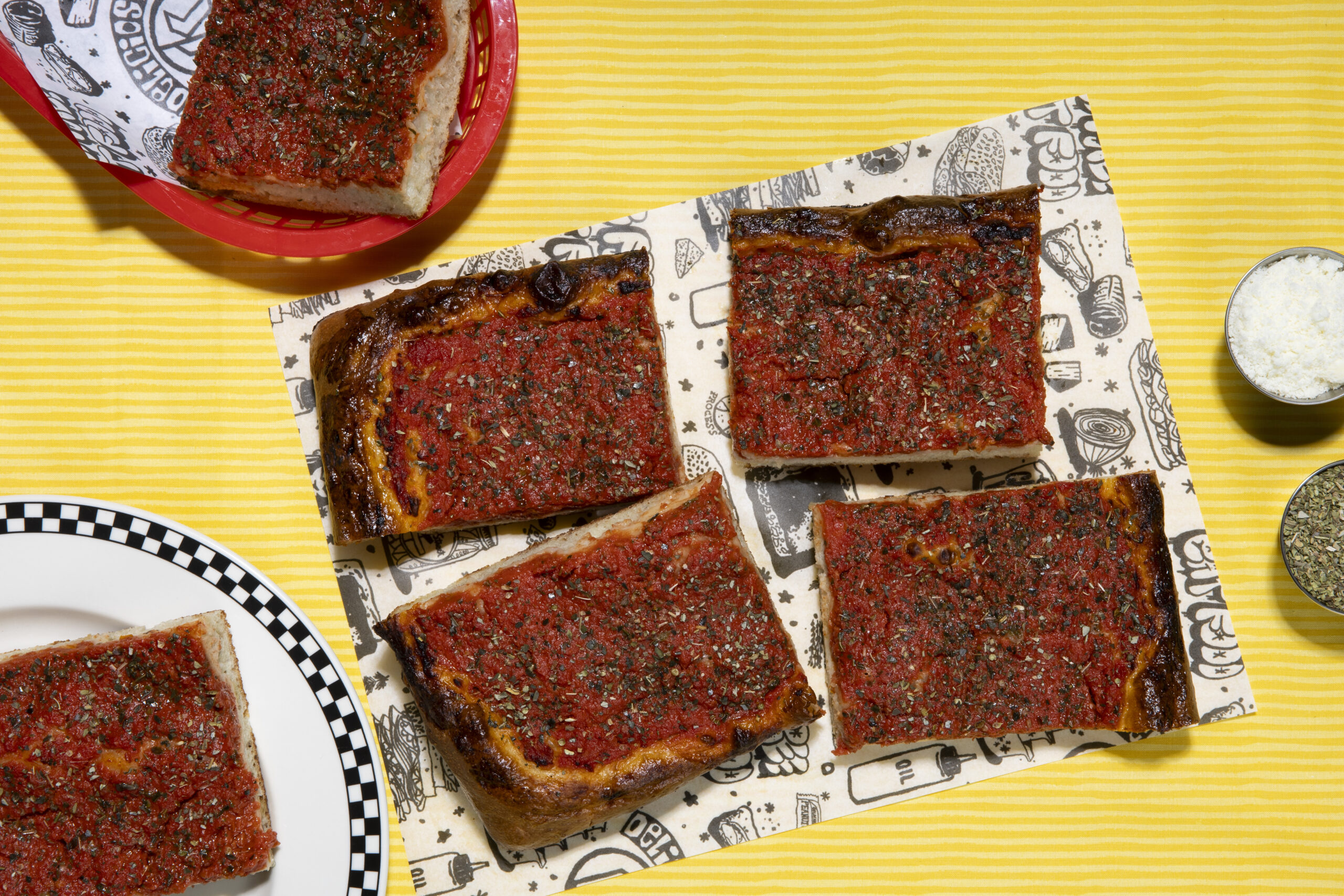
Tomato pie from Liberty Kitchen photographed at the Inquirer studio on Thursday, March 6, 2025 in Philadelphia. Food Styling by Emilie Fosnocht.
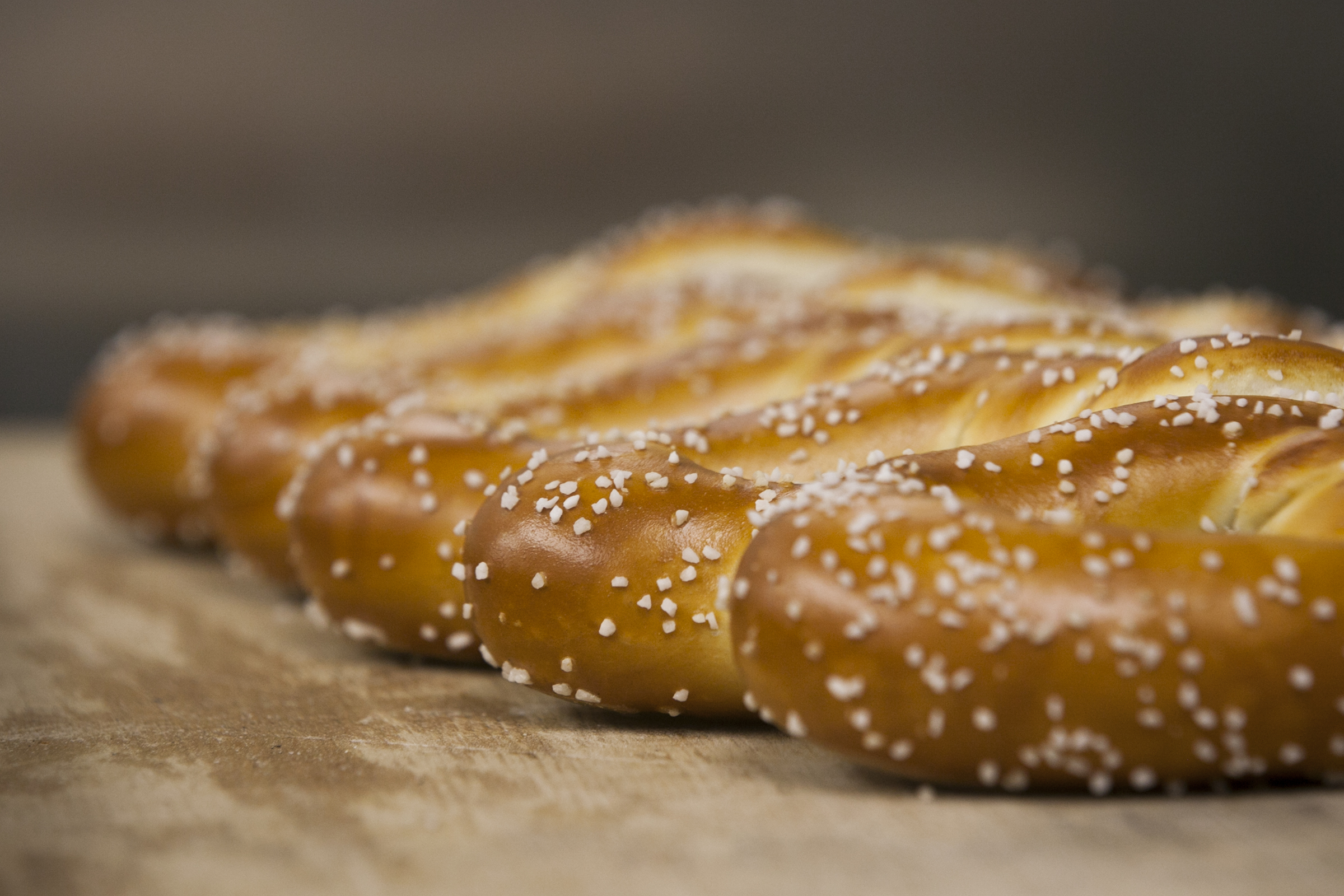
Freshly baked soft pretzels cool at Philly Pretzel Factory headquarters in Bensalem, Pa.
Party trays
Want variety on a platter, without doing any work? Order a party tray, in iterations savory or sweet, from one of these 15 area operators.
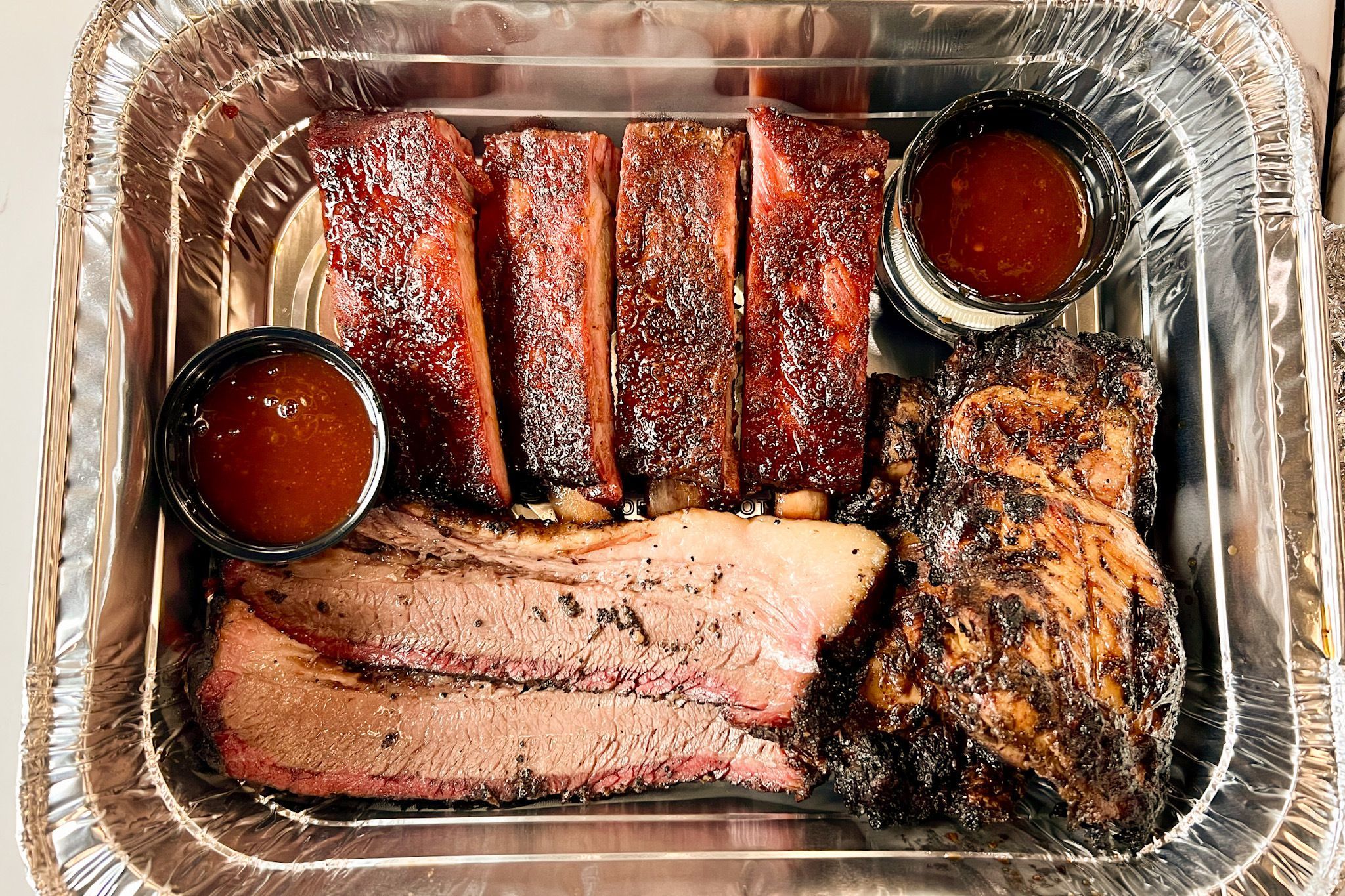
A platter including pork ribs, brisket, and jerk chicken at Big Swerve’s BBQ, 201 Broadway, Westville, on May 22, 2025.
Barbecue
Perhaps meat is set to rule your Super Bowl feast. If so, the Philly area’s small but mighty barbecue scene has you covered.
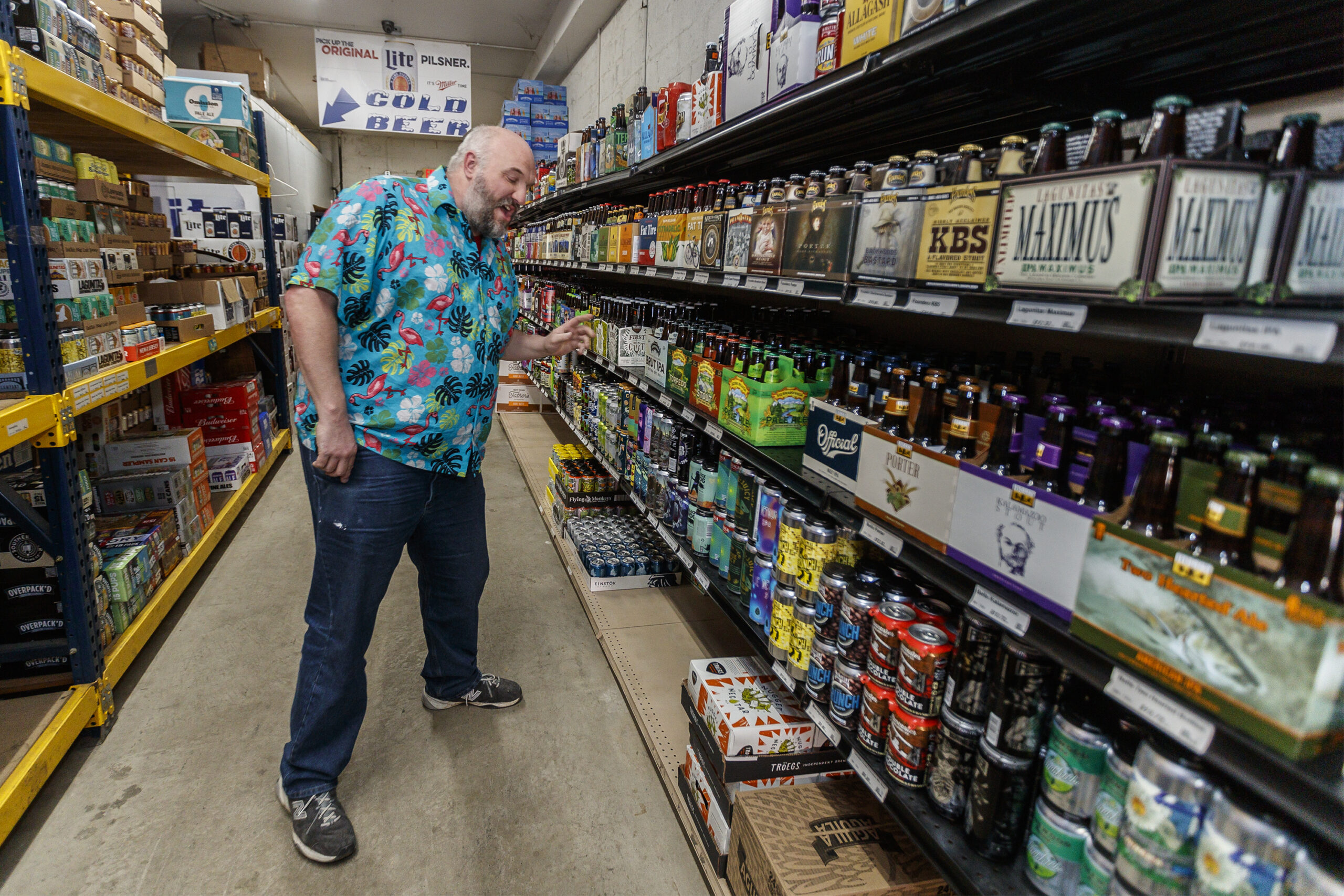
At East Falls Beverage, Gerald Berger looks over the large selection of craft beer that is offered by the bottleshop, on March 25, 2019.
Drinks
What gameday would be complete without a liquid accompaniment (and something to drown your sorrows)? We have you covered for great bottle shops in the city and the suburbs, whether you’re drinking beer or wine.
In Philly’s bustling, pop-up-riddled bakery scene, Dead King has some of the most idiosyncratic hours out there: It’s open just twice a week, from 4 to 6 p.m. Thursdays and 10 a.m. to 1 p.m. Saturdays. Perhaps as a result, one often needs to brave a long line that snakes through the numerous warehouse spaces inside Manayunk Timber, which houses the bakery. (If you just want sourdough or pizza dough — both excellent — and you live in parts of Northwest Philadelphia, you can subscribe for bread delivery.)
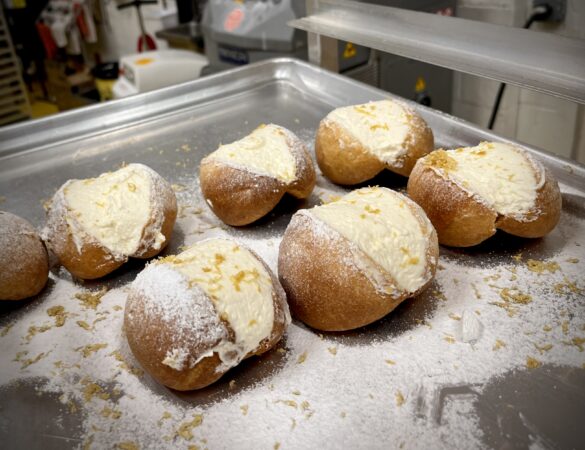
I was rewarded for my pains on an icy Thursday afternoon by a nearly empty parking lot and no line at all. There were plenty of rosemary focaccia slabs, tomato pie slices, and olive-twisted baguettes to be had, plus loaves of plain, cinnamon raisin, and jalapeño-cheddar, saucer-sized chocolate chip cookies, and cream cheese-iced spice cake squares. And that maritozzi? I polished it off in minutes, not taking nearly enough time to savor its buttery brioche cushion, tangy labneh topping, and the bright burst of lemon curd at the center. Oh well. I’ll just have to go back next week. Dead King Bread, 5100 Umbria St., deadkingbread.myshopify.com
— Jenn Ladd
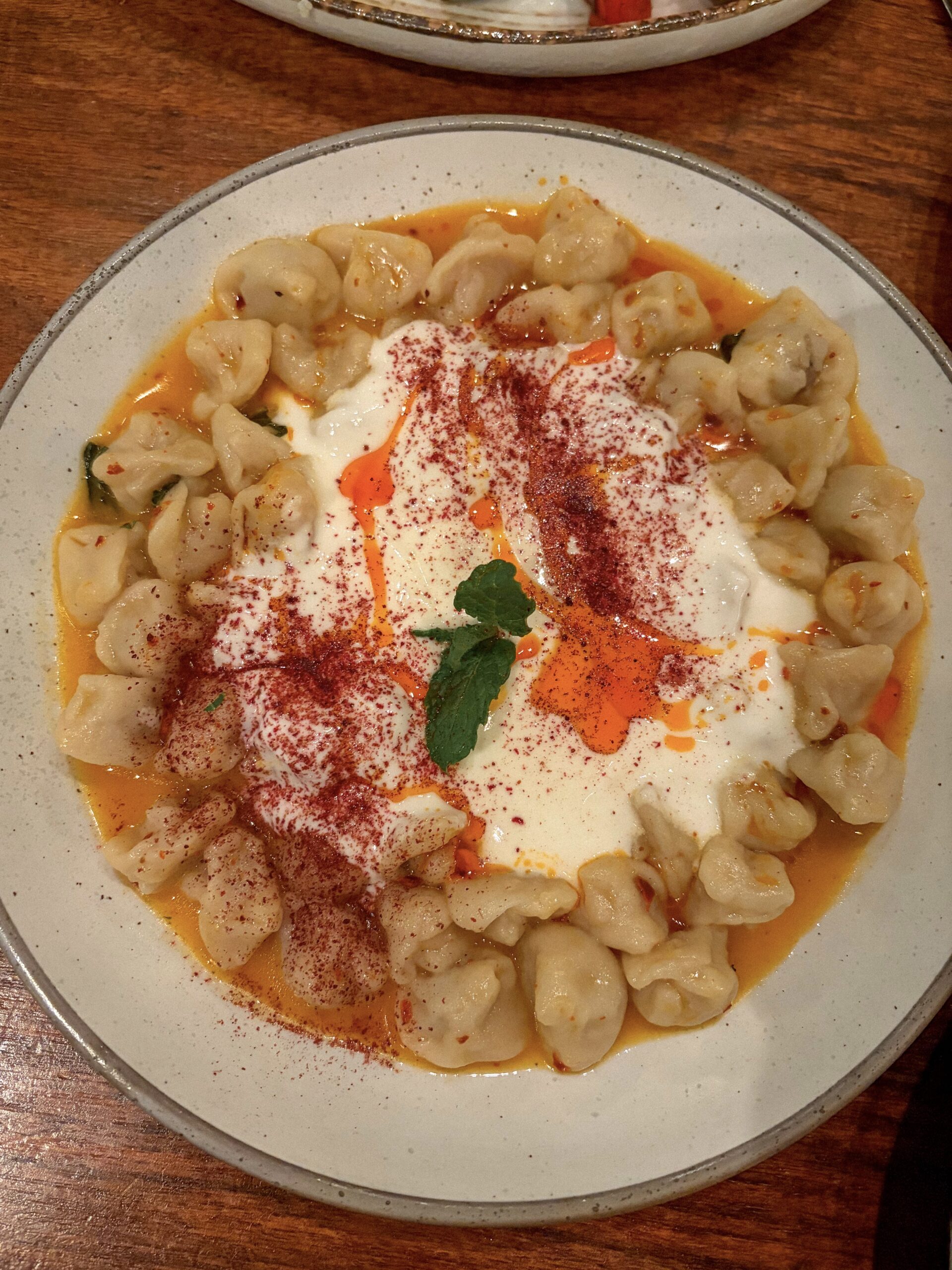
A plate of Manti served at Pera Turkish Cuisine in Northern Liberties.
Manti at Pera Turkish Cuisine
Manti holds a special place in my heart. It’s the dish my family eats when I touch down in Istanbul for my annual trip to Turkey. The second the plates land on our table at Aşkana (one of my favorite restaurants in the city), the ceremony begins, signaling to everyone in the dining room, “This family has reunited!”
Manti is also the dish my mom makes best. Whenever she has guests over, this is what you’ll find on the dinner table. It’s a labor-intensive dish, generally a family affair: one person makes the dough, another prepares the filling, and several fill and fold the dumplings. It’s popular across Turkey, Armenia, and Uzbekistan, but the version served at Pera reminds me of the recipe I grew up with: small, tender dumplings filled with ground lamb — pinched to look like little stars — topped with garlicky yogurt and spiced butter. Is it better than my mom’s manti? I’m obligated to say no. However, it comes close. Pera’s manti is textbook, with each bite containing the sacred combination that makes this dish a comfort meal: lamb, yogurt, and butter. Pera Turkish Cuisine, 944 N. Second St., 215-660-9471, peraphiladelphia.com
— Esra Erol
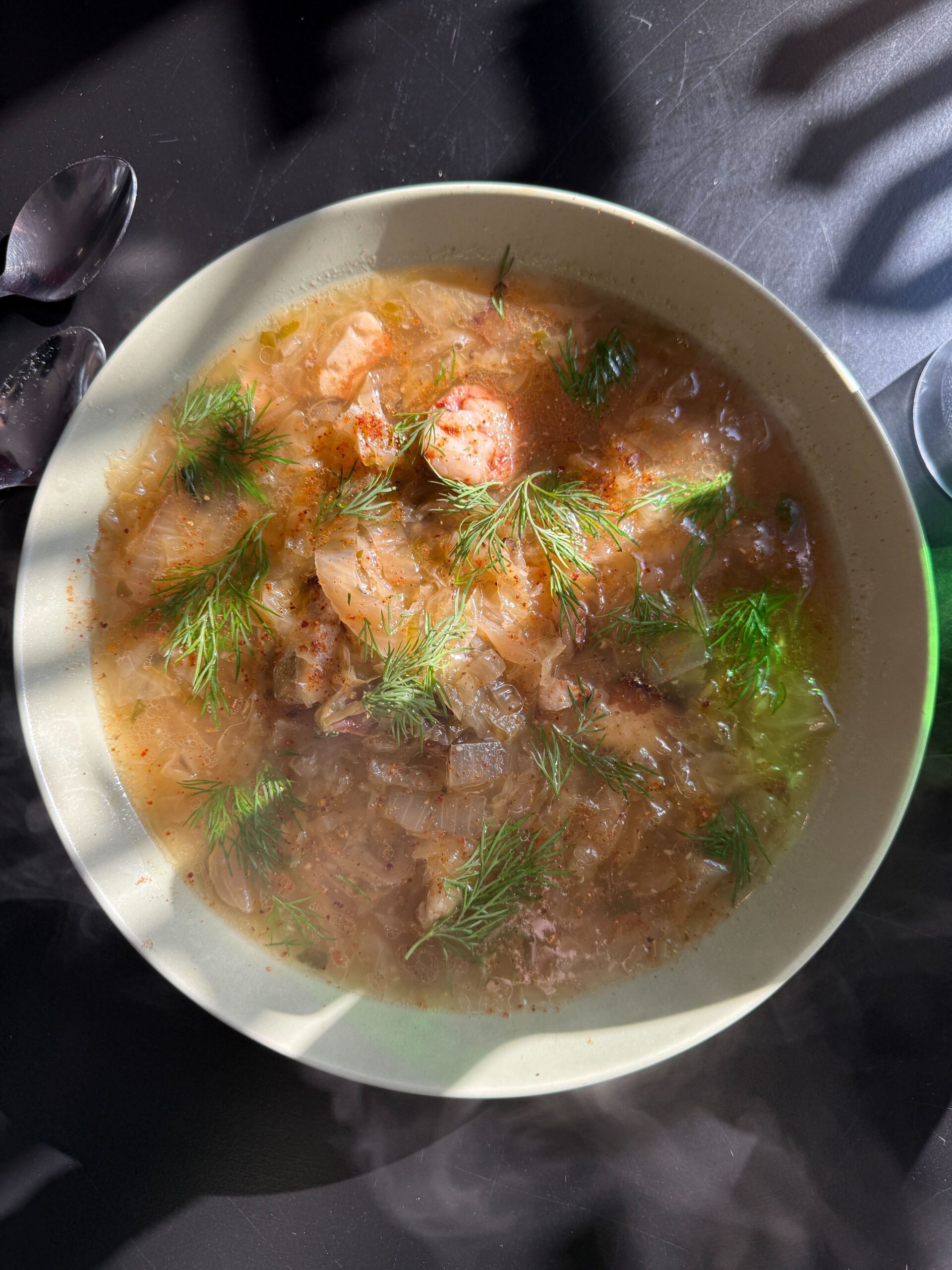
Kapusniak at Heavy Metal Sausage
Kapusniak (or sauerkraut soup) at Heavy Metal Sausage.
This week, the balm that soothed my frozen body, attained after scaling the mountainous snow piles of South Philly, was a bowl of soup at Heavy Metal Sausage on Thursday. It was kapusniak, a sauerkraut soup with mushrooms that’s currently on their lunchtime specials menu. Tangy, hearty, and lightly smoky, it instantly transported me from the butcher shop to Poland, where I once spent the weeks sipping sour soups. Heavy Metal Sausage Co., 1527 W. Porter St., heavymetalsausage.com
— Kiki Aranita
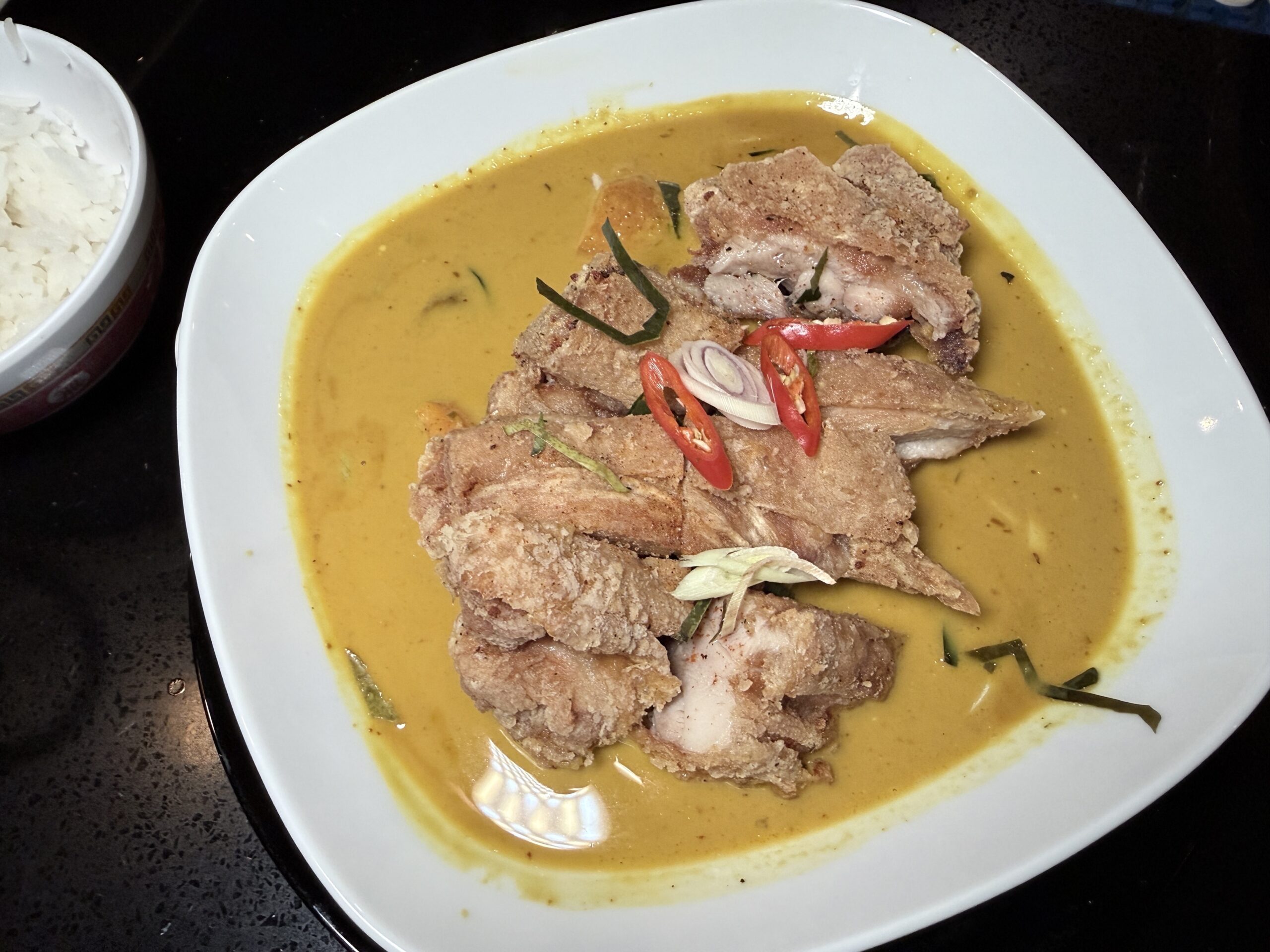
Fried chicken curry at Gabriella’s Vietnam
Fried chicken curry at Gabriella’s Vietnam
As an antidote to the bitter cold, chef Thanh Nguyen has just put a selection of curries on the menu at Gabriella’s Vietnam, and her fried chicken curry may be the very best version of the dish found in Philly. The chicken is tender, its skin crispy, and the curry meets a Goldilocks ideal — not too thin, not too thick, balanced in creaminess and savoriness, with a touch of spice. It’s extraordinarily restorative when spooned onto steaming hot rice. Gabriella’s Vietnam, 1837 E. Passyunk Ave., 272-888-3298, gabriellasvietnam.com
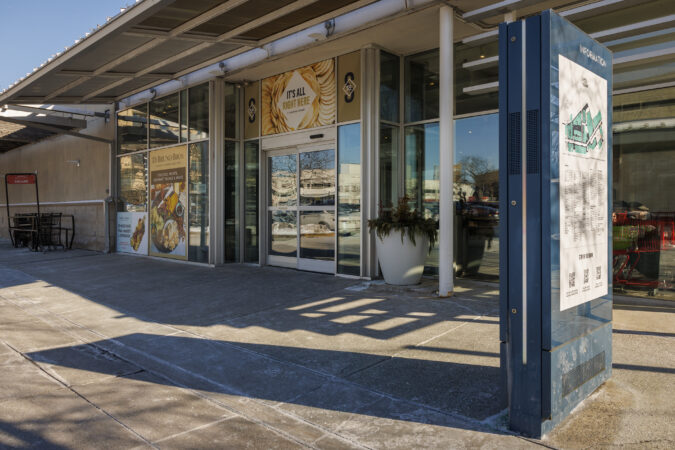
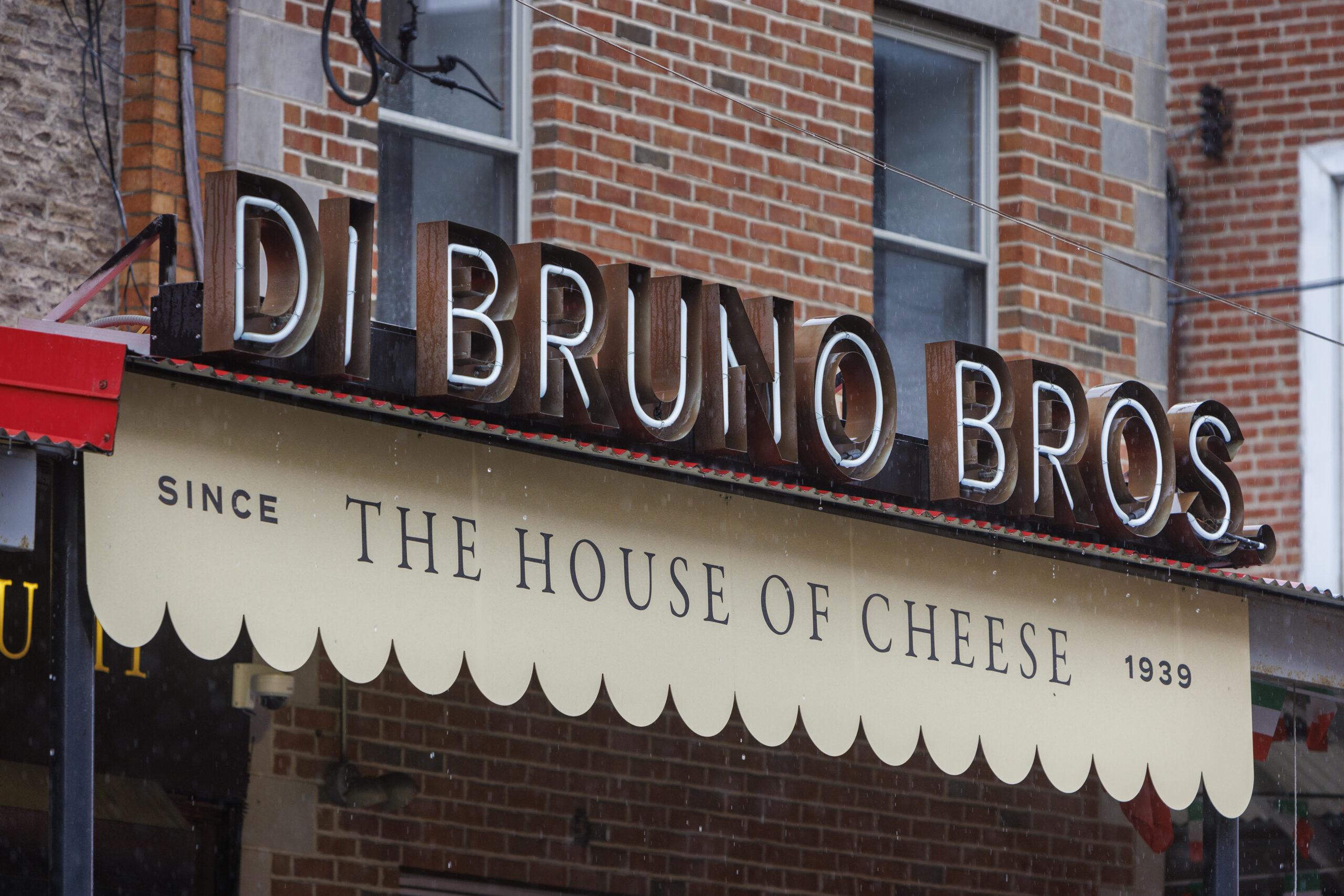
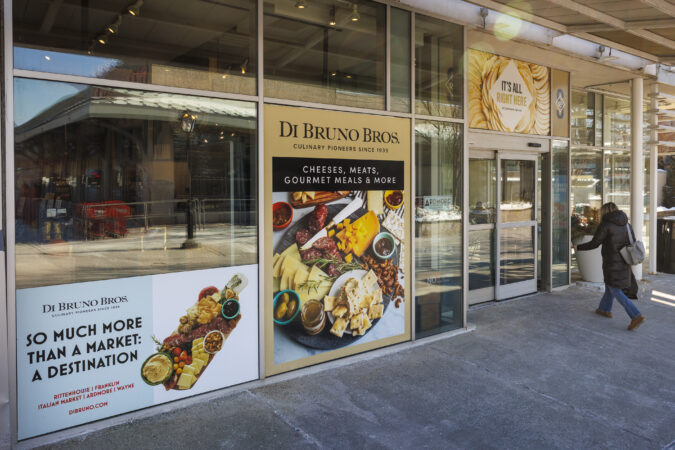
As word spread Friday that upscale grocery Di Bruno Bros. would shutter three of its five grocery stores in the coming weeks, many customers mourned the imminent loss but added they were unsurprised, citing a noticeable change in quality over the last few years.
Xavier Hayden, a lawyer who lives in Narberth, said he stopped shopping at Di Bruno’s a few years ago when he noticed changes in the rolls, the bread, and other items that gave Di Bruno’s its strong reputation. “The quality went down, the taste went down,” Hayden said. “Why am I going to pay upmarket prices for a midmarket product?”
Hayden remembers childhood trips to the Italian Market to visit the original Di Bruno Bros., which will remain open, along with its bottle shop and the store at 18th and Chestnut Streets in Rittenhouse. Its Ardmore store will close Feb. 4, while the location in Wayne as well as the shop at the Franklin Residences at Ninth and Chestnut Streets will close Feb. 11.
Di Bruno’s, established in South Philadelphia in 1939, had become a major player on the Main Line grocery scene since opening at the Ardmore Farmers Market in 2011 and in Wayne’s Strafford Shopping Center in 2021 to complement its two stores in Center City.
Now, the company is pulling back to focus on the Italian Market and Rittenhouse locations and its online business.
The original Di Bruno Bros. location at 930 S. Ninth St. is one of two stores that will remain.
The closings will affect 59 employees, said Sandy Brown, executive vice president of Di Bruno’s parent company, Brown’s Super Stores. She said the workers have been offered new jobs with the other Brown’s stores in the area, including 10 ShopRites and two Fresh Grocer locations.
On social media, some Di Bruno’s patrons attributed a change in the store’s offerings to Brown’s, which bought an ownership stake in the company in early 2024 from the Mignucci family, which had led Di Bruno’s expansion. (It’s a complex arrangement; while Brown’s owns the stores, the Di Bruno’s brand and its packaged-product portfolio were later acquired by Wakefern Food Corp., a New Jersey-based supermarket cooperative that includes the Brown’s stores.)
In an email exchange Friday, Sandy Brown pushed back on the Brown’s company’s role in the closures, saying Di Bruno’s was “very distressed” when her group invested. “We were the only interested party due to the numerous challenges they had,” she said. While many commenters online are blaming her company for the closings, Brown said, “I don’t think they realize the status of the brand at the time of transition.”
Brown said the company had worked to bring back business that was lost prior to the purchase, “but that did not occur.” She added that her company had a plan to sustain Di Bruno’s but declined to share it at this time.
Main Line customers said they were sad to see Di Bruno’s retrenchment from the suburbs, though several said the stores had slipped in recent years.
“It used to be spectacular, delicious … extra special,” said Dana Reisbord, a professor who lives in Ardmore. Reisbord said she used to stop into Di Bruno for a chicken parmesan sandwich and other goodies. Now, she’ll venture into the city if she’s really craving Italian fare. Di Bruno’s fare is too expensive to justify, she said, having “lost that special touch.”
Diane Fanelli, a retiree who lives in Overbrook, visits the Ardmore Farmers Market Di Bruno’s at Suburban Square a few times a month. She said she would be sad to see the store go. Although she did notice a drop-off in quality, she said it wasn’t significant enough to send her shopping elsewhere.
“Their food is expensive. It’s very good, but it’s expensive, and everybody’s watching their budget,” said Mike Manley, a cartoonist from Upper Darby who used to patronize the Ardmore store when he was in town for doctors’ appointments.
It wasn’t necessarily the high-end products that kept Manley coming back. It was the customer service. He liked chatting with the cheesemongers and enjoying samples. Di Bruno’s reminded Manley of his old days in West Philadelphia, when he would regularly patronize Koch’s Deli, known for friendly faces behind the counter.
“That gains you loyal customers, but I don’t know if corporate appreciates that,” he said. (The stores had lost some longtime employees since the Brown’s Super Store purchase.)
Earlier this week, Di Bruno notified two landlords that they would be shutting down, said Douglas Green, a principal at MSC, who handles real estate for Kimco Realty Corp. (owner of Suburban Square) and Korman Communities (owner of the Franklin). A representative of Equity Retail Brokers, which leases at Wayne’s Strafford Shopping Center, declined to comment.
“Operations have not been what they were when the Mignucci family owned the business, and this outcome shouldn’t be a great surprise to most people,” Green said. “It’s a sad day for a very proud Philadelphia brand.”
He suggested that Di Bruno had expanded into too much space at Suburban Square “and affected [Kimco’s] ability to diversely merchandise the farmers market. It felt like they spread themselves too thin, and the quality suffered.”
Speaking specifically of the Franklin and Suburban Square locations, Green said both locations are in areas with “pent-up demand and limited supply, and there should be tremendous interest.” He said Kimco, with MSC, wants to “re-merchandise” the farmers market and Di Bruno’s spaces.
“This gives us a bit of a blank canvas,” Green said. “There are cuisine types not currently represented that we’re excited about bringing to the project. Hopefully, the end of this chapter opens the door to new concepts.”
Kiki Aranita stepped into Craig LaBan’s shoes to review Uchi and followed similar critical practices — for instance, eating multiple meals over a period of time and making reservations under aliases to avoid detection. The Inquirer pays for all travel and meals eaten by its journalists.
When the fast-casual restaurant industry seized on the once-unstoppable poke trend, control over the traditionally composed dish — once marinated and prepared with a singular chef’s vision — transferred to diners, who were now free to decorate their raw fish salads with everything from carrot shavings to chicken.
A similar dynamic is at play in the omakase at Uchi, the upscale Austin-based sushi purveyor that opened a location in Rittenhouse in November. Here, the guest — not the chef, as is tradition in omakase — informs which precious dishes are presented in the restaurant’s trademark “somakase,” in which customers set a budget for their multicourse meal, spelling out their likes and dislikes. (The “s” in somakaseis for “server,” since they helpguide the order.)
You might say, “I like salmon, let’s have more salmon tonight.” The chef behind the counter, illuminated by the glow of refrigerated cases housing sushi toppings, prepares for you a number of courses selected from Uchi’s menu based on your feedback, peppering in the restaurant’s signature dishes.
The hot rock at Uchi in Philadelphia, Pa., on Thursday, Jan. 8, 2026.
The somakase is an adaptation of a traditional Japanese omakase (or “I leave it to you”), which also makes Uchi the perfect venue for those who want sushi but want to stay in their comfort zone.That appeal is furthered by its other “omakase” options: a set menu without the promise of customization, a vegetarian option, and a happy-hour omakase for two, with nine courses for $120.
Even forgoing an omakase, Uchi’s individual dishes defy culinary conventions. Because the restaurant’s approach is divorced from any notion of traditional Japanese cuisine, the choices and customization possibilities for your experience are vast. The food — and the rest of a night out here — are simply Japanese-inspired fusion.
Specials change constantly. Half the menu had completely flipped with each of my three visits, over the course of almost two months. There were some repeated duds. Both times I ordered the “ham and eggs” roll, the rice was gummy. The once-probably-crispy katsu pork was soggy and reminiscent of Chicken McNuggets; its beer-mustard dipping sauce seemed silly and overwrought. Why force these ingredients to be sushi?
The Hama Chili at Uchi in Philadelphia, Pa., on Thursday, Jan. 8, 2026.
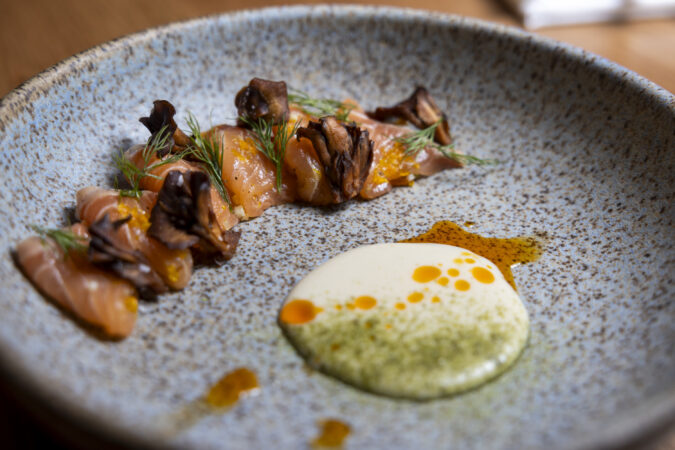
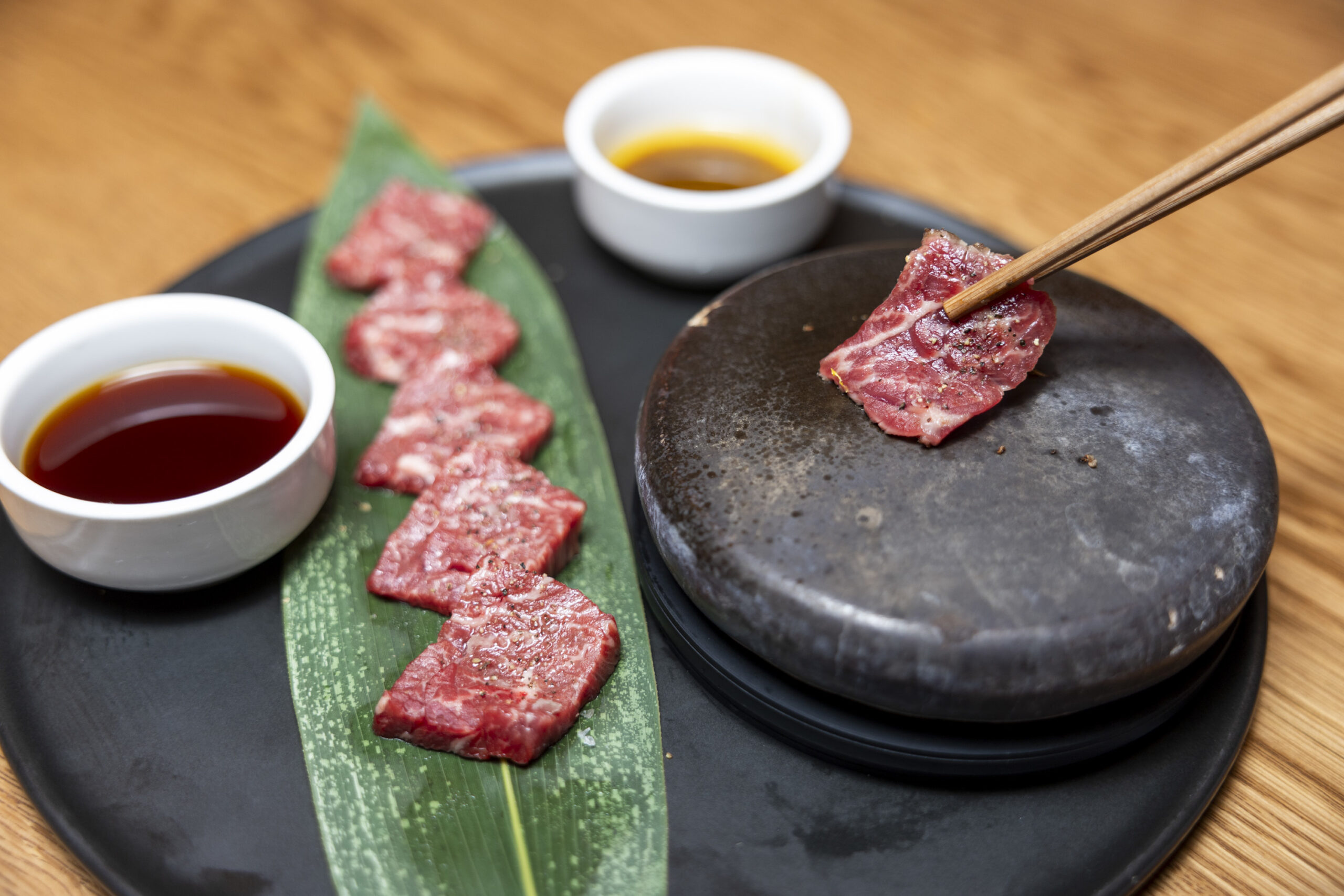
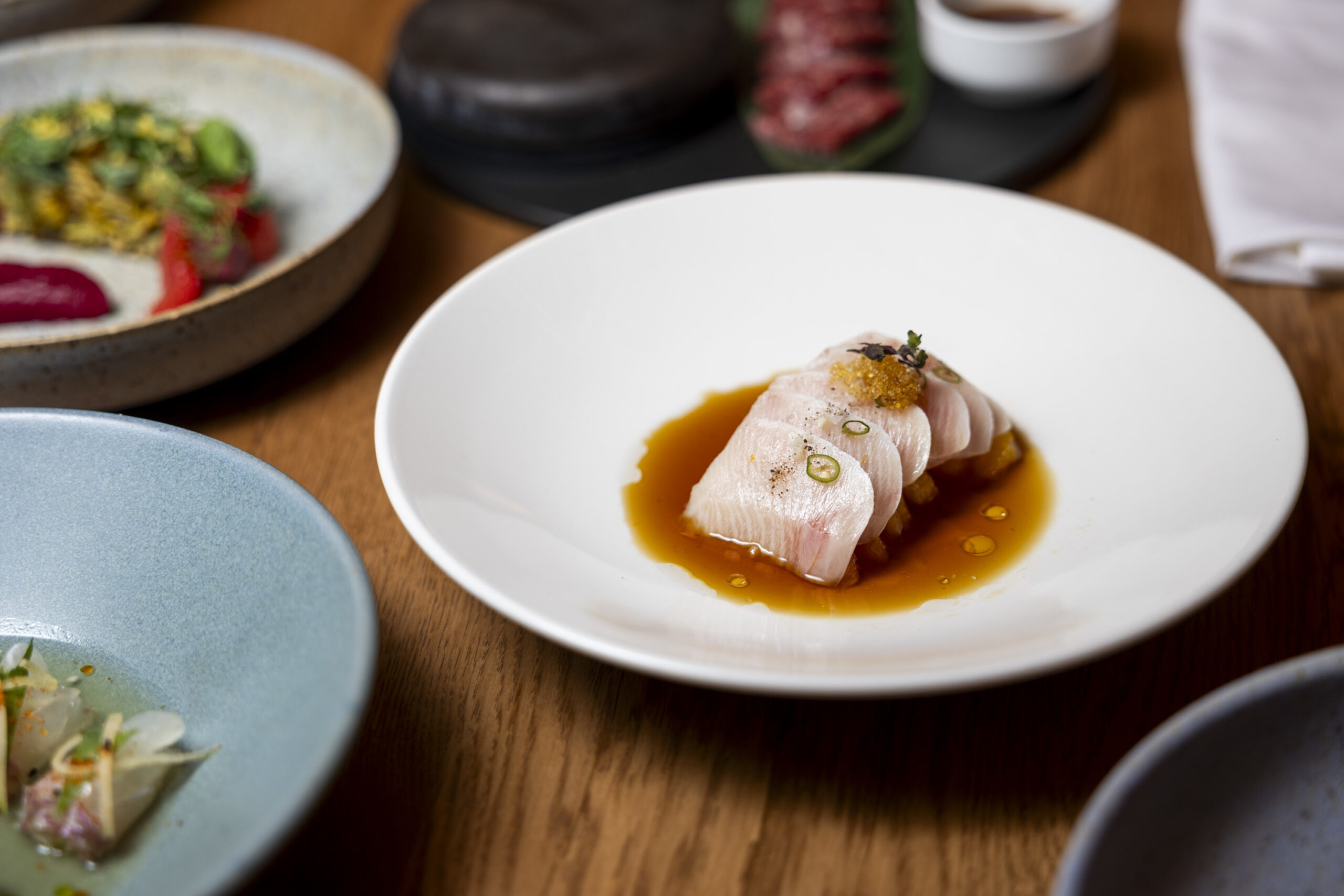
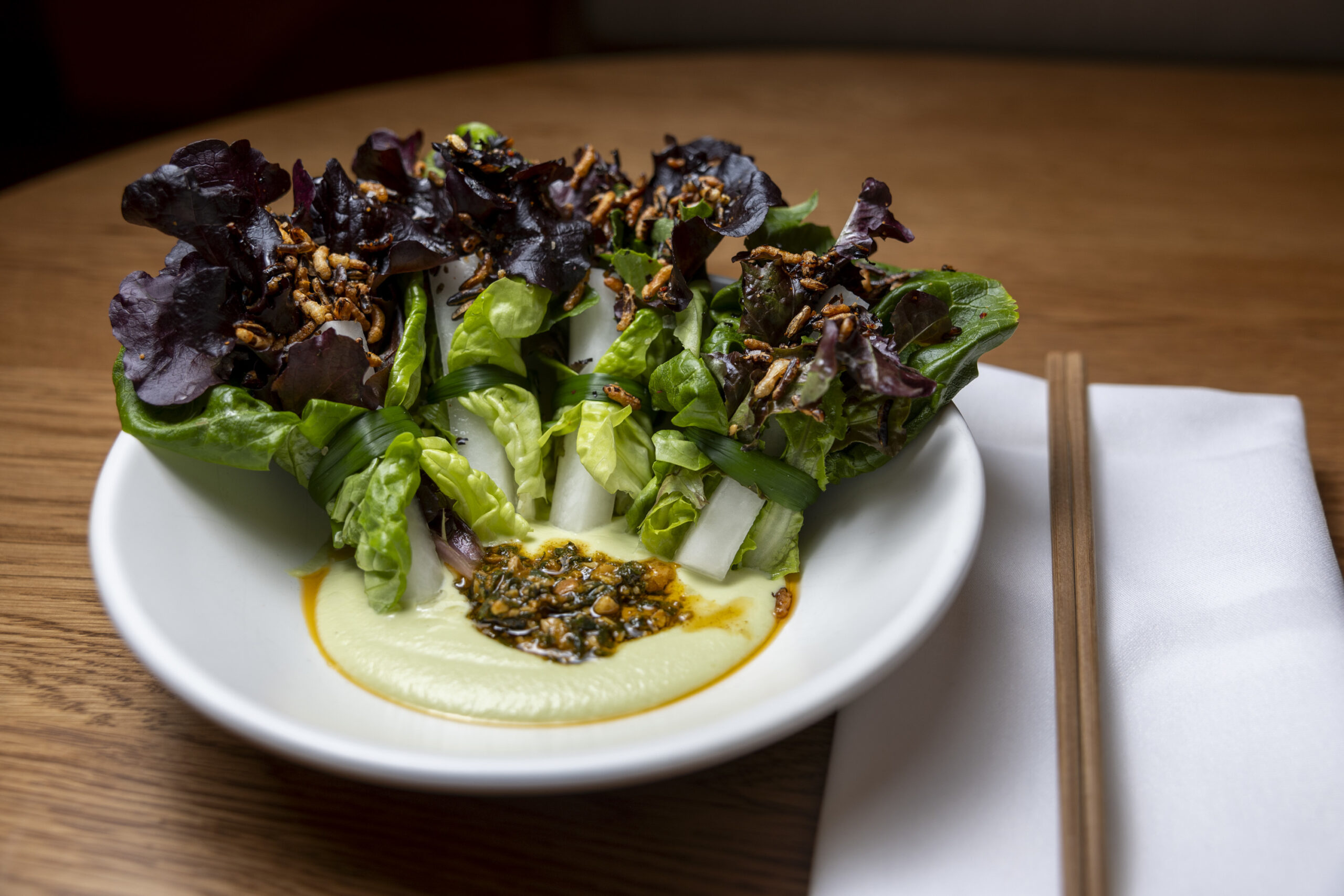
The big drawis Uchi’s core menu, including the sake tom kha, a muddling of Japanese and Vietnamese flavors. It’s a lovely balance of creamy coconut, crunchy candied maitakes, and lovely, unguent salmon. The Uchi salad consists of beautifully bundled lettuces sprinkled with puffed rice. The “hama chili” of yellowtail sashimi swims in ponzu with fresh Thai chiles and orange. And a sizzling hunk of Wagyu is presented on a blazingly hot rock with sidecars of shio koji butter and maple-laced ponzu. The rock is gimmicky, but it’s also fun. Uchi’s greatest hits really hit.
Uchi’s ownership group, Hai Hospitality,has been on an opening rampage, fueled by the 2020 investment of Denver-based private equity firm. “Uchi” means “home” in Japanese. It pays tribute to Uchi’s first location, which chef Tyson Cole opened in 2003 in a little red house in South Austin. Cole has earned scores of accolades over the years, including a James Beard Foundation Award for Best Chef: Southwest in 2011.
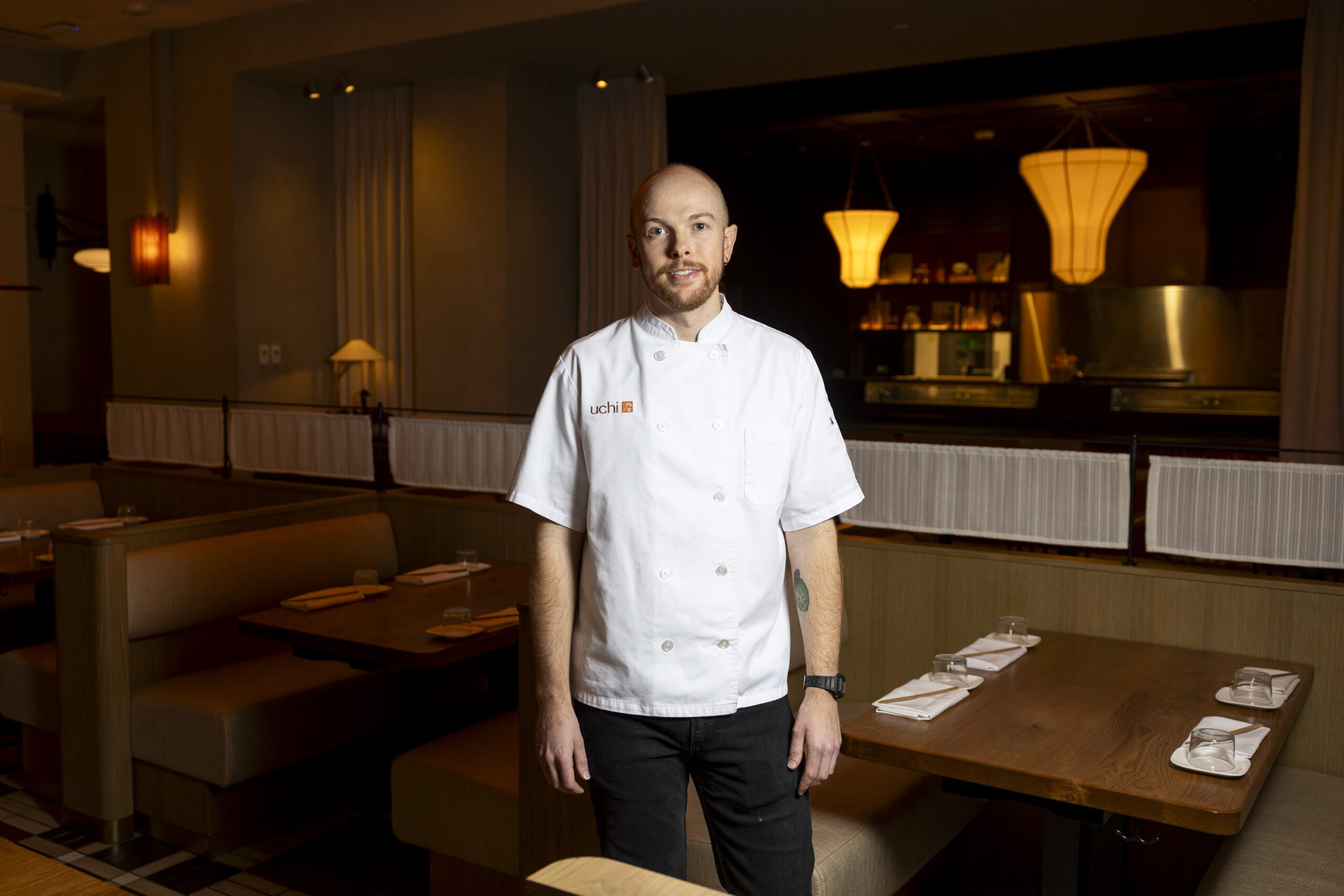
Uchi Philadelphia’s chef de cuisineFord Sonnenberg came up in Uchi’s Austin empire, which also includes steak house- and izakaya-inspired spinoffs. The 29-year-old chef has never been to Japan, and moving here for the job is his first time in Philly, save for a couple of events leading up to the opening.
Chef Ford Sonnenberg, poses for a portrait at Uchi in Philadelphia, Pa., on Thursday, Jan. 8, 2026.
Each Uchi location (soon there will be 11) makes some city-specific dishes. Uchi Philadelphia’s tributes miss the mark. A Wagyu-cream gyudon — a clever way of using the excellent Australian Wagyu that doesn’t get sliced for the main menu’s nigiri — is meantto evoke a cheesesteak. But the koji cream is overwhelming when paired with the fatty Wagyu, and the diner must relyon an oversize clump of turnip kimchi to cut through the richness. A broccoli rabe dish made with sesame milk, shishito relish, and pickled red pepper was overwhelmingly salty and unbalanced,an unsuccessful homage to a roast pork sandwich.
Other playfuldishes also fell flat. After biting into the maguro goat — tuna draped over apple slices with a tiny plume of goat cheese and whole pumpkin seeds — my dining companion commented, “I don’t want to eat goat cheese on tuna again.” (This was a rare example of an Uchi classic that flopped.)Curled to one side of an oversize bowl, the bok choy with tomato and cashew felt like the product of a competent focus group. Creamy? Check. Crunch? Check. A hefty price tag ($18)? Also check.
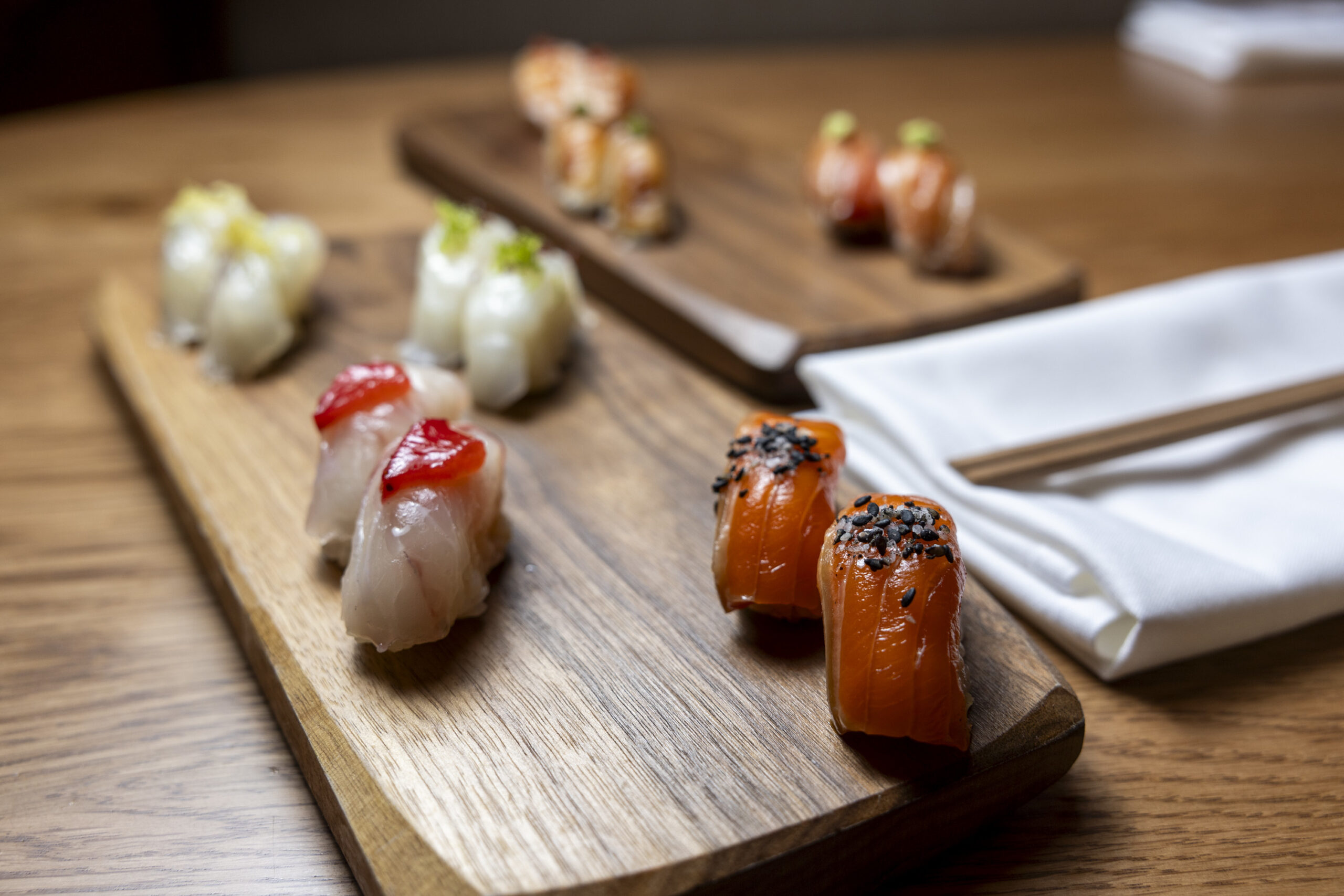
Nigiri at Uchi in Philadelphia, Pa., on Thursday, Jan. 8, 2026.
After subpar specials, my sinking spirits soared when presented with sashimi. Pristine slices of kanpachi came in a wooden box, protected from a bite of snow on artfully arranged ti leaves and a generous sprinkling of caviar-esque finger lime and flake salt. Nigiri is similarly restrained: silkenslicesof tuna brushed with tare and dotted with fresh wasabi, and buttery salmon splayed over a delicate finger of rice, its only adornment a thin shaving of radish.
This may be the key to optimizing your Uchi experience:The menu is vast, but stick to the classics and straightforward fish, and you’ll likely leave happy.
The Uchi salad at Uchi in Philadelphia, Pa., on Thursday, Jan. 8, 2026.
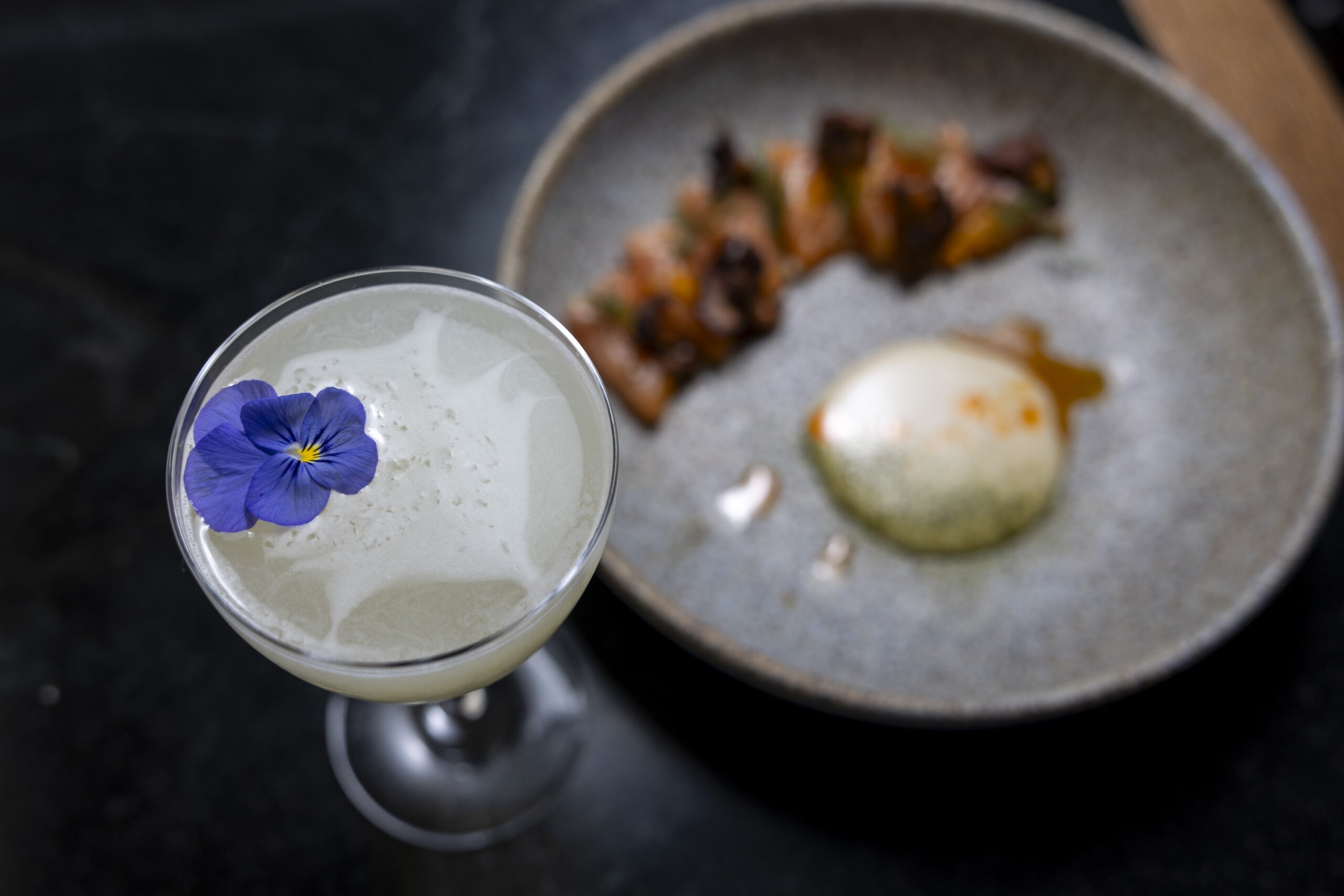
Uchi fares better when it comes todrinks, with some exceptions. The sake list is decent and servers were generally well-trained. The nikko martini, their version of a vesper martini, was spectacular, laced with savory umami bitters and decorated with cornichons and a pickled onion.
ButUchi’s adherence to traditions is haphazard. The tea selection and service were sorely lacking, consisting of tea bags steeped in lukewarm water, poured table-side into large, awkward mugs. If Uchi’s staff bothers to go through the ceremony of serving sake in a glass placed inside a wooden masu box to catch overflow — a Japanese gesture that signifies the generosity of a host — why not apply that same attention to detail to tea? Even switching to a loose-leaf brew would be an upgrade.
Desserts were well-thought-out exercises in layering flavors, temperatures, and crumbly-creamy textures. The cilantro granita on the jasmine cream dessert was both daring and delicious, and every other dessert I tasted — fried milk with vanilla custard and salted fudge, Thai tea okashi with mango and lime leaf — was simply stunning.
It’s possible to look at this restaurant purely through the lens of food, and it frequently sends out dishes that are very prettyand generally well-executed. But the fusing of different culinary traditions can create discordance on the plate, and that discordance is echoed throughout the restaurant.
A lychee martini with the sake tom kha at Uchi in Philadelphia, Pa., on Thursday, Jan. 8, 2026.
There are the enormous lanterns—lots of them,as if to signpost:“This is an Asian restaurant” — in a sleek, dark space that gets more illumination from its exit signs. Dining booths are flanked by pale wood-framed glass panes, evoking shoji screens. The design was executed by Hai Hospitality’s in-house design studio in collaboration with the architecture firm Zebra and local interior design studio Rohe Creative, a familiar name to astute Philly diners. (Rohe also decorated Dear Daphni, La Chinesca, Irwin’s, and many other vibey, immersive restaurants.)
At 4,900 square feet, the 148-seat restaurant is massive, but it doesn’t feel cavernous by virtue of how it’s cleverly subdivided into a bar, sushi bar, and dining room, which is packed with tables with thoughtful design flourishes like hidden cubbies to store menus in between ordering. Would that there were such a functional place to put one’s winter coats. The vast majority of diners on my visits were sitting on top of their jackets, making the high-end dining room feel like more like a Christmas party at someone’s house. (Oddly, this was the only time when I felt Uchi lived up to the meaning of its name.)
Service was consistently anticipatory and jovial, though unshakably corporate. Informing staff of my mild crustacean allergy meant that every dish was dropped with a standard short description plus the refrain “and no crustaceans,” even single-ingredient sashimi and dessert — thorough but tedious.
Dining area at Uchi in Philadelphia, Pa., on Thursday, Jan. 8, 2026.
Private equity has parachuted this Texas-born fusion sushi concept into Philadelphia at a curious time, in the midst of a proliferation of homegrown restaurants serving their interpretations of Japanese cuisine. Uchi is in the same neighborhood as Kissho House, and it’s steps away from Jesse Ito and Justin Bacharach’s dancerobot. Outside of Center City, more recent entries like Yanaga Kappo Izakaya, Nakama, and Javelin have put Philly in its heyday of interesting Japanese and Japanese-esque options.
I found that my enjoyment at Uchi was correlated with how much alcohol I consumed. The dinner where I tried several cocktails? Fantastic. One glass of wine and one glass of sake? Mixed feelings. Stone-cold sober? It was just OK.
This is not to say one has to imbibe in order to enjoy Uchi, but an excellent cocktail does smooth the edges. You can have a great time here if in good, raucous company. Order sashimi and all the desserts. And definitely get a couple of drinks.
Dinner daily, 4 to 10 p.m. Sunday through Wednesday, 4 to 11 p.m. Friday and Saturday. Happy hour is 4 to 6 p.m. daily.
Entrees $21-40, omakase menus $120 and up
Menu highlights: sashimi; hama chili; Uchi salad; sake tom kha; fried milk; jasmine cream
Drinks: There’s a robust menu of signature cocktails with sake integrated into the martinis. There’s also a handful of low-ABV and zero-proof mixed drinks, an international wine list, and a small, but decent sake list that leans heavily on offerings from Brooklyn Kura.
For restaurants, however, the cost of doing business has not come down. Labor prices are up. So are food prices, particularly beef. Rents continue to climb. But the old solution — raising menu prices — has become increasingly risky as owners worry about alienating customers who are already cutting back.
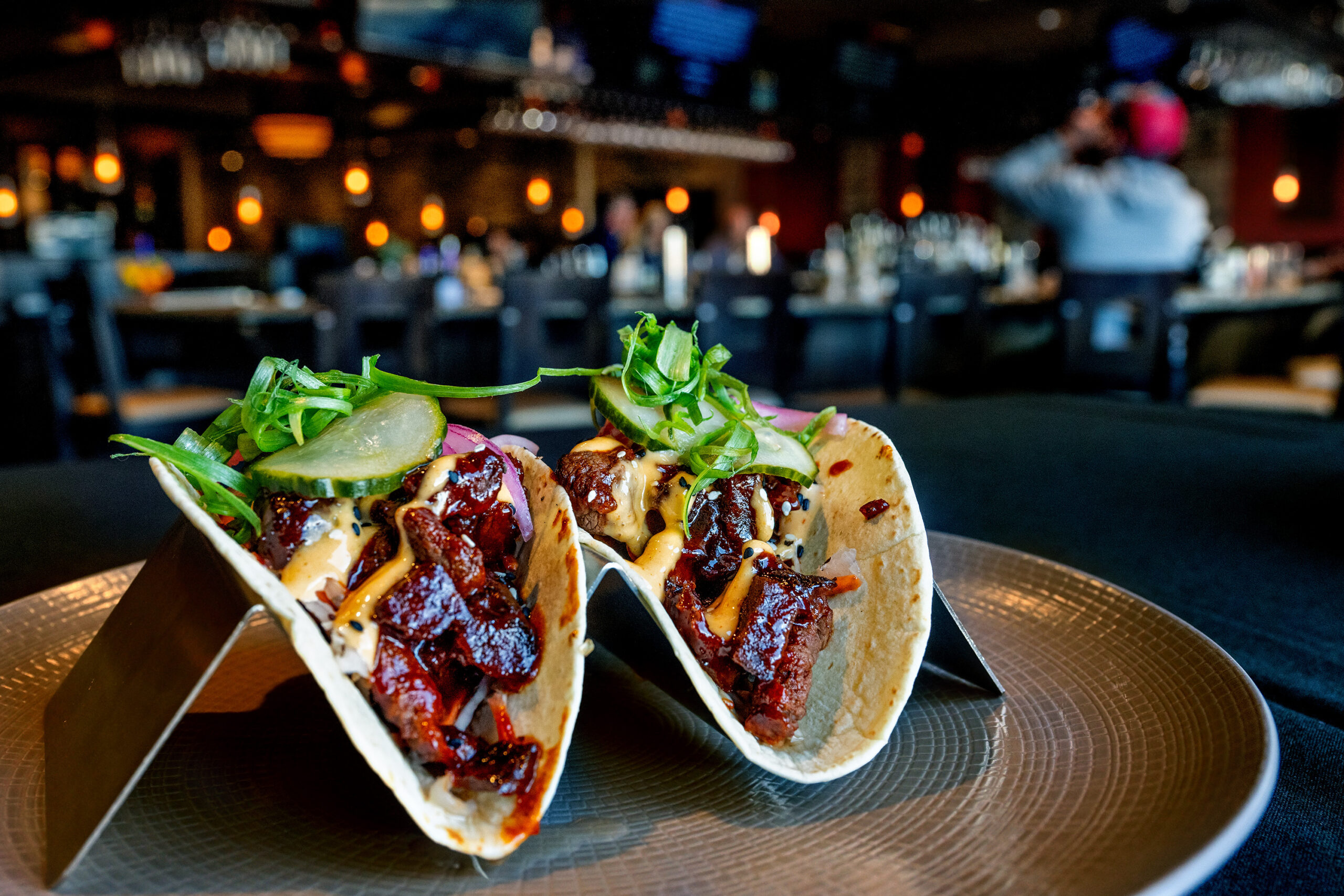
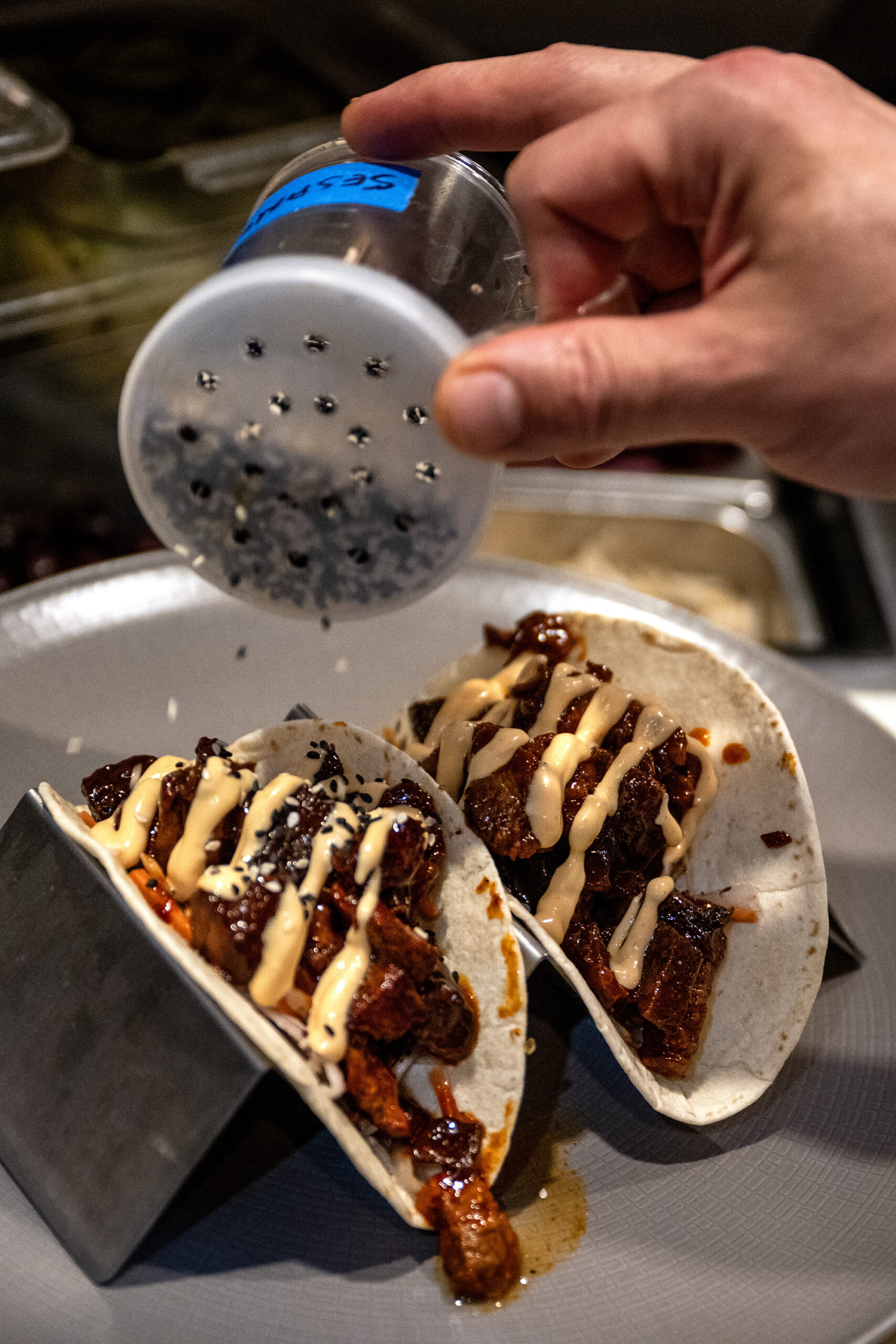
Korean tacos at Harvest Seasonal Grill are made with the trimmings of New York strip steak.
This was happening at Harvest Seasonal Grill, a farm-to-table bar-restaurant with eight locations between Lancaster and Moorestown. “Every time check averages went up, guest counts went down,” said founder Dave Magrogan. “Revenue stayed flat, but we were serving fewer people.”
Rather than raising prices further or shrinking portions, Harvest moved in the opposite direction last summer. First, the restaurants added a lower-priced, three-course supplemental menu, which Magrogan said caught customers’ attention.
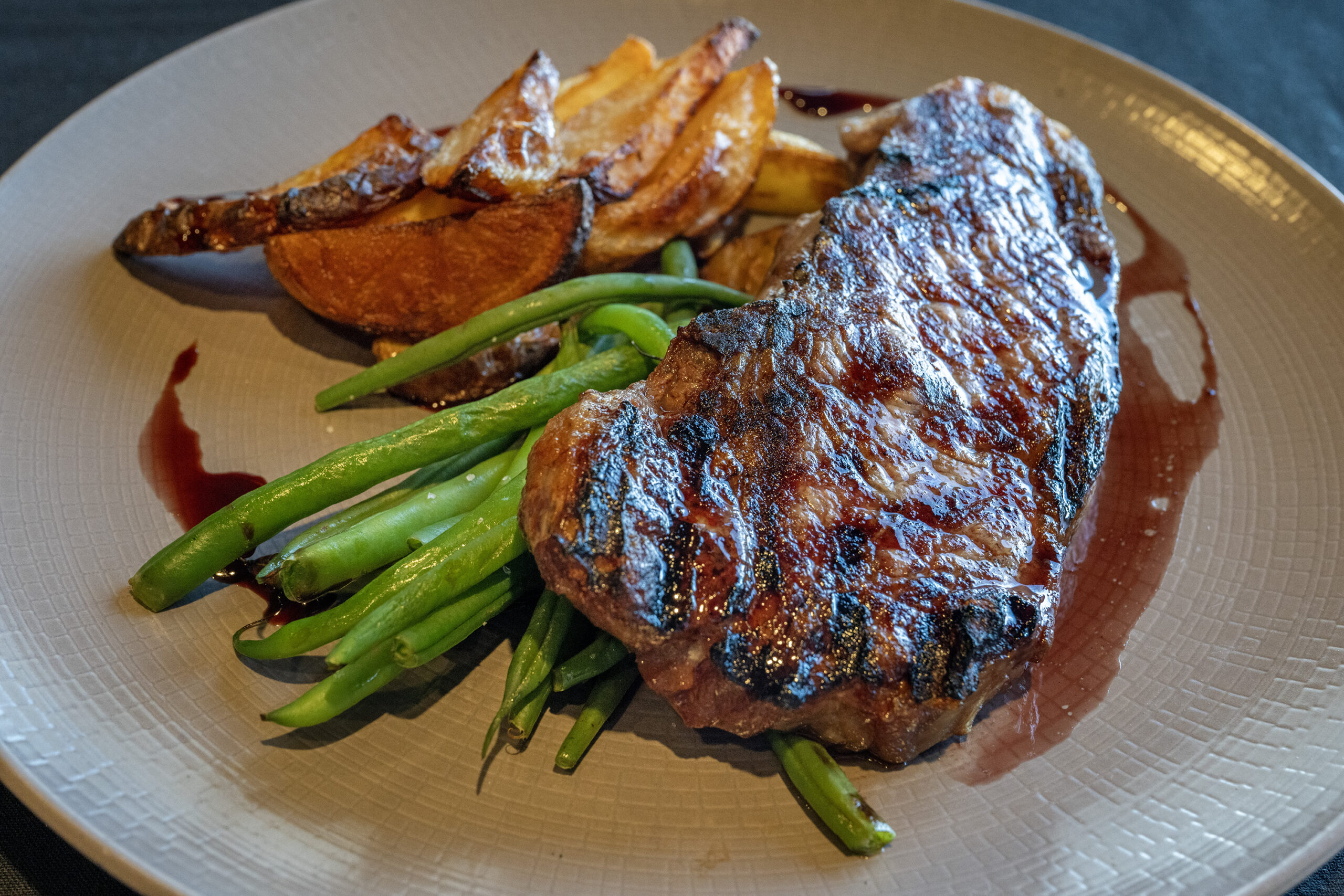
A New York strip steak with roasted potato, haricot verts, and cabernet reduction at Harvest Seasonal Grill.
Then last fall, Harvest cut prices across the board while tweaking dishes to eliminate frippery like microgreens and most garnishes, which Magrogan said customers pushed to the side of the plate anyway.
The seared scallops had to go. As recently as a few years ago, Harvest offered four New Bedford scallops — the picture-perfect, 10-to-a-pound “U-10” beauties — atop a pool of risotto for $34. When the wholesale price began creeping up, Harvest bumped it to $38. When another price increase took it to $43, Magrogan said, “guests complained: ‘Four scallops for $43? I don’t see the value.’”
Harvest chief operating officer Adam Gottlieb said the company went back to its seafood supplier, who offered scallop pieces — the same scallops, though broken during harvesting — for about half the price. “Instead of putting these seared scallops on top of the dish, we sear the pieces, fold them into the risotto, and make a shrimp and scallop risotto that we can offer for $34 instead of $42,” Gottlieb said. “Guests like it more, and it sells for less.”
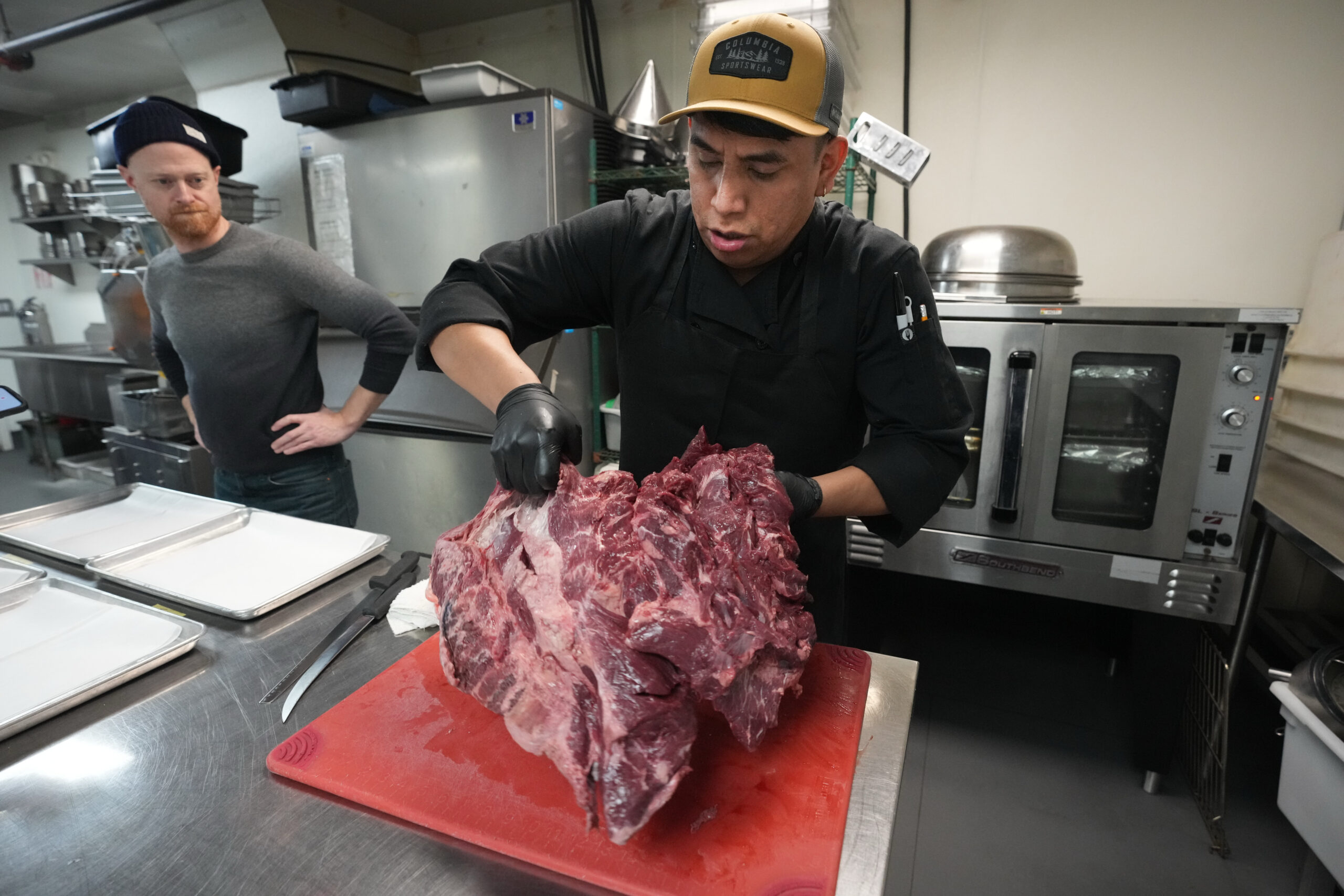
Harvest also changed its prime steak. “For a while, we were buying individually cut steaks from a big farm operation with a great story behind it [Niman Ranch],” Gottlieb said. “But the prices kept climbing. We found a purveyor that sources all-Pennsylvania prime beef, and now we’re bringing in New York strip loins instead of individually cut steaks. By buying whole loins by the case, we’re able to lower the cost of the dish and use the byproduct for other menu items.”
Harvest’s across-the-board price drop was scary at first, Magrogan said. Check averages dropped from $44 to $36 while guest counts remained flat.
But then, word spread of the lower prices. Traffic is up 10% to 14% year over year while check averages have crept back up into the high-$30s, Magrogan said. “Revenue is up. Profitability is up. And we didn’t sacrifice quality.”
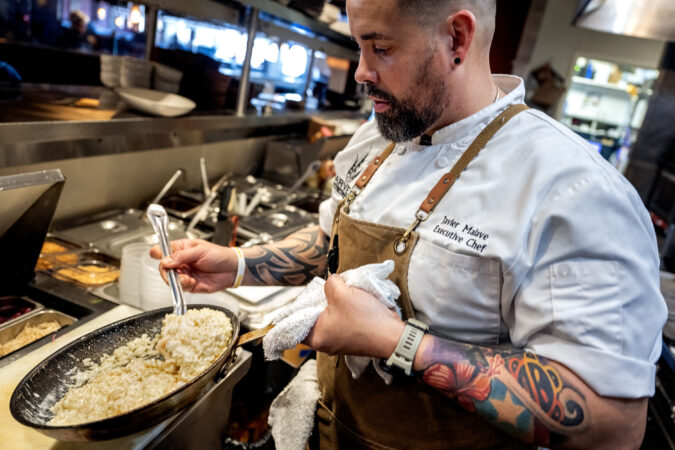
Restaurateur Daniel McLaughlin (left) watches sous chef Silvestre Rincon break down beef for tacos and other dishes at Mission Taqueria.
At Mission Taqueria, a second-floor cantina above Oyster House near Rittenhouse Square, owner Daniel McLaughlin has done his own version of what he calls “menu math,” weighing customer psychology against volatile ingredient costs. Like every owner of a Mexican restaurant, he accepts the yo-yo of avocado prices: When they’re reasonable, he’s doing well; when they’re high, he must absorb a loss.
Tacos, the menu mainstay, he said, are especially tricky. Diners have firm price expectations, regardless of what the ingredients actually cost — even as beef prices are up by double digits in the last year.
Restaurateur Daniel McLaughlin talking to customers at Mission Taqueria.
At its opening a decade ago, Mission charged $14 for two carne asada tacos. They’re now $18 — a 29% rise, but below the estimated 47% inflation over that time.
“Carne asada was our top-selling taco last year, but you can only charge so much for a taco,” McLaughlin said. “
Each taco has 3 ounces of beef. “The same portion of protein somewhere else, like in a steakhouse served as an entrée, would be totally justifiable at $28 or $32,” he said. “But because it’s in a tortilla, people flinch.”
To keep costs in check, McLaughlin and his chefs rethought the beef. Mission previously used sirloin for its carne asada but last year switched to chuck roll, a cut from the shoulder. “It actually eats better as a taco,” he said.
The kitchen still serves seared steak as an add-on for salads, but now economizes by buying whole sides and breaking them down. Aside from the chuck roll, other cuts are used for slow-cooked dishes like barbacoa and birria.
Korean tacos get a shake of seasoning at Harvest Seasonal Grill.
The upshot: Mission is charging less for carne asada tacos, relatively speaking, but is making a bit more money. And traffic counts are similar.
The menu engineering around beef trimmings has factored into Harvest’s moves, as well. Some finds its way atop the chain’s flatbreads, and even becomes the centerpiece of a new dish, Korean-style tacos. “It looks impressive, and it’s become one of our most popular items,” Gottlieb said.
“The labor part isn’t as complicated as it sounds,” Gottlieb said. “Kitchen work has always been about minimizing waste and being smart with product.”
A big part of the changes was to make Harvest feel accessible again, Gottlieb said. “I said to Dave, ‘I’m a middle-class guy, and I can’t afford to eat at Harvest as much as I’d like right now. It’s $100 for two people, and I can’t do that on a regular basis.’ Before the price increases, you could get in and out for about $67. The goal was to get back to that — to stop being a special-occasion restaurant and become a place people could think about for regular dining.”
Magrogan said: “The goal is to serve more people, not fewer. You can’t price yourself out of relevance. If guests feel taken care of, they come back — and that matters more than squeezing every last dollar out of a single check.”
Three of the five Di Bruno Bros. locations will close in the coming weeks, the specialty grocery chain’s owner confirmed to The Inquirer.
Maureen Gillespie, a spokesperson for Wakefern Food Corp., the New Jersey-based supermarket cooperative that acquired the Di Bruno’s brand in 2024, said closing dates were not available.
Employees at the Ardmore Farmer’s Market location, which opened in 2011 at Suburban Square, said they were told that its last day would be Feb. 4. Staff at the locations in Wayne, which opened in 2021 in Strafford Shopping Center, and at the Franklin Residences on Ninth Street in Center City, which opened in 2013, said they were notified Wednesday that those stores would shut down Feb. 11.
Di Bruno’s original location on Ninth Street in South Philadelphia and the two-level store at 18th and Chestnut Streets will remain.
In a statement, Gillespie said the company was “refocusing” Di Bruno’s market strategy on “the heart of the brand”: its Italian Market and Rittenhouse locations and “growing online business.” Concentrating on the two flagship stores and online business will be “a positive reset that allows us to preserve and elevate the in‑store tradition while growing the brand’s reach in meaningful new ways,” Gillespie said.
Jobs will be offered to every retail employee, said a Sandy Brown, executive vice president of Di Bruno’s parent company, Brown’s Super Stores, the regional grocery chain founded by her husband. The news follows this week’s announcement that Amazon Fresh stores would close, putting about 1,000 people out of work at the six Philadelphia-area stores.
The three affected stores share the same core Di Bruno’s DNA: cheese, charcuterie, and specialty groceries. The Ardmore Farmer’s Market location is the most “grab-and-go”: a compact counter where bagels and schmear, coffee, and quick bites sit alongside the cheese-and-cured-meat staples. Wayne is more of a full-on neighborhood market with the familiar cheese and charcuterie counters plus a cafe, Roman-style pizza, and an on-site bar for wines and small plates. The outpost at the Franklin, 834 Chestnut St., is the most Center City-practical and office-friendly. It has a coffee bar, sandwich shop, and petite bottle shop — suitable for lunch runs, last-minute gifts, and commuter provisions.
The five Di Bruno’s stores were acquired in April 2024 by corporate entities controlled by Brown’s Super Stores. Six months later, Wakefern acquired the Di Bruno’s trademark and branded products.
At the time, Wakefern said it expected to grow the Di Bruno brand and take it “to the next level.” In December 2024, Brown’s Super Stores said it planned to open an additional 12 to 15 Di Bruno stores in the coming decade.
Wine and cheese at Di Bruno Bros. in South Philadelphia.
The 2024 acquisition of Di Bruno Bros. turned heads in the grocery world, as the Brown family supermarkets like ShopRite and the Fresh Grocer operate in a considerably different fashion than Di Bruno’s specialty model.
Italian immigrant brothers Danny and Joe Di Bruno opened the first Di Bruno’s store in Philadelphia’s Italian Market in 1939. The grandsons and nephews of the founders took over in 1990 and grew the brand. In 2005, the cousins opened the first store outside South Philadelphia at 18th and Chestnut Streets.
Clarification:A comment from Sandy Brown, executive vice president of Brown’s Super Stores, was added to this article after publication to explain that affected Di Bruno’s employees would be offered other jobs.