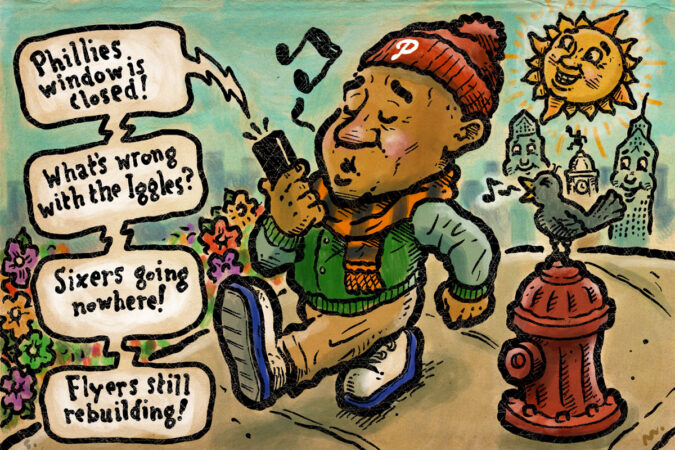
The Philadelphia Superiority Complex is an occasional series of highly opinionated takes about why Philadelphia is better than other cities.
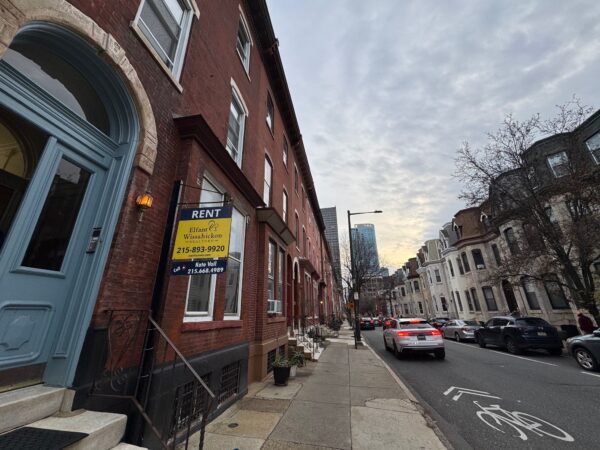
As I began in earnest my search for a Philadelphia apartment recently, I steeled myself for a tradition I assumed to be as East Coast as unnecessary honking and an unhealthy animosity toward outsiders.
I’m speaking, of course, about the broker fee.
As a native Midwesterner and perpetual renter who has spent the past decade living in Boston, I’d come to view broker fees as an inescapable part of big-city life.
For the uninitiated, broker fees are a lot like extortion payments. Here’s how it would go in Boston: A so-called apartment broker — to this day I couldn’t tell you what a broker actually is — meets you at an available apartment, unlocks the door, and stands there while you give yourself a brief tour of the unit. In exchange for this white-glove service, and the privilege of renting the apartment, you pay the broker a one-time, nonrefundable fee typically equal to one month’s rent. In Boston, where the average rent for a one-bedroom apartments sits at around $3,500, this is no small thing.
Making matters worse, the Boston brokers always seem to be finance-bros-in-training, arriving to these brief showings in Lexuses or BMWs, hair meticulously styled and dressed head to toe in Brooks Brothers.
How refreshing it has been, then, to discover that broker fees just … don’t actually exist here?
Not once since I began responding to online apartment postings have I been asked to hand a stranger a $3,500 check in exchange for arranging a two-minute tour. I haven’t yet received a torrent of unwanted text messages from guys named Brock or Beau, demanding to know the earliest possible moment I can schedule a viewing.
And from what I can gather, I’m not going to.
As one longtime Philadelphian explained it to me recently, “There is a beauty in Philadelphia that no matter how cool it’s trying to be, it is never desirable enough to warrant something like brokers fees.”
It’s been a true revelation.
(In Boston’s defense, Massachusetts legislators recently passed a measure mandating that landlords can no longer require tenants to pay a broker fee. Of course, that doesn’t give me back the thousands of dollars I would’ve otherwise put into my retirement fund or, more likely, Uber Eats and Nerf machine guns.)
Which is not to say, certainly, that things here are perfect. An increasing number of Philly renters are cost-burdened. And the city recently ranked among the nation’s least affordable for apartment renters, according to one online real estate brokerage firm.
And as someone who is at the very beginning of the process, I’m sure there will be more disappointment in store.
I’m preparing for an upcoming weekend of apartment tours in Philly, and I have no illusions about how it’s likely to go. I’m imagining a couple days of drab leasing offices and hidden-fee horrors, one-sided rental agreements and a good ol’-fashioned scam or two.
Fine.
If it means not handing a half-month’s salary over to a smug 25-year-old in wingtips, well, then, I’m OK with all of it.
Altogether, our staff consumes thousands of meals a year, from on-the-go bites at takeout counters to sumptuous tasting meals at intimate ateliers. It’s no surprise that some experiences are memorable, some are forgettable, and some are memorable for being forgettable (but that’s a different story for a different day).
Here are 20 dishes we ate in 2025 that stopped us mid-bite, clarified a restaurant’s point of view, or captured a moment we wanted to return to. I’ve coursed this out, moving from opening bites through vegetable-forward dishes, then to mains and desserts. As a bonus, there’s a cocktail whose elements provide the perfect transition from snacktime to dinner.
Although some dishes were specials, or are offered seasonally, be assured that these kitchens reliably turn out food that truly is memorable. In a good way. — Michael Klein
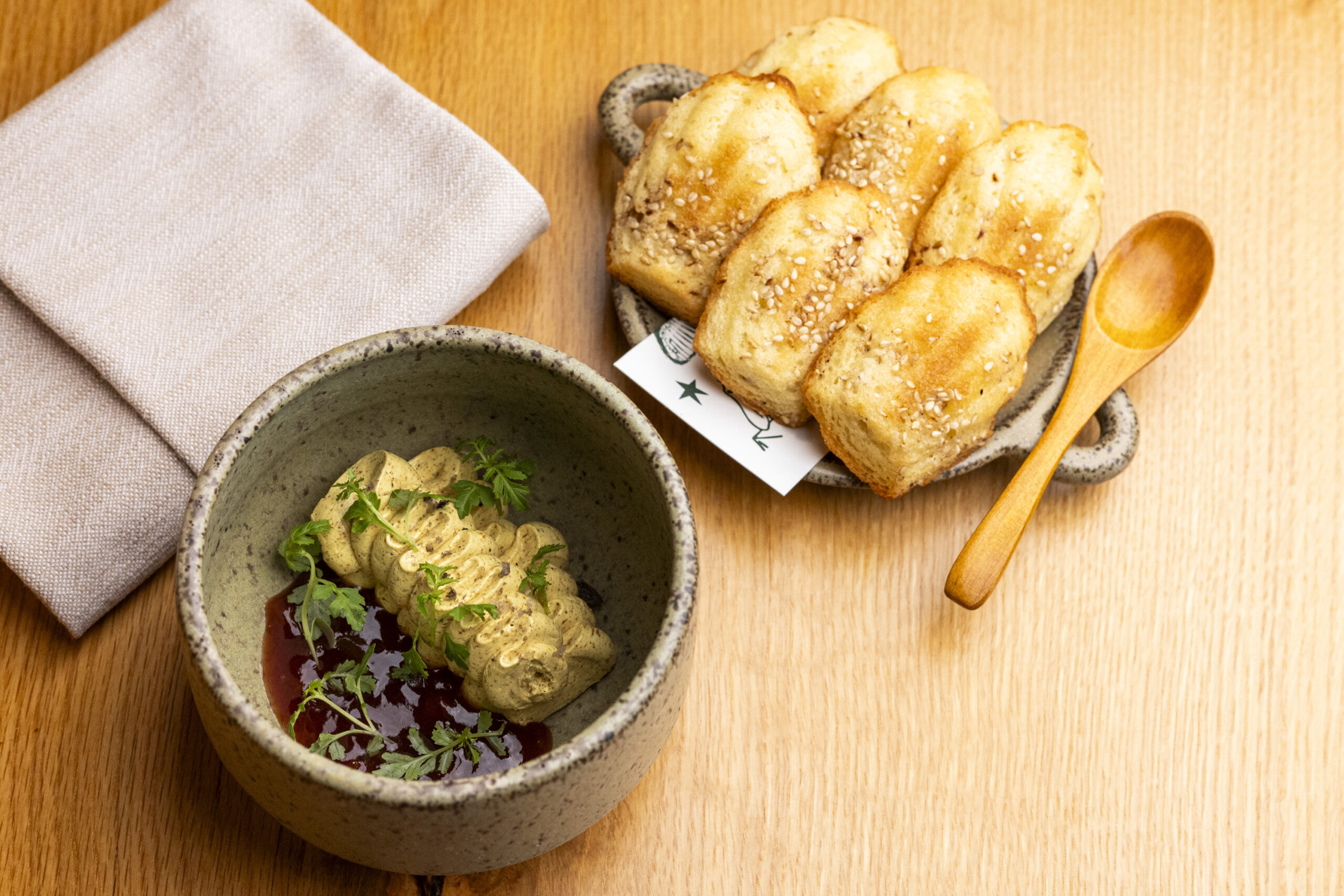
Sesame madeleines with ras al hanout butter at Emmett.
Sesame madeleines at Emmett
I don’t think there was a more evocative and hunger-stirring opening bite this year than the warm sesame madeleines with smoked and spiced butter at Emmett. They state the theme of this modern Mediterranean restaurant so clearly — channeling the flavors of the Levant through Euro techniques and local seasonality. Last spring, the butter was scented with the smoked cinnamon of ras el hanout alongside a dollop of rhubarb jam. By my revisit this fall, the butter was fragrant with vadouvan curry, accompanied by blueberry compote. Adding the optional scoop of caviar transformed it from an intriguing first nibble to an all-out indulgence of its own. — Craig LaBan
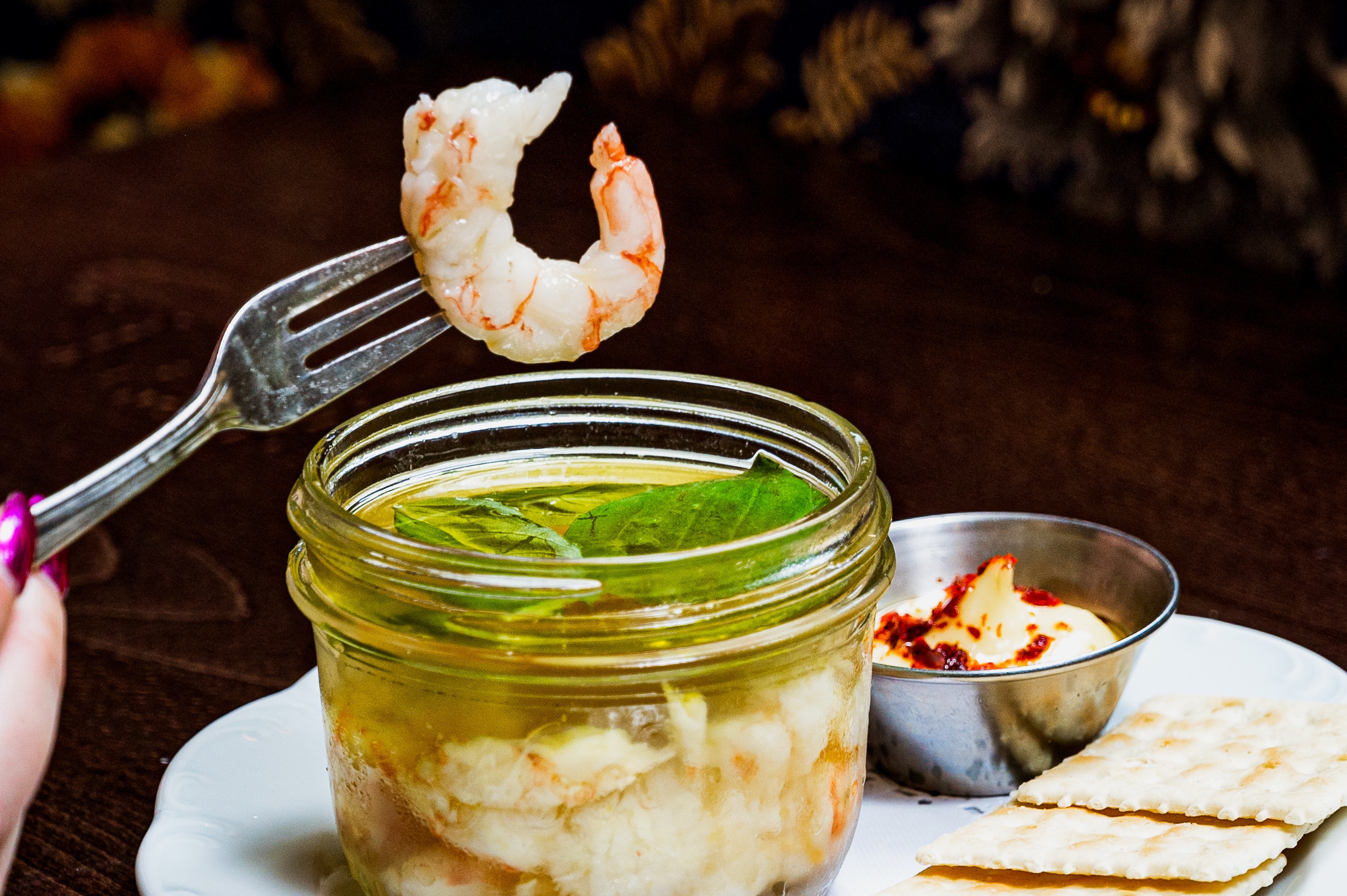
If I could only order one thing from Alex Kemp’s menu at My Loup in Rittenhouse, it would be the raw bar’s pickled shrimp. Served in a mason jar with a pair of metal tongs, the dish features firm, pink shrimp bathed in a vinegary brine laced with basil leaves. Diners assemble the perfect bite, smearing a rich aioli on saltine crackers, to be topped with the bright shrimp and herbs — marrying salt, fat, and acidity in a way that’s simply addictive. I’m from the South (specifically the home of Mayport shrimp, with a minor-league baseball team named after the delicacy), so I know a thing or two about crustaceans and I won’t order them just anywhere. So trust me when I tell you that this is the spot and the dish. — Emily Bloch
My Loup, 2005 Walnut St., 267-239-5925, myloupphl.com
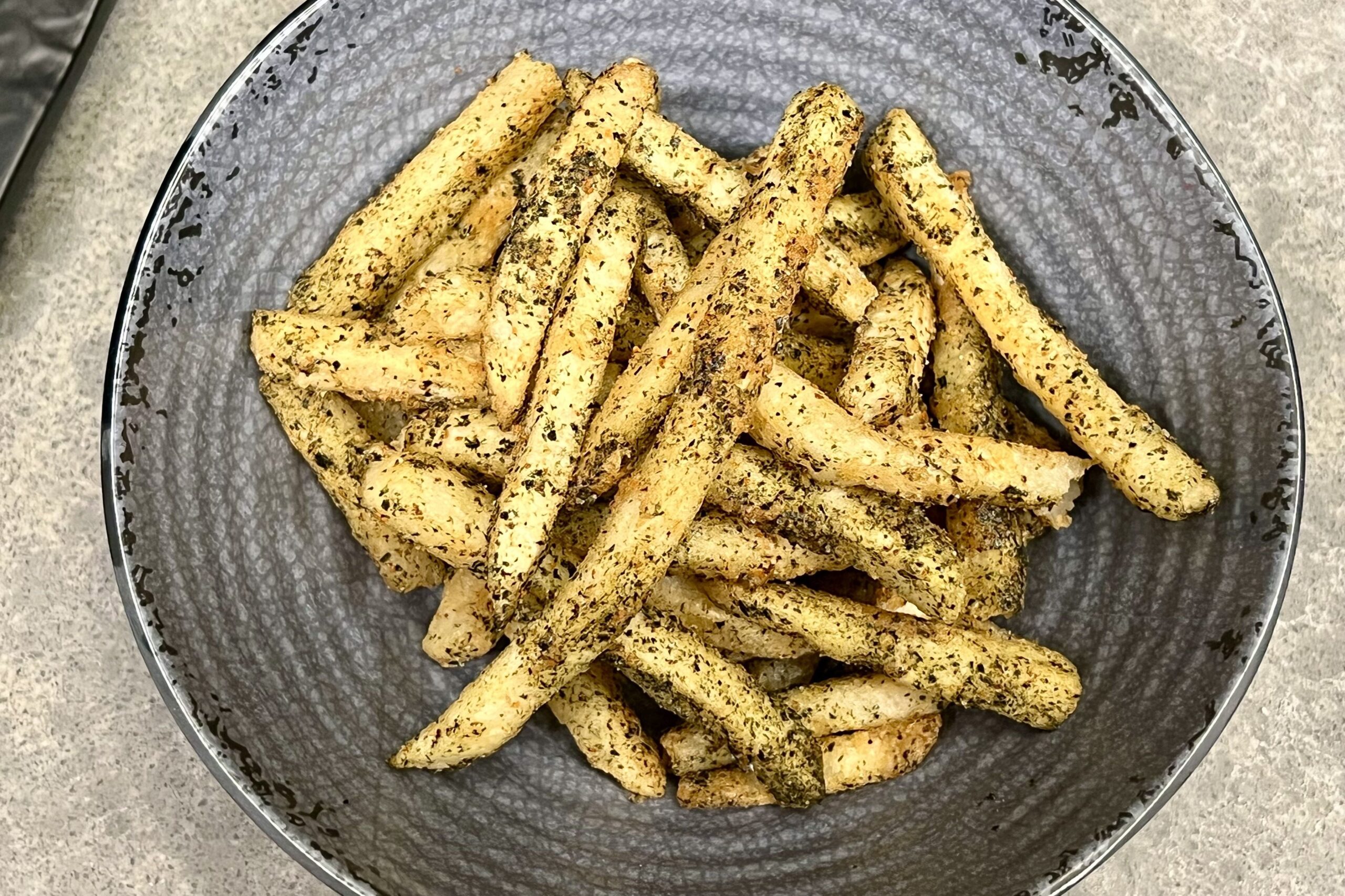
Umami fries at Mama-San, 226 N. Radnor Chester Rd., Wayne.
Umami fries at Mama-San
The Philly area has its share of outstanding fries: the gold standard Belgian frites from Monk’s Cafe, the duck-fat beauties from Royal Boucherie and Village Whiskey, the slender frites from Parc, and the batata harra-style potatoes from Suraya. Let’s add to the list the umami fries from Mama-San, a fast-casual Japanese newcomer across from Radnor High in Wayne. Straight-cut and fried in soybean oil, they’re glossed with a house blend of nori and spices such as shichimi togarashi, which adds briny, umami depth, and the side of seaweed aioli is a dip worth savoring. — M.K.
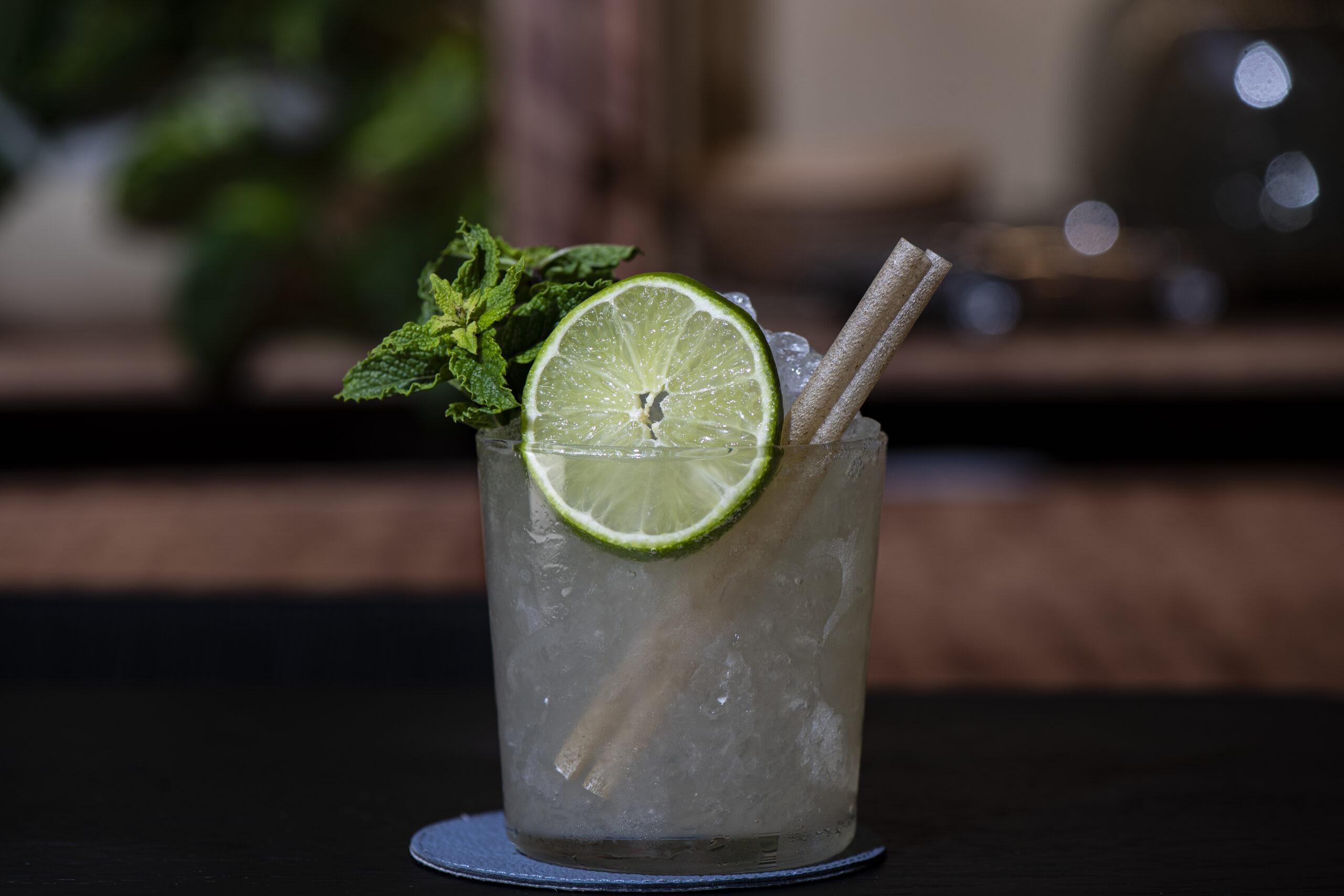
Here’s a bonus: a drink that behaves like a dish. On a recent Friday, I was lucky enough to nab a walk-in table at La Jefa, the vibey cafe-slash-cocktail bar that’s part of the revived Tequilas universe. I departed just slightly tipsy enough to not quite remember the food, but one drink — a burnt corn tortilla mai tai made with Cascahuin Blanco tequila, floral vermouth, rum, lime, and the essence of a corn tortilla — left an unforgettable impression. The cocktail leans smoky, with a sweet aftertaste not unlike the flavor of fresh-out-the-oven cornbread. For those who don’t imbibe, a burnt corn tortilla latte is available during the day. — Beatrice Forman
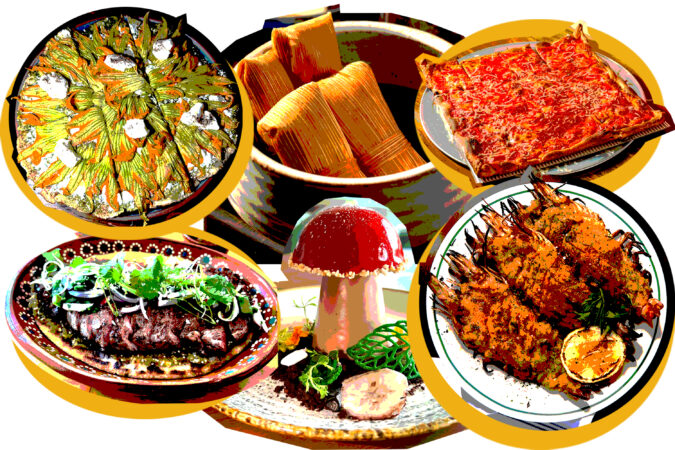
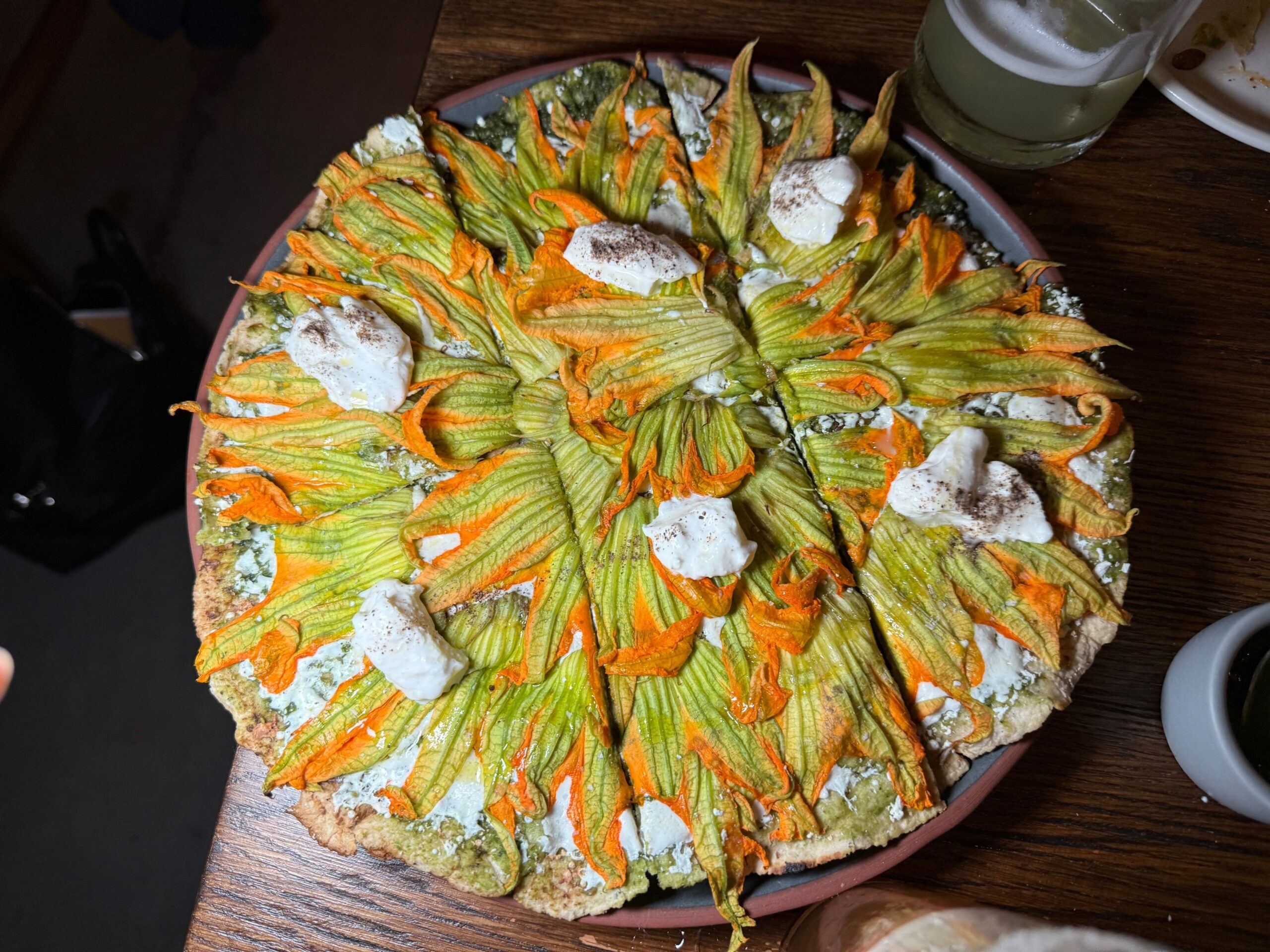
Do you want to see why I’m so excited about the modern Mexican cooking at Amá in Kensington? Behold chef Frankie Ramirez’s seasonal tlayuda for July, a paper-thin tortilla as broad as a pizza, crisped over the coals and topped with a brilliant yellow burst of zucchini flowers. It was a snapshot of summer sunshine, layered with herbaceous epazote pesto, melted Oaxaca cheese, and tangy dollops of buffalo milk burrata. Not only was it delicious, it was probably the most beautiful thing I ate all year. — C.L.
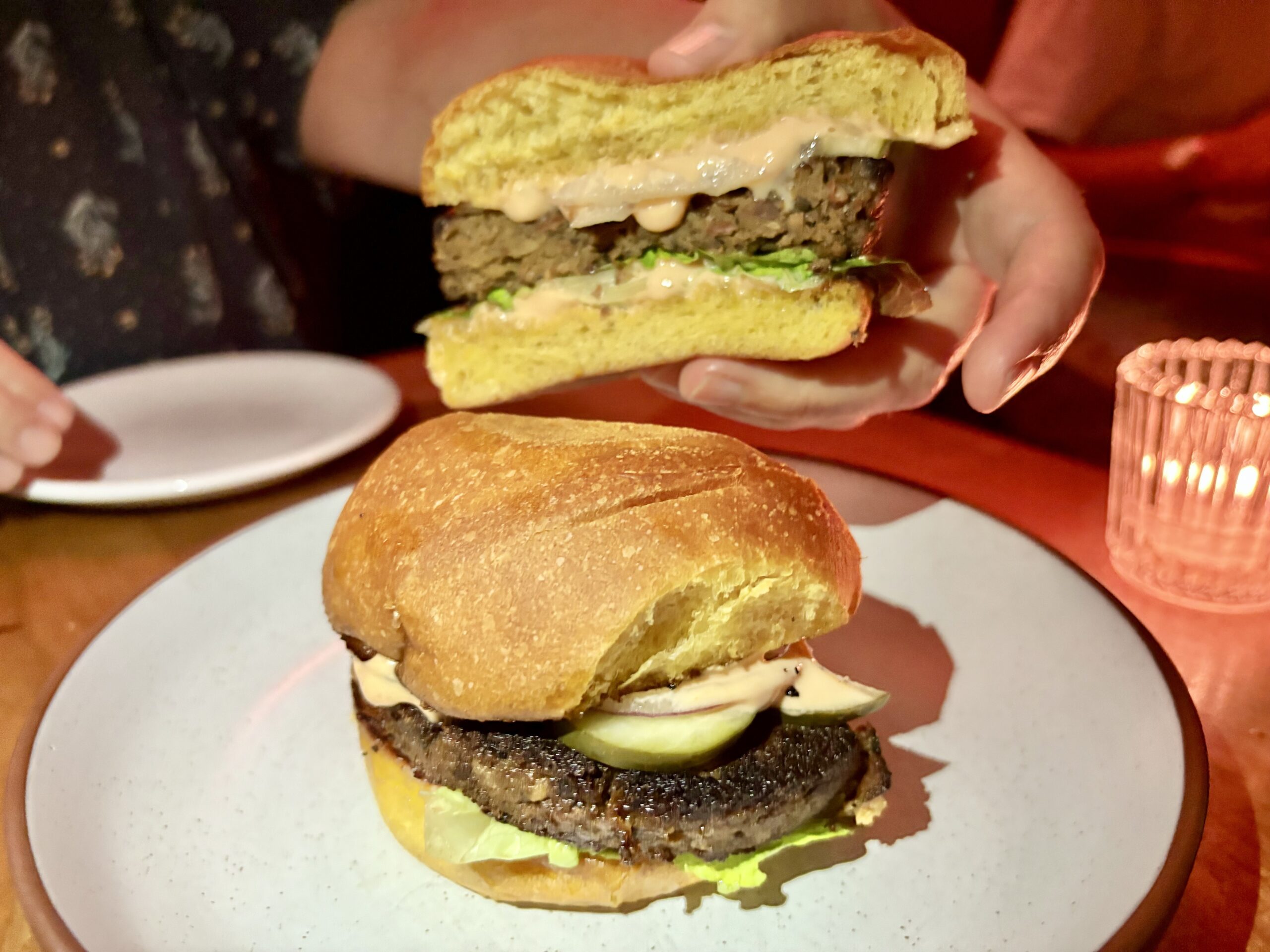
The vegan bean and smoked mushroom burger at Pietramala.
The vegan burger at Pietramala
Earlier this year, chef Ian Graye began selling his veggie burger once a month on Sundays, when his Northern Liberties restaurant is normally closed. At first glance, the burger appears to be an elemental patty made from coarsely ground smoked Mycopolitan comb tooth mushrooms, heirloom pinto beans, and charred onions — repurposed excess ingredients from Pietramala‘s dinner production. But this burger is anything but simple: These patties take three days to prepare, and much longer if you count the months it takes to ferment the house-made tamari, miso, and other larder items that add an impressively deep, layered savor. Once seared in a cast-iron skillet, the burgers get basted with an umami glaze — reduced bean pot liquor that’s been emulsified with more miso and tamari — lending each burger a juicy shine. With the burger set onto a seeded bun with ripe tomatoes, lettuce, onions, and a special sauce made with pickle brine, fermented chilies, and lots of garlic, it’s no wonder Pietramala’s burger pop-ups routinely draw long lines. Check Instagram for availability. — C.L.
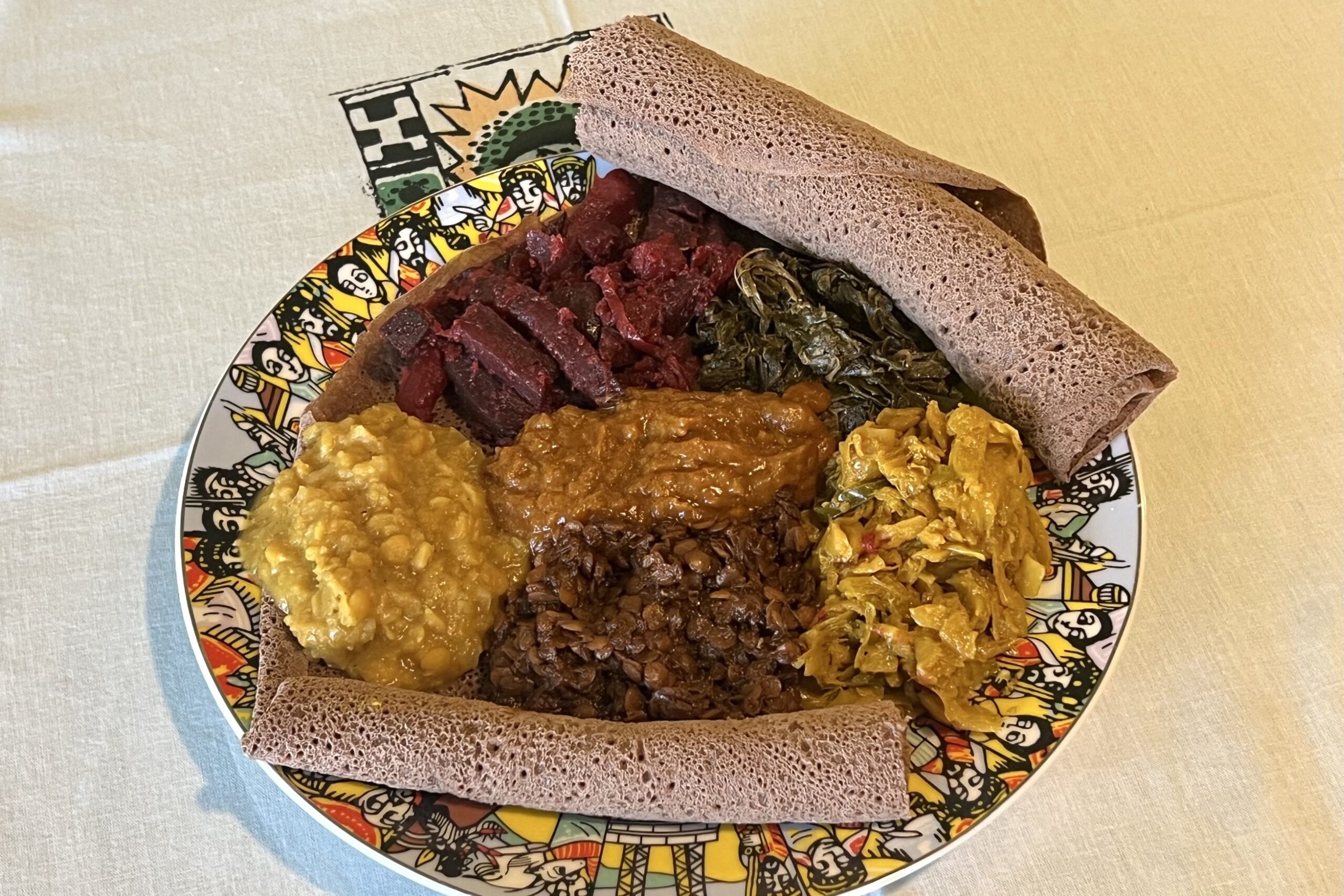
A vegan combo with injera at Eshkol Ethiopian Cuisine.
Vegan combo with injera at Eshkol Ethiopian Cuisine
What to get at Eshkol, chef Chaltu Merga’s Ethiopian newcomer in Ardmore? I’d suggest ordering a combination (either vegan or meat-forward) so you can enjoy an assortment of rich stews and vibrant vegetable dishes served atop injera, the traditional teff flatbread used for scooping. Lovely staff will guide you and your pals to your choices. Here, I assembled key sir (beet and potatoes), gomen (collard greens), tikil gomen (cabbage), misir wot (lentils), ater kik alicha (yellow split peas), and, in the center, shiro (chickpeas). The meat dishes include such classics as doro wot (spicy chicken stew with egg), siga wot (beef in berbere), and minchet abish (spiced minced beef). — M.K.
Eshkol Ethiopian Cuisine, 36 E. Lancaster Ave., Ardmore, 484-412-8044, eshkolcuisine.com
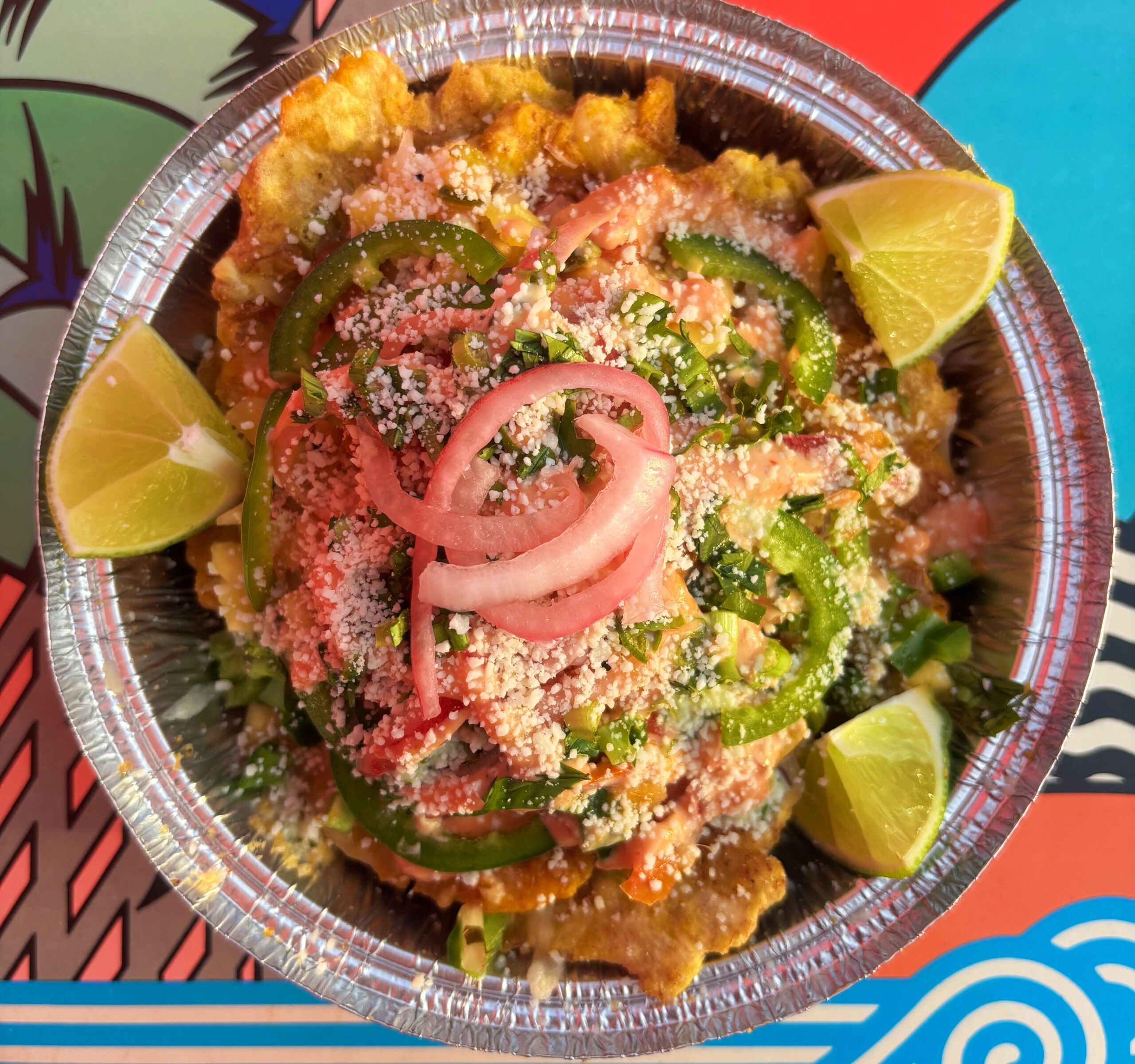
Tostones nachos from Amy’s Pastelillos.
Tostones nachos at Amy’s Pastelillos
Over the course of scouting Philly’s best Puerto Rican and South American restaurants for The Inquirer’s 76 guide, I thought I had encountered plantains in all their forms: mashed into mofongo and mangú, caramelized into maduros, molded into petit cups for crackling pork. None, however, stood out more than the platter of tostones nachos from Amy’s Pastelillos, a Fishtown to-go counter better known for its namesake crispy Puerto Rican hand pies. The nachos are made from miniature tostones (to maximize surface area) and blanketed with layers of all the good stuff — cheese, pineapple salsa, jalapeños, pickled onion, and a hefty drizzle of passion fruit hot sauce. Talk about innovation that excites. — B.F.
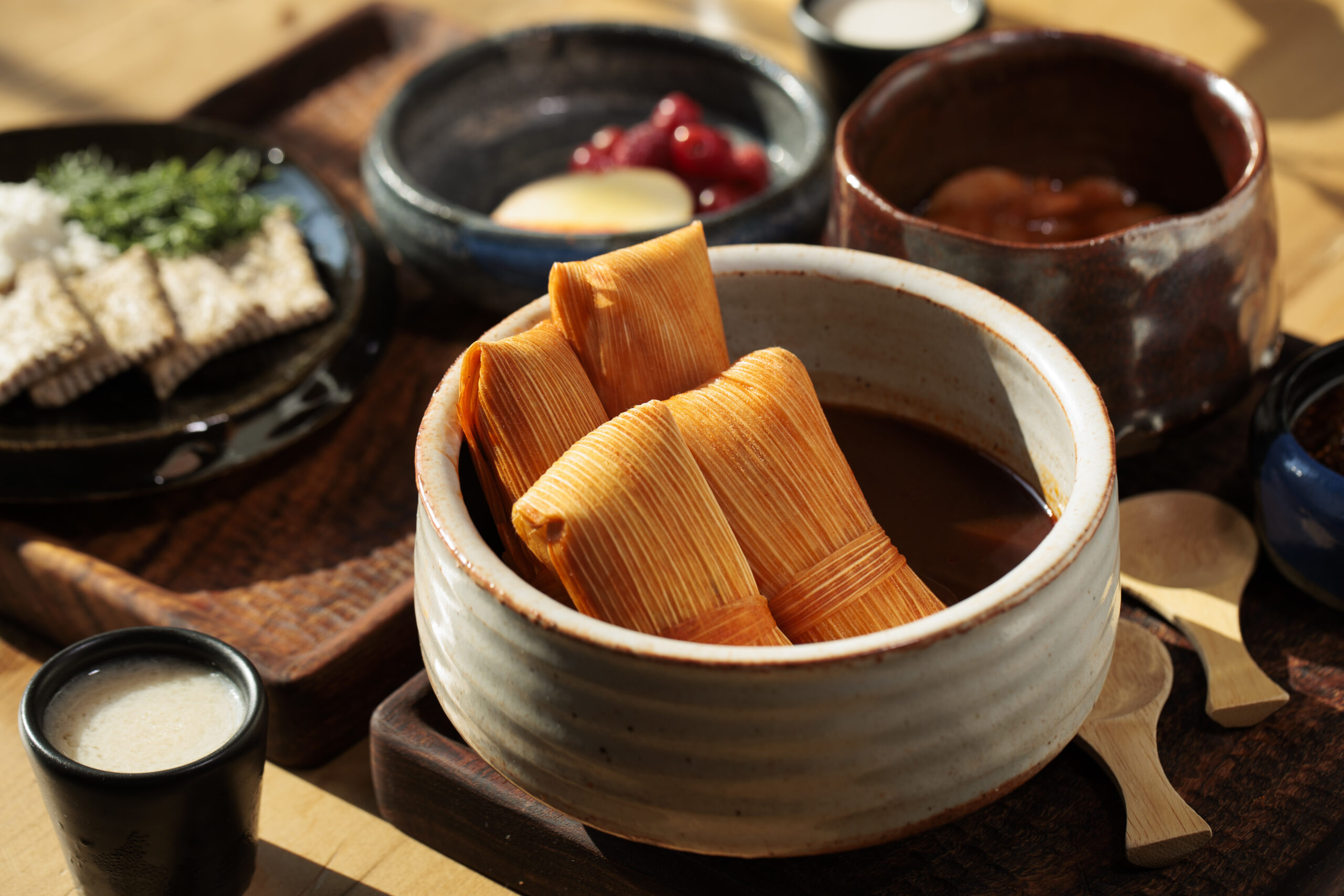
The audaciously over-the-top McDonald’s Money burger got all the hype and ink (including my own) at Honeysuckle. But the truly unforgettable dish from Omar Tate and Cybille St.Aude-Tate’s culinary exploration of the Black diaspora on North Broad Street are the hot tamales, inspired by the century-old Black food tradition of the Mississippi Delta. The chefs sub grits for Mexican-style masa inside the corn husks, which are stuffed with braised oxtail and wagyu beef cheeks, then simmer them in a cuminy beef broth spiked with house hot sauce. They’re served alongside chili-stewed limas, green tomato salsa verde, saltine crackers made of blue masa, and a cloudy shot of smoky corn milk and liquor. — C.L.
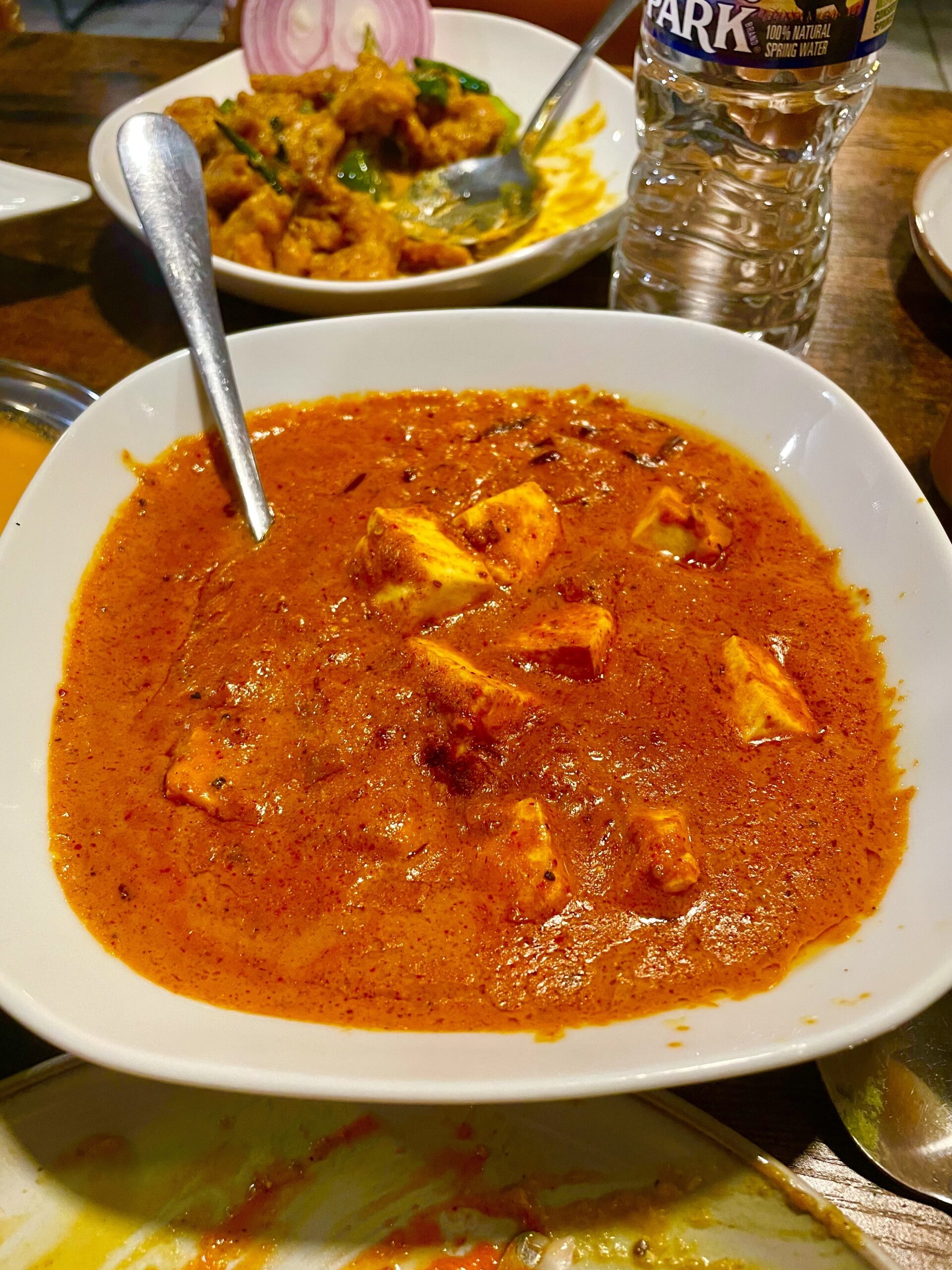
Hyderabadi curry paneer (with necessary water) at Madness of Masala.
Hyderabadi paneer curry at Madness of Masala
Sometimes I need a heater, a dish so spicy it recalibrates my brain like a good cleanse. And this year’s fire award goes to the Hyderabadi paneer curry at Madness of Masala near King of Prussia. This bowl of creamy cheese cubes comes bobbing in a pylon-orange gravy whose full-throttle heat — the result of red Gunturs and green Thai chilies — triggered a ringing sensation in my ears while the rest of my face momentarily went numb. The owner, taking pity, insisted on making me a milder version, despite my protests. But after a few bites, it was clear that this was a dish that expresses itself best when the spice is dialed up to a certain volume. It unlocks a frequency where your buzzing taste buds can sense other flavors flowing through: aromatic cardamom, clove, and coriander; sweet backnotes of cashews and almonds; the soothing richness of cream; and the punctuating tang of vinegar for balance. I didn’t want to miss a note. So I mopped my brow and kept eating. — C.L.
Madness of Masala, 2851 Ridge Pike, Trooper, 484-235-8003, madnessofmasala.com
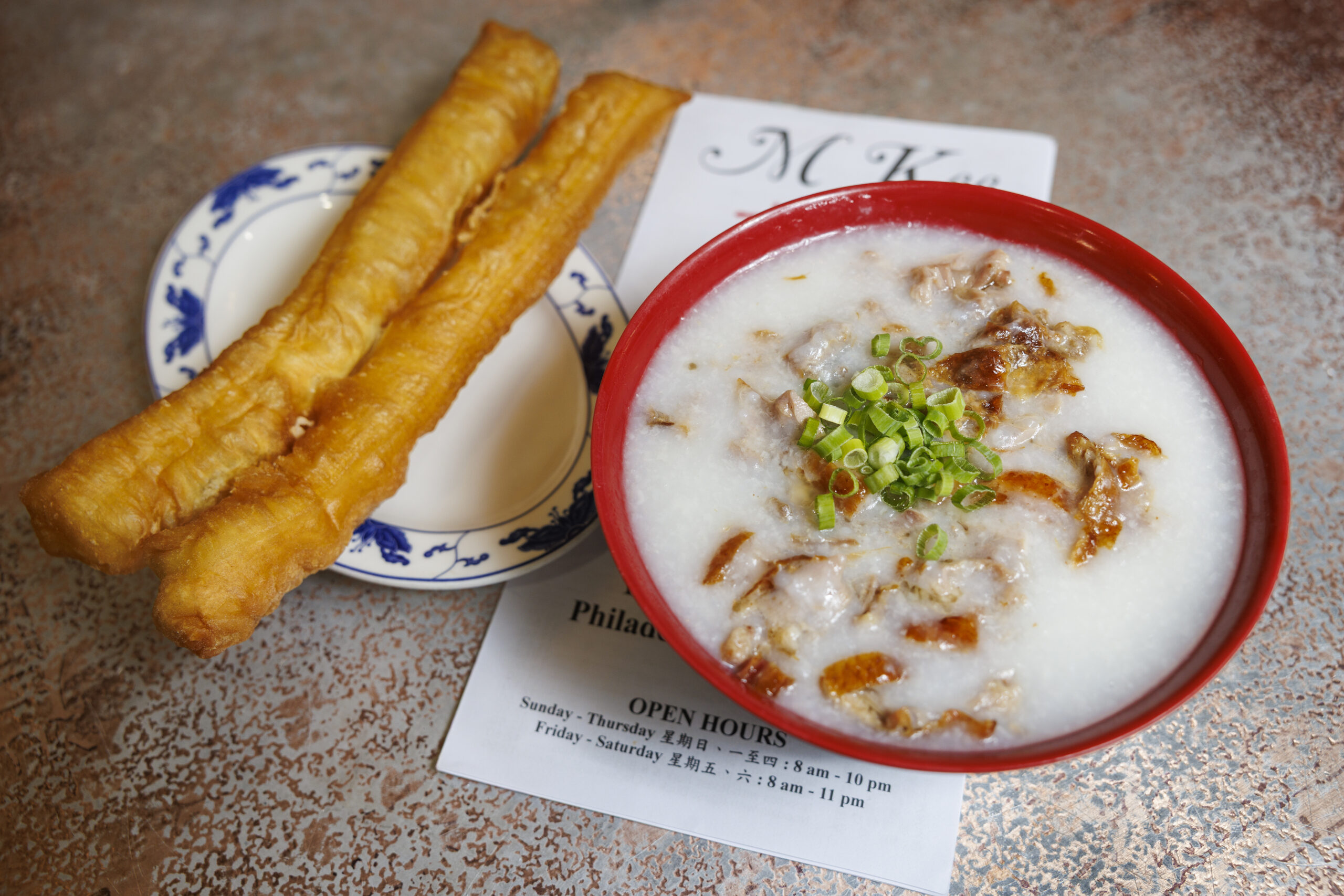
Roast duck congee with a side of youtiao at M Kee.
Roast duck congee at M Kee
Chinatown has several family-run operations that serve succulent roast duck over silken congee or fragrant, fluffy, dripping-covered rice, or crispy-skinned pork along with thin noodles and gossamer wontons. Somehow, M Kee manages to serve the best of all the above, while quelling a relentless takeout line at lunch. M Kee puts just a bit more care into each item — the duck is carefully diced and its congee is positively packed with the meatiest bits. A croissant-like youtiao comes on the side of the steaming bowl of congee; the flaky sticks of fried dough may be the best I’ve ever had, with strands of fresh ginger and a staggering amount of duck in every bite. — Kiki Aranita
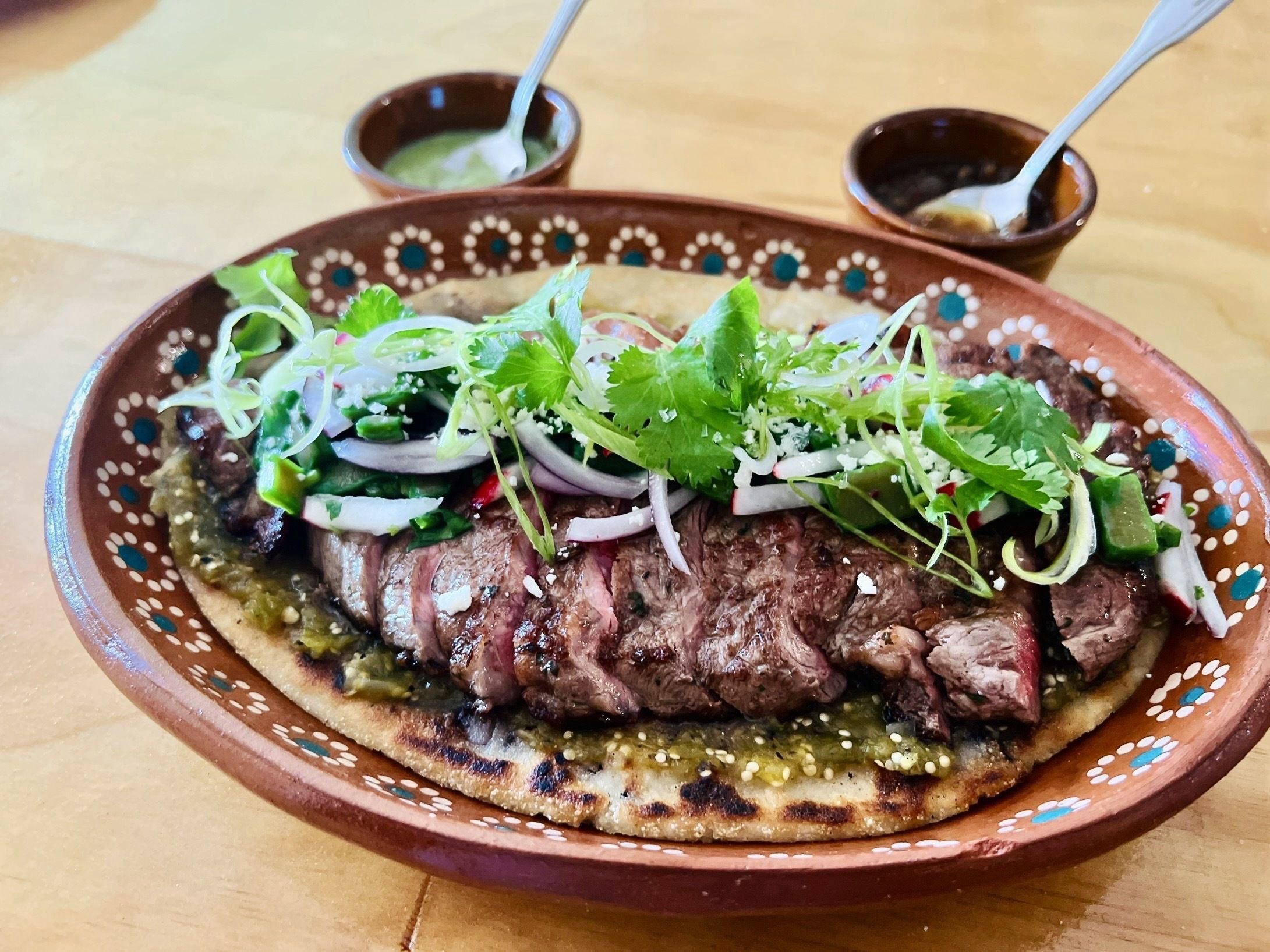
Puebla-born chef Alberto Sandoval, who worked for two decades in Philly fine-dining kitchens such as Lacroix, Striped Bass, and Volvér, cooks family recipes at Tlali, the modest, cash-only BYOB he opened over the summer with his brother Efrain in a rowhouse in Upper Darby. Total charmer. Sandoval cuts no corners on the menu. Besides tasty tacos al pastor (whose pork is tenderized by his father’s secret marinade recipe), you must not miss the huarache Teresita, a seared 12-ounce rib-eye with cactus salad and charred tomatillo salsa atop the thick corn base. — M.K.
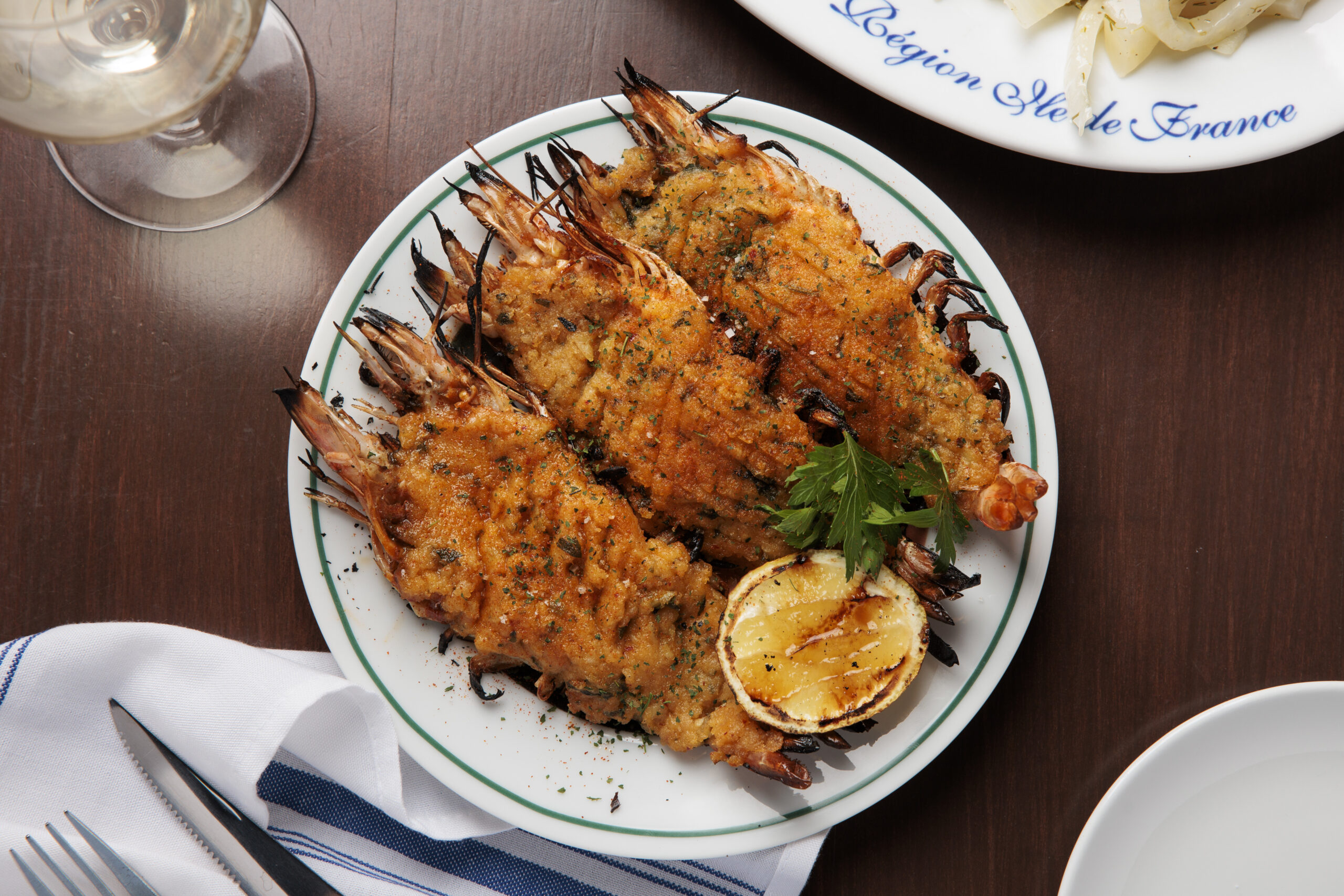
The arrival of former Momofuku Ko chef Sean Gray to the Sergeantsville Inn, just north of Lambertville, is one of the best reasons I found this year to drive more than an hour to dinner. And while there were so many incredible dishes on the menu of this revitalized 18th-century stone tavern (fried chicken, grilled prime steaks), the shrimp casino is one you can’t miss. Head-on Spanish blue prawns are split open, stuffed with garlicky breadcrumbs, and roasted over a Big Green Egg grill. You’ll need to dive in and get messy with these majestic crustaceans to pry that tender meat off the shells with your teeth — or simply crunch away, and eat the whole thing. — C.L.
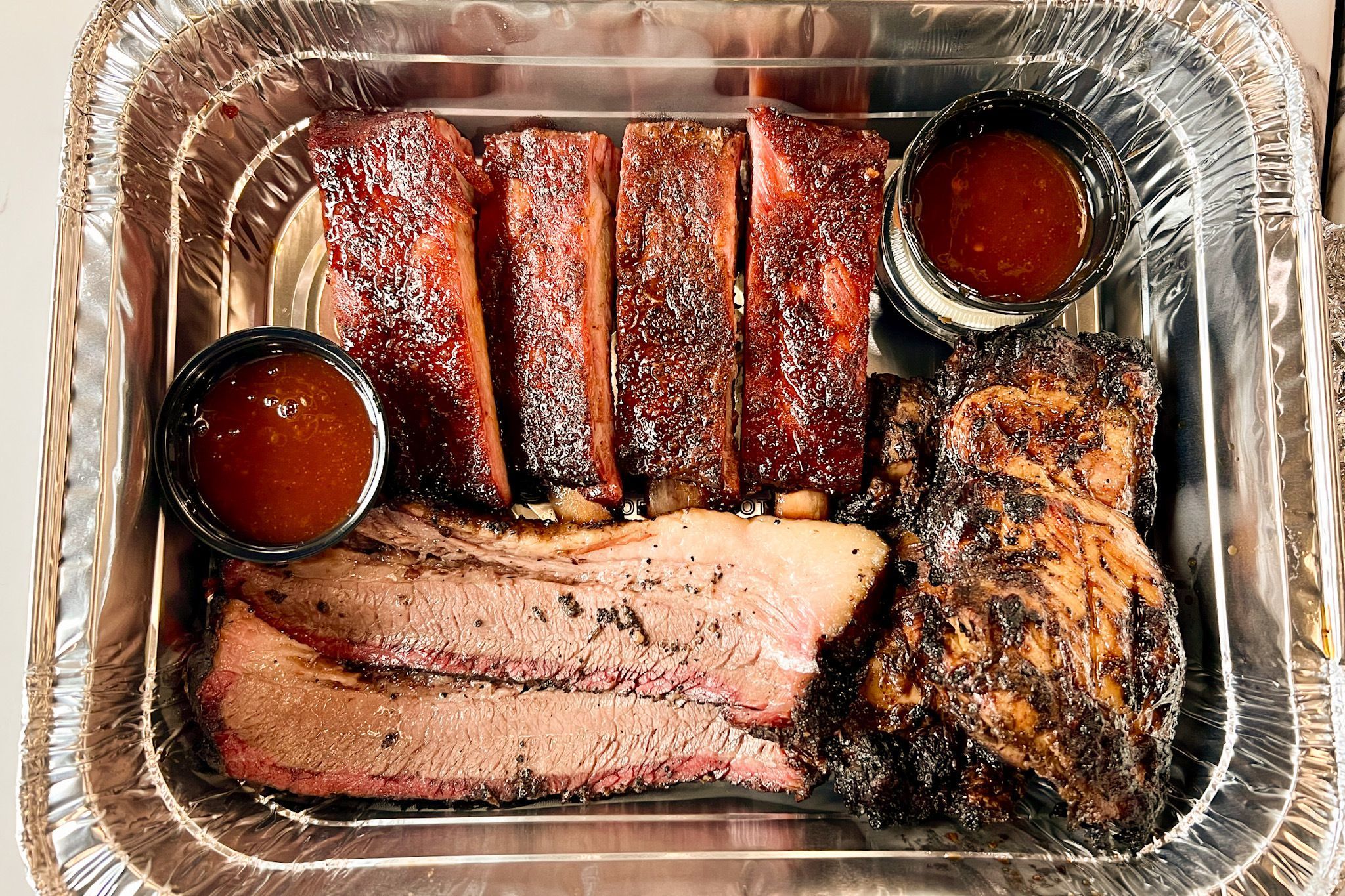
A platter including pork ribs, brisket, and jerk chicken at Big Swerve’s BBQ.
Ribs, brisket, and jerk chicken at Big Swerve’s BBQ
However you get to Big Swerve’s BBQ in Westville, Gloucester County, it would be wise to follow Google Maps, which will send you not to the street address but down an alley and around a parking lot that will swing you perilously close to a brick building. In front of you will be the 20-foot converted shipping container that houses “Big Bottom Betty,” pitmaster Stephen Clark’s offset smoker, fashioned out of a 500-gallon propane tank. Three people can share a combo, such as the Lil Dip Two, a generous sampler of three proteins (let’s say brisket, chicken, and three or four ribs, depending on size), plus three medium sides, including candied yams, cornbread, collard greens, macaroni and cheese, and “mean beans,” a combo of ground beef and baked beans. That’s smoke, sauce, and generosity done right. — M.K.
Big Swerve’s BBQ, 201 Broadway, Westville, 856-349-7469, bigswervesbbq.com
Special Dominó arepa by Puyero Venezuelan Flavor.
Special Dominó arepa at Puyero Venezuelan Flavor
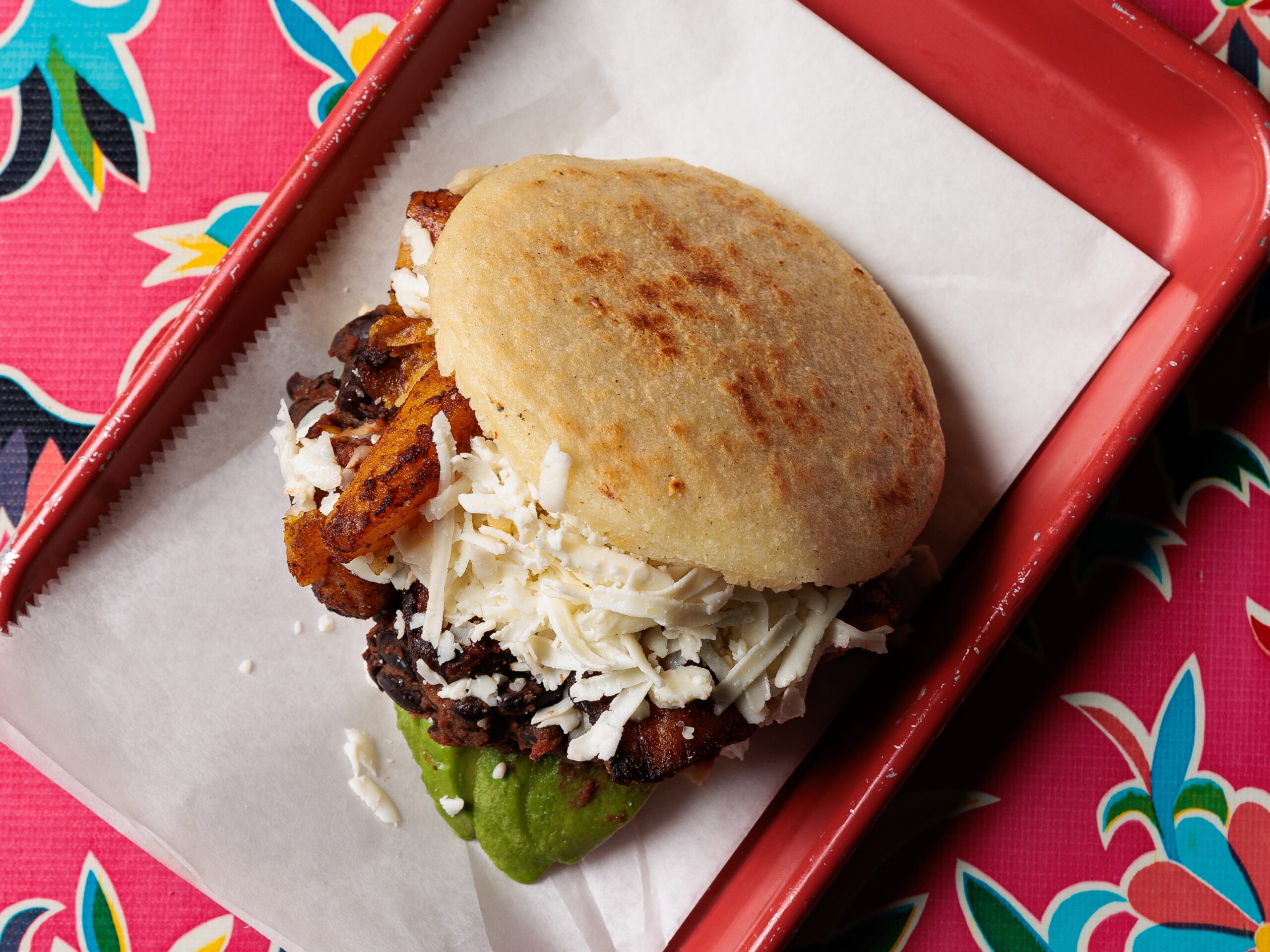
One of my biggest pet peeves is when the bites of a sandwich are uneven, leaving you wanting for one ingredient while going too heavy on another. That doesn’t happen at Puyero in Queen Village, a Venezuelan restaurant known for churning out oversized arepas packed with fillings. Each of Puyero’s cornmeal pockets is excellent, but my favorite is the most basic: the Special Dominó, filled with heaps of avocado, slightly-stewed black bean, sweet plantains, and queso de mano, a soft white mozzarella-esque cheese. All my favorite things, in one arepa. — B.F.
Puyero Venezuelan Flavor, 524 S. Fourth St., 267-928-4584, puyeroflavor.com
The Houdini pizza from Del Rossi’s Cheesesteak & Pizza Co.
The Houdini pizza at Del Rossi’s
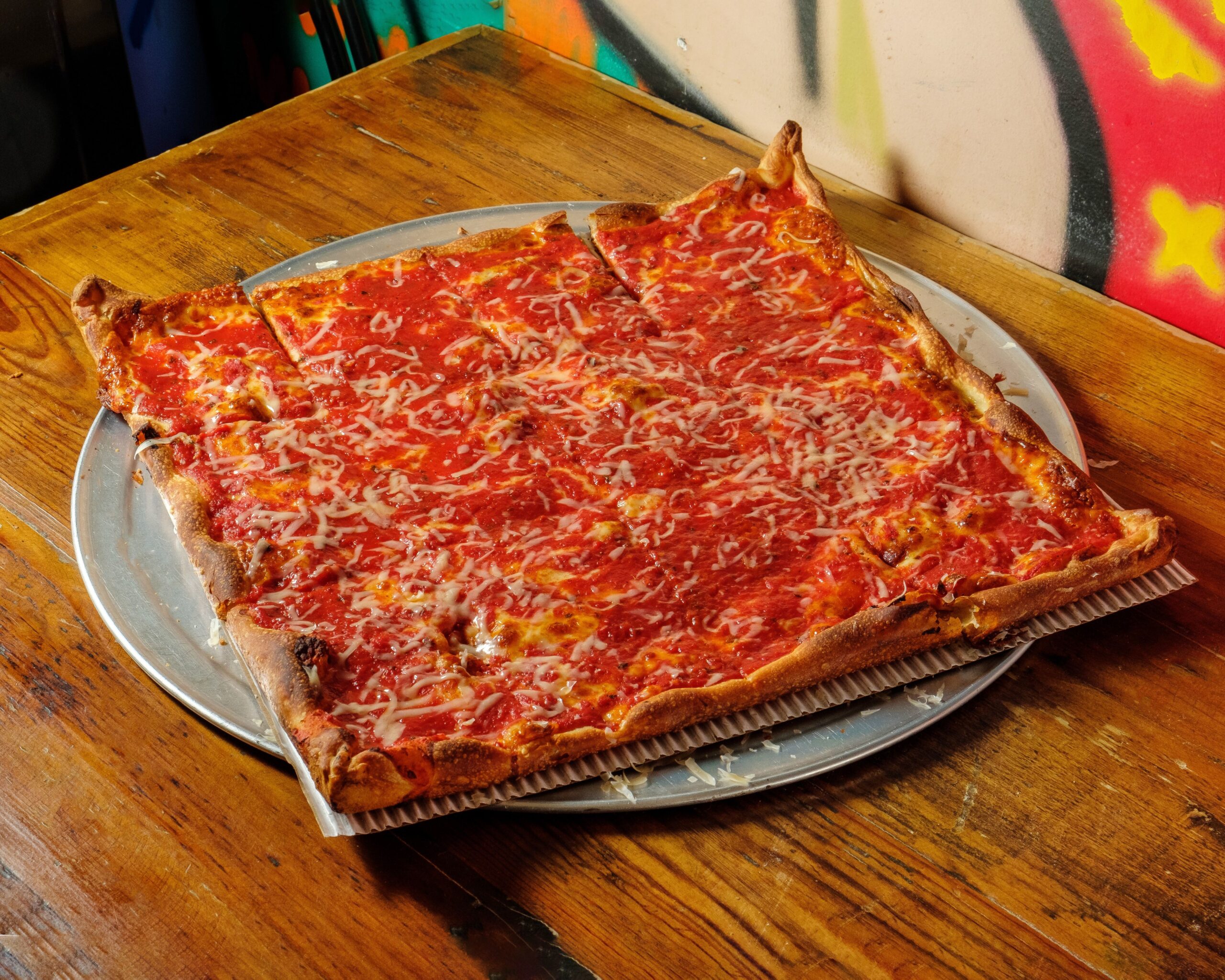
Getting my favorite tomato pie riff in Philly has just gotten a whole lot harder, thanks to Del Rossi’s well-deserved Michelin Guide Bib Gourmand. Del Rossi’s 16-inch Houdini pizza layers provolone beneath a plum tomato sauce, then gets a flourish of aged Parmesan post-bake. Its crusts never flop or sag under the weight of toppings. The real magic, however, is how the parm mixes with the tomato sauce to create a tang with an umami bite. Eating at home? Add a drizzle of hot honey and thank me later. — B.F.
Del Rossi’s Cheesesteak & Pizza Co., 538 N. Fourth St., 267-817-7007, delrossisrestaurant.com
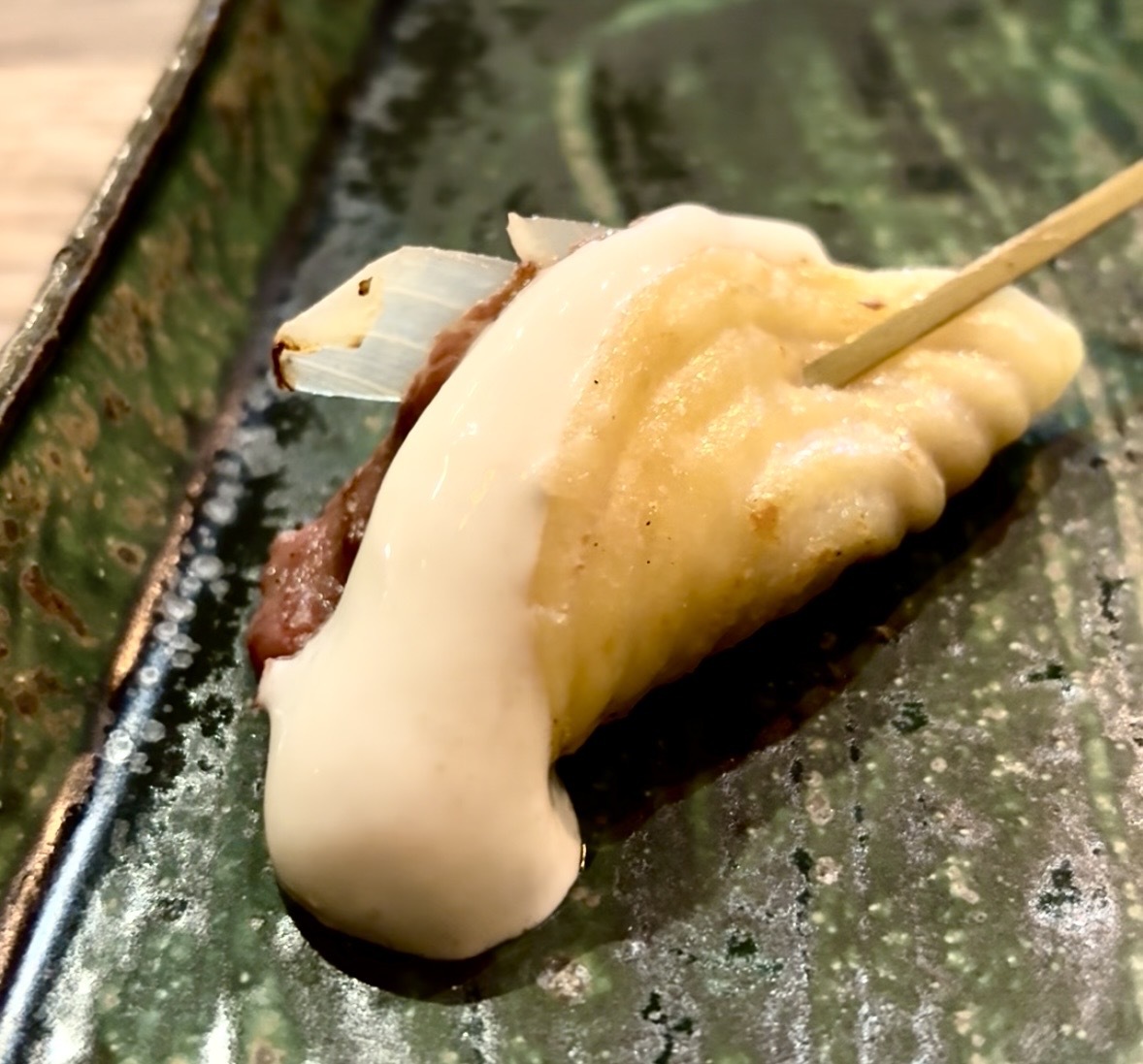
A grilled corzetti pasta coin cradles a slice of American wagyu beef and Cooper Sharp foam at Vetri Cucina.
A pasta cheesesteak coin at Vetri
The multicourse “pasta omakase” chef Marc Vetri serves to just six lucky diners each month upstairs at Vetri Cucina has become one of the most coveted culinary events of the moment. The meals themselves may reach a limited audience, but they’ve become a creative laboratory for dishes that often make the restaurant’s main menu. I tasted some extraordinary technical wonders there, like the duck confit culurgiones in orange sauce wrapped in carob dough, or the airy gnocchi stuffed with lobster mousse. But the most unexpected bite was a clever tribute to Vetri’s Philadelphia roots: a tiny cheesesteak of wagyu beef flashed over the coals, then wrapped inside a grilled corzetti pasta coin like a mini-taco alongside roasted onion and foamy flourish of aerated Cooper Sharp cheese. So small, so vivid, so fun. It’s also destined for occasional future cameos as an amuse-bouche in the dining room or a featured bite at special events. — C.L.
Cheeseburger dessert with a chocolate sundae at Roxanne.
Cheeseburger and chocolate sundae at Roxanne
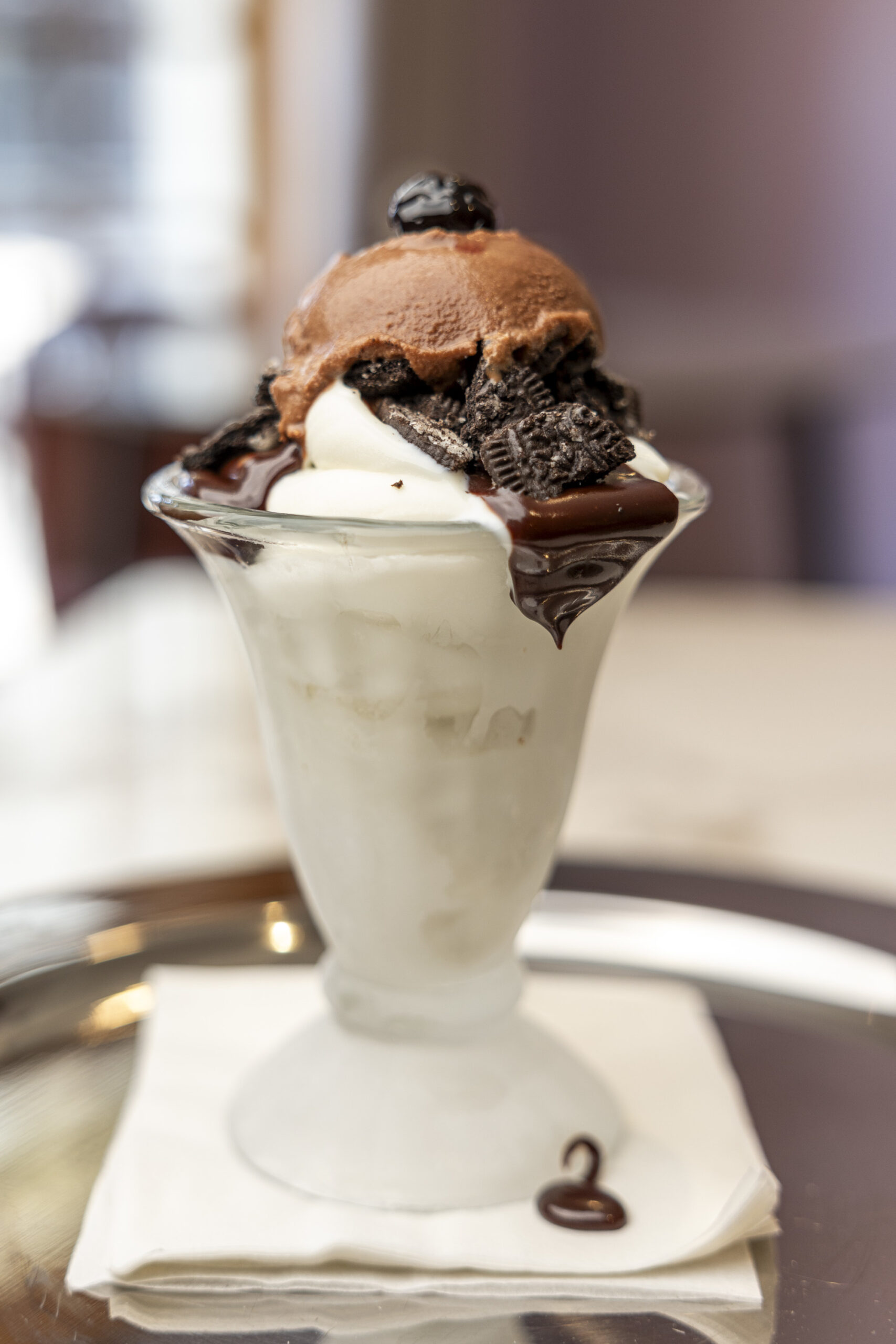
It’s been a big year for bold riffs on cheeseburgers. But Roxanne’s Alexandra Holt is the first who’s ever served me a cheeseburger for dessert, floating the somewhat radical theory that “dessert” simply implies an ending, not necessarily something sweet. The burger itself was savory incarnate, a gushingly rare patty on a sesame-seeded house-baked bun layered with a thick slice of Red Rock blue cheddar cheese, the crunch of raw onions, and creamy mayo. For the dessert doubters, though, it also comes with a powerhouse traditional sweet: a chocolate sundae drizzled with an intense fudge sauce made from 66% dark chocolate that Holt produces from cacao pods she grinds herself at her Queen Village restaurant. This is, in fact, a classic fast-food combo, and now it’s the happy meal of my dreams. — C.L.
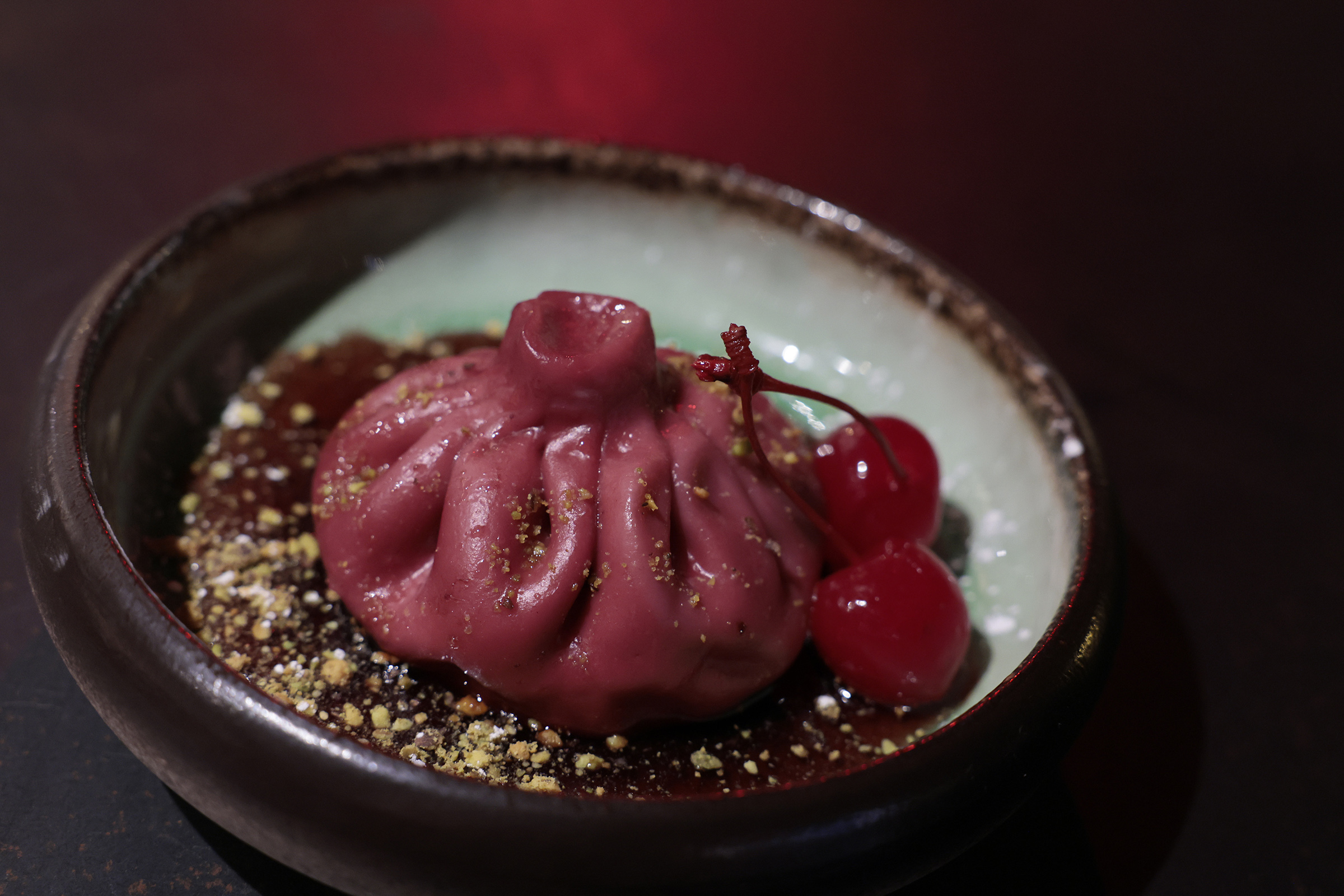
This off-menu (but readily available) dessert from Kinto, the Georgian BYOB in Fishtown, reminded me of eating diner blintzes rolled with sweet cream and heaped with maraschino cherries. Here, the classic flavor combo gets the dumpling treatment: A warm khinkali, tinted pink with raspberry juice, is filled with a sour cherry-and-cheese mixture. The dessert is as beautiful as it is comforting. — B.F.
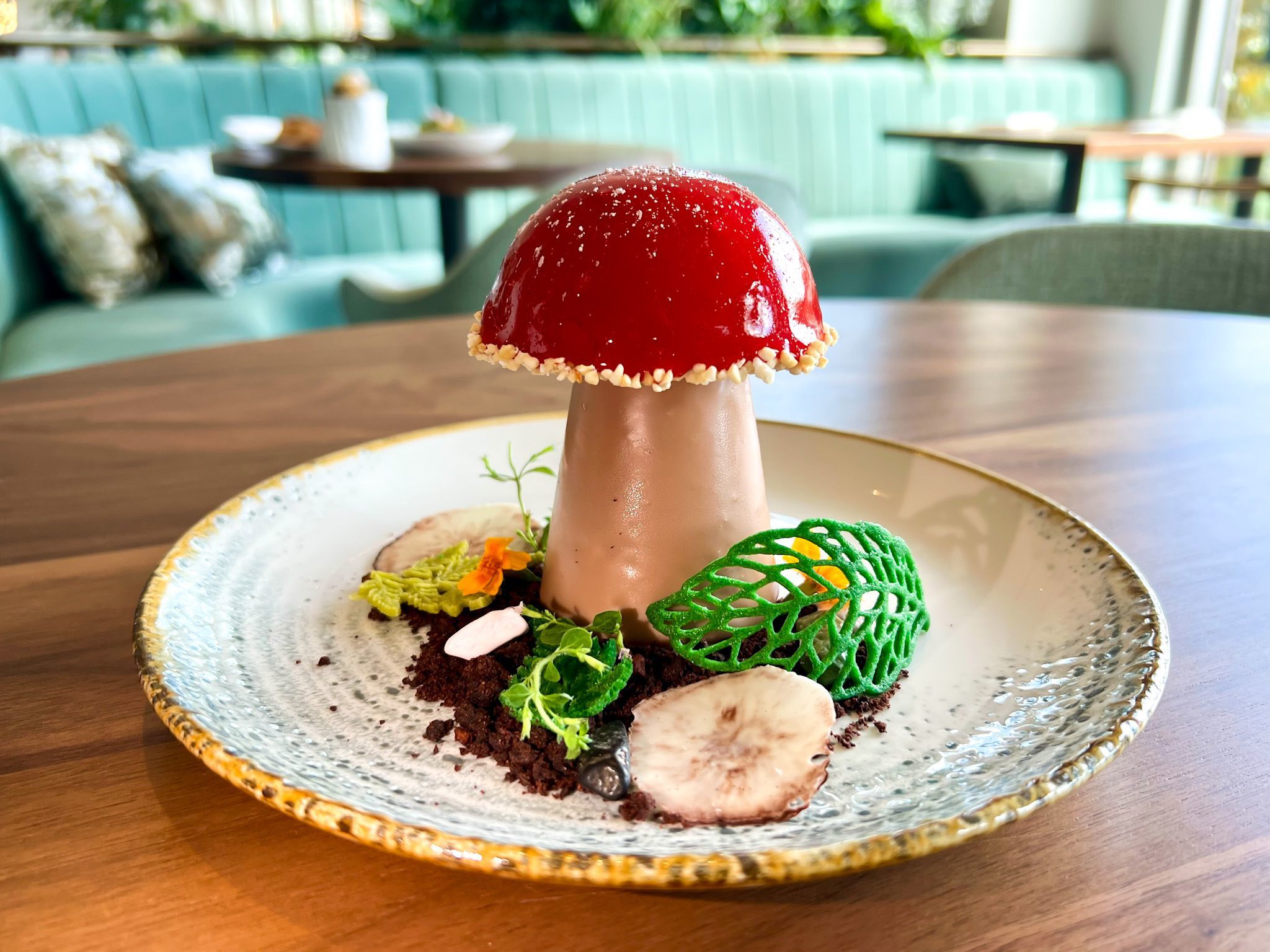
The Caramelia at 1906, the restaurant at Longwood Gardens.
Caramelia at Longwood Gardens’ 1906
Paying homage to Kennett Square’s reputation as the “Mushroom Capital of the World,” the kitchen team at Longwood Gardens’ 1906 restaurant adds funghi wherever it can — even in dessert. The Caramelia, easily its most Instagrammable menu item, is almost too enchanting to eat. It stands vertically on the plate in all its hemispherical glory, resembling the red-topped mushrooms of storybooks or Super Mario Bros. But once you will yourself to break into the decadent chocolate mousse mold, you’re greeted with flavors of espresso and caramel. It’s finished with a playful cocoa “soil,” almost like a grown-up take on the dirt pies with gummy worms of our youth. Beyond the novelty, it’s a not-too-heavy but chocolatey way to cap off a meal. — E.B.
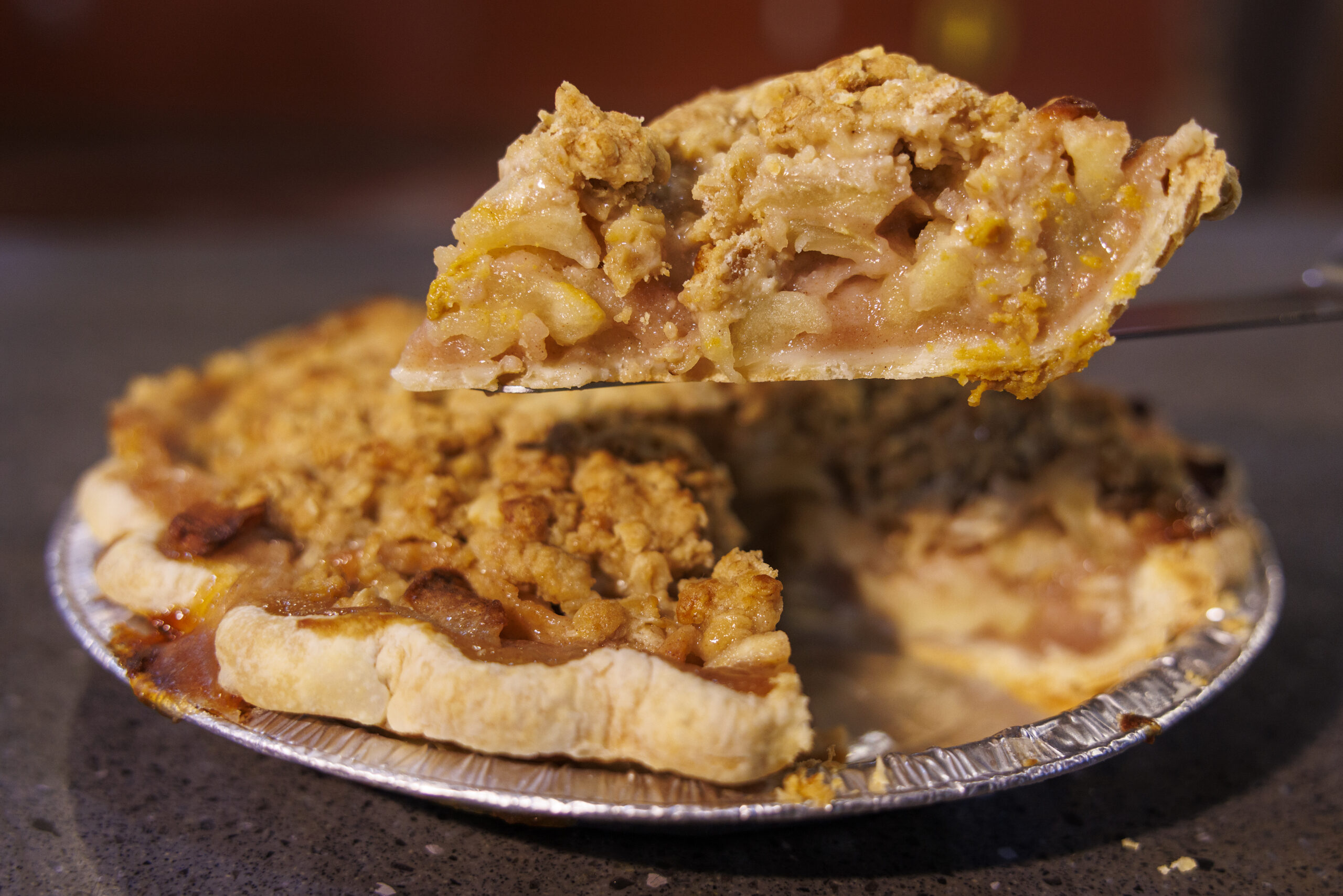
In the middle of Reading Terminal Market, Flying Monkey Bakery sells the platonic ideal of a homestyle apple pie (and also really good whoopie pies). Although the apple crumb pie is a standard 9 inches, it feels more substantial, thanks to a hefty all-butter shell and a granola-esque oat-crumb topping. You get plenty of cinnamon in the rich, thick filling. It tastes just as good cold as it does warm and topped with a scoop of vanilla ice cream. — B.F.
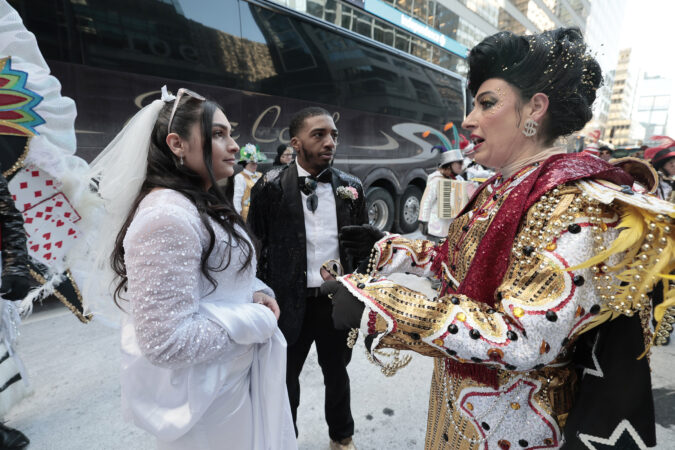
If you’re going to get married in Philadelphia, this is the correct way to do it: sequins, sneakers, a string band, bitter cold, delayed schedules, and a crowd that didn’t ask for romance but got it anyway.
A couple saying “I do” in the middle of the Mummers Parade is the purest expression of this city’s personality. Equal parts earnest and unhinged. Romantic, but only after everyone’s been standing around freezing for hours. Vegas chapel energy, but filtered through South Philly logistics and Broad Street chaos.
This wasn’t a viral stunt or a look-at-us wedding. It was two people already marching, already committed, deciding that if they were going to wait around in the cold anyway, they might as well get married while they’re at it. Honestly? Efficient.
The details make it sing: golden sneakers instead of heels, a flask for warmth and nerves, vows practiced on a bus, Elvis officiating, and the inevitable Philly closer, “I’m glad it’s done so I can get warm.” That’s love, but realistic.
And of course it happened at the Mummers. The parade that routinely features feathers, fake arrests, grown adults sobbing at saxophone solos, and more sequins than dignity. If any institution could absorb a full wedding without breaking stride, it’s this one.
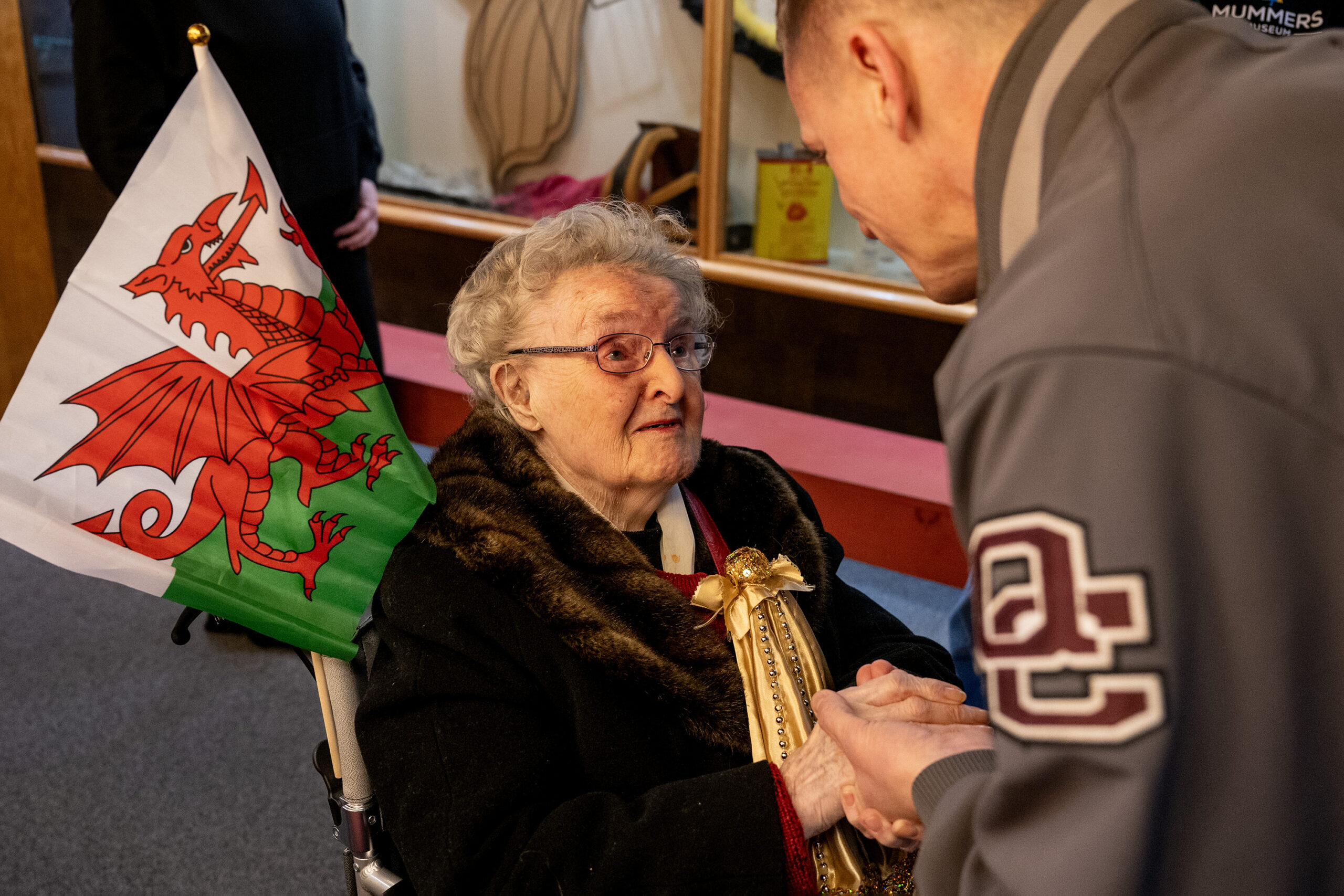
”Queen Mumm” Avril Davidge, a 93-year-old Welsh grandma meets Quaker City String Band Captain Jimmy Good as he surprises her at the Mummers Museum on Wednesday, Dec. 31, 2025. Davidge got to live her dream of going to the Mummers Parade, starting on New Year’s Eve morning with a tour of the museum.
Mummers devotion, no notes: A+
Yes, we’re grading two Mummers stories this week, and no, that’s not an accident.
Avril Davidge didn’t come to Philadelphia for irony or spectacle. She came because she fell genuinely, deeply in love with the Mummers through YouTube — learned the string bands, picked favorites, developed opinions — and decided, at 93, that she needed to see it in person. That alone clears the grading curve.
What makes this story land isn’t just the transatlantic trip. It’s how naturally Philly met her energy. A museum tour. A surprise meeting with her favorite band captain. A golf cart to the parade. No skepticism, no gatekeeping … just, “Yeah, of course. Welcome.”
And then there’s the wedding: sequins, sneakers, vows exchanged in the cold on Market Street, because if you’re already marching, why not also get married? It’s unhinged. It’s beautiful. It’s extremely us.
No notes.
Philadelphia’s cost of living vs. the suburbs: C (with math and feelings)
On paper, this sounds like a win: It’s up to 26% cheaper to live in Philadelphia than in places like Ardmore, King of Prussia, and Phoenixville, Philadelphia Business Journal reported. Congrats to the city for clearing the extremely low bar of not being the suburbs.
The problem is the second half of the equation: income.
Suburban households make dramatically more money, which means they somehow pay more and end up with way more left over. Ardmore residents, for example, are apparently out here saving more than $50,000 a year, which is a number that sounds fake if you live south of Girard.
So what we really have here isn’t a victory lap. It’s a familiar Philly paradox. The city is more affordable because it has to be. Lower costs don’t feel like a flex when they’re paired with lower wages, longer commutes, and the constant background hum of “maybe next year.”
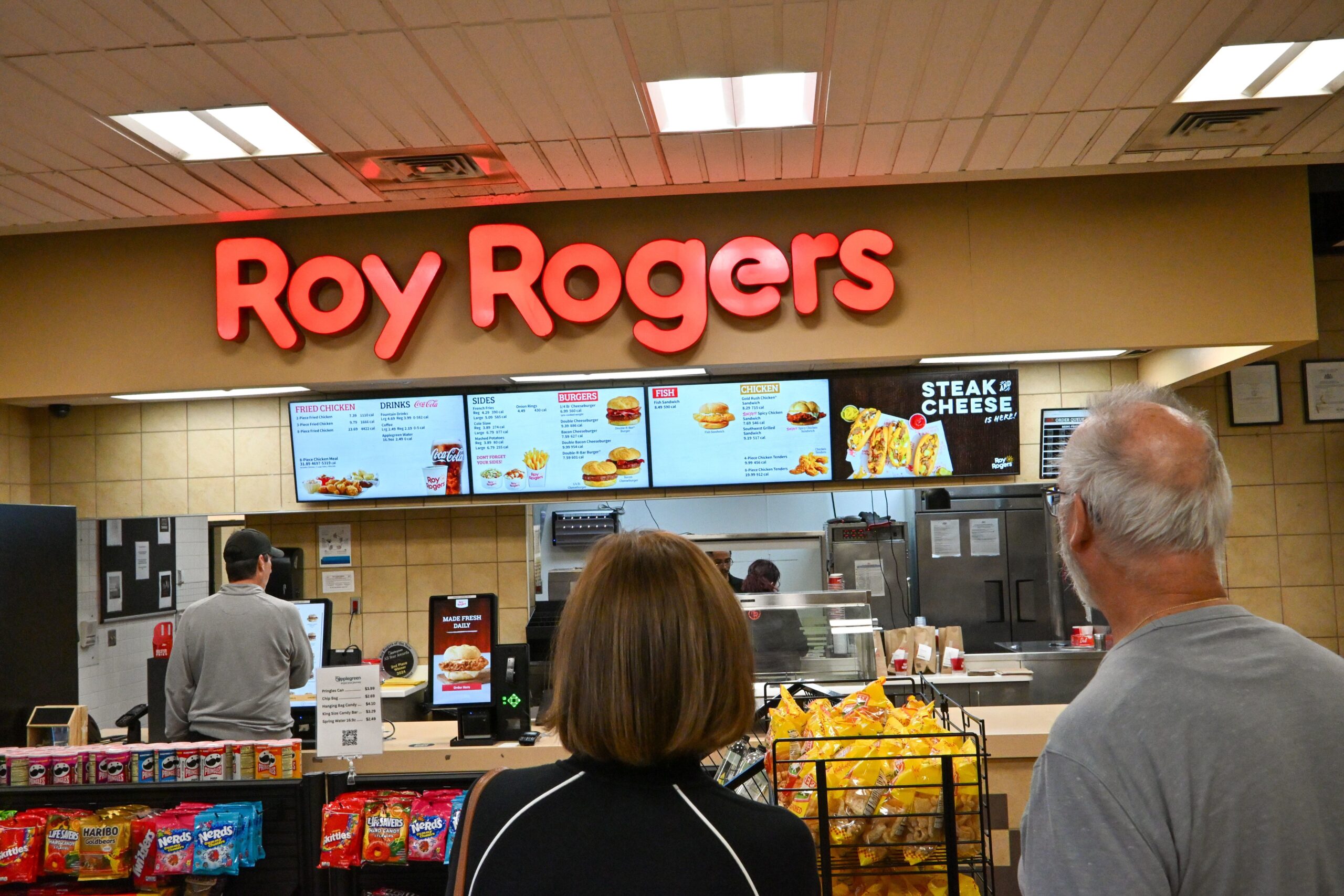
Mary Wright and Rich Misdom of Collingswood consider their options at the Roy Rogers located in the Peter J. Camiel Service Plaza on the Pennsylvania Turnpike in late November 2025.
This isn’t just personal bitterness; it’s structural. The Turnpike’s dining lineup is effectively locked in by a decades-old contract, which explains why eating on one of the state’s busiest roads feels less like a pit stop and more like a museum exhibit titled Fast Food, 1998. Auntie Anne’s. Burger King. Dunkin’. Starbucks. Repeat until New Jersey.
To be clear, this isn’t about disrespecting Roy Rogers. Roy Rogers has survived longer than many of our friendships. But when New Jersey and New York travelers are choosing between Shake Shack and Pret a Manger, and Pennsylvanians are debating whether this Sbarro feels better or worse than the last one, something has gone off the rails.
A C+ feels right. The food won’t kill you. It will fill the void. It might even unlock a memory of your mom liking Roy Rogers, which is sweet in its own way. But if the Turnpike is going to keep charging premium tolls, it might eventually want to acknowledge that the rest of the world moved on from mall food courts, and took better rest-stop dining with it.
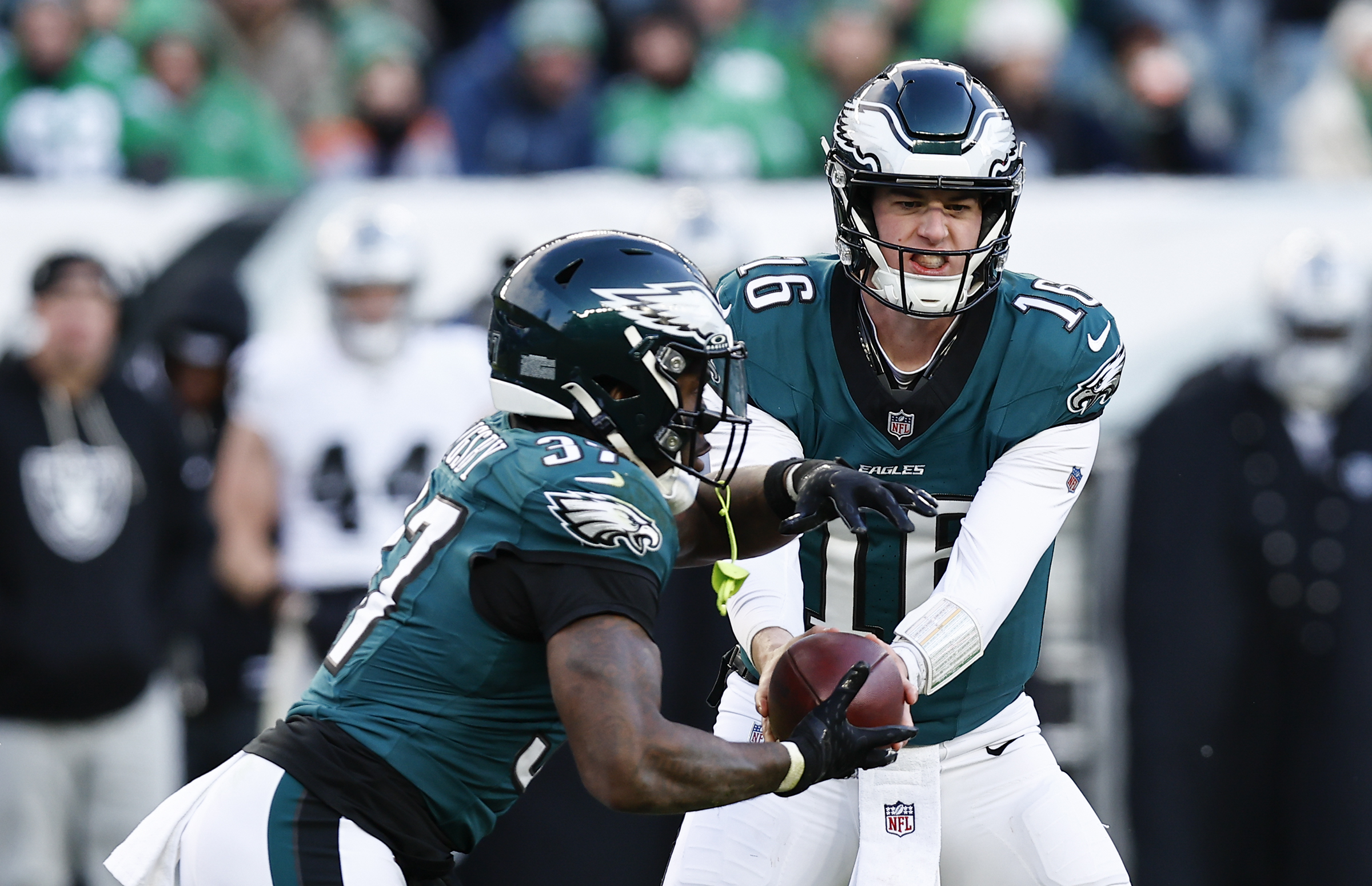
Eagles quarterback Tanner McKee hands off the football to running back Tank Bigsby against the Las Vegas Raiders in the fourth quarter on Sunday, December 14, 2025, in Philadelphia.
Eagles resting the starters (and trusting the vibes): B+
This is one of those decisions that feels smart, responsible, and completely terrifying all at once … which means it’s extremely on brand for Philadelphia football.
The Eagles are essentially turning Week 18 into a spa day for Jalen Hurts and most of the starters, handing the keys to Tanner McKee and asking the football gods to be normal about it. On paper, it makes sense. They’ve been here before. Sirianni keeps pointing out that the two Super Bowl runs came with byes, rest, and fresh legs. He’s not wrong. The scars from 2023 — A.J. Brown getting hurt in a meaningless finale, Hurts dislocating a finger — are still very much part of the group chat.
But this is Philly, so we can’t just rest people quietly.
Because technically, this game still matters. There’s still a path to the No. 2 seed. There’s still a chance to build offensive momentum, which has been… inconsistent, let’s say. And instead, the Eagles are choosing peace. Or at least the idea of it.
If McKee plays well, WIP will combust. If he struggles, everyone will retroactively insist the starters should’ve played. There is no outcome where this doesn’t get litigated.
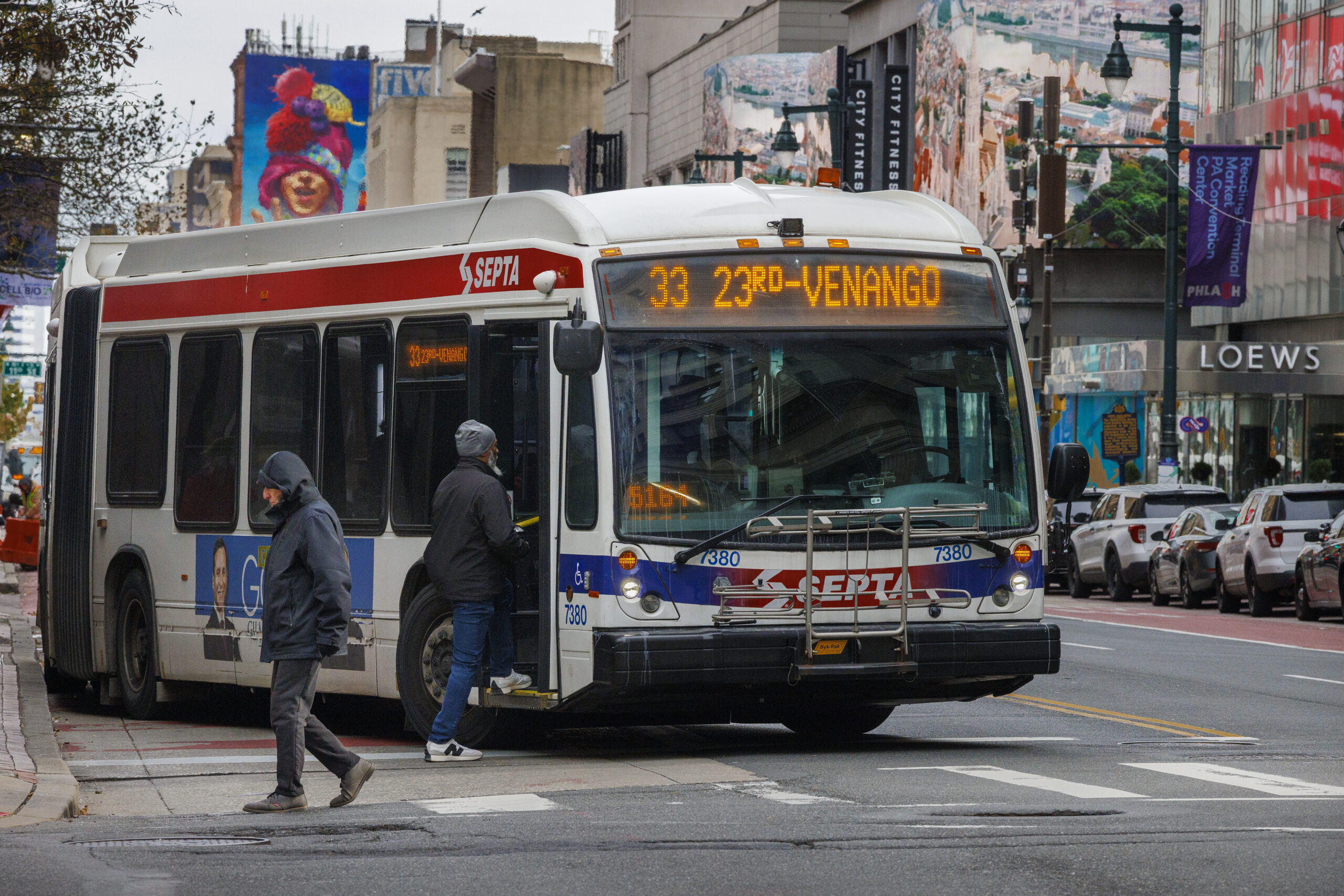
SEPTA 33 bus picking up passengers at 13th and Market Street, Center City Philadelphia, Monday, December 8, 2025.
If you rode transit even semiregularly this year, you don’t need a recap. You felt it in missed connections, sudden service cuts, mystery delays, and that low-grade anxiety that comes from not knowing whether your train is late, canceled, or quietly on fire. Five Regional Rail fires. A trolley tunnel that closed, reopened, and closed again. A budget cliff so real it had a dollar amount attached to it. Near-strikes. Court-ordered service reversals. Emergency money parachuting in at the last second like SEPTA is a reality show contestant who keeps surviving elimination.
The most Philly part? SEPTA technically survived. Barely. With duct tape, emergency funds from Gov. Josh Shapiro, and the kind of last-minute labor deal that had everyone holding their breath. There’s something almost admirable about how resilient the system is — not because it’s thriving, but because it simply refuses to collapse on schedule.
To be fair, some things improved. Serious crime dropped. Fare evasion finally got gates and consequences. SEPTA moved hundreds of thousands of people for the Super Bowl parade without melting down, which honestly might have been the most impressive transit achievement of the year.
But none of that erases the larger truth: SEPTA spent 2025 lurching from crisis to crisis, stuck in the same funding limbo it’s been warning about for years, with riders paying the price in time, stress, and reliability. The money fixes were temporary. The politics were familiar. And the promise for 2026 is essentially: please let us just do the basics.
That’s a low bar… and one SEPTA hasn’t consistently cleared in a while.
New Jersey’s minimum wage lapping Pennsylvania: D (for us)
We love to say we’re better than New Jersey. Spiritually. Culturally. Hoagie-wise. But on minimum wage? Absolutely not. Not even close.
New Jersey is heading into 2026 with a $15.92 minimum wage, adjusted for inflation like it’s a normal, functioning place that occasionally updates laws to reflect reality. Pennsylvania, meanwhile, is still parked at $7.25 — the same number it’s been since 2009, back when we all thought flip phones might be making a comeback.
That gap isn’t just embarrassing; it’s structural. You can cross the bridge and make more than double per hour doing the same work. And while yes, New Jersey is more expensive overall, that doesn’t magically excuse Pennsylvania paying wages that don’t come close to covering basic needs. Even the MIT living wage calculator, which is not exactly a radical think tank, says Pennsylvanians need far more than $7.25 to survive. Shock.
Philly has been stuck in the same frustrating loop for years. The city wants the power to set its own minimum wage. The governor supports raising it. Bills exist. Rallies happen. And yet nothing changes, leaving workers watching Jersey do the thing we keep promising to “get to.”
Daniel Rodriguez travels through Philadelphia’s Suburban Station on Friday, Dec. 19, 2025, in Philadelphia. Rodriguez uses the station to commute between Philadelphia and metro Atlanta, taking a train from Center City to Philadelphia International Airport before boarding flights to and from his company’s Atlanta office.
Flying to Atlanta twice a week so you can keep living in a Jewelers’ Row apartment with your wife, avoid owning a car, and still make your job work is the kind of stubborn, impractical devotion this city respects. It’s extreme. It’s exhausting. It makes no sense on paper. And yet it somehow feels more reasonable than moving to the suburbs.
This isn’t about hustle culture or going viral (though he did). It’s about refusing to uproot your life because the job market is broken, SEPTA is unreliable, and cities don’t always make it easy to stay. Instead of leaving Philly, Rodriguez made the commute worse. Heroic behavior.
Is it sustainable? Questionable. Is it environmentally clean? Debatable. Is it the most Philly response imaginable to a bad system? Absolutely.
Just a week ago, in my last column of 2025 I said I was looking forward. So where do I go in the very first column of 2026?
When you drive for decades all over the city on assignment certain streets, buildings or neighborhoods tilt you toward the past.
Memories don’t just live in one place but are scattered across the map, waiting around a corner, or sitting on a stoop like an old friend. Every recurring event or anniversary replays images in my head.
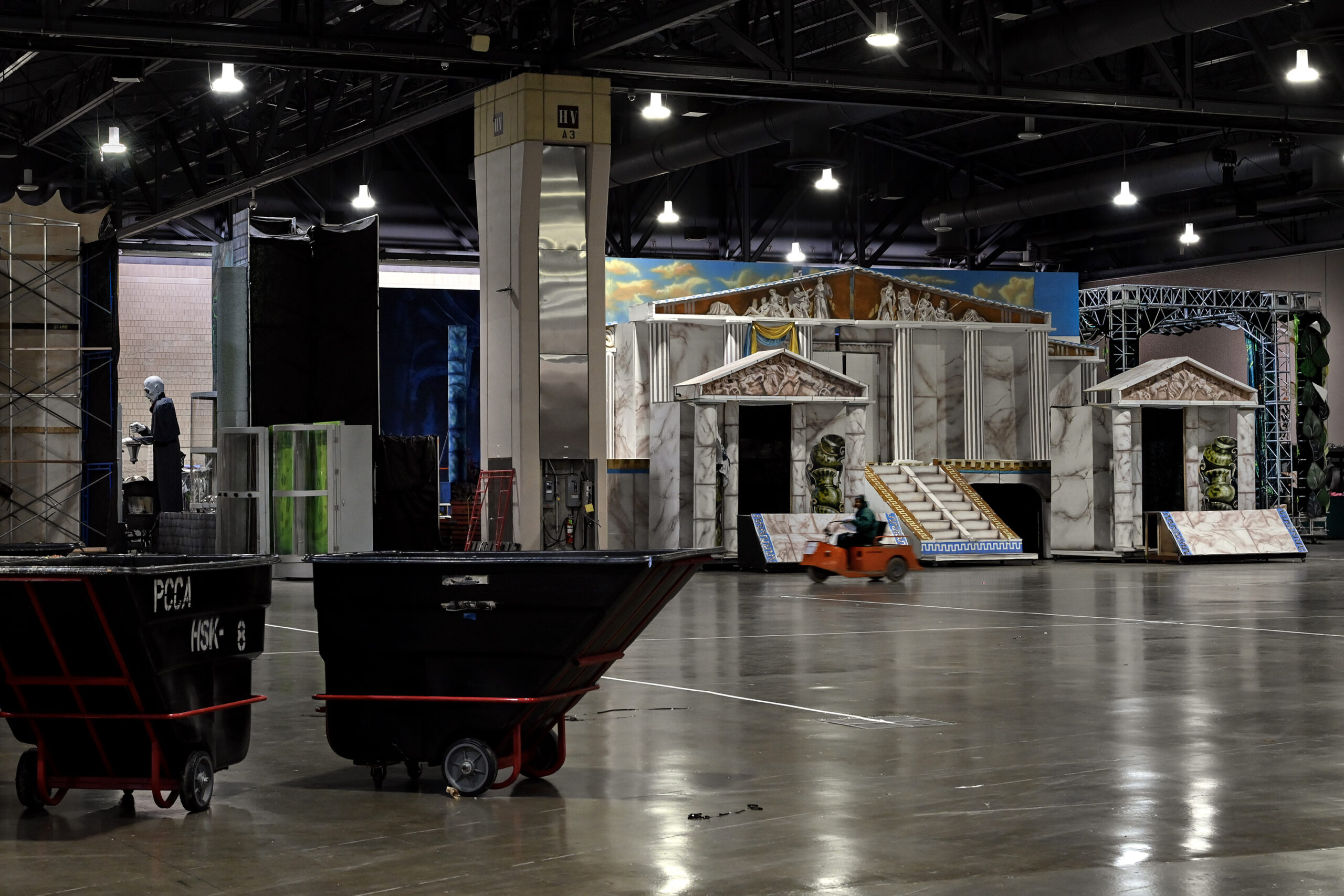
An empty Convention Center hours before Fancy Brigade members arrive for a night of finishing the construction of their stage sets.
I went to the Convention Center two days before the Mummers Parade, looking as I have many times, to make a photo ahead of the event.
But this year, there were no Fancy Brigade members in the cavernous room. Nobody working on their elaborate stage sets or rehearsing their Broadway-quality choreographed performances.
As a cost-cutting measure this year, the clubs only booked the hall (and union workers) for an eight-hour shift in the evening. No early overtime.
So there I was, “seeing” feathered and sequined Mummer ghosts of my memory dancing through the hall. Then, like in the 2006 movie Night at the Museum. I almost wondered if a Greek god, 15 foot high Tiki figure or jester would suddenly come alive.
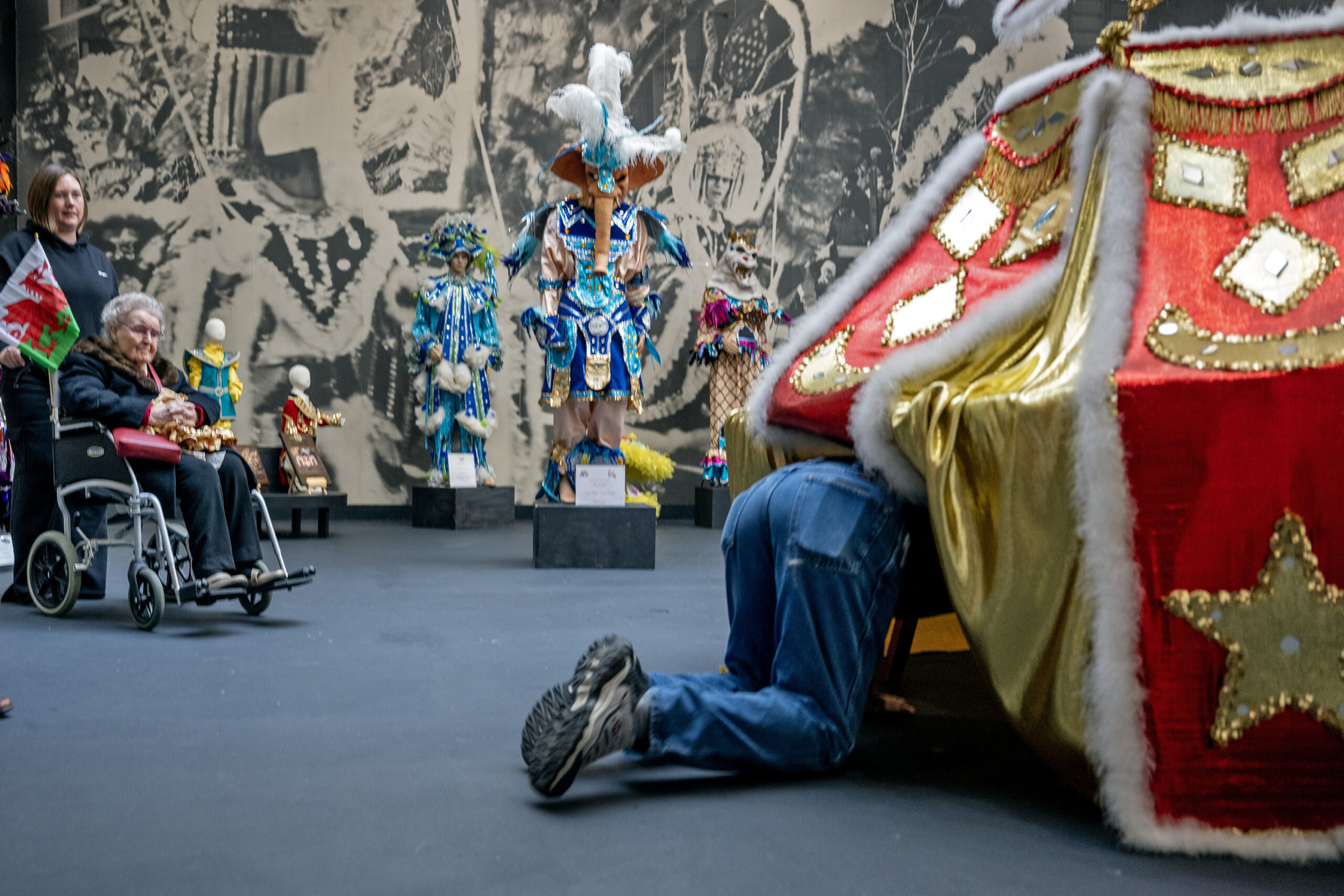
Mummers Museum president Brian Donnelly crawls inside to demonstrat marching in a large Fancy Division frame suit while giving Avril Davidge a tour.
The next day she was to live her dream of going to the parade. I wondered what she was thinking the next day, even as I photographed it for my umpteenth time, collecting more memories and learning, as always, how to see things in new ways.
Since 1998 a black-and-white photo has appeared every Monday in staff photographer Tom Gralish’s “Scene Through the Lens” photo column in the print editions of The Inquirer’s local news section. Here are the most recent, in color:
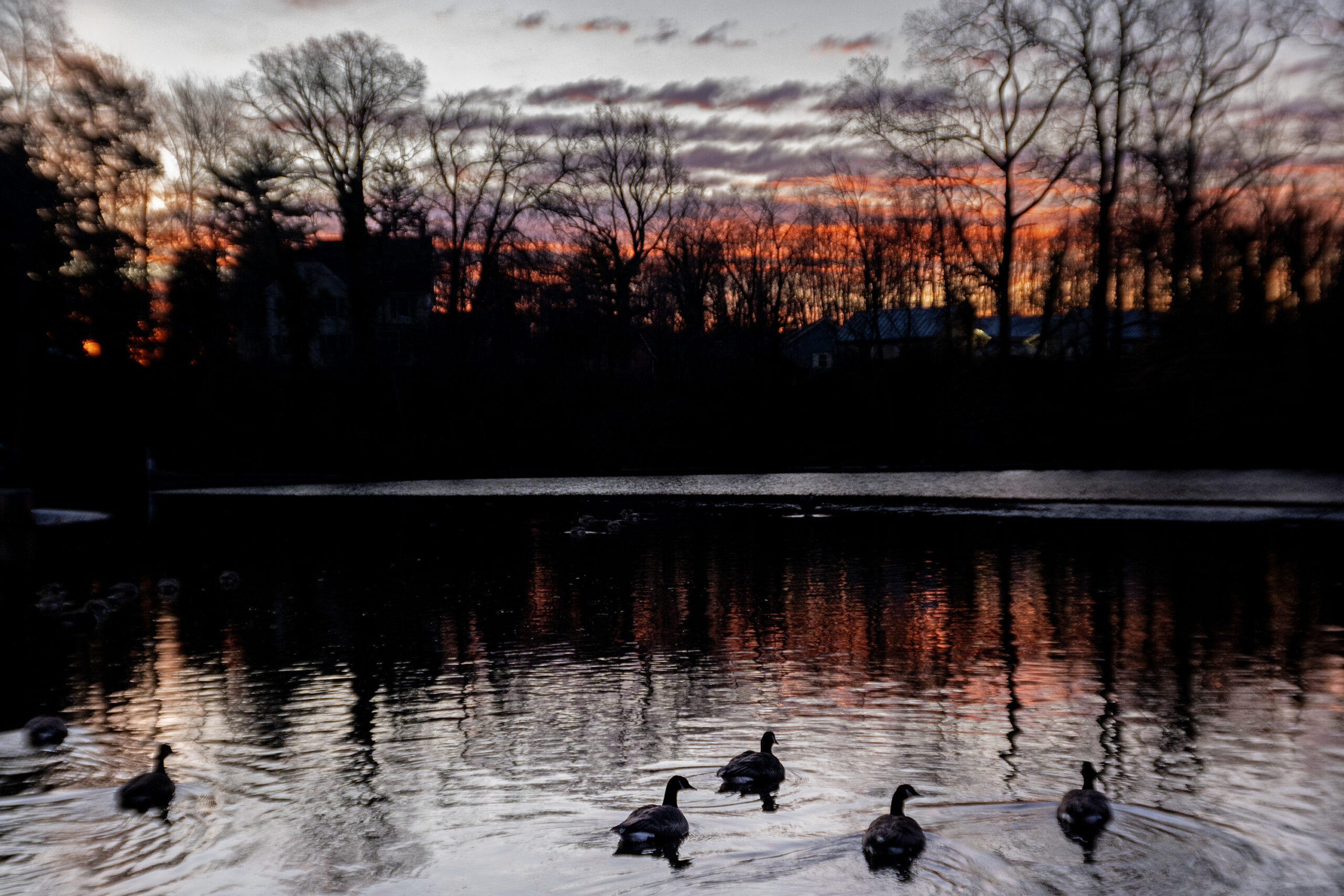
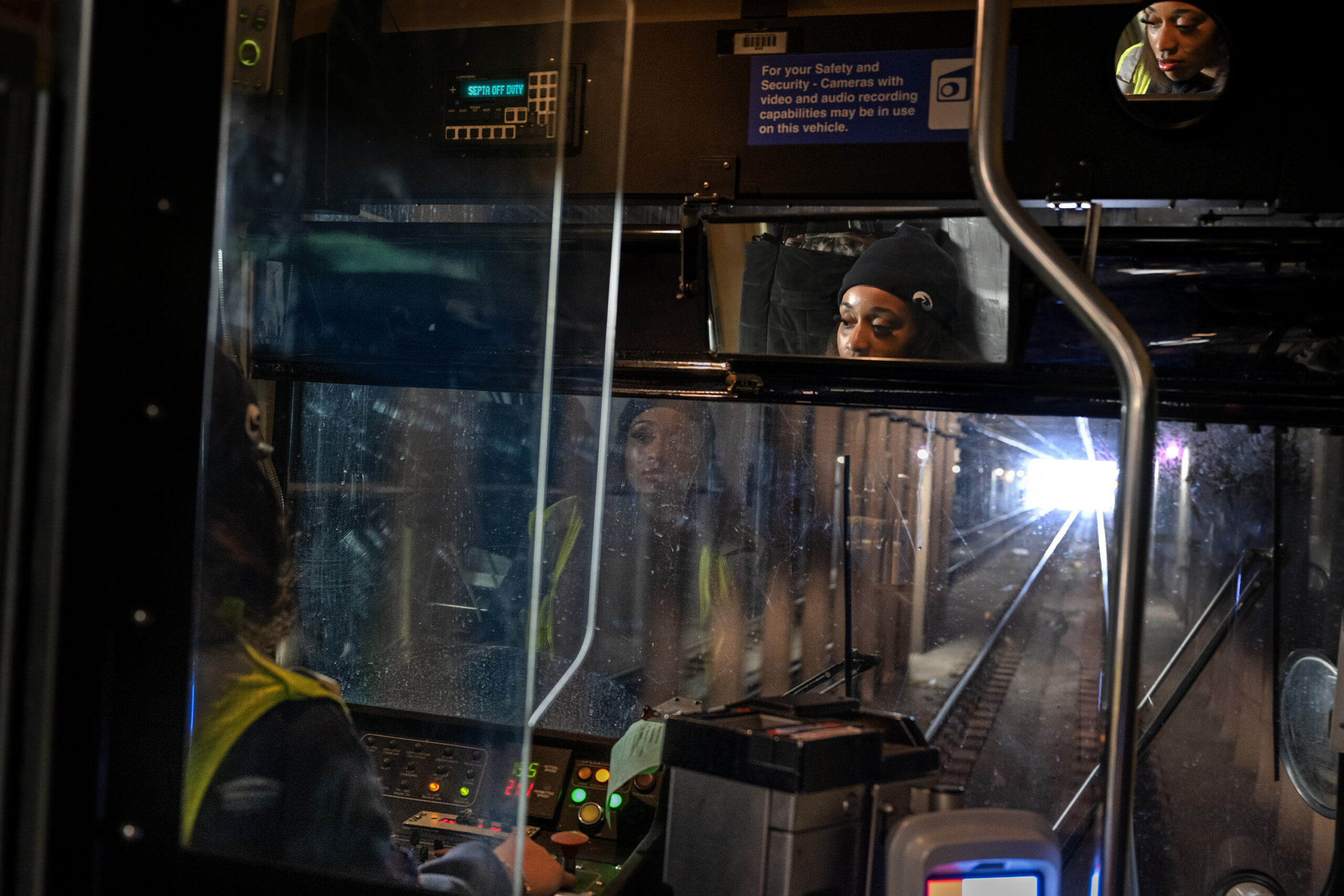
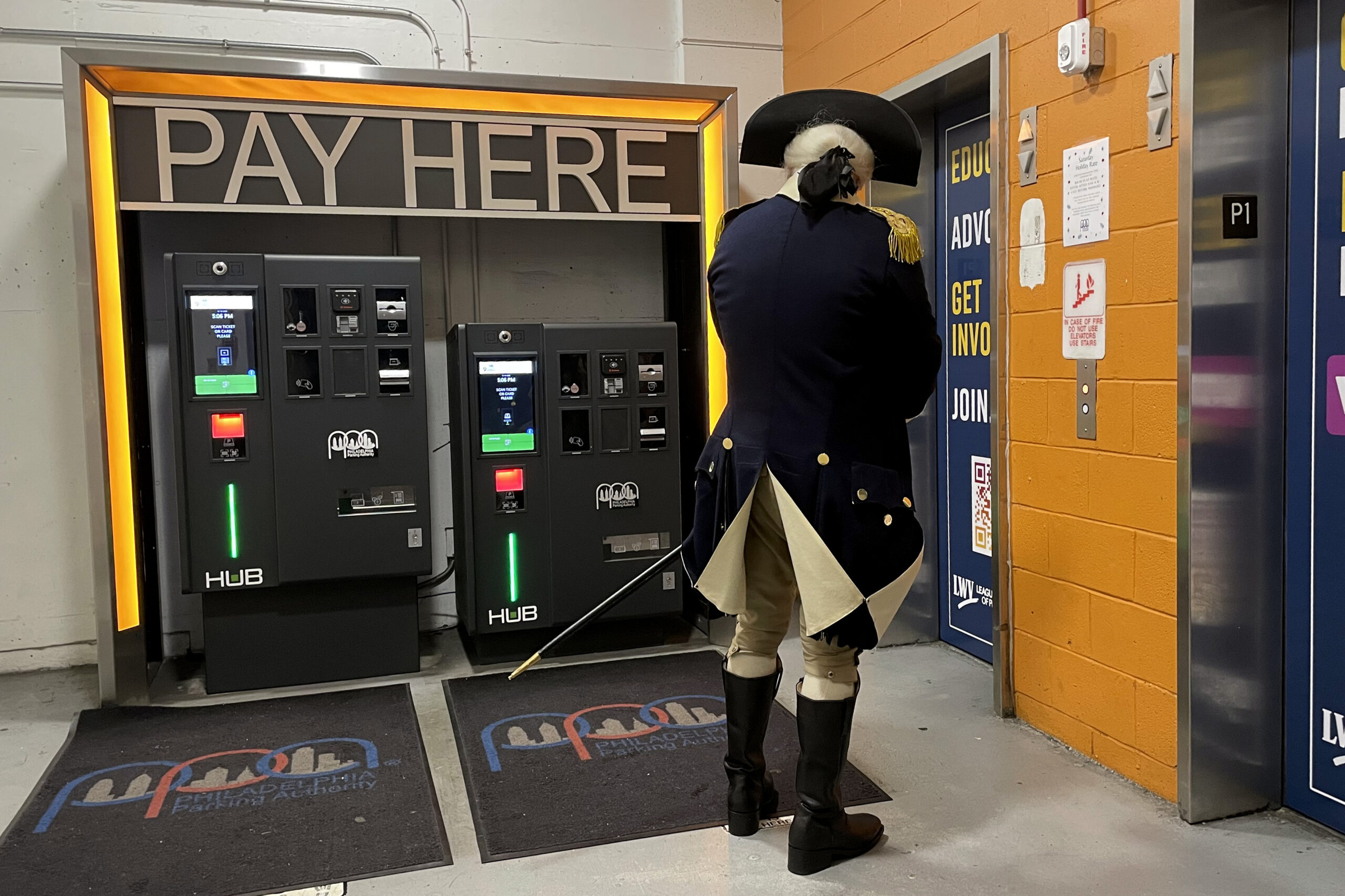
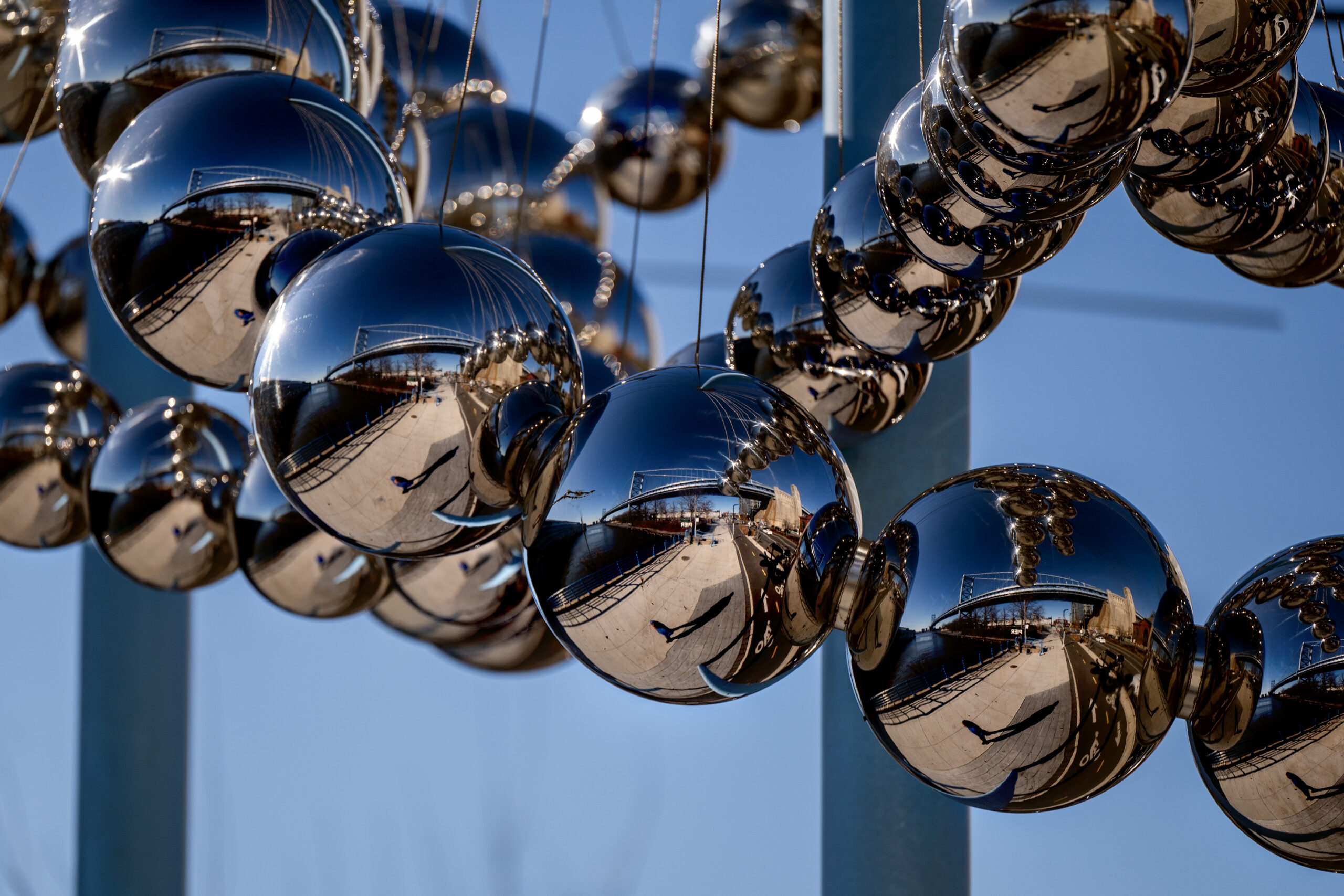
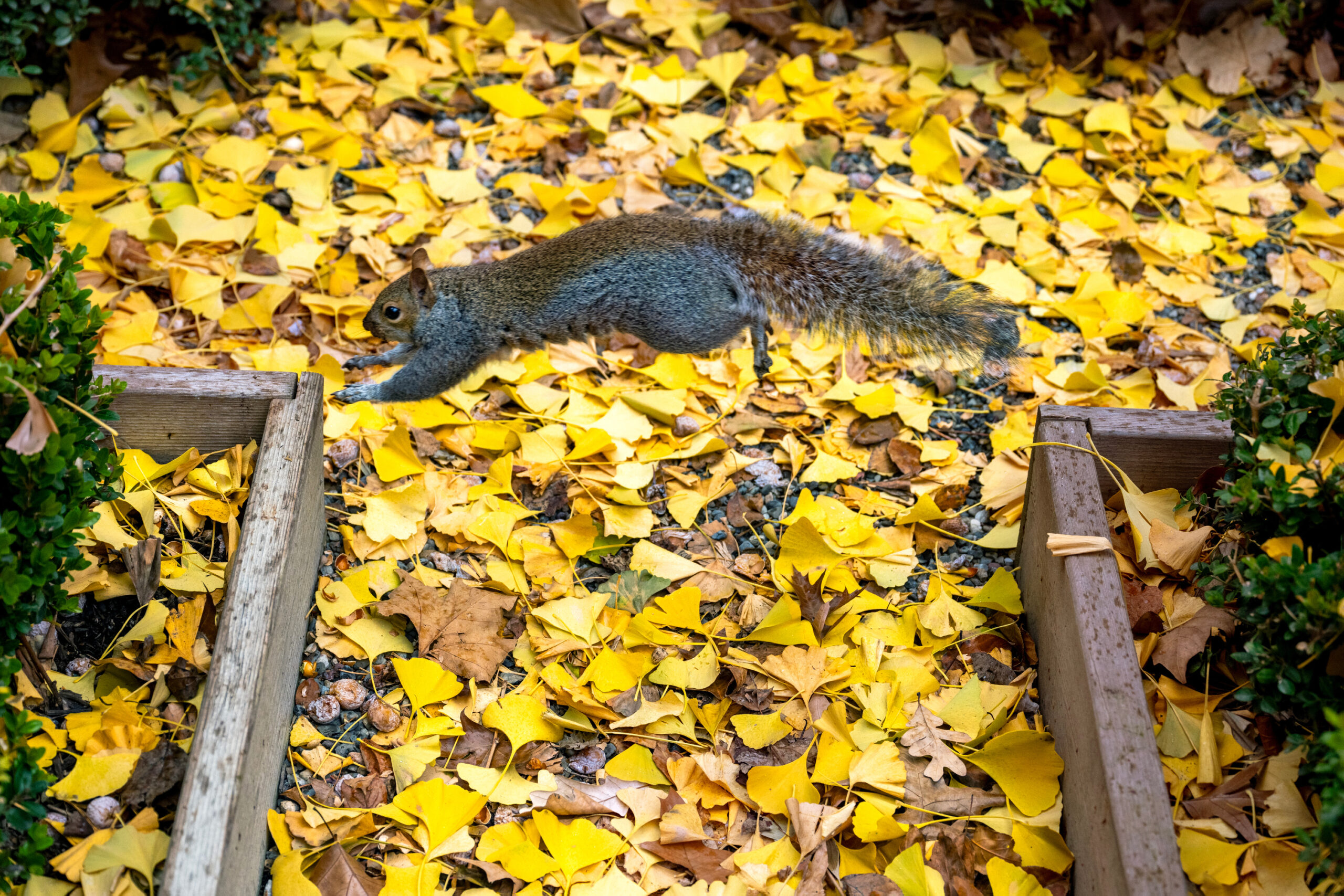
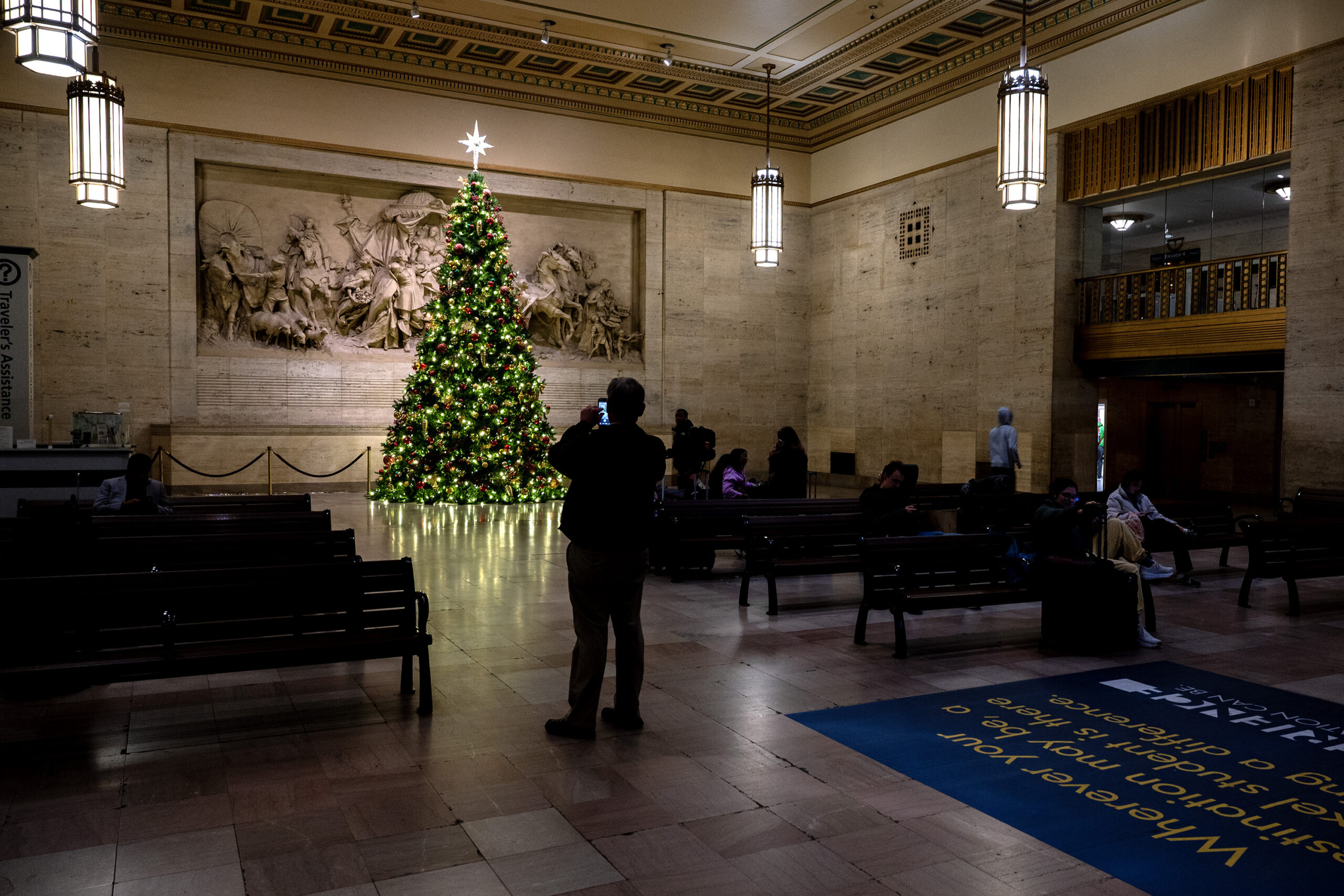
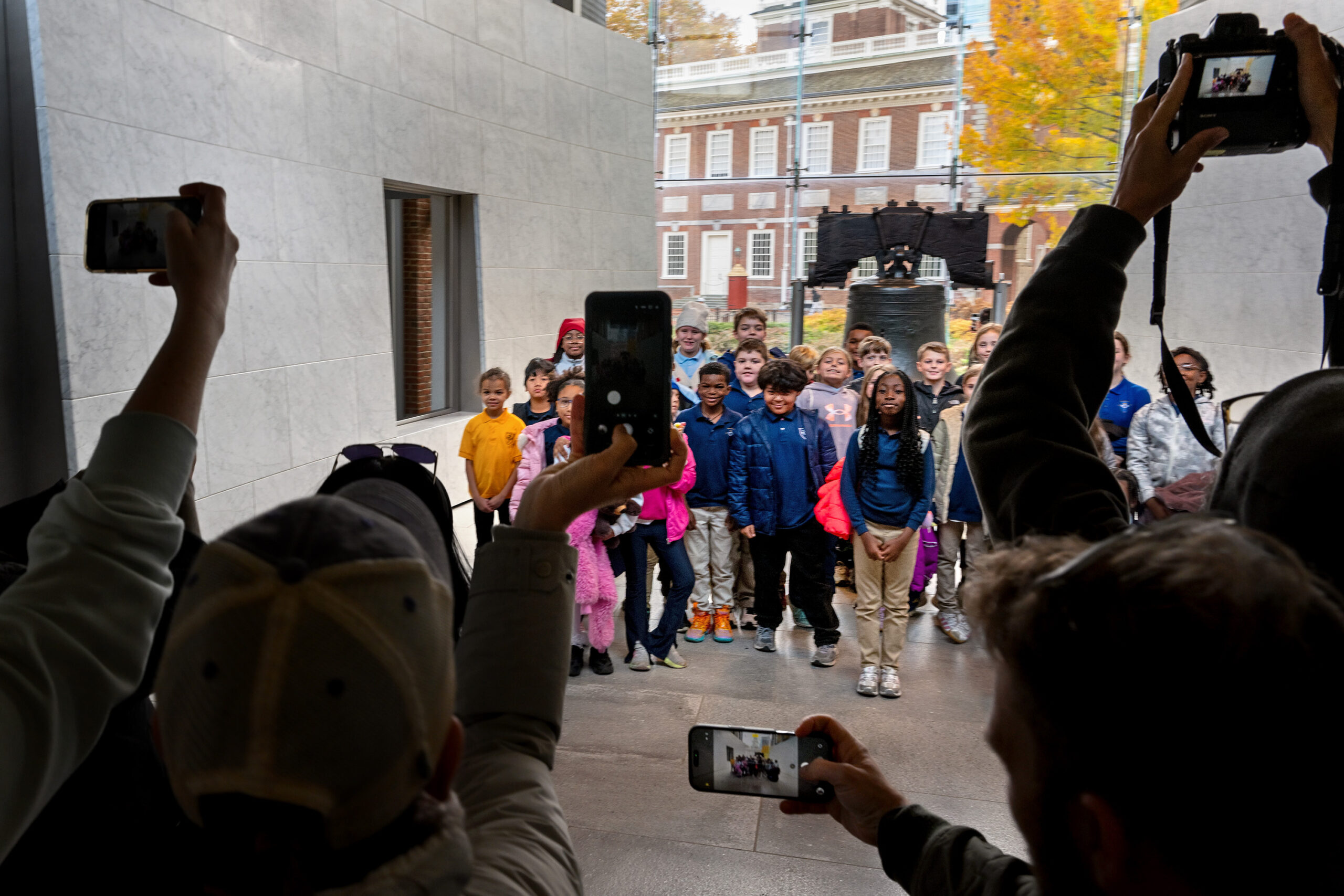
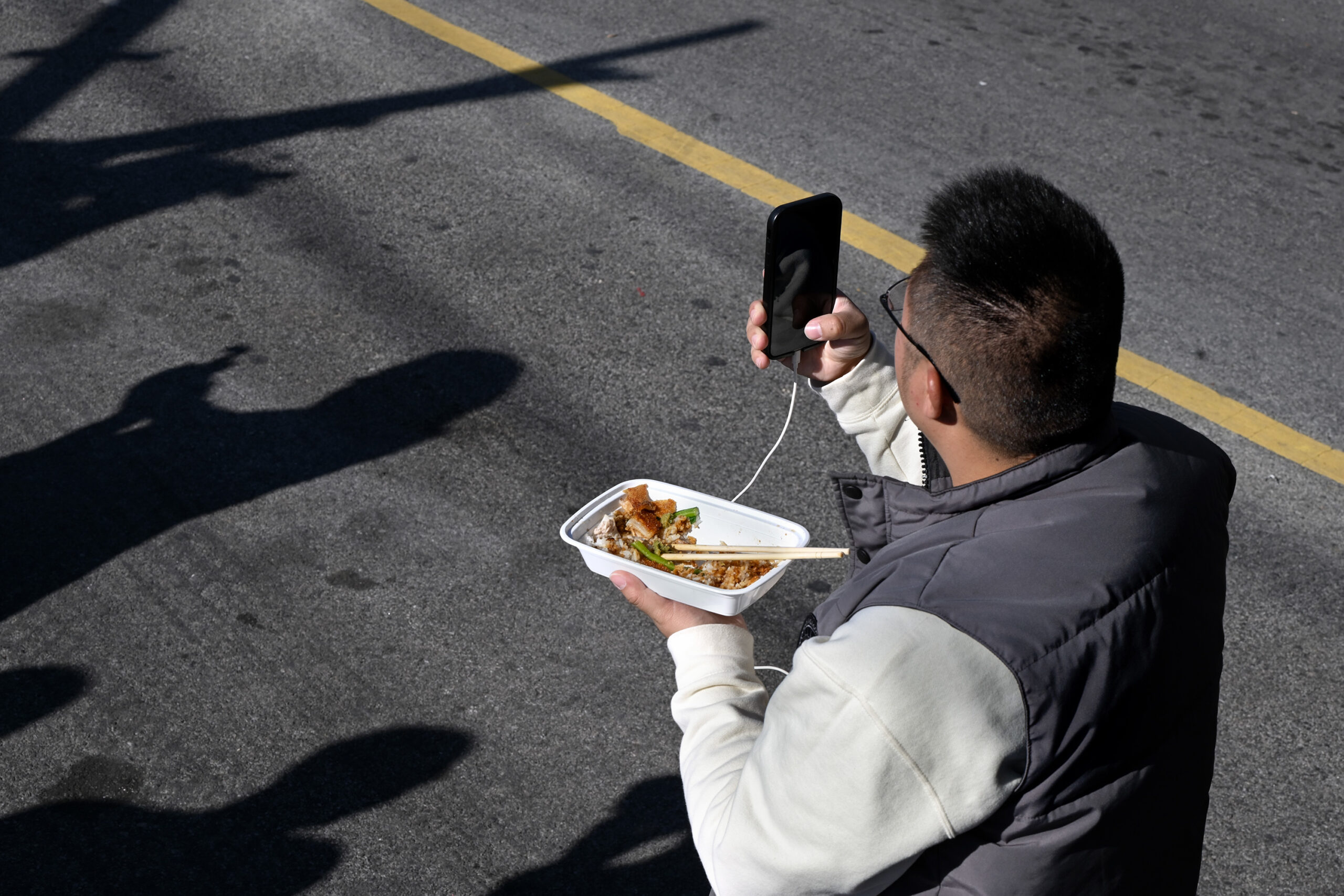
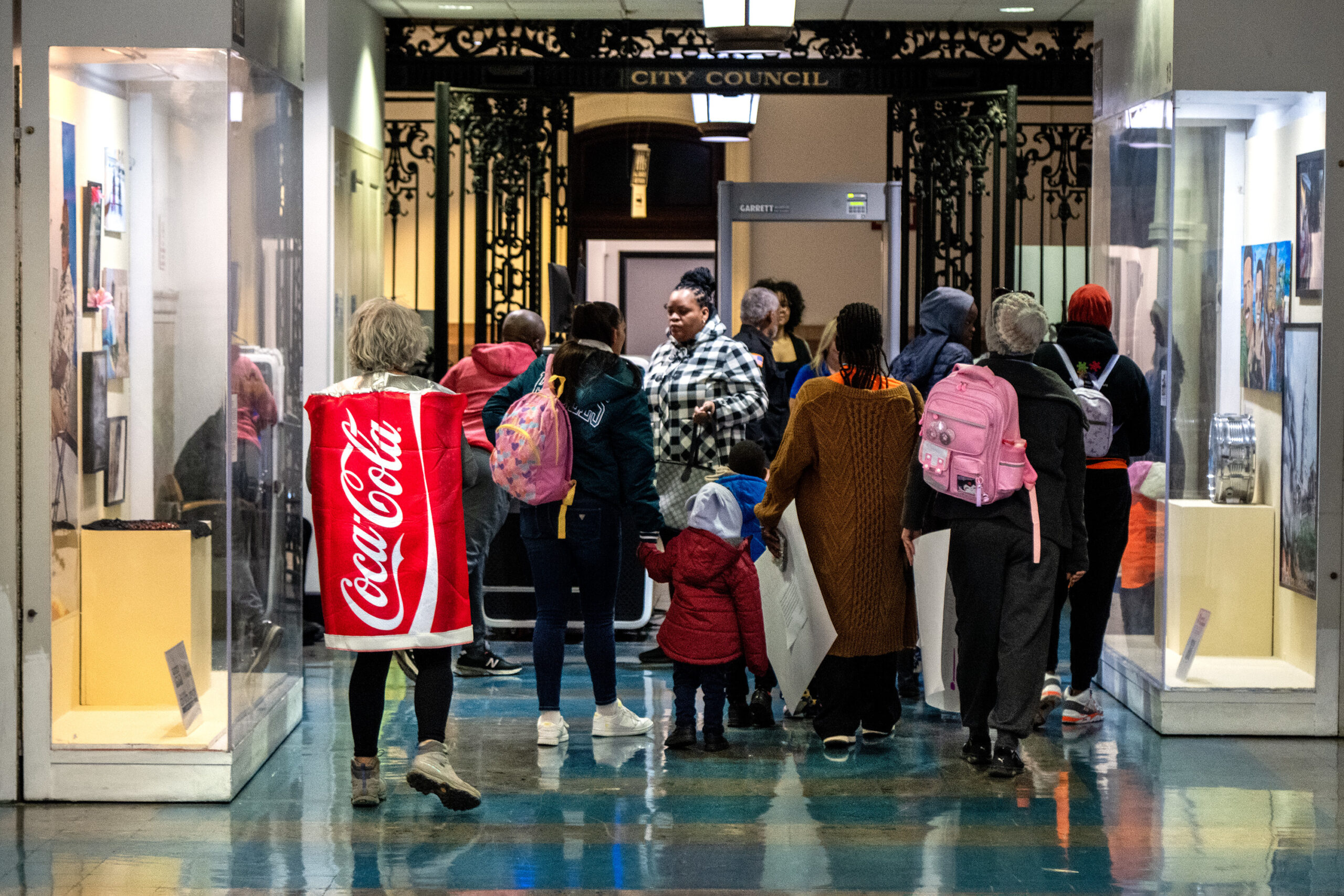
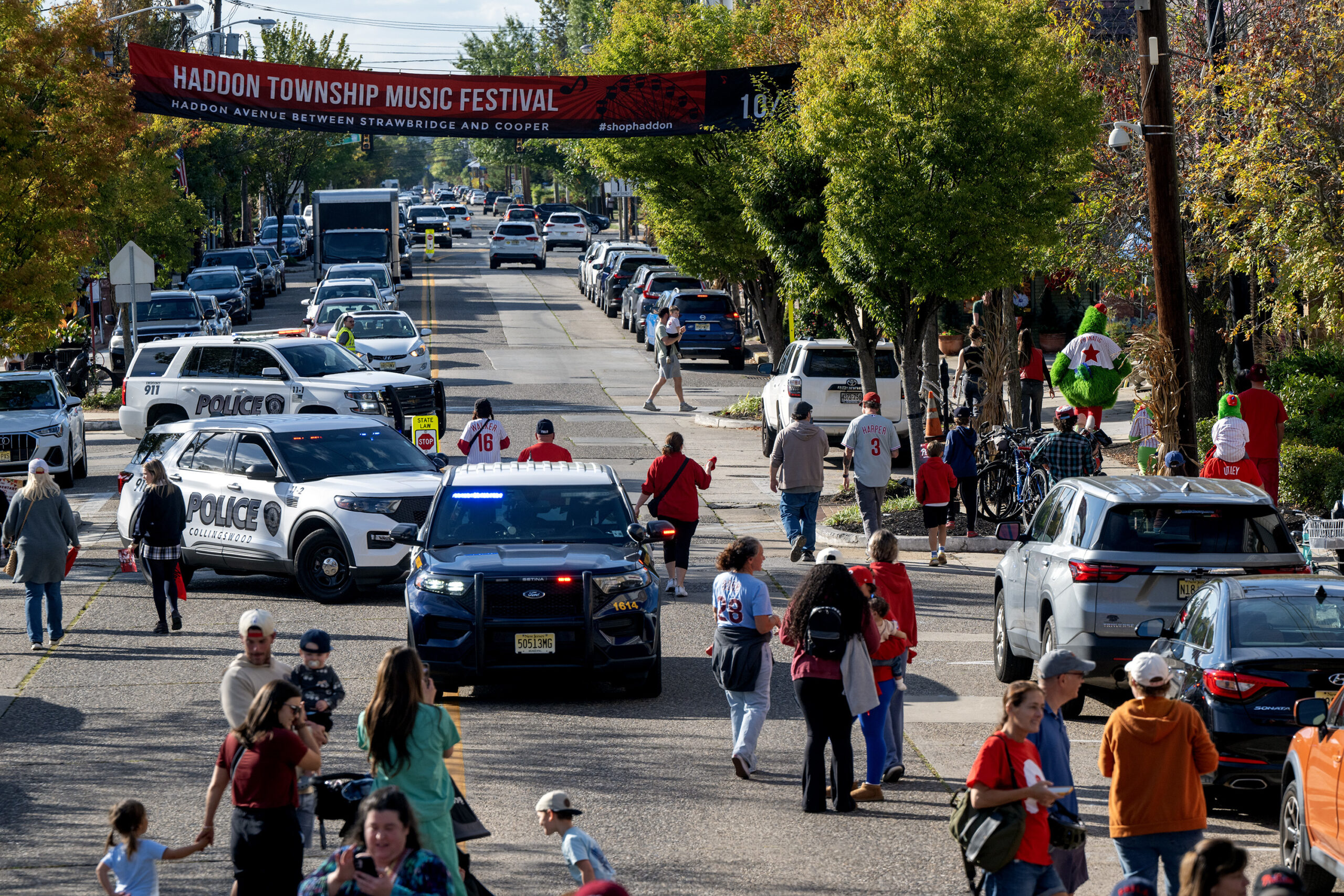
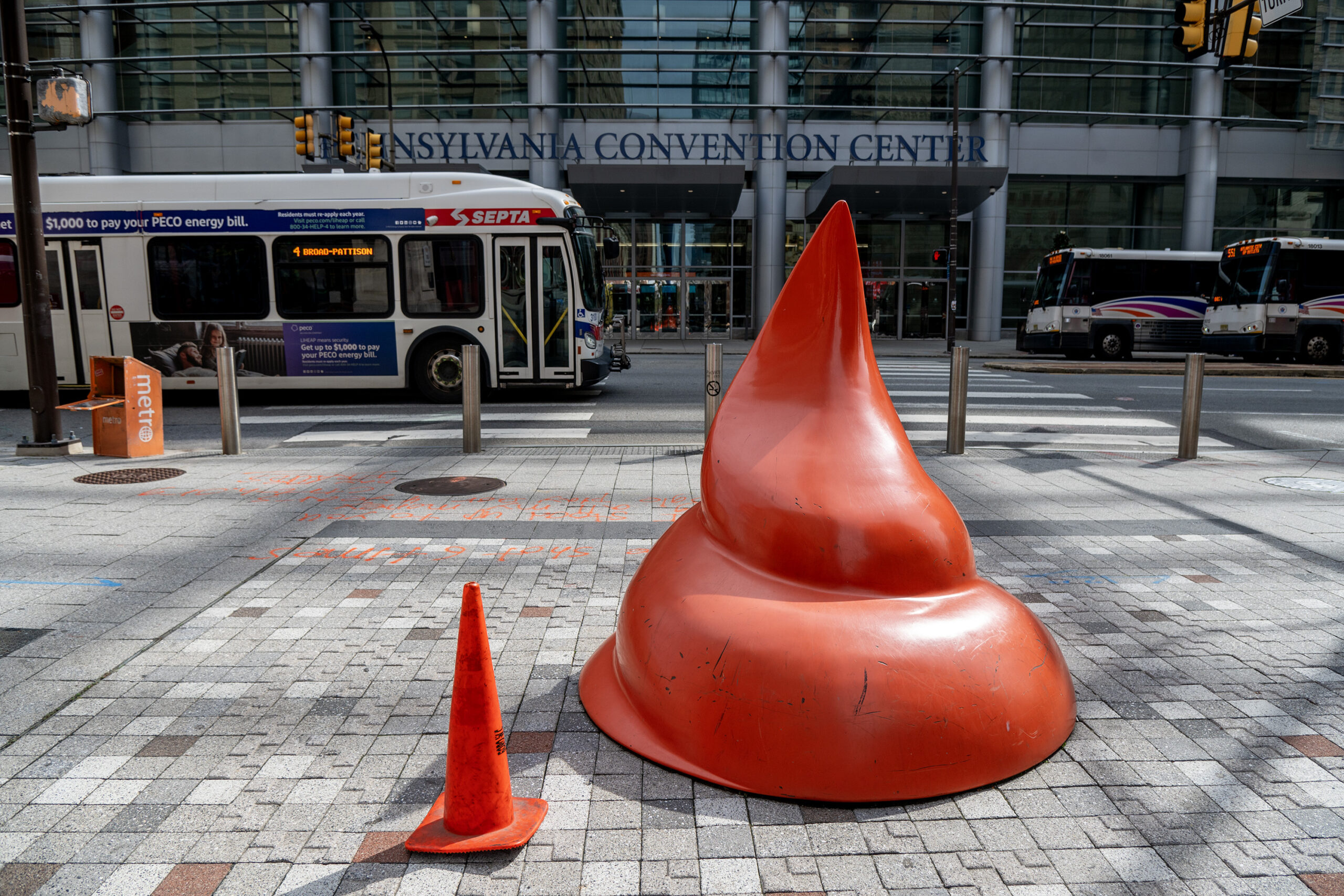
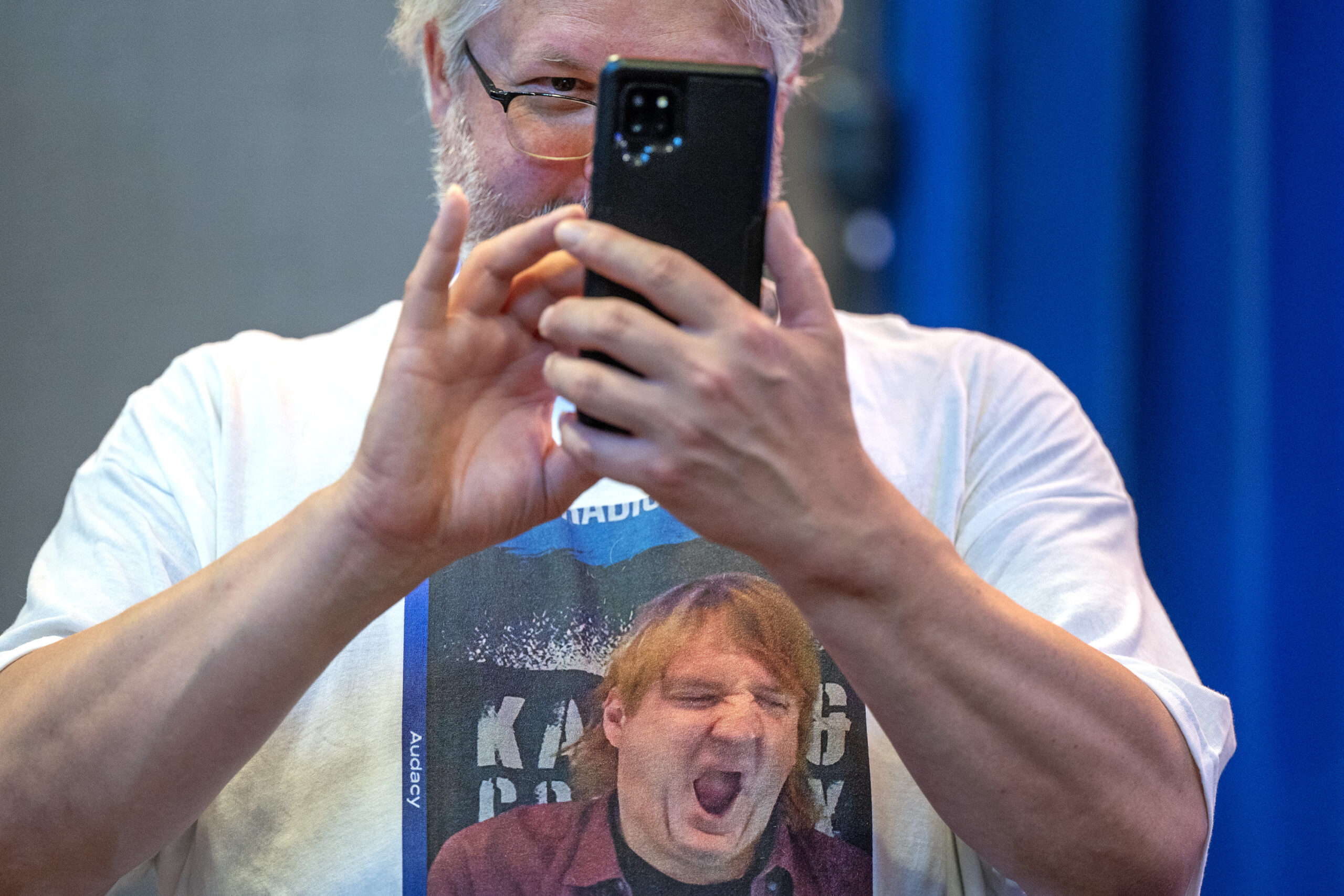
Dec. 29, 2025: Canada geese at sunrise in Evans Pond in Haddonfield, during the week of the Winter Solstice for the Northern Hemisphere. December 22, 2025: SEPTA trolley operator Victoria Daniels approaches the end of the Center City Tunnel, heading toward the 40th Street trolley portal after a tour to update the news media on overhead wire repairs in the closed tunnel due to unexpected issues from new slider parts.December 15, 2025: A historical interpreter waits at the parking garage elevators headed not to a December crossing of the Delaware River, but an event at the National Constitution Center. General George Washington was on his way to an unveiling of the U.S. Mint’s new 2026 coins for the Semiquincentennial, December 8, 2025: The Benjamin Franklin Bridge and pedestrians on the Delaware River Trail are reflected in mirrored spheres of the “Weaver’s Knot: Sheet Bend” public artwork on Columbus Boulevard. The site-specific stainless steel piece located between the Cherry Street and Race Street Piers was commissioned by the City’s Public Art Office and the Delaware River Waterfront Corporation and created and installed in 2022 by the design and fabrication group Ball-Nogues Studio. The name recalls a history that dominated the region for hundreds of years. “Weaver’s knot” derives from use in textile mills and the “Sheet bend” or “sheet knot” was used on sailing vessels for bending ropes to sails. November 29, 2025: t’s ginkgo time in our region again when the distinctive fan-shaped leaves turn yellow and then, on one day, lose all their leaves at the same time laying a carpet on city streets and sidewalks. A squirrel leaps over leaves in the 18th Century Garden in Independence National Historical Park Nov. 25, 2025. The ginkgo (Ginkgo biloba) is considered a living fossil as it’s the only surviving species of a group of trees that existed before dinosaurs. Genetically, it has remained unchanged over the past 200 million years. William Hamilton, owner the Woodlands in SW Phila (no relation to Alexander Hamilton) brought the first ginkgo trees to North America in 1785.November 24, 2025: The old waiting room at 30th Street Station that most people only pass through on their way to the restrooms has been spiffed up with benches – and a Christmas tree. It was placed there this year in front of the 30-foot frieze, “The Spirit of Transportation” while the lobby of Amtrak’s $550 million station restoration is underway. The 1895 relief sculpture by Karl Bitter was originally hung in the Broad Street Station by City Hall, but was moved in 1933. It depicts travel from ancient to modern and even futuristic times. November 17, 2025: Students on a field trip from the Christian Academy in Brookhaven, Delaware County, pose for a group photo in front of the Liberty Bell in Independence National Historical Park on Thursday. The trip was planned weeks earlier, before they knew it would be on the day park buildings were reopening after the government shutdown ended. “We got so lucky,” a teacher said. Then corrected herself. “It’s because we prayed for it.” November 8, 2025: Multitasking during the Festival de Día de Muertos – Day of the Dead – in South Philadelphia.November 1, 2025: Marcy Boroff is at City Hall dressed as a Coke can, along with preschoolers and their caregivers, in support of former Mayor Jim Kenney’s 2017 tax on sweetened beverages. City Council is considering repealing the tax, which funds the city’s pre-K programs. October 25, 2025: Austin Gabauer, paint and production assistant at the Johnson Atelier, in Hamilton Twp, N.J. as the finished “O” letter awaits the return to Philadelphia. The “Y” part of the OY/YO sculpture is inside the painting booth. The well-known sculpture outside the Weitzman National Museum of American Jewish History was removed in May while construction continues on Market Street and has been undergoing refurbishment at the Atelier at the Grounds for Sculpture outside of Trenton.October 20, 2025:The yellow shipping container next to City Hall attracted a line of over 300 people that stretched around a corner of Dilworth Park. Bystanders wondered as they watched devotees reaching the front take their selfies inside a retro Philly diner-esque booth tableau. Followers on social media had been invited to “Climb on to immerse yourself in the worlds of Pleasing Fragrance, Big Lip, and exclusive treasures,” including a spin of the “Freebie Wheel,” for products of the unisex lifestyle brand Pleasing, created by former One Direction singer Harry Styles.October 11, 2025: Can you find the Phillie Phanatic, as he leaves a “Rally for Red October Bus Tour” stop in downtown Westmont, N.J. just before the start of the NLDS? There’s always next year and he’ll be back. The 2026 Spring Training schedule has yet to be announced by Major League Baseball, but Phillies pitchers and catchers generally first report to Clearwater, Florida in mid-February.October 6. 2025: Fluorescent orange safety cone, 28 in, Poly Ethylene. Right: Paint Torch (detail) Claes Oldenburg, 2011, Steel, Fiberglass Reinforced Plastic, Gelcoat and Polyurethane. (Gob of paint, 6 ft. Main sculpture, 51 ft.). Lenfest Plaza at the Pennsylvania Academy of the Fine Arts on North Broad Street, across from the Convention Center.September 29, 2025: A concerned resident who follows Bucks County politics, Kevin Puls records the scene before a campaign rally for State Treasurer Stacy Garrity, the GOP candidate for governor. His T-shirt is “personal clickbait” with a url to direct people to the website for The Travis Manion Foundation created to empower veterans and families of fallen heroes. The image on the shirts is of Greg Stocker, one of the hosts of Kayal and Company, “A fun and entertaining conservative spin on Politics, News, and Sports,” mornings on Talk Radio 1210 WPHT.
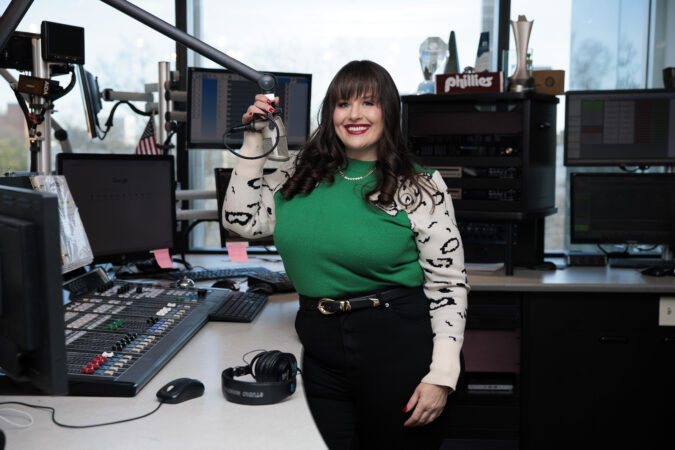
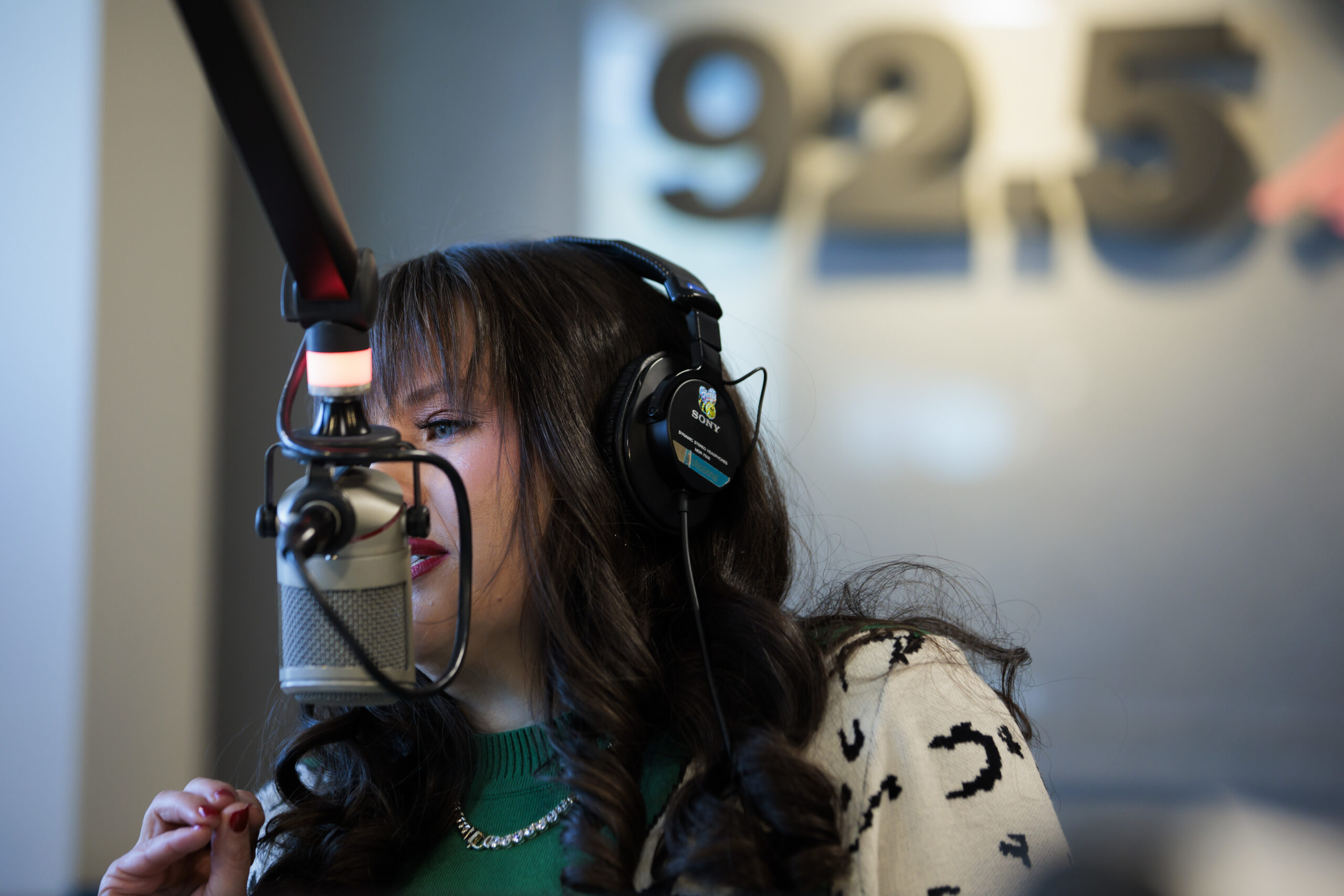
Nicole Michalik spends her afternoons talking directly to Philadelphians as they make their way home. As a host on 92.5 XTU, the city’s country music station, she’s on air from 2 to 7 p.m., juggling live breaks, listener calls, and interviews with artists like Luke Combs and Parker McCollum. Radio, she insists, is still relevant, “sexy” even. “I’m live, I’m local, I’m talking about stuff that’s going on in Philly,” Michalik said. What more could you want?
Michalik lives in Midtown Village, but her days stretch across the city, including a trek to Bala Cynwyd, where the radio station is located. She loves her job. In fact, she loves it so much that her perfect Philly day includes a trip to the office. Here’s what else it includes.
This interview has been lightly edited for clarity.
7:30 a.m.
I usually wake up somewhere between 7 and 7:30. First thing I do is check socials and email, then I make coffee at home. I need it piping hot. I use a Keurig — no judgment — with organic half-and-half.
I take it back to bed and do my Instagram bit, “Coffee Under the Covers.” I started it during COVID and it just became a thing. I’ll take a sip and talk about whatever’s on my mind. People have sent me mugs. It’s wild.
After that, I record my Boston radio show from home. I’m on Country 102.5 up there, so I have a whole setup — computer, mic, everything. I want it to feel as local as possible, even though I’m not physically there.
10 a.m.
I force myself to work out. I walk to XForce to train with James, who keeps me accountable. I hate working out, but I don’t hate it there, so that’s a win for me.
When I cross Broad Street, I always take a photo of City Hall and post the temperature. It’s become a thing. One of my friends who lives in Portugal checks it every day. He calls me his Cecily Tynan.
11:30 a.m.
After the gym, I get my hair blown out at Dina Does Glam inside Sola Salons at 15th and Walnut. I go at least once a week. I love that Sola lets people in the beauty industry run their own little studios.
From there, I walk to Gran Caffè L’Aquila for an iced coffee. It’s the best iced coffee in the city. That’s nonnegotiable.
I try to head home after that, because if I don’t, I’ll get sucked into Sephora buying makeup I absolutely do not need.
1 p.m.
I get ready for work and drive to Bala Cynwyd. On the way, I stop at the Starbucks on City Avenue. I order an iced Americano with almond milk and a drizzle of caramel. They know me there.
I don’t even know if caffeine really affects me that much. I just love the ritual. I like sipping it throughout the show.
Nicole Michalik works at 925XTU on Monday, Dec. 1, 2025 in Philadelphia.
2 to 7 p.m.
I’m live on the air. On my perfect day, I’m doing a Zoom interview with Luke Combs, and he finally announces he’s coming back to Philly. We’ve been mad at him for skipping us for a few years, so this would be huge.
7:30 p.m.
After work, I meet friends at Lark in Bala Cynwyd. It’s right across from the station, and it’s one of my favorite places. I’m ordering the gnocco fritto — they’re like little puffy clouds with lemon ricotta — and the striped bass. Nick Elmi just knows what he’s doing.
9 p.m.
I’m heading to a Sixers game. In my perfect world, it’s the Eastern Conference finals, Joel Embiid has great knees, and we’re winning. I live in the city and love walking everywhere, but I also love that Philly is easy to drive around — as long as the PPA doesn’t get you.
11 p.m.
Once 11 p.m. hits — I’m like Cinderella — I’m ready for bed. I love going home to put my pajamas on.
Nowhere will celebrate America’s 250th anniversary like Philadelphia. Because nowhere else can celebrate the national milestone like Philadelphia.
Philly is where it happened.
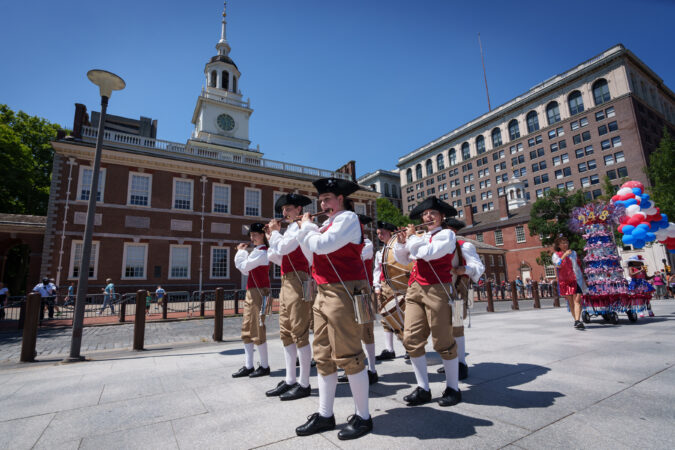
Only in Philadelphia, on July 4, 1776, did 56 sweat-soaked delegates of the Second Continental Congress stride into sweltering Independence Hall to stake their necks on an idea. In the course of human events, it had become time to declare self-evident truths. All men are created equal and endowed by certain unalienable rights.
Some men, that is.
This unforgivable erasure would have reverberations to this day. Nowhere are the centuries-old wounds of that betrayal more visible than in the unrelenting poverty, violence, and inequality preventing so many Philadelphians from their pursuit of happiness.
But the manifesto was still the most revolutionary freedom document humankind ever produced. A single piece of parchment composed of elegant, unwavering prose that defied and dared an empire, forever reordered the rights of man, and drew the eyes of humanity — and judgments of history — upon our humble burg.
Their work for the day done — and in keeping with the rest of the Founders’ stay in the City of Brotherly Love — the framers presumably dusted off their wigs, loosened up their waistcoats, and repaired to the cooling comfort of the City Tavern for a rager for the ages.
Only in Philadelphia.
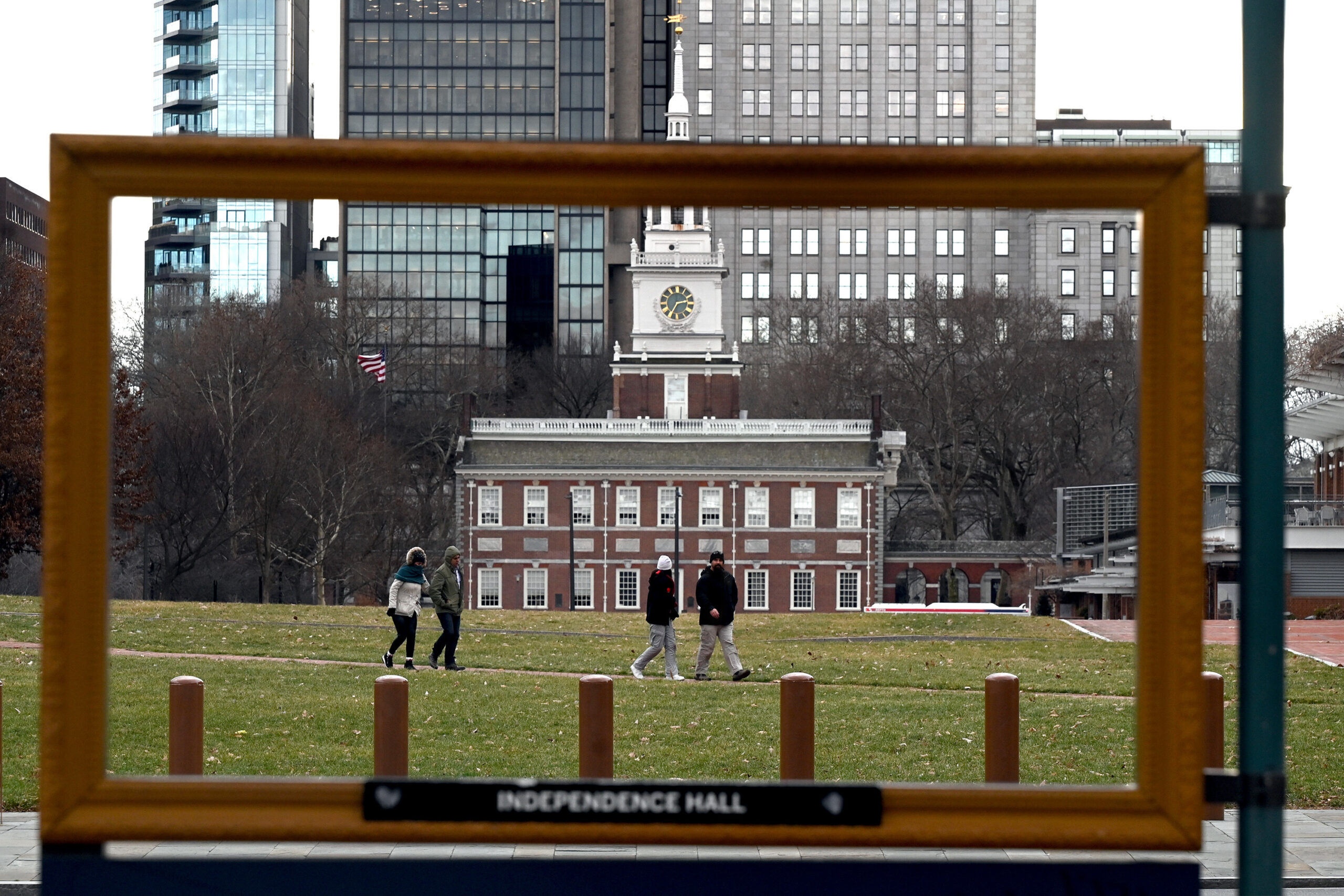
Independence Hall in Independence National Historical Park Jan. 3, 2024. one of the Philadelphia region’s most visited areas, but the lustre has often seem faded in its grounds and buildings. But organizers say it will be different in time for 2026, the 250th birthday celebration of America.
‘Philly is beyond ready’
Two-and-half centuries later, the eyes of the world again fall upon our Philly — for yet another rager for the ages.
In Philly fashion, the city’s preparations for the 250th anniversary of the signing of the Declaration of Independence, also known as the Semiquincentennial, stumbled to a rocky start. Poor funding, a lack of leadership, and miscommunication plagued early stages of Philly’s 250th party planning.
But in truer Philly fashion, dozens of passionate Philadelphian civil servants, cultural leaders, artists, volunteers, and philanthropies rallied to ensure the city where it happened met the moment.
Only a year ago, during a 2026 preparedness meetings, worried planners requested $100 million from city and state coffers to fund festivities and programming worthy of democracy’s birthplace. They have received it.
“A year ago, we were having a conversation about, ‘Are we ready?’, ‘Is the money there?’, ‘Can we pull this off?’” said Max Weisman, an aide to Councilmember Isaiah Thomas, a key planner. “Yes, yes, yes.”
Philadelphia is ready, the planners say. Have no doubt.
These Philly-loving patriots say they have organized a once-in-a-lifetime party equal to the city’s unparalleled role in history — and its irrepressibly proud personality.
“Philly is beyond ready,” said Kathryn Ott Lovell, president and CEO of the Philadelphia Visitor Center Corporation and Philadelphia250, the city’s key planning partner for 2026. “Everyone is pulling out the red carpet. Every museum. Every cultural institution. Every neighborhood organization. Everyone is doing something special for the company that’s coming.”
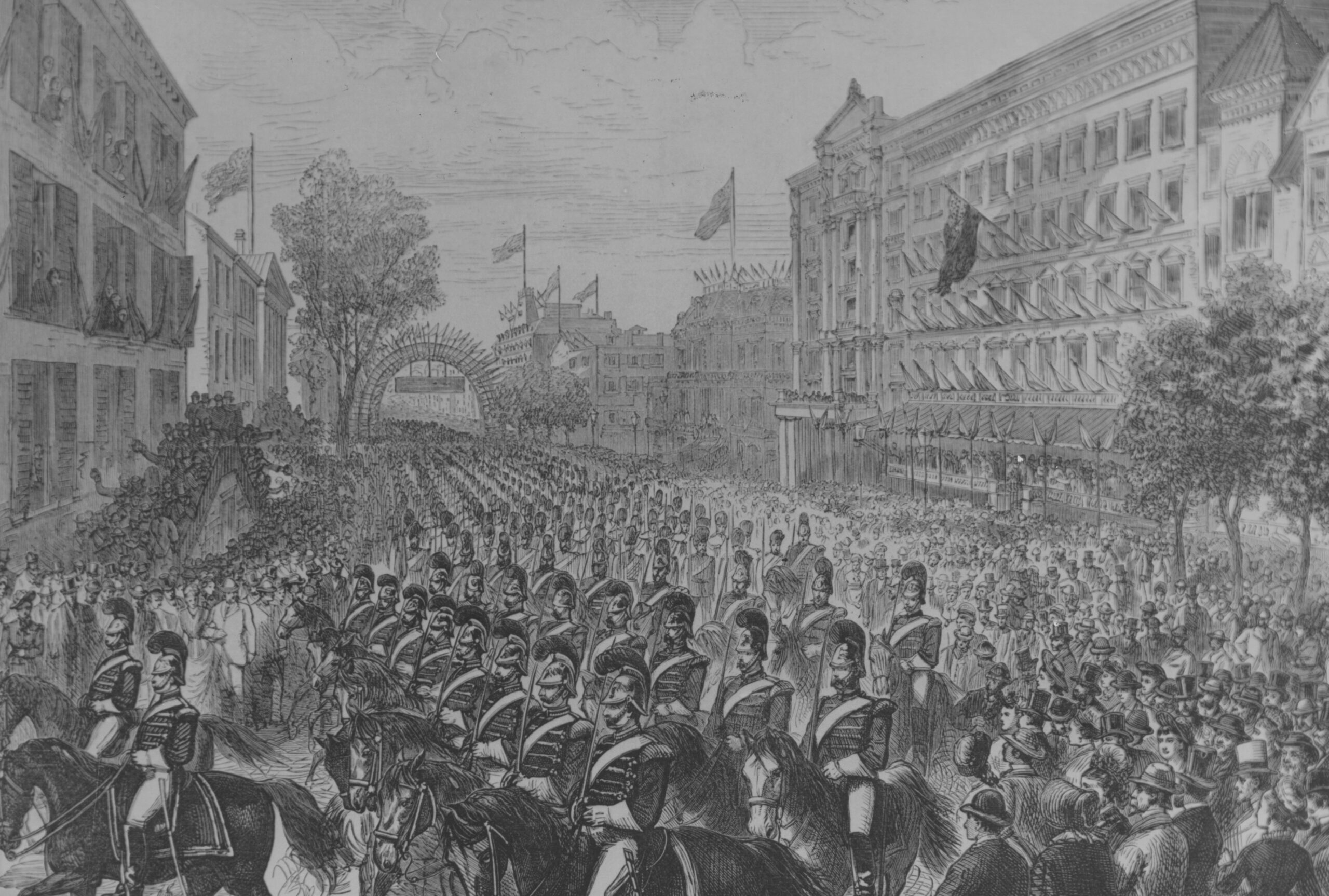
In this depiction published in The Inquirer July 1, 1951, the first event of July 4, 1876, was a huge military parade. The celebration was held in Independence Square after the parade.
A ‘reintroduction to the world’
Look around. Everywhere signs abound of the already-underway party. In the scores of new museum exhibits grandly exploring every power and contradiction enshrined in the declaration bellowed out of Philadelphia 250 years ago. In the abundance of plans for neighborhood programming and beautifications that bring the party to the people in 2026. In new ventures honoring Philly diversity and pride. In the polish and paint in the works for the Historic District.
Hey, Philly cleans up when it needs to.
It was visible when a parade of ships sailed along the Delaware in October to kick off the 250th anniversary of the Navy, founded in Philly. And it was heard in the crisp salutes and solemn hymns of the Marines who crowded Old City in November to mark their branch’s founding, also in Philly in 1775. It builds in the excitement of clock-ticking preparations for the string of big-ticket events that will grace Philadelphia in 2026.
Six FIFA World Cup matches, with a summer fan festival and volunteer-training campus. The MLB All-Star Game. A pumped-up Fourth of July with to-be-announced special guests. TED Democracy talks featuring citizen speakers from Philly and beyond, exploring democracy’s painful past and uncertain present.
It rings out in the genuine excitement of Philadelphians who work in ceaseless dedication to the principle that Philadelphians know how to throw a party.
Philadelphia is not screwing up a party, is Weisman’s mantra (except he doesn’t say, “screwing.”)
Matthew Skic, of Morristown, N.J., Director of Collections and Exhibitions, (left), and Michael Hensinger, of Fishtown, Pa., Senior Manager of K-12 Education, (right), are dressed as Minute Men from the Massachusetts Militia at the opening of the exhibit Banners of Liberty which showcased the original revolutionary war flags at the Museum of the American Revolution in Philadelphia, Pa., on Saturday, April 19, 2025.
Not just a party. A year-long, city-wide commemoration that delivers Philadelphia into a more prosperous future. Before city planners found their 250th footing, Philly tourism and cultural leaders banded together to seize the opportunity. With more than500,000 visitors expected for the World Cup alone, they aim to reintroduce Philadelphia to the world.
“Or introduce ourselves for the very first time to people who do not know Philadelphia or have a very narrow view of Philadelphia,” said Angela Val, president and CEO of Visit Philadelphia, the nonprofit that serves as the city’s official leisure-tourism marketing agency. “We don’t take these big events lightly. They are investments. This is really an opportunity to set ourselves up for success in 2026 and beyond.”
Parties of the past
We’ve been here before.
Every 50 years since 1876, the nation’s Centennial year, and America’s first major birthday bash, Philly has dusted off its wig to get down. Each of these events came with larger national wounds.
“Before every one of these fairs, there’s a scar,” said David Brigham, librarian and CEO of the Historical Society of Pennsylvania, referring to Philly’s previous national birthday parties. “There’s always been a conflict and a pain.”
And in these moments, Philly has strove to be a salve, he said. Most of the time, anyway.
In 1876, when America reeled from unhealed wounds of the Civil War, Philadelphia built a small city in Fairmount Park — and hosted 10 million people from 37 countries. The showcase of growing American innovation and economic prowess aimed to heal a ruptured nation. Memorial Hall, its massive art gallery, remains today as the Please Touch Museum.
In 1926, as America emerged from the carnage of World War I, our Sesquicentennial marked the building of the Ben Franklin Bridge, the transformation of what is now FDR Park, and the construction of a temporary, gleaming, utopian metropolis in South Philly.
The Bicentennial in 1976 led to the creation of the Mann Center and the African American Museum in Philadelphia, even if the party itself was marred by Mayor Frank Rizzo’s heavy-handed security — he summoned 15,000 National Guard members.
We’ve been here before. And we aren’t perfect.
As ready as Philadelphia stands, next year’s commemoration will not include the big legacy projects of past celebrations, the bridges, stadium, and new museums.
But maybe that’s not what this moment is about, anyway.
An unfinished journey
Just as past planners grappled with the questions of their American moment, Philadelphia organizers wrestle with ours.
“It’s a commemoration of why our republic was created,” Lovell said. “But also about a recommitment to the ideals that were established. We were founded on these basic principles and values that the Founding Fathers fought over. And we’re still fighting over it.”
It’s that same theme — the grand fragility of our American experiment — that pulses though the Museum of the American Revolution’s landmark exhibit, “The Declaration’s Journey.”
A breath-taking assemblage of rare artifacts, including Thomas Jefferson’s writing chair and Martin Luther King’s prison bench, the museum’s most ambitious show ever explores the 250-year global impact of the declaration. How words proclaimed out from Philadelphia inspired revolutions and freedom movements throughout the centuries
“The American Revolution is not synonymous with the Revolutionary War,” said R. Scott Stephenson, president of the museum. “It is a centuries-long, ongoing experiment in liberty, equality, and self-government.”
And that journey’s not yet over.
The birth of democracy in Philadelphia, and the worldwide struggle to sustain it, represents the most significant event since the birth of Christ, said filmmaker Ken Burns. (And here we though it was Super Bowl LII.)
The American war may be over, but the revolution is not, said Burns, whose 12-hour docuseries, “The American Revolution,” is streaming on PBS.
All we were promised was the pursuit, he said. And the chance to forever make the imperfect a little less so.
The republic the Founders forged in the Philly heat stands the most divided and tested it has been in decades, with core disagreements about its very foundations.
It is only right, then, that Philadelphians march onto the global stage. Who else but us?
In every way, being America’s birthplace shapes Philadelphia. Where else is its hallowed iconography such a daily staple? Where else does its symbolism so powerfully frame every civic successes — and failure? Every sports triumph and cultural happening. Every step forward; every stumble backward.
Where else does the promise and contradictions of a proclamation that turned the world upside down so intrinsically coarse through the lifeblood of a place?
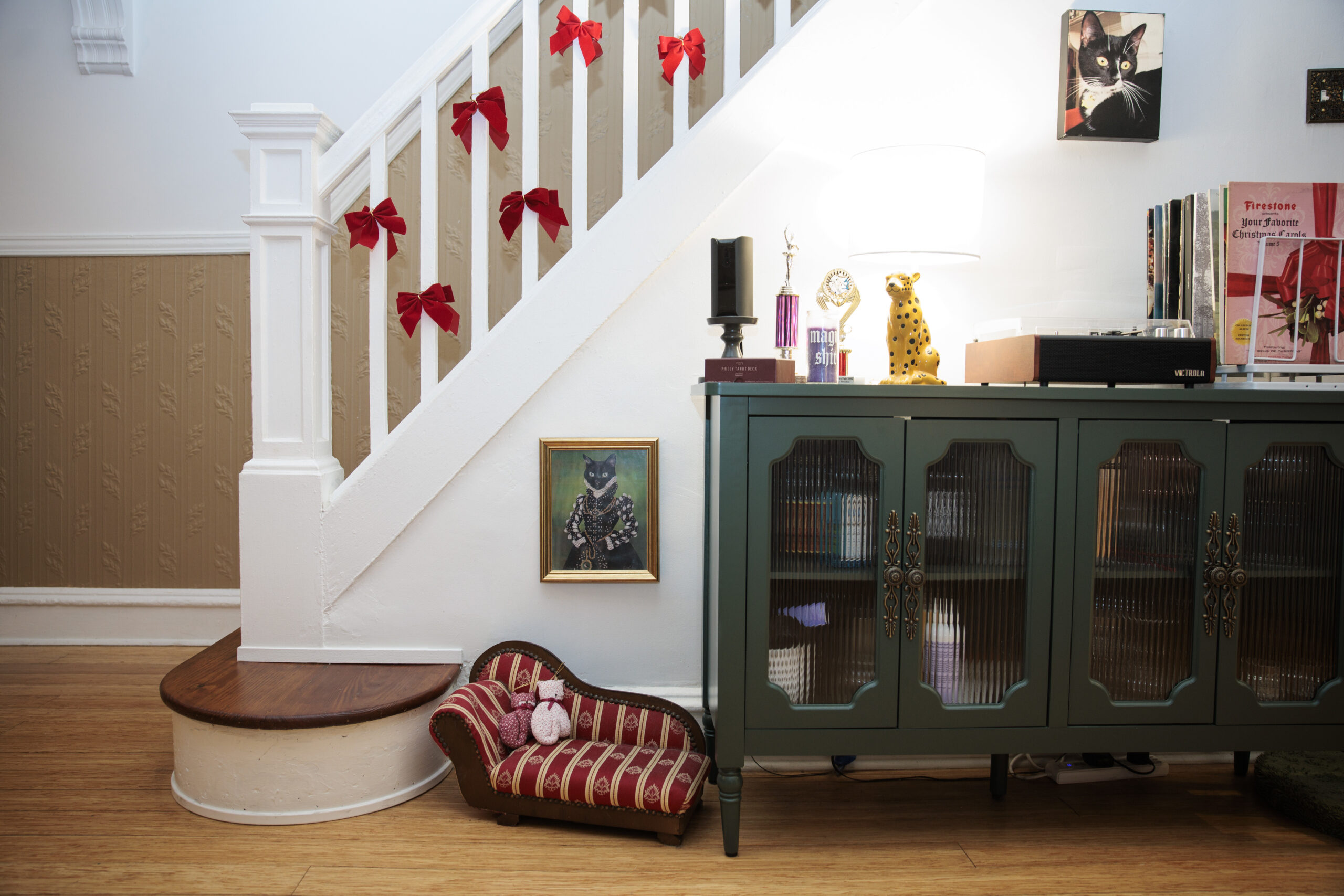
The house: A 784-square-foot rowhouse in Newbold with two bedrooms and one bath, built in 1920.
The price: Listedand purchased for $249,000
The agent: Allison Fegel, Elfant Wissahickon
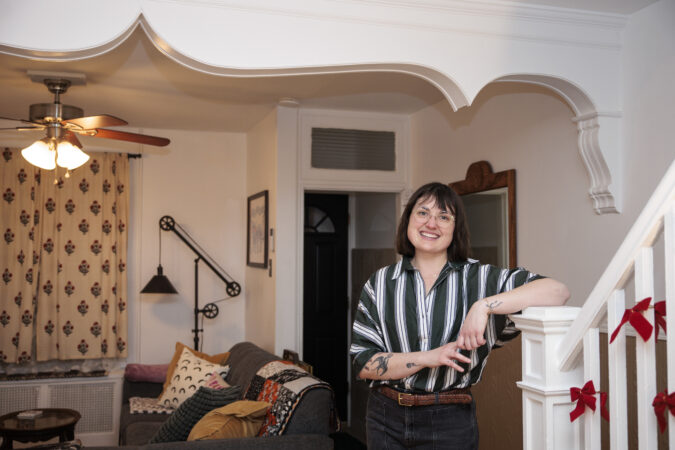
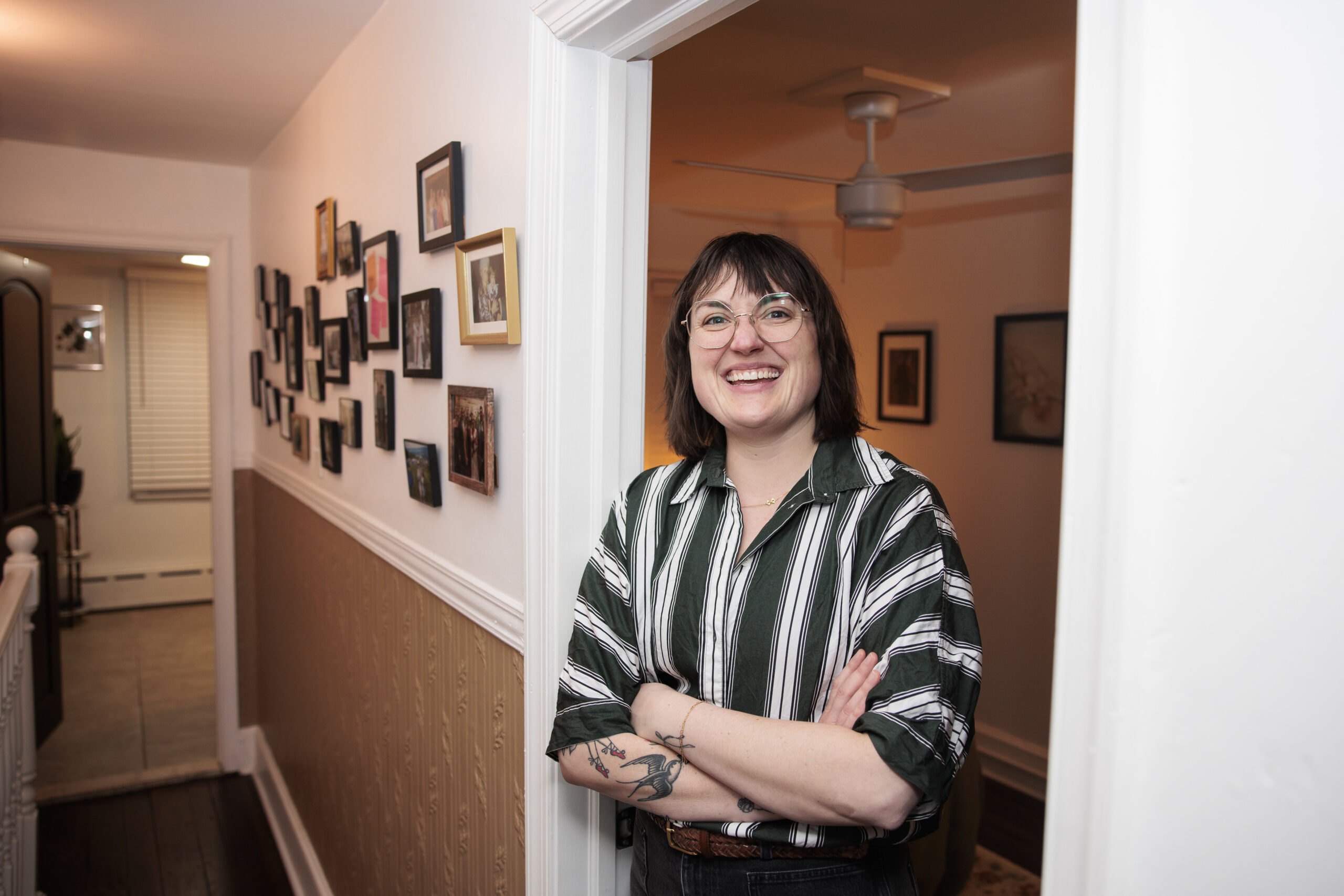
Miles in her two-bedroom home.
The ask: The only good thing about Emily Miles’ old apartment was the price. Miles was making a “nonprofit lawyer salary” and trying to save money. But “it was terrible,” Miles said. Disgusting even. And by November 2024, she’d had enough.
Owning a home felt aspirational, if vague. “It was always something I wanted to do,” she said. “But I didn’t know when I’d be able to do it.”
It didn’t seem like the right time. Miles had student loans. She was bartending in the evenings to make ends meet. Nevertheless, she decided to check out the market and searched for an agent with grant experience. She kept her house wish list short: three bedrooms, outdoor space, and central heat and air.
The search: Miles had no sense ofbudget until her lender preapproved her for about $310,000. From there, her agent began sending her listings across the city, including large homes far from the neighborhoods Miles associated with Philadelphia.
“They were still in Philadelphia County, but not really Philly as you think of it,” Miles said. West Philadelphia, where she was living, was not affordable. Other neighborhoods lacked reliable transportation.
Between late November and January, Miles saw 30 to 40 homes. “They were a lot of flips, and I didn’t want that,” she said.
Eventually, Miles found a place and made an offer. But during the inspection, theydiscovered damage to the front door that indicated someone had kicked it in, and Miles decided to walk away. She was out $1,500. “My pride was hurt a little bit,” she said.
Miles took a brief break, then started attending open houses on her own. That’s how she found the one, a little less than a month after she backed out of the first house.
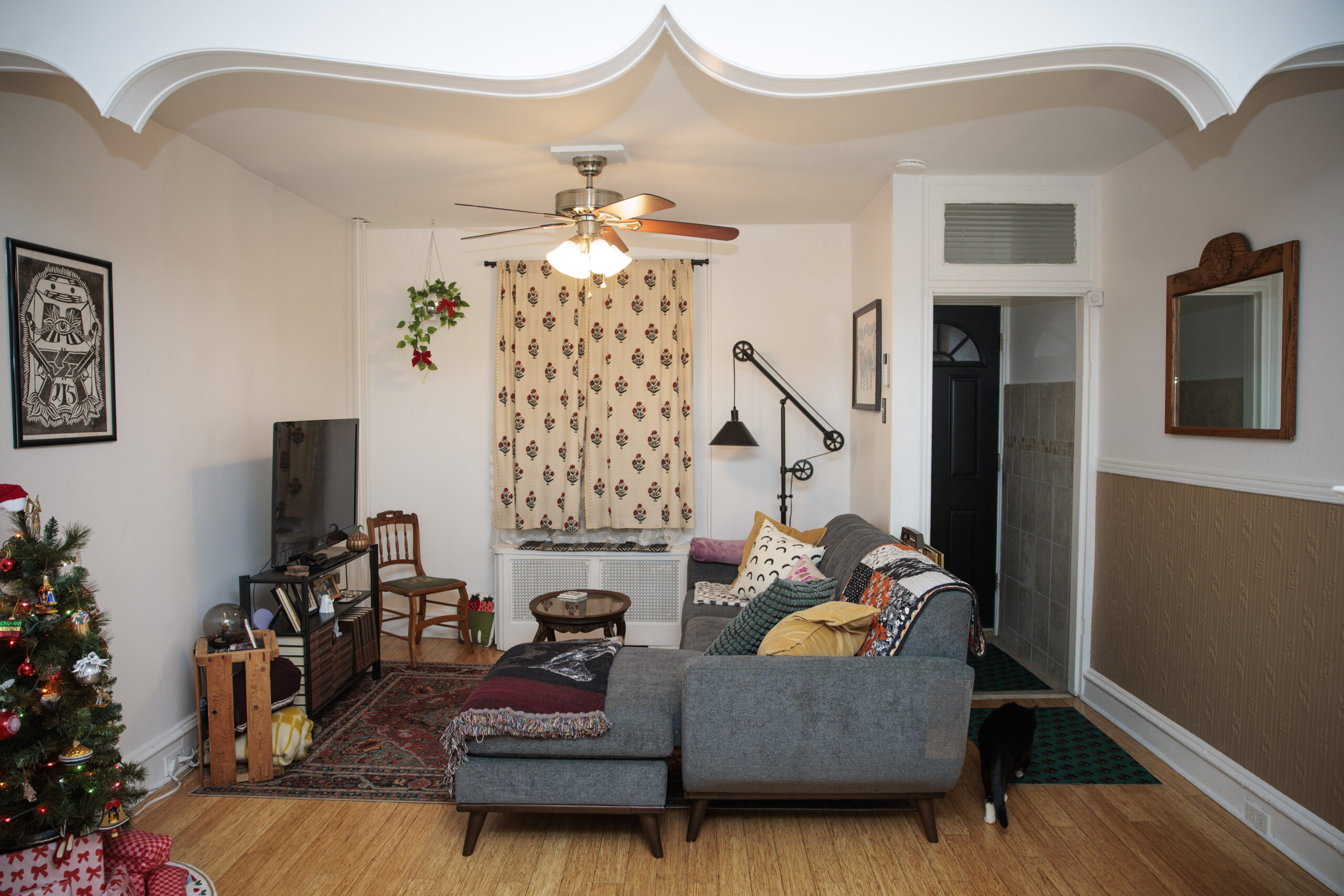
Miles liked the house’s original features and character, such as the arched framing of the living room.
The appeal: The house Miles ultimately bought — a two-bedroom, one-bath, 780-square-foot rowhouse in South Philadelphia — checked none of her original boxes. “The big LOL about the whole thing is that I ended up with something I didn’t want at all,” she said. It had radiator heat. No air-conditioning. Less space than she planned. The house had been a rental for more than a decade. Carpet covered original features. Paint concealed years of wear. “It was a real landlord special,” Miles said. But when she stepped inside, something clicked. “I walked in, and I could see it,” she said. “It’s full of character.”
The deal: Miles stumbled into the house she would buy while walking to a bar with her boyfriend on a Friday night. The listing price was $249,900. She offered the asking price the following morning.
The seller took days to respond but eventually accepted her offer after no one else made a bid.
When the inspection revealed issues, Miles asked for $5,000 to $7,000 in credits. The seller countered with zero. “He redlined all my stuff,” she said. “So I re-redlined all of his stuff.” The back-and-forth ended with $2,000 in seller’s credit. “Which is better than zero,” Miles said. “I’m pretty proud of that.”
Miles filled her home with vintage furniture she found at local thrift shops. Her cat, August, has his own bed.
The money: Miles had about $20,000 saved from her time before law school, when she worked as a human resources manager in New York City. She had an additional $10,000 from the Philly First Home program, $2,000 from the seller’s credit, and $1,000 from her Realtor’s Building Equity program.
Her lender approved her to put down only 3%, so she made a $7,500 good-faith deposit and brought $1,500 to closing. Miles’ credit score and salary qualified her for a 5.75% interest rate at a time when average rates hovered closer to 7%.
Her monthly mortgage payment is about $1,800 and includes $120 for private mortgage insurance, which she must pay until she reaches 20%. She recently applied for a Philadelphia homestead exemption, which reduces the taxable portion of your house by $100,000 if you use it as your primary residence, and expects her monthly payment to drop closer to $1,700 as a result.
The move: Miles closed on March 19 and moved on April 29. She broke her lease without penalty. “I had been complaining about it being a bad apartment for months,” she said, “so I think they were just happy to be rid of me.”
Miles had to get rid of a lot of her stuff because her new house was so much smaller than her apartment. “I downsized quite significantly,” she said. She also discarded stuff that wouldn’t fit through the house’s small, 30-inch doorway, like her couch. “Luckily, I had some foresight and got rid of it before I moved it over,” she said.
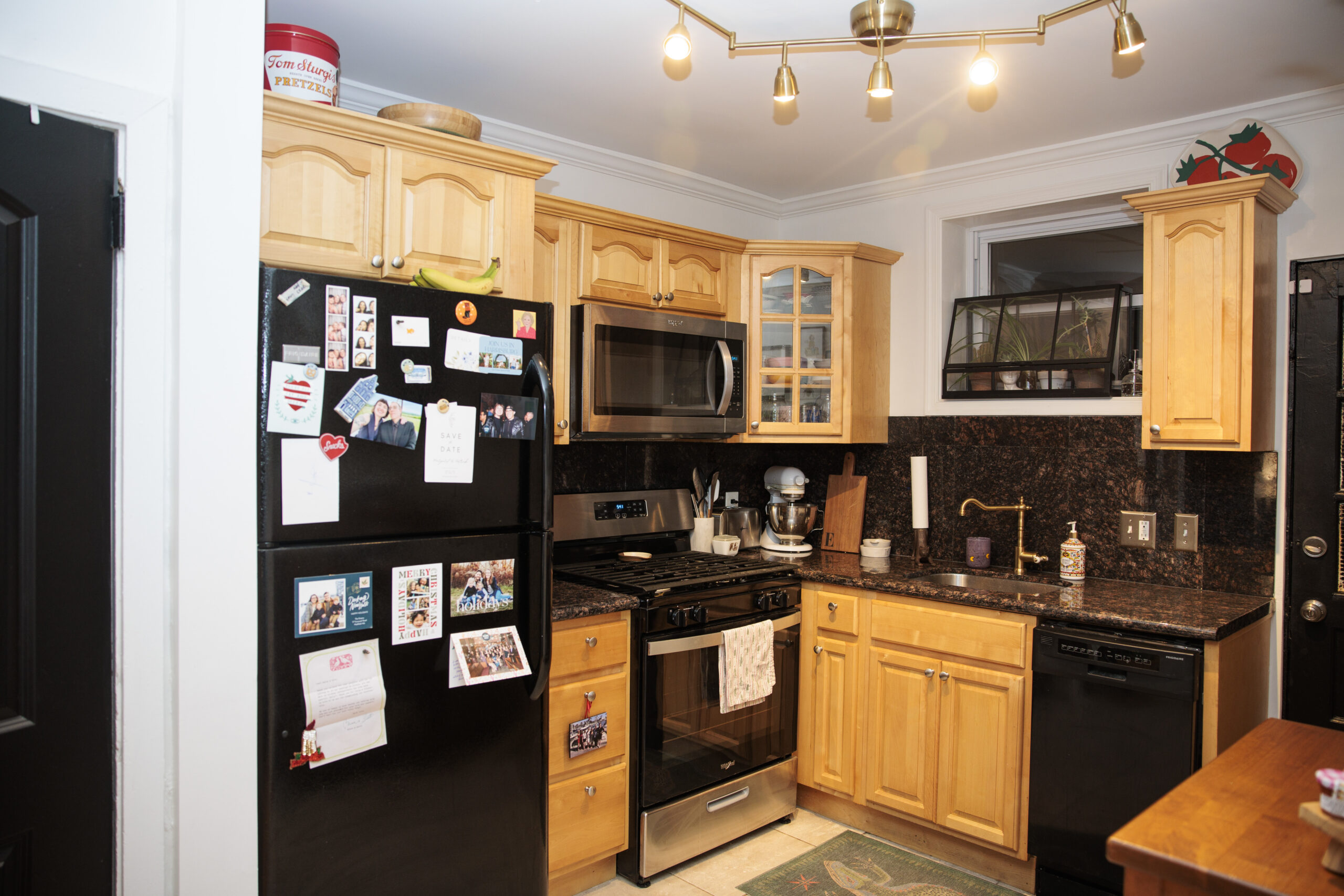
Miles installed new lighting and faucets to make her home feel less like a rental.
Any reservations? Miles wishes she knew that refinished floors can take weeks to fully cure. She had to sleep on the living room floor while she waited for the fumes to fully dissipate upstairs. “It was just my cats and me on the ground for about a month,” she said. Still, she doesn’t have any regrets. “Live and learn,” she said.
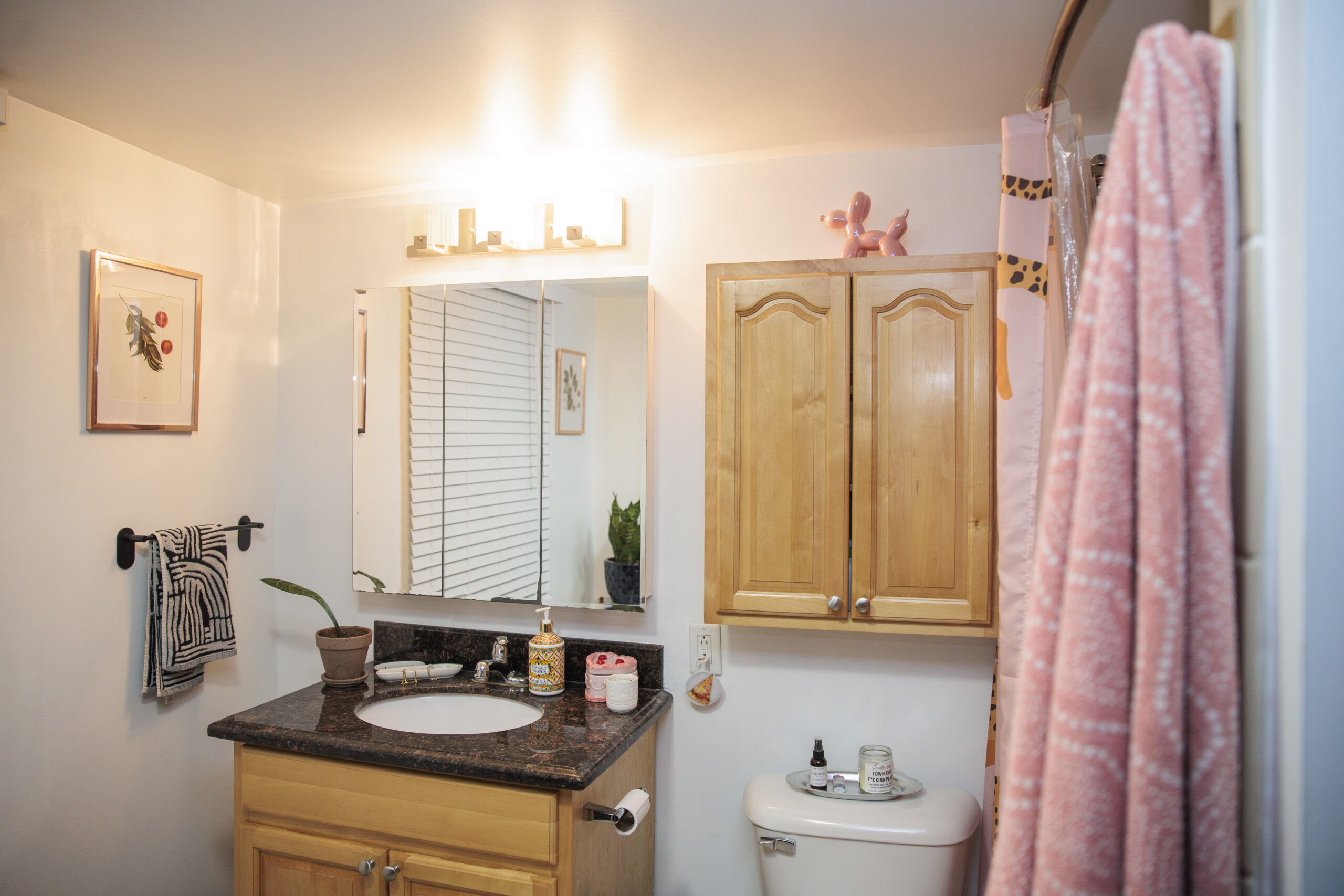
The bathroom in Emily Miles’ Newbold home.
Life after close: Miles used the money her parents had saved for her wedding to make a few cosmetic updates. She fixed the back patio, refurbished the upstairs floors, and replaced light fixtures and faucets so that the house felt less like a rental. She put in a new boiler, too. And filled the house with vintage furniture she thrifted locally. “Stuff that fits the vibe of the house,” she said.
We’ll show you a photo taken in the Philly-area, you drop a pin where you think it was taken. Closer to the location results in a better score. This week’s theme is all about the new year. Good luck!
Round #14
Question 1
Where were people enjoying the fireworks?
Loading…
ClickTap on map to guess the location in the photo
ClickTap again to change your guess and hit submit when you're happy
You will be scored at the end. The closer to the location the better the score
Elizabeth Robertson / Staff Photographer
Pretty good/Not bad/Way off! Your guess was from the location.Spot on! Your guess was exactly at the location. Here's also where a random selection of Inquirer readers guessed.
This is Penn Treaty Park. Crowds gather here annually to watch the New Year’s Eve firework shows on the Delaware River.
Quiz continues after ad
Question 2
Where was this sunrise?
Loading…
Alejandro A. Alvarez / Staff Photographer
Pretty good/Not bad/Way off! Your guess was from the location.Spot on! Your guess was exactly at the location. Here's also where a random selection of Inquirer readers guessed.
This sunrise was at Delancey Street and South 6th Street.
Quiz continues after ad
Question 3
Where is this building?
Loading…
Jose F. Moreno / Staff Photographer
Pretty good/Not bad/Way off! Your guess was from the location.Spot on! Your guess was exactly at the location. Here's also where a random selection of Inquirer readers guessed.
This is the Athenaeum of Philadelphia on South Sixth Street. The Athenaeum will host a celebration on Jan. 6 to commemorate the first balloon voyage in America, kicking off the city's yearlong United States Semiquincentennial celebrations.
Your Score
ARank
Amazing work. You are already checking off your resolution list!
BRank
Good stuff. Seems like you’re ready to embrace a promising new year!
CRank
C is a passing grade, but you need to commit to studying all year-round!
DRank
D isn’t great. Your answers look like leftovers from 2025.
FRank
We don’t want to say you failed, but you didn’t not fail.
You beat % of other Inquirer readers.
We’ll be back next Saturday for another round of Citywide Quest.
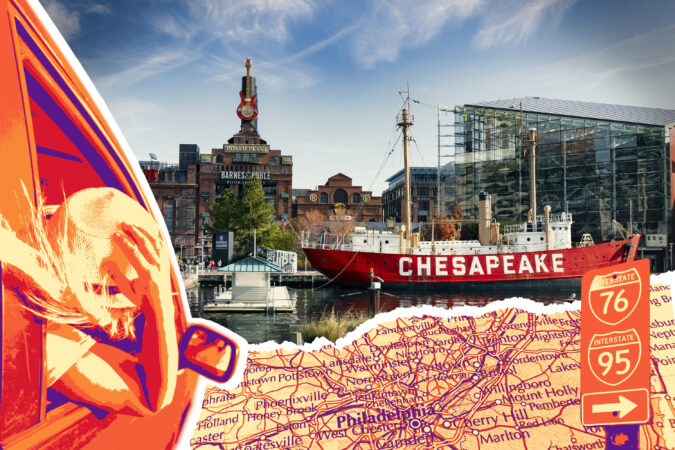
Sometimes you take a road trip to experience something totally different from the world you inhabit — the absolute silence of a state forest, the carnivalesque majesty of the shore in full swing. A weekend in Baltimore is not that kind of trip.
Charm City is the most Philly of the cities on the Acela corridor: smaller in size, but equally quirky, proud, and shaped by blue-collar roots. (Our accents are even passably close.) It’s also stacked with restaurants, museums, and cultural institutions that compete on a national level, all with a distinctly Baltimorean flavor, less than two hours away.
Once arriving in Baltimore proper, take I-83 up to the Remington neighborhood on the north side of the city, where Café Los Sueños roasts and brews its own beans in a peaceful, light-washed space a couple blocks off the highway exit. (The name translates to “Café of Dreams,” fitting for owner Carlos Payes, who came to the U.S. from the coffee plantations of El Salvador.) A horchata latte and croissant make for a perfectly calming start to the trip.
📍 2740 Huntingdon Ave., Unit B, Baltimore, Md. 21211
If it’s not too cold — and you’re up for a walk — Los Sueños sits near the eastern edge of Druid Hill Park, the third-oldest urban park in the country and, for millennials, the namesake of Dru Hill. Follow the path along Druid Lake toward the Rawlings Conservatory, a circa-1888 botanical garden with five greenhouses. Even when it’s frosty outside, the impressive Victorian conservatories filled with tropical orchids, ceiling-skimming palms, and citrus blossoms deliver full-on summer music-video energy.
Check into the Pendry Baltimore, a moody, stylish 127-room hotel housed in a grand 1914 building on the former Recreation Pier. The Fell’s Point location is both charming and convenient, putting you within walking distance of many of Baltimore’s marquee attractions. Many of the wood-and-leather-clad rooms overlook the waterfront. The huge pool, which seems to float in the Inner Harbor, will have you booking a return visit for summer.
No curveball here. The National Aquarium is Baltimore’s claim to fame, and if the last time you were here was on an eighth-grade field trip, you should come back as an adult, with or without your own kids. The sprawling complex houses 2.2 million gallons of water and residents ranging from reef sharks and puffins to otters and moray eels. Don’t miss the Harbor Wetland exhibit, which opened in 2024 along a series of floating docks in the Inner Harbor and be sure to book tickets in advance. Aim for off-hours to beat the crowds.
📍 501 E. Pratt St., Baltimore, Md. 21202
View: American Visionary Art Museum
The title Cap Bathing Moligator With Angelic Visitation (Dickens 44) tells you just about everything you need to know about the boundary-pushing work housed at the American Visionary Art Museum. This brick-and-mirror-clad institution in Federal Hill celebrates outsider art in all its surreal glory from landscapes to cosmological oil paintings to sculptures of a mosaic-winged Icarus and Baltimore icon Divine. The collection embodies the city’s DIY spirit and unbreakable creative streak.
With its deep pedigree and polished service, Charleston in Harbor East possesses a sense of occasion that few restaurants have anymore. Even if you’re just passing through for drinks in its swanky little lounge, where local power brokers and big-night-out suburbanites mingle with tourists, those drinks are crafted with gravitas and élan as much as sparkling wine, passionfruit and honey (the Ipanema Fizz), or blanco tequila, Strega, and ginger (the Arandas Monk). The wine list is famously deep, which helps explain why Charleston won the James Beard Award for Outstanding Wine and Other Beverages Program.
From one medalist to another, the Wren, one of Bon Appetit’s best new restaurants of 2025, sits less than a 10-minute walk from Charleston in Fell’s Point. The location is an ideal spot for drink or dinner, with a much more casual silhouette with its wood paneling, pressed-tin ceilings, and no-reservations policy. It’s a pub essentially, and like the very best pubs in Ireland and the U.K. (partner Millie Powell hails from Dublin), the cooking comforts and satisfies on a cellular level. Think glazed ham, golden onion pie, sharp cheeses, honey-roasted apple cake, and the like. (Your Philly analog is Meetinghouse.) As expected, the bartenders pour a precise pint of Guinness, the perfect finale to a Baltimore weekend.
I opened this question up to a wider team because I knew there would be many different takes. What do you think? Email me.
Ariane Datil, Social Video Host
Pick a new resolution, sir.
Ellen Dunkel, Programming Editor
It might not be possible, but it helps not to care. Or to be a fair-weather fan. I am completely disinterested, except in a journalism way (and wanting my friends to be happy). But I enjoy when they win the big game. If they don’t, I move on immediately. It’s very relaxing to not care.
Caryn Shaffer, Senior SEO Editor
The most helpful piece of advice about loss I’ve received this year is to focus on what you DO have. Sure, the Eagles lost a game, and it sucks not to have that win. But do you have friends you watched the game with, and can commiserate with? A partner and family who love you? Your health, a roof over your head, and food on the table?
When you’re feeling sad about a loss, reach out to someone you care about, go for a walk outside, get a little treat to cheer you up, or do another activity you enjoy.
Zoe Greenberg, Features Reporter
Be like me and be a fan who only jumps on the bandwagon when the team is winning. Then your day is never ruined, only made.
Hira Qureshi, Food and Dining Reporter
Like Zoe, I only become a fan when they are winning, lol.
Matt Mullin, Senior Editor for Digital Strategy and Audience Development for Sports
When teams are winning, the expectation is that it’ll stay that way forever, so the losses, especially season-ending ones, are unexpected and crushing. That’s the biggest problem with jumping on the bandwagon — it’s when the losses hurt the most.
My advice is a combination of exposure therapy and resetting expectations.
First, if you hide from defeat, of course it’s going to sting that much more when it finally arrives. All those losses, they become a part of you, they callus over, and the next time they don’t hurt as bad.
Second — and all the losses should help with this — the lower you’re able to set your expectations, the less likely you are to be disappointed after a defeat and the more jubilant you’ll be after a win.
When it comes to Philly sports, as is the case with most things in life, expectations can dictate your level of happiness, or in this case sadness, so set them low. Is that a miserable existence? Perhaps, but it’s the life of a Philly sports fan — and might explain why we party so hard after wins.
Abigail Covington, Life & Culture Reporter
Just remember it could be worse: You could be a Carolina Panthers fan.
I make it my mission to always be eating something delicious when I’m watching a stressful sports game. So if they lose … at least I had a good meal.
Kate Dailey, Managing Editor, Features
I have decided that I’m only a regular-season baseball fan, because I love how slow, meditative, and calming baseball is. Baseball on the radio while you wash the dishes? Beats a spa weekend.
I realized this year that the pressure of the playoffs ruined what I liked best about baseball, so I just decided to tune out. Figure out what you like best about the sport and double down on that, at the expense of the parts you don’t. Unless what you like best is victory. In that case, I can’t help you.
Dan DeLuca, Arts and Entertainment Reporter
You’re not a true Philly sports fan until you’ve suffered. You have to give yourself over to the suffering. That’s what makes the good times good. I personally suffer more when the Phillies and Sixers lose than I do when the Eagles do. That might be my way of rebelling against the dominant culture.
Also the advice I often give myself (but don’t always follow) is it’s better to go to the show than go to the game. Because the show will reward you probably 90% of the time, and your batting average at the game will be much lower.